Tag Archives: Ayurvedic oils for menstrual pain

Chamomile Oil German

Chamomile-oil-german-bannerLike a Chamomile bed, the more it is trodden, the more it will spread’, says Shakespeare. With its power to enhance the life force in the body, German Chamomile also known as Blue Chamomile alleviates all kinds of physical and emotional blues. Botanically known as Matricaria Chamomilla, the gentle and grassy aroma of this oil implants calmness in the mind and grants solace to the heart.

Held high across the world for its strongest anti-inflammatory compounds instilling a gentle effect on pain and inflammation, German Chamomile is remembered as one among the best and safest essential oil for people of all ages including children.

Called as Karpurapuspa in Sanskrit and Baboona or Babuna in Hindi, German Chamomile and its essential oil have been used in Ayurveda, the oldest healing methodology of the world as a remedy for itchy skin, dermatitis, menopausal problems, tension, eczema, migraine pain, burns, skin irritation, dysmennorhea, liver congestion, arthritis, PMS, skin inflammation, amenorrhea, anemia, toothache, colic, inflammatory bowel disorders and formation of leukocytes.

Purchase Chamomile German Essential Oil – 5% Dilution in Pure Jojoba – 4oz – CLICK HERE

Historical uses and importance of German Chamomile oil:

Chamomile is regarded as one of the oldest herbs used in the history for medicinal purposes. The German variety is indigenous to Nepal and is found all over the world including the temperate zones of Australia, Asia, Europe (Hungary and France) and North America.

This herb is a member of the sunflower or daisy family Asteraceae and is called by other names such as Hungary Chamomile, Blue Chamomile, Matricaria, Scented Mayweed or Wild Chamomile.

The name ‘Matricaria’ has its origin from the Latin name ‘Mater’ meaning ‘Mother’ and is extremely helpful in treating numerous womanly problems. It is regarded as one of the most distinguished herbal teas of the world and nearly one million cups of Chamomile tea are consumed every day.

The most interesting historical reference of this herb dates back to 78 A.D when Europe’s first medical reference book De Materia Medica was written by Dioscorides.

German Chamomile has its name listed in the potent herbs for treating many health conditions and is also listed as one of the most sacred herbs in Lacnunga, the antique manuscript. It is used in herbal medicine as a serene sleep aid, for treating sore stomach, bacterial infections, inflammation, irritable bowel syndrome and as a mild laxative.

German Chamomile has been used as a natural aid for assisting problems related to women especially with its emmenagogue properties that help in relieving from painful menses, delayed menstruation, menopausal problems and as a uterine tonic.

The herbal infusion, decoction or tea prepared from the flowers of German Chamomile was taken in folklore medicine for assisting in cases of motion sickness, vomiting, indigestion, flatulence and ulcerative colitis.

It has been used for numerous centuries in the traditional medicine for treating dermatitis, skin inflammation and gastrointestinal tract symptoms. Dried German Chamomile flowers were used in compress or infusion for alleviating pain and inflammation associated with rheumatism, arthritis and other inflamed conditions.

German Chamomile was prescribed by the Greek physicians for treating female disorders, fever, restlessness, neuralgia, stress and insomnia. It was used as a tenderizing agent for preserving meat in the ancient period.

Chemical constituents and therapeutic properties of German Chamomile oil:

The major chemical components of German Chamomile oil are ‘terpenoids α-bisabolol and its oxide azulenes including chamazulene and acetylene derivatives’ (bisabolol oxide A, bisabolene oxide A, a-bisabolol and bisabolol oxide B) along with farnesol, thujanol, bisabolol, coumarin and farnasene.

The remedial properties of this oil are anti-inflammatory, emmenagogue, immuno-stimulant, anti-anemic, stomachic, anti-allergenic, antiphlogistic, analgesic, bactericidal, anti-spasmodic, vasoconstrictor, antibiotic, carminative, digestive, cicatrisant, vulnerary, cholagogue, hepatic, vermifuge, and sedative.

Ayurvedic health benefits of German Chamomile essential oil:

Ayurveda is the ancient wisdom of healing and it fervently imparts that every human being should follow a disciplined life and must have ample knowledge about his/her health. It is a Vedic science rewarded by the Saints, Sages and Ancient Gods of Hinduism to humanity. Ayurveda simply means knowledge of life (Ayur – Life and Veda – knowledge).

The most predominant factor behind Ayurveda’s existence as a mother of all healing sciences including the Traditional Chinese Medicine, Siddha, Unani, Homeopathy, Acupressure, Naturopathy, Aromatherapy and Chiropractic.

The distinctiveness of Ayurveda is its adherence to Mother Nature, which insists to maintain balance with nature for a healthy and harmonious life. Ayurvedic principles state that living in harmony with nature is the absolute way to heartiness, prevention of illnesses, healthy aging and longevity.

As per the Ayurvedic philosophy, the whole thing on earth is a grouping of the five vital elements of nature namely water, fire, earth, space and air, where water stands for the blood in the body, fire represents the body temperature and metabolic functions, air assists in breathing, earth symbolizes muscles and bones, space or ether signifies the soul.

Every individual is considered as a unique part of nature with a unique individual constitution (the physical, psychological and spiritual make up of a person) just like our fingerprints.

This constitution is an arrangement of three biological energies known as doshas. They are vata, pitta and kapha dosha. Vata is a combination of air and space and is responsible for nervous functions and governs the working of the autonomous and central nervous system.

Kapha is a grouping of water and earth and is in charge for virility, stability, binding power and vigor of the body. Pitta dosha is a blend of fire and water and is accountable for metabolic functions, tissue building, endocrine functions and body temperature.

Every one of us has a predominance of any one of these doshas and this predominant dosha decides our unique persona, temperament and behavioral patterns. Absolute balance between these doshas is a sign of good health and imbalances of these dynamic energies due to food, weather conditions and other lifestyle changes cause illnesses.

Ayurvedic treatments vary from individual to individual even if it is for the same illness because this traditional system observes the individual constitution, medical history of the patient and the root cause of an illness before prescribing the appropriate medicines.

The most established Ayurvedic medications are plant essential oils, herbs, yoga, Abhyanga or Ayurvedic massaging, Ayurvedic routine, simple physical exercises, prayer and meditation based on upon the distinctive individual constitution for correcting the imbalance of doshas.

German Chamomile oil has the potent to pacify aggravated pitta and kapha doshas and balance vata dosha. These amazing healing attributes make German Chamomile oil as an excellent Ayurvedic remedy for treating inflammation, skin irritation, lack of immune power, anemia, amenorrhea, menopause, anger, headache and other female reproductive problems.

Let’s have a look at the key Ayurvedic health benefits of German Chamomile essential oil:

Chamomile-germanbroucher1. Regulates all kinds of menstrual and menopausal mayhems:

German Chamomile essential oil has numerous beneficial effects on the reproductive tissue known as shukra dhatu in Ayurveda. Ancient Ayurvedic texts also say that this herb has therapeutic properties for regulating menstrual activities and is called as artavashamana.

Massaging your lower abdomen and thighs with 2 drops of German Chamomile oil and 2 drops of Lavender oil along with 2 ml of sesame oil can be of great help in relieving menstrual pain or dysmennorhea, premenstrual fatigue and headache, promote menstruation in case of blocked or delayed menses and alleviate all kinds of menstrual discomforts. This massage also serves as a cooling natural remedy to treat the hot flashes, excessive discharge and mood fluctuations during menopause.

German Chamomile tea was prescribed in Ayurveda to lessen pain during childbirth and for easing nausea during pregnancy. Certain studies have proven that Chamomile douche may possibly get better the symptoms of vaginitis or vaginal inflammation in women.

Mostly women of all ages are affected by vaginal inflammation and vaginitis is coupled with pain during urination, itching and vaginal discharge. German Chamomile oil is also effective in treating Atrophic vaginitis also, which occurs due to low estrogen levels in postmenopausal and menopausal women.

2. Relieves skin irritation and supports other skin conditions:

The book on ‘Herbal Medicine: Biomolecular and Clinical Aspects by Philip D. Shenefelt’ states “German chamomile (Matricaria recutita), a member of the daisy family, has been used for centuries, both internally and externally, for treating many conditions, especially gastrointestinal tract symptoms, oral or skin inflammation, as well as dermatitis.”

He also says “The anti-inflammatory, wound-healing, and antimicrobial effects of German chamomile oil are attributed to an essential blue oil that contains sesquiterpene alcohol, α-bisabolol, chamazulene, and flavonoids.”

The relaxing, anti-inflammatory, antiseptic and wound healing properties of this oil assists in relieving skin problems rapidly in case of varicose ulcers, wounds, burns, stings, allergies, cystitis, vaginitis, neuralgia and skin ulcers.

Many studies have proved that German Chamomile essential oil has witnessed slight superiority over ” 0.5% hydrocortisone cream in atopic eczema (Patzelt-Wenczler et al 1985), more beneficial than 1% hydrocortisone ointment in the management and healing of peristomal skin lesions in colostomy patients.”

Adding 2 drops of German Chamomile oil along with 2 drops of Rose Geranium oil to bathing water can be helpful in killing germs, bacteria and fungi responsible for skin infections like athlete’s foot, candida, acne, cystitis, Urticaria and dandruff.

This bath also helps in combating the harmful bacteria like Staphylococcus aureus that causes wounds and other skin conditions to turn septic. It also helps in lessening one’s sensitivity to allergens like dust and pollen and aid in treating hay fever, sinusitis, chronic catarrh and eczema.

Massaging the affected areas with 3 drops of German Chamomile oil blended with 2 drops of Sandalwood oil and 3 ml of jojoba oil can help in healing wounds, eczema, psoriasis, varicose ulcers and burns. 2 drops of German Chamomile oil added to a cup of warm water can be used as a gargle for treating gingivitis, plaque, sore throat, mouth ulcer and bad breath.

3. Augments immunity and boosts the vital life force:

German Chamomile oil controls the flow of Life Force, also known as Qi or Chi with its cooling and tranquilizing effect on the system. With its immune enhancing power, this oil assists in preventing infectious diseases by strengthening the disease resistance power of the system.

Since the traditional times, this oil acts as a promising natural remedy for treating almost all kinds of diseases. According to Ayurveda, German Chamomile oil has kasasvasahara or therapeutic properties for alleviating respiratory problems like cough, cold, breathing difficulties, tonsillitis, flu, broncho-constriction in asthma and sinusitis. This oil is also said to have fever lessening properties known as jwaraghna with its power to reduce excess of pitta energy responsible for body temperature.

German Chamomile oil also has other healing properties helpful in relieving gout, eye inflammation, arthritis, conjunctivitis, rheumatism, carpal tunnel syndrome, blepharitis, meibomian cysts, fibromyalgia, lumbago, hepatitis, gallbladder infections, anemia, teething pain, abscesses, viral colitis, Alzheimer’s disease, diaper rashes, nervous tension and certain other health conditions.

4. Controls anger and promotes peaceful sleep:

The essential oil of German Chamomile helps in calming and relaxing the mind and body with its naturally cooling effects. It regulates anger, rage, irritation and aversion caused due to the excess heat in our mechanism. The cooling properties of German Chamomile oil reduce pitta dosha especially sadhaka pitta (pitta in the mind and heart).

Excess of which is responsible for the generation of heat energy in the body. By this way, it pacifies the mind, cools the body and instills gentle and positive feelings from within.

Gently massaging your system with 5 drops of German Chamomile oil blended with 5 drops of Lavender oil and 5 drops of Tea tree oil with 10 ml of coconut oil is an excellent way to keep you cool throughout the day. Adding 1 drop of German Chamomile oil in your handkerchief or a tissue paper and carrying it with you all through the day can help in releasing negative emotions soothingly and induce clarity, improve self-esteem and self-realization.

Adding 2 drops of German Chamomile oil and 2 drops of Rose oil in warm bathing water before going to bed can be of great help in relaxing the tensed nerves, aching muscles and in promoting peaceful sleep. You can also add 2 drops of German Chamomile oil in your diffuser or vaporizer in the bedroom for relieving anxiety and mental agonies.

German Chamomile oil has also been proven in several studies as an efficacious natural remedy for treating GAD or generalized anxiety disorder. Chamomile is widely accepted as gentle tranquilizer and sleep-inducer.

A 2010 study published in PubMed quotes “inhalation of the vapor of chamomile oil reduced a stress-induced increase in plasma adrenocorticotropic hormone (ACTH) levels.” Inhaling the aroma of this oil influences sedative effect in the body by binding the GABA and BDZ receptors in the brain.

Inhaling the herbaceous, intensely sweet and fruity aroma of German Chamomile oil especially during Pranayama (balanced breathing exercise), meditation and prayer enhances our spiritual energy to the next level and augments our soul’s connectedness with the Divine Power.

5. Alleviates pain and inflammation:

German Chamomile essential oil is often trusted to lessen pain, reduce muscular spasms and alleviate gastrointestinal inflammatory problems and other inflammatory disorders. Certain studies reveal that Chamomile restrains Helicobacter pylori, which causes to stomach ulcers. The anti-inflammatory and antiphlogistic activities of German Chamomile are attributed to its chemical components like matricin, alpha-bisabolol oxides A and B, and alpha-bisabolol.

A research tested on human volunteers with Chamomile essential oil states “Chamomile flavonoids and essential oils penetrate below the skin surface into the deeper skin layers. This is important for their use as topical antiphlogistic (anti-inflammatory) agents.”

This oil has excellent diuretic properties, known as mutrala in Ayurveda and helps in relieving urinary infections, inflammation in the bladder and other kidney infections along with eliminating the toxic deposits in the system.

Massage the painful or inflamed parts with 3 drops of German Chamomile oil blended with 3 drops of Yarrow oil also known as Yara Yara oil with 5 ml of coconut oil to alleviate pain, mitigate spasms, reduce inflammation, promote blood circulation and eliminate toxic substances in the system and lessen water retention, leading to obesity, rheumatism, arthritis etc.

6. Treats diarrhea and other gastrointestinal problems:

Both German Chamomile and Roman Chamomile have been used as a traditional remedy for treating colic, especially in children, diarrhea, stomach cramps, gas, intestinal spasms, irritable bowel syndrome, indigestion, stomach ulcers and gastrointestinal disorders. German Chamomile oil is known as a digestive relaxant that helps in soothing the muscles, relaxing the stomach and leaves a gentle effect on the intestines, to help in pacifying stomach ulcers, flatulence, anorexia, diarrhea, bloating, intestinal gas and morning sickness.

Massaging your abdomen gently with 2 drops of German Chamomile oil and 2 drops of Peppermint oil along with 2 ml of almond oil can help in relaxing muscular contractions in the stomach and intestines along with reducing excess of digestive fire or pitta energy causing diarrhea and painful ulcers.

The gentle and cooling effect of German Chamomile oil along with the cool minty effect of Peppermint oil gradually reduces pain in the stomach and intestines and grants peaceful sleep especially in children who suffer from colic.

Disclaimer:

This information is only for educational purposes and is expressed wholly in the concern of spreading the cultural wisdom of Ayurveda, the mother of all healing sciences. The remedies listed in this article are not intended to prevent, cure or diagnose any medical condition or as an alternate for any kind of prescription remedies or any medical advice of a healthcare professional.

Internal use of essential oils is strictly not recommended. Ensure that you dilute essential oils in suitable carrier oils before you use it on the skin topically, as high quality, unadulterated and organic essential oils are extremely concentrated substances and may cause allergic reactions if used on the skin directly.

Speak with your Ayurvedic professional/healthcare expert before choosing the appropriate essential oils for your unique individual constitution and state of health. Avoid using German Chamomile oil if you are pregnant or nursing your baby, because this oil has high emmenagogue properties that may induce menstruation.

Thought for the day:

The best remedy for those who are afraid, lonely or unhappy is to go outside, somewhere where they can be quiet, alone with the heavens, nature and God. Because only then does one feel that all is as it should be.

-Anne Frank

Suggested Reading:

  1. Chamomile: Medicinal, Biochemical, and Agricultural Aspects (Traditional Herbal Medicines for Modern Times) by Moumita Das
  2. Chamomile: Industrial Profiles (Medicinal and Aromatic Plants – Industrial Profiles) from CRC Press
  3. Surviving When Modern Medicine Fails: A definitive guide to essential oils that could save your life during a crisis by Dr. Scott A. Johnson
  4. The Healing Intelligence of Essential Oils: The Science of Advanced Aromatherapy by Kurt Schnaubelt Ph.D.
  5. Ayurveda & Aromatherapy: The Earth Essential Guide to Ancient Wisdom and Modern Healing by Dr. Light Miller, Dr. Bryan Miller

Reference Links:

  1. Matricaria chamomilla by Wikipedia
  2. German Chamomile by The University of Maryland Medical Center
  3. Chamomile: A herbal medicine of the past with bright future by Janmejai K Srivastava, Eswar Shankar,and Sanjay Gupta, Department of Urology & Nutrition, Case Western Reserve University, Cleveland, Ohio published in PubMed
  4. Chamomilla recutita – German Chamomile: Western and Ayurvedic Perspectives from Positive Health Online
  5. Herbal Treatment for Dermatologic Disorders Philip D. Shenefelt published in PubMed

Spearmint Essential Oil

Spear-mint-bannerA refreshing, tasty, enriching and minty Spearmint gum has the potential to turn over a new leaf on your dull depressing day. Just the aroma of Spearmint is not responsible for this revolution but this cool herb has enormous health benefits that energize your system and revitalize your brain functions. Scientifically known as Mentha spicata, this herb belongs to the mint family Lamiaceae.

Spearmint is an excellent cooling diuretic that has the potent to reduce the heat in the body due to fever and inflammatory conditions. It’s proven pharmacological effects and enormous cooling values, gently cools the liver and protects from chronic health conditions like inflamed liver.

Popularly known for its culinary and traditional medicinal uses, the essential oil extracted from the leaves of Spearmint plays a vital role in Ayurvedic medicine where this herb was locally known as Putiha and Pahari Putida. It has been in use for more than hundreds of years as a trusted carminative for treating digestive disorders, morning sickness in pregnant women and colic in infants.

Purchase Spearmint Essential Oil – Retail – CLICK HERE

Purchase Spearmint Essential Oil – Wholesale – CLICK HERE

Historical uses of Spearmint and its essential oil:

This herb and its essential oil has been used in almost all the oldest traditions of the world including Ayurvedic medicine, Biblical healing, Chinese medicine, Greek mythology and the European healing system.

The antique cities of historical importance like Greece, Rome and Egypt have recorded the use of Spearmint as a natural fragrance agent for the body, digestive aid for treating gastrointestinal disorders, natural remedy for sexually transmitted diseases like gonorrhea, as a sedative for treating insomnia and other sleeping disorders, for treating bad breath and dandruff. The most popular use of Spearmint oil was that it was used in baths for its cooling and refreshing properties.

Spearmint was used in the Ayurvedic healing system for treating fever, bronchitis, pain and other digestive ailments. The European medicinal practices made use of this herb for enhancing memory power and cognitive performance.

Known as ‘Yerba Buena’ in the primordial Mexican culture, Spearmint was a natural remedy for handling menstrual cramps, vomiting, flatulence and indigestion. The milder effects of this herb made its use preferable for children than the Peppermint herb.

Biblical texts talk about the effectiveness of Spearmint for treating severe headaches. Spearmint is an important ingredient of the herbal tea known as ‘Zahraa’ according to the ancient Unani medicine. This tea is widely consumed in Syria and Damascus for its stimulating and uplifting values.

A popular research by the Latin American medicine system proved that the Latino children had a stronger preference towards Spearmint than Peppermint and it was used as a natural expectorant for treating common cold and cough.

The modern Western medicine also used Spearmint essential oil as a flavoring agent in chewing gums, candies, toothpaste, mouthwash, soaps, teeth whiteners and certain other personal hygiene products.

This herb is also used in treating common cold, nasal congestion, motion sickness, influenza, irritable bowel syndrome, colic and few other respiratory problems.

Chemical constituents or Gas Chromatography Report (GC) of Spearmint essential oil:

According to the Gas chromatography report, Spearmint essential oil constitutes of 3 chemical components that contribute to its unique fragrance, remedial properties and quality. Spearmint oil is enriched with about 69.1% of Carvone constituent.

Just click on:

For learning more about the detailed information of these key constituents of Spearmint oil.

The table below on the Gas Chromatography report talks about the principal chemical constituents and its role in granting the therapeutic and other attributes to Spearmint oil.

Spearmint-OilTherapeutic properties of Spearmint essential oil:

This oil has antispasmodic, carminative, stimulant, antiseptic, emmenagogue, restorative, cephalic, decongestant, insecticide, disinfectant, diuretic, sedative, anesthetic and expectorant properties.

Ayurvedic health benefits of Spearmint essential oil:

Ayurveda is celebrated all over the world for its simple and easy to tag on medicinal practices. This spiritual healing methodology trusts that human body is a temple where the eternal spirit lives within. It is because of this trust Ayurvedic healing encompasses physical, emotional, social and spiritual wellness when dealing with the health of humanity.

Every individual on this earth is unique according to Ayurveda and it strongly says that every one of us are made with a specific set of 3 vital energies known as doshas.

The predominance of any one of these 3 doshas determines the physical balance, emotional stability and the behavioral traits of an individual. It is for this reason Ayurveda prescribes specific medications that is suitable for an individual and not for the illness as such.

The most predominant Ayurvedic remedies include Ayurvedic essential oils, yoga, Pranayama or the art of balanced breathing, meditation, herbs, herbal decoctions and certain other Ayurvedic techniques including Abhyanga or Ayurvedic massaging, Panchakarma or the Ayurvedic detox technique, Dinacharya or Ayurvedic routine etc.,

Ayurvedic physicians generally prescribe medications that are specific to the health condition and the unique individual constitution of a person. These remedies along with the disciplined Ayurvedic lifestyle practices aim at striking perfect balance between these doshas and with Nature.

With its cooling and stimulating properties, Spearmint essential oil benefits the Pitta and Kapha predominant individuals.

Let’s have a look at the Ayurvedic healing benefits of Spearmint essential oil according to their prescribed uses:

Spearmint-broucher1. Excellent oil for treating fever, cold and respiratory disorders:

Spearmint oil has the power to pacify excess pitta that is responsible for body temperature, inflammatory conditions and heated emotions like anger, rage and irritation.

With its febrifuge, spasmolytic, antitussive, diaphoretic, cough suppressant, antiviral, bronchodilator and anti-inflammatory properties, Spearmint is a champion oil in treating fever, chronic cough, chest congestion, breathing difficulties, bronchial congestion and headache.

For its fever-reducing attribute, Spearmint is called as Jwarahara in Ayurveda. The antiviral properties of this oil assist in arresting the spreading of harmful viral organisms and preventing its growth, which is responsible for flu and fever.

When compared to Peppermint oil, Spearmint oil has a lesser Menthol component and is considered safe for children as well. Inhaling the restorative aroma of this oil aids in opening the blocked nasal passages. Massaging your foot soles with 2 drops of Spearmint oil blended with 10 drops of coconut oil can assist in reducing the body temperature.

Using 2 drops of this oil in steam inhalation is said to grant considerable relief from headache, nausea, nervous conditions, flu, fever, asthma, sinusitis, bronchitis, congestion, cough, migraines and breathing problems.

2. Excellent relaxant that can help in alleviating muscular tension and stress related conditions:

For immediate relief from fatigue, fever and muscular pain, add 2 to 3 drops of Spearmint oil to your bath tub. This warm and soothing bath encourages relaxation, soothes your tensed muscles and nerves.

The cooling and encouraging aroma of Spearmint can support in lessening fear, anxiety, fatigue, nervous afflictions and tensed muscles, especially after workouts.

3. Promotes estrogen secretion and aids in treating menstrual mayhems:

Spearmint oil has the power to promote the estrogen secretion and support in fostering delayed or blocked menses. Menstrual difficulties are often associated with hormonal fluctuations, especially the female hormone estrogen.

With its abortifacient and emmenagogue properties, Spearmint oil does the magic for you by treating abdominal pains, menstrual cramps and blocked menstruation.

A 2007 study on ‘Effect of Spearmint Teas on Androgen Levels in Women with Hirsutism’ have concluded that Spearmint can be a potent substitute anti-androgenic treatment in cases of mild Hirsutism.

Massaging the affected parts with 4 drops of Spearmint essential oil blended with soothing carrier oils like Evening primrose oil can support in relaxing muscles after exercise, treating digestive disorders, expelling gas formed in the intestines and stomach, relieving from stress and fatigue, easing abdominal pain due to menstruation, improving concentration, relaxing contraction of muscles and nerves and in enhancing blood circulation.

The diuretic property of this oil aids in cleansing the system by sending the toxic substances of the body through urine. The study on ‘Effect of Spearmint oil on inflammation, oxidative alteration and Nrf2 expression in lung tissue of COPD rats’ published in PubMed proved that Spearmint oil augments pulmonary inflammation and has a protective effect on lung injury in rats affected by chronic obstructive pulmonary disease (COPD).

4. Grants a cooling effect on the brain and enhances the memory quotient:

Whenever you feel like regaining your strength, enhancing your brain power and improving your memory skills, all you need to do is to 3 few drops of Spearmint essential oil with 1 drop of Rosemary oil to your diffusers or burners.

Being a Medhya herb or one which has the power to nurture the functions of the brain, Spearmint oil can potentially uplift your spirits, grant a cooling effect on your brain, boost your immune power, normalize the metabolic functions and promote peaceful sleep with its encouraging and invigorating aroma.

5. Inhibits the growth of pathogenic bacteria and other harmful foreign bodies:

Spearmint oil can be termed as a Krimighna, which means effective remedy for destroying harmful microbes and Kusthaghna, an Ayurvedic remedy for healing wounds and treating various skin conditions.

The antiseptic, disinfectant and antispasmodic properties of this oil aids in quicker healing of wounds and inhibit the growth of harmful organisms that are responsible for most of the skin problems.

Adding few drops of Spearmint essential oil to your skin care cream or lotion will aid in treating scabies, itches, athlete’s foot, dermatitis, acne, syphilis, insect bites, wounds and skin ulcers. Diffused Spearmint oil can also be used in treating headache, spasms and as a rub in treating cold and cough.

A 2001 study by the Central Laboratory, Lotte Company Ltd, Urawa, Saitama, Japan proved the effectiveness of Spearmint essential oil in inhibiting the growth of pathogenic bacteria with its potential antibacterial agents. A 2011 study on ‘Antifungal activity of Spearmint essential oil’ talks about its effectiveness in treating fungal infections.

Other health benefits:

Spearmint oil is also an excellent oil for treating bad breath, vomiting, loss of appetite, gum problems, spasmodic cholera, ulcers and in treating excessive or unwanted hair growth in women.

Disclaimer:

This original piece of information is meant only for the purpose of education and is not recommended to diagnose, prevent or to treat any medical conditions. It is neither meant to replace any prescribed medicines or the advice of a healthcare professional. We, the team of Essential Depot are not experts in Traditional medicine and these facts are shared only for unveiling the myths of Ayurveda and for spreading its glory in healing humanity across the globe.

Essential oils are not recommended for internal use and remember to dilute essential oils in suitable carrier oils before using it for topical applications. This is because absolutely pure and organic essential oils are highly concentrated liquids and may cause allergic reactions, when used on the skin without dilution.

Pregnant and nursing women, please excuse as Spearmint has abortifacient and emmenagogue properties and may end up in miscarriage. Speak with your Ayurvedic expert or medical professional before choosing the suitable essential oils as per your state of health and unique individual constitution. And the final friendly advice is to do a patch test on your skin before enjoying its complete benefits.

The MSDS (Material Safety Data Sheet) of Spearmint essential oil is readily available for your enhanced safety and healthier usage.

Gas Chromatography Report (GC) of Spearmint essential oil.

Thought for the day:

Use plants to bring life.

Douglas Wilson

Suggested Reading:

  1. The Illustrated Encyclopedia of Essential Oils: The Complete Guide to the Use of Oils in Aromatherapy & Herbalism by Julia Lawless
  2. Aromatherapy for Everyone: Discover the Scents of Health and Happiness with Essential Oils by P. J. Pierson, Mary Shipley
  3. Herbal Healing for Women by Rosemary Gladstar

Reference Links:

  1. Medicinal Uses of Spearmint by Natural Standard The Authority on Integrative Medicine
  2. Inhibition by the essential oils of peppermint and spearmint of the growth of pathogenic bacteria, published in PubMed
  3. Effect of Spearmint oil on inflammation, oxidative alteration and Nrf2 expression in lung tissue of COPD rats by Zhejiang University, Hangzhou, China
  4. Effect of Spearmint Teas on Androgen Levels in Women with Hirsutism, published in Wiley InterScience.

Cassia Oil

Cassia-banner“Cassia does everything Cinnamon does, but better!” say many Doctors. Cassia owns the glory of being born in the heart of China and has been in use for more than 4,000 years for culinary and medicinal purposes. This ancient herb has been trusted to enhance energy, life force, vitality and blood circulation.

Ayurveda prescribes Cassia for the treatment of menstrual problems, nausea, respiratory infections, gastro-intestinal problems, depression, loss of libido, rheumatism, diabetes and indigestion. Cassia is botanically called as Cinnamomum cassia and is a member of the Lauraceae plant family.

Purchase Cassia Essential Oil – Retail – 4 oz – CLICK HERE

Purchase Cassia Essential Oil – Wholesale – CLICK HERE

Historical uses and importance of Cassia oil:

Cinnamomum cassia, also known as Chinese cinnamon or Chinese cassia finds its origin in South China. This tree serves several purposes and is hence widely cultivated in India, Indonesia, Laos, Malaysia, Taiwan, Thailand and Vietnam. With its celebrated use in the Traditional Chinese Medicine, Cassia is regarded as one among the 50 fundamental herbs of China.

Cassia finds its importance in the United States too, and is marketed under the name of “Cinnamon” for culinary purposes. The Indians take a liking to the buds on the tree as well and also use it in their food; this is an ancient ingredient for soul food used by the Romans as well.

This tree grows to a height of 10–15 m, which has a grayish bark with leaves that are hard and elongated and a warping of 10-15 cms in length with a pretty red color when young.

The bark of the tree finds its uses in the kitchen, while the leaves and the twigs of this tree are sometimes used in the production of Cassia oil. The oil extracted from the Cassia tree, finds immense importance in the field of Complementary and Alternative medicine including Ayurveda.

It is useful as a medicine, for beauty care, for cooking, as a health tonic and also as a stimulant. Cassia oil is brownish to yellowish in color, and the refined oil is colorless with a pale yellow tint when held up to the sunlight.

The aromatic bark of Cassia has been in use as a medicinal spice in various traditions across the world.  In traditional Chinese medicine, Cassia cinnamon has been used for treating diarrhea, cold, nausea, painful menstruation and flatulence.

It was also used to boost immunity, treat fever, rheumatoid arthritis, kidney infections, candida, nail fungus, atherosclerosis, cataract and even cancer, with its natural antioxidant properties.

Chemical constituents or Gas Chromatography Report (GC) of Cassia oil:

According to the Gas chromatography report, Cassia oil constitutes of 12 chemical components that contribute to its fragrance, therapeutic attributes, consistency and quality of this super aromatic oil. Of which, (E)-Cinnamaldehyde contributes to the highest proportion of Cassia oil constituents with about 81.3% of its total composition.

Just click on:

(E)-Cinnamaldehyde

o-Methoxy-Cinnamaldehyde

Cinnamyl acetate

I believe that this must surely help you in learning about the major chemical constituents of Cassia oil.

The table crafted below clearly depicts the unique nature and contributions of these biochemical constituents to the healing brilliance of Cassia essential oil.

cassia-oil

Therapeutic properties of Cassia essential oil:

The remedial properties of Cassia oil are fungicidal, antimutagen, stimulant, anticoagulant, antiviral, antibacterial, circulatory, anti-diarrhea, anti-arthritic, antioxidant, carminative, anti-galactogogue, anti-rheumatic, emmenagogue, anti-depressant, febrifuge, anti-diabetic, anti-inflammatory, antimicrobial and anti-emetic.

Ayurvedic health benefits of Cassia essential oil:

Ayurveda is a righteous remedial practice that indicates that everything on earth should follow a disciplined order of living for leading a healthy and progressive life.

Every human being is a part of nature according to Ayurveda and one’s illness and wellness depends upon an individual’s balance with nature. Ayurvedic healing trusts and depends upon Mother Nature and its natural remedies for treating humanity.

This 5,000 year oldest healing methodology is the pioneer for all other medicinal practices including Homeopathy, Siddha, Unani, Chiropractic, Acupressure, Allopathy, the Traditional Chinese Medicine and much more. The first Ayurvedic record refers to Atharvaveda, one of the 4 sacred books of the Indian mythology with 114 verses talking about numerous diseases and the corresponding traditional remedies of Ayurveda.

This was further enhanced by the 3 most important Ayurvedic encyclopedias namely Charaka Samhita (Charaka – the father of medicine), Sushruta Samhita (Sushruta – the father of surgery) and Ashtanga Hridaya Samhita. These books have talked on all the fundamental principles of Ayurveda, various kinds of illnesses and their comprehensive medicinal practices. This includes Ayurvedic remedies for almost all kinds of diseases including the chronic cancer.

According to Ayurveda, health is a combination of physical, mental and spiritual wellness and Charaka Samhita quotes this as, “The three – body, psyche, and soul – act as a tripod. The world stands upon them, and within them, the world abides.”

The distinctiveness of Ayurveda lies in its holistic approach that treats the root cause of an illness instead of its symptoms. This paves way for treating the sickness as well as preventing it in future.

Instead of prescribing the same medicines for everyone, Ayurveda recommends unique remedies for every individual according to their unique individual constitution, even if it is for the same illness. This is because Ayurveda identifies every individual as a distinctive part of nature and considers that their illnesses should also be treated with accordance to it.

The unique individual constitution or prakriti is an arrangement of three biological energies called as doshas, namely vata, pitta and kapha. These doshas are a combination of the five elements of nature including fire, earth, space, air and water.

Vata (air and space) controls the functions of the nervous system, circulatory system and the respiratory system. Pitta (fire and water) governs the metabolic functions and body temperature. Kapha (earth and water) is in charge for the movement of fluids in the system and the functions of the reproductive system.

Every person has a dominance of any one these doshas and it determines the physical appearance, personality, behavioral patterns and mental makeup. Absolute balance between these doshic elements symbolizes healthiness and disparities of these biological factors lead to diseases.

Ayurveda prescribes natural remedies like plant essential oils, herbs, meditation, yoga, simple physical exercises, Pranayama, Ayurvedic routine, prayers and certain Ayurvedic techniques like Panchakarma or the detox therapy, Abhyanga or the skill of Ayurvedic massaging using Ayurvedic oils and much more.

With its warming and stimulating properties, Cassia essential oil has been used in Ayurvedic healing for increasing pitta dosha and decreasing kapha and vata dosha.

Let’s take a look at the Ayurvedic health benefits of Cassia oil and its use in the treatment of various health conditions:

cassia-broucher-info1. Treats psychological problems:

Cassia oil has been used in the treatment of depression. This is mainly attributed to the presence of its constituent known as Cinnamaldehyde, which helps in uplifting the mood, inducing positive thoughts and combating depression. It helps in relieving one from negative feelings.

Ayurveda recommends Cassia oil especially during meditation, yoga and Pranayama for supporting the perfect harmony of the mind, body and the soul. Adding 2 drops of this oil in vaporizer, burner or diffuser particularly during prayers, meditation, Pranayama or the art of balanced breathing and yoga practices can help in augmenting mental clarity, boost self-confidence, enhance memory skills and to face the challenges of life with original sense of improved independence.

A 2011 study proved that an isolated substance (CEppt) in the cinnamon plant that inhibits development of Alzheimer’s disease in mice. CEppt, an extract of the cinnamon bark, was used to resolve the mouse model of Alzheimer’s disease.

A 2013 study by Dr. Mercola on ‘Vitamins offer hope for Alzheimer’s’ brings out the results of a study published in the ‘Journal of Alzheimer’s Disease’, which states “Cinnamaldehyde and epicatechin, two compounds found in cinnamon, have an inhibitory effect on the aggregation of a particular protein called tau. Tau plays a large role in the structure and function of neurons. Both compounds were found to protect tau from oxidative damage that can lead to dysfunction.”

It is also said that Alzheimer’s disease is a form of brain diabetes and is also explored that there is a connection between Type 2 diabetes and Alzheimer’s disease.

This is because “Insulin and insulin receptors in your brain are crucial for learning and memory, and it’s known that these components are lower in people with Alzheimer’s disease”, says Donald Graves, professor in UCSB’s Department of Molecular, Cellular, and Developmental Biology. Cassia cinnamon proves effective in treating Alzheimer’s disease mainly with its potent to control blood glucose level in patients with Type 2 diabetes.

2. Checks diabetes:

Diabetes is one among the most common health condition that about 60% of the earth’s population battles everyday and it is often regarded as a bane to humanity.

Treatment of diabetes through Allopathic medicine has not gone a very long way. Studies show that Cassia oil can be used in the treatment of diabetes especially in type2 diabetes where patients suffer with malfunctioning of insulin in the body.

Cinnamon oil helps lower the level of blood glucose in people with type 2 diabetes; this is made possible through the abundant presence of a Polyphenol compound in Cinnamon that is soluble in water. A 2003 study published in the Diabetes Care journal states that Cassia Cinnamon helped in reducing blood glucose levels, a blood lipid known as triglycerides and bad cholesterol levels (LDL).

Relax your system by adding 2 drops of Cassia oil to warm bathing water in the morning and you can also add 1 drop of this oil to your handkerchief and stay refreshed throughout the day.

In addition to that you can invigorate yourself by an Ayurvedic massage in the weekend with 5 drops of Cassia oil blended with 5 drops of Nutmeg oil, 5 drops of Fennel oil and 10 ml of coconut oil, followed by a warm bath can aid in controlling your blood glucose levels and bad cholesterol levels by penetrating through the skin and passing commands to the bloodstream.

3. Boosts circulation and alleviates rheumatic problems:

Rheumatism is an auto-immune disorder that occurs mainly due to the buildup of toxins or ama in the body caused due to the inequality of digestive fire in the body.

Ayurveda states that ama or the toxic substances in the body has the hazardous power to obstruct the functions of the vital organs in the system. These substances reach the kapha subjugated parts of the body including joints, chest, stomach, fingers, brain and certain other parts.

The symptoms being improper blood circulation, swelling of joints, inflammation, loss of energy, fatigue, inflammation, insomnia, burning and itchy eyes, indigestion, redness, morning stiffness and much more.

Being a circulatory, anti-rheumatic, analgesic oil and controller of excess kapha dosha proves Cassia as an excellent natural remedy for treating rheumatism, arthritis and its associated symptoms.

Massaging the affected parts with 2 drops of Cassia oil mixed with 2 drops of Cardamom oil, 2 drops of Nutmeg oil and 3 ml of sesame oil can help in enhancing blood circulation, augmenting warmth feelings to the joints, alleviating pain, reducing inflammation, promoting frequent urination through which toxins are eliminated and relieving from other related symptoms as well.

Along with this, yoga and Pranayama can help in relieving rheumatism and arthritis quicker than you think. A research by the scientists of the Baltimore John Hopkins University published in the Arthritis Foundation website states that “yoga has absolutely been helpful for treating people with rheumatoid arthritis.”

4. Relieves digestive and respiratory disorders:

The carminative and stomachic properties of Cassia oil help in treating gastro-intestinal problems and other digestive problems including gas, indigestion, diarrhea, flatulence, nausea, vomiting, and infections in the stomach and intestines. For treating digestive problems, you can massage your abdomen with 2 drops of Cassia oil mixed with 2 drops of Nutmeg oil along with 2 ml of avocado oil.

Respiratory infections like cold, cough, influenza and congestion occur due to vitiated kapha dosha causing excess fluid deposits leading to accumulation of phlegm, mucus and other microbes in the nasal, respiratory and bronchial passages.

Cassia essential oil has anti-microbial, anti-viral and expectorant properties along with its potent to regularize the functions of kapha dosha. Adding 2 drops of Cassia oil in steam inhalation along with a gentle massaging of your throat, chest and back with 1 drop of this oil mixed with your vaporizing ointment can grant quicker relief from all kinds of respiratory problems. You can also practice Pranayama (Ayurvedic breathing exercises) for relieving from chronic respiratory problems like asthma, bronchitis etc.

5. Benefits to the female reproductive system:

Cassia oil is a proven natural medicine for treating menstrual pain, spasms, irregular periods, and blocked menstruation. This oil has emmenagogue properties that induce menses and is a boon to women suffering from blocked or irregular menstruation. The analgesic or pain-relieving properties of Cassia oil help in reducing menstrual pain or dysmennorhea.

Massaging your lower abdomen and thighs with 2 drops of Cassia oil mixed with 1 ml of sesame oil can help in alleviating painful menstruation, delayed periods and menstrual spasms. Adding 2 drops of this oil in warm bathing water can help in reducing anxiety, fatigue, nausea, restlessness and loss of energy associated with menstruation.

Cassia and its oil have been used since the ancient Chinese tradition for preventing childbirth and for controlling milk in breastfeeding mothers with its anti-galactogogue properties.

6. Benefits to hair and skin:

Cassia oil finds its uses in cosmetic and hair care products as well. When used with Chamomile tea, Cassia oil can act as a hair dye, and when mixed with lemon juice in right proportions it gives a good strawberry blonde hue for your hair. Shampoos and conditioners that contain Cassia oil can help in the nourishment of your hair from within.

Cassia obovata when made into a mixture with hot water can be used as a hair mask. Adding 2 drops of Cassia oil to 10 ml of your mild shampoo can help in fostering hair growth, treating damaged hair, strengthening hair follicles and aid in retaining the natural moisture in the scalp.

When it comes to skin care, powdered Cassia and its essential oil are used since the primeval times for treating a wide range of skin problems including acne. This oil works well as an anti-viral and anti-fungal agent and highly helps in treating fungal and viral infections of the skin.

Mixing 2 drops of Cassia oil with 1 drop of Orange oil and 1.5 ml of olive oil and applying it gently on the affected parts can assist in treating pimples, blackheads, ringworm, athlete’s foot, itching, wounds and other skin infections. Massaging your facial skin with this blend can also help in eliminating dead skin cells and controlling excessive secretion of oil causing acne.

Other Uses:

Cassia also finds its use as anti-emetic oil by preventing nauseating sensations and also relieves one from vomiting. You can wear 1 drop of Cassia oil on your wrist or add it to your handkerchief or a tissue and inhale the medicated aroma to help you prevent from vomiting and enhance your appetite, especially during travelling. Cassia oil seems to speed up the functioning of the kidneys and is also known for affecting the libido due to its aphrodisiac qualities.

In food, Cassia oil is used for its wonderful aroma and its sweet flavor that gives the dish an additional taste. The delicate scent of Cassia essential oil plays a major role in reducing drowsiness, irritability, pain, frequency of headaches, and more. So adding 1 to 2 drops of this oil to your diffuser or air freshener and inhaling the light scent of this oil in your room can gift you an amusing atmosphere. Cassia oil also helps in relaxing tight muscles and spasms.

Disclaimer:

This article is completely for the purpose of information and education.  It is not meant to cure, diagnose or put a stop to any medical condition or substitute any prescription medicines or expert medical advice. We are not medical professionals and this information is published only with the concern of sharing the conventional principles and therapeutic uses of Ayurveda, the oldest of all healing sciences in the universe.

Do not take essential oils internally and always keep in mind that you dilute essential oils before using it for topical application. This is because organic and pure essential oils are greatly concentrated liquids and may cause allergic reactions if used on the skin directly. Make certain that you consult your Ayurvedic expert/healthcare practitioner prior to choosing the right essential oil for your unique individual constitution and medical condition. Avoid Cassia oil if you are pregnant or nursing your baby.

The MSDS (Material Safety Data Sheet) of Cassia oil is readily available for your enhanced safety and better usage.

Gas Chromatography Report (GC analysis) of Cassia oil.

Cassia Essential Oil – Possible Skin Issues:

cassia-logoGreener Life Diamond – Bio-Healthy Score => 3 – Possible Skin Issues:

See => http://www.essentialdepot.com/GreenerLifeDiamond.html

The adverse skin reactions of Cassia or the Chinese Cinnamon oil are dermal irritation, mild to severe skin sensitization, irritation of the mucous membrane and dermatitis. Cassia oil is said to exhibit no phototoxic effects but is emmenagogue in nature and might cause contraction of the uterine muscles, which is hazardous to the wellness of the fetus and the pregnant women.

The key chemical constituents that are responsible for the possible skin and other undesirable health issues of Cassia oil are Cinnamaldehyde, cinnamyl acetate, cinnamic acid and cinnamyl alcohol. These components have been studied for causing acute and subchronic toxicity.

Studies state that Cinnamaldehyde, cinnamic acid and cinnamyl alcohol may cause allergic reactions, irritation, sensitization and dermatitis when the skin is in contact with products like liniments, mouthwashes, toothpastes and creams.

It may provoke debility, itching, irritation, insomnia, and depression in some people. This mainly occurs when the use of Cinnamaldehyde exceeds the maximum safe level of usage. The highest recommended level by the International Fragrance Association (IFRA) for Cinnamaldehyde is 0.05% for most of the products.

When used in vapor therapy and topical application beyond the recommended usage level, Cinnamaldehyde, cinnamyl acetate, cinnamic acid and cinnamyl alcohol are said to contribute to the irritation of mucous membrane and are accounted for hepatotoxicity (toxic, irritant and might cause damage to the liver), mutagenic (alteration in the structure of DNA), reproductive toxicity (research supporting significant fall in the number of nuclei and changes in the allotment of embryos in pregnant mice) and restrain platelet aggregation, a vital part of the blotting clotting process.

Undiluted or concentrated Cassia oil have been proved to cause severe irritation in rabbits in certain studies and few other studies involving consecutive patients with dermatitis, few people were sensitive to 2% Cassia oil on patch testing.

Always ensure to dilute Cassia oil in appropriate carrier oils before topical use and never ingest essential oil as they may be toxic to the system.

Reference Links Substantiating Possible Skin Issues of Cassia Oil:

  1. Essential Oil Safety: A Guide for Health Care Professionals By Robert Tisserand, Rodney Young
  2. Leung’s Encyclopedia of Common Natural Ingredients, used in Food, Drugs and Cosmetics by Ikhlas A. Khan and Ehab A. Abourashed.
  3. A toxicologic and dermatologic assessment of cinnamyl alcohol, cinnamaldehyde and cinnamic acid when used as fragrance ingredients by The RIFM expert panel, published in the Food and Chemical Toxicology
  4. Cassia bark oil: The Chinese Cinnamon oil by Mercola.com
  5. Fragrance material review on cinnamyl acetate by S.P. Bhatia, G.A. Wellington, J. Cocchiara, J. Lalko, C.S. Letizia, A.M. Api, Research Institute for Fragrance Materials, Inc., Manheimer Fragrances, Teterboro NJ, USA, published in Food and Chemical Toxicology Review and Science Direct

Thought for the day:

The art of healing comes from nature, not from the physician. Therefore the physician must start from nature, with an open mind.  -Paracelsus

Suggested Reading:

  1. Cinnamon and Cassia: The Genus Cinnamomum (Medicinal and Aromatic Plants – Industrial Profiles) from CRC Press
  2. Ayurveda: Life, Health, and Longevity by Robert E. Svoboda B.A.M.S.
  3. The Complete Guide to Natural Cures: Effective Holistic Treatments for Everything from Allergies to Wrinkles (Lynn Sonberg Books) by Debora Yost
  4. The Encyclopedia of Aphrodisiacs: Psychoactive Substances for Use in Sexual Practices by Christian Rätsch, Claudia Müller-Ebeling
  5. Herbal Medicine From the Heart of the Earth by Sharol Marie Tilgner

Reference Links:

  1. Cinnamomum cassia by Wikipedia
  2. Vitamins offer hope for Alzheimer’s by Dr. Mercola
  3. Can Cinnamon help you control your diabetes by Amy Campbell published in Diabetes Self-Management.com
  4. Antimicrobial activities of cinnamon oil and Cinnamaldehyde from the Chinese medicinal herb Cinnamomum cassia Blume by Ooi LS, Li Y, Kam SL, Wang H, Wong EY, Ooi VE published in PubMed


Your resource for quality Essential Oils. Every batch is
GC tested to ensure purity and authenticity.

Melissa Essential Oil

Mlissa-bannerMelissa………., the name that sounds sweet, smells great and means ‘honeybee’ in Greek is claimed as one of the rarest essential oils just because it requires about 12,000 pounds of Melissa leaves to obtain 1 pound of its essential oil.

Scientifically known as Melissa officinalis, this herb is also known to the world as Lemon balm, Life’s elixir, Cure-all, English balm, Sweet balm, Blue balm and Honey plant and is a member of the mint family Lamiaceae.

This herb is trusted to enhance cognitive performance, treat Alzheimer’s disease, venomous bites and fight against viral attacks like herpes in Ayurveda, the oldest of all healing systems in the world. Melissa essential oil is also used in treating insomnia, depression, nervous headache and known to clear one’s mind for right decision-making.

Purchase Melissa Oil – Wholesale – CLICK HERE

Historical uses and importance of Melissa and its essential oil:

Wow!!! Is all I have to say when I read about a handful of pages about the history of Melissa herb and the way its medicinal importance have travelled all around the universe. From America to Australia, from Arabia to India, Melissa has not left any part of this world unhealed.

Lemon balm has been in use for more than 2000 years and few sources state that its use was recorded in Theophrastus’ Historia Plantarum around 300 B.C. and was used by the ancient Greeks and Romans. French Emperor King Charles V and Holy Roman Emperor Charles V are said to have taken Melissa beverages for augmenting their health.

Pliny The Elder, the renowned Roman naturalist have said that planting Lemon balm near bee hives will attract bees to return to their hives and “causeth the Bees to keep together and causeth others to come unto them” said English herbalist Gerard denoting that rubbing the leaves of Melissa on bee hives will encourage the bees to come back.

An Arabian proverb quotes Lemon balm as “Balm makes the heart merry and joyful” and the Arabian physician Avicenna (11th century) used Melissa in the treatment of melancholy and depression. Called as the ‘heart’s content’ in southern parts of Europe, Lemon balm tea was the most famous morning tea after it was taken along with honey after breakfast by the Princes of Sydenham and Glamorgan who lived 116 and 108 years respectively.

Paracelsus, the Swiss alchemist and physician called Melissa as “the elixir of life” for he trusted that this magical herb has the power to augment strength and pave way for longevity. Lemon balm was regarded as a sacred herb in the temple of Diana, the ancient Roman Goddess.

Greek physician Dioscorides used Lemon balm for treating toothaches, dog bites, scorpion stings, blocked menstruation, toothache and gout. Popular herbalist Nicholas Culpeper said that Melissa is effective in treating melancholy and boils and is good for the mind, spleen, heart and liver. Melissa has been associated with moon, water and feminine.

Chemical constituents and therapeutic properties of Melissa essential oil: The essential oil of Lemon balm has effective chemical constituents like geraniol, β-caryophyllene, citronellal, geranial, caryophyllene oxide, trans-ocimene, methyl heptenone, linalool, neral, 3-octanone, cis-ocimene, a-humulene, geranyl acetate and certain other components.

Antispasmodic, carminative, emmenagogue, diaphoretic, tonic, nervine, antidepressant, sedative, bactericidal, antiviral, stomachic, cordial, hypotensive, carminative and febrifuge are its therapeutic values.

Ayurvedic health benefits of Melissa essential oil:

Lemon balm essential oil is regarded as one of the most potent remedial essential oils in all of the oils used in Complementary and Alternative medicine system, amongst which Ayurveda is the oldest healing science. Melissa herb and its essential oil has been used in Ayurveda for the treatment of various illnesses associated with various tissues of the body like blood, spleen, nerve, organ tissue and lymphatic muscle.

The book on Ayurveda and Aromatherapy by Bryan Miller and Light Miller talks about certain important health indications where Lemon balm essential oil is used in Ayurveda as a natural remedy for treating menopause, fever, melancholy, depression, infant and child afflictions, cold and flu.

Ayurveda strongly believes that human beings are a significant part of nature. It phenomenally states that every individual is unique and their individual constitution is made up of three vital biological energies known as doshas.  They are vata, pitta and kapha. Every human being according to Ayurveda has a predominance of any one of these doshas that determines their physical, mental and spiritual set up.

Balance between these doshas indicates that the person is healthy and imbalance due to environmental factors, food habits, emotional factors and behavioral patterns cause illnesses. Ayurvedic remedies aim at bringing balance between the doshas with its natural healing methodologies.

Ayurveda turns towards nature for treating humanity and using essential oils is one of the most effective remedy that has been a part of this ancient wisdom. Ayurvedic texts claim that essential oils are the prana or life force of plants. Melissa essential oil is said to alleviate pitta and kapha while improving vata dosha.

Let’s take a look at the Ayurvedic health benefits of Melissa essential oil.

Melissa-brouchre1. Treats bacterial, viral and certain other infectious disorders:

Lemon balm essential oil is an excellent natural aid for treating all kinds of infections and health disorders that are associated with the infestation of micro organisms like bacteria and viruses. Numerous scientific evidences have witnessed that the antibacterial effects of this oil is due to the presence of eugenol and its ability to fight against virus is mainly because of tannins present in it.  

Bacteria and virus cause cold, flu, fever, infections in the intestine, kidneys, urinary tract and colon, skin problems like acne, rashes, herpes, allergies, severe itching and certain other respiratory infections.

Lemon balm essential oil has febrifuge, sudorific and diaphoretic properties that fights against bacteria, virus and other harmful microbes causing fever. Gently massaging the soles of your feet with 2 drops of Melissa oil with 20 drops of coconut oil will aid in reducing the temperature of your body by promoting sweat through which the destructive toxins are expelled.

Blend 2 to 3 drops of Lemon balm oil with 15 to 20 drops of olive oil and apply topically on pimples, boils, cuts, herpes, cold sores, ringworms, athlete’s foot, wounds, allergies, black heads, rashes and itches for effective remedy. This application also aids in preventing the wounds from getting septic as it combats bacteria like Staphylococcus aureus that are responsible for the wound becoming septic and defenseless.

The University of Maryland Medical Center states that the topical application of ointments containing Lemon balm essential oil aids in healing cold sores caused by HSV (herpes simplex virus). It witnesses this effect by quoting several studies and one among them is the vast study that involved 1 dermatology clinic and 3 German hospitals where Lemon balm was used in treating the primary infection of HSV I. The cream with Lemon balm formula was proved to lessen the healing time of oral as well as genital herpes.

Certain other studies proved the effectiveness of Lemon balm oil when applied to lip sores, herpes lesions and it also exhibited a concentration-dependent activity and improved effect against HIV infection. You can also add 2 drops of Melissa oil to steaming water and steam inhalation aids in treating cold, headache, sinus pain and flu by pushing out excessive fluids and toxic substances in the body through sweat.

2. Calms the digestive system:

Melissa essential oil has carminative and stomachic properties that assist in expelling gases in the stomach and intestines without any pain in the abdominal muscles and by promoting proper flow of bile and other digestive juices.

Applying 2 drops of this oil blended with 15 drops of sesame oil on your stomach and abdomen assists in treating flatulence, colic, dysentery, vomiting, intestinal spasms, dyspepsia, convulsions and also helps in strengthening the digestive system with its tonic and antispasmodic properties. You can also add 3 drops of Lemon balm oil to warm bathing water to stimulate your digestive process.

3. Pacifies your emotional instabilities:

Lemon balm and its essential oil has been held high as a perfect remedy for treating melancholy, mental disturbances, depression, hopelessness, negative emotions and lack of confidence. The uplifting, energizing, refreshing and revitalizing aroma of this oil helps in driving away mental agony, feelings of loneliness, fear, emotional shock, anxiety and anger.

The calming and encouraging touch along with the presence of terpenes in this essential oil is said to grant soothing effects on the mind and drive in understanding, self-confidence, hope and acceptance to proceed with life’s challenges. It helps in balancing your emotions and few popular studies have proved its effects in lessening agitation and have considerable quality-of-life effects.

It is because of these reassuring and comforting properties, Melissa essential oil is lovingly called as the ‘Nectar of life’ or ‘The elixir of life’. Dr. Hill recommends diffusing few drops of Lemon balm oil at night to treat depression, insomnia and restlessness. Add 2 to 3 drops of this oil your diffuser, burner or vaporizer to relieve from worries and treat emotional blocks.

You can also massage your body with 2 drops of Melissa oil, 2 drops of Lavender oil, 1 drop of Ylang Ylang oil and 2 drops of Frankincense oil blended with a small cup of coconut oil to ease tension, stress and fatigue and for relaxing the nerves and muscles.

4. Boosts your brain power:

Lemon balm essential oil is known to enhance brain power and improve the cognitive performance. Certain studies witness that Lemon balm aids in enhancing cognitive function and reduce agitation in people affected by Alzheimer’s disease. Lemon balm has been approved by the German Commission E for treating nervous disorders, insomnia and gastrointestinal problems. Diffusing 2 drops of Lemon balm oil and 1 drop of Rosemary oil during the day or at night can help in treating dementia, cognitive impairments and Alzheimer’s disease.

5. Helps mitigate womanly problems:

With its emmenagogue properties, massaging 2 drops of Melissa oil blended with 15 drops of sesame oil will promote blocked menstruation, relieve menstrual pain, nausea, irritability and mood fluctuations during menstruation. This herb was also used in the traditional medicine to treat depression during menopause, to grant strength during and after childbirth.

Other health benefits:

Melissa essential oil is also used to treat hair loss, baldness, nervous disorders, trauma, inflammation, high blood pressure, insect stings, hyperactive thyroid, phobias and palpitations. It is also used as a culinary herb and as a flavoring agent in various products.

Kurt Schnaubelt in his book Advanced Aromatherapy quotes Melissa oil as “The way in which Melissa oil combines an excellent antiviral component with a soothing but pervasive sedative power is difficult to imagine; it has to be experienced. In its complexity, power, and gentleness, Melissa oil perfectly illustrates how nature time after time works better than one-dimensional synthetic medicines.”

Disclaimer: Never use essential oils internally as pure and organic essential oils are highly concentrated substances and always remember to use it in a diluted form. Consult your Ayurvedic practitioner before using the right essential oil for your health condition and unique individual constitution. This article is meant only for informational purpose and is not meant to diagnose or replace any prescribed medications or expert advice.

Thought for the day:

Nature teaches more than she preaches. There are no sermons in stones. It is easier to get a spark out of a stone than a moral.  John Burroughs

Suggested Reading:

  1. Melissa Extract: The Natural Remedy for Herpes by Jan de Vries
  2. Herbal Healing for Women by Rosemary Gladstar
  3. Effects of chronic administration of Melissa officinalis L. extract on anxiety-like reactivity and on circadian and exploratory activities in … Journal of Phytotherapy & Phytopharmacology by Alvin Ibarra, Nicolas Feuillere, Marc Roller, Edith Lesburgere, Daniel Beracochea
  4. Antiviral activity of the volatile oils of Melissa officinalis L. against Herpes simplex virus type-2.: An article from: Phytomedicine: International Journal of Phytotherapy & Phytopharmacology by A. Allahverdiyev, N. Duran, M. Ozguven, S. Koltas

Reference Links:

  1. Lemon Balm by University of Maryland Medical Center

  2. Melissa officinalis by Boston University School of Medicine

  3. Lemon Balm: An Herb Society of America Guide by Herb Society

  4. Melissa officinalis by Wikipedia

Thuja Wood Essential Oil

thujawood-bannerBy saying ‘the tree of life’, I am not talking about the premier English movie of 2011 or about the common motif in mythologies and philosophies. Tree of life is a common name of the Thuja tree, botanically known as Thuja occidentalis. This name indicates the restorative and medicinal values of this herb in addressing various illnesses.

The essential oil of Thuja is extracted by steam distillation from the leaves, branchlets and wood of this tree. Thuja as a promising herb has been used prevalently in Ayurveda to treat warts, psoriasis, bronchial catarrh, uterine carcinomas, rheumatism, cystitis and certain other chronic infections of the upper respiratory system.

Purchase Thuja Wood Oil – Wholesale – CLICK HERE

Historical importance of Thuja and its essential oil:

Thuja is known to the world most popularly as an ornamental tree and has been used widely for hedges. The word ‘Thuja’ is a Greek word meaning thuo (to sacrifice) or ‘to fumigate’. The aromatic wood of this tree was initially burnt as a sacrifice to God in the ancient times. It has been a part of the traditional healing system like Traditional Chinese Medicine and Homeopathy for treating numerous illnesses naturally.

Thuja occidentalis also known as Eastern White Cedar was celebrated as a powerful remedy for treating and preventing scurvy. The native Canadians used the leaves (needles) of this tree to prepare tea that has been claimed to contain 50 mg of vitamin C per 100 grams of leaves. This tea was also used as an effective remedy for treating rheumatism and menstrual pain. Thuja is also used in evidence-based phytotherapy for treating chronic and acute infections of the upper respiratory system, angina, pharyngitis and bronchitis.

Indigenous to northeastern parts of North America, Thuja essential oil is claimed to be first used by the American Indians for treating insomnia, gout, cold, dandruff and eczema. The leaves were also used in preparing a decoction for treating cold, congestion, uterine carcinomas, intestinal parasites, cystitis, fever, headache and stomach pain.

Thuja was listed in the US Pharmacopoeia as a diuretic to enhance urine flow and as a treatment to stimulate the functions of the uterus. It was used as incense by the ancient people. Thuja is also used in making pest repellants, shoe polish, perfumes and furniture polishes.

Therapeutic properties and chemical constituents of Thuja essential oil:

Thuja oil consists of camphene, alpha-thujone, beta-thujone, delta-sabinene, alpha-pinene, camphone, bornyl acetate, terpinenol and fenchone. These chemical components contribute to its therapeutic values like emmenagogue, stimulant, anti-rheumatic, diuretic, rubefacient, astringent, tonic, febrifuge, expectorant, vermifuge and insect repellant.

Ayurvedic health benefits of Thuja essential oil:

Ayurveda means the ‘science of life’ or the ‘knowledge of life’. This incredible healing system is treating humanity for more than 5,000 years. Ayurveda is adorably called as the mother of all healing sciences just because the other popular healing practices like Siddha, Homeopathy, Unani, TCM (Traditional Chinese Medicine) are all the branches of the Ayurvedic tree. The success behind this sacred healing methodology is its intimate connection with ‘Mother Nature’.

Human beings are a part of nature according to Ayurvedic philosophy and it strongly insists that a disciplined life style along with the use of herbs, essential oils, meditation, yoga and spiritual oneness is the secret behind healthy aging and longevity. Anything that makes use of natural remedies automatically falls under the Ayurvedic wing and paves way for prevention of diseases and complete well-being.

Health according to Ayurvedic texts is the combination of mental, physical, emotional and spiritual wellness. It defines that every individual has a unique constitution made of three biological energies known as doshas namely vata, pitta and kapha dosha. Every one of us will have a predominance of any one of these doshas deciding our physical, mental and behavioral qualities. Perfect balance between these doshas means that a person is hale and hearty and imbalance of these doshas leads to illnesses.

Ayurvedic remedies are focused towards striking an ideal balance between these doshas as these energies are responsible for controlling our metabolic functions, nervous system, lymphatic system, functions of the brain, respiratory system, excretory system and the circulatory system. Thuja herb and its essential oil are commonly used in Ayurveda for treating many diseases and is said to pacify kapha and pitta dosha and increase vata dosha.

The Ayurvedic health benefits of Thuja essential oil are:

thujawood-broucher1. Treats menstrual discomforts:

Thuja is one among the best natural remedies for treating menstrual problems. Vata dosha is responsible for the process of elimination from the body like sweat, urine, feces and menstrual fluids. As this oil aggravates vata energy, it has been proven effective in treating delayed menstruation, blocked periods and promoting regular menstruation in case of very little flow during periods.

Apart from this, Thuja oil is also powerful in alleviating other symptoms of menses like severe pain in the abdomen, nausea, fatigue, cramps and loss of temper. Thuja is a popular homeopathic remedy for dealing with menstrual disorders and ovarian cysts.

You can add 2 drops of Thuja oil to warm bathing water or mix 1 drop of Thuja oil with 10 drops of sesame oil and gently massage on your lower abdomen to treat menstrual pain, fatigue, nausea and restlessness.

2. Alleviates serious skin problems:

Thuja essential oil extracted from its leaves, wood and root is an excellent Ayurvedic remedy for treating warts including genital warts and venereal warts. HPV is the human pappiloma virus that is responsible for genital warts. It’s been found that there are about 1 million new HPV cases every year and about 15 to 40% of the adult population is affected by HPV in the United States.

Thuja essential oil has been proved effective in treating warts by stimulating the immune system and making it defensive against viruses and in treating the existing cells that are virally affected. Notably, this herb was used externally in the form of ointment or tincture for treating venereal warts, ringworm, warts and thrush in the 19th century.

Blend 2 drops of Thuja oil with 15 to 20 drops of Olive oil and apply topically on the affected areas for quick relief. This blend is commonly used in Homeopathic medicine for treating warts and it is also recommended for treating other skin problems like itching, aging spots, syphilis, distorted nails, burns, bed sores, psoriasis, eczema and vaginal infections.

3. Relieves rheumatic pain:

Excess deposits of fluids, salt, uric acid, toxins and improper blood circulation are the major causes for rheumatic pain, arthritis, inflammation and gout. Excess kapha is responsible for stagnation of water and other fluids in the body and decreased vata leads to improper blood circulation.

Thuja oil works by reducing kapha and promoting vata dosha. Gently massaging 2 drops of Thuja oil mixed with 15 drops of coconut oil promotes blood circulation and helps in relieving pain, reduce inflammation and promote the elimination of salts, excess water, uric and other toxins through urine.

4. Eliminates harmful toxins:

Ayurvedic texts state that accumulation of ama or toxins in the body is the primary cause for numerous health conditions like obesity, acne, renal calculi, urinary infections, prostate problems, digestive disorders, intestinal worms, respiratory problems and heart diseases.

Thuja is a promising detoxifier, astringent and diuretic that aids in eliminating the harmful toxins and other excessive deposits like salt, uric acid etc., through urine and purify the blood stream. Mix 2 to 3 drops of Thuja oil with 20 drops of sesame oil in massage or add 2 drops in hot compress or bathing water or in your vaporizer for getting rid of toxins.

This oil also assists in killing bacteria and viruses responsible for many diseases. Thuja oil also acts as and expectorant and helps in relieving cold, cough, bronchitis, chronic sinusitis, asthma and other respiratory problems due to congestive heart failure. Add 2 drops of Thuja oil in steam inhalation and gently rub your chest, neck and back with 2 drops of this oil blended with 15 drops of warm coconut oil for good relief from respiratory problems.

5. Stimulates the entire system:

Thuja acts as a tonic to the entire system by stimulating the functions of digestive system, excretory system, nervous system and endocrinal system. It promotes the secretion of gastric juices, bile, hormones and other enzymes in the body. This oil also aids in regenerating the growth of red blood cells and white blood cells that are responsible for the body’s immune power.

Thuja essential oil has a strong and appealing aroma, when added (2 drops) to your burner, diffuser or vaporizer during meditation, prayer, exercise or your leisure time can make your body resistant to diseases and your mind against stress and worries.

Other uses: Apart from these health benefits, Thuja essential oil is also used in making perfumes, cold rubs, soaps, cosmetics, cologne, insect repellants, household cleaners, cold rubs and toiletries.

Disclaimer: Never take essential oils internally. Remember to dilute essential oils before external use as pure and organic essential oils are highly concentrated liquids. Thuja essential oil is an abortifacient and it should not be used by pregnant women and nursing mothers. Always consult your Ayurvedic physician before using suitable essential oils for your unique health condition and individual constitution. This is only for the purpose of information and is not meant to diagnose or replace any prescribed medication or medical supervision.

Thought for the day:

Solitary trees, if they grow at all, grow strong-Winston Churchill

Suggested Reading:

  1. The Illustrated Encyclopedia of Essential Oils: The Complete Guide to the Use of Oils in Aromatherapy & Herbalism By Julia Lawless
  2. How to Remove Warts, Moles and Skin Tags: Your Comprehensive Guide to Safe and Effective Removal By Patricia Santhuff
  3. Vaccinosis and its cure by Thuja By J. Compton Burnett

Reference Links:

  1. Thuja by Wikipedia
  2. Thuja by The American Cancer Society
  3. Thuja for the Treatment of Warts by eHow Health
  4. Phytoconstituents and Therapeutic potential of Thuja occidentalis Kumar Brijesh, Rani Ruchi, Das Sanjita, Das Saumya published in Research Journal of Pharmaceutical, Biological and Chemical Sciences
  5. Thuja occidentalis (Arbor vitae): A Review of its Pharmaceutical, Pharmacological and Clinical Properties Belal Naser, Cornelia Bodinet, […], and Ulrike Lindequist published in PubMed

Jatamansi Oil

Jatamansi-bannerRespected as a divine herb in Ayurveda, Jatamansi is used as a tonic for the brain and the nervous system. It has been suggested by numerous Ayurvedic texts for treating sleeping troubles, depression, stress, anxiety, chronic fatigue syndrome and nervous problems.

Charaka Samhita, the celebrated Ayurvedic Encyclopedia recommends Jatamansi herb for improving memory power, treating insomnia, hysteria and mental instability. Scientifically known as Nardostachys jatamansi, this herb is known as Balchara or Mamsi in Ayurveda and is also known by other names like Indian Spikenard, Nardus root, Jaila, Musk root, Nardin and Nard.

Purchase Jatamansi Oil – Wholesale – CLICK HERE

Historical uses of Jatamansi and its essential oil:

Indigenous to the Himalayas, Jatamansi grows up to 1 m at an altitude of 3,000 to 5,000 feet. This plant bears red, pink or blue color flowers and has been used in various traditional medicines for its medicinal and aromatic rhizomes.

There are many Biblical references of this herb and it is used to represent St. Joseph in the Catholic iconography. It is mentioned in the New Testament where Mary, the sister of Lazarus uses a pint of pure Jatamansi oil to anoint the holy feet of Jesus Christ. It is also noted in the Song of Solomon as nard and is included in the coat of arms of Pope Francis in reference to St. Joseph.

Jatamansi oil was an important part of the Ayurvedic tradition since the primordial times where the medicated oil is known to cure insomnia, digestive problems, epilepsy, hysteria, weak mental health, improper blood circulation and as a tonic to the entire system. This herb was used as a diuretic and as a herb for the heath of heart and liver in Unani medicine.

The powdered rhizomes of Jatamansi were taken internally to treat hepatitis, infertility, menstrual disorders, cleanse the uterus, mental agitation, enhance the appetite and helpful in the treatment of Parkinson’s and Alzheimer’s disease.

Jatamansi was also used by renowned Physicians like Dioscorides and Apicius. The Persian and Arabian Physicians praised this herb as Sumbul-i-Hindi. The medicated Nard oil was offered on the precious incense altar when Tabernacle was positioned in the First and Second temples of Jerusalem.

Spikenard or Jatamansi was also used as a flavoring agent in the ancient Roman cuisines and as a seasoning in the Medieval European food varieties. It is used in making attars, perfume (L’eau De Jatamansi), incense sticks, hair care products and numerous beauty products. Jatamansi is also used along with certain other herbs in Vedic prayers performed with fire since the ancient period.

Therapeutic properties and chemical constituents of Jatamansi oil:

The principal constituents of Jatamansi oil are valeranone, nardostachone, bornyl acetate, jatamansinol, dihydrojatamansin, isobornyl, terpineol, jatamansinone, tetramenthyloxatricylodecanol, oroselone, aromadendrene, Menthylthymyl-ether, nardosinone, seselin, nardostachyin, valeranal, cineol-1,8, spirojatamol and jatamansic acid and few other coumarins. The remedial properties of this oil are nervine, antiseptic, diuretic, laxative, anti-inflammatory, tonic, anti-pyretic, deodorant, fungicidal, sedative, anti-depressant and calmative.

Ayurvedic health benefits of Jatamansi essential oil:

Ayurveda is a righteous science that trusts that every creature on earth is a part of nature and it believes that one’s illness and wellness depends upon their balance or imbalance with nature. Ayurvedic texts strongly state that human body is a temple where the spirit dwells in, so it is very important to keep the body, mind and spirit clean and composed just like preserving a place of worship.

Ayurveda is called as a holistic healing methodology as it approaches health as being mentally, physically, emotionally and spiritually fit. It is for this reason; Ayurvedic physicians recommend herbs, essential oils, yoga, physical exercises, balanced diet, meditation, Ayurvedic routine and prayers to keep one hale and hearty.

Every individual is treated in a unique manner even if they are affected by the same illness because the theory of Ayurveda identifies every human being as a unique part of nature and as a distinct creation with a unique individual constitution. This constitution is built up of three major bio-energies known as doshas. They are vata, kapha and pitta. These doshas govern various functions of our body and imbalance of these energies cause sickness.

Each and every human being has a predominance of any one these Ayurvedic body types that determine their personality, physique, mental attributes, behavior and preferences. Ayurvedic remedies aim at balancing the dosha imbalances as perfect balance between these doshas are a clear sign of healthy and heartiness.

Jatamansi is a promising Ayurvedic remedy that has the potent to pacify all the three doshas, especially pitta and kapha energies.

And it’s time to look at the amazing Ayurvedic health benefits of Jatamansi essential oil.jatamansi-broucher-11. Alleviates depression, stress and insomnia:

The rhizomes of Jatamansi herb have strong anti-depressant properties that calms the mind, relaxes the body and grants absolute peace to the entire system. 2 drops of Jatamansi oil added to your diffuser, burner, vaporizer or to bathing water is said to alleviate depression, chronic stress, anxiety, insomnia and tension.

Blend 5 drops of this oil with 2.5 ml of sesame oil and massage your body for relieving from chronic fatigue syndrome, nervous headache, negative feelings, sleeping difficulties, lack of self-confidence and sluggishness. Jatamansi is loved as a herb for the mind and emotions with its anti-depressant, anti-stress and antioxidant properties that help in lessening oxidative stress thus mitigating chronic fatigue syndrome.

Since the traditional times, several studies have proved the effectiveness of Jatamansi as a promising de-stressing and sedative agent by increasing the rest time. A 2012 study on ‘Nardostachys jatamansi protects against cold restraint stress induced central monoaminergic and oxidative changes in rats’ stated that this herb has potent anti-stress qualities representing its therapeutic significance in disorders related to stress.

A 2008 study on ‘Inhibition of MAO and GABA: probable mechanisms for antidepressant-like activity of Nardostachys jatamansi DC. in mice’ revealed that the ethanolic extracts of Jatamansi emerges to be a potent anti-depressive means when compared to reference drugs like Sertaline and Imipramine in decreasing depressive signs in mice. This study also state that “the extract may have potential therapeutic value for the management of mental depression.”

2. Tonic to your intellect:

Jatamansi and its essential oil have been used in many Ayurvedic preparations as a neuro-protective agent and brain tonic for improving memory power, cognitive performance and thinking capacity. It has been trusted to promote intellectual power, improve mental weaknesses, instability and mental sluggishness.

A 2006 study on ‘Nardostachys jatamansi improves learning and memory in mic’e by Joshi and Parle, Department of Pharmacognosy, College of Pharmacy, India proved that Jatamansi extracts significantly enhanced memory power and learning in both aged and young mice.

This study also reiterates the clinically proven use of Jatamansi herb in Ayurveda as an antioxidant, anti-ischemic, neuro-protective and anticonvulsant agent and it also states that Jatamansi can also be used as a memory uplifting agent in the healing of dementia in elderly people.

You can wear 1 drop of Jatamansi oil on your wrist, handkerchief or a tissue paper at the time of studying or in your room whenever you feel like refreshing your mind power. You can also add 2 drops of this oil in air freshener, diffuser, burner or vaporizer for adding muscles to your brain power and intellect.

3. Puts an end to hostile and obstinate behaviors:

The essential oil of Jatamansi has calming, soothing, cooling, restoring and relaxing qualities that assist in holding back the burning sensation of the mind and body. Being a natural coolant that calms pitta or the fire energy, Jatamansi essential oil can work wonders in controlling your negative emotions like anger, aggressiveness, stubborn behaviors, tension and intimidating attributes.

Adding 2 drops of Jatamansi oil in warm bathing water or in your diffuser or aromatic lamp can effectively control resentment by tranquilizing your mind and body. You can also opt for a calming massage by blending 5 drops of Jatamansi oil with 2.5 ml sesame oil.

4. Treats nervous disorders:

Jatamansi is held high in Ayurveda as a powerful neuro-protective agent that calms vata energy, clears pitta force and decreases kapha dosha. By this way, Jatamansi nourishes and cools the worn out and burning nervous system.

It aids in treating various nervous disorders along with bipolar disorders, delusions and certain other psychological problems. Jatamansi have been clinically proven effective since the primeval period in the treatment of epilepsy, insomnia, Parkinson’s disease, nervous breakdown and hysteria.

Abhyanga or the art of Ayurvedic massaging is the best method to use Jatamansi for treating nervous disorders. Mix 5 drops of Jatamansi oil with 2.5 ml of coconut oil and massage it gently on the affected parts. The deep penetrating quality of this oil supports in improving nervous problems.

5. Relieves respiratory problems:

Jatamansi oil has the potent to reduce kapha energy, the excess of which is responsible for the creation of mucus and phlegm. This oil assists in expelling the excess mucous deposits and phlegm accumulated in the chest, nasal passages and respiratory tract.

Adding 2 drops of Jatamansi oil to 1ml of coconut oil or your cold rub and massaging it on your throat, back and chest can aid in opening up blocked nasal passages, clear chest congestion, treat cough and cold, spasmodic cough, asthma, whooping cough and sinusitis. You can also add 2 drops of this oil in steam inhalation for quick relief from respiratory troubles.

6. Reduces heart palpitations and convulsions:

Palpitations of the heart are caused when vata energy shoves pitta dosha and leads it to rush through the channels characterized by unnoticed skipped beats, increased heart rate, breathing difficulty and dizziness.

The oil of Jatamansi is used in the treatment of palpitations of the heart and convulsions mainly because of its anti-convulsive and anti-arrhythmic activity. 2 drops of Jatamansi oil added to warm foot bath or bathing water or gently massaged on the affected area after blending it with 1 ml olive oil can ease tension and grant relief from convulsions and palpitations.

Other health benefits:

Jatamansi is indeed a miraculous part of nature that has innumerable healing properties ingrained in it. The essential oil of Jatamansi has been used as a uterus stimulant for promoting menstruation, cleansing the uterus, treating dysmennorhea and inflammation of the uterus. It was also used as an aphrodisiac in treating impotence and seminal debility. It is also known for promoting the growth of hair, retain its natural color and slow down the process of graying.

Jatamansi oil is a natural antiseptic that assists in healing wounds, eczema, burns, rashes, allergies and certain other skin infections due the infestation of microbes like bacteria and fungi. It is also effective in the treatment of renal colic, liver enlargement, hepatitis, jaundice, pancreatitis, fever and lung problems.

Disclaimer:

This article is only for the purpose of information and is not destined to substitute any professional medical advice or prescribed medication. Never take essential oils internally and use it topically in a diluted form only, as organic and pure essential oils are highly concentrated liquids and can harm you if used in a concentrated form. Remember to consult your Ayurvedic practitioner before using the appropriate essential oil for your health condition and unique individual constitution.

Thought for the day:

Change your opinions, keep to your principles; change your leaves, keep intact your roots.     -Victor Hugo

Suggested Reading:

  1. Ayurvedic Herbs: A Clinical Guide to the Healing Plants of Traditional Indian Medicine by Virginia M Tyler, M.S. Premila
  2. THE COMPLETE BOOK ON JATROPHA (BIO-DIESEL) WITH ASHWAGANDHA, STEVIA, BRAHMI & JATAMANSI HERBS (CULTIVATION, PROCESSING & USES) by NIIR BOARD OF CONSULTANTS AND ENGINEERS
  3. Healing Depression the Mind-Body Way: Creating Happiness with Meditation, Yoga, and Ayurveda by Nancy Liebler, Sandra Moss
  4. The Chopra Center Herbal Handbook: Forty Natural Prescriptions for Perfect Health by David Simon M.D., Deepak Chopra M.D.
  5. Ayurveda & Aromatherapy: The Earth Essential Guide to Ancient Wisdom and Modern Healing by Dr. Light Miller, Dr. Bryan Miller

Reference Links:

  1. Spikenard (Nardostachys jatamansi) by Wikipedia
  2. Nardostachys jatamansi by Examine.com
  3. Benefits of Jatamansi by Ayurveda Yogashram
  4. Inhibition of MAO and GABA: probable mechanisms for antidepressant-like activity of Nardostachys jatamansi DC. in mice by Dhingra D, Goyal PK, Department of Pharmaceutical Sciences, Guru Jambheshwar University of Science and Technology, India published in PubMed
  5. Nardostachys jatamansi protects against cold restraint stress induced central monoaminergic and oxidative changes in rats by Lyle N, Chakrabarti S, Sur T, Gomes A, Bhattacharyya D, Department of Pharmacology, Institute of Post Graduate Medical Education and Research, India published in PubMed

Heeng Oil (Asafoetida)

Heeng-bannerAsafoetida is seen as an archaic remedy for flatulence, colic and other digestive disorders but the truth is that this ‘Food of Gods’ is still boasting its potent of treating various disorders from toothache to impotency for more than 5,000 years, where it’s use has been documented in Ashtanga Hridaya, which is one of the ancient text of the world’s oldest healing science known as Ayurveda.

Highly carped for its pungent aroma, Asafoetida has never failed in adding that extra spice to numerous traditional dishes in various countries including India, Europe, North Africa and the United States.

Known as Rāmaha, Badhika and Sahasravedhi in Sanskrit, Heeng and its essential oil has been prescribed in the Ayurvedic medicine for treating flatulence, whooping cough, painful menstruation, premature ejaculation, impotency, diabetes, asthma, intestinal worms and toothache.

Purchase Heeng Oil (Asafoetida) – Wholesale – CLICK HERE

Historical importance of Heeng (Asafoetida):

Asafoetida is native to Pakistan, Iran and Afghanistan. Botanically known as Ferula assa-foetida, it is a member of the Apiaceae plant family and the commercial part used is the oleo-gum resin extracted from the thickened roots and rhizomes. It is also known by other famous names like hing, narthex, heeng, food of Gods, devil’s dung, haltheeth, giant fennel, ting and stinking gum.

Ayurveda quotes “Asafoetida is a grounding herb that can therefore balance an overactive, over emotional, turbulent system“. It was one among the common herbs prescribed for the treatment of hysteria. It was used in 1918 to combat the Spanish influenza pandemic. It was also used as a topical remedy for relieving abdominal injuries.

Heeng is a popular spice all over the world and is used as a digestive aid, flavoring agent and as a condiment in food varieties and in pickles. It is used in daily food preparations in India especially by the followers of Vaishnavism, Jainism and by the merchant caste. Asafoetida was the most prevalent folk remedy for treating flatulence, colic and cold in children and as a contraceptive medicine.

The Arabian pharmacists and scientists like Avicenna, Fakhr al-Din al-Razi and Ibn al-Baitar have talked about the positive effects of Asafoetida on digestive system and the respiratory system. It is used in magic spells in the African-American Hoodoo tradition for its power to protect as well as to curse.

Asafoetida is also used in the Jamaican culture for protecting babies from evil spirits. The Jewish literatures like Mishneh Torah and Mishnah have also talked about this spice.

Chemical constituents and therapeutic properties of Heeng oil:

The remedial properties of Heeng essential oil are nervine, carminative, aphrodisiac, vermifuge, abortifacient, antispasmodic, stimulant, anti-flatulent, antimicrobial, analgesic, antiseptic, anti-epileptic, fertility enhancer, contraceptive, anthelmintic, expectorant, bronchodilator and emmenagogue. The major chemical constituents are phellandrenes, α-pinene, hendecyl-sulphonyl acetic acid, ferulic acid and ethers of sesquiterpenes with coumarines like farnesi feroles.

Ayurvedic health benefits of Heeng (Asafoetida) oil:

Asafoetida is a promising Ayurvedic remedy for treating digestive and respiratory disorders for thousands of years. Known as the oldest of all the healing systems on earth, Ayurveda is the mother of all medicinal practices in the world having its roots deeply vested with India, the world’s oldest historical tradition.

Ayurveda is considered as the only healing methodology that considers human body as a temple where the real soul dwells in. It also states that Mother Nature is made up of five vital elements namely fire, water, earth, air and ether. Being a part of Nature, human beings are also made up of these five fundamental elements that pair together and form the biological energies called as doshas.

Just like an individual’s fingerprints, each one of us on earth has a unique individual constitution that comprises of these three doshas namely vata, pitta and kapha. Vata is a representation of air and space and is responsible for respiration, nervous functions, circulation, excretion and creativity.

Pitta stands for fire and water and is accountable for digestion, absorption, metabolism and thinking capacity. Kapha represents water and earth and is in charge for structure, movement of fluids, sustenance and love.

Every individual has a dominance of any one of these doshas and it determines their characteristics, temperament and behavioral attributes. Balance between these doshas indicates health and imbalance causes illnesses. Ayurvedic remedies are prescribed in a such a manner to set right these doshic imbalances.

Heeng and its essential oil in Ayurveda is said to increase Pitta energy and balance vata and kapha dosha with its pungent taste and enormous healing properties. In the Ayurvedic text Ashtanga Hridaya Su Chapter l it is mentioned that “Asafoetida mitigates vata and kapha, relieves flatulence and colic pain. It is pungent taste and at the end of digestion. It aggravates pitta, enhances appetite, taste and digestion. It is easy to digest”.

The major Ayurvedic health benefits of Heeng oil are:

Heeng-broucher

1. Benefits to the digestive system:

Just by hearing the word ‘Asafoetida’ anyone in India would just say that it is the best natural remedy for treating flatulence, colic and indigestion in children as well as elderly people. With its anti-flatulent, anti-oxidant and anti-inflammatory properties, Heeng essential oil aids in relieving from abdominal gas, stomach pain, intestinal gas and bloating.

It cleanses the intestinal flora and augments the digestive fire. By this way it eliminates all kinds of stagnation in the gastrointestinal tract, relieves cramping and drives out intestinal gas. The strong herbaceous aroma of this oil assists in soothing the lining of the stomach and intestines, reducing distention, treating spasms and increasing the appetite.

Gently massaging your tummy and abdomen with 2 drops of Asafoetida oil blended with 1 ml of sesame oil will be of great help in treating all types of stomachic and intestinal problems in a comforting manner.

You can also add 1 drop of Heeng oil to warm bathing water or to diffuser in the dining hall to stimulate the process of metabolism and for enhancing the stamina, as this oil is known to nurture the earth element that is responsible for strength and vigor.

Asafoetida is used as a traditional medicine for treating constipation and flatulence in 60% people of Jammu and Kashmir, India and this wonder herbal medicine lessens the development of indigenous microflora in the gut, thus helping in reducing flatulence. It has also been used in western medicinal system as a topical remedy for treating abdominal injuries since the 18th century.

2. Benefits to the respiratory system:

Heeng and its essential oil is an ancient folk remedy for treating cold especially in children. This is mainly due to its antimicrobial and expectorant properties along with its ability to reduce kapha dosha, which is responsible for excess phlegm and mucous deposits causing cold and other respiratory problems.

Add 2 drops of Heeng oil to steam inhalation or to vapor rub and massage it on your chest, neck and back for expelling mucous and phlegm deposits in the bronchial, nasal and respiratory passages. Asafoetida has antimicrobial values that arrest the growth of infectious organisms that worsen cold and cough and pave way for chronic respiratory conditions.

It has been proven effective in the treatment of asthma, bronchitis, chest congestion, whooping cough and other respiratory problems. There are numerous home remedies with Asafoetida for treating respiratory disorders and various other health conditions.

One popular home remedy with Heeng is mixing half teaspoon of asafoetida powder with fresh betel leaf juice and white onion juice along with honey every day for treating whooping cough, bronchitis and asthma.

A 2009 study on ‘Influenza A (H(1)N(1)) Antiviral and Cytotoxic Agents from Ferula assa-foetida’ have proved the effectiveness of Asafoetida in combating the harmful effects of H1N1 virus with its antiviral and cytotoxic elements. This study concluded that Asafoetida exhibited greater potency against influenza A virus and against HepG2, Hep3B, and MCF-7 cancer cell lines, correspondingly.

3. Benefits to the reproductive system:

Asafoetida addresses male and female reproductive problems in a natural way. It is known to cure impotency, premature ejaculation and spermatorrhoea in men by increasing the libido and it also acts as an effective aphrodisiac.

Mix 2 drops of Heeng oil with 1 ml of olive oil and gently massage on your lower abdomen or add 1 drop of this oil to your bathing tub before going to bed. Regular use of this therapy can show effective results as the therapeutic molecules present in this oil penetrate deeply into the system through the skin and stimulate the male reproductive system.

Heeng as a powerful herb and a strong essential oil has emmenagogue properties and has been in use as a natural contraceptive. It will be of great assistance in treating dysmennorhea or painful menstruation, excessive bleeding, irregular or delayed periods, leucorrhea, nausea, fatigue, anxiety and other symptoms associated with menses.

The best way to use Heeng oil for menstrual discomforts is by massaging your lower abdomen with 2 drops of this oil mixed with 1 ml sesame oil or add it in a hot compress for improved results.

As a contraceptive or abortifacient, Heeng oil can be used in treating unplanned abortion, sterility in women and premature labor. It is also effective in improving the quality and quantity of breast milk in nursing women. Using Asafoetida in post-pregnancy period is recommended for relieving colic, indigestion and other digestive difficulties in both the mother and the baby.

4. Benefits to oral health:

Human mouth has the highest possibilities of being affected by millions of micro-organisms that not only cause hazards to oral health but also to the entire body. Heeng essential oil has potent antimicrobial and antiseptic properties that aids in treating toothache, bleeding gums, bad breath or halitosis and harmful cavities.

Add 1 drop of Heeng oil in a cup of warm water and use it as a gargle for getting rid of various oral problems. You can also add 1 drop of this oil to a piece of cotton and dab it on your aching tooth for immediate relief.

5. Benefits to the entire system:

Asafoetida and its essential oil are beneficial to the entire system in a number of ways. It has been proven effective in stimulating the pancreatic cells to secrete more insulin as improved insulin levels are known to bring down the blood sugar levels to normal.

According to certain studies, the antioxidant and anti-carcinogenic properties of Asafoetida curbs the growth of malignant cells causing cancerous tumors. Since the ancient times, this condiment has been used as a powerful antidote for opium as it is identified to counter the effect of the ingested drug.

Asafoetida is defined as ‘Tamasic’ in Ayurveda for its properties of resistance, dullness, inertia and darkness on the mind and it can balance the over emotional, hyperactive and chaotic system.

This condiment is also used as a pesticide and insecticide for protecting crops from pests and for repelling mosquitoes and certain other insects.

Disclaimer:

This article is only for informational purpose and is not directed to diagnose or replace any prescribed medicines or professional medical advice. Never take essential oils internally and always dilute essential oils before using it topically. This is because organic and pure essential oils are highly concentrated liquids and can cause allergic reactions if used in an undiluted manner.

Remember to consult your Ayurvedic practitioner before choosing the most suitable essential oil for your unique constitution and health condition. Avoid using Heeng oil if you are a pregnant woman as it has strong abortifacient properties.

Thought for the day:

Deep in their roots, all flowers keep the light. -Theodore Roethke

Suggested Reading:

  1. Ayurveda & Aromatherapy: The Earth Essential Guide to Ancient Wisdom and Modern Healing by Dr. Light Miller, Dr. Bryan Miller
  2. Ayurvedic Healing Cuisine by Harish Johari
  3. Herbs: An Inside Look Into The World of Alfalfa, Basil, Asafoetida, Burdock, Catnip and More by Vanesa Payne
  4. The Yoga of Herbs: An Ayurvedic Guide to Herbal Medicine by David Frawley, Vasant Lad
  5. Alternative Medicine: The Definitive Guide by Burton Goldberg Group

Reference Links:

  1. Asafoetida by Wikipedia
  2. Asafoetida (Hing) Benefits by Speedy Remedies.com
  3. Asafoetida by The Spices Board India
  4. Asafoetida – A Grounding Herb by American Botanical Council
  5. Influenza A (H(1)N(1)) Antiviral and Cytotoxic Agents from Ferula assa-foetida by Lee, CL; Chia-Lin Lee, Lien-Chai Chiang, Li-Hung Cheng, Chih-Chuang Liaw, Mohamed H. Abd El-Razek, Fang-Rong Chang, Yang-Chang Wu, College of Pharmacy, China published in PubMed

Gultharia Oil

Gulthania-bannerGultharia or the Indian Wintergreen is aboriginal to India and have amazing therapeutic properties in its kitty just like it’s sibling, the American Wintergreen also known as Gaultheria procumbens. Scientifically called as Gaultheria fragrantissim, Gultharia is an aromatic Indian shrub that has been in use for thousands of years in the treatment of chronic rheumatism and joint aches.

Celebrated as Gandapura in Ayurveda, Gultharia has been an important Ayurvedic remedy for relieving joint pain, muscular spasms, sprains, rheumatism, inflammation and for healing wounds.

It is for all these healing values, Gultharia and its essential oil, steam distilled from its leaves are used as an important ingredient in the popular Ayurvedic preparations like Rumalaya liniment, Rumalaya Gel and other herbal pain balms.

Purchase Gultharia Oil – Retail – 4 oz – CLICK HERE

Purchase Gultharia Oil – Wholesale – CLICK HERE

Historical importance of Gultharia:

Indian Wintergreen has a unique healing aroma for which it is also known as Fragrant Wintergreen, is found growing in the sacred lands of the holy Himalayas from Uttarakhand to Myanmar and South Eastern Tibet. It is a member of the Rhododendron plant family, Ericaceae. Gultharia grows at an altitude of 1500 to 2700 m and bears dark-violet blue berries that attract the attention of birds and numerous insects towards it.

It is a known fact that the Indians of America were the first to identify the medicinal powers of Wintergreen in America and this was mainly due to the use of the Indian Wintergreen, which has been in use in the world’s oldest healing system on earth, Ayurveda before 5,000 years in India. The ancient Indians used the leaves of Gultharia herb in brewing tea for fighting against rheumatism, joint pain, toothache and other painful conditions.

These remedial leaves were also ground and used in poultices for relieving muscular aches, stiff joints and headache. It was later traced in 1800s that the pain-relieving qualities of Wintergreen plant was mainly due to the aspirin-like qualities present in these aromatic leaves helping in relieving pain in a jiffy, naturally.

Wintergreen leaves were used in making tea by the French explorers for assisting pain and this usage lead to the popular term ‘The du Canada’ means the ‘The tea of Canada’. The leaves of Gultharia plants were chewed by the traditional Indians as an aid for breathing during strenuous work, alleviating oral problems, freshening the breath and for treating back pain and joint aches.

The leaves of Gultharia plant were used in folklore medicinal system for rheumatism, sore throat, colic, inflammation, tooth decay, skin disorders, cold and body pain. It is also used as a flavoring ingredient in toothpastes, chewing gums, herbal teas, candies and health beverages. These leaves have also been a part of pesticides and insect repellants.

Therapeutic properties and chemical constituents of Gultharia essential oil:

Methyl salicylate is the major chemical constituent comprising of about 98% of its essential oil and the other components are gaultherilene, limonene, a-pinene, delta-cadinene, delta-3-carene and myrcene. These constituents contribute to its healing properties like anti-rheumatic, anti-arthritic, anti-inflammatory, antiseptic, analgesic, antispasmodic, carminative, astringent, emmenagogue, diuretic and stimulant.

Ayurvedic health benefits of Gultharia essential oil:

Healing according to Ayurveda is not an external force and real healing should always happen from within, for which every individual should have a thorough knowledge about their health condition and their entire system. You will know it appropriately when I say that the word ‘Ayurveda’ actually means ‘the knowledge of life’.

Ayurvedic healing aims at longevity through prevention of illnesses and healthy aging by following an Ayurvedic routine along with the use of herbs, essential oils and a balanced diet. The basic Ayurvedic principle revolves around the health of mind, body and soul.

The ancient secrets of this herbal healing methodology were spread to the world by Charaka and Sushruta, the renowned Ayurvedic experts of the primordial times. Charaka Samhita reiterates the Ayurvedic principle by stating that “The three – body, psyche, and soul – act as a tripod. The world stands upon them, and within them, the world abides.

Every human being is unique according to the Ayurvedic theory with a unique individual constitution comprised of three biological energies known as doshas. They are vata, pitta and kapha dosha.

Vata energy is responsible for respiration, movement and circulation of the body and controls the neurological imbalances and nervous impulses of the system. Pitta represents fire and is in charge of metabolic functions like digestion and absorption of essential nutrients by the body. Kapha dosha stands for water and is responsible for structure and sustenance of the body, imbalance of which can cause obesity and respiratory problems.

Gultharia essential oil reduces kapha dosha and increases pitta and vata doshas.

The Ayurvedic health benefits of Gultharia or Indian Wintergreen essential oil are:

Gulthania-broucher1. Alleviates pain and inflammation:

Pain is the worst enemy of mankind, be it a joint pain or a headache, it has the power to destruct your work and drop down your day. Aspirin is one among the best over-the-counter remedies for treating pain and inflammation. You’ll be surprised to know that the remedial power of aspirin is due to the presence of methyl salicylate and with a high proportion of this constituent, generally many varieties of Wintergreen essential oil is used in various pain relievers in the market.

The pain-relieving quality of Gultharia essential oil is due its analgesic, anodyne and anti-inflammatory properties. Massage the painful area with 2 drops of Gultharia oil blended with 1 ml of coconut oil for relieving pain and reducing inflammation.

This remedial massage relieves pain by causing numbness on the painful area, boosts blood circulation, hinders the secretion of prostaglandin compounds that sensitize the spinal neurons to pain and promote peaceful sleep. You can also add 2 to 3 drops of Gultharia oil in hot or cold compress or in warm bathing water for reducing pain and inflammation.

2. Eases digestion:

Improper digestion is the primary reason for all the major illnesses in Ayurveda. Pitta energy is responsible for the digestive fire known as agni, which supports metabolic functions like digestion of food, absorption of essential nutrients and excretion of waste materials from the body.

Sluggish digestion occurs when there is an imbalance of pitta energy due to changes in the diet, lifestyle and emotional constitution of an individual.

Gultharia essential oil has the power to aggravate pitta dosha and acts as an excellent carminative, stimulant and diuretic. Massaging your stomach and abdomen with 2 drops of Gultharia oil mixed with 1 ml olive oil helps in eliminating the formation of gas, supports constipation, flatulence, promote the secretion of bile and other digestive juices and discharges excess salt, uric acid and toxic remains of undigested food through urine.

Inhaling the aroma of this oil by adding 1 drop of Gultharia oil to your diffuser or vaporizer helps in stimulating the secretion of digestive juices assisting in regular digestion.

3. Eliminates detrimental toxins from the body:

Gultharia essential oil has natural diuretic properties that promote sweating and frequent urination.  By this way, it helps in flushing out the harmful toxins like uric acid, excess salt, water and fat from the body.

Massaging your body with 6 drops of Gultharia essential oil blended with 4 ml olive oil can assist in treating water logging, obesity, edema, kidney stones, urinary infections and hypertension caused due to the accumulation of fat, water, uric acid and other toxins left behind due to improper digestion. Adding 3 to 4 drops of Gultharia oil in bathing water is also a great idea for getting rid of such toxic substances.

4. Boon to arthritis and rheumatic patients:

Rheumatism and arthritis mainly occur due to the accumulation of toxic substances in the body due to poor digestion and problems in the colon, that paves way for the toxins to reach the joints causing pain, lack of circulation, swelling and inflammation.

According to Ravi Bhanot, a popular Ayurvedic Researcher at the Ayurveda Institute of Europe, the best way to treat gout and rheumatic problems is to use medicated oil for massage that is made up of Wintergreen essential oil and menthol.

Gently massaging the affected parts with 4 drops of Gultharia oil with 2ml of sesame oil aids in triggering digestion, promoting the flow of urine through which the toxic substances are eliminated, warms up the muscles, stimulate blood circulation, and reduces pain and inflammation.

This way, the Indian Wintergreen essential oil acts as a boon to arthritis and rheumatic patients who suffer from pain, swollen muscles, inflamed joints and poor blood circulation.

5. Treats menstrual and menopausal problems:

Gultharia essential oil is a proven emmenagogue that can be of great aid in assisting female problems like menstrual discomforts and menopausal symptoms.

Massaging your lower abdomen with 3 drops of Gultharia oil blended with 1.5 ml of warm sesame oil can help in promoting delayed or blocked menstruation, lessen menstrual pain, reduce spasms, and treat nausea, fatigue, sleeplessness, tension and urinary problems associated with menses.

It can also help in reducing hot flashes and mood fluctuations in menopausal women by stimulating blood circulation and strengthening the uterine walls. Adding 2 drops of Gultharia oil in warm bath before going to bed and 1 drop added to your room diffuser at night can calm the tensed muscles and promote peaceful sleep at night.

6. Supports respiratory health:

Respiratory problems are mainly caused due to excess of kapha energy. With its power to lessen kapha dosha, Gultharia essential oil can effectively act upon reducing chest congestion, spasmodic coughs, breathing difficulties, asthma and nervous afflictions.

Adding 2 drops of this oil in steam inhalation can help you in eliminating excess phlegm and mucous deposits through urine and excreta. With its anti-spasmodic properties, Gultharia essential oil is also effective in treating spasms in the intestine, muscles, nervous system, respiratory system and circulatory system.

Other health benefits:

Gultharia essential oil is an efficacious natural remedy for healing wounds with its antiseptic properties. This oil is also known for its ability to enhance spiritual power, logical thinking, and reasoning skills and accentuate the harmony of the soul with the divine power. It is for this reason; the ancient saints used the leaves of the Indian Wintergreen plant during sacred ceremonies, special chants and meditations.

Disclaimer:

This article is only for the purpose of information and is not meant to diagnose or substitute professional advice or prescribed medication. Gultharia essential oil has a high proportion of methyl salicylate, which is a main ingredient in aspirin and is considered toxic in excess for internal usage.

Never use Gultharia essential oil internally and always ensure that you use this oil in a diluted form for topical application. Keep it away from children and please consult your Healthcare practitioner before using Gultharia essential oil if you are pregnant, nursing or allergic to aspirin. Always consult your Ayurvedic professional before using the right essential oil for your unique health condition and individual constitution.

Thought for the day:

Let a hundred flowers bloom, let a hundred schools of thought contend.
-Mao Zedong

Suggested Reading:

  1. The Essential Herbal for Natural Health: How to Transform Easy-to-Find Herbs into Healing Remedies for the Whole Family by Holly Bellebuono
  2. Ayurvedic Beauty Care: Ageless Techniques to Invoke Natural Beauty by Melanie Sachs
  3. American Indian Healing Arts: Herbs, Rituals, and Remedies for Every Season of Life by E. Barrie Kavasch, Karen Baar
  4. American Indian Medicine (The Civilization of the American Indian Series) by Virgil J. Vogel

Reference Links:

  1. About Wintergreen by eHow
  2. Wintergreen by the American Botanical Council
  3. Fragrant Wintergreen by Flowers of India
  4. Treatment of Gout – The Ayurvedic Way by Ravi Bhanot, Ayurvedic Researcher, The Ayurveda Institute of Europe

Oregano Essential Oil

oregano-bannerAcclaimed as ‘The Mediterranean Miracle’, ‘Mountain Joy’ and as the ‘Wonder Herb in Ayurveda’, Oregano has been aiding people all over the world and especially in the Mediterranean regions to maintain healthy living for numerous centuries.

The most popular Ayurvedic book, ‘Yoga of Herbs: An Ayurvedic Guide to Herbal Medicine’ by Dr. David Frawley and Dr. Vasant Lad says “Oil of Oregano is one of the most potent antiseptics known to man.

Botanically known as Origanum Vulgare, Oregano is yet another prestigious limb of the mint family, Lamiaceae and has its origin in the Mediterranean region and southwestern Eurasia. Ayurveda, the mother of all healing sciences used Oregano (known as Sathra) and its essential oil as a heating carminative to treat digestive disorders and was also used for treating toothache, skin problems, pain and inflammation.

Purchase Oregano Essential Oil – Retail – CLICK HERE   

Purchase Oregano Essential Oil – Wholesale – CLICK HERE

Historical uses of Oregano essential oil and the herb:

Known as the staple herb of the Italian-American cuisine, Oregano is one among the best culinary herbs in the world used in a variety of Mediterranean cuisines, Mexican food, Italian dishes and is also used in making fried, roasted or grilled vegetables, meat, fish and much more food varieties. It is also a part of many Lebanese, Turkish, Palestinian, Spanish, Greek, Portuguese, Syrian, Latin American and Egyptian cuisines.

Oregano essential oil is extracted from the leaves of this plant. This oil has been in use since the primordial times in various medicinal practices. The Traditional Chinese Medicine used Oregano for treating vomiting, fever and diarrhea. The fresh leaves were used in tea for strengthening the immune system and for dealing with infections.

Biblical texts denote Oregano as a cleansing tonic. The ancient Arabic medicine used this herb for food preservation and for treating gastrointestinal disorders. The natural medicinal system of Philippines used Oregano and its essential oil for treating cough and ear aches in children. It was also used in curing pain and given for women after childbirth for its emmenagogue properties.

Hippocrates, the ancient Greek physician and the father of western medicine used Oregano as an effective antiseptic and for treating respiratory and digestive ailments. History denotes that it was the Greeks who discovered the disinfectant and antimicrobial properties of this oil and they used it for treating skin infections, sore throat, wounds, viral infections and for protecting the body from the effect of harmful organisms.

Chemical constituents and therapeutic properties of Oregano oil:

Oregano essential oil is enriched with chemical constituents like carvacrol, cymene, thymol, borneol, terpinene, pinene, linalyl acetate, bisabolene, linalool, caryophyllene and geranyl acetate. The remedial properties of this oil are antimicrobial, antiseptic, anti-viral, anti-bacterial, anti-parasitic, antioxidant, emmenagogue, anti-allergenic, digestive, anti-inflammatory and immune stimulant.

Ayurvedic health benefits of Oregano essential oil:

Ayurveda means ‘science of life’, the science that preaches the simple methodologies to prevent illness, stay healthy and for healthy aging that makes you independent in your 60s or 70s without relying upon anyone to assist your health conditions.

The philosophy of Ayurveda relates the life of an individual with the life of the Universe. Based upon this innate wisdom, Ayurveda further explains that the Universe is made up of five elements namely fire, water, earth, air and ether and it also states that an individual is also made up of the five elements of nature, which is also known as the building blocks of life.

Among these five elements water governs the movement of fluids in the body like blood, saliva, mucus and plasma. Fire determines the digestive power, intellectual skills and body temperature. Air controls the functioning of the heart, stomach, lungs, joints and intestines.

Ether is present in all parts of the human body where the presence of cavity and emptiness are witnessed like heart, nostrils, blood vessels, bladder etc. Earth represents vigor, braveness, constancy and steadiness.

The individual constitution comprises of three energy elements known as doshas (vata, pitta and kapha). Vata represents air and ether, pitta stands for fire and water and kapha stands for water and earth. Imbalance of doshas leads to illnesses.

Ayurveda recommends the use of herbs, essential oils, healthy lifestyle, meditation and yoga to bring the body and mind back to balance. Oregano oil is known to enhance pitta deficiency and reduce kapha and vata excess.

The major Ayurvedic health benefits of Oregano essential oil are:

Oregano-broucher1. Protects the body from infections and allergies:

Oregano oil has been proved effective for treating numerous infections and allergic conditions with its antibiotic, antimicrobial, anti-viral, anti-bacterial and anti-parasitic properties.

The Georgetown University research on Oregano oil’s effectiveness against drug-resistant bacteria, proves that the presence of carvacrol component in Oregano oil lessen the infections as effectively as the traditional antibiotics.

A study conducted by the Mexican researchers on the effectiveness of Oregano to treat giardia, which is a water-borne bacterium that lives inside the intestines. Another study proves that Oregano oil is effective in killing giardia bacterium than the generally prescribed drug tinidazol. Oregano is a powerful anti-bacterial oil that wards off numerous pathogenic bacteria like E.coli, Staphylococcus aureus and Strep and protects one from typhoid, sores, cholera, infections in the colon, urinary tract and certain other skin infections.

Parasites like tape worms, round worms, mosquitoes, fleas, lice and bed bugs cause innumerable communicable diseases that affect the human body severely. Oregano essential oil has anti-parasitic properties that aids in killing parasites.

Viral infections like cold, pox, mumps and measles weaken your immune power and paves way for other harmful organisms to affect your health. Oregano essential oil is a powerful immune stimulant that strengthens your immune system, fight against viruses and makes your system resistant to other foreign bodies.

Fungal infections like athlete’s foot and ringworm can be treated aromatically with the antifungal properties of this oil. Being an anti-allergenic oil, Oregano acts as a sedative and pacifies the hyper-sensitive reaction responsible for allergies.

A 2001 research on ‘Antimicrobial activity of essential oils from plants against selected pathogenic and saprophytic microorganisms’ proved that among the 11 essential oils tested for effectiveness against microbes, Oregano essential oil showed the highest inhibitory rate against pathogenic and spoilage microorganisms. The carvacrol and thymol compounds in this oil are very effective in killing a microbe known as Candida, which is the reason behind eczema and psoriasis.

To guard yourself against such infections and allergies, you can either topically apply 2 drops of Oregano oil blended with olive oil on the affected area or add 2 drops of oil in your bath or skin care cream or lotions.

2. Promotes digestive health:

Oregano essential oil is a heating carminative oil that aids in increasing the pitta flow and promotes quicker digestion. Massaging your tummy with 2 drops of Oregano oil blended with sesame oil can assist in treating slow digestion due to excess of mucous deposits in the stomach or fullness.

You can also add 2 to 3 drops of Oregano oil in warm compresses to help with stomach upsets, relieving gas, enabling the movement of food and for regularizing the entire process of digestion.

3. Assists respiratory problems:

As Oregano essential oil has warming effect, it can assist the body when it is cold and treat problems like cold, sinusitis, headache, mucous congestion, whooping cough, pneumonia and other respiratory infections. Oregano essential oil is said to be one of the best essential oils for opening blocked sinus passages and treat congestion as a natural decongestant.

Light Miller in her book ‘Ayurveda and Aromatherapy’ says that Oregano essential oil is a warming diaphoretic oil that eliminates surface toxins, provoke perspiration, improve blood circulation and relieve headaches due to congestion or cold.

Add 2 drops of Oregano oil to steaming water and inhaling this medicated steam will aid in alleviating congestion, open blocked nasal passages and relieve pain due to cold and infection. You can also blend 2 drops of Oregano oil with coconut oil and gently massage the soles of your feet or apply on your chest and back or add it to warm bathing water for immediate relief from cold, sore throat and sinus problems.

4. Helps relieve pain and inflammation:

The anti-inflammatory, immune stimulant and warming diaphoretic properties of Oregano oil assist in eliminating toxins from the body, reduce inflammation, increase blood circulation and lessen pain and inflammation in rheumatic and arthritic patients.

Gently massaging the affected area with 2 drops of Oregano oil blended with coconut oil or adding it to your bath helps in reducing pain and inflammation in arthritis. Oregano essential oil has been proved by the Physiotherapy research to contain morphine-like properties that act as a perfect pain relief aid.

5. Fights against prostate cancer:

The University of Arizona research and the study by the Long Island University have proved that Oregano essential oil has antioxidant and anti-cancerous properties that fights against many types of human cancers.

Prostate cancer has been listed as the second important cause of cancerous death in American men. This study found that the presence of the active constituent, carvacrol in Oregano oil helps in the treatment of prostate cancer by stimulating apoptosis (programmed death of cells) in prostate cancer cells.

Other health benefits:

Oregano essential oil also helps in alleviating dysmennorhea, normalizing blocked menstruation and treating menopausal symptoms. This oil is also used for treating intestinal parasites, muscular pain, warts, vaginal candida and asthma.

Disclaimer:

Never use essential oils directly on the skin and always dilute it in suitable carrier oils as essential oils are highly concentrated solutions. Avoid using essential oils internally. Consult your Ayurvedic physician before using the right essential oils for your unique individual constitution and state of health. Avoid using essential oils if you are pregnant or a nursing mother.

Thought for the day:

In all things of nature there is something of the marvelous.    -Aristotle

Suggested Reading:

  1. Oregano – The Herb that Saved…My Life by Thomas Mayhew
  2. The Cure Is in the Cupboard: How to Use Wild Oregano for Better Health by Cass Ingram
  3. The Oregano Oil Supplement: Alternative Medicine for a Healthy Body (Health Collection) by William Wagner
  4. Herbal Antibiotics, 2nd Edition: Natural Alternatives for Treating Drug-resistant Bacteria by Stephen Harrod Buhner

Reference Links:

  1. Oregano Oil May Protect Against Drug-Resistant Bacteria by the Georgetown University Researcher published in Science Daily
  2. Oregano by Wikipedia
  3. Antimicrobial activity of essential oils from plants against selected pathogenic and saprophytic microorganisms published in PubMed
  4. Oregano Active Constituent Kills Prostate Cancer Cells by Herbcyclopedia

Ginger Oil

Ginger-oil-bannerGinger oil is known as the “Oil of Empowerment” and is called in Ayurveda as Mahaushadha, meaning “universal medicine”, predominantly for its ability to heal the mind, body and soul, which are the three vital pillars of perfect health in Ayurveda.

Along with turmeric, galangal and cardamom, Ginger is yet another potent limb of the Zingiberaceae plant family. As a common culinary spice, Ginger is found in countless kitchens across the world and takes the pride of being used as a natural home remedy for addressing digestive and respiratory disorders.

Botanically named as Zingiber officinale, this powerful herb is called as Singara, Katubhadra and Srngaveram in Sanskrit. Ginger in any form, say fresh ginger, dried ginger or ginger extracts like juice, essential oil or powder has a bunch of absolute healing wisdom.

Ayurveda, the oldest healing system on earth prescribes Ginger as a remedy for indigestion, flatulence, nausea, loss of appetite, morning sickness, bronchitis, menstrual cramps, respiratory infections, arthritis, cancer and for enhancing the immune power. It is also recommended for treating fear, hopelessness, instability and for rekindling the inner fire for ultimatum.

Purchase Ginger Oil – Retail – 1 oz – CLICK HERE

Purchase Ginger Oil – Retail – 4 oz – CLICK HERE

Purchase Ginger Oil – Wholesale – CLICK HERE

Historical importance of Ginger:

Ginger is one among the oldest of spices used for more than 4400 years across different cultures universally. With more than 1,200 species, Ginger has been proved scientifically for treating numerous health disorders. Its name is extracted from a Sanskrit word ‘srngaveram’, which means ‘horn root’.

According to the report by the University of Maryland Medical Center, “It has a long history of being used as medicine in Asian, Indian, and Arabic herbal traditions.” It has also been said that Ginger has been used in the Traditional Chinese Medicine for treating toothache, nausea, stomach upset, diarrhea and certain other digestive disorders.

Ginger and its other extracts have been a vital part of the ancient Ayurvedic remedies for obesity, poor metabolism, abdominal pain, motion sickness, impotence, weak memory, arthritis, flu, menstrual pain and as a heart tonic. It has its name etched in the most respected epic of India, Mahabharata.

This aromatic spice was recommended by King Henry VIII of England in the 16th century for fighting against the great plague. Greeks used Ginger as to combat the harmful effects of poison.

It is said that the West African women in Senegal knit belts of Ginger to restore their partner’s reproductive potency. Even today, Ginger is used in various dishes across the world for granting the finesse flavor and taste of this miraculous spice with mammoth health benefits.

Chemical constituents and therapeutic properties of Ginger essential oil:

The major chemical components of Ginger essential oil are camphene, a-pinene, b-pinene, zingiberene, geraniol, borneol, neral, geranyl acetate, 1,8-cineole, citral, b-bisabolene, linalool, nerol, geranial and y-terpineol.

These components contribute to its healing properties like carminative, antibacterial, anti-inflammatory, expectorant, analgesic, aphrodisiac, antioxidant, stimulant, antiseptic and emmenagogue.

Ayurvedic health benefits of Ginger essential oil:

Nothing is as astonishing as Mother Nature and the best wonder in the world is the human body that works like a magic to keep one going on and on. Ayurveda states that human beings are a part of nature and their illness and health depends upon their harmony with nature.

It further lights up this thought by stating that nature is made up of five vital elements, namely earth, water, fire, air and space and to our wonder, it’s also been said that a human being also has all these five elements.

Where earth is the muscles and bones, water is the blood, fire is the energy for various vital functions, air is our breath and space is the soul that co-ordinates all other functions and keeps us living.

The concept of healing in Ayurveda solely depends upon nature as it says that all the other things on earth are made for making mankind happy and healthy. For example, earth has 92 elements like calcium, potassium, magnesium, iron etc, and the human body also has all these 92 elements.

When a person lacks magnesium or calcium energy, he/she can take Ginger, which is rich in magnesium and calcium, whereas Ginger grows by absorbing the magnesium and calcium element from earth. How interesting it is, right?

Ayurveda regards every individual as a unique part of nature and suggests that the treatment should also be unique depending upon their individual constitution that is made up of three doshas namely vata, pitta and kapha.

Vata is a representation of air and ether, pitta stands for fire and water and kapha symbolizes earth and water. Vata controls respiratory and nervous functions, pitta takes care of metabolism and body temperature and kapha governs the structure, sustenance and movement of fluids in the body.

Balance between these three doshas indicates health, and imbalance due to unhealthy food habits and change in lifestyle symbolizes illness. Ayurvedic remedies aim at correcting these dosha imbalances with the help of herbs, essential oils, yoga, meditation, physical exercises, Ayurvedic routine, balanced diet and prayer.

Ginger essential oil is said to pacify kapha and vata dosha and aggravate pitta dosha with its warming, spicy, rich, woody and drying energy and aroma.

The Ayurvedic health benefits of Ginger essential oil are:
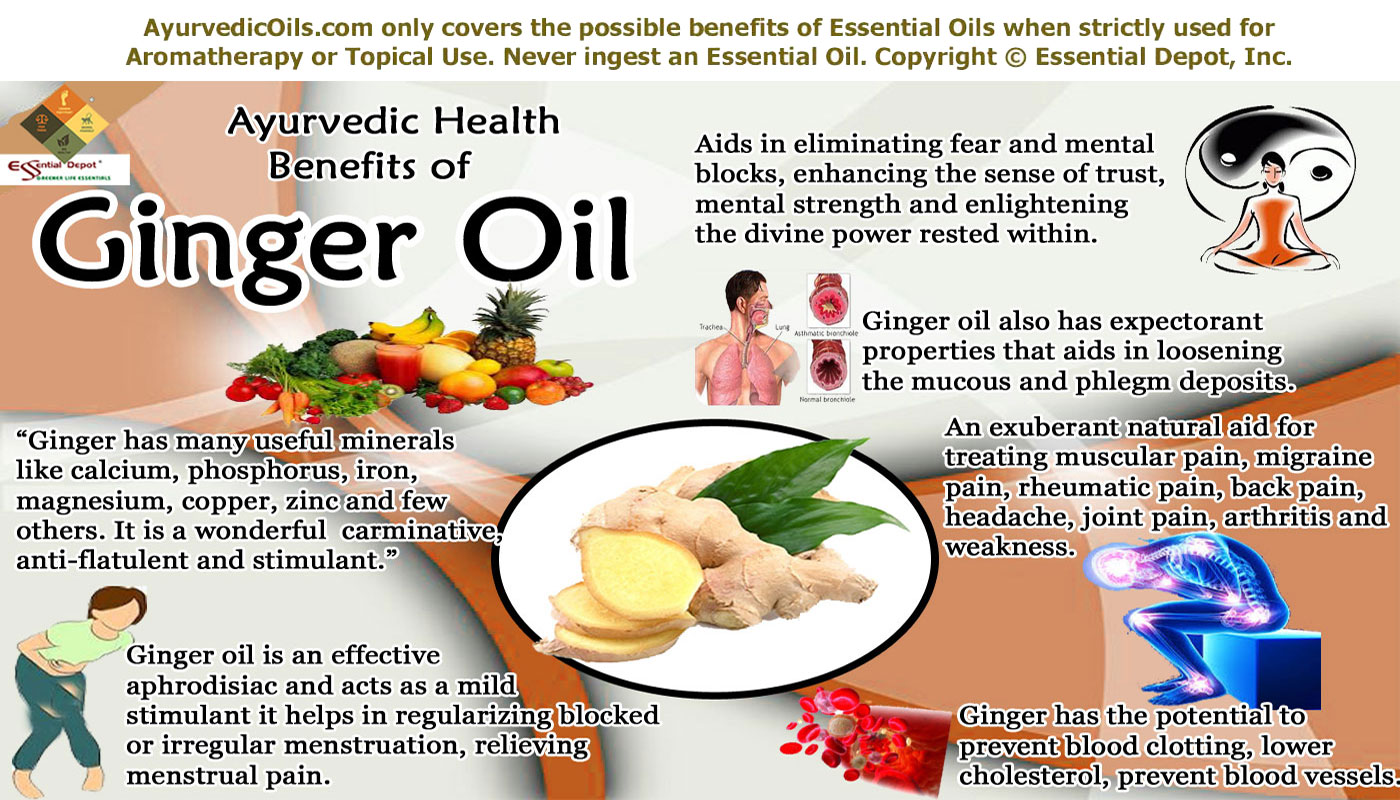
Ginger-oil-broucher1. Benefits to the digestive system:

Ginger is popularly known as Adrak in India and is a quick natural remedy for relieving indigestion, bloating, flatulence, dyspepsia, vomiting, spasms, nausea, loss of appetite, piles and colic.

Dr. Jaishree Bhattacharjee, a renowned Ayurvedic Consultant says, “Ginger has many useful minerals like calcium, phosphorus, iron, magnesium, copper, zinc and few others. It is a wonderful carminative, anti-flatulent and stimulant.”

Ginger essential oil has the potential to increase pitta energy that is responsible for the digestive fire. Add 2 drops of Ginger essential oil to your diffuser or air freshener before meals and let it stay there till you complete your food.

Inhaling the warming aroma of this oil enhances the appetite and improves the process of digestion, supports absorption of essential nutrients by the body and aids in alleviating the toxic substances with its hot potency, but for which the toxins or ama may otherwise cause serious illnesses.

You can also add 2 drops of Ginger oil to warm bathing water before going to bed or before starting a hectic day. This refreshing bath aids in promoting peaceful sleep, free from bloating, indigestion, gastric pain and other digestive disorders. If it is for the morning, Ginger has a handful of bright benefits like stimulating your nerves, rejuvenating your cells, improving your appetite and augmenting your mental power for facing your day to day challenges.

Ginger and its essential oil have been proven best for treating motion sickness even in children. Numerous studies have witnessed the effectiveness of Ginger is better than the effects of dimenhydrate, which is the most important ingredient in over-the-counter motion sickness and seasickness remedies like Dramamine.

It works by stimulating the flow of saliva and other digestive juices, pacifies the stomach, relieves pain due to gas and diarrhea, controls vomiting and supports easy discharge of stools. Mix 1 drop of Ginger essential oil with 10 drops of sesame oil and massage it gently on your stomach and abdomen for treating constipation and motion sickness.

2. Benefits to the mind:

Ginger essential oil is an effective natural remedy for treating emotional problems like fear, abandonment, and lack of self-confidence and of motivation. Using 2 drops of Ginger essential oil in diffuser, aromatic candles or in bath can help in improving memory power, treat mood swings, tendency to procrastinate, disconnectiveness, hopelessness, stress, anxiety, exhaustion, restlessness and depression.

Ginger oil is an excellent stimulant to the mind, body and soul. The encouraging aroma of this oil rekindles the inner fire and grants the power and confidence to step ahead and lead with courage and confidence.

Massaging your upper and lower abdomen (the root, sacral and solar plexus chakra) with 2 drops of Ginger oil with 1 ml of coconut oil aids in eliminating fear and mental blocks, enhancing the sense of trust, mental strength and enlightening the divine power rested within.

3. Benefits to the reproductive system:

Ginger is simply hot to support your intimacy with your partner as it has enormous aphrodisiac properties that have been assisting in the treatment of impotency, loss of libido, loss of sexual interest and premature ejaculation.

Gill Farrer-Halls in his book ‘The Aromatherapy Bible’ states that Ginger oil is an effective aphrodisiac and acts as a mild stimulant also. 2 drops of Ginger oil blended with 1 drop of Sandalwood oil and 1 drop of Rose oil added to your diffuser can drive in the positive energy required both physically and mentally for a complete “we time” together, by toning up the sexual organs and pacifying your mood.

Massaging your lower abdomen with 2 drops of Ginger oil blended with 1 ml of olive oil can be of great help in treating the problems of the female reproductive system by regularizing blocked or irregular menstruation, relieving menstrual pain and treating other problems associated with menstruation like nausea, dizziness, fatigue and mood fluctuations. Inhaling the reviving aroma of Ginger oil can aid in treating nausea and morning sickness during pregnancy.

4. Benefits to the respiratory system:

Ginger essential oil has the power to reduce kapha dosha. According to Ayurveda, excess of kapha energy is the main reason for respiratory problems like bronchitis, cold, sinusitis, asthma and congestion.

Ginger oil also has expectorant properties that aids in loosening the mucous and phlegm deposits and with its antiseptic properties, it assists in curbing the growth of microbes that spread respiratory infections.

Researchers of the Columbia University have proved that the components in Ginger root have properties that help asthma patients to breathe easily. The post-doctoral research fellow in the Columbia University Department of Anesthesiology, Elizabeth Townsend says, “In our study, we demonstrated that purified components of ginger can work synergistically with β-agonists to relax ASM.”

Adding 2 drops of Ginger essential oil in steam inhalation can assist in reducing cough, clear chest and nasal congestion, relieving sinusitis and helping in treating cold and flu symptoms. You can also rub your chest, back and throat with your regular Vapor rub mixed with 1 drop of Ginger oil for quick relief. Even today Ginger tea is a delicious and healthy way to keep away from cold, cough and flu in the Indian kitchens.

5. Benefits to the muscular system:

Muscular pain is a common illness that most of us experience in our day to day lives. Headache, back pain, knee pain and pain all over the body after a strenuous work are not a surprise to many of us.

What we all do is, rush to the pharmacy and grab pain relieving creams and sprays that grant relief. Most of us fail to realize that these over-the-counter remedies give temporary relief only and force us to use them again when the pain peeps out even worse the next time.

Ginger essential oil has anti-inflammatory, anti-rheumatic and analgesic properties that make it an exuberant natural aid for treating muscular pain, migraine pain, rheumatic pain, back pain, headache, joint pain, arthritis and weakness.

Excess of vata and kapha energy in the body lead to swelling, water stagnation, accumulation of toxic substances, inflammation, sore muscles, weakened nerves and muscular tension.

With its potent to reduce vata and kapha dosha and increase pitta or the fire energy, 3 drops of Ginger essential oil blended with 1 teaspoon of almond oil massaged gently on the painful area, spreads warmth in the body, reduces swelling and inflammation by eliminating toxic substances and water deposits from the body through urine and sweat and relieves pain by causing numbness in the painful parts.

6. Benefits to the entire system:

Ginger and its essential oil also act as a heart tonic and helps in improved circulation. According to the University of Maryland Medical Center, few studies have proved that ginger has the potential to prevent blood clotting, lower cholesterol, prevent blood vessels from getting blocked, which may otherwise lead to stroke or heart attack.

Ginger essential oil has antioxidant properties that have been proved efficacious in the prevention and treatment of cancerous cells.  A 2011 study on ‘Antioxidant activity of the volatile oils of Zingiber officinale (ginger)’ published in Spatula-DD, A peer reviewed journal on complementary medicine and drug discovery says “Ginger extracts have reduced total cholesterol, triglycerides and phospholipids levels, as well as cellular cholesterol accumulation, reduce DPPH absorption, scavenge free radicals and it has potential to improve the histopathological lesion occurring in different layers of the arterial tissue. In other word it is effective in attenuating of atherosclerosis development.”

This dominant herb has also been witnessed effective in the treatment of ovarian cancer. A 2006 study by the University Of Michigan Comprehensive Cancer Center presented in the annual meeting of the American association for Cancer Research stated that using Ginger solution (made with Ginger powder and water) on ovarian cancer cells ended up in their death. These cancerous cells died either due to autophagy (attacked/digested themselves) or due to apoptosis (committed suicide).

The book “A Complete Guide To Understanding and Using Aromatherapy For Vibrant Health and Beauty,” says that Ginger essential oil is effective in treating varicose veins and cellulites.

With rich vitamin C, Ginger oil can also help in treating scurvy. Mix 1 drop of Ginger oil with 10 drops of jojoba oil and apply it on the affected area for enhancing the skin health and reducing the symptoms of aging with its antioxidant properties.

Other health benefits:

Ginger essential oil can also assist in treating rheumatism, arthritis, muscular pain, loss of libido, problems of the lymphatic system, sore throat, chills, disconnectiveness, improper blood circulation, increased blood sugar levels, back pain and mood swings.

Disclaimer:

This article is only for the purpose of information and is not meant for treating or replacing any prescription drugs or professional medical advice. Always consult your Ayurvedic practitioner before choosing the right essential oil for your unique health condition and individual constitution.

Never use essential oils internally and always use essential oils in a diluted manner as pure and organic essential oils are highly concentrated liquids and may cause allergic reactions if used directly on the skin. Care should be taken, if you are a pregnant or nursing woman.

Thought for the day:

Deep in their roots, all flowers keep the light.
-Theodore Roethke

Suggested Reading:

  1. Ginger: Common Spice and Wonder Drug by Paul Schulick
  2. A Spoonful of Ginger: Irresistible Health-Giving Recipes from Asian Kitchens by Nina Simonds
  3. The Chopra Center Herbal Handbook: Forty Natural Prescriptions for Perfect Health by David Simon M.D., Deepak Chopra M.D.
  4. Ayurveda & Aromatherapy: The Earth Essential Guide to Ancient Wisdom and Modern Healing by Dr. Light Miller, Dr. Bryan Miller
  5. Ginger Recipes: 33 Mouth-Watering Recipes Using Natures Super Spice for Weight Loss, Health, and Beauty. (The Simple Recipe Series) by Ready Recipe Books

Reference Links:

  1. Ginger by The University of Maryland Medical Center
  2. Ginger Beats Drugs in Defeating Cancer, Motion Sickness and Inflammation by Health Impact News Daily
  3. Ginger is a powerful aphrodisiac and increases sexual prowess by Namini Wijedasa published in infolanka.com
  4. What are the benefits of Ginger? By Medical News Today
  5. Ginger – Ayurveda’s Root To Good Health by Ayurveda Acharya