Tag Archives: Ayurvedic oils for rheumatism

Citriodora Oil

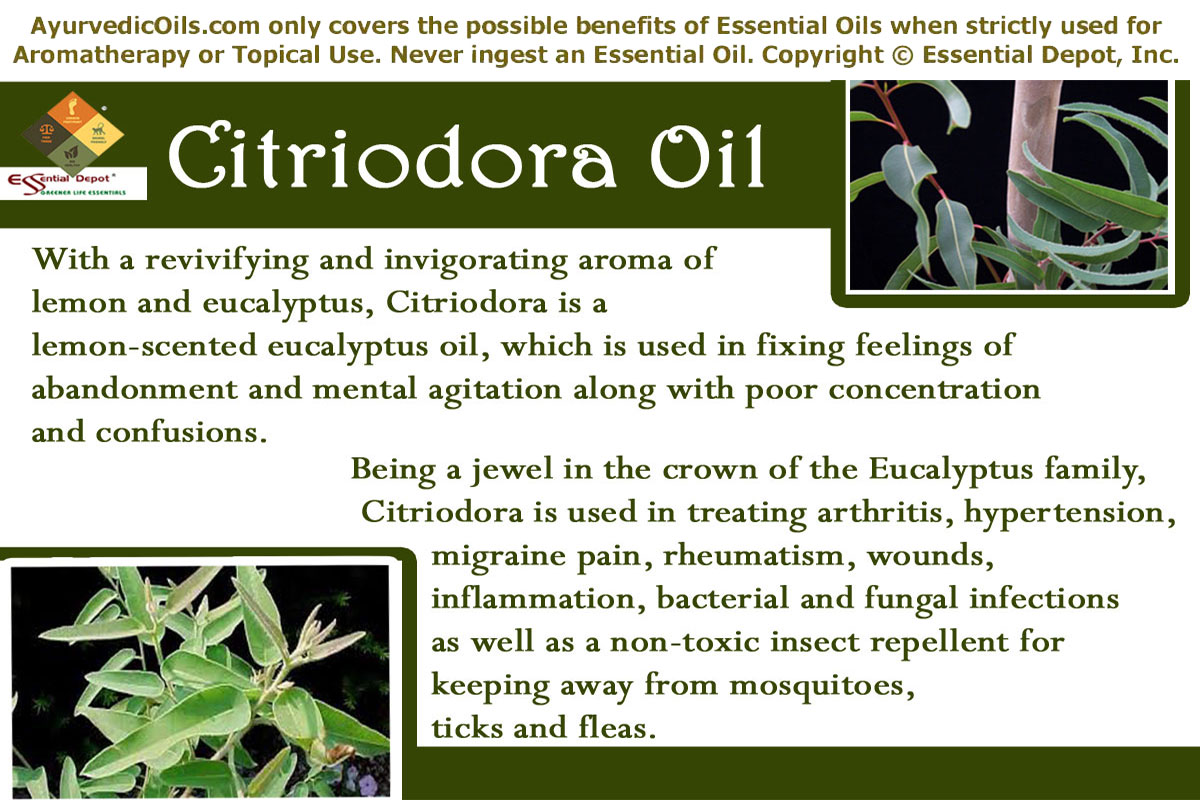
Citriodora-bnr.jpgCitriodora or Lemon eucalyptus is a jewel in the crown of the Eucalyptus family, Myrtaceae. With a revivifying and invigorating aroma of lemon and eucalyptus, this lemon-scented eucalyptus oil is used in fixing feelings of abandonment and mental agitation along with poor concentration and confusions. The essential oil of Citriodora is extracted from the elongated leaves of the Lemon-scented gum tree, botanically known as Eucalyptus citriodora by steam distillation.

Lemon eucalyptus oil is used in Ayurvedic treatment for asthma, cold, cough, arthritis, hypertension, shingles, migraine pain, rheumatism, wounds, inflammation, bacterial and fungal infections as well as a non-toxic insect repellent for keeping away from mosquitoes, ticks and fleas.

Purchase Citriodora Essential Oil – Retail – 4 oz – CLICK HERE

Purchase Citriodora Essential Oil – Wholesale – CLICK HERE 

Historical uses and importance of Citriodora and its essential oil:

Lemon eucalyptus or Citriodora is a type of Eucalyptus tree in the Eucalyptus genus. This tree is indigenous to north eastern and tropical parts of Australia but few sources state that it is native to Vietnam and Madagascar. Even today about 75% of the trees grown in Australia belongs to the Eucalyptus family.

Brazil and China are the largest producers of commercial Lemon eucalyptus essential oil and this tree is also grow in India, South Africa, Guatemala, Egypt, Colombia, Indonesia and Albania. Citriodora is also said to be a cross between lemon and eucalyptus varieties. This large handsome evergreen tree grows up to 50 m tall and the broad lanceolate leaves exhibit a strong lemon and eucalyptus aroma when crushed.

Citriodora has its remedial history of being used in the traditional as well as modern medicine in the east and west, mainly as an aid for respiratory infections and for keeping insects at bay. The infusion made from the leaves of this tree has been used in reducing fever, treating gastric conditions and fighting against microbes causing such infectious diseases in the Aboriginal tradition.

Ayurveda and the Traditional Chinese Medicine (TCM) used the aromatic leaves of this plant in steam inhalation for clearing nasal congestion, easing cold, flu, asthma and sore throat. The paste of this leaves or the leaves poultice were also used in healing wounds, cuts, skin infections, sores, cuts, blisters, chicken pox, joint pain, rheumatic pain, fungal infections and other few other infections.

Lemon eucalyptus oil is a famous ingredient in soaps, aromatic candles, natural insect repellents, lotions, shampoo, toothpastes, deodorants, perfumes, detergents, insecticides, waxes and in the flavoring of few other products since the traditional times.

Remedial properties and chemical components of Citriodora essential oil:

The medicinal benefits of Lemon eucalyptus oil are often attributed to its high content of citronellal component (about 80%). The other chemical constituents include citronellol and other monoterpenes.

The citronellal constituent of the cultured oil is transformed into cis- and trans- isomers of p-menthane-3,8-diols (PMD), which is a natural process that  happens as the Eucalyptus leaves grow old. This oil is also called by other names like Para-menthane-3,8-diol, OLE,  PMD, P-menthane Diol,  Wild Eucalyptus Citriodora, P-menthane-3,8-Diol, Spotted Gum and Quwenling.

The therapeutic properties of this oil are calmative, insecticide, antibacterial, expectorant, diuretic, analgesic, fungicidal, antimicrobial, antiviral, anti-rheumatic, germicidal, anti-inflammatory, disinfectant and antiseptic.

Ayurvedic health benefits of Citriodora essential oil: Ayurveda is the ancient Indian healing methodology which exactly means ‘the knowledge of life (Ayur-life + Veda-knowledge)’. If you are completely new to this oldest healing science on earth, then join for a wonder ride where you can explore what Ayurveda has intact for you.

Ayurveda has thousands of dimensions and everything that is natural and organic falls into this bucket, as Ayurvedic principles abide by Mother Nature and strongly believe that everything in the universe is a part of nature and is built with the same five elements of nature, namely earth, fire, air, water and space.

The most imperative approaches of the Ayurvedic regime are holistic approach, which fervently states that health is a combination of the wellness of the body, psyche and the soul. This is clearly stated in Charaka Samhita, the most trusted Ayurvedic encyclopedia as “The three – body, psyche, and soul – act as a tripod. The world stands upon them, and within them, the world abides.” Ayurveda trusts that a healthy body is the absolute home for a healthy mind and a pure soul.

Spiritual aspects play a vital role in Ayurvedic healing. It has been said a small, sincere prayer can bring in enormous positive energy to deal with a difficult day. Spirituality simply means the trust and the natural bond with the Supreme Power that shells and leads the Cosmos. By inculcating this practice, every individual will understand his responsibilities and righteousness to lead a glorious life.

Ayurvedic philosophies bring in the other few vital practices of Ayurveda that includes prevention of illnesses by treating the root cause of a disease instead of the symptoms. Prescribing natural remedies like herbs, essential oils, meditation, yoga, prayer and a meaningful Ayurvedic routine is the key to this healing wisdom. By this way, it promotes a disease-free living and leads to healthy aging and longevity.

Every Ayurvedic treatment starts with the analysis of the dynamic biological energies that are a pictogram of the five natural elements. They are known as doshas, namely pitta (fire + water), vata (air + space) and kapha (earth + water). These three energies are there in every person in unique ratios to make up the individual constitution. Balance between these doshas indicates health and imbalance leads to sickness.

Ayurvedic therapies are prescribed in such a way that they treat the doshic imbalances and help strike absolute balance according to the Prakriti (fundamental constitution or nature) of an individual. With its moisturizing and heating energy, Citriodora essential oil is known to lessen the excess of kapha and vata energy and increase pitta dosha when deficit.

The Ayurvedic health benefits of Citriodora essential oil are:

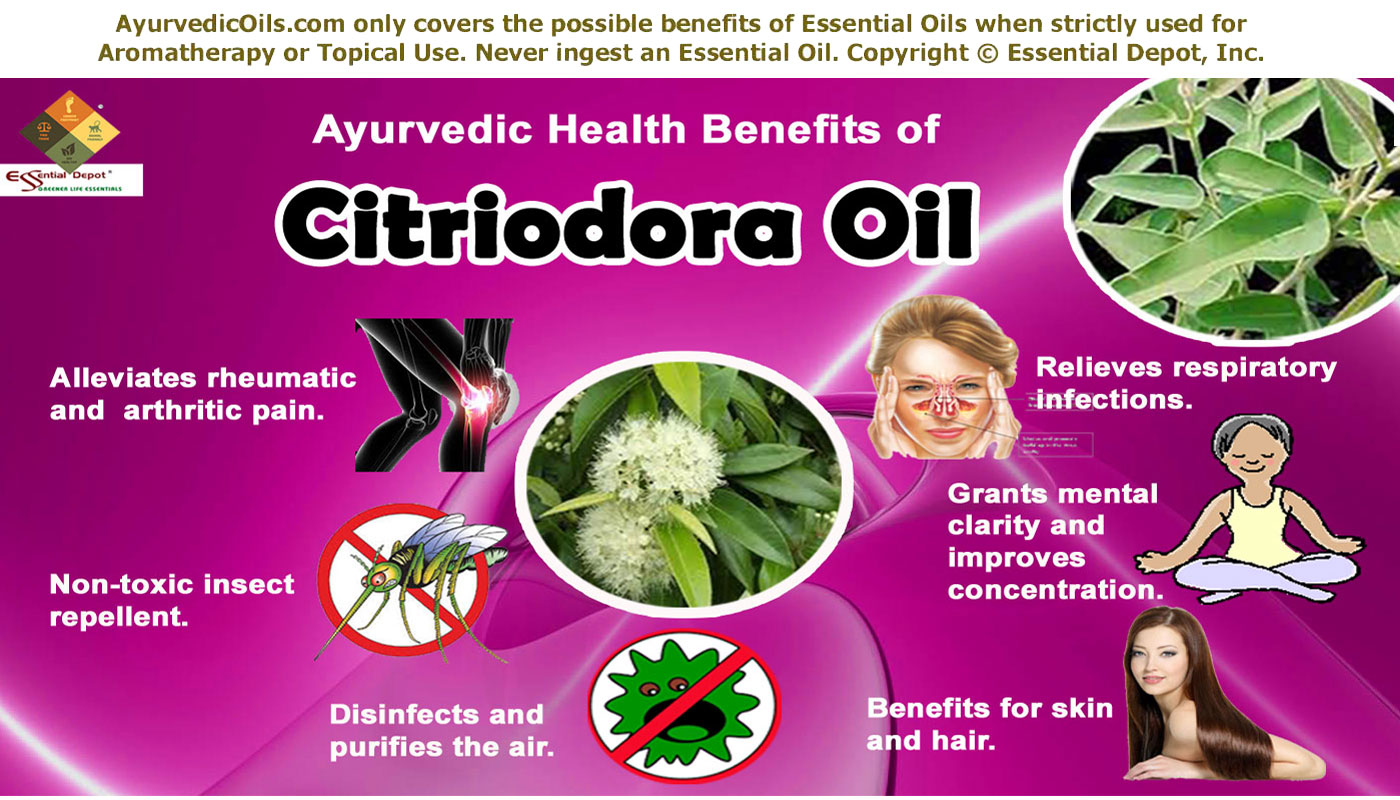
Citriodora-broucher1. Alleviates rheumatic and arthritic pain:

Rheumatism and arthritis are mainly caused due to surplus deposits of toxic substances, salt, uric acid and excess water causing improper blood circulation especially in the joints. Water retention and stagnation of other fluids in the body are the symptoms of kapha intemperance.

Citriodora essential oil treats kapha surplus and regulates its flow in the system. Massaging the affected parts with 5 drops of Citriodora oil blended with 2.5 ml of coconut oil can help in eliminating the excess deposits and toxins through sweat and urine and enhances blood circulation. This massaging can also help in treating sore muscles, joint pain, and backache and can also serve as a vitalizing massage for people indulged in sports.

This oil relieves pain and reduces swelling with its heating effect along with its analgesic and anti-inflammatory properties. Adding 2 drops of Citriodora oil in warm bathing water or in hot or cold compress is also another alternative to treat arthritic and rheumatic pain. Performing Pranayama, the art of balanced breathing can help in discharging about 70% of the toxins in the body through exhalation.

2. Non-toxic insect repellent:

The essential oil of Eucalyptus citriodora is suggested by the FDA (Food and Drug Administration, U.S) as a non-toxic alternate for DEET, which an element used in other repellants, making it unsafe. With a rosy-citronella fragrance and faint lemon undertones, Citriodora essential oil is an ultimate natural remedy for keeping away from harmful insects including mosquitoes, bugs, ticks and fleas.

All you need to do is to add 3 to 4 drops of Citriodora oil in lamp oils, diffuser, lotions, patio sprays, body mists and vaporizers for preventing your lovely family from the adverse effects of insects and pests, which may otherwise cause infectious diseases like malaria, dengue etc.,

3. Relieves respiratory infections:

Problems of the respiratory system become severe when the mucous and phlegm discharges thicken and block the bronchial and nasal passages. Deposits of mucous and phlegm is due to the vitiation of kapha dosha, which is responsible for problems caused due to stagnation of water and fluids in the body.

Citriodora essential oil has kapha-reducing properties along with the antiviral and antimicrobial properties that assist in destroying the harmful virus and microbes responsible for making respiratory infections vulnerable. 2 to 3 drops of this oil added to hot water for steam inhalation helps in loosening the phlegm and mucous deposits.

By this way it helps in relieving chest congestion, nasal congestion, cough, bronchitis, asthma, sore throat and cold. Adding 2 drops of Lemon eucalyptus oil to your decongesting ointment and gently rubbing on your chest, back and throat can fasten your healing process.

4. Grants mental clarity and improves concentration:

Pitta energy is responsible for body temperature, metabolic functions, decision-making potential and for instilling the feelings of perfection in your routine. Deficit of pitta energy or pitta imbalance along with other environmental and lifestyle factors can end up in chaos, poor concentration, sluggishness, lack of self-confidence, lonesomeness and distress.

Eucalyptus citriodora oil enhances pitta energy. It has a positive effect and supports in opening the heart chakra, which is responsible for forgiveness, compassion, love for self and others and the solar plexus chakra that is incharge for feelings of self-empowerment and self-esteem.

Adding 3 drops of Citriodora oil in your burner, vaporizer, diffuser or air freshener can help in improving your self-confidence, focus, shrewdness and clarity of thoughts with its fresh, citrusy, warming, camphoraceous and woody aroma.

Massaging your body with 10 drops of Citriodora oil mixed with 5 ml of olive oil or adding 3 drops of this oil to your bath can help in rejuvenating the mind, body and the soul.

5. Benefits for skin and hair:

Since the traditional times, Citriodora leaves and its essential oil have been used in the treatment of various skin disorders like burns, scabies, wounds, dermatitis and erysipelas. Citriodora oil has antiseptic, antibacterial, antifungal and antiviral properties that help in combating the growth of hazardous micro-organisms causing skin disorders and making wounds, cuts and burns more infectious.

A 2002 study on ‘Correlation between chemical composition and antibacterial activity of essential oils of some aromatic medicinal plants growing in the Democratic Republic of Congo’ by the Department of Pharmaceutical Sciences, Belgium published that Eucalyptus citriodora is one among the most effective essential oils exhibiting the most active antibacterial effects and inhibited the growth of various bacteria.

Another research done in 2007 on ‘The antibacterial effect of Eucalyptus citriodora essential oil against a battery of clinically important bacterial strains’ at the Phytochemical Pharmacological and Microbiological Laboratory in India proved that “Citriodora oil is highly active against Alcaligenes fecalis and Proteus mirabilis, and active against Staphylococcus aureus, Escherichia coli, Proteus vulgaris, Salmonella typhimurium, Enterobacter aerogenes, Pseudomonas testosterone, Bacillus cereus, Citrobacter freundii. Its healing efficiency was said to be equally comparable to the powerful Piperacillin and Amikacin antibiotics.”

As a potent antifungal oil, Citriodora has been proved effective in treating candida. When tested in a laboratory analysis in comparison with other essential oils possessing synthetic antibiotics against candida, Eucalyptus citriodora oil showed strongest anti-candidal properties.

5 drops of Citriodora oil blended with 3 ml of Almond oil and applied to infectious wounds, cuts, blisters, boils, ringworm, candida, athlete’s foot, rashes and redness due to insect stings and bites, acne and few other skin conditions with its eucalyptus and citrusy effects.

Eucalyptus citriodora oil is also a famous ingredient in shampoos, hair oils and few other hair care formulas. 10 drops of Citriodora oil added to 5 ml of coconut oil can serve as an assured remedy for alleviating dandruff, dry scalp, itching and lice, when massaged gently on the scalp followed by a hair wash with a mild shampoo (preferably 8 ml) mixed with 10 drops of Citriodora oil will leave you with a dandruff-free, lice-free, oil-free and clean smelling hair.

6. Disinfects and purifies the air:

Citriodora essential oil has a lemony, fresh, woody and energizing aroma that makes its use imperative in disinfecting, deodorizing and purifying the air. 5 to 10 drops of Citriodora essential oil can be added to your sprayer pump, diffuser, air freshener or vaporizer for killing the microbes in the atmosphere and spreading the magic of freshness around.

Disclaimer:

This article is for the purpose of education only and is not meant for curing, preventing or diagnosing any health condition or for substituting any prescribed medication or professional advice of your medical expert.

Do not use essential oils internally and always dilute essential oils before using it externally. Keep out of reach of children and avoid this oil if you are pregnant or a nursing mom. Ensure that you seek the advice of your Ayurvedic practitioner or healthcare expert before selecting the appropriate essential oil for your unique state of health and individual constitution.

Thought for the day:

Every particular in nature, a leaf, a drop, a crystal, a moment of time is related to the whole, and partakes of the perfection of the whole. -Ralph Waldo Emerson

Suggested Reading:

  1. Eucalyptus: The Genus Eucalyptus (Medicinal and Aromatic Plants – Industrial Profiles) from CRC Press
  2. Eucalyptus Plantations: Research, Management and Development by Run-Peng Wei, Daping Xu
  3. Modern Phytomedicine: Turning Medicinal Plants into Drugs from Wiley-VCH
  4. Phytochemical and Antifungal analysis of E citriodora L. extracts: Phytochemical Constituents of Eucalyptus citriodora L. Responsible for Antifungal Activity against Pathogenic Organisms by Sehrish Iftikhar, Shabnam Javed
  5. Effect of NaCl on emergence and growth of a range of provenances of Eucalyptus citriodora, Eucalyptus populnea, Eucalyptus camaldulensis and Acacia … article from: Forest Ecology and Management] by P.A. Madsen, D.R. Mulligan

Reference Links:

  1. Eucalyptus Citriodora by Globinmed
  2. Eucalyptus oil (Eucalyptus citriodora) by Sigma-Adrich
  3. Oil of Lemon Eucalyptus (PMD) by A Beyond Pesticides Fact Sheet
  4. Extraction of essential oil and oleoresin from Eucalyptus citriodora leaves using sub and supercritical CO2 Mirelle Dogenski*, Ana Carolina Velho, Débora Nascimento e Santos, Nilson Ferreira, Alessandra Lopes de Oliveira, University of São Paulo, Department of Food Engineering, São Paulo, Brazil
  5. Correlation between chemical composition and antibacterial activity of essential oils of some aromatic medicinal plants growing in the Democratic Republic of Congo’ by Cimanga K, Kambu K, Tona L, Apers S, De Bruyne T, Hermans N, Totté J, Pieters L, Vlietinck AJ, the Department of Pharmaceutical Sciences, Belgium

Cypress Oil

“Cypress allows the mind to collect itself and takes people out of sorrow and depression; it regulates female hormones and helps with ovarian cysts”, says Light Miller and Bryan Miller in their book Ayurveda and Aromatherapy.

Cypress-bannerHaving its uses inscribed in the Holy Bible, Cypress essential oil has been used by mankind for more than 4,000 years. Though associated with death and underworld, this tree is known for regenerating the inner soul.

Botanically known as Cupressus sempervirens, Cypress trees bear the Eastern Mediterranean region as their native. As the Greek name Sempervirens means ‘ever living’, Cypress trees are found to be ever living with the oldest known as Sarv-e-Abarkooh being found in Iran’s Yazd Province that is estimated to be of approximately 4,000 years old.

Extracted from the needles and twigs of Cupressus Sempervirens, Cypress essential oil has plenty of reasons to be celebrated as one of the ancient bliss of mankind. It is used in Ayurveda for treating various ailments like cardiovascular problems, cellulites, varicose veins, menstrual problems, cold and other respiratory illnesses.

Purchase Cypress Oil – Retail – 4 oz – CLICK HERE

Purchase Cypress Oil – Wholesale – CLICK HERE

Historical uses and importance of Cypress and its essential oil:

Having mentioned in the Bible as a valuable medical aid for strengthening oneself mentally and physically, Cypress essential oil captures a remarkable position in the list of natural medications.

As quoted in the Bible on Isaiah 44: 14, the verse ‘He heweth him down cedars, and taketh the Cypress and the oak, which he strengtheneth for himself among the trees of the forest: he planteth an ash, and the rain doth nourish it‘ is just enough to sing the glorious history of Cypress.

The wood of Cupressus sempervirens were used in the primordial times for building ships, houses and for making furniture. The doors of the ancient church ‘St. Peter’s Basilica’ in Vatican City is made of Cypress woods. Some of the valuable sources state that the ever-living property of this tree led the Egyptians to make coffin out of Cypress woods and the Greeks to make statues of God. Some Biblical scholars even state that the cross of Jesus Christ has been made of Cypress wood.

Indigenous to Cyprus Island, Cypress trees were initially worshipped as an earthly symbol of the Goddess Beruth. This tree signifies immortality and death in ancient art and literature and is often correlated with meditation and reflection.

Hippocrates, the father of medicine prescribed Cypress for treating hemorrhoids. The significant aroma of this tree is said to grant mental clarity and the cones were used in Traditional Chinese Medicine for curing bleeding gums and other oral problems.

Cypress and its essential oil have been used since ancient times mainly to treat various illnesses associated with the circulatory system. It was also used in treating all types of common diseases ranging from cold, cough, skin diseases and hair loss problems to inflammation in the internal and external parts of the body.

The essential oil of Cypress was also used as an effective perfume agent that spreads the sweet memories of a lovely surrounding. It is for this cause, Cypress and its essential oil are always used in religious rituals and in mourning ceremonies where its healing attributes is believed to calm the mind, strengthen it and assist one in recovering quickly from losses.

Chemical constituents and therapeutic properties of Cypress oil:

Cypress essential oil contains various chemical components, the majority of which are a-pinene, delta carene and limonene. The other constituents include sesquiterpene, a-terpinene, sabinene, carvone, 4-terpinol, b-cymene, carveol, cedrol, a-thugene and santene.

Contrary to its depiction as a symbol of mourning, Cypress essential oil has a handful of health benefits with its astringent, antimicrobial, anti-bacterial, anti-fungal, firming, anti-seborrheic, anti-dandruff, anti-aging, antioxidant, aromatic, antispasmodic, antiseptic, diuretic, vasoconstricting, mucolytic, fluid retention, decongestant, sedative, hepatic and haemostatic properties.

Ayurvedic Health Benefits of Cypress Oil:

Celebrated as one of the 12 sacred oils of Bible, Cypress is also known as one of the oldest trees on earth. It is also used in Ayurvedic healing in the treatment of numerous health disorders for more than 4,000 years.

Ayurveda is held high as the oldest healing system and is adorably called as the mother of all healing sciences including the Traditional Chinese Medicine, Homeopathy, Siddha, Unani, Acupuncture and Chiropractic.

Ayurveda firmly states that all things on earth are a part of nature and nature is made up of five vital elements namely fire, water, earth, space and air. Perfect health symbolizes perfect balance of the human body with nature and illnesses occur when there is imbalance with nature.

Every individual is unique according to Ayurveda with a distinct individual constitution comprising of three biological energies known as doshas. These doshas are nothing but a representation of the five vital elements.

Vata dosha represents air and space, pitta dosha stands for fire and water and kapha symbolizes water and earth. Just like nature, human body is also made up of five elements where earth is the physical structure of the body, fire is the force supporting body temperature and metabolism, water is the blood and other vital fluids, air is what we breathe and space is the soul that rests within us.

Every person has a predominance of any one of these doshas and it determines the personality, character and behavioral attributes. Balance between these doshas represents health and heartiness and imbalance causes sickness.

Ayurvedic remedies like essential oils, herbs, healthy balanced diet, yoga, prayer, meditation and Ayurvedic routine progresses towards striking balance between these doshas.

Cypress essential oil is said to lessen increased kapha and vata dosha and pacifies pitta dosha.

The Ayurvedic health benefits of Cypress oil are:

Cypress broucher1. Alleviates respiratory ailments:

As a natural tonic for smooth respiration, Cypress essential oil is effective in curing various respiratory illnesses like whooping cough, spasmodic coughs, cold, flu, sore throat, emphysema, influenza and bronchitis.

The explicit antimicrobial, anti-bacterial, anti-fungal and decongestant properties of this oil greatly attribute in toning up the respiratory system by freeing it from infectious microbes and increase the effectiveness of the lungs simultaneously.

A 2012 study on the chemical composition and antibacterial and antioxidant activities of Cypress essential oil states that it fights actively against infectious microbes like Pseudomonas aeruginosa,  Escherichia coli, Staphylococcus aureus, Bacillus subtilis, Halomonas elongate and Salmonella typhimurium and thus it can be readily used as an antimicrobial and antioxidant agent.

2 to 3 drops of Cypress oil added to warm bathing water or in steam inhalation assists in loosening heavy mucus and phlegm deposits in the nasal passages and respiratory tract.

Adding 1 drop of Cypress oil with cold rubs or ointments and massaging it gently on your chest, throat and back followed by steam inhalation helps in treating cough, cold, sore throat and flu by reducing the inflammation and irritation caused due to infection.

2. Enhances the human circulatory system:

Cypress essential oil is an exuberant natural medication that enriches the human circulatory system and helps in its better functioning. It is held high as one of the most commonly used essential oils for the circulatory system.

Cypress essential oil helps in improving circulation by strengthening the blood vessels and capillaries. Good circulation results in the supply of nutrients to the entire body, hormonal balance, a stabilized body temperature and a good immune system.

Few of the complicated diseases like cardiovascular problems and hypertension can be kept away with proper blood circulation.

Massaging your body with 6 drops of Cypress oil blended with 5ml of coconut oil can help in treating a variety of circulation problems like low blood pressure, hemorrhoids, hair loss, varicose veins and hormonal imbalances.

Regular massaging has been proved effective in treating baldness, curing broken capillaries and checking the proper functioning of blood vessels.

3.  Controls inflammation:

Inflammation in the muscles, veins, capillaries and blood vessels causes pain and irregular flow of blood to various organs of the body. Being an anti-inflammatory agent Cypress essential oil effectively reduces the inflammation in various parts of the body.

Adding 2 drops of Cypress oil in warm bathing water or in massaging blend can help in the treatment of varicose veins, hemorrhoids, muscular pain and inflammation of the respiratory system.

4. Helps in tightening the human cells:

Aging symptoms force most of the people to lose their beauty and confidence gradually. Cypress essential oil is a wonderful astringent that helps in strengthening and tightening the human cells, the outcome of which is strong gums and teeth, less hair fall, youthful skin and it also aids in retaining perfect structure.

2 drops of Cypress oil blended with mild skin care cream or 1 ml of virgin olive oil and massaged slowly into the skin in circular motion helps in tightening the sluggish, wrinkled and lifeless skin.

This property also assists in contracting blood vessels to prevent loss of blood and promotes blood clotting. Cypress essential oil is also found to be effective in treating nose bleeds and other severe wounds that result in huge blood loss.

5. Helps in getting rid of excess fluid in the body:

Human body comprises of more than 50% of water and appropriate level of fluid in the body determines active functioning of the system. Excess water content might lead to obesity, sluggishness, swelling, rheumatism and respiratory problems.

Being diuretic in nature, Cypress essential oil helps in eliminating the toxic substances such as acid, urea, salts and excess fluid by increasing the frequency and quantity of urine. Less urination results in accumulation of toxins in the body and might lead to increased cholesterol level, malfunctioning of kidneys and rise in blood pressure.

Cypress essential oil is often recommended to treat problems with kidneys and high blood pressure. It is also a sudorific and helps in excreting the toxins from the body in the form of sweat and perspiration by opening up the sweat glands. It was used in folklore medicine for treating rheumatism, cold, swelling in the legs, diarrhea, acne and few other skin problems.

Gently massaging the foot sole or the affected parts of the body with 2 to 3 drops of Cypress oil mixed with 1 ml of sesame oil or adding 2 drops of Cypress oil in warm bathing water can help in discharging excess water deposits, toxic substances and promote urination and sweating.

6. Heals wounds quickly:

Infectious microbes play a major role in making wounds septic. Cypress essential oil is an excellent antiseptic and antibacterial agent that fights against the disease causing micro-organisms and help in quick healing of wounds. It is for this reason that Cypress oil is often used in making antiseptic ointments, creams, lotions and hair care products. Mix 1 drop of Cypress oil with 10 drops of coconut oil and apply it topically for treating external wounds.

7. Aids womanly problems:

Cypress essential oil plays a prominent role in helping woman to get rid problems associated with menstruation and menopause. Add 2 drops of Cypress oil with 1 ml of sesame oil and massage it on your lower abdomen treating menstrual pain, heavy blood flow, irregular periods, mood swings and anxiety.

With its unique healing properties, this natural massage regulates the blood flow in the pelvic area thus relieving blocked menstruation and regularizing hormonal imbalances. The pacifying aroma of Cypress oil also aids in relaxing the mind and calming the soul.

8. Calms the mind and results in inner peace:

Cypress essential oil acts as a sturdy support that makes you stronger both mentally and physically. It relaxes the nervous system and makes you calm during times of anger, anxiety, abandonment and fear. It makes you feel mentally strong and helps to recover from heavy losses.

For these immortal values, Cypress essential oil remains as a symbol of mourning since ancient times. To sense the touch of absolute peace and sacredness, add 2 drops of Cypress oil to your diffuser, vaporizer or burner during any time of the day.

Other health benefits of Cypress Oil:

Few sources state that Cypress oil has hepatic properties that help in proper functioning of the liver by regulating its production of enzymes. It cleanses the liver and frees it from toxins thus helping in the treatment of jaundice, indigestion and other liver problems.

Cypress oil is well known for its aroma and is used in perfume industry to make perfumes, deodorants, room fresheners, soaps and beauty care products. With its antimicrobial properties, it is also used in making powerful insect repellents.

Disclaimer:

This article is for educational purpose only and is not meant for treatment or for replacing any prescribed medication or professional medical advice. Never use essential oils internally and also dilute essential oils before using it topically as pure and organic essential oils are highly concentrated substances that can cause harm if used directly on the skin. Consult your Ayurvedic practitioner before choosing the right essential oils for your unique health condition and individual constitution.

Thought for the day:

The poetry of the earth is never dead. – John Keats

Suggested Reading:

  1. HEALING POWERS OF CYPRESS OIL (The Aromatherapy Professional: Healing with Essential Oils) by KG Stiles
  2. The Cypress Tree by Kamin Mohammadi
  3. Essential Oils and Aromatherapy: How to Use Essential Oils for Beauty, Health, and Spirituality by Gregory Lee White
  4. Aromatherapy for Healing the Spirit: Restoring Emotional and Mental Balance with Essential Oils by Gabriel Mojay
  5. Aromatherapy for Women: A Practical Guide to Essential Oils for Health and Beauty by Maggie Tisserand

Reference Links:

  1. Cupressus Sempervirens by Wikipedia
  2. Chemical composition of Cupressus sempervirens published in PubMed.
  3. Study on the Chemical Composition, Antibacterial and Antioxidant Activities of Cupressus sempervirens published in the Journal of Agricultural Science.
  4. 120 Uses of the twelve oils of ancient scripture by Sharing Great Health Inc.

Garlic Oil

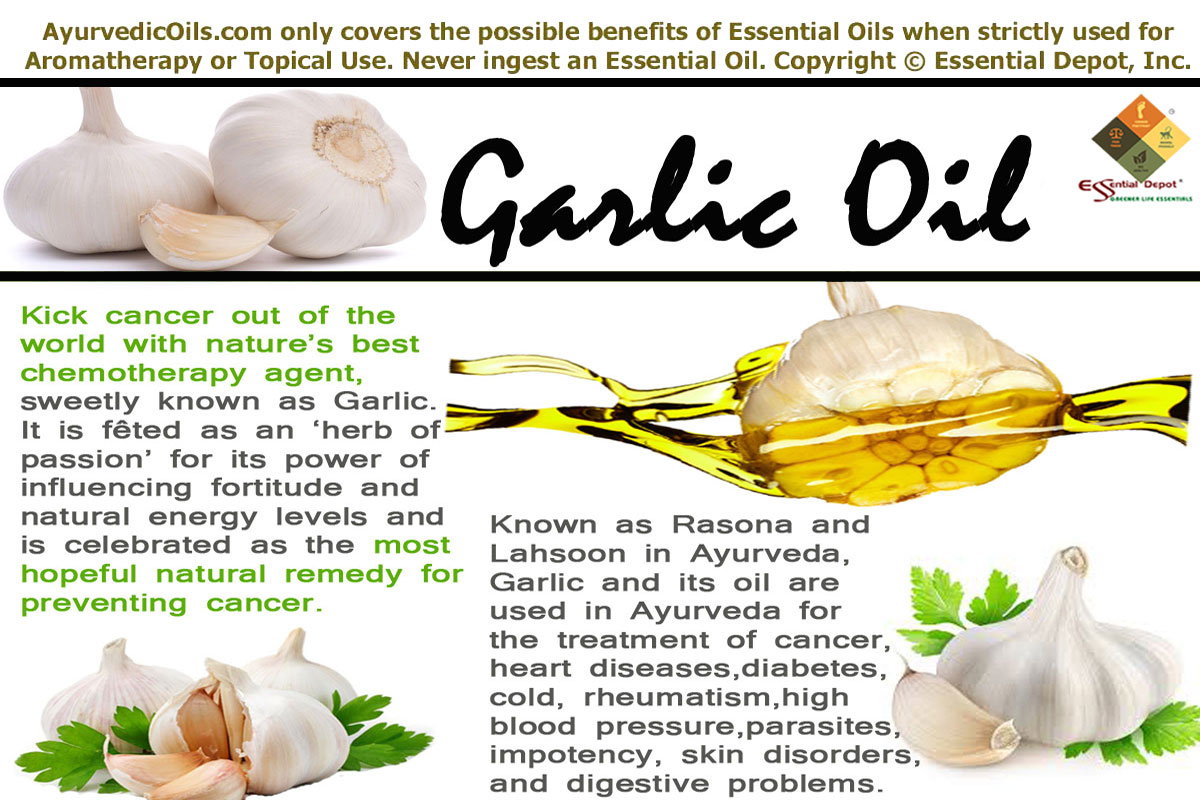
Garlic-bannerKick cancer out of the world with nature’s best chemotherapy agent, sweetly known as Garlic. It is fêted as an ‘herb of passion’ for its power of influencing fortitude and natural energy levels and is celebrated as the most hopeful natural remedy for preventing cancer.

Besides being called as the stinking rose with its pungent and not so pleasing aroma, Garlic has a long medicinal  history in various traditions across the world and is also known as ‘cure-all’ for its ability to treat illnesses of the nervous system, circulatory system, digestive system, reproductive system and the respiratory system.

Botanically called as Allium sativa, Garlic has its origin in India and its essential oil is extracted from the bulbs through steam distillation method. Known by the name Rasona, Lahsoon and Yavanesta in Sanskrit, Garlic and its essential oil are used in Ayurveda for the treatment of cancer, heart diseases, diabetes, cold, rheumatism, high blood pressure, parasites, impotency, skin disorders, digestive problems, mental disturbances, fluid retention and joint problems.

Purchase Garlic Oil – Wholesale – CLICK HERE

Historical uses and importance of Garlic:

Garlic is perceptibly a spectacular herb/vegetable with the human use of more than 7,000 years and is a member of the onion family, Allium. Indigenous to the central parts of Asia, Garlic is by far the most promising herbal remedy with the longest historical use. Its uses have been mentioned in various herbal guides by celebrated herbalists and physicians like Dioscorides, Galen, Hippocrates and Pliny the Elder, especially for treating digestive disorders, respiratory problems, wounds and low immune power.

The ancient Hindu mythology states that Garlic is a sacred herb grown from the drop of nectar (Amirtham – Elixir of life) spilled on earth when Lord Garuda took away the pot of nectar from Lord Indra to save his mother from evil powers. It is still believed that because of the divine qualities of the nectar, Garlic has innumerable healing properties and was named as Rason, meaning King of Rasas (It is also said that Garlic has 5 out of 6 prominent tastes in Ayurveda).

Another interesting historical reference is that Garlic was grown in the hanging gardens of Babylon and it was considered as an herb of empowerment for which it was given to Roman soldiers before the battle. The traditional European fishermen used to wear garlands made with Garlic cloves to guard themselves from sickness and evil spirits.

Garlic was the most primitive herb used as a ‘performance uplifting’ agent and was given to the Olympic athletes in primordial Greece. It is also said that Garlic was used during the construction of the Giza pyramids before 5,800 years. It was also used in Nepal, Middle East and eastern parts of Asia for treating tuberculosis, bronchitis, rheumatism, fever, flatulence, colic, liver problems, intestinal worms, hypertension and digestive problems.

It is a part of most of the delicious cuisines all over the world as a spice, condiment or seasoning for its strong aroma and the flavor it adds to any dish especially the non-vegetarian food varieties. Garlic bread, garlic chicken, crostini, garlic toast and many other Asian and Mediterranean cuisines are crowned with the rich flavor of this wonder herb.

Therapeutic properties and chemical constituents of Garlic essential oil:

Garlic oil is known for its carminative, antibacterial, aphrodisiac, antioxidant, immune-booster, anticancer, antibiotic, expectorant, antispasmodic, disinfectant, anti-carcinogenic, antithrombotic, stimulant, anti-arthritic, antiviral, rejuvenative, anti-hyperlipidaemic and alterative properties.

The major chemical components that contribute to the healing values of Garlic oil are selenium, allicin, alliin, phytoncide, S-allylcysteine thiacremonone, ajoene and diallyl polysulphides.

Ayurvedic health benefits of Garlic essential oil:

Disease, aging and death are the three major causes of concern for mankind and have been attracting the attention of medical researchers, philosophers and heath care experts from all over the world since ages.

Ayurveda, the holistic healing methodology aging about 5,000 years aims at attaining longevity through healthy aging and prevention of illnesses. This ancient remedial science strongly states that absolute health is a medley of physical, mental and spiritual well-being.

This Vedic system strongly considers human body as a temple and relates the divine power with the soul that rests within. According to this philosophy all things on earth are a part of nature and are made up of the five vital elements of nature, namely earth, water, air, fire and ether.

Every person is a unique creation with a unique individual constitution that embraces three vital biological energies called as doshas. These energies are just a meaningful representation of the elements of nature.

Kapha dosha symbolizes earth and water and is in charge of the physical structure and sustenance of the body, the imbalance of which leads to obesity and respiratory problems. Vata dosha is a combination of air and ether and is responsible for circulation, movement and respiration and vata vitiation causes neurological disorders, nervous problems, breathing difficulties and menstrual difficulties.

Fire and water combine together and represent Pitta dosha, which is responsible for body temperature, digestion and other metabolic functions. Lack or excess of pitta dosha might end up in fever, indigestion, constipation, heartburn, ulcer and other digestive disorders. Balance between these three doshas contributes to healthiness and imbalance of any one or all the three doshas cause illness.

Ayurvedic remedies aim at treating the doshic imbalances with the help of herbs, plant essential oils, yoga, meditation, Ayurvedic routine, prayers and simple physical exercises. These remedies vary from individual to individual based upon their unique individual constitution and state of health.

Garlic is one among the ancient Ayurvedic remedies for treating various health conditions and have been a vital part of numerous Ayurvedic preparations. The book on ‘Ayurveda and Aromatherapy’ by Bryan Miller and Light Miller quotes Garlic as a highly rejuvenative oil, especially for the nerve tissue. Garlic oil is good for increasing pitta dosha and lessening excess of vata and kapha energies.

The Ayurvedic health benefits of Garlic oil are:

Garlic-broucher1. Excellent aid to digestive disorders:

From Stone Age to this contemporary era, Garlic is a promising home remedy for assisting problems associated with digestion. 2 to 3 cloves of Garlic boiled in a cup of water can be a sure shot remedy for treating indigestion, sluggishness, diarrhea, nausea and gastric troubles. It is regarded as a great natural medicine for supporting digestion by stimulating the appetite and enhancing the process of metabolism.

Imbalance or vitiation of pitta dosha is the major reason for digestive disorders. Garlic has the ability to increase pitta energy and regularizes Agni or the digestive fire and other metabolic functions.

Adding 1 drop of Garlic oil to your handkerchief or tissue and inhaling this strong aroma or mixing 2 drops of this oil with 1 ml of coconut oil can help in fighting against intestinal parasites, inflammation in the stomach and intestines, treat colitis, infectious diseases, stomach upset, dysentery and food poisoning.

This oil works effectively against food poisoning by combating harmful bacteria like Salmonella enteritidis and E.coli, which are responsible for food poisoning and other stomach infections. It acts by penetrating through the skin cells and entering the blood stream, where it passes on its remedial properties to the system.

2. Fights against cancerous cells:

Garlic oil has anti-oxidant, anti-carcinogenic, antithrombotic and anti-cancer properties, which help in preventing the growth of new cancerous cells in the body and curtailing the growth of existing cancer cells in the body. Numerous researches and studies have proved the potent of Garlic and its extracts in treating various types of cancer ranging from brain cancer to prostate cancer.

Garlic is first on the list of potential cancer-preventative foods by the American National Cancer Institute and the American Journal of Nutrition issued on October 2000 had published numerous epidemiologic studies stating that the people who used Garlic and its extracts regularly had only a lesser amount (1/3rd) of risk of colorectal cancer and not as much of risk of stomach cancer when compared to people who took little or no Garlic or its extracts.

The presence of numerous (30+) powerful anti-cancer and antioxidant compounds in Garlic oil including ajoene, diallyl sulphide, quercetin and alliin have the power to wedge cancer creating agents like aflatoxin and nitrosamine associated with liver, lung and stomach cancer. These components work like a natural chemotherapy agent and have been proved in various studies for impeding the growth of malignant cancer cells.

A 2008 study on the ‘Anticancer effects of diallyl trisulphide derived from Garlic’ suggest “diallyl trisulfide is responsible, at least in part, for the epidemiologically proven anticancer effect for garlic eaters.” It is also said that the diallyl sulphide in Garlic is known to curb the conversion of PhIP, which is a kind heterocyclic amine that has been related with the increased cause of breast cancer in women.

A report on Garlic and Cancer prevention published in the National Cancer Institute website states five strong reasons for using Garlic to prevent cancer. They are “Protective effects from garlic may arise from its antibacterial properties or from its ability to block the formation of cancer-causing substances, halt the activation of cancer-causing substances, enhance DNA repair, reduce cell proliferation, or induce cell death.”

The best ways to use Garlic for cancer prevention is to add 2 to 3 cloves of raw or cooked Garlic in your diet along with a soothing massage with 2 drops of Garlic oil blended with 1 ml of virgin olive oil for promising results.

3. Controls hypertension and protects the heart:

Garlic is a rich source of allicin and it controls the function of angiotensin II, which is a protein that aids the contracting of blood vessels thus increasing the blood pressure gradually. Along with this, the red blood cells in our body convert the polysulphides in Garlic into hydrogen sulphide, which expands the blood vessels and assists in controlling high blood pressure.

Garlic oil acts as a protective shield for the heart by protecting it from hypertension, atherosclerosis, heart attacks and certain other cardiovascular problems. The sulfur-based compounds present in Garlic controls the blood vessels from being blocked and support the functioning of arteries that gradually lose its potent with age. This oil also guards the heart from the harmful damage of free radicals with its antioxidant properties.

By this way, regular use of Garlic oil and Garlic cloves help in slowing down atherosclerosis (thickening of the arteries). This oil reduces platelet aggregation and relaxes the walls of the blood vessels by stimulating the production of nitric oxide.

It is also a potent anti-clotting agent with the presence of ajoene that curbs the formation of blood clots in the blood vessels. A study published in the Journal of Agricultural and Food Chemistry says, “Garlic oil possesses significant potential for protecting hearts from diabetes-induced cardiomyopathy.

Inhaling the aroma of Garlic oil with 1 drop of this oil added to tissue or massaging your chest with 2 drops of Garlic oil blended with 1 ml of olive oil can assist in treating atherosclerosis, blocks in the blood vessels, heart attacks, high blood pressure and other cardiovascular disorders along with the strengthening of cardiac muscles.

4. Keeps respiratory infections at bay:

Cold, flu, cough and other respiratory infections are mainly due to the excess of kapha dosha. Garlic oil has the natural warmth in its essence and it lessens the excess of kapha energy. This oil also has antibiotic, expectorant, decongestant, antiviral and antibacterial properties that work together to curtail the growth of harmful micro-organisms that worsen respiratory infections.

Add 2 drops of Garlic oil in steam inhalation and inhaling this healing aroma and massaging your chest with 1 drop of Garlic oil mixed with vaporub or ointments can be of great aid in treating and preventing common cold, whooping cough, asthma, chronic bronchitis and breathing difficulties.

5. Reduces cholesterol and checks obesity:

LDL (bad cholesterol) and lower serum triglycerides are the worst enemies of the human body. Garlic oil aids in maintaining HDL or the good healthy cholesterol and decreasing the level of bad cholesterol thus it lessens total cholesterol levels in the body, blood triglycerides and decreases the formation of arterial plaque.

Along with this, Garlic oil also assists in controlling the formation of fat cells and helps in eliminating the excess deposits of water, salts, fat and other toxic substances contributing to obesity. It prevents weight gain with its anti-inflammatory property mainly due to the presence of 1, 2-DT (1, 2-vinyldithiin) in Garlic.

Massaging your body with 5 drops of Garlic oil mixed with 3 ml of sesame oil aids in dissolving fat cells and discharging excess water and toxic deposits from the body by promoting frequent urination and sweating. This massaging can also be useful in reducing inflammation in case of arthritis and rheumatism.

6. Strengthens your immune system:

Garlic oil is an effective immune booster with the presence of various nutrients like vitamin C, B1, B2, B3, B5, B6 and B9 along with magnesium, iron, calcium, phosphorus, zinc, sodium, protein, potassium and carbohydrates, all of which make Garlic a potent powerhouse. The antioxidant property of this oil fights against aging symptoms and protects the body from the hazardous effects of free radicals.

As a powerful antiviral, antifungal, antibiotic and antibacterial oil, Garlic has a positive effect on the immune system by acting as a police force that fights against destructive microbes and infectious diseases spread by them. Inhaling the spicy aroma of Garlic oil by adding 1 drop of this oil to your diffuser can help in activating the white blood cells and the immune system, through which it increases the body’s resisting capacity against various diseases.

7. Stimulates your system:

Ayurveda classifies food into three major categories namely rajasic (fiery), sattvic (fresh and pure) and tamasic (flawed).  Amadea Morningstar says “Energetically, rajasic foods stimulate more fire, aggression, passion. They are good foods for stirring up trouble or spurring on the dragons within.”

Garlic is a rajasic food that awakens, influences and stimulates the inner power and passion. It is said to bring consciousness and awareness in the body. It is for this property, Garlic and its essential oil is said to treat sexual disorders like impotency and other reproductive problems. Add 1 drop of Garlic oil in vaporizer or aromatic candles and inhale the aroma for enhancing the natural levels of energy in the body and to rekindle your spirit.

Other health benefits:

Garlic oil is also an excellent remedy for treating pimples, blackheads, acne, athlete’s foot and wrinkles. It is also said to prevent scurvy, due to its high content of Vitamin C and beriberi with its power to enhance thiamin absorbing capacity in the body and reduce the level of blood sugar in diabetes mellitus patients.

Disclaimer:

This information is only for the purpose of education and is not intended to diagnose or substitute any prescribed medication or professional medical advice. Never take essential oils internally and always remember using essential oils topically in a diluted form only, as pure and organic essential oils are highly concentrated substances and may cause harmful effects if used directly on the skin. Seek advice from an Ayurvedic professional before selecting the right essential oil for your state of health and unique individual constitution.

Thought for the day:

Let the gentle bush dig its root deep and spread upward to split the boulder.
-Carl Sandburg

Suggested Reading:

  1. Garlic, Garlic, Garlic: More than 200 Exceptional Recipes for the World’s Most Indispensable Ingredient by Linda Griffith, Fred Griffith
  2. Garlic: Nature’s Original Remedy by Stephen Fulder, John Blackwood
  3. Garlic: The Mighty Bulb by Natasha Edwards
  4. The Complete Book of Garlic: A Guide for Gardeners, Growers, and Serious Cooks by Ted Jordan Meredith
  5. Garlic and Other Alliums: The Lore and The Science by Eric Block

Reference Links:

  1. Garlic by Wikipedia
  2. Garlic and Cancer Prevention by National Cancer Institute
  3. What are the benefits of Garlic? by Medical News Today
  4. All About Garlic by MAS Ayurveda
  5. Anticancer effects of diallyl trisulfide derived from garlic by Seki T, Hosono T, Hosono-Fukao T, Inada K, Tanaka R, Ogihara J, Ariga T, Department of Applied Life Sciences, Nihon University Graduate School of Bioresource Sciences, Fujisawa, Japan published in PubMed

Fir Needle Oil

Fir needle oil is indeed a sacred oil and is known as the forest healer for its immaculate medicinal uses that sanctify one with an array of health benefits and heartiness. Used as a primordial remedy for treating cold, cough, joint pains and muscular cramps, this highly spirited oil purifies the air and gifts us with a heavenly and infection-free atmosphere.

Fir-needlle-bannerFir Needle oil is extracted from the needle like leaves of Silver fir tree, scientifically known as Abies Alba. It has also been said that Fir needle oil is also extracted from the needles of the Balsam fir tree botanically called as Abies Balsamea and these trees belong to the pine family Pinaceae.

Ayurveda prescribes the use of Fir Needle oil in Abhyanga, the art of Ayurvedic massaging and other remedial practices for treating rheumatism, joint pain, sinusitis, muscular cramps, skin problems and other problems associated with the lymphatic system and the respiratory system.

Purchase Fir Needle Oil – Retail – 4 oz – CLICK HERE

Purchase Fir Needle Oil – Wholesale – CLICK HERE

Historical uses of Fir needle and its essential oil:

Fir needle tree and its various extracts have a long history for its enormous remedial values. The fresh balsamic scent of this tree makes you feel like walking in a forest and reminds of the captivating Christmas Eve.

Fir needles have the real power to purify the air and the soul with its disinfecting and calming properties. And it is for these great reasons; fir needles were burnt in the past after childbirth, to impart good health for the mother and the newborn. The pitch of the tree was used to treat womanly problems like menstrual irregularities. Various parts of the fir trees when mixed with other medicinal herbs were used to treat cancer, tuberculosis and rheumatism.

Poultices made with Fir needles were used in folklore medicine for relieving arthritis, rheumatism and muscular pain. The gums of fir trees were used to prepare ointments to treat itches, sores, wounds, insect bites, boils and infections. The decoction extracted with the bark was used for curing kidney problems and the roots were used in the treatment of heart diseases and rheumatism.

Native Americans widely used fir needles for padding the pillows for peaceful sleep and they also used it as a sudatory for women after childbirth. Fir Needle essential oil is utilized in the manufacture of cosmetic products, perfumes, bath oils, air fresheners, aerosol inhalants and incense. Ancient Egyptians used Fir needle oil to prepare hair growth formula that would elevate and energize the root of the hair when massaged onto the scalp.

Chemical constituents or Gas Chromatography Report (GC) of Fir Needle oil:

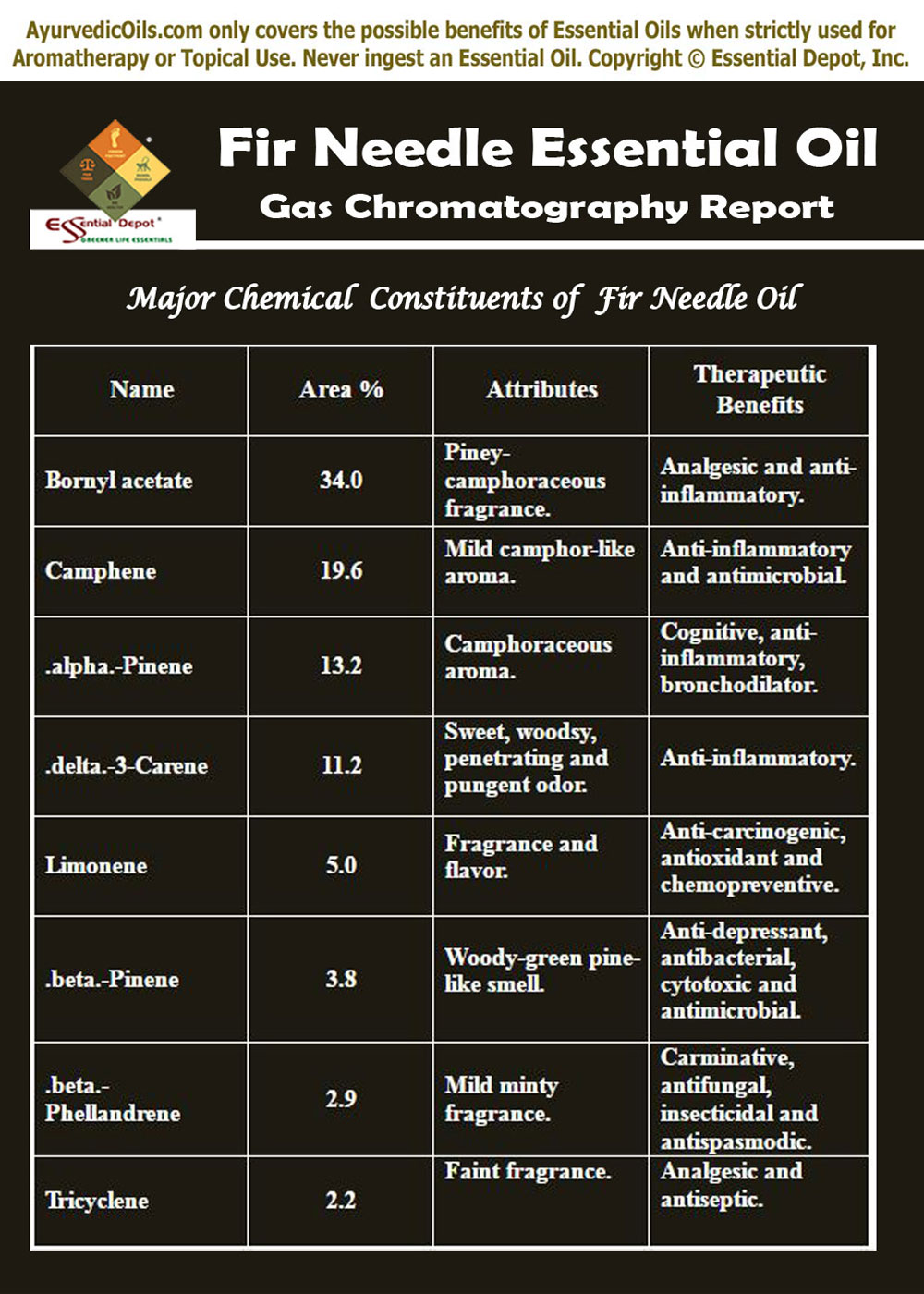
According to the Gas chromatography report, Fir Needle oil constitutes of 17 chemical components that contribute to its fragrance, therapeutic attributes, consistency and quality of this oil. Of which, Bornyl acetate contributes to the highest proportion of Fir Needle oil constituents with about 34% of its total composition.

Just click on:

I believe that this must certainly help you in getting to know the exclusive information about these prime chemical constituents of Fir Needle oil.

The table crafted below clearly depicts the unique nature and contributions of these biochemical constituents to the healing magnificence of Fir Needle essential oil.

fir-needle

Therapeutic properties of Fir Needle essential oil:

Fir needle essential oil has numerous effective chemical compounds and the majority of which is monoterpenes. The other constituents include sesquiterpenes, beta-pinene, delta-3-carene, alpha-pinene and terpene ester bornyl acetate, where beta-pinene and delta-3-carene have effective anti-bacterial properties.

The therapeutic properties of Fir needle essential oil are anti-inflammatory, anti-bacterial, anti-fungal, antiseptic, antiviral, invigorating, stimulating, analgesic, anti-tussive, diuretic, antioxidant, astringent, energizer, aromatic, expectorant, deodorant, stimulant and tonic.

Ayurvedic health benefits of Fir Needle essential Oil:

Ayurveda is a common sense science that has a strong reason for everything that pertains to human health. It simply preaches that health is the outcome of one’s harmony with nature and illness occurs when things does not act in sync with nature. This 5,000 years old ancient science aims at striking balance between human health and nature with the use of natural remedies including essential oils, herbs, yoga, Ayurvedic routine, simple physical exercises, meditation and prayers.

Ayurveda is adorably called as the mother of all healing sciences for its brilliance in treating the root cause of an illness rather than just treating its symptoms. By this way, it helps in curing the sickness initially and prevent it in future as well. Charaka Samhita, one among the greatest Ayurvedic encyclopedia states “The three – body, psyche, and soul – act as a tripod. The world stands upon them, and within them, the world abides.

Ayurvedic treatments are not the same for every person as Ayurveda strongly believes that every individual is distinctive with a unique individual constitution just like our thumb impression. So it says that illnesses of individuals should also be treated in a unique manner.

This constitution comprises of three biological energies known as doshas, namely vata, pitta and kapha. These doshas are a combination of five elements of nature, which are fire, water, air, earth and space.

Just like nature, our body also has all the five elements. Where vata represents air and space and is responsible for movement. Pitta stands for fire and water and is accountable for transformation of energies. Kapha symbolizes earth and water and is in charge of structure and fluids in the body.

Perfect health is determined with the balance of all these three doshas and imbalance causes illnesses. Ayurvedic remedies are involved in the act of correcting the imbalances of doshas. Fir needle oil is said to lessen kapha, pitta and vata aggravation.

The Ayurvedic health benefits of Fir needle oil are:fit-needle1. Relieves cough, cold and other respiratory illnesses:

According to Ayurveda, respiratory illnesses occur mainly due to aggravated kapha energy, which causes water retention and excess phlegm and mucous deposits. Along with this, increased vata dosha is responsible for sinusitis, asthma and breathing problems.

Fir needle oil is said to lessen both aggravated kapha and vata and for which it has been used for centuries in the treatment of cold, cough, fever, flu and other respiratory illnesses. Natural Fir needle oil inhalers are used in Ayurvedic healing for treating cold and breathing problems.

The exquisite antiseptic property of this oil helps in maintaining the sanitation of the surrounding by preventing the spread of harmful microorganisms, which are among the primary reasons for respiratory infections.

Fir Needle oil has antitussive properties that acts as an effective cough suppressant. As a refreshing expectorant, this oil loosens the mucous and the phlegm deposits in the lungs and respiratory tract, thus cleansing the respiratory passages and speeding up the recovery process.

Adding 2 drops of Fir needle oil in steam inhalation and inhaling the pine-forest aroma assists in clearing blocked nasal passages, preventing the inflammation of the respiratory organs, alleviating breathing difficulties, treating bronchitis and it helps in maintaining clear sinuses.

Mix 2 drops of Fir needle oil with 1 ml coconut oil and rub it gently on your chest, back and throat for helping with nasal congestion, runny nose, sneezing, cough and flu. Add 3 to 4 drops of Fir needle oil in warm bathing water for feeling light and re-energized as respiratory infections generally make the body feel heavier and drowsy.

2. Alleviates rheumatic and muscular pain:

Fir needle oil has anti-inflammatory, analgesic and diuretic properties that soothes and eases pain and inflammation associated with arthritis, rheumatism and muscular tension. Also known as Silver Fir, the essential oil of Fir is extremely soothing to joints and muscles and acts as an effective aid in lessening pain and inflammation.

With its kapha reducing properties, massaging 3 drops of Fir needle oil mixed with 1.5ml of sesame oil on the painful areas aids in treating water retention, discharging detrimental toxins, salt and other micro-organisms in the body through urine and sweat, reducing inflammation and alleviating pain with its powerful analgesic values. You can also add 3 to 4 drops of Fir needle oil in hot compress or in warm foot bath for decreasing pain and promoting relaxation.

3. Valued in skin care treatments:

Fir needle oil has been in use since the primordial times to protect the skin and retain its natural glow. The astringent properties of this oil is effective in treating acne, injuries, infections, sores, wounds, cuts, mild allergies, insect bites etc.

The anti oxidant properties of Fir needle oil fights against the free radicals and prevents premature aging. Mix 2 drops of Fir needle oil with 1 ml jojoba oil or to your regular skin care cream and apply it on the affected areas in circular movements. This stimulating application to the skin results in mild coagulation of the skin proteins, thus elevating it natural beauty and retaining its youthfulness.

Fir Needle oil is often recommended by dermatologists and Alternative medicine experts in the treatment of psoriasis, itching, pimples, eczema, skin diseases, poor skin, scabies and sores. This is mainly due to the presence of antiviral, anti-bacterial, anti-fungal and antiseptic properties of this oil.

A 2006 study on ‘Composition and antibacterial activity of Abies balsamea essential oil’ published in PubMed states that the three constituents in Fir needle oil namely alpha-pinene, beta-caryophyllene and alpha-humulene were effective against the gram negative and gram positive bacteria including Staphylococcus aureus and Escherichia coli, where Staphylococcus aureus is mainly responsible for wounds and other skin infections to turn septic and worsen.

4. Emulsifies your emotional strength:

Your success depends upon your mental strength and amidst the stress and tension of this contemporary world, nothing better than the natural remedies like essential oils can grant us the real peace and serenity.

Fir needle oil is a boon to mankind with its rich invigorating, stimulating and energizing properties contributing to a potential uplift of the emotional strength. 2 to 3 drops of Fir oil added to your diffuser or burner can act as a mood elevator that aids in revitalizing your mind, refreshing your soul, weakening the element of depression, lack of self-confidence, agony, fear and emotional stress.

5. Discards toxins and improves metabolism:

Being a diuretic, Fir Needle Oil is helps in eliminating the toxic remains, uric acid, fat deposits and salts in the body through urine by stimulating the frequency and quantity of urine.

Massaging your body with 10 drops of Fir needle oil mixed with 10ml of coconut oil can improve the health of the kidneys, treat kidney stones or renal calculi, urinary infections, food poisoning by enhancing the functions of the excretory system and boosting the metabolic functions naturally.

Other health benefits of fir Needle Oil:

Fir needle oil is also used in manufacturing soaps, perfumes, air fresheners, hair oils, body lotions etc. It can also be used on pet animals as it is a non-toxic repellent of fleas. Certain research studies have also proved the antitumor activity of Fir needle oil by the production of reactive oxygen species induced by alpha-humulene as possible mechanism of action.

Disclaimer:

This is only for the purpose of information and is not meant for diagnosis or as a replacement for prescribed drugs or professional medical advice. Never use essential oils internally and topical use should always be in a diluted manner as pure and organic essential oils are highly concentrated extracts and can cause harm if used directly on the skin. It is advisable to consult your Ayurvedic practitioner before making the right choice of essential oils for your unique health condition and individual constitution.

The MSDS (Material Safety Data Sheet) of Fir Needle oil is readily available for your enhanced safety and better usage.

Gas Chromatography Report (GC analysis) of Fir Needle oil.

Thought for the day:

Nature’s music is never over; her silences are pauses, not conclusions.                  -Mary Webb

Suggested Reading:

  1. The Illustrated Encyclopedia of Essential Oils: The Complete Guide to the Use of Oils in Aromatherapy & Herbalism by Julia Lawless
  2. Healing Power Beyond Medicine by Carol A. Wilson
  3. The Book of Herbal Wisdom: Using Plants as Medicines by Matthew Wood
  4. Aromatherapy for the Soul: Healing the Spirit with Fragrance and Essential Oils by Valerie Ann Worwood
  5. Genetics and breeding of the Silver Fir (Abies alba Mill.) =: Genetika i oplemenjivanje obicne jele (Abies alba Mill.) (Anali za sumarstvo) by Stefan Korpel

Reference Links:

  1. Abies Alba by Wikipedia
  2. Abies Balsamea by The University of Michigan
  3. Composition and antibacterial activity of Abies Balsamea essential oil by Pichette A, Larouche PL, Lebrun M, Legault J. Université du Québec à Chicoutimi, Canada, published in PubMed
  4. Balsam Fir by herbs2000.com


Your resource for quality Essential Oils. Every batch is
GC tested to ensure purity and authenticity.

Grapefruit Pink Oil

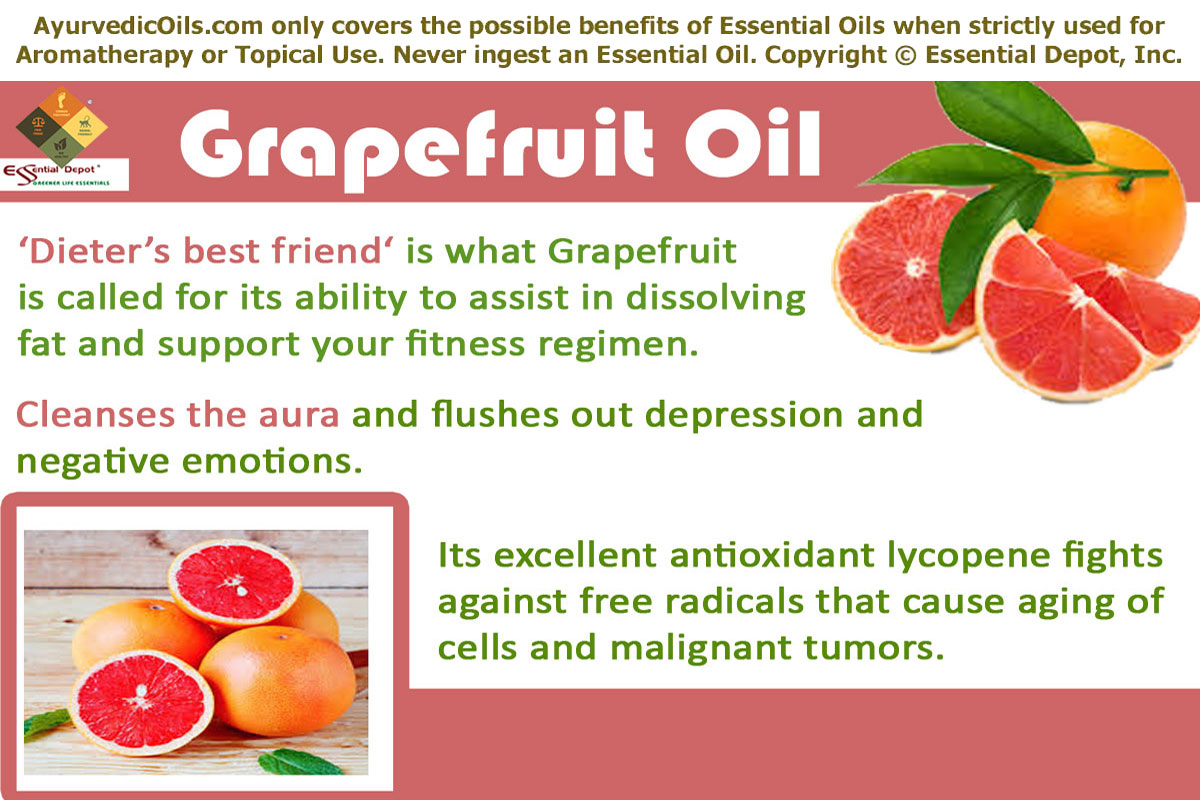
Are you on diet? Then Grapefruit can be your best pal as it is called as ‘Dieter’s best friend‘, for its ability to assist dissolving fat and stays strong to be a vital part of your fitness regimen.
Grape-fruit-bnGive that perfect lift to your self-esteem and self-worth with Grapefruit oil, as it works like a magic by cleansing the aura and flushing out depression, lack of self-confidence, mental chaos and other negative feelings at ease.

Adorably called as Madhukarktikum and Kadaaram in Sanskrit, Grapefruit is yet another powerful Ayurvedic remedy for dealing with digestive disorders by stimulating the gall bladder and assisting the secretion of bile and other digestive juices.

The essential oil of Grapefruit is cold pressed from the external rind of this fruit and is recommended for treating weight loss, acne, cellulite, edema, PMS, anxiety, depression and insomnia.

Purchase Grapefruit Oil – Retail – 4 oz – CLICK HERE
Purchase Grapefruit Oil – Wholesale – CLICK HERE

Historical importance of Grapefruit:

Grapefruit is trusted to be a hybrid variety found in the 18th century by Captain Shaddock in Jamaica; hence it was called as ‘Shaddock’ or ‘Shattuck’ initially. Later it was named as ‘Grapefruit’ mainly because of its manifestation like clusters of grapes on the trees. Grapefruit was once celebrated as one of the ‘Seven wonders of Barbados’.

Grapefruit is indigenous to the tropical parts of Asia and was originally brought to Europe by the medieval Arabian traders and it slowly spread to other parts of the world. Currently, United States is the world’s leading producer of Grapefruit, followed by People’s Republic of China and South Africa.

As it is an excellent source of various nutrients and phytochemicals, it was used ever since the ancient times as a part of a healthy diet. Whereas Grapefruit essential oil was used in baths for preventing the skin from harmful microbes, supporting healthy skin, enhancing the shine and growth of hair and as a cleansing agent in homes.

Chemical constituents or Gas Chromatography Report (GC) of Grapefruit Pink oil:

According to the Gas chromatography report, Grapefruit Pink oil constitutes of 7 chemical components that contribute to its fragrance, therapeutic attributes, consistency and quality of this oil. Of which, Limonene contributes to the highest proportion of Grapefruit Pink oil constituents with about 96.6% of its total composition.

Just click on:

I believe that this must certainly help you in getting to know the exclusive information about these prime chemical constituents of Grapefruit Pink oil.

The table crafted below clearly depicts the unique nature and contributions of these biochemical constituents to the healing magnificence of Grapefruit Pink essential oil.
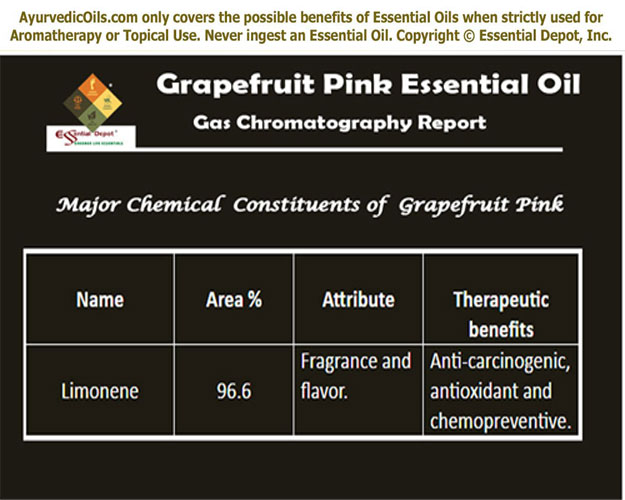
grape-fruit-oil

Therapeutic properties of Grapefruit essential oil:

The remedial values of this oil are antidepressant, antiseptic, anti-tumoral, antioxidant, lymphatic, stimulant, tonic, diuretic, disinfectant, aperitif and fat dissolving.

Ayurvedic health benefits of Grapefruit essential oil:

Health is a three-tier foundation according to Ayurveda, where these three layers are mind, body and soul. It is rightly mentioned in Charaka Samhita, one of the most famous Ayurvedic encyclopedias as “The three – body, psyche, and soul – act as a tripod. The world stands upon them, and within them, the world abides.”

Ayurveda means ‘the knowledge of life’ and this traditional healing methodology aids in granting that awareness in every human being. Understanding the physical and mental health of oneself helps in leading a blissful life paving way towards longevity.

It has been said that nature is made up of five vital elements namely fire, water, earth, air and space and Ayurvedic texts strongly state that everything that is a part of nature is also made up of these five elements.

The science of Ayurveda follows a holistic healing system, where every individual is considered as a unique part of nature with a unique individual constitution just like our fingerprints.

This constitution comprises of three vital biological energies known as doshas. They are vata, pitta and kapha doshas, where each dosha represent a combination of two vital elements.

Kapha represents earth and water, and is responsible for structure of the body, sustenance and the movement of fluids in the system. Pitta represents fire and water and is in charge of digestion, absorption, excretion and certain other metabolic functions.

Vata stands for air and ether, and is accountable for circulation, respiration and nervous functions of the body. When an individual’s health is on par with nature, there is perfect health and harmony and when there is imbalance due to food, lifestyle and certain other factors, illnesses occur.

Balance between these three doshas indicates complete health and imbalance causes diseases. Ayurvedic remedies like essential oils, herbs, yoga, meditation, Ayurvedic routine and simple physical exercises focus on striking balance between these doshas. Grapefruit essential oil is said to pacify vata and kapha dosha and aggravate pitta dosha.

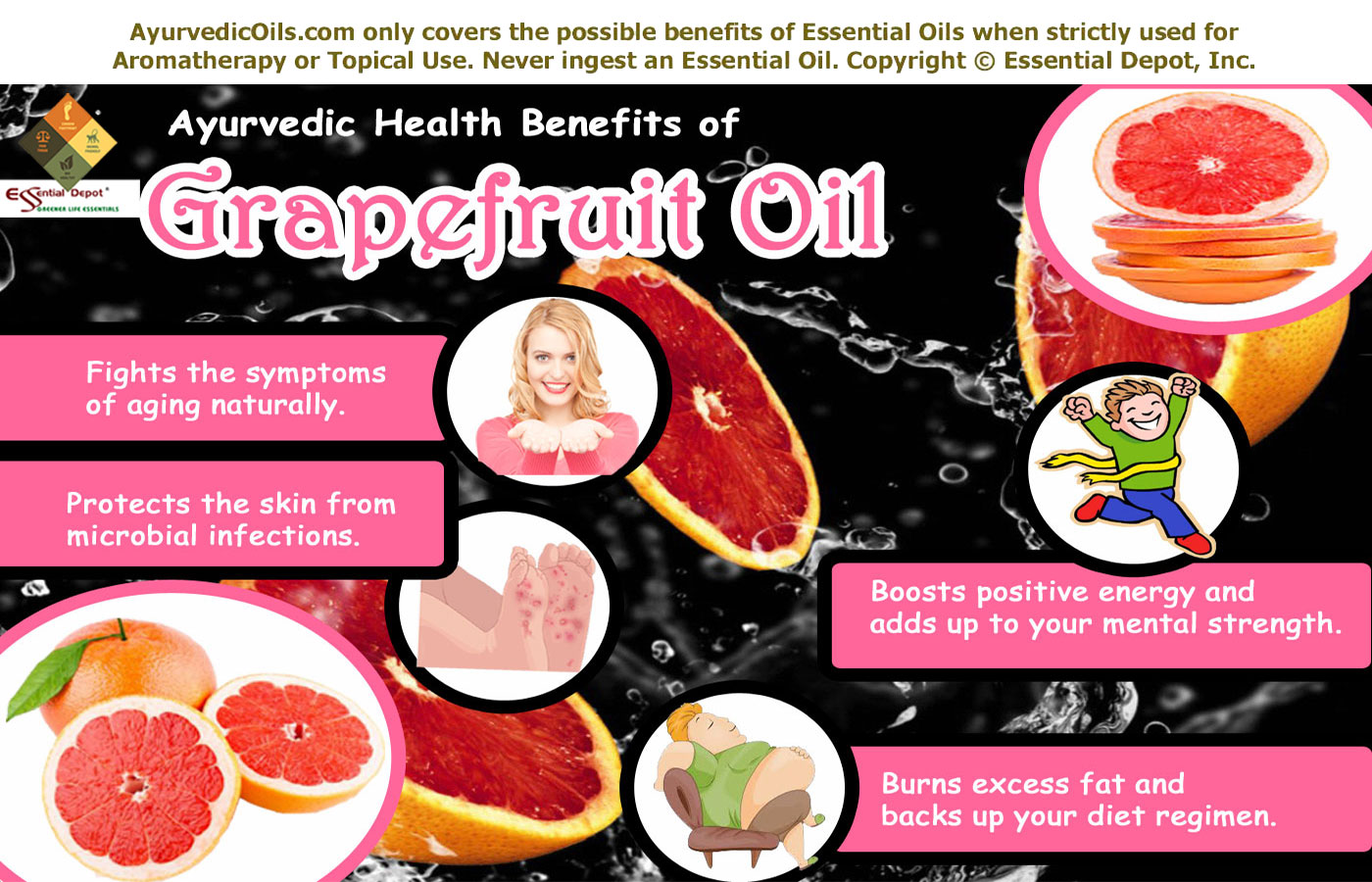
The Ayurvedic health benefits of Grapefruit oil are:Grape-fruit-broucher1. Fights the symptoms of aging naturally:
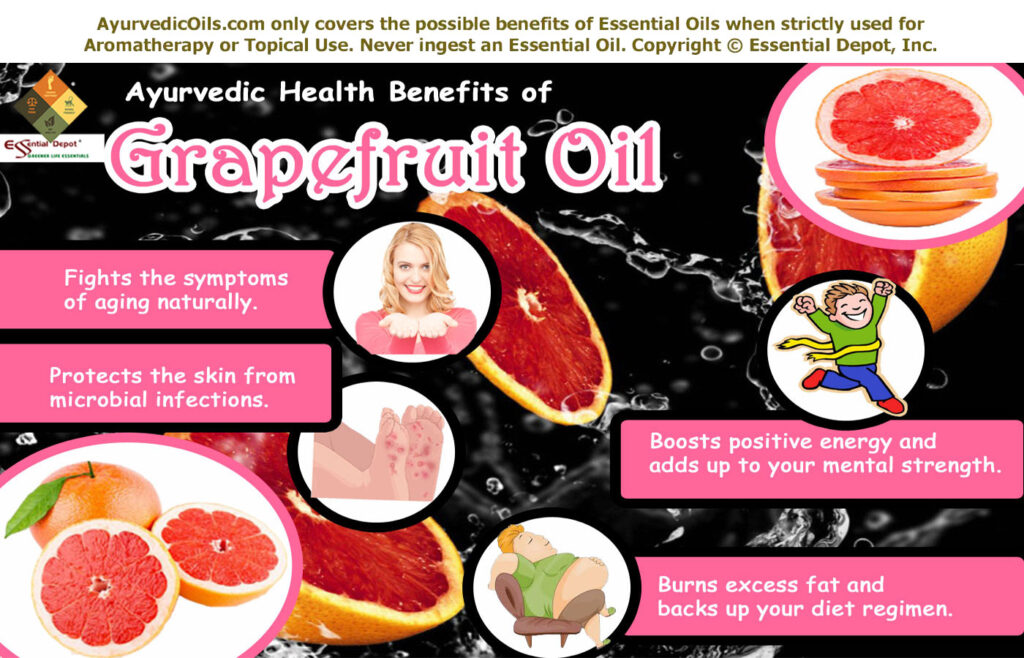
Aging can be the worst enemy for all those beauty conscious kings and queens out there, especially in the late 30s when everyone’s dreams are on the route of reaching their destination. When thousands of chemical-based products flood the market with the claim of ‘guaranteed younger look’, how will you feel if I say that the simple, natural and glorious fruit like Grapefruit can fight against all the symptoms of aging, just like that? Feeling awesome right!

FRTA or the Free radical theory of aging can assist you in understanding the real causes of aging. This theory states that “organisms age because cells accumulate free radical damage over time.” These free radicals cause oxidative damage in the cells, which pave way for aging and other age-related disorders like arthritis, diabetes, cancer, atherosclerosis and Alzheimer’s disease.

Numerous studies have proven that antioxidants are the best remedy for arresting the oxidative damage of cells by passivating the cellular structure from the damage caused by free radicals.

To your wonder, Grapefruit and its essential oil have the most powerful antioxidant lycopene, which is responsible for its attractive pink or red color. It has been established that antioxidants like lycopene assists in fighting aging of cells and fight against malignant tumors caused due to the harmful effects of free radicals.

According to a study by the Brigham Young University, “Small concentrations of grapefruit essential oil showed an 80.5% cell inhibition value for skin cancer cells.” The presence of limonene in Grapefruit oil supports about 80% of carcinomas in breast cancer to degenerate with comparatively lesser toxicity, says the reports on Grapefruit essential oil by the Purdue University.

In addition to this, Grapefruit essential oil has adequate amount of spermidine, which is a polyamine compound playing significant roles in the survival of cells. Every cell has spermidine like compounds and cellular aging happens when the growth of spermidine falls.

Using 2 drops of Grapefruit essential oil blended with 1ml of Jojoba oil or along with a mild skin care lotion or cream as a massaging blend can promote the secretion of spermidine compounds that support the growth of healthy cells, helping you look younger and youthful.

This massaging can also help in fighting against the free radicals that cause aging and other chronic illnesses. Adding Grapefruit to your daily diet is also a great idea to retain your beauty and nurture your skin health.

2. Protects the skin from microbial infections:

Grapefruit essential oil has antiseptic and disinfectant properties that wrestle against harmful organisms like bacteria and virus. The antiviral and antibacterial effects of this oil make it one among the best essential oils for treating wounds, cuts, bruises, acne and other microbial infections. It kills the existing microbes in the body that cause infections and prevents the entry of new microbes.

Using 2 drops of Grapefruit essential oil in warm bathing water in the morning or before going to bed can help in combating the growth of microbes and protect the body microbial infections all day long.

You can also add 1 drop of Grapefruit oil to your daily lotion or skin cream for pampering your skin. Along with this, the fresh and refreshing citrus aroma of Grapefruit oil keeps your skin fresh, regenerated and absolutely clean.

3. Boosts positive energy and adds up to your mental strength:

Grapefruit essential oil has an immaculate aroma that is neat as a new pin and has excellent aromatic effect on the mind. The anti-depressant properties of this oil flushes out the negative thoughts, depressive feelings and emotions that demotivate the mind and stop you from moving ahead.

The uplifting aroma of Grapefruit essential oil reaches the limbic system, the control center of the human brain through the nasal passages and passes the therapeutic properties of this oil in the form of commands to other parts of the body. Add 2 drops of Grapefruit oil to your diffuser, burner or vaporizer during the night or at the time of prayer or meditation. This oil is said to calm the mind and nerves and grant peaceful sleep at night.

Inhaling the sacred aroma of Grapefruit oil is said to broaden the heart chakra, which is responsible for love and affection along with the solar plexus chakra, which is accountable for self-esteem, confidence and discipline and the third eye chakra meant for intelligence, creativity, spiritualism, consciousness and inner awakening.

By this way, Grapefruit essential oil cleanses the aura, mind and the life force of the human body, which helps in restoring the power and spiritual realm.

4. Burns excess fat and backs up your diet regimen:

Obesity has become a common phenomenon in people of all ages mainly due to unhealthy food habits, lifestyle changes, fast food mania and the lack of physical exercises. Most of these factors seem unavoidable in this contemporary world, where there’s no time to spare for our health and happiness.

According to a popular Complementary and Alternative medicine expert, “taking medicines or drugs for reducing weight or dissolving fat is a hazardous practice and a life-threatening system as well.

So what to do and what is the natural way to burn away those excess fat and calories that rule your health and harmony? Here you go, Grapefruit and its essential oil have been an effective natural remedy for treating obesity and supporting weight-loss.

This is attributed to its diuretic, lymphatic and aperitif properties. Grapefruit oil works by improving the metabolism process, lowering the cholesterol content, reducing insulin levels and supporting loss of fat positively.

Ayurvedic texts state that the bitter and sour tastes of Grapefruit reside as the predominant reason for enhancing the flow of bile and other digestive juices and it helps in putting an end to food cravings, liver congestion and amassing up of excess fat, cholesterol and other toxic substances.

Mix 5 drops of Grapefruit essential oil with 2.5ml of sesame oil and massage it gently on your stomach and abdomen to stimulate the secretion of saliva, bile and other gastric juices.

Ama or the toxins in the body are mainly due to improper digestion. As Grapefruit essential increases pitta energy, which is responsible for digestive fire, the chances of indigestion, constipation and other digestive disorders are very less.

Excess of kapha energy is one major cause for obesity according to Ayurveda. Grapefruit oil is a boon to mankind as it pacifies kapha and increases pitta force, through which it eliminates the excess deposits of water, fat, toxic substances and cholesterol through urine and sweat.

Including Grapefruit in your diet or inhaling the aroma of Grapefruit essential oil before eating (by adding 1 drop of Grapefruit oil to your diffuser in your dining hall) can grant a feeling of fullness and put an end to unhealthy food cravings.

Consumption of Grapefruit can reduce LDL (“bad”) cholesterol, as well as triglycerides”, says The Journal of Agricultural and Food Chemistry. Consult your Ayurvedic Practitioner and know the right exercises, yoga and meditation for your unique constitution. This can speed up your fat-dissolving resolution at absolute ease.

Other health benefits:

Apart from this, Grapefruit essential oil is an excellent pain reliever that can help you in treating headache, back pain and migraine pain quickly, when 2 drops of this oil is mixed with 1ml of coconut oil and applied on the affected area.

Grapefruit essential oil has tonic properties that increase the immune power, stimulate hair growth, cleanse the scalp, boosts the functions of the nervous system and strengthen the muscles and nerves. This oil also helps in relieving mental and physical fatigue, menstrual discomforts, rheumatism, muscular stiffness, cellulite, nervousness, delayed menstruation and nervous exhaustion.

Disclaimer:

This article is only for the purpose of education and is not directed to diagnose or replace any Professional medical advice or prescribed medication. Never use essential oils internally and always use them in a diluted form, as pure and organic essential oils are highly concentrated substances and can cause harm if used directly on skin.

As other citrus oils, Grapefruit essential oil also has phototoxic effect that can cause damages to the skin when exposed to sunlight immediately after use, due to the hazardous effects of ultra violet rays. Always consult your Ayurvedic expert before using the right essential oils for your unique constitution and health condition.

The MSDS (Material Safety Data Sheet) of Grapefruit Pink oil is readily available for your enhanced safety and better usage.

Gas Chromatography Report (GC analysis) of Grapefruit Pink oil.

Grapefruit Essential Oil – Possible Skin Issues:

Greener Life Diamond – Bio-Healthy Score => 3 – Possible Skin Issues:

See => http://www.essentialdepot.com/GreenerLifeDiamond.html

Grapefruit oil showcases photosensitive effects if oxidized, contributing to its phototoxic, photo-carcinogenic and effects of sensitization. The possible skin issues of using Grapefruit oil are hyperpigmentation, allergic reactions, irritation, sunburns, blisters and rashes and this mainly occurs when the skin is exposed to visible sunlight for up to 12 hours of use of this oil.

The underlying reason is the reaction of the photoactive chemical constituents in Grapefruit oil that attracts light and leads to toxicity through molecular changes in the skin surface. Certain studies state that Grapefruit oil has been stated to promote the formation of tumors on the skin of mouse, by the key carcinogen, 10-dimethyl-l, 2-benzanthracene.

The primary chemical component responsible for the phototoxic and adverse skin effects of Grapefruit oil is Limonene, which accounts to about 90% of this oil along with few other furanocoumarins ( the non-volatile compounds like bergapten, bergamottin and epoxy-bergamottin.)

The safe dilution level of Grapefruit oil by the International Fragrance Association (IFRA) is 4%, which is about 24 drops per ounce of any mild carrier oils. This is particularly to prevent phototoxicity in products used for dermal applications except for bath products like soaps, shampoos and other wash-off preparations.

According to the European decree, essential oils that contain furanocoumarins must be used preferably when the level of bergapten does not exceed 15 ppm (parts per million) in finished cosmetic products preordained for use on parts of the skin that are in contact with sunlight (other than rinse-away products) and 1 ppm in bronzing and sun protection products.

Grapefruit oil should be used only for topical application, preferably blended with mild carrier oils (good for use after a patch test on your skin), and never use essential oils for ingestion, as internal use of essential oils might pose adverse health effects. Undiluted Grapefruit oil can cause skin irritation and this oil is claimed to be toxic to cats.

A 2005 study published in Brain Research states that “the scent of Grapefruit oil and its active constituent, limonene affects the autonomic neurotransmission and blood pressure through central histaminergic nerves and the suprachiasmatic nucleus.”

Studies state that ingesting furocoumarins may also cause phytophotodermatitis.  It is better to avoid Grapefruit oil if you are pregnant or breastfeeding as the safety of this oil during carrying or nursing are not established.

In a much similar way like Bitter orange oil, Grapefruit oil is said to restrain important enzymes in the intestines and liver, leading to have an impact on the blood levels at the time of taking medicines that are antidepressant, antiviral, anti-anxiety, calcium channel blockers, steroids, anti-malarial, immune modulators, prokinetics, statins and on par with caffeine intake. The presence of furocoumarins has led to the term ‘Grapefruit effect’, which signifies the interaction between furocoumarins and enzymes that are engaged in drug metabolism, specifically cytochrome P450.

Use Grapefruit oil only after medical advice, if you are taking any other prescription medicines. Startlingly, furocoumarins are also used in different remedies along with the long-wave ultraviolet light therapy for curing psoriasis, mycosis fungoides and vitiligo.

Reference Links Substantiating Possible Skin Issues of Grapefruit Oil:

  1. The Safe Grapefruit? By The American Botanical Council
  2. Olfactory stimulation with scent of essential oil of grapefruit affects autonomic neurotransmission and blood pressure by Tanida M, Niijima A, Shen J, Nakamura T, Nagai K, Osaka University, Japan, published in Brain Research
  3. Grapefruit by Essential Oil Safety: A Guide for Health Care Professionals By Robert Tisserand, Rodney Young
  4. Grapefruit Oil by Leung’s Encyclopedia of Common Natural Ingredients, used in Food, Drugs and Cosmetics by Ikhlas A. Khan and Ehab A. Abourashed
  5. Major Furocoumarins in grapefruit juice II: phototoxicity, photogenotoxicity, and inhibitory potency vs. cytochrome P450 3A4 activity by Messer A, Raquet N, Lohr C, Schrenk D, University of Kaiserslautern, Germany, published in Food and Chemical Toxicology: An International Journal published for the British Industrial Biological Research Association
  6. Grapefruit Juice and Medicines by the University of Michigan Health System
  7. Two Major Grapefruit Juice Components Differ in Time to Onset of Intestinal CYP3A4 Inhibition by Mary F. Paine, Anne B. Criss and Paul B. Watkins, published in the Journal of Pharmacology and Experimental Therapeutics

Thought for the day:

You forget that the fruits belong to all and that the land belongs to no one.
-Jean-Jacques Rousseau

Suggested Reading:

  1. The Grapefruit Solution: Lower Your Cholesterol, Lose Weight and Achieve Optimal Health with Nature’s Wonder Fruit by Daryl L. Thompson, M. Joseph Ahrens
  2. Ayurveda & Aromatherapy: The Earth Essential Guide to Ancient Wisdom and Modern Healing by Dr. Light Miller, Dr. Bryan Miller
  3. The Complete Master Cleanse: A Step-by-Step Guide to Maximizing the Benefits of the Lemonade Diet by Tom Woloshyn
  4. The Grapefruit Diet Plan by M Marose
  5. Daily Aromatherapy: Transforming the Seasons of Your Life with Essential Oils by Joni Keim, Ruah Bull

Reference Links:

  1. Free-radical theory of aging by Wikipedia
  2. Grapefruit by Wikipedia
  3. Health Benefits of Grapefruit by Ayurvedaservices.Net
  4. Health Benefits of Grapefruit Essential Oil by Organic Facts
  5. The Amazing Benefits of Pink Grapefruit Essential Oil by Natural News.Com


Your resource for quality Essential Oils. Every batch is
GC tested to ensure purity and authenticity.
Harshiangar Oil

Harshiangar-bannerNight-flowering Jasmine, Parijat or Harshiangar, scientifically known as Nyctanthes arbor-tristis is known as the ‘Tree of sorrow’ and the word ‘Nyctanthes’ means ‘sad tree’. This is due its flowers that appear dull during the daytime and turn bright during the night.

The entire tree including its leaves, flowers, bark, seeds and stem is known to have amazing medicinal properties for which the tree has been used in various traditional and alternative healing methodologies for more than thousands of years.

Harshiangar essential oil is extracted from the leaves by steam distillation method. These curative leaves have been used in the Ayurvedic medicine for treating arthritis, sciatica, fever, pain, constipation, anxiety and rheumatism.

Purchase Harshiangar Oil – Wholesale – CLICK HERE

Historical importance of Harshiangar:

Harshiangar tree has a long history behind its name and its use in the traditional healing systems. The most fascinating myth behind this tree is a heartbreaking romance where an ancient princess named Parijataka fall in love with the Surya Dev, the Sun God captivated by his brilliance and masculinity.

The God of Sun was also impressed by her affection and devotion and favored her with his love as well, after which he started ignoring Parijataka due to his other interests.

This despondency made Parijataka to kill herself and the Parijat tree is said to have started from the cremated ashes of this true to life princess. Due to this, Parijat tree is not able to put up with the sight of her love, Sun God during the day and blooms only during nightfall and sheds the fragrant flowers as tears before sunrise.

Harshiangar flower is the official flower of Kanchanaburi Province, Thailand and for West Bengal, India. The leaves have been used as an insecticide and the decoction extracted from the fresh leaves have been used in Ayurvedic healing in the treatment of malaria, bilious fevers, arthritis and sciatica. The traditional Indian medicinal system used these leaves as anti-allergic, ulcerogenic, purgative, anti-histaminic and antibacterial remedies.

The tribal Indians used all the parts of this tree to treat dysentery, sores, cough, venomous bites and dysentery. The powder extracted from the seeds was used in treating alopecia and scurvy. The infusion of Parijat flowers were used by the ancient Buddhist monks of Sri Lanka as an effective sedative.

People of Malaysia and Indonesia use the Parijat flowers to promote menstruation and treat dysmennorhea and blocked menstruation.  These leaves are also used as a natural diuretic, cholagogue and laxative. Harshiangar blossoms known as Shiuli in West Bengal, India signify the arrival of Goddess Durga, which is celebrated as Durga Pooja, the greatest religious ceremony of Bengal.

Therapeutic properties and chemical constituents of Harshiangar oil:

The essential oil of Harshiangar consists of linalool, hexenyl benzoate, e-phytol, a-terpineol, methyl salicylate, geraniol, hexadecanoic acid, octadecanoic acid, eugenol and hexenol as its major chemical constituents.

The therapeutic properties of this oil are anti-arthritic, antimicrobial, anti-inflammatory, antiviral, anti-leishmanial, anti-pyretic, immunostimulant, antinociceptive, anti-allergy, anti-plasmodial, hepatoprotective and sedative.

Ayurvedic health benefits of Harshiangar oil:

Ayurveda is by far the oldest of all healing systems on earth and is known as the mother of all healing sciences including Unani, Homeopathy, Siddha, Chiropathy, Acupressure and Aromatherapy. The most significant aspect of Ayurveda is that it aims at prevention of diseases, healthy aging and longevity through the use of essential oils and herbs and by practicing simple physical exercises, yoga, meditation, Ayurvedic routine and a balanced diet.

Ayurveda considers every human being as a part of nature and states that the wellness and illness of an individual solely depends on his/her balance with nature. This theory believes that nature is made up of five vital elements namely fire, water, air, earth and space.

Everything that is a part of nature is also made up of these elements. Human beings according to Ayurveda are a distinct part of nature with a unique individual constitution that comprises of three biological energies known as doshas, where each dosha represents a combination of the vital elements of nature.

Vata symbolizes air and space and it governs the blood circulation, movement and respiration. Pitta is a representation of fire and water and is responsible for digestion and other metabolic functions. Kapha stands for water and earth and is accountable for structure and sustenance of the system.

Balance between these doshas symbolizes perfect health and doshic imbalances lead to illnesses. Ayurvedic remedies like herbs, yoga, meditation, essential oils, balanced diet, physical exercises and Ayurvedic routine are prescribed to strike balance between these doshas.

Harshiangar essential oil is said to lessen kapha and aggravate vata and pitta doshas.

The Ayurvedic health benefits of Harshiangar essential oil are:

Harhsiangar-broucher1. Relieves pain and inflammation:

With its powerful anti-arthritic, anti-inflammatory and analgesic properties, Harshiangar essential oil is a highly recommended Ayurvedic medicine for treating pain and inflammatory conditions. It is highly effective in relieving pain and inflammation associated with arthritis, rheumatism, sore muscles, stress and muscular tension.

‘Antiarthritic studies on Nyctanthes arbor-tristis and Maharasnadi ghan’ by VES College of Pharmacy and K.M. Kundnani College of Pharmacy, Mumbai, India studied the effectiveness of Harshiangar herb on arthritis, especially Gouty arthritis which is caused due to the deposits of urate crystals in the synovial cavity. This study concluded that the use of Parijat leaves helped in controlling irritation, pain and inflammation associated with Gouty arthritis.

Mix 4 to 5 drops of Harshiangar essential oil with 2ml of coconut oil and heat it slightly. Gently massage the painful and inflamed parts with this warm blend and follow it with a hot compress.

This is a powerful medication for treating rheumatic pain, arthritis, joint pain, knee pain, headache, sciatica, muscular aches, menstrual pain, back pain and arthritic pain. Its efficiency to reduce kapha dosha helps in clearing the stagnation of excess fluids causing swelling and inflammation in case of rheumatism and other related problems.

A 1984 study on “Study of anti-inflammatory activity in the leaves of Nyctanthes arbor tristis Linn.–an Indian medicinal plant” proved that the use of Harshiangar leaves helped in reducing acute and chronic phases of formaldehyde induced arthritis. It was also said that these leaves were of great help in treating inflammatory conditions in Ayurveda.

2. Cures malaria and other bilious fevers:

Parijat leaves are a proven natural remedy for treating malarial fever and other bilious fever that are accompanied by nausea, strong diarrhea and increasing internal temperature mainly due to bile disorders.

Dr. Ashok B Vaidya, Research Director of ICMR Advance Centre for Reverse Pharmacology in Traditional Medicine at Kasturba Health Society, Mumbai said “Parijat leaves’ extract was being used in anti-malarial activities in western India, especially Gujarat and Maharashtra.

The Parijat leaf extract is effective against both types of known malarial parasite, but it is especially useful against even the resistant strain of Plasmodium Falciparum, and even the crude extracts of Parijat leaves kill the parasites of malaria.”

Add 2 drops of Harshiangar essential oil with 1ml Olive oil and gently massage the soles of your feet for reducing the body temperature during high fever and for arresting the growth of infectious organisms causing fever.

3. Fights against free radicals:

Free radicals are nothing but atoms or molecules that cause cellular damage precisely known as oxidative damage leading to aging and other malignant disorders. Human body requires ample amount of antioxidants to guard it against the harmful effects of free radicals that affect healthy cells in the body.

A 2010 study on the Invitro antioxidant effects of Nyctanthes arbor-tristis leaves have proved this herb as a potential source of natural antioxidants that help in combating the detrimental effects of free radicals and prevent the early symptoms of aging and the development of cancerous cells.

A refreshing Ayurvedic massage with 3 drops of Harshiangar oil with 2 ml of Jojoba oil can help you in checking the effects of these hazardous free radicals and their subsequent effects.

4. Combats virus and other micro-organisms:

Harshiangar essential oil is an effective natural remedy for fighting against harmful virus and other micro-organisms.

A 2012 study on “The chemical composition and biological activities of essential oil from leaf and bark of Nyctanthes arbor-tristis L.” by the University of Alabama, Huntsville and Tribhuvan University, Nepal screened the effectiveness of Parijat essential oil against Gram positive bacteria like Staphylococcus aureus and Gram negative bacteria like Escherichia coli, Aspergillus niger and Pseudomonas aeruginosa, proved that Harshiangar essential oil is an established traditional remedy that has potent antimicrobial activity.

Certain other studies have witnessed the effectiveness of this oil in combating viruses like Semliki Forest Virus and encephalomyocarditis virus. Gently applying 2 drops of this oil mixed with 1 ml coconut oil acts as an effective remedy in protecting wounds and injuries from getting septic as it arrests the growth of Staphylococcus aureus, which is accountable for wounds becoming septic and vulnerable to other health complexities.

This blend can also assist in treating pimples, blackheads and other skin disorders. With its anti-allergenic effect, this oil is also of great help in treating skin allergies and itches.

Other health benefits:

Apart from these major health benefits, Harshiangar essential oil is helpful in stimulating the immune power, make the body resistant against diseases, prevent illnesses that affect the liver, calms the mind with its sedative effect, clears congestion, treats constipation, asthma, dyspepsia, bronchitis and many other health conditions.

Disclaimer: This article is for educational purpose only and is not intended for treatment or for replacing any professional advice or prescribed medication. Never use essential oils internally. Ensure that you always use essential oils in a diluted manner before using it topically as organic essential oils are extremely concentrated substances and can harm the skin if used directly. Consult your Ayurvedic professional before choosing the right essential oils for your unique health condition and individual constitution.

Thought for the day:

Green is the prime color of the world, and that from which its loveliness arises.
-Pedro Calderon de la Barca

Suggested Reading:

  1. Tropical and Subtropical Trees: An Encyclopedia by Margaret Barwick
  2. Flowering Plants. Eudicots (The Families and Genera of Vascular Plants) from Springer
  3. The Modern Ayurveda: Milestones beyond the Classical Age from CRC Press
  4. The Materia Medica of the Hindus (Classic Reprint) by Udoy Chand Dutt

Reference Links:

  1. Nyctanthes arbor-tristis by Wikipedia
  2. Nyctanthes arbor-tristis Linn. (Night Jasmine): A sacred ornamental plant with immense medicinal potentials published in the Indian Journal of Traditional Knowledge
  3. Antiarthritic studies on Nyctanthes arbor tristis and Maharasnadi ghan by Abhijeet R. Bhalerao, Sandhya K. Desai, Bhavin R. Serathia, Kaustubh M. Vartak, Gaurav M. Doshi published in the Scholars Research Library
  4. Study of anti-inflammatory activity in the leaves of Nyctanthes arbor tristis Linn.–an Indian medicinal plant by Saxena RS, Gupta B, Saxena KK, Singh RC, Prasad DN published in PubMed
  5. Chemical composition and biological activities of essential Oil from leaf and bark of Nyctanthes arbor-tristis L. from Nepal by Prabodh Satyal, Prajwal Paudel, Ambika Poudel and William N. Setzer published in the Open Access Journal of Medicinal and Aromatic Plants

Niaouli Essential Oil

Niaouli-bannerYet another natural feather in the Australian cap along with Tea Tree and Cajeput, Niaouli belongs to the same species Melaleuca and is native to Australia. Along with these 3 trees, Melaleuca contains more than 200 species and these are the most popular ones used for extracting essential oils. Niaouli essential oil is extracted from the leaves and young twigs of this tree through steam distillation.

The clean, camphoraceous and composed aroma of Niaouli oil heals one in a number of ways and never fails to remind you about Tea tree oil. Niaouli essential oil is used in Ayurvedic healing as an antiseptic, immune stimulant and expectorant for helping with respiratory and pulmonary infections.

Purchase Niaouli Oil – Retail – CLICK HERE

Purchase Niaouli Oil – Wholesale – CLICK HERE

Historical importance of Niaouli essential oil:

Niaouli, scientifically known as Melaleuca quinquenervia (Melaleuca viridiflora) has been initially used by the Aborigines of Australia for rescuing Sir Francis and his crew from exhaustion and scurvy with the tea brewed from the leaves of Niaouli tree. It was used as a respiratory aid in the folklore medicine and the indigenous people used the fresh Niaouli leaves for wrapping the affected parts of their body.

Niaouli and its essential oil have been considered as a ‘cure-all’ in French Polynesia and Caledonia and have also been espoused as the national flower. The French use this oil in almost all the hospitals all over the country especially in the gynecological and obstetrics wards for its antimicrobial properties and this oil is also implemented into their pharmacopoeia. It has also been used as a water purifier in the French Pacific.

Niaouli has been used in the Middle East for preparing herbal tea to support healthy bowels. It was also used in the ancient period to keep away from malaria. Since the pre-historic period Niaouli has been a valuable additive to toothpastes, gargles, mouth sprays and cough drops. This oil is also used as a substitute for Cajeput and Eucalyptus oil in the treatment of neuralgia, cold, cough and rheumatism.

Therapeutic properties and chemical constituents of Niaouli essential oil: 1,8-cineole, alpha-terpineol, alpha-pinene, beta-pinene, limonene, a-phellandrene, nerolidol, linalool, piperitone and gamma terpineol. The therapeutic properties of this oil are analgesic, antiseptic, decongestant, bactericidal, cicatrisant, expectorant, balsamic, vermifuge, febrifuge, stimulant, insecticide, vulnerary and anti-rheumatic.

Ayurvedic health benefits of Niaouli essential oil:

Ayurveda meaning ‘science of life’ is the oldest medicinal systems in the world. The basis of Ayurvedic philosophy revolves around the fact that perfect health can be attained only by a well-built immune system. This is because strong immunity make the body resistant and help fight against harmful organisms and infections causing illnesses. Ayurvedic perception of good health is the outcome of synchronization between a person’s physical, mental and spiritual wellness.

Ayurveda treats every individual in a unique manner trusting that no two individuals have identical individual constitution. For this identification, Ayurvedic approach recognizes human beings based on their specific metabolic principles governing the body and mind and its intelligence. They are known as doshas (vata, pitta and kapha).

The predominance of any one of these doshas is the primary dosha of an individual and he is identified with that dosha as his unique body type. Imbalance of any one or all these doshas ends up in illnesses. Niaouli pacifies kapha and vata doshas and aggravates pitta dosha.

Man-made medicines or menacing treatments are not a part of this holistic medicinal practice as it trusts and relies on Mother Nature for its healing system. It centers on prevention of diseases with healthy diet, Ayurvedic routine, balanced life-style changes, herbs, yoga, essential oils, meditation and other simple physical exercises.

Let’s have a look at the Ayurvedic health benefits of Niaouli essential oil.

Naouli-oil-broucher1. Heals scars and skin infections:

Niaouli essential oil has excellent bactericide, disinfectant, antimicrobial and antiseptic properties that make it a wonder oil in treating skin infections, wounds and other similar disorders.

Donoyama and Ichiman study on the effectiveness of six essential oils like eucalyptus, thyme linalool, lavender, tea tree, niaouli and sage in treating Staphylococcus aureus bacteria was tested. This study revealed that among the six essential oils tested “niaouli oil was found to be the most effective, reducing colony count to zero at 3.125%”.

Add 1 drop of Niaouli oil in a cup of lukewarm water to make a natural cleanse for washing your wounds, skin ulcers, blemishes, cuts, acne, insect bites and burns. This cleansing solution aids in removing the harmful organisms like bacteria on your affected part of the skin and initiates its quicker healing process.

Mix 2 drops of Niaouli oil in coconut oil or your regular skin care cream or lotions and apply it gently on the infected area. The vulnerary and disinfectant properties of this oil help in healing wounds quickly, shielding your skin from microbial infections by activating platelet particles and leucocytes in the infected area and aiding in clearing your acne, marks and blemishes. With its antiseptic properties, Niaouli is also an effective oil in treating infections of the colon, uro-genital tract, kidneys, urethra, kidneys and intestines. Even today Niaouli is used as a safe vaginal douche in France.

Niaouli oil is used in an extensive range of cosmetic products in Australia. With its cicatrisant properties, Niaouli essential oil can be more forceful on your scars and marks than your expensive anti-marks and scar-removing creams. Applying 2 drops of Niaouli oil blended with jojoba oil can assist you in diminishing your scars and marks left by pimples, post-pregnancy stretches, acne or pox by influencing the faster growth of new skin cells and tissues. On prolonged use, this remedy can aid in regenerating your skin surface and replenish it with natural glow.

2. Relieves rheumatic and other pain:

The essential oil of Niaouli works effectively on sharp pain and other related discomforts. When gently massaged on to the painful area with 2 drops of Niaouli essential oil blended with coconut oil, the analgesic properties of this oil acts like a general anesthetic by numbing the nerves in the painful parts and consoles pain.

Niaouli essential oil is celebrated as a popular complementary cure for treating rheumatic pain. Massaging 2 drops of Niaouli oil added to sesame oil helps in stimulating the lymphatic system and enhancing blood circulation in the body, which controls the amassing of toxic substances and uric acid in the joints. By this way, Niaouli oil assists rheumatic patients by easing pain, inflammation and swelling in the painful areas. This oil also helps in treating toothache, joint pain, migraines, earache, headache and sprains.

3. Treats fever and respiratory problems effectively:

Niaouli essential oil has been approved in the German Commission E Monographs especially for its effective uses to the respiratory system. Niaouli oil has expectorant and decongestant properties that aid in clearing congestion and blocked respiratory passages with mucous and phlegm. It also supports in reducing the body temperature at times of fever by combating the infections responsible for fever.

Using 2 drops of Niaouli oil in steam inhalation or in vaporizer can help you fight against cold, flu, bronchitis, whooping cough, sinusitis, catarrh, pneumonia, asthma, laryngitis, sore throat, tuberculosis and cough. It helps open up clogging or obstruction of nasal passages, lungs, trachea, larynx, bronchi and pharynx by loosening phlegm, which promotes easy breathing and sound sleep. You can also add 2 drops of Niaouli oil in your rubs and massage it gently on your neck, chest and back for quicker relief.

4. Kills worms and insects:

This oil is also effective in killing intestinal worms like tape worms and round worms that interrupt the normal growth of the body and the regular process of metabolism. You can add 3 to 5 drops of Niaouli oil in warm bathing water or inhale the aroma of this oil by adding 2 drops to your diffuser for eliminating worms from your body. Niaouli essential oil can also be used along with your insect sprays and vaporizers for killing insects like ants, bugs and cockroaches.

5. Boosts immunity:

Dr. Kurt Schnaubelt says “Niaouli is an excellent general immune system booster and an agent to help one with allergic reactions.” Niaouli essential oil enhances the resistant power of your body to withstand against infections and micro organisms by strengthening your immunity. This oil has been proven mild and safe for everyone so you can add 2 drops of Niaouli oil to your diffuser to facilitate the fostering aroma of this oil fortify your immune power every day.

Other health benefits:

Inhaling the aroma of Niaouli essential oil especially during meditation is said to revive your senses, improve concentration and uplift the spirit. Niaouli oil is applied to the skin of the cancer patients before every session of cobalt therapy for protecting the skin against burning due to the radiation therapy for cancer. Niaouli is also used in cough drops, rubs, mouth sprays, toothpastes, gargles and certain other cosmetic products.

Disclaimer:

Never take essential oils internally as pure essential oils are highly concentrated liquids.  Avoid using essential oils directly on the skin and always remember to dilute it in appropriate carrier oils. This information is only for educational purposes and is not meant to replace prescription drugs or expert advice of your healthcare professional. Always consult your Ayurvedic practitioner before using the right essential oil for your specific constitution and health condition.

Thought for the day:

For in the true nature of things, if we rightly consider, every green tree is far more glorious than if it were made of gold and silver.          – Martin Luther

Suggested Reading:

  1. The Acne Diet: Holistic Plan to Achieve Clear, Youthful, Acne-Free Skin with Natural Nutrition, Stress Relief and Organic Skincare by Julie Gabriel
  2. Ayurveda & Aromatherapy: The Earth Essential Guide to Ancient Wisdom and Modern Healing by Dr. Light Miller, Dr. Bryan Miller
  3. Tea Tree: The Genus Melaleuca (Medicinal and Aromatic Plants – Industrial Profiles) from CRC Press
  4. Aromatherapy: A Complete Guide to the Healing Art by Kathi Keville, Mindy Green

Reference Links:

  1. Melaleuca quinquenervia by Wikipedia
  2. True Niaouli by Essential News
  3. Niaouli Essential Oil And Its Benefits by Yoga Wiz.Com
  4. Hygienic Massage with Essential Oils by Robert Tisserand

Juniper Leaf Oil

Juniper-leaf-banner

Juniper is not ‘just another’ plant in the Jungle; more than that, it owns myriad health benefits and the most astonishing remedial use is its power to induce apoptosis (programmed cell death) in breast cancer cells. It is also celebrated as the most common therapeutic plants used by the native North Americans.

Beckoned as Hapusha in Sanskrit, Juniperus communis or the Common Juniper is also called as Aaraar in Hindi, Havusha in Bengali, Gin plant, Alpine Juniper, Horse savin and Fairy circle in English. Juniper has been a part of the Ayurvedic remedy of leucorrhoea, asthma, urino-genital infections, dropsy, gout, bronchitis, bladder and kidney stones, sluggish digestion, rhinitis, rheumatism and certain other water-retention disorders.

Purchase Juniper Leaf Essential Oil – Wholesale – CLICK HERE

Purchase Juniper Leaf Essential Oil – Retail – CLICK HERE

History and importance of Juniper leaf and its essential oil:

Juniperus communis is an evergreen coniferous shrub in the Juniperus genus and belongs to the Cypress family, Cupressaceae. There are about 67 Juniper species spread across the world. Juniper has scale-like or needle-shaped leaves. The most soaring Juniper forest is located at an altitude of 4,900 meters in the Northern Himalayas and the South-eastern Tibet and is one of the tallest tree-lines on this planet.

Nicholas Culpeper, the most renowned herbalist and physician of the 17th century prescribed the use of Juniper berries for treating sciatica, asthma and for speeding up childbirth. Juniper was used in folklore medicine for curing snakebites and poisonous stings.

The Seminole Indians in Florida used Juniper for treating headache, swollen joints, diarrhea, stiff neck and common cold. Native Americans also used the berries as a female contraceptive agent.

The indigenous Europeans burned the berries during the last three days of April as a ceremony for cleaning and guarding against sorcery. Juniper leaves were hung near the main door for preventing the entry of witches. Juniper was trusted to bring in good luck in love life and was burnt as incense for keeping away from insects, ghosts and evil spirits.

Juniper is quoted in the Bible as the tree where Prophet Elijah hid. The leaves and berries of this plant have been used by the Tibetans for medicinal and spiritual uses. They believed that the burning of Juniper helped in breaking spiritual barriers, curses, hexes and protect from snakes and other venomous bites. It was used in Tibet for both religious and medicinal purposes.

Herbal tea prepared with Juniper berry and leaves is been taken especially after meals for helping with digestion and for preventing bladder problems. Herbalists recommend drinking this tea in alternative days or as a part of your daily routine as an aid in flushing out the toxic remains in the system, support normal metabolic functions and aid in your weight-loss regimen by discarding the fluid withholding in the system.

Chemical constituents and remedial attributes of Juniper leaf oil:

The essential oil of Juniper has rubefacient, astringent, antiseptic, carminative, analgesic, stimulant, anti-inflammatory, detoxifying, anti-rheumatic, diuretic, expectorant, anti-catarrhal, antispasmodic, neurotonic and sudorific properties.

The major chemical constituents contributing to its healing values are about 90 percent of various monoterpenes, where as Juniper berry essential oil contains only 50-60 percent of it. Juniper leaf oil also has esters, terpinene-4-ol, antiviral and anti-cancerous compound known as DTP- deoxypodophyllotoxin.

Ayurvedic uses of Juniper leaf and its essential oil:

Ayurveda is a common sense science that simply goes with the saying “There is no smoke without fire”. In a much similar manner, Ayurveda states that every illness has a root cause behind. Identifying it and treating the root cause of a disease instead of its symptoms, is the secret behind the success of Ayurvedic healing in the treatment, prevention and voyage towards longevity.

None of us can deny being a part of nature and that is the mantra of Ayurveda. It firmly indicates that all things in the universe are a component of Nature and everything is made up of the five fundamental energies known as Panchamahabhutas. They are space, earth, water, fire and air.

Every person has a unique identity, which is an outcome of his/her unique individual constitution known as Prakriti. It is a combination of the three biological energies known as doshas (vata, kapha and pitta), which are an arrangement of Panchamahabhutas.

Pitta (fire + water = metabolism, body temperature, leadership traits); vata (air + space = circulation, respiration, creative abilities); kapha (earth + water = reproductive functions, physique, sustenance, trust and love).

Every individual has a distinct combination of these doshas with a predominance of any one dosha and it determines one’s physical set up, mental makeup, character, behavior/attitude and the depths of their spiritual being.

Leading a well-organized life helps in retaining absolute balance with nature, whereas irregular eating habits, junk and ready-to-eat food items, sedentary lifestyle, climatic conditions, change in sleeping patterns, lack of physical exercise, work pressure, stress and certain other factors can pave way for imbalance of your system with nature. This leads to imbalance between doshas and thus, sickness steps in.

Ayurveda is a holistic healing practice that prescribes natural remedies for striking balance with nature. It prescribes unique remedies for every person based upon their unique individual constitution, even for the same illness as it appreciates individual differences and trusts that every individual has a different mechanism that reacts to variations in their own way.

Ayurvedic medications for the mind, body and the soul include herbs, plant essential oils, yoga, Ayurvedic routine, meditation, Panchakarma or the Ayurvedic detoxification technique, Abhyanga or Ayurvedic massaging and many other Ayurvedic therapies for complete cure and prevention of illnesses.

Juniper leaf essential oil is recommended for pacifying kapha and vata dosha and for enhancing pitta dosha for trouble-free metabolic functions.

Let’s take a look at the uses of Juniper leaf oil according to the methods of usage:

Juniper-leaf-broucher1. Juniper leaf oil in steam inhalation:

Steam inhalation is an ancient treatment for instant relief from blocked nasal passages, sinusitis pain, headache and for attracting hidden toxins and excess oil in the skin surface.

Steam inhalation with therapeutic herbs and medicated oils as per the medical condition and Prakriti of a person is one among the Ayurvedic detoxification technique known as Panchakarma. Swedhana or promoting sweat is the most suitable treatment for people with Kapha imbalances.

Fluid retention is one among the kapha vitiations, which paves way for the buildup of ama or toxic remains. This slows down the normal functioning of the body and gradually weakens the immune power. When your body’s immunity reduces, the entry of micro-organisms like bacteria, virus and fungi becomes much easier.

This paves way for cold, flu, chest and bronchial congestion and few other respiratory infections. 2 drops of Juniper leaf oil with 1 drop of Eucalyptus oil and 1 drop of Clove bud oil can help in loosening the phlegm and mucous deposits, open up the blocked nasal passages, alleviate pain and lets out the toxic remains by promoting sweat with its sudorific and diaphoretic properties.

A refreshing steam inhalation blend for energizing the skin, especially the facial skin includes 2 drops of Juniper leaf oil with 1 drop of Rose Geranium oil, 1 drop of Palmarosa oil and 1 drop of Lime oil can work wonders on your skin.

The antiseptic properties of this blend can help in soothing wounds or infections caused by acne. This treatment also helps in opening the clogged pores, removing dirt, dead skin cells and excess oil in the sebaceous glands, controlling the secretion of sebum and enhancing the circulation of blood in the skin with its rubefacient properties, allowing the skin to look supple and healthy.

2. Juniper leaf oil in massage blends, baths and compress:

Rheumatism, obesity, edema, gout, renal calculi, bladder stones, congestion, inflammation, swelling and respiratory infections are kapha imbalances.

Ayurveda recommends hot compress, Abhyanga or Ayurvedic massaging and warm bath diluted with therapeutic essential oils for treating water retention or kapha vitiations. Abhyanga is the primordial art of maneuvering the muscles, nerves and joints with the help of palms, foot, elbows and certain Ayurvedic techniques.

Using Ayurvedic essential oils in massage, compress and medicated baths is the easy way for passing on the therapeutic values of essential oils to the bloodstream.

Skin is by far the largest and prominent part of the human body just like the outer rind of bananas. Massaging your body with 10 drops of Juniper leaf oil, 5 drops of Ginger oil, 5 drops of Marjoram oil, 5 drops of Wormwood oil along with 3 ounce of sesame oil can work effectively in eliminating the surplus fluid deposits, toxic remains, salt, fat deposits and uric acid by influencing the frequency and mass of urine and sweat with its diuretic, sudorific, diaphoretic and detoxifying properties.

This assists in reducing swelling, inflammation, redness, soreness, pain and muscular tension associated with arthritis, rheumatism and edema. The tendency to pacify vata imbalance along with the circulatory or the rubefacient properties of Juniper leaf oil helps in treating cellulites, pain, swelling and muscular stiffness related to varicose veins.

It’s pitta augmenting properties help in stimulating the functions of liver and pancreas (normalizes the level of insulin) thus fostering secretion of bile, gastric juices and other digestive acids for relieving flatulence, colic pain and trouble-free digestion.

An invigorating bath with 5 drops of Juniper leaf oil, 2 drops of Geranium oil, 2 drops of Orange bitter oil and 2 drops of Petitgrain oil can help in controlling the free radicals, relaxing the nerves, soothing the muscles, tranquilizing the mind and stimulating positive effects on the brain.

This is an excellent remedy for treating cancer (especially in preventing the spread of free radicals, apoptosis or cellular death and cellular damage), alleviating stress, fatigue, anxiety and negative feelings. Taking this bath before bedtime can support you in sleeping tight and recharge your system for a new-fangled day ahead.

A 2015 study published in PubMed on ‘Deoxypodophyllotoxin isolated from Juniperus communis induces apoptosis in breast cancer cells’ by Benzina S, Harquail J, Jean S, Beauregard AP, Colquhoun CD, Carroll M, Bos A, Gray CA, Robichaud GA, Universite de Moncton, Canada have concluded that they “identified the diterpene isocupressic acid and the aryltetralin lignan deoxypodophyllotoxin (DPT) as potent inducers of caspase-dependent programmed cell death (apoptosis) in malignant MB231 breast cancer cells.”

3. Juniper leaf oil in mild creams, lotions and topical applications:

Adding 2 drops of Juniper leaf oil with 1 drop of Lavender oil and 1 drop of Jojoba oil in gentle skin care creams and lotions for topical use on athlete’s foot, pimples, eczema and other inflammatory skin conditions can foster quicker healing with its antiseptic and antibacterial properties.

4. Juniper leaf oil in diffusers, burners and aromatic candles:

Juniper leaf oil has been used since the traditional times for spiritual and remedial uses. It’s restoring, supportive, fresh, sweet-woody and balsamic fragrance implants absolute peace and feelings of oneness with the universe and the divine.

Adding 3 drops of Juniper leaf oil with 1 drop of Clary Sage oil, 1 drop of Vetiver oil and 1 drop of Sandalwood oil in your diffuser, burner, aromatic candle or vaporizer during prayers, meditation and other sacred ceremonies can uplift your mind, nourish your spirit, open up the mind for newness, instill positive feelings and nurture the soul, helping it to identify its purpose on earth.

Disclaimer:

This is only for educational purposes and is not meant for diagnosing any medical condition or for substituting any prescription medicines or expert advice of a medical professional. We are not healthcare experts and this article is shared only with the idea of widening the knowledge of Ayurvedic healing, the pioneer of all medical systems.

Juniper leaf essential oil is non-irritant and non-toxic but is still recommended for topical use only. This is because pure and organic essential oils are highly concentrated liquids and may cause allergic reactions if used directly on the skin. Do not take essential oils internally.

The essential oil of Juniper leaf should not be used by people with chronic kidney disorders, pregnant and nursing women as it has the potent to cause uterine contractions, making it a traditional medicine for inducing labor. Keep essential oils out of reach of children.

Thought for the day:

A weed is a plant whose virtue is not yet known. –By Ralph Waldo Emerson.

Suggested Reading:

  1. Aromatherapy: A Practical Guide (The Healing series) by Marion Wayman
  2. Clinical Botanical Medicine by Eric Yarnell, Kathy Abascal, Carol G. Hooper
  3. Junipers of the World: The genus Juniperus: 3rd Edition by Robert P. Adams
  4. Evidence-based Essential Oil Therapy: The Ultimate Guide to the Therapeutic and Clinical Application of Essential Oils by Dr. Scott A Johnson
  5. Medicinal Plants of North America: A Field Guide (Falcon Guide)
    by Jim Meuninck

Reference Links:

  1. Juniper by Wikipedia
  2. Health benefits of Juniper essential oil by Organic Facts
  3. Deoxypodophyllotoxin isolated from Juniperus communis induces apoptosis in breast cancer cells by Benzina S, Harquail J, Jean S, Beauregard AP, Colquhoun CD, Carroll M, Bos A, Gray CA, Robichaud GA, Universite de Moncton, Canada published in PubMed
  4. Ayurvedic drug plants by Anil Kumar Dhiman
  5. Junipers by Eat the Weeds

Juniper Berry Oil

June and moon pair perfectly to bring in the ideal romance with warm days and clear nights, just like Juniper and its essential oil, known as ‘the mover of fluids’ work wholly to get rid of the toxic remains and excess fluid in your system, so that you fall in love with yourself again and again.

Juniper-berry-banner

Boasted as the best diuretics in Western Herbal Medicine and in Traditional Herbalism, Juniper berries and its essential oil are looked upon for treating various fluid retention diseases like congestion, sciatica, rheumatism, edema, swollen joints, urinary tract infections, lumbago, cystitis, obesity and respiratory conditions.

Hapusha is the Ayurvedic name of Juniper and is scientifically known as Juniperus communis. Juniper is held high in Ayurveda as one among the best detoxifying natural agent with its diuretic and diaphoretic properties for eliminating excess water deposits, toxic remains, uric acid, salt and fat deposits by promoting the frequency and quantity of sweating and urination.

Purchase Juniper Berry Essential Oil – Wholesale – CLICK HERE

Purchase Juniper Berry Essential Oil – Retail – CLICK HERE

Historical uses and significance of Juniper berry and its essential oil:

Juniper berries are not real berries but are the female seed cones produced by many species of Junipers. It is an evergreen shrub that is found growing in the wild and can grow up to a height of 30 feet. Juniper is a native of the European Province, Asian subcontinent and few North American countries including Oregon and Texas.

Juniper was the notable symbol of Ashera, the Goddess of Fertility of the Canaanites. The mystical fragrance of Juniper was used as incense by the Scottish and Tibetans to keep away from demons and evil spirits. The first historical use of Juniper berries dates back to the Egyptian Papyrus from 1500 B.C.

The berries of the Juniperus communis species are used as a popular spice in the European cuisine for its unique flavor. It has been used in the treatment of leucorrhoea, scrofula and chest conditions in the traditional French medicine.

It was in ancient Greek medicine, Juniper berries were recorded for their medicinal uses before being stated as a culinary item. The aboriginal Americans used these berries for suppressing the appetite when they were hungry. Certain tribal populace used Juniper berries as female contraceptive agents.

Juniper berries were used as a substitute for long pepper and black pepper varieties by the primordial Romans. It was believed that Juniper berries enhanced physical endurance and vigor in athletes, for which it was used during many of the Olympic events by the people of Greece.

For its power to prevent infections and its antiseptic values, Juniper berries were used as a precautionary medicine during the Bubonic plague. These spicy little berries were used as a folklore remedy for treating urinary infection, chest congestion, stomach upset and warts. Juniper berries are also used as a flavoring agent in gin and other traditional food items.

Remedial properties and chemical constituents of Juniper berry oil:

The notable therapeutic properties of Juniper berry oil are diuretic, energizer, disinfectant, antiseptic, analgesic, carminative, diaphoretic, antibacterial, astringent, anti-rheumatic, antispasmodic, depurative, sudorific, vulnerary, tonic, rubefacient, calmative and stimulant.

The chemical components contributing to its varied remedial values are sabinene, a-pinene, b-pinene, camphene, myrcene, a-terpinene, a-phellandrene, y-terpinene, b-phellandrene, 1,4-cineole, p-cymene, bornyl acetate, terpinen-4-ol, caryophyllene along with a hint of borneol, limonene, linalool, nerol, linalyl acetate and camphor.

Ayurvedic health benefits of Juniper berry essential oil:

Ayurveda is unquestionably the Master and the Mother of the world of medicine and has given birth to various remedial sciences including Siddha, Unani, The Traditional Chinese Medicine, Homeopathy, Naturopathy, Allopathic, Chiropractic, Acupressure and much more.

The secret behind its majestic stand for about 5000 years is its holistic healing approach that aims in tracing and treating the root cause of an illness rather than its occasional symptoms. Ayurveda completely relies on natural remedies and Ayurvedic techniques for the treatment and the prevention of diseases to pave way for longevity.

The Indian mythology records the birth of Ayurveda as gift of Lord Brahma, the God of Creation to Acharya Dhanvantari, the Lord of Ayurvedic medicine and he was also adored as the Physician of Gods. Ayurveda is a prominent part of Atharvaveda, one of the 4 sacred books of the Hindu tradition of India.

Acharya Charaka and Sushruta added glory to Ayurveda with their greatest works namely Charaka Samhita and Sushruta Samhita, the renowned Ayurvedic encyclopedias. These noble books cover every medical practice from a C-section delivery to Plastic surgery. Everything aims at attaining holistic health, which is a combination of physical, psychological and spiritual wellness.

Ayurveda recommends a disciplined life for retaining absolute balance with nature. Ayurvedic philosophy states that everything in this universe is made up of five elements of nature viz., earth, water, air, fire and space.

Water represents blood and other fluids in the system, earth denotes bones and the muscular built up, air assists in the breathing mechanism, space is the soul/the spirit that dwells in and fire is in charge for body temperature and all other metabolic functions.

All the individuals on earth are created in a distinctive manner with a unique physical, mental and spiritual setup, determined by the individual constitution known as doshas. These dynamic energies are an array of the five fundamental elements of nature.

Vata dosha (air and space) is responsible for the functions of the nervous system, respiratory system and the circulatory system. Pitta dosha (fire and water) takes care of body temperature and metabolism. Kapha dosha (water and earth) and is in charge of the physique, reproductive health and sustenance.

Every person has a prevalence of any one dosha that determines one’s persona, traits and behavioral patterns. Absolute balance between these doshas as per the Law of nature indicates health and imbalance of doshas leads to sickness.

Ayurveda recommends natural remedies including plant essential oils, herbal medications, yogasanas, meditation, prayers, simple physical exercises, Ayurvedic routine, Pranayama (yogic breathing practice), Panchakarma (five detoxification therapies), and certain other Ayurvedic treatments for nurturing natural balance between doshas.

Juniper berry oil helps in pacifying kapha imbalances like rheumatism, urinary infections, congestion and bronchitis; vata imbalances including stress, dysmennorhea and skin problems and enhances pitta energy and supports in the treatment of flatulence, indigestion, abdominal pain, high blood pressure etc.,

It’s time to take a look at the varied health benefits of Juniper berry oil in terms of physical, emotional and spiritual attributes.

  1. Physical benefits:
  • Juniper berry oil to the skin:
  • Juniper berry oil to the joints and kidneys:
  • Juniper berry oil to the digestive system and liver:
  1. Emotional benefits:
  • Alleviates stress:
  • Relieves tension:
  • Widens your creative power:
  1. Spiritual benefits:
  • Instills deep divinity:
  • Augments the power of concentration and inner consciousness:
  • Helps release negative feelings:
  1. Physical benefits: ‘Face is the index of the mind’ is a popular saying. In a much similar way, the human body showcases the sickness of the mind and the soul. Traditional healthcare experts say that every illness has certain underlying emotional and hereditary (tarpana) reasons behind to deal with. Talking with the patient about everything including their medical history, family, daily routine, lifestyle practices, behavioral patterns and every little thing that has an impact in their daily lives, can help in identifying the root cause of their sickness and in bringing a permanent solution to their health problem.
  • Juniper berry oil to the skin: Human skin is the highly structured security mechanism that guards us from the harmful effects of virus, bacteria, fungi and many other harmful micro-organisms. Treating it with ordinary alkaline soaps might spoil the protective layer of the skin formed by sebum (oily and acidic mantel produced by the sebaceous glands).

Ayurveda prescribes Abhyanga or the art of Ayurvedic massaging with the use of essential oils aiding in toning the muscles, relieving muscular tension, protecting the skin and for creating a natural barrier that can protect the skin from the outside forces.

Juniper berry oil has excellent moisturizing properties that help in treating various skin problems like acne, dermatitis and eczema. Skin problems are often associated with the vitiation of vata dosha. Juniper berry oil has the power to pacify excess of vata dosha and helps in the treatment of dandruff and psoriasis.

Three drops of Juniper berry oil blended with 2 drops of Lavender oil, 2 drops of Grapefruit oil added to your mild skin care creams and lotions can help in controlling the excess secretion of sebum, responsible for pimples, blackheads and redness of the skin cells.

A 2003 study on “Antibacterial and Antifungal activity of Juniper berry oil and its selected components” published in Phytotherapy research concludes that Juniper berry oil possesses antibacterial and antifungal activity.

A 2010 study published in “Pharmacognosy Research” by the Shiraz University of Medical Sciences in Iran, has confirmed that juniper berries’ essential oil contains excellent antioxidant effects and the capacity to combat destructive free radicals.

Juniper berry oil also has circulatory and tonic properties that nourish the skin cells from within. Massaging the affected parts with 2 drops of Juniper berry oil, 2 drops of Rosemary oil and 2 drops of Geranium oil along with 3 ml of Sweet Almond oil can assist in the treatment of scaly, itchy scalp in dandruff, psoriasis, eczema and inflammatory skin conditions.

You can compliment this massaging with a warm compress for letting the remedial properties of the essential oils to penetrate the skin deeply.

  • Juniper berry oil to the joints, kidneys, digestive system and liver: Stagnation of water deposits, uric acid, salt and toxic remains in the system lead to chronic health conditions like rheumatism, arthritis, edema, swollen joints, dropsy, cystitis, renal calculi or kidney stones and urinary infections.

People with kapha imbalance can benefit highly from Swedhana (Panchakarma treatment for elimination of toxic remains through sweat). Massaging the affected region, especially the knees and joints in case of arthritis and rheumatism with 5 drops of Juniper berry oil, 4 drops of Cinnamon oil, 5 drops of Rose Geranium oil, 5 drops of Eucalyptus oil and 5 drops of Orange oil with 4 ounces of Sesame oil can help in promoting blood circulation in the painful area, reduces pain by causing numbness.

You can reduce inflammation, swelling, redness and soreness of the muscles by using a hot compress. This aids in discarding the toxic remains in the system through sweat and urine by enhancing its quantity and frequency.

Light Miller, in her book “Ayurvedic Remedies: For The Whole Family” has mentioned Juniper berry in numerous healing blends. The most significant among them are listed below for your reference.

  • Obesity or Weight loss blend: Massaging with 10 drops of Juniper berries oil, 10 drops of Grapefruit oil, 10 drops of Orange oil, 5 drops of Birch oil, 5 drops of Black pepper oil, 5 drops of Ginger oil with 4 ounces of Almond oil can assist in treating obesity by eliminating the excess fluids, toxic remains and fat deposits in the system by promoting frequent urination and sweating.
  • Gout: Gently massaging your abdomen with 5 drops of Juniper berry oil, 5 drops of Thyme oil, 5 drops of Cypress oil, 5 drops of Lemon oil, 5 drops of Basil oil, 5 drops of Myrtle oil along with 4 ounces of Coconut oil can help significantly in the treatment of renal calculi, cystitis, and gout.
  • Varicose veins: Varicose vein is a vata disorder caused due to lack of blood circulation, prolonged standing and sedentary lifestyle. Massaging with 5 drops of Juniper berry oil, 5 drops of Cypress oil, 5 drops of Lemon Grass oil and 2 ounce of Olive oil can help in stimulating blood circulation, relaxing the nerves, soothing the tensed muscles and alleviating pain associated with varicose vein condition, lumbago and sciatica.
  • Supports the digestive functions: Juniper berry oil has pitta or digestive fire enhancing attributes with its carminative, stomachic and warming properties. 5 drops of Juniper berry oil along with 2 drops of Ginger oil and 1 drop of Fennel oil to warm bathing water can assist in stimulating the secretion of bile, hydrochloric acid and digestive acids for treating sluggish digestion, relieving intestinal gas and colic pain.
  1. Emotional benefits: Emotions play a vital role in all our lives, without which thoughts are of, nil value. These emotions are often the sound of the soul. The therapeutic and soothing aroma of Ayurvedic essential oils fortifies your energy centers and protects one from being deviated from your life’s purpose.

Juniper berry essential oil has warm, appeasing, woody, earthy, engaging, sweet and energizing fragrance that pacifies the mind and sows the seeds of optimism in the limbic system of the brain. It is the brain’s center of control and is in charge of transmitting commands to the entire body on thoughts, emotions and behavioral patterns.

Juniper berry oil offers various emotional benefits and the most prominent among them are:

  • Alleviates stress:
  • Relieves tension:
  • Widens your creative power:

Mental mayhems are often an output of stressful conditions. Stress can at times work quicker than cyanide in killing the potential of the mind and the brain. It occurs when the mind is occupied or forced with loads of chores than its bearing capacity. As a result, one’s true efficiency and the normal functioning of the brain get disrupted.

Rage, resentment, fear, fatigue, anxiety, tension, lack of concentration and memory loss are few branches of the stress tree.

Inhaling the magical aroma of Juniper berry essential oil by adding 3 drops of Juniper berry oil with 2 drops of Neroli oil to your air freshener or diffuser, especially during the feeling of loneliness or before going to bed or during meditation, can help in bringing back the energy of self-confidence by augmenting your self-esteem.

This blend can also heighten the quality of your thoughts by boosting your creative quotient. 5 drops of Juniper berry oil and 2 drops of Bergamot oil added to your warm bathing water before your bedtime can relax your nervous system, soothe your muscles and induce peaceful sleep at night. Then, what else would stop you from starting a fresh and prolific day?!

  1. Spiritual benefits:
  • Instills the deep divinity:
  • Augments the power of concentration and inner consciousness:
  • Helps release negative feelings:

Juniper berry oil has a pleasant and elevating aroma that instills a feeling of absolute peace and tranquility. Inhaling the sacred aroma of this oil helps in discharging the negative feelings, loneliness, suppressive thoughts and assist in developing intense inner consciousness.

The essential oil of Juniper berry affects the crown chakra, root chakra and the solar plexus chakra. The book “Ayurvedic Remedies: For the Whole Family” by Light Miller quotes “Meditation offers us an opportunity to reach a higher potential by fine tuning our minds. Meditation creates an opening to live a life free of fears, blame, attachments, judgements, stress, negativity and illusions.”

2 drops of Juniper berry oil with 1 drop of Sandalwood oil, 1 drop of Vetiver oil and 1drop of Patchouli oil added to your vaporizer, diffuser, aromatic candles or room freshener during meditation and prayers can be a great soulful remedy.

It can help one to quit addiction, vent out negative feelings, disregard the pain of being abused, alleviate the trepidation of being neglected, deepen your level of thinking, build your bonding with the divine power and augment the connectivity of your soul with the universe.

Disclaimer: This article is meant only for educational purposes and is not recommended to treat or prevent any health condition or to replace any prescription medicines or the medical advice of your healthcare practitioner. We are not healthcare professionals and this information is shared only with the genuine thought of spreading the fragrance of Ayurvedic healing, world’s oldest and the pioneer of all medical sciences on earth.

Use essential oils only for topical application in a diluted form, as organic and pure essential oils are highly concentrated substances and may cause allergic reactions, if used directly on the skin. Never ingest essential oils. Keep out of reach of children.

Juniper berry oil is not recommended for use during pregnancy as it has the potent to induce menstruation. Care should be taken in using this oil under the supervision of a healthcare expert, if you have inflammatory kidney disorders.

Thought for the day:

The trees that are slow to grow bear the best fruit. – By Moliere

Suggested Reading:

  1. Vibrational Healing: Revealing the Essence of Nature through Aromatherapy and Essential Oils by Deborah Eidson
  2. Ayurvedic Remedies- For the Whole Family by Light Miller
  3. Essential Oils for Weight Loss: Easy Ways to Supercharge your Weight Loss Success with Essential Oils by Isla Burroughs
  4. Herbs for Detoxification by C.J. Puotinen

Reference Links:

  1. Juniper Berry by Wikipedia
  2. Antibacterial and antifungal activity of juniper berry oil and its selected components by Natalia Filipowicz, Marcin Kamiński, Julianna Kurlenda, Monika Asztemborska and J. Renata Ochocka, published in Phytotherapy research
  3. Health benefits of Juniper essential oil by Organic Facts
  4. Ayurvedic Remedies: For The Whole Family, by Light Miller


Your resource for quality Essential Oils. Every batch is
GC tested to ensure purity and authenticity.

Celery Seed Oil

‘Quick acting’ is the meaning of the word Celeri, the Latin origin of the name Celery. Well identified as one of the prime ingredient of the Holy Trinity of Louisiana Creole and Cajun cuisine, Celery is a renowned herb known to the Chinese as early as the 5th century and was used in Indian Ayurvedic medicine earlier than that.

Celery-seed-oil-bannerBelonging to the Umbelliferae plant family, it is botanically called as Apium graveolens. Celery seed oil is obtained from the dried Celery seeds by the steam distillation method.

Called as Ajamoda in Ayurveda, Celery seed have been used for thousands of years in treating neurological afflictions, poor digestion, influenza, water retention, high blood pressure, insomnia, arthritis, rheumatism, cold, flu, bronchitis, hepatitis, gout, stone formation in gall bladder or kidneys, asthma, arthritis, dizziness and other ailments related to spleen and liver.

Purchase Celery Seed Essential Oil – Retail – 4 oz – CLICK HERE

Purchase Celery Seed Essential Oil – Wholesale – CLICK HERE

Historical uses and importance of Celery Seed and its essential oil:

Well known to the contemporary world as a vegetable, Celery owes its nativity to the lowland of Italy and it gradually spread to other parts of the world like Egypt, Ethiopia, Algeria and India. It is often referred to its use in the New Kingdom of Egypt around 1000 B.C.

Celery was held high as a sacred herb during the Greek era and was used in crowns by the athletes. Few sources state that Celery leaves were found in the garland of the tomb of Pharaoh Tutankhamun who died in 1323 BC. It is also mentioned in numerous classical works, one being Homer’s Iliad where the horses of the Myrmidons were said to graze on the wild Celery in Troy.

Aulus Cornelius Celsus, the eminent Roman encyclopaedist well known for his invaluable work in the field of medicine has mentioned about the use of Celery seeds in pills for relieving pain, in his work De Medicina, which is the only existing section of the whole of encyclopedia. Celery seeds were used as a traditional remedy by Hippocrates and was globally used as an effective diuretic in treating cold, arthritis, flu and digestive disorders.

The German Commission E prescribes Celery for treating gout, gastrointestinal problems, loss of appetite, exhaustion, weight loss from malnutrition and rheumatism and it was used in Britain in the 19th century for treating rheumatic conditions.

The juices extracted from the petioles were used in the treatment of edema, rheumatic tendencies, gout, flatulence, overweight due to water retention and lack of appetite. Moreover the petiole which is crisp is also used as a vegetable worldwide.

Chemical constituents and therapeutic properties of Celery Seed oil:

With limonene as the major chemical component Celery seed oil consist of a-p-dimethyl styrene, N-pertyl benzene , caryophyllene, a-selinene, N-butyl phthalide, sedanenolide, sabinene, b-elemne, trans-1 2-epoxy limonene, linalool, isovalaric acid, cis-dihydrocarvone, trans-dihydrocarvone, trepinene-4-ol, 1-cis –p-menth-2,8-diene-1-ol, trans-p-menth-2, 8-diene-1-ol, alpha-terpineol, luteolin, carvone, trans-8-diene 1-ol,perialdehyde, apiin and thymol.

It also serves as an eminent nutritional supplement rich in Vitamin A, B, C & E, carbohydrate, protein, iron, potassium, water, fat, fiber, sodium, zinc, phosphorus, magnesium and calcium with traces of niacin, riboflavin and thiamine.

The therapeutic properties of Celery seed oil are aphrodisiac, anthelmintic, antispasmodic, carminative, diuretic, emmenagogue, laxative, sedative, cardiac-stimulant, antiseptic, anti-emetic, diaphoretic, antifungal, anti-inflammatory, mosquitocidal, nematicidal, anti-bacterial, stomachic, nervine and tonic.

Ayurvedic health benefits of Celery seed oil:

Illness, aging and death are the three major problems of mankind and have been drawing the interests of medical experts, researchers, and philosophers from the entire universe for innumerable years. Ayurveda, the mother of all healing sciences on earth exists for more than 5,000 years and it uses natural remedies for attaining longevity through prevention of diseases and a disciplined lifestyle.

Ayurvedic healing practices were recorded in the Vedic literature and Ayurvedic texts like Charaka Samhita and Sushruta Samhita. Charaka, known as the father of medicine has mentioned in his book Charaka Samhita that “The three – body, psyche, and soul – act as a tripod. The world stands upon them, and within them, the world abides.” This traditional remedial science robustly states that perfect health is a combination of physical, mental and spiritual wellness.

The science of Ayurveda considers human body as a temple and associates the divinity with the soul that dwells within the body. According to this ancient system, everything in the universe is a part of nature and is made up of the five elemental forces of nature, namely fire, water, air, earth and space.

Every individual is a unique creation with a unique individual constitution that holds three vital biological energies known as doshas. These energies are just a consequential depiction of the elements of nature.

Vata energy is an arrangement of air and space and is accountable for circulation, respiration and movement and vitiation of vata dosha causes breathing difficulties, neurological problems, nervous disorders, and menstrual discomforts.

Fire and water come together to embody Pitta dosha, which is in charge of metabolism and body temperature. Excess or deficit of pitta dosha might end up in constipation, fever, ulcer, indigestion, heartburn and other digestive disorders.

Kapha energy stands for earth and water and is responsible for the physical structure, movement of fluids and sustenance of the body. Surplus or deficiency of kapha dosha leads to sluggishness, obesity, respiratory problems, rheumatism and inflammatory conditions.

Ayurvedic philosophy states that the balance between these three doshas according to their natural composition contributes to well-being and imbalance of any one or all the three doshas causes sickness.

Ayurvedic remedies focus on treating the doshic imbalances with the help of essential oils, yoga, herbs, meditation, Ayurvedic routine, Ayurvedic massaging or Abhyanga, prayers, Panchakarma or detoxification techniques and simple physical exercises. These remedies differ from individual to individual on the basis of their unique individual constitution and medical conditions.

Celery seed oil with its hot, easy, light, pungent and dry properties is known for increasing pitta and vata dosha and for pacifying kapha types.

The Ayurvedic health benefits of Celery seed essential oil are:

celery-broucher21. Flushes out toxic substances and cleanses the system:

Surplus of kapha energy is responsible for water retention, stagnation of fluids, salt, toxins, uric acid, bad cholesterol and fat in the body. Celery seed oil is a promising Ayurvedic remedy for pacifying kapha dosha and thus it helps in eliminating toxins and other excess fluid deposits stagnated in the body through urine and sweat.

Along with this, the presence of Phthalides such as 3-n-Butylpthalide makes Celery seed oil as a potent diuretic that aids in flushing out toxins and fluid retention from the system and alleviates the symptoms of bloating.

As a natural stimulant, it stimulates the kidney to function actively in discharging excess water along with uric acid, fatty acids and other harmful substances that pave way to the formation of kidney stones, gravel and bladder stones.

Dirt or toxic deposits even in a smaller proportion in the system can result in malfunctioning of both the internal and the external organs. Liver plays a major role in eliminating the toxins from the body and is often prone to get affected seriously if the level of toxins is high. Celery seed oil is liver friendly and protects it against the harmful effects of acetaminophen (Tylenol) found in pain relievers, which are extremely poisonous when present in large amount and other hazardous particles.

Rheumatism is often a kapha imbalance caused due to the amassing of toxins, excess fluid, uric acid, salt and fatty acids especially in the joints. Massaging the affected parts or your entire body with 20 drops of Celery seed oil blended with 10 ml of coconut oil can assist in decreasing water retention, uric acid, toxins and other harmful particles in the system, thus helpful in the treatment of inflammation, overweight, rheumatoid arthritis, kidney infections, liver disorders and hypertension.

2. Acts as an excellent mosquito repellent:

Mosquitoes often act as vectors for numerous infectious viruses and parasites. With its mosquitocidal, nematicidal and antifungal compounds such as sedanolide, senkyunolide-N and senkyunolide-J, Celery seed oil acts as a tremendous mosquito repellent.

Many studies have revealed that Celery seed essential oil emitted strong repellency activity against wide range of mosquitoes belonging to various genera some of which are Aedes gardnerii, Aedes lineatopennis, Armigeres subalbatus, Culex tritaeniorhynchus, Cx. vishnui group, Cx. Quinquefasciatus, Mansonia uniformis and Aedes aegypti – the vector of yellow fever, dengue fever and chikungunya.

Celery seed oil exhibits larvicidal and adulticidal repellent activities against Aedes aegypti which was identified by the toxic effect of this oil in the nervous system of the mosquito producing an abnormal movement in the larvae. This attribute makes this oil to be the safe and natural mosquito repellent than most other commercial repellents in the market.

Applying 2 drops of Celery seed oil blended with 1 ml of jojoba oil or your skin care cream or lotion on your skin can act as a protective shield against mosquitoes and guard you from mosquito-borne pathogens such as dengue, malaria, filariasis and tularemia. It is proven to be safe on human beings with no dermatological side effect during the course of research on the human volunteers.

3. Protects you against inflammation:

Celery seed oil is a natural remedy for inflammation associated with pain and discomfort, be it an acute or a chronic one. With apiin as one of its major component, it possesses anti-inflammatory, immunomodulatory and kapha pacifying properties in-charge for inflamed conditions. Apiin has the potential of inhibiting the production of nitric oxide that acts as one of the inflammatory mediators.

Chemical components such as luteolin, limonene, apigenin, phthalides and coumarin possess very strong anti-inflammatory properties that help in fighting against inflammation in any part of the body and assist in reducing the risk of ailments such as heart diseases and cancer.

This attribute along with the diuretic property of Celery seed oil helps in recovering from the symptoms of gout and rheumatoid arthritis as mentioned by Michael T. Murray and Joseph E. Pizzorno in their book “The Encyclopedia of Healing foods”.

Celery Seed oil proves beneficial in dealing with the discomfort and degeneration the body joints due to aging. Gentle massage with 5 drops of Celery seed oil mixed with 2.5 ml of olive oil is recommended to ease the pain in joints due to arthritis and this also aids in retaining healthy joints.

Adding 3 drops of Celery seed oil in warm bathing water or in foot bath also helps in reducing the inflammation in the urinary tract and as a natural anti-fungal agent it destroys and inhibits the growth of Candida albicans that cause oral and genital infection in humans, for which this is used as an active ingredient in many urinary antiseptic products.

4. Relieves hypertension:

Celery seed oil serves as a natural vasorelaxant and anti-hypertensive agent that protects one from the risk of developing some fatal diseases associated with hypertension. Few among them are diabetes, endothelial dysfunction, renal dysfunction, congestive heart failure, metabolic syndrome, coronary artery disease and stroke.

The presence of chemical components such as apigenin, luteolin, kaempferol, caffeic acid, ferulic acid and coumaric acid instill a relaxant effect in the central nervous system and helps in lowering hypertension.

Owing to its nervine qualities, Celery seed oil is vastly employed in treating nervousness, depression, anxiety and tension. It also serves as a wonderful antidote for alcoholism. With limonene acting as a mild tranquilizer, Celery seed oil works wonders with insomnia and addiction to alcohol or drug usage. Massage your system with 10 drops of this oil blended in 5 ml of almond oil, followed by a warm bath diluted with 3 drops of Celery oil and 2 drops added to diffuser to relieve hypertension and grant absolute relaxation.

5. Lowers blood pressure:

Celery seed oil contains apigenin and isoquerticin that aid in lowering the blood pressure by stimulating the expansion of blood vessels. The combination of several active components such as flavonoids, volatile oil, coumarins and linoleic acid contributes to the anti-oxidant property of Celery seed oil.

This helps in protecting the cells from being damaged and purifies the blood resulting in lowering the blood pressure and controlling the level of bad cholesterol in the blood. Adding 3 drops of Celery seed oil in warm bathing water and inhaling the tranquilizing aroma of this oil by adding 2 drops to your burner, vaporizer or diffuser can serve as a potent aid for lowering blood pressure.

6. Helps in alleviating gastric ulcer and other digestive problems:

The essential oil of Celery seed has excellent pitta increasing properties that stimulate Agni or the digestive fire responsible for trouble-free metabolic functions. This contributes to the stomachic and anti-ulcerogenic attributes of Celery seed oil, which imparts a soothing effect on the digestive system and assists in alleviating flatulence, indigestion, heartburn and poor appetite.

As a natural source of organic sodium, Celery seed oil is much protective in forming a defensive shield for the lining of the stomach and intestines. A 2010 research on the gastric anti-ulcer activity of Celery seed in rats states that the Celery extracts rich in flavonoids and alkaloids protected the stomach by protecting the gastric mucosa and suppressing the basal gastric secretion.

Moreover Celery essential oil is an antimicrobial agent that possess strong inhibition against bacteria such as Escherichia coli and fungus such as Candida albicans thus protecting the intestines from the infectious microbes and parasites.

Massaging your abdomen with 3 drops of Celery seed oil with 1.5 ml coconut oil can help in improving metabolism. 2 drops of this oil added to diffuser or burner can help in enhancing the appetite and 2 drops added to 1 cup of warm water can be used as a gargle for curbing oral infections and killing parasites and microbes in the stomach and intestines.

7. Eases feminine health mayhem:

Celery seed oil is in rich vitamins and minerals that help in regulating the flow of blood all over the body and assists in strengthening the muscles of the uterus. It helps in stimulating uterine contraction and induces menstruation, while reducing the pain and discomforts associated with it. This oil also regularizes the monthly menstrual cycle.

Being a rich source of calcium, Celery seed oil helps in the maintenance of healthy bones and teeth and aids in proper muscular contractions and alleviates the adverse impacts of osteoporosis after menopause. 5 drops of Celery oil mixed with 2.5 ml sesame oil can be massaged gently on your lower abdomen, genital parts and thighs for promoting delayed or blocked menstruation, reducing pain, treating menopausal problems and lessening fatigue and mood swings associated with menopause and menstruation.

Few studies also state that Celery seed oil may reduce the risk of ovarian cancer and breast cancer with its antioxidant properties. It helps in balancing the acid/ alkaline system in the body and aids in preventing cancer by reversing the effect of free radicals and inducing apoptosis in case of gastric, liver, colon, cervical and prostate cancer cells of human beings.

Other health benefits of Celery seed oil:

Celery seed oil acts as an aphrodisiac in stimulating the secretion of sexual hormones. Due to its sweet and earthy aroma it is often used in salads, soups and sauces. It is also employed in skin care to treat acne, scars and boils and in treating acute headaches, cold, flu, pyorrhea, anemia, mental stress, sleeplessness etc.

Due to its antibacterial, antifungal and mosquito repellent properties, this oil is used in the manufacturing of disinfectants, antiseptic creams and lotions, mosquito repellent creams, soaps and perfumes.

Disclaimer:

This article is only for the purpose of education and is not proposed to treat, prevent or make a diagnosis of any ailment or medical condition. Nor is it meant to substitute any prescribed medication or professional medical advice. We are not medical professionals and this information is only for the purpose of enlightening the readers with the ancient wisdom or knowledge of life known as Ayurveda.

Do not take essential oils internally and always use them in a diluted manner for topical use, as organic and pure essential oils are highly concentrated substances. Keep out of reach of children and it is always good to do a small patch test on your skin with the diluted essential oil. Pregnant women are not advised to use this oil as it stimulates and contracts the uterus and may result in miscarriage. Consult your healthcare expert or your Ayurvedic practitioner before choosing the right essential oils for your medical condition and prakriti or unique individual constitution.

Thought for the day:

We still do not know one thousandth of one percent of what nature has revealed to us.   -Albert Einstein

Suggested Reading:

  1. The Healing Remedies Sourcebook: Over 1000 Natural Remedies to Prevent and Cure Common Ailments by C. Norman Shealy
  2. The Illustrated Encyclopedia of Essential Oils: The Complete Guide to the Use of Oils in Aromatherapy & Herbalism by Julia Lawless
  3. The Healing Intelligence of Essential Oils: The Science of Advanced Aromatherapy by Kurt Schnaubelt Ph.D.
  4. ISO 3760:2002, Oil of celery seed (Apium graveolens L.) by ISO/TC 54

Reference Links:

  1. Celery by Wikipedia
  2. The pharmacognostical ad pharmacological characterization of Apium Graveolens by Syed Sufiyan Fazal and Rajeev K Singla published in the 2012 Indo Global Journal of Pharmaceutical Sciences
  3. The Mosquito repellency of the seeds of Celery (Apium graveolens L.) published in PubMed
  4. The extract of Apium graveolens: structure of the major constituent, apiin, and its anti-inflammatory properties published in PubMed