Tag Archives: Ayurvedic oils for skin care

Chamomile Oil Roman

roman-chamomile-bnner‘Oil for inner peace’ is the absolute way of honoring Roman Chamomile oil for its gratifying and engaging apple aroma that instantly instills a feeling of love and encouragement. Obtained from the flowers of the Anthemis nobilis plant by steam distillation method, the word Chamomile is extracted from the Greek words Chamai and Melon, which means ‘ground apple’.

Used in Ayurvedic healing in the treatment of bloating, flatulence, dysmennorhea, insomnia, headache, nervous disorders in children, jaundice, PMS, amenorrhea, sunburn, colic, indigestion, anger, depression and negative feelings.

The book Ayurveda and aromatherapy quotes Roman Chamomile as Gold Chamomile and says, “This is the Chamomile that is preferred for children’s illnesses because of its soothing and calming effect. It can be of special assistance during menopause and PMS, and inhalation works well for tension, stress and irritability.”

Purchase Chamomile Roman Essential Oil – 4oz – CLICK HERE 

Historical uses and importance of Roman Chamomile:

It is a member of the daisy family, Asteraceae and its medicinal uses dates back to the ancient Roman and Egyptian civilization, where Roman Chamomile was used in the treatment of nervous afflictions, anxiety, sleeping difficulties and respiratory problems.

The traditional Egyptians dedicated these aromatic flowers to their native Gods for its healing properties. The Sun God was called as Ra and it was trusted to bring back health and heartiness. Chamomile was offered to Sun to get rid of fevers (especially severe fevers known as Ague during that time) and to moon for its cooling potential.

Universally known as one among the Saxon’s nine sacred herbs, Roman Chamomile is also called by various other names like True Chamomile, Golden Chamomile, English Chamomile and the Noble Chamomile for its pacifying aroma and excellent remedial values.

Roman Chamomile is called as Manzanilla (means ‘Little Apple’) in Spain and it was Pliny the Elder, Roman natural philosopher who first mentioned the similarity of the fragrance of the Chamomile flowers to that of the apple blossoms.

It was prevalently used as a strewing herb in the middle ages for perfuming the surroundings in special celebrations and events. During this time, it was also used in flavoring beer, ale and other beverages for its unique bitter taste.

Chamomile tea is a popular natural drink in the United States for reducing fatigue and inducing calmness to the system. It is a favorite ingredient in cosmetics, shampoos, perfumes, soaps, skin preparations and other toiletries.

It is cultivated throughout England, Spain, Argentina, France, Germany, Hungary, Morocco, Belgium, Italy and the United States, among which the England variety is considered as the best for essential oil production.

Numerous illnesses including insomnia, intestinal spasms, eczema, colic in infants, anxiety, depression, lack of self-confidence, inflammation, headache and skin infections are being treated with Roman Chamomile and its essential oil throughout the world for more than thousands of years.

Therapeutic properties and chemical constituents of Roman Chamomile essential oil:

This oil has anti-inflammatory, diaphoretic, anti-depressant, nervine, analgesic, emetic, antipyretic, emmenagogue, carminative, relaxing, antispasmodic, antiseptic, anti-infectious, antibiotic, febrifuge, sedative, stomachic, tonic, vermifuge, antiphlogistic, cicatrisant, hepatic, vulnerary, cholagogue and sudorific.

These healing actions are contributed by its chemical constituents including camphene, b-caryophyllene, myrcene, a-pinene, farnesol, sabinene, b-pinene, bisabolol, y-terpinene, azulene, propyl angelate, butyl angelate, pinocarveol, and 1, 8-cineole.

Ayurvedic health benefits of Roman Chamomile essential oil:

Ayurveda is called as the mother of all healing sciences, mainly because of its traditional wisdom spread to the world and its acumen to reside behind as the greatest resource for other healing systems with its vast ancient medicinal recordings especially in Atharvaveda, one among the 4 prominent Vedas (sacred books) of the Hindu mythology.

The three major Ayurvedic texts like Sushruta Samhita, Charaka Samhita and Ashtanga Hridaya Samhita documented the comprehensive medicinal practices and the fundamentals of Ayurveda.

Sushruta and Charaka are the most renowned Ayurvedic physicians of the ancient period and have expressed their Ayurvedic expertise in treating all kinds of illnesses from acne to plastic surgery and menstrual pain to caesarean delivery.

The most inspiring thing about Ayurvedic healing is its preaching and practices for leading a disciplined life. Ayurvedic philosophy revolves various aspects of healing and the most important ones are the holistic healing method, recommending natural remedies for prevention of illnesses and longevity.

They are the holistic approach that considers health as a three-dimensional array with the wellness of the mind, body and spirit. Charaka Samhita, clearly states this as “The three – body, psyche, and soul – act as a tripod. The world stands upon them, and within them, the world abides.”

It aims at preventing illnesses, leading to aging in the pink and longevity. Ayurveda treats illnesses after analyzing its root cause instead of diagnosing it just with the symptoms. It prescribes natural remedies including essential oils, herbs, yoga, meditation, Ayurvedic routine, prayer and other Ayurvedic methodologies like Abhyanga or Ayurvedic massaging and Panchakarma or the technique for detoxification.

Ayurvedic treatment begins with the primary analysis of the biological energies that are a representation of the five vital elements of nature. These energies are called as doshas, namely vata (air + space), pitta (fire + water), and kapha (earth + water). These three doshas are present in every person in specific proportion to create the individual constitution. Absolute balance between these doshas symbolizes health and disparity leads to illnesses.

Ayurvedic physicians prescribe natural remedies to normalize the imbalance of doshas in accordance to the Prakriti or the fundamental constitution of a person. With its neutral and cooling energy, Roman Chamomile oil is said to reduce the surplus of kapha and pitta doshas and increase vata dosha.

The Ayurvedic health benefits of Roman Chamomile essential oil are:roman-chamomile-broucher-in1. Pacifies and calms irritable babies:

Babies have no reason for crying, especially during the nighttime when the entire family is trying to sleep tight. Many think that pacifying a crying baby is a ‘Mother’s Thing’ and if you are worried about soothing your stubborn baby the next time, then think of keeping Roman Chamomile essential oil in your emergency kit. This oil also aids in calming irritable babies and appease your baby’s spiteful temper crabbiness.

Roman Chamomile oil is considered to be absolutely safe on children, including newborns. Add 2 drops of this oil on bed linens or on the baby’s pillow. You can also add 2 drops of Roman Chamomile oil to a cotton ball and keep it near your shoulders, inside your shirt. This helps greatly when you try to tranquil your crying baby by granting comfort to their nerves and senses and promote peaceful sleep in sometime.

One drop of Roman Chamomile oil mixed with 10 drops of virgin olive oil can be gently massaged on your baby’s tummy to get rid of pain, colic, stomach upset and diarrhea. This can also be rubbed on a baby’s gums for relieving teething pain, inflammation and swelling associated with teething.

2. Combats insomnia and promotes peaceful sleep:

Sleepless nights are the biggest nightmare that lead to a dull day and drowsiness at work. Insomnia or sleeping disorders mainly occur due to anxiety, fatigue, tension, pain, worries, nervous disorders, post-pregnancy problems or post-surgery effects.

A recent study published in the Journal of Clinical Psychopharmacology, states that “Chamomile extract therapy was found to be efficacious for mild-moderate GAD (Generalized Anxiety Disorder)“. Patients with mild to moderate level of GAD were a part of the study and they received chamomile or placebo. This study concluded stating that the patients who received the Chamomile treatment were traced to have a noteworthy change in the severity of their Generalized Anxiety Disorder.

The calming, soothing, sedative and relaxing effects of this oil assist in sedating the system and stimulating good sleep. Adding 3 drops of Roman Chamomile oil to the diffuser or vaporizer in your bedroom or 2 drops added to a tissue placed near your pillows can help in having a restful state in which you can sleep faster and better as well.

Adding 5 to 6 drops of this oil in warm bathing water before going to bed can also be helpful in tranquilizing the nervous system with its nervine properties and lighten up the system physically and emotionally.

3. Bundle of benefits for the skin:

Roman Chamomile essential oil is an excellent calmative for the skin also. Baumann says “It has amazing anti-inflammatory properties that make it ideal for patients with rosacea.” This oil also works wonders in reducing pimples, blackheads, itches and heat rashes especially during summer. This oil also assists in lessening skin irritation and redness caused due to climatic conditions and allergies.

A report by the University Of Maryland Medical Center on Roman Chamomile states that “Test tube studies have shown that chamomile can kill bacteria, fungus, and viruses. Used on the skin, it may also reduce inflammation from cuts or hemorrhoids.”

It is also said that this oil can help in easing the discomforts of eczema, psoriasis, blisters, diaper rashes, skin ulcers, bruises, sunburns and other skin conditions.

Roman Chamomile oil is a popular ingredient in an extensive range of cosmetics and skin care products for many centuries. This is mainly due to the antiseptic, antibacterial, vulnerary, antimicrobial, anti-inflammatory and cicatrisant properties of this oil.

Mix 3 drops of Roman Chamomile oil with 1.5 ml of Almond oil and gently massage on the affected parts of your skin, followed by a gentle face wash with soap-free cleansing cream.

Then wash it again with a cup of cold water with 1 drop of Roman Chamomile oil diluted in it. This treatment helps in healing wounds, burns, cuts, blisters, wrinkles, blackheads, acne marks, eczema, cracked nipples and other skin problems.

4. Alleviates depression and proffers inner peace:

Roman Chamomile is trusted to be a calming agent especially for alleviating stress and assisting in peaceful sleep. This oil has an impact on the heart chakra and the crown chakra; where the heart chakra is responsible for love for the self, conscious evolution, forgiveness, compassion and love for others as well. The crown chakra is the center of prayer and faith and for building an intimate bond with the Divine power.

The invigorating aroma of Roman Chamomile oil aids in opening the crown chakra and assists in releasing fear and anxiety related to the world. It also helps one realize the heavenly truth of ‘living in the present moment’ and alleviates worries, stress and depression related to loneliness, separation and detachment.

About 2 to 3 drops of Roman Chamomile oil when added to vaporizer, burner or diffuser     assists in bringing self-acceptance, augmenting self-esteem and peace. Inhaling the soothing aroma of this oil along with massaging your body with 5 drops of Roman Chamomile oil blended with 5 drops of Lavender oil and 5 drops of Frankincense oil with 10 ml of virgin olive oil can aid in overcoming fear, agony, agitation, mental confusions, hopelessness, discouragement and frustration.

5. Supports the digestive system:

The essential oil of Roman Chamomile has carminative, stomachic, vermifuge, digestive and cholagogue properties that help in supporting the digestive system and in stimulating the metabolic functions.

Dr. Vikram Chauhan, MD in Ayurveda regards Roman Chamomile as an effective herb for digestive disorders. He says “Roman chamomile has long been used to treat digestive problems, such as sluggish digestion, bloating, belching and flatulence. The bitter sesquiterpene lactones stimulate the digestive juices, and the flavonoids and coumarins have antispasmodic and anti-inflammatory powers.”

Massaging your abdomen with 3 drops of Roman Chamomile oil with 3 drops of Peppermint oil helps in toning up the functions of the stomach, alleviates excess gas from the stomach and intestines by stimulating the secretion of hydrochloric acid, bile and other digestive juices and enzymes that regularize the digestion process.

6. Relieves pain and inflammation:

Roman Chamomile oil has analgesic or pain-relieving qualities that help in relieving pain in the joints, muscular aches, headache, toothache and migraine pain. 2 drops of this oil mixed with 2 drops of Myrrh gel oil and 2 ml of coconut oil massaged on the painful or affected parts can help in promoting blood circulation, relieving tension in the painful nerves and muscles, detoxifying the blood and helps in alleviating toxins and other impurities in the blood. The anti-inflammatory, anti-rheumatic and antiphlogistic effects of this oil aids in reducing inflammation, redness, edema and swelling in case of arthritis and rheumatism.

Can also be used for:

This oil is also effective in treating dysentery, allergies, menopausal problems, menstrual discomforts, sciatica, restlessness, insect bites, cystitis and sprains.

Disclaimer:

This information is only for the purpose of education and is not meant to cure, diagnose or prevent any illnesses or substitute any professional medical advice or prescribed medication. Ayurveda is a common sense science that treats the individual instead of the illnesses and this article is meant to confer the ancient traditional wisdom of this 5,000 years old healing system, and we are not medical professionals.

Do not use essential oils internally and always make sure that you use it topically in a diluted form, as pure and organic essential oils are highly concentrated substances and may cause allergies if used directly on the skin. It is advisable to do a small patch test on your skin, if you are using any essential oil for the first time. Speak with your healthcare expert/Ayurvedic practitioner before using the suitable essential oils for your health condition and unique individual constitution.

Thought for the day:

Joy in looking and comprehending is nature’s most beautiful gift. 

-Albert Einstein

Suggested Reading:

  1. How to Use Roman Chamomile Essential Oil (Aromatherapy) by Miriam Kinai
  2. Camomile (The Herb Library Series) by Kate Ferry-Swainson, Deni Brown
  3. The Ultimate PCOS Handbook: Lose Weight, Boost Fertility, Clear Skin and Restore Self-Esteem by Colette Harris, Theresa Cheung
  4. Natural BabyCare: Pure and Soothing Recipes and Techniques for Mothers and Babies (Natural Health and Beauty Series) by Colleen K. Dodt
  5. Chamomile: Industrial Profiles (Medicinal and Aromatic Plants – Industrial Profiles) from CRC Press

Reference Links:

  1. Roman Chamomile by the University of Maryland Medical Center
  2. Chamaemelum nobile by Wikipedia
  3. Health Benefits of Camomile Essential Oil by Organic Facts
  4. Roman Chamomile – Effective Herb For Digestion Problems by Dr. Vikram Chauhan
  5. The Calming Power of Chamomile by Medical News Today


Your resource for quality Essential Oils. Every batch is
GC tested to ensure purity and authenticity.

Cedarwood Oil

Cedarwood-bannerEmpowering the soul, granting a sense of clarity, kindling connectedness and serving as an excellent detoxifier to purify one from physical and emotional mayhems and toxins is all that Cedarwood essential oil does to mankind. Extracted from the woods of the Cedar tree by steam distillation process, Cedarwood essential oil stands unique with extensive healing benefits ranging from acne to ulcers.

Derived from the Sanskrit word, Devadaru meaning the woods of Gods, Cedarwood tree and its essential oil is a divine cure for numerous ailments like bronchitis, cough, cold, dandruff, insomnia, osteoarthritis and cancerous tumors.

Known to the world as an effective stress buster, Cedarwood essential oil is used in various Traditional and Alternative medicinal practices including Ayurveda, where this miraculous tree and its therapeutic essential oil are used to treat diarrhea, headache, fever, urinary infections, flatulence, hemorrhoids, arthritis, and congestion.

Purchase Cedarwood Essential Oil – Retail – 4 oz – CLICK HERE

Purchase Cedarwood Essential Oil – Wholesale – 1KG – CLICK HERE 

Purchase Cedarwood Hydrosol – 1 Litre – CLICK HERE

Historical uses and importance of Cedarwood tree and its essential oil:

Botanically called as Cedrus Deodara, Cedarwood trees own the accolade of religious significance in Hinduism and Christianity. Highly preferred by the Indian sages as the perfect living place, this tree was used in building numerous places of worship including King Solomon’s temple. The serene fragrance of Cedarwood trees kindle the spiritual feeling and bring one closer to God through prayer.

Owing its resemblance to the Arabic word ‘Kedron’ meaning ‘power’, Cedarwood tree empowers us mentally. It was well known to the ancient Egyptians, Sumerians and Tibetans for its use as a preservative for embalming the mummies, to keep away from infections and insects, and in the manufacturing of cosmetics and incense sticks.

Native Americans used Cedarwood essential oil to enhance them spiritually. It was traditionally believed by the Chrokee that the presence of a small piece of Cedarwood tied in a medicine tag and worn around the neck would build a protective shield against illnesses and results in quicker recovery.

Ancient Europeans made use of Cedarwood in curing flatulence, indigestion, plague, fever, small pox and leprosy. American Indians held Cedarwood as a remedy for many health conditions like rheumatism, headache, fever, constipation and also as an analgesic.

Traditional Indians followed the culture of building rooms with Cedarwood for storing food grains and meat for protecting from the advent of microbes and insects. The bark of Cedarwood tree helps in fighting against fever, diarrhea, dysentery and ulcer. It also serves as an effective astringent and works out wonders in reducing the sugar level in the body.

The insecticidal activity of its essential oil is used to repel insects in cattle, camels and horses. This oil is well known for its wide application in France in the treatment of urinary infections, cellulites, water retention, hair loss, to control anger and nervous tension.

The intricate aroma of the woods of this tree have a astounding healing attribute that the Indians used to just sit under this tree to alleviate the symptoms of asthma and respiratory disorders. This amazing tree adds one more feather to its cap by being crowned as the national tree of Pakistan.

Chemical constituents and therapeutic properties of Cedarwood Essential Oil:

With the highest amount of sesquiterpenes, a hydrocarbon group Cedarwood essential oil owes it unique odour to alpha and beta cedrenes and cedrol. It also contains thujopsene, himachalenes, pentane, acetonitrile, atlantone, humulene and other sesquiterpenes.

The therapeutic properties of Cedarwood essential oil includes anti-infectious, antibacterial, antifungal, astringent, circulatory, antioxidant, antiseptic, stimulant, diuretic, sedative, expectorant and insect repellent.

Ayurvedic health benefits of Cedarwood essential oil:

The oldest medicinal system on earth aging more than 5,000 years is none other than Ayurveda, which means the ‘knowledge of life’. It is the only oldest science that has been documented in a systematic manner and the first writings on Ayurvedic medications were a part of Atharvaveda, one among the 4 Vedas or sacred books of the Hindu Mythology. Ayurveda has its origin in India and is a priceless gift to mankind by the ancient saints and sages.

The most important Ayurvedic encyclopedias that talk about almost all the diseases on earth and its Ayurvedic healing remedies are Charaka Samhita by Acharya Charaka (Father of Medicine), Sushruta Samhita by Acharya Sushruta (Father of Surgery) and Ashtanga Hridaya Samhita (Based on Charaka Samhita + Sushruta Samhita). Ayurveda defines health as a threefold structure that revolves around the health of the mind, body and spirit.

The Sutrasthana of Charaka Samhita states this as The three – body, psyche, and soul – act as a tripod. The world stands upon them, and within them, the world abides.” Ayurveda is a holistic healing methodology that focuses on the overall well-being of an individual instead of curing the illness alone. The brilliance of Ayurveda lies in treating the root cause of a disease instead of its symptoms, which is often practiced in Allopathy or the modern medicine.

This practice assists in preventing illnesses in the future, helping to grow old in a healthy manner and attain longevity or expanded life span. Ayurveda claims that every individual on earth is unique with a unique individual constitution or physical, mental and spiritual makeover. This constitution is an arrangement of three biological energies known as doshas, namely vata, pitta and kapha. Each of these doshas is a combination of the five vital elements of nature which is present in all the things on earth on a specific proportion.

Vata is a blend of air and space and is responsible for the functions of the nervous system respiratory system and the circulatory system. Pitta is a grouping of fire and water and is accountable for metabolic functions and body temperature. Kapha is a combination of earth and water and is in charge for the physical structure, resilience and movement of fluids in the system.

All human beings have a predominance of any one of these doshas, determining our personality, character and behavior. The natural ratio of doshas present in every person is known as Prakriti. Balance between these doshas according to the Prakriti indicates health, and imbalance to due food and other lifestyle changes causes sickness.

Ayurvedic remedies aim at striking balance between these doshas and the most predominant natural remedies prescribed in Ayurvedic treatment are herbs, essential oils, Ayurvedic routine, Ayurvedic massaging, prayers, Pranayama, Panchakarma (detox therapies) and meditation.

Cedarwood essential oil has a neutral effect on all the three doshas and is expressed as VPK= (equal on vata, pitta and kapha). In the book Ayurveda and Aromatherapy, Bryan Miller and Light Miller state “Cedarwood oil is calming and elevating, an anti-depressive, very helpful in breathing problems, especially bronchial congestion. Spiritually, it can be used when developing or mastering Pranayama (breathing exercise).”

The Ayurvedic health benefits of Cedarwood essential oil are:

cedarwood-oil-broucher1. Calms the mind and the body:

Cedarwood essential oil has the power to pacify the mind with its sedative properties. In modern Aromatherapy, this oil is often recommended for those who suffer from insomnia, stress, tension, depression, fear and anxiety, for it stimulates the secretion of serotonin that is converted into melatonin in the brain.

Melatonin plays a major role in calming down the nerves and soothing the muscles, which leads to a peaceful and unwavering sleep that holds numerous virtues to our health such as preventing one from getting into obesity and various other risk factors such as cardiovascular diseases and hypertension.

It poses a state of tranquility to the spirit and relaxes the nerves, relieving you from anxiety and promoting the feeling of self acceptance thus making you feel more secure. Cedarwood oil enhances your spiritual feelings and induces the state of meditation bringing you closer to the divine power and makes you feel stronger from within. It is for this reason that the Indian sages preferred the forest filled with Cedarwood trees as their favorite place to meditate.

Mix 2 drops of Cedarwood oil with 2 drops of Petitgrain oil, which is known as emotionally harmonizing oil in your diffuser before going to bed or during the time of meditation or while performing Pranayama (the art of balanced breathing) for enriching your divine thoughts and invigorating your connectivity with the heavenly power.

You can also opt for an Ayurvedic massage with 5 drops of Cedarwood oil mixed with 5 drops of Ylang Ylang oil in 5 ml of olive oil for uplifting your senses and relaxing your system.

2. Sacred cure for Alopecia Areata:

With the Oxygen Radical Absorbance Capacity (ORAC) value as 169,000 µTE/100g, Cedarwood essential oil acts as a natural antioxidant to quench the free radicals. It reduces the aging symptoms and proves good for problems related to the skin and hair due to aging.

Trusted scientific researchers have proved the efficacy of Cedarwood essential oil in treating Alopecia Areata, a condition associated with loss of hair from any part of the body most frequently identified in the scalp.

A 1998 study published in the Archives of Dermatology states that 44% of the people with Alopecia Areata treated with essential oil mixture which includes Cedarwood oil showed improvement with ease and without any side effects, when compared to the other group treated with carrier oils.

The presence of nortracheloginin, dibenzylbutyrolacto lignanan and matairesinol enhance the antioxidant attribute of Cedarwood essential oil that effectively protects the cells from damage and rejuvenates the formation of new cells.

From time immemorial, Cedarwood oil has been used for its beneficial effects on hair growth and in the prevention of dandruff, scalp irritation and other problems associated with hair and scalp.

It remains as an important natural ingredient in hair care products as it promotes hair growth and curbs dandruff with its antifungal properties. Blend 3 drops of Cedarwood oil with 3 drops of Jatamansi oil in 5 ml of coconut oil massaged to your scalp can help in promoting natural hair growth, controlling loss of hair and reducing dandruff gradually.

3. Effective insect repellent:

Insects, especially mosquitoes often serve as the carrier for certain hazardous diseases such as malaria, dengue etc. Cedarwood essential oil is naturally rich in sesquiterpenes such as atlantones and himachalenes, making it an excellent insect repellent that sanitizes the surrounding.

A 2011 research article published in PubMed states that Cedarwood essential oil is best used in pest management for its Larvicidal effect on diamondback moth, Plutella xylostella, L which are the dangerous pests of the cruciferous crops.

Amidst the other insecticides and pesticides that are chemically unsafe, Cedarwood essential oil serves as a natural remedy to drive away various insects including moths and ants. It is for this reason the woods of the Cedarwood tree were used in building wardrobes, store rooms for conserving food items and pet houses for cats and dogs to drive away fleas.

Cedarwood essential oil can be called as a harmonizing insect repellent that kills insects and fills the atmosphere with its elevating woody aroma. Certain sources state that a mixture of Cedarwood essential oil along with that of Sage oil, Juniper berry oil, Rosemary oil, Lavender oil and Cinnamon oil hold the potential of repelling brown treesnakes (Boiga irregularis) subjecting them to a sudden undirected movement diverting away from their path.

Cedarwood essential oil was also tested effective against the larvae of the mosquito species Aedes aegypti, Anopheles stephensi and Culex quinquefasciatus, which are the vectors of the dreadful ailments that include yellow fever and chikungunya.

It served as an eminent pesticide targeting the mosquitoes that breed in water and inducing 100% mortality even in the third-instar larvae stage of these species. 2 drops of Cedarwood oil mixed with 2 drops of Lavender oil can be mixed with 2 ml of Jojoba oil can be applied on the skin for keeping away from the harmful insect bites and stings.

4. Aids in proper blood circulation:

Bearing close functional resemblance to that of the hemoglobin content present in blood, the sesquiterpenes in Cedarwood essential oil oxygenates the human body at the cellular level and promotes the release of toxins and aids in proper circulation supplying oxygen and nutrients to various parts of the body. Just inhaling the fumes of the Cedarwood essential oil shows drastic changes in the behavioral patterns of human beings.

As per a 2003 research, the chemical constituent Cedrol in Cedarwood oil showed a significant reduction in the heart rate, rate of respiration and blood pressure in humans who were exposed to the fumes of Cedarwood essential oil. It acts as a defensive warrior against cardiovascular diseases and other ailments associated with poor circulation.

5 drops of Cedarwood oil with 5 drops of Vetiver oil (excellent oil in promoting blood circulation, fortifying the red blood cells and promoting the supply of oxygen to the cells) mixed with 5 ml of sesame oil can be used in massaging your system for regularizing proper blood circulation. This can be followed by a warm bath diluted with 2 drops of Cedarwood oil and 2 drops of Vetiver oil.

5. A natural antioxidant in skincare:

Rich in antioxidants, Cedarwood essential oil is also a wonderful antiseptic and astringent and is widely employed in skin care for a handful of skin benefits. It tightens the cells and tissues and tones the skin in addition to cleansing it.

As a sedative, it relaxes the tissues and provides relief from irritation and itching due to acne, boils and scars. It serves as an excellent remedy for various skin disorders such as psoriasis, eczema, acne, chicken pox, cracked and oily skin.

With its anti-seborrhoeic attribute, it controls and regulates the secretion of sebum which is responsible for the production of acne and a medical condition associated with peeling of the skin from eyebrows, scalp etc.

Cedarwood essential oil is utilized in various cosmetics and hair care products for its balancing effect on the dry and oily skin. It repels the insects effectively and helps in recovering from insect bites where it works in extracting the toxins injected by the insects from the human body.

Cedarwood essential oil prevents the wounds from becoming septic by curbing the advent of harmful microbes by inhibiting their growth and protects the skin from internal and external infections by draining out the toxins.

The antioxidant quality of this oil is attributed to the chemical compounds such as Benzylbutyrolactol, Matairesinol and wikstromal. Cedarwood essential oil possesses excellent apoptotic and cytotoxic attribute inhibiting the growth of tumors and preventing the multiplication of human cancer cells .

It hunts for the free radicals that induces formation of cancerous tumors and resolves the problem from the baseline. Moreover it increases the generation of nitric oxide and kills the cancerous cells by decreasing the potential of the mitochondria.

2 drops of Cedarwood oil mixed with 1 ml of Almond oil or your mild skin care cream or lotion can be massaged gently on your skin for enhancing the natural glow of your skin, reducing the growth of free radicals responsible for wrinkles and other aging symptoms.

6. An effectual detoxifier:

Toxins generally ruin the routine pattern of the organ functionalities in the body. Cedarwood essential oil serves as a natural diuretic boosted up with sedative properties. As an anti-seborrhoeic agent, it organizes the sebum production and other secretions from the endocrine system and promotes sweating which is one natural way of getting rid of toxins.

It helps in reducing the workload of the heart by releasing the fluids with toxins found in its surrounding. This oil also helps in getting rid of excess water, fats and uric acid from the body in the form of urine. A relief from water retention and uric acid may also relieve you from inflammations helping to recover from arthritis and rheumatism.

Moreover, Cedarwood essential oil stabilizes the membrane as an anti inflammatory agent and inhibits edema and joint pain. The stable components of Cedarwood oil aided in the degranulation of the isolated peritoneal mast cells and inhibited leukotriens and lipoxygenase in rats with paw edema induced by carageenin. It helps in maintaining the health of the liver, by helping it to encounter with less toxins.

With regulated excretion of water from the body in the form of sweat and urine, this oil helps in maintaining a healthy cholesterol level and blood pressure and aids in overcoming from the harmful effects of water retention such as obesity and hypertension.

It also aids in proper functioning of the kidneys and the urinary system by assisting in the expulsion of unwanted fluids from the system. With its antibacterial and anti-fungal properties it helps in alleviating urinary tract infections and is used in the preparation of antiseptic and antibacterial ointments and solutions.

Massaging your body with 6 drops of Cedarwood oil, 6 drops of Calamus oil and 6 drops of Clary Sage oil with 10 ml of coconut oil is an excellent way to emancipate toxic substances and water retention from the body, reduce inflammation and pain related to arthritis and rheumatism.

7. Expectorant to allow you breathe with ease:

Cedarwood oil highly benefits the respiratory system by being a natural expectorant. It serves as a remedy for all bronchial ailments. It aids in draining out the excess mucus and phlegm resulting in smooth respiration with ease and comfort. These reasons gained popularity for the use of Cedarwood oil in steam inhalation therapy for treating asthma, lung irritation and bronchitis.

Add 1 drop of Cedarwood oil and 1 drop of Davana oil (relieves congestion, aids in expelling heavy deposits of phlegm and mucus in the respiratory tract and nasal) in steam inhalation and gently rubbing your throat, chest and back with 2 drops of Cedarwood oil mixed with vaporub can acts as an effective decongestant to treat cough, cold and headache associated with it. This oil clears out the congestion associated with bronchitis, sinusitis, cough, flu and cold.

8. Aids in digestion and assists in discarding worms and infections:

With its easing, nervine, diuretic and stimulant properties, Cedarwood essential oil enhances the process of digestion by stimulating the secretion of enzymes and digestive acids and bile from the liver. It relaxes the nerves and soothes the intestines and aids in the removal of gas and other waste materials from the body thus alleviating flatulence and constipation. It cures diarrhea by tightening and contracting the muscles of the intestines.

The antibacterial attribute of this oil fights best against bacteria such as Listeria monocytogens that are found in food. This along with the antifungal and insecticidal property makes Cedarwood oil to protect the stomach from the advent of intestinal worms and parasites. It also helps in preserving the food items.

Massaging your abdomen with 2 drops of Cedarwood oil and 2 drops of Calamus oil mixed with 2 ml of sesame oil can help in alleviating excess gas, toxic substances, worms and other infestations in the stomach and intestines.

Other health benefits of Cedarwood essential oil:

Cedarwood oil possesses emmenagogue properties and aids in womanly concerns helping in regulating the menstrual cycle by opening up blocked menstruation and it strengthens the uterus. It acts as an excellent health tonic suitable for all. It serves as an Ayurvedic medicine to treat arthritis, restlessness and nervous breakdown. It is widely used in the manufacturing of perfumes, disinfectant cleaners, sprays, aftershaves, cleaning oil, panel closets, cigar boxes and insecticides.

Disclaimer:

This article is only for the purpose of information and education and is not meant to treat, prevent or diagnose any health condition or substitute any prescribed medicines or professional medical advice. We are not medical professionals and this information is shared only with the interest of spreading the medicinal heritage of Ayurveda, the 5,000 year old healing system.

Do not take essential oils internally and always remember to dilute essential oils before using it topically as pure and organic essential oils are highly concentrated substances and may tend to cause allergic reactions if used directly on the skin. Always consult your Ayurvedic practitioner/healthcare professional before choosing the right essential oil  for your state of health and unique individual constitution.

Thought for the day:

We still do not know one thousandth of one percent of what nature has revealed to us.      -Albert Einstein

Suggested Reading:

  1. Aromatherapy and Subtle Energy Techniques: Compassionate Healing with Essential Oils
    by Joni Loughran, Ruah Bull
  2. Aromatherapy For The Emotions by Kylie Thompson
  3. The Encyclopedia of Essential Oils: The Complete Guide to the Use of Aromatic Oils In Aromatherapy, Herbalism, Health, and Well Being by Julia Lawless
  4. Essential Oils For Hair: A Simple Guide & Introduction To Aromatherapy (Essential Aromatherapy Oils For Natural Beauty) by Susan Henny
  5. Ayurveda & Aromatherapy: The Earth Essential Guide to Ancient Wisdom and Modern Healing by Dr. Light Miller, Dr. Bryan Miller

Reference Links:

  1. Cedrus Deodara by Wikipedia
  2. A review article on the Phytochemistry and pharmacology of Cedrus Deodara by the International Journal of pharmaceutical sciences and research
  3. Chemical composition and the Larvicidal activities of the Himalayan Cedar, Cedrus Deodara Essential Oil and its fractions against the Diamondback Moth, Plutella Xylostella
  4. Phytochemical analysis, anti proliferative against K562 human chronic myelogenus leukemia, antiviral and hypoglycemic activities of Cedrus species


Your resource for quality Essential Oils. Every batch is
GC tested to ensure purity and authenticity.

Lemon Essential Oil

Lemon-bannerReferred to as ‘Golden Apple’ in the Indian subcontinent, Lemon is a universal remedy for many health disorders and is often called as a panacea for its ability to heal the mind and the body in manifold ways. The essential oil of Lemon is cold pressed from the external rind or peel of the Lemon fruits.

Known as Nimbuka, Jambira and Dantashata in Ayurveda, Lemon is a popular Ayurvedic remedy that is used in medicine, food and also in the process of purification. It is used for stimulating the nervous system, improve concentration power, enhance immunity, purify blood and support digestion.

Lemon and its essential oil is a popular ingredient of many Ayurvedic weight loss remedies and lemon juice taken with lukewarm water in empty stomach in the morning is said to reduce fat deposits and eliminate toxins from the body.

Purchase Lemon Oil – Retail – 4 oz – CLICK HERE

Purchase Lemon Oil – Wholesale – CLICK HERE

Historical importance of Lemon and its essential oil:

The real origin of Lemon lies as a mystery and it is said that Lemon is indigenous to India, Myanmar and China. The first historical mark of Lemon was in 90 BC where it was used to shower a high priest in a festival of Jews in Jerusalem though certain sources say that Lemon has been used since 800 BC.

It was introduced to Europe in the 1st century AD during the Roman reign and slowly spread to other parts of the world like Persia, Egypt and Iraq.  It is also said that Lemon was grown as an ornamental plant in the primordial Islamic gardens.

Affluent Victorians grew Lemon trees in their gardens as a symbol of high regard and for garlanding their estates with the naturally refreshing aroma of citrus trees. Serving Lemon wedges along with tea during their tea dances in the afternoon was a popular custom in their tradition.

It was Christopher Columbus who introduced Lemon to America by bringing Lemon seeds to the Island of Haiti during his voyages in 1493. Botanically known as Citrus limon, Lemon is a hybrid of citron and sour orange.

The most notable use of Lemon in the history was its use as a promising protection against scurvy by sailors all over the world. This was endorsed by James Lind, the celebrated Naval Surgeon in his book ‘Treatise on Scurvy’.

Chemical components or Gas Chromatography Report of Lemon essential oil:

According to the Gas chromatography report, Lemon oil constitutes of 5 major chemical components that contribute to its fresh citrusy fragrance, remedial values and distinct quality. Lemon oil is enriched with about 67.6 percent of Limonene constituent.

Just click on:

For knowing more about the elite information of these top constituents of Lemon essential oil.

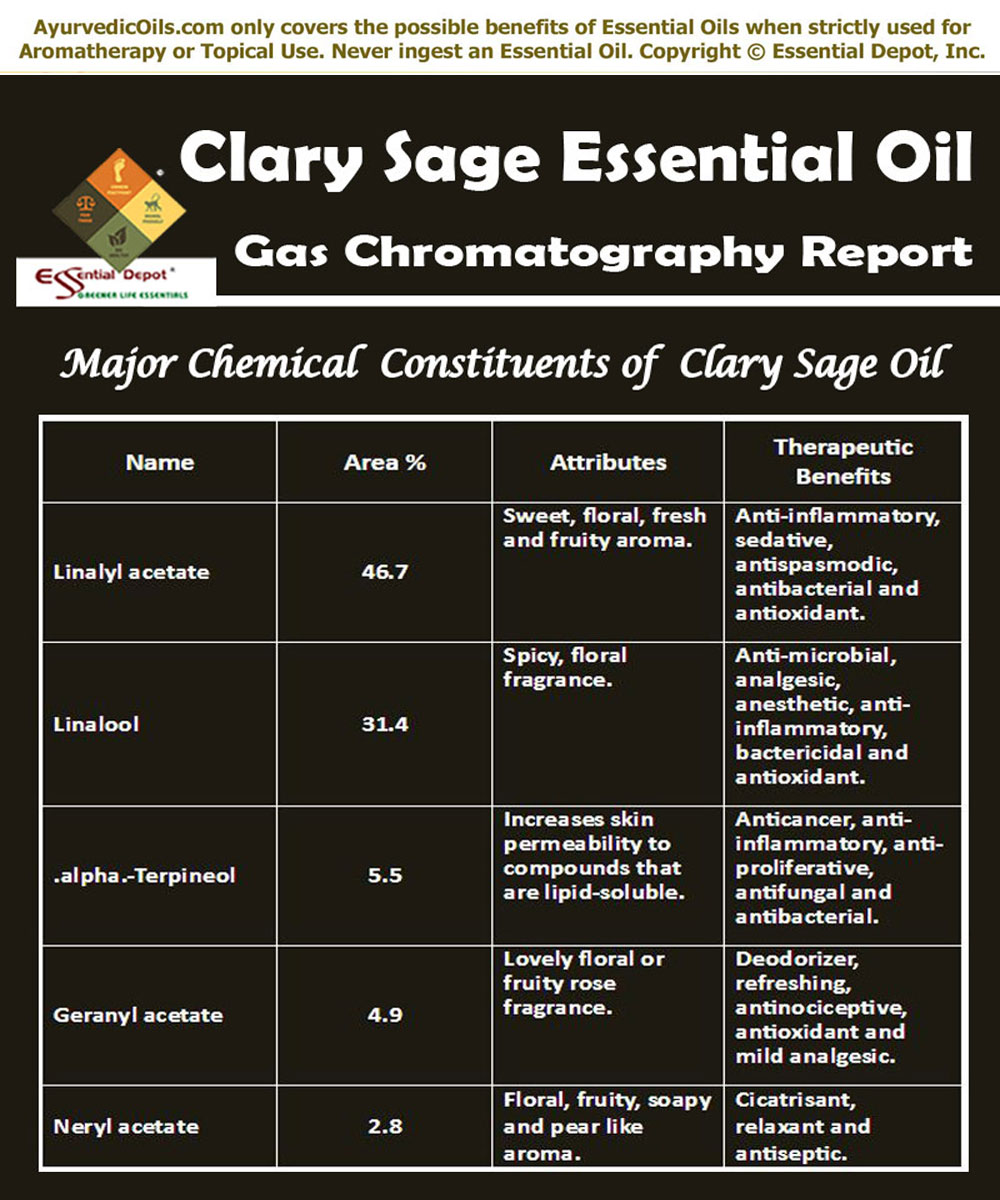
The table below on the Gas Chromatography report talks about the primary chemical constituents and its role in granting the therapeutic values and other attributes to Lemon essential oil.

Lemon-OilTherapeutic properties of Lemon essential oil:

The remedial properties of Lemon essential oil are antiviral, antibacterial, immune stimulant, digestive, anticancer, anti-inflammatory, calming, diuretic, expectorant, astringent, anti-anemic, detoxifying, antioxidant, tonic and antidepressant.

Ayurvedic health benefits of Lemon essential oil:

Ayurvedic healing dates back to more than 5000 years and it is the oldest of all medicinal systems on earth.  Lemon has been an important part of Ayurvedic treatments in many forms. The top ways to start a refreshing Ayurvedic life begins with the use of Lemon in lukewarm water as this therapy is said to cleanse the system, clear impurities in the blood and energize the mind and the body.

Human being is a unique creation and Ayurveda adorns the beauty of an individual constitution that differentiates each and every individual with a unique physical and mental setup. This uniqueness is determined by the combination of the three biological energies known as doshas.

They are vata, pitta and kapha. Vata dosha is responsible for blood circulation, creative thinking, metabolic functions and the process of elimination. Pitta energy governs body temperature, digestive fire, leadership skills and perfection. Kapha dosha lies behind the movement of fluids in the body, love and affection and body mass.

Predominance of any one of these doshas determines character, personality and behavioral attributes. Dosha balance contributes to good health and imbalance of doshas indicates illness.

Ayurveda sticks to nature and trusts that natural remedies are the best ways of healing human beings as they are an incredible part of nature. Ayurvedic therapies are unique for every individual and are focused towards treating dosha imbalances.

Ayurvedic remedies are often aimed at treating the five senses of human body. They are the sense of sight, sense of smell, sense of taste, sense of touch and sense of sound. Lemon is by far the best Ayurvedic remedy that has the power to retreat and recharge the four vital senses of the human body.

Lemon and its essential oil is said to pacify kapha and vata energy and aggravate pitta dosha.

Let’s have a look at the Ayurvedic health benefits of Lemon essential oil in the order of the five senses of human beings.Lemon-broucher1. Sense of sight:

The very sight of Lemon gives energy, confidence and inner strength. This is because the bright yellow color of Lemon indicates brilliance, cheerfulness, brightness and sunshine. These are the symbols of potency and real power paving way for improvement in one’s health physically and mentally. Healing through the sense of sight is known as color therapy in Ayurveda.

This holistic healing methodology states that every color has various impacts on the physiological and psychological attributes of mankind. Yellow color of Lemon and its essential oil according to Ayurveda has the power to promote clarity of mind, grants motivation, enhances the energy level, augments communication and instills the power of winning. So the next time, when you are feeling down and depressed, just look at the ‘Golden apple’ (lemon) that has the power to mend your mind to peace and prosperity.

2. Sense of smell:

Aroma plays a vital role in uplifting the body and mind. By inhaling the aroma of Lemon essential oil, the therapeutic molecules in the oil reach the limbic system of the brain through the nasal passages, where limbic system is the body’s control center that controls feelings, emotions and the corresponding behaviors.

The citrusy, fresh, energizing and enlivening aroma of Lemon essential oil spreads positive energy, calms the mind, grants mental clarity, treats anxiety, fatigue, nervous tension, dizziness, improves concentration, instills hopefulness and assists in weight loss when 2 drops of this oil is added to aromatic lamps, diffuser, air freshener, vaporizer or burner.

A 2004 study published in Brain Research stated that Lemon essential oil may contain pain-relieving and anxiety-reducing properties. When used in steam inhalation, Lemon oil aids in opening blocked nasal passages and clear chest congestion. The revivifying fragrance of Lemon oil makes it a favorite flavor in household cleaners, disinfectants, soaps, shampoos and detergents.

3. Sense of taste:

The best way to take Lemon internally is to drink the fresh juice. Ayurvedic therapies like Chardi Nivarana and Kaphotlesha suggests drinking lemon juice during nausea, vomiting, excessive salivation, gastritis, heaviness in the stomach and sluggish bowel movements. This helps in eliminating the excess deposits of kapha in the stomach.

Lemon is also called as Amadoshahara where ama is the toxic substances in the body. Drinking lemon juice is a proven Ayurvedic remedy for eliminating ama, which is a result of indigestion and improper absorption of nutrients.

Drinking lemon juice mixed with warm water and honey in the morning in empty stomach is said to treat obesity by stimulating the bowel movements and burning the excess fat deposits in the body. Lime has diuretic properties and it helps in expelling the excess fluids in the body causing obesity through urine and sweat.

4. Sense of touch:

Ayurvedic massaging or Abhyanga is an important therapy in Ayurveda for healing numerous illnesses and for eliminating the toxic substances from the body. Abhyanga is the art of maneuvering the body with hands, legs, elbows and certain other massaging equipments. The success of an Ayurvedic massage therapy lies in choosing the right massaging technique along with right essential oils that suits your health condition and unique individual constitution.

Treating through the sense of touch means using essential oils and herbal medications on the skin as skin is the best organ through which the therapeutic properties of these natural remedies penetrate deeply into the bloodstream.

(i) As topical application:

Lemon oil is an excellent remedy for treating skin problems like acne, rough skin, dull skin, oily skin, wounds, pigmentation, cold sores, cellulites, warts, varicose veins and sun tan. The antiseptic, disinfectant, astringent, antiviral and soothing properties of this oil assist in rejuvenating and toning the skin naturally by improving blood circulation. Skin care specialist Lia Schorr says that using Lemon oil mixed with glycerin can assist in treating rough patches on the knee, feet, hands and elbows.

Blend 2 drops of Lemon oil with 15 drops of Jojoba oil and apply it topically on pimples, boils, pustules, blackheads and whiteheads. It helps in removing excess oil, eliminate impurities in the skin and clears acne on regular use. You can also apply this blend on cold sores, tanned skin, dull skin and rough skin.

(ii) As Ayurvedic massage oil: Gently massaging your abdomen with 3 drops of Lemon oil mixed with 20 to 25 drops of coconut can help in treating dysentery, intestinal parasites, gas, flatulence, nausea, food poisoning, stomach upset, acidity, cramps and heartburn.

Massaging your chest, throat, foot soles and back with this blend can assist in treating throat infections, tonsillitis, fever, flu, cough and cold. The disinfectant, antiviral and expectorant properties of Lemon oil aid in controlling the growth of viruses responsible for cold, arrests infections and helps expel phlegm and mucous deposits in the body. This is due to the kapha pacifying property of Lemon essential oil.

Gently massaging your scalp with 3 drops of Lemon oil blended with Almond oil can help in controlling dandruff, moisturize the scalp, and augment the strength, volume and shine of your hair with its tonic and stimulating properties.

(iii) As bath oil: 3 to 4 drops of Lemon essential oil added to warm bathing water helps in relaxing your muscles, alleviate stress, lessen depression, promote good sleep, induce peace of mind, wipe away negative feelings, enhance skin health, detoxify the body, cleanse the digestive system and treat respiratory ailments.

(iv) As cold or warm compress: Few drops of Lemon essential oil added to cold or warm compress can help treating acne scars, pain, inflammation, headache, fever, congestion and stomach ache.

5. Partnering with the sense of sound:

Healing through the sense of sound means listening to appeasing music and reciting mantras and slogans that would enrich one’s spiritual values. Add 2 drops of Lemon essential oil to your vaporizer, burner or diffuser during your meditation time or while practicing yoga with the background of soothing instrumental music. This is a simple and an effective remedy for staying refreshed, uplifted and re-energized throughout the day.

Inhaling the invigorating aroma of Lemon essential oil during prayers, chanting mantras or reciting holy books can augment your oneness with the Divine power and pacify your mind and aura simultaneously. Feeling down? Then it’s not a bad idea to listen to motivational tapes with the company of the magical Lemon aroma around you. Add 1 drop of Lemon essential oil to your hanky or wear it on your wrist and you’ll be amazed to see the energy flow from within along with the motivational speech.

Disclaimer:

Never use essential oils internally as pure essential oils are highly concentrated in nature. Dilute it in suitable carrier oils before using them externally. Do not go out in sun as soon as using Lemon oil because this oil has phototoxic effect just like other citrus essential oils and can harm your skin due to the exposure to ultra violet rays.

This article is for educational purpose only and is not intended to replace any expert advice or prescribed medicines. Consult your Ayurvedic practitioner before using the appropriate essential oils for your unique constitution and health condition.

The MSDS (Material Safety Data Sheet) of Lemon oil is readily available for your enhanced safety and healthier usage.

Gas Chromatography Report of Lemon essential oil.

Lemon Essential Oil – Possible Skin Issues:

lemon-new

Greener Life Diamond – Bio-Healthy Score => 3 Possible Skin Issues:

See => http://www.essentialdepot.com/GreenerLifeDiamond.html

Lemon essential oil is witnessed as one among the photosensitizing citrus oils that may cause burning sensation, irritation, hyperpigmentation (discoloration of the skin surface) and other changes due to its effect of stimulating the photosensitivity of the skin, when exposed to visible light from the sun up to 12 hours of use. The primary reason is the reaction of the photoactive chemical components that absorbs light and leads to toxicity via molecular alterations in the skin.

The chief chemical component accountable for the skin sensitizing and other dermal effects of Lemon oil is Limonene and few other furanocoumarins.

Certain studies (like the 1994 study on the ‘Occupation Contact Dermatitis from Citrus fruits’ and a 2006 study on ‘Skin Diseases in Workers at a Perfume factory’) on the adverse skin reactions of using the essential oil of Citrus limon reports few cases, including the incidence of allergic contact dermatitis with the use of Lemon rind oil in the workers of the perfume industry. Patch testing also witnessed certain allergic effects on using Lemon rind oil.

Research reveals that Lemon oil has furocoumarin derivatives like oxypeucedanin and bergapten; however the phototoxic effect of oxypeucedanin was just 1 quarter of that of bergapten. It is also stated that these components are the major cause of concern behind the phototoxicity of Lemon essential oil. This study also states that oxypeucedanin educes photo pigmentation on the skin of colored-guinea-pig prior to visible erythema.

It is also stated that the quantity of these 2 phototoxic components in Lemon oils from various countries differed by about a factor greater than 20 (bergapten, 4-87 ppm; oxypeucedanin, 26-728 ppm (parts per million), with a wavering ratio.

The safe dilution use level of Lemon oil, a potential phototoxic essential oil is 2%, which is about 12 drops per ounce of any carrier oils, according to the International Fragrance Association (IFRA). This applies only for products employed for dermal use to prevent phototoxicity and is not valid for wash-off items like shampoos, soaps and other bath products.

Lemon oil has ‘Generally Recognized As Safe (GRAS)’authorization by the FDA (U.S. Food and Drug Administration). As per the European decree, essential oils containing furanocoumarins can be used provided the aggregate level of bergapten does not exceed 15 ppm in cosmetic products that are ready-to-use on the skin, which is prone to be exposed to direct sunlight sans wash-away items and 1 ppm in bronzing and sunscreen products.

On a lighter note, Furocoumarins are also used in remedial practices along with the long-wave ultraviolet light therapy for curing psoriasis, mycosis fungoides and vitiligo.

Reference Links Substantiating the Possible Skin Issues of Lemon Oil:

  1. A study of the phototoxicity of lemon oil by Naganuma M, Hirose S and Nakayama Y, Nakajima K and Someya T, published in the Archives of Dermatological Research and PubMed
  2. Essential Oil Safety: A Guide for Health Care Professionals By Robert Tisserand, Rodney Young
  3. Leung’s Encyclopedia of Common Natural Ingredients, used in Food, Drugs and Cosmetics by Ikhlas A. Khan and Ehab A. Abourashed.
  4. Citrus limon, American Herbal Products Association’s Botanical Safety Handbook, Second Edition by Zoe Gardner, Michael McGuffin
  5. Lemon oil side effects by WebMD
  6. Safety Information on Essential Oils by the National Association for Holistic Aromatherapy

Thought for the day:

When fate hands you a lemon, make lemonade.

– Dale Carnegie

Suggested Reading:

  1. HEALING POWERS OF LEMON OIL (The Aromatherapy Professional: Healing with Essential Oils) by KG Stiles
  2. Lemon: 50 Plus Recipes for Skin Care, Hair Care, Home and Laundry Cleaning along with Lemonade, Vegan, Curd, Chicken, Cookies, Cakes and Desserts by Pamesh Y
  3. How to Use Lemon Essential Oil (Aromatherapy) by Miriam Kinai
  4. Ayurveda & Aromatherapy: The Earth Essential Guide to Ancient Wisdom and Modern Healing by Dr. Light Miller, Dr. Bryan Miller

Reference Links:

  1. 35 Health Benefits of Lemon – Ayurveda Details by Dr JV Hebbar MD (Ayu) in Easy Ayurveda
  2. Lemon by Wikipedia
  3. Health Benefits of Lemon Essential Oil by Alternative Medicine, About.Com
  4. The Benefits of Lemon Oil on Skin by Livestrong.Com


Your resource for quality Essential Oils. Every batch is
GC tested to ensure purity and authenticity.

Ylang Ylang Essential Oil

ylang-ylang-bannerYlang Ylang essential oil is an eminent value addition to the perfume and cosmetic industry. Not many of us knew this name a few decades back and thanks to the cosmetic industry that has spread the magic of this herb just like forest fire.

The use of Ylang Ylang and its oil can be attributed to the ancient times as historical references indicate the use of aromatic plants by mankind for more than thousands of years. The essential oil of Ylang Ylang has innumerable Ayurvedic health benefits that you will certainly be amazed at.

Purchase Ylang Ylang Essential Oil – Retail – CLICK HERE

Purchase Ylang Ylang Essential Oil – Wholesale – CLICK HERE

Historical uses and importance of Ylang Ylang oil:

Popularly known as the flower of flowers, all the parts of the Ylang Ylang tree has a celebrated history both in the West and the East. This tree is indigenous to Indo-Malaysia, Philippines and Java. It was used in salves to heal cuts, scrapes, insect bites, snake bites and few other skin disorders in Philippines.

The Ylang Ylang petals are spread over the bed of newly married couples in Indonesia for its mesmerizing aroma and sensual effects.

The essential oil of Ylang Ylang was used in making of antimacassar, an ornamental chair cover that prohibited the Macassar oil from discoloring the upholstery. This oil was also used as a prominent ingredient in Macassar oil, an effective hair pomade.

Ylang Ylang was also used as a medicinal herb in treating chronic disorders like typhus, malaria and intestinal infections. Few sources reveal that the prominent therapeutic properties were initially identified in the early 20th century by famous French chemists Rechler and Garnier on the Reunion Island.

Every part of the Ylang Ylang tree is used for various purposes and the entire tree is claimed to be highly beneficial in many ways. The people of Java use the paste of fresh flowers to treat asthma and the dried flowers to treat malaria.

In Samoa and Tonga, the bark of the Ylang Ylang tree is used as a laxative and to treat stomach disorders. The timber of this tree is used in canoe making and construction works. In Cook Islands this timber is used for making furniture, wooden shoes, crates, fishnet floats and lathe turnings. Ylang Ylang is considered as a culturally important and as a sacred tree.

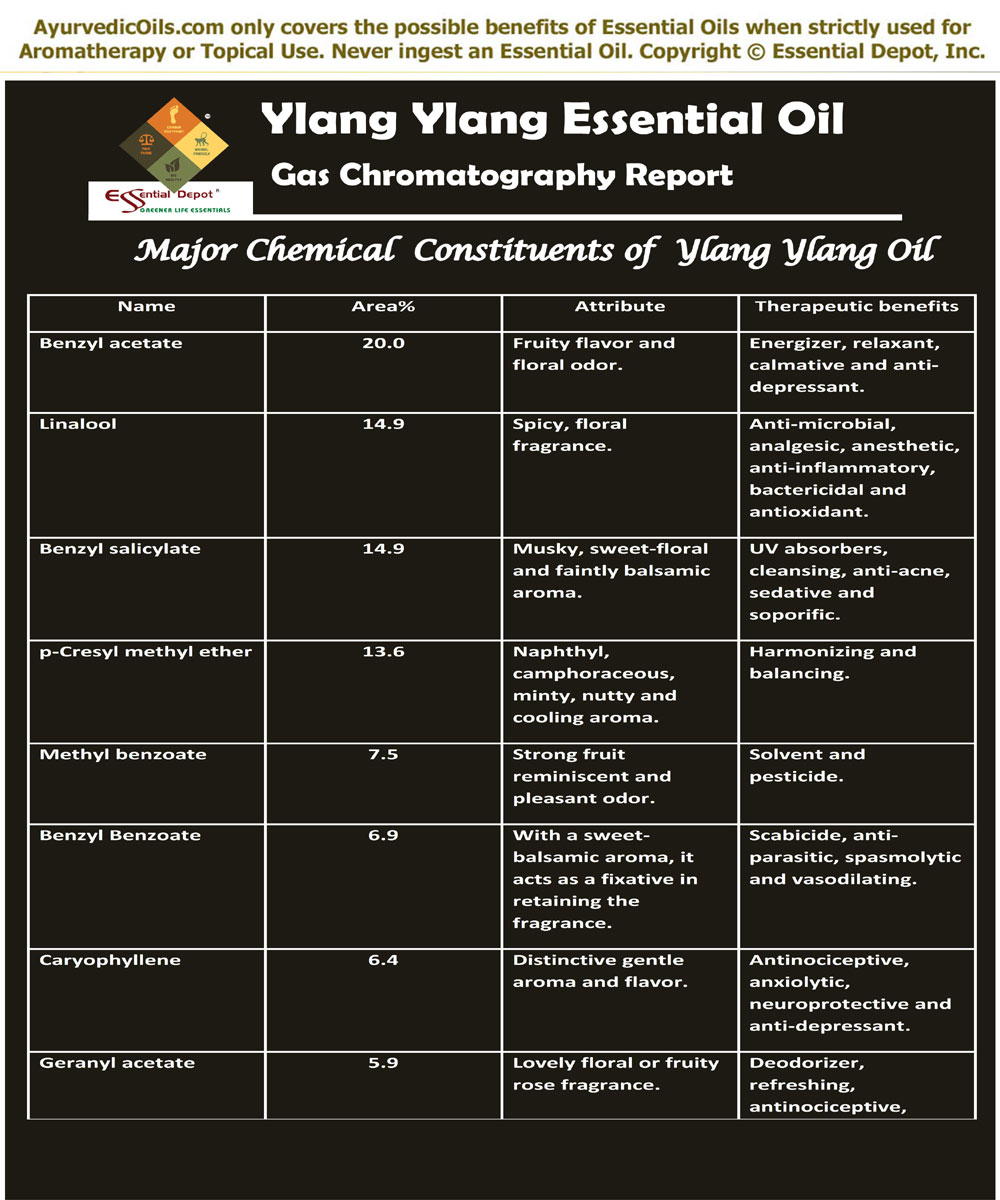
Chemical constituents or Gas Chromatography Report (GC) of Ylang Ylang oil:

According to the Gas chromatography report, Ylang Ylang oil is constituted of about 8 major chemical components that add to the aroma, consistency, quality and therapeutic values of this essential oil.

Just click on:

For knowing more about the exclusive information of these key constituents of Ylang Ylang oil.

The table below on the Gas Chromatography report talks about the principal chemical constituents and its role in granting the therapeutic and other attributes to Ylang Ylang oil.
Ylang-Ylang-OIlAyurvedic health benefits of Ylang Ylang essential oil:

The most incredible thing about Ayurveda is that it considers every individual as a ‘unique person’ with special individual constitution known as doshas. Ayurveda considers illness as a sign of imbalance in the system as Ayurvedic philosophy states that ideal health can be attained only by having a strong immune system and is a symbol of perfect harmony between a person’s mental, physical and spiritual wellness.

This ancient methodology trusts in treating mankind with the theory of five senses namely vision, smell, taste, touch and sound through colors, aroma, herbs, Abhyanga or Ayurvedic massage with essential oils and music respectively.

Essential oils are highly concentrated liquids extracted from plants using steam distillation. Every individual has a unique combination of three doshas (metabolic principles controlling mind and body) known as vata, pitta and kapha and the individual’s character, personality and health is often determined by the predominance of any of these dosha types. Imbalance of doshas acts as the basis of diseases where,

  • Vata imbalance causes weak memory, insomnia, dry skin, constipation and anxiety.
  • Pitta imbalance causes heartburn, acne, anger, indigestion, excess perspiration and criticism.
  • Kapha imbalance leads to obesity, respiratory disorders, water retention, sluggishness, possessiveness and uncaring.

With gentle, uplifting and moisturizing properties, Ylang Ylang essential oil is suitable in treating vata and pitta imbalances like frigidity, impotence, acne, boils, dry skin, wrinkles and skin irritations.

In their popular book ‘Ayurveda and Aromatherapy’, Light Miller and Bryan Miller say that individuals with imbalanced vata need warming up, calmness, relaxation, boost in self-esteem, sensuality for an attached life with their partner and using aphrodisiac essential oils like Ylang Ylang aids in augmenting the functional and hormonal ability of the sex organs.

People with pitta imbalance need help for venting out their anger and unwanted tension to experience their elated personality. Essential oils extracted from flowers like Ylang Ylang helps in supporting such conditions with their calming and cooling tendency.

The Ayurvedic health benefits of Ylang Ylang essential oil are:
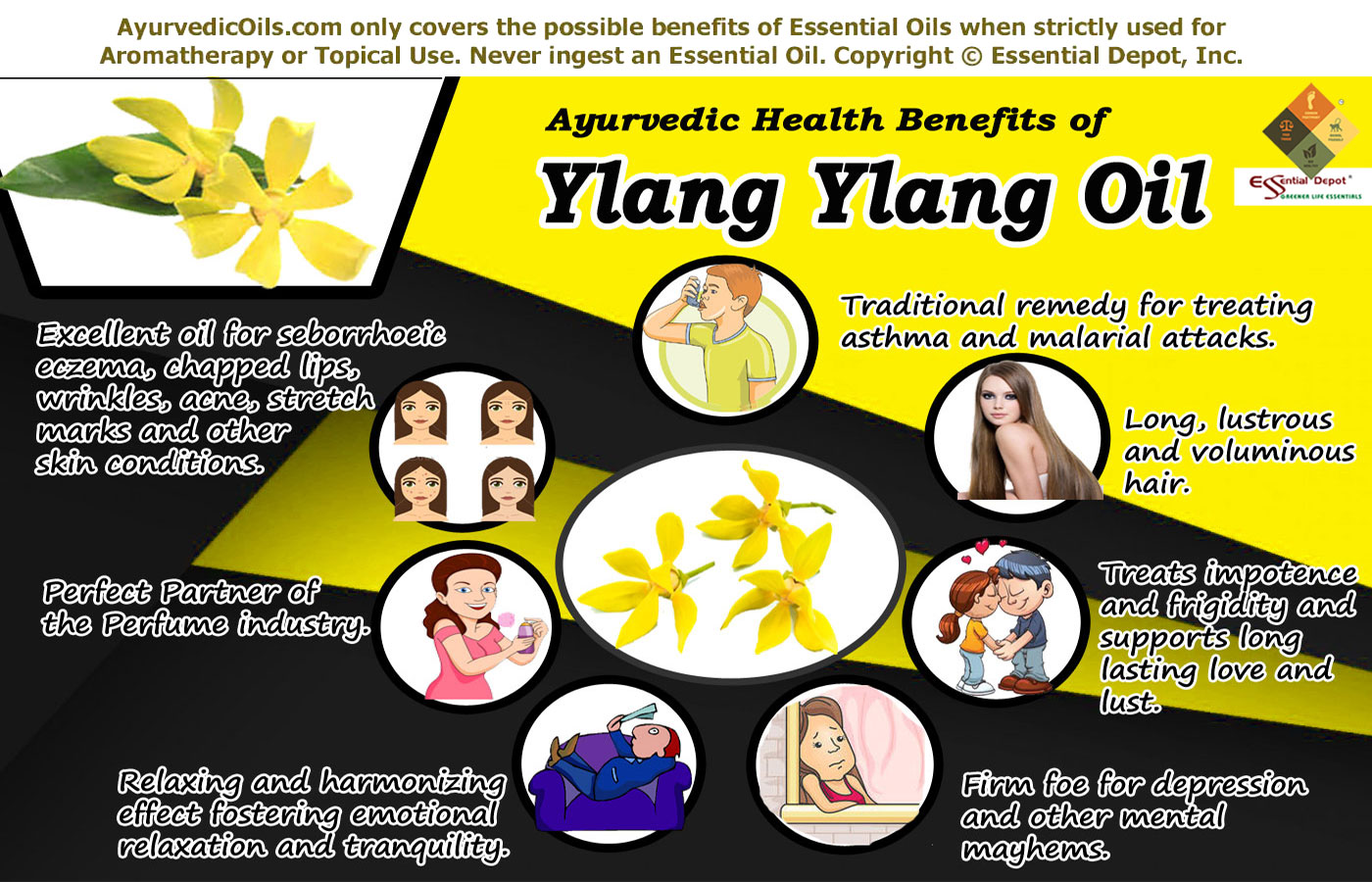
Ylang-ylang-broucher (2)1. Excellent oil for skin care:

Ylang Ylang essential oil is very effective and versatile in toning and stimulating the skin cells mainly because of its power to balance the production of sebum, making it suitable for all types of skin and as a promising remedy for treating Seborrhoeic Eczema.

The soothing, anti-seborrhoeic and antiseptic properties of this oil supports in treating skin inflammation, boils, skin irritation, chapped lips, acne, wounds, burns, blemishes, wrinkles, dry skin and few other signs of aging. Adding few drops of Ylang Ylang oil in your skin care lotion will help you in retaining the moisture of the skin, leaving it healthy and glowing.

2. Long, lustrous hair:

An ancient tribe known as Bori Bori used the Ylang Ylang flowers as a hair conditioner by mixing it in coconut oil. They also rubbed these flowers all over the body and decorated themselves by making necklace, headdresses, natural crowns and garlands for its splendid fragrance and curative values.

Massaging few drops of Ylang Ylang essential oil blended with coconut oil or almond oil aids in promoting hair growth, preventing hair loss, nourishing the scalp, augmenting the natural shine of the hair, making it long, lustrous, healthy and voluminous. What else? You are all set to be the proud owner of beautiful hair and gorgeous looks.

3. Relaxing and harmonizing:

Ylang Ylang essential oil is proved to be clearing heart fire and calming the heart due to the sedative quality of its primary constituent Monoterpene Alcohols. The traditional system of healing using aromatics suggests the use of Ylang Ylang essential oil to reduce and regulate rapid heart rate, high blood pressure and rapid breathing as it mainly supports the fourth chakra i.e, the heart chakra because of its connection in the initiation of the heart spirit.

An Evidence-Based Complementary and Alternative Medicine Research on ‘Essential Oil Inhalation on Blood Pressure and Salivary Cortisol Levels in Prehypertensive and Hypertensive Subjects’ proved that inhaling essential oil blend with ylang ylang, neroli, lavender and marjoram proved effective in controlling blood pressure and is strongly recommended for preventing the progression of hypertension. This research also proved that “Ylang-ylang oil lowers blood pressure, alleviates palpitations and nervous system excitation, and promotes emotional relaxation”.

Another research titled “Evaluation of the harmonizing effect of ylang-ylang oil on humans after inhalation” by Department of Pharmaceutical Chemistry, Srinakharinwirot University, Thailand conducted a study on the effects of Ylang Ylang essential oil on human physiological parameters like pulse rate, blood pressure, skin temperature and breathing rate while self-evaluation was assessed in terms of mood, calmness, relaxation, attentiveness, vigor and alertness.

This research proved that Ylang Ylang oil has a harmonizing effect that is momentous in lessening increased pulse rate and blood pressure as well as efficacious in increasing subjective alertness and attentiveness.

4. Firm foe for depression and other mental disorders:

With its sedative, calming, uplifting, nervine, anti-depressant, relaxing, euphoric and regulative properties, Ylang Ylang essential oil is a solid enemy for mental depression, stress, anxiety, insomnia, nervous tension, mood fluctuations, anger and few other mental disorders.  This oil aids in balancing hormones and effectively assists in mood swings associated with menopause and PMS (Pre-menstrual Syndrome).

A study published in PubMed on ‘Relaxing effect of Ylang Ylang oil on humans after transdermal absorption’ proved that Ylang Ylang essential oil is of great value in causing calmness, relief of stress and depression in humans.

You can use it as soothing massage oil blended with any of your favorite carrier oils like Jojoba oil, coconut oil or olive oil. Ylang Ylang essential oil can also be used in compresses, in candles, diffusers or air fresheners. Adding few drops to your bathing tub with warm water can alleviate stress and induce good night’s sleep.

5. Long lasting love and lust:

Ylang Ylang flowers and the essential oil extracted from these flowers are banked upon mainly for the aphrodisiac values adorned by its balsamic, floral, sweet, misty and woody aroma that aids in balancing male and female energy levels. It can significantly reduce emotional conflicts between these apparent opposites.

The sensual fragrance of Ylang Ylang essential oil is simply ideal for the perfect dream nights with your partner. It has positive influence on sexual feelings, tones the reproductive system, grants pleasure, treats lack of confidence and is also powerful in treating impotence and frigidity.

6. Perfect Partner of the Perfume industry:

The compelling fragrance of Ylang Ylang essential oil will make you stand out of the crowd. It is for this natural floral and delicate scent, ylang ylang oil is used in a handful of renowned perfume brands like Chanel No. 5, Escape by Calvin Klein, Beautiful by Estee Lauder, Acqua di Gio by Armani, Champs-Elysees by Guerlain and Poison by Christian Dior. Hmmmmm……………….Haaaaaaaaaaa…….. Doesn’t that smell so good? Absolutely it does.

Other uses:

Apart from all these health benefits, Ylang Ylang oil and the other parts of this tree are used in treating intestinal tract infections, symptomatic manifestation of malaria, fevers, epilepsy, tachycardia, agitation, distress, restlessness and other psycho-emotional imbalances. It is also used in making soaps, cosmetics and shampoos.

You will be surprised if I say that Ylang Ylang oil is also used as a safe flavoring ingredient in the food industry. A well-known study on “Safety assessment of Ylang Ylang as a food ingredient” indicated that “Ylang-Ylang oil has a long history of fragrance and food flavoring use, with no indication that its estimated consumption from food flavoring use (0.0001 mg/kg/day) has led to any adverse human health effects and at the current level of intake as a food ingredient, Ylang-Ylang oil does not pose a health risk to humans”.

Ylang Ylang essential oil is extracted from the star-shaped Ylang Ylang flowers and indeed it is a STAR OIL of all times and one more astonishing news is that it requires approximately 50 pounds of Ylang Ylang flowers to obtain 1 pound of Ylang Ylang essential oil.

Disclaimer:

This article is just for your information and do not ingest any essential oils or apply them directly to your skin without proper consultation with your Ayurvedic Practitioner, as every individual is unique and one that suits you might not suit your partner or your kid.

The MSDS (Material Safety Data Sheet) of Ylang Ylang oil is readily available for your enhanced safety and superior usage.

Gas Chromatography Report (GC) of Ylang Ylang oil.

Thought for the day:

 It was very pleasant to savor its aroma, for smells have the power to evoke the past, bringing back sounds and even other smells that have no match in the present.

-Tita

Suggested Reading:

  1. The Healing Trail:: Essential Oils of Madagascar by Georges M. Halpern, Peter Weverka
  2. HEALING POWERS OF YLANG YLANG OIL (The Aromatherapy Professional: Healing with Essential Oils) by KG Stiles
  3. How to Use Ylang Ylang Essential Oil (Aromatherapy) by Miriam Kinai
  4. Ayurveda & Aromatherapy: The Earth Essential Guide to Ancient Wisdom and Modern Healing by Dr. Light Miller, Dr. Bryan Miller

 Reference Links:

  1. Aromatherapy from Ayurveda’s Perspective by Yayoi Stavish
  2. Cananga Odorata (Ylang-Ylang) by Pacific Island Agroforestry
  3. Relaxing effect of ylang ylang oil on humans after transdermal absorption by PubMed
  4. Essential Oil Inhalation on Blood Pressure and Salivary Cortisol Levels in Prehypertensive and Hypertensive Subjects by In-Hee Kim, Chan Kim, Kayeon Seong, Myung-Haeng Hur, Heon Man Lim and Myeong Soo Lee, Evidence-Based Complementary and Alternative Medicine Volume 2012

Lavandin (Grosso) Oil

Lavendin-bannerThe dream of filling your garden and your home with the mesmerizing fragrance of Lavender blossoms is not a distant dream anymore as Lavandin is such a simple medicinal plant that resembles Lavender and its enriching aroma never fails to fill your home any lesser than Lavender does. As a hybrid of Lavender vera and Spike lavender, Lavandin Grosso is an excellent remedy for scabies and certain other infectious skin problems.

World is a global village and it is this strong reason that turns the world towards the path of Traditional healing methodologies. Ayurveda, the mother of all healing sciences on earth is the pioneer of Complementary and Alternative Medicine. Lavandin is used in Ayurvedic healing for treating respiratory problems, breathing difficulties, acne, eczema, stiff joints, varicose veins, pain and depression.

Purchase Lavendin (Grosso) Oil – Retail – 4 oz – CLICK HERE

Purchase Lavendin (Grosso) Oil – Wholesale – CLICK HERE

History of Lavandin (Grosso):

It is a hybrid variety of plants developed in the early 18th century and the essential oils extracted from these hybrid varieties were initially used for manufacturing soaps, perfumes and certain other personal hygiene products.

France is known as the major producer of Lavandin plants and essential oils. Lavandin essential oils are comparatively cheaper than True Lavender varieties. This is because unlike Lavender, these hybrid varieties can be grown as a commercially viable crop and are more tolerant to various climatic and growing conditions.

Lavandin Grosso is named after its discoverer Grosso and it reflects true qualities of both of its parentage with the camphoric aroma of Lavandula latifolia and the frost hardiness of Lavandula angustifolia. Among the numerous other Lavender hybrid plants, Lavandin Grosso is the most predominantly chosen plant by the commercial Lavender farm growers as it is easy to grow in most regions and produce abundant Lavandin flowers that contain ample amount of essential oils.

The big and bright flowers of this plant are also used for making sachets (keeps your clothes fresh and protect from moths and other insects) and the long stems are used in making Lavender wands. Initially, Lavandin and its essential oil were used as an analgesic and antiseptic for relieving pain, inflammation and for healing wounds and skin infections. Lavandin flowers were also used in making tea that was trusted to discharge excess mucous deposits and to assist breathing difficulties.

Chemical constituents or Gas Chromatography Report (GC) of Lavandin Grosso oil:

According to the Gas chromatography report, Lavandin Grosso oil constitutes of 25 chemical components that contribute to its fragrance, therapeutic attributes, consistency and quality. Of which, Linalyl acetate contributes to the highest proportion of Lavandin Grosso oil constituents with about 34.5% of its total composition.

Just click on:

I believe that this must certainly help you in getting to know the exclusive information about these prime chemical constituents of Lavandin Grosso oil.

The table crafted below clearly depicts the unique nature and contributions of these biochemical constituents to the healing magnificence of Lavandin Grosso essential oil.

lavandin-oil

Therapeutic properties of Lavandin Oil:

The remedial properties are antiseptic, antidepressant, analgesic, vulnerary, expectorant, cicatrisant, nervine, antispasmodic and stimulant.

Ayurvedic health benefits of Lavandin Essential Oil:

Many of us misconstrue that Ayurveda and the other traditional healing practices are meant for the old people or people who are still attached to the Stone Age. Ayurveda is the first and foremost healing methodology to love human beings and appreciate their individual identity, feelings, characteristics and behavioral patterns.

When all other medical sciences in this world aim at treating illnesses, this ancient healing system focused on treating individuals and not just their illnesses.

Ayurvedic philosophy declares that human beings are a part of nature and a person’s wellness or sickness depends upon his balance or imbalance with nature. Diseases occur when an individual’s mind and body is out of balance with nature. It is for this reason Ayurvedic remedies are based upon natural medicines for striking perfect balance with an archway to prevention and healthy aging.

Every individual is distinctive with a unique individual constitution that comprises of three biological energies known as doshas. They are vata, pitta and kapha. Each of these doshas governs certain functions of our body where vata is responsible for nervous functions and circulation, pitta controls metabolism and body temperature and kapha governs fluid movements, consistency and skin health.

Predominance of any of these doshas determines the personality, character, physical set up and the mental makeup of a person.

Imbalance between any of these doshas causes illness and Ayurvedic medications are prescribed in such a way that the imbalances are treated. Lavandin essential oil is said to reduce kapha and pitta dosha and has a neutral effect on vata dosha.

Let’s take a look at the Ayurvedic health benefits of Lavandin essential oil:

lavandin-broucher1. Benefits to the skin:

Popular author Susanne Fischer-Rizzi states that Lavender has more than 167 tested and proven medicinal uses. Bryan Miller and Light Miller in their book ‘Ayurveda and Aromatherapy’ says that Lavender is a must have essential oil in your first-aid kit or travel bag. With much similar aroma and healing properties like Lavender, Lavandin essential oil is also beneficial in a number of ways especially for nurturing skin health.

With excellent antiseptic, vulnerary and cicatrisant properties Lavandin essential oil has been proven effective for treating numerous skin problems. It keeps the skin clean and fights against various germs.

The ability of this oil in killing germs contributes to its effectiveness in treating dermatitis, scabies and few other infectious skin disorders. Being an effective antiseptic Lavandin essential oil can assist in treating wounds, cuts, burns, boils and rashes. It protects the open wounds from being septic or getting affected by the harmful organisms in air like tetanus.

The vulnerary properties of this oil helps in speeding up the process of healing wounds especially in case of incisions, surgical wounds, cuts or other accidental wounds. Applying 2 drops of Lavandin essential oil mixed with 1 ml of coconut oil is a sure-shot remedy for quick healing of wounds, protecting from infections and for fading away the scars and marks left by wounds, acne, stretch marks, surgical marks, cracks and other marks related to pregnancy.

Lavendin essential oil improves blood circulation and encourages the growth of new skin cells which contribute to its natural anti-scarring properties. You can also blend 3 to 4 drops of Lavendin oil in 2 ml of olive oil or to your regular skin care lotion and gently massage on to the skin to clear blemishes, treat sluggishness, dry skin and for improving the natural glow of the skin.

2. Benefits to the mind:

Lavandin essential oil has a rejuvenating and calming aroma that acts as an admirable antidepressant oil. The presence of camphor, linalyl acetate and terpineol-4 enhances its soothing and stimulating attributes that benefit the mind and heart in numerous ways. Lavandin Grosso oil is regarded as a great natural remedy for alleviating stress, fatigue, anxiety and depression. Certain studies have proven that Lavandin essential oil have anxiolytic effects that aid in improving the quality of sleep and save you from insomnia and nightmares.

Feelings of loneliness, lack of self-confidence, insecurity, loss of love or your near ones and work pressure may drag you down and waive a red flag to all your endeavors. All you need to do is to waive back the pleasant Lavandin flag that can uplift your spirit, enhance your self-confidence, fight against depressive feelings and reassure your success.

Adding 2 to 3 drops of Lavandin oil in your vaporizer, burner, diffuser, aroma lamp or bath tub can help in combating negative thoughts and grant the power to swim against the tide.

A 2009 study on ‘The use of the essential oil of Lavandin to reduce preoperative anxiety in surgical patients’ by the United Hospital, MN, USA tested about 150 adult patients to assess the effectiveness of Lavandin essential oil in reducing preoperative anxiety than other standard care methodologies. This study came up with an amazing result stating “Controlling for baseline anxiety and pain, the lavandin group had significantly lower anxiety on OR transfer, suggesting that lavandin is a simple, low-risk, cost-effective intervention with the potential to improve preoperative outcomes and increase patient satisfaction.”

3. Benefits to the respiratory system:

Adding 2 to 3 drops of Lavandin essential oil in steam inhalation or blending 2 drops of Lavandin oil with 1 ml of coconut oil and massaging it on chest, throat and back aids in treating cough, cold, bronchitis, sinusitis, chest congestion and other breathing problems. This is mainly due to the antiseptic properties of Lavandin oil that is proven to combat germs causing respiratory problems and its expectorant values that expel mucous and phlegm deposits in the chest and nasal passages causing cough and congestion.

4. Benefits to the entire body:

Lavandin Grosso oil benefits the entire body by supporting the functions of the nervous system. Using it as a massage oil by mixing 5 drops of this oil with 2.5 ml of jojoba oil aid in strengthening the nervous system and activate the nerves that pass on to different parts of the body. This is of great assistance in treating nervousness, sluggishness, convulsions, Alzheimer’s disease, lack of concentration and reflexes and certain other nervous problems.

Jane Buckle says “Lavandin Grosso was shown to be very effective against non-tubercular opportunistic mycobacteria (NTM) which is common in AIDS. Grosso is high in linalool for infections.” Lavandin essential oil also aids in treating pain, inflammation, rheumatism, influenza, headache, stiff joints, muscular problems etc, with its analgesic and anti-inflammatory properties.

Disclaimer:

This article is only for the purpose of information and is not destined for diagnosis or to substitute any prescribed medicines or professional advice. Never use essential oils internally and always use them in a diluted form for topical application as pure and organic essential oils are highly concentrated liquids and may cause harm if not used properly. Prevention is better than cure and it is always advisable to consult your Ayurvedic practitioner before choosing the right essential oils for your unique constitution and health condition.

The MSDS (Material Safety Data Sheet) of Lavandin Grosso oil is readily available for your enhanced safety and better usage.

Gas Chromatography Report (GC analysis) of Lavandin Grosso oil.

Thought for the day:  

The Universe is one great kindergarten for man. Everything that exists has brought with it its own peculiar lesson.     -Orison Swett Marden

Suggested Reading:

  1. Lavender: The Genus Lavandula (Medicinal and Aromatic Plants – Industrial Profiles) from CRC Press
  2. ISO 8902:1999, Oil of lavandin Grosso (Lavandula angustifolia Miller x Lavandula latifolia (L.f.) Medikus), French type by ISO TC 54
  3. The Lavender Garden: Beautiful Varieties to Grow and Gather by Robert Kourik
  4. The Lavender Lover’s Handbook: The 100 Most Beautiful and Fragrant Varieties for Growing, Crafting, and Cooking by Sarah Berringer Bader

Reference Links:

  1. The use of the essential oil of Lavandin to reduce preoperative anxiety in surgical patients’ by the United Hospital, MN, USA published in PubMed
  2. Lavandula by Wikipedia
  3. Lavandula x intermedia ‘Grosso’ by Missouri Botanical Garden
  4. Health Benefits of Lavandin Essential Oil by Organic Facts

Jasmine Sambac Oil

Jasmine-sambac-banner‘King of flowers’, ‘Queen of the Night’ and ‘Moonlight of the Grove’ are the ways by which the world adores Jasmine. The exotic, musky, mystifying, mesmerizing, sensual, zesty and the most masculine of all the flowery aromas in the world, Jasmine flowers grab the attention during their fullest blooms in the midnight.

Botanically known as Jasminum Sambac, Jasmine is known as Mallikaa, Nava-Mallikaa, Shita-bhiru, Madyantikaa, Vaarshiki and Madayanti in Ayurveda. It is commonly known as Arabian Jasmine.

According to the book, Indian Medicinal Plants Volume 3, the flowers, essential oil, leaves and the roots of this evergreen plant are widely used in Ayurvedic healing for treating ophthalmic problems, headache, epilepsy, ulcer, insanity, fever, leprosy, vomiting, glactorrhoea, impotency, wounds, itches and few other skin problems.

It takes about 8,000 hand-picked Jasmine blossoms to extract 1ml of its essential oil, which makes Jasmine as one among the most expensive oils on earth.

Purchase Jasmine Sambac Absolute 5% in Pure Jojoba– 4oz– CLICK HERE

Historical importance of Jasmine Sambac:

Jasmine Sambac is native to India and has its use etched in the history of various countries since the ancient times. The name Jasmine is extracted from the Persian name ‘Yasmin’ which means a fragrant flower.

It is the national flower of Philippines and one among the three national flowers of Indonesia. Known as Sampaguita (means “I promise you” and is a pledge of mutual love) in Philippines, Jasmine Sambac is regarded as a symbol of strength, simplicity, sacredness, humbleness and purity and is also used as a herbal remedy for fractures, abdominal distention, diarrhea, fever, swelling of the eyes and sprains.

The traditional Indians use the fresh juice of the ground flowers in treating sores, itching and wounds. The medicated root paste of Jasmine plant is used in treating labour pain for centuries in the rural parts of India.

Fresh Jasmine blossoms are used in making ceremonial garlands, crowns and other decorations on special occasions and as offerings to God in India, Indonesia and Philippines. Jasmine flowers are worn as hair ornaments by Indian women especially after marriage for its natural aphrodisiac, euphoric and sensual properties.

The Traditional Chinese Medicine has used Jasmine Sambac in the treatment of diarrhea, tumors, conjunctivitis, skin ulcers, dysentery and fever. The native Chinese used the roots in curing severe pain, headache, insomnia and pain and inflammation due to broken bones or dislocated joints mainly attributed to the analgesic, anti-inflammatory and anesthetic properties of this aromatic herb. The dried Jasmine flowers are used in making herbal tea in China.

The young leaves of Jasmine Sambac plant is used in making a herbal infusion for curing gallstones and the infusion of the roots were ingested to cure diabetes mellitus in Borneo. Jasmine Sambac has also been used for culinary purposes especially in making candies, teas, puddings, desserts, liqueurs and dairy products.

Therapeutic properties and chemical components of Jasmine Sambac essential oil: Jasmine Sambac oil is known to have antidepressant, aphrodisiac, antibacterial, analgesic, anesthetic, anti-inflammatory, antispasmodic, sedative, antiseptic, expectorant, antinociceptive, carminative, uterine tonic, cicatrisant, parturient, uplifting, stimulating, lactifuge and antitumor properties.

The major chemical constituents of Jasmine Sambac oil are cis-3-hexenyl acetate, benzyl acetate, methyl anthranilate, benzyl alcohol, cis-3-hexnyl benzoate, cis-3-hexnol, cis jasmone, linalool, methyl salicylate, benzyl benzoate, indole, α-franasene, linalyl acetate, α-cadinol and β-elemene.

Ayurvedic health benefits of Jasmine Sambac essential oil:

Ayurveda is the ancient wisdom of healing humanity for more than 5,000 years. It aims at prevention of illnesses along with healthy aging and longevity. Ayurvedic philosophy treats every individual in a unique manner even for the same disease as it trusts that every human being is unique in this world just like our finger prints.

It is the unique individual constitution of a person that helps differentiate his physical, mental and spiritual set up. According to Ayurveda, this constitution is made of three predominant biological energies known as doshas.

They are vata, pitta and kapha dosha. Each of these doshas represents a combination of two elements of nature. Whereas vata represents air and space, pitta represents fire and water and kapha is a representation of water and earth.

Vata energy governs circulation, process of elimination and the power of creative thinking. Pitta is responsible for digestion, absorption of energy along with leadership and decision making skills. Kapha controls the movement of fluids in the body, structure, sustenance and love.

Every human being is classified based upon the predominance of any one of these doshas and balance between these three Ayurvedic body types determines healthiness. Doshic imbalances denote that the individual’s health is out of balance with nature.

Ayurvedic remedies aim at balancing the doshas and help an individual to lead a systematic, disciplined and healthy life. The major Ayurvedic remedies are essential oils, herbs, physical exercises, Ayurvedic routine, meditation, yoga, prayer and a healthy balanced diet. Jasmine Sambac essential oil is a tridosha essential oil that is good for pacifying all the three doshas especially good in treating vitiated pitta conditions.

Let’s have a look at the major Ayurvedic health benefits of Jasmine Sambac essential oil.Jasmine-sambac-broucher1. Excellent aphrodisiac:

Jasmine has an ecstatic, compelling, sensual and miraculous aroma that has magical powers vested in it. This mystical fragrance grants excellent relaxation, open up blocked sexual inhibitions, treat the senses, supports the strength of female energies and naturally fortify the vigor of male energies. Jasmine is also known to nurture the health of male and female reproductive system and stimulates the secretion of male and female hormones.

A recent study on the ‘Comparative olfactory analysis of Jasminum Sambac and Jasminum Grandiflorum absolute’ has come up with the findings stating that Jasmine Sambac has a more appealing aroma that has a positive effect on the olfactory system that plays a vital role in governing numerous feelings and emotions that are distinct yet interconnected.

It is for these special reasons; Jasmine blossoms are used in making garlands, hair ornaments and in decorating the rooms of the newlywed couples in India, Philippines and Indonesia. Blend 2 drops of Jasmine oil in warm bathing water and enjoy a romantic bath together before going to bed. You can also add 2 to 3 drops of Jasmine Sambac oil to your burner, aromatic lamp, diffuser or air freshener during the night to enjoy the special time with your life partner.

2. Natural antidepressant:

Depression has become a common phenomenon in people of all ages including teenagers, professionals (both men and women) and aged people. Ayurveda recommends meditation, yoga and the use of pacifying aromatic oils like Jasmine Sambac oil. The aromatic compounds in Jasmine oil pass through the nasal passages and reach the limbic system of the brain, which is the control center of the brain.

Inhaling the aroma of Jasmine Sambac essential oil is said to pacify the senses, control negative feelings and paves way for venting out the depressed emotions that spoil one’s day. Adding 2 drops of this oil to vaporizer, burner, diffuser or air freshener can assist in treating tension, fatigue, depression, nervousness, anxiety, postnatal depression and addiction.

You can also add 2 drops of Jasmine Sambac oil in warm bathing water or massage your body by blending 5 drops of Jasmine oil with 2.5 ml of Jojoba oil for uplifting your senses, instilling positive feelings, strengthen your mind, augment your self-confidence and boost your emotions from within.

3. Antitumor and antibacterial oil:

Such a small flower possessing antitumor properties is absolutely a wonder to me and this witnessed by numerous studies. A 2011 study on ‘In vivo and In vitro Antitumor Activity of Jasminum Sambac (Linn) AIT Oleaceae Flower Against Dalton’s Ascites Lymphoma Induced Swiss Albino Mice’ evaluated the anticancer effect of Jasminum Sambac on mice affected by affected by cancerous tumor in the lymphatic system.

This study proved that the methanolic extracts of Jasmine Sambac flowers possessed significant cytotoxic and anticancer activity that helped in increasing hepatic levels of RNA and DNA in the mice.

The leaves and flowers of this plant are used since the ancient times in Ayurveda for treating and preventing breast cancer and controlling uterine bleeding. It is also used as anti-cancer, antiulcerative and antileprotic.

Jasmine Sambac essential oil also has antibacterial properties that aid in combating bacteria and other harmful microbes causing infectious diseases. A 2008 study on ‘Antibacterial potential assessment of Jasmine essential oil against E.Coli’ stated that Jasmine oil contains antibacterial activity that makes it effective in the treatment of removing corns, purify the kidney, treat ulcers and other inflamed conditions.

4. Relieves pain and inflammation:

Jasmine Sambac oil has mild analgesic, anesthetic and anti-inflammatory properties that help relieve pain and reduce inflammation. ‘Preliminary Studies on Anti-Inflammatory and Analgesic Activities of Jasminum Sambac (L.) Aiton in Experimental Animal Models’ have proved that Jasminum Sambac extracts exhibit anti-inflammatory and antinociceptive properties that are helpful in treating muscular aches, rheumatism, back pain, headache and inflammation.

Mix 2 drops of Jasmine Sambac oil with 1 ml of olive oil and massage gently on the painful area or add 2 drops of this oil to warm bathing water or to hot compress for effective relief from pain and inflammation.

5. Acts as a tonic to the skin:

Jasmine Sambac oil is extremely good for the skin and it acts as a natural tonic and improves the skin health. Add 2 drops of this oil to your regular skin care cream or lotion and massage it gently on to your skin for treating dry skin, sensitive skin, greasy skin and for fading away scars and stretch marks. Using 1 drop of Jasmine Sambac oil in vapor therapy can help in removing excess oil and blemishes in the skin and helps bring out its natural radiance.

Other health benefits:

Jasmine Sambac oil is also used as a tonic to the brain. The flowers are also used for reducing fever, treating hiccoughs, bee stings, swollen eyes, insomnia and vomiting. It is proven effective in the treatment of gastric ulcer and peptic ulcer with its antigastric ulcer effect. Being a lactifuge, Jasmine Sambac flowers are used traditionally for arresting the secretion of breast milk in a day or two.

Disclaimer:

This article is only for educational purposes and is not directed to diagnose or replace any professional medical advice or prescribed medication. Never take essential oils internally. Organic essential oils are highly concentrated in nature and are always advisable to use them in a diluted manner.

Certain compounds in Jasmine sambac oil can be allergenic and is good to do a small patch test on the skin to check the reaction or the sensitivity of your skin. Consult your Ayurvedic practitioner before using the right essential oils for your unique constitution and health condition, especially if you are pregnant or a nursing mother.

Thought for the day:

Plants that wake when others sleep. Timid jasmine buds that keep their fragrance to themselves all day, but when the sunlight dies away let the delicious secret out to every breeze that roams about.  -Thomas Moore

Suggested Reading:

  1. Jasmines by Harshita Joshi
  2. Precision Production Technology in Jasminum sambac Ait: Comparison of Precision and conventional production technology in Jasminum sambac Ait by S.T. Bini Sundar, M. Kannan, G. Ashok Kumar
  3. The Genus Jasminum in Cultivation (Royal Botanic Gardens, Kew – Botanical Magazine Monograph) by Peter Green, Diana Miller
  4. Jasmine Recipes: Cooking with Nature’s Super Flower (Quick and Easy Series) by Dogwood Apps

Reference Links:

  1. Jasminum Sambac by Wikipedia
  2. Jasmine Sambac by Fragrant Harvest
  3. Antibacterial Potential Assessment of Jasmine Essential Oil Against E. Coli by C. C. Rath, S. Devi, S. K. Dash, and R. K. Mishra published in Indian Journal of Pharmaceutical Sciences and PubMed
  4. Mechanisms of Gastro protective Effects of Ethanolic Leaf Extract of Jasminum sambac against HCl/Ethanol-Induced Gastric Mucosal Injury in Rats published in Evidence-Based Complementary and Alternative Medicine of Hindawi Publishing Corporation
  5. Preliminary Studies on Anti-Inflammatory and Analgesic Activities of Jasminum Sambac (L.) Aiton in Experimental Animal Models published in the American Journal of PharmTech Research

Moranga Essential Oil

Loved as  ‘Mother’s Best Friend’ in East Africa and as ‘Never Die’ and ‘Miracle Tree’ all over the world, Moranga is one of the most useful trees in the Cosmos, as every part of this tree including the leaves, stems, seeds, pods, fruits, root and bark has enormous medicinal values. Moranga is known as the best natural hub of antioxidants with 46 antioxidants and 36 anti-inflammatory compounds making it rich and wholesome for mankind.

Ayurveda, the mother of all healing sciences have listed about 300 diseases that can be cured with this wonder herb known as Shigru, Sahijna, Munaga, Shobanjana and Sainjna in the Ayurvedic community. Moranga is scientifically called as Moringa pterygosperma gaertn., or Moringa oleifera, Lam. The name Moringa is extracted from the Tamil name murunga and pterygosperma for its winged seeds or oleifera for its non-drying stable oil with a long shelf life.

Purchase Moranga Oil – Wholesale – CLICK HERE

Historical importance of Moranga and its essential oil: Well-known to the world populace as Drumstick tree, clarifier tree and horseradish tree, Moranga is extremely nutritious and considered as a treasure of India and a fortune to the entire universe. Indians call it a pretty tree with a graceful appearance complimenting its surrounding with natural beauty and freshness. This immortal tree has an exceptionally long traditional usage. The most important among them are listed for your information.

Historical transcripts reveal that drumstick and its leaves were used by the primordial Indian kings and queens in their daily diet to gain enormous energy, retain their good health and treat inflamed joints. The young leaves of this tree are used in folklore medicine for treating common cold, dog bites and scurvy. Fresh Moranga leaves were rubbed against the temples for relieving severe headaches. These leaves are also used in treating fever, inflammation of the mucus membrane, bronchitis, cold, infections of the ear and eye.

Tea prepared with Moranga leaves were used in treating diarrhea, gastric ulcers and stomach pain. Moringa leaves and food products are considered as the best food for people suffering from malnutrition as it is rich in fiber, protein, minerals, vitamins and carbohydrates. It is used in Senegal and India for treating sleeplessness, anxiety, asthma, dysentery, rashes, sores, colitis and added to children’s food to fight malnutrition.

The leaves and twigs are used as a nutritious fodder for farm animals, goats, sheep, camels and other domestic animals. The juice extracted from Moringa flowers is used for treating urinary problems, cold and to enhance the flow and quality of milk in breastfeeding mothers with its tonic, diuretic and cholagogue properties. Moringa flowers are regarded as a good source of pollen for honey bees. The high iron content in Moringa leaves are used to treat anemia in Philippines. Moringa gum is used to treat asthma, tooth decay and rheumatism.

Moringa oil has been used in treating syphilitic wounds, scurvy, hysteria, bladder problems, prostate problems, fungal infections and certain skin complaints.  The villagers in Oman use this oil as a perfume and for treating hair problems and stomachic disorders.  Arabians in the desert used this oil on their face to treat the harmful effects of wind and sun. It was buried in the tombs of Egyptians whereas the Romans used this oil as a basis for perfumery.

Therapeutic properties of Moranga essential oil: The major remedial properties of Moringa essential oil are antibacterial, anti-inflammatory, diuretic, antispasmodic, anti-choleric, antifungal, anti-hypertensive, anti-tumor, anticancer, antiulcer, immune stimulant, aphrodisiac, antidiabetic, tonic, antipyretic, hepatoprotective, cholesterol lowering and antioxidant. A study on the ‘Medicinal properties of Moringa oleifera: An overview of promising healer’ have analyzed on numerous therapeutic properties of Moringa oleifera.

Ayurvedic health benefits of Moranga essential oil: Ayurveda, the ancient healing science aged more than 5,000 years has India as its birthplace. This holistic healing methodology have used the most useful tree on earth, Moringa aged more than 4,000 years and has its origin in India. Ayurvedic texts list more than 300 diseases that can be cured with the immaculate healing powers of Moranga tree and its extracts like the essential oil.

The power of Ayurvedic healing deeply vests in its trust on natural remedies. Ayurvedic philosophies state that every living thing on earth is unique in its own way and united in the fact that it is a part of nature. This promising science is optimistic and the simple proof is that it considers illness as an opportunity to find what is wrong in the system.

Ayurvedic treatments do not treat just the disease instead it treats the whole individual. By this way it aims at treating and preventing the illness and not just curing the disease alone. Ayurveda identifies the major root cause responsible for sickness.

Ayurvedic texts strongly state that every individual has his or her own constitution which is made up of three energy elements known as doshas namely pitta, vata and kapha. Balance between these three doshas indicates that the system is hale and healthy and imbalance of any one or all the three doshas is responsible for sickness. Moringa and its essential oil is said to reduce excess kapha and vata and improve deficiency of pitta.

Ayurvedic remedies using Moringa products are used in the treatment of liver problems, urinary infections, dysmennorhea, aid during labor or childbirth, improving the secretion of milk in breastfeeding mothers, anemia, sexual dysfunctions, nervous debility, skin problems and infections caused due to pathogenic organisms. The major health benefits of the essential oil extracted by steam distillation method from the leaves of Moringa tree are:

Enormous benefits for the skin: Moringa essential oil has exceptional benefits for the skin and is mainly due to the presence of rich nutrients and antioxidants in the leaves that support healthy skin. Moringa leaves are known as the powerhouse of nutrition with more than 7 times the vitamin C in oranges, more than 4 times the vitamin A in carrots, more than four times the calcium in milk, more than 3 times the potassium in bananas and more than twice the proteins in milk in each gram.

Moringa essential oil has antibacterial, antimicrobial, antifungal, antioxidant and anti-aging properties that aids in combating numerous skin problems. The effects of aging like wrinkles, dull and lifeless skin are mainly due to the activity of free radicals on the skin. The rich content of about 46 antioxidants in Moringa aids in fighting against all the negative effects of aging on skin.

Moringa oil cleanses, nourishes and nurtures your skin naturally. Blending 3 drops of this oil with little coconut oil and applying this mixture on acne, cuts, scrapes, blackheads, scars, burns, rashes and insect bites will help in quicker healing with its antiseptic and antimicrobial values. Gently massaging your skin with 2 to 3 drops of Moringa oil mixed with olive oil helps augment the elasticity of the skin by nourishing the skin cells, removing dirt gently, killing microbes causing infections, avoiding excessive drying, and moisturizing the skin.

A 2007 study on ‘Anti-fungal activity of crude extracts and essential oil of Moringa oleifera Lam.’, by the Institute of Bioagricultural Sciences, Taiwan have stated that the “essential oil extracted from the leaves of Moringa showed a total of 44 compounds. Isolated extracts could be of use for the future development of anti-skin disease agents.”

Due to these reasons Moringa oil is used as an important ingredient in soaps, facial creams, body wash, facial massage oils and anti-aging creams. You can also add 3 to 4 drops of Moringa oil to your mild skin care cream or lotion for alleviating such skin problems.

More than just a complete food for your system on your shelf: Moringa leaves have Vitamin A, B1, B2, B3, B6, B7, C, D, E, K and certain other amino acids like leucine, methionine, lysine, isoleucine, threonine, valine, tryptophan and phenylalaine along with a bunch of non-essential amino acids, making it a complete food for the mind, body and soul.

Adding 2 drops of Moringa oil to warm bathing water can help in relieving stress, cleansing your body, granting mental peace and removing fatigue. Massaging your body with 4 drops of Moringa oil blended with almond oil can aid in alleviating rheumatic pain, reduce inflammation with its anti-inflammatory properties, eliminate the excess fluids in your body through urine, boost the immune system and protect your body from harmful infections.

Moringa essential oil is light and it easily spreads and deeply penetrates into the skin. By this way it transforms its vital nutrients into the body, mind and spirit. This oil has also been used as a natural cleanser to remove excess oil and dirt from hair. Massaging your hair and scalp with 3 drops of Moringa oil blended with coconut oil can assist in cleansing your hair, nourishing your scalp, treating dandruff and grant a natural shine to your lustrous locks.

Scientific evidences: The long time Ayurvedic health benefits of Moringa and its essential oil have been proved scientifically through numerous studies. A 2003 study on ‘Hepatoprotective activity of Moringa oleifera on antitubercular drug-induced liver damage in rats’ have proved that treatment with M.oleifera leaves seems to improve the recovery from hepatic damage caused by antitubercular drugs.

Another study by the U.S. National Academy of Sciences Noel Vietmeyer published in PubMed witnessed “The results indicate that this plant possesses antioxidant, hypolipidaemic and anti-atherosclerotic activities and has therapeutic potential for the prevention of cardiovascular diseases.”

The University of Agriculture, Faisalabad, Pakistan studied the effectiveness of Moringa oleifera based upon its detailed phytochemical composition, pharmacological properties and medicinal uses of various parts of this multipurpose treesuch as the leaves, roots, seed, bark, fruit, flowers and immature pods act as cardiac and circulatory stimulants, possess antitumor, antipyretic, antiepileptic, anti-inflammatory, antiulcer, antispasmodic, diuretic, antihypertensive, cholesterol lowering, antioxidant, antidiabetic, hepatoprotective, antibacterial and antifungal activities, and are being employed for the treatment of different ailments in the indigenous system of medicine, particularly in South Asia.”

Few other studies also proved the antioxidant, hypocholesterolemic, antifungal and antibacterial effects of Moringa tree and its essential oil.

Other health benefits: Apart from these major health benefits, the different parts of Moringa tree and the essential oil extracted from the leaves and seed pods are used to strengthen the immune system with vitamin C, lessen the risk of health disorders like Alzheimer’s disease, atherosclerosis and cataract with the presence of vitamin B3, stimulates the process of digestion with the presence of fibre, supports blood circulation, functioning of the brain and treat anemia with its rich iron content and improve eyesight with vitamin A. Besides these, there are a handful of home remedies that are a part of the traditional healing system and grandmother’s remedy.

Disclaimer: Never take essential oils internally. Pure and organic essential oils are highly concentrated liquids and always remember to use them in a diluted form. This article is only for the purpose of information and is not meant to diagnose or replace prescribed drugs or professional advice. Consult your Ayurvedic practitioner before using the right essential oil for your specific health condition and individual constitution.

Thought for the day:

We do not see nature with our eyes, but with our understandings and our hearts.   -William Hazlitt

Suggested Reading:

  1. Miracle Tree by Monica G. Marcu
  2. Bible Miracle Tree: healing with Moringa by Miracle Bible
  3. Moringa Oleifera: Magic, Myth or Miracle by Howard W. Fisher
  4. Moringa Oleifera benefits: enrich your life with the Miracle Tree for well-being, happiness, weight loss. More than a super-food, nutritional supplement, food supplement by Frank Moringa Oleifera

Reference Links:

  1. Moringa oleifera by Life in Health
  2. Śigru or drumstick (Moringa pterygosperma, Gaertn., M. oleifera, Lam.) by Dr. K.H. Krishnamurthy published in NAMAH
  3. Moringa, the Miracle Tree by Moringa Rubicon Health.Org
  4. The Benefits of Anti-Aging Moringa Oil on the Skin by Ayurveda Guru
  5. Medicinal properties of Moringa oleifera: An overview of promising healer by Fozia Farooq, Meenu Rai, Avinash Tiwari, Abdul Arif Khan, and Shaila Farooq

Rose Geranium Essential Oil

Rose Geranium bannerWith a much similar aroma of rich roses, Rose Geranium essential oil is known as the poor people’s Rose oil as it is less expensive than the original Rose essential oil.  Botanically known as Pelargonium roseum, this plant belongs to the Geraniaceae plant family and is indigenous to Cape Province, South Africa.

Often used as a substitute for Rose essential oil, Rose Geranium oil is extracted from the soft rosy flowers with the touch of deep fuchsia of this perennial shrub. With a smooth, rosy, fresh, warming, herbaceous, purifying and sensual aroma, Rose Geranium oil is known for regenerating female energies and for treating an extensive array of skin problems in Ayurveda, the oldest of all healing practices.

Purchase Rose Geranium Essential Oil – Retail – CLICK HERE

Purchase Rose Geranium Essential Oil – Wholesale – CLICK HERE

Purchase Rose Geranium Essential Oil – 5% Dilution in Pure Jojoba – CLICK HERE

Historical uses of Rose Geranium Essential Oil:

Rose Geranium is said to have originated in South Africa along with Egypt, Morocco, Reunion and Madagascar. It was then introduced to the European countries like France, Italy and Spain in the early 17th century.

The herb and the essential oil of Rose Geranium has been used in the pre-historic period as a powerful injury healer including cuts, abrasions, burns, skin ulcers and infections. This is attributed to the antiseptic, antibacterial, analgesic and anti-inflammatory properties. The sweet citrus-floral fragrance of this oil made its use prominent in the fragrance industry since the ancient times.

Chemical constituents and therapeutic properties:

A 2009 study on ‘Volatile Components of Pelargonium roseum’ proved that Rose Geranium essential oil contains thirty-two compounds and the major ones among them are citronellol (27.3%), citronellyl formate (17.2%), β-caryophllene (10.3%), limonene, a-pinene, terpenes, myrcene, menthone, geraniol, cetones, ϒ-muurolene, geranyl butyrate, linalool, aldehydes and geranyl acetate.

The most significant healing properties are antiseptic, vulnerary, antidepressant, cicatrisant, vermifuge, astringent, styptic, diuretic, deodorant, cytophylactic, haemostatic and tonic.

Ayurvedic health benefits of Rose Geranium essential oil:

Ayurveda is a traditional Indian healing methodology that means science of life. It is more than just a system of dealing or diagnosing illnesses, it is a common sense science that guides humanity on leading a holistic life preventing illnesses for an enduring bliss.

Ayurvedic approaches rely on nature for their treatment and trust that nothing else other than essential oils, herbs, yoga, meditation, balanced living and spiritual oneness can grant optimal wellness to a human’s life.

Ayurveda classifies individuals based on their unique constitution that is composed of three basic energy elements namely vata, pitta and kapha doshas. Imbalances of any one of these doshas open door to diseases and interrupts a human’s body’s balance with nature.

Vata is the lightest of these 3 doshas and imbalance of vata ends up in insomnia, constipation, PMS, stress, nervousness and fatigue. Pitta being the hottest energy element and when out of balance it causes digestive disorders, anger, emotional distress, high blood pressure and lack of interest.

Kapha is the heaviest dosha and its disparity leads to sluggishness, blockage, depression, improper blood circulation, high cholesterol, weak metabolism, depressive thoughts and fluid retention. Ayurvedic texts classify Rose Geranium essential oil as an ideal healing force for pacifying and controlling the imbalances of all the three doshas with its balancing effects.

The most important Ayurvedic health benefits of Rose Geranium essential oil are:

rose-geranium-broucher1. Lessens stress, depression and treats autonomic nervous system imbalances:

A German based research has clinically proven that the presence of the Geraniol component in Rose Geranium essential oil is very effective in treating autonomic nervous system imbalances known as Vegetative dystony.

A balanced autonomic nervous system is highly essential for the normal functioning of the body, mind and its emotions as it influences the production of hormones and the corresponding responses in the system. Imbalance of which can cause nervousness, anxiety, depression, hot flashes, headache and irregular heartbeat.

The essential oil of Rose Geranium has a perfect harmonizing effect on the central nervous system, making it idyllic in uplifting the spirits and handling stress. Using 2 drops of this oil in your potpourri or diffuser, in bath or as a massage oil blended with carrier oils like coconut oil transforms positive energy in your body and your atmosphere.

This helps greatly in alleviating stress, depression and anxiety at it best. The convincing aromatic molecules present in Rose Geranium oil reach the limbic system through the nasal passages and inculcates a stimulating force in the adrenal cortex.

Renowned author K.G. Stiles says that Rose Geranium oil is “Definitely a first-aid oil everyone should consider having on hand Rose Geranium oil’s tonic action helps relieve nervous emotional conditions like anxiety, confusion, depression, lethargy, energy swings and tearfulness.”

2. Athlete’s companion:

Rose Geranium oil is used in many popular health supplements for body building, athletic performance and weight loss for a fit physique. This is mainly due to the stimulant property of this oil where certain supplement manufacturers claim that the presence of the stimulant component dimethylamylamine in Rose Geranium oil makes it powerful naturally.

The University of Wisconsin Steven Point suggests an effectual massage oil blend that contains few drops of Rose Geranium oil with few drops of Lavender essential oil with the base of Almond and Vitamin E oil for relieving muscular tension and grant a relaxing effect on the mind and body. This is what an athlete would essentially require to trigger his/her efforts and chase their passion without any blocks.

Dr. Kurt Schnaubelt quotes Rose Geranium oil as, “The tonifying effect of the terpene alcohol combined with the soothing influence of the esters are responsible for the fact that geranium is perceived differently for each individual. One person will perceive it as antiseptic, another as calmative, and a third as stimulant…because of this versatile character, geranium is an excellent foundation for massage and body oils.”

3. Women’s friend:

The regenerative and haemostatic properties of this oil enhances circulation, has positive effects on the functions of liver and spleen, stop hemorrhages and helps in treating blocked menstruation, PMS, hot flashes and mood swings in menopausal women.

Using 2 to 3 drops of Rose Geranium essential oil with Sesame oil for massaging your abdomen or added to your warm bathing water helps in regulating the lymphatic system, promoting the release of toxic substances in the body while checking heavy periods and vaginal secretion. This oil is also known to ease labor pain and childbirth.

4. Benefits for the skin:

The great news is that Rose Geranium oil benefits all types of skin including dry, oily, sensitive and normal skin. 2 drops of Rose Geranium oil blended with 2 drops of Lavender oil along with soothing carrier oil like jojoba oil applied on the affected area aids in reducing dryness, sting, itching and peeling of skin due to severe sunburns.

Adding few drops of Rose Geranium oil in your skin care cream or lotion helps in controlling the excess secretion of sebum responsible for acne and dull oily skin. It balances the skin naturally, treats congestion, sluggishness and leaves your skin supple and healthy.

Topical application of Rose Geranium essential oil is known for treating cellulite by fighting against fat metabolism, varicose veins, breast soreness, eczema, psoriasis, broken capillaries, premature symptoms of aging and dermatitis. The anti-fungal, antibacterial and antiseptic properties of this oil makes it effective against acne, ringworm, burns, cuts, wounds and other skin problems.

5. Other health benefits:

Rose Geranium oil is also used as a diuretic for eliminating toxins through urine in case of fluid retention. It also assists in the treatment of nerve pain, inflammation, shingles, dry cough, nose bleeding, head lice and as an effective insect repellent.

Disclaimer: Do not use essential oils directly on your skin as pure essential oils are highly concentrated and might be harmful. Never take essential oils internally without the guidance of your Ayurvedic practitioner. Keep it away from children and avoid using if you are pregnant.

Thought for the day:

Flowers… are a proud assertion that a ray of beauty outvalues all the utilities of the world.                                                                          Ralph Waldo Emerson

Suggested Reading:

  1. HEALING POWERS OF ROSE GERANIUM OIL (The Aromatherapy Professional: Healing with Essential Oils) by KG Stiles
  2. Natural solutions: Women’s health conditions by Ann Lisette Wesso
  3. Ayurveda & Aromatherapy: The Earth Essential Guide to Ancient Wisdom and Modern Healing by Dr. Light Miller, Dr. Bryan Miller
  4. The Illustrated Encyclopedia of Essential Oils: The Complete Guide to the Use of Oils in Aromatherapy & Herbalism by Julia Lawless

Reference Links:

  1. Volatile Components of Pelargonium roseum R. Br. Published in Journal of Essential Oil Bearing Plants
  2. Rose Geranium Essential Oil by The Ananda Apothecary
  3. Rose Geranium Essential Oil Uses by Livestrong.Com

Mustard Essential Oil

‘Sarson ka tel’ or Mustard essential oil is a vital part of Ayurveda, the ancient Indian therapy where it is used for cleansing, stimulating and revitalizing the body. Besides all the controversies across the world, Mustard oil is popular and extensively used in India, Bangladesh and few other Western countries.

Though extracted from the same Mustard seeds, Mustard edible oil is totally different from Mustard essential oil by the method of extraction where the vegetable oil is extracted by cold compressing the seeds and the essential oil of Mustard is extracted by steam distillation of seeds that are soaked in water.

Mustard oil is to Asian countries just like Olive oil is to Mediterranean countries. Besides the myth of being banned in certain countries for internal use, Mustard is a legendary oil used for more than thousands of years in the world’s oldest mythologies like India, Rome and Greece.

Historical importance of Mustard and its oil:

Used as a spice, condiment, herb, cooking oil and medicinal agent, Mustard and its oil are said to have been found since the Stone Age settlements. Among the 40 species of Mustard plants, the most popular and the ones used for extracting essential and edible oils are Brassica nigra (Black mustard), Brassica hirta (White mustard) and Brassica juncea (Brown mustard).

It is still trusted that Mustard was grown in the Indian subcontinent around 3000 B.C.E. Hippocrates used mustard seeds in the preparation of many poultices and medicines. The ancient Romans mixed ground mustard seeds to wine for its unique flavor and remedial values.  It was also used as a natural remedy to treat scorpion stings in the 6th century B.C. by Pythagoras, the renowned Greek scientist.

Mustard was used as a condiment in Greece and Rome for fermenting fish sauce known as garum. The love for mustard made Pope John XXII of Avignon create the post of ‘Grand Moutardier du Pape’ (Grand Mustard-Maker to the Pope). Mustard oil has been a part of North Indian cooking for more than 4000 years and this oil has been the secret behind healthy and lustrous hair growth of Indian women.

Chemical constituents and therapeutic properties of Mustard essential oil:

The essential oil of Mustard has Allyl isothiocyanate, oleic acid, omega-6 linoleic acid, omega-3 alpha-linolenic acid and erucic acid. These constituents contribute to the remedial properties including cordial, tonic, anti-rheumatic, stimulant, appetizer, antifungal, antimicrobial, diaphoretic, hair vitalizer, insect repellant and irritant.

Ayurvedic health benefits of Mustard essential oil: Mustard oil has been used in Ayurvedic healing as a promising body massage oil for improving blood circulation, enhancing the texture of the skin, muscular development and to lessen the dryness of skin. Ayurveda meaning the knowledge of life skillfully explains the vibrant relationship between one’s mind, body and spirit and the way it relates to the world around.

The Ayurvedic approach of healing starts with an Ayurvedic consultation where your unique individual constitution, likes and dislikes, food habits and your medical history is thoroughly analyzed.

Your treatment starts with the tridosha concept as the guiding principle where Ayurveda believes that every individual is unique and is born with a unique fundamental constitution knows as prakriti. It is built up with 3 major biological energies known as doshas namely vata, pitta and kapha.

The dynamic balance between these three doshas determine one’s health and predominance of any one of these doshas is the deciding factor for one’s personality, behavior and attributes.

Ayurvedic remedies are always based on your individual constitution and to balance any one or all the three doshas that are out of rhythm. With its warming properties, Mustard essential oil is said to increase pitta dosha and pacify kapha and vata doshas. It’s time to have a look at the Ayurvedic health benefits of Mustard essential oil:

1. Benefits to the hair:

Ayurvedic Mustard oil is extremely good for hair. The essential fatty acids like linoleic acid (an omega-6 fatty acid) and certain other components present in this oil makes it an effective natural remedy for treating hair loss, premature graying, dull and lifeless hair. Using Mustard essential oil on your scalp augments natural pigmentation and vitalizes your hair follicles by acting on the roots.

This way it prevents early graying and helps you in maintaining a natural dark hair even in your late 40s or early 50s. Indeed Ayurvedic Mustard oil is a long time secret of many grandmothers in India who still have healthy black hair.

Slightly heat 3 to 4 drops of Mustard essential oil blended with sesame oil and gently massage it on your scalp. Leave this blend for about an hour and wash your hair with a mild herbal shampoo or shikakai for nourishing your scalp health, reducing hair fall, enhancing blood circulation, conditioning your hair, strengthening the roots, augmenting its natural shine and to lessen the more salt than pepper on your head.

2. Benefits to the respiratory system:

Mustard essential oil is generally used as a mucolytic in many parts of the world. Herbs and vegetables like wasabi, horseradish and nasturtium along with essential oils that are used as traditional mucolytics and are proved effective in breaking up mucous deposits and help sinus drainage in chronic sinusitis.

The antimicrobial property of Mustard essential oil assists in combating numerous pathogenic organisms and microbes that worsen sinusitis and certain other respiratory problems like bronchitis, asthma and tuberculosis.

A 2009 study on ‘Antimicrobial activity of Mustard essential oil against Escherichia coli O157:H7 and Salmonella typhi’ by the Department of Food Science and Biotechnology, Korea states “Mustard essential oil affected the cell membrane of Escherichia coli O157:H7 and Salmonella typhi. It affected cell membrane integrity, resulting in a loss of cell homeostasis”.

On an Ayurvedic perspective respiratory problems like cold, cough, sinusitis, bronchitis and asthma are caused due to imbalance or increased kapha dosha responsible for fluid retention, congestion, phlegm and mucous deposits. Mustard essential oil is known to pacify and reduce kapha energy and it is used as an excellent Ayurvedic remedy for treating such respiratory problems.

Blend 2 drops of Mustard essential oil with little coconut oil and heat it. Massage this herbal blend on your chest, back and throat for loosening mucous deposits, removing phlegm from lungs and respiratory tract and to help trouble-free breathing. You can also add 2 to 3 drops of Mustard essential oil in hot bathing water that can work wonders on respiratory ailments and certain other pulmonary problems.

3. Benefits to the skin:

Mustard essential oil is an effective antifungal, anti-parasitic, antibacterial, disinfecting and antimicrobial oil that protects the skin from infections, wounds from getting septic and heals minor skin problems like cuts, athlete’s foot, ringworm, insect bites, small lacerations, abrasions etc. Mustard essential oil has been in use for massaging for many centuries.

When gently massaged onto the skin after mixing 2 drops of Mustard essential oil with jojoba oil, it aids in increasing blood circulation with its warming properties, helps open the pores and supports in eliminating the toxins in the body through sweat. This essential oil has high level of vitamin E that promotes healthy skin, moisten the skin, protect the skin from harmful ultra-violet rays, and effectively treat blemishes, wrinkles and fine lines as well.

4. Benefits to the entire system:

The essential oil extracted from Mustard seeds is beneficial to the entire system with its tonic and stimulating properties that foster trouble-free functioning of the body. The pungent aroma of this oil increases hunger by stimulating the digestive juices and by increasing the appetite.

Massaging your tummy and abdomen with 2 drops of Mustard oil mixed with sesame oil can help in burning the excess fat, promotes quicker digestion by encouraging the secretion of digestive juices and assists in treating constipation, flatulence and intestinal gas.

Mustard essential oil penetrates deeply into the skin and is a powerful Ayurvedic remedy for treating excess vata based nervous problems and kapha based problems like inflammation and retention of fluids. Mix 2 drops of Mustard oil with coconut oil and gently massage in circular movements on the affected areas to treat rheumatism, lumbago, back pain, headaches and inflammation.  Adding 1 drop of this oil to a cup of warm water can serve as an exceptional gargle for protecting your teeth and gums from germs.

This is an excellent massaging oil especially during winter to keep the body warm, trigger the functioning of the muscles and to treat numbness with its irritant properties. This oil is also said to slow down the process of aging naturally and aids in preventing cancer.

Disclaimer:

Never take essential oils internally. Pure and organic essential oils are highly concentrated liquids and might cause adverse effects on the skin and system. Always remember to use it after diluting in baths or suitable carrier oils. Ensure that you do a patch test on the skin before using essential oils for massage. Consult your Ayurvedic practitioner for choosing the right essential oil that is apposite for your individual constitution and health condition.

Mustard Essential Oil Possible Skin Issues:

mustard-new

Greener Life Diamond – Bio-Healthy Score => 3 Possible Skin Issues:

See => http://www.essentialdepot.com/GreenerLifeDiamond.html

Mustard oil is regarded as one of the most unsafe essential oils mainly due to the presence of Allyl isothiocyanate and erucic acid (a toxic monounsaturated omega-9 fatty acid). According to the U.S. National Center for Biotechnology Information (PubChem), Allyl isothiocyanate compound is poisonous by skin penetration and ingestion. It is also known to emit toxic fumes when exposed to high temperature.

The European Union has prohibited Mustard oil as a cosmetic ingredient and the International Fragrance Association (IFRA) has forbid the use of this oil in fragrances. Allyl isothiocyanate in Mustard oil is not recommended for therapeutic use, primarily due to its toxicity, irritating nature and rigorous lachrymatory effect (potent to produce tears) that draw a question mark on the safe use of this oil in the healthcare industry.

Generally, essential oils are listed with possible safe levels for therapeutic purposes but there is no viable information on the safe levels for the use of Mustard oil.

The immune system of mammals reacts excessively to allergens thus generating antibodies known as IgE (Immunoglobulin). Allergic reactions are further caused when these antibodies move to cells that discharge chemicals.

The most prominent adverse skin effects of Mustard oil are allergic reactions due to IgE, itchiness, redness, severe skin irritation, followed by blistering and irritation of the mucous membranes as well.

Prolonged use of Mustard oil on skin might interfere the function of the skin, thus augment the loss of water of epidermis and subsequently modifying the epidermal keratinocytes structure.

Few sources also state that inhaling of Mustard oil might end up in irritation of the eyes, nose, mucous membrane, respiratory system along with an obnoxious sensation in the head.

Certain studies state that the topical use of Mustard oil can cause irritant contact dermatitis and other allergic reactions. It is also evidenced that this oil is linked to the development of pityriasis rosea-like skin eruption (cutaneous lesions), which was proved by patch testing.

Tests on Chinese hamster cells proved the genotoxic effects of Allyl isothiocyanate and is also said to cause transitional cell papillomas and hyperplasia, when tested on male rats.

Mustard oil should be strictly avoided by pregnant women as it has the potent to induce uterine contractions and may lead to unusual bleeding and miscarriage and safety measures for using this oil during nursing is also not witnessed.

Mustard oil has the tendency to lower the levels of blood sugar and might interfere with your regular medications for diabetes and low blood sugar may obstruct surgical procedures, thus it is recommended to avoid Mustard oil for about 2 weeks before and after your scheduled surgery.

Reference Links Substantiating the Possible Skin Issues of Mustard Oil:

  1. Essential Oil Safety: A Guide for Health Care Professionals By Robert Tisserand, Rodney Young
  2. Pityriasis rosea-like eruptions due to mustard oil application by Zawar V, Nashik, India, published in the Indian Journal of Dermatology, Venereology and Leprology
  3. Dermatoses Due to Indian Cultural Practices by Divya Gupta and Devinder Mohan Thappa, published in the Indian Journal of Dermatology and PubMed
  4. Black Mustard Side Effects and Safety by WebMD
  5. Allyl Isothiocyanate by U.S. National Center for Biotechnology Information (PubChem)
  6. Leung’s Encyclopedia of Common Natural Ingredients, used in Food, Drugs and Cosmetics by Ikhlas A. Khan and Ehab A. Abourashed

Thought for the day:

I believe a leaf of grass is no less than the journey-work of the stars.  -Walt Whitman

Suggested Reading:

  1. Mustard Seeds: The Tiny Seed That May Save Your Life! (Plant & Seed Legacy Series) by Mary Jo Montanye
  2. The Illustrated Encyclopedia of Essential Oils: The Complete Guide to the Use of Oils in Aromatherapy & Herbalism by Julia Lawless
  3. The Ayurvedic Cookbook by Amadea Morningstar, Urmila Desai
  4. Traditional Systems of Medicine by M. Z. Abdin

Reference Links:

  1. The History of Mustard – From Prehistory to Modern Times by The Nibble.Com
  2. Mustard Oil by Wikipedia
  3. Antimicrobial activity of Mustard essential oil against Escherichia coli O157:H7 and Salmonella typhi by the Department of Food Science and Biotechnology, Korea published in Science Direct.com
  4. What are the benefits of Mustard oil for Sinusitis? By Livestrong.Com
Your resource for quality Essential Oils. Every batch is GC tested to ensure purity and authenticity.

Tea Tree Essential Oil

Tea-tree-bannerTea tree oil is a knight in shining armor as it acts as a shield against all kinds of infections including bacterial, viral, fungal and microbial. It is a must-have essential oil in your medicine cabinet and can assist you in times of distress. Although Tea Tree has nothing to do with the tea we drink, I often remember this magnificent herb as a tea for the entire system that has the potential to heal, pacify and cure us in a number of ways.

The essential oil of Tea tree is extracted from the leaves of this tree. Ayurveda, the science of natural healing makes use of Tea tree and its essential oil for treating many infectious diseases, respiratory problems like asthma, tuberculosis and bronchitis, venomous bites and skin problems like acne, psoriasis and dermatitis.

Purchase Tea Tree Oil – Retail – 4 oz – CLICK HERE

Purchase Tea Tree Oil – Wholesale – CLICK HERE

Historical importance of Tea tree oil:

Born in Australia, Tea tree is the love and pride of the Australian kingdom where more than 300 species of Tea trees grow naturally. The Aborigines are regarded as the first ones to use Tea tree leaves before thousands of years as an antiseptic for healing wounds, cuts, burns and insect bites.

It was the British explorer Captain Cook who named this tree as ‘Tea tree’ when he found the native people using the leaves of this tree in preparing a medicated tea and he used this drink to prevent scurvy in his men.

As an excellent antimicrobial and antiseptic oil, Tea tree oil was prevalently used in war fields for healing the wound of soldiers (especially in the Australian Army during World War II) and keeping them protected from the infestation of harmful microbes.

One of the pools in Australia is known as the ‘Magical Lagoon’ just because it was surrounded by Tea trees and leaves fall in the water and make it a medicated bathing pool. People who take bath in this pool have said that it helped in healing burns, wounds and certain other skin infections.

Tea tree oil is held-high for its anti-poisonous effects and is generally known as Snake oil just because the fact that this oil has enormous detoxifying properties that aids in taking way the venom of a poisonous snake bite.

The fresh leave juice was also applied on the affected area for treating scorpion stings and other poisonous insect bites. Tea tree leaves are also used in poultices and the decoction extracted from boiling these leaves are known to heal wounds and inflammations both internally and externally.

Chemical constituents or Gas Chromatography Report (GC) of Tea tree oil:

According to the Gas chromatography report, Tea tree oil constitutes of 8 chemical components that contribute to its unique fragrance, remedial properties and quality. Tea tree oil is enriched with about 41.9% of Terpinen-4-ol constituent.

Just click on:

For knowing more about the specific information of these key constituents of Tea tree oil.

The table below on the Gas Chromatography report talks about the principal chemical constituents and its role in granting the therapeutic and other attributes to Tea tree oil.

Teatree-OilRemedial properties of Tea tree oil:

This oil has antimicrobial, fungicidal, antibacterial, antiviral, stimulant, disinfectant, antiseptic, anti-infectious, antipyretic, vulnerary, expectorant, balsamic, cicatrisant, sudorific and insecticide.

The chemical constituents responsible for these therapeutic properties are 1,8-cineole, limonene, terpinen-4-ol, myrcene, a-pinene, linalool, sabinene, a-terpinene, y-terpinene, a-terpineol,  b-pinene a-phellandrene, terpinolene and p-cymene.

Ayurvedic health benefits of Tea tree essential oil:

Ayurveda is a holistic healing methodology that not only treats illnesses but aims to prevent it in future. It does not recommend same remedies for all even with the same disease as it regards that every individual is a unique part of nature and their illnesses should also be treated in a unique way.

For this, Ayurvedic treatment starts with identifying the unique individual constitution that is built up of 3 energy elements known as doshas. They are vata, kapha and pitta dosha. Vata is said to govern the movement of air, metabolic functions, process of elimination and much more.

Pitta is responsible for digestion, decision making, body temperature and creation of energy. The structure of our body, movement of fluids, skin health, stability and lubrication of joints are all controlled by kapha dosha.

Every human being is said to have a predominance of any one of these doshas that determines their personality, character and behavior. Balance between these three doshas indicates that a person is healthy and imbalance causes illness. Ayurvedic remedies like essential oils, herbs, yoga, meditation, Ayurvedic routine are prescribed in such a way that it helps in bringing perfect balance between these doshas.

Tea tree essential oil is said to have equal effects on all the three doshas with its cooling and moisturizing energies. The book on ‘Ayurveda and Aromatherapy’ by Light Miller and Bryan Miller states that Tea tree oil is extremely beneficial for skin, respiratory system and nervous system.

Let’s have a look at the Ayurvedic health benefits of Tea tree essential oil.Tea-tree-broucher1. Benefits to the skin and hair:

Tea tree essential oil has been proved 12 times better than carbolic acid that has been used as an antiseptic bactericide in primeval times. This is mainly because of its effectiveness in treating various skin ailments with its antimicrobial, fungicidal, anti-inflammatory, antiseptic, disinfectant and antiviral properties.

Tea tree oil is an excellent remedy for acne and this is substantiated by a 1990 study on ‘A comparative study of tea-tree oil versus benzoyl peroxide in the treatment of acne’, which states that both Tea tree oil and benzoyl peroxide are effective in treating acne.

It says that Tea tree showed “a significant effect in ameliorating the patients’ acne by reducing the number of inflamed and non-inflamed lesions (open and closed comedones)” with fewer side effects than BP where about 79 percent of people who used BP had various side effects like dryness, itching, stinging and burning sensation.

This exemplary oil also has antiseptic and cicatrisant properties that promote wounds, boils, cuts, burns and rashes to heal quickly. It reduces scars and marks by stimulating the growth of new skin cells and eliminates the dead skin cells.

Mix 2 drops of Tea tree oil with 15 drops of Jojoba oil or with your skin care cream or lotion and apply it on your acne for visible results and on your wounds for quicker healing. This blend is also effective on scars left by pox, accidents, acne, surgical and stretch marks.

Dandruff and lice are the major hair problems that screw your hair’s health most often. Being an effective fungicidal and antimicrobial oil, Tea tree oil fights against the harmful agents causing dandruff and nourishes the dry scalp with its moisturizing properties and it also kills head lice. Add 2 drops of Tea tree oil in your mild shampoo and massage it gently on your scalp for quick relief.

2. Benefits to the respiratory system:

Having enormous anti-infectious properties, Tea tree oil is one among the best essential oils for fighting against viral infections like cold, cough, congestion and other respiratory problems like sinusitis, bronchitis, tuberculosis, asthma and pharyngitis. Most of these problems start worsening when the infection spreads all over the system.

Tea tree oil fights against all kinds of contagious foreign bodies and arrest their further growth. The expectorant properties of this oil make it powerful in loosening the phlegm and mucous deposits that causes breathing difficulties.

Add 2 to 3 drops of Tea tree oil to warm bathing water and go for a refreshing bath. You can add 2 drops of this oil to steam inhalation for opening blocked nasal passages, treat chest congestion and get relief from headache and sinusitis. You can also add 2 drops of Tea tree oil to your rub and gently massage on your chest, neck and back for significant relief.

3. Benefits to the mind:

With its warm, spicy, refreshing, camphoraceous, soothing, aromatic-terpenic (monoterpenes of pine) fragrance pacifies and encourages the mind. Tea tree oil is said to appease the mind and body after shock, anxiety, fear and fatigue.

Massaging your body with 5 drops of tea tree oil blended with 40 to 45 drops of coconut oil can help in uplifting your mood, relax the muscles, strengthen your emotions and alleviate stress and depression. You can also add 3 drops of Tea tree oil to your burner, diffuser or vaporizer to encircle your mind with a clean and fresh feeling.

4. Guards against all kinds of infections:

Tea tree oil protects the body from harmful organisms and by killing the existing ones and preventing the growth of new ones. It strengthens your immunity and makes your body resistant against the effects of all kinds of infections.

A comparative study of Tea tree oil along with clotrimazole tested 112 people affected by toenails fungal infection and Tea tree oil was proved as powerful as an antifungal remedy. Add 2 drops of Tea tree oil in warm foot bath to cleanse your skin and kill the infectious agents on the skin followed by topical application of 2 drops of Tea tree oil with 8 drops of olive oil can help in treating fungal infections like athlete’s foot, ringworm, fungal infection of the toenails, dermatitis, vaginal infections and other skin ailments caused due to fungi.

The study on ‘Melaleuca alternifolia (Tea Tree) Oil: a Review of Antimicrobial and Other Medicinal Properties’ proved that Tea tree oil is effective in fighting against numerous bacteria like Staphylococcus aureus, Mycobacterium avium, Streptococcus pneumoniae, Haemophilus influenzae, Escherichia coli and Streptococcus pyogenes. This contributes to the antiseptic and antibiotic values of this oil.

This oil has been studied in Europe and US as an effective douching treatment for candida albicans. 5 drops of this oil added to 1 half pint of water can serve as a powerful vaginal douche Susanne Fischer-Rizzi.

Topical application of 2 drops of Tea tree oil mixed with 10 drops coconut oil aids in treating bed sores, psoriasis, abscesses, boils, wounds, insect bites, cold sores, diaper rashes, herpes, dermatitis, genito-urinary infections, cystitis, vaginal thrush, ear infections and deep wounds.

Other health benefits:

Tea tree has become a common ingredient in many popular anti-dandruff shampoos, acne soaps, skin care creams and lotions. It can also be used to treat rheumatic pain, bad breath, oral infections (as a gargle by adding 2 drops of this oil to warm water), cankers, candida, flea bites, jock itch, plantar warts, mosquito bites, sciatica, ticks, seborrhea, sunburn and much more.

Disclaimer: Never use essential oils internally. This article is only for the purpose of educations and is not meant for diagnosis or to replace any prescribed medication or professional advice. Always remember to use essential oils in a diluted form for topical application. Consult your Ayurvedic practitioner before using the right essential oil for your health condition and individual body type.

The MSDS (Material Safety Data Sheet) of Tea tree essential oil is readily available for your enhanced safety and better usage.

Gas Chromatography Report (GC) of Tea tree oil.

Thought for the day:

Nature teaches more than she preaches. There are no sermons in stones. It is easier to get a spark out of a stone than a moral. -John Burroughs

Suggested Reading:

  1. HEALING POWERS OF TEA TREE OIL (The Aromatherapy Professional: Healing with Essential Oils) By KG Stiles
  2. How to Use Tea Tree Oil – 90 Great Ways to Use Natures “Medicine Cabinet in a Bottle” – Acne, Boils, Head Lice, Nail Fungus, Ringworm, Skin Tags, – Health … Uses, Dilutions and Lots More! (What Is?) By Ruth Elston
  3. How to Use Tea Tree Essential Oil (Aromatherapy) By Miriam Kinai
  4. Australian Tea Tree Oil Guide By Cynthia Olsen

Reference Links:

  1. Tea tree oil by Wikipedia
  2. Tea tree oil by The American Cancer Society
  3. A comparative study of tea-tree oil versus benzoyl peroxide in the treatment of acne by Department of Dermatology, Royal Prince Alfred Hospital, Camperdown, NSW published in PubMed
  4. Melaleuca alternifolia (Tea Tree) Oil: a Review of Antimicrobial and Other Medicinal Properties by C. F. Carson, K. A. Hammer, and T. V. Riley published in Clinical Microbiology Reviews by the American Society For Microbiology