Tag Archives: Ayurvedic oils for skin care

Mustard Essential Oil

‘Sarson ka tel’ or Mustard essential oil is a vital part of Ayurveda, the ancient Indian therapy where it is used for cleansing, stimulating and revitalizing the body. Besides all the controversies across the world, Mustard oil is popular and extensively used in India, Bangladesh and few other Western countries.

Though extracted from the same Mustard seeds, Mustard edible oil is totally different from Mustard essential oil by the method of extraction where the vegetable oil is extracted by cold compressing the seeds and the essential oil of Mustard is extracted by steam distillation of seeds that are soaked in water.

Mustard oil is to Asian countries just like Olive oil is to Mediterranean countries. Besides the myth of being banned in certain countries for internal use, Mustard is a legendary oil used for more than thousands of years in the world’s oldest mythologies like India, Rome and Greece.

Historical importance of Mustard and its oil:

Used as a spice, condiment, herb, cooking oil and medicinal agent, Mustard and its oil are said to have been found since the Stone Age settlements. Among the 40 species of Mustard plants, the most popular and the ones used for extracting essential and edible oils are Brassica nigra (Black mustard), Brassica hirta (White mustard) and Brassica juncea (Brown mustard).

It is still trusted that Mustard was grown in the Indian subcontinent around 3000 B.C.E. Hippocrates used mustard seeds in the preparation of many poultices and medicines. The ancient Romans mixed ground mustard seeds to wine for its unique flavor and remedial values.  It was also used as a natural remedy to treat scorpion stings in the 6th century B.C. by Pythagoras, the renowned Greek scientist.

Mustard was used as a condiment in Greece and Rome for fermenting fish sauce known as garum. The love for mustard made Pope John XXII of Avignon create the post of ‘Grand Moutardier du Pape’ (Grand Mustard-Maker to the Pope). Mustard oil has been a part of North Indian cooking for more than 4000 years and this oil has been the secret behind healthy and lustrous hair growth of Indian women.

Chemical constituents and therapeutic properties of Mustard essential oil:

The essential oil of Mustard has Allyl isothiocyanate, oleic acid, omega-6 linoleic acid, omega-3 alpha-linolenic acid and erucic acid. These constituents contribute to the remedial properties including cordial, tonic, anti-rheumatic, stimulant, appetizer, antifungal, antimicrobial, diaphoretic, hair vitalizer, insect repellant and irritant.

Ayurvedic health benefits of Mustard essential oil: Mustard oil has been used in Ayurvedic healing as a promising body massage oil for improving blood circulation, enhancing the texture of the skin, muscular development and to lessen the dryness of skin. Ayurveda meaning the knowledge of life skillfully explains the vibrant relationship between one’s mind, body and spirit and the way it relates to the world around.

The Ayurvedic approach of healing starts with an Ayurvedic consultation where your unique individual constitution, likes and dislikes, food habits and your medical history is thoroughly analyzed.

Your treatment starts with the tridosha concept as the guiding principle where Ayurveda believes that every individual is unique and is born with a unique fundamental constitution knows as prakriti. It is built up with 3 major biological energies known as doshas namely vata, pitta and kapha.

The dynamic balance between these three doshas determine one’s health and predominance of any one of these doshas is the deciding factor for one’s personality, behavior and attributes.

Ayurvedic remedies are always based on your individual constitution and to balance any one or all the three doshas that are out of rhythm. With its warming properties, Mustard essential oil is said to increase pitta dosha and pacify kapha and vata doshas. It’s time to have a look at the Ayurvedic health benefits of Mustard essential oil:

1. Benefits to the hair:

Ayurvedic Mustard oil is extremely good for hair. The essential fatty acids like linoleic acid (an omega-6 fatty acid) and certain other components present in this oil makes it an effective natural remedy for treating hair loss, premature graying, dull and lifeless hair. Using Mustard essential oil on your scalp augments natural pigmentation and vitalizes your hair follicles by acting on the roots.

This way it prevents early graying and helps you in maintaining a natural dark hair even in your late 40s or early 50s. Indeed Ayurvedic Mustard oil is a long time secret of many grandmothers in India who still have healthy black hair.

Slightly heat 3 to 4 drops of Mustard essential oil blended with sesame oil and gently massage it on your scalp. Leave this blend for about an hour and wash your hair with a mild herbal shampoo or shikakai for nourishing your scalp health, reducing hair fall, enhancing blood circulation, conditioning your hair, strengthening the roots, augmenting its natural shine and to lessen the more salt than pepper on your head.

2. Benefits to the respiratory system:

Mustard essential oil is generally used as a mucolytic in many parts of the world. Herbs and vegetables like wasabi, horseradish and nasturtium along with essential oils that are used as traditional mucolytics and are proved effective in breaking up mucous deposits and help sinus drainage in chronic sinusitis.

The antimicrobial property of Mustard essential oil assists in combating numerous pathogenic organisms and microbes that worsen sinusitis and certain other respiratory problems like bronchitis, asthma and tuberculosis.

A 2009 study on ‘Antimicrobial activity of Mustard essential oil against Escherichia coli O157:H7 and Salmonella typhi’ by the Department of Food Science and Biotechnology, Korea states “Mustard essential oil affected the cell membrane of Escherichia coli O157:H7 and Salmonella typhi. It affected cell membrane integrity, resulting in a loss of cell homeostasis”.

On an Ayurvedic perspective respiratory problems like cold, cough, sinusitis, bronchitis and asthma are caused due to imbalance or increased kapha dosha responsible for fluid retention, congestion, phlegm and mucous deposits. Mustard essential oil is known to pacify and reduce kapha energy and it is used as an excellent Ayurvedic remedy for treating such respiratory problems.

Blend 2 drops of Mustard essential oil with little coconut oil and heat it. Massage this herbal blend on your chest, back and throat for loosening mucous deposits, removing phlegm from lungs and respiratory tract and to help trouble-free breathing. You can also add 2 to 3 drops of Mustard essential oil in hot bathing water that can work wonders on respiratory ailments and certain other pulmonary problems.

3. Benefits to the skin:

Mustard essential oil is an effective antifungal, anti-parasitic, antibacterial, disinfecting and antimicrobial oil that protects the skin from infections, wounds from getting septic and heals minor skin problems like cuts, athlete’s foot, ringworm, insect bites, small lacerations, abrasions etc. Mustard essential oil has been in use for massaging for many centuries.

When gently massaged onto the skin after mixing 2 drops of Mustard essential oil with jojoba oil, it aids in increasing blood circulation with its warming properties, helps open the pores and supports in eliminating the toxins in the body through sweat. This essential oil has high level of vitamin E that promotes healthy skin, moisten the skin, protect the skin from harmful ultra-violet rays, and effectively treat blemishes, wrinkles and fine lines as well.

4. Benefits to the entire system:

The essential oil extracted from Mustard seeds is beneficial to the entire system with its tonic and stimulating properties that foster trouble-free functioning of the body. The pungent aroma of this oil increases hunger by stimulating the digestive juices and by increasing the appetite.

Massaging your tummy and abdomen with 2 drops of Mustard oil mixed with sesame oil can help in burning the excess fat, promotes quicker digestion by encouraging the secretion of digestive juices and assists in treating constipation, flatulence and intestinal gas.

Mustard essential oil penetrates deeply into the skin and is a powerful Ayurvedic remedy for treating excess vata based nervous problems and kapha based problems like inflammation and retention of fluids. Mix 2 drops of Mustard oil with coconut oil and gently massage in circular movements on the affected areas to treat rheumatism, lumbago, back pain, headaches and inflammation.  Adding 1 drop of this oil to a cup of warm water can serve as an exceptional gargle for protecting your teeth and gums from germs.

This is an excellent massaging oil especially during winter to keep the body warm, trigger the functioning of the muscles and to treat numbness with its irritant properties. This oil is also said to slow down the process of aging naturally and aids in preventing cancer.

Disclaimer:

Never take essential oils internally. Pure and organic essential oils are highly concentrated liquids and might cause adverse effects on the skin and system. Always remember to use it after diluting in baths or suitable carrier oils. Ensure that you do a patch test on the skin before using essential oils for massage. Consult your Ayurvedic practitioner for choosing the right essential oil that is apposite for your individual constitution and health condition.

Mustard Essential Oil Possible Skin Issues:
mustard-new

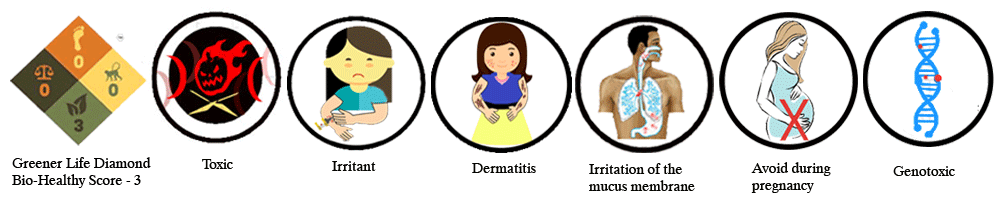
Greener Life Diamond – Bio-Healthy Score => 3 Possible Skin Issues:

See => http://www.essentialdepot.com/GreenerLifeDiamond.html

Mustard oil is regarded as one of the most unsafe essential oils mainly due to the presence of Allyl isothiocyanate and erucic acid (a toxic monounsaturated omega-9 fatty acid). According to the U.S. National Center for Biotechnology Information (PubChem), Allyl isothiocyanate compound is poisonous by skin penetration and ingestion. It is also known to emit toxic fumes when exposed to high temperature.

The European Union has prohibited Mustard oil as a cosmetic ingredient and the International Fragrance Association (IFRA) has forbid the use of this oil in fragrances. Allyl isothiocyanate in Mustard oil is not recommended for therapeutic use, primarily due to its toxicity, irritating nature and rigorous lachrymatory effect (potent to produce tears) that draw a question mark on the safe use of this oil in the healthcare industry.

Generally, essential oils are listed with possible safe levels for therapeutic purposes but there is no viable information on the safe levels for the use of Mustard oil.

The immune system of mammals reacts excessively to allergens thus generating antibodies known as IgE (Immunoglobulin). Allergic reactions are further caused when these antibodies move to cells that discharge chemicals.

The most prominent adverse skin effects of Mustard oil are allergic reactions due to IgE, itchiness, redness, severe skin irritation, followed by blistering and irritation of the mucous membranes as well.

Prolonged use of Mustard oil on skin might interfere the function of the skin, thus augment the loss of water of epidermis and subsequently modifying the epidermal keratinocytes structure.

Few sources also state that inhaling of Mustard oil might end up in irritation of the eyes, nose, mucous membrane, respiratory system along with an obnoxious sensation in the head.

Certain studies state that the topical use of Mustard oil can cause irritant contact dermatitis and other allergic reactions. It is also evidenced that this oil is linked to the development of pityriasis rosea-like skin eruption (cutaneous lesions), which was proved by patch testing.

Tests on Chinese hamster cells proved the genotoxic effects of Allyl isothiocyanate and is also said to cause transitional cell papillomas and hyperplasia, when tested on male rats.

Mustard oil should be strictly avoided by pregnant women as it has the potent to induce uterine contractions and may lead to unusual bleeding and miscarriage and safety measures for using this oil during nursing is also not witnessed.

Mustard oil has the tendency to lower the levels of blood sugar and might interfere with your regular medications for diabetes and low blood sugar may obstruct surgical procedures, thus it is recommended to avoid Mustard oil for about 2 weeks before and after your scheduled surgery.

Reference Links Substantiating the Possible Skin Issues of Mustard Oil:

  1. Essential Oil Safety: A Guide for Health Care Professionals By Robert Tisserand, Rodney Young
  2. Pityriasis rosea-like eruptions due to mustard oil application by Zawar V, Nashik, India, published in the Indian Journal of Dermatology, Venereology and Leprology
  3. Dermatoses Due to Indian Cultural Practices by Divya Gupta and Devinder Mohan Thappa, published in the Indian Journal of Dermatology and PubMed
  4. Black Mustard Side Effects and Safety by WebMD
  5. Allyl Isothiocyanate by U.S. National Center for Biotechnology Information (PubChem)
  6. Leung’s Encyclopedia of Common Natural Ingredients, used in Food, Drugs and Cosmetics by Ikhlas A. Khan and Ehab A. Abourashed

Thought for the day:

I believe a leaf of grass is no less than the journey-work of the stars.  -Walt Whitman

Suggested Reading:

  1. Mustard Seeds: The Tiny Seed That May Save Your Life! (Plant & Seed Legacy Series) by Mary Jo Montanye
  2. The Illustrated Encyclopedia of Essential Oils: The Complete Guide to the Use of Oils in Aromatherapy & Herbalism by Julia Lawless
  3. The Ayurvedic Cookbook by Amadea Morningstar, Urmila Desai
  4. Traditional Systems of Medicine by M. Z. Abdin

Reference Links:

  1. The History of Mustard – From Prehistory to Modern Times by The Nibble.Com
  2. Mustard Oil by Wikipedia
  3. Antimicrobial activity of Mustard essential oil against Escherichia coli O157:H7 and Salmonella typhi by the Department of Food Science and Biotechnology, Korea published in Science Direct.com
  4. What are the benefits of Mustard oil for Sinusitis? By Livestrong.Com

Your resource for quality Essential Oils. Every batch is GC tested to ensure purity and authenticity.

Tea Tree Essential Oil

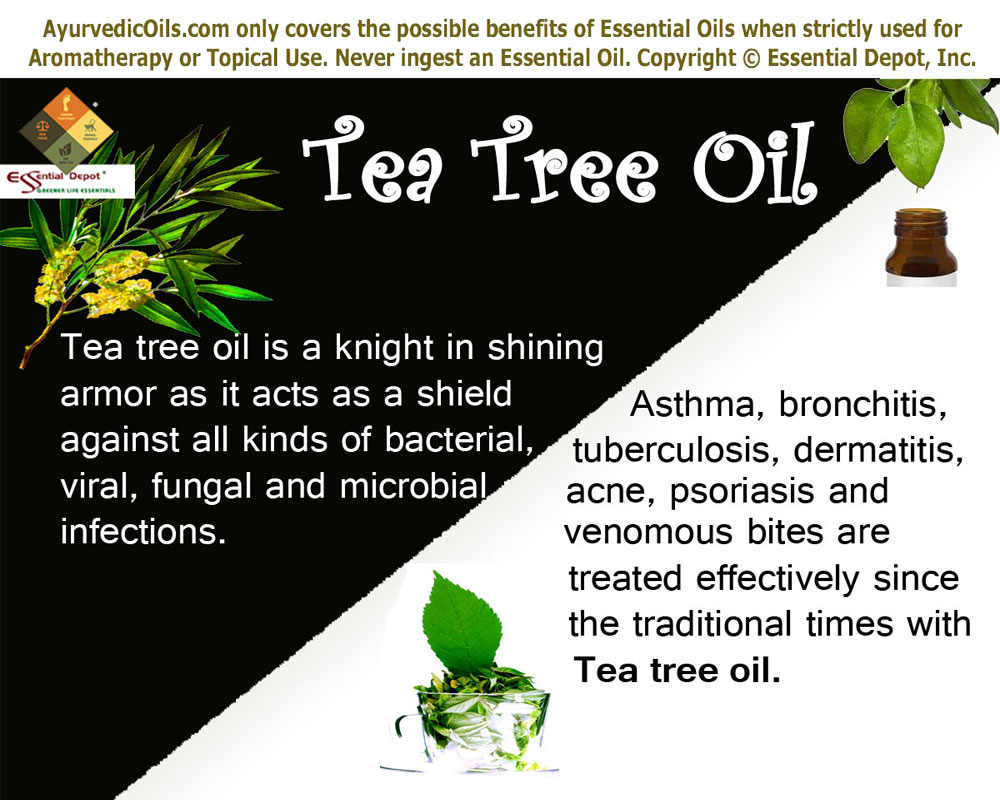
Tea-tree-bannerTea tree oil is a knight in shining armor as it acts as a shield against all kinds of infections including bacterial, viral, fungal and microbial. It is a must-have essential oil in your medicine cabinet and can assist you in times of distress. Although Tea Tree has nothing to do with the tea we drink, I often remember this magnificent herb as a tea for the entire system that has the potential to heal, pacify and cure us in a number of ways.

The essential oil of Tea tree is extracted from the leaves of this tree. Ayurveda, the science of natural healing makes use of Tea tree and its essential oil for treating many infectious diseases, respiratory problems like asthma, tuberculosis and bronchitis, venomous bites and skin problems like acne, psoriasis and dermatitis.

Purchase Tea Tree Oil – Retail – 4 oz – CLICK HERE

Purchase Tea Tree Oil – Wholesale – CLICK HERE

Historical importance of Tea tree oil:

Born in Australia, Tea tree is the love and pride of the Australian kingdom where more than 300 species of Tea trees grow naturally. The Aborigines are regarded as the first ones to use Tea tree leaves before thousands of years as an antiseptic for healing wounds, cuts, burns and insect bites.

It was the British explorer Captain Cook who named this tree as ‘Tea tree’ when he found the native people using the leaves of this tree in preparing a medicated tea and he used this drink to prevent scurvy in his men.

As an excellent antimicrobial and antiseptic oil, Tea tree oil was prevalently used in war fields for healing the wound of soldiers (especially in the Australian Army during World War II) and keeping them protected from the infestation of harmful microbes.

One of the pools in Australia is known as the ‘Magical Lagoon’ just because it was surrounded by Tea trees and leaves fall in the water and make it a medicated bathing pool. People who take bath in this pool have said that it helped in healing burns, wounds and certain other skin infections.

Tea tree oil is held-high for its anti-poisonous effects and is generally known as Snake oil just because the fact that this oil has enormous detoxifying properties that aids in taking way the venom of a poisonous snake bite.

The fresh leave juice was also applied on the affected area for treating scorpion stings and other poisonous insect bites. Tea tree leaves are also used in poultices and the decoction extracted from boiling these leaves are known to heal wounds and inflammations both internally and externally.

Chemical constituents or Gas Chromatography Report (GC) of Tea tree oil:

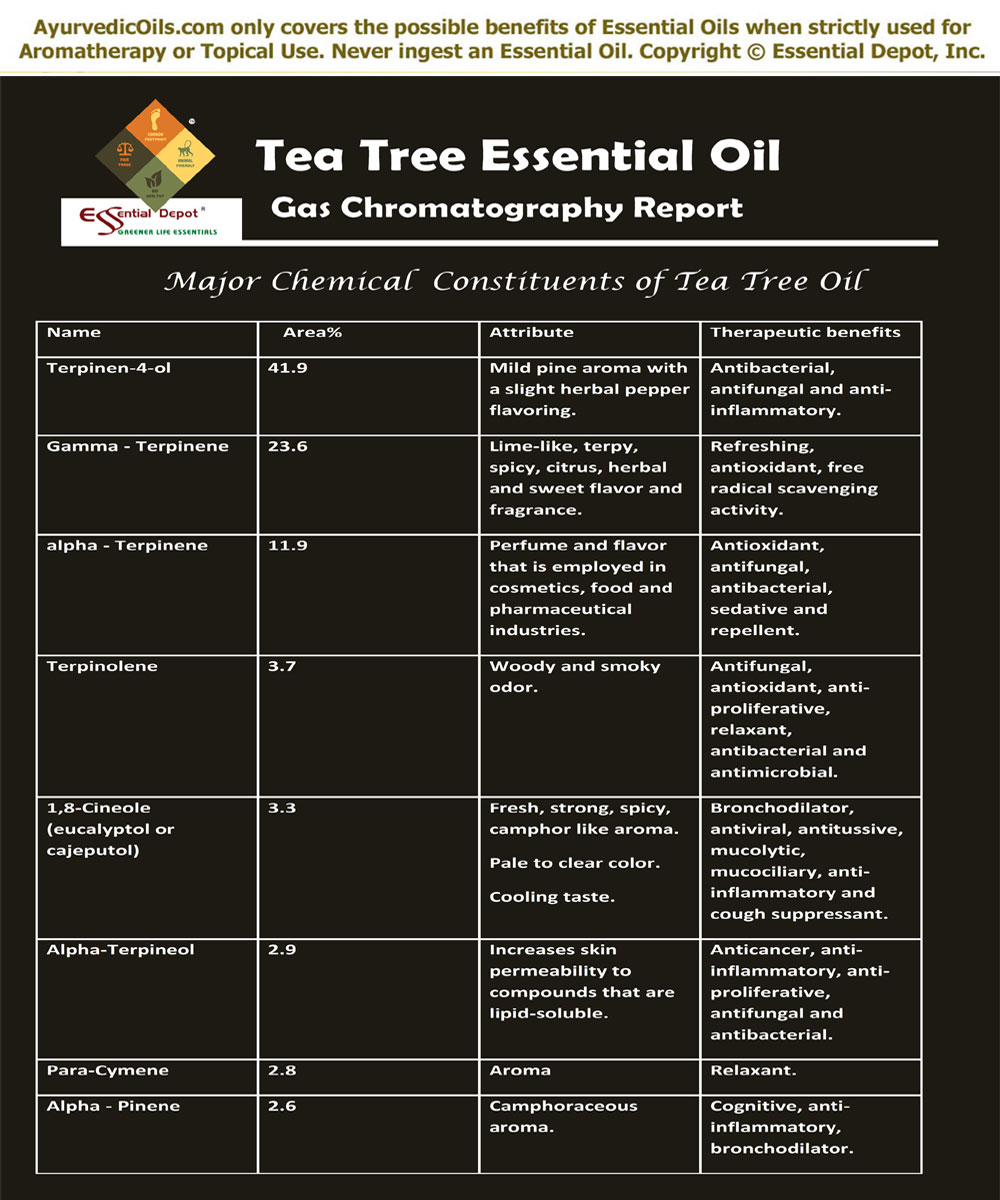
According to the Gas chromatography report, Tea tree oil constitutes of 8 chemical components that contribute to its unique fragrance, remedial properties and quality. Tea tree oil is enriched with about 41.9% of Terpinen-4-ol constituent.

Just click on:

For knowing more about the specific information of these key constituents of Tea tree oil.

The table below on the Gas Chromatography report talks about the principal chemical constituents and its role in granting the therapeutic and other attributes to Tea tree oil.

Teatree-OilRemedial properties of Tea tree oil:

This oil has antimicrobial, fungicidal, antibacterial, antiviral, stimulant, disinfectant, antiseptic, anti-infectious, antipyretic, vulnerary, expectorant, balsamic, cicatrisant, sudorific and insecticide.

The chemical constituents responsible for these therapeutic properties are 1,8-cineole, limonene, terpinen-4-ol, myrcene, a-pinene, linalool, sabinene, a-terpinene, y-terpinene, a-terpineol,  b-pinene a-phellandrene, terpinolene and p-cymene.

Ayurvedic health benefits of Tea tree essential oil:

Ayurveda is a holistic healing methodology that not only treats illnesses but aims to prevent it in future. It does not recommend same remedies for all even with the same disease as it regards that every individual is a unique part of nature and their illnesses should also be treated in a unique way.

For this, Ayurvedic treatment starts with identifying the unique individual constitution that is built up of 3 energy elements known as doshas. They are vata, kapha and pitta dosha. Vata is said to govern the movement of air, metabolic functions, process of elimination and much more.

Pitta is responsible for digestion, decision making, body temperature and creation of energy. The structure of our body, movement of fluids, skin health, stability and lubrication of joints are all controlled by kapha dosha.

Every human being is said to have a predominance of any one of these doshas that determines their personality, character and behavior. Balance between these three doshas indicates that a person is healthy and imbalance causes illness. Ayurvedic remedies like essential oils, herbs, yoga, meditation, Ayurvedic routine are prescribed in such a way that it helps in bringing perfect balance between these doshas.

Tea tree essential oil is said to have equal effects on all the three doshas with its cooling and moisturizing energies. The book on ‘Ayurveda and Aromatherapy’ by Light Miller and Bryan Miller states that Tea tree oil is extremely beneficial for skin, respiratory system and nervous system.

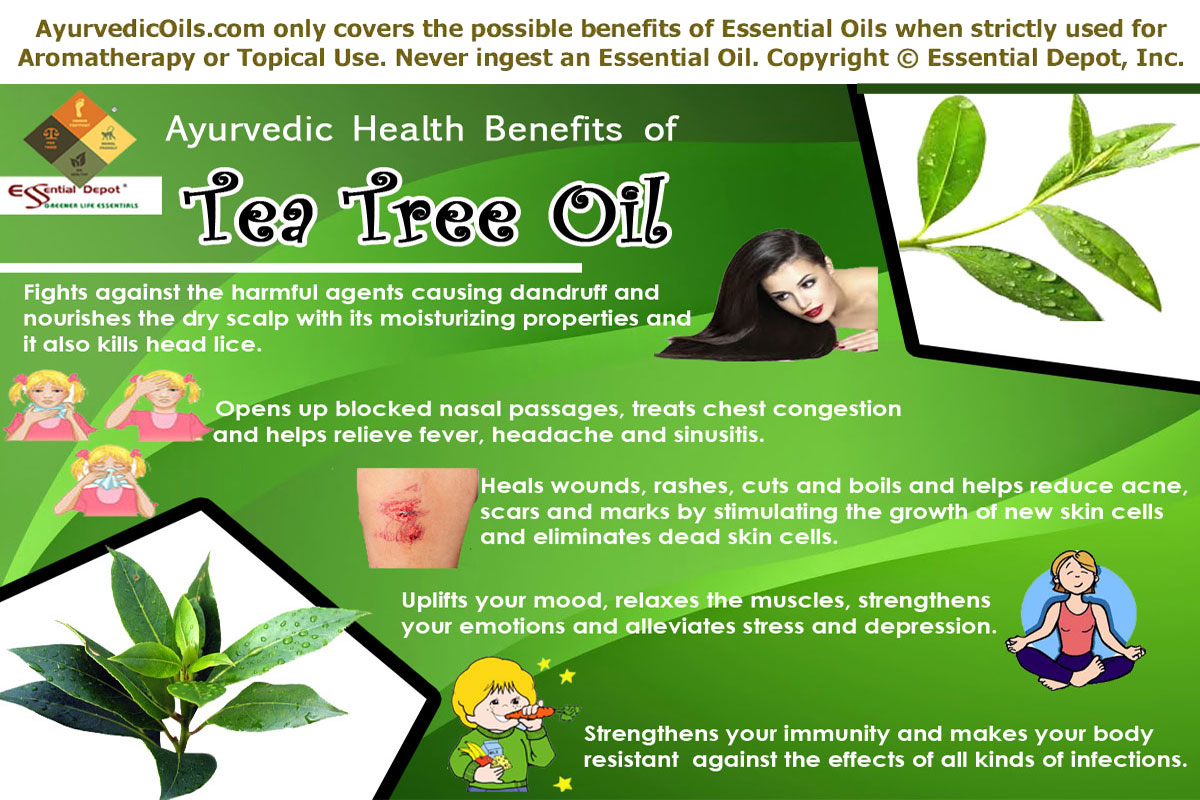
Let’s have a look at the Ayurvedic health benefits of Tea tree essential oil.Tea-tree-broucher1. Benefits to the skin and hair:

Tea tree essential oil has been proved 12 times better than carbolic acid that has been used as an antiseptic bactericide in primeval times. This is mainly because of its effectiveness in treating various skin ailments with its antimicrobial, fungicidal, anti-inflammatory, antiseptic, disinfectant and antiviral properties.

Tea tree oil is an excellent remedy for acne and this is substantiated by a 1990 study on ‘A comparative study of tea-tree oil versus benzoyl peroxide in the treatment of acne’, which states that both Tea tree oil and benzoyl peroxide are effective in treating acne.

It says that Tea tree showed “a significant effect in ameliorating the patients’ acne by reducing the number of inflamed and non-inflamed lesions (open and closed comedones)” with fewer side effects than BP where about 79 percent of people who used BP had various side effects like dryness, itching, stinging and burning sensation.

This exemplary oil also has antiseptic and cicatrisant properties that promote wounds, boils, cuts, burns and rashes to heal quickly. It reduces scars and marks by stimulating the growth of new skin cells and eliminates the dead skin cells.

Mix 2 drops of Tea tree oil with 15 drops of Jojoba oil or with your skin care cream or lotion and apply it on your acne for visible results and on your wounds for quicker healing. This blend is also effective on scars left by pox, accidents, acne, surgical and stretch marks.

Dandruff and lice are the major hair problems that screw your hair’s health most often. Being an effective fungicidal and antimicrobial oil, Tea tree oil fights against the harmful agents causing dandruff and nourishes the dry scalp with its moisturizing properties and it also kills head lice. Add 2 drops of Tea tree oil in your mild shampoo and massage it gently on your scalp for quick relief.

2. Benefits to the respiratory system:

Having enormous anti-infectious properties, Tea tree oil is one among the best essential oils for fighting against viral infections like cold, cough, congestion and other respiratory problems like sinusitis, bronchitis, tuberculosis, asthma and pharyngitis. Most of these problems start worsening when the infection spreads all over the system.

Tea tree oil fights against all kinds of contagious foreign bodies and arrest their further growth. The expectorant properties of this oil make it powerful in loosening the phlegm and mucous deposits that causes breathing difficulties.

Add 2 to 3 drops of Tea tree oil to warm bathing water and go for a refreshing bath. You can add 2 drops of this oil to steam inhalation for opening blocked nasal passages, treat chest congestion and get relief from headache and sinusitis. You can also add 2 drops of Tea tree oil to your rub and gently massage on your chest, neck and back for significant relief.

3. Benefits to the mind:

With its warm, spicy, refreshing, camphoraceous, soothing, aromatic-terpenic (monoterpenes of pine) fragrance pacifies and encourages the mind. Tea tree oil is said to appease the mind and body after shock, anxiety, fear and fatigue.

Massaging your body with 5 drops of tea tree oil blended with 40 to 45 drops of coconut oil can help in uplifting your mood, relax the muscles, strengthen your emotions and alleviate stress and depression. You can also add 3 drops of Tea tree oil to your burner, diffuser or vaporizer to encircle your mind with a clean and fresh feeling.

4. Guards against all kinds of infections:

Tea tree oil protects the body from harmful organisms and by killing the existing ones and preventing the growth of new ones. It strengthens your immunity and makes your body resistant against the effects of all kinds of infections.

A comparative study of Tea tree oil along with clotrimazole tested 112 people affected by toenails fungal infection and Tea tree oil was proved as powerful as an antifungal remedy. Add 2 drops of Tea tree oil in warm foot bath to cleanse your skin and kill the infectious agents on the skin followed by topical application of 2 drops of Tea tree oil with 8 drops of olive oil can help in treating fungal infections like athlete’s foot, ringworm, fungal infection of the toenails, dermatitis, vaginal infections and other skin ailments caused due to fungi.

The study on ‘Melaleuca alternifolia (Tea Tree) Oil: a Review of Antimicrobial and Other Medicinal Properties’ proved that Tea tree oil is effective in fighting against numerous bacteria like Staphylococcus aureus, Mycobacterium avium, Streptococcus pneumoniae, Haemophilus influenzae, Escherichia coli and Streptococcus pyogenes. This contributes to the antiseptic and antibiotic values of this oil.

This oil has been studied in Europe and US as an effective douching treatment for candida albicans. 5 drops of this oil added to 1 half pint of water can serve as a powerful vaginal douche Susanne Fischer-Rizzi.

Topical application of 2 drops of Tea tree oil mixed with 10 drops coconut oil aids in treating bed sores, psoriasis, abscesses, boils, wounds, insect bites, cold sores, diaper rashes, herpes, dermatitis, genito-urinary infections, cystitis, vaginal thrush, ear infections and deep wounds.

Other health benefits:

Tea tree has become a common ingredient in many popular anti-dandruff shampoos, acne soaps, skin care creams and lotions. It can also be used to treat rheumatic pain, bad breath, oral infections (as a gargle by adding 2 drops of this oil to warm water), cankers, candida, flea bites, jock itch, plantar warts, mosquito bites, sciatica, ticks, seborrhea, sunburn and much more.

Disclaimer: Never use essential oils internally. This article is only for the purpose of educations and is not meant for diagnosis or to replace any prescribed medication or professional advice. Always remember to use essential oils in a diluted form for topical application. Consult your Ayurvedic practitioner before using the right essential oil for your health condition and individual body type.

The MSDS (Material Safety Data Sheet) of Tea tree essential oil is readily available for your enhanced safety and better usage.

Gas Chromatography Report (GC) of Tea tree oil.

Thought for the day:

Nature teaches more than she preaches. There are no sermons in stones. It is easier to get a spark out of a stone than a moral. -John Burroughs

Suggested Reading:

  1. HEALING POWERS OF TEA TREE OIL (The Aromatherapy Professional: Healing with Essential Oils) By KG Stiles
  2. How to Use Tea Tree Oil – 90 Great Ways to Use Natures “Medicine Cabinet in a Bottle” – Acne, Boils, Head Lice, Nail Fungus, Ringworm, Skin Tags, – Health … Uses, Dilutions and Lots More! (What Is?) By Ruth Elston
  3. How to Use Tea Tree Essential Oil (Aromatherapy) By Miriam Kinai
  4. Australian Tea Tree Oil Guide By Cynthia Olsen

Reference Links:

  1. Tea tree oil by Wikipedia
  2. Tea tree oil by The American Cancer Society
  3. A comparative study of tea-tree oil versus benzoyl peroxide in the treatment of acne by Department of Dermatology, Royal Prince Alfred Hospital, Camperdown, NSW published in PubMed
  4. Melaleuca alternifolia (Tea Tree) Oil: a Review of Antimicrobial and Other Medicinal Properties by C. F. Carson, K. A. Hammer, and T. V. Riley published in Clinical Microbiology Reviews by the American Society For Microbiology

Mandarin Essential Oil

Mandarin-bannerMandarin is the only official language of the Republic of China with more native speakers; similarly Mandarin essential oil is an exceptional natural remedy with numerous documented health benefits in the world of Complementary and Alternative medicine including Ayurveda and the Traditional Chinese Medicine. Known as skin-friendly oil, its essential oil is cold pressed from the rind of the Mandarin fruits.

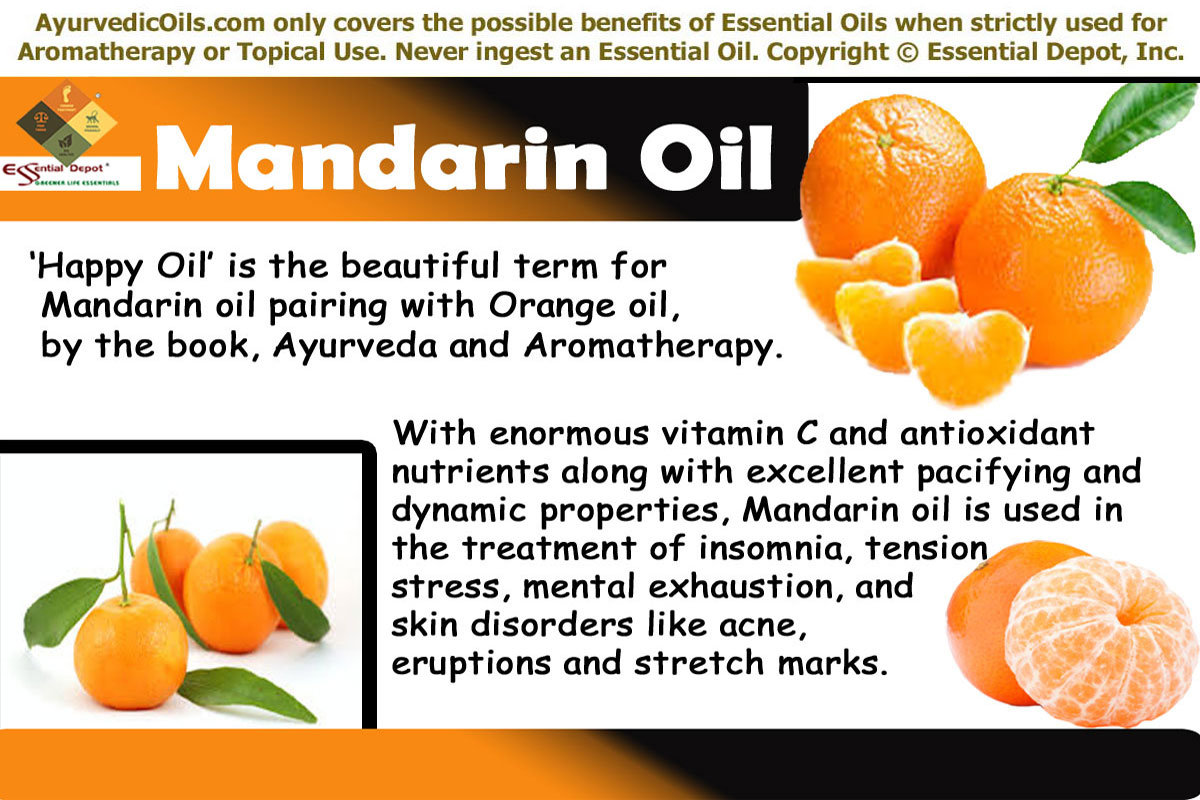
The book Ayurveda and Aromatherapy states that Mandarin oil can be combined with Orange oil to make ‘happy oil’. It is also said that this oil is known to bring liveliness in the atmosphere. With excellent pacifying properties, Mandarin essential oil is used in Ayurveda for treating insomnia, nervous tension, stress, mental exhaustion, digestive problems and skin disorders like acne, eruptions and stretch marks.

Purchase Mandarin Oil – Retail – 4 oz – CLICK HERE

Purchase Mandarin Oil – Wholesale – CLICK HERE

Historical importance of Mandarin:

Mandarin is indigenous to China and is now cultivated all around the world including America and Europe since 1805. Italy has been ranked as the top producer of Mandarin essential oil in the recent years. This fruit gained its name from the verity that it was given as a conventional gift to the Mandarins of China.

As a rich source of vitamin C, Mandarin oranges have been in use since the primordial times for meeting the nutritional requirements of children as well as elderly people. Mandarin is considered as a safe medicine for treating indigestion, strengthening the liver and the digestive system in aged people in France.

The Traditional Chinese Medicine makes use of the dried rind of these fruits for regulating the ‘Qi’ or ‘Chi’ meaning life force, life energy or energy flow and is defined as the basic principle that is a part of every living thing on earth. It was also used in treating improper digestion, excess deposits of phlegm and abdominal distension.

Mandarin oranges are also regarded as a Christmas tradition in the United States and Canada where they are individually wrapped in supple green paper and given in Christmas stockings. These oranges were initially a New Year gift for the Japanese immigrants and the advent of Japanese Mandarin oranges were considered as a special signal for the start of the holiday season. Mandarin oranges are also celebrated as a traditional representation of good fortune and abundance during the Chinese New Year celebrations.

Therapeutic properties and chemical constituents of Mandarin essential oil: Mandarin essential oil has antispasmodic, tonic, antiseptic, cicatrisant, digestive, diuretic, sedative, circulatory, cholagogue, depurative, hepatic, stomachic, nervous relaxant and cytophylactic properties. The major chemical components of Mandarin oil are limonene, citronellal, citral, linalool, myrcene, neral, terpineol, geranial, camphene, a-thujone, g-terpinolene, a-pinene, b-pinene, geraniol, and sabinene.

Ayurvedic health benefits of Mandarin essential oil:

Ayurveda is the mother of all healing systems on earth and is said to be the strongest root for the growth of other Complementary and alternative medical practices like Unani, Siddha, Homeopathy, Traditional Chinese Medicine, Acupuncture, Naturopathy, Chiropractic and Aromatherapy.

Ayurvedic philosophy trusts that every human being is a part of nature and one’s wellness depends upon his/her harmony with nature. Illness according to this science of life is an opportunity to discover what’s wrong in a person’s system.  Ayurvedic healing does not stop with treating the illness as such instead it traces out the underlying root cause of the disease. This aids in treating the sickness as well as preventing it in future.

All the natural remedies in the world fall under the roof of Ayurvedic healing as it strongly state that nature is the best medicine. Herbs, essential oils, rays of the rising sun, yoga, meditation, physical exercises and spiritualism are all the most important natural remedies used in Ayurveda.

The best thing about Ayurveda is that it considers every individual as a unique part of nature where every person is made up of an individual constitution that is comprised of three vital bio-energies known as doshas. They are vata, pitta and kapha. These energies govern the functions of the human body physically, emotionally and spiritually. Balance between these doshas indicates healthiness and dosha imbalances cause sickness.

Ayurvedic remedies are focused on harmonizing dosha imbalances. Mandarin essential oil is known to aggravate vata energy and pacify kapha and pitta dosha.

The Ayurvedic health benefits of Mandarin essential oil are:

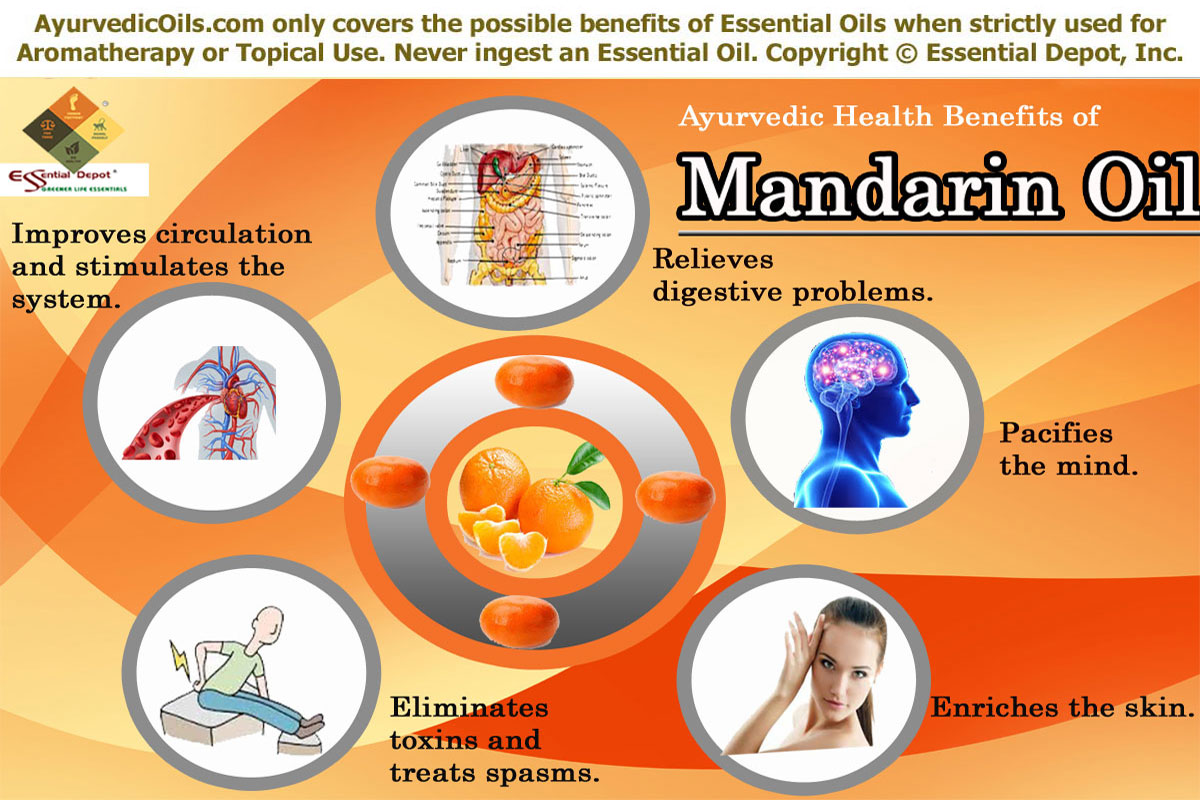
mandarin-brouccher1. Relieves digestive problems:

Mandarin essential oil is a popular citrus oil with excellent benefits to the digestive system. The rich, tangy and citrus aroma promotes digestion and stimulates the flow of bile and other digestive juices.

The stomachic and digestive properties of Mandarin essential oil aids in fighting against stomach infections, protects the stomach and intestines from ulcers by maintaining the optimum level of acids and enhance the appetite. You can add 1 drop of Mandarin oil to your hanky or add 2 drops of this oil to your diffuser to improve your appetite and support the process of metabolism.

Adding 2 to 3 drops of Mandarin oil to warm bathing water can help in relieving gas, flatulence, nausea and indigestion. Gently massaging your abdomen with 2 drops of this oil blended with 10 drops of wheatgerm oil can assist in treating ulcers, gastritis, esophageal spasms, intestinal infections, colitis, dyspepsia, bloating, flatulence, hiccups and indigestion.

2. Pacifies the mind:

Mandarin oil is known as ‘happy oil’ for its uniqueness in bringing joy and solace in the environment.  The well-known book ‘Ayurveda and Aromatherapy’ quotes Mandarin oil as “calming and soothing for stress.”  The soothing, calming, nervine, sedative and hypnotic actions of this oil appease the mind and boost your self-confidence.

Mandarin essential oil is a natural mood-lifter that assists in reducing tension on the nervous system, promote peaceful sleep, nourish the nerves, lessen distress and encourage absolute tranquility and calmness.

2 drops of Mandarin oil added to warm bathing water before bed can alleviate your tensed muscles, mental disturbances, epilepsy, convulsions and nervous afflictions. This medicated bath can help you to fall asleep soon by evoking a sense of encouragement and stillness.

You can also add 3 drops of Mandarin oil to your diffuser, burner or vaporizer for treating anxiety, restlessness, fear, fatigue, irritability, stress, tantrums and other negative emotions. This formula works even with children who are over-excited and stubborn especially during the nighttime.

3. Enriches the skin:

Mandarin essential oil has enormous benefits to the skin with its antiseptic, antibacterial, antiviral, cytophylactic, tonic and depurative properties. Excess toxins and deposits of salts and uric acid in the body deteriorate skin health and lessen its natural glow. This is the major reason behind pimples, blackheads, boils and other skin eruptions. Being a depurative, Mandarin essential oil aids in eliminating the unwanted toxins from the body and purifies the skin.

This oil is effective in clearing acne, healing wounds, scars, marks, abscesses, boils and lifeless skin. Mandarin oil supports the growth of new skin cells by which it helps in healing scars and wounds. This formula works like a magic especially on stretch marks and Mandarin essential oil is considered safe even on pregnant women.

Adding 2 drops of Mandarin oil in steam therapy assists in removing skin impurities, blemishes, black heads, marks and pimples. It augments the natural beauty and glow of the skin. Massaging with 2 to 3 drops of Mandarin oil with 15 drops of jojoba oil aids in improving blood circulation, enhancing the suppleness of the skin and diminishing scars and marks. You can also add 3 drops of Mandarin oil to your regular skin care cream or lotion and apply it on the affected area.

4. Eliminates toxins and treats spasms:

Toxic deposits in the body are the predominant factor disturbing the regular functions of the body like respiration, digestion and excretion. This is known as ‘ama’ in Ayurveda. Eliminating ‘ama’ or the harmful toxins from the body is one among the major treatment methodologies in Ayurvedic Panchakarma or the art of purification of the mind and body.

Mandarin essential oil is an exuberant oil for eliminating hazardous toxins, uric acid and salts stagnated in the body in the form of sweat and urine. The high-spirited aroma of this oil is known to drain out negative emotions and purify the mind.

Add 3 drops of Mandarin oil to warm bath or massage your body with 5 drops of this oil with 2 ml of coconut oil to get rid of the unwanted substances from the mind and body. This massage also helps in treating spasms in the respiratory system, intestine, muscles and the nervous system.

5. Improves circulation and stimulates the system:

When massaged onto the skin, 5 drops of Mandarin essential oil with 2 ml of sesame oil improves blood circulation and helps in relieving from varicose veins, blood clots, rheumatic pain and arthritis.

Mandarin oil acts as a tonic to the system and checks the regular functioning of all the vital parts of the body including the nervous system, digestive system, respiratory system, circulatory system, cardio-vascular system and the excretory system.

This oil is also said to make the body resistant against contagious diseases by improving immunity. You can add 2 drops of oil to vaporizer, burner or diffuser during any time of the day or night to get yourselves rejuvenated and recharged instantly.

Disclaimer:

All citrus oils have photo-toxicity effect and do not go out in sun as soon as applying Mandarin oil as it may harm your skin. Never use essential oils internally as these oils are highly concentrated liquids and should always be used topically in a diluted form. Consult your Ayurvedic Practitioner before using essential oils for your unique individual constitution and state of health. This article is only for the purpose of information and is not meant to make a diagnosis or replace prescribed medicines or professional advice.

Thought for the day:

All things are artificial, for nature is the art of God.  –Thomas Browne

Suggested Reading:

  1. Citrus Oils: Composition, Advanced Analytical Techniques, Contaminants, and Biological Activity (Medicinal and Aromatic Plants – Industrial Profiles) from CRC Press
  2. ISO 3528:1997, Oil of mandarin, Italian type (Citrus reticulata Blanco) by ISO TC 54
  3. Facelift at Your Fingertips: An Aromatherapy Massage Program for Healthy Skin and a Younger Face by Pierre Jean Cousin M.B.Ac.C
  4. Ayurveda & Aromatherapy: The Earth Essential Guide to Ancient Wisdom and Modern Healing by Dr. Light Miller, Dr. Bryan Miller

Reference Links:

  1. Mandarin Orange by Wikipedia
  2. Mandarin in Ayurveda and Aromatherapy by Light Miller and Bryan Miller
  3. Health Benefits of Mandarin Essential Oil by Organic Facts
  4. Health Benefits of Mandarin Essential Oil by Yoga wiz.com