Category Archives: Ayurvedic Essential Oils

Ayurvedic Essential Oils

Rosemary Essential Oil

Rosemary-bannerRosemary is there for remembrance’ is a comforting note that encourages many master minds and for those to be. Fêted for its memory enhancing power and anti-depressant properties, Rosemary herb and its essential oil have been in use for more than thousands of years. The botanical name Rosmarinus Officinalis means ‘dew of the sea’ (ros-dew and marinus-sea).

It has been a part of the Ayurvedic regimen and certain other Complementary medicinal practices for its incredible medicinal benefits and its culinary uses.Helps a weak memory and quickens the senses. The chymical [essential] oil drawn from the leaves and flowers, is a sovereign help…touch the temples and nostrils with two or three drops” said English Herbalist Nicholas Culpeper about Rosemary.

Purchase Rosemary Essential Oil – Retail – CLICK HERE

Purchase Rosemary Essential Oil – Wholesale – CLICK HERE

Historical uses of Rosemary herb and its essential oil:

The healing values of Rosemary are evident through its use in various medicinal systems ranging from the Stone Age to this contemporary epoch. Ayurveda, the oldest of all healing sciences makes use of Rosemary essential oil for improving memory power and thinking skills. Halitosis, stomach upset, headaches, insect bites and stings were also treated with this oil. The Traditional Chinese Medicine used Rosemary oil to treat baldness and headache.

Rosemary essential oil was used as a proven remedy for jaundice in the 13th century and was used in the preparation of Queen of Hungary water for healing the 72 years old Queen’s rheumatism and helped her regain her beauty.

The antiseptic and antibacterial properties of this oil made its use compelling in the ancient African medicinal system for handling skin problems like allergies, eczema, wounds, burns and other skin infections. Muscular pain, joint problems, spasms, convulsions, flatulence and bloating were also treated with Rosemary herb and its essential oil.

The Roman students wore Rosemary garlands while studying and at the time of their examinations to help them remember without any difficulties. The results of an ethno pharmacological study evidenced the traditional use of Rosemary in Morocco for dealing with diabetes, gastrointestinal problems and hypertension.

The dried herb has been used in poultice as an effective post-circumcision remedy along with olive oil in Tunisia.

Relished as a natural flavoring agent in a variety of Mediterranean cuisines, the fresh and dried leaves of Rosemary herb is a known natural medicine in the European countries. These leaves have also been approved by Germany’s Commission E for treating dyspepsia and the essential oil extracted from this herb for handling poor blood circulation and joint problems.

The most popular use of Rosemary essential oil is its advent in the field of clinical aromatherapy,  as a part of the Western herbal medicine to address emotional conditions, improve attentiveness, reduce wrinkles naturally, promote skin health and support a healthy lifestyle.

Chemical constituents or Gas Chromatography Report of Rosemary oil:

According to the Gas chromatography report, Rosemary oil constitutes of 8 major chemical components that contribute to its unique fragrance, therapeutic properties and quality.

Just click on:

For learning more about the exclusive information of these chief constituents of Rosemary oil.

The table below on the Gas Chromatography report talks about the principal chemical constituents and its role in granting the remedial values and other attributes to Rosemary oil.Rosemary-OilAyurvedic health benefits of Rosemary essential oil:

Known as Rusmari, Ayurvedic medicine celebrates Rosemary essential oil as one of the standard inhalations for treating respiratory disorders, sinusitis and gall bladder problems. Rosemary is one among those few essential oils that must be in everyone’s medicine cabinet according to the trusted Ayurvedic book, Ayurveda and Aromatherapy.

Ayurveda adores nature’s innate beauty and trusts human beings to be a vital part of nature. The simplicity of this mythological science lies in its easily understandable classification of the 3 energy elements known as doshas (vata, pitta and kapha) that construct a human’s physical and mental set-up.

The imbalance of any one of these doshas is said to cause illnesses indicating that the body is out of poise with nature. Ayurveda categorizes Rosemary essential oil as a rich herbaceous oil with drying and heating energies and can effectively reduce excess vata and kapha while treating pitta deficiency.

The well-known Ayurvedic health benefits of Rosemary essential oil are:Rosemary-broucher

1. Tonic for hair and skin:

Rosemary essential oil is an excellent tonic, stimulant, calmative and relaxant. It is known to ease stress, enhance blood circulation, nourish and cleanse the scalp, stimulate hair follicles and promote hair growth naturally. Regular massaging of the scalp with 2 to 3 drops of Rosemary essential oil blended with Almond oil can help in strengthening the roots, reduce premature graying, control loss of hair and lessen dandruff.

Rosemary oil is also a trusted moisturizer that foster scalp health while treating flaky and dry scalp. When used in combination with Sage oil, this oil is said to control the build-up of excess oil. For all these special factors, Rosemary essential oil is used in plenty of shampoos, conditioners and other hair care formulas.

The essential of Rosemary is a brilliant energizer for treating skin problems and its brilliance lies in its effectiveness of controlling the excessive production of sebum, which is responsible for acne, pimples and black heads. 2 drops of Rosemary essential oil added with 3 drops of Orange essential oil have been proved effective in treating cellulite, the most annoying skin problem especially in post-pubertal females.

This oil is known to relieve swelling, congestion and puffiness. Used as massage oil or bath oil, Rosemary essential oil can aid in the treatment of eczema, acne, stretch marks, skin eruptions, scars, wrinkles and dermatitis.

2. Augments memory and cognitive performance:

Numerous studies have witnessed the efficacy of the influencing aroma of Rosemary herb and its essential oil in enhancing memory skills.

This instinctive fragrance has been medicinally associated with memory and overall health since the primeval times. Dr. Mark Moss in one of his studies proved that “the presence of the chemical compound 1, 8-cineole boosts the chemical brain systems behind cognitive performance when absorbed into the bloodstream of healthy adults.

Northumbria University’s psychology researchers have demonstrated their findings stating that memory impairments that affect day to day living and acts as a cause of concern for prospective memory can be handled easily with Rosemary herb.

A 2003 research on ‘Aromas of rosemary and lavender essential oils differentially affect cognition and mood in healthy adults’ published in PubMed proved that the olfactory properties of the essential oil of Rosemary created a notable improvement of performance for overall memory quality and other secondary factors of memory.

This study also demonstrated that “these essential oils can produce objective effects on cognitive performance, as well as subjective effects on mood”.

Adding 2 to 3 drops of Rosemary essential oil to burners, vaporizers, diffusers or to your handkerchief can aid in stimulating the functions of the brain, encouraging clarity of thought, enhancing memory power, granting mental awareness and strengthening the central nervous system.

You can also go for a quick meditation of just 5 minutes every morning with the intense aroma of Rosemary essential oil around you to calm your mind, enliven your spiritual power and free your mind from all kinds of mental qualms.

Next time when you prepare for your examination, add 2 drops of Rosemary essential oil to any of the above mentioned things and 2 drops to your handkerchief on the day of your examination. It is said that the invigorating aroma of Rosemary essential oil helps in remembering all that you’ve studied with encompassing your atmosphere with the same fragrance.

3. For depression, fear and fatigue:

Rosemary essential oil is not only known to boost the brain power but is also recognized for instilling positive feelings. The stimulating and anti-depressant properties of this oil checks stress related disorders, nervous exhaustion, depression, fear, fatigue and anxiety. When added to your warm bathing water, Rosemary oil acts as a classic relaxant and treats physical weariness, wards off lethargic attitude, backs up mood fluctuations and help increase productivity.

4. Must-have essential oil in the medicine cabinet:

Bryan Miller and Light Miller in their book ‘Ayurveda and Aromatherapy’ say that Rosemary essential oil is a must-have essential oil in everyone’s medicine cabinet.

With remarkable therapeutic properties like analgesic, nervine, carminative, cephalic, cardiac, emmenagogue, diuretic, hypertensive, stimulant, tonic, rubefacient, astringent, cholagogue and antidepressant, Rosemary essential oil can heal a number of illnesses including dental problems, respiratory disorders, pain, inflammation, urinary problems, gastrointestinal troubles and weak immune system.

2 drops of Rosemary essential oil added to a warm cup of water as a gargle can help you keep away from bad breath, plaque, weak gums and other oral problems. This is due to the antimicrobial activity of this oil that fights against Gram-positive bacteria, Gram-negative bacteria, fungi and other micro organisms.

Adding 2 to 3 drops of this oil in vapor therapy or in warm bath can assist you in treating sinusitis, headaches, migraine pain, cough, bronchitis, mucus congestion and common cold.

Blending few drops of Rosemary essential oil with soothing carrier oils like Sesame oil or Coconut oil can support in dealing with rheumatic pain, arthritis, muscular spasms, menstrual cramps, back pain, constipation and stiff neck.

Massaging with this reviving essential oil promotes blood circulation, treats blocked menstruation, boosts immune power and supports overall health condition.

Disclaimer:

This information is only for your reference and is not meant to substitute any prescription drugs or consultation of your healthcare professional. Consult your Ayurvedic practitioner for expert advice based on your specific health conditions and individual constitution. Avoid using essential oils directly on your skin and taking it internally. Keep away from children and is not suitable for pregnant women and people with high blood pressure and epilepsy.

The MSDS (Material Safety Data Sheet) of Rosemary oil is readily available for your enhanced safety and better usage.

Gas Chromatography Report of Rosemary oil

Thought for the day:

“There’s rosemary, that’s for remembrance: pray, love, remember”    – An excerpt from Hamlet by Shakespeare.

Suggested Reading:

  1. Rosemary Oil – An In-Depth Look at its Potentially Amazing Benefits by Karen Jean Gaskell
  2. How to Use Rosemary Essential Oil (Aromatherapy) by Miriam Kinai
  3. HEALING POWERS OF ROSEMARY OIL (The Aromatherapy Professional: Healing with Essential Oils) by KG Stiles
  4. 30 Ways to Use Rosemary (X-Ways to) By Evelyn

Reference Links:

  1. Rosemary boosts brain power! By Robert Tisserand
  2. Rosemary Oil Health Benefit: Smell Boosts Prospective Memory by Medical Daily
  3. Aromas of rosemary and lavender essential oils differentially affect cognition and mood in healthy adults published in PubMed
  4. Traditional Uses Of Rosemary by Natural Standard, The Authority on Integrative Medicine

Rose Wood Essential Oil

Rosewood-bannerThe uplifting Rosewood essential oil is extracted from the heartwood of Rosewood tree through steam distillation. Light Miller in her book ‘Ayurveda and Aromatherapy’ says “Along with sandalwood, hina, myrrh and amber, rosewood is one of the five essential oils to put into your metaphysical first aid kit”.

Rosewood also known as bois de rose is a mighty evergreen tree indigenous to Brazil and Peru. Aniba rosaeodora is a member of the Laurel family Lauraceae along with other aromatic trees like Camphor, Cassia, Bay and Cinnamon. Ayurveda, the mother of all healing systems have made significant use of this oil for opening the inner ear, rekindling spiritual feelings and for discharging offensive memories.

Purchase Rose Wood Essential Oil – Wholesale – CLICK HERE

Historical importance of Rosewood:

The valuable wood of this tree was traditionally used in cabinet-making, carving, building, essential oil extraction and for making chopsticks. Certain texts state that the ancient French community used Rosewood for flooring, oils, furniture and guitars.

The alluring fragrance of Rosewood essential oil made its demand sky-rocketing especially during the eighteenth century in the field of perfume-making.

To mark its significance, Rosewood oil was a prominent ingredient of the well-liked perfume Chanel. No. 5. Industrial exploitation for numerous decades has led to categorize this tree as an endangered species and the legislation has now come up with a resolution that requires the essential oil distilleries to plant a new tree for every tree they use for essential oil extraction.

Active components and therapeutic properties:

Rosewood essential oil is regarded as a valuable oil mainly because of the rich presence of about 86% of linalool component, which can be modified into numerous derivatives of high value especially to the fragrance and flavoring industries.

Other components of Rosewood oil are a-terpineol, a-pinene, neral, camphene, myrcene, geraniol, 1,8-cineole, geranial, benzaldehyde, limonene, and linalool oxides.

These active components are responsible for the remedial properties of this oil such as aphrodisiac, anti-depressant, stimulant, anti-infectious, analgesic, antibacterial, tissue regenerator, deodorant, antiseptic, insecticide and cephalic.

Ayurvedic health benefits of Rosewood essential oil:

The essential oil of Rosewood is said to be stimulating and powerful in creating energy enrichment. Unlike other medical practices, Ayurveda considers every individual as a unique part of nature and treats every individual in a special manner as it trusts that each human being is made up of a specific set of energy elements known as doshas (vata, pitta and kapha).

This noble science regards illness as an opportunity to help the body regain its rhythm with nature and in this process of restoring good health, Ayurveda recommends the use of herbs, essential oils, a balanced regimen, meditation, yoga and other physical exercises.

Essential oil according to Ayurvedic texts is the aura or life force of plants, have been used in various Ayurvedic treatments like Abhyanga or Ayurvedic massage, aromatic therapy and in Panchakarma, the technique of Ayurvedic cleansing.

Rosewood essential oil with its floral, warm, spicy, woody, fruity and enlivening aroma reduces excess of vata and pitta imbalances.

Let’s have a look at the predominant Ayurvedic health benefits of Rosewood oil.Rosewood-broucher1. Guards your skin:

Rosewood essential oil acts as a shield to your skin, defending against harmful bacteria, virus, fungi and other microbes. The natural antiseptic and antibacterial properties of this oil aid in treating wounds, cuts, burns and infections while preventing it from being septic.

Excess of vata element in the body is characterized by wrinkling, dryness, thinness, flaking and dullness of skin. Rosewood is an effective vata reducing essential oil and gentle massaging of your skin with 5 to 6 drops of Rosewood essential oil with mild carrier oil like jojoba oil helps in dealing with such skin problems.

Oily skin is the basis of numerous skin disorders like pimples, acne, blackheads, sensitivity and skin irritations. Massaging your facial skin with 3 drops of Rosewood essential oil blended with 3 drops of Lavender essential oil along with Almond oil can assist in decreasing pitta and pave way for a healthy and spotless skin. You can also add 2 drops of Rosewood oil in steam therapy for promoting blood circulation, comforting irritated and stressed out skin.

The rejuvenating properties of this oil help in regenerating the skin cells and support the growth of new cells. Using it in your skin care lotion or cream will show visible results in reducing the symptoms of aging through tissue regeneration and absolute cleansing.

2. Pacifies your mind:

Rosewood oil is an excellent pacifier that calms your mind and relaxes your senses. The anti-depressant, stimulating and uplifting properties of this oil instills confidence as it is known to bring fire and helps in regaining your energy naturally.

Fearful, anxious, disheartened, nervous and hectic situations will take a back seat with the use of Rosewood essential oil in your burners, diffusers or vaporizers before going to bed or at the time of meditation. Miller’s Ayurveda and Aromatherapy book quotes Rosewood oil as “Rosewood helps to relieve tiredness, nervousness, stress, and it is very grounding, giving you a sense of protection”.

Being celebrated for numerous years as one of the best essential oils for meditative and spiritual purposes, Rosewood oil grants a balancing and energizing effect on the mind while influencing constructive feelings even after a long, backbreaking day.

Add 5 drops of Rosewood essential oil to your warm bath for easing tension, muscular pain, mood swings, pre-menstrual syndrome, nausea, headaches due to stress and general discomforts of the mind and body.

Ayurveda manifests that there are seven vital centers of power in a human body known as Chakras, which affect the psychological and physical functions of the system. Among the seven Chakras, the heart chakra is responsible for love for others, creativity, compassion, love for self, emotions of sadness, loss and distress.

The bracing aroma of Rosewood essential oil widens the heart chakra and assists in alleviating depressed feelings, egoism, negative memories and encourages one to spread love and compassion for others and self. Inhaling the aroma of this oil through diffusers or vaporizers or applying 1 to 2 drops on the chakra points will attend to your emotional needs tranquilly.

3. Instigates your love life:

I am wondering whether Rosewood oil has aphrodisiac properties just because it has the romantic word ‘Rose’ in its name? Used in massaging, bath or vapor therapy, Rosewood essential oil has been in use for treating decrease in sexual interest, impotence, frigidity and loss of libido in both the sexes. The magical aroma of this oil strengthens the system, instills a sense of security and grants absolute relaxation for an idyllic mating.

Rosewood essential oil, “Opens the inner ear and Compassion” according to Deborah Eidson, the author of the book Vibrational healing. It is known to enhance your divine feelings and help in spiritual realization. The other documented benefits of Rosewood essential oil are its use as an analgesic for treating cold, toothache and joint pain. It is also used as an effective insecticide to keep away from insects like ants, mosquitoes, fleas, bedbugs and lice.

Disclaimer: Never use essential oils directly on your skin as pure essential oils are highly concentrated liquids and may cause harm. This article is for your information only. Consult your Ayurvedic Practitioner before using essential oils for your specific health conditions.

Thought for the day:

“To dwellers in a wood, almost every species of tree has its voice as well as its feature.”   -Thomas Hardy, Under the Greenwood Tree

Suggested Reading:

  1. Ayurveda & Aromatherapy: The Earth Essential Guide to Ancient Wisdom and Modern Healing by Dr. Light Miller, Dr. Bryan Miller
  2. The Illustrated Encyclopedia of Essential Oils: The Complete Guide to the Use of Oils in Aromatherapy & Herbalism by Julia Lawless
  3. Scents Of Life: Use And Effect Of Essential Oils by H. M. Schemske
  4. Facelift at Your Fingertips: An Aromatherapy Massage Program for Healthy Skin and a Younger Face by Pierre Jean Cousin M.B.Ac.C

Reference Links:

  1. Ayurveda and Aromatherapy by Light Miller and Bryan Miller
  2. Health Benefits of Rosewood Essential Oil by Organic Facts
  3. Healing With Rosewood Essential Oil by Suite101

St John’s Wort Essential Oil

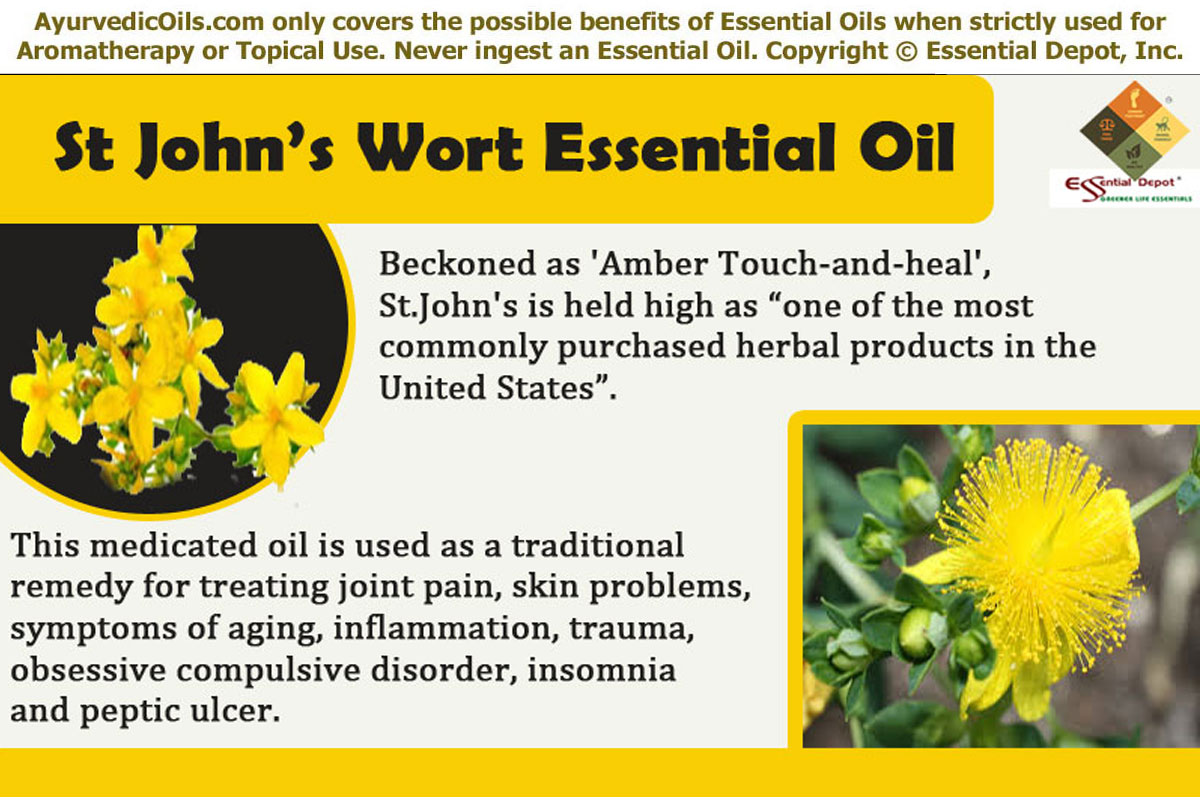
What comes to your mind when I say ‘Amber Touch-and-heal’? Sounds like a magical spell right? But won’t you be surprised and delighted if I say that it’s the other popular name of St. John’s Wort herb? Absolutely yes! The star-shaped bright yellow flowers are the most mesmerizing part of St. John’s Wort herb.

St-john-bannerNature’s beauty meets healing quality through these flowers as the essential oil of St. John’s Wort is extracted by steam distillation from these flowers. St. John’s Wort herb is claimed as “one of the most commonly purchased herbal products in the United States”.

This herb is named after St. John, the Baptist mainly because the admirable flowers of this plant were said to bloom initially around 24th June when the birthday of St. John is celebrated. Scientifically known as Hypericum Perforatum L, this herb is a member of the Guttiferae plant family. Ayurvedic system of healing use this medicated oil as a traditional remedy for treating joint pains, skin problems, symptoms of aging, inflammation, trauma, cracking and irritation.

Purchase St Johns Wort Essential Oil – Wholesale – CLICK HERE

Historical Uses of St. John’s Wort:

St. John’s Wort herb and its essential oil have a long history and were used by Naturopaths and Physicians of all the predominant traditions in the world. This herb is indigenous to Europe, Western Asia and North Africa and is used for various therapeutic applications for more than 3,000 years. St. John’s Wort was popularly known as ‘Arnica of the nerves’ during the thirteenth century from the time it was used to treat psychiatric problems by the Swiss Physician Paracelsus.

The impeccable use of this herb starts from Greece, where the renowned Greek physicians like Hippocrates, Dioscorides, Theophrastus and Galen used this herb for treating numerous illnesses including neuralgic conditions, nervous disorders and wounds.

Native Americans used St. John’s Wort herb as a natural antiseptic and was also used for its astringent and anti-inflammatory properties for treating pain, inflammation, spinal irritation and certain other health conditions. This herb was also used as a traditional abortifacient agent. St. John’s Wort is also an important part of many well-liked dietary supplements in various forms like oil infusion, aqueous infusion, capsules, powders, alcoholic tinctures etc, in the United States.

The American Physicians of the nineteenth century prescribed St. John’s Wort herb to treat nervous afflictions with depression and hysteria. This herb was also trusted to ward off evil spirits and helps in getting the blessings of St. John, the Baptist for another year. The anti-depressant properties of this herb are attributed to the presence of the active components hyperforin and hypericin.

Studies prove that this healing quality has made this herb vital in treating depression and it is demonstrated to have lesser side effects than many other over-the-counter antidepressants.

With all these historical importance, St. John’s Wort is regarded as an official herb in the national pharmacopeias of Russia, Czechoslovakia, Romania, France and Poland. It is also approved as a standardized medicine by the Commission E monographs and is listed in the German Drug Codex.

Ayurvedic health benefits of St. John’s Wort Essential Oil:

Ayurveda is a common sense science that aims at bringing perfect health and harmony through natural and practical methodologies. The ancient Ayurvedic texts like Charaka Samhita and Sushruta Samhita talk about all kinds of illnesses and the simple Ayurvedic approaches to treat those health conditions.

In addition to this, these Ayurvedic encyclopedias also insist on following an Ayurvedic routine that helps us to follow a systematic living for healthy aging and longevity.

According to Ayurveda human body is made up of a combination of 3 energy elements known as doshas. They are vata, pitta and kapha. Every individual has all the 3 doshas with the predominance of any 1 of these and this predominant Ayurvedic body type determines the characteristics and behavior of an individual. The imbalance of any one of these doshas causes illnesses indicating that the body is of out of balance with nature.

Before suggesting Ayurvedic remedies, every Ayurvedic physician will thoroughly examine your medical history, Ayurvedic body type, your preferences, dislikes and other factors affecting your physical, mental, social, environmental, emotional and spiritual well-being.

Herbs, yoga, essential oils, meditation, physical exercises, Abhyanga or Ayurvedic massage therapy and a balanced lifestyle are all the major pillars of an Ayurvedic treatment. St. John’s Wort herb and its oil according to Ayurveda is good for reducing the excess of pitta and kapha doshas and aids in supporting vata deficiency (P K- and V+).

Claimed as ‘The long-time favorite herb of Herbalists’, St. John’s Wort essential oil is said to have numerous health benefits and the most predominant ones among them are:

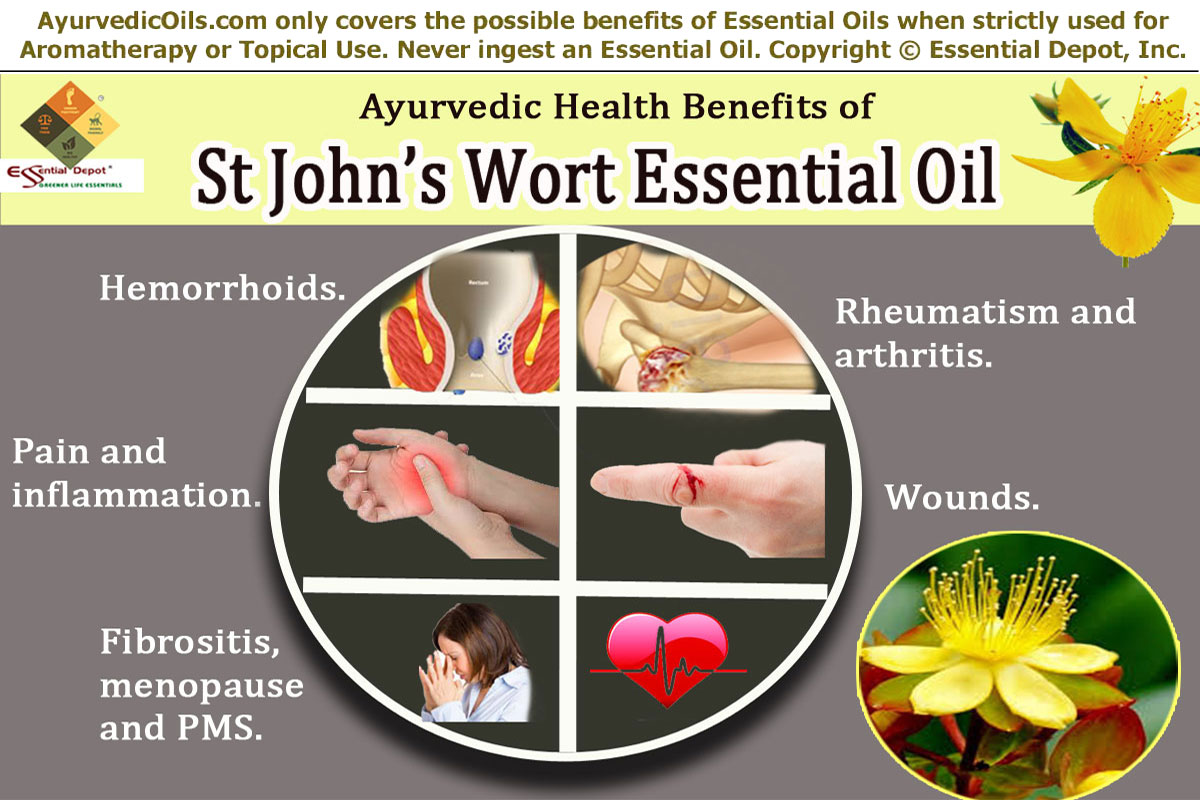
St-john-broucher1. Hemorrhoids:

Adding few drops of St. John’s Wort essential oil to soothing carrier oils like jojoba oil aids in treating the painful symptoms of hemorrhoids. The flavonoids and hypericin compounds in this oil assists in reducing the burning and itching sensation while alleviating inflammation.

You can also add few drops of this oil to any of your skin care creams or lotions and apply it directly on the affected area to treat both external and internal hemorrhoids. Few drops of this oil added to your warm bathing water can also grant relief from external hemorrhoids.

2. Rheumatism and arthritis:

Swollen and inflamed joints along with excruciating pain are the predominant symptoms of rheumatism and arthritis. Using St. John’s Wort essential oil for treating rheumatic conditions remains as a popular herbal remedy since the primordial times.

Applying few drops of this essential oil blended with mild carrier oils like coconut oil can help reduce inflammation and pain associated with rheumatism.

Ayurvedic texts say that rheumatoid arthritis occur due to excess of pitta, the fire element and kapha, the water element along with the deficit of vata, the air element. As St. John’s Wort oil has the potential to control the excess of pitta and kapha and normalize vata shortfall, using this oil as therapeutic massage oil, bath oil or in vapor therapy can help control the symptoms of rheumatism.

3. Pain and inflammation:

The anti-inflammatory, analgesic and antiseptic properties of St. John’s Wort essential oil makes it an ideal remedy for treating muscular pains, bruises, sores, sprains, tennis elbow, nervous afflictions, stiff achy joints, varicose veins and burns.

You’ll be amazed to know that St. John’s Wort oil is prescribed to neuropathic patients and also for treating incision pain after surgery. Using this oil as massage oil or remedial oil for external application along with any of your skin creams and lotions can grant you relief and foster speedy recovery.

4. Wounds:

St. John’s Wort essential oil has astringent and antibacterial properties that help in killing microbes and other harmful foreign bodies that worsen wounds and other skin infections. This oil can be used as a tincture and topical application of this oil on the affected areas augments the epithelialization of wounds. The presence of flavonoids and tannins supports the protein precipitating action for quicker healing.

5. Fibrositis, menopause and PMS:

These 3 disorders looks like a chain of womanly problems that often cause sharp pain and interrupt the normal functioning of the body. Fibrositis or fibromyalgia means pain in the muscle and connective tissue.

Numerous research studies have proved the effectiveness of St. John’s Wort essential oil in treating physical pain and emotional disturbances of premenstrual syndrome along with cramps, nausea, breast tenderness etc., anxiety and mood fluctuations during menopause and the muscular and tissue pains associated with fibromyalgia.

Massaging with few drops of St. John’s Wort oil added to soothing carrier oils like sesame oil can grant you complete relief. You can also use it as a bath oil by adding 2 drops of this oil to warm bathing water for assisting your health in a refreshing manner.

6. Other health benefits:

Kurt Schnaubelt rightly quoted the aroma of St. John’s Wort essential oil as “The penetrating smell can be felt as a warm pleasant relaxed feeling, travelling from the nose to the brain”.

The cooling and moisturizing energies of this oil aids in treating anxiety, social phobia, Obsessive compulsive disorder, stomach inflammation, smoking cessation, nervous pain, insomnia, sciatica, dysentery, pulmonary complaints, elimination of toxins in the body, bed-wetting, peptic ulcers and many other health disorders. ‘The Aromatherapy Book’ by Jeanne Rose states the use of this oil in the treatment of AIDS.

Disclaimer:

This is only for information purpose and is not recommended to replace any prescribed medicines or the consultation of your medical professional. Do not use essential oils directly on your skin or take it internally without the advice of your Ayurvedic Practitioner as it may cause negative effects.  Essential oils are highly concentrated so keep it away from children.

Thought for the day:

Earth laughs in flowers.    –Ralph Waldo Emerson

Suggested Reading:

  1. St. John’s Wort: The Herbal Way to Feeling Good by Norman Rosenthal
  2. St. John’s Wort: The Premier Herb for Relieving Depression, Healing Wounds and Easing Nerve Pain (Keats Good Herb Guide Series) by Roy Upton
  3. Natural Care Library St. John’s Wort: Safe and Effective Self-Care for Anxiety, Inflammation and Pain Relief by Stephanie Pedersen

Reference Links:

  1. St. John’s Wort by American Botanical Council
  2. St. John’s Wort by University of Maryland Medical Center
  3. St. John’s Wort by American Family Physician

Spearmint Essential Oil

Spear-mint-bannerA refreshing, tasty, enriching and minty Spearmint gum has the potential to turn over a new leaf on your dull depressing day. Just the aroma of Spearmint is not responsible for this revolution but this cool herb has enormous health benefits that energize your system and revitalize your brain functions. Scientifically known as Mentha spicata, this herb belongs to the mint family Lamiaceae.

Spearmint is an excellent cooling diuretic that has the potent to reduce the heat in the body due to fever and inflammatory conditions. It’s proven pharmacological effects and enormous cooling values, gently cools the liver and protects from chronic health conditions like inflamed liver.

Popularly known for its culinary and traditional medicinal uses, the essential oil extracted from the leaves of Spearmint plays a vital role in Ayurvedic medicine where this herb was locally known as Putiha and Pahari Putida. It has been in use for more than hundreds of years as a trusted carminative for treating digestive disorders, morning sickness in pregnant women and colic in infants.

Purchase Spearmint Essential Oil – Retail – CLICK HERE

Purchase Spearmint Essential Oil – Wholesale – CLICK HERE

Historical uses of Spearmint and its essential oil:

This herb and its essential oil has been used in almost all the oldest traditions of the world including Ayurvedic medicine, Biblical healing, Chinese medicine, Greek mythology and the European healing system.

The antique cities of historical importance like Greece, Rome and Egypt have recorded the use of Spearmint as a natural fragrance agent for the body, digestive aid for treating gastrointestinal disorders, natural remedy for sexually transmitted diseases like gonorrhea, as a sedative for treating insomnia and other sleeping disorders, for treating bad breath and dandruff. The most popular use of Spearmint oil was that it was used in baths for its cooling and refreshing properties.

Spearmint was used in the Ayurvedic healing system for treating fever, bronchitis, pain and other digestive ailments. The European medicinal practices made use of this herb for enhancing memory power and cognitive performance.

Known as ‘Yerba Buena’ in the primordial Mexican culture, Spearmint was a natural remedy for handling menstrual cramps, vomiting, flatulence and indigestion. The milder effects of this herb made its use preferable for children than the Peppermint herb.

Biblical texts talk about the effectiveness of Spearmint for treating severe headaches. Spearmint is an important ingredient of the herbal tea known as ‘Zahraa’ according to the ancient Unani medicine. This tea is widely consumed in Syria and Damascus for its stimulating and uplifting values.

A popular research by the Latin American medicine system proved that the Latino children had a stronger preference towards Spearmint than Peppermint and it was used as a natural expectorant for treating common cold and cough.

The modern Western medicine also used Spearmint essential oil as a flavoring agent in chewing gums, candies, toothpaste, mouthwash, soaps, teeth whiteners and certain other personal hygiene products.

This herb is also used in treating common cold, nasal congestion, motion sickness, influenza, irritable bowel syndrome, colic and few other respiratory problems.

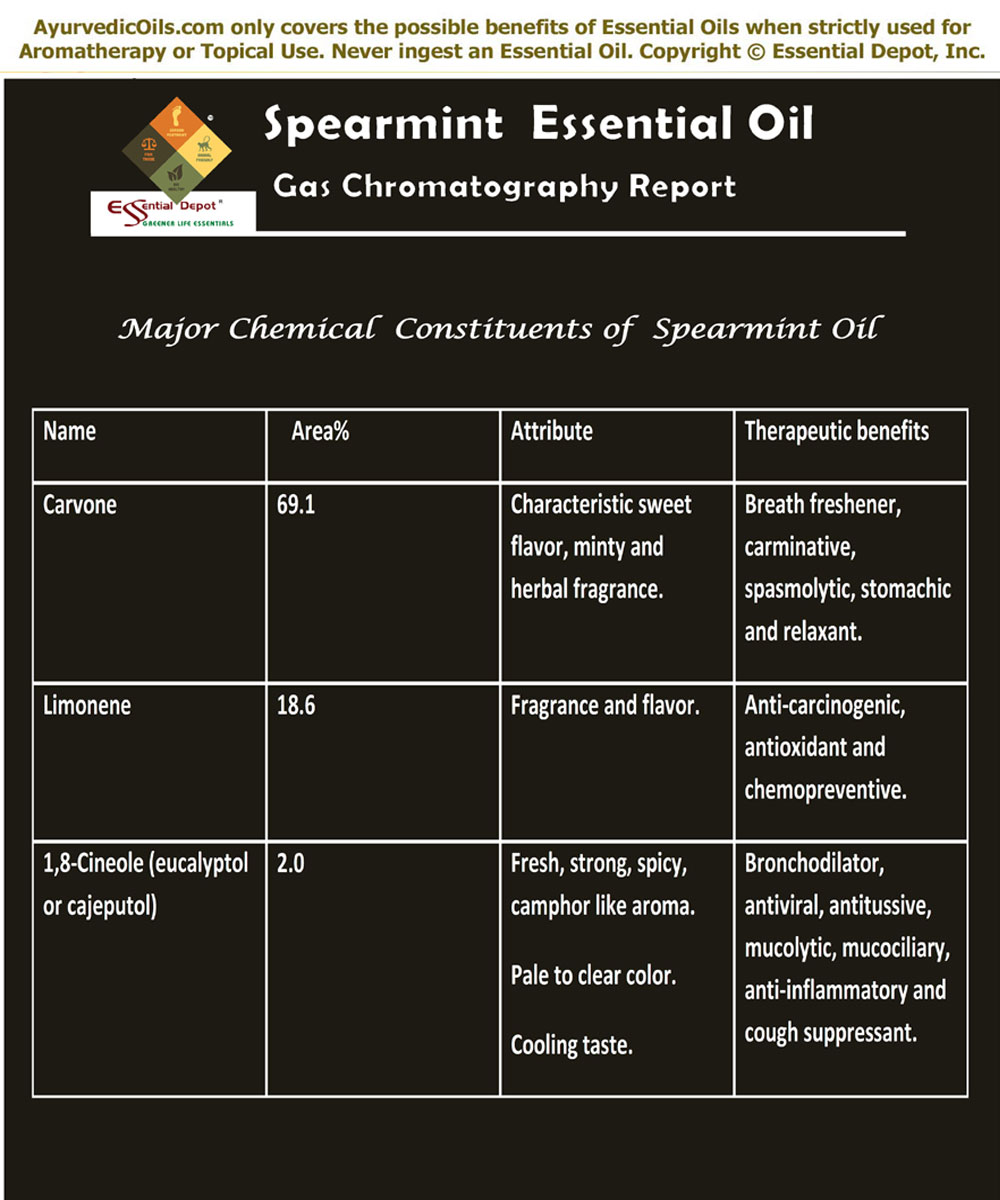
Chemical constituents or Gas Chromatography Report (GC) of Spearmint essential oil:

According to the Gas chromatography report, Spearmint essential oil constitutes of 3 chemical components that contribute to its unique fragrance, remedial properties and quality. Spearmint oil is enriched with about 69.1% of Carvone constituent.

Just click on:

For learning more about the detailed information of these key constituents of Spearmint oil.

The table below on the Gas Chromatography report talks about the principal chemical constituents and its role in granting the therapeutic and other attributes to Spearmint oil.

Spearmint-OilTherapeutic properties of Spearmint essential oil:

This oil has antispasmodic, carminative, stimulant, antiseptic, emmenagogue, restorative, cephalic, decongestant, insecticide, disinfectant, diuretic, sedative, anesthetic and expectorant properties.

Ayurvedic health benefits of Spearmint essential oil:

Ayurveda is celebrated all over the world for its simple and easy to tag on medicinal practices. This spiritual healing methodology trusts that human body is a temple where the eternal spirit lives within. It is because of this trust Ayurvedic healing encompasses physical, emotional, social and spiritual wellness when dealing with the health of humanity.

Every individual on this earth is unique according to Ayurveda and it strongly says that every one of us are made with a specific set of 3 vital energies known as doshas.

The predominance of any one of these 3 doshas determines the physical balance, emotional stability and the behavioral traits of an individual. It is for this reason Ayurveda prescribes specific medications that is suitable for an individual and not for the illness as such.

The most predominant Ayurvedic remedies include Ayurvedic essential oils, yoga, Pranayama or the art of balanced breathing, meditation, herbs, herbal decoctions and certain other Ayurvedic techniques including Abhyanga or Ayurvedic massaging, Panchakarma or the Ayurvedic detox technique, Dinacharya or Ayurvedic routine etc.,

Ayurvedic physicians generally prescribe medications that are specific to the health condition and the unique individual constitution of a person. These remedies along with the disciplined Ayurvedic lifestyle practices aim at striking perfect balance between these doshas and with Nature.

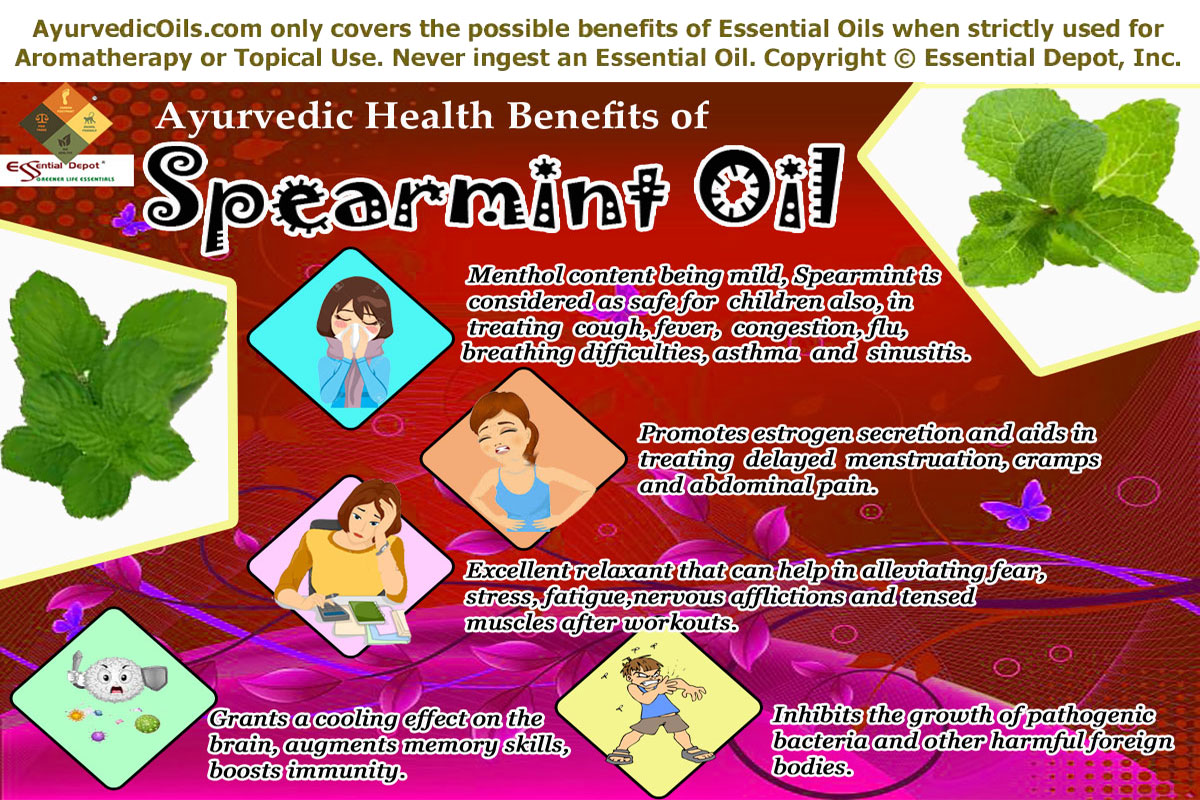
With its cooling and stimulating properties, Spearmint essential oil benefits the Pitta and Kapha predominant individuals.

Let’s have a look at the Ayurvedic healing benefits of Spearmint essential oil according to their prescribed uses:

Spearmint-broucher1. Excellent oil for treating fever, cold and respiratory disorders:

Spearmint oil has the power to pacify excess pitta that is responsible for body temperature, inflammatory conditions and heated emotions like anger, rage and irritation.

With its febrifuge, spasmolytic, antitussive, diaphoretic, cough suppressant, antiviral, bronchodilator and anti-inflammatory properties, Spearmint is a champion oil in treating fever, chronic cough, chest congestion, breathing difficulties, bronchial congestion and headache.

For its fever-reducing attribute, Spearmint is called as Jwarahara in Ayurveda. The antiviral properties of this oil assist in arresting the spreading of harmful viral organisms and preventing its growth, which is responsible for flu and fever.

When compared to Peppermint oil, Spearmint oil has a lesser Menthol component and is considered safe for children as well. Inhaling the restorative aroma of this oil aids in opening the blocked nasal passages. Massaging your foot soles with 2 drops of Spearmint oil blended with 10 drops of coconut oil can assist in reducing the body temperature.

Using 2 drops of this oil in steam inhalation is said to grant considerable relief from headache, nausea, nervous conditions, flu, fever, asthma, sinusitis, bronchitis, congestion, cough, migraines and breathing problems.

2. Excellent relaxant that can help in alleviating muscular tension and stress related conditions:

For immediate relief from fatigue, fever and muscular pain, add 2 to 3 drops of Spearmint oil to your bath tub. This warm and soothing bath encourages relaxation, soothes your tensed muscles and nerves.

The cooling and encouraging aroma of Spearmint can support in lessening fear, anxiety, fatigue, nervous afflictions and tensed muscles, especially after workouts.

3. Promotes estrogen secretion and aids in treating menstrual mayhems:

Spearmint oil has the power to promote the estrogen secretion and support in fostering delayed or blocked menses. Menstrual difficulties are often associated with hormonal fluctuations, especially the female hormone estrogen.

With its abortifacient and emmenagogue properties, Spearmint oil does the magic for you by treating abdominal pains, menstrual cramps and blocked menstruation.

A 2007 study on ‘Effect of Spearmint Teas on Androgen Levels in Women with Hirsutism’ have concluded that Spearmint can be a potent substitute anti-androgenic treatment in cases of mild Hirsutism.

Massaging the affected parts with 4 drops of Spearmint essential oil blended with soothing carrier oils like Evening primrose oil can support in relaxing muscles after exercise, treating digestive disorders, expelling gas formed in the intestines and stomach, relieving from stress and fatigue, easing abdominal pain due to menstruation, improving concentration, relaxing contraction of muscles and nerves and in enhancing blood circulation.

The diuretic property of this oil aids in cleansing the system by sending the toxic substances of the body through urine. The study on ‘Effect of Spearmint oil on inflammation, oxidative alteration and Nrf2 expression in lung tissue of COPD rats’ published in PubMed proved that Spearmint oil augments pulmonary inflammation and has a protective effect on lung injury in rats affected by chronic obstructive pulmonary disease (COPD).

4. Grants a cooling effect on the brain and enhances the memory quotient:

Whenever you feel like regaining your strength, enhancing your brain power and improving your memory skills, all you need to do is to 3 few drops of Spearmint essential oil with 1 drop of Rosemary oil to your diffusers or burners.

Being a Medhya herb or one which has the power to nurture the functions of the brain, Spearmint oil can potentially uplift your spirits, grant a cooling effect on your brain, boost your immune power, normalize the metabolic functions and promote peaceful sleep with its encouraging and invigorating aroma.

5. Inhibits the growth of pathogenic bacteria and other harmful foreign bodies:

Spearmint oil can be termed as a Krimighna, which means effective remedy for destroying harmful microbes and Kusthaghna, an Ayurvedic remedy for healing wounds and treating various skin conditions.

The antiseptic, disinfectant and antispasmodic properties of this oil aids in quicker healing of wounds and inhibit the growth of harmful organisms that are responsible for most of the skin problems.

Adding few drops of Spearmint essential oil to your skin care cream or lotion will aid in treating scabies, itches, athlete’s foot, dermatitis, acne, syphilis, insect bites, wounds and skin ulcers. Diffused Spearmint oil can also be used in treating headache, spasms and as a rub in treating cold and cough.

A 2001 study by the Central Laboratory, Lotte Company Ltd, Urawa, Saitama, Japan proved the effectiveness of Spearmint essential oil in inhibiting the growth of pathogenic bacteria with its potential antibacterial agents. A 2011 study on ‘Antifungal activity of Spearmint essential oil’ talks about its effectiveness in treating fungal infections.

Other health benefits:

Spearmint oil is also an excellent oil for treating bad breath, vomiting, loss of appetite, gum problems, spasmodic cholera, ulcers and in treating excessive or unwanted hair growth in women.

Disclaimer:

This original piece of information is meant only for the purpose of education and is not recommended to diagnose, prevent or to treat any medical conditions. It is neither meant to replace any prescribed medicines or the advice of a healthcare professional. We, the team of Essential Depot are not experts in Traditional medicine and these facts are shared only for unveiling the myths of Ayurveda and for spreading its glory in healing humanity across the globe.

Essential oils are not recommended for internal use and remember to dilute essential oils in suitable carrier oils before using it for topical applications. This is because absolutely pure and organic essential oils are highly concentrated liquids and may cause allergic reactions, when used on the skin without dilution.

Pregnant and nursing women, please excuse as Spearmint has abortifacient and emmenagogue properties and may end up in miscarriage. Speak with your Ayurvedic expert or medical professional before choosing the suitable essential oils as per your state of health and unique individual constitution. And the final friendly advice is to do a patch test on your skin before enjoying its complete benefits.

The MSDS (Material Safety Data Sheet) of Spearmint essential oil is readily available for your enhanced safety and healthier usage.

Gas Chromatography Report (GC) of Spearmint essential oil.

Thought for the day:

Use plants to bring life.

Douglas Wilson

Suggested Reading:

  1. The Illustrated Encyclopedia of Essential Oils: The Complete Guide to the Use of Oils in Aromatherapy & Herbalism by Julia Lawless
  2. Aromatherapy for Everyone: Discover the Scents of Health and Happiness with Essential Oils by P. J. Pierson, Mary Shipley
  3. Herbal Healing for Women by Rosemary Gladstar

Reference Links:

  1. Medicinal Uses of Spearmint by Natural Standard The Authority on Integrative Medicine
  2. Inhibition by the essential oils of peppermint and spearmint of the growth of pathogenic bacteria, published in PubMed
  3. Effect of Spearmint oil on inflammation, oxidative alteration and Nrf2 expression in lung tissue of COPD rats by Zhejiang University, Hangzhou, China
  4. Effect of Spearmint Teas on Androgen Levels in Women with Hirsutism, published in Wiley InterScience.

Sesame Oil

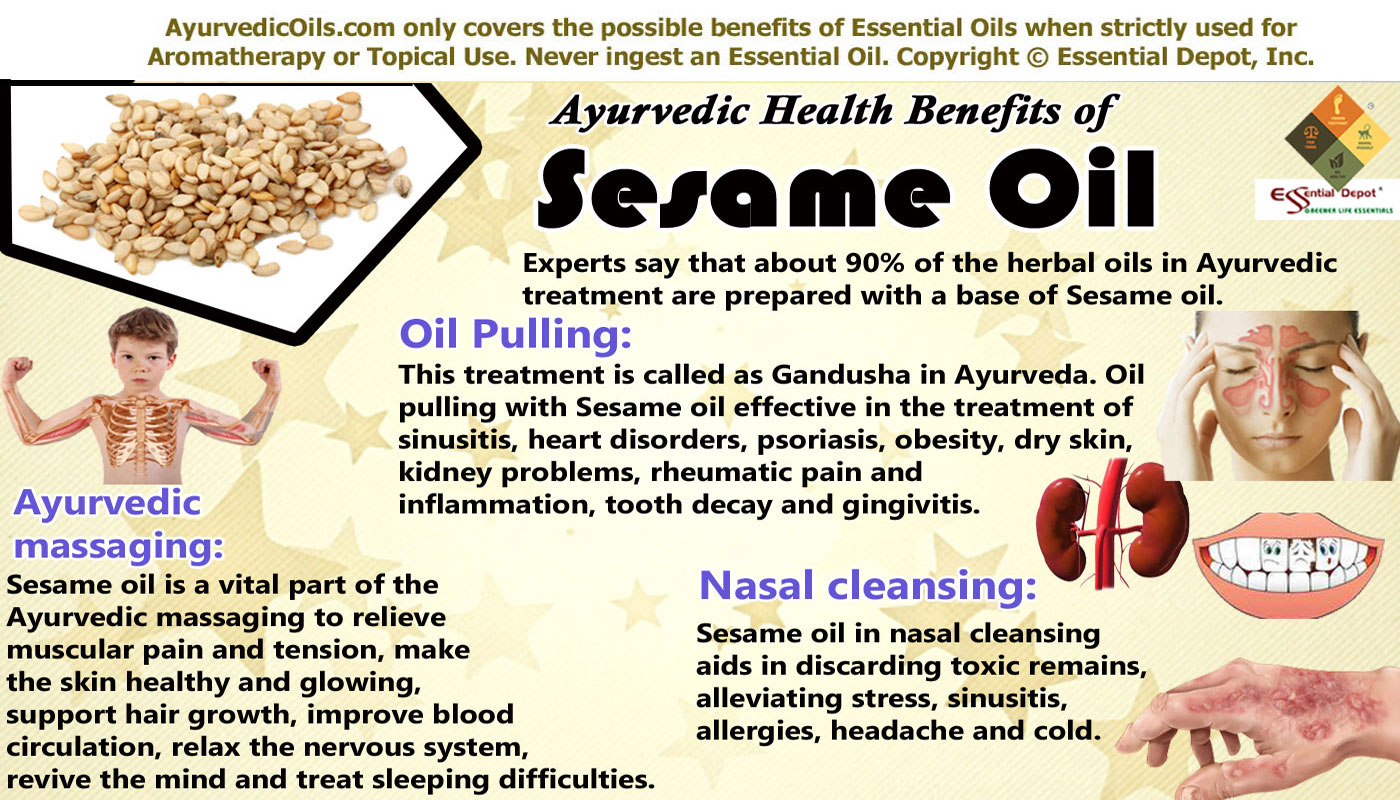
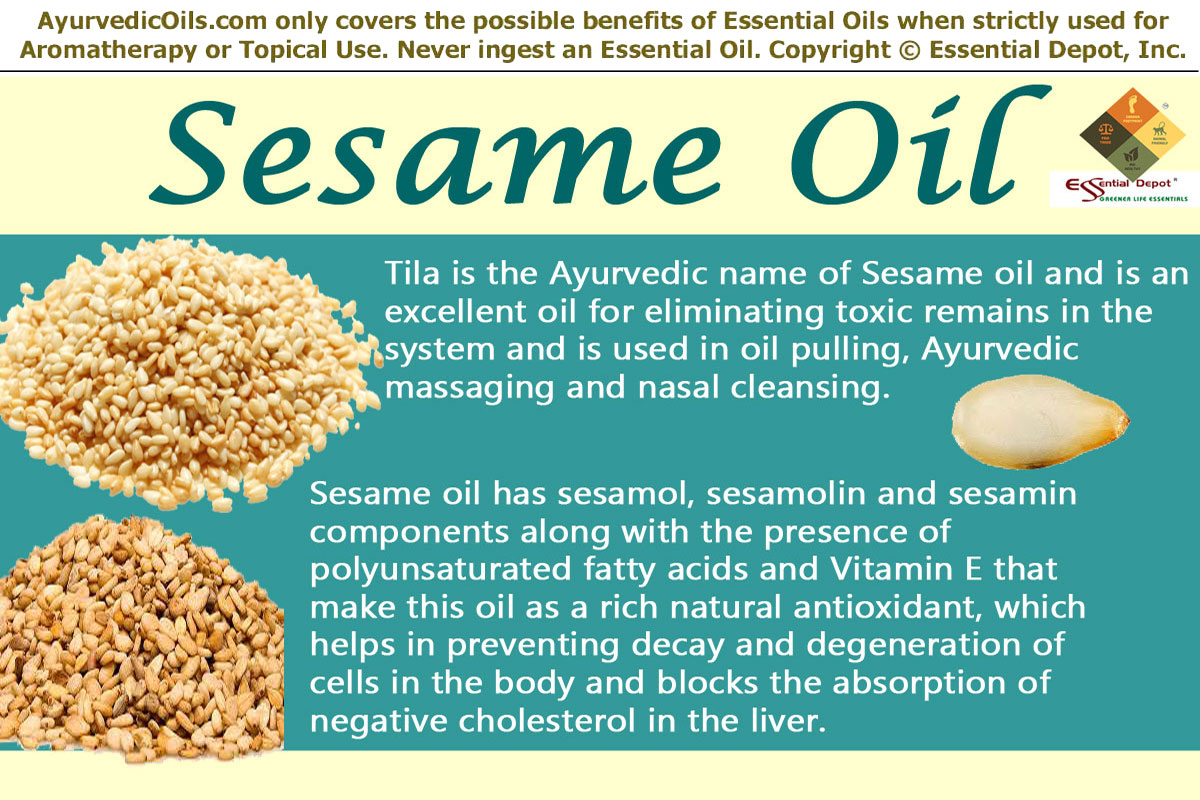
Sesame-bannerFrom nasal drops to enema, from babies to elderly people, Sesame oil forms an incredible part of the Ayurvedic regimen. Experts say that about 90% of the herbal oils in Ayurvedic treatment are prepared with a base of Sesame oil.

Celebrated for its rich presence of nutrients, this oil is used as a nourishing cooking oil in most parts of India, especially the southern parts of the nation where Ayurvedic system of healing has its roots deeply vested with.

Known as Tila in the Ayurvedic world, Sesame oil is extracted by pressing the seeds of the plant Sesamum indicum (syn. Sesamum Orientale). Sesame oil has been used for its innumerable benefits to mankind and the most touching thing is that the seed hulls left after pressing the oil can be fed to livestock as a wholesome food.

Purchase Sesame Oil – Wholesale – CLICK HERE

Historical importance of Sesame Oil:

This invigorating oil has the longest history of more than 5,000 years just like the ancient Ayurvedic system. This was the main oil crop and was cultivated during the times of Indus valley civilization, the oldest civilization of the world. Sesame was the first crop used for extracting oil.

Before 600 BC, Sesame oil was used as a salve, medicine and in food by the rich Assyrians community. From times immemorial, this oil has been an important part of the world of Complementary and Alternative Medicine. Various traditions like Chinese, Korean, Japanese, Southeast Asian and Middle Eastern used Sesame oil as a flavor enhancer and natural health stimulant.

Most of the Ayurvedic therapies have registered the use of Sesame oil for its ability to strengthen the system, detoxify the body and ensure the proper functioning of all the vital organs. Sesame seed oil is considered as a sacred oil in many parts of India and is used in votive lamps and other ceremonies of religious importance.

Among the seven chakras or the vital points of human energy, sesame oil is said to benefit the heart chakra responsible for unconditional love for others and self, compassion, emotions and all kinds of relationships with the world, root chakra responsible for dealing with the challenges of the world and the spleen chakra responsible for the right to think, self-confidence, self-control and intellect.

Therapeutic properties and nutrients of Sesame oil:

Sesame oil is rich in vitamin E (potent antioxidant), iron, omega-6 fatty acids, vitamin B6, magnesium, calcium, zinc, copper, dietary fiber and flavonoids phenolic antioxidants.

All these enriching nutrients make Sesame oil as a powerful antioxidant with antibacterial, antifungal, anti-inflammatory, antiviral, immune-stimulant, restorative, anti-rheumatic, carminative, tonic, anti-diabetic, anti-atherogenic, cardiac, dermatologic, laxative, emollient, warming and anti-depressant properties.

Ayurvedic health benefits of Sesame oil:

Ayurvedic encyclopedias like Charaka Samhita and Sushruta Samhita have listed enormous health benefits of Sesame oil. Practicing Ayurveda is a sure shot remedy for self-improvement as it involves a systematic life-style along with essential oils, herbal medications, yoga, meditation and physical exercises that keep you fit and fine even in your late 60s.

Human body is made up of 3 energy elements known as doshas in Ayurveda. They are vata, pitta and kapha. The predominant energy element determines your personality, character and behavior. Sesame oil has the potent to balance excess vata along with kapha and pitta deficiency.

Let’s take a look at the Ayurvedic health benefits of Sesame seed oil in terms of various ways of administration.Sesame-broucher1. Oil Pulling:

This is a simple Ayurvedic therapy that helps in eliminating the harmful toxins from the body and enhances immunity and is known as Gandusha in Sanskrit. It is nothing but swishing 1 tablespoon of sesame oil in the mouth for 20 minutes in empty stomach in the morning and spitting out the toxins-filled remains. This process helps in protecting the dental health known as Dantya Swasthya in Ayurveda.

Charaka Samhita (Charaka Samhita Ch V-78 to 80) quotes the act of oil pulling as “It is beneficial for strength of jaws, depth of voice, flabbiness of face, improving gustatory sensation and good taste for food. One used to this practice never gets dryness of throat, nor do his lips ever get cracked; his teeth will never be carious and will be deep rooted; he will not have any toothache nor will his teeth set on edge by sour intake; his teeth can chew even the hardest eatables” . The best oil recommended for oil pulling by Ayurvedic texts is organic cold pressed Sesame oil.

Sesame oil has sesamol, sesamolin and sesamin components along with the presence of polyunsaturated fatty acids and Vitamin E that make this oil as a rich natural antioxidant. This property helps in preventing decay and degeneration of cells in the body and blocks the absorption of negative cholesterol in the liver.

A popular study on “Effect of Oil Pulling on Plaque and Gingivitis” by Dr. HV Amith proved that 45 days of methodical oil pulling showed a significant decrease in plaque and gingivitis.

The antibacterial and antifungal properties of this oil help in treating halitosis or bad breath, plaque, gingivitis and dental cavities.

One more study conducted in 2008 on “The Effect of oil-pulling on dental caries causing bacteria” proved the in-vitro antibacterial activity of Sesame oil against dental caries causing bacteria, especially Streptococcus mutans and Lactobacillus acidophilus. This study also witnessed the considerable reduction of the total count of bacteria after oil-pulling.

Oil pulling with Sesame oil is also effective in treating cracked lips, eczema, sinusitis, heart disorders, psoriasis, obesity, dry skin, headache, kidney problems, rheumatic pain and inflammation, dry throat and tooth decay.

2. Abhyanga, the art of Ayurvedic massage therapy:

Abhyanga or Ayurvedic massage with Sesame oil is a significant part of the Ayurvedic treatment to relieve muscular pain and tension, make the skin healthy and glowing, regularize the breathing pattern, improve blood circulation, relax the nervous system, revive the mind and relieve stress and sleeping difficulties. These benefits are mentioned in Ayurvedic texts as Twachya , Balya and Keshya.

(i) Balya (benefits for children):

Known as the King of Oils, Sesame oil is completely safe for the use of children and is known to strengthen the bones, joints and muscles by penetrating deeply into the muscles and the bone marrow. It is because of this property, every Indian family massage their new born babies and toddlers with Sesame oil before bath and leave them under sunlight for few minutes allowing the body to absorb vitamin D and nourish the skin cells naturally.

(ii) Twachya (benefits for the skin):

The presence of vitamin E and zinc in this oil helps in augmenting the elasticity of the skin; repairs damaged skin cells and promote the production of collagen. Massaging your skin with this nourishing natural emollient aids in preventing the symptoms of aging, wrinkles, acne, psoriasis, wounds, burns and other skin infections. Sesame oil also protects your skin from dangerous ultra-violet rays.

(iii) Keshya (benefits for the hair):

Massaging your head with warm Sesame oil stimulates hair growth, controls dandruff, nourishes the scalp, kills the infestation of lice, and eases anxiety and fatigue.

It is a long time tradition of Indians to massage their head and body with Sesame oil once in a week and take bath with the herbal powder known Shikakai to reduce the body temperature and enliven the nerves and cells. This oil kills the dandruff causing bacteria and protects the skin and scalp from the harmful effects of chlorine in swimming pool water.

3. Nasya, nasal cleansing:

Nasya is one important methodology among the 5 methods of Ayurvedic Panchakarma therapy. It is the method of administering herbal oils and medicines through the nostrils. According to Ayurveda, nose is the entrance to the brain. Applying a few drops of Sesame oil in the nostrils as nasal drops helps in treating illnesses above your shoulders.  This aids in removing the toxins from the body, alleviate stress, sinusitis, allergies, headache, cold and wrinkles.

4. Pathya, daily diet:

When used as cooking oil in daily diet, Sesame oil is highly beneficial for the entire system from head to toe. Ayurveda suggests the daily use of this oil and is said to grant Vranashodhana (healing and cleansing internal and external wounds), Agni janana (augmenting the power of digestion and metabolism) and Medha janana (enhancing intelligence).

Regular use of Sesame oil helps in fighting cancer with its antioxidant properties, guards the body from DNA damage due to radiation, treats rheumatism, improves digestive health, supports respiratory wellness, aids in preventing diabetes, lowers blood pressure and improve the health of the cardiovascular system.

Disclaimer:

Consult your Ayurvedic physician before using Sesame oil for your individual constitution. This article is only for informational purpose and is not meant to replace your prescribed medicines or the advice of your healthcare professional.

Thought for the day:

For in the true nature of things, if we rightly consider, every green tree is far more glorious than if it were made of gold and silver. -Martin Luther

Suggested Reading:

  1. The Encyclopedia of Ayurvedic Massage by John Douillard
  2. Eat-Taste-Heal: An Ayurvedic Cookbook for Modern Living by Thomas Yarema, Daniel Rhoda, Johnny Brannigan
  3. The Oral Health Bible by Michael Bonner, Earl L. Mindell
  4. Oil Pulling Therapy: Detoxifying and Healing the Body through Oral Cleansing by Bruce Fife

Reference Links:

  1. Sesame Oil by Wikipedia
  2. Effect of oil-pulling on dental caries causing bacteria by Durai Anand T, Gopinath RM, Pothiraj C and Kayalvizhi B of the PG Department of Microbiology, VHNSN College, India
  3. Open Sesame! 10 Amazing Health Benefits Of This Super-Seed by GreenMEDInfo
  4.  Sesame Oil For Bone Building in Ayurveda by Livestrong.com

Sandal Wood Essential Oil

Sandal-wood-bannerWell begun is half done’ is a great saying that is often related to the use of the most mesmerizing and reviving Sandal wood essential oil for spiritual ceremonies, meditation and other Ayurvedic remedies for treating a wide range of health conditions.

Extracted from the woods of the Santalum Album Linn trees that are 30 to 60 years old by steam distillation method, Sandal wood oil is celebrated as the priceless treasure of the Indian Subcontinent.

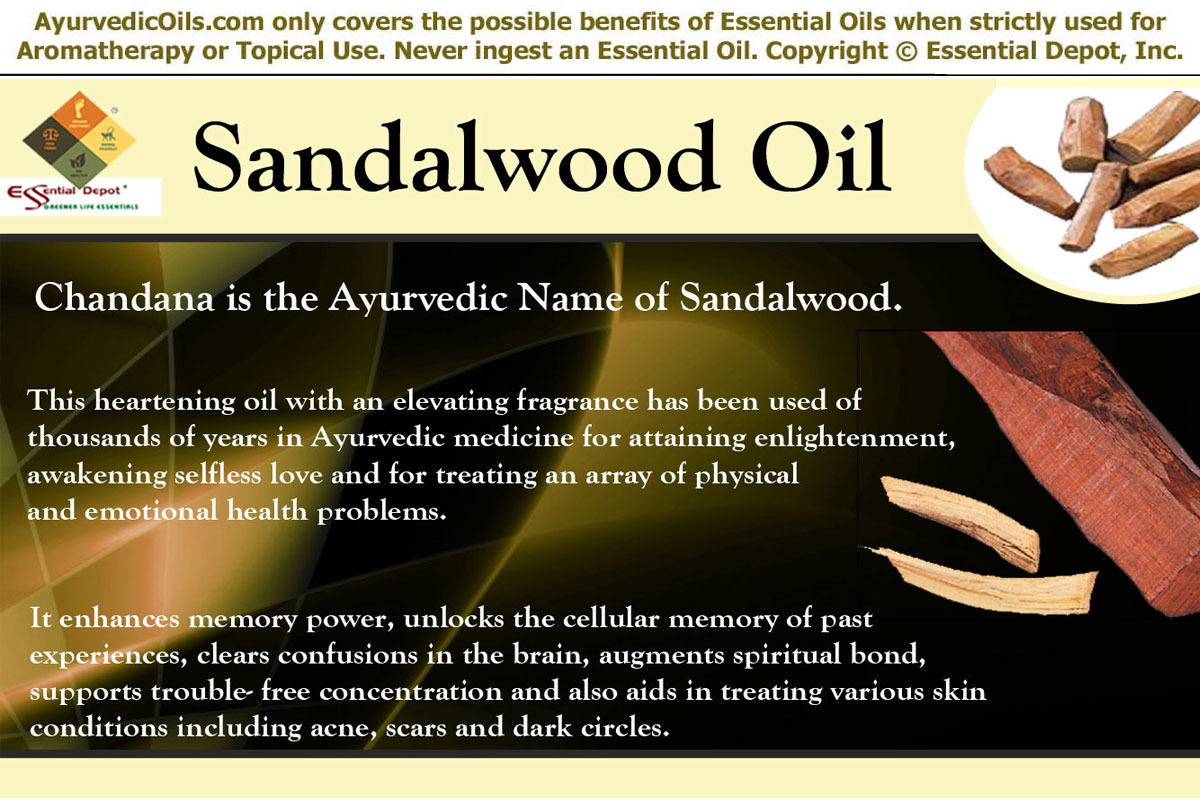
Popularly known as Chandana in Sanskrit, this oil has been used for thousands of years in Ayurvedic medicine for attaining enlightenment, awakening selfless love and for treating an array of physical and emotional health problems. Nobel Laureate Rabindranath Tagore said “if to prove that love would conquer hate, the sandalwood perfumes the very axe that lays it low”.

Purchase Sandalwood Absolute – 5% Dilution in Pure Jojoba – CLICK HERE

Historical Importance of Sandal Wood:

In my perspective, I’ve never seen such a fascinating history as that of Sandal wood. Indigenous to the Southern parts of India, Sandal wood is often a ‘Signature’ of the primordial Indian culture and is the traditional leader in the production of Sandal wood oil for pharmaceuticals and perfumery.

The oil of Sandal wood was used in ritual bathing of Gods of the Hindu religion. The Brahma Vaivarta Purana, one of the ancient mythological manuscripts mentions that the most powerful Goddess Lakshmi alleged to reside in the Sandal wood tree.

Vamana Purana suggests the use of Sandal Wood for worshiping Lord Shiva, one among the 3 major Gods of the Hinduism. It is also used for decorating new born babies, brides and bridegrooms along with flowers and other aromatic substances.

Sandal wood oil is highly respected by numerous ethnicities of the world including Buddhism, Islam, Hinduism and Christianity. This oil is a vital ingredient in the manufacturing of attar since the medieval times.

The primeval Egyptians used Sandal wood oil for embalming the deceased, for treating skin disorders and in spiritual flaming for honoring the Gods. Certain Hindu communities place a piece of Sandal wood in the funeral pyre.

Saints and priests of India use Sandal wood in homam and yagna yagam for glorifying and inviting Gods for getting their immaculate blessings. Even today, Sandal wood paste is applied on the forehead as a symbol of religious belief and for augmenting the concentration power when applied on the forehead.

The heartwood of this tree is considered as a symbol of sacredness in the Vedic texts. It is named after Indra, the Lord of the paradise as Indra’s Sandal wood tress and is said to adore the entire paradise with its compelling aroma.

Therapeutic properties and components of Sandal wood oil:

The major constituents of Sandal wood oil are Santyl acetate, Santalol and Santalenes. The remedial properties of this oil are anti-inflammatory, antiseptic, antispasmodic, astringent, anti-phlogistic, regenerating, cicatrisant, expectorant, sedative, emollient, hypotensive, tonic, diuretic, carminative, disinfectant and aphrodisiac.

Ayurvedic health benefits of Sandal wood oil:

Sandal wood is undoubtedly one of the strongest smelling plants in the world. It is a dignified natural medicine and the best among the sanctified herbs in the Ayurvedic world. Apart from the spiritual uses, Sandal wood oil is used as a distinguished remedy for numerous illnesses. Among the 3 energy elements (doshas) of the human body, Sandal wood and its oil treats vata (air) aggravation and is said to pacify and balance the fire energy pitta and the water energy kapha.

With its exceptional and uniform tenacity, exceptionally soft, magnificent, uplifting and sweet-woody aroma, Sandal wood oil has the potential to benefit the reproductive system, nervous system, marrows, plasma, muscular system and circulatory system.

The predominant Ayurvedic health benefits of Sandal wood oil are:Sandal-wood-broucher1. Repairs, rejuvenates and nourishes the skin and hair:
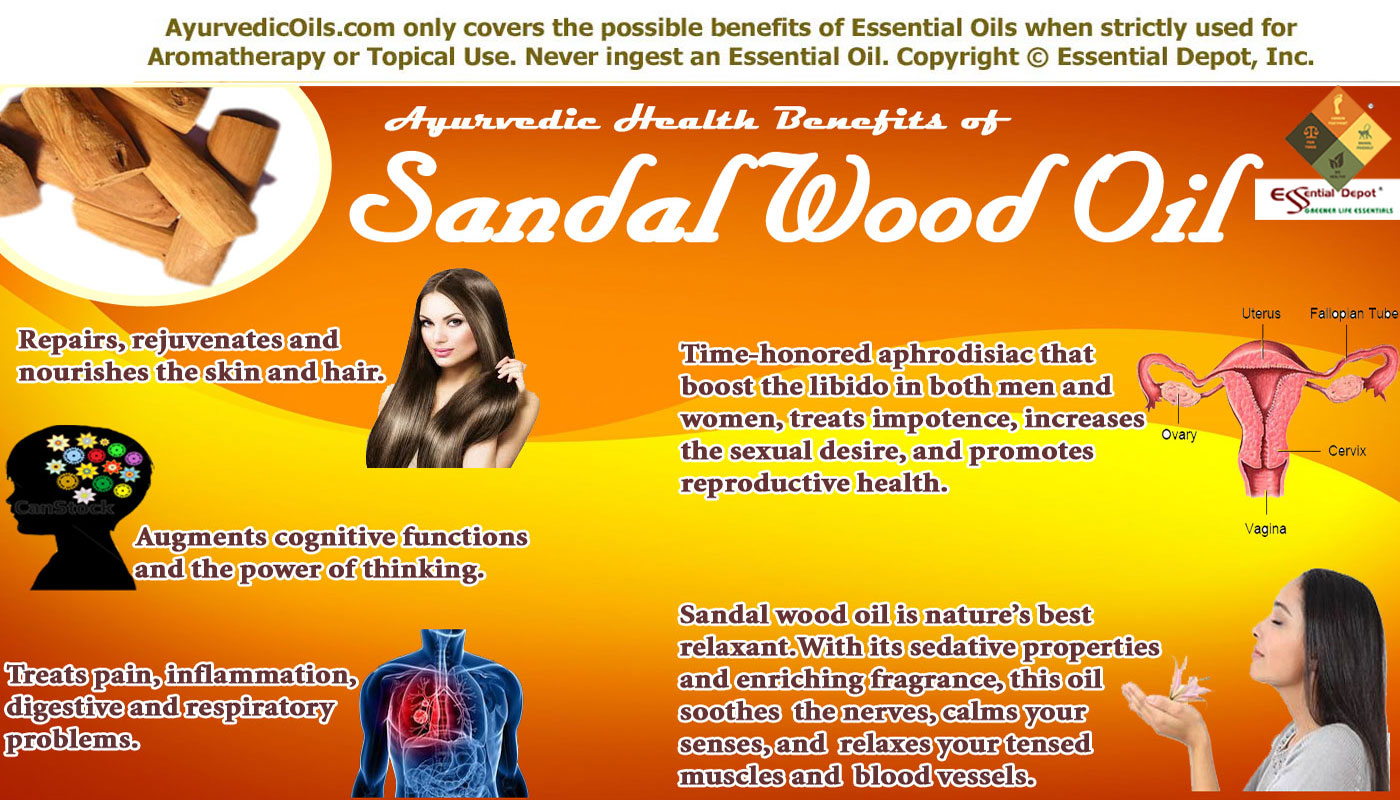
Sandal wood oil is an extremely skin-friendly oil that helps in treating vata based skin problems like flaking, dryness, wrinkling, cracking, roughness and coldness. Pitta imbalances cause acne, oily skin, black heads, blemishes, sensitivity and skin irritations.

Using Sandal wood oil in your skin care cream or lotion aids in repairing the damaged cells, eliminating the toxin deposits in the skin, moisturizes and soothes the skin, enriches the skin cells, enhances the skin texture, keeps your skin fresh and helps you get a fair complexion.

The astringent, antiseptic, antimicrobial, anti-aging, cicatrisant and disinfectant properties of Sandal wood oil protect the skin from harmful bacteria, virus and other fungal infestations.

A recent study have proved that the presence of α-santalol and β-santalol in Sandal wood oil fights effectively against Staphylococcus aureus bacteria and another gram negative bacteria Helicobacter pylori while it also exhibited anti-influenza effect against virus activity.

When applied on the skin as an antiseptic, this oil aids in healing wounds, cuts, sores, scars, inflamed skin, pimples and burns very quickly while preventing it from turning septic.

Sandal wood powder and oil along with the ‘Golden herb’ Turmeric is a traditional beauty secret of the Queens of the Indian kingdom and is now followed to enhance the beauty of the Brides before their marriage.

Apart from benefitting the skin, Sandal wood oil is extremely good for treating hair problems. In their book ‘Ayurveda and AromatherapyBryan Miller and Light Miller have wrote that Sandal wood oil is effective in treating split ends and dandruff due to vata imbalance.

They also suggest a natural blend of medicated oils for massaging your hair for treating dandruff. This blend includes adding 10 drops of Sandal wood oil, 10 drops of lavender oil, 10 drops of cypress oil and 10 drops of yarrow oil with 4 ounce of Sesame oil.

2. Augments mind power:

Sandalwood essential oil has a cooling effect on the brain and a calming effect on the mind. The sedative properties of this oil guard the nervous system and alleviate the off-putting effects of stress and other negative feelings.

For this invigorating reaction, Sandal wood essential oil is celebrated as a perfect meditation tool for more than thousands of years. When used in the form of incense sticks, in diffusers, burners or vaporizers this oil stimulates sensuality, grants a sense of awareness, invokes tranquility, awakens the divine thoughts within and promotes profound relaxation.

Inhaling the energizing aroma of this oil enhances memory power, unlocks the cellular memory of past experiences, clears confusions in the brain, augments spiritual bond and supports trouble-free concentration.

Applying 1 drop of Sandal wood essential oil on the third eye (in between your eyebrows) is said to boost intelligence and lessen depressive feelings. This point is also known as the point of concentration.

3. Treats pain, inflammation, digestive and respiratory problems:

The anti-inflammatory properties of this oil grants complete relief from various types of inflammation in the digestive system, excretory system, nervous system, brain and circulatory system as a result of fever, adverse effects of over-the-counter antibiotics, venomous bites, infections, wounds, fever, poisoning etc.,

Being a natural diuretic, Sandal wood essential oil pacifies the urinary system and helps discharge the toxins and infections in the body through urine.

Used in vapor therapy, this oil is also known to treat respiratory problems like bronchitis, chest infections, cough, cold and asthma. A 1999 study by the College of Pharmacy, Brookings proved that Sandalwood oil has the potential to prevent skin tumour development and is an effective chemo-preventive agent against chemically induced skin cancer.

4. Traditional aphrodisiac:

Sandal wood paste and oil are a time-honored aphrodisiac that boost the libido in both men and women, treats impotence, increases the sexual desire, and promotes reproductive health. Sandal wood essential oil is extensively used in yoga therapy for crafting sexual energy in nature.

Using perfumes with Sandal wood oil, adding 1 or 2 drops of this oil to your bath tub before bedtime, spreading the magic of love in your bedroom by adding 2 drops of Sandal wood oil to your diffuser or massaging your partner with 1 to 2 drops of this oil blended with soothing carrier oils like jojoba oil will bring in a natural feeling of togetherness.     

5. Classic relaxant:

Sandal wood oil is nature’s best relaxant. With its sedative properties and enriching fragrance, this oil soothes the nerves, calms your senses, and relaxes your tensed muscles and blood vessels.

The encouraging aroma of this oil keeps away from anxiety, fear and restlessness. 2 drops of this oil added to your diffuser can act as a daily dose of relief for treating tension headache, tiredness, stress and for influencing positive feelings.

A 2006 study on ‘East Indian Sandal wood and alpha-santalol odor increase physiological and self-rated arousal in humans’ states that Sandal wood is an important medicine in Ayurvedic treatment for treating both mental and somatic problems.

This research also proved that Sandal wood oil raised skin conductance level, pulse rate and systolic blood pressure. The regenerating odor of Sandal wood was proved to augment physiological and self-rated arousal in human beings.

The cooling and energizing attributes of this oil aids in quick relief at the time of panic attacks, bladder infections, irritability and nervous tension. It upholds tranquility and brings absolute harmony between the mind and the body.

These health benefits can be attained either by diluting 2 to 3 drops of this oil in the bath or by using it as a blend with carrier oils in massaging. For all these compelling medicinal values, Sandal wood oil is used in various treatments of Ayurvedic healing like Abhyanga or Ayurvedic massage, meditation, aromatherapy, marma therapy and in numerous other medicinal practices.

Sandal wood is the beauty secret of Queens and ladies of the imperial families and is now a part of high quality perfumes, soaps, beauty creams, skin care products, incense sticks and many other products.

Disclaimer:

Pure Sandal wood oil is highly concentrated and is not recommended to be applied directly on the skin. Always dilute it in mild carrier oils before using it for topical application. This article is only for the purpose of information and is not meant to replace any prescription medicines or professional advice of your healthcare professional.

Thought for the day:

Adopt the pace of nature: her secret is patience. 

-Ralph Waldo Emerson

Suggested Reading:

  1. How to Use Sandalwood Essential Oil (Aromatherapy) by Miriam Kinai
  2. Heal With Oil: How To Use The Essential Oils of Ancient Scripture by Rebecca Totilo
  3. Ayurvedic Healing by Frena Gray-Davidson

Reference Links:
  1. Sandalwood: history, uses, present status and the future by Geeta Joshi, Arun Kumar A.N. and Mohan Ram H.Y.
  2. East Indian Sandalwood and alpha-santalol odor increase physiological and self-rated arousal in humans published in PubMed
  3. Health Benefits of Sandal Wood Essential Oil by Organic Facts

Ylang Ylang Essential Oil

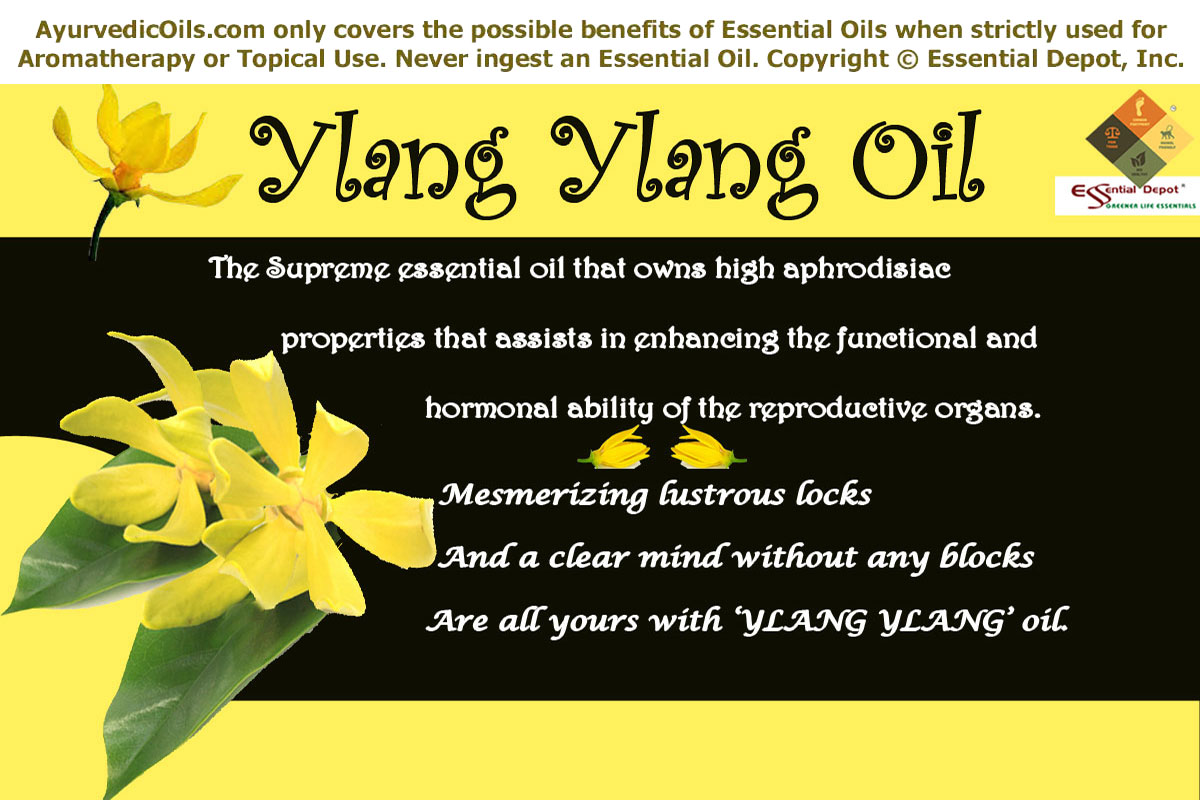
ylang-ylang-bannerYlang Ylang essential oil is an eminent value addition to the perfume and cosmetic industry. Not many of us knew this name a few decades back and thanks to the cosmetic industry that has spread the magic of this herb just like forest fire.

The use of Ylang Ylang and its oil can be attributed to the ancient times as historical references indicate the use of aromatic plants by mankind for more than thousands of years. The essential oil of Ylang Ylang has innumerable Ayurvedic health benefits that you will certainly be amazed at.

Purchase Ylang Ylang Essential Oil – Retail – CLICK HERE

Purchase Ylang Ylang Essential Oil – Wholesale – CLICK HERE

Historical uses and importance of Ylang Ylang oil:

Popularly known as the flower of flowers, all the parts of the Ylang Ylang tree has a celebrated history both in the West and the East. This tree is indigenous to Indo-Malaysia, Philippines and Java. It was used in salves to heal cuts, scrapes, insect bites, snake bites and few other skin disorders in Philippines.

The Ylang Ylang petals are spread over the bed of newly married couples in Indonesia for its mesmerizing aroma and sensual effects.

The essential oil of Ylang Ylang was used in making of antimacassar, an ornamental chair cover that prohibited the Macassar oil from discoloring the upholstery. This oil was also used as a prominent ingredient in Macassar oil, an effective hair pomade.

Ylang Ylang was also used as a medicinal herb in treating chronic disorders like typhus, malaria and intestinal infections. Few sources reveal that the prominent therapeutic properties were initially identified in the early 20th century by famous French chemists Rechler and Garnier on the Reunion Island.

Every part of the Ylang Ylang tree is used for various purposes and the entire tree is claimed to be highly beneficial in many ways. The people of Java use the paste of fresh flowers to treat asthma and the dried flowers to treat malaria.

In Samoa and Tonga, the bark of the Ylang Ylang tree is used as a laxative and to treat stomach disorders. The timber of this tree is used in canoe making and construction works. In Cook Islands this timber is used for making furniture, wooden shoes, crates, fishnet floats and lathe turnings. Ylang Ylang is considered as a culturally important and as a sacred tree.

Chemical constituents or Gas Chromatography Report (GC) of Ylang Ylang oil:

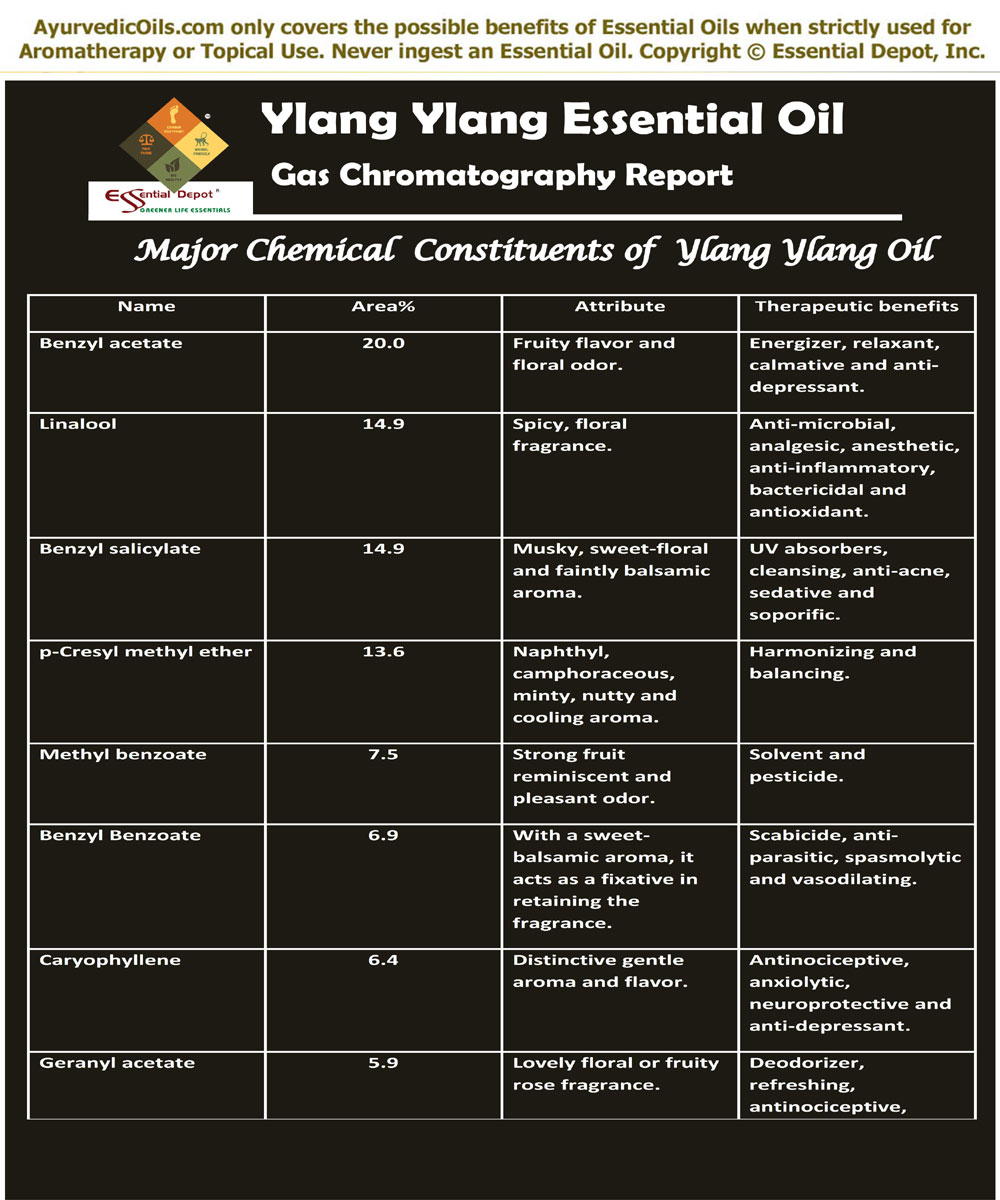
According to the Gas chromatography report, Ylang Ylang oil is constituted of about 8 major chemical components that add to the aroma, consistency, quality and therapeutic values of this essential oil.

Just click on:

For knowing more about the exclusive information of these key constituents of Ylang Ylang oil.

The table below on the Gas Chromatography report talks about the principal chemical constituents and its role in granting the therapeutic and other attributes to Ylang Ylang oil.

Ylang-Ylang-OIlAyurvedic health benefits of Ylang Ylang essential oil:

The most incredible thing about Ayurveda is that it considers every individual as a ‘unique person’ with special individual constitution known as doshas. Ayurveda considers illness as a sign of imbalance in the system as Ayurvedic philosophy states that ideal health can be attained only by having a strong immune system and is a symbol of perfect harmony between a person’s mental, physical and spiritual wellness.

This ancient methodology trusts in treating mankind with the theory of five senses namely vision, smell, taste, touch and sound through colors, aroma, herbs, Abhyanga or Ayurvedic massage with essential oils and music respectively.

Essential oils are highly concentrated liquids extracted from plants using steam distillation. Every individual has a unique combination of three doshas (metabolic principles controlling mind and body) known as vata, pitta and kapha and the individual’s character, personality and health is often determined by the predominance of any of these dosha types. Imbalance of doshas acts as the basis of diseases where,

  • Vata imbalance causes weak memory, insomnia, dry skin, constipation and anxiety.
  • Pitta imbalance causes heartburn, acne, anger, indigestion, excess perspiration and criticism.
  • Kapha imbalance leads to obesity, respiratory disorders, water retention, sluggishness, possessiveness and uncaring.

With gentle, uplifting and moisturizing properties, Ylang Ylang essential oil is suitable in treating vata and pitta imbalances like frigidity, impotence, acne, boils, dry skin, wrinkles and skin irritations.

In their popular book ‘Ayurveda and Aromatherapy’, Light Miller and Bryan Miller say that individuals with imbalanced vata need warming up, calmness, relaxation, boost in self-esteem, sensuality for an attached life with their partner and using aphrodisiac essential oils like Ylang Ylang aids in augmenting the functional and hormonal ability of the sex organs.

People with pitta imbalance need help for venting out their anger and unwanted tension to experience their elated personality. Essential oils extracted from flowers like Ylang Ylang helps in supporting such conditions with their calming and cooling tendency.

The Ayurvedic health benefits of Ylang Ylang essential oil are:

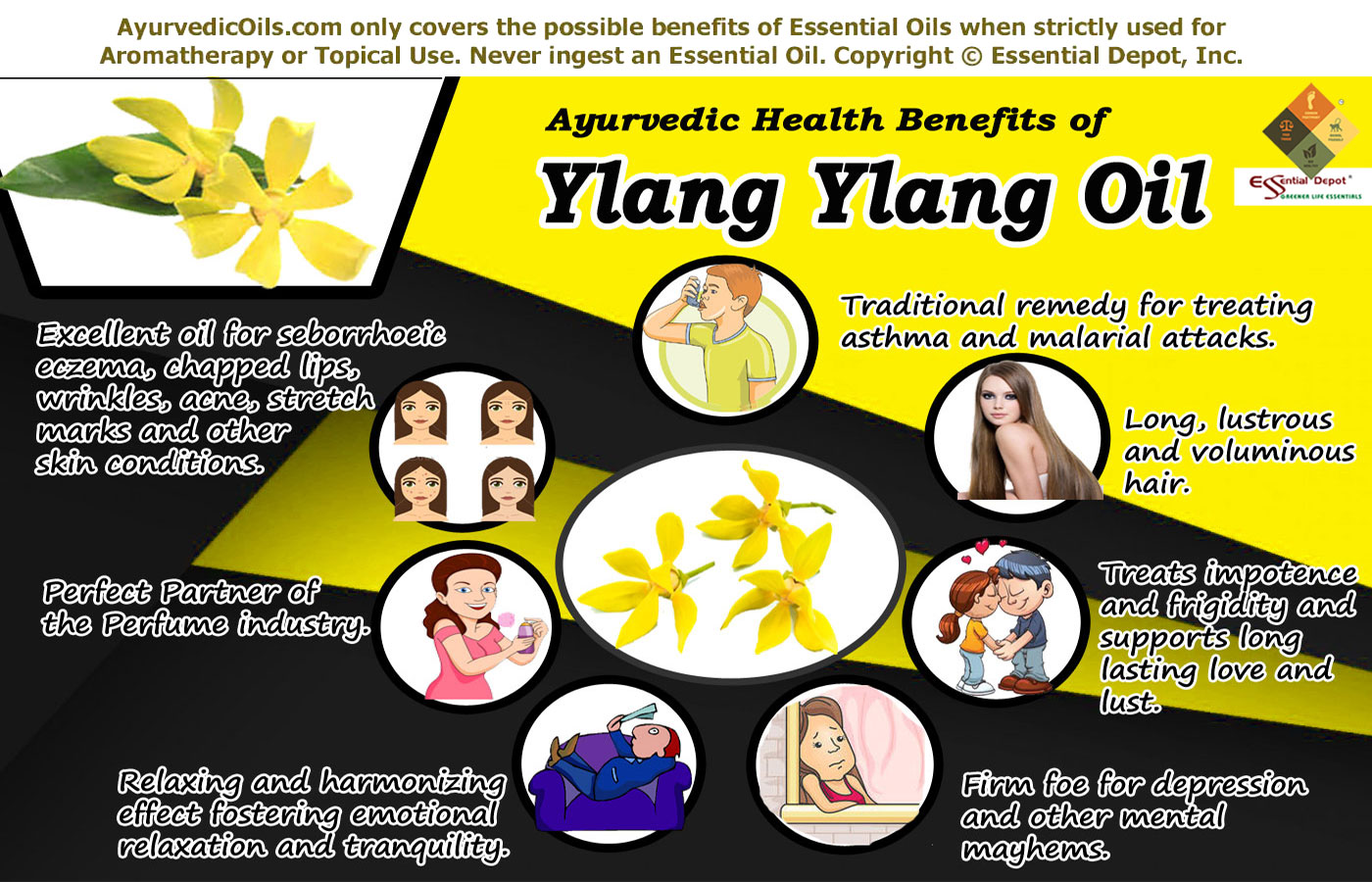
Ylang-ylang-broucher (2)1. Excellent oil for skin care:

Ylang Ylang essential oil is very effective and versatile in toning and stimulating the skin cells mainly because of its power to balance the production of sebum, making it suitable for all types of skin and as a promising remedy for treating Seborrhoeic Eczema.

The soothing, anti-seborrhoeic and antiseptic properties of this oil supports in treating skin inflammation, boils, skin irritation, chapped lips, acne, wounds, burns, blemishes, wrinkles, dry skin and few other signs of aging. Adding few drops of Ylang Ylang oil in your skin care lotion will help you in retaining the moisture of the skin, leaving it healthy and glowing.

2. Long, lustrous hair:

An ancient tribe known as Bori Bori used the Ylang Ylang flowers as a hair conditioner by mixing it in coconut oil. They also rubbed these flowers all over the body and decorated themselves by making necklace, headdresses, natural crowns and garlands for its splendid fragrance and curative values.

Massaging few drops of Ylang Ylang essential oil blended with coconut oil or almond oil aids in promoting hair growth, preventing hair loss, nourishing the scalp, augmenting the natural shine of the hair, making it long, lustrous, healthy and voluminous. What else? You are all set to be the proud owner of beautiful hair and gorgeous looks.

3. Relaxing and harmonizing:

Ylang Ylang essential oil is proved to be clearing heart fire and calming the heart due to the sedative quality of its primary constituent Monoterpene Alcohols. The traditional system of healing using aromatics suggests the use of Ylang Ylang essential oil to reduce and regulate rapid heart rate, high blood pressure and rapid breathing as it mainly supports the fourth chakra i.e, the heart chakra because of its connection in the initiation of the heart spirit.

An Evidence-Based Complementary and Alternative Medicine Research on ‘Essential Oil Inhalation on Blood Pressure and Salivary Cortisol Levels in Prehypertensive and Hypertensive Subjects’ proved that inhaling essential oil blend with ylang ylang, neroli, lavender and marjoram proved effective in controlling blood pressure and is strongly recommended for preventing the progression of hypertension. This research also proved that “Ylang-ylang oil lowers blood pressure, alleviates palpitations and nervous system excitation, and promotes emotional relaxation”.

Another research titled “Evaluation of the harmonizing effect of ylang-ylang oil on humans after inhalation” by Department of Pharmaceutical Chemistry, Srinakharinwirot University, Thailand conducted a study on the effects of Ylang Ylang essential oil on human physiological parameters like pulse rate, blood pressure, skin temperature and breathing rate while self-evaluation was assessed in terms of mood, calmness, relaxation, attentiveness, vigor and alertness.

This research proved that Ylang Ylang oil has a harmonizing effect that is momentous in lessening increased pulse rate and blood pressure as well as efficacious in increasing subjective alertness and attentiveness.

4. Firm foe for depression and other mental disorders:

With its sedative, calming, uplifting, nervine, anti-depressant, relaxing, euphoric and regulative properties, Ylang Ylang essential oil is a solid enemy for mental depression, stress, anxiety, insomnia, nervous tension, mood fluctuations, anger and few other mental disorders.  This oil aids in balancing hormones and effectively assists in mood swings associated with menopause and PMS (Pre-menstrual Syndrome).

A study published in PubMed on ‘Relaxing effect of Ylang Ylang oil on humans after transdermal absorption’ proved that Ylang Ylang essential oil is of great value in causing calmness, relief of stress and depression in humans.

You can use it as soothing massage oil blended with any of your favorite carrier oils like Jojoba oil, coconut oil or olive oil. Ylang Ylang essential oil can also be used in compresses, in candles, diffusers or air fresheners. Adding few drops to your bathing tub with warm water can alleviate stress and induce good night’s sleep.

5. Long lasting love and lust:

Ylang Ylang flowers and the essential oil extracted from these flowers are banked upon mainly for the aphrodisiac values adorned by its balsamic, floral, sweet, misty and woody aroma that aids in balancing male and female energy levels. It can significantly reduce emotional conflicts between these apparent opposites.

The sensual fragrance of Ylang Ylang essential oil is simply ideal for the perfect dream nights with your partner. It has positive influence on sexual feelings, tones the reproductive system, grants pleasure, treats lack of confidence and is also powerful in treating impotence and frigidity.

6. Perfect Partner of the Perfume industry:

The compelling fragrance of Ylang Ylang essential oil will make you stand out of the crowd. It is for this natural floral and delicate scent, ylang ylang oil is used in a handful of renowned perfume brands like Chanel No. 5, Escape by Calvin Klein, Beautiful by Estee Lauder, Acqua di Gio by Armani, Champs-Elysees by Guerlain and Poison by Christian Dior. Hmmmmm……………….Haaaaaaaaaaa…….. Doesn’t that smell so good? Absolutely it does.

Other uses:

Apart from all these health benefits, Ylang Ylang oil and the other parts of this tree are used in treating intestinal tract infections, symptomatic manifestation of malaria, fevers, epilepsy, tachycardia, agitation, distress, restlessness and other psycho-emotional imbalances. It is also used in making soaps, cosmetics and shampoos.

You will be surprised if I say that Ylang Ylang oil is also used as a safe flavoring ingredient in the food industry. A well-known study on “Safety assessment of Ylang Ylang as a food ingredient” indicated that “Ylang-Ylang oil has a long history of fragrance and food flavoring use, with no indication that its estimated consumption from food flavoring use (0.0001 mg/kg/day) has led to any adverse human health effects and at the current level of intake as a food ingredient, Ylang-Ylang oil does not pose a health risk to humans”.

Ylang Ylang essential oil is extracted from the star-shaped Ylang Ylang flowers and indeed it is a STAR OIL of all times and one more astonishing news is that it requires approximately 50 pounds of Ylang Ylang flowers to obtain 1 pound of Ylang Ylang essential oil.

Disclaimer:

This article is just for your information and do not ingest any essential oils or apply them directly to your skin without proper consultation with your Ayurvedic Practitioner, as every individual is unique and one that suits you might not suit your partner or your kid.

The MSDS (Material Safety Data Sheet) of Ylang Ylang oil is readily available for your enhanced safety and superior usage.

Gas Chromatography Report (GC) of Ylang Ylang oil.

Thought for the day:

 It was very pleasant to savor its aroma, for smells have the power to evoke the past, bringing back sounds and even other smells that have no match in the present.

-Tita

Suggested Reading:

  1. The Healing Trail:: Essential Oils of Madagascar by Georges M. Halpern, Peter Weverka
  2. HEALING POWERS OF YLANG YLANG OIL (The Aromatherapy Professional: Healing with Essential Oils) by KG Stiles
  3. How to Use Ylang Ylang Essential Oil (Aromatherapy) by Miriam Kinai
  4. Ayurveda & Aromatherapy: The Earth Essential Guide to Ancient Wisdom and Modern Healing by Dr. Light Miller, Dr. Bryan Miller

 Reference Links:

  1. Aromatherapy from Ayurveda’s Perspective by Yayoi Stavish
  2. Cananga Odorata (Ylang-Ylang) by Pacific Island Agroforestry
  3. Relaxing effect of ylang ylang oil on humans after transdermal absorption by PubMed
  4. Essential Oil Inhalation on Blood Pressure and Salivary Cortisol Levels in Prehypertensive and Hypertensive Subjects by In-Hee Kim, Chan Kim, Kayeon Seong, Myung-Haeng Hur, Heon Man Lim and Myeong Soo Lee, Evidence-Based Complementary and Alternative Medicine Volume 2012

Yara Yara Essential Oil

Yara Yara essential oil, prevalently known as Yarrow essential oil has a bundle of therapeutic properties that has made its presence inevitable in the world of Complementary and Alternative Medicine including the oldest natural healing system known as Ayurveda, meaning the knowledge of life.

Yara-yara-bannerUse of Yarrow as a natural medicine dates back to more than 60 thousand years and this was proved by its presence on the body of a Neanderthal. Such a distinguished herb is used in different forms like essential oil, decoction, powder and much more in treating a series of illnesses.

Historical uses of Yara Yara essential oil:

Yara Yara, a celebrated sacred herb was known to be used by Achilles, the Greek hero of Trojan War for healing the wounds and to curtail bleeding of his soldiers. The botanical name of this plant Achillea Millefolium is followed by his name Achilles. Historical references prove that the ancient Chinese medicinal system used Yarrow essential oil to treat problems related with menstruation whereas the primordial Scandinavians used this efficacious oil to treat rheumatism.

Yarrow essential oil was used in Scotland to protect from evil and was trusted to have an all-healing potential to treat numerous disorders all through the ages. Yara Yara oil was added to certain Swedish beers and the historical uses of this herb goes on and on as a never-ending list. This herb is also known as Milfoil for its feathery look.

Where does Ayurveda come into picture?

Ayurveda, the knowledge of life is a holistic approach and the oldest systems of medicine in treating humanity. According to Ayurveda, any disease is an indication that your body is out of balance. Every individual is considered unique with a specific set of physical, mental and spiritual values. Ayurveda trusts that human beings are imperative part of nature and every human body is made up of the five vital elements of nature, namely air, water, ether, fire and earth.

An individual’s constitution is made up of three predominant bodily humors known as doshas (Vata, pitta and kapha), which are a combination of any of these five elements of nature and it determines the personality and attributes of a person. With this belief as the fundamental principle, Ayurvedic texts indicate that the disharmony of your system with nature is the root-cause of all illnesses.

The beauty of Ayurvedic healing lies in transforming the entire lifestyle of an individual into a healthy one based upon his unique constitution. Ayurveda believes that nothing better than natural remedies can cure mankind that is a part of nature containing the vital elements of nature. For this Ayurveda prescribes the use of herbs, essential oils extracted from plants, yoga, meditation and spiritual values that binds humanity with one’s Creator.

Ayurvedic health benefits of Yara Yara Essential Oil:

Yara Yara is known as Biranjasipha in Ayurveda. With cooling properties, Yarrow and its essential oil is said to treat pitta imbalances like indigestion, fever during cold, heartburn and inflammation.  In their famous book Ayurveda and Aromatherapy’, Dr. Light Miller and Bryan Miller bring out the effectiveness of essential oils for the chakras, known as the transfer points of feelings and the bodily functioning of certain endocrine glands.

Light Miller says “the essential oils increase the finest and farthest vibrations and assist all of the subtle bodies. Essential oils can stigmata and assist in the process of awakening, healing, opening the chakras, and strengthening the aura.” According to her, Yara Yara essential oil is one best essential oil in stimulating the heart chakra.

Yara-yara-broucher1. Yara Yara oil for the skin:

With its antiseptic, emollient, anti-inflammatory, haemostatic, vulnerary and antispasmodic properties, yara yara essential oil is among those best natural oils in treating numerous skin problems like cuts, burns, acne, rashes, marks, open sores, stretch marks, dermatitis, psoriasis, inflamed wounds, epileptic seizures, dryness, eczema, unshorn skin due to aging and many other.

This oil stops bleeding, aids in retaining the moisture of the skin and helps significantly in the quicker formation of new skin. By stimulating the leucocytes and blood platelets in the affected region, this oil effectively checks and curbs the presence of bacteria, fungus and other microbes that worsen the wounds.

Staphylococcus aureus is a harmful bacterium that causes the infection of wounds and Yara Yara essential oil with its antimicrobial effects has been proved effective against the effects of Staphylococcus species. This study proved that the presence of chamazulene component in Yara Yara oil augments the antibacterial activity, making it the best natural remedy for wound treatment since ages.

2. Yara Yara essential oil for the respiratory system:

Just like the other essential oils like peppermint, eucalyptus, tea tree, rosemary and hyssop essential oils with expectorant, analgesic and decongestant properties, yara yara essential oil is also effective in treating respiratory problems like congestion, cough, bronchitis, asthma attacks, cold and controls the secretion of phlegm. Adding few drops of this oil to your chest rub can grant you great relief from all sorts of respiratory problems.

A research on the ‘Antioxidant and antimicrobial activity of the essential oil and methanol extracts of Achillea millefolium subsp. millefolium Afan. (Asteraceae)’ by the Cumhuriyet University revealed that “Eucalyptol, camphor, alpha-terpineol, beta-pinene, and borneol were the principal components comprising 60.7% of the oil”. This makes Yara Yara essential oil as a promising natural remedy in treating cold, fever, cough and other respiratory disorders.

3. Yara Yara oil for the digestive system:

Yara Yara essential oil is highly beneficial for the digestive system and supports in treating various digestive disorders like constipation, colic, indigestion, stomach cramps, bloating, loss of appetite, heaviness along with pain in the chest, flatulence, gall-bladder and intestinal pain, gastric catarrh and few other dyspeptic conditions.

With its stomachic, carminative, digestive and anti-spasmodic properties, yara yara oil is said to remove and prevent gas formation in the stomach and intestines. This oil enhances the secretion of bile and other digestive juices, helping in trouble-free digestion.

A recent research proved that Yarrow has been traditionally used in the treatment of spasmodic gastro-intestinal disorders, inflammation and hepato-biliary complaints. A gentle Ayurvedic massage with 2 to 3 drops of Yara Yara essential oil blended with carrier oils like Jojoba oil, almond oil or sesame oil can grant immense relief from all sorts of digestive disorders.

4. Yara Yara essential oil for the nervous system:

This essential oil has hypotensive and tranquilizing properties that calms the heart and soothes the nerves. Hypertension, insomnia, high blood pressure, excess stress and brain hemorrhage can be assisted perfectly with the healing powers of Yara Yara oil. It tones up and relaxes the nervous system and boosts the immune power, making you resistant against harmful diseases.

5. Yara Yara essential oil for the circulatory system:

Yarrow essential oil enhances blood circulation and assists in treating hemorrhoids, varicose veins, arthritis, rheumatism, menopausal disorders, cystitis, irregular menstruation, dysmennorhea, formation of uric acid crystals in the body and few other health problems associated with the circulatory system. The anti-rheumatic, anti-inflammatory, haemostatic, emmenagogue and astringent properties of this oil makes it the ideal choice for treating problems related to improper circulation.

6. Yara Yara essential oil for the entire system:

Numerous other health benefits of using Yara Yara oil are removal of toxins from the body, control of dandruff and hair fall, promotion of hair growth, aid in treating gum problems, stimulation of the metabolic functions and hostility against infections in the excretory system and reproductive system.

Susanne Fischer-Rizzi talks about numerous gynecological uses of Yara Yara essential oil and she says that this oil can be used in douches, diffusers and sitz baths.

The most impressive information about Yarrow herb is its use by Hildegard of Bingen to treat breast cancer with the salve prepared with petals of yarrow flowers. She advised her patients to rub this salve on the ulcerated parts and expel the toxic things followed by the use of the ointment prepared with Yara Yara flowers to promote proper healing with its antioxidant properties.

When nature can gift us with a handful of promising remedies like these, why should you turn back to the contemporary medical system for artificial healing? Think again!!

Disclaimer:

Direct application of essential oils is not recommended as it may cause allergies or harms the skin; blend it with carrier oils before using it as massage oil or for any other topical application. Do not ingest essential oils or use it on babies and pregnant women without the advice of your health care expert.

Thought for the day:

Yarrow has been under experimental research as an antidote for radiation exposure, as an anticancer as well as antitumor agent, as an aid to detoxification from drugs and alcohol. It is useful in severe skin rashes and for wounds that will not hear.                        –Jeanne Rose

Suggested Reading:

  1. Aromatherapy for the Soul: Healing the Spirit with Fragrance and Essential Oils by Valerie Ann Worwood
  2. The Healing Intelligence of Essential Oils: The Science of Advanced Aromatherapy by Kurt Schnaubelt
  3. The Illustrated Encyclopedia of Essential Oils: The Complete Guide to the Use of Oils in Aromatherapy & Herbalism by Julia Lawless
  4. Ayurveda & Aromatherapy: The Earth Essential Guide to Ancient Wisdom and Modern Healing by Dr. Light Miller, Dr. Bryan Miller

Reference Links:

  1. Yarrow – Achillea Millefolium by Ingrid Naiman
  2. Antimicrobial effects of yarrow (Achillea Millefolium) essential oils against Staphylococcus species by Medical Sciences Faculties of Islamic Azad University, Tabriz, Iran
  3. Antioxidant and antimicrobial activity of the essential oil and methanol extracts of Achillea millefolium subsp. millefolium Afan (Asteraceae) by faculties of Cumhuriyet University, Turkey

Wormwood Essential Oil

wormwood-bannerWormwood is botanically known as Artemisia absinthium. It is widely known as an effective remedy for treating worms like tape worms, round worms, hook worms etc in the human body. With its narcotic effects, Wormwood was an important part of the popular alcoholic beverages like Absinthe, which is prohibited now.

Wormwood essential oil is extracted from the flowering tops, twigs and leaves through steam distillation process. Ginger is an incredible part of numerous Ayurvedic remedies and with an alternative name as Green Ginger, wormwood herb and its therapeutic oil has been used for more than thousands of years in Ayurveda, the ancient wisdom of healing humanity.

Historical uses of Wormwood and its essential oil:

The spectacular fact about Wormwood is that it was used by Hippocrates, the ancient Greek Physician and the father of western medicine. Many ancient monks and nuns used this bitter herb in the form of an elixir for its detoxifying properties.

The prehistoric use of Wormwood has been mentioned in Bible and the first century writings of Greece and Rome, where the herb was said to be placed in the sandals of Roman warriors to pacify their sore feet.

Saint Hildegard of Bingen, known as the Doctor of the Church and Sibyl of the Rhine was highly celebrated for her brilliance in medicinal and botanical writings, philosophy, music and much more. She used Wormwood herb to treat melancholy, digestive disorders, elimination process, improper functioning of lungs and heart.

She advised her patients to consume the fresh juice of wormwood leaves mixed with honey and warm wine on empty stomach on every third day from the month of May to October. Hildegard trusted that the use of wormwood herb helped in promoting the functioning of the entire system by effectively eliminating the toxins from the arteries through kidneys and preventing the accumulation of black bile, which is the melancholic humor.

Health benefits of Wormwood essential oil:

Wormwood was used for spiritual and psychic work in the primordial times and the essential oil of Wormwood is trusted to treat numerous health disorders ranging from fever to flatulence.

The predominant health benefits of Wormwood essential oil are:

wormwood-broucher1. Effective against worms and parasites:

Worms and parasites in the body are often the main reason for curtailing the normal growth, especially in children. This is mainly because these foreign bodies absorb the nutrients from the food and restrict the system from gaining the required nourishment.

With its Vermifuge property and high toxic effects, wormwood herb and its essential oil is considered as the most powerful natural remedy in killing worms and parasites. In certain cases this oil is given as an enema in treating worms in the rectum and intestines.

2. Supports the digestive system:

Wormwood essential oil nurtures the digestive system and effectively helps in removing the toxic substances known as ama from the body. According to Ayurveda, improper digestion is the root cause for all kinds of illnesses as the undigested food particles turn as toxins and curb the normal functioning of the body. Wormwood essential oil strengthens the entire digestive system with its carminative, stomachic, cholagogue, anthelmintic, tonic and stimulant properties.

The presence of artabsin and absinthin in Wormwood oil are responsible for the bitter taste, which acts as a stimulant in enlivening the taste buds and improving the secretion of saliva and perking up the natural appetite of an individual.

It promotes proper discharge of bile secretion from the liver to the stomach and effectively counterbalances the excess acid substance while assisting the complete process of metabolism. All these healing properties of Wormwood essential oil make it a promising remedy in the treatment of acidosis, ulcer, liver and gall bladder problems and numerous other digestive disorders.

3. Alleviates stress and depression:

Disturbed sleep, insomnia, convulsions, fatigue, nervous afflictions, epileptic attacks and certain other mental disturbances often end up in unwanted stress and deep depression. Wormwood essential oil has a natural narcotic effect that helps in calming your nerves and grants complete relaxation by pacifying the entire system.

A well-known research on ‘The Debate About Wormwood and Thujone Psycho-activity‘ proved that the presence of α-thujone (alpha thujone) and β-thujone (beta thujone) in Artemisia absinthium are responsible for Psycho-activity and the higher-potency α-thujone is considered as the primary psychoactive agent. Adding 2 drops of Wormwood essential oil to a tissue and placing it near your pillow can give you great relief for a peaceful night’s sleep.

4. Womanly essential oil:

Being a promising emmenagogue, wormwood essential oil is extremely beneficial in treating womanly problems like irregular menstruation, obstructed periods, uterine fibroids, menopausal problems, dysmennorhea and all other symptoms that accompany menstruation.

The emmenagogue property in this oil enhances the blood circulation in the uterus and pelvic region while strengthening the pelvic floor muscles. This oil is also used as a pain reliever during labor.

Ayurveda recommends Abhyanga or the art of massaging in an Ayurvedic manner for treating problems related to menstruation and menopause. Gently massaging 2 to 3 drops of wormwood essential oil along with sesame oil or coconut oil can grant significant relief and support the health of the female reproductive system.

5. Keeps away fever and infections:

Wormwood essential oil is effectual in treating fever due to bacterial and viral infections and this healing property is attributed to the presence of the toxic components like α-thujone and β-thujone, which act as a shield to the body and protects it from microbes and other harmful infections.

A research by the Cancer institute on the effectiveness of Complementary and alternative medicine in 2004 witnessed that Wormwood is powerful in treating fever and was used in Malaria treatment. The ancient Africans and Asians used Wormwood to combat malaria and to treat few other mosquito-borne diseases.

6. Fights against cancer:

The chemical properties of Wormwood have been proved as a potent cancer treatment by the Bioengineering researchers of the University of Washington. It has been witnessed that this derivative killed almost all the human breast cancer cells exposed to it within a time span of 16 hours. They also said that this wormwood derivative is “highly toxic to the cancer cells, but has a marginal impact on normal breast cells”.

7. Enriches the human body:

The great news is that Wormwood essential oil acts as a tonic to the entire system by stimulating the digestive system, improving the functioning of the circulatory system, strengthening the immune system, acting as a cardiac tonic, fortifying the nervous system and supporting the working of the excretory system, enabling the body to expel the unwanted toxic substances and stay vigilant at all times.

The natural and strong aroma of Wormwood essential oil makes it an important component of certain deodorants. This oil can also be used as a powerful insect repellant with its poisonous effects. Adding few drops of Wormwood oil to your vaporizers, sprays and fumigants can help you keep the harmful insects at bay.

Disclaimer:

Wormwood essential oil is a neurotoxin and has narcotic effects so never ingest this essential oil as it may harm the system. Essential oils are highly concentrated and do not apply this oil directly to your skin and always remember to blend it with carrier oils. Consult your medical practitioner before using the right essential oil for your health and your constitution.

Wormwood Essential Oil – Possible Skin Issues:

Greener Life Diamond – Bio-Healthy Score => 3 – Possible Skin Issues:

See => http://www.essentialdepot.com/GreenerLifeDiamond.html

Wormwood oil is considered as a narcotic oil when used in higher doses. The adverse effects of Wormwood oil is attributed to the presence of chemical constituent thujone, which contributes to about 50 percent of the oil. Thujone containing oils are restricted prevalently, mainly due to the concern of its psychotropic, nephrotoxic and neurotoxic effects. It may cause skin irritation, redness, eruptions in sensitive skin and dermatitis.

Studies witness the excitation of the autonomic nervous system due to convulsions and binding of the GABA receptors caused due to α and β-thujone. It is also a known fact that high amount of thujone and its metabolites can induce convulsions, unconsciousness, seizures, gastrointestinal cramps, insomnia, tremors, dizziness, hallucinations, vomiting, headaches, retention of urine, renal lesions, congestive heart failure and rhabdomyolysis (collapse of muscular fibers).

Wormwood should never be used internally as there are numerous studies witnessing the severe toxic effects of ingesting this oil and few cases include absinthism and the acute renal failure due to rhabdomyolysis in a person who drank about 10 ml of Wormwood oil; In an another case, the intake of 60 ml of Wormwood oil ended up in seizure, altered mental faculty, attention disability, rhabdomyolysis and hyperthermia.

Blend Wormwood oil in mild carrier oils like Coconut oil or Avocado oil before topical use as pure and organic essential oils are highly concentrated substances and can harm the skin surface if used in a concentrated form. The safe level of dermal use for this oil is 0.4% by IFRA (International Fragrance Association).

Dr. William Smith in a Medico-Chirurgical transaction study talks about the case of poisoning by Wormwood oil. It is stated that this oil has narcotic influence that may have negative impact on the nervous system, causing headache, convulsions, giddiness, vomiting, tremors and paralysis.

The PanAfrican Medical Journal study talks about the burning effects of Wormwood herb, where a 50 year old woman reported a severe pain in the facial skin with a dry and delicate erythema in the cheeks and forehead classified as an initial degree burn.

It was concluded that the presence of toxic agents, like thujone and malic acid were responsible for the adverse effects like redness, skin sensitivity and chemical burns. It was termed as a phytodermatose, which are lesions on the skin due to the frequent contact with certain herbs. Research reports also state that thujone is porphyrogenic in nature and can be hazardous for patients with defective hepatic heme synthesis.

With thujone being the toxic component, using Wormwood oil can act as a threat to pregnancy as it may affect the health of the uterus with its emmenagogue and abortifacient effects and is good to continue avoiding this oil during lactation as well.

It is advisable to restrict the use of this oil on children as they have a sensitive skin. Wormwood oil can also cause allergic reactions on the skin for those who are susceptible to plants of the Compositae/Asteraceae family like the Marigold, Ragweed, Chrysanthemum etc.,

Reference Links Substantiating the Possible Skin Issues of Wormwood Oil:

  1. Artemisia absinthium: burning plant! By Najia Ilham El Makrini, Badredine Hassam, Department of Dermatology, Ibn Sina Hospital, Rabat, Morocco published in the PanAfrican Medical Journal
  2. Case of Poisoning by Oil of Wormwood (Artemisia absinthium) by Dr. William Smith, Surgeon Chesterfield and North Derbyshire Hospital, published in Medico-Chirurgical Transactions, Royal Society of Medicine
  3. Wormwood by Essential Oil Safety: A Guide for Health Care Professionals By Robert Tisserand, Rodney Young
  4. Wormwood Toxicology by Leung’s Encyclopedia of Common Natural Ingredients, used in Food, Drugs and Cosmetics by Ikhlas A. Khan and Ehab A. Abourashed
  5. Adverse events and side effects of Artemisia absinthium by American Herbal Products Association’s Botanical Safety Handbook, Second Edition by Zoe Gardner, Michael McGuffin
  6. Toxicology and adverse reactions of Wormwood by Drugs.com
  7. Side effects of Wormwood by University of Michigan Health System

Thought for the day:

Life is not living, but living in health. 

– Martial, Roman poet

Suggested Reading:

  1. Artemisia (Medicinal and Aromatic Plants – Industrial Profiles) by Colin W. Wright
  2. Complete Aromatherapy Handbook: Essential Oils for Radiant Health by Susanne Fischer-Rizzi
  3. Aromatherapy for the Soul: Healing the Spirit with Fragrance and Essential Oils by Valerie Ann Worwood

Reference Links:

  1. Wormwood by Ingrid Naiman
  2. Health Benefits of Wormwood Essential Oil by Organic Facts
  3. Wormwood by Cancer.Org
  4. Wormwood Ancient Chinese Folk Remedy May Hold Key to Non-Toxic Cancer Treatment by Dr. Clark Information Center

Mustard Essential Oil

‘Sarson ka tel’ or Mustard essential oil is a vital part of Ayurveda, the ancient Indian therapy where it is used for cleansing, stimulating and revitalizing the body. Besides all the controversies across the world, Mustard oil is popular and extensively used in India, Bangladesh and few other Western countries.

Though extracted from the same Mustard seeds, Mustard edible oil is totally different from Mustard essential oil by the method of extraction where the vegetable oil is extracted by cold compressing the seeds and the essential oil of Mustard is extracted by steam distillation of seeds that are soaked in water.

Mustard oil is to Asian countries just like Olive oil is to Mediterranean countries. Besides the myth of being banned in certain countries for internal use, Mustard is a legendary oil used for more than thousands of years in the world’s oldest mythologies like India, Rome and Greece.

Historical importance of Mustard and its oil:

Used as a spice, condiment, herb, cooking oil and medicinal agent, Mustard and its oil are said to have been found since the Stone Age settlements. Among the 40 species of Mustard plants, the most popular and the ones used for extracting essential and edible oils are Brassica nigra (Black mustard), Brassica hirta (White mustard) and Brassica juncea (Brown mustard).

It is still trusted that Mustard was grown in the Indian subcontinent around 3000 B.C.E. Hippocrates used mustard seeds in the preparation of many poultices and medicines. The ancient Romans mixed ground mustard seeds to wine for its unique flavor and remedial values.  It was also used as a natural remedy to treat scorpion stings in the 6th century B.C. by Pythagoras, the renowned Greek scientist.

Mustard was used as a condiment in Greece and Rome for fermenting fish sauce known as garum. The love for mustard made Pope John XXII of Avignon create the post of ‘Grand Moutardier du Pape’ (Grand Mustard-Maker to the Pope). Mustard oil has been a part of North Indian cooking for more than 4000 years and this oil has been the secret behind healthy and lustrous hair growth of Indian women.

Chemical constituents and therapeutic properties of Mustard essential oil:

The essential oil of Mustard has Allyl isothiocyanate, oleic acid, omega-6 linoleic acid, omega-3 alpha-linolenic acid and erucic acid. These constituents contribute to the remedial properties including cordial, tonic, anti-rheumatic, stimulant, appetizer, antifungal, antimicrobial, diaphoretic, hair vitalizer, insect repellant and irritant.

Ayurvedic health benefits of Mustard essential oil: Mustard oil has been used in Ayurvedic healing as a promising body massage oil for improving blood circulation, enhancing the texture of the skin, muscular development and to lessen the dryness of skin. Ayurveda meaning the knowledge of life skillfully explains the vibrant relationship between one’s mind, body and spirit and the way it relates to the world around.

The Ayurvedic approach of healing starts with an Ayurvedic consultation where your unique individual constitution, likes and dislikes, food habits and your medical history is thoroughly analyzed.

Your treatment starts with the tridosha concept as the guiding principle where Ayurveda believes that every individual is unique and is born with a unique fundamental constitution knows as prakriti. It is built up with 3 major biological energies known as doshas namely vata, pitta and kapha.

The dynamic balance between these three doshas determine one’s health and predominance of any one of these doshas is the deciding factor for one’s personality, behavior and attributes.

Ayurvedic remedies are always based on your individual constitution and to balance any one or all the three doshas that are out of rhythm. With its warming properties, Mustard essential oil is said to increase pitta dosha and pacify kapha and vata doshas. It’s time to have a look at the Ayurvedic health benefits of Mustard essential oil:

1. Benefits to the hair:

Ayurvedic Mustard oil is extremely good for hair. The essential fatty acids like linoleic acid (an omega-6 fatty acid) and certain other components present in this oil makes it an effective natural remedy for treating hair loss, premature graying, dull and lifeless hair. Using Mustard essential oil on your scalp augments natural pigmentation and vitalizes your hair follicles by acting on the roots.

This way it prevents early graying and helps you in maintaining a natural dark hair even in your late 40s or early 50s. Indeed Ayurvedic Mustard oil is a long time secret of many grandmothers in India who still have healthy black hair.

Slightly heat 3 to 4 drops of Mustard essential oil blended with sesame oil and gently massage it on your scalp. Leave this blend for about an hour and wash your hair with a mild herbal shampoo or shikakai for nourishing your scalp health, reducing hair fall, enhancing blood circulation, conditioning your hair, strengthening the roots, augmenting its natural shine and to lessen the more salt than pepper on your head.

2. Benefits to the respiratory system:

Mustard essential oil is generally used as a mucolytic in many parts of the world. Herbs and vegetables like wasabi, horseradish and nasturtium along with essential oils that are used as traditional mucolytics and are proved effective in breaking up mucous deposits and help sinus drainage in chronic sinusitis.

The antimicrobial property of Mustard essential oil assists in combating numerous pathogenic organisms and microbes that worsen sinusitis and certain other respiratory problems like bronchitis, asthma and tuberculosis.

A 2009 study on ‘Antimicrobial activity of Mustard essential oil against Escherichia coli O157:H7 and Salmonella typhi’ by the Department of Food Science and Biotechnology, Korea states “Mustard essential oil affected the cell membrane of Escherichia coli O157:H7 and Salmonella typhi. It affected cell membrane integrity, resulting in a loss of cell homeostasis”.

On an Ayurvedic perspective respiratory problems like cold, cough, sinusitis, bronchitis and asthma are caused due to imbalance or increased kapha dosha responsible for fluid retention, congestion, phlegm and mucous deposits. Mustard essential oil is known to pacify and reduce kapha energy and it is used as an excellent Ayurvedic remedy for treating such respiratory problems.

Blend 2 drops of Mustard essential oil with little coconut oil and heat it. Massage this herbal blend on your chest, back and throat for loosening mucous deposits, removing phlegm from lungs and respiratory tract and to help trouble-free breathing. You can also add 2 to 3 drops of Mustard essential oil in hot bathing water that can work wonders on respiratory ailments and certain other pulmonary problems.

3. Benefits to the skin:

Mustard essential oil is an effective antifungal, anti-parasitic, antibacterial, disinfecting and antimicrobial oil that protects the skin from infections, wounds from getting septic and heals minor skin problems like cuts, athlete’s foot, ringworm, insect bites, small lacerations, abrasions etc. Mustard essential oil has been in use for massaging for many centuries.

When gently massaged onto the skin after mixing 2 drops of Mustard essential oil with jojoba oil, it aids in increasing blood circulation with its warming properties, helps open the pores and supports in eliminating the toxins in the body through sweat. This essential oil has high level of vitamin E that promotes healthy skin, moisten the skin, protect the skin from harmful ultra-violet rays, and effectively treat blemishes, wrinkles and fine lines as well.

4. Benefits to the entire system:

The essential oil extracted from Mustard seeds is beneficial to the entire system with its tonic and stimulating properties that foster trouble-free functioning of the body. The pungent aroma of this oil increases hunger by stimulating the digestive juices and by increasing the appetite.

Massaging your tummy and abdomen with 2 drops of Mustard oil mixed with sesame oil can help in burning the excess fat, promotes quicker digestion by encouraging the secretion of digestive juices and assists in treating constipation, flatulence and intestinal gas.

Mustard essential oil penetrates deeply into the skin and is a powerful Ayurvedic remedy for treating excess vata based nervous problems and kapha based problems like inflammation and retention of fluids. Mix 2 drops of Mustard oil with coconut oil and gently massage in circular movements on the affected areas to treat rheumatism, lumbago, back pain, headaches and inflammation.  Adding 1 drop of this oil to a cup of warm water can serve as an exceptional gargle for protecting your teeth and gums from germs.

This is an excellent massaging oil especially during winter to keep the body warm, trigger the functioning of the muscles and to treat numbness with its irritant properties. This oil is also said to slow down the process of aging naturally and aids in preventing cancer.

Disclaimer:

Never take essential oils internally. Pure and organic essential oils are highly concentrated liquids and might cause adverse effects on the skin and system. Always remember to use it after diluting in baths or suitable carrier oils. Ensure that you do a patch test on the skin before using essential oils for massage. Consult your Ayurvedic practitioner for choosing the right essential oil that is apposite for your individual constitution and health condition.

Mustard Essential Oil Possible Skin Issues:

mustard-new

Greener Life Diamond – Bio-Healthy Score => 3 Possible Skin Issues:

See => http://www.essentialdepot.com/GreenerLifeDiamond.html

Mustard oil is regarded as one of the most unsafe essential oils mainly due to the presence of Allyl isothiocyanate and erucic acid (a toxic monounsaturated omega-9 fatty acid). According to the U.S. National Center for Biotechnology Information (PubChem), Allyl isothiocyanate compound is poisonous by skin penetration and ingestion. It is also known to emit toxic fumes when exposed to high temperature.

The European Union has prohibited Mustard oil as a cosmetic ingredient and the International Fragrance Association (IFRA) has forbid the use of this oil in fragrances. Allyl isothiocyanate in Mustard oil is not recommended for therapeutic use, primarily due to its toxicity, irritating nature and rigorous lachrymatory effect (potent to produce tears) that draw a question mark on the safe use of this oil in the healthcare industry.

Generally, essential oils are listed with possible safe levels for therapeutic purposes but there is no viable information on the safe levels for the use of Mustard oil.

The immune system of mammals reacts excessively to allergens thus generating antibodies known as IgE (Immunoglobulin). Allergic reactions are further caused when these antibodies move to cells that discharge chemicals.

The most prominent adverse skin effects of Mustard oil are allergic reactions due to IgE, itchiness, redness, severe skin irritation, followed by blistering and irritation of the mucous membranes as well.

Prolonged use of Mustard oil on skin might interfere the function of the skin, thus augment the loss of water of epidermis and subsequently modifying the epidermal keratinocytes structure.

Few sources also state that inhaling of Mustard oil might end up in irritation of the eyes, nose, mucous membrane, respiratory system along with an obnoxious sensation in the head.

Certain studies state that the topical use of Mustard oil can cause irritant contact dermatitis and other allergic reactions. It is also evidenced that this oil is linked to the development of pityriasis rosea-like skin eruption (cutaneous lesions), which was proved by patch testing.

Tests on Chinese hamster cells proved the genotoxic effects of Allyl isothiocyanate and is also said to cause transitional cell papillomas and hyperplasia, when tested on male rats.

Mustard oil should be strictly avoided by pregnant women as it has the potent to induce uterine contractions and may lead to unusual bleeding and miscarriage and safety measures for using this oil during nursing is also not witnessed.

Mustard oil has the tendency to lower the levels of blood sugar and might interfere with your regular medications for diabetes and low blood sugar may obstruct surgical procedures, thus it is recommended to avoid Mustard oil for about 2 weeks before and after your scheduled surgery.

Reference Links Substantiating the Possible Skin Issues of Mustard Oil:

  1. Essential Oil Safety: A Guide for Health Care Professionals By Robert Tisserand, Rodney Young
  2. Pityriasis rosea-like eruptions due to mustard oil application by Zawar V, Nashik, India, published in the Indian Journal of Dermatology, Venereology and Leprology
  3. Dermatoses Due to Indian Cultural Practices by Divya Gupta and Devinder Mohan Thappa, published in the Indian Journal of Dermatology and PubMed
  4. Black Mustard Side Effects and Safety by WebMD
  5. Allyl Isothiocyanate by U.S. National Center for Biotechnology Information (PubChem)
  6. Leung’s Encyclopedia of Common Natural Ingredients, used in Food, Drugs and Cosmetics by Ikhlas A. Khan and Ehab A. Abourashed

Thought for the day:

I believe a leaf of grass is no less than the journey-work of the stars.  -Walt Whitman

Suggested Reading:

  1. Mustard Seeds: The Tiny Seed That May Save Your Life! (Plant & Seed Legacy Series) by Mary Jo Montanye
  2. The Illustrated Encyclopedia of Essential Oils: The Complete Guide to the Use of Oils in Aromatherapy & Herbalism by Julia Lawless
  3. The Ayurvedic Cookbook by Amadea Morningstar, Urmila Desai
  4. Traditional Systems of Medicine by M. Z. Abdin

Reference Links:

  1. The History of Mustard – From Prehistory to Modern Times by The Nibble.Com
  2. Mustard Oil by Wikipedia
  3. Antimicrobial activity of Mustard essential oil against Escherichia coli O157:H7 and Salmonella typhi by the Department of Food Science and Biotechnology, Korea published in Science Direct.com
  4. What are the benefits of Mustard oil for Sinusitis? By Livestrong.Com
Your resource for quality Essential Oils. Every batch is GC tested to ensure purity and authenticity.