Category Archives: Uses of Ayurvedic Essential Oils

Uses of Ayurvedic Essential Oils

Lavender Essential Oil


Lavender-bannerAyurveda beckons Lavender as a Medhya herb for its exquisite and energizing ability to empower the mind and stimulate the brain functions. It has been proven to treat anxiety, irritability, migraine, low self esteem, insomnia, nervousness, anger, stress, palpitations, loneliness and the feelings of being neglected.

It is a spectacular flower variety that is held high for owning 167 proven medicinal uses says author Susanne Fischer Rizzi and the popular Ayurvedic book ‘Ayurveda and Aromatherapy’ states that Lavender is the most important oil to have in the first aid kit especially during traveling. This oil has such a magnificent, mind-blowing, magical and mystical fragrance within it to splash our senses with a never before energy.

Lavender and its essential oil is used in Ayurveda for reviving the senses, harmonizing the mind, curing numerous illnesses ranging from burns to boils, headache to high blood pressure, insomnia to irritability, stress to skin disorders and for balancing the entire human system.

Purchase Lavender Oil – Retail – 4 oz – CLICK HERE

Purchase Lavender Oil – Wholesale – CLICK HERE

Purchase Lavender Bulgarian Oil – 5% Dilution in Pure Jojoba Oil – 4oz – CLICK HERE

Historical importance of Lavender and its essential oil:

Indigenous to the mountainous regions of the Mediterranean areas, Lavender is also grown throughout the world including the United States, Australia, Southern Europe, France, India and other parts of Asia.

You would be amazed if I say that the name ‘Lavender’ was extracted from the name of a Latin root ‘Lavare’, which carries the strong meaning ‘To Wash’. This is more than enough to claim that Lavender is the perfect herb and its essential oil is the ideal solution for cleansing the mind, body and the ailments allied with them.

Lavender and its enriching essential oil have it’s roots deeply vested in the historic healing of human beings. It has been in use for more than 2500 years for it therapeutic, culinary and for beauty benefits in the cosmetic and personal hygiene industry.

Lavender oil and the herb as such had traveled all over the world and was almost used by most of the prominent groups like the Egyptians, Romans, Phoenicians, Europeans, Americans, Arabians, Australians, Asians and people in other parts of the world.

According to De Materia Medica, Dioscorides, the renowned Greek physician suggests the use of Lavender for treating the ‘grief’s of the thorax’ and for relieving headache, sore throat, indigestion, burns, wounds and other skin problems.

Famous herbalist Maude Grieve recommends Lavender as an excellent nervine and carminative. She also states that this herb assists in treating memory loss, snake bites, depression, headache and fatigue.

Chemical constituents or Gas Chromatography Report (GC) for Lavender oil:

According to the Gas chromatography report, Lavender oil constitutes of 16 chemical components that contribute to the aroma, therapeutic values, consistency and quality of this essential oil. Of which, Linalyl acetate contributes to the highest percentage of Lavender oil constituents with about 36.8% of the total composition.

Just click on Linalyl acetate, Linalool, Camphor, 1, 8-Cineole and Lavandulyl acetate for getting to know the exclusive information about these prime constituents of Lavender oil.

Each and every component contributes to the various attributes and remedial properties of Lavender oil. The table crafted below clearly depicts those special contributions to the healing magnificence of Lavender essential oil.

Lavender OilTherapeutic properties of Lavender essential oil:

Lavender can be called as an elixir as it has immense remedial properties.

The most prominent among them are anti-depressant, sedative, antiseptic, nervine, bactericide, analgesic, sudorific, antiphlogistic, cicatrisant, emmenagogue, decongestant, deodorant, anti-inflammatory, carminative, anti-spasmodic, rubefacient, cholagogue, vulnerary, hypotensive, antiviral, cytophylactic, anticonvulsant, hormonal balancing and diuretic properties.

Ayurvedic health benefits of Lavender essential oil:

Ayurveda is the oldest of all healing systems on earth and is engaged in addressing the health concerns of human beings for more than 5000 years.

Ayurvedic healing aims at longevity by focusing on prevention of illnesses by maintaining a healthy lifestyle, practicing an Ayurvedic routine, yoga, meditation, simple physical exercises and using of natural remedies like herbs and essential oils for treating illnesses.

According to Ayurveda, sickness is an opportunity to know the imbalances of the body with nature and to know the actual root cause of the illness. This noble science suggests and trusts in treating the root cause of a disease instead of diagnosing the ailment alone.

Treating individuals instead of diseases is the prime factor that makes Ayurveda superior than other contemporary medicinal practices.

Everything that is a part of nature and that which is believed to heal humanity falls under Ayurveda as it is the ancient medicinal science existing in this world and has its age double the times of Lavender.

Ayurvedic philosophy states that every human being is distinctive with a unique individual constitution, which is made up of three vital biological energies known as doshas. They are vata, pitta and kapha.

Lavender essential oil is beneficial for all the three constitutional types of Ayurveda. With its extremely soothing, calming, cooling and tranquil energy, Lavender essential oil pacifies kapha and pitta doshas and aggravates vata dosha.

The splendid Ayurvedic healing benefits of Lavender essential oil are:

Lavender-broucher1. Enhances strength and immunity:

Ayurveda considers Lavender essential oil as the chief oil in assisting and strengthening the immune system by protecting the body from harmful virus and bacteria causing ailments such as flu, cough, cold, fever and many other infections.

Lavender oil is trusted to enhance prana or the vital life force, which in turn increases the body’s natural disease-resistant ability and the mechanism of fighting against harmful microbes and pathogens.

Gently massaging 2 drops of Lavender essential oil mixed with 1ml of Jojoba oil in the upper part of the sternum, over the heart and the thymus gland is said to uplift the vital essence known as Ojas in Ayurveda, which is completely responsible for vitality and immunity at all the levels of the body.

A 2010 study on ‘Chemical Composition of Lavender Essential Oil and its Antioxidant Activity and inhibition against rhinitis-related bacteria by Lu Hui, Li He, Lu Huan, Li XiaoLan and Zhou AiGuo’ proved that the presence of about 47 compounds in Lavender essential oil exhibits potent antioxidant effect against lipid peroxidation in a linoleic acid model system and extensive activity against bacteria like Escherichia coli, staphylococcus aureus, proteus vulgaris and micrococcus ascoformans.

This study also stated that Lavender oil can be used as a potential natural remedy in treating rhinitis patients.

2. Nurtures the health of hair and skin:

Lavender essential oil is an admirable skin-friendly oil as the topical application of this oil treats skin disorders like psoriasis, cuts, burns, abrasions, itches, eczema, rashes, acne, pimples, athlete’s foot, sunburns, wounds and acts as a good mosquito repellent.

For being gentle and effective on the skin and hair, Lavender oil is called as Twachya, keshya and kusthaghna, where Twachya is the natural skin remedy for augmenting the health of the skin by nourishing the cellular structure; keshya is its ability to foster hair growth and boost the strength of hair follicles and kusthaghna for its potent to heal and treat various skin conditions.

It is also called as Sookshma and Teekshna, for its potent to penetrate through the tiny channels of the skin, thus upkeep the damaged skin cells.

All you need to do to regain your skin health is to apply 2 drops of Lavender oil blended with 1 ml of olive oil and apply it on the affected area or massage gently for visible results. You can also add 2 drops of this oil in your regular skin care cream or body lotion and use it daily for protecting and pampering your skin.

Ayurvedic Physicians and the contemporary Dermatologists suggest the use of Lavender essential oil for treating numerous skin problems including acne and few other bacterial and fungal infections.

Lavender essential oil has anti-fungal, antibacterial and antiseptic properties that assist in inhibiting the growth of bacteria, fungi and other micro organisms responsible for acne and other skin problems.

Lavender essential oil is also an effective remedy for treating hair problems like hair loss, baldness, lice, nits and dull hair. With the combination of few other curative essential oils like Rosemary, Lavender oil has been proved to promote hair growth in a study conducted with 86 people, who were affected by an autoimmune disease known as Alopecia areata.

5 drops of Lavender oil mixed with 3 drops of Rosemary oil and 5 ml of Almond oil when massaged onto the scalp assists in strengthening the hair follicles, promoting the growth of hair, preventing hair fall and nourishing the scalp.

3. Relaxes the nerves and calms the mind:

Lavender is certainly an excellent remedy for treating fear, fatigue, anxiety, stress and depression. The soothing aromatic molecules of this oil penetrate the mind and body through the nasal passages and reach the Limbic system, known as the control center of the human body.

With its anti-depressant, hormonal balancing and sedative properties, Lavender essential oil is proven to ease stress and induce good sleep by checking the health disorders related with insomnia.

3 to 4 drops of Lavender oil blended with 2 ml coconut oil or sesame oil can help in soothing the senses, calming the nerves and granting peace to the mind and body. You can also add 2 drops of Lavender oil to warm bathing water for promoting peaceful sleep and alleviating stress and fatigue after a tiring day.

Lavender essential oil is used in various Ayurvedic treatments and the most prominent among them is Shirodhara, which is a celebrated oil-dripping treatment in Ayurveda with the use of medicated sesame oil with herbal values. It is proven to induce an altered state of consciousness (ASC) and anxiolysis.

According to a 2008 research by the University of Toyama, the use of lavender essential oil along with sesame oil in Shirodhara treatment proved to have a positive pharmaco-physio-psychologic effect, where the relaxing effects of lavender essential oil transferred through the olfactory nerves was proved to improve the entire condition of the system.

It also witnessed a significant result that Lavender Shirodhara is better than the normal one and the intricate pharmaco-physio-psychologic feat in Ayurvedic treatment is a constructive model for pharmaco-physio-psychotherapy in the future.

4. Relieves digestive disorders:

Lavender essential oil augments the pranic (vital life force) energy, while steadily supporting the functions of the respiratory tract also. Massaging your abdomen with 2 drops of Lavender oil blended with 1ml sesame oil aid in promoting the secretion of gastric juices, bile and other digestive enzymes.

By this way, Lavender essential oil regularizes the process of digestion and absorption. It also helps in treating flatulence, diarrhea, colic, vomiting, stomach pain and indigestion.

An aromatic bath with 2 to 3 drops of Lavender essential oil can promote blood circulation, treat depression, anxiety, fatigue, restlessness, respiratory infections, urinary infections, bladder problems, whooping cough, nasal congestion, migraine, panic attacks, asthma, muscle soreness, headache, joint pain, bee stings and many other problems.

Lavender essential oil with its innumerable health benefits is a must-to-have oil in your medicine cabinet and a drop of oil added to your handkerchief or worn on your wrist everyday will rejuvenate your senses and give you a never before freshness, clarity of mind and absolute peace.

Disclaimer:

This article is only for educational purposes and is not in any way meant to be used for diagnosis or as a substitute for any prescribed medications or the professional advice of your Doctor. We, at Essential Depot are not healthcare experts and this article is written only with the intention of sharing the ancient wisdom of Ayurveda.

Essential oils are meant for topical use only and not for ingestion, as pure and organic essential oils are the life force of plants and are highly concentrated substances. Seek the advice of your Ayurvedic expert or healthcare professional before choosing the appropriate essential oils for your state of health and unique individual constitution.

The MSDS (Material Safety Data Sheet) of Lavender oil is readily available for your enhanced safety and superior usage.

Gas Chromatography Report (GC) of Lavender oil.

Thought for the day:

                           Come forth into the light of things,

                           Let Nature be your teacher.

-By William Wordsworth

Suggested reading:

  1. Lovely Lavender: The Many Applications and Uses of Lavender Essential Oil (Essential Oils and Aromatherapy) by Rashelle Johnson
  2. Lavender Oil: The New Guide to Nature’s Most Versatile Remedy by Julia Lawless
  3. The Magic and Power of Lavender: The Secret of the Blue Flower, It’s Fragrance and Practical Application in Health Care and Cosmetics by Maggie Tisserand, Monika Junemann
  4. Lavender: Nature’s Way to Relaxation and Health by Philippa Waring
  5. HEALING POWERS OF LAVENDER Pure Essential Oil – The Universal Healer (The Aromatherapy Professional: Healing with Essential Oils) by KG Stiles

Reference Links:

  1. Lavender by University of Maryland Medical Center
  2. Pharmaco-physio-psychologic effect of Ayurvedic oil-dripping treatment using an essential oil from Lavendula angustifolia PubMed.gov
  3. Lavender: An Ayurvedic View by Gurukula Blog
  4. Chemical Composition of Lavender Essential Oil and its Antioxidant Activity and inhibition against rhinitis-related bacteria by Lu Hui, Li He, Lu Huan, Li XiaoLan and Zhou AiGuo published in the African Journal of Microbiology Research

Ayurvedic Essential Oils for Adding Strength to Toddler’s Health


Babies who learn to walk are called Toddlers. What an awesome sight it is to see your little one take up his/her initial steps with interest and adventure!! We being adults have a lot to learn from toddlers who never give up even though they fail hundreds of times, while they are trying to walk. Every single day during this stage, generally when they are 1 or 2 years old, i.e. the time connecting infancy and childhood is incredibly imperative in a child’s life, as it gets to grow in a plenty of ways. What toddlers actually need at this stage is the love, strength and support from their parents along with certain healthy practices that make them grow with a sturdy foundation for their lifetime. Nutritious food, hygienic habits and an energizing massage with Ayurvedic essential oils can give them the real power in strengthening their muscles and nourish their skin.

Ayurveda and toddlers:  Ayurveda states that this is the phase for complete physical, emotional, social and intellectual development for children. A baby is considered as an individual in Ayurveda from its birth itself. Ayurveda treats every newborn as a unique creation with distinctive state of body and mind, known as doshas namely vata, pitta and kapha. Every one of us will have one or two doshas as predominant in our character with the remaining one as less important.

Vata babies are generally lean and find it difficult to gain weight, prone to colic and constipation with dry skin. These fearful babies do not sleep well and can be easily disturbed during sleep. They are extremely brilliant in learning new things.

Pitta predominant toddlers have a good appetite and they may tend to suffer from digestive disorders like diarrhea and heartburn, skin problems like eczema and rashes, due to the imbalance in pitta dosha. With a strong body, these babies have an average weight. Pitta toddlers have a tendency to get angry very easily and are really active during the day with a moderate sleep at night.

Attractive, chubby and mesmerizing babies, often under limelight are all the ones with high proportion of kapha in their constitution. These toddlers are really close and attached to their moms than anyone else. They share things with other babies and are the well-behaved ones unlike the toddlers with vata or pitta predominance. Kapha toddlers are often hungry and have a deep sleep with less response to noise and other disturbances. Kapha imbalance might end up in cold, cough, obesity, sinusitis, sluggishness, lethargic behavior etc.

Identifying the doshas in your children with their behavior will help you greatly for being the best parents in attending to your toddler’s health concerns wisely.

Ayurvedic essential oils for Toddlers: Essential oils are just the purest element of a plant just like a baby who is a purest form of innocence and love. These oils when used with care and precaution will help your toddlers in many aspects while they are still learning to grow in a multitude number of ways. The most appealing and the safest Ayurvedic essential oils for toddlers are:

1. Lavender essential oil: How can someone forget lavender oil, the therapeutic properties and its gentle healing remedies when it comes to babies especially? Diluting 2 drops of Lavender essential oil in 2 tablespoons of Almond oil or Jojoba oil can act as the best massage oil for toddlers. This blend helps in nourishing their skin and augments the strength of their muscles. It induces good sleep and it is a perfect choice for fuzzy toddlers with vata predominance, often having difficulties in sleeping. Few drops of lavender essential oil can also be added to the diffuser mainly before bedtime. Diaper rashes, skin problems, fever and sleep disorders especially during illness can be assisted with the help of lavender oil and its calming aroma.

2. Roman Chamomile essential oil: Most of the mommies might have come across this situation, where you might not know why your baby is actually crying and if it is going to be the nighttime then it’s gone, as it would spoil the peaceful sleep of the entire family. The best Ayurvedic essential oil that can help you in such worst case scenarios is Roman Chamomile essential oil. Add a drop of this oil to your baby’s pillow or to a cotton ball and place it inside your shirt, near your shoulders. When you try pacifying your toddler, the warmth of your body along with the gentle aroma of Chamomile oil will help them sleep peacefully.

3. Tea Tree essential oil: Tea tree oil is extremely good for toddlers, especially at times of treating cold, earache, tonsillitis and other pain related to babies of this stage. You can bank upon this miraculous oil for treating skin problems like itches due to insect bites, diaper rashes, healing bruises and cuts that are common among toddlers who are deeply vested with their journey excavating new things every day. With its effective anti-bacterial properties, one drop of tea tree oil added to baby wipe solutions can protect your baby from harmful germs, bacteria and other infectious bodies.

When your toddler steps ahead his/her life with 1 2 3…… you support them with these oils, 1 for Lavender, 2 for Roman Chamomile and 3 for Tea tree oil. Sounds great to me and it will be spectacular indeed to you also, when you start using these greatest gifts of nature to your loved little ones. Give my love and Muahhhhhhhhhhh…………To the little Princes and Princesses of your families.

Disclaimer: Consult with your Ayurvedic Practitioner before using Ayurvedic essential oils for your toddlers as pure essential oils are highly concentrated and may harm your babies if used without proper consultation.

Thought for the day:

What good mothers and fathers instinctively feel like doing for their babies is usually best after all.                            -By Benjamin Spock

Suggested Reading:

  1. Seven Secrets to Raising a Happy and Healthy Child: The Ayurvedic Approach to Parenting By Joyce Seyburn
  2. Perfect Health for Kids: Ten Ayurvedic Health Secrets Every Parent Must Know By John Douillard
  3. Aromatherapy For Babies And Children By Shirley Price

Reference Links:

  1. Ages & Stages – Toddlers by Urbanext, University of Illinois Extension
  2. Healthy Mother and Baby Through Ayurveda by Green Kiddie
  3. Essential Oil Care for Children and Babies by Abundant Health

Myrtle Essential Oil


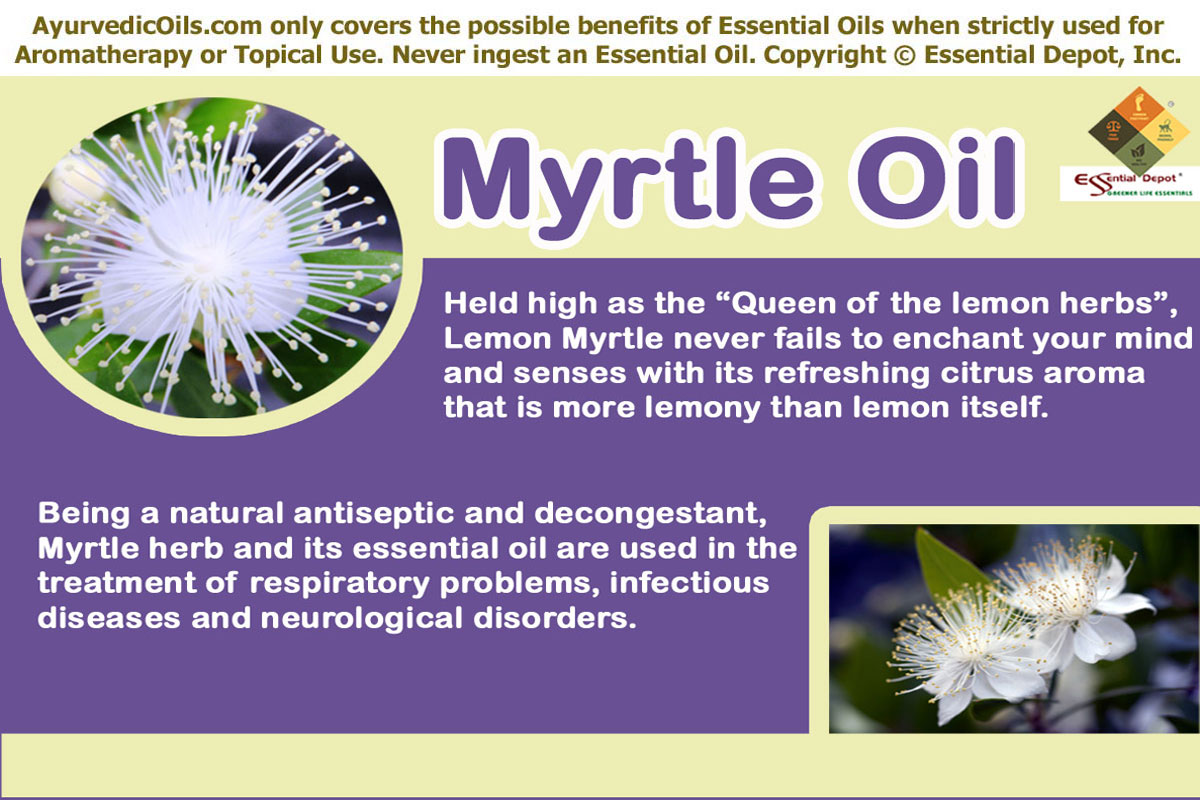
Myrtle-bannerAcclaimed as the “Queen of the lemon herbs”, Lemon Myrtle often called as just Myrtle seldom fails to enchant your mind and senses with its refreshing citrus aroma that is more lemony than lemon itself. This is because lemon has only 3-10% citral content while Lemon Myrtle contains about 90-98% citral, contributing to its unique, uplifting lemony fragrance.

Scientifically known as Backhousia citriodora, the essential oil is extracted from the aromatic leaves and twigs of this plant. Celebrated as a natural antiseptic and decongestant, Myrtle herb and its essential oil are used in the treatment of respiratory problems, infectious diseases and neurological disorders in Ayurveda.

Purchase Myrtle Oil – Retail – 4 oz – CLICK HERE

Purchase Myrtle Oil – Wholesale – CLICK HERE

Historical importance of Myrtle:

Native to Australia, Lemon myrtle is one among the few favorite Australian essential oils and it is said that the Indigenous Australians used Lemon myrtle as a remedial and culinary herb. The ancient Egyptians used the leaves of this plant to treat fever and other infections. Myrtle has been mentioned in the Greek mythology as a symbol of love and divine generosity. It was considered sacred to the Greek Goddesses Demeter and Aphrodite.

Myrtle is also said to have been mentioned in the Bible directly for about six times. In Isaiah 41:19 it is said “I will plant in the wilderness the cedar, the shittah tree, and the myrtle, and the oil tree; I will set in the desert the fir tree, and the pine, and the box tree together.” Greek physician Dioscorides recommended Myrtle oil for his patients to treat bladder and lung infections. This herb has also been in use in many traditions for treating respiratory tract ailments and skin disorders.

Therapeutic properties and chemical constituents of Myrtle essential oil:

Lemon myrtle essential oil has analgesic, antiseptic, anticonvulsant, antimicrobial, expectorant, tonic, antifungal, decongestant, sedative, anti-neuralgic, astringent and anti-rheumatic properties. The major chemical components are terpenoid aldehydes like citral, geranial and neral along with the trace constituents linalool, methyl-heptenone, d-isopulegol, myrcene, cyclocitral and citronellal.

Ayurvedic health benefits of Myrtle essential oil:

Ayurveda is a holistic healing principle that trusts on nature and natural remedies for treating human illnesses. This ancient philosophy states that human beings are part of nature and their illness and wellness depend upon their body’s balance with nature. Sickness according to the Ayurvedic texts is a signal indicating that the human body is out of balance with nature.

Ayurvedic beliefs consider disease as an opportunity to repair, revamp and restore the body’s complete health back into balance. Every individual is unique with a specific set of energy elements that make up their individual constitution.

These vital energies are known as doshas, namely pitta, vata and kapha doshas. The predominance of any one of these doshas determines the attributes and behavior of an individual.

Ayurvedic remedies are based upon dosha predominance and Ayurvedic treatments vary from individual to individual even for the same illness. It prescribes holistic remedies in the form of herbs, essential oils, healthy and nutritious diet, yoga, simple physical exercises, meditation along with an Ayurvedic routine for disease prevention and attaining longevity.

Myrtle essential oil is known to pacify kapha and vata doshas and increase pitta.

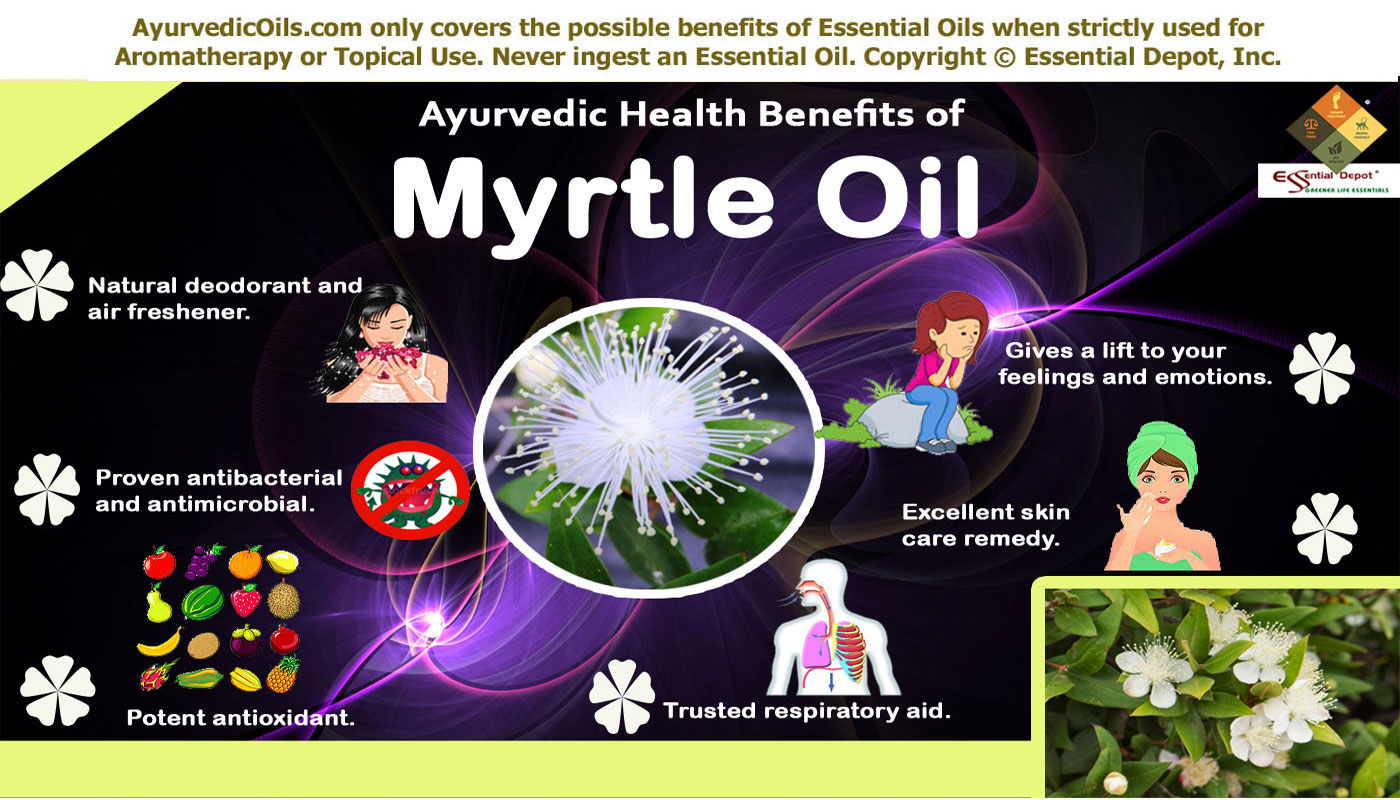
The Ayurvedic health benefits of Lemon myrtle essential oil are:

Myrtle-broucher1. Proven antibacterial and antimicrobial:

Lemon myrtle essential oil is regarded as a remarkable antimicrobial, antifungal and antibacterial agent with its clean, refreshing and pure citrus aroma. Certain studies have proved that Lemon myrtle oil possess significant antimicrobial power against harmful organisms like Staphylococcus aureus, Candida albicans, Escherichia coli, Pseudomonas aeruginosa, Aspergillus niger and Klebsiella pneumoniae.

Add 2 drops of this oil along with olive oil to treat infections and diseases due to bacteria, fungi and other micro-organisms. You can apply this blend topically on the affected parts in case of athlete’s foot, ringworm, wounds and other skin problems. This oil heals and protects the wound from being septic as it fights against Staphylococcus bacteria that is responsible for making wounds septic.

1to 2 drops of Lemon myrtle oil added to a cup of warm water can serve as an excellent gargle for fresh breath and for helping with raw throats. Using 2 drops of this oil in your diffuser or in bath can give you a long-lasting feeling of freshness.

2. Trusted respiratory aid:

The decongestant and expectorant properties of Lemon myrtle oil acts effectively in treating chest congestion, flu, cold, bronchitis, asthma and sinus infections. Adding 3 drops of Lemon myrtle oil in steam inhalation can assist in alleviating headache, loosening mucus and phlegm deposits in the lungs and respiratory passages. The therapeutic molecules in this oil aids in controlling the increase of infectious particles that worsen cold and cough.

Certain anecdotal evidences witness that the expected number of cold, cough and sinus problems are lower in households that regularly use Lemon myrtle oil in aroma lamps.

You can also add 2 drops of this oil to your vaporizing ointment and gently massage onto your chest, back, forehead and throat for relieving from congestion and easing difficulties in breathing. Respiratory problems in general spoil your sleep at night, adding 2 drops of Lemon myrtle oil in hot bath especially before bed will help in promoting peaceful sleep at night.

3. Potent antioxidant:

Lemon myrtle essential oil has shown antioxidant properties that help in fighting against free radicals responsible for the growth of malignant tumors and other cancerous growths. This oil has potent antioxidant and antimicrobial effects that help combat food borne human pathogens and free radicals.

4. Excellent skin care remedy:

Several studies conducted by the Charles Sturt University, Australia have proved Lemon myrtle as an effective germicidal and antibacterial oil than tea tree oil in treating skin ailments and other health conditions. This is mainly because of its antiseptic and skin-friendly properties.

A recent study on ‘Antimicrobial activity of Backhousia citriodora (lemon myrtle) methanolic extracts’ states “The low toxicity of the methanolic extract and its inhibitory bioactivity against a panel of bacteria validate Australian Aboriginal usage of B. citriodora as an antiseptic agent and confirms its medicinal potential.”

Lemon Myrtle essential oil is an excellent oil for treating acne and oily skin. Mix 2 drops of Lemon myrtle oil with your skin care lotion and apply it on your acne, cold sores, warts, wounds and insect bites for soothing relief. 2 to 3 drops of this oil blended with olive oil can be used topically on rashes, neuro-dermatitis, tinea, psoriasis, folliculitis, candidiasis and itching.

The essential oil extracted from Australian Lemon myrtle leaves have been proved effective in treating Molluscum contagiosum, a common viral disorder that affect the skin of children and sexually active adults as it is generally seen as a sexually transmitted disease.

A 2004 study on ‘Essential oil of Australian Lemon Myrtle (Backhousia citriodora) in the treatment of Molluscum contagiosum in childrenwhere 9 out of 16 children with Molluscum contagiosum treated with 10% of Lemon myrtle essential oil showed 90% reduction in the number of lesions at the end of 21 days of daily topical application.

5. Natural deodorant and air freshener:

The fresh, citrusy aroma of Lemon myrtle oil will never let you down for the entire day if you wear 1 drop of this oil on your wrist or add 2 drops in your refreshing bath in the morning. You can also add 1 drop to your hanky or add few drops to your deodorant to combat body odor.

The antimicrobial properties in this oil absorb microbes in the sweat that causes bad odor. The clean scent of Lemon myrtle oil makes its use inevitable as an air purifier as it kills germs and other micro organisms in the atmosphere, making your home a better place to live in.

6. Gives a lift to your feelings and emotions:

Lemon myrtle essential oil is also fêted for its calming effects that uplift and revivify depressive thoughts and feelings of fear. Gently massaging the soles of your feet with 2 drops of Lemon myrtle oil blended with coconut oil can help you in conceding complete relaxation, alleviate stress, suppress negative feelings, induce better sleep and augment your self-confidence. You can also add 3 to 4 drops of this oil to your diffuser or aroma lamps for giving your mind the natural boost that it requires.

Other health benefits:

Lemon myrtle leaves and its essential oil are also used in brewing tea, flavoring confectionaries, savories, syrups, candies, sauces, desserts, mayonnaises, shampoos, body lotions and mouth fresheners. It is also used as a protective shield in the food industry as Lemon myrtle oil is known to destroy food spoilage yeasts, bacteria and other pathogens.

Disclaimer:

Avoid using essential oils internally. Always remember to dilute essential oils in suitable carrier oils as pure essential oils are highly concentrated liquids and may cause skin irritation or other side effects if used undiluted. Do not use Lemon myrtle oil before going out in sun as it has high phototoxicity effect just like other citrus oils. Always consult your Ayurvedic practitioner before using right essential oils for your health condition and unique constitution.

Thought for the day:

When nature has work to be done, she creates a genius to do it.   –Ralph Waldo Emerson

Suggested Reading:

  1. Medicinal Plants in Australia: Volume 2: Gums, Resins, Tannin and Essential Oils by Cheryll Williams
  2. The Aromatherapy Encyclopedia: A Concise Guide to over 385 Plant Oils by Carol Schiller, David Schiller
  3. The Complete Book of Essential Oils and Aromatherapy: Over 600 Natural, Non-Toxic and Fragrant Recipes to Create Health – Beauty – a Safe Home Environment by Valerie Ann Worwood
  4. Only the Essentials: A Concise Aromatherapy Reference Guide by Michele A. Williams

Reference Links:

  1. Backhousia citriodora by Wikipedia
  2. Lemon Myrtle Oil (Backhousia Citriodora) by UncleHarrys.Com
  3. Antimicrobial activity of Backhousia citriodora (lemon myrtle) methanolic extracts by Griffith University, Queensland, Australia published in Pharmacognosy Communications
  4. Essential oil of Australian Lemon Myrtle (Backhousia citriodora) in the treatment of Molluscum contagiosum in children by Center for Biomedical Research, Boise, ID published in PubMed

Myrrh Gel Essential Oil


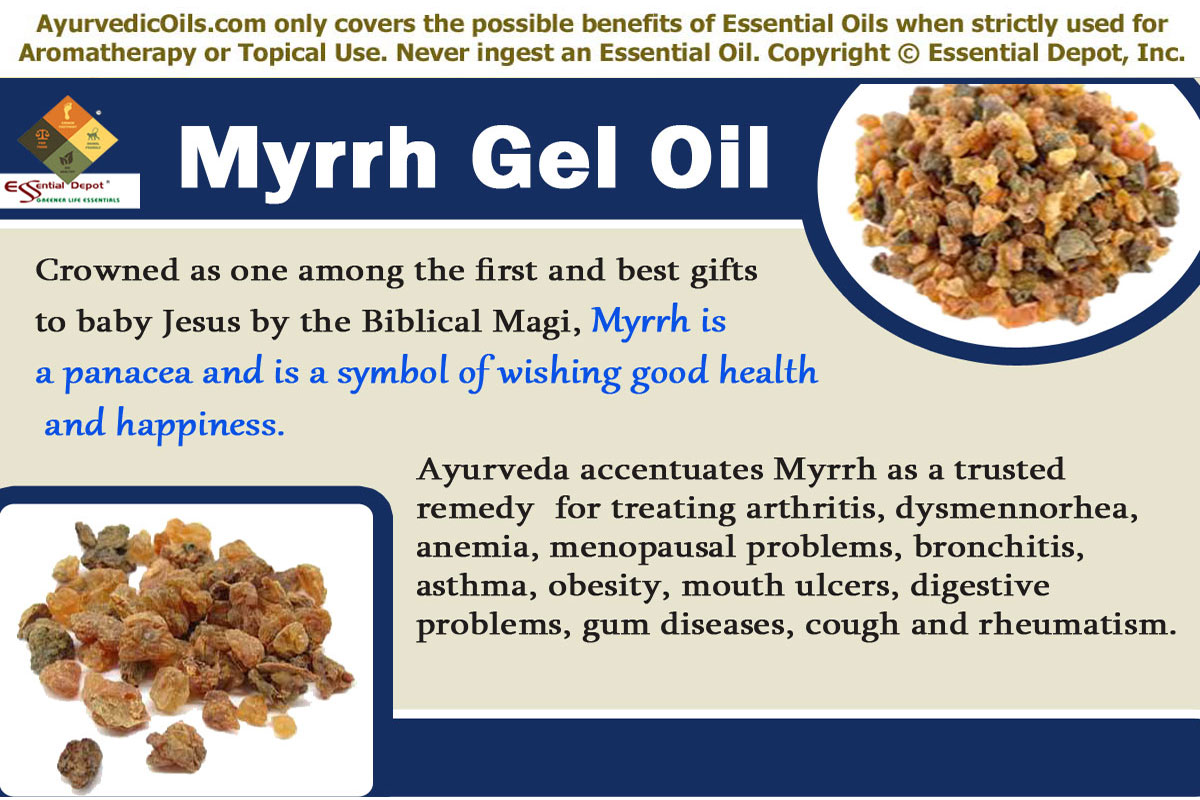
Mrrh-gel-bannerCrowned as one among the first and best gifts to baby Jesus by the Biblical Magi, Myrrh is asserted as a panacea for many diseases and is a symbol of wishing good health and happiness. This sacred herb has its name engraved in almost all the major religious practices of healing and has been in use throughout history as a promising medicine, renowned perfume and sanctified incense.

Myrrh essential oil is hydro distilled from the resin of Myrrh trees. Ayurveda accentuates Myrrh as a trusted remedy for treating arthritis, dysmennorhea, anemia, menopausal problems, bronchitis, asthma, obesity, mouth ulcers, digestive problems, gum diseases, cough and rheumatism. Myrrh resin has been a vital ingredient in many rasayana formulas in Ayurvedic treatment.

Historical importance of Myrrh:

Botanically known as Commiphora myrrha, Myrrh is indigenous to Somalia, Yemen, Ethiopia and Eritrea. The word ‘Myrrh’ is derived from the Aramaic word murr, meaning ‘was bitter’. Myrrh has many religious rituals stringed to its historical fame. The Islamic herbal medicine encyclopedia quotes “The Messenger of Allah stated, Fumigate your houses with al-shih, murr, and sa’tar”, where murr indicates Myrrh.

The book of Matthew states that gold, frankincense and myrrh were among the gifts to Jesus Christ. New Testament cites Myrrh as an incense presented at the time of Christian liturgical celebrations. The Eastern Orthodox Church makes use of Myrrh scented oil as a symbol of tradition during the sacraments of unction and chrismation.

Myrrh was held high in the Traditional Chinese Medicine as a special herb with ‘blood-moving’ powers to eliminate stagnant blood from the uterus and is also effective on spleen meridians, liver and heart. It is for this reason, Myrrh has been used in the treatment of uterine tumors, menopause, amenorrhea, rheumatic problems, dysmennorhea, arthritis and other circulatory problems.  It is also said that Myrrh has been used in the Chinese ma yao since 600 BC.

It is said that the Greek soldiers took Myrrh with them to the battlefield for cleansing and healing their wounds, as this herb has anti-inflammatory and antiseptic properties. It was used by the ancient Egyptians for treating hay fever, herpes and also in fumigations and embalming.

This herb is used in folklore medicine in making rheumatic plasters and for treating muscular pains. Tibetans trust the magical powers of Myrrh to assuage stress and certain other nervous disorders.

Myrrh is a popular ingredient in many liniments, tooth powders, gargles, toothpastes and mouthwashes especially for its antiseptic and analgesic properties that aid in treating many oral problems, wounds and skin ailments.  It is also used in making tinctures for healing wounds in the Veterinary practice. Assyrians and Babylonians burned Myrrh during religious ceremonies.

Therapeutic properties and chemical constituents of Myrrh essential oil:

The remedial values of Myrrh gel essential oil are analgesic, anti-inflammatory, emmenagogue, antiseptic, antimicrobial, carminative, stimulant, tonic, stomachic, astringent, antifungal, circulatory, diaphoretic, antispasmodic, anti-catarrhal, immune booster and expectorant. The chemical components contributing to these properties are eugenol, triterpenoids, polysaccharides, a-pinene, limonene, cresol, triterpene acids, cadinene, cuminaldehyde, sesquiterpenes and acetic acid.

Ayurvedic health benefits of Myrrh gel essential oil:

Myrrh is a part of many Ayurvedic medications, especially for its positive effects on the nervous system and the circulatory system. Everything in Ayurveda has a strong reason behind it and that is the focus on treating the root cause of an illness and preventing it in the future also.

Ayurvedic practices do not treat human beings and their illnesses as one among the ten instead it believes that every individual is unique by birth and each and every one of their health condition needs to be treated in a unique manner.

Ayurvedic principles trust that every one of us on earth is built up of three vital energies known as doshas. They are kapha, pitta and vata doshas. The wisdom of Ayurvedic healing lies in its holistic and inimitable approach towards humanity by identifying their attributes, personal traits and health mechanism based on their predominant dosha.

Generally vata predominant people are lean, tall, creative and have a dark complexion and its imbalance causes constipation, stress, sleeplessness, anxiety and loss of sexual interest. People with the predominance of pitta dosha have a fair complexion, sharp decision making skills, short temper and are perfectionists.

Pitta imbalance leads to loss of temper and digestive disorders like heartburn and ulcers. Kapha predominant people are kind at heart, affectionate and obese with an average complexion. Imbalance of kapha energy will lead to overweight, sluggishness and poor process of digestion.

Ayurvedic remedies are based on your individual constitution and center natural medications to treat the imbalance of doshas. Myrrh essential oil is known to pacify vata and kapha energies and increase pitta dosha.

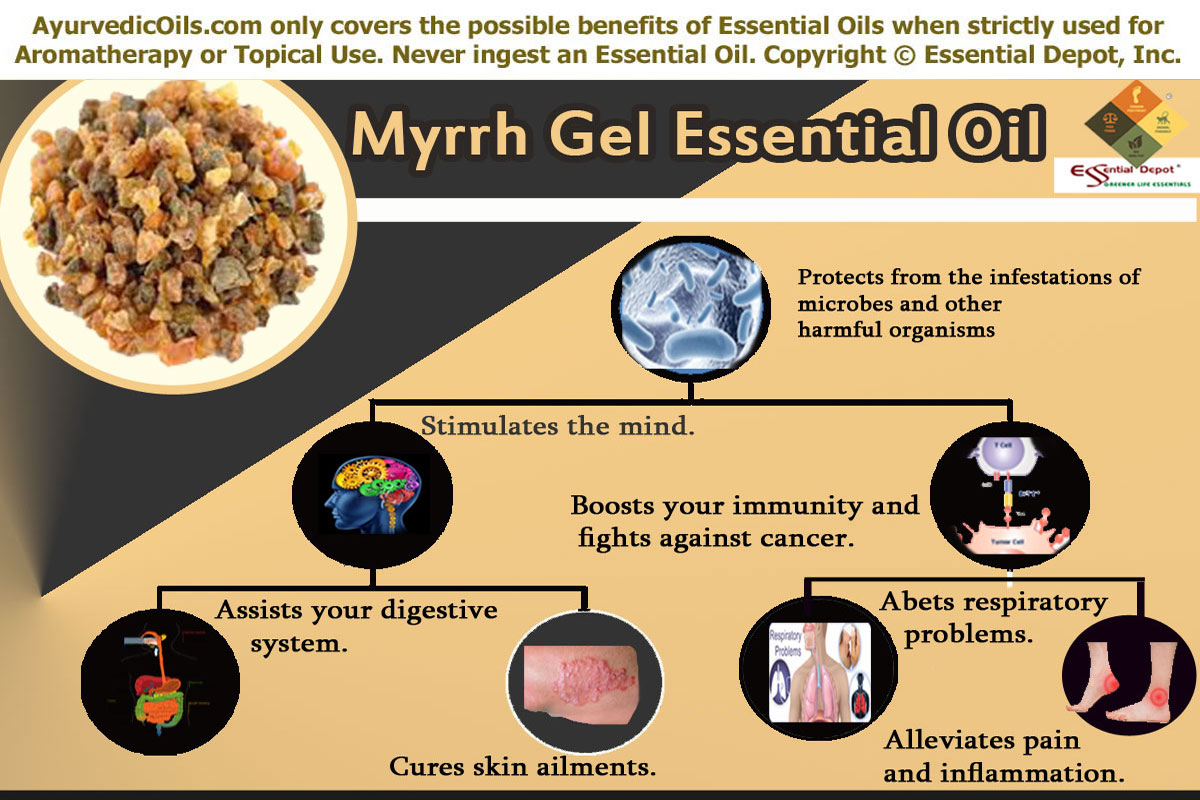
It’s time to have a look at the Ayurvedic health benefits of Myrrh gel essential oil.

Myrrh-gel-broucher1. Protects from the infestations of microbes and other harmful organisms:

Myrrh essential oil is known for its anti-fungal, antiviral and antimicrobial properties. It assists in killing bacteria, fungi and certain other detrimental microbes by making the body resistant to such infections.

Myrrh oil has natural breath freshening properties that aid in treating bad breath known as halitosis. Add 2 drops of Myrrh oil in warm water and use it as a gargle for treating oral problems like toothaches, pyorrhea, abscesses, mouth ulcers, gingivitis and gum problems. This blend also helps in fighting bacteria causing cavities.

Applying 2 drops of Myrrh oil blended along with coconut oil on wounds, cuts, athletes foot, and other skin infections will aid in preventing the wound from getting septic as Myrrh oil fights Staphylococcus aureus, the bacteria responsible for wounds becoming septic. This oil is also used in treating cough, measles, pox, cold, fever, diarrhea, mumps, food poisoning and other health conditions caused due to microbial infections.

2. Boosts your immunity and fights against cancer:

A weak immune system is the underlying cause for the body becoming vulnerable to diseases and infections. Myrrh essential oil reinforces the immune system and augments the body’s natural disease resistant power by enhancing the body’s nutrient absorption capacity.

This way it protects the body from pathogens in case of airborne or waterborne diseases like diarrhea, cold, cough, dysentery, typhoid, bronchitis, vomiting and few other digestive problems. Add 3 to 4 drops of Myrrh oil with jojoba oil and massage gently on your body. This helps in transmitting the therapeutic molecules of Myrrh oil by penetrating deeply into the skin and to your blood stream.

Myrrh has been proved effective in fighting against the free radicals and aid in preventing cancer. A 2001 study by the Rutgers University in NJ found that Myrrh essential oil has certain compounds that assist in killing cancer cells and showing promising effect for treatment and prevention of prostate and breast cancer.

Elemene has been identified as the unique component of Myrrh essential oil and has been proven to show improved effect on treatment of cancerous brain tumors.  You can add 2 drops to your diffuser for regaining confidence and energy. Gently massage your affected parts with 5 drops of Myrrh oil blended with coconut oil for combating the growth of free radicals worsening the effects of cancer.

3. Cures skin ailments:

Myrrh essential oil has been used as a trusted natural remedy for skin problems since the Biblical times. This is mainly because of the antiseptic, analgesic, vulnerary and astringent properties of this oil.  A 2010 study by King Saud University, Saudi Arabia traced that Myrrh was particularly potential to increase the count of white blood cells in laboratory rats treated for gastric ulcers and skin injuries with Myrrh.

Blending 2 drops of Myrrh oil with coconut oil and applying it on wounds, cuts, boils, athlete’s foot, bed sores, chapped skin, ringworm, eczema, skin ulcers, hemorrhoids, weeping wounds and itches can help heal such skin problems quickly and protect them from infections also.

Myrrh essential oil has been in use as a rejuvenating facial aid for more than hundreds of years mainly due to its ability to invigorate dull skin, revivify mature complexions, reduce wrinkles and leave it glowing from within. Mix 2 drops of Myrrh oil with jojoba oil and rub it on your face soothingly, leave it for 5 minutes and then wash your face with a mild cleanser for nourishing your skin and help it look supple and younger.

4. Abet respiratory problems:

Myrrh essential oil has expectorant and anti-catarrhal properties that help in treating respiratory problems like cold, asthma, sinus infections, cough, sore throat, congestion, bronchitis and breathing difficulties.

Add 2 drops of Myrrh oil to steaming water and inhale the aroma to get immediate relief from chest congestion and to support the expulsion of phlegm from respiratory tracts and lungs. You can also add 2 drops of this oil to hot bath or to your cold rub and gently massage it on the chest, back and throat for instant aid.

5. Assists your digestive system:

Myrrh oil is carminative and stomachic in nature, aiding in relieving gases and promoting the process of digestion. It helps in restoring the appetite, treating indigestion, nausea, flatulence, stomach pain and constipation by stimulating the flow of saliva, bile and other digestive juices. You can either use 2 to 3 drops of Myrrh oil in steam inhalation or diffuser for calming the digestive system. Massaging your tummy and abdomen with 2 drops of Myrrh oil blended with sesame oil can help in easing sluggish digestion.

6. Stimulates the mind:

Myrrh essential oil is said to grant mental clarity, alleviate stress, and treat depression, tension, fatigue and anxiety. It is used in Ayurvedic healing for enhancing the intellect and cleansing the blood. Inhaling the sacred aroma of Myrrh oil during meditation can help in opening the mind, increasing concentration and treating poor memory. Massaging your body with 4 drops of Myrrh oil along with sweet almond oil helps in uplifting the mind, relieving anxiety and nervous tension.

Myrrh essential oil has a calming and pacifying fragrance that helps open the heart chakra that is associated with love, forgiveness and acceptance. 2 drops of Myrrh oil added to burner, vaporizer or diffuser assists in discharging fear, hurting experiences and depressive feelings that stop you from going ahead. Myrrh oil strengthens your spiritual acquaintance, trust and self-confidence.

7. Alleviates pain and inflammation:

Myrrh has been a promising remedy in Ayurveda and other traditional healing methodologies for treating pain, gout, arthritis, osteoarthritis and rheumatoid arthritis. The essential oil of Myrrh has diaphoretic properties that increase sweating and helps expel excess water, toxic substances and extra salts from the body.

The anti-inflammatory properties of this oil supports in reducing inflammation. By eliminating the toxic substance and lessening inflammation, Myrrh oil is effective in treating arthritis and rheumatic pain.

Blend 2 drops of Myrrh oil, 2 drops of Frankincense oil along with coconut oil and massage soothingly on the affected parts for relieving pain and inflammation. You can also add 3 drops of Myrrh oil to hot compress or in hot bath for similar effects.

Other health benefits:

Myrrh essential oil is also helpful in treating menstrual cramps, delayed menstruation, uterine problems, hair fall problems and acts as a tonic for the entire system by stimulating the digestive system, nervous system and the circulatory system.

Disclaimer: Never take essential oils internally. Essential oils are highly concentrated liquids so always dilute them in suitable carrier oils before using it for topical application. This article is only for your information and is not meant to replace any prescribed medication or professional advice. Avoid using Myrrh oil if you are a pregnant or nursing woman. Keep it out of reach of children. Consult your Ayurvedic practitioner before using the appropriate essential oil for your unique individual constitution and health condition.

Thought for the day:

Adopt the pace of nature: her secret is patience.              – Ralph Waldo Emerson

Suggested Reading:

  1. Frankincense & Myrrh: Through the Ages, and a complete guide to their use in herbalism and aromatherapy today by Martin Watt, Wanda Sellar
  2. The Ayurveda Encyclopedia: Natural Secrets to Healing, Prevention, & Longevity by Swami Sadashiva Tirtha
  3. The Illustrated Encyclopedia of Essential Oils: The Complete Guide to the Use of Oils in Aromatherapy & Herbalism by Julia Lawless
  4. Sacred Woman: A Guide to Healing the Feminine Body, Mind, and Spirit
    by Queen Afua
  5. Herbal Remedies Bible: Life Saving And Healing Herbs For All Ailments: Easy Herbal Remedies For Over 100 Ailments by Dane Foster

Reference Links:

  1. Myrrh by Wikipedia
  2. Myrrh Essential Oil Can Help Fight Cancer by Ezinearticles.com
  3. A Wise Man’s Cure: Frankincense and Myrrh by Jennie Cohen published in History in the Headlines
  4. Medicinal Qualities of Myrrh by Rebecca Joy Knottnerus published in Dr. Christopher’s Herbal Legacy

Nagarmotha Essential Oil


How can the ‘world’s worst weed’ embrace innumerable health benefits to mankind!!? That’s the magnitude and immaculate love of ‘Mother Nature’. Besides being regarded as the most invasive weed in the world, Nagarmotha has its name etched in the Ayurvedic encyclopedia, Charaka Samhita (ca. 100 CE) as an excellent natural remedy for treating digestive disorders, fevers, dysmennorhea and certain other health conditions. This herb has also been an incredible part of TCM (Traditional Chinese Medicine) where it is highly regarded as the primary qi (prana or life force) regulating herbal medicine.

The essential oil steam distilled from the rhizomes of this plant has been documented for treating numerous health conditions ranging from Hepatitis B to stress related degenerative diseases. Nagarmotha is the Hindi name of the plant and it is also known as ‘Nut Grass and Cypriol in English, Musta or Mustak in Sanskrit, Shacao in Chinese and Motha in Gujarati.

Purchase Nagarmotha Oil – Wholesale – CLICK HERE

Historical importance Nagarmotha: Indigenous to India, it has been said that Nagarmotha essential oil is extracted from the roots of Cyperus scariosus or Cyperus rotundus plant. Nagarmotha is given 8th rank among 250 potential anti-fertility plants in China. It is also said that this herb has been recorded in the ancient Chinese medicinal book around 500 A.D.

Popularly known as a qi-in-blood medicine in China, Nagarmotha is trusted to penetrate the blood stream and treat irregular menstruation, dysmennorhea or menstrual pain, overdue periods and depression in women mainly during menstruation. Numerous Islamic and Western herbalists like Avicenna, Serapion, Dioscorides, Rhazes, Galen, Charles Alston and Paulus Aegineta have denoted Nagarmotha as deobstruent, stomachic and emmenagogue.

The decoction extracted from the tuber of this plant is used in India for washing hair mainly for its hair strengthening and scalp rejuvenating properties. The ethnic communities of Mirzapur in Uttar Pradesh, India use the rhizome of this herb as an antidote to venomous snake bites. It was also used as a home remedy in treating gastroenteritis and fever.

Nagarmotha essential oil is a part of the ancient art of Vashikarana, where it is trusted that the person who applies this oil on their forehead is certain to enjoy the privilege of a long-lasting string of thriving love affairs. This oil is famous even today in many parts of India as a renowned perfume for scenting saris and other traditional outfits. It has been in use in the production of perfumes, attars, incense sticks, soaps, compounds, hair treatments and in flavoring tobacco products.

Chemical constituents and therapeutic properties: Nagarmotha essential oil contains about 27 chemical constituents that make it extremely effective in treating numerous health disorders. The major chemical constituents are cyperine, pinene, cyperol, cyperone and isocyperol and sesquiterpenes like patchouleneone, rotundene, cyperotundene, kobusone, a-cyperone, isokobusone, sugeonol and b-selinene. The remedial properties of this oil are analgesic, anti-inflammatory, carminative, antipyretic, diuretic, astringent, decongestant, anthelmintic, emmenagogue, antimicrobial, stimulant, tonic, stomachic, hypotensive, diaphoretic and cordial.

Ayurvedic health benefits of Nagarmotha essential oil: The essential oil of Nagarmotha is illustrated in Ayurveda as a natural enhancer of the biological fire and is an effective digestive aid.  This ancient natural healing system trusts that every human being is unique and their illnesses should also be treated in a unique manner according to their individual constitution. According to Ayurveda, every individual is made up of three energy elements known as vata, pitta and kapha. Predominance of any one of these doshas determines the personality, traits and characteristic features of a person and dosha imbalances cause sickness.

Ayurvedic therapies mainly focus on treating the pathogenesis or the root cause of the illness rather than just treating the disease for the time being like the contemporary medical practices. The root cause for many illnesses including autoimmune disorders according to Ayurvedic texts is the invasion or the deposits of the toxic substances in the body known as ‘ama’. Ayurveda illustrates Nagarmotha as a detoxifying herb and as the best ama-pachaka (eliminator of endo-toxins).

Nagarmotha essential oil is known to pacify pitta and kapha energies. Let’s take a look at the prominent Ayurvedic health benefits of Nagarmotha oil in accordance to their usage.

1. As an Ayurvedic massage oil: Abhyanga or the art of Ayurvedic massaging grants numerous benefits to the mind, body and the spirit. Massaging is known as the best technique to transform the energies of the essential oils extracted from the herbs to the human body and soul. This is because the therapeutic properties of the oil deeply penetrate through the skin and enter the bloodstream. Maneuvering the affected parts of the body with 3 drops of Nagarmotha essential oil blended with coconut oil assist in treating numerous health disorders.

As an effective carminative and stomachic oil, Nagarmotha when massaged on to the abdomen aids in promoting the process of digestion by augmenting digestive fire, kills intestinal worms, binds stool, controls nausea, treats dysurea, irritation of the bowel and soothes upset stomach. The diuretic properties of this oil also help in eliminating the toxic substances from the body through sweat and urine, making it useful in reducing inflammation as well. Gently massaging the painful areas can help in treating dysmennorhea and rheumatoid arthritis.

The decoction of the rhizomes has been in use for hundreds of years as a natural hair wash. Massaging your scalp with this nourishing blend aids in opening the small capillaries on the scalp, work efficaciously on the sebaceous glands and fortify the hair from the roots by stimulating its strength naturally.

2. In vaporizers and burners: The spicy, earthy, woody, lingering, smoky and camphoraceous aroma of Nagarmotha oil acts as a tonic for the nervous system and influences the regular functioning of the body. Adding 2 drops of this oil in steaming water and inhaling this medicated steam helps in reducing respiratory congestion, cough, bronco-pulmonary congestion, bronchitis, loosening the mucus and phlegm deposits and comforts the digestive system.

The magical aroma of this oil aids in alleviating stress, relieve tension, tone the system and regain your lost energy especially after a long day in the sun. Inhaling the aroma of this oil by adding 2 drops to your burners or diffusers will assist in building up the nervous system and treating digestive disorders like stomach upset, vomiting, diarrhea and loss of appetite.

3. In baths and compress: Using 4 drops of Nagarmotha essential oil in warm bathing water helps in calming down a nervous stomach, check weight gain, discard toxins from the body, relieves menstrual pain and discomfort, reduces rheumatic pain and treats inflammation and anorexia.

A 2007 research on ‘Administration of Cyperus rotundus tubers extract prevents weight gain in obese Zucker rats’ state “Cyperus rotundus tubers extract prove to be a new herbal supplement for controlling body weight preferentially in beta3-AR sensitive species”. This oil can also be used in hot or cold compresses for treating stomach pain, fibromyalgia, muscular aches, kidney stones, abdominal pain, fever and colitis.

4. In cream and lotions: Nagarmotha essential has natural tonifying properties that make its use inevitable in many skin care formulations. 2 to 3 drops of this oil added to your mild skin care cream or lotion can help in curtailing the growth of harmful microbes that affect the skin health. Gently applying this blend on the inflamed parts will help in reducing inflammation and augment blood circulation. Add 4 to 5 drops of Nagarmotha essential oil to unscented cream to lessen skin irritability and other discomforts due to heat.

The research on ‘In Vitro Antioxidant activity and Total Polyphenolic Content of Cyperus rotundus Rhizomes’ by the Department of Siddha Medicine, Tamil University, India have proved that the rhizome extracts of “Cyperus rotundus show free radical scavenging, reducing power and metal chelating activity” with its polyphenolic content and other phytochemicals constituents contributing to its antioxidant properties, which aid in preventing age related oxidative stress associated degenerative diseases.

A 2006 study on ‘Natural composition for curing hepatitis-B, methods for making the same and pharmaceutical formulations thereof’ have proved that a natural antiviral composition with extracts of Cyperus rotundus or Cyperus scariosus and pharmaceutically acceptable carrier aids in treating disorders related to chronic and acute hepatitis B and certain other viral diseases of the liver. This is mainly due to the herb’s positive effect on the liver, easing its detoxification and healing.

Other benefits: Nagarmotha essential oil is said to add a distinguishing and appealing aroma to masculine perfumes. Tom For Men is known as the first perfume to use this herbal formula, followed by other perfumes like Eau d’Issey pour Homme, Xeryus and numerous other popular brands in the market for men. It is also used in making soaps, potpourri, air fresheners, scented candles and certain other aromatherapy products.

Disclaimer: Do not take essential oils internally. Always remember to dilute essential oils in suitable carrier oils before using it topically as pure and organic essential oils are highly concentrated liquids. Avoid using Nagarmotha essential oil on children, epileptics, pregnant or nursing women. Consult your Ayurvedic practitioner before using any essential oil to check whether it would suit your present health condition and unique individual constitution.

Thought for the day:

I go to nature to be soothed and healed, and to have my senses put in order.              -John Burroughs

Suggested Reading:

  1. The Natural Remedy Bible by John Lust, Michael Tierra
  2. The Encyclopedia of Essential Oils: The Complete Guide to the Use of Aromatic Oils In Aromatherapy, Herbalism, Health, and Well Being by Julia Lawless
  3. Greco-Arab and Islamic Herbal Medicine: Traditional System, Ethics, Safety, Efficacy, and Regulatory Issues by Bashar Saad, Omar Said

Reference Links:

  1. Nagarmotha: A detoxifying herb by Dr. R. Vatsyayan, Ayurvedacharya published in The Tribune
  2. Nagarmotha by Planet Ayurveda
  3. Cyperus scariosus or Cyperus rotundus, an old famous Sedge from ancient Egypt and China published in MDidea
  4. In Vitro Antioxidant activity and Total Polyphenolic Content of Cyperus rotundus Rhizomes by Nagulendran, Velavan, Hazeena Begum and Mahesh from the Department of Siddha Medicine, Tamil University, India published in e-Journals.net

Neroli Essential Oil


Neroli, the less known secret behind the unsurpassed creativity and the magnanimous works of the legendary archetype of the Renaissance Man, Leonardo Da Vinci who loved to be in the midst of perfumes and aromatic oils always.

Neroli-bannerNeroli essential oil was his all-time favorite and he used it to instigate his intellect and contemplation while creating celebrated piece of artworks. Neroli oil also known as ‘Orange Blossoms’ is the prized ingredient of the classic Eau-de-Cologne since the 17th century. The essential oil is extracted from the flowers of the Bitter Orange tree, Citrus aurantium through steam distillation method.

Neroli has been used in Ayurveda for thousands of years and it is said that the name ‘Neroli’ is extracted from the Sanskrit word ‘Nagaranj’. Bryan and Light Miller in their book ‘Ayurveda and Aromatherapy’ quote Neroli as “one of the most intense-smelling oils.

It gives confidence and strength to the mind, has relaxing properties which help with sleeplessness, and can be an ally during times of stress.”  Ayurvedic uses of Neroli are for treating aging skin, anxiety, insomnia, headache, emotional instability, PMS and for certain other health disorders.

Purchase Neroli Essential Oil – 5% Dilution in Pure Jojoba – CLICK HERE

Historical importance of Neroli:

History lists a number of myths about the origin of its name. There are line of differences between the east and west on this commendation. Indigenous to the Far East, few say that the name ‘Neroli’ is derived from Anne-Marie of Nerola, the Italian princess during the 16th century.

She used Neroli perfume everyday and set an example for other noble women to follow the same tradition. Certain other sources say that Neroli was named after Nero, the Roman Emperor while some say it was derived from the name of ‘The Duchess of Tremoille’, the 17th Duchess also known as ‘la Nerola’.

Neroli and its essential oil were highly regarded as a symbol of virginity and sexual purity. Neroli was worn by the bride to assert her virginity and it was also a part of the bride’s bouquet to signify happiness, good luck, fertility and prosperity to the newly-married couple. As an aphrodisiac, Neroli was also spread on the bed of the newly-wedded couples to enhance their intimacy and calm their nervous apprehension.

Known as the ‘queenly elixir’, the essential oil of Neroli was held high by the primeval Egyptians for its power to cure the mind, spirit and the body and for its blissful properties. Neroli was also used in bathing water to soothe the nerves, calm the mind, relax the muscles and instill positive feelings.

The Yogic tradition of India trusted Neroli for its relaxing, tranquilizing and sleep inducing properties. The Traditional Chinese Medicine use Neroli to organize chi (aura or the life force).

Chemical constituents and therapeutic properties of Neroli essential oil:

The remedial properties of Neroli oil are aphrodisiac, carminative, antidepressant, emollient, cicatrisant, disinfectant, antiseptic, deodorant, tonic, cytophylactic, anti-infectious, cordial, sedative, bactericidal, antispasmodic and digestive.

The chemical constituents that contribute to these therapeutic values are nerol, a-pinene, a-terpinene, farnesol, nerolidol, geraniol, b-pinene, neryl acetate, camphene, linalyl acetate, methyl anthranilate, indole and linalool.

Ayurvedic health benefits of Neroli essential oil:

Ayurvedic healing have a high regard for Neroli because of its cheering, encouraging, soothing, strengthening and invigorating properties that can benefit anyone who wears its exceptional fragrance.

Ayurveda being the oldest of all remedial systems in the world has been much-admired and accepted all over the universe for its immaculate wisdom and the sense of personal care and touch it renders without fail.

Ayurvedic philosophy believes that every human being is unique with specific physical, emotional, spiritual, mental and environmental attributes. Similarly the treatment for each one of them should also be unique based on their individual constitution, which is nothing but the combination of bio-energies or energy elements known as doshas.

The predominant Ayurvedic body types or doshas are vata, pitta and kapha. Food, lifestyle changes and numerous other factors have an impact on our health and it is for this reason Ayurveda suggests Ayurvedic routine, healthy and balanced diet, essential oils, herbs, physical exercises, meditation, yoga and Ayurvedic massage techniques based upon on your doshas and treat imbalances systematically.

Neroli oil aids in lessening increased vata and pitta and in increasing kapha deficit.

Let’s have a look at the Ayurvedic health benefits of Neroli essential oil.

neroli-broucher1. Excellent oil for female problems:

Neroli oil is said to “have a special affinity for the female immune system, and is part of all our female immune regulatory formulas” says Light Miller in her book ‘Ayurveda and Aromatherapy’. She also states that Neroli essential oil aids women in every stages of transition including menstruation, menopause, irritation, anxiety, depressive thoughts, negative feelings and heart health.

Neroli essential oil is known as women’s best pal throughout her life especially in every maturing year by assisting menopausal problems, fighting against wrinkles and supporting the generation of new skin cells. It acts as maturing woman’s best friend by combating wrinkles and improving the skin texture with aging and acts as a promising anti-aging agent.

Blending 2 drops of Neroli oil with coconut oil or jojoba oil can aid you as a great massage blend followed by a warm bath enriched with 3 to 4 drops of Neroli oil can relax your system, reduce pain, promote good sleep and lessen stress and depression especially during menstrual discomforts and menopausal symptoms.

You can also add 2 drops of this oil to your diffuser or wear it on your wrist to keep you calm throughout the day. Mixing 2 drops of Neroli oil in your mild skin care cream or lotion aids in combating the effects of aging on your skin.

2. Enormously skin-friendly:

Neroli is indeed a great oil for managing your skin problems effectively. It guards your skin from harmful bacterial infections causing acne and other skin problems with its antiseptic and disinfectant properties. Applying 2 drops of Neroli oil mixed with coconut oil can help in fighting against bacteria and other harmful organisms while protecting wounds and other skin conditions from infections and tetanus.

Neroli essential oil has cytophylactic effects that supports in maintaining the health of existing skin cells and promoting the formation of new cells. This aids in augmenting the elasticity of skin, making it supple, reducing wrinkles and treating varicose veins. Being a cicatrisant, Neroli oil helps in fading away scars, stretch marks and other marks let by acne, pox, accidents and wounds.

Use 2 drops of Neroli oil in vaporizer aids you in clearing the clogged pores and purify the skin surface. Adding 2 to 3 drops of this oil to your regular skin care cream or lotion aids in treating wrinkles, scars, control excess oil in the skin, retain its natural moisture, clear blemishes, curtail enlarged pores and leave it glow naturally just like the ‘Orange blossoms’.

3. Boosts your mental capabilities:

Neroli has been behind the glorious works of the great icon of art, Leonardo Da Vinci. He trusted that the enlivening fragrance of this oil augmented his concentration, granted calmness to the mind and paved way for deepening his creative powers.

It is said that the refreshing and intense aroma of this oil improves your memory, enhance your mental power, helps in self-purification, filters negative feelings and support you in bringing out your fullest potential in studies and at work. Charge your mind by adding 2 drops of Neroli oil in your room freshener and start exploring your excellence right away!

4. Calms your mind:

The enriching, energizing, encouraging and stimulating smell of Neroli essential oil drives away depression, inculcates positive thoughts, boosts your confidence and energy level and has a direct impact on your mood and behavioral patterns. One of the studies by the Brown University on the physiological effects of aromatherapy oils like Neroli proved that such aroma persuade temper and actions.

A study by the Stem Cell Medical Research Center and Department of Applied Cosmetology of Hung Kuang University, Taiwan on ‘Inhalation of Neroli essential oil and its anxiolytic effects in animals’ proved that the inhalation of essential oils like Neroli and Lavender can activate the limbic system of the brain granting the corresponding beneficial effects. This study also concluded that inhaling Neroli oil exhibited effectiveness and improvements in the potential treatment of anxiety.

Using Neroli for depression and distress is a traditional method for staying calm and collected. You can involve in self-massaging with 4 drops of Neroli added to one cup of almond oil or add it to warm bath or to your diffuser for recovering your mind from hopelessness, uplifting your mood and enjoying the feeling of warmth and relief naturally.

5. Adds spice to your love life:

Orange blossoms and its essential oil are celebrated for years together for its natural aphrodisiac and arousal properties. The profound and long-lasting aroma of Neroli acts as a tonic for the nervous system, reproductive system and the cardiac system.

This aids in paving way for intimacy and a quixotic time together for the couples even in their late 30s or 40s when loss of sexual interest can ruin one’s sex life. Using 2 drops of Neroli oil in the room freshener or in the bath tub or in massaging with jojoba oil aids in augmenting your sexual interest, improve libido in both men and women, treat erectile dysfunctions, impotence and  frigidity.

6. Assists digestive and sleeping disorders:

Neroli essential oil is claimed as one of the best massaging essential oils for treating numerous health disorders like insomnia and depression. Massaging with 3 drops of Neroli oil and 2 drops of Lavender oil blended with wheat germ oil can assist in relieving anxiety and tension, generate a soothing effect on the nervous system and enhance blood circulation. All these actions will help in promoting a peaceful sleep without any kind of mental disturbances.

Neroli oil has been used in the traditional and folklore medicine as a natural aid for gastrointestinal problems. It is still used in Chinese medicine in the treatment of anorexia and vomiting.

With its carminative and digestive properties, this oil assists in expelling unwanted gas in the intestine and stomach, increasing the appetite, promoting digestion, regulating the metabolic process and leaving you feel light and refreshed.

Other health benefits:

Neroli oil has been approved by the German Commission E for safe use. It is also used in treating cramps, spasmodic coughs, neuralgia, diarrhea, kidney and urinary tract infections, cold, headache and hysteria.

Neroli oil is also said to have anti-cancer effects with the presence of farnesol that has been proved effective in inhibiting the growth of tumor especially in lung cancer, causing death of the cancerous cells or stimulate apoptosis. This oil is also used as an insect repellant with the presence of components like geraniol and farnesol.

Disclaimer:

Never take essential oils internally. Essential oils are highly concentrated liquids and always use it after diluting in suitable carrier oils. This article is only for the purpose of information and is not meant to diagnose or replace any prescribed medication or professional advice. Consult your Ayurvedic practitioner before choosing the suitable essential oil for your unique individual constitution and health condition.

Thought for the day:

Flowers always make people better, happier, and more helpful; they are sunshine, food and medicine for the soul.    Luther Burbank

Suggested Reading:

  1. Ayurveda & Aromatherapy: The Earth Essential Guide to Ancient Wisdom and Modern Healing by Dr. Light Miller, Dr. Bryan Miller
  2. Clinical Aromatherapy: Essential Oils in Practice, Second Edition by Jane Buckle
  3. Citrus Essential Oils: Flavor and Fragrance from Wiley
  4. Mental Health, Naturally: The Family Guide to Holistic Care for a Healthy Mind and Body by Kathi J. Kemper

Reference Links:

  1. Neroli/Citrus aurantium var. amara in History, Myths and Legends of Aromatherapy Part 2 by Aromaticamedica
  2. Inhalation of Neroli essential oil and its anxiolytic effects in animals by the Stem Cell Medical Research Center and Department of Applied Cosmetology of Hung Kuang University, Taiwan
  3. Neroli by Wikipedia
  4. Molecular mechanisms involved in farnesol-induced apoptosis published in PubMed

Niaouli Essential Oil


Niaouli-bannerYet another natural feather in the Australian cap along with Tea Tree and Cajeput, Niaouli belongs to the same species Melaleuca and is native to Australia. Along with these 3 trees, Melaleuca contains more than 200 species and these are the most popular ones used for extracting essential oils. Niaouli essential oil is extracted from the leaves and young twigs of this tree through steam distillation.

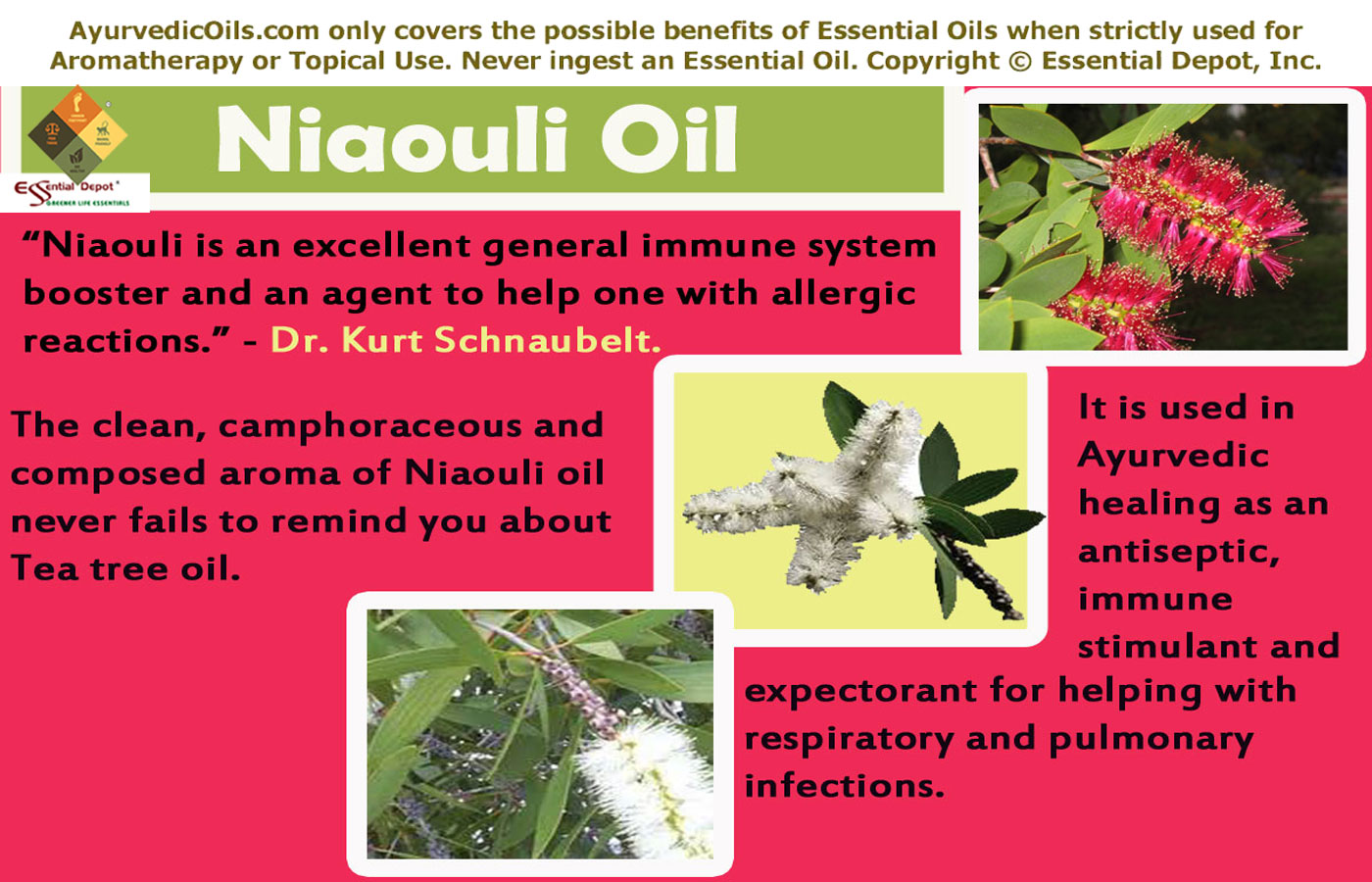
The clean, camphoraceous and composed aroma of Niaouli oil heals one in a number of ways and never fails to remind you about Tea tree oil. Niaouli essential oil is used in Ayurvedic healing as an antiseptic, immune stimulant and expectorant for helping with respiratory and pulmonary infections.

Purchase Niaouli Oil – Retail – CLICK HERE

Purchase Niaouli Oil – Wholesale – CLICK HERE

Historical importance of Niaouli essential oil:

Niaouli, scientifically known as Melaleuca quinquenervia (Melaleuca viridiflora) has been initially used by the Aborigines of Australia for rescuing Sir Francis and his crew from exhaustion and scurvy with the tea brewed from the leaves of Niaouli tree. It was used as a respiratory aid in the folklore medicine and the indigenous people used the fresh Niaouli leaves for wrapping the affected parts of their body.

Niaouli and its essential oil have been considered as a ‘cure-all’ in French Polynesia and Caledonia and have also been espoused as the national flower. The French use this oil in almost all the hospitals all over the country especially in the gynecological and obstetrics wards for its antimicrobial properties and this oil is also implemented into their pharmacopoeia. It has also been used as a water purifier in the French Pacific.

Niaouli has been used in the Middle East for preparing herbal tea to support healthy bowels. It was also used in the ancient period to keep away from malaria. Since the pre-historic period Niaouli has been a valuable additive to toothpastes, gargles, mouth sprays and cough drops. This oil is also used as a substitute for Cajeput and Eucalyptus oil in the treatment of neuralgia, cold, cough and rheumatism.

Therapeutic properties and chemical constituents of Niaouli essential oil: 1,8-cineole, alpha-terpineol, alpha-pinene, beta-pinene, limonene, a-phellandrene, nerolidol, linalool, piperitone and gamma terpineol. The therapeutic properties of this oil are analgesic, antiseptic, decongestant, bactericidal, cicatrisant, expectorant, balsamic, vermifuge, febrifuge, stimulant, insecticide, vulnerary and anti-rheumatic.

Ayurvedic health benefits of Niaouli essential oil:

Ayurveda meaning ‘science of life’ is the oldest medicinal systems in the world. The basis of Ayurvedic philosophy revolves around the fact that perfect health can be attained only by a well-built immune system. This is because strong immunity make the body resistant and help fight against harmful organisms and infections causing illnesses. Ayurvedic perception of good health is the outcome of synchronization between a person’s physical, mental and spiritual wellness.

Ayurveda treats every individual in a unique manner trusting that no two individuals have identical individual constitution. For this identification, Ayurvedic approach recognizes human beings based on their specific metabolic principles governing the body and mind and its intelligence. They are known as doshas (vata, pitta and kapha).

The predominance of any one of these doshas is the primary dosha of an individual and he is identified with that dosha as his unique body type. Imbalance of any one or all these doshas ends up in illnesses. Niaouli pacifies kapha and vata doshas and aggravates pitta dosha.

Man-made medicines or menacing treatments are not a part of this holistic medicinal practice as it trusts and relies on Mother Nature for its healing system. It centers on prevention of diseases with healthy diet, Ayurvedic routine, balanced life-style changes, herbs, yoga, essential oils, meditation and other simple physical exercises.

Let’s have a look at the Ayurvedic health benefits of Niaouli essential oil.

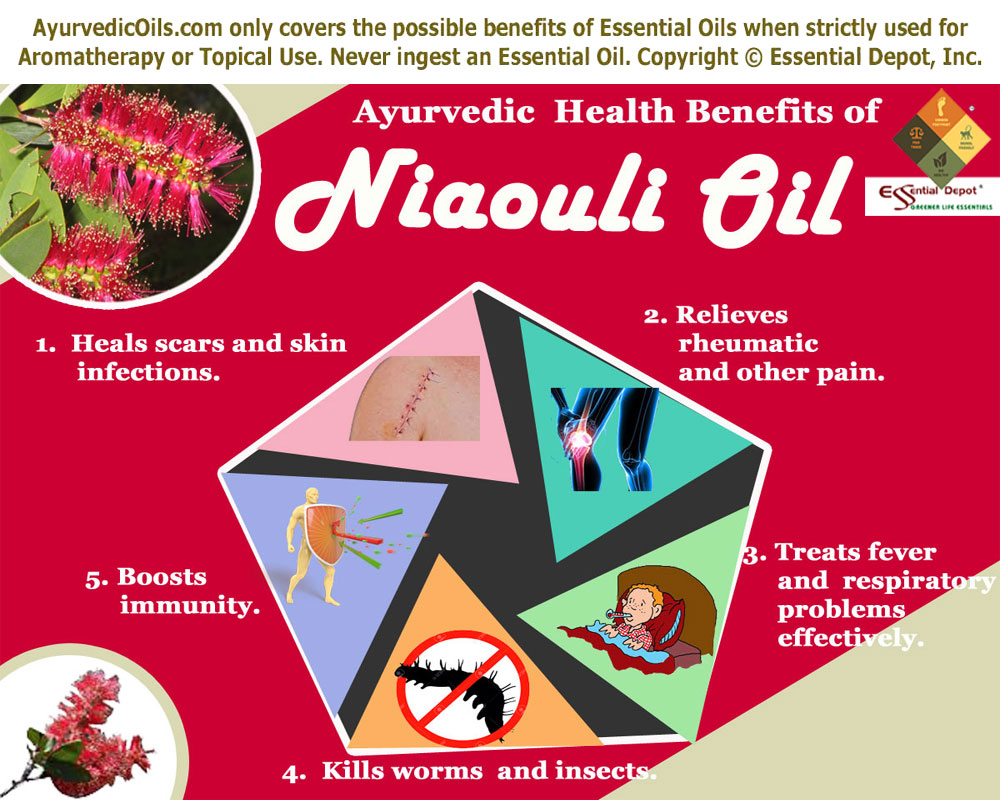
Naouli-oil-broucher1. Heals scars and skin infections:

Niaouli essential oil has excellent bactericide, disinfectant, antimicrobial and antiseptic properties that make it a wonder oil in treating skin infections, wounds and other similar disorders.

Donoyama and Ichiman study on the effectiveness of six essential oils like eucalyptus, thyme linalool, lavender, tea tree, niaouli and sage in treating Staphylococcus aureus bacteria was tested. This study revealed that among the six essential oils tested “niaouli oil was found to be the most effective, reducing colony count to zero at 3.125%”.

Add 1 drop of Niaouli oil in a cup of lukewarm water to make a natural cleanse for washing your wounds, skin ulcers, blemishes, cuts, acne, insect bites and burns. This cleansing solution aids in removing the harmful organisms like bacteria on your affected part of the skin and initiates its quicker healing process.

Mix 2 drops of Niaouli oil in coconut oil or your regular skin care cream or lotions and apply it gently on the infected area. The vulnerary and disinfectant properties of this oil help in healing wounds quickly, shielding your skin from microbial infections by activating platelet particles and leucocytes in the infected area and aiding in clearing your acne, marks and blemishes. With its antiseptic properties, Niaouli is also an effective oil in treating infections of the colon, uro-genital tract, kidneys, urethra, kidneys and intestines. Even today Niaouli is used as a safe vaginal douche in France.

Niaouli oil is used in an extensive range of cosmetic products in Australia. With its cicatrisant properties, Niaouli essential oil can be more forceful on your scars and marks than your expensive anti-marks and scar-removing creams. Applying 2 drops of Niaouli oil blended with jojoba oil can assist you in diminishing your scars and marks left by pimples, post-pregnancy stretches, acne or pox by influencing the faster growth of new skin cells and tissues. On prolonged use, this remedy can aid in regenerating your skin surface and replenish it with natural glow.

2. Relieves rheumatic and other pain:

The essential oil of Niaouli works effectively on sharp pain and other related discomforts. When gently massaged on to the painful area with 2 drops of Niaouli essential oil blended with coconut oil, the analgesic properties of this oil acts like a general anesthetic by numbing the nerves in the painful parts and consoles pain.

Niaouli essential oil is celebrated as a popular complementary cure for treating rheumatic pain. Massaging 2 drops of Niaouli oil added to sesame oil helps in stimulating the lymphatic system and enhancing blood circulation in the body, which controls the amassing of toxic substances and uric acid in the joints. By this way, Niaouli oil assists rheumatic patients by easing pain, inflammation and swelling in the painful areas. This oil also helps in treating toothache, joint pain, migraines, earache, headache and sprains.

3. Treats fever and respiratory problems effectively:

Niaouli essential oil has been approved in the German Commission E Monographs especially for its effective uses to the respiratory system. Niaouli oil has expectorant and decongestant properties that aid in clearing congestion and blocked respiratory passages with mucous and phlegm. It also supports in reducing the body temperature at times of fever by combating the infections responsible for fever.

Using 2 drops of Niaouli oil in steam inhalation or in vaporizer can help you fight against cold, flu, bronchitis, whooping cough, sinusitis, catarrh, pneumonia, asthma, laryngitis, sore throat, tuberculosis and cough. It helps open up clogging or obstruction of nasal passages, lungs, trachea, larynx, bronchi and pharynx by loosening phlegm, which promotes easy breathing and sound sleep. You can also add 2 drops of Niaouli oil in your rubs and massage it gently on your neck, chest and back for quicker relief.

4. Kills worms and insects:

This oil is also effective in killing intestinal worms like tape worms and round worms that interrupt the normal growth of the body and the regular process of metabolism. You can add 3 to 5 drops of Niaouli oil in warm bathing water or inhale the aroma of this oil by adding 2 drops to your diffuser for eliminating worms from your body. Niaouli essential oil can also be used along with your insect sprays and vaporizers for killing insects like ants, bugs and cockroaches.

5. Boosts immunity:

Dr. Kurt Schnaubelt says “Niaouli is an excellent general immune system booster and an agent to help one with allergic reactions.” Niaouli essential oil enhances the resistant power of your body to withstand against infections and micro organisms by strengthening your immunity. This oil has been proven mild and safe for everyone so you can add 2 drops of Niaouli oil to your diffuser to facilitate the fostering aroma of this oil fortify your immune power every day.

Other health benefits:

Inhaling the aroma of Niaouli essential oil especially during meditation is said to revive your senses, improve concentration and uplift the spirit. Niaouli oil is applied to the skin of the cancer patients before every session of cobalt therapy for protecting the skin against burning due to the radiation therapy for cancer. Niaouli is also used in cough drops, rubs, mouth sprays, toothpastes, gargles and certain other cosmetic products.

Disclaimer:

Never take essential oils internally as pure essential oils are highly concentrated liquids.  Avoid using essential oils directly on the skin and always remember to dilute it in appropriate carrier oils. This information is only for educational purposes and is not meant to replace prescription drugs or expert advice of your healthcare professional. Always consult your Ayurvedic practitioner before using the right essential oil for your specific constitution and health condition.

Thought for the day:

For in the true nature of things, if we rightly consider, every green tree is far more glorious than if it were made of gold and silver.          – Martin Luther

Suggested Reading:

  1. The Acne Diet: Holistic Plan to Achieve Clear, Youthful, Acne-Free Skin with Natural Nutrition, Stress Relief and Organic Skincare by Julie Gabriel
  2. Ayurveda & Aromatherapy: The Earth Essential Guide to Ancient Wisdom and Modern Healing by Dr. Light Miller, Dr. Bryan Miller
  3. Tea Tree: The Genus Melaleuca (Medicinal and Aromatic Plants – Industrial Profiles) from CRC Press
  4. Aromatherapy: A Complete Guide to the Healing Art by Kathi Keville, Mindy Green

Reference Links:

  1. Melaleuca quinquenervia by Wikipedia
  2. True Niaouli by Essential News
  3. Niaouli Essential Oil And Its Benefits by Yoga Wiz.Com
  4. Hygienic Massage with Essential Oils by Robert Tisserand

Nutmeg Essential Oil


Nut meg-bannerNutmeg enjoyed its sovereignty as worth its weight in gold in the European kingdom since the prehistoric period, especially for its effectiveness in treating plague. More than just a cheap and cheerful spice, Nutmeg has innumerable health benefits and can leave you in awe if you get to know its immense healing values. Indigenous to the Banda islands in the eastern Indonesia, this evergreen tree takes nearly 20 years to groom itself into a fully mature tree for fruiting.

The essential oil of Nutmeg is extracted by steam distillation method from the hard egg-like seeds of its fruit. Popularly known as Jatiphala in India, the birthplace of Ayurveda, Nutmeg and its essential oil have been used for treating fever, respiratory problems, headaches, digestive disorders, pain, bad breath, convulsions, inflammation and sleep disorders.

Purchase Nutmeg Oil – Retail – CLICK HERE

Purchase Nutmeg Oil – Wholesale – CLICK HERE

Historical importance of Nutmeg:

History has a handful of things to talk about this magical herb also known as magic for its mind-blowing assistance to healthiness. Nutmeg was one among the most expensive herb in the European countries after being proved as a potential remedy to ward off plague in the Elizabethan times and was also used as a medicinal, preservative and flavoring agent. Botanically known as Myristica fragrans, Nutmeg slowly spread from Indonesia to Malaysia, India and other parts of the world including the Caribbean islands.

Nutmeg has its name etched in the works of the Roman writer, Pliny during the 1st century and in the medicinal book written by Hildegard of Bingen, the first herbalist of the middle ages.  It was initially the Arabian sailors who traded this herb to the Venetians and introduced to the Europeans in the middle ages.

Nutmeg was used to treat liver diseases and impotence in the Traditional Chinese Medicine. Ancient Arabians used it as an aphrodisiac and Nutmeg was used in the treatment of depression and anxiety in the Homeopathic medicine.

Egyptians used it for embalming and was used as incense by the Romans. It was also used as an ointment for treating hemorrhoids in the middle ages. Nutmeg is believed to be a symbol of health, money, loyalty and luck.

Chemical constituents or Gas Chromatography Report (GC) of Nutmeg oil:

According to the Gas chromatography report, Nutmeg oil constitutes of 25 chemical components that contribute to its fragrance, therapeutic attributes, consistency and quality of this oil. Of which, Sabinene contributes to the highest proportion of Nutmeg oil with about 24.0% of its total composition.

Just click on:

I trust that this must certainly help you in getting to know the exclusive information about the prime chemical constituents of Nutmeg oil.

The table crafted below clearly depicts the unique nature and contributions of these bio-chemical constituents to the healing magnificence of Nutmeg essential oil.

nutmeg-gct

Therapeutic properties of Nutmeg essential oil:

The remedial properties of this oil are antiseptic, digestive, laxative, emmenagogue, analgesic, anti-rheumatic, stimulant, carminative, antispasmodic, parturient, tonic, sedative, bactericide, anti-inflammatory and relaxant.

Ayurvedic health benefits of Nutmeg essential oil:

Known as Jaiphal in Hindi and Jatiphala in Sanskrit, Nutmeg is always a part of the spice boxes in every Indian kitchen. Nutmeg is one among those Grandma’s remedy for treating indigestion, cold, fever and headache. Even today, many people take whole Nutmegs just like candies as the fresh juice of this herb is said to ease the difficulties in respiration and absorption.

As a naturally warming spice, this herb is used in Ayurvedic cooking along with other spices like bay leaves, black pepper and cinnamon. Ayurvedic texts suggest the use of a pinch of Nutmeg powder in warm milk before going to bed to calm the nerves, stimulate the system and promote peaceful sleep. There are other numerous Ayurvedic remedies using Nutmeg and are still practiced in India.

Ayurveda is celebrated as the mother of all healing sciences mainly because of its healing wisdom since 5,000 years. This noble discipline trusts in healing an illness after identifying its root cause and aims at preventing it in the future. Ayurvedic treatments are unique for every individual based on their specific set of energy elements known as doshas. The three types of doshas are vata, pitta and kapha.

Vata represents air and controls metabolism, blood circulation, nervous functions, heartbeat, respiration, muscular movements, functions of the brain and eliminations from the body. Pitta stands for fire and governs digestion, thinking potential, body temperature, vision, mental and physical strength.

Kapha stands for earth and is responsible for muscular strength, stamina, energy and the power to repair and recover from illnesses. Every individual will have a predominance of any one of these doshas and imbalance between these doshas cause sickness.

Nutmeg herb and its essential oil is said to increase pitta thus assisting in digestive problems and pacify kapha and vata imbalances.

The Ayurvedic health benefits of Nutmeg essential oil are:

Nut-meg-broucher1. Assists digestive problems:

Pitta dosha is responsible for the digestive fire that aids in problem-free digestion and Nutmeg essential oil has the power to increase pitta thus helping with indigestion and other problems with digestion. Adding 5 to 6 drops of Nutmeg essential oil in warm bathing water or massaging your tummy with 3 drops of Nutmeg oil blended with warm sesame oil can aid in treating loss of appetite, nausea, diarrhea, flatulence, constipation, chronic vomiting and gallstones.

Bad breath or halitosis is not just an oral problem; it may be due to intestinal ulcers or harmful toxins in the body. Nutmeg with its antibacterial properties aids in killing a number of harmful bacteria in the mouth and helps eliminate the toxins from the body.

It soothes the stomach and intestines and assists in controlling bad breath and foul smell. Add 2 drops of Nutmeg essential oil in a cup of lukewarm water and use it as a gargle to assist with bad breath. You can also add 2 drops of this oil to your diffuser to regularize your metabolic functions and refresh your aura.

2. Acts as a tonic to the brain and mind:

Nutmeg essential oil augments the brain power and aids in improving concentration and memory skills. The presence of the chemical component myristicin in this oil has been proved to enhance memory power and restrain the growth of an enzyme in the brain, which is responsible for Alzheimer’s disorder.

Inhaling the unique spicy and musky aroma of Nutmeg essential oil by adding 2 drops to your diffuser or to your hankie can bring in self-confidence, encouragement, efficiency and spontaneity. This aids in enhancing your performance at work and in studies.

Adding 4 to 5 drops in bathing water helps alleviate stress, fatigue, anxiety and mental exhaustion by stimulating the functions of the brain and the sensory nerves. The deep and enriching aroma of Nutmeg oil has a thoughtful impact on our feelings and emotions. Using 2 drops of Nutmeg essential oil in your diffuser during meditation will grant you the power to resist, recover and relive your life’s most meaningful moments.

3. Alleviates pain and inflammation:

Nutmeg essential oil is banked upon for its effectiveness in relieving all kinds of pain and inflammation in the body. When gently massaged onto the affected area with 2 to 3 drops of Nutmeg oil along with coconut oil, it is known to enhance blood circulation and clear the blocked passages causing pain and swelling. With all these powers, Nutmeg is yet another perfect choice for treating rheumatic pain where pain, inflammation and improper circulation join hands with.

The most popular sports science consultant to athletes in Malaysia, Mr. Fadhil Omar makes use of Nutmeg essential oil on stroke patients and for sports injuries. When he worked with Chelsea Football Club, he said “Nutmeg oil used to be very expensive and was only used to treat members of royal families. I spent three months in India studying the use of nutmeg.  It is certainly good for muscle cramps and stiffness of joints.”

This oil is also helpful in treating muscular pain, nerve pain, gout, arthritis and rheumatic pain when applied topically or used in hot compress. With its emmenagogue properties, this oil aids in normalizing irregular periods, blocked menstruation, pain, fatigue and nausea during menstruation.

All you need to do is to put on 4 drops of Nutmeg oil to your bath tub or massage gently on your abdomen along with sesame oil for instant relief. It is also known as an effective oil for treating toothache, strengthening gums and reducing the swelling due to toothache with the presence of the eugenol component. Add 1 drop of Nutmeg oil to cotton swab and apply it around the gums of the aching tooth.

4. Serves as a natural sleeping aid:

Nutmeg has been used as a natural sleeping aid for centuries together for its soothing, sedative, calming and relaxing properties. When massaged gently on your body with 5 to 6 drops of Nutmeg oil along with coconut oil followed by a warm bath with 3 drops of Nutmeg oil in your bath tub can help you in calming your senses, alleviating depression, soothing your nerves, enhancing your blood circulation, improving the quality of your sleep and making your dreams more passionate and vibrant. You can also add 2 drops of Nutmeg oil to a tissue and place it besides your pillows for inducing peaceful sleep.

Other health benefits:

Nutmeg essential oil is also effective in treating frigidity, impotence and is said to increase the libido in both the sexes. It also aids in treating kidney infections and helps dissolve kidney stones.

Nutmeg is also known as a liver tonic and aids in eliminating the toxins from the liver. It is also effectual in treating cold, cough, fever and other respiratory problems like asthma. You can add 2 drops of this oil in steam inhalation for effective relief from respiratory problems. Nutmeg essential oil is also used in making soaps, cosmetics, incense, perfumes, after shave lotions, vicks vaporub, cough syrups, breathing inhalers and dental creams.

Disclaimer:

Never use essential oils internally and always dilute in suitable carrier oils before using it topically. Nutmeg essential oil is abortifacient in nature and should strictly be avoided by pregnant women. This article is only for informational purpose and is not meant to replace any prescription drugs or professional advice. Always consult your Ayurvedic practitioner before using appropriate essential oils for your specific health conditions.

The MSDS (Material Safety Data Sheet) of Nutmeg oil is readily available for your enhanced safety and better usage.

Gas Chromatography Report (GC analysis) of Nutmeg oil.

Thought for the day:

In all things of nature there is something of the marvelous.     -Aristotle

Suggested Reading:

  1. RELEASING THE HIDDEN POTENT POWERS OF NUTMEG!: Discover Exactly How To Unleash All The Wonderful Benefits Of This Powerful Plus All Natural Nutmeg Skin … Remedies (The Kitchen Cupboard Series) by Isabelle Wilcox
  2. The Way of Ayurvedic Herbs: A Contemporary Introduction and Useful Manual for the World’s Oldest Healing System by Karta Purkh Singh Khalsa, Michael Tierra
  3. Alternative Medicine Definitive Guide to Arthritis: Reverse Underlying Causes of Arthritis With Clinically Proven Alternative Therapies Second Edition by Ellen Kamhi, Eugene R. Zampierson
  4. Ayurveda & Aromatherapy: The Earth Essential Guide to Ancient Wisdom and Modern Healing by Dr. Light Miller, Dr. Bryan Miller

Reference Links:

  1. Nutmeg by Wikipedia
  2. The History of Nutmeg by InDepthInfo
  3. Jaiphal Health Benefits in Ayurveda by Ygoy Health Community
  4. Nutmeg by British Library Online Gallery

Save

Ayurvedic Oils for Rheumatoid Arthritis


Inflamed joints are often painful and give you a repulsive appearance. Wake up!  It is rheumatoid arthritis, when left unnoticed can dramatically affect the functioning of other organs of your body. Experts term it as a long term ailment that ends up in swelling, irritation and redness of the joints and tissues surrounding it. The ancient wonder science gifted by our ancestors has mind-blowing and natural remedies for rheumatoid arthritis.  This illness is known as Ama vata in Ayurvedic terms and most often it is said that the pain in the affected joint areas is as painful as a Scorpion’s sting. The prescribed use of Ayurvedic essential oils according to the Ayurvedic body types has proven positive effects in the treatment of rheumatoid arthritis.

Causes and symptoms of rheumatoid arthritis:  The exact cause for rheumatoid arthritis is not known. Few may inherit this disease from their family and Ayurveda strongly denotes that the basic reason behind this illness is due to the toxins known as ‘Ama’ due to unevenness of body fire. This sultry toxin has the dangerous effect of jamming the function of the vital parts of the body that helps in nourishing the system.  Imbalanced vata carries this toxin and it finally reaches kapha subjugated parts of the body like stomach, joints, brain, chest and few others. Since this is an autoimmune disease, it erroneously affects the healthy tissues of the body and gradually lowers the regular functioning of the body and slows down the system.

The symptoms of rheumatoid arthritis are swelling, inflammation of the joints, loss of appetite, indigestion, pain, morning stiffness, pleurisy, burning and itchy eyes, insomnia, burning sensation in the feet and hands, loss of energy, fatigue, nodules under the skin, weakness, aversion to food and few more. This disease is common among women than men, especially in the middle ages. According to Ayurveda, there are three types of rheumatoid arthritis. They are Vataj, Pittanubandi and Kaphanubandi and each of them have the predominance of the Ayurvedic doshas, vata, pitta and kapha.

Ayurvedic remedies for rheumatoid arthritis: The greatest value to treasure about Ayurveda is that it treats a disease from the beginning by analyzing its root cause and not by looking at it just at the surface level. This is because it aims at permanent remedy as well as focused prevention of the illness in the future. By this time, you must have clearly understood that rheumatoid arthritis occurs mainly due to the uneven deposition of toxins in the body especially, the joints. So Ayurveda focuses on the process of eliminating, purifying and discharging the toxins settlement using simple yet startling essential oils and certain other natural remedies.

  • Turmeric essential oil for rheumatoid arthritis: Popularly known as the ‘Golden Goddess’ this oil has innumerable curative properties and the most highlighting among them are anti-inflammatory, analgesic and anti-bacterial properties. Turmeric essential oil eliminates the toxins that are stored in the body and cleanses the system and is perfectly called as an ‘All-purpose cleanser’ in the Ayurvedic world. It treats the kapha imbalance and is prevalently used in weight-loss treatments with its therapeutic and warming properties. A renowned research has proved that Turmeric and its extracts like Turmeric essential oil with the presence of curcuminoids are in charge for the antiarthritic effect and have been effectual in treating and preventing inflammatory disorders like rheumatoid arthritis.
  • Peppermint essential oil: Another celebrated remedy for rheumatoid arthritis is the use of peppermint essential oil that has anti-inflammatory, anesthetic and analgesic properties that help in lessening the inflammation, reducing pain and soothe the inflamed areas from within. It is also used as an excellent cleanser for mouth, which is considered as the storehouse of ‘Ama’ or the toxic substances of the body. You can dilute this oil in carrier oils like jojoba oil or olive oil and gently massage the affected areas for guaranteed relief from pain, swelling and irritation.
  • Oil Pulling: Oil pulling is a natural treatment for removing toxins from the mouth and from all over the body. The benefits of which are mentioned in Charaka Samhita, the Ayurvedic text. Regular oil pulling with sesame oil, coconut oil or sunflower oil preferably in the morning in empty stomach for about 20 minutes will help in oral hygiene, whiter teeth, stronger gums and natural alleviation of toxins from the body that cause rheumatoid arthritis and other major health disorders.
  • Other natural remedies: Apart from the use of Ayurvedic oils for treating rheumatoid arthritis, Ayurveda has few more suggested remedies like the use of Ashwagandha herb (Withania Somnifera) and Asparagus racemosus, which have been proved beneficial in the healing of rheumatoid arthritis. Ayurveda also insists on regular physical exercises that involve the movement of joints, yoga and meditation for quick remedy of rheumatoid arthritis. The Arthritis Foundation has also listed a research update by the scientists from the Baltimore John Hopkins University, stating that yoga has absolutely been helpful for treating people with rheumatoid arthritis.

Whatever illness you may have, Ayurveda has the right protective shield for you and it is rightly called as the ‘Science of Life’.

Thought for the day:

Health is the soul that animates all the enjoyments of life, which fade and are tasteless without it.                       – By Lucius Annaeus Seneca

Suggested reading:

  1. Oil Pulling Therapy: Detoxifying and Healing the Body Through Oral Cleansing by Bruce Fife.
  2. Ayurvedic Yoga Therapy by Mukunda Stiles
  3. Yoga & Ayurveda: Self-Healing and Self-Realization by Dr. David Frawley

Reference Links:

  1. Rheumatoid Arthritis by PubMed Health
  2. Ama Vata by Podar Ayurved Medical College
  3. Yoga helpful for Rheumatoid Arthritis by Arthritis Foundation
  4. Turmeric extracts containing curcuminoids prevent experimental rheumatoid arthritis by The National Center for Biotechnology Information (NCBI)
  5. The benefit of Ayurvedic diagnostics in treatment strategies for rheumatoid arthritis by European Journal of Integrative Medicine.

Must Have Ayurvedic Essential Oils in the Medicine Cabinet


The word’ Medicine’ carries the ailing thoughts to our mind about the dull, sick days that we are married to our bed than before. Most of the times in the company of ‘easily digestible-tasteless’ food items and extremely bitter pills, the sick days end up acrimoniously. To be honest, the medicine cabinet looked like a ‘Pandora’s Box’ to me till I enlivened it with the most vital and rejuvenating Ayurvedic essential oils. Ayurveda is the holistic healing methodology that has been in practice for more than 5000 years, striving hard for the harmony of mind and body etched with the human system. The touch of nature through the use of these essential oils has proven remedies from the hectic headache to the chronic cancer. Each of us have a preference to our favorable aromas and you can choose your range of essential oils as per your choice but the must-have Ayurvedic essential oils in your medicine cabinet to manage everything and everyone right from your baby to your grandpa are:

  1. Frankincense essential oil: It’s time to dwell in the luxury proffered by the Frankincense essential oil, rightly known as ‘The King of essential oils’. Originated from the French word ‘Franc’ meaning ‘luxuriant’, this divine oil was offered to God by the ancient Egyptians and was used as a revivifying face mask and as the incredible incense for its sweet balsamic fragrance. With its carminative, expectorant, tonic, sedative, digestive, antiseptic, stimulant, diuretic and astringent properties, this oil helps visualizing, enhances concentration, augments the spiritual power, supports digestion, treats cold, flu, fever, skin infections, alleviates stress and is an essential ingredient in most of the popular skin care products administering dry skin and effects of aging.
  2. Rose essential oil: How can the King be alone without the Queen? Yes! Rose essential oil is celebrated as the ‘Queen of essential oils’. This oil with its soft, tender, gentle and feminine qualities is known to treat skin problems, depression, stress, anxiety and is an excellent aphrodisiac gifted by Mother Nature. Rose essential oil is used as a tonic for nerves, kidney, heart and for womanly problems like irregular menstruation, uterine disorders, premenstrual syndrome (PMS) and vaginal infections with its antispasmodic, anti-depressant, astringent, antiseptic, anti-inflammatory, antiviral, sedative and anti-bacterial properties.
  3. Lavender essential oil: More than its curative values, the look at the color of the lavender flowers will bring in peace and harmony at one’s home. Lavender essential oil is claimed as the safest essential oil and can be used even for kids. It has been proved effective in the pharmaco-physio-psychotherapy in the future with its vital presence in the Ayurvedic treatment named Shirodhara. It is extremely powerful in treating respiratory problems, depression, insomnia, stress, insect bites, digestive disorders, bruises and many others. For years together, Lavender essential oil has been a part of hair care and skin care products.
  4. Peppermint essential oil: This oil is an excellent tonic for the nervous system and a friend to the respiratory system protecting the body from viral infections. The fresh aroma rests a calming, relaxing, energizing, refreshing and a vitalizing feeling required to either start up a bright fragrant day or to end up a serene poise day. It is a renowned pain-reliever that supports the function of the liver, and treats asthma, sinus, nausea, intestinal gas, spasms in the bowel and many other health problems.
  5. Tea tree essential oil: How can we forget Tea tree essential oil and its splendid healing properties when we are discussing about the must-have essential oils in the medicine cabinet? This oil is tested and proven in the treatment of dandruff, acne, gum problems, nail fungus, insect bites, athlete’s foot, cold sores, eczema, ringworm, strep throat, corns, Candida and more. Tee tree essential oil is also used as a powerful insect repellent.
  6. Turmeric essential oil: Traditionally known as the ‘Golden Goddess’, Turmeric root essential oil is trusted and scientifically proven to treat and prevent cancerous diseases with its antioxidant, antinociceptive and anti-inflammatory properties. Apart from this Turmeric herb and its essential oil is used in Ayurvedic treatments for more than 4000 years.

With these six priceless gems, why would you still call it a medicine cabinet? Breathe deep, smile heartily, feel fresh and call it as a ‘Healing Jewel Box’ that spreads smiles, happiness, joy and complete health for the entire family. You can also include few other favorite essential oils of your choice like Rosemary essential oil, Geranium essential oil, Eucalyptus essential oil, Thyme essential oil, Clove essential oil, Chamomile essential oil and Lemon essential oil, fully packed with healing values.

Thought for the day:

To keep the body in good health is a duty… otherwise we shall not be able to keep our mind strong and clear.            -Buddha

Suggested Reading:

  1. The Aromatherapy Bible: The Definitive Guide to Using Essential Oils by Gill Farrer-Halls
  2. The Complete Book of Essential Oils and Aromatherapy: Over 600 Natural, Non-Toxic and Fragrant Recipes to Create Health – Beauty – a Safe Home Environment by Valerie Ann Worwood
  3. The Essential Oils Handbook: All the Oils You Will Ever Need for Health, Vitality and Well-Being by Jennie Harding

Reference Links:

  1. An evaluation of antioxidant, anti-inflammatory, and antinociceptive activities of essential oil from Curcuma longa. L by Indian Journal of Pharmacology
  2. Rose Essential Oil in Herbal Medicine by Every Green Herb
  3. Peppermint Essential Oil-Remedies and Cures by Peppermintessentialoil.com
  4. Candida by Wikipedia