Category Archives: Ayurvedic Essential Oils

Ayurvedic Essential Oils

Lavender Essential Oil


Lavender-bannerAyurveda beckons Lavender as a Medhya herb for its exquisite and energizing ability to empower the mind and stimulate the brain functions. It has been proven to treat anxiety, irritability, migraine, low self esteem, insomnia, nervousness, anger, stress, palpitations, loneliness and the feelings of being neglected.

It is a spectacular flower variety that is held high for owning 167 proven medicinal uses says author Susanne Fischer Rizzi and the popular Ayurvedic book ‘Ayurveda and Aromatherapy’ states that Lavender is the most important oil to have in the first aid kit especially during traveling. This oil has such a magnificent, mind-blowing, magical and mystical fragrance within it to splash our senses with a never before energy.

Lavender and its essential oil is used in Ayurveda for reviving the senses, harmonizing the mind, curing numerous illnesses ranging from burns to boils, headache to high blood pressure, insomnia to irritability, stress to skin disorders and for balancing the entire human system.

Purchase Lavender Oil – Retail – 4 oz – CLICK HERE

Purchase Lavender Oil – Wholesale – CLICK HERE

Purchase Lavender Bulgarian Oil – 5% Dilution in Pure Jojoba Oil – 4oz – CLICK HERE

Historical importance of Lavender and its essential oil:

Indigenous to the mountainous regions of the Mediterranean areas, Lavender is also grown throughout the world including the United States, Australia, Southern Europe, France, India and other parts of Asia.

You would be amazed if I say that the name ‘Lavender’ was extracted from the name of a Latin root ‘Lavare’, which carries the strong meaning ‘To Wash’. This is more than enough to claim that Lavender is the perfect herb and its essential oil is the ideal solution for cleansing the mind, body and the ailments allied with them.

Lavender and its enriching essential oil have it’s roots deeply vested in the historic healing of human beings. It has been in use for more than 2500 years for it therapeutic, culinary and for beauty benefits in the cosmetic and personal hygiene industry.

Lavender oil and the herb as such had traveled all over the world and was almost used by most of the prominent groups like the Egyptians, Romans, Phoenicians, Europeans, Americans, Arabians, Australians, Asians and people in other parts of the world.

According to De Materia Medica, Dioscorides, the renowned Greek physician suggests the use of Lavender for treating the ‘grief’s of the thorax’ and for relieving headache, sore throat, indigestion, burns, wounds and other skin problems.

Famous herbalist Maude Grieve recommends Lavender as an excellent nervine and carminative. She also states that this herb assists in treating memory loss, snake bites, depression, headache and fatigue.

Chemical constituents or Gas Chromatography Report (GC) for Lavender oil:

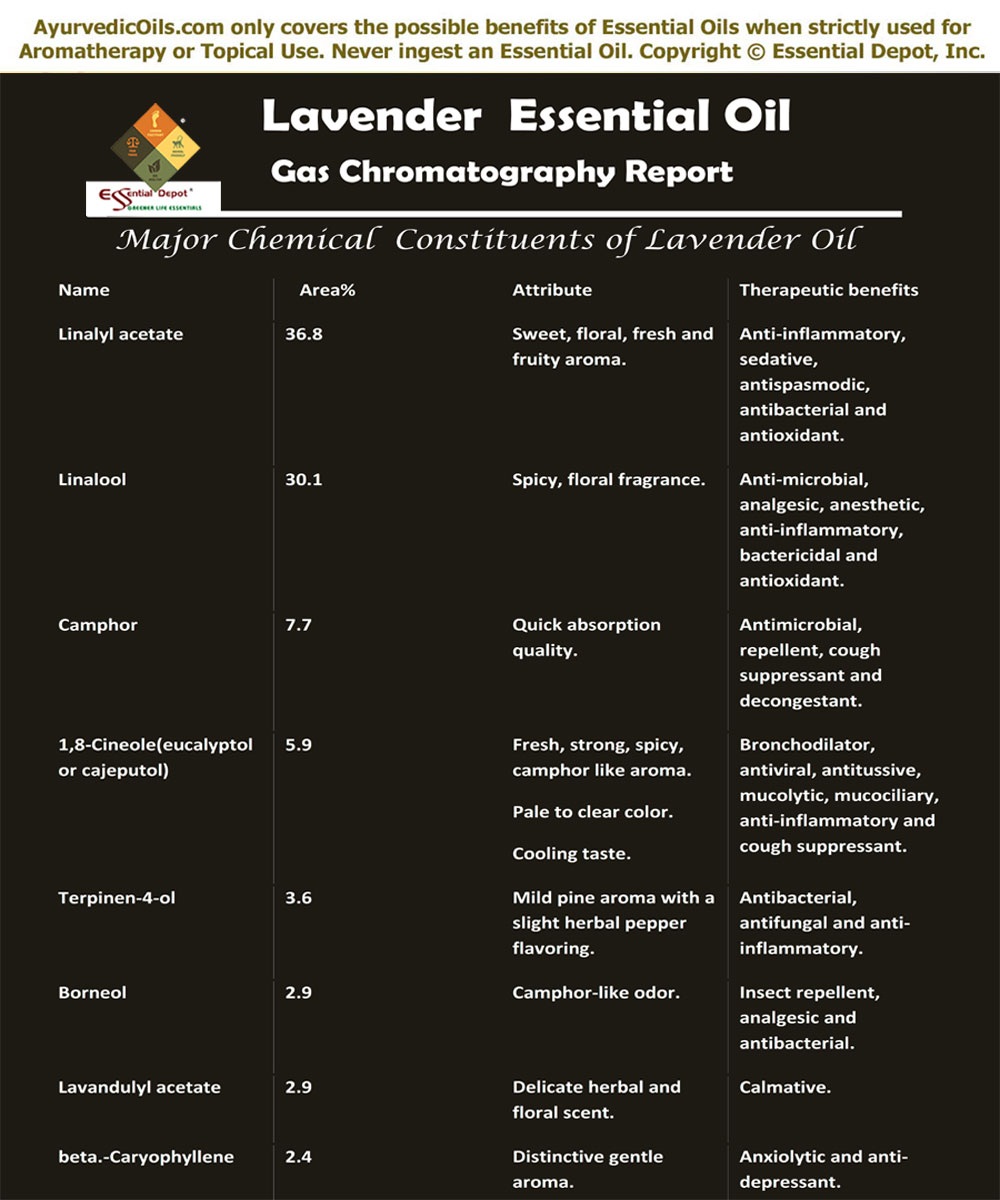
According to the Gas chromatography report, Lavender oil constitutes of 16 chemical components that contribute to the aroma, therapeutic values, consistency and quality of this essential oil. Of which, Linalyl acetate contributes to the highest percentage of Lavender oil constituents with about 36.8% of the total composition.

Just click on Linalyl acetate, Linalool, Camphor, 1, 8-Cineole and Lavandulyl acetate for getting to know the exclusive information about these prime constituents of Lavender oil.

Each and every component contributes to the various attributes and remedial properties of Lavender oil. The table crafted below clearly depicts those special contributions to the healing magnificence of Lavender essential oil.
Lavender OilTherapeutic properties of Lavender essential oil:

Lavender can be called as an elixir as it has immense remedial properties.

The most prominent among them are anti-depressant, sedative, antiseptic, nervine, bactericide, analgesic, sudorific, antiphlogistic, cicatrisant, emmenagogue, decongestant, deodorant, anti-inflammatory, carminative, anti-spasmodic, rubefacient, cholagogue, vulnerary, hypotensive, antiviral, cytophylactic, anticonvulsant, hormonal balancing and diuretic properties.

Ayurvedic health benefits of Lavender essential oil:

Ayurveda is the oldest of all healing systems on earth and is engaged in addressing the health concerns of human beings for more than 5000 years.

Ayurvedic healing aims at longevity by focusing on prevention of illnesses by maintaining a healthy lifestyle, practicing an Ayurvedic routine, yoga, meditation, simple physical exercises and using of natural remedies like herbs and essential oils for treating illnesses.

According to Ayurveda, sickness is an opportunity to know the imbalances of the body with nature and to know the actual root cause of the illness. This noble science suggests and trusts in treating the root cause of a disease instead of diagnosing the ailment alone.

Treating individuals instead of diseases is the prime factor that makes Ayurveda superior than other contemporary medicinal practices.

Everything that is a part of nature and that which is believed to heal humanity falls under Ayurveda as it is the ancient medicinal science existing in this world and has its age double the times of Lavender.

Ayurvedic philosophy states that every human being is distinctive with a unique individual constitution, which is made up of three vital biological energies known as doshas. They are vata, pitta and kapha.

Lavender essential oil is beneficial for all the three constitutional types of Ayurveda. With its extremely soothing, calming, cooling and tranquil energy, Lavender essential oil pacifies kapha and pitta doshas and aggravates vata dosha.

The splendid Ayurvedic healing benefits of Lavender essential oil are:
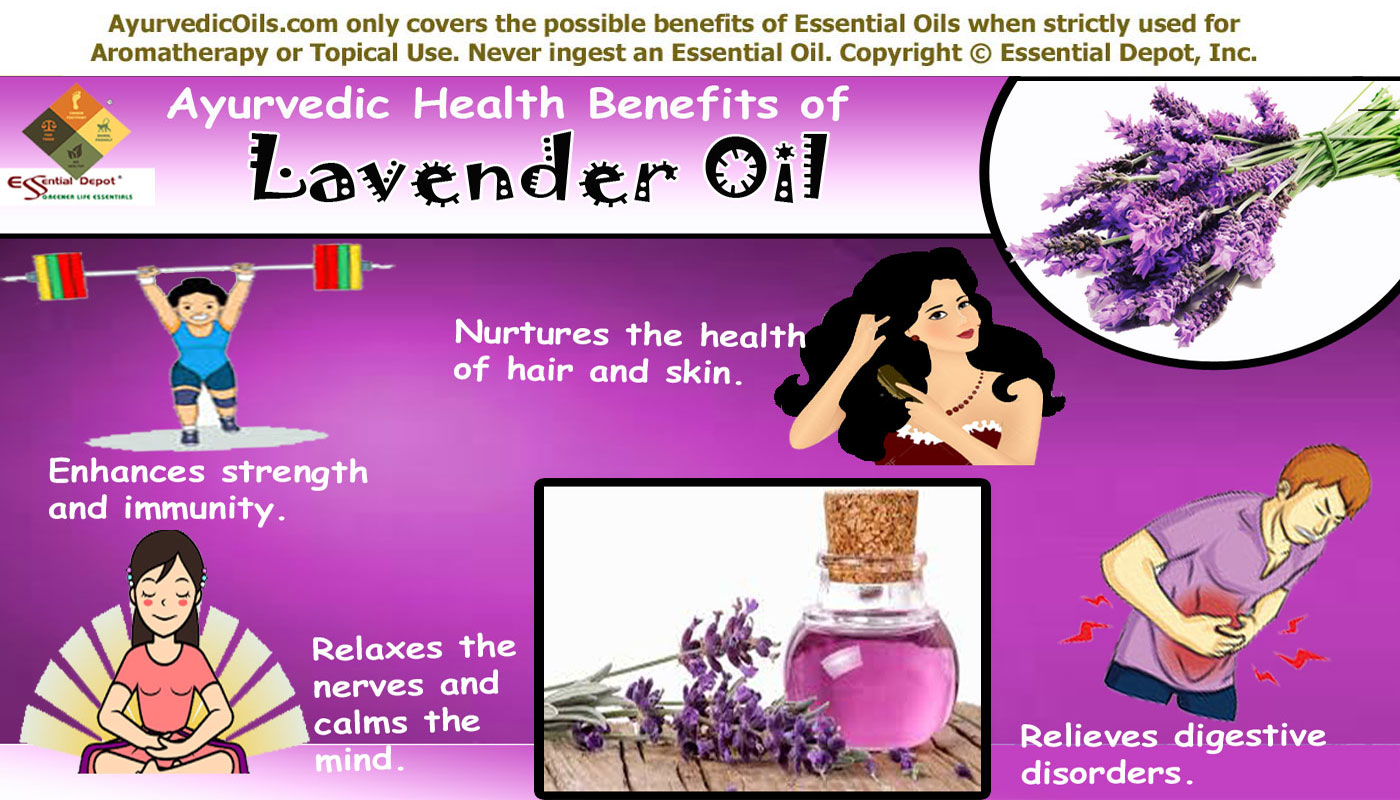
Lavender-broucher1. Enhances strength and immunity:

Ayurveda considers Lavender essential oil as the chief oil in assisting and strengthening the immune system by protecting the body from harmful virus and bacteria causing ailments such as flu, cough, cold, fever and many other infections.

Lavender oil is trusted to enhance prana or the vital life force, which in turn increases the body’s natural disease-resistant ability and the mechanism of fighting against harmful microbes and pathogens.

Gently massaging 2 drops of Lavender essential oil mixed with 1ml of Jojoba oil in the upper part of the sternum, over the heart and the thymus gland is said to uplift the vital essence known as Ojas in Ayurveda, which is completely responsible for vitality and immunity at all the levels of the body.

A 2010 study on ‘Chemical Composition of Lavender Essential Oil and its Antioxidant Activity and inhibition against rhinitis-related bacteria by Lu Hui, Li He, Lu Huan, Li XiaoLan and Zhou AiGuo’ proved that the presence of about 47 compounds in Lavender essential oil exhibits potent antioxidant effect against lipid peroxidation in a linoleic acid model system and extensive activity against bacteria like Escherichia coli, staphylococcus aureus, proteus vulgaris and micrococcus ascoformans.

This study also stated that Lavender oil can be used as a potential natural remedy in treating rhinitis patients.

2. Nurtures the health of hair and skin:

Lavender essential oil is an admirable skin-friendly oil as the topical application of this oil treats skin disorders like psoriasis, cuts, burns, abrasions, itches, eczema, rashes, acne, pimples, athlete’s foot, sunburns, wounds and acts as a good mosquito repellent.

For being gentle and effective on the skin and hair, Lavender oil is called as Twachya, keshya and kusthaghna, where Twachya is the natural skin remedy for augmenting the health of the skin by nourishing the cellular structure; keshya is its ability to foster hair growth and boost the strength of hair follicles and kusthaghna for its potent to heal and treat various skin conditions.

It is also called as Sookshma and Teekshna, for its potent to penetrate through the tiny channels of the skin, thus upkeep the damaged skin cells.

All you need to do to regain your skin health is to apply 2 drops of Lavender oil blended with 1 ml of olive oil and apply it on the affected area or massage gently for visible results. You can also add 2 drops of this oil in your regular skin care cream or body lotion and use it daily for protecting and pampering your skin.

Ayurvedic Physicians and the contemporary Dermatologists suggest the use of Lavender essential oil for treating numerous skin problems including acne and few other bacterial and fungal infections.

Lavender essential oil has anti-fungal, antibacterial and antiseptic properties that assist in inhibiting the growth of bacteria, fungi and other micro organisms responsible for acne and other skin problems.

Lavender essential oil is also an effective remedy for treating hair problems like hair loss, baldness, lice, nits and dull hair. With the combination of few other curative essential oils like Rosemary, Lavender oil has been proved to promote hair growth in a study conducted with 86 people, who were affected by an autoimmune disease known as Alopecia areata.

5 drops of Lavender oil mixed with 3 drops of Rosemary oil and 5 ml of Almond oil when massaged onto the scalp assists in strengthening the hair follicles, promoting the growth of hair, preventing hair fall and nourishing the scalp.

3. Relaxes the nerves and calms the mind:

Lavender is certainly an excellent remedy for treating fear, fatigue, anxiety, stress and depression. The soothing aromatic molecules of this oil penetrate the mind and body through the nasal passages and reach the Limbic system, known as the control center of the human body.

With its anti-depressant, hormonal balancing and sedative properties, Lavender essential oil is proven to ease stress and induce good sleep by checking the health disorders related with insomnia.

3 to 4 drops of Lavender oil blended with 2 ml coconut oil or sesame oil can help in soothing the senses, calming the nerves and granting peace to the mind and body. You can also add 2 drops of Lavender oil to warm bathing water for promoting peaceful sleep and alleviating stress and fatigue after a tiring day.

Lavender essential oil is used in various Ayurvedic treatments and the most prominent among them is Shirodhara, which is a celebrated oil-dripping treatment in Ayurveda with the use of medicated sesame oil with herbal values. It is proven to induce an altered state of consciousness (ASC) and anxiolysis.

According to a 2008 research by the University of Toyama, the use of lavender essential oil along with sesame oil in Shirodhara treatment proved to have a positive pharmaco-physio-psychologic effect, where the relaxing effects of lavender essential oil transferred through the olfactory nerves was proved to improve the entire condition of the system.

It also witnessed a significant result that Lavender Shirodhara is better than the normal one and the intricate pharmaco-physio-psychologic feat in Ayurvedic treatment is a constructive model for pharmaco-physio-psychotherapy in the future.

4. Relieves digestive disorders:

Lavender essential oil augments the pranic (vital life force) energy, while steadily supporting the functions of the respiratory tract also. Massaging your abdomen with 2 drops of Lavender oil blended with 1ml sesame oil aid in promoting the secretion of gastric juices, bile and other digestive enzymes.

By this way, Lavender essential oil regularizes the process of digestion and absorption. It also helps in treating flatulence, diarrhea, colic, vomiting, stomach pain and indigestion.

An aromatic bath with 2 to 3 drops of Lavender essential oil can promote blood circulation, treat depression, anxiety, fatigue, restlessness, respiratory infections, urinary infections, bladder problems, whooping cough, nasal congestion, migraine, panic attacks, asthma, muscle soreness, headache, joint pain, bee stings and many other problems.

Lavender essential oil with its innumerable health benefits is a must-to-have oil in your medicine cabinet and a drop of oil added to your handkerchief or worn on your wrist everyday will rejuvenate your senses and give you a never before freshness, clarity of mind and absolute peace.

Disclaimer:

This article is only for educational purposes and is not in any way meant to be used for diagnosis or as a substitute for any prescribed medications or the professional advice of your Doctor. We, at Essential Depot are not healthcare experts and this article is written only with the intention of sharing the ancient wisdom of Ayurveda.

Essential oils are meant for topical use only and not for ingestion, as pure and organic essential oils are the life force of plants and are highly concentrated substances. Seek the advice of your Ayurvedic expert or healthcare professional before choosing the appropriate essential oils for your state of health and unique individual constitution.

The MSDS (Material Safety Data Sheet) of Lavender oil is readily available for your enhanced safety and superior usage.

Gas Chromatography Report (GC) of Lavender oil.

Thought for the day:

                           Come forth into the light of things,

                           Let Nature be your teacher.

-By William Wordsworth

Suggested reading:

  1. Lovely Lavender: The Many Applications and Uses of Lavender Essential Oil (Essential Oils and Aromatherapy) by Rashelle Johnson
  2. Lavender Oil: The New Guide to Nature’s Most Versatile Remedy by Julia Lawless
  3. The Magic and Power of Lavender: The Secret of the Blue Flower, It’s Fragrance and Practical Application in Health Care and Cosmetics by Maggie Tisserand, Monika Junemann
  4. Lavender: Nature’s Way to Relaxation and Health by Philippa Waring
  5. HEALING POWERS OF LAVENDER Pure Essential Oil – The Universal Healer (The Aromatherapy Professional: Healing with Essential Oils) by KG Stiles

Reference Links:

  1. Lavender by University of Maryland Medical Center
  2. Pharmaco-physio-psychologic effect of Ayurvedic oil-dripping treatment using an essential oil from Lavendula angustifolia PubMed.gov
  3. Lavender: An Ayurvedic View by Gurukula Blog
  4. Chemical Composition of Lavender Essential Oil and its Antioxidant Activity and inhibition against rhinitis-related bacteria by Lu Hui, Li He, Lu Huan, Li XiaoLan and Zhou AiGuo published in the African Journal of Microbiology Research
Geranyl acetate


Geranyl acetate is an organic compound that is present in the essential oils of Ceylon Citronella, Palmarosa, Geranium, Coriander, Neroli, Lemongrass, Petitgrain, Carrot and Sassafras. It is also obtained semi-synthetically by the condensation of Geraniol with acetic acid.

Geranyl acetate is a monoterpene with the chemical formula C12H20O2. It is an ester which is also identified by various other names such as Geraniol acetate, Bay pine (oyster) oil, Geraniol ethanoate and so on.

Attributes of Geranyl acetate:

Geranyl acetate is a colorless transparent liquid. In the condensed form, Geranyl acetate is slightly pale yellow in colour. It has sweet lavender smell or floral or fruity smell of rose. It owns a tempting fruity taste similar to those of banana, pear, apple and peach. It is not soluble in water but it dissolves in organic solvents like oils and alcohol.

Antifungal and anti-inflammatory effect of Geranyl acetate:

A study titled “Composition and biological activity of the essential oil from Thapsia minor, a new source of geranyl acetate” was conducted to evaluate the biological activity of the essential oil from Thapsia minor which is a source of Geranyl acetate. It was found that Geranyl acetate exhibit antifungal and anti-inflammatory effect.. Further, it also acts as the main contributor of these attributes to the essential oil of Thapsia minor.

Antimicrobial effect:

According to the study “Antimicrobial Activity of Essential Oils of Four Lemongrass (Cymbopogon flexuosus Steud) Varieties“, the essential oils of four varieties of lemongrass and their constituents were evaluated for their antimicrobial activity against bacteria Staphylococcus aureus, Escherichia coli, Bacillus subtilis and Salmonella typhi and two fungi, Aspergillus flavus and Aspergillus fumigatus. It was found that Geranyl acetate was reasonably active against Staphylococcus aureus.

In another study titled, “Antimicrobial Activity and Chemical Composition of Essential Oil from the Seeds of Artemisia aucheri Boiss”, the chemical composition and antimicrobial activity of essential oil in Artemisia aucheri Boiss was evaluated. It was found that Geraniol and Geranyl acetate found in the essential oils in the aerial parts of the plant are responsible for the antimicrobial activity of the oil.

Commercial Uses:

As a fragrant and flavouring agent:

Geranyl acetate finds its use in perfumery because of its sweet floral rose or lavender fragrance. It is used for its fragrance in soaps and creams and also as flavor enhancer. It is used in the formulation of rose, lavender and geranium flavors to impart a sweet fruity or citrus smell.

In the food industry:

In the food industry, it is used to enhance the flavor. It is recognised as safe to be used by the U.S. Food and Drug Administration (FDA).

References:

  1. Geranyl acetate by Wikipedia
  2. Geranyl acetate by PubChem
  3. Composition and biological activity of the essential oil from Thapsia minor, a new source of geranyl acetate
  4. Antimicrobial Activity of Essential Oils of Four Lemongrass (Cymbopogon flexuosus Steud) Varieties
  5. Antimicrobial Activity and Chemical Composition of Essential Oil From the Seeds of Artemisia aucheri Boiss

Ayurvedic Essential Oils for Adding Strength to Toddler’s Health


Babies who learn to walk are called Toddlers. What an awesome sight it is to see your little one take up his/her initial steps with interest and adventure!! We being adults have a lot to learn from toddlers who never give up even though they fail hundreds of times, while they are trying to walk. Every single day during this stage, generally when they are 1 or 2 years old, i.e. the time connecting infancy and childhood is incredibly imperative in a child’s life, as it gets to grow in a plenty of ways. What toddlers actually need at this stage is the love, strength and support from their parents along with certain healthy practices that make them grow with a sturdy foundation for their lifetime. Nutritious food, hygienic habits and an energizing massage with Ayurvedic essential oils can give them the real power in strengthening their muscles and nourish their skin.

Ayurveda and toddlers:  Ayurveda states that this is the phase for complete physical, emotional, social and intellectual development for children. A baby is considered as an individual in Ayurveda from its birth itself. Ayurveda treats every newborn as a unique creation with distinctive state of body and mind, known as doshas namely vata, pitta and kapha. Every one of us will have one or two doshas as predominant in our character with the remaining one as less important.

Vata babies are generally lean and find it difficult to gain weight, prone to colic and constipation with dry skin. These fearful babies do not sleep well and can be easily disturbed during sleep. They are extremely brilliant in learning new things.

Pitta predominant toddlers have a good appetite and they may tend to suffer from digestive disorders like diarrhea and heartburn, skin problems like eczema and rashes, due to the imbalance in pitta dosha. With a strong body, these babies have an average weight. Pitta toddlers have a tendency to get angry very easily and are really active during the day with a moderate sleep at night.

Attractive, chubby and mesmerizing babies, often under limelight are all the ones with high proportion of kapha in their constitution. These toddlers are really close and attached to their moms than anyone else. They share things with other babies and are the well-behaved ones unlike the toddlers with vata or pitta predominance. Kapha toddlers are often hungry and have a deep sleep with less response to noise and other disturbances. Kapha imbalance might end up in cold, cough, obesity, sinusitis, sluggishness, lethargic behavior etc.

Identifying the doshas in your children with their behavior will help you greatly for being the best parents in attending to your toddler’s health concerns wisely.

Ayurvedic essential oils for Toddlers: Essential oils are just the purest element of a plant just like a baby who is a purest form of innocence and love. These oils when used with care and precaution will help your toddlers in many aspects while they are still learning to grow in a multitude number of ways. The most appealing and the safest Ayurvedic essential oils for toddlers are:

1. Lavender essential oil: How can someone forget lavender oil, the therapeutic properties and its gentle healing remedies when it comes to babies especially? Diluting 2 drops of Lavender essential oil in 2 tablespoons of Almond oil or Jojoba oil can act as the best massage oil for toddlers. This blend helps in nourishing their skin and augments the strength of their muscles. It induces good sleep and it is a perfect choice for fuzzy toddlers with vata predominance, often having difficulties in sleeping. Few drops of lavender essential oil can also be added to the diffuser mainly before bedtime. Diaper rashes, skin problems, fever and sleep disorders especially during illness can be assisted with the help of lavender oil and its calming aroma.

2. Roman Chamomile essential oil: Most of the mommies might have come across this situation, where you might not know why your baby is actually crying and if it is going to be the nighttime then it’s gone, as it would spoil the peaceful sleep of the entire family. The best Ayurvedic essential oil that can help you in such worst case scenarios is Roman Chamomile essential oil. Add a drop of this oil to your baby’s pillow or to a cotton ball and place it inside your shirt, near your shoulders. When you try pacifying your toddler, the warmth of your body along with the gentle aroma of Chamomile oil will help them sleep peacefully.

3. Tea Tree essential oil: Tea tree oil is extremely good for toddlers, especially at times of treating cold, earache, tonsillitis and other pain related to babies of this stage. You can bank upon this miraculous oil for treating skin problems like itches due to insect bites, diaper rashes, healing bruises and cuts that are common among toddlers who are deeply vested with their journey excavating new things every day. With its effective anti-bacterial properties, one drop of tea tree oil added to baby wipe solutions can protect your baby from harmful germs, bacteria and other infectious bodies.

When your toddler steps ahead his/her life with 1 2 3…… you support them with these oils, 1 for Lavender, 2 for Roman Chamomile and 3 for Tea tree oil. Sounds great to me and it will be spectacular indeed to you also, when you start using these greatest gifts of nature to your loved little ones. Give my love and Muahhhhhhhhhhh…………To the little Princes and Princesses of your families.

Disclaimer: Consult with your Ayurvedic Practitioner before using Ayurvedic essential oils for your toddlers as pure essential oils are highly concentrated and may harm your babies if used without proper consultation.

Thought for the day:

What good mothers and fathers instinctively feel like doing for their babies is usually best after all.                            -By Benjamin Spock

Suggested Reading:

  1. Seven Secrets to Raising a Happy and Healthy Child: The Ayurvedic Approach to Parenting By Joyce Seyburn
  2. Perfect Health for Kids: Ten Ayurvedic Health Secrets Every Parent Must Know By John Douillard
  3. Aromatherapy For Babies And Children By Shirley Price

Reference Links:

  1. Ages & Stages – Toddlers by Urbanext, University of Illinois Extension
  2. Healthy Mother and Baby Through Ayurveda by Green Kiddie
  3. Essential Oil Care for Children and Babies by Abundant Health

Myrtle Essential Oil


Myrtle-bannerAcclaimed as the “Queen of the lemon herbs”, Lemon Myrtle often called as just Myrtle seldom fails to enchant your mind and senses with its refreshing citrus aroma that is more lemony than lemon itself. This is because lemon has only 3-10% citral content while Lemon Myrtle contains about 90-98% citral, contributing to its unique, uplifting lemony fragrance.

Scientifically known as Backhousia citriodora, the essential oil is extracted from the aromatic leaves and twigs of this plant. Celebrated as a natural antiseptic and decongestant, Myrtle herb and its essential oil are used in the treatment of respiratory problems, infectious diseases and neurological disorders in Ayurveda.

Purchase Myrtle Oil – Retail – 4 oz – CLICK HERE

Purchase Myrtle Oil – Wholesale – CLICK HERE

Historical importance of Myrtle:

Native to Australia, Lemon myrtle is one among the few favorite Australian essential oils and it is said that the Indigenous Australians used Lemon myrtle as a remedial and culinary herb. The ancient Egyptians used the leaves of this plant to treat fever and other infections. Myrtle has been mentioned in the Greek mythology as a symbol of love and divine generosity. It was considered sacred to the Greek Goddesses Demeter and Aphrodite.

Myrtle is also said to have been mentioned in the Bible directly for about six times. In Isaiah 41:19 it is said “I will plant in the wilderness the cedar, the shittah tree, and the myrtle, and the oil tree; I will set in the desert the fir tree, and the pine, and the box tree together.” Greek physician Dioscorides recommended Myrtle oil for his patients to treat bladder and lung infections. This herb has also been in use in many traditions for treating respiratory tract ailments and skin disorders.

Therapeutic properties and chemical constituents of Myrtle essential oil:

Lemon myrtle essential oil has analgesic, antiseptic, anticonvulsant, antimicrobial, expectorant, tonic, antifungal, decongestant, sedative, anti-neuralgic, astringent and anti-rheumatic properties. The major chemical components are terpenoid aldehydes like citral, geranial and neral along with the trace constituents linalool, methyl-heptenone, d-isopulegol, myrcene, cyclocitral and citronellal.

Ayurvedic health benefits of Myrtle essential oil:

Ayurveda is a holistic healing principle that trusts on nature and natural remedies for treating human illnesses. This ancient philosophy states that human beings are part of nature and their illness and wellness depend upon their body’s balance with nature. Sickness according to the Ayurvedic texts is a signal indicating that the human body is out of balance with nature.

Ayurvedic beliefs consider disease as an opportunity to repair, revamp and restore the body’s complete health back into balance. Every individual is unique with a specific set of energy elements that make up their individual constitution.

These vital energies are known as doshas, namely pitta, vata and kapha doshas. The predominance of any one of these doshas determines the attributes and behavior of an individual.

Ayurvedic remedies are based upon dosha predominance and Ayurvedic treatments vary from individual to individual even for the same illness. It prescribes holistic remedies in the form of herbs, essential oils, healthy and nutritious diet, yoga, simple physical exercises, meditation along with an Ayurvedic routine for disease prevention and attaining longevity.

Myrtle essential oil is known to pacify kapha and vata doshas and increase pitta.

The Ayurvedic health benefits of Lemon myrtle essential oil are:

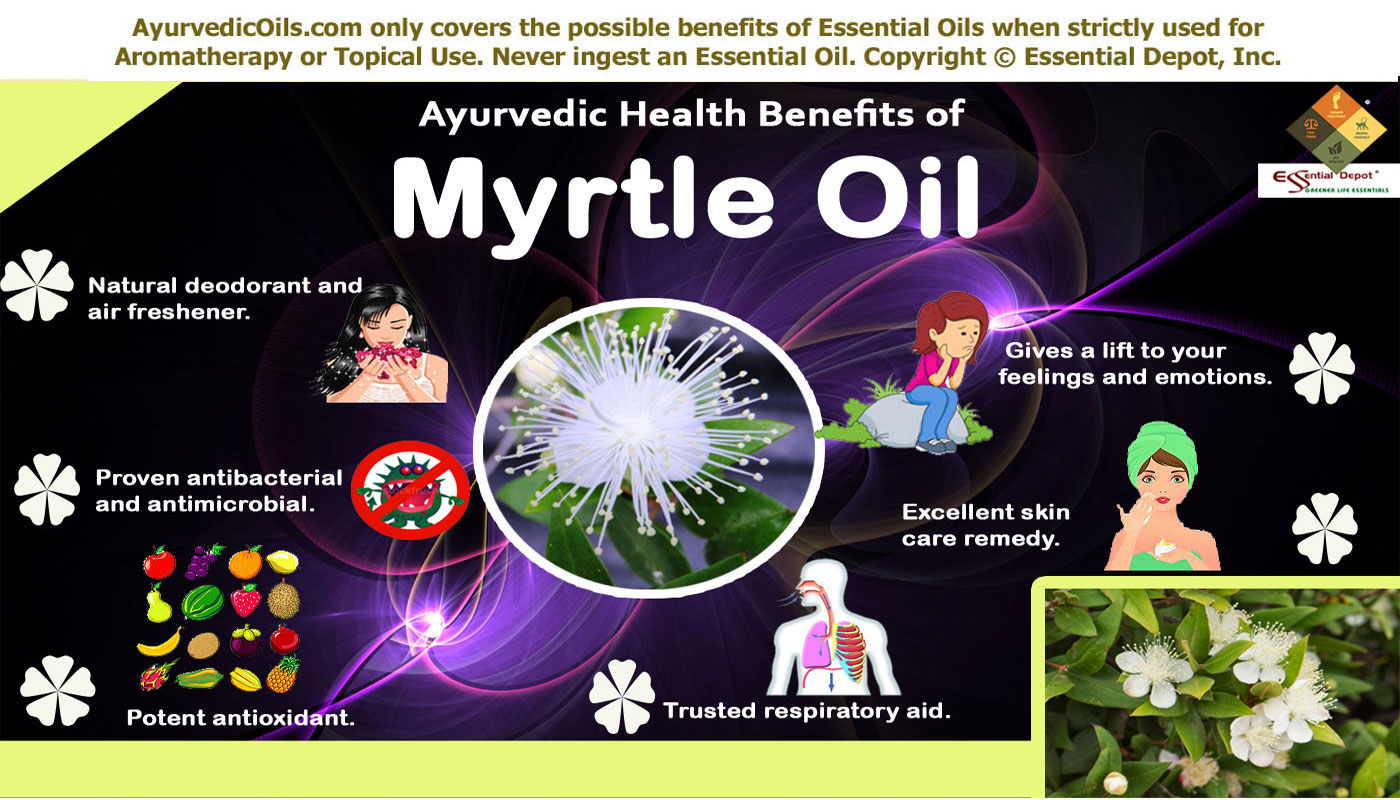
Myrtle-broucher1. Proven antibacterial and antimicrobial:

Lemon myrtle essential oil is regarded as a remarkable antimicrobial, antifungal and antibacterial agent with its clean, refreshing and pure citrus aroma. Certain studies have proved that Lemon myrtle oil possess significant antimicrobial power against harmful organisms like Staphylococcus aureus, Candida albicans, Escherichia coli, Pseudomonas aeruginosa, Aspergillus niger and Klebsiella pneumoniae.

Add 2 drops of this oil along with olive oil to treat infections and diseases due to bacteria, fungi and other micro-organisms. You can apply this blend topically on the affected parts in case of athlete’s foot, ringworm, wounds and other skin problems. This oil heals and protects the wound from being septic as it fights against Staphylococcus bacteria that is responsible for making wounds septic.

1to 2 drops of Lemon myrtle oil added to a cup of warm water can serve as an excellent gargle for fresh breath and for helping with raw throats. Using 2 drops of this oil in your diffuser or in bath can give you a long-lasting feeling of freshness.

2. Trusted respiratory aid:

The decongestant and expectorant properties of Lemon myrtle oil acts effectively in treating chest congestion, flu, cold, bronchitis, asthma and sinus infections. Adding 3 drops of Lemon myrtle oil in steam inhalation can assist in alleviating headache, loosening mucus and phlegm deposits in the lungs and respiratory passages. The therapeutic molecules in this oil aids in controlling the increase of infectious particles that worsen cold and cough.

Certain anecdotal evidences witness that the expected number of cold, cough and sinus problems are lower in households that regularly use Lemon myrtle oil in aroma lamps.

You can also add 2 drops of this oil to your vaporizing ointment and gently massage onto your chest, back, forehead and throat for relieving from congestion and easing difficulties in breathing. Respiratory problems in general spoil your sleep at night, adding 2 drops of Lemon myrtle oil in hot bath especially before bed will help in promoting peaceful sleep at night.

3. Potent antioxidant:

Lemon myrtle essential oil has shown antioxidant properties that help in fighting against free radicals responsible for the growth of malignant tumors and other cancerous growths. This oil has potent antioxidant and antimicrobial effects that help combat food borne human pathogens and free radicals.

4. Excellent skin care remedy:

Several studies conducted by the Charles Sturt University, Australia have proved Lemon myrtle as an effective germicidal and antibacterial oil than tea tree oil in treating skin ailments and other health conditions. This is mainly because of its antiseptic and skin-friendly properties.

A recent study on ‘Antimicrobial activity of Backhousia citriodora (lemon myrtle) methanolic extracts’ states “The low toxicity of the methanolic extract and its inhibitory bioactivity against a panel of bacteria validate Australian Aboriginal usage of B. citriodora as an antiseptic agent and confirms its medicinal potential.”

Lemon Myrtle essential oil is an excellent oil for treating acne and oily skin. Mix 2 drops of Lemon myrtle oil with your skin care lotion and apply it on your acne, cold sores, warts, wounds and insect bites for soothing relief. 2 to 3 drops of this oil blended with olive oil can be used topically on rashes, neuro-dermatitis, tinea, psoriasis, folliculitis, candidiasis and itching.

The essential oil extracted from Australian Lemon myrtle leaves have been proved effective in treating Molluscum contagiosum, a common viral disorder that affect the skin of children and sexually active adults as it is generally seen as a sexually transmitted disease.

A 2004 study on ‘Essential oil of Australian Lemon Myrtle (Backhousia citriodora) in the treatment of Molluscum contagiosum in childrenwhere 9 out of 16 children with Molluscum contagiosum treated with 10% of Lemon myrtle essential oil showed 90% reduction in the number of lesions at the end of 21 days of daily topical application.

5. Natural deodorant and air freshener:

The fresh, citrusy aroma of Lemon myrtle oil will never let you down for the entire day if you wear 1 drop of this oil on your wrist or add 2 drops in your refreshing bath in the morning. You can also add 1 drop to your hanky or add few drops to your deodorant to combat body odor.

The antimicrobial properties in this oil absorb microbes in the sweat that causes bad odor. The clean scent of Lemon myrtle oil makes its use inevitable as an air purifier as it kills germs and other micro organisms in the atmosphere, making your home a better place to live in.

6. Gives a lift to your feelings and emotions:

Lemon myrtle essential oil is also fêted for its calming effects that uplift and revivify depressive thoughts and feelings of fear. Gently massaging the soles of your feet with 2 drops of Lemon myrtle oil blended with coconut oil can help you in conceding complete relaxation, alleviate stress, suppress negative feelings, induce better sleep and augment your self-confidence. You can also add 3 to 4 drops of this oil to your diffuser or aroma lamps for giving your mind the natural boost that it requires.

Other health benefits:

Lemon myrtle leaves and its essential oil are also used in brewing tea, flavoring confectionaries, savories, syrups, candies, sauces, desserts, mayonnaises, shampoos, body lotions and mouth fresheners. It is also used as a protective shield in the food industry as Lemon myrtle oil is known to destroy food spoilage yeasts, bacteria and other pathogens.

Disclaimer:

Avoid using essential oils internally. Always remember to dilute essential oils in suitable carrier oils as pure essential oils are highly concentrated liquids and may cause skin irritation or other side effects if used undiluted. Do not use Lemon myrtle oil before going out in sun as it has high phototoxicity effect just like other citrus oils. Always consult your Ayurvedic practitioner before using right essential oils for your health condition and unique constitution.

Thought for the day:

When nature has work to be done, she creates a genius to do it.   –Ralph Waldo Emerson

Suggested Reading:

  1. Medicinal Plants in Australia: Volume 2: Gums, Resins, Tannin and Essential Oils by Cheryll Williams
  2. The Aromatherapy Encyclopedia: A Concise Guide to over 385 Plant Oils by Carol Schiller, David Schiller
  3. The Complete Book of Essential Oils and Aromatherapy: Over 600 Natural, Non-Toxic and Fragrant Recipes to Create Health – Beauty – a Safe Home Environment by Valerie Ann Worwood
  4. Only the Essentials: A Concise Aromatherapy Reference Guide by Michele A. Williams

Reference Links:

  1. Backhousia citriodora by Wikipedia
  2. Lemon Myrtle Oil (Backhousia Citriodora) by UncleHarrys.Com
  3. Antimicrobial activity of Backhousia citriodora (lemon myrtle) methanolic extracts by Griffith University, Queensland, Australia published in Pharmacognosy Communications
  4. Essential oil of Australian Lemon Myrtle (Backhousia citriodora) in the treatment of Molluscum contagiosum in children by Center for Biomedical Research, Boise, ID published in PubMed

Best Christmas Gift Idea 2012: Adoring Ayurvedic Essential Oils


Are you thinking ‘What is wrong with me?’ wondering what’s the need for Christmas gift idea now, while there are still 4 full months for December 25th to knock your door? Come on! This is scorching summer season and to think about something that will enchant your mind, chill your senses and hearten your spirits will certainly be a brilliant idea and nothing else other than Christmas Eve has the glory to splash such joy on you. Sounds great now….. Right!! This is the right time to start your Christmas count down. Every year Christmas is exceptional in its special way. This year, you make it out of the ordinary by gifting your loved ones with warm and healing Ayurvedic essential oils rather than your usual gifts.

Your 2011 Christmas might not have been the same as your 2008 Christmas. You might have missed your loved ones or there might have been a new member to your family last year (baby!), much more adventure and a variety of gifts and that is what Christmas is all about. Make your 2012 Christmas outshine all the other festive seasons that you’ve passed in your lifetime with a wonderful pack of sensational essential oils that can take your entire family out of this world. Yes! There are certain mind-blowing Ayurvedic essential oils that suit everyone and can be used all through the year till the next Christmas comes by your way. Such enlivening essential oils are:

  1. Lavender essential oil: According to me ‘Lavender is the queen of all essential oils’ and is my all-time favorite. How can anyone keep themselves away from this magnificent oil with a mystique fragrance in it? Fill your love in a bottle full of Lavender essential oil that can uplift the spirits and refresh the mind. Wow! The wonderful color, the exuberant aroma, immense health benefits and numerous therapeutic properties like nervine, sedative, antidepressant, anti-inflammatory, expectorant, antiseptic, analgesic, anti-rheumatic, anti-convulsant and many more make Lavender very special at all the good times and sick times too!
  2. Ylang Ylang essential oil: Nothing can be so very romantic, tender, quixotic, passionate and magical like the transfixing fragrance of Ylang Ylang essential oil. This oil has emmenagogue, sedative, antiseptic, aphrodisiac, hypotensive and antidepressant properties that alleviates pain, supports mood fluctuations, controls high blood pressure, aids in frigidity problems, brings down rapid heartbeat and treats your senses.
  3. Rose essential oil: Shakespeare rightly said that ‘Rose is a rose is a rose is a rose’. Very popularly known as the symbol of love all around the universe, Rose essential oil can give you the joy of being together in a garden full of fresh, fragrant roses. Rose oil has been proven effective in treating various health conditions with its aphrodisiac, antiseptic, antiviral, antidepressant, antiphlogistic, antispasmodic, emmenagogue, uterine, bactericidal and nervine properties.
  4. Grapefruit essential oil: Grapefruit oil with its light and fresh aroma is trusted to have great effects in shedding the extra pounds of the body. Any weight loss program with essential oils cannot get fulfilled without Grapefruit essential oil. It is also an excellent skin toning agent and natural skin purifier.

Apart from these essential oils, you can also include Peppermint essential oil, Sandalwood essential oil, Sweet orange essential oil or Jasmine essential oil as per the preference of your near ones.

Love is known only when it is shown. Express your unconditional love this Christmas season with the never-ending bliss of these Ayurvedic essential oils gift pack. There’s nothing to get surprised if the love of your life asks for one the next Christmas also. Wait and watch!!!

Merry Christmas and let it be a Mesmerizing Christmas as well.

Reference links:

  1. Christmas by History.com
  2. Health benefits of Rose essential oil by Organic facts
  3. Ylang Ylang – The Great Benefits by Ylang Ylang Essential Oil

Sugandha Bala Essential Oil


Flowering plants are always appealing and Sugandha Bala, scientifically known as Pavonia Odorata is even more interesting with its natural healing values. It is an offspring of the mallow family, Malvaceae. Known as Sugandha Bala in native Indian sub-tropical areas, the roots and shoots of this plant are extremely aromatic. Ayurveda, the oldest of all healing sciences has recorded the use of Sugandha Bala herb and its essential oil as a natural cooling agent with stomachic properties. The most popular Ayurvedic fever drink known as Shadanga Paniya has a major composition of Sugandha Bala in it. It has been said that this powerful herb is often used in combination with other herbs to treat hemorrhage of the internal organs, inflammation, digestive disorders and fever.

Purchase Sugandha Bala Essential Oil – Wholesale – CLICK HERE

Therapeutic properties: The antimicrobial properties of this essential oil has made its use inevitable in Ayurveda for treating dysentery, inflammation and certain other intestinal infections. Sugandha Bala essential oil has carminative, antimicrobial, demulcent, cooling, diuretic, antispasmodic, antiprotozoal, astringent and diaphoretic properties. This oil also has strong anthelmintic activity against roundworms and tapeworms.

Traditional home remedies suggest the use of 2 teaspoons of fresh juice of the leaves of this plant along with black pepper for treating dysentery of babies. These leaves also have emollient properties and the fresh juice extracted from the leaves of Sugandha Bala herb was used for soothing and softening the skin.

Ayurvedic health benefits of Sugandha Bala essential oil: Sugandha Bala is an erect glandular-pubescent annual herb that grows up to 1m tall. This herb is indigenous to India (Uttar Pradesh, Orissa and Bihar), which is the birthplace of the ancient healing wisdom known as Ayurveda. The word ‘Ayurveda’ stands for knowledge of life. What makes Ayurveda the mother of all medical sciences is its simplicity and understanding about human beings and their entire constitution, which is nothing but the combination of physical, mental and emotional attributes of an individual. The main aim of Ayurveda is to grant holistic healing that not only stops with treating the illnesses but travels a step ahead in preventing it in the future also.

Ayurvedic system considers human beings as a part of nature and believes that they are made up of the five elements of nature namely fire, water, earth, air and ether. Every individual is considered unique and is believed that every one of us are made up of a specific set of energy elements or doshas. They are vata, pitta and kapha. These doshas are a combination of the five vital elements of nature. It is for this special reason Ayurveda grants specific treatment for each individual even if they have a common illness.

This environmental art trusts on natural remedies like herbs, essential oils extracted from plants, yoga, meditation, physical exercises, and a healthy lifestyle comprising an Ayurvedic routine for a hale and hearty life assuring longevity and healthy aging. Exploring the remedial values of herbs and essential oils highly help in perceiving their ability in treating several health conditions. The major health benefits of Sugandha Bala essential oil are:

Anti-microbial: Sugandha Bala essential oil has strong anti-microbial properties that are effective against harmful bacteria, fungi and certain other microbes. A 1992 research on ‘Antimicrobial Activity of the Essential Oil of Pavonia Odorata Wild’ by Doctor Hari Singh Gour University, India proved the microbes fighting ability of this essential oil. This was substantiated after testing Sugandha Bala essential oil for antifungal and antibacterial activity against thirteen fungi and ten bacteria (4 gram positive bacteria and 6 gram negative bacteria) by means of paper disc agar diffusion technique.

The results of this research highly recommended the use of Sugandha Bala essential oil for inhibiting the growth of all the test fungi and bacteria while this oil was stated ‘excellent against Gram (+ve) bacterium Diplococcus pneumonia and Gram (-ve) bacterium E.coli’. This report disclosed that “The oil was also found to inhibit the growth of keratinophilic fungi Trichophyton mentagreophytes and Chrysosporium indicum along with Aspergillus sp., Botrydiplodia sp. Fusarium solani etc”.

It also depicted the effectiveness of this oil against the bacterium Staphylococcus aureus which is responsible for wound and infections getting septic. This property makes Sugandha Bala essential oil as a promising antiseptic for treating cuts, sores, abrasions and certain other skin problems.

Other pharmacological actions: The intense study on the ‘Pharmacological screening of essential oil of Pavonia Odorata’ revealed that this essential oil contains a series of interesting pharmacological actions based on various parameters. When tested on a choice of living organisms, this oil caused relaxation in the rabbit’s intestine, created fall in blood pressure in anaesthetized dog, lessened the spasmogenic effect of acetylcholine and potassium and produced cardiac inhibition in the isolated heart of a frog.

Applications: With its excellent therapeutic properties, Sugandha Bala essential oil is used as an important ingredient in cosmetics, shampoos, conditioners, pomades, hair tonics, massage oils for rheumatism and much more. You can use this essential oil as a gentle massaging oil after blending it with mild carrier oils like olive oil for treating digestive disorders, pain, inflammation, infections, skin problems and rheumatism. Adding 2 to 3 drops of this oil to your bath tub can also grant you similar health benefits and alleviate pain. Using it in diffusers, air fresheners, burners and vaporizers can protect you from the invasion of harmful micro-organisms.

Disclaimer: This article is only for information purpose and do not use it as a substitute for prescribed medicines or Professional advice. Essential oils are highly concentrated and do not use them directly on your skin (use it after blending with carrier oils). Do not ingest essential oils and consult your Ayurvedic Practitioner before using essential oils for treating your health conditions.

Thought for the day:

God sleeps in the minerals, awakens in plants, walks in animals, and thinks in man.    -Arthur Young

Suggested Reading:

  1. The Illustrated Encyclopedia of Essential Oils: The Complete Guide to the Use of Oils in Aromatherapy & Herbalism by Julia Lawless
  2. The Complete Book of Essential Oils and Aromatherapy: Over 600 Natural, Non-Toxic and Fragrant Recipes to Create Health – Beauty – a Safe Home Environment by Valerie Ann Worwood
  3. Major Herbs of Ayurveda, 1e by Elizabeth M. Williamson BSc (Pharm) PhD MRPharmS FLS

Reference Links:

  1. Antimicrobial Activity Of The Essential Oil Of Pavonia Odorata Wild by Seems Nakhare and S.C. Garg
  2. Pharmacological screening of the essential oil of Pavonia Odorata Wild, published in PubMed
  3. Essential Oils as Therapeutics by S.C. Garg

Thanksgiving Day: Time To Remember Your Near Ones With An Ayurvedic Tribute


The Almighty has sanctified us with innumerable blessings for which we are obliged to thank Him all through the year and throughout our life. He doesn’t appear right in front of us to make us happy, instead He assigns people in the form of our friends, relatives and other respectable persons and Thanksgiving day is such a special day to remember, thank and feel the difference they have made to our lives.

Just knock their door with an elegant gift pack of invaluable Ayurvedic essential oils to make them feel special, honored and loved. Ayurveda is an ancient healing methodology that aims at bringing good health, harmony and a happy living with increased life expectancy. You can never honor your near and dear ones in any other better ways other than gifting them with an extensive collection of their favorite essential oils with tremendous therapeutic properties.

Ayurvedic essential oils to garland this Thanksgiving Day: Only I can feel the delight of my daughter when I gift her with her favorite Lavender oil remembering all the love she gives me all the way through the year. Here are some suggestions to thank the worth-remembering people in your life.

1. For your Mom and Dad: No one can replace our Mom or Dad for they are the direct representatives of our Creator. Ayurveda, the holistic healing science has a separate branch for treating the elderly people and is known as Gerontology or Jara Chikitsa. Rosemary oil, Eucalyptus oil, Lavender oil, Chamomile oil, Grapefruit oil and Cypress oil are the best Ayurvedic essential oils that can aid them in treating their pains, swollen joints, fever, cold, memory problems, respiratory infections and other health issues. The spiritual aroma and the incredible healing values of these oils will make them remember you every day.

2. For the Love of your Life: Better half is always the best half when both of your minds speak the same words and when your hearts run on the same page. Besides differences and boundaries, the love of your life shares all the good and bad times with you. Nothing can cheer them when they are given a hug with few special words like ‘You mean a lot to me’. The glorious essential oils that can make them feel your presence even when you are away are Patchouli essential oil, Sandalwood oil, Lavender oil, Ylang Ylang oil, Jasmine oil and Rose oil. All of these essential oils can give a great start to your romantic evening or to a grand day with an invigorating bath when added to your bath tub.

3. For the little ones: Babies bring in natural joy to your family and are aptly called as the Kings and Queens of our families. In the celebrated book, ‘Aromatherapy for Babies and Children’, Shirley Price has listed 19 Ayurvedic essential oils that are safe for babies and children. The best among them that can nurture your little one’s growth especially when they are 1 to 3 years old are Roman Chamomile oil, Tea tree oil and Lavender oil. A gentle massage with these essential oils, carefully blended with safe carrier oils like Almond oil, Jojoba oil or Olive oil can help your baby grow up strong both physically and mentally. Only such natural Ayurvedic essential oils used in the early stages of their life can lay a good basis for their intellectual and muscular strength, making them bold enough to face the challenges of this competitive world.

You may wonder what kind of essential oils to bequest your friends, teachers and other relatives. Just check their age and consider under which of these above mentioned groups their age falls and gift them accordingly. Just a small ‘Thank you’ note along with an endearing collection of Ayurvedic essential oils is more than enough to deliver your love and gratefulness with no mistakes. Happy Thanksgiving Day!!! And thanks for your time on my post!!!!

Thought for the day:

Gratitude is the inward feeling of kindness received. Thankfulness is the natural impulse to express that feeling. Thanksgiving is the following of that impulse.                                                                   Henry Van Dyke

Suggested Reading:

  1. Chemistry Of Essential Oils Made Simple: GOD’S LOVE MANIFEST IN MOLECULES By David Stewart
  2. Seven Secrets to Raising a Happy and Healthy Child: The Ayurvedic Approach to Parenting By Joyce Seyburn
  3. Making Room for Mr. Right: How to Attract the Love of Your Life By Robin Mastro, Michael Mastro

Reference Links:

  1. Thanksgiving Day by Wikipedia
  2. Aromatherapy for the Elderly by Yahoo! Voices
  3. Essential Oil Care for Children & Babies by Abundant Health

Geraniol


Geraniol is a monoterpenoid with the molecular formula C10H18O. It is also known by other names such as lemonol, beta-geraniol and Guainol.  It is a plant oil extracted from Geraniums and lemongrass.

Geraniol is the main constituent of rose oil, citronella oil and palmarosa oil. It is a phytonutrient present in lemon, bergamot, carrot, coriander, geranium oil, lavender oil, ylang ylang oil, nutmeg, orange, blueberries and black berries.

Attributes of Geraniol:

Geraniol is a pale yellow oily liquid. Pure Geraniol is a colorless liquid. It has sweet rose aroma. Because of its aroma, it is mainly used in perfumes, lotions, creams, detergents, after shave lotions and soaps and bathing products.

Due to its aroma and flavor, Geraniol is an important ingredient in a variety of consumer products made by the flavor and fragrance industries. It is used as a flavoring agent to reproduce the flavor in several fruits.

Geraniol is also used in flavors such as pineapple, peach, raspberry, grapefruit, red apple, plum, lime, orange, lemon, watermelon and blueberry. It is also used as a flavor enhancer in candies, ice creams and baked goods. . It is also used as an aroma additive in foods to enhance the smell of the foods. Thus, it serves as an important flavoring agent in food industries.

A study carried out in 1994 reported that Geraniol is listed by many cigarette manufacturing companies as one of the 599 additives that had been added to the cigarettes to improve their flavor.

The scent glands of honey bees also produce geraniol which helps them to identify the nectar bearing flowers and also the openings of their hives. Thus, geraniol attracts honeybees.

Further, it is a naturally occurring mosquito repellent that is extremely effective. It also repels a variety of insects including house flies, stable flies, horn flies, cockroaches, fire ants, fleas, gnats, dog ticks, lone star ticks, and no-see-ums.

Therapeutic attributes of Geraniol:

Geraniol serves as an analgesic to relieve the pain. It is also a topical drug enhancer. Apart from the above uses of Geraniol, it also has the following health benefits.  Geraniol has antibacterial, antiseptic, anti-inflammatory properties.

As an anti-inflammatory:

Geraniol exhibits anti-inflammatory property. According to a study carried out on hamsters titled “Geraniol attenuates fibrosis and exerts anti-inflammatory effects on diet induced atherogenesis by NF-κB signaling pathway”, it had been reported that Tissue remodeling which plays an important role during the phase of inflammation and oxidative stress is greatly prevented by Geraniol by improving the free radical scavenging and anti-inflammatory effects.

As an anti-cancer agent:

Geraniol is a natural anti-oxidant and so it is useful in preventing various types of cancer. It is considered to be one of the cancer chemo preventive agents. Geraniol possess anti-cancer activities and so it inhibits the growth of destructive cancer cells in human cell cultures. Geraniol is used in the treatment of various types of cancers such as breast, lung, colon, hepatic, skin, prostrate and pancreatic cancer.

According to a study named “Geraniol, a Component of Plant Essential Oils, Inhibits Growth and Polyamine Biosynthesis in Human Colon Cancer Cells”, the effect of Geraniol on colon cancer cell was studied to find its anticancer activities and it was found that Geraniol reduced the growth of cancerous cells by 70%. It also inhibits the synthesis of DNA.

Anti-bacterial activity:

Geraniol exhibits anti-bacterial properties and so it helps to reduce the bacterial infections. According to a study titled “Microbiological Characterization of Pure Geraniol and Comparison with Bactericidal Activity of the Cinnamic Acid in Gram-Positive and Gram-Negative Bacteria”, it was found that Geraniol showed larger anti-bacterial activity against the bacteria such as Staphylococcus aureus, Listeria monocytogenes, Escherichia coli, and Salmonella enterica..

Anti-fungal activity:

Geraniol also possesses anti-fungal properties. According to a research titled “Antifungal property of the essential oils and their constituents from Cinnamomum osmophloeum leaf against tree pathogenic fungi”, it was found that Geraniol present in Cinnamomum osmophloeum exhibited anti-fungal activity.

Further, Geraniol is a potential antifungal agent that exhibits antifungal activity against Candida albicans and non albican species of Candida. So Geraniol is used in the treatment of candida infections.

As an antiseptic:

Geraniol has strong antiseptic activity which is seven times stronger than that of phenol.

Reference Links:

  1. Geraniol by Wikipedia
  2. The antitumor effects of geraniol: Modulation of cancer hallmark pathways (Review)
  3. Antibacterial and antifungal activity of aromatic constituents of essential oils
  4. GERANIOL, A COMPONENT OF PLANT ESSENTIAL OILS–A REVIEW OF ITS PHARMACOLOGICAL ACTIVITIES

Alpha-copaene


Alpha copaene is a hydrocarbon that is first extracted from the copaiba tree, copaiferalangsdorfii. It is the major constituent of the essential oils of rhizome, Piper boahmeriaefolium, leaves and resin of Canariumparvumleen, Croton Julocroton, etc.

It is also present in Angelica root and seed oil, Carrot seed and leaf oil, Basil oil, Bay leaf oil, Cananga leaf oil, Cajeput oil, Clary sage oil, Sweet orange oil, Grape fruit oil, etc.

It is a sesquiterpene hydrocarbon with the molecular formula C15H24. It is also referred by various other names such as copaene, aglaiene, a-copaene, (-)-a-copaene and so on.

Attributes of alpha-copaene:

It is a liquid which is colorless, clear and viscous in nature. It is characterized by a woody spicy honey aroma.

Antimicrobial activity:

In the study titled “Chemical Constituents and Evaluationof Antimicrobial and Cytotoxic Activities of Kielmeyeracoriacea Mart. & Zucc. Essential Oil” it is stated that Alpha copaene found in the inner bark essential oil of Kielmeyeracoriacea Mart. &Zucc. showed remarkable antimicrobial activity against gram positive and gram negative bacteria.

Further it was also found that the presence of high amount of sesquiterpenes namely alpha copaene, alpha-(E)-bergamotene and beta-bisabolene in the inner bark essential oil enable the oil to exhibit significant antimicrobial activity against the anaerobic bacteria Prevotellanigercens.

Anti-proliferative, antioxidant, anti-genotoxic and cytotoxic activities:

Alpha copaene possess antioxidant, cytotoxic and antigenotoxic properties. This is witnessed in the studyCytotoxic and cytogenetic effects of α-copaene on rat neuron and N2a neuroblastoma cell lines”. In this study, the healthy neuron and N2a neuroblastoma cell cultures of a rat has been tested with alpha copaene concentrations. It was found that:

  • Alpha copaene significantly reduced the cell proliferation in the rat neurons and in N2a neuroblastoma cell cultures thus exhibiting antiproliferative activity.
  • It increased the Total antioxidant capacity and at higher levels of concentrations, it also increased the total oxidation status in neuron N2a neuroblastoma cells, thus exhibiting antioxidant capacity.
  • It doesn’t show any genotoxic effect on both neurons and N2a neuroblastoma cell lines. Thus it owns antigenotoxic properties.
  • Mild cytotoxic effects were exhibited on N2a neuroblastoma cells.

Reference Links:

  1. Copaene by Wikipedia
  2. Chemical Constituents and Evaluation of Antimicrobial and Cytotoxic Activities of Kielmeyeracoriacea Mart. & Zucc. Essential Oil
  3. Cytotoxic and cytogenetic effects of α-copaene on rat neuron and N2a neuroblastoma cell lines

Eugenol


Eugenol is a polyprophene with the molecular formula C10H12O2. It is known by various other names such as Eugenic acid, caryophillic acid and allylguaiacol.

It is the major constituent of Clove oil. Eugenol is extracted mainly from the essential oils of clove, nutmeg, cinnamon, basil and bay leaf. Clove is the rich source of Eugenol and in Clove bud oil, it exists to an extent of 80-90% and in Clove leaf oil, it is present to an extent of 82-88%.

Eugenol is also present in the plants wormwood, lemon balm, turmeric, hyssop, oregano, Japanese star anise, dill, vanilla, Bay laurel, Pimenta racemosa, greater galangal, marjoram and celery.

Attributes of Eugenol:

Eugenol is a colorless to light yellow viscous liquid and owns a strong spicy smell, which is indigenous to clove.

As a fragrant and flavoring agent:

It is used to enhance fragrances in perfumes. Eugenol is used in cosmetics as a fragrant additive and denaturants. It is also used in formulation of soaps, shampoos, moisturizers, bath products, after shave lotions, skin and hair care products. Eugenol also serves as a flavoring agent.

As a food preservative:

Clove is used as a food preservative and the ability of clove to prevent the food from spoiling is mainly due to the presence of Eugenol in it. The activity of Lactobacillus sakei and Listeria Monocytogenes present in food are greatly reduced by Eugenol.

Therapeutic uses:

Eugenol has many therapeutic uses as it exhibits anti-inflammatory, antimutagenic, antimicrobial and anti-fungal properties.

As an antiseptic and anti-inflammatory:

As Eugenol is antiseptic and anti-inflammatory, it is used in dentistry to destroy the germs and relieve the pain in teeth and gums during tooth extractions, fillings and root canal treatment.  It is combined with zinc peroxide to form a filling in root canal treatment and is also used as a local anesthetic in dentistry.

According to the study titled,” Anti-inflammatory and antinociceptive activities of eugenol in experimental animal models”, it had been found that eugenol has anti-inflammatory and peripheral antinociceptive activities. The anti-inflammatory activity was evaluated by carrageenan-induced paw edema tests in rats.

Anti-microbial and antifungal properties:

Eugenol possesses antimicrobial and antifungal properties and so it fights against bacteria and reduce the growth of various fungi including Candida albicans. So it is used to fight numerous fungal infections in the skin, ears and vagina. Further, it is also mainly responsible for the antifungal activity of clove oil.

According to a study named,” Eugenol (an essential oil of clove) acts as an antibacterial agent against Salmonella typhi by disrupting the cellular membrane”, the antibacterial property of Eugenol against the bacteria Salmonella typhi was evaluated. Eugenol when treated on Salmonella typhi completely inactivated the bacteria within 60 minutes of exposure.

In the study “Antimicrobial activities of Eugenol and Cinnamaldehyde against the human gastric pathogen Helicobacter pylori”, it was found that Eugenol is very efficient against the bacteria Helicobacter pylori, which is responsible for gastric diseases such as gastritis, peptic ulcer and gastric malignancy.

According to the study titled “Investigation on mechanism of antifungal activity of eugenol against Trichophyton rubrum”, the antifungal activity of eugenol against Trichophyton rubrum was examined and it was found that eugenol inhibited the growth of Trichophyton rubrum, mycelia growth and conidial germination.

Thus, eugenol is effective against Trichophyton rubrum which is responsible for dermatophytosis.

Anti-cancer properties:

In the research article, “Eugenol Enhances the Chemotherapeutic Potential of Gemcitabine and Induces Anticarcinogenic and Anti-inflammatory Activity in Human Cervical Cancer Cells “, it was made clear that Eugenol exhibits anticancer properties.

Anti-ulcerogenic properties:

In the study” Preventive effect of eugenol on PAF and ethanol-induced gastric mucosal damage”, the anti-ulcerogenic effect of eugenol was examined and it was found that eugenol pretreatment inhibits platelet activating factor and ethanol that were induced on Gastric ulcers. Eugenol reduces the number of ulcers and the gravity of lesions.

Anti-oxidant properties: 

Eugenol is a very effective fat-soluble anti-oxidant which inhibits the fat peroxide to accumulate in red blood cells and helps the anti-oxidant enzymes of the body to act at normal level.

In the research article” Assessment of antioxidant activity of eugenol in vitro and in vivo”, the antioxidant activity of eugenol was examined and it was found that it exhibits antioxidant activity by granting protection against free radical mediated lipid peroxidation.

Prevents Cardio-vascular diseases:

Due to its strong antimicrobial properties, Eugenol is one of the efficient blood purifiers. It inhibits the abnormal clotting of blood platelets and it protects the body from cardio-vascular diseases.

Insecticide:

Eugenol serves as an insecticide to destroy pests found mainly in homes and gardens.

Reference Links:

  1. Eugenol by Wikipedia
  2. Biologic properties of eugenol and zinc oxide-eugenol: A clinically oriented review
  3. Investigation of antioxidant, anti-inflammatory and DNA-protective properties of eugenol in thioacetamide-induced liver injury in rats.
  4. Antifungal Activity of Eugenol and Various Eugenol-Containing Essential Oils against 38 Clinical Isolates of Candida albicans
  5. Antimicrobial activities of Eugenol and Cinnamaldehyde against the human gastric pathogen Helicobacter pylori