Tag Archives: Ayurvedic oils for wrinkles

Bergamot Oil

Bergamot essential oil is effective in treating addictions and depression. It is also an excellent aid for digestion and congestion.

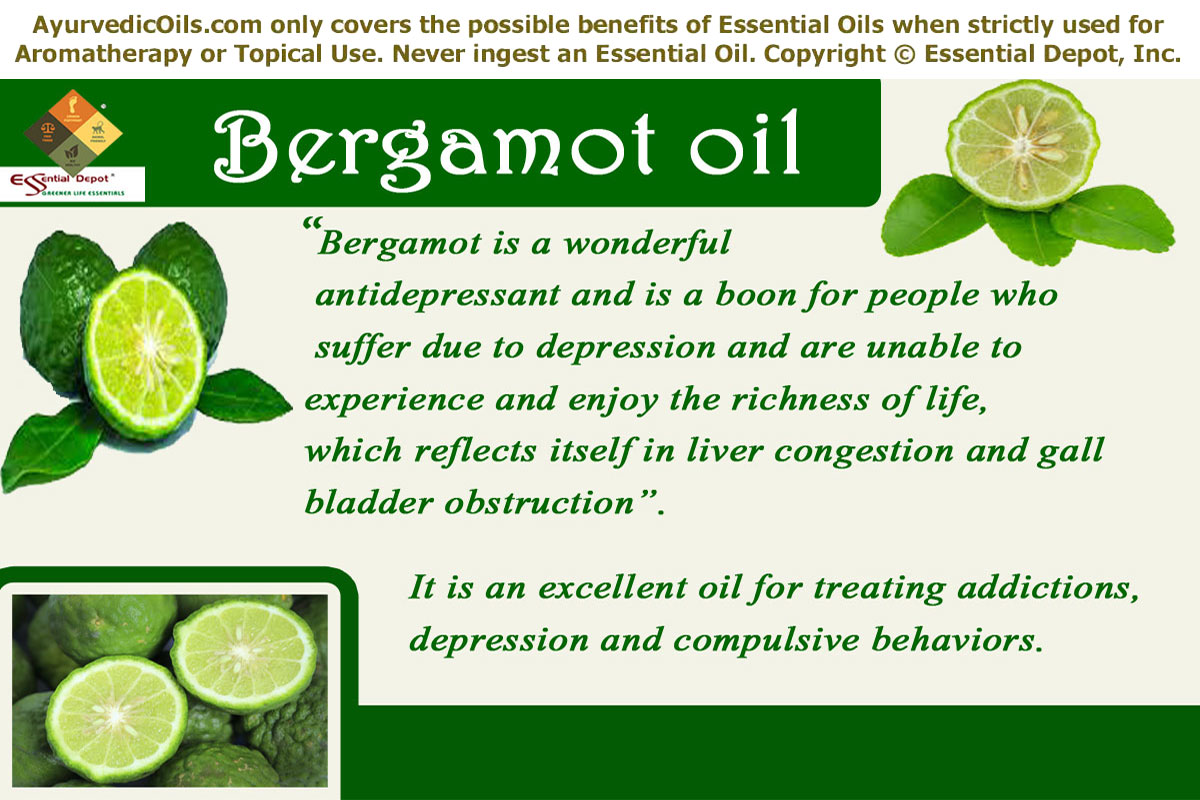
Bergamot-bannerBergamot is a wonderful antidepressant and is a boon for people who suffer due to depression and are unable to experience and enjoy the richness of life, which reflects itself in liver congestion and gall bladder obstruction”, says Light Miller and Bryan Miller in their book Ayurveda and Aromatherapy. Botanically called as Citrus bergamia, Bergamot is another famous member of the Citrus family Rutaceae.

The rich, herbaceous and fruity-aromatic essential oil is cold pressed from the rind of the Bergamot fruit, which is also called in Ayurveda with the same name. Bergamot and its essential oil have been recommended in the Ayurvedic treatment for healing skin rashes, sores, acne, fever, obesity, depression, eczema, gingivitis, sore throat, flatulence, loss of appetite, bladder infections and compulsive behaviors.

Purchase Bergamot Essential Oil – Retail – 4 oz – CLICK HERE

Historical uses and importance of Bergamot essential oil:

The name Bergamot is said to have come from the Italian province in Lombardy known as Bergamo. Few sources also state that this name is derived from the Turkish word ‘beg-armudi’, meaning ‘prince of pears’ or ‘prince’s pear’ or ‘the lord’s pear”. Well known to the world as an incredible ingredient of Earl Gray tea, Bergamot and its essential oil have been in the history of various cultures for its medicinal and culinary uses.

Indigenous to the Southeast Asian countries, Bergamot is also claimed as the native fruit from Greece. Later it was introduced to various European countries and is also found growing in Algeria, Morocco, Ivory Coast and Tunisia. About 80% of the world’s total Bergamot production is from the province of Reggio di Calabria in Italy.  It takes about 100 Bergamot oranges to extract 3 ounces of Bergamot essential oil.

The star-like white flowers, feathery leaves and the pear-shaped citrus fruit similar to a cross between a lime and orange have made many countries famous including the Calabria region of Italy. Certain genetic research studies reveal that Bergamot orange is likely to be a hybrid of bitter orange (Citrus aurantium) and lime (Citrus limetta).

Bergamot is also called as a cross between a grapefruit and an orange tree. These pulpy and juicy fruits are often used in cooking and the most popular dessert with Bergamot in the Middle East countries and America is the Turkish delight. Bergamot juice has been used in the traditional Calabrian medicine for the treatment of malaria and other chronic fevers.

This nutritious fruit and its essential oil were used in the traditional and folklore medicines for treating fever, urinary tract infections, acne, psoriasis, respiratory disorders, cystitis, depression, digestive problems, cold sores, chicken pox and anxiety.

Bergamot peel oil has been a fundamental component in various fragrance formulations. It has also been used as a prime ingredient in the original Eau de Cologne by Farina in Germany in the 18th century. It is also used in the production of marmalades, smokeless tobacco products, digestive liqueur named Liquore al Bergamotto and much more.

Chemical constituents or Gas Chromatography Report (GC) of Bergamot oil:

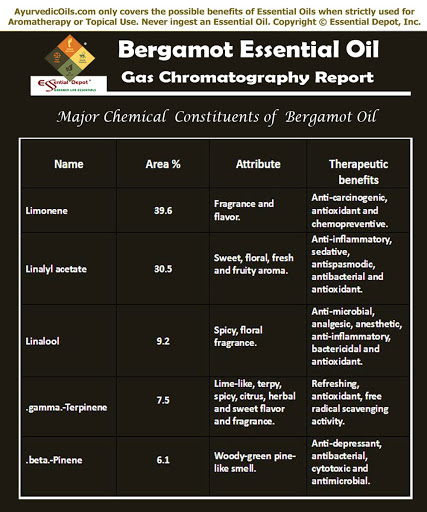
According to the Gas chromatography report, Bergamot oil constitutes of 19 chemical components that contribute to its fragrance, therapeutic attributes, consistency and quality of this citrus oil. Of which, Limonene contributes to the highest proportion of Bergamot oil constituents with about 39.6% of its total composition.

Just click on:

I trust that this must certainly help you in getting to know the exclusive information about these prime chemical constituents of Bergamot oil.

The table crafted below clearly depicts the unique nature and contributions of these biochemical constituents to the healing magnificence of Bergamot essential oil.

bergamot-gc-2Therapeutic properties of Bergamot essential oil:

The remedial attributes of Bergamot oil are anti-depressant, sedative, antiseptic, analgesic, anti-parasitic, anti-inflammatory, febrifuge, antibiotic, vulnerary, cicatrisant, disinfectant, deodorant, antispasmodic, vermifuge, relaxant, anti-infectious and stimulant.

Ayurvedic health benefits of Bergamot essential oil:

Ayurveda is the oldest healing sciences on earth and it has its origin in India, the country with the oldest historical references. The Indian Hindu mythology has 4 major sacred books also known as Vedas, namely Yajur, Rig, Sama and Atharvaveda. Among these holy books, Ayurveda has been an integral part of Atharvaveda where about 114 verses talk about extensive Ayurvedic remedies and principles to lead a holistic life.

Ayurvedic philosophy was further strengthened by the pioneer Ayurvedic philosophers like Charaka (respected as the ‘Father of medicine’) and Sushruta (celebrated as the ‘Father of surgery’), who wrote Charaka Samhita and Sushruta Samhita respectively. These two Ayurvedic encyclopedias were combined together and represented as Ashtanga Hridaya Samhita.

More than just a traditional healing system, Ayurveda has been held high as a holistic approach with a bundle of values and disciplines for leading a responsible life. Ayurveda trusts on Mother Nature and believes that illness is a result of imbalance between an individual and nature. With this idea, Ayurvedic remedies always stick on to natural medications, believing that nature has a cure for everything within it.

Ayurveda considers sickness as a significant opportunity to explore various aspects that contribute to the illness. It is a known fact that Mother Nature is built up of five vital elements, namely earth, water, fire, air and space. As a part of nature, human beings are also made up of these vital elements called as Panchamahabutas.

According to Ayurveda, every person is a unique creation with a unique individual constitution, which comprises of 3 fundamental biological forces known as doshas. They are vata, pitta and kapha doshas and each of these doshas are a combination of the 5 elements of nature.

Every Ayurvedic treatment begins with the identification of the Prakriti or the unique individual constitution. Every human being has a predominance of one of these doshas, which mainly determines the physical, psychological and behavioral attributes.

Balance between these doshas as per nature’s law indicates healthiness and imbalance due to lifestyle changes, food habits, climatic conditions and undisciplined actions causes sickness. Unique Ayurvedic remedies are prescribed for every individual based on their individual constitution and the root cause of a disease. This aids in diagnosing the illness at the first stage and preventing it in future also.

The prime Ayurvedic medications are herbs, plant essential oils, yoga, meditation, simple physical exercises, prayers, Pranayama and certain Ayurvedic techniques including Abhyanga or Ayurvedic massaging, an Ayurvedic routine, and Panchakarma (the Ayurvedic detox techniques.) With its heating and drying energies, Bergamot essential oil is known to pacify vata and kapha imbalances and augment pitta dosha.

The Ayurvedic health benefits of Bergamot essential oil are:

Bergamot-broucher--info-1. Relieves from fear, anxiety and depression:

Emotional barriers like anxiety, fear, depression and mood fluctuations have a greater impact on your routine and contribute to various adverse effects in your personal as well as professional life.

The reasons for these negative emotions are often inexpressive and at times we realize that we are depressed or put off for no valid reason. Whatever the causes may be, the remedy for such unhealthful feelings should be a proven anti-depressant that aids in uplifting the senses and stimulating positive energy.

Bergamot is one such excellent anti-depressant and a universally accepted mood enhancer. It is for these reasons; this essential oil is often used in Aromatherapy treatments and other Alternative medicinal practices.

Inhaling the magical aroma of this oil by adding 2 to 3 drops of Bergamot oil in vaporizer or diffuser can help in enhancing your mood, instill a feeling of newness and stimulate the secretion of hormones that help in overcoming such difficult moments.

This has been proven in a Korean study that analyzed the effects of Bergamot oil on pulse rate and blood pressure. The study further concluded that inhaling the energizing aroma of Citrus bergamia oil is extremely effective in lessening psychological stress responses, blood pressure in people with hypertension and the level of serum cortisol.

You can start your own home spa just with a small collection of invigorating essential oils like Bergamot. Massaging your system with 5 drops of Bergamot oil, 5 drops of Neroli oil, 5 drops of Cypress oil and 5 drops of Juniper oil along with 20 ml of sweet almond oil is the best way to fortify your senses, augment your blood circulation, calm your muscles, strengthen your mind and gift yourself with absolute tranquility.

Followed by this massage, enhance your energy level by taking a warm bath diluted with 5 drops of Bergamot oil, 5 drops of Ylang Ylang oil and 5 drops of Lavender oil. What’s next? You are done for the day and it’s time to realize that your fear, feelings of insecurity, anxiety, stress, depression and other negative thoughts have vanished just like a mirage in a desert with the sweet, mesmerizing, fruity and enchanting fragrance of Bergamot oil.

2. Supports nervous functions and boosts brain power:

An article by Robert Tisserand just left me amazed, where a student who have been studying about essential oils for 15 years have noticed the improvement in her husband, a stroke patient especially after the use of Bergamot oil on his pillow.

Robert has also added to this experience by stating that “In one rat study, bergamot essential oil inhibited the damage caused by “focal ischemia” (the same type of damage caused by stroke).” He also says that if any essential oil can be helpful in supporting stroke patients, then it would be Bergamot oil. Various researches state that the molecules of the inhaled essential oils reach the brain through the nasal passages and have effectiveness in treating certain neurological diseases.

A 2009 study on the effect of Bergamot essential oil on brain damage in rats, published in the International Review of Neurobiology, established that “Bergamot oil resulted in a significant reduction of tissue death throughout the brain, especially in the medial striatum and the motor cortex areas.” Few other studies have also proved that Bergamot oil decreases neuronal damage.

Adding 2 to 3 drops of Bergamot oil in your diffuser, vaporizer, pillows, handkerchief or a tissue paper placed beside you can help in improving your blood circulation, augmenting the functions of your nervous system, boosting your brain power and keep you healthy and energized.

Bryan Miller and Light Miller in their book ‘Ayurveda and Aromatherapy’ have shared about the miraculous transformation of their teenage son after the use of Bergamot oil. It was said that one of their sons in high school was undergoing severe depression and after Light Miller started adding few drops of Bergamot oil and Lemongrass oil on his pillow, there was an immediate change in his approach and he successfully graduated.

3. Combats and protects the system from harmful microbes:

The essential oil of Bergamot has anti-fungal and anti-bacterial properties that can assist in killing existing microbes and preventing the growth of new microbes. A 2009 study published in the Journal of Applied Microbiology concluded that the blend of Bergamot and Orange essential oil tested against two bacterial strains resistant to vancomycin, proved effective in inhibiting bacterial growths. It was also said that these oils are an excellent alternative to chemical-based bactericides.

Few other studies conducted in Italy proved that Bergamot essential oil exhibited antifungal activity against Candida fungus strains and Prototheca, which is a yeast-like alga. Adding 2 to 3 drops of Bergamot oil in warm bathing water can act as a protective shield against bacterial and fungal infections.

You can also mix 2 drops of Bergamot oil with 2 drops of Orange oil and 2 ml of Coconut oil and apply it on acne, candida infections, athlete’s foot, ringworm, and on wounds for preventing it from becoming septic. Being a disinfectant and antiseptic, Bergamot oil aids in healing wounds quickly.

4. Nourishes the skin enormously:

Just like other citrus oils, Bergamot essential oil has enormous amount of Vitamin C and is extremely good for nurturing the skin. The cicatrisant properties of this oil assist in fading away scars, difficult marks left by pimples, boils and wounds.

Massaging your skin with 1 drop of Bergamot oil, 1 drop of Frankincense oil and 1 drop of Lavender oil along with 1.5 ml of olive oil can help in uniform and even distribution of melanin and other pigments in the skin and granting you a gorgeous look and an enriched skin tone.

With its antiseptic, vulnerary and disinfectant properties, Bergamot essential oil is one among the best oils for treating various skin problems like eczema, psoriasis, cold sores, itching, wounds, cracks, skin ulcers and other skin infections.

A Chinese study on Bergamot oil along with Boxthorn oil on the skin and hair growth in mice, concluded that “the extract increased the activity of the antioxidant enzymes superoxide dismutase and collagen in the skin, as well as promoting hair growth.”

5. Aids in shedding your extra pounds:

Obesity or weight gain is an imbalance of kapha dosha, which is characterized by the heavy, slow, cool and sluggish attributes. Such vitiations are often treated with the help of essential oils that have warming, stimulating, energizing and heating energies and Bergamot is among those essential oils for reducing excess fat and water deposits in the system with its kapha-reducing attributes, which otherwise leads to overweight or obesity.

The presence of limonene and other therapeutic properties in Bergamot oil promotes the functional capabilities of hypothalamus, which is the satiety center of the brain. By doing this, the feeling of being full or the natural appetite towards food decreases gradually and controls the cravings for food.

Massaging your system with 5 drops of Bergamot oil, 5 drops of Orange oil, 5 drops of Black pepper oil, 5 drops of Lemongrass oil along with 10 ml of coconut oil can help in reducing your weight slowly and steadily.

6. Helps treat addictions and other off-putting habits:

Bergamot is such a sacred oil that can help in attaining holiness and experience the feeling of oneness with the divine power. Inhaling the sanctified aroma of this oil by adding 3 to 4 drops to your diffuser or scented candle can assist in opening your senses, understanding the universe, granting the power to tackle challenges, and having complete control over your mind and body.

It is for these important reasons, Bergamot essential oil is used in treating compulsive habits, addictions like smoking, use of drugs and alcohol. This oil encourages the mind by opening up the heart chakra, which is responsible for appreciating the love for self and for others.

Other health benefits:

Bergamot essential oil is also effective in treating colic, intestinal worms, rheumatic pain, spasms, fever, irregular bowel movements, body odor, anorexia, constipation, urinary infections, hysteria, hair fall, inflammation and parasitic infections.

Disclaimer:

This information is meant only for educational purposes. It is not intended to diagnose or prevent any health conditions and substitute any other prescribed medications or professional medical advice. We are not healthcare experts and this info is only for bringing the importance of Ayurvedic healing practices under limelight.

Do not make use of essential oils internally and ensure that you always dilute essential oils in appropriate carrier oils before using it for topical applications. This is mainly because organic and unadulterated essential oils are very concentrated liquids and may cause allergic reactions if used on the skin directly. Consult your Ayurvedic practitioner/ healthcare expert before choosing the perfect essential oils for your unique individual constitution or prakriti along with your state of health.

The MSDS (Material Safety Data Sheet) of Bergamot oil is readily available for your enhanced safety and better usage.

Gas Chromatography Report (GC analysis) of Bergamot oil.

Bergamot Essential Oil – Possible Skin Issues:

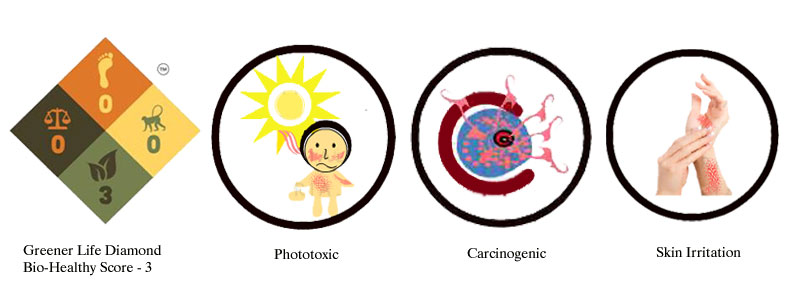
bergamot-logoGreener Life Diamond – Bio-Healthy Score => 3 – Possible Skin Issues:

See => http://www.essentialdepot.com/GreenerLifeDiamond.html

Bergamot oil has photosensitizing effects. This may cause irritation and burning of the skin, when exposed to visible sunlight after the topical application of this oil up to 72 hours of use. The fundamental reason behind this is the reaction of the photoactive chemical constituents that absorbs light, results in toxicity through molecular changes.

Studies establish that the phototoxic chemical constituents in Bergamot oil are Bergaptene, Bergamotene and other furocoumarins. It is also stated that furocoumarins (Psoralens) attribute to carcinogenic, photomutagenic, phototoxic and melanogenic properties of Bergamot oil.

Interaction of these components with the sunlight obtains the ultra violet radiation (UV rays A and B), which might cause negative reaction on the skin, leading to chronic sunburn, skin irritation, hyperpigmentation, development of skin lesions, Berloque dermatitis, alterations in the cellular structure of the skin that may cause skin cancer, following the development of covalent DNA adducts in UV-A or solar light.

However the International Fragrance Association (IFRA) states that the safe dilution level for the application of Bergamot oil on parts exposed to sunlight is 0.4% (or less), which is about 2.4 drops per ounce of any other carrier oils. Furocoumarin or bergaptene-free Bergamot oils are said to reflect comparatively reduced number of skin complaints owing to phototoxicity, than the natural Bergamot oils.

Surprisingly, Furocoumarins are also remedially used in combination with the long-wave ultraviolet light therapy for the treatment of vitiligo, mycosis fungoides and psoriasis. This caution is relevant to direct skin applications like massage oils, balms, creams and lotions and not for cleansing products like shampoos and soaps.

Reference Links Substantiating Possible Skin Issues of Bergamot Oil:

  1. Assessment report on Citrus bergamia Risso et Poiteau, aetheroleum , by the Committee on Herbal Medicinal Products, European Medicines Agency
  2. In vitro photostability and photosensitizing properties of bergamot oil. Effects of a cinnamate sunscreen by Morlière P, Hüppe G, Averbeck D, Young AR, Santus R, Dubertret L, published in the Journal of Photochemistry and Photobiology
  3. Leung’s Encyclopedia of Common Natural Ingredients, used in Food, Drugs and Cosmetics by Ikhlas A. Khan and Ehab A. Abourashed.
  4. Bergamot oil by Drugs.com
  5. Perfume Phototoxicity by Francis N. Marzulli and Howard I. Majbach, presented before the New York Chapter, Clifton, N.J.

Thought for the day:

Nature is relentless and unchangeable, and it is indifferent as to whether its hidden reasons and actions are understandable to man or not. -Galileo Galilei

Suggested Reading:

  1. Bergamot Oil: American Pharmaceutical Association Monograph No. 2 by Donald Davis Mossman, Marston Taylor Bogert
  2. HEALING POWERS OF BERGAMOT OIL (The Aromatherapy Professional: Healing with Essential Oils) by KG Stiles
  3. Citrus bergamia: Bergamot and its Derivatives (Medicinal and Aromatic Plants – Industrial Profiles) From CRC Press
  4. Essential Oils For Weight Loss & Top Essential Oil Recipes: Guide to Essential Oil Recipes (Essential Oils Box Set) (Volume 2) by Lindsey P
  5. Bergamot Essential Oil (Aromatherapy Book 48) by Miriam Kinai

Reference Links:

  1. Bergamot Orange by Wikipedia
  2. Bergamot essential oil by Wikipedia
  3. Health Benefits of Bergamot essential oil by Organic Facts
  4. Essential oils, Stroke patients and Bergamot by Robert Tisserand
  5. Prevention of Glutamate Accumulation and Upregulation of Phospho-Akt may Account for Neuroprotection Afforded by Bergamot Essential Oil against Brain Injury Induced by Focal Cerebral Ischemia in Rat, by Department of Pharmacobiology and Center of Neuropharmacology of Normal and Pathological Neuronal Plasticity, UCADH, University of Calabria, Italy published in PubMed

Calendula Oil

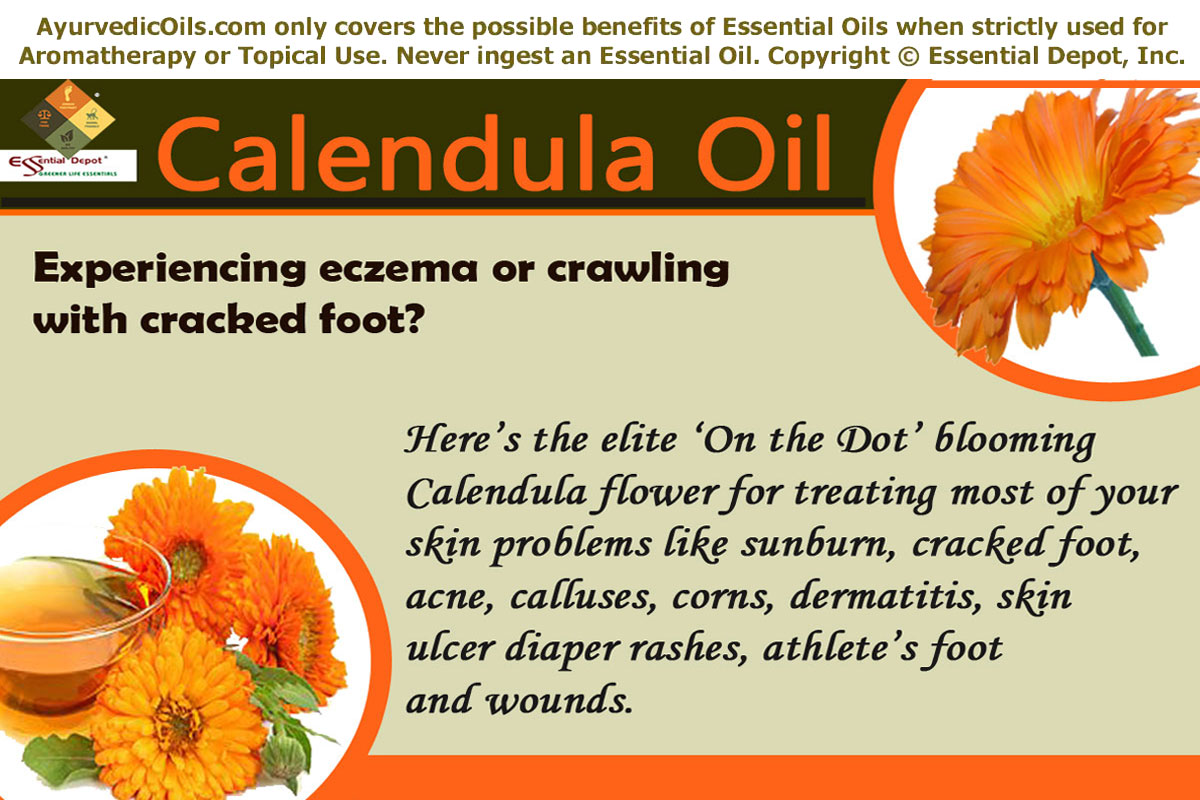
Calendula-bannerIf and only if ‘the power of a flower can shower one forever’ with enormous benefits for the skin, then it cannot be anything less than Calendula, the one and only ‘on the dot’ flower that blooms probably on the first of the calendar month. Calendula and its oil has always been one among the best natural aid for treating numerous skin problems ranging from eczema to cracked foot.

While it looks resemble Marigold, this magical Pot Marigold called as Zergul in Hindi and Chin Chan Ts’ao in TCM (Traditional Chinese Medicine) has been used in Ayurveda and other Complementary and Alternative Medicinal practices for treating wounds, insect bites, sunburns, vaginal infections, varicose veins, acne, warts, calluses, scabies, corns, gastritis and conjunctivitis.

Purchase Calendula Oil – Retail – 4 oz – CLICK HERE

Historical uses and importance of Calendula oil:

Lovingly called as ‘pot marigold’, Calendula officinalis is an arm of the daisy family, Asteraceae. Indigenous to southwest Asia and West Europe including the Mediterranean and Macaronesia, Calendula is also called as Garden marigold and Scottish marigold.

There are many misunderstanding facts between other Calendula and Marigold varieties like marsh marigold, corn marigold and desert marigold that belong to the Tagetes genus and not the Calendula genus.

The word ‘Calendula’ is extracted from the Latin word ‘calendae’, which means ‘little calendar’, ‘little weather-glass’ or ‘little clock’, mainly due to its promptness in blossoming on the new moon or on the beginning of the calendar month.

The word ‘Marigold’ means ‘Virgin Mary’ and is trusted to possess divine healing properties and even today, these flowers are used to honor Mother Mary during numerous Catholic occasions. It is also used to decorate the deities during auspicious religious gatherings in the Hindu tradition in India.

The ancient Greeks and Romans wore garlands and crowns made with the dazzling golden color Calendula flowers and these beautiful blossoms were also used in religious ceremonies and other rituals. The traditional Egyptians believed that these sacred flowers had revitalizing attributes.

The bright golden color petals were also used in textile industry as a source of natural dye for fabrics and it was also used as a natural colorant in cheese and butter varieties. These flowers are a popular ingredient in many Middle Eastern and Mediterranean cuisines along with stews and soup varieties in Germany, for which it is called as ‘Pot marigold’.

Calendula is still remembered for its cordial use during the World War I and the American Civil War as a natural healing agent for treating open wounds. Calendula dressing helped in healing wounds much quicker with its antiseptic and anti-hemorrhagic properties. These flowers were dabbed directly on wounds and cuts to promoter faster healing, control bleeding and to arrest infectious growths.

Being a vital part of the Traditional and alternative medicine, Calendula has been etched in certain oldest medical scripts for cleansing toxins in the gall bladder and liver and was prescribed to treat associated digestive disorders. Till today, the world sings the glory of Calendula tea, attributed to its appetizing taste and enormous healing benefits.

Pharmacological effects and chemical constituents of Calendula oil:

Calendula oil is said to possess antiseptic, antioxidant, anti-inflammatory, stimulant, detoxifying, carminative, anti-tumor, anti-hemorrhagic, antiviral, antifungal, anti-HIV, hepatoprotective and emmenagogue properties.

The major chemical constituents of Calendula oil are a-cadinol, limonene, a-cadinene, p-cymene, 1, 8-cineol along with other flavonoids, terpenoids, coumarins, flavonol glycosides, carotenoids, sesquiterpene glucoside, amino acids, triterpene oligoglycosides, saponins, and oleanane-type triterpene glycosides.

Ayurvedic health benefits of Calendula oil:

Ayurveda is not associated only with the word ‘remedy’ and much more than that, it encompasses diagnosis of the root cause of an illness, prevention of diseases, healthy aging and longevity to love and live with nature, naturally.

Loved as the most precious gift of the God of Creation, Brahma to the Lord of Medicine, Acharya Dhanvantari, Ayurveda is in healing and harmonizing mankind for more than 5,000 years, for which it is called as the Mother of all healing methodologies on earth. This includes Unani, Siddha, Homeopathy, Chiropractic, Aromatherapy, Allopathy, TCM or the Traditional Chinese Medicine, Acupuncture and Naturopathy.

Ayurveda is held high in India and all over the world for its holistic healing practices that defines health as the wellness of the mind, body and spirit together. Among the 4 sacred books of the Indian Hindu mythology (Rig, Yajur, Sama and Atharvaveda), Ayurveda is a significant part of the Atharvaveda, where 114 verses talk about various health conditions, its symptoms, natural remedies and various Ayurvedic techniques for prevention and increased life span.

Dinacharya or the Ayurvedic routine recommends numerous ways for leading a hale, hearty and disciplined life. Human body is regarded as a temple, where the soul dwelling in is considered as a divine presence. This school of thought enables Ayurveda to strongly recommend practices for keeping the body, mind and spirit clean and cheerful.

Everything in this world is a part of nature and is made up of the fundamental elements, namely earth, water, fire, air and space. Every person is made up of a unique combination of these five elements, precisely called as doshas (vata, pitta and kapha). Vata (air + space), pitta (fire + water) and kapha (water + earth) make up an individual constitution, which is also called as Prakriti.

Each and every individual has a unique Prakriti just like the fingerprints, with a predominance of any of these three doshas. This doshic predominance determines the character, personality, behavioral patterns and emotional setup of an individual.

Perfect balance between doshas as per the law of nature indicates health and doshic imbalances due to sedentary lifestyle, change in food habits, weather fluctuations etc., lead to sickness. Ayurvedic remedies aim at treating the root cause of a health condition and prescribes unique medication for every person as per the Prakriti or the individual constitution.

The major Ayurvedic remedies include Ayurvedic essential oils, yoga, simple physical exercises, meditation, herbs, Pranayama (the art of balanced breathing), Abhyanga or the Ayurvedic massaging technique, Dinacharya or the Ayurvedic routine and Panchakarma (the Ayurvedic detoxification therapy).

Calendula oil is recommended for pacifying pitta and kapha doshas and for augmenting vata energy.

The most significant Ayurvedic health benefits of Calendula oil are:
Calendula-broucher1. Calendula for skin:

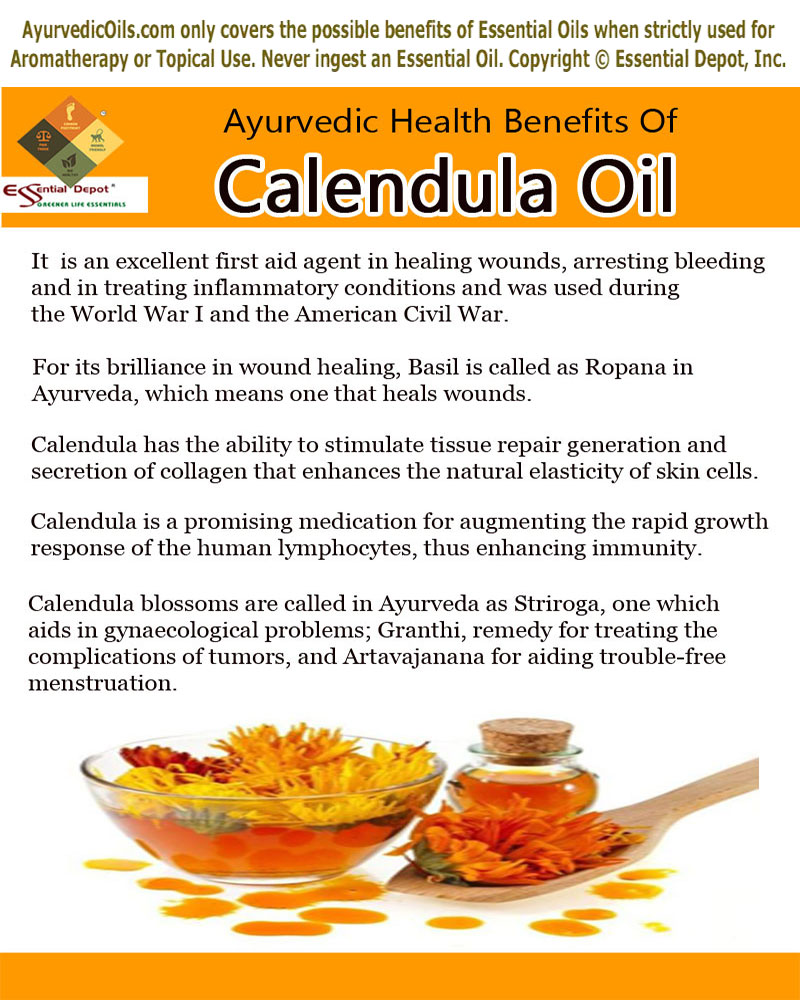
As we saw above, it’s historical significance during the World War I and the American Civil War as an excellent first aid agent in healing wounds, arresting bleeding and in treating inflammatory conditions is a noble proof for its brilliance in wound healing and is called as ropana in Ayurveda, means one which heals wounds.

A 2008 study on ‘Calendula officinalis and Wound Healing: A Systematic Review’ by Matthew J. Leach, PhD, BN (Hons), ND, RN, MATMS, published in WOUNDS, A compendium of clinical research and practice substantiates that the presence of triterpenoids like faradiol and the faradiol monoester and other components including flavonoids, saponins, polysaccharides and micronutrients contribute to its anti-inflammatory, anti-edematous, wound healing attributes and antioxidant properties.

The major skin conditions considered for this study includes foot ulcer, dermatitis, varicose ulcer, burns, injuries, cuts, abrasions, pressure ulcer, skin ulcer and other wounds. This study also explains that Calendula officinalis has “Anti-inflammatory activity – The acute inflammatory response during the early stages of injury generates factors that are essential for tissue growth and repair.

Antimicrobial activity -Wound healing can also be delayed when microorganisms are present in large enough numbers. Therefore, reducing the bacterial load of a wound may be necessary to facilitate wound healing, as well as reduce local inflammation and tissue destruction.

An ideal agent for the prevention and control of wound infection would therefore be one that directly destroys pathogens, while also stimulating immune activity. Calendula is one agent that possesses both of these properties.

Antioxidant effect – The production of free radicals at or around the wound bed may contribute to delays in wound healing through the destruction of lipids, proteins, collagen, proteoglycan, and hyaluronic acid.

Agents that demonstrate significant antioxidant activity may, therefore, preserve viable tissue and facilitate wound healing. Calendula demonstrates free radical scavenging activity against superoxide radicals and hydroxyl radicals and facilitates wound healing via an important antioxidant effect.

Wound healing activity – The most important clinical endpoint in wound management is wound closure or 100% epithelialization. Given that wound closure is critically important; it is argued that any agent demonstrating significant wound-healing activity should be seriously considered in conventional practice.

Calendula, for example, may facilitate wound healing by increasing wound angiogenesis and collagen, nucleoprotein, and glycoprotein metabolism, leading to improvements in both local circulation and granulation tissue formation.”

This study concludes stating “Calendula officinalis possesses a number of properties that are conducive to wound healing, especially in a number of acute and chronic wounds, particularly for its effect on inflammation, microbial load, and epithelialization.”

With its immunostimulant, astringent, anti-inflammatory, antifungal, antiviral, anti-microbial, antiseptic and disinfectant properties, applying a blend of 5 drops of Calendula with 2 drops of Bay leaf oil in your mild skin care cream or with 10 drops of Coconut oil can help in healing bee stings, insect bites, sores, cuts, bruises, skin abrasions, swelling, burns, acne, scrapes, diaper rashes, athlete’s foot, conjunctivitis, dermatitis and other inflammatory skin conditions.

The most adorable quality of Calendula oil is that it helps in controlling the formation of scars and diminishes stretch marks with its ability to stimulate tissue repair generation and secretion of collagen that enhances the natural elasticity of skin cells.

You can also add few drops of Calendula oil in your skin care ointments, lotions and creams or in salves, facial steams, baths, washes, tinctures and Ayurvedic essential oils for nourishing, enriching and nurturing the texture and health of your skin.

2. Calendula for circulation and inflammation:

Calendula oil has diuretic and anti-inflammatory properties that assist in clearing away excess of kapha dosha responsible for fluid retention through the mutravahasrotas, means the urinary passages by promoting the frequency and quantity of urination. By this way, the excess water deposits, toxic remains, salt, uric acid and fat in the system are eliminated through urine.

The effectiveness of Calendula in enhancing the functions of rasa and rakta dhatus, which means the plasma and blood tissues contributes to its ability in augmenting proper blood circulation. This makes Calendula oil as a promising remedy in treating circulatory conditions like varicose veins, arthritis, gout and rheumatic conditions.

Thus massaging the affected or painful parts with 1 ounce of Calendula oil with 2 drops of Cassia oil and 2 drops of Black cumin oil can help in enhancing blood circulation, discarding toxic remains and fluid retention through urine and reduce pain and inflammation associated with rheumatism, varicose veins, gout and arthritis.

You can also add 2 drops of Calendula oil in warm water and use it is a gargle for alleviating sore throat, killing germs and microbes in the mouth causing bad breath, cavities, gingivitis and other gum problems.

3. Calendula for immunity:

Low immune power is the direct doorway for numerous microbes, pathogens and other micro-organisms causing various diseases and contagious medical conditions. The presence of calendulin, a yellow resin along with tannins and other chemical constituents of its volatile oil makes Calendula a promising medication for augmenting the rapid growth response of the human lymphocytes.

WBC or the white blood corpuscles are responsible for the body’s immune power or the potent to fight against pathogens, microbes or other harmful micro-organisms invading the healthy system. With its anti-microbial, antifungal, antiviral and antibacterial properties, Calendula oil strengthens the immune system by shielding against the attack of bacteria, virus, fungi, worms etc.

Calendula oil also helps in treating inflamed lymph glands and decrease lymphatic congestion. It also aids in purging away harmful toxic remains in the body through urine with its triterpenoid components responsible for its anti-inflammatory and diuretic properties.

Adding 5 drops of Calendula oil in bathing water every morning and 2 drops of Calendula oil added to your hankie or your pillow cover are the best ways to strengthen your immunity through the ‘Calendula power’.

4. Calendula for digestive disorders:

Calendula oil boasts its support to various digestive functions with its astringent, anti-inflammatory, anthelmintic and antimicrobial properties. The ability to pacify excess of pitta energy or digestive fire makes Calendula an excellent natural remedy for soothing the lining of the stomach, intestines and the gastrointestinal tract.

Massaging your abdomen with 10 drops of Calendula oil blended with 2 drops of Calamus oil and 4 ounce of Coconut oil can help in soothing the walls of the stomach and intestines, thus pacifying irritable bowel syndrome, peptic ulcer, gastritis and other inflammatory conditions of the gastrointestinal tract.

This medicated massage can also assist in stimulating the functions of the liver, the organ of detoxification, thus support in eliminating microbial infections, ama or toxic remains in the stomach, intestinal worms and other pathogenic foreign bodies in the gut, which may otherwise lead to dysentery, viral hepatitis, diarrhea and enteritis.

5. Calendula for reproductive functions:

Calendula is extremely beneficial in supporting the functions of the female reproductive problems including irregular menstruation, uterine fibroids, frigidity and ovarian cysts (polycystic ovarian syndrome).

For all these special benefits, Calendula blossoms are called in Ayurveda as Striroga, one which aids in gynaecological problems; Granthi, remedy for treating the complications of tumors, and Artavajanana for aiding trouble-free menstruation.

The oil of Calendula helps in clearing excess of kapha and pitta energies in the uterus, mainly because of its effectiveness on artavavahasrotas.

A gentle massage of the lower abdomen, back and thighs with 10 drops of Calendula oil and 1 drop of Cinnamon oil and 1 drop of Cassia oil can help in promoting blood circulation in the uterus, regularizing blocked or delayed menstruation, relieving dysmennorhea or menstrual pain.

You can also use this blend in bath, especially during your menstrual cycle and the times you’re sick with menopausal symptoms.

Calendula oil functions like a tonic to the uterine muscles, aiding in balancing the estrogen hormones that are responsible for PCOS and uterine fibroids. It is also trusted to treat cysts in the digestive passage and the breasts. Calendula infusions were used in folklore remedy for fostering uterine contractions and the discharge of placenta during childbirth.

Other health benefits:

The most celebrated herbalists, Gerard and Culpeper call Marigold as a “comforter of the heart and spirits”. Calendula is also recommended safe for diaper rashes, hemorrhoids, stomach upset, people undergoing radiation therapy, abdominal cramps, fistulas, sprains and eye inflammation.

Disclaimer:

This information is only for the use of education and is not intended to diagnose or prevent any health condition or to substitute any prescription drugs or professional medical advice. We, the Essential Depot team are not healthcare professionals and this content is written only in social interest of educating the public about the richness of Ayurvedic treatment, the most trusted traditional healing system.

Calendula oil is suggested only for the use of topical application and do not take it internally. Talk with your medical expert or your Ayurvedic practitioner before choosing the appropriate Ayurvedic oils for your Prakriti or unique individual constitution and medical condition and before using them on children, nursing women, pregnant ladies and on people who are undergoing other treatments (please check on drug interactions) and on those who are allergic to specific oils.

Thought for the day:

“The marigold goes to bed with the Sun
And with him rises, weeping.”
-Shakespeare

Suggested Reading:

  1. Calendula – Calendula Officinalis by Amanda Klenner
  2. Calendula Oil (How To Make Natural Skin Care Products Series Book 29) by Miriam Kinai
  3. Calendula by Marian Kim
  4. Calendula by Mindy Green
  5. Herbs for Healthy Aging: Natural Prescriptions for Vibrant Health by David Hoffmann FNIMH AHG

Reference Links:

  1. Calendula by Wikipedia
  2. Calendula by The University of Maryland Medical Center
  3. Calendula officinalis and Wound Healing: A Systematic Review by Matthew J. Leach, PhD, BN(Hons), ND, RN, MATMS, published in WOUNDS, a compendium of clinical research and practice
  4. Phytochemical Constituents and Pharmacological Activities of Calendula officinalis Linn(Asteraceae): A Review by BP. Muley, SS. Khadabadi and NB. Banarase, Govt. College of Pharmacy, Maharashtra, India, published in the Tropical Journal of Pharmaceutical Research



Your resource for quality Essential Oils. Every batch is
GC tested to ensure purity and authenticity.
Cucumber Oil

Will you be delighted or dreary if someone beckons you, “As Cool as a Cucumber”? I would rather recommend you to take pride when somebody calls you with that phrase because it simply means the attitude of being calm, composed and in absolute control of your emotions, even if a particular situation demands your aggressiveness and anger.

Cucumber-bannerThis is because Cucumber is one among the coolest fruits as scientific facts state “the inside temperature of a Cucumber can be up to 20 degrees cooler than the outside air”, besides growing well in tropical conditions.

Called as Kantakiphalam, Svetakarahatakam, Mutralam and Sudhavasah in Sanskrit, Cucumber is commonly called as Kheera in the traditional healing methodology.

Proudly representing India as its Motherland, Cucumber has been a part of the ancient Ayurvedic regimen in the treatment of rheumatic conditions, constipation, urinary disorders, cholera, wrinkles, dandruff, arthritis, vaginal infections, loss of appetite, duodenal ulcer, erectile dysfunctions, high cholesterol, eczema and hyperacidity.

Purchase Cucumber Oil – Retail – 4 oz – CLICK HERE

Purchase Cucumber Oil – Wholesale – CLICK HERE

Historical uses and importance of Cucumber and its essential oil:

Cucumber, as far as its history is known to the world is said to be a 3,000 years old fruit variety of the gourd family, cucurbitaceae. Besides its use in culinary, Cucumber has been preferred for raw eating, mainly for its cool, mild and enhancing flavor.

This cylindrical fruit is a powerhouse of various nutrients, for which it has been used in various civilizations across the world including the Rome, Israel, Greek, Egypt, The United Kingdom, France, China, and USA. The three famous varieties of this creeping vine are pickling, slicing and burpless cucumbers.

Cucumbers are absolutely edible and are found across the globe, all around the year but the high seasonal growth curtails to May – August. Pliny The Elder, the Roman philosopher quotes that Cucumber is the most favorite fruit of the Roman Emperor, Tiberius. His gardeners grew cucumbers using artificial methods, just to ensure that the king had cucumbers on his table every day.

It is being said that cucumbers were used in the primordial Roman province for treating more than 40 medical conditions, including scorpion stings, blurred vision, frigidity, high blood pressure and diabetes.

The Biblical reference of cucumber goes like this “We remember the fish, which we did eat in Egypt freely/the cucumbers, and the melons, and the leeks, and the onions, and the garlic.” After which the Israelites started cultivating cucumbers by themselves.

Certain sources state that cucumbers were brought to Haiti in 1494 by Christopher Columbus and were cultivated by the early Spanish settlers. South and North Dakota boasts for owning the finest cucumber farmers of Native America.

These fresh and refreshing fruits are often used in making salads (Indian raita), sauces, pickles, cold soups, sausages, chutneys, lamb chops, relishes and dressings. Cucumber and its essential oil are also used in the manufacturing of soaps, moisturizing lotions, anti-dandruff shampoos, conditioners and skin care creams, especially anti-aging products, for its nourishing properties.

Therapeutic properties and chemical constituents of Cucumber oil:

The oil of Cucumber contains about 14 to 20% of oleic acid, stearic acid, palmitic acid and 60 to 68% of omega-3-linoleic acid. It also contains potassium, silicon, cucurbitacins, sulphur and certain fatty acids like 9, 12, 15-Octadecatrienoic acid and 9, 12-Octadecadienoic acid.

Cucumber oil has antioxidant, diuretic, anti-rheumatic, anti-ulcer, relaxing, antidote, rejuvenating, anti-stress, anti-inflammatory, anti-cancerous, tonic, anti-dandruff, and laxative properties. It is rich in Vitamins B1, B2, B3, B5, B6, and C along with magnesium, calcium, phosphorous, zinc, iron and folic acid.

Next time, when you are exhausted and drained out, stop sliding on toxic caffeine drinks, instead grab a Cucumber and bank upon it for all your nutritional requisites.

Ayurvedic health benefits of Cucumber oil:

Ayurveda and Cucumber share the mutual joy of being indigenous to India, the land of rich cultural heritage. This oldest healing science on the globe states that everything on earth is made up of the five vital elements of nature, namely fire, water, earth, space and air.

Among which the living things on this planet acquires prana, the vital energy of life and ojas, and the nutritive quintessence from Mother Earth. While animal and human beings utilize prana and ojas for vitality and livelihood, plants grab ojas and prana from the ground and renovate them as food, herbal medications and essential oils for the absolute well-being of all other organisms.

The greatest news about the nobility of plants and trees are that they capture enormous life force and spiritual energy straight from the space by constantly looking up to the sky. Thus, any source of food or medicines acquired from plants instills the purest form of energy directly to our soul. It is because of this reason; we call invigorating plant fragrances (especially from essential oils, the life essence of plants) as soulful aromatic substances.

Cucumber is a bundle of joy and instant coolant that refreshes everyone even on a bright sunny day. It bears all the heat in the atmosphere, yet remaining absolutely cool in the inside makes it a special fruit with enormous healing attributes and nutritional values. India, being a country of tropical climatic conditions, rests upon Cucumber to quench its thirst and no Indian summer is complete without Cucumbers on the street.

Being a complete traditional remedy, Ayurveda regards health as a combination of physical, emotional and spiritual wellness and this ideology is based upon its philosophy of considering the human system as a place of worship or temple.

Ayurveda believes that the soul vested within each of us connects with Divinity and this connection or synchronization is the rationale behind hale and heartiness.

Ayurveda says that every individual is made up of three distinct doshas (vata, pitta and kapha) or biological energies. The most predominant among the three doshas acts as a deciding factor for your personality, character and behavioral traits.

Imbalance of any one of these doshic elements end up in health problems signaling that the body is out of balance with nature.

Imbalance of vata dosha can end up in memory loss, lack of concentration, fear, insomnia, dry skin, restlessness and constipation. Pitta unevenness might lead to disgust, ulcer, anger, heartburn, high blood pressure, jealousy, fever and skin ulcers.

Fluid retention, toxic remains, congestion, sluggishness, delayed menstruation, uterine fibroids, obesity and procrastination are the results of Kapha vitiation.

Cucumber oil has pacifying effects on pitta and kapha dosha. The cooling and refreshing properties of this oil can help in treating high blood pressure, heartburn, ulcer, fluid retention, skin eruptions, constipation and stress.

Cucumber is absolutely a treat for the four senses of healing, whereas its lucid green color soothes the sense of sight, it’s refreshing taste energizes the sense of taste, its cooling properties penetrate deeply into the skin to transfer its therapeutic values through the sense of touch, it’s refreshing aroma reaches the limbic system in the form of aromatic molecules to control emotions.

The other significant Ayurvedic health benefits of Cucumber oil are:

Cucumber-oil1. Augments skin health and supports radiating complexion:

Cucumber oil has stupendous revitalizing and nourishing properties that help in treating dull, damaged or mature skin conditions. The presence of linoleic acid and oleic acid in cucumber makes it an excellent aid for skin problems including acne, blackheads, sunburns, psoriasis, eczema and certain other inflammatory skin conditions.

The antioxidant properties of cucumber oil are attributed to the significant existence of tocopherol and tocotrienol substance along with the three lignans including secoisolariciresinol, lariciresinol and pinoresinol. These elements make Cucumber oil powerful in fighting against the free radicals responsible for aging symptoms, skin damages and several types of cancer, including ovarian cancer, prostate cancer, breast cancer and uterine cancer.

Massaging your skin with 10 drops of Cucumber oil blended with 2 drops of Orange oil and 4 ounce of coconut oil can help in retaining the natural moisture in the skin, repair dry and dull skin surface, treat eczema, psoriasis, rough, scaly and mature skin, reduce wrinkles, aging symptoms and skin eruptions.

A 2011 study on “Exploring Cucumber Extract For Skin Rejuvenation” by Naveed Akhtar, Arshad Mehmood, Barkat Ali Khan, Tariq Mahmood, Haji Muhammad Shoaib Khan and Tariq Saeed, Department of Pharmacy, The Islamia University of Bahawalpur and the Department of Pharmaceutical Sciences, COMSATS Institute of Information Technology, Pakistan, Published in the African Journal of Biotechnology, states that cucumber extract has been proven extremely beneficial for the skin.

These experts also say that Cucumber extracts have passed the maximum number of dermatological tests including skin melanin test, skin erythema test (safety of cosmetics), pH tests, skin moisture content test, skin sebum content test, and trans epidermal water loss test.

This study concludes stating that this was a preliminary initiative in exploring the unknown effects of Cucumber as a topical cream for skin rejuvenation.

It also states that cucumber extracts aid in reducing the melanin content (responsible for skin pigmentation and complexion); has anti-acne effects with its potent to decrease the content of skin sebum.

This study also declares that these analyses have proved to be capable in the context of prospective topical applications of cucumber extract (with its varied skin care properties), as cosmetics, skin-care items and in the manufacturing of pharmaceutical preparations.

You can also add 2 drops of Cucumber oil in a cup of cool water and wash your face for locking the moisture and fight against acne causing micro-organisms.

2. Combats dandruff and explores the natural shine of your locks:

Bouncy, strong, silky and dandruff-free lustrous locks are the dream of many women out there. Men are not an exception though, in longing for healthy hair that is free from hair loss, dandruff and other scalp conditions.

Cucumber is one among those natures’s richest owner of the minerals like silica and sulphur, of which sulphur is known for promoting hair growth and silica fortifies the hair follicles and protect from breakage and loss of hair. Silica is an essential element for supporting the health of connective tissues like skin, muscles, ligaments and bones.

The moisturizing properties of Cucumber oil helps in hydrating the scalp and aids in reducing dryness, itchy and flaky scales on the scalp surface and nourishes the scalp and roots of the hair from within.

Massaging your scalp with 5 ounce of Cucumber oil mixed with 5 drops of Rosemary oil and 5 drops of Brahmi oil and leaving it for 1 hour by wrapping a warm towel (helps the medicated blend to penetrate deeply into your scalp) can assist in reducing dandruff, replenishing the scalp, enhancing the luster of your hair and prevent excessive hair fall. You can also add 5 drops of Cucumber oil in your mild shampoo for fastening the natural moisture in your hair for a longer duration.

This blend can be applied by the swimmers before their swimming voyage in the chlorinated and chemical filled water. This helps in preventing the hair damage naturally.

3. Helps control high blood pressure, cholesterol and diabetes:

Certain studies witness that the presence of sterols in Cucumbers may help in reducing the high level of cholesterol, while the presence of fiber, magnesium and potassium assists in treating high blood pressure. Cucumber also stimulates the secretion of insulin hormones in the pancreas, thus assisting in the treatment of diabetes.

Eating fresh cucumber daily along with adding 5 drops of Cucumber oil in your liquid soap can help in vitalizing your cells and augment your energy levels.

4. Soothes the digestive system, thus helps in treating ulcers and halitosis:

Cucumber oil has the power to soothe and pacify pitta dosha. The excess of which would end up in overindulgence of digestive fire leading to ulcer, high blood pressure, acidity, heartburn, acne, negative emotions, feelings of rage, insomnia, acne and certain other skin eruptions.

Massaging your abdomen and chest with 10 drops of Cucumber oil blended with 2 drops of Peppermint oil can help in cooling the digestive system (intemperance of digestive fire) by soothing the lining of the stomach and intestines. Using 2 drops of Cucumber oil in warm gargle can assist in fighting against bad breath with the presence of phytochemicals.

5. Flushes out toxins and aids in treating rheumatic and inflammatory conditions:

Cucumber has enormous amount of ascorbic acid, contributing to its diuretic properties. This moisture-rich oil helps in replenishing the system with its anti-rheumatic, antioxidant and diuretic properties by flushing out the excess fluid deposits, toxic remains, salt, uric acid, free radicals and fat deposits in the system, which is often responsible for inflammatory conditions like gout, rheumatism, arthritis, swelling, redness, obesity and puffy eyes.

Massaging the affected parts with 5 ounce of Cucumber oil with 5 ounce of Sweet Almond oil can help in promoting frequent urination, thus eliminating toxic remains, free radicals, salt, fat deposits and uric acid, which helps in reducing swelling, skin irritations, muscular soreness, pain, redness and muscular stiffness associated with rheumatism and arthritis.

Pranayama or the art of balanced breathing can help highly in expelling ama or excess toxic substances in the system, where all these toxins are discharged through exhalation.

Inhaling the refreshing fragrance of Cucumber by adding 2 drops of this oil in your air freshener, especially during Pranayama and meditation can grant quicker relief by releasing your mind and body from toxic emotional blocks and harmful toxins in the system.

Other health benefits:

Cucumber is also helpful in treating vaginal itching, erectile dysfunctions, heart problems, renal calculi, cancer therapy, dark circles, urinary infections, cholera, and cellulites.

Disclaimer:

This piece of information is meant only for the purpose of information and is not recommended to treat or prevent any kind of medical conditions. It is not meant to replace any prescription medicines or the advice of a medical professional. We, the team of Essential Depot are not experts in Remedial practices or Traditional medicine and these facts are shared only for spreading the greatness of Ayurveda in treating mankind.

Essential oils are recommended only for topical applications and do dilute essential oils in suitable carrier oils before using it on the skin. Never ingest essential oils as absolutely pure and organic essential oils are highly concentrated substances and may cause allergic reactions, when used internally or on the skin without dilution.

Speak with your Ayurvedic expert or medical professional before choosing the right essential oils for your state of health and unique individual constitution. Performing a patch test on your skin before enjoying its complete benefits is an amicable advice.

Thought for the day:

Green is the prime color of the world, and that from which its loveliness arises.

– By Pedro Calderon de la Barca.

Suggested Reading:

  1. Cucumber Recipes by Jackie Swansen
  2. Ayurvedic Pharmacopoeial Plant Drugs: Expanded Therapeutics by C. P. Khare
  3. Dying to Look Good by Christine Hoza Farlow
  4. Asian Secrets of Health, Beauty and Relaxation by Sophie Benge, Luca Invernizzi Tettoni
  5. The Aromatherapy Encyclopedia: A Concise Guide to over 385 Plant Oils by Carol Schiller, David Schiller

Reference Links:

  1. Cucumber by Wikipedia
  2. Cucumis sativus (Cucumber) – Derived Ingredients as Used in Cosmetics, published in Cosmetic Ingredient Review
  3. The anti-aging effects of Cucumbers by Dr. David Jockers, published in Natural News
  4. Exploring Cucumber Extract For Skin Rejuvenation by Naveed Akhtar, Arshad Mehmood, Barkat Ali Khan, Tariq Mahmood, Haji Muhammad Shoaib Khan and Tariq Saeed, Department of Pharmacy, The Islamia University of Bahawalpur and the Department of Pharmaceutical Sciences, COMSATS Institute of Information Technology, Pakistan, Published in the African Journal of Biotechnology
  5. Phytochemical and therapeutic potential of cucumber by Mukherjee PK, Nema NK, Maity N, Sarkar BK, Department of Pharmaceutical Technology, Jadavpur University, India, published in PubMed

Palmarosa Essential Oil

Palmarosa--bannerPalmarosa oil is an absolute skin supporter for its immense medicinal benefits to the skin. With a much similar aroma like rose, this oil is used for moisturizing the skin and pacifying the mind. Scientifically known as Cymbopogon martini, Palmarosa is indigenous to the Indian sub-tropical regions and is a member of the grass family Graminaceae.
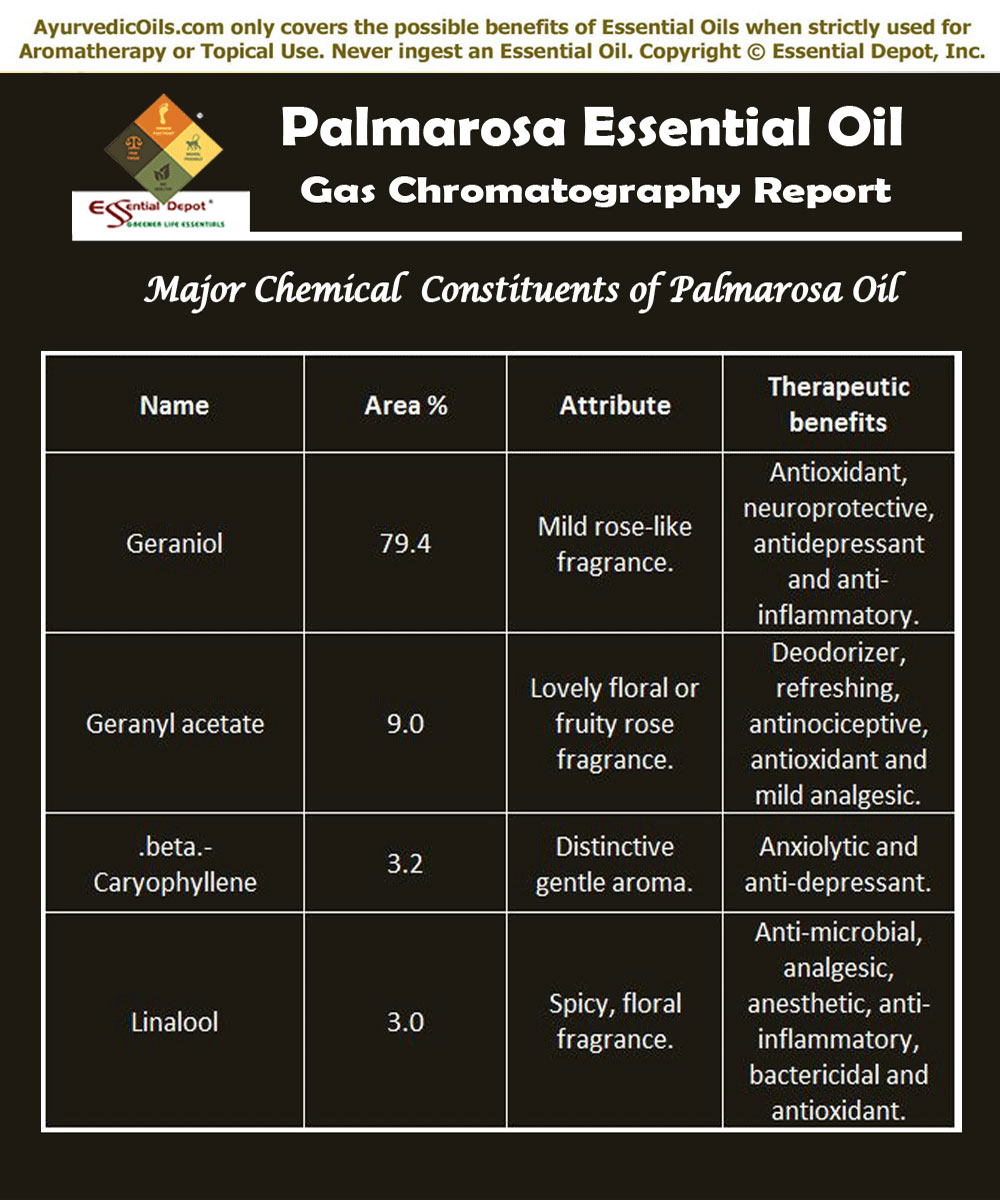
The essential oil of Palmarosa is extracted by steam distillation method from the dried grassy leaves that are harvested before flowering. In her book ‘Ayurveda and Aromatherapy’, Light Miller says “Palmarosa is widely used in Ayurvedic skin care. It is good for all skin types because it is a cellular stimulator and supports all cell regulation. It’s highly antiseptic, calming, uplifting and anti-depressive.”

Purchase Palmarosa Essential Oil – Retail – CLICK HERE

Purchase Palmarosa Essential Oil – Wholesale – CLICK HERE

Historical uses of Palmarosa oil:

The most popular historical use of Palmarosa oil is that it has been used as a substitute as well as to adulterate rose oil with its rosy aroma. This oil was also used in making incense blends in India and was traded from India to Persia after which the western use of this oil began slowly.

It was also prescribed by the Indian doctors to lower fever and fight against infections. The ancient Indians also used Palmarosa oil for treating nerve pain, fever, rheumatism and certain other infectious diseases.

Chemical constituents or Gas Chromatography Report (GC) of Palmarosa oil:

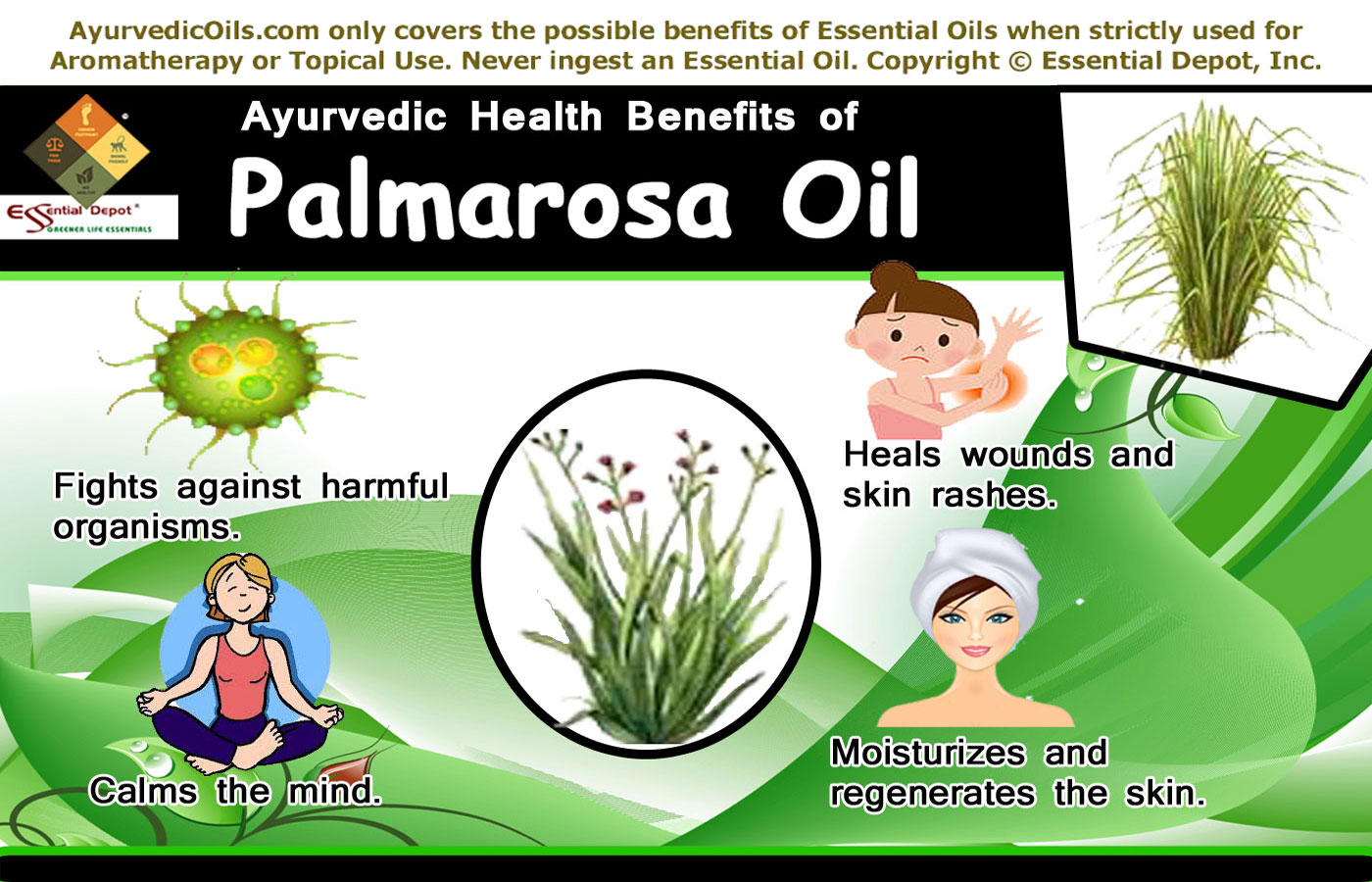
According to the Gas chromatography report, Palmarosa oil constitutes of 14 chemical components that contribute to its fragrance, therapeutic attributes, consistency and quality. Of which, Geraniol contributes to the highest proportion of Palmarosa oil constituents with about 79.4% of its total composition.

Just click on:

I believe that this must certainly help you in getting to know the exclusive information about these prime chemical constituents of Palmarosa oil.

The table crafted below clearly depicts the unique nature and contributions of these biochemical constituents to the healing magnificence of Palmarosa essential oil.

palmarosa-oil

Therapeutic properties of Palmarosa essential oil:

Palmarosa essential oil has regenerative, antiseptic, antibacterial, cytophylactic, febrifuge, aphrodisiac, stimulant, moisturizing, antiviral, hydrating and digestive properties.

Ayurvedic health benefits of Palmarosa essential oil:

The richness of Ayurveda lies in its holistic approach towards health and harmony. Ayurvedic texts state that illness is just an indication symbolizing that there is imbalance between the mind, body and spirit with nature. It illustrates that human body is made up of three energy components namely vata, pitta and kapha together known as doshas in Ayurveda.

Vata is a combination of air and space and promotes biological functions responsible for external and internal movements of the body. Pitta represents fire and water and is responsible for metabolic functions and certain psychological attributes.

Kapha is a blend of water and earth and governs the functions of tissues, retains the balance of water, fat and other fluids in the body. Imbalance of any one of these doshas or all the three doshas results in illness. Palmarosa essential oil is known to reduce the excess of vata, pitta and kapha flow.

The Ayurvedic health benefits of Palmarosa oil are:

Palmarosa-Oil1. Fights against harmful organisms:
As an effective bactericide and antiviral oil, Palmarosa essential oil helps in killing harmful bacteria, viruses and other microbes. When applied topically after adding few drops of Palmarosa oil to ointments, skin care creams or lotions, this oil inhibits the growth of dangerous viruses that protect themselves by developing a hard cyst around them. Viral infections like athlete’s foot, ringworm and prolonged itching can be treated effectively by applying this blend externally.

A 2009 study on ‘Antibacterial Activity of Essential Oils from Palmarosa, Evening Primrose, Lavender and Tuberose’, proved that among these four tested essential oils, the essential oil extracted from Palmarosa reflected the highest activity against both gram negative bacteria like Staphylococcus aureus and gram positive bacteria like Escherichia coli.

Staphylococcus aureus causes numerous infections like urinary tract infections, skin lesions, pneumonia and meningitis. Escherichia coli are generally present in human intestines and cause food poisoning. You can add 2 drops of Palmarosa oil in warm bathing water or blend it with jojoba oil and use it as a massage oil for inhibiting the growth of bacteria.

2. Heals wounds and skin rashes:

The antiseptic properties of Palmarosa oil makes it an aromatic remedy for healing your wounds, cuts, burns, rashes and other skin infections. Using it as an liniment after adding 2 to 3 drops of Palmarosa oil to your skin care cream or lotion, aids in mending your wounds as well as protect them from being septic.

This is mainly because Palmarosa oil has antibacterial properties that ward off gram negative bacteria like Staphylococcus aureus that is wholly responsible for a wound to become septic. You can also use 2 to 3 drops of this oil in your bath for alleviating pain, spasms, convulsions and other skin infections.

3. Moisturizes and regenerates the skin:

Palmarosa oil is known as one of the best oils for treating problems with dry, dull and oily skin. It acts as a natural tonic to your skin and helps retain its moisture without allowing it to dry and turn lifeless.

Gently massaging your skin with 2 drops of Palmarosa oil and coconut oil will help in regulating the secretion of sebum, hydrating the skin, keeping it soft and supple and fighting against wrinkles and other symptoms of aging.

With its cytophylactic properties, Palmarosa essential oil assists in generating the growth of new skin cells and restores skin health by repairing the damaged skin cells due to environmental conditions, ageing and lack of moisture.

It enhances the defensive mechanism of the cells in the body and strengthens the immune system. The anti-inflammatory and cooling mechanism of this oil aids in treating eczema, psoriasis, boils, dermatitis, inflamed skin and wrinkles.

2 drops of Palmarosa essential oil can drive in the magical remedy for your skin. You can use it as a massage oil by blending it with jojoba oil or add it to your bath tub or to your skin care cream and lotions for visible results.

Palmarosa oil is also said to cure candida, shingles, rashes, acne and blemishes. It is also known for treating acne scars and for reducing the appearance of broken capillaries.

4. Calms the mind:

Palmarosa essential oil has a gentle, misty and lemony-rose fragrance that is comforting and calming to the mind and body. Adding 2 to 3 drops to your diffuser, air freshener, burner, vaporizer, linen or to your pillows grant a feeling of contentment, sense of security, adaptability to the existing situation, rekindles the aura, clarifies thoughts and augments the trust in the sacred stream of life.

Palmarosa oil also aids in treating nervousness, anger, anxiety, fear, possessiveness, jealousy, insomnia and resentment.

Other health benefits:

Palmarosa essential oil has been in use since the primordial times for cooling down fever with its triple healing power of being an antiviral, antibacterial and antiseptic oil.  It is also effective in treating digestive disorders, intestinal problems, stiff and sore muscles, bruising, heart palpitations and for strengthening the heart yin.

Disclaimer:

Always use essential oils for topical application and for aromatherapy uses only. Never ingest essential oils without the proper guidance of your healthcare provider. Keep away from children and do not use essential oils if you are pregnant. Consult your Ayurvedic practitioner before using specific essential oils for your unique health condition.

The MSDS (Material Safety Data Sheet) of Palmarosa oil is readily available for your enhanced safety and better usage.

Gas Chromatography Report (GC analysis) of Palmarosa oil.

Thought for the day:

Beauty is only skin deep. I think what’s really important is finding a balance of mind, body and spirit.    Jennifer Lopez

Suggested Reading:

  1. The Essential Guide to Natural Skin Care: Choosing Botanicals, Oils & Extracts for Simple & Healthy Beauty by Hélène Berton
  2. The Book of Beauty: Making Natural Skin Care Products with Aromatherapy and Ayurveda by Samyukta Blanchet
  3. The Complete Book of Essential Oils and Aromatherapy: Over 600 Natural, Non-Toxic and Fragrant Recipes to Create Health – Beauty – a Safe Home Environment by Valerie Ann Worwood

Reference Links:

  1. Antibacterial Activity of Essential Oils from Palmarosa, Evening Primrose, Lavender and Tuberose published in PubMed
  2. Palmarosa Oil by The Ananda Apothecary
  3. Health Benefits of Palmarosa Essential Oil by Organic Facts
  4. Palmarosa Essential Oil by Tracesetc.com

Save

Moranga Essential Oil

Loved as  ‘Mother’s Best Friend’ in East Africa and as ‘Never Die’ and ‘Miracle Tree’ all over the world, Moranga is one of the most useful trees in the Cosmos, as every part of this tree including the leaves, stems, seeds, pods, fruits, root and bark has enormous medicinal values. Moranga is known as the best natural hub of antioxidants with 46 antioxidants and 36 anti-inflammatory compounds making it rich and wholesome for mankind.

Ayurveda, the mother of all healing sciences have listed about 300 diseases that can be cured with this wonder herb known as Shigru, Sahijna, Munaga, Shobanjana and Sainjna in the Ayurvedic community. Moranga is scientifically called as Moringa pterygosperma gaertn., or Moringa oleifera, Lam. The name Moringa is extracted from the Tamil name murunga and pterygosperma for its winged seeds or oleifera for its non-drying stable oil with a long shelf life.

Purchase Moranga Oil – Wholesale – CLICK HERE

Historical importance of Moranga and its essential oil: Well-known to the world populace as Drumstick tree, clarifier tree and horseradish tree, Moranga is extremely nutritious and considered as a treasure of India and a fortune to the entire universe. Indians call it a pretty tree with a graceful appearance complimenting its surrounding with natural beauty and freshness. This immortal tree has an exceptionally long traditional usage. The most important among them are listed for your information.

Historical transcripts reveal that drumstick and its leaves were used by the primordial Indian kings and queens in their daily diet to gain enormous energy, retain their good health and treat inflamed joints. The young leaves of this tree are used in folklore medicine for treating common cold, dog bites and scurvy. Fresh Moranga leaves were rubbed against the temples for relieving severe headaches. These leaves are also used in treating fever, inflammation of the mucus membrane, bronchitis, cold, infections of the ear and eye.

Tea prepared with Moranga leaves were used in treating diarrhea, gastric ulcers and stomach pain. Moringa leaves and food products are considered as the best food for people suffering from malnutrition as it is rich in fiber, protein, minerals, vitamins and carbohydrates. It is used in Senegal and India for treating sleeplessness, anxiety, asthma, dysentery, rashes, sores, colitis and added to children’s food to fight malnutrition.

The leaves and twigs are used as a nutritious fodder for farm animals, goats, sheep, camels and other domestic animals. The juice extracted from Moringa flowers is used for treating urinary problems, cold and to enhance the flow and quality of milk in breastfeeding mothers with its tonic, diuretic and cholagogue properties. Moringa flowers are regarded as a good source of pollen for honey bees. The high iron content in Moringa leaves are used to treat anemia in Philippines. Moringa gum is used to treat asthma, tooth decay and rheumatism.

Moringa oil has been used in treating syphilitic wounds, scurvy, hysteria, bladder problems, prostate problems, fungal infections and certain skin complaints.  The villagers in Oman use this oil as a perfume and for treating hair problems and stomachic disorders.  Arabians in the desert used this oil on their face to treat the harmful effects of wind and sun. It was buried in the tombs of Egyptians whereas the Romans used this oil as a basis for perfumery.

Therapeutic properties of Moranga essential oil: The major remedial properties of Moringa essential oil are antibacterial, anti-inflammatory, diuretic, antispasmodic, anti-choleric, antifungal, anti-hypertensive, anti-tumor, anticancer, antiulcer, immune stimulant, aphrodisiac, antidiabetic, tonic, antipyretic, hepatoprotective, cholesterol lowering and antioxidant. A study on the ‘Medicinal properties of Moringa oleifera: An overview of promising healer’ have analyzed on numerous therapeutic properties of Moringa oleifera.

Ayurvedic health benefits of Moranga essential oil: Ayurveda, the ancient healing science aged more than 5,000 years has India as its birthplace. This holistic healing methodology have used the most useful tree on earth, Moringa aged more than 4,000 years and has its origin in India. Ayurvedic texts list more than 300 diseases that can be cured with the immaculate healing powers of Moranga tree and its extracts like the essential oil.

The power of Ayurvedic healing deeply vests in its trust on natural remedies. Ayurvedic philosophies state that every living thing on earth is unique in its own way and united in the fact that it is a part of nature. This promising science is optimistic and the simple proof is that it considers illness as an opportunity to find what is wrong in the system.

Ayurvedic treatments do not treat just the disease instead it treats the whole individual. By this way it aims at treating and preventing the illness and not just curing the disease alone. Ayurveda identifies the major root cause responsible for sickness.

Ayurvedic texts strongly state that every individual has his or her own constitution which is made up of three energy elements known as doshas namely pitta, vata and kapha. Balance between these three doshas indicates that the system is hale and healthy and imbalance of any one or all the three doshas is responsible for sickness. Moringa and its essential oil is said to reduce excess kapha and vata and improve deficiency of pitta.

Ayurvedic remedies using Moringa products are used in the treatment of liver problems, urinary infections, dysmennorhea, aid during labor or childbirth, improving the secretion of milk in breastfeeding mothers, anemia, sexual dysfunctions, nervous debility, skin problems and infections caused due to pathogenic organisms. The major health benefits of the essential oil extracted by steam distillation method from the leaves of Moringa tree are:

Enormous benefits for the skin: Moringa essential oil has exceptional benefits for the skin and is mainly due to the presence of rich nutrients and antioxidants in the leaves that support healthy skin. Moringa leaves are known as the powerhouse of nutrition with more than 7 times the vitamin C in oranges, more than 4 times the vitamin A in carrots, more than four times the calcium in milk, more than 3 times the potassium in bananas and more than twice the proteins in milk in each gram.

Moringa essential oil has antibacterial, antimicrobial, antifungal, antioxidant and anti-aging properties that aids in combating numerous skin problems. The effects of aging like wrinkles, dull and lifeless skin are mainly due to the activity of free radicals on the skin. The rich content of about 46 antioxidants in Moringa aids in fighting against all the negative effects of aging on skin.

Moringa oil cleanses, nourishes and nurtures your skin naturally. Blending 3 drops of this oil with little coconut oil and applying this mixture on acne, cuts, scrapes, blackheads, scars, burns, rashes and insect bites will help in quicker healing with its antiseptic and antimicrobial values. Gently massaging your skin with 2 to 3 drops of Moringa oil mixed with olive oil helps augment the elasticity of the skin by nourishing the skin cells, removing dirt gently, killing microbes causing infections, avoiding excessive drying, and moisturizing the skin.

A 2007 study on ‘Anti-fungal activity of crude extracts and essential oil of Moringa oleifera Lam.’, by the Institute of Bioagricultural Sciences, Taiwan have stated that the “essential oil extracted from the leaves of Moringa showed a total of 44 compounds. Isolated extracts could be of use for the future development of anti-skin disease agents.”

Due to these reasons Moringa oil is used as an important ingredient in soaps, facial creams, body wash, facial massage oils and anti-aging creams. You can also add 3 to 4 drops of Moringa oil to your mild skin care cream or lotion for alleviating such skin problems.

More than just a complete food for your system on your shelf: Moringa leaves have Vitamin A, B1, B2, B3, B6, B7, C, D, E, K and certain other amino acids like leucine, methionine, lysine, isoleucine, threonine, valine, tryptophan and phenylalaine along with a bunch of non-essential amino acids, making it a complete food for the mind, body and soul.

Adding 2 drops of Moringa oil to warm bathing water can help in relieving stress, cleansing your body, granting mental peace and removing fatigue. Massaging your body with 4 drops of Moringa oil blended with almond oil can aid in alleviating rheumatic pain, reduce inflammation with its anti-inflammatory properties, eliminate the excess fluids in your body through urine, boost the immune system and protect your body from harmful infections.

Moringa essential oil is light and it easily spreads and deeply penetrates into the skin. By this way it transforms its vital nutrients into the body, mind and spirit. This oil has also been used as a natural cleanser to remove excess oil and dirt from hair. Massaging your hair and scalp with 3 drops of Moringa oil blended with coconut oil can assist in cleansing your hair, nourishing your scalp, treating dandruff and grant a natural shine to your lustrous locks.

Scientific evidences: The long time Ayurvedic health benefits of Moringa and its essential oil have been proved scientifically through numerous studies. A 2003 study on ‘Hepatoprotective activity of Moringa oleifera on antitubercular drug-induced liver damage in rats’ have proved that treatment with M.oleifera leaves seems to improve the recovery from hepatic damage caused by antitubercular drugs.

Another study by the U.S. National Academy of Sciences Noel Vietmeyer published in PubMed witnessed “The results indicate that this plant possesses antioxidant, hypolipidaemic and anti-atherosclerotic activities and has therapeutic potential for the prevention of cardiovascular diseases.”

The University of Agriculture, Faisalabad, Pakistan studied the effectiveness of Moringa oleifera based upon its detailed phytochemical composition, pharmacological properties and medicinal uses of various parts of this multipurpose treesuch as the leaves, roots, seed, bark, fruit, flowers and immature pods act as cardiac and circulatory stimulants, possess antitumor, antipyretic, antiepileptic, anti-inflammatory, antiulcer, antispasmodic, diuretic, antihypertensive, cholesterol lowering, antioxidant, antidiabetic, hepatoprotective, antibacterial and antifungal activities, and are being employed for the treatment of different ailments in the indigenous system of medicine, particularly in South Asia.”

Few other studies also proved the antioxidant, hypocholesterolemic, antifungal and antibacterial effects of Moringa tree and its essential oil.

Other health benefits: Apart from these major health benefits, the different parts of Moringa tree and the essential oil extracted from the leaves and seed pods are used to strengthen the immune system with vitamin C, lessen the risk of health disorders like Alzheimer’s disease, atherosclerosis and cataract with the presence of vitamin B3, stimulates the process of digestion with the presence of fibre, supports blood circulation, functioning of the brain and treat anemia with its rich iron content and improve eyesight with vitamin A. Besides these, there are a handful of home remedies that are a part of the traditional healing system and grandmother’s remedy.

Disclaimer: Never take essential oils internally. Pure and organic essential oils are highly concentrated liquids and always remember to use them in a diluted form. This article is only for the purpose of information and is not meant to diagnose or replace prescribed drugs or professional advice. Consult your Ayurvedic practitioner before using the right essential oil for your specific health condition and individual constitution.

Thought for the day:

We do not see nature with our eyes, but with our understandings and our hearts.   -William Hazlitt

Suggested Reading:

  1. Miracle Tree by Monica G. Marcu
  2. Bible Miracle Tree: healing with Moringa by Miracle Bible
  3. Moringa Oleifera: Magic, Myth or Miracle by Howard W. Fisher
  4. Moringa Oleifera benefits: enrich your life with the Miracle Tree for well-being, happiness, weight loss. More than a super-food, nutritional supplement, food supplement by Frank Moringa Oleifera

Reference Links:

  1. Moringa oleifera by Life in Health
  2. Śigru or drumstick (Moringa pterygosperma, Gaertn., M. oleifera, Lam.) by Dr. K.H. Krishnamurthy published in NAMAH
  3. Moringa, the Miracle Tree by Moringa Rubicon Health.Org
  4. The Benefits of Anti-Aging Moringa Oil on the Skin by Ayurveda Guru
  5. Medicinal properties of Moringa oleifera: An overview of promising healer by Fozia Farooq, Meenu Rai, Avinash Tiwari, Abdul Arif Khan, and Shaila Farooq

Ashwagandha Oil

Aswagandha-bannerStand tall like a stallion and hold your head up with the strength and inevitable power of Ashwagandha, the most potent and revitalizing herb of the Ayurvedic healing. Often called as ‘Indian Ginseng’ for its enormous and instant energizing attributes, the word ‘Ashwagandha’ means the ‘smell of horse’, as the fresh roots have a horse-like odor.

Ayurvedic writings record the usage of this vital herb as a rasayana, meaning tonic for alleviating extensive range of illnesses from cancer to impotency. Dr. M. Ali in his book ‘Ashwagandha – The Stress Buster’ quotes Ashwagandha as an anti-stress herb with curative, relaxing, preventive, restorative and sedative properties and has the power to alleviate stress, the silent killer and the root cause of many problems including strokes, impotence, heart attacks, blood pressure, depression and stomach ailments.

Purchase Ashwagandha Essential Oil – Retail – 4 oz – CLICK HERE

Purchase Ashwagandha Essential Oil – Wholesale – CLICK HERE

Historical uses and significance of Ashwagandha herb and its essential oil:

Lovingly called as ‘Winter cherry and Indian ginseng, Ashwagandha is botanically called as Withania somnifera and is a member of the nightshade or Solanaceae plant family. The word ‘somnifera’ means ‘sleep-inducing’ and Ashwagandha is known for its potential to promote sleep and has been used in the treatment of insomnia.

Indigenous to the Indian subcontinent, Ashwagandha is one among the most popular herb in the history of Ayurvedic healing. Few sources also state that this herb is native to Africa, Australia and the Eastern parts of Asia. Ashwagandha is also found growing naturally in Sri Lanka and Pakistan.

Ashwagandha has been used for more than 4,000 years in the world of traditional medicine, including Ayurveda, Homeopathy, Siddha, Traditional Chinese Medicine and Unani. The tribal populace in Africa is said to have used this herb initially in the treatment of inflammatory medical conditions and fevers.

Ayurvedic use of Ashwagandha has been documented in the Ayurvedic texts like Charaka Samhita and Sushruta Samhita and certain records also state that Ashwagandha is popular since the sacred teachings of the Ayurvedic Rishi, Punarvasu Atriya. Ashwagandha is recommended in Ayurveda for longevity, physical and mental wellness of the aged, reproductive health and as a brain tonic for children.

The Ashwagandha root paste has been applied for treating joint inflammation, swelling, ulcers, pimples, piles, carbuncles, boils, colic and leucorrhoea. Traditional remedies also prescribe this powerful root in treating venomous snake and insect bites, including scorpion stings. It is used in the Middle East countries for its ability to support normal sleep patterns and persuade a strong inflammatory response.

Used as a Rasayana or natural tonic in Ayurveda, Ashwagandha has been a promising Ayurvedic remedy for rheumatism, insomnia, arthritis, impotence, loss of libido, improper blood circulation, constipation, goiter, nervous breakdown, fatigue and depression. The most common use of this herb since the traditional times is for the encumbrance from old age and emaciation of children.

The leaves of this plant bear a bitter taste and have been used in curing fever, swellings, tubercular glands and tumors. Numerous research studies have witnessed the power of Ashwagandha in the treatment of respiratory problems, cardiovascular diseases, loss of energy along with psychological and physical stress. Chyawanprash is one among the most popular Ayurvedic blend with Ashwagandha, Amla or the Indian Gooseberry and numerous other herbs.

Chemical constituents and remedial properties of Ashwagandha essential oil:

The therapeutic properties of Ashwagandha essential oil are anti-stress, adaptogenic, aphrodisiac, astringent, antioxidant, rejuvenative, anthelmintic, tonic, diuretic, stimulant, anti-rheumatic, antibacterial, anti-ulcerogenic, anti-tumor, anti-inflammatory, anti-carcinogenic, anti-arthritic, cardio-protective, immunomodulatory and anti-depressant.

The major chemical components in Ashwagandha essential oil are alkaloids (anaferine, isopelletierine, anahygrine, cuseohygrine, etc.), steroidal lactones (withaferins, withanolides) and saponins.

Ayurvedic health benefits of Ashwagandha essential oil:

Ayurveda is precisely called as the Mother of all the other healing sciences on earth for its enormous holistic healing principles that aim in healing and preventing illnesses for more than 5,000 years.

Acharya Dhanvantari, known as the Ayurvedic God of medicine and physician of Gods is said to have gifted Ayurveda for the wellness of humanity. Ayurveda is a part of Atharvaveda, one amongst the 4 sacred books or Vedas of the Indian mythology.

Ayurveda is the only medicinal system that considers human body as a temple and the soul that lives in is regarded as the symbol of divinity. With this thought of nobility, Ayurveda recommends mankind to keep their mind, body and soul clean, happy and content.

The principles of Ayurveda rely on nature for everything as it strongly trusts that everything on earth is a vital part of nature. The visible proof behind this theory is that all things in nature are made up of five basic elements of nature, namely fire, water, earth, space and air.

Human body is also made up of these five elements, where earth is present in the form of bones and muscles; water represents blood and fluids in the system; air is vital for breathing; space is the soul that dwells in and fire is the essential energy for body temperature, metabolic functions and certain other vital activities of the system.

Ayurveda never goes by the fact that ‘one size fits all’, as it trusts that every human being is a distinctive part of nature composed with a unique individual constitution known as prakriti. It is a combination of three biological energies called as doshas. They are vata, pitta and kapha. Every individual has a predominance of any one of these doshas that acts as a deciding factor in determining the character, personality, attributes and behavioral patterns.

Absolute balance between these doshas as per the law of nature indicates health and doshic imbalances due to climatic conditions, lifestyle changes, irregular food habits and moral vitiations lead to illness.

Ayurvedic healing aims at treating the root cause of an illness instead of its symptoms alone. This aids in curing the disease initially and preventing it in the future as well. Ayurveda prescribes natural remedies that go well with the individual constitution of a person, even if a group of people are affected by the same medical condition.

The prime Ayurvedic remedies are plant essential oils, simple physical exercises, herbs, yoga, prayers, Pranayama (Ayurvedic breathing exercises), meditation, Abhyanga or Ayurvedic massaging, Panchakarma or Ayurvedic detoxification techniques and Ayurvedic routine.

Ashwagandha essential oil is said to pacify vata and kapha doshas and increase pitta energy.

It’s time to look into the most significant Ayurvedic health benefits of Ashwagandha essential oil.

Aswagandha-broucher1. Combats cancer causing free radicals:

Ashwagandha is a miraculous Ayurvedic herb that possesses antioxidant and anti-tumor properties that aid in combating the harmful free radicals and curb the growth of cancerous tumors in the system. The anti-antigenic attribute of this natural medicine helps in preventing the malignant tumors from creating new blood vessels for assisting its uncontrolled growth.

Being an immune-stimulant and rejuvenating essential oil, Ashwagandha strengthens the immune system, aids in resisting the effects of chemotherapy and supports quicker recovery. Many research studies have witnessed the cancer inhibiting potential of Ashwagandha, which works by controlling the ability of reproducing of the cancer cells.

A 2006 study on the “Ancient medicine, modern use: Withania somnifera and its potential role in integrative oncology.” By Winters, states “with its polypharmaceutical use, confirming antioxidant, anti-inflammatory, immune-modulating, and antistress properties in the whole plant extract and several separate constituents, Withania somnifera reduces tumor cell proliferation while increasing overall animal survival time.”

This study concludes by stating “Withania somnifera also reduces the side effects of chemotherapeutic agents cyclophosphamide and paclitaxel without interfering with the tumor-reducing actions of the drugs. With its cytotoxic and tumor-sensitizing actions, Withania somnifera presents itself as a novel complementary therapy for integrative oncology care.”

Ayurveda prescribes the use of Ashwagandha oil in Abhyanga or Ayurvedic massaging for treating cancerous disorders. Massaging your system with 10 drops of Ashwagandha oil blended with 5 drops of Parsley seed oil, 5 drops of Turmeric essential oil, 5 drops of Tangerine oil along with 25 ml of coconut oil can grant innate energy to your cells for fighting against free radicals and controlling the growth of cancerous cells.

The cancer-fighting attributes of Ashwagandha oil along with Parsley, Turmeric and Tangerine oils pass on to the bloodstream by penetrating through the skin cells and work on effectively without causing any side effects. You can also add 1 drop of Ashwagandha oil along with 1 drop of Frankincense oil to your warm bathing water for leaving you fresh and fragrant all through the day.

2. Alleviates arthritis and rheumatic problems:

According to Ayurveda, aggravation of vata and excess of kapha dosha contribute to vulnerable medical conditions like rheumatism and arthritis. With its ability to reduce kapha vitiation and treat vata aggravation, Ashwagandha is one among those best Ayurvedic remedies for alleviating pain, swelling, inflammation and other discomforts associated with arthritis and other rheumatic conditions.

When used as a massage oil (3 drops of Ashwagandha oil + 2 drops of Rose Geranium oil + 2 drops of Tarragon oil with 5 ml of Sesame oil), Ashwagandha penetrates deeply into the system and aids in relaxing the muscles, strengthening the bones and nourishing the tissues.

This also helps in instilling complete relaxation in the nervous system, promote blood circulation, reduce muscular pain, and alleviate inflammation by promoting the frequency of urination and opening of the sweat pores through which the toxic remains, salt and uric acid in the body are eliminated.

The tonic, analgesic or pain-reducing, diuretic, anti-rheumatic, anti-arthritic, anti-inflammatory, anti-oxidant and relaxant properties of Ashwagandha oil makes it a great natural remedy for osteoarthritis, rheumatoid and muscular problems, used often by athletes, dancers and body builders. Using 2 drops of Ashwagandha oil in warm compress can support the healing process.

The pain-relieving potential of Ashwagandha oil is often compared to popular pain-relieving agents in the pharmaceutical industry like aspirin and phenylbutazone. This oil is also believed to prevent inflammation and muscular strains, grant flexibility to the muscles and vigor to the joints.

3. Enhances immunity and energy levels:

A healthy immune system is the basis for longevity and heartiness. The disease-fighting or resisting ability of a person is determined by his immune power. The white blood cells (WBC) or leucocytes in the body are cells of the immune system are also known as the police force of the body. These cells are involved in shielding the human body against foreign bodies and infectious diseases.

Leucocytes are present all over the body, including the lymphatic system and blood. Ashwagandha oil has the power to strengthen the immune system by increasing the count of leucocytes or white blood cells.

This promising herb is also called as the ‘Ojas enhancing’ herb with plethora of remedial values.

Ayurveda defines ojas as the subtle or cultured level of energy gained from healthy food. Required level of Ojas in the system is a symbol of well-built immunity, inner consciousness, healthy complexion, mental clarity, hale and heartiness and physical wellness. Decreased ojas or Ojakshaya is an indicator of low immune power as it is in a person affected by HIV.

Ashwagandha is held high in Ayurvedic medicine for its effectiveness in enhancing ojas. This in turn helps in augmenting immune power, keeping away from infections and diseases and aids in recovering quickly from sickness, while rejoicing absolute health and wellness.

Adding 1 drop of Ashwagandha oil with 1 drop of Sandalwood oil and 1 drop of Vetiver oil in diffuser, vaporizer or burner during prayers, meditation and Pranayama can help in augmenting the Ojas, strengthen your immune system, help retain youthfulness, revitalize the senses, relieve from fatigue and insomnia, prevent aging and invigorate the entire system.

The uniqueness of this blend is that all these 3 oils are known for their power to enhance the innate wisdom and kindle your sense of sacredness and divinity.

4. Boosts memory functions and alleviates Alzheimer’s disorder: Ashwagandha is popularly known as a Rasayana in Ayurveda and is said to belong to a sub-category called as Medhyarasayanas, where the word ‘Medhya’ refers to the human mind and its intellectual and cognitive powers.

Ashwagandha essential oil has the ability to wrestle the fall in cognitive levels caused due to brain cell degeneration. It also assists in reducing cortisol levels and enhancing cognition levels.

Inhaling the aroma of this oil by adding 1 drop of Ashwagandha oil with 1 drop of Brahmi oil and 1 drop of Rosemary oil in diffuser especially in the early hours of the day during meditation, yoga, prayers and learning can promote the functions of the brain, augment your memory power, increase your intellect and help fight against Alzheimer’s disease.

5. Fights against stress, depression and other negative feelings: The adrenal glands in the endocrine system are responsible for a person’s ability to manage stress and stress-related negative effects. When a human body is stressed, the adrenal glands augment the level of cortisol secretion.

Cortisol is called as the stress hormone of the system that is related to the ‘fight or flight’ response of the body. This hormone is responsible for the production of negative effects in the body like lack of concentration, fatigue, weak memory, anxiety, mental exhaustion, sleeplessness, pain, anger, weight gain, especially in the abdominal area and lack of interest.

The presence of the bioactive compounds called glycowithanolide in Ashwagandha aid in reducing the cortisol levels in the body. Glycowithanolide is a type of steroidal lactone that imitates the body’s own relaxing and stress-alleviating hormones. This works by decreasing cortisol levels in the system to strike absolute balance in the body.

Ashwagandha essential oil has adaptogenic, stimulating, relaxing, mood enhancing, stress-reducing, nervine, sedative and rejuvenative properties that help in treating insomnia by promoting peaceful sleep, alleviating fatigue, cardiovascular problems, depressive feelings, cognitive dysfunction and low immunity.

Numerous scientific studies on the anti-stress and adaptogenic effects of Ashwagandha oil have concluded that this herb is a powerful Ayurvedic remedy for treating and preventing stress and stress induced health conditions including premature graying, hypertension, arteriosclerosis, malignancy, diabetes and arthritis.

Adding 5 drops of Ashwagandha oil with 5 drops of Lavender oil and 5 drops of Patchouli oil along with 20 ml of Jojoba oil in a massage blend can help in reducing stress, fatigue and sleeping difficulties.

You can also add 2 drops of Ashwagandha oil in warm bathing water or air freshener before going to bed to enjoy the richness of a relaxed mind and a comfy sleep.

6. Tones the skin and hair health:

Ashwagandha has vata-pacifying properties that help in retaining the natural glow and suppleness of the skin. The antioxidant effects of this oil combat the growth of free radicals that are responsible for causing aging symptoms like wrinkles, fine lines, dark spots, blemishes and dullness.

The essential oil of Ashwagandha is also an excellent remedy for healing wounds, keratosis, inflammation, skin ulcers, carbuncles, swelling, cuts, bedsores etc. It is also used for moisturizing rough and dry skin with its collagen stimulating attributes.

This is mainly due to the presence of steroidal compounds that enhance the level of estrogen in the body. This aids in augmenting the natural levels of oil in the skin and promote the production of collagen, which in turn retains the young and healthy looking skin. Ashwagandha oil is also known for its ability to promote the secretion of structural protein vital for the skin.

Gently applying 2 drops of Ashwagandha oil with 2 drops of Bitter orange oil, 2 drops of Frankincense oil along with 5 ml of Jojoba oil on the affected parts can help in repairing the skin problems without any harmful effects.

Healthy and lustrous hair is the most prized jewel of mankind, especially women. Ashwagandha has been the secret behind the long, shiny and voluminous locks since the traditional times. Slightly warm the blend of 3 drops of Ashwagandha oil with 2 drops of Ylang Ylang oil, 2 drops of Rosemary oil, 2 drops of Lemon oil and 2 drops of Lavender oil along with 20 ml of Almond oil.

Slowly massage this Ayurvedic hair oil onto your scalp and hair for strengthening the hair follicles, clearing scalp problems like dandruff and itchy scalp, fight hair loss, prevent premature balding, graying and hair breakage due to increased cortisol levels.

It also helps in treating damaged hair and dandruff by flushing out the excess toxins in the system. Adding 2 drops of Ashwagandha oil to your regular shampoo is also an excellent idea to support the health of your hair and scalp.

7. Augments reproductive health:

Ashwagandha is the most powerful aphrodisiac known to humanity since the dawn of the Ayurvedic era. Physicians of various traditional and modern medicines claim Ashwagandha as the most promising and potent aphrodisiac on earth.

With its immune and ojas enhancing abilities, Ashwagandha is said to grant the vigor and vitality of a horse in human beings as well. As an influential adaptogen, Ashwagandha uplifts the system’s defense mechanism against various disease causing infections by augmenting the cell-mediated immunity. It also curbs all kinds of cellular damage caused by free radicals with its antioxidant values.

Ashwagandha promotes a healthy balance of the reproductive system by increasing the quality of semen and count of sperms, thus expanding the possibilities of fertility and conception.

It is also recommended by Ayurvedic professionals for treating loss of libido, impotence, premature ejaculation, lack of sexual interest, erectile dysfunctions and supports the ability to last longer in bed.

It is also prescribed for treating reproductive problems in women like infertility, white discharge, weak uterus, polycystic ovarian syndrome and certain other gynecological disorders.

Ashwagandha is also effective in strengthening the uterine walls, ovaries and ligaments to support pregnancy. Ayurveda also states that this herb helps in improving the quality of the egg or ovum.

The most impressive aphrodisiac blend can be prepared at home with 2 drops of Ashwagandha oil with 2 drops of Patchouli oil, 2 drops of Jasmine oil, 2 drops of Clove oil and 2 drops of Ylang Ylang oil with 50 ml of coconut oil. Gently massage your system with this Ayurvedic blend for supporting your active sexual life and healthy reproductive system.

Adding 2 drops of Ashwagandha oil in warm bathing water and your vaporizer, before going to bed can add up the spice to your intimate love.

Thought for the day:

I believe a leaf of grass is no less than the journey-work of the stars.

Walt Whitman

Suggested Reading:

  1. Ashwagandha & Brahmi – Fight stress and chill out with the king and queen of Ayurvedic medicine by James Lee
  2. Healing with the King: Ashwagandha: The Master Herb in Ayurveda Medicine (Learning about Medicinal Herbs within India’s Ayurvedic Medicine Book 4) by Ryder Management Inc.
  3. Herbs for Stress & Anxiety: How to Make and Use Herbal Remedies to Strengthen the Nervous System. A Storey Basics® Title by Rosemary Gladstar
  4. Ashwagandha, Stress and Anxiety Herb – Health Educator Report #37 by C.N.C. Billie J. Sahley Ph.D.
  5. Ashwagandha – the stress buster by Dr. M. Ali

Reference Links:

  1. Withania somnifera by Wikipedia
  2. An Overview on Ashwagandha: A Rasayana (Rejuvenator) of Ayurveda Narendra Singh, Mohit Bhalla, Prashanti de Jager, and Marilena Gilca, International Institute of Herbal Medicine (IIHM), published in the African Journal of Traditional, Complementary and Alternative Medicines
  3. Health Benefits of Ashwagandha or Indian Ginseng by Organic Facts
  4. How Ashwagandha can be used as sexual rejuvenator by Ayurvedic and Natural Home Remedies for a healthy living
  5. Ancient medicine, modern use: Withania somnifera and its potential role in integrative oncology by Winters M, published in the Alternative Medicine Review.

Wheat Germ Oil

‘Wh…EAT Right To Keep Fit.’ Hope you’ve read it right???… Wheat is a nutritious diet and so is its oil extracted from the wheat germ (embryo, known as the heart of the wheat), which is packed with 23 nutrients.

wheat-germ-oil-bannerAs nature’s powerhouse of Vitamin E, Wheat germ oil is a natural aid for enhancing immunity and cardiovascular health along with enormous benefits for the skin and hair.

Bread is the staple food of masses across the world and the most financially supporting member of the family is often beckoned as ‘Bread Winner’. And as you know, bread is made of Wheat.

Popularly known as Godhuma taila in Ayurveda, Wheat germ oil is recommended in the treatment of psoriasis, vitiligo, dry skin conditions, wrinkles, stretch marks, scars, eczema, hair loss and in the enhancement of cognitive ability, heart health and liver functions.

Purchase Wheat Germ Oil – Retail – 4 oz – CLICK HERE

Purchase Wheat Germ Oil – Wholesale – 1 kg – CLICK HERE

Chemical constituents and therapeutic properties of Wheat Germ Oil:

Wheat germ oil has anti-oxidant, relaxing, nervine, rejuvenating, purgative, regenerative, anti-aging, tonic, cicatrisant and immune stimulant properties.

The major chemical constituents of this oil are linoleic or omega-6 acid (50 per cent of the oil), oleic acid (15 per cent), palmitic acid (15 per cent) and stearic fatty acids along with squalene and lecithin.

Wheat germ oil is nature’s treasury of Vitamin A, D, E, B-1, B-2, B-3, B-6, and F. It also contains essential fatty acids, protein, lecithin and minerals.

This oil is “particularly high in octacosanol – a 28-carbon long-chain saturated primary alcohol found in a number of different vegetable waxes. Octacosanol has been studied as an exercise and physical performance-enhancing agent,” quotes Pharm. Ben Chukwudile in Pharma News Online Forum.

With all these enriching vital nutrients, Wheat germ oil is a miraculous remedy for controlling the functions of the immune, cardiovascular, reproductive and nervous system.

Historical significance and uses of Wheat Germ oil:

Wheat germ is the embryo or the germinating part of the Wheat kernel, means the most rich and nutritious part of wheat. You are right…..Then, how enriching it’s oil could be?

Triticum vulgare is the scientific name of bread wheat and the germinating part of the wheat kernel is cold-pressed for extracting Wheat germ oil.

As one among the oldest cultivated crops, Wheat enjoys the sovereignty of being the most relished and cherished grains in the universe. Wheat dates back to about 10,000 years. Oh my God! Is your expression now and that was mine too…

The earliest remains of Wheat have been found in Turkey, Jordan and Syria.

TCM or the Traditional Chinese Medicine used Wheat germ and its oil in the treatment of night sweats and for supporting healthy cellular functions.

Menorrhagia, constipation, itching, flatulence, wrinkles and scars are the major health conditions treated with Wheat germ and its oil in the folklore Indian medicine. Wheat germ is recommended for treating malnutrition problems and for augmenting the immune power or the body’s natural ability to fight against infections and diseases.

Wheat germ is one among the most celebrated nutritional supplement across the globe with enormous nutrients, minerals and vitamins.

It has been used for improving the stamina, physical endurance and performance of athletes and people who are involved in occupations that require more physical exertion.

Vitamin E is a natural source of antioxidants and with colossal presence of Vitamin E and other vitamins, Wheat germ and its oil has been in use since the primordial times to prevent and treat cardiovascular problems and malignant attacks.

Wheat germ oil is used in the preparation of various baked goods, poultry items, processed sea foods, snack items, breakfast cereals, pizza, tortillas, pasta and various other Italian, Mexican and Continental cuisines for its gluten presence.

The protein element of Wheat germ oil is employed in the manufacturing of soaps, shampoos, moisturizing creams, anti-aging products, fairness creams, sunscreen lotions, scar treatment products and foot creams.

Ayurvedic health benefits of Wheat Germ Oil:

Ayurveda is a sacred system of healing that regards human body as a temple and states that the soul that rests within is the mighty force that influences the entire life of a human being.

The ultimate triumph of every individual depends upon the intensity and purity of the soul, states this magnificent art of remedy.

For this special reason, Ayurveda recommends ways, means, medications and disciplinary practices that aids in keeping the mind, body and spirit clean, content and in high spirits.

Everything on earth including mankind is made up of the five fundamental elements of nature, namely fire, water, earth, space and air. Maintaining harmony with Nature or living as per Nature’s rhythm is the secret behind hale and heartiness. Disparity with the law of nature ends up in illnesses.

In our human body, water exists in the form of blood and other fluids in the system, earth represents muscles, bones and cartilages, fire is the warm energy stimulating various functions of the body, air aids in respiration, and ether or space is the depiction of the soul and this differentiates us from a non-living thing.

These five elements combine together and form biological energies known as doshas. Ayurveda states that every human being is a distinctive part of nature with an exclusive individual constitution known as prakriti, which is a combination of three doshas, namely vata, pitta and kapha.

Every individual has a preponderance of any one dosha, which often determines the persona, character, traits, and behavioral patterns.

Perfect balance between doshas as per nature’s law indicates health and doshic imbalances on account of changes in food habits, weather conditions, lifestyle alterations and immoral habits might lead to illnesses.

Ayurvedic healing begins with the studying of the unique individual constitution of a person. This helps in evaluating the physical and emotional makeup of a person along with their Prakriti and Vikruti (state of health).

The genuineness of Ayurveda is proved by its mechanism of treating the individuals and not just their diseases or its symptoms. Every person is treated in a unique manner even if a group of people are affected by the same health condition.

Herbs, Ayurvedic essential oils, yoga (sister science of Ayurveda), simple physical exercises, prayers, meditation, Pranayama (art of balanced breathing), Panchakarma (detoxification techniques in Ayurveda), Abhyanga or Ayurvedic massaging, and Ayurvedic routine are the most predominant Ayurvedic remedies.

Wheat germ oil is said to pacify vata and kapha doshas and enhance pitta dosha.

Come; let’s dive into the many Ayurvedic benefits of Wheat germ oil:

Whear-germ-broucher

1. Wrinkles or fine lines? Here’s your instant eraser to clear them off:

Lines are beautiful only on a squirrel’s back but certainly not on your face.

Fine lines, wrinkles and crow’s foot are all symbols of aging. Are you aging in the pink? Consuming fruits and veggies that are rich in antioxidants can help in delaying the symptoms of aging and leave your skin supple and soft.

Wheat germ oil is Mother Nature’s prized bundle of vitamin E, which is known to fight against the free radicals and is an imperative instrument in battling against wrinkles, fine lines, saggy skin and few other symptoms of aging.

A 2011 study by Hekimi S, Lapointe J, Wen Y. Taking a “good” look at free radicals in the aging process in the Trends in Cell Biology states “The free radical theory of aging (FRTA) states that organisms age because cells accumulate free radical damage over time.”

Free radical is defined as “any atom or molecule that has a single unpaired electron in an outer shell.”

Wiki quotes, “While a few free radicals such as melanin are not chemically reactive, most biologically-relevant free radicals are highly reactive. For most biological structures, free radical damage is closely associated with oxidative damage.”

The role of Vitamin E and other active antioxidants come in place. These are called as lessening agents that restrict oxidative damage to biological structures by passivating cells from free radicals damage.

Vitamin E, the most prominent antioxidant in Wheat germ oil joins hands with zinc and selenium in granting authoritative antioxidant shield.

Antioxidants work by neutralizing free radicals by rendering one of its own electrons, thus concluding the ‘electron-stealing’ reaction in the generation of free radicals.7

Health check systems quotes Vitamin E as “the most abundant fat-soluble antioxidant in the body and one of the most efficient chain-breaking antioxidants available. It is the primary defender against oxidation and lipid peroxidation.”

Free radicals smash up and repair elastin and collagen components of the skin; where collagen aids in keeping the skin flexible, brawny and compact, while elastin supports in retaining the skin structure after extending and twisting.

The presence of Vitamins E, B, C, A and D in Wheat germ oil helps in stimulating healthy cellular regeneration and repairing the damages done to collagen and elastin.

This aids in invigorating dry, mature and rough skin by kindling the creation and circulation of new cells, thus repairing and rejuvenating the damaged tissues and broken capillaries.

Mix 1 drop of Frankincense oil with 1 drop of Sweet Orange oil with 5 drops of Wheat germ oil and massage it in slow circular movements on your skin. Leave it to rest on your skin for about 30 minutes.

Wash you’re your face with a mild cleanser blended with 1 drop of Lavender oil for staying fresh and youthful.

2. No more muscular stiffness or rheumatic pain; Wheat germ oil to your rescue:

Ouch! It aches!

This is the headlines in the life of people affected with rheumatic conditions, arthritis and edema.

Muscles turn taut and all the normal functioning of the system gets affected. Lack of circulation is observed as one among the fundamental reasons behind rigidity of muscles, swelling, inflammation, redness, soreness and pain associated with edema, neuralgia, rheumatism and arthritis.

Ayurveda classifies rheumatic problems, edema and arthritis as conditions caused due to vata and kapha vitiation. Excess vata causes dryness, blocks or hinders blood circulation and augments pain.

Kapha imbalance ends up in water retention, where surplus fluids, toxic remains (ama), free radicals, salts, uric acid and fat deposits stay in the system, causing inflammation, puffiness, redness and discomfort.

Wheat germ oil has the potent to control vata and kapha doshas. It enhances the proper circulation of blood; manipulates the removal of toxins and water remains by promoting the quantity and frequency of urination.

As an antioxidant, Wheat germ oil supports in combating the growth of free radicals that might otherwise worsen rheumatic and arthritic problems.

Blend 2 drops of Ashwagandha oil with 2 drops of Rose Geranium oil and 1 ounce of Wheat germ oil and gently massage on the painful parts. Follow this massage by pampering your system with a hot water bag for deeper penetration of oils and quicker relief from pain and inflammatory conditions.

Ayurveda prescribes Pranayama for individuals affected by rheumatism, neuralgia, arthritis and edema. It is the Ayurvedic art of balanced breathing, where slow and conscious inhalation and exhalation is done.

Numerous studies witness that about 70 per cent of toxic remains in the system are chucked out through exhalation.

3. Strong, healthy, silky and lustrous locks are all yours:

Frizzy, untamed, tangled, dry and brittle hair can ruin your days.

Who else other than Wheat germ oil can lend a helping hand?

The natural oil extracted from Wheat germ has deep-conditioning, nourishing and moisturizing properties with the presence of Vitamin E, C and other enriching nutrients.

Being a ceramide oil, Wheat germ can enhance blood circulation in your scalp, treat split ends, reduce itchy flakes, control dandruff, nourish the hair follicles, fasten dampness in your hair and scalp and prevent it from hair fall and other scalp conditions.

The best pre-shampoo oil therapy for your lustrous hair is 1 ounce of Wheat germ oil with 5 drops of Rosemary oil, 2 drops of Tea tree oil and 5 drops of Lime oil. Massage this blend on your scalp and hair for augmenting the strength, shine and gentleness of your hair and scalp.

Leave this blend for about an hour and rinse your hair with a mild shampoo blended with 2 drops of Rosemary oil.

4. Sorry dry skin, you’ll be missed but with a smile:

Supple, soft, balanced and glowing skin is the Holy Grail for most of us out there, especially during winter.

Wheat germ oil is an excellent oil with 23 essential nutrients that can help in locking ample moisture in your skin.

The presence of Vitamins and essential fatty acids in Wheat germ oil nourishes your skin from within and seals the moisture simultaneously. This helps in treating rough, dry, dehydrated, dull, cracked and aggravated skin conditions.

Immerse yourself in the luxury of an extravagant massage, preferably in the weekends. 2 ounce of Wheat germ oil mixed with 5 drops of Ylang Ylang oil, 5 drops of Patchouli oil for enhancing natural moisturizing properties of your skin.

You can also massage your heels, elbows, knees and palms with a little of this blend to make it soft and smooth.

Add lots of natural antioxidant food items in your diet like avocados, fish, spinach, almonds and fish to look beautiful from within.

5. Winter, summer or spring? Wheat germ oil is there to add zing:

Skin health varies based upon seasonal changes. Preparing yourself well ahead can help in saving your head.

The book ‘Ayurvedic Massage: Traditional Indian Techniques for Balancing Body and Mind’ by Harish Johari, mentions Wheat germ oil as one among all those blends for all the seasons, including Winter, Summer and Spring along with cold and rainy days.

With it’s potent to pacify vata and kapha doshas and to enhance pitta dosha; Wheat germ oil can help in keeping you hale and hearty across all the seasons.

The massage blend formulas by Harish Johari are listed here for your reference:

i. For cold and rainy days: Blend 2 tablespoons each of coconut oil, mustard oil, sesame oil, wheat germ oil and olive oil.

(For warmth and for disease-resisting power).

ii. In Summer when Pitta dosha is dominant: Mix 2 cups of Coconut oil with 2 tablespoons of Wheat germ oil and 2 tablespoons of Sandalwood oil.

(For instilling cooling and refreshing energy to tackle the heat outside).

iii. In Spring when pitta – bile and kapha – mucus are dominant:

Mix together 2 cups of almond oil with 2 tablespoons each of pumpkin seed oil and wheat germ oil.

iv. In Winter when Vata – wind energy and kapha – mucus are dominant:

Combine 2 cups of almond oil with 2 tablespoons each of wheat germ oil and olive oil.

Mix up 2 cups of olive oil with 2 tablespoons of wheat germ oil.

Blend 2 cups of sesame oil with 2 tablespoons each of wheat germ oil and almond oil.

(For moisturizing, nourishing and locking the required moisture in your skin. All these blends can also help in eliminating the toxic remains and fluid retention in your system with its mild warming and soothing properties.)

6. Supports the entire system, from head to toe:

Wheat germ and its oil are recommended for treating various health conditions. Its vitamins, minerals, essential fatty acids and certain other nutrients are extremely beneficial for the immune system, nervous health, cardiovascular functions and for the reproductive system.

The magnesium content in this oil is said to be helpful for diabetes as it supports healthy blood sugar levels. This oil is also an excellent aid for enhancing the production of healthy red blood cells and has been used in traditional medicine for treating miscarriages and frigidity.

The presence of alpha linolenic acid, lecithin (phospholipid), oleic acid, stearic acid and certain other essential fatty acids assist in preventing atherosclerosis, uplifting nervous functions, protecting the heart, reducing inflammation, enhancing immunity, showcasing positive effects on lipid profiles, increasing the level of HDL or good cholesterol and pacifying cortisol levels.

By this way, Wheat germ oil is helpful for supporting the functions of the brain, liver, heart, pancreas and reproductive organs.

Disclaimer:

This article is meant only for the use of education and is not in any ways intended to diagnose or prevent any health condition or to substitute any prescription drugs or the advice of your Doctor. None of us in Essential Depot are medical professionals and this information is circulated only with the motive of spreading the oldest healing wisdom of Ayurveda, the mother of all healing sciences on earth.

Use essential oils only for dermatological uses and ingesting is strictly not advisable. Remember to dilute essential oils before using it on skin. This is because 100 per cent original and organic oils are highly concentrated liquids and might cause allergies if used on the skin directly.

Speak with your Ayurvedic physician or healthcare professional before selecting the appropriate oils for your Prakriti (unique individual constitution) and Vikruti (current state of health). Special care should be taken if you are using essential oils on elderly people, pregnant women, nursing moms and on children.

Thought for the day:

I took a walk in the woods and came out taller than the trees.

-Henry David Thoreau.

Suggested Reading:

  1. Wheat Germ: Biochemical and Nutritional Implications: Biochemical, Functional and Technological Properties of Wheat Germ by Muhammad Umair Arshad, Faqir M. Anjum
  2. Wheat Belly: 10-Day Grain Detox: Reprogram Your Body for Rapid Weight Loss and Amazing Health by William Davis
  3. The Autoimmune Solution: Prevent and Reverse the Full Spectrum of Inflammatory Symptoms and Diseases by Amy Myers
  4. The Immune System Recovery Plan: A Doctor’s 4-Step Program to Treat Autoimmune Disease by Susan Blum
  5. If You Love It, It Will Grow: A Guide To Healthy, Beautiful Natural Hair by Phoenyx Austin

Reference Links:

  1. Wheat germ oil by Wikipedia
  2. Wheat Germ: An Overview on Nutritional Value, Antioxidant Potential and Antibacterial Characteristics by Awad A. Mahmoud,Adel A. A. Mohdaly, Nady A. A. Elneairy published in Scientific Research
  3. Super food Profile: Find the Health Benefits of Wheat Germ Oil by Natural News
  4. How Wheat Germ Benefits Your Health by Brian Krans For Healthline
  5. Health Wonders of Wheat Germ Oil by Pharm. Ben Chukwudile for Pharma News Online
  6. Chemical and elemental characterization of wheat germ oil (Triticum spp. L.) cultivated in Turkey by Asuman Khan published in Academic Journals

Grapefruit Pink Oil

Are you on diet? Then Grapefruit can be your best pal as it is called as ‘Dieter’s best friend‘, for its ability to assist dissolving fat and stays strong to be a vital part of your fitness regimen.

Grape-fruit-bnGive that perfect lift to your self-esteem and self-worth with Grapefruit oil, as it works like a magic by cleansing the aura and flushing out depression, lack of self-confidence, mental chaos and other negative feelings at ease.

Adorably called as Madhukarktikum and Kadaaram in Sanskrit, Grapefruit is yet another powerful Ayurvedic remedy for dealing with digestive disorders by stimulating the gall bladder and assisting the secretion of bile and other digestive juices.

The essential oil of Grapefruit is cold pressed from the external rind of this fruit and is recommended for treating weight loss, acne, cellulite, edema, PMS, anxiety, depression and insomnia.

Purchase Grapefruit Oil – Retail – 4 oz – CLICK HERE
Purchase Grapefruit Oil – Wholesale – CLICK HERE

Historical importance of Grapefruit:

Grapefruit is trusted to be a hybrid variety found in the 18th century by Captain Shaddock in Jamaica; hence it was called as ‘Shaddock’ or ‘Shattuck’ initially. Later it was named as ‘Grapefruit’ mainly because of its manifestation like clusters of grapes on the trees. Grapefruit was once celebrated as one of the ‘Seven wonders of Barbados’.

Grapefruit is indigenous to the tropical parts of Asia and was originally brought to Europe by the medieval Arabian traders and it slowly spread to other parts of the world. Currently, United States is the world’s leading producer of Grapefruit, followed by People’s Republic of China and South Africa.

As it is an excellent source of various nutrients and phytochemicals, it was used ever since the ancient times as a part of a healthy diet. Whereas Grapefruit essential oil was used in baths for preventing the skin from harmful microbes, supporting healthy skin, enhancing the shine and growth of hair and as a cleansing agent in homes.

Chemical constituents or Gas Chromatography Report (GC) of Grapefruit Pink oil:

According to the Gas chromatography report, Grapefruit Pink oil constitutes of 7 chemical components that contribute to its fragrance, therapeutic attributes, consistency and quality of this oil. Of which, Limonene contributes to the highest proportion of Grapefruit Pink oil constituents with about 96.6% of its total composition.

Just click on:

I believe that this must certainly help you in getting to know the exclusive information about these prime chemical constituents of Grapefruit Pink oil.

The table crafted below clearly depicts the unique nature and contributions of these biochemical constituents to the healing magnificence of Grapefruit Pink essential oil.

grape-fruit-oil

Therapeutic properties of Grapefruit essential oil:

The remedial values of this oil are antidepressant, antiseptic, anti-tumoral, antioxidant, lymphatic, stimulant, tonic, diuretic, disinfectant, aperitif and fat dissolving.

Ayurvedic health benefits of Grapefruit essential oil:

Health is a three-tier foundation according to Ayurveda, where these three layers are mind, body and soul. It is rightly mentioned in Charaka Samhita, one of the most famous Ayurvedic encyclopedias as “The three – body, psyche, and soul – act as a tripod. The world stands upon them, and within them, the world abides.”

Ayurveda means ‘the knowledge of life’ and this traditional healing methodology aids in granting that awareness in every human being. Understanding the physical and mental health of oneself helps in leading a blissful life paving way towards longevity.

It has been said that nature is made up of five vital elements namely fire, water, earth, air and space and Ayurvedic texts strongly state that everything that is a part of nature is also made up of these five elements.

The science of Ayurveda follows a holistic healing system, where every individual is considered as a unique part of nature with a unique individual constitution just like our fingerprints.

This constitution comprises of three vital biological energies known as doshas. They are vata, pitta and kapha doshas, where each dosha represent a combination of two vital elements.

Kapha represents earth and water, and is responsible for structure of the body, sustenance and the movement of fluids in the system. Pitta represents fire and water and is in charge of digestion, absorption, excretion and certain other metabolic functions.

Vata stands for air and ether, and is accountable for circulation, respiration and nervous functions of the body. When an individual’s health is on par with nature, there is perfect health and harmony and when there is imbalance due to food, lifestyle and certain other factors, illnesses occur.

Balance between these three doshas indicates complete health and imbalance causes diseases. Ayurvedic remedies like essential oils, herbs, yoga, meditation, Ayurvedic routine and simple physical exercises focus on striking balance between these doshas. Grapefruit essential oil is said to pacify vata and kapha dosha and aggravate pitta dosha.

The Ayurvedic health benefits of Grapefruit oil are:Grape-fruit-broucher1. Fights the symptoms of aging naturally:

Aging can be the worst enemy for all those beauty conscious kings and queens out there, especially in the late 30s when everyone’s dreams are on the route of reaching their destination. When thousands of chemical-based products flood the market with the claim of ‘guaranteed younger look’, how will you feel if I say that the simple, natural and glorious fruit like Grapefruit can fight against all the symptoms of aging, just like that? Feeling awesome right!

FRTA or the Free radical theory of aging can assist you in understanding the real causes of aging. This theory states that “organisms age because cells accumulate free radical damage over time.” These free radicals cause oxidative damage in the cells, which pave way for aging and other age-related disorders like arthritis, diabetes, cancer, atherosclerosis and Alzheimer’s disease.

Numerous studies have proven that antioxidants are the best remedy for arresting the oxidative damage of cells by passivating the cellular structure from the damage caused by free radicals.

To your wonder, Grapefruit and its essential oil have the most powerful antioxidant lycopene, which is responsible for its attractive pink or red color. It has been established that antioxidants like lycopene assists in fighting aging of cells and fight against malignant tumors caused due to the harmful effects of free radicals.

According to a study by the Brigham Young University, “Small concentrations of grapefruit essential oil showed an 80.5% cell inhibition value for skin cancer cells.” The presence of limonene in Grapefruit oil supports about 80% of carcinomas in breast cancer to degenerate with comparatively lesser toxicity, says the reports on Grapefruit essential oil by the Purdue University.

In addition to this, Grapefruit essential oil has adequate amount of spermidine, which is a polyamine compound playing significant roles in the survival of cells. Every cell has spermidine like compounds and cellular aging happens when the growth of spermidine falls.

Using 2 drops of Grapefruit essential oil blended with 1ml of Jojoba oil or along with a mild skin care lotion or cream as a massaging blend can promote the secretion of spermidine compounds that support the growth of healthy cells, helping you look younger and youthful.

This massaging can also help in fighting against the free radicals that cause aging and other chronic illnesses. Adding Grapefruit to your daily diet is also a great idea to retain your beauty and nurture your skin health.

2. Protects the skin from microbial infections:

Grapefruit essential oil has antiseptic and disinfectant properties that wrestle against harmful organisms like bacteria and virus. The antiviral and antibacterial effects of this oil make it one among the best essential oils for treating wounds, cuts, bruises, acne and other microbial infections. It kills the existing microbes in the body that cause infections and prevents the entry of new microbes.

Using 2 drops of Grapefruit essential oil in warm bathing water in the morning or before going to bed can help in combating the growth of microbes and protect the body microbial infections all day long.

You can also add 1 drop of Grapefruit oil to your daily lotion or skin cream for pampering your skin. Along with this, the fresh and refreshing citrus aroma of Grapefruit oil keeps your skin fresh, regenerated and absolutely clean.

3. Boosts positive energy and adds up to your mental strength:

Grapefruit essential oil has an immaculate aroma that is neat as a new pin and has excellent aromatic effect on the mind. The anti-depressant properties of this oil flushes out the negative thoughts, depressive feelings and emotions that demotivate the mind and stop you from moving ahead.

The uplifting aroma of Grapefruit essential oil reaches the limbic system, the control center of the human brain through the nasal passages and passes the therapeutic properties of this oil in the form of commands to other parts of the body. Add 2 drops of Grapefruit oil to your diffuser, burner or vaporizer during the night or at the time of prayer or meditation. This oil is said to calm the mind and nerves and grant peaceful sleep at night.

Inhaling the sacred aroma of Grapefruit oil is said to broaden the heart chakra, which is responsible for love and affection along with the solar plexus chakra, which is accountable for self-esteem, confidence and discipline and the third eye chakra meant for intelligence, creativity, spiritualism, consciousness and inner awakening.

By this way, Grapefruit essential oil cleanses the aura, mind and the life force of the human body, which helps in restoring the power and spiritual realm.

4. Burns excess fat and backs up your diet regimen:

Obesity has become a common phenomenon in people of all ages mainly due to unhealthy food habits, lifestyle changes, fast food mania and the lack of physical exercises. Most of these factors seem unavoidable in this contemporary world, where there’s no time to spare for our health and happiness.

According to a popular Complementary and Alternative medicine expert, “taking medicines or drugs for reducing weight or dissolving fat is a hazardous practice and a life-threatening system as well.

So what to do and what is the natural way to burn away those excess fat and calories that rule your health and harmony? Here you go, Grapefruit and its essential oil have been an effective natural remedy for treating obesity and supporting weight-loss.

This is attributed to its diuretic, lymphatic and aperitif properties. Grapefruit oil works by improving the metabolism process, lowering the cholesterol content, reducing insulin levels and supporting loss of fat positively.

Ayurvedic texts state that the bitter and sour tastes of Grapefruit reside as the predominant reason for enhancing the flow of bile and other digestive juices and it helps in putting an end to food cravings, liver congestion and amassing up of excess fat, cholesterol and other toxic substances.

Mix 5 drops of Grapefruit essential oil with 2.5ml of sesame oil and massage it gently on your stomach and abdomen to stimulate the secretion of saliva, bile and other gastric juices.

Ama or the toxins in the body are mainly due to improper digestion. As Grapefruit essential increases pitta energy, which is responsible for digestive fire, the chances of indigestion, constipation and other digestive disorders are very less.

Excess of kapha energy is one major cause for obesity according to Ayurveda. Grapefruit oil is a boon to mankind as it pacifies kapha and increases pitta force, through which it eliminates the excess deposits of water, fat, toxic substances and cholesterol through urine and sweat.

Including Grapefruit in your diet or inhaling the aroma of Grapefruit essential oil before eating (by adding 1 drop of Grapefruit oil to your diffuser in your dining hall) can grant a feeling of fullness and put an end to unhealthy food cravings.

Consumption of Grapefruit can reduce LDL (“bad”) cholesterol, as well as triglycerides”, says The Journal of Agricultural and Food Chemistry. Consult your Ayurvedic Practitioner and know the right exercises, yoga and meditation for your unique constitution. This can speed up your fat-dissolving resolution at absolute ease.

Other health benefits:

Apart from this, Grapefruit essential oil is an excellent pain reliever that can help you in treating headache, back pain and migraine pain quickly, when 2 drops of this oil is mixed with 1ml of coconut oil and applied on the affected area.

Grapefruit essential oil has tonic properties that increase the immune power, stimulate hair growth, cleanse the scalp, boosts the functions of the nervous system and strengthen the muscles and nerves. This oil also helps in relieving mental and physical fatigue, menstrual discomforts, rheumatism, muscular stiffness, cellulite, nervousness, delayed menstruation and nervous exhaustion.

Disclaimer:

This article is only for the purpose of education and is not directed to diagnose or replace any Professional medical advice or prescribed medication. Never use essential oils internally and always use them in a diluted form, as pure and organic essential oils are highly concentrated substances and can cause harm if used directly on skin.

As other citrus oils, Grapefruit essential oil also has phototoxic effect that can cause damages to the skin when exposed to sunlight immediately after use, due to the hazardous effects of ultra violet rays. Always consult your Ayurvedic expert before using the right essential oils for your unique constitution and health condition.

The MSDS (Material Safety Data Sheet) of Grapefruit Pink oil is readily available for your enhanced safety and better usage.

Gas Chromatography Report (GC analysis) of Grapefruit Pink oil.

Grapefruit Essential Oil – Possible Skin Issues:

Greener Life Diamond – Bio-Healthy Score => 3 – Possible Skin Issues:

See => http://www.essentialdepot.com/GreenerLifeDiamond.html

Grapefruit oil showcases photosensitive effects if oxidized, contributing to its phototoxic, photo-carcinogenic and effects of sensitization. The possible skin issues of using Grapefruit oil are hyperpigmentation, allergic reactions, irritation, sunburns, blisters and rashes and this mainly occurs when the skin is exposed to visible sunlight for up to 12 hours of use of this oil.

The underlying reason is the reaction of the photoactive chemical constituents in Grapefruit oil that attracts light and leads to toxicity through molecular changes in the skin surface. Certain studies state that Grapefruit oil has been stated to promote the formation of tumors on the skin of mouse, by the key carcinogen, 10-dimethyl-l, 2-benzanthracene.

The primary chemical component responsible for the phototoxic and adverse skin effects of Grapefruit oil is Limonene, which accounts to about 90% of this oil along with few other furanocoumarins ( the non-volatile compounds like bergapten, bergamottin and epoxy-bergamottin.)

The safe dilution level of Grapefruit oil by the International Fragrance Association (IFRA) is 4%, which is about 24 drops per ounce of any mild carrier oils. This is particularly to prevent phototoxicity in products used for dermal applications except for bath products like soaps, shampoos and other wash-off preparations.

According to the European decree, essential oils that contain furanocoumarins must be used preferably when the level of bergapten does not exceed 15 ppm (parts per million) in finished cosmetic products preordained for use on parts of the skin that are in contact with sunlight (other than rinse-away products) and 1 ppm in bronzing and sun protection products.

Grapefruit oil should be used only for topical application, preferably blended with mild carrier oils (good for use after a patch test on your skin), and never use essential oils for ingestion, as internal use of essential oils might pose adverse health effects. Undiluted Grapefruit oil can cause skin irritation and this oil is claimed to be toxic to cats.

A 2005 study published in Brain Research states that “the scent of Grapefruit oil and its active constituent, limonene affects the autonomic neurotransmission and blood pressure through central histaminergic nerves and the suprachiasmatic nucleus.”

Studies state that ingesting furocoumarins may also cause phytophotodermatitis.  It is better to avoid Grapefruit oil if you are pregnant or breastfeeding as the safety of this oil during carrying or nursing are not established.

In a much similar way like Bitter orange oil, Grapefruit oil is said to restrain important enzymes in the intestines and liver, leading to have an impact on the blood levels at the time of taking medicines that are antidepressant, antiviral, anti-anxiety, calcium channel blockers, steroids, anti-malarial, immune modulators, prokinetics, statins and on par with caffeine intake. The presence of furocoumarins has led to the term ‘Grapefruit effect’, which signifies the interaction between furocoumarins and enzymes that are engaged in drug metabolism, specifically cytochrome P450.

Use Grapefruit oil only after medical advice, if you are taking any other prescription medicines. Startlingly, furocoumarins are also used in different remedies along with the long-wave ultraviolet light therapy for curing psoriasis, mycosis fungoides and vitiligo.

Reference Links Substantiating Possible Skin Issues of Grapefruit Oil:

  1. The Safe Grapefruit? By The American Botanical Council
  2. Olfactory stimulation with scent of essential oil of grapefruit affects autonomic neurotransmission and blood pressure by Tanida M, Niijima A, Shen J, Nakamura T, Nagai K, Osaka University, Japan, published in Brain Research
  3. Grapefruit by Essential Oil Safety: A Guide for Health Care Professionals By Robert Tisserand, Rodney Young
  4. Grapefruit Oil by Leung’s Encyclopedia of Common Natural Ingredients, used in Food, Drugs and Cosmetics by Ikhlas A. Khan and Ehab A. Abourashed
  5. Major Furocoumarins in grapefruit juice II: phototoxicity, photogenotoxicity, and inhibitory potency vs. cytochrome P450 3A4 activity by Messer A, Raquet N, Lohr C, Schrenk D, University of Kaiserslautern, Germany, published in Food and Chemical Toxicology: An International Journal published for the British Industrial Biological Research Association
  6. Grapefruit Juice and Medicines by the University of Michigan Health System
  7. Two Major Grapefruit Juice Components Differ in Time to Onset of Intestinal CYP3A4 Inhibition by Mary F. Paine, Anne B. Criss and Paul B. Watkins, published in the Journal of Pharmacology and Experimental Therapeutics

Thought for the day:

You forget that the fruits belong to all and that the land belongs to no one.
-Jean-Jacques Rousseau

Suggested Reading:

  1. The Grapefruit Solution: Lower Your Cholesterol, Lose Weight and Achieve Optimal Health with Nature’s Wonder Fruit by Daryl L. Thompson, M. Joseph Ahrens
  2. Ayurveda & Aromatherapy: The Earth Essential Guide to Ancient Wisdom and Modern Healing by Dr. Light Miller, Dr. Bryan Miller
  3. The Complete Master Cleanse: A Step-by-Step Guide to Maximizing the Benefits of the Lemonade Diet by Tom Woloshyn
  4. The Grapefruit Diet Plan by M Marose
  5. Daily Aromatherapy: Transforming the Seasons of Your Life with Essential Oils by Joni Keim, Ruah Bull

Reference Links:

  1. Free-radical theory of aging by Wikipedia
  2. Grapefruit by Wikipedia
  3. Health Benefits of Grapefruit by Ayurvedaservices.Net
  4. Health Benefits of Grapefruit Essential Oil by Organic Facts
  5. The Amazing Benefits of Pink Grapefruit Essential Oil by Natural News.Com


Your resource for quality Essential Oils. Every batch is
GC tested to ensure purity and authenticity.

Dill Seed Oil

Dill-seed-BannerDill…..a miraculous herb that spells the charm of lull and pulls you out of illness. Having its origin from the Norse word ‘Dylle’, which means ‘to soothe or to lull’, Dill seed oil is well known for its carminative properties that soothes the digestive system and is used in Ayurveda for the treatment of ulcers, fever, cardiac problems, bronchitis, spermatorrhoea, syphilis and menstrual disorders.

Called as Shatapushpa in Ayurveda, Dill seeds are one among the most promising culinary herbs used in the Indian tradition especially during childbirth. Botanically known as Anethum sowa, Dill seed essential oil is extracted from the dried seeds by steam distillation method. These magical little seeds and its essential oil are prescribed in Ayurvedic healing for treating dysentery, menses, diarrhea, inflammation and for mental disturbances.

Purchase Dill Seed Oil – Retail – 4oz – CLICK HERE

Purchase Dill Seed Oil – Wholesale – CLICK HERE

Historical importance of Dill and its essential oil:

Native to the Mediterranean and Black Sea regions, Dill has been used worldwide as an aromatic spice and a healing herb. Ancient Greeks and Romans considered it as a sign of health and wealth and carried the twig of this herb in the belief that it would protect them from curses. Few sources state that a lot of superstitions prevailed in the medieval period that Dill was used to prepare potions for casting spells and protecting one from the ill effects of witchcraft and evil spirits.

Hippocrates, the Father of Medicine used Dill seeds in his medications for oral cleansing. Ancient warriors applied the extract from Dill seeds and twigs onto burns for quick healing. Dill seeds have exclusive carminative properties. It is for this reason that Emperor Charles the Great ordered the presence of Dill on his banquet tables to benefit his guests who indulged too much.

The entire plant of Dill including the seeds, leaves and twigs are equally important and carry the same flavor and aroma. The well known antimicrobial properties of this herb compel the use of Dill seeds in this planet for the preservation of food and in the preparation of pickles.

Easily available to common man, Dill seeds are an aboriginal remedy for curing insomnia, cold, fever, respiratory illnesses, diarrhea, dysentery, flatulence and a recent study has proved that it helps in preventing cancer.

Chemical constituents and therapeutic properties of Dill seed oil:

The proportion of the chemical constituents for all essential oils mainly depends upon the topography, seasons and various other attributes of its nativity. Dill is cultivated all over the world for its valuable benefits. Results of various researches state that Dill seed oil contains carvone, d-limonene, α-phellandrene, dihydrocarvone, eugenol, β-phellandrene, α-pinene, anethole, dillapiole, myristicin, carveol, arginine, β-caryophyllene, apiole, and others.

Antimicrobial, antispasmodic, anti-inflammatory, antihistamine, antioxidant, carminative, digestive, disinfectant, anti-hyperlipidaemic, anti-hypercholesterolaemic, anti-fungal, aromatic, diuretic, galactogogue, sedative, stomachic and sudorific are some of the priceless therapeutic properties of this prized oil.

Ayurvedic health benefits of Dill seed oil:

Dill seeds and few other extracts from this plant including its essential oil is administered to people of all ages in Ayurveda, depending upon their nature of illnesses. Ayurveda means the ‘knowledge of life’ and it aims at longevity through prevention of diseases along with its healing. This ancient wisdom analyzes the root cause of an illness and progresses towards treating the root cause instead of the symptoms alone.

Ayurvedic philosophy states that nature is made up of five vital elements known as water, earth, fire, space and air. It also says that everything on earth is a part of nature so all these things are also made up of these five elements.

Each element represent various parts of the human system, where earth represents muscles and bones, water represents blood and other fluids, air keeps us breathing, fire is the internal force created for movements and various functions of the body and space or the cosmic energy is the soul or spirit dwelling within us.

Human body is considered as a temple in Ayurveda where the spirit lives in and Ayurveda recommends one to keep his mind and body clean and tidy just like a temple for leading a healthy and harmonious life.

Every individual is unique in terms of Ayurveda and this individuality is identified with the distinctive individual constitution comprising of three biological energies known as doshas, namely kapha, pitta and vata.

Vata is responsible for movement, nervous functions, blood circulation, creativity and transmission of air and other vital elements. Pitta energy deals with metabolic functions, decision making skills and body temperature. Kapha dosha takes care of structure, movement of fluids, love and sustenance.

Balance between these doshas indicates healthiness and imbalance causes illness. Ayurvedic remedies like yoga, herbs, meditation, essential oils, physical exercises, Abhyanga and Ayurvedic routine focus on striking absolute balance between these doshas.

Dill seed oil is known to reduce pitta and kapha dosha and has a neutral effect on vata dosha. A recent research highlights the uses of Dill in Ayurveda before thousands of years, which says, “The earliest reference to use of Dill seed in medicine goes back to (700 BC) in ‘Charak Samhita’ (ancient Ayurvedic text), where an infusion of it was given as a cordial drink to women after confinement, the leaves moistened with oil were used as a poultice for suppurative skin conditions.”

The Ayurvedic health benefits of Dill seed essential oil are:

Dill-seed-Broucher-new1. Your perfect partner for health in your kitchen:

Dill seeds have a unique aroma that simply adds up to the flavor of various cuisines. It is one among the primary herbs in a number of kitchens across the globe including Europe, Asia and the Middle East. Also known as Lao Coriander it is often used in pickles and in fish dishes due to the high concentration of carvone which is antimicrobial in nature.

As an aromatic compound, it possesses anti-microbial, anti-fungal and anti-bacterial properties that help in preserving the edible items for a long time. As a natural reducing agent of blood glycerides, Dill seeds have gained popularity as one of the most flavored and healthiest herbs of the Middle East.

Most of the European countries, especially Germany uses Dill seed oil to preserve cucumbers and pickles, affordable to poor people as well. A variety of dishes like soups, sauces, salads, pickles, vinegars, fish and rice become special with the touch of this enticing herb. It is also used in confectionery, cakes, bread and apple pie.

2. Nature’s powerhouse of calcium:

Dill seed oil is a good source of calcium, dietary fiber, manganese, iron and magnesium. The presence of arginine strengthens bones, teeth and helps in the prevention of bone loss that occurs after menopause and even after some severe problems like rheumatoid arthritis. Few reliable sources even state that Dill seed oil is effective for treating hiccups due to its high calcium content.

Skin is the largest organ of the body and any medications used on the skin easily penetrates through the skin. The therapeutic properties of Dill seed essential oil when used topically, enters the skin and reaches the blood stream and heals the system naturally.

The best way to acquire the calcium and other energy nutrients of Dill seed oil is to add 3 drops of this oil to bathing water and massage your body with 6 drops of Dill oil blended with 3 ml of olive oil. This assists in supplying the essential calcium, iron, fiber, magnesium and other nutrients to the body.

3. Promising carminative with handful of digestive benefits:

β-phellandrene, α-pinene and other constituents of Dill seed oil attribute to the carminative property of the oil that helps in preventing the formation of gas in your intestines as well as aid in the expulsion of gas. It helps in the secretion of bile, a fluid produced by liver that aids in digestion. Dill seed oil is also stomachic in nature and assists in curing stomach pains that occur during menstrual cycles. It fights against flatulence, constipation, hiccups and colic in infants.

As an exclusive antimicrobial, antispasmodic and antifungal oil, Dill seed essential oil is recommended for treating dysentery, diarrhea and food poisoning. It fights against infectious microbes, soothes the digestive system and protects from infections and indigestion.

A recent research on ‘Seasonal differences in essential oil composition on Dill seed oil and Parsley oil’ has proven that the antimicrobial compounds like α-pinene, cineole and limonene in Dill seed oil have been proved effective against food-borne pathogens like Staphylococcus aureus, Bacillus cereus, Escherichia coli, and Campylobacter jejun. Dill seed oil fights best against the microbes Aspergillus niger and the yeasts Saccharomyces cerevisiae and Candida albicans.

Mix 2 drops of Dill oil with 1 ml of sesame oil and gently massage on the stomach and abdomen for treating dysentery, diarrhea, flatulence, hiccups and constipation. In case of infant use, blend 1 drop of Dill oil with 2 ml of sesame oil and massage it gently on their tummy in slow circular movements. You can also add 1 to 2 drops of Dill oil in warm bathing water or in diffuser for relieving from digestive disorders.

4. Helps in combating free radicals and preventing cancer:

Dill seed oil is rich in monoterpenes, which activate the secretion of the enzyme glutathione-S-transferase. This enzyme helps in putting together the anti-oxidant molecule glutathione to the oxidized ones thus helping in prevention of cancer. It is also an excellent neutralizing agent of carcinogenic substances like benzopyrenes found in cigarette smoke, charcoal grill smoke, and the smoke produced by trash incinerators.

The anti-oxidant property of Dill seed oil is applied in treating mimic wrinkles around the eyes since it fights against free radicals responsible for various symptoms of aging including wrinkles. Mix 2 drops of Dill seed oil with 1 ml of Jojoba oil or with your regular skin care cream or lotion and gently apply it on your face and other wrinkles prone area for visible results. This massage aids in refreshing and soothing the skin surface.

5. Reduces the level of cholesterol in the body:

A recent study on Dill seeds have been proved to possess antihyperlipidaemic and antihypercholesterolaemic effects. It fights against hyperlipidemia that describes a condition of elevated levels of lipid formation and hyper cholesterol, which is nothing but increased cholesterol level in the body.

Maintaining the level of the fat soluble molecules called lipids and cholesterol in healthy standards yields fitness at all ages especially when you grow older. Massage your body with 6 drops of Dill essential oil blended with 3 ml of coconut oil, followed by hot bath where 2 drops of Dill oil is added to bathing water as well. This aids in decreasing the level of cholesterol and enables to feel light and fit.

6. Insomniates? Then here’s your lovable lullaby:

The soothing, calming and refreshing effects of flavonoids and group B vitamins in Dill seed oil helps in regulating the secretion of hormones and enzymes in our body that pacifies the nervous system. It is generally recommended for people suffering from insomnia and nervous disorders.

Placing cold to warm bags immersed in water with Dill seeds allowed to soak for few minutes, on closed eyelids will help you in experiencing a calming effect. You can also add 2 drops of Dill oil every night in your diffuser, burner or vaporizer for promoting peaceful sleep throughout the night.

7. Helps treat allergies and inflammation:

Dill seed oil fights against inflammation and allergies. People with oral inflammation in the throat and mouth are administered with this oil. Monoterpenes and flavonoids help in cleansing the respiratory system in case of allergies. Add 2 drops of Dill oil in steam inhalation and inhaling this medicated aroma helps in alleviating respiratory infections and allergies.

Aggravated kapha dosha is responsible for causing inflammation due to excess water deposits, salt, uric acid and other toxic substances in the system.  Dill essential oil has the efficiency to reduce increased kapha dosha and its anti-histamine properties helps one in getting rid of inflammation and other infections associated with it. Massage the inflamed and painful parts with 2 drops of Dill oil mixed with 1 ml olive oil for lessening pain, swelling and inflammation.

8. Fights against microbes:

Since Dill seed oil is rich in antimicrobial, anti-fungal and antibacterial properties it acts as a disinfectant and helps in killing the disease causing germs and micro organisms. This oil also acts as a mouth freshener by killing the microbes and fighting against the free radicals that affect the gums and teeth with its antioxidant effects. Add 1 drop of Dill oil in a cup of warm water and use it as a mouthwash for battling against harmful microbes causing oral infections.

Bacteria, fungus, virus and other micro organisms are the root cause of many diseases. Dill seed oil protects you against these infections and is a valuable remedy for cold, cough, flu, fever, bronchitis, spasms, respiratory tract diseases and healing wounds.

Other health benefits of Dill seed oil:

The diuretic property of this oil assists in treating urinary infections and regulates the excretion of urine without any difficulties. Since it induces the secretion of certain enzymes and hormones, Dill seed oil is used to regulate the menstrual cycle, increase the quantity of breast milk, and prevent early ovulation by acting as a natural contraceptive. Dill seed oil is also used in perfumery and cosmetic industries.

Disclaimer:

This article is only for the purpose of education and is not intended to diagnose or replace any prescribed medicines or professional medical advice. Always use essential oils externally in a diluted form, as pure and organic essential oils are highly concentrated substances and can cause adverse effects if used directly on the skin.

Never ingest essential oils unless it is recommended safe by your medical expert. Remember to consult your Ayurvedic practitioner before choosing the right essential oil for your unique individual constitution and health condition.

Thought for the day:

The smallest seed of faith is better than the largest fruit of happiness.
-Henry David Thoreau

Suggested Reading:

  1. Dill (Anethum graveolens L.) (Herb of the Year 2010) from International Herb Association
  2. The Healing Intelligence of Essential Oils: The Science of Advanced Aromatherapy by Kurt Schnaubelt
  3. The Nursing Mother’s Herbal (The Human Body Library) by Sheila Humphrey
  4. A Mother’s Guide to Raising Healthy Children—Naturally by Sue Frederick
  5. Ayurveda & Aromatherapy: The Earth Essential Guide to Ancient Wisdom and Modern Healing by Dr. Light Miller, Dr. Bryan Miller

Reference Links:

  1. Dill by Wikipedia
  2. Composition, quality control, and antimicrobial activity of the essential oil of long-time stored dill (Anethum graveolens L.) seeds by PubMed.
  3. Dill (Anethum graveolens L.) and Parsley (Petroselinum crispum (Mill.) Fuss) from Estonia: Seasonal Differences in Essential Oil Composition by R. Vokk, T. Lõugas, K. Mets and M. Kravets of Tallinn University of Technology, Ehitajate tee 5, EE19086, Tallinn, Estonia
  4. Chemical Constituents of Essential Oil from Anethum Sowa Kurz Seed by Sumitra Singh, Guru Jambheshwar University of Science and Technology, India, published in the Journal of Chemical and Pharmaceutical Research

Cypress Oil

“Cypress allows the mind to collect itself and takes people out of sorrow and depression; it regulates female hormones and helps with ovarian cysts”, says Light Miller and Bryan Miller in their book Ayurveda and Aromatherapy.

Cypress-bannerHaving its uses inscribed in the Holy Bible, Cypress essential oil has been used by mankind for more than 4,000 years. Though associated with death and underworld, this tree is known for regenerating the inner soul.

Botanically known as Cupressus sempervirens, Cypress trees bear the Eastern Mediterranean region as their native. As the Greek name Sempervirens means ‘ever living’, Cypress trees are found to be ever living with the oldest known as Sarv-e-Abarkooh being found in Iran’s Yazd Province that is estimated to be of approximately 4,000 years old.

Extracted from the needles and twigs of Cupressus Sempervirens, Cypress essential oil has plenty of reasons to be celebrated as one of the ancient bliss of mankind. It is used in Ayurveda for treating various ailments like cardiovascular problems, cellulites, varicose veins, menstrual problems, cold and other respiratory illnesses.

Purchase Cypress Oil – Retail – 4 oz – CLICK HERE

Purchase Cypress Oil – Wholesale – CLICK HERE

Historical uses and importance of Cypress and its essential oil:

Having mentioned in the Bible as a valuable medical aid for strengthening oneself mentally and physically, Cypress essential oil captures a remarkable position in the list of natural medications.

As quoted in the Bible on Isaiah 44: 14, the verse ‘He heweth him down cedars, and taketh the Cypress and the oak, which he strengtheneth for himself among the trees of the forest: he planteth an ash, and the rain doth nourish it‘ is just enough to sing the glorious history of Cypress.

The wood of Cupressus sempervirens were used in the primordial times for building ships, houses and for making furniture. The doors of the ancient church ‘St. Peter’s Basilica’ in Vatican City is made of Cypress woods. Some of the valuable sources state that the ever-living property of this tree led the Egyptians to make coffin out of Cypress woods and the Greeks to make statues of God. Some Biblical scholars even state that the cross of Jesus Christ has been made of Cypress wood.

Indigenous to Cyprus Island, Cypress trees were initially worshipped as an earthly symbol of the Goddess Beruth. This tree signifies immortality and death in ancient art and literature and is often correlated with meditation and reflection.

Hippocrates, the father of medicine prescribed Cypress for treating hemorrhoids. The significant aroma of this tree is said to grant mental clarity and the cones were used in Traditional Chinese Medicine for curing bleeding gums and other oral problems.

Cypress and its essential oil have been used since ancient times mainly to treat various illnesses associated with the circulatory system. It was also used in treating all types of common diseases ranging from cold, cough, skin diseases and hair loss problems to inflammation in the internal and external parts of the body.

The essential oil of Cypress was also used as an effective perfume agent that spreads the sweet memories of a lovely surrounding. It is for this cause, Cypress and its essential oil are always used in religious rituals and in mourning ceremonies where its healing attributes is believed to calm the mind, strengthen it and assist one in recovering quickly from losses.

Chemical constituents and therapeutic properties of Cypress oil:

Cypress essential oil contains various chemical components, the majority of which are a-pinene, delta carene and limonene. The other constituents include sesquiterpene, a-terpinene, sabinene, carvone, 4-terpinol, b-cymene, carveol, cedrol, a-thugene and santene.

Contrary to its depiction as a symbol of mourning, Cypress essential oil has a handful of health benefits with its astringent, antimicrobial, anti-bacterial, anti-fungal, firming, anti-seborrheic, anti-dandruff, anti-aging, antioxidant, aromatic, antispasmodic, antiseptic, diuretic, vasoconstricting, mucolytic, fluid retention, decongestant, sedative, hepatic and haemostatic properties.

Ayurvedic Health Benefits of Cypress Oil:

Celebrated as one of the 12 sacred oils of Bible, Cypress is also known as one of the oldest trees on earth. It is also used in Ayurvedic healing in the treatment of numerous health disorders for more than 4,000 years.

Ayurveda is held high as the oldest healing system and is adorably called as the mother of all healing sciences including the Traditional Chinese Medicine, Homeopathy, Siddha, Unani, Acupuncture and Chiropractic.

Ayurveda firmly states that all things on earth are a part of nature and nature is made up of five vital elements namely fire, water, earth, space and air. Perfect health symbolizes perfect balance of the human body with nature and illnesses occur when there is imbalance with nature.

Every individual is unique according to Ayurveda with a distinct individual constitution comprising of three biological energies known as doshas. These doshas are nothing but a representation of the five vital elements.

Vata dosha represents air and space, pitta dosha stands for fire and water and kapha symbolizes water and earth. Just like nature, human body is also made up of five elements where earth is the physical structure of the body, fire is the force supporting body temperature and metabolism, water is the blood and other vital fluids, air is what we breathe and space is the soul that rests within us.

Every person has a predominance of any one of these doshas and it determines the personality, character and behavioral attributes. Balance between these doshas represents health and heartiness and imbalance causes sickness.

Ayurvedic remedies like essential oils, herbs, healthy balanced diet, yoga, prayer, meditation and Ayurvedic routine progresses towards striking balance between these doshas.

Cypress essential oil is said to lessen increased kapha and vata dosha and pacifies pitta dosha.

The Ayurvedic health benefits of Cypress oil are:

Cypress broucher1. Alleviates respiratory ailments:

As a natural tonic for smooth respiration, Cypress essential oil is effective in curing various respiratory illnesses like whooping cough, spasmodic coughs, cold, flu, sore throat, emphysema, influenza and bronchitis.

The explicit antimicrobial, anti-bacterial, anti-fungal and decongestant properties of this oil greatly attribute in toning up the respiratory system by freeing it from infectious microbes and increase the effectiveness of the lungs simultaneously.

A 2012 study on the chemical composition and antibacterial and antioxidant activities of Cypress essential oil states that it fights actively against infectious microbes like Pseudomonas aeruginosa,  Escherichia coli, Staphylococcus aureus, Bacillus subtilis, Halomonas elongate and Salmonella typhimurium and thus it can be readily used as an antimicrobial and antioxidant agent.

2 to 3 drops of Cypress oil added to warm bathing water or in steam inhalation assists in loosening heavy mucus and phlegm deposits in the nasal passages and respiratory tract.

Adding 1 drop of Cypress oil with cold rubs or ointments and massaging it gently on your chest, throat and back followed by steam inhalation helps in treating cough, cold, sore throat and flu by reducing the inflammation and irritation caused due to infection.

2. Enhances the human circulatory system:

Cypress essential oil is an exuberant natural medication that enriches the human circulatory system and helps in its better functioning. It is held high as one of the most commonly used essential oils for the circulatory system.

Cypress essential oil helps in improving circulation by strengthening the blood vessels and capillaries. Good circulation results in the supply of nutrients to the entire body, hormonal balance, a stabilized body temperature and a good immune system.

Few of the complicated diseases like cardiovascular problems and hypertension can be kept away with proper blood circulation.

Massaging your body with 6 drops of Cypress oil blended with 5ml of coconut oil can help in treating a variety of circulation problems like low blood pressure, hemorrhoids, hair loss, varicose veins and hormonal imbalances.

Regular massaging has been proved effective in treating baldness, curing broken capillaries and checking the proper functioning of blood vessels.

3.  Controls inflammation:

Inflammation in the muscles, veins, capillaries and blood vessels causes pain and irregular flow of blood to various organs of the body. Being an anti-inflammatory agent Cypress essential oil effectively reduces the inflammation in various parts of the body.

Adding 2 drops of Cypress oil in warm bathing water or in massaging blend can help in the treatment of varicose veins, hemorrhoids, muscular pain and inflammation of the respiratory system.

4. Helps in tightening the human cells:

Aging symptoms force most of the people to lose their beauty and confidence gradually. Cypress essential oil is a wonderful astringent that helps in strengthening and tightening the human cells, the outcome of which is strong gums and teeth, less hair fall, youthful skin and it also aids in retaining perfect structure.

2 drops of Cypress oil blended with mild skin care cream or 1 ml of virgin olive oil and massaged slowly into the skin in circular motion helps in tightening the sluggish, wrinkled and lifeless skin.

This property also assists in contracting blood vessels to prevent loss of blood and promotes blood clotting. Cypress essential oil is also found to be effective in treating nose bleeds and other severe wounds that result in huge blood loss.

5. Helps in getting rid of excess fluid in the body:

Human body comprises of more than 50% of water and appropriate level of fluid in the body determines active functioning of the system. Excess water content might lead to obesity, sluggishness, swelling, rheumatism and respiratory problems.

Being diuretic in nature, Cypress essential oil helps in eliminating the toxic substances such as acid, urea, salts and excess fluid by increasing the frequency and quantity of urine. Less urination results in accumulation of toxins in the body and might lead to increased cholesterol level, malfunctioning of kidneys and rise in blood pressure.

Cypress essential oil is often recommended to treat problems with kidneys and high blood pressure. It is also a sudorific and helps in excreting the toxins from the body in the form of sweat and perspiration by opening up the sweat glands. It was used in folklore medicine for treating rheumatism, cold, swelling in the legs, diarrhea, acne and few other skin problems.

Gently massaging the foot sole or the affected parts of the body with 2 to 3 drops of Cypress oil mixed with 1 ml of sesame oil or adding 2 drops of Cypress oil in warm bathing water can help in discharging excess water deposits, toxic substances and promote urination and sweating.

6. Heals wounds quickly:

Infectious microbes play a major role in making wounds septic. Cypress essential oil is an excellent antiseptic and antibacterial agent that fights against the disease causing micro-organisms and help in quick healing of wounds. It is for this reason that Cypress oil is often used in making antiseptic ointments, creams, lotions and hair care products. Mix 1 drop of Cypress oil with 10 drops of coconut oil and apply it topically for treating external wounds.

7. Aids womanly problems:

Cypress essential oil plays a prominent role in helping woman to get rid problems associated with menstruation and menopause. Add 2 drops of Cypress oil with 1 ml of sesame oil and massage it on your lower abdomen treating menstrual pain, heavy blood flow, irregular periods, mood swings and anxiety.

With its unique healing properties, this natural massage regulates the blood flow in the pelvic area thus relieving blocked menstruation and regularizing hormonal imbalances. The pacifying aroma of Cypress oil also aids in relaxing the mind and calming the soul.

8. Calms the mind and results in inner peace:

Cypress essential oil acts as a sturdy support that makes you stronger both mentally and physically. It relaxes the nervous system and makes you calm during times of anger, anxiety, abandonment and fear. It makes you feel mentally strong and helps to recover from heavy losses.

For these immortal values, Cypress essential oil remains as a symbol of mourning since ancient times. To sense the touch of absolute peace and sacredness, add 2 drops of Cypress oil to your diffuser, vaporizer or burner during any time of the day.

Other health benefits of Cypress Oil:

Few sources state that Cypress oil has hepatic properties that help in proper functioning of the liver by regulating its production of enzymes. It cleanses the liver and frees it from toxins thus helping in the treatment of jaundice, indigestion and other liver problems.

Cypress oil is well known for its aroma and is used in perfume industry to make perfumes, deodorants, room fresheners, soaps and beauty care products. With its antimicrobial properties, it is also used in making powerful insect repellents.

Disclaimer:

This article is for educational purpose only and is not meant for treatment or for replacing any prescribed medication or professional medical advice. Never use essential oils internally and also dilute essential oils before using it topically as pure and organic essential oils are highly concentrated substances that can cause harm if used directly on the skin. Consult your Ayurvedic practitioner before choosing the right essential oils for your unique health condition and individual constitution.

Thought for the day:

The poetry of the earth is never dead. – John Keats

Suggested Reading:

  1. HEALING POWERS OF CYPRESS OIL (The Aromatherapy Professional: Healing with Essential Oils) by KG Stiles
  2. The Cypress Tree by Kamin Mohammadi
  3. Essential Oils and Aromatherapy: How to Use Essential Oils for Beauty, Health, and Spirituality by Gregory Lee White
  4. Aromatherapy for Healing the Spirit: Restoring Emotional and Mental Balance with Essential Oils by Gabriel Mojay
  5. Aromatherapy for Women: A Practical Guide to Essential Oils for Health and Beauty by Maggie Tisserand

Reference Links:

  1. Cupressus Sempervirens by Wikipedia
  2. Chemical composition of Cupressus sempervirens published in PubMed.
  3. Study on the Chemical Composition, Antibacterial and Antioxidant Activities of Cupressus sempervirens published in the Journal of Agricultural Science.
  4. 120 Uses of the twelve oils of ancient scripture by Sharing Great Health Inc.