Tag Archives: Ayurvedic oils for common cold

Chironji Oil

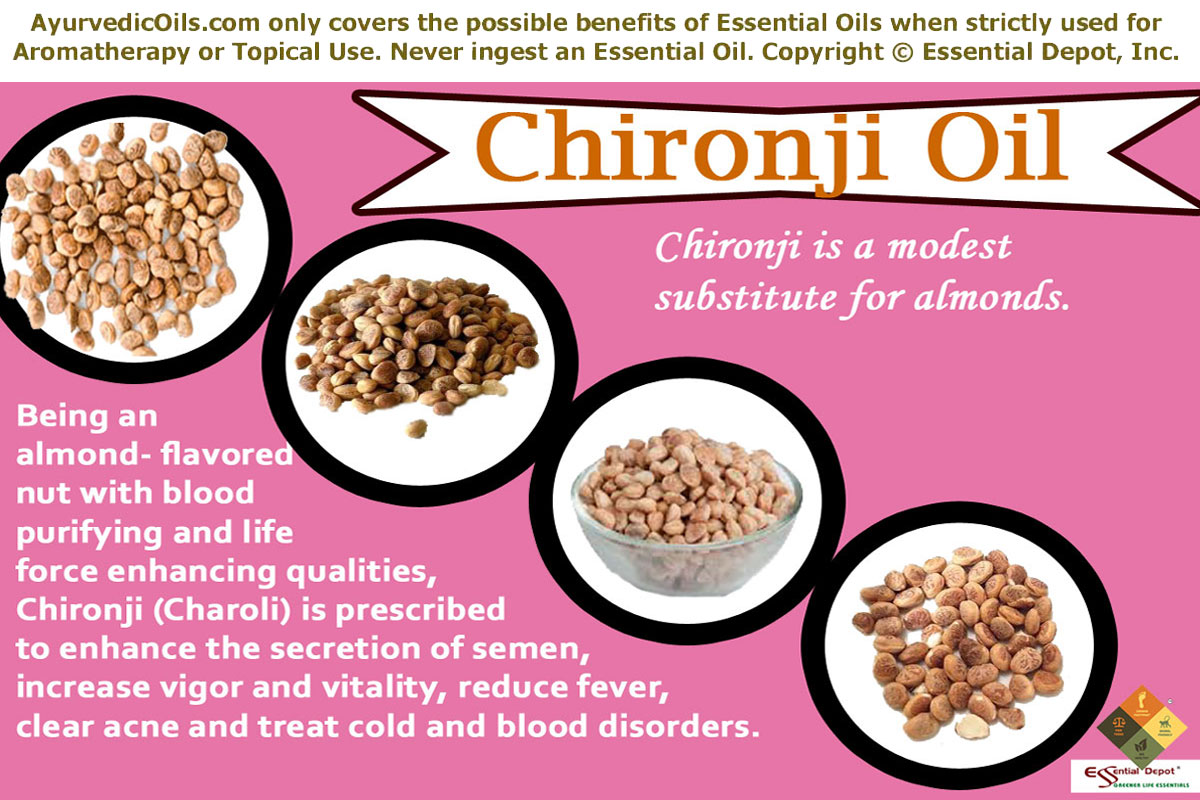
Often used as a substitute for almonds, Chironji is an almond-flavored nut with blood purifying and life force enhancing qualities. Called as Charoli or Chironji in Ayurveda, these dried modest seeds have been in use in the Ayurvedic medicine for treating digestive disorders like diarrhea, ulcers and irregular bowel movements.

Chironji-bannerIt was also recommended to enhance the secretion of semen, increase vigor and vitality, reduce fever, clear acne, skin blemishes, cold and blood disorders. Chironji oil is extracted from the dried seeds by steam distillation method and is scientifically called as Buchanania lanzan.

Purchase Chironji Oil – Wholesale – CLICK HERE

Historical importance and uses of Chironji:

Chironji is a medium-sized evergreen tree that grows up to 15m height. This tree is indigenous to India and is found growing widely in Nepal, Malaysia and Burma. The dry forests of Madhya Pradesh, Mirzapur and Varanasi districts of Uttar Pradesh, Jharkhand and Chattisgarh are the natural Chironji growing hubs of India. It is a member of the Anacardiaceae plant family and is also known as Almondette tree. Chironji is also called with other names such as ‘Cuddapah almond, Charooli, and Chirolo.’

The seed kernels of this tree contribute to about 52% of oil and are often used as a substitute for almond oil and olive oil. Chironji nuts gained favorable demand in the foreign market and has been nurtured by the Indian government as a reliable source of earning foreign exchange.

Ayurvedic medicine uses all the parts of this tree including its bark, fruits, roots, leaves, nuts and kernels for its varied medicinal properties in treating cold, bowel disorders, premature ejaculation, fever and rheumatism.

Charoli seeds are a popular ingredient in Indian sweets (Chironji ka Barfi, piyush, shrikhand, kheer and halwa), meaty kormas, lamb pepper with Chironji, Gajar ka Meetha, Hyderabadi Haleem, Charoli mutton, Malai kofta and as a flavoring for batters and sauces.

The gum extracted from the bark of this tree and powder of the roots and dried leaves mixed with buttermilk is a traditional remedy for treating diarrhea.

In the folklore medicine of Andhra Pradesh, Chironji gum was mixed with cow’s milk for relieving rheumatic pain and they also used the leaves as a tonic for supporting cardiac functions. The leaf powder was also used in encouraging quick healing of wounds.

Powdered seeds blended with milk and turmeric powder is used in India since as a natural face pack for augmenting the glow, complexion and suppleness of the skin. The juice or the decoction of the Chironji leaves is being used in Unani medicine for purifying the blood, treating loss of libido, impotency and also as a tonic for the digestive system.

Therapeutic properties and chemical constituents of Chironji oil:

The major therapeutic values of Chironji oil are carminative, expectorant, diuretic, aphrodisiac, relaxant, antiseptic, anti-inflammatory and stimulant. The chemical components of this oil are camphene, a-pinene, y-terpinene, b-pinene, myrcene, 8-cineole, sabinene and triglycerides like triolein, dipalmitoolein and dioleopalmitin.

Chironji seeds are a powerhouse of various nutrients like proteins, fiber, vitamin C, B1 and B2, carbohydrates, amino acid, iron, maleic acid, cardanol, linoleic acid, niacin, calcium and few water soluble extracts.

Ayurvedic health benefits of Chironji oil:

Ayurveda means ‘the knowledge of life’ and the greatest thing that has made this science as an admiration to the entire world is its disciplinary approaches that tend to mold the individual on all aspects of life including the physical, mental and attributes of the soul.

The most celebrated Ayurvedic Physician Mr. Vasant Lad says in his Textbook of Ayurveda as, “Ayurveda treats the whole person, not just the organ or system involved.”This clearly depicts that Ayurveda is a holistic healing science that deals with an individual and not just with his ailments.

It follows nature’s system of handling health and harmony leading to disease-free living, healthy aging and expanded life span. Ayurvedic healing identifies the root cause of an illness for preventing it in future and never believes in treating the symptoms alone. The National Institute of Health rightly quotes “The aim of Ayurvedic medicine is to integrate and balance the body, mind, and spirit. This is believed to help prevent illness and promote wellness.”

Ayurveda respects every individual as a unique creation and a vital part of nature. This makes the Ayurvedic treatment methods different for every individual even if a group of people are affected by same sickness.

The ancient Ayurvedic texts like Charaka Samhita and Sushruta Samhita say that all things in the universe are made up of five elements of nature namely water, earth, space, fire and air and every human being is distinct with a unique individual constitution, which comprises three biological energies known as doshas. These dynamic forces (doshas) are an arrangement of these vital elements.

Pitta dosha is a representation of fire and water and takes care of metabolism, cognitive functions and body temperature. Vata is a grouping of air and space and controls the working of the respiratory system, circulatory system and nervous system. Kapha dosha represents water and earth and is in charge of movement of fluids in the system, physical set up and nourishment.

Every person has a predominance of any one dosha, which decides their individuality and behavioral traits. Perfect balance between these doshas as per the natural set up denotes health and imbalance due to improper food habits, change in lifestyle and climatic conditions leads to illnesses.

Ayurveda recommends natural remedies like herbs, essential oils, Ayurvedic routine, yoga, simple physical exercises, prayers, Ayurvedic massage, meditation and Panchakarma (detoxification therapies) based on the individual constitution to treat imbalance of doshas. Chironji oil is said to pacify kapha and vata and has a neutral effect on pitta dosha.

Let’s take a look at the Ayurvedic health benefits of Chironji oil:

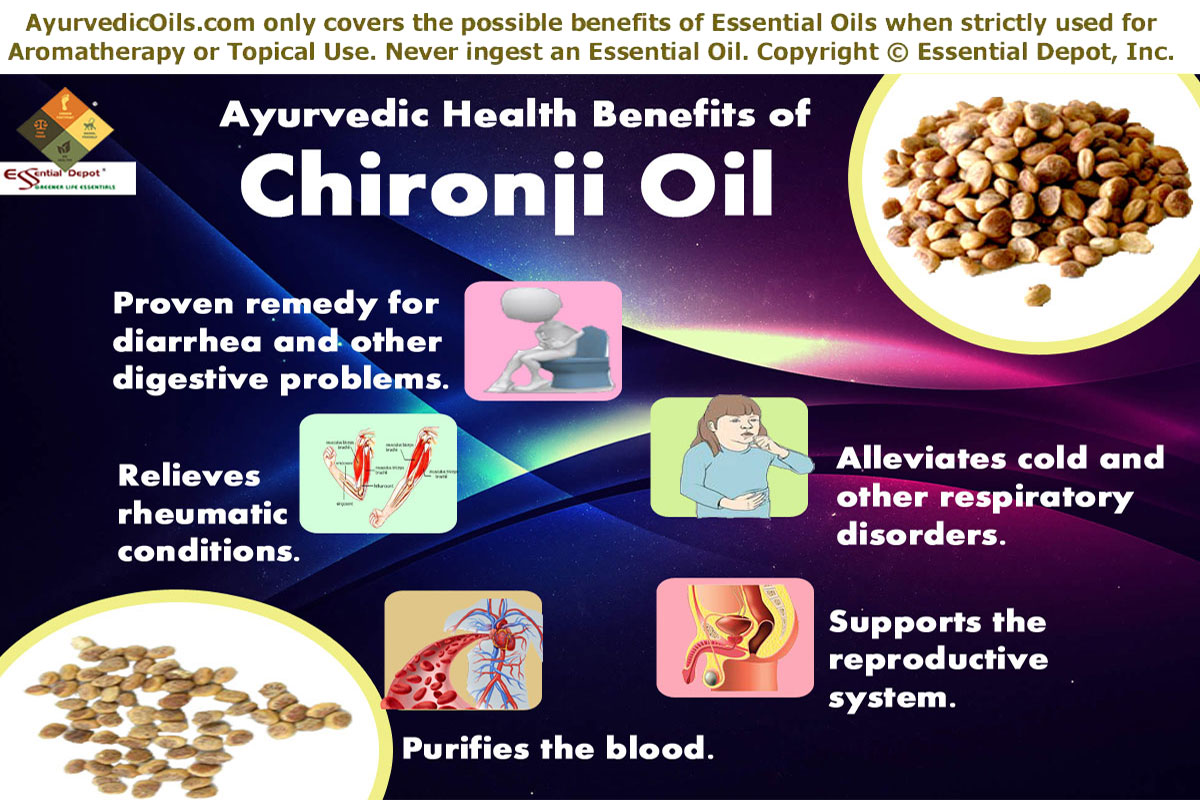
chironji-broucher1. Proven remedy for diarrhea and other digestive problems:

Diarrhea is called as Atisara in Ayurveda and it can also be caused due to toxins and psychological factors. Generally, accumulation of dampness caused by pitta instills a mild tendency on the colon and causes diarrhea. Ayurveda states that diarrhea may also be due to high toxic deposits or ama in the system, accumulation of water and increased vata or air in the body.

Chironji oil has the tendency to reduce kapha and vata and helps in eliminating the toxins or ama in the body, excess air and water retention. Adding 3 drops of Chironji oil in cool bathing water can help in relaxing the lining of the stomach and intestines, binding the stools and regularizing the bowel movements.

Inhaling the aroma of this oil by adding 2 drops to your diffuser or vaporizer can aid in overcoming loss of appetite. Massaging your abdomen with 5 drops of Chironji oil mixed with 2.5 ml of coconut oil can improve metabolism by acting as a tonic for digestion. Drinking a glass of buttermilk seasoned with 1 teaspoon of cumin seeds and coriander leaves can be of great assistance in treating all kinds of digestive woes.

2. Alleviates cold and other respiratory disorders:

Common cold and respiratory problems in general occur due to the vitiation of kapha dosha, which is responsible for stagnation of water in the body, toxic deposits and development of phlegm and mucous in the system.

Chironji oil has expectorant properties with its power to decrease kapha energy. 2 to 3 drops of this oil added to steam inhalation and massaging your throat, chest and back with 2 drops of Chironji oil mixed with your vaporub can help in loosening the mucous and phlegm deposits, relieving chest congestion, nasal congestion and common cold accompanied with runny nose and watery eyes.

3. Supports the reproductive system:

Chironji oil is a time-honored remedy for treating problems associated with sexual and reproductive functions. These seeds have aphrodisiac properties that help in treating impotence, loss of libido, lack of sexual interest, premature ejaculation and boost strength. Chironji seeds are being used in Maharashtra, India in preparing sweets and nutritious drink for the newlywed couples to maintain vitality and enhance their reproductive ability.

Massaging your body with 20 drops of Chironji oil with 3 drops of Cinnamon oil and 2 drops of Ylang Ylang oil can help in augmenting your sexual interest, grant lasting pleasure, and treat premature ejaculation and impotency by increasing vigor and the count of blood cells.

Adding 3 drops of Chironji oil to your bathing water and 2 drops of Chironji oil with 2 drops of Rose oil put in your diffuser can grant peace, reduce fatigue and treat mood swings.

4. Purifies the blood:

Chironji is used in Unani medicine as a blood cleanser. It has a positive effect on the mind and body and enhances proper blood circulation. Stress and metal worries also contribute to building up of toxins by stimulating the secretion of cortisol, also known as stress hormone in the bloodstream.

A 2012 study on ‘Adaptogenic activity of methanolic extract of Buchanania lanzan’, an experimental study in the rat model concluded that Chironji has antistress or adaptogenic activity. Massaging your body with 10 drops of Chironji oil blended with 5 drops of Lavender oil and 10 ml of coconut oil helps in augmenting the count of blood cells, enhancing positive feelings, calming the mind and eliminating toxic substances in the blood.

5. Relieves rheumatic conditions:

Rheumatism is caused by kapha aggravation leading to sluggishness, water stagnation, building up of salt, uric acid, fatty substances and toxins especially in the joints causing swelling, pain, redness and irritation. Chironji oil reduces kapha dosha and assists in discharging excess deposits of water, uric acid, salt and toxins in the body through urine.

Its diuretic properties promote the quality and frequency of urination and its anti-inflammatory along with its analgesic attributes aid in reducing swelling and pain associated with rheumatism. Massaging the affected parts with 5 drops of Chironji oil, 2 drops of Peppermint oil along with 4 ml of sesame oil can assist in alleviating rheumatic problems.

Other health benefits:

Chironji oil is also used in treating wounds, fever, ulcers, pimples, skin blemishes, glandular swelling of the neck, itching, exhaustion and biliousness.

Disclaimer:

This piece of writing is only for the purpose of education and is written wholly in the concern of sharing the long-established insight of Ayurveda, the mother of all healing sciences. It is not intended to prevent or diagnose any disease or health conditions or to substitute any kind of expert medical advice or prescribed medications.

Do not use essential oils internally. Always ensure that you dilute essential oils in suitable carrier oils before using it for topical application, as pure and organic essential oils are highly concentrated substances. Consult your healthcare professional/Ayurvedic practitioner before choosing the right essential oil for your unique individual constitution and medical condition.

Thought for the day:

Nature does not hurry, yet everything is accomplished. -Lao Tzu

Suggested Reading:

  1. The Secret to Great Health – The Vedic Health Code by Swami Ram Charran
  2. The Modern Ayurveda: Milestones Beyond the Classical Age from CRC Press
  3. Handbook of Nuts: Herbal Reference Library by James A. Duke
  4. Unsaponifiable Matter in Plant Seed Oils by Didier Fontanel

Reference Links:

  1. Buchanania lanzan by Wikipedia
  2. Charoli by Only Foods.net
  3. Diarrhea by Baidyanath Ayurveda
  4. Chironji nut (Buchanania lanzan) processing, present practices and scope by the Agricultural and Food Engineering Department, Indian Institute of Technology, West Bengal published in the Indian Journal of Traditional Knowledge
  5. Adaptogenic activity of methanolic extract of Buchanania lanzan leaves an experimental study in rat model by Shalini Kapoor Mehta, Navpreet Bains and Naira Nayeem, GHG Khalsa College of Pharmacy, Ludhiana published in Pelagia Research Library

Chaulmogra Oil

Chaulmogra-bannerChaulmogra oil created a revolution in the treatment of leprosy and the first effective drug for treating leprosy used the chemical components of Chaulmogra seeds. These therapeutic seeds are being used in Ayurveda for more than 4,000 years in the treatment of leprosy, rheumatism, eczema, leucoderma, scrofula, wounds, sprains, sores and bruises.

Chaulmogra is botanically known to the world as Taraktogenos kurzii/ Hydnocarpus kurzii/ Hydnocarpus wightiana/ Hydnocarpus laurifolia and its Sanskrit name is Tuvrak, Tuvaraka and Kushtavairi. This tall tree is a limb of the Achariaceae plant family. The essential oil is extracted from the Chaulmogra seeds through steam distillation method.

Purchase Chaulmogra Essential Oil – Retail – 4 oz – CLICK HERE

Purchase Chaulmogra Essential Oil – Wholesale – CLICK HERE 

Historical uses and significance of Chaulmogra and its essential oil:

Chaulmogra or Chaulmoogra has been a part of the Traditional Chinese Medicine and Ayurveda, the oldest healing science originated from India, especially in the treatment of leprosy and other chronic skin disorders.

Chaulmogra tree is indigenous to India and grows extensively in the tropical forests of Western Ghats from Maharashtra to Kerala and is also found in the hilly regions of Tripura and Assam. It is cultivated in Nigeria, Uganda, Sri Lanka and few other South East Asian countries. These evergreen, deciduous trees grow up to 15 m height and bear fruits between the months of August and September.

The seeds are angular and ovoid with rounded endings and the essential oil extracted from the seeds are pale yellow in color with viscous and heavy consistency. Chaulmogra oil is called as Oleum Chaulmoograe in the United States and in Great Britain as Gynocardia oil. This oil was used in England in the treatment of lung tuberculosis.

Chaulmogra oil was also used in China since the 14th century in alleviating various skin ailments and leprosy. It was slowly then spread to the Western countries including the United States and Europe.

A mixture of Chaulmogra oil balanced in gum or as an emulsion was prescribed for treating leprosy. The bark of this plant is used by the people of Arunachal Pradesh, India in relieving toothache and itching. The tribal populace in Sikkim uses the boiled Chaulmogra seeds as a food item.

Chaulmogra seed oil was mixed with limewater and was applied externally in treating rheumatic conditions especially in the joints and for relieving sprains. These seeds were also used in folklore as a fish poison. The seed paste along with camphor, sulphur, Jatropha curcus seed oil and lime juice was used in topical application for healing skin ulcers and wounds.

Chemical components and remedial properties of Chaulmogra oil:

The seeds of this tree yield about 32.4 percent fixed oil along with other fatty oils. The major chemical constituents are 49 percent hydnocarpic acid, 27 percent chaulmoogric acid, 12 percent gorlic acid (with these 3 primary components, Chaulmogra is called as triglyceride oil) 6.5 percent oleic acid, 2 percent Palmitic acid, 3.4 percent chaulmoogric acid with lower homologues along with myristic acid, linoleic acid, and stearic acid.

These components contribute to its curative properties like antibiotic, astringent, anti-inflammatory, anti-rheumatic, antiseptic, antibacterial, expectorant, decongestant and febrifuge properties.

Ayurvedic health benefits of Chaulmogra essential oil:

Ayurveda is a Vedic medical science, which is the greatest gift of the ancient Indian Sages to the whole of mankind. Among the 4 four predominant Vedas of Hindu mythology, Ayurveda has its roots to the Atharvaveda and it is also accepted as a supplementary Veda or an Upaveda in its own sacred ways and was enlightened by Acharya Dhanvantari.

This holistic healing science is the oldest remedial science on earth and aims at treating illnesses with the help of herbal plants, essential oils, meditation, yoga, simple physical exercises, prayers, an Ayurvedic routine and other proven Ayurvedic therapies like Abhyanga or Ayurvedic massaging and Panchakarma or detox therapies.

Ayurveda suggests disciplined ways to fulfill responsibilities or Dharma, lead a healthy lifestyle, aging in the pink and also aims at preventing illnesses and longevity.

Charaka Samhita, Sushruta Samhita and Ashtangha Hridaya Samhita are the three greatest Ayurvedic texts that established the basic concepts of Ayurveda and the complete system of medicine.

Few noteworthy works are the eight Ayurvedic branches or methodologies of healing. Acharya Charaka (Father or medicine) stands for the Atreya School of physicians and threw light on anatomy, pathogenesis, physiology, diagnosis, etiology, symptoms of diseases along with guidelines for prevention and extended life span.

Sushruta (Father of Surgery) is a part of the Dhanvantari School of surgeons. He talks about the categorization of burns, wounds, fractures, rectal surgery, amputation, plastic surgery and various surgical equipments. Sushruta also introduced the art of massaging using vital body points or the marma points in the body. Ashtangha Hridaya Samhita is a combination of Charaka Samhita and Sushruta Samhita.

Ayurvedic medicine is based on its four major concepts. They are Panchamahabutas (5 elements of nature), tridosha (3 doshas), malas (elimination of waste) and dhatus (vital organs of the body). This traditional remedy trusts that the world is made up of five vital elements namely earth, water, fire, air and space and everything in the world is also made up of these five elements or the building blocks of existence.

Every human being has a unique individual constitution consisting of three biological energies known as doshas. They are vata (air + space), pitta (fire + water) and kapha (earth + water). Vata energy is responsible for the functions of the central nervous system and the autonomic nervous system.

Pitta is in charge of tissue building, metabolism, body temperature and functions of the endocrine system. Kapha is accountable for strength of the body, virility, binding power and firmness of the system.

Balance between these doshas as per the natural composition indicates health and imbalance due to unhealthy practices, change in food habits and weather conditions causes illnesses. Ayurvedic remedies are prescribed in order to balance these doshic vitiations.

The Ayurvedic health benefits of Chaulmogra oil are:

Chaulmogra-broucher1. Proven traditional remedy for leprosy:

The Encyclopedia Britannica says ‘the first textual reference to leprosy—in an ancient Sanskrit sacred work known as the Atharvaveda’, which is the holy book of Ayurvedic principles. It also says that leprosy has been talked about in Sushruta Samhita, the ancient Ayurvedic text, the Hebrew Bible, Chinese medical texts and the writings of the Greek physicians like Galen.

Leprosy is said to be the most feared and most misapprehended disease in the history. For thousands of years, the essential oil derived from the seeds of Chaulmogra tree had been in use in the treatment of leprosy and other skin conditions in India, China, Europe, America and certain other Middle East countries.

In 1854 an English Doctor Frederic John Mouat described the use of this oil in the treatment of leprosy, while he was working in Kolkata, India. In the paper submitted in 1854 named ‘The Indian Annals of Medical Science, he wrote on Chaulmogra oil as “Its success was, however, so remarkable and indisputable in one well-marked case of the worst form of leprosy, that I venture to hope an external application of it to that most loathsome and intractable of diseases, may prove so successful, as to secure the general introduction of the remedy.”

Dr. Mouat tried Chaulmogra in two different ways on his leper patients, one by applying and dressing the external ulcers of the patients with the oil and he also gave it internally in the form of pills, prepared by beating the Chaulmogra seeds into a pulp.

It was also introduced as an established treatment for leprosy in 1874 in the Madras Leper Hospital. Chaulmogra oil is still being used in Ayurveda, the Traditional Chinese Medicine and even Western medicine for treating leprosy and other highly-communicable skin diseases.

2. Heals wounds and other skin problems:

Chaulmogra oil has anti-bacterial, antiseptic and analgesic properties that help in healing wounds, prevent it from becoming septic and infectious, kill harmful microbes that may affect the wounds and reduce pain in the injured area.

Certain research studies have proved that Chaulmogra oil contains a weak acid known as 5′-methoxyhydnocarpin, which plays a predominant part in preventing the multidrug resistance in certain bacteria like Staphylococcus aureus and this bacteria is often the reason for wounds and infections turning septic. Applying a blend of 1 drop of Chaulmogra oil with 1 drop of Lavender oil in 1 ml jojoba oil can work like a miracle on your skin and aid in healing wounds, cuts, bruises, acne, eczema, psoriasis and sores.

3. Alleviates rheumatic pain and associated symptoms:

Rheumatism is characterized by pain, swelling, redness and inflammation of the hands and legs, especially the joints. Amassing of excess water, toxic remains due to indigestion, salt, uric acid and fat deposits cause rheumatic conditions and it is often regarded as a kapha imbalance.

Chaulmogra oil has kapha-reducing and diuretic properties that help in promoting frequent urination, through which the surplus water deposits and toxic remains are eliminated through urine.

Massaging the affected parts with 2 drops of Chaulmogra oil blended with 2 drops of Chamomile oil and 2 ml of coconut oil can be a great aid in reducing pain and inflammation with its analgesic properties and discard toxic substances by stimulating the functioning of the kidneys.

4. Relieves congestion:

Chaulmogra is quoted as an oil with sharp and unctuous quality with hot virility and pungent taste by the book ‘Health & Harmony through Ayurveda’ by Anil K. Mehta, R.N. Sharma and N.K. Gupta. These attributes aid in liquefying excess kapha dosha responsible for cold, cough, congestion, tuberculosis and other respiratory problems.

Chaulmogra oil acts as an excellent aid in loosening the deposits of mucous and phlegm in the nasal passages, respiratory tracts and bronchial tubes, and helping in the treatment of chest congestion, nasal congestion, bronchitis and tuberculosis.

This oil also has antibacterial, expectorant and decongestant properties that help in combating harmful micro-organisms that worsen respiratory infections and promote the expulsion of phlegm.

A 1922 study on ‘Chaulmoogra oil in the treatment of tuberculous laryngitis’ concluded that the Chaulmoogra treatment at the Jefferson Hospital and at the Henry Phipps Institute of the University of Pennsylvania on 60 cases over a duration of 8 months “showed promising results from the beginning and in the majority of the cases, Chaulmoogra oil exerted an analgesic action on the larynx, which became more complete after repeated treatments.

This study also said that “there was no pain or discomfort in the throat afterward, but rather a pleasing sensation of warmth in the throat and chest.” Throat dryness associated with tuberculous laryngitis exhibited improvement after this treatment.

2 drops of Chaulmogra oil added to steam inhalation or in gentle massage by blending 2 drops of this oil with 1 drop of Tea tree oil along with your decongestant ointment on your chest, throat and back can help in relieving cold, cough, sore throat and congestion. A cup of warm gargle with 1 drop of Chaulmogra oil can help in discarding microbes and microbial infections in the mouth and throat and assist in treating sore throat and dry cough.

Disclaimer:

This information is only for educational purposes and is shared only with the thought of spreading the traditional values of Ayurveda, the ancient wisdom of healing. It is not meant to prevent or diagnose any disease or medical conditions or to replace any kind of professional medical advice or prescribed medicines.

Never use essential oils internally. Make sure that you dilute essential oils in appropriate carrier oils before using it externally on the skin, as pure and organic essential oils are highly concentrated substances. Consult your Ayurvedic practitioner or healthcare professional before choosing the best essential oil for your unique individual constitution and state of health. Chaulmogra oil is a non-sensitizing and non-toxic oil but it is good to avoid this oil on children and pregnant women.

Thought for the day:

Everything in Nature contains all the powers of Nature. Everything is made of one hidden stuff.  -Ralph Waldo Emerson

Suggested Reading:

  1. Leprosy in Colonial South India: Medicine and Confinement by Jane Buckingham
  2. Ayurvedic Drug Plants by Anil Kumar Dhiman
  3. Health & Harmony Through Ayurveda by A. k. Mehta, N. K. Gupta
  4. The Aromatherapy Encyclopedia: A Concise Guide to over 385 Plant Oils by Carol Schiller, David Schiller
  5. Medicinal Plants of Asia and the Pacific by Christophe Wiart

Reference Links:

  1. Hydnocarpus wightiana seed oil by Wikipedia
  2. Leprosy by Encyclopaedia Britannica
  3. Chaulmogra Oil and the Treatment of Leprosy by John Parascandola published in LHNCBC
  4. Chaulmoogra oil in the treatment of Tuberculous Laryngitis by R.M. Lukens, Chief Clinical Assistant, Department for diseases of the chest, published in the Journal of the American Medical Association
  5. Chaulmogra from the book Ayurvedic Drug Plants by Anil Kumar Dhiman

Benzoin Resin Oil

Fixing up your skin setbacks, respiratory ailments and mental mayhems is just a few steps away, until you reach the sacred aroma of Benzoin essential oil. Blessed with a divine fragrance and handful of healing values, Benzoin has been in use since thousands of years as a holy aromatic agent in temples and other religious ceremonies.

Being a pacifying agent, Benzoin and its essential oil is said to have been used for soothing depression and treat skin disorders. Scientifically known as Styrax benzoin, it is also called as gum Benjamin or gum benzoin.

Used as a natural aid to heighten spiritual oneness and divinity, Benzoin resin was burnt by the ancient saints, Hindu priests and Buddhist monks during prayers and holy congregations.

It was used in various Complementary and Alternative Medicinal systems including Ayurveda, in the treatment of depression, wrinkles, congestion, sinusitis, bronchitis, tonsillitis, cough, flatulence, urinary tract infections, premenstrual syndrome, inflamed skin and impotence.

Historical uses and importance of Benzoin resin: Benzoin resin is extracted from the bark of numerous trees of different species in the Styrax genus. Indigenous to the Sumatra and Java islands in Indonesia, Benzoin gets its name from the Arabic word ‘Luban Jawi’, which means Frankincense from Java. The Benzoin tree grows up to a height of 12 meters and is also grown as an ornamental tree in Western Africa.

The crude Balsamic resin is extracted by tapping method, which is nothing but the process of cutting the bark of the tree for obtaining the resin, generally from a seven years old tree. The extracted resin is then left out for 3 to 4 months for drying and hardening. Benzoin resin essential oil is extracted from this resin through a solvent.

It was said that the ancient Egyptians and Chinese imported Benzoin resin via the Red Sea. As an excellent fixative that has the power to embrace the fragrance of many aromatic oils and perfumery ingredients, Benzoin essential oil is a common element in the perfume and incense-making industry.

Benzoin was used in the traditional Malayan civilization as a fumigation and incense, to keep away from evil spirits as well as for ritual uses. Predominantly used as incense for more than 3000 years, Benzoin resin has been powdered and blended with other aromatic items like cypress, pine, labdanum, juniper and galbanum. This blend is then made as cones and kept on the heads of the dancers of Egypt, says Papyrus records.

Queen Elizabeth I used the dry perfumes made with Benzoin and the first use of this enchanting fragrance factor in England is traced between the 15th and 16th centuries. The resin is popular as an incense in Western Catholic Churches and certain Orthodox Christian associations all over the world.

Benzoin resin is also used in the manufacturing of scented wooden chips known as Bakhoor in Arabic. It is also used as mixed resins along with other resins in Horn of Africa and other Arabian provinces. This sweet-smelling resin is burned on charcoal as incense especially during spiritual occasions in India and the Arabian countries of the Persian Gulf.

Chemical constituents and therapeutic properties of Benzoin resin oil: The key chemical components of Benzoin resin essential oil are benzoic acid, coniferyl benzoate, phenylpropylic alcohol, benzaldehyde, cinnamic acid, benzyl benzoate, vanillin and phenylethylene.

The most significant remedial attributes of this oil are antioxidant, antifungal, antibacterial, anti-inflammatory, anti-depressant, astringent, expectorant, disinfectant, antiseptic, anti-rheumatic, cordial, vulnerary, carminative, sedative, relaxant and deodorant.

Ayurvedic health benefits of Benzoin resin oil: Ayurveda embraces nature wholly and it is reflected in every single remedy it prescribes to mankind. This is the most valued attribute that has helped Ayurvedic healing survive and stay in the hearts of many across the globe.

With the immaculate meaning of ‘knowledge of life’, Ayur+Veda is the only healing system on earth that insists on self-awareness about one’s own health condition and individual constitution. This traditional wisdom of healing brings in that wakefulness,  where an individual understands that every human being is being created with all kinds of mental and physical abilities in a clear order.

Ayurveda helps in appreciating this uniqueness and leading a hale and hearty life in sync with nature, which is built with five fundamental elements. They are earth, water, air, space and fire. Everything on earth including the human body is made with these five elements, where the earth takes the form of muscles and bones, water represents blood, fire helps in the biological functions including metabolism, space is the soul that keeps us alive and air assists in breathing.

According to Ayurveda, every human being is a unique part of nature with a unique individual constitution. This constitution is known as Prakriti and is a combination of three biological elements called as doshas. They are vata, pitta and kapha. Every person has a predominance of any one of these doshas and it determines the traits, character and behavioral attributes of a person.

Ayurvedic remedies are based on the predominance of the doshas and the balance between them. Absolute health in Ayurveda is a sign of perfect balance between these doshas and illness indicates doshic imbalances. Ayurvedic healing techniques and medications aim at correcting the disparities between the doshas.

The major natural remedies prescribed in Ayurveda are herbs, plant essential oils, meditation, yoga, simple physical exercises, Ayurvedic routine, prayers and few other Ayurvedic techniques like Panchakarma or Ayurvedic detox, Abhyanga or Ayurvedic massage and Pranayama or Ayurvedic art of balanced breathing.

Benzoin resin oil has moisturizing and warming energies, which helps in tranquilizing the mind and enriching the skin. This oil has the power to pacify vata, pitta and kapha dosha with its sweet-balsamic, pleasant and vanillin based aroma.

The Ayurvedic health benefits of Benzoin resin essential oil are:

Benzoin-Res-Broucher1. Alleviates rheumatic conditions: Rheumatism generally occurs due to the stagnation of excess water deposits in the system. This leads to improper blood circulation, inflammation, swelling, redness, pain, soreness and difficulty in the normal functioning of the body. Excess of water and fluids in the human body is mainly caused due to the imbalance of kapha dosha, which is responsible for similar diseases like obesity, respiratory illnesses etc.,

Benzoin essential oil has anti-rheumatic, anti-arthritic, anti-inflammatory and diuretic properties that help in promoting proper blood circulation, reducing pain, lessening inflammation, controlling soreness and swelling, and eliminating the surplus water deposits and toxic elements in the system by promoting frequent urination. This function also assists in treating obesity, controlling blood pressure, supporting the functions of the circulatory system and enhancing metabolism.

To get rid of rheumatic and arthritic problems, Ayurveda suggests a healthy diet that naturally controls kapha vitiation along with yogasanas that treat rheumatism and arthritis and the use of Ayurvedic essential oils like Benzoin resin oil.

The Arthritis Foundation reported that a research by the John Hopkins University has concluded that yoga is extremely beneficial for people with rheumatoid arthritis after publishing its research analysis stating that “who participated in eight weeks of yoga classes had significantly fewer tender and swollen joints than they did before starting class.”

Steffany Haaz, the grant recipient of the Arthritis Foundation also says, “We have previously reported that yoga helps people to feel better, and we wanted to make sure it wasn’t harmful to arthritic joints. So, we were glad to find that there actually seems to be improvement in joint symptoms for RA patients.”

Along with this, massage the painful parts with 3 drops of Benzoin resin oil mixed with 1 drop of Ginger oil, 1 drop of Lavender oil, 1 drop of Black pepper oil, 1 drop of Juniper berry oil with 4 ml of coconut oil. You can also add 2 drops of Benzoin resin oil and 2 drops of Marjoram oil in warm bathing water or in hot compress for improved results. This formula works quickly as the benzyl components in the Benzoin oil are easily absorbed by the pores of the skin.

2. Relieves congestion and other respiratory problems: Breathing is the natural action that sustains life. Trouble-free breathing brings in enormous health and happiness by permitting the flow of prana or vital life force in the system.

Any interruption or blockage in the breathing mechanism due to improper food habits, environmental factors, stagnation of water deposits and toxic substances in the system leading to built up of mucus and phlegm deposits (this is a kapha imbalance) cause respiratory problems.

Benzoin resin essential oil has the power to reduce excess kapha dosha, with its expectorant properties. 1 drop of Benzoin oil with 1 drop of Eucalyptus oil and 1 drop of Niaouli oil in steam inhalation aids in loosening the accumulated phlegm and mucus, relieving congestion and cleansing the breathing passages.

Gently massaging your chest, throat and back with your vaporizing ointment mixed with 2 drops of Benzoin oil and 2 drops of Frankincense oil, following the steam inhalation can aid in relieving cough, cold, congestion, bronchitis, laryngitis, blocked nose, asthma and other respiratory allergies. You can practice breathing exercises like Pranayama and yoga asanas for respiratory illnesses.

3. Drives away depressive feelings: Benzoin resin oil has a gentle, sweet and soothing aroma that tranquilizes the mind with its relaxant, sedative and anti-depressant properties. When inhaled, these remedial properties in the aromatic molecules of this oil pass on to the brain through the nasal passages. This has a positive effect on the limbic system, which is the control center of the brain.

Bryan Miller and Light Miller in their book ‘Ayurveda and Aromatherapy’ say, “Benzoin resin oil is beneficial to an irritated nervous system and can be useful in depression, PMS and stress.”

2 drops of Benzoin resin oil along with 1 drop of Ylang Ylang oil and 1 drop of Orange oil added to your vaporizer, burner or diffuser can assist in stimulating the central nervous system, pacifying the mind, granting mental clarity, controlling anger, treating anxiety, improving blood circulation and instilling the power to control depressive feelings.

According to Ayurveda, among the 7 chakras, Benzoin resin oil affects the root chakra and the solar plexus chakra. Root chakra or sacral chakra is responsible for survival factors like security issues, financial independence and the ability to stand up high. Imbalance of this chakra leads to depression and various other nervous problems.

Solar plexus chakra deals with self-confidence, self-esteem, self-control, self-worth and other personal powers. The failure of the functions of this chakra leads to nervousness, lower self-confidence, inferiority complex, poor memory and digestive disorders.

Benzoin resin oil, with its power to treat the imbalances of the root chakra and solar plexus chakra, brings in self-confidence, trust and the ability to stand tall to beat depression and other negative feelings.

While talking on the relaxing effects of Benzoin resin oil on the emotional aspects of the system, Madame Maury says, ‘this essence creates a kind of euphoria; it interposes a padded zone between us and events’. You can also work out these Yoga asanas for depression and practice meditation.

4. Keeps skin problems at bay: The essential oil of Benzoin has amazing healing for nourishing your skin and helps you look younger and charming. The book on ‘Aromatherapy: Essential oil for vibrant health and beauty’ by Roberta Wilson quotes, “Benzoin was often added to cosmetics to keep skin clear and youthful. People in many different cultures have appreciated its ability to soothe and stimulate the skin.”

Benzoin resin oil has everything in its kitty for dealing with various skin problems ranging from wounds to treatment of scars. The healing properties are mainly due its chemical components including benzyl benzoate, benzoic acid and benzaldehyde.

This oil is a natural antiseptic with germicidal, disinfectant, antiviral, antibacterial, antifungal and vulnerary properties that aid in healing wounds, cuts, sores, acne, chapped skin, eczema, scars, skin irritation, psoriasis and dermatitis.

Applying the mix of 2 drops of Benzoin resin oil with 1 drop of Lavender oil, 1 drop of Rose oil, 1 drop of Lemon oil, 1 drop of Bergamot oil, 1 drop of Frankincense oil and 4 ml of Sweet almond oil on pimples, wounds, cuts, sores, scars and other infectious skin problems can help in protecting the infected parts from germs and promote quicker healing.

Massaging this blend on your skin especially on dry, cracked, blistered or chapped skin helps repair and rejuvenate the skin cells especially on the elbows, knees and heels. It also helps in maintaining the skin suppleness and softness. Ayurveda recommends drinking ample water every day to retain healthy skin cells.

5. Benefits to the entire system: Apart from these magnificent benefits, the essential oil of Benzoin can bring in enormous other benefits to your complete system. They are the promising effects of this oil that can help in destroying germs in the mouth with its disinfectant properties and tightening the gums with its astringent properties. It also aids in treating digestive disorders with its anti-flatulent and carminative properties. It can serve as an excellent deodorant with its mesmerizing aroma, for your body as well as your home.

Other uses: Benzoin is known for its fixative and preservative values and is used in the perfume industry for these reasons, especially for reducing the dispersal of fragrance elements and essential oils in air. This oil is also utilized as a flavoring agent in baked goods, gelatins, candies, gums, puddings, frozen dairy and beverages including alcoholic and non-alcoholic drinks. Apart from this, its use in the manufacturing of scented candles, cosmetics and veterinary medications makes it a much prized natural alternative since ages.

Disclaimer: This information is only for the purpose of education and is not intended for diagnosis or prevention of any illnesses. Do not substitute these remedies for any prescription drugs or expert medical advice. We are not medical professionals and this article is shared with the interest of throwing light on the world’s oldest healing system, Ayurveda.

Never use essential oils for internal purposes and make certain that you dilute essential oils in appropriate carrier oils before using it topically. This is mainly because pure and organic essential oils are extremely concentrated liquids and may cause allergic reactions, when used on the skin directly.

Talk with your Ayurvedic professional prior to selecting the right essential oils for your Prakriti or unique individual constitution and state of health. Care should be taken before using essential oils, if you are pregnant or a nursing mom.

Thought for the day:

Nature never did betray the heart that loved her. -William Wordsworth

Suggested Reading:

  1. Fragrance & Wellbeing: Plant Aromatics and Their Influence on the Psyche by Jennifer Peace Rhind
  2. The Encyclopedia of Essential Oils: The Complete Guide to the Use of Aromatic Oils In Aromatherapy, Herbalism, Health, and Well Being by Julia Lawless
  3. Ayurveda & Aromatherapy: The Earth Essential Guide to Ancient Wisdom and Modern Healing by Dr. Light Miller, Dr. Bryan Miller
  4. Magical Herbalism: The Secret Craft of the Wise (Llewellyn’s Practical Magick Series) by Scott Cunningham
  5. Making Your Own Incense: Storey Country Wisdom Bulletin A-226 by Tina Sams, Maryanne Schwartz

Reference Links:

  1. Benzoin Resin by Wikipedia
  2. Benzoin from the book, Aromatherapy: Essential Oils for Vibrant Health and Beauty by Roberta Wilson
  3. Benzoin from the book, Ayurveda and Aromatherapy: The Earth Essential Guide to Ancient Wisdom and Modern Healing by Light Miller and Bryan Miller
  4. Health Benefits of Benzoin Essential Oil by Organic Facts
  5. Yoga – A Remedy To Respiratory Illnesses by Dr. Sripriya Krishnan, Department of Psychology, Dr. M.G.R Janaki College of Arts and Science for Women, Chennai

Bay Oil

The energy of being able to feel the new fragrance of the dewfall from a rose petal is the symbol of being hale and hearty. Bay leaf and its essential oil is another gift of nature that can help one in attaining this absolute state of health and heartiness.

Bay-oil-bnrBeing a stimulant of the digestive system, respiratory passages, circulatory system and the lymphatic functions, Bay leaf has been a trusted traditional remedy for keeping numerous health conditions at bay.

Celebrated as an aromatic culinary spice all over the world, Bay leaf is one among the most important ingredient of the garam masala and the authentic Biriyani, the much relished dish of the world from the Mughal Empire.

Botanically called as Laurus nobilis (Mediterranean Bay leaf), Bay leaf is known as Tejpatta (Indian Bay leaf or Cinnamomum tamala) in Ayurveda, and it has been used in the treatment of scalp dryness, migraine, amenorrhea, neuralgia, headache, asthma, poor memory, kidney infections, joint pain, uterus infection, arthritis, high blood sugar, menstrual difficulties, flatulence, stress, indigestion, diabetes and certain respiratory problems.

Purchase Bay Essential Oil – Retail – 4 oz – CLICK HERE

Historical uses and importance of Bay leaf and its essential oil:

Bay leaves generally refer to various aromatic leaves of several plants used for culinary purposes. These names are given based on their nativity and few notable Bay leaf varieties are Bay laurel or Laurus nobilis, which is of Mediterranean origin; the next is the Indian Bay leaf or Cinnamomum tamala; West Indian Bay leaf or Pimenta racemosa; Indonesia Bay leaf or Syzygium polyanthum; Mexican Bay leaf or Litsea glaucescens; and the California Bay leaf or Umbellularia californica.

Every variety of Bay leaf has its own fragrance and numerous uses in cooking and in remedial practices for more than thousands of years across the globe. Whole leaves and powdered leaves are often used in adding that unique flavor in food preparation, where as the infusion or decoction of these leaves and its essential oil play a vital role in the Traditional and Alternative healing methodology.

Held high as the Sun God in Astrology, Bay laurel tree and its leaves have been related to wisdom, protection and peace since the primeval times, where the wise King was honored with the garland made of Bay leaves. This is mainly due to the positive emotional benefits of Bay leaves that aid in treating anxiety, stress and insomnia.

The powdered Bay leaves were mixed with milk for treating urinary infections, fever and dyspepsia. It was also recommended for normalizing blood circulation and reducing bad cholesterol in the system. The fresh and dried Bay leaves were used in the preparation of an herbal infusion, which was used as a promising diuretic for promoting frequent urination; eliminate excess water from the body and toxic remains in the system causing rheumatic conditions, indigestion, obesity and even heart problems.

Bay leaves were a trusted remedy in the Indian folklore medicine for treating vomiting, fatigue, nausea, diarrhea, rheumatism, obesity and colic. These magical leaves were also used as an aid for preventing cancer and oral problems. It is also used in the preparation of soups, stews, curries, liqueurs, anti-dandruff shampoos and cologne.

Bay leaf essential oil has been recommended in treating dandruff, rheumatism, migraine pain, arthritis, high blood pressure, congestion and earache. The astringent and anti-bacterial properties of this leaf supports its use as a salve for wounds and was used in the traditional medicine for treating skin rashes due to stinging nettle, poison ivy etc.,

Chemical constituents and therapeutic properties of Bay leaf essential oil:

The most notable therapeutic values of Bay leaf essential oil are anti-bacterial, antifungal, diuretic, stomachic, emmenagogue, tonic, febrifuge, diaphoretic, sedative, astringent, appetite stimulant, anti-neuralgic, expectorant, insecticide, anti-cancer, anti-inflammatory, cholagogue, antibiotic, aperitif and sudorific.

These remedial properties are due to the presence of effective chemical constituents in Bay essential oil including eucalyptol or cineole, linalool, limonene, eugenol, a-terpineol, geraniol, phellandrene, myrcene, a-pinene, b-pinene, neral, chavicol, and geranyl acetate.

Ayurvedic health benefits of Bay essential oil:

Ayurveda is the oldest medicinal science known to the world with more than 5,000 years of successful healing. It is a vital part of the ancient Indian Hindu mythology, which contains a compilation of 4 major Holy books called as Vedas.

They are Rig, Sama, Atharvaveda and Yajur Vedas. Between them, Ayurveda is a component of the Atharvaveda, in which 114 verses indicate the all-embracing Ayurvedic philosophy and natural remedies to guide a healthy and hearty living.

The world of Ayurveda attained its wholesomeness with the writings of the Ayurvedic physicians like Charaka (regarded as the ‘Father of medicine’) and Sushruta (known to the world as the ‘Father of surgery’). Acharya Charaka composed Charaka Samhita and Sushruta wrote Sushruta Samhita respectively, which was later combined together and gifted to the world of medicine in the name of Ashtanga Hridaya Samhita.

Ayurvedic healing insists on the importance of leading a healthy life with absolute physical, mental, social and spiritual balance. For attaining this, Ayurveda advises on leading a healthy lifestyle and balanced food habits along with other routine tasks like simple physical exercises, meditation, yoga, prayers and natural remedies like herbs and Ayurvedic essential oils.

As a holistic healing methodology, Ayurveda has everything including disciplinary values for increased life span and attaining bliss while on earth itself. With these respectable principles, Ayurveda aims at preventing illnesses rather than just healing. It believes that the adherence to Ayurvedic lifestyle and healthy habits can aid in preventing lifestyle disorders like high blood pressure, fatty liver conditions, high cholesterol, heart diseases, obesity, kidney degeneration and diabetes etc.

Ayurveda strongly believes that everything on earth including mankind is made up of the five basic elements of nature. They are earth, fire, space, air and water. It further states that every individual is a unique creation with a unique individual constitution, which is made of three biological energies known as doshas. They are vata, pitta and kapha.

Vata dosha is a combination of air and space and is responsible for the circulatory and nervous functions of the system. Pitta is made up of fire and water and is in charge for the metabolic functions and body temperature. Kapha is a mix of water and earth and is accountable for the functions of the reproductive system, sustenance and physique.

According to Ayurveda, every person has a predominance of one of these doshas and it decides the personality, behavior and character of an individual. Balance between these doshas as per the law of nature indicates perfect health and doshic disparities due to change in food habits, lifestyle and climatic conditions leads to illnesses.

Ayurveda prescribes natural remedies and Ayurvedic techniques like Abhyanga or the art of Ayurvedic massaging, Panchakarma or the detox techniques, Pranayama or balanced breathing etc., for correcting the imbalance of doshas.

With its drying and warming energies along with its fresh, long lasting, sweet-balsamic and spicy aroma, Bay leaf essential oil is said to pacify kapha and vata dosha and aggravate pitta dosha.

Let’s take a look at the Ayurvedic health benefits of Bay leaf essential oil:

Bay-oil1. Promising remedy for diabetes and other lifestyle disorders:

Bay leaf essential oil has numerous remedial properties that help in the treatment of diabetes and other lifestyle health problems like fatty liver conditions, high blood pressure, obesity and kidney degeneration.

A 2009 study on ‘Bay leaves Improve Glucose and Lipid Profile of People with Type 2 Diabetes’ by the Department of Human Nutrition, NWFP Agricultural University, Peshawar, Pakistan published in the “Journal of Clinical Biochemistry and Nutrition” analyzed the effects of blood sugar on human beings with Type 2 diabetes.

Among the participants who were given about 1 to 3 grams of ground Bay leaf per day in this program for 30 days, reflected a significant fall in the level of blood glucose, triglycerides and cholesterol. This research concluded that “Bay leaves reduced serum glucose, total cholesterol, LDL cholesterol and triglycerides, and increased HDL cholesterol levels in people with type 2 diabetes.”

The antioxidant and anti-diabetic properties of Bay leaf promotes the system in the progression of insulin effectively. The most amazing result of this study was that it also helped in reducing the level of cholesterol and triglycerides, which also assists in reducing the menace of cardiovascular disorders due to enhanced insulin function.

Another study in 2011 on “The effects of Bay leaves on the patients with Diabetes Mellitus” by Abdulrahim Aljamal conducted on 65 patients with Type2 diabetes witnessed that “this study group using Bay leaf supplementation for 4 weeks decreases the risk factors for diabetes and cardiovascular diseases by reducing blood glucose and lipids levels.”

It was also explained that diabetes mellitus is one among the major risk factors for cardiovascular problems, where the occurrence of such disorders are increased 2 to 4 times in people with diabetes. He also says “Diabetes is a chronic disorder of glucose metabolism resulting from dysfunction of pancreatic beta cells and insulin resistance.”

Skin is the largest organ of the human body and it transmits the remedial values of Ayurvedic essential oils quickly into the bloodstream, thus speeding up the healing process. You can either use Bay leaf oil in a massaging blend or your bath for treating diabetes.

Make your home the heaven of Ayurvedic spa in the weekend by massaging your system with 5 drops of Bay leaf oil, 5 drops of Clove oil, 5 drops of Cinnamon oil and 5 drops of Rosemary oil along with 10 ml of Olive oil, followed by a refreshing bath diluted with 1 drop of Bay leaf oil and 1 drop of Lavender oil. This can absolutely help in augmenting your insulin function and support in reducing your blood glucose, lipids and cholesterol levels.

2. Helps in healing wounds quickly:

Bay leaf is nature’s blissful gift for healing wounds and skin infections at ease. With its anti-fungal, anti-bacterial and antiseptic properties, the fresh and dried leaves along with the essential oil have been in use in healing wounds, scars, bruises, cuts, insect bites and minor skin allergies. Bay leaves were used in folklore medicine as a remedy for venomous snake bites, poisonous stings and bites.

Open wounds are always viable for catching up with bacteria, virus and fungus, which ends up in septic of wounds and serious infections, leading to sharp pain, convulsions, cramps and  hydrophobia.  The poultice made using Bay leaves were used by various herbalists for disinfecting and healing wounds.

A 2011 study published in the Natural product research journal proved that Bay leaves contain antimicrobial activity that combats the growth of bacteria and general pathogens like Aspergillus fumigatus, Staphylococcus aureus, Candida albicans and Streptococcus pyogenes. Among these, Staphylococcus aureus is considered to be the most harmful bacteria responsible for wounds becoming septic.

Bay leaf is rich vitamin A & C, which are extremely good for healthy skin. It enhances the healthiness of the skin from within by helping in retaining its natural beauty. Gently massaging your skin with 2 drops of Bay leaf oil with 2 drops of Petitgrain oil, 2 drops of Lavender oil along with 3 ml of jojoba oil can give that charisma for your skin by reducing wrinkles, cleansing the pores deeply, treating acne, stretch marks, scars, eczema and covering up the other skin outbreaks.

2 drops of Bay leaf oil with 2 drops of Rosemary oil and 2 ml of coconut oil can be applied on wounds and other skin infections for promoting quicker healing and arresting the growth of hazardous microbial infections.

3. Improves digestion and other metabolic functions:

The aromatic leaves and its essential oil of Bay are famous as a digestive aid, especially in the Asian, Middle East and Mediterranean countries. Ayurveda states that Bay leaf has heating energies that aids in augmenting Agni or the digestive fire, which is responsible for trouble-free metabolic functions.

Bay leaf is called as a pitta aggravating spice and herb, where pitta dosha deals with metabolism. Digestive disorder or problems due to pitta deficiency are balanced with the help of Bay leaves and its various extracts.

With its carminative, anti-flatulent, stomachic and cholagogue properties, Bay leaf oil helps in expelling the excess gas in the stomach and intestines. The stimulating effect of this oil boosts the metabolic functions and helps relieve digestive problems like colic, flatulence, diarrhea, bloating, intestinal spasms and ulcers.

Massaging your stomach with 2 drops of Bay oil blended with 2 drops of Geranium oil and 2 drops of Lemon oil along with 3 ml of Sesame oil can assist in promoting the secretion of gastric acids, digestive juices, enzymes and bile, which aids in neutralizing surplus acids in the lining of the stomach and intestines, thus preventing ulcers.

Along with this massaging, inhaling the encouraging aroma of Bay oil in a diffuser by adding 2 drops of this oil can strengthen your digestive system and support hassle-free metabolism.

4. Alleviates respiratory illnesses:

Bay leaf oil has excellent warming energy that assists in relieving from illnesses caused due to excess water deposits, which otherwise leads to the amassing of mucus and phlegm in the system. Generally respiratory illnesses are caused mainly due to the imbalance of kapha dosha and vata dosha in cases of breathing difficulties faced in asthmatic attacks.

Bay oil has been trusted as a natural source of reducing excess of kapha and vata dosha. This helps in the treatment of congestion, buildup of phlegm in the lungs and nasal passages, bronchitis, whooping cough and cold.

In their book Ayurveda and Aromatherapy, Bryan Miller and Light Miller say “Bay can be useful for the respiratory tract, also easing congestion or colds, especially in combination with Eucalyptus and Rosemary.”

2 drops of Bay oil and 2 drops of Tulsi oil added to steam inhalation is a great assistance for loosening stiff phlegm and mucus deposits in the breathing passages, asthma, nasal congestion, stiff nose, watery eyes, cough, common cold, headache and other respiratory allergies.

Mixing 2 drops of Bay oil with 2 drops of Eucalyptus oil and 2 drops of Rosemary oil in your vaporizing ointment and gently massaging it on your chest, throat and back is a brilliant way to treat your respiratory infections including asthmatic attacks at ease.

This is attributed mainly by the expectorant, anti-bacterial, anti-viral, decongestant, immune stimulant and tonic properties of these essential oils that strengthen the immune system and help it fight against respiratory disorders.

5. Supports healthy hair and scalp:

The most interesting healing attribute of Bay leaf oil is that it assists in controlling hair fall and promotes hair growth. In the traditional Ayurvedic medicine, a herbal rinse prepared by infusing Bay leaves was used in the treatment of dandruff and dry scalp.

Bryan Miller in the book Ayurveda and Aromatherapy reveals Light Miller’s preferred hair treatment with Bay oil. He says “Light’s favorite use of Bay oil is to add it to hot oil treatment for the hair. To two ounces of Jojoba oil, add 4 drops of Bay, 3 drops of Lavender, 3 drops of Lemon, 3 drops of Rosemary, 3 drops of Rosewood oil and a tablespoon of Sesame oil.”

He further adds “Heat the mixture and apply to the hair while warm, wrap your head in a towel and sit for fifteen minutes to half an hour. Shampoo clean. Bay is also very effective for dry scalp and hair; you may add it to shampoo and cream rinses.”

2 drops of Bay oil with 2 drops of Bhringraj oil, 2 drops of Amla oil and 2 drops of Neem oil added to 5 ml of Sweet almond oil can be massaged on the hair roots, for stimulating the growth of lustrous, black, healthy and strong hair and getting rid of dandruff and head lice.

6. Relieves rheumatic and arthritic conditions:

Bay leaves have anti-rheumatic, anti-arthritic, analgesic, anti-inflammatory and antioxidant effects, which aid in treating rheumatic and arthritic conditions. Rheumatism is again a kapha disorder, where excess of water deposits get stagnated in the system, especially in the joints. This causes pain, swelling, inflammation, redness, lack of energy, and buildup of toxic substances and free radicals.

Bay leaf oil has warming and drying energies that helps in reducing pain by generating heat in the affected parts and eliminating the toxic remains and surplus water content in the system through urine. The diuretic and sudorific properties in this oil promotes sweating and urination and is a natural remedy for discarding free radicals, ama or toxic substances, uric acid, salt and other excess water deposits.

Massaging the painful area with 4 drops of Bay leaf oil with 3 drops of Lavender oil and 3 drops of Cinnamon oil along with 5 ml of Coconut oil can aid in alleviating pain and sprain, and in reducing inflammation, irritation, redness, painful joints and sore muscles.

7. Effective inhibitor of cancerous cells:

Many scientific studies have proved the effects of Bay leaf in treating various types of cancer with its chemo-protective properties, contributed by the presence of quercetin, catechins, quercetin and eugenol.

Various research reports have established that Bay leaves control the production of cervical cancer cells with the presence of a phytonutrient named parthenolide. Another study have explored that the chemical component lauroside B extracted from Laurus nobilis inhibits the generation of skin cancer or human melanoma cells.

Other benefits:

Bay oil can also be used as an effective repellent against cockroaches, moths, silverfish, mice etc., It is also helpful in treating dental infections and circulatory problems.

Disclaimer:

This article is only for the purpose of education and is not meant for treatment, prevention or diagnosis of any health condition. It should not be used as a replacement for prescription drugs or any expert medical advice. We are not medical professionals and this piece of information is intended only for sharing the traditional richness of Ayurveda, the mother of all medicinal systems on earth.

Internal use of essential oils should be strictly avoided and make sure that you dilute essential oils before using it for topical application, as pure and organic essential oils are highly concentrated liquids and may cause allergies if used on the skin directly. Speak with your Ayurvedic physician or healthcare expert before selecting the appropriate essential oils for your prakriti or unique individual constitution and your medical condition.

Bay oil is emmenagogue in nature and may induce menstruation so it is not advisable for use for pregnant women. Keep it out of reach of children.

The MSDS (Material Safety Data Sheet) of Bay oil is readily available for your enhanced safety and better usage.

Bay Oil – Possible Skin Issues:

bay-oil-logos

Greener Life Diamond – Bio-Healthy Score => 3: Possible Skin Issues:

See => http://www.essentialdepot.com/GreenerLifeDiamond.html

Bay oil is said to exhibit irritation, sensitization, hepatoxicity and cytotoxicity. Topical application and inhalation of this oil might cause allergies, skin irritation, sensitization in pregnant women, children and nursing mothers, arrest blood clotting and irritate the mucous membranes. It is recommended to avoid Bay oil during pregnancy, even in a diluted form, as it may cause harm to the developing fetus.

The key chemical constituents responsible for the possible skin issues of Bay oil are eugenol and methyleugenol. Besides being an excellent decongestant and antiseptic, eugenol in undiluted Bay oil can cause rashes, itching, irritation of the skin and the mucous membranes, when applied as a decongesting ointment or during inhalation of the concentrated oil.

Remember to dilute Bay oil in suitable carrier oils and 10% is the recommended safe dilution level.  Always perform a patch test on your skin before using Bay oil for dermatological purposes.

Numerous studies state that Bay oil has Cytotoxic effects, which means the potent of being toxic or deadly to cells. For this effect, Bay oil is used therapeutically in Apoptosis or a genetic line up for controlled cell death, especially in the treatment of Cancer. Chemotherapy (treatment of cancer) solely depends upon the potential of cytotoxic remedies to destroy the existing cancerous cells and thwart the rapid reproducing ability of cancer cells (Antiproliferative ability).

According to the European Commission’s scientific committee opinion on Food on Methyleugenol, it displays genotoxic and carcinogenic effect and it does not hold good for topical or external use of Bay oil.

Bay leaf is often misconceived as toxic as it is confused with other members of the Laurel family like Mountain Laurel, Cherry Laurel, which are potential toxic agents.

This warning is applicable to direct skin applications like lotions, balms, massage oils and creams and not for bathing products like soaps and shampoos.

Reference Links Substantiating Possible Skin Issues of Bay oil:

  1. Leung’s Encyclopedia of Common Natural Ingredients, used in Food, Drugs and Cosmetics by Ikhlas A. Khan and Ehab A. Abourashed.
  2. Bay oil by Mercola.com
  3. Opinion of the Scientific Committee on Food on Methyleugenol by the European Commission, Health and Consumer Protection Directorate-General
  4. Aromatherapy: Scent and Psyche: Using Essential Oils for Physical and Emotional Well-Being by Peter Damian and Kate Damian
  5. Cytotoxic effect of Laurus nobilis extracts on different cancer cell lines by Zaynab Saad Abdel Gany, Iraqi Center for Cancer and Medical Genetics Researches

Thought for the day:

Nature and books belong to the eyes that see them.

-Ralph Waldo Emerson

Suggested Reading:

  1. Ayurveda & Aromatherapy: The Earth Essential Guide to Ancient Wisdom and Modern Healing by Dr. Light Miller, Dr. Bryan Miller
  2. God’s Healing Herbs by Dennis Ellingson
  3. The Illustrated Encyclopedia of Essential Oils: The Complete Guide to the Use of Oils in Aromatherapy & Herbalism by Julia Lawless
  4. Functional Foods, Aging, and Degenerative Disease from CRC Press
  5. Therapeutic Blending With Essential Oil: Decoding the Healing Matrix of Aromatherapy by Rebecca Park Totilo

Reference Links:

  1. Bay Leaf by Wikipedia
  2. Bay Leaves Improve Glucose and Lipid Profile of People with Type 2 Diabetes by Alam Khan, Goher Zaman and Richard A. Anderson, published in the Journal of Clinical Biochemistry and Nutrition
  3. Effects of Bay leaves on the patients with Diabetes mellitus by Abdulrahim Aljamal, published in the Research Journal of Medicinal plant
  4. Scientifically proven health benefits of Bay leaf oil published in the Planet of health


Your resource for quality Essential Oils. Every batch is
GC tested to ensure purity and authenticity.

Fir Needle Oil

Fir needle oil is indeed a sacred oil and is known as the forest healer for its immaculate medicinal uses that sanctify one with an array of health benefits and heartiness. Used as a primordial remedy for treating cold, cough, joint pains and muscular cramps, this highly spirited oil purifies the air and gifts us with a heavenly and infection-free atmosphere.

Fir-needlle-bannerFir Needle oil is extracted from the needle like leaves of Silver fir tree, scientifically known as Abies Alba. It has also been said that Fir needle oil is also extracted from the needles of the Balsam fir tree botanically called as Abies Balsamea and these trees belong to the pine family Pinaceae.

Ayurveda prescribes the use of Fir Needle oil in Abhyanga, the art of Ayurvedic massaging and other remedial practices for treating rheumatism, joint pain, sinusitis, muscular cramps, skin problems and other problems associated with the lymphatic system and the respiratory system.

Purchase Fir Needle Oil – Retail – 4 oz – CLICK HERE

Purchase Fir Needle Oil – Wholesale – CLICK HERE

Historical uses of Fir needle and its essential oil:

Fir needle tree and its various extracts have a long history for its enormous remedial values. The fresh balsamic scent of this tree makes you feel like walking in a forest and reminds of the captivating Christmas Eve.

Fir needles have the real power to purify the air and the soul with its disinfecting and calming properties. And it is for these great reasons; fir needles were burnt in the past after childbirth, to impart good health for the mother and the newborn. The pitch of the tree was used to treat womanly problems like menstrual irregularities. Various parts of the fir trees when mixed with other medicinal herbs were used to treat cancer, tuberculosis and rheumatism.

Poultices made with Fir needles were used in folklore medicine for relieving arthritis, rheumatism and muscular pain. The gums of fir trees were used to prepare ointments to treat itches, sores, wounds, insect bites, boils and infections. The decoction extracted with the bark was used for curing kidney problems and the roots were used in the treatment of heart diseases and rheumatism.

Native Americans widely used fir needles for padding the pillows for peaceful sleep and they also used it as a sudatory for women after childbirth. Fir Needle essential oil is utilized in the manufacture of cosmetic products, perfumes, bath oils, air fresheners, aerosol inhalants and incense. Ancient Egyptians used Fir needle oil to prepare hair growth formula that would elevate and energize the root of the hair when massaged onto the scalp.

Chemical constituents or Gas Chromatography Report (GC) of Fir Needle oil:

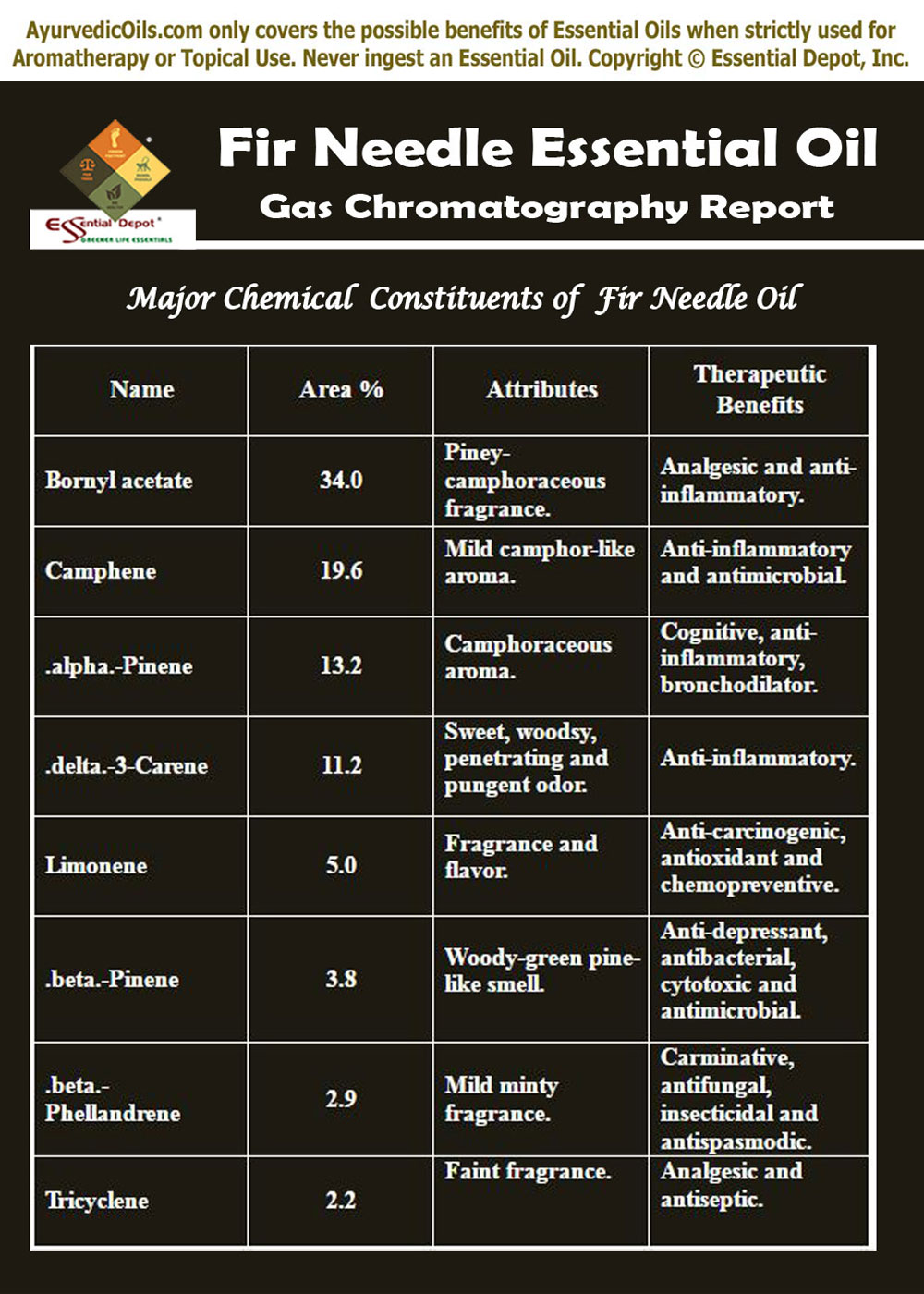
According to the Gas chromatography report, Fir Needle oil constitutes of 17 chemical components that contribute to its fragrance, therapeutic attributes, consistency and quality of this oil. Of which, Bornyl acetate contributes to the highest proportion of Fir Needle oil constituents with about 34% of its total composition.

Just click on:

I believe that this must certainly help you in getting to know the exclusive information about these prime chemical constituents of Fir Needle oil.

The table crafted below clearly depicts the unique nature and contributions of these biochemical constituents to the healing magnificence of Fir Needle essential oil.

fir-needle

Therapeutic properties of Fir Needle essential oil:

Fir needle essential oil has numerous effective chemical compounds and the majority of which is monoterpenes. The other constituents include sesquiterpenes, beta-pinene, delta-3-carene, alpha-pinene and terpene ester bornyl acetate, where beta-pinene and delta-3-carene have effective anti-bacterial properties.

The therapeutic properties of Fir needle essential oil are anti-inflammatory, anti-bacterial, anti-fungal, antiseptic, antiviral, invigorating, stimulating, analgesic, anti-tussive, diuretic, antioxidant, astringent, energizer, aromatic, expectorant, deodorant, stimulant and tonic.

Ayurvedic health benefits of Fir Needle essential Oil:

Ayurveda is a common sense science that has a strong reason for everything that pertains to human health. It simply preaches that health is the outcome of one’s harmony with nature and illness occurs when things does not act in sync with nature. This 5,000 years old ancient science aims at striking balance between human health and nature with the use of natural remedies including essential oils, herbs, yoga, Ayurvedic routine, simple physical exercises, meditation and prayers.

Ayurveda is adorably called as the mother of all healing sciences for its brilliance in treating the root cause of an illness rather than just treating its symptoms. By this way, it helps in curing the sickness initially and prevent it in future as well. Charaka Samhita, one among the greatest Ayurvedic encyclopedia states “The three – body, psyche, and soul – act as a tripod. The world stands upon them, and within them, the world abides.

Ayurvedic treatments are not the same for every person as Ayurveda strongly believes that every individual is distinctive with a unique individual constitution just like our thumb impression. So it says that illnesses of individuals should also be treated in a unique manner.

This constitution comprises of three biological energies known as doshas, namely vata, pitta and kapha. These doshas are a combination of five elements of nature, which are fire, water, air, earth and space.

Just like nature, our body also has all the five elements. Where vata represents air and space and is responsible for movement. Pitta stands for fire and water and is accountable for transformation of energies. Kapha symbolizes earth and water and is in charge of structure and fluids in the body.

Perfect health is determined with the balance of all these three doshas and imbalance causes illnesses. Ayurvedic remedies are involved in the act of correcting the imbalances of doshas. Fir needle oil is said to lessen kapha, pitta and vata aggravation.

The Ayurvedic health benefits of Fir needle oil are:fit-needle1. Relieves cough, cold and other respiratory illnesses:

According to Ayurveda, respiratory illnesses occur mainly due to aggravated kapha energy, which causes water retention and excess phlegm and mucous deposits. Along with this, increased vata dosha is responsible for sinusitis, asthma and breathing problems.

Fir needle oil is said to lessen both aggravated kapha and vata and for which it has been used for centuries in the treatment of cold, cough, fever, flu and other respiratory illnesses. Natural Fir needle oil inhalers are used in Ayurvedic healing for treating cold and breathing problems.

The exquisite antiseptic property of this oil helps in maintaining the sanitation of the surrounding by preventing the spread of harmful microorganisms, which are among the primary reasons for respiratory infections.

Fir Needle oil has antitussive properties that acts as an effective cough suppressant. As a refreshing expectorant, this oil loosens the mucous and the phlegm deposits in the lungs and respiratory tract, thus cleansing the respiratory passages and speeding up the recovery process.

Adding 2 drops of Fir needle oil in steam inhalation and inhaling the pine-forest aroma assists in clearing blocked nasal passages, preventing the inflammation of the respiratory organs, alleviating breathing difficulties, treating bronchitis and it helps in maintaining clear sinuses.

Mix 2 drops of Fir needle oil with 1 ml coconut oil and rub it gently on your chest, back and throat for helping with nasal congestion, runny nose, sneezing, cough and flu. Add 3 to 4 drops of Fir needle oil in warm bathing water for feeling light and re-energized as respiratory infections generally make the body feel heavier and drowsy.

2. Alleviates rheumatic and muscular pain:

Fir needle oil has anti-inflammatory, analgesic and diuretic properties that soothes and eases pain and inflammation associated with arthritis, rheumatism and muscular tension. Also known as Silver Fir, the essential oil of Fir is extremely soothing to joints and muscles and acts as an effective aid in lessening pain and inflammation.

With its kapha reducing properties, massaging 3 drops of Fir needle oil mixed with 1.5ml of sesame oil on the painful areas aids in treating water retention, discharging detrimental toxins, salt and other micro-organisms in the body through urine and sweat, reducing inflammation and alleviating pain with its powerful analgesic values. You can also add 3 to 4 drops of Fir needle oil in hot compress or in warm foot bath for decreasing pain and promoting relaxation.

3. Valued in skin care treatments:

Fir needle oil has been in use since the primordial times to protect the skin and retain its natural glow. The astringent properties of this oil is effective in treating acne, injuries, infections, sores, wounds, cuts, mild allergies, insect bites etc.

The anti oxidant properties of Fir needle oil fights against the free radicals and prevents premature aging. Mix 2 drops of Fir needle oil with 1 ml jojoba oil or to your regular skin care cream and apply it on the affected areas in circular movements. This stimulating application to the skin results in mild coagulation of the skin proteins, thus elevating it natural beauty and retaining its youthfulness.

Fir Needle oil is often recommended by dermatologists and Alternative medicine experts in the treatment of psoriasis, itching, pimples, eczema, skin diseases, poor skin, scabies and sores. This is mainly due to the presence of antiviral, anti-bacterial, anti-fungal and antiseptic properties of this oil.

A 2006 study on ‘Composition and antibacterial activity of Abies balsamea essential oil’ published in PubMed states that the three constituents in Fir needle oil namely alpha-pinene, beta-caryophyllene and alpha-humulene were effective against the gram negative and gram positive bacteria including Staphylococcus aureus and Escherichia coli, where Staphylococcus aureus is mainly responsible for wounds and other skin infections to turn septic and worsen.

4. Emulsifies your emotional strength:

Your success depends upon your mental strength and amidst the stress and tension of this contemporary world, nothing better than the natural remedies like essential oils can grant us the real peace and serenity.

Fir needle oil is a boon to mankind with its rich invigorating, stimulating and energizing properties contributing to a potential uplift of the emotional strength. 2 to 3 drops of Fir oil added to your diffuser or burner can act as a mood elevator that aids in revitalizing your mind, refreshing your soul, weakening the element of depression, lack of self-confidence, agony, fear and emotional stress.

5. Discards toxins and improves metabolism:

Being a diuretic, Fir Needle Oil is helps in eliminating the toxic remains, uric acid, fat deposits and salts in the body through urine by stimulating the frequency and quantity of urine.

Massaging your body with 10 drops of Fir needle oil mixed with 10ml of coconut oil can improve the health of the kidneys, treat kidney stones or renal calculi, urinary infections, food poisoning by enhancing the functions of the excretory system and boosting the metabolic functions naturally.

Other health benefits of fir Needle Oil:

Fir needle oil is also used in manufacturing soaps, perfumes, air fresheners, hair oils, body lotions etc. It can also be used on pet animals as it is a non-toxic repellent of fleas. Certain research studies have also proved the antitumor activity of Fir needle oil by the production of reactive oxygen species induced by alpha-humulene as possible mechanism of action.

Disclaimer:

This is only for the purpose of information and is not meant for diagnosis or as a replacement for prescribed drugs or professional medical advice. Never use essential oils internally and topical use should always be in a diluted manner as pure and organic essential oils are highly concentrated extracts and can cause harm if used directly on the skin. It is advisable to consult your Ayurvedic practitioner before making the right choice of essential oils for your unique health condition and individual constitution.

The MSDS (Material Safety Data Sheet) of Fir Needle oil is readily available for your enhanced safety and better usage.

Gas Chromatography Report (GC analysis) of Fir Needle oil.

Thought for the day:

Nature’s music is never over; her silences are pauses, not conclusions.                  -Mary Webb

Suggested Reading:

  1. The Illustrated Encyclopedia of Essential Oils: The Complete Guide to the Use of Oils in Aromatherapy & Herbalism by Julia Lawless
  2. Healing Power Beyond Medicine by Carol A. Wilson
  3. The Book of Herbal Wisdom: Using Plants as Medicines by Matthew Wood
  4. Aromatherapy for the Soul: Healing the Spirit with Fragrance and Essential Oils by Valerie Ann Worwood
  5. Genetics and breeding of the Silver Fir (Abies alba Mill.) =: Genetika i oplemenjivanje obicne jele (Abies alba Mill.) (Anali za sumarstvo) by Stefan Korpel

Reference Links:

  1. Abies Alba by Wikipedia
  2. Abies Balsamea by The University of Michigan
  3. Composition and antibacterial activity of Abies Balsamea essential oil by Pichette A, Larouche PL, Lebrun M, Legault J. Université du Québec à Chicoutimi, Canada, published in PubMed
  4. Balsam Fir by herbs2000.com


Your resource for quality Essential Oils. Every batch is
GC tested to ensure purity and authenticity.

Davana Oil

Davana-bannerDavana is imported worldwide for its sweet fragrance and illustrious medicinal values and is used to glorify the idol of Lord Shiva in India. Botanically known as Artemisia pallens, Davana is a member of the daisy family, Asteraceae. Regionally called as davanam in Tamil and Davana in Kannada, this fragrant herb is indigenous to the southern parts of the Indian subcontinent.

The essential oil of Davana is extracted from the stem and leaves of this herb by steam distillation method. It is widely used in Ayurveda in the treatment of mental disorders, nervous problems, depression, cough, cold, measles, infections, diabetes and high blood pressure.

Purchase Davana Oil – Wholesale – CLICK HERE

Historical uses of Davana and its essential oil:

Having its roots deeply set in the religious traditions of the Indian Culture, Davana essential oil has an extensive application all over the world. It was used in traditional Ayurvedic medicinal formulations as an aphrodisiac and mood elevator. Davana was a part of the Indian folklore medicine for treating diabetes mellitus and high blood pressure.

With much regional importance, Davana essential oil gained global attention only in the mid of the 20th century after which it has earned a special spot in the hearts of perfumers’ and flavorists’, particularly in United States and Japan where it is a flavor ingredient for bakery, tobacco and beverage products.

The flowers, stem and leaves of this plant are used as an effective antiseptic and disinfectant for quick treatment of wounds, cuts and infectious ailments such as cough, cold, measles etc. Davana essential oil has also been a part of other Complementary and Alternative medicinal practices like Unani and the Traditional Chinese Medicine (TCM).

Chemical constituents and therapeutic properties of Davana oil:

Davana essential oil comprises of davanone, a major sesquiterpene ketone and other essential components such as linalool, dehydro-a-linalool, terpinen-4 oil, isodavanone, nordavanone, davanafurans, methyl cinnamate, ethyl cinnamate, bicyclogermacrene, davana ether, 2-hydroxyisodavanone, and farnesol. All these compounds of Davana oil attribute to its unique aroma and its medicinal values.

Well recognized as a herb of sacred values, Davana essential oil benefits mankind with its anti-depressant, aromatic, antiseptic, antiviral, antimicrobial, anti-fungal, antispasmodic, decongestant, disinfectant, emmenagogue, anthelmintic, stomachic, hypotensive, antioxidant, expectorant, relaxant, vulnerary, aphrodisiac, nervine and mucolytic properties.

Ayurvedic Health Benefits of Davana Oil:

Ayurveda is a holistic healing system that has its origin in India, the land of tradition and the world’s oldest history for more than 5,000 years. Just like this ancient remedial science, Davana herb also has its nativity vested in India and never fails in treating illnesses with its remedial aroma.

Ayurveda suggests natural remedies for treating mankind as it believes that everything is a part of nature and Mother Nature has innate medicines for healing health disorders. An individual is said to be healthy when his/her mind, body and soul are in perfect balance with nature. Illness according to Ayurveda is an opportunity to explore, restore and re-establish absolute health and strike balance with nature.

Just as nature, human body is also made up of five vital elements namely fire, water, earth, air and space, built in the form of three vital biological energies known as doshas. They are kapha, vata and pitta doshas. The predominance of any one of these doshas determines the personality, character and behavioral attributes of a person and balance between these doshas stand for health and heartiness.

Ayurvedic healing starts with the identification of the unique individual constitution that helps in determining doshic qualities, mental and physical attributes of an individual. Ayurveda does not follow the ‘one size fits all’ healing methodology as it trusts that every human being is unique in nature and the remedies for their illnesses should also be unique as per their constitution.

The nobility of Ayurveda rests in treating the root cause of an illness instead of curing its symptoms alone. By treating the actual underlying cause, Ayurveda helps in preventing such illnesses in the future and paves way for longevity through healthy aging. The most predominant Ayurvedic remedies are herbs, essential oils, meditation, yoga, physical exercises, healthy lifestyle, prayers and an Ayurvedic routine.

Davana essential oil is said to pacify vata and kapha imbalances and has a neutral effect on pitta dosha.

The Ayurvedic health benefits of Davana essential oil are:

Davana-broucher-new1. A remarkable antiseptic to relieve you from infections:

Being a natural antiseptic with less toxicity, Davana essential oil is used to treat both internal and external infections. It destroys the micro organisms affecting the internal organs of the body like kidney, bladder, urethra and urinary tract, thus putting an end to sepsis, a fatal inflammation of the whole body.

A 2009 research on ‘The antimicrobial screening of Artemisia pallens’ published in the International Journal of PharmTech Research, USA states that the extracts from Artemisia pallens possess antimicrobial activity against the bacteria Bacillus cereus. Davana herb extracts and its essential oil have been used in Ayurvedic practices for healing wounds and deep abrasions quickly and to curb the spreading of infections to other parts of the body, which might otherwise result in tetanus.

Davana essential oil also has anti-viral property that strengthens your body’s immune system to effectively work against viral attacks. Having the ability to penetrate the protective layer of the virus called cyst, it kills viruses without a trace. Because of this attribute, it has been extensively used to treat viral infections such as cold, cough, influenza, measles etc.

The best way to use Davana oil for arresting the spread of infectious micro-organisms is in Abhyanga or the art of Ayurvedic massaging. Mix 5 drops of Davana oil with 3 ml of coconut oil and massage your body, followed by a warm bath with 2 drops of Davana oil diluted in bathing water. The therapeutic properties of this oil penetrate through the skin and start its healing mechanism. You can also mix 1 drop of Davana oil with 10 drops of olive oil and apply it on wounds and abrasions for quicker healing.

2. A trusted anti-depressant:

Widely used in the field of Ayurvedic aromatherapy for its anti-depressant properties, Davana essential oil actively engages in relaxing your nervous system and induces tranquility in the mind. As a medicinal herb that adorns the deity of Lord Shiva, it provokes divinity, spirituality, peaceful synergy and positive energy in every individual. Add 2 drops of Davana oil in warm bathing water or mix 6 drops of this oil with 3 ml of sesame oil and go for an energizing massage for treating depression and other mental woes.

Davana essential oil grants a soothing effect to the mind and body by effectively alleviating pressure in case of stress, anxiety and rejuvenates the mental health of those who feel depressed and lifeless. You can also add 2 drops of Davana oil to diffuser or burner and inhale it’s comforting fragrance, through which the aromatic molecules present in this oil pass through the nasal passages and reach the limbic system, the control center of human brain.

3. Alleviates female problems:

Nature has gifted humanity with some excellent medicines for treating complex womanly problems like menstrual difficulties, menopausal problems and emotional woes associated with such disorders. Davana essential oil is one such curative power, which with its emmenagogue property regulates the flow of blood in the uterus and pelvic area and releases blocked menstruation, resulting in a regular menstrual cycle.

Massaging your lower abdomen with 2 drops of Davana oil blended with 1ml of sesame oil can act as an effective remedy in treating menstrual spasms, pain in the abdominal area, fatigue, nausea, muscular cramps, restlessness and mood swings.

4. Relieves congestion and eases respiration:

Excess of kapha dosha along with viral and bacterial infections result in cough, cold, congestion and other respiratory illnesses. Severe infections may lead to deposits of mucus and phlegm in the upper respiratory tract and the lungs, causing respiratory disorders and breathing difficulties.

Davana essential oil is known to pacify excess kapha dosha with its decongestant and expectorant properties and helps in expelling heavy deposits of mucus and phlegm in the nasal passages and lungs by lubricating the respiratory tract. This oil also has antiseptic, anti-bacterial, anti-viral and antimicrobial properties that destroy such harmful microbes causing respiratory problems.

Add 2 drops of Davana oil in steam inhalation for relieving from asthma, bronchitis, cough, cold, breathing difficulties, headache and respiratory spasms. You can also add 2 drops of this oil in vaporizing ointments or cold rubs and gently massage it on your chest, back and throat for effective relief.

5. Guards against skin infections and worms:

Being an antiseptic, Davana oil fights against infections and protects your skin from infection prone conditions such as acne, boils, pimples and even stretch marks. It is also vulnerary in nature and aids in speeding up the healing process of wounds and cuts. Mix 2 drops of Davana essential oil in your regular skin care cream or with 1 ml of jojoba oil and apply it on your skin for treating rough, dry and chapped skin. This oil also aids in stimulating the endocrine system.

Davana essential oil is further enriched with its anthelmintic and stomachic properties that fight against worm infestation caused by parasites such as round worms, whip worms, hookworms, thread worms, pin-worms and tape worms.

6. Supports a healthy atmosphere:

Excelling in its disinfectant properties, Davana essential oil can work wonders to purify your atmosphere. The fragrance of this medicated oil spread so quickly and kills the germs and microbes present in the air with its remedial qualities. Add 2 drops of Davana essential oil in fumigants, sprays or vaporizers for fresh and germ-free environment.

7. A relaxant to treat your aftershocks:

Davana essential oil has anti-inflammatory and relaxant properties that effortlessly relaxes the contractions in muscles, blood vessels and also calms down the brain and your nervous system. Massaging your body with 5 drops of Davana oil blended with 2.5 ml of almond oil assists in rejuvenating the nervous system and grants absolute solace. It acts best in inducing mental peace and helps in recovering from after effects of shocks, trauma, heavy medications and treatments, disappointments, failures etc.

8. Matchless natural perfume:

Davana essential oil stands unique in the field of perfume industry for its fragrance differs with the uniqueness of the individual thus making each one special in their own way. A single plant can scent the entire garden. Hence it is used in the manufacture of high quality perfumes and cosmetics and also in food industries, flavoring tobacco, pastries and some beverages.

Other health benefits of Davana Oil:

As per a 1996 research published in Pubmed, Davana essential oil is said to lower glucose level in the blood thereby helpful in treating diabetes mellitus. A 2011 study on the antioxidant property of Artemisia pallens states that it possesses antioxidant properties due to the presence of phenols that effectively reduce the risk of chronic diseases, cardiovascular disorders and cancer.

This oil also has mild insect repellant property. Aromatherapists use Davana oil for its antispasmodic properties in treating spasms and pains. It is used in manufacturing vaporizers, disinfecting sprays and room fresheners. The Davana flowers represent a symbol of tradition and are used in making garlands, floral decorations, bouquets and also for various other religious rituals and customs.

Disclaimer:

This article is only for the purpose of information and is not meant to diagnose or replace any professional medical advice or prescribed medication. Never use essential oils internally. Always remember to dilute essential oils before topical usage, as pure and organic essential oils are highly concentrated liquids and may cause skin irritation or other side effects if used in an undiluted form. Always consult your Ayurvedic expert before using the right essential oils for your health condition and unique individual constitution.

Thought for the day:

God writes the Gospel not in the Bible alone, but also on trees, and in the flowers and clouds and stars. -Martin Luther

Suggested Reading:

  1. Artemisia (Medicinal and Aromatic Plants – Industrial Profiles) by Colin W. Wright
  2. Dying to Look Good by Christine Hoza Farlow
  3. Butterfly Miracles with Essential Oils by LaRee Westover
  4. Davana and its cultivation in India (Farm bulletin) by M. R Narayana
  5. Therapeutic Blending With Essential Oil: Decoding the Healing Matrix of Aromatherapy by Rebecca Park Totilo

Reference Links:

  1. Artemisia pallens by Wikipedia.
  2. Influence of plant growth stage on the essential oil content and composition in Davana (Artemisia pallens wall.) published in Pubmed.
  3. Antimicrobial Screening of Medicinal Plant – Artemisia pallens by the Department of Chemistry, S.P. College, Pune, India.
  4. Study on Effects of Artemisia pallens Wall. on blood glucose levels in normal and alloxan-induced diabetic rats by Division of Ethnopharmacology, Tropical Botanic Garden and Research Institute, Palode, Kerala, India published in PubMed.

Garlic Oil

Garlic-bannerKick cancer out of the world with nature’s best chemotherapy agent, sweetly known as Garlic. It is fêted as an ‘herb of passion’ for its power of influencing fortitude and natural energy levels and is celebrated as the most hopeful natural remedy for preventing cancer.

Besides being called as the stinking rose with its pungent and not so pleasing aroma, Garlic has a long medicinal  history in various traditions across the world and is also known as ‘cure-all’ for its ability to treat illnesses of the nervous system, circulatory system, digestive system, reproductive system and the respiratory system.

Botanically called as Allium sativa, Garlic has its origin in India and its essential oil is extracted from the bulbs through steam distillation method. Known by the name Rasona, Lahsoon and Yavanesta in Sanskrit, Garlic and its essential oil are used in Ayurveda for the treatment of cancer, heart diseases, diabetes, cold, rheumatism, high blood pressure, parasites, impotency, skin disorders, digestive problems, mental disturbances, fluid retention and joint problems.

Purchase Garlic Oil – Wholesale – CLICK HERE

Historical uses and importance of Garlic:

Garlic is perceptibly a spectacular herb/vegetable with the human use of more than 7,000 years and is a member of the onion family, Allium. Indigenous to the central parts of Asia, Garlic is by far the most promising herbal remedy with the longest historical use. Its uses have been mentioned in various herbal guides by celebrated herbalists and physicians like Dioscorides, Galen, Hippocrates and Pliny the Elder, especially for treating digestive disorders, respiratory problems, wounds and low immune power.

The ancient Hindu mythology states that Garlic is a sacred herb grown from the drop of nectar (Amirtham – Elixir of life) spilled on earth when Lord Garuda took away the pot of nectar from Lord Indra to save his mother from evil powers. It is still believed that because of the divine qualities of the nectar, Garlic has innumerable healing properties and was named as Rason, meaning King of Rasas (It is also said that Garlic has 5 out of 6 prominent tastes in Ayurveda).

Another interesting historical reference is that Garlic was grown in the hanging gardens of Babylon and it was considered as an herb of empowerment for which it was given to Roman soldiers before the battle. The traditional European fishermen used to wear garlands made with Garlic cloves to guard themselves from sickness and evil spirits.

Garlic was the most primitive herb used as a ‘performance uplifting’ agent and was given to the Olympic athletes in primordial Greece. It is also said that Garlic was used during the construction of the Giza pyramids before 5,800 years. It was also used in Nepal, Middle East and eastern parts of Asia for treating tuberculosis, bronchitis, rheumatism, fever, flatulence, colic, liver problems, intestinal worms, hypertension and digestive problems.

It is a part of most of the delicious cuisines all over the world as a spice, condiment or seasoning for its strong aroma and the flavor it adds to any dish especially the non-vegetarian food varieties. Garlic bread, garlic chicken, crostini, garlic toast and many other Asian and Mediterranean cuisines are crowned with the rich flavor of this wonder herb.

Therapeutic properties and chemical constituents of Garlic essential oil:

Garlic oil is known for its carminative, antibacterial, aphrodisiac, antioxidant, immune-booster, anticancer, antibiotic, expectorant, antispasmodic, disinfectant, anti-carcinogenic, antithrombotic, stimulant, anti-arthritic, antiviral, rejuvenative, anti-hyperlipidaemic and alterative properties.

The major chemical components that contribute to the healing values of Garlic oil are selenium, allicin, alliin, phytoncide, S-allylcysteine thiacremonone, ajoene and diallyl polysulphides.

Ayurvedic health benefits of Garlic essential oil:

Disease, aging and death are the three major causes of concern for mankind and have been attracting the attention of medical researchers, philosophers and heath care experts from all over the world since ages.

Ayurveda, the holistic healing methodology aging about 5,000 years aims at attaining longevity through healthy aging and prevention of illnesses. This ancient remedial science strongly states that absolute health is a medley of physical, mental and spiritual well-being.

This Vedic system strongly considers human body as a temple and relates the divine power with the soul that rests within. According to this philosophy all things on earth are a part of nature and are made up of the five vital elements of nature, namely earth, water, air, fire and ether.

Every person is a unique creation with a unique individual constitution that embraces three vital biological energies called as doshas. These energies are just a meaningful representation of the elements of nature.

Kapha dosha symbolizes earth and water and is in charge of the physical structure and sustenance of the body, the imbalance of which leads to obesity and respiratory problems. Vata dosha is a combination of air and ether and is responsible for circulation, movement and respiration and vata vitiation causes neurological disorders, nervous problems, breathing difficulties and menstrual difficulties.

Fire and water combine together and represent Pitta dosha, which is responsible for body temperature, digestion and other metabolic functions. Lack or excess of pitta dosha might end up in fever, indigestion, constipation, heartburn, ulcer and other digestive disorders. Balance between these three doshas contributes to healthiness and imbalance of any one or all the three doshas cause illness.

Ayurvedic remedies aim at treating the doshic imbalances with the help of herbs, plant essential oils, yoga, meditation, Ayurvedic routine, prayers and simple physical exercises. These remedies vary from individual to individual based upon their unique individual constitution and state of health.

Garlic is one among the ancient Ayurvedic remedies for treating various health conditions and have been a vital part of numerous Ayurvedic preparations. The book on ‘Ayurveda and Aromatherapy’ by Bryan Miller and Light Miller quotes Garlic as a highly rejuvenative oil, especially for the nerve tissue. Garlic oil is good for increasing pitta dosha and lessening excess of vata and kapha energies.

The Ayurvedic health benefits of Garlic oil are:

Garlic-broucher1. Excellent aid to digestive disorders:

From Stone Age to this contemporary era, Garlic is a promising home remedy for assisting problems associated with digestion. 2 to 3 cloves of Garlic boiled in a cup of water can be a sure shot remedy for treating indigestion, sluggishness, diarrhea, nausea and gastric troubles. It is regarded as a great natural medicine for supporting digestion by stimulating the appetite and enhancing the process of metabolism.

Imbalance or vitiation of pitta dosha is the major reason for digestive disorders. Garlic has the ability to increase pitta energy and regularizes Agni or the digestive fire and other metabolic functions.

Adding 1 drop of Garlic oil to your handkerchief or tissue and inhaling this strong aroma or mixing 2 drops of this oil with 1 ml of coconut oil can help in fighting against intestinal parasites, inflammation in the stomach and intestines, treat colitis, infectious diseases, stomach upset, dysentery and food poisoning.

This oil works effectively against food poisoning by combating harmful bacteria like Salmonella enteritidis and E.coli, which are responsible for food poisoning and other stomach infections. It acts by penetrating through the skin cells and entering the blood stream, where it passes on its remedial properties to the system.

2. Fights against cancerous cells:

Garlic oil has anti-oxidant, anti-carcinogenic, antithrombotic and anti-cancer properties, which help in preventing the growth of new cancerous cells in the body and curtailing the growth of existing cancer cells in the body. Numerous researches and studies have proved the potent of Garlic and its extracts in treating various types of cancer ranging from brain cancer to prostate cancer.

Garlic is first on the list of potential cancer-preventative foods by the American National Cancer Institute and the American Journal of Nutrition issued on October 2000 had published numerous epidemiologic studies stating that the people who used Garlic and its extracts regularly had only a lesser amount (1/3rd) of risk of colorectal cancer and not as much of risk of stomach cancer when compared to people who took little or no Garlic or its extracts.

The presence of numerous (30+) powerful anti-cancer and antioxidant compounds in Garlic oil including ajoene, diallyl sulphide, quercetin and alliin have the power to wedge cancer creating agents like aflatoxin and nitrosamine associated with liver, lung and stomach cancer. These components work like a natural chemotherapy agent and have been proved in various studies for impeding the growth of malignant cancer cells.

A 2008 study on the ‘Anticancer effects of diallyl trisulphide derived from Garlic’ suggest “diallyl trisulfide is responsible, at least in part, for the epidemiologically proven anticancer effect for garlic eaters.” It is also said that the diallyl sulphide in Garlic is known to curb the conversion of PhIP, which is a kind heterocyclic amine that has been related with the increased cause of breast cancer in women.

A report on Garlic and Cancer prevention published in the National Cancer Institute website states five strong reasons for using Garlic to prevent cancer. They are “Protective effects from garlic may arise from its antibacterial properties or from its ability to block the formation of cancer-causing substances, halt the activation of cancer-causing substances, enhance DNA repair, reduce cell proliferation, or induce cell death.”

The best ways to use Garlic for cancer prevention is to add 2 to 3 cloves of raw or cooked Garlic in your diet along with a soothing massage with 2 drops of Garlic oil blended with 1 ml of virgin olive oil for promising results.

3. Controls hypertension and protects the heart:

Garlic is a rich source of allicin and it controls the function of angiotensin II, which is a protein that aids the contracting of blood vessels thus increasing the blood pressure gradually. Along with this, the red blood cells in our body convert the polysulphides in Garlic into hydrogen sulphide, which expands the blood vessels and assists in controlling high blood pressure.

Garlic oil acts as a protective shield for the heart by protecting it from hypertension, atherosclerosis, heart attacks and certain other cardiovascular problems. The sulfur-based compounds present in Garlic controls the blood vessels from being blocked and support the functioning of arteries that gradually lose its potent with age. This oil also guards the heart from the harmful damage of free radicals with its antioxidant properties.

By this way, regular use of Garlic oil and Garlic cloves help in slowing down atherosclerosis (thickening of the arteries). This oil reduces platelet aggregation and relaxes the walls of the blood vessels by stimulating the production of nitric oxide.

It is also a potent anti-clotting agent with the presence of ajoene that curbs the formation of blood clots in the blood vessels. A study published in the Journal of Agricultural and Food Chemistry says, “Garlic oil possesses significant potential for protecting hearts from diabetes-induced cardiomyopathy.

Inhaling the aroma of Garlic oil with 1 drop of this oil added to tissue or massaging your chest with 2 drops of Garlic oil blended with 1 ml of olive oil can assist in treating atherosclerosis, blocks in the blood vessels, heart attacks, high blood pressure and other cardiovascular disorders along with the strengthening of cardiac muscles.

4. Keeps respiratory infections at bay:

Cold, flu, cough and other respiratory infections are mainly due to the excess of kapha dosha. Garlic oil has the natural warmth in its essence and it lessens the excess of kapha energy. This oil also has antibiotic, expectorant, decongestant, antiviral and antibacterial properties that work together to curtail the growth of harmful micro-organisms that worsen respiratory infections.

Add 2 drops of Garlic oil in steam inhalation and inhaling this healing aroma and massaging your chest with 1 drop of Garlic oil mixed with vaporub or ointments can be of great aid in treating and preventing common cold, whooping cough, asthma, chronic bronchitis and breathing difficulties.

5. Reduces cholesterol and checks obesity:

LDL (bad cholesterol) and lower serum triglycerides are the worst enemies of the human body. Garlic oil aids in maintaining HDL or the good healthy cholesterol and decreasing the level of bad cholesterol thus it lessens total cholesterol levels in the body, blood triglycerides and decreases the formation of arterial plaque.

Along with this, Garlic oil also assists in controlling the formation of fat cells and helps in eliminating the excess deposits of water, salts, fat and other toxic substances contributing to obesity. It prevents weight gain with its anti-inflammatory property mainly due to the presence of 1, 2-DT (1, 2-vinyldithiin) in Garlic.

Massaging your body with 5 drops of Garlic oil mixed with 3 ml of sesame oil aids in dissolving fat cells and discharging excess water and toxic deposits from the body by promoting frequent urination and sweating. This massaging can also be useful in reducing inflammation in case of arthritis and rheumatism.

6. Strengthens your immune system:

Garlic oil is an effective immune booster with the presence of various nutrients like vitamin C, B1, B2, B3, B5, B6 and B9 along with magnesium, iron, calcium, phosphorus, zinc, sodium, protein, potassium and carbohydrates, all of which make Garlic a potent powerhouse. The antioxidant property of this oil fights against aging symptoms and protects the body from the hazardous effects of free radicals.

As a powerful antiviral, antifungal, antibiotic and antibacterial oil, Garlic has a positive effect on the immune system by acting as a police force that fights against destructive microbes and infectious diseases spread by them. Inhaling the spicy aroma of Garlic oil by adding 1 drop of this oil to your diffuser can help in activating the white blood cells and the immune system, through which it increases the body’s resisting capacity against various diseases.

7. Stimulates your system:

Ayurveda classifies food into three major categories namely rajasic (fiery), sattvic (fresh and pure) and tamasic (flawed).  Amadea Morningstar says “Energetically, rajasic foods stimulate more fire, aggression, passion. They are good foods for stirring up trouble or spurring on the dragons within.”

Garlic is a rajasic food that awakens, influences and stimulates the inner power and passion. It is said to bring consciousness and awareness in the body. It is for this property, Garlic and its essential oil is said to treat sexual disorders like impotency and other reproductive problems. Add 1 drop of Garlic oil in vaporizer or aromatic candles and inhale the aroma for enhancing the natural levels of energy in the body and to rekindle your spirit.

Other health benefits:

Garlic oil is also an excellent remedy for treating pimples, blackheads, acne, athlete’s foot and wrinkles. It is also said to prevent scurvy, due to its high content of Vitamin C and beriberi with its power to enhance thiamin absorbing capacity in the body and reduce the level of blood sugar in diabetes mellitus patients.

Disclaimer:

This information is only for the purpose of education and is not intended to diagnose or substitute any prescribed medication or professional medical advice. Never take essential oils internally and always remember using essential oils topically in a diluted form only, as pure and organic essential oils are highly concentrated substances and may cause harmful effects if used directly on the skin. Seek advice from an Ayurvedic professional before selecting the right essential oil for your state of health and unique individual constitution.

Thought for the day:

Let the gentle bush dig its root deep and spread upward to split the boulder.
-Carl Sandburg

Suggested Reading:

  1. Garlic, Garlic, Garlic: More than 200 Exceptional Recipes for the World’s Most Indispensable Ingredient by Linda Griffith, Fred Griffith
  2. Garlic: Nature’s Original Remedy by Stephen Fulder, John Blackwood
  3. Garlic: The Mighty Bulb by Natasha Edwards
  4. The Complete Book of Garlic: A Guide for Gardeners, Growers, and Serious Cooks by Ted Jordan Meredith
  5. Garlic and Other Alliums: The Lore and The Science by Eric Block

Reference Links:

  1. Garlic by Wikipedia
  2. Garlic and Cancer Prevention by National Cancer Institute
  3. What are the benefits of Garlic? by Medical News Today
  4. All About Garlic by MAS Ayurveda
  5. Anticancer effects of diallyl trisulfide derived from garlic by Seki T, Hosono T, Hosono-Fukao T, Inada K, Tanaka R, Ogihara J, Ariga T, Department of Applied Life Sciences, Nihon University Graduate School of Bioresource Sciences, Fujisawa, Japan published in PubMed

Cypress Oil

“Cypress allows the mind to collect itself and takes people out of sorrow and depression; it regulates female hormones and helps with ovarian cysts”, says Light Miller and Bryan Miller in their book Ayurveda and Aromatherapy.

Cypress-bannerHaving its uses inscribed in the Holy Bible, Cypress essential oil has been used by mankind for more than 4,000 years. Though associated with death and underworld, this tree is known for regenerating the inner soul.

Botanically known as Cupressus sempervirens, Cypress trees bear the Eastern Mediterranean region as their native. As the Greek name Sempervirens means ‘ever living’, Cypress trees are found to be ever living with the oldest known as Sarv-e-Abarkooh being found in Iran’s Yazd Province that is estimated to be of approximately 4,000 years old.

Extracted from the needles and twigs of Cupressus Sempervirens, Cypress essential oil has plenty of reasons to be celebrated as one of the ancient bliss of mankind. It is used in Ayurveda for treating various ailments like cardiovascular problems, cellulites, varicose veins, menstrual problems, cold and other respiratory illnesses.

Purchase Cypress Oil – Retail – 4 oz – CLICK HERE

Purchase Cypress Oil – Wholesale – CLICK HERE

Historical uses and importance of Cypress and its essential oil:

Having mentioned in the Bible as a valuable medical aid for strengthening oneself mentally and physically, Cypress essential oil captures a remarkable position in the list of natural medications.

As quoted in the Bible on Isaiah 44: 14, the verse ‘He heweth him down cedars, and taketh the Cypress and the oak, which he strengtheneth for himself among the trees of the forest: he planteth an ash, and the rain doth nourish it‘ is just enough to sing the glorious history of Cypress.

The wood of Cupressus sempervirens were used in the primordial times for building ships, houses and for making furniture. The doors of the ancient church ‘St. Peter’s Basilica’ in Vatican City is made of Cypress woods. Some of the valuable sources state that the ever-living property of this tree led the Egyptians to make coffin out of Cypress woods and the Greeks to make statues of God. Some Biblical scholars even state that the cross of Jesus Christ has been made of Cypress wood.

Indigenous to Cyprus Island, Cypress trees were initially worshipped as an earthly symbol of the Goddess Beruth. This tree signifies immortality and death in ancient art and literature and is often correlated with meditation and reflection.

Hippocrates, the father of medicine prescribed Cypress for treating hemorrhoids. The significant aroma of this tree is said to grant mental clarity and the cones were used in Traditional Chinese Medicine for curing bleeding gums and other oral problems.

Cypress and its essential oil have been used since ancient times mainly to treat various illnesses associated with the circulatory system. It was also used in treating all types of common diseases ranging from cold, cough, skin diseases and hair loss problems to inflammation in the internal and external parts of the body.

The essential oil of Cypress was also used as an effective perfume agent that spreads the sweet memories of a lovely surrounding. It is for this cause, Cypress and its essential oil are always used in religious rituals and in mourning ceremonies where its healing attributes is believed to calm the mind, strengthen it and assist one in recovering quickly from losses.

Chemical constituents and therapeutic properties of Cypress oil:

Cypress essential oil contains various chemical components, the majority of which are a-pinene, delta carene and limonene. The other constituents include sesquiterpene, a-terpinene, sabinene, carvone, 4-terpinol, b-cymene, carveol, cedrol, a-thugene and santene.

Contrary to its depiction as a symbol of mourning, Cypress essential oil has a handful of health benefits with its astringent, antimicrobial, anti-bacterial, anti-fungal, firming, anti-seborrheic, anti-dandruff, anti-aging, antioxidant, aromatic, antispasmodic, antiseptic, diuretic, vasoconstricting, mucolytic, fluid retention, decongestant, sedative, hepatic and haemostatic properties.

Ayurvedic Health Benefits of Cypress Oil:

Celebrated as one of the 12 sacred oils of Bible, Cypress is also known as one of the oldest trees on earth. It is also used in Ayurvedic healing in the treatment of numerous health disorders for more than 4,000 years.

Ayurveda is held high as the oldest healing system and is adorably called as the mother of all healing sciences including the Traditional Chinese Medicine, Homeopathy, Siddha, Unani, Acupuncture and Chiropractic.

Ayurveda firmly states that all things on earth are a part of nature and nature is made up of five vital elements namely fire, water, earth, space and air. Perfect health symbolizes perfect balance of the human body with nature and illnesses occur when there is imbalance with nature.

Every individual is unique according to Ayurveda with a distinct individual constitution comprising of three biological energies known as doshas. These doshas are nothing but a representation of the five vital elements.

Vata dosha represents air and space, pitta dosha stands for fire and water and kapha symbolizes water and earth. Just like nature, human body is also made up of five elements where earth is the physical structure of the body, fire is the force supporting body temperature and metabolism, water is the blood and other vital fluids, air is what we breathe and space is the soul that rests within us.

Every person has a predominance of any one of these doshas and it determines the personality, character and behavioral attributes. Balance between these doshas represents health and heartiness and imbalance causes sickness.

Ayurvedic remedies like essential oils, herbs, healthy balanced diet, yoga, prayer, meditation and Ayurvedic routine progresses towards striking balance between these doshas.

Cypress essential oil is said to lessen increased kapha and vata dosha and pacifies pitta dosha.

The Ayurvedic health benefits of Cypress oil are:

Cypress broucher1. Alleviates respiratory ailments:

As a natural tonic for smooth respiration, Cypress essential oil is effective in curing various respiratory illnesses like whooping cough, spasmodic coughs, cold, flu, sore throat, emphysema, influenza and bronchitis.

The explicit antimicrobial, anti-bacterial, anti-fungal and decongestant properties of this oil greatly attribute in toning up the respiratory system by freeing it from infectious microbes and increase the effectiveness of the lungs simultaneously.

A 2012 study on the chemical composition and antibacterial and antioxidant activities of Cypress essential oil states that it fights actively against infectious microbes like Pseudomonas aeruginosa,  Escherichia coli, Staphylococcus aureus, Bacillus subtilis, Halomonas elongate and Salmonella typhimurium and thus it can be readily used as an antimicrobial and antioxidant agent.

2 to 3 drops of Cypress oil added to warm bathing water or in steam inhalation assists in loosening heavy mucus and phlegm deposits in the nasal passages and respiratory tract.

Adding 1 drop of Cypress oil with cold rubs or ointments and massaging it gently on your chest, throat and back followed by steam inhalation helps in treating cough, cold, sore throat and flu by reducing the inflammation and irritation caused due to infection.

2. Enhances the human circulatory system:

Cypress essential oil is an exuberant natural medication that enriches the human circulatory system and helps in its better functioning. It is held high as one of the most commonly used essential oils for the circulatory system.

Cypress essential oil helps in improving circulation by strengthening the blood vessels and capillaries. Good circulation results in the supply of nutrients to the entire body, hormonal balance, a stabilized body temperature and a good immune system.

Few of the complicated diseases like cardiovascular problems and hypertension can be kept away with proper blood circulation.

Massaging your body with 6 drops of Cypress oil blended with 5ml of coconut oil can help in treating a variety of circulation problems like low blood pressure, hemorrhoids, hair loss, varicose veins and hormonal imbalances.

Regular massaging has been proved effective in treating baldness, curing broken capillaries and checking the proper functioning of blood vessels.

3.  Controls inflammation:

Inflammation in the muscles, veins, capillaries and blood vessels causes pain and irregular flow of blood to various organs of the body. Being an anti-inflammatory agent Cypress essential oil effectively reduces the inflammation in various parts of the body.

Adding 2 drops of Cypress oil in warm bathing water or in massaging blend can help in the treatment of varicose veins, hemorrhoids, muscular pain and inflammation of the respiratory system.

4. Helps in tightening the human cells:

Aging symptoms force most of the people to lose their beauty and confidence gradually. Cypress essential oil is a wonderful astringent that helps in strengthening and tightening the human cells, the outcome of which is strong gums and teeth, less hair fall, youthful skin and it also aids in retaining perfect structure.

2 drops of Cypress oil blended with mild skin care cream or 1 ml of virgin olive oil and massaged slowly into the skin in circular motion helps in tightening the sluggish, wrinkled and lifeless skin.

This property also assists in contracting blood vessels to prevent loss of blood and promotes blood clotting. Cypress essential oil is also found to be effective in treating nose bleeds and other severe wounds that result in huge blood loss.

5. Helps in getting rid of excess fluid in the body:

Human body comprises of more than 50% of water and appropriate level of fluid in the body determines active functioning of the system. Excess water content might lead to obesity, sluggishness, swelling, rheumatism and respiratory problems.

Being diuretic in nature, Cypress essential oil helps in eliminating the toxic substances such as acid, urea, salts and excess fluid by increasing the frequency and quantity of urine. Less urination results in accumulation of toxins in the body and might lead to increased cholesterol level, malfunctioning of kidneys and rise in blood pressure.

Cypress essential oil is often recommended to treat problems with kidneys and high blood pressure. It is also a sudorific and helps in excreting the toxins from the body in the form of sweat and perspiration by opening up the sweat glands. It was used in folklore medicine for treating rheumatism, cold, swelling in the legs, diarrhea, acne and few other skin problems.

Gently massaging the foot sole or the affected parts of the body with 2 to 3 drops of Cypress oil mixed with 1 ml of sesame oil or adding 2 drops of Cypress oil in warm bathing water can help in discharging excess water deposits, toxic substances and promote urination and sweating.

6. Heals wounds quickly:

Infectious microbes play a major role in making wounds septic. Cypress essential oil is an excellent antiseptic and antibacterial agent that fights against the disease causing micro-organisms and help in quick healing of wounds. It is for this reason that Cypress oil is often used in making antiseptic ointments, creams, lotions and hair care products. Mix 1 drop of Cypress oil with 10 drops of coconut oil and apply it topically for treating external wounds.

7. Aids womanly problems:

Cypress essential oil plays a prominent role in helping woman to get rid problems associated with menstruation and menopause. Add 2 drops of Cypress oil with 1 ml of sesame oil and massage it on your lower abdomen treating menstrual pain, heavy blood flow, irregular periods, mood swings and anxiety.

With its unique healing properties, this natural massage regulates the blood flow in the pelvic area thus relieving blocked menstruation and regularizing hormonal imbalances. The pacifying aroma of Cypress oil also aids in relaxing the mind and calming the soul.

8. Calms the mind and results in inner peace:

Cypress essential oil acts as a sturdy support that makes you stronger both mentally and physically. It relaxes the nervous system and makes you calm during times of anger, anxiety, abandonment and fear. It makes you feel mentally strong and helps to recover from heavy losses.

For these immortal values, Cypress essential oil remains as a symbol of mourning since ancient times. To sense the touch of absolute peace and sacredness, add 2 drops of Cypress oil to your diffuser, vaporizer or burner during any time of the day.

Other health benefits of Cypress Oil:

Few sources state that Cypress oil has hepatic properties that help in proper functioning of the liver by regulating its production of enzymes. It cleanses the liver and frees it from toxins thus helping in the treatment of jaundice, indigestion and other liver problems.

Cypress oil is well known for its aroma and is used in perfume industry to make perfumes, deodorants, room fresheners, soaps and beauty care products. With its antimicrobial properties, it is also used in making powerful insect repellents.

Disclaimer:

This article is for educational purpose only and is not meant for treatment or for replacing any prescribed medication or professional medical advice. Never use essential oils internally and also dilute essential oils before using it topically as pure and organic essential oils are highly concentrated substances that can cause harm if used directly on the skin. Consult your Ayurvedic practitioner before choosing the right essential oils for your unique health condition and individual constitution.

Thought for the day:

The poetry of the earth is never dead. – John Keats

Suggested Reading:

  1. HEALING POWERS OF CYPRESS OIL (The Aromatherapy Professional: Healing with Essential Oils) by KG Stiles
  2. The Cypress Tree by Kamin Mohammadi
  3. Essential Oils and Aromatherapy: How to Use Essential Oils for Beauty, Health, and Spirituality by Gregory Lee White
  4. Aromatherapy for Healing the Spirit: Restoring Emotional and Mental Balance with Essential Oils by Gabriel Mojay
  5. Aromatherapy for Women: A Practical Guide to Essential Oils for Health and Beauty by Maggie Tisserand

Reference Links:

  1. Cupressus Sempervirens by Wikipedia
  2. Chemical composition of Cupressus sempervirens published in PubMed.
  3. Study on the Chemical Composition, Antibacterial and Antioxidant Activities of Cupressus sempervirens published in the Journal of Agricultural Science.
  4. 120 Uses of the twelve oils of ancient scripture by Sharing Great Health Inc.

Eucalyptus Oil

Eucalyptus-oil-bannerAustralian Fever tree is what Eucalyptus is lovingly called as, for its therapeutic values of treating fever and respiratory infections.

As one among the most universally used essential oils, Eucalyptus grants excellent relaxing effect on the mind and relieves excruciating pain in the body as well. With more than 700 varieties of Eucalyptus, the most preferred essential oil of Eucalyptus is extracted from the aromatic leaves of the Eucalyptus globulus tree by steam distillation.

Eucalyptus is known with different names in Sanskrit like Tailapatra, Sugandhapatra and Tailaparna. This tree belongs to the Ayurvedic family lavang kul. It is popularly known in India as ‘Nilgiri taila’ as the most aromatic and healing variety grows in Nilgiris hills in south India.

Ayurvedic preparations make use of Eucalyptus oil for the treatment of tuberculosis, bronchitis, cold, cough, asthma, sinusitis, fever, throat infections and certain other respiratory ailments along with mental fatigue, sluggishness, rheumatism, kidney infections, malaria, neuritis, dandruff, acne, insect bites, herpes simplex and muscular problems.

Purchase Eucalyptus Oil – Retail – 4 oz – CLICK HERE

Purchase Eucalyptus Oil – Wholesale – CLICK HERE

Historical uses and importance of Eucalyptus oil:

Indigenous to Australia, Eucalyptus oil is the instant home remedy for everything ranging from headache to muscular pain and this tree is widely spread across India, New Zealand and Australia.

Initially, this oil was used in the native topical ointments in primordial Aboriginal medicines for treating severe wounds, sinus congestion, fungal infections and cough. Now this oil is widely used in all facets including industrial, medicinal and perfumery.

Historical references state that it was Captain James Cook with Daniel Solander and Joseph Banks who found various species of Eucalyptus in Endeavour River, Northern Queensland, and Botany Bay in 1770. Until this time none of the collected Eucalyptus species E. gummifera and E. platyphylla were named and it was named only in 1777 when the Eucalyptus variety found in Bruny Island, Tasmania was taken to the British Museum in London.

The French Botanist L’Heritier named it as Eucalyptus obliqua, where all the species of the Eucalyptus family share a common feature of having oblique leaves, which indicates the leaves that have leaf blades of unequal length and do not meet up the petiole in the same situate.

Eucalyptus is a famous food for the koala bears and an extensive source of food for wildlife in many countries across the globe. Australians used Eucalyptus leaves in preparing tea or infusions for treating fever, sinus congestion, cold and rheumatic pain. This oil was used in the English hospitals for cleaning urinary catheters in the 19th century.

The export of Eucalyptus oil ruled the global market in 1870 and various Surgeons during 1880s used Eucalyptus oil at the time of surgery as an antiseptic. The curative benefits of Eucalyptus oil then quickly spread to other alternative and complementary medicinal practices like Greco-European and the Traditional Chinese Medicine.

Chemical constituents or Gas Chromatography Report (GC) for Eucalyptus oil:

According to the Gas chromatography report, Eucalyptus oil constitutes of 11 chemical components that contribute to its distinctive fragrance, remedial properties and quality. Eucalyptus oil is enriched with about 79% of 1,8-Cineole constituent.

The major chemical components are listed and linked below for your reference:

The major constituent that contributes to the healing property of Eucalyptus essential oil is eucalyptol (promising antiseptic), which is another name for cineole. It also contains flavonoids (antioxidants that are plant-based), tannins (aids in reducing inflammation) and other volatile oils.

The table below on the Gas Chromatography report talks about the principal chemical constituents and its role in granting the therapeutic and other attributes to Eucalyptus oil.

Eucalyptus-oilRemedial properties of Eucalyptus oil:

These components are responsible for the remedial properties of Eucalyptus oil including antioxidant, antiseptic, anti-inflammatory, expectorant, decongestant, mucolytic, mental stimulant, regenerative, diuretic, diaphoretic, antispasmodic, germicidal, deodorant, alterative, anti-diabetic, disinfectant and insect repellent.

Ayurvedic health benefits of Eucalyptus essential oil:

Every human being is born with all physical and mental faculties in palpable order and all that he/she needs to do is to understand the ways of using them perfectly to lead a serene life. This understanding of life is known as ‘Ayurveda’ and the very word means ‘knowledge of life’ (Ayur-life and Veda-knowledge).

This traditional wisdom has its name etched in the history before 5,000 years and is said to be in existence before 1500 B.C. The principles of Ayurveda have been documented in the Atharvaveda, one among the 4 major Vedas (sacred books) of the Hindu Mythology. Nearly 114 poems in this Vedic literature depict the causes, effects and the remedies of various diseases of mankind.

Ayurvedic system strongly believes that everything on earth is a part of nature and is made up of the five vital elements of nature including fire, water, earth, space and air. Earth is said to represent bones and muscles, fire stands for the biological reaction and metabolism of the body, air aids in breathing, water is the blood and space is the soul or spirit that lives within.

The philosophy of Ayurveda states that every individual is made up of a unique individual constitution comprising of three vital biological energies known as doshas. These vital energies are nothing but a representation of the five vital elements of nature.

According to Ayurveda, sickness is a symbol that the human body is in disharmony with nature and there is imbalance of any one or all of the three doshas.

Ayurveda says that disease is an opportunity to know the imbalances of the system. It believes in identifying the root cause of an illness instead of treating the symptoms alone.

Ayurvedic remedies vary from individual to individual even for the same medical condition as it trusts that every individual is a unique creation and the treatment for their illnesses should also be unique.

The major Ayurvedic remedies are essential oils (the life-force of plants), herbs, Abhyanga (the art of Ayurvedic massaging), yoga, meditation, prayers and following an Ayurvedic routine. These remedies are prescribed in such a way that they treat the imbalances of doshas and help to live in harmony with Mother Nature.

Eucalyptus oil is known for increasing pitta dosha and pacifying kapha and vata dosha with its unique medicinal, warm and camphoraceous to lemony aroma.

The Ayurvedic health benefits of Eucalyptus oil are:

Eucalyptus-oil-broucher-new11. Excellent lung cleanser that alleviates respiratory problems:

The oil of Eucalyptus has been held-high for more than thousands of years for its natural potent of treating fever, respiratory problems and lung ailments. Light Miller claims Eucalyptus as “one of the three best oils for any respiratory tract problem because the component eucalyptol is mucolytic (it relaxes the flow of mucous) and it excretes the eucalyptol out through the lung surface.”

Adding 2 drops of Eucalyptus oil in steam inhalation instills a relaxing effect on the mucous membranes, cleans the nasal passages, expands the blood vessels and permits more oxygen intake by the lungs, thus assisting trouble-free breathing and cleansing of lungs.

This oil have been used since the traditional times in the treatment of sinusitis, bronchitis, nasal and chest congestion, cold, sore throat, asthma, tuberculosis, runny nose and throat infections.

A study on ‘Immune-modifying and antimicrobial effects of Eucalyptus oil and simple inhalation devices’ by Sadlon AE, Lamson DW published in 2010 Alternative Medicine says that, “Surprisingly, there are also immune-stimulatory, antioxidant, and spasmolytic effects. Of the white blood cells, monocytes and macrophages are most affected, especially with increased phagocytic activity. Application by either vapor inhalation or oral route provides benefit for both purulent and non-purulent respiratory problems.”

Eucalyptus oil has excellent decongestant, expectorant, antimicrobial, anti-inflammatory, antiviral and antibacterial properties that make its use vital in many cold rubs, ointments and other oral preparations for respiratory problems.

The study on Eucalyptus oil extracted from the aromatic Eucalyptus tree of the Nilgiri hills, India by the Medical Department, Government of Madras, India has proved that Eucalyptus oil works as an effective expectorant and relaxes phlegm and mucous deposits in the nasal and respiratory passages.

The presence of phenolic compounds, the plant based antioxidants in Eucalyptus oil helps in fighting against respiratory infections by strengthening the immune system during flu, cough, cold and other illnesses. 2 drops of Eucalyptus oil added to cold compress or applied to foot soles helps in reducing fever. You can also add 2 drops of this oil in ointments or rubs and massage it gently on the chest, throat and back for relieving nasal and chest congestion.

2. Relieves pain effectively:

Whenever headache hits us badly, the first thing that comes to most of our minds is Eucalyptus oil. Yes! This powerful pain-relieving oil has analgesic and natural pain relieving qualities.

A recent double blind study have illustrated that Eucalyptus oil and Peppermint oil applied together on temples and forehead proved better in relieving headache better than pharmaceutical aspirin and acetaminophen.

A 1991 study on the ‘Effects of a topically applied counter-irritant (Eucalyptamint) on cutaneous blood flow and on skin and muscle temperatures. A placebo-controlled study.’ By the University of California Irvine Medical Center suggested that “Eucalyptamint, produced significant physiologic responses that may be beneficial for pain relief and/or useful to athletes as a passive form of warm-up.”

Eucalyptus essential oil alleviates pain by spreading its warming effect on the skin, causing numbness on the painful parts and relieves pain quickly. Its anti-inflammatory, analgesic and diuretic properties assists in relieving muscular pain, rheumatic pain, joint aches, arthritic pain, lumbago, stiff muscles, fibrositis, nerve pain and migraine pain.

A 2013 study on ‘Effect of Eucalyptus Oil Inhalation on Pain and Inflammatory Responses after Total Knee Replacement: A Randomized Clinical Trial’ by the Department of Basic Nursing Science, School of Nursing, Korea University have stated that, “Eucalyptus oil inhalation was effective in reducing patient’s subjective pain and blood pressure after surgery. These findings suggest that the inhalation of eucalyptus oil might be a valuable nursing intervention for pain relief after TKR (Total Knee Replacement).”

Massaging the affected parts with 2 drops of Eucalyptus oil mixed with 1 drop of Peppermint oil and 2 ml of coconut oil can help in lessening pain and reducing swelling by eliminating the excess water deposits, salt , uric acid or other toxic substances causing inflammation in case or arthritis or rheumatism. You can also add 3 drops of Eucalyptus oil in warm bathing water and go for a re-energizing bath to calm your aching muscles and nerves.

3. Keeps away oral problems:

The essential oil of Eucalyptus oil is rich in 1,8-cineole (eucalyptol), which is an effective antiseptic that eradicates bacteria and other harmful microbes that can cause bad breath and other oral problems.

It is also said that the antibacterial effect of this oil assists in fighting against periodontopathic bacteria and cariogenic bacteria, which is responsible for causing decay of tooth.

A 2008 study on ‘Effect of eucalyptus extract chewing gum on periodontal health: a double-masked, randomized trial.’ By the Department of Preventive Dentistry, Osaka, Japan witnessed the effectiveness of Eucalyptus oil by stating that “Eucalyptus extract chewing gum had a significant effect on Plaque accumulation (PLA), gingival index (GI), bleeding on probing (BOP), periodontal probing depth (PD). The use of eucalyptus extract chewing gum may promote periodontal health.”

The best way to used Eucalyptus oil for combating germs and bacteria causing oral problems is to add 1 drop of this oil in a cup of water and use it as a gargle twice a day. This is the major cause for the use of Eucalyptus formula in various mouthwashes and other oral cleansers to fight cavity, gingivitis, halitosis and plaque.

4. Mitigates mental exhaustion:

Eucalyptus essential oil instills a cooling effect on the mind and helps repair and rejuvenate negative feelings and subtle emotions. Numerous studies have proved that this oil has been effective in alleviating stress, mental fatigue, depression due to illness, lack of concentration, mental aversion and other strong emotions.

1 drop of Eucalyptus oil mixed with 1 drop of Lemon oil and added to your vaporizer or diffuser can grant mental clarity quotes the book ‘Ayurveda and Aromatherapy’ by Bryan Miller and Light Miller. You can also add 2 drops of this oil in your bathing water in the morning or before going to bed to calm your nerves, soothe your senses and leave you invigorated and balanced.

You can add 10 drops of Eucalyptus oil to your 2.5 ounce spray bottle and spray it in your work station to assist in clarity of thoughts, improved concentration, logical thinking, increased intellectual power and focused approached even towards the most complex task of the day.

5. Heals wounds and infections quickly:

The effective germicidal and antiseptic properties of Eucalyptus oil promotes quicker healing of burns, infectious wounds, abrasions, skin ulcers, cuts and dry itchy patches. Eucalyptus oil has antimicrobial and germicidal effects that curb the growth of perilous bacteria like Staphylococcus aureus and E.coli and a 2004 research on ‘A study of the antimicrobial activity of oil of Eucalyptus’ proves this effectiveness.

Apply 2 drops of Eucalyptus oil mixed with 1 ml of jojoba oil and apply on the wounds, acne, candida, blisters, boils (it is safe on chicken pox boils also), shingles, herpes simplex and other skin infections for visible results.

It is also said that Eucalyptus oil was effectively used for treating childhood infectious diseases like typhoid, cholera, mumps, measles and scarlet fever. You can add 2 drops of this oil warm bathing water or mix it with 1 ml of coconut and massage it gently on foot soles to reduce fever and other infectious health conditions.

6. Promising insect repellent:

Eucalyptus essential oil is a potent insecticide and pesticide. It is a renowned formula in many insect repellents in the market and the oil of Eucalyptus mixed with lemon oil is said to keep away ticks.

The Australian Aborigines used Eucalyptus oil as an effective insect repellent to protect them from mosquitoes, ticks and fleas. Using this oil can assist in preventing critical diseases like malaria, Lyme disease, West Nile virus and Rocky mountain spotted fever.

Add 2 drops of Eucalyptus oil to 2 ml of coconut oil and gently massage it on your scalp to get rid of lice and dandruff (anti-fungal). Mix 2 drops of Eucalyptus oil with 1 ml of olive oil and apply it on insect bites to get rid of rashes, reduce itching and redness of the skin. You can also apply this mix before going to bed to protect yourself from mosquitoes. 2 to 3 drops of this oil added to your air freshener or diffuser can give you a bug-free sleep at night.

Other health benefits:

Eucalyptus oil is also effective in treating other disorders like bladder infections, skin blemishes, sluggishness, fatigue, emotional pressure, dysentery, loss of appetite, laryngitis, intestinal worms, wounds and loss of appetite.

Disclaimer:

This article is restricted to educational use only and is not for substituting any prescribed medication or professional medical advice. Speak with your Ayurvedic healthcare expert before choosing the appropriate essential oils for your specific health condition and unique individual constitution.

Always use essential oils for topical use in a diluted manner as certified and organic essential oils are highly concentrated extracts and may cause allergic conditions when used on the skin directly. Eucalyptus oil is safe as it comes under GRAS (generally regarded as safe) oils but never use it internally.

The MSDS (Material Safety Data Sheet) of Eucalyptus oil is readily available for your enhanced safety and better usage.

Gas Chromatography Report (GC analysis) of Eucalyptus oil.

Thought for the day:

Knowing trees, I understand the meaning of patience. Knowing grass, I can appreciate persistence.     

-Hal Borland

Suggested Reading:

  1. The Power of Eucalyptus for Health & Healing by Jack Malloy
  2. How to Use Eucalyptus Essential Oil (Aromatherapy) by Miriam Kinai
  3. Eucalyptus Leaf Oils Use Chemistry Distillation and Marketing by Boland
  4. HEALING POWERS OF EUCALYPTUS Pure Essential Oil – Respiratory Healer (The Aromatherapy Professional: Healing with Essential Oils) by KG Stiles
  5. Eucalyptus: The Genus Eucalyptus (Medicinal and Aromatic Plants – Industrial Profiles) From CRC Press

Reference Links:

  1. Eucalyptus by Wikipedia
  2. Eucalyptus By The University of Maryland Medical Center
  3. The Lung Cleansing Benefits of Eucalyptus by Global Healing Center
  4. Effect of eucalyptus extract chewing gum on periodontal health: a double-masked, randomized trial.’ By the Department of Preventive Dentistry, Osaka, Japan published in Pubmed
  5. Effect of Eucalyptus Oil Inhalation on Pain and Inflammatory Responses after Total Knee Replacement: A Randomized Clinical Trial’ by the Department of Basic Nursing Science, School of Nursing, Korea University published in Evidence-Based Complementary and Alternative Medicine Volume 2013


Your resource for quality Essential Oils. Every batch is
GC tested to ensure purity and authenticity.

Ginger Oil

Ginger-oil-bannerGinger oil is known as the “Oil of Empowerment” and is called in Ayurveda as Mahaushadha, meaning “universal medicine”, predominantly for its ability to heal the mind, body and soul, which are the three vital pillars of perfect health in Ayurveda.

Along with turmeric, galangal and cardamom, Ginger is yet another potent limb of the Zingiberaceae plant family. As a common culinary spice, Ginger is found in countless kitchens across the world and takes the pride of being used as a natural home remedy for addressing digestive and respiratory disorders.

Botanically named as Zingiber officinale, this powerful herb is called as Singara, Katubhadra and Srngaveram in Sanskrit. Ginger in any form, say fresh ginger, dried ginger or ginger extracts like juice, essential oil or powder has a bunch of absolute healing wisdom.

Ayurveda, the oldest healing system on earth prescribes Ginger as a remedy for indigestion, flatulence, nausea, loss of appetite, morning sickness, bronchitis, menstrual cramps, respiratory infections, arthritis, cancer and for enhancing the immune power. It is also recommended for treating fear, hopelessness, instability and for rekindling the inner fire for ultimatum.

Purchase Ginger Oil – Retail – 1 oz – CLICK HERE

Purchase Ginger Oil – Retail – 4 oz – CLICK HERE

Purchase Ginger Oil – Wholesale – CLICK HERE

Historical importance of Ginger:

Ginger is one among the oldest of spices used for more than 4400 years across different cultures universally. With more than 1,200 species, Ginger has been proved scientifically for treating numerous health disorders. Its name is extracted from a Sanskrit word ‘srngaveram’, which means ‘horn root’.

According to the report by the University of Maryland Medical Center, “It has a long history of being used as medicine in Asian, Indian, and Arabic herbal traditions.” It has also been said that Ginger has been used in the Traditional Chinese Medicine for treating toothache, nausea, stomach upset, diarrhea and certain other digestive disorders.

Ginger and its other extracts have been a vital part of the ancient Ayurvedic remedies for obesity, poor metabolism, abdominal pain, motion sickness, impotence, weak memory, arthritis, flu, menstrual pain and as a heart tonic. It has its name etched in the most respected epic of India, Mahabharata.

This aromatic spice was recommended by King Henry VIII of England in the 16th century for fighting against the great plague. Greeks used Ginger as to combat the harmful effects of poison.

It is said that the West African women in Senegal knit belts of Ginger to restore their partner’s reproductive potency. Even today, Ginger is used in various dishes across the world for granting the finesse flavor and taste of this miraculous spice with mammoth health benefits.

Chemical constituents and therapeutic properties of Ginger essential oil:

The major chemical components of Ginger essential oil are camphene, a-pinene, b-pinene, zingiberene, geraniol, borneol, neral, geranyl acetate, 1,8-cineole, citral, b-bisabolene, linalool, nerol, geranial and y-terpineol.

These components contribute to its healing properties like carminative, antibacterial, anti-inflammatory, expectorant, analgesic, aphrodisiac, antioxidant, stimulant, antiseptic and emmenagogue.

Ayurvedic health benefits of Ginger essential oil:

Nothing is as astonishing as Mother Nature and the best wonder in the world is the human body that works like a magic to keep one going on and on. Ayurveda states that human beings are a part of nature and their illness and health depends upon their harmony with nature.

It further lights up this thought by stating that nature is made up of five vital elements, namely earth, water, fire, air and space and to our wonder, it’s also been said that a human being also has all these five elements.

Where earth is the muscles and bones, water is the blood, fire is the energy for various vital functions, air is our breath and space is the soul that co-ordinates all other functions and keeps us living.

The concept of healing in Ayurveda solely depends upon nature as it says that all the other things on earth are made for making mankind happy and healthy. For example, earth has 92 elements like calcium, potassium, magnesium, iron etc, and the human body also has all these 92 elements.

When a person lacks magnesium or calcium energy, he/she can take Ginger, which is rich in magnesium and calcium, whereas Ginger grows by absorbing the magnesium and calcium element from earth. How interesting it is, right?

Ayurveda regards every individual as a unique part of nature and suggests that the treatment should also be unique depending upon their individual constitution that is made up of three doshas namely vata, pitta and kapha.

Vata is a representation of air and ether, pitta stands for fire and water and kapha symbolizes earth and water. Vata controls respiratory and nervous functions, pitta takes care of metabolism and body temperature and kapha governs the structure, sustenance and movement of fluids in the body.

Balance between these three doshas indicates health, and imbalance due to unhealthy food habits and change in lifestyle symbolizes illness. Ayurvedic remedies aim at correcting these dosha imbalances with the help of herbs, essential oils, yoga, meditation, physical exercises, Ayurvedic routine, balanced diet and prayer.

Ginger essential oil is said to pacify kapha and vata dosha and aggravate pitta dosha with its warming, spicy, rich, woody and drying energy and aroma.

The Ayurvedic health benefits of Ginger essential oil are:

Ginger-oil-broucher1. Benefits to the digestive system:

Ginger is popularly known as Adrak in India and is a quick natural remedy for relieving indigestion, bloating, flatulence, dyspepsia, vomiting, spasms, nausea, loss of appetite, piles and colic.

Dr. Jaishree Bhattacharjee, a renowned Ayurvedic Consultant says, “Ginger has many useful minerals like calcium, phosphorus, iron, magnesium, copper, zinc and few others. It is a wonderful carminative, anti-flatulent and stimulant.”

Ginger essential oil has the potential to increase pitta energy that is responsible for the digestive fire. Add 2 drops of Ginger essential oil to your diffuser or air freshener before meals and let it stay there till you complete your food.

Inhaling the warming aroma of this oil enhances the appetite and improves the process of digestion, supports absorption of essential nutrients by the body and aids in alleviating the toxic substances with its hot potency, but for which the toxins or ama may otherwise cause serious illnesses.

You can also add 2 drops of Ginger oil to warm bathing water before going to bed or before starting a hectic day. This refreshing bath aids in promoting peaceful sleep, free from bloating, indigestion, gastric pain and other digestive disorders. If it is for the morning, Ginger has a handful of bright benefits like stimulating your nerves, rejuvenating your cells, improving your appetite and augmenting your mental power for facing your day to day challenges.

Ginger and its essential oil have been proven best for treating motion sickness even in children. Numerous studies have witnessed the effectiveness of Ginger is better than the effects of dimenhydrate, which is the most important ingredient in over-the-counter motion sickness and seasickness remedies like Dramamine.

It works by stimulating the flow of saliva and other digestive juices, pacifies the stomach, relieves pain due to gas and diarrhea, controls vomiting and supports easy discharge of stools. Mix 1 drop of Ginger essential oil with 10 drops of sesame oil and massage it gently on your stomach and abdomen for treating constipation and motion sickness.

2. Benefits to the mind:

Ginger essential oil is an effective natural remedy for treating emotional problems like fear, abandonment, and lack of self-confidence and of motivation. Using 2 drops of Ginger essential oil in diffuser, aromatic candles or in bath can help in improving memory power, treat mood swings, tendency to procrastinate, disconnectiveness, hopelessness, stress, anxiety, exhaustion, restlessness and depression.

Ginger oil is an excellent stimulant to the mind, body and soul. The encouraging aroma of this oil rekindles the inner fire and grants the power and confidence to step ahead and lead with courage and confidence.

Massaging your upper and lower abdomen (the root, sacral and solar plexus chakra) with 2 drops of Ginger oil with 1 ml of coconut oil aids in eliminating fear and mental blocks, enhancing the sense of trust, mental strength and enlightening the divine power rested within.

3. Benefits to the reproductive system:

Ginger is simply hot to support your intimacy with your partner as it has enormous aphrodisiac properties that have been assisting in the treatment of impotency, loss of libido, loss of sexual interest and premature ejaculation.

Gill Farrer-Halls in his book ‘The Aromatherapy Bible’ states that Ginger oil is an effective aphrodisiac and acts as a mild stimulant also. 2 drops of Ginger oil blended with 1 drop of Sandalwood oil and 1 drop of Rose oil added to your diffuser can drive in the positive energy required both physically and mentally for a complete “we time” together, by toning up the sexual organs and pacifying your mood.

Massaging your lower abdomen with 2 drops of Ginger oil blended with 1 ml of olive oil can be of great help in treating the problems of the female reproductive system by regularizing blocked or irregular menstruation, relieving menstrual pain and treating other problems associated with menstruation like nausea, dizziness, fatigue and mood fluctuations. Inhaling the reviving aroma of Ginger oil can aid in treating nausea and morning sickness during pregnancy.

4. Benefits to the respiratory system:

Ginger essential oil has the power to reduce kapha dosha. According to Ayurveda, excess of kapha energy is the main reason for respiratory problems like bronchitis, cold, sinusitis, asthma and congestion.

Ginger oil also has expectorant properties that aids in loosening the mucous and phlegm deposits and with its antiseptic properties, it assists in curbing the growth of microbes that spread respiratory infections.

Researchers of the Columbia University have proved that the components in Ginger root have properties that help asthma patients to breathe easily. The post-doctoral research fellow in the Columbia University Department of Anesthesiology, Elizabeth Townsend says, “In our study, we demonstrated that purified components of ginger can work synergistically with β-agonists to relax ASM.”

Adding 2 drops of Ginger essential oil in steam inhalation can assist in reducing cough, clear chest and nasal congestion, relieving sinusitis and helping in treating cold and flu symptoms. You can also rub your chest, back and throat with your regular Vapor rub mixed with 1 drop of Ginger oil for quick relief. Even today Ginger tea is a delicious and healthy way to keep away from cold, cough and flu in the Indian kitchens.

5. Benefits to the muscular system:

Muscular pain is a common illness that most of us experience in our day to day lives. Headache, back pain, knee pain and pain all over the body after a strenuous work are not a surprise to many of us.

What we all do is, rush to the pharmacy and grab pain relieving creams and sprays that grant relief. Most of us fail to realize that these over-the-counter remedies give temporary relief only and force us to use them again when the pain peeps out even worse the next time.

Ginger essential oil has anti-inflammatory, anti-rheumatic and analgesic properties that make it an exuberant natural aid for treating muscular pain, migraine pain, rheumatic pain, back pain, headache, joint pain, arthritis and weakness.

Excess of vata and kapha energy in the body lead to swelling, water stagnation, accumulation of toxic substances, inflammation, sore muscles, weakened nerves and muscular tension.

With its potent to reduce vata and kapha dosha and increase pitta or the fire energy, 3 drops of Ginger essential oil blended with 1 teaspoon of almond oil massaged gently on the painful area, spreads warmth in the body, reduces swelling and inflammation by eliminating toxic substances and water deposits from the body through urine and sweat and relieves pain by causing numbness in the painful parts.

6. Benefits to the entire system:

Ginger and its essential oil also act as a heart tonic and helps in improved circulation. According to the University of Maryland Medical Center, few studies have proved that ginger has the potential to prevent blood clotting, lower cholesterol, prevent blood vessels from getting blocked, which may otherwise lead to stroke or heart attack.

Ginger essential oil has antioxidant properties that have been proved efficacious in the prevention and treatment of cancerous cells.  A 2011 study on ‘Antioxidant activity of the volatile oils of Zingiber officinale (ginger)’ published in Spatula-DD, A peer reviewed journal on complementary medicine and drug discovery says “Ginger extracts have reduced total cholesterol, triglycerides and phospholipids levels, as well as cellular cholesterol accumulation, reduce DPPH absorption, scavenge free radicals and it has potential to improve the histopathological lesion occurring in different layers of the arterial tissue. In other word it is effective in attenuating of atherosclerosis development.”

This dominant herb has also been witnessed effective in the treatment of ovarian cancer. A 2006 study by the University Of Michigan Comprehensive Cancer Center presented in the annual meeting of the American association for Cancer Research stated that using Ginger solution (made with Ginger powder and water) on ovarian cancer cells ended up in their death. These cancerous cells died either due to autophagy (attacked/digested themselves) or due to apoptosis (committed suicide).

The book “A Complete Guide To Understanding and Using Aromatherapy For Vibrant Health and Beauty,” says that Ginger essential oil is effective in treating varicose veins and cellulites.

With rich vitamin C, Ginger oil can also help in treating scurvy. Mix 1 drop of Ginger oil with 10 drops of jojoba oil and apply it on the affected area for enhancing the skin health and reducing the symptoms of aging with its antioxidant properties.

Other health benefits:

Ginger essential oil can also assist in treating rheumatism, arthritis, muscular pain, loss of libido, problems of the lymphatic system, sore throat, chills, disconnectiveness, improper blood circulation, increased blood sugar levels, back pain and mood swings.

Disclaimer:

This article is only for the purpose of information and is not meant for treating or replacing any prescription drugs or professional medical advice. Always consult your Ayurvedic practitioner before choosing the right essential oil for your unique health condition and individual constitution.

Never use essential oils internally and always use essential oils in a diluted manner as pure and organic essential oils are highly concentrated liquids and may cause allergic reactions if used directly on the skin. Care should be taken, if you are a pregnant or nursing woman.

Thought for the day:

Deep in their roots, all flowers keep the light.
-Theodore Roethke

Suggested Reading:

  1. Ginger: Common Spice and Wonder Drug by Paul Schulick
  2. A Spoonful of Ginger: Irresistible Health-Giving Recipes from Asian Kitchens by Nina Simonds
  3. The Chopra Center Herbal Handbook: Forty Natural Prescriptions for Perfect Health by David Simon M.D., Deepak Chopra M.D.
  4. Ayurveda & Aromatherapy: The Earth Essential Guide to Ancient Wisdom and Modern Healing by Dr. Light Miller, Dr. Bryan Miller
  5. Ginger Recipes: 33 Mouth-Watering Recipes Using Natures Super Spice for Weight Loss, Health, and Beauty. (The Simple Recipe Series) by Ready Recipe Books

Reference Links:

  1. Ginger by The University of Maryland Medical Center
  2. Ginger Beats Drugs in Defeating Cancer, Motion Sickness and Inflammation by Health Impact News Daily
  3. Ginger is a powerful aphrodisiac and increases sexual prowess by Namini Wijedasa published in infolanka.com
  4. What are the benefits of Ginger? By Medical News Today
  5. Ginger – Ayurveda’s Root To Good Health by Ayurveda Acharya