Tag Archives: Ayurvedic oils for bronchitis

Clary Sage Oil

Clary-sage-banner‘Clear Eye, Eye of Christ and See Bright’ are the popular names of Clary Sage herb for its excellent remedial properties that aid in cleansing the eyes and brightening the vision.

With its rich content of natural phyto-estrogens, this herb and its essential oil steam distilled from the leaves and flowers of the perennial plant Salvia sclarea, have been used since the primordial times for alleviating female problems like dysmennorhea or pain during menses, menopausal difficulties and pain during pregnancy and delivery.

Clary Sage herb has been used in Ayurveda as a tonic for augmenting physical, psychological and emotional strength for thousands of years. The Ayurveda and Aromatherapy book by Bryan and Light Miller quotes Clary Sage oil as, “It is antidepressant, revitalizing, aphrodisiac and helps rejuvenate the female system.

Sage detoxifies, heats up the body, cleanses, balances and stimulates perspiration, especially during hot flashes. It is specific for water retention problems, depression and hormonal imbalance.”

Purchase Clary Sage Essential Oil – Retail – 4 oz – CLICK HERE

Purchase Clary Sage Essential Oil – Wholesale – CLICK HERE

Purchase Clary Sage Hydrosol – 1 Litre – CLICK HERE

Historical uses and importance of Clary Sage:

The name Clary Sage is of Latin origin from the word ‘Clarus’ means clear and the tea prepared from the leaves, flowers and seeds of this plant was trusted to grant clear eyesight and mental clarity. Indigenous to the Northern Mediterranean region along with Central Asia and North Africa, Clary Sage is cultivated widely in Russia and France for the essential oil production.

Clary Sage was held high since the primeval period as a panacea for many illnesses and was believed to have the potential for gifting immortality to mankind. The remedial use of this plant dates back to the 4th century BC in the herbal writings of Theophrastus, Pliny The Elder and Dioscorides. It is said to shed light on one’s instinct and pave way for having a clear vision on the future.

The Jamaican folklore medicine used Clary Sage herb for cooling and cleansing the eyes, treating ulcers and inflammation. It was used in the Ayurvedic medicine for premenstrual syndrome (PMS), insomnia, menopausal problems, fear, anxiety and delayed menstruation. This oil has been used in Oriental medicine for strengthening and circulating the vital force of the body known as ‘Qi’ or ‘Chi’.

The seeds of this plant have a mucilaginous cover that was used in ancient herbal medicine for removing the foreign object in one’s eyes and it was Nicholas Culpeper, the renowned herbalist who named Clary Sage as ‘Clear Eye’ in his book Complete Herbal (1653).

Clary Sage is a key ingredient in many European products like the Elderflowers which still uses this herb as a prominent flavoring in Italian vermouth and Muscatel wine and liquer. It is also used as a favorite flavoring ingredient for cigarettes for R.K. Reynolds and certain other famous tobacco companies.

Chemical constituents or Gas Chromatography Report (GC) of Clary Sage oil:

According to the Gas chromatography report, Clary Sage oil constitutes of 15 chemical components that contribute to its fragrance, therapeutic attributes, consistency and quality of this oil. Of which, Linalyl acetate contributes to the highest proportion of Clary Sage oil constituents with about 46.7% of its total composition.

Just click on:

I believe that this must certainly help you in getting to know the exclusive information about these prime chemical constituents of Clary Sage oil.

The table crafted below clearly depicts the unique nature and contributions of these biochemical constituents to the healing magnificence of Clary Sage essential oil.

clary-sage

Therapeutic properties of Clary Sage essential oil:

The remedial properties of this oil are anti-inflammatory, relaxant, mental stimulant, carminative, nervine, deodorant, aphrodisiac, euphoric, emmenagogue, antispasmodic, antidepressant, antiseptic, hypotensive, anti-convulsive, nerve tonic, bactericidal, uterine, astringent and sedative.

Ayurvedic health benefits of Clary Sage essential oil:

Devotedly called as the ‘Mother of all healing sciences’, Ayurveda is a 5000 year old healing methodology and is known as the oldest of all healing systems on earth.

Being a pioneer to almost all the medicinal practices in the world, Ayurveda preaches the techniques for leading a ‘Disciplined life’ and this discipline indicates a systematic life with a synchronized lifestyle, balanced diet, simple physical exercises, meditation, yoga and prayers, all of which are a part of the Ayurvedic routine.

The elegance of Ayurveda lies in its respect and reception of Nature as the sole reason for the wellness of humanity. When our life is in harmony with nature, we are privileged to live a healthy and enhanced living with increased life span free of illnesses. Being a part of nature, human beings are also made up of the five vital elements of nature namely earth, water, fire, air and space.

Ayurveda trusts that every individual has a unique constitution made up of three dynamic energies of nature known as doshas. These are a representation of the five elements known as Panchaboothas.

Vata is the elemental force of air and space. Pitta is the fundamental energy of fire and water and Kapha is a basic force of earth and water. Ayurvedic philosophy states that the personality, behavior, physical, mental and emotional set up of a person is determined by the natural presence of these three doshas.

Balance between these doshas indicates health and harmony with nature and imbalances due to change in lifestyle and climatic conditions cause doshic imbalances leading to illness.

Ayurvedic remedies like herbs, essential oils, Ayurvedic massaging techniques, Ayurvedic routine, yoga and meditation practices treat diseases by correcting the imbalances of doshas after analyzing the individual constitution and root cause of a sickness. By this way it treats the disease initially and aims in preventing it in the future and focusing on healthy aging and longevity.

Vata is characterized by dry, quick, cold and irregular nature and is treated with essential oils and herbs of warming, sweet and grounding nature. Kapha is identified with heavy, slow and cool nature and is treated with cleansing, stimulating and warming remedies. Pitta is recognized with sharp, hot and forceful nature and is balanced with calming, soothing and cooling Ayurvedic remedies.

Clary Sage essential oil is an all-rounder that is known to treat all the three doshic imbalances and strike absolute balance when there is vitiation of vata, pitta and kapha energies.

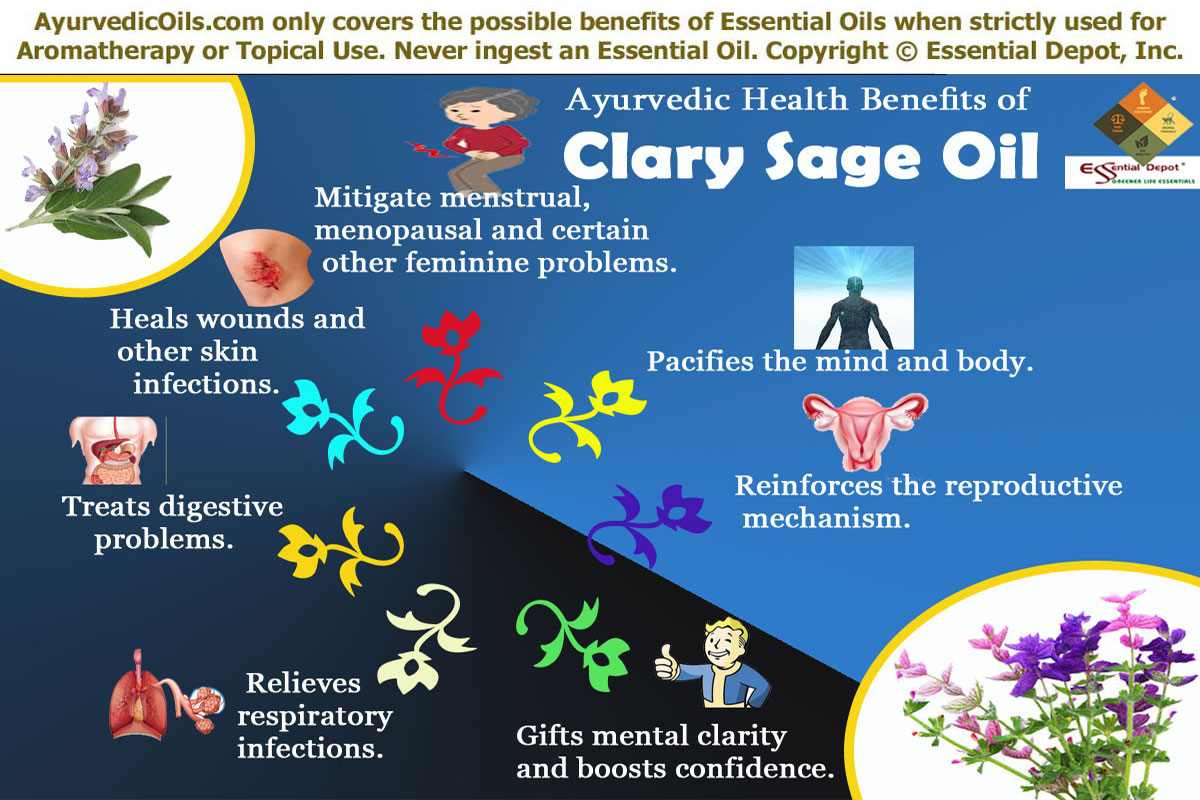
The Ayurvedic health benefits of Clary Sage essential oil are:

Clary-sage-broucher1. Mitigate menstrual, menopausal and certain other feminine problems:

Most of the problems associated with menstrual and menopausal conditions are caused due to hormonal imbalances, especially the female hormone estrogen. Certain studies indicate that presence of sclareol constituent in Clary Sage oil may provoke an ‘estrogen-like effect’ in the body that helps in treating womanly problems related to hormonal reactions.

Light Miller and Bryan Miller in their book Ayurveda and Aromatherapy say that Clary Sage essential oil is beneficial for all the three doshas and has rejuvenative and female-immune stimulating qualities that aids in building tissues in the uterus and helps in relieving uterine pain and cramps.

Massaging your lower abdomen, thighs and around your reproductive organs with 3 drops of Clary Sage oil mixed 2 ml of coconut oil can be of great assistance in relieving menstrual pain (dysmennorhea), irregular or blocked menstruation with its emmenagogue properties, treat hot flashes and mood swings associated with menopause.

You can mix 5 drops of this oil with 3 ml of virgin olive oil and massage it gently on the feet and palms of the pregnant women before childbirth for relaxing the stretched out muscles, granting mental strength, calming the tensed nerves and lessening the pain during labor.

A 2013 study on Differential Effects on Blood Pressure in Female Patients with Urinary Incontinence Undergoing Urodynamic Examination of Salvia sclarea or Lavandula angustifolia proved that “lavender oil inhalation may be inappropriate in lowering stress during urodynamic examinations, despite its antistress effects, while clary oil inhalation may be useful in inducing relaxation in female urinary incontinence patients undergoing urodynamic assessments.”

2. Pacifies the mind and body:

Clary Sage essential oil has a positive and reviving effect on the pituitary gland of the brain, which is responsible controlling stress, growth, blood pressure, pain relief and has an impact on the behavioral pattern as well.  Inhaling the warm, sweet and soothing aroma of Clary Sage oil added to a diffuser, burner or vaporizer helps in alleviating stress, mood swings, tension, anxiety, hopelessness, postpartum depression and uncertainty.

Adding 3 to 4 drops of Clary Sage oil in bath before going to bed can assist in relaxing the nerves and muscles helping in the treatment of fatigue, restlessness, nervous tension and grant peaceful sleep at night. 1 drop of Clary Sage oil added to your pillows or to a tissue placed near your pillow can help in putting an end to your horror dreams or feelings of insecurity by promoting farsighted dreams and presenting you with a euphoric state of mind.

3. Reinforces the reproductive mechanism:

The effect of Clary Sage oil on influencing the reproductive mechanism both in men and women is again related to its enhanced action on the pituitary gland, the pea sized endocrine gland in the brain. Pituitary gland secretes the hormones responsible for uterine contractions during childbirth (release of oxytocin hormones), functions of the sex organs in both male and female, metabolism (the process of converting food into energy), regulation of body temperature and breast milk production.

Massaging your body with 20 drops of Clary Sage oil mixed with 10 ml of jojoba oil along with adding 2 drops of Clary Sage oil to your bathing water and 3 drops in vaporizer or burner at night can help in numerous ways for activating the pituitary gland and stimulate the secretion of hormones responsible for reproductive problems like impotence, frigidity, infertility, loss of sexual interest, premature ejaculation and erectile dysfunction.

4. Gifts mental clarity and boosts confidence:

Only a relaxed and calm mind can help in progressive moves and visionary thinking. Clary Sage essential oil stimulates the root chakra and the sacral chakra responsible for endurance and confidence. 2 drops of Clary Sage oil added to your vaporizer, burner or handkerchief can assist in influencing positive thoughts, grant mental clarity, clear confusions and chaos, boost creativity and confidence and induce spiritual feelings naturally.

5. Relieves respiratory infections:

This oil have been used since the ancient times for treating asthma, bronchitis, sore throat, cough and certain other respiratory problems. The positive effects of Clary Sage oil on the respiratory system is mainly because of its mucilaginous produce. The working of this mechanism is that mucilages envelope the mucous membranes and thwarts the pain and irritation of the nerve endings.

Using 2 drops of Clary Sage oil in steam inhalation followed by 2 drops of this oil added to vaporizing ointment and massaged soothingly on your chest, back and throat can be of great assistance in treating spasmodic coughs, respiratory spasms, expelling the phlegm and mucous deposits in the bronchial and nasal passages and soothes the respiratory tract.

6. Treats digestive problems:

Clary Sage oil has carminative and stomachic properties that support in promoting proper digestion, expelling gas in the stomach and intestines, stimulating the secretion of digestive enzymes, acids and gastric juices responsible for metabolic functions. This working can again be attributed to its encouraging effect on the pituitary gland, accountable for secretion of hormones responsible for metabolic functions.

Dilute 3 drops of Clary Sage oil in bath or massage your abdomen with 4 drops of this oil mixed with 2 ml of sesame oil for curing stomach pain, flatulence, spasmodic cholera, ulcer, cramping, abdominal discomfort, gastrointestinal problems and for regulating the bowel movements.

7. Heals wounds and other skin infections:

Clary Sage essential oil can be your best friend in maintaining youthful and adorable skin. This oil has excellent antiseptic and antibacterial properties that heal wounds speedily, eliminate toxic substances in the body causing acne and blemishes, discard bacteria and other destructive micro-organisms that ruin the skin health by affecting the healthy cellular structure.

Gently massaging your skin with 3 drops of Clary Sage oil mixed with 2 ml of almond oil can work wonders on your skin by retaining the natural moisture, purging the excess oil deposits in the skin, toning the skin, reducing wrinkles and skin inflammation (due to the presence of linalyl acetate) and nurturing its suppleness.

Also helpful in: Clay Sage essential oil is also an excellent natural remedy for treating hypertension, hysteria, nervous convulsions, body odor, uterine tumors and high cholesterol.

Disclaimer:

This article is only for educational purpose and is not meant to diagnose or replace any professional medical advice or prescribed medicines. Do not use essential oils internally without the guidance of your Ayurvedic practitioner, who can grant the best expert consultation in choosing the right essential oils for your medical condition and unique individual constitution.

Ensure that you always use essential oils for topical use only, in a diluted form as pure and organic essential oils are highly concentrated substances and a skin patch test is advisable if you are using essential oils for the first time. Do not use this oil in the first and second trimester of pregnancy.

The MSDS (Material Safety Data Sheet) of Clary Sage oil is readily available for your enhanced safety and better usage.

Gas Chromatography Report (GC analysis) of Clary Sage oil.

Clary Sage Oil – Possible Skin Issues:

Greener Life Diamond – Bio-Healthy Score => 3 – Possible Skin Issues:

See => http://www.essentialdepot.com/GreenerLifeDiamond.html

The essential of oil of Clary Sage is expressed as non-toxic and exhibits mild skin irritation. Few studies have witnessed the moderate irritating effect of Clary Sage oil on rabbit skin. With a regulatory status of ‘Generally Recognized As Safe (GRAS)’authorized by the FDA (U.S. Food and Drug Administration), Clary Sage oil is safe on skin when blended with appropriate carrier oils.

The safe level of dilution for Clary Sage oil is 0.25 % according to Robert Tisserand and Rodney Young in their book, Essential oil safety. In the rodent studies, it has been proved that Clary Sage oil has the greater effect of causing motor (cognitive function) impairment and sedation, thus the excess use of this oil might end up in dizziness, headache and lowering the level of concentration (especially during the use in Aromatherapy massage).

For this reason, it is recommended to avoid the use of Clary Sage oil while you’re taking alcohol or any other narcotic drugs. This oil also has the ability to potentially influence the Limbic system, especially the pituitary gland and thalamus.

Clary Sage is also said to contain hypotensive (decreasing blood pressure) properties and is advised to avoid the use of this oil if you have low blood pressure.

The most popular attribute of Clary sage oil is its estrogenic effect and is not an estrogen mimic. The presence of the sclareol, which has an estrogen-like structure is responsible for this effect and supports in the treatment of menstrual conditions. It binds with estrogen receptor sites, blocking the activity of the system’s own estrogens, ending up in the lessening of estrogenic action.

The use of Clary Sage oil, especially during the early stages of pregnancy is highly recommended as it may cause uterine contractions and stimulate menstrual flow. Clary Sage oil is also used by nursing mothers to stop lactation so do not use Clary Sage oil if you are breastfeeding as it has an anti-galactogogue property.

Never ingest essential oils and remember to dilute in suitable carrier oils before dermal application, as pure essential oils are highly concentrated liquids and might cause adverse effects in your system. This pertains only for products engaged in topical use and is not valid for wash-off products like soaps, shampoos and other bathing varieties.

Reference Links Substantiating the Possible Skin Issues of Clary Sage Oil:

  1. Essential Oil Safety: A Guide for Health Care Professionals By Robert Tisserand, Rodney Young
  2. Leung’s Encyclopedia of Common Natural Ingredients, used in Food, Drugs and Cosmetics by Ikhlas A. Khan and Ehab A. Abourashed.
  3. American Herbal Products Association’s Botanical Safety Handbook, Second Edition by Zoe Gardner, Michael McGuffin
  4. Is Clary Sage oil Estrogenic? by Robert Tisserand
  5. Clary Sage oil by Mercola.com
  6. Randomized controlled trial for Salvia sclarea or Lavandula angustifolia: differential effects on blood pressure in female patients with urinary incontinence undergoing urodynamic examination by the Department of Nursing Science, Korea University published in the Journal of Alternative and Complementary Medicine
  7. The role of essential oils in the treatment and management of Attention Deficit Hyperactive Disorder by Heather Godfrey, published in the International Journal of Aromatherapy

Thought for the day:

Hope is the only bee that makes honey without flowers. -Robert Green Ingersoll

Suggested Reading:

  1. Clary Sage Essential Oil (Aromatherapy) by Miriam Kinai
  2. Mind Body Soul Aromatherapy by Rosa C Murphy M.Ed.
  3. How to Use Clary Sage Essential Oil (Aromatherapy) by Miriam Kinai
  4. Aromatherapy and Massage for Mother and Baby by Allison England R.N.
  5. Aromatherapy for Healing the Spirit: Restoring Emotional and Mental Balance with Essential Oils by Gabriel Mojay

Reference Links:

  1. Salvia sclarea by Wikipedia
  2. Clary Sage: Peaceful Rejuvenation by Vedic Society
  3. Ayurveda and Aromatherapy by Light Miller and Bryan Miller
  4. 38+ Benefits and Uses for Clary Sage Oil by Sustainable Baby Steps
  5. Randomized Controlled Trial for Salvia sclarea or Lavandula angustifolia: Differential Effects on Blood Pressure in Female Patients with Urinary Incontinence Undergoing Urodynamic Examination submitted to the Department of Basic Nursing Science, Korea University, published in the Journal of Alternative and Complementary Medicine


Your resource for quality Essential Oils. Every batch is
GC tested to ensure purity and authenticity.

Clove Bud Oil

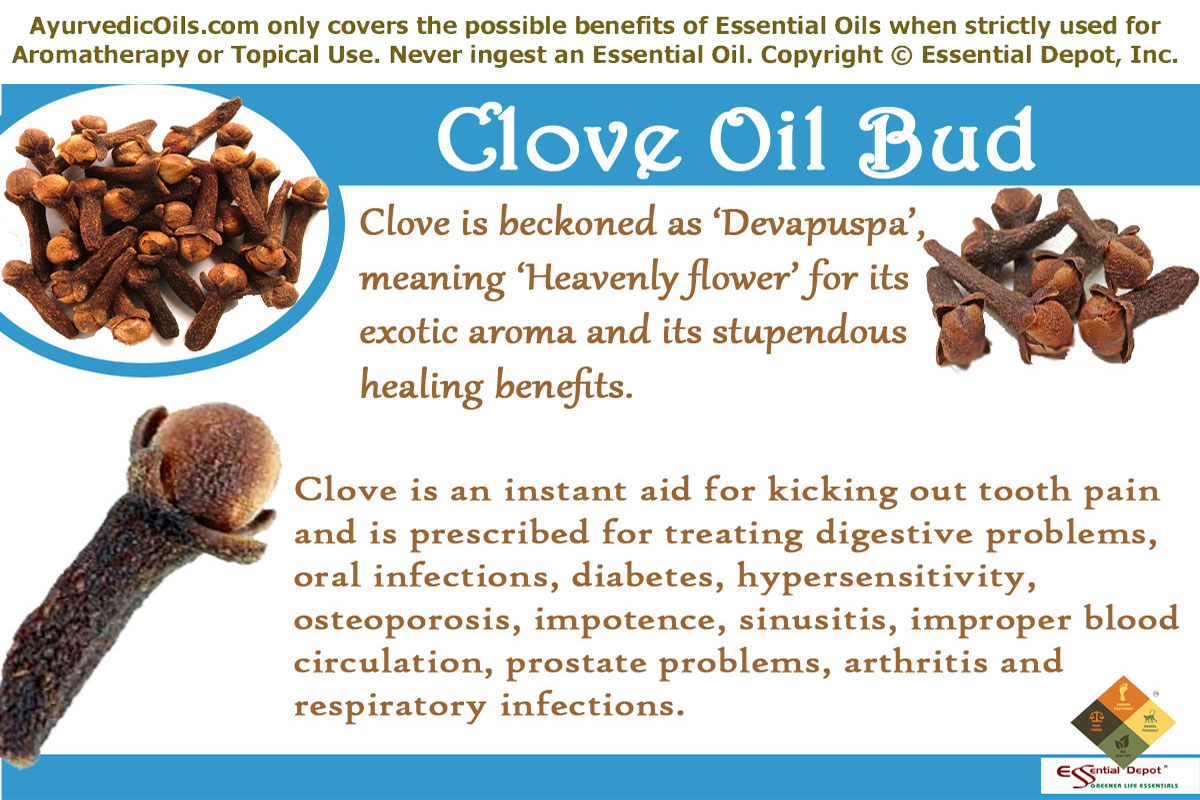
Hit the nail on the head of your illness‘ is not a ruthless statement and the nail that is recommended to treat most of your illnesses is the ‘nail-shaped’ Clove and its essential oil extracted from the dried unopened flower buds of the Clove tree (Scientific name: Eugenia caryophyllata) by steam distillation.

Clove-oil-bud-bannerIt is a much celebrated emergency aid for treating toothache with its potent pain-relieving effect that causes numbness in the painful area and alleviates pain instantly.

Clove is a vital part of the Ayurvedic rebellion for more than 3,000 years and is known in Sanskrit as Devapuspa, meaning ‘Heavenly flower’ and the name is attributed to its exotic aroma and its stupendous healing benefits.

It is prevalently known in India as Laung or Lavnga. Clove and its essential oil in used in many Ayurvedic treatments for dealing with digestive problems, oral infections, diabetes, hypersensitivity, osteoporosis, impotence, sinusitis, improper blood circulation, prostate problems, arthritis and few other respiratory infections.

Purchase Clove Oil Bud – Retail – 4 oz – CLICK HERE

Purchase Clove Oil Bud – Wholesale – CLICK HERE

Historical uses and importance of Clove and its essential oil:

Clove is native to the Moluccas Islands of Indonesia and was previously known as the Spice Islands. It is an evergreen tree which bears pink color flower buds and these buds are picked before they bloom and are dried to enrich mankind with the tiny brown buds known as ‘Cloves’. This tree grows naturally in India, Sri Lanka, Brazil, West Indies, Zanzibar, Madagascar and Tanzania.

Clove was traded to Europe initially in the 4th century A.D where the ancient herbalists of Germany used Cloves as vital ingredient of their anti-gout remedy. Later it was used in treating wounds, infertility, nausea, diarrhea, worms and toothache.

Cloves were also used in poultices in England during the Middle Ages for treating infections and lesions caused due to bubonic plague. It was also recommended by Hildegard of Bingen for alleviating gout, nasal congestion, hiccups and intestinal swelling.

The traditional Ayurvedic medicine used Cloves as an effective aphrodisiac for addressing male reproductive problems and for assisting respiratory problems like asthma, cough, cold, sore throat, laryngitis and congestion.

It is blended with other popular herbs like cinnamon, ginger, peppercorn and cardamom and used as an immunostimulant, blood purifier, anti-parasitic, breath freshener and for relieving digestive disorders.

The historical use of Cloves in China evolved during the Han Dynasty (207 B.C.) and the Traditional Chinese Medicine (TCM) prescribes Cloves for easing fungal infections, hernia, digestive problems, ringworm, nausea, kidney infections and impotence.

Cloves were also a part of the Western Herbal Medicine for enhancing circulation, supporting digestion, treating erectile dysfunction, hiccups, vomiting, toothache and halitosis.

Chemical components and therapeutic properties of Clove essential oil:

The primary component of Clove is Eugenol that adds up to 70 to 90% of the Clove essential oil constituent. Other major components are beta caryophyllene, methyl salicylate, kaempferol, acetyl eugenol, triterpenoids, gallotannic acid, rhamnetin, vanillin and eugenin.

Eugenol contributes to the sensible aroma of Cloves and its therapeutic properties including antifungal, anesthetic, anti-inflammatory and antiseptic qualities. The other healing values of Clove essential oil are antioxidant, carminative, anti-carcinogenic, immunostimulant, stomachic, digestive, antibacterial, decongestant, expectorant and aphrodisiac.

Ayurvedic health benefits of Clove essential oil:

Woman/man in this modern world is judged by the gadgets she/he owns and the latest technology that has been swirling around. While most of us are aware about the techniques and tools in the mere man-made machines, how many of us know about our own body and its mechanisms? Not many of us know what is happening in our system? What causes pain? What causes hunger? What causes cellular damage? Or what causes death before the predestined day of death?

More than the knowledge of the world around you, the real wisdom lies in the awareness of the world within you, within the human mind and body, the greatest wonder in this Cosmos.

Ayurveda simply introduces you to a never before living where you will explore and discover about yourselves and the word ‘Ayur + Veda’ by itself means the ‘the knowledge + life’. This ancient philosophy trusts that everything on earth is part of nature and is built with the same five elements that ‘Mother Nature’ is made up of.

The tremendous five elements are earth, water, air, fire and space. Earth signifies bones and muscles, water stands for blood, air assists breathing, fire notifies the body temperature and aid for metabolic functions and space is the spirit that stays in.

Every human being is created with a unique individual constitution comprising of three vital biological energies namely vata, pitta and kapha. These doshic elements are a combination of the five vital elements.

Air and space makes Vata and is responsible for circulation, nervous functions and aging symptoms, fire and water joins together for Pitta and is incharge of body temperature and metabolism and water and earth signifies Kapha energy and is accountable for structure and continuity. Every individual has a predominance of any one of these doshas that determines his personality, behavior and attribute.

Ayurvedic wisdom states that human health solely depends upon his/her harmony with nature, means the five elements of nature that are a representation of the three biological energies. Balance between the three doshas based upon the individual’s unique constitution indicates health and imbalance causes sickness.

The natural remedies in Ayurveda including the herbs, essential oils, meditation, yoga, physical exercises, prayers, Ayurvedic routine and Abhyanga (Ayurvedic massaging) aim at treating these imbalances of doshas.

Clove and its essential oil have been in use in the Ayurvedic regimen for addressing an extensive range of illnesses ranging from oral problems to kidney disorders. The essential oil of Clove is said to augment pitta energy and soothe excess of kapha and vata dosha.

Let’s check out the Ayurvedic health benefits of Clove essential oil.

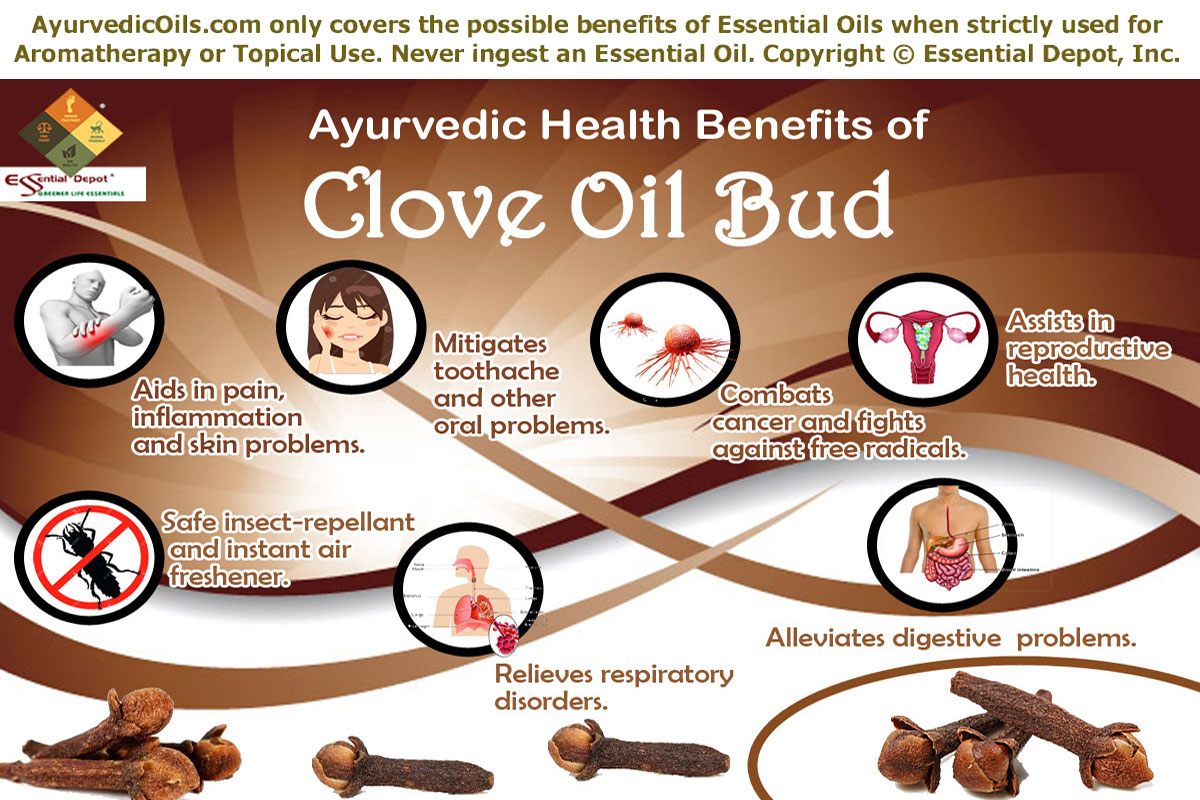
Clove-oil-bud-broucher1. Alleviates digestive problems:

Clove and its essential oil have been a part of many Ayurvedic preparations used in the treatment of various digestive disorders including bloating, intestinal gas, nausea, stomach upset, distention and dyspepsia.

According to Ayurveda, pitta dosha is responsible for the body temperature, warmth and the fire generated for stimulating the process of metabolism like digestion, absorption and excretion.

Pitta imbalance or insufficiency causes sluggishness in the digestive system and it is during these critical times , Clove essential oil is used in Ayurveda for triggering the metabolic functions and warming the digestive tract.

Massaging your abdomen with 2 drops of Clove oil mixed with 1 ml of coconut oil assists in encouraging the digestive system, increasing the secretion of hydrochloric acid, bile and other digestive juices for enhancing trouble-free digestion. You can also take bath in lukewarm water enriched with 3 to 5 drops of Clove oil for supporting bowel movements and recover peristalsis.

With its carminative, stomachic and anthelmintic properties Clove oil is a natural remedy for alleviating flatulence, intestinal worms, gastric irritability and various intestinal infections caused by bacteria, virus, protozoa and other pathogens leading to serious digestive problems like cholera.

2. Relieves respiratory disorders:

Ayurvedic system of healing prescribes Clove as an effective remedy for treating upper respiratory problems like cough, asthma, sinusitis, cold, sore throat, bronchitis, flu, whooping cough, fever and tuberculosis.

Excess of kapha dosha due to change in food habits or climatic conditions contribute mainly to respiratory problems, as excess water deposits accumulate in the nasal and bronchial passages in the form of mucous and phlegm deposits.

Clove essential oil added to steam inhalation, preferably 2 drops of this oil when inhaled in the form of steam helps in loosening the phlegm and mucous deposits by causing warmth in the nasal passages and the respiratory tract.

This also aids in killing the harmful germs and pathogens that worsen the illnesses. You can also add 2 drop of Clove oil to your decongesting ointment and massage it soothingly on your chest, back and throat for improved results.

3. Aids in pain, inflammation and skin problems:

Clove essential oil is an excellent aid in treating skin infections caused due to bacteria, virus, fungi and other harmful microbes mostly with its natural antiseptic properties.

Using 2 drops of Clove oil along with your mild skin care cream or lotion or with 1 ml of jojoba oil on your skin can aid in healing wounds, athlete’s foot, cuts, bruises, scabies, acne, prickly heat and insect stings.

It also helps in preventing the wounds from becoming septic. These skin-friendly properties of Clove oil is attributed to the presence of the eugenol compound which has rich antiseptic qualities.

Massaging the inflamed or painful parts of the body with 3 drops of Clove oil mixed with 2 ml of sesame oil helps in alleviating pain, reducing inflammation with its anti-inflammatory properties and discharges the excess water deposits, uric acid and toxic substances causing swelling, redness and irritation in rheumatism and arthritic conditions.

The presence of eugenol and its other derivative compounds like flavonoids, isoflavones and flavones are extremely advantageous in the perpetuation of bone density and aids in retaining the mineral content in the bones and support its tensile potency. By this way, Clove oil can be used as an effectual remedy for curing and preventing Osteoporosis.

4. Mitigates toothache and other oral problems:

Cloves are celebrated all around the globe for its natural dental assistance. Both the herb and its essential oil have been used in various traditional practices including Ayurveda, TCM (Traditional Chinese Medicine) and Western herbalism as a promising anodyne for treating dental emergencies.

Adding 1 drop of Clove oil to a small cotton ball or bud and keeping it on the painful area in the mouth for 10 to 15 minutes can help in alleviating toothache by causing numbness in the aching part.

You can follow this treatment by gargling your mouth with a cup of warm water nourished with 2 drops of Clove oil for eliminating the microbes, germs and other harmful organisms causing pain and other oral infections.

Even today in many countries, Clove herb is directly applied to the gums for controlling pain during dental aid, treating toothache and for dry socket, which is a problem experienced during tooth extraction.

It has also been used in India as a natural breath freshener and as a guard against oral pathogens for treating gum problems like periodontitis and gingivitis. Clove oil is also an important ingredient in various Ayurvedic toothpastes and the most popular among them is the Dabur Red toothpaste.

5. Combats cancer and fights against free radicals:

Antioxidants are the soldier force that can combat the growth of cancerous tumors by fighting against free radicals causing cellular damage. The antioxidant capacity of a particular component is measured by its ORAC, meaning Oxygen Radical Absorption Capacity. This measuring attribute was developed for the USDA (United States Department of Agriculture) by the Scientists of Tufts University.

According to the study by the Essential Oils Desk reference amongst the numerous essential oils, Clove essential oil stands high with ORAC of 10,786,875 where the preceding oil was Thyme essential oil with 159,590 as its ORAC. This simply means that Clove oil is the best antioxidant in the world amongst all the other fruits, herbs and spices with 10 million ORAC. This is more than 400 times of the most powerful antioxidant fruit, the wolfberry.

Clove essential oil has antioxidant and anti-carcinogenic properties that help in treating all types of cancer including lung cancer and liver cancer, if traced in the early stages.

Massaging your body with 10 drops of Clove essential oil blended with 5 ml of Evening Primrose oil can help in decreasing the free radical production, discouraging the increased lipid profile in the liver, detoxifying the system, postponing the aging process (helps reduce wrinkles and other aging symptoms) and augmenting the body’s natural immune power.

6. Safe insect-repellant and instant air freshener:

Clove is by far known as the safest and non-toxic insect repellant that repels harmful insects like mosquitoes, bugs, fleas and ticks and it has been proved by the researches of the Duke University School of Nursing. This oil has a strong aroma that is intoxicating for the olfactory senses of various insects.

Adding 2 drops of Clove oil in diffuser, air freshener or vaporizer can revive the air instantly and protect your family from insects. You can also add 2 to 3 drops of Clove oil in your skin care lotion and apply it on your skin for keeping away from insects.

7. Assists in reproductive health:

Many traditional medical systems including Ayurveda and Unani medicine suggest the use of Clove oil as an aphrodisiac for treating reproductive problems especially in men. The spicy and warming aroma of Clove oil kindles the feelings of togetherness and supports the health of male and female reproductive system.

The book ‘Ayurveda and Aromatherapy’ by Bryan Miller and Light Miller says that Clove essential oil is effective “ to arouse, stimulation of hormones, ‘stimulate the juices’, dispel inertia and depression”, which are all the causes of Kapha imbalances. Clove oil is a popular mental stimulant that alleviates fatigue, depression and other negative feelings that ruin your sexual life.

Massaging your body with 10 drops of Clove oil mixed with 5 ml of virgin olive oil can help in treating premature ejaculation, impotence, loss of sexual interest, erectile dysfunctions and loss of libido. You can also add 2 drops of Clove oil to your bath before going to bed.

Other health benefits:

Clove oil is a renowned flavoring agent in various food items and beverages. It is also used in the manufacturing of soaps, toothpastes, cosmetics, clove cigarettes and perfumes. Epilepsy, poor blood circulation, dizziness, earache and certain other health conditions are also treated with Clove essential oil.

Disclaimer:

This article is only for the purpose of information and is not directed to use as a substitute for prescribed medicines or professional medical advice. Never use essential oils internally as pure and organic essential oils are highly concentrated liquids.

Always use Clove essential oil in a diluted manner for external use only, as this oil is a skin and mucous membrane irritant, if used directly on the skin. Always speak with your Ayurvedic Practitioner before choosing the right essential oils for your unique individual constitution and medical condition.

Thought for the day:

And the day came when the risk to remain tight in a bud was more painful than the risk it took to blossom. – Anais Nin

Suggested Reading:

  1. Clove Oil! Discover The Essential Oil Of Cloves Health Benefits For Toothaches, Acne, Hair & Much More: A Book On Clove Oil Secrets (Natural Health Books Series) by Tina Cody
  2. Scents Of Life: Use And Effect Of Essential Oils by H. M. Schemske
  3. The Modern Ayurveda: Milestones Beyond the Classical Age from CRC Press
  4. Ayurveda & Aromatherapy: The Earth Essential Guide to Ancient Wisdom and Modern Healing by Dr. Light Miller, Dr. Bryan Miller
  5. The Fragrant Mind: Aromatherapy for Personality, Mind, Mood and Emotion by Valerie Ann Worwood

Reference Links:

  1. Clove by Wikipedia
  2. Health Benefits of Clove Oil by Organic Facts
  3. Cloves and Clove oil by Healing Naturally by Bee
  4. The Health Benefits of Cloves by The Global Healing Center
  5. Traditional Uses of Clove by Natural Standard, The Authority on Integrative Medicine


Your resource for quality Essential Oils. Every batch is
GC tested to ensure purity and authenticity.

Cubeb Oil

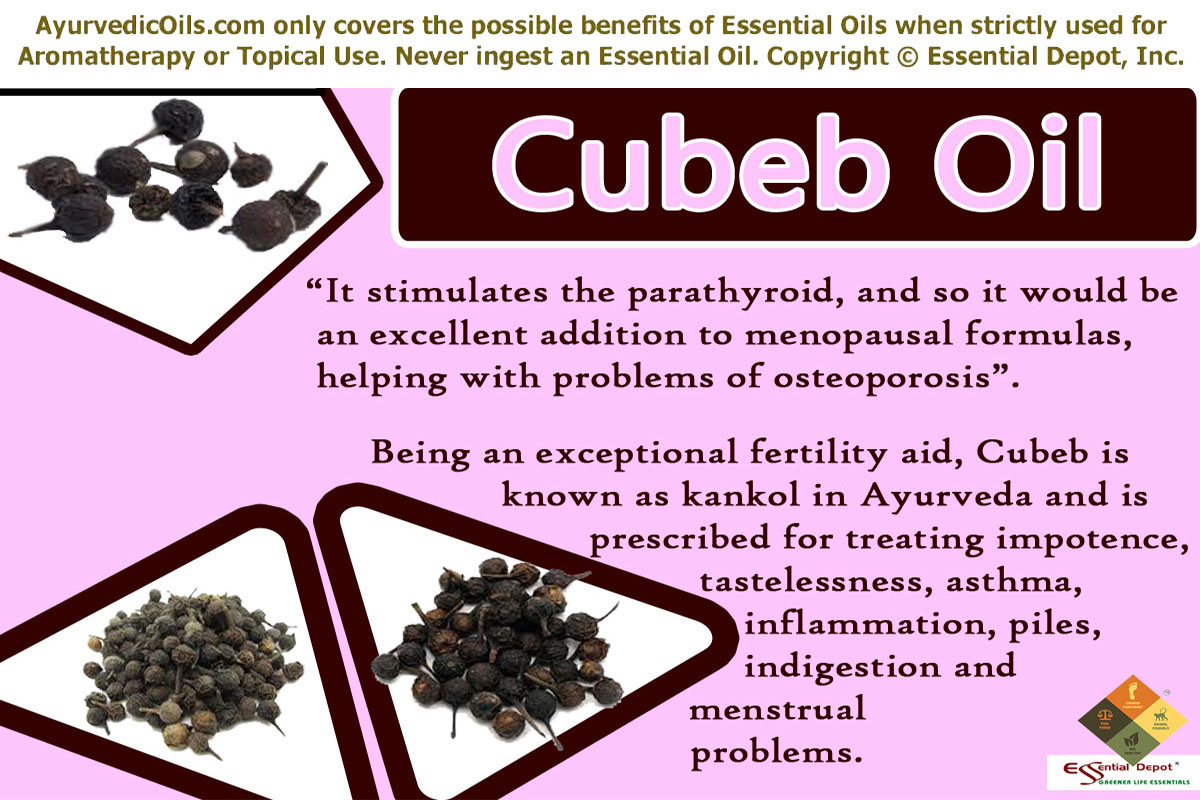
Cubeb-bannerCubeb, the tailed-pepper is an exceptional fertility aid for both the Kings and Queens out there, with its significant aphrodisiac properties. “It stimulates the parathyroid, and so it would be an excellent addition to menopausal formulas, helping with problems of osteoporosis”, says Jenny Rose in her Aromatherapy Book.

Cubeb essential oil is extracted from the dried Cubeb berries through steam distillation method. This plant is botanically called as Piper cubeba and is a limb of the pepper family Piperaceae.

Cubeb was recommended by Charaka and Sushruta, the legendary Ayurvedic philosophers for treating halitosis, cough, loss of voice, fever, gonorrhea and certain other oral problems. Cubeb is known in Sanskrit as kankol and in Hindi as kabab chini and is a part of the Ayurvedic family Pippali kul. It is also used in Ayurvedic formulations for treating impotence, tastelessness, asthma, inflammation, piles, indigestion and menstrual problems.

Purchase Cubeb Oil – 4oz – CLICK HERE

Historical uses and importance of Cubeb:

Native to the Java and Sumatra islands of Indonesia, Cubeb is often called as Java pepper and is also grown widely in India and Malaysia. It’s taste is often compared to allspice or pepper like. Cubeb is said to have reached the European subcontinent through the ancient trades by the Arabs through India and Arabians call it as Kababa and is also talked about in the writings of Alchemy.

The use of Cubeb dates back to 4th century BC in various parts of the world. It was brought to China during the Tang dynasty and was called by the Sanskrit names vidanga and vilenga.

The most interesting uses of Cubeb by the Tang physicians are to darken hair, treat demon vapors, loss of appetite and as a natural perfume for the body. Cubeb was also used in the Tibetan Medicine for treating problems associated with the spleen.

Hildegard of Bingen prescribed the use of Cubeb as an antiseptic and as a good tonic for the nervous system. The London Dispensatorie written by Nicholas Culpeper in 1654 says “Cubebs were hot and dry in the third degree… (snip) they cleanse the head of flegm and strengthen the brain, they heat the stomach and provoke lust“. Theophrastus has stated the use of Cubeb as an important ingredient in making sweet-smelling confections along with cassia and cinnamon.

Chemical constituents and therapeutic properties of Cubeb oil:

The chemical constituents of Cubeb essential oil are sesquiterpenes (namely α- and β-cubebene, caryophyllene, germacrene, δ-cadinene and copaene) and monoterpenes (including carene, 50% sabinene and α-thujene) along with camphor, pinene, azulene, lineal, alcohol cubebol and other oxides like 1,4- and 1,8-cineole.

The remedial attributes of Cubeb essential oil are carminative, diuretic, antiseptic, aphrodisiac, expectorant, antioxidant, antimicrobial, antipyretic, hepatoprotective, analgesic, disinfectant, astringent, gastro-protective and stimulant.

Ayurvedic health benefits of Cubeb essential oil:

Ayurveda implanted strong roots of health through prevention of illnesses, disciplined lifestyle and absolute balance with nature leading to aging in the pink and extended life-span even beyond a hundred years. This 5,000 years old ancient healing methodology strongly insists to be on par with nature for leading a hale and harmonious living.

According to Ayurveda, everything on Earth is a combination of the 5 vital elements of nature and they are earth, fire, water, air and space.

It says that the only difference between a living thing and a non-living thing is the element of space that rests within living organisms as the soul. Bones and muscles represent earth, fire stands for the metabolic processes and body temperature, blood is a symbol of water, air assists in breathing and space is the soul, which indicates that we are alive.

Ayurvedic philosophy states that each human being is created with a unique individual constitution that comprises of three bio-energies known as doshas, namely vata, kapha and pitta types. Vata is a combination of air and space, pitta stands for fire and water and kapha represents water and earth.

Ayurveda denotes that every individual has a predominance of any one these doshas and that determines their physical set up, mental makeup and their personality. Balance between these doshas is a symbol of good health and imbalances of these biological energies due to food and lifestyle changes causes illnesses.

Treatments in Ayurveda vary from person to person even if it is for the same illness because this common sense science examines the individual constitution, patient history and the root cause of an illness before prescribing the suitable medication.

The most prevalent Ayurvedic remedies are herbs, plant essential oils, Abhyanga (the art of Ayurvedic massaging), yoga, Ayurvedic routine, prayer, simple physical exercises and mediation depending upon the unique individual constitution for correcting the doshic imbalances.

Cubeb oil is an effective Ayurvedic remedy for treating excess of kapha and vata energies and regularizing the pitta deficit.

The Ayurvedic health benefits of Cubeb essential oil are:

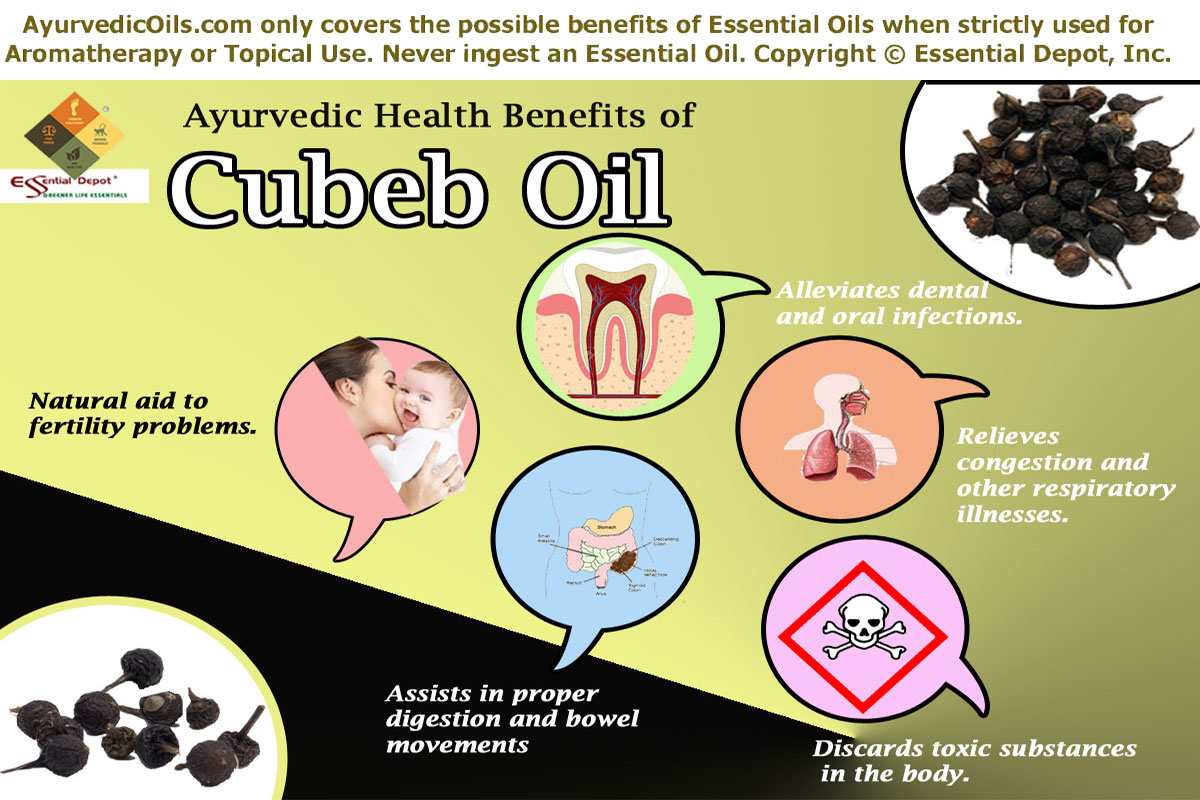
Cubeb-broucher1. Natural aid to fertility problems:

Cubeb essential oil has natural aphrodisiac properties for which it was used by ancient Arabians and in the Unani medicinal system in the treatment of fertility problems like infertility, loss of sexual interest, impotence, erectile dysfunction, all stages of gonorrhea and other STD (Sexually Transmitted Diseases).

In Ayurvedic terms, Cubeb oil contains Ushan as its Virya means hotness as its main potency. Warmth and increased body temperature influence better intimacy in a sexual relationship. Excess of vata dosha can also be a reason for lack of sexual interest and impotency. Cubeb essential oil is known for reducing increased vata dosha and helps treat various sexual problems.

Unani medicinal system suggests the use of Cubeb corns for increased sexual contentment and is it because of this attribute Cubebs were initially called in Arabic language as ‘Habb-ul-Uruus. It has also been noted in the book ‘One Thousand and One Nights’ as a key ingredient in the preparation of an aphrodisiac cure for infertility.

Cubeb oil has a warm, pungent and slightly camphoraceous fragrance with a feel of Nutmeg aroma. Add 3 drops of Cubeb oil in 3 ml of olive oil and massage your body for arousing intimate sexual feelings naturally. You can also add 2 drops of this oil in warm bathing water before going to bed and add 1 drop of Cubeb oil along with 1 drop of Lavender or Ylang Ylang oil in your diffuser to set the right mood perfectly.

2. Alleviates dental and oral infections:

Cubeb gets a special mention in both the highly-held Ayurvedic encyclopedias, the Charaka Samhita and the Sushruta Samhita as an oral cleanser and as an aid for treating dental problems.

The essential oil of Cubeb has natural antiseptic, antimicrobial and astringent properties that assist in killing the harmful organisms in the mouth causing halitosis or bad breath, bleeding gums, plaque and cavities. Mix 1 drop of Cubeb oil in a cup of warm water and use it as a gargle for relieving all kinds of dental and oral infections.

3. Relieves congestion and other respiratory illnesses:

Vitiated kapha dosha is responsible for water retention, excess deposits of phlegm and mucous, thus leading to respiratory problems like nasal congestion, chest congestion, cold and other pulmonary infections including bronchitis. The ability to reduce increased kapha energy is the major reason for Cubeb oil being used as a promising remedy in treating respiratory illnesses.

Many popular Physicians and Herbalists like Nicholas Culpeper have said that Cubeb is an excellent remedy for clearing phlegm deposits, strengthening the brain, alleviating bronchitis; asthma, relieving congestion and treating cough and throat infections. Add 2 to 3 drops of Cubeb oil in steam inhalation or to your vaporub and massage it gently on your throat, back and chest to experience quick relief from respiratory infections with its expectorant and antimicrobial properties.

4. Discards toxic substances in the body:

Cubeb essential oil has diuretic properties that help in discharging the toxic substances in the body known as ama, which is nothing but the remains of improper digestion which slowly turns toxic. These toxic remains along with salt deposits, uric acid, cholesterol and fat can lead to numerous medical conditions including kidney problems and heart diseases.

Light Miller and Bryan Miller in their book ‘Ayurveda and Aromatherapy’ say about Cubeb as “This herb has a light peppery smell. On occasion, when substituted into a formula for weight loss instead of black pepper, patients reported greater effectiveness .”

Cubeb oil acts as a stimulant in the body and promotes the proper functioning of the system. Its diuretic properties increase the quantity and frequency of urination and helps in cleansing the system.

Adding 2 drops of Cubeb oil in warm bathing water or in an Ayurvedic massage blend with 2 drops of peppermint oil, 2 drops of Cubeb oil along with 5 ml sesame oil assists in excreting toxic substances in the body, thus treating urinary infections, obesity, inflammatory conditions and other genito-urinary problems.

5. Assists in proper digestion and bowel movements:

Just like Pepper, Cubeb also has hot, spicy and pungent flavor. It’s potent to increase pitta energy is of great value in dealing with digestive problems like tastelessness, loss of appetite, indigestion, constipation, flatulence, intestinal worms etc., where Pitta dosha represents fire and water and is in charge of the metabolic functions. Massage your abdomen with 2 drops of Cubeb oil mixed with 2 ml of coconut oil for effective relief from digestive disorders.

A 2012 study on ‘In vitro efficacy of the essential oil of Piper cubeba L. (Piperaceae) against Schistosoma mansoni by Universidade de Franca published in Pubmed’ suggests that, “Piper cubeba essential oil possesses an effect against cercariae, schistosomula, and adult worms of the S. mansoni.” Schistosoma mansoni are adult worms that cause intestinal schistosomiasis (combined name for parasitic diseases).

Other uses:

Cubeb oil is also used as an important ingredient in lozenges, spirits, chewing gum, oral cleansers, toothpastes, cough drops, cigarettes for hay fever, asthma and chronic pharyngitis. It is also used in Ayurvedic healing for treating joint and bone problems.

Disclaimer:

This article is meant only for the purpose of education and information. Using it as a substitute for prescribed medicines or professional medical advice is not recommended. Always use essential oils for topical application in a diluted form only as organic essential oils are highly concentrated liquids and can cause allergic reactions.

Cubeb oil is a possible skin irritant and it is good to be avoided during pregnancy and nursing. Always consult your Ayurvedic expert before making the right choice of essential oils that suit your medical condition and unique individual constitution.

Thought for the day:

In wilderness I sense the miracle of life, and behind it our scientific accomplishments fade to trivia.  -Charles Lindbergh

Suggested Reading:

  1. ISO 3756:1976, Oil of Cubeb by ISO TC 54
  2. The Master Book of Herbalism by Paul Beyerl
  3. Ayurveda & Aromatherapy: The Earth Essential Guide to Ancient Wisdom and Modern Healing by Dr. Light Miller, Dr. Bryan Miller
  4. All About Spices: Pepper, Cubebs, Nutmegs, Cloves, Ginger, Vanilla, Pimento, Cinnamon (1889) by Alastair Mackenzie Ferguson, John Ferguson
  5. The Encyclopedia of Essential Oils: The Complete Guide to the Use of Aromatic Oils In Aromatherapy, Herbalism, Health, and Well Being by Julia Lawless

Reference Links:

  1. Cubeb by Wikipedia
  2. Piper cubeba by Ayushveda
  3. Cubeb published in Aromatherapy Bible by Daniele Ryman
  4. Essential Oil Constituents of Piper cubeba L. fils. From Indonesia by Rein Bos, Herman J. Woerdenbag, Oliver Kayser, Wim J. Quax, Komar Ruslan & Elfami
  5. In vitro efficacy of the essential oil of Piper cubeba L. (Piperaceae) against Schistosoma mansoni by Universidade de Franca published in Pubmed

Fennel Seed Oil

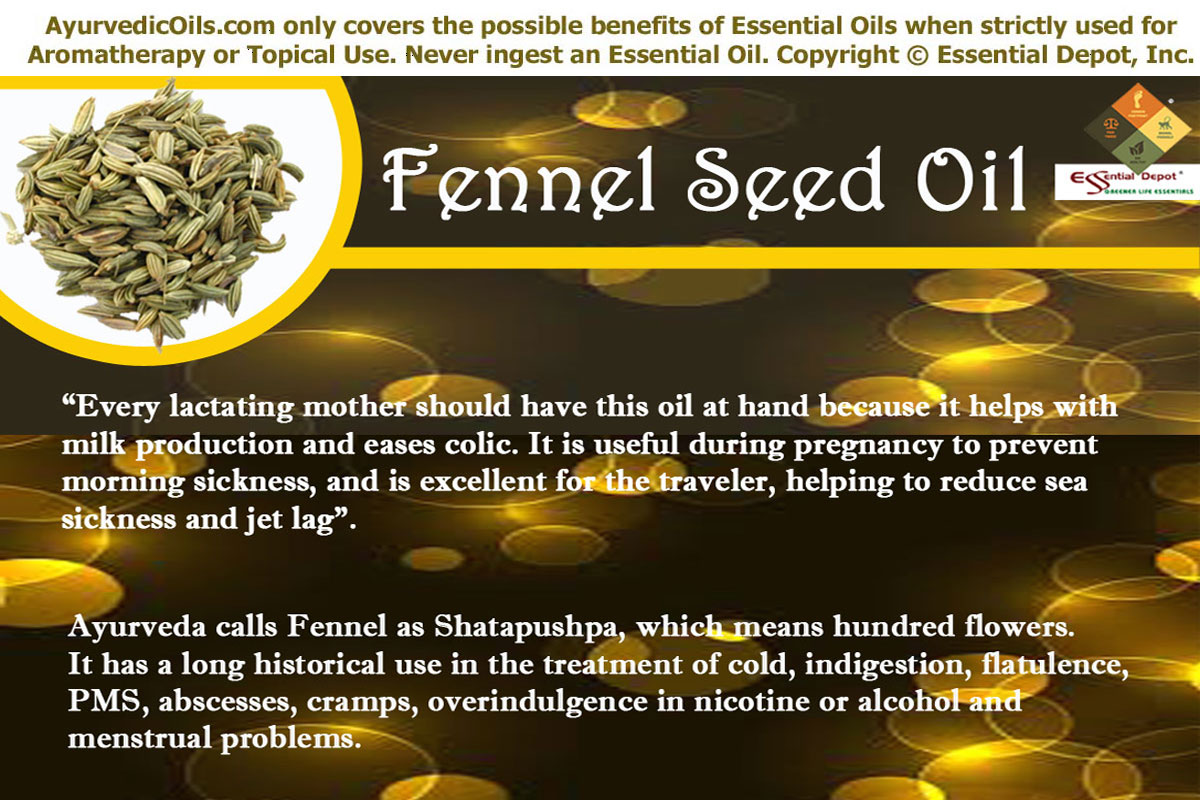
Fennel-seed-bannerEvery lactating mother should have this oil at hand because it helps with milk production and eases colic. It is useful during pregnancy to prevent morning sickness, and is excellent for the traveler, helping to reduce sea sickness and jet lag”, says Light Miller and Bryan Miller in their book Ayurveda and Aromatherapy.

Fennel is one remarkable herb with bunch of culinary and remedial benefits that embraces your food with its innate aroma and rich flavor blended with numerous healing attributes.

Owing its origin to the coastal Mediterranean region Fennel is botanically called as Foeniculum vulgare. It has been accepted and cultivated worldwide for its enormous benefits that some countries like India, Pakistan and China hold Fennel seeds and its essential oil as an important ingredient of their traditional cooking.

With the whole plant serving humanity with its unique qualities, Fennel fruits usually entitled as seeds when dried contributes to the extraction of Fennel seed oil by the process of steam distillation. Bearing anethole as the predominant flavoring substance, Fennel seed oil serves as an aid for various purposes.

Fennel is called in Ayurveda as Shatapushpa, which means hundred flowers. It has a long historical use in this ancient healing methodology in the treatment of cold, indigestion, gas, flatulence, PMS, low agni, abscesses, overindulgence in nicotine or alcohol, cramps, colic in children and menstrual problems.

Purchase Fennel Seed Oil – Retail – 4oz – CLICK HERE

Historical uses and importance of Fennel and its essential oil:

Numerous sources state that the Romans, English, Greek and Asians were well known of the extensive healing values of this aromatic herb. With its name engraved in the nine herbs charm practiced in the 10th century, Fennel along with other herbs was intended to treat poisonous infections and other diseases.

The sweet, strong and pleasing aroma of this herb earned global importance and the poetic scholar Milton had mentioned the quality of Fennel in one of his works that says:

‘A savoury odour blown,

Grateful to appetite, more pleased my sense

Than smell of sweetest Fennel.’

Referred to as the herb of sight by the ancient Romans, Fennel herb was employed to improve the eyesight of humans and animals. Pliny the Elder, a Roman author and natural philosopher had mentioned in his book ‘The Natural History’ that the serpents would rub against the Fennel herb at the time of shedding off their skin to improve their sight.    

Fennel herb aids in shedding off the excess fat, the reason for which the Greeks called this herb as Marathon, derived from the word ‘Mariano’ which means ‘to grow thin’. It is interesting to know that the Marathon event conducted in memory of the Greek soldier Pheidippides literally means ‘Land of Fennels’. It possesses excellent appetite suppressing properties that was widely used by soldiers during long journey and by common men while holding religious fasts.

Fennel herb was considered to bear the potential of protecting one from witchcraft and driving away the evil forces for which it was hung in the entrance of every home. Since it bears the attribute of strengthening oneself, athletes commonly use fennel seeds as a supplement to provide instant energy and strength.

Fennel seed has been used since ages that it has been mentioned in one of the works of Hildegard of Bingen who belonged to the middle ages but was recently crowned as the Doctor of the Church by Pope Benedict XVI for her renowned works in the field of medicine.

Fennel seeds and leaves are used in culinary as an aromatic and flavoring element. The Fennel bulbs are used as a vegetable that can be taken raw as well as cooked. It also helps in alleviating womanly health issues and is efficient in boosting up the mental sturdiness thus making one emotionally strong. Fennel seed oil is widely used for its stomachic properties as it aids in digestion thus healing a variety of digestive disorders.

Chemical constituents and therapeutic properties of Fennel Seed oil:

Fennel seed oil comprises of numerous chemical constituents of which the majority is anethole. The other components include α-Pinene, Camphene, Sabinene, β-Pinene, Myrcene, phellandrene, o-Cymene, Limonene, Eucalyptol, Terpinene, Fenchone, Linalool, Camphor, Estragole, Fenchyl acetate, Cumic aldehyde and p-Anisaldehyde.

Fennel seed oil serves as an excellent source of various healing attributes such as carminative, digestive, stomachic, diuretic, emmenagogue, antispasmodic, antiseptic, depurative, expectorant, galactogogue, anti-diabetic, analgesic, estrogenic, anti-toxic and tonic.

Ayurvedic Health Benefits of Fennel Seed Oil:

Ayurveda is a noble child of the ancient Indian tradition, the country with the world’s oldest historical references. This ancient healing methodology is more than 5,000 years old and is said have mentioned in Atharvaveda, one among the 4 prominent Vedic texts of India. Ayurveda is known as the science of holistic healing that aims at longevity and healthy aging through the use of natural medications and healthy lifestyle.

Ayurveda trusts that everything on earth is a part of nature and is made up of the five vital elements of nature namely fire, water, earth, air and space.

Leading a harmonious or balanced living with nature supports absolute health and imbalance causes illnesses. Every human being, according to Ayurveda is made up of an unique individual constitution that consists three biological energies known as doshas.

Doshas or Ayurvedic body types are nothing but a representation or a combination of the five vital elements. Vata dosha stands for air and space, pitta symbolizes fire and water and kapha represents water and earth.

Every individual has a predominance of any one of these doshas and this predominance determines their personality, attributes and behavior. Balance between these biological energies support hale and heartiness and imbalance between these doshas pave way for diseases.

Ayurvedic remedies like essential oils, herbs, yoga, meditation, physical exercises, Ayurvedic routine, balanced lifestyle and prayers aim at striking perfect balance between these doshas. Fennel seed oil is said to have equal effects on all the three doshas.

The Ayurvedic health benefits of Fennel Seed oil are:

Fennel-seed-broucher1. Alleviates digestive disorders:

Fennel seeds and its essential oil have been proved as amazing natural remedies for all kinds of digestive disorders. It is one of the best accepted carminative oil that assists in expelling gas accumulated in the intestines and prevents the formation of gas thus protecting one from bloating and abdominal cramps due to gas. It is for this reason Fennel seeds are traditionally used in the preparation of gripe water to treat colic in infants and to prevent ulcer and acidity in adults.

A 2003 study on the effect of Fennel seed oil emulsion in infantile colic concludes that the use of Fennel oil considerably comforted the infants from colic with no side effects when compared to those who were treated with placebo.

Blend 2 drops of Fennel seed oil with 1 ml of sesame oil and massage it on your stomach and abdomen.  As a natural stimulant, Fennel oil massage can help in stimulating the secretion of gastric juices and digestive enzymes such as bile and promotes the process of digestion.

It also regulates the peristaltic movement of the intestines thus aiding irregular bowel movements and constipation. Moreover, it possesses anti- fungal and anti microbial properties that can effectively kill infectious micro organisms in the intestines.

Fennel seed oil has antispasmodic properties that relax the smooth muscles of the intestines and results in quick recovery from pains and abdominal discomfort caused due to indigestion, heartburn, bloating etc.

Unlike the other spices, Fennel seed oil has a unique cooling effect that pacifies the intestines and muscles of the stomach and helps in curing stomach ulcer. Thus Fennel essential oil is used in Ayurvedic and Chinese medicine for treating indigestion, gastroenteritis, stomach upset, flatulence and hernias.

Rich in anethole, Fennel seeds are used as a trusted mouth freshener in Indian restaurants and homes. Popularly known as Mukhwas meaning mouth freshener, the sweet coated Fennel seeds are used as an after-meal snack.

It is for this reason Fennel is often employed in the preparation of toothpaste, liquors, desserts, culinary and mouth fresheners. Add 1 drop of Fennel oil in a cup of warm water and use it as a gargle after meals to keep away from microbes and fight against bad odor or halitosis.

2. Treats respiratory tract infections:

Fennel seed oil serves as an excellent respiratory aid with its spicy, peppery and slightly earthy aroma and expectorant properties. Chewing Fennel seeds refreshes your breath and its essential oil assists in treating respiratory tract infections effectively.

Fennel seed oil has anti-microbial and expectorant properties that help in fighting against harmful bacteria and viruses that cling to your respiratory tract, resulting in heavy deposits of mucus and phlegm.

Adding 2 drops of Fennel oil in steam inhalation or warm bathing water can work wonders in alleviating your respiratory infections as it acts as a natural expectorant, helping in loosening huge deposits of mucus, thus relieving you from all respiratory tract infections such as whooping cough, cold, bronchitis, allergies and breathing difficulties etc.

3. Heals womanly health concerns:

Fennel seed oil possesses female reproductive hormones, which are known to stimulate and regulate the secretion of estrogen in women. Bryan Miller and Light Miller have said in their book Ayurveda and Aromatherapy that Fennel oil is very useful in treating menopause and PMS with its rich content of phyto-estrogens, for which this oil is used frequently in the manufacturing breast tightening and enlarging creams.

Gently massage your lower abdomen with 3 drops of Fennel oil blended with 1.5 ml of sweet almond oil for treating irregularities in the menstrual cycle, problems associated with menopause, mood swings, dysmennorhea, blocked menstruation, nervousness and abdominal pain. This massage can also be helpful in facilitating child birth.

Fennel seed oil is used after child birth in India mainly to facilitate the removal of toxins from the uterus, support natural contraction of the uterus and also to increase the quantity and quality of the breast milk in lactating mothers. A study on estrogenic property of Fennel seed oil has proved that an acetone extract from fennel seeds had estrogenic effects on the genital organs of male and female rats.

4. Detoxifies the body and promotes weight loss:

Obesity or overweight is one vast roof that can encompass one with a cluster of diseases.  Fennel seed oil is an excellent cleansing agent that naturally detoxifies your body by excreting the toxins, excess fluids or water deposits, salt, harmful fats, bad cholesterol and uric acid deposits.

Being a diuretic, Fennel oil increases the quantity and regularity of urinating and helps in attenuation of hypertension, treatment of burning or difficult urination and inflammation due to water retention in the body.

The sweet and refreshing aroma of this oil suppresses the appetite, thus largely decreasing the longing for food. Add 2 to 3 drops of Fennel oil to your hankie, tissues or air fresheners for decreasing your appetite and granting you a feeling of fullness for a longer duration.

Fennel seed oil when added to a massage blend, consisting of 2 drops of this oil with 1 ml of sesame oil works effectively in the filtering toxins from the blood, thus protecting the liver from detrimental toxic substances. Fennel oil has been marked as a useful essential oil in toning the body with its diuretic property and be useful in dealing with obesity.

Along with detoxifying, Fennel seed oil also assists in boosting the process of metabolism and suppressing the appetite. This oil also has melatonin, which has the ability of relaxing the muscles, smoothing the nerves and resulting in a sound, peaceful sleep that may help one to control from gaining extra weight and protects from some serious disorders like cardiovascular diseases that results due to obesity.

5. Strengthens you emotionally:

Fennel seed oil helps in relaxing the mind, calming the nerves and pacifying the nervous system. Adding 2 drops of this oil in diffuser or vaporizer aids in getting rid of emotional stress, anxiety and fear. Inhaling this invigorating aroma helps in building up self confidence, enhancing the power of self-acceptance and influencing the qualities of innate love for self and others as well.

Along with its ability to help maintain a healthy physique, Fennel seed oil also boosts up your inner spirit and motivates you from within. It is for this dignified cause, athletes often use Fennel seeds as a supplementary for nourishing positive energy and affirmative thoughts.

6. Fights against free radicals:

Numerous studies have proved that Fennel seed oil possesses strong anti-oxidant properties that help in the treatment of pharmacological ailments. This property assists in fighting effectively against the free radicals that result in causing aging symptoms and paving way for the growth of cancerous or malignant tumors.

As an anti-oxidant, Fennel oil tones the skin by strengthening the connective tissues and efficiently treats wrinkles and the other signs of aging, thus making you to feel younger from within and glow with natural beauty. This attribute is also implemented in oral care for supporting strong teeth and gums. It fights against infections and helps in treating acne, pimples and other skin disorders.

Mix 2 drops of Fennel oil with 1 ml of virgin olive oil or jojoba oil and gently massage on wrinkles, dark spots, acne, marks, dull and lifeless skin. This enhances good blood circulation and promotes cellular regeneration.

7. Effective in relieving you from inflammation, spasms and aids in quick wound healing:

Fennel seed oil is an effective antiseptic, which helps in killing harmful microbes, promotes quick healing of wounds and prevents it from becoming septic. By this way, Fennel oil thwarts the onset of Tetanus, for which it is often used in many ointments and is also used in poultices to treat poisonous bites.

It is an excellent source of anti-inflammatory and anti-spasmodic properties. Massaging the affected part with 2 drops of Fennel oil blended with 1 ml of warm sesame oil helps in alleviating inflammation, relieving pain and reducing swelling and promoting blood circulation. This massage also helps in supporting proper functioning of the circulatory system. It is for all these reasons Fennel oil has been used as an effective traditional remedy for rheumatism, arthritis and muscular cramps.

Using 3 drops of Fennel oil in hot compress can assist in quicker recovery of spasms and muscle contractions that occur due to hiccups, chronic coughs and epilepsies. Mix 1 drop of Fennel oil with 10 drops of coconut oil and apply it gently on wounds and infections for quicker healing.

Other health benefits of Fennel Seed Oil:

Fennel seed oil is used to improve eyesight and treat cloudy eyes since ancient times. Even though a 2008 article published in PubMed states that fennel extract is found to be effective in treating rabbits with glaucoma, further research is yet to be done in its application for human beings.

Fennel has the power of driving away fleas and its powder is used in kennels and stables. It is used as a preservative in pickles and also in the preservation of fruits and vegetables mainly because of its anti-microbial and anti-fungal properties. It is also used in the manufacture of soaps, disinfectant cleaners and dental products for its antiseptic and aromatic properties.

Disclaimer:

This information is only for the purpose of education and is not intended to diagnose or substitute any prescribed medication or professional medical advice. Do not use essential oils internally and always use essential oils topically in a diluted form, as organic and pure essential oils are highly concentrated substances. Always consult your Ayurvedic practitioner before choosing the suitable essential oil for your unique individual constitution and health condition.

Thought for the day:

Nothing is more memorable than a smell. One scent can be unexpected, momentary and fleeting, yet conjure up a childhood summer beside a lake in the mountains.    -Diane Ackerman

Suggested Reading:

  1. Fennel Greats: Delicious Fennel Recipes, The Top 79 Fennel Recipes by Jo Franks
  2. Ayurveda & Aromatherapy: The Earth Essential Guide to Ancient Wisdom and Modern Healing by Dr. Light Miller, Dr. Bryan Miller
  3. Natural Solutions to PCOS: How to Eliminate Your Symptoms and Boost Your Fertility by Dr. Marilyn Glenville PhD
  4. Do You Want to Have a Baby? Natural Fertility Solutions and Pregnancy Care by Sarah Abernathy
  5. Encyclopedia of Herbal Medicine: The Definitive Home Reference Guide to 550 Key Herbs with all their Uses as Remedies for Common Ailments by Andrew Chevallier

Reference Links:

  1. Fennel by Wikipedia
  2. The Chemical Composition, Antimicrobial and Antioxidant Activities of Essential Oils from Organically Cultivated Fennel Cultivars published in Molecules.
  3. A study on the effect of fennel (Foeniculum Vulgare) seed oil emulsion in infantile colic: a randomized, placebo-controlled study published in PubMed.
  4. Fennel published in Drugs.Com- An online drug information site.

Fir Needle Oil

Fir needle oil is indeed a sacred oil and is known as the forest healer for its immaculate medicinal uses that sanctify one with an array of health benefits and heartiness. Used as a primordial remedy for treating cold, cough, joint pains and muscular cramps, this highly spirited oil purifies the air and gifts us with a heavenly and infection-free atmosphere.

Fir-needlle-bannerFir Needle oil is extracted from the needle like leaves of Silver fir tree, scientifically known as Abies Alba. It has also been said that Fir needle oil is also extracted from the needles of the Balsam fir tree botanically called as Abies Balsamea and these trees belong to the pine family Pinaceae.

Ayurveda prescribes the use of Fir Needle oil in Abhyanga, the art of Ayurvedic massaging and other remedial practices for treating rheumatism, joint pain, sinusitis, muscular cramps, skin problems and other problems associated with the lymphatic system and the respiratory system.

Purchase Fir Needle Oil – Retail – 4 oz – CLICK HERE

Purchase Fir Needle Oil – Wholesale – CLICK HERE

Historical uses of Fir needle and its essential oil:

Fir needle tree and its various extracts have a long history for its enormous remedial values. The fresh balsamic scent of this tree makes you feel like walking in a forest and reminds of the captivating Christmas Eve.

Fir needles have the real power to purify the air and the soul with its disinfecting and calming properties. And it is for these great reasons; fir needles were burnt in the past after childbirth, to impart good health for the mother and the newborn. The pitch of the tree was used to treat womanly problems like menstrual irregularities. Various parts of the fir trees when mixed with other medicinal herbs were used to treat cancer, tuberculosis and rheumatism.

Poultices made with Fir needles were used in folklore medicine for relieving arthritis, rheumatism and muscular pain. The gums of fir trees were used to prepare ointments to treat itches, sores, wounds, insect bites, boils and infections. The decoction extracted with the bark was used for curing kidney problems and the roots were used in the treatment of heart diseases and rheumatism.

Native Americans widely used fir needles for padding the pillows for peaceful sleep and they also used it as a sudatory for women after childbirth. Fir Needle essential oil is utilized in the manufacture of cosmetic products, perfumes, bath oils, air fresheners, aerosol inhalants and incense. Ancient Egyptians used Fir needle oil to prepare hair growth formula that would elevate and energize the root of the hair when massaged onto the scalp.

Chemical constituents or Gas Chromatography Report (GC) of Fir Needle oil:

According to the Gas chromatography report, Fir Needle oil constitutes of 17 chemical components that contribute to its fragrance, therapeutic attributes, consistency and quality of this oil. Of which, Bornyl acetate contributes to the highest proportion of Fir Needle oil constituents with about 34% of its total composition.

Just click on:

I believe that this must certainly help you in getting to know the exclusive information about these prime chemical constituents of Fir Needle oil.

The table crafted below clearly depicts the unique nature and contributions of these biochemical constituents to the healing magnificence of Fir Needle essential oil.

fir-needle

Therapeutic properties of Fir Needle essential oil:

Fir needle essential oil has numerous effective chemical compounds and the majority of which is monoterpenes. The other constituents include sesquiterpenes, beta-pinene, delta-3-carene, alpha-pinene and terpene ester bornyl acetate, where beta-pinene and delta-3-carene have effective anti-bacterial properties.

The therapeutic properties of Fir needle essential oil are anti-inflammatory, anti-bacterial, anti-fungal, antiseptic, antiviral, invigorating, stimulating, analgesic, anti-tussive, diuretic, antioxidant, astringent, energizer, aromatic, expectorant, deodorant, stimulant and tonic.

Ayurvedic health benefits of Fir Needle essential Oil:

Ayurveda is a common sense science that has a strong reason for everything that pertains to human health. It simply preaches that health is the outcome of one’s harmony with nature and illness occurs when things does not act in sync with nature. This 5,000 years old ancient science aims at striking balance between human health and nature with the use of natural remedies including essential oils, herbs, yoga, Ayurvedic routine, simple physical exercises, meditation and prayers.

Ayurveda is adorably called as the mother of all healing sciences for its brilliance in treating the root cause of an illness rather than just treating its symptoms. By this way, it helps in curing the sickness initially and prevent it in future as well. Charaka Samhita, one among the greatest Ayurvedic encyclopedia states “The three – body, psyche, and soul – act as a tripod. The world stands upon them, and within them, the world abides.

Ayurvedic treatments are not the same for every person as Ayurveda strongly believes that every individual is distinctive with a unique individual constitution just like our thumb impression. So it says that illnesses of individuals should also be treated in a unique manner.

This constitution comprises of three biological energies known as doshas, namely vata, pitta and kapha. These doshas are a combination of five elements of nature, which are fire, water, air, earth and space.

Just like nature, our body also has all the five elements. Where vata represents air and space and is responsible for movement. Pitta stands for fire and water and is accountable for transformation of energies. Kapha symbolizes earth and water and is in charge of structure and fluids in the body.

Perfect health is determined with the balance of all these three doshas and imbalance causes illnesses. Ayurvedic remedies are involved in the act of correcting the imbalances of doshas. Fir needle oil is said to lessen kapha, pitta and vata aggravation.

The Ayurvedic health benefits of Fir needle oil are:fit-needle1. Relieves cough, cold and other respiratory illnesses:

According to Ayurveda, respiratory illnesses occur mainly due to aggravated kapha energy, which causes water retention and excess phlegm and mucous deposits. Along with this, increased vata dosha is responsible for sinusitis, asthma and breathing problems.

Fir needle oil is said to lessen both aggravated kapha and vata and for which it has been used for centuries in the treatment of cold, cough, fever, flu and other respiratory illnesses. Natural Fir needle oil inhalers are used in Ayurvedic healing for treating cold and breathing problems.

The exquisite antiseptic property of this oil helps in maintaining the sanitation of the surrounding by preventing the spread of harmful microorganisms, which are among the primary reasons for respiratory infections.

Fir Needle oil has antitussive properties that acts as an effective cough suppressant. As a refreshing expectorant, this oil loosens the mucous and the phlegm deposits in the lungs and respiratory tract, thus cleansing the respiratory passages and speeding up the recovery process.

Adding 2 drops of Fir needle oil in steam inhalation and inhaling the pine-forest aroma assists in clearing blocked nasal passages, preventing the inflammation of the respiratory organs, alleviating breathing difficulties, treating bronchitis and it helps in maintaining clear sinuses.

Mix 2 drops of Fir needle oil with 1 ml coconut oil and rub it gently on your chest, back and throat for helping with nasal congestion, runny nose, sneezing, cough and flu. Add 3 to 4 drops of Fir needle oil in warm bathing water for feeling light and re-energized as respiratory infections generally make the body feel heavier and drowsy.

2. Alleviates rheumatic and muscular pain:

Fir needle oil has anti-inflammatory, analgesic and diuretic properties that soothes and eases pain and inflammation associated with arthritis, rheumatism and muscular tension. Also known as Silver Fir, the essential oil of Fir is extremely soothing to joints and muscles and acts as an effective aid in lessening pain and inflammation.

With its kapha reducing properties, massaging 3 drops of Fir needle oil mixed with 1.5ml of sesame oil on the painful areas aids in treating water retention, discharging detrimental toxins, salt and other micro-organisms in the body through urine and sweat, reducing inflammation and alleviating pain with its powerful analgesic values. You can also add 3 to 4 drops of Fir needle oil in hot compress or in warm foot bath for decreasing pain and promoting relaxation.

3. Valued in skin care treatments:

Fir needle oil has been in use since the primordial times to protect the skin and retain its natural glow. The astringent properties of this oil is effective in treating acne, injuries, infections, sores, wounds, cuts, mild allergies, insect bites etc.

The anti oxidant properties of Fir needle oil fights against the free radicals and prevents premature aging. Mix 2 drops of Fir needle oil with 1 ml jojoba oil or to your regular skin care cream and apply it on the affected areas in circular movements. This stimulating application to the skin results in mild coagulation of the skin proteins, thus elevating it natural beauty and retaining its youthfulness.

Fir Needle oil is often recommended by dermatologists and Alternative medicine experts in the treatment of psoriasis, itching, pimples, eczema, skin diseases, poor skin, scabies and sores. This is mainly due to the presence of antiviral, anti-bacterial, anti-fungal and antiseptic properties of this oil.

A 2006 study on ‘Composition and antibacterial activity of Abies balsamea essential oil’ published in PubMed states that the three constituents in Fir needle oil namely alpha-pinene, beta-caryophyllene and alpha-humulene were effective against the gram negative and gram positive bacteria including Staphylococcus aureus and Escherichia coli, where Staphylococcus aureus is mainly responsible for wounds and other skin infections to turn septic and worsen.

4. Emulsifies your emotional strength:

Your success depends upon your mental strength and amidst the stress and tension of this contemporary world, nothing better than the natural remedies like essential oils can grant us the real peace and serenity.

Fir needle oil is a boon to mankind with its rich invigorating, stimulating and energizing properties contributing to a potential uplift of the emotional strength. 2 to 3 drops of Fir oil added to your diffuser or burner can act as a mood elevator that aids in revitalizing your mind, refreshing your soul, weakening the element of depression, lack of self-confidence, agony, fear and emotional stress.

5. Discards toxins and improves metabolism:

Being a diuretic, Fir Needle Oil is helps in eliminating the toxic remains, uric acid, fat deposits and salts in the body through urine by stimulating the frequency and quantity of urine.

Massaging your body with 10 drops of Fir needle oil mixed with 10ml of coconut oil can improve the health of the kidneys, treat kidney stones or renal calculi, urinary infections, food poisoning by enhancing the functions of the excretory system and boosting the metabolic functions naturally.

Other health benefits of fir Needle Oil:

Fir needle oil is also used in manufacturing soaps, perfumes, air fresheners, hair oils, body lotions etc. It can also be used on pet animals as it is a non-toxic repellent of fleas. Certain research studies have also proved the antitumor activity of Fir needle oil by the production of reactive oxygen species induced by alpha-humulene as possible mechanism of action.

Disclaimer:

This is only for the purpose of information and is not meant for diagnosis or as a replacement for prescribed drugs or professional medical advice. Never use essential oils internally and topical use should always be in a diluted manner as pure and organic essential oils are highly concentrated extracts and can cause harm if used directly on the skin. It is advisable to consult your Ayurvedic practitioner before making the right choice of essential oils for your unique health condition and individual constitution.

The MSDS (Material Safety Data Sheet) of Fir Needle oil is readily available for your enhanced safety and better usage.

Gas Chromatography Report (GC analysis) of Fir Needle oil.

Thought for the day:

Nature’s music is never over; her silences are pauses, not conclusions.                  -Mary Webb

Suggested Reading:

  1. The Illustrated Encyclopedia of Essential Oils: The Complete Guide to the Use of Oils in Aromatherapy & Herbalism by Julia Lawless
  2. Healing Power Beyond Medicine by Carol A. Wilson
  3. The Book of Herbal Wisdom: Using Plants as Medicines by Matthew Wood
  4. Aromatherapy for the Soul: Healing the Spirit with Fragrance and Essential Oils by Valerie Ann Worwood
  5. Genetics and breeding of the Silver Fir (Abies alba Mill.) =: Genetika i oplemenjivanje obicne jele (Abies alba Mill.) (Anali za sumarstvo) by Stefan Korpel

Reference Links:

  1. Abies Alba by Wikipedia
  2. Abies Balsamea by The University of Michigan
  3. Composition and antibacterial activity of Abies Balsamea essential oil by Pichette A, Larouche PL, Lebrun M, Legault J. Université du Québec à Chicoutimi, Canada, published in PubMed
  4. Balsam Fir by herbs2000.com


Your resource for quality Essential Oils. Every batch is
GC tested to ensure purity and authenticity.

Juniper Leaf Oil

Juniper-leaf-banner

Juniper is not ‘just another’ plant in the Jungle; more than that, it owns myriad health benefits and the most astonishing remedial use is its power to induce apoptosis (programmed cell death) in breast cancer cells. It is also celebrated as the most common therapeutic plants used by the native North Americans.

Beckoned as Hapusha in Sanskrit, Juniperus communis or the Common Juniper is also called as Aaraar in Hindi, Havusha in Bengali, Gin plant, Alpine Juniper, Horse savin and Fairy circle in English. Juniper has been a part of the Ayurvedic remedy of leucorrhoea, asthma, urino-genital infections, dropsy, gout, bronchitis, bladder and kidney stones, sluggish digestion, rhinitis, rheumatism and certain other water-retention disorders.

Purchase Juniper Leaf Essential Oil – Wholesale – CLICK HERE

Purchase Juniper Leaf Essential Oil – Retail – CLICK HERE

History and importance of Juniper leaf and its essential oil:

Juniperus communis is an evergreen coniferous shrub in the Juniperus genus and belongs to the Cypress family, Cupressaceae. There are about 67 Juniper species spread across the world. Juniper has scale-like or needle-shaped leaves. The most soaring Juniper forest is located at an altitude of 4,900 meters in the Northern Himalayas and the South-eastern Tibet and is one of the tallest tree-lines on this planet.

Nicholas Culpeper, the most renowned herbalist and physician of the 17th century prescribed the use of Juniper berries for treating sciatica, asthma and for speeding up childbirth. Juniper was used in folklore medicine for curing snakebites and poisonous stings.

The Seminole Indians in Florida used Juniper for treating headache, swollen joints, diarrhea, stiff neck and common cold. Native Americans also used the berries as a female contraceptive agent.

The indigenous Europeans burned the berries during the last three days of April as a ceremony for cleaning and guarding against sorcery. Juniper leaves were hung near the main door for preventing the entry of witches. Juniper was trusted to bring in good luck in love life and was burnt as incense for keeping away from insects, ghosts and evil spirits.

Juniper is quoted in the Bible as the tree where Prophet Elijah hid. The leaves and berries of this plant have been used by the Tibetans for medicinal and spiritual uses. They believed that the burning of Juniper helped in breaking spiritual barriers, curses, hexes and protect from snakes and other venomous bites. It was used in Tibet for both religious and medicinal purposes.

Herbal tea prepared with Juniper berry and leaves is been taken especially after meals for helping with digestion and for preventing bladder problems. Herbalists recommend drinking this tea in alternative days or as a part of your daily routine as an aid in flushing out the toxic remains in the system, support normal metabolic functions and aid in your weight-loss regimen by discarding the fluid withholding in the system.

Chemical constituents and remedial attributes of Juniper leaf oil:

The essential oil of Juniper has rubefacient, astringent, antiseptic, carminative, analgesic, stimulant, anti-inflammatory, detoxifying, anti-rheumatic, diuretic, expectorant, anti-catarrhal, antispasmodic, neurotonic and sudorific properties.

The major chemical constituents contributing to its healing values are about 90 percent of various monoterpenes, where as Juniper berry essential oil contains only 50-60 percent of it. Juniper leaf oil also has esters, terpinene-4-ol, antiviral and anti-cancerous compound known as DTP- deoxypodophyllotoxin.

Ayurvedic uses of Juniper leaf and its essential oil:

Ayurveda is a common sense science that simply goes with the saying “There is no smoke without fire”. In a much similar manner, Ayurveda states that every illness has a root cause behind. Identifying it and treating the root cause of a disease instead of its symptoms, is the secret behind the success of Ayurvedic healing in the treatment, prevention and voyage towards longevity.

None of us can deny being a part of nature and that is the mantra of Ayurveda. It firmly indicates that all things in the universe are a component of Nature and everything is made up of the five fundamental energies known as Panchamahabhutas. They are space, earth, water, fire and air.

Every person has a unique identity, which is an outcome of his/her unique individual constitution known as Prakriti. It is a combination of the three biological energies known as doshas (vata, kapha and pitta), which are an arrangement of Panchamahabhutas.

Pitta (fire + water = metabolism, body temperature, leadership traits); vata (air + space = circulation, respiration, creative abilities); kapha (earth + water = reproductive functions, physique, sustenance, trust and love).

Every individual has a distinct combination of these doshas with a predominance of any one dosha and it determines one’s physical set up, mental makeup, character, behavior/attitude and the depths of their spiritual being.

Leading a well-organized life helps in retaining absolute balance with nature, whereas irregular eating habits, junk and ready-to-eat food items, sedentary lifestyle, climatic conditions, change in sleeping patterns, lack of physical exercise, work pressure, stress and certain other factors can pave way for imbalance of your system with nature. This leads to imbalance between doshas and thus, sickness steps in.

Ayurveda is a holistic healing practice that prescribes natural remedies for striking balance with nature. It prescribes unique remedies for every person based upon their unique individual constitution, even for the same illness as it appreciates individual differences and trusts that every individual has a different mechanism that reacts to variations in their own way.

Ayurvedic medications for the mind, body and the soul include herbs, plant essential oils, yoga, Ayurvedic routine, meditation, Panchakarma or the Ayurvedic detoxification technique, Abhyanga or Ayurvedic massaging and many other Ayurvedic therapies for complete cure and prevention of illnesses.

Juniper leaf essential oil is recommended for pacifying kapha and vata dosha and for enhancing pitta dosha for trouble-free metabolic functions.

Let’s take a look at the uses of Juniper leaf oil according to the methods of usage:

Juniper-leaf-broucher1. Juniper leaf oil in steam inhalation:

Steam inhalation is an ancient treatment for instant relief from blocked nasal passages, sinusitis pain, headache and for attracting hidden toxins and excess oil in the skin surface.

Steam inhalation with therapeutic herbs and medicated oils as per the medical condition and Prakriti of a person is one among the Ayurvedic detoxification technique known as Panchakarma. Swedhana or promoting sweat is the most suitable treatment for people with Kapha imbalances.

Fluid retention is one among the kapha vitiations, which paves way for the buildup of ama or toxic remains. This slows down the normal functioning of the body and gradually weakens the immune power. When your body’s immunity reduces, the entry of micro-organisms like bacteria, virus and fungi becomes much easier.

This paves way for cold, flu, chest and bronchial congestion and few other respiratory infections. 2 drops of Juniper leaf oil with 1 drop of Eucalyptus oil and 1 drop of Clove bud oil can help in loosening the phlegm and mucous deposits, open up the blocked nasal passages, alleviate pain and lets out the toxic remains by promoting sweat with its sudorific and diaphoretic properties.

A refreshing steam inhalation blend for energizing the skin, especially the facial skin includes 2 drops of Juniper leaf oil with 1 drop of Rose Geranium oil, 1 drop of Palmarosa oil and 1 drop of Lime oil can work wonders on your skin.

The antiseptic properties of this blend can help in soothing wounds or infections caused by acne. This treatment also helps in opening the clogged pores, removing dirt, dead skin cells and excess oil in the sebaceous glands, controlling the secretion of sebum and enhancing the circulation of blood in the skin with its rubefacient properties, allowing the skin to look supple and healthy.

2. Juniper leaf oil in massage blends, baths and compress:

Rheumatism, obesity, edema, gout, renal calculi, bladder stones, congestion, inflammation, swelling and respiratory infections are kapha imbalances.

Ayurveda recommends hot compress, Abhyanga or Ayurvedic massaging and warm bath diluted with therapeutic essential oils for treating water retention or kapha vitiations. Abhyanga is the primordial art of maneuvering the muscles, nerves and joints with the help of palms, foot, elbows and certain Ayurvedic techniques.

Using Ayurvedic essential oils in massage, compress and medicated baths is the easy way for passing on the therapeutic values of essential oils to the bloodstream.

Skin is by far the largest and prominent part of the human body just like the outer rind of bananas. Massaging your body with 10 drops of Juniper leaf oil, 5 drops of Ginger oil, 5 drops of Marjoram oil, 5 drops of Wormwood oil along with 3 ounce of sesame oil can work effectively in eliminating the surplus fluid deposits, toxic remains, salt, fat deposits and uric acid by influencing the frequency and mass of urine and sweat with its diuretic, sudorific, diaphoretic and detoxifying properties.

This assists in reducing swelling, inflammation, redness, soreness, pain and muscular tension associated with arthritis, rheumatism and edema. The tendency to pacify vata imbalance along with the circulatory or the rubefacient properties of Juniper leaf oil helps in treating cellulites, pain, swelling and muscular stiffness related to varicose veins.

It’s pitta augmenting properties help in stimulating the functions of liver and pancreas (normalizes the level of insulin) thus fostering secretion of bile, gastric juices and other digestive acids for relieving flatulence, colic pain and trouble-free digestion.

An invigorating bath with 5 drops of Juniper leaf oil, 2 drops of Geranium oil, 2 drops of Orange bitter oil and 2 drops of Petitgrain oil can help in controlling the free radicals, relaxing the nerves, soothing the muscles, tranquilizing the mind and stimulating positive effects on the brain.

This is an excellent remedy for treating cancer (especially in preventing the spread of free radicals, apoptosis or cellular death and cellular damage), alleviating stress, fatigue, anxiety and negative feelings. Taking this bath before bedtime can support you in sleeping tight and recharge your system for a new-fangled day ahead.

A 2015 study published in PubMed on ‘Deoxypodophyllotoxin isolated from Juniperus communis induces apoptosis in breast cancer cells’ by Benzina S, Harquail J, Jean S, Beauregard AP, Colquhoun CD, Carroll M, Bos A, Gray CA, Robichaud GA, Universite de Moncton, Canada have concluded that they “identified the diterpene isocupressic acid and the aryltetralin lignan deoxypodophyllotoxin (DPT) as potent inducers of caspase-dependent programmed cell death (apoptosis) in malignant MB231 breast cancer cells.”

3. Juniper leaf oil in mild creams, lotions and topical applications:

Adding 2 drops of Juniper leaf oil with 1 drop of Lavender oil and 1 drop of Jojoba oil in gentle skin care creams and lotions for topical use on athlete’s foot, pimples, eczema and other inflammatory skin conditions can foster quicker healing with its antiseptic and antibacterial properties.

4. Juniper leaf oil in diffusers, burners and aromatic candles:

Juniper leaf oil has been used since the traditional times for spiritual and remedial uses. It’s restoring, supportive, fresh, sweet-woody and balsamic fragrance implants absolute peace and feelings of oneness with the universe and the divine.

Adding 3 drops of Juniper leaf oil with 1 drop of Clary Sage oil, 1 drop of Vetiver oil and 1 drop of Sandalwood oil in your diffuser, burner, aromatic candle or vaporizer during prayers, meditation and other sacred ceremonies can uplift your mind, nourish your spirit, open up the mind for newness, instill positive feelings and nurture the soul, helping it to identify its purpose on earth.

Disclaimer:

This is only for educational purposes and is not meant for diagnosing any medical condition or for substituting any prescription medicines or expert advice of a medical professional. We are not healthcare experts and this article is shared only with the idea of widening the knowledge of Ayurvedic healing, the pioneer of all medical systems.

Juniper leaf essential oil is non-irritant and non-toxic but is still recommended for topical use only. This is because pure and organic essential oils are highly concentrated liquids and may cause allergic reactions if used directly on the skin. Do not take essential oils internally.

The essential oil of Juniper leaf should not be used by people with chronic kidney disorders, pregnant and nursing women as it has the potent to cause uterine contractions, making it a traditional medicine for inducing labor. Keep essential oils out of reach of children.

Thought for the day:

A weed is a plant whose virtue is not yet known. –By Ralph Waldo Emerson.

Suggested Reading:

  1. Aromatherapy: A Practical Guide (The Healing series) by Marion Wayman
  2. Clinical Botanical Medicine by Eric Yarnell, Kathy Abascal, Carol G. Hooper
  3. Junipers of the World: The genus Juniperus: 3rd Edition by Robert P. Adams
  4. Evidence-based Essential Oil Therapy: The Ultimate Guide to the Therapeutic and Clinical Application of Essential Oils by Dr. Scott A Johnson
  5. Medicinal Plants of North America: A Field Guide (Falcon Guide)
    by Jim Meuninck

Reference Links:

  1. Juniper by Wikipedia
  2. Health benefits of Juniper essential oil by Organic Facts
  3. Deoxypodophyllotoxin isolated from Juniperus communis induces apoptosis in breast cancer cells by Benzina S, Harquail J, Jean S, Beauregard AP, Colquhoun CD, Carroll M, Bos A, Gray CA, Robichaud GA, Universite de Moncton, Canada published in PubMed
  4. Ayurvedic drug plants by Anil Kumar Dhiman
  5. Junipers by Eat the Weeds

Clove Leaf Oil

Clove-leaf-bannerAre you on a voyage to turn over a new leaf in your drowning health regimen? Then step into the room of fitness by switching to Clove leaf and its rejuvenative essential oil. Used as a culinary and healing herb across the world, Clove leaves and its unopened flower buds steal the show in treating enormous health conditions.

With the botanical name Syzigium aromaticum (Eugenia caryophyllata), Clove is known in the world of Ayurveda as “Devapushpa”, meaning sacred flower and as “Devakusum”, which means flower of Deities.

Commonly called as Laung in India, Clove leaf and its essential oil have been noted as Vaktra kleda daurgandhya nashana, means it is used medicinally for treating bad breath and problems in the oral cavity.

It is also used in various Ayurvedic treatments of halitosis, sciatica, lumbago, rheumatic problems, tonsillitis, indigestion, bronchitis, asthma, osteoporosis, breathing difficulty, sore throat, premature ejaculation, diabetes, impotence, toothache, gingivitis, periodontitis and few other oral conditions.

Purchase Clove Leaf Essential Oil – Wholesale – CLICK HERE

Purchase Clove Leaf Essential Oil – Retail – CLICK HERE

Historical uses and importance of Clove leaf oil:

Clove is an evergreen tree, which is found growing in plenty in Sri Lanka, Madagascar, Zanzibar, Singapore, Mauritius, Pakistan, Tanzania, and India (Kerala and Tamilnadu). It is indigenous to the celebrated Spice Islands, the Moluccas Islands in Indonesia.

The most popular herbalist, Hildegard of Bingen suggested Clove for treating swelling of the intestines, gout, hiccups and nasal congestion. The Western herbalism used Clove leaf and its flower buds in the treatment of erectile problems, tooth decay, poor circulation, vomiting, bad breath and sluggish digestion.

The use of Cloves in the TCM or the Traditional Chinese Medicine dates back to 207 B.C. Called as Ding xiang, this miraculous herb is being used for alleviating infections in the kidneys, digestive disorders, impotence, nausea, hernia and various skin problems like ringworm and certain other fungal infections. With its warm and acrid properties, Clove was indeed used as a trusted Chinese remedy for fortifying the functions of the spleen, kidneys and the stomach meridians.

The tea prepared with Clove leaf and buds have been used in the Tibetan and other traditional medicines for multiple sclerosis, inflammation and certain autoimmune disorders. The essential oil is also recommended for treating hypnotic muscles, arthritic pain and rheumatic conditions.

Clove is one among those prized natural remedies in Ayurveda and is used topically for treating toothache, oral cavities, chest congestion, improper blood circulation, slow metabolism, bloating, sore throat and cough.

Chewing the fresh leaves and buds of the Clove tree were used as natural breath freshener and is a folklore remedy for fighting against germs, bad breath, intestinal infections and gum problems.

An herbal infusion prepared with Clove leaves and buds powder along with powdered black pepper, dry ginger, and borax is a proven herbal remedy for relieving bronchitis and asthmatic attacks.

Therapeutic properties and chemical constituents of Clove leaf oil:

The essential oil of Clove leaf contains eugenol (about 82 to 88%) as the major ingredient, which contributes to its numerous healing values. Other major chemical components of Clove oil are vanillin, caryophyllene, acetyl eugenol, crategolic acid, beta-caryophyllene, methyl salicylate, bicornin, eugenitin, gallotannic acid, eugenin, stigmasterol, kaempferol, oleanolic acid, rhamnetin, monoterpenes, ketones, aldehydes and certain sesquiterpenes.

The primary therapeutic properties of Clove leaf oil are analgesic, carminative, antispasmodic, anthelmintic, anti-inflammatory, antiseptic, antioxidant, digestive, anesthetic, stimulant, appetizing, diaphoretic, aphrodisiac, antifungal, anti-carcinogenic and blood cleansing.

Ayurvedic health benefits of Clove leaf essential oil:

“Knowledge of life” is all the word ‘Ayurveda’ means. Being a holistic healing approach, the wings of Ayurveda covers everything for addressing a human to be healthy, including his physical, mental and spiritual well-being. The most renowned Ayurvedic philosopher Charaka quotes, “The three – body, psyche, and soul – act as a tripod. The world stands upon them, and within them, the world abides.”

Ayurveda regards human body as a temple and trusts that the pure soul dwells in. It aims at maintaining the purity of the soul by keeping the mind, body and spirit clean with clean habits, healthy food regimen, yoga, meditation and prayers for nurturing the mind and the spirit.

The root of Ayurveda is vested with India, the land of the richest and oldest historical values. It is said to be in existence for about 5000 years. This ancient healing methodology states that everything is a part of Mother Nature and is made of the five fundamental elements of nature, including fire, earth, water, air and space.

Ayurveda is a comprehensive healing science that regards every individual as a unique entity, as it strongly believes that no two persons are same in physical, emotional and spiritual aspects. With this firm foundation, Ayurveda prescribes unique remedies for each individual based on their unique individual constitution or doshas (combination of the elements of nature).

The three doshas are vata (air and space), pitta (fire and water) and kapha (earth and water). Every individual is created with a unique combination of these doshas. According to Ayurveda, absolute health means striking perfect balance with nature and sickness or ill-health is an indication that a person is out of balance with nature due to irregular eating routine, change in weather conditions and behavioral changes.

Ayurveda recommends natural medications including Ayurvedic essential oils, Ayurvedic routine, Pranayama or the balanced breathing technique, herbal remedies, Panchakarma or the art of Ayurvedic detoxification, yoga, meditation and prayers based upon an individual’s unique constitution and for treating doshic imbalances.

Clove leaf and its essential oil with the warm and soothing properties assist in augmenting pitta energy and pacifying kapha and vata doshas in excess.

The most predominant Ayurvedic health benefits of Clove leaf oil are:Clove-leaf-broucher1. Excellent support for oral conditions:

The antibacterial and anodyne properties of Clove and its essential oil make it an excellent cure for administering dental emergencies and oral problems. This formula is used in mouthwash liquids, toothpastes and dental creams for fighting against germs, bacteria and other micro-organisms that affect oral health.

A 2006 study conducted by the Kuwait University have witnessed that a medication prepared with Clove is as effective as a benzocaine gel when used as a topical anesthetic for intraoral injections.

The pain-relieving or analgesic properties and numbness or anesthetic properties of Clove leaf oil is attributed to the presence of eugenol component. Numerous research studies conclude that eugenol reveals pharmacological actions on all parts of the human system as it possess anti-inflammatory and free radical scavenging effects.

A recent research based in Argentina has proved that the essential oil of Clove is an effective antiseptic and antimicrobial agent for oral infections and fights effectively against Escherichia coli, pseudomonas aeruginosa, staphylococcus aureus and certain other gram-positive and gram-negative bacteria.

Gargling with a cup of warm water infused with 2 drops of Clove leaf oil can help in reducing toothache, discarding bacteria, germs and other hazardous micro-organisms in the mouth. This is an excellent natural remedy for refreshing your breath daily.

Treating your tooth pain even before visiting your dentist is as simple as biting a Clove bud in the painful tooth. You can also add 1 drop of Clove leaf oil in a small cotton ball and keep it on the painful area. This helps in reducing the pain by causing numbness in the painful area.

2. Promising digestive aid:

Clove leaf and the essential oil extracted from these magical leaves is a powerful natural remedy for assisting proper digestion. Being an effective carminative and anthelmintic, Clove leaf oil has the power to enhance the secretion of hydrochloric acid in the stomach and support bowel movements along with peristalsis.

Ayurveda states that indigestion is the root cause of many health conditions as it permits the toxic substances to remain in the system thus deteriorating their normal functions. Clove has numerous remedial benefits in Ayurveda for treating digestive disorders.

It is called as chardi for treating vomiting, shula for relieving colic pain in the abdomen, adhmana for its potent against abdominal gaseous distension and bloating, paachana and deepana for augmenting digestive power and ruchya for enhancing taste and relieving tastelessness.

Massaging your abdomen with 2 drops of Clove oil blended with 1 drop of Peppermint essential oil and 1 drop of Ajowan essential oil along with 2 ml of sesame oil can help in stimulating the secretion of bile, hydrochloric acid and other gastric juices responsible for digestion.

This assists in alleviating intestinal gas, abdominal pain, colic, flatulence, vomiting, intestinal worms, sluggish digestion, constipation and bloating. Inhaling the warming aroma by adding 1 drop of Clove leaf oil to a hankie or your wrist especially before eating can support quicker digestion.

3. Heals an extensive range of skin problems:

Clove leaf oil has antiseptic, antifungal, antibacterial, antioxidant and blood cleansing properties that elates its stand as an excellent remedy for skin problems. Again, eugenol compound plays a vital role in treating skin problems with its antiseptic and antioxidant properties.

The essential oil of Clove is effective against fighting fungi, virus, bacteria and other harmful foreign bodies. Blending 2 drops of Clove leaf oil and 1 drop of Lavender oil with 2 ml of Almond oil or a mild skin care cream and applying on the affected parts can help in treating athlete’s foot, ringworm, acne, wounds, cuts, prickly heat, bruises, scabies, insect stings, stretch marks, puffy skin and wrinkles.

4. Relieves respiratory infections:

Ayurveda beckons Clove as Shwasa for its effectiveness in treating breathing difficulties, asthma and wheezing problems; Kasa for relieving cough and cold and as Kshaya for administering chronic respiratory conditions.

Kapha dosha is a combination of water and earth elements. Excess of which leads to stagnation of water deposits in the system leading to flu, cold, bronchitis, headache, fever and accumulation of phlegm and mucus deposits in the lungs, nasal area and the bronchial passages.

Get ready for an energizing steam inhalation with 2 drops of Clove leaf oil, 1 drop of Ginger oil and 1drop of Spearmint oil for loosening the phlegm accumulation, clearing the blocked nasal and bronchial passages, relieving pain associated with migraine and sinusitis.

Add that extra spice to your vaporizing ointment by adding 2 drops of Clove leaf oil, 1 drop of Citriodora oil, 1 drop of Basil essential oil and massage the chest, throat, back and temples for a quick relief from runny nose, itchy eyes, sore throat and headache.

5. Alleviates rheumatic and arthritic pain:

As seen earlier, vitiation of kapha dosha ends up in amassing of water deposits along with the remains of uric acid, toxic substances and salt. This leads to renal calculi or kidney stones and water-borne problems like obesity and rheumatic conditions.

Clove leaf oil has detoxifying and diuretic properties with its power to pacify kapha dosha, which eliminates the toxic remains and excess water deposits by increasing the frequency and quantity of urination.

A gentle massage of the painful parts with 5 drops of Clove leaf oil with 2 drops of   Citronella oil and 2 drops of Peppermint oil along with 50 ml of Coconut oil can work wonders in reducing pain, redness, muscular soreness, swelling, inflammation, irritation and other symptoms related to arthritis and rheumatism.

The most astonishing Ayurvedic truth is that about 70% of toxic substances in the body are eliminated through exhalation and only an average of 30% remains is discarded through sweat and urine. Ayurveda prescribes the practice of Pranayama or the art of balanced yogic breathing for getting rid of the toxic remains in the system.

6.Checks cancerous growths and controls the spread of free radicals:

Clove is called as the Champion of all herbs in fighting against cancer for its high free radical scavenging capacity. Clove oil has antioxidant property that controls the growth of free radicals responsible for cellular damage and cancerous growths.

Generally, the antioxidant capacity of any particular component is measured by its ORAC (Oxygen Radical Absorption Capacity). Amongst all the other essential oils in the world, Clove oil has about 10 million ORAC, which makes it the best antioxidant and is 400 times effective than the leading antioxidant fruit, wolfberry.

When diagnosed in the initial stages, Clove oil has the power to support the treatment of various types of cancer including lung cancer, skin cancer, pancreatic cancer and liver cancer. Adding 3 drops of Clove leaf oil in warm bathing water every morning can help in checking the growth of free radicals.

Massaging your body with 10 drops of Clove leaf oil along with 2 drops of Cinnamon oil, 2 drops of Geranium oil along with 100ml of Apricot Kernel oil can help in controlling the growth of free radicals, delaying the process of aging and enhancing the immune power of the system.

Other health benefits:

Clove is used along with saffron, sandalwood powder and mercuric chloride for treating syphilitic attacks. It has been recommended for treating immune deficiency syndrome, diabetes, dysmennorhea, depression, impotence, premature ejaculation, erectile dysfunctions, epilepsy, cholera, sty, stress and parasitic infections. It is also used as a traditional air freshener and an insect repellant for killing household dust mites and red fire ants.

Disclaimer:

This article is only for the use of education and is not recommended as a substitute for prescription medicines or for the advice of a medical professional. We are not healthcare practitioners and this information is shared only with the ultimate idea of spreading the richness and magnificence of Ayurvedic treatment, the mother of all healing methodologies on earth.

Always use essential oils in diluted form for topical application only. Ingesting essential oils is not recommended, as 100 percent pure and organic essential oils are extremely concentrated substances and may harm the skin, the most sensitive and the largest organ of the body.

It is always good to talk with your Ayurvedic expert or medical practitioner before deciding the most appropriate essential oils for your Prakriti or unique individual constitution and your health condition.

Keep essential oils away from children and take special care and medical advice while using essential oils during your pregnancy or nursing period.

Thought for the day:

“Nature holds the key to our aesthetic, intellectual, cognitive and even spiritual satisfaction”. -By E.O. Wilson.

Suggested Reading:

  1. Cloves by Marian Kim
  2. Clove Oil! Discover The Essential Oil Of Cloves Health Benefits For Toothaches, Acne, Hair & Much More: A Book On Clove Oil Secrets (Natural Health Books Series 1) by Tina Cody
  3. The Green Pharmacy: The Ultimate Compendium Of Natural Remedies From The World’s Foremost Authority On Healing Herbs by James A. Duke
  4. Herbs for Detoxification by C.J. Puotinen
  5. Ancient Wisdom, Modern Kitchen: Recipes from the East for Health, Healing, and Long Life by Yuan Wang, Warren Sheir, Mika Ono

Reference Links:

  1. Clove by Wikipedia
  2. The Healing Properties of Clove Essential Oil by Health Impact News
  3. Antioxidant activity of Clove – A Powerful Antioxidant Source by İlhami Gülçin, Mahfuz Elmastaş, Hassan Y. Aboul-Enein, King Saud University, Saudi Arabia
  4. Clove: A Champion Spice by Parle Milind and Khanna Deepa, Pharmacology Division, Dept. Pharm. Sciences (Accredited by NBA), Guru Jambheshwar University of Science and Technology, Hisar, Haryana, India.

Cedarwood Oil

Cedarwood-bannerEmpowering the soul, granting a sense of clarity, kindling connectedness and serving as an excellent detoxifier to purify one from physical and emotional mayhems and toxins is all that Cedarwood essential oil does to mankind. Extracted from the woods of the Cedar tree by steam distillation process, Cedarwood essential oil stands unique with extensive healing benefits ranging from acne to ulcers.

Derived from the Sanskrit word, Devadaru meaning the woods of Gods, Cedarwood tree and its essential oil is a divine cure for numerous ailments like bronchitis, cough, cold, dandruff, insomnia, osteoarthritis and cancerous tumors.

Known to the world as an effective stress buster, Cedarwood essential oil is used in various Traditional and Alternative medicinal practices including Ayurveda, where this miraculous tree and its therapeutic essential oil are used to treat diarrhea, headache, fever, urinary infections, flatulence, hemorrhoids, arthritis, and congestion.

Purchase Cedarwood Essential Oil – Retail – 4 oz – CLICK HERE

Purchase Cedarwood Essential Oil – Wholesale – 1KG – CLICK HERE 

Purchase Cedarwood Hydrosol – 1 Litre – CLICK HERE

Historical uses and importance of Cedarwood tree and its essential oil:

Botanically called as Cedrus Deodara, Cedarwood trees own the accolade of religious significance in Hinduism and Christianity. Highly preferred by the Indian sages as the perfect living place, this tree was used in building numerous places of worship including King Solomon’s temple. The serene fragrance of Cedarwood trees kindle the spiritual feeling and bring one closer to God through prayer.

Owing its resemblance to the Arabic word ‘Kedron’ meaning ‘power’, Cedarwood tree empowers us mentally. It was well known to the ancient Egyptians, Sumerians and Tibetans for its use as a preservative for embalming the mummies, to keep away from infections and insects, and in the manufacturing of cosmetics and incense sticks.

Native Americans used Cedarwood essential oil to enhance them spiritually. It was traditionally believed by the Chrokee that the presence of a small piece of Cedarwood tied in a medicine tag and worn around the neck would build a protective shield against illnesses and results in quicker recovery.

Ancient Europeans made use of Cedarwood in curing flatulence, indigestion, plague, fever, small pox and leprosy. American Indians held Cedarwood as a remedy for many health conditions like rheumatism, headache, fever, constipation and also as an analgesic.

Traditional Indians followed the culture of building rooms with Cedarwood for storing food grains and meat for protecting from the advent of microbes and insects. The bark of Cedarwood tree helps in fighting against fever, diarrhea, dysentery and ulcer. It also serves as an effective astringent and works out wonders in reducing the sugar level in the body.

The insecticidal activity of its essential oil is used to repel insects in cattle, camels and horses. This oil is well known for its wide application in France in the treatment of urinary infections, cellulites, water retention, hair loss, to control anger and nervous tension.

The intricate aroma of the woods of this tree have a astounding healing attribute that the Indians used to just sit under this tree to alleviate the symptoms of asthma and respiratory disorders. This amazing tree adds one more feather to its cap by being crowned as the national tree of Pakistan.

Chemical constituents and therapeutic properties of Cedarwood Essential Oil:

With the highest amount of sesquiterpenes, a hydrocarbon group Cedarwood essential oil owes it unique odour to alpha and beta cedrenes and cedrol. It also contains thujopsene, himachalenes, pentane, acetonitrile, atlantone, humulene and other sesquiterpenes.

The therapeutic properties of Cedarwood essential oil includes anti-infectious, antibacterial, antifungal, astringent, circulatory, antioxidant, antiseptic, stimulant, diuretic, sedative, expectorant and insect repellent.

Ayurvedic health benefits of Cedarwood essential oil:

The oldest medicinal system on earth aging more than 5,000 years is none other than Ayurveda, which means the ‘knowledge of life’. It is the only oldest science that has been documented in a systematic manner and the first writings on Ayurvedic medications were a part of Atharvaveda, one among the 4 Vedas or sacred books of the Hindu Mythology. Ayurveda has its origin in India and is a priceless gift to mankind by the ancient saints and sages.

The most important Ayurvedic encyclopedias that talk about almost all the diseases on earth and its Ayurvedic healing remedies are Charaka Samhita by Acharya Charaka (Father of Medicine), Sushruta Samhita by Acharya Sushruta (Father of Surgery) and Ashtanga Hridaya Samhita (Based on Charaka Samhita + Sushruta Samhita). Ayurveda defines health as a threefold structure that revolves around the health of the mind, body and spirit.

The Sutrasthana of Charaka Samhita states this as The three – body, psyche, and soul – act as a tripod. The world stands upon them, and within them, the world abides.” Ayurveda is a holistic healing methodology that focuses on the overall well-being of an individual instead of curing the illness alone. The brilliance of Ayurveda lies in treating the root cause of a disease instead of its symptoms, which is often practiced in Allopathy or the modern medicine.

This practice assists in preventing illnesses in the future, helping to grow old in a healthy manner and attain longevity or expanded life span. Ayurveda claims that every individual on earth is unique with a unique individual constitution or physical, mental and spiritual makeover. This constitution is an arrangement of three biological energies known as doshas, namely vata, pitta and kapha. Each of these doshas is a combination of the five vital elements of nature which is present in all the things on earth on a specific proportion.

Vata is a blend of air and space and is responsible for the functions of the nervous system respiratory system and the circulatory system. Pitta is a grouping of fire and water and is accountable for metabolic functions and body temperature. Kapha is a combination of earth and water and is in charge for the physical structure, resilience and movement of fluids in the system.

All human beings have a predominance of any one of these doshas, determining our personality, character and behavior. The natural ratio of doshas present in every person is known as Prakriti. Balance between these doshas according to the Prakriti indicates health, and imbalance to due food and other lifestyle changes causes sickness.

Ayurvedic remedies aim at striking balance between these doshas and the most predominant natural remedies prescribed in Ayurvedic treatment are herbs, essential oils, Ayurvedic routine, Ayurvedic massaging, prayers, Pranayama, Panchakarma (detox therapies) and meditation.

Cedarwood essential oil has a neutral effect on all the three doshas and is expressed as VPK= (equal on vata, pitta and kapha). In the book Ayurveda and Aromatherapy, Bryan Miller and Light Miller state “Cedarwood oil is calming and elevating, an anti-depressive, very helpful in breathing problems, especially bronchial congestion. Spiritually, it can be used when developing or mastering Pranayama (breathing exercise).”

The Ayurvedic health benefits of Cedarwood essential oil are:

cedarwood-oil-broucher1. Calms the mind and the body:

Cedarwood essential oil has the power to pacify the mind with its sedative properties. In modern Aromatherapy, this oil is often recommended for those who suffer from insomnia, stress, tension, depression, fear and anxiety, for it stimulates the secretion of serotonin that is converted into melatonin in the brain.

Melatonin plays a major role in calming down the nerves and soothing the muscles, which leads to a peaceful and unwavering sleep that holds numerous virtues to our health such as preventing one from getting into obesity and various other risk factors such as cardiovascular diseases and hypertension.

It poses a state of tranquility to the spirit and relaxes the nerves, relieving you from anxiety and promoting the feeling of self acceptance thus making you feel more secure. Cedarwood oil enhances your spiritual feelings and induces the state of meditation bringing you closer to the divine power and makes you feel stronger from within. It is for this reason that the Indian sages preferred the forest filled with Cedarwood trees as their favorite place to meditate.

Mix 2 drops of Cedarwood oil with 2 drops of Petitgrain oil, which is known as emotionally harmonizing oil in your diffuser before going to bed or during the time of meditation or while performing Pranayama (the art of balanced breathing) for enriching your divine thoughts and invigorating your connectivity with the heavenly power.

You can also opt for an Ayurvedic massage with 5 drops of Cedarwood oil mixed with 5 drops of Ylang Ylang oil in 5 ml of olive oil for uplifting your senses and relaxing your system.

2. Sacred cure for Alopecia Areata:

With the Oxygen Radical Absorbance Capacity (ORAC) value as 169,000 µTE/100g, Cedarwood essential oil acts as a natural antioxidant to quench the free radicals. It reduces the aging symptoms and proves good for problems related to the skin and hair due to aging.

Trusted scientific researchers have proved the efficacy of Cedarwood essential oil in treating Alopecia Areata, a condition associated with loss of hair from any part of the body most frequently identified in the scalp.

A 1998 study published in the Archives of Dermatology states that 44% of the people with Alopecia Areata treated with essential oil mixture which includes Cedarwood oil showed improvement with ease and without any side effects, when compared to the other group treated with carrier oils.

The presence of nortracheloginin, dibenzylbutyrolacto lignanan and matairesinol enhance the antioxidant attribute of Cedarwood essential oil that effectively protects the cells from damage and rejuvenates the formation of new cells.

From time immemorial, Cedarwood oil has been used for its beneficial effects on hair growth and in the prevention of dandruff, scalp irritation and other problems associated with hair and scalp.

It remains as an important natural ingredient in hair care products as it promotes hair growth and curbs dandruff with its antifungal properties. Blend 3 drops of Cedarwood oil with 3 drops of Jatamansi oil in 5 ml of coconut oil massaged to your scalp can help in promoting natural hair growth, controlling loss of hair and reducing dandruff gradually.

3. Effective insect repellent:

Insects, especially mosquitoes often serve as the carrier for certain hazardous diseases such as malaria, dengue etc. Cedarwood essential oil is naturally rich in sesquiterpenes such as atlantones and himachalenes, making it an excellent insect repellent that sanitizes the surrounding.

A 2011 research article published in PubMed states that Cedarwood essential oil is best used in pest management for its Larvicidal effect on diamondback moth, Plutella xylostella, L which are the dangerous pests of the cruciferous crops.

Amidst the other insecticides and pesticides that are chemically unsafe, Cedarwood essential oil serves as a natural remedy to drive away various insects including moths and ants. It is for this reason the woods of the Cedarwood tree were used in building wardrobes, store rooms for conserving food items and pet houses for cats and dogs to drive away fleas.

Cedarwood essential oil can be called as a harmonizing insect repellent that kills insects and fills the atmosphere with its elevating woody aroma. Certain sources state that a mixture of Cedarwood essential oil along with that of Sage oil, Juniper berry oil, Rosemary oil, Lavender oil and Cinnamon oil hold the potential of repelling brown treesnakes (Boiga irregularis) subjecting them to a sudden undirected movement diverting away from their path.

Cedarwood essential oil was also tested effective against the larvae of the mosquito species Aedes aegypti, Anopheles stephensi and Culex quinquefasciatus, which are the vectors of the dreadful ailments that include yellow fever and chikungunya.

It served as an eminent pesticide targeting the mosquitoes that breed in water and inducing 100% mortality even in the third-instar larvae stage of these species. 2 drops of Cedarwood oil mixed with 2 drops of Lavender oil can be mixed with 2 ml of Jojoba oil can be applied on the skin for keeping away from the harmful insect bites and stings.

4. Aids in proper blood circulation:

Bearing close functional resemblance to that of the hemoglobin content present in blood, the sesquiterpenes in Cedarwood essential oil oxygenates the human body at the cellular level and promotes the release of toxins and aids in proper circulation supplying oxygen and nutrients to various parts of the body. Just inhaling the fumes of the Cedarwood essential oil shows drastic changes in the behavioral patterns of human beings.

As per a 2003 research, the chemical constituent Cedrol in Cedarwood oil showed a significant reduction in the heart rate, rate of respiration and blood pressure in humans who were exposed to the fumes of Cedarwood essential oil. It acts as a defensive warrior against cardiovascular diseases and other ailments associated with poor circulation.

5 drops of Cedarwood oil with 5 drops of Vetiver oil (excellent oil in promoting blood circulation, fortifying the red blood cells and promoting the supply of oxygen to the cells) mixed with 5 ml of sesame oil can be used in massaging your system for regularizing proper blood circulation. This can be followed by a warm bath diluted with 2 drops of Cedarwood oil and 2 drops of Vetiver oil.

5. A natural antioxidant in skincare:

Rich in antioxidants, Cedarwood essential oil is also a wonderful antiseptic and astringent and is widely employed in skin care for a handful of skin benefits. It tightens the cells and tissues and tones the skin in addition to cleansing it.

As a sedative, it relaxes the tissues and provides relief from irritation and itching due to acne, boils and scars. It serves as an excellent remedy for various skin disorders such as psoriasis, eczema, acne, chicken pox, cracked and oily skin.

With its anti-seborrhoeic attribute, it controls and regulates the secretion of sebum which is responsible for the production of acne and a medical condition associated with peeling of the skin from eyebrows, scalp etc.

Cedarwood essential oil is utilized in various cosmetics and hair care products for its balancing effect on the dry and oily skin. It repels the insects effectively and helps in recovering from insect bites where it works in extracting the toxins injected by the insects from the human body.

Cedarwood essential oil prevents the wounds from becoming septic by curbing the advent of harmful microbes by inhibiting their growth and protects the skin from internal and external infections by draining out the toxins.

The antioxidant quality of this oil is attributed to the chemical compounds such as Benzylbutyrolactol, Matairesinol and wikstromal. Cedarwood essential oil possesses excellent apoptotic and cytotoxic attribute inhibiting the growth of tumors and preventing the multiplication of human cancer cells .

It hunts for the free radicals that induces formation of cancerous tumors and resolves the problem from the baseline. Moreover it increases the generation of nitric oxide and kills the cancerous cells by decreasing the potential of the mitochondria.

2 drops of Cedarwood oil mixed with 1 ml of Almond oil or your mild skin care cream or lotion can be massaged gently on your skin for enhancing the natural glow of your skin, reducing the growth of free radicals responsible for wrinkles and other aging symptoms.

6. An effectual detoxifier:

Toxins generally ruin the routine pattern of the organ functionalities in the body. Cedarwood essential oil serves as a natural diuretic boosted up with sedative properties. As an anti-seborrhoeic agent, it organizes the sebum production and other secretions from the endocrine system and promotes sweating which is one natural way of getting rid of toxins.

It helps in reducing the workload of the heart by releasing the fluids with toxins found in its surrounding. This oil also helps in getting rid of excess water, fats and uric acid from the body in the form of urine. A relief from water retention and uric acid may also relieve you from inflammations helping to recover from arthritis and rheumatism.

Moreover, Cedarwood essential oil stabilizes the membrane as an anti inflammatory agent and inhibits edema and joint pain. The stable components of Cedarwood oil aided in the degranulation of the isolated peritoneal mast cells and inhibited leukotriens and lipoxygenase in rats with paw edema induced by carageenin. It helps in maintaining the health of the liver, by helping it to encounter with less toxins.

With regulated excretion of water from the body in the form of sweat and urine, this oil helps in maintaining a healthy cholesterol level and blood pressure and aids in overcoming from the harmful effects of water retention such as obesity and hypertension.

It also aids in proper functioning of the kidneys and the urinary system by assisting in the expulsion of unwanted fluids from the system. With its antibacterial and anti-fungal properties it helps in alleviating urinary tract infections and is used in the preparation of antiseptic and antibacterial ointments and solutions.

Massaging your body with 6 drops of Cedarwood oil, 6 drops of Calamus oil and 6 drops of Clary Sage oil with 10 ml of coconut oil is an excellent way to emancipate toxic substances and water retention from the body, reduce inflammation and pain related to arthritis and rheumatism.

7. Expectorant to allow you breathe with ease:

Cedarwood oil highly benefits the respiratory system by being a natural expectorant. It serves as a remedy for all bronchial ailments. It aids in draining out the excess mucus and phlegm resulting in smooth respiration with ease and comfort. These reasons gained popularity for the use of Cedarwood oil in steam inhalation therapy for treating asthma, lung irritation and bronchitis.

Add 1 drop of Cedarwood oil and 1 drop of Davana oil (relieves congestion, aids in expelling heavy deposits of phlegm and mucus in the respiratory tract and nasal) in steam inhalation and gently rubbing your throat, chest and back with 2 drops of Cedarwood oil mixed with vaporub can acts as an effective decongestant to treat cough, cold and headache associated with it. This oil clears out the congestion associated with bronchitis, sinusitis, cough, flu and cold.

8. Aids in digestion and assists in discarding worms and infections:

With its easing, nervine, diuretic and stimulant properties, Cedarwood essential oil enhances the process of digestion by stimulating the secretion of enzymes and digestive acids and bile from the liver. It relaxes the nerves and soothes the intestines and aids in the removal of gas and other waste materials from the body thus alleviating flatulence and constipation. It cures diarrhea by tightening and contracting the muscles of the intestines.

The antibacterial attribute of this oil fights best against bacteria such as Listeria monocytogens that are found in food. This along with the antifungal and insecticidal property makes Cedarwood oil to protect the stomach from the advent of intestinal worms and parasites. It also helps in preserving the food items.

Massaging your abdomen with 2 drops of Cedarwood oil and 2 drops of Calamus oil mixed with 2 ml of sesame oil can help in alleviating excess gas, toxic substances, worms and other infestations in the stomach and intestines.

Other health benefits of Cedarwood essential oil:

Cedarwood oil possesses emmenagogue properties and aids in womanly concerns helping in regulating the menstrual cycle by opening up blocked menstruation and it strengthens the uterus. It acts as an excellent health tonic suitable for all. It serves as an Ayurvedic medicine to treat arthritis, restlessness and nervous breakdown. It is widely used in the manufacturing of perfumes, disinfectant cleaners, sprays, aftershaves, cleaning oil, panel closets, cigar boxes and insecticides.

Disclaimer:

This article is only for the purpose of information and education and is not meant to treat, prevent or diagnose any health condition or substitute any prescribed medicines or professional medical advice. We are not medical professionals and this information is shared only with the interest of spreading the medicinal heritage of Ayurveda, the 5,000 year old healing system.

Do not take essential oils internally and always remember to dilute essential oils before using it topically as pure and organic essential oils are highly concentrated substances and may tend to cause allergic reactions if used directly on the skin. Always consult your Ayurvedic practitioner/healthcare professional before choosing the right essential oil  for your state of health and unique individual constitution.

Thought for the day:

We still do not know one thousandth of one percent of what nature has revealed to us.      -Albert Einstein

Suggested Reading:

  1. Aromatherapy and Subtle Energy Techniques: Compassionate Healing with Essential Oils
    by Joni Loughran, Ruah Bull
  2. Aromatherapy For The Emotions by Kylie Thompson
  3. The Encyclopedia of Essential Oils: The Complete Guide to the Use of Aromatic Oils In Aromatherapy, Herbalism, Health, and Well Being by Julia Lawless
  4. Essential Oils For Hair: A Simple Guide & Introduction To Aromatherapy (Essential Aromatherapy Oils For Natural Beauty) by Susan Henny
  5. Ayurveda & Aromatherapy: The Earth Essential Guide to Ancient Wisdom and Modern Healing by Dr. Light Miller, Dr. Bryan Miller

Reference Links:

  1. Cedrus Deodara by Wikipedia
  2. A review article on the Phytochemistry and pharmacology of Cedrus Deodara by the International Journal of pharmaceutical sciences and research
  3. Chemical composition and the Larvicidal activities of the Himalayan Cedar, Cedrus Deodara Essential Oil and its fractions against the Diamondback Moth, Plutella Xylostella
  4. Phytochemical analysis, anti proliferative against K562 human chronic myelogenus leukemia, antiviral and hypoglycemic activities of Cedrus species



Your resource for quality Essential Oils. Every batch is
GC tested to ensure purity and authenticity.
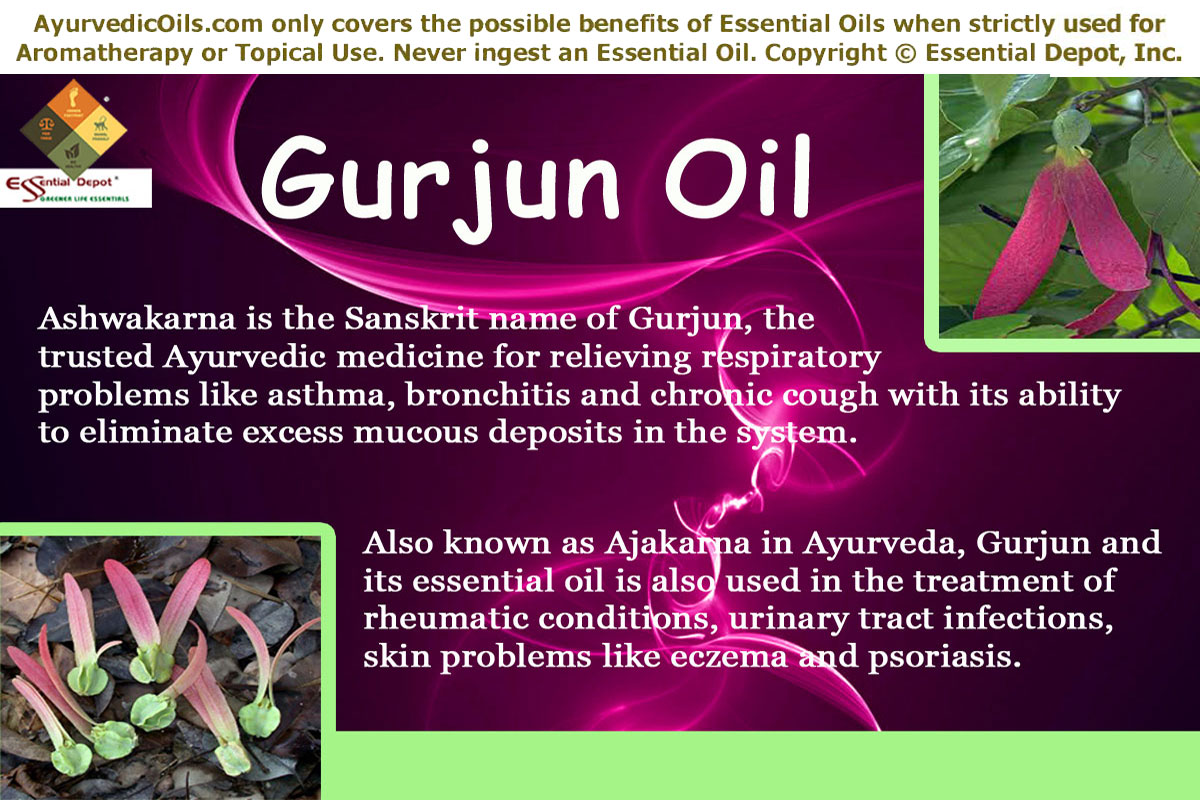
Cardamom Oil

Cardamom, the ‘Queen of spices’, stimulates the heart and mind and brings in enormous joy and clarity of thoughts. It has been in imperial use since the primordial times for its mammoth healing benefits that serve as a phenomenal tonic, expectorant, cephalic, antispasmodic, stimulant and as a promising digestive agent.

Cardamom-bannerBotanically named as Elettaria Cardamomum, Cardamom is well identified by its small seed pods with an outer shell enclosing the small black seeds from which its essential oil is extracted by steam distillation.

Lovingly called as Ela and Truti in Sanskrit, Cardamom has been widely used in Ayurveda for its aromatic and medicinal attributes in the treatment of impotence, bronchitis, indigestion, hoarse voice, vomiting, asthma, blood pressure, poor absorption, cold, cough, bad breath, loss of taste, nervous digestive upset and mood fluctuations.

As an invigorating agent for the central nervous system, Cardamom essential oil induces a sense of harmony and supports absolute fitness.

Purchase Cardamom Essential Oil – Wholesale – CLICK HERE

Historical uses and importance of Cardamom and its essential oil:

Owing its origin to the Asian countries such as India, Bhutan, Nepal and Pakistan, Cardamom is a universal spice and is a member of the powerful Ginger family, Zingiberaceae. Rich in nutritional and healing properties, Cardamomis the third most expensive spice in the world standing next to saffron and vanilla.

It is crowned as a medicinal herb in the Indian Ayurvedic healing methodology, dating back to 4th century B.C; Cardamom has carved its name in Charaka Samhita – the Ayurvedic encyclopedia, for its application in the preparation of various medicaments.

Cardamom was an important part of the Roman and Greek trade and has numerous historical accolades. Believed to have been grown in the hanging gardens of Babylon, Cardamom has been mentioned in the works of Dioscorides, Theophrastus and even in the ancient Indian sacred books known as Vedas.

Arabic medicine portrays Cardamom seeds as the best aphrodisiac and mood elevator while the Chinese medicine predominantly used Cardamom for intestinal infections, stomachic problems, gastrointestinal disorders, constipation and dysentery.

In folklore medicine, digestive disorders were treated with a herbal drink made by boiling roasted Cardamom seeds along with betel nuts. Being an active ingredient in cough drops, Cardamom was administered nasally along with camphor and neem to treat cold. It is a natural mouth freshener.

Cardamom is an antidote to caffeine and it detoxifies the caffeine in coffee and is used in making tea to relieve the symptoms of headache and stress and these seeds were taken along with honey to improve the eyesight.

The traditional Indians used Cardamom as an antidote for poisonous bites like scorpion stings and venomous snake bites. These seeds and its oil were also used for treating respiratory ailments, gastrointestinal disorders, inflammation of the eyelids and oral infections.

Being transported from East to Europe, Cardamom was highly valued as a tonic and as an aphrodisiac agent, which was used in love potions. The western world uses Cardamom for its unique aroma and sedative properties.

Chemical constituents and therapeutic properties of Cardamom essential oil:

Consisting a majority of monoterpenes with the predominant one being 1, 8-cineole, Cardamom essential oil also comprises of esters, alcohols and sesquiterpenes that includes limonene oxide, α-terpinene, neryl acetate, formic acid, α-pinene, camphene, caryophyllene oxide, nerolidol, β-pinene, sabinene, citronellal, α-terpineol, cis-ocimene, geranyl acetate, linalool, isomenthol, 4-terpineol, nerol, thymol, α-terpinyl acetate, α-guaiene, β-myrcene.

The therapeutic properties of Cardamom essential oil are carminative, digestive, antiseptic, stimulant, tonic, antispasmodic, cephalic, diuretic, stomachic, analgesic, expectorant, antifungal, astringent, antibacterial, aromatic, diaphoretic, antioxidant, cooling, anti-platelet aggregation, anti-hypertensive and aphrodisiac. 

Ayurvedic health benefits of Cardamom essential oil:

Ayurveda is a virtuous medical discipline that believes that every being on earth is a part of Mother Nature and it states that one’s wellness indicates absolute balance with nature and sickness symbolizes imbalance with nature. Ayurveda is a 5,000 year old healing system that has its medicinal practices recorded in Atharvana Veda, one among the 4 sacred books of India, where about 114 verses in this book talk about various illnesses and their Ayurvedic remedies.

Charaka, the father of medicine and Sushruta, the father of surgery were the most famous Ayurvedic physicians and they wrote the Ayurvedic texts namely Charaka Samhita and Sushruta Samhita. Charaka says “The three – body, psyche, and soul – act as a tripod. The world stands upon them, and within them, the world abides.” According to Ayurveda, human body is a temple where the spirit lives in. It strongly recommends on keeping the body, mind and spirit pure and tranquil just like maintaining a place of worship.

Ayurveda is called as the mother of all the other healing sciences on earth and is a holistic system that states ‘perfect health is being fit physically, mentally, emotionally and spiritually.’

Every individual is approached in a unique manner even if they are affected by the same illness because Ayurvedic philosophy recognizes every human being as a distinct part of nature with a unique individual constitution, which comprises of three dynamic biological energies known as doshas. They are vata, kapha and pitta.

Ayurvedic doshas administer various functions, where vata governs the functions of the circulatory system, nervous system and respiratory system, kapha is responsible for the activities of the reproductive system, movement of fluids in the body, physical build up and sustenance and pitta dosha controls the body temperature and metabolic functions.

Every individual has a predominance of any one these doshas, which decides one’s figure, personality, mental attributes and behavioral patterns. Balance between these doshas indicates health and imbalance of these biological energies pave way to diseases. Ayurvedic remedies focus on correcting the dosha imbalances with the help of herbs, essential oils, simple physical exercises, Ayurvedic routine, yoga, prayers, meditation and Pranayama.

Ayurveda prescribes Cardamom to treat cardiovascular problems, bronchial disorders and digestive problems. Light Miller and Bryan Miller in their book Ayurveda and Aromatherapy say “Cardamom is good for treating high vata, as it kindles Agni or digestive fire and removes excess kapha from the stomach and lungs.

Its quality is sattvic and it is particularly good for opening and soothing the flow of the pranas in the body”.

Let’s have a look at the Ayurvedic health benefits of Cardamom essential oil.

Cardamom-broucher1. Combats against infections with strong anti-microbial properties:

With the increase in the food borne diseases caused by pathogens such as bacteria, there is an increase in the urge for searching natural antibacterial agents with maximum benefits and minimum side effects.

With monoterpenes, sesquiterpenes and flavonoids, Cardamom essential oil possesses strong antimicrobial activity inhibiting the growth of numerous harmful micro organisms that cause spoilage of food. Many researches on the anti-microbial attribute of Cardamom essential oil states that it shows significant inhibitory activity against various common pathogens when compared to Fluconazole and tetracycline.

The aqueous and the methanolic extracts of Cardamom essential oil inhibited the growth of gram-negative bacteria such as Escherichia coli, Bacillus subtilis, Staphylococcus aureus, Salmonella typhi, Streptococcus pyogenes and Bacillus cereus.

It has been proved effective to use the essential oil of Elettaria Cardamomum in treating various infectious ailments caused by the harmful pathogens. This attribute is also applied in preserving the food items, thus proving greatly beneficial to the manufacturers of stored food products.

Terpinen-4-ol contributes to the effective antifungal attribute of Cardamom essential oil making it active against various infectious fungi that include Candida albicans, Aspergillus niger, A.flavus and A.fumigatus, thus proving effectual in treating yeast infections and urinary tract infections.

It has been proved that Cardamom essential oil results in yielding satisfactory results in inhibiting the growth of bacteria, mold, fungus and viruses when compared to the other antifungal pharmaceuticals. 2 drops of Cardamom essential oil added to warm bathing water or 2 drops of this oil mixed with 2 drops of Neroli oil and 2 ml of coconut oil can be applied on the affected parts for quick relief.

2. Rich source of antioxidant to fight against cancer:

Free radicals are always hazardous in a number of ways, leading to premature aging and even some fatal diseases including cancer. With natural phyto-chemicals such as di-indolylmethane and Indole-3-carbinol, Cardamom essential oil helps in augmenting the levels of glutathione, a natural antioxidant found in human body. Moreover it helps in combating against cancers responding to the hormone regulation such as breast, ovarian and prostate cancer.

It possesses chemo-preventive quality, resulting in a significant reduction in the weight and diameter of the tumor, tumor yield, cumulative number of papillomas and the values of tumor incidence and considerable elevation in the level of glutathione in mice with chemically induced skin carcinogenesis serving as the best anti-tumor and anti-cancer agent.

In addition to the phyto-nutrients, Cardamom essential oil is rich in vitamins B, C, protein and iron that make it a complete scavenger of free radicals resisting the aging process right from the cellular level and enhances the immunity.

It possesses anti-tumor, anti-inflammatory and anticancer qualities, helping in significantly reducing the production of nitric oxide by macrophages that act as one of the primary inflammatory mediators. Moreover, it enhances the cytotoxic activity of the natural killer cells found in the human body, building up a preventive shield against cancer.

Few valuable sources also state the positive outcome on using Cardamom essential oil in suppressing the cell proliferation in Swiss albino mice with chemical induced colon carcinogenesis proving its efficacy in treating colorectal cancer. Mix 2 drops of Cardamom essential oil with 2 drops of Orange oil along with 2ml of jojoba oil and massage it gently on wrinkles and other aging symptoms caused due to free radicals.

You can also massage your system with 5 drops of Cardamom oil along with 5 drops of Cedarwood oil blended with 5 ml of Olive oil to combat free radicals, reduce the size and severity of existing malignant tumors and invigorate the cellular structure.

3. Natural insect repellent:

With high concentrations of monoterpenes such as cineol and terpineol, Cardamom essential oil serves as an effective natural repellent for insects and pests. As per a 2011 research article, this oil was found to possess strong repellent, ovicidal, biocidal and anti-feeding attributes against the red flour beetle, Tribolium castaneum, the bruchid beetle, Callosobruchus maculates and the flour moth, Ephestia Kuehniella, all of which target the stored products.

Moreover Cardamom essential oil is highly toxic to the adults of T.castaneum and Sitophilus zeamais, which attack the food grains such as wheat. It restrains the egg hatching and the larval stage of T.castaneum proving its ovicidal attribute. This volatile oil also actively prevents the oviposition of C.maculates in mung seeds. Few notable sources mention the acaricidal effect of Cardamom oil with 100% mortality rate against Dermanyssus gallinae, the poultry red mite.

The power of Cardamom essential oil in suppressing the development of adults from the treated eggs remains as the major factor behind its insecticidal quality. Cardamom essential oil serves as a natural source of insect repellent devoid of hazardous side effects, used in protecting the food grains stored in enclosed rooms, storage bins etc.

4. Alleviates stomachic and gastro-intestinal disorders:

Cardamom essential oil is a natural digestive aid since antiquity. It acts as an excellent appetizer, eminent stomachic agent during meal and a great mouth freshener after meal. A herbal tea made of Cardamom, ginger and fennel serves as a natural digestive tonic and a great cure for indigestion.

As an excellent digestive enhancer of all types of food, it produces an energizing effect in the body helping in the stimulation and habitual excretion of gastric juices and other acids in the stomach that aids in alleviating heartburn by balancing the acid level. Cardamom essential oil kills the bacteria in the mouth and prevents one from bad breath and treats the symptoms of flatulence and gastric disturbances.

With its antispasmodic attribute, it relives you from hiccups and alleviates the intestinal cramps caused due to involuntary muscle spasms. With natural phyto-nutrients, it helps in overcoming the effect of overeating and aids you in fighting against the outcomes of gluten intolerance benefiting those with celiac disease. Cardamom essential oil showed significant results in inhibiting the gastric lesions induced by aspirin and ethanol in rats. It protects the mucus wall and aids in maintaining normal levels of gastric acid.

2 drops of Cardamom oil added to a cup of warm water can be used as a gargle especially in the morning or before going to bed or even after heavy meals to completely kill microbes in the mouth and grant refreshing breath. 2 drops of Cardamom oil along with 2 drops of Ginger oil mixed with 2 ml of sesame oil can be massaged on your abdomen for getting rid of gastrointestinal problems, diarrhea, nausea, indigestion, headache, nervous digestive upsets, morning sickness, colic and vomiting.

5. Naturally detoxifies the body:

Cardamom essential oil is an effective diuretic and detoxifier that protects human beings from the ill effects of toxin accumulation in the entity resulting to various simple and serious impacts such as premature aging, rheumatism, improper functioning of the organs and some fatal ailments like cancer.

With its natural antioxidants, monoterpenes and flavonoids, this oil is an eminent diuretic helping in releasing the excess water deposits in the body through sweat and urine. It promotes the process of urination and increases the urine output creating a channel to get rid of toxins such as water, fat, acids, calcium deposits, urea and sometimes stones to build a combative cover against obesity due to water stagnation and its risk factors such as hypertension, blood pressure and cardiovascular disorders.

Cardamom detoxifies the caffeine element in coffee and this combination of Cardamom and coffee is called as ‘gavah’ and is of renowned importance in the Arabian culture, where it is considered as a symbol of warmth and generosity. This aromatic oil warms up the body, aids in opening the sweat pores and maintaining the normal body temperature.

The removal of excess toxins with ease and comfort poses fewer burdens on the vital organs such as kidney and liver. It leads to perspiration and its high fiber content along with the detoxifying quality helps in significantly lowering the blood pressure.

Blend 5 drops of Cardamom oil with 5 drops of Jatamansi oil along with 5 ml of coconut oil and gently massage your system, followed by a warm bath diluted with 2 drops of Cardamom oil for eliminating the toxic substances in the body, reducing uterus inflammation, combating the infections in the urinary tract, strengthening the bladder in addition to treating involuntary urination and bedwetting in children and elderly people.

6. Relieves respiratory problems:

Cardamom essential oil works wonders in regulating the blood circulation and rejuvenating the entire system. Traditional healing therapies used Cardamom essential oil in the treatment of bronchitis, whooping cough and asthma for it is known to improve blood circulation in the lungs.

As a natural expectorant with balsamic aroma, it helps in breaking up even the heavy deposits of mucus and phlegm and relieves you from congestion in the lungs and sinuses.

Just inhaling the vapors of Cardamom oil by adding 3 drops of this oil in steam inhalation can alleviate the symptoms of congestion, cold, chest infections, flu, chronic cough and headache. 1 drop of Cardamom oil along with 1 drop of Cinnamon oil added to gargle relieves you instantly from sore throat and pharyngitis.

The anti-mucus action of this oil helps in rejuvenating the spleen and makes it an active component of medicaments for congestion. With this property, Cardamom pods are often included in milk products for its ability to counteract the mucus forming attribute of milk.

7. Lessens tension:

Cardamom oil has cineole, which is a central nervous stimulant aids in soothing the nervous system, calming down the muscles, alleviating tension and instilling mental peace and clarity. Just adding 4 drops of Cardamom oil to the bathtub relieves you from stress, depression and combat body aches and discomfort. It enhances the potency of the nerves and relieves you from physical and emotional discomforts thus rejuvenating the inner spirit and inducing a serene state of mind by lifting up the spirits.

Cardamom essential oil has been proved as an anti-depressant agent owing to its sedative effect in humans. With limonene as a mild tranquilizer, it diverts the mind and helps one to quit the addictions to awful habits such as tobacco chewing, alcohol and smoking.

Cardamom essential oil has gained global recognition for its sweet aroma and positive effects on the brain and the nervous system. Inhaling the aroma of 1 drop of Cardamom oil, 1 drop of Ylang Ylang oil and 1 drop of Neroli oil added to diffuser or vaporizer can assist in relieving one from anxiety, fear, nervous wreck down and lethargy. It is highly recommended to students for its potent to increase the concentration and improve intellectual power.

8. Rich source of nutrition for the total system:

With its enormous healing attributes, Cardamom essential oil is a valuable source of iron, manganese, calcium, potassium, magnesium, niacin, riboflavin and Vitamin C. All these vital components help in boosting up the overall health of a person.

It boosts up the immune system, helps in the generation of red blood corpuscles, and initiates the cellular energy metabolism, aids in maintaining the cardiovascular health and in promoting healthy heart rate, blood pressure and fluid levels in the body. Moreover, its rich nutrients contribute in maintaining healthy skin and hair.

2 drops of Cardamom oil along with 2 drops of Lavender oil added to your bath daily can aid in maintaining healthy skin. The antiseptic and antimicrobial properties cleanse the skin naturally and help in treating various skin infections. It rejuvenates the skin, opens up the pores and prevents the onset of acne and pimples.

Other health benefits of Cardamom essential oil:

Cardamom essential oil acts as a natural oral aid treating mouth ulcers, halitosis, oral infections of teeth and gums and toothaches. Vocalists use Cardamom oil to tone up their voice. This oil can keep you away from scalp infections, dandruff and maintain a healthy, lustrous hair.

It can act as a peroxide booster along with honey and Cinnamon in distilled water to lighten the skin without any side effects. It prevents platelet aggregation and aids in preventing blood clots that can be dangerous in certain cases. Cardamom oil is also used as an aphrodisiac alongside pepper, onion and nutmeg to alleviate impotence and other sexual concerns.

Disclaimer:

This is only for information and educational purposes and is not intended to treat, diagnose or prevent any health condition or replace with any prescribed medications or professional medical advice. We are not healthcare professionals and this data is shared only with the interest of spreading the traditional values and curative benefits of Ayurveda, the mother of all healing sciences on earth.

Never ingest essential oils and do remember to dilute them with appropriate carrier oil before using it on the skin externally as pure and organic essential oils are highly concentrated liquids and might have a tendency to cause allergies if used directly on the skin. Make sure that you consult your Ayurvedic practitioner/healthcare expert before choosing the correct essential oil for your medical condition and unique individual constitution.

Thought for the day:

Every particular in nature, a leaf, a drop, a crystal, a moment of time is related to the whole, and partakes of the perfection of the whole.

-Ralph Waldo Emerson

Suggested Reading:

  1. The Magic of Cardamoms For Cooking and Health (Health Learning Series) by John Davidson, Dueep J. Singh
  2. Aushadh Rahasya: The Secret of Ayurvedic Herbs and Disorders of the Mind by Rodney Lingham
  3. Cardamom: The Genus Elettaria (Medicinal and Aromatic Plants – Industrial Profiles) from CRC Press
  4. Cardamom Tea, A Secret to Longevity (Chinese Edition) by shu xin cheng
  5. Living Well With Cancer by Katen Moore, Libby Schmais

Reference Links:

  1. Cardamom by Wikipedia
  2. Fumigant toxicity and oviposition deterrency of the essential oil from Elettaria Cardamomum, against three stored-product insects published in PubMed.
  3. The In Vitro evaluation of antibacterial potential of dry fruit extracts of Elettaria Cardamomum published in PubMed.
  4. A 2010 research article on the in vitro investigation of the potential immunomodulatory and anti-cancer activities of black pepper (Piper nigrum) and Cardamom (Elettaria Cardamomum)

Camphor Oil

camphor-banner“Camphor increases prana, opens up senses and brings clarity to the mind, eases headache and awakens perception. It is a good stimulant and counter-irritant for joint and muscle pain”, says Light Miller and Bryan Miller in their book Ayurveda and Aromatherapy. Botanically known as Cinnamomum camphora, Camphor is a member of the Lauraceae plant family and is extracted from the wood and bark of this evergreen tree.

Prevalently called as Karpura in Ayurveda, this sacred and aromatic herb is used in Ayurvedic healing for more than thousands of years in the treatment of bronchitis, insomnia, asthma, hysteria, whooping cough, epilepsy, dysmennorhea, sinus headaches, nasal and pulmonary congestion, delirium and gout.

No sacred or religious ritual in India gets fulfilled without Camphor and is also known in Ayurveda with other names like Chandra, Himavaluka, Ghanasara and Chandra Prabha.

Purchase Camphor Essential Oil – Retail – 4 oz – CLICK HERE

Purchase Camphor Essential Oil – Wholesale – CLICK HERE 

Historical uses and importance of Camphor and its essential oil:

Popularly called as ‘the tree that does not sleep’, Camphor has been an important natural remedy especially in the Traditional Chinese Medicine and Ayurveda for more than 4,000 years in the treatment of various illnesses including nervous afflictions and other psychosomatic problems.

Indigenous to Formosa, Japan and China, this tree can grow up to a maximum height of 100 feet and the traditional Chinese used Camphor for its remedial uses and its wood was used in building temples and ships mainly due to its exuberant aroma and robustness. During the Tang dynasty (C.E. 618-907), Camphor was used in flavoring confectionery items like ice cream in China.

Camphor is an important part of Indian prayers, especially the religious ceremonies of the Hindu community since the traditional times. Burning camphor in the Pooja plate for deities is a part of every prayer in temples as well as homes and this sacred flame is calmly touched and its warmth feeling is passed on to the eyes. It is a part of the biggest spiritual celebration of the Hindus known as Mahashivratri dedicated to Lord Shiva.

The ancient Egyptians, Babylonians, Greeks and Romans used Camphor as a fragrant wood, incense resin, flavoring agent and as fumigants for embalming. It was given as prestigious gifts by the Chinese emperors for other kingdoms including the Arabian treaties. Camphor was also used as a traditional remedy for plague in Iran and Persia.

The strong aroma of Camphor makes it an excellent agent for protecting against snakes and other poisonous reptiles. It was also used as an insect repellant as it is trusted to be toxic to insects. Camphor was also used in tool chests to guard tools against rusting.

Chemical constituents or Gas Chromatography Report (GC) of Camphor oil:

The Gas chromatography report witnesses Camphor oil with about 15 chemical constituents that contribute to its unique aroma, therapeutic values and consistency of this oil. Among which, 1,8-Cineole is the key component with about 35.9% of Camphor oil.

Just click on:

I believe that this information would certainly help you in having a clear picture about the primary chemical constituents of Camphor oil.

The table crafted below explains the unique nature and therapeutic qualities of these biochemical constituents to the curative values of Camphor essential oil.

camphor-table

Therapeutic properties of Camphor essential oil:

The remedial properties of this oil are stimulant, expectorant, antiseptic, anti-rheumatic, antispasmodic, decongestant, nervine, anti-phlogistic, analgesic, anti-arthritic and bronchodilator.

Ayurvedic health benefits of Camphor essential oil:

Ayurveda is a holistic healing science known to the world for more than 5,000 years. The most prominent thing about Ayurveda is that its healing practices are recorded systematically in the form of literature.

Among the 4 major sacred books of the Indian Mythology, Atharvana Veda records the Ayurvedic therapies and about 114 verses of this sacred book shares the symptoms and diagnostic techniques of numerous health disorders.

Ayurveda is a holistic healing system that treats the individual instead of the symptoms and traces the root cause of an illness. By this way, this ancient common sense science focuses on prevention of illnesses leading through healthy aging process to longevity.

Based on the Vedic references of Ayurveda, two ancient Ayurvedic texts were written by the legendary Ayurvedic physicians known as Charaka and Sushruta, who wrote Charaka Samhita and Sushruta Samhita.

These Ayurvedic encyclopedias state that everything is a part of nature and the human body is a combination of the five elements known as Panchamaha Bhoothas, namely fire, water, earth, air and space.

Every person is made up of a unique individual constitution that consists of three dynamic energies known as doshas (vata-air & space, pitta- fire & water and kapha- water & earth), which are a combination of the elemental forces of nature.

For a person to be hale and healthy, these doshas should always remain in a specific ration as set by nature and any change in the functioning or the balance between these doshas cause illnesses. Imbalance of these biological energies mainly occurs due to food habits (mainly depending on the quality of the food taken), change in weather conditions and lifestyle changes.

Ayurvedic remedies like plant essential oils, herbs, yoga, meditation, prayers, Abhyanga or the art of Ayurvedic massaging, Panchakarma or the detox technique and Ayurvedic routine are recommended based on the Prakriti or the unique individual constitution of a person and for correcting the imbalances of doshas.

Camphor essential oil has the potent to reduce kapha and vata doshas and increase pitta dosha.

The major Ayurvedic health benefits of Camphor essential oil are:

Camphor-broucher1. Relieves severe pain, spasms and inflammation:

Camphor essential oil has antispasmodic, analgesic and anti-inflammatory properties that render itself as a promising pain reliever. The stimulating and counter-irritant effects of this oil relieve even severe muscular and joint pains.

With its anti-rheumatic and anti-arthritic attributes, Camphor essential oil assists in promoting blood circulation, eliminating toxic deposits in the joints and the entire system through urine and sweat and supporting the functions of the circulatory system. Ayurveda states that rheumatic problems mainly occur due to excess of kapha dosha leading to surplus deposits of water, toxins, salt and uric acid in the system, especially in the joints.

Camphor essential oil has the power to reduce kapha dosha and help in discharging ama or toxins in the system along with excess water content in the body. This oil works by anesthetizing the sensory nerves of peripheral nervous system, thus reducing inflammation.

Massaging the affected or painful parts with 2 drops of Camphor oil blended with 2 drops of Eucalyptus oil and 2 drops of Frankincense oil with 4 ml of coconut oil can be a great aid in reducing inflammation, swelling, painful muscles, redness and stiffness associated with rheumatism and arthritis.

This massaging can also help in relieving cramps, abdominal spasms and stiff joints. Adding 2 drops of Camphor essential oil to bathing water can bring in a feeling of newness, coolness and tranquility, especially during the summer season and can also help in alleviating pain and inducing peaceful sleep at night by relaxing the muscles, calming the nerves and cooling the senses.

2. Combats microbes and skin infections:

The essential oil of Camphor oil has been a prominent ingredient in numerous ointments and medications for treating skin infections caused by bacteria, fungi and other microbes. This is attributed to the germicide, disinfectant, anti-microbial and insecticide properties of Camphor oil. 2 drops of Camphor oil mixed with 1 ml of coconut oil can be applied on minor burns, itches, wounds, rashes, insect bites, nail fungus, cold sores, eczema, acne, chapped lips, athlete’s foot and ringworm.

Camphor is an excellent cleanser that helps in disinfecting the system when added to the bath tub (about 2 to 3 drops). 2 drops of Camphor oil with 2 drops of Rosemary oil added to your shampoo can help in treating dandruff and lice. This also helps in granting a cooling effect on the scalp and prevent unnecessary hair fall due to dandruff and lice.

3. Supports digestive functions:

Being a carminative, Camphor oil works wonders in relieving gas and flatulence. Gas in the intestines and stomach, when left unnoticed raises above slowly and causes sharp and severe pain in the chest, which may even lead to difficulty in breathing. Using Camphor oil assists in relieving gas and prevents the formation of gas.

Along with this, the diaphoretic effects of this oil aids in normalizing metabolic functions, enhancing circulation, improving sluggish digestion and controls the appetite. Mix 2 drops of Camphor oil with 2 drops of Juniper oil along with 2 ml of sesame oil and massage it gently on your abdomen for expelling gas and supporting the functions of the digestive system.

4. Pacifies the nervous system:

Camphor oil treats nervous afflictions and pain in the nervous system by causing numbness. This is attributed to its anesthetic effects. It is a proven remedy for treating neuralgia, which is a relentlessly painful condition caused due to the force on the Ninth Cranial nerve created by the swollen blood vessels surrounding it.

Gently massaging the system with 2 drops of Camphor oil, 2 drops of Eucalyptus oil, 2 drops of Juniper oil and 2 drops of Wintergreen oil blended with 5 ml of almond oil can help in reducing inflammation and lessen the pressure on the Ninth Cranial nerve, thus treating neuralgia. This can also assist in lessening the negative effects of epileptic attacks, nervous convulsions, chronic anxiety and nervousness.

5. Alleviates cold and other respiratory problems:

Camphor essential oil has a sharp, strong and medicinal aroma that makes its presence vital in numerous decongestant ointments and vaporubs. Vicks vaporub, the most popular decongestant has Camphor as one among its therapeutic formula. Camphor oil has been in use since the traditional times mainly for its effectiveness in treating respiratory ailments.

Excess kapha is the major reason behind the built up of mucus and phlegm deposits causing congestion and other respiratory problems. Camphor oil lessens kapha dosha and discharges mucus and phlegm in the respiratory and nasal passages.

Massaging your chest, throat and back with 1 drop of Camphor oil mixed with 1 drop of Eucalyptus oil and 1 ml of olive oil along with 2 drops of Camphor oil added to steam inhalation assists in relieving congestion in the respiratory tract, nasal passages, bronchial tract, pharynx and larynx.

Adding to 1 to 2 drops of Camphor oil to warm bathing water can also help in loosening the mucus and phlegm and clear the respiratory system. It is being used as an excellent cough suppressant since the primordial period. The powerful decongestant and bronchodilator properties of Camphor oil makes it an excellent remedy for treating asthma, sinusitis, pulmonary congestion, bronchitis, nasal congestion, whooping cough, common cold, chest congestion and cough.

Disclaimer:

This article is only for informational and educational purposes. It is not intended to replace any prescribed medication or professional medical advice or to cure, treat or prevent any illnesses. We are not medical professionals and this information is shared only with the idea of enlightening the mass with the traditional healing values of Ayurveda, the 5,000 year old medical system.

Do not use essential oils internally unless it is prescribed by your medical professional. Dilute essential oils before using it for topical purposes as organic and pure essential oils are very concentrated liquids and may cause allergic reactions if used on the skin directly. Consult your Ayurvedic expert/healthcare professional before picking up the perfect essential oils for your health condition and unique individual constitution. Ensure that you use very less amount of Camphor oil as prescribed by your medical expert, as excess use of Camphor can act as a narcotic poison.

The MSDS (Material Safety Data Sheet) of Camphor oil is readily available for your enhanced safety and better usage.

Gas Chromatography Report (GC analysis) of Camphor oil

Camphor Oil – Possible Skin Issues:

camphor-new

Greener Life Diamond – Bio-Healthy Score => 3 Possible Skin Issues:

See => http://www.essentialdepot.com/GreenerLifeDiamond.html

Camphor oil has been acclaimed as lethal and highly toxic in various studies, when used in excess of the prescribed quantity. According to the safety report, the acute toxicity of Camphor oil is said to be exhibited by contact with the skin, eyes, inhaling and ingesting, however ingestion of Camphor oil should be avoided strictly mainly due to its chronic effects on the liver (hepatotoxic – toxic to the liver).

The major chemical constituents in Camphor oil, responsible for its skin sensitization, allergic reactions, irritation and autoxidation are camphene, 1,8-cineole (abnormal respiration and CNS depression, epigastric pain and cold sweats), limonene and a-pinene. Oils with limonene and a-pinene are responsible for oxidation and oxidized oils cause sensitization and irritation of the skin.

Using Camphor oil topically might also cause skin sensitization, irritation, skin allergies like hives, itching, rashes, swelling of the face and lip dryness. Camphor oil used as direct contact with the skin without any dilution in appropriate carrier oils is considered as a dangerous skin irritant. Never use Camphor oil on cuts, broken or peeled skin.

It is highly recommended to avoid Camphor oil during pregnancy and breastfeeding, as it gets quickly absorbed by the placenta and may cause physical and neurological damage to the developing fetus and in nursing mothers there are possibilities of Camphor being absorbed through skin cracks and pass on to infants through milk (might cause damage to the infants’ liver and central nervous system).

Do not use Camphor oil on patients with bronchitis, asthma, epilepsy and Parkinson’s disease, as it can cause convulsions, increase spasms, seizures (by accounting to chemical disparity in the brain) and worsen the situation. It is also not recommended for high blood pressure patients as it is frequently used in the treatment of low blood pressure.

The safe level of use of Camphor is up to 3% dilution in case of liniments. As per the Dutch Information Medicamentorum, the safe usage level of Camphor is 20 to 100 mg/g for chest rubs, 0.15 mg/ml for nasal sprays, 20 to 50 mg/g for nose ointments, 1 to 70 mg/g for pruritus lotion and 40 to 250 mg/g in oils for muscular pain.  However 11% is regarded as the maximum level of safe usage in all kinds of dermal applications.

Camphor, according to the Poisons Information Monograph, an International Programme on Chemical safety states that the major risks of ingestion of Camphor are renal damage, colic, anxiety, convulsions, nausea, delirium, gastric irritation, irritation of the mucous membrane, asystole, apnoea, chronic post-convulsive coma and difficulty in breathing occur after ingesting about 2 grams of Camphor (acute toxicity level) and 4 grams are possibly lethal for adults and 1 gram for children and may cause death.

This report also denotes that the major target organs for Camphor damage are the upper respiratory tract, liver, kidneys and the central nervous system. Certain studies witness the immediate collapse in infants soon after the application of Camphor to their nostrils.

Reference Links Substantiating Possible Skin Issues of Camphor Oil:

  1. Hazardous Substance Fact Sheet of Camphor by New Jersey Department of Health and Senior Services
  2. Leung’s Encyclopedia of Common Natural Ingredients, used in Food, Drugs and Cosmetics by Ikhlas A. Khan and Ehab A. Abourashed
  3. Essential Oil Safety: A Guide for Health Care Professionals By Robert Tisserand, Rodney Young
  4. Toxicity Summary of Camphor by Toxnet, National Institutes of Health
  5. Camphor topical Side Effects in Detail by Drugs.com
  6. Camphor by the Poisons Information Monograph, an International Programme on Chemical safety

Thought for the day:

Nature is a mutable cloud which is always and never the same. -Ralph Waldo Emerson

Suggested Reading:

  1. The Tree That Does Not Sleep:: Phytochemistry, Allelopathy and the Capability Attributes of Camphor Laurel (Cinnamomum camphora (L.) Nees & Eberm.) by John Schenk
  2. Camphor; A Pharmaceutical and Pharmacognostical Study by U. S. Government
  3. Ayurveda & Aromatherapy: The Earth Essential Guide to Ancient Wisdom and Modern Healing by Dr. Light Miller, Dr. Bryan Miller
  4. Fragrance & Wellbeing: Plant Aromatics and Their Influence on the Psyche by Jennifer Peace Rhind
  5. The Illustrated Encyclopedia of Essential Oils: The Complete Guide to the Use of Oils in Aromatherapy & Herbalism by Julia Lawless

Reference Links:

  1. Camphor by Wikipedia
  2. History of Camphor oil by eHow
  3. Health benefits of Camphor essential oil by Organic Facts
  4. Camphor by Bryan Miller and Light Miller in their book Ayurveda and Aromatherapy
  5. Camphor benefits – A multipurpose plant by Greenchedy


Your resource for quality Essential Oils. Every batch is
GC tested to ensure purity and authenticity.