Tag Archives: Ayurvedic oils for bronchitis

Lime Essential Oil

Lime--bannerAnyone for that matter would admire L…I…M…E as the fruit of Lasting Impression with Motherly Embrace. Undoubtedly Lime is such an adorable kitchen staple for more than thousands of years and its essential oil seldom falls short to heal our mind and body with its numinous aroma.

It can be named as an effective anti-blue fruit and oil for its ability to pacify your mood at times of depression and all kinds of blues including postpartum blues. Botanically named as Citrus aurantifolia, Lime is a limb of the citrus family Rutaceae.

Ayurveda uses Lime and its essential oil as a stimulant for treating skin problems, heart diseases, digestive disorders and mental mayhems. It has been used to boost brain power, purify the blood and aid in preventing memory loss. Certain other traditional medicines uses Lime as a remedy for treating gout, malignant tumors, throat infections and chronic skin diseases.

Purchase Lime Oil – Retail – 4 oz – CLICK HERE

Purchase Lime Oil – Wholesale – CLICK HERE

Historical importance of Lime and its essential oil:

Lime has been a vital part of the folklore medicine for cleansing the system and revitalizing the mind. Aura is the life force or vital energy of any living thing and is called by different names in various healing systems. It is known as ‘prana’ in Ayurveda and ‘qi’ in Traditional Chinese Medicine. Lime is a powerful ancient remedy for cleansing the aura and restoring confidence.

Lime is indigenous to Asia and is now cultivated in numerous countries like America, West Indies and Italy. This evergreen tree bears white flowers and glittering green fruits. India is the largest Lime oil producing country in the world and Lime was introduced into Europe initially by the Moors and was then spread slowly to America. Lime essential oil is extracted by cold press method from the peel of the fruit.

Lime juice is widely known as a remedy for treating scurvy and it has been said that the ancient British sailors used it to prevent scurvy and other skin problems due to its rich Vitamin C content. Ships used for transporting Lime were adorably called as ‘lime juicers’.

The leaves of the Lime tree were used in the prehistoric period for treating poisonous bites and swellings. Apart from its medicinal uses Lime has been used in making pickles, sauces, desserts, jams, confectionaries, sorbets, marmalades, beverages, squashes, perfumes, household cleaners, detergents, soaps, cosmetics and other beauty products.

Chemical constituents or Gas Chromatography Report (GC) of Lime oil:

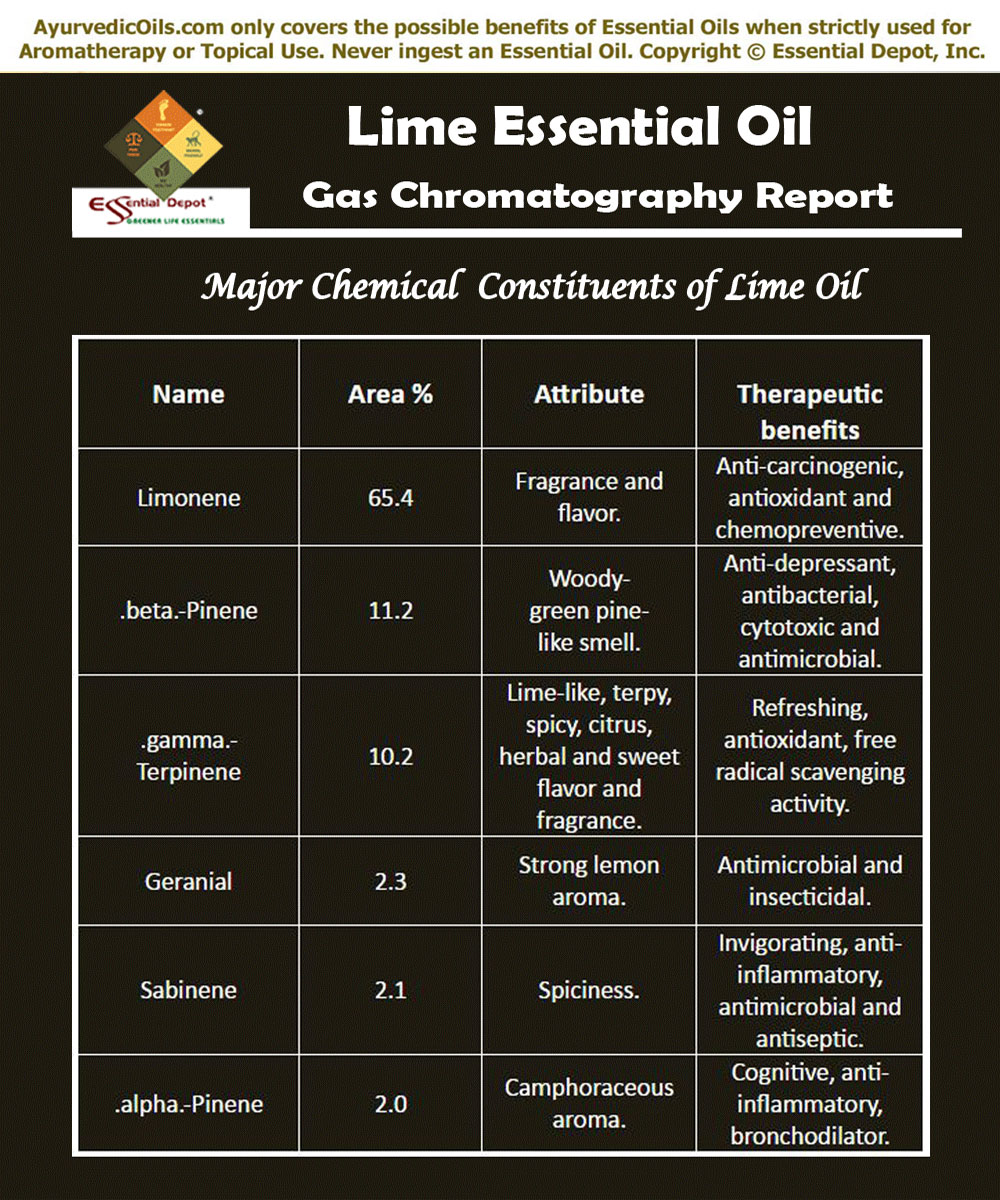
According to the Gas chromatography report, Lime oil constitutes of 13 chemical components that contribute to its fragrance, therapeutic attributes, consistency and quality of this oil. Of which, Limonene contributes to the highest proportion of Lime oil constituents with about 65.4% of its total composition.

Just click on:

I believe that this must certainly help you in getting to know the exclusive information about these prime chemical constituents of Lime oil.

The table crafted below clearly depicts the unique nature and contributions of these biochemical constituents to the healing magnificence of Lime essential oil.

lime-oil

Therapeutic properties of Lime essential oil:

A 2003 study on ‘Characterization of aroma volatiles in key lime essential oils (Citrus aurantifolia Swingle)’ state “Geranial, neral and linalool were found to dominate the lime oil aroma in both oils, which accounted for their fresh, floral citrus-like character.”

These components contribute to its remedial values like astringent, tonic, haemostatic, disinfectant, antiseptic, antimicrobial, antiviral, aperitif, restorative, stimulant and bactericidal.

Ayurvedic health benefits of Lime essential oil:

Nature is the best teacher and shows its love to everyone on Earth with maternal care and affection. That is why we call nature as ‘Mother Nature’. Ayurveda is a traditional medicinal system that trusts upon Nature for its healing methodologies. This ancient philosophy states that every human being is a part of nature and his/her health condition completely depends upon one’s balance with nature.

Man/woman is made up of the same 5 vital elements of nature namely water, earth, ether, air and fire. These elements combine together in making up the individual constitution of a human being. By this way every individual has a unique constitution identified with the combination of 3 vital bio-energies called as doshas. They are vata dosha that is made up of air and ether, pitta dosha that comprises of fire and water and kapha dosha that is a grouping of water and earth.

Ayurvedic treatments differ from individual to individual even for the same health disorder. This is because every individual has a predominance of any one of the three doshas that determines their state of health, personality and behavior and balance between these doshas indicates hale and heartiness.

Ayurvedic texts prescribe natural remedies like essential oils, herbs, Ayurvedic routine, yoga, physical exercises and meditation for treating dosha imbalances, healing illnesses, preventing it in future and for healthy aging.

Lime is known for alleviating all the three doshas vata, pitta and kapha.

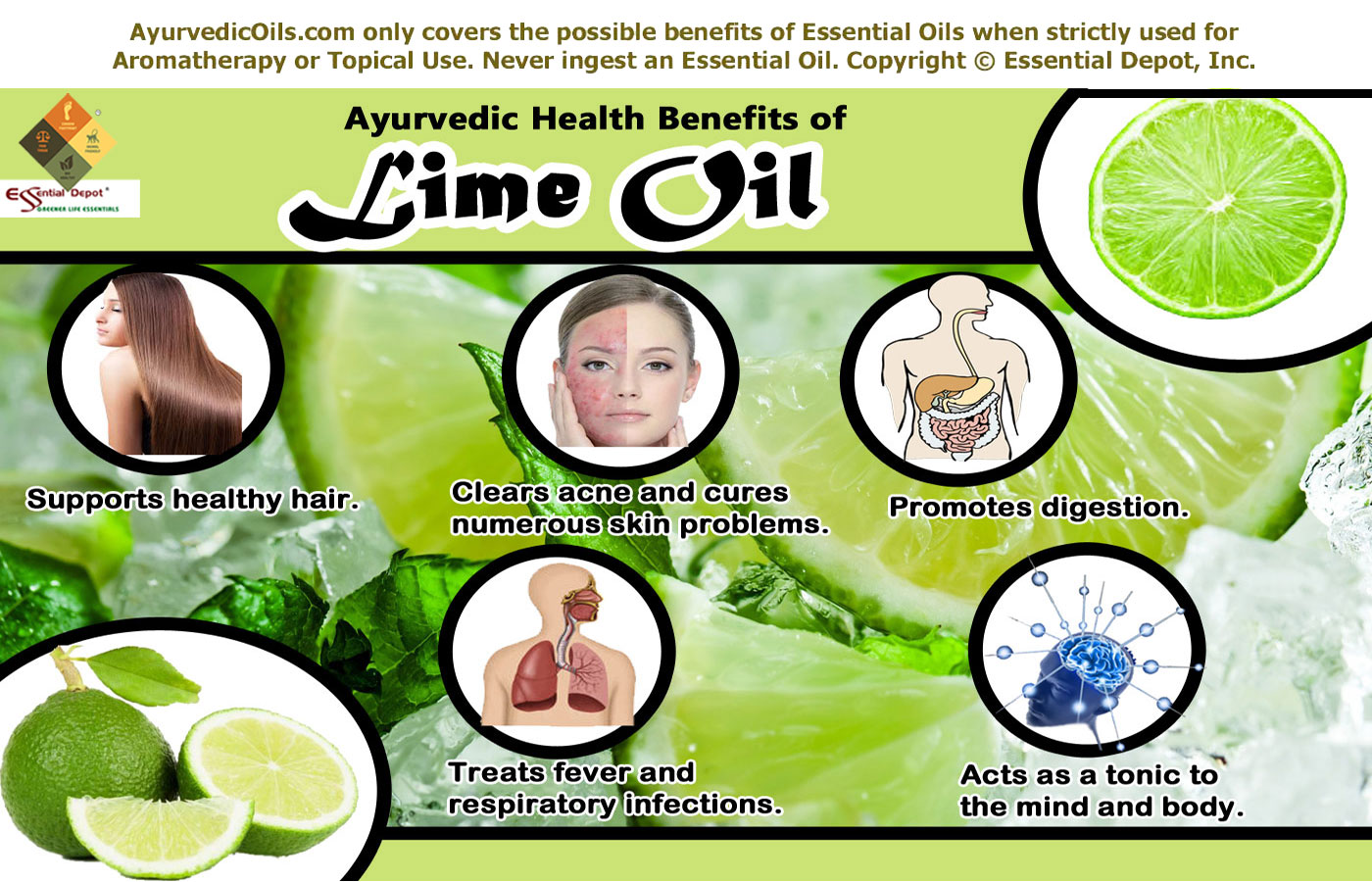
Let’s take a look at the Ayurvedic health benefits of Lime essential oil:

Lime-broucher1. Supports healthy hair:

Lime is one among the best essential oils for treating dull, oily, lifeless, rough, frizzy and greasy hair. This oil has a handful of essential nutrients that nourish the scalp and add natural shine to your hair.

Oily and greasy hair are the most prominent reasons for inviting dandruff as these types of hair attract dust and dirt very easily. LIme removes oil quickly and moisturizes the scalp from within, helping you to get rid of dandruff, dry and itchy scalp. Indian healthcare practitioners consider Lime oil as a traditional hair conditioner.

Add 2 drops of Lime essential oil along with your shampoo or conditioner before applying on hair. This aromatic bath assists in cleansing the hair, removing excessive oil, reducing dandruff and making the hair manageable.

You can also add 3 drops of Lime oil with 30 drops of sesame oil and heat it in medium flame. Gently massage this warm oil blend on to your scalp and part lines. This massage aids in enriching the scalp by helping it absorb this oil and nourish your hair from the roots. It also increases blood circulation and promotes the growth of healthy hair.

2. Clears acne and cures numerous skin problems:

Acne is a burning skin problem among teenagers all over the world and it is said that about 85% of the global populace are affected by acne at some point of their life. It occurs mainly due to the excess secretion of oil by the sebaceous glands rooted deeply in the skin surface.

This excess oil blocks the glands and cause bacterial growth and inflammation leading to boils, pimples, whiteheads, blackheads and pustules that are collectively known as acne.

Mayo clinic recommends the use of products that can control excess oil and treat inflammation. Lime and its essential oil is the best natural cure for clearing acne and the marks left over by acne as it has rich vitamin C and flavonoids acting as antioxidants, which detoxify and cleanse the skin. Applying 2 drops of Lime oil blended with 15 drops of jojoba oil can assist in washing out impurities from the skin and influence the growth of new skin cells.

Lime essential oil has antiseptic, bactericidal, disinfectant and astringent properties that fights against harmful bacteria causing skin infections, heals cuts, wounds, boils, cellulites, varicose veins, acne and other skin eruptions.

A 2006 study on ‘In vitro antibacterial activity of some plant essential oils’ published in PubMed evaluated the antibacterial activity of about 21 essential oils against 6 bacterial species including 2 gram-positive bacteria Staphylococcus aureus an  Bacillus subtilis and 4 gram-negative bacteria Proteus vulgaris, Klebsiella pneumoniae, Escherichia coli and Pseudomonas aeruginosa.

This study concluded stating that among the 21 essential oils tested “Cinnamon, clove and lime oils were found to be inhibiting both gram-positive and gram-negative bacteria.

Blending 2 to 3 drops of Lime oil with 20 drops of Olive oil and massaging it on the affected areas can assist in treating eczema, cuts, psoriasis, carbuncles, sores, skin ulcers, rashes and gangrene. Founder of the Polarity therapy, Mr. Randolph Stone states that Lime oil blended with Olive oil is an excellent remedy for treating eczema.

3. Promotes digestion:

Dr. Lakshmi Senaratne, senior Ayurvedic scientist at Bandaranaike Memorial Ayurveda Research Institute says that Lime and its essential oil have stomachic properties, thus it naturally promotes the secretion of bile and other gastric juices.

This helps in supporting the regular digestion process and enhances your appetite. Being a good laxative, this oil is also effective in treating nausea, dyspepsia and flatulence.

The anthelmintic properties of Lime essential oil treat diarrhea, vomiting, indigestion, exhaustion and abdominal pain. It also aids in controlling thirst. She also says that the ability of Lime to lessen pitta and vata energies makes it a powerful remedy for treating vomiting, anorexia, thirst and bleeding disorders.

All you need to do to improve your digestive process is to add 2 drops of Lime oil in 20 drops of sesame oil and gently massage on your abdomen. You can also use few drops of this oil in warm or cold compress to treat stomach pain and other discomforts.

3 to 4 drops of Lime oil added to warm bath is also effective in easing the process of digestion. Inhaling the refreshing citrus aroma by adding 2 drops to your burner or diffuser can help control nausea, morning sickness and improve your appetite.

4. Treats fever and respiratory infections:

Lime essential oil has febrifuge properties that assist in controlling your body temperature by reducing pitta dosha responsible for the temperature level of your body. Massaging your body or your foot soles with 3 drops of Lime oil blended with 20 to 25 drops of coconut oil or 3 drops added to cold compress can reduce your fever gradually by detoxifying your system and eliminating the harmful toxins and fever causing infections through sweat.

The antiviral, antibacterial, antimicrobial, immune stimulant and tonic properties of Lime oil aid in fighting against microbes causing cold and fever, strengthening the immune power, combating the growth of detrimental micro-organisms and making the body resistant against infections. 2 drops of Lime essential oil added to steam inhalation can help in treating cold, flu, sinusitis, bronchitis, cough, sore throat, asthma and other similar respiratory infections.

You can also mix 3 drops of Lime oil with 20 to 25 drops of coconut oil and apply it on your chest, neck and back for good relief. It helps loosen the phlegm deposits causing congestion in the bronchial passages. You can also add 1 drop of Lime oil to a cup of warm water and use it as a gargle for treating sore throat and for freshening your breath.

5. Acts as a tonic to the mind and body:

Lime has a divine aroma that is refreshing, rejuvenating, revitalizing, strengthening, uplifting and calming in nature. It helps in purifying the aura and strengthening the heart chakra responsible for love for others and self.

Adding 2 drops of Lime oil to your vaporizer, diffuser, burner or aromatic lamps can help in improving your concentration power and your immunity. This is mainly because of the tonic and restorative properties of Lime oil that helps you regain the lost energy of the mind and body due to diseases or emotional breakups.

Adding 3 to 4 drops of Lime essential oil in your bath tub can assist in relieving stress, depression, irritation, anxiety, muscular pain, tension, lack of self-confidence and negative feelings. Lime oil fortifies the mind and body by drawing the energies inward and helps an individual to focus without any distractions.

Disclaimer:

Never use essential oils internally. Do not go out in the sun immediately after using Lime essential oil on your skin as all citrus oils has phototoxic effect and can cause irritation when exposed to the harmful UV rays. Always remember to dilute essential oils before using them topically.

Consult your Ayurvedic practitioner before using the suitable essential oils for your individual constitution and state of health. This article is only for educational purpose and is not intended to replace any professional advice or prescribed medication.

The MSDS (Material Safety Data Sheet) of Lime oil is readily available for your enhanced safety and better usage.

Gas Chromatography Report (GC analysis) of Lime oil.

Lime Essential Oil Possible Skin Issues:

Greener Life Diamond – Bio-Healthy Score => 3 – Possible Skin Issues:

See => http://www.essentialdepot.com/GreenerLifeDiamond.html

Lime essential oil has photosensitizing effect that can end up in causing irritation of the skin, allergic reactions, burning sensation, phytophotodermatitis, hyperpigmentation (change of skin color, visible especially in people with white skin complexion) and certain other effects. This is said to happen mainly because of Lime oil’s potent to stimulate the skin photosensitivity, when it is exposed to observable sunlight up to 12 hours of use.

The underlying cause is the response of the photoactive chemical constituents that attracts UV light radiation and contributes to toxicity through molecular alterations in the surface of the skin.

The primary chemical constituent responsible for the photo-carcinogenic, skin sensitizing and other topical effects of the essential oil of Lime is Limonene and certain other furanocoumarins.

A 2014 study published in the Journal of Community Hospital Internal Medicine Perspectives reveals about a skin condition called as phytophotodermatitis, induced by Lime, where a 24-year old nurse came up with red demarcated tender patches and crusted vesicles after squeezing fresh limes and going out in sun on a bright day.

Phytophotodermatitis is defined as a nonimmunologic eruption of the skin that occurs after its contact with phototoxic components in certain plant varieties and is then exposed to ultraviolet A (UVA) radiation through visible sunlight.

Few other studies also witness the effects of photosensitization of Lime and Lime-based products containing psoralens, paving way for burns, blisters, bullae, eruption, erythematous vesicles, rashes, inflammation and hyperpigmentation. It is also been said that in certain severe cases, systemic toxicity come with the rashes, which includes nausea, vomiting and fever.

Lime oil has also been reported to promote tumors, when tested on rats where most of the papillomas were benign and few were malignant.

The safe dilution level of Lime oil is 0.7%, which is 4.2 drops per ounce of any carrier oils as per the International Fragrance Association (IFRA). This safe dilution level applies only for products used topically to thwart photosensitivity and is not applicable for wash-away products like soaps, shampoos and other bathing products.

IFRA also suggests that Limonene rich essential oils should only be employed, provided the level of peroxides are set aside to the lowest realistic level, for example: by including antioxidants during production.

Lime oil has ‘Generally Recognized As Safe (GRAS)’status by FDA (U.S. Food and Drug Administration). As per the European regulatory body, essential oils with furanocoumarins must be used in such a way that the level of bergapten should not go beyond 15ppm (parts per million) in ready to use cosmetic products after which the skin is subjected to exposure of direct sunlight and this does not apply for wash-off products. The level of bergapten should be1 ppm in bronzing and sun protection products.

For your information, Furocoumarins are also used in healing practices on par with the long-wave ultraviolet light therapy for treating vitiligo, psoriasis and mycosis fungoides.

Reference Links Substantiating the Possible Skin Issues of Lime Oil:

  1. Lime-induced Phytophotodermatitis by Dr. Andrew Hankinson, Dr. Benjamin Lloyd and Dr. Richard Alweis, published in the Journal of Community Hospital Internal Medicine Perspectives and PubMed
  2. Citrus aurantifolia, American Herbal Products Association’s Botanical Safety Handbook, Second Edition by Zoe Gardner, Michael McGuffin
  3. Essential Oil Safety: A Guide for Health Care Professionals By Robert Tisserand, Rodney Young
  4. Leung’s Encyclopedia of Common Natural Ingredients, used in Food, Drugs and Cosmetics by Ikhlas A. Khan and Ehab A. Abourashed.
  5. Safety Information on Essential Oils by the National Association for Holistic Aromatherapy
  6. Lime oil by Mercola.com
  7. A Topical Skin Eruption by Dr. Christina Greenaway, published in the Canadian Journal of Infectious Diseases and PubMed

Thought for the day:

It is written on the arched sky; it looks out from every star. It is the poetry of Nature; it is that which uplifts the spirit within us.          -John Ruskin

Suggested Reading:

  1. Citrus Oils: Composition, Advanced Analytical Techniques, Contaminants, and Biological Activity (Medicinal and Aromatic Plants – Industrial Profiles) From CRC Press
  2. Ayurveda & Aromatherapy: The Earth Essential Guide to Ancient Wisdom and Modern Healing by Dr. Light Miller, Dr. Bryan Miller
  3. Growing Citrus: The Essential Gardener’s Guide by Martin Page
  4. Save Your Life with the Phenomenal Lemon (& Lime!) (Save Your Life!) by Blythe Ayne
  5. The Lemon & Lime Cookbook by Rick Donker

Reference Links:

  1. Lime is Beneficial for Skin and Hair by Namini Wijedasa published in Infolanka.com
  2. Acne by the American Academy of Dermatology
  3. In vitro antibacterial activity of some plant essential oils by Seenivasan Prabuseenivasan, Manickkam Jayakumar, and Savarimuthu Ignacimuthupublished in BMC Complement Altern Med, PubMed
  4. Health Benefits of Lime Essential Oil by Organic Facts


Your resource for quality Essential Oils. Every batch is
GC tested to ensure purity and authenticity.

Kappor Katcheri Oil

Kapoor-katcheri-bannerKnown as Shati in Ayurveda, Kappor Katcheri herb and the essential oil extracted from the rhizomes of this plant through steam distillation process has been in use traditionally for treating respiratory problems (like bronchitis and asthma), wounds, fever, ulcers, cough, indigestion, hiccough, inflammation and certain other eye problems.

Kappor Katcheri is a Hindi name and is scientifically called as Hedychium spicatum. It is a limb of the Ginger family Zingiberaceae. It is a small hardy ginger with bright and large white and orange flowers and is indigenous to the subtropical Himalayan regions in India at an altitude of 1000 to 3000 m.

Purchase Kappor Katcheri Oil – Retail – 4 oz – CLICK HERE

Purchase Kappor Katcheri Oil – Wholesale – CLICK HERE

Historical uses of Kappor Katcheri:

The aromatic and herbaceous rhizomes of Kappor Katcheri herb has been used in various traditions for treating numerous health conditions. The Ayurvedic healing system use this herb for curing respiratory problems, poor blood circulation, indigestion, wounds and inflammation. It was used as a natural remedy for treating diarrhea, vomiting, snake bite, fever and inflammation in the Traditional Chinese Medicine.

Kappor Katcheri was used in the Tibetan medicine for its heating potency and acrid taste and was also used as an effective insect repellant. Known as Sanna in Japan, the rhizomes of this plant are also used in preparing Attar Ekangi in India.

Therapeutic properties and chemical constituents of Kappor Katcheri oil:

The major chemical constituents present in Kappor Katcheri essential oil are limonene, cineole, terpinene, linalool, p-cymene, terpeneol and phellandrene. These components contribute to its remedial properties like antioxidant, antifungal, hypoglycemic, in vitro pediculicidal, spasmolytic, cytotoxic, tranquilizer, CNS depressant, febrifuge, anti-inflammatory, anthelmintic, analgesic, antispasmodic, hypotensive, vasodilator and antimicrobial.

Ayurvedic health benefits of Kappor Katcheri oil:

Ayurveda is the oldest of all healing methodologies on earth dating back to more than 5,000 years. This ancient science aims at educating humanity about the natural remedies in treating illnesses, ways to prevent sickness and pass towards healthy aging.

The Ayurvedic Physicians like Charaka, known as the Father of Medicine and Sushruta called as the Father of Surgery have enlisted almost all the possible natural remedies for a wide range of illnesses in the Ayurvedic encyclopedias well-known as Charaka Samhita and Sushruta Samhita respectively.

These ancient treasures talk about all types of healing herbs on earth and their effectiveness in curing various illnesses. According to these books, Kappor Katcheri is an excellent remedy for treating respiratory illnesses like asthma and bronchitis.

Along with herbs, Ayurvedic treatments include the use of essential oils, practicing healthy and balanced diet, Ayurvedic routine, meditation, physical exercises and yoga. Every human being is a unique part of nature according to Ayurveda and it suggests that the treatment should also be unique according to an individual’s constitution even for the same illness.

This constitution is made up of three vital bio-energies known as doshas that is vata, pitta and kapha. Every one of us will have a predominance of any one of these doshas that determines our health, personality and behavioral attributes.

Balance between these doshas indicates good health and imbalance between these doshas symbolize illness. Ayurvedic medications are prescribed in such a way that it treats dosha imbalances. Kappor Katcheri essential oil lessens pitta and kapha dosha and aggravates vata dosha.

The Ayurvedic health benefits of Kappor Katcheri oil are:

Kappor-katcheri-broucher1. Excellent support for respiratory problems:

The powdered rhizomes of Hedychium spicatum has been used clinically and in the traditional healing system for treating respiratory problems like respiratory inflammatory conditions including asthma, bronchospasms and bronchitis. It has also been proved effective in treating cough, cold, headache, fever, sinusitis and certain other breathing difficulties.

A 2012 study on ‘Pharmacological evaluation of extracts of Hedychium spicatum (Ham-ex-Smith) rhizome by Shivani Ghildiyal, Manish K. Gautam,Vinod K. Joshi, and Raj K. Goel’ states that the rhizomes of Hedychium spicatum has been reported to contain antiasthmatic, anti-inflammatory, vasodilator, hypotensive, spasmolytic and hypoglycemic properties.

Based upon various animal studies on mouse and Guinea pigs, this study concluded that the rhizomes of H. spicatum has anti-histaminic, bronchodilator, analgesic, anti-inflammatory activities that are essential to soothe pain, inflammation, asthma, bronchoconstriction and other respiratory problems.

Heat 2 drops of Kappor Katcheri oil with 1 ml of coconut oil and apply it on the throat, chest and back or add 2 drops of this oil in steam inhalation for relieving from congestion, bronchial spasms, asthma, cough and breathing difficulties.

The spicy and camphoraceous aroma of this oil along with its chemical constituents like terpinene and cineole have been proved as powerful analgesic and anti-inflammatory agents that assist in treating respiratory problems since the ancient times.

2. Natural antimicrobial aid:

The rhizomes and the essential oil of Kappor Katcheri herb are said to exhibit inhibitory activity against numerous Gram positive and Gram negative bacteria including Staphylococcus aureus and against few other fungal cultures according to a 2006 study on ‘Antimicrobial activity of Hedychium spicatum.’

Bacteria, fungi and certain other micro organisms are responsible for numerous health problems. These organisms damage the cells and weaken the immune system while making the body susceptible for diseases.

As a natural antimicrobial agent, Kappor Katcheri essential oil comes to your rescue when there’s a need to keep micro organisms at bay. Add 2 drops of this oil in warm bathing water to prevent and protect you from microbes. You can add 1 drop of Kappor Katcheri oil with 10 drops of coconut oil and apply it on wounds, ringworm, acne, cuts, athlete’s foot, nail infections and other skin allergies for visible results.

3. Scavenges free radicals:

Kappor Katcheri oil has antioxidant properties that assist in scavenging free radicals, which are known as reactive molecules engaged in numerous physiological processes and human illnesses like arthritis, cancer, ischemia, alcoholism, ageing, liver injuries and certain other toxin induced reactions.

A 2011 study on the ‘Antioxidant activity of Hedychium spicatum Buch.- Ham. Rhizomes’ by T Sravani and Padmaa M Paarakh, Department of Pharmacognosy, The Oxford College of Pharmacy, India published in the Indian Journal of Natural Products and Resources demonstrated that the rhizomes of Hedychium spicatum plant possess strong antioxidant activity.

You can use the essential oil extracted from these rhizomes as bath oil by adding 2 drops of Kappor Katcheri oil to your bath tub or by using it in massage by blending 4 drops of Kappor Katcheri oil with 2 ml of sesame oil for combating the effects of free radicals.

4. Alleviates pain and inflammation:

Kappor Katcheri oil possesses analgesic, anti-inflammatory, spasmolytic and tranquilizer effects that aid in treating pain, inflammation, arthritis and rheumatic problems. Blend 2 drops of Kappor Katcheri oil with 1 ml of sesame oil and massage on the affected area or add it in hot or cold compress to relieve pain, inflammation, spasms and irritation. When applied to the painful parts this blend will cause numbness and reduce your pain gradually.

5. Guards the entire system:

Apart from these major uses, Kappor Katcheri oil is known for its effectiveness in treating gastric ulcer, fever, intestinal infections, abdominal pain, blood purification, eye diseases and hypertension.

Disclaimer:

This article is only for the purpose of education and is not meant to replace any prescription medicine or professional advice of a medical expert. Do not use essential oils internally. Always use essential oils in a diluted form as pure and organic essential oils are highly concentrated liquids and can cause harm if used directly on skin.

It is advisable to do a patch test on your skin before using essential oils to test its suitability to your skin condition. Consult your Ayurvedic practitioner regarding the use of best essential oils for your unique health condition and individual constitution.

Thought for the day:

Every flower is a soul blossoming in nature. -Gerard De Nerval

Suggested Reading:

  1. Identification of Chemical Constituents of Plant Hedychium Spicatum: Methods for Phytochemical analysis and standardization by Alok Pratap Singh
  2. Evaluation of CNS potential of Hedychium spicatum: Rhizome Extract by Versha Parcha, Vichitra Kaushik, Arun Kumar
  3. Hardy Gingers: Including Hedychium, Roscoea, and Zingiber by T. M. E. Branney
  4. Paradise Found: Growing Tropicals in Your Own Backyard by Norman Winter

Reference Links:

  1. Pharmacological evaluation of extracts of Hedychium spicatum (Ham-ex-Smith) rhizome by Shivani Ghildiyal, Manish K. Gautam,Vinod K. Joshi, and Raj K. Goel published in PubMed
  2. Antioxidant activity of Hedychium spicatum Buch.- Ham. Rhizomes by T Sravani and Padmaa M Paarakh, Department of Pharmacognosy, The Oxford College of Pharmacy, India published in the Indian Journal of Natural Products and Resources
  3. Hedychium spicatum – Buch.-Ham by Plants for a Future
  4. Antimicrobial activity of Hedychium spicatum by G.S. Bhist, A.K. Awasthi, T.N. Dhole, Department of Microbiology, Sanjay Gandhi Post Graduate Institute of Medical Sciences, Lucknow, India published in ScienceDirect

Angelica Root Oil

Angelica root is held high as a blessing to herbalism in the United States, just as Ginseng is to the Chinese herbalism. These angelic roots form a vital part of the history of Aromatherapy for fighting against mental exhaustion, anxiety and stress.

angelica-root-bannerLovingly called as the ‘Oil of Angels’ and ‘Root of the Holy Spirit’, Angelica root and its essential oil have been used for eliminating harmful toxins, purifying blood, treating rheumatic conditions and for relieving menstrual difficulties and respiratory problems.

It is one of the first essential oils we reach for in any infection or immune deficiency. Its tonic nature builds tissue and also brings balance to hormonal excesses or deficiencies”, say Bryan Miller and Light Miller in their book Ayurveda and Aromatherapy about Angelica root essential oil.

Chandaamshuka is among the few prominent Ayurvedic names of the Angelica plant, where the word ‘Chandaamshuka’ is termed as “one of the agents found in mountains, which helps to control serious diseases.”

With its ability to treat dysmennorhea, flatulence, nervous headaches, rheumatism, chronic bronchitis, cerebral diseases, hypertension, arthritis and many other health conditions, Angelica root is a trusted medication in Ayurvedic healing with the Sanskrit name Laghu coraka and Hindi names like Dudhachoraa and Choraka bheda.

Therapeutic properties and chemical components of Angelica root oil:

The essential oil of Angelica is extracted from the roots of this plant by steam distillation method. The predominant chemical constituents of Angelica root oil are pinene, β-terebangelene, limonene, p-cymene, myrcene, β-bisabolene, terpinolene, sabinene, pentadecanolide, α-phellandrene, linalool, cis-ocimene, camphene and certain other terpenes.

The remedial values of Angelic root oil are hepatoprotective, depurative, diuretic, febrifuge, anti-coagulant, expectorant, antipyretic, stimulant, diaphoretic, emmenagogue, stomachic, antibacterial, antispasmodic, antifungal, tonic, carminative, aphrodisiac and nervine.

Historical significance and uses of Angelica root oil:

Scientifically called as Angelica archangelica, this plant is regarded as the most unique member of the Umbelliferae family for its pleasant aroma, encompassing fragrant that is completely different from fennel, chervil, caraway, anise and parsley.

Since the pre-historic period, Angelica root is compared to Dong Quai, which is a female rejuvenative herb. Similarly Angelica root and its essential oil have been used for thousands of years in the treatment of female menstrual syndromes and reproductive difficulties.

Renowned herbalists like Paracelsus and John Gerard have prescribed the use of Angelica for treating various illnesses and the most notable among them was its effectiveness in treating plague, colic and viral infections. The roots, stems and seeds of this plant were burnt to purify the atmosphere naturally.

French herbalists Jean-Baptiste Chomel and Nicolas Lemery have depicted Angelica herb as an effective expectorant with sudorific, tonic and depurative properties.

Angelica is connected with the reproductive system in Chinese medicine. This herb has been trusted to contain Angelic powers and was used in the folk medicine and other traditional remedies for treating fever, rheumatism, rashes, toothaches, wounds and nervous headaches.

The traditional populace used Angelica roots internally for aiding in the treatment of obstetric disorders, fatigue, anorexia, menstrual problems and gastric ulcers.

A herbal infusion prepared with the crushed roots of this plant have been used in herbal medicine as an emmenagogue, bronchial tonic and for relieving general debility, indigestion and flatulence.

These remedial roots have been a part of the Austrian medicine, taken in the form of tincture or tea for treating flu, infections, fever and problems of the nervous system, respiratory tract and gastrointestinal tract.

The North European folklore practices used the Angelica roots as a shield against poisonous insect bites and infectious maladies. It was also used as a blood cleanser and for highly contagious infections.

Angelica is found growing wild in Norway, Sweden, Greenland, Finland, Iceland, Thailand and the inner valleys of Himalayas including Kashmir, Lahaul, Kullu and Chamba.

It was cultivated all around the world and attained high fame in the Sami culture in Scandinavia as a trusted medicinal plant and healthy vegetable. It has also been said that they used it as a flavoring agent in reindeer milk.

Called as the ‘Root of the Holy Ghost’, Angelica was believed effective against evil spirits and magical spells. Associated with many Pagan festivals, it was used as a guard against contagious health conditions, witchcrafts and for treating bites of mad dogs.

Angelica has been used for bestowing good luck, long life, faithfulness in marriage, happiness and as a blessing to the new born as well as the mother. It was introduced in Niort in 1602 as a promising remedy for plague.

It is also used as a flavoring agent in jams, omelettes, liqueurs, aquavits, trout, wines and other beverages.

Ayurvedic health benefits of Angelica root essential oil:

Angelica root is used in the powdered form for internal usage in Ayurveda and is also recommended as an oil for topical application and is also suggested as an inhalation for respiratory problems. Ayurveda is a significant part of Atharvaveda, one among the 4 sacred books of the Indian mythology where 114 verses talk about various illnesses and its Ayurvedic remedies.

Ayur + Veda simply mean the ‘knowledge of life’. This traditional healing methodology states that a determined and disciplined life is the key to longevity and healthiness. Absolute health in Ayurveda is an array of physical, psychological, spiritual and environmental attributes.

Among the greatest Ayurvedic philosophers, Charaka and Sushruta have played a vital role in gifting the most prized Ayurvedic encyclopedias namely Charaka Samhita and Sushruta Samhita. Where the former states this holistic approach as, “The three – body, psyche, and soul – act as a tripod. The world stands upon them, and within them, the world abides.”

Ayurveda never treats diseases just by overlooking at its mere symptoms but it first attempts to trace the root cause of an illness. Treating the actual underlying cause aids in curing the disease initially and in preventing it in the future also.

The philosophy of Ayurveda believes that everything on earth is a part of Nature and diseases occur where there is imbalance with Nature. With the firm belief that Mother Nature has all the medicines for all kinds of illnesses on earth, Ayurvedic medication spins around Nature’s innate remedies for serving humanity.

The uniqueness of Ayurvedic treatment is its exclusive attention to every person as it decisively states that every human being has a unique individual constitution and their illnesses should also be treated in a unique manner as per their constitution or Prakriti, which is an arrangement of the three fundamental energies or doshas namely vata, kapha and pitta.

These Ayurvedic body types or doshas are nothing but a combination of the five elements of nature and is also called as Panchamahabutas. They are space, air, fire, water and earth. Based on this natural law of Ayurveda, every person has a predominance of any one of these doshas and it acts as a deciding factor in the personality, character, mental makeup and behavioral patterns.

Perfect balance between these three doshas indicates health and heartiness and imbalance between these doshas due to improper food habits, climatic changes and negligence in disciplinary actions paves way for diseases.

Ayurveda prescribes natural remedies like Ayurvedic essential oils, herbs, simple physical exercises, meditation, prayers, yoga, Pranayama or breathing exercises, Ayurvedic routine, and other Ayurvedic remedial techniques like Abhyanga or Ayurvedic massaging with Ayurvedic essential oils, Panchakarma or the detoxification therapy and certain other holistic practices.

Angelica root essential oil in Ayurvedic medicine is “good for all dosha types, except for Pitta in excess” quotes Bryan and Light Miller. It is also known for its curative effects in the treatment of hiccups, adrenal problems, menstrual cramps, amenorrhea, cold, anemia, headaches and improper circulation.

It’s time to read through the Ayurvedic health benefits of Angelica oil:

Angelica-root-broucher1. Fights against respiratory infections and fever:

Cold, flu, cough, bronchial congestion and other respiratory infections conquer the healthy system mainly because of kapha dosha vitiations. Kapha dosha is a combination of earth and water, excess of which leads to amassing of mucus and phlegm deposits in the nasal passages, lungs and the bronchial passages.

Angelica and its essential oil are good Ayurvedic remedy for normalizing kapha imbalances for which this herb is known to have kaphahara (one that normalizes kapha) and Svasahara (one that treats breathing problems) effects.

Bryan Miller and Light Miller suggest Angelica essential oil as excellent inhalation oil for treating respiratory problems. As a promising expectorant, this oil has been prescribed as a natural cure for cold, influenza, fever, cough, chronic bronchitis, blocked nose and breathing difficulties.

A 2011 study titled “Angelica archangelica Linn. is an angel on earth for the treatment of diseases” by Department of Pharmaceutical sciences, University of Kashmir, India published in the International Journal of Nutrition, Pharmacology and Neurological diseases suggests Angelica as a stimulating bronchial tonic, for its effect in treating bronchial conditions, headache, fever, chest congestion, migraine, cough and certain other respiratory problems.

Add 2 drops of Angelica oil along with 1 drop of Eucalyptus oil to steam inhalation for treating migraine pain, nasal congestion, cold, whooping cough, headache, bronchitis, sinusitis, asthma and breathing difficulties.

A gentle massage with 1 drop of Angelica oil and 1 drop of Yarrow oil and 1 drop of Eucalyptus oil in your vaporizing ointment or in a warm blend of 15ml of pure coconut oil on your chest, throat and back can be a quick reliever of block nasal passages, runny nose, sore throat, dry cough, itchy eyes and fatigue due to cold.

Massaging the foot soles with 2 drops of Angelica oil blended with 1 drop of Cumin oil mixed with 2 ml of Evening primrose oil can help in reducing the body temperature in case of fever. This also aids in combating micro-organisms that are responsible for fever and respiratory infections. Cumin and Angelica oil have excellent kapha-reducing and immune enhancing qualities that support in guarding your system against contagious fever or other infections.

2. Strengthens the immune system:

Primordial medicinal practices recommended the chewing of Angelica leaves or drinking the tea prepared with these leaves, for enhancing the immunity of a person. With its effect to fight against various hazardous pathogens and microbes including bacteria, fungi and virus, Angelica and its essential oil is a trusted natural medicine for promoting the overall health of a person.

Bryan Miller and Light Miller in their book Ayurveda and Aromatherapy quotes Angelica oil as “Good for all dosha types and its tonic nature builds tissue and also brings balance to hormonal excesses or deficiencies.” They also state that Angelica is one among the first essential oils that they use in case of immune deficiency or infections.

Adding 2 drops of Angelic oil along with 2 drops of Petitgrain oil in your warm bathing water daily can help you vastly in improving your immune power and balancing your immune deficiencies.

You can also go for an invigorating massage with 5 drops of Angelica oil with 2 drops of Rosewood oil and 2 drops of Cumin oil and 2 drops of Fennel oil with 100 ml of virgin Olive oil for supporting your immune system and guard your body against vulnerable diseases.

3. Excellent aid for digestive problems:

Angelica has been recommended by numerous physicians of various traditional medications, including the Traditional Chinese medicine as an excellent remedy for treating digestive problems like colic, intestinal gas and indigestion. Many physicians prescribe it for curing anorexia as it is known to stimulate the digestive as well as the nervous system.

The essential oil extracted from the root of the Angelica plant helps in relieving abdominal pain, intestinal gas, colic, sluggish digestion, stomach ache, cramps, nausea, flatulence and headaches caused due to digestive disorders.

Massaging your stomach with 2 drops of Angelica oil along with 2 drops of Vetiver oil in a blend of 2 ml of sesame oil can assist in stimulating the secretion bile and other digestive acids. It also helps in proper digestion and absorption of energy from the digested food.

Inhaling the bitter aroma of Angelica oil by adding 1 drop of this oil in your diffuser or a tissue can support in healing wounds or ulcers in the stomach lining and intestinal walls. With its relaxing and soothing carminative properties, Angelica oil assists in expelling intestinal gas and also relieves the pain associated with it by calming the stomach, abdominal muscles and intestines.

4. Trusted blood cleanser:

Excess of kapha dosha leads to accumulation of water deposits in the body along with the amassing of uric acid, salts, toxic substances due to improper digestion etc., This is one among the major cause for obesity, renal calculi, rheumatic conditions, gout and hypertension.

Angelica and its essential oil can aid in checking these water-borne diseases with its power to control the excess secretion of kapha dosha, thus assisting in regularizing its secretion and flushing out the toxic remains in the system through sweat and urine.

The essential oil of Angelica has diuretic property, which improves the quantity and frequency of urination, through which the accumulated water remains, toxic substances, salt, uric acid and fat in the blood and the body gets eliminated.

With its blood purifying or depurative property, promoting urine or diuretic property, influencing sweat or diaphoretic attribute of Angelica oil quickens the elimination of toxins through sweat and urine.

Massaging your body or the inflamed or painful parts of your system with 5 drops of Angelica essential oil with 2 drops of Fennel oil and 3 drops of St. John’s Wort oil along with 50 ml of coconut oil can be an excellent aid in reducing inflammation, pain, swelling, muscular soreness, irritation, redness and fat deposits and in treating urinary infections. You can also add 2 drops of Angelica oil in warm compress for alleviating pain associated with rheumatic conditions and arthritis.

5. Panacea for womanly problems and supports reproductive conditions:

Angelica essential oil has excellent emmenagogue properties that help in treating the premenstrual syndrome, delayed menstruation, blocked periods, menopausal problems and polycystic ovarian syndrome.

Angelica has been claimed as a renowned part of Chinese medicine and ten forms of Angelica herb were known to be used for strengthening the spirit, enhancing the fertility rate and for curing all sorts of feminine problems.

Adding 2 drops of Angelica oil in your vaporizer or diffuser is said to elevate your feelings and drive the negative energies like mood fluctuations, uneasiness, depression and fatigue experienced during menstrual cycle or during the post or pre-menopausal period.

Gently applying 3 drops of Angelica oil along with 2 drops of Dill oil and 20 ml of sesame oil on your lower abdomen, thighs, lower back and around your genital area can assist in relieving menstrual pain, severe abdominal cramps or dysmennorhea, blocked or delayed menstruation, nausea, fatigue, restlessness and headache associated with menstruation and menopause.

6. Fortifies the nervous system and relaxes your body:

With its stimulating and sedative effects, Angelica essential oil is said to act as a potent tonic for the nervous system and is said to instill a positive effect on the entire mechanism.

2 drops of Angelica oil with 1 drop of Rose oil added to air freshener or diffuser can certainly help in uplifting your spirits by enhancing your mood, promoting peaceful sleep by sedating the nervous afflictions and relaxing your tensed or sore muscles.

A weekly rejuvenating massage with 5 drops of Angelica oil blended with 3 drops of Rosewood oil, 3 drops of Petitgrain oil, 3 drops of Chamomile oil and 1 drop of Rose oil with 75 ml of Jojoba oil can alleviate nervous tension, anxiety, pain, anger, and negative feelings due to depression and hypertension.

This massage followed by a warm bath blended with 2 drops of Angelica oil will wipe away your mental pressure, strengthen your nervous system and leave you feeling recharged to take up the new week ahead. It is for this reason, the book Ayurveda and Aromatherapy quotes “The Archangel of Healing is embodied in Angelica, bringing strength, bravery and perseverance.”

Other health benefits:

Angelica oil is also claimed as a trusted natural remedy for treating cancerous growths, bleeding problems, constipation, psoriasis, dry skin problems, liver infections, diarrhea, sore throat, typhus fever and certain other health conditions.

Disclaimer:

This information is only for the purpose of education and is not recommended for treatment or for substituting any professional medical advice or prescribed medication. We are not medical experts and this article is published only with the view of sharing the traditional wisdom of Ayurvedic healing, world’s oldest healing methodology.

Essential oils should not be ingested and is suggested good only for topical use in diluted form. This is due to the fact that pure and organic essential oils are highly concentrated liquids and may cause adverse effects, if used on the skin directly. Speak with your Ayurvedic practitioner or healthcare professional before selecting the appropriate essential oils for your state of health along with your unique individual constitution or prakriti.

Angelica root essential oil has phototoxic effects and may cause allergic reactions when exposed to direct sunlight immediately after use. Keep essential oils out of reach of children. Get special advice from your Doctor before using essential oils, if you are pregnant or a nursing mother.

Angelica Root Oil – Possible Skin Issues:

angelica-logoGreener Life Diamond – Bio-Healthy Score => 3 – Possible Skin Issues:

See => http://www.essentialdepot.com/GreenerLifeDiamond.html

Angelica root oil is said to exhibit phototoxic effects, the resultant being irritation of the skin, redness, allergies, sunburns, blisters, hyperpigmentation and Photodermatitis or Berloque dermatitis. These skin maladies might occur if your skin is exposed to sunshine after the dermal application of this oil till 12 to 36 hours of usage.

The underlying principle is the reaction of plant furocoumarins or Psoralens present in Angelica root oil, namely angelicin. This component reacts negatively whilst absorbing sunlight visibly and ends up in toxicity, by way of modifying the molecular structure of the skin cells.

Generally, coumarins present in plant extracts are said to cause adverse side effects like phototoxic, carcinogenic, genotoxic and mutagenic effects by impeding with the DNA, on amalgamating with the ultraviolet rays exhibited from sunlight.

Research reports state that autoxidation components in Angelica root oil like alpha-pinene, limonene and delta-3-carene might cause skin sensitization. Storage of this oil in dark and airtight container, preferably in refrigerator is recommended.

The International Fragrance Association (IFRA) says that the safe level of dilution for the use of Angelica root oil on the skin exposed to sun is 0.8%, which is about 4.8 drops per ounce of any carrier oils.

Studies suggest that Angelica root oil must be avoided by pregnant and lactating women mainly due to its phototoxic, emmenagogue and abortifacient properties, as it might cause changes in the cellular structure of the fetus, induce menstruation and lessen the supply of milk (anti-galactogogue) in nursing mothers.

A 2011 study on ‘Angelica archangelica’ published in the International Journal of Nutrition, Pharmacology, Neurological Diseases states that this traditional herb can be a potent alternative for producing harmless and effectual anti-cancer drugs.

The most comforting note is that the coumarins are not the major constituents of Angelica root oil and grants a sizeable periphery of safety for dermatological uses.

Yet, the great news is that Furocoumarins are also used along with the long-wave ultraviolet light treatment in the diagnosis of T-cell lymphoma, vitiligo, psoriasis and mycosis fungoides. This warning is pertinent to direct use on the skin like creams, massage oils, lotions and balms not for wash-off products like soaps, shampoos and other bath preparations.

Reference Links Substantiating Possible Skin Issues of Angelica Root Oil:

  1. Essential Oils Safety: A Guide for Healthcare Professionals by Robert Tisserand and Rodney Young
  2. Angelica archangelica Linn. is an angel on earth for the treatment of diseases ZA Bhat, Dinesh Kumar, MY Shah, Department of Pharmaceutical Sciences, University of Kashmir, Srinagar, Jammu and Kashmir, India, published in the International Journal of Nutrition, Pharmacology, Neurological Diseases
  3. Angelica by Drugs.com
  4. Leung’s Encyclopedia of Common Natural Ingredients, used in Food, Drugs and Cosmetics by Ikhlas A. Khan and Ehab A. Abourashed.
  5. Angelica archangelica L. by Madeleine Kylin, Swedish University of Agricultural Sciences, The Faculty of Landscape planning, Horticulture and Agricultural Science Plant breeding and Biotechnology

Thought for the day:

Nature is infinitely creative. It is always producing the possibility of new beginnings.     -Marianne Williamson

Suggested Reading:

  1. Ayurveda & Aromatherapy: The Earth Essential Guide to Ancient Wisdom and Modern Healing by Dr. Light Miller, Dr. Bryan Miller
  2. Bartram’s Encyclopedia of Herbal Medicine: The Definitive Guide to the Herbal Treatments of Diseases by Thomas Bartram
  3. The Healing Intelligence of Essential Oils: The Science of Advanced Aromatherapy by Kurt Schnaubelt Ph.D.
  4. Sacred Plant Medicine: The Wisdom in Native American Herbalism by Stephen Harrod Buhner, Brooke Medicine Eagle
  5. Vibrant Health Now! How to use essential oils, aromatherapy and natural health products to detox your body and reach optimal health by Casey Conrad

Reference Links:

  1. Angelica archangelica by Wikipedia
  2. Angelica archangelica Linn., is an angel on earth for the treatment of diseases by ZA Bhat, Dinesh Kumar, MY Shah Department of Pharmaceutical Sciences, University of Kashmir, Hazaratbal, Srinagar, Jammu and Kashmir, India published in the International Journal of Nutrition, Pharmacology, and Neurological Diseases.
  3. Canda (Root) – Angelica archangelica by The Ayurvedic Pharmacopoeia of India
  4. Health benefits of Angelica essential oil by Organic Facts


Your resource for quality Essential Oils. Every batch is
GC tested to ensure purity and authenticity.

Fir Needle Oil

Fir needle oil is indeed a sacred oil and is known as the forest healer for its immaculate medicinal uses that sanctify one with an array of health benefits and heartiness. Used as a primordial remedy for treating cold, cough, joint pains and muscular cramps, this highly spirited oil purifies the air and gifts us with a heavenly and infection-free atmosphere.

Fir-needlle-bannerFir Needle oil is extracted from the needle like leaves of Silver fir tree, scientifically known as Abies Alba. It has also been said that Fir needle oil is also extracted from the needles of the Balsam fir tree botanically called as Abies Balsamea and these trees belong to the pine family Pinaceae.

Ayurveda prescribes the use of Fir Needle oil in Abhyanga, the art of Ayurvedic massaging and other remedial practices for treating rheumatism, joint pain, sinusitis, muscular cramps, skin problems and other problems associated with the lymphatic system and the respiratory system.

Purchase Fir Needle Oil – Retail – 4 oz – CLICK HERE

Purchase Fir Needle Oil – Wholesale – CLICK HERE

Historical uses of Fir needle and its essential oil:

Fir needle tree and its various extracts have a long history for its enormous remedial values. The fresh balsamic scent of this tree makes you feel like walking in a forest and reminds of the captivating Christmas Eve.

Fir needles have the real power to purify the air and the soul with its disinfecting and calming properties. And it is for these great reasons; fir needles were burnt in the past after childbirth, to impart good health for the mother and the newborn. The pitch of the tree was used to treat womanly problems like menstrual irregularities. Various parts of the fir trees when mixed with other medicinal herbs were used to treat cancer, tuberculosis and rheumatism.

Poultices made with Fir needles were used in folklore medicine for relieving arthritis, rheumatism and muscular pain. The gums of fir trees were used to prepare ointments to treat itches, sores, wounds, insect bites, boils and infections. The decoction extracted with the bark was used for curing kidney problems and the roots were used in the treatment of heart diseases and rheumatism.

Native Americans widely used fir needles for padding the pillows for peaceful sleep and they also used it as a sudatory for women after childbirth. Fir Needle essential oil is utilized in the manufacture of cosmetic products, perfumes, bath oils, air fresheners, aerosol inhalants and incense. Ancient Egyptians used Fir needle oil to prepare hair growth formula that would elevate and energize the root of the hair when massaged onto the scalp.

Chemical constituents or Gas Chromatography Report (GC) of Fir Needle oil:

According to the Gas chromatography report, Fir Needle oil constitutes of 17 chemical components that contribute to its fragrance, therapeutic attributes, consistency and quality of this oil. Of which, Bornyl acetate contributes to the highest proportion of Fir Needle oil constituents with about 34% of its total composition.

Just click on:

I believe that this must certainly help you in getting to know the exclusive information about these prime chemical constituents of Fir Needle oil.

The table crafted below clearly depicts the unique nature and contributions of these biochemical constituents to the healing magnificence of Fir Needle essential oil.

fir-needle

Therapeutic properties of Fir Needle essential oil:

Fir needle essential oil has numerous effective chemical compounds and the majority of which is monoterpenes. The other constituents include sesquiterpenes, beta-pinene, delta-3-carene, alpha-pinene and terpene ester bornyl acetate, where beta-pinene and delta-3-carene have effective anti-bacterial properties.

The therapeutic properties of Fir needle essential oil are anti-inflammatory, anti-bacterial, anti-fungal, antiseptic, antiviral, invigorating, stimulating, analgesic, anti-tussive, diuretic, antioxidant, astringent, energizer, aromatic, expectorant, deodorant, stimulant and tonic.

Ayurvedic health benefits of Fir Needle essential Oil:

Ayurveda is a common sense science that has a strong reason for everything that pertains to human health. It simply preaches that health is the outcome of one’s harmony with nature and illness occurs when things does not act in sync with nature. This 5,000 years old ancient science aims at striking balance between human health and nature with the use of natural remedies including essential oils, herbs, yoga, Ayurvedic routine, simple physical exercises, meditation and prayers.

Ayurveda is adorably called as the mother of all healing sciences for its brilliance in treating the root cause of an illness rather than just treating its symptoms. By this way, it helps in curing the sickness initially and prevent it in future as well. Charaka Samhita, one among the greatest Ayurvedic encyclopedia states “The three – body, psyche, and soul – act as a tripod. The world stands upon them, and within them, the world abides.

Ayurvedic treatments are not the same for every person as Ayurveda strongly believes that every individual is distinctive with a unique individual constitution just like our thumb impression. So it says that illnesses of individuals should also be treated in a unique manner.

This constitution comprises of three biological energies known as doshas, namely vata, pitta and kapha. These doshas are a combination of five elements of nature, which are fire, water, air, earth and space.

Just like nature, our body also has all the five elements. Where vata represents air and space and is responsible for movement. Pitta stands for fire and water and is accountable for transformation of energies. Kapha symbolizes earth and water and is in charge of structure and fluids in the body.

Perfect health is determined with the balance of all these three doshas and imbalance causes illnesses. Ayurvedic remedies are involved in the act of correcting the imbalances of doshas. Fir needle oil is said to lessen kapha, pitta and vata aggravation.

The Ayurvedic health benefits of Fir needle oil are:fit-needle1. Relieves cough, cold and other respiratory illnesses:

According to Ayurveda, respiratory illnesses occur mainly due to aggravated kapha energy, which causes water retention and excess phlegm and mucous deposits. Along with this, increased vata dosha is responsible for sinusitis, asthma and breathing problems.

Fir needle oil is said to lessen both aggravated kapha and vata and for which it has been used for centuries in the treatment of cold, cough, fever, flu and other respiratory illnesses. Natural Fir needle oil inhalers are used in Ayurvedic healing for treating cold and breathing problems.

The exquisite antiseptic property of this oil helps in maintaining the sanitation of the surrounding by preventing the spread of harmful microorganisms, which are among the primary reasons for respiratory infections.

Fir Needle oil has antitussive properties that acts as an effective cough suppressant. As a refreshing expectorant, this oil loosens the mucous and the phlegm deposits in the lungs and respiratory tract, thus cleansing the respiratory passages and speeding up the recovery process.

Adding 2 drops of Fir needle oil in steam inhalation and inhaling the pine-forest aroma assists in clearing blocked nasal passages, preventing the inflammation of the respiratory organs, alleviating breathing difficulties, treating bronchitis and it helps in maintaining clear sinuses.

Mix 2 drops of Fir needle oil with 1 ml coconut oil and rub it gently on your chest, back and throat for helping with nasal congestion, runny nose, sneezing, cough and flu. Add 3 to 4 drops of Fir needle oil in warm bathing water for feeling light and re-energized as respiratory infections generally make the body feel heavier and drowsy.

2. Alleviates rheumatic and muscular pain:

Fir needle oil has anti-inflammatory, analgesic and diuretic properties that soothes and eases pain and inflammation associated with arthritis, rheumatism and muscular tension. Also known as Silver Fir, the essential oil of Fir is extremely soothing to joints and muscles and acts as an effective aid in lessening pain and inflammation.

With its kapha reducing properties, massaging 3 drops of Fir needle oil mixed with 1.5ml of sesame oil on the painful areas aids in treating water retention, discharging detrimental toxins, salt and other micro-organisms in the body through urine and sweat, reducing inflammation and alleviating pain with its powerful analgesic values. You can also add 3 to 4 drops of Fir needle oil in hot compress or in warm foot bath for decreasing pain and promoting relaxation.

3. Valued in skin care treatments:

Fir needle oil has been in use since the primordial times to protect the skin and retain its natural glow. The astringent properties of this oil is effective in treating acne, injuries, infections, sores, wounds, cuts, mild allergies, insect bites etc.

The anti oxidant properties of Fir needle oil fights against the free radicals and prevents premature aging. Mix 2 drops of Fir needle oil with 1 ml jojoba oil or to your regular skin care cream and apply it on the affected areas in circular movements. This stimulating application to the skin results in mild coagulation of the skin proteins, thus elevating it natural beauty and retaining its youthfulness.

Fir Needle oil is often recommended by dermatologists and Alternative medicine experts in the treatment of psoriasis, itching, pimples, eczema, skin diseases, poor skin, scabies and sores. This is mainly due to the presence of antiviral, anti-bacterial, anti-fungal and antiseptic properties of this oil.

A 2006 study on ‘Composition and antibacterial activity of Abies balsamea essential oil’ published in PubMed states that the three constituents in Fir needle oil namely alpha-pinene, beta-caryophyllene and alpha-humulene were effective against the gram negative and gram positive bacteria including Staphylococcus aureus and Escherichia coli, where Staphylococcus aureus is mainly responsible for wounds and other skin infections to turn septic and worsen.

4. Emulsifies your emotional strength:

Your success depends upon your mental strength and amidst the stress and tension of this contemporary world, nothing better than the natural remedies like essential oils can grant us the real peace and serenity.

Fir needle oil is a boon to mankind with its rich invigorating, stimulating and energizing properties contributing to a potential uplift of the emotional strength. 2 to 3 drops of Fir oil added to your diffuser or burner can act as a mood elevator that aids in revitalizing your mind, refreshing your soul, weakening the element of depression, lack of self-confidence, agony, fear and emotional stress.

5. Discards toxins and improves metabolism:

Being a diuretic, Fir Needle Oil is helps in eliminating the toxic remains, uric acid, fat deposits and salts in the body through urine by stimulating the frequency and quantity of urine.

Massaging your body with 10 drops of Fir needle oil mixed with 10ml of coconut oil can improve the health of the kidneys, treat kidney stones or renal calculi, urinary infections, food poisoning by enhancing the functions of the excretory system and boosting the metabolic functions naturally.

Other health benefits of fir Needle Oil:

Fir needle oil is also used in manufacturing soaps, perfumes, air fresheners, hair oils, body lotions etc. It can also be used on pet animals as it is a non-toxic repellent of fleas. Certain research studies have also proved the antitumor activity of Fir needle oil by the production of reactive oxygen species induced by alpha-humulene as possible mechanism of action.

Disclaimer:

This is only for the purpose of information and is not meant for diagnosis or as a replacement for prescribed drugs or professional medical advice. Never use essential oils internally and topical use should always be in a diluted manner as pure and organic essential oils are highly concentrated extracts and can cause harm if used directly on the skin. It is advisable to consult your Ayurvedic practitioner before making the right choice of essential oils for your unique health condition and individual constitution.

The MSDS (Material Safety Data Sheet) of Fir Needle oil is readily available for your enhanced safety and better usage.

Gas Chromatography Report (GC analysis) of Fir Needle oil.

Thought for the day:

Nature’s music is never over; her silences are pauses, not conclusions.                  -Mary Webb

Suggested Reading:

  1. The Illustrated Encyclopedia of Essential Oils: The Complete Guide to the Use of Oils in Aromatherapy & Herbalism by Julia Lawless
  2. Healing Power Beyond Medicine by Carol A. Wilson
  3. The Book of Herbal Wisdom: Using Plants as Medicines by Matthew Wood
  4. Aromatherapy for the Soul: Healing the Spirit with Fragrance and Essential Oils by Valerie Ann Worwood
  5. Genetics and breeding of the Silver Fir (Abies alba Mill.) =: Genetika i oplemenjivanje obicne jele (Abies alba Mill.) (Anali za sumarstvo) by Stefan Korpel

Reference Links:

  1. Abies Alba by Wikipedia
  2. Abies Balsamea by The University of Michigan
  3. Composition and antibacterial activity of Abies Balsamea essential oil by Pichette A, Larouche PL, Lebrun M, Legault J. Université du Québec à Chicoutimi, Canada, published in PubMed
  4. Balsam Fir by herbs2000.com


Your resource for quality Essential Oils. Every batch is
GC tested to ensure purity and authenticity.

Fennel Seed Oil

Fennel-seed-bannerEvery lactating mother should have this oil at hand because it helps with milk production and eases colic. It is useful during pregnancy to prevent morning sickness, and is excellent for the traveler, helping to reduce sea sickness and jet lag”, says Light Miller and Bryan Miller in their book Ayurveda and Aromatherapy.

Fennel is one remarkable herb with bunch of culinary and remedial benefits that embraces your food with its innate aroma and rich flavor blended with numerous healing attributes.

Owing its origin to the coastal Mediterranean region Fennel is botanically called as Foeniculum vulgare. It has been accepted and cultivated worldwide for its enormous benefits that some countries like India, Pakistan and China hold Fennel seeds and its essential oil as an important ingredient of their traditional cooking.

With the whole plant serving humanity with its unique qualities, Fennel fruits usually entitled as seeds when dried contributes to the extraction of Fennel seed oil by the process of steam distillation. Bearing anethole as the predominant flavoring substance, Fennel seed oil serves as an aid for various purposes.

Fennel is called in Ayurveda as Shatapushpa, which means hundred flowers. It has a long historical use in this ancient healing methodology in the treatment of cold, indigestion, gas, flatulence, PMS, low agni, abscesses, overindulgence in nicotine or alcohol, cramps, colic in children and menstrual problems.

Purchase Fennel Seed Oil – Retail – 4oz – CLICK HERE

Historical uses and importance of Fennel and its essential oil:

Numerous sources state that the Romans, English, Greek and Asians were well known of the extensive healing values of this aromatic herb. With its name engraved in the nine herbs charm practiced in the 10th century, Fennel along with other herbs was intended to treat poisonous infections and other diseases.

The sweet, strong and pleasing aroma of this herb earned global importance and the poetic scholar Milton had mentioned the quality of Fennel in one of his works that says:

‘A savoury odour blown,

Grateful to appetite, more pleased my sense

Than smell of sweetest Fennel.’

Referred to as the herb of sight by the ancient Romans, Fennel herb was employed to improve the eyesight of humans and animals. Pliny the Elder, a Roman author and natural philosopher had mentioned in his book ‘The Natural History’ that the serpents would rub against the Fennel herb at the time of shedding off their skin to improve their sight.    

Fennel herb aids in shedding off the excess fat, the reason for which the Greeks called this herb as Marathon, derived from the word ‘Mariano’ which means ‘to grow thin’. It is interesting to know that the Marathon event conducted in memory of the Greek soldier Pheidippides literally means ‘Land of Fennels’. It possesses excellent appetite suppressing properties that was widely used by soldiers during long journey and by common men while holding religious fasts.

Fennel herb was considered to bear the potential of protecting one from witchcraft and driving away the evil forces for which it was hung in the entrance of every home. Since it bears the attribute of strengthening oneself, athletes commonly use fennel seeds as a supplement to provide instant energy and strength.

Fennel seed has been used since ages that it has been mentioned in one of the works of Hildegard of Bingen who belonged to the middle ages but was recently crowned as the Doctor of the Church by Pope Benedict XVI for her renowned works in the field of medicine.

Fennel seeds and leaves are used in culinary as an aromatic and flavoring element. The Fennel bulbs are used as a vegetable that can be taken raw as well as cooked. It also helps in alleviating womanly health issues and is efficient in boosting up the mental sturdiness thus making one emotionally strong. Fennel seed oil is widely used for its stomachic properties as it aids in digestion thus healing a variety of digestive disorders.

Chemical constituents and therapeutic properties of Fennel Seed oil:

Fennel seed oil comprises of numerous chemical constituents of which the majority is anethole. The other components include α-Pinene, Camphene, Sabinene, β-Pinene, Myrcene, phellandrene, o-Cymene, Limonene, Eucalyptol, Terpinene, Fenchone, Linalool, Camphor, Estragole, Fenchyl acetate, Cumic aldehyde and p-Anisaldehyde.

Fennel seed oil serves as an excellent source of various healing attributes such as carminative, digestive, stomachic, diuretic, emmenagogue, antispasmodic, antiseptic, depurative, expectorant, galactogogue, anti-diabetic, analgesic, estrogenic, anti-toxic and tonic.

Ayurvedic Health Benefits of Fennel Seed Oil:

Ayurveda is a noble child of the ancient Indian tradition, the country with the world’s oldest historical references. This ancient healing methodology is more than 5,000 years old and is said have mentioned in Atharvaveda, one among the 4 prominent Vedic texts of India. Ayurveda is known as the science of holistic healing that aims at longevity and healthy aging through the use of natural medications and healthy lifestyle.

Ayurveda trusts that everything on earth is a part of nature and is made up of the five vital elements of nature namely fire, water, earth, air and space.

Leading a harmonious or balanced living with nature supports absolute health and imbalance causes illnesses. Every human being, according to Ayurveda is made up of an unique individual constitution that consists three biological energies known as doshas.

Doshas or Ayurvedic body types are nothing but a representation or a combination of the five vital elements. Vata dosha stands for air and space, pitta symbolizes fire and water and kapha represents water and earth.

Every individual has a predominance of any one of these doshas and this predominance determines their personality, attributes and behavior. Balance between these biological energies support hale and heartiness and imbalance between these doshas pave way for diseases.

Ayurvedic remedies like essential oils, herbs, yoga, meditation, physical exercises, Ayurvedic routine, balanced lifestyle and prayers aim at striking perfect balance between these doshas. Fennel seed oil is said to have equal effects on all the three doshas.

The Ayurvedic health benefits of Fennel Seed oil are:

Fennel-seed-broucher1. Alleviates digestive disorders:

Fennel seeds and its essential oil have been proved as amazing natural remedies for all kinds of digestive disorders. It is one of the best accepted carminative oil that assists in expelling gas accumulated in the intestines and prevents the formation of gas thus protecting one from bloating and abdominal cramps due to gas. It is for this reason Fennel seeds are traditionally used in the preparation of gripe water to treat colic in infants and to prevent ulcer and acidity in adults.

A 2003 study on the effect of Fennel seed oil emulsion in infantile colic concludes that the use of Fennel oil considerably comforted the infants from colic with no side effects when compared to those who were treated with placebo.

Blend 2 drops of Fennel seed oil with 1 ml of sesame oil and massage it on your stomach and abdomen.  As a natural stimulant, Fennel oil massage can help in stimulating the secretion of gastric juices and digestive enzymes such as bile and promotes the process of digestion.

It also regulates the peristaltic movement of the intestines thus aiding irregular bowel movements and constipation. Moreover, it possesses anti- fungal and anti microbial properties that can effectively kill infectious micro organisms in the intestines.

Fennel seed oil has antispasmodic properties that relax the smooth muscles of the intestines and results in quick recovery from pains and abdominal discomfort caused due to indigestion, heartburn, bloating etc.

Unlike the other spices, Fennel seed oil has a unique cooling effect that pacifies the intestines and muscles of the stomach and helps in curing stomach ulcer. Thus Fennel essential oil is used in Ayurvedic and Chinese medicine for treating indigestion, gastroenteritis, stomach upset, flatulence and hernias.

Rich in anethole, Fennel seeds are used as a trusted mouth freshener in Indian restaurants and homes. Popularly known as Mukhwas meaning mouth freshener, the sweet coated Fennel seeds are used as an after-meal snack.

It is for this reason Fennel is often employed in the preparation of toothpaste, liquors, desserts, culinary and mouth fresheners. Add 1 drop of Fennel oil in a cup of warm water and use it as a gargle after meals to keep away from microbes and fight against bad odor or halitosis.

2. Treats respiratory tract infections:

Fennel seed oil serves as an excellent respiratory aid with its spicy, peppery and slightly earthy aroma and expectorant properties. Chewing Fennel seeds refreshes your breath and its essential oil assists in treating respiratory tract infections effectively.

Fennel seed oil has anti-microbial and expectorant properties that help in fighting against harmful bacteria and viruses that cling to your respiratory tract, resulting in heavy deposits of mucus and phlegm.

Adding 2 drops of Fennel oil in steam inhalation or warm bathing water can work wonders in alleviating your respiratory infections as it acts as a natural expectorant, helping in loosening huge deposits of mucus, thus relieving you from all respiratory tract infections such as whooping cough, cold, bronchitis, allergies and breathing difficulties etc.

3. Heals womanly health concerns:

Fennel seed oil possesses female reproductive hormones, which are known to stimulate and regulate the secretion of estrogen in women. Bryan Miller and Light Miller have said in their book Ayurveda and Aromatherapy that Fennel oil is very useful in treating menopause and PMS with its rich content of phyto-estrogens, for which this oil is used frequently in the manufacturing breast tightening and enlarging creams.

Gently massage your lower abdomen with 3 drops of Fennel oil blended with 1.5 ml of sweet almond oil for treating irregularities in the menstrual cycle, problems associated with menopause, mood swings, dysmennorhea, blocked menstruation, nervousness and abdominal pain. This massage can also be helpful in facilitating child birth.

Fennel seed oil is used after child birth in India mainly to facilitate the removal of toxins from the uterus, support natural contraction of the uterus and also to increase the quantity and quality of the breast milk in lactating mothers. A study on estrogenic property of Fennel seed oil has proved that an acetone extract from fennel seeds had estrogenic effects on the genital organs of male and female rats.

4. Detoxifies the body and promotes weight loss:

Obesity or overweight is one vast roof that can encompass one with a cluster of diseases.  Fennel seed oil is an excellent cleansing agent that naturally detoxifies your body by excreting the toxins, excess fluids or water deposits, salt, harmful fats, bad cholesterol and uric acid deposits.

Being a diuretic, Fennel oil increases the quantity and regularity of urinating and helps in attenuation of hypertension, treatment of burning or difficult urination and inflammation due to water retention in the body.

The sweet and refreshing aroma of this oil suppresses the appetite, thus largely decreasing the longing for food. Add 2 to 3 drops of Fennel oil to your hankie, tissues or air fresheners for decreasing your appetite and granting you a feeling of fullness for a longer duration.

Fennel seed oil when added to a massage blend, consisting of 2 drops of this oil with 1 ml of sesame oil works effectively in the filtering toxins from the blood, thus protecting the liver from detrimental toxic substances. Fennel oil has been marked as a useful essential oil in toning the body with its diuretic property and be useful in dealing with obesity.

Along with detoxifying, Fennel seed oil also assists in boosting the process of metabolism and suppressing the appetite. This oil also has melatonin, which has the ability of relaxing the muscles, smoothing the nerves and resulting in a sound, peaceful sleep that may help one to control from gaining extra weight and protects from some serious disorders like cardiovascular diseases that results due to obesity.

5. Strengthens you emotionally:

Fennel seed oil helps in relaxing the mind, calming the nerves and pacifying the nervous system. Adding 2 drops of this oil in diffuser or vaporizer aids in getting rid of emotional stress, anxiety and fear. Inhaling this invigorating aroma helps in building up self confidence, enhancing the power of self-acceptance and influencing the qualities of innate love for self and others as well.

Along with its ability to help maintain a healthy physique, Fennel seed oil also boosts up your inner spirit and motivates you from within. It is for this dignified cause, athletes often use Fennel seeds as a supplementary for nourishing positive energy and affirmative thoughts.

6. Fights against free radicals:

Numerous studies have proved that Fennel seed oil possesses strong anti-oxidant properties that help in the treatment of pharmacological ailments. This property assists in fighting effectively against the free radicals that result in causing aging symptoms and paving way for the growth of cancerous or malignant tumors.

As an anti-oxidant, Fennel oil tones the skin by strengthening the connective tissues and efficiently treats wrinkles and the other signs of aging, thus making you to feel younger from within and glow with natural beauty. This attribute is also implemented in oral care for supporting strong teeth and gums. It fights against infections and helps in treating acne, pimples and other skin disorders.

Mix 2 drops of Fennel oil with 1 ml of virgin olive oil or jojoba oil and gently massage on wrinkles, dark spots, acne, marks, dull and lifeless skin. This enhances good blood circulation and promotes cellular regeneration.

7. Effective in relieving you from inflammation, spasms and aids in quick wound healing:

Fennel seed oil is an effective antiseptic, which helps in killing harmful microbes, promotes quick healing of wounds and prevents it from becoming septic. By this way, Fennel oil thwarts the onset of Tetanus, for which it is often used in many ointments and is also used in poultices to treat poisonous bites.

It is an excellent source of anti-inflammatory and anti-spasmodic properties. Massaging the affected part with 2 drops of Fennel oil blended with 1 ml of warm sesame oil helps in alleviating inflammation, relieving pain and reducing swelling and promoting blood circulation. This massage also helps in supporting proper functioning of the circulatory system. It is for all these reasons Fennel oil has been used as an effective traditional remedy for rheumatism, arthritis and muscular cramps.

Using 3 drops of Fennel oil in hot compress can assist in quicker recovery of spasms and muscle contractions that occur due to hiccups, chronic coughs and epilepsies. Mix 1 drop of Fennel oil with 10 drops of coconut oil and apply it gently on wounds and infections for quicker healing.

Other health benefits of Fennel Seed Oil:

Fennel seed oil is used to improve eyesight and treat cloudy eyes since ancient times. Even though a 2008 article published in PubMed states that fennel extract is found to be effective in treating rabbits with glaucoma, further research is yet to be done in its application for human beings.

Fennel has the power of driving away fleas and its powder is used in kennels and stables. It is used as a preservative in pickles and also in the preservation of fruits and vegetables mainly because of its anti-microbial and anti-fungal properties. It is also used in the manufacture of soaps, disinfectant cleaners and dental products for its antiseptic and aromatic properties.

Disclaimer:

This information is only for the purpose of education and is not intended to diagnose or substitute any prescribed medication or professional medical advice. Do not use essential oils internally and always use essential oils topically in a diluted form, as organic and pure essential oils are highly concentrated substances. Always consult your Ayurvedic practitioner before choosing the suitable essential oil for your unique individual constitution and health condition.

Thought for the day:

Nothing is more memorable than a smell. One scent can be unexpected, momentary and fleeting, yet conjure up a childhood summer beside a lake in the mountains.    -Diane Ackerman

Suggested Reading:

  1. Fennel Greats: Delicious Fennel Recipes, The Top 79 Fennel Recipes by Jo Franks
  2. Ayurveda & Aromatherapy: The Earth Essential Guide to Ancient Wisdom and Modern Healing by Dr. Light Miller, Dr. Bryan Miller
  3. Natural Solutions to PCOS: How to Eliminate Your Symptoms and Boost Your Fertility by Dr. Marilyn Glenville PhD
  4. Do You Want to Have a Baby? Natural Fertility Solutions and Pregnancy Care by Sarah Abernathy
  5. Encyclopedia of Herbal Medicine: The Definitive Home Reference Guide to 550 Key Herbs with all their Uses as Remedies for Common Ailments by Andrew Chevallier

Reference Links:

  1. Fennel by Wikipedia
  2. The Chemical Composition, Antimicrobial and Antioxidant Activities of Essential Oils from Organically Cultivated Fennel Cultivars published in Molecules.
  3. A study on the effect of fennel (Foeniculum Vulgare) seed oil emulsion in infantile colic: a randomized, placebo-controlled study published in PubMed.
  4. Fennel published in Drugs.Com- An online drug information site.

Cubeb Oil

Cubeb-bannerCubeb, the tailed-pepper is an exceptional fertility aid for both the Kings and Queens out there, with its significant aphrodisiac properties. “It stimulates the parathyroid, and so it would be an excellent addition to menopausal formulas, helping with problems of osteoporosis”, says Jenny Rose in her Aromatherapy Book.

Cubeb essential oil is extracted from the dried Cubeb berries through steam distillation method. This plant is botanically called as Piper cubeba and is a limb of the pepper family Piperaceae.

Cubeb was recommended by Charaka and Sushruta, the legendary Ayurvedic philosophers for treating halitosis, cough, loss of voice, fever, gonorrhea and certain other oral problems. Cubeb is known in Sanskrit as kankol and in Hindi as kabab chini and is a part of the Ayurvedic family Pippali kul. It is also used in Ayurvedic formulations for treating impotence, tastelessness, asthma, inflammation, piles, indigestion and menstrual problems.

Purchase Cubeb Oil – 4oz – CLICK HERE

Historical uses and importance of Cubeb:

Native to the Java and Sumatra islands of Indonesia, Cubeb is often called as Java pepper and is also grown widely in India and Malaysia. It’s taste is often compared to allspice or pepper like. Cubeb is said to have reached the European subcontinent through the ancient trades by the Arabs through India and Arabians call it as Kababa and is also talked about in the writings of Alchemy.

The use of Cubeb dates back to 4th century BC in various parts of the world. It was brought to China during the Tang dynasty and was called by the Sanskrit names vidanga and vilenga.

The most interesting uses of Cubeb by the Tang physicians are to darken hair, treat demon vapors, loss of appetite and as a natural perfume for the body. Cubeb was also used in the Tibetan Medicine for treating problems associated with the spleen.

Hildegard of Bingen prescribed the use of Cubeb as an antiseptic and as a good tonic for the nervous system. The London Dispensatorie written by Nicholas Culpeper in 1654 says “Cubebs were hot and dry in the third degree… (snip) they cleanse the head of flegm and strengthen the brain, they heat the stomach and provoke lust“. Theophrastus has stated the use of Cubeb as an important ingredient in making sweet-smelling confections along with cassia and cinnamon.

Chemical constituents and therapeutic properties of Cubeb oil:

The chemical constituents of Cubeb essential oil are sesquiterpenes (namely α- and β-cubebene, caryophyllene, germacrene, δ-cadinene and copaene) and monoterpenes (including carene, 50% sabinene and α-thujene) along with camphor, pinene, azulene, lineal, alcohol cubebol and other oxides like 1,4- and 1,8-cineole.

The remedial attributes of Cubeb essential oil are carminative, diuretic, antiseptic, aphrodisiac, expectorant, antioxidant, antimicrobial, antipyretic, hepatoprotective, analgesic, disinfectant, astringent, gastro-protective and stimulant.

Ayurvedic health benefits of Cubeb essential oil:

Ayurveda implanted strong roots of health through prevention of illnesses, disciplined lifestyle and absolute balance with nature leading to aging in the pink and extended life-span even beyond a hundred years. This 5,000 years old ancient healing methodology strongly insists to be on par with nature for leading a hale and harmonious living.

According to Ayurveda, everything on Earth is a combination of the 5 vital elements of nature and they are earth, fire, water, air and space.

It says that the only difference between a living thing and a non-living thing is the element of space that rests within living organisms as the soul. Bones and muscles represent earth, fire stands for the metabolic processes and body temperature, blood is a symbol of water, air assists in breathing and space is the soul, which indicates that we are alive.

Ayurvedic philosophy states that each human being is created with a unique individual constitution that comprises of three bio-energies known as doshas, namely vata, kapha and pitta types. Vata is a combination of air and space, pitta stands for fire and water and kapha represents water and earth.

Ayurveda denotes that every individual has a predominance of any one these doshas and that determines their physical set up, mental makeup and their personality. Balance between these doshas is a symbol of good health and imbalances of these biological energies due to food and lifestyle changes causes illnesses.

Treatments in Ayurveda vary from person to person even if it is for the same illness because this common sense science examines the individual constitution, patient history and the root cause of an illness before prescribing the suitable medication.

The most prevalent Ayurvedic remedies are herbs, plant essential oils, Abhyanga (the art of Ayurvedic massaging), yoga, Ayurvedic routine, prayer, simple physical exercises and mediation depending upon the unique individual constitution for correcting the doshic imbalances.

Cubeb oil is an effective Ayurvedic remedy for treating excess of kapha and vata energies and regularizing the pitta deficit.

The Ayurvedic health benefits of Cubeb essential oil are:

Cubeb-broucher1. Natural aid to fertility problems:

Cubeb essential oil has natural aphrodisiac properties for which it was used by ancient Arabians and in the Unani medicinal system in the treatment of fertility problems like infertility, loss of sexual interest, impotence, erectile dysfunction, all stages of gonorrhea and other STD (Sexually Transmitted Diseases).

In Ayurvedic terms, Cubeb oil contains Ushan as its Virya means hotness as its main potency. Warmth and increased body temperature influence better intimacy in a sexual relationship. Excess of vata dosha can also be a reason for lack of sexual interest and impotency. Cubeb essential oil is known for reducing increased vata dosha and helps treat various sexual problems.

Unani medicinal system suggests the use of Cubeb corns for increased sexual contentment and is it because of this attribute Cubebs were initially called in Arabic language as ‘Habb-ul-Uruus. It has also been noted in the book ‘One Thousand and One Nights’ as a key ingredient in the preparation of an aphrodisiac cure for infertility.

Cubeb oil has a warm, pungent and slightly camphoraceous fragrance with a feel of Nutmeg aroma. Add 3 drops of Cubeb oil in 3 ml of olive oil and massage your body for arousing intimate sexual feelings naturally. You can also add 2 drops of this oil in warm bathing water before going to bed and add 1 drop of Cubeb oil along with 1 drop of Lavender or Ylang Ylang oil in your diffuser to set the right mood perfectly.

2. Alleviates dental and oral infections:

Cubeb gets a special mention in both the highly-held Ayurvedic encyclopedias, the Charaka Samhita and the Sushruta Samhita as an oral cleanser and as an aid for treating dental problems.

The essential oil of Cubeb has natural antiseptic, antimicrobial and astringent properties that assist in killing the harmful organisms in the mouth causing halitosis or bad breath, bleeding gums, plaque and cavities. Mix 1 drop of Cubeb oil in a cup of warm water and use it as a gargle for relieving all kinds of dental and oral infections.

3. Relieves congestion and other respiratory illnesses:

Vitiated kapha dosha is responsible for water retention, excess deposits of phlegm and mucous, thus leading to respiratory problems like nasal congestion, chest congestion, cold and other pulmonary infections including bronchitis. The ability to reduce increased kapha energy is the major reason for Cubeb oil being used as a promising remedy in treating respiratory illnesses.

Many popular Physicians and Herbalists like Nicholas Culpeper have said that Cubeb is an excellent remedy for clearing phlegm deposits, strengthening the brain, alleviating bronchitis; asthma, relieving congestion and treating cough and throat infections. Add 2 to 3 drops of Cubeb oil in steam inhalation or to your vaporub and massage it gently on your throat, back and chest to experience quick relief from respiratory infections with its expectorant and antimicrobial properties.

4. Discards toxic substances in the body:

Cubeb essential oil has diuretic properties that help in discharging the toxic substances in the body known as ama, which is nothing but the remains of improper digestion which slowly turns toxic. These toxic remains along with salt deposits, uric acid, cholesterol and fat can lead to numerous medical conditions including kidney problems and heart diseases.

Light Miller and Bryan Miller in their book ‘Ayurveda and Aromatherapy’ say about Cubeb as “This herb has a light peppery smell. On occasion, when substituted into a formula for weight loss instead of black pepper, patients reported greater effectiveness .”

Cubeb oil acts as a stimulant in the body and promotes the proper functioning of the system. Its diuretic properties increase the quantity and frequency of urination and helps in cleansing the system.

Adding 2 drops of Cubeb oil in warm bathing water or in an Ayurvedic massage blend with 2 drops of peppermint oil, 2 drops of Cubeb oil along with 5 ml sesame oil assists in excreting toxic substances in the body, thus treating urinary infections, obesity, inflammatory conditions and other genito-urinary problems.

5. Assists in proper digestion and bowel movements:

Just like Pepper, Cubeb also has hot, spicy and pungent flavor. It’s potent to increase pitta energy is of great value in dealing with digestive problems like tastelessness, loss of appetite, indigestion, constipation, flatulence, intestinal worms etc., where Pitta dosha represents fire and water and is in charge of the metabolic functions. Massage your abdomen with 2 drops of Cubeb oil mixed with 2 ml of coconut oil for effective relief from digestive disorders.

A 2012 study on ‘In vitro efficacy of the essential oil of Piper cubeba L. (Piperaceae) against Schistosoma mansoni by Universidade de Franca published in Pubmed’ suggests that, “Piper cubeba essential oil possesses an effect against cercariae, schistosomula, and adult worms of the S. mansoni.” Schistosoma mansoni are adult worms that cause intestinal schistosomiasis (combined name for parasitic diseases).

Other uses:

Cubeb oil is also used as an important ingredient in lozenges, spirits, chewing gum, oral cleansers, toothpastes, cough drops, cigarettes for hay fever, asthma and chronic pharyngitis. It is also used in Ayurvedic healing for treating joint and bone problems.

Disclaimer:

This article is meant only for the purpose of education and information. Using it as a substitute for prescribed medicines or professional medical advice is not recommended. Always use essential oils for topical application in a diluted form only as organic essential oils are highly concentrated liquids and can cause allergic reactions.

Cubeb oil is a possible skin irritant and it is good to be avoided during pregnancy and nursing. Always consult your Ayurvedic expert before making the right choice of essential oils that suit your medical condition and unique individual constitution.

Thought for the day:

In wilderness I sense the miracle of life, and behind it our scientific accomplishments fade to trivia.  -Charles Lindbergh

Suggested Reading:

  1. ISO 3756:1976, Oil of Cubeb by ISO TC 54
  2. The Master Book of Herbalism by Paul Beyerl
  3. Ayurveda & Aromatherapy: The Earth Essential Guide to Ancient Wisdom and Modern Healing by Dr. Light Miller, Dr. Bryan Miller
  4. All About Spices: Pepper, Cubebs, Nutmegs, Cloves, Ginger, Vanilla, Pimento, Cinnamon (1889) by Alastair Mackenzie Ferguson, John Ferguson
  5. The Encyclopedia of Essential Oils: The Complete Guide to the Use of Aromatic Oils In Aromatherapy, Herbalism, Health, and Well Being by Julia Lawless

Reference Links:

  1. Cubeb by Wikipedia
  2. Piper cubeba by Ayushveda
  3. Cubeb published in Aromatherapy Bible by Daniele Ryman
  4. Essential Oil Constituents of Piper cubeba L. fils. From Indonesia by Rein Bos, Herman J. Woerdenbag, Oliver Kayser, Wim J. Quax, Komar Ruslan & Elfami
  5. In vitro efficacy of the essential oil of Piper cubeba L. (Piperaceae) against Schistosoma mansoni by Universidade de Franca published in Pubmed

Clove Bud Oil

Hit the nail on the head of your illness‘ is not a ruthless statement and the nail that is recommended to treat most of your illnesses is the ‘nail-shaped’ Clove and its essential oil extracted from the dried unopened flower buds of the Clove tree (Scientific name: Eugenia caryophyllata) by steam distillation.

Clove-oil-bud-bannerIt is a much celebrated emergency aid for treating toothache with its potent pain-relieving effect that causes numbness in the painful area and alleviates pain instantly.

Clove is a vital part of the Ayurvedic rebellion for more than 3,000 years and is known in Sanskrit as Devapuspa, meaning ‘Heavenly flower’ and the name is attributed to its exotic aroma and its stupendous healing benefits.

It is prevalently known in India as Laung or Lavnga. Clove and its essential oil in used in many Ayurvedic treatments for dealing with digestive problems, oral infections, diabetes, hypersensitivity, osteoporosis, impotence, sinusitis, improper blood circulation, prostate problems, arthritis and few other respiratory infections.

Purchase Clove Oil Bud – Retail – 4 oz – CLICK HERE

Purchase Clove Oil Bud – Wholesale – CLICK HERE

Historical uses and importance of Clove and its essential oil:

Clove is native to the Moluccas Islands of Indonesia and was previously known as the Spice Islands. It is an evergreen tree which bears pink color flower buds and these buds are picked before they bloom and are dried to enrich mankind with the tiny brown buds known as ‘Cloves’. This tree grows naturally in India, Sri Lanka, Brazil, West Indies, Zanzibar, Madagascar and Tanzania.

Clove was traded to Europe initially in the 4th century A.D where the ancient herbalists of Germany used Cloves as vital ingredient of their anti-gout remedy. Later it was used in treating wounds, infertility, nausea, diarrhea, worms and toothache.

Cloves were also used in poultices in England during the Middle Ages for treating infections and lesions caused due to bubonic plague. It was also recommended by Hildegard of Bingen for alleviating gout, nasal congestion, hiccups and intestinal swelling.

The traditional Ayurvedic medicine used Cloves as an effective aphrodisiac for addressing male reproductive problems and for assisting respiratory problems like asthma, cough, cold, sore throat, laryngitis and congestion.

It is blended with other popular herbs like cinnamon, ginger, peppercorn and cardamom and used as an immunostimulant, blood purifier, anti-parasitic, breath freshener and for relieving digestive disorders.

The historical use of Cloves in China evolved during the Han Dynasty (207 B.C.) and the Traditional Chinese Medicine (TCM) prescribes Cloves for easing fungal infections, hernia, digestive problems, ringworm, nausea, kidney infections and impotence.

Cloves were also a part of the Western Herbal Medicine for enhancing circulation, supporting digestion, treating erectile dysfunction, hiccups, vomiting, toothache and halitosis.

Chemical components and therapeutic properties of Clove essential oil:

The primary component of Clove is Eugenol that adds up to 70 to 90% of the Clove essential oil constituent. Other major components are beta caryophyllene, methyl salicylate, kaempferol, acetyl eugenol, triterpenoids, gallotannic acid, rhamnetin, vanillin and eugenin.

Eugenol contributes to the sensible aroma of Cloves and its therapeutic properties including antifungal, anesthetic, anti-inflammatory and antiseptic qualities. The other healing values of Clove essential oil are antioxidant, carminative, anti-carcinogenic, immunostimulant, stomachic, digestive, antibacterial, decongestant, expectorant and aphrodisiac.

Ayurvedic health benefits of Clove essential oil:

Woman/man in this modern world is judged by the gadgets she/he owns and the latest technology that has been swirling around. While most of us are aware about the techniques and tools in the mere man-made machines, how many of us know about our own body and its mechanisms? Not many of us know what is happening in our system? What causes pain? What causes hunger? What causes cellular damage? Or what causes death before the predestined day of death?

More than the knowledge of the world around you, the real wisdom lies in the awareness of the world within you, within the human mind and body, the greatest wonder in this Cosmos.

Ayurveda simply introduces you to a never before living where you will explore and discover about yourselves and the word ‘Ayur + Veda’ by itself means the ‘the knowledge + life’. This ancient philosophy trusts that everything on earth is part of nature and is built with the same five elements that ‘Mother Nature’ is made up of.

The tremendous five elements are earth, water, air, fire and space. Earth signifies bones and muscles, water stands for blood, air assists breathing, fire notifies the body temperature and aid for metabolic functions and space is the spirit that stays in.

Every human being is created with a unique individual constitution comprising of three vital biological energies namely vata, pitta and kapha. These doshic elements are a combination of the five vital elements.

Air and space makes Vata and is responsible for circulation, nervous functions and aging symptoms, fire and water joins together for Pitta and is incharge of body temperature and metabolism and water and earth signifies Kapha energy and is accountable for structure and continuity. Every individual has a predominance of any one of these doshas that determines his personality, behavior and attribute.

Ayurvedic wisdom states that human health solely depends upon his/her harmony with nature, means the five elements of nature that are a representation of the three biological energies. Balance between the three doshas based upon the individual’s unique constitution indicates health and imbalance causes sickness.

The natural remedies in Ayurveda including the herbs, essential oils, meditation, yoga, physical exercises, prayers, Ayurvedic routine and Abhyanga (Ayurvedic massaging) aim at treating these imbalances of doshas.

Clove and its essential oil have been in use in the Ayurvedic regimen for addressing an extensive range of illnesses ranging from oral problems to kidney disorders. The essential oil of Clove is said to augment pitta energy and soothe excess of kapha and vata dosha.

Let’s check out the Ayurvedic health benefits of Clove essential oil.

Clove-oil-bud-broucher1. Alleviates digestive problems:

Clove and its essential oil have been a part of many Ayurvedic preparations used in the treatment of various digestive disorders including bloating, intestinal gas, nausea, stomach upset, distention and dyspepsia.

According to Ayurveda, pitta dosha is responsible for the body temperature, warmth and the fire generated for stimulating the process of metabolism like digestion, absorption and excretion.

Pitta imbalance or insufficiency causes sluggishness in the digestive system and it is during these critical times , Clove essential oil is used in Ayurveda for triggering the metabolic functions and warming the digestive tract.

Massaging your abdomen with 2 drops of Clove oil mixed with 1 ml of coconut oil assists in encouraging the digestive system, increasing the secretion of hydrochloric acid, bile and other digestive juices for enhancing trouble-free digestion. You can also take bath in lukewarm water enriched with 3 to 5 drops of Clove oil for supporting bowel movements and recover peristalsis.

With its carminative, stomachic and anthelmintic properties Clove oil is a natural remedy for alleviating flatulence, intestinal worms, gastric irritability and various intestinal infections caused by bacteria, virus, protozoa and other pathogens leading to serious digestive problems like cholera.

2. Relieves respiratory disorders:

Ayurvedic system of healing prescribes Clove as an effective remedy for treating upper respiratory problems like cough, asthma, sinusitis, cold, sore throat, bronchitis, flu, whooping cough, fever and tuberculosis.

Excess of kapha dosha due to change in food habits or climatic conditions contribute mainly to respiratory problems, as excess water deposits accumulate in the nasal and bronchial passages in the form of mucous and phlegm deposits.

Clove essential oil added to steam inhalation, preferably 2 drops of this oil when inhaled in the form of steam helps in loosening the phlegm and mucous deposits by causing warmth in the nasal passages and the respiratory tract.

This also aids in killing the harmful germs and pathogens that worsen the illnesses. You can also add 2 drop of Clove oil to your decongesting ointment and massage it soothingly on your chest, back and throat for improved results.

3. Aids in pain, inflammation and skin problems:

Clove essential oil is an excellent aid in treating skin infections caused due to bacteria, virus, fungi and other harmful microbes mostly with its natural antiseptic properties.

Using 2 drops of Clove oil along with your mild skin care cream or lotion or with 1 ml of jojoba oil on your skin can aid in healing wounds, athlete’s foot, cuts, bruises, scabies, acne, prickly heat and insect stings.

It also helps in preventing the wounds from becoming septic. These skin-friendly properties of Clove oil is attributed to the presence of the eugenol compound which has rich antiseptic qualities.

Massaging the inflamed or painful parts of the body with 3 drops of Clove oil mixed with 2 ml of sesame oil helps in alleviating pain, reducing inflammation with its anti-inflammatory properties and discharges the excess water deposits, uric acid and toxic substances causing swelling, redness and irritation in rheumatism and arthritic conditions.

The presence of eugenol and its other derivative compounds like flavonoids, isoflavones and flavones are extremely advantageous in the perpetuation of bone density and aids in retaining the mineral content in the bones and support its tensile potency. By this way, Clove oil can be used as an effectual remedy for curing and preventing Osteoporosis.

4. Mitigates toothache and other oral problems:

Cloves are celebrated all around the globe for its natural dental assistance. Both the herb and its essential oil have been used in various traditional practices including Ayurveda, TCM (Traditional Chinese Medicine) and Western herbalism as a promising anodyne for treating dental emergencies.

Adding 1 drop of Clove oil to a small cotton ball or bud and keeping it on the painful area in the mouth for 10 to 15 minutes can help in alleviating toothache by causing numbness in the aching part.

You can follow this treatment by gargling your mouth with a cup of warm water nourished with 2 drops of Clove oil for eliminating the microbes, germs and other harmful organisms causing pain and other oral infections.

Even today in many countries, Clove herb is directly applied to the gums for controlling pain during dental aid, treating toothache and for dry socket, which is a problem experienced during tooth extraction.

It has also been used in India as a natural breath freshener and as a guard against oral pathogens for treating gum problems like periodontitis and gingivitis. Clove oil is also an important ingredient in various Ayurvedic toothpastes and the most popular among them is the Dabur Red toothpaste.

5. Combats cancer and fights against free radicals:

Antioxidants are the soldier force that can combat the growth of cancerous tumors by fighting against free radicals causing cellular damage. The antioxidant capacity of a particular component is measured by its ORAC, meaning Oxygen Radical Absorption Capacity. This measuring attribute was developed for the USDA (United States Department of Agriculture) by the Scientists of Tufts University.

According to the study by the Essential Oils Desk reference amongst the numerous essential oils, Clove essential oil stands high with ORAC of 10,786,875 where the preceding oil was Thyme essential oil with 159,590 as its ORAC. This simply means that Clove oil is the best antioxidant in the world amongst all the other fruits, herbs and spices with 10 million ORAC. This is more than 400 times of the most powerful antioxidant fruit, the wolfberry.

Clove essential oil has antioxidant and anti-carcinogenic properties that help in treating all types of cancer including lung cancer and liver cancer, if traced in the early stages.

Massaging your body with 10 drops of Clove essential oil blended with 5 ml of Evening Primrose oil can help in decreasing the free radical production, discouraging the increased lipid profile in the liver, detoxifying the system, postponing the aging process (helps reduce wrinkles and other aging symptoms) and augmenting the body’s natural immune power.

6. Safe insect-repellant and instant air freshener:

Clove is by far known as the safest and non-toxic insect repellant that repels harmful insects like mosquitoes, bugs, fleas and ticks and it has been proved by the researches of the Duke University School of Nursing. This oil has a strong aroma that is intoxicating for the olfactory senses of various insects.

Adding 2 drops of Clove oil in diffuser, air freshener or vaporizer can revive the air instantly and protect your family from insects. You can also add 2 to 3 drops of Clove oil in your skin care lotion and apply it on your skin for keeping away from insects.

7. Assists in reproductive health:

Many traditional medical systems including Ayurveda and Unani medicine suggest the use of Clove oil as an aphrodisiac for treating reproductive problems especially in men. The spicy and warming aroma of Clove oil kindles the feelings of togetherness and supports the health of male and female reproductive system.

The book ‘Ayurveda and Aromatherapy’ by Bryan Miller and Light Miller says that Clove essential oil is effective “ to arouse, stimulation of hormones, ‘stimulate the juices’, dispel inertia and depression”, which are all the causes of Kapha imbalances. Clove oil is a popular mental stimulant that alleviates fatigue, depression and other negative feelings that ruin your sexual life.

Massaging your body with 10 drops of Clove oil mixed with 5 ml of virgin olive oil can help in treating premature ejaculation, impotence, loss of sexual interest, erectile dysfunctions and loss of libido. You can also add 2 drops of Clove oil to your bath before going to bed.

Other health benefits:

Clove oil is a renowned flavoring agent in various food items and beverages. It is also used in the manufacturing of soaps, toothpastes, cosmetics, clove cigarettes and perfumes. Epilepsy, poor blood circulation, dizziness, earache and certain other health conditions are also treated with Clove essential oil.

Disclaimer:

This article is only for the purpose of information and is not directed to use as a substitute for prescribed medicines or professional medical advice. Never use essential oils internally as pure and organic essential oils are highly concentrated liquids.

Always use Clove essential oil in a diluted manner for external use only, as this oil is a skin and mucous membrane irritant, if used directly on the skin. Always speak with your Ayurvedic Practitioner before choosing the right essential oils for your unique individual constitution and medical condition.

Thought for the day:

And the day came when the risk to remain tight in a bud was more painful than the risk it took to blossom. – Anais Nin

Suggested Reading:

  1. Clove Oil! Discover The Essential Oil Of Cloves Health Benefits For Toothaches, Acne, Hair & Much More: A Book On Clove Oil Secrets (Natural Health Books Series) by Tina Cody
  2. Scents Of Life: Use And Effect Of Essential Oils by H. M. Schemske
  3. The Modern Ayurveda: Milestones Beyond the Classical Age from CRC Press
  4. Ayurveda & Aromatherapy: The Earth Essential Guide to Ancient Wisdom and Modern Healing by Dr. Light Miller, Dr. Bryan Miller
  5. The Fragrant Mind: Aromatherapy for Personality, Mind, Mood and Emotion by Valerie Ann Worwood

Reference Links:

  1. Clove by Wikipedia
  2. Health Benefits of Clove Oil by Organic Facts
  3. Cloves and Clove oil by Healing Naturally by Bee
  4. The Health Benefits of Cloves by The Global Healing Center
  5. Traditional Uses of Clove by Natural Standard, The Authority on Integrative Medicine


Your resource for quality Essential Oils. Every batch is
GC tested to ensure purity and authenticity.

Clary Sage Oil

Clary-sage-banner‘Clear Eye, Eye of Christ and See Bright’ are the popular names of Clary Sage herb for its excellent remedial properties that aid in cleansing the eyes and brightening the vision.

With its rich content of natural phyto-estrogens, this herb and its essential oil steam distilled from the leaves and flowers of the perennial plant Salvia sclarea, have been used since the primordial times for alleviating female problems like dysmennorhea or pain during menses, menopausal difficulties and pain during pregnancy and delivery.

Clary Sage herb has been used in Ayurveda as a tonic for augmenting physical, psychological and emotional strength for thousands of years. The Ayurveda and Aromatherapy book by Bryan and Light Miller quotes Clary Sage oil as, “It is antidepressant, revitalizing, aphrodisiac and helps rejuvenate the female system.

Sage detoxifies, heats up the body, cleanses, balances and stimulates perspiration, especially during hot flashes. It is specific for water retention problems, depression and hormonal imbalance.”

Purchase Clary Sage Essential Oil – Retail – 4 oz – CLICK HERE

Purchase Clary Sage Essential Oil – Wholesale – CLICK HERE

Purchase Clary Sage Hydrosol – 1 Litre – CLICK HERE

Historical uses and importance of Clary Sage:

The name Clary Sage is of Latin origin from the word ‘Clarus’ means clear and the tea prepared from the leaves, flowers and seeds of this plant was trusted to grant clear eyesight and mental clarity. Indigenous to the Northern Mediterranean region along with Central Asia and North Africa, Clary Sage is cultivated widely in Russia and France for the essential oil production.

Clary Sage was held high since the primeval period as a panacea for many illnesses and was believed to have the potential for gifting immortality to mankind. The remedial use of this plant dates back to the 4th century BC in the herbal writings of Theophrastus, Pliny The Elder and Dioscorides. It is said to shed light on one’s instinct and pave way for having a clear vision on the future.

The Jamaican folklore medicine used Clary Sage herb for cooling and cleansing the eyes, treating ulcers and inflammation. It was used in the Ayurvedic medicine for premenstrual syndrome (PMS), insomnia, menopausal problems, fear, anxiety and delayed menstruation. This oil has been used in Oriental medicine for strengthening and circulating the vital force of the body known as ‘Qi’ or ‘Chi’.

The seeds of this plant have a mucilaginous cover that was used in ancient herbal medicine for removing the foreign object in one’s eyes and it was Nicholas Culpeper, the renowned herbalist who named Clary Sage as ‘Clear Eye’ in his book Complete Herbal (1653).

Clary Sage is a key ingredient in many European products like the Elderflowers which still uses this herb as a prominent flavoring in Italian vermouth and Muscatel wine and liquer. It is also used as a favorite flavoring ingredient for cigarettes for R.K. Reynolds and certain other famous tobacco companies.

Chemical constituents or Gas Chromatography Report (GC) of Clary Sage oil:

According to the Gas chromatography report, Clary Sage oil constitutes of 15 chemical components that contribute to its fragrance, therapeutic attributes, consistency and quality of this oil. Of which, Linalyl acetate contributes to the highest proportion of Clary Sage oil constituents with about 46.7% of its total composition.

Just click on:

I believe that this must certainly help you in getting to know the exclusive information about these prime chemical constituents of Clary Sage oil.

The table crafted below clearly depicts the unique nature and contributions of these biochemical constituents to the healing magnificence of Clary Sage essential oil.

clary-sage

Therapeutic properties of Clary Sage essential oil:

The remedial properties of this oil are anti-inflammatory, relaxant, mental stimulant, carminative, nervine, deodorant, aphrodisiac, euphoric, emmenagogue, antispasmodic, antidepressant, antiseptic, hypotensive, anti-convulsive, nerve tonic, bactericidal, uterine, astringent and sedative.

Ayurvedic health benefits of Clary Sage essential oil:

Devotedly called as the ‘Mother of all healing sciences’, Ayurveda is a 5000 year old healing methodology and is known as the oldest of all healing systems on earth.

Being a pioneer to almost all the medicinal practices in the world, Ayurveda preaches the techniques for leading a ‘Disciplined life’ and this discipline indicates a systematic life with a synchronized lifestyle, balanced diet, simple physical exercises, meditation, yoga and prayers, all of which are a part of the Ayurvedic routine.

The elegance of Ayurveda lies in its respect and reception of Nature as the sole reason for the wellness of humanity. When our life is in harmony with nature, we are privileged to live a healthy and enhanced living with increased life span free of illnesses. Being a part of nature, human beings are also made up of the five vital elements of nature namely earth, water, fire, air and space.

Ayurveda trusts that every individual has a unique constitution made up of three dynamic energies of nature known as doshas. These are a representation of the five elements known as Panchaboothas.

Vata is the elemental force of air and space. Pitta is the fundamental energy of fire and water and Kapha is a basic force of earth and water. Ayurvedic philosophy states that the personality, behavior, physical, mental and emotional set up of a person is determined by the natural presence of these three doshas.

Balance between these doshas indicates health and harmony with nature and imbalances due to change in lifestyle and climatic conditions cause doshic imbalances leading to illness.

Ayurvedic remedies like herbs, essential oils, Ayurvedic massaging techniques, Ayurvedic routine, yoga and meditation practices treat diseases by correcting the imbalances of doshas after analyzing the individual constitution and root cause of a sickness. By this way it treats the disease initially and aims in preventing it in the future and focusing on healthy aging and longevity.

Vata is characterized by dry, quick, cold and irregular nature and is treated with essential oils and herbs of warming, sweet and grounding nature. Kapha is identified with heavy, slow and cool nature and is treated with cleansing, stimulating and warming remedies. Pitta is recognized with sharp, hot and forceful nature and is balanced with calming, soothing and cooling Ayurvedic remedies.

Clary Sage essential oil is an all-rounder that is known to treat all the three doshic imbalances and strike absolute balance when there is vitiation of vata, pitta and kapha energies.

The Ayurvedic health benefits of Clary Sage essential oil are:

Clary-sage-broucher1. Mitigate menstrual, menopausal and certain other feminine problems:

Most of the problems associated with menstrual and menopausal conditions are caused due to hormonal imbalances, especially the female hormone estrogen. Certain studies indicate that presence of sclareol constituent in Clary Sage oil may provoke an ‘estrogen-like effect’ in the body that helps in treating womanly problems related to hormonal reactions.

Light Miller and Bryan Miller in their book Ayurveda and Aromatherapy say that Clary Sage essential oil is beneficial for all the three doshas and has rejuvenative and female-immune stimulating qualities that aids in building tissues in the uterus and helps in relieving uterine pain and cramps.

Massaging your lower abdomen, thighs and around your reproductive organs with 3 drops of Clary Sage oil mixed 2 ml of coconut oil can be of great assistance in relieving menstrual pain (dysmennorhea), irregular or blocked menstruation with its emmenagogue properties, treat hot flashes and mood swings associated with menopause.

You can mix 5 drops of this oil with 3 ml of virgin olive oil and massage it gently on the feet and palms of the pregnant women before childbirth for relaxing the stretched out muscles, granting mental strength, calming the tensed nerves and lessening the pain during labor.

A 2013 study on Differential Effects on Blood Pressure in Female Patients with Urinary Incontinence Undergoing Urodynamic Examination of Salvia sclarea or Lavandula angustifolia proved that “lavender oil inhalation may be inappropriate in lowering stress during urodynamic examinations, despite its antistress effects, while clary oil inhalation may be useful in inducing relaxation in female urinary incontinence patients undergoing urodynamic assessments.”

2. Pacifies the mind and body:

Clary Sage essential oil has a positive and reviving effect on the pituitary gland of the brain, which is responsible controlling stress, growth, blood pressure, pain relief and has an impact on the behavioral pattern as well.  Inhaling the warm, sweet and soothing aroma of Clary Sage oil added to a diffuser, burner or vaporizer helps in alleviating stress, mood swings, tension, anxiety, hopelessness, postpartum depression and uncertainty.

Adding 3 to 4 drops of Clary Sage oil in bath before going to bed can assist in relaxing the nerves and muscles helping in the treatment of fatigue, restlessness, nervous tension and grant peaceful sleep at night. 1 drop of Clary Sage oil added to your pillows or to a tissue placed near your pillow can help in putting an end to your horror dreams or feelings of insecurity by promoting farsighted dreams and presenting you with a euphoric state of mind.

3. Reinforces the reproductive mechanism:

The effect of Clary Sage oil on influencing the reproductive mechanism both in men and women is again related to its enhanced action on the pituitary gland, the pea sized endocrine gland in the brain. Pituitary gland secretes the hormones responsible for uterine contractions during childbirth (release of oxytocin hormones), functions of the sex organs in both male and female, metabolism (the process of converting food into energy), regulation of body temperature and breast milk production.

Massaging your body with 20 drops of Clary Sage oil mixed with 10 ml of jojoba oil along with adding 2 drops of Clary Sage oil to your bathing water and 3 drops in vaporizer or burner at night can help in numerous ways for activating the pituitary gland and stimulate the secretion of hormones responsible for reproductive problems like impotence, frigidity, infertility, loss of sexual interest, premature ejaculation and erectile dysfunction.

4. Gifts mental clarity and boosts confidence:

Only a relaxed and calm mind can help in progressive moves and visionary thinking. Clary Sage essential oil stimulates the root chakra and the sacral chakra responsible for endurance and confidence. 2 drops of Clary Sage oil added to your vaporizer, burner or handkerchief can assist in influencing positive thoughts, grant mental clarity, clear confusions and chaos, boost creativity and confidence and induce spiritual feelings naturally.

5. Relieves respiratory infections:

This oil have been used since the ancient times for treating asthma, bronchitis, sore throat, cough and certain other respiratory problems. The positive effects of Clary Sage oil on the respiratory system is mainly because of its mucilaginous produce. The working of this mechanism is that mucilages envelope the mucous membranes and thwarts the pain and irritation of the nerve endings.

Using 2 drops of Clary Sage oil in steam inhalation followed by 2 drops of this oil added to vaporizing ointment and massaged soothingly on your chest, back and throat can be of great assistance in treating spasmodic coughs, respiratory spasms, expelling the phlegm and mucous deposits in the bronchial and nasal passages and soothes the respiratory tract.

6. Treats digestive problems:

Clary Sage oil has carminative and stomachic properties that support in promoting proper digestion, expelling gas in the stomach and intestines, stimulating the secretion of digestive enzymes, acids and gastric juices responsible for metabolic functions. This working can again be attributed to its encouraging effect on the pituitary gland, accountable for secretion of hormones responsible for metabolic functions.

Dilute 3 drops of Clary Sage oil in bath or massage your abdomen with 4 drops of this oil mixed with 2 ml of sesame oil for curing stomach pain, flatulence, spasmodic cholera, ulcer, cramping, abdominal discomfort, gastrointestinal problems and for regulating the bowel movements.

7. Heals wounds and other skin infections:

Clary Sage essential oil can be your best friend in maintaining youthful and adorable skin. This oil has excellent antiseptic and antibacterial properties that heal wounds speedily, eliminate toxic substances in the body causing acne and blemishes, discard bacteria and other destructive micro-organisms that ruin the skin health by affecting the healthy cellular structure.

Gently massaging your skin with 3 drops of Clary Sage oil mixed with 2 ml of almond oil can work wonders on your skin by retaining the natural moisture, purging the excess oil deposits in the skin, toning the skin, reducing wrinkles and skin inflammation (due to the presence of linalyl acetate) and nurturing its suppleness.

Also helpful in: Clay Sage essential oil is also an excellent natural remedy for treating hypertension, hysteria, nervous convulsions, body odor, uterine tumors and high cholesterol.

Disclaimer:

This article is only for educational purpose and is not meant to diagnose or replace any professional medical advice or prescribed medicines. Do not use essential oils internally without the guidance of your Ayurvedic practitioner, who can grant the best expert consultation in choosing the right essential oils for your medical condition and unique individual constitution.

Ensure that you always use essential oils for topical use only, in a diluted form as pure and organic essential oils are highly concentrated substances and a skin patch test is advisable if you are using essential oils for the first time. Do not use this oil in the first and second trimester of pregnancy.

The MSDS (Material Safety Data Sheet) of Clary Sage oil is readily available for your enhanced safety and better usage.

Gas Chromatography Report (GC analysis) of Clary Sage oil.

Clary Sage Oil – Possible Skin Issues:

Greener Life Diamond – Bio-Healthy Score => 3 – Possible Skin Issues:

See => http://www.essentialdepot.com/GreenerLifeDiamond.html

The essential of oil of Clary Sage is expressed as non-toxic and exhibits mild skin irritation. Few studies have witnessed the moderate irritating effect of Clary Sage oil on rabbit skin. With a regulatory status of ‘Generally Recognized As Safe (GRAS)’authorized by the FDA (U.S. Food and Drug Administration), Clary Sage oil is safe on skin when blended with appropriate carrier oils.

The safe level of dilution for Clary Sage oil is 0.25 % according to Robert Tisserand and Rodney Young in their book, Essential oil safety. In the rodent studies, it has been proved that Clary Sage oil has the greater effect of causing motor (cognitive function) impairment and sedation, thus the excess use of this oil might end up in dizziness, headache and lowering the level of concentration (especially during the use in Aromatherapy massage).

For this reason, it is recommended to avoid the use of Clary Sage oil while you’re taking alcohol or any other narcotic drugs. This oil also has the ability to potentially influence the Limbic system, especially the pituitary gland and thalamus.

Clary Sage is also said to contain hypotensive (decreasing blood pressure) properties and is advised to avoid the use of this oil if you have low blood pressure.

The most popular attribute of Clary sage oil is its estrogenic effect and is not an estrogen mimic. The presence of the sclareol, which has an estrogen-like structure is responsible for this effect and supports in the treatment of menstrual conditions. It binds with estrogen receptor sites, blocking the activity of the system’s own estrogens, ending up in the lessening of estrogenic action.

The use of Clary Sage oil, especially during the early stages of pregnancy is highly recommended as it may cause uterine contractions and stimulate menstrual flow. Clary Sage oil is also used by nursing mothers to stop lactation so do not use Clary Sage oil if you are breastfeeding as it has an anti-galactogogue property.

Never ingest essential oils and remember to dilute in suitable carrier oils before dermal application, as pure essential oils are highly concentrated liquids and might cause adverse effects in your system. This pertains only for products engaged in topical use and is not valid for wash-off products like soaps, shampoos and other bathing varieties.

Reference Links Substantiating the Possible Skin Issues of Clary Sage Oil:

  1. Essential Oil Safety: A Guide for Health Care Professionals By Robert Tisserand, Rodney Young
  2. Leung’s Encyclopedia of Common Natural Ingredients, used in Food, Drugs and Cosmetics by Ikhlas A. Khan and Ehab A. Abourashed.
  3. American Herbal Products Association’s Botanical Safety Handbook, Second Edition by Zoe Gardner, Michael McGuffin
  4. Is Clary Sage oil Estrogenic? by Robert Tisserand
  5. Clary Sage oil by Mercola.com
  6. Randomized controlled trial for Salvia sclarea or Lavandula angustifolia: differential effects on blood pressure in female patients with urinary incontinence undergoing urodynamic examination by the Department of Nursing Science, Korea University published in the Journal of Alternative and Complementary Medicine
  7. The role of essential oils in the treatment and management of Attention Deficit Hyperactive Disorder by Heather Godfrey, published in the International Journal of Aromatherapy

Thought for the day:

Hope is the only bee that makes honey without flowers. -Robert Green Ingersoll

Suggested Reading:

  1. Clary Sage Essential Oil (Aromatherapy) by Miriam Kinai
  2. Mind Body Soul Aromatherapy by Rosa C Murphy M.Ed.
  3. How to Use Clary Sage Essential Oil (Aromatherapy) by Miriam Kinai
  4. Aromatherapy and Massage for Mother and Baby by Allison England R.N.
  5. Aromatherapy for Healing the Spirit: Restoring Emotional and Mental Balance with Essential Oils by Gabriel Mojay

Reference Links:

  1. Salvia sclarea by Wikipedia
  2. Clary Sage: Peaceful Rejuvenation by Vedic Society
  3. Ayurveda and Aromatherapy by Light Miller and Bryan Miller
  4. 38+ Benefits and Uses for Clary Sage Oil by Sustainable Baby Steps
  5. Randomized Controlled Trial for Salvia sclarea or Lavandula angustifolia: Differential Effects on Blood Pressure in Female Patients with Urinary Incontinence Undergoing Urodynamic Examination submitted to the Department of Basic Nursing Science, Korea University, published in the Journal of Alternative and Complementary Medicine


Your resource for quality Essential Oils. Every batch is
GC tested to ensure purity and authenticity.

Helichrysum (Immortelle) Oil

Helichrysum-oil-banner-newEverlasting and Immortelle are the common names of Helichrysum that denote the eternal bliss and never ending health benefits of these sunshine flowers to mankind. Scientifically known as Helichrysum italicum, this plant is a limb of the sunflower family Asteraceae. The essential oil is extracted from the bright yellow flowers by steam distillation method.

As one of the most desired essential oil, Helichrysum is known to heal a wide range of illnesses in this civilized world and may seem to be a vital part of the modern Aromatherapy. But the miracle is that it has been traditionally used to heal various health disorders in Ayurveda before 5,000 years including bronchial irritation, scavenging of free radicals, sprains, inflammation, digestive problems, scars, sports injuries, skin problems and certain other serious injuries also.

Purchase Helichrysum (Immortelle) Oil – Retail – 1 oz – CLICK HERE

Purchase Helichrysum (Immortelle) Oil – Retail – 4 oz – CLICK HERE

Purchase Helichrysum (Immortelle) Oil – Wholesale – CLICK HERE

Purchase Helichrysum (Immortelle) Hydrosol – 1 Litre – CLICK HERE

Historical uses of Helichrysum:

The name Helichrysum is derived from the Greek words ‘Helios’ meaning Sun and ‘Chrysos’ meaning Gold. It is indigenous to South Africa, Morocco, Algeria, Cyprus, France, Greece, Spain and Italy. There are about 250 species of Helichrysum plant that dwell in South Africa.

Helichrysum has been carved in the history as an excellent traditional medicine and as a culinary plant used in various cultures. Holmes says about Helichrysum as “the plant has been used in herbal medicine since ancient Greece”. He also says that the essential oil of Helichrysum has “a deeply-saturated sweet, green floral scent”.

Helichrysum is known as Geelsewejaartjie in Africa which means that these bright yellow flowers last for seven years when kept in the house. It is used as a potent traditional medicine in South Africa for treating rheumatism and is also used in potpourri for its lasting fragrance. The petals of Helichrysum flowers were used as a strewing herb in Europe during the medieval period.

This herb has been used as an effective remedy in folk medicine for healing scars and other major skin problems due to aging. With a curry-like quality, Helichrysum is used in Italy for flavoring sauces and in many other food items.

Chemical constituents and therapeutic properties of Helichrysum essential oil:

The significant chemical components of Helichrysum essential oil are 1,4 and 1,8-cineole, camphene, terpinen-4-ol, caryophyllene, a-pinene, myrcene, linalool, nerol, limonene, eugenol, b-diketones, neryl acetate, b-pinene, geraniol, flavonol glycosides and b-bisabolene.

These constituents contribute to its remedial values like expectorant, anti-inflammatory, analgesic, anti-allergenic, nervine, cytophylactic, vulnerary, cholagogue, diuretic, antispasmodic, cell-regenerative, astringent and anti-haematomal.

Ayurvedic health benefits of Helichrysum essential oil:

Ayurveda is nothing but nature’s own way to health and harmony. This ancient science or knowledge of life preaches the best practices to lead a healthy life for longevity, aging in the pink and the prevention of illnesses rather its treatment alone.

Ayurvedic texts recommend the use of herbs, essential oils, yoga, physical exercises, meditation and spiritual oneness for healing humanity. It strongly states that no two human beings are same and in the much similar way their illnesses should also be treated in a unique manner rather than prescribing the same medicines for two different people even for the same illness. For this identification, Ayurveda follows the principles of the three predominant biological energies known as doshas.

These bio-energies are found throughout the human mind and body and combine together to form the unique individual constitution. Every individual has a unique combination of these doshas with the predominance of any one of these doshas, which determines their personal traits, behavior, character and physical attributes.

Ayurvedic theory revolves around the core concept that health is representation of perfect balance between these three doshas namely vata, pitta and kapha.

Ayurvedic remedies are prescribed in such a way to intensify the deficit dosha or decrease the aggravated energy. Helichrysum essential oil is said to reduce pitta and kapha in excess and increase vata.

It’s time to take a look at the Ayurvedic health benefits of Helichrysum essential oil:

Helicrysum-brooucher1. Excellent oil for athletes and sports injuries:

Helichrysum essential oil is the most sought-after oil when it comes to sports injuries, sprains, blood clot, inflammation, bruises, micro tears, pain and muscular aches. Many a times these types of injuries cause swelling, leakage of blood from the injured capillaries, cellular damage, death of surrounding cells and damage to the connective tissues.

Dr. Kurt Schnaubelt in his book Advanced Aromatherapy says “The pain- reducing, analgesic, and regenerative effect of everlasting (Helichrysum) is unique: If applied in time, it prevents hemorrhaging. It is also very effective for joint pain. Generally, Helichrysum italicum works for all conditions in which inflamed tissue needs to be calmed down and regenerated.”

2 drops of Helichrysum essential oil blended with 1 ml of sesame oil acts as an excellent remedy for mending injuries like twists, bruises and blood clots. Massaging the affected parts with this healing blend assists in relieving pain, muscular tension, tears of muscles and ligaments. Applying it immediately after an injury aids in preventing from additional damages like hematoma and swelling. You can also add 2 drops of this oil in hot compress and rub down the painful areas.

2. Fights aging symptoms and clears acne and scars speedily:

Helichrysum essential oil is said to work hundred times better than the best anti-aging creams in the market. Its ability to stimulate cellular regeneration and nurture the natural glow of the skin from within helps greatly in treating wrinkles, dark circles, uneven pigmentation and oxidative skin damages.

Aging slows the down the process of repair, cause wrinkles, encourage the growth of cutaneous problems and augment the risk of toxicological damages to the skin. Helichrysum checks aging and its adverse effects on the skin with its cytophylactic properties that assist in promoting the health of the cellular structure and encourage the production of new skin cells by supporting the recycling of dead cells.

Being a natural emollient, Helichrysum essential oil is said to retain the moisture of the skin and prevents the development of cracks and dehydration. Helichrysum essential oil is not restricted to people with aging symptoms and adverse skin conditions but it is also a proven natural remedy for fading away marks, scars and acne.

This oil also heals raw chapped skin and burns. With its cicatrisant properties, Helichrysum oil speeds up the healing of wounds, cuts and other skin regularities while assisting in clearing up marks and scars including acne marks and stretch marks.

Add 2 to 3 drops of Helichrysum oil to your regular skin care cream that is mild and gentle. Massage it soothingly onto your skin and enjoy the difference of a smooth, refreshing, clean and youthful looking skin. This blend also has the power to lessen the oxidative damage caused by free radicals, tones and tightens the maturing skin that lack elasticity. Regular massaging of your skin with this medicated cream will be of great help in clearing your marks, scars and other blemishes and leave your skin glowing, supple and healthy.

3. Grants emotional support and absolute peace:

The mild, invigorating and long lasting aroma of Helichrysum essential oil helps in lending an emotional support and complete peace to the mind and body. In the book ‘Aromatherapy for Healing the Spirit’, Gabriel Mojay says “Those (emotions) that are most indicated…are enduring resentment, half-conscious anger, bitterness of spirit, and a stubbornly negative attitude.”

2 to 3 drops of Helichrysum essential oil added to burner, diffuser or aromatic lamps can work as an exceptional remedy for treating emotional and physical pain, agony, stress, fatigue and anxiety. Inhaling the sweet aroma of this oil paves way for tranquility and mental clarity.

It is considered as a sacred oil for its intense emotional and spiritual effects. Dr. Streicher says “emotionally it can help an individual get in touch with unresolved feelings, emotions that have been denied and/or buried. It is also helpful in restoring memories that have been buried deep in the past.” He also prescribes its use in psychotherapy to support a patient in dealing with emotional traumas and assists in releasing defense mechanisms.

4. Cures respiratory troubles:

Helichrysum essential oil has natural expectorant, mucolytic and anti-tussive properties that witness its use as an effective natural remedy for treating cold, cough, bronchitis, asthma and sinusitis. Excess of kapha energy is responsible for cold and other respiratory problems. Helichrysum oil being a kapha suppressant aids in thinning and clearing excess mucous and phlegm deposits that block the nasal passages, bronchial passage and the respiratory tract.

Add 2 drops of Helichrysum essential oil to steam inhalation and inhale the medicated steam for instant relief from cough, blocked nose, congestion and breathing difficulties. You can also add 2 drops of this oil to your vaporub and apply it on your chest, back and throat for complete relief from respiratory problems.

5. Treats high blood pressure and heart palpitations:

The essential oil of Helichrysum is said to control blood pressure, irregular heartbeat, heart palpitations and the risk of stroke with its anti-coagulant or blood thinning properties. A study by the University of Nigeria explored that the presence of caryophyllene and curcumene in Helichrysum essential oils assists in lowering blood pressure.

Massage your body with 5 drops of Helichrysum oil blended with 2.5 ml coconut oil for regulating your blood pressure and for treating heart disorders due to increased blood pressure.

Other health benefits:

Helichrysum essential oil is also effective in treating digestive problems like flatulence, ulcer, indigestion, vomiting, diarrhea, stomach aches and allergic reactions in the stomach and intestines. It is also helpful in treating psoriasis, dermatitis, eczema, allergies, urinary infections, wounds and fungal infections.

Using this oil on a regular basis is known to stimulate digestion, support absorption, promote detoxification, lessen inflammation, enhance the immune system and strengthen the entire system from within.

Disclaimer:

This article is only for educational reasons and is not recommended to diagnose or substitute professional medical advice or prescribed medicines. Never take essential oils internally.

Always ensure to use essential oils in a diluted form as pure and organic essential oils are extremely concentrated liquids and can cause harm if used directly for topical application. Seek advice from your Ayurvedic professional before choosing the right essential oil for your unique individual constitution and state of health. Please be cautious in using this oil if you are pregnant or a nursing mother.

Thought for the day:

Flowers are the sweetest things God ever made and forgot to put a soul into. -Henry Ward Beecher

Suggested Reading:

  1. The Healing Intelligence of Essential Oils: The Science of Advanced Aromatherapy by Kurt Schnaubelt
  2. The Fragrant Mind: Aromatherapy for Personality, Mind, Mood and Emotion by Valerie Ann Worwood
  3. Natural Medicine First Aid Remedies: Self-Care Treatments for 100+ Common Conditions by Stephanie Marohn
  4. The Encyclopedia of Essential Oils: The Complete Guide to the Use of Aromatic Oils In Aromatherapy, Herbalism, Health, and Well Being by Julia Lawless

Reference Links:

  1. Helichrysum italicum by Wikipedia
  2. Helichrysum italicum by The East-West School For Herbal & Aromatic Studies
  3. Helichrysum italicum by Dr. Christoph Streicher and Sheryll Ryan
  4. Use the healing properties of Helichrysum essential oil by Natural News.com
  5. How Helichrysum italicum Essential Oil Can Bring Healing to Your Life by ArticlesFactory.com

Gurjun Oil

Gurjun-bannerAshwakarna is the Sanskrit name of the Common Gurjun tree and the trusted Ayurvedic remedy for relieving respiratory problems like asthma, bronchitis and chronic cough, for its ability to eliminate excess mucous deposits in the system.

Gurjun essential oil is extracted from the woods and the oleo-resin (well-known globally as East Indian copaiba balsam), extracted from the woods of the Gurjun tree by steam distillation method.

Known as Dipterocarpus turbinatus botanically, Gurjun is indigenous to the Andaman Islands and the eastern parts of India. Gurjun is also called as Gurjun Balsam and referred as Chhaagakarna and Ajakarna in Ayurveda and used in the treatment of rheumatic conditions, urinary tract infections, skin problems like eczema and psoriasis and chronic respiratory problems.

Purchase Gurjun Oil – Retail – 4oz – CLICK HERE

Historical uses of Gurjun:

Celebrated often as a key commercial timber species, the woods of this tree is considered vital in making of plywood. These notable reddish brown woods have been used in various countries including China, Cambodia, India and Yunnan. The resin extracted from the woods is used in making torches in Cambodia and the wood is employed in tea cabinet work, wood work and for sawing.

Gurjun tree is cultivated in India and China as a perfume as well as therapeutic plant. It is also used as a substitute for crude paint material. The leaves, wood and the resin of this tree have been in use in various Complementary and Alternative Medical systems for treating psoriasis, gonorrhea, bronchitis, leprosy, asthma and certain other skin disorders.

Chemical components and therapeutic properties of Gurjun oil:

The essential oil extracted from the oleo-resin of the Gurjun trees contains beta-caryophyllene, bicyclic sesquiterpene hydrocarbon, humulene and sesquiterpene alcohol. The remedial properties of this oil are diuretic, antifungal, antimicrobial, spasmolytic, anti-ulcer, stimulant, anti-rheumatic and decongestant.

Ayurvedic health benefits of Gurjun essential oil:

Cherished as the mother of all healing sciences, Ayurveda is the oldest of all healing systems on earth, trusted to have its roots deeply vested in the ancient history of the Indian mythology. The magnificence of Ayurvedic healing lies in its holistic healing approach that revolves around the principle ofThe three – body, psyche, and soul – act as a tripod. The world stands upon them, and within them, the world abides.

Health is not just a physical attribute according to Ayurveda and it depends upon the emotional, spiritual and environmental factors that affect an individual’s life.

The ancient Ayurvedic texts state that the world is made up of five elements namely water, air, fire, earth and space and every individual on earth is also made up of these vital elements. This paves way for the unique individual constitution that comprises of three biological energies known as doshas, namely vata, pitta and kapha.

Every human being has a predominance of any one of these doshas that determines his physical attributes, character, mental makeup and his behavior. Balance between these doshas is a symbol of perfect health and imbalance causes illnesses. Ayurvedic remedies like essential oils, herbs, yoga, physical exercises, Ayurvedic routine, meditation and a healthy lifestyle aim at striking absolute balance between these doshas.

Gurjun essential oil is said to lessen aggravated kapha, pitta and treat vata deficit.

The major Ayurvedic health benefits of Gurjun oil are:

Gurjun-broucher1. Relieves rheumatic problems:

Rheumatism is known as ‘Amavata’ in Ayurveda and is recognized by severe pain and inflammation of the joints, ligaments, muscles and tendons. Ayurvedic healing begins with the analysis of the root cause of an illness and aims at treating it instead of treating the illness alone.

The major underlying causes of rheumatic disorders according to Ayurveda are amassing of toxins or ama in the joints and the system, where these toxic substances are formed mainly due to poor metabolism, improper digestion and excretion; over exposure to cold weather conditions and infections in the gall bladder, teeth and tonsils.

Gurjun essential oil is regarded as one among the best Ayurvedic remedies for its potential to eliminate the toxic deposits in the joints and the entire system through urine, with its diuretic properties. This oil also has the power to reduce kapha dosha, which is responsible for excess water deposits, inflammation and swelling.

Blend 2 drops of Gurjun oil with 1 ml of coconut oil and massage it gently on the affected parts for guaranteed relief. You can also add 2 to 3 drops of this oil in hot compress for relieving pain and redness of the inflamed areas. The decoction prepared with the bark of this tree is prescribed in Ayurvedic medicine for treating rheumatism.

You can assist this natural remedy along with a healthy nutritious diet, Ayurvedic routine and yogasanas like Dhanur Asana and Hala Asana for complete relief from rheumatic conditions.

2. Alleviates respiratory disorders:

Respiratory system is known as Pranavaha Srotas in Ayurveda and it includes the nose, trachea and lungs, and the illnesses in this system are known as ‘Swasa Roga’. Vitiation of the respiratory system causes disorders that affect its normal functioning, which cause breathing difficulties and chronic conditions.

Imbalance of vata, pitta and kapha doshas cause different problems in the respiratory system, where excessive mucous deposits, obstruction and blockage in the nasal and respiratory passages are caused by excess of kapha dosha.

Ayurvedic medications that lessen kapha dosha are proven effective in the treatment of respiratory problems like bronchitis, asthma, chronic cough, chest congestion and mucous deposits in the nasal and bronchial passages. Gurjun essential oil reduces aggravated kapha dosha that assists in discarding excess mucous and phlegm deposits that obstructs normal breathing and relieves nasal and chest congestion.

The ideal way to use essential oils for treating respiratory problems is in steam inhalation. Add 2 drops of Gurjun oil in steam inhalation for relieving from problems associated with the respiratory system. You can also add 1 drop of this oil to vaporub or medicated ointments and rub it gently on the chest, back and throat for relief.

3. Supports skin health:

Gurjun Balsam oil is a popular ingredient in many Ayurvedic skin care formulations used in the treatment of wounds, bedsores, ringworm, cuts, boils, diaper rashes and psoriasis. Gurjun oil has antifungal and antimicrobial properties that curb the growth of harmful organisms like bacteria and fungi.

It speeds up the healing of wounds and prevents wounds from getting septic by fighting against the growth of bacteria like Staphylococcus aureus, which make the wounds to turn septic. Mix 2 drops of this oil in your regular skin care cream or lotion or with 1ml coconut oil and apply it on the infected parts for quicker healing. It works by combating micro organisms and retaining the natural moisture in the skin.

Other health benefits:

Few other documented use of Gurjun oil is its ability to increase blood pressure, stimulate the functions of the heart and treat ulcer. The fresh nutty, woody and balsamic fragrance of this oil has made its use vital in the perfume industry and in flavoring tobacco products.

Disclaimer:

This article is only for the purpose of information and is not intended to treat or replace any prescribed medication or professional medical advice. Never use essential oils internally and always use it in a diluted form as pure and organic essential oils are highly concentrated substances. Always seek professional advice from your Ayurvedic expert for choosing the appropriate essential oil for your unique health condition and individual constitution.

Thought for the day:

I believe a leaf of grass is no less than the journey-work of the stars.
-Walt Whitman

Suggested Reading:

  1. Gurjun, Apitong, Keruing, Kapurand Allied Timbers by S H. Clarke
  2. The Aromatherapy Encyclopedia: A Concise Guide to over 385 Plant Oils by Carol Schiller, David Schiller
  3. Analysis of Resins, Balsams and Gum-Resins: The Chemistry and Pharmacognosis by Karl Dieterich

Reference Links:

  1. Dipterocarpus turbinatus by Wikipedia
  2. Indian Medicinal Plants: An Illustrated Dictionary by C.P. Khare
  3. Respiratory Disease Management by Dr. Shekhar Annambhotla, MD, Ayurveda
  4. Gurjun Balsam Oil by Venkatramna Perfumers