Tag Archives: Ayurvedic oils for congestion

Davana Oil


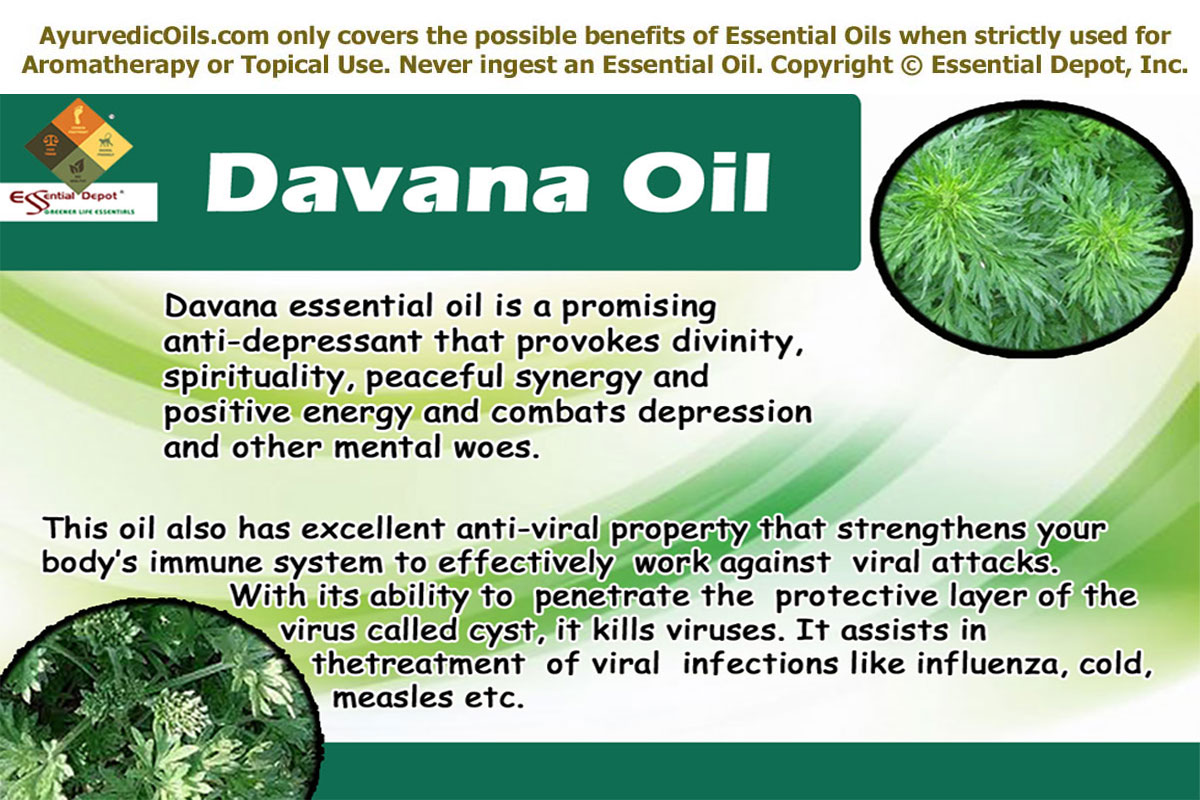
Davana-bannerDavana is imported worldwide for its sweet fragrance and illustrious medicinal values and is used to glorify the idol of Lord Shiva in India. Botanically known as Artemisia pallens, Davana is a member of the daisy family, Asteraceae. Regionally called as davanam in Tamil and Davana in Kannada, this fragrant herb is indigenous to the southern parts of the Indian subcontinent.

The essential oil of Davana is extracted from the stem and leaves of this herb by steam distillation method. It is widely used in Ayurveda in the treatment of mental disorders, nervous problems, depression, cough, cold, measles, infections, diabetes and high blood pressure.

Purchase Davana Oil – Wholesale – CLICK HERE

Historical uses of Davana and its essential oil:

Having its roots deeply set in the religious traditions of the Indian Culture, Davana essential oil has an extensive application all over the world. It was used in traditional Ayurvedic medicinal formulations as an aphrodisiac and mood elevator. Davana was a part of the Indian folklore medicine for treating diabetes mellitus and high blood pressure.

With much regional importance, Davana essential oil gained global attention only in the mid of the 20th century after which it has earned a special spot in the hearts of perfumers’ and flavorists’, particularly in United States and Japan where it is a flavor ingredient for bakery, tobacco and beverage products.

The flowers, stem and leaves of this plant are used as an effective antiseptic and disinfectant for quick treatment of wounds, cuts and infectious ailments such as cough, cold, measles etc. Davana essential oil has also been a part of other Complementary and Alternative medicinal practices like Unani and the Traditional Chinese Medicine (TCM).

Chemical constituents and therapeutic properties of Davana oil:

Davana essential oil comprises of davanone, a major sesquiterpene ketone and other essential components such as linalool, dehydro-a-linalool, terpinen-4 oil, isodavanone, nordavanone, davanafurans, methyl cinnamate, ethyl cinnamate, bicyclogermacrene, davana ether, 2-hydroxyisodavanone, and farnesol. All these compounds of Davana oil attribute to its unique aroma and its medicinal values.

Well recognized as a herb of sacred values, Davana essential oil benefits mankind with its anti-depressant, aromatic, antiseptic, antiviral, antimicrobial, anti-fungal, antispasmodic, decongestant, disinfectant, emmenagogue, anthelmintic, stomachic, hypotensive, antioxidant, expectorant, relaxant, vulnerary, aphrodisiac, nervine and mucolytic properties.

Ayurvedic Health Benefits of Davana Oil:

Ayurveda is a holistic healing system that has its origin in India, the land of tradition and the world’s oldest history for more than 5,000 years. Just like this ancient remedial science, Davana herb also has its nativity vested in India and never fails in treating illnesses with its remedial aroma.

Ayurveda suggests natural remedies for treating mankind as it believes that everything is a part of nature and Mother Nature has innate medicines for healing health disorders. An individual is said to be healthy when his/her mind, body and soul are in perfect balance with nature. Illness according to Ayurveda is an opportunity to explore, restore and re-establish absolute health and strike balance with nature.

Just as nature, human body is also made up of five vital elements namely fire, water, earth, air and space, built in the form of three vital biological energies known as doshas. They are kapha, vata and pitta doshas. The predominance of any one of these doshas determines the personality, character and behavioral attributes of a person and balance between these doshas stand for health and heartiness.

Ayurvedic healing starts with the identification of the unique individual constitution that helps in determining doshic qualities, mental and physical attributes of an individual. Ayurveda does not follow the ‘one size fits all’ healing methodology as it trusts that every human being is unique in nature and the remedies for their illnesses should also be unique as per their constitution.

The nobility of Ayurveda rests in treating the root cause of an illness instead of curing its symptoms alone. By treating the actual underlying cause, Ayurveda helps in preventing such illnesses in the future and paves way for longevity through healthy aging. The most predominant Ayurvedic remedies are herbs, essential oils, meditation, yoga, physical exercises, healthy lifestyle, prayers and an Ayurvedic routine.

Davana essential oil is said to pacify vata and kapha imbalances and has a neutral effect on pitta dosha.

The Ayurvedic health benefits of Davana essential oil are:
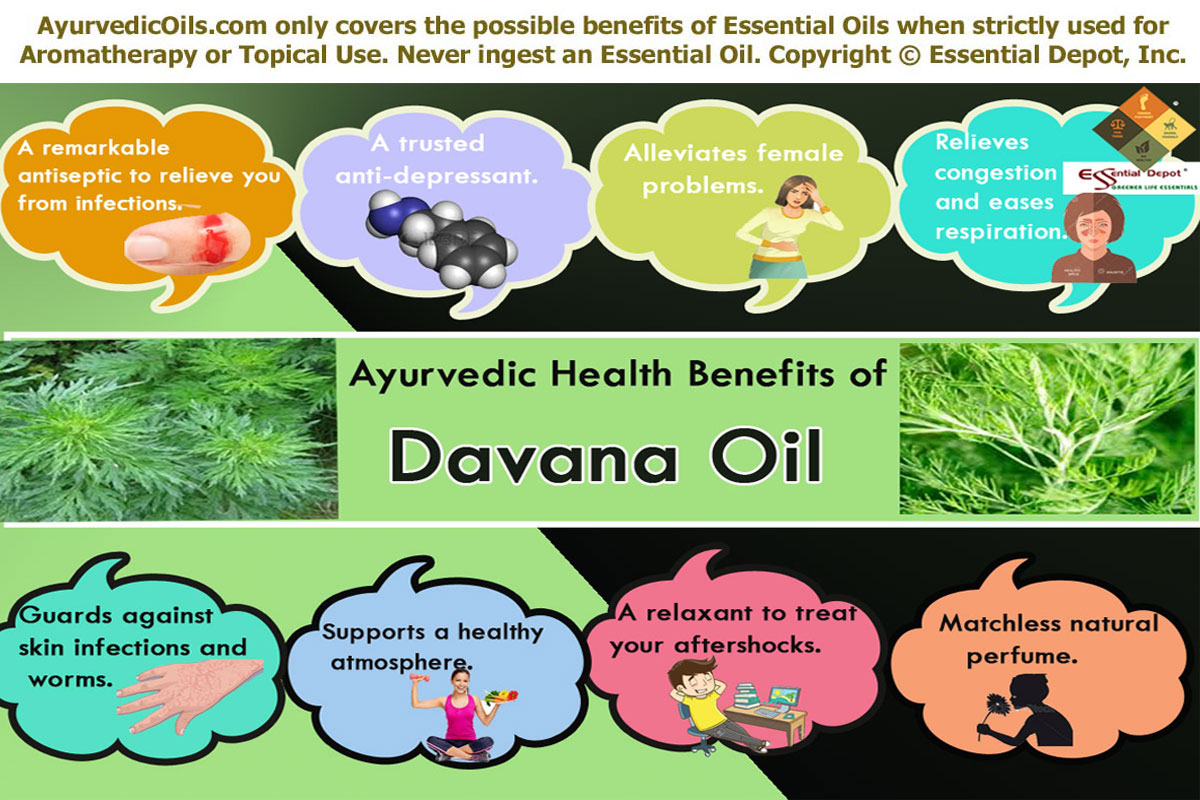
Davana-broucher-new1. A remarkable antiseptic to relieve you from infections:

Being a natural antiseptic with less toxicity, Davana essential oil is used to treat both internal and external infections. It destroys the micro organisms affecting the internal organs of the body like kidney, bladder, urethra and urinary tract, thus putting an end to sepsis, a fatal inflammation of the whole body.

A 2009 research on ‘The antimicrobial screening of Artemisia pallens’ published in the International Journal of PharmTech Research, USA states that the extracts from Artemisia pallens possess antimicrobial activity against the bacteria Bacillus cereus. Davana herb extracts and its essential oil have been used in Ayurvedic practices for healing wounds and deep abrasions quickly and to curb the spreading of infections to other parts of the body, which might otherwise result in tetanus.

Davana essential oil also has anti-viral property that strengthens your body’s immune system to effectively work against viral attacks. Having the ability to penetrate the protective layer of the virus called cyst, it kills viruses without a trace. Because of this attribute, it has been extensively used to treat viral infections such as cold, cough, influenza, measles etc.

The best way to use Davana oil for arresting the spread of infectious micro-organisms is in Abhyanga or the art of Ayurvedic massaging. Mix 5 drops of Davana oil with 3 ml of coconut oil and massage your body, followed by a warm bath with 2 drops of Davana oil diluted in bathing water. The therapeutic properties of this oil penetrate through the skin and start its healing mechanism. You can also mix 1 drop of Davana oil with 10 drops of olive oil and apply it on wounds and abrasions for quicker healing.

2. A trusted anti-depressant:

Widely used in the field of Ayurvedic aromatherapy for its anti-depressant properties, Davana essential oil actively engages in relaxing your nervous system and induces tranquility in the mind. As a medicinal herb that adorns the deity of Lord Shiva, it provokes divinity, spirituality, peaceful synergy and positive energy in every individual. Add 2 drops of Davana oil in warm bathing water or mix 6 drops of this oil with 3 ml of sesame oil and go for an energizing massage for treating depression and other mental woes.

Davana essential oil grants a soothing effect to the mind and body by effectively alleviating pressure in case of stress, anxiety and rejuvenates the mental health of those who feel depressed and lifeless. You can also add 2 drops of Davana oil to diffuser or burner and inhale it’s comforting fragrance, through which the aromatic molecules present in this oil pass through the nasal passages and reach the limbic system, the control center of human brain.

3. Alleviates female problems:

Nature has gifted humanity with some excellent medicines for treating complex womanly problems like menstrual difficulties, menopausal problems and emotional woes associated with such disorders. Davana essential oil is one such curative power, which with its emmenagogue property regulates the flow of blood in the uterus and pelvic area and releases blocked menstruation, resulting in a regular menstrual cycle.

Massaging your lower abdomen with 2 drops of Davana oil blended with 1ml of sesame oil can act as an effective remedy in treating menstrual spasms, pain in the abdominal area, fatigue, nausea, muscular cramps, restlessness and mood swings.

4. Relieves congestion and eases respiration:

Excess of kapha dosha along with viral and bacterial infections result in cough, cold, congestion and other respiratory illnesses. Severe infections may lead to deposits of mucus and phlegm in the upper respiratory tract and the lungs, causing respiratory disorders and breathing difficulties.

Davana essential oil is known to pacify excess kapha dosha with its decongestant and expectorant properties and helps in expelling heavy deposits of mucus and phlegm in the nasal passages and lungs by lubricating the respiratory tract. This oil also has antiseptic, anti-bacterial, anti-viral and antimicrobial properties that destroy such harmful microbes causing respiratory problems.

Add 2 drops of Davana oil in steam inhalation for relieving from asthma, bronchitis, cough, cold, breathing difficulties, headache and respiratory spasms. You can also add 2 drops of this oil in vaporizing ointments or cold rubs and gently massage it on your chest, back and throat for effective relief.

5. Guards against skin infections and worms:

Being an antiseptic, Davana oil fights against infections and protects your skin from infection prone conditions such as acne, boils, pimples and even stretch marks. It is also vulnerary in nature and aids in speeding up the healing process of wounds and cuts. Mix 2 drops of Davana essential oil in your regular skin care cream or with 1 ml of jojoba oil and apply it on your skin for treating rough, dry and chapped skin. This oil also aids in stimulating the endocrine system.

Davana essential oil is further enriched with its anthelmintic and stomachic properties that fight against worm infestation caused by parasites such as round worms, whip worms, hookworms, thread worms, pin-worms and tape worms.

6. Supports a healthy atmosphere:

Excelling in its disinfectant properties, Davana essential oil can work wonders to purify your atmosphere. The fragrance of this medicated oil spread so quickly and kills the germs and microbes present in the air with its remedial qualities. Add 2 drops of Davana essential oil in fumigants, sprays or vaporizers for fresh and germ-free environment.

7. A relaxant to treat your aftershocks:

Davana essential oil has anti-inflammatory and relaxant properties that effortlessly relaxes the contractions in muscles, blood vessels and also calms down the brain and your nervous system. Massaging your body with 5 drops of Davana oil blended with 2.5 ml of almond oil assists in rejuvenating the nervous system and grants absolute solace. It acts best in inducing mental peace and helps in recovering from after effects of shocks, trauma, heavy medications and treatments, disappointments, failures etc.

8. Matchless natural perfume:

Davana essential oil stands unique in the field of perfume industry for its fragrance differs with the uniqueness of the individual thus making each one special in their own way. A single plant can scent the entire garden. Hence it is used in the manufacture of high quality perfumes and cosmetics and also in food industries, flavoring tobacco, pastries and some beverages.

Other health benefits of Davana Oil:

As per a 1996 research published in Pubmed, Davana essential oil is said to lower glucose level in the blood thereby helpful in treating diabetes mellitus. A 2011 study on the antioxidant property of Artemisia pallens states that it possesses antioxidant properties due to the presence of phenols that effectively reduce the risk of chronic diseases, cardiovascular disorders and cancer.

This oil also has mild insect repellant property. Aromatherapists use Davana oil for its antispasmodic properties in treating spasms and pains. It is used in manufacturing vaporizers, disinfecting sprays and room fresheners. The Davana flowers represent a symbol of tradition and are used in making garlands, floral decorations, bouquets and also for various other religious rituals and customs.

Disclaimer:

This article is only for the purpose of information and is not meant to diagnose or replace any professional medical advice or prescribed medication. Never use essential oils internally. Always remember to dilute essential oils before topical usage, as pure and organic essential oils are highly concentrated liquids and may cause skin irritation or other side effects if used in an undiluted form. Always consult your Ayurvedic expert before using the right essential oils for your health condition and unique individual constitution.

Thought for the day:

God writes the Gospel not in the Bible alone, but also on trees, and in the flowers and clouds and stars. -Martin Luther

Suggested Reading:

  1. Artemisia (Medicinal and Aromatic Plants – Industrial Profiles) by Colin W. Wright
  2. Dying to Look Good by Christine Hoza Farlow
  3. Butterfly Miracles with Essential Oils by LaRee Westover
  4. Davana and its cultivation in India (Farm bulletin) by M. R Narayana
  5. Therapeutic Blending With Essential Oil: Decoding the Healing Matrix of Aromatherapy by Rebecca Park Totilo

Reference Links:

  1. Artemisia pallens by Wikipedia.
  2. Influence of plant growth stage on the essential oil content and composition in Davana (Artemisia pallens wall.) published in Pubmed.
  3. Antimicrobial Screening of Medicinal Plant – Artemisia pallens by the Department of Chemistry, S.P. College, Pune, India.
  4. Study on Effects of Artemisia pallens Wall. on blood glucose levels in normal and alloxan-induced diabetic rats by Division of Ethnopharmacology, Tropical Botanic Garden and Research Institute, Palode, Kerala, India published in PubMed.
Hyssop Oil


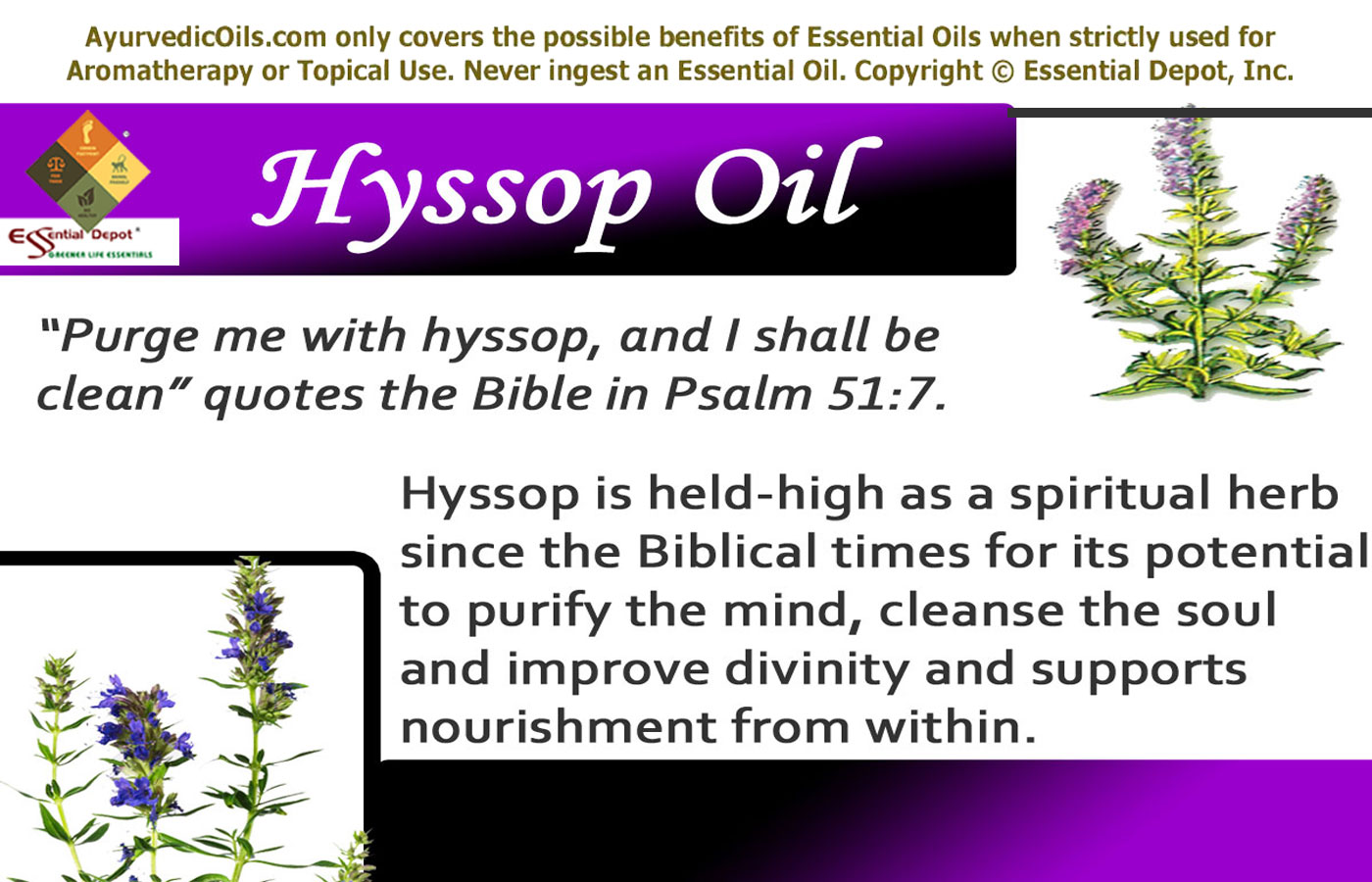
hyssop-bannerBible reveals the genuine use of Hyssop by saying “Purge me with hyssop, and I shall be clean” in Psalm 51:7. Hyssop is held-high as a spiritual herb since the Biblical times for its potential to purify the mind, cleanse the soul and improve divinity and supports nourishment from within.

The name Hyssop is extracted from the Hebrew word ‘azob’ meaning ‘holy herb’ and was used in temples and other sacred places as a cleansing agent. The essential oil is extracted from the leaves and flowers of this perennial plant and is botanically known as Hyssopus officinalis and is a part of the mint family, Lamiaceae.

It has been honored as one among the 12 main oils of the Scripture. Ayurveda recommends the use of Hyssop and its essential oil for treating respiratory problems like chronic catarrh, cold, cough, congestion and asthma.  It was also used for regulating high blood pressure, treat flatulence and colic, reduce fever, release heavy emotions, support deep breathing and improve the immune power.

Purchase Hyssop Oil – Wholesale – CLICK HERE

Historical importance of Hyssop and its essential oil:

Hyssop is known as one among the oldest herb used by human beings. Hippocrates, the renowned physician prescribed Hyssop for treating bronchial problems, inflammation, chest congestion, throat infections and pleurisy.

The ancient Romans used Hyssop for protecting themselves from plague. They prepared a medicated wine using Hyssop leaves and flowers and valued it as a natural remedy for plague and certain other health disorders. Hyssop tea, infusion and tincture have been used in the treatment of dropsy and jaundice.

Take a bunch of hyssop, dip it into the blood in the basin and put some of the blood on the top and on both sides of the doorframe. Not one of you shall go out the door of his house until morning.” Exodus 12:22, is another Biblical verse talking about the greatness and purifying abilities of Hyssop herb. Bible also records the use of Hyssop by influential Biblical leaders including Jesus, Moses, Solomon and David. There are about 126 verses in the Bible that talk about Hyssop. It was also used in cleaning and polishing sanctified places.

Persians used Hyssop oil in skin lotions to augment their complexion and enhance skin health. It was used by the Europeans as air freshener and the traditional Indians used Hyssop for healing wounds, treat bruises, lessen excess fluid content in the body and to alleviate muscular pain. Hyssop is also a popular ingredient of Chartreuse liquor.

Chemical constituents and therapeutic properties of Hyssop essential oil:

The most important chemical constituents of Hyssop essential oil are myrcene, a-pinene, limonene, camphene, isopinocamphene, b-pinene, 1,8-cineole, sabinene, y-terpineol, thujone and pinocamphone.

These components contribute to its remedial properties like expectorant, anti-rheumatic, diuretic, astringent, stimulant, antiseptic, emmenagogue, antispasmodic, vulnerary, carminative, sudorific, cicatrisant, nervine, digestive, vermifuge, febrifuge, tonic and hypertensive.

Ayurvedic health benefits of Hyssop essential oil:

Ayurveda is the wisdom of spiritual and holistic healing that has been in practice since 5,000 years. This ancient philosophy identifies disease as an opportunity to explore the actual cause lying behind an illness.

Identifying the root cause of an illness and treating it paves way for prevention of diseases in the future, leading a healthy life and progressing towards longevity. Whereas the contemporary medical system treats illnesses without analyzing its root cause, by this way the disease gets suppressed inside for the time being and grows as a major root for chronic disorders in the future.

Ayurvedic philosophy is based upon five major elements of nature, namely fire, water, earth, air and space. It is strongly believed that the universe is made up of these five elements and everything on this universe is made up of these elements including human beings. With a combination of these vital elements, every individual has a unique constitution that comprises of three biological energies known as doshas. They are vata, pitta and kapha. These doshas are a combination of the five elements of nature. Vata represents air and space, pitta is combination of fire and water and kapha signifies water and earth.

Vata dosha is responsible for nervous functions, movement, circulation and respiration.  Pitta energy governs digestion and metabolic functions. Kapha type controls the structure and sustenance of the body and the movement of fluids in the system. Every human being has a predominance of any one of these doshas that depicts their personality, behavior, physical and emotional attributes. Balance between these doshas symbolizes health and imbalance causes illnesses.

Ayurvedic remedies focus on regularizing dosha imbalances and include essential oils, herbs, meditation, yoga, physical exercises, prayers, Ayurvedic routine and a healthy lifestyle with a balanced diet. Hyssop essential oil has been used in Ayurvedic healing for treating excess kapha along with pitta and vata deficit.

Let’s take a look at the Ayurvedic health benefits of Hyssop essential oil based on the suggested methods of usage.

Hyssop-broucher-info1. In baths and Ayurvedic massage therapy:

Ayurveda trusts in healing humanity through the five major senses namely the sense of sight, sense of sound, sense of touch, sense of taste and the sense of smell. Using Ayurvedic essential oils in bath and in Abhyanga, the art of Ayurvedic massaging treats illnesses of the mind and body through the sense of touch and the sense of smell.

Skin is the largest organ of the body and is the fastest mode to transmit the therapeutic molecules of essential oils to penetrate deeply into the blood stream. When used in bathing water, the aroma of the essential oil passes through the nasal passages and passes onto the limbic system, which is the control center of the brain. By this way the remedial properties of the oil gets conveyed to other parts of the body in the form of control waves by the limbic system.

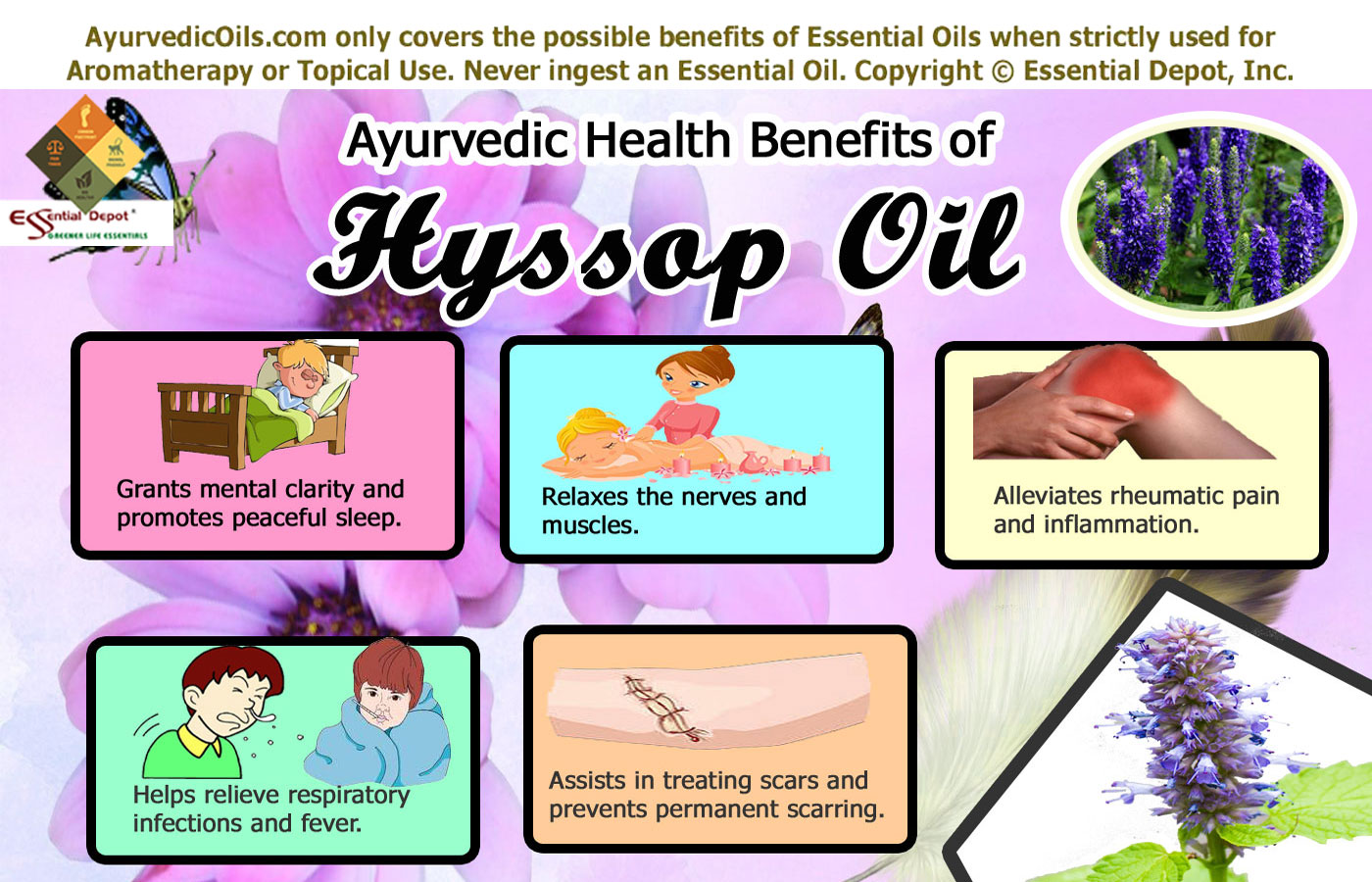
Add 2 drops of Hyssop essential oil in warm bathing water for relieving from fatigue, anxiety, menstrual pain, flatulence, viral infections, low blood pressure, respiratory infections, urinary problems, fever and skin infections. Taking bath in this medicated water before going to bed can assist in promoting peaceful sleep, mental clarity, relaxation of muscles and nerves. It also helps in eliminating excess fluids and toxic substances in the body through urine and sweat.

Blend 3 drops of Hyssop essential oil with 1.5 ml of sesame oil and gently massage it on your abdomen for treating dysmennorhea, promoting blocked or delayed menstruation, regularize the menstrual cycle and alleviate menopausal symptoms like stress, hot flashes and discharges with its emmenagogue, stimulant and tonic properties.

Massaging the painful area with this blend also helps in expelling excessive salts, fluids, sodium and other toxic substances in the body through urine. By this way it helps in reducing swelling, inflammation and rheumatic pain. A 2002 study on ‘The muscle relaxing activity of Hyssopus officinalis essential oil on isolated intestinal preparations’ have proved that Hyssop oil is effective in treating muscular pain by relaxing the muscles and reducing the amplitude of spontaneous movements.

Hyssop essential has the potential to increase pitta dosha, which is responsible for metabolic functions and digestive fire. Massaging your stomach and abdomen with 2 drops of Hyssop oil blended with 1 ml of olive oil can help in relieving from gas, flatulence, colic and indigestion. The carminative, digestive, vermifuge and stomachic properties of Hyssop oil aids in increasing the secretion of digestive acids and gastric juices that supports indigestion, colic, intestinal gas and spasms and kills intestinal worms.

Massaging your foot soles with 2 drop of Hyssop oil mixed with 1 ml of warm coconut oil can help in reducing your body temperature and treat fever effectively with its febrifuge properties. It promotes urination and supports to get rid of all infectious organisms causing fever through sweat and urine. A 2010 study published in the BMC Complementary and Alternative Medicine, Hyssop essential oil has been proved to weaken the flu virus and weakens the ability of influenza to affect cells.

Massaging your body with 10 drops of Hyssop essential oil mixed with 5 ml of coconut oil can assist in relieving tension, mental fatigue, anxiety, sore muscles, microbial infections, pain, inflammation, headache, low blood pressure, flu, tonsillitis, dermatitis, eczema, sore throat and asthma.

This massage blend aids in stimulating your system by enhancing your immune powers and acts as a tonic to your digestive system, nervous system, endocrinal system, excretory system and circulatory system. Go for a Hyssop massage every weekend to revitalize your senses and your system for the week ahead.

2. In steam inhalation:

Excess of kapha dosha is responsible for respiratory problems like cold, cough, chest congestion, nasal congestion and breathing difficulties. Hyssop essential oil controls excess kapha and assists in relieving respiratory disorders including heavy catarrhal conditions. This oil also has expectorant, decongestant and diuretic properties that help in expelling excess of phlegm and mucus deposits in the chest, bronchial and nasal passages.

Hyssop is listed as an effective expectorant by the University of Maryland Medical Center that can support in eliminating mucus from lungs and in alleviating whooping cough. All you need to do to relieve from your respiratory problems is to add 2 drops of Hyssop essential oil in steam inhalation.

3. In burners or diffusers:

The sweet-camphoraceous, warm and powerful aroma of Hyssop oil assists in treating anxiety, mental fatigue, stress, negative feelings and other mental woes. Hyssop is used as an effective mental stimulant for calming the mind and soothing the nerves.

Add 2 to 3 drops of Hyssop essential oil to your diffuser, burner or aromatic lamp for relieving nervous tension, alleviate negative emotions and purify the mind. This oil is also known to grant mental clarity, augment creativity and assist meditation peacefully. On a spiritual perspective, Hyssop essential oil is recognized as a spiritual remedy to forgive sins and attain spiritual oneness.

4. In creams, lotions and rubs:

Hyssop essential oil has antiseptic, cicatrisant and vulnerary properties that make it the most ideal oil for treating skin problems. Being an antiseptic and vulnerary oil, Hyssop aids in protecting wounds, cuts and abrasions from being septic. It invades the presence of micro-organisms like bacteria and virus and protects the wound from microbial infections, paving way for quicker healing process.

The cicatrisant value of Hyssop essential oil assists in diminishing scars and prevents the skin from permanent scarring left by acne, boils, accidents, insect bites, pregnancy, pox and surgeries.  Mix 2 drops of Hyssop essential oil to your regular skin care cream or daily lotion and apply it on wounds, infections, cuts, scars, marks, acne and insect bites for effective results.

Using this aromatic blend on your scars, stretch marks and other marks on the skin helps in promoting cellular regeneration and growth of new skin cells that assist in fading away existing scars and marks on the skin. Add 2 drops of Hyssop oil to your vapor rub and apply it gently on the chest, throat and back for effective relief from whooping cough, cold, headache and nasal congestion.

Disclaimer:

This is only for the purpose of information and is not intended for treatment or to substitute any prescribed medication or professional medical advice. Never take essential oils internally.

Ensure to use them in a diluted form as pure and organic essential oils are highly concentrated substances and can cause harm if used directly on the skin. Consult your Ayurvedic physician before choosing the right essential oils for your unique individual constitution and precise health condition. Be cautious before using essential oils if you are nursing or pregnant.

Thought for the day:

Purge me with hyssop, and I shall be clean: wash me, and I shall be whiter than snow. – David in Psalm 51:7

Suggested Reading:

  1. The Hyssop Supplement: Alternative Medicine for a Healthy Body (Health Collection) by William Wagner
  2. Beautiful Plants of the Bible from the Hyssop to the Mighty Cedar Trees by Dr. David Darom
  3. A 21st Century Herb: Hyssop Superior Healing Power: By Willie Southall
  4. Ayurveda & Aromatherapy: The Earth Essential Guide to Ancient Wisdom and Modern Healing by Dr. Light Miller, Dr. Bryan Miller
  5. The Encyclopedia of Essential Oils: The Complete Guide to the Use of Aromatic Oils In Aromatherapy, Herbalism, Health, and Well Being by Julia Lawless

Reference Links:

  1. Hyssop by University of Michigan Health System
  2. Hyssop by Gale Encyclopedia of Alternative Medicine
  3. Hyssop Essential Oil by FireStorm Ministries
  4. Hyssop Seeds and Hyssop Essential Oil by Diet Health Club
  5. The muscle relaxing activity of Hyssopus officinalis essential oil on isolated intestinal preparations by Department of Pharmacology of Natural substances and General Physiology, University La Sapienza, Rome, Italy published in PubMed

Lavandin (Grosso) Oil


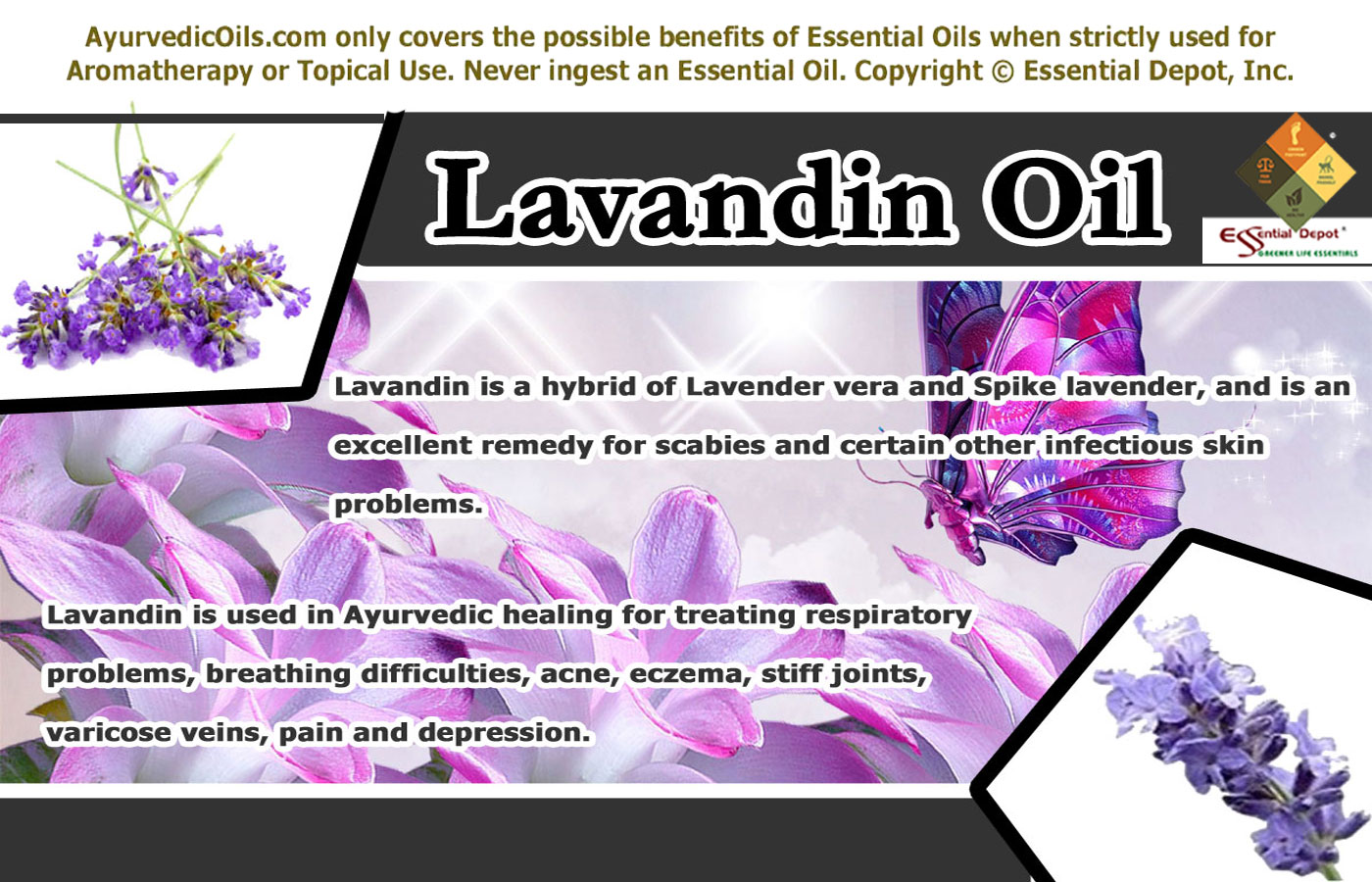
Lavendin-bannerThe dream of filling your garden and your home with the mesmerizing fragrance of Lavender blossoms is not a distant dream anymore as Lavandin is such a simple medicinal plant that resembles Lavender and its enriching aroma never fails to fill your home any lesser than Lavender does. As a hybrid of Lavender vera and Spike lavender, Lavandin Grosso is an excellent remedy for scabies and certain other infectious skin problems.

World is a global village and it is this strong reason that turns the world towards the path of Traditional healing methodologies. Ayurveda, the mother of all healing sciences on earth is the pioneer of Complementary and Alternative Medicine. Lavandin is used in Ayurvedic healing for treating respiratory problems, breathing difficulties, acne, eczema, stiff joints, varicose veins, pain and depression.

Purchase Lavendin (Grosso) Oil – Retail – 4 oz – CLICK HERE

Purchase Lavendin (Grosso) Oil – Wholesale – CLICK HERE

History of Lavandin (Grosso):

It is a hybrid variety of plants developed in the early 18th century and the essential oils extracted from these hybrid varieties were initially used for manufacturing soaps, perfumes and certain other personal hygiene products.

France is known as the major producer of Lavandin plants and essential oils. Lavandin essential oils are comparatively cheaper than True Lavender varieties. This is because unlike Lavender, these hybrid varieties can be grown as a commercially viable crop and are more tolerant to various climatic and growing conditions.

Lavandin Grosso is named after its discoverer Grosso and it reflects true qualities of both of its parentage with the camphoric aroma of Lavandula latifolia and the frost hardiness of Lavandula angustifolia. Among the numerous other Lavender hybrid plants, Lavandin Grosso is the most predominantly chosen plant by the commercial Lavender farm growers as it is easy to grow in most regions and produce abundant Lavandin flowers that contain ample amount of essential oils.

The big and bright flowers of this plant are also used for making sachets (keeps your clothes fresh and protect from moths and other insects) and the long stems are used in making Lavender wands. Initially, Lavandin and its essential oil were used as an analgesic and antiseptic for relieving pain, inflammation and for healing wounds and skin infections. Lavandin flowers were also used in making tea that was trusted to discharge excess mucous deposits and to assist breathing difficulties.

Chemical constituents or Gas Chromatography Report (GC) of Lavandin Grosso oil:

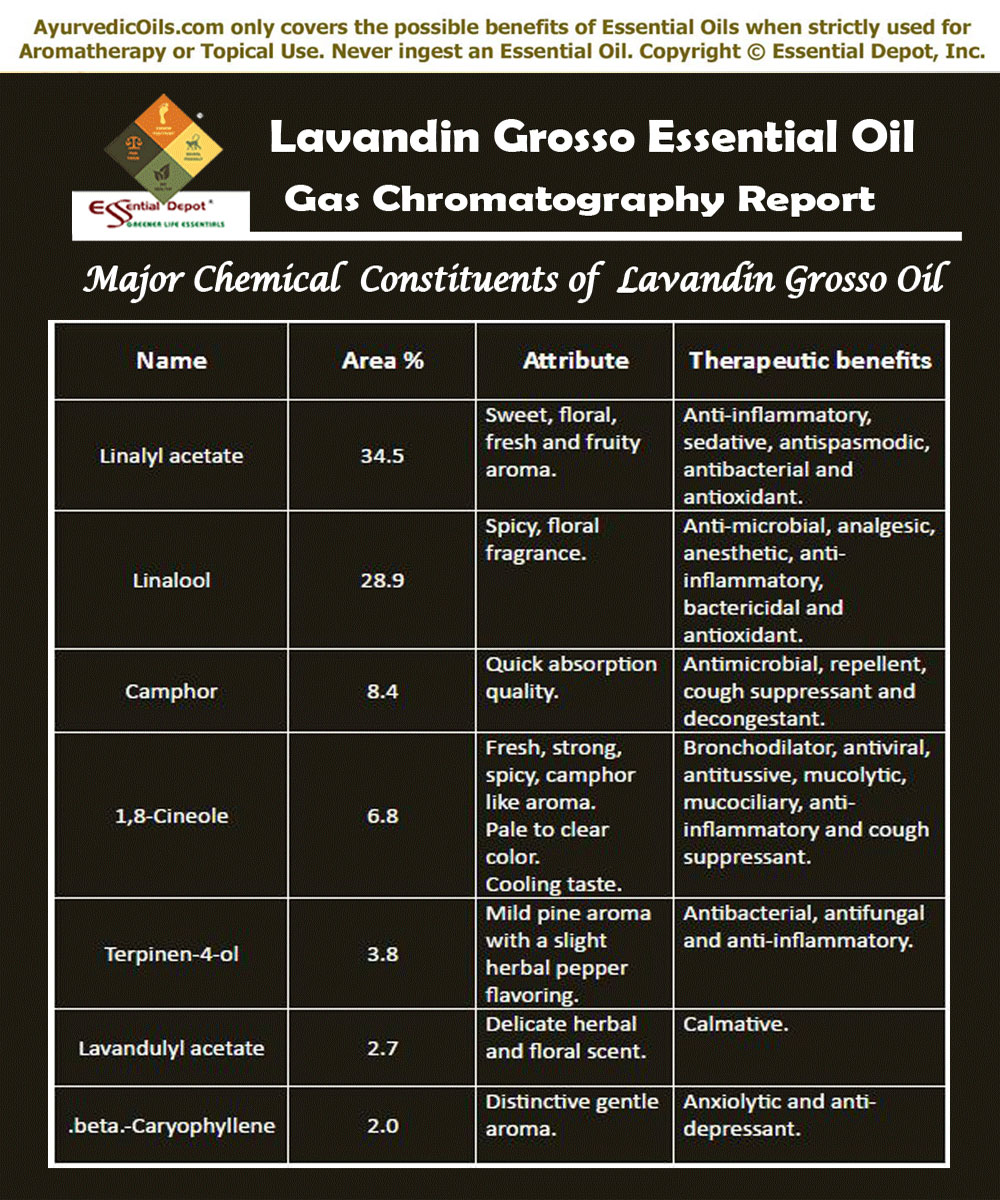
According to the Gas chromatography report, Lavandin Grosso oil constitutes of 25 chemical components that contribute to its fragrance, therapeutic attributes, consistency and quality. Of which, Linalyl acetate contributes to the highest proportion of Lavandin Grosso oil constituents with about 34.5% of its total composition.

Just click on:

I believe that this must certainly help you in getting to know the exclusive information about these prime chemical constituents of Lavandin Grosso oil.

The table crafted below clearly depicts the unique nature and contributions of these biochemical constituents to the healing magnificence of Lavandin Grosso essential oil.

lavandin-oil

Therapeutic properties of Lavandin Oil:

The remedial properties are antiseptic, antidepressant, analgesic, vulnerary, expectorant, cicatrisant, nervine, antispasmodic and stimulant.

Ayurvedic health benefits of Lavandin Essential Oil:

Many of us misconstrue that Ayurveda and the other traditional healing practices are meant for the old people or people who are still attached to the Stone Age. Ayurveda is the first and foremost healing methodology to love human beings and appreciate their individual identity, feelings, characteristics and behavioral patterns.

When all other medical sciences in this world aim at treating illnesses, this ancient healing system focused on treating individuals and not just their illnesses.

Ayurvedic philosophy declares that human beings are a part of nature and a person’s wellness or sickness depends upon his balance or imbalance with nature. Diseases occur when an individual’s mind and body is out of balance with nature. It is for this reason Ayurvedic remedies are based upon natural medicines for striking perfect balance with an archway to prevention and healthy aging.

Every individual is distinctive with a unique individual constitution that comprises of three biological energies known as doshas. They are vata, pitta and kapha. Each of these doshas governs certain functions of our body where vata is responsible for nervous functions and circulation, pitta controls metabolism and body temperature and kapha governs fluid movements, consistency and skin health.

Predominance of any of these doshas determines the personality, character, physical set up and the mental makeup of a person.

Imbalance between any of these doshas causes illness and Ayurvedic medications are prescribed in such a way that the imbalances are treated. Lavandin essential oil is said to reduce kapha and pitta dosha and has a neutral effect on vata dosha.

Let’s take a look at the Ayurvedic health benefits of Lavandin essential oil:

lavandin-broucher1. Benefits to the skin:

Popular author Susanne Fischer-Rizzi states that Lavender has more than 167 tested and proven medicinal uses. Bryan Miller and Light Miller in their book ‘Ayurveda and Aromatherapy’ says that Lavender is a must have essential oil in your first-aid kit or travel bag. With much similar aroma and healing properties like Lavender, Lavandin essential oil is also beneficial in a number of ways especially for nurturing skin health.

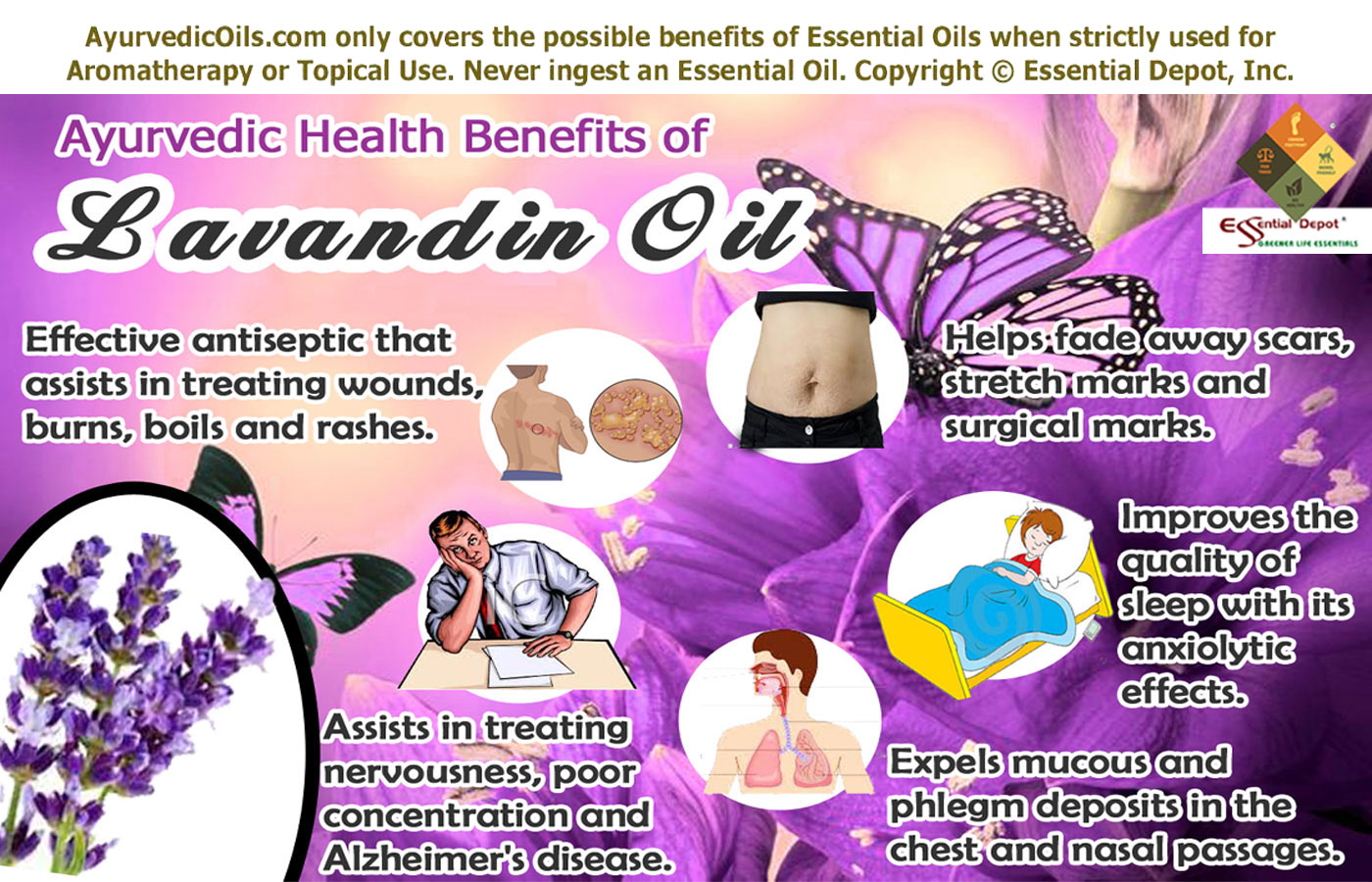
With excellent antiseptic, vulnerary and cicatrisant properties Lavandin essential oil has been proven effective for treating numerous skin problems. It keeps the skin clean and fights against various germs.

The ability of this oil in killing germs contributes to its effectiveness in treating dermatitis, scabies and few other infectious skin disorders. Being an effective antiseptic Lavandin essential oil can assist in treating wounds, cuts, burns, boils and rashes. It protects the open wounds from being septic or getting affected by the harmful organisms in air like tetanus.

The vulnerary properties of this oil helps in speeding up the process of healing wounds especially in case of incisions, surgical wounds, cuts or other accidental wounds. Applying 2 drops of Lavandin essential oil mixed with 1 ml of coconut oil is a sure-shot remedy for quick healing of wounds, protecting from infections and for fading away the scars and marks left by wounds, acne, stretch marks, surgical marks, cracks and other marks related to pregnancy.

Lavendin essential oil improves blood circulation and encourages the growth of new skin cells which contribute to its natural anti-scarring properties. You can also blend 3 to 4 drops of Lavendin oil in 2 ml of olive oil or to your regular skin care lotion and gently massage on to the skin to clear blemishes, treat sluggishness, dry skin and for improving the natural glow of the skin.

2. Benefits to the mind:

Lavandin essential oil has a rejuvenating and calming aroma that acts as an admirable antidepressant oil. The presence of camphor, linalyl acetate and terpineol-4 enhances its soothing and stimulating attributes that benefit the mind and heart in numerous ways. Lavandin Grosso oil is regarded as a great natural remedy for alleviating stress, fatigue, anxiety and depression. Certain studies have proven that Lavandin essential oil have anxiolytic effects that aid in improving the quality of sleep and save you from insomnia and nightmares.

Feelings of loneliness, lack of self-confidence, insecurity, loss of love or your near ones and work pressure may drag you down and waive a red flag to all your endeavors. All you need to do is to waive back the pleasant Lavandin flag that can uplift your spirit, enhance your self-confidence, fight against depressive feelings and reassure your success.

Adding 2 to 3 drops of Lavandin oil in your vaporizer, burner, diffuser, aroma lamp or bath tub can help in combating negative thoughts and grant the power to swim against the tide.

A 2009 study on ‘The use of the essential oil of Lavandin to reduce preoperative anxiety in surgical patients’ by the United Hospital, MN, USA tested about 150 adult patients to assess the effectiveness of Lavandin essential oil in reducing preoperative anxiety than other standard care methodologies. This study came up with an amazing result stating “Controlling for baseline anxiety and pain, the lavandin group had significantly lower anxiety on OR transfer, suggesting that lavandin is a simple, low-risk, cost-effective intervention with the potential to improve preoperative outcomes and increase patient satisfaction.”

3. Benefits to the respiratory system:

Adding 2 to 3 drops of Lavandin essential oil in steam inhalation or blending 2 drops of Lavandin oil with 1 ml of coconut oil and massaging it on chest, throat and back aids in treating cough, cold, bronchitis, sinusitis, chest congestion and other breathing problems. This is mainly due to the antiseptic properties of Lavandin oil that is proven to combat germs causing respiratory problems and its expectorant values that expel mucous and phlegm deposits in the chest and nasal passages causing cough and congestion.

4. Benefits to the entire body:

Lavandin Grosso oil benefits the entire body by supporting the functions of the nervous system. Using it as a massage oil by mixing 5 drops of this oil with 2.5 ml of jojoba oil aid in strengthening the nervous system and activate the nerves that pass on to different parts of the body. This is of great assistance in treating nervousness, sluggishness, convulsions, Alzheimer’s disease, lack of concentration and reflexes and certain other nervous problems.

Jane Buckle says “Lavandin Grosso was shown to be very effective against non-tubercular opportunistic mycobacteria (NTM) which is common in AIDS. Grosso is high in linalool for infections.” Lavandin essential oil also aids in treating pain, inflammation, rheumatism, influenza, headache, stiff joints, muscular problems etc, with its analgesic and anti-inflammatory properties.

Disclaimer:

This article is only for the purpose of information and is not destined for diagnosis or to substitute any prescribed medicines or professional advice. Never use essential oils internally and always use them in a diluted form for topical application as pure and organic essential oils are highly concentrated liquids and may cause harm if not used properly. Prevention is better than cure and it is always advisable to consult your Ayurvedic practitioner before choosing the right essential oils for your unique constitution and health condition.

The MSDS (Material Safety Data Sheet) of Lavandin Grosso oil is readily available for your enhanced safety and better usage.

Gas Chromatography Report (GC analysis) of Lavandin Grosso oil.

Thought for the day:  

The Universe is one great kindergarten for man. Everything that exists has brought with it its own peculiar lesson.     -Orison Swett Marden

Suggested Reading:

  1. Lavender: The Genus Lavandula (Medicinal and Aromatic Plants – Industrial Profiles) from CRC Press
  2. ISO 8902:1999, Oil of lavandin Grosso (Lavandula angustifolia Miller x Lavandula latifolia (L.f.) Medikus), French type by ISO TC 54
  3. The Lavender Garden: Beautiful Varieties to Grow and Gather by Robert Kourik
  4. The Lavender Lover’s Handbook: The 100 Most Beautiful and Fragrant Varieties for Growing, Crafting, and Cooking by Sarah Berringer Bader

Reference Links:

  1. The use of the essential oil of Lavandin to reduce preoperative anxiety in surgical patients’ by the United Hospital, MN, USA published in PubMed
  2. Lavandula by Wikipedia
  3. Lavandula x intermedia ‘Grosso’ by Missouri Botanical Garden
  4. Health Benefits of Lavandin Essential Oil by Organic Facts

Camphor Oil


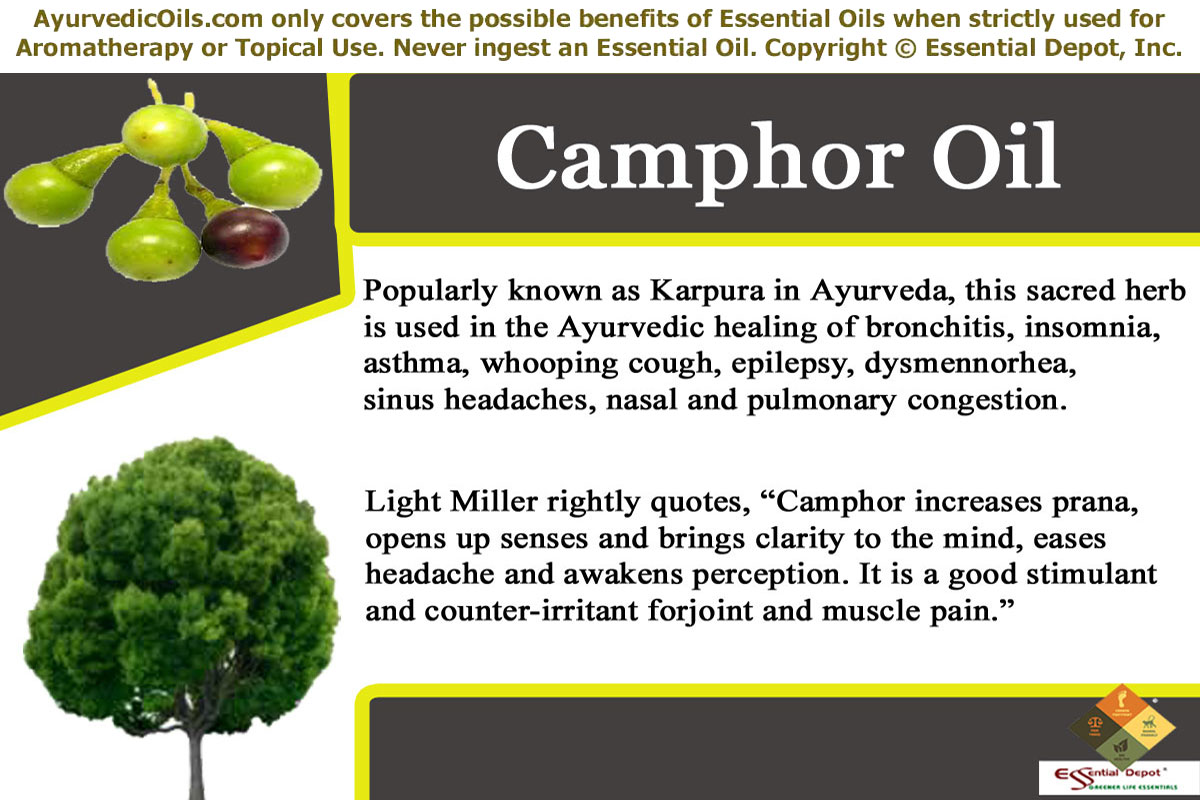
camphor-banner“Camphor increases prana, opens up senses and brings clarity to the mind, eases headache and awakens perception. It is a good stimulant and counter-irritant for joint and muscle pain”, says Light Miller and Bryan Miller in their book Ayurveda and Aromatherapy. Botanically known as Cinnamomum camphora, Camphor is a member of the Lauraceae plant family and is extracted from the wood and bark of this evergreen tree.

Prevalently called as Karpura in Ayurveda, this sacred and aromatic herb is used in Ayurvedic healing for more than thousands of years in the treatment of bronchitis, insomnia, asthma, hysteria, whooping cough, epilepsy, dysmennorhea, sinus headaches, nasal and pulmonary congestion, delirium and gout.

No sacred or religious ritual in India gets fulfilled without Camphor and is also known in Ayurveda with other names like Chandra, Himavaluka, Ghanasara and Chandra Prabha.

Purchase Camphor Essential Oil – Retail – 4 oz – CLICK HERE

Purchase Camphor Essential Oil – Wholesale – CLICK HERE 

Historical uses and importance of Camphor and its essential oil:

Popularly called as ‘the tree that does not sleep’, Camphor has been an important natural remedy especially in the Traditional Chinese Medicine and Ayurveda for more than 4,000 years in the treatment of various illnesses including nervous afflictions and other psychosomatic problems.

Indigenous to Formosa, Japan and China, this tree can grow up to a maximum height of 100 feet and the traditional Chinese used Camphor for its remedial uses and its wood was used in building temples and ships mainly due to its exuberant aroma and robustness. During the Tang dynasty (C.E. 618-907), Camphor was used in flavoring confectionery items like ice cream in China.

Camphor is an important part of Indian prayers, especially the religious ceremonies of the Hindu community since the traditional times. Burning camphor in the Pooja plate for deities is a part of every prayer in temples as well as homes and this sacred flame is calmly touched and its warmth feeling is passed on to the eyes. It is a part of the biggest spiritual celebration of the Hindus known as Mahashivratri dedicated to Lord Shiva.

The ancient Egyptians, Babylonians, Greeks and Romans used Camphor as a fragrant wood, incense resin, flavoring agent and as fumigants for embalming. It was given as prestigious gifts by the Chinese emperors for other kingdoms including the Arabian treaties. Camphor was also used as a traditional remedy for plague in Iran and Persia.

The strong aroma of Camphor makes it an excellent agent for protecting against snakes and other poisonous reptiles. It was also used as an insect repellant as it is trusted to be toxic to insects. Camphor was also used in tool chests to guard tools against rusting.

Chemical constituents or Gas Chromatography Report (GC) of Camphor oil:

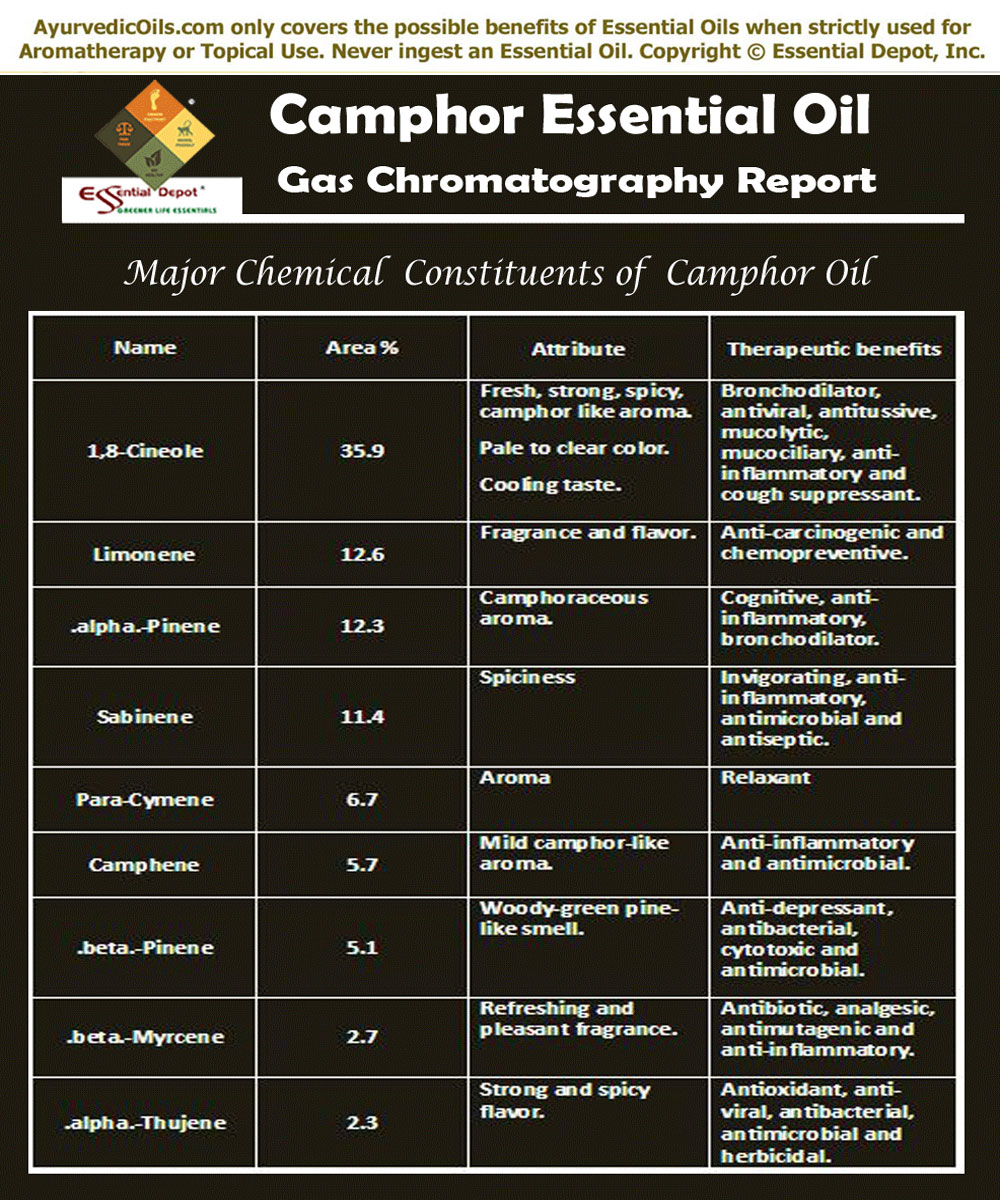
The Gas chromatography report witnesses Camphor oil with about 15 chemical constituents that contribute to its unique aroma, therapeutic values and consistency of this oil. Among which, 1,8-Cineole is the key component with about 35.9% of Camphor oil.

Just click on:

I believe that this information would certainly help you in having a clear picture about the primary chemical constituents of Camphor oil.

The table crafted below explains the unique nature and therapeutic qualities of these biochemical constituents to the curative values of Camphor essential oil.

camphor-table

Therapeutic properties of Camphor essential oil:

The remedial properties of this oil are stimulant, expectorant, antiseptic, anti-rheumatic, antispasmodic, decongestant, nervine, anti-phlogistic, analgesic, anti-arthritic and bronchodilator.

Ayurvedic health benefits of Camphor essential oil:

Ayurveda is a holistic healing science known to the world for more than 5,000 years. The most prominent thing about Ayurveda is that its healing practices are recorded systematically in the form of literature.

Among the 4 major sacred books of the Indian Mythology, Atharvana Veda records the Ayurvedic therapies and about 114 verses of this sacred book shares the symptoms and diagnostic techniques of numerous health disorders.

Ayurveda is a holistic healing system that treats the individual instead of the symptoms and traces the root cause of an illness. By this way, this ancient common sense science focuses on prevention of illnesses leading through healthy aging process to longevity.

Based on the Vedic references of Ayurveda, two ancient Ayurvedic texts were written by the legendary Ayurvedic physicians known as Charaka and Sushruta, who wrote Charaka Samhita and Sushruta Samhita.

These Ayurvedic encyclopedias state that everything is a part of nature and the human body is a combination of the five elements known as Panchamaha Bhoothas, namely fire, water, earth, air and space.

Every person is made up of a unique individual constitution that consists of three dynamic energies known as doshas (vata-air & space, pitta- fire & water and kapha- water & earth), which are a combination of the elemental forces of nature.

For a person to be hale and healthy, these doshas should always remain in a specific ration as set by nature and any change in the functioning or the balance between these doshas cause illnesses. Imbalance of these biological energies mainly occurs due to food habits (mainly depending on the quality of the food taken), change in weather conditions and lifestyle changes.

Ayurvedic remedies like plant essential oils, herbs, yoga, meditation, prayers, Abhyanga or the art of Ayurvedic massaging, Panchakarma or the detox technique and Ayurvedic routine are recommended based on the Prakriti or the unique individual constitution of a person and for correcting the imbalances of doshas.

Camphor essential oil has the potent to reduce kapha and vata doshas and increase pitta dosha.

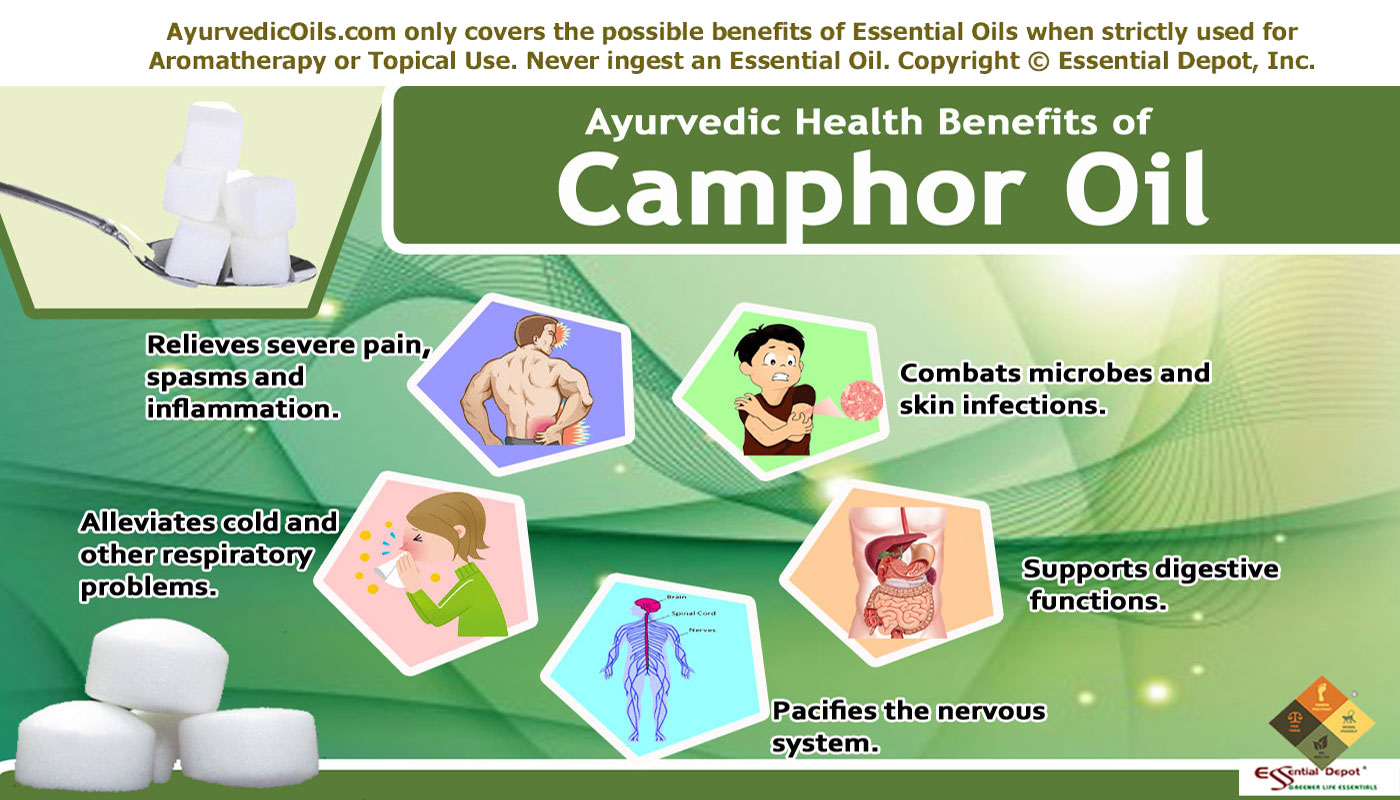
The major Ayurvedic health benefits of Camphor essential oil are:

Camphor-broucher1. Relieves severe pain, spasms and inflammation:

Camphor essential oil has antispasmodic, analgesic and anti-inflammatory properties that render itself as a promising pain reliever. The stimulating and counter-irritant effects of this oil relieve even severe muscular and joint pains.

With its anti-rheumatic and anti-arthritic attributes, Camphor essential oil assists in promoting blood circulation, eliminating toxic deposits in the joints and the entire system through urine and sweat and supporting the functions of the circulatory system. Ayurveda states that rheumatic problems mainly occur due to excess of kapha dosha leading to surplus deposits of water, toxins, salt and uric acid in the system, especially in the joints.

Camphor essential oil has the power to reduce kapha dosha and help in discharging ama or toxins in the system along with excess water content in the body. This oil works by anesthetizing the sensory nerves of peripheral nervous system, thus reducing inflammation.

Massaging the affected or painful parts with 2 drops of Camphor oil blended with 2 drops of Eucalyptus oil and 2 drops of Frankincense oil with 4 ml of coconut oil can be a great aid in reducing inflammation, swelling, painful muscles, redness and stiffness associated with rheumatism and arthritis.

This massaging can also help in relieving cramps, abdominal spasms and stiff joints. Adding 2 drops of Camphor essential oil to bathing water can bring in a feeling of newness, coolness and tranquility, especially during the summer season and can also help in alleviating pain and inducing peaceful sleep at night by relaxing the muscles, calming the nerves and cooling the senses.

2. Combats microbes and skin infections:

The essential oil of Camphor oil has been a prominent ingredient in numerous ointments and medications for treating skin infections caused by bacteria, fungi and other microbes. This is attributed to the germicide, disinfectant, anti-microbial and insecticide properties of Camphor oil. 2 drops of Camphor oil mixed with 1 ml of coconut oil can be applied on minor burns, itches, wounds, rashes, insect bites, nail fungus, cold sores, eczema, acne, chapped lips, athlete’s foot and ringworm.

Camphor is an excellent cleanser that helps in disinfecting the system when added to the bath tub (about 2 to 3 drops). 2 drops of Camphor oil with 2 drops of Rosemary oil added to your shampoo can help in treating dandruff and lice. This also helps in granting a cooling effect on the scalp and prevent unnecessary hair fall due to dandruff and lice.

3. Supports digestive functions:

Being a carminative, Camphor oil works wonders in relieving gas and flatulence. Gas in the intestines and stomach, when left unnoticed raises above slowly and causes sharp and severe pain in the chest, which may even lead to difficulty in breathing. Using Camphor oil assists in relieving gas and prevents the formation of gas.

Along with this, the diaphoretic effects of this oil aids in normalizing metabolic functions, enhancing circulation, improving sluggish digestion and controls the appetite. Mix 2 drops of Camphor oil with 2 drops of Juniper oil along with 2 ml of sesame oil and massage it gently on your abdomen for expelling gas and supporting the functions of the digestive system.

4. Pacifies the nervous system:

Camphor oil treats nervous afflictions and pain in the nervous system by causing numbness. This is attributed to its anesthetic effects. It is a proven remedy for treating neuralgia, which is a relentlessly painful condition caused due to the force on the Ninth Cranial nerve created by the swollen blood vessels surrounding it.

Gently massaging the system with 2 drops of Camphor oil, 2 drops of Eucalyptus oil, 2 drops of Juniper oil and 2 drops of Wintergreen oil blended with 5 ml of almond oil can help in reducing inflammation and lessen the pressure on the Ninth Cranial nerve, thus treating neuralgia. This can also assist in lessening the negative effects of epileptic attacks, nervous convulsions, chronic anxiety and nervousness.

5. Alleviates cold and other respiratory problems:

Camphor essential oil has a sharp, strong and medicinal aroma that makes its presence vital in numerous decongestant ointments and vaporubs. Vicks vaporub, the most popular decongestant has Camphor as one among its therapeutic formula. Camphor oil has been in use since the traditional times mainly for its effectiveness in treating respiratory ailments.

Excess kapha is the major reason behind the built up of mucus and phlegm deposits causing congestion and other respiratory problems. Camphor oil lessens kapha dosha and discharges mucus and phlegm in the respiratory and nasal passages.

Massaging your chest, throat and back with 1 drop of Camphor oil mixed with 1 drop of Eucalyptus oil and 1 ml of olive oil along with 2 drops of Camphor oil added to steam inhalation assists in relieving congestion in the respiratory tract, nasal passages, bronchial tract, pharynx and larynx.

Adding to 1 to 2 drops of Camphor oil to warm bathing water can also help in loosening the mucus and phlegm and clear the respiratory system. It is being used as an excellent cough suppressant since the primordial period. The powerful decongestant and bronchodilator properties of Camphor oil makes it an excellent remedy for treating asthma, sinusitis, pulmonary congestion, bronchitis, nasal congestion, whooping cough, common cold, chest congestion and cough.

Disclaimer:

This article is only for informational and educational purposes. It is not intended to replace any prescribed medication or professional medical advice or to cure, treat or prevent any illnesses. We are not medical professionals and this information is shared only with the idea of enlightening the mass with the traditional healing values of Ayurveda, the 5,000 year old medical system.

Do not use essential oils internally unless it is prescribed by your medical professional. Dilute essential oils before using it for topical purposes as organic and pure essential oils are very concentrated liquids and may cause allergic reactions if used on the skin directly. Consult your Ayurvedic expert/healthcare professional before picking up the perfect essential oils for your health condition and unique individual constitution. Ensure that you use very less amount of Camphor oil as prescribed by your medical expert, as excess use of Camphor can act as a narcotic poison.

The MSDS (Material Safety Data Sheet) of Camphor oil is readily available for your enhanced safety and better usage.

Gas Chromatography Report (GC analysis) of Camphor oil

Camphor Oil – Possible Skin Issues:

camphor-new

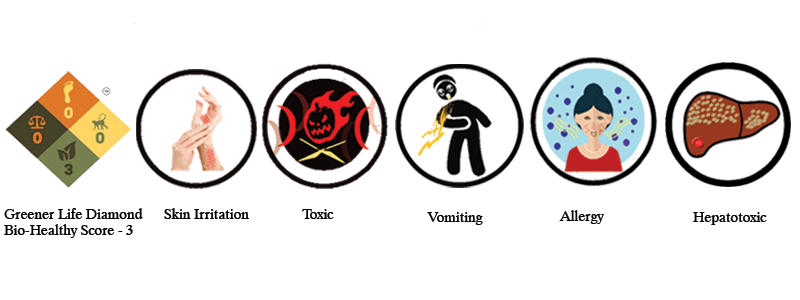
Greener Life Diamond – Bio-Healthy Score => 3 Possible Skin Issues:

See => http://www.essentialdepot.com/GreenerLifeDiamond.html

Camphor oil has been acclaimed as lethal and highly toxic in various studies, when used in excess of the prescribed quantity. According to the safety report, the acute toxicity of Camphor oil is said to be exhibited by contact with the skin, eyes, inhaling and ingesting, however ingestion of Camphor oil should be avoided strictly mainly due to its chronic effects on the liver (hepatotoxic – toxic to the liver).

The major chemical constituents in Camphor oil, responsible for its skin sensitization, allergic reactions, irritation and autoxidation are camphene, 1,8-cineole (abnormal respiration and CNS depression, epigastric pain and cold sweats), limonene and a-pinene. Oils with limonene and a-pinene are responsible for oxidation and oxidized oils cause sensitization and irritation of the skin.

Using Camphor oil topically might also cause skin sensitization, irritation, skin allergies like hives, itching, rashes, swelling of the face and lip dryness. Camphor oil used as direct contact with the skin without any dilution in appropriate carrier oils is considered as a dangerous skin irritant. Never use Camphor oil on cuts, broken or peeled skin.

It is highly recommended to avoid Camphor oil during pregnancy and breastfeeding, as it gets quickly absorbed by the placenta and may cause physical and neurological damage to the developing fetus and in nursing mothers there are possibilities of Camphor being absorbed through skin cracks and pass on to infants through milk (might cause damage to the infants’ liver and central nervous system).

Do not use Camphor oil on patients with bronchitis, asthma, epilepsy and Parkinson’s disease, as it can cause convulsions, increase spasms, seizures (by accounting to chemical disparity in the brain) and worsen the situation. It is also not recommended for high blood pressure patients as it is frequently used in the treatment of low blood pressure.

The safe level of use of Camphor is up to 3% dilution in case of liniments. As per the Dutch Information Medicamentorum, the safe usage level of Camphor is 20 to 100 mg/g for chest rubs, 0.15 mg/ml for nasal sprays, 20 to 50 mg/g for nose ointments, 1 to 70 mg/g for pruritus lotion and 40 to 250 mg/g in oils for muscular pain.  However 11% is regarded as the maximum level of safe usage in all kinds of dermal applications.

Camphor, according to the Poisons Information Monograph, an International Programme on Chemical safety states that the major risks of ingestion of Camphor are renal damage, colic, anxiety, convulsions, nausea, delirium, gastric irritation, irritation of the mucous membrane, asystole, apnoea, chronic post-convulsive coma and difficulty in breathing occur after ingesting about 2 grams of Camphor (acute toxicity level) and 4 grams are possibly lethal for adults and 1 gram for children and may cause death.

This report also denotes that the major target organs for Camphor damage are the upper respiratory tract, liver, kidneys and the central nervous system. Certain studies witness the immediate collapse in infants soon after the application of Camphor to their nostrils.

Reference Links Substantiating Possible Skin Issues of Camphor Oil:

  1. Hazardous Substance Fact Sheet of Camphor by New Jersey Department of Health and Senior Services
  2. Leung’s Encyclopedia of Common Natural Ingredients, used in Food, Drugs and Cosmetics by Ikhlas A. Khan and Ehab A. Abourashed
  3. Essential Oil Safety: A Guide for Health Care Professionals By Robert Tisserand, Rodney Young
  4. Toxicity Summary of Camphor by Toxnet, National Institutes of Health
  5. Camphor topical Side Effects in Detail by Drugs.com
  6. Camphor by the Poisons Information Monograph, an International Programme on Chemical safety

Thought for the day:

Nature is a mutable cloud which is always and never the same. -Ralph Waldo Emerson

Suggested Reading:

  1. The Tree That Does Not Sleep:: Phytochemistry, Allelopathy and the Capability Attributes of Camphor Laurel (Cinnamomum camphora (L.) Nees & Eberm.) by John Schenk
  2. Camphor; A Pharmaceutical and Pharmacognostical Study by U. S. Government
  3. Ayurveda & Aromatherapy: The Earth Essential Guide to Ancient Wisdom and Modern Healing by Dr. Light Miller, Dr. Bryan Miller
  4. Fragrance & Wellbeing: Plant Aromatics and Their Influence on the Psyche by Jennifer Peace Rhind
  5. The Illustrated Encyclopedia of Essential Oils: The Complete Guide to the Use of Oils in Aromatherapy & Herbalism by Julia Lawless

Reference Links:

  1. Camphor by Wikipedia
  2. History of Camphor oil by eHow
  3. Health benefits of Camphor essential oil by Organic Facts
  4. Camphor by Bryan Miller and Light Miller in their book Ayurveda and Aromatherapy
  5. Camphor benefits – A multipurpose plant by Greenchedy


Your resource for quality Essential Oils. Every batch is
GC tested to ensure purity and authenticity.

Cajeput Oil


Cajeputoil-bannerCajeput essential oil owns the scent of purity and is an excellent haemostatic, analgesic and a proven natural remedy for respiratory problems.

Traditionally being used in long precedence to treat cold, chronic rheumatism, flu and infections related to sinus and respiratory tracts, Cajeput essential oil owes its extraction to the leaves of Cajeput trees through the process of steam distillation. Botanically called as Melaleuca cajuputi, the word Cajeput is originated from the Malay word ‘kaju putih’ which means ‘white wood’.

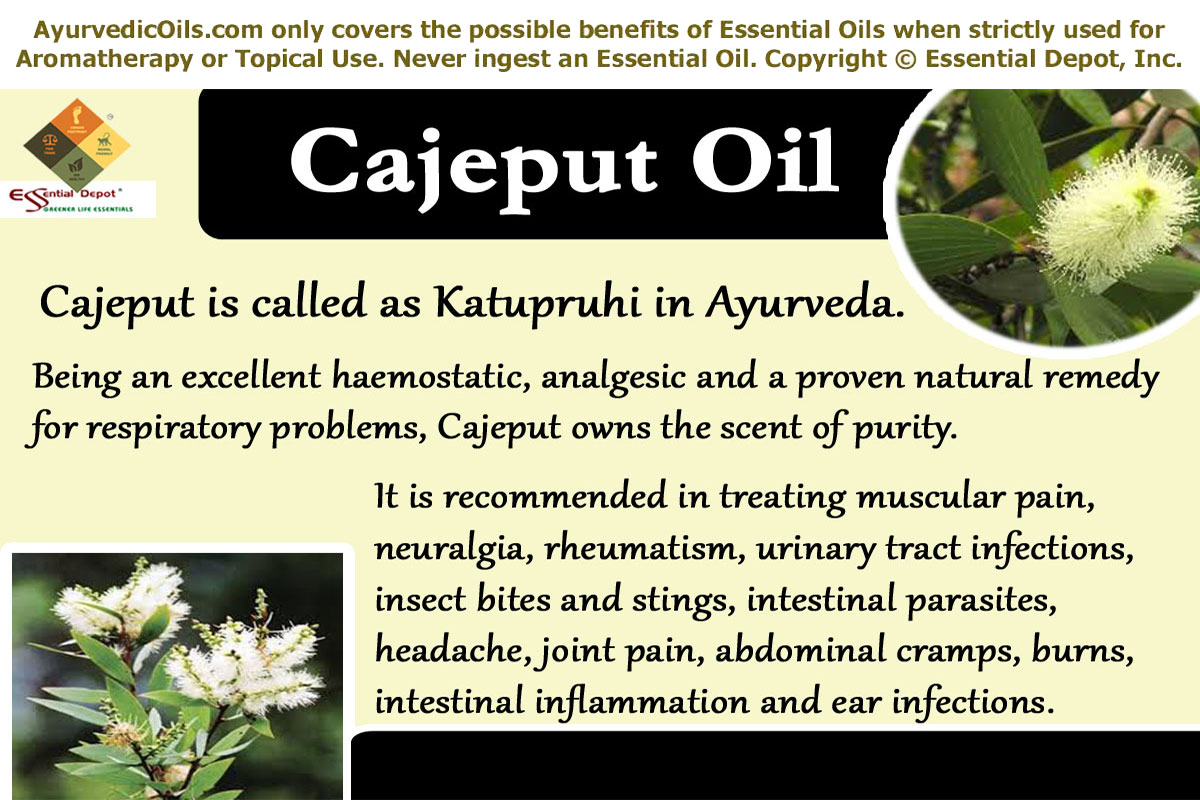
Known as Katupruhi in Ayurveda, Cajeput and its essential oil are being used in the traditional healing system for treating muscular pain, neuralgia, rheumatism, urinary tract infections, insect bites and stings, intestinal parasites, headache, joint pain, abdominal cramps, burns, intestinal inflammation, ear infections, oral problems, colic and psoriasis.

Purchase Cajeput Essential Oil – Retail – 4 oz – CLICK HERE

Purchase Cajeput Essential Oil – Wholesale – CLICK HERE 

Historical uses and importance of Cajeput and its essential oil:

Renowned for their pointed leaves, exotic flowers, flexible trunk and attractive white bark, Cajeput trees bear their nativity to the South Asian countries and are now widely distributed in Australia, Malay Archipelago and Malay Peninsula, with Indonesia and Vietnam being the principal producers of Cajeput essential oil.

With an unusual and stimulating aroma like that of cardamom, camphor and rosemary, Cajeput essential oil earns the gratitude of extensive usage in the traditional healing systems. Bearing resemblances to Tea tree, Cajeput trees are found prevalently in Malaysia and are called as White tea tree in certain occasions.

Well known for its resistance to forest fire, Cajeput trees are small, tidy and attractive with long-life. The aromatic white flowers of these trees, in addition to contributing to the essential oil also aid in the production of flavored honey by attracting the honey bees resulting in good yield. This property attracted the beekeepers of Florida who were the ones to introduce this tree to the United States.

Being portrayed as an oil of mystical powers, Cajeput essential oil is believed to protect against all kinds of evil powers and is used in cleansing the ritual objects and idols. With its spiritual powers that targets the consciousness of a person, Cajeput oil helps in reverting the mind from addictions to uncontrollable habits such as alcohol, smoking etc.

Ritually used in Australia, Indonesia and Malaysia for its beneficial attributes such as antiseptic and analgesic in treating chronic rheumatism, cold and flu, it was introduced to Europe in the 17th century as a natural aid for almost all types of ailments ranging from infections affecting respiratory tract to urinary tract.

Ayurveda employs Cajeput essential oil for its anti-inflammatory, antiseptic, antifungal, anti-bacterial and anodyne properties in holistic healing of dyspepsia, stomachic disorders, influenza, rheumatism, cold, cholera, burns, asthma, yeast infections, colic, toothache, parasites in intestines, tumors and even as an insecticide.

The utilization of Cajeput essential oil in some of the renowned liniments such as tiger Balm and Olbas is just enough to prove the analgesic attribute of this oil. As an effective antimicrobial agent, it is used in skincare and in the manufacture of soaps, cosmetics, perfumes and disinfectants.

Chemical constituents and therapeutic properties of Cajeput essential oil:

With cineol as the primary component, Cajeput essential oil comprises mainly of monoterpenes, sesquiterpenes and hydrocarbons, which include alpha pinene, limonene, caryophyllene, beta pinene, alpha terpineol, terpineol, cymene, alpha terpinene-4-ol, linalool, gamma terpinene, nerolidol, geranyl acetone, ketone, benzaldehyde, cajeputene hydrate, cajuputol, eucalyptol and myrcene.

The eminent therapeutic attributes of Cajeput essential oil are antipyretic, carminative, anti-neuralgic, analgesic, disinfectant, antispasmodic, diaphoretic, tonic, antiseptic, expectorant, emmenagogue, stimulant, anthelmintic, cosmetic, anti-bacterial, decongestant, febrifuge, sudorific and insecticide.

Ayurvedic Health Benefits of Cajeput essential oil:

Ayurveda simply means ‘the knowledge of life’. This oldest healing system trusts that the real wisdom of mankind rests in the knowledge about our system, which is the best wonder of this world.

Human mind and body work in a miraculous manner and Ayurvedic healing insists that this system is built up with the same five elements with which nature is made up of. They are fire, water, earth, air and space.

Earth represents bones and muscles, fire represents agni or the heat energy in the body, water represents blood and other fluids, air represents the breathing mechanism and space is the soul that keeps us alive.

Every individual is made up of a unique individual constitution that comprises three dynamic forces or biological energies known as doshas. They are vata, pitta and kapha dosha. These doshas are nothing but a representation of the five elemental forces of nature.

Vata is a combination of air and space and is in charge for nervous functions, circulation and respiratory functions. Fire and water put together forms Pitta dosha, which is responsible for metabolic functions and body temperature.

Kapha dosha is a representation of water and earth and contributes to physical structure, sustenance and reproductive health. Every human being has a majority of any one of these doshas and this predominance decides one’s personality, behavioral traits and attributes.

Ayurvedic philosophy strongly believes that absolute health of human beings exclusively depend upon one’s harmony with nature. Perfect balance between these doshas depending upon the unique individual constitution signifies health and imbalance of doshas causes illnesses.

Ayurveda prescribes natural remedies like herbs, plant essential oils, simple physical exercises, prayers, meditation, Ayurvedic routine, yoga, Abhyanga (the art of Ayurvedic massaging) and Pranayama for correcting the doshic imbalances.

Cajeput essential oil reduces kapha and vata dosha, in excess cases and increases pitta energy.

Let’s have a look at the Ayurvedic health benefits of Cajeput essential oil.

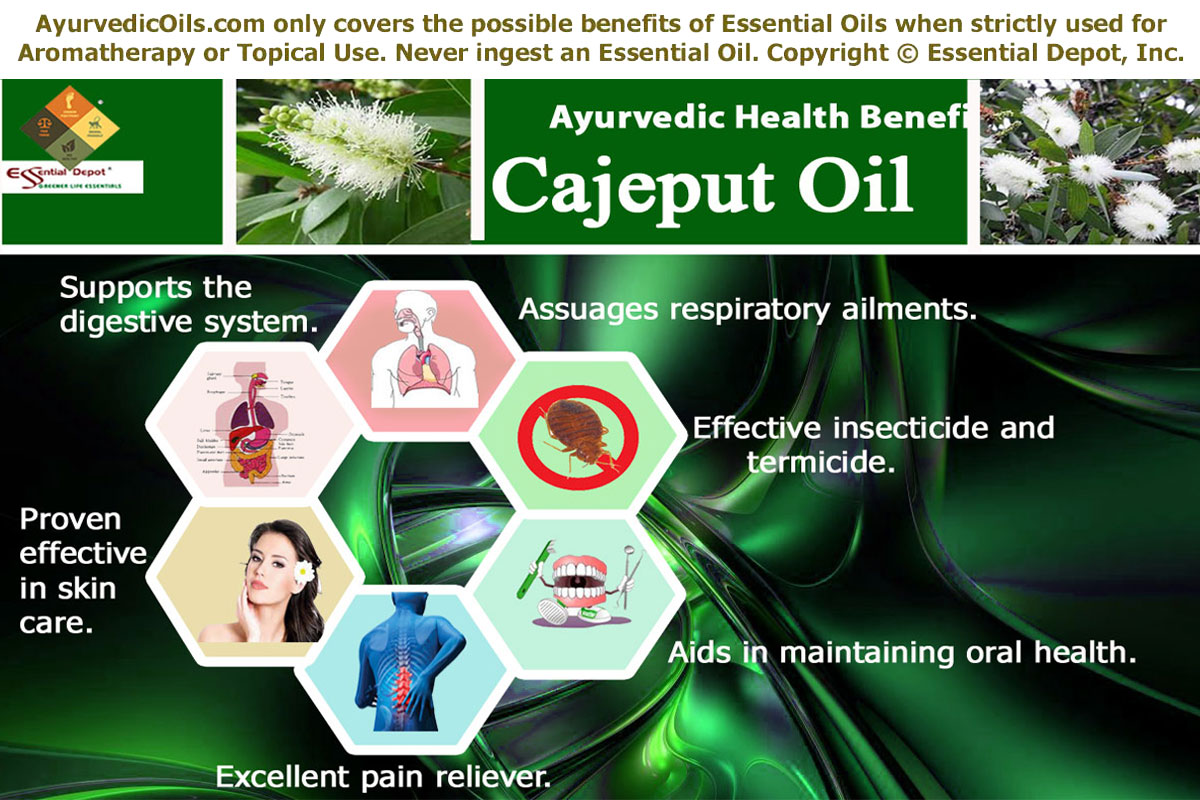
Cajeput-broucher1. Assuages respiratory ailments:

Numerous bacteria, viruses and fungi are always on the urge to cause infectious diseases that primarily target the respiratory tract with an array of ailments affecting mankind such as bronchitis, sore throat, flu, cold, ear infections, tightness in chest, laryngitis, blocked nose, mild fever, sinus and cough; Cajeput essential oil plays an important role in stopping the advent of these harmful microbes and protects the system from all types of respiratory ailments.

With its deep penetrating aroma with a rich eucalyptol note, Cajeput essential oil is a renowned cure for sinus that it has always been an unavoidable element in most of the medications that alleviate health problems associated with sinus. Just inhaling 2 drops of this essential oil added to steam inhalation, can provide instant relief from headache, blocked nose, sinus pain and makes you feel tranquil in a matter of minutes.

Excess of kapha dosha is responsible for deposits of mucus and phlegm in the respiratory tract, lungs and nasal passages. With its power to reduce kapha dosha, Cajeput essential oil helps in breaking up even heavy deposits of mucus accumulated in the respiratory organs and assists in excreting it from the body through coughing and aids in lessening the symptoms of chronic bronchitis and laryngitis.

As an effective antibacterial agent, it helps in fighting against infections and works as a decongestant, suitable to be used as an inhaler for cold and sinus. Moreover, as a natural anti-inflammatory agent it helps in reducing inflammations due to infections in the respiratory tracts such as larynx, pharynx and the bronchi.

Adding 2 drops of this oil in warm bathing water and massaging your throat, chest and back with 2 drops of Cajeput oil, 2 drops of Eucalyptus oil mixed with vaporizing ointment can help in relieving nasal congestion, cough, cold, bronchial congestion, blocked nasal passages and chest congestion.

Cajeput oil has a warming effect and is a must to have oil in your first aid kit. 1 to 2 drops of this added to your diffuser during winter can keep you away from infections and grant you a safe environment to live in. It induces the sweat glands and promotes sweating and helps in lowering high body temperature and is also effective in alleviating fever associated with cold and pain in the body.

2. Effective insecticide and termicide:

Insects, especially the mosquitoes are always the sure shot carriers of some dreadful diseases such as malaria, filaria, dengue and chickungunya. With no specific vaccines or antiviral treatment available for the viral diseases such as chikungunya and dengue spread by mosquitoes, actions taken to control the mosquito population remains as the only means of preventing these frightful ailments.

A 2012 research article on the study of “The pesticidal and insecticidal activity of Cajeput essential oil” reveals the fact that it is effective against the mosquito species Aedes aegypti and Aedes albopictus, which remain as the primary vectors of dengue fever and dengue haemorrhagic fever.

Numerous natural phyto-chemicals found in this essential oil effectively function in interrupting the neurotransmitter in mosquitoes by acting as a reversible inhibitor of acetyl cholinesterase, resulting in the knockdown of these unsafe insects. Applying 2 drops of Cajeput oil to your mild skin care cream or lotion can help in keeping you away from mosquito bites.

Moreover, Cajeput oil is a natural source of antifungal and anti-microbial properties, which makes it toxic to the fungi spoiling the woods and highly toxic to the termites thus proving beneficial in the manufacture of wood preservatives and natural insecticide for controlling termites. 4 to 5 drops of this oil added to household cleaner or disinfectant can be sprayed on doors, windows and furniture items for protecting them from termites and other insects.

In addition to its insecticidal and pesticidal attributes, Cajeput essential oil actively extinguishes the parasites such as lice and fleas and thus it is recommended to use 2 drops of this mystical oil to shampoos for hair wash. It can also be added to brushes used for pets for a gentle comb that frees your pets from flees and other insects.

3. Aids in maintaining oral health:

Cajeput essential oil holds the glory of its traditional usage for quick relief from toothache and other oral health issues. With α-terpineol and terpinen-4-ol greatly contributing to the anti-bacterial and the antifungal activity of Cajeput essential oil, this oil acts as a quick extinguisher of all the harmful bacteria found in the mouth and other oral cavities. Linalool acts a mild analgesic with tranquilizing properties that makes Cajeput oil to bring quick relief for all tooth and gum related pains.

Just adding 1 drop of Cajeput oil to a cotton ball and keeping it on the affected area can work wonders, resulting in instant relief from pain and toothache. It is for this reason; Cajeput essential oil has been used in dentistry in treating gingivitis and to alleviate pain in the gum after removal of a tooth.

Furthermore, as an anti bacterial agent, this oil kills all the harmful microbes and various other compounds causing bad breath and assists in alleviating the symptoms of halitosis. Numerous oral products such as tooth paste, mouth wash and mouth fresheners involve the utilization of Cajeput essential oil for its long lasting freshness and oral benefits.

In the book ‘Ayurveda and Aromatherapy’, Bryan Miller and Light Miller say, “Cajeput can be used in a gargle along with sandalwood oil for sore throat; recipe 1 drop Cajeput oil, 1 drop sandalwood oil in half cup water, mix well and gargle. This has been used with success by many singers who have lost their voice through a combination of stress and colds.”

4. Excellent pain reliever:

With numerous pain-relieving properties, Cajeput oil stands special for its excellent analgesic and soothing attributes. Comprising of limonene and a-terpineol as the best pain-reducing agents, Cajeput essential oil is used to treat all kinds of pain ranging from headache, toothache and many more.

Rich in soothing, anti-inflammatory and anti-neuralgic attributes, Cajeput essential oil is indeed a blessing for those who suffer with Neuralgia – a condition that causes severe pain to the whole oral zone including ears, tonsils, throat, pharynx and larynx.

It helps in relaxing the blood vessels and reduces the pressure on the glossopharyngeal nerve and alleviates the symptoms of neuralgia. Cineole in Cajeput oil produces a warming effect on the surface to which the oil is applied and results in relieving the pain beneath the skin.

Widely prescribed in Ayurveda and other Complementary and alternative medicinal practices for treating rheumatism and arthritis, Cajeput essential oil helps in alleviating pain in addition to lessening the inflammation. As an eminent diuretic, this oil aids in maintaining the fluid level in the body and drains out excess water along with other impurities such as acids, fats etc. by inducing perspiration and increasing the frequency of urination thus treating inflammations due to excess water stagnation caused by increased kapha dosha.

Cajeput oil plays an important role in aromatherapy along with camphor oil and is used in Ayurvedic massaging to reduce body pain caused by gout, arthritis and rheumatism. Being an invaluable ingredient in the Indonesian traditional medicine – Minyak Telon and serving as a natural pain killer, Cajeput oil is full of explicit benefits to everyone, especially to those who work on laptops and desktops and remain the victims of back pain, neck pain and stress.

Massaging the painful or affected parts with 2 drops of Cajeput oil, 2 drops of Rosemary oil, 2 drops of Eucalyptus oil, 2 drops of Camphor oil, 2 drops of Juniper oil blended with 5 ml of coconut oil is an excellent remedy for alleviating joint pain, muscular distress, back pain, arthritic pain, rheumatic pain, headache, muscular tension and much more.

5. Proven effective in skin care:

The presence of chemically antibacterial agents such as terpinen-4-ol, 1, 8 cineol, linalool and alpha-terpineol contribute to the antibacterial attribute of Cajeput essential oil, making it a best antiseptic and skin care product.

Applying 2 drops of Cajeput oil mixed with your skin care cream or lotion can be of great help in treating acne, boils, cuts, wounds, burns, psoriasis and fungal infections caused by tinea versicolor and mites due to scabies, has yielded promising results proving the efficacy of this oil in the field of dermatology.

It helps in removing the toxins, regulates the production of sebum by inducing the sebaceous glands and helps in treating acne, carbuncles and heals the damaged tissues that have turned red due to abscesses.

The high antibacterial and germicidal activity of this oil against various bacterial strains like Staphylococcus aureus results in speedy recovery in the treatment of furunculosis. Moreover it is an excellent aid in treating scrapes, burns, swellings around fingers or toe, scabies etc. This healing effect can be obtained by adding 2 drops of Cajeput oil in bathing water in the morning and before going to bed.

It also fights against infectious microbes and prevents any wounds or cuts from becoming more infectious and septic thus preventing the onset of tetanus. It tones up the skin and makes it bright, free from infections and thus widely used in the preparation of cosmetics, body lotions, shampoos, antiseptic creams, soaps and disinfectants.

6. Supports the digestive system:

With its pitta-enhancing properties, Cajeput essential oil possesses digestive as well as carminative properties helping in easing the digestive process and stimulating the secretion of digestive juices and enzymes that aid in the full absorption of nutrients in food. It aids in removal of gas from the body with ease and prevents its formation thus alleviating the gastrointestinal disorders.

Due to its soothing attribute, it is also useful in treating some of the digestive disorders such as colic, vomiting due to indigestion, freeing from intestinal worms, intestinal cramps, dysentery and enteritis.

Other health benefits of Cajeput essential oil:

Its ability to fight against the advent of fungal infections is used in food products to serve the purpose of a preservative. It helps in fighting against yeast infections caused by the Candida species and is also active against the protozoan such as Trichomonas vaginal and is helpful in treating the trichomonas vaginal infections.

Apart from this, Cajeput essential oil is utilized in treating tumors, to open up blocked menstruation and to aid in healing the womanly concerns and to regulate proper circulation of the blood. Generally used in air fresheners to uplift the surrounding, Cajeput essential oil cleanses the air and uplifts the spirits and elevates the mind helping to overcome depression, sluggishness, anxiety, fear and the aftershocks of radiotherapy.

Disclaimer:

This article is only for the purpose of education and is articulated entirely with the thought of sharing the enlightening knowledge of Ayurveda, the 5000 year old traditional healing methodology. These natural remedies are not meant to cure, prevent or diagnose any medical condition or to substitute any prescribed medications or expert medical advice. We are not healthcare professionals or medical experts.

Never use essential oils internally and make sure that you use them topically in a diluted manner only, as unadulterated, genuine and organic essential oils are very concentrated substances and can cause allergic reactions when used on the skin directly. Talk with your Ayurvedic expert/healthcare professional before choosing the apt essential oil for your medical condition and unique individual constitution.

Thought for the day:

We still do not know one thousandth of one percent of what nature has revealed to us.        -Albert Einstein

Suggested Reading:

  1. Ayurveda & Aromatherapy: The Earth Essential Guide to Ancient Wisdom and Modern Healing by Dr. Light Miller, Dr. Bryan Miller
  2. The Illustrated Encyclopedia of Essential Oils: The Complete Guide to the Use of Oils in Aromatherapy & Herbalism by Julia Lawless
  3. Relieving Pain Naturally: Safe and Effective Alternative Approach to Treating and Overcoming Chronic Pain by Sylvia Goldfarb, Roberta W. Waddell
  4. Herbal Healing for Women by Rosemary Gladstar
  5. Scents of Life: Use And Effect Of Essential Oils by H. M. Schemske

Reference Links:

  1. Cajuput Oil by Wikipedia.
  2. A research article on the ‘Essential Leaf Oils from Melaleuca cajuputi’ by J.H. Kim, K.H. Liu and Y. Yoon from the School of Agricultural Biotechnology, Korea
  3. A 2012 research article on the Evaluation of Melaleuca cajuputi (Family: Myrtaceae) Essential oil in aerosol spray cans against dengue vectors in Low cost housing flats
  4. A research article on ‘Cajeput-Type Oil for the Treatment of Furunculosis’ by Henry M.Feinblatt, published in PubMed

Mentha Oil


Mentha-oil-broucherAre you a mint? I mean, are you a cool-headed person? Life would be simply stupendous if all of us remain as cool as mint leaves. Yes! This miraculous herb in any form would drive in extraordinary coolness, where the mere sight of mint leaves gives coolness to the eyes; eating fresh mint leaves or mint-based gums implants long lasting freshness in the mouth; applying Mint oil on your body revives and refreshes the skin; inhaling its enlivening aroma instills peace and happiness and just hearing the word ‘mint’ itself pleases the ears. (Aha! Mint benefits all the five senses of healing.)

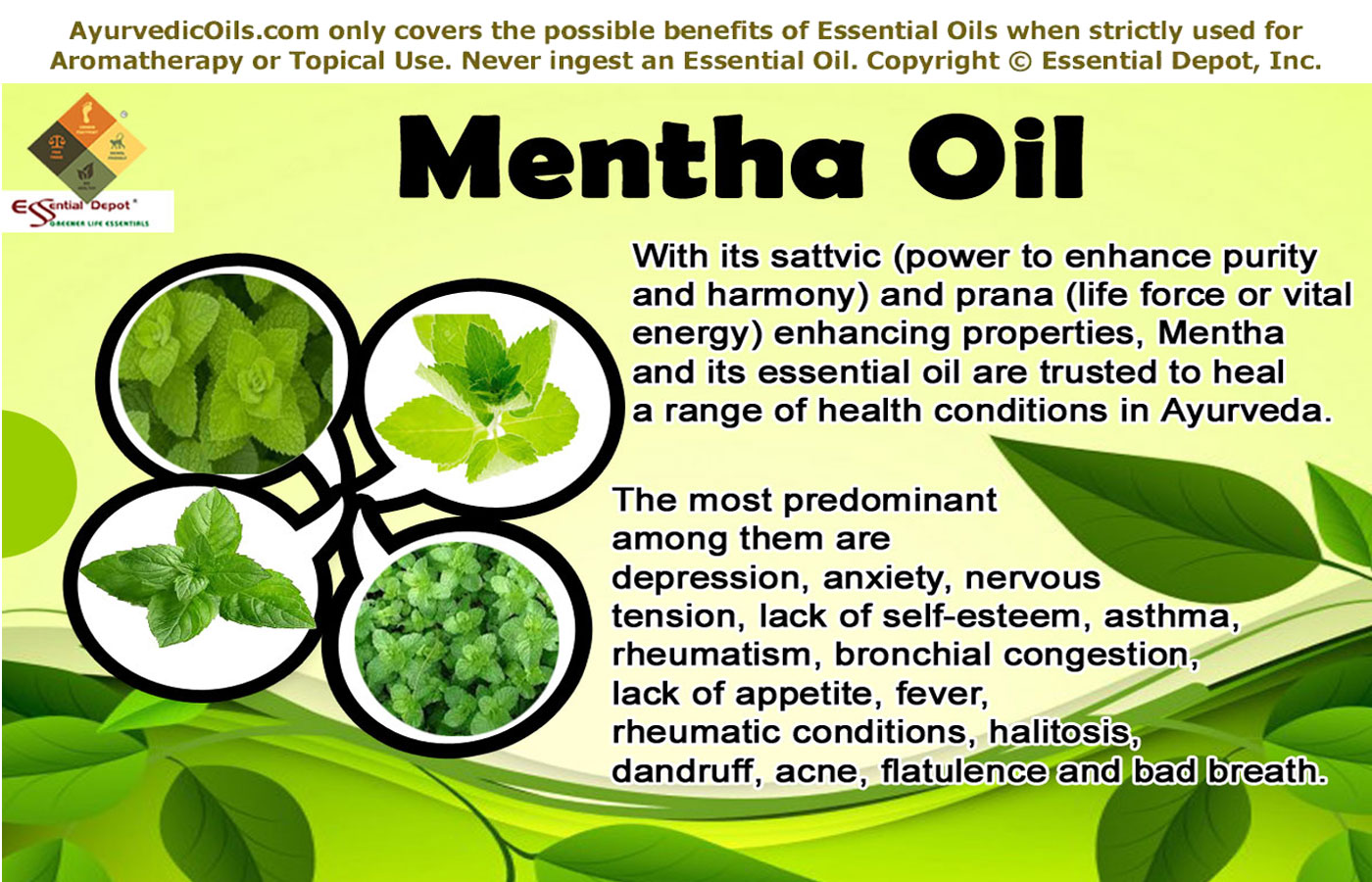
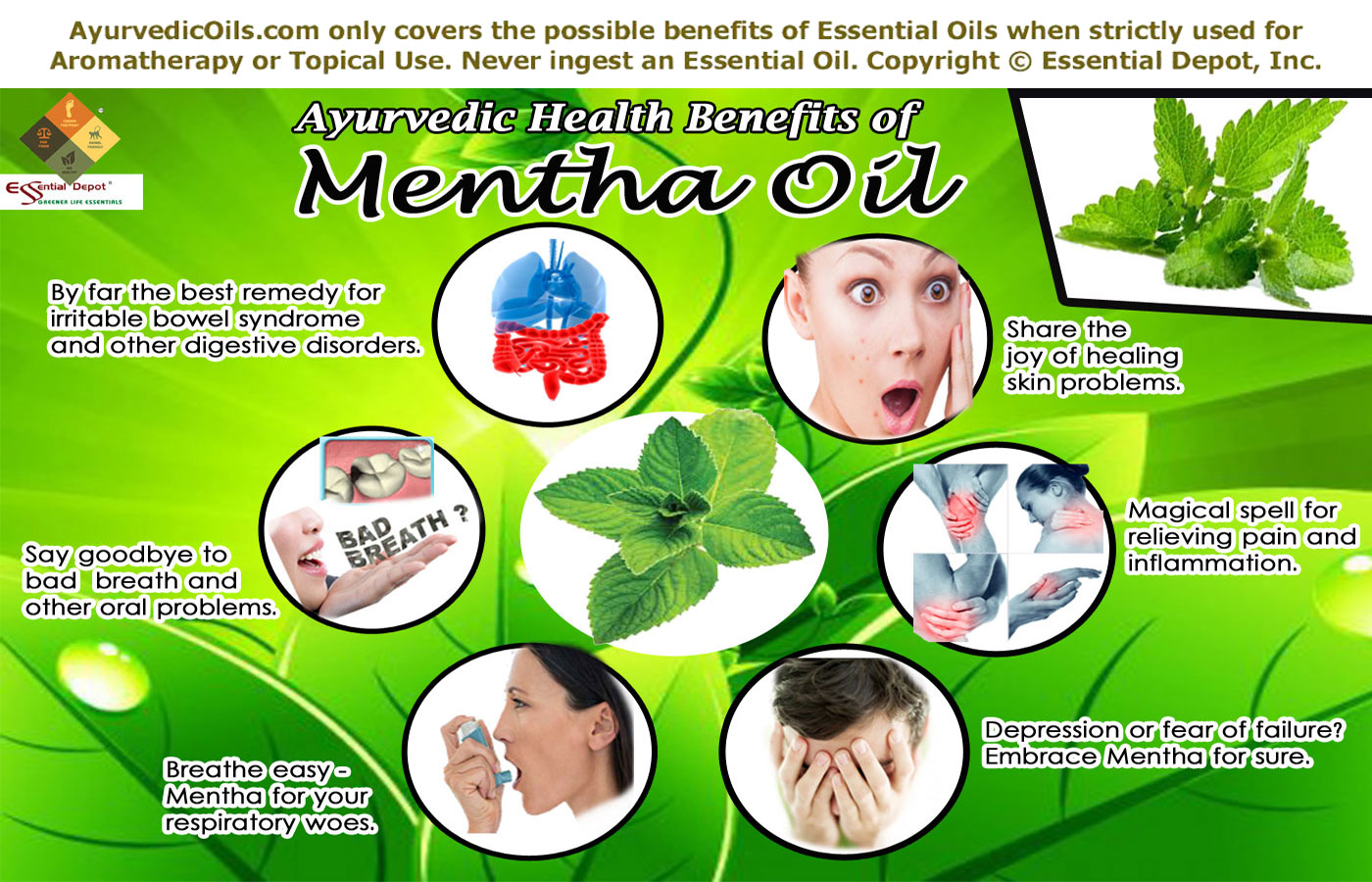
Mentha or mint has a long association with Ayurveda and the other entire Alternative and complementary healing methodologies. With its sattvic (power to enhance purity and harmony) and prana (life force or vital energy) enhancing properties, Mentha and its essential oil is trusted to heal a range of health conditions including depression, anxiety, nervous tension, lack of self-esteem, asthma, rheumatism, bronchial congestion, lack of appetite, fever, rheumatic conditions, halitosis, dandruff, acne, flatulence, bad breath and the list never ends.

Purchase Mentha Essential Oil – Wholesale – CLICK HERE

Purchase Mentha Essential Oil – Retail – 4 oz – CLICK HERE

Therapeutic attributes and chemical constituents of Mentha essential oil:

The essential oil of Mentha has antidepressant, stimulant, carminative, antiseptic, cholagogue, expectorant, antispasmodic, antiphlogistic, antioxidant, stomachic, antimicrobial, nervine, antifungal, analgesic, detoxifying, anti-pruritic, diaphoretic and anti-flatulent properties.

The major chemical constituent of Mentha essential oil is menthol and the other components that make Menthol oil as worthy as its weight in gold are a-pinene, b-pinene, flavonoids, menthone, methyl acetate, limonene, b-caryophyllene and camphene.

History and traditional uses of Mentha and its essential oil:

Mentha is a plant genus in the family of mints known as Lamiaceae. There are about 20 species of plants and hybrid mint varieties in the Mentha genus. The most popular among them are Peppermint, Spearmint, Japanese Peppermint, Banana mint, Penny royal, Garden mint, Apple mint, Orange mint, Water mint, Wild mint, Forest mint and Asian mint.

Mentha arvensis, Mentha piperita, Mentha spicata are the most famous botanical (species) names of the Mentha family. Most often, all the members of this family share common chemical constituents and the corresponding remedial properties mainly due to the qualities acquired from the same genus Mentha (It’s parent).

Mint is the most friendly and quickly growing perennial plant and its origin has been referred to Asia and Europe. The history of ancient medicine has a handful of remedial references on Mentha and its varied significance.

The genus name Mentha has said to be obtained from Greek mythology, where Menthe, a nymph who was transmuted to a plant by Proserpine as a result of his jealousy on the love of Pluto for Menthe. Aha! Moment again and the credit goes to you ladies, as again like most of the tremendous plant varieties, Mint is also a female indeed!!

English physician, Dr. James Parkinson states “Mintes are sometimes used in Baths with Balm and other herbs as a help to comfort and strengthen the nerves and sinews. It is much used either outwardly applied or inwardly drunk to strengthen and comfort weak stomackes.”

“It is comfortable for the head and memory, and a decoction when used as a gargle, cures the mouth and gums, when sore. Garden Mint is most useful to wash children’s heads when the latter are inclined to sores, and Wild Mint, mixed with vinegar is an excellent wash to get rid of scurf. Rose leaves and mint, heated and applied outwardly cause rest and sleep”, says Nicholas Culpepper, the 17th century herbalist and physician.

The book Herball by the famous botanist John Gerard quotes Mint asthe smelle rejoiceth the heart of man, for which cause they used to strew it in chambers and places of recreation, pleasure and repose, where feasts and banquets are made.”

Pliny the elder, the Roman Natural philosopher says “The smell of Mint does stir up the minde and the taste to a greedy desire of meate. It will not suffer milk to cruddle in the stomach, and therefore it is put in milk that is drunke, lest those that drinke thereof should be strangled.”

Mint is a universal herbal remedy for various health problems, where the traditional Romans and Greeks used these miraculous leaves for treating indigestion, colic, pain and respiratory illnesses.

The primordial Europeans used Mint leaves for dealing with gall bladder disorders, flatulence, cough and other digestive mayhems. As a nourishing appetizer, Mint has been used in various mouth-watering dishes across the world including the cuisines of India, Asian subcontinent; Middle East, America and Britain.

Mentha leaves have been used in making traditional tea varieties in India, where mint tea is said to alleviate fatigue, anxiety and instill instant nourishment to the brain. Many research studies conclude that Mentha is a trusted remedy for irritable bowel syndrome.

The essential oil of Mentha has been used in the manufacturing of various things including soaps, dandruff shampoos, acne creams, skin care lotions, jellies, teas, candies, syrups, ice creams and beverages. Mentha is also a noted flavoring ingredient in toothpaste, mouthwash, chewing gums, perfumes, cosmetics, pain balms and vaporizing ointments.

Ayurvedic health benefits of Mentha essential oil:

What is your thought about Ayurveda? What do you really think? Is your mind uttering that it is an ancient science, a traditional healing system, works slowly, needs patience during the healing tenure and at last you soothe stating that you don’t have much time to take up an Ayurvedic treatment.

Is Ayurveda still the “Road not taken” in your life? Then listen to me, you are not too far from attaining a healthy and harmonious life. More than just a medicinal system, Ayurveda is a complete and disciplined way of living. The word ‘Ayur + Veda’ simply means the knowledge of life.

All it needs to take up Ayurveda in your life is to do a thorough self-examination, for understanding your individual constitution (the innate rhythm of your system with nature) contributing to your physical set up, psychological attributes, spiritual element and your behavioral patterns.

You can take the help of an Ayurvedic expert to learn about your doshas and then frame your way of living that strikes absolute balance with nature. Ayurveda recommends Dinacharya or Ayurvedic routine, things to follow in your day-to-day living for prevention of illnesses and increased life span.

The rich historical reference of Ayurveda vests with India for about 5,000 years, where it is believed to be a gift of the Lord of Creation (Brahma) to the Lord of Medicine (Dhanvantari). This sacred science of healing was taken to the next level by the Ayurvedic philosophers Acharya Charaka and Acharya Sushruta, the masterminds behind the Ayurvedic encyclopedias Charaka Samhita and Sushruta Samhita.

According to Ayurveda, every individual is unique with a distinct individual constitution, likewise their health conditions should also be treated in a unique manner even if it is for the treatment of the same sickness.

The first Ayurvedic consultation with your Ayurvedic practitioner helps you to identify your medical history, Prakriti (unique individual constitution – combination of 3 doshas) and the most suitable treatment methodologies exclusively for your physical, emotional and spiritual conditions.

Ayurvedic essential oils (prana or the life force of plants), herbal medications (fresh, dried herbs or herbal infusions), yoga, simple physical exercises, meditation, prayers, Ayurvedic routine, Abhyanga (Ayurvedic massaging), and Pranayama (balanced breathing), Panchakarma (detoxification techniques) are the major Ayurvedic remedies prescribed often.

These medications aim at balancing the doshic irregularities due to changes in lifestyle, code of conduct, food habits, weather and work conditions. Ayurveda recommends the use of Mentha and its essential oil for aggravating vata dosha and pacifying pitta and kapha energies.

The Ayurvedic health benefits of Mentha essential oil are:

  1. By far the best remedy for irritable bowel syndrome and other digestive disorders:
  2. Magical spell for relieving pain and inflammation:
  3. Depression or fear of failure? Embrace Mentha for sure:
  4. Say goodbye to bad breath and other oral problems:
  5. Breathe easy – Mentha for your respiratory woes:
  6. Share the joy of healing skin problems:

Mentha-OIl1. By far the best remedy for irritable bowel syndrome and other digestive disorders:

Pitta dosha is combination of fire and water. This dosha is responsible for metabolic functions, body temperature and cognitive abilities. Pitta dosha is often associated with the stimulation of Agni or the digestive fire.

Pitta vitiation ends up in excessive secretion of gastric juices, digestive acids and other digestive enzymes, which in turn rest on the stomach or intestinal lining. This ends up in gastric ulcer, irritation of the bowel and intestines.

Mentha is known for its potent to pacify pitta or the digestive fire with its cooling and soothing effects. It is for this reason; Mentha and its essential oil are used for treating irritable patterns in the intestines and bowels.

Michael T. Murray, Naturopath and the known author of “The Encyclopedia of healing foods” says that Mentha oil calm down the muscles and walls of the stomach and intestines, which aids in alleviating indigestion, abdominal cramps and pain associated with irritation and irregular bowel movements.

The stimulating, refreshing and energizing aroma of Mentha oil makes it an effective remedy in controlling vomiting (for which it is called as vatihari in Ayurveda, means one that prevents vomiting), bloating and nausea especially during travel. Wearing 2 drops of Mentha oil to your hankie or a tissue and inhaling the uplifting aroma while travelling can pacify the digestive system and protect you from the inconveniences of puking on the go.

A 2010 study published in the “Digestive diseases and sciences” journal has concluded that Mint oil considerably lessened pain in the abdomen and enhanced the lives of people suffering from irritable bowel syndrome.

Massaging your abdomen with 4 drops of Mentha oil, 2 drops of Marjoram oil and 2 ounces of coconut oil can assist in relieving flatulence, bloating, motion sickness, belching, heartburn, abdominal spasms and peristalsis with its stimulant, carminative, antispasmodic, stomachic and anti-flatulent properties.

2. Magical spell for relieving pain and inflammation:

Mentha is absolutely one among the top 10 essential oils for its ability to discard all forms of stagnation in the system including lungs, stomach, gall bladder, kidneys, lymphatic tissues and blood.

According to Ayurveda, stagnation or retention of fluids, toxic remains, salt, uric acid, and fat deposits invite numerous foreign bodies and the corresponding disorders by deteriorating the functions of the system.

Fluid retention is a kapha disorder and is the key to rheumatic conditions, edema, joint pain, obesity, low level of insulin resistance, fibroids, increased blood pressure and heart problems.

With its power to reduce kapha imbalance, Mentha oil assists in treating pain, inflammation and flushing out excess fluids and toxic remains in the system. These remedial benefits are attributed to its anti-inflammatory, analgesic and diaphoretic properties.

A gentle massage with 5 drops of Mentha oil, 3 drops of Ginger oil with 4 ounce of Evening primrose oil can assist in reducing pain by causing numbness in the aching area, eliminating toxic remains and surplus fluids by promoting frequent sweat and urination and soothing the tensed muscles and nerves.

3. Depression or fear of failure? Embrace Mentha for sure:

Stress, depression, anger, fear of failure, feelings of loneliness and other mental worries eats up your intellect and your power to fight back and triumph.

Mentha essential oil has an extraordinarily soothing, invigorating, heartening and reviving aroma that grants you the perfect power of resisting your mental maladies, encouraging your power to rise up, augmenting your intellectual abilities, clearing the mental blocks, calming your nerves and your entire system from within.

Called as Sugandhi patra for its inspiring aromatic leaves, Ayurveda states that Mentha oil has a positive impact on:

  • Throat chakra or Visukthi (genuineness and the power to communicate bravely).
  • Solar plexus chakra or Manipuragam (self-esteem and self-confidence).
  • Sacral chakra or Svathishtanam (pleasure, abundance and well-being).
  • Root chakra or Moolatharam (power of survival).

Adding 2 drops of Mentha oil, 1drop of Vetiver oil and 1 drop of Patchouli oil in your vaporizer, burner or diffuser especially during Pranayama, meditation and prayers can grant in opening, relaxing, clearing and activating all the associated chakras or the points of subtle energy.

This rewards the power of overcoming loneliness, negative emotions and helps in exhibiting the supremacy of being a self-confident, legitimate, intellectual, cool-headed, fearless and productive person. This also helps in enhancing your concentration power, treat memory loss and vent out your hatred feelings and jealousy.

You can also add this blend in your bath or in your aromatic candles before bedtime.

4. Say goodbye to bad breath and other oral problems:

Bad breath or halitosis is not just a symbol of poor oral hygiene. Instead, the common underlying causes are poor digestion and retention of ama or toxic remains in the body.

Mentha essential oil has disinfectant, antimicrobial, cooling, energizing and refreshing attributes that helps in killing germs and microbes responsible for oral problems like gingivitis, cavities, mouth ulcers and bad breath.

Mixing 2 drops of Mentha oil and 1 drop of Lemon oil in a cup of warm water for gargling, preferably twice (morning and night) in a day after brushing can help in healing mouth sores and bleeding gums. It also assists in refreshing the breath and treat cavities, gingivitis (gum inflammation) etc.

5. Breathe easy – Mentha for your respiratory woes:

Trouble-free breathing is a gift to mankind as the healing powers and the life force or prana of Mother Nature enter the system through breathing in and toxins in the system are purged through breathing out.

The essential oil of Mentha has excellent decongestant (attributed to the presence of menthol), expectorant and stimulant properties that help in treating asthma and other breathing difficulties caused due to respiratory conditions.

Steam inhalation with 2 drops of Mentha oil and 2 drops of Eucalyptus oil followed by a gentle massage with this blend added to your mild vaporizing cream can help in opening up blocked nasal and bronchial passages, clearing congestion by loosening the phlegm and mucous deposits, relieving headache associated with sinusitis and migraine and in relieving fever, runny nose, itchy eyes and other associated symptoms of cold.

6. Share the joy of healing skin problems:

Pimples???? No more panics as Mentha promises in clearing excess oil, sebum, dirt and other harmful microbes in the sebaceous glands. It controls the secretion of sebum and allows the skin to nurture from within.

Skin impurities are again a symbol of ama or toxic deposits in the system. Ayurveda states that about 70% of the toxic elements in the body are discarded through exhalation. Wow! Amazing news right!

Just rush to add 2 drops of Mentha oil with 1 drop of Rosemary oil in your burner in the early hours of the day during your Pranayama or the technique of conscious breathing.

As it penetrates deeply with its light and subtle qualities, the therapeutic values of Mentha oil pass through the nasal passages in the form of aromatic molecules and reach the limbic system (control center of the brain).

You can experience the difference in the texture of skin after regular practice of Pranayama with Mentha magic, as all the microbes and toxic substances are washed out during slow and steady exhalation.

You can also add 2 drops of Mentha oil with 2 drops of Lavender oil and 1 ounce of Jojoba oil and dab externally for treating wounds, pimples, cuts, abrasions, itching, candida and other inflammatory conditions of the skin.

Other health benefits:

Mentha and its mystical essential oil are also used in the treatment of dandruff, wrinkles, cancerous growths, cough, insect bites, impotence, hay fever and more.

Disclaimer:

This article is only for the purpose of education. It is not meant for curing any health condition or for replacing any prescription medicines or advice of medical experts. We are not health professionals and this article focuses on widening the horizons of Ayurveda, the mother of all remedial science on earth.

Mentha essential is meant only for topical use. This is due to the fact that pure and organic essential oils are extremely concentrated substances and may cause adverse allergic reactions if used directly on the skin. Do take ingest essential oils.

Consult with your Ayurvedic practitioner or healthcare professional before selecting the appropriate essential oils for your individual constitution and health condition. Care should be taken in using essential oils if you are pregnant or nursing. Keep essential oils away from children.

Thought for the day:

Learn character from trees, values from roots and change from leaves.

-By Tasneem Hameed

Suggested Reading:

  1. Mint: The Genus Mentha (Medicinal and Aromatic Plants – Industrial Profiles) from Brand: CRC Press
  2. Mentha by Dinesh Kumar Singh, Prasann Kumar, Pankaj Kumar Mishra
  3. Growing and Cooking with Mint: Storey’s Country Wisdom Bulletin A-145 by Glenn Andrews
  4. Teas for Life: 101 Herbal Teas for Greater Health by Diane Kidman
  5. Ayurvedic Medicine: The Principles of Traditional Practice by Sebastian Pole

Reference links:

  1. Mentha by Wikipedia
  2. Mint: Health Benefits, Uses and Risks by Medical News Today
  3. Mints by Botanical.com
  4. What are the benefits of Mint leaves? By Tracey Roizman, Demand Media
  5. Studies on activity of various extracts of Mentha arvensis Linn against drug induced gastric ulcer in mammals by Ramesh L Londonkar and Pramod V Poddar, published in PubMed

Cardamom Oil


Cardamom, the ‘Queen of spices’, stimulates the heart and mind and brings in enormous joy and clarity of thoughts. It has been in imperial use since the primordial times for its mammoth healing benefits that serve as a phenomenal tonic, expectorant, cephalic, antispasmodic, stimulant and as a promising digestive agent.

Cardamom-bannerBotanically named as Elettaria Cardamomum, Cardamom is well identified by its small seed pods with an outer shell enclosing the small black seeds from which its essential oil is extracted by steam distillation.

Lovingly called as Ela and Truti in Sanskrit, Cardamom has been widely used in Ayurveda for its aromatic and medicinal attributes in the treatment of impotence, bronchitis, indigestion, hoarse voice, vomiting, asthma, blood pressure, poor absorption, cold, cough, bad breath, loss of taste, nervous digestive upset and mood fluctuations.

As an invigorating agent for the central nervous system, Cardamom essential oil induces a sense of harmony and supports absolute fitness.

Purchase Cardamom Essential Oil – Wholesale – CLICK HERE

Historical uses and importance of Cardamom and its essential oil:

Owing its origin to the Asian countries such as India, Bhutan, Nepal and Pakistan, Cardamom is a universal spice and is a member of the powerful Ginger family, Zingiberaceae. Rich in nutritional and healing properties, Cardamomis the third most expensive spice in the world standing next to saffron and vanilla.

It is crowned as a medicinal herb in the Indian Ayurvedic healing methodology, dating back to 4th century B.C; Cardamom has carved its name in Charaka Samhita – the Ayurvedic encyclopedia, for its application in the preparation of various medicaments.

Cardamom was an important part of the Roman and Greek trade and has numerous historical accolades. Believed to have been grown in the hanging gardens of Babylon, Cardamom has been mentioned in the works of Dioscorides, Theophrastus and even in the ancient Indian sacred books known as Vedas.

Arabic medicine portrays Cardamom seeds as the best aphrodisiac and mood elevator while the Chinese medicine predominantly used Cardamom for intestinal infections, stomachic problems, gastrointestinal disorders, constipation and dysentery.

In folklore medicine, digestive disorders were treated with a herbal drink made by boiling roasted Cardamom seeds along with betel nuts. Being an active ingredient in cough drops, Cardamom was administered nasally along with camphor and neem to treat cold. It is a natural mouth freshener.

Cardamom is an antidote to caffeine and it detoxifies the caffeine in coffee and is used in making tea to relieve the symptoms of headache and stress and these seeds were taken along with honey to improve the eyesight.

The traditional Indians used Cardamom as an antidote for poisonous bites like scorpion stings and venomous snake bites. These seeds and its oil were also used for treating respiratory ailments, gastrointestinal disorders, inflammation of the eyelids and oral infections.

Being transported from East to Europe, Cardamom was highly valued as a tonic and as an aphrodisiac agent, which was used in love potions. The western world uses Cardamom for its unique aroma and sedative properties.

Chemical constituents and therapeutic properties of Cardamom essential oil:

Consisting a majority of monoterpenes with the predominant one being 1, 8-cineole, Cardamom essential oil also comprises of esters, alcohols and sesquiterpenes that includes limonene oxide, α-terpinene, neryl acetate, formic acid, α-pinene, camphene, caryophyllene oxide, nerolidol, β-pinene, sabinene, citronellal, α-terpineol, cis-ocimene, geranyl acetate, linalool, isomenthol, 4-terpineol, nerol, thymol, α-terpinyl acetate, α-guaiene, β-myrcene.

The therapeutic properties of Cardamom essential oil are carminative, digestive, antiseptic, stimulant, tonic, antispasmodic, cephalic, diuretic, stomachic, analgesic, expectorant, antifungal, astringent, antibacterial, aromatic, diaphoretic, antioxidant, cooling, anti-platelet aggregation, anti-hypertensive and aphrodisiac. 

Ayurvedic health benefits of Cardamom essential oil:

Ayurveda is a virtuous medical discipline that believes that every being on earth is a part of Mother Nature and it states that one’s wellness indicates absolute balance with nature and sickness symbolizes imbalance with nature. Ayurveda is a 5,000 year old healing system that has its medicinal practices recorded in Atharvana Veda, one among the 4 sacred books of India, where about 114 verses in this book talk about various illnesses and their Ayurvedic remedies.

Charaka, the father of medicine and Sushruta, the father of surgery were the most famous Ayurvedic physicians and they wrote the Ayurvedic texts namely Charaka Samhita and Sushruta Samhita. Charaka says “The three – body, psyche, and soul – act as a tripod. The world stands upon them, and within them, the world abides.” According to Ayurveda, human body is a temple where the spirit lives in. It strongly recommends on keeping the body, mind and spirit pure and tranquil just like maintaining a place of worship.

Ayurveda is called as the mother of all the other healing sciences on earth and is a holistic system that states ‘perfect health is being fit physically, mentally, emotionally and spiritually.’

Every individual is approached in a unique manner even if they are affected by the same illness because Ayurvedic philosophy recognizes every human being as a distinct part of nature with a unique individual constitution, which comprises of three dynamic biological energies known as doshas. They are vata, kapha and pitta.

Ayurvedic doshas administer various functions, where vata governs the functions of the circulatory system, nervous system and respiratory system, kapha is responsible for the activities of the reproductive system, movement of fluids in the body, physical build up and sustenance and pitta dosha controls the body temperature and metabolic functions.

Every individual has a predominance of any one these doshas, which decides one’s figure, personality, mental attributes and behavioral patterns. Balance between these doshas indicates health and imbalance of these biological energies pave way to diseases. Ayurvedic remedies focus on correcting the dosha imbalances with the help of herbs, essential oils, simple physical exercises, Ayurvedic routine, yoga, prayers, meditation and Pranayama.

Ayurveda prescribes Cardamom to treat cardiovascular problems, bronchial disorders and digestive problems. Light Miller and Bryan Miller in their book Ayurveda and Aromatherapy say “Cardamom is good for treating high vata, as it kindles Agni or digestive fire and removes excess kapha from the stomach and lungs.

Its quality is sattvic and it is particularly good for opening and soothing the flow of the pranas in the body”.

Let’s have a look at the Ayurvedic health benefits of Cardamom essential oil.

Cardamom-broucher1. Combats against infections with strong anti-microbial properties:

With the increase in the food borne diseases caused by pathogens such as bacteria, there is an increase in the urge for searching natural antibacterial agents with maximum benefits and minimum side effects.

With monoterpenes, sesquiterpenes and flavonoids, Cardamom essential oil possesses strong antimicrobial activity inhibiting the growth of numerous harmful micro organisms that cause spoilage of food. Many researches on the anti-microbial attribute of Cardamom essential oil states that it shows significant inhibitory activity against various common pathogens when compared to Fluconazole and tetracycline.

The aqueous and the methanolic extracts of Cardamom essential oil inhibited the growth of gram-negative bacteria such as Escherichia coli, Bacillus subtilis, Staphylococcus aureus, Salmonella typhi, Streptococcus pyogenes and Bacillus cereus.

It has been proved effective to use the essential oil of Elettaria Cardamomum in treating various infectious ailments caused by the harmful pathogens. This attribute is also applied in preserving the food items, thus proving greatly beneficial to the manufacturers of stored food products.

Terpinen-4-ol contributes to the effective antifungal attribute of Cardamom essential oil making it active against various infectious fungi that include Candida albicans, Aspergillus niger, A.flavus and A.fumigatus, thus proving effectual in treating yeast infections and urinary tract infections.

It has been proved that Cardamom essential oil results in yielding satisfactory results in inhibiting the growth of bacteria, mold, fungus and viruses when compared to the other antifungal pharmaceuticals. 2 drops of Cardamom essential oil added to warm bathing water or 2 drops of this oil mixed with 2 drops of Neroli oil and 2 ml of coconut oil can be applied on the affected parts for quick relief.

2. Rich source of antioxidant to fight against cancer:

Free radicals are always hazardous in a number of ways, leading to premature aging and even some fatal diseases including cancer. With natural phyto-chemicals such as di-indolylmethane and Indole-3-carbinol, Cardamom essential oil helps in augmenting the levels of glutathione, a natural antioxidant found in human body. Moreover it helps in combating against cancers responding to the hormone regulation such as breast, ovarian and prostate cancer.

It possesses chemo-preventive quality, resulting in a significant reduction in the weight and diameter of the tumor, tumor yield, cumulative number of papillomas and the values of tumor incidence and considerable elevation in the level of glutathione in mice with chemically induced skin carcinogenesis serving as the best anti-tumor and anti-cancer agent.

In addition to the phyto-nutrients, Cardamom essential oil is rich in vitamins B, C, protein and iron that make it a complete scavenger of free radicals resisting the aging process right from the cellular level and enhances the immunity.

It possesses anti-tumor, anti-inflammatory and anticancer qualities, helping in significantly reducing the production of nitric oxide by macrophages that act as one of the primary inflammatory mediators. Moreover, it enhances the cytotoxic activity of the natural killer cells found in the human body, building up a preventive shield against cancer.

Few valuable sources also state the positive outcome on using Cardamom essential oil in suppressing the cell proliferation in Swiss albino mice with chemical induced colon carcinogenesis proving its efficacy in treating colorectal cancer. Mix 2 drops of Cardamom essential oil with 2 drops of Orange oil along with 2ml of jojoba oil and massage it gently on wrinkles and other aging symptoms caused due to free radicals.

You can also massage your system with 5 drops of Cardamom oil along with 5 drops of Cedarwood oil blended with 5 ml of Olive oil to combat free radicals, reduce the size and severity of existing malignant tumors and invigorate the cellular structure.

3. Natural insect repellent:

With high concentrations of monoterpenes such as cineol and terpineol, Cardamom essential oil serves as an effective natural repellent for insects and pests. As per a 2011 research article, this oil was found to possess strong repellent, ovicidal, biocidal and anti-feeding attributes against the red flour beetle, Tribolium castaneum, the bruchid beetle, Callosobruchus maculates and the flour moth, Ephestia Kuehniella, all of which target the stored products.

Moreover Cardamom essential oil is highly toxic to the adults of T.castaneum and Sitophilus zeamais, which attack the food grains such as wheat. It restrains the egg hatching and the larval stage of T.castaneum proving its ovicidal attribute. This volatile oil also actively prevents the oviposition of C.maculates in mung seeds. Few notable sources mention the acaricidal effect of Cardamom oil with 100% mortality rate against Dermanyssus gallinae, the poultry red mite.

The power of Cardamom essential oil in suppressing the development of adults from the treated eggs remains as the major factor behind its insecticidal quality. Cardamom essential oil serves as a natural source of insect repellent devoid of hazardous side effects, used in protecting the food grains stored in enclosed rooms, storage bins etc.

4. Alleviates stomachic and gastro-intestinal disorders:

Cardamom essential oil is a natural digestive aid since antiquity. It acts as an excellent appetizer, eminent stomachic agent during meal and a great mouth freshener after meal. A herbal tea made of Cardamom, ginger and fennel serves as a natural digestive tonic and a great cure for indigestion.

As an excellent digestive enhancer of all types of food, it produces an energizing effect in the body helping in the stimulation and habitual excretion of gastric juices and other acids in the stomach that aids in alleviating heartburn by balancing the acid level. Cardamom essential oil kills the bacteria in the mouth and prevents one from bad breath and treats the symptoms of flatulence and gastric disturbances.

With its antispasmodic attribute, it relives you from hiccups and alleviates the intestinal cramps caused due to involuntary muscle spasms. With natural phyto-nutrients, it helps in overcoming the effect of overeating and aids you in fighting against the outcomes of gluten intolerance benefiting those with celiac disease. Cardamom essential oil showed significant results in inhibiting the gastric lesions induced by aspirin and ethanol in rats. It protects the mucus wall and aids in maintaining normal levels of gastric acid.

2 drops of Cardamom oil added to a cup of warm water can be used as a gargle especially in the morning or before going to bed or even after heavy meals to completely kill microbes in the mouth and grant refreshing breath. 2 drops of Cardamom oil along with 2 drops of Ginger oil mixed with 2 ml of sesame oil can be massaged on your abdomen for getting rid of gastrointestinal problems, diarrhea, nausea, indigestion, headache, nervous digestive upsets, morning sickness, colic and vomiting.

5. Naturally detoxifies the body:

Cardamom essential oil is an effective diuretic and detoxifier that protects human beings from the ill effects of toxin accumulation in the entity resulting to various simple and serious impacts such as premature aging, rheumatism, improper functioning of the organs and some fatal ailments like cancer.

With its natural antioxidants, monoterpenes and flavonoids, this oil is an eminent diuretic helping in releasing the excess water deposits in the body through sweat and urine. It promotes the process of urination and increases the urine output creating a channel to get rid of toxins such as water, fat, acids, calcium deposits, urea and sometimes stones to build a combative cover against obesity due to water stagnation and its risk factors such as hypertension, blood pressure and cardiovascular disorders.

Cardamom detoxifies the caffeine element in coffee and this combination of Cardamom and coffee is called as ‘gavah’ and is of renowned importance in the Arabian culture, where it is considered as a symbol of warmth and generosity. This aromatic oil warms up the body, aids in opening the sweat pores and maintaining the normal body temperature.

The removal of excess toxins with ease and comfort poses fewer burdens on the vital organs such as kidney and liver. It leads to perspiration and its high fiber content along with the detoxifying quality helps in significantly lowering the blood pressure.

Blend 5 drops of Cardamom oil with 5 drops of Jatamansi oil along with 5 ml of coconut oil and gently massage your system, followed by a warm bath diluted with 2 drops of Cardamom oil for eliminating the toxic substances in the body, reducing uterus inflammation, combating the infections in the urinary tract, strengthening the bladder in addition to treating involuntary urination and bedwetting in children and elderly people.

6. Relieves respiratory problems:

Cardamom essential oil works wonders in regulating the blood circulation and rejuvenating the entire system. Traditional healing therapies used Cardamom essential oil in the treatment of bronchitis, whooping cough and asthma for it is known to improve blood circulation in the lungs.

As a natural expectorant with balsamic aroma, it helps in breaking up even the heavy deposits of mucus and phlegm and relieves you from congestion in the lungs and sinuses.

Just inhaling the vapors of Cardamom oil by adding 3 drops of this oil in steam inhalation can alleviate the symptoms of congestion, cold, chest infections, flu, chronic cough and headache. 1 drop of Cardamom oil along with 1 drop of Cinnamon oil added to gargle relieves you instantly from sore throat and pharyngitis.

The anti-mucus action of this oil helps in rejuvenating the spleen and makes it an active component of medicaments for congestion. With this property, Cardamom pods are often included in milk products for its ability to counteract the mucus forming attribute of milk.

7. Lessens tension:

Cardamom oil has cineole, which is a central nervous stimulant aids in soothing the nervous system, calming down the muscles, alleviating tension and instilling mental peace and clarity. Just adding 4 drops of Cardamom oil to the bathtub relieves you from stress, depression and combat body aches and discomfort. It enhances the potency of the nerves and relieves you from physical and emotional discomforts thus rejuvenating the inner spirit and inducing a serene state of mind by lifting up the spirits.

Cardamom essential oil has been proved as an anti-depressant agent owing to its sedative effect in humans. With limonene as a mild tranquilizer, it diverts the mind and helps one to quit the addictions to awful habits such as tobacco chewing, alcohol and smoking.

Cardamom essential oil has gained global recognition for its sweet aroma and positive effects on the brain and the nervous system. Inhaling the aroma of 1 drop of Cardamom oil, 1 drop of Ylang Ylang oil and 1 drop of Neroli oil added to diffuser or vaporizer can assist in relieving one from anxiety, fear, nervous wreck down and lethargy. It is highly recommended to students for its potent to increase the concentration and improve intellectual power.

8. Rich source of nutrition for the total system:

With its enormous healing attributes, Cardamom essential oil is a valuable source of iron, manganese, calcium, potassium, magnesium, niacin, riboflavin and Vitamin C. All these vital components help in boosting up the overall health of a person.

It boosts up the immune system, helps in the generation of red blood corpuscles, and initiates the cellular energy metabolism, aids in maintaining the cardiovascular health and in promoting healthy heart rate, blood pressure and fluid levels in the body. Moreover, its rich nutrients contribute in maintaining healthy skin and hair.

2 drops of Cardamom oil along with 2 drops of Lavender oil added to your bath daily can aid in maintaining healthy skin. The antiseptic and antimicrobial properties cleanse the skin naturally and help in treating various skin infections. It rejuvenates the skin, opens up the pores and prevents the onset of acne and pimples.

Other health benefits of Cardamom essential oil:

Cardamom essential oil acts as a natural oral aid treating mouth ulcers, halitosis, oral infections of teeth and gums and toothaches. Vocalists use Cardamom oil to tone up their voice. This oil can keep you away from scalp infections, dandruff and maintain a healthy, lustrous hair.

It can act as a peroxide booster along with honey and Cinnamon in distilled water to lighten the skin without any side effects. It prevents platelet aggregation and aids in preventing blood clots that can be dangerous in certain cases. Cardamom oil is also used as an aphrodisiac alongside pepper, onion and nutmeg to alleviate impotence and other sexual concerns.

Disclaimer:

This is only for information and educational purposes and is not intended to treat, diagnose or prevent any health condition or replace with any prescribed medications or professional medical advice. We are not healthcare professionals and this data is shared only with the interest of spreading the traditional values and curative benefits of Ayurveda, the mother of all healing sciences on earth.

Never ingest essential oils and do remember to dilute them with appropriate carrier oil before using it on the skin externally as pure and organic essential oils are highly concentrated liquids and might have a tendency to cause allergies if used directly on the skin. Make sure that you consult your Ayurvedic practitioner/healthcare expert before choosing the correct essential oil for your medical condition and unique individual constitution.

Thought for the day:

Every particular in nature, a leaf, a drop, a crystal, a moment of time is related to the whole, and partakes of the perfection of the whole.

-Ralph Waldo Emerson

Suggested Reading:

  1. The Magic of Cardamoms For Cooking and Health (Health Learning Series) by John Davidson, Dueep J. Singh
  2. Aushadh Rahasya: The Secret of Ayurvedic Herbs and Disorders of the Mind by Rodney Lingham
  3. Cardamom: The Genus Elettaria (Medicinal and Aromatic Plants – Industrial Profiles) from CRC Press
  4. Cardamom Tea, A Secret to Longevity (Chinese Edition) by shu xin cheng
  5. Living Well With Cancer by Katen Moore, Libby Schmais

Reference Links:

  1. Cardamom by Wikipedia
  2. Fumigant toxicity and oviposition deterrency of the essential oil from Elettaria Cardamomum, against three stored-product insects published in PubMed.
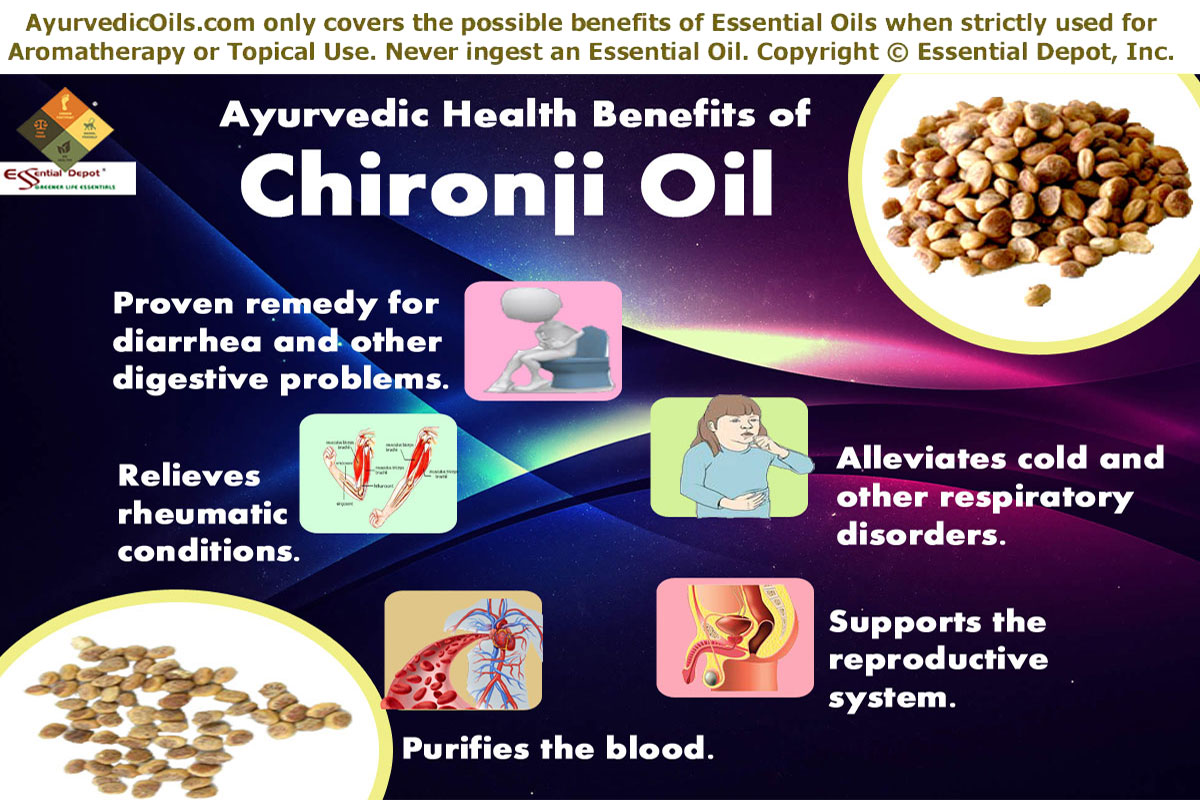
  3. The In Vitro evaluation of antibacterial potential of dry fruit extracts of Elettaria Cardamomum published in PubMed.
  4. A 2010 research article on the in vitro investigation of the potential immunomodulatory and anti-cancer activities of black pepper (Piper nigrum) and Cardamom (Elettaria Cardamomum)

Chironji Oil


Often used as a substitute for almonds, Chironji is an almond-flavored nut with blood purifying and life force enhancing qualities. Called as Charoli or Chironji in Ayurveda, these dried modest seeds have been in use in the Ayurvedic medicine for treating digestive disorders like diarrhea, ulcers and irregular bowel movements.

Chironji-bannerIt was also recommended to enhance the secretion of semen, increase vigor and vitality, reduce fever, clear acne, skin blemishes, cold and blood disorders. Chironji oil is extracted from the dried seeds by steam distillation method and is scientifically called as Buchanania lanzan.

Purchase Chironji Oil – Wholesale – CLICK HERE

Historical importance and uses of Chironji:

Chironji is a medium-sized evergreen tree that grows up to 15m height. This tree is indigenous to India and is found growing widely in Nepal, Malaysia and Burma. The dry forests of Madhya Pradesh, Mirzapur and Varanasi districts of Uttar Pradesh, Jharkhand and Chattisgarh are the natural Chironji growing hubs of India. It is a member of the Anacardiaceae plant family and is also known as Almondette tree. Chironji is also called with other names such as ‘Cuddapah almond, Charooli, and Chirolo.’

The seed kernels of this tree contribute to about 52% of oil and are often used as a substitute for almond oil and olive oil. Chironji nuts gained favorable demand in the foreign market and has been nurtured by the Indian government as a reliable source of earning foreign exchange.

Ayurvedic medicine uses all the parts of this tree including its bark, fruits, roots, leaves, nuts and kernels for its varied medicinal properties in treating cold, bowel disorders, premature ejaculation, fever and rheumatism.

Charoli seeds are a popular ingredient in Indian sweets (Chironji ka Barfi, piyush, shrikhand, kheer and halwa), meaty kormas, lamb pepper with Chironji, Gajar ka Meetha, Hyderabadi Haleem, Charoli mutton, Malai kofta and as a flavoring for batters and sauces.

The gum extracted from the bark of this tree and powder of the roots and dried leaves mixed with buttermilk is a traditional remedy for treating diarrhea.

In the folklore medicine of Andhra Pradesh, Chironji gum was mixed with cow’s milk for relieving rheumatic pain and they also used the leaves as a tonic for supporting cardiac functions. The leaf powder was also used in encouraging quick healing of wounds.

Powdered seeds blended with milk and turmeric powder is used in India since as a natural face pack for augmenting the glow, complexion and suppleness of the skin. The juice or the decoction of the Chironji leaves is being used in Unani medicine for purifying the blood, treating loss of libido, impotency and also as a tonic for the digestive system.

Therapeutic properties and chemical constituents of Chironji oil:

The major therapeutic values of Chironji oil are carminative, expectorant, diuretic, aphrodisiac, relaxant, antiseptic, anti-inflammatory and stimulant. The chemical components of this oil are camphene, a-pinene, y-terpinene, b-pinene, myrcene, 8-cineole, sabinene and triglycerides like triolein, dipalmitoolein and dioleopalmitin.

Chironji seeds are a powerhouse of various nutrients like proteins, fiber, vitamin C, B1 and B2, carbohydrates, amino acid, iron, maleic acid, cardanol, linoleic acid, niacin, calcium and few water soluble extracts.

Ayurvedic health benefits of Chironji oil:

Ayurveda means ‘the knowledge of life’ and the greatest thing that has made this science as an admiration to the entire world is its disciplinary approaches that tend to mold the individual on all aspects of life including the physical, mental and attributes of the soul.

The most celebrated Ayurvedic Physician Mr. Vasant Lad says in his Textbook of Ayurveda as, “Ayurveda treats the whole person, not just the organ or system involved.”This clearly depicts that Ayurveda is a holistic healing science that deals with an individual and not just with his ailments.

It follows nature’s system of handling health and harmony leading to disease-free living, healthy aging and expanded life span. Ayurvedic healing identifies the root cause of an illness for preventing it in future and never believes in treating the symptoms alone. The National Institute of Health rightly quotes “The aim of Ayurvedic medicine is to integrate and balance the body, mind, and spirit. This is believed to help prevent illness and promote wellness.”

Ayurveda respects every individual as a unique creation and a vital part of nature. This makes the Ayurvedic treatment methods different for every individual even if a group of people are affected by same sickness.

The ancient Ayurvedic texts like Charaka Samhita and Sushruta Samhita say that all things in the universe are made up of five elements of nature namely water, earth, space, fire and air and every human being is distinct with a unique individual constitution, which comprises three biological energies known as doshas. These dynamic forces (doshas) are an arrangement of these vital elements.

Pitta dosha is a representation of fire and water and takes care of metabolism, cognitive functions and body temperature. Vata is a grouping of air and space and controls the working of the respiratory system, circulatory system and nervous system. Kapha dosha represents water and earth and is in charge of movement of fluids in the system, physical set up and nourishment.

Every person has a predominance of any one dosha, which decides their individuality and behavioral traits. Perfect balance between these doshas as per the natural set up denotes health and imbalance due to improper food habits, change in lifestyle and climatic conditions leads to illnesses.

Ayurveda recommends natural remedies like herbs, essential oils, Ayurvedic routine, yoga, simple physical exercises, prayers, Ayurvedic massage, meditation and Panchakarma (detoxification therapies) based on the individual constitution to treat imbalance of doshas. Chironji oil is said to pacify kapha and vata and has a neutral effect on pitta dosha.

Let’s take a look at the Ayurvedic health benefits of Chironji oil:

chironji-broucher1. Proven remedy for diarrhea and other digestive problems:

Diarrhea is called as Atisara in Ayurveda and it can also be caused due to toxins and psychological factors. Generally, accumulation of dampness caused by pitta instills a mild tendency on the colon and causes diarrhea. Ayurveda states that diarrhea may also be due to high toxic deposits or ama in the system, accumulation of water and increased vata or air in the body.

Chironji oil has the tendency to reduce kapha and vata and helps in eliminating the toxins or ama in the body, excess air and water retention. Adding 3 drops of Chironji oil in cool bathing water can help in relaxing the lining of the stomach and intestines, binding the stools and regularizing the bowel movements.

Inhaling the aroma of this oil by adding 2 drops to your diffuser or vaporizer can aid in overcoming loss of appetite. Massaging your abdomen with 5 drops of Chironji oil mixed with 2.5 ml of coconut oil can improve metabolism by acting as a tonic for digestion. Drinking a glass of buttermilk seasoned with 1 teaspoon of cumin seeds and coriander leaves can be of great assistance in treating all kinds of digestive woes.

2. Alleviates cold and other respiratory disorders:

Common cold and respiratory problems in general occur due to the vitiation of kapha dosha, which is responsible for stagnation of water in the body, toxic deposits and development of phlegm and mucous in the system.

Chironji oil has expectorant properties with its power to decrease kapha energy. 2 to 3 drops of this oil added to steam inhalation and massaging your throat, chest and back with 2 drops of Chironji oil mixed with your vaporub can help in loosening the mucous and phlegm deposits, relieving chest congestion, nasal congestion and common cold accompanied with runny nose and watery eyes.

3. Supports the reproductive system:

Chironji oil is a time-honored remedy for treating problems associated with sexual and reproductive functions. These seeds have aphrodisiac properties that help in treating impotence, loss of libido, lack of sexual interest, premature ejaculation and boost strength. Chironji seeds are being used in Maharashtra, India in preparing sweets and nutritious drink for the newlywed couples to maintain vitality and enhance their reproductive ability.

Massaging your body with 20 drops of Chironji oil with 3 drops of Cinnamon oil and 2 drops of Ylang Ylang oil can help in augmenting your sexual interest, grant lasting pleasure, and treat premature ejaculation and impotency by increasing vigor and the count of blood cells.

Adding 3 drops of Chironji oil to your bathing water and 2 drops of Chironji oil with 2 drops of Rose oil put in your diffuser can grant peace, reduce fatigue and treat mood swings.

4. Purifies the blood:

Chironji is used in Unani medicine as a blood cleanser. It has a positive effect on the mind and body and enhances proper blood circulation. Stress and metal worries also contribute to building up of toxins by stimulating the secretion of cortisol, also known as stress hormone in the bloodstream.

A 2012 study on ‘Adaptogenic activity of methanolic extract of Buchanania lanzan’, an experimental study in the rat model concluded that Chironji has antistress or adaptogenic activity. Massaging your body with 10 drops of Chironji oil blended with 5 drops of Lavender oil and 10 ml of coconut oil helps in augmenting the count of blood cells, enhancing positive feelings, calming the mind and eliminating toxic substances in the blood.

5. Relieves rheumatic conditions:

Rheumatism is caused by kapha aggravation leading to sluggishness, water stagnation, building up of salt, uric acid, fatty substances and toxins especially in the joints causing swelling, pain, redness and irritation. Chironji oil reduces kapha dosha and assists in discharging excess deposits of water, uric acid, salt and toxins in the body through urine.

Its diuretic properties promote the quality and frequency of urination and its anti-inflammatory along with its analgesic attributes aid in reducing swelling and pain associated with rheumatism. Massaging the affected parts with 5 drops of Chironji oil, 2 drops of Peppermint oil along with 4 ml of sesame oil can assist in alleviating rheumatic problems.

Other health benefits:

Chironji oil is also used in treating wounds, fever, ulcers, pimples, skin blemishes, glandular swelling of the neck, itching, exhaustion and biliousness.

Disclaimer:

This piece of writing is only for the purpose of education and is written wholly in the concern of sharing the long-established insight of Ayurveda, the mother of all healing sciences. It is not intended to prevent or diagnose any disease or health conditions or to substitute any kind of expert medical advice or prescribed medications.

Do not use essential oils internally. Always ensure that you dilute essential oils in suitable carrier oils before using it for topical application, as pure and organic essential oils are highly concentrated substances. Consult your healthcare professional/Ayurvedic practitioner before choosing the right essential oil for your unique individual constitution and medical condition.

Thought for the day:

Nature does not hurry, yet everything is accomplished. -Lao Tzu

Suggested Reading:

  1. The Secret to Great Health – The Vedic Health Code by Swami Ram Charran
  2. The Modern Ayurveda: Milestones Beyond the Classical Age from CRC Press
  3. Handbook of Nuts: Herbal Reference Library by James A. Duke
  4. Unsaponifiable Matter in Plant Seed Oils by Didier Fontanel

Reference Links:

  1. Buchanania lanzan by Wikipedia
  2. Charoli by Only Foods.net
  3. Diarrhea by Baidyanath Ayurveda
  4. Chironji nut (Buchanania lanzan) processing, present practices and scope by the Agricultural and Food Engineering Department, Indian Institute of Technology, West Bengal published in the Indian Journal of Traditional Knowledge
  5. Adaptogenic activity of methanolic extract of Buchanania lanzan leaves an experimental study in rat model by Shalini Kapoor Mehta, Navpreet Bains and Naira Nayeem, GHG Khalsa College of Pharmacy, Ludhiana published in Pelagia Research Library