Tag Archives: Ayurvedic oils for cancer

Linseed Oil

Your heart would skip a beat, if I say that about 72,000-96,000 deaths happen in the United States every year due to Omega-3 deficiency. (A Harvard Study on ““The Preventable Causes of Death in the United States: Comparative Risk Assessment of Dietary Lifestyle and Metabolic Risk Factors.”)

Linseed-bannerLinseed also called as Flaxseed is rich in Omega-3, where 55% of Flaxseed oil is dominated with the presence of Omega-3. It is a fatty acid that helps in fighting against heart attacks, high blood pressure, increased levels of cholesterol, free radicals causing cancerous growths, stress, hypertension, weak immunity and more.

Known as Rudrapatni, Masruna, Kshama and Neela in Sanskrit, Flaxseed and its oil has been used for more than 5,000 years in Ayurveda for treating obesity, high blood pressure, excess cholesterol, arthritis, paralysis, bloating, wounds, neuralgia, hemorrhoids and constipation.

Purchase Linseed Oil – Retail – 4 oz – CLICK HERE

Purchase Linseed Oil – Wholesale – CLICK HERE

Chemical constituents and remedial properties of Linseed oil:

The oil of Flaxseed contains about 50% of alpha-linoleic acid along with oleic acid, p-coumaric acid, stearic acid, palmitic acid, arachidic acid, cyanogenic glycosides, sitosterol, campesterol, phytosterols and linoleic acid.

Cardio-tonic, expectorant, nervine, antioxidant, immune stimulant, purgative, cicatrisant, analgesic, expectorant, anti-inflammatory, laxative, demulcent, emollient, hepatoprotective, antimicrobial and antifungal are the predominant remedial values of Flaxseed oil.

Flaxseed is rich in lignans, which contain antioxidant and plant estrogen qualities. Trusted sources state that Flaxseed has 75 – 800 times extra lignans than all other plant food varieties.

Omega-3 essential fatty acid is heading the health benefits of Flaxseed with its extremely beneficial effects on heart and its power to resist the incidence of cancerous tumors, discard toxins and bad cholesterol in the system.

According to the Flax Council of Canada, the nutritional profile of Flaxseed oil constitutes of Omega-3, Omega-6, Omega-9 fatty acids and certain other healthy nutrients.

This report also states that Linseed contains Vitamin B1, B2, B3 and B5 along with calcium, magnesium, zinc, selenium, phosphorus, iron, manganese, potassium, about 29% of carbohydrates, 18% of protein and a massive 95% of fiber.

Historical uses and importance of Linseed and its oil:

Flaxseed has a rich history of being used since the ages of Acharya Charaka, the most trusted Ayurvedic philosopher and the author of Charaka Samhita, the pioneering Ayurvedic encyclopedia.

With Linum ustitissimum as its scientific name, Linseed is a limb of the plant family, Linaceae.

The most persuasive thing that I observed about Linseed is that the special Sanskrit names of this magical herb. Names like Rudrapatni, Uma, Parvati, Masruna, Suvarchala, Venu, Kshaumi, Kshama and Kshuma are all female names.

Among which Uma, Parvati and Rudrapatni exhibit absolute power and supremacy as all the three indicate the Indian Hindu Goddess Parvati Devi, the wife of Shiva, the Supreme God adorned as the ‘Transformer’ or the ‘Destroyer’.

This vivid long-established proof is more than enough to understand the glorious healing benefits and the dominance of Flaxseed in curing and benefitting mankind.

The book ’20,000 secrets of Tea’ by Victoria Zak quotes Flax as “Flaxseeds were used by the Greeks, mandated by law as a necessary food in the 8th century in France, and recommended by Gandhi.”

Warm poultice of Flaxseed oil has been prescribed in Ayurvedic remedies for treating eczema and certain other skin conditions. Ground Linseed (fresh paste) with cold water is an exceptional natural remedy for treating headache, poisonous insect bites and arthritis.

The traditional populace of India used Flaxseed to normalize the level of blood sugar and cholesterol with 1 tbsp of Flaxseed powder mixed with 10 ounce of water, especially in between meals to curb hunger and burn excess fat and cholesterol in regular intervals.

This is the right time to crack the difference between the terms ‘Linseed and Flaxseed’, while both these names denote the same seeds of the Linum ustitissimum plant, the distinction lies in its terms of usage.

Based upon a reliable source, the term ‘Flaxseed’ is used when it is meant for human use and ‘Linseed’ is used more for commercial or industrial purpose as an excellent paint binder and wood finish. This is just to help you understand better but to put in a nutshell ‘both Linseed and Flaxseed mean one and the same.’

Linseed and its cold pressed oil is also used as a vital ingredient in Ayurvedic medications like Sarshapadi Pralepa, topical remedy for lymph nodes and inflamed cyst conditions; Kolakulathadi Choornam, powder based medicine used in Ayurvedic powder massage called as Udvartana; Gojihwadi Kashaya is a tonic used in treating bronchitis, cough, fever and few other respiratory problems.

Ayurvedic health benefits of Linseed oil:

Ayurveda simply stands for the ‘Knowledge of life’, where Ayur means life and Veda means knowledge.

This noble healing system is more than 5000 years old and is the ‘Proud pioneer’ of all the medical sciences on earth including Homeopathy, Chiropractic, Aromatherapy, Allopathy, The Traditional Chinese Medicine (TCM), Siddha, Unani and Acupressure.

The beauty of Ayurveda lies in its trust that all things in the universe, including human beings are built with the 5 principal elements, known as Panchaboothas or Devanagari.

They are fire, air, water, space and earth. You’d be more than just amazed to know that each of these 5 elements stays behind as the constructive forces behind numerous functions of our body and the entire world.

Air governs functions of the respiratory, nervous, muscular and cardiac system. Earth is responsible for physical built-up including muscles, skin, cartilages, hair, nails, bones and tendons.

Water is present in the form of cytoplasm, blood, digestive acids and activities of the salivary glands. Fire is evident through metabolic functions, intellectual power, body temperature and vision. Ether or space is active in the abdomen, lungs, mouth, digestive passage and thorax.

These five elements institute the performance of the five senses, namely the sense of sound, smell, touch, taste and sight. It also controls the functions of the 7 primary elements called as Saptadhatus. They are blood, reproductive tissues, marrow, plasma, fat, bone and flesh.

Every person is made up of a unique individual constitution, Prakriti, which is a combination of 3 vital energies known as doshas. Doshas are nothing but an arrangement of 5 elements, pitta (fire + water), kapha (earth + water) and vata (space + air).

The character, physique, behavioral patterns and spiritual entitlement of an individual is determined by the predominant dosha. Perfect balance between doshas means perfect health and imbalance indicates illnesses.

Every Ayurvedic remedy aims at treating the individual in a unique manner and not just his/her illnesses. It aims at attaining Swasthya, means heartiness of the body, mind and spirit. Ayurvedic healing works with a vision of attaining longevity through healthy lifestyle practices, prevention of illnesses and self-realization.

Ayurvedic remedy prescribe herbal medications, Ayurvedic essential oils, yoga, Dinacharya or Ayurvedic routine, simple physical exercises, Panchakarma or cleansing technique, Pranayama or mindful breathing, meditation (connection with the Divine State) and prayers.

Flaxseed oil has been prescribed in Ayurveda for augmenting pitta and kapha dosha and for pacifying vata dosha.

The Ayurvedic health benefits of Linseed oil are:

Linseed-broucher1. Boosts up your immunity and strength – Balya:

Flaxseed oil is termed as Balya in Ayurveda for its effectiveness in enhancing immune power or the human body’s ability to withstand, guard and fight against the invasion of harmful foreign bodies and other disease causing infections.

With its rich presence of Omega-3 fatty acid, Flaxseed is one among those best natural alternatives for supporting the immune system, augmenting vigor, muscular strength and is highly recommended as ‘Comprehensive food for a body builder’.

Mensfitness.com recommends the use of Flaxseed as a part of one’s routine mainly for its rich fiber and protein and might help in maximizing one’s calisthenics in the gym.

The book ‘Ask the Guru’ by Dickens quotes Flaxseed as “Best body building food”. This is attributed to its improved presence of about 25 percent of essential amino acid proteins, which aids in building muscular potency and enormous strength that is indispensable for workouts and body building.

According to the Centers for Disease Control and Prevention, “About 70 million American adults (29%) have high blood pressure – that’s 1 of every 3 adults.”

Many research studies have witnessed the efficiency of Flaxseed and its oil in lowering high blood pressure and treating headache, fatigue, anxiety and physical exhaustion associated with hypertension and increased blood pressure.

Massaging your system with 2 ounce of Flaxseed oil blended with 4 drops of Argan oil and 3 ounce of Sesame oil can help in augmenting your stamina, physical endurance, briskness, flexibility, disease resistance ability and the emotional authority to achieve your fitness funda.

Fortify your system with this massage everyday or once in 2 days, preferably before stepping into your gym.

2. Stimulates Agni or the digestive fire – Dipana:

Flaxseed, with a high substance of mucilage is an excellent laxative that aids in treating constipation by lubricating the digestive tract and can even treat chronic constipation effectively.

Victoria Zak in her book ’20,000 secrets of Tea’ says that the tea prepared with Flaxseed is a bulking laxative and is used in blends for rheumatism and intestinal cleansing.

Termed as Malakrut for its ability to increase the volume of faeces, Ayurveda states that Flaxseed and its oil have the potent to increase Agni or the digestive fire, responsible for spontaneous and trouble-free digestion, for which it is called as Dipana.

Massaging your abdomen with 5 drops of Flaxseed oil and 1 drop of Peppermint oil, stimulates the secretion of bile, gastric juices and digestive acids that help in supporting metabolic functions including digestion, absorption of nutrients in food and excretion of toxic remains in the system.

This assists in treating long term constipation, hemorrhoids, Crohn’s disease, irregular bowel syndrome, flatulence, bloating and heartburn.

3. Increases your brain power and treats brain-related disorders – Medhya:

Linseed and its oil are known as Medhya with the presence of Omega 6 and Omega 3 fatty acids that are used in enhancing the functions of human brain.

It is a proven fact that Omega-3 fatty acids are indispensable for normal development of brain and insufficiency of fatty acids may lead to the surfacing of neurologic dysfunctions.

A 2012 study onProtective role of Ashwagandharishta and flax seed oil against maximal electroshock induced seizures in albino rats by Ila R Tanna, Hetal B Aghera, BK Ashok, HM, Chandola, published in Pharmacological Research and Ayurjournal witnesses the effectiveness of Flaxseed oil and Ashwagandha in treating neuropsychological disorders like epilepsy, depression and anxiety.

This study concludes that Flaxseed oil and Ashwagandha are the richest plant sources of omega-3 fatty acids. These natural medications have anti-stress and anxiolytic activities.

They work as “antidepressant by enhancing 5-HT neurotransmission and omega-3s promote transmission of the chemical messengers that facilitate communication between nerve cells and are associated with emotional stability (e.g., serotonin) and positive emotions.”

In addition, “it also affects brain-derived neurotrophic factor (BDNF), which encourages synaptic plasticity, provides neuroprotection, enhances neurotransmission, and has antidepressant effects. Both Ashwagandharishta and flax seed oil are having antiepileptic activity; besides, they are having excellent anti-post-ictal depression effect.”

Adding 4 drops of Flaxseed oil with 2 drops of Ashwagandha oil in bath or in steam inhalation or in mild skin care creams and dabbing it on your temples, wrist and forehead might help in calming your nerves, soothing your senses, improve cognitive functions and help promote emotional steadiness with the secretion of positive hormones like serotonin.

Thus Flaxseed oil can assist in the treatment of depression, anxiety, Alzheimer’s disease, ADHD, epilepsy and certain other bipolar health disorders.

4. Discards toxic remains and free radicals – Mutrala and Malakrut:

You might have come across the efficacy of Flaxseed oil in treating cancer and might have even doubted its worth. If you have heard it before, then you’ve heard it right.

Flaxseed/Linseed oil is extremely effective in guarding the system against the infestation of free radicals, toxic substances, salt, uric acids, fat and bad cholesterol.

If permitted these health demolishers may lead to the birth of cancer (skin cancer, prostate cancer, colon cancer, breast cancer etc.,), rheumatic conditions, edema and arthritis.

The most influencing cancer fighting component in Flaxseed oil is phytochemical Lignans. It contains the richest antioxidant properties than any other plant derivatives and is approximately 800 times more than in other alternatives.

Various researches about Flaxseed in treating cancer have stated that lignans in Flaxseed protect the system from cancer by blocking enzymes that are responsible for hormone metabolism and pry with the spreading and growth of tumor cells.

An American study has proved that Flaxseed has about 27 anti-cancerous elements and it also has the power to treat ovarian cysts, menopausal symptoms and breast cancer with its power to block estrogen receptors.

Linseed oil has warming effects and massaging the painful parts with 5 drops of Flaxseed oil and 2 drops of Bay oil can assist in increasing the frequency and quantity of urination (for which it is called as Mutrala) through which the toxic substances, salt, fat, bad cholesterol and uric acid are eliminated.

By this way it treats inflammation, swelling, soreness, pain and redness associated with rheumatoid arthritis and other autoimmune disorders. It also supports the health of bones by enhancing the calcium absorption ability of the body.

The mention of Dr. Johanna Budwig and her power to treat various types of cancer with Flaxseed and cottage cheese is indeed a valuable information of all of us.

5. Supports heart health and treats diabetes – Hrudya, Medohara and Pramehaghna:

Medohara is the name attributed to the power of Linseed oil in regulating the metabolism of cholesterol and fat in the body.

Flaxseed has the ability to boost HDL or good cholesterol and reduce LDL or bad cholesterol and triglycerides, whereas HDL has been held responsible for an increased risk of obesity, heart disease, metabolic syndrome and diabetes.

Flaxseed controls high blood pressure that augments the risk of serious health conditions like stroke, heart attack, heart failure and kidney disorders.

Fitzpatrick says “”Lignans in flaxseed have been shown to reduce atherosclerotic plaque buildup by up to 75%.” And several studies have revealed that the presence of Omega-3 fatty acids in Linseed oil aids in checking the hardening of the arteries, prevent plaque from being settled in the arteries by controlling white blood cells from clinging to the inner linings of the blood vessels.

Called as Hrudya, Flaxseed oil has Omega-3 fatty acids that play a vital role in regularizing the functions of the heart and helpful in treating atherosclerosis, heart condition where blood clots or cholesterol clots is developed in the blood pipes; irregular heart beat or arrhythmia; stroke, cardiac arrest and ventricular arteriamia.

Flaxseed also assists in preventing the spikes in blood sugar, which happen after eating. Lignans also support in controlling the blood sugar level, thus helping in the treatment of diabetes for which it is called as Pramehaghna.

Massaging once in 2 days or twice in a week, advisably after work with 2 ounce of Linseed oil and 2 ounce of Coconut oil can help in regularizing your heart functions, dissolve HDL or bad cholesterol, liquefy blood clots in the blood vessels, reduce high blood pressure, regulate blood sugar and tranquilize your system for a healthier tomorrow.

You may even doubt whether a massage would be effective in treating heart problems??? Trust me; skin is the largest and permeable organ of the human body.

Massaging remedial oils on the skin aids in passing on the therapeutic properties of the oil to the bloodstream, by allowing deeper penetration of these oils.

Follow this massage with warm bath before going to bed… That’s it….. Everything else for a peaceful night and hearty day is all set…….

Other health benefits: Apart from these health benefits, Flaxseed oil is also helpful in treating Sjogren’s syndrome, benign prostate hypertrophy or enlarged prostate, hot flashes, eczema, acne, ringworm, clawed nails, Parkinson’s syndrome, wrinkles, dandruff etc.,

Flaxseed oil is used in Ayurveda as nasal drops (nasya), enema (basti chikitsa), ear drops (karna poorana), and of course Ayurvedic massaging (Abhyanga).

  1. Eat healthy and nutritious food.
  2. Ensure that you stick to a routine of simple physical exercises every day.
  3. Meditate or just close your eyes for about 10 minutes in a quiet place (reflecting and visualizing your vision).
  4. Practice balanced breathing or Pranayama (about 70 % of toxins are discarded through exhalation).
  5. Arm your mind with positive thoughts.
  6. Fulfill your duties to your family and society.
  7. Drink enough water.
  8. Smile even through adversities.

And that is what Ayurveda is all about…

It is more than enough to make your days more than just meaningful and rewarding……

Disclaimer:

This post is meant only for educational purposes and is not intended for treatment of any health condition or to substitute any prescribed medication or expert medical advice. None of us in Essential Depot are healthcare professionals and this article is shared only on the basis of spreading awareness on Ayurveda, the mother of all medical systems on earth and the oldest remedial science in the universe.

Essential oils are recommended only for topical application and are not advisable for ingestion. This is because 100 percent pure and organic oils are highly concentrated substances and may lead to allergic reactions when taken internally or used on the skin without appropriate dilution. Ensure that you use Linseed/Flaxseed oil only for topical use, sooner after a patch test on your skin.

Speak with your Ayurvedic practitioner or healthcare professional before selecting the fitting essential oils for your Prakriti or unique individual constitution and Vikruti or current health condition. Consult your Doctor before using Flaxseed/Linseed oil on pregnant or nursing moms and on children.

Thought for the day:

You are naturally beautiful when you are YOURSELF.

Suggested Reading:

  1. The Healing Power of Flax: How Nature’s Richest Source of Omega-3 Fatty Acids Can Help to Heal, Prevent and Reverse Arthritis, Cancer, Diabetes and Heart by N. D. Joier-Bey, Herb Joiner-Bey, N. D. Joiner-Bey
  2. Flax: The genus Linum (Medicinal and Aromatic Plants – Industrial Profiles) from CRC Press
  3. Flax Oil as a True Aid Against Arthritis, Heart Infarction, Cancer and Other Diseases, 3rd Edition by Dr. Johanna Budwig
  4. Flax for Life!: 101 Delicious Recipes and Tips Featuring Fabulous Flax Oil
    by Jade Beutler
  5. Flax Seed :The Ultimate Recipe Guide by Jonathan Doue M.D., Encore Books

Reference Links:

  1. Linseed oil by Wikipedia
  2. The health benefits of Flaxseed oil by Dr. Edward Group for Global Healing Center
  3. 6 reasons to never neglect Flaxseed by Mensfitness.com
  4. Protective role of Ashwagandharishta and flax seed oil against maximal electroshock induced seizures in albino rats by Ila R Tanna, Hetal B Aghera, BK Ashok, HM, Chandola, Department of Roga Nidana and Vikriti Vijnana, Institute for Postgraduate Teaching and Research in Ayurveda, Gujarat Ayurved University, published in Pharmacological Research, 2012 and Ayurjournal
  5. The Benefits of Flaxseed by WebMD

Oregano Essential Oil

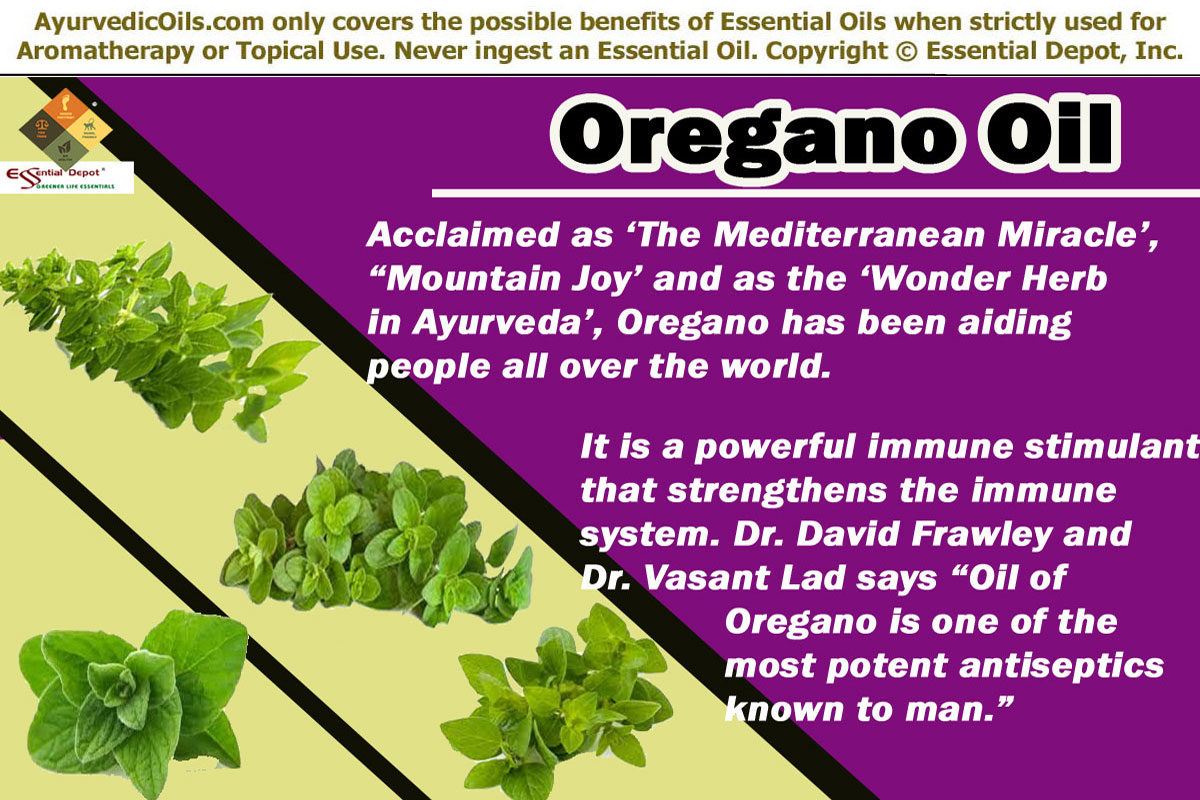
oregano-bannerAcclaimed as ‘The Mediterranean Miracle’, ‘Mountain Joy’ and as the ‘Wonder Herb in Ayurveda’, Oregano has been aiding people all over the world and especially in the Mediterranean regions to maintain healthy living for numerous centuries.

The most popular Ayurvedic book, ‘Yoga of Herbs: An Ayurvedic Guide to Herbal Medicine’ by Dr. David Frawley and Dr. Vasant Lad says “Oil of Oregano is one of the most potent antiseptics known to man.

Botanically known as Origanum Vulgare, Oregano is yet another prestigious limb of the mint family, Lamiaceae and has its origin in the Mediterranean region and southwestern Eurasia. Ayurveda, the mother of all healing sciences used Oregano (known as Sathra) and its essential oil as a heating carminative to treat digestive disorders and was also used for treating toothache, skin problems, pain and inflammation.

Purchase Oregano Essential Oil – Retail – CLICK HERE   

Purchase Oregano Essential Oil – Wholesale – CLICK HERE

Historical uses of Oregano essential oil and the herb:

Known as the staple herb of the Italian-American cuisine, Oregano is one among the best culinary herbs in the world used in a variety of Mediterranean cuisines, Mexican food, Italian dishes and is also used in making fried, roasted or grilled vegetables, meat, fish and much more food varieties. It is also a part of many Lebanese, Turkish, Palestinian, Spanish, Greek, Portuguese, Syrian, Latin American and Egyptian cuisines.

Oregano essential oil is extracted from the leaves of this plant. This oil has been in use since the primordial times in various medicinal practices. The Traditional Chinese Medicine used Oregano for treating vomiting, fever and diarrhea. The fresh leaves were used in tea for strengthening the immune system and for dealing with infections.

Biblical texts denote Oregano as a cleansing tonic. The ancient Arabic medicine used this herb for food preservation and for treating gastrointestinal disorders. The natural medicinal system of Philippines used Oregano and its essential oil for treating cough and ear aches in children. It was also used in curing pain and given for women after childbirth for its emmenagogue properties.

Hippocrates, the ancient Greek physician and the father of western medicine used Oregano as an effective antiseptic and for treating respiratory and digestive ailments. History denotes that it was the Greeks who discovered the disinfectant and antimicrobial properties of this oil and they used it for treating skin infections, sore throat, wounds, viral infections and for protecting the body from the effect of harmful organisms.

Chemical constituents and therapeutic properties of Oregano oil:

Oregano essential oil is enriched with chemical constituents like carvacrol, cymene, thymol, borneol, terpinene, pinene, linalyl acetate, bisabolene, linalool, caryophyllene and geranyl acetate. The remedial properties of this oil are antimicrobial, antiseptic, anti-viral, anti-bacterial, anti-parasitic, antioxidant, emmenagogue, anti-allergenic, digestive, anti-inflammatory and immune stimulant.

Ayurvedic health benefits of Oregano essential oil:

Ayurveda means ‘science of life’, the science that preaches the simple methodologies to prevent illness, stay healthy and for healthy aging that makes you independent in your 60s or 70s without relying upon anyone to assist your health conditions.

The philosophy of Ayurveda relates the life of an individual with the life of the Universe. Based upon this innate wisdom, Ayurveda further explains that the Universe is made up of five elements namely fire, water, earth, air and ether and it also states that an individual is also made up of the five elements of nature, which is also known as the building blocks of life.

Among these five elements water governs the movement of fluids in the body like blood, saliva, mucus and plasma. Fire determines the digestive power, intellectual skills and body temperature. Air controls the functioning of the heart, stomach, lungs, joints and intestines.

Ether is present in all parts of the human body where the presence of cavity and emptiness are witnessed like heart, nostrils, blood vessels, bladder etc. Earth represents vigor, braveness, constancy and steadiness.

The individual constitution comprises of three energy elements known as doshas (vata, pitta and kapha). Vata represents air and ether, pitta stands for fire and water and kapha stands for water and earth. Imbalance of doshas leads to illnesses.

Ayurveda recommends the use of herbs, essential oils, healthy lifestyle, meditation and yoga to bring the body and mind back to balance. Oregano oil is known to enhance pitta deficiency and reduce kapha and vata excess.

The major Ayurvedic health benefits of Oregano essential oil are:
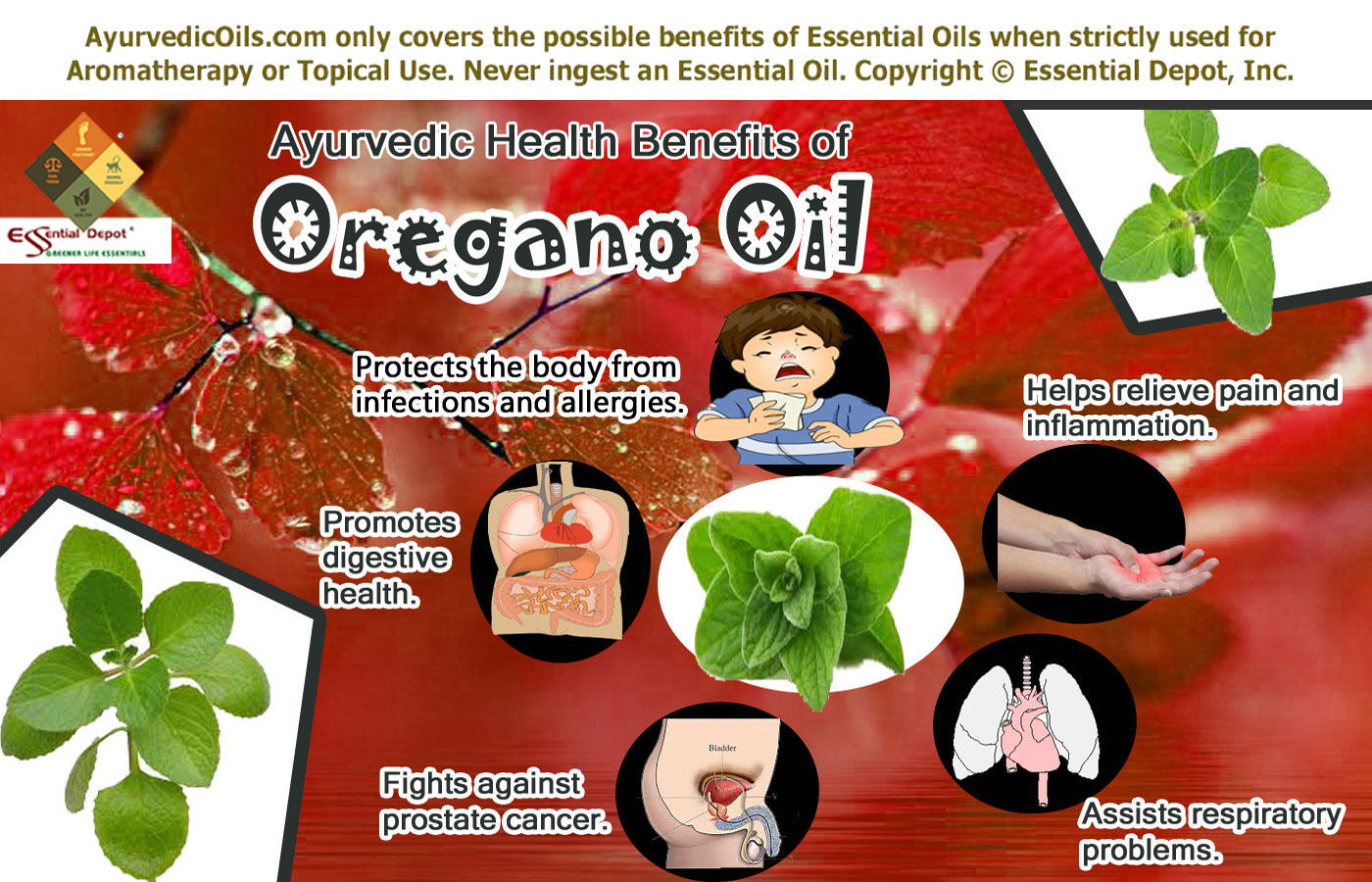
Oregano-broucher1. Protects the body from infections and allergies:

Oregano oil has been proved effective for treating numerous infections and allergic conditions with its antibiotic, antimicrobial, anti-viral, anti-bacterial and anti-parasitic properties.

The Georgetown University research on Oregano oil’s effectiveness against drug-resistant bacteria, proves that the presence of carvacrol component in Oregano oil lessen the infections as effectively as the traditional antibiotics.

A study conducted by the Mexican researchers on the effectiveness of Oregano to treat giardia, which is a water-borne bacterium that lives inside the intestines. Another study proves that Oregano oil is effective in killing giardia bacterium than the generally prescribed drug tinidazol. Oregano is a powerful anti-bacterial oil that wards off numerous pathogenic bacteria like E.coli, Staphylococcus aureus and Strep and protects one from typhoid, sores, cholera, infections in the colon, urinary tract and certain other skin infections.

Parasites like tape worms, round worms, mosquitoes, fleas, lice and bed bugs cause innumerable communicable diseases that affect the human body severely. Oregano essential oil has anti-parasitic properties that aids in killing parasites.

Viral infections like cold, pox, mumps and measles weaken your immune power and paves way for other harmful organisms to affect your health. Oregano essential oil is a powerful immune stimulant that strengthens your immune system, fight against viruses and makes your system resistant to other foreign bodies.

Fungal infections like athlete’s foot and ringworm can be treated aromatically with the antifungal properties of this oil. Being an anti-allergenic oil, Oregano acts as a sedative and pacifies the hyper-sensitive reaction responsible for allergies.

A 2001 research on ‘Antimicrobial activity of essential oils from plants against selected pathogenic and saprophytic microorganisms’ proved that among the 11 essential oils tested for effectiveness against microbes, Oregano essential oil showed the highest inhibitory rate against pathogenic and spoilage microorganisms. The carvacrol and thymol compounds in this oil are very effective in killing a microbe known as Candida, which is the reason behind eczema and psoriasis.

To guard yourself against such infections and allergies, you can either topically apply 2 drops of Oregano oil blended with olive oil on the affected area or add 2 drops of oil in your bath or skin care cream or lotions.

2. Promotes digestive health:

Oregano essential oil is a heating carminative oil that aids in increasing the pitta flow and promotes quicker digestion. Massaging your tummy with 2 drops of Oregano oil blended with sesame oil can assist in treating slow digestion due to excess of mucous deposits in the stomach or fullness.

You can also add 2 to 3 drops of Oregano oil in warm compresses to help with stomach upsets, relieving gas, enabling the movement of food and for regularizing the entire process of digestion.

3. Assists respiratory problems:

As Oregano essential oil has warming effect, it can assist the body when it is cold and treat problems like cold, sinusitis, headache, mucous congestion, whooping cough, pneumonia and other respiratory infections. Oregano essential oil is said to be one of the best essential oils for opening blocked sinus passages and treat congestion as a natural decongestant.

Light Miller in her book ‘Ayurveda and Aromatherapy’ says that Oregano essential oil is a warming diaphoretic oil that eliminates surface toxins, provoke perspiration, improve blood circulation and relieve headaches due to congestion or cold.

Add 2 drops of Oregano oil to steaming water and inhaling this medicated steam will aid in alleviating congestion, open blocked nasal passages and relieve pain due to cold and infection. You can also blend 2 drops of Oregano oil with coconut oil and gently massage the soles of your feet or apply on your chest and back or add it to warm bathing water for immediate relief from cold, sore throat and sinus problems.

4. Helps relieve pain and inflammation:

The anti-inflammatory, immune stimulant and warming diaphoretic properties of Oregano oil assist in eliminating toxins from the body, reduce inflammation, increase blood circulation and lessen pain and inflammation in rheumatic and arthritic patients.

Gently massaging the affected area with 2 drops of Oregano oil blended with coconut oil or adding it to your bath helps in reducing pain and inflammation in arthritis. Oregano essential oil has been proved by the Physiotherapy research to contain morphine-like properties that act as a perfect pain relief aid.

5. Fights against prostate cancer:

The University of Arizona research and the study by the Long Island University have proved that Oregano essential oil has antioxidant and anti-cancerous properties that fights against many types of human cancers.

Prostate cancer has been listed as the second important cause of cancerous death in American men. This study found that the presence of the active constituent, carvacrol in Oregano oil helps in the treatment of prostate cancer by stimulating apoptosis (programmed death of cells) in prostate cancer cells.

Other health benefits:

Oregano essential oil also helps in alleviating dysmennorhea, normalizing blocked menstruation and treating menopausal symptoms. This oil is also used for treating intestinal parasites, muscular pain, warts, vaginal candida and asthma.

Disclaimer:

Never use essential oils directly on the skin and always dilute it in suitable carrier oils as essential oils are highly concentrated solutions. Avoid using essential oils internally. Consult your Ayurvedic physician before using the right essential oils for your unique individual constitution and state of health. Avoid using essential oils if you are pregnant or a nursing mother.

Thought for the day:

In all things of nature there is something of the marvelous.    -Aristotle

Suggested Reading:

  1. Oregano – The Herb that Saved…My Life by Thomas Mayhew
  2. The Cure Is in the Cupboard: How to Use Wild Oregano for Better Health by Cass Ingram
  3. The Oregano Oil Supplement: Alternative Medicine for a Healthy Body (Health Collection) by William Wagner
  4. Herbal Antibiotics, 2nd Edition: Natural Alternatives for Treating Drug-resistant Bacteria by Stephen Harrod Buhner

Reference Links:

  1. Oregano Oil May Protect Against Drug-Resistant Bacteria by the Georgetown University Researcher published in Science Daily
  2. Oregano by Wikipedia
  3. Antimicrobial activity of essential oils from plants against selected pathogenic and saprophytic microorganisms published in PubMed
  4. Oregano Active Constituent Kills Prostate Cancer Cells by Herbcyclopedia

Grapefruit Pink Oil

Are you on diet? Then Grapefruit can be your best pal as it is called as ‘Dieter’s best friend‘, for its ability to assist dissolving fat and stays strong to be a vital part of your fitness regimen.

Grape-fruit-bnGive that perfect lift to your self-esteem and self-worth with Grapefruit oil, as it works like a magic by cleansing the aura and flushing out depression, lack of self-confidence, mental chaos and other negative feelings at ease.

Adorably called as Madhukarktikum and Kadaaram in Sanskrit, Grapefruit is yet another powerful Ayurvedic remedy for dealing with digestive disorders by stimulating the gall bladder and assisting the secretion of bile and other digestive juices.

The essential oil of Grapefruit is cold pressed from the external rind of this fruit and is recommended for treating weight loss, acne, cellulite, edema, PMS, anxiety, depression and insomnia.

Purchase Grapefruit Oil – Retail – 4 oz – CLICK HERE
Purchase Grapefruit Oil – Wholesale – CLICK HERE

Historical importance of Grapefruit:

Grapefruit is trusted to be a hybrid variety found in the 18th century by Captain Shaddock in Jamaica; hence it was called as ‘Shaddock’ or ‘Shattuck’ initially. Later it was named as ‘Grapefruit’ mainly because of its manifestation like clusters of grapes on the trees. Grapefruit was once celebrated as one of the ‘Seven wonders of Barbados’.

Grapefruit is indigenous to the tropical parts of Asia and was originally brought to Europe by the medieval Arabian traders and it slowly spread to other parts of the world. Currently, United States is the world’s leading producer of Grapefruit, followed by People’s Republic of China and South Africa.

As it is an excellent source of various nutrients and phytochemicals, it was used ever since the ancient times as a part of a healthy diet. Whereas Grapefruit essential oil was used in baths for preventing the skin from harmful microbes, supporting healthy skin, enhancing the shine and growth of hair and as a cleansing agent in homes.

Chemical constituents or Gas Chromatography Report (GC) of Grapefruit Pink oil:

According to the Gas chromatography report, Grapefruit Pink oil constitutes of 7 chemical components that contribute to its fragrance, therapeutic attributes, consistency and quality of this oil. Of which, Limonene contributes to the highest proportion of Grapefruit Pink oil constituents with about 96.6% of its total composition.

Just click on:

I believe that this must certainly help you in getting to know the exclusive information about these prime chemical constituents of Grapefruit Pink oil.

The table crafted below clearly depicts the unique nature and contributions of these biochemical constituents to the healing magnificence of Grapefruit Pink essential oil.

grape-fruit-oil

Therapeutic properties of Grapefruit essential oil:

The remedial values of this oil are antidepressant, antiseptic, anti-tumoral, antioxidant, lymphatic, stimulant, tonic, diuretic, disinfectant, aperitif and fat dissolving.

Ayurvedic health benefits of Grapefruit essential oil:

Health is a three-tier foundation according to Ayurveda, where these three layers are mind, body and soul. It is rightly mentioned in Charaka Samhita, one of the most famous Ayurvedic encyclopedias as “The three – body, psyche, and soul – act as a tripod. The world stands upon them, and within them, the world abides.”

Ayurveda means ‘the knowledge of life’ and this traditional healing methodology aids in granting that awareness in every human being. Understanding the physical and mental health of oneself helps in leading a blissful life paving way towards longevity.

It has been said that nature is made up of five vital elements namely fire, water, earth, air and space and Ayurvedic texts strongly state that everything that is a part of nature is also made up of these five elements.

The science of Ayurveda follows a holistic healing system, where every individual is considered as a unique part of nature with a unique individual constitution just like our fingerprints.

This constitution comprises of three vital biological energies known as doshas. They are vata, pitta and kapha doshas, where each dosha represent a combination of two vital elements.

Kapha represents earth and water, and is responsible for structure of the body, sustenance and the movement of fluids in the system. Pitta represents fire and water and is in charge of digestion, absorption, excretion and certain other metabolic functions.

Vata stands for air and ether, and is accountable for circulation, respiration and nervous functions of the body. When an individual’s health is on par with nature, there is perfect health and harmony and when there is imbalance due to food, lifestyle and certain other factors, illnesses occur.

Balance between these three doshas indicates complete health and imbalance causes diseases. Ayurvedic remedies like essential oils, herbs, yoga, meditation, Ayurvedic routine and simple physical exercises focus on striking balance between these doshas. Grapefruit essential oil is said to pacify vata and kapha dosha and aggravate pitta dosha.

The Ayurvedic health benefits of Grapefruit oil are:Grape-fruit-broucher1. Fights the symptoms of aging naturally:

Aging can be the worst enemy for all those beauty conscious kings and queens out there, especially in the late 30s when everyone’s dreams are on the route of reaching their destination. When thousands of chemical-based products flood the market with the claim of ‘guaranteed younger look’, how will you feel if I say that the simple, natural and glorious fruit like Grapefruit can fight against all the symptoms of aging, just like that? Feeling awesome right!

FRTA or the Free radical theory of aging can assist you in understanding the real causes of aging. This theory states that “organisms age because cells accumulate free radical damage over time.” These free radicals cause oxidative damage in the cells, which pave way for aging and other age-related disorders like arthritis, diabetes, cancer, atherosclerosis and Alzheimer’s disease.

Numerous studies have proven that antioxidants are the best remedy for arresting the oxidative damage of cells by passivating the cellular structure from the damage caused by free radicals.

To your wonder, Grapefruit and its essential oil have the most powerful antioxidant lycopene, which is responsible for its attractive pink or red color. It has been established that antioxidants like lycopene assists in fighting aging of cells and fight against malignant tumors caused due to the harmful effects of free radicals.

According to a study by the Brigham Young University, “Small concentrations of grapefruit essential oil showed an 80.5% cell inhibition value for skin cancer cells.” The presence of limonene in Grapefruit oil supports about 80% of carcinomas in breast cancer to degenerate with comparatively lesser toxicity, says the reports on Grapefruit essential oil by the Purdue University.

In addition to this, Grapefruit essential oil has adequate amount of spermidine, which is a polyamine compound playing significant roles in the survival of cells. Every cell has spermidine like compounds and cellular aging happens when the growth of spermidine falls.

Using 2 drops of Grapefruit essential oil blended with 1ml of Jojoba oil or along with a mild skin care lotion or cream as a massaging blend can promote the secretion of spermidine compounds that support the growth of healthy cells, helping you look younger and youthful.

This massaging can also help in fighting against the free radicals that cause aging and other chronic illnesses. Adding Grapefruit to your daily diet is also a great idea to retain your beauty and nurture your skin health.

2. Protects the skin from microbial infections:

Grapefruit essential oil has antiseptic and disinfectant properties that wrestle against harmful organisms like bacteria and virus. The antiviral and antibacterial effects of this oil make it one among the best essential oils for treating wounds, cuts, bruises, acne and other microbial infections. It kills the existing microbes in the body that cause infections and prevents the entry of new microbes.

Using 2 drops of Grapefruit essential oil in warm bathing water in the morning or before going to bed can help in combating the growth of microbes and protect the body microbial infections all day long.

You can also add 1 drop of Grapefruit oil to your daily lotion or skin cream for pampering your skin. Along with this, the fresh and refreshing citrus aroma of Grapefruit oil keeps your skin fresh, regenerated and absolutely clean.

3. Boosts positive energy and adds up to your mental strength:

Grapefruit essential oil has an immaculate aroma that is neat as a new pin and has excellent aromatic effect on the mind. The anti-depressant properties of this oil flushes out the negative thoughts, depressive feelings and emotions that demotivate the mind and stop you from moving ahead.

The uplifting aroma of Grapefruit essential oil reaches the limbic system, the control center of the human brain through the nasal passages and passes the therapeutic properties of this oil in the form of commands to other parts of the body. Add 2 drops of Grapefruit oil to your diffuser, burner or vaporizer during the night or at the time of prayer or meditation. This oil is said to calm the mind and nerves and grant peaceful sleep at night.

Inhaling the sacred aroma of Grapefruit oil is said to broaden the heart chakra, which is responsible for love and affection along with the solar plexus chakra, which is accountable for self-esteem, confidence and discipline and the third eye chakra meant for intelligence, creativity, spiritualism, consciousness and inner awakening.

By this way, Grapefruit essential oil cleanses the aura, mind and the life force of the human body, which helps in restoring the power and spiritual realm.

4. Burns excess fat and backs up your diet regimen:

Obesity has become a common phenomenon in people of all ages mainly due to unhealthy food habits, lifestyle changes, fast food mania and the lack of physical exercises. Most of these factors seem unavoidable in this contemporary world, where there’s no time to spare for our health and happiness.

According to a popular Complementary and Alternative medicine expert, “taking medicines or drugs for reducing weight or dissolving fat is a hazardous practice and a life-threatening system as well.

So what to do and what is the natural way to burn away those excess fat and calories that rule your health and harmony? Here you go, Grapefruit and its essential oil have been an effective natural remedy for treating obesity and supporting weight-loss.

This is attributed to its diuretic, lymphatic and aperitif properties. Grapefruit oil works by improving the metabolism process, lowering the cholesterol content, reducing insulin levels and supporting loss of fat positively.

Ayurvedic texts state that the bitter and sour tastes of Grapefruit reside as the predominant reason for enhancing the flow of bile and other digestive juices and it helps in putting an end to food cravings, liver congestion and amassing up of excess fat, cholesterol and other toxic substances.

Mix 5 drops of Grapefruit essential oil with 2.5ml of sesame oil and massage it gently on your stomach and abdomen to stimulate the secretion of saliva, bile and other gastric juices.

Ama or the toxins in the body are mainly due to improper digestion. As Grapefruit essential increases pitta energy, which is responsible for digestive fire, the chances of indigestion, constipation and other digestive disorders are very less.

Excess of kapha energy is one major cause for obesity according to Ayurveda. Grapefruit oil is a boon to mankind as it pacifies kapha and increases pitta force, through which it eliminates the excess deposits of water, fat, toxic substances and cholesterol through urine and sweat.

Including Grapefruit in your diet or inhaling the aroma of Grapefruit essential oil before eating (by adding 1 drop of Grapefruit oil to your diffuser in your dining hall) can grant a feeling of fullness and put an end to unhealthy food cravings.

Consumption of Grapefruit can reduce LDL (“bad”) cholesterol, as well as triglycerides”, says The Journal of Agricultural and Food Chemistry. Consult your Ayurvedic Practitioner and know the right exercises, yoga and meditation for your unique constitution. This can speed up your fat-dissolving resolution at absolute ease.

Other health benefits:

Apart from this, Grapefruit essential oil is an excellent pain reliever that can help you in treating headache, back pain and migraine pain quickly, when 2 drops of this oil is mixed with 1ml of coconut oil and applied on the affected area.

Grapefruit essential oil has tonic properties that increase the immune power, stimulate hair growth, cleanse the scalp, boosts the functions of the nervous system and strengthen the muscles and nerves. This oil also helps in relieving mental and physical fatigue, menstrual discomforts, rheumatism, muscular stiffness, cellulite, nervousness, delayed menstruation and nervous exhaustion.

Disclaimer:

This article is only for the purpose of education and is not directed to diagnose or replace any Professional medical advice or prescribed medication. Never use essential oils internally and always use them in a diluted form, as pure and organic essential oils are highly concentrated substances and can cause harm if used directly on skin.

As other citrus oils, Grapefruit essential oil also has phototoxic effect that can cause damages to the skin when exposed to sunlight immediately after use, due to the hazardous effects of ultra violet rays. Always consult your Ayurvedic expert before using the right essential oils for your unique constitution and health condition.

The MSDS (Material Safety Data Sheet) of Grapefruit Pink oil is readily available for your enhanced safety and better usage.

Gas Chromatography Report (GC analysis) of Grapefruit Pink oil.

Grapefruit Essential Oil – Possible Skin Issues:

Greener Life Diamond – Bio-Healthy Score => 3 – Possible Skin Issues:

See => http://www.essentialdepot.com/GreenerLifeDiamond.html

Grapefruit oil showcases photosensitive effects if oxidized, contributing to its phototoxic, photo-carcinogenic and effects of sensitization. The possible skin issues of using Grapefruit oil are hyperpigmentation, allergic reactions, irritation, sunburns, blisters and rashes and this mainly occurs when the skin is exposed to visible sunlight for up to 12 hours of use of this oil.

The underlying reason is the reaction of the photoactive chemical constituents in Grapefruit oil that attracts light and leads to toxicity through molecular changes in the skin surface. Certain studies state that Grapefruit oil has been stated to promote the formation of tumors on the skin of mouse, by the key carcinogen, 10-dimethyl-l, 2-benzanthracene.

The primary chemical component responsible for the phototoxic and adverse skin effects of Grapefruit oil is Limonene, which accounts to about 90% of this oil along with few other furanocoumarins ( the non-volatile compounds like bergapten, bergamottin and epoxy-bergamottin.)

The safe dilution level of Grapefruit oil by the International Fragrance Association (IFRA) is 4%, which is about 24 drops per ounce of any mild carrier oils. This is particularly to prevent phototoxicity in products used for dermal applications except for bath products like soaps, shampoos and other wash-off preparations.

According to the European decree, essential oils that contain furanocoumarins must be used preferably when the level of bergapten does not exceed 15 ppm (parts per million) in finished cosmetic products preordained for use on parts of the skin that are in contact with sunlight (other than rinse-away products) and 1 ppm in bronzing and sun protection products.

Grapefruit oil should be used only for topical application, preferably blended with mild carrier oils (good for use after a patch test on your skin), and never use essential oils for ingestion, as internal use of essential oils might pose adverse health effects. Undiluted Grapefruit oil can cause skin irritation and this oil is claimed to be toxic to cats.

A 2005 study published in Brain Research states that “the scent of Grapefruit oil and its active constituent, limonene affects the autonomic neurotransmission and blood pressure through central histaminergic nerves and the suprachiasmatic nucleus.”

Studies state that ingesting furocoumarins may also cause phytophotodermatitis.  It is better to avoid Grapefruit oil if you are pregnant or breastfeeding as the safety of this oil during carrying or nursing are not established.

In a much similar way like Bitter orange oil, Grapefruit oil is said to restrain important enzymes in the intestines and liver, leading to have an impact on the blood levels at the time of taking medicines that are antidepressant, antiviral, anti-anxiety, calcium channel blockers, steroids, anti-malarial, immune modulators, prokinetics, statins and on par with caffeine intake. The presence of furocoumarins has led to the term ‘Grapefruit effect’, which signifies the interaction between furocoumarins and enzymes that are engaged in drug metabolism, specifically cytochrome P450.

Use Grapefruit oil only after medical advice, if you are taking any other prescription medicines. Startlingly, furocoumarins are also used in different remedies along with the long-wave ultraviolet light therapy for curing psoriasis, mycosis fungoides and vitiligo.

Reference Links Substantiating Possible Skin Issues of Grapefruit Oil:

  1. The Safe Grapefruit? By The American Botanical Council
  2. Olfactory stimulation with scent of essential oil of grapefruit affects autonomic neurotransmission and blood pressure by Tanida M, Niijima A, Shen J, Nakamura T, Nagai K, Osaka University, Japan, published in Brain Research
  3. Grapefruit by Essential Oil Safety: A Guide for Health Care Professionals By Robert Tisserand, Rodney Young
  4. Grapefruit Oil by Leung’s Encyclopedia of Common Natural Ingredients, used in Food, Drugs and Cosmetics by Ikhlas A. Khan and Ehab A. Abourashed
  5. Major Furocoumarins in grapefruit juice II: phototoxicity, photogenotoxicity, and inhibitory potency vs. cytochrome P450 3A4 activity by Messer A, Raquet N, Lohr C, Schrenk D, University of Kaiserslautern, Germany, published in Food and Chemical Toxicology: An International Journal published for the British Industrial Biological Research Association
  6. Grapefruit Juice and Medicines by the University of Michigan Health System
  7. Two Major Grapefruit Juice Components Differ in Time to Onset of Intestinal CYP3A4 Inhibition by Mary F. Paine, Anne B. Criss and Paul B. Watkins, published in the Journal of Pharmacology and Experimental Therapeutics

Thought for the day:

You forget that the fruits belong to all and that the land belongs to no one.
-Jean-Jacques Rousseau

Suggested Reading:

  1. The Grapefruit Solution: Lower Your Cholesterol, Lose Weight and Achieve Optimal Health with Nature’s Wonder Fruit by Daryl L. Thompson, M. Joseph Ahrens
  2. Ayurveda & Aromatherapy: The Earth Essential Guide to Ancient Wisdom and Modern Healing by Dr. Light Miller, Dr. Bryan Miller
  3. The Complete Master Cleanse: A Step-by-Step Guide to Maximizing the Benefits of the Lemonade Diet by Tom Woloshyn
  4. The Grapefruit Diet Plan by M Marose
  5. Daily Aromatherapy: Transforming the Seasons of Your Life with Essential Oils by Joni Keim, Ruah Bull

Reference Links:

  1. Free-radical theory of aging by Wikipedia
  2. Grapefruit by Wikipedia
  3. Health Benefits of Grapefruit by Ayurvedaservices.Net
  4. Health Benefits of Grapefruit Essential Oil by Organic Facts
  5. The Amazing Benefits of Pink Grapefruit Essential Oil by Natural News.Com


Your resource for quality Essential Oils. Every batch is
GC tested to ensure purity and authenticity.

Jasmine Oil PG Grade

Flowers are always the fervent favorites of poets all over the world and greatly to everyone’s wonder; Jasminum Officinale is lovingly called as Poet’s Jasmine, Common Jasmine or Jessamine. The essential oil of Jasmine is extracted from the flowering buds by solvent extraction method. It is known as Jati, Johi and Chameli in Ayurveda and has been used for treating hiccoughs, poisonous stings, anger, sexual disorders, menopausal problems, post-natal depression, respiratory problems and skin diseases. The attar varieties and perfumes made from Jasmine are famous for more than thousands of years in various traditions of the world.

Purchase Jasmine Oil PG Grade – Wholesale – CLICK HERE

Historical uses of Jasmine Oil: Jasminum Officinale has its origin in central parts of Asia mainly in Northern India and China. It was the Moors who brought Jasmine to Spain after which its cultivation slowly spread to Morocco, France, Japan, Turkey and Italy. Jasmine is the national flower of Pakistan and its shield is represented by the floral wreath of Jasmine shrubs.

Since the prehistoric period, Jasmine flowers and the various parts of this evergreen plant including the leaves and roots have been in use for medicinal, culinary, ceremonial and aromatic uses. History denotes that the enchanting aroma of Jasmine flowers encircle the evening time with the magic of love, mystical thoughts, psychic dreams and endless fascination.

Jasmine is used as an important flower in the religious ceremonies in the Indian subcontinent and it is given as a sacred offering to Lord Vishnu. The garlands made with these flowers are considered as symbol of respect and used for welcoming special guests. These flowers are used as ornaments for hair and for offering Vedic rituals.

Jasmine has also been used as an ancient remedy for treating poisonous bites and stings. Jasmine oil was a popular anointing oil for Kings and affluent people during the times of Lord Buddha. It is also used in Indonesia for making garlands, hair ornaments and as a well-liked garnish.

This aromatic herb has been a vital part of the Traditional Chinese Medicine as an aphrodisiac and for certain other medicinal purposes. They used it in folk medicine for treating hepatitis in Southern China. A 2009 study on ‘Antiviral efficacy against hepatitis B virus replication of oleuropein isolated from Jasminum officinale L. var. grandiflorum’ published in the Journal of Ethnopharmacology proved Jasmine officinale as a potential therapeutic agent for treating infections caused by Hepatitis B virus (HBV).

Chemical constituents and therapeutic properties of Jasmine essential oil: There are about 100 chemical components in Jasmine essential oil and the major ones are methyl anthranilate, benzoic acid, indole, linalool, ketone, linalyl acetate, nerol, benzyl acetate, cis- jasmone, farnesol, benzyl alcohol, benzaldehyde, nerolidol, cis-3-hexenyl benzoate and y-terpineol.

These components contribute to its remedial properties like anticancer, antidepressant, antiseptic, emmenagogue, galactogogue, astringent, analgesic, stimulant, uterine, sedative, expectorant, aphrodisiac, parturient, antispasmodic, diuretic, cicatrisant, anti-inflammatory, antibacterial and anthelmintic.

Ayurvedic health benefits of Jasmine essential oil: Ayurveda is the knowledge of life that preached the healing discipline all over the world with absolute justice. This ancient healing methodology aged 5,000 plus years is known as the mother of all the healing systems on earth. Ayurvedic healing gave a new-fangled dimension to health as this elevated system aimed at enhancing physical health, strength of the psyche and the soul that witnesses the presence of life in a human being.

Other than Ayurveda, no other medicinal practice in this world considers human body as a temple where the eternal soul dwells in. It is for this noble reason, Ayurveda recommends human beings to keep their mind, body and the environment clean and healthy for the spirit to reside in harmony. When this harmony happens, human beings develop a strong system mentally, physically and spiritually paving way for healthy aging and longevity.

According to Ayurveda, the world and everything in this world are made up of five major elements known as Pancha Mahabhutas. They are water, earth, space, fire and air. These five elements combine together to form three predominant doshas or Ayurvedic body types. This helps in understanding the unique individual constitution of each and every person.

Every individual has a predominance of any one of these doshas that determine their personality, traits and behavior. Balance between these Ayurvedic body types symbolizes health and dosha imbalances lead to sickness. Ayurvedic remedies focus on striking perfect balance between these doshas and treatment varies from individual to individual even for the same sickness based upon their unique constitution.

Herbs, meditation, essential oils, Ayurvedic routine, healthy balance diet, yoga, prayers and simple physical exercises are the chief Ayurvedic remedies prescribed for health and heartiness. Jasmine essential oil is a tridosha oil that calms all the three doshas specifically the aggravation of pitta dosha in the head. It’s time to look at the Ayurvedic health benefits of Jasmine essential oil based upon the method of usage.

1. In Abhyanga or Ayurvedic massage therapy: Human skin is fundamentally the largest organ of the body. It acts as an excellent barrier for preventing the easy entry of harmful micro-organisms into the body. Ayurvedic massage therapy is the art of massaging with remedial essential oils.

Massaging your body with 5 drops of Jasmine oil blended with 2.5 ml Jojoba oil aids in treating depression, postpartum blues, pain, headache, rheumatism, nervousness, muscular pain, insomnia, tension, negative feelings and stress. It works like a wonder as the therapeutic properties of this oil penetrate deeply into the skin and pass on through the bloodstream. It calms the nerves, soothes the senses and inculcates self-confidence. This massage also aids in alleviating stress and depression by uplifting your mood and promoting relaxation for your system.

Massaging your scalp with 5 drops of Jasmine oil blended with 2.5 ml Almond oil helps in nourishing the scalp, treat anxiety, grant relaxation, enhance memory, improves hair health and leaves behind a natural fragrance. This massage is also helpful in treating headache, tension, confusions and lack of concentration.

As massage oil, Jasmine essential oil can also be of great assistance in treating male and female reproductive problems by promoting the secretion of male and female hormones testosterone and estrogen. With its emmenagogue properties, Jasmine essential oil helps in regularizing blocked menstruation, assist menopausal symptoms (like hot flush), reduce menstrual pain and other symptoms of menstruation by massaging your abdomen with this healing blend.

2. In baths and steam inhalation: Add 2 drops of Jasmine essential oil in warm bathing water for treating fatigue, anxiety, nervous tension, depression, premenstrual syndrome, muscular spasms and loss of sexual interest. Taking bath in this medicated water before going to bed can help in relaxing your mind and body, promote libido in both men and women, protect from dreadful dreams, stimulate the senses, induce peaceful sleep and loosen mucus and phlegm deposits. 1 drop of Jasmine oil added to foot bath can assist in calming down your mind and body, promote relaxation of sore muscles and reduce fever.

Adding 2 drops of Jasmine essential oil to steam inhalation helps in treating respiratory problems like cold, cough, bronchitis and sinusitis by clearing out the excess phlegm deposits and nasal congestion. This healing value is attributed to the antiviral and expectorant properties of Jasmine oil.

3. In vaporizers, burners and aroma lamps: Jasmine essential oil is an excellent remedy for alleviating depression, loss of interest, stress and other mental woes. All these pre-occupied thoughts in your mind will steal your peaceful sleep at night ending up in a mess at office in the morning. Jasmine essential oil has been proved to stimulate the mind and reduce symptoms of stress and depression.

By adding 2 drops of Jasmine oil to your diffuser, burner or vaporizer, you get to inhale the aromatic molecules of this heavenly oil, which passes through the nasal passages and reach the limbic system of the brain. It is known as the brain’s control center that transmits message to the mind and body for controlling feelings and emotions and thus transforming one’s behavior positively. You can sense the difference visibly as the biological factors like blood pressure, heart rate, breathing mechanism, immune functions and stress levels tend to turn normal and leave you relaxed and recharged.

Inhaling the invigorating aroma of Jasmine oil has also been said to treat pitta aggravation in the head that is responsible for loss of temper, insanity, loss of memory and certain other mental disturbances. It helps you control your anger, regain your memory power, augment your confidence level, give a lift to the attributes of love and respect for self and others and grants mental clarity.

The sensual fragrance of Jasmine essential oil especially during the night can turn on your love quotient. Jasmine has been used as a natural aphrodisiac for numerous centuries to improve the sexual drive and libido in men and women, treat impotence and frigidity, promote the natural flow of sexual feelings and instill love, trust and confidence in the partner.

4. In daily creams and lotions: Jasmine essential oil has amazing benefits for the skin. 2 drops of this oil added to your regular skin care creams and lotions assist in improving the texture of your skin, reduce blemishes, improves your skin tone and elasticity, moisten the skin, and treat allergies, open wounds and dermatitis. The cicatrisant and collagen enhancing properties of Jasmine essential oil makes it an exceptional remedy for lessening scars and stretch marks. Applying this aromatic lotion daily will guard your skin from the harmful microbes and help you stay fresh and fragrant throughout the day.

Other health benefits: Jasmine and its essential oil is also effective in treating diabetes mellitus, headache, scorpion stings, eye diseases, cancer, labour pain, addiction and uterine disorders.

According to a 2008 study on ‘Anti-Cancer Flower Power: Researchers Combat Cancer With A Jasmine-Based Drug’ published in the Science Daily, Prof. Flescher reveals that the synthetic compound jasmonate extracted from Jasmine is effective in treating cancerous tumors. The peer commentary also supports this research by saying “Methyl jasmonate has already been shown to have selective anticancer activity in preclinical studies, and this finding may stimulate the development of a novel class of small anticancer compounds.”

Disclaimer: This is only for the purpose of information and is not proposed to make a diagnosis or replace any prescribed medication or professional medical advice. Never ingest essential oils and always use them in a diluted form because organic and pure essential oils are highly concentrated liquids and can harm you if used directly on the skin. It is advisable to do a small patch test on your skin before using essential oils regularly. Consult your Ayurvedic practitioner before using the appropriate essential oils for your unique health condition and individual constitution. Care should be taken before using Jasmine essential oil if you are a pregnant or nursing mother.

Thought for the day:

Out in the lonely woods the jasmine burns Its fragrant lamps, and turns Into a royal court with green festoons The banks of dark lagoons.  -Henry Timrod

Suggested Reading:

  1. The Encyclopedia of Essential Oils: The Complete Guide to the Use of Aromatic Oils In Aromatherapy, Herbalism, Health, and Well Being by Julia Lawless
  2. Captivate Your Senses: Sensual Jasmine (A Scented Book Series) by Unknown
  3. The Encyclopedia of Aphrodisiacs: Psychoactive Substances for Use in Sexual Practices by Christian Rätsch, Claudia Müller-Ebeling
  4. Aromatherapy for Healing the Spirit: Restoring Emotional and Mental Balance with Essential Oils by Gabriel Mojay           

Reference Links:

  1. Jasminum Officinale by Wikipedia
  2. Health benefits of Jasmine essential oil by Organic Facts
  3. Jasmine by Kamlesh Ayurveda
  4. Antiviral efficacy against hepatitis B virus replication of oleuropein isolated from Jasminum officinale L. var. grandiflorum by Guiqin Zhao, Zhifeng Yin and Junxing Dong published in the Journal of Ethnopharmacology
  5. Anti-Cancer Flower Power: Researchers Combat Cancer With A Jasmine-Based Drug published in Science Daily.com

Frankincense Oil

Frankinsence-banenrRepresented as an ‘Emblem of Prayer’, Frankincense is yet another Biblical oil that brings you close to heaven by appeasing your mind, relieving your pain, strengthening your positive emotions and implanting enormous beauty benefits.

Extracted from the gum or resin of Boswellia frereana tree by steam distillation, Frankincense essential oil is often held high for its power to spread health and heartiness in a magic of minutes, just like that.

Ayurveda quotes the use of Frankincense as ‘dhoopan’, and burning Frankincense everyday in homes is trusted to bring good health in Indian culture.

Known as ‘Dhoop’ in Sanskrit, Frankincense and its essential oil have been used for more than thousands of years in Ayurvedic healing in the treatment of respiratory illnesses, arthritis, weak female hormone system, rheumatism, skin infections, wounds, womanly problems and for cleansing the air.

Purchase Frankincense Oil – Retail – 4 oz – CLICK HERE

Purchase Frankincense Oil – Wholesale – CLICK HERE

Historical uses and importance of Frankincense and its essential oil:

Frankincense is represented as a ‘symbol of the divine aroma’ and as an ‘emblem of prayer’ in various chapters of the Bible including Psalm 141:2; Luke 1:10 and Revelation 5:8, 8:3. Best known as one of the three gifts gifted to Infant Jesus by the wise men, the existence of Frankincense dates back even before the birth of Jesus Christ. Given the credit of the most spiritual oil of the Middle East, it has flawless healing benefits with an inbound immaculate aroma.

People of all religions consider Frankincense as a symbol of sacredness and it is witnessed with the presence of this mesmerizing fragrance in various religious ceremonies. Frankincense is an important symbol of trading carried out in Arabian Peninsula and North Africa for more than 5000 years ago that the temples of the ancient Egyptian Queen Hatshepsut are adorned by murals depicting sacks of Frankincense traded from the land of Punt.

Prepared from the resin of Frankincense or olibanum trees by steam distillation method, this oil is a part of the traditional medicinal system including Ayurveda, Traditional Chinese Medicine and in certain other folklore remedies in treating wounds, arthritis, digestive disorders, rheumatism, and weak immune system and in promoting healthy skin.

Frankincense has its name etched in Naturalis Historia by Pliny the Elder. The renowned book on ‘Ayurveda and Aromatherapy’ by Bryan Miller and Light Miller quotes the use of Frankincense since ages as “Clay tablets, revealed that, in Babylon, 57,000 pounds of Frankincense were burned every year.” It also says that about 60 tons of this aromatic resin was used in the annual feast of the God Baal in the Assyrian civilization.

Since ancient times, Frankincense is burnt in homes for keeping away from insects, cleansing the atmosphere, warding off sickness and evil spirits and to help reach one’s prayers to the Divine. This holy herbal medicine is burnt even today in numerous Indian homes during the dusk to fulfill their special prayers and guard against bad spirits and harmful insects.

Chemical constituents or Gas Chromatography Report of Frankincense oil:

According to the Gas chromatography report, Frankincense oil consists of 9 major chemical components that contribute to its unique fragrance, therapeutic properties and quality.

Just click on:

For learning more about the extensive information of these chief constituents of Frankincense oil.

Alpha-thujene is the predominant constituent of Frankincense with about 53 % area.

The table below on the Gas Chromatography report talks about the principal chemical constituents and its role in granting the therapeutic and other attributes to Frankincense oil.

Frankincense-OilStudies on the chemical composition of Frankincense oil reveal that it contains monoterpenes, sesquiterpenes and diterpenes such as a-pinene, b-pinene, isoterpenolene, a-phellandrene, b-phellandrene, sabinene, linalool, octanol, octyl acetate, bornyl acetate, incensole and incensyl acetate in different ratios depending upon the species of the Boswellia trees from which the resins are obtained.

Therapeutic properties of Frankincense oil:

Frankincense oil is commonly used for its aromatic, antiseptic, astringent, antibacterial, anti-inflammatory, anti-cancer, anti-tumor, immune stimulant, disinfectant, carminative, cicatrisant, cytophylactic, digestive, diuretic, emmenagogue, sedative, tonic, uterine, vulnerary and expectorant properties.

Ayurvedic Health Benefits of Frankincense Oil:

Ayurveda is an ancient healing science that focuses on longevity and healthy aging through prevention of diseases and a balanced lifestyle that assists in being in harmony with nature.

Ayurvedic healing methodologies were strongly implanted to the human civilization by the powerful Ayurvedic encyclopedias namely Charaka Samhita and Sushruta Samhita.

Charaka Samhita enlightens Ayurveda as a discipline that heals the mind, body and soul and says, “The three – body, psyche, and soul – act as a tripod. The world stands upon them, and within them, the world abides.”

With this thought, Ayurveda regards human body as a temple, where the spirit dwells in and keeping the mind and body clean without any physical illnesses or mental chaos is the way to harmonious living.

The science of Ayurveda rests on the principle of five elements of nature namely fire, water, earth, air and space. According to Ayurvedic philosophy, everything in the universe is a part of nature and contains all these five elements in it.

Human body also consists of these elements in the form of biological energies known as doshas, in various forms so as to represent a unique individual constitution.

Vata dosha represents air and space and is responsible for circulation, nervous functions, respiration and movement. Kapha dosha is a combination of water and earth and is in charge of the structure of the body along with its sustenance. Pitta symbolizes fire and water and is responsible for body temperature and metabolic functions. Balance between these doshas indicates health and imbalance leads to illnesses.

Ayurveda recommends natural remedies like essential oils, herbs, yoga, physical exercises, healthy balanced diet, Ayurvedic routine, meditation and prayers in order to treat these doshic imbalances and treat the illnesses by analyzing its root cause instead of diagnosing its symptoms.

Frankincense is said to have a sattvic or cleansing effect on the mind as well as the nervous system. It assists in burning impurities in the subtle nerve channels. The essential oil of Frankincense clears excess kapha and pacifies vata and pitta doshas.

The Ayurvedic health benefits of Frankincense essential oil are:

frankinsence-broucher1. Strengthens your immune system:

Frankincense essential oil is an exceptional gift of nature that serves as an antiseptic, disinfectant and immune stimulant. Just inhaling the invigorating aroma of this supreme oil by adding 2 drops of this oil to your burner or diffuser, helps build a protective aura around yourself and acts as a shield in fighting against germs and disease causing microorganisms.

A 2002 study on the chemistry and immunomodulatory activity of Frankincense oil conducted by the department of Pharmacognosy of Mansoura University, Egypt states that Frankincense oil exhibited immuno-stimulant activity in addition to its anti-inflammatory, immunomodulatory and anti- leukotriene properties. This study encourages the utilization of Frankincense essential oil for several auto-immune disorders.

The number of leukocytes in the human body determines the strength of the immune system of an individual. Inhaling the fragrance or using Frankincense essential oil in a massage blend (5 drops of Frankincense oil added with 2.5 ml coconut oil) increases the production of leukocytes in the body with its cytophylactic property.

2. Fights against cancerous cells:

Frankincense essential oil has anti-tumor and anti-cancer properties, the attributes of monoterpenes that effectively helps in fighting against the cancerous tumors.

A 2012 research on Frankincense essential oil prepared from hydro distillation of Boswellia sacra gum resins has proved that this oil induces human pancreatic cancer cell death in cultures. It also reverses tumor growth in a heterotopic xenograft mouse tumor model. Studies have also reported that cultured human bladder and breast cancer cells are more sensitive to Frankincense essential oil and yield good results.

3. Pacifies your digestive system:

As a very good source of β-phellandrene and α-pinene, Frankincense essential oil acts as an effective carminative and helps in preventing and expelling the formation of gas in the stomach and intestines. It also acts as a natural antacid and promotes the secretion of bile and other digestive juices.

Mix 2 drops of Frankincense oil with 1 ml sesame oil and massage this blend on your abdomen for relieving flatulence, constipation and other gastro-intestinal problems including stomach pain, feelings of discomfort in the chest and abdominal area.

4. Combats oral infections:

The antiseptic, antibacterial and antifungal properties of Frankincense oil acts as a defensive shield that protects one from germs, bacteria, pathogens and fungi. This defensive mechanism of Frankincense essential oil makes its presence vital in making dental care products like toothpaste, mouthwash, mouth freshener etc.

Add 1 drop of Frankincense oil in a cup of warm water and use it as a natural gargle to keep away from oral problems like toothache, bad breath, cavities, mouth sores and few other oral infections.

5. Pampers your skin health:

Frankincense essential oil often evolves as a perfect rescuer in case of skin problems as it acts as an effective astringent, which helps in retrieving its natural beauty. This oil works on wrinkles and other aging symptoms with its ability to shrink the body tissues and bring it back to its original shape and assist in tightening the skin.

As a cicatrisant, it helps in the formation of scar tissue and yields excellent results in treating scars, fading the after marks of acne, pimples, boils, pox, stretch marks and fat cracks due to pregnancy and childbirth. Add 2 drops of Frankincense essential oil with 1 ml of jojoba oil or to your regular skin care cream and apply it in circular movements to reduce the appearance of wrinkles, scars, marks and micro-wrinkles around the eyes and cheeks.

As an anti-aging agent it helps in the regeneration of healthy cells while keeping the existing ones healthy. Because of its firming and toning activity it strengthens the gums and hair roots and contracts the muscles, intestines and blood vessels that loosen with aging. Frankincense oil acts as a coagulant and helps in preventing blood loss in case of wounds and cuts. It also assists in healing wounds and other skin infections speedily.

6. Helps treat womanly problems:

Frankincense oil acts as an emmenagogue that stimulates the flow of blood in the pelvic area and the uterus, thus regulating the menstrual cycle and functions of the female reproductive system.

It is also uterine in nature and regulates the secretion of estrogen hormone in the appropriate level, thus reducing the risk of cyst formation or uterine cancer in women.

Add 2 to 3 drops of Frankincense essential oil with 1 ml of Evening primrose oil and massage it slowly on your lower abdomen for relieving problems associated with menstruation like abdominal pain, nausea, digestive disorders, restlessness and mood swings. You can also add 2 drops of Frankincense oil in warm bathing water for calming your nerves and promoting peaceful sleep.

7. Relieves respiratory illnesses:

Stagnation of water, toxic substances and infectious micro-organisms in the body pave way for respiratory problems. This is mainly due to excess of kapha dosha and Frankincense essential oil lessens excess kapha.

This oil also has antiseptic, anti-bacterial, anti-inflammatory and expectorant properties that protect one from infectious microbes and helps reduce phlegm deposits in the respiratory tract and inflammation of the nasal and respiratory passages.

2 drops of Frankincense oil added to steam inhalation or mixed with vaporub and applied on the chest, back and throat aids in easing cough, cold, bronchitis, laryngitis, breathing difficulties, asthma and certain other respiratory ailments.

8. Helps in fighting against arthritis:

Frankincense oil has been used since ancient times to treat arthritis, rheumatism and muscular pain. With its anti-inflammatory, diuretic and kapha reducing qualities, this oil also aids in eliminating excess water deposits, salt, uric acid and toxic substances in the body causing pain, swelling and inflammation.

A valuable source states that this oil possesses potent anti-inflammatory, anti-arthritic and analgesic effect that actively treats arthritis, osteo arthritis and pain in muscular joints. Mix 4 drops of Frankincense oil with 2 ml of coconut oil and massage it gently on the painful area or you can also add 2 to 3 drops of this oil to hot compress for quick relief.

9. Alleviates stress and anxiety:

Frankincense essential oil awakens insight, soothes anxiety and frees one from all sorts of worldly pressure that affect the mind and the body. Various studies have proved that incensole acetate in Frankincense oil is an effective anti- depressant and reduces abnormal behaviors due to anger, stress and anxiety.

Adding 2 drops of Frankincense oil in your vaporizer, burner or diffuser assists in attaining spiritual enhancement that balances the mind, body and soul to experience eternal happiness. This healing effect can also be attributed to the presence of carbon based compounds like sesquiterpenes that directly act on the limbic system, known as the control center of the human brain.

Other health benefits:

Frankincense essential oil is also used in the manufacture of soaps, disinfectant cleansers, incense sticks, cosmetics, perfumes, body lotions, oral hygiene products and much more.

Disclaimer:

This article is for the purpose of education only and is not intended for treatment or for replacing any prescribed medication or professional medical advice. Never take essential oils for internal use and always use externally in a diluted manner, as organic and pure essential oils are highly concentrated liquids and may cause allergic reactions if used directly on the skin.

Always consult your Ayurvedic practitioner before choosing the appropriate essential oil for your unique individual constitution and health condition.

The MSDS (Material Safety Data Sheet) of Frankincense oil is readily available for your enhanced safety and healthier usage.

Gas Chromatography Report of Frankincense oil.

Thought for the day:

To be overcome by the fragrance of flowers is a delectable form of defeat.
-Beverley Nichols

Suggested Reading:

  1. Frankincense & Myrrh by Martin Watt, Wanda Sellar
  2. The Ayurveda Encyclopedia: Natural Secrets to Healing, Prevention, & Longevity by Swami Sadashiva Tirtha
  3. Fragrance & Wellbeing: Plant Aromatics and Their Influence on the Psyche by Jennifer Peace Rhind
  4. Holistic Cancer Protocols with Essential Oils by Dr. Deborah McFarland

Reference Links:

  1. Frankincense by Wikipedia
  2. Frankincense in Ayurveda and Aromatherapy by Vishnu Dass, Ayurvedic Herbology
  3. Chemistry and Immunomodulatory Activity of Frankincense Oil by Botros R. Mikhaeil, Galal T. Maatooq, Farid A. Badria, and Mohamed M. A. Amer Department of Pharmacognosy, Faculty of Pharmacy, Mansoura University, Mansoura 35516, Egypt, published in Naturforsch
  4. Frankincense essential oil prepared from hydrodistillation of Boswellia sacra gum resins induces human pancreatic cancer cell death in cultures and in a xenograft murine model, published in BMC Complementary and Alternative Medicine


Your resource for quality Essential Oils. Every batch is
GC tested to ensure purity and authenticity.

Jasmine Grandiflora Oil

Shil il ham’, I’m just wishing you happiness, delights, hope and good spirits as this Arabic phrase means “smell the scent of Jasmine and forget your troubles”.

jasmine-bannerAdmired for its absolute elegance and transfixing fragrance, Jasmine is always the sweetest and the most valuable flower in the garden of nature. Scientifically known as Jasminum Grandiflorum, this royal Jasmine variety blooms during the day and transforms its fragrant essence throughout the daylight hours.

Jasmine Grandiflora is known as Jati in Sanskrit and is used in Ayurveda for numerous centuries in the treatment of cancer, ulcer, dysmennorhea, labor pain, migraine, wounds, skin infections, odontalgia, paralysis, depression, flatulence, venomous bites, insomnia and reproductive problems.

Jasmine essential oil is extracted by solvent extraction method from the flowers and is also known to the world by other popular names like Royal Jasmine, Spanish Jasmine, Catalonian Jasmine and Pichcha.

Purchase Jasmine Grandiflora Oil – Wholesale – CLICK HERE

Historical importance of Jasmine Grandiflora:

Jasmine symbolizes a variety of exuberant thoughts in various parts of the world. It is a sign of divine hope in India and the sweetness of women in China. Jasmine and its essential oil have been traditionally used as an aphrodisiac all over the world. Since the ancient Arabic and Hindu traditional systems, it is admired as the ‘perfume of pure love’ and thus the expression “no perfume without Jasmine.

In the traditional Ayurvedic medicine, the decoction extracted from the leaves of Jasmine Grandiflora plant is used in treating toothache, poisonous insect stings and venomous snake bites. The cold infusion of the flower buds is used as a natural eye wash for relieving irritation and burning sensation in the eyes. Jasmine has been used in the Traditional Chinese Medicine as an effective aphrodisiac and as a natural aid for treating depression and promoting relaxation.

The flowers, leaves and roots of Jasmine Grandiflora has been used a popular substitute to standard western medicine in the treatment of bone cancer, breast cancer, malignant tumors in the lymph nodes, anxiety, stress and depression. It is also used in treating respiratory problems, skin diseases and as an assistance during child birth and menstrual difficulties.

Fresh Jasmine blossoms are used in making ornamental wreaths for hair, garlands and as religious offerings to God and Goddesses in the Hindu religion. These aromatic flowers are also used in making perfumes, attars and aromatic hair oils to maintain hair health and retain its natural fragrance.

Therapeutic properties and chemical constituents of Jasmine Grandiflora essential oil:

Jasmine essential oil has emmenagogue, diuretic, anticancer, stimulant, vermifuge, astringent, deobstruent, tonic, emollient, aphrodisiac, thermogenic, depurative, anthelmintic, suppurative, anodyne, antidepressant, neurasthenia and dentifrice properties.

It takes about 7.6 million Jasmine flowers to extract 1 kg Jasmine essential oil. The major chemical constituents of Jasmine essential oil are methyl jasmonate, benzyl acetate, jasmone, linalyl acetate, benzyl alcohol, linalool, indol and phenylacetic acid.

Ayurvedic health benefits of Jasmine Grandiflora essential oil:

Jasmine is held-high as a sattvic flower in Ayurveda as it is trusted to open the heart chakra that is responsible for love for self and for others. This ancient philosophy aims at complete wellness encompassing physical, mental and spiritual well-being. Thus the primordial Ayurvedic encyclopedia, Charaka Samhita states “The three – body, psyche, and soul – act as a tripod. The world stands upon them, and within them, the world abides.”

Ayurveda aims at longevity through healthy aging and prevention of illnesses by living a modest life with disciplined lifestyle by practicing an Ayurvedic routine, yoga, simple physical exercises, meditation, prayers and the use of herbs and essential oils in case of ill health. Ayurveda believes that everything is a part of nature and illnesses occur when human beings are against the rhythm of nature.

Every individual is regarded as a unique part of nature and should be treated in a unique manner even for the same disease according to Ayurveda. Just like our thumb impression, each one of us has a distinct individual constitution that is made up of three biological energies known as doshas. They are vata, pitta and kapha.

Every human being is embraced of these three doshas in different forms with the predominance of any one of these biological energies. Health according to Ayurveda is a perfect balance between these doshas and dosha imbalances cause sickness.

Ayurvedic remedies work in a physical, psychosomatic and spiritual perspective and aim at striking balance between these doshas. Jasmine Grandiflora essential oil is said to treat vitiated vata conditions and pacify pitta and kapha doshas. This oil has bitter, astringent, cool, light and dry properties that act on the reproductive, bone, plasma and nerve tissues through the circulatory, nervous and reproductive channels.

The Ayurvedic health benefits of Jasmine Grandiflora essential oil are:

1. Benefits for the skin:

Jasmine Grandiflora is a skin-friendly essential oil that aids in healing wounds, moistening dry skin, clearing skin impurities, help diminishing scars, reducing acne, treating eczema, dermatitis and encouraging healthy scalp. The antiseptic and moisturizing properties of Jasmine Grandiflora oil assists in killing micro-organisms that cause acne, dermatitis, psoriasis and make the wounds and cuts septic

Gently applying 2 drops of Jasmine oil blended with 1 ml Olive oil helps in balancing the secretion of sebum in the skin, support sensitive skin, and heal inflamed and aggravated skin.

The cicatrisant property of this oil promotes the growth of new cells and shore up cellular regeneration. By this way this aromatic blend helps in diminishing scars, stretch marks, blemishes and marks left by pimples and boils. Adding 1 drop of Jasmine oil to your bathing water is a great idea to nourish and protect your skin health everyday.

A 2010 study on ‘Wound Healing Activity of the Aqueous Alcoholic Extract of Jasminum Grandiflorum Linn Leaves’ by Shanti Bhushan Mishra, Alok Mukerjee, M. Vijayakumar, United Institute of Pharmacy has proved the effectiveness of the extracts of Jasmine leaves in repairing wounds and says “Jasminum grandiflorum leaf extract has a reproducible wound healing potential and thereby justifies its use in folklore medicine in India.”

2. Benefits for the respiratory system:

2 drops of Jasmine Grandiflora oil added to steam inhalation or vaporizer or warm bathing water aids in eliminating excess phlegm and mucus deposits in the lungs, chest and the nasal passages. Being an expectorant, Jasmine essential oil assists in treating cold, cough, sore throat, laryngitis, sinusitis, bronchitis, chest congestion, hoarse throats and nasal congestion.

3. Benefits to feminine problems:

Every woman passes through a number of complex stages in her life cycle and the most important among them are menstrual problems like dysmennorhea, amenorrhea and blocked menstruation, pregnancy, childbirth, postpartum blues and menopausal syndromes. This is mainly attributed to its affinity to the blood and reproductive tissues that move towards the uterus.

Jasmine Grandiflora essential oil acts as one among the best natural remedies for supporting womanly problems. This oil acts as an effective emmenagogue that helps in relieving dysmennorhea or menstrual pain, promote blocked or delayed menstruation and reduce other discomforts like nausea, fatigue, loss of temper etc, by pacifying the nerves and soothing the system. Blend 2 drops of Jasmine Grandiflora essential oil with 1 ml of sesame oil and massage it on your lower abdomen for immediate relief.

Being a uterine tonic as well as a parturient, Jasmine Grandiflora essential oil augments contractions, promote relaxation and lessen the severity of pain during labor. Massaging the lower abdomen and back with 4 drops of Jasmine oil mixed with 2 ml of Jojoba oil before childbirth can help in passing through a peaceful delivery as well as a painless post-natal recovery.

With its calming, cooling, soothing and anti-depressant properties, Jasmine essential oil can work wonders in treating postpartum depression and marks left behind by pregnancy including stretch marks. You can use it as a massage blend or in your diffuser or bath (2 drops of Jasmine oil) for overcoming post-delivery blues.

4. Benefits to the mind:

Jasmine Grandiflora is marked as an outstanding essential oil for treating depression and other emotional difficulties. With its anti-depressant, tonic, relaxant, sedative and aphrodisiac properties, this essential oil is said to work by generating positive reactions in the human brain through the limbic system, which is in charge for feelings, emotions and behaviors and is known as the control center of the brain.

“The fragrance diminishes fear; it is helpful in enhancing self confidence and defeating pessimism. No other oil is quite as capable of changing our mood so intensely. It offers little choice other than optimism,” says Susanne Fischer-Rizzi about Jasmine essential oil.

3 to 4 drops of Jasmine Grandiflora oil added to warm bath before going to bed can help in alleviating emotional strains, mental depression, fatigue, fear, lack of self confidence and negative feelings. Associated directly to the heart chakra, the caressing aroma of Jasmine oil acts a savior from the defensive feelings of life. It boosts confidence, soothes the nerves, balances feelings, restores positive energy and spreads the magic of selfless love all around.

The soothing and cooling effects of this oil suits enormously well for kapha and pitta based depression. Adding 2 drops of Jasmine oil to burner, diffuser or aromatic candles can help in treating insomnia, dreadful dreams, restlessness and feelings of insecurity.

5. Benefits to the digestive system:

Jasmine Grandiflora essential oil is a tremendous digestive aid that helps in treating flatulence, constipation, stomatitis, ulcers, ulcerative stomatitis and certain other digestive disorders. The ability to treat vitiated pitta helps control the secret of gastric acids and digestive juices in the stomach.

The cooling and wound-healing properties of this oil assist in healing the ulcerous wounds in the lining of the stomach and intestines. Mix 2 drops of Jasmine oil with 1 ml of sesame oil and massage it gently on the stomach and abdomen for stimulating bowel movements and assisting other digestive problems.

A study on the “Evaluation of Anti-Ulcer Potential of Leaves of Jasminum Grandiflorum L by the SGSPS Institute of Pharmacy, India have proved that Jasmine leaves have anti-ulcer effect that helps in treating peptic ulcer, wounds, ulcerative stomatitis, corns, ulcers etc. This study also insists on the use of Jasmine leaves in folk medicine for treating various ulcers and similar stomachic conditions.

A 2007 study on “Antiulcer and in vitro antioxidant activities of Jasminum grandiflorum leaves L.” concluded that the leaves of Jasmine Grandiflora plant possess free-radical scavenging abilities and anti-ulcer activities that make it a promising traditional medicine for treating acute gastric ulcer, ulcerative stomatitis and certain other health conditions.

Other health benefits:

Jasminum Grandiflora essential oil is also used in treating leprosy, corns, ottorrhoea, rectal bleeding, uterine problems, urinary infections, paralysis, mental debility, giddiness, cirrhosis, hepatitis and many other health problems.

Disclaimer:

This article is only for the purpose of information and is not directed to diagnose or substitute any prescribed medication or professional medical advice. Never take essential oils internally and always remember to use them in a diluted form as pure and organic essential oils are concentrated liquids and may cause harm if used directly on skin. Keep out of reach of children and be cautious if you are pregnant as Jasmine essential oil has emmenagogue properties that promote menstruation. Consult your Ayurvedic Practitioner before using the suitable essential oils for your unique individual constitution and state of health.

Thought for the day:

Flowers always make people better, happier, and more helpful; they are sunshine, food and medicine for the soul.   -Luther Burbank

Suggested Reading:

  1. Addiction-Free–Naturally: Liberating Yourself from Tobacco, Caffeine, Sugar, Alcohol, Prescription Drugs by Brigitte Mars
  2. The Encyclopedia of Essential Oils: The Complete Guide to the Use of Aromatic Oils In Aromatherapy, Herbalism, Health, and Well Being by Julia Lawless
  3. Holistic Pregnancy and Childbirth by James Marti
  4. ON T LIFE HISTORY OF A REMARKABLE UREDINE OF JASMINUM GRANDIFLORUM, L. by A. BARCLAY
  5. Jasmines by Harshita Joshi

Reference Links:

  1. Jasminum Grandiflorum by Wikipedia
  2. Evaluation of Anti-Ulcer Potential of Leaves of Jasminum Grandiflorum by Mahajan Nilesh, Sanghai Dhirendra, Dr. Sakarkar Dinesh International Journal of Pharmaceutical Science
  3. Jasmine: Its Story in Aromatherapy by Tim Noonan Consulting
  4. Wound Healing Activity of the Aqueous Alcoholic Extract of Jasminum Grandiflorum Linn Leaves by Shanti Bhushan Mishra, Alok Mukerjee, M. Vijayakumar, United Institute of Pharmacy published in Pharmacology Online
  5. Antiulcer and in vitro antioxidant activities of Jasminum grandiflorum leaves L by Umamaheswari M, Asokkumar K, Rathidevi R, Sivashanmugam AT, Subhadradevi V, Ravi TK published in PubMed

Garlic Oil

Garlic-bannerKick cancer out of the world with nature’s best chemotherapy agent, sweetly known as Garlic. It is fêted as an ‘herb of passion’ for its power of influencing fortitude and natural energy levels and is celebrated as the most hopeful natural remedy for preventing cancer.

Besides being called as the stinking rose with its pungent and not so pleasing aroma, Garlic has a long medicinal  history in various traditions across the world and is also known as ‘cure-all’ for its ability to treat illnesses of the nervous system, circulatory system, digestive system, reproductive system and the respiratory system.

Botanically called as Allium sativa, Garlic has its origin in India and its essential oil is extracted from the bulbs through steam distillation method. Known by the name Rasona, Lahsoon and Yavanesta in Sanskrit, Garlic and its essential oil are used in Ayurveda for the treatment of cancer, heart diseases, diabetes, cold, rheumatism, high blood pressure, parasites, impotency, skin disorders, digestive problems, mental disturbances, fluid retention and joint problems.

Purchase Garlic Oil – Wholesale – CLICK HERE

Historical uses and importance of Garlic:

Garlic is perceptibly a spectacular herb/vegetable with the human use of more than 7,000 years and is a member of the onion family, Allium. Indigenous to the central parts of Asia, Garlic is by far the most promising herbal remedy with the longest historical use. Its uses have been mentioned in various herbal guides by celebrated herbalists and physicians like Dioscorides, Galen, Hippocrates and Pliny the Elder, especially for treating digestive disorders, respiratory problems, wounds and low immune power.

The ancient Hindu mythology states that Garlic is a sacred herb grown from the drop of nectar (Amirtham – Elixir of life) spilled on earth when Lord Garuda took away the pot of nectar from Lord Indra to save his mother from evil powers. It is still believed that because of the divine qualities of the nectar, Garlic has innumerable healing properties and was named as Rason, meaning King of Rasas (It is also said that Garlic has 5 out of 6 prominent tastes in Ayurveda).

Another interesting historical reference is that Garlic was grown in the hanging gardens of Babylon and it was considered as an herb of empowerment for which it was given to Roman soldiers before the battle. The traditional European fishermen used to wear garlands made with Garlic cloves to guard themselves from sickness and evil spirits.

Garlic was the most primitive herb used as a ‘performance uplifting’ agent and was given to the Olympic athletes in primordial Greece. It is also said that Garlic was used during the construction of the Giza pyramids before 5,800 years. It was also used in Nepal, Middle East and eastern parts of Asia for treating tuberculosis, bronchitis, rheumatism, fever, flatulence, colic, liver problems, intestinal worms, hypertension and digestive problems.

It is a part of most of the delicious cuisines all over the world as a spice, condiment or seasoning for its strong aroma and the flavor it adds to any dish especially the non-vegetarian food varieties. Garlic bread, garlic chicken, crostini, garlic toast and many other Asian and Mediterranean cuisines are crowned with the rich flavor of this wonder herb.

Therapeutic properties and chemical constituents of Garlic essential oil:

Garlic oil is known for its carminative, antibacterial, aphrodisiac, antioxidant, immune-booster, anticancer, antibiotic, expectorant, antispasmodic, disinfectant, anti-carcinogenic, antithrombotic, stimulant, anti-arthritic, antiviral, rejuvenative, anti-hyperlipidaemic and alterative properties.

The major chemical components that contribute to the healing values of Garlic oil are selenium, allicin, alliin, phytoncide, S-allylcysteine thiacremonone, ajoene and diallyl polysulphides.

Ayurvedic health benefits of Garlic essential oil:

Disease, aging and death are the three major causes of concern for mankind and have been attracting the attention of medical researchers, philosophers and heath care experts from all over the world since ages.

Ayurveda, the holistic healing methodology aging about 5,000 years aims at attaining longevity through healthy aging and prevention of illnesses. This ancient remedial science strongly states that absolute health is a medley of physical, mental and spiritual well-being.

This Vedic system strongly considers human body as a temple and relates the divine power with the soul that rests within. According to this philosophy all things on earth are a part of nature and are made up of the five vital elements of nature, namely earth, water, air, fire and ether.

Every person is a unique creation with a unique individual constitution that embraces three vital biological energies called as doshas. These energies are just a meaningful representation of the elements of nature.

Kapha dosha symbolizes earth and water and is in charge of the physical structure and sustenance of the body, the imbalance of which leads to obesity and respiratory problems. Vata dosha is a combination of air and ether and is responsible for circulation, movement and respiration and vata vitiation causes neurological disorders, nervous problems, breathing difficulties and menstrual difficulties.

Fire and water combine together and represent Pitta dosha, which is responsible for body temperature, digestion and other metabolic functions. Lack or excess of pitta dosha might end up in fever, indigestion, constipation, heartburn, ulcer and other digestive disorders. Balance between these three doshas contributes to healthiness and imbalance of any one or all the three doshas cause illness.

Ayurvedic remedies aim at treating the doshic imbalances with the help of herbs, plant essential oils, yoga, meditation, Ayurvedic routine, prayers and simple physical exercises. These remedies vary from individual to individual based upon their unique individual constitution and state of health.

Garlic is one among the ancient Ayurvedic remedies for treating various health conditions and have been a vital part of numerous Ayurvedic preparations. The book on ‘Ayurveda and Aromatherapy’ by Bryan Miller and Light Miller quotes Garlic as a highly rejuvenative oil, especially for the nerve tissue. Garlic oil is good for increasing pitta dosha and lessening excess of vata and kapha energies.

The Ayurvedic health benefits of Garlic oil are:

Garlic-broucher1. Excellent aid to digestive disorders:

From Stone Age to this contemporary era, Garlic is a promising home remedy for assisting problems associated with digestion. 2 to 3 cloves of Garlic boiled in a cup of water can be a sure shot remedy for treating indigestion, sluggishness, diarrhea, nausea and gastric troubles. It is regarded as a great natural medicine for supporting digestion by stimulating the appetite and enhancing the process of metabolism.

Imbalance or vitiation of pitta dosha is the major reason for digestive disorders. Garlic has the ability to increase pitta energy and regularizes Agni or the digestive fire and other metabolic functions.

Adding 1 drop of Garlic oil to your handkerchief or tissue and inhaling this strong aroma or mixing 2 drops of this oil with 1 ml of coconut oil can help in fighting against intestinal parasites, inflammation in the stomach and intestines, treat colitis, infectious diseases, stomach upset, dysentery and food poisoning.

This oil works effectively against food poisoning by combating harmful bacteria like Salmonella enteritidis and E.coli, which are responsible for food poisoning and other stomach infections. It acts by penetrating through the skin cells and entering the blood stream, where it passes on its remedial properties to the system.

2. Fights against cancerous cells:

Garlic oil has anti-oxidant, anti-carcinogenic, antithrombotic and anti-cancer properties, which help in preventing the growth of new cancerous cells in the body and curtailing the growth of existing cancer cells in the body. Numerous researches and studies have proved the potent of Garlic and its extracts in treating various types of cancer ranging from brain cancer to prostate cancer.

Garlic is first on the list of potential cancer-preventative foods by the American National Cancer Institute and the American Journal of Nutrition issued on October 2000 had published numerous epidemiologic studies stating that the people who used Garlic and its extracts regularly had only a lesser amount (1/3rd) of risk of colorectal cancer and not as much of risk of stomach cancer when compared to people who took little or no Garlic or its extracts.

The presence of numerous (30+) powerful anti-cancer and antioxidant compounds in Garlic oil including ajoene, diallyl sulphide, quercetin and alliin have the power to wedge cancer creating agents like aflatoxin and nitrosamine associated with liver, lung and stomach cancer. These components work like a natural chemotherapy agent and have been proved in various studies for impeding the growth of malignant cancer cells.

A 2008 study on the ‘Anticancer effects of diallyl trisulphide derived from Garlic’ suggest “diallyl trisulfide is responsible, at least in part, for the epidemiologically proven anticancer effect for garlic eaters.” It is also said that the diallyl sulphide in Garlic is known to curb the conversion of PhIP, which is a kind heterocyclic amine that has been related with the increased cause of breast cancer in women.

A report on Garlic and Cancer prevention published in the National Cancer Institute website states five strong reasons for using Garlic to prevent cancer. They are “Protective effects from garlic may arise from its antibacterial properties or from its ability to block the formation of cancer-causing substances, halt the activation of cancer-causing substances, enhance DNA repair, reduce cell proliferation, or induce cell death.”

The best ways to use Garlic for cancer prevention is to add 2 to 3 cloves of raw or cooked Garlic in your diet along with a soothing massage with 2 drops of Garlic oil blended with 1 ml of virgin olive oil for promising results.

3. Controls hypertension and protects the heart:

Garlic is a rich source of allicin and it controls the function of angiotensin II, which is a protein that aids the contracting of blood vessels thus increasing the blood pressure gradually. Along with this, the red blood cells in our body convert the polysulphides in Garlic into hydrogen sulphide, which expands the blood vessels and assists in controlling high blood pressure.

Garlic oil acts as a protective shield for the heart by protecting it from hypertension, atherosclerosis, heart attacks and certain other cardiovascular problems. The sulfur-based compounds present in Garlic controls the blood vessels from being blocked and support the functioning of arteries that gradually lose its potent with age. This oil also guards the heart from the harmful damage of free radicals with its antioxidant properties.

By this way, regular use of Garlic oil and Garlic cloves help in slowing down atherosclerosis (thickening of the arteries). This oil reduces platelet aggregation and relaxes the walls of the blood vessels by stimulating the production of nitric oxide.

It is also a potent anti-clotting agent with the presence of ajoene that curbs the formation of blood clots in the blood vessels. A study published in the Journal of Agricultural and Food Chemistry says, “Garlic oil possesses significant potential for protecting hearts from diabetes-induced cardiomyopathy.

Inhaling the aroma of Garlic oil with 1 drop of this oil added to tissue or massaging your chest with 2 drops of Garlic oil blended with 1 ml of olive oil can assist in treating atherosclerosis, blocks in the blood vessels, heart attacks, high blood pressure and other cardiovascular disorders along with the strengthening of cardiac muscles.

4. Keeps respiratory infections at bay:

Cold, flu, cough and other respiratory infections are mainly due to the excess of kapha dosha. Garlic oil has the natural warmth in its essence and it lessens the excess of kapha energy. This oil also has antibiotic, expectorant, decongestant, antiviral and antibacterial properties that work together to curtail the growth of harmful micro-organisms that worsen respiratory infections.

Add 2 drops of Garlic oil in steam inhalation and inhaling this healing aroma and massaging your chest with 1 drop of Garlic oil mixed with vaporub or ointments can be of great aid in treating and preventing common cold, whooping cough, asthma, chronic bronchitis and breathing difficulties.

5. Reduces cholesterol and checks obesity:

LDL (bad cholesterol) and lower serum triglycerides are the worst enemies of the human body. Garlic oil aids in maintaining HDL or the good healthy cholesterol and decreasing the level of bad cholesterol thus it lessens total cholesterol levels in the body, blood triglycerides and decreases the formation of arterial plaque.

Along with this, Garlic oil also assists in controlling the formation of fat cells and helps in eliminating the excess deposits of water, salts, fat and other toxic substances contributing to obesity. It prevents weight gain with its anti-inflammatory property mainly due to the presence of 1, 2-DT (1, 2-vinyldithiin) in Garlic.

Massaging your body with 5 drops of Garlic oil mixed with 3 ml of sesame oil aids in dissolving fat cells and discharging excess water and toxic deposits from the body by promoting frequent urination and sweating. This massaging can also be useful in reducing inflammation in case of arthritis and rheumatism.

6. Strengthens your immune system:

Garlic oil is an effective immune booster with the presence of various nutrients like vitamin C, B1, B2, B3, B5, B6 and B9 along with magnesium, iron, calcium, phosphorus, zinc, sodium, protein, potassium and carbohydrates, all of which make Garlic a potent powerhouse. The antioxidant property of this oil fights against aging symptoms and protects the body from the hazardous effects of free radicals.

As a powerful antiviral, antifungal, antibiotic and antibacterial oil, Garlic has a positive effect on the immune system by acting as a police force that fights against destructive microbes and infectious diseases spread by them. Inhaling the spicy aroma of Garlic oil by adding 1 drop of this oil to your diffuser can help in activating the white blood cells and the immune system, through which it increases the body’s resisting capacity against various diseases.

7. Stimulates your system:

Ayurveda classifies food into three major categories namely rajasic (fiery), sattvic (fresh and pure) and tamasic (flawed).  Amadea Morningstar says “Energetically, rajasic foods stimulate more fire, aggression, passion. They are good foods for stirring up trouble or spurring on the dragons within.”

Garlic is a rajasic food that awakens, influences and stimulates the inner power and passion. It is said to bring consciousness and awareness in the body. It is for this property, Garlic and its essential oil is said to treat sexual disorders like impotency and other reproductive problems. Add 1 drop of Garlic oil in vaporizer or aromatic candles and inhale the aroma for enhancing the natural levels of energy in the body and to rekindle your spirit.

Other health benefits:

Garlic oil is also an excellent remedy for treating pimples, blackheads, acne, athlete’s foot and wrinkles. It is also said to prevent scurvy, due to its high content of Vitamin C and beriberi with its power to enhance thiamin absorbing capacity in the body and reduce the level of blood sugar in diabetes mellitus patients.

Disclaimer:

This information is only for the purpose of education and is not intended to diagnose or substitute any prescribed medication or professional medical advice. Never take essential oils internally and always remember using essential oils topically in a diluted form only, as pure and organic essential oils are highly concentrated substances and may cause harmful effects if used directly on the skin. Seek advice from an Ayurvedic professional before selecting the right essential oil for your state of health and unique individual constitution.

Thought for the day:

Let the gentle bush dig its root deep and spread upward to split the boulder.
-Carl Sandburg

Suggested Reading:

  1. Garlic, Garlic, Garlic: More than 200 Exceptional Recipes for the World’s Most Indispensable Ingredient by Linda Griffith, Fred Griffith
  2. Garlic: Nature’s Original Remedy by Stephen Fulder, John Blackwood
  3. Garlic: The Mighty Bulb by Natasha Edwards
  4. The Complete Book of Garlic: A Guide for Gardeners, Growers, and Serious Cooks by Ted Jordan Meredith
  5. Garlic and Other Alliums: The Lore and The Science by Eric Block

Reference Links:

  1. Garlic by Wikipedia
  2. Garlic and Cancer Prevention by National Cancer Institute
  3. What are the benefits of Garlic? by Medical News Today
  4. All About Garlic by MAS Ayurveda
  5. Anticancer effects of diallyl trisulfide derived from garlic by Seki T, Hosono T, Hosono-Fukao T, Inada K, Tanaka R, Ogihara J, Ariga T, Department of Applied Life Sciences, Nihon University Graduate School of Bioresource Sciences, Fujisawa, Japan published in PubMed

Ginger Oil

Ginger-oil-bannerGinger oil is known as the “Oil of Empowerment” and is called in Ayurveda as Mahaushadha, meaning “universal medicine”, predominantly for its ability to heal the mind, body and soul, which are the three vital pillars of perfect health in Ayurveda.

Along with turmeric, galangal and cardamom, Ginger is yet another potent limb of the Zingiberaceae plant family. As a common culinary spice, Ginger is found in countless kitchens across the world and takes the pride of being used as a natural home remedy for addressing digestive and respiratory disorders.

Botanically named as Zingiber officinale, this powerful herb is called as Singara, Katubhadra and Srngaveram in Sanskrit. Ginger in any form, say fresh ginger, dried ginger or ginger extracts like juice, essential oil or powder has a bunch of absolute healing wisdom.

Ayurveda, the oldest healing system on earth prescribes Ginger as a remedy for indigestion, flatulence, nausea, loss of appetite, morning sickness, bronchitis, menstrual cramps, respiratory infections, arthritis, cancer and for enhancing the immune power. It is also recommended for treating fear, hopelessness, instability and for rekindling the inner fire for ultimatum.

Purchase Ginger Oil – Retail – 1 oz – CLICK HERE

Purchase Ginger Oil – Retail – 4 oz – CLICK HERE

Purchase Ginger Oil – Wholesale – CLICK HERE

Historical importance of Ginger:

Ginger is one among the oldest of spices used for more than 4400 years across different cultures universally. With more than 1,200 species, Ginger has been proved scientifically for treating numerous health disorders. Its name is extracted from a Sanskrit word ‘srngaveram’, which means ‘horn root’.

According to the report by the University of Maryland Medical Center, “It has a long history of being used as medicine in Asian, Indian, and Arabic herbal traditions.” It has also been said that Ginger has been used in the Traditional Chinese Medicine for treating toothache, nausea, stomach upset, diarrhea and certain other digestive disorders.

Ginger and its other extracts have been a vital part of the ancient Ayurvedic remedies for obesity, poor metabolism, abdominal pain, motion sickness, impotence, weak memory, arthritis, flu, menstrual pain and as a heart tonic. It has its name etched in the most respected epic of India, Mahabharata.

This aromatic spice was recommended by King Henry VIII of England in the 16th century for fighting against the great plague. Greeks used Ginger as to combat the harmful effects of poison.

It is said that the West African women in Senegal knit belts of Ginger to restore their partner’s reproductive potency. Even today, Ginger is used in various dishes across the world for granting the finesse flavor and taste of this miraculous spice with mammoth health benefits.

Chemical constituents and therapeutic properties of Ginger essential oil:

The major chemical components of Ginger essential oil are camphene, a-pinene, b-pinene, zingiberene, geraniol, borneol, neral, geranyl acetate, 1,8-cineole, citral, b-bisabolene, linalool, nerol, geranial and y-terpineol.

These components contribute to its healing properties like carminative, antibacterial, anti-inflammatory, expectorant, analgesic, aphrodisiac, antioxidant, stimulant, antiseptic and emmenagogue.

Ayurvedic health benefits of Ginger essential oil:

Nothing is as astonishing as Mother Nature and the best wonder in the world is the human body that works like a magic to keep one going on and on. Ayurveda states that human beings are a part of nature and their illness and health depends upon their harmony with nature.

It further lights up this thought by stating that nature is made up of five vital elements, namely earth, water, fire, air and space and to our wonder, it’s also been said that a human being also has all these five elements.

Where earth is the muscles and bones, water is the blood, fire is the energy for various vital functions, air is our breath and space is the soul that co-ordinates all other functions and keeps us living.

The concept of healing in Ayurveda solely depends upon nature as it says that all the other things on earth are made for making mankind happy and healthy. For example, earth has 92 elements like calcium, potassium, magnesium, iron etc, and the human body also has all these 92 elements.

When a person lacks magnesium or calcium energy, he/she can take Ginger, which is rich in magnesium and calcium, whereas Ginger grows by absorbing the magnesium and calcium element from earth. How interesting it is, right?

Ayurveda regards every individual as a unique part of nature and suggests that the treatment should also be unique depending upon their individual constitution that is made up of three doshas namely vata, pitta and kapha.

Vata is a representation of air and ether, pitta stands for fire and water and kapha symbolizes earth and water. Vata controls respiratory and nervous functions, pitta takes care of metabolism and body temperature and kapha governs the structure, sustenance and movement of fluids in the body.

Balance between these three doshas indicates health, and imbalance due to unhealthy food habits and change in lifestyle symbolizes illness. Ayurvedic remedies aim at correcting these dosha imbalances with the help of herbs, essential oils, yoga, meditation, physical exercises, Ayurvedic routine, balanced diet and prayer.

Ginger essential oil is said to pacify kapha and vata dosha and aggravate pitta dosha with its warming, spicy, rich, woody and drying energy and aroma.

The Ayurvedic health benefits of Ginger essential oil are:

Ginger-oil-broucher1. Benefits to the digestive system:

Ginger is popularly known as Adrak in India and is a quick natural remedy for relieving indigestion, bloating, flatulence, dyspepsia, vomiting, spasms, nausea, loss of appetite, piles and colic.

Dr. Jaishree Bhattacharjee, a renowned Ayurvedic Consultant says, “Ginger has many useful minerals like calcium, phosphorus, iron, magnesium, copper, zinc and few others. It is a wonderful carminative, anti-flatulent and stimulant.”

Ginger essential oil has the potential to increase pitta energy that is responsible for the digestive fire. Add 2 drops of Ginger essential oil to your diffuser or air freshener before meals and let it stay there till you complete your food.

Inhaling the warming aroma of this oil enhances the appetite and improves the process of digestion, supports absorption of essential nutrients by the body and aids in alleviating the toxic substances with its hot potency, but for which the toxins or ama may otherwise cause serious illnesses.

You can also add 2 drops of Ginger oil to warm bathing water before going to bed or before starting a hectic day. This refreshing bath aids in promoting peaceful sleep, free from bloating, indigestion, gastric pain and other digestive disorders. If it is for the morning, Ginger has a handful of bright benefits like stimulating your nerves, rejuvenating your cells, improving your appetite and augmenting your mental power for facing your day to day challenges.

Ginger and its essential oil have been proven best for treating motion sickness even in children. Numerous studies have witnessed the effectiveness of Ginger is better than the effects of dimenhydrate, which is the most important ingredient in over-the-counter motion sickness and seasickness remedies like Dramamine.

It works by stimulating the flow of saliva and other digestive juices, pacifies the stomach, relieves pain due to gas and diarrhea, controls vomiting and supports easy discharge of stools. Mix 1 drop of Ginger essential oil with 10 drops of sesame oil and massage it gently on your stomach and abdomen for treating constipation and motion sickness.

2. Benefits to the mind:

Ginger essential oil is an effective natural remedy for treating emotional problems like fear, abandonment, and lack of self-confidence and of motivation. Using 2 drops of Ginger essential oil in diffuser, aromatic candles or in bath can help in improving memory power, treat mood swings, tendency to procrastinate, disconnectiveness, hopelessness, stress, anxiety, exhaustion, restlessness and depression.

Ginger oil is an excellent stimulant to the mind, body and soul. The encouraging aroma of this oil rekindles the inner fire and grants the power and confidence to step ahead and lead with courage and confidence.

Massaging your upper and lower abdomen (the root, sacral and solar plexus chakra) with 2 drops of Ginger oil with 1 ml of coconut oil aids in eliminating fear and mental blocks, enhancing the sense of trust, mental strength and enlightening the divine power rested within.

3. Benefits to the reproductive system:

Ginger is simply hot to support your intimacy with your partner as it has enormous aphrodisiac properties that have been assisting in the treatment of impotency, loss of libido, loss of sexual interest and premature ejaculation.

Gill Farrer-Halls in his book ‘The Aromatherapy Bible’ states that Ginger oil is an effective aphrodisiac and acts as a mild stimulant also. 2 drops of Ginger oil blended with 1 drop of Sandalwood oil and 1 drop of Rose oil added to your diffuser can drive in the positive energy required both physically and mentally for a complete “we time” together, by toning up the sexual organs and pacifying your mood.

Massaging your lower abdomen with 2 drops of Ginger oil blended with 1 ml of olive oil can be of great help in treating the problems of the female reproductive system by regularizing blocked or irregular menstruation, relieving menstrual pain and treating other problems associated with menstruation like nausea, dizziness, fatigue and mood fluctuations. Inhaling the reviving aroma of Ginger oil can aid in treating nausea and morning sickness during pregnancy.

4. Benefits to the respiratory system:

Ginger essential oil has the power to reduce kapha dosha. According to Ayurveda, excess of kapha energy is the main reason for respiratory problems like bronchitis, cold, sinusitis, asthma and congestion.

Ginger oil also has expectorant properties that aids in loosening the mucous and phlegm deposits and with its antiseptic properties, it assists in curbing the growth of microbes that spread respiratory infections.

Researchers of the Columbia University have proved that the components in Ginger root have properties that help asthma patients to breathe easily. The post-doctoral research fellow in the Columbia University Department of Anesthesiology, Elizabeth Townsend says, “In our study, we demonstrated that purified components of ginger can work synergistically with β-agonists to relax ASM.”

Adding 2 drops of Ginger essential oil in steam inhalation can assist in reducing cough, clear chest and nasal congestion, relieving sinusitis and helping in treating cold and flu symptoms. You can also rub your chest, back and throat with your regular Vapor rub mixed with 1 drop of Ginger oil for quick relief. Even today Ginger tea is a delicious and healthy way to keep away from cold, cough and flu in the Indian kitchens.

5. Benefits to the muscular system:

Muscular pain is a common illness that most of us experience in our day to day lives. Headache, back pain, knee pain and pain all over the body after a strenuous work are not a surprise to many of us.

What we all do is, rush to the pharmacy and grab pain relieving creams and sprays that grant relief. Most of us fail to realize that these over-the-counter remedies give temporary relief only and force us to use them again when the pain peeps out even worse the next time.

Ginger essential oil has anti-inflammatory, anti-rheumatic and analgesic properties that make it an exuberant natural aid for treating muscular pain, migraine pain, rheumatic pain, back pain, headache, joint pain, arthritis and weakness.

Excess of vata and kapha energy in the body lead to swelling, water stagnation, accumulation of toxic substances, inflammation, sore muscles, weakened nerves and muscular tension.

With its potent to reduce vata and kapha dosha and increase pitta or the fire energy, 3 drops of Ginger essential oil blended with 1 teaspoon of almond oil massaged gently on the painful area, spreads warmth in the body, reduces swelling and inflammation by eliminating toxic substances and water deposits from the body through urine and sweat and relieves pain by causing numbness in the painful parts.

6. Benefits to the entire system:

Ginger and its essential oil also act as a heart tonic and helps in improved circulation. According to the University of Maryland Medical Center, few studies have proved that ginger has the potential to prevent blood clotting, lower cholesterol, prevent blood vessels from getting blocked, which may otherwise lead to stroke or heart attack.

Ginger essential oil has antioxidant properties that have been proved efficacious in the prevention and treatment of cancerous cells.  A 2011 study on ‘Antioxidant activity of the volatile oils of Zingiber officinale (ginger)’ published in Spatula-DD, A peer reviewed journal on complementary medicine and drug discovery says “Ginger extracts have reduced total cholesterol, triglycerides and phospholipids levels, as well as cellular cholesterol accumulation, reduce DPPH absorption, scavenge free radicals and it has potential to improve the histopathological lesion occurring in different layers of the arterial tissue. In other word it is effective in attenuating of atherosclerosis development.”

This dominant herb has also been witnessed effective in the treatment of ovarian cancer. A 2006 study by the University Of Michigan Comprehensive Cancer Center presented in the annual meeting of the American association for Cancer Research stated that using Ginger solution (made with Ginger powder and water) on ovarian cancer cells ended up in their death. These cancerous cells died either due to autophagy (attacked/digested themselves) or due to apoptosis (committed suicide).

The book “A Complete Guide To Understanding and Using Aromatherapy For Vibrant Health and Beauty,” says that Ginger essential oil is effective in treating varicose veins and cellulites.

With rich vitamin C, Ginger oil can also help in treating scurvy. Mix 1 drop of Ginger oil with 10 drops of jojoba oil and apply it on the affected area for enhancing the skin health and reducing the symptoms of aging with its antioxidant properties.

Other health benefits:

Ginger essential oil can also assist in treating rheumatism, arthritis, muscular pain, loss of libido, problems of the lymphatic system, sore throat, chills, disconnectiveness, improper blood circulation, increased blood sugar levels, back pain and mood swings.

Disclaimer:

This article is only for the purpose of information and is not meant for treating or replacing any prescription drugs or professional medical advice. Always consult your Ayurvedic practitioner before choosing the right essential oil for your unique health condition and individual constitution.

Never use essential oils internally and always use essential oils in a diluted manner as pure and organic essential oils are highly concentrated liquids and may cause allergic reactions if used directly on the skin. Care should be taken, if you are a pregnant or nursing woman.

Thought for the day:

Deep in their roots, all flowers keep the light.
-Theodore Roethke

Suggested Reading:

  1. Ginger: Common Spice and Wonder Drug by Paul Schulick
  2. A Spoonful of Ginger: Irresistible Health-Giving Recipes from Asian Kitchens by Nina Simonds
  3. The Chopra Center Herbal Handbook: Forty Natural Prescriptions for Perfect Health by David Simon M.D., Deepak Chopra M.D.
  4. Ayurveda & Aromatherapy: The Earth Essential Guide to Ancient Wisdom and Modern Healing by Dr. Light Miller, Dr. Bryan Miller
  5. Ginger Recipes: 33 Mouth-Watering Recipes Using Natures Super Spice for Weight Loss, Health, and Beauty. (The Simple Recipe Series) by Ready Recipe Books

Reference Links:

  1. Ginger by The University of Maryland Medical Center
  2. Ginger Beats Drugs in Defeating Cancer, Motion Sickness and Inflammation by Health Impact News Daily
  3. Ginger is a powerful aphrodisiac and increases sexual prowess by Namini Wijedasa published in infolanka.com
  4. What are the benefits of Ginger? By Medical News Today
  5. Ginger – Ayurveda’s Root To Good Health by Ayurveda Acharya

Coriander Oil Indian

Coriander is a divine herb that makes us feel the touch of nature’s magnificence with its tiny little seeds that possess mammoth benefits for various medical conditions including the chronic cancer and durable diabetes. Extracted from the seeds of the Coriandrum sativum plant by steam distillation, organic Coriander essential oil is a proven natural remedy for treating migraine, arthritis, neurological inflammation, urinary tract infections, fever and indigestion.

Coriander is said to have its name etched in numerous Sanskrit texts dating more than 7000 years. This herb is known in Ayurveda as Dhanyaka or Dhaniya and is a member of the Ayurvedic family Shat pushpa. Coriander and its essential oil is also recommended in Ayurveda for relieving menstrual problems, fever, hepatitis C, parasitic worms, kidney disorders, mouth ulcers, high cholesterol level, colitis, urticaria, hay fever, loss of memory, rheumatism, impotence etc.,

Purchase Coriander Oil Indian – Wholesale – CLICK HERE

Historical uses and importance of Coriander and its essential oil: It is indigenous to the Mediterranean region and has been used throughout the history of various traditions both for culinary and medicinal purposes. It was prevalently used for indigestion, stomach ache, nausea and other gastrointestinal disorders.

The traditional Ayurvedic text, Sushruta Samhita states Coriander as Kustumvari and used it as a demulcent aid for treating thirst and burning sensation of the skin. It was initially blended with other aromatic herbs such as anise, caraway, cardamom, fennel and cumin and used in the treatment of numerous diseases. Coriander is known for its natural high content of volatile oils and was prescribed for treating cancer, skin conditions, blood impurities, liver disorders and sore throat.

The primordial Romans used Coriander seeds and its leaves for preserving and flavoring meat and meat products. This is mainly due to the antioxidant property that curbs animal fats from becoming rancid and the effectiveness of Coriander in combating meat-ruining fungi and bacteria. These concrete reasons make the use of Coriander leaves and seeds in the preparation of various lip-smacking cuisines across the world even in this contemporary world.

Chinese believe that Coriander disciplines the Qi or the vital life energy. Certain herbal texts of the Han Dynasty quote Coriander as a powerful herb for making humans immortal. The Traditional Chinese Medicine used this herb for treating hernia, piles, dysentery, flatulence, loss of appetite, dyspepsia, stomach pain, nausea and measles.

The powder extracted from the seeds was also used in treating worms in children. Greeks used Coriander for supporting weight loss, weak memory and impotence. The Iranian folklore medicine use Coriander for relieving insomnia and anxiety in women.

In the modern medicinal practice, Coriander has been used as a vital part of the dietary intervention program for regulating deficiency of vitamin A in children. It is listed as GRAS (Generally Recognized As Safe) in FDA (Food and Drug Administration, United States). The German Commission E approves Coriander as a natural aid for treating gastrointestinal conditions like loss of appetite and dyspepsia.

Remedial properties and chemical constituents of Coriander essential oil: The major chemical components responsible for its healing values are cineole, coriandrol, borneol, cymene, terpineol, geraniol, camphor, anethole, carvone, pinene, dipentene, terpinolene, phellandrene and linalool. The therapeutic benefits of Coriander essential oil are carminative, aphrodisiac, digestive, antispasmodic, lipolytic, antibacterial, antioxidant, analgesic, stimulant, deodorant, alterative, depurative, diuretic, fungicidal, stomachic and diaphoretic.

Ayurvedic health benefits of Coriander essential oil: Ayurveda, the complete healing system considers that health is based on its three pillars including the physical health, mental health and a healthy soul. With this concept as its chief belief, Ayurvedic remedies aim at treating the root cause of the illnesses by prescribing herbs, Ayurvedic essential oils, yoga, simple physical exercises, Ayurvedic routine, Abhyanga (Ayurvedic massaging), prayers and meditation. It paves way for attaining longevity through healthy aging and prevention of illnesses.

The matchlessness of Ayurveda lies in its methodology of treating sicknesses in a unique manner for every individual as it trusts that every person is a unique part of nature with a specific individual constitution that comprises of three vital biological energies known as doshas. They are vata, pitta and kapha. These doshas represent the five elements of nature, which every creation on earth is trusted to be built with. They are fire, water, earth, space and air.

Vata energy is a combination of space and air and is responsible for circulation, respiration, movement and nervous functions of the body. Pitta dosha is a representation of fire and water and it controls all kinds of metabolic functions including digestion, absorption and elimination.

Kapha symbolizes earth and water and is in charge of muscular development and fluid retention in the body. Every human being has a unique combination of these three doshas with a predominance of any one dosha, which determines the personality, character and behavioral attributes.

Balance between these three doshas indicates absolute state of health and imbalance due to lifestyle, food habits and other environmental changes causes illnesses. Ayurvedic remedies are prescribed in such an efficient manner that brings back the perfect rhythm between the doshas in accordance with the individual’s prakriti (constitution) and medical condition.

Coriander Oil Indian is known to have a positive effect on all the three doshas and helps maintain optimal levels by acting as an excellent suppressant. Let’s have a look at the Ayurvedic health benefits of Coriander essential oil by its usage methods.

1. As an exceptional Ayurvedic massage oil or bath oil: The art of Ayurvedic massaging is called as Abhyanga, where the palms, feet, elbows and other traditional massaging equipments are used for maneuvering muscles, nerves and the entire human system.

By using Ayurvedic essential oils in massaging, this traditional healing methodology ensures that the therapeutic properties of the essential oils are passed on to the blood stream by penetrating through the skin cells and thus transmitting the corresponding healing benefits to various parts of the body.

Massaging your body with 10 drops of Coriander oil blended with 5 ml of sesame oil helps in alleviating muscular pain, arthritis, rheumatic pain, stomach ache, indigestion, vomiting, flatulence, heartburn and other digestive problems.

a) Eases digestive disorders: Coriander oil has carminative, stomachic and digestive properties that stimulate the process of metabolism and influence proper secretion of bile, gastric juices and other acids responsible for trouble-free digestion. This oil improves digestion by regulating pitta dosha, which is responsible for digestion and other metabolic functions. It helps in relieving gas built-up in the stomach and intestines and it also prevents the formation of gas. English Herbalist John Gerard wrote, “Coriander seeds well prepared and covered with sugar as comfits, taken after meat, helpeth digestion”

According to the 2009-10 report by the Food Standards Agency, about 1 million people in the UK are suffering from food poisoning, contributing to 500 deaths and around 20,000 cases requiring medical care. Recent researches have proved that the use of Coriander oil helps in fighting against harmful bacteria causing food poisoning and other infections in the stomach and intestines.

A 2011 study on the combating effect of Coriander oil against 12 bacterial strains were tested in the lab, including Bacillus cereus, E. coli, methicillin-resistant Staphylococcus aureus (MRSA) and Salmonella enteric by Dr. Fernanda Domingues and her team from the University of Beira Interior, Portugal. This study witnessed that 1.6% or less than that quantity of Coriander oil killed or reduced the growth of all the harmful bacteria tested. It also discards parasites in the body.

Dr. Domingues also said that “Coriander oil damages the membrane surrounding the bacterial cell. This disrupts the barrier between the cell and its environment and inhibits essential processes including respiration, which ultimately leads to death of the bacterial cell. ‘It could become a natural alternative to common antibiotics.” She also said that Coriander oil can be used in lotions or oral rinses for treating food poisoning and fighting against multi-drug resistant bacterial infections.

b) Discharges toxic substances from the body: Coriander essential oil has diuretic, analgesic, depurative and antioxidant properties that assists in eliminating harmful toxic substances or ama from the body along with excess salts, uric acids and cholesterol in the blood by promoting the frequency and quality of urination. By this way it reduces inflammation and pain associated with arthritis and rheumatism.

c) Controls diabetes and the level of cholesterol: Numerous studies have proved the effectiveness of Coriander and its essential oil in controlling the levels of cholesterol, especially the bad cholesterol like VLDL or LDL and increased the level of HDL (good cholesterol).

Coriander has also been suggested in controlling blood glucose levels and regularly checks the process of glucose getting converted into glycogen, causing diabetes. A 2011 study on ‘Antioxidant potential of Coriandrum sativum L. seed extract’ published in PubMed states “C. sativum seeds not only possess antihyperglycemic properties but antioxidative properties also. Increased dietary intake of coriander seeds decreases the oxidative burden in diabetes mellitus.”

d) Lessens menstrual pain and excess flow: Massaging your lower abdomen with 2 drops of Coriander oil mixed with 1 ml olive oil helps in regulating excessive menstrual flow and alleviates dysmennorhea or severe menstrual pain. The Arabians used Coriander for lessening menstrual pain and pain during childbirth.

e) Natural aphrodisiac: Coriander oil is also an excellent aphrodisiac that has been used in various traditions across the world. It is also mentioned in the famous Arabian tale, ‘A Thousand and One Nights’ as an effective aphrodisiac for arousing sexual passion naturally. This quality is attributed to the presence of phyto-estrogen content in Coriander seeds. Using it in massage, followed by a warm bath with 2 drops of Coriander oil diluted in bathing water preferably before going to bed can aid in enhancing the libido, treat frigidity in men and women, premature ejaculation and erectile dysfunctions.

2. In burners or vaporizers: Coriander essential oil has a sweet, warm and slightly spicy aroma that instills a positive effect on the blood, plasma and the nervous system. Adding 2 to 3 drops of Coriander oil in burner, vaporizer or diffuser helps in refreshing the mind, regenerating the glandular system, treat mood fluctuations, improve memory power, lessen anxiety, mental fatigue, nervous weakness, tension, loss of sexual interest and lack of concentration.

Inhaling the remedial aroma of this oil is said to create a warming effect on the stomach and intestines and ease cramps and spasms. It uplifts the spirit and boosts the confidence level. Coriander oil permits more spiritual bonding to pass through the body and helps expanding the heart chakra, responsible for love and affection for self and others.

3. In steam inhalation: Coriander essential oil is known for lessening excess of kapha dosha, which is in charge of respiratory problems like cold, cough, sinusitis and nasal congestion. 2 drops of Coriander oil added to steam inhalation can be a great aid in alleviating cough, sore throat, nasal congestion, cold and sinusitis. It is also helpful in reducing the temperature especially with conditions like hay fever along with the massage of 1 drop of Coriander oil mixed with 1 ml of coconut oil in the foot soles.

4. In compresses, creams or oral rinses: 2 drops of Coriander oil mixed with 1 ml of jojoba oil or mild skin care cream or lotion and applied on the affected parts helps in clearing pimples, blackheads, athletes foot, ringworm and acne with its anti-bacterial and  fungicidal properties. Adding 1 drop of Coriander oil in a cup of warm water and used as an oral rinse assists in treating bad breath, plaque and discards harmful micro-organisms in the mouth. Using 2 drops of Coriander oil in hot or cold compress helps in treating muscular spasms, joint pain, migraine and arthritis.

Coriander seed oil has been proved and published in the European Food Safety Authority Journal as a safe and novel food ingredient, where the committee concluded stating “the novel food ingredient, coriander seed oil, is safe under the proposed uses and use levels.” The book Ayurveda and Aromatherapy by Bryan Miller and Light Miller quotes Coriander oil as “an antidote to hot food, very decongesting to the liver, and is a great reducer of fire and heat in the body. It is thought to be an aphrodisiac because of its phyto-estrogen content. It’s also a carminative, stimulating digestion.”

Disclaimer: This is only for the purpose of information and is not intended to substitute any prescribed medicines or professional medical advice. Pure and organic essential oils are highly concentrated liquids and may cause harm if used directly on the skin, so it always good to dilute essential oils before topical use. Never take essential oils internally without consulting your Ayurvedic practitioner and upon his/her expert advice, choose the most appropriate essential oil for your prakriti (unique individual constitution) and medical condition. Please avoid this oil during pregnancy.

Thought for the day:

Every Flower Is A Soul Blossoming In Nature.     -Gerard De Nerval

Suggested Reading:

  1. Coriander – Coriandrum Sativum L. by Axel Diederichsen, International Plant Genetic Resources Institute
  2. The 50 Miracle Cures of Coriander by Dr. Awad Mansour
  3. Protective Effect of Cumin and Coriander on Profenofos: Antidote effect of Cumin and Coriander by Arun Kumar, Ranjit Kumar, Mohammad Ali
  4. Cumin & Coriander: A celebration of everyday North Indian cooking by Archana Nirad
  5. The Miracle Cures Of Diabetes: How To Beat Your Diabetes For Good by Prof Awad Mansour

Reference Links:

  1. Antioxidant potential of Coriandrum sativum L. seed extract’ by Anuradha CV and Deepa B, Department of Biochemistry and Biotechnology, Annamalai University, India, published in PubMed
  2. The natural remedy for superbugs? Coriander oil could be used to cure food poisoning and MRSA by Health column in Daily mail UK
  3. Medicinal Uses of Coriander by Natural Standard, the Authority on Integrative Medicine
  4. Scientific Opinion on the Safety of ‘Coriander Seed Oil’ as a Novel Food Ingredient published in the European Food Safety Authority Journal

Clove Bud Oil

Hit the nail on the head of your illness‘ is not a ruthless statement and the nail that is recommended to treat most of your illnesses is the ‘nail-shaped’ Clove and its essential oil extracted from the dried unopened flower buds of the Clove tree (Scientific name: Eugenia caryophyllata) by steam distillation.

Clove-oil-bud-bannerIt is a much celebrated emergency aid for treating toothache with its potent pain-relieving effect that causes numbness in the painful area and alleviates pain instantly.

Clove is a vital part of the Ayurvedic rebellion for more than 3,000 years and is known in Sanskrit as Devapuspa, meaning ‘Heavenly flower’ and the name is attributed to its exotic aroma and its stupendous healing benefits.

It is prevalently known in India as Laung or Lavnga. Clove and its essential oil in used in many Ayurvedic treatments for dealing with digestive problems, oral infections, diabetes, hypersensitivity, osteoporosis, impotence, sinusitis, improper blood circulation, prostate problems, arthritis and few other respiratory infections.

Purchase Clove Oil Bud – Retail – 4 oz – CLICK HERE

Purchase Clove Oil Bud – Wholesale – CLICK HERE

Historical uses and importance of Clove and its essential oil:

Clove is native to the Moluccas Islands of Indonesia and was previously known as the Spice Islands. It is an evergreen tree which bears pink color flower buds and these buds are picked before they bloom and are dried to enrich mankind with the tiny brown buds known as ‘Cloves’. This tree grows naturally in India, Sri Lanka, Brazil, West Indies, Zanzibar, Madagascar and Tanzania.

Clove was traded to Europe initially in the 4th century A.D where the ancient herbalists of Germany used Cloves as vital ingredient of their anti-gout remedy. Later it was used in treating wounds, infertility, nausea, diarrhea, worms and toothache.

Cloves were also used in poultices in England during the Middle Ages for treating infections and lesions caused due to bubonic plague. It was also recommended by Hildegard of Bingen for alleviating gout, nasal congestion, hiccups and intestinal swelling.

The traditional Ayurvedic medicine used Cloves as an effective aphrodisiac for addressing male reproductive problems and for assisting respiratory problems like asthma, cough, cold, sore throat, laryngitis and congestion.

It is blended with other popular herbs like cinnamon, ginger, peppercorn and cardamom and used as an immunostimulant, blood purifier, anti-parasitic, breath freshener and for relieving digestive disorders.

The historical use of Cloves in China evolved during the Han Dynasty (207 B.C.) and the Traditional Chinese Medicine (TCM) prescribes Cloves for easing fungal infections, hernia, digestive problems, ringworm, nausea, kidney infections and impotence.

Cloves were also a part of the Western Herbal Medicine for enhancing circulation, supporting digestion, treating erectile dysfunction, hiccups, vomiting, toothache and halitosis.

Chemical components and therapeutic properties of Clove essential oil:

The primary component of Clove is Eugenol that adds up to 70 to 90% of the Clove essential oil constituent. Other major components are beta caryophyllene, methyl salicylate, kaempferol, acetyl eugenol, triterpenoids, gallotannic acid, rhamnetin, vanillin and eugenin.

Eugenol contributes to the sensible aroma of Cloves and its therapeutic properties including antifungal, anesthetic, anti-inflammatory and antiseptic qualities. The other healing values of Clove essential oil are antioxidant, carminative, anti-carcinogenic, immunostimulant, stomachic, digestive, antibacterial, decongestant, expectorant and aphrodisiac.

Ayurvedic health benefits of Clove essential oil:

Woman/man in this modern world is judged by the gadgets she/he owns and the latest technology that has been swirling around. While most of us are aware about the techniques and tools in the mere man-made machines, how many of us know about our own body and its mechanisms? Not many of us know what is happening in our system? What causes pain? What causes hunger? What causes cellular damage? Or what causes death before the predestined day of death?

More than the knowledge of the world around you, the real wisdom lies in the awareness of the world within you, within the human mind and body, the greatest wonder in this Cosmos.

Ayurveda simply introduces you to a never before living where you will explore and discover about yourselves and the word ‘Ayur + Veda’ by itself means the ‘the knowledge + life’. This ancient philosophy trusts that everything on earth is part of nature and is built with the same five elements that ‘Mother Nature’ is made up of.

The tremendous five elements are earth, water, air, fire and space. Earth signifies bones and muscles, water stands for blood, air assists breathing, fire notifies the body temperature and aid for metabolic functions and space is the spirit that stays in.

Every human being is created with a unique individual constitution comprising of three vital biological energies namely vata, pitta and kapha. These doshic elements are a combination of the five vital elements.

Air and space makes Vata and is responsible for circulation, nervous functions and aging symptoms, fire and water joins together for Pitta and is incharge of body temperature and metabolism and water and earth signifies Kapha energy and is accountable for structure and continuity. Every individual has a predominance of any one of these doshas that determines his personality, behavior and attribute.

Ayurvedic wisdom states that human health solely depends upon his/her harmony with nature, means the five elements of nature that are a representation of the three biological energies. Balance between the three doshas based upon the individual’s unique constitution indicates health and imbalance causes sickness.

The natural remedies in Ayurveda including the herbs, essential oils, meditation, yoga, physical exercises, prayers, Ayurvedic routine and Abhyanga (Ayurvedic massaging) aim at treating these imbalances of doshas.

Clove and its essential oil have been in use in the Ayurvedic regimen for addressing an extensive range of illnesses ranging from oral problems to kidney disorders. The essential oil of Clove is said to augment pitta energy and soothe excess of kapha and vata dosha.

Let’s check out the Ayurvedic health benefits of Clove essential oil.

Clove-oil-bud-broucher1. Alleviates digestive problems:

Clove and its essential oil have been a part of many Ayurvedic preparations used in the treatment of various digestive disorders including bloating, intestinal gas, nausea, stomach upset, distention and dyspepsia.

According to Ayurveda, pitta dosha is responsible for the body temperature, warmth and the fire generated for stimulating the process of metabolism like digestion, absorption and excretion.

Pitta imbalance or insufficiency causes sluggishness in the digestive system and it is during these critical times , Clove essential oil is used in Ayurveda for triggering the metabolic functions and warming the digestive tract.

Massaging your abdomen with 2 drops of Clove oil mixed with 1 ml of coconut oil assists in encouraging the digestive system, increasing the secretion of hydrochloric acid, bile and other digestive juices for enhancing trouble-free digestion. You can also take bath in lukewarm water enriched with 3 to 5 drops of Clove oil for supporting bowel movements and recover peristalsis.

With its carminative, stomachic and anthelmintic properties Clove oil is a natural remedy for alleviating flatulence, intestinal worms, gastric irritability and various intestinal infections caused by bacteria, virus, protozoa and other pathogens leading to serious digestive problems like cholera.

2. Relieves respiratory disorders:

Ayurvedic system of healing prescribes Clove as an effective remedy for treating upper respiratory problems like cough, asthma, sinusitis, cold, sore throat, bronchitis, flu, whooping cough, fever and tuberculosis.

Excess of kapha dosha due to change in food habits or climatic conditions contribute mainly to respiratory problems, as excess water deposits accumulate in the nasal and bronchial passages in the form of mucous and phlegm deposits.

Clove essential oil added to steam inhalation, preferably 2 drops of this oil when inhaled in the form of steam helps in loosening the phlegm and mucous deposits by causing warmth in the nasal passages and the respiratory tract.

This also aids in killing the harmful germs and pathogens that worsen the illnesses. You can also add 2 drop of Clove oil to your decongesting ointment and massage it soothingly on your chest, back and throat for improved results.

3. Aids in pain, inflammation and skin problems:

Clove essential oil is an excellent aid in treating skin infections caused due to bacteria, virus, fungi and other harmful microbes mostly with its natural antiseptic properties.

Using 2 drops of Clove oil along with your mild skin care cream or lotion or with 1 ml of jojoba oil on your skin can aid in healing wounds, athlete’s foot, cuts, bruises, scabies, acne, prickly heat and insect stings.

It also helps in preventing the wounds from becoming septic. These skin-friendly properties of Clove oil is attributed to the presence of the eugenol compound which has rich antiseptic qualities.

Massaging the inflamed or painful parts of the body with 3 drops of Clove oil mixed with 2 ml of sesame oil helps in alleviating pain, reducing inflammation with its anti-inflammatory properties and discharges the excess water deposits, uric acid and toxic substances causing swelling, redness and irritation in rheumatism and arthritic conditions.

The presence of eugenol and its other derivative compounds like flavonoids, isoflavones and flavones are extremely advantageous in the perpetuation of bone density and aids in retaining the mineral content in the bones and support its tensile potency. By this way, Clove oil can be used as an effectual remedy for curing and preventing Osteoporosis.

4. Mitigates toothache and other oral problems:

Cloves are celebrated all around the globe for its natural dental assistance. Both the herb and its essential oil have been used in various traditional practices including Ayurveda, TCM (Traditional Chinese Medicine) and Western herbalism as a promising anodyne for treating dental emergencies.

Adding 1 drop of Clove oil to a small cotton ball or bud and keeping it on the painful area in the mouth for 10 to 15 minutes can help in alleviating toothache by causing numbness in the aching part.

You can follow this treatment by gargling your mouth with a cup of warm water nourished with 2 drops of Clove oil for eliminating the microbes, germs and other harmful organisms causing pain and other oral infections.

Even today in many countries, Clove herb is directly applied to the gums for controlling pain during dental aid, treating toothache and for dry socket, which is a problem experienced during tooth extraction.

It has also been used in India as a natural breath freshener and as a guard against oral pathogens for treating gum problems like periodontitis and gingivitis. Clove oil is also an important ingredient in various Ayurvedic toothpastes and the most popular among them is the Dabur Red toothpaste.

5. Combats cancer and fights against free radicals:

Antioxidants are the soldier force that can combat the growth of cancerous tumors by fighting against free radicals causing cellular damage. The antioxidant capacity of a particular component is measured by its ORAC, meaning Oxygen Radical Absorption Capacity. This measuring attribute was developed for the USDA (United States Department of Agriculture) by the Scientists of Tufts University.

According to the study by the Essential Oils Desk reference amongst the numerous essential oils, Clove essential oil stands high with ORAC of 10,786,875 where the preceding oil was Thyme essential oil with 159,590 as its ORAC. This simply means that Clove oil is the best antioxidant in the world amongst all the other fruits, herbs and spices with 10 million ORAC. This is more than 400 times of the most powerful antioxidant fruit, the wolfberry.

Clove essential oil has antioxidant and anti-carcinogenic properties that help in treating all types of cancer including lung cancer and liver cancer, if traced in the early stages.

Massaging your body with 10 drops of Clove essential oil blended with 5 ml of Evening Primrose oil can help in decreasing the free radical production, discouraging the increased lipid profile in the liver, detoxifying the system, postponing the aging process (helps reduce wrinkles and other aging symptoms) and augmenting the body’s natural immune power.

6. Safe insect-repellant and instant air freshener:

Clove is by far known as the safest and non-toxic insect repellant that repels harmful insects like mosquitoes, bugs, fleas and ticks and it has been proved by the researches of the Duke University School of Nursing. This oil has a strong aroma that is intoxicating for the olfactory senses of various insects.

Adding 2 drops of Clove oil in diffuser, air freshener or vaporizer can revive the air instantly and protect your family from insects. You can also add 2 to 3 drops of Clove oil in your skin care lotion and apply it on your skin for keeping away from insects.

7. Assists in reproductive health:

Many traditional medical systems including Ayurveda and Unani medicine suggest the use of Clove oil as an aphrodisiac for treating reproductive problems especially in men. The spicy and warming aroma of Clove oil kindles the feelings of togetherness and supports the health of male and female reproductive system.

The book ‘Ayurveda and Aromatherapy’ by Bryan Miller and Light Miller says that Clove essential oil is effective “ to arouse, stimulation of hormones, ‘stimulate the juices’, dispel inertia and depression”, which are all the causes of Kapha imbalances. Clove oil is a popular mental stimulant that alleviates fatigue, depression and other negative feelings that ruin your sexual life.

Massaging your body with 10 drops of Clove oil mixed with 5 ml of virgin olive oil can help in treating premature ejaculation, impotence, loss of sexual interest, erectile dysfunctions and loss of libido. You can also add 2 drops of Clove oil to your bath before going to bed.

Other health benefits:

Clove oil is a renowned flavoring agent in various food items and beverages. It is also used in the manufacturing of soaps, toothpastes, cosmetics, clove cigarettes and perfumes. Epilepsy, poor blood circulation, dizziness, earache and certain other health conditions are also treated with Clove essential oil.

Disclaimer:

This article is only for the purpose of information and is not directed to use as a substitute for prescribed medicines or professional medical advice. Never use essential oils internally as pure and organic essential oils are highly concentrated liquids.

Always use Clove essential oil in a diluted manner for external use only, as this oil is a skin and mucous membrane irritant, if used directly on the skin. Always speak with your Ayurvedic Practitioner before choosing the right essential oils for your unique individual constitution and medical condition.

Thought for the day:

And the day came when the risk to remain tight in a bud was more painful than the risk it took to blossom. – Anais Nin

Suggested Reading:

  1. Clove Oil! Discover The Essential Oil Of Cloves Health Benefits For Toothaches, Acne, Hair & Much More: A Book On Clove Oil Secrets (Natural Health Books Series) by Tina Cody
  2. Scents Of Life: Use And Effect Of Essential Oils by H. M. Schemske
  3. The Modern Ayurveda: Milestones Beyond the Classical Age from CRC Press
  4. Ayurveda & Aromatherapy: The Earth Essential Guide to Ancient Wisdom and Modern Healing by Dr. Light Miller, Dr. Bryan Miller
  5. The Fragrant Mind: Aromatherapy for Personality, Mind, Mood and Emotion by Valerie Ann Worwood

Reference Links:

  1. Clove by Wikipedia
  2. Health Benefits of Clove Oil by Organic Facts
  3. Cloves and Clove oil by Healing Naturally by Bee
  4. The Health Benefits of Cloves by The Global Healing Center
  5. Traditional Uses of Clove by Natural Standard, The Authority on Integrative Medicine


Your resource for quality Essential Oils. Every batch is
GC tested to ensure purity and authenticity.