Category Archives: Essential Oils – Learn About and Purchase

Wheat Germ Oil


‘Wh…EAT Right To Keep Fit.’ Hope you’ve read it right???… Wheat is a nutritious diet and so is its oil extracted from the wheat germ (embryo, known as the heart of the wheat), which is packed with 23 nutrients.

wheat-germ-oil-bannerAs nature’s powerhouse of Vitamin E, Wheat germ oil is a natural aid for enhancing immunity and cardiovascular health along with enormous benefits for the skin and hair.

Bread is the staple food of masses across the world and the most financially supporting member of the family is often beckoned as ‘Bread Winner’. And as you know, bread is made of Wheat.

Popularly known as Godhuma taila in Ayurveda, Wheat germ oil is recommended in the treatment of psoriasis, vitiligo, dry skin conditions, wrinkles, stretch marks, scars, eczema, hair loss and in the enhancement of cognitive ability, heart health and liver functions.

Purchase Wheat Germ Oil – Retail – 4 oz – CLICK HERE

Purchase Wheat Germ Oil – Wholesale – 1 kg – CLICK HERE

Chemical constituents and therapeutic properties of Wheat Germ Oil:

Wheat germ oil has anti-oxidant, relaxing, nervine, rejuvenating, purgative, regenerative, anti-aging, tonic, cicatrisant and immune stimulant properties.

The major chemical constituents of this oil are linoleic or omega-6 acid (50 per cent of the oil), oleic acid (15 per cent), palmitic acid (15 per cent) and stearic fatty acids along with squalene and lecithin.

Wheat germ oil is nature’s treasury of Vitamin A, D, E, B-1, B-2, B-3, B-6, and F. It also contains essential fatty acids, protein, lecithin and minerals.

This oil is “particularly high in octacosanol – a 28-carbon long-chain saturated primary alcohol found in a number of different vegetable waxes. Octacosanol has been studied as an exercise and physical performance-enhancing agent,” quotes Pharm. Ben Chukwudile in Pharma News Online Forum.

With all these enriching vital nutrients, Wheat germ oil is a miraculous remedy for controlling the functions of the immune, cardiovascular, reproductive and nervous system.

Historical significance and uses of Wheat Germ oil:

Wheat germ is the embryo or the germinating part of the Wheat kernel, means the most rich and nutritious part of wheat. You are right…..Then, how enriching it’s oil could be?

Triticum vulgare is the scientific name of bread wheat and the germinating part of the wheat kernel is cold-pressed for extracting Wheat germ oil.

As one among the oldest cultivated crops, Wheat enjoys the sovereignty of being the most relished and cherished grains in the universe. Wheat dates back to about 10,000 years. Oh my God! Is your expression now and that was mine too…

The earliest remains of Wheat have been found in Turkey, Jordan and Syria.

TCM or the Traditional Chinese Medicine used Wheat germ and its oil in the treatment of night sweats and for supporting healthy cellular functions.

Menorrhagia, constipation, itching, flatulence, wrinkles and scars are the major health conditions treated with Wheat germ and its oil in the folklore Indian medicine. Wheat germ is recommended for treating malnutrition problems and for augmenting the immune power or the body’s natural ability to fight against infections and diseases.

Wheat germ is one among the most celebrated nutritional supplement across the globe with enormous nutrients, minerals and vitamins.

It has been used for improving the stamina, physical endurance and performance of athletes and people who are involved in occupations that require more physical exertion.

Vitamin E is a natural source of antioxidants and with colossal presence of Vitamin E and other vitamins, Wheat germ and its oil has been in use since the primordial times to prevent and treat cardiovascular problems and malignant attacks.

Wheat germ oil is used in the preparation of various baked goods, poultry items, processed sea foods, snack items, breakfast cereals, pizza, tortillas, pasta and various other Italian, Mexican and Continental cuisines for its gluten presence.

The protein element of Wheat germ oil is employed in the manufacturing of soaps, shampoos, moisturizing creams, anti-aging products, fairness creams, sunscreen lotions, scar treatment products and foot creams.

Ayurvedic health benefits of Wheat Germ Oil:

Ayurveda is a sacred system of healing that regards human body as a temple and states that the soul that rests within is the mighty force that influences the entire life of a human being.

The ultimate triumph of every individual depends upon the intensity and purity of the soul, states this magnificent art of remedy.

For this special reason, Ayurveda recommends ways, means, medications and disciplinary practices that aids in keeping the mind, body and spirit clean, content and in high spirits.

Everything on earth including mankind is made up of the five fundamental elements of nature, namely fire, water, earth, space and air. Maintaining harmony with Nature or living as per Nature’s rhythm is the secret behind hale and heartiness. Disparity with the law of nature ends up in illnesses.

In our human body, water exists in the form of blood and other fluids in the system, earth represents muscles, bones and cartilages, fire is the warm energy stimulating various functions of the body, air aids in respiration, and ether or space is the depiction of the soul and this differentiates us from a non-living thing.

These five elements combine together and form biological energies known as doshas. Ayurveda states that every human being is a distinctive part of nature with an exclusive individual constitution known as prakriti, which is a combination of three doshas, namely vata, pitta and kapha.

Every individual has a preponderance of any one dosha, which often determines the persona, character, traits, and behavioral patterns.

Perfect balance between doshas as per nature’s law indicates health and doshic imbalances on account of changes in food habits, weather conditions, lifestyle alterations and immoral habits might lead to illnesses.

Ayurvedic healing begins with the studying of the unique individual constitution of a person. This helps in evaluating the physical and emotional makeup of a person along with their Prakriti and Vikruti (state of health).

The genuineness of Ayurveda is proved by its mechanism of treating the individuals and not just their diseases or its symptoms. Every person is treated in a unique manner even if a group of people are affected by the same health condition.

Herbs, Ayurvedic essential oils, yoga (sister science of Ayurveda), simple physical exercises, prayers, meditation, Pranayama (art of balanced breathing), Panchakarma (detoxification techniques in Ayurveda), Abhyanga or Ayurvedic massaging, and Ayurvedic routine are the most predominant Ayurvedic remedies.

Wheat germ oil is said to pacify vata and kapha doshas and enhance pitta dosha.

Come; let’s dive into the many Ayurvedic benefits of Wheat germ oil:

Whear-germ-broucher

1. Wrinkles or fine lines? Here’s your instant eraser to clear them off:

Lines are beautiful only on a squirrel’s back but certainly not on your face.

Fine lines, wrinkles and crow’s foot are all symbols of aging. Are you aging in the pink? Consuming fruits and veggies that are rich in antioxidants can help in delaying the symptoms of aging and leave your skin supple and soft.

Wheat germ oil is Mother Nature’s prized bundle of vitamin E, which is known to fight against the free radicals and is an imperative instrument in battling against wrinkles, fine lines, saggy skin and few other symptoms of aging.

A 2011 study by Hekimi S, Lapointe J, Wen Y. Taking a “good” look at free radicals in the aging process in the Trends in Cell Biology states “The free radical theory of aging (FRTA) states that organisms age because cells accumulate free radical damage over time.”

Free radical is defined as “any atom or molecule that has a single unpaired electron in an outer shell.”

Wiki quotes, “While a few free radicals such as melanin are not chemically reactive, most biologically-relevant free radicals are highly reactive. For most biological structures, free radical damage is closely associated with oxidative damage.”

The role of Vitamin E and other active antioxidants come in place. These are called as lessening agents that restrict oxidative damage to biological structures by passivating cells from free radicals damage.

Vitamin E, the most prominent antioxidant in Wheat germ oil joins hands with zinc and selenium in granting authoritative antioxidant shield.

Antioxidants work by neutralizing free radicals by rendering one of its own electrons, thus concluding the ‘electron-stealing’ reaction in the generation of free radicals.7

Health check systems quotes Vitamin E as “the most abundant fat-soluble antioxidant in the body and one of the most efficient chain-breaking antioxidants available. It is the primary defender against oxidation and lipid peroxidation.”

Free radicals smash up and repair elastin and collagen components of the skin; where collagen aids in keeping the skin flexible, brawny and compact, while elastin supports in retaining the skin structure after extending and twisting.

The presence of Vitamins E, B, C, A and D in Wheat germ oil helps in stimulating healthy cellular regeneration and repairing the damages done to collagen and elastin.

This aids in invigorating dry, mature and rough skin by kindling the creation and circulation of new cells, thus repairing and rejuvenating the damaged tissues and broken capillaries.

Mix 1 drop of Frankincense oil with 1 drop of Sweet Orange oil with 5 drops of Wheat germ oil and massage it in slow circular movements on your skin. Leave it to rest on your skin for about 30 minutes.

Wash you’re your face with a mild cleanser blended with 1 drop of Lavender oil for staying fresh and youthful.

2. No more muscular stiffness or rheumatic pain; Wheat germ oil to your rescue:

Ouch! It aches!

This is the headlines in the life of people affected with rheumatic conditions, arthritis and edema.

Muscles turn taut and all the normal functioning of the system gets affected. Lack of circulation is observed as one among the fundamental reasons behind rigidity of muscles, swelling, inflammation, redness, soreness and pain associated with edema, neuralgia, rheumatism and arthritis.

Ayurveda classifies rheumatic problems, edema and arthritis as conditions caused due to vata and kapha vitiation. Excess vata causes dryness, blocks or hinders blood circulation and augments pain.

Kapha imbalance ends up in water retention, where surplus fluids, toxic remains (ama), free radicals, salts, uric acid and fat deposits stay in the system, causing inflammation, puffiness, redness and discomfort.

Wheat germ oil has the potent to control vata and kapha doshas. It enhances the proper circulation of blood; manipulates the removal of toxins and water remains by promoting the quantity and frequency of urination.

As an antioxidant, Wheat germ oil supports in combating the growth of free radicals that might otherwise worsen rheumatic and arthritic problems.

Blend 2 drops of Ashwagandha oil with 2 drops of Rose Geranium oil and 1 ounce of Wheat germ oil and gently massage on the painful parts. Follow this massage by pampering your system with a hot water bag for deeper penetration of oils and quicker relief from pain and inflammatory conditions.

Ayurveda prescribes Pranayama for individuals affected by rheumatism, neuralgia, arthritis and edema. It is the Ayurvedic art of balanced breathing, where slow and conscious inhalation and exhalation is done.

Numerous studies witness that about 70 per cent of toxic remains in the system are chucked out through exhalation.

3. Strong, healthy, silky and lustrous locks are all yours:

Frizzy, untamed, tangled, dry and brittle hair can ruin your days.

Who else other than Wheat germ oil can lend a helping hand?

The natural oil extracted from Wheat germ has deep-conditioning, nourishing and moisturizing properties with the presence of Vitamin E, C and other enriching nutrients.

Being a ceramide oil, Wheat germ can enhance blood circulation in your scalp, treat split ends, reduce itchy flakes, control dandruff, nourish the hair follicles, fasten dampness in your hair and scalp and prevent it from hair fall and other scalp conditions.

The best pre-shampoo oil therapy for your lustrous hair is 1 ounce of Wheat germ oil with 5 drops of Rosemary oil, 2 drops of Tea tree oil and 5 drops of Lime oil. Massage this blend on your scalp and hair for augmenting the strength, shine and gentleness of your hair and scalp.

Leave this blend for about an hour and rinse your hair with a mild shampoo blended with 2 drops of Rosemary oil.

4. Sorry dry skin, you’ll be missed but with a smile:

Supple, soft, balanced and glowing skin is the Holy Grail for most of us out there, especially during winter.

Wheat germ oil is an excellent oil with 23 essential nutrients that can help in locking ample moisture in your skin.

The presence of Vitamins and essential fatty acids in Wheat germ oil nourishes your skin from within and seals the moisture simultaneously. This helps in treating rough, dry, dehydrated, dull, cracked and aggravated skin conditions.

Immerse yourself in the luxury of an extravagant massage, preferably in the weekends. 2 ounce of Wheat germ oil mixed with 5 drops of Ylang Ylang oil, 5 drops of Patchouli oil for enhancing natural moisturizing properties of your skin.

You can also massage your heels, elbows, knees and palms with a little of this blend to make it soft and smooth.

Add lots of natural antioxidant food items in your diet like avocados, fish, spinach, almonds and fish to look beautiful from within.

5. Winter, summer or spring? Wheat germ oil is there to add zing:

Skin health varies based upon seasonal changes. Preparing yourself well ahead can help in saving your head.

The book ‘Ayurvedic Massage: Traditional Indian Techniques for Balancing Body and Mind’ by Harish Johari, mentions Wheat germ oil as one among all those blends for all the seasons, including Winter, Summer and Spring along with cold and rainy days.

With it’s potent to pacify vata and kapha doshas and to enhance pitta dosha; Wheat germ oil can help in keeping you hale and hearty across all the seasons.

The massage blend formulas by Harish Johari are listed here for your reference:

i. For cold and rainy days: Blend 2 tablespoons each of coconut oil, mustard oil, sesame oil, wheat germ oil and olive oil.

(For warmth and for disease-resisting power).

ii. In Summer when Pitta dosha is dominant: Mix 2 cups of Coconut oil with 2 tablespoons of Wheat germ oil and 2 tablespoons of Sandalwood oil.

(For instilling cooling and refreshing energy to tackle the heat outside).

iii. In Spring when pitta – bile and kapha – mucus are dominant:

Mix together 2 cups of almond oil with 2 tablespoons each of pumpkin seed oil and wheat germ oil.

iv. In Winter when Vata – wind energy and kapha – mucus are dominant:

Combine 2 cups of almond oil with 2 tablespoons each of wheat germ oil and olive oil.

Mix up 2 cups of olive oil with 2 tablespoons of wheat germ oil.

Blend 2 cups of sesame oil with 2 tablespoons each of wheat germ oil and almond oil.

(For moisturizing, nourishing and locking the required moisture in your skin. All these blends can also help in eliminating the toxic remains and fluid retention in your system with its mild warming and soothing properties.)

6. Supports the entire system, from head to toe:

Wheat germ and its oil are recommended for treating various health conditions. Its vitamins, minerals, essential fatty acids and certain other nutrients are extremely beneficial for the immune system, nervous health, cardiovascular functions and for the reproductive system.

The magnesium content in this oil is said to be helpful for diabetes as it supports healthy blood sugar levels. This oil is also an excellent aid for enhancing the production of healthy red blood cells and has been used in traditional medicine for treating miscarriages and frigidity.

The presence of alpha linolenic acid, lecithin (phospholipid), oleic acid, stearic acid and certain other essential fatty acids assist in preventing atherosclerosis, uplifting nervous functions, protecting the heart, reducing inflammation, enhancing immunity, showcasing positive effects on lipid profiles, increasing the level of HDL or good cholesterol and pacifying cortisol levels.

By this way, Wheat germ oil is helpful for supporting the functions of the brain, liver, heart, pancreas and reproductive organs.

Disclaimer:

This article is meant only for the use of education and is not in any ways intended to diagnose or prevent any health condition or to substitute any prescription drugs or the advice of your Doctor. None of us in Essential Depot are medical professionals and this information is circulated only with the motive of spreading the oldest healing wisdom of Ayurveda, the mother of all healing sciences on earth.

Use essential oils only for dermatological uses and ingesting is strictly not advisable. Remember to dilute essential oils before using it on skin. This is because 100 per cent original and organic oils are highly concentrated liquids and might cause allergies if used on the skin directly.

Speak with your Ayurvedic physician or healthcare professional before selecting the appropriate oils for your Prakriti (unique individual constitution) and Vikruti (current state of health). Special care should be taken if you are using essential oils on elderly people, pregnant women, nursing moms and on children.

Thought for the day:

I took a walk in the woods and came out taller than the trees.

-Henry David Thoreau.

Suggested Reading:

  1. Wheat Germ: Biochemical and Nutritional Implications: Biochemical, Functional and Technological Properties of Wheat Germ by Muhammad Umair Arshad, Faqir M. Anjum
  2. Wheat Belly: 10-Day Grain Detox: Reprogram Your Body for Rapid Weight Loss and Amazing Health by William Davis
  3. The Autoimmune Solution: Prevent and Reverse the Full Spectrum of Inflammatory Symptoms and Diseases by Amy Myers
  4. The Immune System Recovery Plan: A Doctor’s 4-Step Program to Treat Autoimmune Disease by Susan Blum
  5. If You Love It, It Will Grow: A Guide To Healthy, Beautiful Natural Hair by Phoenyx Austin

Reference Links:

  1. Wheat germ oil by Wikipedia
  2. Wheat Germ: An Overview on Nutritional Value, Antioxidant Potential and Antibacterial Characteristics by Awad A. Mahmoud,Adel A. A. Mohdaly, Nady A. A. Elneairy published in Scientific Research
  3. Super food Profile: Find the Health Benefits of Wheat Germ Oil by Natural News
  4. How Wheat Germ Benefits Your Health by Brian Krans For Healthline
  5. Health Wonders of Wheat Germ Oil by Pharm. Ben Chukwudile for Pharma News Online
  6. Chemical and elemental characterization of wheat germ oil (Triticum spp. L.) cultivated in Turkey by Asuman Khan published in Academic Journals

Tea Tree Essential Oil


Tea-tree-bannerTea tree oil is a knight in shining armor as it acts as a shield against all kinds of infections including bacterial, viral, fungal and microbial. It is a must-have essential oil in your medicine cabinet and can assist you in times of distress. Although Tea Tree has nothing to do with the tea we drink, I often remember this magnificent herb as a tea for the entire system that has the potential to heal, pacify and cure us in a number of ways.

The essential oil of Tea tree is extracted from the leaves of this tree. Ayurveda, the science of natural healing makes use of Tea tree and its essential oil for treating many infectious diseases, respiratory problems like asthma, tuberculosis and bronchitis, venomous bites and skin problems like acne, psoriasis and dermatitis.

Purchase Tea Tree Oil – Retail – 4 oz – CLICK HERE

Purchase Tea Tree Oil – Wholesale – CLICK HERE

Historical importance of Tea tree oil:

Born in Australia, Tea tree is the love and pride of the Australian kingdom where more than 300 species of Tea trees grow naturally. The Aborigines are regarded as the first ones to use Tea tree leaves before thousands of years as an antiseptic for healing wounds, cuts, burns and insect bites.

It was the British explorer Captain Cook who named this tree as ‘Tea tree’ when he found the native people using the leaves of this tree in preparing a medicated tea and he used this drink to prevent scurvy in his men.

As an excellent antimicrobial and antiseptic oil, Tea tree oil was prevalently used in war fields for healing the wound of soldiers (especially in the Australian Army during World War II) and keeping them protected from the infestation of harmful microbes.

One of the pools in Australia is known as the ‘Magical Lagoon’ just because it was surrounded by Tea trees and leaves fall in the water and make it a medicated bathing pool. People who take bath in this pool have said that it helped in healing burns, wounds and certain other skin infections.

Tea tree oil is held-high for its anti-poisonous effects and is generally known as Snake oil just because the fact that this oil has enormous detoxifying properties that aids in taking way the venom of a poisonous snake bite.

The fresh leave juice was also applied on the affected area for treating scorpion stings and other poisonous insect bites. Tea tree leaves are also used in poultices and the decoction extracted from boiling these leaves are known to heal wounds and inflammations both internally and externally.

Chemical constituents or Gas Chromatography Report (GC) of Tea tree oil:

According to the Gas chromatography report, Tea tree oil constitutes of 8 chemical components that contribute to its unique fragrance, remedial properties and quality. Tea tree oil is enriched with about 41.9% of Terpinen-4-ol constituent.

Just click on:

For knowing more about the specific information of these key constituents of Tea tree oil.

The table below on the Gas Chromatography report talks about the principal chemical constituents and its role in granting the therapeutic and other attributes to Tea tree oil.

Teatree-OilRemedial properties of Tea tree oil:

This oil has antimicrobial, fungicidal, antibacterial, antiviral, stimulant, disinfectant, antiseptic, anti-infectious, antipyretic, vulnerary, expectorant, balsamic, cicatrisant, sudorific and insecticide.

The chemical constituents responsible for these therapeutic properties are 1,8-cineole, limonene, terpinen-4-ol, myrcene, a-pinene, linalool, sabinene, a-terpinene, y-terpinene, a-terpineol,  b-pinene a-phellandrene, terpinolene and p-cymene.

Ayurvedic health benefits of Tea tree essential oil:

Ayurveda is a holistic healing methodology that not only treats illnesses but aims to prevent it in future. It does not recommend same remedies for all even with the same disease as it regards that every individual is a unique part of nature and their illnesses should also be treated in a unique way.

For this, Ayurvedic treatment starts with identifying the unique individual constitution that is built up of 3 energy elements known as doshas. They are vata, kapha and pitta dosha. Vata is said to govern the movement of air, metabolic functions, process of elimination and much more.

Pitta is responsible for digestion, decision making, body temperature and creation of energy. The structure of our body, movement of fluids, skin health, stability and lubrication of joints are all controlled by kapha dosha.

Every human being is said to have a predominance of any one of these doshas that determines their personality, character and behavior. Balance between these three doshas indicates that a person is healthy and imbalance causes illness. Ayurvedic remedies like essential oils, herbs, yoga, meditation, Ayurvedic routine are prescribed in such a way that it helps in bringing perfect balance between these doshas.

Tea tree essential oil is said to have equal effects on all the three doshas with its cooling and moisturizing energies. The book on ‘Ayurveda and Aromatherapy’ by Light Miller and Bryan Miller states that Tea tree oil is extremely beneficial for skin, respiratory system and nervous system.

Let’s have a look at the Ayurvedic health benefits of Tea tree essential oil.Tea-tree-broucher1. Benefits to the skin and hair:

Tea tree essential oil has been proved 12 times better than carbolic acid that has been used as an antiseptic bactericide in primeval times. This is mainly because of its effectiveness in treating various skin ailments with its antimicrobial, fungicidal, anti-inflammatory, antiseptic, disinfectant and antiviral properties.

Tea tree oil is an excellent remedy for acne and this is substantiated by a 1990 study on ‘A comparative study of tea-tree oil versus benzoyl peroxide in the treatment of acne’, which states that both Tea tree oil and benzoyl peroxide are effective in treating acne.

It says that Tea tree showed “a significant effect in ameliorating the patients’ acne by reducing the number of inflamed and non-inflamed lesions (open and closed comedones)” with fewer side effects than BP where about 79 percent of people who used BP had various side effects like dryness, itching, stinging and burning sensation.

This exemplary oil also has antiseptic and cicatrisant properties that promote wounds, boils, cuts, burns and rashes to heal quickly. It reduces scars and marks by stimulating the growth of new skin cells and eliminates the dead skin cells.

Mix 2 drops of Tea tree oil with 15 drops of Jojoba oil or with your skin care cream or lotion and apply it on your acne for visible results and on your wounds for quicker healing. This blend is also effective on scars left by pox, accidents, acne, surgical and stretch marks.

Dandruff and lice are the major hair problems that screw your hair’s health most often. Being an effective fungicidal and antimicrobial oil, Tea tree oil fights against the harmful agents causing dandruff and nourishes the dry scalp with its moisturizing properties and it also kills head lice. Add 2 drops of Tea tree oil in your mild shampoo and massage it gently on your scalp for quick relief.

2. Benefits to the respiratory system:

Having enormous anti-infectious properties, Tea tree oil is one among the best essential oils for fighting against viral infections like cold, cough, congestion and other respiratory problems like sinusitis, bronchitis, tuberculosis, asthma and pharyngitis. Most of these problems start worsening when the infection spreads all over the system.

Tea tree oil fights against all kinds of contagious foreign bodies and arrest their further growth. The expectorant properties of this oil make it powerful in loosening the phlegm and mucous deposits that causes breathing difficulties.

Add 2 to 3 drops of Tea tree oil to warm bathing water and go for a refreshing bath. You can add 2 drops of this oil to steam inhalation for opening blocked nasal passages, treat chest congestion and get relief from headache and sinusitis. You can also add 2 drops of Tea tree oil to your rub and gently massage on your chest, neck and back for significant relief.

3. Benefits to the mind:

With its warm, spicy, refreshing, camphoraceous, soothing, aromatic-terpenic (monoterpenes of pine) fragrance pacifies and encourages the mind. Tea tree oil is said to appease the mind and body after shock, anxiety, fear and fatigue.

Massaging your body with 5 drops of tea tree oil blended with 40 to 45 drops of coconut oil can help in uplifting your mood, relax the muscles, strengthen your emotions and alleviate stress and depression. You can also add 3 drops of Tea tree oil to your burner, diffuser or vaporizer to encircle your mind with a clean and fresh feeling.

4. Guards against all kinds of infections:

Tea tree oil protects the body from harmful organisms and by killing the existing ones and preventing the growth of new ones. It strengthens your immunity and makes your body resistant against the effects of all kinds of infections.

A comparative study of Tea tree oil along with clotrimazole tested 112 people affected by toenails fungal infection and Tea tree oil was proved as powerful as an antifungal remedy. Add 2 drops of Tea tree oil in warm foot bath to cleanse your skin and kill the infectious agents on the skin followed by topical application of 2 drops of Tea tree oil with 8 drops of olive oil can help in treating fungal infections like athlete’s foot, ringworm, fungal infection of the toenails, dermatitis, vaginal infections and other skin ailments caused due to fungi.

The study on ‘Melaleuca alternifolia (Tea Tree) Oil: a Review of Antimicrobial and Other Medicinal Properties’ proved that Tea tree oil is effective in fighting against numerous bacteria like Staphylococcus aureus, Mycobacterium avium, Streptococcus pneumoniae, Haemophilus influenzae, Escherichia coli and Streptococcus pyogenes. This contributes to the antiseptic and antibiotic values of this oil.

This oil has been studied in Europe and US as an effective douching treatment for candida albicans. 5 drops of this oil added to 1 half pint of water can serve as a powerful vaginal douche Susanne Fischer-Rizzi.

Topical application of 2 drops of Tea tree oil mixed with 10 drops coconut oil aids in treating bed sores, psoriasis, abscesses, boils, wounds, insect bites, cold sores, diaper rashes, herpes, dermatitis, genito-urinary infections, cystitis, vaginal thrush, ear infections and deep wounds.

Other health benefits:

Tea tree has become a common ingredient in many popular anti-dandruff shampoos, acne soaps, skin care creams and lotions. It can also be used to treat rheumatic pain, bad breath, oral infections (as a gargle by adding 2 drops of this oil to warm water), cankers, candida, flea bites, jock itch, plantar warts, mosquito bites, sciatica, ticks, seborrhea, sunburn and much more.

Disclaimer: Never use essential oils internally. This article is only for the purpose of educations and is not meant for diagnosis or to replace any prescribed medication or professional advice. Always remember to use essential oils in a diluted form for topical application. Consult your Ayurvedic practitioner before using the right essential oil for your health condition and individual body type.

The MSDS (Material Safety Data Sheet) of Tea tree essential oil is readily available for your enhanced safety and better usage.

Gas Chromatography Report (GC) of Tea tree oil.

Thought for the day:

Nature teaches more than she preaches. There are no sermons in stones. It is easier to get a spark out of a stone than a moral. -John Burroughs

Suggested Reading:

  1. HEALING POWERS OF TEA TREE OIL (The Aromatherapy Professional: Healing with Essential Oils) By KG Stiles
  2. How to Use Tea Tree Oil – 90 Great Ways to Use Natures “Medicine Cabinet in a Bottle” – Acne, Boils, Head Lice, Nail Fungus, Ringworm, Skin Tags, – Health … Uses, Dilutions and Lots More! (What Is?) By Ruth Elston
  3. How to Use Tea Tree Essential Oil (Aromatherapy) By Miriam Kinai
  4. Australian Tea Tree Oil Guide By Cynthia Olsen

Reference Links:

  1. Tea tree oil by Wikipedia
  2. Tea tree oil by The American Cancer Society
  3. A comparative study of tea-tree oil versus benzoyl peroxide in the treatment of acne by Department of Dermatology, Royal Prince Alfred Hospital, Camperdown, NSW published in PubMed
  4. Melaleuca alternifolia (Tea Tree) Oil: a Review of Antimicrobial and Other Medicinal Properties by C. F. Carson, K. A. Hammer, and T. V. Riley published in Clinical Microbiology Reviews by the American Society For Microbiology

Thuja Wood Essential Oil


thujawood-bannerBy saying ‘the tree of life’, I am not talking about the premier English movie of 2011 or about the common motif in mythologies and philosophies. Tree of life is a common name of the Thuja tree, botanically known as Thuja occidentalis. This name indicates the restorative and medicinal values of this herb in addressing various illnesses.

The essential oil of Thuja is extracted by steam distillation from the leaves, branchlets and wood of this tree. Thuja as a promising herb has been used prevalently in Ayurveda to treat warts, psoriasis, bronchial catarrh, uterine carcinomas, rheumatism, cystitis and certain other chronic infections of the upper respiratory system.

Purchase Thuja Wood Oil – Wholesale – CLICK HERE

Historical importance of Thuja and its essential oil:

Thuja is known to the world most popularly as an ornamental tree and has been used widely for hedges. The word ‘Thuja’ is a Greek word meaning thuo (to sacrifice) or ‘to fumigate’. The aromatic wood of this tree was initially burnt as a sacrifice to God in the ancient times. It has been a part of the traditional healing system like Traditional Chinese Medicine and Homeopathy for treating numerous illnesses naturally.

Thuja occidentalis also known as Eastern White Cedar was celebrated as a powerful remedy for treating and preventing scurvy. The native Canadians used the leaves (needles) of this tree to prepare tea that has been claimed to contain 50 mg of vitamin C per 100 grams of leaves. This tea was also used as an effective remedy for treating rheumatism and menstrual pain. Thuja is also used in evidence-based phytotherapy for treating chronic and acute infections of the upper respiratory system, angina, pharyngitis and bronchitis.

Indigenous to northeastern parts of North America, Thuja essential oil is claimed to be first used by the American Indians for treating insomnia, gout, cold, dandruff and eczema. The leaves were also used in preparing a decoction for treating cold, congestion, uterine carcinomas, intestinal parasites, cystitis, fever, headache and stomach pain.

Thuja was listed in the US Pharmacopoeia as a diuretic to enhance urine flow and as a treatment to stimulate the functions of the uterus. It was used as incense by the ancient people. Thuja is also used in making pest repellants, shoe polish, perfumes and furniture polishes.

Therapeutic properties and chemical constituents of Thuja essential oil:

Thuja oil consists of camphene, alpha-thujone, beta-thujone, delta-sabinene, alpha-pinene, camphone, bornyl acetate, terpinenol and fenchone. These chemical components contribute to its therapeutic values like emmenagogue, stimulant, anti-rheumatic, diuretic, rubefacient, astringent, tonic, febrifuge, expectorant, vermifuge and insect repellant.

Ayurvedic health benefits of Thuja essential oil:

Ayurveda means the ‘science of life’ or the ‘knowledge of life’. This incredible healing system is treating humanity for more than 5,000 years. Ayurveda is adorably called as the mother of all healing sciences just because the other popular healing practices like Siddha, Homeopathy, Unani, TCM (Traditional Chinese Medicine) are all the branches of the Ayurvedic tree. The success behind this sacred healing methodology is its intimate connection with ‘Mother Nature’.

Human beings are a part of nature according to Ayurvedic philosophy and it strongly insists that a disciplined life style along with the use of herbs, essential oils, meditation, yoga and spiritual oneness is the secret behind healthy aging and longevity. Anything that makes use of natural remedies automatically falls under the Ayurvedic wing and paves way for prevention of diseases and complete well-being.

Health according to Ayurvedic texts is the combination of mental, physical, emotional and spiritual wellness. It defines that every individual has a unique constitution made of three biological energies known as doshas namely vata, pitta and kapha dosha. Every one of us will have a predominance of any one of these doshas deciding our physical, mental and behavioral qualities. Perfect balance between these doshas means that a person is hale and hearty and imbalance of these doshas leads to illnesses.

Ayurvedic remedies are focused towards striking an ideal balance between these doshas as these energies are responsible for controlling our metabolic functions, nervous system, lymphatic system, functions of the brain, respiratory system, excretory system and the circulatory system. Thuja herb and its essential oil are commonly used in Ayurveda for treating many diseases and is said to pacify kapha and pitta dosha and increase vata dosha.

The Ayurvedic health benefits of Thuja essential oil are:

thujawood-broucher1. Treats menstrual discomforts:

Thuja is one among the best natural remedies for treating menstrual problems. Vata dosha is responsible for the process of elimination from the body like sweat, urine, feces and menstrual fluids. As this oil aggravates vata energy, it has been proven effective in treating delayed menstruation, blocked periods and promoting regular menstruation in case of very little flow during periods.

Apart from this, Thuja oil is also powerful in alleviating other symptoms of menses like severe pain in the abdomen, nausea, fatigue, cramps and loss of temper. Thuja is a popular homeopathic remedy for dealing with menstrual disorders and ovarian cysts.

You can add 2 drops of Thuja oil to warm bathing water or mix 1 drop of Thuja oil with 10 drops of sesame oil and gently massage on your lower abdomen to treat menstrual pain, fatigue, nausea and restlessness.

2. Alleviates serious skin problems:

Thuja essential oil extracted from its leaves, wood and root is an excellent Ayurvedic remedy for treating warts including genital warts and venereal warts. HPV is the human pappiloma virus that is responsible for genital warts. It’s been found that there are about 1 million new HPV cases every year and about 15 to 40% of the adult population is affected by HPV in the United States.

Thuja essential oil has been proved effective in treating warts by stimulating the immune system and making it defensive against viruses and in treating the existing cells that are virally affected. Notably, this herb was used externally in the form of ointment or tincture for treating venereal warts, ringworm, warts and thrush in the 19th century.

Blend 2 drops of Thuja oil with 15 to 20 drops of Olive oil and apply topically on the affected areas for quick relief. This blend is commonly used in Homeopathic medicine for treating warts and it is also recommended for treating other skin problems like itching, aging spots, syphilis, distorted nails, burns, bed sores, psoriasis, eczema and vaginal infections.

3. Relieves rheumatic pain:

Excess deposits of fluids, salt, uric acid, toxins and improper blood circulation are the major causes for rheumatic pain, arthritis, inflammation and gout. Excess kapha is responsible for stagnation of water and other fluids in the body and decreased vata leads to improper blood circulation.

Thuja oil works by reducing kapha and promoting vata dosha. Gently massaging 2 drops of Thuja oil mixed with 15 drops of coconut oil promotes blood circulation and helps in relieving pain, reduce inflammation and promote the elimination of salts, excess water, uric and other toxins through urine.

4. Eliminates harmful toxins:

Ayurvedic texts state that accumulation of ama or toxins in the body is the primary cause for numerous health conditions like obesity, acne, renal calculi, urinary infections, prostate problems, digestive disorders, intestinal worms, respiratory problems and heart diseases.

Thuja is a promising detoxifier, astringent and diuretic that aids in eliminating the harmful toxins and other excessive deposits like salt, uric acid etc., through urine and purify the blood stream. Mix 2 to 3 drops of Thuja oil with 20 drops of sesame oil in massage or add 2 drops in hot compress or bathing water or in your vaporizer for getting rid of toxins.

This oil also assists in killing bacteria and viruses responsible for many diseases. Thuja oil also acts as and expectorant and helps in relieving cold, cough, bronchitis, chronic sinusitis, asthma and other respiratory problems due to congestive heart failure. Add 2 drops of Thuja oil in steam inhalation and gently rub your chest, neck and back with 2 drops of this oil blended with 15 drops of warm coconut oil for good relief from respiratory problems.

5. Stimulates the entire system:

Thuja acts as a tonic to the entire system by stimulating the functions of digestive system, excretory system, nervous system and endocrinal system. It promotes the secretion of gastric juices, bile, hormones and other enzymes in the body. This oil also aids in regenerating the growth of red blood cells and white blood cells that are responsible for the body’s immune power.

Thuja essential oil has a strong and appealing aroma, when added (2 drops) to your burner, diffuser or vaporizer during meditation, prayer, exercise or your leisure time can make your body resistant to diseases and your mind against stress and worries.

Other uses: Apart from these health benefits, Thuja essential oil is also used in making perfumes, cold rubs, soaps, cosmetics, cologne, insect repellants, household cleaners, cold rubs and toiletries.

Disclaimer: Never take essential oils internally. Remember to dilute essential oils before external use as pure and organic essential oils are highly concentrated liquids. Thuja essential oil is an abortifacient and it should not be used by pregnant women and nursing mothers. Always consult your Ayurvedic physician before using suitable essential oils for your unique health condition and individual constitution. This is only for the purpose of information and is not meant to diagnose or replace any prescribed medication or medical supervision.

Thought for the day:

Solitary trees, if they grow at all, grow strong-Winston Churchill

Suggested Reading:

  1. The Illustrated Encyclopedia of Essential Oils: The Complete Guide to the Use of Oils in Aromatherapy & Herbalism By Julia Lawless
  2. How to Remove Warts, Moles and Skin Tags: Your Comprehensive Guide to Safe and Effective Removal By Patricia Santhuff
  3. Vaccinosis and its cure by Thuja By J. Compton Burnett

Reference Links:

  1. Thuja by Wikipedia
  2. Thuja by The American Cancer Society
  3. Thuja for the Treatment of Warts by eHow Health
  4. Phytoconstituents and Therapeutic potential of Thuja occidentalis Kumar Brijesh, Rani Ruchi, Das Sanjita, Das Saumya published in Research Journal of Pharmaceutical, Biological and Chemical Sciences
  5. Thuja occidentalis (Arbor vitae): A Review of its Pharmaceutical, Pharmacological and Clinical Properties Belal Naser, Cornelia Bodinet, […], and Ulrike Lindequist published in PubMed

Melissa Essential Oil


Mlissa-bannerMelissa………., the name that sounds sweet, smells great and means ‘honeybee’ in Greek is claimed as one of the rarest essential oils just because it requires about 12,000 pounds of Melissa leaves to obtain 1 pound of its essential oil.

Scientifically known as Melissa officinalis, this herb is also known to the world as Lemon balm, Life’s elixir, Cure-all, English balm, Sweet balm, Blue balm and Honey plant and is a member of the mint family Lamiaceae.

This herb is trusted to enhance cognitive performance, treat Alzheimer’s disease, venomous bites and fight against viral attacks like herpes in Ayurveda, the oldest of all healing systems in the world. Melissa essential oil is also used in treating insomnia, depression, nervous headache and known to clear one’s mind for right decision-making.

Purchase Melissa Oil – Wholesale – CLICK HERE

Historical uses and importance of Melissa and its essential oil:

Wow!!! Is all I have to say when I read about a handful of pages about the history of Melissa herb and the way its medicinal importance have travelled all around the universe. From America to Australia, from Arabia to India, Melissa has not left any part of this world unhealed.

Lemon balm has been in use for more than 2000 years and few sources state that its use was recorded in Theophrastus’ Historia Plantarum around 300 B.C. and was used by the ancient Greeks and Romans. French Emperor King Charles V and Holy Roman Emperor Charles V are said to have taken Melissa beverages for augmenting their health.

Pliny The Elder, the renowned Roman naturalist have said that planting Lemon balm near bee hives will attract bees to return to their hives and “causeth the Bees to keep together and causeth others to come unto them” said English herbalist Gerard denoting that rubbing the leaves of Melissa on bee hives will encourage the bees to come back.

An Arabian proverb quotes Lemon balm as “Balm makes the heart merry and joyful” and the Arabian physician Avicenna (11th century) used Melissa in the treatment of melancholy and depression. Called as the ‘heart’s content’ in southern parts of Europe, Lemon balm tea was the most famous morning tea after it was taken along with honey after breakfast by the Princes of Sydenham and Glamorgan who lived 116 and 108 years respectively.

Paracelsus, the Swiss alchemist and physician called Melissa as “the elixir of life” for he trusted that this magical herb has the power to augment strength and pave way for longevity. Lemon balm was regarded as a sacred herb in the temple of Diana, the ancient Roman Goddess.

Greek physician Dioscorides used Lemon balm for treating toothaches, dog bites, scorpion stings, blocked menstruation, toothache and gout. Popular herbalist Nicholas Culpeper said that Melissa is effective in treating melancholy and boils and is good for the mind, spleen, heart and liver. Melissa has been associated with moon, water and feminine.

Chemical constituents and therapeutic properties of Melissa essential oil: The essential oil of Lemon balm has effective chemical constituents like geraniol, β-caryophyllene, citronellal, geranial, caryophyllene oxide, trans-ocimene, methyl heptenone, linalool, neral, 3-octanone, cis-ocimene, a-humulene, geranyl acetate and certain other components.

Antispasmodic, carminative, emmenagogue, diaphoretic, tonic, nervine, antidepressant, sedative, bactericidal, antiviral, stomachic, cordial, hypotensive, carminative and febrifuge are its therapeutic values.

Ayurvedic health benefits of Melissa essential oil:

Lemon balm essential oil is regarded as one of the most potent remedial essential oils in all of the oils used in Complementary and Alternative medicine system, amongst which Ayurveda is the oldest healing science. Melissa herb and its essential oil has been used in Ayurveda for the treatment of various illnesses associated with various tissues of the body like blood, spleen, nerve, organ tissue and lymphatic muscle.

The book on Ayurveda and Aromatherapy by Bryan Miller and Light Miller talks about certain important health indications where Lemon balm essential oil is used in Ayurveda as a natural remedy for treating menopause, fever, melancholy, depression, infant and child afflictions, cold and flu.

Ayurveda strongly believes that human beings are a significant part of nature. It phenomenally states that every individual is unique and their individual constitution is made up of three vital biological energies known as doshas.  They are vata, pitta and kapha. Every human being according to Ayurveda has a predominance of any one of these doshas that determines their physical, mental and spiritual set up.

Balance between these doshas indicates that the person is healthy and imbalance due to environmental factors, food habits, emotional factors and behavioral patterns cause illnesses. Ayurvedic remedies aim at bringing balance between the doshas with its natural healing methodologies.

Ayurveda turns towards nature for treating humanity and using essential oils is one of the most effective remedy that has been a part of this ancient wisdom. Ayurvedic texts claim that essential oils are the prana or life force of plants. Melissa essential oil is said to alleviate pitta and kapha while improving vata dosha.

Let’s take a look at the Ayurvedic health benefits of Melissa essential oil.

Melissa-brouchre1. Treats bacterial, viral and certain other infectious disorders:

Lemon balm essential oil is an excellent natural aid for treating all kinds of infections and health disorders that are associated with the infestation of micro organisms like bacteria and viruses. Numerous scientific evidences have witnessed that the antibacterial effects of this oil is due to the presence of eugenol and its ability to fight against virus is mainly because of tannins present in it.  

Bacteria and virus cause cold, flu, fever, infections in the intestine, kidneys, urinary tract and colon, skin problems like acne, rashes, herpes, allergies, severe itching and certain other respiratory infections.

Lemon balm essential oil has febrifuge, sudorific and diaphoretic properties that fights against bacteria, virus and other harmful microbes causing fever. Gently massaging the soles of your feet with 2 drops of Melissa oil with 20 drops of coconut oil will aid in reducing the temperature of your body by promoting sweat through which the destructive toxins are expelled.

Blend 2 to 3 drops of Lemon balm oil with 15 to 20 drops of olive oil and apply topically on pimples, boils, cuts, herpes, cold sores, ringworms, athlete’s foot, wounds, allergies, black heads, rashes and itches for effective remedy. This application also aids in preventing the wounds from getting septic as it combats bacteria like Staphylococcus aureus that are responsible for the wound becoming septic and defenseless.

The University of Maryland Medical Center states that the topical application of ointments containing Lemon balm essential oil aids in healing cold sores caused by HSV (herpes simplex virus). It witnesses this effect by quoting several studies and one among them is the vast study that involved 1 dermatology clinic and 3 German hospitals where Lemon balm was used in treating the primary infection of HSV I. The cream with Lemon balm formula was proved to lessen the healing time of oral as well as genital herpes.

Certain other studies proved the effectiveness of Lemon balm oil when applied to lip sores, herpes lesions and it also exhibited a concentration-dependent activity and improved effect against HIV infection. You can also add 2 drops of Melissa oil to steaming water and steam inhalation aids in treating cold, headache, sinus pain and flu by pushing out excessive fluids and toxic substances in the body through sweat.

2. Calms the digestive system:

Melissa essential oil has carminative and stomachic properties that assist in expelling gases in the stomach and intestines without any pain in the abdominal muscles and by promoting proper flow of bile and other digestive juices.

Applying 2 drops of this oil blended with 15 drops of sesame oil on your stomach and abdomen assists in treating flatulence, colic, dysentery, vomiting, intestinal spasms, dyspepsia, convulsions and also helps in strengthening the digestive system with its tonic and antispasmodic properties. You can also add 3 drops of Lemon balm oil to warm bathing water to stimulate your digestive process.

3. Pacifies your emotional instabilities:

Lemon balm and its essential oil has been held high as a perfect remedy for treating melancholy, mental disturbances, depression, hopelessness, negative emotions and lack of confidence. The uplifting, energizing, refreshing and revitalizing aroma of this oil helps in driving away mental agony, feelings of loneliness, fear, emotional shock, anxiety and anger.

The calming and encouraging touch along with the presence of terpenes in this essential oil is said to grant soothing effects on the mind and drive in understanding, self-confidence, hope and acceptance to proceed with life’s challenges. It helps in balancing your emotions and few popular studies have proved its effects in lessening agitation and have considerable quality-of-life effects.

It is because of these reassuring and comforting properties, Melissa essential oil is lovingly called as the ‘Nectar of life’ or ‘The elixir of life’. Dr. Hill recommends diffusing few drops of Lemon balm oil at night to treat depression, insomnia and restlessness. Add 2 to 3 drops of this oil your diffuser, burner or vaporizer to relieve from worries and treat emotional blocks.

You can also massage your body with 2 drops of Melissa oil, 2 drops of Lavender oil, 1 drop of Ylang Ylang oil and 2 drops of Frankincense oil blended with a small cup of coconut oil to ease tension, stress and fatigue and for relaxing the nerves and muscles.

4. Boosts your brain power:

Lemon balm essential oil is known to enhance brain power and improve the cognitive performance. Certain studies witness that Lemon balm aids in enhancing cognitive function and reduce agitation in people affected by Alzheimer’s disease. Lemon balm has been approved by the German Commission E for treating nervous disorders, insomnia and gastrointestinal problems. Diffusing 2 drops of Lemon balm oil and 1 drop of Rosemary oil during the day or at night can help in treating dementia, cognitive impairments and Alzheimer’s disease.

5. Helps mitigate womanly problems:

With its emmenagogue properties, massaging 2 drops of Melissa oil blended with 15 drops of sesame oil will promote blocked menstruation, relieve menstrual pain, nausea, irritability and mood fluctuations during menstruation. This herb was also used in the traditional medicine to treat depression during menopause, to grant strength during and after childbirth.

Other health benefits:

Melissa essential oil is also used to treat hair loss, baldness, nervous disorders, trauma, inflammation, high blood pressure, insect stings, hyperactive thyroid, phobias and palpitations. It is also used as a culinary herb and as a flavoring agent in various products.

Kurt Schnaubelt in his book Advanced Aromatherapy quotes Melissa oil as “The way in which Melissa oil combines an excellent antiviral component with a soothing but pervasive sedative power is difficult to imagine; it has to be experienced. In its complexity, power, and gentleness, Melissa oil perfectly illustrates how nature time after time works better than one-dimensional synthetic medicines.”

Disclaimer: Never use essential oils internally as pure and organic essential oils are highly concentrated substances and always remember to use it in a diluted form. Consult your Ayurvedic practitioner before using the right essential oil for your health condition and unique individual constitution. This article is meant only for informational purpose and is not meant to diagnose or replace any prescribed medications or expert advice.

Thought for the day:

Nature teaches more than she preaches. There are no sermons in stones. It is easier to get a spark out of a stone than a moral.  John Burroughs

Suggested Reading:

  1. Melissa Extract: The Natural Remedy for Herpes by Jan de Vries
  2. Herbal Healing for Women by Rosemary Gladstar
  3. Effects of chronic administration of Melissa officinalis L. extract on anxiety-like reactivity and on circadian and exploratory activities in … Journal of Phytotherapy & Phytopharmacology by Alvin Ibarra, Nicolas Feuillere, Marc Roller, Edith Lesburgere, Daniel Beracochea
  4. Antiviral activity of the volatile oils of Melissa officinalis L. against Herpes simplex virus type-2.: An article from: Phytomedicine: International Journal of Phytotherapy & Phytopharmacology by A. Allahverdiyev, N. Duran, M. Ozguven, S. Koltas

Reference Links:

  1. Lemon Balm by University of Maryland Medical Center

  2. Melissa officinalis by Boston University School of Medicine

  3. Lemon Balm: An Herb Society of America Guide by Herb Society

  4. Melissa officinalis by Wikipedia

Mentha Piperita Essential Oil


Mentha-pepperita-bannerThe 3 greatest chronicles of my visit to India are the monumental Taj Mahal (one that you can see on my Facebook profile pic) that enthralled my sight, the deep-rooted cultural differences within a single country that moved my heart and finally the lip-smacking Samosas (the most popular Indian snack) pairing its pride with the mouthwatering mint chutney that are still deeply vested within my taste buds.

Power-packed with immeasurable health benefits, mint leaves botanically known as Mentha arvensis has a distinct aroma that’ll uplift you instantly. Mentha oil or Mentha Piperita oil is extracted from the leaves of this plant by steam distillation.

Known as Pudina or Podina, the fresh and dried leaves along with its essential oil have been in use in Ayurveda, the oldest of all healing sciences for more than thousands of years. The most popular Ayurvedic uses of this herb are for treating digestive disorders, respiratory problems, menstrual discomforts and skin problems like acne, itching and rashes.

Purchase Mentha Piperita Oil – Retail – 4 oz – CLICK HERE

Purchase Mentha Piperita Oil – Wholesale – CLICK HERE

Historical importance and uses of Mentha piperita:

The history of Mentha piperita dates back to 3,000 years and is still trusted to be cultivated first in the temperate climate of Europe, after which it was slowly spread to Asian countries like India, Japan and China along with certain other countries in Africa and North America. Currently India is the largest producer and exporter of Mentha oil contributing to 80% of the world’s total production.

Among many other members of the mint family Lamiaceae, Mentha arvensis is the only member that thrives well in subtropical areas. It is also known to the world with other names like Japanese mint, Corn mint, Wild mint, Field mint and Pudina.

This herb was used by the Aztecs to promote perspiration, treat stomach pain, flatulence and colic. Mentha oil was also used in treating pain, headache and oral problems. The herbal infusion prepared with these leaves was really effective in treating insomnia and sleeping disorders.

Mentha Arvensis was also used by the Native Americans for treating pain, inflammation and stomach ache. The traditional Europeans used mint as a remedy for cough, gastrointestinal disorders, flatulence and gall bladder problems. There are numerous home remedies using fresh mint leaves.

The Ojibwa community uses this plant in sweat-bath, whereas it is a part of the Sun Dance ceremony of the Northern Cheyenne Indians of Montana. This medicinal plant is also a part of Ayurveda, TCM (Traditional Chinese Medicine) and various other contemporary healing methodologies.

Therapeutic properties and chemical components of Mentha piperita essential oil:

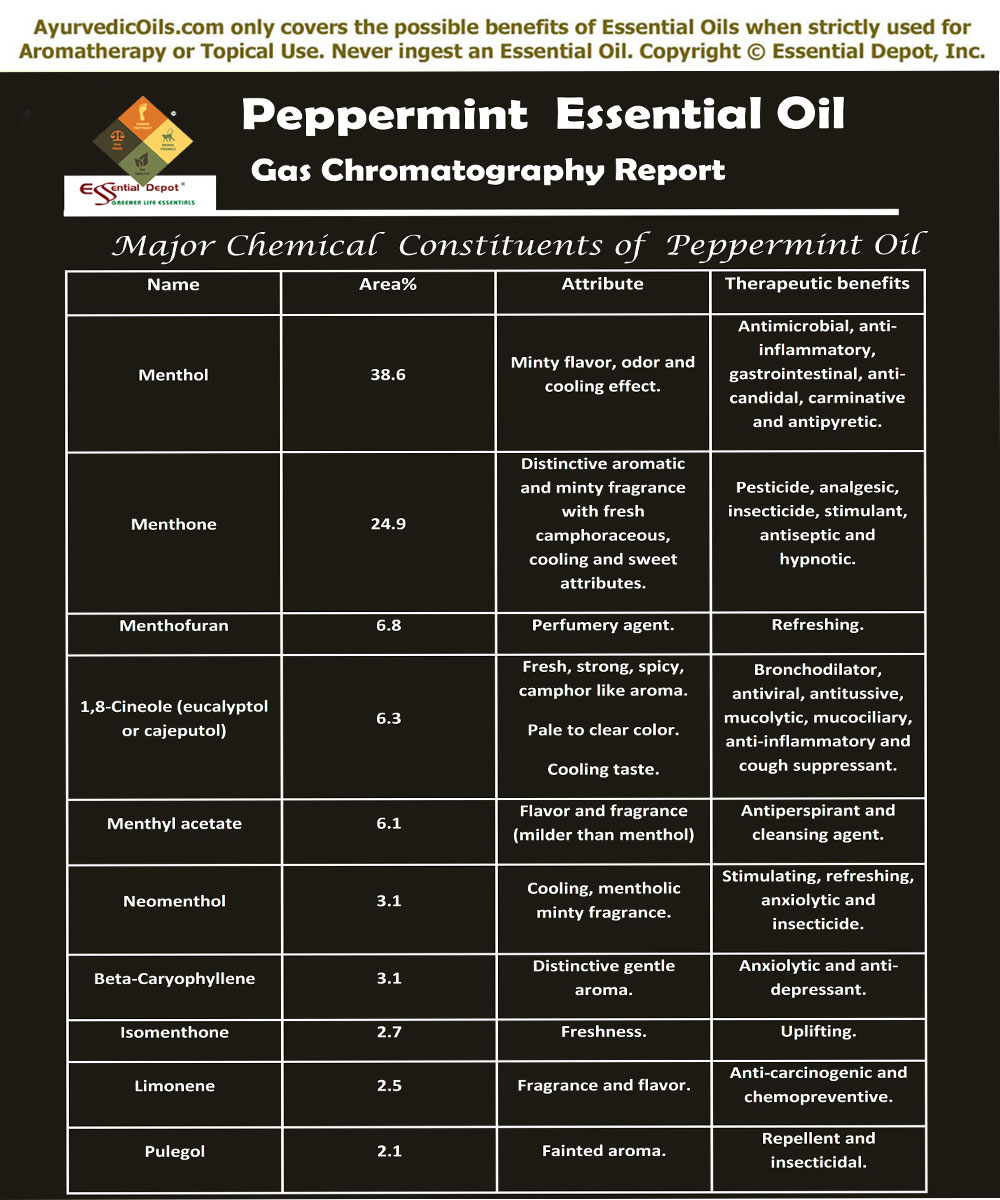
This oil consists of about 95% menthol and other active ingredients are isomenthone, methyl acetate, menthone, alpha-pinene, camphene, beta-pinene, piperitone, flavonoids, limonene, beta-caryopyllene, neomenthol and tannins.

The healing properties are carminative, antispasmodic, antiseptic, antimicrobial, cholagogue, anti-fungal, expectorant, stimulant, tonic, antiphlogistic, antidepressant and nervine.

Ayurvedic health benefits of Mentha piperita essential oil:

Pudina is an incredible kitchen herb in India and many other Asian countries for its tempting and refreshing aroma along with its excellent medicinal values. Ayurveda aged for about 5000 years is a holistic medicinal practice that considers every human being as a part of nature.

Ill-health and good health according to Ayurvedic texts depend upon nature and natural remedies are the best way to treat it. Based upon this principle, Ayurvedic remedies encompass nature’s gifts like herbs and essential oils along with a balanced lifestyle, yoga, meditation and simple physical exercises that can assist in preventing diseases and pave way for longevity.

Every human being is considered as a unique creation and just like Hippocrates words ‘One man’s food is another man’s poison’, Ayurvedic treatments differ from individual to individual even for the same disease. This uniqueness is identified by one’s individual constitution that is made up of three bio-energies known as doshas. They are vata, kapha and pitta doshas.

Perfect balance between all the three doshas with the predominance of any one of the dosha determines a human’s health, attributes along with his physical and mental set up. Imbalance of doshas end up in illness and Ayurvedic treatments often prescribe remedies that can stabilize dosha disparities. Mentha and its essential oil are said to pacify pitta and kapha doshas and aggravate vata dosha with its easy, clear, dry and light properties.

The Ayurvedic health benefits of Mentha piperita essential oil are:

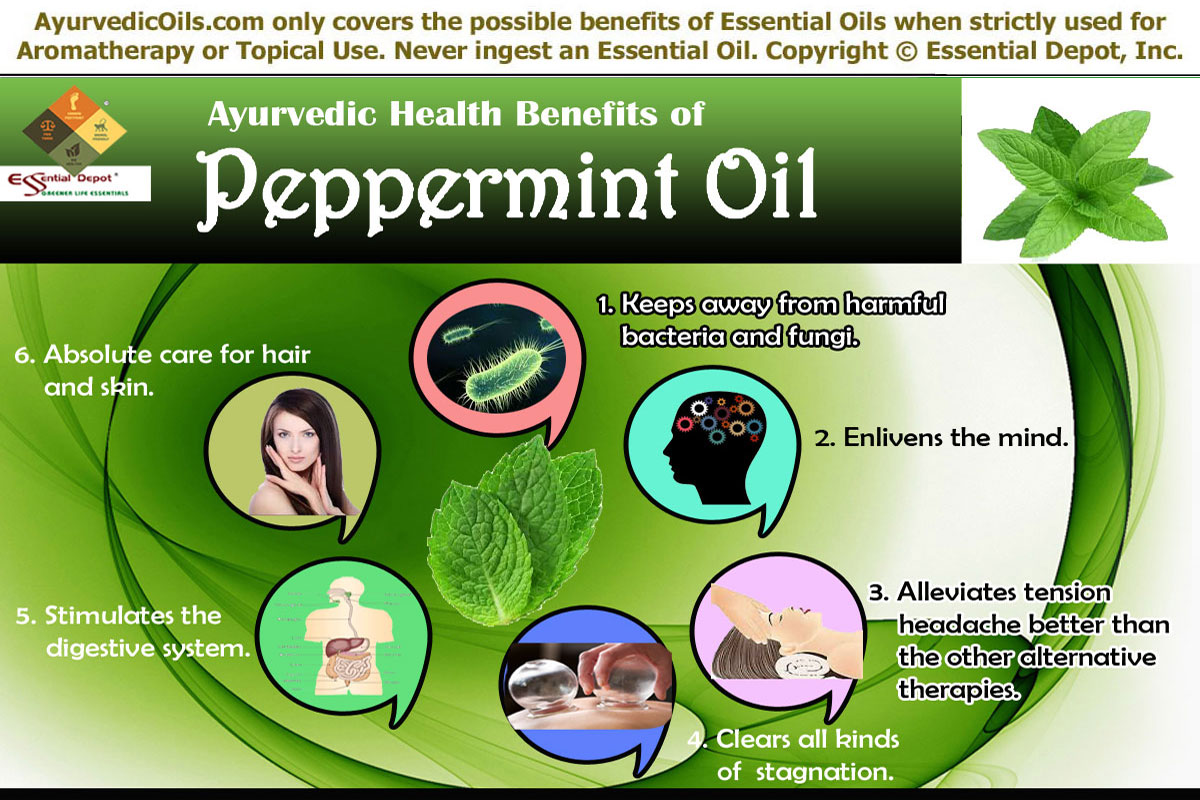
Mentha-pepperita-broucher1. Soothes the digestive system:

Mentha arvensis is a natural carminative that speeds up sluggish digestion, treats indigestion, motion sickness, flatulence, colic, dyspepsia, food poisoning, nausea, intestinal peristalsis and gas.  The active ingredients present in Menthol essential oil pacifies the inner lining of the stomach and intestines and its cooling property aids in treating ulcers as well.

The stomachic and digestion promoting properties of mint has made it a vital ingredient in many lamb and other meat dishes in the Middle East, America, Great Britain, Asia and Africa. Ancient people also used mint for preventing coagulation of milk.

All you need to do to treat your digestive chaos is to add 3 to 4 drops of Mentha piperita oil in warm bathing water and let that warmth and refreshing energy of the medicated bathing water treat your digestive difficulties. You can also gently massage your abdomen and tummy with 2 drops of this oil blended with sesame oil for assisting your digestive problems.

The simplest way to treat nausea (especially while traveling), morning sickness and loss of appetite is to add 1 drop of Mentha oil to your hanky or tissue and inhale its invigorating aroma that can put an end to your giddiness and nostalgic feeling just like that.

A 2010 study on ‘Protective effects of bioactive phytochemicals from Mentha piperita with multiple health potentials’ state “The essential oil of mint may be exploited as a natural source of bioactive phytochemicals bearing antimicrobial and antioxidant potentials that could be supplemented for both nutritional purposes and preservation of foods.”

2. Emancipates all forms of stagnation:

Mentha piperita essential oil is known to clear all forms of stagnation in the body causing sickness and affecting the body’s normal functioning. It alleviates excess kapha energy that is responsible for stagnation of excess fluids in the body leading to obesity, rheumatism, respiratory problems etc.,

(i)Treats respiratory problems:

Inhaling the healing aroma of Mentha oil by adding 2 drops to steam inhalation assists in treating respiratory problems like cold, asthma, bronchitis, sinus congestion, blocked nasal passages and congestion of lungs and bronchi.

Adding 2 drops of this oil to your cold rub and gently rubbing it on your chest, throat, back and forehead can aid in relieving headache, sore throat, chest congestion and runny nose. This speedy action is due to the presence of menthol, which is a primary ingredient in all the popular vaporub and balms in the market.

(ii) Alleviates fever and neuralgia:

The febrifuge and diaphoretic properties of Mentha essential oil helps in reducing fever by releasing the heat of the body through sweat. The antimicrobial and antifungal properties of this oil assist in curbing the growth of harmful microbes causing fever and other respiratory infections.

2 drops of Mentha oil can be added with coconut oil and applied on the soles of your feet to reduce your body temperature and treat neuralgia as the vital points of all the parts of your body are connected to the soles.

(iii) Regularizes menstruation:

The power to emancipate all types of stagnations in the body makes Mentha essential oil as a promising remedy for treating menstrual pain and blocked menstruation. Massaging your lower abdomen with 2 to 3 drops of Mentha oil along with sesame oil helps in regularizing your menstrual cycle, treat dysmennorhea, nausea and other painful symptoms of menstruation by balancing the level of estrogen.

3. Nurtures the skin:

Undoubtedly, Mentha essential oil is a natural antiseptic that aids in healing wounds and treating numerous skin problems. It acts as a protective shield on the skin and guards against the infections of micro organisms like bacteria, fungi and other microbes.

A 2008 study on ‘Enhancement of the Antibiotic activity against a Multiresistant Escherichia coli by Mentha Arvensis L. and Chlorpromazine’ has proved that the extracts of Mentha Arvensis can be used as natural weapon for bacterial resistance.

This oil has excellent skin cleansing properties. Adding 2 drops of Mentha oil to your skin care cream or lotion supports in treating pimples, blackheads, blemishes and dark circles. This oil also has anti-pruritic effect that can be effective in treating itching, rashes and insect bites.

4. Relieves pain and inflammation:

The rich menthol content in Mentha piperita oil helps in relaxing the muscles, treat muscular spasms, reduce pain, alleviate inflammation and promote blood circulation. Massaging the affected area with 2 drops of Mentha oil blended with coconut oil can aid in relieving pain, rheumatism, arthritis, numbness, soreness and irritation.

5. Grants absolute tranquility:

No one can deny the fact that mint has an enlivening aroma that can drive us straight to a whole new world of freshness and fragrance. Inhaling the aroma of Mentha oil by adding 2 drops to your aromatic lamp or diffuser or air freshener can trim down your fatigue, stress, depression, nervous tension and anxiety after a long tiring day.

The aromatic molecules of this tranquilizing oil travel through your nasal passages and reach the limbic system of the brain, which is the body’s control hub of feelings and emotions. By this way Mentha oil motivates, pacifies, rejuvenates and replenishes your senses and augments your mental power by boosting your confidence.

Other health benefits:

Mentha piperita essential oil is also used in lotions, toothpastes, gargles, cough drops, analgesic balms, perfumery, pharmaceuticals, mouth fresheners, shampoos, tobacco products and as a flavoring agent in numerous other products. You can also use this oil as a natural oral cleanser by adding 1 drop of Mentha oil to a cup of warm water and use it as a gargle in the morning and at night. This assists in killing germs, restricting bacterial growth, refreshing your breath, strengthening your gums and whitening your teeth.

Disclaimer:

This article is only for educational purposes and is not meant to treat or diagnose any health condition or to substitute any prescribed medications or expert professional advice. We are not healthcare professionals and this information is shared with the idea of spreading the significance of Ayurveda, the oldest holistic healing system on earth.

Never use essential oils internally. Ensure that you dilute them in appropriate carrier oils before using it for external purposes as pure and organic essential oils are extremely concentrated liquids and undiluted use on the skin might cause allergic reactions. It is highly recommended to speak with your Ayurvedic expert/ healthcare professional prior to choosing the appropriate essential oils for your unique individual constitution and state of health.

Thought for the day:

Nothing except the mint can make money without advertising.  -Thomas B. Macaulay

Suggested Reading:

  1. Mint: The Genus Mentha (Medicinal and Aromatic Plants – Industrial Profiles) from CRC Press
  2. Cultivation of Mentha arvensis and production of menthol in India by Council of Scientific and Industrial Research (India)
  3. ISO 9776:1999, Oil of Mentha arvensis, partially dementholized (Mentha arvensis L. var. piperascens Malinv. and var. glabrata Holmes) by ISO TC 54
  4. The Encyclopedia of Essential Oils: The Complete Guide to the Use of Aromatic Oils In Aromatherapy, Herbalism, Health, and Well Being by Julia Lawless

Reference Links:

  1. Mentha Arvensis Piperascens by Boston University School of Medicine
  2. Enhancement of the Antibiotic activity against a Multiresistant Escherichia coli by Mentha Arvensis L. and Chlorpromazine University of the Region of Cariri, Crato and Federal University of Paraiba, Brazil
  3. Protective effects of bioactive phytochemicals from Mentha piperita with multiple health potentials published in PubMed

Moranga Essential Oil


Loved as  ‘Mother’s Best Friend’ in East Africa and as ‘Never Die’ and ‘Miracle Tree’ all over the world, Moranga is one of the most useful trees in the Cosmos, as every part of this tree including the leaves, stems, seeds, pods, fruits, root and bark has enormous medicinal values. Moranga is known as the best natural hub of antioxidants with 46 antioxidants and 36 anti-inflammatory compounds making it rich and wholesome for mankind.

Ayurveda, the mother of all healing sciences have listed about 300 diseases that can be cured with this wonder herb known as Shigru, Sahijna, Munaga, Shobanjana and Sainjna in the Ayurvedic community. Moranga is scientifically called as Moringa pterygosperma gaertn., or Moringa oleifera, Lam. The name Moringa is extracted from the Tamil name murunga and pterygosperma for its winged seeds or oleifera for its non-drying stable oil with a long shelf life.

Purchase Moranga Oil – Wholesale – CLICK HERE

Historical importance of Moranga and its essential oil: Well-known to the world populace as Drumstick tree, clarifier tree and horseradish tree, Moranga is extremely nutritious and considered as a treasure of India and a fortune to the entire universe. Indians call it a pretty tree with a graceful appearance complimenting its surrounding with natural beauty and freshness. This immortal tree has an exceptionally long traditional usage. The most important among them are listed for your information.

Historical transcripts reveal that drumstick and its leaves were used by the primordial Indian kings and queens in their daily diet to gain enormous energy, retain their good health and treat inflamed joints. The young leaves of this tree are used in folklore medicine for treating common cold, dog bites and scurvy. Fresh Moranga leaves were rubbed against the temples for relieving severe headaches. These leaves are also used in treating fever, inflammation of the mucus membrane, bronchitis, cold, infections of the ear and eye.

Tea prepared with Moranga leaves were used in treating diarrhea, gastric ulcers and stomach pain. Moringa leaves and food products are considered as the best food for people suffering from malnutrition as it is rich in fiber, protein, minerals, vitamins and carbohydrates. It is used in Senegal and India for treating sleeplessness, anxiety, asthma, dysentery, rashes, sores, colitis and added to children’s food to fight malnutrition.

The leaves and twigs are used as a nutritious fodder for farm animals, goats, sheep, camels and other domestic animals. The juice extracted from Moringa flowers is used for treating urinary problems, cold and to enhance the flow and quality of milk in breastfeeding mothers with its tonic, diuretic and cholagogue properties. Moringa flowers are regarded as a good source of pollen for honey bees. The high iron content in Moringa leaves are used to treat anemia in Philippines. Moringa gum is used to treat asthma, tooth decay and rheumatism.

Moringa oil has been used in treating syphilitic wounds, scurvy, hysteria, bladder problems, prostate problems, fungal infections and certain skin complaints.  The villagers in Oman use this oil as a perfume and for treating hair problems and stomachic disorders.  Arabians in the desert used this oil on their face to treat the harmful effects of wind and sun. It was buried in the tombs of Egyptians whereas the Romans used this oil as a basis for perfumery.

Therapeutic properties of Moranga essential oil: The major remedial properties of Moringa essential oil are antibacterial, anti-inflammatory, diuretic, antispasmodic, anti-choleric, antifungal, anti-hypertensive, anti-tumor, anticancer, antiulcer, immune stimulant, aphrodisiac, antidiabetic, tonic, antipyretic, hepatoprotective, cholesterol lowering and antioxidant. A study on the ‘Medicinal properties of Moringa oleifera: An overview of promising healer’ have analyzed on numerous therapeutic properties of Moringa oleifera.

Ayurvedic health benefits of Moranga essential oil: Ayurveda, the ancient healing science aged more than 5,000 years has India as its birthplace. This holistic healing methodology have used the most useful tree on earth, Moringa aged more than 4,000 years and has its origin in India. Ayurvedic texts list more than 300 diseases that can be cured with the immaculate healing powers of Moranga tree and its extracts like the essential oil.

The power of Ayurvedic healing deeply vests in its trust on natural remedies. Ayurvedic philosophies state that every living thing on earth is unique in its own way and united in the fact that it is a part of nature. This promising science is optimistic and the simple proof is that it considers illness as an opportunity to find what is wrong in the system.

Ayurvedic treatments do not treat just the disease instead it treats the whole individual. By this way it aims at treating and preventing the illness and not just curing the disease alone. Ayurveda identifies the major root cause responsible for sickness.

Ayurvedic texts strongly state that every individual has his or her own constitution which is made up of three energy elements known as doshas namely pitta, vata and kapha. Balance between these three doshas indicates that the system is hale and healthy and imbalance of any one or all the three doshas is responsible for sickness. Moringa and its essential oil is said to reduce excess kapha and vata and improve deficiency of pitta.

Ayurvedic remedies using Moringa products are used in the treatment of liver problems, urinary infections, dysmennorhea, aid during labor or childbirth, improving the secretion of milk in breastfeeding mothers, anemia, sexual dysfunctions, nervous debility, skin problems and infections caused due to pathogenic organisms. The major health benefits of the essential oil extracted by steam distillation method from the leaves of Moringa tree are:

Enormous benefits for the skin: Moringa essential oil has exceptional benefits for the skin and is mainly due to the presence of rich nutrients and antioxidants in the leaves that support healthy skin. Moringa leaves are known as the powerhouse of nutrition with more than 7 times the vitamin C in oranges, more than 4 times the vitamin A in carrots, more than four times the calcium in milk, more than 3 times the potassium in bananas and more than twice the proteins in milk in each gram.

Moringa essential oil has antibacterial, antimicrobial, antifungal, antioxidant and anti-aging properties that aids in combating numerous skin problems. The effects of aging like wrinkles, dull and lifeless skin are mainly due to the activity of free radicals on the skin. The rich content of about 46 antioxidants in Moringa aids in fighting against all the negative effects of aging on skin.

Moringa oil cleanses, nourishes and nurtures your skin naturally. Blending 3 drops of this oil with little coconut oil and applying this mixture on acne, cuts, scrapes, blackheads, scars, burns, rashes and insect bites will help in quicker healing with its antiseptic and antimicrobial values. Gently massaging your skin with 2 to 3 drops of Moringa oil mixed with olive oil helps augment the elasticity of the skin by nourishing the skin cells, removing dirt gently, killing microbes causing infections, avoiding excessive drying, and moisturizing the skin.

A 2007 study on ‘Anti-fungal activity of crude extracts and essential oil of Moringa oleifera Lam.’, by the Institute of Bioagricultural Sciences, Taiwan have stated that the “essential oil extracted from the leaves of Moringa showed a total of 44 compounds. Isolated extracts could be of use for the future development of anti-skin disease agents.”

Due to these reasons Moringa oil is used as an important ingredient in soaps, facial creams, body wash, facial massage oils and anti-aging creams. You can also add 3 to 4 drops of Moringa oil to your mild skin care cream or lotion for alleviating such skin problems.

More than just a complete food for your system on your shelf: Moringa leaves have Vitamin A, B1, B2, B3, B6, B7, C, D, E, K and certain other amino acids like leucine, methionine, lysine, isoleucine, threonine, valine, tryptophan and phenylalaine along with a bunch of non-essential amino acids, making it a complete food for the mind, body and soul.

Adding 2 drops of Moringa oil to warm bathing water can help in relieving stress, cleansing your body, granting mental peace and removing fatigue. Massaging your body with 4 drops of Moringa oil blended with almond oil can aid in alleviating rheumatic pain, reduce inflammation with its anti-inflammatory properties, eliminate the excess fluids in your body through urine, boost the immune system and protect your body from harmful infections.

Moringa essential oil is light and it easily spreads and deeply penetrates into the skin. By this way it transforms its vital nutrients into the body, mind and spirit. This oil has also been used as a natural cleanser to remove excess oil and dirt from hair. Massaging your hair and scalp with 3 drops of Moringa oil blended with coconut oil can assist in cleansing your hair, nourishing your scalp, treating dandruff and grant a natural shine to your lustrous locks.

Scientific evidences: The long time Ayurvedic health benefits of Moringa and its essential oil have been proved scientifically through numerous studies. A 2003 study on ‘Hepatoprotective activity of Moringa oleifera on antitubercular drug-induced liver damage in rats’ have proved that treatment with M.oleifera leaves seems to improve the recovery from hepatic damage caused by antitubercular drugs.

Another study by the U.S. National Academy of Sciences Noel Vietmeyer published in PubMed witnessed “The results indicate that this plant possesses antioxidant, hypolipidaemic and anti-atherosclerotic activities and has therapeutic potential for the prevention of cardiovascular diseases.”

The University of Agriculture, Faisalabad, Pakistan studied the effectiveness of Moringa oleifera based upon its detailed phytochemical composition, pharmacological properties and medicinal uses of various parts of this multipurpose treesuch as the leaves, roots, seed, bark, fruit, flowers and immature pods act as cardiac and circulatory stimulants, possess antitumor, antipyretic, antiepileptic, anti-inflammatory, antiulcer, antispasmodic, diuretic, antihypertensive, cholesterol lowering, antioxidant, antidiabetic, hepatoprotective, antibacterial and antifungal activities, and are being employed for the treatment of different ailments in the indigenous system of medicine, particularly in South Asia.”

Few other studies also proved the antioxidant, hypocholesterolemic, antifungal and antibacterial effects of Moringa tree and its essential oil.

Other health benefits: Apart from these major health benefits, the different parts of Moringa tree and the essential oil extracted from the leaves and seed pods are used to strengthen the immune system with vitamin C, lessen the risk of health disorders like Alzheimer’s disease, atherosclerosis and cataract with the presence of vitamin B3, stimulates the process of digestion with the presence of fibre, supports blood circulation, functioning of the brain and treat anemia with its rich iron content and improve eyesight with vitamin A. Besides these, there are a handful of home remedies that are a part of the traditional healing system and grandmother’s remedy.

Disclaimer: Never take essential oils internally. Pure and organic essential oils are highly concentrated liquids and always remember to use them in a diluted form. This article is only for the purpose of information and is not meant to diagnose or replace prescribed drugs or professional advice. Consult your Ayurvedic practitioner before using the right essential oil for your specific health condition and individual constitution.

Thought for the day:

We do not see nature with our eyes, but with our understandings and our hearts.   -William Hazlitt

Suggested Reading:

  1. Miracle Tree by Monica G. Marcu
  2. Bible Miracle Tree: healing with Moringa by Miracle Bible
  3. Moringa Oleifera: Magic, Myth or Miracle by Howard W. Fisher
  4. Moringa Oleifera benefits: enrich your life with the Miracle Tree for well-being, happiness, weight loss. More than a super-food, nutritional supplement, food supplement by Frank Moringa Oleifera

Reference Links:

  1. Moringa oleifera by Life in Health
  2. Śigru or drumstick (Moringa pterygosperma, Gaertn., M. oleifera, Lam.) by Dr. K.H. Krishnamurthy published in NAMAH
  3. Moringa, the Miracle Tree by Moringa Rubicon Health.Org
  4. The Benefits of Anti-Aging Moringa Oil on the Skin by Ayurveda Guru
  5. Medicinal properties of Moringa oleifera: An overview of promising healer by Fozia Farooq, Meenu Rai, Avinash Tiwari, Abdul Arif Khan, and Shaila Farooq

Jojoba Oil


Peek-a-boo!!! It’s Jojoba this time and it is here to reveal your natural beauty, hidden in the rear of your pimples, wrinkles, blackheads, sunburns, scars, microbial infections, skin pigmentation, psoriasis, cellular damages, dandruff, rough hair, chapped lips, and the list that never ends as you know.Jojoba-bannerThis is mainly due to the fact, “Jojoba oil is similar in structure to our natural sebum and such wonder plants used in natural cosmetics actually mimic the skin’s own functions,” quotes the book, ‘The New Age Herbalist – How to use herbs for healing, nutrition, body care and relaxation’ by Richard Mabey and Anne McIntyre.

Trust me; Nature is extraordinarily miraculous in bestowing spectacular souvenirs like Jojoba, which is a woody evergreen shrub that grows in drought and scorching desert conditions. Bearing all the blistering heat around, Jojoba oil still enriches us with its enormous moisturizing and cooling attributes.

Pronounced as ho-ho-ba, Jojoba oil is indeed a fluid plant wax that has replaced animal wax or whale oil since 1971 in the United States and across the world in the production of soaps, skin care creams, moisturizers, shampoos and an extensive range of cosmetics.

Jojoba is used in various Complementary and Alternative Medicinal Practices including Ayurveda, especially in Abhyanga or the art of Ayurvedic massaging for ultimate relief and comfort from various ailments. Jojoba oil has the potent to balance vata, pitta and kapha doshas and is helpful in treating dry skin complaints, acne-prone skin problems and inflammatory conditions.

Purchase Jojoba Oil – Retail – 4 oz – CLICK HERE

Purchase Jojoba Oil – Retail – 12 oz – CLICK HERE

Purchase Jojoba Oil – Wholesale – 1 kg – CLICK HERE

Therapeutic properties and chemical constituents of Jojoba oil:

Jojoba oil has fatty acids including ferulic acid, docosenoic acid, 11-Eicosenoic acid, oleic acid, docosdienoic acid, palmitoleic acid, erucic acid and 9-Godoelic acid.

It has a rich presence of skin-nourishing nutrients like Vitamin E, copper, selenium, zinc, chromium, silicon, B-complex and iodine (82 per cent of this magical ingredient grants Jojoba the power to cure).

The superior emollient quality of Jojoba oil is attributed by the two inherent properties in Jojoba oil, namely “unbranched liquid wax esters formed from unbranched Omega-9 monounsaturated fatty acids and unbranched Omega-9 monounsaturated fatty alcohol,” says Dr. Nadim A. Shaath, in his study ‘The Wonders of Jojoba.’

Remedial values that make Jojoba the best among all the enriching massage oils are anti-inflammatory, emollient, moisturizing, cicatrisant, antioxidant, anti-degenerative, antifungal, antimicrobial, antiseptic, moisturizing, anti-acne, anti-dandruff and anti-aging.

Historical uses and importance of Jojoba oil:

Simmondsia chinensis is the botanical name of Jojoba, a dry perennial shrub indigenous to the Sonoran desert of Northwestern Mexico and in Southern California and Arizona. It is also grown commercially in Peru, Argentina, Australia, Chile, Israel and Egypt.

“Jojoba is the only known botanical wax, which is liquid at room temperature and an estimated 5,000 tons of Jojoba is used in personal care products manufactured around the world,” says the International Jojoba Export Council (IJEC).

Jojoba is an excellent alternative to commercial whaling and this wonder plant save the whales from being killed for ‘whale oil and spermaceti.’ IJEC says that Jojoba oil is chemically similar to whale oil and both are pure, long-chain wax esters.

The rich Jojoba oil is extracted from the crushed seeds of this shrub. Jojoba and its oil have also been in use as a promising skin conditioner, hair restorative, appetite suppressant and as a natural moisturizer.

The founder of 21 California Missions, Father Junipero Serra quotes that the Native American populace have used Jojoba for a longer period in the treatment of burns, bruises, sores, wounds, sunburn, dandruff, hair fall and inflammatory scalp conditions.

Not many people except the resident Americans along with the traditional masses of the Sonoran desert were aware about the many healing benefits of Jojoba oil. This oil was popularly known and has been used as a reliable source of antioxidant emulsions.

The first International Conference on Jojoba and its uses held at the University of Arizona in 1986 was a turning point and an eye-opener to the Jojoba revolution thereafter.

The ban on Whale oil paved way for the boom of Jojoba wax, which also contains wax esters like spermaceti oils. Being a polyunsaturated wax, the structure of Jojoba oil is completely contradictory from that of other vegetable oils.

“Approximately 50 per cent of the Jojoba seed is lipid, not a fat, but a liquid wax. Jojoba is the only known plant in the world to produce such a substance,” quotes Wade C and Edward F Haase. Sherbrooke in their study (University of Arizona) ‘Jojoba: A Wax – Producing Shrub of the Sonoran Desert’.

Jojoba is preferred in the skin care and cosmetic industry than other oils because natural waxes do not respond to rancidification, which is “the chemical decomposition of fats, oils and other lipids by which oils get undesirable odors and flavors and is one of the reasons why Jojoba wax is odorless.”

Ayurvedic health benefits of Jojoba oil:

Ayurveda is the pioneer and the oldest of all healing systems on earth including Homeopathy, Siddha, Unani, Traditional Chinese Medicine, Aromatherapy, Chiropractic and Acupressure.

Many think that Ayurveda is a complicated medicinal practice. Believe me; no medicinal sciences on earth can be as simple as an Ayurvedic remedy.

Ayurveda is not a rocket science but is just a common sense healing methodology. The word ‘Ayur (Life) + Veda (knowledge)’ means the knowledge of life. Self-realization is the ultimate mission of Ayurvedic healing for attaining the vision of longevity and oneness with the Divine.

Ayurvedic philosophy states that health is a combination of physical, emotional and spiritual heartiness of a person.

Charaka, the most celebrated Ayurvedic philosopher and the author of Charaka Samhita, one among the three Ayurvedic encyclopedia states The three – body, psyche, and soul – act as a tripod. The world stands upon them, and within them, the world abides.”

Ayurveda never treats an illness or its symptoms, whereas it addresses every individual in a distinct manner and not just their health condition.

This is due to the fact that Ayurveda regards every person as a unique creation with a unique individual constitution known as doshas. Every human being is made up of three doshas, namely vata, pitta and kapha.

These biological energies are an arrangement of the five vital elements of Nature (Panchamahabhutas – earth, water, fire, space and air). All human beings have a combination of three doshas in a specific composition with the dominance of any one dosha.

The predominant doshic energy determines the character, physique, behavioral attributes and spiritual enlightenment of an individual.

Ayurvedic philosophy trusts that everything in this universe is a part of nature and retaining absolute balance with Nature paves way for health and disparity leads to sickness.

Ayurveda recommends herbs, Ayurvedic essential oils, Pranayama or balanced breathing, Abhyanga or the art of Ayurvedic massaging, yoga, Panchakarma or the Ayurvedic detoxification technique, simple physical exercises, Dinacharya or the Ayurvedic routine, meditation and prayers for treating doshic imbalances.

Jojoba is a pacifier and neutralizer of all the three doshas. It is many times prescribed for Abhyanga (massaging in Ayurveda), which is maneuvering of muscles and nerves with Ayurvedic oils using palms, fingers, foot, elbows and certain other conventional massaging equipments.

The body of one who uses oil massage regularly does not become affected much even if subjected to accidental injuries, or strenuous work. By using oil massage daily, a person is endowed with pleasant touch, trimmed body parts and becomes strong, charming and least affected by old age.”

Charaka Samhita Vol. 1, V: 88-89.

Yes! The wait is over.

Come let’s discover the many healing benefits of Jojoba oil for mankind.

Jojoba-broucher1. God of gorgeous skin: Supports skin health and called as Twachya.

The heading might sound ‘BIG’ but is not a mere exaggeration, as pure Jojoba oil has admirable and commanding qualities that protect your skin health and prevent it from various infections.

Jojoba has supernatural powers and its unique biochemical components make this oil ‘the best’ among various skin care formulations.

For its skin supporting attributes, Jojoba is beckoned as Twachya in Ayurveda.

Jojoba can be ‘everything’ to your skin and hair. It can be a promising conditioner, cleanser, moisturizer, cosmetic, softener, anti-microbial agent, anti-aging serum, softener, lip balm, sunscreen lotion, shaving gel, body lotion, safe makeup remover, detangling cream, cuticle cream, anti-acne cream, anti-dandruff lotion, hair vitalizing serum, cracked foot cream, stretch mark reducer, scar treatment, wound healer, hair thickener and much more.

Ayurveda denotes that Jojoba oil has mild, moist, cooling, light and hydrating properties that are extremely beneficial in the treatment of dry, inflamed and acne-prone skin conditions.

Jojoba oil pacifies all the three doshas and is enormously helpful for vata and pitta skin types. With its light and moisture-enhancing abilities, it is safe for kapha dosha also.

It can work as a brilliant massage oil that can assist in supporting your overall health condition. Just blend 1 ounce of Jojoba oil with 1 ounce of Coconut oil, ¼ ounce of Olive oil and ¼ ounce of Almond oil.

Your magical massage oil is ready for granting you the mesmerizing beauty from within.

Ayurvedic expert, Dr. Meghna Dixit says, “A massage helps in the lymphatic drainage. It leads the toxins and the waste products from the blood and the serum from the lymph nodes to the kidney and through it throws it out of the body. Thus the blood and the body overall is purified.”

She further adds, “It also increases the basic metabolism rate, and activates the cells to perform the best, and thus give a boost to one’s immunity.”

“People who go for massage experience measurable changes in their body’s immune and endocrine response and experienced significant changes in lymphocyte numbers and percentages white blood cells that play a large role in defending the body from disease,” say researchers of Cedars-Sinai’s Department of Psychiatry and Behavioral Neurosciences.

Applying Jojoba oil leaves the positive impression in such a way that the homeostatic regulatory system of the human body recognizes that sufficient oil has been produced by itself.

2. Mother of sebaceous glands:

Wonderful moisturizer that feeds sebum secretion:

Sebaceous glands are minuscule glands in our skin surface that secretes a wax-like or an oil-like substance called as sebum.

The consistency of sebum is much similar to Jojoba oil. The proper secretion of sebum by our sebaceous glands determines the optimal health of skin surface.

Age, lifestyle changes, diet and other environmental factors affect the normal functions of sebaceous glands. Decreased secretion of sebum leads to dandruff, hair fall, itchy scalp, dry hair, dry skin, cracked and thick skin surface.

According to the Journal of Investigative Dermatology, the British Journal of Dermatology and Skin Pharmacology and Physiology, “Jojoba oil and similar other components are considered natural moisturizing factors that prevent individual skin cells from losing water and create the appearance of smooth and healthy skin, all major benefits.”

Mothers are created on earth as God cannot be present everywhere’ is a divine adage.

Why is Jojoba oil beckoned as the ‘Mother of sebaceous glands’?

Jojoba oil is an emollient with rich natural wax esters that assist in the secretion of sebum by the sebaceous glands, thus helping in maintaining balanced level of oil in the skin, retaining the natural moisture, enabling the skin to look young and hydrated and leaving the skin soft and supple.

Dry skin is a result of lack of moisture or water in the epidermis or the upper layer of the skin surface. Jojoba oil penetrates through the epidermis and keeps it moist and hydrated all through the day.

The oil of Jojoba has the potent to enable sebum secretion during shortage and dissolves sticky remains in times of excess sebum secretion.

Massaging your skin with 2 ounce of Jojoba oil blended with 5 drops of Lavender oil, 5 drops of Argan oil and 5 drops of Ylang Ylang oil will moisturize your hair and skin and gift you the most spongy skin and bouncy locks like never before.

3. Father of hair follicles:

Keshya – Encourages hair growth and strengthens your hair follicles:

Every problem has a destined root cause. Nothing happens overnight. Thus, treating the symptoms of a specific health condition can grant only a temporary solution.

Treating the real root cause paves way for treating it initially and preventing it in the future. This is the secret behind the healing acumen of Ayurvedic medication.

A Father provides the foundation of strength, wisdom and hope. So that his children may build their dreams upon it,” is a celebrated father quote.

That is why I personally call Jojoba oil as the father of hair follicles, for its ability to strengthen the roots of the hair, enrich the scalp, clear away dandruff, control frizz, treat alopecia and promote hair growth.

Gwyneth Paltrow said, “My father, he was like the rock, the guy you went to with every problem.” In a much similar way, Jojoba oil is a father to your hair follicles as every hair problem begins from its roots and this natural wax treats it better than most other hair care products in the market.

Massaging your scalp and hair with 2 ounce of Jojoba oil blended with 3 drops of Rosemary oil, 2 drops of Thyme oil, 2 drops of Lemon oil can assist in controlling frizzy hair problems, controls dandruff and itchy scalp conditions, balances the level of natural oils and sebum in the scalp and persuade hair growth.

Unlike other liquids, Jojoba does not evaporate quickly and it amasses and penetrates into the roots of your hair. This aids in conditioning the roots and preventing your hair from turning dull and fragile.

Excess secretion of sebum in the scalp might lead to sticky hair, itchy scalp, and invasion of microbes along with dirty and blocked pores that restrict the growth of healthy hair.

Massaging your scalp and hair in alternative days with 2 ounce of Jojoba oil blended with 5 drops of Rosemary oil, 5 drops of Clary Sage oil, 5 drops of Cedarwood oil and 5 drops of Almond oil is an excellent homemade blend for augmenting the volume, shine, texture, thickness of your hair and prevent hair loss significantly.

Jojoba oil spreads evenly on the scalp, dissolves and confiscates excess sebum deposits, thereby leaves the scalp and hair clean and strong.

4. Sister of acne-free clear skin:

Excellent care for treating and preventing acne.

Acne is the most chronic condition in a teenager’s life, mostly during the peak period, when the young ladies and the gentlemen turn beauty conscious.

It is not only a universal adolescent problem but is found in many people even after their teenage years.

Acne includes pimples, blackheads and whiteheads in the initial stages, whereas severe acne might lead to inflammation and larger spots on the skin. If not treated in the initial stages, this condition might turn worse by leaving behind acne marks and difficult to remove scars on the skin.

The major causes behind acne-prone skin conditions are blocked sebaceous glands with excess sebum, dirt, dead cells, keratin and oils. It paves way for the formation of comedone that looks like a whitehead or blackhead.

Blocked sebaceous glands invite bacteria like Propionibacterium acnes that worsen acne and end up in inflammation and spots filled with pus, witnessed by redness and pain.

The extremely shocking fact is that numerous studies have correlated the relation between acne, anxiety and depression that might even lead to suicide in teenagers.

Can a dermatological disorder like acne end up in suicide?

A 2010 study on ‘Clinical implications of lipid peroxidation in acne vulgaris’ by Whitney P Bowe, Department of Dermatology, State University of New York Downstate Medical Center, New York and Alan C Logan, Integrative Care Centre of Toronto, Canada published a detailed study on the impact of acne frequently associated with depression, anxiety and other psychological sequelae and the oxidative stress involved in the pathophysiology of acne.

This study states “inflamed and damaged sebaceous glands negatively influence neuronal communication at the same time and set the stage for higher rates of depression and anxiety in acne.”

How can Jojoba oil be an effective natural remedy for acne?

My answers are here:

WOW!!!! Is your response now? Am I right?

Yes!! Only a sister can be a caring friend as well as your second mother.

With so many caring features packed in, nothing else than Jojoba can be your ‘LOVING SISTER’ for acne-free clear and spotless skin.

A German based 2012 study, published in the Swiss Journal Research in Complementary Medicine proved the effectiveness of Jojoba oil in the treatment of acne, where facial clay mask blended with jojoba oil dabbed 2-3 times every week for 6 consecutive weeks lead to about 59 per cent diminution of lesions in people with mild acne vulgaris.

Mix 10 drops of Jojoba oil with 1 drop of Turmeric oil and 1 drop of Tea tree oil and dab it on your acne and leave it for 30 minutes. Wash your face with a mild skin cleanser with 2 drops of Jojoba oil diluted in it.

Follow this regimen in alternative days for about a month, visible results are sure to knock your door. Practice Pranayama every day, where 70 per cent of toxic remains in your system are flushed out through conscious exhalation.

5. Brother to ‘The beautiful You’:

Rasayana – Rejuvenates and restores skin health:

‘Sometimes being a brother is even better than being a SuperHero’ – Marc Brown.

Your Super Hero brother would always love to keep you beautiful as you are his lovely little princess/prince.

Jojoba oil is rich in Vitamin E that contributes to its antioxidant properties. This aids in combating against the free radicals that are responsible for aging symptoms like wrinkles, fine lines, saggy and dull skin.

With its exceptional hydrating quality and highly penetrating ability, Jojoba oil protects the skin from the harmful UV rays, aids in treating sunburns, fine lines and wrinkles.

Gently massaging your skin with 5 drops of Jojoba oil and 2 drops of Apricot oil and 1 drop of Cucumber oil can help in rejuvenating and restoring your skin health, leaving it look young and beautiful.

6. Friend for fair complexion:

‘A friend in need is a friend indeed’ is a lovely friendship proverb and indeed Jojoba is that true friend for you in possessing a blemish-free, clear and fair skin complexion.

Jojoba oil controls the production of melanin and aids in treating skin pigmentation. Massaging your face, neck and hands with 15 drops of Jojoba oil, 3 drops of Sandalwood oil and 2 drops of Rose Geranium oil everyday can help in improving your complexion by lightening the skin color.

What next? Bright, clear, acne-free, spotless and extremely fairer skin that would make you proud and your rivals to stay envious on you is all yours.

7. Enemy to microbes and foreign bodies:

Kustaghna – Supports skin health and treats various skin problems.

Jojoba  oil is undoubtedly tough on microbes and smooth on your skin.

It is a great warrior in fighting against bacteria, fungi, other microbes and foreign bodies. These micro-organisms would otherwise barricade the functions of the healthy cellular structure of the skin.

Microbes invade wounds, boils, burns, acne and other skin eruptions and worsen its conditions. Bacteria like Staphylococcus aureus enable the wounds to turn septic and delay its healing.

Jojoba oil has anti-microbial, anti-fungal and antibacterial properties that curb the growth of microbes and help in the treatment of related skin conditions like eczema, candida, ringworm, dermatitis and psoriasis.

It also promotes quicker healing of wounds, burns, itching, allergies and inflammatory skin conditions.

How will Jojoba do all these things? Is that the next question striking your thoughts? Then, here’s the answer.

Jojoba oil is one among the most light and easily-spreading natural wax that penetrates deep into the skin surface.

First, it arrests the functions of microbes and further curtails its growth. Followed by its ‘repairing mission’ where Jojoba oil promotes the natural ability of the damaged or inflamed skin to turn to its normal cellular arrangement with its rich nutrients and chemical constituents.

Jojoba oil further normalizes the secretion of sebum by the sebaceous glands, the ultimate secret behind your skin in the pink.

All you need to do is to dab the affected areas with 5 drops of Jojoba oil blended with 1 drop of Argan oil to return to your healthy skin regimen.

Other health benefits:

Apart from these amazing benefits, Jojoba oil is also used as a vital ingredient in moisturizing creams, conditioners, shampoos, sunscreen lotions, baby care products, nail and cuticle products, pharmaceutical products, lubrication industry, natural cleansers and an extensive array of cosmetics.

  • Adhere to a wholesome and balanced diet.
  • Simple physical exercises on a daily basis might sound easy but you never know the massive health benefits on your fitness regimen.
  • Linking with the ultimate Divine Force through meditation or prayer for about 15 to 20 minutes a day can help in colossal positive effects on your brain and body, leading you to realize yourself, earn self-esteem and an optimistic outlook of life.
  • Be positive and fulfill your duties or karma for everlasting contentment.
  • Deepen your thoughts with positive thinking and determine to bring a smile in at least one person every day.
  • Fuel your system by drinking plentiful water and juices.
  • Keep smiling; you must have known that ‘Smile is a curve that sets everything straight’ :).

Ok… It’s up to you now, to turn that new leaf in your life this New Year 2016 🙂 and every New Day in the years ahead 🙂

Wishing you all a blessed and blissful New Year 2016, from my heart 🙂

Keep up that great smile 🙂 You look awesome 🙂 while smiling 🙂

Disclaimer:

This article is destined only for informational purposes and is not meant to diagnose, prevent or treat any kind of health conditions. It is not for replacing any prescription medicines or the consultation of a certified general practitioner. We, at Essential Depot are not doctors of medicine or healthcare practitioners and this piece of information is shared only for spreading the miraculous curing of Ayurveda, the mother of all healing systems on earth.

All essential oils are suggested only for topical application and not for internal use. Blend it with suitable carrier oils before use. This is mainly because 100 per cent untainted and organic essential oils are concentrated liquids and may cause allergic reactions if used on the skin without dilution.

Care should be taken in using essential oils on children, pregnant or nursing women. Speak with your Ayurvedic expert or medical professional before selecting the appropriate oils for your unique individual constitution (Prakriti) and the state of health (Vikruti). Do a patch test on your skin before enjoying the enormous benefits of essential oils.

Thought for the day:

If you truly love Nature, you’ll find beauty everywhere.

-Van Gogh

Suggested Reading:

  1. Carrier Oils: For Aromatherapy and Massage by Len Price, Shirley Price
  2. American Indian Healing Arts: Herbs, Rituals, and Remedies for Every Season of Life by E. Barrie Kavasch, Karen Baar
  3. Jojoba (Carrier Oils Book 10) by Miriam Kinai
  4. [(Jojoba: New Crop for Arid Lands, New Raw Material for Industry)] [Author: National Research Council] [Jun-2002] by National Research Council
  5. Making Soap From Scratch: How to Make Handmade Soap – A Beginners Guide and Beyond by Gregory Lee White

Reference Links:

  1. The Wonders of Jojoba by Dr. Nadim A. Shaath, Alpha Research and Development Ltd
  2. Jojoba oil by Gale Encyclopedia of Alternative Medicine
  3. Anti-inflammatory effects of Jojoba liquid Wax in experimental models by Habashy RR, Abdel-Naim AB, Khalifa AE, Al-Azizi MM. Department of Pharmacology and Toxicology, Ain Shams University, Cairo, Egypt, published in PubMed
  4. Jojoba oil by Wikipedia
  5. Jojoba: A Wax – Producing Shrub of the Sonoran Desert; Literature Review and Annotated Bibliography by Wade C and Edward F Haase. Sherbrooke published in the University of Arizona Campus Repository

Nar Kachur Essential Oil


Nar-katchur-bannerCan Turmeric be white? Yes! And here it is. Much similar to Turmeric, Nar Kachur herb is known as White Turmeric. Then am I not right in calling it as White Gold?

Indigenous to India and Indonesia, Nar Kachur is a well-liked herb found all over in the Indian sub-tropical regions.  Popularly known as Zedoary, the essential oil of Nar Kachur is extracted from the rhizomes of the plant Curcuma zedoaria, which is a member of the ginger family Zingiberaceae.

The world of Ayurveda acclaims this herb and its oil as an excellent digestive aid and in particular it has been used in this holistic medicinal system as a gastrointestinal stimulant. Nar Kachur essential oil is also used in the Traditional Chinese Medicine in the treatment of numerous chronic disorders including cancer.

Purchase Nar Kachur Oil – Retail – CLICK HERE

Purchase Nar Kachur Oil – Wholesale – CLICK HERE

Historical uses of Nar Kachur:

Known with many popular names across the world, Zedoary was a not so familiar herb in the Western world until it was spread across as a popular spice reminding of ginger, turmeric and mango put together.

It is known as Karchur in Sanskrit, Kachur in Hindi, Meitei Yaingang in Manipuri, Zedoary in English, Ezhu You in Chinese and Shatkachuro in Gujarati. This herb is spread across the natural beds of the Eastern Himalayan region and Karnataka and is cultivated in many countries.

The fresh Nar Kachur herb is used in Indian cooking and also in preparing pickles mainly because of its gingery-mango and energizing taste. It is locally called as amb halad where amb means mango.  Indonesians use Nar Kachur paste in preparing traditional curries.

The powdered herb was used in treating menstrual pain and for regularizing menstruation. Nar Kachur is trusted to tone the uterus and benefit the reproductive system in numerous ways. The ancient people used it as a natural aphrodisiac agent for its stimulating properties.

The juice extracted from the rhizomes of this plant was used in curing infections in the urinary tract and treat other urinary disorders with its diuretic properties. It also serves as an effective remedy in treating colic and flatulence.

Zedoary or Nar Kachur is still used in the Indian folklore medicine as an anti-venom for poisonous snake bites like the Indian Cobra bites. The fresh paste of this herb has been in use for treating wounds, pain, inflammation and certain other skin problems.

Chemical constituents and therapeutic properties of Nar Kachur Oil:

Curzerene, curcumenol, germacrone, zederone, curmanolide A, furanodienone, curcumenone, beta-elemene, pyridine, tau-elemene, isocurcumenol and numerous other components form a part of Zedoary essential oil. The remedial values of this oil are stomachic, diuretic, aphrodisiac, stimulant, anti-inflammatory, carminative, analgesic and emmenagogue.

Ayurvedic health benefits of Nar Kachur essential oil:

As a member of the Ayurvedic family Adrak kul, Nar Kachur is an effective herb that treats many health conditions.

Ayurveda is a holistic healing system that trusts human beings as a part of nature and any medication for their illness are readily available in nature itself. With this underlying principle, Ayurvedic therapy revolves around natural remedies like herbs, Ayurvedic essential oils, healthy and balanced diet, yoga, physical exercises and meditation.

Every individual is diagnosed in a unique manner in Ayurveda as it appreciates individual differences and believes that every human being is made up of 3 vital energy elements known as doshas. They are vata, kapha and pitta doshas where vata represents air as its major element, pitta stands for fire and kapha signifies water.

Every person is said to have any one these doshas as a predominant dosha and this predominance determines the Ayurvedic body type, personality, character and certain other behavioral attributes.

According to Ayurveda, vata energy controls the process of metabolism and elimination of toxins from the body. Pitta influences digestion, brain power, energy creation and body temperature and kapha governs the flow of fluids in the body like blood, mucous etc, while contributing to skin health, strength and lubrication of muscles and joints.

Balance between these three doshas indicates that a person is hale and hearty and the imbalance of any one of these or all the three doshas ends up in illnesses.

Your first Ayurvedic consultation with the expert will help you identify your predominant body type, individual constitution, diet that suits your health and physical and mental exercises that would help you in preventing diseases in the future.

Nar Kachur essential oil suppresses excess vata and kapha energies and aids in increasing pitta dosha in case of deficit. This is the main reason that Nar Kachur and its essential oil are helpful in treating digestive disorders, respiratory problems and impurities in the blood while enhancing the natural health of one’s skin.

Let’s have a look at the major Ayurvedic health benefits of Zedoary or Nar Kachur essential oil.

Nar-katchur-broucher1. Excellent digestive aid:

Since the prehistoric period, Nar Kachur herb is used to treat problems in the digestive system especially in the gastrointestinal tract. This herb and its essential oil are said to be beneficial in treating indigestion, colic, loss of appetite, spasms, flatulence, infestation of worms, tastelessness and irregular bowel movement. It is considered as a natural aid for preventing ulceration due to stress.

Nar Kachur oil is proven safe for using it on the skin. Add 3 drops of Nar Kachur essential oil with almond oil and gently massage it on your tummy for relieving from colic, dyspepsia, flatulence, indigestion, irregular bowel movement and spasms.

You can also add 2 drops of this oil to warm bathing water for stimulating your digestion, improving your appetite and assist in expelling the worms through excretion. Adding 2 to 3 drops of Zedoary oil to your diffuser will also help in enhancing your appetite, reducing vomiting sensation and promoting speedy digestive process.

2. Treats respiratory problems:

Respiratory problems mainly occur due to the excess of kapha dosha, due to which fluids like mucous and phlegm gets deposited in the lungs and other parts of the body. It blocks the nasal passages and ends up in breathing difficulties and other respiratory disorders like cough, asthma and cold.

Adding 3 drops of Nar Kachur oil to steaming water and inhaling the medicated steam releasing the camphoraceous aroma of this oil can assist you in loosening the phlegm and mucous deposits and ease breathing. You can also add 2 drops of this oil in your rubs and gently massage it on your neck, chest and back to treat congestion, cold and blocked nose.

3. Relieves pain and inflammation:

As an effective anti-inflammatory agent, Nar Kachur oil helps in treating wounds, inflammation and certain other skin ailments. This herb was used in the Indonesian fold medicine for its effective anti-inflammatory property specifically in treating ulcerative colitis known as an inflammatory bowel disease. It was also used in protecting the lungs of the asthmatic patients by restraining the release of inflammatory mediators during the short-term treatment.

The diuretic properties of this oil supports in eliminating the excess fluids and toxic substances in the body especially in the joints causing pain and inflammation in case of rheumatism and arthritis. It is also used in reducing the body temperature during fever by promoting sweat and purging infectious microbes through urine.

Nar Kachur essential oil is also effective in treating abdominal pain, amenorrhea and certain other menstrual problems. Add 3 drops of this oil to warm bathing water or to hot compress to help relieve rheumatic pain, inflammation and menstrual discomforts. You can also blend 4 to 5 drops of Nar Kachur oil with coconut oil and gently massage it on the affected area for quicker assistance.

4. Fights against cancerous cells:

A 2013 research on ‘Zedoary oil (Ezhu You) inhibits proliferation of AGS cells’ proves that Zedoary, a Chinese medicinal herb has anticancer properties. This study concluded saying, “Zedoary oil inhibited AGS cell proliferation through cell cycle arrest and cell apoptosis promotion, which were related to Bax/Bcl-2 protein expression.”

Another study on ‘Applications of Nanoparticles in Herbal Medicine: Zedoary Turmeric Oil and Its Active Compound beta-elemene’ published in the American Journal of Chinese Medicine states that Zedoary turmeric oil has been approved by the Chinese SFDA as safe for treating various cancerous tumors that affect ovaries, brain, lungs, colon, breast, liver and certain other tissues.

Other uses:

Nar Kachur oil is also used as a mosquito repellant by applying it on the skin after blending it with almond or coconut oil. This herb has also been proved effective in the treatment of gonorrhea, erectile dysfunction, urinary problems, hiccups, blood disorders, piles and certain other skin problems.  Nar Kachur essential oil is also used in soap fabrication and perfumeries.

Disclaimer:

Never use essential oils internally. Always remember to use essential oils in a diluted form as pure essential oils are highly concentrated liquids. Consult your Ayurvedic practitioner before using the right essential oil for your unique constitution and health conditions.

Thought for the day:

Nature always wears the colors of the spirit.      -Ralph Waldo Emerson

Suggested Reading:

  1. Gastrointestinal and Liver Disease Nutrition Desk Reference from CRC Press
  2. The Illustrated Encyclopedia of Essential Oils: The Complete Guide to the Use of Oils in Aromatherapy & Herbalism by Julia Lawless
  3. Way of Ayurvedic Herbs: The Most Complete guide to Natural Healing and Health with Traditional Ayurvedic Herbalism by Karta Purkh Singh Khalsa, Michael Tierra

Reference Links:

  1. Curcuma zedoaria by Wikipedia
  2. Biological and Chemical Properties of Zingiber zerumbet Smith (called as Narkachur) published in the Research Gate.net Publication
  3. Zedoary oil (Ezhu You) inhibits proliferation of AGS cells by Hailian Shi, Bao Tan, Guang Ji, Lan Lu, Aili Cao, Songshan Shi and Jianqun Xie published in the Chinese Medicine Journal
  4. Curcuma zedoaria by Ayushveda

Pumpkin Seed Oil


Pumpkin-bannerThere’s no Halloween without Pumpkin and there are no Pumpkin seeds without enormous healing values. These seeds are highly nutritious and the oil extracted Pumpkin seeds are often celebrated for its amazing remedial benefits to prostate problems like benign prostatic hyperplasia or BPH, diabetes, arthritis and kidney disorders.

Widely known as Pepitas, Pumpkin seeds and its oil are used and recommended in Ayurvedic healing for treating urinary problems, low bone density, arthritis, bed-wetting, joint pain, vascular diseases, controlling cholesterol levels (LDL) and for supporting the functions of the kidneys and prostate.

Purchase Pumpkin Seed Oil – Retail – CLICK HERE

Chemical constituents and therapeutic properties of Pumpkin Seed Oil:

Palmitic acid, linoleic acid, oleic acid, myristic acid, stearic acid, palmitoleic acid, linolenic acid and behenic acid are the major chemical components of Pumpkin seed oil. It also contains carotenoids like β-carotene and lutein and tocopherols including ϒ- gamma, β- beta and delta tocopherols.

Pumpkin seeds are also a rich source of zinc, proteins, magnesium, tryptopan (serotonin), thiamine and manganese.

The remedial values of Pumpkin seed oil are antioxidant, anti-arthritic, anti-parasitic, anti-inflammatory, alterative, antimicrobial, detoxifying, anti-hypertensive, emollient, nutritive, anti-inflammatory, sedative, moisturizing and tranquilizing.

Historical uses and importance of Pumpkin Seed and its oil:

Pumpkins are one among the most popular staple food and are said to have been originated in America. The term ‘Pumpkin’ is extracted from the Greek word Pepon and the meaning is ‘large melon’. Pumpkin seeds are also known as Pepitas and the Mexican Spanish term ‘pepita de calabaza’ simply stands for ‘little seed of squash’.

These petite but powerful seeds are said to have been discovered in the Mexican caves in 7,000 BC. The tribal populace of Native America, including the Aztec cultures (1300 to 1500 AD) has used Pumpkin and its seeds for food and medicinal purposes.

The greatest news is that Pumpkins have been planted in about 100,000 acres across U.S and Illinois is the leading producer of Pumpkins. China is the largest producer of Pumpkins in the world followed by U.S, India, Mexico, Ukraine and Russia.

The United States pharmacopoeia listed Pumpkin seeds as an effective medicine for treating parasites and these seeds have been used in the traditional and alternative medicinal practices for treating gastric disorders, urinary illnesses, prostate problems, tapeworms and intestinal parasites.

Pumpkin has been an excellent food for Pilgrims, especially for its high nutritious profile and its potent to stay fresh. This pilgrim verse written in circa 1633 utters all that is vital about Pumpkins.

“For pottage and puddings and custards and pies
 Our pumpkins and parsnips are common supplies,
 We have pumpkins at morning and pumpkins at noon,
 If it were not for pumpkins we should be undoon.”

Even today Pumpkins and its seeds are used as a wholesome food by the pilgrims and have been employed as an essential part of everyday cooking across the world, including the Asian, European and Mediterranean countries.

Pumpkin seeds are loved and recommended as a healthy snack across the globe for numerous reasons and you can bank upon them during your next munch.

Ayurvedic health benefits of Pumpkin Seed oil:

Pumpkin seed oil is said to have a positive effect on all the three doshas or the fundamental energies of life.

Botanically called as Cucurbita pepo, Pumpkin like all other members of the Cucumber family, Cucurbitaceae, it is trusted as an excellent detoxifying agent in Ayurvedic healing. Thus Pumpkin and its nutrient seeds and oil are prescribed for discarding ama or toxic deposits in the system.

Ayurvedic texts prescribe its use in cleansing the bladder and other adjoining organs of the body.

The most awe-inspiring fact is that Pumpkin seeds are extremely rich in an amino acid called as tryptopan that assists in eliminating the toxins in the mind, thus assisting the treatment of stress, anxiety, trauma, anger and is also proven to enhance your cognitive abilities and tranquilize the nervous system.

Ayurveda beckons Pumpkin and its seeds as livotonic, means a tonic for the liver that helps in strengthening the liver, regulates its normal functioning and support in the treatment of hepatitis, degeneration and inflamed liver conditions.

None of us can deny that every day is a new day and a new birth in your life and it’s appropriate to call it as a newer opportunity and a souvenir indeed.

The fruit of pessimism can suppress you while the seeds of optimism can impress your living. In a much similar way, disease is not a matter of agony and is instead a blessing to be happy about.

Ayurveda regards disease or sickness as an opportunity to discern the imbalance in your system. Treating the root cause of an illness can save your head now and prevent such conditions in the future as well.

Nature is the best medicine and everything present in nature is made up of five fundamental elements of Nature like earth (muscles and bone), fire (digestive fire and body temperature), water (blood and other vital fluids), air (all that we breathe) and space (spirit and soul).

Being a part of nature, any illness is an indication of being of out of balance with nature. Using natural medications can certainly assist in permanent remedy of a disease and support in leading a balanced and hearty living.

Ayurveda prescribes natural medications like herbal remedies, Ayurvedic essential oils (life force of plants), yoga (sister science of Ayurveda), meditation (tonic to the soul), Pranayama (conscious breathing technique), Abhyanga (Ayurvedic massaging), Panchakarma (detoxification practices), Dinacharya (Ayurvedic routine) and more.

Here’s the heart of this article and you’re right. Pumpkin seed oil can assist in the treatment of the following health conditions:

Pumpkin-Seed-Oil1. Supports in the treatment of BPH (benign prostatic hyperplasia) and certain other prostate problems:

Pumpkin seeds are the most favorite snack of men in Bulgaria, Ukraine and Turkey. These seeds are loaded with high zinc content and are responsible for supporting prostate health and aids in decreasing the size of prostrate.

Benign prostatic hyperplasia or BPH is a medical condition in men, which is characterized with enlarged or inflamed prostates. Even though it is non-cancerous in nature, BPH requires prompt medical attention. This in general enlarges in middle-aged and elderly men along with age.

Recent studies witness that the presence of cucurbitacins, a chemical component in Pumpkin seeds assist in thwarting testosterone (male hormone) into dihydrotestosterone (an associated element) that is said to encourage the production of prostrate cells.

The celebrated book ‘An A-Z Guide to Healing Foods’ by Elise Marie Collins describes that Pumpkin seed oil have been proved as an alternative remedy for treating benign prostate enlargement and its varied symptoms. Marie also suggests that the use of Pumpkin seed oil along with other natural medications like Saw Palmetto for effective treatment of prostate conditions.

What is all in Pumpkin seeds that can help in the treatment of BPH? The presence of zinc, lignans and phytosterols in these tiny little seeds has been effective in reducing the risk associated with BPH.

Various research analysis reports on the phytosterol components in Pumpkin seeds, including sitostanol, beta-sitosterol, avenasterol, campestanol, stigmasterol and campesterol are responsible for its efficacy in the diagnosis of BPH.

Ayurveda calls Pumpkin seed as Basti Shoda, which means a remedy for cleansing the bladder and the adjacent parts of the body.

Pumpkin seeds and its oil were also prescribed in Ayurvedic medicine for increasing sperm count and for treating impotence and premature ejaculation, for which it is known as ‘Virya Vardhak’, which enhances intense power and vitality.

2. Combats against cancer, diabetes and high cholesterol levels:

Pumpkin seeds have antioxidant and anti-inflammatory properties that can help in preventing the growth and spread of cancerous cells and support the recovery of patients during their treatment tenure and healthy cardiovascular system.

The presence of phytosterol compounds in Pumpkin seeds has been associated with controlling the level of cholesterol in the system. Phytosterols work by restraining the absorption of cholesterol in the small intestine and enhance the level of HDL cholesterol.

A 2011 study on ‘The effect of pumpkin (Cucurbita pepo L) seeds and L-arginine supplementation on serum lipid concentrations in atherogenic rats’ published in the African Journal of Traditional, Complementary and Alternative Medicines, states that about 37 days of regular supplementation of Pumpkin seeds on rats that are on atherogenic diet-induced atherosclerosis showed a 78 % fall in LDL (bad) cholesterol and 47% reduction in total levels of cholesterol and a promising increase in defensive HDL cholesterol (imperative for healthy heart functions).

A 2013 study on ‘Effects of phytoestrogen extracts isolated from pumpkin seeds on estradiol production and ER/PR expression in breast cancer and trophoblast tumor cells’ by the Department of Obstetrics and Gynaecology, University of Rostock, Germany states “Phytoestrogens have a controversial effect on hormone-dependent tumors” and it concludes by reporting that the presence of lignans in Pumpkin seed are effective in the treatment and prevention of breast cancer.

Numerous researches suggest that the presence of omega-3 fatty acids like α-linolenic acid in Pumpkin seed oil might aid in reducing inflammation and the occurrences of chronic health problems like high blood pressure, cancer and heart diseases, quotes the University of Maryland Medical Center.

Pumpkin seeds are alkalizing in nature to the body’s natural pH levels, where most of the snack foods might cause acidity, pain and even cancer. Pumpkin seed oil is also effective in reducing the oxidative stress responsible for cancer, diabetes and other metabolic disorders.

A research study led by Tao Xia in the East China Normal University have concluded that certain compounds in Pumpkin extracts are known to encourage regeneration of damaged pancreatic cells, thus enhancing the levels of insulin in blood.

3. Assists in diagnosing osteoporosis, bone disorders and low immunity:

The most promising attribute that makes Pumpkin seed oil as an armament against osteoporosis is its high zinc, phosphorous and magnesium content, where insufficient consumption of zinc, magnesium and certain other minerals are often associated with weak bones and increased rate of osteoporosis.

Zinc plays a vital role in cellular growth, immune power, sensory functions and sleep patterns. Deficiency of zinc is characterized by acne, frequent cold and cough, depression, fatigue, poor cognitive abilities and more.

Low levels of blood of the trace mineral and osteoporosis diagnosed at the spinal and hip area were reported due to the deficient levels of zinc in the diet, states a study published in the American Journal of Clinical Nutrition with 400 men in the sample group.

4. Alleviates stress, depression and sleeping difficulties:

Pumpkin seed oil contains numerous amino acids like tryptophan, which gets transformed to niacin and serotonin (neuro-transmitter in the brain for stirring your mood). These compounds have been proved universally for its ability to assuage stress levels, social anxiety turmoil, and depression along with fostering a tranquilizing sleep.

Sleep is nature’s medicine for repairing, healing and renovating the physical, emotional and spiritual throbbing and damages. Stress, depression, anxiety and fatigue often curtail natural sleep patterns that agonize your nights and ruin your days throughout.

By promoting a peaceful sleep at night, Pumpkin seed oil pacifies the mind, body and the soul. Stress, anxiety and depression are often the factors behind excessive loss of hair. With its potent to alleviate stress, depression and fatigue, Pumpkin seed oil can control stress related hair loss conditions like Alopecia Areata, Trichotillomania, and Telogen Effluvium.

Pumpkin seed oil promotes hair growth by augmenting the follicular strength, and natural sheen says Marnie Nussbaum, celebrated Cosmetic dermatologist. She also states that Pumpkin Seed oil curtails 5-alpha reductase enzyme. This enzyme has been proven to delay and impede the growth of hair.

Pumpkin seeds are packed with rich nutrients including vitamins A and B, zinc, protein, iron and omega-6 fatty acids that are extremely beneficial for the growth of healthy hair, nourishment of dry and scaly scalp conditions.

5. Helps mitigate kidney disorders and inflammatory conditions:

Pumpkin seeds are an excellent source of antioxidants and essential fatty acids that are proved in treating inflammatory problems by reducing inflammation, particularly in joints without any negative effects (According to a study published in the Journal of Pharmacology Research). It is mainly for this reason; Pumpkin seed oil is recommended for treating arthritis.

Frequent urination and the excess pressure to urinate recurrently are among the few symptoms of an overactive bladder. Pumpkin seeds are an excellent remedy for supporting the overall health of the excretory system and treats overactive bladder and other urinary problems effectively (With reference to the Journal of Traditional and Complementary medicine – 2014 study).

BPH (Benign prostatic hyperplasia) might also pave way for stones or calculi in the bladder and frequent infections in the urinary tract.

The presence of B vitamins, minerals, amino acids and proteins in Pumpkin seeds are also proved to maintain regular functions of the kidneys, bladder and urinary tracts by restraining surplus levels of DHEA (dihydro epi-androstenedione).

Best ways to use Pumpkin Seed oil:

The best possible ways to use Pumpkin seed oil for enhancing your health condition is to use it in an enriching massage blend with your favorite essential oils like Peppermint oil, Mace oil, Lavender oil, Patchouli oil, Ashwagandha oil, Orange oil and more, as the great news is………….. Pumpkin seed oil blends well with all the oils.

Other health benefits:

Ayurveda suggests the use of Pumpkin seeds and its oil for balancing excess vata and pitta doshas, especially during the fall season and discarding toxic remains in the system. Pumpkin seeds in general are known to strengthen the functions of the lungs and intestines.

The potent to relieve excess sogginess in the body, makes Pumpkin seeds a friendly all time snack for supporting human health in general. It is also used in eliminating parasites and tapeworms.

Disclaimer:

This article is meant only for the purpose of information and is not indented for the treatment of any health conditions or as a replacement for any prescribed medicines or the advice of a medical expert. We, at Essential Depot are not healthcare professionals and this information is shared only with the view of cascading the traditional wisdom of Ayurvedic healing.

Essential oils are prescribed only for topical use. This is due to the fact that 100 percent pure and organic oils are highly concentrated liquids and may cause allergic reactions when used internally.

Always speak with your Ayurvedic practitioner or healthcare expert before choosing the appropriate essential oils for your unique individual constitution and state of health. Extra care should be taken in using essential oils if it is for children, elderly populace, nursing and pregnant women.

Thought for the day:

I love the scents of winter! For me, it’s all about the feeling you get when you smell pumpkin spice, cinnamon, nutmeg, gingerbread and spruce.

– Taylor Swift

Suggested Reading:

  1. Dr. Katz’s Guide to Prostate Health: From Conventional to Holistic Therapies by Aaron E. Katz
  2. Pumpkin, a Super Food for All 12 Months of the Year by DeeDee Stovel
  3. Pumpkin Seed Flour and its Micro-nutrient levels: Production of Pumpkin Seed Flour and Evaluation of its Potential to Enhance Vitamin A and Iron Levels of Maize Flour by Twinamasiko Andrew
  4. How Does A Pumpkin Grow?: Discover the secrets about how pumpkins grow! Be inspired to plant a seed and watch the beauty unfold in your own backyard. (Country Garden Book 2) by Renae Smith
  5. Pumpkin Seeds :Healthy and Easy Homemade for Your Best Friend by Heviz’s

Reference Links:

  1. Pumpkin seed oil by Wikipedia
  2. What’s new and beneficial about Pumpkin seeds? by The World’s Healthiest Foods
  3. Effects of phytoestrogen extracts isolated from pumpkin seeds on estradiol production and ER/PR expression in breast cancer and trophoblast tumor cells’ by the Department of Obstetrics and Gynaecology, University of Rostock, Germany, published in Nutrition and Cancer Journal and PubMed
  4. The True Potency of the Pumpkin Seed by Life Extension Magazine
  5. Amazing health benefits of Pumpkin Seeds by Dr. Mercola

Organic Mango Butter


mango-butter-bannerMango is an epitome of love and celebrated as the king of fruits in India and Mango butter extracted from its kernel can never disappoint in amusing you with its enormous health benefits for the skin and hair.

Do you know that the very sight of the bright and glowing yellow colored mangoes can instill absolute personal and professional success? Trust me, yellow is the color of the Solar plexus chakra (Manipura), which is often associated with the inner fire and power of intellect, confidence, exuberance, decision making and optimism.

Mango is also an excellent choice for stimulating the sacral chakra (Swadhisthana), which is responsible for reproduction, vitality, creativity and sexual wellness.

Botanically called as Mangifera indica, Mango is beckoned as Aamra in Sanskrit and is known as Hridaya (supports the heart functions), Bala (strengthens the system) and Vrysya (excellent aphrodisiac that enhances reproductive functions, semen count and vitality) in Ayurveda.

Mango butter is also called as Mango kernel fat. With its exceptional moisturizing and emollient properties, this creamy butter nourishes the skin and hair from within. The easily melting quality of this butter during contact with skin makes it a vital ingredient in many sunscreen lotions, baby creams, frizz control products and moisturizing balms.

Purchase Organic Mango Butter – Retail – 3 oz – CLICK HERE

Purchase Organic Mango Butter – Retail – 8 oz – CLICK HERE

Historical importance and uses of Mango and its golden butter:

Mango is a proud member of the cashew family, Anacardiaceae. With about 1,000 varieties of mangoes grown across the world, Mango is said to have originated in the Indo-Burmese region before 5,000 years, as old as the Ayurvedic medicine. Mango is the national fruit of India.

The mango tree is a large lushes green tree seen at a height of 15–30 meters and favored for both its green and ripe fruits. It grows particularly well in well-drained sandy loam and does not favor heavy wet soils.

Mango trees thrive well in tropical and subtropical climatic conditions. The soil ph is expected to be between 5.2 and 7.5 to obtain the best results in the growing process.

The interesting historical reference is that the most renowned Mughal Emperor, Akbar the Great, planted about 100,000 mango trees in Eastern parts of India.

The flowers of the mango tree are seen growing in pretty bunches, and start to appear at the end of winter to the beginning of spring. Both the male and female flowers are both seen on the same tree.

The flowering stage in the tree is noticed at different months of the year in different regions of India, as they favor certain specific climatic conditions. A specific variety of mango called Neelum is seen to grow two crops in a year in Kanyakumari, but only once a year in the Northern regions of India.

Along with Jackfruit and Banana, Mango is cherished as one among the three imperial fruits in Tamilnadu, India and is popularly called as Maa, Pala and Vazhai (Mango, Jackfruit and Banana).

The fruit of the mango tree, which is the most cherished part of the tree, is an egg shaped fleshy drupe. These fruits are green in color and turn yellow when ripe.

They are approximately 8-12 cm long and are seen in shapes of round, heart shaped, oval, or kidney shaped. The flesh is white and tart to taste when unripe and is bright yellowish orange and sweet when ripe with a flat pit in the middle.

Mangoes are mostly available in the months of April and May and nearly 210 species of the fruit are harvested during the season. Most of them are exported around the globe. The skin and the pulp of the mango form 85% of the fruit and the seed makes 15%. The raw or green mango is used in making chutneys and pickles, and the yellow is used most commonly in desserts.

Mango butter contains a natural polyphenol known as Mangiferin. It has been used since the primordial times for treating inflammation and pain with its analgesic and anti-inflammatory properties.

Mangiferin is used as an antioxidant in the brand name Vimang and is used in Sri Lanka to deal with diabetes in the brand name Salaretin.

Extraction of Mango butter:

The seeds of the mango fruit are first collected and washed with water immediately after collection. Later the seed are then sundried to reduce the moisture content to 12-15%. Later they are roasted in a drum roaster and the hull is mechanically removed, or sometimes manually removed by beating them with wooden clubs.

The separated pieces are then sent to a hammer mill where they are made into pellets in a pellet making machine. They are then cooled in a cooler and brought to room temperature. Next they are transported to the solvent extraction plant.

The processor is then used to produce flakes by crushing the seeds using a flaking roller mill and thus Mango butter is extracted. Mango butter is solid at room temperatures and melts at 35-43 °C, thus making it the most appropriate butter for sunscreen creams, moisturizing products, baby lotions and hair care items.

Composition and properties of Mango butter:

Chemical constituents of Mango fat are palmitic acid, stearic acid, oleic acid, arachidic acid and linoleic acid. The butter has antioxidant, emollient; wound healing, anti-aging and regenerative properties.

A 2013 study on the ‘Protective Nature of Mangiferin on Oxidative Stress and Antioxidant Status in Tissues of Streptozotocin-Induced Diabetic Rats’ published in ISRN Pharmacology states that “Mangiferin reveals a broad range of pharmacological effects, including antidiabetic, antitumor, antiviral, immunomodulatory, antimicrobial, and antioxidant activities.”

Health benefits of Organic Mango butter:

The butter obtained from the pressed seed of the kernel of the Mango Tree is one of the highly prized butters and is looked for in the industry cosmetics to be used as a major ingredient that forms the base for soap making and products that deal with body care.

The most prominent uses of Mango butter are:

  • With its rich Vitamin A, C and E, Mango butter combats the damage of free radicals and guards the skin from sun damages.
  • Works as an excellent scalp moisturizer with high level of fatty acids.
  • Acts as an effective sunscreen agent and heals sunburn, wounds and other infections.
  • Nourishes the scalp, locks natural moisture in the hair, fights hair fall and is a boon to dry, dull and lifeless hair.

mango-butter-broucher

Excellent antioxidant that combats free radicals thus fights aging and sun damages:

Mango butter is rich in antioxidants and with the presence of enormous nutrients, including Vitamins A and E. These constituents help in keeping the skin healthy and young, supporting it to fight against the damage of free radicals and aging.

A 2013 study by the Medical University of Wroclaw on ‘Mangiferin – a bioactive xanthonoid, not only from mango and not just antioxidant’ have stated that Mangiferin is a natural polyphenol extracted from plant, especially the mango tree (Mangifera indica).

Various other pharmacological studies have witnessed that Mangiferin portrays various activities including, “analgesic, antidiabetic, anti-sclerotic, antimicrobial and antiviral, cardio-, hepato-, and neuroprotective, anti-inflammatory, anti-allergic, MAO inhibiting and memory improving, as well as radio protective against X-ray, gamma, and UV radiation.”

This research also concludes about various other studies that have proved the ability of Mangiferin to restrain the growth of cancerous cells and cancerogenesis. Owing to its ultra violet radiation-protecting properties and antioxidant ability, Mangiferin is used in the manufacturing of cosmetics and skin care products.

Blending Mango butter with natural oils like Jojoba oil can elevate its beneficial quotient to the skin in terms of enhancing the natural sebum secretion in the skin and making it look younger and softer.

It can also aid in lessening wrinkles, fine lines, crow’s foot and sagging skin, thus granting firmness by boosting the suppleness and elasticity of the skin surface.

Natural moisturizer that promotes cellular regeneration:

Mango butter is much similar to Shea and Cocoa butter but it is light and varies in its fatty acid content. The butter is fatty and sweet in its natural form, making it the best additive used in body care and cosmetic products.

The butter of mango is rich and creamy, which is hard at room temperatures and exhibits natural emollient properties. It is a rich source of essential fatty acids and has been traditionally used in the rain forests and tropics for its soothing and moisturizing properties. For this reason it has been used in lotions and creams to serve as a moisturizer and mild lubricant for the skin.

The moisturizing and emollient properties of the oil help restore moisture and promote cell regeneration again facilitating younger looking skin. The butter can also be used to treat diseases like eczema, skin rash, insect bites, and poison ivy as well.

Applying Mango butter on your skin as a massaging aid can assist in the production of collagen, which is responsible for the verve and vitality of the skin surface.  It helps in diminishing acne scarring, fading stretch marks and scars.

Mango is called as ‘Varnya’ in Ayurveda for its ability to enhance the natural glow and fairness of the skin. It also assists in opening blocked pores of the skin, thus releasing impurities from the skin surface.

Mango butter is non-greasy and it easily penetrates into the skin, helps repair dry skin, mature skin conditions, eczema and dermatitis. You can also blend Mango butter with few drops of skin enriching oils like Lemon oil or Patchouli oil and guard yourself against UV radiation and changes in weather conditions.

Nourishes the scalp and locks natural moisture in the hair:

The high level of fatty acids present in mango butter makes it suitable to be used as a moisturizer on the scalp as well. The lack of moisture in hair can lead to hair damage through breakage, and hair fall.

Regular application of Mango butter on the scalp and hair can preserve and seal the moisture content in the hair making it lushly healthy and protecting it from drying.

Since Mango butter contains huge amounts of vitamins such as A, C, and E, and also antioxidants, it can enrich the root of your hair, strengthen the hair follicles, and add up to its volume and control frizz and breakage.

Mix 5 drops of Rosemary oil with a tablespoon of Mango butter and massage it gently on your scalp. Wrap your hair with a warm towel and let this blend penetrate deeply into the scalp for about an hour. Wash it with a mild shampoo for controlling dandruff, dry and itchy scalp conditions.

Since vitamins A and C have positive effect and direct relation to the growth of hair, it’s quite obvious that Mango Butter can contribute to healthy hair. The butter naturally helps protect the skin and the hair from the sun’s rays giving protection as an extremely effective sunscreen to the skin and the scalp also.

Disclaimer:

This information is only meant for educational purposes. It is not prescribed for diagnosis or as a substitute for prescription medicines or professional medical advice. We are not healthcare experts and this information is shared only with the idea of enlightening the healing wisdom of Ayurveda.

Organic butters and essential oils are only for topical application and not for ingestion. Consult your Ayurvedic expert/ medical professional prior to choosing the appropriate essential oils or organic butters for your unique individual constitution or Prakriti and your Vikruti or current state of health.

Thought for the day:

Never lose an opportunity of seeing anything beautiful, for beauty is God’s handwriting.

-Ralph Waldo Emerson

Suggested Reading:

  1. Organic Body Butter Made Easy: Nourish, Hydrate and Heal with Luxurious Homemade Body Butter Recipes by Karina Wilde
  2. Antimicrobial and antioxidant potency of Mangifera indica L. stem: Ethnopharmacology by Kalpna Rakholiya, Mital Kaneria, Sumitra Chanda
  3. The Aromatherapy Encyclopedia: A Concise Guide to Over 395 Plant Oils by Carol Schiller, David Schiller
  4. Organic Body Care: 101 Homemade Beauty Products Recipes-Make Your Own Body Butters, Body Scrubs, Lotions, Shampoos, Masks And Bath Recipes (organic … homemade body butter, body care recipes) by Gabrielle Landreau
  5. Natural Butters To Make Skin Care Products (How To Make Natural Skin Care Products Series Book 18) by Miriam Kinai

Reference Links:

  1. Mango by Wikipedia
  2. Mango butter by Wikipedia
  3. Mangiferin – a bioactive xanthonoid, not only from mango and not just antioxidant by the Department Pharmaceutical Biology and Botany, Medical University of Wroclaw, published in PubMed
  4. Magnificent Mango by Dr. Savitha Suri, Ayur Help.com
  5. Protective Nature of Mangiferin on Oxidative Stress and Antioxidant Status in Tissues of Streptozotocin-Induced Diabetic Rats by International Scholarly Research Notices Pharmacology and PubMed