Benzoin Resin Oil


Fixing up your skin setbacks, respiratory ailments and mental mayhems is just a few steps away, until you reach the sacred aroma of Benzoin essential oil. Blessed with a divine fragrance and handful of healing values, Benzoin has been in use since thousands of years as a holy aromatic agent in temples and other religious ceremonies.

Being a pacifying agent, Benzoin and its essential oil is said to have been used for soothing depression and treat skin disorders. Scientifically known as Styrax benzoin, it is also called as gum Benjamin or gum benzoin.

Used as a natural aid to heighten spiritual oneness and divinity, Benzoin resin was burnt by the ancient saints, Hindu priests and Buddhist monks during prayers and holy congregations.

It was used in various Complementary and Alternative Medicinal systems including Ayurveda, in the treatment of depression, wrinkles, congestion, sinusitis, bronchitis, tonsillitis, cough, flatulence, urinary tract infections, premenstrual syndrome, inflamed skin and impotence.

Historical uses and importance of Benzoin resin: Benzoin resin is extracted from the bark of numerous trees of different species in the Styrax genus. Indigenous to the Sumatra and Java islands in Indonesia, Benzoin gets its name from the Arabic word ‘Luban Jawi’, which means Frankincense from Java. The Benzoin tree grows up to a height of 12 meters and is also grown as an ornamental tree in Western Africa.

The crude Balsamic resin is extracted by tapping method, which is nothing but the process of cutting the bark of the tree for obtaining the resin, generally from a seven years old tree. The extracted resin is then left out for 3 to 4 months for drying and hardening. Benzoin resin essential oil is extracted from this resin through a solvent.

It was said that the ancient Egyptians and Chinese imported Benzoin resin via the Red Sea. As an excellent fixative that has the power to embrace the fragrance of many aromatic oils and perfumery ingredients, Benzoin essential oil is a common element in the perfume and incense-making industry.

Benzoin was used in the traditional Malayan civilization as a fumigation and incense, to keep away from evil spirits as well as for ritual uses. Predominantly used as incense for more than 3000 years, Benzoin resin has been powdered and blended with other aromatic items like cypress, pine, labdanum, juniper and galbanum. This blend is then made as cones and kept on the heads of the dancers of Egypt, says Papyrus records.

Queen Elizabeth I used the dry perfumes made with Benzoin and the first use of this enchanting fragrance factor in England is traced between the 15th and 16th centuries. The resin is popular as an incense in Western Catholic Churches and certain Orthodox Christian associations all over the world.

Benzoin resin is also used in the manufacturing of scented wooden chips known as Bakhoor in Arabic. It is also used as mixed resins along with other resins in Horn of Africa and other Arabian provinces. This sweet-smelling resin is burned on charcoal as incense especially during spiritual occasions in India and the Arabian countries of the Persian Gulf.

Chemical constituents and therapeutic properties of Benzoin resin oil: The key chemical components of Benzoin resin essential oil are benzoic acid, coniferyl benzoate, phenylpropylic alcohol, benzaldehyde, cinnamic acid, benzyl benzoate, vanillin and phenylethylene.

The most significant remedial attributes of this oil are antioxidant, antifungal, antibacterial, anti-inflammatory, anti-depressant, astringent, expectorant, disinfectant, antiseptic, anti-rheumatic, cordial, vulnerary, carminative, sedative, relaxant and deodorant.

Ayurvedic health benefits of Benzoin resin oil: Ayurveda embraces nature wholly and it is reflected in every single remedy it prescribes to mankind. This is the most valued attribute that has helped Ayurvedic healing survive and stay in the hearts of many across the globe.

With the immaculate meaning of ‘knowledge of life’, Ayur+Veda is the only healing system on earth that insists on self-awareness about one’s own health condition and individual constitution. This traditional wisdom of healing brings in that wakefulness,  where an individual understands that every human being is being created with all kinds of mental and physical abilities in a clear order.

Ayurveda helps in appreciating this uniqueness and leading a hale and hearty life in sync with nature, which is built with five fundamental elements. They are earth, water, air, space and fire. Everything on earth including the human body is made with these five elements, where the earth takes the form of muscles and bones, water represents blood, fire helps in the biological functions including metabolism, space is the soul that keeps us alive and air assists in breathing.

According to Ayurveda, every human being is a unique part of nature with a unique individual constitution. This constitution is known as Prakriti and is a combination of three biological elements called as doshas. They are vata, pitta and kapha. Every person has a predominance of any one of these doshas and it determines the traits, character and behavioral attributes of a person.

Ayurvedic remedies are based on the predominance of the doshas and the balance between them. Absolute health in Ayurveda is a sign of perfect balance between these doshas and illness indicates doshic imbalances. Ayurvedic healing techniques and medications aim at correcting the disparities between the doshas.

The major natural remedies prescribed in Ayurveda are herbs, plant essential oils, meditation, yoga, simple physical exercises, Ayurvedic routine, prayers and few other Ayurvedic techniques like Panchakarma or Ayurvedic detox, Abhyanga or Ayurvedic massage and Pranayama or Ayurvedic art of balanced breathing.

Benzoin resin oil has moisturizing and warming energies, which helps in tranquilizing the mind and enriching the skin. This oil has the power to pacify vata, pitta and kapha dosha with its sweet-balsamic, pleasant and vanillin based aroma.

The Ayurvedic health benefits of Benzoin resin essential oil are:
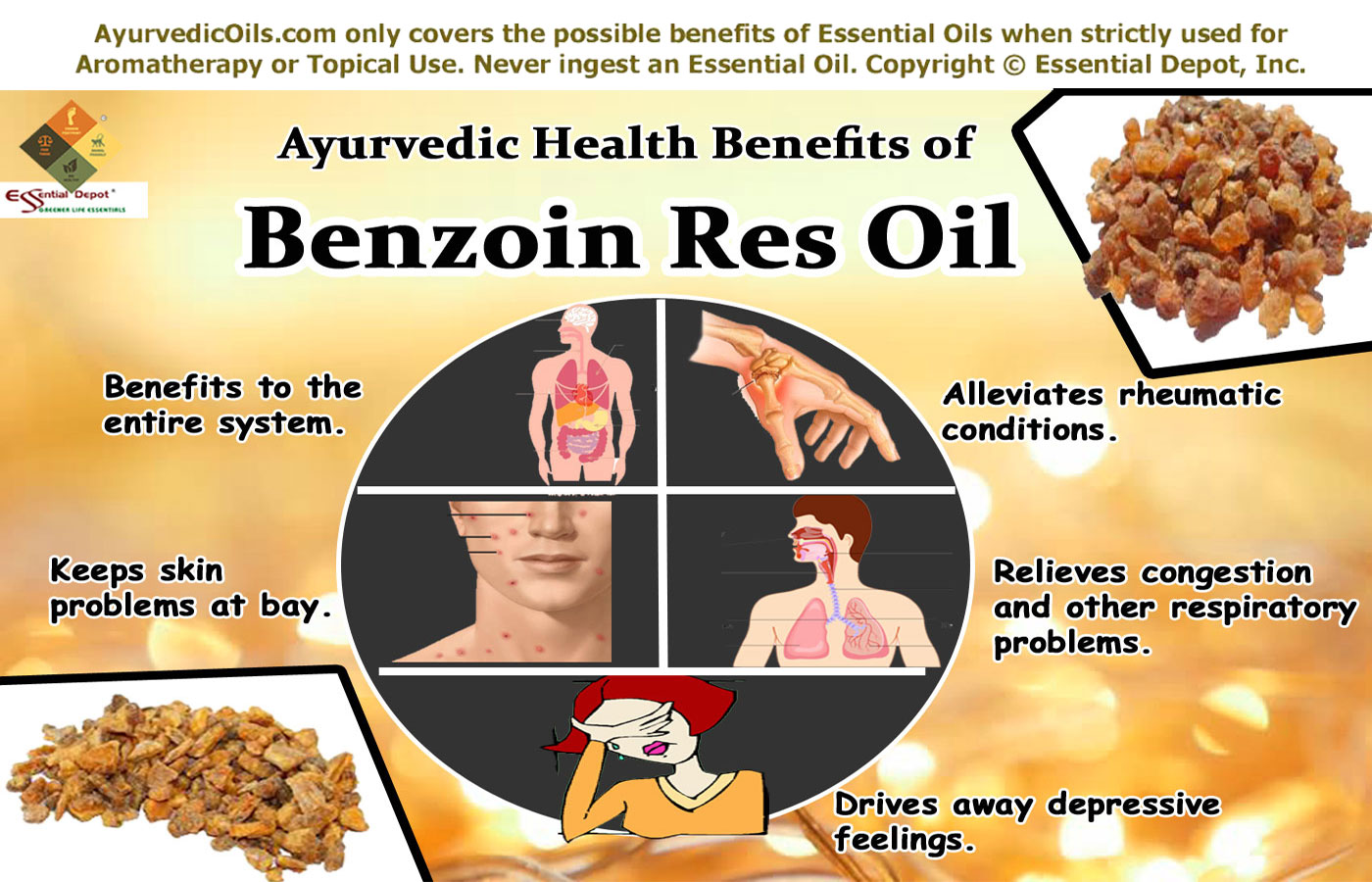
Benzoin-Res-Broucher1. Alleviates rheumatic conditions: Rheumatism generally occurs due to the stagnation of excess water deposits in the system. This leads to improper blood circulation, inflammation, swelling, redness, pain, soreness and difficulty in the normal functioning of the body. Excess of water and fluids in the human body is mainly caused due to the imbalance of kapha dosha, which is responsible for similar diseases like obesity, respiratory illnesses etc.,

Benzoin essential oil has anti-rheumatic, anti-arthritic, anti-inflammatory and diuretic properties that help in promoting proper blood circulation, reducing pain, lessening inflammation, controlling soreness and swelling, and eliminating the surplus water deposits and toxic elements in the system by promoting frequent urination. This function also assists in treating obesity, controlling blood pressure, supporting the functions of the circulatory system and enhancing metabolism.

To get rid of rheumatic and arthritic problems, Ayurveda suggests a healthy diet that naturally controls kapha vitiation along with yogasanas that treat rheumatism and arthritis and the use of Ayurvedic essential oils like Benzoin resin oil.

The Arthritis Foundation reported that a research by the John Hopkins University has concluded that yoga is extremely beneficial for people with rheumatoid arthritis after publishing its research analysis stating that “who participated in eight weeks of yoga classes had significantly fewer tender and swollen joints than they did before starting class.”

Steffany Haaz, the grant recipient of the Arthritis Foundation also says, “We have previously reported that yoga helps people to feel better, and we wanted to make sure it wasn’t harmful to arthritic joints. So, we were glad to find that there actually seems to be improvement in joint symptoms for RA patients.”

Along with this, massage the painful parts with 3 drops of Benzoin resin oil mixed with 1 drop of Ginger oil, 1 drop of Lavender oil, 1 drop of Black pepper oil, 1 drop of Juniper berry oil with 4 ml of coconut oil. You can also add 2 drops of Benzoin resin oil and 2 drops of Marjoram oil in warm bathing water or in hot compress for improved results. This formula works quickly as the benzyl components in the Benzoin oil are easily absorbed by the pores of the skin.

2. Relieves congestion and other respiratory problems: Breathing is the natural action that sustains life. Trouble-free breathing brings in enormous health and happiness by permitting the flow of prana or vital life force in the system.

Any interruption or blockage in the breathing mechanism due to improper food habits, environmental factors, stagnation of water deposits and toxic substances in the system leading to built up of mucus and phlegm deposits (this is a kapha imbalance) cause respiratory problems.

Benzoin resin essential oil has the power to reduce excess kapha dosha, with its expectorant properties. 1 drop of Benzoin oil with 1 drop of Eucalyptus oil and 1 drop of Niaouli oil in steam inhalation aids in loosening the accumulated phlegm and mucus, relieving congestion and cleansing the breathing passages.

Gently massaging your chest, throat and back with your vaporizing ointment mixed with 2 drops of Benzoin oil and 2 drops of Frankincense oil, following the steam inhalation can aid in relieving cough, cold, congestion, bronchitis, laryngitis, blocked nose, asthma and other respiratory allergies. You can practice breathing exercises like Pranayama and yoga asanas for respiratory illnesses.

3. Drives away depressive feelings: Benzoin resin oil has a gentle, sweet and soothing aroma that tranquilizes the mind with its relaxant, sedative and anti-depressant properties. When inhaled, these remedial properties in the aromatic molecules of this oil pass on to the brain through the nasal passages. This has a positive effect on the limbic system, which is the control center of the brain.

Bryan Miller and Light Miller in their book ‘Ayurveda and Aromatherapy’ say, “Benzoin resin oil is beneficial to an irritated nervous system and can be useful in depression, PMS and stress.”

2 drops of Benzoin resin oil along with 1 drop of Ylang Ylang oil and 1 drop of Orange oil added to your vaporizer, burner or diffuser can assist in stimulating the central nervous system, pacifying the mind, granting mental clarity, controlling anger, treating anxiety, improving blood circulation and instilling the power to control depressive feelings.

According to Ayurveda, among the 7 chakras, Benzoin resin oil affects the root chakra and the solar plexus chakra. Root chakra or sacral chakra is responsible for survival factors like security issues, financial independence and the ability to stand up high. Imbalance of this chakra leads to depression and various other nervous problems.

Solar plexus chakra deals with self-confidence, self-esteem, self-control, self-worth and other personal powers. The failure of the functions of this chakra leads to nervousness, lower self-confidence, inferiority complex, poor memory and digestive disorders.

Benzoin resin oil, with its power to treat the imbalances of the root chakra and solar plexus chakra, brings in self-confidence, trust and the ability to stand tall to beat depression and other negative feelings.

While talking on the relaxing effects of Benzoin resin oil on the emotional aspects of the system, Madame Maury says, ‘this essence creates a kind of euphoria; it interposes a padded zone between us and events’. You can also work out these Yoga asanas for depression and practice meditation.

4. Keeps skin problems at bay: The essential oil of Benzoin has amazing healing for nourishing your skin and helps you look younger and charming. The book on ‘Aromatherapy: Essential oil for vibrant health and beauty’ by Roberta Wilson quotes, “Benzoin was often added to cosmetics to keep skin clear and youthful. People in many different cultures have appreciated its ability to soothe and stimulate the skin.”

Benzoin resin oil has everything in its kitty for dealing with various skin problems ranging from wounds to treatment of scars. The healing properties are mainly due its chemical components including benzyl benzoate, benzoic acid and benzaldehyde.

This oil is a natural antiseptic with germicidal, disinfectant, antiviral, antibacterial, antifungal and vulnerary properties that aid in healing wounds, cuts, sores, acne, chapped skin, eczema, scars, skin irritation, psoriasis and dermatitis.

Applying the mix of 2 drops of Benzoin resin oil with 1 drop of Lavender oil, 1 drop of Rose oil, 1 drop of Lemon oil, 1 drop of Bergamot oil, 1 drop of Frankincense oil and 4 ml of Sweet almond oil on pimples, wounds, cuts, sores, scars and other infectious skin problems can help in protecting the infected parts from germs and promote quicker healing.

Massaging this blend on your skin especially on dry, cracked, blistered or chapped skin helps repair and rejuvenate the skin cells especially on the elbows, knees and heels. It also helps in maintaining the skin suppleness and softness. Ayurveda recommends drinking ample water every day to retain healthy skin cells.

5. Benefits to the entire system: Apart from these magnificent benefits, the essential oil of Benzoin can bring in enormous other benefits to your complete system. They are the promising effects of this oil that can help in destroying germs in the mouth with its disinfectant properties and tightening the gums with its astringent properties. It also aids in treating digestive disorders with its anti-flatulent and carminative properties. It can serve as an excellent deodorant with its mesmerizing aroma, for your body as well as your home.

Other uses: Benzoin is known for its fixative and preservative values and is used in the perfume industry for these reasons, especially for reducing the dispersal of fragrance elements and essential oils in air. This oil is also utilized as a flavoring agent in baked goods, gelatins, candies, gums, puddings, frozen dairy and beverages including alcoholic and non-alcoholic drinks. Apart from this, its use in the manufacturing of scented candles, cosmetics and veterinary medications makes it a much prized natural alternative since ages.

Disclaimer: This information is only for the purpose of education and is not intended for diagnosis or prevention of any illnesses. Do not substitute these remedies for any prescription drugs or expert medical advice. We are not medical professionals and this article is shared with the interest of throwing light on the world’s oldest healing system, Ayurveda.

Never use essential oils for internal purposes and make certain that you dilute essential oils in appropriate carrier oils before using it topically. This is mainly because pure and organic essential oils are extremely concentrated liquids and may cause allergic reactions, when used on the skin directly.

Talk with your Ayurvedic professional prior to selecting the right essential oils for your Prakriti or unique individual constitution and state of health. Care should be taken before using essential oils, if you are pregnant or a nursing mom.

Thought for the day:

Nature never did betray the heart that loved her. -William Wordsworth

Suggested Reading:

  1. Fragrance & Wellbeing: Plant Aromatics and Their Influence on the Psyche by Jennifer Peace Rhind
  2. The Encyclopedia of Essential Oils: The Complete Guide to the Use of Aromatic Oils In Aromatherapy, Herbalism, Health, and Well Being by Julia Lawless
  3. Ayurveda & Aromatherapy: The Earth Essential Guide to Ancient Wisdom and Modern Healing by Dr. Light Miller, Dr. Bryan Miller
  4. Magical Herbalism: The Secret Craft of the Wise (Llewellyn’s Practical Magick Series) by Scott Cunningham
  5. Making Your Own Incense: Storey Country Wisdom Bulletin A-226 by Tina Sams, Maryanne Schwartz

Reference Links:

  1. Benzoin Resin by Wikipedia
  2. Benzoin from the book, Aromatherapy: Essential Oils for Vibrant Health and Beauty by Roberta Wilson
  3. Benzoin from the book, Ayurveda and Aromatherapy: The Earth Essential Guide to Ancient Wisdom and Modern Healing by Light Miller and Bryan Miller
  4. Health Benefits of Benzoin Essential Oil by Organic Facts
  5. Yoga – A Remedy To Respiratory Illnesses by Dr. Sripriya Krishnan, Department of Psychology, Dr. M.G.R Janaki College of Arts and Science for Women, Chennai

Aromatherapy by astrology: 12 signature oils for 12 astrology signs


Astrology and aromatherapy. Is there a connection? There is, say the experts. Yes, human beings can be treated with aromatherapy based on their zodiac or Sun signs. People belonging to different astrology signs have different characteristics and those that belong the same sign have similar personality traits. Aromatherapists say based on people’s signs and  the same characteristics that are associated with the signs, we can use essential oils as preventative treatment and for healing purposes. However, this has to be done after understanding the positive traits and the negative physical/emotional issues specific to the sign the person belongs to. This kind of aromatherapy will be useful to individuals who cannot afford to find themselves a personal aromatherapist. If you find yourself with a dominant trait that is associated with your sign, make use of these oils to treat yourself/loved ones.

Aromatherapy by astrology signs: This is not something new in the realm of aromatherapy. Many expert aromatherapists have suggested treatment by astrology signs and some of them are: Patricia Davis and Stephanie Gailing.     Davis details about the connection between oils and sun signs in her book, ‘Astrological Aromatics’ and Stephanie does the same in the book, ‘Planetary Apothecary’.


The first step in aromatherapy by astrology is to identify the personality traits of each and every sign and then, adopt to a treatment based on that. There are people who are often cusps of signs (who have traits of two signs). For such people, treatment should be given after identifying which sign is dominant in them. Below are a list of traits of particular signs and the suggested oil to combat such traits. Other than this, you can also use oils that are helpful in combating traits dominant in you.

Aquarius:
An Aquarian is a person with the following traits: altruistic, egalitarian, friendly, eccentric, philanthropic, detached, innovative, rebellious and independent. The oil suitable for this type of individual is Neroli.

Pisces: Born between February 19th and March 20th, Pisceans are mostly dreamers, romantics, imaginative and creative people. They are empathetic, psychic, idealistic and selfless. An ideal oil for their spiritual and forgiving nature is Melissa.

Aries: With the swiftness of Mars, Aries individuals act in a willful, enterprising and assertive way. They pioneer whatever they do and are impulsive and brave always. A suitable oil for them is Rosemary.

Taurus: Born between April 20 and May 20, Taureans are best when it comes to hard work. They are sensual, grounded, steadfast, stubborn, predictable and practical. They long for security and often seek serenity.  A suitable oil for them is Rose.

Gemini: Geminis have the gift of Mercury and are extremely talkative by nature. They are curious, adaptable to any situation, quick-witted, youthful and spontaneous in all that they do. Ideal oil for them is Basil.

Cancer: Cancer is a caring sign and everything about the sign is nurturing, sensitive, hospitable and sympathetic. Cancerians tend to get moody at times and hence, need to be tempered with Blue Chamomile oil.

Leo: Leos are the kings and queens of the zodiac. They are self-expressive, generous, faithful, dominant, charismatic, courageous and dignified. Dramatic in all they do, they can be haughty sometimes. The best oil for Leos is Jasmine.

Virgo: Analytical, productive and perfectionist, Virgos are rational and insightful in things they accomplish or intend to accomplish. They are the most methodical of signs and hence need relaxation with Lavender oil.

Libra: Libras are poised well in a tough situation. They are diplomatic, sociable, stylish and charming to associate with. Geranium is best suited for their gracious yet often frivolous nature.

Scorpio: Scorpio is passionate and emotional many a times. To combat their secretive, forceful and brooding nature, they need Patchouli oil.

Sagittarius: Adventurous and optimistic, Sagittarians are the adventurers of the zodiac. They are versatile, zealous and exuberant in all that they do. The best oil for Sagittarius individuals is Black Pepper.

Capricorn: Capricorns are the loyal, hard working and pragmatic individuals of the zodiac. However, they can hold grudges, be over-ambitious and frugal sometimes. To combat their negative traits, the best oil is Vetiver.

Birch Oil


Well identified as the ‘Shining Tree’, Birch tree sets a remarkable note in the field of ancient and modern medicine for its preventive and defensive actions against rheumatism, skin disorders, circulatory problems and dental mayhems.

Birch-new-2

Scientifically called as Betula Alba, Birch tree bears its origin to the Indian subcontinent, especially in the cold and temperate climates, in particular the northern part of India, which has been the safe haven for numerous saints, sages and Rishis since the pre-historic period for attaining divinity through meditation.

Birch tree is well known for its silvery white bark, from which the Birch essential oil is extracted by dry distillation method. It is called as ‘bhurja’ in Sanskrit, which means ‘a tree whose bark is used for writing upon’, and few sources also state that this name is extracted from the Sanskrit word ‘bhura’, which means ‘shining tree’.

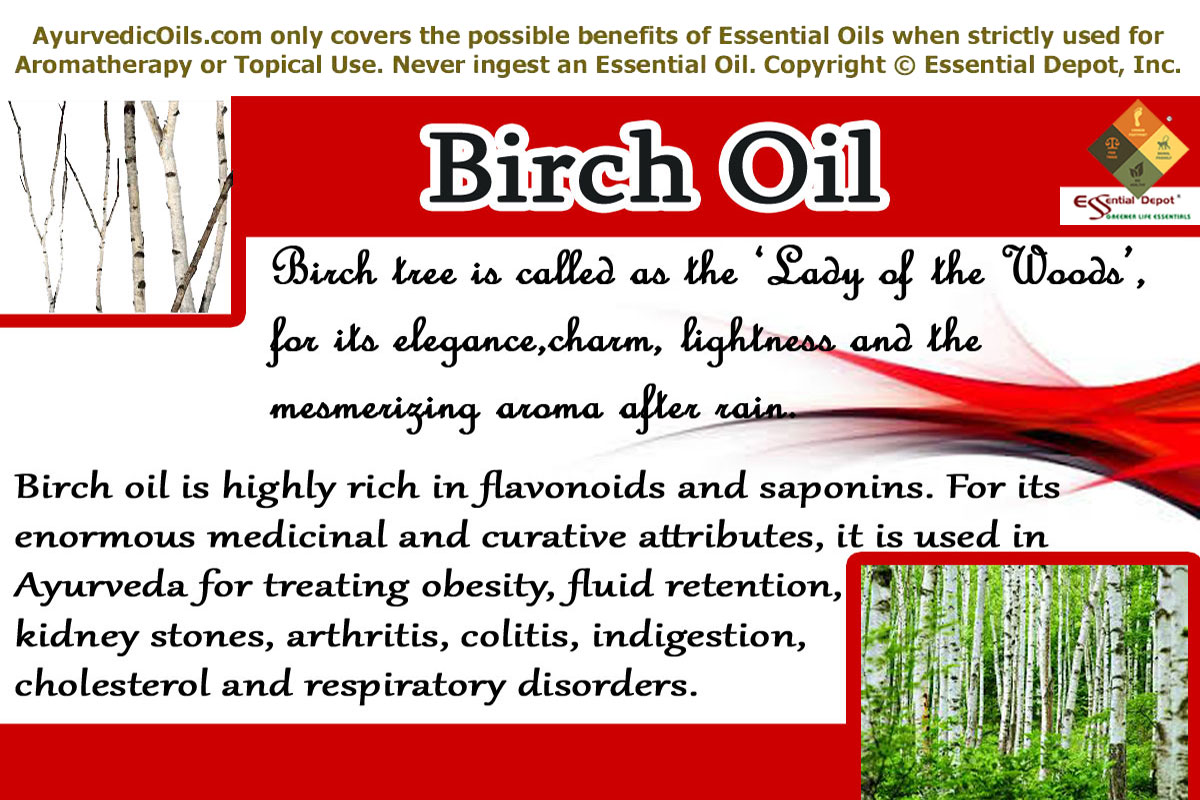
Birch tree is highly rich in flavonoids and saponins. For its enormous medicinal and curative attributes, this tree and its essential oil are being used in Ayurveda for treating obesity, fluid retention, kidney stones, arthritis, colitis, indigestion, cholesterol and respiratory disorders.

Historical uses and importance of Birch and its essential oil:

Being a priceless tree of the ancestral origin, Birch and its essential oil were widely utilized since the primitive times, dating back to the Paleolithic and the Mesolithic era as an adhesive and for various other uses. Adhering to the meaning of its name (tree which is used for writing purposes), Birch has been extensively used for preparing manifold documents in olden days, which are now termed as Birch Bark Manuscripts.

Fulsome with spiritual and cultural importance, Birch tree is crowned as the National tree of Russia and Finland. The most special fact about Birch tree is that it resists all kinds of adverse soil and climatic conditions. The bark of this tree has been used for numerous purposes such as construction, writing and medicinal applications. This tree was also called as ‘Lady of the Woods’, for its elegance, charm, lightness and the mesmerizing aroma after rain.

The Native Americans used Birch in their folklore remedies, where it was taken along with beverages to deal with various health conditions associated with the stomach including dysentery, diarrhea and indigestion.

The essential oil obtained from the bark of this tree has been used in hair care and skin care products to drive away dandruff, hair fall, eczema, psoriasis and dermatitis. The sap of the inner bark is a rich source of nutrients and was used in making cakes and is predominantly known to the world as a famine food for its ability to satiate hunger as a last choice if not anything is accessible.

Birch essential oil has been used as a disinfectant, powerful insect repellent, and also in the treatment of skin infections, fever, kidney stones, eczema and rheumatism. It is also a key ingredient in various perfumes including the most popular Russian Leather fragrance and Iceland Wintergreen.

In various folk medicines, Birch was used in transfer magic remedies for alleviating rheumatic pain and other associated symptoms. The aromatic leaves of this tree were also used in making Birch tea, which was used as an effective remedy for dissolving kidney stones, alleviating pain, gout, dropsy and rheumatism.

Chemical constituents and therapeutic properties of Birch Oil:

The remedial properties of Birch essential oil are anti-rheumatic, anti-arthritic, febrifuge, diuretic, astringent, detoxifying, analgesic, depurative, antiseptic, stimulant, germicide, tonic, insecticide, and anti-depressant. The major chemical constituents contributing to its therapeutic properties are betulene, methyl salicylate, betulenol, creosol, salicylic acid, and guaiacol.

Ayurvedic health benefits of Birch essential oil:

The word ‘Ayurveda’ has become the most common terminology in this contemporary living as many are becoming conscious about their health. When absolute health is the need of the hour, then natural remedies and chemical-free medications come along without any say and this where Ayurveda comes into picture.

Besides being a natural healing methodology, Ayurveda is a holistic system that helps in leading a disciplined life, including guidelines for a balanced diet to a modest lifestyle.

Ayurveda is the oldest of all medicinal systems on earth and it completely trusts that Mother Nature has the cure for all ailments including physical disorders and mental mayhems.

It is also said that living in harmony with Nature gifts a disease-free, harmonious and healthy life. According to this philosophy everything on earth is a combination of the 5 fundamental elements of nature. They are fire, earth, water, space and air.

For a better understanding, it is clearly depicted that earth is the representation of the bones and muscles, fire is the heat energy generated in the body for many vital functions of the system like metabolism, water stands for blood and other fluids, we breathe air and space is the representation of our soul that harmonizes all the other functions of the human body and keeps us alive.

Ayurvedic healing relies upon nature and it strongly states that all the other things on this planet are being created just for the happiness of mankind. You can identify this with the following example; Mother earth has 92 elements, including magnesium, calcium, iron, potassium etc, and the human system also has all these 92 constituents.

When a person is ill due to the deficiency of any of these elements, say iron, he/she is advised to take dates, which is rich in iron and to our astonishment dates grow by engrossing iron content from the earth. Simply brilliant, isn’t it?

Every human being is regarded as a unique part of nature in Ayurveda and it is also recommended that the remedial measures should also be unique based upon their unique individual constitution, which comprises of three biological energies called as doshas (also known as Tridosha) namely vata, pitta and kapha.

Pitta represents fire and water, vata is a combination of air and ether, and kapha signifies earth and water. Pitta energy is responsible for body temperature and metabolism, kapha controls the physical appearance, movement of fluids in the system and sustenance and vata dosha regulates the functions of the nervous, circulatory and respiratory systems.

Your first Ayurvedic consultation will help you in identifying your unique individual constitution and your predominant dosha type, which has an upper hand in determining your physical and mental makeup. Perfect balance between these doshas signifies well-being and disparities due to unwholesome food habits, change in climatic conditions, lifestyle and immoral behaviors leads to sickness.

The most significant Ayurvedic remedies that focus on treating doshic imbalances are herbs, plant essential oils, meditation, simple physical exercises, yoga, Pranayama or balanced breathing practices, Ayurvedic routine, prayers and a balanced diet.

Birch essential oil is known to pacify vata and kapha dosha and intensifies pitta dosha. The Ayurvedic health benefits of Birch essential oil are:

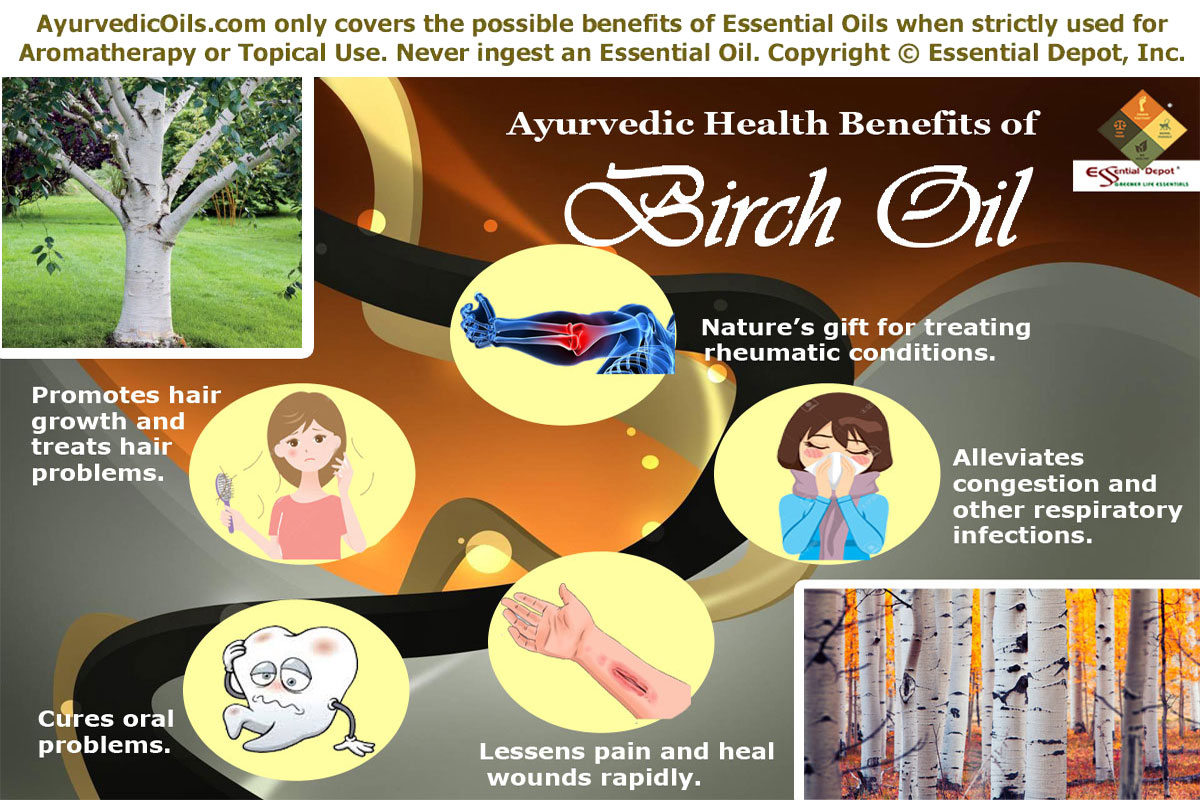
Birch-broucher1. Nature’s gift for treating rheumatic conditions:

Rheumatism is generally regarded as a medical condition caused due to excess deposits of fluids in the system along with the built up of toxic substances and improper blood circulation that lead to inflammation, pain, redness, stiffness and irritation.

According to Ayurveda, rheumatism is majorly a kapha imbalance disorder and can be treated with Ayurvedic remedies that reduce kapha vitiation. Birch oil has anti-rheumatic and anti-arthritic properties that aids in alleviating these agonizing conditions and reduces excess kapha dosha.

Birch essential oil is known as an effective pain reliever with the presence of the salicylate component that is present in aspirin based medications. This compound helps in lessening pain, swelling and stiffness associated with rheumatoid arthritis, osteoarthritis and other pain in the joints and muscles. It works by arresting the body’s production of prostaglandins hormones, which are responsible for pain, inflammation and other similar conditions.

Along with these attributes, the essential oil of Birch also has detoxifying, diuretic and depurative properties that assist in eliminating toxins from the body, discarding salt, uric acid and excess fluid deposits in the body by promoting sweat and frequent urination and by purifying the entire system. Being a circulatory agent, this oil also helps in promoting proper circulation of blood and lessens the severity of circulatory disorders like rheumatism and edema.

Massaging the affected parts with 2 drops of Birch oil, 2 drops of Ginger oil and 2 drops of Tea tree oil along with 3 ml of coconut oil can help in reducing pain, inflammation, redness and promote proper blood circulation that helps in treating rheumatic and arthritic conditions. You can also add 2 to 3 drops of Birch oil in warm compress and in warm bathing water that can help in improving your medical conditions related to rheumatism and other muscular and circulatory problems.

2. Alleviates congestion and other respiratory infections:

Birch essential oil is always one among those best natural remedies that assist in relieving severe congestion, long-term allergies and other respiratory infections. With its expectorant, anti-microbial and anti-inflammatory properties, Birch essential oil supports the system in fighting against chest congestion, bronchitis, nasal congestion, pneumonia and bronchial congestion.

Kapha dosha is a combination of water and earth elements and imbalance of kapha dosha leads to excess level of water deposits, amassing of mucus and phlegm deposits and building up of toxic substances worsening respiratory problems.

Birch essential oil is used in Ayurvedic healing for correcting kapha imbalance by generating heat in system and discarding mucus and phlegm deposits in the lungs and the respiratory passages.

Adding 2 to 3 drops of Birch oil in steam inhalation can aid in loosening mucus accumulation, treating stuffed nose, nasal, chest and bronchial congestion and combats the effects of toxins and microbes in the body.

You can mix 2 drops of Birch oil, 2 drops of Peppermint oil and 2 drops of Lavender oil along with your regular vaporizing ointment and massage in gentle movements on throat, chest and back for quick relief. A hot compress with 2 drops of Birch oil, following this massage on the back and chest can help improve respiratory conditions at ease.

3. Lessens pain and heal wounds rapidly:

Birch is such a magical oil that can relieve severe pain in a matter of minutes. With the presence of the salicylate component in aspirin and other pain-relieving pills, Birch oil aids in lessening pain by causing numbness on the painful area and uplifts the nerves and muscles.

Along with the Alternative and Complementary medicinal practices, the Allopathic doctors also recommend Birch oil for relieving severe pain, preventing the joints from swelling in cases of dislocation of joints or fractures.

Gently massaging the painful parts with 2 drops of Birch oil and 2 drops of Lemongrass oil along with 2 ml of olive oil can aid in easing muscular pain and stiffness. It also helps in alleviating muscular spasms and bout. 3 to 4 drops of Birch oil combined with 4 drops of Helichrysum oil and 4 ml of coconut oil massaged on the affected parts will work like a fascination especially on carpal tunnel syndrome.

Mix 2 drops of Birch oil with 2 drops of Lavender oil and 2 drops of Frankincense oil along with 3 ml of Sweet almond oil and apply it on wounds, cuts, skin rashes, cellulites, ringworm, eczema, itches and insect bites for quick relief. This formula works with the disinfectant, antiseptic, anti-bacterial and germicide properties of Birch oil that kills infectious micro-organisms like bacteria and fungi in skin infections and wounds and promotes quicker healing.

4. Cures oral problems:

There’s no wonder that an admirable essential oil like Birch has the therapeutic effects for treating oral problems with its anti-bacterial, antiseptic, disinfectant, astringent and germicide properties. These remedial values help in treating oral problems like weak gums, cavities, bacteria, painful gums, plaque and halitosis or bad breath.

1 drop of Birch oil along with 1 drop of Spearmint oil added to a cup of warm water can be used as a natural gargle formula for combating germs and bacterial growths in the mouth, strengthening the gums as an astringent, protecting the teeth and gums from infections as an antiseptic and also for keeping away from bad breath by refreshing the mouth throughout the day. This therapy can be followed twice a day in the morning and night.

5. Promotes hair growth and treats hair problems:

Birch is yet another nourishing oil for controlling loss of hair, maintaining those beautiful locks, preventing dandruff, enriching the scalp and promoting growth of hair naturally.  Just 1 drop of Birch oil in your regular shampooing can aid in healing your hair problems and deliver quick results in re-establishing your hair growth.

Massaging your scalp with 3 drops of Birch oil mixed with 3 drops of Ylang Ylang oil, 3 drops of Rosemary oil, 2 drops of Lemon oil and 2 drops of Lavender oil along with 7 ml of Virgin olive oil can help in moisturizing the scalp, controlling dandruff with its anti-fungal properties, strengthening the hair follicles with its astringent properties, promotes hair growth and grants the natural lustrous, shiny and glossy look of your hair. Follow this massage with 2 drops of Birch oil added to your mild shampoo for promising results.

Other health benefits:

A 1994 study at the University of North Carolina concluded that “the chemicals found in white birch bark slowed the growth of HIV”. Various other studies conducted on the betulinic acid present in Birch essential oil have been proved to possess anti-tumor properties and kill cancerous cells. Birch essential oil is also used in the treatment of colitis, bladder stone, gout, headache, candida, multiple sclerosis, depression and urinary disorders.

Disclaimer:

This editorial is meant only for the use of education and information. It is not in anyways intended to treat, cure, prevent or diagnose any medical condition or replace any prescribed medication or medical advice of a healthcare expert. We are medical professionals and this information is shared only with the concern of bringing out the importance of Ayurveda, the mother of all healing systems on earth.

Make sure that you speak with an Ayurvedic expert before using the perfect essential oil for your prakriti or individual constitution and state of health. Do not ingest essential oils or use it for internal purposes and ensure that you always employ essential oils in a diluted form, as 100% pure and organic essential oils are extremely concentrated substances and may cause allergic or hazardous reactions, if used directly for topical application. Keep essential oils out of reach of children.

Thought for the day:

All things are artificial, for nature is the art of God. -Thomas Browne

Suggested Reading:

  1. The Illustrated Encyclopedia of Essential Oils: The Complete Guide to the Use of Oils in Aromatherapy & Herbalism by Julia Lawless
  2. Medical Herbalism: The Science Principles and Practices Of Herbal Medicine by David Hoffmann
  3. Medicinal Plants of the World by Ben-Erik van Wyk, Michael Wink
  4. The Healing Power of Essential Oils: The Original Liquid Copals by Bevonne Birch Crookston
  5. American Indian Medicine (The Civilization of the American Indian Series) by Virgil J. Vogel

Reference Links:

  1. Birch Tar by Wikipedia
  2. Health benefits of Birch essential oil by Organic Facts
  3. White Birch by the American Cancer Society
  4. Birch Tree: Natural Medicine in your Backyard by Mother Earth News

A call to your Higher Self: 6 kinds of essential oils for spirituality


New Age living incorporates both the material and the spiritual in our lives. People of the post-modern era do not just surf or sky-dive or travel continents, but also meditate and relish in their own spirituality or godliness. Though there maybe several contradictions regarding the practice of spirituality, people who engage in it say that they have found solace and peace of mind in such practices. This article is to those few who find respite in spirituality and ruminate about a  spiritual approach to life.

Essential oils for spirituality: This has happened from existence. Yes, essential oils have played a phenomenal role in the daily spiritual life of people in various religions, communities and races. Right from the ancient Indians to the Egyptians, the Greeks, the Romans and the Persians, many civilizations have used essential oils for different kinds of religious and daily worship rituals. Incorporating essential oils in your daily prayer or spiritual schedule can be a remarkable way to attain spiritual bliss and peace. Though there are a list of essential oils for spiritual practices, none is particularly designated for spirituality. In general, it is the oil of your choice. If a particular essential oil appeals to you personally, you can try using it in your spiritual practices. Who knows, it may help you connect with your higher self instantly. For instance, if Manuka or Bergamot appeal to you, you can use them in your daily worship even if they are not listed as spirituality oils.


Below are a list of few essential oils that can enhance your spiritual fervor:

1. Oils for grounding/self assertiveness: If you are low on self esteem and require oils to boost your confidence and find a way to connect to your spiritual self, these are the best: Altas Cedarwood, Frankincense, Galbanum, Myrrh, Patchouli, Sandalwood, Spikenard, Vetiver and Virginian Cedarwood. Make blends using any of the oils and use it in the diffuser in your worship or meditation room.

2. For mental cleansing: Spirituality requires patience, mental clarity and purity. If you are too much absorbed in worldly things, you may not be able to engage in good spiritual practices. To get rid of the material from your mind, use Cypress, Common Sage, Hyssop, Lemon, Lime, Juniper Berry, Myrrh, Peppermint, Spearmint and Atlas and Virginian Cedarwood.

3. For cultivating a sense of gratitude:
Spirituality is all about giving thanks to the world and God. Essential oils can even enhance your sense of gratitude to others. Use Bergamot, Grapefruit, Jasmine, Lemon, Lime, Neroli, Orange and Ylang Ylang to achieve this.

4. To cope with grief: Pain or grief or acute suffering can be obstacles to your faith. To free yourself from grief and trust in God or a Higher Self, use Frankincense, Helichrysum, Neroli, Rose and Sandalwood.

5. Essential oils for enlightenment: Yes, there are oils to heighten your desire for enlightenment and they are Cypress, Frankincense, Rosemary, Spikenard, Sandalwood, Helichrysum etc.

6. Other oils: Some oils in this list are hazardous to the skin, yet they help aid your sense of spiritual well being. They are Bay Laurel, Cassia, Cinnamon, Fir Needle, Ginger, Lavender, Myrtle, Scotch Pine and Spruce.

Bergamot Oil


Bergamot essential oil is effective in treating addictions and depression. It is also an excellent aid for digestion and congestion.

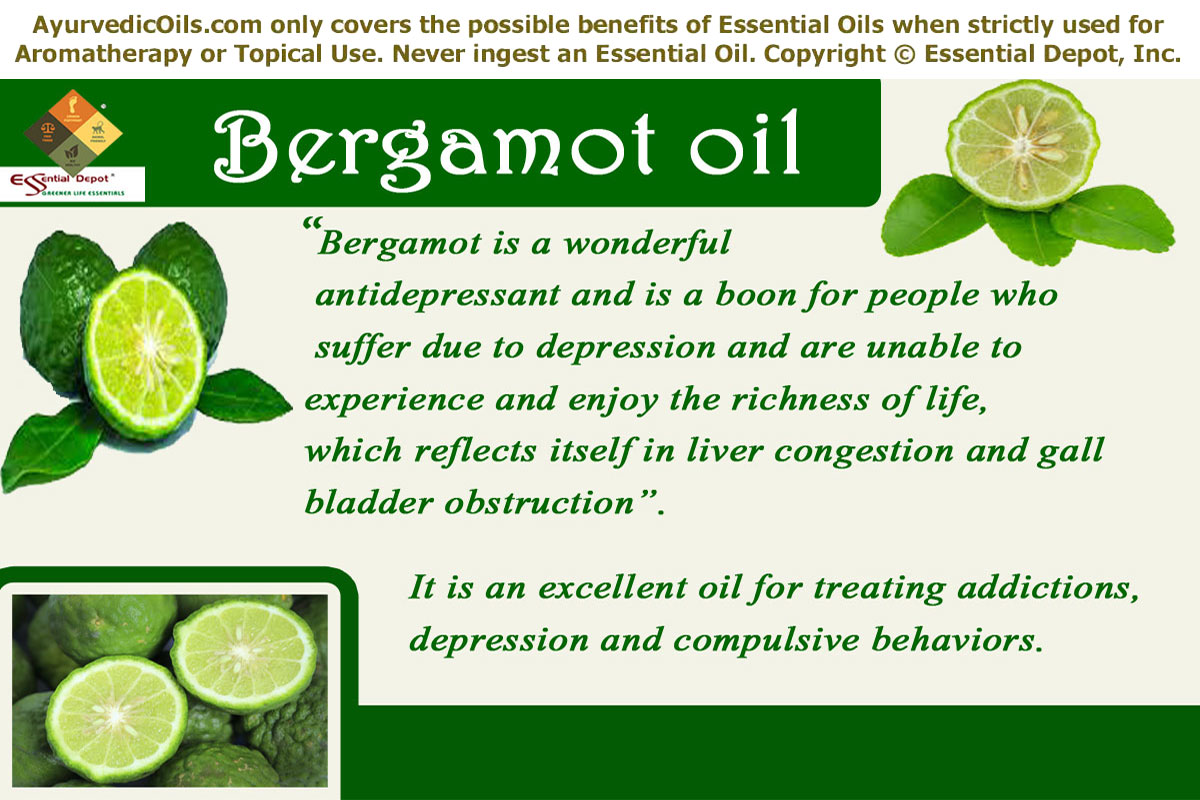
Bergamot-bannerBergamot is a wonderful antidepressant and is a boon for people who suffer due to depression and are unable to experience and enjoy the richness of life, which reflects itself in liver congestion and gall bladder obstruction”, says Light Miller and Bryan Miller in their book Ayurveda and Aromatherapy. Botanically called as Citrus bergamia, Bergamot is another famous member of the Citrus family Rutaceae.

The rich, herbaceous and fruity-aromatic essential oil is cold pressed from the rind of the Bergamot fruit, which is also called in Ayurveda with the same name. Bergamot and its essential oil have been recommended in the Ayurvedic treatment for healing skin rashes, sores, acne, fever, obesity, depression, eczema, gingivitis, sore throat, flatulence, loss of appetite, bladder infections and compulsive behaviors.

Purchase Bergamot Essential Oil – Retail – 4 oz – CLICK HERE

Historical uses and importance of Bergamot essential oil:

The name Bergamot is said to have come from the Italian province in Lombardy known as Bergamo. Few sources also state that this name is derived from the Turkish word ‘beg-armudi’, meaning ‘prince of pears’ or ‘prince’s pear’ or ‘the lord’s pear”. Well known to the world as an incredible ingredient of Earl Gray tea, Bergamot and its essential oil have been in the history of various cultures for its medicinal and culinary uses.

Indigenous to the Southeast Asian countries, Bergamot is also claimed as the native fruit from Greece. Later it was introduced to various European countries and is also found growing in Algeria, Morocco, Ivory Coast and Tunisia. About 80% of the world’s total Bergamot production is from the province of Reggio di Calabria in Italy.  It takes about 100 Bergamot oranges to extract 3 ounces of Bergamot essential oil.

The star-like white flowers, feathery leaves and the pear-shaped citrus fruit similar to a cross between a lime and orange have made many countries famous including the Calabria region of Italy. Certain genetic research studies reveal that Bergamot orange is likely to be a hybrid of bitter orange (Citrus aurantium) and lime (Citrus limetta).

Bergamot is also called as a cross between a grapefruit and an orange tree. These pulpy and juicy fruits are often used in cooking and the most popular dessert with Bergamot in the Middle East countries and America is the Turkish delight. Bergamot juice has been used in the traditional Calabrian medicine for the treatment of malaria and other chronic fevers.

This nutritious fruit and its essential oil were used in the traditional and folklore medicines for treating fever, urinary tract infections, acne, psoriasis, respiratory disorders, cystitis, depression, digestive problems, cold sores, chicken pox and anxiety.

Bergamot peel oil has been a fundamental component in various fragrance formulations. It has also been used as a prime ingredient in the original Eau de Cologne by Farina in Germany in the 18th century. It is also used in the production of marmalades, smokeless tobacco products, digestive liqueur named Liquore al Bergamotto and much more.

Chemical constituents or Gas Chromatography Report (GC) of Bergamot oil:

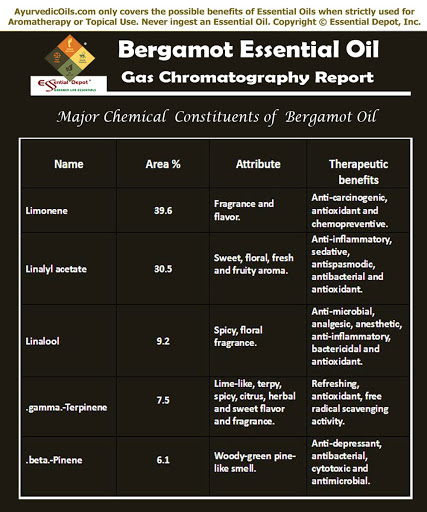
According to the Gas chromatography report, Bergamot oil constitutes of 19 chemical components that contribute to its fragrance, therapeutic attributes, consistency and quality of this citrus oil. Of which, Limonene contributes to the highest proportion of Bergamot oil constituents with about 39.6% of its total composition.

Just click on:

I trust that this must certainly help you in getting to know the exclusive information about these prime chemical constituents of Bergamot oil.

The table crafted below clearly depicts the unique nature and contributions of these biochemical constituents to the healing magnificence of Bergamot essential oil.

bergamot-gc-2Therapeutic properties of Bergamot essential oil:

The remedial attributes of Bergamot oil are anti-depressant, sedative, antiseptic, analgesic, anti-parasitic, anti-inflammatory, febrifuge, antibiotic, vulnerary, cicatrisant, disinfectant, deodorant, antispasmodic, vermifuge, relaxant, anti-infectious and stimulant.

Ayurvedic health benefits of Bergamot essential oil:

Ayurveda is the oldest healing sciences on earth and it has its origin in India, the country with the oldest historical references. The Indian Hindu mythology has 4 major sacred books also known as Vedas, namely Yajur, Rig, Sama and Atharvaveda. Among these holy books, Ayurveda has been an integral part of Atharvaveda where about 114 verses talk about extensive Ayurvedic remedies and principles to lead a holistic life.

Ayurvedic philosophy was further strengthened by the pioneer Ayurvedic philosophers like Charaka (respected as the ‘Father of medicine’) and Sushruta (celebrated as the ‘Father of surgery’), who wrote Charaka Samhita and Sushruta Samhita respectively. These two Ayurvedic encyclopedias were combined together and represented as Ashtanga Hridaya Samhita.

More than just a traditional healing system, Ayurveda has been held high as a holistic approach with a bundle of values and disciplines for leading a responsible life. Ayurveda trusts on Mother Nature and believes that illness is a result of imbalance between an individual and nature. With this idea, Ayurvedic remedies always stick on to natural medications, believing that nature has a cure for everything within it.

Ayurveda considers sickness as a significant opportunity to explore various aspects that contribute to the illness. It is a known fact that Mother Nature is built up of five vital elements, namely earth, water, fire, air and space. As a part of nature, human beings are also made up of these vital elements called as Panchamahabutas.

According to Ayurveda, every person is a unique creation with a unique individual constitution, which comprises of 3 fundamental biological forces known as doshas. They are vata, pitta and kapha doshas and each of these doshas are a combination of the 5 elements of nature.

Every Ayurvedic treatment begins with the identification of the Prakriti or the unique individual constitution. Every human being has a predominance of one of these doshas, which mainly determines the physical, psychological and behavioral attributes.

Balance between these doshas as per nature’s law indicates healthiness and imbalance due to lifestyle changes, food habits, climatic conditions and undisciplined actions causes sickness. Unique Ayurvedic remedies are prescribed for every individual based on their individual constitution and the root cause of a disease. This aids in diagnosing the illness at the first stage and preventing it in future also.

The prime Ayurvedic medications are herbs, plant essential oils, yoga, meditation, simple physical exercises, prayers, Pranayama and certain Ayurvedic techniques including Abhyanga or Ayurvedic massaging, an Ayurvedic routine, and Panchakarma (the Ayurvedic detox techniques.) With its heating and drying energies, Bergamot essential oil is known to pacify vata and kapha imbalances and augment pitta dosha.

The Ayurvedic health benefits of Bergamot essential oil are:

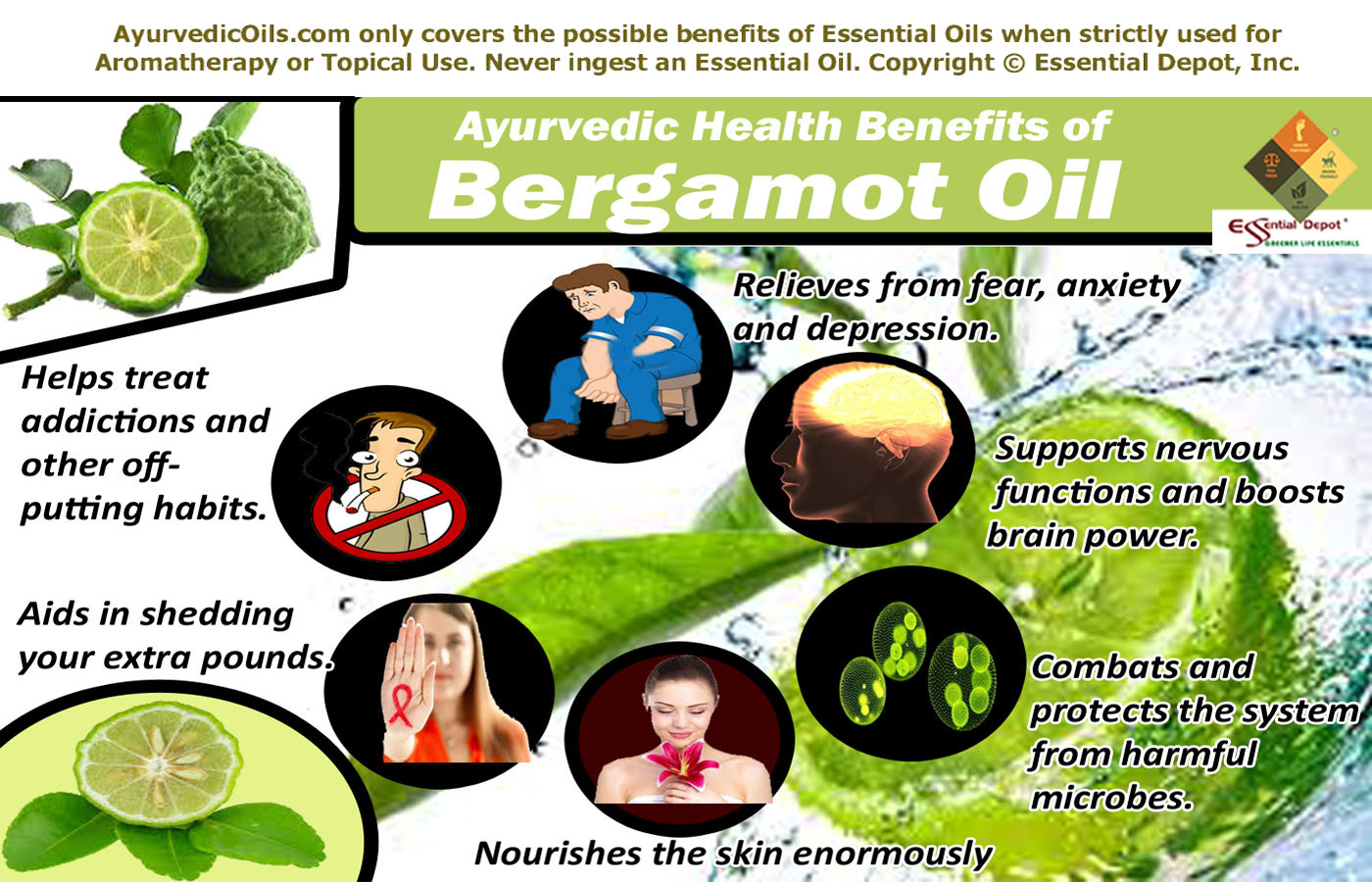
Bergamot-broucher--info-1. Relieves from fear, anxiety and depression:

Emotional barriers like anxiety, fear, depression and mood fluctuations have a greater impact on your routine and contribute to various adverse effects in your personal as well as professional life.

The reasons for these negative emotions are often inexpressive and at times we realize that we are depressed or put off for no valid reason. Whatever the causes may be, the remedy for such unhealthful feelings should be a proven anti-depressant that aids in uplifting the senses and stimulating positive energy.

Bergamot is one such excellent anti-depressant and a universally accepted mood enhancer. It is for these reasons; this essential oil is often used in Aromatherapy treatments and other Alternative medicinal practices.

Inhaling the magical aroma of this oil by adding 2 to 3 drops of Bergamot oil in vaporizer or diffuser can help in enhancing your mood, instill a feeling of newness and stimulate the secretion of hormones that help in overcoming such difficult moments.

This has been proven in a Korean study that analyzed the effects of Bergamot oil on pulse rate and blood pressure. The study further concluded that inhaling the energizing aroma of Citrus bergamia oil is extremely effective in lessening psychological stress responses, blood pressure in people with hypertension and the level of serum cortisol.

You can start your own home spa just with a small collection of invigorating essential oils like Bergamot. Massaging your system with 5 drops of Bergamot oil, 5 drops of Neroli oil, 5 drops of Cypress oil and 5 drops of Juniper oil along with 20 ml of sweet almond oil is the best way to fortify your senses, augment your blood circulation, calm your muscles, strengthen your mind and gift yourself with absolute tranquility.

Followed by this massage, enhance your energy level by taking a warm bath diluted with 5 drops of Bergamot oil, 5 drops of Ylang Ylang oil and 5 drops of Lavender oil. What’s next? You are done for the day and it’s time to realize that your fear, feelings of insecurity, anxiety, stress, depression and other negative thoughts have vanished just like a mirage in a desert with the sweet, mesmerizing, fruity and enchanting fragrance of Bergamot oil.

2. Supports nervous functions and boosts brain power:

An article by Robert Tisserand just left me amazed, where a student who have been studying about essential oils for 15 years have noticed the improvement in her husband, a stroke patient especially after the use of Bergamot oil on his pillow.

Robert has also added to this experience by stating that “In one rat study, bergamot essential oil inhibited the damage caused by “focal ischemia” (the same type of damage caused by stroke).” He also says that if any essential oil can be helpful in supporting stroke patients, then it would be Bergamot oil. Various researches state that the molecules of the inhaled essential oils reach the brain through the nasal passages and have effectiveness in treating certain neurological diseases.

A 2009 study on the effect of Bergamot essential oil on brain damage in rats, published in the International Review of Neurobiology, established that “Bergamot oil resulted in a significant reduction of tissue death throughout the brain, especially in the medial striatum and the motor cortex areas.” Few other studies have also proved that Bergamot oil decreases neuronal damage.

Adding 2 to 3 drops of Bergamot oil in your diffuser, vaporizer, pillows, handkerchief or a tissue paper placed beside you can help in improving your blood circulation, augmenting the functions of your nervous system, boosting your brain power and keep you healthy and energized.

Bryan Miller and Light Miller in their book ‘Ayurveda and Aromatherapy’ have shared about the miraculous transformation of their teenage son after the use of Bergamot oil. It was said that one of their sons in high school was undergoing severe depression and after Light Miller started adding few drops of Bergamot oil and Lemongrass oil on his pillow, there was an immediate change in his approach and he successfully graduated.

3. Combats and protects the system from harmful microbes:

The essential oil of Bergamot has anti-fungal and anti-bacterial properties that can assist in killing existing microbes and preventing the growth of new microbes. A 2009 study published in the Journal of Applied Microbiology concluded that the blend of Bergamot and Orange essential oil tested against two bacterial strains resistant to vancomycin, proved effective in inhibiting bacterial growths. It was also said that these oils are an excellent alternative to chemical-based bactericides.

Few other studies conducted in Italy proved that Bergamot essential oil exhibited antifungal activity against Candida fungus strains and Prototheca, which is a yeast-like alga. Adding 2 to 3 drops of Bergamot oil in warm bathing water can act as a protective shield against bacterial and fungal infections.

You can also mix 2 drops of Bergamot oil with 2 drops of Orange oil and 2 ml of Coconut oil and apply it on acne, candida infections, athlete’s foot, ringworm, and on wounds for preventing it from becoming septic. Being a disinfectant and antiseptic, Bergamot oil aids in healing wounds quickly.

4. Nourishes the skin enormously:

Just like other citrus oils, Bergamot essential oil has enormous amount of Vitamin C and is extremely good for nurturing the skin. The cicatrisant properties of this oil assist in fading away scars, difficult marks left by pimples, boils and wounds.

Massaging your skin with 1 drop of Bergamot oil, 1 drop of Frankincense oil and 1 drop of Lavender oil along with 1.5 ml of olive oil can help in uniform and even distribution of melanin and other pigments in the skin and granting you a gorgeous look and an enriched skin tone.

With its antiseptic, vulnerary and disinfectant properties, Bergamot essential oil is one among the best oils for treating various skin problems like eczema, psoriasis, cold sores, itching, wounds, cracks, skin ulcers and other skin infections.

A Chinese study on Bergamot oil along with Boxthorn oil on the skin and hair growth in mice, concluded that “the extract increased the activity of the antioxidant enzymes superoxide dismutase and collagen in the skin, as well as promoting hair growth.”

5. Aids in shedding your extra pounds:

Obesity or weight gain is an imbalance of kapha dosha, which is characterized by the heavy, slow, cool and sluggish attributes. Such vitiations are often treated with the help of essential oils that have warming, stimulating, energizing and heating energies and Bergamot is among those essential oils for reducing excess fat and water deposits in the system with its kapha-reducing attributes, which otherwise leads to overweight or obesity.

The presence of limonene and other therapeutic properties in Bergamot oil promotes the functional capabilities of hypothalamus, which is the satiety center of the brain. By doing this, the feeling of being full or the natural appetite towards food decreases gradually and controls the cravings for food.

Massaging your system with 5 drops of Bergamot oil, 5 drops of Orange oil, 5 drops of Black pepper oil, 5 drops of Lemongrass oil along with 10 ml of coconut oil can help in reducing your weight slowly and steadily.

6. Helps treat addictions and other off-putting habits:

Bergamot is such a sacred oil that can help in attaining holiness and experience the feeling of oneness with the divine power. Inhaling the sanctified aroma of this oil by adding 3 to 4 drops to your diffuser or scented candle can assist in opening your senses, understanding the universe, granting the power to tackle challenges, and having complete control over your mind and body.

It is for these important reasons, Bergamot essential oil is used in treating compulsive habits, addictions like smoking, use of drugs and alcohol. This oil encourages the mind by opening up the heart chakra, which is responsible for appreciating the love for self and for others.

Other health benefits:

Bergamot essential oil is also effective in treating colic, intestinal worms, rheumatic pain, spasms, fever, irregular bowel movements, body odor, anorexia, constipation, urinary infections, hysteria, hair fall, inflammation and parasitic infections.

Disclaimer:

This information is meant only for educational purposes. It is not intended to diagnose or prevent any health conditions and substitute any other prescribed medications or professional medical advice. We are not healthcare experts and this info is only for bringing the importance of Ayurvedic healing practices under limelight.

Do not make use of essential oils internally and ensure that you always dilute essential oils in appropriate carrier oils before using it for topical applications. This is mainly because organic and unadulterated essential oils are very concentrated liquids and may cause allergic reactions if used on the skin directly. Consult your Ayurvedic practitioner/ healthcare expert before choosing the perfect essential oils for your unique individual constitution or prakriti along with your state of health.

The MSDS (Material Safety Data Sheet) of Bergamot oil is readily available for your enhanced safety and better usage.

Gas Chromatography Report (GC analysis) of Bergamot oil.

Bergamot Essential Oil – Possible Skin Issues:

bergamot-logoGreener Life Diamond – Bio-Healthy Score => 3 – Possible Skin Issues:

See => http://www.essentialdepot.com/GreenerLifeDiamond.html

Bergamot oil has photosensitizing effects. This may cause irritation and burning of the skin, when exposed to visible sunlight after the topical application of this oil up to 72 hours of use. The fundamental reason behind this is the reaction of the photoactive chemical constituents that absorbs light, results in toxicity through molecular changes.

Studies establish that the phototoxic chemical constituents in Bergamot oil are Bergaptene, Bergamotene and other furocoumarins. It is also stated that furocoumarins (Psoralens) attribute to carcinogenic, photomutagenic, phototoxic and melanogenic properties of Bergamot oil.

Interaction of these components with the sunlight obtains the ultra violet radiation (UV rays A and B), which might cause negative reaction on the skin, leading to chronic sunburn, skin irritation, hyperpigmentation, development of skin lesions, Berloque dermatitis, alterations in the cellular structure of the skin that may cause skin cancer, following the development of covalent DNA adducts in UV-A or solar light.

However the International Fragrance Association (IFRA) states that the safe dilution level for the application of Bergamot oil on parts exposed to sunlight is 0.4% (or less), which is about 2.4 drops per ounce of any other carrier oils. Furocoumarin or bergaptene-free Bergamot oils are said to reflect comparatively reduced number of skin complaints owing to phototoxicity, than the natural Bergamot oils.

Surprisingly, Furocoumarins are also remedially used in combination with the long-wave ultraviolet light therapy for the treatment of vitiligo, mycosis fungoides and psoriasis. This caution is relevant to direct skin applications like massage oils, balms, creams and lotions and not for cleansing products like shampoos and soaps.

Reference Links Substantiating Possible Skin Issues of Bergamot Oil:

  1. Assessment report on Citrus bergamia Risso et Poiteau, aetheroleum , by the Committee on Herbal Medicinal Products, European Medicines Agency
  2. In vitro photostability and photosensitizing properties of bergamot oil. Effects of a cinnamate sunscreen by Morlière P, Hüppe G, Averbeck D, Young AR, Santus R, Dubertret L, published in the Journal of Photochemistry and Photobiology
  3. Leung’s Encyclopedia of Common Natural Ingredients, used in Food, Drugs and Cosmetics by Ikhlas A. Khan and Ehab A. Abourashed.
  4. Bergamot oil by Drugs.com
  5. Perfume Phototoxicity by Francis N. Marzulli and Howard I. Majbach, presented before the New York Chapter, Clifton, N.J.

Thought for the day:

Nature is relentless and unchangeable, and it is indifferent as to whether its hidden reasons and actions are understandable to man or not. -Galileo Galilei

Suggested Reading:

  1. Bergamot Oil: American Pharmaceutical Association Monograph No. 2 by Donald Davis Mossman, Marston Taylor Bogert
  2. HEALING POWERS OF BERGAMOT OIL (The Aromatherapy Professional: Healing with Essential Oils) by KG Stiles
  3. Citrus bergamia: Bergamot and its Derivatives (Medicinal and Aromatic Plants – Industrial Profiles) From CRC Press
  4. Essential Oils For Weight Loss & Top Essential Oil Recipes: Guide to Essential Oil Recipes (Essential Oils Box Set) (Volume 2) by Lindsey P
  5. Bergamot Essential Oil (Aromatherapy Book 48) by Miriam Kinai

Reference Links:

  1. Bergamot Orange by Wikipedia
  2. Bergamot essential oil by Wikipedia
  3. Health Benefits of Bergamot essential oil by Organic Facts
  4. Essential oils, Stroke patients and Bergamot by Robert Tisserand
  5. Prevention of Glutamate Accumulation and Upregulation of Phospho-Akt may Account for Neuroprotection Afforded by Bergamot Essential Oil against Brain Injury Induced by Focal Cerebral Ischemia in Rat, by Department of Pharmacobiology and Center of Neuropharmacology of Normal and Pathological Neuronal Plasticity, UCADH, University of Calabria, Italy published in PubMed

Betel Leaf Oil


Have you ever thought whether nature has a heart? If yes, then here’s your answer. The heart shaped Betel leaf is beckoned as the ‘Golden heart of nature’. Dating back to 7000 BC, Betel is one among those oldest divine herbs bestowed on mankind.

Betel-leaf-bannerBesides numerous health benefits, these appealing leaves are a symbol of status and hospitality for greeting Kings, nobles and guests in the cultural heritage of India. Botanically called as Piper betle, Betel vine is a member of the pepper family Piperaceae.

Tambool, Saptashira, Nagavallari and Nagini are Sanskrit names of Betel leaf and is commonly called as Paan in Hindi and the English names are Betel pepper, Betel vine and Betel. In Ayurveda, Tambool or Tambuli has been mentioned in numerous Ayurvedic texts including Charaka Samhita and Sushruta Samhita, where these glossy leaves have been prescribed for enhancing metabolic functions, reducing inflammation, expelling mucus, strengthening the heart muscles, improving appetite, purifying blood, treating ulcer, nosebleed, acne, bronchitis, halitosis, bleeding gums, headache and reproductive problems.

Historical uses and importance of Betel leaf and its essential oil:

Betel leaf has a rich historical charisma and is said to have been indigenous to South East Asian countries including Malaysia and India. Chewing Betel leaves with areca nut is a cultural tradition in most of the Asian countries for it’s said to give a euphoric feeling that stimulates the mind and grants instant energy for working.

According to the study of numerous Anthropologists, the traces of Betel leaves were said have been found in spirit caves of Northwest Thailand, which dates back to 5500 to 7000 B.C. The oldest historical book of Sri Lanka, ‘Mahawamsa’ written in Pali talks about the leaves of the Betel vine. There are certain other findings in human skeletons dating back to 3000 BC in countries like Philippines and Indonesia, indicating the use of Betel leaves even before thousands of years.

The traditional practice of chewing Betel leaves with areca nut has been mentioned in the pre-historic books of the Indian mythology and the most predominant among them are Raghuvamsa written by Kalidas and Kamsutra written by Vatsyayana. In one of the oldest text named Sakta-tantra, Betel leaves have been denoted as one of the important ways of attaining siddhi or abundant blessings from the Almighty.

In these ancient texts Betel leaves were referred as Tambulika, Tambuladhikara, Tambuladayini, and Tambuladyaka and so on. Ayurvedic encyclopedias like Charaka Samhita and Sushruta Samhita have also indicated the many uses of Betel leaves. In chapters 28-46 of Sushruta Samhita Betel leaves are described as “aromatic, sharp, hot, acrid and beneficial for voice, laxative, appetizer, beside this they pacify vata and aggravate pitta.”

The primeval Ayurvedic texts also highlight the aphrodisiac properties of Betel leaf that aid in treating male and female reproductive problems. The Chinese Traditional medicine also used Betel leaves for its warm and spicy nature that aided in the treatment of cough, itching, inflammation, headache and respiratory infections.

Betel leaves were used in various medical preparations of the Unani medicine and was used as a brain tonic, and in treating throat infections, cleansing the blood and for enhancing the appetite.

Betel leaves were also used in the traditional healing system for treating various health disorders like conjunctivitis, leucorrhea, rheumatism, ringworm, constipation, infertility, bad breath, ottorrhoea, cough and asthma. Singers chewed these leaves to enhance their voice.

Therapeutic properties and chemical components of Betel leaf essential oil:

The primary ingredients of the essential oil of Betel leaf are cadinene, sesquiterpene, chavicol, geraniol, α-thujene, terpinolene, chavibetol, phenyl propane, trans β-ocimene, safrole, caryophyllene, cineole, cadinol, eugenol, camphene, limonene, pinene, and eugenyl acetate.

These chemical constituents contribute to its remedial values like antifungal, antiseptic, antimicrobial, antioxidant, immunomodulatory, gastroprotective, radio-protective, anti-diabetic, hepatoprotective, galactogogue, anti-inflammatory, expectorant, carminative, analgesic and nervous stimulant.

Ayurvedic health benefits of Betel leaf essential oil:

Veda means knowledge and Vedic studies were strongly suggested for people during the primordial times for gaining knowledge on various aspects including reading and writing skills, discipline, war skills and spiritual values. Ayurveda is much more than a traditional healing system and the word Ayurveda literally means knowledge of life.

The 4 major Vedas of India is like the pillars of the Indian mythology with the world’s richest cultural heritage. They are Rig, Yajur, Sama and Atharva Veda, and among these Ayurveda has its origin from Atharva Veda. This ancient medicinal science is said to have been blessed by the God of Medicine, known as Acharya Dhanvantari.

The main aim of Ayurvedic healing is longevity and healthy aging through a disciplined life and prevention of illnesses with the use of natural remedies like herbal remedies, plant essential oils, yoga, meditation, simple physical exercises, Ayurvedic routine, prayers and other established Ayurvedic techniques including Panchakarma or the Ayurvedic detoxification therapies, Abhyanga or the art of Ayurvedic massaging and many more.

The most treasured Ayurvedic writings include Sushruta Samhita, Charaka Samhita and Ashtangha Hridaya Samhita. These texts throw light on the basic Ayurvedic concepts and its detailed healing mechanism. Charaka known as the father of medicine represents the Atreya School of physicians and shared his medical intelligence on pathogenesis, anatomy, physiology, etiology, disease symptoms, and diagnosis.

Acharya Sushruta is called as the father of surgery and corresponds to the Dhanvantari School of surgeons. He explains about the classification of wounds, burns, fractures, amputation, rectal surgery, plastic surgery and about many types of surgical equipments.

The credit of introducing Abhyanga or Ayurvedic massaging based on the marma points in the body also goes to Sushruta. The third Ayurvedic text Ashtangha Hridaya contains the medicinal values of both Charaka Samhita and Sushruta Samhita.

According to the Ayurvedic philosophy, the major principles of Ayurveda include the 5 vital elements of nature known as Panchamahabutas, 3 dynamic energies known as tridosha, discarding of waste called as malas and the important organs of the body, known as dhatus.

This conventional therapy believes that the earth is made up of five fundamental elements known as space, earth, fire, water, and air. Similarly, the whole thing in this world is also made up of the same five elements also called as the building blocks of nature.

By nature, every person has a unique individual constitution, named as Prakriti and it comprises of three biological forces known as doshas. They are vata (air and space), pitta (fire and water) and kapha (earth and water).

Among these, vata dosha is accountable for the activities of the nervous system including the central and autonomic functions. Pitta dosha is responsible for metabolic functions, tissue building, endocrinal functions and the body temperature. Kapha energy is in charge of physical fitness, binding power, sustenance and reproductive functions.

Absolute balance between these doshas as per nature’s law signifies health and disparity caused by irregular food habits, detrimental practices, climatic conditions and certain other factors leads to sickness.

Ayurvedic remedies are prescribed in order to balance these doshic vitiations. Betel leaf essential oil is known for its remedial properties that pacify kapha and vata dosha and increase pitta body type.

The Ayurvedic health benefits of Betel leaf oil are:

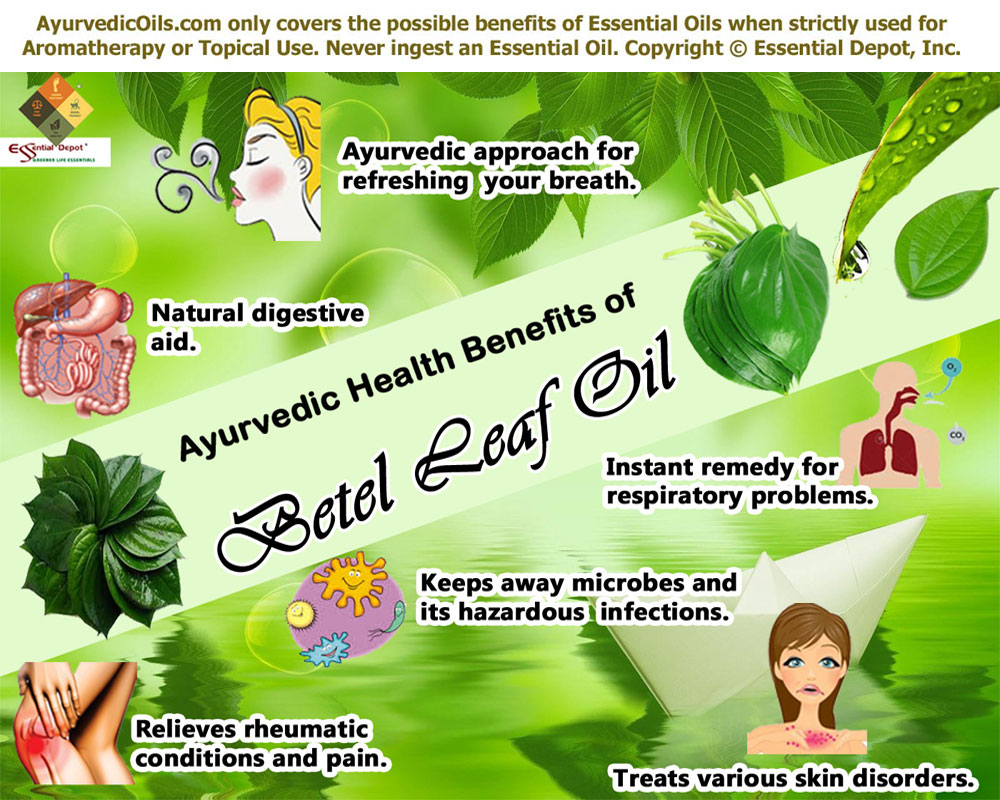
Betel-leaf-broucher1. Ayurvedic approach for refreshing your breath:

Betel leaves are an excellent Ayurvedic aid for refreshing the breath instantly even after heavy meals or especially after having food items that may possess strong odor like garlic or onion. Chewing betel leaves is a customary practice in India since the traditional times mainly for its potent to prevent bad breath, enhance digestion, support healthy gums, assist strong teeth and combat germs and other micro-organisms that cause oral infections.

According to numerous research studies, Betel leaves and its essential oil are the best remedies for treating plaque, dental decay, dental caries and other oral infections caused by bacteria and other harmful micro-organisms.

According to a study on Piper betle, published in the Journal of Pharmacognosy and Phytochemistry, “Dental caries is a chronic endogenous infection caused by the normal oral commensally flora. The carious lesion is the result of demineralization of enamel and later of dentine by acids produced by plaque microorganisms as they metabolize dietary carbohydrates.”

The primary bacteria responsible for tooth decay is Streptococcus mutans and certain other researchers have concluded that the aqueous extracts present in Betel leaves have the oral protective action and potent to combat such bacterial growths along with various acid-producing oral pathogens.

Gargling every morning and night with one cup of warm water mixed with 1 drop of Betel leaf oil can act as a protective shield against tooth decay, plaque, halitosis or unpleasant odor in the mouth, harmful effects of bacteria, germs and other oral pathogens. This also helps in sweetening your breath, arresting oral bleeding, strengthening your gums and fortifying your teeth.

2. Keeps away microbes and its hazardous infections:

The essential oil extracted from betel leaves prevent the system from the dangerous effects of pathogens and micro-organisms and kills the existing microbes and treats the infections caused by such harmful bodies.

A 1991 study on the ‘Biological activity of the essential oil of Piper betle L., by S. C. Garg and Rajshree Jain states that “The essential oil from the leaves of Piper betle L. has been found in vitro to be highly active against the growth of four keratinophilic fungi, Arthroderma benhamiae, Microsporum gypseum, Trichophyton mentagrophytes, Ctenomyces serratus and five pathogenic Aspergilli. Bacterial organisms Bacillus subtilis, B. pumilus, Staphylococcus aureus, Salmonella typhi and Vibrio cholerae were also found to be susceptible to the oil.”

Certain studies also state that Betel leaves and its extracts also possess bactericidal activity on various urinary tract pathogenic bacteria including Enterocococcus faecalis, koseri, C.fruendi, Klebsiella pnemoniae.

The molecule sterol present in these leaves is said to be responsible for the anti-bacterial activity of Betel leaf oil. This contributes to its effectiveness against numerous gram-positive and gram-negative bacteria. It also contains anti-fungal activity and proves challenging to fungi and the resulting fungal infections.

This property of Betel leaf oil helps in treating related skin problems like acne, wounds becoming septic, ringworms, athletes’ foot and certain other infectious diseases like dermatophytosis, which is caused by highly specialized fungi known as the dermatophytes and this disease occurs mainly on the keratinized parts of the body like nail, skin and hair.

A study on the “Evaluation of Anti-dermatophytic activity of Piper betle, Allamanda cathertica and their combination: An in vitro and in vivo stud” published in the International Journal of Pharm Tech., states that the chloroform extract of piper betel shows the much more efficiency than the methanol fraction against dermatophytes because of presence of non-polar components in the fraction.

Gently applying 2 drops of Betel leaf oil blended with 1 drop of Peppermint oil and 1 drop of turmeric oil along with 2 ml of coconut oil on the affected parts can help in relieving wounds and infections quickly along by combating and preventing the growth of destructive microbes. You can also 2 drops of Betel leaf oil to your bathing water to protect you from germs, prevent body odor and grant ultimate refreshment all through the day.

3. Natural digestive aid:

Chewing of betel leaf is considered as an edible digestive aid since the traditional times for its carminative, intestinal, anti-flatulent and gastro-protective properties. The essential oil extracted from these aromatic leaves are also claimed to possess these therapeutic properties, as essential oils are nothing but the life essence or vital life force of the plants.

Massaging your abdomen with 2 drops of Betel leaf oil mixed with 2 drops of Peppermint oil and 2 ml of sesame oil can be an excellent digestive assistance. This helps in promoting the secretion of saliva, gastric juices and digestive acids and it also supports in producing the peristaltic waves, which is highly significant for hassle-free digestion.

This Ayurvedic massaging along with inhaling the warm aroma of Betel leaf oil by adding 1 drop of this oil to your hankie or a tissue paper can aid in treating constipation, diarrhea, gas pain, flatulence, intestinal spasms and sluggish digestion.

Certain researches have also established that the essential oil of Betel leaf has been highly effective against hookworms (Bunostomum trigonocephalum) and tapeworms (Taenia solium) than the accepted synthetic anthelmintics like hexyl resorcinol and piperazine phosphate.

4. Instant remedy for respiratory problems:

The best Ayurvedic remedy for relieving cold, cough and breathing difficulties is applying warmed Betel leaves on the chest after soaking it in mustard oil. Juice extracted from crushed Betel leaves mixed with honey is another traditional remedy for loosening tough phlegm deposits and relieving severe cough.

Betel leaf oil has expectorant properties that aids in expelling accumulated mucus and phlegm especially in the lungs and the respiratory passages. Along with this, the antimicrobial properties of this help in killing contagious microbes in the system like bacteria and viruses that aggravate respiratory infections, if left uncontrolled. Adding 2 drops of Betel leaf oil in steam inhalation and inhaling this medicated steam can help in treating nasal congestion, chest congestion and other cough.

Mix 2 drops of Betel leaf oil with 2 drops of Eucalyptus oil and 2 ml of mustard oil and warm it slightly. Gently massage your throat, chest and back with this medicated oil to eject excess water deposits in the body leading to the amassing of phlegm and mucus deposits. The micro-organisms in the body are eliminated through excessive sweating and urination after taking up these Ayurvedic remedies with Betel leaf oil.

5. Relieves rheumatic conditions and pain:

One amongst the three Ayurvedic schools (Sushruta Samhita, Charaka Samhita and Ashtangha Hridaya Samhita) has recommended the use of betel leaves in the treatment of severe pain and aches, mainly originating from the nervous system. This pain-relieving attribute of Betel leaf is due its analgesic, numbing and cooling properties.

Rheumatism is often regarded as a health disorder caused mainly due to kapha vitiations. Excess of kapha dosha due to changes in food habits, climatic conditions and other lifestyle changes leads to stagnation of water in the system, built up of toxins, inflammation, pain, irritation and certain other symptoms. Betel leaf essential oil with its warming properties increases the heat energy in the system and reduces excess of kapha dosha.

Massaging the affected parts with 3 drops of Betel leaf oil mixed with 1.5 ml of coconut oil can help in alleviating the surplus water deposits in the system by promoting frequent urination with its diuretic properties. You can also add 4 to 5 drops of this oil in hot or cold compress and use it gently on the painful parts. This can also help in relieving headache, lumbago or lower back pain, arthritis pain, swelling, redness and muscular tension.

6. Treats various skin disorders:

Betel leaf juice mixed with turmeric powder is a trusted folklore medicine for treating wounds, boils, acne, cuts and other minor injuries. With its powerful antiseptic and antimicrobial properties, Betel leaf and its essential oil have been proven effective in treating allergies, skin ulceration, nosebleeds, body odor, itchiness, vaginal wetness, acne and other skin infections.

Mix 2 drops of Betel leaf oil with 2 drops of Lavender oil and 2 ml of Jojoba oil and apply it on the infected parts and leave it for half an hour. Wash it thoroughly with a mild skin cleanser. 1 drop of Betel leaf oil added to a cup of warm water can be used as a safe genital wash for treating vaginal wetness, combating germs and other micro-organisms in the discharge, and for supporting genital shrinkage in women, especially after delivery.

Other health benefits:

Betel leaf essential oil is also an effective Ayurvedic remedy for treating reproductive problems with its aphrodisiac properties, diabetes with its anti-diabetic properties, urinary problems with its diuretic properties, constipation in children with its carminative properties, halitosis and other oral problems with its disinfectant and anti-microbial properties.

Disclaimer:

This article is meant only for the use of education and information. It is not intended to cure or prevent any medical condition or replace any prescription medicines. This is only an initiative to spread the time-honored wisdom and medical excellence of Ayurveda and we are not healthcare professionals.

Remember to consult your Ayurvedic professional/healthcare practitioner before selecting the appropriate essential oils for your state of health and prakriti or unique individual constitution.

Avoid ingesting or using essential oils internally. Make sure that you dilute Ayurvedic essential oils in suitable carrier oils before topical application. This is because pure and organic essential oils are the vital life force of plants and are highly concentrated liquids.

Thought for the day:

In every walk with nature one receives far more than he seeks.  -John Muir

Suggested Reading:

  1. Betelvine (Piper Betle L.): Genetic diversity, Phytochemical analysis, Bioactive compounds, Antimicrobial activities, Betelvine by Mofizuddin Mollah, Monzur Hossain, Rafiul Islam
  2. Betel leaf Cultivation – A Potential Crop for Sustainable Income: An In-depth Study on Economy of Betel leaf Cultivation and Marketing with reference to Nadia District, West Bengal, India by Sayan Ghosh, Asit Maiti
  3. The Encyclopedia of Psychoactive Plants: Ethnopharmacology and Its Applications by Christian Ratsch, Albert Hofmann
  4. Antimutagenic and Bactericidal effect of betel vine ethanol extract: Antimutagenic and Bactericidal Property of Ethanol extract of Piper betel L. (Betel vine) leaf by Mukesh Singh
  5. The Encyclopedia of Aphrodisiacs: Psychoactive Substances for Use in Sexual Practices by Christian Rätsch, Claudia Müller-Ebeling

Reference Links:

  1. Betel by Wikipedia
  2. Golden Heart of the Nature: Piper betle L., D. Pradhan, Dr. K. A. Suri, Dr. D. K. Pradhan, and P. Biswasroy, Indian Institute of Integrative Medicine published in the Journal of Pharmacognosy and Phytochemistry
  3. Effects of betel chewing on the central and autonomic nervous systems by Nai-Shin Chu MD, published in the Journal of Biomedical Science
  4. Betel leaves , Ayurvedic herbs and their healing power by Dr. Satish Kulkarni published in NZhealth.net
  5. Biological activity of the essential oil of Piper betle L., by S. C. Garg and Rajshree Jainpublished in the Journal of Essential Oil Research

Reclaim your attention: 4 essential oil blends for improving concentration


If only we had the power to focus on what we wanted to accomplish, the word ‘procrastination’ would never have emerged – says an anonymous author. Procrastination is the thief of time, they say. But why do we procrastinate or postpone? Often it is lack of interest or lack of focus in the work at hand. We let too many things clutter our mind that we have forgotten what it is to focus and concentrate upon the task in hand. There are several other distractions too. With technological advancements and everything happening from your handheld, there are too many things like email, twitter and social media to grab your attention. If only we know what is to concentrate completely, we would never talk of meeting deadlines or even setting deadlines. In such a state of affairs, tips to improve the power of focus are a must. This article will detail on how to enhance your concentration using essential oils.


Essential oil concentration blends: Aromatherapy can help you improve your power of focus too. It can adjust your body and mind and help you attend to what is important. Inhaling the following essential oil blends or using them in your room diffusers can clear your mind and motivate you to be in the present and focus on the task at hand.

1. Blend for attentiveness: Many students and children in the United States suffer from ADHD syndrome. Though the disease is curable, you can prevent it or alleviate its symptoms with this attentiveness blend. To make the blend, combine 1 drop of Cyprus oil with 2 drops of Cedarwood, 2 drops of Lemon and 1 drop of Pine oil. This essential oil blend will be highly helpful to students who are studying for exams or those who want to improve their productivity at office.

2. Blend for alertness:
Some people can be less shrewd than others. This may often be the case if there are three or four children at home. Some maybe shrewd, others maybe dull or dumb. To improve alertness, blend 2 drops of Eucalyptus with 3 drops of Rosemary and 3 drops of Tangerine.

3. Blend for motivation: If you are down in the dumps and cannot find a ray of hope in your current situation, relax! Take a deep breath of this aromatic blend and forget all your worries. You will be invigorated and feel happy. Combine 2 drops of Basil with 4 drops of Bergamot, 1 drop of Clove and 2 drops of Ginger.

4. Blend for mental clarity: If you are confused and need mental clarity, use this blend in your diffuser and inhale it. To make the blend, use 2 drops of Bay oil with 3 drops of Ginger and 2 drops of Rosemary. Shake well in a bottle and use it for clarity.

Holistic aromatherapy: A faster way to stress release and detoxification


Hypocrites, father of medicine, said, “The way to good health is to have an aromatic bath and scented massage every day.” Aromatherapy is that important in daily life. When incorporated into daily routine on a regular basis, aromatherapy can invigorate an individual and keep him disease and stress-free. As essential oils are plant oils that are high on immunity, using them for your body can mean establishing a protective, disease-resistant shield around you. Holistic aromatherapy is something which tries to impart general well-being in an individual.

Holistic Aromatherapy: Holistic aromatherapy is a subtle kind of treatment which incorporates 100% use of pure essential oils to keep up good health. Though aromatherapy uses only aromatic oils, it is different from fragrance oils and applies pure oils based on your physical, emotional and mental health. Derived from the Greek word “Holos”, holistic aromatherapy means treating the body as a whole – that is, using essential oils for the welfare of the whole body. This is often a periodic treatment and involves use of all kinds of oils, massage therapies, diffuser and vaporizer treatments to detoxify and heal your body.
What does Holistic Aromatherapy do? Holistic aromatherapy is often used on a regular basis than at the time of disease. It is known to strengthen people against dis-ease to increase stamina and help with convalescence and recovery. To treat your body holistically, you can follow a variety of treatments. It is different from therapy in that, an aromatherapist uses 100% pure essential oils mixed with carrier oils. The choice of oils can be determined by the individual’s state of health. The client’s time of visit is also of importance as the aromatherapist decides based on the current physical and emotional needs of the person.

Holistic aromatherapy – Applications: Holistic aromatherapy, like general aromatherapy, can be used in various ways. The basic and most common application is that of massaging. Massage oils are made by mixing pure essential oils with vegetable or carrier oils like Grapeseed oil. Another common methods include, vaporization, inhalation, use of compresses, bath salts/aromatic baths etc.

An essential oil’s chemical structure can be identical to the plant from which it is extracted. Changes occur in the extraction process and in many cases, an oil’s composition can be completely altered because of the mode of extraction. Several extraction processes are used, which include distillation, enfleurage, maceration and volatile solvents. Aromatic plants can grow in great numbers in several parts of the world. The soil, region, weather and extraction methods of a plant affect the chemical structure of an oil. Owing to this, holistic aromatherapy conducted in one part of the world maybe different from the one practiced in other parts of the world. To ensure that essential oils are of high quality, check with your aromatherapist on whether he uses therapeutic grade oils that are extracted from the right place of origin.

Kitchen talk: 7 aromatherapy recipes for domestic purposes


Aromatherapy is not restricted for use only in aromatic or medicinal fields. It can be also be used for domestic purposes, right in the backyard of your kitchen. Kitchen aromatherapy includes use of essential oils for food recipes, making of body oils, aromatic wood polishes, soaps, cleaners, aromatic scents for cupboards, drawers etc. This article will throw light on aromatherapy recipes that can be made with kitchen/household items and can be used in domestic setups.

Domestic recipes using essential oils: These recipes are especially good for use with essential oils that have gone old and have no use for medicinal purposes. When the therapeutic is ruled out, all you can do with essential oils is the aromatic and the domestic. You can be as creative as possible to blend all kinds of aromas and get exotic recipes that can be used in your bath, as soaps, cleaners and room diffusers. Below are some recipes which you can use for household purposes:


1. Bathroom spray: Bathrooms are often the breeding place for several microbes, including virus and bacteria. To clean the bathroom air and keep it free from bacteria, virus and other fungi, you can try this recipe. To make the recipe, combine 5 drops of Cinnamon oil with 5 drops of Eucalyptus, 5 drops of Lemon, 5 drops of Sage, 5 drops of Thyme and 10 drops of Bergamot, 10 drops of Citronella, 10 drops of Lavender, 10 drops of Tea Tree. Shake well to mix all the oils and spray on to your bathroom space everyday.

2. Kitchen soap with coffee scent: If you think that your kitchen needs a kitchen-friendly aroma, here you go. Created by Kay, this Coffee scented essential oil kitchen soap will combine Lemon and soap to yield a coffee soap. Combine 5 drops of Coffee essential oil with 4 drops of Lemon oil and mix them both with 1 cup of unscented liquid soap. Transfer the mixture to a pump and you are done with the recipe.

3. Kitchen bench wipe: This is ideal for wiping up any sort of mess in your kitchen. You will need an old bottle to store this blend and also a spirit pourer. Wash the bottle thoroughly and add water to it. Then, pour 30 drops of your favorite Citrus oils. For best results, you can try a mixture of Grapefruit, Lemon, Petitgrain and other Citrus oils. Blend well and pour into the spirit pourer. Every time you need to clean up a mess, add a drop of this blend to your kitchen sponge/wipe and clean. This is both a disinfectant and a cleaner.

4. For aromatic cupboards and drawers: To make your cupboards smell fresh and lively, you can try this. Add a few drops of essential oils to a cotton wool and place them in cupboards and drawers. Lemongrass and Lavender work well to keep moths at bay.

5. Wood polish: To make wood polish to rub kitchen wood, combine 4 oz of Olive oil with ½ tsp of Lemon essential oil in a small bottle. Blend well and apply with a soft cloth and buff to shin. Olive cleans the dust in wood and makes it shine, while Lemon yields a fresh, aromatic smell.

6. Handbag scenting: If you have a foul-smelling handbag, this is your recipe. Add 3 drops of Bergamot, 2 drops of Geranium and 2 drops of Melissa in a cotton wool or tissue and place it inside your handbag. If there is a leather tag attached to your bags, you can use this to put the blend.
7. Focus blend: To gain focus, this blend will be of great help. Mix 10 drops of Peppermint, 10 drops of Rosemary and 10 drops of Lime essential oil. Mix everything with 3 oz spring water and use in a diffuser inside your study room or home office.

Renew your skin: 3 essential oil bodyscrub recipes you would love


The plight of our skin is pathetic. It is the thing that requires utmost attention, but it is also the same thing that is taken less care of. Skin diseases occur only because we take inadequate care of our skin. Our skin is damaged by weather, especially the sun, wind and pollution and this in turn, damages our body by thickening the outer layer of the skin. With a thick outer layer, all that a skin has, is roughened dead cells. One of the ways to manage a dead skin condition is to exfoliate skin cells on a regular basis. This will give a healthy glow to your skin and will also prevent it from abnormal conditions.

How to renew your skin: Essential oils can help greatly in the renewal of new skin. They help your skin exfoliate and clear of dead stuff in a better, safer way. You can use them to prepare bodyscrub that help clean and detoxify skin cells. However, usage of bodyscrub comes with its own kind of limitations. These include a list of dos and don’ts too: Do not ever rub vigorously on the body. Avoid scraping hard on sensitive skin and spend time on bumpy or rough areas. Do all the scrubbing standing under a shower or upright in a bath tub. If you happen to get dehydrated often, drink plenty of water before the exfoliation process. And finish off dehydration with natural body moisturiser.


Essential oil bodyscrubs: Essential oils are energizing and mind-awakening recipes. Below are a few bodyscrubs which are some of the best ways to exfoliate skin.

1. Herbal salt bodyscrub recipe: This is a great bodyscrub to rejuvenate your spirits and relax you in the right way. There are two varieties in this scrub recipe – one for the morning, another for the evening. Add 3 to 4 drops of Peppermint oil to 5 tbsps of sea salt and mix this together in ½ a teaspoon of carrier oil like Almond or Grapeseed. If the mixture is thick or does not have enough moisture, add water to it and blend well. You can use this scrub as a deep-cleanser and toner. For a soothing evening recipe, replace Peppermint oil with Lavender. It would not be sensitive or invigorating on the skin.

2. Ivy bodyscrub:
This is a scrub that works as a skin tonic and an astringent. It can stimulate circulation and enhance body health by getting rid of toxins, excess fluid build-ups etc. To make the scrub, combine 20 fresh Ivy leaves with 2 tbsps of course-ground oatmeal and 2 tbsps of natural yoghurt. When you get an even consistency, add Lemon essential oil and mix into a nice smooth paste. Massage the paste on to your skin, focusing on problem areas like hips, buttocks, legs and upper arms. Rinse off with water and clean completely after bath.

3. Lemongrass bodyscrub:
Lemongrass is all about liveliness and this recipe is just that. Sugar can be used to scrub the skin that to create problems inside the body. This recipe is holistic in that, it uses Lemongrass, sugar, Almond oil, Fennel oil etc. To make the bodyscrub, combine 4 tbsps of sugar with 2 tsps of Sweet Almond oil, 10 drops of Lemongrass oil, 5 drops of Geranium oil and 5 drops of Fennel oil. Blend well and massage all over your skin. Then, rinse with water and clean dry.