Tag Archives: Ayurvedic oils for ringworm

Geranium Oil


Euphoria is the feeling that you will experience with the inspiring and heartening floral aroma of Geranium essential oil, used for uplifting the spirit, alleviating nervous tension, relieving off-putting memories and negative emotions.

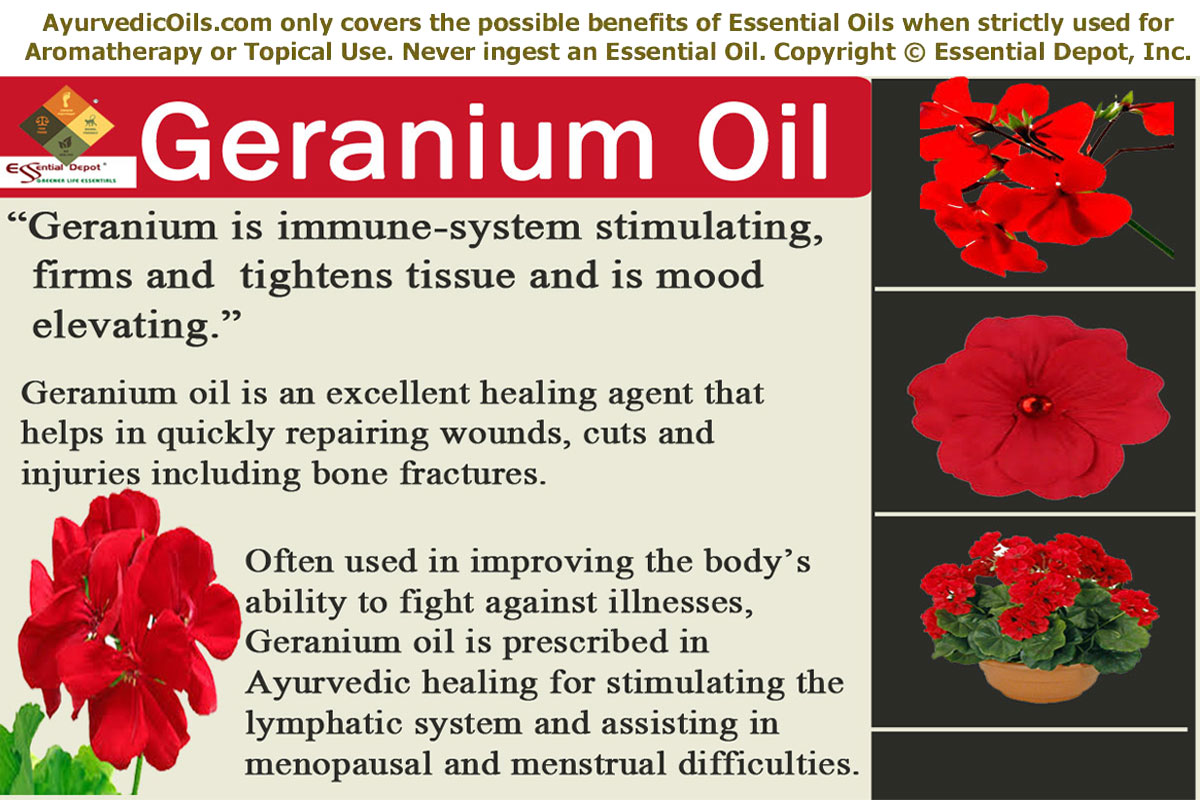
Geranium-bannerExtracted by steam distillation from the flowers and leaves of Pelargonium graveolens plant, Geranium essential oil is celebrated as an exceptional healing agent that helps in quickly repairing wounds, cuts and injuries including bone fractures.

Geranium is immune-system stimulating, firms and tightens tissue and is mood elevating”, says Bryan Miller and Light Miller in their book Ayurveda and Aromatherapy. Often used in improving the body’s ability to fight against illnesses, Geranium essential oil is used in Ayurvedic healing for stimulating the lymphatic system, assisting in menopausal and menstrual problems, relieving stress and for treating skin problems.

Purchase Geranium Oil – Retail – 4 oz – CLICK HERE

Purchase Geranium Oil – Wholesale – 1KG – CLICK HERE

Historical uses of Geranium essential oil:

Geranium is native to Egypt and is also believed to have been originated in the Reunion Island of the Indian Ocean. It slowly spread to Madagascar, South Africa, the Congo, Morocco, Central America, England, Italy, Spain, Russia, China, France and India. The best quality Geranium essential oil is said to be from the Reunion Island, which was previously called as Ile de Bourbon and so the finest essential oil from this island is known as Geranium Bourbon-La-Reunion.

Geranium and its essential oil have been used in numerous Alternative medicinal practices for healing wounds and fractures. It is said that the ancient Greeks used Geranium for treating skin problems. Egyptians used Geranium oil for enhancing the beauty and radiance of their skin.

This plant was grown around homes in the ancient times to keep away from evil spirits. The traditional Africans used Geranium oil in the treatment of cholera and tumors. The Indian tribes in North America used Geranium tea prepared with its root powder to enhance the body’s immune power and treat ulcers and dysentery.

The essential oil of Geranium is said to have first distilled from its leaves by the popular French chemist Recluz in the 17th century. His discovery was then supported by numerous research studies by many botanists and chemists, insisting the therapeutic use of Geranium essential oil. The leaves and flowers of this plant have also been used as a flavoring agent in teas, ice creams, cakes, jellies, sorbets, jams and salads. It has also been used in making perfumes and beauty products.

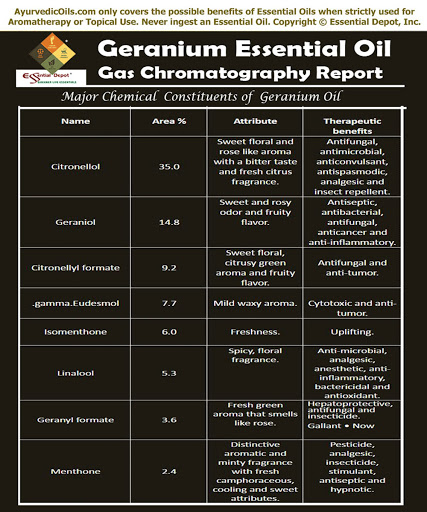
Chemical constituents or Gas Chromatography Report (GC) of Geranium oil:

According to the Gas chromatography report, Geranium oil constitutes of 20 chemical components that contribute to its fragrance, therapeutic attributes, consistency and quality of this oil. Of which, Citronellol contributes to the highest proportion of Geranium oil with about 35.0% of its total composition.

Just click on:

I trust that this must certainly help you in getting to know the exclusive information about the prime chemical constituents of Geranium oil.

The table crafted below clearly depicts the unique nature and contributions of these bio-chemical constituents to the healing magnificence of Geranium essential oil.

geranium-gct

Therapeutic properties of Geranium essential oil:

The remedial properties of this oil are antiseptic, anti-infectious, antibacterial, astringent, antimicrobial, cicatrisant, haemostatic, vulnerary, deodorant, cytophylactic, tonic, styptic, vermifuge, diuretic and immune-stimulant.

Ayurvedic health benefits of Geranium essential oil:

Ayurveda means the ‘knowledge of life’ and is a science of Mother Nature, which strongly states that Nature has all the cure in itself and illnesses occur where there is a lack of rhythm with nature. Health is a three-fold structure in Ayurveda, which states that perfect health is not just the nonexistence of diseases but the absolute balance of the mind, body and spirit.

Ayurvedic healing does not practice the ‘one size fits all’ methodology as it trusts that every individual is a unique part of nature with a distinctive combination of the five elements of nature, namely fire, water, earth, air and space, where earth is the physical body (muscles and bones), water is the blood, air is what we breathe, fire is the heat generated in our body for metabolism, absorption and body temperature and space is the spirit that dwells in.

Every human being is created with a unique individual constitution comprising of three biological energies known as doshas, which are nothing but a combination of the five elements of nature.

Vata dosha is a combination of air and space and is accountable for movements, nervous functions and respiration. Pitta is a combination of fire and water and is in charge of digestion, absorption, excretion and body temperature. Kapha dosha is an arrangement of water and earth and is responsible for structure of the body, cellular nourishment and lubrication of all the parts of body.

Ayurvedic texts state that every individual has a predominance of anyone of these doshas https://essentialoil.net/wp-admin/post.php?post=1316&action=editthat determines their character and personality. It also says that illnesses occur when there is a lack of balance between these three doshas.

When it comes to treatment, Ayurveda prescribes natural remedies including herbs, essential oils, physical exercises, healthy lifestyle, Ayurvedic routine, yoga, prayers and meditation, according to the unique individual constitution of a person in such a way that it corrects the doshic imbalances.

Geranium oil has the power to pacify aggravated vata, pitta and kapha doshas.

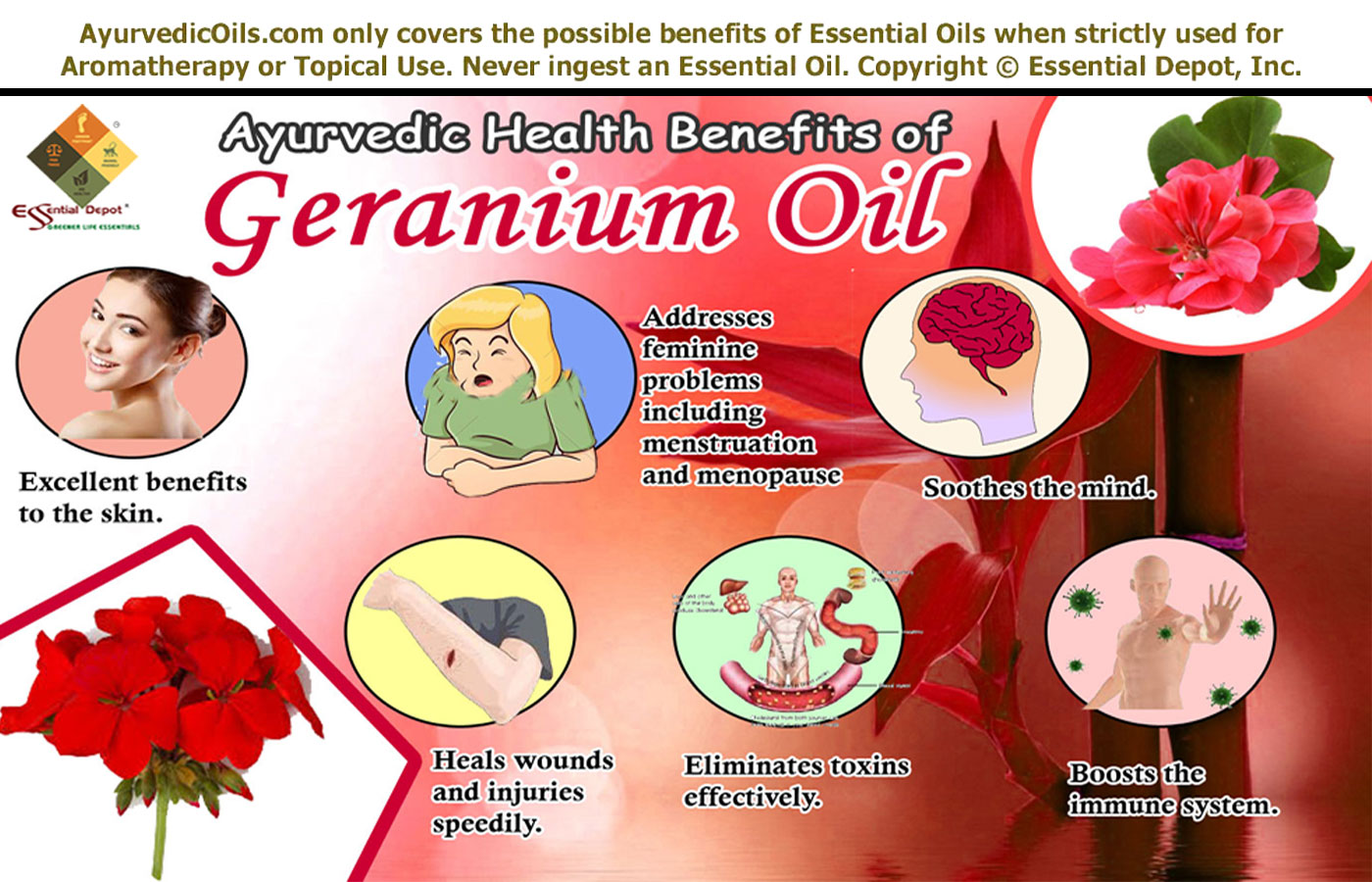
Let’s take a look at the Ayurvedic health benefits of Geranium essential oil:

geranium-broucher1. Excellent benefits to the skin:

Geranium essential oil is a historic remedy for treating numerous skin problems ranging from pimples to scars. It works wonders on the skin mainly because of the fact that it exceptionally suits all types of skin.

The antiseptic and antimicrobial properties of Geranium oil heal and act as a shield to the skin mainly from the hazardous effects of acne. Using 2 drops of this oil in your face wash, skin cream, lotion or in face packs can assist in cleansing the skin thoroughly, regularizing the secretion of sebum and retains the natural oil and moisture content of the skin.

By this way, it prevents the formation of pimples, black heads and boils. Geranium oil is also effective in treating cellulite, eczema, dandruff and fungal infections like athlete’s foot and ringworm.

The major cause for those ugly scars on your facial skin or on any part of the body is due to lack of blood circulation leading to stagnation of toxic substances and dead skin cells that block the even circulation of melanin causing scars and marks to stay on the skin forever.

Geranium essential oil has cicatrisant and cytophylactic properties that promote blood circulation, assist proper distribution of melanin pigments, support the regeneration of dead skin cells and speeding up the growth of new skin cells.

Massaging the affected areas with 2 drops of Geranium oil blended with 1 ml of olive oil or in your regular skin care cream can be of great help in fading away your scars and bringing out the natural glow like never before.

2. Addresses feminine problems including menstruation and menopause:

Traditionally known as ‘women’s oil’, Geranium essential oil helps in treating feminine problems like excessive menstrual flow, vaginal infections and discharges during menopause.

Massaging your lower abdomen and back with 4 drops of Geranium essential oil mixed with 2 ml sesame oil helps in treating painful menstruation, excessive bleeding, mood fluctuations, fatigue and anxiety during menses and menopause.

Geranium oil has haemostatic properties that speed up the process of blood clotting and helps in controlling excess bleeding. It’s calming, soothing, tonic and stimulant properties relieves pain, stress and mood fluctuations during these ‘M&M’ times.

3. Soothes the mind:

Many recent studies have proved that Geranium essential oil stimulates the adrenal cortex, which helps in balancing the mind and grants the endurance to handle stress.

The invigorating floral fragrance along with a touch of refreshing mint aroma makes Geranium as an incomparable essential oil for alleviating stress, anxiety, fear, feelings of desertion, negative emotions, tension and agitation.

Add 5 drops of Geranium oil to warm bathing water, followed by 2 drops added to your diffuser can help in relaxing your mind, soothing your nerves and reviving your senses. This also helps in promoting peaceful sleep at night. With its assenting effects on the mind, Geranium is also recommended as a suitable oil to be used during meditation as it is trusted to guide one’s mind in the right path without confusions.

4. Heals wounds and injuries speedily:

Geranium essential oil is one among the classic natural remedies for healing wounds and injuries including fractures. It is also effective in treating hemorrhoids and is used as an important ingredient in herbal formulations for hemorrhoids treatment.

Applying 2 drops of Geranium essential oil mixed with 1 ml of coconut on the affected area aids in cleaning the wounds with its antiseptic and disinfectant properties, arrest the growth of infectious microbes and bacteria that may cause the wound to turn septic, speeds up the process of healing with its vulnerary properties, stimulates quick coagulation and blood clotting with its haemostatic properties.

A 2012 study on ‘Antibacterial activity and composition of essential oils from Pelargonium graveolens L’Her and Vitex agnus-castus L’ by the Isfahan University of Medical Sciences have stated that the essential oil of Pelargonium graveolens is active against all of the studied bacteria and the presence of β-citronellol in this volatile oil along with its possible synergistic effect with other constituents are accountable for its antibacterial effects.

5. Eliminates toxins effectively:

Accumulation of toxic substances, which are the remains of indigestion and improper metabolic functions, is the root cause lying behind numerous illnesses. These harmful remains are known as ‘ama’ in Ayurveda and numerous Ayurvedic texts state that the amassing of ama in human body can even lead to chronic illnesses.

Geranium essential oil is a natural diuretic agent that promotes the flow of urine and increases the frequency of urination, through which the toxic substances, excess salts and water in the body are eliminated easily.

This aids in stabilizing blood pressure, improving the proper functioning of the system, relieving swollen ankles, reducing inflammation, lessening rheumatic and arthritic pain due to toxic buildup and gradually treating obesity due to fluid retention. Mix 5 drops of Geranium oil in 2.5 ml of almond oil and massage it gently for discharging the harmful substances in the system.

6. Boosts the immune system:

The essential oil of Geranium has enormous tonic properties that strengthens the system, enhances the immune power and stimulates the proper functioning of all the parts of the body. Using Geranium essential oil in bathing water or steam inhalation or massage or in diffuser has positive effects on the digestive system, nervous system, endocrine system, respiratory system and circulatory system.

Massaging your body with 10 drops of Geranium oil blended with 5 ml jojoba oil or adding 5 drops of this oil to warm bathing water can assist in stimulating the adrenal glands, lymphatic system, upholding the natural balance of hormones, increasing the immunity and augmenting the body’s natural resistance to fight against illnesses.

Other health benefits:

Geranium oil is an excellent natural deodorant with its antibacterial properties that combat body odor and its floral fragrance that keeps one fresh all day long. 2 to 4 drops of this oil added to your diffuser can disinfect impure air, repel mosquitoes and other insects. 2 drops of Geranium oil added to steam inhalation can help relieve nasal congestion, tonsillitis and sore throat.

Disclaimer:

This article is only for the purpose of information and is not meant to heal or substitute any professional medical advice or prescribed medication. Never use essential oils internally and always consider to use essential oils topically in a diluted form as pure and organic essential oils are highly concentrated liquids and may cause harmful effects if used straight on the skin.

Geranium oil is non-sensitizing, non-toxic and non-irritant but it is good to be avoided during pregnancy. Consult your Ayurvedic physician before choosing the right essential oils for your unique individual constitution and state of health.

The MSDS (Material Safety Data Sheet) of Geranium oil is readily available for your enhanced safety and better usage.

Gas Chromatography Report (GC analysis) of Geranium oil.

Geranium Essential Oil – Possible Skin Issues:

Greener Life Diamond – Bio-Healthy Score => 3 – Possible Skin Issues.

See => http://www.essentialdepot.com/GreenerLifeDiamond.html

In the midst of the 250 natural species and thousands of cultivars and hybrid varieties of the Pelargonium plant family, in the genus Geraniaceae and the most popular ones are Egyptian Geranium, Reunion or the Geranium Bourbon and the Moroccan varieties. Most of the varieties have a similar structure of chemical constituents with Citronellol and Geraniol being the prevalent components.

Geranium Bourbon essential oil is certified with GRAS (Generally Regarded As Safe) status by the FDA (Food and Drug Administration) as Geranium oil is mild and tested safe on individuals on a normal prescribed usage level.

Using Geranium oil in a concentrated form or beyond the safe level of use might cause adverse skin reactions like mild irritation, sensitization (lower risk), rashes, allergy, irritation of the eyes and contact dermatitis. Geranium oil is non-phototoxic in nature.

The primary chemical constituents that are held responsible for the adverse skin reactions of Geranium oil are citronellal and geraniol, where citronellal is reported to exhibit mild irritant effect along with sporadic sensitization and skin irritation and Geraniol is claimed for skin sensitization.

The safe dermal usage level for this oil is 17.5% by IFRA (International Fragrance Association) and this safety report is based on the 30% Geraniol content, which has a maximum dermal limit of 5.3%.

Research reports reveal the skin irritating effect of Reunion Geranium oil in an undiluted manner; this oil was slightly irritating when tested on mouse skin; when tested with 5% Bourbon Geranium oil on 100 repeated dermatitis patients, the result was placid with two irritant reactions. It has also been proved that cosmetics with Geranium oil formula have caused dermatitis in hypersensitive individuals.

Always blend Geranium essential oil in carrier oils like Olive oil, Jojoba oil or Coconut oil before using it topically. This is because organic and pure essential oils are extremely concentrated liquid substances that may impair the skin surface, when used in an undiluted form.

Essential oils are recommended only for external use and never ingest essential oils as it can cause serious health hazards. Administering Geranium oil orally in studies has witnessed acute dermal LD50 in rabbits. This may also cause possible drug interactions with antidiabetic medicines and the enzyme, CYP2B6 inhibiting effect of geraniol causes drug interaction metabolized by CYP2B6.

A recent study has witnessed this by testing alloxan-induced diabetic male rats with Geranium oil for about a month. The level of blood glucose was decreased by glibenclamide and the concentration of hepatic glycogen was significantly augmented.

As there are no evidenced reports on the safety of Geranium oil during pregnancy and lactating, it is safe to avoid this oil for it may have an impact on the hormonal fluctuations during these special moments. It is better to keep away Geranium oil from babies, either as a massage aid or for inhalation as it can harm their sensitive and tender skin.

Reference Links Substantiating the Possible Skin Issues of Geranium Oil:

  1. Geranium by Essential Oil Safety: A Guide for Health Care Professionals By Robert Tisserand, Rodney Young
  2. Geranium Toxicology by Leung’s Encyclopedia of Common Natural Ingredients, used in Food, Drugs and Cosmetics by Ikhlas A. Khan and Ehab A. Abourashed
  3. Side effects of Geranium oil by Mercola.com
  4. Side effects and Safety of Geranium oil by WebMD

Thought for the day:

The course of Nature is the art of God.  -Edward Young

Suggested Reading:

  1. How to Use Geranium Essential Oil (Aromatherapy) by Miriam Kinai
  2. Growing Pelargoniums and Geraniums: A Complete Guide by Beryl Stockton, Geoff Stockton, John Mason
  3. Geraniums: The Complete Encyclopedia by Faye Brawner
  4. Geranium and Pelargonium: History of Nomenclature, Usage and Cultivation (Medicinal and Aromatic Plants – Industrial Profiles) from CRC Press
  5. Ayurveda & Aromatherapy: The Earth Essential Guide to Ancient Wisdom and Modern Healing by Dr. Light Miller, Dr. Bryan Miller

Reference Links:

  1. Pelargonium graveolens by Wikipedia
  2. The Emotional, physical and health benefits of Geranium Essential Oil by HubPages
  3. Antibacterial activity and composition of essential oils from Pelargonium graveolens L’Her and Vitex agnus-castus L. by Ghannadi A, Bagherinejad M, Abedi D, Jalali M, Absalan B, Sadeghi N, published in PubMed
  4. Geranium by Daniele Ryman for the Aromatherapy Bible
  5. What are the benefits of Geranium oil in Aromatherapy by Yogawiz.com

Save

Save

Tea Tree Essential Oil


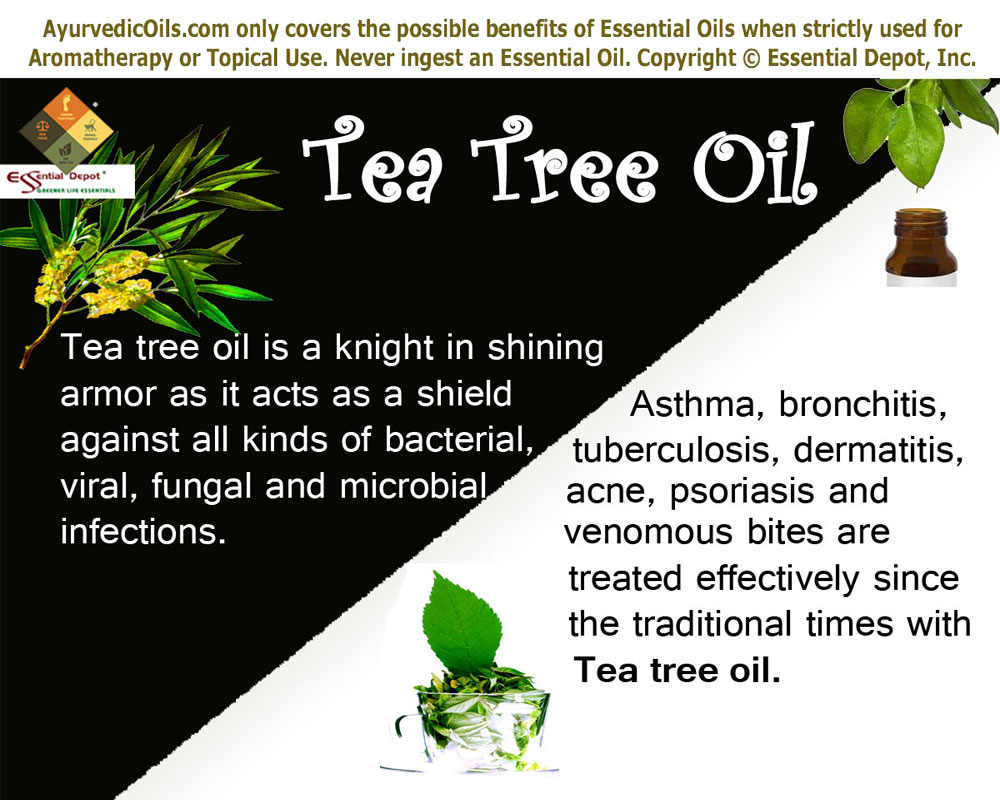
Tea-tree-bannerTea tree oil is a knight in shining armor as it acts as a shield against all kinds of infections including bacterial, viral, fungal and microbial. It is a must-have essential oil in your medicine cabinet and can assist you in times of distress. Although Tea Tree has nothing to do with the tea we drink, I often remember this magnificent herb as a tea for the entire system that has the potential to heal, pacify and cure us in a number of ways.

The essential oil of Tea tree is extracted from the leaves of this tree. Ayurveda, the science of natural healing makes use of Tea tree and its essential oil for treating many infectious diseases, respiratory problems like asthma, tuberculosis and bronchitis, venomous bites and skin problems like acne, psoriasis and dermatitis.

Purchase Tea Tree Oil – Retail – 4 oz – CLICK HERE

Purchase Tea Tree Oil – Wholesale – CLICK HERE

Historical importance of Tea tree oil:

Born in Australia, Tea tree is the love and pride of the Australian kingdom where more than 300 species of Tea trees grow naturally. The Aborigines are regarded as the first ones to use Tea tree leaves before thousands of years as an antiseptic for healing wounds, cuts, burns and insect bites.

It was the British explorer Captain Cook who named this tree as ‘Tea tree’ when he found the native people using the leaves of this tree in preparing a medicated tea and he used this drink to prevent scurvy in his men.

As an excellent antimicrobial and antiseptic oil, Tea tree oil was prevalently used in war fields for healing the wound of soldiers (especially in the Australian Army during World War II) and keeping them protected from the infestation of harmful microbes.

One of the pools in Australia is known as the ‘Magical Lagoon’ just because it was surrounded by Tea trees and leaves fall in the water and make it a medicated bathing pool. People who take bath in this pool have said that it helped in healing burns, wounds and certain other skin infections.

Tea tree oil is held-high for its anti-poisonous effects and is generally known as Snake oil just because the fact that this oil has enormous detoxifying properties that aids in taking way the venom of a poisonous snake bite.

The fresh leave juice was also applied on the affected area for treating scorpion stings and other poisonous insect bites. Tea tree leaves are also used in poultices and the decoction extracted from boiling these leaves are known to heal wounds and inflammations both internally and externally.

Chemical constituents or Gas Chromatography Report (GC) of Tea tree oil:

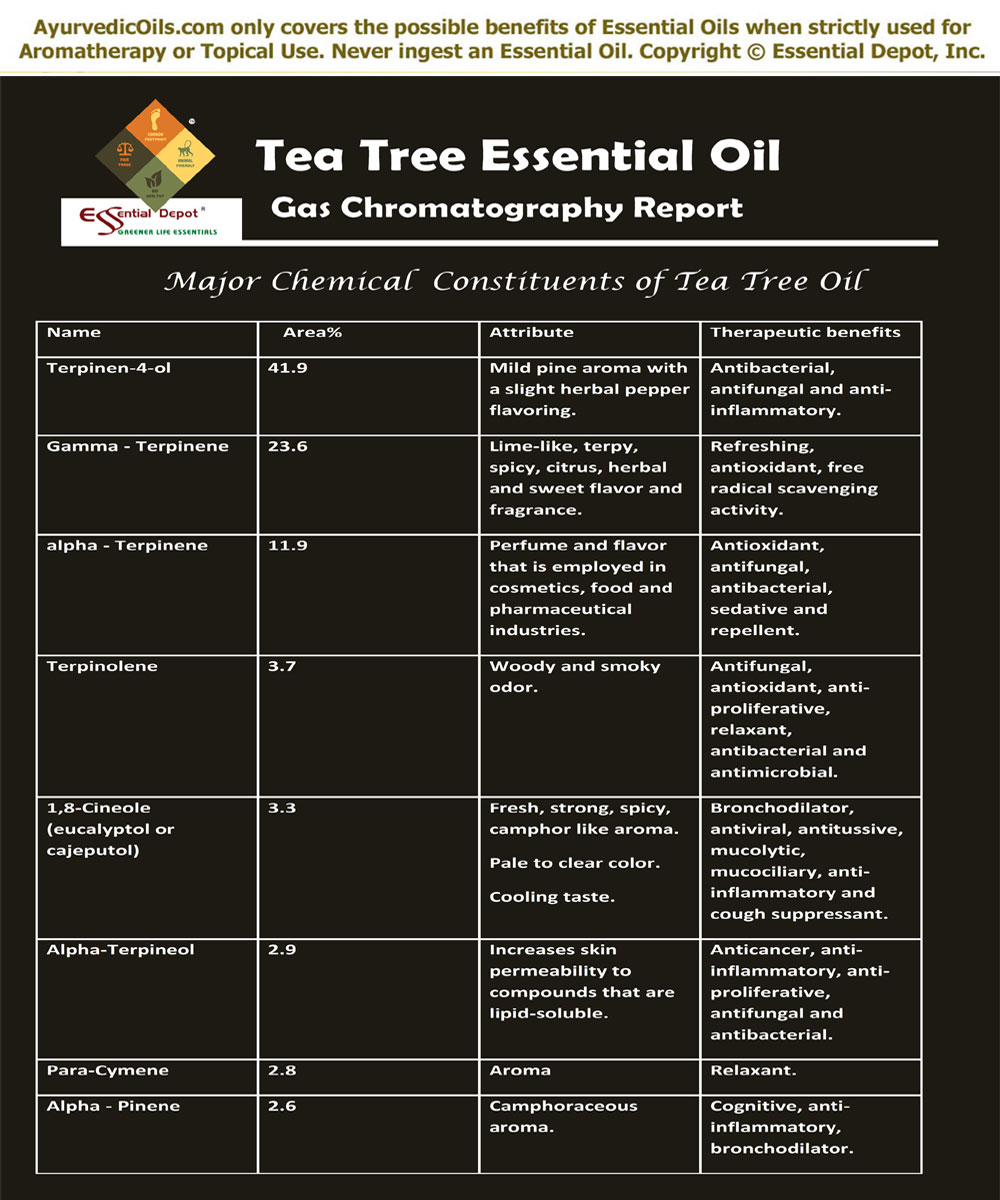
According to the Gas chromatography report, Tea tree oil constitutes of 8 chemical components that contribute to its unique fragrance, remedial properties and quality. Tea tree oil is enriched with about 41.9% of Terpinen-4-ol constituent.

Just click on:

For knowing more about the specific information of these key constituents of Tea tree oil.

The table below on the Gas Chromatography report talks about the principal chemical constituents and its role in granting the therapeutic and other attributes to Tea tree oil.

Teatree-OilRemedial properties of Tea tree oil:

This oil has antimicrobial, fungicidal, antibacterial, antiviral, stimulant, disinfectant, antiseptic, anti-infectious, antipyretic, vulnerary, expectorant, balsamic, cicatrisant, sudorific and insecticide.

The chemical constituents responsible for these therapeutic properties are 1,8-cineole, limonene, terpinen-4-ol, myrcene, a-pinene, linalool, sabinene, a-terpinene, y-terpinene, a-terpineol,  b-pinene a-phellandrene, terpinolene and p-cymene.

Ayurvedic health benefits of Tea tree essential oil:

Ayurveda is a holistic healing methodology that not only treats illnesses but aims to prevent it in future. It does not recommend same remedies for all even with the same disease as it regards that every individual is a unique part of nature and their illnesses should also be treated in a unique way.

For this, Ayurvedic treatment starts with identifying the unique individual constitution that is built up of 3 energy elements known as doshas. They are vata, kapha and pitta dosha. Vata is said to govern the movement of air, metabolic functions, process of elimination and much more.

Pitta is responsible for digestion, decision making, body temperature and creation of energy. The structure of our body, movement of fluids, skin health, stability and lubrication of joints are all controlled by kapha dosha.

Every human being is said to have a predominance of any one of these doshas that determines their personality, character and behavior. Balance between these three doshas indicates that a person is healthy and imbalance causes illness. Ayurvedic remedies like essential oils, herbs, yoga, meditation, Ayurvedic routine are prescribed in such a way that it helps in bringing perfect balance between these doshas.

Tea tree essential oil is said to have equal effects on all the three doshas with its cooling and moisturizing energies. The book on ‘Ayurveda and Aromatherapy’ by Light Miller and Bryan Miller states that Tea tree oil is extremely beneficial for skin, respiratory system and nervous system.

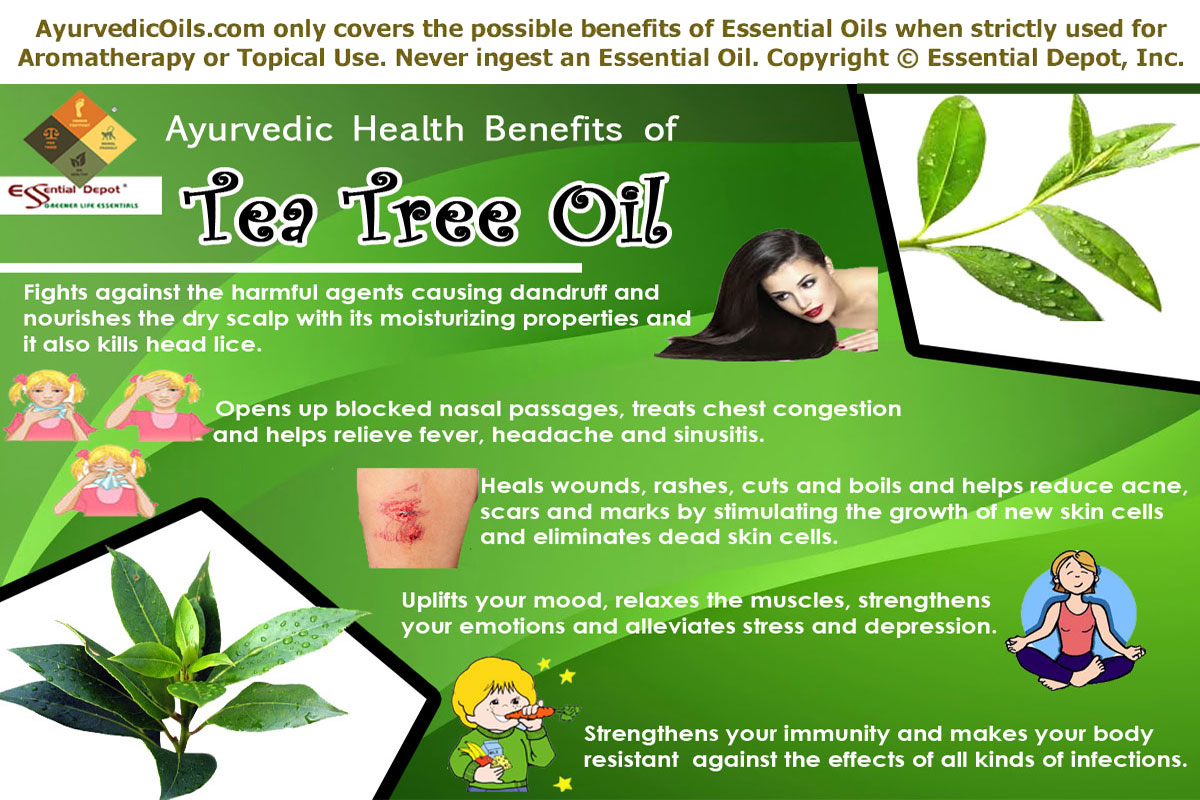
Let’s have a look at the Ayurvedic health benefits of Tea tree essential oil.Tea-tree-broucher1. Benefits to the skin and hair:

Tea tree essential oil has been proved 12 times better than carbolic acid that has been used as an antiseptic bactericide in primeval times. This is mainly because of its effectiveness in treating various skin ailments with its antimicrobial, fungicidal, anti-inflammatory, antiseptic, disinfectant and antiviral properties.

Tea tree oil is an excellent remedy for acne and this is substantiated by a 1990 study on ‘A comparative study of tea-tree oil versus benzoyl peroxide in the treatment of acne’, which states that both Tea tree oil and benzoyl peroxide are effective in treating acne.

It says that Tea tree showed “a significant effect in ameliorating the patients’ acne by reducing the number of inflamed and non-inflamed lesions (open and closed comedones)” with fewer side effects than BP where about 79 percent of people who used BP had various side effects like dryness, itching, stinging and burning sensation.

This exemplary oil also has antiseptic and cicatrisant properties that promote wounds, boils, cuts, burns and rashes to heal quickly. It reduces scars and marks by stimulating the growth of new skin cells and eliminates the dead skin cells.

Mix 2 drops of Tea tree oil with 15 drops of Jojoba oil or with your skin care cream or lotion and apply it on your acne for visible results and on your wounds for quicker healing. This blend is also effective on scars left by pox, accidents, acne, surgical and stretch marks.

Dandruff and lice are the major hair problems that screw your hair’s health most often. Being an effective fungicidal and antimicrobial oil, Tea tree oil fights against the harmful agents causing dandruff and nourishes the dry scalp with its moisturizing properties and it also kills head lice. Add 2 drops of Tea tree oil in your mild shampoo and massage it gently on your scalp for quick relief.

2. Benefits to the respiratory system:

Having enormous anti-infectious properties, Tea tree oil is one among the best essential oils for fighting against viral infections like cold, cough, congestion and other respiratory problems like sinusitis, bronchitis, tuberculosis, asthma and pharyngitis. Most of these problems start worsening when the infection spreads all over the system.

Tea tree oil fights against all kinds of contagious foreign bodies and arrest their further growth. The expectorant properties of this oil make it powerful in loosening the phlegm and mucous deposits that causes breathing difficulties.

Add 2 to 3 drops of Tea tree oil to warm bathing water and go for a refreshing bath. You can add 2 drops of this oil to steam inhalation for opening blocked nasal passages, treat chest congestion and get relief from headache and sinusitis. You can also add 2 drops of Tea tree oil to your rub and gently massage on your chest, neck and back for significant relief.

3. Benefits to the mind:

With its warm, spicy, refreshing, camphoraceous, soothing, aromatic-terpenic (monoterpenes of pine) fragrance pacifies and encourages the mind. Tea tree oil is said to appease the mind and body after shock, anxiety, fear and fatigue.

Massaging your body with 5 drops of tea tree oil blended with 40 to 45 drops of coconut oil can help in uplifting your mood, relax the muscles, strengthen your emotions and alleviate stress and depression. You can also add 3 drops of Tea tree oil to your burner, diffuser or vaporizer to encircle your mind with a clean and fresh feeling.

4. Guards against all kinds of infections:

Tea tree oil protects the body from harmful organisms and by killing the existing ones and preventing the growth of new ones. It strengthens your immunity and makes your body resistant against the effects of all kinds of infections.

A comparative study of Tea tree oil along with clotrimazole tested 112 people affected by toenails fungal infection and Tea tree oil was proved as powerful as an antifungal remedy. Add 2 drops of Tea tree oil in warm foot bath to cleanse your skin and kill the infectious agents on the skin followed by topical application of 2 drops of Tea tree oil with 8 drops of olive oil can help in treating fungal infections like athlete’s foot, ringworm, fungal infection of the toenails, dermatitis, vaginal infections and other skin ailments caused due to fungi.

The study on ‘Melaleuca alternifolia (Tea Tree) Oil: a Review of Antimicrobial and Other Medicinal Properties’ proved that Tea tree oil is effective in fighting against numerous bacteria like Staphylococcus aureus, Mycobacterium avium, Streptococcus pneumoniae, Haemophilus influenzae, Escherichia coli and Streptococcus pyogenes. This contributes to the antiseptic and antibiotic values of this oil.

This oil has been studied in Europe and US as an effective douching treatment for candida albicans. 5 drops of this oil added to 1 half pint of water can serve as a powerful vaginal douche Susanne Fischer-Rizzi.

Topical application of 2 drops of Tea tree oil mixed with 10 drops coconut oil aids in treating bed sores, psoriasis, abscesses, boils, wounds, insect bites, cold sores, diaper rashes, herpes, dermatitis, genito-urinary infections, cystitis, vaginal thrush, ear infections and deep wounds.

Other health benefits:

Tea tree has become a common ingredient in many popular anti-dandruff shampoos, acne soaps, skin care creams and lotions. It can also be used to treat rheumatic pain, bad breath, oral infections (as a gargle by adding 2 drops of this oil to warm water), cankers, candida, flea bites, jock itch, plantar warts, mosquito bites, sciatica, ticks, seborrhea, sunburn and much more.

Disclaimer: Never use essential oils internally. This article is only for the purpose of educations and is not meant for diagnosis or to replace any prescribed medication or professional advice. Always remember to use essential oils in a diluted form for topical application. Consult your Ayurvedic practitioner before using the right essential oil for your health condition and individual body type.

The MSDS (Material Safety Data Sheet) of Tea tree essential oil is readily available for your enhanced safety and better usage.

Gas Chromatography Report (GC) of Tea tree oil.

Thought for the day:

Nature teaches more than she preaches. There are no sermons in stones. It is easier to get a spark out of a stone than a moral. -John Burroughs

Suggested Reading:

  1. HEALING POWERS OF TEA TREE OIL (The Aromatherapy Professional: Healing with Essential Oils) By KG Stiles
  2. How to Use Tea Tree Oil – 90 Great Ways to Use Natures “Medicine Cabinet in a Bottle” – Acne, Boils, Head Lice, Nail Fungus, Ringworm, Skin Tags, – Health … Uses, Dilutions and Lots More! (What Is?) By Ruth Elston
  3. How to Use Tea Tree Essential Oil (Aromatherapy) By Miriam Kinai
  4. Australian Tea Tree Oil Guide By Cynthia Olsen

Reference Links:

  1. Tea tree oil by Wikipedia
  2. Tea tree oil by The American Cancer Society
  3. A comparative study of tea-tree oil versus benzoyl peroxide in the treatment of acne by Department of Dermatology, Royal Prince Alfred Hospital, Camperdown, NSW published in PubMed
  4. Melaleuca alternifolia (Tea Tree) Oil: a Review of Antimicrobial and Other Medicinal Properties by C. F. Carson, K. A. Hammer, and T. V. Riley published in Clinical Microbiology Reviews by the American Society For Microbiology

Balsam Tolu Oil


Balsam-tolu-banner

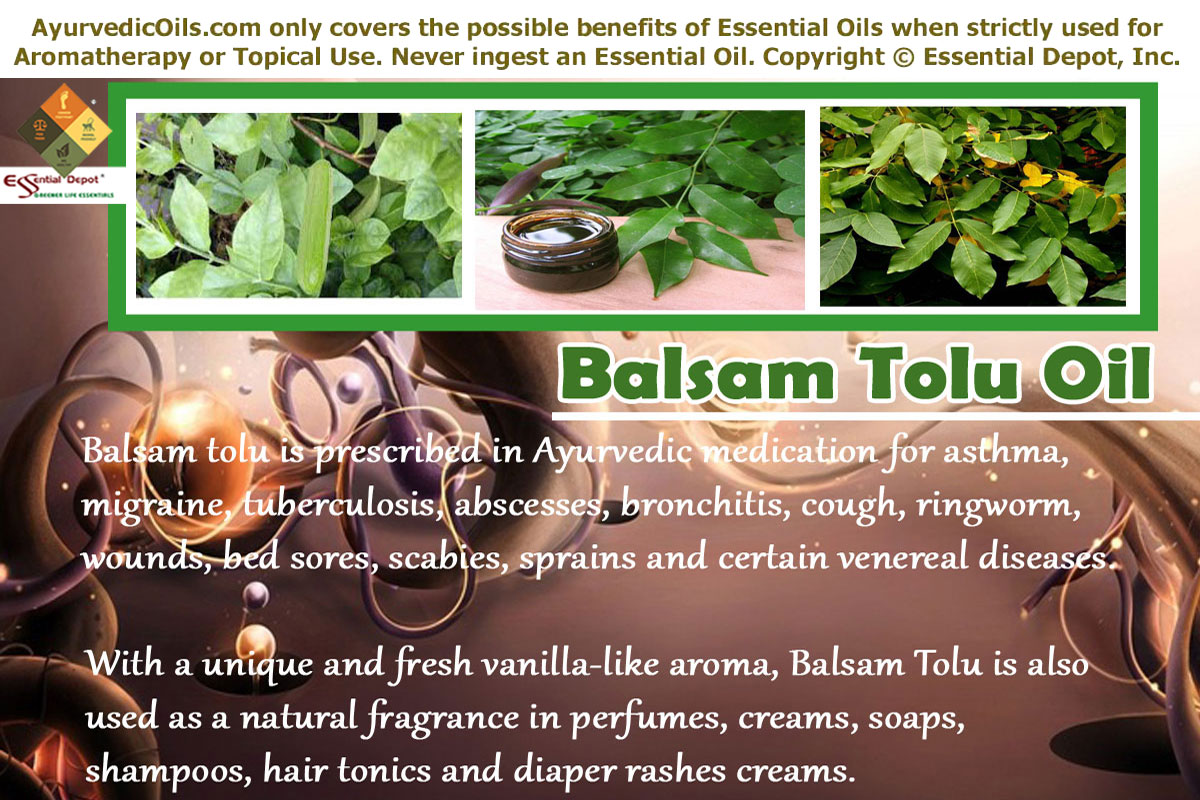
From being a promising remedy for skin ailments for the American and Mexican tribal population to a vital element in popular skin care liniments and cough formulas, Balsam Tolu extracts and its essential oil have traveled a long way in the history of natural medicine. With a unique and fresh vanilla-like aroma, Balsam Tolu is used as a natural fragrance in perfumes, creams, soaps, shampoos, hair tonics and diaper rashes creams.

History is always fascinating and Ayurvedic use of Balsam Tolu indeed owns an interesting history behind its scene. It was the Native Indians who identified the medicinal values of Balsam Tolu during their reign of Peru while they were residing in the South and Central American provinces, where Peru was recognized as the birthplace of the Balsam trees in the ancient period.

Being the traditional Indian medicine, Ayurvedic remedies prescribe Balsam Tolu and its essential oil for asthma, migraine, tuberculosis, abscesses, bronchitis, cough, ringworm, wounds, bed sores, scabies, sprains and certain venereal diseases.

Purchase Balsam Tolu Essential Oil – Wholesale – CLICK HERE

Historical uses and significance of Balsam Tolu essential oil and its other extracts: Botanically known as Balsamum tolutanum, Balsam Tolu is the resin extracted from the Myroxylon tree. It is grown primarily in South America and Central America. This tree has a natural resin producing ability and this resinous Balsam is called by other alternate names including Balsam Peru, Peruvian Balsam, Toluifera pereirae, Myroxylon Balsamum, Indian Balsam, Quina and China oil.

The gummy resin tapped from this tall tree is then made into Balsam and the major exporters of Balsam of Tolu are Columbia, El Salvador and Venezuela. The tribal people from Central America and Mexico used the leaves and bark of the Balsam Tolu tree as a folklore remedy for arthritis, wounds, cold, flu and asthma. The name ‘Tolu’ denotes the tribal race ‘Tolues’ from Columbia and it is said that they used this tree as an ancient remedy for various conditions.

The tribal populace who were aboriginal to the rainforest area used various parts of this tree in the treatment of tuberculosis, wounds, headache, rheumatism, asthma, venereal diseases, abscesses, sprains, catarrh, sores and bronchitis.

Balsam Tolu was first documented in the German Pharmacopeia in the 17th century. The book on “The Essence of Herbs” by Chrissy Brownlyn says “some native Indians used the bark in a powdered form as an underarm deodorant while others found it best for lung and cold ailments”.

It further denotes that the credit of using this plant in pharmaceutical industry goes to the Europeans, especially the Germans who used Balsam of Tolu in treating skin problems like ringworm, scabies, diaper rashes, bedsores, wounds, head lice, dandruff and certain minor ulcerations, after identifying its anti-parasitic, antibacterial and antifungal properties.

The mild and gentle vanilla and cinnamon like aroma of Balsam Tolu oil had supported its use as a flavoring agent in confectionaries, cough syrups, throat lozenges, chewing gums and soft drinks. The mesmerizing floral fragrance of this oil has been prescribed for use in relaxation techniques like meditation and yoga for soothing the mind and calming the senses.

Balsam Peru oil and Balsam tolu oil are extracted from the same tree but by different extraction methods. Even today, Tolu Balsam is used in anti-dandruff shampoos, conditioners, soaps, female hygiene sprays, perfumes, hair tonics, detergents, skin care creams, perfumes, topical salves, ointments, deodorants, surgical dressings, suntan lotions, cosmetics, colognes and certain other medical aids and equipments.

Chemical constituents and remedial properties of Balsam Tolu essential oil:

Among the 25 different chemical components, the major elements contributing to the therapeutic values of Balsam Tolu oil are cinnamic acid, cinnamein, benzyl benzoate, vanillin, nerolidol, cinnamyl cinnamate, benzoic acid, farnesol and other aldehydes. The most important therapeutic attributes of Balsam Tolu oil are antifungal, antiseptic, expectorant, anti-dandruff, anti-stress, analgesic and anti-parasitic.

Ayurvedic health benefits of Balsam Tolu essential oil:

From men in the Stone Age to this Digital Era, celebrate Ayurveda as a boon to mankind for its holistic and regimented approach towards health and harmony.

Ayurveda was gifted to humanity by Acharya Dhanvantari, the ancient God of medicine and is said to have its origin in India, the land of herbs and cultural heritage. This traditional remedy also holds the pride of being a part of Atharvaveda, one among the 4 sacred books of the Indian mythology.

When compared to the modern medicine, where personal care and attention to individuals becomes a question mark, Ayurveda is a divine science that regards and respects human body as a temple where the soul lives in. With this thought of nobility, Ayurveda recommends mankind to keep their mind, body and soul clean, happy and content.

The principles of Ayurveda rely on nature for everything as it strongly trusts that everything on earth is a vital part of nature. The visible proof behind this theory is that all things in nature are made up of five basic elements of nature, namely fire, water, earth, space and air.

Human body is also made up of these five elements, where earth is present in the form of bones and muscles; water represents blood and fluids in the system; air is vital for breathing; space is the soul that dwells in and fire is the essential energy for body temperature, metabolic functions and certain other vital activities of the system.

Ayurveda never goes by the fact that ‘one size fits all’, as it trusts that every human being is a distinctive part of nature composed with a unique individual constitution known as prakriti. It is a combination of three biological energies called as doshas. They are vata, pitta and kapha. Every individual has a predominance of any one of these doshas that acts as a deciding factor in determining the character, personality, attributes and behavioral patterns.

Absolute balance between these doshas as per the law of nature indicates health and doshic imbalances due to climatic conditions, lifestyle changes, irregular food habits and moral vitiations leads to illness.

Ayurvedic healing aims at treating the root cause of an illness instead of its symptoms alone. This aids in curing the disease initially and preventing it in the future as well. Ayurveda prescribes natural remedies that go well with the individual constitution of a person, even if a group of people are affected by the same medical condition.

The prime Ayurvedic remedies are plant essential oils, simple physical exercises, herbs, yoga, prayers, Pranayama (Ayurvedic breathing exercises), meditation, Abhyanga or Ayurvedic massaging, Panchakarma or Ayurvedic detoxification techniques and Ayurvedic routine.

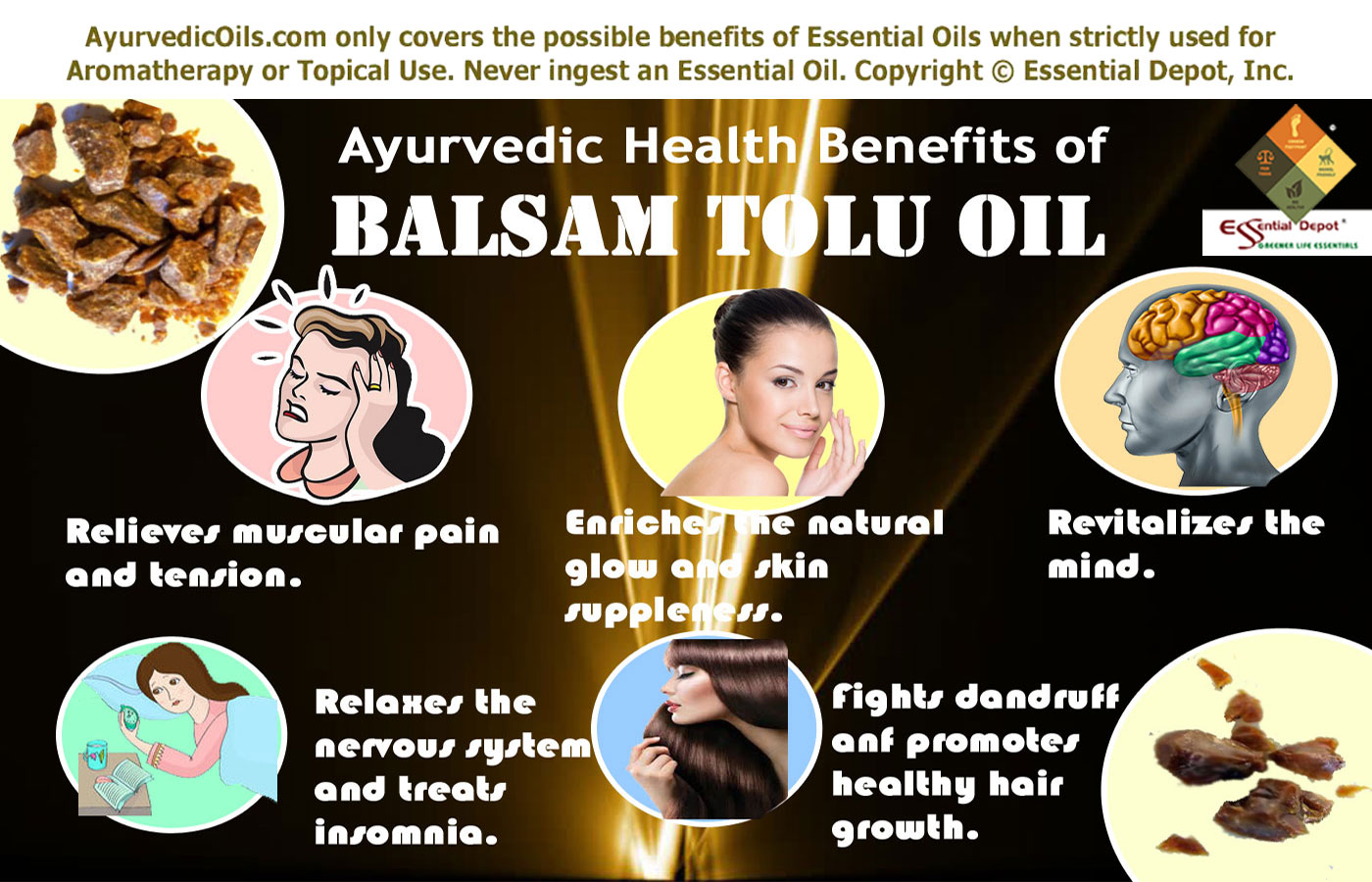
Balsam Tolu essential oil is said to pacify kapha and vata doshas and increase pitta energy. It’s time to look into the Ayurvedic health benefits of Balsam Tolu essential oil. Ayurveda generally prescribes the use of essential oils in the following ways:

Balsam-Tolu-broucher1. As an invigorating massage oil:

Abhyanga or the art of massaging with Ayurvedic oils is an important Ayurvedic technique prescribed for healing numerous illnesses since the traditional times. Abhyanga is the traditional method through which the soft tissues of one’s body is maneuvered with the help of fingers, elbows, feet, forearms and other ancient massaging equipments.

Ayurvedic massaging has the potent to pass innumerable benefits to the human body and the key benefits among them are:

  • Relieving muscular tension.
  • Normalizing the breathing pattern.
  • Relaxing the nervous system.
  • Revitalizing the mind.
  • Alleviating pain and inflammation.
  • Improving blood circulation
  • Augmenting the natural glow and suppleness of skin.

Ayurvedic physicians generally prescribe the appropriate essential oil based on the prakriti and medical condition of a person. Balsam tolu oil is good to treat vata and kapha vitiations and pitta deficit.

Massaging your system or affected parts with 5 drops of Balsam tolu oil, 2 drops of Patchouli oil, 2 drops of Frankincense oil, 2 drops of Lavender oil, 2 drops of Cardamom oil, 2 drops of Petitgrain oil along with 50 ml of Coconut oil can assist in relieving pain, soreness and inflammation associated with rheumatism, alleviating muscular tension, relaxing the nerves, enhancing the skin texture, improving slow digestion, treating constipation, supporting urination through which the toxic remains in the body are eliminated and promoting peaceful sleep and positive feelings.

Skin is the largest organ of the human body and is the quickest transmitter of remedial properties to the bloodstream. Using Balsam Tolu oil in Ayurvedic massaging aids in passing away its healing values like antioxidant (helps in checking aging symptoms and discard the growth of free radicals in the body), antiseptic, cicatrisant and stimulating properties (supports in enhancing the skin health), diuretic, anti-rheumatic, analgesic values (aids in alleviating pain, eliminating toxic remains by promoting frequent urination, reducing inflammation, redness and stiff muscles) and anti-stress properties that help in relaxing the nerves, mind and induce good sleep.

2. In compress or bathing:

Balsam Tolu oil owns an exotic floral fragrance that makes it an excellent bathing oil that can help in leaving you fresh and energized all through the day.

Using 2 drops of Balsam oil along with 1 drop of Cinnamon oil and 1 drop of Ylang Ylang oil in your bathing water or in warm or cold compress is a great way to recharge your nerves, enchant your muscles, lessen muscular tension, alleviate tension headache, back pain and calm your senses and instill a complete feeling of newness.

A warm bath with this blend especially before going to bed is a great way to promote good sleep without any nightmares.

3. Topical application as creams or salves:

Balsam Tolu has been used as a promising remedy for myriad skin problems since the times of the tribal populace. 2 to 3 drops of Balsam Tolu oil along with 1 drop of Turmeric oil mixed with your mild skin care cream or with 2 ml of Jojoba oil can be applied on wounds, eczema, minor skin ulcerations, acne, scabies, rashes, ringworm, bedsores, diaper rashes and skin infections caused due to fungi and parasites.

The herbal blend of 2 drops of Balsam Tolu oil with 2 drops of Rosemary oil, 2 drops of Ylang Ylang oil and 2 drops of Basil oil along with 10 ml of sweet almond oil, applied on the scalp and hair, followed by a thorough rinse with your mild shampoo can assist in keeping away from dandruff, combat head lice, enrich the scalp and promote the growth of healthy hair naturally.

4. In burner, diffuser or vaporizer:

Ayurvedic texts recommend the use of aromatics or aromatherapy as a major means of natural healing and prevention of illnesses. Smell or aroma has an important effect in balancing and stimulating various functions of the body. This action is performed by the odor-bearing molecules that influence the receptors in the nose while breathing. They reach the olfactory bulb of the limbic system in the form of nerve impulses.

The aromatic molecules of Balsam tolu essential oil has expectorant, antifungal, anti-dandruff, antiseptic, anti-stress, anti-parasitic, analgesic, anti-rheumatic and stimulating properties. When inhaled by adding 2 drops of Balsam tolu oil in vaporizer, burner or diffuser, these molecules containing the therapeutic properties of this oil reach the limbic system.

Following this, the hypothalamus and other vital parts of the limbic system convey the corresponding commands to different parts of the body as per the remedial values. Inhaling the soothing aroma of Balsam tolu oil can assist in relaxing the system, lessening pain, reducing fatigue, treating insomnia, and alleviating stress and depression.

Ayurveda states that using Balsam tolu oil in diffuser or vaporizer specifically during meditation, yoga and Pranayama instills a sacred feeling as the mind is said to reach the most subtle and tranquil α (alpha) state during meditation.

5. In vaporizing ointments or steam inhalation:

Inhaling the medicated steam is a proven natural remedy for alleviating cold, cough, sore throat, headache, sinusitis, blocked nose, watery eyes and migraine pain. Steam inhalation works effectively as the steam aids in bringing out the toxic remains in the body through sweat and one can feel the relief instantly after a medicated steam inhalation.

Adding 2 drops of Balsam Tolu oil along with 1 drop of Peppermint oil and 1 drop of Eucalyptus oil in steam inhalation can aid in relieving headache, opening blocked sinus and nasal passages, soothing sore throat, discarding phlegm and mucus deposits and eliminating the microbes present in the system through sweat.

When added to your vaporizing ointment, this blend can also be helpful in treating bronchitis, tuberculosis, chest congestion, nasal congestion, whooping cough and certain other respiratory infections.

Certain test tube studies have revealed that Myroxylon plant has been effective in inhibiting H.pylori, the general ulcer-causing bacteria and Mycobacterium tuberculosis, which is responsible for lung diseases.

Disclaimer:

This article is not meant to treat or diagnose any medical condition or substitute any professional medical advice. It is only for educational purposes and we are not medical practitioners. This heath related information is shared only with the view of spreading the ancient wisdom of Ayurveda, the oldest holistic healing system on earth.

Never use essential oils for internal purposes. Always remember to dilute essential oils before using it for topical uses, as organic and 100 percent pure essential oils are highly concentrated substances and may lead to allergies, if used without diluting them. Discuss with your healthcare expert/Ayurvedic physician before taking the right call on the most suitable essential oils for your health condition and unique individual constitution. Keep away from Balsam Tolu oil, if you are a nursing or pregnant mother, as it is regarded as a sensitizing oil and may have chances of causing allergic reactions.

Thought for the day:

In nature, nothing is perfect and everything is perfect. Trees can be contorted, bent in weird ways, and they’re still beautiful. -Alice Walker

Suggested Reading:

  1. Prescription for Herbal Healing, 2nd Edition: An Easy-to-Use A-to-Z Reference to Hundreds of Common Disorders and Their Herbal Remedies by Phyllis A. Balch CNC, Stacey Bell
  2. 10 Ways to Use Balsam Of Peru (Recipe Book) by Sam Enrico
  3. The Encyclopedia of Essential Oils: The Complete Guide to the Use of Aromatic Oils In Aromatherapy, Herbalism, Health, and Well Being by Julia Lawless
  4. Scabies Natural Home Treatment Solution by Alyson Rodgers
  5. Medical Herbalism: The Science Principles and Practices Of Herbal Medicine by David Hoffmann

Reference Links:

  1. Balsam of Peru by Wikipedia
  2. Balsam of Tolu from The Essence of Herbs by Chrissy Brownlyn
  3. Balsam of Tolu by Infostir.com
  4. Peruvian Balsam (Myroxylon pereirae syn. M. Balsamum) by Herbs2000.com

Balsam Peru Oil


Balsam-peru-banner“The balsam is stimulant and tonic, and is of use in chronic coughs, whites, palsy and chronic rheumatism. As an external application, it is employed with advantage in cleansing and stimulating foul and indolent ulcers”, quotes the book Ayurvedic Materia Medica for domestic use by Thomas John Graham.

Also called as Peruvian balsam, the essential oil and the balsam as such are being used in the field of Complementary and Alternative medicine like Ayurveda and Homeopathy as well as in Modern medicinal practices.

With its decongestant, antiseptic, antibacterial, antifungal and anti-rheumatic properties, Balsam Peru is prescribed in Ayurvedic medicine for treating bronchial asthma, whooping cough, bruises, bed sores, burns, eczema, respiratory infections, tuberculosis, headache, fever, diaper rashes, cold, scabies, ringworm and rheumatic conditions.

Purchase Balsam Peru Essential Oil – Wholesale – CLICK HERE

Historical uses and importance of Balsam Peru essential oil and its other extracts: This tree is scientifically called as Balsamum tolutanum. Balsam of Peru is the resin extracted from the tall tree that grows in Peru, Bolivia, Columbia, Venezuela, Paraguay, Brazil, Argentina and France.

Balsam Peru is also called by other names like Balsamum Peruvianum, Surinam balsam, Balsam fir oleoresin, Quina quina, Balsam Tolu, Toluifera pereirae, Indian Balsam, China oil, Myroxylon Balsamum, Balsams Peru, Myrosperum pereira balsam etc.

Initially, Peru was the major and largest exporter of Balsam oil and it was for this reason, this Balsam was called as Balsam of Peru. In recent times, Balsam of Peru is exported by various other major Balsam growing countries. This tree has a natural potential of producing resin, which is sticky in nature. Balsam of Peru is collected from Balsam trees that are roughly 20 years old by tapping method.

Balsam of Peru has been a part of the traditional healing methodologies for centuries together. It was used as a natural remedy for treating digestive disorders, headache, cold, cough, respiratory infections and certain skin problems. The Native American populace used the powder extracted from this tree as a deodorant.

Balsam of Peru and its essential oil has been a trusted remedy of the Europeans and other Asian folks for healing skin diseases like bedsores, ringworm, scabies, eczema, diaper rashes, wounds and itches. It is also used as an important ingredient in the manufacturing of female hygiene sprays, shampoos, insect repellents, topical salves, soaps, mouthwash, surgical dressings, skin care lotions and certain other fragrant ingredients.

Chemical constituents and remedial properties of Balsam Peru essential oil:

Studies have proved that the resin extracted from the Peruvian balsam tree consists of about 80% of cinnamic acid along with the presence of cinnamein. This is the reason for its vanilla and cinnamon like aroma. It’s essential oil is said to contain various volatile oils and the major components are benzyl cinnamate, benzyl benzoate, and nerolidol.

These components contribute to its remedial properties like antiseptic, antimicrobial, analgesic, anti-parasitic, expectorant, decongestant, antifungal, diuretic, antioxidant, deodorant, cicatrisant, anti-stress and anti-dandruff.

Ayurvedic health benefits of Balsam Peru essential oil:

The word ‘Ayurveda’ simply means ‘the knowledge of life’, where ‘Ayur’ stands for life and ‘Veda’ means knowledge. This oldest remedial system states that illness occurs when there is disharmony between an individual and nature.

Ayurvedic healing considers every human being as a unique part of nature with a unique individual combination. According to this philosophy ‘no two individuals are given the same medicine, even for the same disease’. The first Ayurvedic consultation aims at analyzing the unique individual constitution of a person, which comprises of three biological energies known as doshas. They are vata (air and space), pitta (fire and water) and kapha (water and earth).

These Ayurvedic doshas are nothing but a combination of the five vital elements of nature called as Panchamahabutas, namely fire, water, earth, air and space. Ayurveda states that every person has a prakriti (individual constitution), which is a combination of these doshas in a unique proportion with a predominance of any one of them.

This prevalence determines the character, personality, uniqueness and behavioral attributes of a person. Based upon these fundamental qualities, the unique Ayurvedic treatment methodology and remedies are prescribed. Ayurvedic writings reveal that the absolute balance between these doshas indicates perfect health and harmony with nature, whereas doshic imbalances lead to sickness.

The most notable Ayurvedic remedies include Ayurvedic essential oils, herbs, yoga, meditation, Pranayama or the art of balanced breathing, prayers, simple physical exercises, Ayurvedic routine, Abhyanga, and Panchakarma. With these remedies, Ayurveda focuses on treating the root cause of an illness instead of diagnosing its symptoms.

With its stimulating and invigorating properties, Balsam Peru essential oil has been recommended in Ayurveda for augmenting pitta dosha and pacifying kapha and vata dosha.

Let’s look at the Ayurvedic health benefits of Balsam Peru oil:

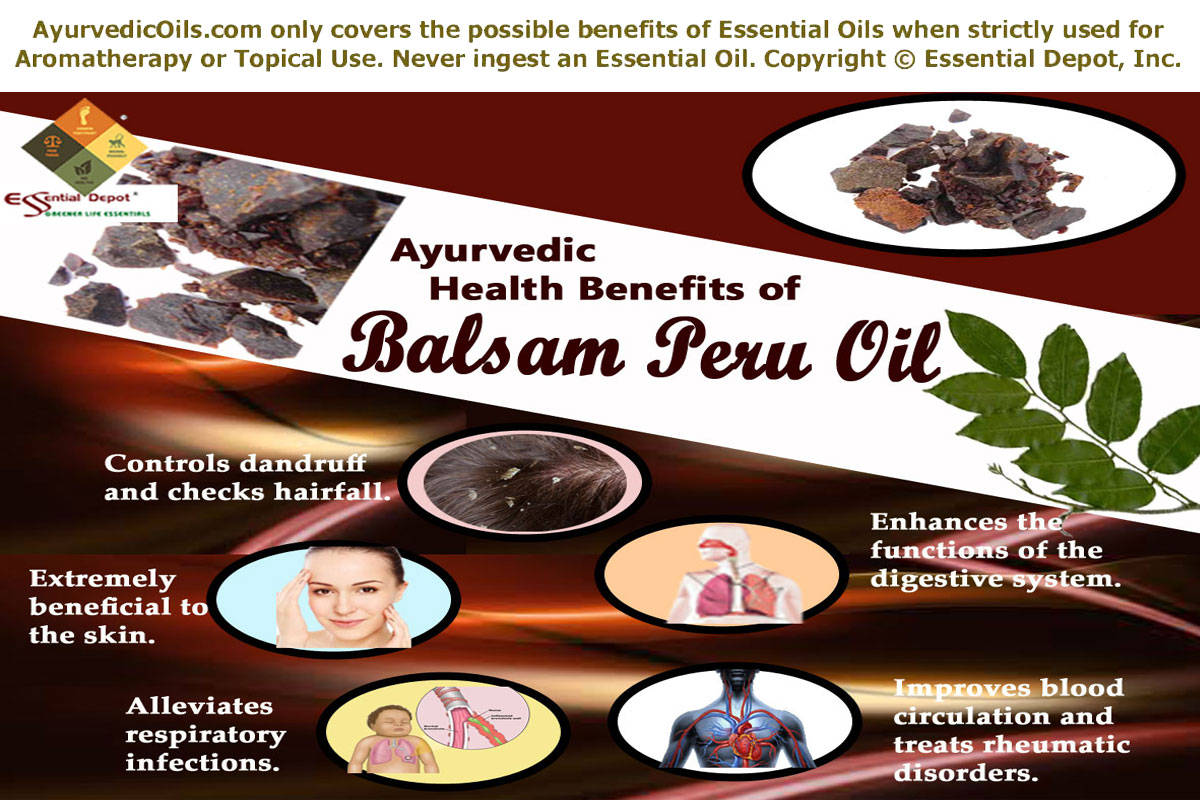
Balsam-peru1. Controls dandruff and checks hair-fall:

The essential oil of Balsam Peru has been used as an important ingredient in many hair care products including shampoos and conditioners for its antifungal, anti-parasitic and anti-dandruff properties. These remedial values help in clearing away dandruff, killing head lice and treating dry and itchy scalp conditions.

Massaging your scalp with 3 drops of Balsam Peru oil, 2 drops of Lemon oil and 2 drops of Rosemary oil along with 5 ml of Coconut oil can be of great assistance in nourishing your scalp, clearing away the itchy flakes on the head, repairing your damaged hair and act as a hair tonic. You can also add 2 drops of Balsam Peru oil to your regular shampoo and enjoy the richness of your shining hair, free from dandruff and head lice.

2. Extremely beneficial to the skin:

Balsam Peru oil is a time-honored skin care remedy that has been employed in the treatment of numerous skin problems including ringworm, bedsores, skin ulcers, wounds and diaper rashes. The antiseptic, antifungal, antioxidant and antimicrobial properties of this oil helps in quicker healing of wounds, combats the growth of microbes responsible for skin infections, and fights aging symptoms.

Blend 2 drops of Balsam Peru oil with 2 drops of Ylang Ylang oil and 2 drops of Lavender oil with 3 ml of Olive oil. Gently apply this blend on skin problems like eczema, scabies, wounds, ringworm, acne, athlete’s foot, chapped skin, rashes and wrinkles.

This natural skin tonic works like a wonder in treating fungal skin infections like ringworm and athlete’s foot with its anti-fungal properties; acne, rashes, wounds and eczema with its antimicrobial properties; wrinkles and dull lifeless skin with its antioxidant properties.

Bedsores generally occur in sick people who are bed-ridden. This includes especially the aged population with sensitive skin. Mixing 1 drop of Balsam Peru oil with 2 ml of Jojoba oil can reduce pain and help in promoting quicker healing of wounds. This blend can also be used externally on diaper rashes for babies as well as the aged.

3. Alleviates respiratory infections:

According to Ayurveda, amassing of toxic substances or ama in the system is a major cause for many illnesses including respiratory problems. It is a known fact that excess of kapha dosha (blend of water and earth elements) is responsible for diseases based on the surplus fluid deposits in the system causing respiratory infections, obesity, rheumatism, edema and other inflammatory conditions.

Balsam Peru oil has diuretic, expectorant and antimicrobial properties that aid in eliminating the excess fluid deposits in the system through urine and sweat, discarding phlegm and mucus secretions in the respiratory tract and arresting the growth of microbes that worsen respiratory problems. It has been used in the United States since 1800s as a respiratory aid and cough suppressant. Balsam of Peru was also used as an ingredient in cough syrups and lozenges.

2 drops of Balsam Peru oil along with 1 drop of Peppermint oil and 1 drop of Eucalyptus oil added to steam inhalation can help in relieving cold, sore throat, nasal congestion, headache, sinusitis, watery eyes, chronic cough, bronchitis, tuberculosis, asthma and inflammation of the pharynx.

Gently rubbing your throat, chest, back and forehead with 2 drops of Balsam oil along with 1 drop of Tea tree oil mixed with your vaporizing ointment can help in relieving sore throat, bronchial congestion, blocked nasal passages, chest congestion, headache, sinusitis and drowsiness due to cold and other respiratory infections.

4. Enhances the functions of the digestive system:

Indigestion is the key cause for building up of toxic substances in the body. This is due to improper metabolic functions, including digestion, absorption and elimination. Pitta dosha is responsible for ‘Agni’ or digestive fire in the system. Vitiation of pitta energy often ends up in sluggishness, nausea, constipation, flatulence, loss of appetite and other digestive disorders.

Balsam Peru oil has the ability to enhance pitta energy and can re-kindle the digestive fire. Inhaling the warm aroma of Balsam Peru oil by adding 2 drops of this oil to your vaporizer especially before your meals can help in enhancing your appetite, stimulating your bowel movements, treating constipation and promoting proper digestion. Massaging your abdomen with 2 drops of Balsam Peru oil and 2 drops of Nutmeg oil with 2 ml of sesame oil can support your digestive functions.

5. Improves blood circulation and treats rheumatic disorders:

Ayurvedic writings denote that rheumatism is an auto-immune disease that arises mostly due to the upsurge of ama or toxins in the system owing to the disparity of digestive fire. These harmful substances may even block the working of the essential organs in the body.

Basically, ama stored in the body reaches the kapha dominated parts like fingers, joints, stomach, brain, chest, toes and few other parts. Thus rheumatism is identified with the symptoms of inflammation, redness of joints, soreness of muscles, lack of energy, swelling of joints, irregular blood circulation, insomnia and fatigue.

With its diuretic, anti-rheumatic, antioxidant and analgesic properties, the essential oil of Balsam Peru has the potent to improve blood circulation, reduce pain, decrease swelling and inflammation by eliminating the toxic remains, excess water deposits, salt and uric acid through urine and soothe the joints and muscles.

Massaging the affected parts with 3 drops of Balsam Peru oil with 2 drops of Cardamom oil, 2 drops of Yarrow oil, 2 drops of Bay oil blended with 20 ml of coconut oil can help in alleviating pain, inflammation, swelling, soreness, stiff muscles, water retention, insomnia and other symptoms associated with rheumatism.

Ayurveda also recommends the practice of Pranayama or the art of balanced breathing in Ayurveda, through which the toxic remains in the system are discarded through exhalation. Along with this certain yogasanas can also help in treating rheumatic problems at ease and this has also been proved by various scientific studies.

Other health benefits:

With its mild, warm and soothing aroma, Balsam Peru oil acts like a marvel in treating depression, mood fluctuations and negative feelings. To attain this solace, 2 drops of Balsam Peru oil and 2 drops of Benzoin Res oil can be added to your burner, candle diffuser or vaporizer during the practice of yoga, meditation and Pranayama. This can also aid in enhancing self-confidence and positive thoughts.

Disclaimer: This information is meant only for the use of education and is not meant to diagnose or treat any health condition or replace any prescribed medications or professional medical advice. We are not healthcare practitioners and this info is shared only with the idea of highlighting the traditional wisdom of Ayurveda, the mother of all healing sciences.

Never take essential oils internally and do remember to dilute essential oils before using it on your skin, as pure and organic essential oils are extremely concentrated substances and may lead to allergic reactions when used on the body directly. Ensure that you seek advice from your Ayurvedic professional/healthcare expert before selecting the appropriate essential oil for your health condition and unique individual constitution. Avoid using Balsam Peru oil if you are pregnant or breastfeeding, as it is regarded as a sensitizing oil that may cause allergic reactions.

Thought for the day:

The art of medicine consists in amusing the patient while nature cures the disease. -Voltaire

Suggested Reading:

  1. 10 Ways to Use Balsam Of Peru (Recipe Book) by Sam Enrico
  2. The Encyclopedia of Essential Oils: The Complete Guide to the Use of Aromatic Oils In Aromatherapy, Herbalism, Health, and Well Being by Julia Lawless
  3. Aromatherapy and Subtle Energy Techniques: Compassionate Healing with Essential Oils by Joni Loughran, Ruah Bull
  4. Scabies Natural Home Treatment Solution by Alyson Rodgers
  5. A Practical Treatise On Materia Medica And Therapeutics by Roberts Bartholow

Reference Links:

  1. Balsam of Peru by Wikipedia
  2. Ayurveda Materia Medica for Domestic Use by Thomas John Graham
  3. Peruvian Balsam by Herbs2000.com
  4. Balsam of Peru essential oil by Oil Health Benefits

Cade Oil


Cade-oil-bannerWell known in ancient India as one of the best natural remedies for dandruff, damaged hair due to bleaching, dyeing etc, and hair fall, Cade oil is a significant Ayurvedic oil for treating skin and hair problems. It is also called by other names like Juniper tar, Prickly cedar, Sharp cedar, Cade Juniper and Prickly Juniper and is scientifically known as Juniperus oxycedrus. This small tree is a member of the Cypress family, Cupressaceae.

Cade essential oil is extracted from the branches and heartwood of the tree by steam distillation method. Ayurveda recommends Cade and its essential oil in the treatment of various skin disorders like eczema, psoriasis, scabies and skin eruptions along with burning hair problems like hair fall, dandruff and other hair damages.

Purchase Cade Oil – Wholesale – CLICK HERE

Historical uses and importance of Cade and its essential oil:

Ancient people of various traditions in the prehistoric times believed that Cade helped them in keeping away from sickness, depressing emotions, negative thoughts and from evil spirits as well. Cade was also used in pagan rituals in Sumeria and Babylonia as a sacrifice to the Gods, while Inanna and Ishtar considered this herb to be holy. The Europeans however considered Cade as a medicinal plant and used it to protect life stock.

The word ‘oxycedrus’ means “sharp cedar” and this particular species is considered to be the Cedrus or the original Cedar of the ancient Greeks. Cade is said to have been originated in the Mediterranean region across Portugal and Morocco, south to Lebanon and Israel, east to westernmost Iran and France and grows up to a height of 1600 m altitude above the sea level on rocky areas.

The Native Americans used it to treat ailments in animals. Many experts refer to the Juniper tree as a source of protection with perfect loveliness and succor, which are the terms derived from the plant language. Towards the 19th century, the French adopted Cade as well and began the use of the same in the treatment of lice, leprosy, skin infections, snake bites and toothaches.

As of today, modern aromatherapy use Cade oil to treat various kinds of skin infections like dandruff, scalp infections accompanied by hair loss, eczema, dermatitis, psoriasis and other skin irritations/eruptions. Due to its skin and hair benefiting properties that help in treating scalp and skin problems, Cade is used in the manufacturing of soaps, lotions, creams and perfumes, and of course these products do have a wonderful aroma as well.

Chemical constituents and therapeutic properties of Cade oil:

Cade oil is said to contain cadinene, creosol, cadinol, p-creosol, terpenes and guaiacol. The major healing properties of this oil are antiseptic, analgesic, antimicrobial, antipruritic, disinfectant, anti-parasitic, vermifuge and vulnerary.

Ayurvedic health benefits of Cade essential oil:

The word Ayurveda (Ayur + Veda) means ‘the knowledge of life’ (Ayur means life and Veda means knowledge). Celebrated across the globe as the world’s oldest healing methodology, Ayurveda is lovingly beckoned as the mother of all healing sciences and the most popular medicinal practices that followed Ayurveda are Homeopathy, Siddha, Traditional Chinese Medicine, Allopathy, European Traditional medicine, Chiropractic, Acupuncture and Unani.

The most inspiring reason behind the progressive lead of Ayurvedic medicine is its holistic healing approach that states that health is a combination of the physical, mental and spiritual well-being. This noble fact has been highlighted in Charaka Samhita, one among the oldest Ayurvedic encyclopedia as ““The three – body, psyche, and soul – act as a tripod. The world stands upon them, and within them, the world abides.”

Ayurvedic medicine rooted the principles of natural healing by treating the root cause of an illness instead of its symptoms and aims at prevention of diseases by helping to lead a disciplined lifestyle and by maintaining perfect balance with nature. According to Ayurveda, everything on earth is a part of nature and nature by itself is made up of five vital elements namely water, earth, space, air and fire.

Earth represents bones and muscles, water stands for blood and other fluids in the body, fire is responsible for metabolic functions and body temperature, air aids in breathing and space is the spirit that keeps us alive.

Every human being on earth is a unique creation built up with a unique individual constitution just like our fingerprints. This constitution comprises of three dynamic energies called as doshas, which are an arrangement of the five vital elements of nature.

Vata dosha stands for air and space and takes care of respiration, circulation and nervous functions of the body. Pitta dosha symbolizes fire and water and is in charge of metabolic functions and body temperature.

Kapha represents water and earth and is responsible for physical structure, sustenance and reproductive health. Every individual has a predominance of any one dosha, which decides their personality, traits and behavioral attributes.

Perfect balance between these doshas as per nature’s law signifies health and doshic imbalances cause illnesses.Ayurveda prescribes natural remedies like herbs, essential oils, yoga, simple physical exercises, meditation, prayer, Ayurvedic routine, Panchakarma, Pranayama and other Ayurvedic techniques for fostering natural balance between these doshas.

Cade oil finds its use in Ayurveda for treating vata imbalances including skin disorders and hair problems and kapha problems like bronchitis and congestion. It serves good for the treatment of itching, pneumonia, diarrhea, diabetes, peptic ulcer, high blood pressure, bronchitis, and many more.

The major Ayurvedic health benefits of Cade oil are:
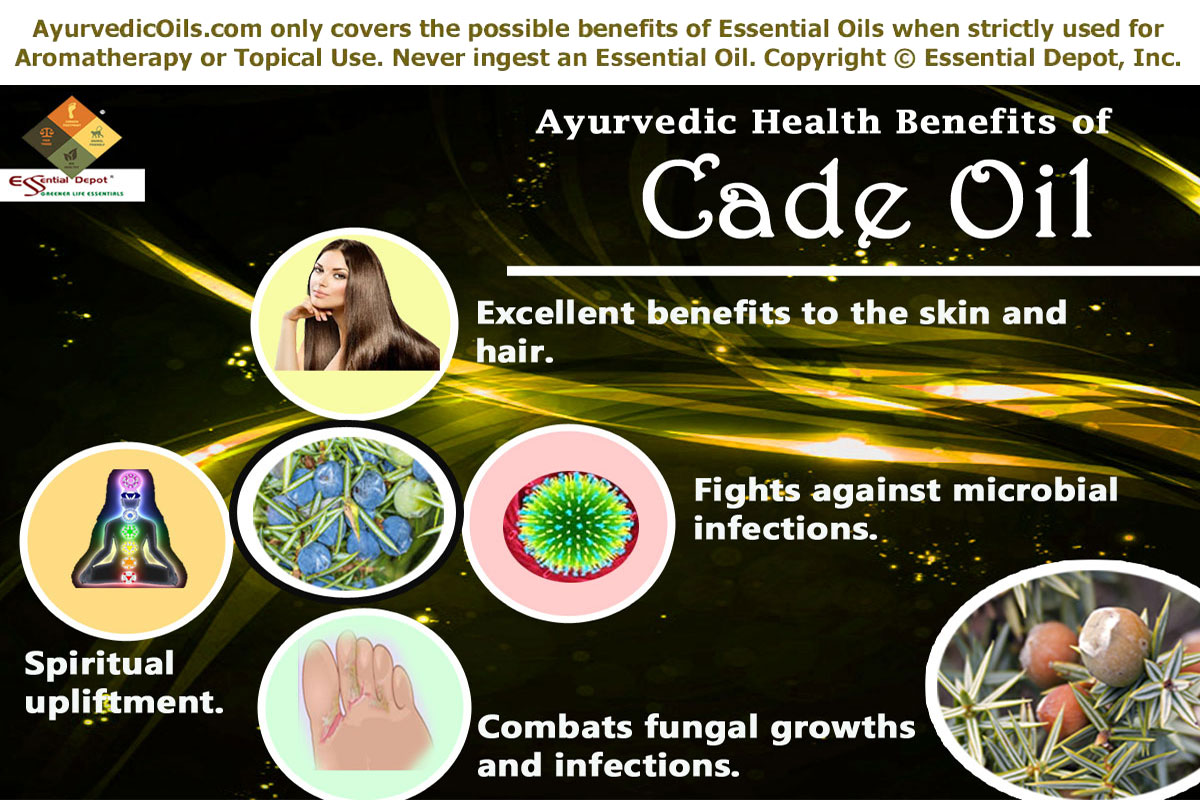
cade-oil-broucher1. Excellent benefits to the skin and hair:

Cade oil has numerous benefits to the skin and hair for which it has been used since the ancient period for treating health problems including dermatological cancers, eczema, psoriasis, skin eruptions, parasitic and fungal infections on the skin, chronic rhinitis and other skin infections.

Cade oil is also a proven remedy for treating alopecia or excessive hair loss, dandruff and other scalp problems. It is for these reasons, Cade oil is used as an effective formula in making ointments for treating wounds, psoriasis, eczema, and the treatment of fungal, viral and bacterial conditions of the scalp.

Numerous studies have proved the potential effects of Cade oil and its use in medicinal manufacturing of skin creams, ointments, and anti- dandruff shampoos as well. Cade essential oil is used as an ingredient in liniments and ointments for chronic skin diseases and problems of the scalp.

Mixing 4 drops of Cade oil blended with 4 drops of Rosemary oil, 4 drops of Thyme oil, 4 drops of Cedarwood oil with 20 ml coconut oil can be used as an effective massage blend for the body for treating all kinds of skin problems, allergies, microbial infections and hair problems as well. This massaging helps in fighting against dead skin cells, promoting quicker healing of wounds, and its disinfectant properties fights against microbes that worsen skin infections.

2 drops of Cade oil added to bathing water or to 10 ml of mild shampoo can act as a potent remedy for treating psoriasis, eczema, ringworm, seborrhea, wounds, herpes, dandruff, lice, loss of hair and other scalp problems as it works by nourishing the skin and scalp, promoting the growth of hair by enriching the hair follicles and support the growth of healthy hair by combating the growth of infectious microbes.

Cade oil hair mask for dandruff: To start with, try it out only for few applications and check the results. Make the mixture using the following ingredients, 1tsp castor oil, ½ tsp soya oil, 10 drops of Cade oil and 2 drops of wheat germ oil. Now mix all the ingredients and store in a dark bottle. Massage this oil deeply into the scalp as required.

Leave it at least for 2 hours and wash it off using a mild shampoo. Try it twice a week and do check with your medical expert on your diet, as hair loss and other scalp disorders can also be related to other dietary and other lifestyle changes.

2. Fights against microbial infections:

The essential oil of Cade is a well-known anti-microbial oil and the antimicrobial activity of Juniperus oxycedrus oil was studied through aqueous and methanol extracts of its leaves in the Pelitli Village of Gebze, Kocaeli, in the Marmara region of Turkey, where Cade was extensively used by the people of the same terrain for the treatment of numerous diseases. The effects of the extracts from the tree were employed in its research in the field of medicine.

Cade essential oil is dark, aromatic and smells like smoke. This oil is also used as mixtures in cosmetics and creams employed in medicinal applications for skin problems. A 2003 study on the ‘Antimicrobial activity of aqueous and methanol extracts of Juniperus oxycedrus L,’ was conducted on the laboratory strains belonging to 56 bacterial species, and 31 isolates of 5 fungi species.

This study proves that the methanol extract of Cade oil proved promising in the inhibitory effects on the growth of 57 strains of 24 bacterial species in the genera of PseudomonasStaphylococcus, Bacillus, Brevundimonas, Brucella, Acinetobacter, Enterobacter, Escherichia, Micrococcus and Xanthomonas.

Another Egyptian study on the ‘Antimicrobial activity/Cytotoxic activity of essential oils of leaves and berries of Cade oil’, witnessed that Cade oil showed major activity against most of the tested strains including gram positive bacteria like Enterobacter cloacae and Staphylococcus aureus, and gram negative bacteria like Escherichia coli, Salmonella, Pseudomonas syringae etc.,

The best way to use Cade oil for fighting against bacteria, fungi, virus and other microbial infections is to add 3 to 4 drops of Cade oil along with 2 drops of Lavender oil in bathing water to fight against existing microbial infections and to guard you against the effects of harmful microbes throughout the day. You can also add 2 drops of this oil to 1 ml of olive oil and apply it gently on the affected area.

3. Combats fungal growths and infections:

With its antifungal effects, Cade oil fights against the growth of fungus and checks various fungal infections like ringworm, athlete’s foot, dandruff etc.,. This property is attributed to its presence of chemical constituents tested by GC-MS and its 42 compounds that represent 96.73% of total oil, α-pinene (39.63%), manoyl oxide (12.34), Z-caryophyllene (4.1%) and extensively high amounts of monoterpenes hydrocarbons and sesquiterpenes. The existence of these strong properties makes the oil prove best in its antifungal activities.

A 2013 study on the ‘Chemical composition and antifungal activity of essential oil isolated from Juniperus oxycedrus’ states “the antifungal testing by in vitro contact assay showed that the oil significantly inhibits the growth of nine plant pathogenic fungi.” Applying 2 drops of Cade oil mixed with 1 ml of sweet almond oil on the infected parts can help in reducing the severity of the infection and prevent the infestation of new microbes as well.

4. Spiritual upliftment:

Cade is an amazing Ayurvedic remedy that has been used in incense and utilized especially during prayers, meditation and Pranayama or the art of balanced breathing. The most inspiring reason is the enormous spiritual benefits of Cade oil.

Adding 2 drops of this oil in your diffuser, room freshener, vaporizer or aromatic candles during prayers and meditation can be of great assistance in helping you forget the pain of being abused, quit addiction, fear of being neglected, alleviate negative emotions and re-align the spiritual and emotional elements of the system. Regular meditation, simple physical exercises, prayers and Pranayama assisted with Cade oil can aid in augmenting your spiritual quotient and elevate your bonding with the divine.

Other health benefits:

Cade essential oil have also been in use since the ancient times in the treatment of pain, joint aches, leprosy, toothaches, snake bites, lice, dandruff, cancer, peptic ulcer, pneumonia, high blood pressure, skin irritation, bronchitis, diarrhea, itching and few other infections.

Disclaimer:

This article is for educational uses only. We are not medical professionals and this information is not directed to diagnose, cure or prevent any medical conditions or to substitute any prescribed drugs or professional medical advice. This info is shared with the motive of spreading the Ayurvedic healing wisdom, which is the world’s oldest medicinal system.

Care should be taken while using essential oils topically, as pure and organic oils are highly concentrated liquids and should always be used in a diluted form. Never use essential oils internally and keep them out of reach of children.

Make certain that you talk with your Ayurvedic practitioner or healthcare professional before choosing the appropriate essential oil for your individual constitution and medical condition. This oil should be avoided during pregnancy and breast feeding and do not use it directly on broken or inflamed skin.

Thought for the day:

Nature is a mutable cloud which is always and never the same. -Ralph Waldo Emerson

Suggested Reading:

  1. Junipers of the World: The Genus Juniperus, 4th Edition by Dr. Robert P. Adams
  2. Morphological variation of Juniperus oxycedrus subsp. oxycedrus (Cupressaceae) in the Mediterranean region [An article from: Flora] by M. Klimko, K. Boratynska, J.M. Montserrat, Didukh
  3. Arthritis – The Botanical Solution: Nature’s Answer to Rheumatoid Arthritis, Osteoarthritis, Gout and Other Forms of Arthritis by Case Adams PhD
  4. The Illustrated Encyclopedia of Essential Oils: The Complete Guide to the Use of Oils in Aromatherapy & Herbalism by Julia Lawless
  5. Healthy Hair Care Tips: Natural Hair Care Tips For All Hair Related Problems by Jimmy King

References:

  1. Juniperus oxycedrus by Wikipedia
  2. Antimicrobial activity of aqueous and methanol extracts of Juniperus oxycedrus L by Karaman, Sahin, Gulluce and Sengul published in the Journal of Ethnopharmacology
  3. Chemical composition and antifungal activity of essential oil isolated from Juniperus oxycedrus L., Ismail Amri, Lamia Hamrouni, Samia Gargouri, Mohsen Hanana, Bassem Jamoussi published in Research Gate
  4. Cade by Daniele Ryman for Aromatherapy Bible