Tag Archives: Ayurvedic oils for acne

Apricot Kernel Oil

‘Bundan iyisi Şam’da kayısı’, Will you trust me if I say that I speak Turkish? I know that you will not. Ok, chill. This Turkish idiom literally means “the only thing better than this is an apricot in Damascus” and the most simple meaning is “it doesn’t get any better than this.” That is the excellence of Apricots.

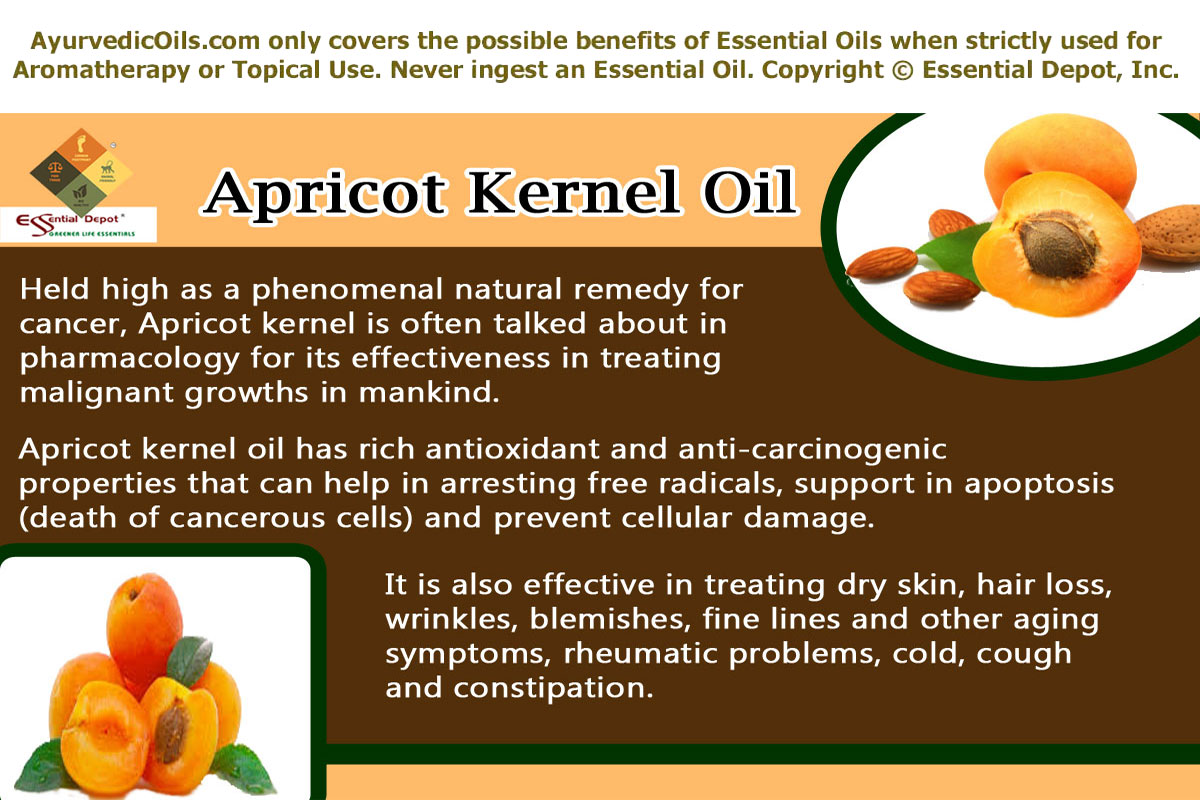
apricot-kernel-bannerThe seed kernels are the source of its rich essential oil and are also called as apricot almonds or bitter almonds, attributed to its bitter taste but the sweetest healing benefits that would coerce you to love it forever.

Often associated witheducation and medicine’ by the Traditional Chinese, Apricot means ‘education circle’ in the Chinese dictionary. Held high as a phenomenal natural remedy for cancer, Apricot kernel is the most talked about subject matter in the world of medicinal research for its effectiveness in treating malignant growths in mankind.

Apricot kernel and its essential oil have been in various Complementary and Traditional Healing systems including Ayurveda for its enormous therapeutic benefits for treating dry skin, hair loss, wrinkles, blemishes, fine lines and other aging symptoms, rheumatic problems, cold, cough and constipation.

Purchase Apricot Kernel Oil – 1 GALLON – CLICK HERE

Purchase Apricot Kernel Oil – 1 QUART – CLICK HERE

Historical uses and importance of Apricot kernel oil:

Apricots are scientifically called as Prunus armeniaca. This drupe fruit is indigenous to Armenia, Himalayas, China and few other parts of Asia. Certain sources also state that Apricot was first cultivated before 3000 BC in India.

The Roman General Lucullus imported Apricot initially to Rome from Armenia. The historical hero Alexander the Great was the first king to bring in Apricots to Greece.

Chinese and Apricots have a historical bonding, where the renowned Chinese physician Dong Feng of the ‘Three Kingdoms Period’ just requested his patients to plant Apricot plants in his orchard on the recovery of their sickness as a token of gratitude for his medical services. This eventually ended up in the growth of numerous Apricot trees along with innumerable medicinal benefits in Dong Feng’s garden.

It is also said that Confucius, the Chinese philosopher taught his students in a place encircled with Apricot woods. Even today, the poetic indication to physicians in China goes like “The Expert of the Apricot Grove.” Wonderful to hear, isn’t it?!?!

The woods of the Apricot trees are also used in various wooden carvings in Armenia and the musical wind instrument named Duduk is known as the Apricot pipe.

Regarded as an aphrodisiac in Europe, Apricots have also been mentioned in “A Midsummer Night’s Dream by William Shakespeare and as a stimulant of normal labour in “The Duchess of Malfi” by John Webster.

The traditional use of Apricot seeds include its effectiveness as a natural alternative for cancer cure and these seeds were used as early as 502 AD for fighting against tumors. In the 17th century the English used the seeds of Apricot fruits in the treatment of ulcers, tumors and swellings.

Apricot kernels were prescribed in Chinese medicine for treating emphysema, asthma, bronchitis and other respiratory conditions. Throughout the history, these bundles of wonders have been in use for treating constipation, cough, expelling mucous and phlegm deposits and for enhancing the health of hair and skin.

Sir Robert McCarrison during his job with the Indian Medical Service in 1930s, explored the health and heartiness of a tribal populace known as Hunzas. Major Robert said that the people of this tribe lived for about 100 years of age mainly due to their nutritious diet with fresh grains, fruits and vegetables, raw milk along with their livelihood that involves lot of natural physical exercises. It was also written that there was no evidence of cancer, obesity, heart problems or diabetes.

The reason behind their cancer-free life was later found by Krebs research, which concluded that Apricot kernels were a vital part of the Hunzas diet regimen, contributing to the discovery of the amygdalin compound in Apricot kernels, the secret behind tumor suppression.

The seeds of Apricots and its essential oil have been used in the manufacturing of perfumes, moisturizing lotions, soaps, cosmetics and in confectioneries as a substitute for bitter almond oil in seasoning culinary varieties.

Remedial properties and chemical constituents of Apricot kernel oil:

Antioxidant, expectorant, laxative, anti-inflammatory, moisturizing, anti-asthmatic, revitalizing and anti-tussive are the prominent healing values of Apricot kernel oil.

The chemical constituents of this oil are oleic acid, linoleic acid, stearic acid, palmitic acid, palmitoleic acid and arachidonic acid in the order of its major presence. It also contains amygdalin or laetrile, the crystalline compound claimed to be responsible for its cancer fighting attributes.

Apricot kernels are indeed a nutrient hub with the presence of Vitamins A, C, E, K, B17, phosphorous, niacin, magnesium, potassium, manganese and copper.

Ayurvedic health benefits of Apricot kernel oil:

Being the oldest remedial system (about 5,000 years old), Ayurveda is adorably called as the Mother of all healing sciences on earth. As a sacred child of India, Ayurveda is believed as a gift to Acharya Dhanvantari, the Lord of Medicine by Lord Brahma, the God of Creation.

The aim of Ayurveda is to gift mankind with absolute health, harmony, prevention of illnesses, healthy aging and longevity with the use of natural remedies including Ayurvedic therapies and a disciplined living.

It’s an ancient adage that the solutions for all the problems are deeply vested within the problem itself. With this principle in mind, Ayurveda states that illness is being in disharmony with nature and the remedies for diseases are enormously present in nature by itself.

The National Institute of Health states, “The aim of Ayurvedic medicine is to integrate and balance the body, mind, and spirit. This is believed to help prevent illness and promote wellness.”

Ayurvedic encyclopedias, namely Charaka Samhita, Sushruta Samhita and Ashtanga Hridaya Samhita by the Ayurvedic philosophers and physicians Charaka and Sushruta talk about all kinds of medical conditions, their symptoms, root cause and remedies.

They never stopped with fever, cold, indigestion, headache and joint pain; instead they were the pioneers of plastic surgery and C-section delivery before thousands of years that lacked both the contemporary techniques and modern medical equipment.

Ayurveda defines that all things on earth including human beings are a vital part of nature and are built up with the five fundamental elements of nature. They are earth, water, space, air and fire.

Human body represents these elements where bones and muscles are the components of earth, blood and other fluids – water, heat and the essential energy – fire, breathing mechanism – air and the spirit is the element of space.

Each and every individual is a distinct part of nature with a unique individual constitution called as Prakriti, which is a combination of 3 doshas (vata, pitta and kapha). Perfect balance between the doshas indicate health and imbalance due to irregular food habits, sedentary life style, improper code of conduct, climatic changes etc, lead to illnesses.

Ayurvedic remedies including herbs, essential oils, meditation, Pranayama (balanced breathing), Panchakarma (detox technique), Ayurvedic routine, prayers, Abhyanga or Ayurvedic massage and other natural techniques are prescribed for striking balance between doshas thus paving way for harmony with nature.

Apricot kernel oil has the power to pacify kapha and vata doshas and aggravate pitta dosha. The natural health benefits of Apricot kernel oil are:

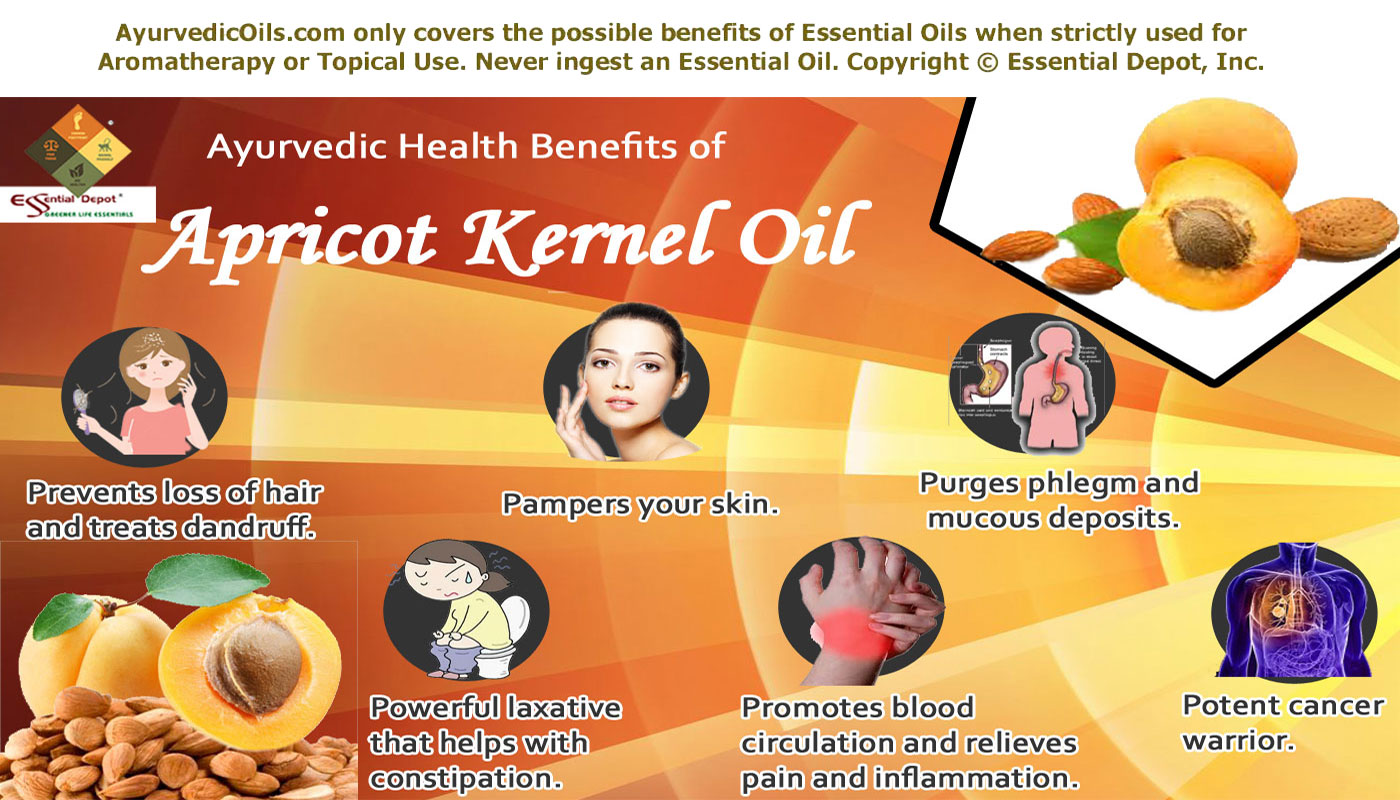
apricot-kernel-broucher1. Potent cancer warrior:

The article on ‘Apricot seeds kill cancer cells without side effects’ posted in Natural news talks about the effectiveness of the amygdalin compound in Apricot kernels for fighting against free radicals and combating the growth of cancerous cells.

An intense research study by Dr. Ernst Krebb, led to the discovery of Amygdalin or the B17 compound found in Apricot kernels and in about 1200 edible plant varieties throughout nature.

Dr. Krebb also recorded in his study that amygdalin is a nitrioloside that bear a resemblance to the B complex structures. It is because of this reason; Amygdalin compound was named as B17.

The antioxidant property of Apricot kernel oil is due to the presence of B17 and laetrile (the resultant of amygdalin when purified and put in a concentrated form). Dr. Krebb tested the positive effects of laetrile on himself and concluded that laetrile extracted from amygdalin is extremely powerful in fighting against cancerous cells and preventing further cellular damage.

This research is still under various controversies due to the fact that benzaldehyde and cyanide. Numerous foods like spinach, millet, bitter almonds, lima beans, bamboo shoots contain cyanide and are still safe for consumption. This is due to the fact that cyanide molecule in these items remain ‘locked’ and are not harmful for the system when they meet up with other molecular substances.

Unlike normal cells, the cancerous cells contain beta-glucosidase, which is the ‘unlocking enzyme’ for benzaldehyde and cyanide in amygdalin compounds of Apricot kernel oil. This reacts and destroys the cancerous cells and the presence of rhodanese enzymes in the normal cells prevent other normal cells from being affected by the otherwise reaction of cyanide and benzaldehyde.

The best possible means to use Apricot kernel oil for fighting cancerous growths is to use it in a promising massage blend. Mix 5 ounce of Apricot kernel oil with 5 drops of Clove oil bud oil, 5 drops of Garlic oil and 5 drops of Juniper berry oil and massage it gently on your system, once in a week.

Garlic, Clove, and Juniper berry oil along with Apricot kernel oil have rich antioxidant and anti-carcinogenic properties that can help in arresting free radicals, support in apoptosis (death of cancerous cells) and prevent cellular damage.

You can also add 1 drop of each of these oils in diffuser during Pranayama (breathing exercise) where most of the toxic remains in the system can be eliminated through exhalation along with the positive therapeutic properties of this oil blend.

2. Pampers your skin:

The oil of Apricot kernel is light, gentle and non-sticky, with these attributes, it has established a prominent throne in the empire of skin care products. This oil helps in moisturizing the skin in case of dry, rough and scaly conditions (emollient properties); heal cuts, wounds, sunburn, psoriasis, eczema and razor burns (antiseptic properties); protect the wounds from getting infectious (antibacterial properties); fight against fine lines, wrinkles and other symptoms of aging (antioxidant and anti-aging properties).

For locking in extra moisture in your skin surface and for treating acne, blend 2 drops of Rosemary oil with 2 drops of Tea tree oil and 2 ounce of Apricot kernel oil and gently work on your skin.

Apricot kernel oil has a rich content of vitamin E, A and C, which are extremely beneficial for treating dry, mature, scaly and sensitive skin. Apricot oil has the potent to penetrate deeply into the skin and repair the damaged skin cells from within.

Regular massaging with this nourishing blend supports in retaining the clarity, elasticity, suppleness and all other signs of a healthy skin.

3. Prevents loss of hair and treats dandruff:

Dandruff, dry hair, excessive hair loss and itchy scalp are the most sickening hair problems. These conditions are caused by lack of nutrition, unhealthful lifestyle practices, damage due to external factors and excessive use of chemical hair care products with concentration of sulphate and paraben.

Apricot kernel oil comes to your rescue with a high content of vitamin E and other fatty acids in treating all types of hair problems with its potent to lock moisture in your scalp and hair.

Massage your hair and scalp with 5 ounce of Apricot kernel oil with 5 drops of Curry leaf oil and 5 drops of Ylang Ylang oil for combating dandruff, dry and itchy scalp, split-ends, premature graying and promote hair growth by deeply penetrating the scalp and nourishing the hair follicles.

You can also add 5 drops of Apricot oil and 2 drops of Curry leaf oil in your mild shampoo and conditioner for adding that extra shine and bounce to your lustrous locks.

4. Powerful laxative that helps with constipation:

Apricot kernel oil is a part of the Traditional Chinese Medicine for inducing diarrhea, especially for discarding toxic remains in the body through metabolic wastes. This oil has exceptional laxative properties that help in treating constipation, where passing hard and bleeding stools ends up in excruciating pain.

Gently massage your abdomen with 6 drops of Apricot oil and 2 drops of Peppermint oil for encouraging regular bowel movements, secretion of bile and other digestive enzymes for trouble-free digestion and excretion.

5. Promotes blood circulation and relieves pain and inflammation:

The oil extracted from Apricot kernels has proven anti-inflammatory and pain-relieving properties that aid in relieving pain and inflammation, especially in the joints.

Massaging the affected parts with 5 ounce of Apricot kernel oil and 2 drops of St. John’s Wort oil, 2 drops of Cedarwood oil and 6 drops of Ajowan oil can assist in alleviating stress and pain, strengthening the system, promoting blood circulation and eliminating toxic deposits through urine and sweat.

You can also follow this massage with heat pack for allowing deeper penetration into the skin cells. This aids in opening and enhancing the flow of prana or vital energy, harmonizing the nervous functions and for granting a sense of complete relief.

Ayurveda states that cold, congestion, arthritis, rheumatism and other inflammatory conditions are a result of amassing of toxins, salt, uric acid and fat deposits in the system. In general, fluid retention disorders are caused due to kapha vitiation and with its power to pacify excess kapha; Apricot kernel oil helps in treating such inflammatory health conditions.

6. Purges phlegm and mucous deposits:

These heart-shaped tiny little seeds are used in various traditional medicines including the Chinese medicine for treating respiratory conditions like asthma, emphysema, cold and bronchitis.

With its antitussive (cough suppressant), expectorant and anti-asthmatic properties, Apricot kernel oil can help in eliminating phlegm and mucous in the lungs and respiratory passages, alleviate cold, cough and congestion and support in problem-free breathing by lessening strain on the lungs, when 4 drops of Apricot kernel oil with 2 drops of Peppermint oil and 2 drops of Black pepper oil is added to steam inhalation and a gentle massage on your back, temples, chest and throat with your vaporizing ointment mixed with this blend is given.

Other health benefits:

Apricot kernel oil is also used in the treatment of anemia, fever, lowering cholesterol for heart health, osteoporosis and earaches.

Disclaimer:

This article is only for the purpose of information and is not for treatment of any health conditions or for substituting any prescription medicines or the advice of your medical professional. We are not healthcare experts and this piece of information is shared only in public concern for passing on the traditional healing wisdom of Ayurveda.

Never take essential oils internally and it is recommended only for topical application. This is because 100 percent pure and organic oils are highly concentrated substances and may cause allergic or harmful reactions, if ingested or used on the skin directly.

Always speak with your Ayurvedic professional or healthcare practitioner before choosing the right essential oils for your unique individual constitution and medical condition. Extra care should be taken in using essential oils if it is for children, nursing and pregnant women.

Thought for the day:

“Anyone can count the seeds in an apple. No one can count the apples in a seed.” -Author Unknown.

Suggested Reading:

  1. Apricot Power: How Laetrile Cured My Cancer by Helen M. Curran
  2. Apricot Greats: Delicious Apricot Recipes, The Top 100 Apricot Recipes
    by Jo Franks
  3. The Way of Chinese Herbs by Michael Tierra
  4. Healing Skin Disorders: Natural Treatments for Dermatological Conditions by Andrew Gaeddert
  5. Carrier Oils: For Aromatherapy and Massage by Len Price, Shirley Price

Reference Links:

  1. Apricot by Wikipedia
  2. Prunus armeniaca by Wikipedia
  3. Apricot seed by Encyclopedia.com
  4. Apricot kernels for cancer: The real story by Dr. Veronique Desaulniers, published in ‘The Truth About Cancer.com’
  5. Apricot Seeds Kill Cancer Cells without Side Effects by Paul Fassa for Natural News

Calendula Oil

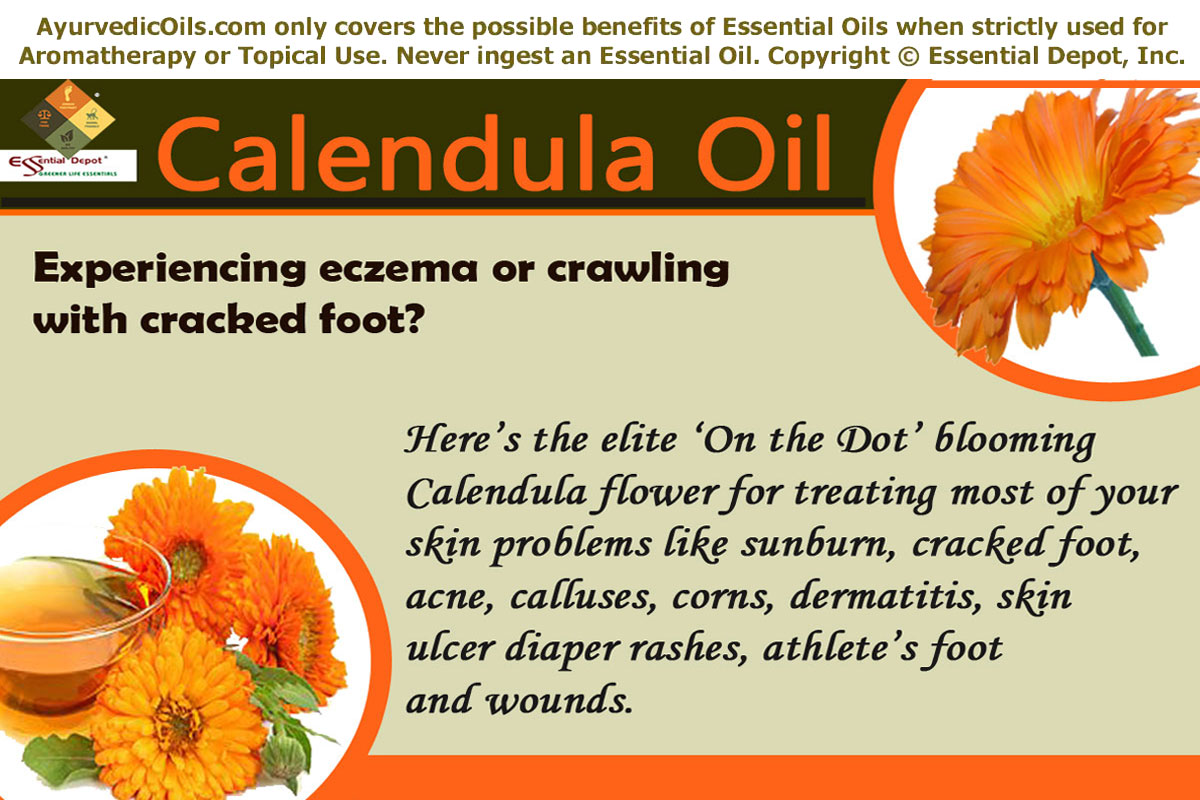
Calendula-bannerIf and only if ‘the power of a flower can shower one forever’ with enormous benefits for the skin, then it cannot be anything less than Calendula, the one and only ‘on the dot’ flower that blooms probably on the first of the calendar month. Calendula and its oil has always been one among the best natural aid for treating numerous skin problems ranging from eczema to cracked foot.

While it looks resemble Marigold, this magical Pot Marigold called as Zergul in Hindi and Chin Chan Ts’ao in TCM (Traditional Chinese Medicine) has been used in Ayurveda and other Complementary and Alternative Medicinal practices for treating wounds, insect bites, sunburns, vaginal infections, varicose veins, acne, warts, calluses, scabies, corns, gastritis and conjunctivitis.

Purchase Calendula Oil – Retail – 4 oz – CLICK HERE

Historical uses and importance of Calendula oil:

Lovingly called as ‘pot marigold’, Calendula officinalis is an arm of the daisy family, Asteraceae. Indigenous to southwest Asia and West Europe including the Mediterranean and Macaronesia, Calendula is also called as Garden marigold and Scottish marigold.

There are many misunderstanding facts between other Calendula and Marigold varieties like marsh marigold, corn marigold and desert marigold that belong to the Tagetes genus and not the Calendula genus.

The word ‘Calendula’ is extracted from the Latin word ‘calendae’, which means ‘little calendar’, ‘little weather-glass’ or ‘little clock’, mainly due to its promptness in blossoming on the new moon or on the beginning of the calendar month.

The word ‘Marigold’ means ‘Virgin Mary’ and is trusted to possess divine healing properties and even today, these flowers are used to honor Mother Mary during numerous Catholic occasions. It is also used to decorate the deities during auspicious religious gatherings in the Hindu tradition in India.

The ancient Greeks and Romans wore garlands and crowns made with the dazzling golden color Calendula flowers and these beautiful blossoms were also used in religious ceremonies and other rituals. The traditional Egyptians believed that these sacred flowers had revitalizing attributes.

The bright golden color petals were also used in textile industry as a source of natural dye for fabrics and it was also used as a natural colorant in cheese and butter varieties. These flowers are a popular ingredient in many Middle Eastern and Mediterranean cuisines along with stews and soup varieties in Germany, for which it is called as ‘Pot marigold’.

Calendula is still remembered for its cordial use during the World War I and the American Civil War as a natural healing agent for treating open wounds. Calendula dressing helped in healing wounds much quicker with its antiseptic and anti-hemorrhagic properties. These flowers were dabbed directly on wounds and cuts to promoter faster healing, control bleeding and to arrest infectious growths.

Being a vital part of the Traditional and alternative medicine, Calendula has been etched in certain oldest medical scripts for cleansing toxins in the gall bladder and liver and was prescribed to treat associated digestive disorders. Till today, the world sings the glory of Calendula tea, attributed to its appetizing taste and enormous healing benefits.

Pharmacological effects and chemical constituents of Calendula oil:

Calendula oil is said to possess antiseptic, antioxidant, anti-inflammatory, stimulant, detoxifying, carminative, anti-tumor, anti-hemorrhagic, antiviral, antifungal, anti-HIV, hepatoprotective and emmenagogue properties.

The major chemical constituents of Calendula oil are a-cadinol, limonene, a-cadinene, p-cymene, 1, 8-cineol along with other flavonoids, terpenoids, coumarins, flavonol glycosides, carotenoids, sesquiterpene glucoside, amino acids, triterpene oligoglycosides, saponins, and oleanane-type triterpene glycosides.

Ayurvedic health benefits of Calendula oil:

Ayurveda is not associated only with the word ‘remedy’ and much more than that, it encompasses diagnosis of the root cause of an illness, prevention of diseases, healthy aging and longevity to love and live with nature, naturally.

Loved as the most precious gift of the God of Creation, Brahma to the Lord of Medicine, Acharya Dhanvantari, Ayurveda is in healing and harmonizing mankind for more than 5,000 years, for which it is called as the Mother of all healing methodologies on earth. This includes Unani, Siddha, Homeopathy, Chiropractic, Aromatherapy, Allopathy, TCM or the Traditional Chinese Medicine, Acupuncture and Naturopathy.

Ayurveda is held high in India and all over the world for its holistic healing practices that defines health as the wellness of the mind, body and spirit together. Among the 4 sacred books of the Indian Hindu mythology (Rig, Yajur, Sama and Atharvaveda), Ayurveda is a significant part of the Atharvaveda, where 114 verses talk about various health conditions, its symptoms, natural remedies and various Ayurvedic techniques for prevention and increased life span.

Dinacharya or the Ayurvedic routine recommends numerous ways for leading a hale, hearty and disciplined life. Human body is regarded as a temple, where the soul dwelling in is considered as a divine presence. This school of thought enables Ayurveda to strongly recommend practices for keeping the body, mind and spirit clean and cheerful.

Everything in this world is a part of nature and is made up of the fundamental elements, namely earth, water, fire, air and space. Every person is made up of a unique combination of these five elements, precisely called as doshas (vata, pitta and kapha). Vata (air + space), pitta (fire + water) and kapha (water + earth) make up an individual constitution, which is also called as Prakriti.

Each and every individual has a unique Prakriti just like the fingerprints, with a predominance of any of these three doshas. This doshic predominance determines the character, personality, behavioral patterns and emotional setup of an individual.

Perfect balance between doshas as per the law of nature indicates health and doshic imbalances due to sedentary lifestyle, change in food habits, weather fluctuations etc., lead to sickness. Ayurvedic remedies aim at treating the root cause of a health condition and prescribes unique medication for every person as per the Prakriti or the individual constitution.

The major Ayurvedic remedies include Ayurvedic essential oils, yoga, simple physical exercises, meditation, herbs, Pranayama (the art of balanced breathing), Abhyanga or the Ayurvedic massaging technique, Dinacharya or the Ayurvedic routine and Panchakarma (the Ayurvedic detoxification therapy).

Calendula oil is recommended for pacifying pitta and kapha doshas and for augmenting vata energy.

The most significant Ayurvedic health benefits of Calendula oil are:

Calendula-broucher1. Calendula for skin:

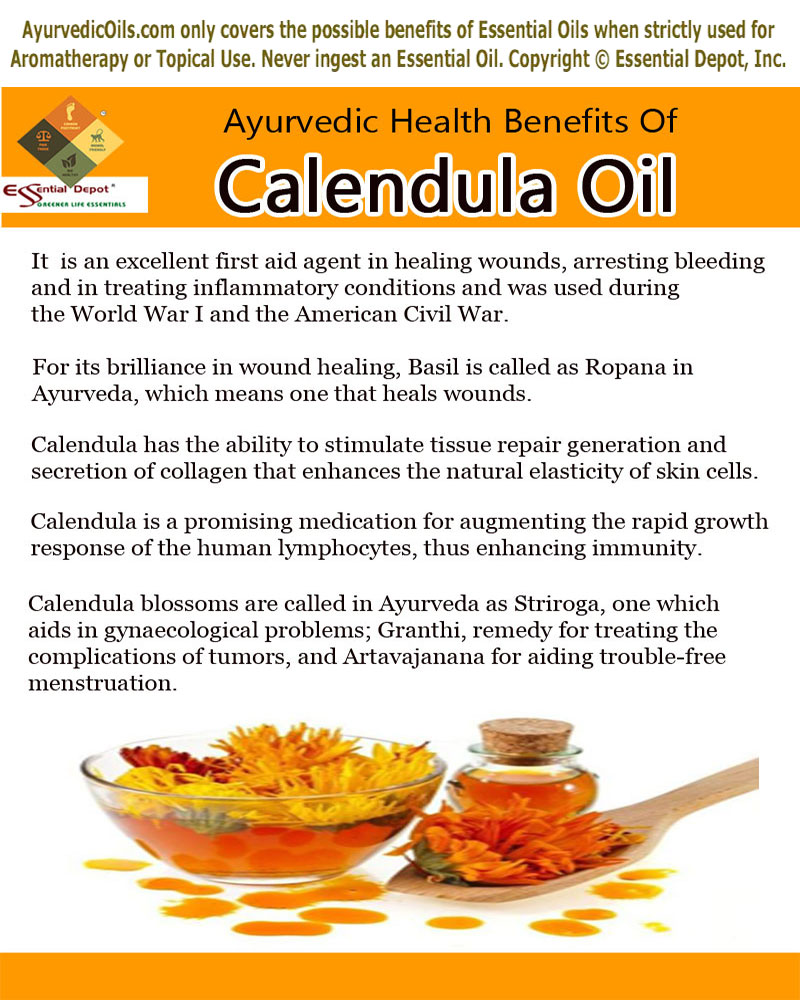
As we saw above, it’s historical significance during the World War I and the American Civil War as an excellent first aid agent in healing wounds, arresting bleeding and in treating inflammatory conditions is a noble proof for its brilliance in wound healing and is called as ropana in Ayurveda, means one which heals wounds.

A 2008 study on ‘Calendula officinalis and Wound Healing: A Systematic Review’ by Matthew J. Leach, PhD, BN (Hons), ND, RN, MATMS, published in WOUNDS, A compendium of clinical research and practice substantiates that the presence of triterpenoids like faradiol and the faradiol monoester and other components including flavonoids, saponins, polysaccharides and micronutrients contribute to its anti-inflammatory, anti-edematous, wound healing attributes and antioxidant properties.

The major skin conditions considered for this study includes foot ulcer, dermatitis, varicose ulcer, burns, injuries, cuts, abrasions, pressure ulcer, skin ulcer and other wounds. This study also explains that Calendula officinalis has “Anti-inflammatory activity – The acute inflammatory response during the early stages of injury generates factors that are essential for tissue growth and repair.

Antimicrobial activity -Wound healing can also be delayed when microorganisms are present in large enough numbers. Therefore, reducing the bacterial load of a wound may be necessary to facilitate wound healing, as well as reduce local inflammation and tissue destruction.

An ideal agent for the prevention and control of wound infection would therefore be one that directly destroys pathogens, while also stimulating immune activity. Calendula is one agent that possesses both of these properties.

Antioxidant effect – The production of free radicals at or around the wound bed may contribute to delays in wound healing through the destruction of lipids, proteins, collagen, proteoglycan, and hyaluronic acid.

Agents that demonstrate significant antioxidant activity may, therefore, preserve viable tissue and facilitate wound healing. Calendula demonstrates free radical scavenging activity against superoxide radicals and hydroxyl radicals and facilitates wound healing via an important antioxidant effect.

Wound healing activity – The most important clinical endpoint in wound management is wound closure or 100% epithelialization. Given that wound closure is critically important; it is argued that any agent demonstrating significant wound-healing activity should be seriously considered in conventional practice.

Calendula, for example, may facilitate wound healing by increasing wound angiogenesis and collagen, nucleoprotein, and glycoprotein metabolism, leading to improvements in both local circulation and granulation tissue formation.”

This study concludes stating “Calendula officinalis possesses a number of properties that are conducive to wound healing, especially in a number of acute and chronic wounds, particularly for its effect on inflammation, microbial load, and epithelialization.”

With its immunostimulant, astringent, anti-inflammatory, antifungal, antiviral, anti-microbial, antiseptic and disinfectant properties, applying a blend of 5 drops of Calendula with 2 drops of Bay leaf oil in your mild skin care cream or with 10 drops of Coconut oil can help in healing bee stings, insect bites, sores, cuts, bruises, skin abrasions, swelling, burns, acne, scrapes, diaper rashes, athlete’s foot, conjunctivitis, dermatitis and other inflammatory skin conditions.

The most adorable quality of Calendula oil is that it helps in controlling the formation of scars and diminishes stretch marks with its ability to stimulate tissue repair generation and secretion of collagen that enhances the natural elasticity of skin cells.

You can also add few drops of Calendula oil in your skin care ointments, lotions and creams or in salves, facial steams, baths, washes, tinctures and Ayurvedic essential oils for nourishing, enriching and nurturing the texture and health of your skin.

2. Calendula for circulation and inflammation:

Calendula oil has diuretic and anti-inflammatory properties that assist in clearing away excess of kapha dosha responsible for fluid retention through the mutravahasrotas, means the urinary passages by promoting the frequency and quantity of urination. By this way, the excess water deposits, toxic remains, salt, uric acid and fat in the system are eliminated through urine.

The effectiveness of Calendula in enhancing the functions of rasa and rakta dhatus, which means the plasma and blood tissues contributes to its ability in augmenting proper blood circulation. This makes Calendula oil as a promising remedy in treating circulatory conditions like varicose veins, arthritis, gout and rheumatic conditions.

Thus massaging the affected or painful parts with 1 ounce of Calendula oil with 2 drops of Cassia oil and 2 drops of Black cumin oil can help in enhancing blood circulation, discarding toxic remains and fluid retention through urine and reduce pain and inflammation associated with rheumatism, varicose veins, gout and arthritis.

You can also add 2 drops of Calendula oil in warm water and use it is a gargle for alleviating sore throat, killing germs and microbes in the mouth causing bad breath, cavities, gingivitis and other gum problems.

3. Calendula for immunity:

Low immune power is the direct doorway for numerous microbes, pathogens and other micro-organisms causing various diseases and contagious medical conditions. The presence of calendulin, a yellow resin along with tannins and other chemical constituents of its volatile oil makes Calendula a promising medication for augmenting the rapid growth response of the human lymphocytes.

WBC or the white blood corpuscles are responsible for the body’s immune power or the potent to fight against pathogens, microbes or other harmful micro-organisms invading the healthy system. With its anti-microbial, antifungal, antiviral and antibacterial properties, Calendula oil strengthens the immune system by shielding against the attack of bacteria, virus, fungi, worms etc.

Calendula oil also helps in treating inflamed lymph glands and decrease lymphatic congestion. It also aids in purging away harmful toxic remains in the body through urine with its triterpenoid components responsible for its anti-inflammatory and diuretic properties.

Adding 5 drops of Calendula oil in bathing water every morning and 2 drops of Calendula oil added to your hankie or your pillow cover are the best ways to strengthen your immunity through the ‘Calendula power’.

4. Calendula for digestive disorders:

Calendula oil boasts its support to various digestive functions with its astringent, anti-inflammatory, anthelmintic and antimicrobial properties. The ability to pacify excess of pitta energy or digestive fire makes Calendula an excellent natural remedy for soothing the lining of the stomach, intestines and the gastrointestinal tract.

Massaging your abdomen with 10 drops of Calendula oil blended with 2 drops of Calamus oil and 4 ounce of Coconut oil can help in soothing the walls of the stomach and intestines, thus pacifying irritable bowel syndrome, peptic ulcer, gastritis and other inflammatory conditions of the gastrointestinal tract.

This medicated massage can also assist in stimulating the functions of the liver, the organ of detoxification, thus support in eliminating microbial infections, ama or toxic remains in the stomach, intestinal worms and other pathogenic foreign bodies in the gut, which may otherwise lead to dysentery, viral hepatitis, diarrhea and enteritis.

5. Calendula for reproductive functions:

Calendula is extremely beneficial in supporting the functions of the female reproductive problems including irregular menstruation, uterine fibroids, frigidity and ovarian cysts (polycystic ovarian syndrome).

For all these special benefits, Calendula blossoms are called in Ayurveda as Striroga, one which aids in gynaecological problems; Granthi, remedy for treating the complications of tumors, and Artavajanana for aiding trouble-free menstruation.

The oil of Calendula helps in clearing excess of kapha and pitta energies in the uterus, mainly because of its effectiveness on artavavahasrotas.

A gentle massage of the lower abdomen, back and thighs with 10 drops of Calendula oil and 1 drop of Cinnamon oil and 1 drop of Cassia oil can help in promoting blood circulation in the uterus, regularizing blocked or delayed menstruation, relieving dysmennorhea or menstrual pain.

You can also use this blend in bath, especially during your menstrual cycle and the times you’re sick with menopausal symptoms.

Calendula oil functions like a tonic to the uterine muscles, aiding in balancing the estrogen hormones that are responsible for PCOS and uterine fibroids. It is also trusted to treat cysts in the digestive passage and the breasts. Calendula infusions were used in folklore remedy for fostering uterine contractions and the discharge of placenta during childbirth.

Other health benefits:

The most celebrated herbalists, Gerard and Culpeper call Marigold as a “comforter of the heart and spirits”. Calendula is also recommended safe for diaper rashes, hemorrhoids, stomach upset, people undergoing radiation therapy, abdominal cramps, fistulas, sprains and eye inflammation.

Disclaimer:

This information is only for the use of education and is not intended to diagnose or prevent any health condition or to substitute any prescription drugs or professional medical advice. We, the Essential Depot team are not healthcare professionals and this content is written only in social interest of educating the public about the richness of Ayurvedic treatment, the most trusted traditional healing system.

Calendula oil is suggested only for the use of topical application and do not take it internally. Talk with your medical expert or your Ayurvedic practitioner before choosing the appropriate Ayurvedic oils for your Prakriti or unique individual constitution and medical condition and before using them on children, nursing women, pregnant ladies and on people who are undergoing other treatments (please check on drug interactions) and on those who are allergic to specific oils.

Thought for the day:

“The marigold goes to bed with the Sun
And with him rises, weeping.”
-Shakespeare

Suggested Reading:

  1. Calendula – Calendula Officinalis by Amanda Klenner
  2. Calendula Oil (How To Make Natural Skin Care Products Series Book 29) by Miriam Kinai
  3. Calendula by Marian Kim
  4. Calendula by Mindy Green
  5. Herbs for Healthy Aging: Natural Prescriptions for Vibrant Health by David Hoffmann FNIMH AHG

Reference Links:

  1. Calendula by Wikipedia
  2. Calendula by The University of Maryland Medical Center
  3. Calendula officinalis and Wound Healing: A Systematic Review by Matthew J. Leach, PhD, BN(Hons), ND, RN, MATMS, published in WOUNDS, a compendium of clinical research and practice
  4. Phytochemical Constituents and Pharmacological Activities of Calendula officinalis Linn(Asteraceae): A Review by BP. Muley, SS. Khadabadi and NB. Banarase, Govt. College of Pharmacy, Maharashtra, India, published in the Tropical Journal of Pharmaceutical Research


Your resource for quality Essential Oils. Every batch is
GC tested to ensure purity and authenticity.
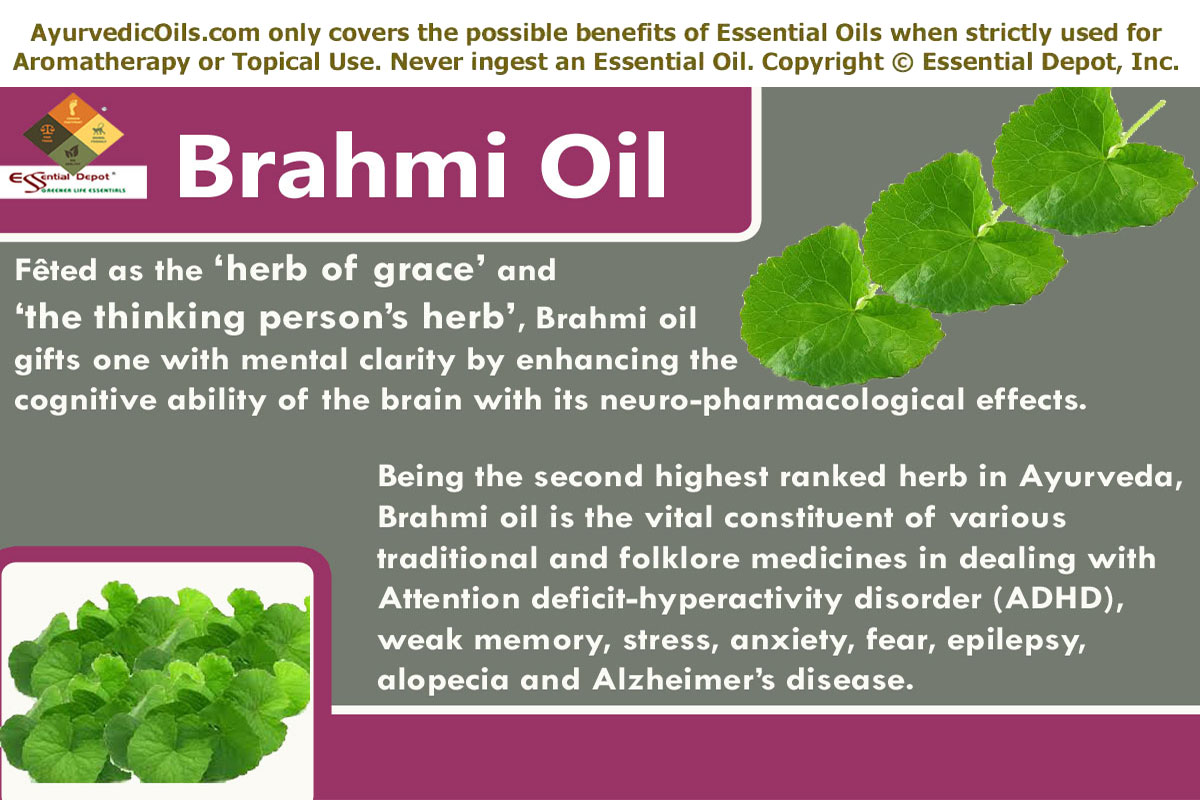
Cucumber Oil

Will you be delighted or dreary if someone beckons you, “As Cool as a Cucumber”? I would rather recommend you to take pride when somebody calls you with that phrase because it simply means the attitude of being calm, composed and in absolute control of your emotions, even if a particular situation demands your aggressiveness and anger.

Cucumber-bannerThis is because Cucumber is one among the coolest fruits as scientific facts state “the inside temperature of a Cucumber can be up to 20 degrees cooler than the outside air”, besides growing well in tropical conditions.

Called as Kantakiphalam, Svetakarahatakam, Mutralam and Sudhavasah in Sanskrit, Cucumber is commonly called as Kheera in the traditional healing methodology.

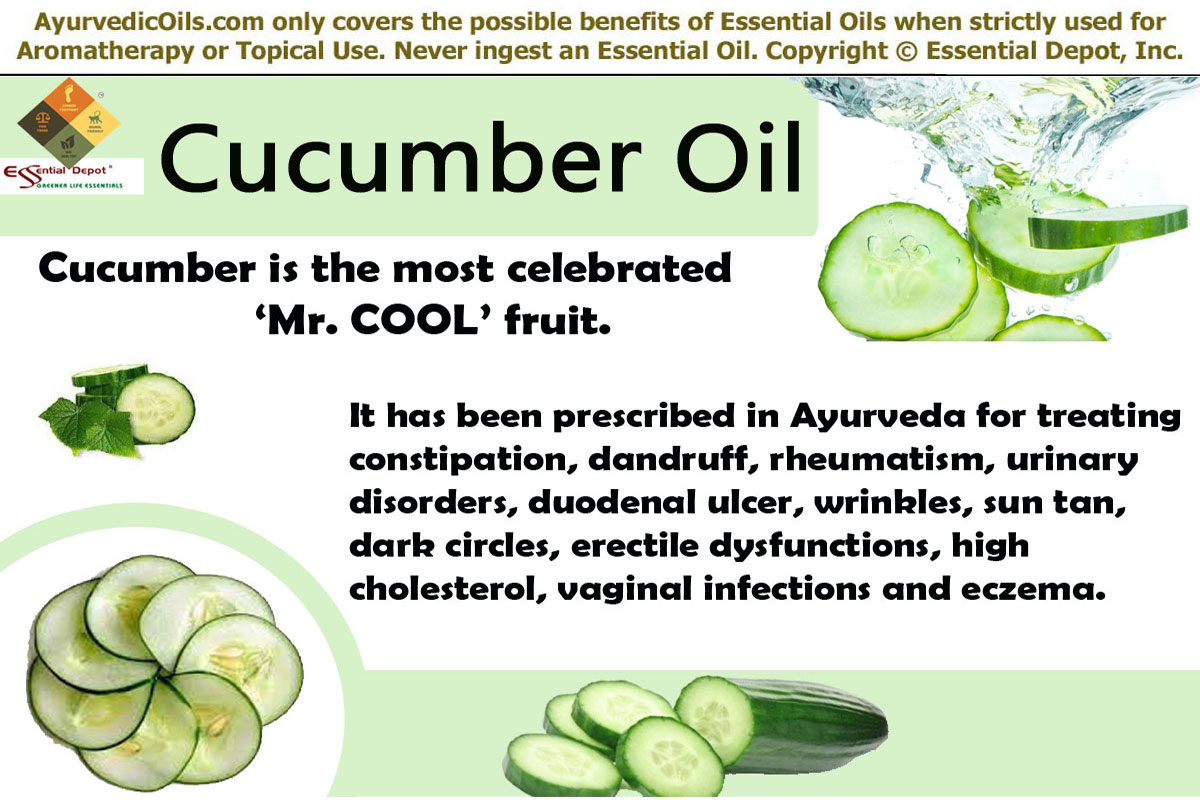
Proudly representing India as its Motherland, Cucumber has been a part of the ancient Ayurvedic regimen in the treatment of rheumatic conditions, constipation, urinary disorders, cholera, wrinkles, dandruff, arthritis, vaginal infections, loss of appetite, duodenal ulcer, erectile dysfunctions, high cholesterol, eczema and hyperacidity.

Purchase Cucumber Oil – Retail – 4 oz – CLICK HERE

Purchase Cucumber Oil – Wholesale – CLICK HERE

Historical uses and importance of Cucumber and its essential oil:

Cucumber, as far as its history is known to the world is said to be a 3,000 years old fruit variety of the gourd family, cucurbitaceae. Besides its use in culinary, Cucumber has been preferred for raw eating, mainly for its cool, mild and enhancing flavor.

This cylindrical fruit is a powerhouse of various nutrients, for which it has been used in various civilizations across the world including the Rome, Israel, Greek, Egypt, The United Kingdom, France, China, and USA. The three famous varieties of this creeping vine are pickling, slicing and burpless cucumbers.

Cucumbers are absolutely edible and are found across the globe, all around the year but the high seasonal growth curtails to May – August. Pliny The Elder, the Roman philosopher quotes that Cucumber is the most favorite fruit of the Roman Emperor, Tiberius. His gardeners grew cucumbers using artificial methods, just to ensure that the king had cucumbers on his table every day.

It is being said that cucumbers were used in the primordial Roman province for treating more than 40 medical conditions, including scorpion stings, blurred vision, frigidity, high blood pressure and diabetes.

The Biblical reference of cucumber goes like this “We remember the fish, which we did eat in Egypt freely/the cucumbers, and the melons, and the leeks, and the onions, and the garlic.” After which the Israelites started cultivating cucumbers by themselves.

Certain sources state that cucumbers were brought to Haiti in 1494 by Christopher Columbus and were cultivated by the early Spanish settlers. South and North Dakota boasts for owning the finest cucumber farmers of Native America.

These fresh and refreshing fruits are often used in making salads (Indian raita), sauces, pickles, cold soups, sausages, chutneys, lamb chops, relishes and dressings. Cucumber and its essential oil are also used in the manufacturing of soaps, moisturizing lotions, anti-dandruff shampoos, conditioners and skin care creams, especially anti-aging products, for its nourishing properties.

Therapeutic properties and chemical constituents of Cucumber oil:

The oil of Cucumber contains about 14 to 20% of oleic acid, stearic acid, palmitic acid and 60 to 68% of omega-3-linoleic acid. It also contains potassium, silicon, cucurbitacins, sulphur and certain fatty acids like 9, 12, 15-Octadecatrienoic acid and 9, 12-Octadecadienoic acid.

Cucumber oil has antioxidant, diuretic, anti-rheumatic, anti-ulcer, relaxing, antidote, rejuvenating, anti-stress, anti-inflammatory, anti-cancerous, tonic, anti-dandruff, and laxative properties. It is rich in Vitamins B1, B2, B3, B5, B6, and C along with magnesium, calcium, phosphorous, zinc, iron and folic acid.

Next time, when you are exhausted and drained out, stop sliding on toxic caffeine drinks, instead grab a Cucumber and bank upon it for all your nutritional requisites.

Ayurvedic health benefits of Cucumber oil:

Ayurveda and Cucumber share the mutual joy of being indigenous to India, the land of rich cultural heritage. This oldest healing science on the globe states that everything on earth is made up of the five vital elements of nature, namely fire, water, earth, space and air.

Among which the living things on this planet acquires prana, the vital energy of life and ojas, and the nutritive quintessence from Mother Earth. While animal and human beings utilize prana and ojas for vitality and livelihood, plants grab ojas and prana from the ground and renovate them as food, herbal medications and essential oils for the absolute well-being of all other organisms.

The greatest news about the nobility of plants and trees are that they capture enormous life force and spiritual energy straight from the space by constantly looking up to the sky. Thus, any source of food or medicines acquired from plants instills the purest form of energy directly to our soul. It is because of this reason; we call invigorating plant fragrances (especially from essential oils, the life essence of plants) as soulful aromatic substances.

Cucumber is a bundle of joy and instant coolant that refreshes everyone even on a bright sunny day. It bears all the heat in the atmosphere, yet remaining absolutely cool in the inside makes it a special fruit with enormous healing attributes and nutritional values. India, being a country of tropical climatic conditions, rests upon Cucumber to quench its thirst and no Indian summer is complete without Cucumbers on the street.

Being a complete traditional remedy, Ayurveda regards health as a combination of physical, emotional and spiritual wellness and this ideology is based upon its philosophy of considering the human system as a place of worship or temple.

Ayurveda believes that the soul vested within each of us connects with Divinity and this connection or synchronization is the rationale behind hale and heartiness.

Ayurveda says that every individual is made up of three distinct doshas (vata, pitta and kapha) or biological energies. The most predominant among the three doshas acts as a deciding factor for your personality, character and behavioral traits.

Imbalance of any one of these doshic elements end up in health problems signaling that the body is out of balance with nature.

Imbalance of vata dosha can end up in memory loss, lack of concentration, fear, insomnia, dry skin, restlessness and constipation. Pitta unevenness might lead to disgust, ulcer, anger, heartburn, high blood pressure, jealousy, fever and skin ulcers.

Fluid retention, toxic remains, congestion, sluggishness, delayed menstruation, uterine fibroids, obesity and procrastination are the results of Kapha vitiation.

Cucumber oil has pacifying effects on pitta and kapha dosha. The cooling and refreshing properties of this oil can help in treating high blood pressure, heartburn, ulcer, fluid retention, skin eruptions, constipation and stress.

Cucumber is absolutely a treat for the four senses of healing, whereas its lucid green color soothes the sense of sight, it’s refreshing taste energizes the sense of taste, its cooling properties penetrate deeply into the skin to transfer its therapeutic values through the sense of touch, it’s refreshing aroma reaches the limbic system in the form of aromatic molecules to control emotions.

The other significant Ayurvedic health benefits of Cucumber oil are:

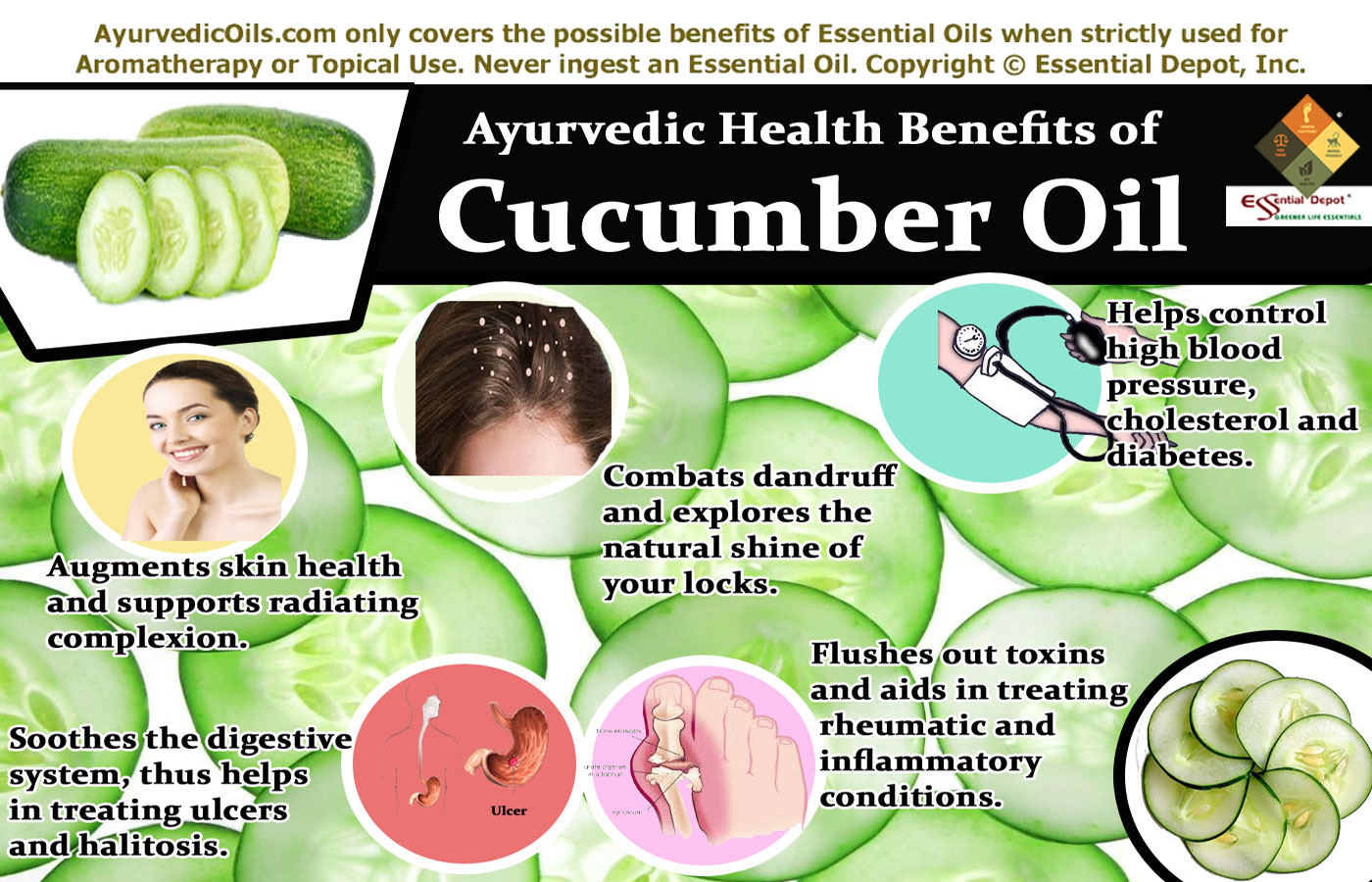
Cucumber-oil1. Augments skin health and supports radiating complexion:

Cucumber oil has stupendous revitalizing and nourishing properties that help in treating dull, damaged or mature skin conditions. The presence of linoleic acid and oleic acid in cucumber makes it an excellent aid for skin problems including acne, blackheads, sunburns, psoriasis, eczema and certain other inflammatory skin conditions.

The antioxidant properties of cucumber oil are attributed to the significant existence of tocopherol and tocotrienol substance along with the three lignans including secoisolariciresinol, lariciresinol and pinoresinol. These elements make Cucumber oil powerful in fighting against the free radicals responsible for aging symptoms, skin damages and several types of cancer, including ovarian cancer, prostate cancer, breast cancer and uterine cancer.

Massaging your skin with 10 drops of Cucumber oil blended with 2 drops of Orange oil and 4 ounce of coconut oil can help in retaining the natural moisture in the skin, repair dry and dull skin surface, treat eczema, psoriasis, rough, scaly and mature skin, reduce wrinkles, aging symptoms and skin eruptions.

A 2011 study on “Exploring Cucumber Extract For Skin Rejuvenation” by Naveed Akhtar, Arshad Mehmood, Barkat Ali Khan, Tariq Mahmood, Haji Muhammad Shoaib Khan and Tariq Saeed, Department of Pharmacy, The Islamia University of Bahawalpur and the Department of Pharmaceutical Sciences, COMSATS Institute of Information Technology, Pakistan, Published in the African Journal of Biotechnology, states that cucumber extract has been proven extremely beneficial for the skin.

These experts also say that Cucumber extracts have passed the maximum number of dermatological tests including skin melanin test, skin erythema test (safety of cosmetics), pH tests, skin moisture content test, skin sebum content test, and trans epidermal water loss test.

This study concludes stating that this was a preliminary initiative in exploring the unknown effects of Cucumber as a topical cream for skin rejuvenation.

It also states that cucumber extracts aid in reducing the melanin content (responsible for skin pigmentation and complexion); has anti-acne effects with its potent to decrease the content of skin sebum.

This study also declares that these analyses have proved to be capable in the context of prospective topical applications of cucumber extract (with its varied skin care properties), as cosmetics, skin-care items and in the manufacturing of pharmaceutical preparations.

You can also add 2 drops of Cucumber oil in a cup of cool water and wash your face for locking the moisture and fight against acne causing micro-organisms.

2. Combats dandruff and explores the natural shine of your locks:

Bouncy, strong, silky and dandruff-free lustrous locks are the dream of many women out there. Men are not an exception though, in longing for healthy hair that is free from hair loss, dandruff and other scalp conditions.

Cucumber is one among those natures’s richest owner of the minerals like silica and sulphur, of which sulphur is known for promoting hair growth and silica fortifies the hair follicles and protect from breakage and loss of hair. Silica is an essential element for supporting the health of connective tissues like skin, muscles, ligaments and bones.

The moisturizing properties of Cucumber oil helps in hydrating the scalp and aids in reducing dryness, itchy and flaky scales on the scalp surface and nourishes the scalp and roots of the hair from within.

Massaging your scalp with 5 ounce of Cucumber oil mixed with 5 drops of Rosemary oil and 5 drops of Brahmi oil and leaving it for 1 hour by wrapping a warm towel (helps the medicated blend to penetrate deeply into your scalp) can assist in reducing dandruff, replenishing the scalp, enhancing the luster of your hair and prevent excessive hair fall. You can also add 5 drops of Cucumber oil in your mild shampoo for fastening the natural moisture in your hair for a longer duration.

This blend can be applied by the swimmers before their swimming voyage in the chlorinated and chemical filled water. This helps in preventing the hair damage naturally.

3. Helps control high blood pressure, cholesterol and diabetes:

Certain studies witness that the presence of sterols in Cucumbers may help in reducing the high level of cholesterol, while the presence of fiber, magnesium and potassium assists in treating high blood pressure. Cucumber also stimulates the secretion of insulin hormones in the pancreas, thus assisting in the treatment of diabetes.

Eating fresh cucumber daily along with adding 5 drops of Cucumber oil in your liquid soap can help in vitalizing your cells and augment your energy levels.

4. Soothes the digestive system, thus helps in treating ulcers and halitosis:

Cucumber oil has the power to soothe and pacify pitta dosha. The excess of which would end up in overindulgence of digestive fire leading to ulcer, high blood pressure, acidity, heartburn, acne, negative emotions, feelings of rage, insomnia, acne and certain other skin eruptions.

Massaging your abdomen and chest with 10 drops of Cucumber oil blended with 2 drops of Peppermint oil can help in cooling the digestive system (intemperance of digestive fire) by soothing the lining of the stomach and intestines. Using 2 drops of Cucumber oil in warm gargle can assist in fighting against bad breath with the presence of phytochemicals.

5. Flushes out toxins and aids in treating rheumatic and inflammatory conditions:

Cucumber has enormous amount of ascorbic acid, contributing to its diuretic properties. This moisture-rich oil helps in replenishing the system with its anti-rheumatic, antioxidant and diuretic properties by flushing out the excess fluid deposits, toxic remains, salt, uric acid, free radicals and fat deposits in the system, which is often responsible for inflammatory conditions like gout, rheumatism, arthritis, swelling, redness, obesity and puffy eyes.

Massaging the affected parts with 5 ounce of Cucumber oil with 5 ounce of Sweet Almond oil can help in promoting frequent urination, thus eliminating toxic remains, free radicals, salt, fat deposits and uric acid, which helps in reducing swelling, skin irritations, muscular soreness, pain, redness and muscular stiffness associated with rheumatism and arthritis.

Pranayama or the art of balanced breathing can help highly in expelling ama or excess toxic substances in the system, where all these toxins are discharged through exhalation.

Inhaling the refreshing fragrance of Cucumber by adding 2 drops of this oil in your air freshener, especially during Pranayama and meditation can grant quicker relief by releasing your mind and body from toxic emotional blocks and harmful toxins in the system.

Other health benefits:

Cucumber is also helpful in treating vaginal itching, erectile dysfunctions, heart problems, renal calculi, cancer therapy, dark circles, urinary infections, cholera, and cellulites.

Disclaimer:

This piece of information is meant only for the purpose of information and is not recommended to treat or prevent any kind of medical conditions. It is not meant to replace any prescription medicines or the advice of a medical professional. We, the team of Essential Depot are not experts in Remedial practices or Traditional medicine and these facts are shared only for spreading the greatness of Ayurveda in treating mankind.

Essential oils are recommended only for topical applications and do dilute essential oils in suitable carrier oils before using it on the skin. Never ingest essential oils as absolutely pure and organic essential oils are highly concentrated substances and may cause allergic reactions, when used internally or on the skin without dilution.

Speak with your Ayurvedic expert or medical professional before choosing the right essential oils for your state of health and unique individual constitution. Performing a patch test on your skin before enjoying its complete benefits is an amicable advice.

Thought for the day:

Green is the prime color of the world, and that from which its loveliness arises.

– By Pedro Calderon de la Barca.

Suggested Reading:

  1. Cucumber Recipes by Jackie Swansen
  2. Ayurvedic Pharmacopoeial Plant Drugs: Expanded Therapeutics by C. P. Khare
  3. Dying to Look Good by Christine Hoza Farlow
  4. Asian Secrets of Health, Beauty and Relaxation by Sophie Benge, Luca Invernizzi Tettoni
  5. The Aromatherapy Encyclopedia: A Concise Guide to over 385 Plant Oils by Carol Schiller, David Schiller

Reference Links:

  1. Cucumber by Wikipedia
  2. Cucumis sativus (Cucumber) – Derived Ingredients as Used in Cosmetics, published in Cosmetic Ingredient Review
  3. The anti-aging effects of Cucumbers by Dr. David Jockers, published in Natural News
  4. Exploring Cucumber Extract For Skin Rejuvenation by Naveed Akhtar, Arshad Mehmood, Barkat Ali Khan, Tariq Mahmood, Haji Muhammad Shoaib Khan and Tariq Saeed, Department of Pharmacy, The Islamia University of Bahawalpur and the Department of Pharmaceutical Sciences, COMSATS Institute of Information Technology, Pakistan, Published in the African Journal of Biotechnology
  5. Phytochemical and therapeutic potential of cucumber by Mukherjee PK, Nema NK, Maity N, Sarkar BK, Department of Pharmaceutical Technology, Jadavpur University, India, published in PubMed

Grapeseed Oil

Grape-seed-oil--bannerWitnessed as one among the potential chemopreventive agent, Grape seed and its extracts are effective natural medications to support cancer treatment in all the three stages of carcinogenesis, including initiation, promotion and progression.

As the most trusted carrier oil in aromatherapy, Grapeseed oil is often preferred as excellent massage oil for its light consistency and easy absorbent efficiency. It is often recommended for treating wrinkles, rheumatoid arthritis, diabetes, cancer, hemorrhoids, stretch marks and high blood pressure.

Ayurveda honors Grapes as Drakshaa Phalottamaa,’ which means that Grapes is the best among all other fruits. Numerous Ayurvedic medications contain Grape and its other extracts in the treatment of urinary tract infections, tuberculosis, bloating, diarrhea, hypertension, obesity, gastritis, jaundice, depression, fatigue, anorexia, infertility, memory loss and indigestion.

Purchase Grapeseed Oil – Retail – 4 oz – CLICK HERE

Purchase Grapeseed Oil – Wholesale – CLICK HERE

Chemical constituents and remedial properties of Grapeseed oil:

The major chemical constituents of Grape seed oil are alpha-linoleic acid, palmitic acid, oleic acid, stearic acid, palmitoleic acid, linoleic acid, phenols (tocopherols), steroids including stigmasterol, campesterol, beta-sitosterol, flavonoids and oligomeric proanthocyanidin complexes (OPCs – source of rich antioxidants).

The promising therapeutic properties of Grape seed oil are antioxidant, moisturizing, emollient, anticancer, cicatrisant, diuretic, cardio-tonic, anti-inflammatory, adaptogenic, anti-allergic, anti-histamine, anti-dandruff, immune stimulant, antimicrobial and anti-aging. It also contains Vitamin E, which is extremely beneficial for skin and hair.

Historical uses and importance of Grape seed and its oil:

Vitis vinifera is the scientific name of grapes. The Greeks were the first among the world populace to consume grapes for its varied health benefits. Grapes were found to relish the universe for more than 6,000 years.

The juice extracted from Grapes has been mentioned in the Bible and the Old Testament denotes that Prophet Daniel promoted the uses of Grape seed oil by using it in a culinary variety called as Pulse.

Indigenous to Asia, Grapes were later taken to Europe and North America. Many Greek philosophers wrote about various health benefits of Grapes in their medical writings.

The traditional European medical practitioners used sap of grapevines in making an ointment for treating eye problems and skin disorders.

Dried grapes or raisins are one among those best natural medications for treating constipation, liver problems and excessive thirst.

Ayurveda and certain other Complementary and alternative medicinal practices recommend grapes and its extracts in the treatment of cholera, cancer, sore throat, nausea, infections of the eye, small pox, heart conditions and skin problems.

The Ayurvedic text ‘Dhanvantari Nighantu’ indicates grapes as one among the Swadu Triphala along with dates and Kashmari fruit and with dates and pomegranate. Grapes are also classified as highly nutritious food, Santarpana foods.

Grapes and its various other natural extracts, including grape seed and its oil has been under the limelight of scientific research later, where various therapeutic values including the antioxidant and chemopreventive effects of Grape seed extracts have been proved with corresponding evidence.

Ayurvedic health benefits of Grape seed oil:

Grapes can never be neglected in any of our fruit list or nutritious diet curriculum. With all the other gifts of Mother Nature, Grapes are indeed a blessing on mankind with a bunch of remedial properties, just like the bunch of grapes on the grapevine.

‘The Fox and the Grapes’ story is still fresh in my mind and I remember the sight of grapes would influence our taste buds just like that in a jiffy.

Ayurveda beckons grapes with various Sanskrit names and the most interesting names are here for your reference. For its extremely appealing looks, it is called as Charuphala and Priyala; Nutritious values –Bruhmani; Aphrodisiac properties – Vrushya.

Acharya Charaka, the most renowned Ayurvedic philosopher and the creator of Charaka Samhita, the ground-breaking Ayurvedic encyclopedia has classified grapes as Kanthya, meaning herbs that help in soothing throat and enhancing voice; Shramahara, which means herbs that alleviate fatigue and drowsiness; Kashara, meaning cough suppressant herbs.

The 6,000 years history of Grapes is richer than the 5,000 years old Ayurvedic healing, which is more than a valid proof for the presence of Grapes and its various extracts in Ayurvedic medications.

The philosophy of Ayurveda believes that everything on earth along with human beings is made up of the five fundamental elements called as Devanagari or Panchamaha boothas.

These five elements, namely fire (metabolism, intellect, vision and body temperature), water (blood, salivary glands and digestive juices), air (respiration, cardiac, muscular and nervous functions), earth (bones, muscles, hair, skin and nails) and space (lungs, abdomen, thorax and mouth) join together to form the unique individual constitution or Prakriti of a person, which is a combination of 3 biological energies called as doshas.

Doshas are a combination of five vital elements, kapha (earth + water), vata (space + air) and pitta (fire + water).

The physique, emotional traits, spiritual connectedness and behavioral attributes of a person is based upon the predominant dosha. Absolute balance between doshas according to nature’s law indicates perfect health and unevenness leads to diseases.

Ayurvedic treatment starts with the individual as a whole and not just as an attempt to treat their health conditions. Swasthya is the aim of Ayurvedic healing, which means a healthy state of the body, mind and spirit.

For attaining longevity through hale and hearty lifestyle practices, impediment of diseases and understanding self, Ayurveda recommends herbal medicines, Ayurvedic essential oils, Dinacharya or Ayurvedic routine, yoga, simple physical exercises, Pranayama or mindful breathing, Panchakarma or cleansing technique, prayers, and meditation.

Grape seed oil has been recommended in Ayurveda for pacifying kapha and vata and for enhancing pitta dosha.

According to Annaswaroopa Vijnaneeya Adhyaya, the sixth chapter of Astanga Hridaya, one among the three Ayurvedic encyclopedia, Grapes is quoted as “Draksa is best among fruits, is aphrodisiac, good for the eyes, helps elimination of urine and faeces, sweet in taste and the end of digestion, unctuous, slightly astringent, cold potency, hard to digest, cures diseases of vata, pitta and rakta; better taste in the mouth, intoxication, thirst, cough, fever, respiratory conditions, hoarseness, injury to the lungs and chronic respiratory diseases.”

The Ayurvedic health benefits of Grape seed oil are:Grape-seed -broucher1. Excellent benefits for skin and hair:

Grape seed oil is a light and easily absorbing oil with many benefits for the skin and hair with the presence of linoleic acid, the most banked upon essential fatty acid for boosting the health of skin cells (Twachya) and hair follicles (Keshya).

With its mild astringent, antioxidant and anti-aging qualities, Grape seed oil supports in fighting against free radicals that contribute to aging symptoms like wrinkles, fine lines, blemishes and saggy skin. It protects the skin from sun damages.

Massaging your skin with 5 drops of Grape seed oil blended with 1 drop of Bergamot oil and 1 drop of Lavender oil can help in toning and tightening the skin cells. Being emollient and regenerative oil, it assists in moisturizing the skin surface and nourishing the skin cells from within.

A 2002 study on “Dermal wound healing properties of redox-active grape seed proanthocyanidins” by The Ohio State University Medical Center and Creighton University Medical Center witnessed the effectiveness of Grapeseed extracts in healing dermal wounds quickly.

This study quotes, “GSPE treatment was associated with a more well-defined hyper proliferative epithelial region, higher cell density, enhanced deposition of connective tissue, and improved histological architecture.”

It concludes stating, “Topical application of Grape Seed Proanthocyanidins Extracts represents a feasible and productive approach to support dermal wound healing.” This contributes to the cicatrisant or wound healing properties of Grape seed oil.

The presence of Vitamin E makes it a vital ingredient in moisturizing creams, lip balms, sunscreen lotions, shampoos, conditioners and few other ranges of cosmetics. The most interesting fact is that Grapeseed oil has double the times of vitamin E in Olive oil.

Gently massaging your scalp with 10 drops of Grape seed oil with 2 drops of Lime oil can help in treating dry scalp conditions, itchy and flaky scalp, dandruff, hair loss and frizzy hair. This oil spreads evenly and dampens the dry conditions of your hair, leaving it soft, smooth and silky.

2. Promising chemopreventive agent for combating cancer:

Grape seed is a potent antioxidant with the presence of oligomeric proanthocyanidin complexes (OPCs), which can prevent cellular tissue damage by the invasion of free radicals and resveratrol, a natural phenol that protects the cells from the attack of pathogens.

A 2009 study on ‘Anticancer and Cancer Chemopreventive Potential of Grape Seed Extract and Other Grape-Based Products, published in the Journal of Nutrition and in PubMed,’ proves the efficacy and mechanisms of action on various epithelial cancer models.

This includes the potential chemopreventive effects of Grape seed extracts on skin cancer, prostate cancer, colorectal cancer and breast cancer. The findings of various studies listed in this analysis firmly suggest that “grapes and grape-based products are the sources of many potential anticancer and cancer chemopreventive agents.”

Melanoma or skin cancer is often caused by the adverse effects of ultra violet radiation on human skin. The presence of proanthocyanidins in Grape seed is an excellent source for preventing and fighting against the development of skin cancer.

A 2008 study on ‘Grape seed proanthocyanidins and skin cancer prevention: Inhibition of oxidative stress and protection of immune system’ concludes “Grape seed proanthocyanidins could be useful in the attenuation of the adverse UV-induced health effects in human skin.”

3. Relieves rheumatic conditions and assists in the treatment of varicose veins:

Grape seed oil has anti-inflammatory, antioxidant, circulatory and diuretic properties that help in promoting normal blood circulation, arrest the growth of free radicals, reduce swelling or inflammation, soothe inflamed nerves and discard toxic remains and water retention in the system through urine, sweat and faeces (for which it is called as Mutrala and Malakrut in Ayurveda).

The presence of oligomeric proanthocyanidin complexes (OPCs), flavonoids and other vital nutrients in Grape seed oil does all these magic and makes it a promising natural aid in treating rheumatism, arthritis, varicose veins, chronic venous insufficiency, edema and stiff muscles.

Massaging the affected parts with 10 drops of Grapeseed oil with 2 drops of Petitgrain oil can help in fortifying and repairing broken capillaries and blood vessels, enhancing blood circulation in case of spider veins, hemorrhoids and varicose veins, reducing swelling and inflammation in rheumatoid arthritis, supporting recovery from an injury and post-surgery conditions.

The University of Maryland Medical Center quotes studies where patients who used Grapeseed extract after breast cancer surgery and sports injury had less edema and swelling than others who used placebo.

4. Supports cognitive functions and enhances memory:

Strengthening cognitive power and the functions of the brain is another adorable attribute of Grape seed oil and is one among those brain tonic or Medhya herbs in Ayurveda.

A 2011 study on ‘Grape seed proanthocyanidin lowers brain oxidative stress in adult and middle-aged rats by the Bangalore University, published in PubMed concludes “Grape Seed proanthocyanidin extracts as a neuroprotectant in the hippocampus and in preventing cognitive loss with aging.”

“It lowered blood glucose, lipid peroxidation, hydrogen peroxide level, and increased protein sulphydryl (P-SH) content in the hippocampus and significantly improved cognitive performance,” witnesses this analysis.

Using 3 ounce of Grape seed oil with 7 drops of Rosemary oil and 3 drops of Ashwagandha oil in a massage blend, can support effectively in enhancing the functions of hippocampus, part of the brain and is the center of memory, emotions and the autonomic nervous system.

This is how Grape seed oil aids in improving cognitive abilities, elevating memory power and in treating Alzheimer’s disease and memory loss.

5. Controls high cholesterol and high pressure:

Grape seed oil acts like a cardiac tonic that reinforces the functions of the cardiovascular system by reducing the level of LDL (low density lipoproteins) or bad cholesterol and augmenting the level of HDL (high density lipoproteins) or good cholesterol.

As a natural aid with mild blood-thinning properties, Grape seed oil can be of great help in removing blocks or clots in the blood vessels and treating coronary diseases. It supports the functions of the heart and is called as Hrudaya in Ayurvedic healing.

Grape seeds can support in controlling high blood pressure and other conditions associated with metabolic syndrome. A study with four weeks of Grape seed extracts proved it’s potent in reducing diastolic as well as systolic blood pressure.

The rich presence of gamma-linoleic acid in Grape seed helps significantly in lowering cholesterol levels in the system. A study published in the International Journal of Food Science and Nutrition witnesses’ insulin resistance in obese or overweight females.

Other health benefits:

Grapeseed oil and other extracts assist in the treatment of tooth decay, low night vision, diabetic retinopathy and diabetes.

  • Stick to a healthy and wholesome diet.
  • Simple physical exercises every day might sound simple but has immense benefits on your health regimen.
  • Connecting with the Divine Force either through prayer or meditation for about 10 – 15 minutes a day can help in self-realization and immense self-belief.
  • Chuck out about 70 per cent of toxins in your system daily by extended exhalation during Pranayama or the art of balanced breathing.
  • Think positive and accomplish your duties for eternal satisfaction.
  • Enrich your body with the habit of drinking ample water.

Hmmm…. I’m done for the day and it’s your turn now…..

Disclaimer:

Use essential oils only for topical application as 100 per cent organic and pure oils are highly concentrated liquids and might cause allergic reactions, if taken internally. Do a patch test with Grape seed oil before using it on your skin.

This article is only for the purpose of education and is not meant to diagnose, substitute any prescription medicines or the advice of your healthcare professional. We are not medical experts and this info is shared only on the basis of enlightening Ayurvedic healing, the pioneer of all medical sciences on earth.

Consult your Ayurvedic expert or medical professional before choosing the appropriate oils for your unique individual constitution or Prakriti and state of health or Vikruti. Take special care before using Grapeseed oil on pregnant women or nursing mother or on children.

Thought for the day:

If you truly love Nature, you’ll find beauty everywhere.

-Wan Cogh

Suggested Reading:

  1. Grapeseed oil: An alternative to conventional edible vegetable oils by Manuela Rubio García, José Emilio Pardo González, Manuel Alvarez-Ortí
  2. The Modern Ayurveda: Milestones Beyond the Classical Age from Brand: CRC Press
  3. The Comprehensive Guide to Skin Care: From Acne to Wrinkles, What to Do (And Not Do) to Stay Healthy and Look Your Best by Rebecca B. Campen M.D.
  4. The Massage Therapist’s Guide to Pain Management with CD-ROM, 1e (A Massage Therapist’s Guide To) by Sandy Fritz, Leon Chaitow

Reference Links:

  1. Grape seed by University Of Maryland Medical Center
  2. Grape seed oil by Wikipedia
  3. What is grape seed extract? What are the benefits of grape seed extract? By Medical News Today
  4. Anticancer and Cancer Chemopreventive Potential of Grape Seed Extract and Other Grape-Based Products by Manjinder Kaur, Chapla Agarwal, and Rajesh Agarwal, published in the Journal of Nutrition and in PubMed
  5. Grape seed proanthocyanidins and skin cancer prevention: Inhibition of oxidative stress and protection of immune system by Santosh K. Katiyar, University of Alabama, Birmingham Veterans Affairs Medical Center, published in PubMed

Neem Seed Oil

Neem is the ultimate pride of India and a divine gift of nature for its colossal remedial benefits including its power in treating tuberculosis, malaria, dandruff, fever, leprosy, acne, joint pain, plaque, intestinal worms, gastrointestinal disorders, chicken pox, diabetes and jaundice.

Neem-bannerAyurveda calls Neem as Sarva roga nivarani, means cure for all diseases and Arishtha, meaning one that alleviates all illnesses. Even today, Neem is a trusted solution for treating various health conditions in Indian villages for which it is called as ‘Village Dispensary.’

Neem and its varied extracts are prescribed in Ayurvedic medication for treating skin ulcers, diabetes, urinary infections, hair loss, psoriasis, constipation and digestive difficulties, scabies, asthma, whooping cough, wounds, pain, chicken pox and certain other infectious diseases.

Purchase Neem Seed Oil – Retail – 4 oz – CLICK HERE

Purchase Neem Seed Oil – Wholesale – CLICK HERE

Historical uses and importance of Neem and its varied extracts:

‘The liberated tree of India’ is the direct meaning of its scientific name Azadirachta indica, where the word ‘Azad’ means freedom, ‘dirakht’ means tree, ‘i-Hind’, means of Indian origin.

Neem is the first medicinal plant indicated in Siddha medicine, one among the oldest healing systems on earth. The 4,500 years old Indus valley civilization including the discovery of the cities of Harappa and Mohenjo-Daro talks about the medicinal uses of Neem tree.

Being an evergreen tree, Neem is often found in the front yard of most of the Indian homes for its phenomenal healing powers. WHO or the World Health Organization mentions that about 80 per cent of the developing countries’ populace bank upon natural or traditional medicines for treating various health conditions.

Among all those natural medications, Neem has found enormous medicinal attributes and therapeutic properties. Neem was called as the ‘Tree of the 21st Century’ by the United Nations Environment Programme.

The Siddha medications for treating blood pressure, diabetes, excess cholesterol, urinary tract infections, leprosy and gastro intestinal problems had Neem formulations in it.

In 1992, the National Academy of Science of the United Nations called Neem tree as “A tree for solving global problems.” The 350 years old Palm leaf manuscript preserved in the Centre for Traditional Medicine and Research emphasize on the remedial uses of Neem tree.

Every day many Indian families start their day with the use of Neem, where the Neem twigs are used as a natural toothbrush for combating oral problems.

The tea prepared with Neem leaves decoction, consumed in empty stomach in the morning is said to be a trusted remedy for flushing out toxic remains in the system, killing microbes in the body and increasing the immune power.

All the parts of the Neem tree including its leaves, bark, twigs, gum, fruits, flowers, seeds and the cold pressed Neem oil have enormous medicinal values for mankind.

The Neem leaves paste has been used in various folklore medicinal practices for treating pimples, chicken pox boils, viral infections, bed sores, psoriasis, eczema and wounds. Neem leaf decoction was also used for treating dandruff, hair fall and head lice.

Chemical constituents and therapeutic properties of Neem seed oil:

The primary chemical constituents of Neem oil are triterpenoid compounds like Azadirachtin and Nimbin along with triglycerides, sterols including stigmasterol, campesterol and beta-sitosterol. This oil also contains fatty acids, namely Omega-6, Omega-9, stearic acid and palmitic acid.

These components contribute to its remedial values like antimicrobial, antiviral, antiseptic, antifungal, antihistamine, febrifuge, antipyretic, hepatoprotective, analgesic, diuretic, anti-inflammatory, immune stimulant, antioxidant, emmenagogue, circulatory, vermifuge, anthelmintic, astringent, cicatrisant, spermicidal and nervine.

Ayurvedic uses of Neem seed oil:

Being a part of nature is the greatest acknowledgement one can ever receive. If you wander in search of solace through natural beauty either in the form of a lawn or a mountain, then it is just a symbol of your ignorance.

Beauty, especially the eternal beauty lies within you and your soul has everything that is in nature. Wanna try what I say??? Come lets experience the heaven in us..

Just sit in the most silent or tranquil zone in your home. Take a deep breath, relax and close your eyes. Want to be amid Niagara Falls now? PICTURIZE is all I have to say. Start hearing the roaring voice of the falls, feel touch of the drizzling water on your face and think that you are there and experience the joy of being there..

You’re done. Not more than 10 minutes, your brain would have certainly secreted the positive and the happy hormones and instill lot of optimism and superfluous inspiration that is more than enough to keep you charged for the rest of the day.

This is the power of thinking that nature has deeply vested within you. Your soul is the greatest encyclopedia of Nature and that this why your thoughts travel millions of kilometers in a jiffy.

Wondering what all these philosophical thoughts have to do with the Ayurvedic health benefits of Neem seed oil?

Here’s the catch. All I wanted to say is that Ayurveda is within you and there’s no need to wander in search of this miraculous science outside.

The word ‘Ayur + Veda’ just means the ‘the knowledge (Veda) of life (Ayur). Every remedial practice in this heavenly healing methodology aims at invigorating your prana or the life force.

Plant essential oils are nothing but the prana, essential life force or the vital energy of plants. It is for this reason Ayurvedic essential oils are very special and close in uplifting the life force of mankind with the life force of plants.

The supreme essence of Ayurveda is that it treats every individual and it never treats just their illnesses alone. This derivation starts from the Ayurvedic school of thought that says that every person is a unique part of nature with a distinct individual constitution known as doshas.

Vata, pitta and kapha are the three vital energies and all these combined together is known as Prakriti of a person. Every individual has a predominance of any one of these doshas, which decides their physical attributes, emotional stability, spiritual influence and behavioral patterns.

A disciplined life with healthy lifestyle practices for the mind, body and spirit paves way for absolute balance between doshas. Sedentary lifestyle, irregular food habits, change in climatic conditions and misconduct leads to imbalance of doshas, nature’s alarm for the onset of diseases.

Ayurveda trusts and depends upon nature for its medications. Herbs, essential oils, Pranayama or balanced breathing, yoga, Panchakarma or the detoxification technique, Ayurvedic routine, prayers and meditation are prescribed in order to restore the balance between doshas and to recuperate and prevent illnesses in the future as well.

Neem is indeed a blessing to mankind. The oil extracted from Neem seed has cooling, energizing and rejuvenating properties for the body, spirit and mind.

Neem seed oil has the power to boost vata (responsible for circulatory, nervous and respiratory functions along with sociability and creativity), pacify pitta (metabolic functions, decision-making skills, leadership qualities and body temperature) and kapha (responsible for physique, sustenance, trust and love).

Here we go!!! The Ayurvedic health benefits of Neem Seed Oil.

Neem-Seed-info-broucher1. Neem is the ‘Hero’ of all the fever remedies out there:

Pitta dosha is responsible for body temperature. With its power to pacify pitta energy, Neem oil has the ability to reduce the body temperature very quickly than any other medications.

It is called as Jwarahara, potent fever reducer with its antimicrobial, antiviral and febrifuge properties, contributed by the presence of nimbin and nimbidin.

As a Shramahara, Neem oil alleviates fatigue and lack of energy associated with fever.

Numerous research studies have proved the effectiveness of Neem oil in fighting against sensitive strain and choroquin-resistant malarial parasites.

Neem oil is also efficient in the treatment of viral fever with its potent to wrestle against chikungemya, vaccinia and measles virus.

‘Nila vembu’ or ‘Neem of the ground’ was the redeemer of thousands of people affected by Dengue, Chickungunya and the chronic viral fever with severe headache and body pain.

The ideal method of using Neem oil for reducing fever is massaging your palms and foot soles with 4 drops of Neem oil blended with 15 drops of Evening primrose oil. Wondering why on foot soles? Because foot soles are the home for all the nerve-endings in your system.

Essential oils penetrate deeply through the skin and pass on to the bloodstream quickly. By this way, it passes on the therapeutic values of Neem oil and helps in bringing down your body temperature considerably, granting you speedy relief.

2. Neem is nature’s lucky charm for your skin:

Neem can gift your skin with all the best things to make it glow and look younger. Neem has antimicrobial, antiseptic, cicatrisant, antioxidant, anti-inflammatory and circulatory properties that helps in combating microbes causing acne and other skin infections.

The cicatrisant values of Neem oil aid in healing wounds quickly and its antiseptic values arrest the growth of microbes and protect the wounds from turning septic.

The antimicrobial properties of Neem oil have been proved powerful against bacteria like Streptococcus mutans and Streptococcus faecalis.

Neem is called as Kushtahara for its ability to treat various skin conditions; Vranahara for cleansing and healing wounds firstly; Twachya for protecting and retaining the natural beauty of the skin.

Blend 2 drops of Neem oil with 10 drops of Linseed/Flaxseed oil and 1 drop of Lavender oil and apply it on pimples, blackheads, wounds, burns, cuts, sores, boils, eczema, psoriasis, ringworm, athletes’ foot, ringworm, wrinkles, inflammatory conditions and nail fungus, for revealing its magical healing powers.

Here’s your secret ingredient to clear acne marks and own supple, clear and soft skin. Mix 1 drop of Neem oil, 1 drop of Turmeric oil and 1 drop of Tea tree oil in your mild skin cleanser.

Gently massage your facial skin with this enriching blend daily or once in two days. Wash it with cold water, wipe off and apply rose water on your skin. This will certainly help you notice visible difference in alleviating marks and blemishes on your skin.

What next? Glowing, spotless and wrinkle-free skin is all yours!!! 🙂

3. Neem is your hair’s best comrade:

Long, lustrous and strong hair is the prized possession of every woman. Men often settle with dandruff-free, voluminous and healthy stuff on the scalp.

Thousands of hair-care products hit the market every week and leave us in bafflement in choosing the right remedy for our hair problems.

Natural remedies are often the safe hub to settle for and if you are looking to stick with natural solutions for your hair, then Neem is the best choice.

Neem is nature’s powerhouse of essential nutrients for moisturizing and nourishing your hair and scalp from within.

Linoleic, stearic and palmitic acid are few among those fatty acids that contribute to your bouncy locks.

Neem seed oil has antibacterial, antifungal, antiviral, anti-inflammatory, anti-dandruff and anti-parasitic properties that assist in killing microbial infections that cause split ends, itchy and infectious scalp conditions and keep away from dandruff and head lice.

Peek-a-boo! Nourishing Neem blend is here! Mix 4 drops of Neem oil with 3 ounce of Olive oil, 2 drops of Ylang Ylang oil and 2 drops of Rosemary oil.

Gently massage your scalp with this medicated oil and wrap a warm towel on your head and allow it to rest for about 30 minutes. This helps in penetrating the therapeutic values of these Ayurvedic oils deep into your scalp and hair follicles, just to nourish your hair from the roots.

Wash your hair with a mild shampoo with 1 drop of Neem oil and 2 drops of Lime oil for that glossy, thick, bouncy hair that is free from lice, dandruff and frizz.

4. Neem is the worst enemy for pests and insects:

Few first things that strike our mind, the moment we thick of Neem is its extremely bitter taste and pungent aroma.

This is indeed good for us and utterly atrocious for the pests and insects that are extremely harmful.

Being a natural insect repellent, 2 drops of Neem seed oil can be added to your burner or vaporizer to keep your family safe from mosquitoes, bed bugs and other insects.

You can also add 3 to 4 drops of Neem oil in your hand sprayer and protect the lovely plants in your garden from pests.

Are your cute little cat and bossy dog scratching all over? Then mix 1 drop of Neem oil in its shampoo and that’s it, fleas, ticks, mites and other insects are all gone with the Neem remedy.

5. Neem is the tranquilizer for your intestine and the killer of its worms:

Neem is called as Kriminut in Ayurveda for its ability to alleviate worms and infections in the stomach and intestines.

The antimicrobial attribute of Neem oil is attributed to the presence of Nimbin constituent.

Along with its anti-inflammatory and cooling properties (Sheeta), Neem and its other extracts help in tranquilizing the intestinal linings and stomach, combat intestinal worms, parasites and heal wounds and treat ulcerates.

Neem is called as Laghu for its support in digestion and better absorption of nutrients in the food. It is a Grahi herb as it absorbs excess moisture in the intestines, thus treating wounds and ulcer by cleansing the moisture in them and soothing irritation.

Massaging your abdomen with 2 drops of Neem seed oil mixed with 2 drops of Peppermint oil and 1 ounce of sesame oil might help in pacifying your intestines, reducing irritation and eradicating detrimental microbes and infections.

6. Neem is your redeemer from all oral infections:

Neem has antibacterial and antimicrobial properties that assist in fighting against oral pathogens in treating oral problems.

A 2011 study on ‘Evaluation of Antibacterial and Anticandidal Efficacy of Aqueous and Alcoholic Extract of Neem (Azadirachta indica) by the Institute of Dental Sciences and Research Center’, proved the inhibitory effects of Neem on Streptococcus mutans, Enterococcus faecalis and Candida albicans that are the basis for infectious diseases in the oral cavity.

Half drop of Neem oil blended with 1 cup of warm water as a gargle might be effective in getting rid of bacteria, fungi and other pathogens causing plaque, gingivitis, cavities and other oral problems.

Other health benefits:

Neem and its remedial oil is potent in treating tuberculosis, diarrhea, pneumonia, bronchitis, discard pathogens, alleviate muscular pain, control the secretion of insulin hormone, thus supporting in the treatment of diabetes mellitus.

Disclaimer:

This unique portion of information is predestined only for the use of education and is not suggested to make a diagnosis, thwart or to cure any kind of illnesses. It is not intended to substitute any prescription medicines or the consultation of a certified physician. We, at Essential Depot are not doctors of medicine and this info is shared only for spreading the magical healing of Ayurveda, the pioneer of all medicinal sciences.

Essential oils are recommended for topical use only and keep in mind to attenuate the effects of essential oils by mixing it with suitable carrier oils and never ingest essential oils. This is due to the fact that 100 per cent pure and organic essential oils are extremely concentrated substances and might cause allergic reactions if used on the skin without diluting it.

Take special care in using essential oils, if you are pregnant or nursing and while using it on children. Have a word with your Ayurvedic specialist or medical expert prior to choosing the best oils for your unique individual constitution and health conditions. A patch test on your skin before experiencing the many benefits of essential oils is recommended.

Thought for the day:

I am planting a Neem tree because it is a “Medicine Cabinet In a Tree!”

-Pledge No 1223 – Singapore.

Suggested Reading:

  1. Neem:: A Tree for Solving Global Problems by Report of an Ad Hoc Panel of the Board of Science and Technology for International Development, National Research Council, Policy and Global Affairs, Office of International Affairs
  2. Neem: The Ultimate Herb by John Conrick
  3. Neem: Neem and Its Miraculous Healing Powers: Neem for Digestive Disorders, Stress Relief, Immunity, Skin Problems, Hair Problems, Diabetes, Asthma, Arthritis, … – All Your Questions Answered Book 3) by Sukhmani Grove
  4. Neem: India’s Miraculous Healing Plant by Ellen Norten
  5. Neem: The Tree of Life by Sara Abraham, Ryder Management Inc.

Reference Links:

  1. Neem Oil by Wikipedia
  2. Evaluation of Antibacterial and Anticandidal Efficacy of Aqueous and Alcoholic Extract of Neem (Azadirachta indica) by the Institute of Dental Sciences and Research Center, India, published in the International Journal of Research in Ayurveda and Pharmacy
  3. Neem (Azadirachta indica): Prehistory to contemporary medicinal uses to humankind by Venugopalan Santhosh Kumar and Visweswaran Navaratnam, published in the Asian Pacific Journal of Tropical Biomedicine and PubMed.
  4. Therapeutic Potential of Neem (Azadirachta indica) by Amir Khan and Arvind Kumar Yadav, Dept. of Biotechnology & Biochemistry, Sardar Bhagwan Singh Post Graduate Institute of Biomedical Sciences & Research, India, published in Pharma Research Library

Tea Tree Essential Oil

Tea-tree-bannerTea tree oil is a knight in shining armor as it acts as a shield against all kinds of infections including bacterial, viral, fungal and microbial. It is a must-have essential oil in your medicine cabinet and can assist you in times of distress. Although Tea Tree has nothing to do with the tea we drink, I often remember this magnificent herb as a tea for the entire system that has the potential to heal, pacify and cure us in a number of ways.

The essential oil of Tea tree is extracted from the leaves of this tree. Ayurveda, the science of natural healing makes use of Tea tree and its essential oil for treating many infectious diseases, respiratory problems like asthma, tuberculosis and bronchitis, venomous bites and skin problems like acne, psoriasis and dermatitis.

Purchase Tea Tree Oil – Retail – 4 oz – CLICK HERE

Purchase Tea Tree Oil – Wholesale – CLICK HERE

Historical importance of Tea tree oil:

Born in Australia, Tea tree is the love and pride of the Australian kingdom where more than 300 species of Tea trees grow naturally. The Aborigines are regarded as the first ones to use Tea tree leaves before thousands of years as an antiseptic for healing wounds, cuts, burns and insect bites.

It was the British explorer Captain Cook who named this tree as ‘Tea tree’ when he found the native people using the leaves of this tree in preparing a medicated tea and he used this drink to prevent scurvy in his men.

As an excellent antimicrobial and antiseptic oil, Tea tree oil was prevalently used in war fields for healing the wound of soldiers (especially in the Australian Army during World War II) and keeping them protected from the infestation of harmful microbes.

One of the pools in Australia is known as the ‘Magical Lagoon’ just because it was surrounded by Tea trees and leaves fall in the water and make it a medicated bathing pool. People who take bath in this pool have said that it helped in healing burns, wounds and certain other skin infections.

Tea tree oil is held-high for its anti-poisonous effects and is generally known as Snake oil just because the fact that this oil has enormous detoxifying properties that aids in taking way the venom of a poisonous snake bite.

The fresh leave juice was also applied on the affected area for treating scorpion stings and other poisonous insect bites. Tea tree leaves are also used in poultices and the decoction extracted from boiling these leaves are known to heal wounds and inflammations both internally and externally.

Chemical constituents or Gas Chromatography Report (GC) of Tea tree oil:

According to the Gas chromatography report, Tea tree oil constitutes of 8 chemical components that contribute to its unique fragrance, remedial properties and quality. Tea tree oil is enriched with about 41.9% of Terpinen-4-ol constituent.

Just click on:

For knowing more about the specific information of these key constituents of Tea tree oil.

The table below on the Gas Chromatography report talks about the principal chemical constituents and its role in granting the therapeutic and other attributes to Tea tree oil.

Teatree-OilRemedial properties of Tea tree oil:

This oil has antimicrobial, fungicidal, antibacterial, antiviral, stimulant, disinfectant, antiseptic, anti-infectious, antipyretic, vulnerary, expectorant, balsamic, cicatrisant, sudorific and insecticide.

The chemical constituents responsible for these therapeutic properties are 1,8-cineole, limonene, terpinen-4-ol, myrcene, a-pinene, linalool, sabinene, a-terpinene, y-terpinene, a-terpineol,  b-pinene a-phellandrene, terpinolene and p-cymene.

Ayurvedic health benefits of Tea tree essential oil:

Ayurveda is a holistic healing methodology that not only treats illnesses but aims to prevent it in future. It does not recommend same remedies for all even with the same disease as it regards that every individual is a unique part of nature and their illnesses should also be treated in a unique way.

For this, Ayurvedic treatment starts with identifying the unique individual constitution that is built up of 3 energy elements known as doshas. They are vata, kapha and pitta dosha. Vata is said to govern the movement of air, metabolic functions, process of elimination and much more.

Pitta is responsible for digestion, decision making, body temperature and creation of energy. The structure of our body, movement of fluids, skin health, stability and lubrication of joints are all controlled by kapha dosha.

Every human being is said to have a predominance of any one of these doshas that determines their personality, character and behavior. Balance between these three doshas indicates that a person is healthy and imbalance causes illness. Ayurvedic remedies like essential oils, herbs, yoga, meditation, Ayurvedic routine are prescribed in such a way that it helps in bringing perfect balance between these doshas.

Tea tree essential oil is said to have equal effects on all the three doshas with its cooling and moisturizing energies. The book on ‘Ayurveda and Aromatherapy’ by Light Miller and Bryan Miller states that Tea tree oil is extremely beneficial for skin, respiratory system and nervous system.

Let’s have a look at the Ayurvedic health benefits of Tea tree essential oil.Tea-tree-broucher1. Benefits to the skin and hair:

Tea tree essential oil has been proved 12 times better than carbolic acid that has been used as an antiseptic bactericide in primeval times. This is mainly because of its effectiveness in treating various skin ailments with its antimicrobial, fungicidal, anti-inflammatory, antiseptic, disinfectant and antiviral properties.

Tea tree oil is an excellent remedy for acne and this is substantiated by a 1990 study on ‘A comparative study of tea-tree oil versus benzoyl peroxide in the treatment of acne’, which states that both Tea tree oil and benzoyl peroxide are effective in treating acne.

It says that Tea tree showed “a significant effect in ameliorating the patients’ acne by reducing the number of inflamed and non-inflamed lesions (open and closed comedones)” with fewer side effects than BP where about 79 percent of people who used BP had various side effects like dryness, itching, stinging and burning sensation.

This exemplary oil also has antiseptic and cicatrisant properties that promote wounds, boils, cuts, burns and rashes to heal quickly. It reduces scars and marks by stimulating the growth of new skin cells and eliminates the dead skin cells.

Mix 2 drops of Tea tree oil with 15 drops of Jojoba oil or with your skin care cream or lotion and apply it on your acne for visible results and on your wounds for quicker healing. This blend is also effective on scars left by pox, accidents, acne, surgical and stretch marks.

Dandruff and lice are the major hair problems that screw your hair’s health most often. Being an effective fungicidal and antimicrobial oil, Tea tree oil fights against the harmful agents causing dandruff and nourishes the dry scalp with its moisturizing properties and it also kills head lice. Add 2 drops of Tea tree oil in your mild shampoo and massage it gently on your scalp for quick relief.

2. Benefits to the respiratory system:

Having enormous anti-infectious properties, Tea tree oil is one among the best essential oils for fighting against viral infections like cold, cough, congestion and other respiratory problems like sinusitis, bronchitis, tuberculosis, asthma and pharyngitis. Most of these problems start worsening when the infection spreads all over the system.

Tea tree oil fights against all kinds of contagious foreign bodies and arrest their further growth. The expectorant properties of this oil make it powerful in loosening the phlegm and mucous deposits that causes breathing difficulties.

Add 2 to 3 drops of Tea tree oil to warm bathing water and go for a refreshing bath. You can add 2 drops of this oil to steam inhalation for opening blocked nasal passages, treat chest congestion and get relief from headache and sinusitis. You can also add 2 drops of Tea tree oil to your rub and gently massage on your chest, neck and back for significant relief.

3. Benefits to the mind:

With its warm, spicy, refreshing, camphoraceous, soothing, aromatic-terpenic (monoterpenes of pine) fragrance pacifies and encourages the mind. Tea tree oil is said to appease the mind and body after shock, anxiety, fear and fatigue.

Massaging your body with 5 drops of tea tree oil blended with 40 to 45 drops of coconut oil can help in uplifting your mood, relax the muscles, strengthen your emotions and alleviate stress and depression. You can also add 3 drops of Tea tree oil to your burner, diffuser or vaporizer to encircle your mind with a clean and fresh feeling.

4. Guards against all kinds of infections:

Tea tree oil protects the body from harmful organisms and by killing the existing ones and preventing the growth of new ones. It strengthens your immunity and makes your body resistant against the effects of all kinds of infections.

A comparative study of Tea tree oil along with clotrimazole tested 112 people affected by toenails fungal infection and Tea tree oil was proved as powerful as an antifungal remedy. Add 2 drops of Tea tree oil in warm foot bath to cleanse your skin and kill the infectious agents on the skin followed by topical application of 2 drops of Tea tree oil with 8 drops of olive oil can help in treating fungal infections like athlete’s foot, ringworm, fungal infection of the toenails, dermatitis, vaginal infections and other skin ailments caused due to fungi.

The study on ‘Melaleuca alternifolia (Tea Tree) Oil: a Review of Antimicrobial and Other Medicinal Properties’ proved that Tea tree oil is effective in fighting against numerous bacteria like Staphylococcus aureus, Mycobacterium avium, Streptococcus pneumoniae, Haemophilus influenzae, Escherichia coli and Streptococcus pyogenes. This contributes to the antiseptic and antibiotic values of this oil.

This oil has been studied in Europe and US as an effective douching treatment for candida albicans. 5 drops of this oil added to 1 half pint of water can serve as a powerful vaginal douche Susanne Fischer-Rizzi.

Topical application of 2 drops of Tea tree oil mixed with 10 drops coconut oil aids in treating bed sores, psoriasis, abscesses, boils, wounds, insect bites, cold sores, diaper rashes, herpes, dermatitis, genito-urinary infections, cystitis, vaginal thrush, ear infections and deep wounds.

Other health benefits:

Tea tree has become a common ingredient in many popular anti-dandruff shampoos, acne soaps, skin care creams and lotions. It can also be used to treat rheumatic pain, bad breath, oral infections (as a gargle by adding 2 drops of this oil to warm water), cankers, candida, flea bites, jock itch, plantar warts, mosquito bites, sciatica, ticks, seborrhea, sunburn and much more.

Disclaimer: Never use essential oils internally. This article is only for the purpose of educations and is not meant for diagnosis or to replace any prescribed medication or professional advice. Always remember to use essential oils in a diluted form for topical application. Consult your Ayurvedic practitioner before using the right essential oil for your health condition and individual body type.

The MSDS (Material Safety Data Sheet) of Tea tree essential oil is readily available for your enhanced safety and better usage.

Gas Chromatography Report (GC) of Tea tree oil.

Thought for the day:

Nature teaches more than she preaches. There are no sermons in stones. It is easier to get a spark out of a stone than a moral. -John Burroughs

Suggested Reading:

  1. HEALING POWERS OF TEA TREE OIL (The Aromatherapy Professional: Healing with Essential Oils) By KG Stiles
  2. How to Use Tea Tree Oil – 90 Great Ways to Use Natures “Medicine Cabinet in a Bottle” – Acne, Boils, Head Lice, Nail Fungus, Ringworm, Skin Tags, – Health … Uses, Dilutions and Lots More! (What Is?) By Ruth Elston
  3. How to Use Tea Tree Essential Oil (Aromatherapy) By Miriam Kinai
  4. Australian Tea Tree Oil Guide By Cynthia Olsen

Reference Links:

  1. Tea tree oil by Wikipedia
  2. Tea tree oil by The American Cancer Society
  3. A comparative study of tea-tree oil versus benzoyl peroxide in the treatment of acne by Department of Dermatology, Royal Prince Alfred Hospital, Camperdown, NSW published in PubMed
  4. Melaleuca alternifolia (Tea Tree) Oil: a Review of Antimicrobial and Other Medicinal Properties by C. F. Carson, K. A. Hammer, and T. V. Riley published in Clinical Microbiology Reviews by the American Society For Microbiology

Mandarin Essential Oil

Mandarin-bannerMandarin is the only official language of the Republic of China with more native speakers; similarly Mandarin essential oil is an exceptional natural remedy with numerous documented health benefits in the world of Complementary and Alternative medicine including Ayurveda and the Traditional Chinese Medicine. Known as skin-friendly oil, its essential oil is cold pressed from the rind of the Mandarin fruits.

The book Ayurveda and Aromatherapy states that Mandarin oil can be combined with Orange oil to make ‘happy oil’. It is also said that this oil is known to bring liveliness in the atmosphere. With excellent pacifying properties, Mandarin essential oil is used in Ayurveda for treating insomnia, nervous tension, stress, mental exhaustion, digestive problems and skin disorders like acne, eruptions and stretch marks.

Purchase Mandarin Oil – Retail – 4 oz – CLICK HERE

Purchase Mandarin Oil – Wholesale – CLICK HERE

Historical importance of Mandarin:

Mandarin is indigenous to China and is now cultivated all around the world including America and Europe since 1805. Italy has been ranked as the top producer of Mandarin essential oil in the recent years. This fruit gained its name from the verity that it was given as a conventional gift to the Mandarins of China.

As a rich source of vitamin C, Mandarin oranges have been in use since the primordial times for meeting the nutritional requirements of children as well as elderly people. Mandarin is considered as a safe medicine for treating indigestion, strengthening the liver and the digestive system in aged people in France.

The Traditional Chinese Medicine makes use of the dried rind of these fruits for regulating the ‘Qi’ or ‘Chi’ meaning life force, life energy or energy flow and is defined as the basic principle that is a part of every living thing on earth. It was also used in treating improper digestion, excess deposits of phlegm and abdominal distension.

Mandarin oranges are also regarded as a Christmas tradition in the United States and Canada where they are individually wrapped in supple green paper and given in Christmas stockings. These oranges were initially a New Year gift for the Japanese immigrants and the advent of Japanese Mandarin oranges were considered as a special signal for the start of the holiday season. Mandarin oranges are also celebrated as a traditional representation of good fortune and abundance during the Chinese New Year celebrations.

Therapeutic properties and chemical constituents of Mandarin essential oil: Mandarin essential oil has antispasmodic, tonic, antiseptic, cicatrisant, digestive, diuretic, sedative, circulatory, cholagogue, depurative, hepatic, stomachic, nervous relaxant and cytophylactic properties. The major chemical components of Mandarin oil are limonene, citronellal, citral, linalool, myrcene, neral, terpineol, geranial, camphene, a-thujone, g-terpinolene, a-pinene, b-pinene, geraniol, and sabinene.

Ayurvedic health benefits of Mandarin essential oil:

Ayurveda is the mother of all healing systems on earth and is said to be the strongest root for the growth of other Complementary and alternative medical practices like Unani, Siddha, Homeopathy, Traditional Chinese Medicine, Acupuncture, Naturopathy, Chiropractic and Aromatherapy.

Ayurvedic philosophy trusts that every human being is a part of nature and one’s wellness depends upon his/her harmony with nature. Illness according to this science of life is an opportunity to discover what’s wrong in a person’s system.  Ayurvedic healing does not stop with treating the illness as such instead it traces out the underlying root cause of the disease. This aids in treating the sickness as well as preventing it in future.

All the natural remedies in the world fall under the roof of Ayurvedic healing as it strongly state that nature is the best medicine. Herbs, essential oils, rays of the rising sun, yoga, meditation, physical exercises and spiritualism are all the most important natural remedies used in Ayurveda.

The best thing about Ayurveda is that it considers every individual as a unique part of nature where every person is made up of an individual constitution that is comprised of three vital bio-energies known as doshas. They are vata, pitta and kapha. These energies govern the functions of the human body physically, emotionally and spiritually. Balance between these doshas indicates healthiness and dosha imbalances cause sickness.

Ayurvedic remedies are focused on harmonizing dosha imbalances. Mandarin essential oil is known to aggravate vata energy and pacify kapha and pitta dosha.

The Ayurvedic health benefits of Mandarin essential oil are:

mandarin-brouccher1. Relieves digestive problems:

Mandarin essential oil is a popular citrus oil with excellent benefits to the digestive system. The rich, tangy and citrus aroma promotes digestion and stimulates the flow of bile and other digestive juices.

The stomachic and digestive properties of Mandarin essential oil aids in fighting against stomach infections, protects the stomach and intestines from ulcers by maintaining the optimum level of acids and enhance the appetite. You can add 1 drop of Mandarin oil to your hanky or add 2 drops of this oil to your diffuser to improve your appetite and support the process of metabolism.

Adding 2 to 3 drops of Mandarin oil to warm bathing water can help in relieving gas, flatulence, nausea and indigestion. Gently massaging your abdomen with 2 drops of this oil blended with 10 drops of wheatgerm oil can assist in treating ulcers, gastritis, esophageal spasms, intestinal infections, colitis, dyspepsia, bloating, flatulence, hiccups and indigestion.

2. Pacifies the mind:

Mandarin oil is known as ‘happy oil’ for its uniqueness in bringing joy and solace in the environment.  The well-known book ‘Ayurveda and Aromatherapy’ quotes Mandarin oil as “calming and soothing for stress.”  The soothing, calming, nervine, sedative and hypnotic actions of this oil appease the mind and boost your self-confidence.

Mandarin essential oil is a natural mood-lifter that assists in reducing tension on the nervous system, promote peaceful sleep, nourish the nerves, lessen distress and encourage absolute tranquility and calmness.

2 drops of Mandarin oil added to warm bathing water before bed can alleviate your tensed muscles, mental disturbances, epilepsy, convulsions and nervous afflictions. This medicated bath can help you to fall asleep soon by evoking a sense of encouragement and stillness.

You can also add 3 drops of Mandarin oil to your diffuser, burner or vaporizer for treating anxiety, restlessness, fear, fatigue, irritability, stress, tantrums and other negative emotions. This formula works even with children who are over-excited and stubborn especially during the nighttime.

3. Enriches the skin:

Mandarin essential oil has enormous benefits to the skin with its antiseptic, antibacterial, antiviral, cytophylactic, tonic and depurative properties. Excess toxins and deposits of salts and uric acid in the body deteriorate skin health and lessen its natural glow. This is the major reason behind pimples, blackheads, boils and other skin eruptions. Being a depurative, Mandarin essential oil aids in eliminating the unwanted toxins from the body and purifies the skin.

This oil is effective in clearing acne, healing wounds, scars, marks, abscesses, boils and lifeless skin. Mandarin oil supports the growth of new skin cells by which it helps in healing scars and wounds. This formula works like a magic especially on stretch marks and Mandarin essential oil is considered safe even on pregnant women.

Adding 2 drops of Mandarin oil in steam therapy assists in removing skin impurities, blemishes, black heads, marks and pimples. It augments the natural beauty and glow of the skin. Massaging with 2 to 3 drops of Mandarin oil with 15 drops of jojoba oil aids in improving blood circulation, enhancing the suppleness of the skin and diminishing scars and marks. You can also add 3 drops of Mandarin oil to your regular skin care cream or lotion and apply it on the affected area.

4. Eliminates toxins and treats spasms:

Toxic deposits in the body are the predominant factor disturbing the regular functions of the body like respiration, digestion and excretion. This is known as ‘ama’ in Ayurveda. Eliminating ‘ama’ or the harmful toxins from the body is one among the major treatment methodologies in Ayurvedic Panchakarma or the art of purification of the mind and body.

Mandarin essential oil is an exuberant oil for eliminating hazardous toxins, uric acid and salts stagnated in the body in the form of sweat and urine. The high-spirited aroma of this oil is known to drain out negative emotions and purify the mind.

Add 3 drops of Mandarin oil to warm bath or massage your body with 5 drops of this oil with 2 ml of coconut oil to get rid of the unwanted substances from the mind and body. This massage also helps in treating spasms in the respiratory system, intestine, muscles and the nervous system.

5. Improves circulation and stimulates the system:

When massaged onto the skin, 5 drops of Mandarin essential oil with 2 ml of sesame oil improves blood circulation and helps in relieving from varicose veins, blood clots, rheumatic pain and arthritis.

Mandarin oil acts as a tonic to the system and checks the regular functioning of all the vital parts of the body including the nervous system, digestive system, respiratory system, circulatory system, cardio-vascular system and the excretory system.

This oil is also said to make the body resistant against contagious diseases by improving immunity. You can add 2 drops of oil to vaporizer, burner or diffuser during any time of the day or night to get yourselves rejuvenated and recharged instantly.

Disclaimer:

All citrus oils have photo-toxicity effect and do not go out in sun as soon as applying Mandarin oil as it may harm your skin. Never use essential oils internally as these oils are highly concentrated liquids and should always be used topically in a diluted form. Consult your Ayurvedic Practitioner before using essential oils for your unique individual constitution and state of health. This article is only for the purpose of information and is not meant to make a diagnosis or replace prescribed medicines or professional advice.

Thought for the day:

All things are artificial, for nature is the art of God.  –Thomas Browne

Suggested Reading:

  1. Citrus Oils: Composition, Advanced Analytical Techniques, Contaminants, and Biological Activity (Medicinal and Aromatic Plants – Industrial Profiles) from CRC Press
  2. ISO 3528:1997, Oil of mandarin, Italian type (Citrus reticulata Blanco) by ISO TC 54
  3. Facelift at Your Fingertips: An Aromatherapy Massage Program for Healthy Skin and a Younger Face by Pierre Jean Cousin M.B.Ac.C
  4. Ayurveda & Aromatherapy: The Earth Essential Guide to Ancient Wisdom and Modern Healing by Dr. Light Miller, Dr. Bryan Miller

Reference Links:

  1. Mandarin Orange by Wikipedia
  2. Mandarin in Ayurveda and Aromatherapy by Light Miller and Bryan Miller
  3. Health Benefits of Mandarin Essential Oil by Organic Facts
  4. Health Benefits of Mandarin Essential Oil by Yoga wiz.com

Litsea Cubeba Oil

Litsea--cubebabannerLitsea cubeba is a Chinese wonder herb conferred to the medicinal world. Used as a promising anti-depressant for more than thousands of years in the Asian subcontinent, Litsea cubeba is remembered to treat anxiety, fear, fatigue, excessive perspiration, pain and stress.

This is mainly due to the uplifting, regenerating, energizing and refreshing aroma of its lemony essential oil extracted from the pepper-like berries of this evergreen shrub. Ayurveda and the Traditional Chinese Medicine embraces a long history of Litsea cubeba where this mesmerizing herb has been used for treating asthma, acne, eczema, dermatitis, indigestion and microbial infections.

Purchase Litsea Cubeba Oil – Wholesale – CLICK HERE

Historical importance of Litsea cubeba:

Botanically known as Litsea cubeba, this herb is popularly known as May Chang. It also called by other names like Mountain pepper, Chinese pepper, mountain spice tree, tropical verbena and exotic verbena. Native to China, Indonesia and Japan, Litsea cubeba is also grown widely in India, Sumatra, Kalimantan and Java.

Lovingly called as maqaw by the Atayal aborigines in Taiwan, May Chang has been used as a renowned spice by the aborigines of Taiwan. The pepper-shaped fruits of this tree were used as hot flavoring spice for meat dish known as sambal. May Chang flowers were also used in preparing medicinal tea.

The ancient Chinese used this herb for treating digestive ailments, chills, back pain, muscular aches and asthma. Traditionally this herb was used as a natural anti-spasmodic agent that helped in clearing spasms especially in the bronchia, thus assisting in the treatment of asthmatic attacks.

Chemical constituents and therapeutic properties of Litsea cubeba oil:

Citral is the major component of Litsea cubeba essential oil with more than 70 to 85% of the oil where geraniol is the a-citral and neral is the b-citral. This constituent contributes primarily to the healing properties of this oil such as antiseptic, antimicrobial, astringent, anti-inflammatory, hypotensive, tonic, insecticide, deodorant, calming, stimulant, antispasmodic, anti-infectious, sedative, carminative, vulnerary, antidepressant and stomachic.

Ayurvedic health benefits of Litsea cubeba oil:

Ayurveda is a treasure to mankind. You don’t need to be a healthcare practitioner to understand Ayurvedic philosophies as the wisdom of this noble science lies in its simplicity. Ayurvedic encyclopedias like Charaka Samhita and Sushruta Samhita explain the physical, emotional, psychological, spiritual and environmental factors affecting a human’s life, ways to lead a healthy life, natural remedies for diseases and guide towards a disciplined life and longevity.

’Everything in this world is vested with nature’ is the strong belief of Ayurvedic healing. It considers human beings as a part of nature and illness according to Ayurveda denotes a person’s imbalance with nature. Ayurvedic treatments involve the use of natural remedies to strike balance between nature and an individual’s state of health.

Ayurveda states that every individual is unique with an exclusive constitution that is built up of three biological energies known as doshas namely vata, pitta and kapha. Each of these doshas governs a set of functions in the body.

Predominance of any one of these doshas determines the character and physical attributes of a person. Imbalance of all or any of these doshas causes sickness. Herbs, essential oils, a disciplined life style, meditation, physical exercises and yoga are the most effective Ayurvedic remedies for dealing with dosha imbalances.

Litsea cubeba essential oil is said to pacify excess kapha energy and aggravate deficit vata and pitta doshas.

The Ayurvedic health benefits of Litsea cubeba oil are listed below for your reference:

Litsea-broucher1. Cures problems with digestion:

With the strong citrus aroma and warming stomachic properties, Litsea essential oil increases pitta energy, which governs the process of digestion, thinking and body temperature. This herb and its essential oil augment the digestive fire and enhance the appetite, treat indigestion and flatulence.

It prevents the formation of gas in the stomach and intestines. To support the process of digestion, blend 3 drops of Litsea cubeba oil with 15 drops of sesame oil and massage your abdomen or add 2 drops of this oil to warm bathing water.

2. Pampers your skin health:

‘A thing of beauty is a joy forever’ and when it comes to the beauty of human beings, skin plays the prime role in determining one’s external beauty. Litsea cubeba oil has everything that is essential to maintain a healthy looking skin from within. Maharishi Ayurveda denotes that Litsea cubeba essential oil is an excellent vata and pitta balancing formula to treat normal, dry, oily and sensitive skin.

Massaging your skin with 2 drops of Litsea cubeba oil mixed with10 to 15 drops of coconut oil can work wonders on your greasy, oily and infection prone skin. This massage enhances blood circulation and controls the secretion of sebum.

The astringent, antiseptic, antibacterial, antiviral and antifungal properties of this oil help you to keep away from acne, blemishes, eczema, dermatitis, allergies, psoriasis and cellulites. The ability to cleanse the skin, balance the flow of sebum and shrink open pores, aids in treating and preventing acne flare-ups.

A recent study on ‘Screening of fruit and leaf essential oils of Litsea cubeba Pers. from north-east India – chemical composition and antimicrobial activity’ proved that Litsea cubeba oil has potent “antimicrobial activity against Staphylococcus aureus, Listeria monocytogenes, Escherichia coli, Pseudomonas aeruginosa, Candida albicans and Aspergillus niger.” This oil is also effective in treating wounds, ringworms, cuts and insect bites.

3. Stimulates your mind:

Litsea cubeba essential oil has an exuberant aroma that is flowery and lemony in nature. It is for this purpose Litsea cubeba herb and its oil has been used in making perfumes, soaps and other cosmetic products.

Inhaling the magical aroma of this oil uplifts your mood, augments mental alertness, refreshes your mind, influences new ideas for life, pacifies your depressed mind and grants you a sense of freedom and confidence. Kurt Schnaubelt says that Litsea cubeba oil is used for calming the mind and senses.  Adding 2 drops of this oil to vaporizer, diffuser or burner aids in treating your mental worries and give a new lease of life to your world around.

4. Treats pain and inflammation:

The vata and pitta enhancing properties of Litsea cubeba oil assists in increasing blood circulation, reducing inflammation and strengthening the muscles. By reducing kapha energy, this oil aids in eliminating the excess fluid deposits and toxic substances in the body and tones your tissues.

The book on ‘Aromatherapy: A Complete Guide to the Healing Art’ states that massaging with May Chang oil helps alleviate allergies, open up the bronchial passages in case of asthma, bronchitis and other chest infections.

Massaging the affected area with 2 to 3 drops of Litsea cubeba oil blended with 20 drops of coconut oil helps relieve pain, headache, muscular tension, respiratory ailments, arthritis and rheumatism. You can also use this oil in hot or cold compress for assisting inflammation and pain.

5. Kills insects and keeps your home fresh and clean:

Litsea cubeba oil is the ideal fragrant way to keep away from insects and stay refreshed and ready to be picked up all through the day. You can add 2 drops of this oil in your regular insect repellant preparations or outdoor candles to keep your family protected from bugs, flies, mosquitoes and other insects and to give a clean n fresh feeling to your home. You can also add few drops of this oil in your shampoo, bathing water, body wash or skin care cream to stay protected in an insect-free environment.

Other uses:

With a much similar aroma to Lemongrass and lemon verbena, Litsea cubeba oil is preferred by numerous aromatherapists and perfume author Mandy Aftel prefers this oil to other citrus oils for its versatile aroma. This herb and its oil has also been used and proved effective in the treatment of arrhythmia, nervous disorders, high blood pressure, coronary heart diseases and cancer cells death in case of lung cancer. The bark of this tree is also used in making handicrafts and furniture.

Disclaimer:

This article is only for the purpose of information and is not intended to diagnose or replace any professional advice or prescribed medication. Never use essential oils internally. Always use essential oils in a diluted form as pure and organic essential oils are highly concentrated substances. Please consult your Ayurvedic practitioner before choosing the appropriate essential oil for your health condition and unique constitution.

Thought for the day:

Nothing is more memorable than a smell. One scent can be unexpected, momentary and fleeting, yet conjure up a childhood summer beside a lake in the mountains.  – Diane Ackerman

Suggested Reading:

  1. Essence and Alchemy: A Natural History of Perfume by Mandy Aftel
  2. The Encyclopedia of Essential Oils: The Complete Guide to the Use of Aromatic Oils In Aromatherapy, Herbalism, Health, and Well Being by Julia Lawless
  3. Medical Aromatherapy: Healing with Essential Oils by Kurt Schnaubelt
  4. Aromatherapy Workbook by Marcel Lavabre

Reference Links:

  1. Litsea Cubeba by Wikipedia
  2. What is Litsea Cubeba? By WiseGEEK
  3. Uses of May Chang Essential Oil by Livestrong.Com
  4. Litsea Cubeba Essential Oil Profile Aromatherapy Lifestyle by Quinessence
  5. Screening of fruit and leaf essential oils of Litsea cubeba Pers. from north-east India – chemical composition and antimicrobial activity published in the Journal of essential oil research by Taylor Francis Online

Lime Essential Oil

Lime--bannerAnyone for that matter would admire L…I…M…E as the fruit of Lasting Impression with Motherly Embrace. Undoubtedly Lime is such an adorable kitchen staple for more than thousands of years and its essential oil seldom falls short to heal our mind and body with its numinous aroma.

It can be named as an effective anti-blue fruit and oil for its ability to pacify your mood at times of depression and all kinds of blues including postpartum blues. Botanically named as Citrus aurantifolia, Lime is a limb of the citrus family Rutaceae.

Ayurveda uses Lime and its essential oil as a stimulant for treating skin problems, heart diseases, digestive disorders and mental mayhems. It has been used to boost brain power, purify the blood and aid in preventing memory loss. Certain other traditional medicines uses Lime as a remedy for treating gout, malignant tumors, throat infections and chronic skin diseases.

Purchase Lime Oil – Retail – 4 oz – CLICK HERE

Purchase Lime Oil – Wholesale – CLICK HERE

Historical importance of Lime and its essential oil:

Lime has been a vital part of the folklore medicine for cleansing the system and revitalizing the mind. Aura is the life force or vital energy of any living thing and is called by different names in various healing systems. It is known as ‘prana’ in Ayurveda and ‘qi’ in Traditional Chinese Medicine. Lime is a powerful ancient remedy for cleansing the aura and restoring confidence.

Lime is indigenous to Asia and is now cultivated in numerous countries like America, West Indies and Italy. This evergreen tree bears white flowers and glittering green fruits. India is the largest Lime oil producing country in the world and Lime was introduced into Europe initially by the Moors and was then spread slowly to America. Lime essential oil is extracted by cold press method from the peel of the fruit.

Lime juice is widely known as a remedy for treating scurvy and it has been said that the ancient British sailors used it to prevent scurvy and other skin problems due to its rich Vitamin C content. Ships used for transporting Lime were adorably called as ‘lime juicers’.

The leaves of the Lime tree were used in the prehistoric period for treating poisonous bites and swellings. Apart from its medicinal uses Lime has been used in making pickles, sauces, desserts, jams, confectionaries, sorbets, marmalades, beverages, squashes, perfumes, household cleaners, detergents, soaps, cosmetics and other beauty products.

Chemical constituents or Gas Chromatography Report (GC) of Lime oil:

According to the Gas chromatography report, Lime oil constitutes of 13 chemical components that contribute to its fragrance, therapeutic attributes, consistency and quality of this oil. Of which, Limonene contributes to the highest proportion of Lime oil constituents with about 65.4% of its total composition.

Just click on:

I believe that this must certainly help you in getting to know the exclusive information about these prime chemical constituents of Lime oil.

The table crafted below clearly depicts the unique nature and contributions of these biochemical constituents to the healing magnificence of Lime essential oil.

lime-oil

Therapeutic properties of Lime essential oil:

A 2003 study on ‘Characterization of aroma volatiles in key lime essential oils (Citrus aurantifolia Swingle)’ state “Geranial, neral and linalool were found to dominate the lime oil aroma in both oils, which accounted for their fresh, floral citrus-like character.”

These components contribute to its remedial values like astringent, tonic, haemostatic, disinfectant, antiseptic, antimicrobial, antiviral, aperitif, restorative, stimulant and bactericidal.

Ayurvedic health benefits of Lime essential oil:

Nature is the best teacher and shows its love to everyone on Earth with maternal care and affection. That is why we call nature as ‘Mother Nature’. Ayurveda is a traditional medicinal system that trusts upon Nature for its healing methodologies. This ancient philosophy states that every human being is a part of nature and his/her health condition completely depends upon one’s balance with nature.

Man/woman is made up of the same 5 vital elements of nature namely water, earth, ether, air and fire. These elements combine together in making up the individual constitution of a human being. By this way every individual has a unique constitution identified with the combination of 3 vital bio-energies called as doshas. They are vata dosha that is made up of air and ether, pitta dosha that comprises of fire and water and kapha dosha that is a grouping of water and earth.

Ayurvedic treatments differ from individual to individual even for the same health disorder. This is because every individual has a predominance of any one of the three doshas that determines their state of health, personality and behavior and balance between these doshas indicates hale and heartiness.

Ayurvedic texts prescribe natural remedies like essential oils, herbs, Ayurvedic routine, yoga, physical exercises and meditation for treating dosha imbalances, healing illnesses, preventing it in future and for healthy aging.

Lime is known for alleviating all the three doshas vata, pitta and kapha.

Let’s take a look at the Ayurvedic health benefits of Lime essential oil:

Lime-broucher1. Supports healthy hair:

Lime is one among the best essential oils for treating dull, oily, lifeless, rough, frizzy and greasy hair. This oil has a handful of essential nutrients that nourish the scalp and add natural shine to your hair.

Oily and greasy hair are the most prominent reasons for inviting dandruff as these types of hair attract dust and dirt very easily. LIme removes oil quickly and moisturizes the scalp from within, helping you to get rid of dandruff, dry and itchy scalp. Indian healthcare practitioners consider Lime oil as a traditional hair conditioner.

Add 2 drops of Lime essential oil along with your shampoo or conditioner before applying on hair. This aromatic bath assists in cleansing the hair, removing excessive oil, reducing dandruff and making the hair manageable.

You can also add 3 drops of Lime oil with 30 drops of sesame oil and heat it in medium flame. Gently massage this warm oil blend on to your scalp and part lines. This massage aids in enriching the scalp by helping it absorb this oil and nourish your hair from the roots. It also increases blood circulation and promotes the growth of healthy hair.

2. Clears acne and cures numerous skin problems:

Acne is a burning skin problem among teenagers all over the world and it is said that about 85% of the global populace are affected by acne at some point of their life. It occurs mainly due to the excess secretion of oil by the sebaceous glands rooted deeply in the skin surface.

This excess oil blocks the glands and cause bacterial growth and inflammation leading to boils, pimples, whiteheads, blackheads and pustules that are collectively known as acne.

Mayo clinic recommends the use of products that can control excess oil and treat inflammation. Lime and its essential oil is the best natural cure for clearing acne and the marks left over by acne as it has rich vitamin C and flavonoids acting as antioxidants, which detoxify and cleanse the skin. Applying 2 drops of Lime oil blended with 15 drops of jojoba oil can assist in washing out impurities from the skin and influence the growth of new skin cells.

Lime essential oil has antiseptic, bactericidal, disinfectant and astringent properties that fights against harmful bacteria causing skin infections, heals cuts, wounds, boils, cellulites, varicose veins, acne and other skin eruptions.

A 2006 study on ‘In vitro antibacterial activity of some plant essential oils’ published in PubMed evaluated the antibacterial activity of about 21 essential oils against 6 bacterial species including 2 gram-positive bacteria Staphylococcus aureus an  Bacillus subtilis and 4 gram-negative bacteria Proteus vulgaris, Klebsiella pneumoniae, Escherichia coli and Pseudomonas aeruginosa.

This study concluded stating that among the 21 essential oils tested “Cinnamon, clove and lime oils were found to be inhibiting both gram-positive and gram-negative bacteria.

Blending 2 to 3 drops of Lime oil with 20 drops of Olive oil and massaging it on the affected areas can assist in treating eczema, cuts, psoriasis, carbuncles, sores, skin ulcers, rashes and gangrene. Founder of the Polarity therapy, Mr. Randolph Stone states that Lime oil blended with Olive oil is an excellent remedy for treating eczema.

3. Promotes digestion:

Dr. Lakshmi Senaratne, senior Ayurvedic scientist at Bandaranaike Memorial Ayurveda Research Institute says that Lime and its essential oil have stomachic properties, thus it naturally promotes the secretion of bile and other gastric juices.

This helps in supporting the regular digestion process and enhances your appetite. Being a good laxative, this oil is also effective in treating nausea, dyspepsia and flatulence.

The anthelmintic properties of Lime essential oil treat diarrhea, vomiting, indigestion, exhaustion and abdominal pain. It also aids in controlling thirst. She also says that the ability of Lime to lessen pitta and vata energies makes it a powerful remedy for treating vomiting, anorexia, thirst and bleeding disorders.

All you need to do to improve your digestive process is to add 2 drops of Lime oil in 20 drops of sesame oil and gently massage on your abdomen. You can also use few drops of this oil in warm or cold compress to treat stomach pain and other discomforts.

3 to 4 drops of Lime oil added to warm bath is also effective in easing the process of digestion. Inhaling the refreshing citrus aroma by adding 2 drops to your burner or diffuser can help control nausea, morning sickness and improve your appetite.

4. Treats fever and respiratory infections:

Lime essential oil has febrifuge properties that assist in controlling your body temperature by reducing pitta dosha responsible for the temperature level of your body. Massaging your body or your foot soles with 3 drops of Lime oil blended with 20 to 25 drops of coconut oil or 3 drops added to cold compress can reduce your fever gradually by detoxifying your system and eliminating the harmful toxins and fever causing infections through sweat.

The antiviral, antibacterial, antimicrobial, immune stimulant and tonic properties of Lime oil aid in fighting against microbes causing cold and fever, strengthening the immune power, combating the growth of detrimental micro-organisms and making the body resistant against infections. 2 drops of Lime essential oil added to steam inhalation can help in treating cold, flu, sinusitis, bronchitis, cough, sore throat, asthma and other similar respiratory infections.

You can also mix 3 drops of Lime oil with 20 to 25 drops of coconut oil and apply it on your chest, neck and back for good relief. It helps loosen the phlegm deposits causing congestion in the bronchial passages. You can also add 1 drop of Lime oil to a cup of warm water and use it as a gargle for treating sore throat and for freshening your breath.

5. Acts as a tonic to the mind and body:

Lime has a divine aroma that is refreshing, rejuvenating, revitalizing, strengthening, uplifting and calming in nature. It helps in purifying the aura and strengthening the heart chakra responsible for love for others and self.

Adding 2 drops of Lime oil to your vaporizer, diffuser, burner or aromatic lamps can help in improving your concentration power and your immunity. This is mainly because of the tonic and restorative properties of Lime oil that helps you regain the lost energy of the mind and body due to diseases or emotional breakups.

Adding 3 to 4 drops of Lime essential oil in your bath tub can assist in relieving stress, depression, irritation, anxiety, muscular pain, tension, lack of self-confidence and negative feelings. Lime oil fortifies the mind and body by drawing the energies inward and helps an individual to focus without any distractions.

Disclaimer:

Never use essential oils internally. Do not go out in the sun immediately after using Lime essential oil on your skin as all citrus oils has phototoxic effect and can cause irritation when exposed to the harmful UV rays. Always remember to dilute essential oils before using them topically.

Consult your Ayurvedic practitioner before using the suitable essential oils for your individual constitution and state of health. This article is only for educational purpose and is not intended to replace any professional advice or prescribed medication.

The MSDS (Material Safety Data Sheet) of Lime oil is readily available for your enhanced safety and better usage.

Gas Chromatography Report (GC analysis) of Lime oil.

Lime Essential Oil Possible Skin Issues:

Greener Life Diamond – Bio-Healthy Score => 3 – Possible Skin Issues:

See => http://www.essentialdepot.com/GreenerLifeDiamond.html

Lime essential oil has photosensitizing effect that can end up in causing irritation of the skin, allergic reactions, burning sensation, phytophotodermatitis, hyperpigmentation (change of skin color, visible especially in people with white skin complexion) and certain other effects. This is said to happen mainly because of Lime oil’s potent to stimulate the skin photosensitivity, when it is exposed to observable sunlight up to 12 hours of use.

The underlying cause is the response of the photoactive chemical constituents that attracts UV light radiation and contributes to toxicity through molecular alterations in the surface of the skin.

The primary chemical constituent responsible for the photo-carcinogenic, skin sensitizing and other topical effects of the essential oil of Lime is Limonene and certain other furanocoumarins.

A 2014 study published in the Journal of Community Hospital Internal Medicine Perspectives reveals about a skin condition called as phytophotodermatitis, induced by Lime, where a 24-year old nurse came up with red demarcated tender patches and crusted vesicles after squeezing fresh limes and going out in sun on a bright day.

Phytophotodermatitis is defined as a nonimmunologic eruption of the skin that occurs after its contact with phototoxic components in certain plant varieties and is then exposed to ultraviolet A (UVA) radiation through visible sunlight.

Few other studies also witness the effects of photosensitization of Lime and Lime-based products containing psoralens, paving way for burns, blisters, bullae, eruption, erythematous vesicles, rashes, inflammation and hyperpigmentation. It is also been said that in certain severe cases, systemic toxicity come with the rashes, which includes nausea, vomiting and fever.

Lime oil has also been reported to promote tumors, when tested on rats where most of the papillomas were benign and few were malignant.

The safe dilution level of Lime oil is 0.7%, which is 4.2 drops per ounce of any carrier oils as per the International Fragrance Association (IFRA). This safe dilution level applies only for products used topically to thwart photosensitivity and is not applicable for wash-away products like soaps, shampoos and other bathing products.

IFRA also suggests that Limonene rich essential oils should only be employed, provided the level of peroxides are set aside to the lowest realistic level, for example: by including antioxidants during production.

Lime oil has ‘Generally Recognized As Safe (GRAS)’status by FDA (U.S. Food and Drug Administration). As per the European regulatory body, essential oils with furanocoumarins must be used in such a way that the level of bergapten should not go beyond 15ppm (parts per million) in ready to use cosmetic products after which the skin is subjected to exposure of direct sunlight and this does not apply for wash-off products. The level of bergapten should be1 ppm in bronzing and sun protection products.

For your information, Furocoumarins are also used in healing practices on par with the long-wave ultraviolet light therapy for treating vitiligo, psoriasis and mycosis fungoides.

Reference Links Substantiating the Possible Skin Issues of Lime Oil:

  1. Lime-induced Phytophotodermatitis by Dr. Andrew Hankinson, Dr. Benjamin Lloyd and Dr. Richard Alweis, published in the Journal of Community Hospital Internal Medicine Perspectives and PubMed
  2. Citrus aurantifolia, American Herbal Products Association’s Botanical Safety Handbook, Second Edition by Zoe Gardner, Michael McGuffin
  3. Essential Oil Safety: A Guide for Health Care Professionals By Robert Tisserand, Rodney Young
  4. Leung’s Encyclopedia of Common Natural Ingredients, used in Food, Drugs and Cosmetics by Ikhlas A. Khan and Ehab A. Abourashed.
  5. Safety Information on Essential Oils by the National Association for Holistic Aromatherapy
  6. Lime oil by Mercola.com
  7. A Topical Skin Eruption by Dr. Christina Greenaway, published in the Canadian Journal of Infectious Diseases and PubMed

Thought for the day:

It is written on the arched sky; it looks out from every star. It is the poetry of Nature; it is that which uplifts the spirit within us.          -John Ruskin

Suggested Reading:

  1. Citrus Oils: Composition, Advanced Analytical Techniques, Contaminants, and Biological Activity (Medicinal and Aromatic Plants – Industrial Profiles) From CRC Press
  2. Ayurveda & Aromatherapy: The Earth Essential Guide to Ancient Wisdom and Modern Healing by Dr. Light Miller, Dr. Bryan Miller
  3. Growing Citrus: The Essential Gardener’s Guide by Martin Page
  4. Save Your Life with the Phenomenal Lemon (& Lime!) (Save Your Life!) by Blythe Ayne
  5. The Lemon & Lime Cookbook by Rick Donker

Reference Links:

  1. Lime is Beneficial for Skin and Hair by Namini Wijedasa published in Infolanka.com
  2. Acne by the American Academy of Dermatology
  3. In vitro antibacterial activity of some plant essential oils by Seenivasan Prabuseenivasan, Manickkam Jayakumar, and Savarimuthu Ignacimuthupublished in BMC Complement Altern Med, PubMed
  4. Health Benefits of Lime Essential Oil by Organic Facts


Your resource for quality Essential Oils. Every batch is
GC tested to ensure purity and authenticity.

Lemon Essential Oil

Lemon-bannerReferred to as ‘Golden Apple’ in the Indian subcontinent, Lemon is a universal remedy for many health disorders and is often called as a panacea for its ability to heal the mind and the body in manifold ways. The essential oil of Lemon is cold pressed from the external rind or peel of the Lemon fruits.

Known as Nimbuka, Jambira and Dantashata in Ayurveda, Lemon is a popular Ayurvedic remedy that is used in medicine, food and also in the process of purification. It is used for stimulating the nervous system, improve concentration power, enhance immunity, purify blood and support digestion.

Lemon and its essential oil is a popular ingredient of many Ayurvedic weight loss remedies and lemon juice taken with lukewarm water in empty stomach in the morning is said to reduce fat deposits and eliminate toxins from the body.

Purchase Lemon Oil – Retail – 4 oz – CLICK HERE

Purchase Lemon Oil – Wholesale – CLICK HERE

Historical importance of Lemon and its essential oil:

The real origin of Lemon lies as a mystery and it is said that Lemon is indigenous to India, Myanmar and China. The first historical mark of Lemon was in 90 BC where it was used to shower a high priest in a festival of Jews in Jerusalem though certain sources say that Lemon has been used since 800 BC.

It was introduced to Europe in the 1st century AD during the Roman reign and slowly spread to other parts of the world like Persia, Egypt and Iraq.  It is also said that Lemon was grown as an ornamental plant in the primordial Islamic gardens.

Affluent Victorians grew Lemon trees in their gardens as a symbol of high regard and for garlanding their estates with the naturally refreshing aroma of citrus trees. Serving Lemon wedges along with tea during their tea dances in the afternoon was a popular custom in their tradition.

It was Christopher Columbus who introduced Lemon to America by bringing Lemon seeds to the Island of Haiti during his voyages in 1493. Botanically known as Citrus limon, Lemon is a hybrid of citron and sour orange.

The most notable use of Lemon in the history was its use as a promising protection against scurvy by sailors all over the world. This was endorsed by James Lind, the celebrated Naval Surgeon in his book ‘Treatise on Scurvy’.

Chemical components or Gas Chromatography Report of Lemon essential oil:

According to the Gas chromatography report, Lemon oil constitutes of 5 major chemical components that contribute to its fresh citrusy fragrance, remedial values and distinct quality. Lemon oil is enriched with about 67.6 percent of Limonene constituent.

Just click on:

For knowing more about the elite information of these top constituents of Lemon essential oil.

The table below on the Gas Chromatography report talks about the primary chemical constituents and its role in granting the therapeutic values and other attributes to Lemon essential oil.

Lemon-OilTherapeutic properties of Lemon essential oil:

The remedial properties of Lemon essential oil are antiviral, antibacterial, immune stimulant, digestive, anticancer, anti-inflammatory, calming, diuretic, expectorant, astringent, anti-anemic, detoxifying, antioxidant, tonic and antidepressant.

Ayurvedic health benefits of Lemon essential oil:

Ayurvedic healing dates back to more than 5000 years and it is the oldest of all medicinal systems on earth.  Lemon has been an important part of Ayurvedic treatments in many forms. The top ways to start a refreshing Ayurvedic life begins with the use of Lemon in lukewarm water as this therapy is said to cleanse the system, clear impurities in the blood and energize the mind and the body.

Human being is a unique creation and Ayurveda adorns the beauty of an individual constitution that differentiates each and every individual with a unique physical and mental setup. This uniqueness is determined by the combination of the three biological energies known as doshas.

They are vata, pitta and kapha. Vata dosha is responsible for blood circulation, creative thinking, metabolic functions and the process of elimination. Pitta energy governs body temperature, digestive fire, leadership skills and perfection. Kapha dosha lies behind the movement of fluids in the body, love and affection and body mass.

Predominance of any one of these doshas determines character, personality and behavioral attributes. Dosha balance contributes to good health and imbalance of doshas indicates illness.

Ayurveda sticks to nature and trusts that natural remedies are the best ways of healing human beings as they are an incredible part of nature. Ayurvedic therapies are unique for every individual and are focused towards treating dosha imbalances.

Ayurvedic remedies are often aimed at treating the five senses of human body. They are the sense of sight, sense of smell, sense of taste, sense of touch and sense of sound. Lemon is by far the best Ayurvedic remedy that has the power to retreat and recharge the four vital senses of the human body.

Lemon and its essential oil is said to pacify kapha and vata energy and aggravate pitta dosha.

Let’s have a look at the Ayurvedic health benefits of Lemon essential oil in the order of the five senses of human beings.Lemon-broucher1. Sense of sight:

The very sight of Lemon gives energy, confidence and inner strength. This is because the bright yellow color of Lemon indicates brilliance, cheerfulness, brightness and sunshine. These are the symbols of potency and real power paving way for improvement in one’s health physically and mentally. Healing through the sense of sight is known as color therapy in Ayurveda.

This holistic healing methodology states that every color has various impacts on the physiological and psychological attributes of mankind. Yellow color of Lemon and its essential oil according to Ayurveda has the power to promote clarity of mind, grants motivation, enhances the energy level, augments communication and instills the power of winning. So the next time, when you are feeling down and depressed, just look at the ‘Golden apple’ (lemon) that has the power to mend your mind to peace and prosperity.

2. Sense of smell:

Aroma plays a vital role in uplifting the body and mind. By inhaling the aroma of Lemon essential oil, the therapeutic molecules in the oil reach the limbic system of the brain through the nasal passages, where limbic system is the body’s control center that controls feelings, emotions and the corresponding behaviors.

The citrusy, fresh, energizing and enlivening aroma of Lemon essential oil spreads positive energy, calms the mind, grants mental clarity, treats anxiety, fatigue, nervous tension, dizziness, improves concentration, instills hopefulness and assists in weight loss when 2 drops of this oil is added to aromatic lamps, diffuser, air freshener, vaporizer or burner.

A 2004 study published in Brain Research stated that Lemon essential oil may contain pain-relieving and anxiety-reducing properties. When used in steam inhalation, Lemon oil aids in opening blocked nasal passages and clear chest congestion. The revivifying fragrance of Lemon oil makes it a favorite flavor in household cleaners, disinfectants, soaps, shampoos and detergents.

3. Sense of taste:

The best way to take Lemon internally is to drink the fresh juice. Ayurvedic therapies like Chardi Nivarana and Kaphotlesha suggests drinking lemon juice during nausea, vomiting, excessive salivation, gastritis, heaviness in the stomach and sluggish bowel movements. This helps in eliminating the excess deposits of kapha in the stomach.

Lemon is also called as Amadoshahara where ama is the toxic substances in the body. Drinking lemon juice is a proven Ayurvedic remedy for eliminating ama, which is a result of indigestion and improper absorption of nutrients.

Drinking lemon juice mixed with warm water and honey in the morning in empty stomach is said to treat obesity by stimulating the bowel movements and burning the excess fat deposits in the body. Lime has diuretic properties and it helps in expelling the excess fluids in the body causing obesity through urine and sweat.

4. Sense of touch:

Ayurvedic massaging or Abhyanga is an important therapy in Ayurveda for healing numerous illnesses and for eliminating the toxic substances from the body. Abhyanga is the art of maneuvering the body with hands, legs, elbows and certain other massaging equipments. The success of an Ayurvedic massage therapy lies in choosing the right massaging technique along with right essential oils that suits your health condition and unique individual constitution.

Treating through the sense of touch means using essential oils and herbal medications on the skin as skin is the best organ through which the therapeutic properties of these natural remedies penetrate deeply into the bloodstream.

(i) As topical application:

Lemon oil is an excellent remedy for treating skin problems like acne, rough skin, dull skin, oily skin, wounds, pigmentation, cold sores, cellulites, warts, varicose veins and sun tan. The antiseptic, disinfectant, astringent, antiviral and soothing properties of this oil assist in rejuvenating and toning the skin naturally by improving blood circulation. Skin care specialist Lia Schorr says that using Lemon oil mixed with glycerin can assist in treating rough patches on the knee, feet, hands and elbows.

Blend 2 drops of Lemon oil with 15 drops of Jojoba oil and apply it topically on pimples, boils, pustules, blackheads and whiteheads. It helps in removing excess oil, eliminate impurities in the skin and clears acne on regular use. You can also apply this blend on cold sores, tanned skin, dull skin and rough skin.

(ii) As Ayurvedic massage oil: Gently massaging your abdomen with 3 drops of Lemon oil mixed with 20 to 25 drops of coconut can help in treating dysentery, intestinal parasites, gas, flatulence, nausea, food poisoning, stomach upset, acidity, cramps and heartburn.

Massaging your chest, throat, foot soles and back with this blend can assist in treating throat infections, tonsillitis, fever, flu, cough and cold. The disinfectant, antiviral and expectorant properties of Lemon oil aid in controlling the growth of viruses responsible for cold, arrests infections and helps expel phlegm and mucous deposits in the body. This is due to the kapha pacifying property of Lemon essential oil.

Gently massaging your scalp with 3 drops of Lemon oil blended with Almond oil can help in controlling dandruff, moisturize the scalp, and augment the strength, volume and shine of your hair with its tonic and stimulating properties.

(iii) As bath oil: 3 to 4 drops of Lemon essential oil added to warm bathing water helps in relaxing your muscles, alleviate stress, lessen depression, promote good sleep, induce peace of mind, wipe away negative feelings, enhance skin health, detoxify the body, cleanse the digestive system and treat respiratory ailments.

(iv) As cold or warm compress: Few drops of Lemon essential oil added to cold or warm compress can help treating acne scars, pain, inflammation, headache, fever, congestion and stomach ache.

5. Partnering with the sense of sound:

Healing through the sense of sound means listening to appeasing music and reciting mantras and slogans that would enrich one’s spiritual values. Add 2 drops of Lemon essential oil to your vaporizer, burner or diffuser during your meditation time or while practicing yoga with the background of soothing instrumental music. This is a simple and an effective remedy for staying refreshed, uplifted and re-energized throughout the day.

Inhaling the invigorating aroma of Lemon essential oil during prayers, chanting mantras or reciting holy books can augment your oneness with the Divine power and pacify your mind and aura simultaneously. Feeling down? Then it’s not a bad idea to listen to motivational tapes with the company of the magical Lemon aroma around you. Add 1 drop of Lemon essential oil to your hanky or wear it on your wrist and you’ll be amazed to see the energy flow from within along with the motivational speech.

Disclaimer:

Never use essential oils internally as pure essential oils are highly concentrated in nature. Dilute it in suitable carrier oils before using them externally. Do not go out in sun as soon as using Lemon oil because this oil has phototoxic effect just like other citrus essential oils and can harm your skin due to the exposure to ultra violet rays.

This article is for educational purpose only and is not intended to replace any expert advice or prescribed medicines. Consult your Ayurvedic practitioner before using the appropriate essential oils for your unique constitution and health condition.

The MSDS (Material Safety Data Sheet) of Lemon oil is readily available for your enhanced safety and healthier usage.

Gas Chromatography Report of Lemon essential oil.

Lemon Essential Oil – Possible Skin Issues:

lemon-new

Greener Life Diamond – Bio-Healthy Score => 3 Possible Skin Issues:

See => http://www.essentialdepot.com/GreenerLifeDiamond.html

Lemon essential oil is witnessed as one among the photosensitizing citrus oils that may cause burning sensation, irritation, hyperpigmentation (discoloration of the skin surface) and other changes due to its effect of stimulating the photosensitivity of the skin, when exposed to visible light from the sun up to 12 hours of use. The primary reason is the reaction of the photoactive chemical components that absorbs light and leads to toxicity via molecular alterations in the skin.

The chief chemical component accountable for the skin sensitizing and other dermal effects of Lemon oil is Limonene and few other furanocoumarins.

Certain studies (like the 1994 study on the ‘Occupation Contact Dermatitis from Citrus fruits’ and a 2006 study on ‘Skin Diseases in Workers at a Perfume factory’) on the adverse skin reactions of using the essential oil of Citrus limon reports few cases, including the incidence of allergic contact dermatitis with the use of Lemon rind oil in the workers of the perfume industry. Patch testing also witnessed certain allergic effects on using Lemon rind oil.

Research reveals that Lemon oil has furocoumarin derivatives like oxypeucedanin and bergapten; however the phototoxic effect of oxypeucedanin was just 1 quarter of that of bergapten. It is also stated that these components are the major cause of concern behind the phototoxicity of Lemon essential oil. This study also states that oxypeucedanin educes photo pigmentation on the skin of colored-guinea-pig prior to visible erythema.

It is also stated that the quantity of these 2 phototoxic components in Lemon oils from various countries differed by about a factor greater than 20 (bergapten, 4-87 ppm; oxypeucedanin, 26-728 ppm (parts per million), with a wavering ratio.

The safe dilution use level of Lemon oil, a potential phototoxic essential oil is 2%, which is about 12 drops per ounce of any carrier oils, according to the International Fragrance Association (IFRA). This applies only for products employed for dermal use to prevent phototoxicity and is not valid for wash-off items like shampoos, soaps and other bath products.

Lemon oil has ‘Generally Recognized As Safe (GRAS)’authorization by the FDA (U.S. Food and Drug Administration). As per the European decree, essential oils containing furanocoumarins can be used provided the aggregate level of bergapten does not exceed 15 ppm in cosmetic products that are ready-to-use on the skin, which is prone to be exposed to direct sunlight sans wash-away items and 1 ppm in bronzing and sunscreen products.

On a lighter note, Furocoumarins are also used in remedial practices along with the long-wave ultraviolet light therapy for curing psoriasis, mycosis fungoides and vitiligo.

Reference Links Substantiating the Possible Skin Issues of Lemon Oil:

  1. A study of the phototoxicity of lemon oil by Naganuma M, Hirose S and Nakayama Y, Nakajima K and Someya T, published in the Archives of Dermatological Research and PubMed
  2. Essential Oil Safety: A Guide for Health Care Professionals By Robert Tisserand, Rodney Young
  3. Leung’s Encyclopedia of Common Natural Ingredients, used in Food, Drugs and Cosmetics by Ikhlas A. Khan and Ehab A. Abourashed.
  4. Citrus limon, American Herbal Products Association’s Botanical Safety Handbook, Second Edition by Zoe Gardner, Michael McGuffin
  5. Lemon oil side effects by WebMD
  6. Safety Information on Essential Oils by the National Association for Holistic Aromatherapy

Thought for the day:

When fate hands you a lemon, make lemonade.

– Dale Carnegie

Suggested Reading:

  1. HEALING POWERS OF LEMON OIL (The Aromatherapy Professional: Healing with Essential Oils) by KG Stiles
  2. Lemon: 50 Plus Recipes for Skin Care, Hair Care, Home and Laundry Cleaning along with Lemonade, Vegan, Curd, Chicken, Cookies, Cakes and Desserts by Pamesh Y
  3. How to Use Lemon Essential Oil (Aromatherapy) by Miriam Kinai
  4. Ayurveda & Aromatherapy: The Earth Essential Guide to Ancient Wisdom and Modern Healing by Dr. Light Miller, Dr. Bryan Miller

Reference Links:

  1. 35 Health Benefits of Lemon – Ayurveda Details by Dr JV Hebbar MD (Ayu) in Easy Ayurveda
  2. Lemon by Wikipedia
  3. Health Benefits of Lemon Essential Oil by Alternative Medicine, About.Com
  4. The Benefits of Lemon Oil on Skin by Livestrong.Com


Your resource for quality Essential Oils. Every batch is
GC tested to ensure purity and authenticity.