Tag Archives: Ayurvedic oils for acne

Tea Tree Essential Oil

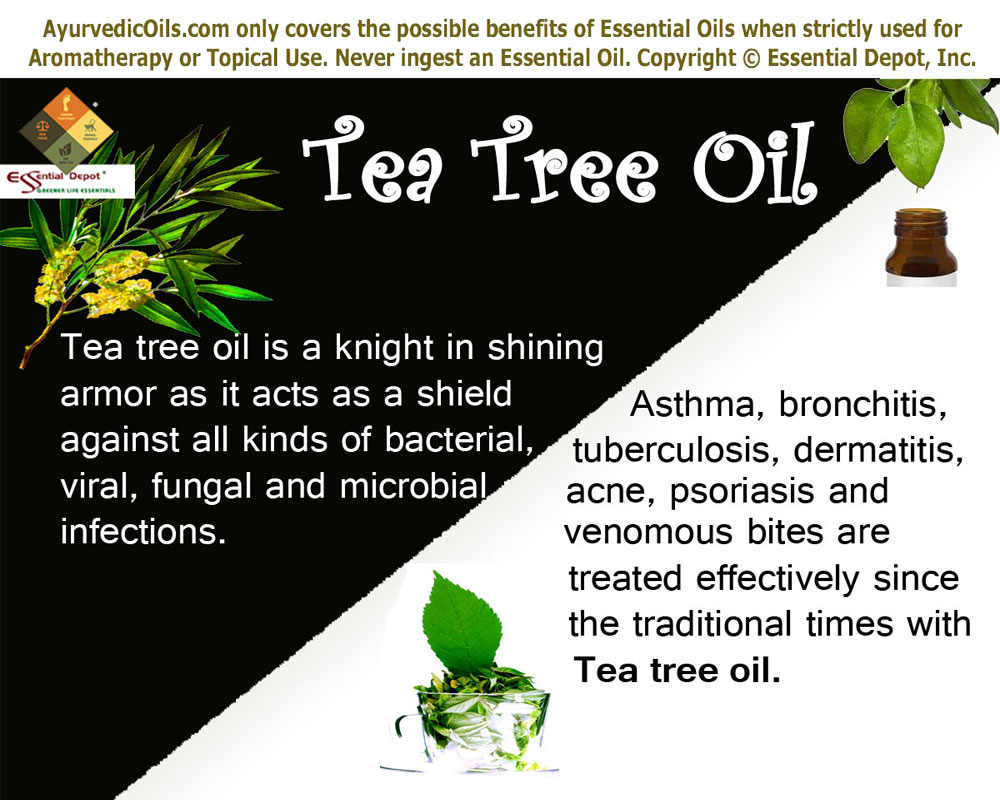
Tea-tree-bannerTea tree oil is a knight in shining armor as it acts as a shield against all kinds of infections including bacterial, viral, fungal and microbial. It is a must-have essential oil in your medicine cabinet and can assist you in times of distress. Although Tea Tree has nothing to do with the tea we drink, I often remember this magnificent herb as a tea for the entire system that has the potential to heal, pacify and cure us in a number of ways.

The essential oil of Tea tree is extracted from the leaves of this tree. Ayurveda, the science of natural healing makes use of Tea tree and its essential oil for treating many infectious diseases, respiratory problems like asthma, tuberculosis and bronchitis, venomous bites and skin problems like acne, psoriasis and dermatitis.

Purchase Tea Tree Oil – Retail – 4 oz – CLICK HERE

Purchase Tea Tree Oil – Wholesale – CLICK HERE

Historical importance of Tea tree oil:

Born in Australia, Tea tree is the love and pride of the Australian kingdom where more than 300 species of Tea trees grow naturally. The Aborigines are regarded as the first ones to use Tea tree leaves before thousands of years as an antiseptic for healing wounds, cuts, burns and insect bites.

It was the British explorer Captain Cook who named this tree as ‘Tea tree’ when he found the native people using the leaves of this tree in preparing a medicated tea and he used this drink to prevent scurvy in his men.

As an excellent antimicrobial and antiseptic oil, Tea tree oil was prevalently used in war fields for healing the wound of soldiers (especially in the Australian Army during World War II) and keeping them protected from the infestation of harmful microbes.

One of the pools in Australia is known as the ‘Magical Lagoon’ just because it was surrounded by Tea trees and leaves fall in the water and make it a medicated bathing pool. People who take bath in this pool have said that it helped in healing burns, wounds and certain other skin infections.

Tea tree oil is held-high for its anti-poisonous effects and is generally known as Snake oil just because the fact that this oil has enormous detoxifying properties that aids in taking way the venom of a poisonous snake bite.

The fresh leave juice was also applied on the affected area for treating scorpion stings and other poisonous insect bites. Tea tree leaves are also used in poultices and the decoction extracted from boiling these leaves are known to heal wounds and inflammations both internally and externally.

Chemical constituents or Gas Chromatography Report (GC) of Tea tree oil:

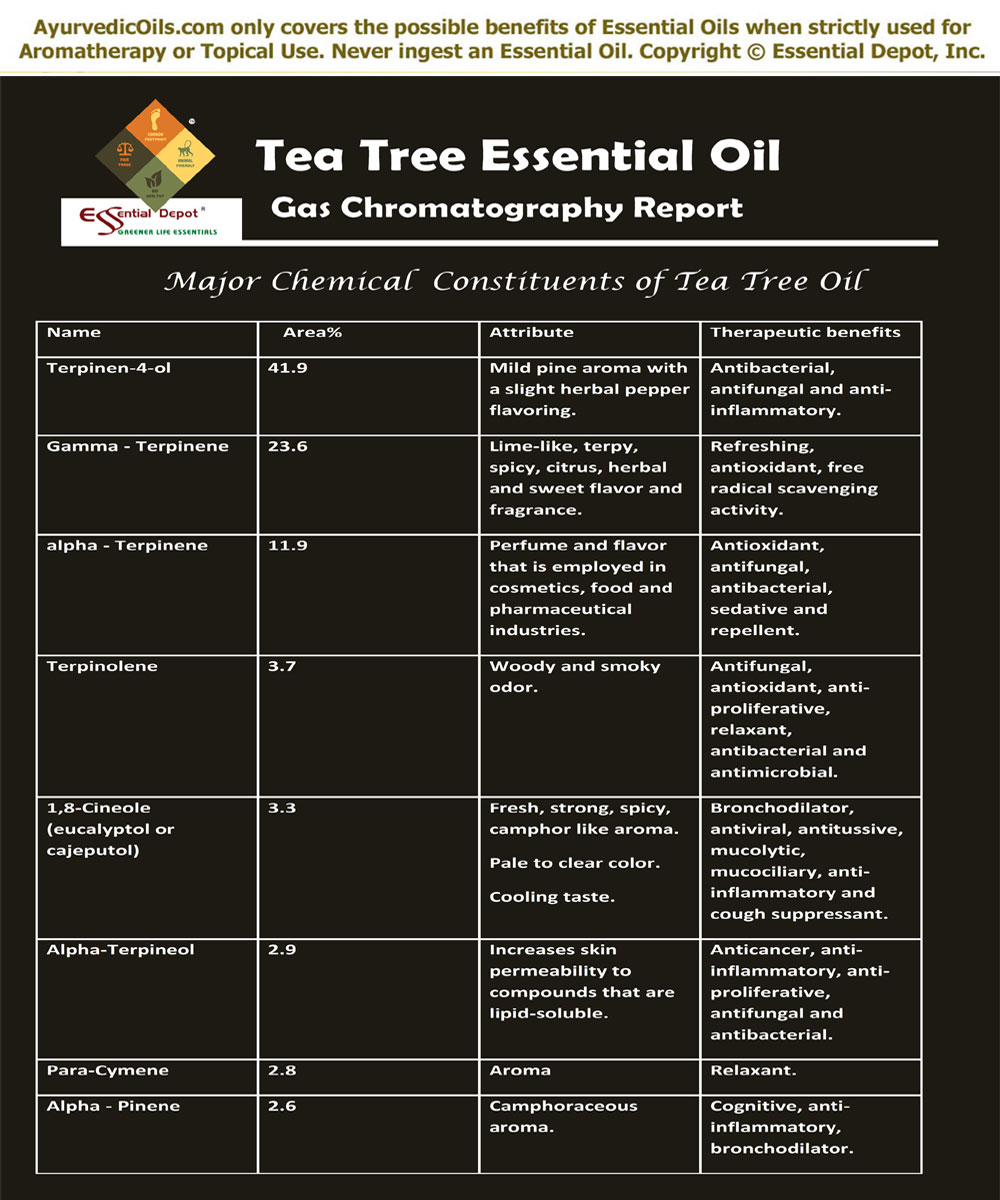
According to the Gas chromatography report, Tea tree oil constitutes of 8 chemical components that contribute to its unique fragrance, remedial properties and quality. Tea tree oil is enriched with about 41.9% of Terpinen-4-ol constituent.

Just click on:

For knowing more about the specific information of these key constituents of Tea tree oil.

The table below on the Gas Chromatography report talks about the principal chemical constituents and its role in granting the therapeutic and other attributes to Tea tree oil.

Teatree-OilRemedial properties of Tea tree oil:

This oil has antimicrobial, fungicidal, antibacterial, antiviral, stimulant, disinfectant, antiseptic, anti-infectious, antipyretic, vulnerary, expectorant, balsamic, cicatrisant, sudorific and insecticide.

The chemical constituents responsible for these therapeutic properties are 1,8-cineole, limonene, terpinen-4-ol, myrcene, a-pinene, linalool, sabinene, a-terpinene, y-terpinene, a-terpineol,  b-pinene a-phellandrene, terpinolene and p-cymene.

Ayurvedic health benefits of Tea tree essential oil:

Ayurveda is a holistic healing methodology that not only treats illnesses but aims to prevent it in future. It does not recommend same remedies for all even with the same disease as it regards that every individual is a unique part of nature and their illnesses should also be treated in a unique way.

For this, Ayurvedic treatment starts with identifying the unique individual constitution that is built up of 3 energy elements known as doshas. They are vata, kapha and pitta dosha. Vata is said to govern the movement of air, metabolic functions, process of elimination and much more.

Pitta is responsible for digestion, decision making, body temperature and creation of energy. The structure of our body, movement of fluids, skin health, stability and lubrication of joints are all controlled by kapha dosha.

Every human being is said to have a predominance of any one of these doshas that determines their personality, character and behavior. Balance between these three doshas indicates that a person is healthy and imbalance causes illness. Ayurvedic remedies like essential oils, herbs, yoga, meditation, Ayurvedic routine are prescribed in such a way that it helps in bringing perfect balance between these doshas.

Tea tree essential oil is said to have equal effects on all the three doshas with its cooling and moisturizing energies. The book on ‘Ayurveda and Aromatherapy’ by Light Miller and Bryan Miller states that Tea tree oil is extremely beneficial for skin, respiratory system and nervous system.

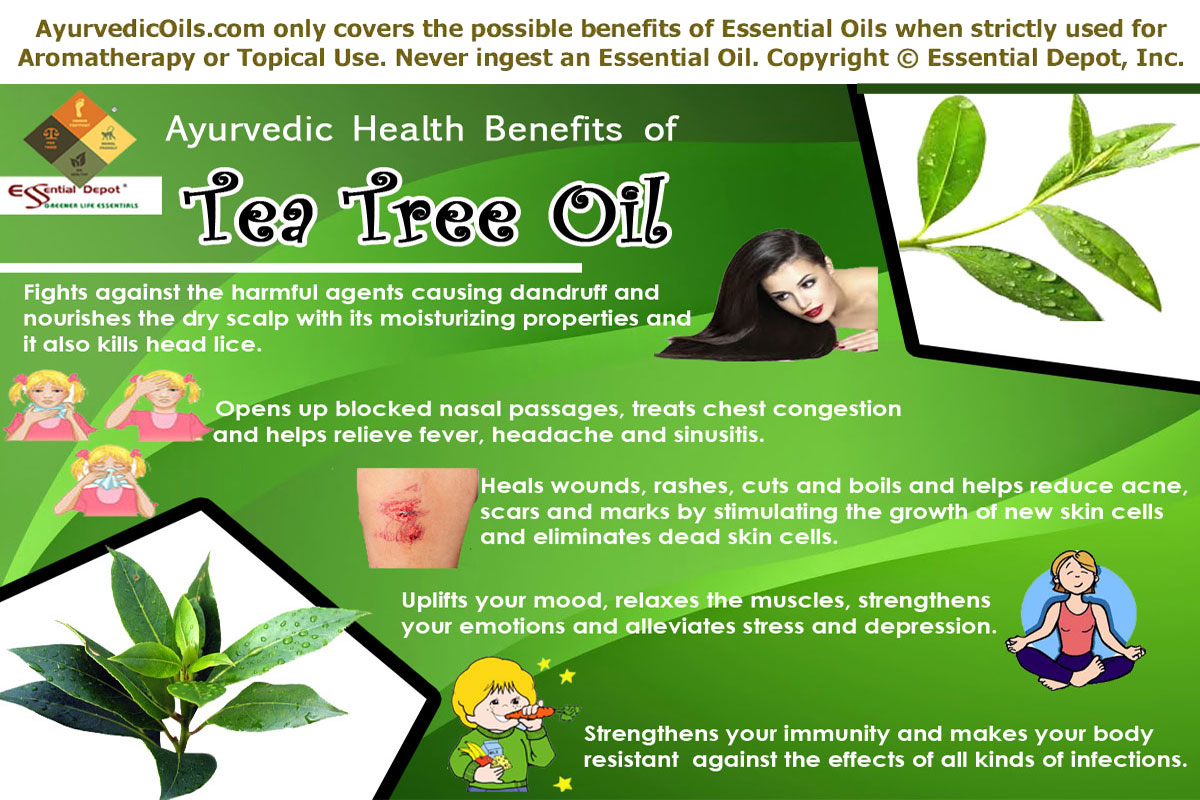
Let’s have a look at the Ayurvedic health benefits of Tea tree essential oil.Tea-tree-broucher1. Benefits to the skin and hair:

Tea tree essential oil has been proved 12 times better than carbolic acid that has been used as an antiseptic bactericide in primeval times. This is mainly because of its effectiveness in treating various skin ailments with its antimicrobial, fungicidal, anti-inflammatory, antiseptic, disinfectant and antiviral properties.

Tea tree oil is an excellent remedy for acne and this is substantiated by a 1990 study on ‘A comparative study of tea-tree oil versus benzoyl peroxide in the treatment of acne’, which states that both Tea tree oil and benzoyl peroxide are effective in treating acne.

It says that Tea tree showed “a significant effect in ameliorating the patients’ acne by reducing the number of inflamed and non-inflamed lesions (open and closed comedones)” with fewer side effects than BP where about 79 percent of people who used BP had various side effects like dryness, itching, stinging and burning sensation.

This exemplary oil also has antiseptic and cicatrisant properties that promote wounds, boils, cuts, burns and rashes to heal quickly. It reduces scars and marks by stimulating the growth of new skin cells and eliminates the dead skin cells.

Mix 2 drops of Tea tree oil with 15 drops of Jojoba oil or with your skin care cream or lotion and apply it on your acne for visible results and on your wounds for quicker healing. This blend is also effective on scars left by pox, accidents, acne, surgical and stretch marks.

Dandruff and lice are the major hair problems that screw your hair’s health most often. Being an effective fungicidal and antimicrobial oil, Tea tree oil fights against the harmful agents causing dandruff and nourishes the dry scalp with its moisturizing properties and it also kills head lice. Add 2 drops of Tea tree oil in your mild shampoo and massage it gently on your scalp for quick relief.

2. Benefits to the respiratory system:

Having enormous anti-infectious properties, Tea tree oil is one among the best essential oils for fighting against viral infections like cold, cough, congestion and other respiratory problems like sinusitis, bronchitis, tuberculosis, asthma and pharyngitis. Most of these problems start worsening when the infection spreads all over the system.

Tea tree oil fights against all kinds of contagious foreign bodies and arrest their further growth. The expectorant properties of this oil make it powerful in loosening the phlegm and mucous deposits that causes breathing difficulties.

Add 2 to 3 drops of Tea tree oil to warm bathing water and go for a refreshing bath. You can add 2 drops of this oil to steam inhalation for opening blocked nasal passages, treat chest congestion and get relief from headache and sinusitis. You can also add 2 drops of Tea tree oil to your rub and gently massage on your chest, neck and back for significant relief.

3. Benefits to the mind:

With its warm, spicy, refreshing, camphoraceous, soothing, aromatic-terpenic (monoterpenes of pine) fragrance pacifies and encourages the mind. Tea tree oil is said to appease the mind and body after shock, anxiety, fear and fatigue.

Massaging your body with 5 drops of tea tree oil blended with 40 to 45 drops of coconut oil can help in uplifting your mood, relax the muscles, strengthen your emotions and alleviate stress and depression. You can also add 3 drops of Tea tree oil to your burner, diffuser or vaporizer to encircle your mind with a clean and fresh feeling.

4. Guards against all kinds of infections:

Tea tree oil protects the body from harmful organisms and by killing the existing ones and preventing the growth of new ones. It strengthens your immunity and makes your body resistant against the effects of all kinds of infections.

A comparative study of Tea tree oil along with clotrimazole tested 112 people affected by toenails fungal infection and Tea tree oil was proved as powerful as an antifungal remedy. Add 2 drops of Tea tree oil in warm foot bath to cleanse your skin and kill the infectious agents on the skin followed by topical application of 2 drops of Tea tree oil with 8 drops of olive oil can help in treating fungal infections like athlete’s foot, ringworm, fungal infection of the toenails, dermatitis, vaginal infections and other skin ailments caused due to fungi.

The study on ‘Melaleuca alternifolia (Tea Tree) Oil: a Review of Antimicrobial and Other Medicinal Properties’ proved that Tea tree oil is effective in fighting against numerous bacteria like Staphylococcus aureus, Mycobacterium avium, Streptococcus pneumoniae, Haemophilus influenzae, Escherichia coli and Streptococcus pyogenes. This contributes to the antiseptic and antibiotic values of this oil.

This oil has been studied in Europe and US as an effective douching treatment for candida albicans. 5 drops of this oil added to 1 half pint of water can serve as a powerful vaginal douche Susanne Fischer-Rizzi.

Topical application of 2 drops of Tea tree oil mixed with 10 drops coconut oil aids in treating bed sores, psoriasis, abscesses, boils, wounds, insect bites, cold sores, diaper rashes, herpes, dermatitis, genito-urinary infections, cystitis, vaginal thrush, ear infections and deep wounds.

Other health benefits:

Tea tree has become a common ingredient in many popular anti-dandruff shampoos, acne soaps, skin care creams and lotions. It can also be used to treat rheumatic pain, bad breath, oral infections (as a gargle by adding 2 drops of this oil to warm water), cankers, candida, flea bites, jock itch, plantar warts, mosquito bites, sciatica, ticks, seborrhea, sunburn and much more.

Disclaimer: Never use essential oils internally. This article is only for the purpose of educations and is not meant for diagnosis or to replace any prescribed medication or professional advice. Always remember to use essential oils in a diluted form for topical application. Consult your Ayurvedic practitioner before using the right essential oil for your health condition and individual body type.

The MSDS (Material Safety Data Sheet) of Tea tree essential oil is readily available for your enhanced safety and better usage.

Gas Chromatography Report (GC) of Tea tree oil.

Thought for the day:

Nature teaches more than she preaches. There are no sermons in stones. It is easier to get a spark out of a stone than a moral. -John Burroughs

Suggested Reading:

  1. HEALING POWERS OF TEA TREE OIL (The Aromatherapy Professional: Healing with Essential Oils) By KG Stiles
  2. How to Use Tea Tree Oil – 90 Great Ways to Use Natures “Medicine Cabinet in a Bottle” – Acne, Boils, Head Lice, Nail Fungus, Ringworm, Skin Tags, – Health … Uses, Dilutions and Lots More! (What Is?) By Ruth Elston
  3. How to Use Tea Tree Essential Oil (Aromatherapy) By Miriam Kinai
  4. Australian Tea Tree Oil Guide By Cynthia Olsen

Reference Links:

  1. Tea tree oil by Wikipedia
  2. Tea tree oil by The American Cancer Society
  3. A comparative study of tea-tree oil versus benzoyl peroxide in the treatment of acne by Department of Dermatology, Royal Prince Alfred Hospital, Camperdown, NSW published in PubMed
  4. Melaleuca alternifolia (Tea Tree) Oil: a Review of Antimicrobial and Other Medicinal Properties by C. F. Carson, K. A. Hammer, and T. V. Riley published in Clinical Microbiology Reviews by the American Society For Microbiology

Mandarin Essential Oil

Mandarin-bannerMandarin is the only official language of the Republic of China with more native speakers; similarly Mandarin essential oil is an exceptional natural remedy with numerous documented health benefits in the world of Complementary and Alternative medicine including Ayurveda and the Traditional Chinese Medicine. Known as skin-friendly oil, its essential oil is cold pressed from the rind of the Mandarin fruits.

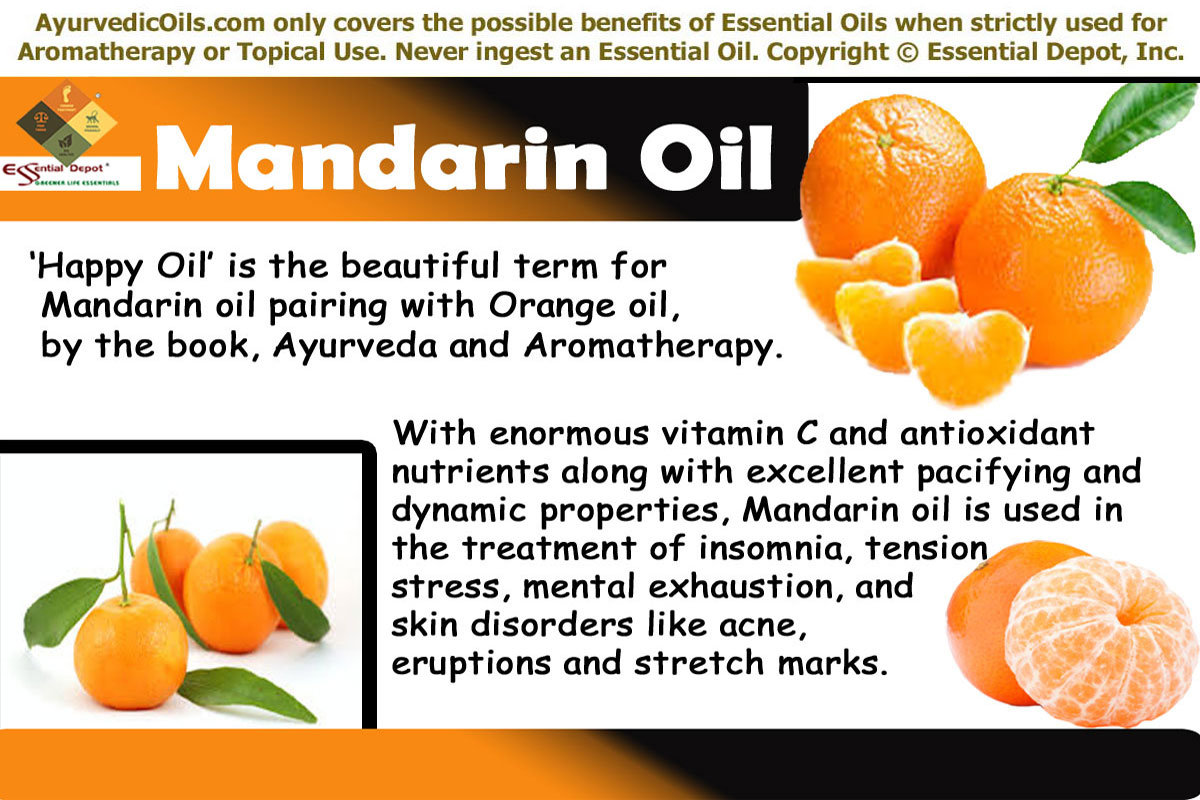
The book Ayurveda and Aromatherapy states that Mandarin oil can be combined with Orange oil to make ‘happy oil’. It is also said that this oil is known to bring liveliness in the atmosphere. With excellent pacifying properties, Mandarin essential oil is used in Ayurveda for treating insomnia, nervous tension, stress, mental exhaustion, digestive problems and skin disorders like acne, eruptions and stretch marks.

Purchase Mandarin Oil – Retail – 4 oz – CLICK HERE

Purchase Mandarin Oil – Wholesale – CLICK HERE

Historical importance of Mandarin:

Mandarin is indigenous to China and is now cultivated all around the world including America and Europe since 1805. Italy has been ranked as the top producer of Mandarin essential oil in the recent years. This fruit gained its name from the verity that it was given as a conventional gift to the Mandarins of China.

As a rich source of vitamin C, Mandarin oranges have been in use since the primordial times for meeting the nutritional requirements of children as well as elderly people. Mandarin is considered as a safe medicine for treating indigestion, strengthening the liver and the digestive system in aged people in France.

The Traditional Chinese Medicine makes use of the dried rind of these fruits for regulating the ‘Qi’ or ‘Chi’ meaning life force, life energy or energy flow and is defined as the basic principle that is a part of every living thing on earth. It was also used in treating improper digestion, excess deposits of phlegm and abdominal distension.

Mandarin oranges are also regarded as a Christmas tradition in the United States and Canada where they are individually wrapped in supple green paper and given in Christmas stockings. These oranges were initially a New Year gift for the Japanese immigrants and the advent of Japanese Mandarin oranges were considered as a special signal for the start of the holiday season. Mandarin oranges are also celebrated as a traditional representation of good fortune and abundance during the Chinese New Year celebrations.

Therapeutic properties and chemical constituents of Mandarin essential oil: Mandarin essential oil has antispasmodic, tonic, antiseptic, cicatrisant, digestive, diuretic, sedative, circulatory, cholagogue, depurative, hepatic, stomachic, nervous relaxant and cytophylactic properties. The major chemical components of Mandarin oil are limonene, citronellal, citral, linalool, myrcene, neral, terpineol, geranial, camphene, a-thujone, g-terpinolene, a-pinene, b-pinene, geraniol, and sabinene.

Ayurvedic health benefits of Mandarin essential oil:

Ayurveda is the mother of all healing systems on earth and is said to be the strongest root for the growth of other Complementary and alternative medical practices like Unani, Siddha, Homeopathy, Traditional Chinese Medicine, Acupuncture, Naturopathy, Chiropractic and Aromatherapy.

Ayurvedic philosophy trusts that every human being is a part of nature and one’s wellness depends upon his/her harmony with nature. Illness according to this science of life is an opportunity to discover what’s wrong in a person’s system.  Ayurvedic healing does not stop with treating the illness as such instead it traces out the underlying root cause of the disease. This aids in treating the sickness as well as preventing it in future.

All the natural remedies in the world fall under the roof of Ayurvedic healing as it strongly state that nature is the best medicine. Herbs, essential oils, rays of the rising sun, yoga, meditation, physical exercises and spiritualism are all the most important natural remedies used in Ayurveda.

The best thing about Ayurveda is that it considers every individual as a unique part of nature where every person is made up of an individual constitution that is comprised of three vital bio-energies known as doshas. They are vata, pitta and kapha. These energies govern the functions of the human body physically, emotionally and spiritually. Balance between these doshas indicates healthiness and dosha imbalances cause sickness.

Ayurvedic remedies are focused on harmonizing dosha imbalances. Mandarin essential oil is known to aggravate vata energy and pacify kapha and pitta dosha.

The Ayurvedic health benefits of Mandarin essential oil are:

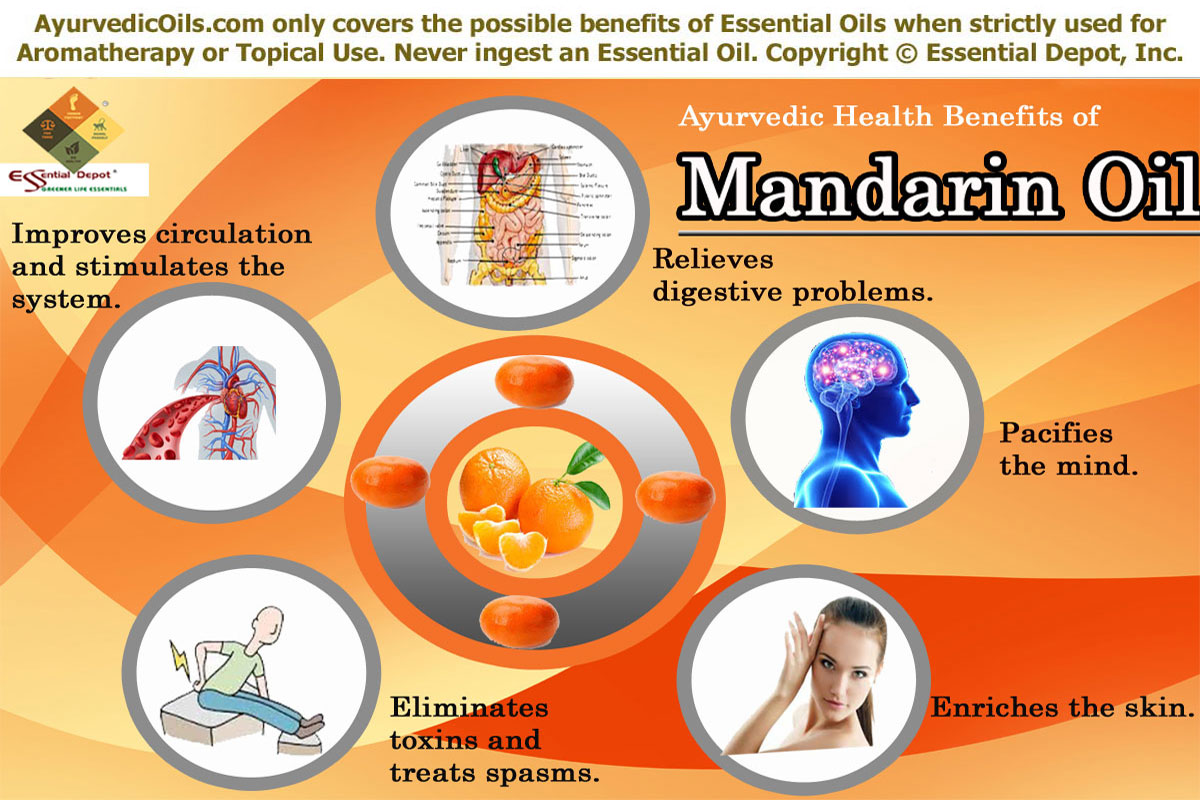
mandarin-brouccher1. Relieves digestive problems:

Mandarin essential oil is a popular citrus oil with excellent benefits to the digestive system. The rich, tangy and citrus aroma promotes digestion and stimulates the flow of bile and other digestive juices.

The stomachic and digestive properties of Mandarin essential oil aids in fighting against stomach infections, protects the stomach and intestines from ulcers by maintaining the optimum level of acids and enhance the appetite. You can add 1 drop of Mandarin oil to your hanky or add 2 drops of this oil to your diffuser to improve your appetite and support the process of metabolism.

Adding 2 to 3 drops of Mandarin oil to warm bathing water can help in relieving gas, flatulence, nausea and indigestion. Gently massaging your abdomen with 2 drops of this oil blended with 10 drops of wheatgerm oil can assist in treating ulcers, gastritis, esophageal spasms, intestinal infections, colitis, dyspepsia, bloating, flatulence, hiccups and indigestion.

2. Pacifies the mind:

Mandarin oil is known as ‘happy oil’ for its uniqueness in bringing joy and solace in the environment.  The well-known book ‘Ayurveda and Aromatherapy’ quotes Mandarin oil as “calming and soothing for stress.”  The soothing, calming, nervine, sedative and hypnotic actions of this oil appease the mind and boost your self-confidence.

Mandarin essential oil is a natural mood-lifter that assists in reducing tension on the nervous system, promote peaceful sleep, nourish the nerves, lessen distress and encourage absolute tranquility and calmness.

2 drops of Mandarin oil added to warm bathing water before bed can alleviate your tensed muscles, mental disturbances, epilepsy, convulsions and nervous afflictions. This medicated bath can help you to fall asleep soon by evoking a sense of encouragement and stillness.

You can also add 3 drops of Mandarin oil to your diffuser, burner or vaporizer for treating anxiety, restlessness, fear, fatigue, irritability, stress, tantrums and other negative emotions. This formula works even with children who are over-excited and stubborn especially during the nighttime.

3. Enriches the skin:

Mandarin essential oil has enormous benefits to the skin with its antiseptic, antibacterial, antiviral, cytophylactic, tonic and depurative properties. Excess toxins and deposits of salts and uric acid in the body deteriorate skin health and lessen its natural glow. This is the major reason behind pimples, blackheads, boils and other skin eruptions. Being a depurative, Mandarin essential oil aids in eliminating the unwanted toxins from the body and purifies the skin.

This oil is effective in clearing acne, healing wounds, scars, marks, abscesses, boils and lifeless skin. Mandarin oil supports the growth of new skin cells by which it helps in healing scars and wounds. This formula works like a magic especially on stretch marks and Mandarin essential oil is considered safe even on pregnant women.

Adding 2 drops of Mandarin oil in steam therapy assists in removing skin impurities, blemishes, black heads, marks and pimples. It augments the natural beauty and glow of the skin. Massaging with 2 to 3 drops of Mandarin oil with 15 drops of jojoba oil aids in improving blood circulation, enhancing the suppleness of the skin and diminishing scars and marks. You can also add 3 drops of Mandarin oil to your regular skin care cream or lotion and apply it on the affected area.

4. Eliminates toxins and treats spasms:

Toxic deposits in the body are the predominant factor disturbing the regular functions of the body like respiration, digestion and excretion. This is known as ‘ama’ in Ayurveda. Eliminating ‘ama’ or the harmful toxins from the body is one among the major treatment methodologies in Ayurvedic Panchakarma or the art of purification of the mind and body.

Mandarin essential oil is an exuberant oil for eliminating hazardous toxins, uric acid and salts stagnated in the body in the form of sweat and urine. The high-spirited aroma of this oil is known to drain out negative emotions and purify the mind.

Add 3 drops of Mandarin oil to warm bath or massage your body with 5 drops of this oil with 2 ml of coconut oil to get rid of the unwanted substances from the mind and body. This massage also helps in treating spasms in the respiratory system, intestine, muscles and the nervous system.

5. Improves circulation and stimulates the system:

When massaged onto the skin, 5 drops of Mandarin essential oil with 2 ml of sesame oil improves blood circulation and helps in relieving from varicose veins, blood clots, rheumatic pain and arthritis.

Mandarin oil acts as a tonic to the system and checks the regular functioning of all the vital parts of the body including the nervous system, digestive system, respiratory system, circulatory system, cardio-vascular system and the excretory system.

This oil is also said to make the body resistant against contagious diseases by improving immunity. You can add 2 drops of oil to vaporizer, burner or diffuser during any time of the day or night to get yourselves rejuvenated and recharged instantly.

Disclaimer:

All citrus oils have photo-toxicity effect and do not go out in sun as soon as applying Mandarin oil as it may harm your skin. Never use essential oils internally as these oils are highly concentrated liquids and should always be used topically in a diluted form. Consult your Ayurvedic Practitioner before using essential oils for your unique individual constitution and state of health. This article is only for the purpose of information and is not meant to make a diagnosis or replace prescribed medicines or professional advice.

Thought for the day:

All things are artificial, for nature is the art of God.  –Thomas Browne

Suggested Reading:

  1. Citrus Oils: Composition, Advanced Analytical Techniques, Contaminants, and Biological Activity (Medicinal and Aromatic Plants – Industrial Profiles) from CRC Press
  2. ISO 3528:1997, Oil of mandarin, Italian type (Citrus reticulata Blanco) by ISO TC 54
  3. Facelift at Your Fingertips: An Aromatherapy Massage Program for Healthy Skin and a Younger Face by Pierre Jean Cousin M.B.Ac.C
  4. Ayurveda & Aromatherapy: The Earth Essential Guide to Ancient Wisdom and Modern Healing by Dr. Light Miller, Dr. Bryan Miller

Reference Links:

  1. Mandarin Orange by Wikipedia
  2. Mandarin in Ayurveda and Aromatherapy by Light Miller and Bryan Miller
  3. Health Benefits of Mandarin Essential Oil by Organic Facts
  4. Health Benefits of Mandarin Essential Oil by Yoga wiz.com

Litsea Cubeba Oil

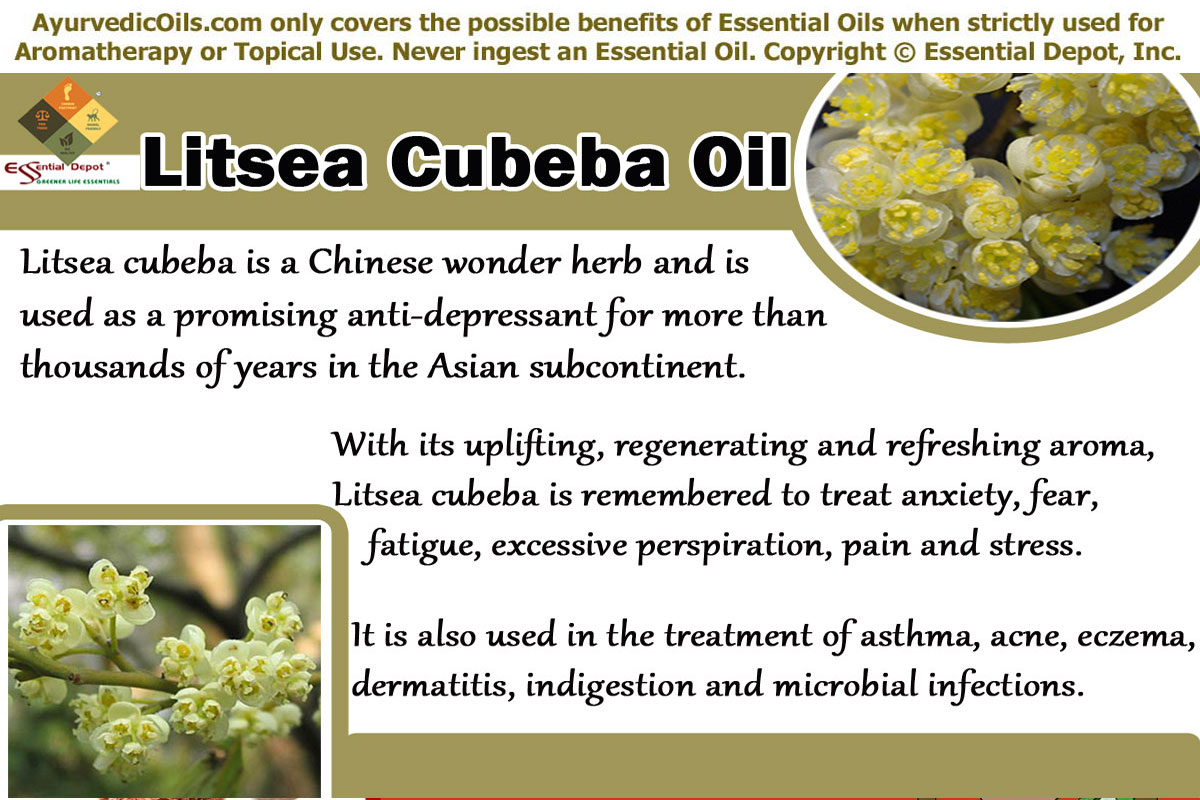
Litsea--cubebabannerLitsea cubeba is a Chinese wonder herb conferred to the medicinal world. Used as a promising anti-depressant for more than thousands of years in the Asian subcontinent, Litsea cubeba is remembered to treat anxiety, fear, fatigue, excessive perspiration, pain and stress.

This is mainly due to the uplifting, regenerating, energizing and refreshing aroma of its lemony essential oil extracted from the pepper-like berries of this evergreen shrub. Ayurveda and the Traditional Chinese Medicine embraces a long history of Litsea cubeba where this mesmerizing herb has been used for treating asthma, acne, eczema, dermatitis, indigestion and microbial infections.

Purchase Litsea Cubeba Oil – Wholesale – CLICK HERE

Historical importance of Litsea cubeba:

Botanically known as Litsea cubeba, this herb is popularly known as May Chang. It also called by other names like Mountain pepper, Chinese pepper, mountain spice tree, tropical verbena and exotic verbena. Native to China, Indonesia and Japan, Litsea cubeba is also grown widely in India, Sumatra, Kalimantan and Java.

Lovingly called as maqaw by the Atayal aborigines in Taiwan, May Chang has been used as a renowned spice by the aborigines of Taiwan. The pepper-shaped fruits of this tree were used as hot flavoring spice for meat dish known as sambal. May Chang flowers were also used in preparing medicinal tea.

The ancient Chinese used this herb for treating digestive ailments, chills, back pain, muscular aches and asthma. Traditionally this herb was used as a natural anti-spasmodic agent that helped in clearing spasms especially in the bronchia, thus assisting in the treatment of asthmatic attacks.

Chemical constituents and therapeutic properties of Litsea cubeba oil:

Citral is the major component of Litsea cubeba essential oil with more than 70 to 85% of the oil where geraniol is the a-citral and neral is the b-citral. This constituent contributes primarily to the healing properties of this oil such as antiseptic, antimicrobial, astringent, anti-inflammatory, hypotensive, tonic, insecticide, deodorant, calming, stimulant, antispasmodic, anti-infectious, sedative, carminative, vulnerary, antidepressant and stomachic.

Ayurvedic health benefits of Litsea cubeba oil:

Ayurveda is a treasure to mankind. You don’t need to be a healthcare practitioner to understand Ayurvedic philosophies as the wisdom of this noble science lies in its simplicity. Ayurvedic encyclopedias like Charaka Samhita and Sushruta Samhita explain the physical, emotional, psychological, spiritual and environmental factors affecting a human’s life, ways to lead a healthy life, natural remedies for diseases and guide towards a disciplined life and longevity.

’Everything in this world is vested with nature’ is the strong belief of Ayurvedic healing. It considers human beings as a part of nature and illness according to Ayurveda denotes a person’s imbalance with nature. Ayurvedic treatments involve the use of natural remedies to strike balance between nature and an individual’s state of health.

Ayurveda states that every individual is unique with an exclusive constitution that is built up of three biological energies known as doshas namely vata, pitta and kapha. Each of these doshas governs a set of functions in the body.

Predominance of any one of these doshas determines the character and physical attributes of a person. Imbalance of all or any of these doshas causes sickness. Herbs, essential oils, a disciplined life style, meditation, physical exercises and yoga are the most effective Ayurvedic remedies for dealing with dosha imbalances.

Litsea cubeba essential oil is said to pacify excess kapha energy and aggravate deficit vata and pitta doshas.

The Ayurvedic health benefits of Litsea cubeba oil are listed below for your reference:

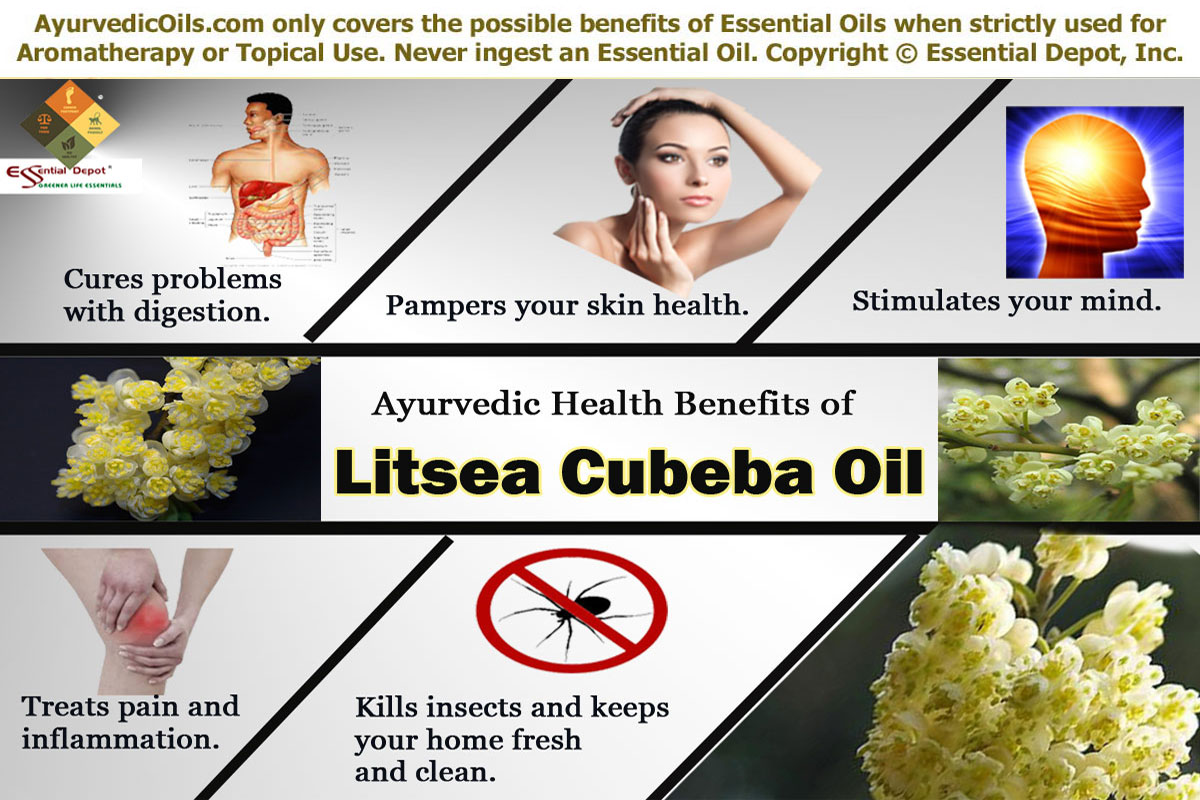
Litsea-broucher1. Cures problems with digestion:

With the strong citrus aroma and warming stomachic properties, Litsea essential oil increases pitta energy, which governs the process of digestion, thinking and body temperature. This herb and its essential oil augment the digestive fire and enhance the appetite, treat indigestion and flatulence.

It prevents the formation of gas in the stomach and intestines. To support the process of digestion, blend 3 drops of Litsea cubeba oil with 15 drops of sesame oil and massage your abdomen or add 2 drops of this oil to warm bathing water.

2. Pampers your skin health:

‘A thing of beauty is a joy forever’ and when it comes to the beauty of human beings, skin plays the prime role in determining one’s external beauty. Litsea cubeba oil has everything that is essential to maintain a healthy looking skin from within. Maharishi Ayurveda denotes that Litsea cubeba essential oil is an excellent vata and pitta balancing formula to treat normal, dry, oily and sensitive skin.

Massaging your skin with 2 drops of Litsea cubeba oil mixed with10 to 15 drops of coconut oil can work wonders on your greasy, oily and infection prone skin. This massage enhances blood circulation and controls the secretion of sebum.

The astringent, antiseptic, antibacterial, antiviral and antifungal properties of this oil help you to keep away from acne, blemishes, eczema, dermatitis, allergies, psoriasis and cellulites. The ability to cleanse the skin, balance the flow of sebum and shrink open pores, aids in treating and preventing acne flare-ups.

A recent study on ‘Screening of fruit and leaf essential oils of Litsea cubeba Pers. from north-east India – chemical composition and antimicrobial activity’ proved that Litsea cubeba oil has potent “antimicrobial activity against Staphylococcus aureus, Listeria monocytogenes, Escherichia coli, Pseudomonas aeruginosa, Candida albicans and Aspergillus niger.” This oil is also effective in treating wounds, ringworms, cuts and insect bites.

3. Stimulates your mind:

Litsea cubeba essential oil has an exuberant aroma that is flowery and lemony in nature. It is for this purpose Litsea cubeba herb and its oil has been used in making perfumes, soaps and other cosmetic products.

Inhaling the magical aroma of this oil uplifts your mood, augments mental alertness, refreshes your mind, influences new ideas for life, pacifies your depressed mind and grants you a sense of freedom and confidence. Kurt Schnaubelt says that Litsea cubeba oil is used for calming the mind and senses.  Adding 2 drops of this oil to vaporizer, diffuser or burner aids in treating your mental worries and give a new lease of life to your world around.

4. Treats pain and inflammation:

The vata and pitta enhancing properties of Litsea cubeba oil assists in increasing blood circulation, reducing inflammation and strengthening the muscles. By reducing kapha energy, this oil aids in eliminating the excess fluid deposits and toxic substances in the body and tones your tissues.

The book on ‘Aromatherapy: A Complete Guide to the Healing Art’ states that massaging with May Chang oil helps alleviate allergies, open up the bronchial passages in case of asthma, bronchitis and other chest infections.

Massaging the affected area with 2 to 3 drops of Litsea cubeba oil blended with 20 drops of coconut oil helps relieve pain, headache, muscular tension, respiratory ailments, arthritis and rheumatism. You can also use this oil in hot or cold compress for assisting inflammation and pain.

5. Kills insects and keeps your home fresh and clean:

Litsea cubeba oil is the ideal fragrant way to keep away from insects and stay refreshed and ready to be picked up all through the day. You can add 2 drops of this oil in your regular insect repellant preparations or outdoor candles to keep your family protected from bugs, flies, mosquitoes and other insects and to give a clean n fresh feeling to your home. You can also add few drops of this oil in your shampoo, bathing water, body wash or skin care cream to stay protected in an insect-free environment.

Other uses:

With a much similar aroma to Lemongrass and lemon verbena, Litsea cubeba oil is preferred by numerous aromatherapists and perfume author Mandy Aftel prefers this oil to other citrus oils for its versatile aroma. This herb and its oil has also been used and proved effective in the treatment of arrhythmia, nervous disorders, high blood pressure, coronary heart diseases and cancer cells death in case of lung cancer. The bark of this tree is also used in making handicrafts and furniture.

Disclaimer:

This article is only for the purpose of information and is not intended to diagnose or replace any professional advice or prescribed medication. Never use essential oils internally. Always use essential oils in a diluted form as pure and organic essential oils are highly concentrated substances. Please consult your Ayurvedic practitioner before choosing the appropriate essential oil for your health condition and unique constitution.

Thought for the day:

Nothing is more memorable than a smell. One scent can be unexpected, momentary and fleeting, yet conjure up a childhood summer beside a lake in the mountains.  – Diane Ackerman

Suggested Reading:

  1. Essence and Alchemy: A Natural History of Perfume by Mandy Aftel
  2. The Encyclopedia of Essential Oils: The Complete Guide to the Use of Aromatic Oils In Aromatherapy, Herbalism, Health, and Well Being by Julia Lawless
  3. Medical Aromatherapy: Healing with Essential Oils by Kurt Schnaubelt
  4. Aromatherapy Workbook by Marcel Lavabre

Reference Links:

  1. Litsea Cubeba by Wikipedia
  2. What is Litsea Cubeba? By WiseGEEK
  3. Uses of May Chang Essential Oil by Livestrong.Com
  4. Litsea Cubeba Essential Oil Profile Aromatherapy Lifestyle by Quinessence
  5. Screening of fruit and leaf essential oils of Litsea cubeba Pers. from north-east India – chemical composition and antimicrobial activity published in the Journal of essential oil research by Taylor Francis Online

Lime Essential Oil

Lime--bannerAnyone for that matter would admire L…I…M…E as the fruit of Lasting Impression with Motherly Embrace. Undoubtedly Lime is such an adorable kitchen staple for more than thousands of years and its essential oil seldom falls short to heal our mind and body with its numinous aroma.

It can be named as an effective anti-blue fruit and oil for its ability to pacify your mood at times of depression and all kinds of blues including postpartum blues. Botanically named as Citrus aurantifolia, Lime is a limb of the citrus family Rutaceae.

Ayurveda uses Lime and its essential oil as a stimulant for treating skin problems, heart diseases, digestive disorders and mental mayhems. It has been used to boost brain power, purify the blood and aid in preventing memory loss. Certain other traditional medicines uses Lime as a remedy for treating gout, malignant tumors, throat infections and chronic skin diseases.

Purchase Lime Oil – Retail – 4 oz – CLICK HERE

Purchase Lime Oil – Wholesale – CLICK HERE

Historical importance of Lime and its essential oil:

Lime has been a vital part of the folklore medicine for cleansing the system and revitalizing the mind. Aura is the life force or vital energy of any living thing and is called by different names in various healing systems. It is known as ‘prana’ in Ayurveda and ‘qi’ in Traditional Chinese Medicine. Lime is a powerful ancient remedy for cleansing the aura and restoring confidence.

Lime is indigenous to Asia and is now cultivated in numerous countries like America, West Indies and Italy. This evergreen tree bears white flowers and glittering green fruits. India is the largest Lime oil producing country in the world and Lime was introduced into Europe initially by the Moors and was then spread slowly to America. Lime essential oil is extracted by cold press method from the peel of the fruit.

Lime juice is widely known as a remedy for treating scurvy and it has been said that the ancient British sailors used it to prevent scurvy and other skin problems due to its rich Vitamin C content. Ships used for transporting Lime were adorably called as ‘lime juicers’.

The leaves of the Lime tree were used in the prehistoric period for treating poisonous bites and swellings. Apart from its medicinal uses Lime has been used in making pickles, sauces, desserts, jams, confectionaries, sorbets, marmalades, beverages, squashes, perfumes, household cleaners, detergents, soaps, cosmetics and other beauty products.

Chemical constituents or Gas Chromatography Report (GC) of Lime oil:

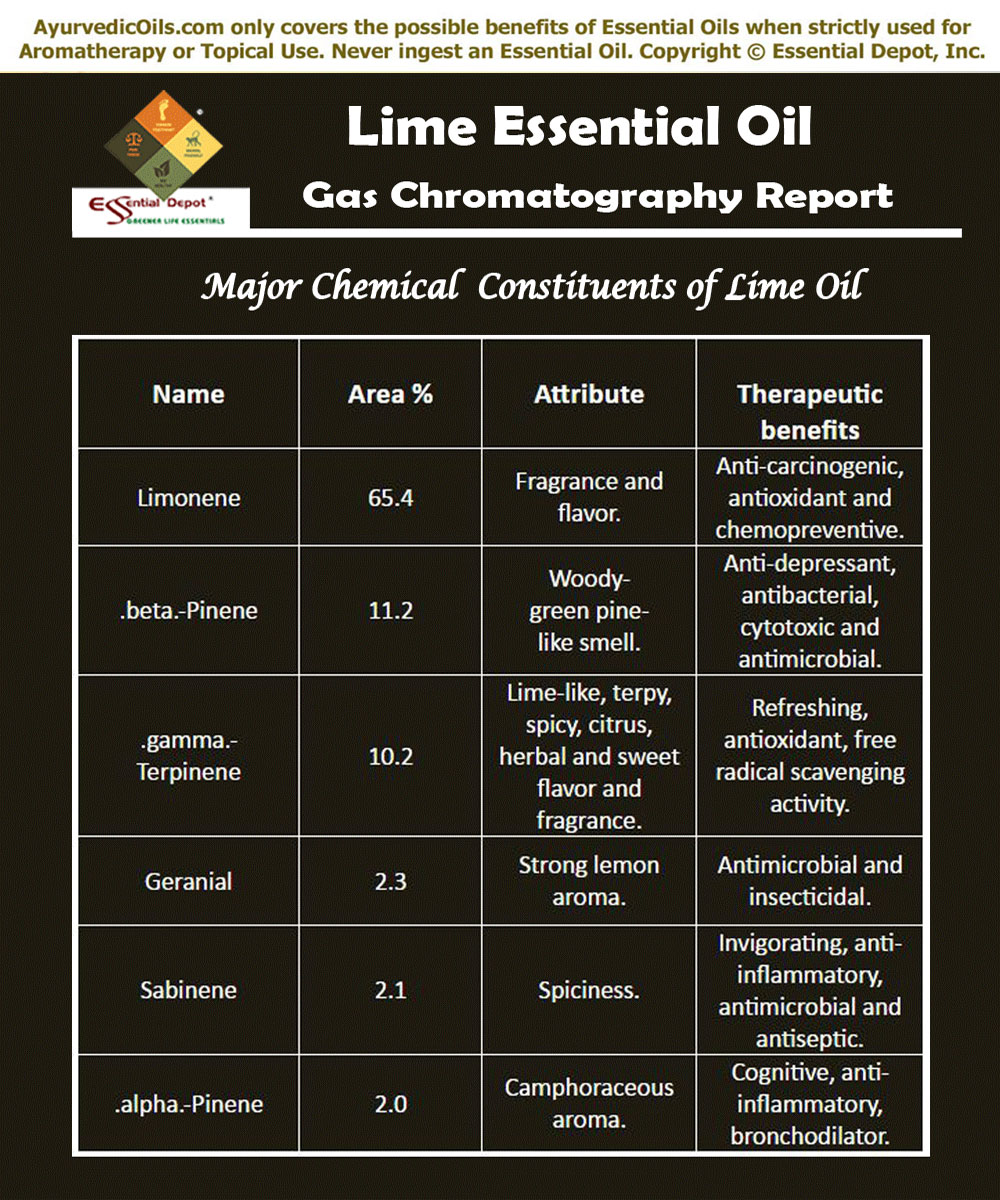
According to the Gas chromatography report, Lime oil constitutes of 13 chemical components that contribute to its fragrance, therapeutic attributes, consistency and quality of this oil. Of which, Limonene contributes to the highest proportion of Lime oil constituents with about 65.4% of its total composition.

Just click on:

I believe that this must certainly help you in getting to know the exclusive information about these prime chemical constituents of Lime oil.

The table crafted below clearly depicts the unique nature and contributions of these biochemical constituents to the healing magnificence of Lime essential oil.

lime-oil

Therapeutic properties of Lime essential oil:

A 2003 study on ‘Characterization of aroma volatiles in key lime essential oils (Citrus aurantifolia Swingle)’ state “Geranial, neral and linalool were found to dominate the lime oil aroma in both oils, which accounted for their fresh, floral citrus-like character.”

These components contribute to its remedial values like astringent, tonic, haemostatic, disinfectant, antiseptic, antimicrobial, antiviral, aperitif, restorative, stimulant and bactericidal.

Ayurvedic health benefits of Lime essential oil:

Nature is the best teacher and shows its love to everyone on Earth with maternal care and affection. That is why we call nature as ‘Mother Nature’. Ayurveda is a traditional medicinal system that trusts upon Nature for its healing methodologies. This ancient philosophy states that every human being is a part of nature and his/her health condition completely depends upon one’s balance with nature.

Man/woman is made up of the same 5 vital elements of nature namely water, earth, ether, air and fire. These elements combine together in making up the individual constitution of a human being. By this way every individual has a unique constitution identified with the combination of 3 vital bio-energies called as doshas. They are vata dosha that is made up of air and ether, pitta dosha that comprises of fire and water and kapha dosha that is a grouping of water and earth.

Ayurvedic treatments differ from individual to individual even for the same health disorder. This is because every individual has a predominance of any one of the three doshas that determines their state of health, personality and behavior and balance between these doshas indicates hale and heartiness.

Ayurvedic texts prescribe natural remedies like essential oils, herbs, Ayurvedic routine, yoga, physical exercises and meditation for treating dosha imbalances, healing illnesses, preventing it in future and for healthy aging.

Lime is known for alleviating all the three doshas vata, pitta and kapha.

Let’s take a look at the Ayurvedic health benefits of Lime essential oil:

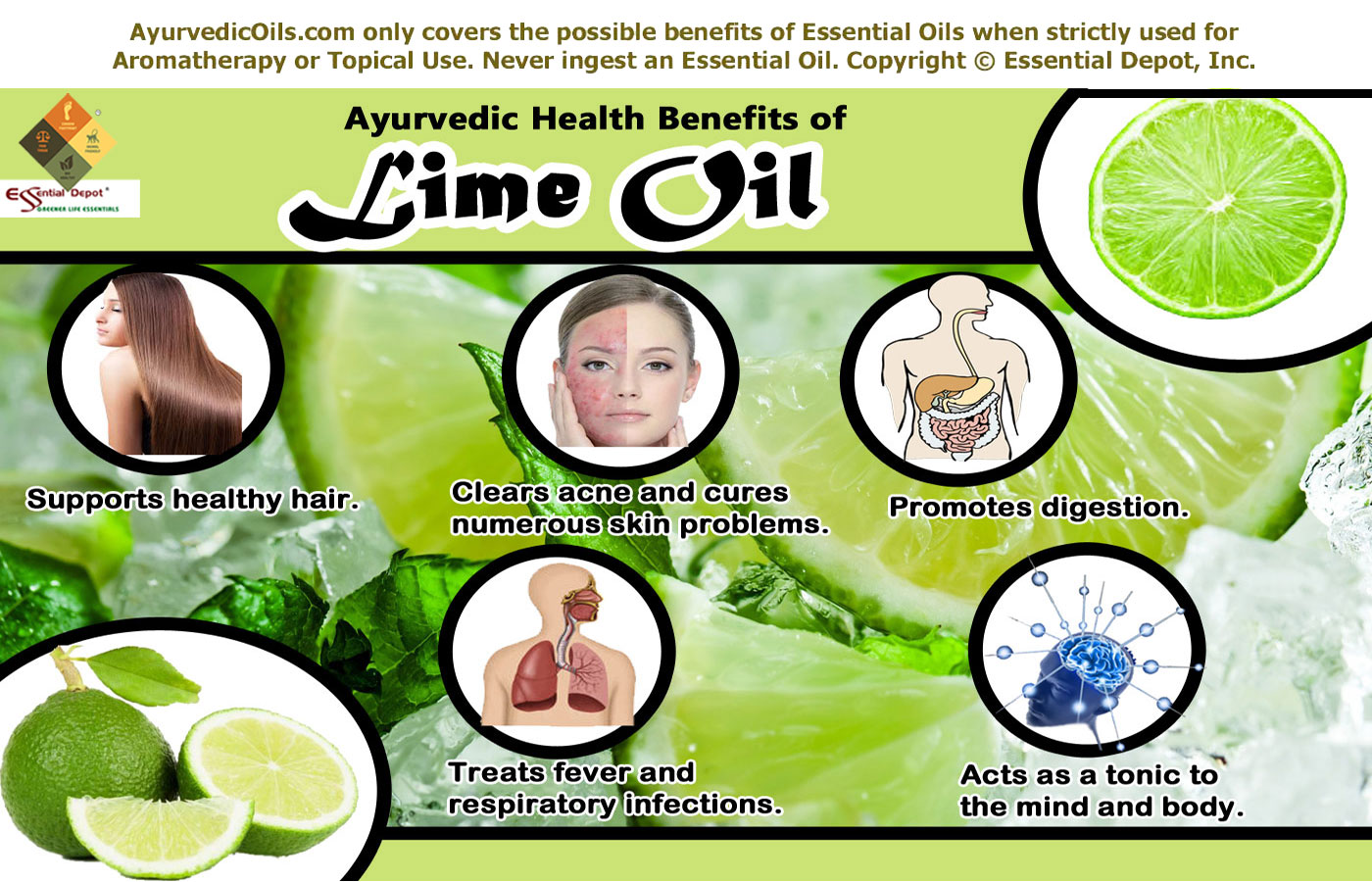
Lime-broucher1. Supports healthy hair:

Lime is one among the best essential oils for treating dull, oily, lifeless, rough, frizzy and greasy hair. This oil has a handful of essential nutrients that nourish the scalp and add natural shine to your hair.

Oily and greasy hair are the most prominent reasons for inviting dandruff as these types of hair attract dust and dirt very easily. LIme removes oil quickly and moisturizes the scalp from within, helping you to get rid of dandruff, dry and itchy scalp. Indian healthcare practitioners consider Lime oil as a traditional hair conditioner.

Add 2 drops of Lime essential oil along with your shampoo or conditioner before applying on hair. This aromatic bath assists in cleansing the hair, removing excessive oil, reducing dandruff and making the hair manageable.

You can also add 3 drops of Lime oil with 30 drops of sesame oil and heat it in medium flame. Gently massage this warm oil blend on to your scalp and part lines. This massage aids in enriching the scalp by helping it absorb this oil and nourish your hair from the roots. It also increases blood circulation and promotes the growth of healthy hair.

2. Clears acne and cures numerous skin problems:

Acne is a burning skin problem among teenagers all over the world and it is said that about 85% of the global populace are affected by acne at some point of their life. It occurs mainly due to the excess secretion of oil by the sebaceous glands rooted deeply in the skin surface.

This excess oil blocks the glands and cause bacterial growth and inflammation leading to boils, pimples, whiteheads, blackheads and pustules that are collectively known as acne.

Mayo clinic recommends the use of products that can control excess oil and treat inflammation. Lime and its essential oil is the best natural cure for clearing acne and the marks left over by acne as it has rich vitamin C and flavonoids acting as antioxidants, which detoxify and cleanse the skin. Applying 2 drops of Lime oil blended with 15 drops of jojoba oil can assist in washing out impurities from the skin and influence the growth of new skin cells.

Lime essential oil has antiseptic, bactericidal, disinfectant and astringent properties that fights against harmful bacteria causing skin infections, heals cuts, wounds, boils, cellulites, varicose veins, acne and other skin eruptions.

A 2006 study on ‘In vitro antibacterial activity of some plant essential oils’ published in PubMed evaluated the antibacterial activity of about 21 essential oils against 6 bacterial species including 2 gram-positive bacteria Staphylococcus aureus an  Bacillus subtilis and 4 gram-negative bacteria Proteus vulgaris, Klebsiella pneumoniae, Escherichia coli and Pseudomonas aeruginosa.

This study concluded stating that among the 21 essential oils tested “Cinnamon, clove and lime oils were found to be inhibiting both gram-positive and gram-negative bacteria.

Blending 2 to 3 drops of Lime oil with 20 drops of Olive oil and massaging it on the affected areas can assist in treating eczema, cuts, psoriasis, carbuncles, sores, skin ulcers, rashes and gangrene. Founder of the Polarity therapy, Mr. Randolph Stone states that Lime oil blended with Olive oil is an excellent remedy for treating eczema.

3. Promotes digestion:

Dr. Lakshmi Senaratne, senior Ayurvedic scientist at Bandaranaike Memorial Ayurveda Research Institute says that Lime and its essential oil have stomachic properties, thus it naturally promotes the secretion of bile and other gastric juices.

This helps in supporting the regular digestion process and enhances your appetite. Being a good laxative, this oil is also effective in treating nausea, dyspepsia and flatulence.

The anthelmintic properties of Lime essential oil treat diarrhea, vomiting, indigestion, exhaustion and abdominal pain. It also aids in controlling thirst. She also says that the ability of Lime to lessen pitta and vata energies makes it a powerful remedy for treating vomiting, anorexia, thirst and bleeding disorders.

All you need to do to improve your digestive process is to add 2 drops of Lime oil in 20 drops of sesame oil and gently massage on your abdomen. You can also use few drops of this oil in warm or cold compress to treat stomach pain and other discomforts.

3 to 4 drops of Lime oil added to warm bath is also effective in easing the process of digestion. Inhaling the refreshing citrus aroma by adding 2 drops to your burner or diffuser can help control nausea, morning sickness and improve your appetite.

4. Treats fever and respiratory infections:

Lime essential oil has febrifuge properties that assist in controlling your body temperature by reducing pitta dosha responsible for the temperature level of your body. Massaging your body or your foot soles with 3 drops of Lime oil blended with 20 to 25 drops of coconut oil or 3 drops added to cold compress can reduce your fever gradually by detoxifying your system and eliminating the harmful toxins and fever causing infections through sweat.

The antiviral, antibacterial, antimicrobial, immune stimulant and tonic properties of Lime oil aid in fighting against microbes causing cold and fever, strengthening the immune power, combating the growth of detrimental micro-organisms and making the body resistant against infections. 2 drops of Lime essential oil added to steam inhalation can help in treating cold, flu, sinusitis, bronchitis, cough, sore throat, asthma and other similar respiratory infections.

You can also mix 3 drops of Lime oil with 20 to 25 drops of coconut oil and apply it on your chest, neck and back for good relief. It helps loosen the phlegm deposits causing congestion in the bronchial passages. You can also add 1 drop of Lime oil to a cup of warm water and use it as a gargle for treating sore throat and for freshening your breath.

5. Acts as a tonic to the mind and body:

Lime has a divine aroma that is refreshing, rejuvenating, revitalizing, strengthening, uplifting and calming in nature. It helps in purifying the aura and strengthening the heart chakra responsible for love for others and self.

Adding 2 drops of Lime oil to your vaporizer, diffuser, burner or aromatic lamps can help in improving your concentration power and your immunity. This is mainly because of the tonic and restorative properties of Lime oil that helps you regain the lost energy of the mind and body due to diseases or emotional breakups.

Adding 3 to 4 drops of Lime essential oil in your bath tub can assist in relieving stress, depression, irritation, anxiety, muscular pain, tension, lack of self-confidence and negative feelings. Lime oil fortifies the mind and body by drawing the energies inward and helps an individual to focus without any distractions.

Disclaimer:

Never use essential oils internally. Do not go out in the sun immediately after using Lime essential oil on your skin as all citrus oils has phototoxic effect and can cause irritation when exposed to the harmful UV rays. Always remember to dilute essential oils before using them topically.

Consult your Ayurvedic practitioner before using the suitable essential oils for your individual constitution and state of health. This article is only for educational purpose and is not intended to replace any professional advice or prescribed medication.

The MSDS (Material Safety Data Sheet) of Lime oil is readily available for your enhanced safety and better usage.

Gas Chromatography Report (GC analysis) of Lime oil.

Lime Essential Oil Possible Skin Issues:

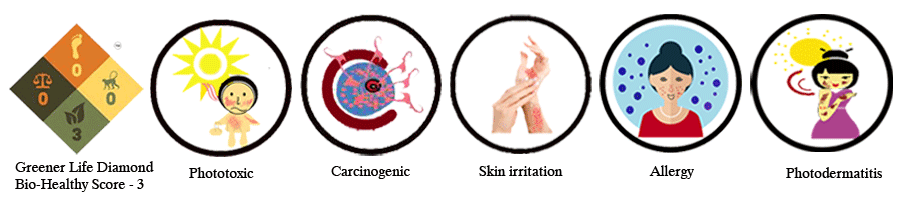
Greener Life Diamond – Bio-Healthy Score => 3 – Possible Skin Issues:

See => http://www.essentialdepot.com/GreenerLifeDiamond.html

Lime essential oil has photosensitizing effect that can end up in causing irritation of the skin, allergic reactions, burning sensation, phytophotodermatitis, hyperpigmentation (change of skin color, visible especially in people with white skin complexion) and certain other effects. This is said to happen mainly because of Lime oil’s potent to stimulate the skin photosensitivity, when it is exposed to observable sunlight up to 12 hours of use.

The underlying cause is the response of the photoactive chemical constituents that attracts UV light radiation and contributes to toxicity through molecular alterations in the surface of the skin.

The primary chemical constituent responsible for the photo-carcinogenic, skin sensitizing and other topical effects of the essential oil of Lime is Limonene and certain other furanocoumarins.

A 2014 study published in the Journal of Community Hospital Internal Medicine Perspectives reveals about a skin condition called as phytophotodermatitis, induced by Lime, where a 24-year old nurse came up with red demarcated tender patches and crusted vesicles after squeezing fresh limes and going out in sun on a bright day.

Phytophotodermatitis is defined as a nonimmunologic eruption of the skin that occurs after its contact with phototoxic components in certain plant varieties and is then exposed to ultraviolet A (UVA) radiation through visible sunlight.

Few other studies also witness the effects of photosensitization of Lime and Lime-based products containing psoralens, paving way for burns, blisters, bullae, eruption, erythematous vesicles, rashes, inflammation and hyperpigmentation. It is also been said that in certain severe cases, systemic toxicity come with the rashes, which includes nausea, vomiting and fever.

Lime oil has also been reported to promote tumors, when tested on rats where most of the papillomas were benign and few were malignant.

The safe dilution level of Lime oil is 0.7%, which is 4.2 drops per ounce of any carrier oils as per the International Fragrance Association (IFRA). This safe dilution level applies only for products used topically to thwart photosensitivity and is not applicable for wash-away products like soaps, shampoos and other bathing products.

IFRA also suggests that Limonene rich essential oils should only be employed, provided the level of peroxides are set aside to the lowest realistic level, for example: by including antioxidants during production.

Lime oil has ‘Generally Recognized As Safe (GRAS)’status by FDA (U.S. Food and Drug Administration). As per the European regulatory body, essential oils with furanocoumarins must be used in such a way that the level of bergapten should not go beyond 15ppm (parts per million) in ready to use cosmetic products after which the skin is subjected to exposure of direct sunlight and this does not apply for wash-off products. The level of bergapten should be1 ppm in bronzing and sun protection products.

For your information, Furocoumarins are also used in healing practices on par with the long-wave ultraviolet light therapy for treating vitiligo, psoriasis and mycosis fungoides.

Reference Links Substantiating the Possible Skin Issues of Lime Oil:

  1. Lime-induced Phytophotodermatitis by Dr. Andrew Hankinson, Dr. Benjamin Lloyd and Dr. Richard Alweis, published in the Journal of Community Hospital Internal Medicine Perspectives and PubMed
  2. Citrus aurantifolia, American Herbal Products Association’s Botanical Safety Handbook, Second Edition by Zoe Gardner, Michael McGuffin
  3. Essential Oil Safety: A Guide for Health Care Professionals By Robert Tisserand, Rodney Young
  4. Leung’s Encyclopedia of Common Natural Ingredients, used in Food, Drugs and Cosmetics by Ikhlas A. Khan and Ehab A. Abourashed.
  5. Safety Information on Essential Oils by the National Association for Holistic Aromatherapy
  6. Lime oil by Mercola.com
  7. A Topical Skin Eruption by Dr. Christina Greenaway, published in the Canadian Journal of Infectious Diseases and PubMed

Thought for the day:

It is written on the arched sky; it looks out from every star. It is the poetry of Nature; it is that which uplifts the spirit within us.          -John Ruskin

Suggested Reading:

  1. Citrus Oils: Composition, Advanced Analytical Techniques, Contaminants, and Biological Activity (Medicinal and Aromatic Plants – Industrial Profiles) From CRC Press
  2. Ayurveda & Aromatherapy: The Earth Essential Guide to Ancient Wisdom and Modern Healing by Dr. Light Miller, Dr. Bryan Miller
  3. Growing Citrus: The Essential Gardener’s Guide by Martin Page
  4. Save Your Life with the Phenomenal Lemon (& Lime!) (Save Your Life!) by Blythe Ayne
  5. The Lemon & Lime Cookbook by Rick Donker

Reference Links:

  1. Lime is Beneficial for Skin and Hair by Namini Wijedasa published in Infolanka.com
  2. Acne by the American Academy of Dermatology
  3. In vitro antibacterial activity of some plant essential oils by Seenivasan Prabuseenivasan, Manickkam Jayakumar, and Savarimuthu Ignacimuthupublished in BMC Complement Altern Med, PubMed
  4. Health Benefits of Lime Essential Oil by Organic Facts


Your resource for quality Essential Oils. Every batch is
GC tested to ensure purity and authenticity.

Lemon Essential Oil

Lemon-bannerReferred to as ‘Golden Apple’ in the Indian subcontinent, Lemon is a universal remedy for many health disorders and is often called as a panacea for its ability to heal the mind and the body in manifold ways. The essential oil of Lemon is cold pressed from the external rind or peel of the Lemon fruits.

Known as Nimbuka, Jambira and Dantashata in Ayurveda, Lemon is a popular Ayurvedic remedy that is used in medicine, food and also in the process of purification. It is used for stimulating the nervous system, improve concentration power, enhance immunity, purify blood and support digestion.

Lemon and its essential oil is a popular ingredient of many Ayurvedic weight loss remedies and lemon juice taken with lukewarm water in empty stomach in the morning is said to reduce fat deposits and eliminate toxins from the body.

Purchase Lemon Oil – Retail – 4 oz – CLICK HERE

Purchase Lemon Oil – Wholesale – CLICK HERE

Historical importance of Lemon and its essential oil:

The real origin of Lemon lies as a mystery and it is said that Lemon is indigenous to India, Myanmar and China. The first historical mark of Lemon was in 90 BC where it was used to shower a high priest in a festival of Jews in Jerusalem though certain sources say that Lemon has been used since 800 BC.

It was introduced to Europe in the 1st century AD during the Roman reign and slowly spread to other parts of the world like Persia, Egypt and Iraq.  It is also said that Lemon was grown as an ornamental plant in the primordial Islamic gardens.

Affluent Victorians grew Lemon trees in their gardens as a symbol of high regard and for garlanding their estates with the naturally refreshing aroma of citrus trees. Serving Lemon wedges along with tea during their tea dances in the afternoon was a popular custom in their tradition.

It was Christopher Columbus who introduced Lemon to America by bringing Lemon seeds to the Island of Haiti during his voyages in 1493. Botanically known as Citrus limon, Lemon is a hybrid of citron and sour orange.

The most notable use of Lemon in the history was its use as a promising protection against scurvy by sailors all over the world. This was endorsed by James Lind, the celebrated Naval Surgeon in his book ‘Treatise on Scurvy’.

Chemical components or Gas Chromatography Report of Lemon essential oil:

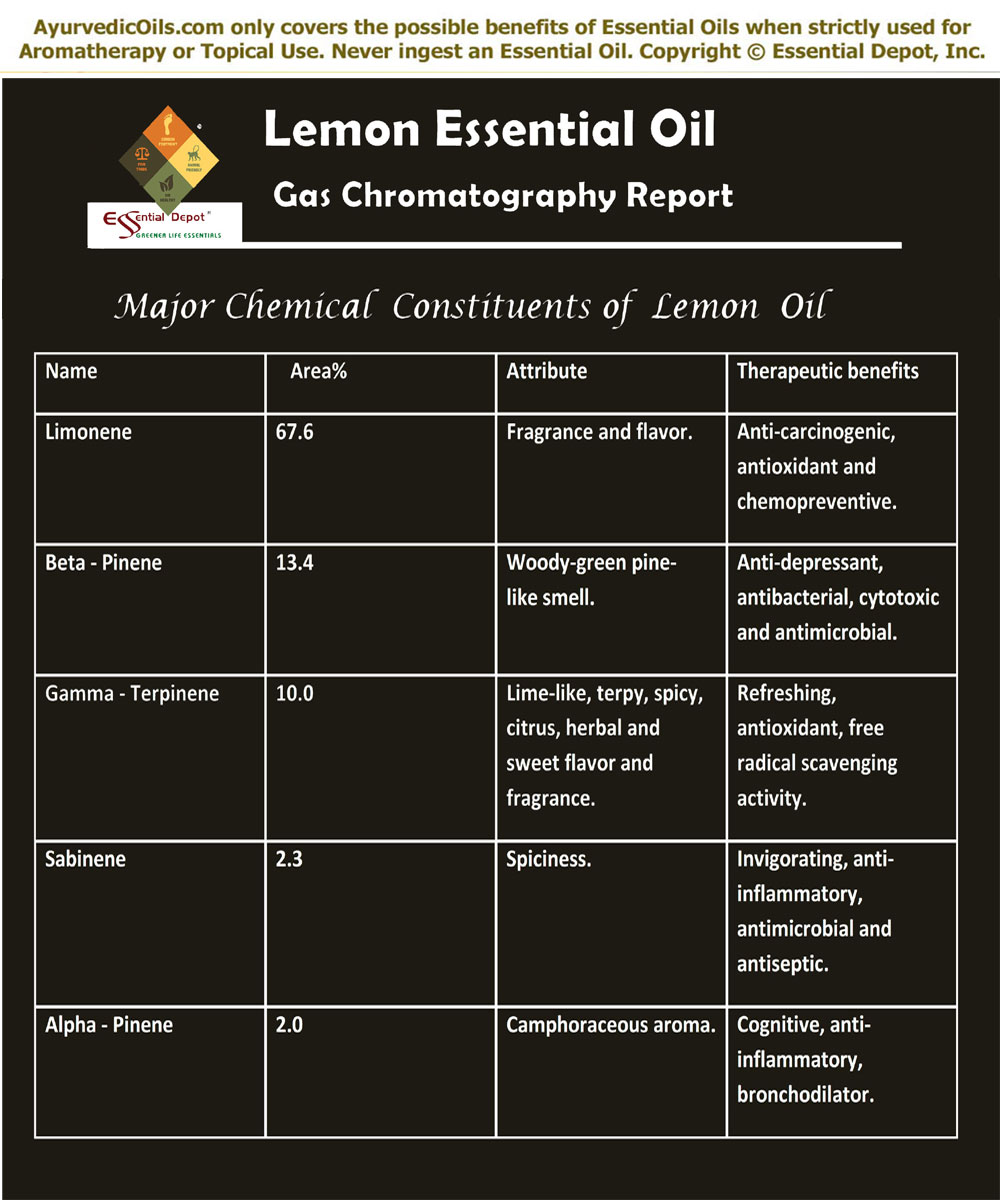
According to the Gas chromatography report, Lemon oil constitutes of 5 major chemical components that contribute to its fresh citrusy fragrance, remedial values and distinct quality. Lemon oil is enriched with about 67.6 percent of Limonene constituent.

Just click on:

For knowing more about the elite information of these top constituents of Lemon essential oil.

The table below on the Gas Chromatography report talks about the primary chemical constituents and its role in granting the therapeutic values and other attributes to Lemon essential oil.

Lemon-OilTherapeutic properties of Lemon essential oil:

The remedial properties of Lemon essential oil are antiviral, antibacterial, immune stimulant, digestive, anticancer, anti-inflammatory, calming, diuretic, expectorant, astringent, anti-anemic, detoxifying, antioxidant, tonic and antidepressant.

Ayurvedic health benefits of Lemon essential oil:

Ayurvedic healing dates back to more than 5000 years and it is the oldest of all medicinal systems on earth.  Lemon has been an important part of Ayurvedic treatments in many forms. The top ways to start a refreshing Ayurvedic life begins with the use of Lemon in lukewarm water as this therapy is said to cleanse the system, clear impurities in the blood and energize the mind and the body.

Human being is a unique creation and Ayurveda adorns the beauty of an individual constitution that differentiates each and every individual with a unique physical and mental setup. This uniqueness is determined by the combination of the three biological energies known as doshas.

They are vata, pitta and kapha. Vata dosha is responsible for blood circulation, creative thinking, metabolic functions and the process of elimination. Pitta energy governs body temperature, digestive fire, leadership skills and perfection. Kapha dosha lies behind the movement of fluids in the body, love and affection and body mass.

Predominance of any one of these doshas determines character, personality and behavioral attributes. Dosha balance contributes to good health and imbalance of doshas indicates illness.

Ayurveda sticks to nature and trusts that natural remedies are the best ways of healing human beings as they are an incredible part of nature. Ayurvedic therapies are unique for every individual and are focused towards treating dosha imbalances.

Ayurvedic remedies are often aimed at treating the five senses of human body. They are the sense of sight, sense of smell, sense of taste, sense of touch and sense of sound. Lemon is by far the best Ayurvedic remedy that has the power to retreat and recharge the four vital senses of the human body.

Lemon and its essential oil is said to pacify kapha and vata energy and aggravate pitta dosha.

Let’s have a look at the Ayurvedic health benefits of Lemon essential oil in the order of the five senses of human beings.Lemon-broucher1. Sense of sight:

The very sight of Lemon gives energy, confidence and inner strength. This is because the bright yellow color of Lemon indicates brilliance, cheerfulness, brightness and sunshine. These are the symbols of potency and real power paving way for improvement in one’s health physically and mentally. Healing through the sense of sight is known as color therapy in Ayurveda.

This holistic healing methodology states that every color has various impacts on the physiological and psychological attributes of mankind. Yellow color of Lemon and its essential oil according to Ayurveda has the power to promote clarity of mind, grants motivation, enhances the energy level, augments communication and instills the power of winning. So the next time, when you are feeling down and depressed, just look at the ‘Golden apple’ (lemon) that has the power to mend your mind to peace and prosperity.

2. Sense of smell:

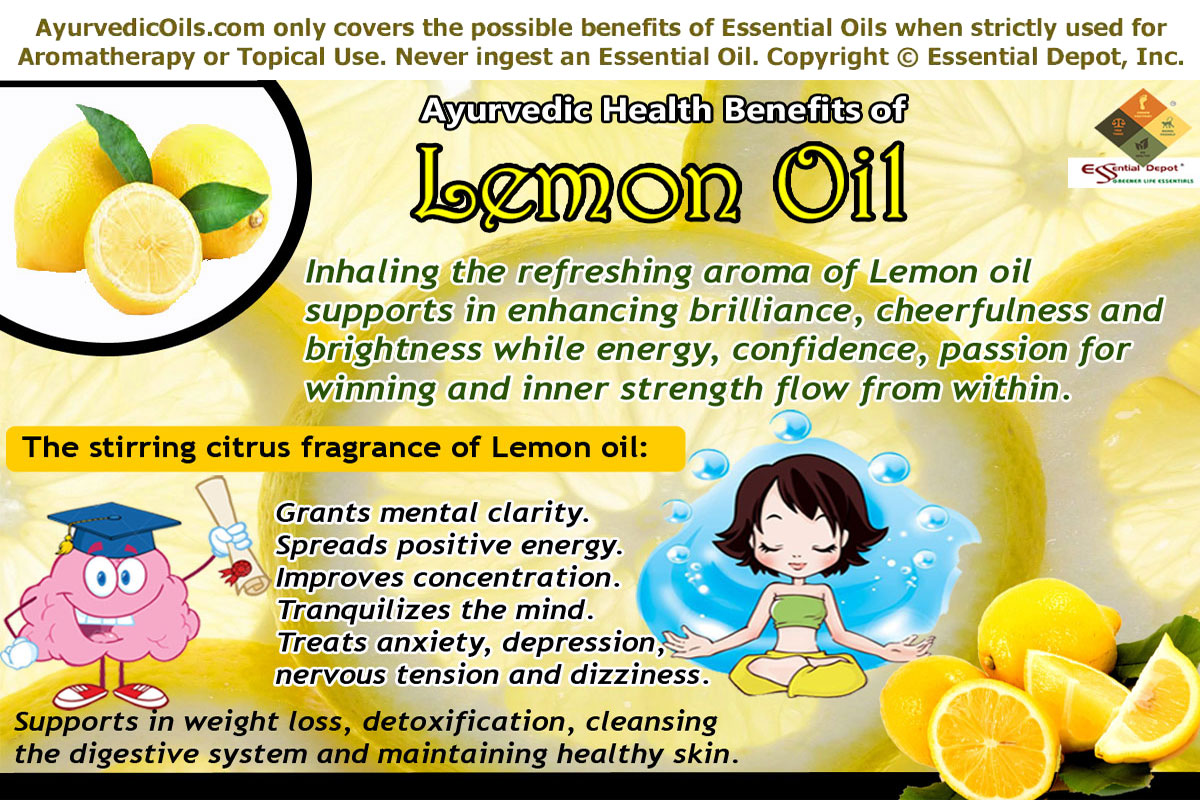
Aroma plays a vital role in uplifting the body and mind. By inhaling the aroma of Lemon essential oil, the therapeutic molecules in the oil reach the limbic system of the brain through the nasal passages, where limbic system is the body’s control center that controls feelings, emotions and the corresponding behaviors.

The citrusy, fresh, energizing and enlivening aroma of Lemon essential oil spreads positive energy, calms the mind, grants mental clarity, treats anxiety, fatigue, nervous tension, dizziness, improves concentration, instills hopefulness and assists in weight loss when 2 drops of this oil is added to aromatic lamps, diffuser, air freshener, vaporizer or burner.

A 2004 study published in Brain Research stated that Lemon essential oil may contain pain-relieving and anxiety-reducing properties. When used in steam inhalation, Lemon oil aids in opening blocked nasal passages and clear chest congestion. The revivifying fragrance of Lemon oil makes it a favorite flavor in household cleaners, disinfectants, soaps, shampoos and detergents.

3. Sense of taste:

The best way to take Lemon internally is to drink the fresh juice. Ayurvedic therapies like Chardi Nivarana and Kaphotlesha suggests drinking lemon juice during nausea, vomiting, excessive salivation, gastritis, heaviness in the stomach and sluggish bowel movements. This helps in eliminating the excess deposits of kapha in the stomach.

Lemon is also called as Amadoshahara where ama is the toxic substances in the body. Drinking lemon juice is a proven Ayurvedic remedy for eliminating ama, which is a result of indigestion and improper absorption of nutrients.

Drinking lemon juice mixed with warm water and honey in the morning in empty stomach is said to treat obesity by stimulating the bowel movements and burning the excess fat deposits in the body. Lime has diuretic properties and it helps in expelling the excess fluids in the body causing obesity through urine and sweat.

4. Sense of touch:

Ayurvedic massaging or Abhyanga is an important therapy in Ayurveda for healing numerous illnesses and for eliminating the toxic substances from the body. Abhyanga is the art of maneuvering the body with hands, legs, elbows and certain other massaging equipments. The success of an Ayurvedic massage therapy lies in choosing the right massaging technique along with right essential oils that suits your health condition and unique individual constitution.

Treating through the sense of touch means using essential oils and herbal medications on the skin as skin is the best organ through which the therapeutic properties of these natural remedies penetrate deeply into the bloodstream.

(i) As topical application:

Lemon oil is an excellent remedy for treating skin problems like acne, rough skin, dull skin, oily skin, wounds, pigmentation, cold sores, cellulites, warts, varicose veins and sun tan. The antiseptic, disinfectant, astringent, antiviral and soothing properties of this oil assist in rejuvenating and toning the skin naturally by improving blood circulation. Skin care specialist Lia Schorr says that using Lemon oil mixed with glycerin can assist in treating rough patches on the knee, feet, hands and elbows.

Blend 2 drops of Lemon oil with 15 drops of Jojoba oil and apply it topically on pimples, boils, pustules, blackheads and whiteheads. It helps in removing excess oil, eliminate impurities in the skin and clears acne on regular use. You can also apply this blend on cold sores, tanned skin, dull skin and rough skin.

(ii) As Ayurvedic massage oil: Gently massaging your abdomen with 3 drops of Lemon oil mixed with 20 to 25 drops of coconut can help in treating dysentery, intestinal parasites, gas, flatulence, nausea, food poisoning, stomach upset, acidity, cramps and heartburn.

Massaging your chest, throat, foot soles and back with this blend can assist in treating throat infections, tonsillitis, fever, flu, cough and cold. The disinfectant, antiviral and expectorant properties of Lemon oil aid in controlling the growth of viruses responsible for cold, arrests infections and helps expel phlegm and mucous deposits in the body. This is due to the kapha pacifying property of Lemon essential oil.

Gently massaging your scalp with 3 drops of Lemon oil blended with Almond oil can help in controlling dandruff, moisturize the scalp, and augment the strength, volume and shine of your hair with its tonic and stimulating properties.

(iii) As bath oil: 3 to 4 drops of Lemon essential oil added to warm bathing water helps in relaxing your muscles, alleviate stress, lessen depression, promote good sleep, induce peace of mind, wipe away negative feelings, enhance skin health, detoxify the body, cleanse the digestive system and treat respiratory ailments.

(iv) As cold or warm compress: Few drops of Lemon essential oil added to cold or warm compress can help treating acne scars, pain, inflammation, headache, fever, congestion and stomach ache.

5. Partnering with the sense of sound:

Healing through the sense of sound means listening to appeasing music and reciting mantras and slogans that would enrich one’s spiritual values. Add 2 drops of Lemon essential oil to your vaporizer, burner or diffuser during your meditation time or while practicing yoga with the background of soothing instrumental music. This is a simple and an effective remedy for staying refreshed, uplifted and re-energized throughout the day.

Inhaling the invigorating aroma of Lemon essential oil during prayers, chanting mantras or reciting holy books can augment your oneness with the Divine power and pacify your mind and aura simultaneously. Feeling down? Then it’s not a bad idea to listen to motivational tapes with the company of the magical Lemon aroma around you. Add 1 drop of Lemon essential oil to your hanky or wear it on your wrist and you’ll be amazed to see the energy flow from within along with the motivational speech.

Disclaimer:

Never use essential oils internally as pure essential oils are highly concentrated in nature. Dilute it in suitable carrier oils before using them externally. Do not go out in sun as soon as using Lemon oil because this oil has phototoxic effect just like other citrus essential oils and can harm your skin due to the exposure to ultra violet rays.

This article is for educational purpose only and is not intended to replace any expert advice or prescribed medicines. Consult your Ayurvedic practitioner before using the appropriate essential oils for your unique constitution and health condition.

The MSDS (Material Safety Data Sheet) of Lemon oil is readily available for your enhanced safety and healthier usage.

Gas Chromatography Report of Lemon essential oil.

Lemon Essential Oil – Possible Skin Issues:

lemon-new

Greener Life Diamond – Bio-Healthy Score => 3 Possible Skin Issues:

See => http://www.essentialdepot.com/GreenerLifeDiamond.html

Lemon essential oil is witnessed as one among the photosensitizing citrus oils that may cause burning sensation, irritation, hyperpigmentation (discoloration of the skin surface) and other changes due to its effect of stimulating the photosensitivity of the skin, when exposed to visible light from the sun up to 12 hours of use. The primary reason is the reaction of the photoactive chemical components that absorbs light and leads to toxicity via molecular alterations in the skin.

The chief chemical component accountable for the skin sensitizing and other dermal effects of Lemon oil is Limonene and few other furanocoumarins.

Certain studies (like the 1994 study on the ‘Occupation Contact Dermatitis from Citrus fruits’ and a 2006 study on ‘Skin Diseases in Workers at a Perfume factory’) on the adverse skin reactions of using the essential oil of Citrus limon reports few cases, including the incidence of allergic contact dermatitis with the use of Lemon rind oil in the workers of the perfume industry. Patch testing also witnessed certain allergic effects on using Lemon rind oil.

Research reveals that Lemon oil has furocoumarin derivatives like oxypeucedanin and bergapten; however the phototoxic effect of oxypeucedanin was just 1 quarter of that of bergapten. It is also stated that these components are the major cause of concern behind the phototoxicity of Lemon essential oil. This study also states that oxypeucedanin educes photo pigmentation on the skin of colored-guinea-pig prior to visible erythema.

It is also stated that the quantity of these 2 phototoxic components in Lemon oils from various countries differed by about a factor greater than 20 (bergapten, 4-87 ppm; oxypeucedanin, 26-728 ppm (parts per million), with a wavering ratio.

The safe dilution use level of Lemon oil, a potential phototoxic essential oil is 2%, which is about 12 drops per ounce of any carrier oils, according to the International Fragrance Association (IFRA). This applies only for products employed for dermal use to prevent phototoxicity and is not valid for wash-off items like shampoos, soaps and other bath products.

Lemon oil has ‘Generally Recognized As Safe (GRAS)’authorization by the FDA (U.S. Food and Drug Administration). As per the European decree, essential oils containing furanocoumarins can be used provided the aggregate level of bergapten does not exceed 15 ppm in cosmetic products that are ready-to-use on the skin, which is prone to be exposed to direct sunlight sans wash-away items and 1 ppm in bronzing and sunscreen products.

On a lighter note, Furocoumarins are also used in remedial practices along with the long-wave ultraviolet light therapy for curing psoriasis, mycosis fungoides and vitiligo.

Reference Links Substantiating the Possible Skin Issues of Lemon Oil:

  1. A study of the phototoxicity of lemon oil by Naganuma M, Hirose S and Nakayama Y, Nakajima K and Someya T, published in the Archives of Dermatological Research and PubMed
  2. Essential Oil Safety: A Guide for Health Care Professionals By Robert Tisserand, Rodney Young
  3. Leung’s Encyclopedia of Common Natural Ingredients, used in Food, Drugs and Cosmetics by Ikhlas A. Khan and Ehab A. Abourashed.
  4. Citrus limon, American Herbal Products Association’s Botanical Safety Handbook, Second Edition by Zoe Gardner, Michael McGuffin
  5. Lemon oil side effects by WebMD
  6. Safety Information on Essential Oils by the National Association for Holistic Aromatherapy

Thought for the day:

When fate hands you a lemon, make lemonade.

– Dale Carnegie

Suggested Reading:

  1. HEALING POWERS OF LEMON OIL (The Aromatherapy Professional: Healing with Essential Oils) by KG Stiles
  2. Lemon: 50 Plus Recipes for Skin Care, Hair Care, Home and Laundry Cleaning along with Lemonade, Vegan, Curd, Chicken, Cookies, Cakes and Desserts by Pamesh Y
  3. How to Use Lemon Essential Oil (Aromatherapy) by Miriam Kinai
  4. Ayurveda & Aromatherapy: The Earth Essential Guide to Ancient Wisdom and Modern Healing by Dr. Light Miller, Dr. Bryan Miller

Reference Links:

  1. 35 Health Benefits of Lemon – Ayurveda Details by Dr JV Hebbar MD (Ayu) in Easy Ayurveda
  2. Lemon by Wikipedia
  3. Health Benefits of Lemon Essential Oil by Alternative Medicine, About.Com
  4. The Benefits of Lemon Oil on Skin by Livestrong.Com


Your resource for quality Essential Oils. Every batch is
GC tested to ensure purity and authenticity.

Lavandin (Grosso) Oil

Lavendin-bannerThe dream of filling your garden and your home with the mesmerizing fragrance of Lavender blossoms is not a distant dream anymore as Lavandin is such a simple medicinal plant that resembles Lavender and its enriching aroma never fails to fill your home any lesser than Lavender does. As a hybrid of Lavender vera and Spike lavender, Lavandin Grosso is an excellent remedy for scabies and certain other infectious skin problems.

World is a global village and it is this strong reason that turns the world towards the path of Traditional healing methodologies. Ayurveda, the mother of all healing sciences on earth is the pioneer of Complementary and Alternative Medicine. Lavandin is used in Ayurvedic healing for treating respiratory problems, breathing difficulties, acne, eczema, stiff joints, varicose veins, pain and depression.

Purchase Lavendin (Grosso) Oil – Retail – 4 oz – CLICK HERE

Purchase Lavendin (Grosso) Oil – Wholesale – CLICK HERE

History of Lavandin (Grosso):

It is a hybrid variety of plants developed in the early 18th century and the essential oils extracted from these hybrid varieties were initially used for manufacturing soaps, perfumes and certain other personal hygiene products.

France is known as the major producer of Lavandin plants and essential oils. Lavandin essential oils are comparatively cheaper than True Lavender varieties. This is because unlike Lavender, these hybrid varieties can be grown as a commercially viable crop and are more tolerant to various climatic and growing conditions.

Lavandin Grosso is named after its discoverer Grosso and it reflects true qualities of both of its parentage with the camphoric aroma of Lavandula latifolia and the frost hardiness of Lavandula angustifolia. Among the numerous other Lavender hybrid plants, Lavandin Grosso is the most predominantly chosen plant by the commercial Lavender farm growers as it is easy to grow in most regions and produce abundant Lavandin flowers that contain ample amount of essential oils.

The big and bright flowers of this plant are also used for making sachets (keeps your clothes fresh and protect from moths and other insects) and the long stems are used in making Lavender wands. Initially, Lavandin and its essential oil were used as an analgesic and antiseptic for relieving pain, inflammation and for healing wounds and skin infections. Lavandin flowers were also used in making tea that was trusted to discharge excess mucous deposits and to assist breathing difficulties.

Chemical constituents or Gas Chromatography Report (GC) of Lavandin Grosso oil:

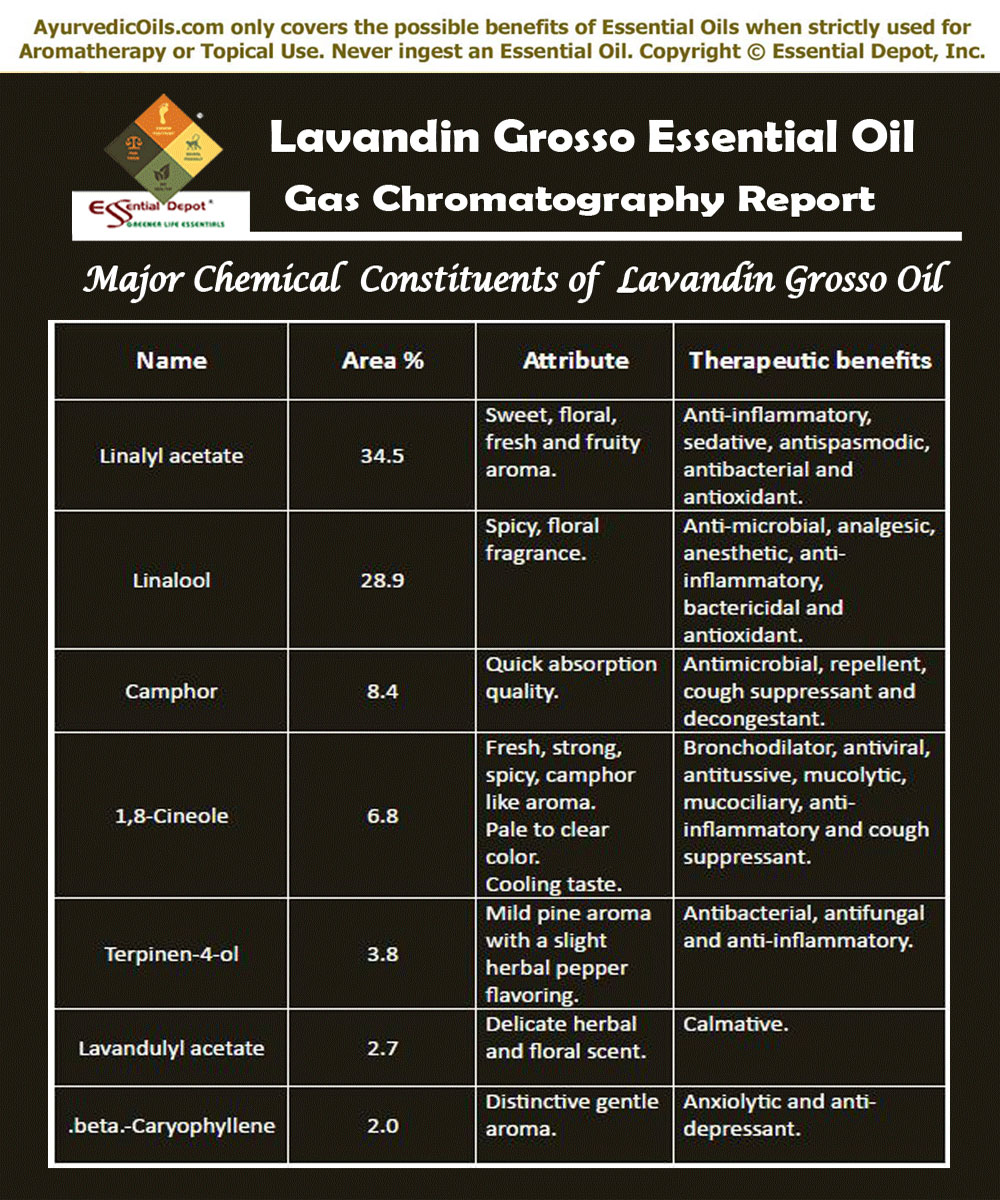
According to the Gas chromatography report, Lavandin Grosso oil constitutes of 25 chemical components that contribute to its fragrance, therapeutic attributes, consistency and quality. Of which, Linalyl acetate contributes to the highest proportion of Lavandin Grosso oil constituents with about 34.5% of its total composition.

Just click on:

I believe that this must certainly help you in getting to know the exclusive information about these prime chemical constituents of Lavandin Grosso oil.

The table crafted below clearly depicts the unique nature and contributions of these biochemical constituents to the healing magnificence of Lavandin Grosso essential oil.

lavandin-oil

Therapeutic properties of Lavandin Oil:

The remedial properties are antiseptic, antidepressant, analgesic, vulnerary, expectorant, cicatrisant, nervine, antispasmodic and stimulant.

Ayurvedic health benefits of Lavandin Essential Oil:

Many of us misconstrue that Ayurveda and the other traditional healing practices are meant for the old people or people who are still attached to the Stone Age. Ayurveda is the first and foremost healing methodology to love human beings and appreciate their individual identity, feelings, characteristics and behavioral patterns.

When all other medical sciences in this world aim at treating illnesses, this ancient healing system focused on treating individuals and not just their illnesses.

Ayurvedic philosophy declares that human beings are a part of nature and a person’s wellness or sickness depends upon his balance or imbalance with nature. Diseases occur when an individual’s mind and body is out of balance with nature. It is for this reason Ayurvedic remedies are based upon natural medicines for striking perfect balance with an archway to prevention and healthy aging.

Every individual is distinctive with a unique individual constitution that comprises of three biological energies known as doshas. They are vata, pitta and kapha. Each of these doshas governs certain functions of our body where vata is responsible for nervous functions and circulation, pitta controls metabolism and body temperature and kapha governs fluid movements, consistency and skin health.

Predominance of any of these doshas determines the personality, character, physical set up and the mental makeup of a person.

Imbalance between any of these doshas causes illness and Ayurvedic medications are prescribed in such a way that the imbalances are treated. Lavandin essential oil is said to reduce kapha and pitta dosha and has a neutral effect on vata dosha.

Let’s take a look at the Ayurvedic health benefits of Lavandin essential oil:

lavandin-broucher1. Benefits to the skin:

Popular author Susanne Fischer-Rizzi states that Lavender has more than 167 tested and proven medicinal uses. Bryan Miller and Light Miller in their book ‘Ayurveda and Aromatherapy’ says that Lavender is a must have essential oil in your first-aid kit or travel bag. With much similar aroma and healing properties like Lavender, Lavandin essential oil is also beneficial in a number of ways especially for nurturing skin health.

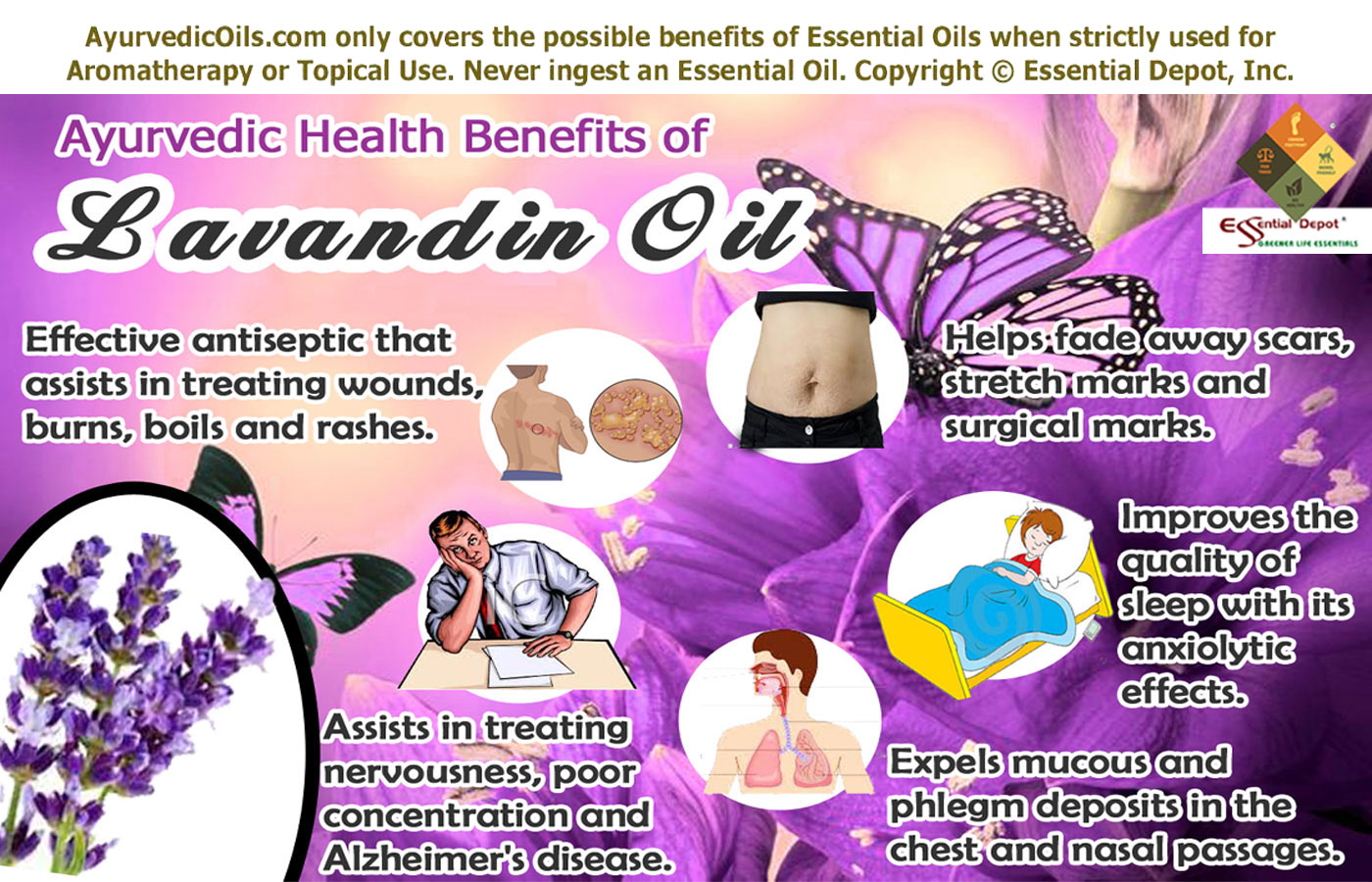
With excellent antiseptic, vulnerary and cicatrisant properties Lavandin essential oil has been proven effective for treating numerous skin problems. It keeps the skin clean and fights against various germs.

The ability of this oil in killing germs contributes to its effectiveness in treating dermatitis, scabies and few other infectious skin disorders. Being an effective antiseptic Lavandin essential oil can assist in treating wounds, cuts, burns, boils and rashes. It protects the open wounds from being septic or getting affected by the harmful organisms in air like tetanus.

The vulnerary properties of this oil helps in speeding up the process of healing wounds especially in case of incisions, surgical wounds, cuts or other accidental wounds. Applying 2 drops of Lavandin essential oil mixed with 1 ml of coconut oil is a sure-shot remedy for quick healing of wounds, protecting from infections and for fading away the scars and marks left by wounds, acne, stretch marks, surgical marks, cracks and other marks related to pregnancy.

Lavendin essential oil improves blood circulation and encourages the growth of new skin cells which contribute to its natural anti-scarring properties. You can also blend 3 to 4 drops of Lavendin oil in 2 ml of olive oil or to your regular skin care lotion and gently massage on to the skin to clear blemishes, treat sluggishness, dry skin and for improving the natural glow of the skin.

2. Benefits to the mind:

Lavandin essential oil has a rejuvenating and calming aroma that acts as an admirable antidepressant oil. The presence of camphor, linalyl acetate and terpineol-4 enhances its soothing and stimulating attributes that benefit the mind and heart in numerous ways. Lavandin Grosso oil is regarded as a great natural remedy for alleviating stress, fatigue, anxiety and depression. Certain studies have proven that Lavandin essential oil have anxiolytic effects that aid in improving the quality of sleep and save you from insomnia and nightmares.

Feelings of loneliness, lack of self-confidence, insecurity, loss of love or your near ones and work pressure may drag you down and waive a red flag to all your endeavors. All you need to do is to waive back the pleasant Lavandin flag that can uplift your spirit, enhance your self-confidence, fight against depressive feelings and reassure your success.

Adding 2 to 3 drops of Lavandin oil in your vaporizer, burner, diffuser, aroma lamp or bath tub can help in combating negative thoughts and grant the power to swim against the tide.

A 2009 study on ‘The use of the essential oil of Lavandin to reduce preoperative anxiety in surgical patients’ by the United Hospital, MN, USA tested about 150 adult patients to assess the effectiveness of Lavandin essential oil in reducing preoperative anxiety than other standard care methodologies. This study came up with an amazing result stating “Controlling for baseline anxiety and pain, the lavandin group had significantly lower anxiety on OR transfer, suggesting that lavandin is a simple, low-risk, cost-effective intervention with the potential to improve preoperative outcomes and increase patient satisfaction.”

3. Benefits to the respiratory system:

Adding 2 to 3 drops of Lavandin essential oil in steam inhalation or blending 2 drops of Lavandin oil with 1 ml of coconut oil and massaging it on chest, throat and back aids in treating cough, cold, bronchitis, sinusitis, chest congestion and other breathing problems. This is mainly due to the antiseptic properties of Lavandin oil that is proven to combat germs causing respiratory problems and its expectorant values that expel mucous and phlegm deposits in the chest and nasal passages causing cough and congestion.

4. Benefits to the entire body:

Lavandin Grosso oil benefits the entire body by supporting the functions of the nervous system. Using it as a massage oil by mixing 5 drops of this oil with 2.5 ml of jojoba oil aid in strengthening the nervous system and activate the nerves that pass on to different parts of the body. This is of great assistance in treating nervousness, sluggishness, convulsions, Alzheimer’s disease, lack of concentration and reflexes and certain other nervous problems.

Jane Buckle says “Lavandin Grosso was shown to be very effective against non-tubercular opportunistic mycobacteria (NTM) which is common in AIDS. Grosso is high in linalool for infections.” Lavandin essential oil also aids in treating pain, inflammation, rheumatism, influenza, headache, stiff joints, muscular problems etc, with its analgesic and anti-inflammatory properties.

Disclaimer:

This article is only for the purpose of information and is not destined for diagnosis or to substitute any prescribed medicines or professional advice. Never use essential oils internally and always use them in a diluted form for topical application as pure and organic essential oils are highly concentrated liquids and may cause harm if not used properly. Prevention is better than cure and it is always advisable to consult your Ayurvedic practitioner before choosing the right essential oils for your unique constitution and health condition.

The MSDS (Material Safety Data Sheet) of Lavandin Grosso oil is readily available for your enhanced safety and better usage.

Gas Chromatography Report (GC analysis) of Lavandin Grosso oil.

Thought for the day:  

The Universe is one great kindergarten for man. Everything that exists has brought with it its own peculiar lesson.     -Orison Swett Marden

Suggested Reading:

  1. Lavender: The Genus Lavandula (Medicinal and Aromatic Plants – Industrial Profiles) from CRC Press
  2. ISO 8902:1999, Oil of lavandin Grosso (Lavandula angustifolia Miller x Lavandula latifolia (L.f.) Medikus), French type by ISO TC 54
  3. The Lavender Garden: Beautiful Varieties to Grow and Gather by Robert Kourik
  4. The Lavender Lover’s Handbook: The 100 Most Beautiful and Fragrant Varieties for Growing, Crafting, and Cooking by Sarah Berringer Bader

Reference Links:

  1. The use of the essential oil of Lavandin to reduce preoperative anxiety in surgical patients’ by the United Hospital, MN, USA published in PubMed
  2. Lavandula by Wikipedia
  3. Lavandula x intermedia ‘Grosso’ by Missouri Botanical Garden
  4. Health Benefits of Lavandin Essential Oil by Organic Facts

Jamarosa Oil

Jamarosa-Banner-newDiscerning lovers of nature will always choose Jamarosa oil instead of 4 different oils to explore the magic of rosy, citrusy, spicy and grassy fragrance put together in a single bottle. Yes! Jamarosa essential oil is the proud owner of these entire diverse aromas, for which it has been used in the perfume industry for ages together.

Scientifically termed as Cymbopogon khasians, Jamarosa is a brilliant hybrid variety crossed between Cymbopogon nardus var. confertiflorus (Citronella) and Cymbopogon jwarancusa (Jwarankush).

Often used for instilling rose like fragrances, Jamarosa has also been used in the field of Ayurvedic medicine for treating fever, insect bites, blood impurities, fungal infections, vomiting and skin problems.

Purchase Jamarosa Essential Oil – Retail – 4 oz – CLICK HERE

Historical significance and cultivation of Jamarosa:

Also called as Jamrosa, this aromatic herb is a popular grass hybrid and a renowned wing of the Cymbopogon family. Like most of the celebrated herbs, Jamarosa is also indigenous to the Indian subcontinent and is grown extensively in Southern India and certain other states including Madhya Pradesh, Chhattisgarh and Maharashtra.

Being a hardy and tough grass variety, Jamarosa grows well in various types of soils supported by humid and warm climatic conditions and enough sunshine and water. This grass hybrid is characterized with its light yellowish color and this hybrid variety is generally a medium sized one. Jamarosa grasses have the potential to purify environmental toxic waste, renew the level of ground water and check soil erosion.

The most exotic fragrance and medicinal attributes of this grass variety comes from its parental hybrids, Cymbopogon jwarancusa and Cymbopogon nardus var. confertiflorus. Among these, Jwarancusa is an interesting species and its name is extracted from two Sanskrit terms, “Jwar and Ankusha”, which means “fever and breaker” respectively. Just like its name, this herb is a trusted remedy for treating fever and blood impurities.

Cymbopogon jwarancusa has antimicrobial and antioxidant properties that are contributed to its bio-chemical components. Many researchers have proved the effectiveness of this Ayurvedic herb in the treatment of blood disorders, vomiting, skin problems, unconsciousness and abdominal tumors.

The next parental hybrid of Jamarosa plant is Cymbopogon nardus var. confertiflorus, which is commonly called as Citronella. This fresh lemony and sweet-smelling grass variety is a natural air purifier and an established insect repellant. Being a blend of these two beneficial plant varieties, Jamarosa is also said to inherit the medicinal and therapeutic values from its parental hybrids.

The enriching aroma of this grass hybrid has made its use vital in the perfumery industry especially for creating rose like fragrances. The sturdy grass fibers are used in the making of statues and idols having splash of Paris. Jamarosa grass is also been supplied as raw materials for industries that use fibers. It is also used as a feed for cattle and as natural manure.

Jamarosa is a popular ingredient in the making of agarbatti or traditional incense sticks, raw agarbatti and organic insect repellants.

Therapeutic uses and chemical constituents of Jamarosa oil:

The essential oil of Jamarosa has bactericidal, antiseptic, febrifuge, sedative, relaxant, antimicrobial, digestive and stimulant. The primary chemical components of Jamarosa oil are geraniol (75%), geranyl acetate (20%) and limonene.

Ayurvedic health benefits of Jamarosa essential oil:

Ayurveda is undoubtedly the pioneer of the medicinal world, and is lovingly beckoned as the Mother of all healing systems on earth. Being a 5000 years old healthcare methodology, Ayurveda focuses on natural remedies for curing illnesses, prevention of diseases and longevity.

Ayurvedic medicine was known to be gifted by Lord Brahma, the Lord of Creation to Acharya Dhanvantari, famously called as the God of medicine of Ayurveda and as the physician of Gods. Among the 4 sacred books (Rig, Yajur, Sama and Atharvaveda) or Vedas of the ancient Hindu mythology, Ayurveda is a vital part of Atharvaveda.

The idealistic practices of Ayurveda rests on Mother Nature for treatment of mankind as it is raised on the trust that everything on earth is a part of Nature and the wellness and illness of a person is strongly determined with his/her balance with Nature.

The principles of the mythological saints and Vedic entities strongly state that the entire universe is made up of five fundamental elements of nature, namely space, earth, water, fire and air.

Mankind is also made of these vital elements, where earth represents the muscles and bones, water represents the blood and other vital fluids, fire represents the metabolic force and body temperature, air represents the breathing mechanism and space is the soul or life energy that keeps a person alive.

Based on these fundamental elements, Ayurveda classifies human beings as a representation of the biological energies known as doshas, namely vata, pitta and kapha. Vata is a combination of space and air, pitta is fire and water and kapha is water and earth.

Every person has a unique individual constitution or Prakriti with a combination of all the three doshas in a particular order based upon Nature’s law with a predominance of any one of these doshas. This predominance assists in determining the character, personality, traits and behavioral patterns of a person.

Absolute balance between these doshas as per their natural setup indicates heartiness and doshic imbalances due to lifestyle changes, irregular food habits, climatic variations and other disruptive behavior leads to illnesses.

Ayurvedic treatment begins with the tracing of the unique individual constitution and the treatment methodologies also differ from individual to individual even for the same sickness. This is because Ayurveda strongly believes that individual is unique and the means of treating their health condition should also be unique.

The major Ayurvedic therapies include herbs, Ayurvedic essential oils, yoga, Pranayama (the art of balanced breathing), simple physical exercises, meditation, Panchakarma or the detoxification techniques, Abhyanga or Ayurvedic massaging, taking up an Ayurvedic routine and much more.

The essential oil of Jamarosa is known to appease vata, pitta and kapha imbalances. Come let’s go through the Ayurvedic health benefits of Jamarosa essential oil in a jiffy.

I’m ready to take you through the effective uses of Jamarosa oil in detail. Are you ready for the retreat?!

Jamarosa-broucher1. Pampers the skin and placates skin disorders:

Few sources state that Jamarosa has similar medicinal benefits like its sibling grass variety, Palmarosa. The book ‘Ayurveda and Aromatherapy’ by Light Miller and Bryan Miller quote Cymbopogon martinii (Palmarosa) as “Palmarosa is widely used in Ayurvedic skin care. It is good for all skin types because it is a cellular stimulator and supports all cell regulation. It’s highly antiseptic, calming, uplifting and anti-depressive.”

Jamarosa essential oil also has bactericidal, antiseptic, stimulating and invigorating properties that aids in assisting cellular regulation and repairing of the damaged skin cells. The antiseptic value of this oil helps in combating germs and infectious micro-organisms like bacteria that inflates skin problems.

A blend of 2 drops of Jamarosa oil with 2 drops of Palmarosa oil and 2 ml of Jojoba oil can work like a wonder on your skin. Applying this nourishing blend on your skin can help in restoring the natural sustenance of the damaged skin cells, eliminating the dead cells and in promoting the growth of new and healthy cells.

Applying it in slow circular movements on wrinkles and scars can support in invigorating the skin, retaining the skin suppleness, enhancing the collagen and helping in diminishing scars, marks and wrinkles, treat fungal infections with its antioxidant, antifungal and anti-bacterial properties.

The great news is that Jamarosa oil suits all types of skin and is perfect for use during all seasons of the year. It is also helpful in the treatment of scar tissues in wounds, dermatitis and other skin infections.

2. Calms the nerves and beats the ill-effects of stress:

The essential oil of Jamarosa has a pleasant, engaging, refreshing and energizing aroma that stimulates the nerves, calms the mind and inculcates positive effects in the limbic system, the control center of the brain that is responsible for passing on commands to the system on feelings, thoughts and behavioral responses.

Stress is the slow poison that hinders the normal functions of the body and leaves a blank effect on the mental abilities. The main reason for stress is suppressing the mind with too many things at a particular time. When the mind struggles or suffers in tackling with too many factors than its ability, mental stress or distortion occurs.

Stressful situations spoil the entire curriculum and results in mood-fluctuations of the entire environment around us. It also ends up in depression and deep ill-effects on the central nervous system. Fatigue, anger, anxiety, fear, memory problems, feelings of loneliness, lack of appetite, low productivity, insomnia and suppression are certain other ill-effects of stress and nervous tension.

Jamarosa essential oil has stimulating, relaxant and sedative effects that supports the functions of the limbic system and aids in promoting positive feelings. Massaging your system with 5 drops of Jamarosa oil along with 5 drops of Rose Geranium oil, 5 drops of Juniper Berry oil with 100 ml of coconut oil can uplift your senses, pacify your nerves, soothe tensed muscles and support in bringing absolute tranquility.

You can also add 2 drops of Jamarosa oil in your diffuser or air freshener or bathing water every day for an energetic start on every rising day. 1 drop of this oil added to your hankie or a tissue can recharge your mental power on any given time during the day.

3. Aromatic insect repellant:

Being an offspring of the most popular natural insect repellant, Citronella, Jamarosa also inherits the power of combating harmful insects like mosquitoes and bed bugs. 2 drops of Jamarosa oil with 2 drops of Citronella oil along with 2 ml of  olive oil can be rubbed into your skin to protect you from insect bites. This blend can also help in treating the ill-effects of insect bites like rashes, itching and allergies.

Adding 2 drops of this oil in your burner, vaporizer or diffuser is also a great idea to safeguard your loved ones from mosquitoes and other insect bites.

4. Appeases the digestive system:

Jamarosa oil has digestive, stimulant and relaxant properties. This helps in promoting trouble-free digestion, calming upset stomach, appeasing the irritable bowel along with stomach lining and treating indigestion.

Adding 1 drop of Jamarosa oil to your hankie or a tissue paper can help in enhancing the appetite and assisting in soothing the lining of the stomach and intestines. You can also massage your abdomen with 2 drops of Jamarosa oil mixed with 2 drops of Rose Geranium oil and 2 ml of sesame oil for supporting your digestive difficulties.

5. Fights anxiety and promotes peaceful sleep:

The essential oil of Jamarosa has a slightly rosy and fruity aroma that instills uplifting and calmative effects on the nervous system. These attributes helps the body in fighting against insomnia, anxiety and fatigue.

2 drops of Jamarosa oil mixed with 1 drop of Palmarosa oil in your diffuser or air freshener can be an excellent aid in promoting peaceful sleep by relaxing your nerves, tranquilizing your mind, and in reducing anxiety, restlessness and worries. What next? A refreshing start to a promising day is guaranteed.

6. Reduces fever and helps relieve respiratory infections:

As mentioned earlier, Cymbopogon jwarancusa is one of the mother hybrids of Jamarosa oil, where the term ‘jwarancusa’ is taken from the two Sanskrit terms, “Jwar and Ankusha”, literally meaning “fever and breaker”.

Jamarosa essential oil also extorts this property from its parental hybrid and is used in curing fever, cold, microbial infections, blood impurities and certain other respiratory disorders with its anti-microbial and antioxidant properties.

Generally, common cold and few other respiratory infections are highly vulnerable. Using Jamarosa oil in your bathing water daily (preferably 2 drops) can assist in controlling the spread of such infections by combating the growth of microbes responsible for health conditions like fever and cold.

You can also use 2 drops of Jamarosa oil in steam inhalation for relieving from blocked nasal passages and sore throat. Massaging your foot soles with 2 drops of Jamarosa oil with 2 drops of Gingergrass oil mixed with 3 ml of coconut oil can aid in reducing fever.

Disclaimer:

This article is only for educational uses and is not suggested for diagnosis or for replacing any expert medical advice or prescription medicines. We are not healthcare professionals and this information is circulated only with the idea of sharing the ancient healing wisdom of Ayurvedic medicine, the mother of all remedial practices.

Never take essential oils internally and is only recommended for dermatological purposes. This is because pure and organic essential oils are extremely concentrated substances and may cause allergies or other negative effects, when used on the skin directly.

Consult with your healthcare expert or Ayurvedic professional before choosing the suitable essential oils for your health condition and dosha type or your unique individual constitution. Keep away from children and care should be taken if you are nursing or a pregnant mom.

Thought for the day:

Bare feet on the grass comfort the spirit and connect the body to the earth all at once!  – Maximillian Degenerez

Suggested Reading:

  1. Essential Oil-Bearing Grasses: The genus Cymbopogon (Medicinal and Aromatic Plants – Industrial Profiles) from CRC Press
  2. Cymbopogon; The Aromatic Grass – Monograph from Central Institute of Medicinal and Aroma
  3. Aromatherapy for Health Professionals, 4e (Price, Aromatherapy for Health Professionals)by Shirley Price Cert Ed FISPA MIFA FIAM, Len Price Cert Ed MIT (Trichology) FISPA FIAM
  4. Insect Repellents Handbook, Second Edition from CRC Press

Reference Links:

  1. Oil of Jamarosa – Specification published by the Bureau of Indian Standards
  2. Jamarosa by Agricultural Products India
  3. Antifungal, anti-aflatoxigenic, and antioxidant efficacy of Jamrosa essential oil for preservation of herbal raw materials by Prashant Kumar Mishra, Ravindra Shukla, Priyanka Singh, Bhanu Prakash, Akash Kedia, Nawal Kishore Dubey published in International Biodeterioration & Biodegradation

Citriodora Oil

Citriodora-bnr.jpgCitriodora or Lemon eucalyptus is a jewel in the crown of the Eucalyptus family, Myrtaceae. With a revivifying and invigorating aroma of lemon and eucalyptus, this lemon-scented eucalyptus oil is used in fixing feelings of abandonment and mental agitation along with poor concentration and confusions. The essential oil of Citriodora is extracted from the elongated leaves of the Lemon-scented gum tree, botanically known as Eucalyptus citriodora by steam distillation.

Lemon eucalyptus oil is used in Ayurvedic treatment for asthma, cold, cough, arthritis, hypertension, shingles, migraine pain, rheumatism, wounds, inflammation, bacterial and fungal infections as well as a non-toxic insect repellent for keeping away from mosquitoes, ticks and fleas.

Purchase Citriodora Essential Oil – Retail – 4 oz – CLICK HERE

Purchase Citriodora Essential Oil – Wholesale – CLICK HERE 

Historical uses and importance of Citriodora and its essential oil:

Lemon eucalyptus or Citriodora is a type of Eucalyptus tree in the Eucalyptus genus. This tree is indigenous to north eastern and tropical parts of Australia but few sources state that it is native to Vietnam and Madagascar. Even today about 75% of the trees grown in Australia belongs to the Eucalyptus family.

Brazil and China are the largest producers of commercial Lemon eucalyptus essential oil and this tree is also grow in India, South Africa, Guatemala, Egypt, Colombia, Indonesia and Albania. Citriodora is also said to be a cross between lemon and eucalyptus varieties. This large handsome evergreen tree grows up to 50 m tall and the broad lanceolate leaves exhibit a strong lemon and eucalyptus aroma when crushed.

Citriodora has its remedial history of being used in the traditional as well as modern medicine in the east and west, mainly as an aid for respiratory infections and for keeping insects at bay. The infusion made from the leaves of this tree has been used in reducing fever, treating gastric conditions and fighting against microbes causing such infectious diseases in the Aboriginal tradition.

Ayurveda and the Traditional Chinese Medicine (TCM) used the aromatic leaves of this plant in steam inhalation for clearing nasal congestion, easing cold, flu, asthma and sore throat. The paste of this leaves or the leaves poultice were also used in healing wounds, cuts, skin infections, sores, cuts, blisters, chicken pox, joint pain, rheumatic pain, fungal infections and other few other infections.

Lemon eucalyptus oil is a famous ingredient in soaps, aromatic candles, natural insect repellents, lotions, shampoo, toothpastes, deodorants, perfumes, detergents, insecticides, waxes and in the flavoring of few other products since the traditional times.

Remedial properties and chemical components of Citriodora essential oil:

The medicinal benefits of Lemon eucalyptus oil are often attributed to its high content of citronellal component (about 80%). The other chemical constituents include citronellol and other monoterpenes.

The citronellal constituent of the cultured oil is transformed into cis- and trans- isomers of p-menthane-3,8-diols (PMD), which is a natural process that  happens as the Eucalyptus leaves grow old. This oil is also called by other names like Para-menthane-3,8-diol, OLE,  PMD, P-menthane Diol,  Wild Eucalyptus Citriodora, P-menthane-3,8-Diol, Spotted Gum and Quwenling.

The therapeutic properties of this oil are calmative, insecticide, antibacterial, expectorant, diuretic, analgesic, fungicidal, antimicrobial, antiviral, anti-rheumatic, germicidal, anti-inflammatory, disinfectant and antiseptic.

Ayurvedic health benefits of Citriodora essential oil: Ayurveda is the ancient Indian healing methodology which exactly means ‘the knowledge of life (Ayur-life + Veda-knowledge)’. If you are completely new to this oldest healing science on earth, then join for a wonder ride where you can explore what Ayurveda has intact for you.

Ayurveda has thousands of dimensions and everything that is natural and organic falls into this bucket, as Ayurvedic principles abide by Mother Nature and strongly believe that everything in the universe is a part of nature and is built with the same five elements of nature, namely earth, fire, air, water and space.

The most imperative approaches of the Ayurvedic regime are holistic approach, which fervently states that health is a combination of the wellness of the body, psyche and the soul. This is clearly stated in Charaka Samhita, the most trusted Ayurvedic encyclopedia as “The three – body, psyche, and soul – act as a tripod. The world stands upon them, and within them, the world abides.” Ayurveda trusts that a healthy body is the absolute home for a healthy mind and a pure soul.

Spiritual aspects play a vital role in Ayurvedic healing. It has been said a small, sincere prayer can bring in enormous positive energy to deal with a difficult day. Spirituality simply means the trust and the natural bond with the Supreme Power that shells and leads the Cosmos. By inculcating this practice, every individual will understand his responsibilities and righteousness to lead a glorious life.

Ayurvedic philosophies bring in the other few vital practices of Ayurveda that includes prevention of illnesses by treating the root cause of a disease instead of the symptoms. Prescribing natural remedies like herbs, essential oils, meditation, yoga, prayer and a meaningful Ayurvedic routine is the key to this healing wisdom. By this way, it promotes a disease-free living and leads to healthy aging and longevity.

Every Ayurvedic treatment starts with the analysis of the dynamic biological energies that are a pictogram of the five natural elements. They are known as doshas, namely pitta (fire + water), vata (air + space) and kapha (earth + water). These three energies are there in every person in unique ratios to make up the individual constitution. Balance between these doshas indicates health and imbalance leads to sickness.

Ayurvedic therapies are prescribed in such a way that they treat the doshic imbalances and help strike absolute balance according to the Prakriti (fundamental constitution or nature) of an individual. With its moisturizing and heating energy, Citriodora essential oil is known to lessen the excess of kapha and vata energy and increase pitta dosha when deficit.

The Ayurvedic health benefits of Citriodora essential oil are:

Citriodora-broucher1. Alleviates rheumatic and arthritic pain:

Rheumatism and arthritis are mainly caused due to surplus deposits of toxic substances, salt, uric acid and excess water causing improper blood circulation especially in the joints. Water retention and stagnation of other fluids in the body are the symptoms of kapha intemperance.

Citriodora essential oil treats kapha surplus and regulates its flow in the system. Massaging the affected parts with 5 drops of Citriodora oil blended with 2.5 ml of coconut oil can help in eliminating the excess deposits and toxins through sweat and urine and enhances blood circulation. This massaging can also help in treating sore muscles, joint pain, and backache and can also serve as a vitalizing massage for people indulged in sports.

This oil relieves pain and reduces swelling with its heating effect along with its analgesic and anti-inflammatory properties. Adding 2 drops of Citriodora oil in warm bathing water or in hot or cold compress is also another alternative to treat arthritic and rheumatic pain. Performing Pranayama, the art of balanced breathing can help in discharging about 70% of the toxins in the body through exhalation.

2. Non-toxic insect repellent:

The essential oil of Eucalyptus citriodora is suggested by the FDA (Food and Drug Administration, U.S) as a non-toxic alternate for DEET, which an element used in other repellants, making it unsafe. With a rosy-citronella fragrance and faint lemon undertones, Citriodora essential oil is an ultimate natural remedy for keeping away from harmful insects including mosquitoes, bugs, ticks and fleas.

All you need to do is to add 3 to 4 drops of Citriodora oil in lamp oils, diffuser, lotions, patio sprays, body mists and vaporizers for preventing your lovely family from the adverse effects of insects and pests, which may otherwise cause infectious diseases like malaria, dengue etc.,

3. Relieves respiratory infections:

Problems of the respiratory system become severe when the mucous and phlegm discharges thicken and block the bronchial and nasal passages. Deposits of mucous and phlegm is due to the vitiation of kapha dosha, which is responsible for problems caused due to stagnation of water and fluids in the body.

Citriodora essential oil has kapha-reducing properties along with the antiviral and antimicrobial properties that assist in destroying the harmful virus and microbes responsible for making respiratory infections vulnerable. 2 to 3 drops of this oil added to hot water for steam inhalation helps in loosening the phlegm and mucous deposits.

By this way it helps in relieving chest congestion, nasal congestion, cough, bronchitis, asthma, sore throat and cold. Adding 2 drops of Lemon eucalyptus oil to your decongesting ointment and gently rubbing on your chest, back and throat can fasten your healing process.

4. Grants mental clarity and improves concentration:

Pitta energy is responsible for body temperature, metabolic functions, decision-making potential and for instilling the feelings of perfection in your routine. Deficit of pitta energy or pitta imbalance along with other environmental and lifestyle factors can end up in chaos, poor concentration, sluggishness, lack of self-confidence, lonesomeness and distress.

Eucalyptus citriodora oil enhances pitta energy. It has a positive effect and supports in opening the heart chakra, which is responsible for forgiveness, compassion, love for self and others and the solar plexus chakra that is incharge for feelings of self-empowerment and self-esteem.

Adding 3 drops of Citriodora oil in your burner, vaporizer, diffuser or air freshener can help in improving your self-confidence, focus, shrewdness and clarity of thoughts with its fresh, citrusy, warming, camphoraceous and woody aroma.

Massaging your body with 10 drops of Citriodora oil mixed with 5 ml of olive oil or adding 3 drops of this oil to your bath can help in rejuvenating the mind, body and the soul.

5. Benefits for skin and hair:

Since the traditional times, Citriodora leaves and its essential oil have been used in the treatment of various skin disorders like burns, scabies, wounds, dermatitis and erysipelas. Citriodora oil has antiseptic, antibacterial, antifungal and antiviral properties that help in combating the growth of hazardous micro-organisms causing skin disorders and making wounds, cuts and burns more infectious.

A 2002 study on ‘Correlation between chemical composition and antibacterial activity of essential oils of some aromatic medicinal plants growing in the Democratic Republic of Congo’ by the Department of Pharmaceutical Sciences, Belgium published that Eucalyptus citriodora is one among the most effective essential oils exhibiting the most active antibacterial effects and inhibited the growth of various bacteria.

Another research done in 2007 on ‘The antibacterial effect of Eucalyptus citriodora essential oil against a battery of clinically important bacterial strains’ at the Phytochemical Pharmacological and Microbiological Laboratory in India proved that “Citriodora oil is highly active against Alcaligenes fecalis and Proteus mirabilis, and active against Staphylococcus aureus, Escherichia coli, Proteus vulgaris, Salmonella typhimurium, Enterobacter aerogenes, Pseudomonas testosterone, Bacillus cereus, Citrobacter freundii. Its healing efficiency was said to be equally comparable to the powerful Piperacillin and Amikacin antibiotics.”

As a potent antifungal oil, Citriodora has been proved effective in treating candida. When tested in a laboratory analysis in comparison with other essential oils possessing synthetic antibiotics against candida, Eucalyptus citriodora oil showed strongest anti-candidal properties.

5 drops of Citriodora oil blended with 3 ml of Almond oil and applied to infectious wounds, cuts, blisters, boils, ringworm, candida, athlete’s foot, rashes and redness due to insect stings and bites, acne and few other skin conditions with its eucalyptus and citrusy effects.

Eucalyptus citriodora oil is also a famous ingredient in shampoos, hair oils and few other hair care formulas. 10 drops of Citriodora oil added to 5 ml of coconut oil can serve as an assured remedy for alleviating dandruff, dry scalp, itching and lice, when massaged gently on the scalp followed by a hair wash with a mild shampoo (preferably 8 ml) mixed with 10 drops of Citriodora oil will leave you with a dandruff-free, lice-free, oil-free and clean smelling hair.

6. Disinfects and purifies the air:

Citriodora essential oil has a lemony, fresh, woody and energizing aroma that makes its use imperative in disinfecting, deodorizing and purifying the air. 5 to 10 drops of Citriodora essential oil can be added to your sprayer pump, diffuser, air freshener or vaporizer for killing the microbes in the atmosphere and spreading the magic of freshness around.

Disclaimer:

This article is for the purpose of education only and is not meant for curing, preventing or diagnosing any health condition or for substituting any prescribed medication or professional advice of your medical expert.

Do not use essential oils internally and always dilute essential oils before using it externally. Keep out of reach of children and avoid this oil if you are pregnant or a nursing mom. Ensure that you seek the advice of your Ayurvedic practitioner or healthcare expert before selecting the appropriate essential oil for your unique state of health and individual constitution.

Thought for the day:

Every particular in nature, a leaf, a drop, a crystal, a moment of time is related to the whole, and partakes of the perfection of the whole. -Ralph Waldo Emerson

Suggested Reading:

  1. Eucalyptus: The Genus Eucalyptus (Medicinal and Aromatic Plants – Industrial Profiles) from CRC Press
  2. Eucalyptus Plantations: Research, Management and Development by Run-Peng Wei, Daping Xu
  3. Modern Phytomedicine: Turning Medicinal Plants into Drugs from Wiley-VCH
  4. Phytochemical and Antifungal analysis of E citriodora L. extracts: Phytochemical Constituents of Eucalyptus citriodora L. Responsible for Antifungal Activity against Pathogenic Organisms by Sehrish Iftikhar, Shabnam Javed
  5. Effect of NaCl on emergence and growth of a range of provenances of Eucalyptus citriodora, Eucalyptus populnea, Eucalyptus camaldulensis and Acacia … article from: Forest Ecology and Management] by P.A. Madsen, D.R. Mulligan

Reference Links:

  1. Eucalyptus Citriodora by Globinmed
  2. Eucalyptus oil (Eucalyptus citriodora) by Sigma-Adrich
  3. Oil of Lemon Eucalyptus (PMD) by A Beyond Pesticides Fact Sheet
  4. Extraction of essential oil and oleoresin from Eucalyptus citriodora leaves using sub and supercritical CO2 Mirelle Dogenski*, Ana Carolina Velho, Débora Nascimento e Santos, Nilson Ferreira, Alessandra Lopes de Oliveira, University of São Paulo, Department of Food Engineering, São Paulo, Brazil
  5. Correlation between chemical composition and antibacterial activity of essential oils of some aromatic medicinal plants growing in the Democratic Republic of Congo’ by Cimanga K, Kambu K, Tona L, Apers S, De Bruyne T, Hermans N, Totté J, Pieters L, Vlietinck AJ, the Department of Pharmaceutical Sciences, Belgium