Category Archives: Essential Oils – Learn About and Purchase

Kappor Katcheri Oil

Kapoor-katcheri-bannerKnown as Shati in Ayurveda, Kappor Katcheri herb and the essential oil extracted from the rhizomes of this plant through steam distillation process has been in use traditionally for treating respiratory problems (like bronchitis and asthma), wounds, fever, ulcers, cough, indigestion, hiccough, inflammation and certain other eye problems.

Kappor Katcheri is a Hindi name and is scientifically called as Hedychium spicatum. It is a limb of the Ginger family Zingiberaceae. It is a small hardy ginger with bright and large white and orange flowers and is indigenous to the subtropical Himalayan regions in India at an altitude of 1000 to 3000 m.

Purchase Kappor Katcheri Oil – Retail – 4 oz – CLICK HERE

Purchase Kappor Katcheri Oil – Wholesale – CLICK HERE

Historical uses of Kappor Katcheri:

The aromatic and herbaceous rhizomes of Kappor Katcheri herb has been used in various traditions for treating numerous health conditions. The Ayurvedic healing system use this herb for curing respiratory problems, poor blood circulation, indigestion, wounds and inflammation. It was used as a natural remedy for treating diarrhea, vomiting, snake bite, fever and inflammation in the Traditional Chinese Medicine.

Kappor Katcheri was used in the Tibetan medicine for its heating potency and acrid taste and was also used as an effective insect repellant. Known as Sanna in Japan, the rhizomes of this plant are also used in preparing Attar Ekangi in India.

Therapeutic properties and chemical constituents of Kappor Katcheri oil:

The major chemical constituents present in Kappor Katcheri essential oil are limonene, cineole, terpinene, linalool, p-cymene, terpeneol and phellandrene. These components contribute to its remedial properties like antioxidant, antifungal, hypoglycemic, in vitro pediculicidal, spasmolytic, cytotoxic, tranquilizer, CNS depressant, febrifuge, anti-inflammatory, anthelmintic, analgesic, antispasmodic, hypotensive, vasodilator and antimicrobial.

Ayurvedic health benefits of Kappor Katcheri oil:

Ayurveda is the oldest of all healing methodologies on earth dating back to more than 5,000 years. This ancient science aims at educating humanity about the natural remedies in treating illnesses, ways to prevent sickness and pass towards healthy aging.

The Ayurvedic Physicians like Charaka, known as the Father of Medicine and Sushruta called as the Father of Surgery have enlisted almost all the possible natural remedies for a wide range of illnesses in the Ayurvedic encyclopedias well-known as Charaka Samhita and Sushruta Samhita respectively.

These ancient treasures talk about all types of healing herbs on earth and their effectiveness in curing various illnesses. According to these books, Kappor Katcheri is an excellent remedy for treating respiratory illnesses like asthma and bronchitis.

Along with herbs, Ayurvedic treatments include the use of essential oils, practicing healthy and balanced diet, Ayurvedic routine, meditation, physical exercises and yoga. Every human being is a unique part of nature according to Ayurveda and it suggests that the treatment should also be unique according to an individual’s constitution even for the same illness.

This constitution is made up of three vital bio-energies known as doshas that is vata, pitta and kapha. Every one of us will have a predominance of any one of these doshas that determines our health, personality and behavioral attributes.

Balance between these doshas indicates good health and imbalance between these doshas symbolize illness. Ayurvedic medications are prescribed in such a way that it treats dosha imbalances. Kappor Katcheri essential oil lessens pitta and kapha dosha and aggravates vata dosha.

The Ayurvedic health benefits of Kappor Katcheri oil are:

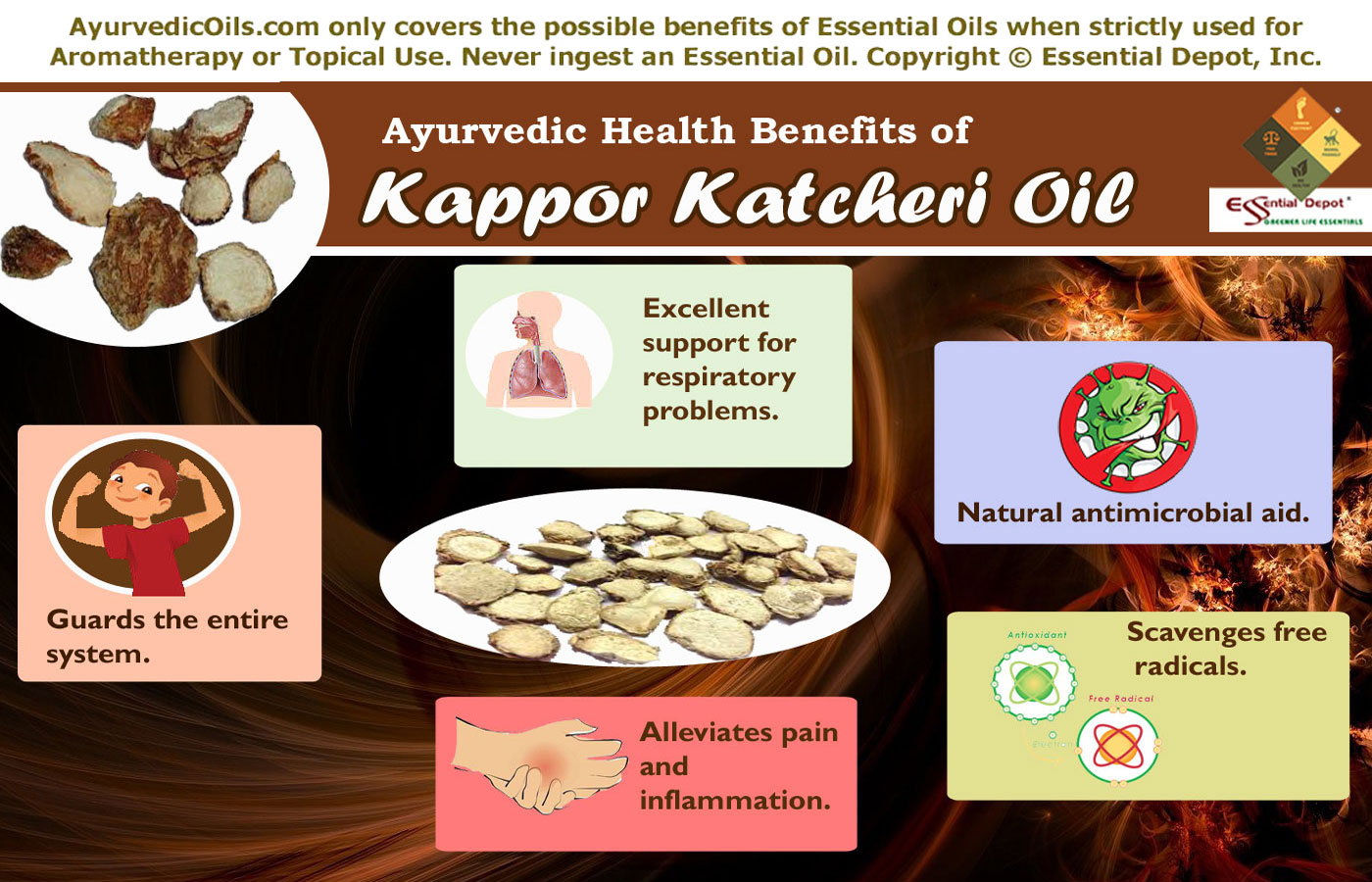
Kappor-katcheri-broucher1. Excellent support for respiratory problems:

The powdered rhizomes of Hedychium spicatum has been used clinically and in the traditional healing system for treating respiratory problems like respiratory inflammatory conditions including asthma, bronchospasms and bronchitis. It has also been proved effective in treating cough, cold, headache, fever, sinusitis and certain other breathing difficulties.

A 2012 study on ‘Pharmacological evaluation of extracts of Hedychium spicatum (Ham-ex-Smith) rhizome by Shivani Ghildiyal, Manish K. Gautam,Vinod K. Joshi, and Raj K. Goel’ states that the rhizomes of Hedychium spicatum has been reported to contain antiasthmatic, anti-inflammatory, vasodilator, hypotensive, spasmolytic and hypoglycemic properties.

Based upon various animal studies on mouse and Guinea pigs, this study concluded that the rhizomes of H. spicatum has anti-histaminic, bronchodilator, analgesic, anti-inflammatory activities that are essential to soothe pain, inflammation, asthma, bronchoconstriction and other respiratory problems.

Heat 2 drops of Kappor Katcheri oil with 1 ml of coconut oil and apply it on the throat, chest and back or add 2 drops of this oil in steam inhalation for relieving from congestion, bronchial spasms, asthma, cough and breathing difficulties.

The spicy and camphoraceous aroma of this oil along with its chemical constituents like terpinene and cineole have been proved as powerful analgesic and anti-inflammatory agents that assist in treating respiratory problems since the ancient times.

2. Natural antimicrobial aid:

The rhizomes and the essential oil of Kappor Katcheri herb are said to exhibit inhibitory activity against numerous Gram positive and Gram negative bacteria including Staphylococcus aureus and against few other fungal cultures according to a 2006 study on ‘Antimicrobial activity of Hedychium spicatum.’

Bacteria, fungi and certain other micro organisms are responsible for numerous health problems. These organisms damage the cells and weaken the immune system while making the body susceptible for diseases.

As a natural antimicrobial agent, Kappor Katcheri essential oil comes to your rescue when there’s a need to keep micro organisms at bay. Add 2 drops of this oil in warm bathing water to prevent and protect you from microbes. You can add 1 drop of Kappor Katcheri oil with 10 drops of coconut oil and apply it on wounds, ringworm, acne, cuts, athlete’s foot, nail infections and other skin allergies for visible results.

3. Scavenges free radicals:

Kappor Katcheri oil has antioxidant properties that assist in scavenging free radicals, which are known as reactive molecules engaged in numerous physiological processes and human illnesses like arthritis, cancer, ischemia, alcoholism, ageing, liver injuries and certain other toxin induced reactions.

A 2011 study on the ‘Antioxidant activity of Hedychium spicatum Buch.- Ham. Rhizomes’ by T Sravani and Padmaa M Paarakh, Department of Pharmacognosy, The Oxford College of Pharmacy, India published in the Indian Journal of Natural Products and Resources demonstrated that the rhizomes of Hedychium spicatum plant possess strong antioxidant activity.

You can use the essential oil extracted from these rhizomes as bath oil by adding 2 drops of Kappor Katcheri oil to your bath tub or by using it in massage by blending 4 drops of Kappor Katcheri oil with 2 ml of sesame oil for combating the effects of free radicals.

4. Alleviates pain and inflammation:

Kappor Katcheri oil possesses analgesic, anti-inflammatory, spasmolytic and tranquilizer effects that aid in treating pain, inflammation, arthritis and rheumatic problems. Blend 2 drops of Kappor Katcheri oil with 1 ml of sesame oil and massage on the affected area or add it in hot or cold compress to relieve pain, inflammation, spasms and irritation. When applied to the painful parts this blend will cause numbness and reduce your pain gradually.

5. Guards the entire system:

Apart from these major uses, Kappor Katcheri oil is known for its effectiveness in treating gastric ulcer, fever, intestinal infections, abdominal pain, blood purification, eye diseases and hypertension.

Disclaimer:

This article is only for the purpose of education and is not meant to replace any prescription medicine or professional advice of a medical expert. Do not use essential oils internally. Always use essential oils in a diluted form as pure and organic essential oils are highly concentrated liquids and can cause harm if used directly on skin.

It is advisable to do a patch test on your skin before using essential oils to test its suitability to your skin condition. Consult your Ayurvedic practitioner regarding the use of best essential oils for your unique health condition and individual constitution.

Thought for the day:

Every flower is a soul blossoming in nature. -Gerard De Nerval

Suggested Reading:

  1. Identification of Chemical Constituents of Plant Hedychium Spicatum: Methods for Phytochemical analysis and standardization by Alok Pratap Singh
  2. Evaluation of CNS potential of Hedychium spicatum: Rhizome Extract by Versha Parcha, Vichitra Kaushik, Arun Kumar
  3. Hardy Gingers: Including Hedychium, Roscoea, and Zingiber by T. M. E. Branney
  4. Paradise Found: Growing Tropicals in Your Own Backyard by Norman Winter

Reference Links:

  1. Pharmacological evaluation of extracts of Hedychium spicatum (Ham-ex-Smith) rhizome by Shivani Ghildiyal, Manish K. Gautam,Vinod K. Joshi, and Raj K. Goel published in PubMed
  2. Antioxidant activity of Hedychium spicatum Buch.- Ham. Rhizomes by T Sravani and Padmaa M Paarakh, Department of Pharmacognosy, The Oxford College of Pharmacy, India published in the Indian Journal of Natural Products and Resources
  3. Hedychium spicatum – Buch.-Ham by Plants for a Future
  4. Antimicrobial activity of Hedychium spicatum by G.S. Bhist, A.K. Awasthi, T.N. Dhole, Department of Microbiology, Sanjay Gandhi Post Graduate Institute of Medical Sciences, Lucknow, India published in ScienceDirect

Tagetes Essential Oil

Tagetes minuta is how the botanical world calls Marigold, also known as Mexican marigold, African marigold, Khaki Bush and Tagetette. It is another popular member of the Compositae plant family along with Sunflower and other daisies. With its strong, sweet, wild, fruity and slight citrus-like aroma, the essential oil of Tagetes is used worldwide for its effectiveness in treating infections and foot problems.

Ayurveda calls Tagetes as Sthulapushpa and the flowers of this plant were offered to God as a strong sign of surrender. Symbolizing auspiciousness, the bright orange or saffron color flowers of tagetes plant instills divine trust and its striking aroma is said to grant the willpower to surmount impediments.

Historical importance of Tagetes and its essential oil:

‘Tagetes’ is named after the Etruscan God ‘Tages’, the eminent God of wisdom. The familiar name ‘Marigold’ gets its name after Mother Mary and was initially called as ‘Mary’s Gold’.

The most popular historical use of Tagetes was its use as a promising insect repellent and this was the major reason for using these flowers as decorative hangings in the entrance of the homes. Infectious insects such as mosquitoes, flies and few other pests are kept at bay with the use of these flowers in the Indian sub-tropical regions.

Marigold is offered to Mother Mary on 25th March every year. This day is considered as the sacred day when the Angel Gabriel informed Mother Mary about the arrival of Jesus Christ. Certain traditions sow the seeds of this plant in pots, especially as a representation of blessedness and endurance to invite the heavenly power.

Australian troops brought Tagetes plants to their native land from South Africa after the Boer War and used it as an important ingredient in numerous foot medications. It is also said that Marigolds were traditionally used for creating psychic awareness and is known to augment mental alertness.

The essential oil of Tagetes is also used in many perfumes and was also used as diluted oil for killing young insects in open wounds.

The traditional Chinese medicine used the flowers of Tagetes minuta in the treatment of cold, whooping cough, sore eyes, colic and mumps. The famous perfume substance ‘Attar Genda’ in India is prepared with the flowering tops of this plant.

The dried herb is used as a famous condiment for flavoring stews and rice in Argentina and Chile. Known as Sadbarga in Pakistan, the paste of the fresh leaves of Tagetes is applied on wounds to kill germs.

Ayurvedic health benefits of Tagetes essential oil:

Ayurveda is a spiritual science that considers human body as a temple where the real spirit dwells in. It aims in granting a balanced living with the wellness of mind, body and spirit.

Being the mother of all healing sciences on earth like Traditional European Medicine, Unani, Traditional Chinese Medicine and much more, Ayurveda appreciates individual differences and considers every individual as a unique part of nature with a unique combination of doshas or vital energies (vata, pitta and kapha).

With this belief, Ayurvedic treatments suggest the use of natural remedies like herbs, essential oils extracted from parts of plants, practicing simple physical exercises, yoga, meditation and following a simple Ayurvedic routine to lead a serene life on par with nature.

Ayurvedic texts state that the moisturizing and gentle heating energies of Tagetes essential oil have antispasmodic, vulnerating, hypotensive, tranquilizing, anti-inflammatory, alterative and antiseptic properties. This oil is highly beneficial for individuals with pitta predominance.

Let’s take a look at the natural healing benefits of Tagetes essential oil according to the methods of usage.

1. Ayurvedic massage therapy:

Massaging is the best way of using essential oils as the therapeutic properties of these oils heal the system by easily penetrating through the skin cells when massaged in an authentic manner. Massaging your body or the affected areas with few drops of Tagetes oil blended with carrier oils like coconut oil, sesame oil or jojoba oil is proven to treat many health conditions.

Respiratory infections:

Tagetes essential oil has been an age old remedy in treating infections and other problems of the respiratory system. The antispasmodic and calming properties of this oil are highly beneficial in dealing with all kinds of spasms in the body. It provides great relief from convulsions, diarrhea, cramps and spasmodic coughs.

A warm massage aids in eliminating congestion, expanding the bronchial channel, enabling the flow of mucus and soothe certain other types of chest infections.

The study on ‘Herbal Remedies for Asthma: An Overview’ published in the Journal of Chemical and Pharmaceutical Research states that the presence of the active chemical components like α-Terthienyl, Quercetagetrin and Patuletrin in Tagetes minuta essential oil showed ‘bronchodilatory, spasmolytic, tranquillizing, hypotensive and anti-inflammatory activities’, thus proving it effective against respiratory disorders including asthma.

Pain and inflammation:

The essential oil of Tagetes has tranquilizing and sedative properties that sedates pain, irritation and inflammation in the nervous system, digestive system and respiratory system.

It calms the body, soothes the mind and helps alleviate stress, anxiety, anger, depression and other negative feelings. The most reliable book ‘Ayurveda and Aromatherapy’ by Light Miller and Bryan Miller states that Tagetes oil is very effective in ‘softening any hardened tissue such as scars, calluses, rough skin etc’.

2. Bath oil:

Adding few drops of Tagetes oil to your warm bathing water can be of great assistance in treating coughs, wounds, cold, chest infections, flu and infestations of micro-organisms.  A hot foot bath with 2 to 3 drops of Tagetes oil is recommended to soften corns and calluses and heal bunions.

3. Creams and skin care lotions:

When added to your favorite creams and lotions, tagetes oil works wonders on your skin. The antiseptic, disinfectant, anti-biotic and antimicrobial properties of this oil helps in dealing with infections caused due to microbes like bacteria, virus and fungi. The most common health conditions due to the effect of microbes are dermatitis, septic, athlete’s foot, malaria, tetanus and typhus.

Open wounds, cuts, scratches, sores and skin ulcers get affected and worsen with the invasion of biotic growth of bacteria, protozoa and certain other parasites. Tagetes oil restrains the biotic growth of similar organisms and helps in healing such skin conditions. A 2004 study on ‘Antibacterial activity of Tagetes minuta essential oil with different chemical composition’ proved that Tagetes oil has antimicrobial properties and is effective against Gram-positive bacteria.

4. Vapor therapy:

Using few drops of Tagetes essential oil in vapor therapy supports in treating bronchitis, coughs and other chest infections. Inhaling the steam with the medicinal properties of this oil aids in loosening the mucus formation and opens up the blocked bronchial and nasal passages.

5. Insecticides and pesticides:

Tagetes essential oil is a powerful pesticide and insecticide that helps in getting rid of harmful insects and parasites like fleas, bed-bugs, mosquitoes, lice and few others. Applying the diluted Tagetes oil on the affected area will also normalize the pain and allergies caused due to stings and bites of such insects.

You can add few drops to your room spray or add it to your burners or diffusers to keep away from pests and insects. A 2010 Pakistani research validates the traditional use of Tagetes minuta as insecticide and proved that Tagetes contains ‘economically important compounds effective against human disease and seed pests’.

Disclaimer:

Tagetes essential oil is powerful and should be used only after diluting in mild carrier oils. Avoid using this oil on children and on pregnant women. This oil is also said to have phototoxic effects that may cause skin irritation if exposed to sun within 12 hours of application. Do not take this oil internally as it is recommended only for topical application and consult your Ayurvedic Practitioner before using it.

Tagetes Essential Oil – Possible Skin Issues:

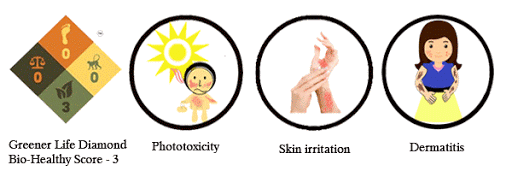
Greener Life Diamond – Bio-Healthy Score => 3 – Possible Skin Issues:

See => http://www.essentialdepot.com/GreenerLifeDiamond.html

Tagetes oil is said to cause phototoxic effects mainly due to the presence of limonene, just like the citrus oils. It expresses skin sensitization if the oil is oxidized and it is safe to avoid oxidized and old oils. Essential oils that are phototoxic in nature can cause skin sensitization, irritation of the skin, contact dermatitis, hyperpigmentation and certain other allergic reactions.

This is the result of photosensitivity stimulating effect, when the skin is in contact with visible sunlight for up to 12 hours of use of this oil for cosmetic purposes. Tagetes oil has photoactive chemical components that observe the ultra-violet light radiation and accounts to toxic effects by way of molecular changes in the skin surface.

The maximum level for dermal use is 0.01% according to the International Fragrance Association (IFRA), on the parts of the skin that are exposed to sunlight and is not applicable for rinse-off products. IFRA recommends this safety level based on the unpublished study of RIFM (The Research Institute for Fragrance Materials).

SCCP (The Scientific Committee on Consumer Products) suggests that, since “no safe limit of use in cosmetic products has been demonstrated”, Tagetes oil and its absolutes should be avoided for use in the manufacturing of Cosmetic products.

Tagetes oil is said to cause allergic reactions like skin rashes for people who are generally allergic to daisy flowers and any other flowers from the plant family, Asteraceae, including Chrysanthemum, Marigold and Ragweed.

Never use essential oils internally and for topical application, ensure that you blend Tagetes oil with gentle carrier oils, as essential oils are highly concentrated substances and may harm the skin, when used directly.

Though Tagetes oil has been claimed as an oil with the lowest toxicity, studies have proved the mild irritating effects of Tagetes oil on rabbits, its allergic contact dermatitis, primary eye irritation and acute inhalation toxicity.

Sufficient information is not available on the safety of Tagetes oil and higher concentration might be tough to resist. So it is safe to avoid Tagetes oil on children, pregnant women and nursing moms.

Reference Links Substantiating the Possible Skin Issues of Tagetes Oil:

  1. Tagetes oil by the U.S. Environmental Protection Agency Office of Pesticide Programs, Biopesticides and Pollution Prevention Division
  2. Tagetes by Leung’s Encyclopedia of Common Natural Ingredients, used in Food, Drugs and Cosmetics by Ikhlas A. Khan and Ehab A. Abourashed.
  3. Tagetes – Side Effects by WebMD
  4. Essential Oil Safety: A Guide for Health Care Professionals By Robert Tisserand, Rodney Young
  5. A brief study on Marigold (Tagetes Species): A Review by Dixit Priyanka, Tripathi Shalini, Verma Kumar Navneet, Department of Pharmacy, RITM, India and published in the International Research Journal of Pharmacy

Thought for the day:

Flowers always make people better, happier, and more helpful; they are sunshine, food and medicine for the soul.   –Luther Burbank

Suggested reading:

  1. Ayurveda & Aromatherapy: The Earth Essential Guide to Ancient Wisdom and Modern Healing by Dr. Light Miller, Dr. Bryan Miller
  2. 375 Essential Oils and Hydrosols by Jeanne Rose
  3. Ayurvedic Remedies for the Whole Family by Dr. Light Miller
  4. Scientific Basis for Ayurvedic Therapies from CRC Press

Reference Links:

  1. Evaluating biological activities of the seed extracts from Tagetes minuta found in Northern Pakistan published in the Journal of Medicinal Plants Research
  2. Ann Arbor Summer – More on Marigolds
  3. Herbal Remedies for Asthma: An Overview published in the Journal of Chemical and Pharmaceutical Research
  4. Antibacterial activity of Tagetes minuta essential oil with different chemical composition published in Flavour and Fragrance Journal

Your resource for quality Essential Oils. Every batch is GC tested to ensure purity and authenticity.

Civet Oil

“Civet oil strengthens the Head, Brain, Heart and Spirits wonderfully,” quotes the Pharmacopoeia Londinensis (the New London Dispensatory) by William Salmon in the year 1678. Besides the mesmerizing fragrance, Civet oil has been used throughout the history in the treatment of colic, hysteria, hearing difficulties, loss of libido, stress and in stimulating the power of creative thinking.

The oil of Civet is extracted from the musk or glandular secretion by the castoreum sacs (perineal glands near the testicles of the Civet cats) that enclose the awe-inspiring fragrance in them. From Chanel No. 5 to Amouage Gold Pour till Calvin Klein Obsession, you’ll certainly be amazed with the extensive range of perfumes and scents that Civet enchants with its magical aroma.

Purchase Civet Fragrance Oil – Retail – 4 oz – CLICK HERE

Purchase Civet Jasmine Fragrance Oil – Retail – 4 oz – CLICK HERE

Civet Yarn – The Tall Story of a Small Animal:

Civet cats are an endangered species (there are about 35species of Civets in 20 genera and 19 species of True Civets among which African Civet is the most popular one) and absolute Civet oil is hard to extract these days. There are many species of Civet cats and the most popular among them are the African Civets and the Indian Civets.

Generally, Civets are medium built-up carnivorous animals and are members of the Viverridae family along with mongooses, genets and linsangs. The oil of Civet is secreted by the African Civet, scientifically called as Civettictis civetta and by the Civets that are of Indian, Indonesian, Chinese and Malaysian origin, known as Viverricula indica and Viverra zibetha.

African Civets are held high mainly because of the fact that they secrete about 4 grams of Civet every week.

Ringed tail and dotted body is the trademark of this nocturnal creature that owns a rat-like face and a cat-like physique. It has partially or fully retractile claws with five webbed toes on each foot.

Just like cats, their ear flaps are found with bursae or pockets on the surface. Civets have about 38 to 40 teeth that are ready for an omnivorous meal. These striking animals have a normal life span of about 15 to 20 years.

The glandular secretion by the Civet cats is stored in a pouch near the testicles. It has a buttery consistency and is whitish yellow in color with a strong and unpleasant odor that turns sweet and exquisite on dilution by solvent extraction method.

The name ‘Civet’ has an Arabian origin and is obtained from the term ‘zabad or sinnawr al-zabad’.

Al-Masudi, the Arabian philosopher has pointed out Zabada (Civet) as a spice in his book Meadows of Gold (Murūdj al-dhahab). Wondering how Civet could be used as a spice? Here’s the scientific evidence for its health benefits for mankind.

A 1998 study on “Comparative study in chemical character and fatty acid compositions of masked civet’s fat and nutria’s oil” by Hong Meiling, Yang Chunhua, Wang Lijun and Zou Xinghuai, published in the Journal of Forestry Research concludes that Civet’s oil contains Eicosatetraenoic acid, which is extremely helpful in supporting nutrition and metabolism of human system.

Historical references denote that King Solomon imported Civet oil from Africa during 10th Century B.C, where the Queen of Sheba gifted Civet musk to Solomon. Civet cat farming is a primeval custom in Ethiopia and is found wild naturally.

Being one among the four vertebrate mammals that generate medicinal produce with rich aroma, Civet is grown and fed with a blend of vegetables, fruits, meat, eggs and maize in Civet rearing farms.

Rearing Civet cats is a lucrative business and is an important source of livelihood for the farmers in Ethiopia and is considered as an economically significant work. Civets also bank upon naturally on insects, small birds, invertebrates and rodents for their food in their habitats.

Male Civet cats produce more Civet musk than the female cats and the traditional method of extracting Civet musk is through a spoon-like object made from cow’s horn. During dry season, musk is collected on every 10 days once and once in every 12 days during rainy season. On an average, one Civet cat can produce about 400gms of musk annually.

Civet was quoted as a “concreted Juice or Humor in a bladder between the Cods [testicles],” by William in the Pharmacopoeia Londinensis. It is said that John Hall, Shakespeare’s son-in-law used Civet in a Caranna plaster for treating hysteria.

Nicolas Lemery, a French Doctor of the 17th Century trusted that Civet was effective in treating disorders of the womb, brain, head and ears and was also prescribed in treating colic in children and hearing disorders.

Chemical constituents of Civet oil:

The exceptional fragrance of Civet oil is attributed to the presence of ketones known as civetone, (also called as zibethone) which is present in the concentration range of 2.5 to 3.4 percent. Cyclohexadecanone, 6-cis-cycloheptadecenone, cyclopentadecanone and cycloheptadecanone are certain other ketones in Civet oil.

Uses of Civet oil:

The primary use of Civet oil that strikes everyone’s mind is its attention-grabbing fragrance that can uplift the moods and elevate the energy levels of the one who is wearing it and of those who are around.

Can Civet oil and its paranormal fragrance boast itself for real health benefits for human beings? If that’s your real doubt, then you’ve come to the right place to resolve it.

The oil of Civet and its synthesized aroma in the recent times indeed have a remarkable impact on the emotions and behavior of mankind. This is not an irony and here are the substantiating factors for your contentment:

1. Civet and its positive effect on the Limbic system:

Civet is known for its remarkable fragrance that is said to instill potential differences in the behavioral and psychological patterns of humans. And the ‘Superhero’ cascading these benefits is the ‘Limbic system’ or the vital control center of the human brain and is the primary part to grow in a fetus.

“The limbic system is a complex set of brain structures located on both sides of the thalamus, right under the cerebrum. It includes the olfactory bulbs, hippocampus, hypothalamus, amygdala, anterior thalamic nuclei, fornix, columns of fornix, mammillary body, septum pellucidum, habenular commissure, cingulate gyrus, parahippocampal gyrus, limbic cortex, and limbic midbrain areas”, quotes Wiki.

Limbic system is the residence for all the emotions and has a greater role to play with the creation and development of memories. It influences the process of learning, sleep patterns, dreams, memory, appetite, eating habits, motivation, sexual behavior, social cognition and the corresponding emotions.

Various parts of the Limbic system perform different functions each and the most predominant functionalities are emotional activities (amygdala), automatic actions and reactions (hypothalamus), fresh memories combination (hippocampus), happiness, compensation and obsession (nucleus accumbens), enjoyment region (septal nuclei) and decision making (orbitofrontal cortex).

Limbic system works by persuading the functions of the autonomic nervous system and the endocrine system.

Ayurveda states that brain is the quintessential part of the system that is responsible for the entire health in terms of physical, emotional, social and spiritual well-being.

The treatment using aroma is a branch of Ayurveda that heals hormonal imbalances and psychological health through the sense of smell, which was later called as Aromatherapy.

The fragrance-containing molecules in the aromatic oils pass through the nasal receptors while breathing and are converted to nerve impulses before reaching the olfactory bulb and other vital parts of the limbic system.

Civet oil contains aphrodisiac, sedative, rejuvenating, stimulating, calmative and tonic properties that pass on through the nasal passages in the form of aromatic molecules, reach the limbic system through the olfactory epithelium.

The hypothalamus along with other vital parts of the limbic system obtains the corresponding therapeutic properties as information in the form of nerve impulses. This info is then passed on to the body as instructions to tranquilize, enhance sexual interest, relax the stress hormones, treat hormonal imbalances and calm down the tensed muscles.

This way, the invigorating, encouraging and rich fragrance of Civet oil passes on its remedial benefits to the body through the limbic system.

Add 2 drops of Civet oil with 1 drop of Rosemary oil and 1 drop of Patchouli oil for enhancing your cognitive abilities while instilling positive energy and enjoying the feel of breathing new life into.

2. Civet’s relationship with rest and stress:

“Worrying is the greatest waste of imagination,” says Daniel Ally, the most influential business speaker of the recent times. Rest is the most powerful weapon to recharge the stressed-out mind and spirit.

Successful people absolutely know the secret of fueling their fire of passion.  Stress is obviously the worst killer of all your strengths in a physical as well as an emotional background.

The hippocampus (part of the limbic system) of the human brain plays the key role in implementing the power of buoyancy and fighting spirit in times of impediments and failures.

This is also the vital zone that gets affected or blocked during times of stress, anxiety and depression. Kick starting the functions of hippocampus is the need of the hour in this competitive world.

The nurturing fragrance of Civet oil has the power to stimulate, refurbish and renovate the working of hippocampus that can help in passing appropriate commands to the system to relax, rest, revamp, recuperate and rejoice in your verves.

Blend 2 drops of Civet fragrance oil with 1 drop of Ylang Ylang oil and 1 drop of Lavender oil in your diffuser or air freshener, especially before going to bed. This can help one tremendously in tranquilizing the body, mind and the spirit.

You can also add 1 drop of this blend to a ball of cotton and keep aside your pillows for peaceful sleep and a fresh morning like never before.

Thus, Civet oil can assist in complete rest sans stress.

3. Civet – The prized gift for an enchanting relationship:

Ayurveda, more than just a traditional healing methodology, it is a divine science that insists on leading a disciplined life with responsibility and moral values.

Sex, according to Ayurveda never stops with physical pleasure or attraction. It is regarded as a basis for a deeper understanding and mutual love between the partners, defining the intimacy of their love life.

Ayurveda strictly condemns sex with many partners or sex without any bonding between the two. On a farther outlook, this is the reason behind burning social problems like sadism, rapes, lack of peace in the society, masochism, prostitution, pedophilia, necrophilia, AIDS, Syphilis and other STDs (Sexually Transmitted Diseases).

The noble Ayurvedic philosophy states that genuine sex is a symbol of eternal joy and ultimate sharing between the couples or lawful partners and is mentioned in detail in the art of Kama.

With these ideologies, Ayurveda quotes Sex as “sex should only be shared by a loving couple as true satiation only arises from the union of emotions, body and soul.”

According to Ayurveda, every physical disorder has a deeper connection with an emotional instability behind.

On this basis, sexual mayhems like loss of sexual interest, lack of libido, premature ejaculation and relationship struggles are closely knitted with the emotional problems like stress, fatigue, work pressure, misled by the exaggerated depiction of sex by external forces like internet and media, lack of love leading to monotonous feeling of staying with the same partner and more.

Motivational Gurus simply quote, “Successful people have learned to organize the right relationships in their lives. This means that their closest people are nurturing them mentally, spiritually, and emotionally.”

The mesmerizing aroma of Civet oil has aphrodisiac, stimulating and tonic properties that inculcate the feeling of love and increased receptivity of being loved.

According to Ayurveda, this attention-grabbing aroma of Civet oil has a positive impact on the sacral chakra, which is associated with the endocrine glands including testicles and ovaries. It is physically connected to the genitals, womb, bladder and kidneys. It is responsible for sensuality, pleasure, intimacy, connection and feelings.

Adding 3 to 4 drops of Civet fragrance oil along with 1 drop of Frankincense oil and 1 drop of Cinnamon oil to bathing water before going to bed especially with your partner can help in portraying a new love life.

Other health benefits:

Besides these benefits, Civet oil has been used in controlling sweat and the bad odor associated with it, hearing disabilities, colic in children and certain skin disorders.

Disclaimer:

This article is meant only for the purpose of information and is not intended to diagnose, treat any medical condition or act as a substitute for the advice of a medical expert or prescription drugs. None of us at Essential Depot are healthcare professionals and this information is shared based on published articles and research studies through reliable sources on the web.

Essential oils are recommended only for external use and should not be taken internally, as 100 per cent pure essential oils are extremely concentrated substances. Talk with your Ayurvedic professional or Doctor before selecting the suitable essential oils for your health condition and Prakriti (unique individual constitution).

Thought for the day:

It’s not the number of hours you put in, but what you put in the hours.

-Abraham Lincoln

Suggested Reading:

  1. Civet farming and the use of technology (Chinese Edition) by BIN DONG MEI ZHONG FU SHENG TANG CHENG HUA DENG XUE JIAN
  2. Civet cat with nine lives by PENG YI
  3. Civet cat domestication and utilization (Chinese Edition) by QU XIAO CHU
  4. A handbook to the carnivora : part 1 : cats, civets, and mongooses by Richard Lydekker
  5. The Natural History of South Africa; Including Civets, Genets, Mungooses, Meerkats Earth Wolves, Hyaenas, Jackals, Foxes Wild Dogs, Otters, Honey … Sea Lions. Mammals. In Four Volumes. Vol. II by F. W. Fitzsimons

Reference Links:

  1. Civet (Perfumery) by Wikipedia
  2. The African civet cat (Viverra civetta) and Its Life Supporting Role in the Livelihood of Smallholder Farmers in Ethiopia, Takele Taye, Hawassa University, Department of Animal and Range Sciences, Ethiopia, presented in the Conference on International Research on Food Security, Natural Resource Management and Rural Development.
  3. The Story of Civet by William Jackson, pharmacist and the president of the British Society of History of Pharmacy, published in the Pharmaceutical Journal
  4. The Scent of Love: Ancient Perfumes published in the online magazine Getty Iris
  5. The limbic system by V. Rajmohan and E. Mohandas, Elite Mission Hospital published in the Indian Journal of Psychiatry

Jatamansi Oil

Jatamansi-bannerRespected as a divine herb in Ayurveda, Jatamansi is used as a tonic for the brain and the nervous system. It has been suggested by numerous Ayurvedic texts for treating sleeping troubles, depression, stress, anxiety, chronic fatigue syndrome and nervous problems.

Charaka Samhita, the celebrated Ayurvedic Encyclopedia recommends Jatamansi herb for improving memory power, treating insomnia, hysteria and mental instability. Scientifically known as Nardostachys jatamansi, this herb is known as Balchara or Mamsi in Ayurveda and is also known by other names like Indian Spikenard, Nardus root, Jaila, Musk root, Nardin and Nard.

Purchase Jatamansi Oil – Wholesale – CLICK HERE

Historical uses of Jatamansi and its essential oil:

Indigenous to the Himalayas, Jatamansi grows up to 1 m at an altitude of 3,000 to 5,000 feet. This plant bears red, pink or blue color flowers and has been used in various traditional medicines for its medicinal and aromatic rhizomes.

There are many Biblical references of this herb and it is used to represent St. Joseph in the Catholic iconography. It is mentioned in the New Testament where Mary, the sister of Lazarus uses a pint of pure Jatamansi oil to anoint the holy feet of Jesus Christ. It is also noted in the Song of Solomon as nard and is included in the coat of arms of Pope Francis in reference to St. Joseph.

Jatamansi oil was an important part of the Ayurvedic tradition since the primordial times where the medicated oil is known to cure insomnia, digestive problems, epilepsy, hysteria, weak mental health, improper blood circulation and as a tonic to the entire system. This herb was used as a diuretic and as a herb for the heath of heart and liver in Unani medicine.

The powdered rhizomes of Jatamansi were taken internally to treat hepatitis, infertility, menstrual disorders, cleanse the uterus, mental agitation, enhance the appetite and helpful in the treatment of Parkinson’s and Alzheimer’s disease.

Jatamansi was also used by renowned Physicians like Dioscorides and Apicius. The Persian and Arabian Physicians praised this herb as Sumbul-i-Hindi. The medicated Nard oil was offered on the precious incense altar when Tabernacle was positioned in the First and Second temples of Jerusalem.

Spikenard or Jatamansi was also used as a flavoring agent in the ancient Roman cuisines and as a seasoning in the Medieval European food varieties. It is used in making attars, perfume (L’eau De Jatamansi), incense sticks, hair care products and numerous beauty products. Jatamansi is also used along with certain other herbs in Vedic prayers performed with fire since the ancient period.

Therapeutic properties and chemical constituents of Jatamansi oil:

The principal constituents of Jatamansi oil are valeranone, nardostachone, bornyl acetate, jatamansinol, dihydrojatamansin, isobornyl, terpineol, jatamansinone, tetramenthyloxatricylodecanol, oroselone, aromadendrene, Menthylthymyl-ether, nardosinone, seselin, nardostachyin, valeranal, cineol-1,8, spirojatamol and jatamansic acid and few other coumarins. The remedial properties of this oil are nervine, antiseptic, diuretic, laxative, anti-inflammatory, tonic, anti-pyretic, deodorant, fungicidal, sedative, anti-depressant and calmative.

Ayurvedic health benefits of Jatamansi essential oil:

Ayurveda is a righteous science that trusts that every creature on earth is a part of nature and it believes that one’s illness and wellness depends upon their balance or imbalance with nature. Ayurvedic texts strongly state that human body is a temple where the spirit dwells in, so it is very important to keep the body, mind and spirit clean and composed just like preserving a place of worship.

Ayurveda is called as a holistic healing methodology as it approaches health as being mentally, physically, emotionally and spiritually fit. It is for this reason; Ayurvedic physicians recommend herbs, essential oils, yoga, physical exercises, balanced diet, meditation, Ayurvedic routine and prayers to keep one hale and hearty.

Every individual is treated in a unique manner even if they are affected by the same illness because the theory of Ayurveda identifies every human being as a unique part of nature and as a distinct creation with a unique individual constitution. This constitution is built up of three major bio-energies known as doshas. They are vata, kapha and pitta. These doshas govern various functions of our body and imbalance of these energies cause sickness.

Each and every human being has a predominance of any one these Ayurvedic body types that determine their personality, physique, mental attributes, behavior and preferences. Ayurvedic remedies aim at balancing the dosha imbalances as perfect balance between these doshas are a clear sign of healthy and heartiness.

Jatamansi is a promising Ayurvedic remedy that has the potent to pacify all the three doshas, especially pitta and kapha energies.

And it’s time to look at the amazing Ayurvedic health benefits of Jatamansi essential oil.jatamansi-broucher-11. Alleviates depression, stress and insomnia:

The rhizomes of Jatamansi herb have strong anti-depressant properties that calms the mind, relaxes the body and grants absolute peace to the entire system. 2 drops of Jatamansi oil added to your diffuser, burner, vaporizer or to bathing water is said to alleviate depression, chronic stress, anxiety, insomnia and tension.

Blend 5 drops of this oil with 2.5 ml of sesame oil and massage your body for relieving from chronic fatigue syndrome, nervous headache, negative feelings, sleeping difficulties, lack of self-confidence and sluggishness. Jatamansi is loved as a herb for the mind and emotions with its anti-depressant, anti-stress and antioxidant properties that help in lessening oxidative stress thus mitigating chronic fatigue syndrome.

Since the traditional times, several studies have proved the effectiveness of Jatamansi as a promising de-stressing and sedative agent by increasing the rest time. A 2012 study on ‘Nardostachys jatamansi protects against cold restraint stress induced central monoaminergic and oxidative changes in rats’ stated that this herb has potent anti-stress qualities representing its therapeutic significance in disorders related to stress.

A 2008 study on ‘Inhibition of MAO and GABA: probable mechanisms for antidepressant-like activity of Nardostachys jatamansi DC. in mice’ revealed that the ethanolic extracts of Jatamansi emerges to be a potent anti-depressive means when compared to reference drugs like Sertaline and Imipramine in decreasing depressive signs in mice. This study also state that “the extract may have potential therapeutic value for the management of mental depression.”

2. Tonic to your intellect:

Jatamansi and its essential oil have been used in many Ayurvedic preparations as a neuro-protective agent and brain tonic for improving memory power, cognitive performance and thinking capacity. It has been trusted to promote intellectual power, improve mental weaknesses, instability and mental sluggishness.

A 2006 study on ‘Nardostachys jatamansi improves learning and memory in mic’e by Joshi and Parle, Department of Pharmacognosy, College of Pharmacy, India proved that Jatamansi extracts significantly enhanced memory power and learning in both aged and young mice.

This study also reiterates the clinically proven use of Jatamansi herb in Ayurveda as an antioxidant, anti-ischemic, neuro-protective and anticonvulsant agent and it also states that Jatamansi can also be used as a memory uplifting agent in the healing of dementia in elderly people.

You can wear 1 drop of Jatamansi oil on your wrist, handkerchief or a tissue paper at the time of studying or in your room whenever you feel like refreshing your mind power. You can also add 2 drops of this oil in air freshener, diffuser, burner or vaporizer for adding muscles to your brain power and intellect.

3. Puts an end to hostile and obstinate behaviors:

The essential oil of Jatamansi has calming, soothing, cooling, restoring and relaxing qualities that assist in holding back the burning sensation of the mind and body. Being a natural coolant that calms pitta or the fire energy, Jatamansi essential oil can work wonders in controlling your negative emotions like anger, aggressiveness, stubborn behaviors, tension and intimidating attributes.

Adding 2 drops of Jatamansi oil in warm bathing water or in your diffuser or aromatic lamp can effectively control resentment by tranquilizing your mind and body. You can also opt for a calming massage by blending 5 drops of Jatamansi oil with 2.5 ml sesame oil.

4. Treats nervous disorders:

Jatamansi is held high in Ayurveda as a powerful neuro-protective agent that calms vata energy, clears pitta force and decreases kapha dosha. By this way, Jatamansi nourishes and cools the worn out and burning nervous system.

It aids in treating various nervous disorders along with bipolar disorders, delusions and certain other psychological problems. Jatamansi have been clinically proven effective since the primeval period in the treatment of epilepsy, insomnia, Parkinson’s disease, nervous breakdown and hysteria.

Abhyanga or the art of Ayurvedic massaging is the best method to use Jatamansi for treating nervous disorders. Mix 5 drops of Jatamansi oil with 2.5 ml of coconut oil and massage it gently on the affected parts. The deep penetrating quality of this oil supports in improving nervous problems.

5. Relieves respiratory problems:

Jatamansi oil has the potent to reduce kapha energy, the excess of which is responsible for the creation of mucus and phlegm. This oil assists in expelling the excess mucous deposits and phlegm accumulated in the chest, nasal passages and respiratory tract.

Adding 2 drops of Jatamansi oil to 1ml of coconut oil or your cold rub and massaging it on your throat, back and chest can aid in opening up blocked nasal passages, clear chest congestion, treat cough and cold, spasmodic cough, asthma, whooping cough and sinusitis. You can also add 2 drops of this oil in steam inhalation for quick relief from respiratory troubles.

6. Reduces heart palpitations and convulsions:

Palpitations of the heart are caused when vata energy shoves pitta dosha and leads it to rush through the channels characterized by unnoticed skipped beats, increased heart rate, breathing difficulty and dizziness.

The oil of Jatamansi is used in the treatment of palpitations of the heart and convulsions mainly because of its anti-convulsive and anti-arrhythmic activity. 2 drops of Jatamansi oil added to warm foot bath or bathing water or gently massaged on the affected area after blending it with 1 ml olive oil can ease tension and grant relief from convulsions and palpitations.

Other health benefits:

Jatamansi is indeed a miraculous part of nature that has innumerable healing properties ingrained in it. The essential oil of Jatamansi has been used as a uterus stimulant for promoting menstruation, cleansing the uterus, treating dysmennorhea and inflammation of the uterus. It was also used as an aphrodisiac in treating impotence and seminal debility. It is also known for promoting the growth of hair, retain its natural color and slow down the process of graying.

Jatamansi oil is a natural antiseptic that assists in healing wounds, eczema, burns, rashes, allergies and certain other skin infections due the infestation of microbes like bacteria and fungi. It is also effective in the treatment of renal colic, liver enlargement, hepatitis, jaundice, pancreatitis, fever and lung problems.

Disclaimer:

This article is only for the purpose of information and is not destined to substitute any professional medical advice or prescribed medication. Never take essential oils internally and use it topically in a diluted form only, as organic and pure essential oils are highly concentrated liquids and can harm you if used in a concentrated form. Remember to consult your Ayurvedic practitioner before using the appropriate essential oil for your health condition and unique individual constitution.

Thought for the day:

Change your opinions, keep to your principles; change your leaves, keep intact your roots.     -Victor Hugo

Suggested Reading:

  1. Ayurvedic Herbs: A Clinical Guide to the Healing Plants of Traditional Indian Medicine by Virginia M Tyler, M.S. Premila
  2. THE COMPLETE BOOK ON JATROPHA (BIO-DIESEL) WITH ASHWAGANDHA, STEVIA, BRAHMI & JATAMANSI HERBS (CULTIVATION, PROCESSING & USES) by NIIR BOARD OF CONSULTANTS AND ENGINEERS
  3. Healing Depression the Mind-Body Way: Creating Happiness with Meditation, Yoga, and Ayurveda by Nancy Liebler, Sandra Moss
  4. The Chopra Center Herbal Handbook: Forty Natural Prescriptions for Perfect Health by David Simon M.D., Deepak Chopra M.D.
  5. Ayurveda & Aromatherapy: The Earth Essential Guide to Ancient Wisdom and Modern Healing by Dr. Light Miller, Dr. Bryan Miller

Reference Links:

  1. Spikenard (Nardostachys jatamansi) by Wikipedia
  2. Nardostachys jatamansi by Examine.com
  3. Benefits of Jatamansi by Ayurveda Yogashram
  4. Inhibition of MAO and GABA: probable mechanisms for antidepressant-like activity of Nardostachys jatamansi DC. in mice by Dhingra D, Goyal PK, Department of Pharmaceutical Sciences, Guru Jambheshwar University of Science and Technology, India published in PubMed
  5. Nardostachys jatamansi protects against cold restraint stress induced central monoaminergic and oxidative changes in rats by Lyle N, Chakrabarti S, Sur T, Gomes A, Bhattacharyya D, Department of Pharmacology, Institute of Post Graduate Medical Education and Research, India published in PubMed

Cinnamon Oil

Cinnomon-banner“Cinnamon is empowering to the will and is one of the best oils for circulation especially during menopause”, says Light Miller in her book Ayurveda and Aromatherapy. This oil also enhances blood circulation, supports the functions of the heart, augments sexual function, improves digestion, boosts sexual desire and controls diabetes.

The essential oil of Cinnamon is obtained from the dried inner bark of the Cinnamon tree, scientifically known as Cinnamomum zeylanicum (now called as Cinnamomum verum) by steam distillation method.

Cinnamon is a symbol of sovereignty and respect and was a prestigious gift to Gods and Monarchs in the history. Called as Darusita or Tvak in Ayurveda, Cinnamon has a long history in Ayurvedic medicine for treating malaria, diabetes, menopausal problems, headache, bad breath, digestive disorders, impotence, anemia, sinus congestion, dyspepsia, blood circulation, scabies, intestinal infections and gynecological problems (used even as a natural birth-control aid).

Purchase Cinnamon Essential Oil – Retail – 4 oz – CLICK HERE

Purchase Cinnamon Essential Oil – Wholesale – CLICK HERE 

Historical uses and importance of Cinnamon herb and its essential oil:

Cinnamon is a small bushy evergreen tree that is indigenous to South Asia, especially to Sri Lanka and India. It is credited as one of the three oldest herb known to the ancient world along with Myrrh and Frankincense. The oldest historical reference of Cinnamon is its description found in the ancient Jewish religious text Torah.

Biblical texts talk about Cinnamon and its esteemed uses in various places and the most noted among them is the command to Moses to make use of cinnamon and cassia in the holy anointing oil.

Solomon describes the charm of his love by saying that her garments scented with cinnamon are like the smell of Lebanon. In various proverbs it’s been mentioned that the bed of the lovers is adorned with the aroma of cinnamon, aloes and myrrh.

The primordial Indians used Cinnamon as a condiment and in Ayurvedic healing before 8th century and the traditional Chinese physicians used Cinnamon as early as 2700 B.C.

It was also imported to Egypt in 2000 B.C. Pliny the Elder, Dioscorides, Galen and many other renowned herbalists have documented the therapeutic uses of Cinnamon.

Cinnamon was held high in the ancient period and was valued more than 15 times of silver (about 350 grams of Cinnamon was equivalent to that of 5 kgs of Silver in the 1st Century). The traditional Egyptians used Cinnamon and its essential oil in embalming dead bodies and in preserving meat. Ayurvedic system used Cinnamon for controlling the blood sugar level and for assisting digestive disorders. Its essential oil was used in pacifying the nerves and muscles.

The Traditional Chinese Medicine used this herb as an aid in treating painful and delayed menstruation, diarrhea, cold, cough and other respiratory problems.

Cinnamon was burnt as an offering in religious ceremonies and also for sanctifying the atmosphere. It was used by the primeval Romans attaining the healing powers for spiritual wellness.

Chemical constituents or Gas Chromatography Report (GC) of Cinnamon oil:

The Gas chromatography report witnesses Cinnamon oil with about 15 chemical constituents that contribute to its distinct aroma, remedial values, consistency and superiority of this splendid oil. Among which, (E)-Cinnamaldehyde has the highest area with a proportion of about 76.8% of Cinnamon oil components.

Just click on:

(E)-Cinnamaldehyde

Eugenol

Cinnamyl acetate

Alpha-pinene

Linalool

Alfa-copaene

Beta-caryophyllene

I certainly trust that this information would help in having a clear picture about the major chemical constituents of Cinnamon oil.

The table crafted below elucidates the unique nature and therapeutic attributes of these biochemical constituents to the medicinal magnificence of Cinnamon essential oil.

cinnamon-tableTherapeutic properties of Cinnamon essential oil:

The remedial properties of Cinnamon essential oil are antioxidant, astringent, antibacterial, antimicrobial, anti-clotting, anti-fungal, cardiac, emmenagogue, stimulant, analgesic, antibiotic, vermifuge, tonic, aphrodisiac, stomachic, diaphoretic, diuretic, anti-parasitic, alterative, expectorant, antispasmodic and carminative.

Ayurvedic health benefits of Cinnamon essential oil:

Ayurveda is the oldest healing systems on earth that focuses on a holistic approach for healing, preventing and ensuring longevity for humanity. By the word holistic, Ayurvedic remedies aim at granting complete health including the physical, mental and spiritual health.

This is because, this traditional Indian methodology strongly believes that these three aspects of health are inter-related and the weakness of any of these aspects will directly or indirectly affect the other two.

This is explained in the Sutrasthana of Charaka Samhita, the oldest Ayurvedic encyclopedia as The three – body, psyche, and soul – act as a tripod. The world stands upon them, and within them, the world abides.” Ayurveda is an absolute common sense science that stimulates proper functioning of the system, peaceful sleep, emotional tranquility, spiritual oneness and takes you a brand new world of energy and enrichment.

The exclusivity of Ayurveda lies in its individual attention for every person even if a group of 10 people are affected by the same illness.

The typical ‘one size fits all’ principle of the modern medical system never holds good for a natural healing technique like Ayurveda. Here every individual is considered as a unique part of nature, made up with the five elemental forces of nature. They are fire, earth, water, space and air.

These five elements represent themselves in the form of three biological energies known as doshas, namely vata, pitta and kapha. These 3 doshas join together to form an individual constitution, which makes every person unique with a specified set of physical, mental and spiritual attributes.

Vata is a combination of air and space and is in charge of respiratory functions, nervous system and the process of circulation. Pitta stands for fire and water and is responsible for body temperature and the process of metabolism. Earth and water put together forms kapha dosha and is accountable for structure of the body, functions of the fluids in the system and sustenance.

Every individual has a unique combination of these doshas. Balance between these doshas indicates healthiness and imbalance due to lifestyle, food habits and other environmental factors lead to doshic imbalances causing illnesses.

Ayurveda recommends the use of natural remedies like herbs, yoga, essential oils, meditation, Ayurvedic routine, prayers and other Ayurvedic therapies according to the individual constitution of a person, so as to correct the imperfect balance of doshas.

Cinnamon essential oil is a perfect Ayurvedic essential oil to treat the surplus of vata and kapha doshas and the deficit of pitta dosha.

This makes Cinnamon oil a prime choice in treating digestive problems as it’s known to enhance the ‘agni or fire’ in the system that is responsible for metabolic functions.

It’s time to have a look at the Ayurvedic health benefits of Cinnamon essential oil.

Cinnoman-broucher1. Boon to diabetics:

In an Ayurvedic perspective, diabetes is a disarray of kapha unevenness occurred due to weakened digestive fire. Cinnamon is a nature’s wonder herb for treating increased kapha dosha and enhance the flow of pitta energy. This is mainly because of its warming properties that help in encouraging Agni or the digestive fire that supports the balanced functioning of the digestive system.

Cinnamon is habitually prescribed for people with kapha dosha predominance and these people generally hold a wet, cold, heavy and slow mechanism of the body.

By this way, using Cinnamon essential oil either in a massage blend or in inhalation along with an Ayurvedic diet and Ayurvedic routine that includes healthy lifestyle changes, meditation, prayers, yoga and other simple physical exercises for controlling the blood glucose levels of the system, thus having a check on diabetes.

Cinnamon has been recommended by the American Diabetes Association in 2006 for controlling diabetes. Dr. Fuhrman quotes few important research works on diabetes including the study on ‘Complementary and alternative medicine for the treatment of Type 2 diabetes’ and states that “The bark of Cinnamomum trees contains phytochemicals that enhance insulin signaling and facilitate glucose uptake and storage by the body’s cells.”

A 2003 study on Cinnamon for diabetes established that taking Cinnamon supplements regularly for 40 days decreased blood sugar and level of cholesterol in type 2 diabetes patients.

Massaging your body with 10 drops of Cinnamon essential oil blended with 5 to 7 ml sesame oil can help in regulating the blood sugar level with its pungent aroma and heating energy. The therapeutic properties of this oil enters the blood stream by penetrating through the skin cells and act directly on the cellular structure. It also aids in controlling the digestion of sugar and fatty substances, which helps in providing resistance of insulin in Type 2 diabetes.

A 2012 research on “Effects of Cinnamomum zeylanicum (Ceylon cinnamon) on blood glucose and lipids in a diabetic and healthy rat model” by the Diabetes Research Unit, Department of Clinical Medicine, University of Colombo, Sri Lanka published in PubMed concluded that “Cinnamomum zeylanicum lowered blood glucose, reduced food intake, and reduced atherogenic LDL cholesterol.”

2. Nature’s most appealing aphrodisiac:

Cinnamon holds the honor of elating the senses of mankind for numerous centuries with its sweet, mesmerizing and rich aroma. In his book ‘Dangerous Tastes’, author Andrew Dalby quotes Cinnamon as “an aroma of divine worship and of sensual luxury.”

The warming, stimulating and aphrodisiac properties in Cinnamon help in increasing the body temperature and helps in arousing strong sexual desire in men and women.

Massaging your lower abdomen, genital parts and thighs with 5 drops of Cinnamon oil mixed with 2.5 ml virgin olive oil can help in improving sensual feelings, augmenting libido in both male and female, treat impotency and erectile dysfunction.

Inhaling the healing aroma of Cinnamon oil by adding 2 drops to your burner, vaporizer or diffuser along with this massaging can act as a great aid in strengthening the uterus muscles, relieving menstrual pain, regularizing blocked menstruation, washing out uterine congestion, and inducing labor pain.

This is due to the tendency of Cinnamon to stimulate the secretion of Oxytocin hormones responsible for increasing uterine contractions and enhancing the production of breast milk.

3. Aromatic treat to treat your digestive problems:

Cinnamon has an euphoric aroma that increases the secretion of digestive acids and gastric juices by enhancing agni or the digestive fire.

The slightly bitter and pungent taste of Cinnamon along with its hot potency aids in processing ama or the undigested toxic substances, reducing heaviness of the stomach, treating sluggish bowel movements and alleviating abdominal pain.

Inhaling the energizing aroma of Cinnamon oil by adding 2 to 3 drops of this oil in burner, vaporizer or your hanky along with a warming massage of your abdomen with 4 drops of Cinnamon oil blended with 2 ml of coconut oil can assist in treating colic, slow digestion, nausea, dyspepsia and diarrhea.

4. Relieves respiratory infections:

Ayurveda describes most of the respiratory disorders as kapha imbalance. This excess kapha stockpiles in the respiratory passages in the form of mucous and phlegm deposits and cause hindrance in the free movement of air to the lungs and nasal passages. This is why many or all of the respiratory illnesses are accompanied by breathing difficulties.

Cinnamon essential oil has kapha-reducing properties with its bitter, hot, pungent and penetrating qualities. The expectorant, decongestant and demulcent properties of this oil help in loosening the thick phlegm and mucous secretion in the nasal passages and the respiratory tract. The anti-tubercular activity of cinnamic acid present in Cinnamon oil also helps in treating tuberculosis, chronic cough and asthma.

Adding 3 drops of Cinnamon oil in steam inhalation can be extremely helpful in warming up the lungs, liquefying nasal and chest congestion and eliminating phlegm and mucous in the bronchial passages. 2 drops of this oil added to vaporub and massaged gently on the throat, chest and back can also assist in relieving stuffy nose, watery eyes, nasal congestion, headache and cough.

5. Helps release anger and dependence:

The sweet smelling oil of Cinnamon has been found to boost memory power and cognitive functioning abilities of the mind. Many Ayurvedic schools have recommended Cinnamon for enhancing memory skills.

Cinnamon essential oil empowers the willpower and purifies the spirit. This aids in treating mental fatigue, anger, tension, anxiety, depression and other negative feelings. This oil affects the Solar plexus chakra, which connects our personal fire with that of the world revolving around us.

Fears of criticism, rejection and lack of self-confidence affect the functioning of this chakra. Using 2 drops of Cinnamon oil in bath or in diffuser or vaporizer can help in increasing one’s feelings of independence and promotes one to take risks with confidence and power.

6. Clears blood impurities and promotes blood circulation:

Cinnamon essential oil has blood purifying properties that are attributed to its stimulant and cleansing remedial values. It helps in eliminating the toxic substances in the blood through urine and sweat.

2 drops of Cinnamon oil added to diffuser during Pranayama, the technique of balanced breathing followed by a meditation can help in discarding the toxins in the blood through exhalation, enhancing Ojas or the vital energy for longevity, stimulating the cardiac functions and granting mental peace and improved blood circulation especially to the six chakras in the body.

7. Checks the effects of fungal and bacterial infections:

The essential oil of Cinnamon is an effective immune system booster by nature. It also has antibacterial, anti-fungal and antiviral properties that curb the growth of disastrous micro-organisms in the system. Mixing 2 drops of Cinnamon oil with 1 ml of almond oil and applying it on the affected parts can help in healing wounds, burns, cuts, candida, boils, itches, athlete’s foot, and ringworm and prevents the wound from turning septic.

According to a 2006 study by the Saurashtra University, India, Cinnamon essential oil extracted from the bark of the Cinnamon tree got attained 42.5 out of 50 for its anti-fungal activity, whereas Hexaconazole, a popular fungicide often used in agriculture scored only 22.5 for 50. This witnesses the effectiveness of Cinnamon oil in treating fungal infections like ringworm, athlete’s foot etc.

Another study published in the International Journal of Food Microbiology proved that Cinnamon oil killed about 92% of gram negative and gram positive bacteria out of the 25 tested bacterial strains. Another source states that Cinnamon used in a blend with Eucalyptus, Rosemary, Clove and Lemon has the potent to kill about 99% of airborne bacteria in just 12 minutes.

Also used in:

Apart from all these health benefits, Cinnamon oil is used as a flavor in baked products, candies, desserts, soups, pickles, stews, beverages, meat and poultry etc. It is also used in skin care creams and lotions for enhancing the skin complexion and removing impurities and skin blemishes.

Thought for the day:

In wilderness I sense the miracle of life, and behind it our scientific accomplishments fade to trivia.  -Charles Lindbergh

Disclaimer:

This article is only for informational and educational purposes and is written purely in the interest of sharing the traditional wisdom of the Ayurveda, the oldest of all healing sciences. It is not meant to treat, prevent or diagnose any health conditions or replace any kind of prescribed medicines or expert advice or a medical professional.

Never use essential oils internally. Do remember to dilute essential oils in appropriate carrier oils before using it on the skin externally as pure and organic essential oils are the life essence of plants and are highly concentrated substances. Consult your Ayurvedic expert/healthcare professional before choosing the appropriate essential oils for your unique constitution and health condition. Keep away from children, pregnant women and nursing moms.

The MSDS (Material Safety Data Sheet) of Cinnamon oil is readily available for your enhanced safety and better usage.

Gas Chromatography Report (GC analysis) of Cinnamon oil.

Cinnamon Essential Oil – Possible Skin Issues:

cinnamon-oil-logoGreener Life Diamond – Bio-Healthy Score => 3 – Possible Skin Issues:

See => http://www.essentialdepot.com/GreenerLifeDiamond.html

Besides being an indispensable spice and herbal remedy, Cinnamon is reported for negative effects including possible skin issues like allergic reactions, irritation of the skin, stimulating menstruation, contracting the uterine muscles, skin sensitization, dermatitis and burning sensation.

It is highly advisable to avoid Cinnamon oil during pregnancy as it may shrivel the uterine muscles, cause indigestion, pain in the abdomen, contribute to premature labor and is completely unsafe for the development of the fetus.

The major chemical components that are in charge for the potential skin problems and other adverse health conditions of Cinnamon oil are Cinnamaldehyde, cinnamic acid and cinnamyl alcohol. It may cause a burning sensation or irritation on the engaged parts when used in the form of skin care, oral hygiene (toothpastes and mouthwashes) and pain relieving products including ointments and rubs.

Cinnamon oil, with the presence of these constituents is said to cause subchronic and severe toxicity, when used beyond the prescribed level of use. The maximum recommended usage level of Cinnamaldehyde by The International Fragrance Association (IFRA) is 0.05%.

Though Cinnamon has GRAS (Generally Regarded As Safe) status, The Council of Europe has fixed an ADI of 1.25mg/kg for Cinnamaldehyde, which is the same as an adult dosage of 115 mg of Cinnamon bark oil.

According to the Scientific Committee on Cosmetic Products and Non-Food Products (SCCNFP) the presence of Cinnamaldehyde in any ready to use products should not surpass 0.1%

Essential oils are recommended only for dermal application and never ingest Cinnamon oil as it may cause toxic effects on the liver (hepatotoxic), kidney (nephrotoxicity) and the entire system. Diluted Cinnamon oil in appropriate carrier oils is prescribed safe and concentrated use may cause chronic allergies, irritation, dermatitis and chronic sensitization.

Studies witness severe burns in people due to the skin contact of undiluted Cinnamon oil and is commonly related to burning sensation in the skin, mouth, mucous membrane stomach and chest , intermittent blistering, nausea, dizziness and sensitization accounted to the presence of Cinnamaldehyde. This also applies to the use of Cinnamon oil in vapor therapy and dermal application.

Cinnamon oil is said to have mild phototoxic effects, control platelet aggregation (Do not use Cinnamon oil if you are taking anticoagulant and anti-diabetic medications). It may cause reproductive toxicity (when tested on pregnant mice, it decreased the count of nuclei and modified the embryo distribution).

Always do a patch test before using Cinnamon oil on your skin.

Reference Links Substantiating Possible Skin Issues of Cinnamon Oil:

  1. Cinnamon: An Imperative Spice For Human Comfort by Raaz K Maheshwari, AK Chauhan, Ayushi Gupta, Shobha Sharma published in The International Journal of Pharmaceutical Research and Bio-Science
  2. Cinnamon: Mystic Powers of a Minute Ingredient by Pallavi Kawatra and Rathai Rajagopalan, published in the Journal of Pharmacognosy Research
  3. Medicinal Properties of ‘True’ Cinnamon (Cinnamomum zeylancium): A Systematic Review by The Faculty of Medicine, University of Colombo, Sri Lanka, published in Bio Med Central, Complementary and Alternative Medicine
  4. A toxicologic and dermatologic assessment of cinnamyl alcohol, cinnamaldehyde and cinnamic acid when used as fragrance ingredients by The RIFM expert panel, published in the Food and Chemical Toxicology
  5. Essential Oil Safety: A Guide for Health Care Professionals By Robert Tisserand, Rodney Young
  6. Leung’s Encyclopedia of Common Natural Ingredients, used in Food, Drugs and Cosmetics by Ikhlas A. Khan and Ehab A. Abourashed.

Suggested Reading:

  1. The Cinnamon Supplement: Alternative Medicine for a Healthy Body (Health Collection) by William Wagner
  2. Natural Cinnamon And Honey Cures: Cinnamon Health Benefits, Cures, Remedies, Treatments and Recipes. Boost Energy, Control Diabetes, Cure Arthritis, Prevent Alzheimer’s, Colds, even Weight Loss! by Patricia Gardner
  3. Cinnamon Oil Aromatherapy (Group 3 Card 9) by Alternative Therapies
  4. God’s Healing Herbs by Dennis Ellingson
  5. Ayurveda & Aromatherapy: The Earth Essential Guide to Ancient Wisdom and Modern Healing by Dr. Light Miller, Dr. Bryan Miller

Reference Links:

  1. Cinnamon by Wikipedia
  2. Choosing the right Cinnamon by Dr. Fuhrman
  3. Cinnamon plant profile by Sacred Earth (Ethnobotany and Ecotravel)
  4. Effects of Cinnamomum zeylanicum (Ceylon cinnamon) on blood glucose and lipids in a diabetic and healthy rat model by Priyanga Ranasinghe, Sanja Perera, Mangala Gunatilake,1 Eranga Abeywardene, Nuwan Gunapala, Sirimal Premakumara,Kamal Perera, Dilani Lokuhetty,and Prasad Katulanda, Diabetes Research Unit, Department of Clinical Medicine, University of Colombo, Sri Lanka
  5. Medicinal properties of ‘true’ cinnamon (Cinnamomum zeylanicum): a systematic review by Department of Pharmacology, University of Colombo, Sri Lanka


Your resource for quality Essential Oils. Every batch is
GC tested to ensure purity and authenticity.

Fir Needle Oil

Fir needle oil is indeed a sacred oil and is known as the forest healer for its immaculate medicinal uses that sanctify one with an array of health benefits and heartiness. Used as a primordial remedy for treating cold, cough, joint pains and muscular cramps, this highly spirited oil purifies the air and gifts us with a heavenly and infection-free atmosphere.

Fir-needlle-bannerFir Needle oil is extracted from the needle like leaves of Silver fir tree, scientifically known as Abies Alba. It has also been said that Fir needle oil is also extracted from the needles of the Balsam fir tree botanically called as Abies Balsamea and these trees belong to the pine family Pinaceae.

Ayurveda prescribes the use of Fir Needle oil in Abhyanga, the art of Ayurvedic massaging and other remedial practices for treating rheumatism, joint pain, sinusitis, muscular cramps, skin problems and other problems associated with the lymphatic system and the respiratory system.

Purchase Fir Needle Oil – Retail – 4 oz – CLICK HERE

Purchase Fir Needle Oil – Wholesale – CLICK HERE

Historical uses of Fir needle and its essential oil:

Fir needle tree and its various extracts have a long history for its enormous remedial values. The fresh balsamic scent of this tree makes you feel like walking in a forest and reminds of the captivating Christmas Eve.

Fir needles have the real power to purify the air and the soul with its disinfecting and calming properties. And it is for these great reasons; fir needles were burnt in the past after childbirth, to impart good health for the mother and the newborn. The pitch of the tree was used to treat womanly problems like menstrual irregularities. Various parts of the fir trees when mixed with other medicinal herbs were used to treat cancer, tuberculosis and rheumatism.

Poultices made with Fir needles were used in folklore medicine for relieving arthritis, rheumatism and muscular pain. The gums of fir trees were used to prepare ointments to treat itches, sores, wounds, insect bites, boils and infections. The decoction extracted with the bark was used for curing kidney problems and the roots were used in the treatment of heart diseases and rheumatism.

Native Americans widely used fir needles for padding the pillows for peaceful sleep and they also used it as a sudatory for women after childbirth. Fir Needle essential oil is utilized in the manufacture of cosmetic products, perfumes, bath oils, air fresheners, aerosol inhalants and incense. Ancient Egyptians used Fir needle oil to prepare hair growth formula that would elevate and energize the root of the hair when massaged onto the scalp.

Chemical constituents or Gas Chromatography Report (GC) of Fir Needle oil:

According to the Gas chromatography report, Fir Needle oil constitutes of 17 chemical components that contribute to its fragrance, therapeutic attributes, consistency and quality of this oil. Of which, Bornyl acetate contributes to the highest proportion of Fir Needle oil constituents with about 34% of its total composition.

Just click on:

I believe that this must certainly help you in getting to know the exclusive information about these prime chemical constituents of Fir Needle oil.

The table crafted below clearly depicts the unique nature and contributions of these biochemical constituents to the healing magnificence of Fir Needle essential oil.

fir-needle

Therapeutic properties of Fir Needle essential oil:

Fir needle essential oil has numerous effective chemical compounds and the majority of which is monoterpenes. The other constituents include sesquiterpenes, beta-pinene, delta-3-carene, alpha-pinene and terpene ester bornyl acetate, where beta-pinene and delta-3-carene have effective anti-bacterial properties.

The therapeutic properties of Fir needle essential oil are anti-inflammatory, anti-bacterial, anti-fungal, antiseptic, antiviral, invigorating, stimulating, analgesic, anti-tussive, diuretic, antioxidant, astringent, energizer, aromatic, expectorant, deodorant, stimulant and tonic.

Ayurvedic health benefits of Fir Needle essential Oil:

Ayurveda is a common sense science that has a strong reason for everything that pertains to human health. It simply preaches that health is the outcome of one’s harmony with nature and illness occurs when things does not act in sync with nature. This 5,000 years old ancient science aims at striking balance between human health and nature with the use of natural remedies including essential oils, herbs, yoga, Ayurvedic routine, simple physical exercises, meditation and prayers.

Ayurveda is adorably called as the mother of all healing sciences for its brilliance in treating the root cause of an illness rather than just treating its symptoms. By this way, it helps in curing the sickness initially and prevent it in future as well. Charaka Samhita, one among the greatest Ayurvedic encyclopedia states “The three – body, psyche, and soul – act as a tripod. The world stands upon them, and within them, the world abides.

Ayurvedic treatments are not the same for every person as Ayurveda strongly believes that every individual is distinctive with a unique individual constitution just like our thumb impression. So it says that illnesses of individuals should also be treated in a unique manner.

This constitution comprises of three biological energies known as doshas, namely vata, pitta and kapha. These doshas are a combination of five elements of nature, which are fire, water, air, earth and space.

Just like nature, our body also has all the five elements. Where vata represents air and space and is responsible for movement. Pitta stands for fire and water and is accountable for transformation of energies. Kapha symbolizes earth and water and is in charge of structure and fluids in the body.

Perfect health is determined with the balance of all these three doshas and imbalance causes illnesses. Ayurvedic remedies are involved in the act of correcting the imbalances of doshas. Fir needle oil is said to lessen kapha, pitta and vata aggravation.

The Ayurvedic health benefits of Fir needle oil are:fit-needle1. Relieves cough, cold and other respiratory illnesses:

According to Ayurveda, respiratory illnesses occur mainly due to aggravated kapha energy, which causes water retention and excess phlegm and mucous deposits. Along with this, increased vata dosha is responsible for sinusitis, asthma and breathing problems.

Fir needle oil is said to lessen both aggravated kapha and vata and for which it has been used for centuries in the treatment of cold, cough, fever, flu and other respiratory illnesses. Natural Fir needle oil inhalers are used in Ayurvedic healing for treating cold and breathing problems.

The exquisite antiseptic property of this oil helps in maintaining the sanitation of the surrounding by preventing the spread of harmful microorganisms, which are among the primary reasons for respiratory infections.

Fir Needle oil has antitussive properties that acts as an effective cough suppressant. As a refreshing expectorant, this oil loosens the mucous and the phlegm deposits in the lungs and respiratory tract, thus cleansing the respiratory passages and speeding up the recovery process.

Adding 2 drops of Fir needle oil in steam inhalation and inhaling the pine-forest aroma assists in clearing blocked nasal passages, preventing the inflammation of the respiratory organs, alleviating breathing difficulties, treating bronchitis and it helps in maintaining clear sinuses.

Mix 2 drops of Fir needle oil with 1 ml coconut oil and rub it gently on your chest, back and throat for helping with nasal congestion, runny nose, sneezing, cough and flu. Add 3 to 4 drops of Fir needle oil in warm bathing water for feeling light and re-energized as respiratory infections generally make the body feel heavier and drowsy.

2. Alleviates rheumatic and muscular pain:

Fir needle oil has anti-inflammatory, analgesic and diuretic properties that soothes and eases pain and inflammation associated with arthritis, rheumatism and muscular tension. Also known as Silver Fir, the essential oil of Fir is extremely soothing to joints and muscles and acts as an effective aid in lessening pain and inflammation.

With its kapha reducing properties, massaging 3 drops of Fir needle oil mixed with 1.5ml of sesame oil on the painful areas aids in treating water retention, discharging detrimental toxins, salt and other micro-organisms in the body through urine and sweat, reducing inflammation and alleviating pain with its powerful analgesic values. You can also add 3 to 4 drops of Fir needle oil in hot compress or in warm foot bath for decreasing pain and promoting relaxation.

3. Valued in skin care treatments:

Fir needle oil has been in use since the primordial times to protect the skin and retain its natural glow. The astringent properties of this oil is effective in treating acne, injuries, infections, sores, wounds, cuts, mild allergies, insect bites etc.

The anti oxidant properties of Fir needle oil fights against the free radicals and prevents premature aging. Mix 2 drops of Fir needle oil with 1 ml jojoba oil or to your regular skin care cream and apply it on the affected areas in circular movements. This stimulating application to the skin results in mild coagulation of the skin proteins, thus elevating it natural beauty and retaining its youthfulness.

Fir Needle oil is often recommended by dermatologists and Alternative medicine experts in the treatment of psoriasis, itching, pimples, eczema, skin diseases, poor skin, scabies and sores. This is mainly due to the presence of antiviral, anti-bacterial, anti-fungal and antiseptic properties of this oil.

A 2006 study on ‘Composition and antibacterial activity of Abies balsamea essential oil’ published in PubMed states that the three constituents in Fir needle oil namely alpha-pinene, beta-caryophyllene and alpha-humulene were effective against the gram negative and gram positive bacteria including Staphylococcus aureus and Escherichia coli, where Staphylococcus aureus is mainly responsible for wounds and other skin infections to turn septic and worsen.

4. Emulsifies your emotional strength:

Your success depends upon your mental strength and amidst the stress and tension of this contemporary world, nothing better than the natural remedies like essential oils can grant us the real peace and serenity.

Fir needle oil is a boon to mankind with its rich invigorating, stimulating and energizing properties contributing to a potential uplift of the emotional strength. 2 to 3 drops of Fir oil added to your diffuser or burner can act as a mood elevator that aids in revitalizing your mind, refreshing your soul, weakening the element of depression, lack of self-confidence, agony, fear and emotional stress.

5. Discards toxins and improves metabolism:

Being a diuretic, Fir Needle Oil is helps in eliminating the toxic remains, uric acid, fat deposits and salts in the body through urine by stimulating the frequency and quantity of urine.

Massaging your body with 10 drops of Fir needle oil mixed with 10ml of coconut oil can improve the health of the kidneys, treat kidney stones or renal calculi, urinary infections, food poisoning by enhancing the functions of the excretory system and boosting the metabolic functions naturally.

Other health benefits of fir Needle Oil:

Fir needle oil is also used in manufacturing soaps, perfumes, air fresheners, hair oils, body lotions etc. It can also be used on pet animals as it is a non-toxic repellent of fleas. Certain research studies have also proved the antitumor activity of Fir needle oil by the production of reactive oxygen species induced by alpha-humulene as possible mechanism of action.

Disclaimer:

This is only for the purpose of information and is not meant for diagnosis or as a replacement for prescribed drugs or professional medical advice. Never use essential oils internally and topical use should always be in a diluted manner as pure and organic essential oils are highly concentrated extracts and can cause harm if used directly on the skin. It is advisable to consult your Ayurvedic practitioner before making the right choice of essential oils for your unique health condition and individual constitution.

The MSDS (Material Safety Data Sheet) of Fir Needle oil is readily available for your enhanced safety and better usage.

Gas Chromatography Report (GC analysis) of Fir Needle oil.

Thought for the day:

Nature’s music is never over; her silences are pauses, not conclusions.                  -Mary Webb

Suggested Reading:

  1. The Illustrated Encyclopedia of Essential Oils: The Complete Guide to the Use of Oils in Aromatherapy & Herbalism by Julia Lawless
  2. Healing Power Beyond Medicine by Carol A. Wilson
  3. The Book of Herbal Wisdom: Using Plants as Medicines by Matthew Wood
  4. Aromatherapy for the Soul: Healing the Spirit with Fragrance and Essential Oils by Valerie Ann Worwood
  5. Genetics and breeding of the Silver Fir (Abies alba Mill.) =: Genetika i oplemenjivanje obicne jele (Abies alba Mill.) (Anali za sumarstvo) by Stefan Korpel

Reference Links:

  1. Abies Alba by Wikipedia
  2. Abies Balsamea by The University of Michigan
  3. Composition and antibacterial activity of Abies Balsamea essential oil by Pichette A, Larouche PL, Lebrun M, Legault J. Université du Québec à Chicoutimi, Canada, published in PubMed
  4. Balsam Fir by herbs2000.com


Your resource for quality Essential Oils. Every batch is
GC tested to ensure purity and authenticity.

Sweet Almond Oil

Sweet-almond-oil-bannerHere’s that jaw-dropping news for all those Almond lovers out there! Almond has been witnessed by various studies for its enormous healing benefits of being a heart-healthy nut, cancer-preventive or antioxidant snack, scrumptious weight-loss bite, and a mighty little powerhouse of proteins, vitamins and minerals.

What more favorable reasons do you need to escape from eating your favorite Almonds or to drench in an enlivening Almond oil massage, the next time? In a much simpler verse, Almond is a one-stop nut for acquiring mammoth remedial attributes.

Badam is the beloved name for Almond in Ayurveda and is lovingly beckoned as the ‘Miracle Nut and the King of Nuts’ in Ayurvedic healing for its sattvic (“pure, essential, natural, vital, energy-containing, clean, conscious, true, honest, wise.”) values.

Almond and its nourishing oil has been prescribed in Ayurvedic medication for treating loss of memory, frigidity, premature ejaculation, mood fluctuations, Alzheimer’s disease, psoriasis, dark complexion, debility, muscular pain and dry skin conditions.

Purchase Sweet Almond Oil – Retail – 1 Quart – CLICK HERE

Purchase Sweet Almond Oil – Wholesale – 1 Gallon – CLICK HERE

Chemical constituents and therapeutic properties of Sweet Almond Oil:

The major chemical components of Sweet Almond oil are 62 per cent of monounsaturated oleic acid; it’s an omega-9 fatty acid, 29 per cent of linoleic acid; it’s a polyunsaturated omega-6 essential fatty acid and 9 per cent of saturated fatty acid.

It also constitutes of phytosterols like beta-sitosterol, campesterol, campestanol, stigmasterol and sitostanol (All these components share a unique attribute of reducing cholesterol.).

Almonds are also rich in calcium, zinc, manganese, phosphorus, magnesium, potassium, vitamin E (skin and hair beneficial vitamin), B vitamins including niacin, riboflavin, thiamine, folate, vitamin B6 and choline.

The most promising remedial properties of Sweet Almond oil are emollient, aphrodisiac, antioxidant, rejuvenative, antispasmodic, demulcent, laxative, tonic for the bones, brain, blood, skin and muscles, sedative and nutritive.

Historical significance and uses of Sweet Almond Oil:

Almond is indigenous to the Mediterranean province of the Middle East, North Africa and West Asia and is a wing of the plum family, Rosaceae. Scientifically called as Prunus amygdalus, Almond is also known with other botanical names including Amygdalus communis, Prunus dulcis and Amygdalus dulcis.

Hopf and Zohary trust that Almonds were one of the earliest cultivated fruit trees owing to “the ability of the grower to raise attractive almonds from seed. Thus, in spite of the fact that this plant does not lend itself to propagation from suckers or from cuttings, it could have been domesticated even before the introduction of grafting”.

Certain other sources state that Almonds were found in the Early Bronze Age (3000 to 2000 BC), like the archaeological sites of Jordan or Numeria.

The name Almond is extracted from the French word alemande or almande and also from the Greek word amydala, meaning an almond. The most interesting fact is that the ‘part of the brain – amygdala’ is also extracted from the same word.

Amygdala’ is a part of the limbic system of the brain including humans and numerous studies witness the key role of amygdala in the function of decision-making, memory and emotions. Anomalous working of amygdala paves way to depression, phobias, anxiety, post-traumatic disorders, autism and neurotransmitter imbalances.

The awesome news is that the Almond nuts and Almond oil assist in enhancing the functions of the almond-shaped amydala of the brain, supporting in overcoming depression, phobias, anxiety and in strengthening the emotional and psychosomatic functions.

It is mainly for this reason, Almond is called as the ‘King of Nuts’ and was among the royal food given to the Kings and other dignitaries in Supreme power to augment their decision-making potential.

The innermost seed of the Almond fruit is the delicious and yummy almond nuts that we taste. Numerous medieval and primordial books on medicine talk about the significance of Almonds and its oil in treating various health conditions and enhancing the body’s natural immunity.

Many herbalists of various ages have talked about the use of Almond oil. Dioscorides, the celebrated author of Materia Medica enlists natural ointment recipes with the use of almond oil.

John Gerard recommends the topical application of almond oil in the treatment of colic and body pain. Nicholas Culpeper prescribes almond oil as an excellent natural aid for alleviating stress and enhancing cognitive functions, when massaged on the temples and forehead.

Being a nutritionally intense food variety with enormous nutrients, almonds are used in various culinary items across the globe. The most popular among them are almond milk, almond syrup, almond flour, almond-rich Mughlai curries, almond macaroons, soumada, amygdalota, Amlou (popular spread with a blend of almond nut paste, honey and Argan oil), sherbet-e-badaam and much more.

Almond oil is a trusted secret ingredient of numerous celebrated massage therapists across the globe as an excellent emollient for lubricating the skin and enhancing the natural skin texture.

Ayurvedic health benefits of Sweet Almond Oil:

With its oily, heavy and mild hot potency, Badam or Almond oil is known for pacifying vata and pitta doshas and for aggravating kapha dosha.

Ayurveda states that Almond and its oil have the potent to moisturize and nourish the skin along with the micro-circulatory channels. Almond is among the few Ayurvedic remedies for augmenting the functions of all the seven dhatus (tissues).

It enhances the functions of the reproductive tissues known as Shukra dhatu, thus assisting in the treatment of impotence, premature ejaculation, loss of libido and frigidity. Almond is an Ojas nut for its potent to increase the vitality of the system in a comprehensive manner.

Ayurvedic texts denote that Almonds are effective in fostering the functions of the muscles, bones, plasma and the reproductive system.

Beckoned as a tonic for the brain, blood, skin, bone, muscle and the body, Almonds have been used in Ayurvedic medications for augmenting virility, building muscular power, increasing immunity, building semen and for enhancing cognitive functions.

Being a divine healing science, Ayurveda considers human body as a temple and the Supreme Power dwelling in it is the soul. It further explains that the eventual accomplishment of the purpose of everyone’s life solely relies on the strength and clearness of the soul.

Ayurveda is a holistic healing system that says that complete health is a combination of the wellness of the mind, body and soul.

Thus Ayurvedic philosophy describes remedies, healthy routine practices and disciplinary values for retaining the body, mind and the spirit in absolute pureness for attaining healthy aging and longevity.

Your first Ayurvedic consultation aims at identifying your doshas or the dynamic biological energies, namely vata (air + space), pitta (fire + water) and kapha (earth + water). All these three doshas are a combination of the five fundamental elements of nature (water, earth, fire, air and ether), with which the entire universe is made up of.

The presence of these five elements in our human body is as follows: earth signifies muscles, cartilages and bones; water represents blood and other fluid substances in the system; air helps in respiration; fire is the heat energy inspiring numerous functions of the body (digestion, body temperature etc), and ether or space is the portrayal of the soul.

Every person has a predominance of any one dosha, which establishes the physique, character, attributes and behavioral patterns.

Absolute balance between doshas as per the law of nature is a symbol of strength and doshic imbalances due to changes in weather conditions, food habits, irregular lifestyle practices and morally wrong habits might lead to sickness.

Ayurveda respects and appreciates individual differences. With this noble thought, every person is treated in a unique manner in Ayurveda as per their Prakriti (unique individual constitution or doshas) and Vikruti (current health condition).

Herbal medications, Ayurvedic essential oils, yogic practices, prayers, simple physical exercises, meditation, Panchakarma (detoxification techniques in Ayurveda), Pranayama (the art of balanced breathing), Abhyanga or Ayurvedic massaging technique, and Dinacharya or Ayurvedic routine are the prime Ayurvedic remedies.

The key Ayurvedic health benefits of Sweet Almond oil are:

Sweet-almondLet’s have a deeper look at the enormous benefits of Sweet Almond Oil:

1. B3 Formula – Trusted tonic to the brain, bones and blood:

Almond and its oil are the most popular and one among the primordial brain tonics known to mankind.

Soaked and peeled almonds given to children on a regular basis have been proven to enhance brain functions, memory power and cognitive performance.

Harvard Health Publications by the Harvard Medical School in an article ‘Boost your memory by eating right’ quotes that saturated fat and trans fat in our diet increase blood levels of harmful low-density lipoprotein (LDL) cholesterol and harms arteries.

Dr. Francine Grodstein, Associate professor of medicine at Harvard Medical School and associate epidemiologist at Brigham and Women’s Hospital says, “LDL cholesterol builds up in, and damages, arteries. We know that’s bad for your heart. There is now a lot of evidence that it’s also bad for your brain.”

Food items that are rich in cholesterol and fat may augment the development of beta-amyloid plaques in the brain. Such sticky protein clusters (b-amyloid plaques) are held responsible for most of the damage that happens in the brains of people affected with Alzheimer’s disease and memory loss problems.

Diet rich in monounsaturated and polyunsaturated fatty acids are the valiant heroes to protect the brain from memory loss problems.

Almond is rich in both mono and polyunsaturated fatty acids and is a reliable natural aid that has been associated with lessening the occurrence of mild cognitive impairment, dementia due to Alzheimer’s disease and Cerebrasthenia or short term memory loss.

Almonds contain l-carnitine, riboflavin and phenylalanine, the cognitive abilities and mood enhancing chemicals. As a quickly absorbent oil, phenylalanine supports in the secretion of hormones, including dopamine and adrenaline.

These hormones have been proved to augment brain functions, create new neural passageways and calm the system. Thus, assisting in the improvement of mental alertness, positive reflexes, enhanced memory, cerebral functions and the power of optimistic thinking.

Almond and its oil also have vitamins and minerals like calcium and phosphorus that have a positive effect on the potency and resilience of bones and teeth. Thus, it can support in strengthening bones and teeth and in preventing gingivitis, osteoporosis etc.,

Rich in iron and zinc, Almonds have been recommended for increasing the count of RBC or red blood corpuscles. This helps in treating anemia, weak immunity and irregular blood circulation.

Almond oil is a light, non-sticky and easily absorbing oil that penetrates deeply into the skin and reaches the blood stream. Thus, it passes on its therapeutic properties to the entire system and works on the corresponding parts of the body, requiring the essential nutrients to function effectively.

Blend 3 ounce of Almond oil with 5 drops of Brahmi oil and 5 drops of Rosemary oil for a complete and tranquilizing massage of your system, twice in a week or once in two days.

This might support in strengthening your bones and teeth, increasing your cerebral activities and cognitive performance, improving memory functions and in treating anemia.

You can also add 2 drops of Almond oil with 1drop of Rosemary oil in your daily shampoo for boosting your memory and instilling positive feelings.

Meditation or prayer for about 10 to 15 minutes every day, especially in the early hours of the day can assist in deepening your thoughts, improving your cognitive response, intensifying your connection with the Divine Force and supporting in the secretion of positive hormones and supportive chemicals in the brain.

2. R-Power – Tones up the reproductive system:

Baby is a boon indeed and a healthy reproductive system supports the growth of a healthy fetus.

Almond and its oil can be beckoned as the ‘R-Power’ means the ‘Real-power or the Reproductive-power’.

Almond and its oil are held high in Ayurveda for its enormous power in invigorating the functions of Shukra dhatu or the reproductive tissues in both men and women.

Almond is a traditional remedy for thickening the semen, treat premature ejaculation, loss of sexual interest and for increasing the sperm count and vitality in men. Similarly Almonds are also recommended for treating menstrual difficulties, frigidity and for regularizing the secretion of hormones.

Munching on soaked almonds during pregnancy is a great way to nourish the senses and the brain development of the growing fetus. It strengthens the uterus and stimulates the functions of the female reproductive system.

Almonds are a rich source of natural folic acid and are recommended by medical practitioners for pregnant women, especially to prevent the occurrence of birth deficiencies in newborn babies, enhance brain development of the growing fetus, support healthy cellular structure and tissue development and to thwart neural tube conditions.

Almond milk also known popularly as Badam milk in India is an ancient remedy for boosting sexual energy and libido in men.

With the presence of nutrients including selenium (treats infertility), vitamin E (nurtures heart health and immunity), omega – 3 fatty acids (lubricates the system and supports proper circulation), zinc, L-arginine (increases libido and sperm count) and other minerals, Almond aids in fortifying sexual wellness and reinforce the reproductive mechanism.

Almonds along with certain other nuts and pulses contain phytosterols, the nutritious plant chemicals that are proven to encourage the production of testosterone and the presence of magnesium stabilizes prolactin hormone that deteriorates testosterone.

Soaking 4 almonds overnight and eating it as the first thing in the morning grants one enormous energy and stamina to revolve around throughout the day. Enjoy the nutritious Badam milk by blending the ground mixture of 4 almonds, 2 cashew nuts, 1 pinch of saffron, half a pinch of cardamom powder and required sugar to taste.

Take this nourishing drink half an hour before going to bed. It might help in increasing testosterone production, sperm count and libido both in men and women.

Massaging your lower abdomen, thighs, genital parts and back with 1 ounce of Almond oil blended with 2 drops of Ashwagandha oil and 1 drop of Ylang Ylang oil and taking a warm bath before going to bed can also help in elevating your mood, treating premature ejaculation, impotence, frigidity and lack of sexual interest.

Eat wholesome diet with protein, vitamins, minerals and fiber for a healthy mind, healthy body and enormous energy.

3. S & H Stimulant – Nourishes the skin and hair:

Apart from being an extraordinary skin nourishing oil, Almond oil protects the skin from the harmful ultra violet rays. Being a rich source of vitamin E, the friendly vitamin for the skin and hair, Almond oil is an effective antioxidant that encourages the production of red blood cells.

A 2007 study on the effects of Almond oil on skin’s exposure to UV radiation published in the ‘Journal of Cosmetic Dermatology’ draws a conclusion that dermatological use of Almond oil has the potent to lower the aging process and thwart structural mayhems produced by Ultra Violet radiation.

Free radicals arrest the growth of healthy skin cells and damage the existing active cells. This in turn paves way for symptoms of aging like wrinkles and fine lines along with the risk of chronic health conditions including heart problems and malignant tumors.

With its natural moisturizing and emollient properties, Almond oil strengthens the collagen (structural protein for supple and youthful skin) and is a trusted natural medication for treating dry, rough and mature skin conditions.

Vata imbalance ends up in dry and lifeless skin and Almond is one among the best oils for lubricating the skin naturally with its intense penetrating and nourishing properties that enrich the skin cells from within.

Maharishi Ayurveda quotes Almond oil as the best natural massage oil for people with Vata vitiations. Few other special reasons for using Almond oil for your skin is that it never block pores and assist in discovering supple, clear and attractive skin in the pink.

Pure and organic Almond oils are absolutely safe for use on babies as well, mainly because of the fact that its hypoallergenic oil that is gentle and completely safe on the skin and scalp. It is an excellent make-up remover with its natural cleansing and harmless effects.

With its deeper penetration and innate cleansing values, Almond oil is highly recommended for getting rid of tans, marks, acne flare-ups, stretch marks, chapped lip conditions, dirt and excess oil secretion in the skin surface, dark circles, rashes and other skin conditions. Almond oil acts as a tonic to the skin with high content of vitamin A, vitamin E and other skin nourishing nutrients.

Mix 5 drops of Almond oil with 1 drop of Jojoba oil and 2 drops of Honey and massage it on damaged skin in slow circular movements. Leave it for 10 minutes and clean it with a mild natural skin cleanser for soft, supple and blemish-free glowing skin.

You can also dab this mixture on rashes and other skin conditions for supporting quicker healing and deep cleansing.

Almonds for your hair: Hair is among the vital possessions for natural beauty for both men and women. Men consider healthy hair as an emblem of manliness and women boast it as an icon of their style statement and femininity.

Loss of hair, dandruff and other scalp conditions are more than enough to draw dullness on anyone’s life. Though environmental conditions, lack of nutrition and stressful lifestyle contribute to hair problems, clinging on to natural alternatives like Almond oil might undoubtedly save your head.

Massaging your hair and scalp with 1 ounce of Almond oil blended with 5 drops of Rosemary oil, 2 drops of Wheat germ oil and 2 drops of Curry leaves oil every week can help in strengthening your hair follicles, repairing the scalp conditions, moisturizing your hair and scalp, lessening dandruff and supplying the required nutrients to your lustrous locks.

4. MP or JA Reliever – Alleviates muscular pain and joint aches:

Almond is one among those highly nutritious nuts in strengthening muscles, relaxing tensed muscular system, enhances the electrical impulses of your neurons, augments energy, fortifies the immune system and reinforces durability and potency of bones and teeth.

Ah! It hurts! Yes, joint aches, muscular twinge, irritation, swelling and all other conditions are extremely challenging as it makes one to crawl on their knees in annoying pain.

Thousands of reasons can be listed behind such exaggerating conditions. They might be arthritis, rheumatism, muscular tension, strenuous labor, prolonged sitting in the same place during work, rheumatoid arthritis and much more.

Muscular pain, joint ache and rheumatic conditions are often caused by vata vitiation. Backbreaking work or physical exertion ends up in improper blood circulation, muscular pain and stiffness.

Almond oil is also effective in the treatment of vascular conditions like varicose veins, hemorrhoids and spider veins.

With its tendency to pacify excess vata conditions, Almond oil can reduce pain, relieve muscular tension, enhance blood circulation, lessen swelling and soreness.

Heat 1 ounce of Almond oil with 2 drops of Garlic oil and gently massage the painful parts with this warm blend. Rest a hot water bag over it and leave it for about 10 minutes for better results.

Other health benefits:

Apart from the above health uses, Sweet Almond and its oil are also effective as a TB therapy with its ability to support the treatment of tuberculosis and other respiratory conditions, with its antispasmodic and tonic properties. It is also an excellent stimulant to the blood and aids in treating anemia.

The high monounsaturated fat content along with other fatty acids in Almonds and other nuts act as a cardio protective agent that is also related to favorable plasma lipid profiles and lessened cardiovascular risks.

Almond is also a delicious stress-relieving snack that soothes your nerves and grants absolute solace to your mind. It is also known for strengthening the gums and protecting the teeth from the effects of dental cavities.

Disclaimer:

This post is ordained only for informational purposes and is not meant to treat, substitute or prevent any sickness or replace prescribed medications or the advice of your medical professional. We, at Essential Depot are not healthcare professionals and this information is shared with the trance of spreading the ancient healing wisdom of Ayurveda, the pioneer of all healing sciences in the universe.

Organic and pure essential oils are always recommended only for topical application and should not be ingested. This is due to the fact that 100 per cent pure and organic oils are highly concentrated substances and might cause allergic reactions, if used on the skin directly.

Consult your Ayurvedic expert or healthcare professional prior to choosing the apt oils for your unique individual constitution or Prakriti and health condition or Vikruti. Care should be taken if you are using essential oils on pregnant women, elderly people, children and nursing mothers.

Thought for the day:

I said to the almond tree, ‘Friend, speak to me of God,’ and the almond tree blossomed.

-Nikos Kazantzakis

Suggested Reading:

  1. Almond Oil for Health and Beauty: Discover the Various Health, Beauty and Culinary Secrets of This Vitamin Rich Oil by Angelina Jacobs
  2. Almond Oil Miracle: Almond Oil Miracles and Almond Oil Quick, Delicious in one Incredible Box Set by Thomas Longe
  3. Almond Oil Beauty Secrets: 50 Incredible Almond Oil Recipes for Flawless Skin and Killer Hair! (The DIY Naturalist Book 1) by Rosemary Fryberger
  4. Sweet Almond Oil (Carrier Oils Book 14) by Miriam Kinai
  5. Almond Oil – Magic in a Flask: Be As Beautiful On the Outside As You Are Inside by Lisa A Miller

Reference Links:

  1. Boost your memory by eating right by Harvard Health Publications, Harvard Medical School
  2. Almond by Wikipedia
  3. Effect of pre-treatment of almond oil on ultraviolet B-induced cutaneous photo-aging in mice by Sultana Y, Kohli K, Athar M, Khar RK, Aqil M, Department of Pharmaceutics, Hamdard University, New Delhi, India, published in the Journal of Cosmetic Dermatology.
  4. Skin and hair benefits of Sweet Almond Oil by The Health Site
  5. Almonds and almond oil have similar effects on plasma lipids and LDL oxidation in healthy men and women by Hyson DA, Schneeman BO, Davis PA, Department of Nutrition, University of California, published in PubMed

Dill Seed Oil

Dill-seed-BannerDill…..a miraculous herb that spells the charm of lull and pulls you out of illness. Having its origin from the Norse word ‘Dylle’, which means ‘to soothe or to lull’, Dill seed oil is well known for its carminative properties that soothes the digestive system and is used in Ayurveda for the treatment of ulcers, fever, cardiac problems, bronchitis, spermatorrhoea, syphilis and menstrual disorders.

Called as Shatapushpa in Ayurveda, Dill seeds are one among the most promising culinary herbs used in the Indian tradition especially during childbirth. Botanically known as Anethum sowa, Dill seed essential oil is extracted from the dried seeds by steam distillation method. These magical little seeds and its essential oil are prescribed in Ayurvedic healing for treating dysentery, menses, diarrhea, inflammation and for mental disturbances.

Purchase Dill Seed Oil – Retail – 4oz – CLICK HERE

Purchase Dill Seed Oil – Wholesale – CLICK HERE

Historical importance of Dill and its essential oil:

Native to the Mediterranean and Black Sea regions, Dill has been used worldwide as an aromatic spice and a healing herb. Ancient Greeks and Romans considered it as a sign of health and wealth and carried the twig of this herb in the belief that it would protect them from curses. Few sources state that a lot of superstitions prevailed in the medieval period that Dill was used to prepare potions for casting spells and protecting one from the ill effects of witchcraft and evil spirits.

Hippocrates, the Father of Medicine used Dill seeds in his medications for oral cleansing. Ancient warriors applied the extract from Dill seeds and twigs onto burns for quick healing. Dill seeds have exclusive carminative properties. It is for this reason that Emperor Charles the Great ordered the presence of Dill on his banquet tables to benefit his guests who indulged too much.

The entire plant of Dill including the seeds, leaves and twigs are equally important and carry the same flavor and aroma. The well known antimicrobial properties of this herb compel the use of Dill seeds in this planet for the preservation of food and in the preparation of pickles.

Easily available to common man, Dill seeds are an aboriginal remedy for curing insomnia, cold, fever, respiratory illnesses, diarrhea, dysentery, flatulence and a recent study has proved that it helps in preventing cancer.

Chemical constituents and therapeutic properties of Dill seed oil:

The proportion of the chemical constituents for all essential oils mainly depends upon the topography, seasons and various other attributes of its nativity. Dill is cultivated all over the world for its valuable benefits. Results of various researches state that Dill seed oil contains carvone, d-limonene, α-phellandrene, dihydrocarvone, eugenol, β-phellandrene, α-pinene, anethole, dillapiole, myristicin, carveol, arginine, β-caryophyllene, apiole, and others.

Antimicrobial, antispasmodic, anti-inflammatory, antihistamine, antioxidant, carminative, digestive, disinfectant, anti-hyperlipidaemic, anti-hypercholesterolaemic, anti-fungal, aromatic, diuretic, galactogogue, sedative, stomachic and sudorific are some of the priceless therapeutic properties of this prized oil.

Ayurvedic health benefits of Dill seed oil:

Dill seeds and few other extracts from this plant including its essential oil is administered to people of all ages in Ayurveda, depending upon their nature of illnesses. Ayurveda means the ‘knowledge of life’ and it aims at longevity through prevention of diseases along with its healing. This ancient wisdom analyzes the root cause of an illness and progresses towards treating the root cause instead of the symptoms alone.

Ayurvedic philosophy states that nature is made up of five vital elements known as water, earth, fire, space and air. It also says that everything on earth is a part of nature so all these things are also made up of these five elements.

Each element represent various parts of the human system, where earth represents muscles and bones, water represents blood and other fluids, air keeps us breathing, fire is the internal force created for movements and various functions of the body and space or the cosmic energy is the soul or spirit dwelling within us.

Human body is considered as a temple in Ayurveda where the spirit lives in and Ayurveda recommends one to keep his mind and body clean and tidy just like a temple for leading a healthy and harmonious life.

Every individual is unique in terms of Ayurveda and this individuality is identified with the distinctive individual constitution comprising of three biological energies known as doshas, namely kapha, pitta and vata.

Vata is responsible for movement, nervous functions, blood circulation, creativity and transmission of air and other vital elements. Pitta energy deals with metabolic functions, decision making skills and body temperature. Kapha dosha takes care of structure, movement of fluids, love and sustenance.

Balance between these doshas indicates healthiness and imbalance causes illness. Ayurvedic remedies like yoga, herbs, meditation, essential oils, physical exercises, Abhyanga and Ayurvedic routine focus on striking absolute balance between these doshas.

Dill seed oil is known to reduce pitta and kapha dosha and has a neutral effect on vata dosha. A recent research highlights the uses of Dill in Ayurveda before thousands of years, which says, “The earliest reference to use of Dill seed in medicine goes back to (700 BC) in ‘Charak Samhita’ (ancient Ayurvedic text), where an infusion of it was given as a cordial drink to women after confinement, the leaves moistened with oil were used as a poultice for suppurative skin conditions.”

The Ayurvedic health benefits of Dill seed essential oil are:

Dill-seed-Broucher-new1. Your perfect partner for health in your kitchen:

Dill seeds have a unique aroma that simply adds up to the flavor of various cuisines. It is one among the primary herbs in a number of kitchens across the globe including Europe, Asia and the Middle East. Also known as Lao Coriander it is often used in pickles and in fish dishes due to the high concentration of carvone which is antimicrobial in nature.

As an aromatic compound, it possesses anti-microbial, anti-fungal and anti-bacterial properties that help in preserving the edible items for a long time. As a natural reducing agent of blood glycerides, Dill seeds have gained popularity as one of the most flavored and healthiest herbs of the Middle East.

Most of the European countries, especially Germany uses Dill seed oil to preserve cucumbers and pickles, affordable to poor people as well. A variety of dishes like soups, sauces, salads, pickles, vinegars, fish and rice become special with the touch of this enticing herb. It is also used in confectionery, cakes, bread and apple pie.

2. Nature’s powerhouse of calcium:

Dill seed oil is a good source of calcium, dietary fiber, manganese, iron and magnesium. The presence of arginine strengthens bones, teeth and helps in the prevention of bone loss that occurs after menopause and even after some severe problems like rheumatoid arthritis. Few reliable sources even state that Dill seed oil is effective for treating hiccups due to its high calcium content.

Skin is the largest organ of the body and any medications used on the skin easily penetrates through the skin. The therapeutic properties of Dill seed essential oil when used topically, enters the skin and reaches the blood stream and heals the system naturally.

The best way to acquire the calcium and other energy nutrients of Dill seed oil is to add 3 drops of this oil to bathing water and massage your body with 6 drops of Dill oil blended with 3 ml of olive oil. This assists in supplying the essential calcium, iron, fiber, magnesium and other nutrients to the body.

3. Promising carminative with handful of digestive benefits:

β-phellandrene, α-pinene and other constituents of Dill seed oil attribute to the carminative property of the oil that helps in preventing the formation of gas in your intestines as well as aid in the expulsion of gas. It helps in the secretion of bile, a fluid produced by liver that aids in digestion. Dill seed oil is also stomachic in nature and assists in curing stomach pains that occur during menstrual cycles. It fights against flatulence, constipation, hiccups and colic in infants.

As an exclusive antimicrobial, antispasmodic and antifungal oil, Dill seed essential oil is recommended for treating dysentery, diarrhea and food poisoning. It fights against infectious microbes, soothes the digestive system and protects from infections and indigestion.

A recent research on ‘Seasonal differences in essential oil composition on Dill seed oil and Parsley oil’ has proven that the antimicrobial compounds like α-pinene, cineole and limonene in Dill seed oil have been proved effective against food-borne pathogens like Staphylococcus aureus, Bacillus cereus, Escherichia coli, and Campylobacter jejun. Dill seed oil fights best against the microbes Aspergillus niger and the yeasts Saccharomyces cerevisiae and Candida albicans.

Mix 2 drops of Dill oil with 1 ml of sesame oil and gently massage on the stomach and abdomen for treating dysentery, diarrhea, flatulence, hiccups and constipation. In case of infant use, blend 1 drop of Dill oil with 2 ml of sesame oil and massage it gently on their tummy in slow circular movements. You can also add 1 to 2 drops of Dill oil in warm bathing water or in diffuser for relieving from digestive disorders.

4. Helps in combating free radicals and preventing cancer:

Dill seed oil is rich in monoterpenes, which activate the secretion of the enzyme glutathione-S-transferase. This enzyme helps in putting together the anti-oxidant molecule glutathione to the oxidized ones thus helping in prevention of cancer. It is also an excellent neutralizing agent of carcinogenic substances like benzopyrenes found in cigarette smoke, charcoal grill smoke, and the smoke produced by trash incinerators.

The anti-oxidant property of Dill seed oil is applied in treating mimic wrinkles around the eyes since it fights against free radicals responsible for various symptoms of aging including wrinkles. Mix 2 drops of Dill seed oil with 1 ml of Jojoba oil or with your regular skin care cream or lotion and gently apply it on your face and other wrinkles prone area for visible results. This massage aids in refreshing and soothing the skin surface.

5. Reduces the level of cholesterol in the body:

A recent study on Dill seeds have been proved to possess antihyperlipidaemic and antihypercholesterolaemic effects. It fights against hyperlipidemia that describes a condition of elevated levels of lipid formation and hyper cholesterol, which is nothing but increased cholesterol level in the body.

Maintaining the level of the fat soluble molecules called lipids and cholesterol in healthy standards yields fitness at all ages especially when you grow older. Massage your body with 6 drops of Dill essential oil blended with 3 ml of coconut oil, followed by hot bath where 2 drops of Dill oil is added to bathing water as well. This aids in decreasing the level of cholesterol and enables to feel light and fit.

6. Insomniates? Then here’s your lovable lullaby:

The soothing, calming and refreshing effects of flavonoids and group B vitamins in Dill seed oil helps in regulating the secretion of hormones and enzymes in our body that pacifies the nervous system. It is generally recommended for people suffering from insomnia and nervous disorders.

Placing cold to warm bags immersed in water with Dill seeds allowed to soak for few minutes, on closed eyelids will help you in experiencing a calming effect. You can also add 2 drops of Dill oil every night in your diffuser, burner or vaporizer for promoting peaceful sleep throughout the night.

7. Helps treat allergies and inflammation:

Dill seed oil fights against inflammation and allergies. People with oral inflammation in the throat and mouth are administered with this oil. Monoterpenes and flavonoids help in cleansing the respiratory system in case of allergies. Add 2 drops of Dill oil in steam inhalation and inhaling this medicated aroma helps in alleviating respiratory infections and allergies.

Aggravated kapha dosha is responsible for causing inflammation due to excess water deposits, salt, uric acid and other toxic substances in the system.  Dill essential oil has the efficiency to reduce increased kapha dosha and its anti-histamine properties helps one in getting rid of inflammation and other infections associated with it. Massage the inflamed and painful parts with 2 drops of Dill oil mixed with 1 ml olive oil for lessening pain, swelling and inflammation.

8. Fights against microbes:

Since Dill seed oil is rich in antimicrobial, anti-fungal and antibacterial properties it acts as a disinfectant and helps in killing the disease causing germs and micro organisms. This oil also acts as a mouth freshener by killing the microbes and fighting against the free radicals that affect the gums and teeth with its antioxidant effects. Add 1 drop of Dill oil in a cup of warm water and use it as a mouthwash for battling against harmful microbes causing oral infections.

Bacteria, fungus, virus and other micro organisms are the root cause of many diseases. Dill seed oil protects you against these infections and is a valuable remedy for cold, cough, flu, fever, bronchitis, spasms, respiratory tract diseases and healing wounds.

Other health benefits of Dill seed oil:

The diuretic property of this oil assists in treating urinary infections and regulates the excretion of urine without any difficulties. Since it induces the secretion of certain enzymes and hormones, Dill seed oil is used to regulate the menstrual cycle, increase the quantity of breast milk, and prevent early ovulation by acting as a natural contraceptive. Dill seed oil is also used in perfumery and cosmetic industries.

Disclaimer:

This article is only for the purpose of education and is not intended to diagnose or replace any prescribed medicines or professional medical advice. Always use essential oils externally in a diluted form, as pure and organic essential oils are highly concentrated substances and can cause adverse effects if used directly on the skin.

Never ingest essential oils unless it is recommended safe by your medical expert. Remember to consult your Ayurvedic practitioner before choosing the right essential oil for your unique individual constitution and health condition.

Thought for the day:

The smallest seed of faith is better than the largest fruit of happiness.
-Henry David Thoreau

Suggested Reading:

  1. Dill (Anethum graveolens L.) (Herb of the Year 2010) from International Herb Association
  2. The Healing Intelligence of Essential Oils: The Science of Advanced Aromatherapy by Kurt Schnaubelt
  3. The Nursing Mother’s Herbal (The Human Body Library) by Sheila Humphrey
  4. A Mother’s Guide to Raising Healthy Children—Naturally by Sue Frederick
  5. Ayurveda & Aromatherapy: The Earth Essential Guide to Ancient Wisdom and Modern Healing by Dr. Light Miller, Dr. Bryan Miller

Reference Links:

  1. Dill by Wikipedia
  2. Composition, quality control, and antimicrobial activity of the essential oil of long-time stored dill (Anethum graveolens L.) seeds by PubMed.
  3. Dill (Anethum graveolens L.) and Parsley (Petroselinum crispum (Mill.) Fuss) from Estonia: Seasonal Differences in Essential Oil Composition by R. Vokk, T. Lõugas, K. Mets and M. Kravets of Tallinn University of Technology, Ehitajate tee 5, EE19086, Tallinn, Estonia
  4. Chemical Constituents of Essential Oil from Anethum Sowa Kurz Seed by Sumitra Singh, Guru Jambheshwar University of Science and Technology, India, published in the Journal of Chemical and Pharmaceutical Research

Jasmine Oil PG Grade

Flowers are always the fervent favorites of poets all over the world and greatly to everyone’s wonder; Jasminum Officinale is lovingly called as Poet’s Jasmine, Common Jasmine or Jessamine. The essential oil of Jasmine is extracted from the flowering buds by solvent extraction method. It is known as Jati, Johi and Chameli in Ayurveda and has been used for treating hiccoughs, poisonous stings, anger, sexual disorders, menopausal problems, post-natal depression, respiratory problems and skin diseases. The attar varieties and perfumes made from Jasmine are famous for more than thousands of years in various traditions of the world.

Purchase Jasmine Oil PG Grade – Wholesale – CLICK HERE

Historical uses of Jasmine Oil: Jasminum Officinale has its origin in central parts of Asia mainly in Northern India and China. It was the Moors who brought Jasmine to Spain after which its cultivation slowly spread to Morocco, France, Japan, Turkey and Italy. Jasmine is the national flower of Pakistan and its shield is represented by the floral wreath of Jasmine shrubs.

Since the prehistoric period, Jasmine flowers and the various parts of this evergreen plant including the leaves and roots have been in use for medicinal, culinary, ceremonial and aromatic uses. History denotes that the enchanting aroma of Jasmine flowers encircle the evening time with the magic of love, mystical thoughts, psychic dreams and endless fascination.

Jasmine is used as an important flower in the religious ceremonies in the Indian subcontinent and it is given as a sacred offering to Lord Vishnu. The garlands made with these flowers are considered as symbol of respect and used for welcoming special guests. These flowers are used as ornaments for hair and for offering Vedic rituals.

Jasmine has also been used as an ancient remedy for treating poisonous bites and stings. Jasmine oil was a popular anointing oil for Kings and affluent people during the times of Lord Buddha. It is also used in Indonesia for making garlands, hair ornaments and as a well-liked garnish.

This aromatic herb has been a vital part of the Traditional Chinese Medicine as an aphrodisiac and for certain other medicinal purposes. They used it in folk medicine for treating hepatitis in Southern China. A 2009 study on ‘Antiviral efficacy against hepatitis B virus replication of oleuropein isolated from Jasminum officinale L. var. grandiflorum’ published in the Journal of Ethnopharmacology proved Jasmine officinale as a potential therapeutic agent for treating infections caused by Hepatitis B virus (HBV).

Chemical constituents and therapeutic properties of Jasmine essential oil: There are about 100 chemical components in Jasmine essential oil and the major ones are methyl anthranilate, benzoic acid, indole, linalool, ketone, linalyl acetate, nerol, benzyl acetate, cis- jasmone, farnesol, benzyl alcohol, benzaldehyde, nerolidol, cis-3-hexenyl benzoate and y-terpineol.

These components contribute to its remedial properties like anticancer, antidepressant, antiseptic, emmenagogue, galactogogue, astringent, analgesic, stimulant, uterine, sedative, expectorant, aphrodisiac, parturient, antispasmodic, diuretic, cicatrisant, anti-inflammatory, antibacterial and anthelmintic.

Ayurvedic health benefits of Jasmine essential oil: Ayurveda is the knowledge of life that preached the healing discipline all over the world with absolute justice. This ancient healing methodology aged 5,000 plus years is known as the mother of all the healing systems on earth. Ayurvedic healing gave a new-fangled dimension to health as this elevated system aimed at enhancing physical health, strength of the psyche and the soul that witnesses the presence of life in a human being.

Other than Ayurveda, no other medicinal practice in this world considers human body as a temple where the eternal soul dwells in. It is for this noble reason, Ayurveda recommends human beings to keep their mind, body and the environment clean and healthy for the spirit to reside in harmony. When this harmony happens, human beings develop a strong system mentally, physically and spiritually paving way for healthy aging and longevity.

According to Ayurveda, the world and everything in this world are made up of five major elements known as Pancha Mahabhutas. They are water, earth, space, fire and air. These five elements combine together to form three predominant doshas or Ayurvedic body types. This helps in understanding the unique individual constitution of each and every person.

Every individual has a predominance of any one of these doshas that determine their personality, traits and behavior. Balance between these Ayurvedic body types symbolizes health and dosha imbalances lead to sickness. Ayurvedic remedies focus on striking perfect balance between these doshas and treatment varies from individual to individual even for the same sickness based upon their unique constitution.

Herbs, meditation, essential oils, Ayurvedic routine, healthy balance diet, yoga, prayers and simple physical exercises are the chief Ayurvedic remedies prescribed for health and heartiness. Jasmine essential oil is a tridosha oil that calms all the three doshas specifically the aggravation of pitta dosha in the head. It’s time to look at the Ayurvedic health benefits of Jasmine essential oil based upon the method of usage.

1. In Abhyanga or Ayurvedic massage therapy: Human skin is fundamentally the largest organ of the body. It acts as an excellent barrier for preventing the easy entry of harmful micro-organisms into the body. Ayurvedic massage therapy is the art of massaging with remedial essential oils.

Massaging your body with 5 drops of Jasmine oil blended with 2.5 ml Jojoba oil aids in treating depression, postpartum blues, pain, headache, rheumatism, nervousness, muscular pain, insomnia, tension, negative feelings and stress. It works like a wonder as the therapeutic properties of this oil penetrate deeply into the skin and pass on through the bloodstream. It calms the nerves, soothes the senses and inculcates self-confidence. This massage also aids in alleviating stress and depression by uplifting your mood and promoting relaxation for your system.

Massaging your scalp with 5 drops of Jasmine oil blended with 2.5 ml Almond oil helps in nourishing the scalp, treat anxiety, grant relaxation, enhance memory, improves hair health and leaves behind a natural fragrance. This massage is also helpful in treating headache, tension, confusions and lack of concentration.

As massage oil, Jasmine essential oil can also be of great assistance in treating male and female reproductive problems by promoting the secretion of male and female hormones testosterone and estrogen. With its emmenagogue properties, Jasmine essential oil helps in regularizing blocked menstruation, assist menopausal symptoms (like hot flush), reduce menstrual pain and other symptoms of menstruation by massaging your abdomen with this healing blend.

2. In baths and steam inhalation: Add 2 drops of Jasmine essential oil in warm bathing water for treating fatigue, anxiety, nervous tension, depression, premenstrual syndrome, muscular spasms and loss of sexual interest. Taking bath in this medicated water before going to bed can help in relaxing your mind and body, promote libido in both men and women, protect from dreadful dreams, stimulate the senses, induce peaceful sleep and loosen mucus and phlegm deposits. 1 drop of Jasmine oil added to foot bath can assist in calming down your mind and body, promote relaxation of sore muscles and reduce fever.

Adding 2 drops of Jasmine essential oil to steam inhalation helps in treating respiratory problems like cold, cough, bronchitis and sinusitis by clearing out the excess phlegm deposits and nasal congestion. This healing value is attributed to the antiviral and expectorant properties of Jasmine oil.

3. In vaporizers, burners and aroma lamps: Jasmine essential oil is an excellent remedy for alleviating depression, loss of interest, stress and other mental woes. All these pre-occupied thoughts in your mind will steal your peaceful sleep at night ending up in a mess at office in the morning. Jasmine essential oil has been proved to stimulate the mind and reduce symptoms of stress and depression.

By adding 2 drops of Jasmine oil to your diffuser, burner or vaporizer, you get to inhale the aromatic molecules of this heavenly oil, which passes through the nasal passages and reach the limbic system of the brain. It is known as the brain’s control center that transmits message to the mind and body for controlling feelings and emotions and thus transforming one’s behavior positively. You can sense the difference visibly as the biological factors like blood pressure, heart rate, breathing mechanism, immune functions and stress levels tend to turn normal and leave you relaxed and recharged.

Inhaling the invigorating aroma of Jasmine oil has also been said to treat pitta aggravation in the head that is responsible for loss of temper, insanity, loss of memory and certain other mental disturbances. It helps you control your anger, regain your memory power, augment your confidence level, give a lift to the attributes of love and respect for self and others and grants mental clarity.

The sensual fragrance of Jasmine essential oil especially during the night can turn on your love quotient. Jasmine has been used as a natural aphrodisiac for numerous centuries to improve the sexual drive and libido in men and women, treat impotence and frigidity, promote the natural flow of sexual feelings and instill love, trust and confidence in the partner.

4. In daily creams and lotions: Jasmine essential oil has amazing benefits for the skin. 2 drops of this oil added to your regular skin care creams and lotions assist in improving the texture of your skin, reduce blemishes, improves your skin tone and elasticity, moisten the skin, and treat allergies, open wounds and dermatitis. The cicatrisant and collagen enhancing properties of Jasmine essential oil makes it an exceptional remedy for lessening scars and stretch marks. Applying this aromatic lotion daily will guard your skin from the harmful microbes and help you stay fresh and fragrant throughout the day.

Other health benefits: Jasmine and its essential oil is also effective in treating diabetes mellitus, headache, scorpion stings, eye diseases, cancer, labour pain, addiction and uterine disorders.

According to a 2008 study on ‘Anti-Cancer Flower Power: Researchers Combat Cancer With A Jasmine-Based Drug’ published in the Science Daily, Prof. Flescher reveals that the synthetic compound jasmonate extracted from Jasmine is effective in treating cancerous tumors. The peer commentary also supports this research by saying “Methyl jasmonate has already been shown to have selective anticancer activity in preclinical studies, and this finding may stimulate the development of a novel class of small anticancer compounds.”

Disclaimer: This is only for the purpose of information and is not proposed to make a diagnosis or replace any prescribed medication or professional medical advice. Never ingest essential oils and always use them in a diluted form because organic and pure essential oils are highly concentrated liquids and can harm you if used directly on the skin. It is advisable to do a small patch test on your skin before using essential oils regularly. Consult your Ayurvedic practitioner before using the appropriate essential oils for your unique health condition and individual constitution. Care should be taken before using Jasmine essential oil if you are a pregnant or nursing mother.

Thought for the day:

Out in the lonely woods the jasmine burns Its fragrant lamps, and turns Into a royal court with green festoons The banks of dark lagoons.  -Henry Timrod

Suggested Reading:

  1. The Encyclopedia of Essential Oils: The Complete Guide to the Use of Aromatic Oils In Aromatherapy, Herbalism, Health, and Well Being by Julia Lawless
  2. Captivate Your Senses: Sensual Jasmine (A Scented Book Series) by Unknown
  3. The Encyclopedia of Aphrodisiacs: Psychoactive Substances for Use in Sexual Practices by Christian Rätsch, Claudia Müller-Ebeling
  4. Aromatherapy for Healing the Spirit: Restoring Emotional and Mental Balance with Essential Oils by Gabriel Mojay           

Reference Links:

  1. Jasminum Officinale by Wikipedia
  2. Health benefits of Jasmine essential oil by Organic Facts
  3. Jasmine by Kamlesh Ayurveda
  4. Antiviral efficacy against hepatitis B virus replication of oleuropein isolated from Jasminum officinale L. var. grandiflorum by Guiqin Zhao, Zhifeng Yin and Junxing Dong published in the Journal of Ethnopharmacology
  5. Anti-Cancer Flower Power: Researchers Combat Cancer With A Jasmine-Based Drug published in Science Daily.com

Frankincense Oil

Frankinsence-banenrRepresented as an ‘Emblem of Prayer’, Frankincense is yet another Biblical oil that brings you close to heaven by appeasing your mind, relieving your pain, strengthening your positive emotions and implanting enormous beauty benefits.

Extracted from the gum or resin of Boswellia frereana tree by steam distillation, Frankincense essential oil is often held high for its power to spread health and heartiness in a magic of minutes, just like that.

Ayurveda quotes the use of Frankincense as ‘dhoopan’, and burning Frankincense everyday in homes is trusted to bring good health in Indian culture.

Known as ‘Dhoop’ in Sanskrit, Frankincense and its essential oil have been used for more than thousands of years in Ayurvedic healing in the treatment of respiratory illnesses, arthritis, weak female hormone system, rheumatism, skin infections, wounds, womanly problems and for cleansing the air.

Purchase Frankincense Oil – Retail – 4 oz – CLICK HERE

Purchase Frankincense Oil – Wholesale – CLICK HERE

Historical uses and importance of Frankincense and its essential oil:

Frankincense is represented as a ‘symbol of the divine aroma’ and as an ‘emblem of prayer’ in various chapters of the Bible including Psalm 141:2; Luke 1:10 and Revelation 5:8, 8:3. Best known as one of the three gifts gifted to Infant Jesus by the wise men, the existence of Frankincense dates back even before the birth of Jesus Christ. Given the credit of the most spiritual oil of the Middle East, it has flawless healing benefits with an inbound immaculate aroma.

People of all religions consider Frankincense as a symbol of sacredness and it is witnessed with the presence of this mesmerizing fragrance in various religious ceremonies. Frankincense is an important symbol of trading carried out in Arabian Peninsula and North Africa for more than 5000 years ago that the temples of the ancient Egyptian Queen Hatshepsut are adorned by murals depicting sacks of Frankincense traded from the land of Punt.

Prepared from the resin of Frankincense or olibanum trees by steam distillation method, this oil is a part of the traditional medicinal system including Ayurveda, Traditional Chinese Medicine and in certain other folklore remedies in treating wounds, arthritis, digestive disorders, rheumatism, and weak immune system and in promoting healthy skin.

Frankincense has its name etched in Naturalis Historia by Pliny the Elder. The renowned book on ‘Ayurveda and Aromatherapy’ by Bryan Miller and Light Miller quotes the use of Frankincense since ages as “Clay tablets, revealed that, in Babylon, 57,000 pounds of Frankincense were burned every year.” It also says that about 60 tons of this aromatic resin was used in the annual feast of the God Baal in the Assyrian civilization.

Since ancient times, Frankincense is burnt in homes for keeping away from insects, cleansing the atmosphere, warding off sickness and evil spirits and to help reach one’s prayers to the Divine. This holy herbal medicine is burnt even today in numerous Indian homes during the dusk to fulfill their special prayers and guard against bad spirits and harmful insects.

Chemical constituents or Gas Chromatography Report of Frankincense oil:

According to the Gas chromatography report, Frankincense oil consists of 9 major chemical components that contribute to its unique fragrance, therapeutic properties and quality.

Just click on:

For learning more about the extensive information of these chief constituents of Frankincense oil.

Alpha-thujene is the predominant constituent of Frankincense with about 53 % area.

The table below on the Gas Chromatography report talks about the principal chemical constituents and its role in granting the therapeutic and other attributes to Frankincense oil.

Frankincense-OilStudies on the chemical composition of Frankincense oil reveal that it contains monoterpenes, sesquiterpenes and diterpenes such as a-pinene, b-pinene, isoterpenolene, a-phellandrene, b-phellandrene, sabinene, linalool, octanol, octyl acetate, bornyl acetate, incensole and incensyl acetate in different ratios depending upon the species of the Boswellia trees from which the resins are obtained.

Therapeutic properties of Frankincense oil:

Frankincense oil is commonly used for its aromatic, antiseptic, astringent, antibacterial, anti-inflammatory, anti-cancer, anti-tumor, immune stimulant, disinfectant, carminative, cicatrisant, cytophylactic, digestive, diuretic, emmenagogue, sedative, tonic, uterine, vulnerary and expectorant properties.

Ayurvedic Health Benefits of Frankincense Oil:

Ayurveda is an ancient healing science that focuses on longevity and healthy aging through prevention of diseases and a balanced lifestyle that assists in being in harmony with nature.

Ayurvedic healing methodologies were strongly implanted to the human civilization by the powerful Ayurvedic encyclopedias namely Charaka Samhita and Sushruta Samhita.

Charaka Samhita enlightens Ayurveda as a discipline that heals the mind, body and soul and says, “The three – body, psyche, and soul – act as a tripod. The world stands upon them, and within them, the world abides.”

With this thought, Ayurveda regards human body as a temple, where the spirit dwells in and keeping the mind and body clean without any physical illnesses or mental chaos is the way to harmonious living.

The science of Ayurveda rests on the principle of five elements of nature namely fire, water, earth, air and space. According to Ayurvedic philosophy, everything in the universe is a part of nature and contains all these five elements in it.

Human body also consists of these elements in the form of biological energies known as doshas, in various forms so as to represent a unique individual constitution.

Vata dosha represents air and space and is responsible for circulation, nervous functions, respiration and movement. Kapha dosha is a combination of water and earth and is in charge of the structure of the body along with its sustenance. Pitta symbolizes fire and water and is responsible for body temperature and metabolic functions. Balance between these doshas indicates health and imbalance leads to illnesses.

Ayurveda recommends natural remedies like essential oils, herbs, yoga, physical exercises, healthy balanced diet, Ayurvedic routine, meditation and prayers in order to treat these doshic imbalances and treat the illnesses by analyzing its root cause instead of diagnosing its symptoms.

Frankincense is said to have a sattvic or cleansing effect on the mind as well as the nervous system. It assists in burning impurities in the subtle nerve channels. The essential oil of Frankincense clears excess kapha and pacifies vata and pitta doshas.

The Ayurvedic health benefits of Frankincense essential oil are:

frankinsence-broucher1. Strengthens your immune system:

Frankincense essential oil is an exceptional gift of nature that serves as an antiseptic, disinfectant and immune stimulant. Just inhaling the invigorating aroma of this supreme oil by adding 2 drops of this oil to your burner or diffuser, helps build a protective aura around yourself and acts as a shield in fighting against germs and disease causing microorganisms.

A 2002 study on the chemistry and immunomodulatory activity of Frankincense oil conducted by the department of Pharmacognosy of Mansoura University, Egypt states that Frankincense oil exhibited immuno-stimulant activity in addition to its anti-inflammatory, immunomodulatory and anti- leukotriene properties. This study encourages the utilization of Frankincense essential oil for several auto-immune disorders.

The number of leukocytes in the human body determines the strength of the immune system of an individual. Inhaling the fragrance or using Frankincense essential oil in a massage blend (5 drops of Frankincense oil added with 2.5 ml coconut oil) increases the production of leukocytes in the body with its cytophylactic property.

2. Fights against cancerous cells:

Frankincense essential oil has anti-tumor and anti-cancer properties, the attributes of monoterpenes that effectively helps in fighting against the cancerous tumors.

A 2012 research on Frankincense essential oil prepared from hydro distillation of Boswellia sacra gum resins has proved that this oil induces human pancreatic cancer cell death in cultures. It also reverses tumor growth in a heterotopic xenograft mouse tumor model. Studies have also reported that cultured human bladder and breast cancer cells are more sensitive to Frankincense essential oil and yield good results.

3. Pacifies your digestive system:

As a very good source of β-phellandrene and α-pinene, Frankincense essential oil acts as an effective carminative and helps in preventing and expelling the formation of gas in the stomach and intestines. It also acts as a natural antacid and promotes the secretion of bile and other digestive juices.

Mix 2 drops of Frankincense oil with 1 ml sesame oil and massage this blend on your abdomen for relieving flatulence, constipation and other gastro-intestinal problems including stomach pain, feelings of discomfort in the chest and abdominal area.

4. Combats oral infections:

The antiseptic, antibacterial and antifungal properties of Frankincense oil acts as a defensive shield that protects one from germs, bacteria, pathogens and fungi. This defensive mechanism of Frankincense essential oil makes its presence vital in making dental care products like toothpaste, mouthwash, mouth freshener etc.

Add 1 drop of Frankincense oil in a cup of warm water and use it as a natural gargle to keep away from oral problems like toothache, bad breath, cavities, mouth sores and few other oral infections.

5. Pampers your skin health:

Frankincense essential oil often evolves as a perfect rescuer in case of skin problems as it acts as an effective astringent, which helps in retrieving its natural beauty. This oil works on wrinkles and other aging symptoms with its ability to shrink the body tissues and bring it back to its original shape and assist in tightening the skin.

As a cicatrisant, it helps in the formation of scar tissue and yields excellent results in treating scars, fading the after marks of acne, pimples, boils, pox, stretch marks and fat cracks due to pregnancy and childbirth. Add 2 drops of Frankincense essential oil with 1 ml of jojoba oil or to your regular skin care cream and apply it in circular movements to reduce the appearance of wrinkles, scars, marks and micro-wrinkles around the eyes and cheeks.

As an anti-aging agent it helps in the regeneration of healthy cells while keeping the existing ones healthy. Because of its firming and toning activity it strengthens the gums and hair roots and contracts the muscles, intestines and blood vessels that loosen with aging. Frankincense oil acts as a coagulant and helps in preventing blood loss in case of wounds and cuts. It also assists in healing wounds and other skin infections speedily.

6. Helps treat womanly problems:

Frankincense oil acts as an emmenagogue that stimulates the flow of blood in the pelvic area and the uterus, thus regulating the menstrual cycle and functions of the female reproductive system.

It is also uterine in nature and regulates the secretion of estrogen hormone in the appropriate level, thus reducing the risk of cyst formation or uterine cancer in women.

Add 2 to 3 drops of Frankincense essential oil with 1 ml of Evening primrose oil and massage it slowly on your lower abdomen for relieving problems associated with menstruation like abdominal pain, nausea, digestive disorders, restlessness and mood swings. You can also add 2 drops of Frankincense oil in warm bathing water for calming your nerves and promoting peaceful sleep.

7. Relieves respiratory illnesses:

Stagnation of water, toxic substances and infectious micro-organisms in the body pave way for respiratory problems. This is mainly due to excess of kapha dosha and Frankincense essential oil lessens excess kapha.

This oil also has antiseptic, anti-bacterial, anti-inflammatory and expectorant properties that protect one from infectious microbes and helps reduce phlegm deposits in the respiratory tract and inflammation of the nasal and respiratory passages.

2 drops of Frankincense oil added to steam inhalation or mixed with vaporub and applied on the chest, back and throat aids in easing cough, cold, bronchitis, laryngitis, breathing difficulties, asthma and certain other respiratory ailments.

8. Helps in fighting against arthritis:

Frankincense oil has been used since ancient times to treat arthritis, rheumatism and muscular pain. With its anti-inflammatory, diuretic and kapha reducing qualities, this oil also aids in eliminating excess water deposits, salt, uric acid and toxic substances in the body causing pain, swelling and inflammation.

A valuable source states that this oil possesses potent anti-inflammatory, anti-arthritic and analgesic effect that actively treats arthritis, osteo arthritis and pain in muscular joints. Mix 4 drops of Frankincense oil with 2 ml of coconut oil and massage it gently on the painful area or you can also add 2 to 3 drops of this oil to hot compress for quick relief.

9. Alleviates stress and anxiety:

Frankincense essential oil awakens insight, soothes anxiety and frees one from all sorts of worldly pressure that affect the mind and the body. Various studies have proved that incensole acetate in Frankincense oil is an effective anti- depressant and reduces abnormal behaviors due to anger, stress and anxiety.

Adding 2 drops of Frankincense oil in your vaporizer, burner or diffuser assists in attaining spiritual enhancement that balances the mind, body and soul to experience eternal happiness. This healing effect can also be attributed to the presence of carbon based compounds like sesquiterpenes that directly act on the limbic system, known as the control center of the human brain.

Other health benefits:

Frankincense essential oil is also used in the manufacture of soaps, disinfectant cleansers, incense sticks, cosmetics, perfumes, body lotions, oral hygiene products and much more.

Disclaimer:

This article is for the purpose of education only and is not intended for treatment or for replacing any prescribed medication or professional medical advice. Never take essential oils for internal use and always use externally in a diluted manner, as organic and pure essential oils are highly concentrated liquids and may cause allergic reactions if used directly on the skin.

Always consult your Ayurvedic practitioner before choosing the appropriate essential oil for your unique individual constitution and health condition.

The MSDS (Material Safety Data Sheet) of Frankincense oil is readily available for your enhanced safety and healthier usage.

Gas Chromatography Report of Frankincense oil.

Thought for the day:

To be overcome by the fragrance of flowers is a delectable form of defeat.
-Beverley Nichols

Suggested Reading:

  1. Frankincense & Myrrh by Martin Watt, Wanda Sellar
  2. The Ayurveda Encyclopedia: Natural Secrets to Healing, Prevention, & Longevity by Swami Sadashiva Tirtha
  3. Fragrance & Wellbeing: Plant Aromatics and Their Influence on the Psyche by Jennifer Peace Rhind
  4. Holistic Cancer Protocols with Essential Oils by Dr. Deborah McFarland

Reference Links:

  1. Frankincense by Wikipedia
  2. Frankincense in Ayurveda and Aromatherapy by Vishnu Dass, Ayurvedic Herbology
  3. Chemistry and Immunomodulatory Activity of Frankincense Oil by Botros R. Mikhaeil, Galal T. Maatooq, Farid A. Badria, and Mohamed M. A. Amer Department of Pharmacognosy, Faculty of Pharmacy, Mansoura University, Mansoura 35516, Egypt, published in Naturforsch
  4. Frankincense essential oil prepared from hydrodistillation of Boswellia sacra gum resins induces human pancreatic cancer cell death in cultures and in a xenograft murine model, published in BMC Complementary and Alternative Medicine


Your resource for quality Essential Oils. Every batch is
GC tested to ensure purity and authenticity.