Tag Archives: Ayurvedic oils for nervous problems

Cananga Oil


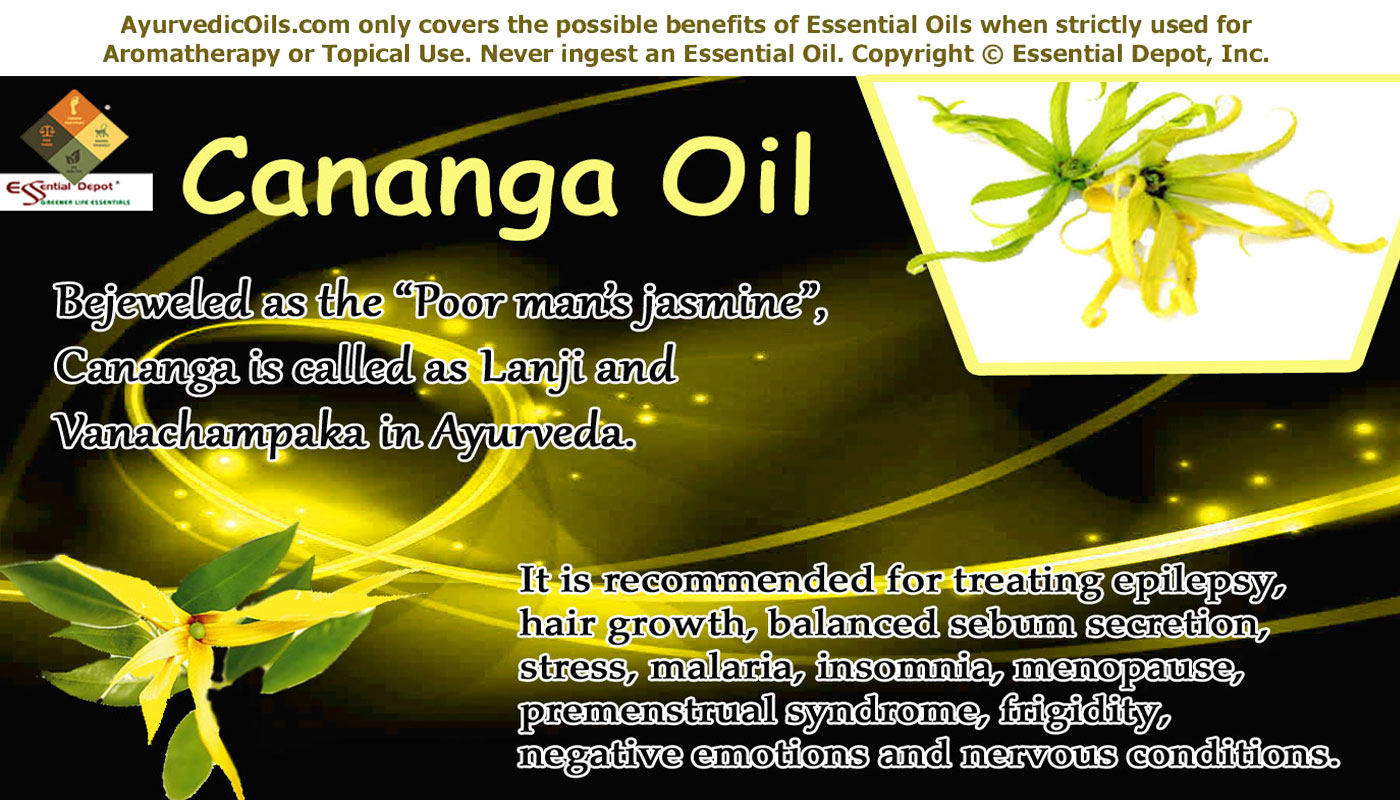
Bejeweled as the “Poor man’s jasmine”, Cananga is a relative of the most mesmerizing Ylang Ylang flowers. Although its floral note resembles that of Ylang Ylang oil, Cananga is comparatively less aromatic as it is regarded much greener than the Ylang Ylang tree and is its cost-effective alternative.

cananga-bannerCananga has been a vital part of the remedial regimen since the traditional times in the treatment of depression, anxiety, impotence, insect bites and high blood pressure.

Known as Lanji and Vanachampaka in Sanskrit, Cananga and its essential oil have been recommended in Ayurvedic treatment for epilepsy, hair growth, balanced sebum secretion, stress, malaria, insomnia, menopause, premenstrual syndrome, frigidity and nervous conditions.

Purchase Cananga Essential Oil – Wholesale – CLICK HERE

Purchase Cananga Essential Oil – Retail – CLICK HERE

Historical uses and importance of Cananga oil:

Cananga is a vibrant member of the sugar apple family, Annonaceae. Indigenous to the tropical parts of Asia, Cananga oil is distributed throughout the world from India, Malaysia, Moluccas islands, Philippines and Java.

Cananga oil is extracted by steam distillation from the freshly picked up, bright yellow flowers those look similar to that of the Ylang Ylang flowers. Few sources state that the first person to distill the essential oil of Cananga Odorata was Albert Schwenger in 1860.

The English Botanist, John Ray explained this tree as ‘Arbor saguisen” and it was also called as Unona odorata and Borga Cananga by few other explorers. The dazzling and fragrant yellow flowers were used for ornamental purposes initially, slowly after which its enormous healing benefits were explored by the traditional folklore people.

The fresh flower petals were used as an effective remedy for asthmatic attacks, where as the dried flowers were used as a treatment for malarial fever. Numerous research studies have proved the effectiveness of Cananga against intestinal infections, rapid heartbeat, typhus, malaria and certain respiratory conditions. Cananga oil is also used in candies, soaps, shampoos, baked goods, perfumes, lotions and skin care creams.

The sea star shaped flowers are the distinctive source of the mesmerizing Cananga essential oil for which it was used on hair for decoration and was scattered on the beds of newly married. Cananga oil is a secret ingredient behind the growth of thick, lustrous and healthy hair.

Cananga was also used as a natural skincare agent, where the leaves and flowers were rubbed on to the skin for nourishing skin health, moisturizing dry skin, alleviating itches, treating insect stings and bites and for balancing the secretion of sebum. It was also employed as natural infusion in bathing.

History reveals that the Victorians along with the Indonesians, Malaysians and other traditional folklore populace used Cananga flowers as a formula in their hair oil for influencing natural hair growth, enhancing the glossy look of the hair, preventing split ends and for moisturizing the dry and itchy scalp, thus preventing from dandruff and other scalp conditions.

Chemical constituents and remedial properties of Cananga oil:

In general, the ratio of chemical components of essential oils is mainly based on the origin, growth, seasonal differences and topography. The major chemical constituents of Cananga oil are germacrene, pinene, methyl benzoate, benzoic acid, caryophyllene, cadinene, farnesol, cresol, geranyl acetate, borneol, eugenol, linalyl acetate, isoeugenol, linalyl benzoate, geraniol, linalool and other sesquiterpenes.

The therapeutic attributes contributing to its colossal remedial values are relaxant, hypotensive, anti-stress, anti-inflammatory, vasodilating, tonic, anti-depressant, sedative, aphrodisiac, antispasmodic, cardio tonic, emmenagogue, calmative, nervine, anti-infectious and antiseborrhoeic.

Ayurvedic health benefits of Cananga oil:

Ayurveda is the ancient remedial system that prescribes the use of herbal medications including herbs and spices, essential oils, yoga, meditation and other Ayurvedic healing techniques like Pranayama (balanced breathing), Ayurvedic routine (Ayurvedic regimen for healthy living), Panchakarma (detoxification technique) and Abhyanga (Ayurvedic massaging).

With the profound meaning of ‘knowledge of life’, Ayurveda is a common sense science that treats illnesses based on its root cause and not by just relying on its symptoms. This traditional healing methodology dates back to 5000 years, where the ancient sages and gurus who practiced Ayurveda lived for more than a 100 years.

Journey towards longevity with the treatment and prevention of illnesses in a natural way is the mantra of Ayurveda. According to this antique science, everything in nature including human beings is made up of five fundamental elements namely fire, earth, water, space and air.

All these vital energies symbolize different parts of the human body, where water stands for blood and fluids in the system, fire is a symbol of the body temperature and Agni (the digestive fire for metabolic functions), earth is a representation of bones and muscles, air is for respiration and ether or space is the eternal soul.

Every person is regarded as a unique entity of Nature with a unique individual constitutional set up known doshas. These three biological forces namely vata (air and space), pitta (fire and water) and kapha (water and earth) are a combination of the five elemental energies.

Vata dosha is in charge for nervous functions, movement of the system, creativity quotient, circulation of blood and air. Pitta takes care of metabolism, body temperature, leadership qualities and decision making abilities. Kapha dosha is responsible for the physique, fluid retention, sustenance, love and natural bonding.

Ayurveda in many ancient texts, denote human body as a temple, where the soul dwells in. It is for this reason it recommends maintaining harmony between the mind, body and soul. Every individual is treated in a unique manner based upon their distinct individual constitution, where absolute balance between these doshas as per Nature’s law indicates health and imbalance due to lifestyle changes, climatic conditions, moral values and lack of physical and psychological activities lead to sickness.

Cananga oil is recommended for balancing vata and pitta dosha and for stimulating kapha energy.

The Ayurvedic health benefits of Cananga essential oil are:

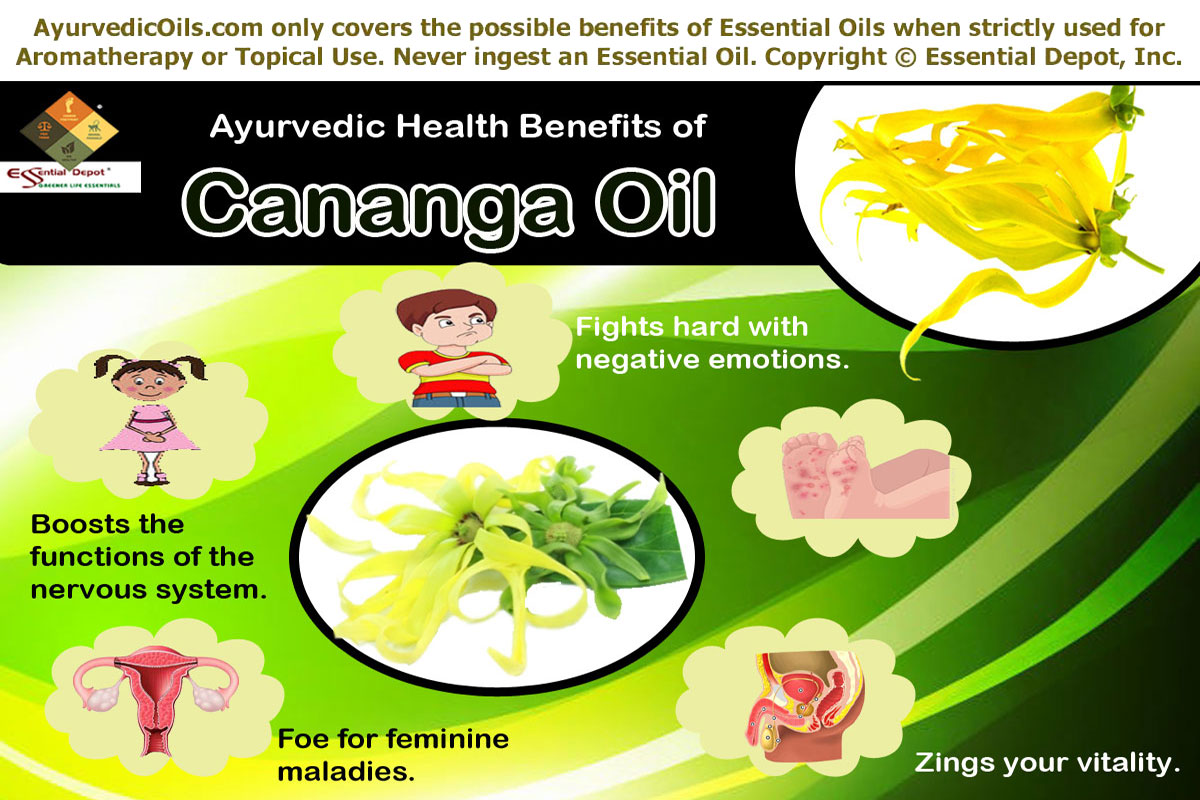
Cananga-broucher1. Fights hard with negative emotions:

Negativity or pessimism is a highly contagious health condition that spoils your mental and physical well-being along with those around you. The ability to think right is the basis for progress in all kinds of chores that you undertake.

Off-putting thoughts or negative thinking drains your mind and soul. Ayurveda beckons mind as the limb of consciousness and negative energies like fear of failure, loneliness, lack of self-confidence, annoyance, disgust, worries, frustration, anxiety, inferiority complex or lower self-esteem, depression, stress and possessiveness would often cause serious harm to the mind.

Ayurvedic essential oils along with Ayurvedic techniques like abhyanga, meditation and Pranayama have the potent to rejuvenate your mind and nurture your soul for enhanced thinking and better quality of life.

Cananga oil has such an enriching aroma that could stimulate the mental faculty with precision and positive thinking. The essential oil of Cananga has the power to fortify the heart chakra, which is responsible for self-love, self-confidence, trust and love for others, focused thoughts and spiritual consciousness.

2 drops of Cananga oil with 2 drops of Vetiver oil added to your diffuser or vaporizer during meditation or Pranayama (the Ayurvedic way of balanced breathing) can help in elevating your inner consciousness, promoting positive thoughts and hope, increasing self-esteem and self-confidence, instilling peace of mind, lessening anxiety, reducing depression and enhancing your creativity quotient and leadership traits with its power to augment vata and pitta doshas.

Cananga oil when added to warm bathing water before going to bed can help in alleviating fatigue, anxiety, stress, nervous depression and other psychological traumas. It also helps in promoting peaceful sleep and ensures a feel-fresh morning at the rise of every new-fangled day.

Ayurvedic massage blend with 5 drops of Cananga oil, 5 drops of Bergamot oil and 5 drops of Rose Geranium oil with 20 ml of Jojoba oil relaxes the tensed muscles, soothes your nerves and brings in complete tranquility to the mind and the soul. You can take up this revitalizing regimen every weekend for kick starting your routine in the next week.

2. Absolute rescuer of a range of skin conditions:

Skin is often the most revealed part of the body and any kind of stressful situations or other health problems affects the skin health and is mostly reflected on the facial skin and the scalp. For example acne, dandruff and wrinkles are most frequently associated with depression, stress, worries and related hormonal fluctuations.

Cananga is a Kushtanut in Ayurvedic philosophy, which is a promising remedy for certain skin diseases. With its antiseptic and antibacterial properties, Cananga is Dushta Vranashodhana for its excellent cleansing qualities of wounds, cuts and infections and is Krumihara for fighting against bacterial and microbial growths in such skin infections.

Applying 1 drop of Cananga oil with 5 drops of coconut oil on wounds, cuts, abrasions and other skin infections can foster quicker healing by curbing the growth of microbes and disinfecting or sanitizing the wounds from within.

With its anti-inflammatory and anti-seborrhoeic values, Cananga is a proven natural remedy for seborrhea, eczema, inflammation, irritation, soreness and redness of the skin. It regularizes the functions of the sebaceous glands, where the sebaceous glands are defined as “microscopic exocrine glands in the skin that secrete an oily or waxy matter, called sebum, to lubricate and waterproof the skin and hair of mammals.”

This assists in keeping the skin and scalp moist and smooth. Mixing 1 drop of Cananga oil with 1 drop of Lavender oil and 1 drop of Orange oil and 2ml of coconut oil and gently massaging your skin surface can help in regularizing sebum secretion. You can remove this pack by wiping off your face with a warm towel. This also relieves from clogged pores and helps relieve acne and fight against wrinkles and other aging symptoms.

Being a tonic to the skin, Cananga nourishes the skin surface with its moisturizing and cooling properties and has been recommended for all types of skin including dry skin, stressed skin, oily skin, aging skin and combination skin.

3. Zings your vitality:

Cananga and its closest pal Ylang Ylang are assured solutions for greeting ahead the zing in your intimacy. Held high as the most popular traditional tonic for treating impotence, premature ejaculation, loss of libido and loss of interest in being together, Cananga with its bracing fragrance is a trusted cure for reproductive conditions both in men and women.

Cananga essential oil has a long-lasting intense floral and sensual aroma that helps in treating mood fluctuations, lack of sexual interest, erectile dysfunctions and intimacy problems due to stress or pre-occupied mind.

The enriching fragrance of Cananga oil reaches the limbic system of the brain through the nasal passages. It is the control center of the system and passes on the therapeutic values in the form of molecules to the nerve impulses and the corresponding parts of the body, thus supporting the secretion of positive hormones.

Adding 2 drops of Cananga oil along with 2 drops of Tuberose oil and 1 drop of Aswagandha oil to your air freshener in the evening can turn them quixotic by spreading its magical aroma. 3 drops of Cananga oil to your bathing tub before bedtime can also help in spicing up your vim and vigor.

4. Foe for feminine maladies:

The book Ayurveda and Aromatherapy by Light Miller and Bryan Miller quotes Cananga odorata oil as “A balancer to the female immune system, it reduces tension, cramps, negative emotions and headaches. It brings out warmth, self confidence, the feminine side and sensitivity.” It also states that this oil is excellent for the skin, reproductive system and nerves.

With its effectiveness to treat hormonal imbalances along with its balancing attributes, Cananga oil is a proven cure for treating problems associated with menopause and premenstrual syndrome (PMS).

Massaging your lower abdomen, inner thighs, lower back, and around your genital area with 3 drops of Cananga oil, 2 drops of Vetiver oil, 2 drops of Cedarwood oil and 15ml of Olive oil can help in balancing estrogen hormones and regularize irregular menstruation, relieve dysmennorhea or painful periods, cramps, headache, mood swings, anxiety, irritability and sleeping difficulties. This can also help in treating frigidity and loss of sexual interest.

Wearing 1 drop of Cananga oil to your wrist or to your handkerchief can help in keeping your mind and nerves calm throughout the day. Cananga is an exceptional skin-friendly oil and has enormous benefits for hair growth as well. These advantages are attributed to its sebum-controlling potential and its ability to promote proper blood circulation in the system.

Adding 2 drops of Cananga oil in your regular shampoo for hair or gently massaging your scalp with 10 drops of Cananga oil along with 5 drops of Citriodora oil, 5 drops of Rosemary oil and 50ml of Coconut oil (slightly heat this blend before massaging) can support in controlling dandruff, moistening dry, itchy and scaly scalp, encouraging the growth of hair by promoting good circulation in the scalp, have power over split ends and can help in adding the glossy and natural shine to your hair.

5. Boosts the functions of the nervous system:

Cananga oil has the power to relax and soothe the central nervous system and controls the function and flow of adrenaline, which helps in pacifying negative emotions like rage, shock, panic, fear or anger. These feelings in turn lead to high blood pressure, nervousness, tension and insecurity.

Cananga and its essential oil have been celebrated for its ability to lessen anxiety and tension, thus improving the level of blood pressure and treating increased heartbeat and rapid breathing. It has tranquilizing and soothing effect on the nervous system.

Numerous studies have substantiated the effect of Ylang Ylang oil on people with high blood pressure and nervous tension. One study published in Planta Medica concluded that Ylang Ylang oil helped in reducing high blood pressure and increased pulse rate along with a boost in attentiveness and alertness.

Few other studies conducted with a group of people with hypertension, where the group was facilitated to inhale the aromatic blend with essential oils like Ylang Ylang, Marjoram, Lavender and Neroli for about 24 hours, concluded that “essential oils may have relaxation effects for controlling hypertension and in reducing systolic blood pressure.”

Cananga oil, when added to your bathing water can also help in augmenting self-confidence and alleviating the feelings of fear, failure, obstinacy and feelings of loneliness along with stress and depression.

Other health benefits:

Apart from these health benefits, Cananga oil is also recommended for enhancing metabolic functions, flatulence, tastelessness, epilepsy, chest infections, intestinal infections and physical exhaustion.

Disclaimer:

This article is only educational purposes and is not destined for substituting professional medical advice or prescribed medications or for treating any medical conditions. We are not healthcare experts and we take up a shared interest to spread the knowledge of Ayurveda, the oldest and the Mother of all remedial practices in the world.

Do not use essential oils internally and dilute them in suitable carrier oils like Coconut oil before using it for topical application. This is due to the fact that 100% organic and pure essential oils are highly concentrated liquids and may cause allergic reactions. Keep essential oils out of reach of children and speak with your Doctor if you are a pregnant or nursing mom.

Consult your healthcare professional or Ayurvedic practitioner ahead of choosing the appropriate essential oils for your unique individual constitution and medical condition.

Thought for the day:

Flowers always make people better, happier and more helpful; they are sunshine, food and medicine to the soul. – Luther Burbank.

Suggested Reading:

  1. Dealing with Depression Naturally by Dr Miriam Kinai
  2. Listening to Scent: An Olfactory Journey With Aromatic Plants and Their Extracts by Jennifer Peace Rhind
  3. The Illustrated Encyclopedia of Essential Oils: The Complete Guide to the Use of Oils in Aromatherapy & Herbalism by Julia Lawless
  4. The Natural Depression Cure: Holistic Depression Treatment by Dr Marion King

Reference Links:

  1. Cananga Odorata by Wikipedia
  2. Ayurvedic Medicinal Plants – Cananga Odorata by Toxicology Centre
  3. Health Benefits of Ylang Ylang Essential Oil by Organic Facts
  4. Composition of the essential oil of Ylang-Ylang (Cananga odorata Hook Fil. et Thomson forma genuina) from Madagascar by Emile M. Gaydou, Robert Randriamiharisoa, Jean Pierre Bianchini, published in the Journal of Agricultural and Food Chemistry

Dill Seed Oil


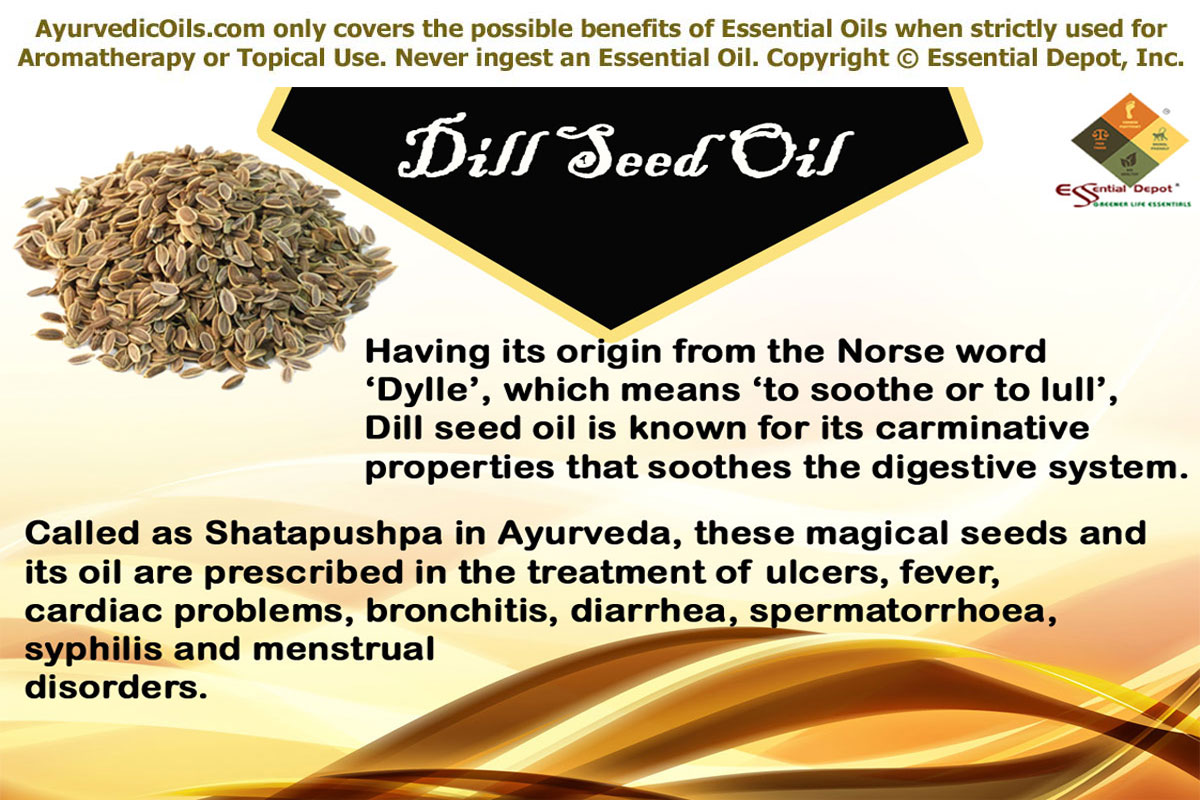
Dill-seed-BannerDill…..a miraculous herb that spells the charm of lull and pulls you out of illness. Having its origin from the Norse word ‘Dylle’, which means ‘to soothe or to lull’, Dill seed oil is well known for its carminative properties that soothes the digestive system and is used in Ayurveda for the treatment of ulcers, fever, cardiac problems, bronchitis, spermatorrhoea, syphilis and menstrual disorders.

Called as Shatapushpa in Ayurveda, Dill seeds are one among the most promising culinary herbs used in the Indian tradition especially during childbirth. Botanically known as Anethum sowa, Dill seed essential oil is extracted from the dried seeds by steam distillation method. These magical little seeds and its essential oil are prescribed in Ayurvedic healing for treating dysentery, menses, diarrhea, inflammation and for mental disturbances.

Purchase Dill Seed Oil – Retail – 4oz – CLICK HERE

Purchase Dill Seed Oil – Wholesale – CLICK HERE

Historical importance of Dill and its essential oil:

Native to the Mediterranean and Black Sea regions, Dill has been used worldwide as an aromatic spice and a healing herb. Ancient Greeks and Romans considered it as a sign of health and wealth and carried the twig of this herb in the belief that it would protect them from curses. Few sources state that a lot of superstitions prevailed in the medieval period that Dill was used to prepare potions for casting spells and protecting one from the ill effects of witchcraft and evil spirits.

Hippocrates, the Father of Medicine used Dill seeds in his medications for oral cleansing. Ancient warriors applied the extract from Dill seeds and twigs onto burns for quick healing. Dill seeds have exclusive carminative properties. It is for this reason that Emperor Charles the Great ordered the presence of Dill on his banquet tables to benefit his guests who indulged too much.

The entire plant of Dill including the seeds, leaves and twigs are equally important and carry the same flavor and aroma. The well known antimicrobial properties of this herb compel the use of Dill seeds in this planet for the preservation of food and in the preparation of pickles.

Easily available to common man, Dill seeds are an aboriginal remedy for curing insomnia, cold, fever, respiratory illnesses, diarrhea, dysentery, flatulence and a recent study has proved that it helps in preventing cancer.

Chemical constituents and therapeutic properties of Dill seed oil:

The proportion of the chemical constituents for all essential oils mainly depends upon the topography, seasons and various other attributes of its nativity. Dill is cultivated all over the world for its valuable benefits. Results of various researches state that Dill seed oil contains carvone, d-limonene, α-phellandrene, dihydrocarvone, eugenol, β-phellandrene, α-pinene, anethole, dillapiole, myristicin, carveol, arginine, β-caryophyllene, apiole, and others.

Antimicrobial, antispasmodic, anti-inflammatory, antihistamine, antioxidant, carminative, digestive, disinfectant, anti-hyperlipidaemic, anti-hypercholesterolaemic, anti-fungal, aromatic, diuretic, galactogogue, sedative, stomachic and sudorific are some of the priceless therapeutic properties of this prized oil.

Ayurvedic health benefits of Dill seed oil:

Dill seeds and few other extracts from this plant including its essential oil is administered to people of all ages in Ayurveda, depending upon their nature of illnesses. Ayurveda means the ‘knowledge of life’ and it aims at longevity through prevention of diseases along with its healing. This ancient wisdom analyzes the root cause of an illness and progresses towards treating the root cause instead of the symptoms alone.

Ayurvedic philosophy states that nature is made up of five vital elements known as water, earth, fire, space and air. It also says that everything on earth is a part of nature so all these things are also made up of these five elements.

Each element represent various parts of the human system, where earth represents muscles and bones, water represents blood and other fluids, air keeps us breathing, fire is the internal force created for movements and various functions of the body and space or the cosmic energy is the soul or spirit dwelling within us.

Human body is considered as a temple in Ayurveda where the spirit lives in and Ayurveda recommends one to keep his mind and body clean and tidy just like a temple for leading a healthy and harmonious life.

Every individual is unique in terms of Ayurveda and this individuality is identified with the distinctive individual constitution comprising of three biological energies known as doshas, namely kapha, pitta and vata.

Vata is responsible for movement, nervous functions, blood circulation, creativity and transmission of air and other vital elements. Pitta energy deals with metabolic functions, decision making skills and body temperature. Kapha dosha takes care of structure, movement of fluids, love and sustenance.

Balance between these doshas indicates healthiness and imbalance causes illness. Ayurvedic remedies like yoga, herbs, meditation, essential oils, physical exercises, Abhyanga and Ayurvedic routine focus on striking absolute balance between these doshas.

Dill seed oil is known to reduce pitta and kapha dosha and has a neutral effect on vata dosha. A recent research highlights the uses of Dill in Ayurveda before thousands of years, which says, “The earliest reference to use of Dill seed in medicine goes back to (700 BC) in ‘Charak Samhita’ (ancient Ayurvedic text), where an infusion of it was given as a cordial drink to women after confinement, the leaves moistened with oil were used as a poultice for suppurative skin conditions.”

The Ayurvedic health benefits of Dill seed essential oil are:

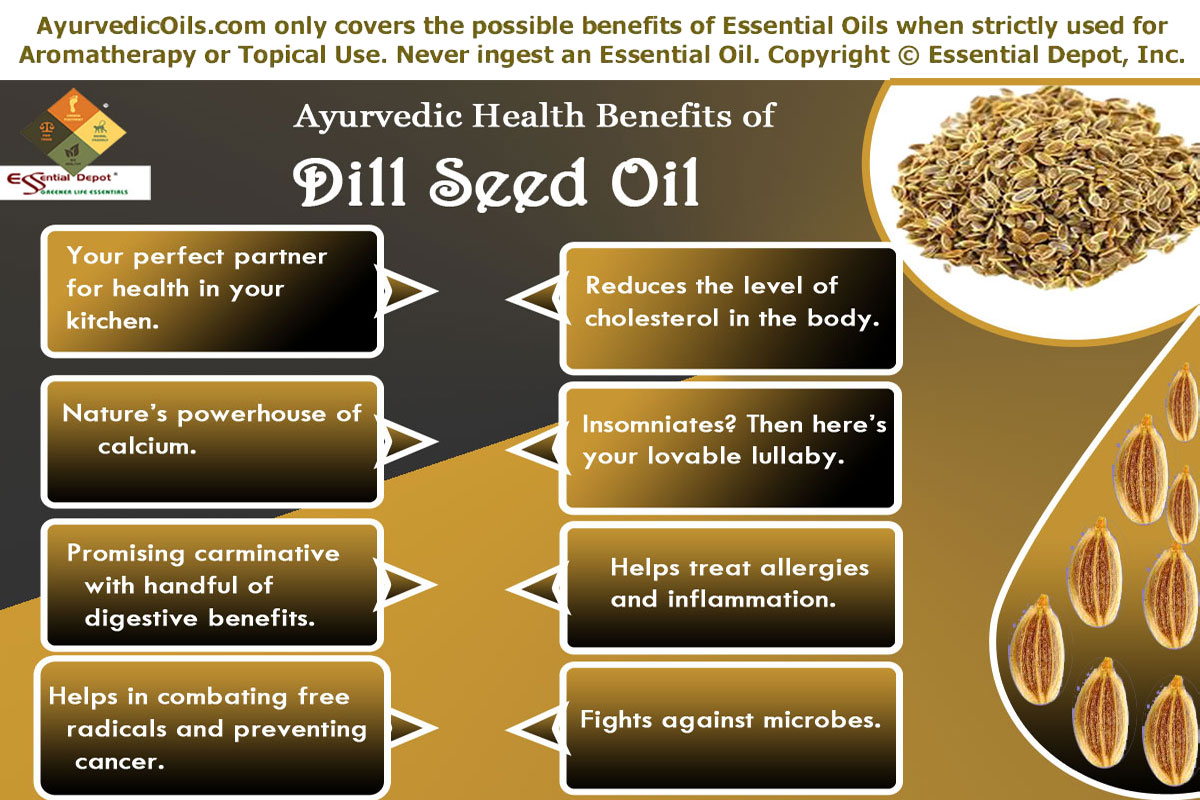
Dill-seed-Broucher-new1. Your perfect partner for health in your kitchen:

Dill seeds have a unique aroma that simply adds up to the flavor of various cuisines. It is one among the primary herbs in a number of kitchens across the globe including Europe, Asia and the Middle East. Also known as Lao Coriander it is often used in pickles and in fish dishes due to the high concentration of carvone which is antimicrobial in nature.

As an aromatic compound, it possesses anti-microbial, anti-fungal and anti-bacterial properties that help in preserving the edible items for a long time. As a natural reducing agent of blood glycerides, Dill seeds have gained popularity as one of the most flavored and healthiest herbs of the Middle East.

Most of the European countries, especially Germany uses Dill seed oil to preserve cucumbers and pickles, affordable to poor people as well. A variety of dishes like soups, sauces, salads, pickles, vinegars, fish and rice become special with the touch of this enticing herb. It is also used in confectionery, cakes, bread and apple pie.

2. Nature’s powerhouse of calcium:

Dill seed oil is a good source of calcium, dietary fiber, manganese, iron and magnesium. The presence of arginine strengthens bones, teeth and helps in the prevention of bone loss that occurs after menopause and even after some severe problems like rheumatoid arthritis. Few reliable sources even state that Dill seed oil is effective for treating hiccups due to its high calcium content.

Skin is the largest organ of the body and any medications used on the skin easily penetrates through the skin. The therapeutic properties of Dill seed essential oil when used topically, enters the skin and reaches the blood stream and heals the system naturally.

The best way to acquire the calcium and other energy nutrients of Dill seed oil is to add 3 drops of this oil to bathing water and massage your body with 6 drops of Dill oil blended with 3 ml of olive oil. This assists in supplying the essential calcium, iron, fiber, magnesium and other nutrients to the body.

3. Promising carminative with handful of digestive benefits:

β-phellandrene, α-pinene and other constituents of Dill seed oil attribute to the carminative property of the oil that helps in preventing the formation of gas in your intestines as well as aid in the expulsion of gas. It helps in the secretion of bile, a fluid produced by liver that aids in digestion. Dill seed oil is also stomachic in nature and assists in curing stomach pains that occur during menstrual cycles. It fights against flatulence, constipation, hiccups and colic in infants.

As an exclusive antimicrobial, antispasmodic and antifungal oil, Dill seed essential oil is recommended for treating dysentery, diarrhea and food poisoning. It fights against infectious microbes, soothes the digestive system and protects from infections and indigestion.

A recent research on ‘Seasonal differences in essential oil composition on Dill seed oil and Parsley oil’ has proven that the antimicrobial compounds like α-pinene, cineole and limonene in Dill seed oil have been proved effective against food-borne pathogens like Staphylococcus aureus, Bacillus cereus, Escherichia coli, and Campylobacter jejun. Dill seed oil fights best against the microbes Aspergillus niger and the yeasts Saccharomyces cerevisiae and Candida albicans.

Mix 2 drops of Dill oil with 1 ml of sesame oil and gently massage on the stomach and abdomen for treating dysentery, diarrhea, flatulence, hiccups and constipation. In case of infant use, blend 1 drop of Dill oil with 2 ml of sesame oil and massage it gently on their tummy in slow circular movements. You can also add 1 to 2 drops of Dill oil in warm bathing water or in diffuser for relieving from digestive disorders.

4. Helps in combating free radicals and preventing cancer:

Dill seed oil is rich in monoterpenes, which activate the secretion of the enzyme glutathione-S-transferase. This enzyme helps in putting together the anti-oxidant molecule glutathione to the oxidized ones thus helping in prevention of cancer. It is also an excellent neutralizing agent of carcinogenic substances like benzopyrenes found in cigarette smoke, charcoal grill smoke, and the smoke produced by trash incinerators.

The anti-oxidant property of Dill seed oil is applied in treating mimic wrinkles around the eyes since it fights against free radicals responsible for various symptoms of aging including wrinkles. Mix 2 drops of Dill seed oil with 1 ml of Jojoba oil or with your regular skin care cream or lotion and gently apply it on your face and other wrinkles prone area for visible results. This massage aids in refreshing and soothing the skin surface.

5. Reduces the level of cholesterol in the body:

A recent study on Dill seeds have been proved to possess antihyperlipidaemic and antihypercholesterolaemic effects. It fights against hyperlipidemia that describes a condition of elevated levels of lipid formation and hyper cholesterol, which is nothing but increased cholesterol level in the body.

Maintaining the level of the fat soluble molecules called lipids and cholesterol in healthy standards yields fitness at all ages especially when you grow older. Massage your body with 6 drops of Dill essential oil blended with 3 ml of coconut oil, followed by hot bath where 2 drops of Dill oil is added to bathing water as well. This aids in decreasing the level of cholesterol and enables to feel light and fit.

6. Insomniates? Then here’s your lovable lullaby:

The soothing, calming and refreshing effects of flavonoids and group B vitamins in Dill seed oil helps in regulating the secretion of hormones and enzymes in our body that pacifies the nervous system. It is generally recommended for people suffering from insomnia and nervous disorders.

Placing cold to warm bags immersed in water with Dill seeds allowed to soak for few minutes, on closed eyelids will help you in experiencing a calming effect. You can also add 2 drops of Dill oil every night in your diffuser, burner or vaporizer for promoting peaceful sleep throughout the night.

7. Helps treat allergies and inflammation:

Dill seed oil fights against inflammation and allergies. People with oral inflammation in the throat and mouth are administered with this oil. Monoterpenes and flavonoids help in cleansing the respiratory system in case of allergies. Add 2 drops of Dill oil in steam inhalation and inhaling this medicated aroma helps in alleviating respiratory infections and allergies.

Aggravated kapha dosha is responsible for causing inflammation due to excess water deposits, salt, uric acid and other toxic substances in the system.  Dill essential oil has the efficiency to reduce increased kapha dosha and its anti-histamine properties helps one in getting rid of inflammation and other infections associated with it. Massage the inflamed and painful parts with 2 drops of Dill oil mixed with 1 ml olive oil for lessening pain, swelling and inflammation.

8. Fights against microbes:

Since Dill seed oil is rich in antimicrobial, anti-fungal and antibacterial properties it acts as a disinfectant and helps in killing the disease causing germs and micro organisms. This oil also acts as a mouth freshener by killing the microbes and fighting against the free radicals that affect the gums and teeth with its antioxidant effects. Add 1 drop of Dill oil in a cup of warm water and use it as a mouthwash for battling against harmful microbes causing oral infections.

Bacteria, fungus, virus and other micro organisms are the root cause of many diseases. Dill seed oil protects you against these infections and is a valuable remedy for cold, cough, flu, fever, bronchitis, spasms, respiratory tract diseases and healing wounds.

Other health benefits of Dill seed oil:

The diuretic property of this oil assists in treating urinary infections and regulates the excretion of urine without any difficulties. Since it induces the secretion of certain enzymes and hormones, Dill seed oil is used to regulate the menstrual cycle, increase the quantity of breast milk, and prevent early ovulation by acting as a natural contraceptive. Dill seed oil is also used in perfumery and cosmetic industries.

Disclaimer:

This article is only for the purpose of education and is not intended to diagnose or replace any prescribed medicines or professional medical advice. Always use essential oils externally in a diluted form, as pure and organic essential oils are highly concentrated substances and can cause adverse effects if used directly on the skin.

Never ingest essential oils unless it is recommended safe by your medical expert. Remember to consult your Ayurvedic practitioner before choosing the right essential oil for your unique individual constitution and health condition.

Thought for the day:

The smallest seed of faith is better than the largest fruit of happiness.
-Henry David Thoreau

Suggested Reading:

  1. Dill (Anethum graveolens L.) (Herb of the Year 2010) from International Herb Association
  2. The Healing Intelligence of Essential Oils: The Science of Advanced Aromatherapy by Kurt Schnaubelt
  3. The Nursing Mother’s Herbal (The Human Body Library) by Sheila Humphrey
  4. A Mother’s Guide to Raising Healthy Children—Naturally by Sue Frederick
  5. Ayurveda & Aromatherapy: The Earth Essential Guide to Ancient Wisdom and Modern Healing by Dr. Light Miller, Dr. Bryan Miller

Reference Links:

  1. Dill by Wikipedia
  2. Composition, quality control, and antimicrobial activity of the essential oil of long-time stored dill (Anethum graveolens L.) seeds by PubMed.
  3. Dill (Anethum graveolens L.) and Parsley (Petroselinum crispum (Mill.) Fuss) from Estonia: Seasonal Differences in Essential Oil Composition by R. Vokk, T. Lõugas, K. Mets and M. Kravets of Tallinn University of Technology, Ehitajate tee 5, EE19086, Tallinn, Estonia
  4. Chemical Constituents of Essential Oil from Anethum Sowa Kurz Seed by Sumitra Singh, Guru Jambheshwar University of Science and Technology, India, published in the Journal of Chemical and Pharmaceutical Research

Lavandin (Grosso) Oil


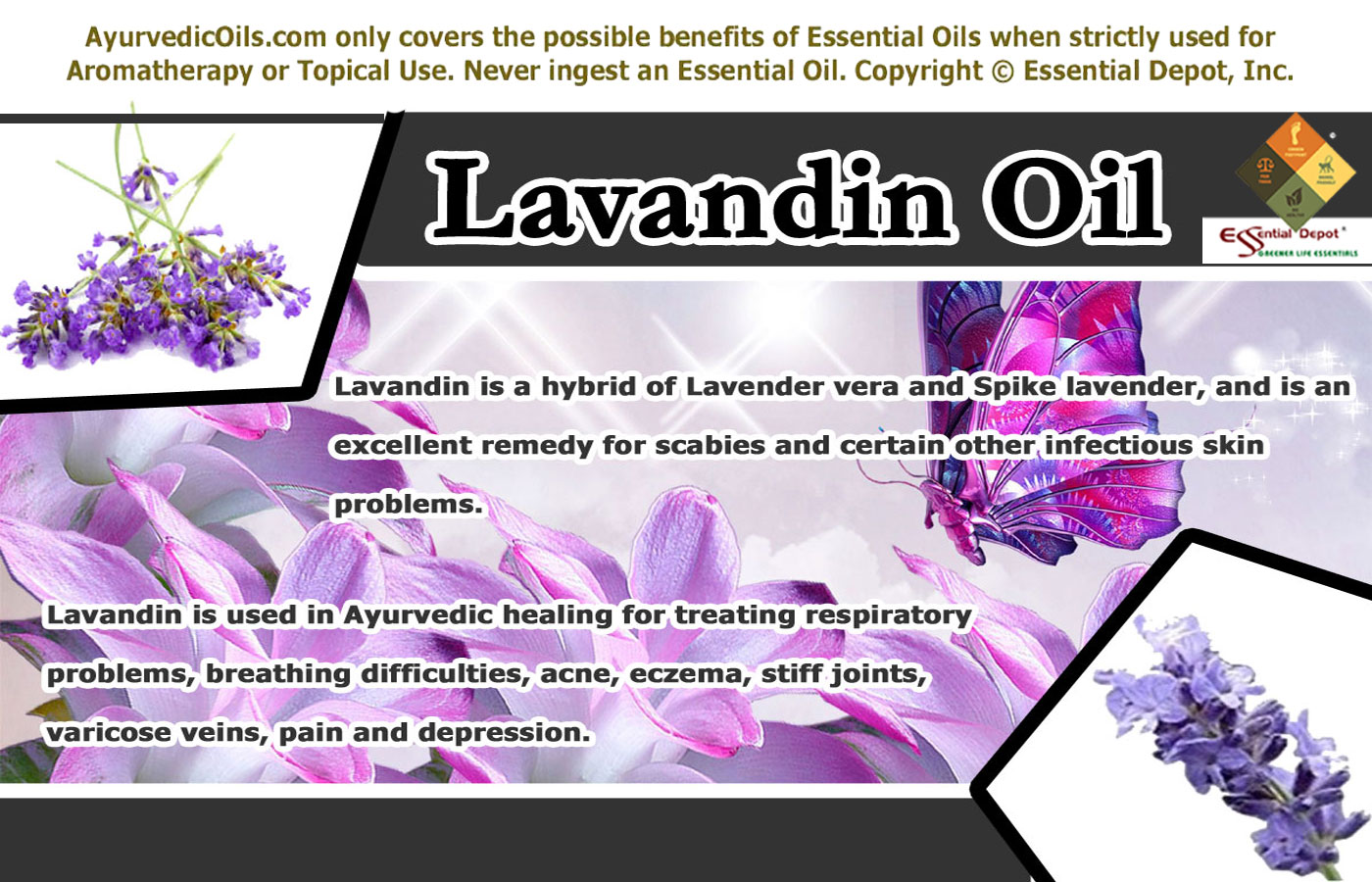
Lavendin-bannerThe dream of filling your garden and your home with the mesmerizing fragrance of Lavender blossoms is not a distant dream anymore as Lavandin is such a simple medicinal plant that resembles Lavender and its enriching aroma never fails to fill your home any lesser than Lavender does. As a hybrid of Lavender vera and Spike lavender, Lavandin Grosso is an excellent remedy for scabies and certain other infectious skin problems.

World is a global village and it is this strong reason that turns the world towards the path of Traditional healing methodologies. Ayurveda, the mother of all healing sciences on earth is the pioneer of Complementary and Alternative Medicine. Lavandin is used in Ayurvedic healing for treating respiratory problems, breathing difficulties, acne, eczema, stiff joints, varicose veins, pain and depression.

Purchase Lavendin (Grosso) Oil – Retail – 4 oz – CLICK HERE

Purchase Lavendin (Grosso) Oil – Wholesale – CLICK HERE

History of Lavandin (Grosso):

It is a hybrid variety of plants developed in the early 18th century and the essential oils extracted from these hybrid varieties were initially used for manufacturing soaps, perfumes and certain other personal hygiene products.

France is known as the major producer of Lavandin plants and essential oils. Lavandin essential oils are comparatively cheaper than True Lavender varieties. This is because unlike Lavender, these hybrid varieties can be grown as a commercially viable crop and are more tolerant to various climatic and growing conditions.

Lavandin Grosso is named after its discoverer Grosso and it reflects true qualities of both of its parentage with the camphoric aroma of Lavandula latifolia and the frost hardiness of Lavandula angustifolia. Among the numerous other Lavender hybrid plants, Lavandin Grosso is the most predominantly chosen plant by the commercial Lavender farm growers as it is easy to grow in most regions and produce abundant Lavandin flowers that contain ample amount of essential oils.

The big and bright flowers of this plant are also used for making sachets (keeps your clothes fresh and protect from moths and other insects) and the long stems are used in making Lavender wands. Initially, Lavandin and its essential oil were used as an analgesic and antiseptic for relieving pain, inflammation and for healing wounds and skin infections. Lavandin flowers were also used in making tea that was trusted to discharge excess mucous deposits and to assist breathing difficulties.

Chemical constituents or Gas Chromatography Report (GC) of Lavandin Grosso oil:

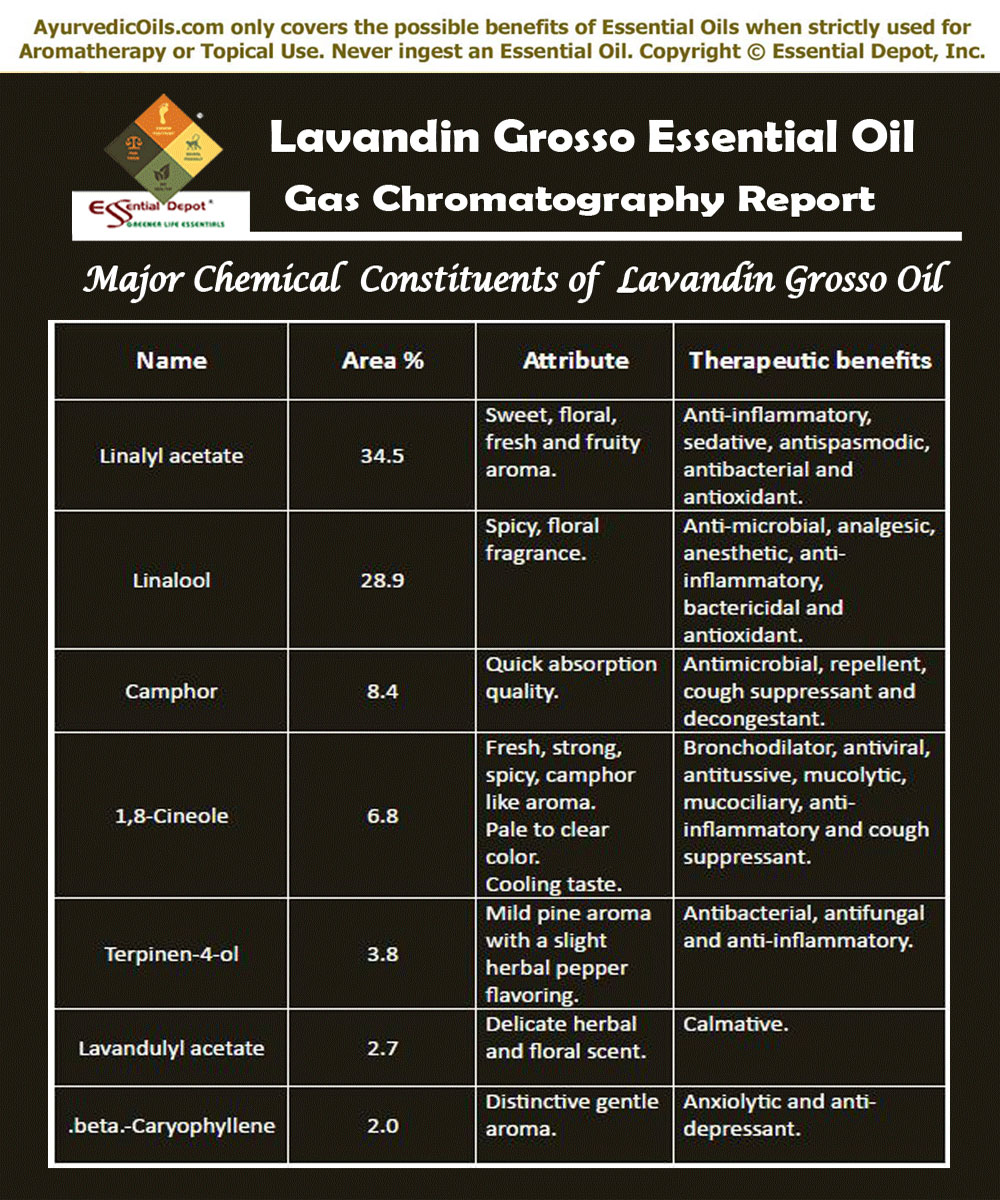
According to the Gas chromatography report, Lavandin Grosso oil constitutes of 25 chemical components that contribute to its fragrance, therapeutic attributes, consistency and quality. Of which, Linalyl acetate contributes to the highest proportion of Lavandin Grosso oil constituents with about 34.5% of its total composition.

Just click on:

I believe that this must certainly help you in getting to know the exclusive information about these prime chemical constituents of Lavandin Grosso oil.

The table crafted below clearly depicts the unique nature and contributions of these biochemical constituents to the healing magnificence of Lavandin Grosso essential oil.
lavandin-oil

Therapeutic properties of Lavandin Oil:

The remedial properties are antiseptic, antidepressant, analgesic, vulnerary, expectorant, cicatrisant, nervine, antispasmodic and stimulant.

Ayurvedic health benefits of Lavandin Essential Oil:

Many of us misconstrue that Ayurveda and the other traditional healing practices are meant for the old people or people who are still attached to the Stone Age. Ayurveda is the first and foremost healing methodology to love human beings and appreciate their individual identity, feelings, characteristics and behavioral patterns.

When all other medical sciences in this world aim at treating illnesses, this ancient healing system focused on treating individuals and not just their illnesses.

Ayurvedic philosophy declares that human beings are a part of nature and a person’s wellness or sickness depends upon his balance or imbalance with nature. Diseases occur when an individual’s mind and body is out of balance with nature. It is for this reason Ayurvedic remedies are based upon natural medicines for striking perfect balance with an archway to prevention and healthy aging.

Every individual is distinctive with a unique individual constitution that comprises of three biological energies known as doshas. They are vata, pitta and kapha. Each of these doshas governs certain functions of our body where vata is responsible for nervous functions and circulation, pitta controls metabolism and body temperature and kapha governs fluid movements, consistency and skin health.

Predominance of any of these doshas determines the personality, character, physical set up and the mental makeup of a person.

Imbalance between any of these doshas causes illness and Ayurvedic medications are prescribed in such a way that the imbalances are treated. Lavandin essential oil is said to reduce kapha and pitta dosha and has a neutral effect on vata dosha.

Let’s take a look at the Ayurvedic health benefits of Lavandin essential oil:
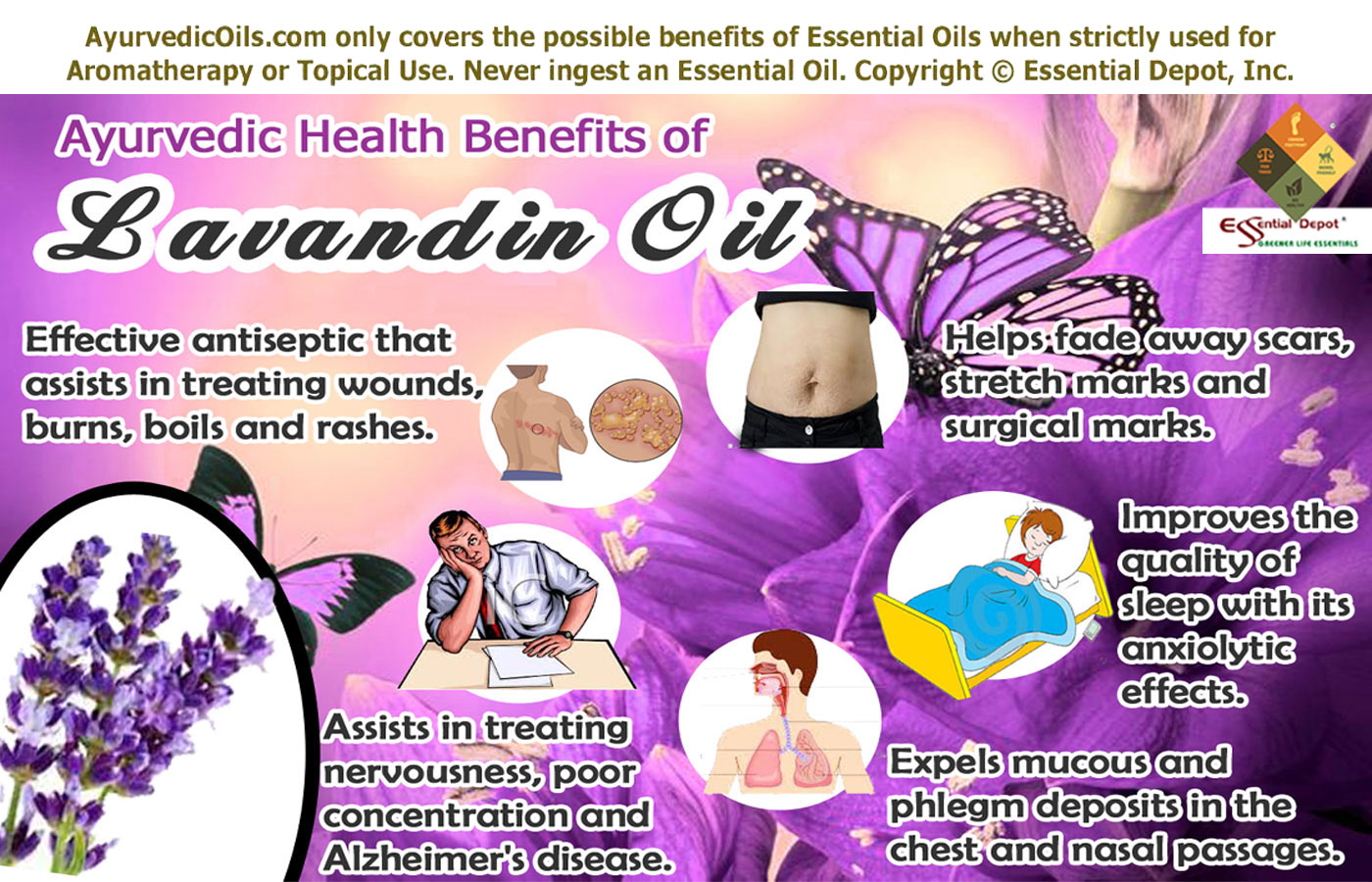
lavandin-broucher1. Benefits to the skin:

Popular author Susanne Fischer-Rizzi states that Lavender has more than 167 tested and proven medicinal uses. Bryan Miller and Light Miller in their book ‘Ayurveda and Aromatherapy’ says that Lavender is a must have essential oil in your first-aid kit or travel bag. With much similar aroma and healing properties like Lavender, Lavandin essential oil is also beneficial in a number of ways especially for nurturing skin health.

With excellent antiseptic, vulnerary and cicatrisant properties Lavandin essential oil has been proven effective for treating numerous skin problems. It keeps the skin clean and fights against various germs.

The ability of this oil in killing germs contributes to its effectiveness in treating dermatitis, scabies and few other infectious skin disorders. Being an effective antiseptic Lavandin essential oil can assist in treating wounds, cuts, burns, boils and rashes. It protects the open wounds from being septic or getting affected by the harmful organisms in air like tetanus.

The vulnerary properties of this oil helps in speeding up the process of healing wounds especially in case of incisions, surgical wounds, cuts or other accidental wounds. Applying 2 drops of Lavandin essential oil mixed with 1 ml of coconut oil is a sure-shot remedy for quick healing of wounds, protecting from infections and for fading away the scars and marks left by wounds, acne, stretch marks, surgical marks, cracks and other marks related to pregnancy.

Lavendin essential oil improves blood circulation and encourages the growth of new skin cells which contribute to its natural anti-scarring properties. You can also blend 3 to 4 drops of Lavendin oil in 2 ml of olive oil or to your regular skin care lotion and gently massage on to the skin to clear blemishes, treat sluggishness, dry skin and for improving the natural glow of the skin.

2. Benefits to the mind:

Lavandin essential oil has a rejuvenating and calming aroma that acts as an admirable antidepressant oil. The presence of camphor, linalyl acetate and terpineol-4 enhances its soothing and stimulating attributes that benefit the mind and heart in numerous ways. Lavandin Grosso oil is regarded as a great natural remedy for alleviating stress, fatigue, anxiety and depression. Certain studies have proven that Lavandin essential oil have anxiolytic effects that aid in improving the quality of sleep and save you from insomnia and nightmares.

Feelings of loneliness, lack of self-confidence, insecurity, loss of love or your near ones and work pressure may drag you down and waive a red flag to all your endeavors. All you need to do is to waive back the pleasant Lavandin flag that can uplift your spirit, enhance your self-confidence, fight against depressive feelings and reassure your success.

Adding 2 to 3 drops of Lavandin oil in your vaporizer, burner, diffuser, aroma lamp or bath tub can help in combating negative thoughts and grant the power to swim against the tide.

A 2009 study on ‘The use of the essential oil of Lavandin to reduce preoperative anxiety in surgical patients’ by the United Hospital, MN, USA tested about 150 adult patients to assess the effectiveness of Lavandin essential oil in reducing preoperative anxiety than other standard care methodologies. This study came up with an amazing result stating “Controlling for baseline anxiety and pain, the lavandin group had significantly lower anxiety on OR transfer, suggesting that lavandin is a simple, low-risk, cost-effective intervention with the potential to improve preoperative outcomes and increase patient satisfaction.”

3. Benefits to the respiratory system:

Adding 2 to 3 drops of Lavandin essential oil in steam inhalation or blending 2 drops of Lavandin oil with 1 ml of coconut oil and massaging it on chest, throat and back aids in treating cough, cold, bronchitis, sinusitis, chest congestion and other breathing problems. This is mainly due to the antiseptic properties of Lavandin oil that is proven to combat germs causing respiratory problems and its expectorant values that expel mucous and phlegm deposits in the chest and nasal passages causing cough and congestion.

4. Benefits to the entire body:

Lavandin Grosso oil benefits the entire body by supporting the functions of the nervous system. Using it as a massage oil by mixing 5 drops of this oil with 2.5 ml of jojoba oil aid in strengthening the nervous system and activate the nerves that pass on to different parts of the body. This is of great assistance in treating nervousness, sluggishness, convulsions, Alzheimer’s disease, lack of concentration and reflexes and certain other nervous problems.

Jane Buckle says “Lavandin Grosso was shown to be very effective against non-tubercular opportunistic mycobacteria (NTM) which is common in AIDS. Grosso is high in linalool for infections.” Lavandin essential oil also aids in treating pain, inflammation, rheumatism, influenza, headache, stiff joints, muscular problems etc, with its analgesic and anti-inflammatory properties.

Disclaimer:

This article is only for the purpose of information and is not destined for diagnosis or to substitute any prescribed medicines or professional advice. Never use essential oils internally and always use them in a diluted form for topical application as pure and organic essential oils are highly concentrated liquids and may cause harm if not used properly. Prevention is better than cure and it is always advisable to consult your Ayurvedic practitioner before choosing the right essential oils for your unique constitution and health condition.

The MSDS (Material Safety Data Sheet) of Lavandin Grosso oil is readily available for your enhanced safety and better usage.

Gas Chromatography Report (GC analysis) of Lavandin Grosso oil.

Thought for the day:  

The Universe is one great kindergarten for man. Everything that exists has brought with it its own peculiar lesson.     -Orison Swett Marden

Suggested Reading:

  1. Lavender: The Genus Lavandula (Medicinal and Aromatic Plants – Industrial Profiles) from CRC Press
  2. ISO 8902:1999, Oil of lavandin Grosso (Lavandula angustifolia Miller x Lavandula latifolia (L.f.) Medikus), French type by ISO TC 54
  3. The Lavender Garden: Beautiful Varieties to Grow and Gather by Robert Kourik
  4. The Lavender Lover’s Handbook: The 100 Most Beautiful and Fragrant Varieties for Growing, Crafting, and Cooking by Sarah Berringer Bader

Reference Links:
  1. The use of the essential oil of Lavandin to reduce preoperative anxiety in surgical patients’ by the United Hospital, MN, USA published in PubMed
  2. Lavandula by Wikipedia
  3. Lavandula x intermedia ‘Grosso’ by Missouri Botanical Garden
  4. Health Benefits of Lavandin Essential Oil by Organic Facts

Lemongrass Essential Oil


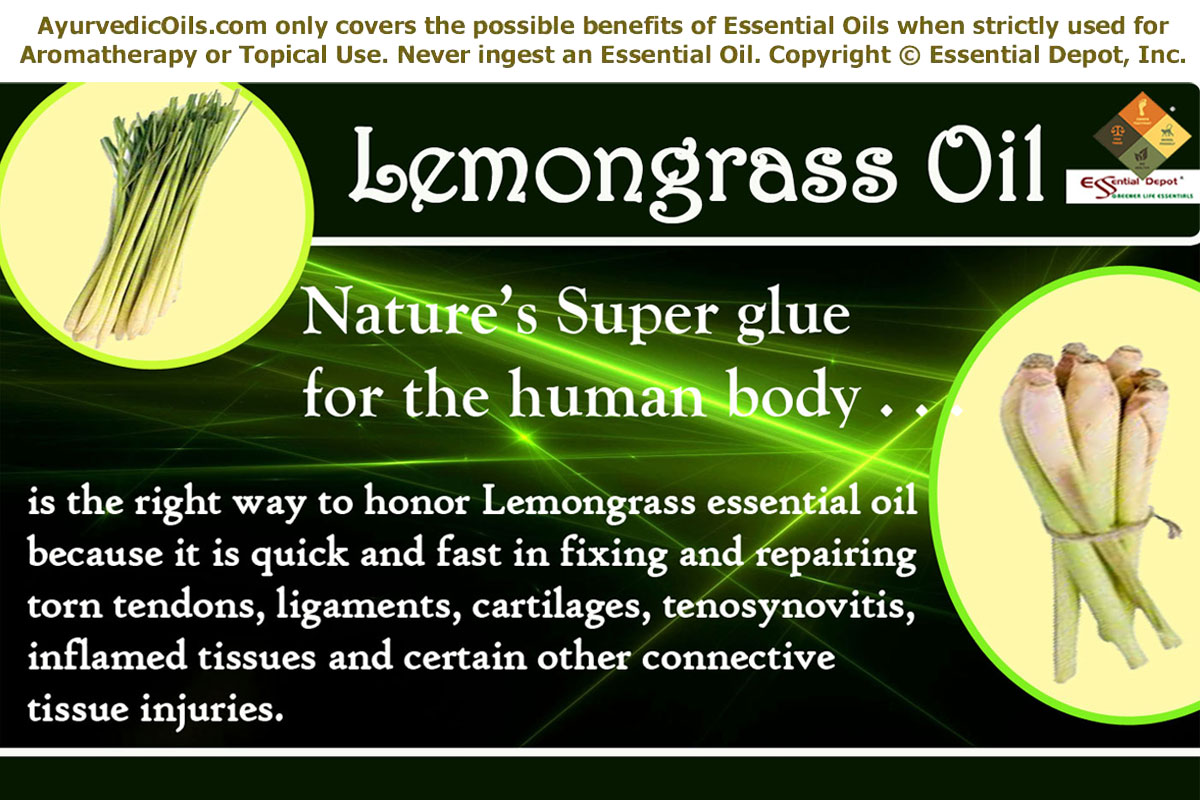
Lemon-grass-bannerNature’s super glue for the human body is the right way to honor Lemongrass essential oil because it is as quick and fast as any branded adhesive glue in repairing torn tendons, ligaments, cartilages, tenosynovitis, inflamed tissues and certain other connective tissue injuries. This oil smells heavenly and is much similar to the aroma of Lemon oil but with a comparatively gentle, sweet and soothing aroma.

Used as a celebrated culinary herb in Thai and Chinese cuisines, Lemongrass is often used to substitute Lemon.  This essential oil is extracted from the grassy leaves through steam distillation process. Ayurveda makes use of this ancient herb in treating weak digestion, poor circulation, poor concentration, fever, varicose veins, intestinal infections and certain infectious skin problems.

Purchase Lemongrass Oil – Retail – 4 oz – CLICK HERE

Purchase Lemongrass Oil – Wholesale – CLICK HERE

Historical uses of Lemongrass and its essential oil:

Indigenous to the southern parts of India, this spectacular herb is also found growing in South East Asian countries including Indonesia, Malaysia, Thailand, Cambodia and Vietnam. It is also cultivated in United States especially in Florida and California.

Lemongrass is a celebrated culinary herb in the Caribbean and Chinese cuisines. This aromatic herb blends well with garlic, ginger, cilantro and other spices used in flavoring a wide variety of Caribbean soups especially the seafood soups. Powdered Lemongrass has been used in Asia for giving incredible flavor to traditional dishes made with meat, poultry, seafood and vegetables. It is also used in spicing up pickles and marinades.

Widely known as ‘Fever Grass’, Lemongrass is popular in the Asian countries since the primordial times for its ability to bring down fever and normalize the body temperature during hot weather. It is either used in tea or in foot-baths for reducing fever and excess heat in the body. This tea is also believed to treat ringworm, lice, scabies and few other skin problems.

The Traditional Chinese Medicine used Lemongrass for treating headache, rheumatism, abdominal pain and cold. This herb was also a part of the Brazilian folklore medicine for calming the mind, treating muscular spasms, cramps and fatigue. Powdered along with black pepper, Lemongrass was used as a powerful Ayurvedic remedy for relieving menstrual cramps, nausea, irregular periods, fever and other infectious diseases.

Therapeutic properties of Lemongrass essential oil:

The remedial properties of Lemongrass essential oil are antiseptic, anti-rheumatic, diuretic, anti-inflammatory, astringent, analgesic, sedative, deodorant, galactogogue, nervine, tonic, carminative, antimicrobial, antidepressant, febrifuge, bactericidal, fungicidal, deodorant, antipyretic and nervine.

Chemical constituents or Gas Chromatography Report of Lemongrass essential oil:

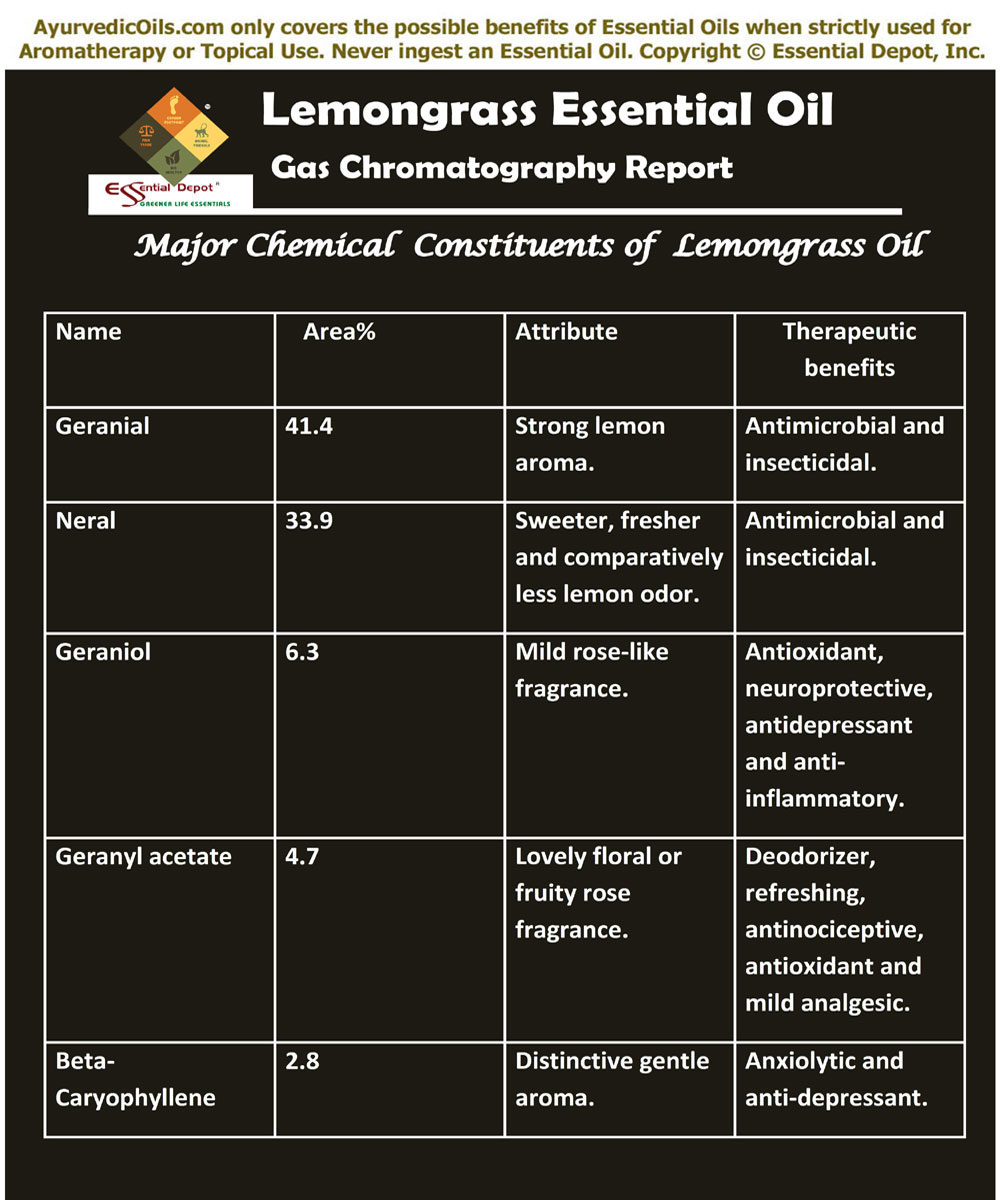
According to the Gas chromatography report, Lemongrass oil constitutes of 5 chemical components that contribute to its exotic fragrance, therapeutic properties and quality.

The major chemical constituents of this oil are citral (Geranial and Neral – approximately 85% of the oil), geraniol, geranyl acetate and beta-Caryophyllene.

Just click on:

for getting to know more about the exclusive information of these key constituents of Lemongrass oil.

The table below on the Gas Chromatography report talks about the principal chemical constituents and its role in granting the therapeutic and other attributes to Lemongrass oil.

Lemongrass-oilAyurvedic health benefits of Lemongrass essential oil:

Ayurveda uses infinite number of herbs in the process of healing humanity and Lemongrass is one such vital herbal whiz kid that has been helping mankind in treating innumerable diseases.

Known as Sera and Bhustrina in India, Lemongrass has been used in various Ayurvedic treatments for treating kidney infections, headache, problems with connective tissues, weak immune system and depression.

More than 5,000 years old, Ayurveda is by far the oldest of all healing sciences on earth and is the Mother of other complementary and alternative medicinal practices like Siddha, Homeopathy, Aromatherapy, Chiropractic, Acupuncture, Homeopathy, Traditional Chinese Medicine, Unani and much more. This science of wisdom has left behind innumerable complex healing systems using simple methodologies.

The ancient Ayurvedic philosophers Charaka and Sushruta encompassed the most important Ayurvedic remedies for all sorts of diseases. The most intricate medical practices even with today’s contemporary medicinal equipments and techniques are C-section surgery and Plastic surgery. Won’t you simply be amazed if I say that these two were a part of the Ayurvedic treatments???!!!! Yes.

Sushruta is called as the father of Plastic surgery and C-section deliveries were executed for the most critical cases where the baby or the mother turns breathless at the time of delivery.

The magnificence of Ayurvedic healing lies in its trust and usage of natural remedies like herbs, healthy and balanced diet, essential oils, yoga, simple physical exercises, meditation with an Ayurvedic routine. This aims at treating illnesses, preventing them in future along with healthy aging. Ayurvedic texts define health as a combination of physical, mental and spiritual wellness.

Every human being is made of a unique individual constitution that comprises of three biological energies known as doshas namely pitta, vata and kapha. A person’s physical setup, personality and behavior are determined by the predominance of any one of these doshas.

Imbalance between these doshas is responsible for ill-health and Ayurvedic remedies focus on balancing these doshas. Lemongrass essential oil alleviates excess kapha and pitta dosha while it has a neutral effect on vata dosha.

The Ayurvedic health benefits of Lemongrass essential oil are as follows:

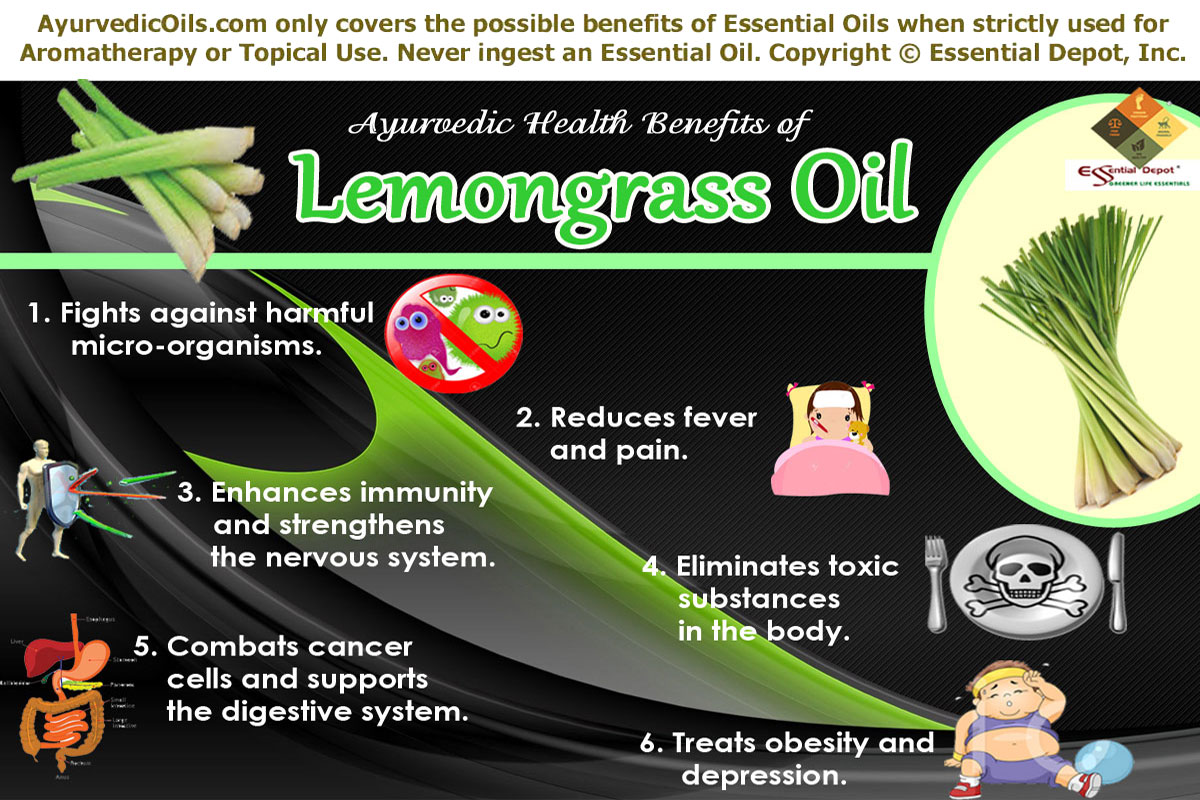
Lemongrass-broucher1. Fights against harmful micro-organisms:

Lemongrass essential oil has been proved effective against micro-organisms like bacteria, fungi and certain other microbes. Few studies witnessed that Lemongrass oil is more potent than streptomycin or penicillin in fighting against staph infection. Staphylococcus is the major bacterium responsible for making wounds turn septic.

Applying 2 drops of Lemongrass oil mixed with 15 to 20 drops of coconut oil on wounds, cuts, acne, burns, sores and other skin infections aids in healing the wounds and curbs the growth of micro-organisms that worsen skin problems. This effect can also be attributed to the antiseptic properties of this oil.

A 2008 study on ‘Antifungal activity of the Lemongrass oil and citral against Candida spp’ state that Lemongrass essential oil and citral are effective against various types of yeasts of Candida species including Candida albicans, Candida glabrata, Candida krusei, Candida parapsilosis and Candida tropicalis, proving its potent in vitro activity against Candida spp, responsible for the most common fungal infection Candidiasis.

Certain other studies suggest that Lemongrass oil can also assist in combating the growth of fungi like Alternaria alternata, which is said to cause infections in the upper respiratory tract.

Gently massaging your body with 5 drops of Lemongrass oil blended with 2.5 ml olive oil can assist in inhibiting the growth of bacteria and microbes both externally and internally. This aids in treating microbial infections in the respiratory system, skin, stomach, colon, urinary tracts and other parts of the body.

2. Reduces fever and pain:

Being an anti-pyretic and febrifuge, the essential oil of Lemongrass reduces fever by fighting against infections causing fever, promote sweating and by eliminating the harmful toxins in the body through urine. According to the Ayurvedic philosophy, pitta dosha is responsible for body temperature and fever is an indication of increased pitta energy.

Lemongrass essential oil is known to reduce pitta dosha and by this way it lessens the body temperature even during high fevers. Add 2 drops of this oil in warm water for a remedial foot bath for reducing fever or massage your foot soles with 2 drops of Lemongrass oil mixed with 1 ml of coconut oil for relief from fever.

This oil also lessens excess of kapha energy that causes fluid retention in the body causing respiratory problems, rheumatism, pain and inflammation.

Gently massaging the painful areas with 2 drops of Lemongrass oil mixed with 1 ml of sesame oil helps in relieving pain, inflammation and rheumatism by eliminating the excess fluids and toxic substances through urine and sweat.  The analgesic action of this oil helps in soothing pain, tired muscles, headache, joint pain and back pain.

3. Enhances immunity and strengthens the nervous system:

Lemongrass herb and its essential oil have excellent nutrients and chemical components that benefit the entire system and augment the immune power, which makes the body naturally resistant against diseases. It acts as a tonic to the human body and strengthens the functioning of the digestive system, nervous system, excretory system and respiratory system by stimulating the process of absorbing essential nutrients by the body.

Lemongrass oil is used in Ayurvedic massaging for fortifying the nerves, limbs, muscles and tissues. Massaging your body with 6 drops of Lemongrass oil blended with 3 ml of olive oil can assist in treating nervous problems like vertigo, convulsions, Alzheimer’s disease, sluggishness, Parkinson’s disease and nervousness.

4. Eliminates toxic substances in the body:

Stagnation of ama (toxic substances) in the body is one of the primary reason for illnesses according to Ayurveda. The diaphoretic and diuretic properties of Lemongrass Oil increase the frequency and quantity of urination through which the harmful toxins in the body are vented out.

This action also aids in improving digestion, cleansing the kidneys and discharging harmful infection causing foreign bodies. You can add 2 drops of Lemongrass oil in warm bathing water or in foot bath or massage your body with 3 drops of this oil with 2 ml of sesame oil for getting rid of all the toxic substances from your body.

5. Combats cancer cells and supports the digestive system:

A 2009 study on the anticancer activity of Lemongrass essential oil against 12 human cancer cell lines proved that Lemongrass oil “has a promising anticancer activity and causes loss in tumor cell viability by activating the apoptotic process as identified by electron microscopy.” Certain other studies also state that the presence of a-limonene and geraniol showed inhibition of cancer cells in intestinal mucous membrane and liver in mice.

Excess of pitta energy causes cholera, flatulence, intestinal gas and weak digestion. Lemongrass essential oil reduces pitta dosha and normalizes the process of digestion. Gently massaging your abdomen with 2 drops of Lemongrass oil blended with 1 ml of sesame oil will assist in improving digestion. Inhaling the aroma of this oil by applying 1 drop of Lemongrass oil on your wrist or to your hankie can stimulate weak digestion.

6. Treats obesity and depression:

Obesity is a universal problem and excess of kapha dosha causes fluid retention, excess deposits of fat and stagnation of water and other toxic substances in the body. Stress, tension and depression also cause metabolic changes and contribute to obesity. Lemongrass essential oil lessens kapha dosha by decreasing the appetite, removing excess water and fat deposits from the body through urine and sweat.

A study by the Department of Nutritional Sciences of University of Wisconsin studied the effect of Lemongrass and cholesterol in 22 people with high levels of cholesterol where they took 140mg of lemongrass oil capsules daily. This study came up with an amazing result where the cholesterol level was reduced from 310 to 294 on an average basis, which was a significant amount of decrease in the amount of blood fats.

Using 5 drops of Lemongrass oil blended with 2.5 ml of coconut oil as a massage oil or 3 drops of this oil added to warm bathing water can help in discharging excess fat, water and fluid retention in your body and helps you in reducing your excess weight.

In the book ‘Ayurveda and Aromatherapy’, Bryan Miller states that Lemongrass essential oil is an excellent antidepressant oil that can assist in alleviating stress, depression, fatigue, negative feelings, emotional trauma and distress. Using 2 drops of Lemongrass oil in vaporizer, burner or diffuser can assist in driving away negative emotions, insomnia, loneliness, emotional instability, mental stagnation and lack of self-confidence.

The Journal of Ethno pharmacology published a 2011 study, which stated that Lemongrass essential oil possess anti-anxiety properties that would aid in lessening anxiety by stimulating the brain levels of the neurotransmitter gamma-amino butyric acid.

Other health benefits:

Lemongrass essential oil is also a great natural remedy for treating menstrual problems and its galactogogue properties help improve the quality and quantity of breast milk in nursing mothers. It is a trusted insect repellant and can also serve as a natural air freshener with its refreshing aroma.

Disclaimer:

Pure and organic essential oils are highly concentrated liquids so never take them internally. Always remember to dilute essential oils before using it topically. This article is only for the purpose of education and is not meant to diagnose or replace any prescribed medicines or professional advice. Consult your Ayurvedic practitioner before using essential oils that would fit your unique individual constitution and state of health.

The MSDS (Material Safety Data Sheet) of Lemongrass oil is readily available for your enhanced safety and optimal usage.

Gas Chromatography Report of Lemongrass essential oil

Thought for the day:

Knowing trees, I understand the meaning of patience. Knowing grass, I can appreciate persistence. 

-Hal Borland

Suggested Reading:

  1. HEALING POWERS OF LEMONGRASS OIL (The Aromatherapy Professional) by KG Stiles
  2. The Encyclopedia of Essential Oils: The Complete Guide to the Use of Aromatic Oils In Aromatherapy, Herbalism, Health, and Well Being by Julia Lawless
  3. Skin Delivery of Lemongrass Oil by Microemulsion Technique: Herbal formulation for Acne Vulgaris by Md Faiyazuddin, Sanjula Baboota
  4. Lemongrass Essential Oils: Biosynthesis and Regulation by Deepak Ganjewala

Reference Links:

  1. Antifungal activity of the lemongrass oil and citral against Candida spp by Silva Cde B, Guterres SS, Weisheimer V, Schapoval EE published in PubMed
  2. Health Benefits of Lemongrass Essential Oil by Organic Facts
  3. Anticancer activity of an essential oil from Cymbopogon flexuosus by Sharma PR, Mondhe DM, Muthiah S, Pal HC, Shahi AK, Saxena AK, Qazi GN, Indian Institute of Integrative Medicine, India published in PubMed
  4. Lemongrass Health Benefits and Healing Properties by PlanetWell Ayurvedic Wellness
  5. Lemongrass Herbal Medicine by Medical Health Guide

Bergamot Oil


Bergamot essential oil is effective in treating addictions and depression. It is also an excellent aid for digestion and congestion.

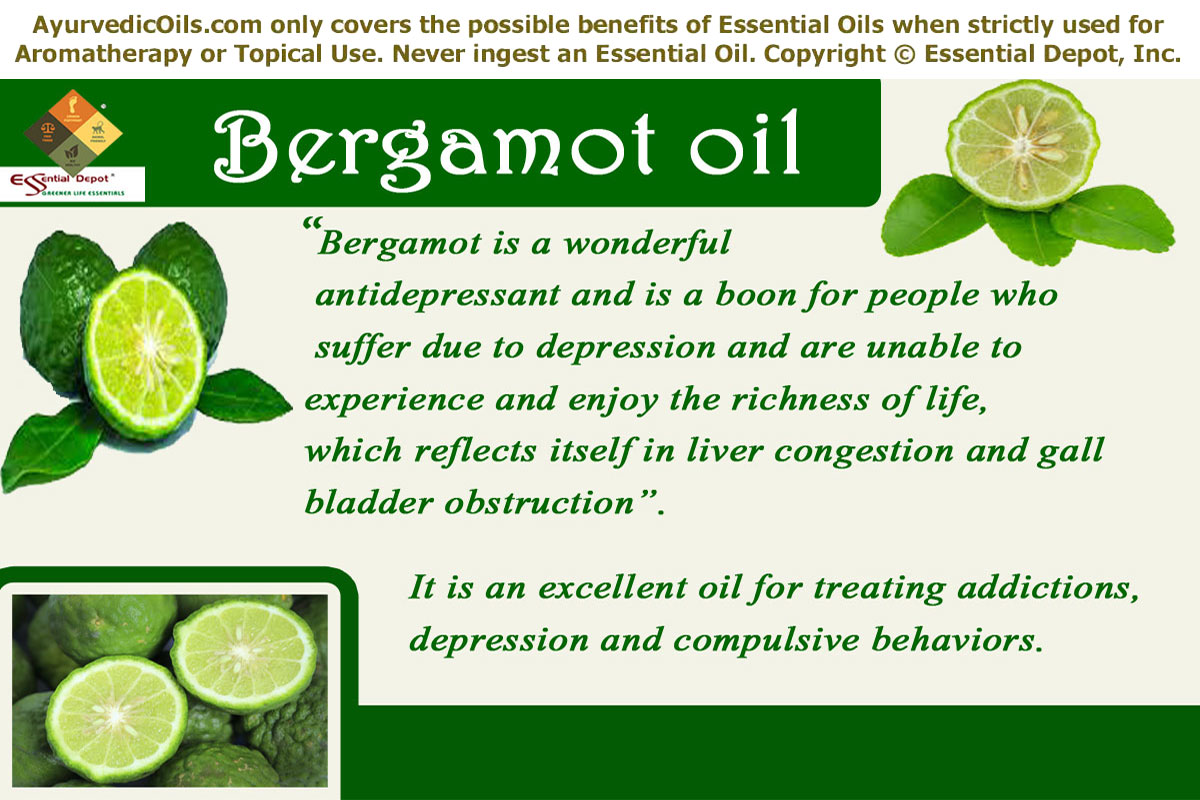
Bergamot-bannerBergamot is a wonderful antidepressant and is a boon for people who suffer due to depression and are unable to experience and enjoy the richness of life, which reflects itself in liver congestion and gall bladder obstruction”, says Light Miller and Bryan Miller in their book Ayurveda and Aromatherapy. Botanically called as Citrus bergamia, Bergamot is another famous member of the Citrus family Rutaceae.

The rich, herbaceous and fruity-aromatic essential oil is cold pressed from the rind of the Bergamot fruit, which is also called in Ayurveda with the same name. Bergamot and its essential oil have been recommended in the Ayurvedic treatment for healing skin rashes, sores, acne, fever, obesity, depression, eczema, gingivitis, sore throat, flatulence, loss of appetite, bladder infections and compulsive behaviors.

Purchase Bergamot Essential Oil – Retail – 4 oz – CLICK HERE

Historical uses and importance of Bergamot essential oil:

The name Bergamot is said to have come from the Italian province in Lombardy known as Bergamo. Few sources also state that this name is derived from the Turkish word ‘beg-armudi’, meaning ‘prince of pears’ or ‘prince’s pear’ or ‘the lord’s pear”. Well known to the world as an incredible ingredient of Earl Gray tea, Bergamot and its essential oil have been in the history of various cultures for its medicinal and culinary uses.

Indigenous to the Southeast Asian countries, Bergamot is also claimed as the native fruit from Greece. Later it was introduced to various European countries and is also found growing in Algeria, Morocco, Ivory Coast and Tunisia. About 80% of the world’s total Bergamot production is from the province of Reggio di Calabria in Italy.  It takes about 100 Bergamot oranges to extract 3 ounces of Bergamot essential oil.

The star-like white flowers, feathery leaves and the pear-shaped citrus fruit similar to a cross between a lime and orange have made many countries famous including the Calabria region of Italy. Certain genetic research studies reveal that Bergamot orange is likely to be a hybrid of bitter orange (Citrus aurantium) and lime (Citrus limetta).

Bergamot is also called as a cross between a grapefruit and an orange tree. These pulpy and juicy fruits are often used in cooking and the most popular dessert with Bergamot in the Middle East countries and America is the Turkish delight. Bergamot juice has been used in the traditional Calabrian medicine for the treatment of malaria and other chronic fevers.

This nutritious fruit and its essential oil were used in the traditional and folklore medicines for treating fever, urinary tract infections, acne, psoriasis, respiratory disorders, cystitis, depression, digestive problems, cold sores, chicken pox and anxiety.

Bergamot peel oil has been a fundamental component in various fragrance formulations. It has also been used as a prime ingredient in the original Eau de Cologne by Farina in Germany in the 18th century. It is also used in the production of marmalades, smokeless tobacco products, digestive liqueur named Liquore al Bergamotto and much more.

Chemical constituents or Gas Chromatography Report (GC) of Bergamot oil:

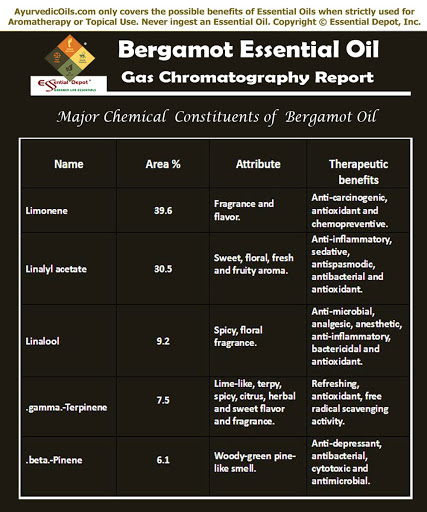
According to the Gas chromatography report, Bergamot oil constitutes of 19 chemical components that contribute to its fragrance, therapeutic attributes, consistency and quality of this citrus oil. Of which, Limonene contributes to the highest proportion of Bergamot oil constituents with about 39.6% of its total composition.

Just click on:

I trust that this must certainly help you in getting to know the exclusive information about these prime chemical constituents of Bergamot oil.

The table crafted below clearly depicts the unique nature and contributions of these biochemical constituents to the healing magnificence of Bergamot essential oil.

bergamot-gc-2Therapeutic properties of Bergamot essential oil:

The remedial attributes of Bergamot oil are anti-depressant, sedative, antiseptic, analgesic, anti-parasitic, anti-inflammatory, febrifuge, antibiotic, vulnerary, cicatrisant, disinfectant, deodorant, antispasmodic, vermifuge, relaxant, anti-infectious and stimulant.

Ayurvedic health benefits of Bergamot essential oil:

Ayurveda is the oldest healing sciences on earth and it has its origin in India, the country with the oldest historical references. The Indian Hindu mythology has 4 major sacred books also known as Vedas, namely Yajur, Rig, Sama and Atharvaveda. Among these holy books, Ayurveda has been an integral part of Atharvaveda where about 114 verses talk about extensive Ayurvedic remedies and principles to lead a holistic life.

Ayurvedic philosophy was further strengthened by the pioneer Ayurvedic philosophers like Charaka (respected as the ‘Father of medicine’) and Sushruta (celebrated as the ‘Father of surgery’), who wrote Charaka Samhita and Sushruta Samhita respectively. These two Ayurvedic encyclopedias were combined together and represented as Ashtanga Hridaya Samhita.

More than just a traditional healing system, Ayurveda has been held high as a holistic approach with a bundle of values and disciplines for leading a responsible life. Ayurveda trusts on Mother Nature and believes that illness is a result of imbalance between an individual and nature. With this idea, Ayurvedic remedies always stick on to natural medications, believing that nature has a cure for everything within it.

Ayurveda considers sickness as a significant opportunity to explore various aspects that contribute to the illness. It is a known fact that Mother Nature is built up of five vital elements, namely earth, water, fire, air and space. As a part of nature, human beings are also made up of these vital elements called as Panchamahabutas.

According to Ayurveda, every person is a unique creation with a unique individual constitution, which comprises of 3 fundamental biological forces known as doshas. They are vata, pitta and kapha doshas and each of these doshas are a combination of the 5 elements of nature.

Every Ayurvedic treatment begins with the identification of the Prakriti or the unique individual constitution. Every human being has a predominance of one of these doshas, which mainly determines the physical, psychological and behavioral attributes.

Balance between these doshas as per nature’s law indicates healthiness and imbalance due to lifestyle changes, food habits, climatic conditions and undisciplined actions causes sickness. Unique Ayurvedic remedies are prescribed for every individual based on their individual constitution and the root cause of a disease. This aids in diagnosing the illness at the first stage and preventing it in future also.

The prime Ayurvedic medications are herbs, plant essential oils, yoga, meditation, simple physical exercises, prayers, Pranayama and certain Ayurvedic techniques including Abhyanga or Ayurvedic massaging, an Ayurvedic routine, and Panchakarma (the Ayurvedic detox techniques.) With its heating and drying energies, Bergamot essential oil is known to pacify vata and kapha imbalances and augment pitta dosha.

The Ayurvedic health benefits of Bergamot essential oil are:

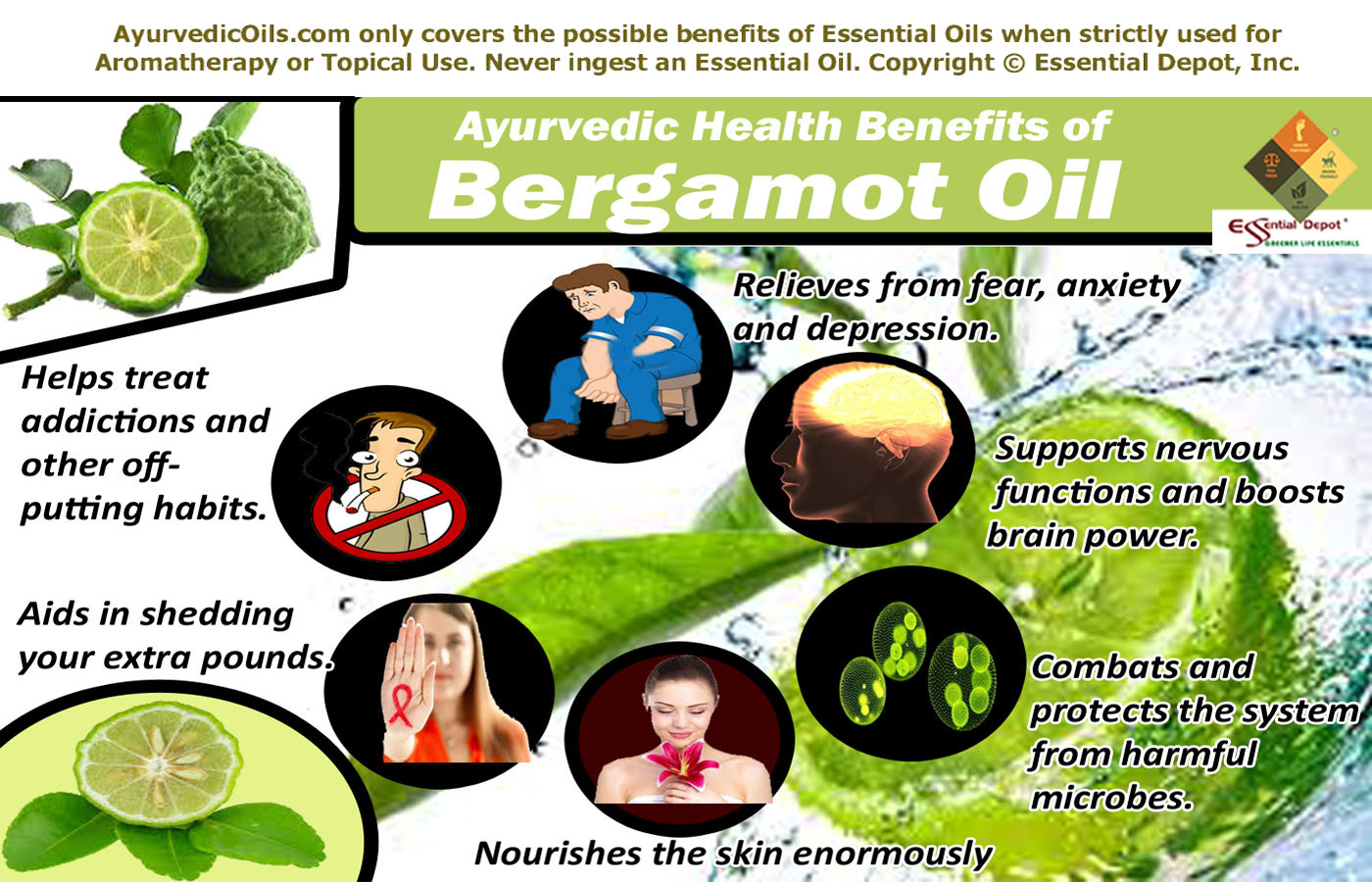
Bergamot-broucher--info-1. Relieves from fear, anxiety and depression:

Emotional barriers like anxiety, fear, depression and mood fluctuations have a greater impact on your routine and contribute to various adverse effects in your personal as well as professional life.

The reasons for these negative emotions are often inexpressive and at times we realize that we are depressed or put off for no valid reason. Whatever the causes may be, the remedy for such unhealthful feelings should be a proven anti-depressant that aids in uplifting the senses and stimulating positive energy.

Bergamot is one such excellent anti-depressant and a universally accepted mood enhancer. It is for these reasons; this essential oil is often used in Aromatherapy treatments and other Alternative medicinal practices.

Inhaling the magical aroma of this oil by adding 2 to 3 drops of Bergamot oil in vaporizer or diffuser can help in enhancing your mood, instill a feeling of newness and stimulate the secretion of hormones that help in overcoming such difficult moments.

This has been proven in a Korean study that analyzed the effects of Bergamot oil on pulse rate and blood pressure. The study further concluded that inhaling the energizing aroma of Citrus bergamia oil is extremely effective in lessening psychological stress responses, blood pressure in people with hypertension and the level of serum cortisol.

You can start your own home spa just with a small collection of invigorating essential oils like Bergamot. Massaging your system with 5 drops of Bergamot oil, 5 drops of Neroli oil, 5 drops of Cypress oil and 5 drops of Juniper oil along with 20 ml of sweet almond oil is the best way to fortify your senses, augment your blood circulation, calm your muscles, strengthen your mind and gift yourself with absolute tranquility.

Followed by this massage, enhance your energy level by taking a warm bath diluted with 5 drops of Bergamot oil, 5 drops of Ylang Ylang oil and 5 drops of Lavender oil. What’s next? You are done for the day and it’s time to realize that your fear, feelings of insecurity, anxiety, stress, depression and other negative thoughts have vanished just like a mirage in a desert with the sweet, mesmerizing, fruity and enchanting fragrance of Bergamot oil.

2. Supports nervous functions and boosts brain power:

An article by Robert Tisserand just left me amazed, where a student who have been studying about essential oils for 15 years have noticed the improvement in her husband, a stroke patient especially after the use of Bergamot oil on his pillow.

Robert has also added to this experience by stating that “In one rat study, bergamot essential oil inhibited the damage caused by “focal ischemia” (the same type of damage caused by stroke).” He also says that if any essential oil can be helpful in supporting stroke patients, then it would be Bergamot oil. Various researches state that the molecules of the inhaled essential oils reach the brain through the nasal passages and have effectiveness in treating certain neurological diseases.

A 2009 study on the effect of Bergamot essential oil on brain damage in rats, published in the International Review of Neurobiology, established that “Bergamot oil resulted in a significant reduction of tissue death throughout the brain, especially in the medial striatum and the motor cortex areas.” Few other studies have also proved that Bergamot oil decreases neuronal damage.

Adding 2 to 3 drops of Bergamot oil in your diffuser, vaporizer, pillows, handkerchief or a tissue paper placed beside you can help in improving your blood circulation, augmenting the functions of your nervous system, boosting your brain power and keep you healthy and energized.

Bryan Miller and Light Miller in their book ‘Ayurveda and Aromatherapy’ have shared about the miraculous transformation of their teenage son after the use of Bergamot oil. It was said that one of their sons in high school was undergoing severe depression and after Light Miller started adding few drops of Bergamot oil and Lemongrass oil on his pillow, there was an immediate change in his approach and he successfully graduated.

3. Combats and protects the system from harmful microbes:

The essential oil of Bergamot has anti-fungal and anti-bacterial properties that can assist in killing existing microbes and preventing the growth of new microbes. A 2009 study published in the Journal of Applied Microbiology concluded that the blend of Bergamot and Orange essential oil tested against two bacterial strains resistant to vancomycin, proved effective in inhibiting bacterial growths. It was also said that these oils are an excellent alternative to chemical-based bactericides.

Few other studies conducted in Italy proved that Bergamot essential oil exhibited antifungal activity against Candida fungus strains and Prototheca, which is a yeast-like alga. Adding 2 to 3 drops of Bergamot oil in warm bathing water can act as a protective shield against bacterial and fungal infections.

You can also mix 2 drops of Bergamot oil with 2 drops of Orange oil and 2 ml of Coconut oil and apply it on acne, candida infections, athlete’s foot, ringworm, and on wounds for preventing it from becoming septic. Being a disinfectant and antiseptic, Bergamot oil aids in healing wounds quickly.

4. Nourishes the skin enormously:

Just like other citrus oils, Bergamot essential oil has enormous amount of Vitamin C and is extremely good for nurturing the skin. The cicatrisant properties of this oil assist in fading away scars, difficult marks left by pimples, boils and wounds.

Massaging your skin with 1 drop of Bergamot oil, 1 drop of Frankincense oil and 1 drop of Lavender oil along with 1.5 ml of olive oil can help in uniform and even distribution of melanin and other pigments in the skin and granting you a gorgeous look and an enriched skin tone.

With its antiseptic, vulnerary and disinfectant properties, Bergamot essential oil is one among the best oils for treating various skin problems like eczema, psoriasis, cold sores, itching, wounds, cracks, skin ulcers and other skin infections.

A Chinese study on Bergamot oil along with Boxthorn oil on the skin and hair growth in mice, concluded that “the extract increased the activity of the antioxidant enzymes superoxide dismutase and collagen in the skin, as well as promoting hair growth.”

5. Aids in shedding your extra pounds:

Obesity or weight gain is an imbalance of kapha dosha, which is characterized by the heavy, slow, cool and sluggish attributes. Such vitiations are often treated with the help of essential oils that have warming, stimulating, energizing and heating energies and Bergamot is among those essential oils for reducing excess fat and water deposits in the system with its kapha-reducing attributes, which otherwise leads to overweight or obesity.

The presence of limonene and other therapeutic properties in Bergamot oil promotes the functional capabilities of hypothalamus, which is the satiety center of the brain. By doing this, the feeling of being full or the natural appetite towards food decreases gradually and controls the cravings for food.

Massaging your system with 5 drops of Bergamot oil, 5 drops of Orange oil, 5 drops of Black pepper oil, 5 drops of Lemongrass oil along with 10 ml of coconut oil can help in reducing your weight slowly and steadily.

6. Helps treat addictions and other off-putting habits:

Bergamot is such a sacred oil that can help in attaining holiness and experience the feeling of oneness with the divine power. Inhaling the sanctified aroma of this oil by adding 3 to 4 drops to your diffuser or scented candle can assist in opening your senses, understanding the universe, granting the power to tackle challenges, and having complete control over your mind and body.

It is for these important reasons, Bergamot essential oil is used in treating compulsive habits, addictions like smoking, use of drugs and alcohol. This oil encourages the mind by opening up the heart chakra, which is responsible for appreciating the love for self and for others.

Other health benefits:

Bergamot essential oil is also effective in treating colic, intestinal worms, rheumatic pain, spasms, fever, irregular bowel movements, body odor, anorexia, constipation, urinary infections, hysteria, hair fall, inflammation and parasitic infections.

Disclaimer:

This information is meant only for educational purposes. It is not intended to diagnose or prevent any health conditions and substitute any other prescribed medications or professional medical advice. We are not healthcare experts and this info is only for bringing the importance of Ayurvedic healing practices under limelight.

Do not make use of essential oils internally and ensure that you always dilute essential oils in appropriate carrier oils before using it for topical applications. This is mainly because organic and unadulterated essential oils are very concentrated liquids and may cause allergic reactions if used on the skin directly. Consult your Ayurvedic practitioner/ healthcare expert before choosing the perfect essential oils for your unique individual constitution or prakriti along with your state of health.

The MSDS (Material Safety Data Sheet) of Bergamot oil is readily available for your enhanced safety and better usage.

Gas Chromatography Report (GC analysis) of Bergamot oil.

Bergamot Essential Oil – Possible Skin Issues:

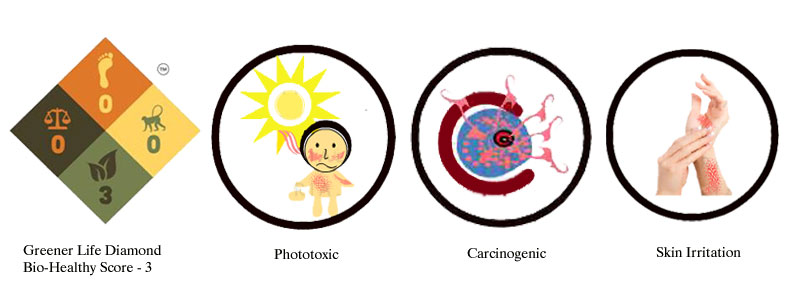
bergamot-logoGreener Life Diamond – Bio-Healthy Score => 3 – Possible Skin Issues:

See => http://www.essentialdepot.com/GreenerLifeDiamond.html

Bergamot oil has photosensitizing effects. This may cause irritation and burning of the skin, when exposed to visible sunlight after the topical application of this oil up to 72 hours of use. The fundamental reason behind this is the reaction of the photoactive chemical constituents that absorbs light, results in toxicity through molecular changes.

Studies establish that the phototoxic chemical constituents in Bergamot oil are Bergaptene, Bergamotene and other furocoumarins. It is also stated that furocoumarins (Psoralens) attribute to carcinogenic, photomutagenic, phototoxic and melanogenic properties of Bergamot oil.

Interaction of these components with the sunlight obtains the ultra violet radiation (UV rays A and B), which might cause negative reaction on the skin, leading to chronic sunburn, skin irritation, hyperpigmentation, development of skin lesions, Berloque dermatitis, alterations in the cellular structure of the skin that may cause skin cancer, following the development of covalent DNA adducts in UV-A or solar light.

However the International Fragrance Association (IFRA) states that the safe dilution level for the application of Bergamot oil on parts exposed to sunlight is 0.4% (or less), which is about 2.4 drops per ounce of any other carrier oils. Furocoumarin or bergaptene-free Bergamot oils are said to reflect comparatively reduced number of skin complaints owing to phototoxicity, than the natural Bergamot oils.

Surprisingly, Furocoumarins are also remedially used in combination with the long-wave ultraviolet light therapy for the treatment of vitiligo, mycosis fungoides and psoriasis. This caution is relevant to direct skin applications like massage oils, balms, creams and lotions and not for cleansing products like shampoos and soaps.

Reference Links Substantiating Possible Skin Issues of Bergamot Oil:

  1. Assessment report on Citrus bergamia Risso et Poiteau, aetheroleum , by the Committee on Herbal Medicinal Products, European Medicines Agency
  2. In vitro photostability and photosensitizing properties of bergamot oil. Effects of a cinnamate sunscreen by Morlière P, Hüppe G, Averbeck D, Young AR, Santus R, Dubertret L, published in the Journal of Photochemistry and Photobiology
  3. Leung’s Encyclopedia of Common Natural Ingredients, used in Food, Drugs and Cosmetics by Ikhlas A. Khan and Ehab A. Abourashed.
  4. Bergamot oil by Drugs.com
  5. Perfume Phototoxicity by Francis N. Marzulli and Howard I. Majbach, presented before the New York Chapter, Clifton, N.J.

Thought for the day:

Nature is relentless and unchangeable, and it is indifferent as to whether its hidden reasons and actions are understandable to man or not. -Galileo Galilei

Suggested Reading:

  1. Bergamot Oil: American Pharmaceutical Association Monograph No. 2 by Donald Davis Mossman, Marston Taylor Bogert
  2. HEALING POWERS OF BERGAMOT OIL (The Aromatherapy Professional: Healing with Essential Oils) by KG Stiles
  3. Citrus bergamia: Bergamot and its Derivatives (Medicinal and Aromatic Plants – Industrial Profiles) From CRC Press
  4. Essential Oils For Weight Loss & Top Essential Oil Recipes: Guide to Essential Oil Recipes (Essential Oils Box Set) (Volume 2) by Lindsey P
  5. Bergamot Essential Oil (Aromatherapy Book 48) by Miriam Kinai

Reference Links:

  1. Bergamot Orange by Wikipedia
  2. Bergamot essential oil by Wikipedia
  3. Health Benefits of Bergamot essential oil by Organic Facts
  4. Essential oils, Stroke patients and Bergamot by Robert Tisserand
  5. Prevention of Glutamate Accumulation and Upregulation of Phospho-Akt may Account for Neuroprotection Afforded by Bergamot Essential Oil against Brain Injury Induced by Focal Cerebral Ischemia in Rat, by Department of Pharmacobiology and Center of Neuropharmacology of Normal and Pathological Neuronal Plasticity, UCADH, University of Calabria, Italy published in PubMed