Gear up for fun: 5 holiday and seasonal essential oil blends


Holidays are times for fun and frolic. We want to be in our best during holidays as it is the season of year to celebrate with friends, family and loved ones. Holidays can be sober or boring to some. This maybe due to lack of motivation or the cancellation of an exotic holiday plan or inability to get together with friends and loved ones. Whatever be your plight, holidays are meant for enjoyment and you should not miss the holiday spirit even if you are single and not near dear ones. You can maximize your holiday mood with the use of essential oils. Pure oils of the floral or earthy kind can uplift your mood and motivate you to have fun even it means holidaying within the four walls of your apartment.

Holiday and seasonal essential oil blends: Like holidays, seasons too affect our moods and mental dispositions. Autumn and Winter, especially, can take their toll on us and make us sober and uninteresting. To set things right and enjoy life as usual, you can use holiday or seasonal essential oil blends. Below are a list of holiday/seasonal blends that may help you rejuvenate yourself:


1. Christmas Tree Blend: Christmas is a season of joy and happiness. It is a time for sharing love and expressing concern toward others. How would you able to enjoy the spirit of the season, if you are down in the dumps? This Christmas blend will uplift your mood and persuade you to experience the season with an open heart. Combine 5 drops of Spruce oil with 3 drops of Fir needle, 3 drops of Pine oil and 2 drops of Cedarwood. If you want an exotic yet mellow scent, add a few drops of Juniper oil to the blend.

2. Angel’s Breath Blend: During Christmas, we look at things with a religious fervor. This blend will enhance your trust in God and make life pleasant and meaningful for you. Its aroma brings in peace and prosperity in the mind. Add 12 drops of Lavender to 6 drops of Sweet Orange, 4 drops of Chamomile, 4 drops of Ylang Ylang and 3 drops of Sandalwood oil. Combine well and use the blend in a diffuser.

3. Frankincense Holiday Blend: For warm, rich and spicy aromas, use Frankincense oil with Myrrh. Add 5 drops of Frankincense oil, 5 drops of Myrrh, 5 drops of Cedarwood and 5-10 drops of Orange to a dark, amber bottle and shake well. When the oils are blended well, pour them into a diffuser and use.

4. Frankincense and Fir Holiday Blend: Frankincense always carries with it a traditional aroma. Its very scent brings back to the mind things that are religious, old-time or historically significant. Above all, Frankincense is all about sprightly moods. If you think the above Frankincense-Myrrh blend is a bit earthy, try this one. Add 2 drops of Frankincense oil to 2 drops of Fir Needle oil and 1 drop of Grapefruit essential oil. Mix well and use in a diffuser or air freshener. This blend is ideal for invigorating your home or holiday cottage atmosphere.

5. Sugar and Spice blend: This blend is perfect for Thanksgiving. It makes your entire room sweet and aromatic. Add 10 drops of Orange, 5 drops of Ginger and 8 drops of Cinnamon with 1 drop of Nutmeg. Mix in a dark colored bottle and use in your room diffuser.

Scented lights, tranquil aromas: 5 steps to make aromatherapy candles


Imagine a nice romantic evening bath surrounded by aromatic candles or an aromatic candle-light dinner at the rooftop of your home. Aromatic candles have become a fad now. People just love them due to their relaxing and calming effects. Aromatic candles go one step further and yield a soothing aroma while they burn. Light and aroma make the whole environment magical and romantic. It is a great recipe for any down-in-the-dumps evening or night. What more, candles burn without emitting intense heat like electric lights and that renders a cool air in the room where the candles are placed. This article will explain what aromatherapy candles are and how to make them at home.

Aromatherapy candles – Truths you need to know: What can be more exotic than light scented with an aroma? But not all aromatherapy candles are natural or synthetics-free. Most of the candles, labeled as made with essential oils, have paraffin wax in them. As a petroleum product, paraffin wax is not natural and is not like the natural occurring beeswax, soy wax or vegetable oil wax. Similarly, stores that claim to be selling natural substances may sell aromatic candles that are made using synthetic fragrances. This is because it takes a lot of essential oil to make an aromatherapy candle. Since this may not be affordable for some manufacturers, they tend to use synthetic perfumes to make aromatic candles. When such a candle burns, it may not emit natural aromas, but toxic ones. So, when you shop for aromatherapy candles, look for indications of natural substances that are included in the candle. A manufacturer who does not list the ingredients used may have made the candles using synthetics. Similarly one who claims the oil to be made with essential oils may actually have used chemical fragrances. To avoid falling into chemical, synthetic substances, check if your candle manufacturer has a label like any of these: ‘Made with 100% natural substances’, ‘Contains no synthetic ingredients’, ‘Paraffin Wax Free’ etc.


How to make aromatherapy candles: Making aromatic candles is easy if you know the trick of the trade – candle making. Votive candles are the easiest to make and this recipe is one that guides you in making a votive aromatic candle.

1. Melt your wax and prepare mixture: To start with, get your wax mixture ready. Use a double boiler and melt your wax for about 175 degrees F. When the wax is completely melted, add additives like stearic acid, fragrance essential oil and dye (for coloring). Ensure all these ingredients are natural and have no synthetics in them. Mix all the ingredients well while the wax is in melted form.

2. Pour into molds: Pour the wax into your votive molds. See to it that you do this in a slow and steady manner to avoid spilling. Maybe use a sheet of paper or cardboard under the molds to save your kitchen table from being spoiled. Pour till the lip and save 20% of your wax. You may require the wax a second time.

3. Insert the wicks: Once the wax has congealed a bit, insert the pre-tabbed wicks into the votive molds. Make sure that the wicks are placed at an approximately straight point and see to it that the pre-tabbed end meets the end of the wax mold. Cooling may cause the wicks to go off-center. At such times, bring them back to their center positions with a slight firmness.

4. Re-pour wax: When the wax has cooled for about  3 to 4 hours, you will notice that there are sink holes in the molds. The wax has shrunken a bit and needs to be re-filled with new wax to level the candle. Heat the 20% remaining wax to 190 degrees F and pour into the molds. Pour till the lip, but do not spill.

5. Remove from molds and use: When you notice the votive molds have cooled, you can remove the candles from the molds by placing them in freezer for five minutes. Use the candles in votive containers/holders as these candles melt a lot.

A dose of salts: 3 steps to a healing bath with essential oil bath salts


Healing baths rejuvenate a fatigued self and help you be at home with yourself. Treating yourself to a luxurious spa-like bath once in a while is simple and easy to do. It is also exciting and relaxing. If someone told you that bath salts work, try bath salts with aromatherapy oils. Yes, essential oil bath salts work great and are made of nothing but natural ingredients. Without any use of synthetics, you can make a simple bath salt recipe to soothe your skin and pamper your muscles. This article will help you by giving tips on how to make your one bath salt without trouble.

Bath salts with aromatherapy oils: To make a bath salt, you should do a few things as ground work. Read all the available safety information about essential oils and learn how to use/blend/diffuse them into your bath salt recipe. Bath salts are allergic to some due to the presence of high salt content. Check if you are allergic by taking a sample bath. Also, do not use oils that are irritating or annoying to the skin. You can end up making stuff that will not just spoil your skin, but also make you more tensed and worked up. Below is a step-by-step guide on how to make bath salts at home:


1. Get your ingredients ready: As ingredients, you would require 3 cups of Dead Sea salt, Epsom salt or a blend of the two or three of these salts. Sea salts come in several sizes and if you want, for better effect, you can combine salts of different grain sizes. This would be both appealing and different. However, remember that the more the size of the salt, the greater the time it takes to dissolve in your tub. Next, you will need 15 – 25 drops of your essential oil blend or one or two essential oils. Decide on whether you plan to use essential oil blends or pure essential oils. Since pure essentials can be irritating on the skin, it is better to go with blends that have carrier oils mixed in them. You will also need 1 tbsp of fractioned coconut oil or carrier oil for moisturizing purposes.

2. Make the blend: Place all the salts into a bowl and mix them well. If you plan to include vegetable oils in your salt, mix separately (with salt) and then, add the salt with other salt mixtures and essential oils. Use a spoon or fork to do the mixing work and keep the whole thing on a container that has a tight-fitting lid. Closing the container is important in ensuring that the aroma does not escape the container before bathing.

3. Color your salts: The next in line is coloring. Most people want to color their bath salts. Though this is attractive, too much of coloring can discolor your skin, your bath tub and cause skin irritation. Even if you want to color your salts, color  them light. In light pastel colors. Naturally colored salts like Hawaiian Red Sea salt and Black Sea Pink salt can be used for natural coloring. You can mix them with other salts to get a speckled effect. If you insist on coloring, use FD&C grade liquid dye in a tiny amount (say 1/8 of a teaspoon is enough). Ensure that it is a skin-safe colorant that does not cause any kind of disorientation in your body/skin.

How to use: Add ½ cup of the bath salt made to running water or disperse it well in the tub, before bathing. Some essential oils evaporate very fast, especially ones from the Top Notes clan. If you have used any one such oil in your blend, add the salt only a few minutes before you enter. This would avoid evaporation of oil.

Cade Oil


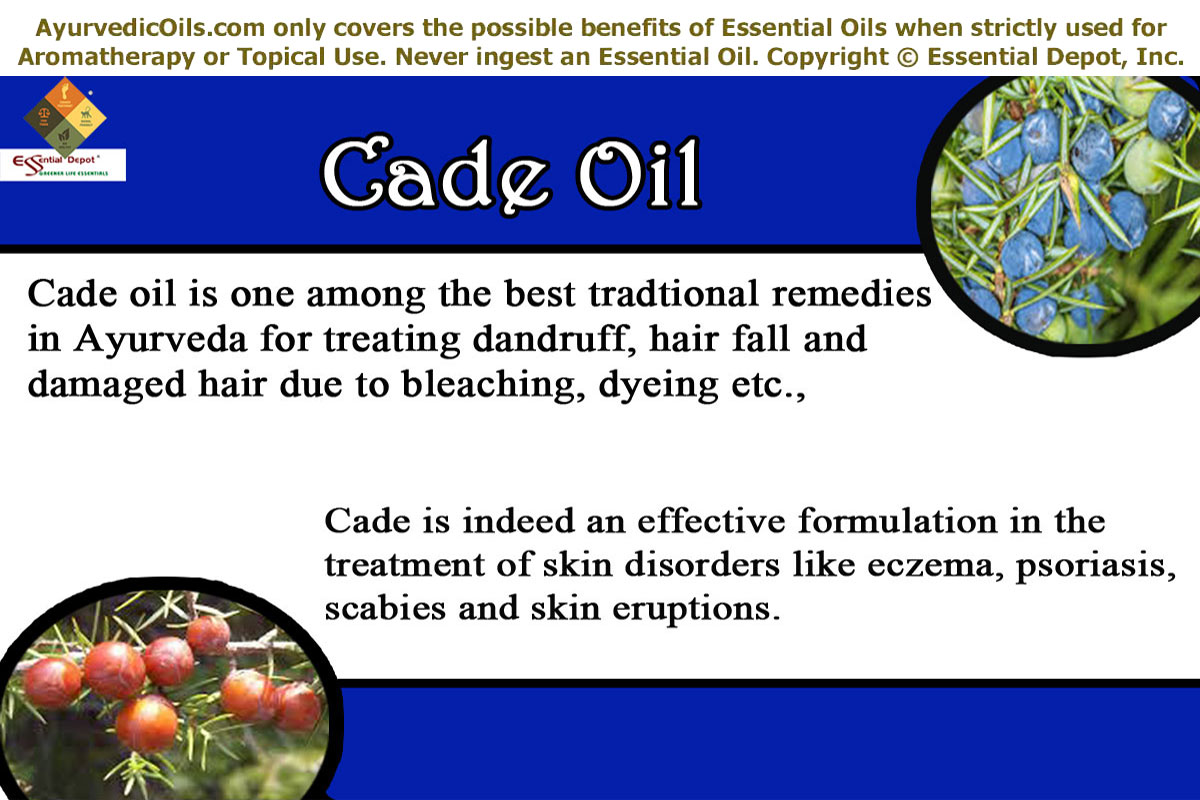
Cade-oil-bannerWell known in ancient India as one of the best natural remedies for dandruff, damaged hair due to bleaching, dyeing etc, and hair fall, Cade oil is a significant Ayurvedic oil for treating skin and hair problems. It is also called by other names like Juniper tar, Prickly cedar, Sharp cedar, Cade Juniper and Prickly Juniper and is scientifically known as Juniperus oxycedrus. This small tree is a member of the Cypress family, Cupressaceae.

Cade essential oil is extracted from the branches and heartwood of the tree by steam distillation method. Ayurveda recommends Cade and its essential oil in the treatment of various skin disorders like eczema, psoriasis, scabies and skin eruptions along with burning hair problems like hair fall, dandruff and other hair damages.

Purchase Cade Oil – Wholesale – CLICK HERE

Historical uses and importance of Cade and its essential oil:

Ancient people of various traditions in the prehistoric times believed that Cade helped them in keeping away from sickness, depressing emotions, negative thoughts and from evil spirits as well. Cade was also used in pagan rituals in Sumeria and Babylonia as a sacrifice to the Gods, while Inanna and Ishtar considered this herb to be holy. The Europeans however considered Cade as a medicinal plant and used it to protect life stock.

The word ‘oxycedrus’ means “sharp cedar” and this particular species is considered to be the Cedrus or the original Cedar of the ancient Greeks. Cade is said to have been originated in the Mediterranean region across Portugal and Morocco, south to Lebanon and Israel, east to westernmost Iran and France and grows up to a height of 1600 m altitude above the sea level on rocky areas.

The Native Americans used it to treat ailments in animals. Many experts refer to the Juniper tree as a source of protection with perfect loveliness and succor, which are the terms derived from the plant language. Towards the 19th century, the French adopted Cade as well and began the use of the same in the treatment of lice, leprosy, skin infections, snake bites and toothaches.

As of today, modern aromatherapy use Cade oil to treat various kinds of skin infections like dandruff, scalp infections accompanied by hair loss, eczema, dermatitis, psoriasis and other skin irritations/eruptions. Due to its skin and hair benefiting properties that help in treating scalp and skin problems, Cade is used in the manufacturing of soaps, lotions, creams and perfumes, and of course these products do have a wonderful aroma as well.

Chemical constituents and therapeutic properties of Cade oil:

Cade oil is said to contain cadinene, creosol, cadinol, p-creosol, terpenes and guaiacol. The major healing properties of this oil are antiseptic, analgesic, antimicrobial, antipruritic, disinfectant, anti-parasitic, vermifuge and vulnerary.

Ayurvedic health benefits of Cade essential oil:

The word Ayurveda (Ayur + Veda) means ‘the knowledge of life’ (Ayur means life and Veda means knowledge). Celebrated across the globe as the world’s oldest healing methodology, Ayurveda is lovingly beckoned as the mother of all healing sciences and the most popular medicinal practices that followed Ayurveda are Homeopathy, Siddha, Traditional Chinese Medicine, Allopathy, European Traditional medicine, Chiropractic, Acupuncture and Unani.

The most inspiring reason behind the progressive lead of Ayurvedic medicine is its holistic healing approach that states that health is a combination of the physical, mental and spiritual well-being. This noble fact has been highlighted in Charaka Samhita, one among the oldest Ayurvedic encyclopedia as ““The three – body, psyche, and soul – act as a tripod. The world stands upon them, and within them, the world abides.”

Ayurvedic medicine rooted the principles of natural healing by treating the root cause of an illness instead of its symptoms and aims at prevention of diseases by helping to lead a disciplined lifestyle and by maintaining perfect balance with nature. According to Ayurveda, everything on earth is a part of nature and nature by itself is made up of five vital elements namely water, earth, space, air and fire.

Earth represents bones and muscles, water stands for blood and other fluids in the body, fire is responsible for metabolic functions and body temperature, air aids in breathing and space is the spirit that keeps us alive.

Every human being on earth is a unique creation built up with a unique individual constitution just like our fingerprints. This constitution comprises of three dynamic energies called as doshas, which are an arrangement of the five vital elements of nature.

Vata dosha stands for air and space and takes care of respiration, circulation and nervous functions of the body. Pitta dosha symbolizes fire and water and is in charge of metabolic functions and body temperature.

Kapha represents water and earth and is responsible for physical structure, sustenance and reproductive health. Every individual has a predominance of any one dosha, which decides their personality, traits and behavioral attributes.

Perfect balance between these doshas as per nature’s law signifies health and doshic imbalances cause illnesses.Ayurveda prescribes natural remedies like herbs, essential oils, yoga, simple physical exercises, meditation, prayer, Ayurvedic routine, Panchakarma, Pranayama and other Ayurvedic techniques for fostering natural balance between these doshas.

Cade oil finds its use in Ayurveda for treating vata imbalances including skin disorders and hair problems and kapha problems like bronchitis and congestion. It serves good for the treatment of itching, pneumonia, diarrhea, diabetes, peptic ulcer, high blood pressure, bronchitis, and many more.

The major Ayurvedic health benefits of Cade oil are:

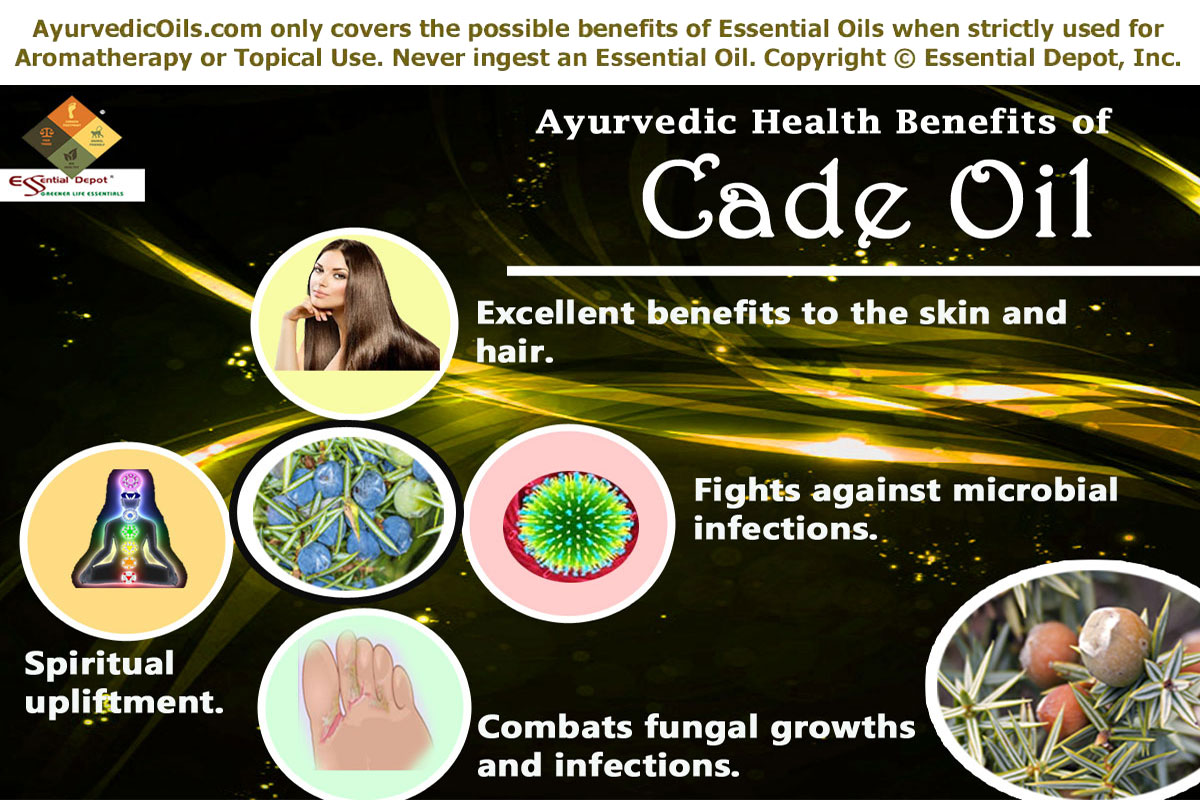
cade-oil-broucher1. Excellent benefits to the skin and hair:

Cade oil has numerous benefits to the skin and hair for which it has been used since the ancient period for treating health problems including dermatological cancers, eczema, psoriasis, skin eruptions, parasitic and fungal infections on the skin, chronic rhinitis and other skin infections.

Cade oil is also a proven remedy for treating alopecia or excessive hair loss, dandruff and other scalp problems. It is for these reasons, Cade oil is used as an effective formula in making ointments for treating wounds, psoriasis, eczema, and the treatment of fungal, viral and bacterial conditions of the scalp.

Numerous studies have proved the potential effects of Cade oil and its use in medicinal manufacturing of skin creams, ointments, and anti- dandruff shampoos as well. Cade essential oil is used as an ingredient in liniments and ointments for chronic skin diseases and problems of the scalp.

Mixing 4 drops of Cade oil blended with 4 drops of Rosemary oil, 4 drops of Thyme oil, 4 drops of Cedarwood oil with 20 ml coconut oil can be used as an effective massage blend for the body for treating all kinds of skin problems, allergies, microbial infections and hair problems as well. This massaging helps in fighting against dead skin cells, promoting quicker healing of wounds, and its disinfectant properties fights against microbes that worsen skin infections.

2 drops of Cade oil added to bathing water or to 10 ml of mild shampoo can act as a potent remedy for treating psoriasis, eczema, ringworm, seborrhea, wounds, herpes, dandruff, lice, loss of hair and other scalp problems as it works by nourishing the skin and scalp, promoting the growth of hair by enriching the hair follicles and support the growth of healthy hair by combating the growth of infectious microbes.

Cade oil hair mask for dandruff: To start with, try it out only for few applications and check the results. Make the mixture using the following ingredients, 1tsp castor oil, ½ tsp soya oil, 10 drops of Cade oil and 2 drops of wheat germ oil. Now mix all the ingredients and store in a dark bottle. Massage this oil deeply into the scalp as required.

Leave it at least for 2 hours and wash it off using a mild shampoo. Try it twice a week and do check with your medical expert on your diet, as hair loss and other scalp disorders can also be related to other dietary and other lifestyle changes.

2. Fights against microbial infections:

The essential oil of Cade is a well-known anti-microbial oil and the antimicrobial activity of Juniperus oxycedrus oil was studied through aqueous and methanol extracts of its leaves in the Pelitli Village of Gebze, Kocaeli, in the Marmara region of Turkey, where Cade was extensively used by the people of the same terrain for the treatment of numerous diseases. The effects of the extracts from the tree were employed in its research in the field of medicine.

Cade essential oil is dark, aromatic and smells like smoke. This oil is also used as mixtures in cosmetics and creams employed in medicinal applications for skin problems. A 2003 study on the ‘Antimicrobial activity of aqueous and methanol extracts of Juniperus oxycedrus L,’ was conducted on the laboratory strains belonging to 56 bacterial species, and 31 isolates of 5 fungi species.

This study proves that the methanol extract of Cade oil proved promising in the inhibitory effects on the growth of 57 strains of 24 bacterial species in the genera of PseudomonasStaphylococcus, Bacillus, Brevundimonas, Brucella, Acinetobacter, Enterobacter, Escherichia, Micrococcus and Xanthomonas.

Another Egyptian study on the ‘Antimicrobial activity/Cytotoxic activity of essential oils of leaves and berries of Cade oil’, witnessed that Cade oil showed major activity against most of the tested strains including gram positive bacteria like Enterobacter cloacae and Staphylococcus aureus, and gram negative bacteria like Escherichia coli, Salmonella, Pseudomonas syringae etc.,

The best way to use Cade oil for fighting against bacteria, fungi, virus and other microbial infections is to add 3 to 4 drops of Cade oil along with 2 drops of Lavender oil in bathing water to fight against existing microbial infections and to guard you against the effects of harmful microbes throughout the day. You can also add 2 drops of this oil to 1 ml of olive oil and apply it gently on the affected area.

3. Combats fungal growths and infections:

With its antifungal effects, Cade oil fights against the growth of fungus and checks various fungal infections like ringworm, athlete’s foot, dandruff etc.,. This property is attributed to its presence of chemical constituents tested by GC-MS and its 42 compounds that represent 96.73% of total oil, α-pinene (39.63%), manoyl oxide (12.34), Z-caryophyllene (4.1%) and extensively high amounts of monoterpenes hydrocarbons and sesquiterpenes. The existence of these strong properties makes the oil prove best in its antifungal activities.

A 2013 study on the ‘Chemical composition and antifungal activity of essential oil isolated from Juniperus oxycedrus’ states “the antifungal testing by in vitro contact assay showed that the oil significantly inhibits the growth of nine plant pathogenic fungi.” Applying 2 drops of Cade oil mixed with 1 ml of sweet almond oil on the infected parts can help in reducing the severity of the infection and prevent the infestation of new microbes as well.

4. Spiritual upliftment:

Cade is an amazing Ayurvedic remedy that has been used in incense and utilized especially during prayers, meditation and Pranayama or the art of balanced breathing. The most inspiring reason is the enormous spiritual benefits of Cade oil.

Adding 2 drops of this oil in your diffuser, room freshener, vaporizer or aromatic candles during prayers and meditation can be of great assistance in helping you forget the pain of being abused, quit addiction, fear of being neglected, alleviate negative emotions and re-align the spiritual and emotional elements of the system. Regular meditation, simple physical exercises, prayers and Pranayama assisted with Cade oil can aid in augmenting your spiritual quotient and elevate your bonding with the divine.

Other health benefits:

Cade essential oil have also been in use since the ancient times in the treatment of pain, joint aches, leprosy, toothaches, snake bites, lice, dandruff, cancer, peptic ulcer, pneumonia, high blood pressure, skin irritation, bronchitis, diarrhea, itching and few other infections.

Disclaimer:

This article is for educational uses only. We are not medical professionals and this information is not directed to diagnose, cure or prevent any medical conditions or to substitute any prescribed drugs or professional medical advice. This info is shared with the motive of spreading the Ayurvedic healing wisdom, which is the world’s oldest medicinal system.

Care should be taken while using essential oils topically, as pure and organic oils are highly concentrated liquids and should always be used in a diluted form. Never use essential oils internally and keep them out of reach of children.

Make certain that you talk with your Ayurvedic practitioner or healthcare professional before choosing the appropriate essential oil for your individual constitution and medical condition. This oil should be avoided during pregnancy and breast feeding and do not use it directly on broken or inflamed skin.

Thought for the day:

Nature is a mutable cloud which is always and never the same. -Ralph Waldo Emerson

Suggested Reading:

  1. Junipers of the World: The Genus Juniperus, 4th Edition by Dr. Robert P. Adams
  2. Morphological variation of Juniperus oxycedrus subsp. oxycedrus (Cupressaceae) in the Mediterranean region [An article from: Flora] by M. Klimko, K. Boratynska, J.M. Montserrat, Didukh
  3. Arthritis – The Botanical Solution: Nature’s Answer to Rheumatoid Arthritis, Osteoarthritis, Gout and Other Forms of Arthritis by Case Adams PhD
  4. The Illustrated Encyclopedia of Essential Oils: The Complete Guide to the Use of Oils in Aromatherapy & Herbalism by Julia Lawless
  5. Healthy Hair Care Tips: Natural Hair Care Tips For All Hair Related Problems by Jimmy King

References:

  1. Juniperus oxycedrus by Wikipedia
  2. Antimicrobial activity of aqueous and methanol extracts of Juniperus oxycedrus L by Karaman, Sahin, Gulluce and Sengul published in the Journal of Ethnopharmacology
  3. Chemical composition and antifungal activity of essential oil isolated from Juniperus oxycedrus L., Ismail Amri, Lamia Hamrouni, Samia Gargouri, Mohsen Hanana, Bassem Jamoussi published in Research Gate
  4. Cade by Daniele Ryman for Aromatherapy Bible

Calamus Oil


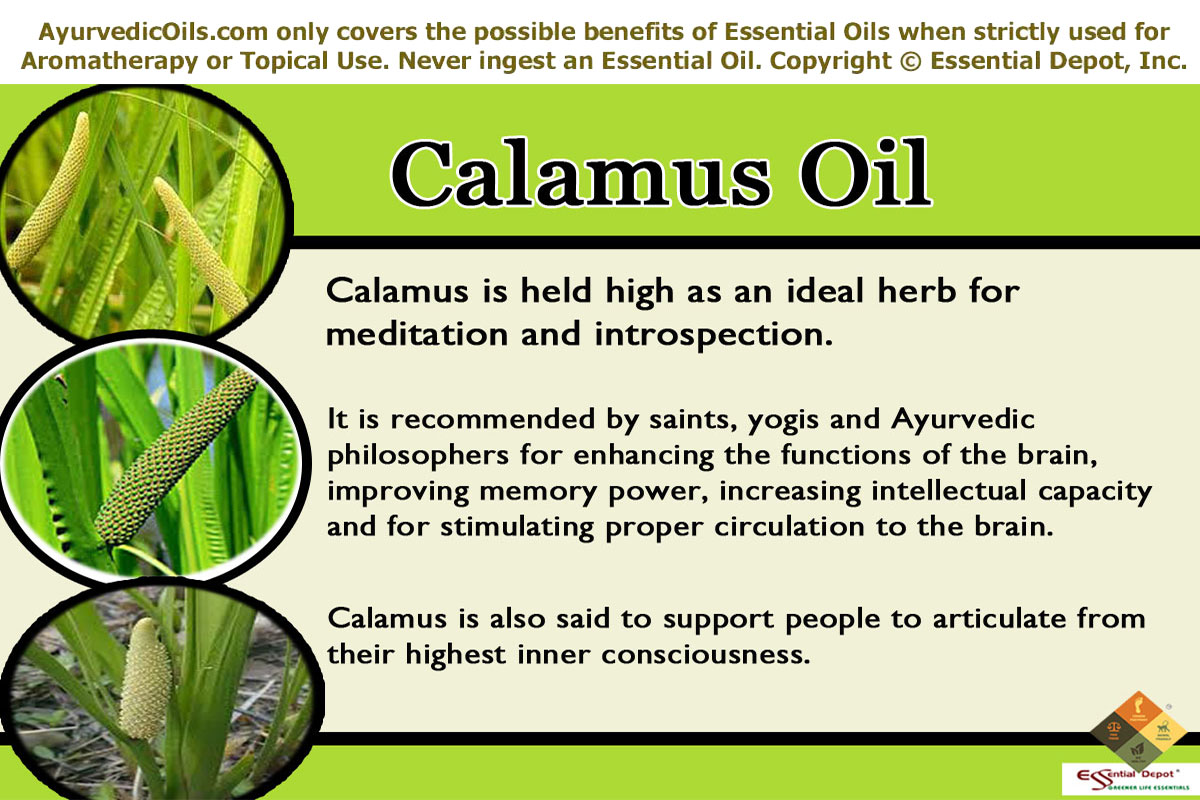
Calamus-bannerOften acclaimed as an ideal herb for meditation and introspection, Calamus is recommended by saints, yogis and Ayurvedic philosophers for enhancing the functions of the brain, improving memory power, increasing intellectual capacity and for stimulating proper circulation to the brain.

The essential oil of Calamus is extracted from the root of the Calamus plant, scientifically known as Acorus Calamus or Sweet flag by steam distillation method.

The Sanskrit name of Calamus is Vacha, which means ‘speech’ and the primordial sages and religious Gurus have believed Calamus to facilitate human beings to articulate from their highest inner consciousness.

Ayurveda recommends Calamus herb for its power to fortify the adrenal gland and for its effectiveness in treating neuralgia, dysmennorhea or painful periods, memory loss, epilepsy, gingivitis, lack of stamina, lymphatic drainage, asthma, hysteria, deafness, sinusitis, lack of consciousness and trauma.

Purchase Calamus Essential Oil – Retail – 4 oz – CLICK HERE

Purchase Calamus Essential Oil – Wholesale – CLICK HERE

Historical uses and importance of Calamus root and its essential oil:

Calamus is native to Asia and Europe and has been found growing across Australia, South Africa, North America, New Guinea and Reunion. It has its name mentioned in the Old Testament and was talked about in Exodus as an element of the sacred anointing oil of the Bible.

It was also denoted in the Chester Beatty papyrus VI, which approximately dates back to 1300 BC and Papyrus used Calamus with various other ingredients in preparing a bandage to appease stomach ailments.

Calamus has been a vital part of the traditional healing system of various countries for more than thousands of years in the treatment of numerous medical conditions.

The primeval Egyptians trusted Calamus root as a potent aphrodisiac for its effectiveness in augmenting the health of the reproductive system. Calamus was added to wine in Europe and it also forms a part of absinthe.

The Penobscot people believed that Calamus root helped in healing prolonged sickness that was plaguing the people for a long time. They also steamed all through the homes to ward off illnesses and the dried roots were strung together for preservation.

The people of the Potawatomi community used the dried Calamus root powder for treating catarrh. Indonesians use this aromatic root as a flavoring agent in the preparation of meat, sea foods and other vegetarian cuisines.

The warriors of Teton-Dakota applied the root paste on their faces for alleviating fear in the warfront. Calamus essential oil is also used in making perfumes mainly because of its therapeutic properties.

The traditional Turks used this herb for all kinds of infections and it is used in preparing cough drops. It is also been used in the Traditional Chinese medicine, Siddha and Ayurvedic healing systems for its carminative, laxative, sedative and diuretic properties.

Chemical constituents and healing properties of Calamus essential oil:

The primary chemical components of this oil are beta asarone, eugenol, calamusenone, corenone, alpha aselinene, camphone, alpha calacorene, shyobunone, beta gurjunene, calamendiol and iso shyobunine.

The therapeutic properties of Calamus oil are rejuvenative, circulatory, anti-spasmodic, anti-arthritic, cephalic, nervine, tranquilizing, stimulant, decongestant, anti-rheumatic, emetic, anti-periodic, memory boosting, carminative, stomachic, bactericidal and expectorant properties.

Calamus in Ayurvedic Preparations:

Numerous research reports have proved that Calamus is one the most commonly employed ingredient in plenty of Ayurvedic preparations, mainly because of the presence of essential oils in its rhizomes. Ayurvedic medications like kashayam, choornam, ghritham and tailam contain Calamus and are prepared by following the preparation methods mentioned in Sahasrayoga.

Ayurvedic health benefits of Calamus essential oil:

Calamus essential oil is habitually called as a tonic for the brain in Ayurveda. It has been mentioned in Vedas, the holy books as one of the exceptional medicines and Ayurvedic philosophers explored numerous healing benefits of Calamus apart from supporting the functions of the nervous system and brain, for which Calamus still exists as a vital part of various Ayurvedic medicines since 4,000 years.

Perfect health according to Ayurveda is a triangular structure with body, mind and soul as its edges. It is the oldest of all healing systems on earth and is the pioneer to other traditional and modern medicinal methodologies like Homeopathy, Siddha, Traditional Chinese medicine, Unani, Acupressure and Chiropractic.

The greatest thing about this ancient medicinal science is that its healing techniques are documented systematically since its first recordings in Atharvaveda, one among the 4 Vedas or the major sacred books of the Hindu mythology.

This ancient citation was followed by Charaka Samhita and Sushruta Samhita, known as Ayurvedic encyclopedias written by the most respected Ayurvedic philosophers Charaka and Sushruta respectively.

“The three – body, psyche, and soul – act as a tripod. The world stands upon them, and within them, the world abides”, says Charaka Samhita. Ayurveda rightly means ‘the knowledge of life’ and this time-honored remedial method assists in providing the consciousness about life and health in every individual.

Ayurveda states that nature is made up of five fundamental elements namely water, earth, fire, air and space and it is also said that everything in nature is also built up with these five energies. When a person’s health is in balance with nature, absolute health prevails and imbalance with nature owing to food, climatic conditions and lifestyle changes causes illnesses.

Being a holistic curative system, where every person is regarded as a special part of nature with a unique individual constitution just like the fingerprints and it consists of three imperative dynamic energies called as doshas. They are vata, pitta and kapha and are nothing but a representation of any two elements of nature.

Vata dosha is a combination of air and space, and is responsible for respiration, circulation and for the functions of the nervous system. Kapha signifies earth and water, and is in charge for sustenance, physical structure, movement of fluids in the system and the reproductive health.

Pitta symbolizes fire and water and is accountable for body temperature and metabolic functions like digestion, absorption and excretion. Stability between these three doshas signifies perfect health and inequality causes sickness.

Ayurveda recommends natural remedies including herbs, essential oils, simple physical exercises, yoga, prayers, meditation, Pranayama, Ayurvedic routine, Panchakarma (Ayurvedic techniques for detoxification) and Ayurvedic massaging with natural essential oils.

These remedies are prescribed in such a way to correct the unevenness between the doshas. Calamus essential oil is known to aggravate pitta and pacify kapha and vata dosha.

The Ayurvedic health benefits of Calamus oil are:

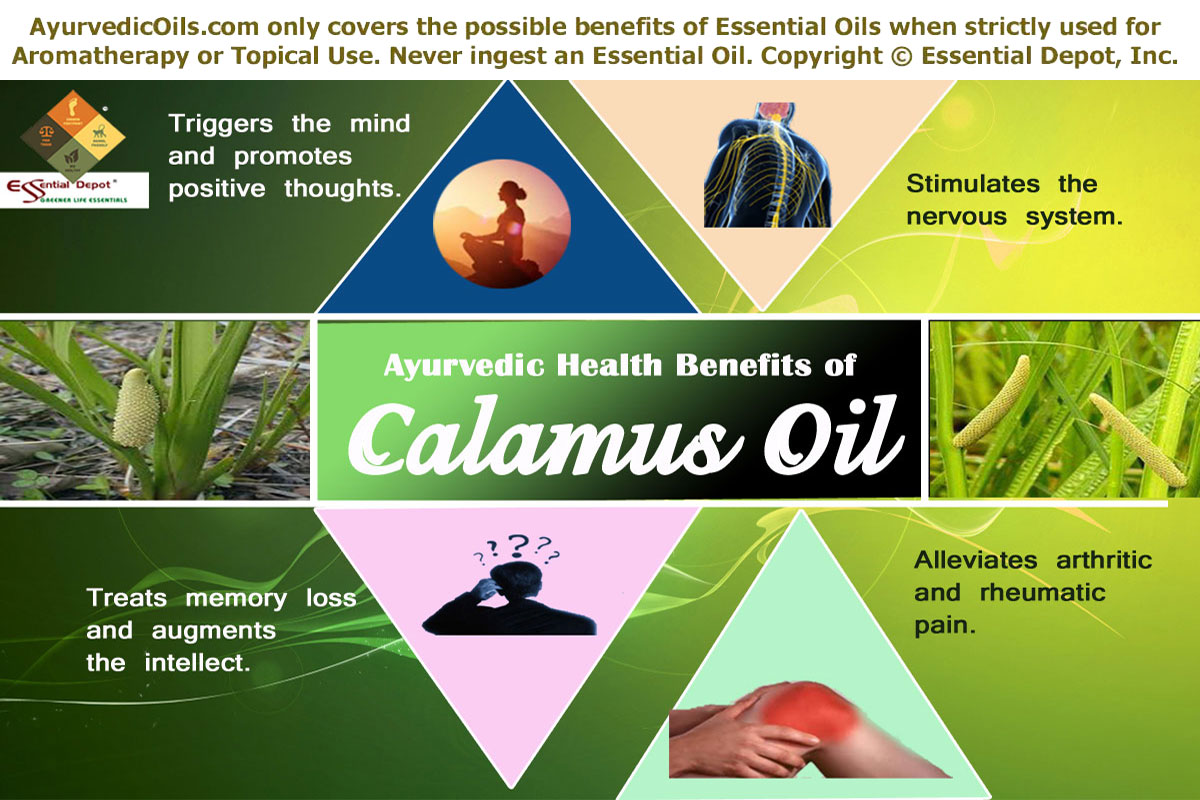
Calamus-broucher1. Triggers the mind and promotes positive thoughts:

Calamus herb and its essential oil have been witnessed by numerous herbalists and Ayurvedic physicians as an endlessly safe and useful natural remedy for activating the mind and improving the power of thinking.

It is popularly known as a boosting herb for meditating Yogis and Saints, where Calamus is said to help them stay focused and concentrated in their long lasting meditation known as yagna.

Calamus was used in the preparation of tea in the ancient period and was also used in neti pot as a powerful remedy for treating brain conditions. Adding 1 to 2 drops of Calamus essential oil in diffuser, vaporizer, burner or a tissue paper and inhaling the uplifting aroma of this oil can aid in opening the mind, promoting clarity, enhancing the concentration power, mental stability, attention, and the power of positive thinking along with organization of speech.

Learned Ayurvedic research scientist Karta Purkh Singh Khalsa says, “The yogic name, Vacha, means “speech” and refers to its action on the fifth chakra and its propensity to help you speak from your highest consciousness. The complementary energetics makes the combination suitable for a wide variety of people.”

Swami Thirtha calls Calamus as “one of the best mind herbs”, mainly for its effectiveness in fostering sadhaka pitta through which it fortifies the mind’s ability to obtain information and evoke from the memory. The essential oil of Calamus has an invigorating effect on the brain with its warm, woody and medicinal aroma with increasingly sweet after-tones.

Inhaling the therapeutic fragrance of this oil helps in activating the neural pathways and has also been proved powerful in treating neurotic problems. You can also add 2 drops of this oil to warm bathing water for refreshing your mind. Ayurvedic practitioners recommend Vacha oil to persuade positive thoughts.

2. Stimulates the nervous system:

Calamus falls under the ‘sattvic herb’ category in the Ayurvedic medicinal system. All the sattvic varieties are known to enhance and empower the ‘kundalini’ energy or the ‘vital life force’. By this way, Calamus and its essential oil acts as a revitalizing nerve tonic that augments the functioning of the brain.

Massaging your system with 5 drops of Calamus oil mixed with 2 drops of Lavender oil, 2 drops of Lemon oil, 2 drops of Yarrow oil, 2 drops of Cinnamon oil and 2 drops of Patchouli oil along with 10 ml of Virgin Olive oil can aid in rejuvenating your brain and the entire nervous system. This assists in stimulating the cerebral functions, support self-expression and overall nervous health. This massage also assists in promoting peaceful sleep and treating insomnia.

Ayurvedic healing system describes this oil as a nervine tonic and a psychotropic remedy, mainly for its positive effects on learning, boosting memory, recovering from shock and treating depression and anxiety. Calamus herb and its essential oil are recommended by Ayurvedic physicians for confiscating the negative effects and toxic residues of drugs (including the heavy use of marijuana) from the fatty tissues left within brain, liver and the nervous system.

By strengthening the nervous system, this oil is also used in recovering from trauma, post-surgery effects, hysteric attacks, epileptics and certain other nervous problems. Due to its potential to contract the blood vessels and decrease pressure on the Ninth cranial nerve, Calamus oil is used in treating neuralgia.

3. Treats memory loss and augments the intellect:

For its memory-enhancing properties, Ayurveda prescribes Calamus oil as an effective psycho-pharmacological agent and the as one of the best natural remedies for treating epilepsy, mental retardation, syncope and stupor, while augmenting memory power and for retrieving people from traumatic problems.

Calamus is used in Ayurveda to counteract the side effects of hallucinogens. This essential oil has been proved to enhance blood circulation, stimulate neurons and nerves, aiding the body to attain steadiness and attentiveness.

4. Alleviates arthritic and rheumatic pain: According to the Ayurvedic philosophy, excess of kapha dosha is responsible for stagnation of toxic substances known as ama, water deposits, salt, uric acid and other fluids in the body, especially in the joints causing pain and inflammation associated with rheumatism. Calamus essential oil is a known Ayurvedic remedy for reducing excess kapha dosha and helps in lessening pain, inflammation and redness by eliminating stagnated fluids and toxic remains through urine and sweat.

Mix 2 drops of Calamus oil with 2 drops of Ginger oil and 2 drops of Eucalyptus oil along with 3 ml of coconut oil and massaging it gently on the painful area helps in promoting blood circulation, alleviating pain, strengthening the muscles, stimulating the nerves and reducing swelling and other symptoms of rheumatism and arthritis.

Few other notable health benefits:

With its pungent and bitter taste, Calamus oil is said to have excellent benefits to the respiratory system, nervous system and the digestive system. This oil strengthens the digestive system and treats intestinal worms, abdominal pain, flatulence, loss of appetite, chronic gas trouble and loss of taste. Vacha is used in many Indian homes to treat colic in newborn babies since the primeval times. Calamus essential oil effectively treats sinusitis, cold and bronchitis.

Disclaimer:

This information is only for the purpose of education and is not intended to cure, prevent or diagnose any medical condition. It is not directed as a substitute for any prescribed medication or expert medical advice. We are not medical professionals and this data is shared only for the purpose of throwing light on the ancient healing wisdom or the knowledge of life known as Ayurveda.

Never use essential oils internally and ensure that you use them in a diluted form for external use, as pure and organic essential oils are highly concentrated liquids. Keep essential oils out of reach of children and it is always recommended to do a small patch test on your skin with the diluted essential oil. Speak with your healthcare expert or your Ayurvedic physician before choosing the appropriate essential oils for your unique individual constitution or prakriti and health condition.

Calamus Essential Oil – Possible Skin Issues:

calamusGreener Life Diamond – Bio-Healthy Score => 3 – Possible Skin Issues:

See => http://www.essentialdepot.com/GreenerLifeDiamond.html

The essential oil of Calamus should be strictly avoided during pregnancy as it has the potent to stimulate contractions in the uterine cavity and induce menstruation, being an emmenagogue and might lead to miscarriage or abortion. It is also advisable to restrict the use of Calamus oil during breastfeeding.

Many studies suggest that Calamus oil may have carcinogenic or cancer causing effects and might be toxic when used in excess. The prime chemical constituents responsible for its adverse effects are β-asarone (about 78.4%), α-asarone (about 6.8%) and methyleugenol (about 2%) in Acorus Calamus oil, which is of Indian origin. Various in vivo and in vitro studies have witnessed the negative potent of β-asarone in inducing the growth of malignant tumors.

The European Council files β-asarone as “substances which are suspected to be genotoxic carcinogens and therefore no MDI can be set”. According to the 1988 European Community Council, both the European Union and the United Kingdom ‘Standard Permitted Proportion’ of beta-asarone in food flavorings must be 0.1mg/kg.

IFRA (International Fragrance Association) suggests that beta-asarone and alpha-asarone should not be used as fragrance ingredients and the safe level of use of Calamus oil in consumer products should not exceed 0.01%. It also recommends that the highest concentration of methyleugenol in leave-on products like body lotion should not exceed 0.00004%.

Essential oils are highly concentrated substances and must be used in a diluted condition with safe carrier oils like coconut oil. It is meant only for topical application and it is not recommended to take essential oils internally.

Ingestion of Calamus oil may end up in creating hallucinations, convulsions and potent toxicity. Acorus Calamus is one among the 30 unsafe herbs listed by the FDA (Food and Drug Administration).

According to the studies conducted in 1976 and 1977, Calamus oil is non-phototoxic and non-sensitizing when tested (patch testing with 2% Calamus oil) on 200 consecutive patients with dermatitis.

This warning is relevant to leave-on skin care products like creams, body lotions, massage oils and balms and not for wash-off items like shampoos and soaps.

Reference Links Substantiating the Possible Skin Issues of Calamus Oil:

  1. Acorus Calamus: Scientific Validation of Ayurvedic Tradition from Natural Resources Pulok Kumar Mukherjee, Venkatesan Kumar, Mainak Mal & Peter J. Houghton, published in the Journal of Pharmaceutical Biology
  2. MEDICINAL PROPERTIES OF ACORUS CALAMUS Kumar Amit, Vandana, Rajendra Institute of Medical Sciences, published in the Journal of Drug Delivery & Therapeutics
  3. Acorus Calamus by Examine.com
  4. Effects of asarone and β-asarone on conditioned responses, fighting behaviour and convulsions by P. C. Dandiya and M. K. Menon, published in the British Journal of Pharmacology and Chemotherapy
  5. Calamus by Drugs.com
  6. Toxicity of Acorus calamus rhizome powder from Eastern Nepal to Sitophilus granarius (L.) and Sitophilus oryzae (L.) (Coleoptera, Curculionidae) by R.B. Paneru , G.N.J. le Patourel , S.H. Kennedy published in Science Direct
  7. Acorus Calamus: An overview R. Balakumbahan*, K. Rajamani and K. Kumanan, Horticultural Research Station, Tamilnadu Agricultural University, Pechiparai, TN,  India, published in the Journal of Medicinal Plants Research
  8. Essential Oil Safety: A Guide for Health Care Professionals By Robert Tisserand, Rodney Young

Thought for the day:

Every particular in nature, a leaf, a drop, a crystal, a moment of time is related to the whole, and partakes of the perfection of the whole.  

-Ralph Waldo Emerson

Suggested Reading:

  1. Yoga & Ayurveda: Self-Healing and Self-Realization by Dr. David Frawley
  2. Herbal Vade Mecum: 800 Herbs, Spices, Essential Oils, Lipids, Etc.-Constituents, Properties, Uses, and Caution by Gazmend Skenderi
  3. The Encyclopedia of Psychoactive Plants: Ethnopharmacology and Its Applications
    by Christian Ratsch, Albert Hofmann
  4. The Way of Ayurvedic Herbs: A Contemporary Introduction and Useful Manual for the World’s Oldest Healing System by Karta Purkh Singh Khalsa, Michael Tierra
  5. New Choices in Natural Healing: Over 1,800 of the Best Self-Help Remedies from the World of Alternative Medicine by Doug Dollemore

Reference Links:

  1. Acorus Calamus by Wikipedia
  2. Detection of Acorus Calamus in Ayurvedic preparations by Europe PubMed Central
  3. Vacha: Brain Tonic by Dr. R. Vatsyayan, Ayurvedacharya
  4. Clarify Your Communication with Calamus by Karta Purkh Singh Khalsa published in 3HO
  5. Herb of the season, Vacha (Calamus, Acorus calamus) by Sai Ayurvedic College
  6. Vacha (Acorus Calamus Linn.): A Valuable Medicinal Plant, published in the International Journal of Ayurveda and Pharma Research


Your resource for quality Essential Oils. Every batch is
GC tested to ensure purity and authenticity.

Calm your Chakras with essential oils: Aromatherapy for Chakra healing


Chakra healing is becoming a popular kind of alternative therapy in today’s world. People (even doctors and scientists) believe that there are about seven major Chakras and 21 minor Chakras in the body. This Chakra concept is rooted in Hinduism and dates back to 1000 B.C.. It is something akin to the Chinese healing of ‘Qi’ and the Ayurvedic energy called ‘Prana’. Chakra in Sanskrit is known as “wheel” and the Chakras in our body are nothing by energy centers that connect our physical and spiritual selves. Though they are not visible to the naked eye, the existence of Chakras is proven by the success of Chakra healing.

Chakras and Healing: Why should energy centers heal the body? There is reason. Chakras are not just energy centers, they connect us to our deeper selves like emotions, feelings, thoughts and spiritual body too. There are about seven primary Chakras in the body and each Chakra represents a set of feelings, controls organs and monitors what happens in your body. The Chakra wheel is said to spin clockwise and each Chakra is said to spin at different paces. When there is an imbalance in a particular Chakra, the body part associated with that Chakra is out of tune and this results in ill physical or emotional health.


The 7 Chakras of the body are Root Chakra, Sacral Chakra, Solar Plexus Chakra, Heart Chakra, Throat Chakra, Third Eye Chakra and Sacred Chakra. While the Root Chakra represents our core needs for survival, security and sexual needs, the Sacral Chakra is the seat of creativity. This also controls sexual desires. The Solar Plexus represents our identity and self-worth. The Heart Chakras is the seat of love and impacts our ability to give and receive. If you are lonely or feel that no one loves you, then, maybe there is some blockage in your Heart Chakra. For anything regarding positive communication,  the Throat Chakra should be clear, without any energy blockage. The Third Eye or Brow Chakra is the basis of common sense, wisdom, intelligence, dreams, spirituality and intuition. Memory retention is also associated with this Chakra. The Crown Chakra, the crown of all Chakras is located near the brain and influences our physical and mental atmosphere.

Aromatherapy and Chakras: Essential oils can help cure blockage or congestion in Chakras. Some of the oils that guide in balancing Chakras vary according to different Chakras.

1. Root Chakra oils: Located near the tail bone, the Root Chakra is all about understanding our deeper selves. Angelic Root, Myrrh, Frankincense, Spikenard, Vetiver, Benzoin and others. When applied directly, it influences your sense of security and enhances signs of positive productivity.

2. Sacral Chakra oils: Sacral Chakra is also the seat of sexual desire. Oils you can use for the Chakras are – Bergamot, Cardamom, Neroli, Clary Sage, Sandalwood, Ylang Ylang, Rose and others. Sexual problems, emotional dependency and infidelity – all occur due to imbalance in the Sacral Chakra.

3. Solar Plexus Chakra oils: Located above the naval, this Chakra can be healed by Black Pepper, Clove, Cinnamon, Mandarin, Coriander, Cypress, Ginger, Grapefruit, Peppermint, Sandalwood, Spearmint, Vetiver, Ylang Ylang and Geranium.

4. Heart Chakra oils:
Seat of love, this Chakra needs to be pampered with Bergamot, Cypress, Lemon, Lavender, Jasmine, Rose, Orange, Sandalwood, Tangerine, Melissa, Neroli and others to function in balance.

5. Throat Chakra oils: Basil, Bergamot, Chamomile, Cypress, Spearmint and Peppermint are oils for this Chakra. The oils can improve communication skills and make you a patient listener.

6. Third Eye Chakra oils: Angelica Root, Bay Laurel, Frankincense, Patchouli, Rosemary, Sandalwood, Vetiver and Clary Sage are some of the oils used for Third Eye Chakra.

7. Crown Chakra oils: Crown Chakra, the crown of your whole self, can be balanced with Cedarwood, Elemi, Frankincense, Jasmine, Lavender, Myrrh, Neroli, Sandalwood, Spikenard, Vetiver and Rose.

Application of oils: Mix your essential oils with carrier oils and apply directly on the Chakra region. For the Root Chakra, you can apply the blend either to your feet or on your lower back. Do not apply on genitals or mucous membranes or cuts/wounds. Application of oils, along with positive orientation or Chakra music can help heal and balance your Chakras in a very effective way.

The sweet scent of natural incense: How to make incense at home


Incense and aromatherapy are inter-related like no other. Since ancient times, people have considered it essential to burn incense to clear out odors, to bring in positive energy and create a refreshing and pleasant atmosphere. Our forefathers used natural herbs, resins and gums as incense during religious or ritualistic events and ceremonies. Though incense burning is more common these days, most of the incense burnt are synthetic stuff, made out of chemical fragrances than natural essential oils or resins. One can make natural incense at home using aromatherapy essential oils. This article will elaborate in detail on how to make incense using plant oils.

Forms of incense available: It is not that only ancients used essential oils for incense making. Even our incense manufacturers use them for better aromas. But the problem is, most of such current day incense sticks contain a lot of synthetic materials. Completely devoid of natural stuff, synthetic incense sticks may emit toxic elements in the atmosphere, and slowly turn detrimental to our health.


Incense sticks: Incense sticks are the most common form of incense. They can be dipped or hand-rolled, depending on the manufacturer and their place of production. Dipped incense sticks consist of thin wooden sticks that have a combustible powder coating of charcoal or wood. These sticks are then dipped aromatic essential oils and dried for use. Hand-rolled incense sticks are popular in countries like India and are more natural compared to the dipped ones.

Incense cones: These are commercially available stuff and contain a lot of synthetics. However, you can use essential oils to make natural incense cones. The basic ingredients include a combination of powdered plant substances, aromatic items like resins, gums etc. and combustible powders.

Other incense items: Smudge sticks used by Native Americans use white sage and make long sticks out of them. Then, they bundle them and burn them together. Most of the smudge sticks are made from plant products like Sweet Grass, Juniper Berries etc. Another incense item of significance is the Japanese ‘Koh’. It is an equivalent of spaghetti in structure and shape and is made of powdered wood, herbs, resins and essential oils. Aromatic natural resins like Frankincense, Myrrh, Opoponax and Dragon’s Blood can be burned alone as incense. Woods like Aloeswood, Sandalwood and Cedarwood can also be burned alone, with chips, woods or resins.

If you note, aromatic oils play a part in all the above forms of incense. Though this is good, when commercially used, these aromatic substances are mixed with synthetics and sold. This can be toxic to people with respiratory problems and others who are allergic to certain chemicals. To avoid such overuse of synthetics, it is better to use natural plant products. Below is a recipe on how to make incense at home:

How to make incense at home: Combine 1 part of Frankincense powder, 1 part of Myrrh powder, 1 part of Sandalwood powder, 3-4 parts of Makko powder and 4-5 drops of essential oil of your choice. This one part can be one tbsp of something. Mix the ingredients with a spoon or fork in a bowl and add water drop by drop. Bring the mixture to a dough like consistency and add essential oils of your liking. You can use Frankincense, Sandalwood, Patchouli, Vetiver or Orange. They work well when it comes to making incense. Once the mixture is ready for use, make them into cones or roll them using your hands into sticks. Dry the cones/rolled sticks on wax paper for 2 to 3 days and use after that.

Camphor Oil


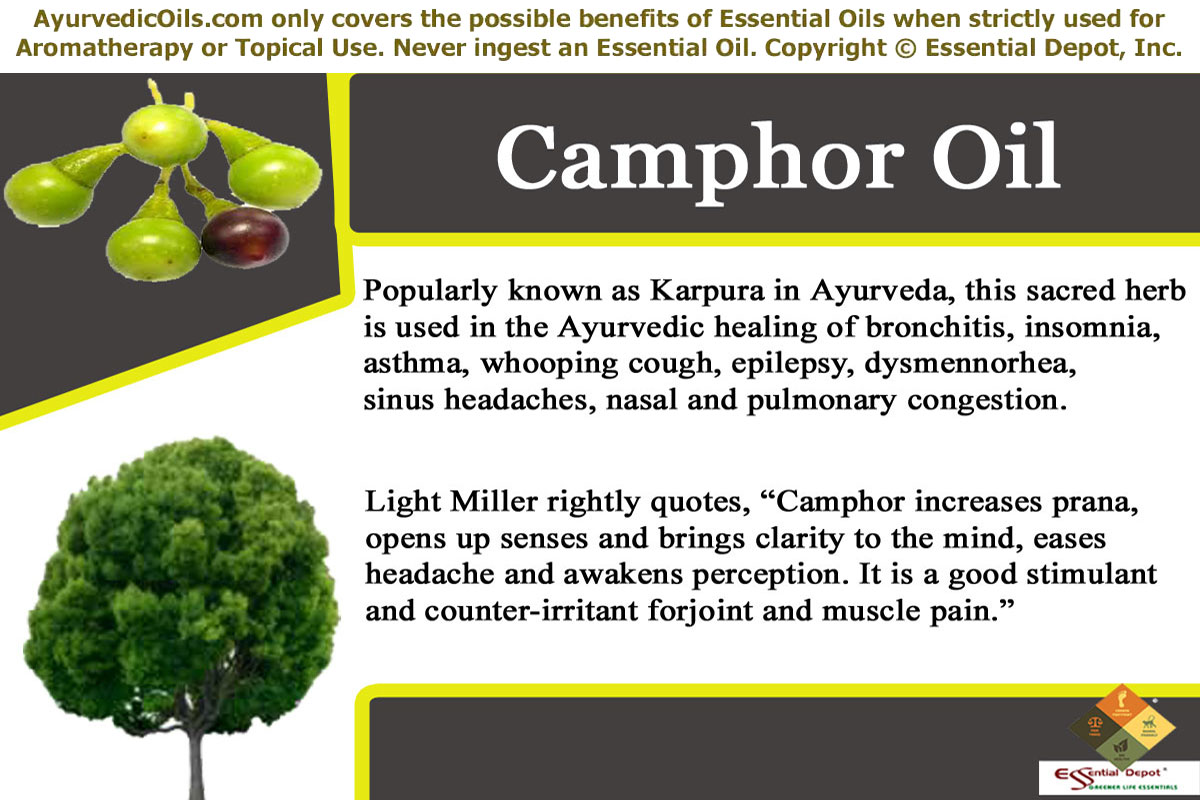
camphor-banner“Camphor increases prana, opens up senses and brings clarity to the mind, eases headache and awakens perception. It is a good stimulant and counter-irritant for joint and muscle pain”, says Light Miller and Bryan Miller in their book Ayurveda and Aromatherapy. Botanically known as Cinnamomum camphora, Camphor is a member of the Lauraceae plant family and is extracted from the wood and bark of this evergreen tree.

Prevalently called as Karpura in Ayurveda, this sacred and aromatic herb is used in Ayurvedic healing for more than thousands of years in the treatment of bronchitis, insomnia, asthma, hysteria, whooping cough, epilepsy, dysmennorhea, sinus headaches, nasal and pulmonary congestion, delirium and gout.

No sacred or religious ritual in India gets fulfilled without Camphor and is also known in Ayurveda with other names like Chandra, Himavaluka, Ghanasara and Chandra Prabha.

Purchase Camphor Essential Oil – Retail – 4 oz – CLICK HERE

Purchase Camphor Essential Oil – Wholesale – CLICK HERE 

Historical uses and importance of Camphor and its essential oil:

Popularly called as ‘the tree that does not sleep’, Camphor has been an important natural remedy especially in the Traditional Chinese Medicine and Ayurveda for more than 4,000 years in the treatment of various illnesses including nervous afflictions and other psychosomatic problems.

Indigenous to Formosa, Japan and China, this tree can grow up to a maximum height of 100 feet and the traditional Chinese used Camphor for its remedial uses and its wood was used in building temples and ships mainly due to its exuberant aroma and robustness. During the Tang dynasty (C.E. 618-907), Camphor was used in flavoring confectionery items like ice cream in China.

Camphor is an important part of Indian prayers, especially the religious ceremonies of the Hindu community since the traditional times. Burning camphor in the Pooja plate for deities is a part of every prayer in temples as well as homes and this sacred flame is calmly touched and its warmth feeling is passed on to the eyes. It is a part of the biggest spiritual celebration of the Hindus known as Mahashivratri dedicated to Lord Shiva.

The ancient Egyptians, Babylonians, Greeks and Romans used Camphor as a fragrant wood, incense resin, flavoring agent and as fumigants for embalming. It was given as prestigious gifts by the Chinese emperors for other kingdoms including the Arabian treaties. Camphor was also used as a traditional remedy for plague in Iran and Persia.

The strong aroma of Camphor makes it an excellent agent for protecting against snakes and other poisonous reptiles. It was also used as an insect repellant as it is trusted to be toxic to insects. Camphor was also used in tool chests to guard tools against rusting.

Chemical constituents or Gas Chromatography Report (GC) of Camphor oil:

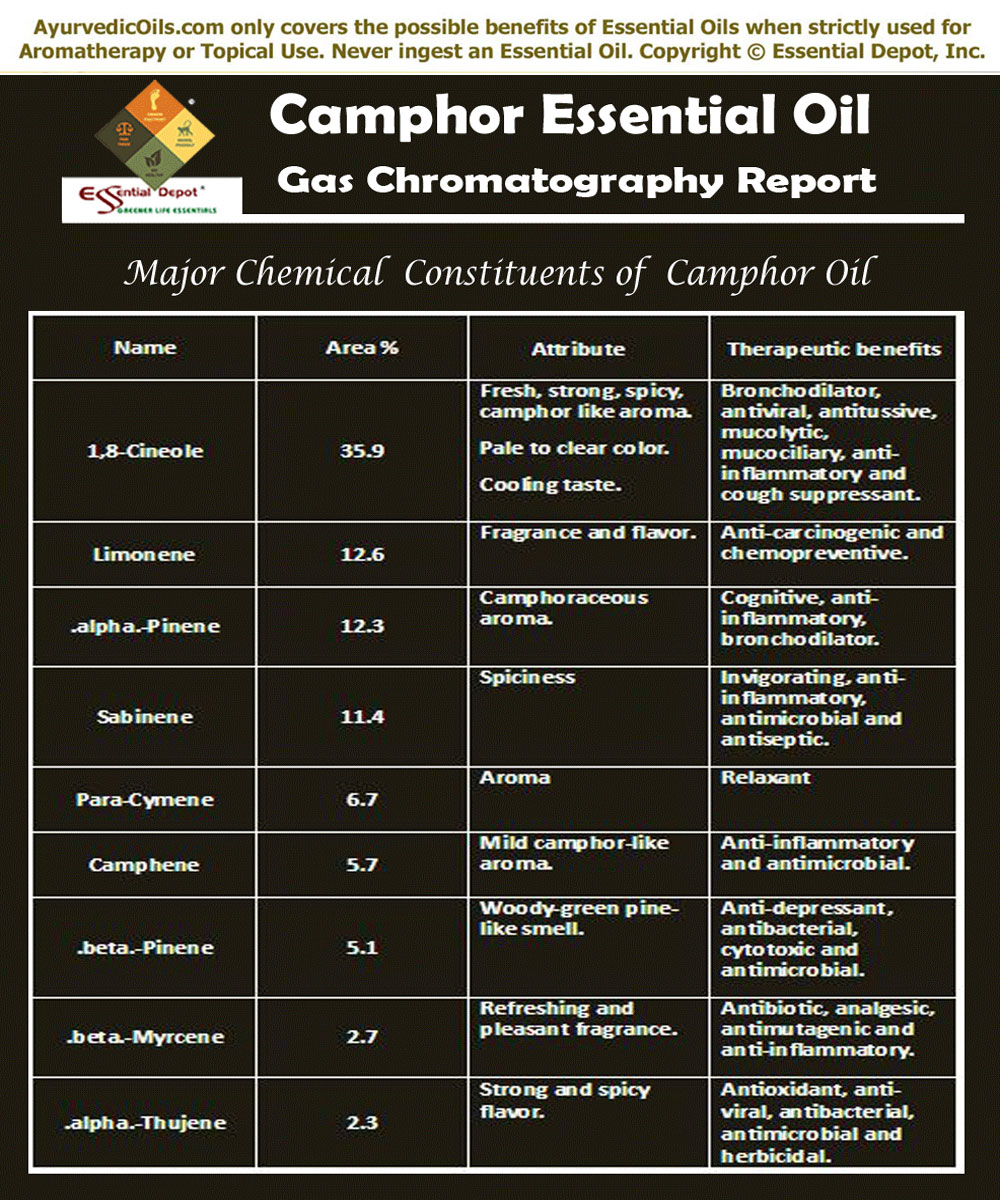
The Gas chromatography report witnesses Camphor oil with about 15 chemical constituents that contribute to its unique aroma, therapeutic values and consistency of this oil. Among which, 1,8-Cineole is the key component with about 35.9% of Camphor oil.

Just click on:

I believe that this information would certainly help you in having a clear picture about the primary chemical constituents of Camphor oil.

The table crafted below explains the unique nature and therapeutic qualities of these biochemical constituents to the curative values of Camphor essential oil.

camphor-table

Therapeutic properties of Camphor essential oil:

The remedial properties of this oil are stimulant, expectorant, antiseptic, anti-rheumatic, antispasmodic, decongestant, nervine, anti-phlogistic, analgesic, anti-arthritic and bronchodilator.

Ayurvedic health benefits of Camphor essential oil:

Ayurveda is a holistic healing science known to the world for more than 5,000 years. The most prominent thing about Ayurveda is that its healing practices are recorded systematically in the form of literature.

Among the 4 major sacred books of the Indian Mythology, Atharvana Veda records the Ayurvedic therapies and about 114 verses of this sacred book shares the symptoms and diagnostic techniques of numerous health disorders.

Ayurveda is a holistic healing system that treats the individual instead of the symptoms and traces the root cause of an illness. By this way, this ancient common sense science focuses on prevention of illnesses leading through healthy aging process to longevity.

Based on the Vedic references of Ayurveda, two ancient Ayurvedic texts were written by the legendary Ayurvedic physicians known as Charaka and Sushruta, who wrote Charaka Samhita and Sushruta Samhita.

These Ayurvedic encyclopedias state that everything is a part of nature and the human body is a combination of the five elements known as Panchamaha Bhoothas, namely fire, water, earth, air and space.

Every person is made up of a unique individual constitution that consists of three dynamic energies known as doshas (vata-air & space, pitta- fire & water and kapha- water & earth), which are a combination of the elemental forces of nature.

For a person to be hale and healthy, these doshas should always remain in a specific ration as set by nature and any change in the functioning or the balance between these doshas cause illnesses. Imbalance of these biological energies mainly occurs due to food habits (mainly depending on the quality of the food taken), change in weather conditions and lifestyle changes.

Ayurvedic remedies like plant essential oils, herbs, yoga, meditation, prayers, Abhyanga or the art of Ayurvedic massaging, Panchakarma or the detox technique and Ayurvedic routine are recommended based on the Prakriti or the unique individual constitution of a person and for correcting the imbalances of doshas.

Camphor essential oil has the potent to reduce kapha and vata doshas and increase pitta dosha.

The major Ayurvedic health benefits of Camphor essential oil are:

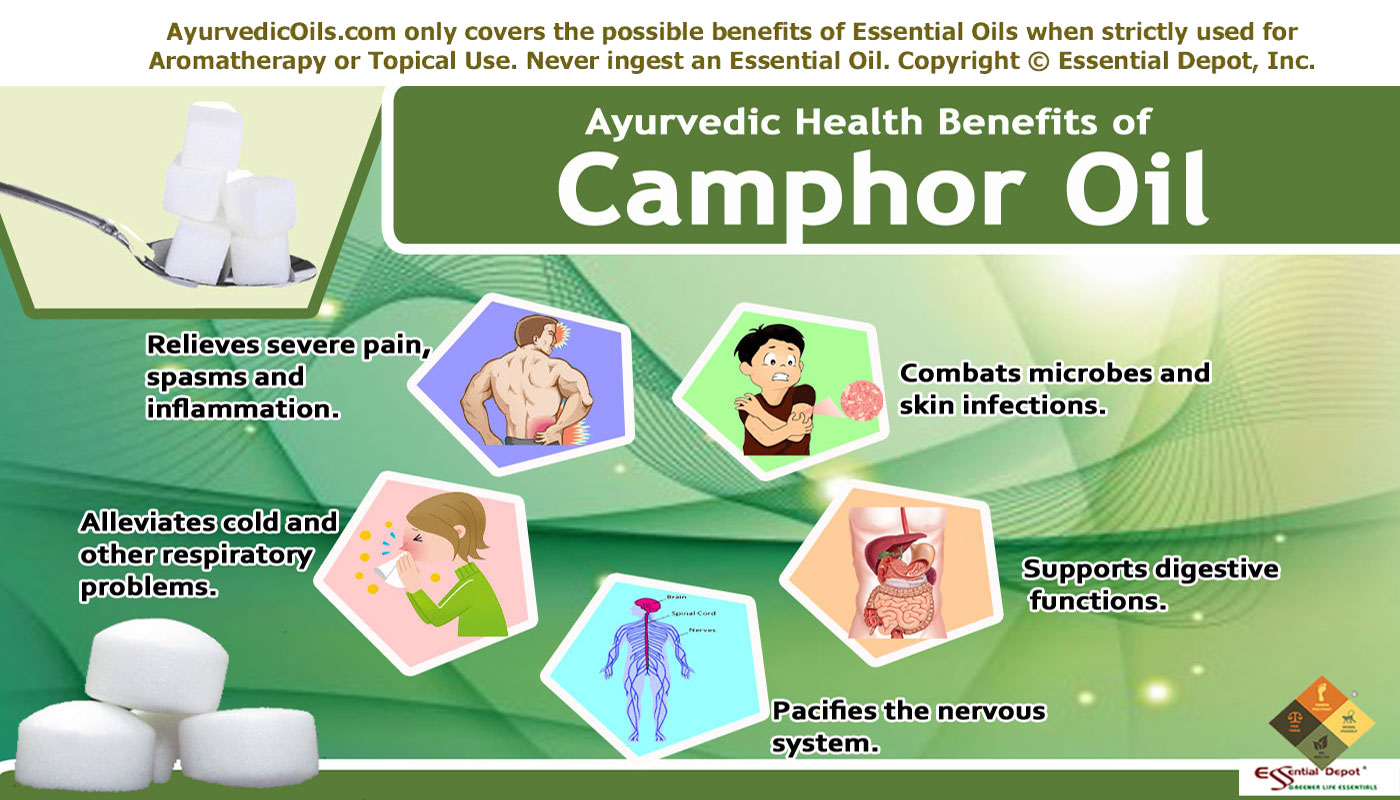
Camphor-broucher1. Relieves severe pain, spasms and inflammation:

Camphor essential oil has antispasmodic, analgesic and anti-inflammatory properties that render itself as a promising pain reliever. The stimulating and counter-irritant effects of this oil relieve even severe muscular and joint pains.

With its anti-rheumatic and anti-arthritic attributes, Camphor essential oil assists in promoting blood circulation, eliminating toxic deposits in the joints and the entire system through urine and sweat and supporting the functions of the circulatory system. Ayurveda states that rheumatic problems mainly occur due to excess of kapha dosha leading to surplus deposits of water, toxins, salt and uric acid in the system, especially in the joints.

Camphor essential oil has the power to reduce kapha dosha and help in discharging ama or toxins in the system along with excess water content in the body. This oil works by anesthetizing the sensory nerves of peripheral nervous system, thus reducing inflammation.

Massaging the affected or painful parts with 2 drops of Camphor oil blended with 2 drops of Eucalyptus oil and 2 drops of Frankincense oil with 4 ml of coconut oil can be a great aid in reducing inflammation, swelling, painful muscles, redness and stiffness associated with rheumatism and arthritis.

This massaging can also help in relieving cramps, abdominal spasms and stiff joints. Adding 2 drops of Camphor essential oil to bathing water can bring in a feeling of newness, coolness and tranquility, especially during the summer season and can also help in alleviating pain and inducing peaceful sleep at night by relaxing the muscles, calming the nerves and cooling the senses.

2. Combats microbes and skin infections:

The essential oil of Camphor oil has been a prominent ingredient in numerous ointments and medications for treating skin infections caused by bacteria, fungi and other microbes. This is attributed to the germicide, disinfectant, anti-microbial and insecticide properties of Camphor oil. 2 drops of Camphor oil mixed with 1 ml of coconut oil can be applied on minor burns, itches, wounds, rashes, insect bites, nail fungus, cold sores, eczema, acne, chapped lips, athlete’s foot and ringworm.

Camphor is an excellent cleanser that helps in disinfecting the system when added to the bath tub (about 2 to 3 drops). 2 drops of Camphor oil with 2 drops of Rosemary oil added to your shampoo can help in treating dandruff and lice. This also helps in granting a cooling effect on the scalp and prevent unnecessary hair fall due to dandruff and lice.

3. Supports digestive functions:

Being a carminative, Camphor oil works wonders in relieving gas and flatulence. Gas in the intestines and stomach, when left unnoticed raises above slowly and causes sharp and severe pain in the chest, which may even lead to difficulty in breathing. Using Camphor oil assists in relieving gas and prevents the formation of gas.

Along with this, the diaphoretic effects of this oil aids in normalizing metabolic functions, enhancing circulation, improving sluggish digestion and controls the appetite. Mix 2 drops of Camphor oil with 2 drops of Juniper oil along with 2 ml of sesame oil and massage it gently on your abdomen for expelling gas and supporting the functions of the digestive system.

4. Pacifies the nervous system:

Camphor oil treats nervous afflictions and pain in the nervous system by causing numbness. This is attributed to its anesthetic effects. It is a proven remedy for treating neuralgia, which is a relentlessly painful condition caused due to the force on the Ninth Cranial nerve created by the swollen blood vessels surrounding it.

Gently massaging the system with 2 drops of Camphor oil, 2 drops of Eucalyptus oil, 2 drops of Juniper oil and 2 drops of Wintergreen oil blended with 5 ml of almond oil can help in reducing inflammation and lessen the pressure on the Ninth Cranial nerve, thus treating neuralgia. This can also assist in lessening the negative effects of epileptic attacks, nervous convulsions, chronic anxiety and nervousness.

5. Alleviates cold and other respiratory problems:

Camphor essential oil has a sharp, strong and medicinal aroma that makes its presence vital in numerous decongestant ointments and vaporubs. Vicks vaporub, the most popular decongestant has Camphor as one among its therapeutic formula. Camphor oil has been in use since the traditional times mainly for its effectiveness in treating respiratory ailments.

Excess kapha is the major reason behind the built up of mucus and phlegm deposits causing congestion and other respiratory problems. Camphor oil lessens kapha dosha and discharges mucus and phlegm in the respiratory and nasal passages.

Massaging your chest, throat and back with 1 drop of Camphor oil mixed with 1 drop of Eucalyptus oil and 1 ml of olive oil along with 2 drops of Camphor oil added to steam inhalation assists in relieving congestion in the respiratory tract, nasal passages, bronchial tract, pharynx and larynx.

Adding to 1 to 2 drops of Camphor oil to warm bathing water can also help in loosening the mucus and phlegm and clear the respiratory system. It is being used as an excellent cough suppressant since the primordial period. The powerful decongestant and bronchodilator properties of Camphor oil makes it an excellent remedy for treating asthma, sinusitis, pulmonary congestion, bronchitis, nasal congestion, whooping cough, common cold, chest congestion and cough.

Disclaimer:

This article is only for informational and educational purposes. It is not intended to replace any prescribed medication or professional medical advice or to cure, treat or prevent any illnesses. We are not medical professionals and this information is shared only with the idea of enlightening the mass with the traditional healing values of Ayurveda, the 5,000 year old medical system.

Do not use essential oils internally unless it is prescribed by your medical professional. Dilute essential oils before using it for topical purposes as organic and pure essential oils are very concentrated liquids and may cause allergic reactions if used on the skin directly. Consult your Ayurvedic expert/healthcare professional before picking up the perfect essential oils for your health condition and unique individual constitution. Ensure that you use very less amount of Camphor oil as prescribed by your medical expert, as excess use of Camphor can act as a narcotic poison.

The MSDS (Material Safety Data Sheet) of Camphor oil is readily available for your enhanced safety and better usage.

Gas Chromatography Report (GC analysis) of Camphor oil

Camphor Oil – Possible Skin Issues:

camphor-new

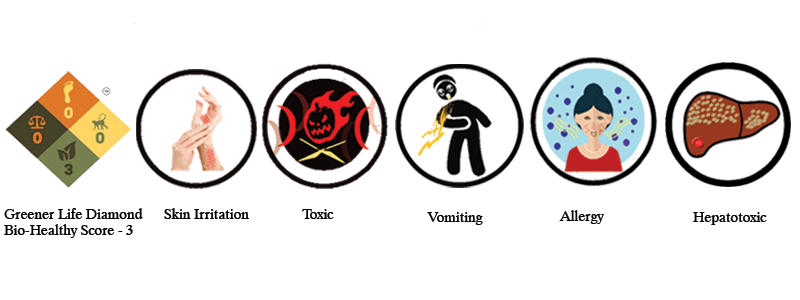
Greener Life Diamond – Bio-Healthy Score => 3 Possible Skin Issues:

See => http://www.essentialdepot.com/GreenerLifeDiamond.html

Camphor oil has been acclaimed as lethal and highly toxic in various studies, when used in excess of the prescribed quantity. According to the safety report, the acute toxicity of Camphor oil is said to be exhibited by contact with the skin, eyes, inhaling and ingesting, however ingestion of Camphor oil should be avoided strictly mainly due to its chronic effects on the liver (hepatotoxic – toxic to the liver).

The major chemical constituents in Camphor oil, responsible for its skin sensitization, allergic reactions, irritation and autoxidation are camphene, 1,8-cineole (abnormal respiration and CNS depression, epigastric pain and cold sweats), limonene and a-pinene. Oils with limonene and a-pinene are responsible for oxidation and oxidized oils cause sensitization and irritation of the skin.

Using Camphor oil topically might also cause skin sensitization, irritation, skin allergies like hives, itching, rashes, swelling of the face and lip dryness. Camphor oil used as direct contact with the skin without any dilution in appropriate carrier oils is considered as a dangerous skin irritant. Never use Camphor oil on cuts, broken or peeled skin.

It is highly recommended to avoid Camphor oil during pregnancy and breastfeeding, as it gets quickly absorbed by the placenta and may cause physical and neurological damage to the developing fetus and in nursing mothers there are possibilities of Camphor being absorbed through skin cracks and pass on to infants through milk (might cause damage to the infants’ liver and central nervous system).

Do not use Camphor oil on patients with bronchitis, asthma, epilepsy and Parkinson’s disease, as it can cause convulsions, increase spasms, seizures (by accounting to chemical disparity in the brain) and worsen the situation. It is also not recommended for high blood pressure patients as it is frequently used in the treatment of low blood pressure.

The safe level of use of Camphor is up to 3% dilution in case of liniments. As per the Dutch Information Medicamentorum, the safe usage level of Camphor is 20 to 100 mg/g for chest rubs, 0.15 mg/ml for nasal sprays, 20 to 50 mg/g for nose ointments, 1 to 70 mg/g for pruritus lotion and 40 to 250 mg/g in oils for muscular pain.  However 11% is regarded as the maximum level of safe usage in all kinds of dermal applications.

Camphor, according to the Poisons Information Monograph, an International Programme on Chemical safety states that the major risks of ingestion of Camphor are renal damage, colic, anxiety, convulsions, nausea, delirium, gastric irritation, irritation of the mucous membrane, asystole, apnoea, chronic post-convulsive coma and difficulty in breathing occur after ingesting about 2 grams of Camphor (acute toxicity level) and 4 grams are possibly lethal for adults and 1 gram for children and may cause death.

This report also denotes that the major target organs for Camphor damage are the upper respiratory tract, liver, kidneys and the central nervous system. Certain studies witness the immediate collapse in infants soon after the application of Camphor to their nostrils.

Reference Links Substantiating Possible Skin Issues of Camphor Oil:

  1. Hazardous Substance Fact Sheet of Camphor by New Jersey Department of Health and Senior Services
  2. Leung’s Encyclopedia of Common Natural Ingredients, used in Food, Drugs and Cosmetics by Ikhlas A. Khan and Ehab A. Abourashed
  3. Essential Oil Safety: A Guide for Health Care Professionals By Robert Tisserand, Rodney Young
  4. Toxicity Summary of Camphor by Toxnet, National Institutes of Health
  5. Camphor topical Side Effects in Detail by Drugs.com
  6. Camphor by the Poisons Information Monograph, an International Programme on Chemical safety

Thought for the day:

Nature is a mutable cloud which is always and never the same. -Ralph Waldo Emerson

Suggested Reading:

  1. The Tree That Does Not Sleep:: Phytochemistry, Allelopathy and the Capability Attributes of Camphor Laurel (Cinnamomum camphora (L.) Nees & Eberm.) by John Schenk
  2. Camphor; A Pharmaceutical and Pharmacognostical Study by U. S. Government
  3. Ayurveda & Aromatherapy: The Earth Essential Guide to Ancient Wisdom and Modern Healing by Dr. Light Miller, Dr. Bryan Miller
  4. Fragrance & Wellbeing: Plant Aromatics and Their Influence on the Psyche by Jennifer Peace Rhind
  5. The Illustrated Encyclopedia of Essential Oils: The Complete Guide to the Use of Oils in Aromatherapy & Herbalism by Julia Lawless

Reference Links:

  1. Camphor by Wikipedia
  2. History of Camphor oil by eHow
  3. Health benefits of Camphor essential oil by Organic Facts
  4. Camphor by Bryan Miller and Light Miller in their book Ayurveda and Aromatherapy
  5. Camphor benefits – A multipurpose plant by Greenchedy


Your resource for quality Essential Oils. Every batch is
GC tested to ensure purity and authenticity.

Essential oils for men: 4 masculine blends to treat the man in you


Men generally like to express a strong sense of masculinity. They try to implement this in their scents and other personal care substances. When making essential oil blends, you should make it a point to include oils that have a strong scent and an irresistible masculine odor. This article will explain to you how to make essential oil blends for men and illustrate how a slight change in your recipes can make your blend masculine or a man’s favorite.

Aromatherapy for Men: It is said that there are several essential oils which are liked by men. Some of them are Patchouli, Sandalwood, Oakmoss, Bay, Cypress, Ginger, Black Pepper, Vanilla, Vetiver and Citrus oils. These favored oils, when added to blends prepared for men, will make the blend more invigorating and exciting for a man’s use. There are several other oils which are said to be liked by men of all ages. They are: Allspice, Davana, Gurjurum Balsam, Basil, Anise, Bergamot, Blue Cypress, Cardamom, Clary Sage, Cinnamon, Coriander, Fennel, Lime, Mandarin, Melissa, Myrtle, Nutmeg,  Oregano, Parsley, Petitgrain, Tangerine, Thyme, Scotch Pine, Tobacco, May Chang, Mullein, Grapefruit, Fir Needle, Hyssop, Manuka, Marjoram, Sweet Orange, Bitter Orange, Neroli etc.


Masculine Blends: There is nothing as masculine blends or feminine blends. Generally, blends that are favored by men or women are called so. It is assumed that men do not favor floral oils. This is not true. There are men who like floral blends too. If you need to add floral oils to an essential oil blend prepared for men, you can add other oils to make the blend masculine in spite of the floral essences. Below are a few tips to make masculine blends that have a strong aroma and are sturdy and confident in nature:

1. To give a blend a masculine note, you can add Black Pepper, Ginger, Nutmeg and Coriander or other spice oils. Remember that spice oils can be exceptionally sensitizing to the skin and by their nature, their aroma is favored by men. With a strong aroma, they have the power to attract women toward men.

2. Earthy aromas also make good essential oil blends for men. Oakmoss is a subtle absolute that yields an earthy aroma to any blend. If your masculine blend experiment turns out wrong, don’t worry. Just add this fixative and you will fix everything in the blend. Yes, Oakmoss has the power to transform the blend more masculine and earthy on account of its strong aroma.

3. On a general note, floral essential oils are said to be hackers of masculine blends. So, avoid oils with floral essences of all sorts. If they are crucial to your blend, add fixative or other oils that yield strong masculine aroma to make the blend more balanced and pro-masculine. These subtle changes can uplift an otherwise boring or lifeless blend.

4. Citrus oils, though they have a floral aroma, are good enhancers of masculine blends. They can invigorate a blend’s aroma with energy and life. To uplift your manly spirit, use citrus oils that are sprightly and vivacious.

Apricot Kernel Oil


‘Bundan iyisi Şam’da kayısı’, Will you trust me if I say that I speak Turkish? I know that you will not. Ok, chill. This Turkish idiom literally means “the only thing better than this is an apricot in Damascus” and the most simple meaning is “it doesn’t get any better than this.” That is the excellence of Apricots.
apricot-kernel-bannerThe seed kernels are the source of its rich essential oil and are also called as apricot almonds or bitter almonds, attributed to its bitter taste but the sweetest healing benefits that would coerce you to love it forever.

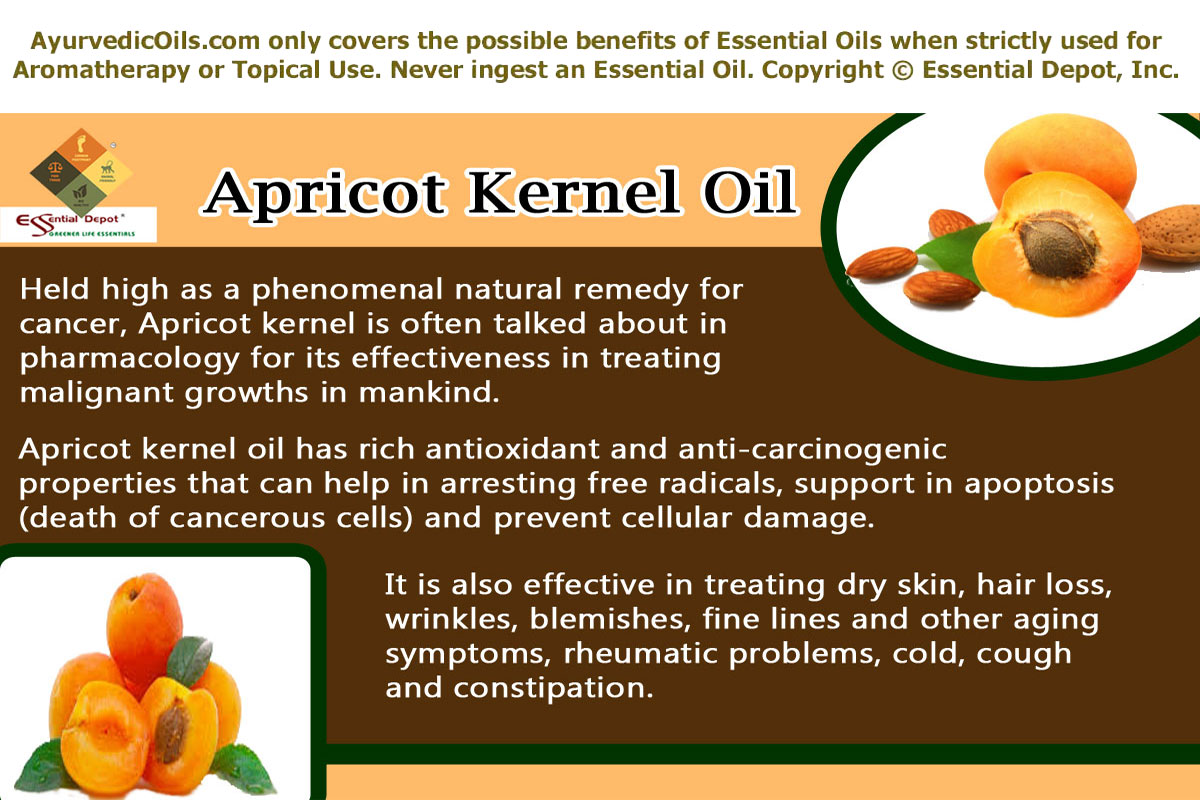
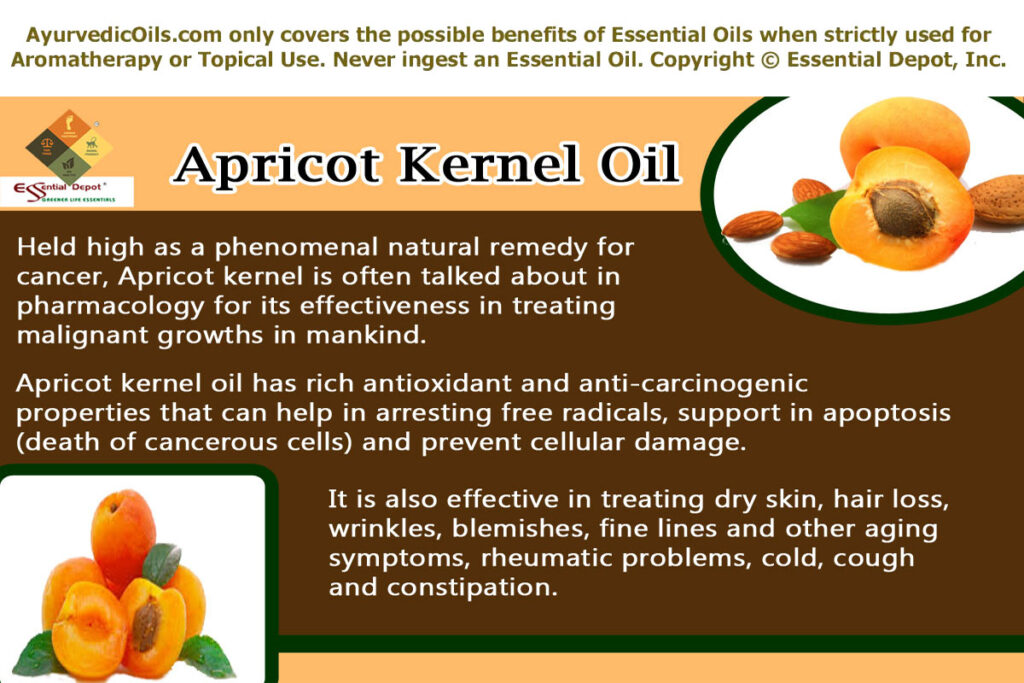
Often associated witheducation and medicine’ by the Traditional Chinese, Apricot means ‘education circle’ in the Chinese dictionary. Held high as a phenomenal natural remedy for cancer, Apricot kernel is the most talked about subject matter in the world of medicinal research for its effectiveness in treating malignant growths in mankind.

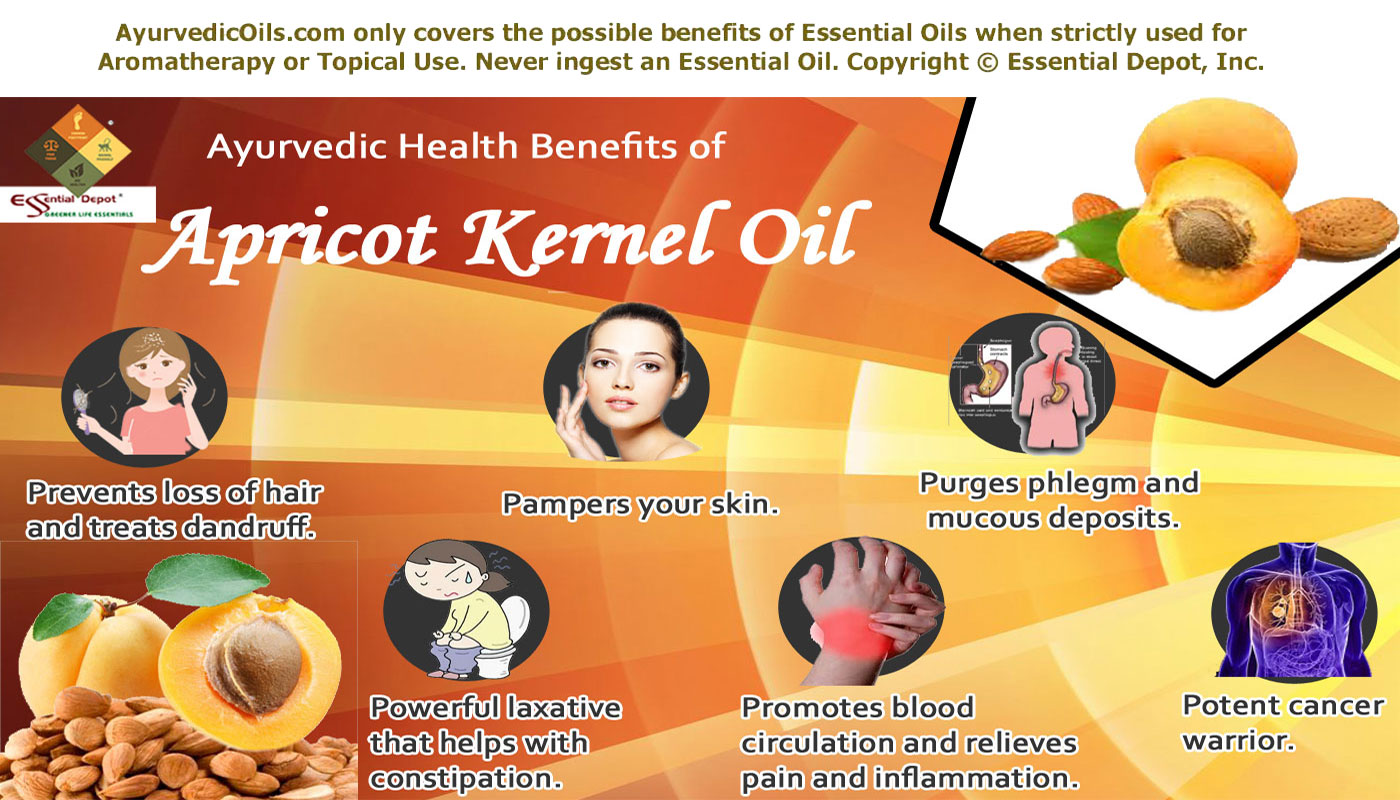
Apricot kernel and its essential oil have been in various Complementary and Traditional Healing systems including Ayurveda for its enormous therapeutic benefits for treating dry skin, hair loss, wrinkles, blemishes, fine lines and other aging symptoms, rheumatic problems, cold, cough and constipation.

Purchase Apricot Kernel Oil – 1 GALLON – CLICK HERE

Purchase Apricot Kernel Oil – 1 QUART – CLICK HERE

Historical uses and importance of Apricot kernel oil:

Apricots are scientifically called as Prunus armeniaca. This drupe fruit is indigenous to Armenia, Himalayas, China and few other parts of Asia. Certain sources also state that Apricot was first cultivated before 3000 BC in India.

The Roman General Lucullus imported Apricot initially to Rome from Armenia. The historical hero Alexander the Great was the first king to bring in Apricots to Greece.

Chinese and Apricots have a historical bonding, where the renowned Chinese physician Dong Feng of the ‘Three Kingdoms Period’ just requested his patients to plant Apricot plants in his orchard on the recovery of their sickness as a token of gratitude for his medical services. This eventually ended up in the growth of numerous Apricot trees along with innumerable medicinal benefits in Dong Feng’s garden.

It is also said that Confucius, the Chinese philosopher taught his students in a place encircled with Apricot woods. Even today, the poetic indication to physicians in China goes like “The Expert of the Apricot Grove.” Wonderful to hear, isn’t it?!?!

The woods of the Apricot trees are also used in various wooden carvings in Armenia and the musical wind instrument named Duduk is known as the Apricot pipe.

Regarded as an aphrodisiac in Europe, Apricots have also been mentioned in “A Midsummer Night’s Dream by William Shakespeare and as a stimulant of normal labour in “The Duchess of Malfi” by John Webster.

The traditional use of Apricot seeds include its effectiveness as a natural alternative for cancer cure and these seeds were used as early as 502 AD for fighting against tumors. In the 17th century the English used the seeds of Apricot fruits in the treatment of ulcers, tumors and swellings.

Apricot kernels were prescribed in Chinese medicine for treating emphysema, asthma, bronchitis and other respiratory conditions. Throughout the history, these bundles of wonders have been in use for treating constipation, cough, expelling mucous and phlegm deposits and for enhancing the health of hair and skin.

Sir Robert McCarrison during his job with the Indian Medical Service in 1930s, explored the health and heartiness of a tribal populace known as Hunzas. Major Robert said that the people of this tribe lived for about 100 years of age mainly due to their nutritious diet with fresh grains, fruits and vegetables, raw milk along with their livelihood that involves lot of natural physical exercises. It was also written that there was no evidence of cancer, obesity, heart problems or diabetes.

The reason behind their cancer-free life was later found by Krebs research, which concluded that Apricot kernels were a vital part of the Hunzas diet regimen, contributing to the discovery of the amygdalin compound in Apricot kernels, the secret behind tumor suppression.

The seeds of Apricots and its essential oil have been used in the manufacturing of perfumes, moisturizing lotions, soaps, cosmetics and in confectioneries as a substitute for bitter almond oil in seasoning culinary varieties.

Remedial properties and chemical constituents of Apricot kernel oil:

Antioxidant, expectorant, laxative, anti-inflammatory, moisturizing, anti-asthmatic, revitalizing and anti-tussive are the prominent healing values of Apricot kernel oil.

The chemical constituents of this oil are oleic acid, linoleic acid, stearic acid, palmitic acid, palmitoleic acid and arachidonic acid in the order of its major presence. It also contains amygdalin or laetrile, the crystalline compound claimed to be responsible for its cancer fighting attributes.

Apricot kernels are indeed a nutrient hub with the presence of Vitamins A, C, E, K, B17, phosphorous, niacin, magnesium, potassium, manganese and copper.

Ayurvedic health benefits of Apricot kernel oil:

Being the oldest remedial system (about 5,000 years old), Ayurveda is adorably called as the Mother of all healing sciences on earth. As a sacred child of India, Ayurveda is believed as a gift to Acharya Dhanvantari, the Lord of Medicine by Lord Brahma, the God of Creation.

The aim of Ayurveda is to gift mankind with absolute health, harmony, prevention of illnesses, healthy aging and longevity with the use of natural remedies including Ayurvedic therapies and a disciplined living.

It’s an ancient adage that the solutions for all the problems are deeply vested within the problem itself. With this principle in mind, Ayurveda states that illness is being in disharmony with nature and the remedies for diseases are enormously present in nature by itself.

The National Institute of Health states, “The aim of Ayurvedic medicine is to integrate and balance the body, mind, and spirit. This is believed to help prevent illness and promote wellness.”

Ayurvedic encyclopedias, namely Charaka Samhita, Sushruta Samhita and Ashtanga Hridaya Samhita by the Ayurvedic philosophers and physicians Charaka and Sushruta talk about all kinds of medical conditions, their symptoms, root cause and remedies.

They never stopped with fever, cold, indigestion, headache and joint pain; instead they were the pioneers of plastic surgery and C-section delivery before thousands of years that lacked both the contemporary techniques and modern medical equipment.

Ayurveda defines that all things on earth including human beings are a vital part of nature and are built up with the five fundamental elements of nature. They are earth, water, space, air and fire.

Human body represents these elements where bones and muscles are the components of earth, blood and other fluids – water, heat and the essential energy – fire, breathing mechanism – air and the spirit is the element of space.

Each and every individual is a distinct part of nature with a unique individual constitution called as Prakriti, which is a combination of 3 doshas (vata, pitta and kapha). Perfect balance between the doshas indicate health and imbalance due to irregular food habits, sedentary life style, improper code of conduct, climatic changes etc, lead to illnesses.

Ayurvedic remedies including herbs, essential oils, meditation, Pranayama (balanced breathing), Panchakarma (detox technique), Ayurvedic routine, prayers, Abhyanga or Ayurvedic massage and other natural techniques are prescribed for striking balance between doshas thus paving way for harmony with nature.

Apricot kernel oil has the power to pacify kapha and vata doshas and aggravate pitta dosha. The natural health benefits of Apricot kernel oil are:
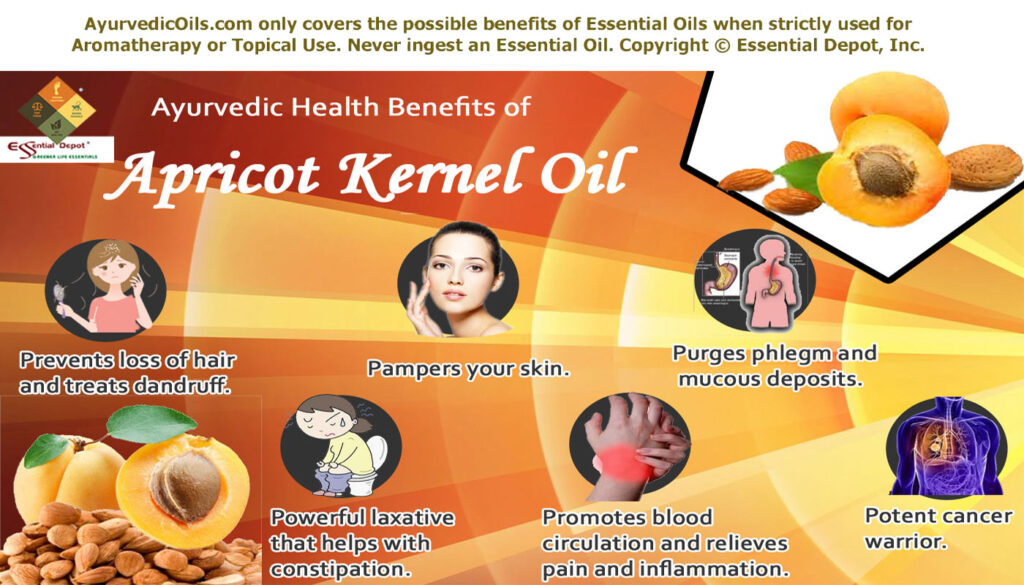
apricot-kernel-broucher1. Potent cancer warrior:

The article on ‘Apricot seeds kill cancer cells without side effects’ posted in Natural news talks about the effectiveness of the amygdalin compound in Apricot kernels for fighting against free radicals and combating the growth of cancerous cells.

An intense research study by Dr. Ernst Krebb, led to the discovery of Amygdalin or the B17 compound found in Apricot kernels and in about 1200 edible plant varieties throughout nature.

Dr. Krebb also recorded in his study that amygdalin is a nitrioloside that bear a resemblance to the B complex structures. It is because of this reason; Amygdalin compound was named as B17.

The antioxidant property of Apricot kernel oil is due to the presence of B17 and laetrile (the resultant of amygdalin when purified and put in a concentrated form). Dr. Krebb tested the positive effects of laetrile on himself and concluded that laetrile extracted from amygdalin is extremely powerful in fighting against cancerous cells and preventing further cellular damage.

This research is still under various controversies due to the fact that benzaldehyde and cyanide. Numerous foods like spinach, millet, bitter almonds, lima beans, bamboo shoots contain cyanide and are still safe for consumption. This is due to the fact that cyanide molecule in these items remain ‘locked’ and are not harmful for the system when they meet up with other molecular substances.

Unlike normal cells, the cancerous cells contain beta-glucosidase, which is the ‘unlocking enzyme’ for benzaldehyde and cyanide in amygdalin compounds of Apricot kernel oil. This reacts and destroys the cancerous cells and the presence of rhodanese enzymes in the normal cells prevent other normal cells from being affected by the otherwise reaction of cyanide and benzaldehyde.

The best possible means to use Apricot kernel oil for fighting cancerous growths is to use it in a promising massage blend. Mix 5 ounce of Apricot kernel oil with 5 drops of Clove oil bud oil, 5 drops of Garlic oil and 5 drops of Juniper berry oil and massage it gently on your system, once in a week.

Garlic, Clove, and Juniper berry oil along with Apricot kernel oil have rich antioxidant and anti-carcinogenic properties that can help in arresting free radicals, support in apoptosis (death of cancerous cells) and prevent cellular damage.

You can also add 1 drop of each of these oils in diffuser during Pranayama (breathing exercise) where most of the toxic remains in the system can be eliminated through exhalation along with the positive therapeutic properties of this oil blend.

2. Pampers your skin:

The oil of Apricot kernel is light, gentle and non-sticky, with these attributes, it has established a prominent throne in the empire of skin care products. This oil helps in moisturizing the skin in case of dry, rough and scaly conditions (emollient properties); heal cuts, wounds, sunburn, psoriasis, eczema and razor burns (antiseptic properties); protect the wounds from getting infectious (antibacterial properties); fight against fine lines, wrinkles and other symptoms of aging (antioxidant and anti-aging properties).

For locking in extra moisture in your skin surface and for treating acne, blend 2 drops of Rosemary oil with 2 drops of Tea tree oil and 2 ounce of Apricot kernel oil and gently work on your skin.

Apricot kernel oil has a rich content of vitamin E, A and C, which are extremely beneficial for treating dry, mature, scaly and sensitive skin. Apricot oil has the potent to penetrate deeply into the skin and repair the damaged skin cells from within.

Regular massaging with this nourishing blend supports in retaining the clarity, elasticity, suppleness and all other signs of a healthy skin.

3. Prevents loss of hair and treats dandruff:

Dandruff, dry hair, excessive hair loss and itchy scalp are the most sickening hair problems. These conditions are caused by lack of nutrition, unhealthful lifestyle practices, damage due to external factors and excessive use of chemical hair care products with concentration of sulphate and paraben.

Apricot kernel oil comes to your rescue with a high content of vitamin E and other fatty acids in treating all types of hair problems with its potent to lock moisture in your scalp and hair.

Massage your hair and scalp with 5 ounce of Apricot kernel oil with 5 drops of Curry leaf oil and 5 drops of Ylang Ylang oil for combating dandruff, dry and itchy scalp, split-ends, premature graying and promote hair growth by deeply penetrating the scalp and nourishing the hair follicles.

You can also add 5 drops of Apricot oil and 2 drops of Curry leaf oil in your mild shampoo and conditioner for adding that extra shine and bounce to your lustrous locks.

4. Powerful laxative that helps with constipation:

Apricot kernel oil is a part of the Traditional Chinese Medicine for inducing diarrhea, especially for discarding toxic remains in the body through metabolic wastes. This oil has exceptional laxative properties that help in treating constipation, where passing hard and bleeding stools ends up in excruciating pain.

Gently massage your abdomen with 6 drops of Apricot oil and 2 drops of Peppermint oil for encouraging regular bowel movements, secretion of bile and other digestive enzymes for trouble-free digestion and excretion.

5. Promotes blood circulation and relieves pain and inflammation:

The oil extracted from Apricot kernels has proven anti-inflammatory and pain-relieving properties that aid in relieving pain and inflammation, especially in the joints.

Massaging the affected parts with 5 ounce of Apricot kernel oil and 2 drops of St. John’s Wort oil, 2 drops of Cedarwood oil and 6 drops of Ajowan oil can assist in alleviating stress and pain, strengthening the system, promoting blood circulation and eliminating toxic deposits through urine and sweat.

You can also follow this massage with heat pack for allowing deeper penetration into the skin cells. This aids in opening and enhancing the flow of prana or vital energy, harmonizing the nervous functions and for granting a sense of complete relief.

Ayurveda states that cold, congestion, arthritis, rheumatism and other inflammatory conditions are a result of amassing of toxins, salt, uric acid and fat deposits in the system. In general, fluid retention disorders are caused due to kapha vitiation and with its power to pacify excess kapha; Apricot kernel oil helps in treating such inflammatory health conditions.

6. Purges phlegm and mucous deposits:

These heart-shaped tiny little seeds are used in various traditional medicines including the Chinese medicine for treating respiratory conditions like asthma, emphysema, cold and bronchitis.

With its antitussive (cough suppressant), expectorant and anti-asthmatic properties, Apricot kernel oil can help in eliminating phlegm and mucous in the lungs and respiratory passages, alleviate cold, cough and congestion and support in problem-free breathing by lessening strain on the lungs, when 4 drops of Apricot kernel oil with 2 drops of Peppermint oil and 2 drops of Black pepper oil is added to steam inhalation and a gentle massage on your back, temples, chest and throat with your vaporizing ointment mixed with this blend is given.

Other health benefits:

Apricot kernel oil is also used in the treatment of anemia, fever, lowering cholesterol for heart health, osteoporosis and earaches.

Disclaimer:

This article is only for the purpose of information and is not for treatment of any health conditions or for substituting any prescription medicines or the advice of your medical professional. We are not healthcare experts and this piece of information is shared only in public concern for passing on the traditional healing wisdom of Ayurveda.

Never take essential oils internally and it is recommended only for topical application. This is because 100 percent pure and organic oils are highly concentrated substances and may cause allergic or harmful reactions, if ingested or used on the skin directly.

Always speak with your Ayurvedic professional or healthcare practitioner before choosing the right essential oils for your unique individual constitution and medical condition. Extra care should be taken in using essential oils if it is for children, nursing and pregnant women.

Thought for the day:

“Anyone can count the seeds in an apple. No one can count the apples in a seed.” -Author Unknown.

Suggested Reading:

  1. Apricot Power: How Laetrile Cured My Cancer by Helen M. Curran
  2. Apricot Greats: Delicious Apricot Recipes, The Top 100 Apricot Recipes
    by Jo Franks
  3. The Way of Chinese Herbs by Michael Tierra
  4. Healing Skin Disorders: Natural Treatments for Dermatological Conditions by Andrew Gaeddert
  5. Carrier Oils: For Aromatherapy and Massage by Len Price, Shirley Price

Reference Links:

  1. Apricot by Wikipedia
  2. Prunus armeniaca by Wikipedia
  3. Apricot seed by Encyclopedia.com
  4. Apricot kernels for cancer: The real story by Dr. Veronique Desaulniers, published in ‘The Truth About Cancer.com’
  5. Apricot Seeds Kill Cancer Cells without Side Effects by Paul Fassa for Natural News