Balsam Peru Oil


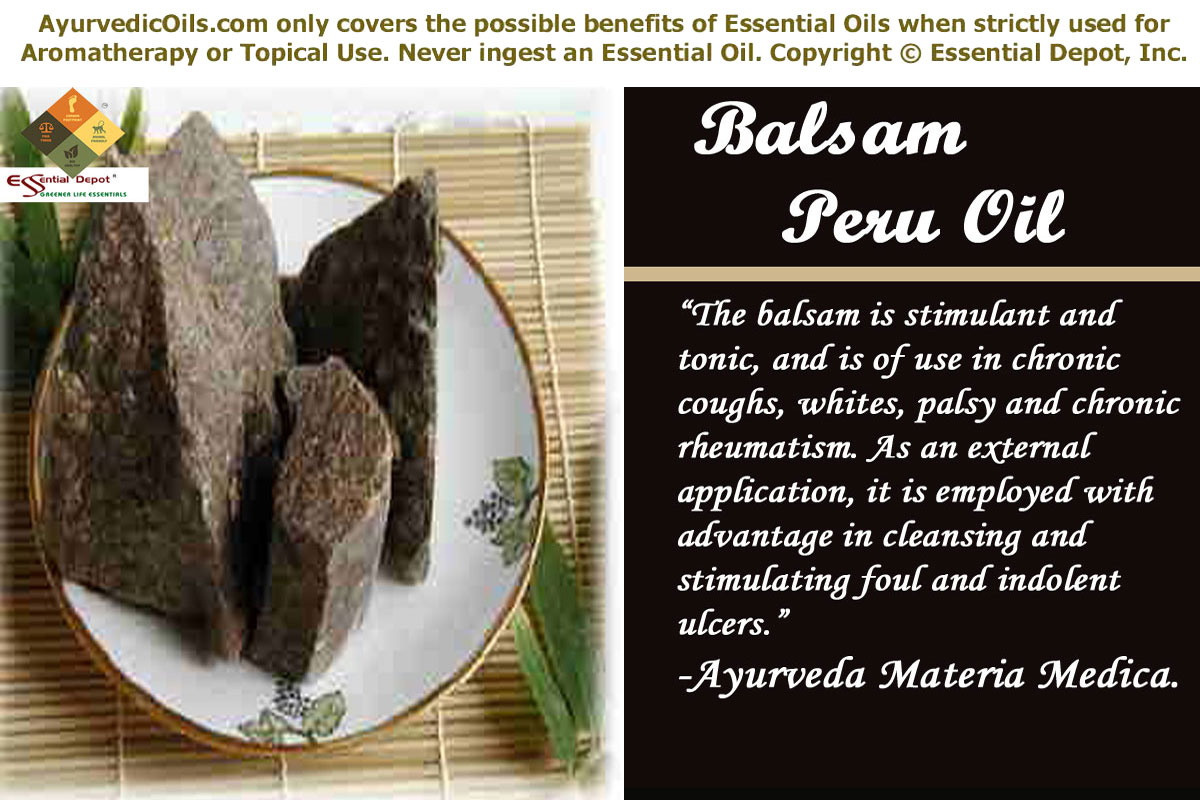
Balsam-peru-banner“The balsam is stimulant and tonic, and is of use in chronic coughs, whites, palsy and chronic rheumatism. As an external application, it is employed with advantage in cleansing and stimulating foul and indolent ulcers”, quotes the book Ayurvedic Materia Medica for domestic use by Thomas John Graham.

Also called as Peruvian balsam, the essential oil and the balsam as such are being used in the field of Complementary and Alternative medicine like Ayurveda and Homeopathy as well as in Modern medicinal practices.

With its decongestant, antiseptic, antibacterial, antifungal and anti-rheumatic properties, Balsam Peru is prescribed in Ayurvedic medicine for treating bronchial asthma, whooping cough, bruises, bed sores, burns, eczema, respiratory infections, tuberculosis, headache, fever, diaper rashes, cold, scabies, ringworm and rheumatic conditions.

Purchase Balsam Peru Essential Oil – Wholesale – CLICK HERE

Historical uses and importance of Balsam Peru essential oil and its other extracts: This tree is scientifically called as Balsamum tolutanum. Balsam of Peru is the resin extracted from the tall tree that grows in Peru, Bolivia, Columbia, Venezuela, Paraguay, Brazil, Argentina and France.

Balsam Peru is also called by other names like Balsamum Peruvianum, Surinam balsam, Balsam fir oleoresin, Quina quina, Balsam Tolu, Toluifera pereirae, Indian Balsam, China oil, Myroxylon Balsamum, Balsams Peru, Myrosperum pereira balsam etc.

Initially, Peru was the major and largest exporter of Balsam oil and it was for this reason, this Balsam was called as Balsam of Peru. In recent times, Balsam of Peru is exported by various other major Balsam growing countries. This tree has a natural potential of producing resin, which is sticky in nature. Balsam of Peru is collected from Balsam trees that are roughly 20 years old by tapping method.

Balsam of Peru has been a part of the traditional healing methodologies for centuries together. It was used as a natural remedy for treating digestive disorders, headache, cold, cough, respiratory infections and certain skin problems. The Native American populace used the powder extracted from this tree as a deodorant.

Balsam of Peru and its essential oil has been a trusted remedy of the Europeans and other Asian folks for healing skin diseases like bedsores, ringworm, scabies, eczema, diaper rashes, wounds and itches. It is also used as an important ingredient in the manufacturing of female hygiene sprays, shampoos, insect repellents, topical salves, soaps, mouthwash, surgical dressings, skin care lotions and certain other fragrant ingredients.

Chemical constituents and remedial properties of Balsam Peru essential oil:

Studies have proved that the resin extracted from the Peruvian balsam tree consists of about 80% of cinnamic acid along with the presence of cinnamein. This is the reason for its vanilla and cinnamon like aroma. It’s essential oil is said to contain various volatile oils and the major components are benzyl cinnamate, benzyl benzoate, and nerolidol.

These components contribute to its remedial properties like antiseptic, antimicrobial, analgesic, anti-parasitic, expectorant, decongestant, antifungal, diuretic, antioxidant, deodorant, cicatrisant, anti-stress and anti-dandruff.

Ayurvedic health benefits of Balsam Peru essential oil:

The word ‘Ayurveda’ simply means ‘the knowledge of life’, where ‘Ayur’ stands for life and ‘Veda’ means knowledge. This oldest remedial system states that illness occurs when there is disharmony between an individual and nature.

Ayurvedic healing considers every human being as a unique part of nature with a unique individual combination. According to this philosophy ‘no two individuals are given the same medicine, even for the same disease’. The first Ayurvedic consultation aims at analyzing the unique individual constitution of a person, which comprises of three biological energies known as doshas. They are vata (air and space), pitta (fire and water) and kapha (water and earth).

These Ayurvedic doshas are nothing but a combination of the five vital elements of nature called as Panchamahabutas, namely fire, water, earth, air and space. Ayurveda states that every person has a prakriti (individual constitution), which is a combination of these doshas in a unique proportion with a predominance of any one of them.

This prevalence determines the character, personality, uniqueness and behavioral attributes of a person. Based upon these fundamental qualities, the unique Ayurvedic treatment methodology and remedies are prescribed. Ayurvedic writings reveal that the absolute balance between these doshas indicates perfect health and harmony with nature, whereas doshic imbalances lead to sickness.

The most notable Ayurvedic remedies include Ayurvedic essential oils, herbs, yoga, meditation, Pranayama or the art of balanced breathing, prayers, simple physical exercises, Ayurvedic routine, Abhyanga, and Panchakarma. With these remedies, Ayurveda focuses on treating the root cause of an illness instead of diagnosing its symptoms.

With its stimulating and invigorating properties, Balsam Peru essential oil has been recommended in Ayurveda for augmenting pitta dosha and pacifying kapha and vata dosha.

Let’s look at the Ayurvedic health benefits of Balsam Peru oil:
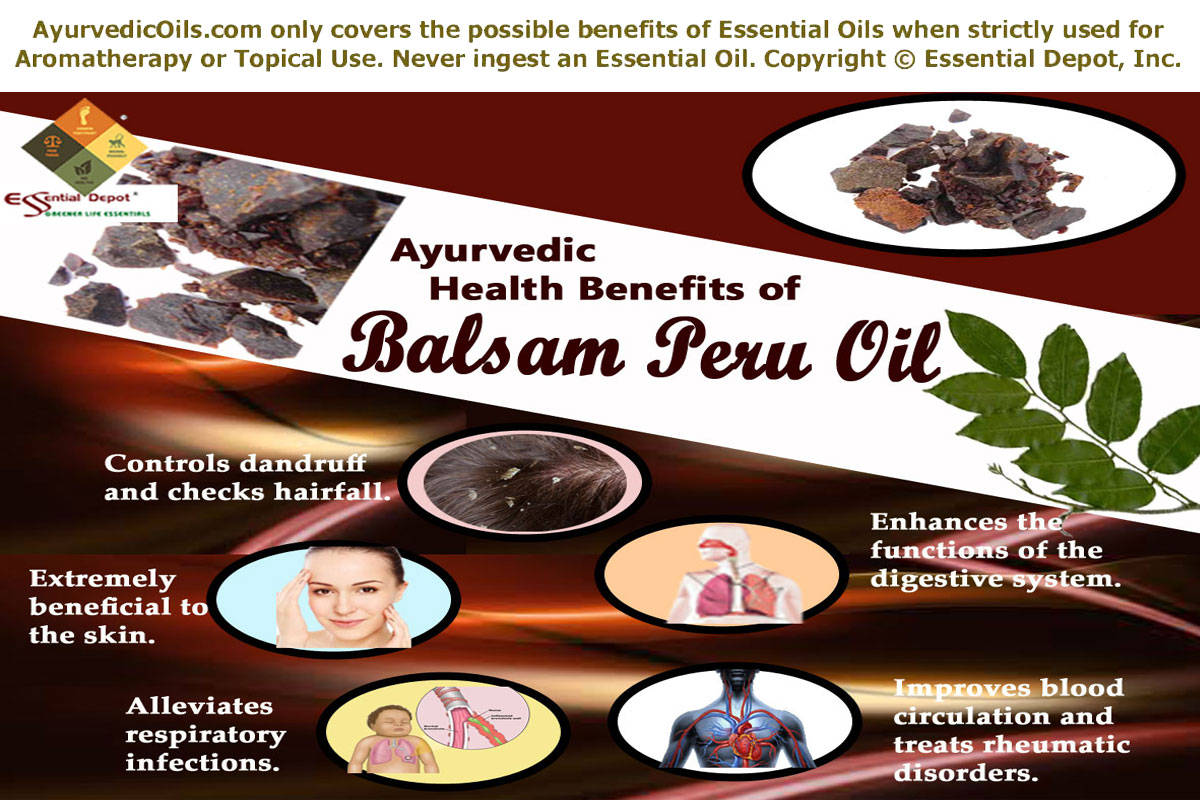
Balsam-peru1. Controls dandruff and checks hair-fall:

The essential oil of Balsam Peru has been used as an important ingredient in many hair care products including shampoos and conditioners for its antifungal, anti-parasitic and anti-dandruff properties. These remedial values help in clearing away dandruff, killing head lice and treating dry and itchy scalp conditions.

Massaging your scalp with 3 drops of Balsam Peru oil, 2 drops of Lemon oil and 2 drops of Rosemary oil along with 5 ml of Coconut oil can be of great assistance in nourishing your scalp, clearing away the itchy flakes on the head, repairing your damaged hair and act as a hair tonic. You can also add 2 drops of Balsam Peru oil to your regular shampoo and enjoy the richness of your shining hair, free from dandruff and head lice.

2. Extremely beneficial to the skin:

Balsam Peru oil is a time-honored skin care remedy that has been employed in the treatment of numerous skin problems including ringworm, bedsores, skin ulcers, wounds and diaper rashes. The antiseptic, antifungal, antioxidant and antimicrobial properties of this oil helps in quicker healing of wounds, combats the growth of microbes responsible for skin infections, and fights aging symptoms.

Blend 2 drops of Balsam Peru oil with 2 drops of Ylang Ylang oil and 2 drops of Lavender oil with 3 ml of Olive oil. Gently apply this blend on skin problems like eczema, scabies, wounds, ringworm, acne, athlete’s foot, chapped skin, rashes and wrinkles.

This natural skin tonic works like a wonder in treating fungal skin infections like ringworm and athlete’s foot with its anti-fungal properties; acne, rashes, wounds and eczema with its antimicrobial properties; wrinkles and dull lifeless skin with its antioxidant properties.

Bedsores generally occur in sick people who are bed-ridden. This includes especially the aged population with sensitive skin. Mixing 1 drop of Balsam Peru oil with 2 ml of Jojoba oil can reduce pain and help in promoting quicker healing of wounds. This blend can also be used externally on diaper rashes for babies as well as the aged.

3. Alleviates respiratory infections:

According to Ayurveda, amassing of toxic substances or ama in the system is a major cause for many illnesses including respiratory problems. It is a known fact that excess of kapha dosha (blend of water and earth elements) is responsible for diseases based on the surplus fluid deposits in the system causing respiratory infections, obesity, rheumatism, edema and other inflammatory conditions.

Balsam Peru oil has diuretic, expectorant and antimicrobial properties that aid in eliminating the excess fluid deposits in the system through urine and sweat, discarding phlegm and mucus secretions in the respiratory tract and arresting the growth of microbes that worsen respiratory problems. It has been used in the United States since 1800s as a respiratory aid and cough suppressant. Balsam of Peru was also used as an ingredient in cough syrups and lozenges.

2 drops of Balsam Peru oil along with 1 drop of Peppermint oil and 1 drop of Eucalyptus oil added to steam inhalation can help in relieving cold, sore throat, nasal congestion, headache, sinusitis, watery eyes, chronic cough, bronchitis, tuberculosis, asthma and inflammation of the pharynx.

Gently rubbing your throat, chest, back and forehead with 2 drops of Balsam oil along with 1 drop of Tea tree oil mixed with your vaporizing ointment can help in relieving sore throat, bronchial congestion, blocked nasal passages, chest congestion, headache, sinusitis and drowsiness due to cold and other respiratory infections.

4. Enhances the functions of the digestive system:

Indigestion is the key cause for building up of toxic substances in the body. This is due to improper metabolic functions, including digestion, absorption and elimination. Pitta dosha is responsible for ‘Agni’ or digestive fire in the system. Vitiation of pitta energy often ends up in sluggishness, nausea, constipation, flatulence, loss of appetite and other digestive disorders.

Balsam Peru oil has the ability to enhance pitta energy and can re-kindle the digestive fire. Inhaling the warm aroma of Balsam Peru oil by adding 2 drops of this oil to your vaporizer especially before your meals can help in enhancing your appetite, stimulating your bowel movements, treating constipation and promoting proper digestion. Massaging your abdomen with 2 drops of Balsam Peru oil and 2 drops of Nutmeg oil with 2 ml of sesame oil can support your digestive functions.

5. Improves blood circulation and treats rheumatic disorders:

Ayurvedic writings denote that rheumatism is an auto-immune disease that arises mostly due to the upsurge of ama or toxins in the system owing to the disparity of digestive fire. These harmful substances may even block the working of the essential organs in the body.

Basically, ama stored in the body reaches the kapha dominated parts like fingers, joints, stomach, brain, chest, toes and few other parts. Thus rheumatism is identified with the symptoms of inflammation, redness of joints, soreness of muscles, lack of energy, swelling of joints, irregular blood circulation, insomnia and fatigue.

With its diuretic, anti-rheumatic, antioxidant and analgesic properties, the essential oil of Balsam Peru has the potent to improve blood circulation, reduce pain, decrease swelling and inflammation by eliminating the toxic remains, excess water deposits, salt and uric acid through urine and soothe the joints and muscles.

Massaging the affected parts with 3 drops of Balsam Peru oil with 2 drops of Cardamom oil, 2 drops of Yarrow oil, 2 drops of Bay oil blended with 20 ml of coconut oil can help in alleviating pain, inflammation, swelling, soreness, stiff muscles, water retention, insomnia and other symptoms associated with rheumatism.

Ayurveda also recommends the practice of Pranayama or the art of balanced breathing in Ayurveda, through which the toxic remains in the system are discarded through exhalation. Along with this certain yogasanas can also help in treating rheumatic problems at ease and this has also been proved by various scientific studies.

Other health benefits:

With its mild, warm and soothing aroma, Balsam Peru oil acts like a marvel in treating depression, mood fluctuations and negative feelings. To attain this solace, 2 drops of Balsam Peru oil and 2 drops of Benzoin Res oil can be added to your burner, candle diffuser or vaporizer during the practice of yoga, meditation and Pranayama. This can also aid in enhancing self-confidence and positive thoughts.

Disclaimer: This information is meant only for the use of education and is not meant to diagnose or treat any health condition or replace any prescribed medications or professional medical advice. We are not healthcare practitioners and this info is shared only with the idea of highlighting the traditional wisdom of Ayurveda, the mother of all healing sciences.

Never take essential oils internally and do remember to dilute essential oils before using it on your skin, as pure and organic essential oils are extremely concentrated substances and may lead to allergic reactions when used on the body directly. Ensure that you seek advice from your Ayurvedic professional/healthcare expert before selecting the appropriate essential oil for your health condition and unique individual constitution. Avoid using Balsam Peru oil if you are pregnant or breastfeeding, as it is regarded as a sensitizing oil that may cause allergic reactions.

Thought for the day:

The art of medicine consists in amusing the patient while nature cures the disease. -Voltaire

Suggested Reading:

  1. 10 Ways to Use Balsam Of Peru (Recipe Book) by Sam Enrico
  2. The Encyclopedia of Essential Oils: The Complete Guide to the Use of Aromatic Oils In Aromatherapy, Herbalism, Health, and Well Being by Julia Lawless
  3. Aromatherapy and Subtle Energy Techniques: Compassionate Healing with Essential Oils by Joni Loughran, Ruah Bull
  4. Scabies Natural Home Treatment Solution by Alyson Rodgers
  5. A Practical Treatise On Materia Medica And Therapeutics by Roberts Bartholow

Reference Links:

  1. Balsam of Peru by Wikipedia
  2. Ayurveda Materia Medica for Domestic Use by Thomas John Graham
  3. Peruvian Balsam by Herbs2000.com
  4. Balsam of Peru essential oil by Oil Health Benefits

What is it to play the older guy? 4 essential oil blends for parents


Playing the older guy or parent in the house is extremely difficult. This is more so if you are dealing with teens at home. From your rosy, young baby, your boy or girl transforms into a privacy-seeking, adolescent with peculiar behavior and temper tantrums. As a parent, you maybe faced with dichotomies and may yourself be confused on how to deal with your teen. You may feel that you need to restrict your child but at the same time want him or her to grow independent. If you are a parent trying to cope with your boy or girl, understand that it takes time for your child to learn things and the best way for you is to accept them as they are.

Essential oil blends for parents: Of course, as a parent, you can find many good books in the market on raising children. To apply the advice you get from those books, you would need patience and peace of mind. The below essential oil blends can provide just that in case you are too troubled to discuss your parenting problems with others. When you use aromatherapy on a daily basis, you gain balance and more insight into your teen’s problems. This would help you deal with issues in a compassionate and consoling manner instead of taking the stance of a tyrannical parent.


Prepare the below recipes in a 10 ml bottle. After pouring the essential oil blends, fill the bottle with base vegetable oils or carrier oils.

1. For balance and tranquility: Sometimes as a parent, you can lose patience with your kids. Though what your children do can be irritating and annoying, you need to maintain your calmness and peace of mind to see things in the right perspective. Add 6 drops of Sandalwood, 7 drops of Lavender oil, 2 drops of Marjoram with 2 drops of Rose otto. Apply the blend on your solar plexus or abdomen or pour about one third of the blend into your bath water. If you respond to the blend with a very positive effect, pour some on the palm of your hand and inhale deeply.

2. For assertiveness: This blend will help you stay grounded and assertive in your stance as a parent. Add 6 drops of Rosemary, 5 drops of Cypress, 6 drops of Cedarwood and 4 drops of Sandalwood. Massage the blend on to your solar plexus and lower back. You can also use the blend in your bath water or inhale it by rubbing on to the palm of your hands.

3. For communication: As a parent you need to be poised in your approach to your children. This blend will help you soothe your emotions like anger, resentment, guilt or frustration held within the body and mind. Add 4 drops of Lavender, 5 drops of Sage, 4 drops of Chamomile with vegetable or carrier oils. Massage your neck, throat and shoulders with the blend or pour into warm bath water or inhale by rubbing on to hands.

4. For emotional security: This blend is ideal for improving your sense of emotional security and comfort. Add 3 drops of Rose, 5 drops of Sandalwood, 5 drops of Orange and 4 drops of Pine and blend it with vegetable oils. Then, massage the blend on to solar plexus and abdomen. You can even add it to your bath water or inhale deeply.

Rose Wood Essential Oil


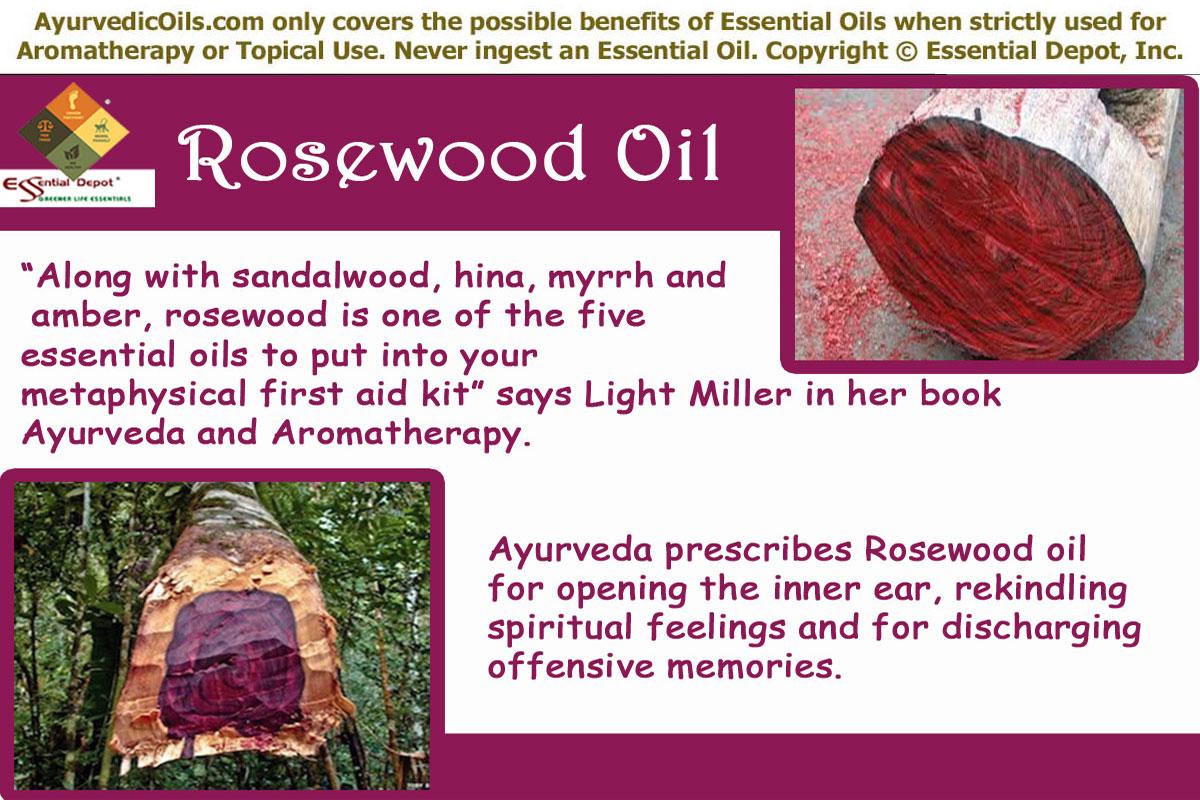
Rosewood-bannerThe uplifting Rosewood essential oil is extracted from the heartwood of Rosewood tree through steam distillation. Light Miller in her book ‘Ayurveda and Aromatherapy’ says “Along with sandalwood, hina, myrrh and amber, rosewood is one of the five essential oils to put into your metaphysical first aid kit”.

Rosewood also known as bois de rose is a mighty evergreen tree indigenous to Brazil and Peru. Aniba rosaeodora is a member of the Laurel family Lauraceae along with other aromatic trees like Camphor, Cassia, Bay and Cinnamon. Ayurveda, the mother of all healing systems have made significant use of this oil for opening the inner ear, rekindling spiritual feelings and for discharging offensive memories.

Purchase Rose Wood Essential Oil – Wholesale – CLICK HERE

Historical importance of Rosewood:

The valuable wood of this tree was traditionally used in cabinet-making, carving, building, essential oil extraction and for making chopsticks. Certain texts state that the ancient French community used Rosewood for flooring, oils, furniture and guitars.

The alluring fragrance of Rosewood essential oil made its demand sky-rocketing especially during the eighteenth century in the field of perfume-making.

To mark its significance, Rosewood oil was a prominent ingredient of the well-liked perfume Chanel. No. 5. Industrial exploitation for numerous decades has led to categorize this tree as an endangered species and the legislation has now come up with a resolution that requires the essential oil distilleries to plant a new tree for every tree they use for essential oil extraction.

Active components and therapeutic properties:

Rosewood essential oil is regarded as a valuable oil mainly because of the rich presence of about 86% of linalool component, which can be modified into numerous derivatives of high value especially to the fragrance and flavoring industries.

Other components of Rosewood oil are a-terpineol, a-pinene, neral, camphene, myrcene, geraniol, 1,8-cineole, geranial, benzaldehyde, limonene, and linalool oxides.

These active components are responsible for the remedial properties of this oil such as aphrodisiac, anti-depressant, stimulant, anti-infectious, analgesic, antibacterial, tissue regenerator, deodorant, antiseptic, insecticide and cephalic.

Ayurvedic health benefits of Rosewood essential oil:

The essential oil of Rosewood is said to be stimulating and powerful in creating energy enrichment. Unlike other medical practices, Ayurveda considers every individual as a unique part of nature and treats every individual in a special manner as it trusts that each human being is made up of a specific set of energy elements known as doshas (vata, pitta and kapha).

This noble science regards illness as an opportunity to help the body regain its rhythm with nature and in this process of restoring good health, Ayurveda recommends the use of herbs, essential oils, a balanced regimen, meditation, yoga and other physical exercises.

Essential oil according to Ayurvedic texts is the aura or life force of plants, have been used in various Ayurvedic treatments like Abhyanga or Ayurvedic massage, aromatic therapy and in Panchakarma, the technique of Ayurvedic cleansing.

Rosewood essential oil with its floral, warm, spicy, woody, fruity and enlivening aroma reduces excess of vata and pitta imbalances.

Let’s have a look at the predominant Ayurvedic health benefits of Rosewood oil.Rosewood-broucher1. Guards your skin:

Rosewood essential oil acts as a shield to your skin, defending against harmful bacteria, virus, fungi and other microbes. The natural antiseptic and antibacterial properties of this oil aid in treating wounds, cuts, burns and infections while preventing it from being septic.

Excess of vata element in the body is characterized by wrinkling, dryness, thinness, flaking and dullness of skin. Rosewood is an effective vata reducing essential oil and gentle massaging of your skin with 5 to 6 drops of Rosewood essential oil with mild carrier oil like jojoba oil helps in dealing with such skin problems.

Oily skin is the basis of numerous skin disorders like pimples, acne, blackheads, sensitivity and skin irritations. Massaging your facial skin with 3 drops of Rosewood essential oil blended with 3 drops of Lavender essential oil along with Almond oil can assist in decreasing pitta and pave way for a healthy and spotless skin. You can also add 2 drops of Rosewood oil in steam therapy for promoting blood circulation, comforting irritated and stressed out skin.

The rejuvenating properties of this oil help in regenerating the skin cells and support the growth of new cells. Using it in your skin care lotion or cream will show visible results in reducing the symptoms of aging through tissue regeneration and absolute cleansing.

2. Pacifies your mind:

Rosewood oil is an excellent pacifier that calms your mind and relaxes your senses. The anti-depressant, stimulating and uplifting properties of this oil instills confidence as it is known to bring fire and helps in regaining your energy naturally.

Fearful, anxious, disheartened, nervous and hectic situations will take a back seat with the use of Rosewood essential oil in your burners, diffusers or vaporizers before going to bed or at the time of meditation. Miller’s Ayurveda and Aromatherapy book quotes Rosewood oil as “Rosewood helps to relieve tiredness, nervousness, stress, and it is very grounding, giving you a sense of protection”.

Being celebrated for numerous years as one of the best essential oils for meditative and spiritual purposes, Rosewood oil grants a balancing and energizing effect on the mind while influencing constructive feelings even after a long, backbreaking day.

Add 5 drops of Rosewood essential oil to your warm bath for easing tension, muscular pain, mood swings, pre-menstrual syndrome, nausea, headaches due to stress and general discomforts of the mind and body.

Ayurveda manifests that there are seven vital centers of power in a human body known as Chakras, which affect the psychological and physical functions of the system. Among the seven Chakras, the heart chakra is responsible for love for others, creativity, compassion, love for self, emotions of sadness, loss and distress.

The bracing aroma of Rosewood essential oil widens the heart chakra and assists in alleviating depressed feelings, egoism, negative memories and encourages one to spread love and compassion for others and self. Inhaling the aroma of this oil through diffusers or vaporizers or applying 1 to 2 drops on the chakra points will attend to your emotional needs tranquilly.

3. Instigates your love life:

I am wondering whether Rosewood oil has aphrodisiac properties just because it has the romantic word ‘Rose’ in its name? Used in massaging, bath or vapor therapy, Rosewood essential oil has been in use for treating decrease in sexual interest, impotence, frigidity and loss of libido in both the sexes. The magical aroma of this oil strengthens the system, instills a sense of security and grants absolute relaxation for an idyllic mating.

Rosewood essential oil, “Opens the inner ear and Compassion” according to Deborah Eidson, the author of the book Vibrational healing. It is known to enhance your divine feelings and help in spiritual realization. The other documented benefits of Rosewood essential oil are its use as an analgesic for treating cold, toothache and joint pain. It is also used as an effective insecticide to keep away from insects like ants, mosquitoes, fleas, bedbugs and lice.

Disclaimer: Never use essential oils directly on your skin as pure essential oils are highly concentrated liquids and may cause harm. This article is for your information only. Consult your Ayurvedic Practitioner before using essential oils for your specific health conditions.

Thought for the day:

“To dwellers in a wood, almost every species of tree has its voice as well as its feature.”   -Thomas Hardy, Under the Greenwood Tree

Suggested Reading:

  1. Ayurveda & Aromatherapy: The Earth Essential Guide to Ancient Wisdom and Modern Healing by Dr. Light Miller, Dr. Bryan Miller
  2. The Illustrated Encyclopedia of Essential Oils: The Complete Guide to the Use of Oils in Aromatherapy & Herbalism by Julia Lawless
  3. Scents Of Life: Use And Effect Of Essential Oils by H. M. Schemske
  4. Facelift at Your Fingertips: An Aromatherapy Massage Program for Healthy Skin and a Younger Face by Pierre Jean Cousin M.B.Ac.C

Reference Links:

  1. Ayurveda and Aromatherapy by Light Miller and Bryan Miller
  2. Health Benefits of Rosewood Essential Oil by Organic Facts
  3. Healing With Rosewood Essential Oil by Suite101

When bathing is healing: 6 tips to make aromatherapy bath salts


Imagine the warmth of a nice bath. Imagine how it would be to soak yourself in healing waters that brush aside your dirt and  pain. Bathing can be a real healing experience when you use aromatherapy with hydrotherapy. A good bath made with essential oil bath salts is not just relaxing but motivating too. With knowledge about aromatherapy gaining ground, personalized aromatherapeutic healing has come into vogue. More people are engaged in preparing their own essential oils, bath salts and other aromatic cures. You can make bath salts with just a few ingredients at home. This article will elaborate on how to make bath salts using essential oils and salts.

How to make aromatherapy bath salts: Making bath salts is going to cause you just pennies. You need not spend too much on ingredients or equipments. You just need to mix the right things in the right proportions. This is because bath salts are basically made from two basic salts – Dead Sea salt and Epsom salts. Sea salts from the Dead Sea have long been revered as a remarkable healing salt. It is a therapeutic grade salt which has 26 essential minerals and moisturizing properties. It is used for rejuvenating the body and relaxing tensed muscles. Epsom salts, on the other hand, are used in the treatment of sore muscles, sprains, bruises etc. The magnesium sulfate in the salts reacts with lactic acid and reduces stiffness in muscles and joints. You will need to mix essential oils with the salts to prepare a curing bath salt.

Below is a step-by-step guide on how to make bath salts for use in aromatherapy:

1. Supplies required: You would need salts – Dead Sea or Epsom kind – depending on your purpose. If you want the properties of both the salts, use both in equal proportions. You will need baking soda, dried herbs, vegetable glycerin, food coloring materials and essential oils to make bath salts.

2. Choose your essential oils: Essential oils are very crucial in the making of bath salts. It is the oils which enhance the healing and aromatic properties of your salts. So, choose your essential oils with care. Here are a few tips with regard to essential oils: Lavender oil has calming and anti-microbial properties. Rose oil has romantic and soothing properties. Chamomile, Clary Sage and Ylang Ylang are very relaxing. Eucalyptus oil can cure your respiratory problems while peppermint can uplift and invigorate your moody self. Ginger and Rosemary oils are very stimulating and relaxing. Use the oil which suits your purpose or which can address your ailment or condition.

3. Choose your herbs: You can make aromatherapy blends if you mix two or more oils or add herbs to oils. Use mortar and pestle to finely ground your herbs and mix them with essential oils. Fine-ground herbs save you from plumbing problems and also, blend well with oils. You can probably blend lavender and clary sage for a relaxing effect or ginger and sweet orange  for a soothing effect. Mixing eucalyptus and rosemary can have a stimulating effect on your body.

4. Take safety measures:
Remember that essential oils are not child’s play. Some essential oils can be very harmful on your skin. To avoid trouble store them in glass jars out of reach of children and pets.

5. Mix all the ingredients:
The basic recipe comprises of 1 cup of salts, 1 cup of baking soda, 2 tbsps of vegetable glycerin, 2 tbsps of dried ground herbs and 20-30 drops of essential oils (for every 2 cup of the ingredients) and 4 drops of coloring materials. To start, mix all your salts in a bowl and add glycerin. Then, add essential oils and mash everything together with fork. Once this is done, add food coloring and end your preparation. Store your salt in the a glass jar away from heat and moisture.

6. How to use your salt: It is enough if you use 2 tbsps of salt in running water. Using bath salts once a day is sufficient to address your need.

Rosemary Essential Oil


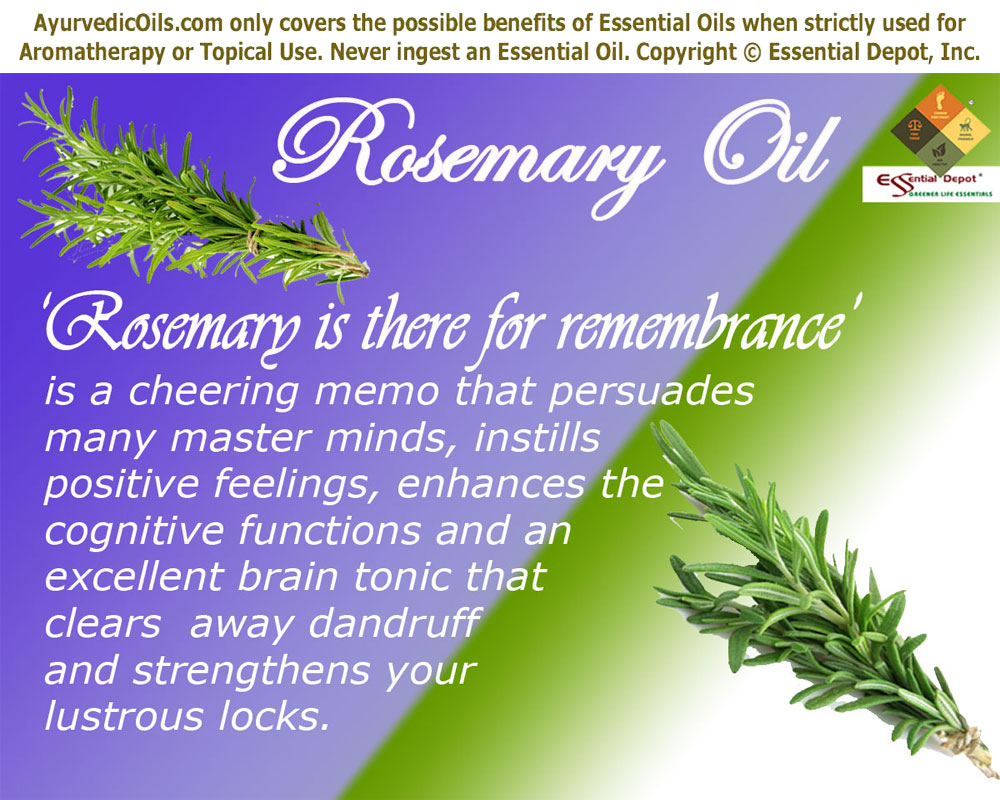
Rosemary-bannerRosemary is there for remembrance’ is a comforting note that encourages many master minds and for those to be. Fêted for its memory enhancing power and anti-depressant properties, Rosemary herb and its essential oil have been in use for more than thousands of years. The botanical name Rosmarinus Officinalis means ‘dew of the sea’ (ros-dew and marinus-sea).

It has been a part of the Ayurvedic regimen and certain other Complementary medicinal practices for its incredible medicinal benefits and its culinary uses.Helps a weak memory and quickens the senses. The chymical [essential] oil drawn from the leaves and flowers, is a sovereign help…touch the temples and nostrils with two or three drops” said English Herbalist Nicholas Culpeper about Rosemary.

Purchase Rosemary Essential Oil – Retail – CLICK HERE

Purchase Rosemary Essential Oil – Wholesale – CLICK HERE

Historical uses of Rosemary herb and its essential oil:

The healing values of Rosemary are evident through its use in various medicinal systems ranging from the Stone Age to this contemporary epoch. Ayurveda, the oldest of all healing sciences makes use of Rosemary essential oil for improving memory power and thinking skills. Halitosis, stomach upset, headaches, insect bites and stings were also treated with this oil. The Traditional Chinese Medicine used Rosemary oil to treat baldness and headache.

Rosemary essential oil was used as a proven remedy for jaundice in the 13th century and was used in the preparation of Queen of Hungary water for healing the 72 years old Queen’s rheumatism and helped her regain her beauty.

The antiseptic and antibacterial properties of this oil made its use compelling in the ancient African medicinal system for handling skin problems like allergies, eczema, wounds, burns and other skin infections. Muscular pain, joint problems, spasms, convulsions, flatulence and bloating were also treated with Rosemary herb and its essential oil.

The Roman students wore Rosemary garlands while studying and at the time of their examinations to help them remember without any difficulties. The results of an ethno pharmacological study evidenced the traditional use of Rosemary in Morocco for dealing with diabetes, gastrointestinal problems and hypertension.

The dried herb has been used in poultice as an effective post-circumcision remedy along with olive oil in Tunisia.

Relished as a natural flavoring agent in a variety of Mediterranean cuisines, the fresh and dried leaves of Rosemary herb is a known natural medicine in the European countries. These leaves have also been approved by Germany’s Commission E for treating dyspepsia and the essential oil extracted from this herb for handling poor blood circulation and joint problems.

The most popular use of Rosemary essential oil is its advent in the field of clinical aromatherapy,  as a part of the Western herbal medicine to address emotional conditions, improve attentiveness, reduce wrinkles naturally, promote skin health and support a healthy lifestyle.

Chemical constituents or Gas Chromatography Report of Rosemary oil:

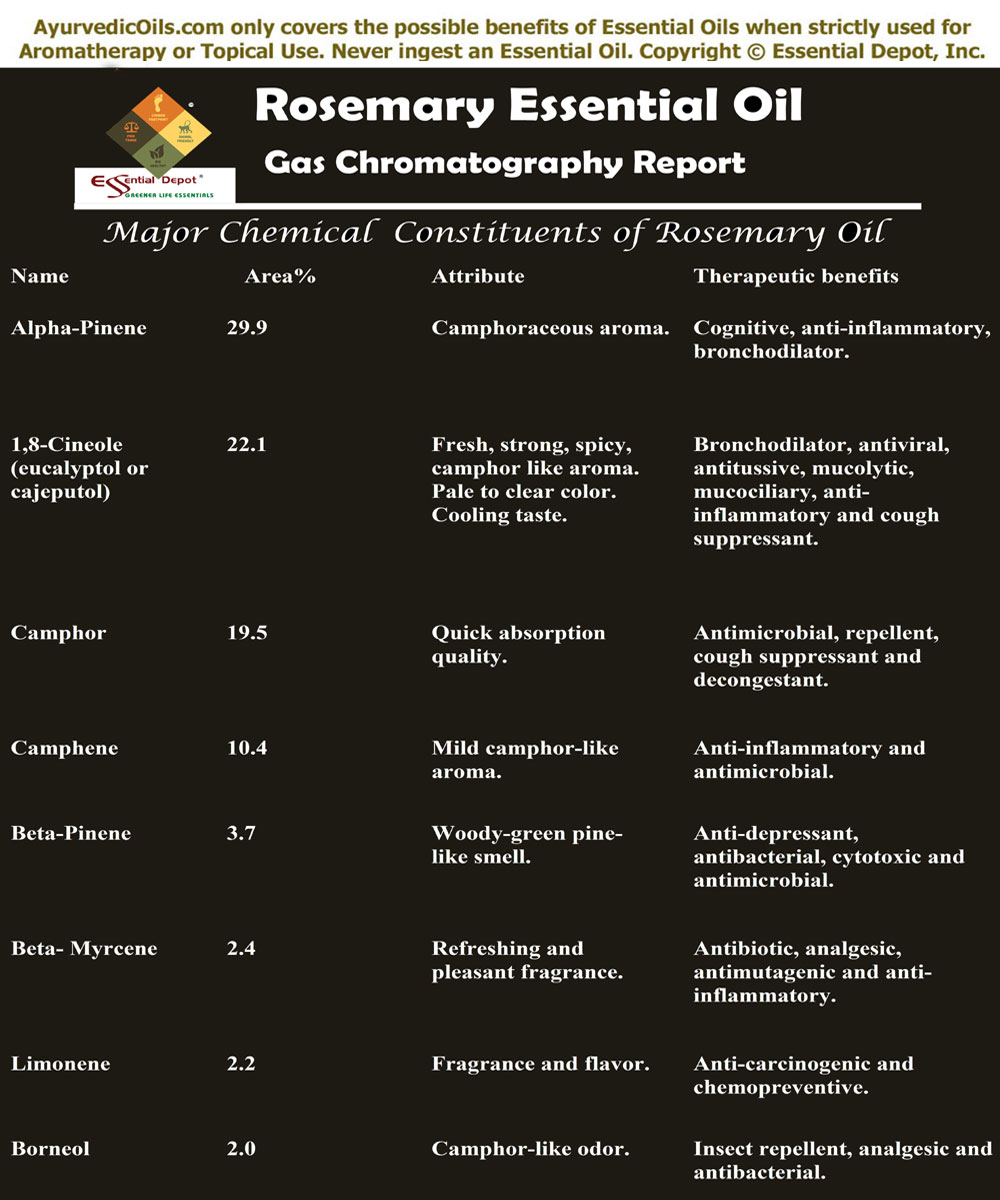
According to the Gas chromatography report, Rosemary oil constitutes of 8 major chemical components that contribute to its unique fragrance, therapeutic properties and quality.

Just click on:

For learning more about the exclusive information of these chief constituents of Rosemary oil.

The table below on the Gas Chromatography report talks about the principal chemical constituents and its role in granting the remedial values and other attributes to Rosemary oil.Rosemary-OilAyurvedic health benefits of Rosemary essential oil:

Known as Rusmari, Ayurvedic medicine celebrates Rosemary essential oil as one of the standard inhalations for treating respiratory disorders, sinusitis and gall bladder problems. Rosemary is one among those few essential oils that must be in everyone’s medicine cabinet according to the trusted Ayurvedic book, Ayurveda and Aromatherapy.

Ayurveda adores nature’s innate beauty and trusts human beings to be a vital part of nature. The simplicity of this mythological science lies in its easily understandable classification of the 3 energy elements known as doshas (vata, pitta and kapha) that construct a human’s physical and mental set-up.

The imbalance of any one of these doshas is said to cause illnesses indicating that the body is out of poise with nature. Ayurveda categorizes Rosemary essential oil as a rich herbaceous oil with drying and heating energies and can effectively reduce excess vata and kapha while treating pitta deficiency.

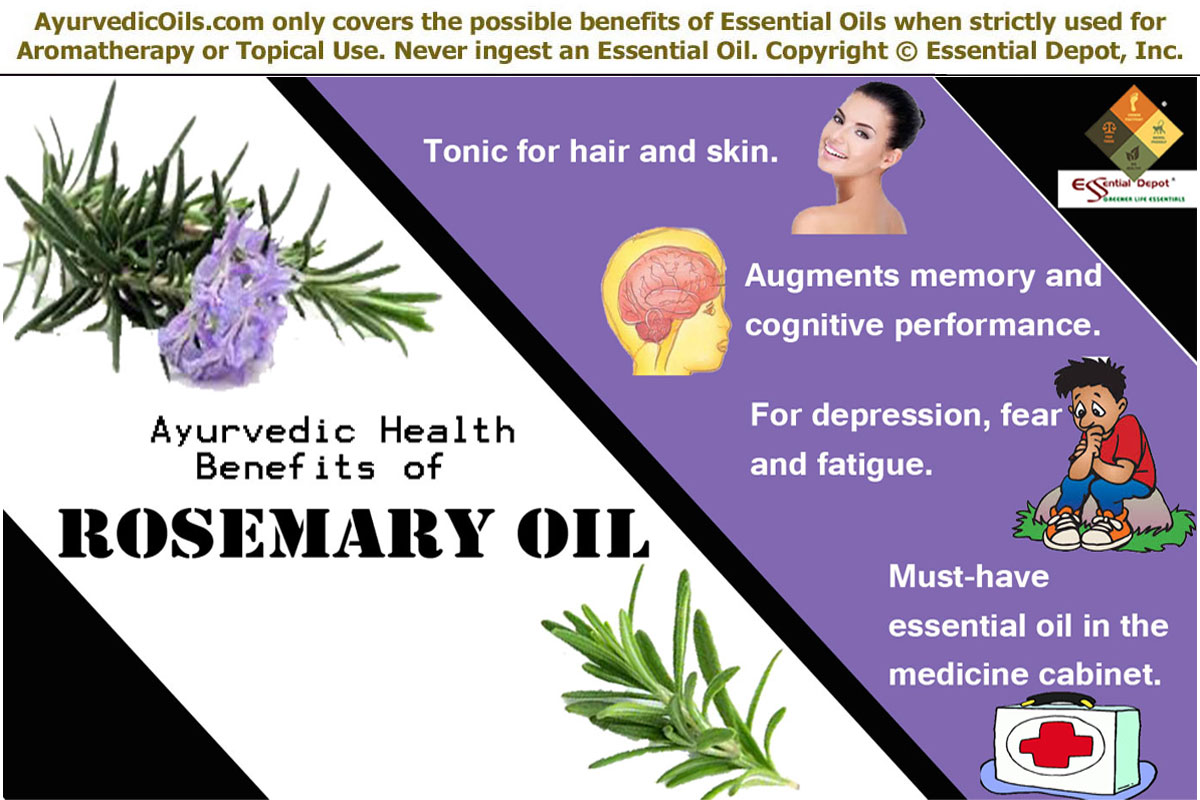
The well-known Ayurvedic health benefits of Rosemary essential oil are:Rosemary-broucher

1. Tonic for hair and skin:

Rosemary essential oil is an excellent tonic, stimulant, calmative and relaxant. It is known to ease stress, enhance blood circulation, nourish and cleanse the scalp, stimulate hair follicles and promote hair growth naturally. Regular massaging of the scalp with 2 to 3 drops of Rosemary essential oil blended with Almond oil can help in strengthening the roots, reduce premature graying, control loss of hair and lessen dandruff.

Rosemary oil is also a trusted moisturizer that foster scalp health while treating flaky and dry scalp. When used in combination with Sage oil, this oil is said to control the build-up of excess oil. For all these special factors, Rosemary essential oil is used in plenty of shampoos, conditioners and other hair care formulas.

The essential of Rosemary is a brilliant energizer for treating skin problems and its brilliance lies in its effectiveness of controlling the excessive production of sebum, which is responsible for acne, pimples and black heads. 2 drops of Rosemary essential oil added with 3 drops of Orange essential oil have been proved effective in treating cellulite, the most annoying skin problem especially in post-pubertal females.

This oil is known to relieve swelling, congestion and puffiness. Used as massage oil or bath oil, Rosemary essential oil can aid in the treatment of eczema, acne, stretch marks, skin eruptions, scars, wrinkles and dermatitis.

2. Augments memory and cognitive performance:

Numerous studies have witnessed the efficacy of the influencing aroma of Rosemary herb and its essential oil in enhancing memory skills.

This instinctive fragrance has been medicinally associated with memory and overall health since the primeval times. Dr. Mark Moss in one of his studies proved that “the presence of the chemical compound 1, 8-cineole boosts the chemical brain systems behind cognitive performance when absorbed into the bloodstream of healthy adults.

Northumbria University’s psychology researchers have demonstrated their findings stating that memory impairments that affect day to day living and acts as a cause of concern for prospective memory can be handled easily with Rosemary herb.

A 2003 research on ‘Aromas of rosemary and lavender essential oils differentially affect cognition and mood in healthy adults’ published in PubMed proved that the olfactory properties of the essential oil of Rosemary created a notable improvement of performance for overall memory quality and other secondary factors of memory.

This study also demonstrated that “these essential oils can produce objective effects on cognitive performance, as well as subjective effects on mood”.

Adding 2 to 3 drops of Rosemary essential oil to burners, vaporizers, diffusers or to your handkerchief can aid in stimulating the functions of the brain, encouraging clarity of thought, enhancing memory power, granting mental awareness and strengthening the central nervous system.

You can also go for a quick meditation of just 5 minutes every morning with the intense aroma of Rosemary essential oil around you to calm your mind, enliven your spiritual power and free your mind from all kinds of mental qualms.

Next time when you prepare for your examination, add 2 drops of Rosemary essential oil to any of the above mentioned things and 2 drops to your handkerchief on the day of your examination. It is said that the invigorating aroma of Rosemary essential oil helps in remembering all that you’ve studied with encompassing your atmosphere with the same fragrance.

3. For depression, fear and fatigue:

Rosemary essential oil is not only known to boost the brain power but is also recognized for instilling positive feelings. The stimulating and anti-depressant properties of this oil checks stress related disorders, nervous exhaustion, depression, fear, fatigue and anxiety. When added to your warm bathing water, Rosemary oil acts as a classic relaxant and treats physical weariness, wards off lethargic attitude, backs up mood fluctuations and help increase productivity.

4. Must-have essential oil in the medicine cabinet:

Bryan Miller and Light Miller in their book ‘Ayurveda and Aromatherapy’ say that Rosemary essential oil is a must-have essential oil in everyone’s medicine cabinet.

With remarkable therapeutic properties like analgesic, nervine, carminative, cephalic, cardiac, emmenagogue, diuretic, hypertensive, stimulant, tonic, rubefacient, astringent, cholagogue and antidepressant, Rosemary essential oil can heal a number of illnesses including dental problems, respiratory disorders, pain, inflammation, urinary problems, gastrointestinal troubles and weak immune system.

2 drops of Rosemary essential oil added to a warm cup of water as a gargle can help you keep away from bad breath, plaque, weak gums and other oral problems. This is due to the antimicrobial activity of this oil that fights against Gram-positive bacteria, Gram-negative bacteria, fungi and other micro organisms.

Adding 2 to 3 drops of this oil in vapor therapy or in warm bath can assist you in treating sinusitis, headaches, migraine pain, cough, bronchitis, mucus congestion and common cold.

Blending few drops of Rosemary essential oil with soothing carrier oils like Sesame oil or Coconut oil can support in dealing with rheumatic pain, arthritis, muscular spasms, menstrual cramps, back pain, constipation and stiff neck.

Massaging with this reviving essential oil promotes blood circulation, treats blocked menstruation, boosts immune power and supports overall health condition.

Disclaimer:

This information is only for your reference and is not meant to substitute any prescription drugs or consultation of your healthcare professional. Consult your Ayurvedic practitioner for expert advice based on your specific health conditions and individual constitution. Avoid using essential oils directly on your skin and taking it internally. Keep away from children and is not suitable for pregnant women and people with high blood pressure and epilepsy.

The MSDS (Material Safety Data Sheet) of Rosemary oil is readily available for your enhanced safety and better usage.

Gas Chromatography Report of Rosemary oil

Thought for the day:

“There’s rosemary, that’s for remembrance: pray, love, remember”    – An excerpt from Hamlet by Shakespeare.

Suggested Reading:

  1. Rosemary Oil – An In-Depth Look at its Potentially Amazing Benefits by Karen Jean Gaskell
  2. How to Use Rosemary Essential Oil (Aromatherapy) by Miriam Kinai
  3. HEALING POWERS OF ROSEMARY OIL (The Aromatherapy Professional: Healing with Essential Oils) by KG Stiles
  4. 30 Ways to Use Rosemary (X-Ways to) By Evelyn

Reference Links:

  1. Rosemary boosts brain power! By Robert Tisserand
  2. Rosemary Oil Health Benefit: Smell Boosts Prospective Memory by Medical Daily
  3. Aromas of rosemary and lavender essential oils differentially affect cognition and mood in healthy adults published in PubMed
  4. Traditional Uses Of Rosemary by Natural Standard, The Authority on Integrative Medicine

Dog-tired always? Try aromatherapy for chronic fatigue syndrome


Do you sleep over at work? Do you feel sapped and drained of all your energy? Do you look dull and dog-tired always? If your answer to the above questions is an yes, then maybe you need to check yourself for Chronic Fatigue Syndrome or CFS. Many people often underestimate the syndrome, thinking it is something akin to the regular fatigue we have every day. No. CFS is different from regular, day-to-day tiredness. It is severe and chronic and can paralyze your life terribly if you are not wary of its presence.

What exactly is Chronic Fatigue Syndrome? Chronic fatigue can happen to anyone, irrespective of their age or race or sex. It is an illness marked by chronic lack of energy with complaints of persistent, unexplained bouts of fatigue. Sometimes Chronic Fatigue Syndrome occurs with various combinations of joint and muscle pain, depression, low-grade fever, lack of concentration, throat or headache. Most of the time, CFS patients experience irritability, burn-outs and swollen lymph nodes. The problem with chronic fatigue is that you cannot diagnose it that easily. Doctors diagnose CFS only by eliminating other diseases from the suspected illnesses list. It is said that Chronic Fatigue Syndrome is caused by a virus or immune system’s malfunctioning due to chronic physical or emotional stress.


Cure for CFS Syndrome: There is relatively no definite cure for CFS. Doctors treat patients by suggesting medications for muscle and joint pain, physical illnesses, headaches and psychiatric help for depression. Stress reduction, combined with exercises, massage therapy and rest has proven effective in treating Chronic Fatigue in patients. Another easy cure is aromatherapy. The science of smell can bring about any change in a CFS patient. Following a holistic approach, aromatherapy aids recovery by using an array of soothing and relaxing essential oils.

Essential Oils for Chronic Fatigue Syndrome: There are a number of essential oils which can treat patients and support in the healing process of CFS. Though not many know aromatherapy’s value, it has been proved to be successful than herbs in alleviating the pain of the syndrome. Specifically, essential oils like Chamomile, Peppermint, Rosewood, Lavender, Lemon, Marjoram, Geranium etc. can be helpful in relaxing the body and easing out pain from the joints and muscles. Not only are these oils easy to reduce pains, they also help in lifting a patient’s moods and improve his sleep quality.

Practical Essential Oil Therapy: When you use essential oils, you should be careful that they are of the food grade type. Get the ingredients ready – Lavender oil, Petitgrain oil, Frankincense and others. Use 3 drops of lavender oil, 2 drops of petitgrain oil and 1 drop of frankincense. It would ideal if you mix the oils in your bath water as bathing would give instant relief from pressure. Allow the bath water to be lukewarm and then add the mixture of essential oils to your bath water. Never spill the bath water in your eyes as the oils will sting or cause irritation. After mixing your bath water with oils, slowly place your feet into them and step into your bath tub. Rest in the water for about 10-20 minutes. After the bath, drain your water and refill it. You can use this mixture once a day, for about 3 to 4 days for over a three week period.

Chronic Fatigue Syndrome is also called Myalgic Encephalomyelits or ME.

The ‘pause’ button in a woman’s life: 10 essential oils for menopausal troubles


Menopause is a significant stage in the lives of women. It is an end which signals a new beginning, accompanied by a series of emotional, physical, psychological and hormonal changes. The word menopause is derived from Greek and means “monthly halt”, meaning the end or halt of a monthly process (menstruation). Menopause can set off a lot of changes in women like hot flushes, depression, physical pain, irritability, fatigue and changes in skin, hair and sexual desire. Though there are medications to treat menopause, modern women find it increasingly difficult to cope with the issue. Aromatherapists opine that menopausal women’s troubles can be alleviated using essential oils.

Essential oils for menopause: Essential oils are used to treat a variety of symptoms and conditions in women and menopause is no exception to this. The best thing about using essential oils to treat menopause is, it alleviates problems without side effects (often caused by oral consumption of drugs). Menopause is a phase marked by several conditions, of which the most prominent are depression, insomnia, hot flushes, lack of sexual desire, increased fatigue and a frail existence.


Depression is one of the most common of menopausal ailments. Not able to withstand the change, many women go into a state of serious depression. This leads to lack of concentration, failure to perform and very low self-esteem. Women start failing in their roles as mothers, wives and friends. They get frenzied and touchy in their interpersonal relationships, which in turn lead to several break-ups and social problems. Anxiety is also a common denominator in such cases. The following oils can be used to treat depression in women:

1. Frankincense oil:
A great anti-depressant which works extraordinarily well on any human being, leave alone a menopausal woman.

2. Basil oil: Basil is always a healing oil. It is not just an anti-depressant but also a mental healer which helps cure mental fatigue.

3. Sweet marjoram:
This oil can cure nervous depression, irritability and anxiety to a great extent.

Insomnia is another common condition in menopausal women and the following essential oils aid in treating sleep problems during menopause:

4. Lavender oil: The best of all sleep-inducing oils, lavender oil can soothe and calm the mind to sleep. It can also be very relaxing and reduce the physical and mental stress in women.

5. Clary Sage oil: Another great essential oil to treat nervousness and mental fatigue in women. This would alleviate the tendency to be irritable also.

6. Roman Chamomile:
Chamomile oils always work great in helping with insomnia and depression. Roman Chamomile is the best of the kind and helps reduce irritability too.

Hot flushes are another headache with menopause. They make women feel low and are irritating to the core. Essential oils which help alleviate this problem are:

7. Peppermint: This oil cools a woman’s body and reduces the sudden hot flushes that happen now and then.

8. Cypress oil: Women can benefit by taking Cypress oil. It helps avoid excessive sweating and minimizes hot flushes.

Sexual life takes a back seat when women are through menopausal stage. Menopausal women lose interest in sex, have painful intercourses or labored orgasms. Essential oils can be aphrodisiacs in uplifting the sexual lives of women during these days.

9. Ylang Ylang oil can be a great aphrodisiac that help alleviate painful sexual intercourses. It can also invigorates the sexual life of menopausal women.

10. Rosemary oil: Apart from being a beneficial oil for relaxation, rosemary also uplifts one’s mood and encourages sexual participation.

Para-cymene


Para cymene is an aromatic organic compound found mostly in the essential oil of cumin and thyme. It is also present in the Angelica root and Seed oil, Bay leaf oil, Basil oil, Carrot seed oil, Clove bud oil, Clary sage oil, Grape fruit oil and in the essential oil of Anise, Oregano, Eucalyptus, Coriander and mace.

Para-cymene is a monoterpene with the chemical formula C10H14. It is also referred by other names such as p-cimene, cymol, p-cymol, p-methylcumene, camphogen and 4-cymene and so on. It floats on water and it mixes well with ethanol and diethyl ether.

Attributes of para cymene:

Para cymene is a colourless to nearly light yellow liquid which is transparent in nature. It is characterized by pleasant fresh citrus fragrance.

Flavoring and fragrance ingredient:

It is used for flavoring cakes, beverages and confectionaries and for enhancing fragrances. It is used in the manufacture of paints, furniture and other consumer goods.

Antibacterial activity:

Para cymene is effective against pathogenic bacteria especially Escherichia coli. This is evident from the study “Carvacol and p-cymene inactivate Escherichia coli O157:H7 in apple juice”. In this study, in order to evaluate the antimicrobial activity of carvacol and para cymene, unpasteurized apple juice contaminated with E.coli is subjected to the treatment with carvacol and para cymene both individually as well as in combination.

It was brought into light that carvacol and para cymene either individually or in combination effectively controlled Escherichia coli in unpasteurized apple juice. This antimicrobial activity of para cymene and carvacol help in improving the safety and extending the shelf life of raw juices.

Antifungal activity:

According to the study “Antifungal, phytotoxic and insecticidal properties of essential oil isolated from Turkish Origanum acutidens and its three components, carvacol, thymol and p-cymene” it was determined that para cymene in Origanum acutidens exhibited low antifungal activity.

A study titled “Antifungal activity of thyme (Thymus vulgaris L.) essential oil and thymol against moulds from damp dwellings” was conducted to investigate the antifungal activity of the essential oil of Thymus vulgaris.L. and its three main constituents namely carvacol ,para cymene and 1,8-cineole. It was found that para cymene showed strong antifungal activity against numerous candida species.

In the book “Antifungal metabolites from Plants”, it is stated that carvacol and para cymene present in the plant species namely Thymus Vulgaris, Thymus zygis and Thymus mastichina exhibit antifungal activity against Candida species.

Antinociceptive and anti-inflammatory activities:

A study titled “Evaluation of the anti-inflammatory and antinociceptive properties of p-cymene in mice.” was conducted to evaluate the antinociceptive and anti-inflammatory properties of para cymene. It was determined that para cymene possess anti-inflammatory activity and antinociceptive activity in mice.

Analgesic property:

In the book “Essential Oils: A Handbook For Aromatherapy Practice Second Edition by Jennifer Peace Rhind”, it was highlighted that para cymene present in sweet Marjoram oil possesses analgesic property.

References:

  1. Carvacrol and p-cymene inactivate Escherichia coli O157:H7 in apple juice.
  2. Antifungal, phytotoxic and insecticidal properties of essential oil isolated from Turkish Origanum acutidens and its three components, carvacrol, thymol and p-cymene.
  3. Antifungal metabolites from Plants edited by Mehdi Razzaghi-Abhyaneh, Mahendra Rai, Page no-1986
  4. Antifungal activity of thyme (Thymus vulgaris L.) essential oil and thymol against moulds from damp dwellings
  5. Evaluation of the anti-inflammatory and antinociceptive properties of p-cymene in mice.
  6. Essential Oils: A Handbook For Aromatherapy Practice Second Edition by Jennifer Peace Rhind Page no.171

Wintergreen Essential Oil


Winter-green-bannerWintergreen essential oil extracted from the leaves of Wintergreen plants, botanically known as Gaultheria Procumbens is native to North America and Canada. Gaultheria fragrantissima wallich is indigenous to India and the Indian Wintergreen essential oil has similar therapeutic properties just as the American Wintergreen essential oil. I love Wintergreen oil for its effectiveness in relieving muscular pains and spasms.

Experts call it as ‘Nature’s Aspirin’ as it is exceptionally potent in treating arthritic and rheumatic pain since ages together. Ayurveda, the ancient natural science of healing calls this herb as Gandapura and was used in many spiritual ceremonies where this sacred plant was trusted to bring harmony between earth and its inhabitants through its healing powers.

Purchase Winter Green Essential Oil – Retail – CLICK HERE

Purchase Winter Green Essential Oil – Wholesale – CLICK HERE

Historical uses of Wintergreen essential oil:

The essential oil of Wintergreen was used for flavoring in the primordial times. The principal constituent of this oil is methyl salicyclate, which is 98% of this oil and other major constituents are gaultherilene, myrcene, limonene and formaldehyde.

The Native Americans used Wintergreen leaves to brew tea for treating rheumatic problems and chewed the leaves to treat respiratory problems, headache, sore throat, fever, tooth decay and to augment lung capacity.

Wintergreen essential oil is used externally as a folk medicine for joint problems, muscular discomforts, inflammation, cramps, rheumatism, arthritis, psoriasis, bruises, eczema, improper blood circulation, cellulite, headache, obesity and certain heart diseases. Wintergreen was used in numerous ritual practices for treating curses, protecting from evils and for its amazing healing benefits.

Chemical constituents or Gas Chromatography Report (GC) of Wintergreen oil:

According to the Gas chromatography report, Wintergreen oil constitutes of 2 chemical components that contribute to its fragrance, therapeutic attributes, consistency and quality of this oil. Of which, Methyl salicylate contributes to the highest proportion of Wintergreen oil with about 99.9% of its total composition.

Just click on:

I trust that this must certainly help you in getting to know the exclusive information about the prime chemical constituents of Wintergreen oil.

The table crafted below clearly depicts the unique nature and contributions of these bio-chemical constituents to the healing magnificence of Wintergreen essential oil.

wintergreen-gct

Ayurvedic health benefits of Wintergreen essential oil:

Ayurveda is a holistic approach that doesn’t focus on the disease alone but treats the individual as a whole. According to this ancient science, human body is made up of three doshas or energy elements namely vata, pitta and kapha, which are a combination of five vital elements of nature (air, water, fire, earth and ether).

Vata symbolizes air and is responsible for ejections, eliminations and discharges of the body. It regulates metabolism and is the key to functions of the brain and nervous system. Pitta represents fire and is in charge of digestion, body temperature, vision and reasoning skills.

Kapha with its lubricating qualities signifies earth and is completely responsible for the shape and figure of an individual. Reproductive health, circulation, muscular strength and ability to regain good health are vested with a balanced kapha.

Every individual will have a predominance of any of these three doshas where the predominant one determines the characteristic of an individual. Good health is a symbol that your doshas are in balance and imbalance of any of these doshas will end up in illness.

Ayurvedic remedies are purely natural and suggest the use of herbs, essential oils extracted from plants, Abhyanga or Ayurvedic massage, practice of yoga, meditation, taking up an Ayurvedic routine and spirituality.

Wintergreen essential oil is a trusted medication in treating vata imbalances predominantly. In Ayurveda, wintergreen oil is used in treating Vata gout where the autoimmune system gets weakened and affects joints and muscles.

This is mainly due to the natural pain killing attribute of Wintergreen oil and a gentle massage with Wintergreen essential oil is said to soothe and warm up the skin, granting complete relief from pain, stiffness, inflammation and dryness.

Let’s now have a look at the other major Ayurvedic health benefits of Wintergreen essential oil are:

Wintergreen-broucher1. Chronic rheumatism and arthritis:

Rheumatoid arthritis or chronic rheumatism is a long term health disorder and is known as Ama vata in Ayurvedic terms. It affects the joints, causing inflammation, swelling, redness, and sharp pain.

Ayurveda states that the fundamental cause for this illness is the imbalance of the digestive fire and the stagnation of ama or toxic substances of the body mainly due to unhealthy lifestyle and stress.

Wintergreen essential oil has stimulant, anti-arthritic and anti-rheumatic properties that aids in discharging toxins from the body through urine and stimulating proper blood circulation.

Applying few drops of Wintergreen oil with carrier oils like Jojoba oil or sesame oil will help clearing impediments in the blood flow, checks rheumatism and helps in removal of toxins, reduce excess weight, salts and excess water by penetrating deeply into the tissues and muscles through the skin.

2. Pain, inflammation and muscular problems:

Wintergreen essential oil is used as a counterirritant in treating pain, sores, muscular pains, lower back pain, achy joints and inflammation, where counterirritants act by creating an irritable sensation that lessens swelling and pain in the tissues.

The analgesic, relaxant and anodyne properties of this oil cause numbness and warmth when applied on the painful area. It eliminates pain, reduce stress, drive away tension and induce good sleep by inhibiting the formation of prostaglandins responsible for causing pain.

This is mainly due to the presence of Methyl salicyclate which is equivalent to the conventional medicine aspirin (the fundamental component of aspirin is salicyclate). These soothing and pain-relieving attributes of Methyl salicyclate in Wintergreen essential oil makes it a vital part in celebrated pain relievers like BENGAY.

3. Respiratory problems and other spasmodic disorders:

The anti-spasmodic properties of Wintergreen oil aids in treating all kinds of spasms in the respiratory system, digestive system, nervous system, circulatory system and muscles.

Adding few drops of Wintergreen essential oil in steam inhalation, warm baths, gentle massaging and few other topical applications on the affected parts will give complete relief from respiratory disorders like asthma, chest congestion, breathing problems and spasmodic coughs.

Nervous afflictions, muscular contractions and certain other health disorders due to spasms can be effectively treated with the oil of Wintergreen.

4. Skin disorders:

Wintergreen essential oil is highly toxic and it acts as a protective shield against bacteria, virus, fungi, microbes and other harmful organisms. This makes it a good antiseptic and protects the skin from being septic in case of microbes’ prone open wounds, cuts and other skin infections.

This oil is very powerful and kills Staphylococcus Aureus bacteria and heals septic problems. Mild application on the skin is effective for treating all types of skin disorders as this oil has the potential to infiltrate into the skin and is easily absorbed by tissues and blood stream for faster relief. Wintergreen essential oil is also effectual in uplifting the skin, augmenting the skin tone and fighting against the symptoms of aging.

5. Digestion and elimination:

To put in simple terms, this oil boosts digestion, promotes quicker absorption of nutrients and stimulates trouble-free excretion, where the toxic substances of the body are eliminated for supporting good health.

The hepatostimulant property of Wintergreen essential oil assists the secretion of digestive enzymes, bile, gastric juices and hormones facilitating proper functioning of the body. This oil stimulates the working of gall bladder, liver, kidneys, endocrinal glands, digestive system, excretory system, circulatory system and the nervous system.

The diuretic attribute of Wintergreen oil aids in eliminating the excess water, salt, fat and uric acid in the body through urine, which makes it a promising natural remedy for treating bladder infections, hypertension, edema, obesity and water logging.

6. Woman’s health:

Being a natural emmenagogue, wintergreen essential oil helps in treating plenty of womanly problems like delayed menstruation, uterine ulcers, dysmennorhea, blocked menses, pain in the pelvic region, hair fall, hemorrhages, fatigue, vomiting and stress related to menstruation.

A soothing massage using 2 to 3 drops of Wintergreen essential oil blended with sesame oil can grant complete relief. Adding few drops of this oil to your bath tub with warm water can calm your nerves and soothe your senses.

7. Spiritual strength:

The strong aroma of Wintergreen essential oil improves attentiveness and stimulates the mind. Applying this oil to your skin is said to heighten the vibration of the body and accentuate sound.

Increased vibration helps in unveiling spiritual awareness and paves way to the harmony of self and divinity. This attribute has made Wintergreen oil to be an incredible part of the ancient chants (mantras) and meditations where sound was used for adding spiritual strength.

Wintergreen essential oil improves logical thinking and stimulates mental power. Apart from all these natural benefits, this oil is used as a flavoring agent in candies, root beer, chewing gums, smokeless tobacco, mouth fresheners, mouthwash like Listerine, in toothpastes and certain other oral care products. It is also used as a solvent in printmaking.

Disclaimer:

Ingesting Wintergreen essential oil should be strictly avoided as it is highly toxic and can cause serious health effects. 1 fl oz of this oil is equivalent to 171 adult aspirin tablets. Use it only as a topical application after diluting it with soothing carrier oils in 1:10 ratio.

This oil has blood-thinning effects and should be avoided by people who are susceptible to aspirin. Never use it on children below 12 years of age, pets, pregnant women and on broken skin. Consult your healthcare practitioner before using Wintergreen essential oil for your individual constitution.

The MSDS (Material Safety Data Sheet) of Wintergreen oil is readily available for your enhanced safety and better usage.

Gas Chromatography Report (GC analysis) of Wintergreen oil.

Wintergreen Oil Possible Skin Issues:

Greener Life Diamond – Bio-Healthy Score => 3 Possible Skin Issues:

See => http://www.essentialdepot.com/GreenerLifeDiamond.html

Wintergreen oil can also be called as methyl salicylate as this essential oil contains about 99.9% of the methyl salicylate component. Besides being an excellent analgesic equivalent to the aspirin, it leaves behind trepidation with numerous adverse effects on the human system.

Alarmed as a toxic substance, Methyl salicylate is claimed as a neurotoxic, teratogenic and unsafe during pregnancy, labor and nursing.

Poisoning due to Methyl salicylate is said to cause adverse dermal conditions, vomiting, sweating, respiratory alkalosis, pulmonary and laryngeal edema, fluid retention, lethargy, tinnitus, internal haemorrhage, restrains blood clotting and should not be used when using blood-thinning drugs.

“Methyl salicylate is much more toxic than salicylates” quotes the book, Leung’s Encyclopedia of Common Natural Ingredients used in Food, Drugs and Cosmetics. Various studies also witness that lethal poisoning of methyl salicylate in Wintergreen oil can happen by absorption through the skin cells.  Mainly due to the aspirin-like qualities of Methyl salicylate, there are chances for bleeding and other subsequent side effects when applied on the skin for treating pain and spasms.

The safe maximum dermal use level of Wintergreen oil is 2.4% as per the International Fragrance Association (IFRA). According to the Health Canada Cosmetic Ingredient Hotlist, March 2011, the safe maximum level of external use of methyl salicylate in topical products is 1%. This level of usage is applicable only for topically used products and is invalid for rinse-off products, including soaps, shampoos and other bathing products.

A 2007 study, published in the Cal Journal of Emergency Medicine reveals that percutaneous (effected through the skin surface) absorption of Methyl salicylate in Wintergreen oil and other salicylates, may end up in acute poisoning, especially in people with renal failure. This study also concluded that based upon the autopsy, the death of an elderly man with renal failure occurred due to the continuous dermal absorption of Wintergreen oil.

Skrakosch studies on ointments containing salicylic acid, state that the factors affecting the dermal absorption of salicylate are “the effect of salicylic acid on the epidermis, the pathologic state of the skin, the degree of hydration of the stratum corneum, and the solvents used.” Based upon the studies on volunteers with normal skin, it was found that salicylate ointments caused damage to the epidermis within 2 to 14 days.

The use of methyl salicylate is prone to interact with drugs when used along with anticoagulant medication (warfarin) and GERD (Gastroesophageal reflux disease). It is good to avoid Wintergreen oil if you are sensitive to salicylates and certain other skin conditions as it may trigger skin damage. Methyl salicylate is also said to inhibit platelet aggregation.

Along with Methyl salicylate and aspirin, all kinds of salicylates are teratogenic in nature and might harm the fetus so it is best avoided during pregnancy, labor and while nursing. The reproductive toxicity of Methyl salicylate has been witnessed as reproductively toxic in rodents and it can also be 4.5 times more poisonous in humans than in rodents.

Various studies have proved the high mortality rate of methyl salicylate accounting to 50 to 60% with 4 to 8 ml used in children is reported as the lethal dose for children. Use of Methyl salicylate on children (including infants and toddlers) should be strictly avoided, (especially in children with ADHD-Attention Deficit Hyperactivity Disorder), patients with hypersensitivity, asthma, gastro-intestinal irritation, inflammation and salicylate allergy.

Studies have proved the neurotoxic effects of Methyl salicylate, the excess of which can end up in death via respiratory collapse and cardiopulmonary arrest. Based on the analysis of deadly salicylate poisoning cases, it was detected in post-mortem examination that about 18% had abnormalities in the nervous system.

Wintergreen essential oil used in a diluted form, blended with safe carrier oils like coconut oil is safe only for external use. Never ingest Wintergreen oil as Methyl salicylate is highly fatal and may cause severe toxicity. The most prevalent symptoms of Methyl salicylate poisoning are fever, excitation of central nervous system, high blood pressure, confusion, rapid breathing, convulsions and even coma.

Reference Links Substantiating the Possible Skin Issues of Wintergreen Oil:

  1. Salicylate Toxicity from Ingestion and Continued Dermal Absorption Rachel L. Chin, MD, Kent R. Olson, MD, and Delia Dempsey, MS, MD, published in Cal Journal of Emergency Medicine
  2. Management priorities in Salicylate Poisoning by The American College of Medical Toxicology
  3. Aspirin and other Salicylate poisoning by Gerald F. O’Malley, DO, Thomas Jefferson University and Hospital; Rika O’Malley, MD, published in the professional version of the MSD Manuals
  4. Methyl Salicylate by Wikipedia
  5. Treatment of Low Back Pain: The Potential Clinical and Public Health Benefits of Topical Herbal Remedies by Patricia R. Hebert, PhD, E. Joan Barice, MD and Charles H. Hennekens, published in the Journal of Alternative and Complementary Medicine
  6. Wintergreen Oil – Essential Oil Safety: A Guide for Health Care Professionals by Robert Tisserand, Rodney Young
  7. Safety Information on Essential Oils by the National Association for Holistic Aromatherapy
  8. Case Reports of Adverse Events of Wintergreen oil by American Herbal Products Association’s Botanical Safety Handbook, Second Edition edited by Zoë Gardner, Michael McGuffin

Suggested Reading:

  1. Potter’s New Cyclopaedia of Botanical Drugs and Preparations by R. C. Wren
  2. Herbal Healing for Women by Rosemary Gladstar
  3. The Illustrated Encyclopedia of Essential Oils: The Complete Guide to the Use of Oils in Aromatherapy & Herbalism by Julia Lawless
  4. The Essential Herbal for Natural Health: How to Transform Easy-to-Find Herbs into Healing Remedies for the Whole Family by Holly Bellebuono

Reference Links:

  1. Methyl Salicyclate by Wikipedia
  2. Ayurvedic and Herbal remedies for Arthriti by Dr. Narendra Jain
  3. Treatment of Gout  – The Ayurvedic Way by Ravi Bhanot, Ayurvedic Researcher, The Ayurveda Institute of Europe
  4. Wintergreen by Georgetown University Medical Center

Save

Save

Exfoliate with essential oils: How to make a natural facial scrub at home


Skin is one of the least-cared for, but most exposed parts of the body. Whether you are a youngster or a middle-aged aging adult, you need to exfoliate your skin regularly to look young and fresh. But exfoliation is not that easy. Now, with the advent of modern technology, too many exfoliating products clog the market place and the customer often does not know which one to choose and which one to leave out. It is always better to choose a natural option to synthetic or company-manufactured options. This article will focus on how to exfoliate skin using a natural facial scrub.

Why exfoliate?
Before we proceed to make a recipe, we need to first understand why we need to exfoliate. Exfoliation is removing off dead skin on the surface to bring out the young, healthy skin to the top. You exfoliate if you find your skin dull, dry or flaky or old. Yes, exfoliation is a great anti-aging cure too. All you need to do to avoid aging of skin is to exfoliate regularly and keep the shine of your skin in top form. But there are certain issues to be faced while exfoliating. People with problem skin need to careful while engaging in skin exfoliation. This is because, instead of removing dead skin, exfoliation may irritate existing skin and end up aggravating your existing skin condition.

However, for the aged, skin exfoliation helps by increasing blood circulation and thereby, proper functioning of the skin and body. Generally, exfoliation can be done every 14 days. In cases of problem skin, you need to avoid frequent exfoliation.

Exfoliation and essential oils: What do essential oils got to do with skin exfoliation? Well, they do have a major role to play. The chief ingredient in a facial scrub is often an essential oil. Even commercial scrubs have essential oils in their ingredients list. This is because of the natural skin-healing properties of some essential oils. Owing to their herbal properties, essential oils are soft and tender on skin when used in the appropriate proportion. They not just invigorate the skin, but leave it glowing and healthy. This is why essential oils find a lot of usage in body massaging, hair anointing and bathing.

How to make natural, facial scrub: In a market looming large with commercial products, natural facial scrubs stand out of the crowd. Though not all advertised herbal products are 100% herbal, a homemade facial scrub is completely herbal and natural. Below is a recipe on how to make a natural, facial scrub:

Ingredients: Raw oats, honey, basil oil, tea tree oil, apple, cider, vinegar etc.

Process:
Crush 2 to 3 teaspoonfuls of raw oats in a grinder. Add pure honey and ¼  teaspoon of apple, cider, vinegar to the crushed dry oats. Mix all the ingredients to form a smooth mixture. Add honey if needed and add basil oil (1 drop) to the mixture. If you have a problem skin, you can replace the basil oil with tea tree oil to promote aggressive healing.

How to use: When the paste-like facial scrub is ready, wash and towel-dry your face and apply the scrub on it. Use circular motions for application and let it rest for about 15 minutes. After the particular timeframe, wash with lots of tepid water and towel dry the face again. You will notice your face to be fresh and young than before.