Tag Archives: Ayurvedic oils for pain

Basil Oil

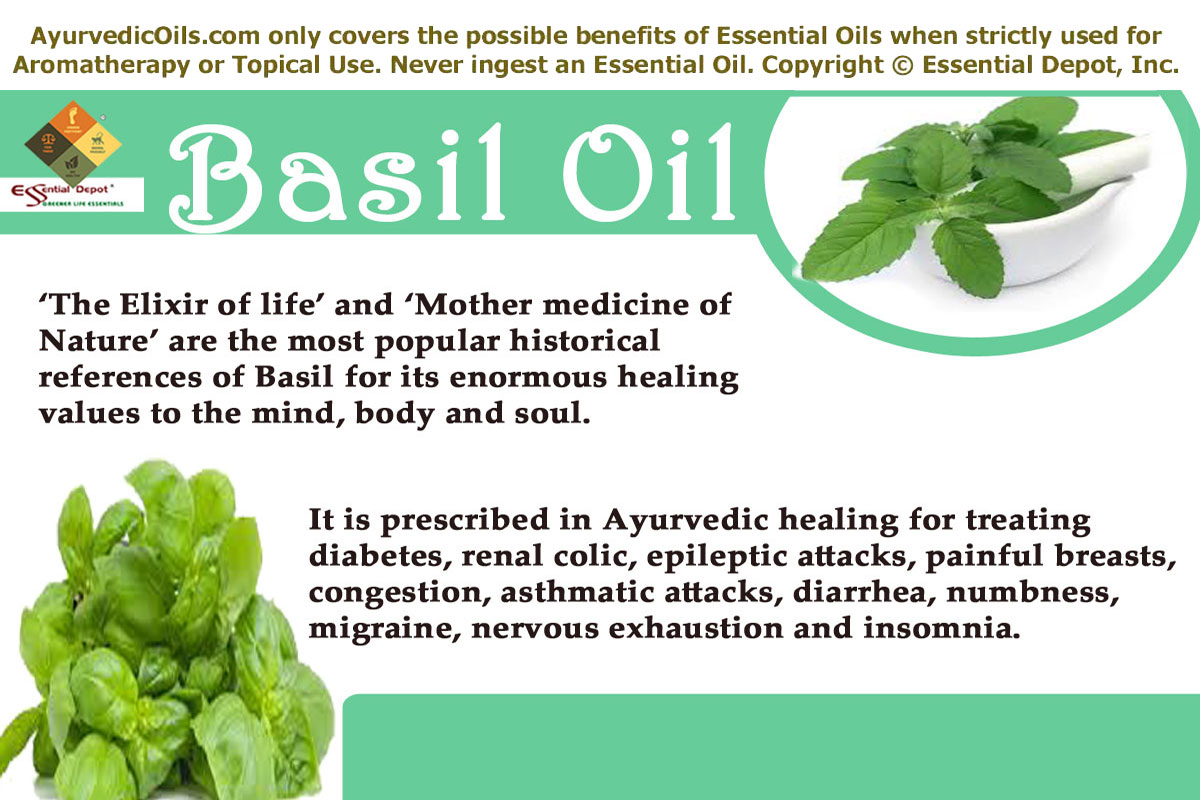
‘The Elixir of life’ and ‘Mother medicine of Nature’ are the most popular historical references of Basil for its enormous healing values to the mind, body and soul.

Basil-oil-bannerIt has marked its presence significantly in various medicinal systems in the world including Ayurveda and Homeopathy for treating diabetes, renal colic, epileptic attacks, painful breasts, congestion, asthmatic attacks, diarrhea, numbness, migraine, nervous exhaustion and insomnia.

Scientifically known as Ocimum canum, Basil is a member of the mint family Lamiaceae. This traditional medicinal herb is widely distributed in India, especially Tamil Nadu and is called as Nai Tulasi in Tamil. Besides numerous therapeutic properties, the most noteworthy remedial effects of Basil and its essential oil are its functions as a cancer chemoprotective agent and anti-diabetic agent for reducing blood glucose levels in type 2 diabetes.

Historical uses and importance of Basil oil:

Basil is said to have its origin in India, the land of rich traditional values. The healing, culinary and aromatic attributes of this sweet-smelling plant have been talked about in many classical herbal writings including Charaka Samhita (ancient Ayurvedic text) and the works of renowned herbalists like Dioscorides, Gerard, Culpeper and Parkinson.

Parkinson has quoted that Basil’s scent “fit for a King’s house”, denoting its royal aroma and has also said that Basil can be used “to procure a cheerful and merry heart.” Gerard and Culpeper has mentioned that Basil is an excellent remedy for melancholy and is a natural antidote for insect bites including scorpion stings, mosquito bites and bee stings.

The word ‘Ocimum’ (generic name) is derived from the Greek word ‘okimon’, which means smell. This indicates one among those reasons behind the unforgettable fragrance of the Basil variety. Basil plays a vital role in various religious practices across the world, where it has been considered as a sacred herb in Hinduism and said to have grown at the place of Christ’s crucifixion.

Basil plant has also been associated as a symbol of love, protection, courtship, truthfulness, courtship, death and luck. This plant has been a significant part of various religious ceremonies, where the smoke from burning this herb is said to calm the mind and augment the spiritual power.

Ocimum canum has been used in the traditional medicine for treating oral problems, fever, insect bites, constipation, parasitic infestations, cold, inflammation, headache, joint pain and dysentery. This plant was burnt in the homes as incense and for protecting from insects. Basil leaves were also used to guard the crops post harvesting from the damages of insects.

This herb is much remembered in various traditions across the world in the treatment of type 2 diabetes. Basil and its essential oil are also used as a flavoring agent in soft drinks, shampoos, cuisines, body lotions, teas, candies, dairy products, toothpastes and cosmetics.

Therapeutic properties and chemical constituents of Basil essential oil:

The essential oil of Basil has about 36 chemical components and is a rich source of camphor, eugenol, β-caryophyllene, a-pinene, limonene, myrcene, camphene, naphthalene, caryophyllene and valencene.

These components contribute to its therapeutic properties like antiemetic, anti-stress, antiviral, antibacterial, rubefacient, antidiabetic, antiasthmatic, antimicrobial, anticancer, insecticide, anti-fertility, anti-fungal, anti-malarial, antioxidant, expectorant, analgesic, antispasmodic, anti-inflammatory and antiseptic.

Ayurvedic health benefits of Basil essential oil:

Ayurveda is a complete medicinal practice which stands on the three pillars of health, including physical, mental and a hearty soul. For attaining this holistic healing, Ayurveda focuses on treating the root cause of an illness instead of treating the symptoms. This aids in curing the sickness initially and preventing it in the future as well.

The principle of Ayurveda strongly believes that every individual is a unique part of nature with a unique individual constitution, which consists of three dynamic energies called as doshas. They are vata, pitta and kapha. These doshas are a representation of the five fundamentals elements of nature. They are water, fire, earth, space and air.

Vata dosha is an arrangement of air and space and is in charge for circulatory, respiratory, and nervous functions of the system. Pitta energy is a combination of fire and water and it takes care of body temperature and metabolic activities including digestion, absorption and elimination. Kapha is a representation of earth and water and is responsible for reproductive functions, movement of fluids and muscular development of the body.

Ayurvedic texts state that every person should be treated in a unique manner according to the predominance and balance between the 3 doshas. This doshic structure determines a human’s physique, character and behavioral attributes.

Imbalance between these doshas is said to happen based on an individual’s balance with nature, which is said to deviate depending on a person’s change in food habits, lifestyle changes, environmental factors and climatic conditions.

Doshic imbalances lead to illnesses and is best treated in Ayurvedic medicine by recommending natural remedies including herbs, essential oils, meditation, yoga, prayers, Pranayama or the art of balanced breathing, simple physical exercises, Abhyanga (Ayurvedic massaging), Ayurvedic routine, Panchakarma (Ayurvedic detoxification) techniques.

These remedies help in correcting the imbalance between these doshas and aid in healing the illness initially and preventing it in the future as well. Basil oil is said to reduce kapha dosha predominantly, pacify vata and enhance pitta dosha with its warming effect on the system.

Let’s look at the Ayurvedic health benefits of Basil essential oil based on its usage:

Basil-oil-broucher1. Benefits as a bathing or massaging oil:

Abhyanga or the art of Ayurvedic massaging is an ancient healing technique and is one among the friendliest remedy for treating various medical conditions.  Massaging in Ayurveda means the use of palms, elbows, feet and other conventional massaging tools and equipments for maneuvering nerves, muscles and the whole body.

Ayurveda prescribes the use of Ayurvedic essential oils in massaging technique after analyzing the individual constitution and the state of health. By this way, the medicinal properties of the essential oils pass on to the blood stream and then to the skin, where it transforms the respective health benefits to the related parts of the system.

The largest organ of the human body is skin. Using Ayurvedic essential oils in topical application, aids in passing on the healing values to the system by penetrating through the skin cells. This traditional massaging technique helps in enhancing the blood circulation and augments the red blood cells count.

Massaging your system with 10 drops of Basil oil blended with 5 drops of Clove oil, 5 drops of Lavender oil and 5 drops of Lime oil along with 15 ml of coconut oil can assist in treating respiratory infections, skin problems, diabetes, high levels of cholesterol, headache, arthritis, rheumatism, dandruff, kidney stones, urinary infections and digestive disorders like indigestion, heartburn, vomiting and other stomach disorders.

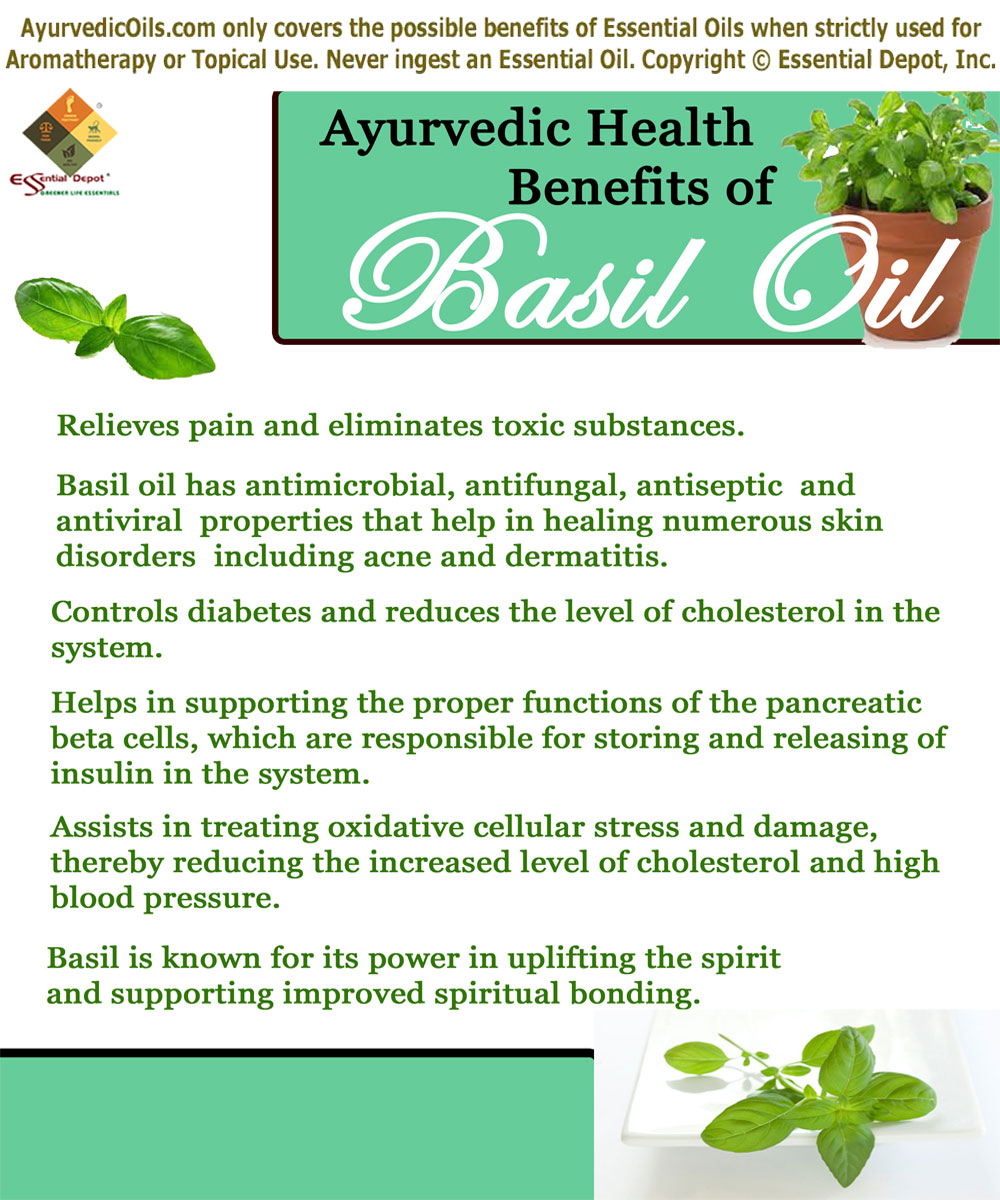
a) Relieves pain and eliminates toxic substances:

Basil essential oil has detoxifying, diuretic, antioxidant and analgesic properties that help in discarding toxic remains from the system by promoting frequent urination. This also aids in reducing the level of uric acid and salt deposits, which may otherwise lead to the formation of kidney stones.

Improper blood circulation, stagnation of water deposits and amassing of toxic remains or ama (left due to indigestion) are the major causes for rheumatic conditions, arthritis and pain leading to stiff joints, inflammation, painful muscles, soreness, redness, irritation, fatigue and difficulties in performing routine tasks.

Gently massaging the painful and affected parts with this Ayurvedic massaging blend can be of great assistance in reducing inflammation, redness, irritation, pain and it also supports in promoting blood circulation in the painful areas. The therapeutic values of Basil oil along with other Ayurvedic oils in this massage blend promotes the frequency and quality of urination through which the toxic remains in the system are eliminated.

Homeopathy medication prescribes the use of Ocimum canum in the treatment of diseases associated with the kidneys, urethra and bladder. The most common health disorders treated with Basil in Homeopathic medicine are cramps and pain in kidneys and ureters, urinary problems like formation of high acidity or spike crystals of uric acid, renal colic, swelling and other symptoms of renal calculus.

b) Skin disorders and hair problems:

The essential oil of Basil has antimicrobial, antifungal, antiseptic and antiviral properties that help in healing numerous skin disorders including acne and dermatitis. 3 drops of Basil oil blended with 3 drops of Lavender oil and 3 ml of coconut oil can be applied on acne, marks, ringworm, eczema, athletes’ foot, leucoderma, itches and insect bites for improved results.

Basil oil also helps in clearing away skin blemishes and marks left behind by acne and wounds. Fresh juice extracted from Basil leaves mixed with honey is a traditional remedy for treating acne in Ayurveda. With its antifungal properties, Basil oil is said to be an excellent remedy for clearing dandruff, hair fall, dry and itchy scalp conditions.

A 2012 study on Antifungal activity of Ocimum canum Essential oil against Toxinogenic Fungi isolated from Peanut Seeds in post-harvest in Benin, published in the International Research Journal of Biological Sciences, concluded that the essential oil of Basil is used as an antifungal agent in protecting peanuts post harvest in Benin against the toxic strains of fungi like Aspergillus parasiticus and Aspergillus flavus.

This study justifies the use of the Basil leaves in the traditional medicine for treating numerous ailments and also reports “the essential oil of fresh leaves of O. canum as aflatoxin inhibitor and fungal growth suppressor. Based on these potentials, essential oil of Ocimum canum may be recommended as preservative of stored food commodities from fungal and aflatoxin contamination in storage system.”

Slightly heat 5 drops of Basil oil with 5 drops of Rosemary oil, 3 drops of Ylang Ylang oil and 3 drops of Lemon oil along with 10 ml of sesame oil and massage it soothingly on your scalp. Leave this blend to rest on your scalp for 30 minutes. Wash your hair with a mild shampoo blended with 1 drop of Basil oil and 1 drop of Lavender oil for treating dandruff, rough hair and split ends. This also aids in controlling hair fall and supports shiny, lustrous and thick hair.

c) Controls diabetes and reduces the level of cholesterol in the system:

Just like Clove oil, Basil oil is also a rich source of eugenol, caryophyllene and methyl eugenol. The high level of antioxidants along with these chemical constituents helps in supporting the proper functions of the pancreatic beta cells. These cells are responsible for storing and releasing of insulin in the system.

Massaging your system with this medicated blend will be a great aid in increasing the sensitivity to insulin and can help in controlling the level of blood sugar and insulin. This also helps in treating oxidative cellular stress and damage, thereby reducing the increased level of cholesterol and high blood pressure. You can also add 1 drop of Basil oil and 1 drop of Clove oil in your bathing water daily for obtaining these benefits.

A 2002 study on “Extract of Ocimum canum lowers blood glucose and facilitates insulin release by isolated pancreatic beta-islet cells” by Nyarko AK, Asare-Anane H, Ofosuhene M, Addy ME, Noguchi Memorial Institute for Medical Research, University of Ghana, Legon studied the use of the aqueous extract of Ocimum canum in the traditional Ghanaian medicine for treating diabetes mellitus.

This study concluded that the use of Ocimum canum extracts on animal models “inhibited insulin secretion by the pancreatic beta-islet cells and fasting blood glucose levels and body weight decreased significantly.”

d) Reduces fever:

Basil oil is a known Ayurvedic remedy for treating fever, including viral and malarial fever. With its febrifuge, antibacterial, antifungal, insecticide and antimicrobial properties, Basil and its essential oil assists in reducing the body temperature even in cases of high fever.

Massaging your foot soles with 2 drops of Basil oil along with 2 drops of Coriander oil and 2 ml of coconut oil can help in reducing fever significantly as all the nerves in body end up in foot soles and passing the therapeutic properties of these essential oils through the foot soles grants instant relief.

2. In steam inhalation:

Basil essential oil has been proven for its remedial effects in reducing excess of kapha dosha, which is responsible for respiratory infections including flu, common cold, nasal congestion, sinusitis, bronchitis, chest congestion, whooping cough and breathing difficulties.

Adding 2 drops of Basil oil and 1 drop of Eucalyptus oil in steam inhalation can help in relieving cold, cough, nasal congestion, sinusitis, sore throat, watery eyes and difficulties in breathing due to excess of mucus and phlegm deposits in the nasal and bronchial passages.

3. In burners or vaporizers:

Aroma plays a significant role in the natural healing methodologies and is one among the five types of remedial measures in Ayurveda. The sense of smell in Ayurveda states that an encouraging, energizing and tranquilizing fragrance has a positive effect on the entire system. This is the major reason for the use of incense sticks, flowers and aromatic candles during prayers and other spiritual gatherings.

Basil essential oil owns a warm, sweet, herbaceous and invigorating aroma that implants an encouraging effect on the plasma, nervous system and the circulatory system. When inhaled the therapeutic properties of this oil reach the limbic system of the brain through the nasal passages. Limbic system is the control center of the human brain that controls the feelings, emotions and attributes of a person.

2 drops of Basil oil with 1 drop of Neroli oil and 1 drop of Clary Sage oil added to the burner, diffuser, aromatic candle or vaporizer during meditation or Pranayama can assist in treating anxiety, mood fluctuations, stress, fatigue, nervous weaknesses and stressful conditions. This also assists in enhancing memory power, concentration, sexual interest, self-confidence and spiritual oneness.

Being a sacred oil, Basil is known for its power in uplifting the spirit and supporting improved spiritual bonding. This also helps in expanding the heart chakra, which is responsible for self-confidence, self-love, self-respect and love for others. Inhaling the curative aroma of this oil is said to generate a soothing effect on the intestines and stomach and alleviates spasms and cramps.

4. In oral rinse and compresses:

Basil essential oil has antimicrobial and antibacterial properties that work as a protective shield against germs causing tooth decay, bad odor and gum problems.1 drop of Basil oil and 1 drop of Clove oil added to a cup of warm water can be used as an oral rinse for relieving plaque, tooth pain, bad breath and protecting from damaging germs and other micro-organisms. This gargle can also aid in strengthening the gums and lessening toothache due to sensitivity.

2 drops of Basil oil blended with 2 drops of Eucalyptus oil and 2 drops of Bergamot oil in warm or cold compress aids in relieving joint pain, headache, muscular spasms, arthritis, stomach ache, rheumatic pain and migraine.

5. Other uses:

Basil and its essential oil is also effective in the treatment of intestinal worms, indigestion, cancer (attributed to its antioxidant and cytotoxic activities), eye irritation, epileptic attacks, renal colic, vomiting, painful kidneys, epileptic convulsions, painful urination and weak immune system.

Disclaimer:

This article is meant only for the use of education and information. It is not in any way recommended for substituting prescription drugs or expert medical guidance. We are not professionals in healthcare and this information is shared purely based on the interest of spreading the fragrance of Ayurvedic healing, the world’s oldest medical system on earth.

Never use essential oils internally and make sure that you dilute essential oils before using it for external application. This is because 100 percent organic and pure essential oils are highly concentrated substances and may cause allergic reactions if used on the skin directly.

Talk with your Ayurvedic practitioner/ healthcare expert before selecting the most suitable essential oils for your prakriti or unique individual constitution and state of health. Please avoid using Basil oil if you have sensitive skin or during pregnancy.

Thought for the day:

By bringing nature into our lives, we invite humility.  -Richard Louv

Suggested Reading:

  1. Adaptogens: Herbs for Strength, Stamina, and Stress Relief by David Winston, Steven Maimes
  2. The Basil Supplement: Alternative Medicine for a Healthy Body (Health Collection) by William Wagner
  3. Basil Recipes: Cooking with the King of Herbs (Quick and Easy Series) by Dogwood Apps
  4. Essential Oils for Weight Loss: If You Are Not Using These Essential Oils You Are Missing Out On Weight Loss Success (Essential Oils for Beginners – … Need to Accomplish Your Weight Loss Goals) by Sophie Hart
  5. The Ayurveda Encyclopedia: Natural Secrets to Healing, Prevention, & Longevity by Swami Sadashiva Tirtha

Reference Links:

  1. Basil: An Herb Society of America Guide by the Herb Society
  2. Extract of Ocimum canum lowers blood glucose and facilitates insulin release by isolated pancreatic beta-islet cells by Nyarko AK, Asare-Anane H, Ofosuhene M, Addy ME, published in PubMed
  3. Antioxidant and cytotoxic activities of essential oil of Ocimum canum Sims. from India by Tamil Selvi, Thirugnanasampandan, Sundarammal published in the Journal of Saudi Chemical Society
  4. Antifungal activity of Ocimum canum Essential oil against Toxinogenic Fungi isolated from Peanut Seeds in post-harvest in Benin by Adjou Euloge S., Kouton Sandrine, Dahouenon-Ahous, Si Edwige, Sohounhloue Dominique C.K., Soumanou Mohamed M published in the International Research Journal of Biological Sciences

Pine Scotch Essential Oil

Pine-bannerPine oil has such a great honor as it can garland anybody with the bliss and blessedness of the Christmas occasion at any given time. Apart from its use in Christmas decoration, Pine tree and the essential oil extracted from its needles through steam distillation method has many uses in the field of Complementary and Alternative medicine and in household cleaning. There are many species of Pine trees and the common ones used for essential oil extraction are Pinus sylvestris, Pinus alba, Pinus pinea and Pinus pinaster.

The book Ayurveda and Aromatherapy by Bryan Miller and Light Miller quotes Pine oil as “The world’s largest production of any one essential oil is Pine.  It is known to be a stimulant, helping people to be comfortable with any situation”.

With similar properties like Eucalyptus oil, Pine oil was used as a strong medicinal aid in many traditional healing practices including Ayurveda for treating chronic respiratory problems like pneumonia and bronchitis.

Purchase Pine Essential Oil – Retail – CLICK HERE

Purchase Pine Essential Oil – Wholesale – CLICK HERE

Historical importance of Pine tree and its essential oil:

Hippocrates, the father of Western medicine used Pine in the treatment of pulmonary conditions and established its healing effects on the respiratory system. Pine oil was recommended by the ancient physician Pliny for treating respiratory and lung problems.

The Native Americans chewed the needles of the Pine tree to defend against scurvy. They also used the clean-scented Pine needles on their bed to ward off fleas, lice and bed bugs. The highly ornamental timber of Pinus pinaster also known as Maritime pine was used in making furniture, building frames, panels, internal flooring, veneers, particle board etc. The pinecones are also used as Christmas decorations.

Chemical constituents or Gas Chromatography Report (GC) of Pine Scotch oil:

According to the Gas chromatography report, Pine Scotch oil constitutes of 15 chemical components that contribute to its fragrance, therapeutic attributes, consistency and quality of this oil. Of which, alpha-Pinene contributes to the highest proportion of Pine Scotch oil constituents with about 34.7% of its total composition.

Just click on:

I believe that this must certainly help you in getting to know the exclusive information about these prime chemical constituents of Pine Scotch oil.

The table crafted below clearly depicts the unique nature and contributions of these biochemical constituents to the healing magnificence of Pine Scotch essential oil.

pine-scotch-oil

Therapeutic properties of Pine essential oil:

The therapeutic values of Pine pinaster oil are anti-inflammatory, expectorant, restorative, stimulant, antiviral, antibacterial, circulatory, decongestant, disinfectant, analgesic and deodorant. The bark of this tree contains Oligomeric Proanthocyanidin Complexes (OPC’s) that make it an effective antioxidant that can fight against free radicals responsible for cancerous diseases.

Ayurvedic health benefits of Pine essential oil:

Ayurveda is a common sense science that considers illness as an opportunity to trace what is out of balance and what is the actual root cause for an illness. Ayurvedic remedies aim at treating the individual as a whole and the root cause of the disease instead of the disease alone. This helps in preventing illnesses in the future and paves way for healthy aging and longevity.

According to this traditional methodology, same medicine is not given to two individuals even if they have the same health problem because Ayurveda trusts that every individual is unique with a special combination of energy elements known as vata, pitta and kapha doshas and every person needs a unique treatment based on their individual constitution.

Every human being will have a predominance of any one of these doshas, which determines his/her personality. Dosha imbalance is the major reason for all kinds of sickness. Among the three doshas, Pine essential oil has the power to reduce surplus of vata and kapha and treat pitta deficiency.

The major Ayurvedic health benefits of using Pine essential oil are:pine-broucher1. Soothes respiratory problems:

5 drops of Pine essential oil added to steam inhalation helps you in treating sinusitis, cough and cold. The decongestant and expectorant properties of this oil aids in breaking up the mucus deposits and expelling it from the lungs.

Painful cough, congestion, flu, bronchitis, blocked nose, chest congestion, asthma and sinus infections can be treated with this natural aid. You can also mix 2 drops of Pine oil with 2 drops of Eucalyptus oil in a base of coconut oil for using it as a rub or in warm bath for lessening the effects of such respiratory infections.

2. Alleviates stress:

The sweet, slightly balsamic, evergreen, woody and fresh aroma of Pine essential oil instills a warm feeling of newness on the mind.  The aromatic molecules in the essential oil that pass through the nasal passages reach the limbic system of the human brain, where emotions, feelings and responses are controlled. This aids in transforming the relaxing, calming, invigorating, balancing, detoxifying, uplifting, strengthening and energizing effects of Pine essential oil on the mind and body.

This makes Pine essential oil as an excellent mood enhancer and makes it a powerful remedy in alleviating mental strain, stiffness, stress, fatigue, nervous tension and fear. Pine oil is known to help people remember the ways to get along with the flow of life; just like the Pine tree does by the ebb of the sea.

It is for this reason Pine essential oil is a proven remedy in treating memory loss and lack of concentration power. Inhaling the aroma of the divine Pine oil by adding 3 to 4 drops in your diffuser, potpourri, pillows or to a napkin aids in granting emotional stability and the power to go on and on.

3. Reduces pain and boosts metabolism:

Pine essential oil has analgesic and anti-inflammatory properties that aids in treating rheumatic pain, muscular aches, stiff joints and arthritis. Massaging the affected area with 5 to 6 drops of Pine oil added to soothing carrier oils like sesame oil or coconut oil followed by a hot bath blended with 3 drops of Pine oil can grant you relief from all kinds of pain. This massaging also helps in boosting your metabolism and stimulates the process of digestion. Pine essential oil is also used as a diuretic for eliminating water retention and toxins from your body.

4. Fights against bacteria and other harmful organisms:

A 2001 study on ‘Chemical and Antimicrobial Properties of Essential Oils of Five Moroccan Pinaceae’ suggested that the examination of the antibacterial activity witnessed that the essential oils of Pinus pinaster and Pinus pinea demonstrated a definite activity against all types of organisms tested and also possess a remarkable antiseptic activity.

5 drops of Pine essential oil blended with carrier oils like almond oil can be used in massaging, in bath or as a topical application for inhibiting the growth of bacteria, fungi, virus and certain other harmful organisms. This aids in protecting one from skin infections, urinary tract infections, bacterial infections and viral infections like flu and cold.

5. Protects the skin:

As a natural antiseptic, astringent, circulatory, antiviral, restorative and antibacterial oil, Pine essential oil is known for treating an extensive range of skin problems like acne, burns, psoriasis, athlete’s foot, dry scaly skin, boils, itching, eczema and wounds. You can add 4 drops of Pine essential oil to your antiseptic cream or skin care lotion and apply it on the affected part for quicker healing.

Tremendous health benefits of the bark extract of Pinus pinaster: Apart from the essential oil, the extracts from the bark of the Pinus pinaster tree has gained great recognition for its effectiveness in treating a wide range of illnesses.

A recent research on ‘Pharmaceutical and nutraceutical effects of Pinus pinaster bark extract’ proved that “P. pinaster bark extract (PBE) contains polyphenolic compounds (these compounds consist of catechin, taxifolin, procyanidins of various chain lengths formed by catechin and epicatechin units, and phenolic acids) capable of producing diverse potentially protective effects against chronic and degenerative diseases.”

This extract was also evidenced with anti-inflammatory effects, cholesterol-lowering effects, antimicrobial and antiviral effects, benefits for cardiovascular system, venous disorders, attention deficit hyperactivity disorder (ADHD), allergy and asthma, menstrual disorders, pregnancy associated pain and endometriosis.

Disclaimer:

Essential oils are highly concentrated liquids that can cause irritation of the skin and mucous membranes when used undiluted. It should always be used after diluting in carrier oils. Do not take essential oils internally as it may be harmful for your system. Consult your Ayurvedic practitioner before using essential oils for your unique individual constitution.

The MSDS (Material Safety Data Sheet) of Pine Scotch oil is readily available for your enhanced safety and better usage.

Gas Chromatography Report (GC analysis) of Pine Scotch oil.

Pine Scotch Essential Oil – Possible Skin Issues:

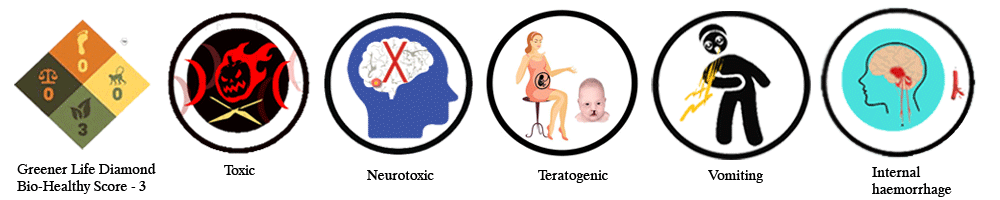
Greener Life Diamond – Bio-Healthy Score => 3 – Possible Skin Issues:

See => http://www.essentialdepot.com/GreenerLifeDiamond.html

The essential oil of Pine Scotch is said to cause mild skin irritation, contact dermatitis, sensitization, allergic reactions and irritation of the mucous membrane. It has been certified as GRAS (Generally Regarded As Safe) by the FEMA (Flavouring Extract Manufacturers’ Association). The chief chemical components responsible for the adverse skin impacts of Pine Scotch oil are α-pinene, delta-3-carene and limonene, mainly due to their autoxidation effects.

Certain studies report the effects of Pine scotch oil on contact dermatitis and sensitivity.  When used in large doses α-pinene has the potent to cause irritation of the mucous membrane, kidney damage, CNS (Central Nervous System) depression, growth of benign tumors, skin sensitization, allergies and irritation.

According to the Food and Cosmetic Toxicology edition (1976) by L.J. Opdyke, Pine Scotch oil sensitizing and irritating to certain individuals and is nonphototoxic in nature. When tested on repeated dermatitis patients at 2%, this oil provoked allergic reactions in about 12 members of the 1606 tested.

As Pine scotch oil has the tendency to irritate the lining of the mucous membrane during inhalation, it is good to avoid this oil if you have asthma, allergies in the respiratory passages and bronchial disorders.

The International Fragrance Association (IFRA) claims Pine Scotch oil as a sensitizing oil. Pine Scotch oil is recommended only for dermal use and not for ingestion. Besides being proved as an effective cytotoxic agent (fights against cancerous cells), certain studies have witnessed the renal failure, genotoxic and acute toxicity effects of the ingestion of Pine scotch oil.

Never use Pine scotch oil in an undiluted form and make certain that you always blend essential oils with gentle carrier oils like coconut oil and olive oil, as organic essential oils are very concentrated and may cause negative effects on the eyes, skin and the body. Stay safe by using diluted Pine scotch oil and avoid using it on allergies, damaged skin, eyes and inflammatory skin conditions.

It is better to avoid the use of Pine scotch oil if you are pregnant or nursing as there is insufficient information on the safe use of this oil during these sensitive times when the system experience enormous changes in the hormonal functions.

These possible skin issues are applicable only for leave-on products like creams and lotions and not for rinse-off products like soaps, shampoos and other bath preparations.

Reference Links Substantiating the Possible Skin Issues of Pine Scotch Oil:

  1. Pine oil by Essential Oil Safety: A Guide for Health Care Professionals By Robert Tisserand, Rodney Young
  2. Pine side effects and safety by WebMD
  3. Pine Needle Oil Toxicology by Leung’s Encyclopedia of Common Natural Ingredients, used in Food, Drugs and Cosmetics by Ikhlas A. Khan and Ehab A. Abourashed
  4. Medicinal Plants in Australia Volume 2: Gums, Resins, Tannin and Essential Oils by Cheryll Williams
  5. Selectivity of Pinus sylvestris extract and essential oil to estrogen-insensitive breast cancer cells Pinus sylvestris against cancer cells by Nguyen Thi Hoai, Ho Viet Duc, Do Thi Thao, Anne Orav and Ain Raal, published in the Pharmacognosy Magazine
  6. Scotch Pine Needle Oil by The Good Scents Company
  7. Pinus Species by Adverse Effects of Herbal Drugs 2

Thought for the day:

Trees are the earth’s endless effort to speak to the listening heaven.
-Rabindranath Tagore

Suggested Reading:

  1. The Practice of Aromatherapy by Dr. Jean Valnet
  2. Ayurveda & Aromatherapy: The Earth Essential Guide to Ancient Wisdom and Modern Healing by Dr. Light Miller, Dr. Bryan Miller
  3. The Aromatherapy Companion: Medicinal Uses/Ayurvedic Healing/Body-Care Blends/Perfumes & Scents/Emotional Health & Well-Being (Herbal Body) by Victoria H. Edwards

Reference Links:

  1. Maritime Pine by Victoria Department of Environment and Primary Industries
  2. Chemical and Antimicrobial Properties of Essential Oils of Five Moroccan Pinaceae published in The Journal of Essential Oil Research
  3. Pharmaceutical and nutraceutical effects of Pinus pinaster bark extract published in PubMed


Your resource for quality Essential Oils. Every batch is
GC tested to ensure purity and authenticity.

Mentha Piperita Essential Oil

Mentha-pepperita-bannerThe 3 greatest chronicles of my visit to India are the monumental Taj Mahal (one that you can see on my Facebook profile pic) that enthralled my sight, the deep-rooted cultural differences within a single country that moved my heart and finally the lip-smacking Samosas (the most popular Indian snack) pairing its pride with the mouthwatering mint chutney that are still deeply vested within my taste buds.

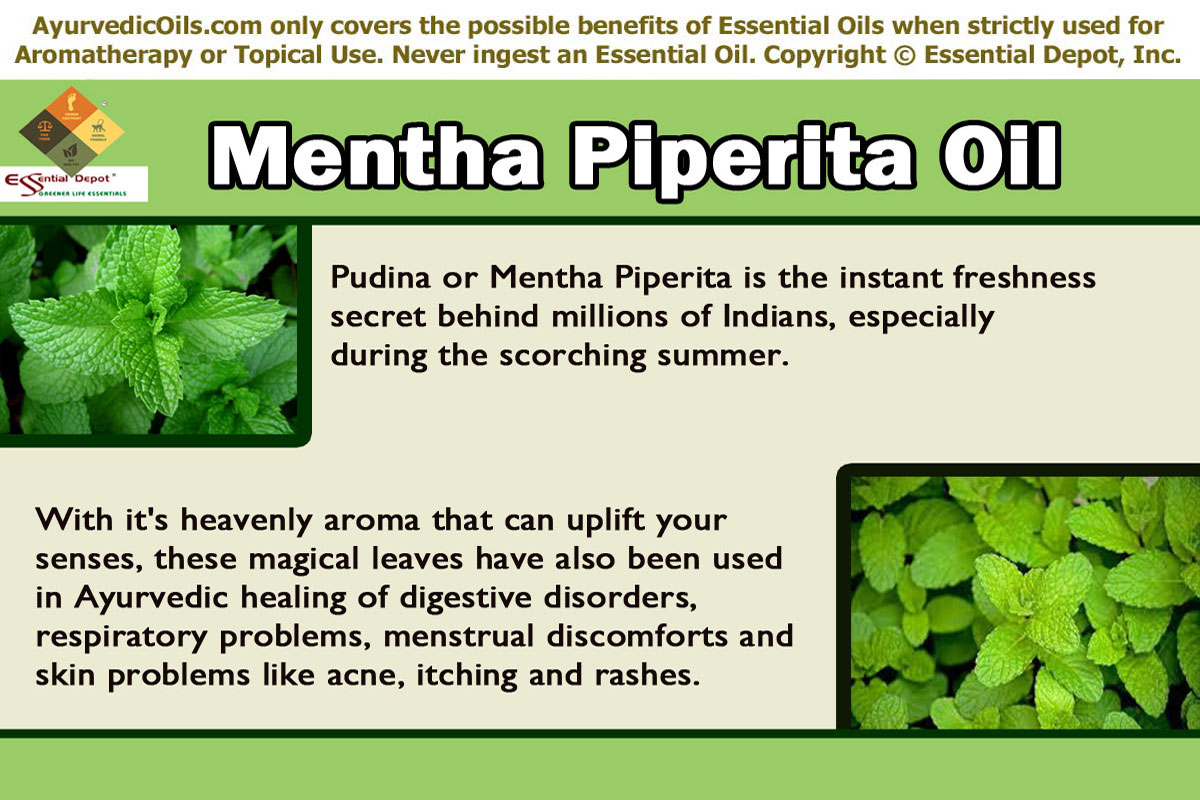
Power-packed with immeasurable health benefits, mint leaves botanically known as Mentha arvensis has a distinct aroma that’ll uplift you instantly. Mentha oil or Mentha Piperita oil is extracted from the leaves of this plant by steam distillation.

Known as Pudina or Podina, the fresh and dried leaves along with its essential oil have been in use in Ayurveda, the oldest of all healing sciences for more than thousands of years. The most popular Ayurvedic uses of this herb are for treating digestive disorders, respiratory problems, menstrual discomforts and skin problems like acne, itching and rashes.

Purchase Mentha Piperita Oil – Retail – 4 oz – CLICK HERE

Purchase Mentha Piperita Oil – Wholesale – CLICK HERE

Historical importance and uses of Mentha piperita:

The history of Mentha piperita dates back to 3,000 years and is still trusted to be cultivated first in the temperate climate of Europe, after which it was slowly spread to Asian countries like India, Japan and China along with certain other countries in Africa and North America. Currently India is the largest producer and exporter of Mentha oil contributing to 80% of the world’s total production.

Among many other members of the mint family Lamiaceae, Mentha arvensis is the only member that thrives well in subtropical areas. It is also known to the world with other names like Japanese mint, Corn mint, Wild mint, Field mint and Pudina.

This herb was used by the Aztecs to promote perspiration, treat stomach pain, flatulence and colic. Mentha oil was also used in treating pain, headache and oral problems. The herbal infusion prepared with these leaves was really effective in treating insomnia and sleeping disorders.

Mentha Arvensis was also used by the Native Americans for treating pain, inflammation and stomach ache. The traditional Europeans used mint as a remedy for cough, gastrointestinal disorders, flatulence and gall bladder problems. There are numerous home remedies using fresh mint leaves.

The Ojibwa community uses this plant in sweat-bath, whereas it is a part of the Sun Dance ceremony of the Northern Cheyenne Indians of Montana. This medicinal plant is also a part of Ayurveda, TCM (Traditional Chinese Medicine) and various other contemporary healing methodologies.

Therapeutic properties and chemical components of Mentha piperita essential oil:

This oil consists of about 95% menthol and other active ingredients are isomenthone, methyl acetate, menthone, alpha-pinene, camphene, beta-pinene, piperitone, flavonoids, limonene, beta-caryopyllene, neomenthol and tannins.

The healing properties are carminative, antispasmodic, antiseptic, antimicrobial, cholagogue, anti-fungal, expectorant, stimulant, tonic, antiphlogistic, antidepressant and nervine.

Ayurvedic health benefits of Mentha piperita essential oil:

Pudina is an incredible kitchen herb in India and many other Asian countries for its tempting and refreshing aroma along with its excellent medicinal values. Ayurveda aged for about 5000 years is a holistic medicinal practice that considers every human being as a part of nature.

Ill-health and good health according to Ayurvedic texts depend upon nature and natural remedies are the best way to treat it. Based upon this principle, Ayurvedic remedies encompass nature’s gifts like herbs and essential oils along with a balanced lifestyle, yoga, meditation and simple physical exercises that can assist in preventing diseases and pave way for longevity.

Every human being is considered as a unique creation and just like Hippocrates words ‘One man’s food is another man’s poison’, Ayurvedic treatments differ from individual to individual even for the same disease. This uniqueness is identified by one’s individual constitution that is made up of three bio-energies known as doshas. They are vata, kapha and pitta doshas.

Perfect balance between all the three doshas with the predominance of any one of the dosha determines a human’s health, attributes along with his physical and mental set up. Imbalance of doshas end up in illness and Ayurvedic treatments often prescribe remedies that can stabilize dosha disparities. Mentha and its essential oil are said to pacify pitta and kapha doshas and aggravate vata dosha with its easy, clear, dry and light properties.

The Ayurvedic health benefits of Mentha piperita essential oil are:

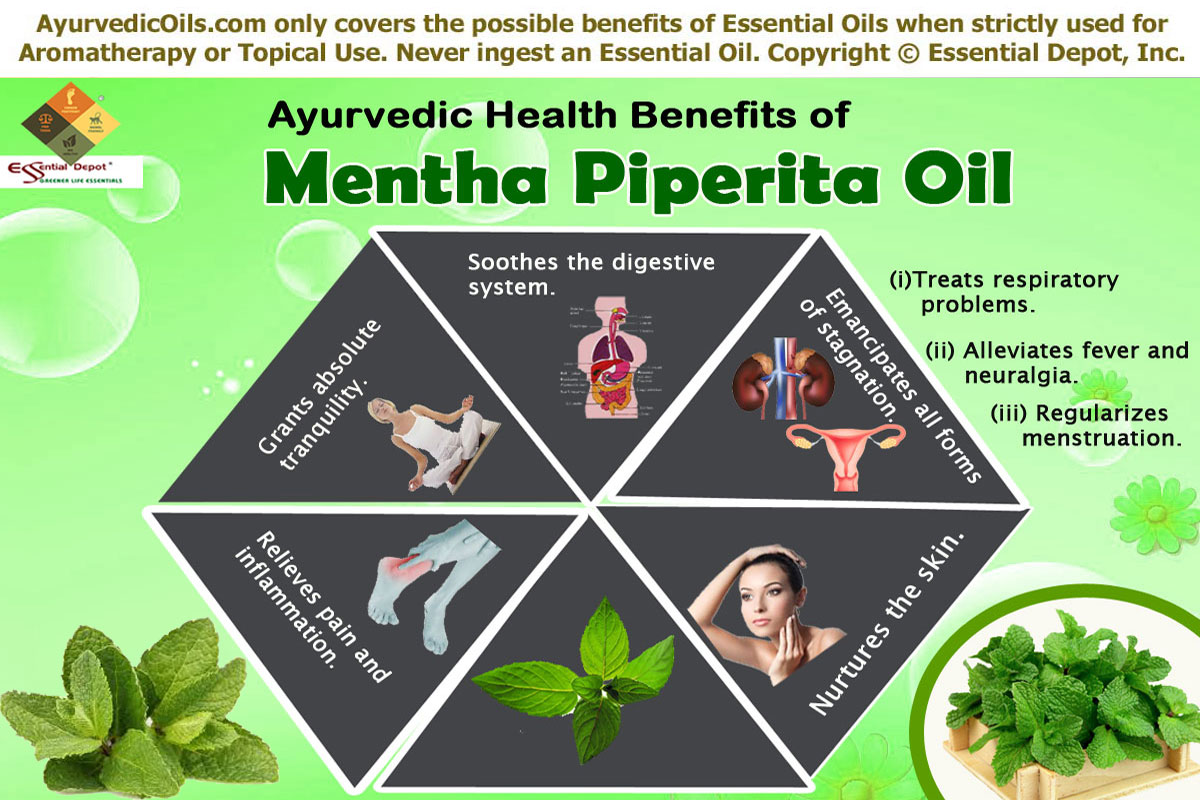
Mentha-pepperita-broucher1. Soothes the digestive system:

Mentha arvensis is a natural carminative that speeds up sluggish digestion, treats indigestion, motion sickness, flatulence, colic, dyspepsia, food poisoning, nausea, intestinal peristalsis and gas.  The active ingredients present in Menthol essential oil pacifies the inner lining of the stomach and intestines and its cooling property aids in treating ulcers as well.

The stomachic and digestion promoting properties of mint has made it a vital ingredient in many lamb and other meat dishes in the Middle East, America, Great Britain, Asia and Africa. Ancient people also used mint for preventing coagulation of milk.

All you need to do to treat your digestive chaos is to add 3 to 4 drops of Mentha piperita oil in warm bathing water and let that warmth and refreshing energy of the medicated bathing water treat your digestive difficulties. You can also gently massage your abdomen and tummy with 2 drops of this oil blended with sesame oil for assisting your digestive problems.

The simplest way to treat nausea (especially while traveling), morning sickness and loss of appetite is to add 1 drop of Mentha oil to your hanky or tissue and inhale its invigorating aroma that can put an end to your giddiness and nostalgic feeling just like that.

A 2010 study on ‘Protective effects of bioactive phytochemicals from Mentha piperita with multiple health potentials’ state “The essential oil of mint may be exploited as a natural source of bioactive phytochemicals bearing antimicrobial and antioxidant potentials that could be supplemented for both nutritional purposes and preservation of foods.”

2. Emancipates all forms of stagnation:

Mentha piperita essential oil is known to clear all forms of stagnation in the body causing sickness and affecting the body’s normal functioning. It alleviates excess kapha energy that is responsible for stagnation of excess fluids in the body leading to obesity, rheumatism, respiratory problems etc.,

(i)Treats respiratory problems:

Inhaling the healing aroma of Mentha oil by adding 2 drops to steam inhalation assists in treating respiratory problems like cold, asthma, bronchitis, sinus congestion, blocked nasal passages and congestion of lungs and bronchi.

Adding 2 drops of this oil to your cold rub and gently rubbing it on your chest, throat, back and forehead can aid in relieving headache, sore throat, chest congestion and runny nose. This speedy action is due to the presence of menthol, which is a primary ingredient in all the popular vaporub and balms in the market.

(ii) Alleviates fever and neuralgia:

The febrifuge and diaphoretic properties of Mentha essential oil helps in reducing fever by releasing the heat of the body through sweat. The antimicrobial and antifungal properties of this oil assist in curbing the growth of harmful microbes causing fever and other respiratory infections.

2 drops of Mentha oil can be added with coconut oil and applied on the soles of your feet to reduce your body temperature and treat neuralgia as the vital points of all the parts of your body are connected to the soles.

(iii) Regularizes menstruation:

The power to emancipate all types of stagnations in the body makes Mentha essential oil as a promising remedy for treating menstrual pain and blocked menstruation. Massaging your lower abdomen with 2 to 3 drops of Mentha oil along with sesame oil helps in regularizing your menstrual cycle, treat dysmennorhea, nausea and other painful symptoms of menstruation by balancing the level of estrogen.

3. Nurtures the skin:

Undoubtedly, Mentha essential oil is a natural antiseptic that aids in healing wounds and treating numerous skin problems. It acts as a protective shield on the skin and guards against the infections of micro organisms like bacteria, fungi and other microbes.

A 2008 study on ‘Enhancement of the Antibiotic activity against a Multiresistant Escherichia coli by Mentha Arvensis L. and Chlorpromazine’ has proved that the extracts of Mentha Arvensis can be used as natural weapon for bacterial resistance.

This oil has excellent skin cleansing properties. Adding 2 drops of Mentha oil to your skin care cream or lotion supports in treating pimples, blackheads, blemishes and dark circles. This oil also has anti-pruritic effect that can be effective in treating itching, rashes and insect bites.

4. Relieves pain and inflammation:

The rich menthol content in Mentha piperita oil helps in relaxing the muscles, treat muscular spasms, reduce pain, alleviate inflammation and promote blood circulation. Massaging the affected area with 2 drops of Mentha oil blended with coconut oil can aid in relieving pain, rheumatism, arthritis, numbness, soreness and irritation.

5. Grants absolute tranquility:

No one can deny the fact that mint has an enlivening aroma that can drive us straight to a whole new world of freshness and fragrance. Inhaling the aroma of Mentha oil by adding 2 drops to your aromatic lamp or diffuser or air freshener can trim down your fatigue, stress, depression, nervous tension and anxiety after a long tiring day.

The aromatic molecules of this tranquilizing oil travel through your nasal passages and reach the limbic system of the brain, which is the body’s control hub of feelings and emotions. By this way Mentha oil motivates, pacifies, rejuvenates and replenishes your senses and augments your mental power by boosting your confidence.

Other health benefits:

Mentha piperita essential oil is also used in lotions, toothpastes, gargles, cough drops, analgesic balms, perfumery, pharmaceuticals, mouth fresheners, shampoos, tobacco products and as a flavoring agent in numerous other products. You can also use this oil as a natural oral cleanser by adding 1 drop of Mentha oil to a cup of warm water and use it as a gargle in the morning and at night. This assists in killing germs, restricting bacterial growth, refreshing your breath, strengthening your gums and whitening your teeth.

Disclaimer:

This article is only for educational purposes and is not meant to treat or diagnose any health condition or to substitute any prescribed medications or expert professional advice. We are not healthcare professionals and this information is shared with the idea of spreading the significance of Ayurveda, the oldest holistic healing system on earth.

Never use essential oils internally. Ensure that you dilute them in appropriate carrier oils before using it for external purposes as pure and organic essential oils are extremely concentrated liquids and undiluted use on the skin might cause allergic reactions. It is highly recommended to speak with your Ayurvedic expert/ healthcare professional prior to choosing the appropriate essential oils for your unique individual constitution and state of health.

Thought for the day:

Nothing except the mint can make money without advertising.  -Thomas B. Macaulay

Suggested Reading:

  1. Mint: The Genus Mentha (Medicinal and Aromatic Plants – Industrial Profiles) from CRC Press
  2. Cultivation of Mentha arvensis and production of menthol in India by Council of Scientific and Industrial Research (India)
  3. ISO 9776:1999, Oil of Mentha arvensis, partially dementholized (Mentha arvensis L. var. piperascens Malinv. and var. glabrata Holmes) by ISO TC 54
  4. The Encyclopedia of Essential Oils: The Complete Guide to the Use of Aromatic Oils In Aromatherapy, Herbalism, Health, and Well Being by Julia Lawless

Reference Links:

  1. Mentha Arvensis Piperascens by Boston University School of Medicine
  2. Enhancement of the Antibiotic activity against a Multiresistant Escherichia coli by Mentha Arvensis L. and Chlorpromazine University of the Region of Cariri, Crato and Federal University of Paraiba, Brazil
  3. Protective effects of bioactive phytochemicals from Mentha piperita with multiple health potentials published in PubMed

Litsea Cubeba Oil

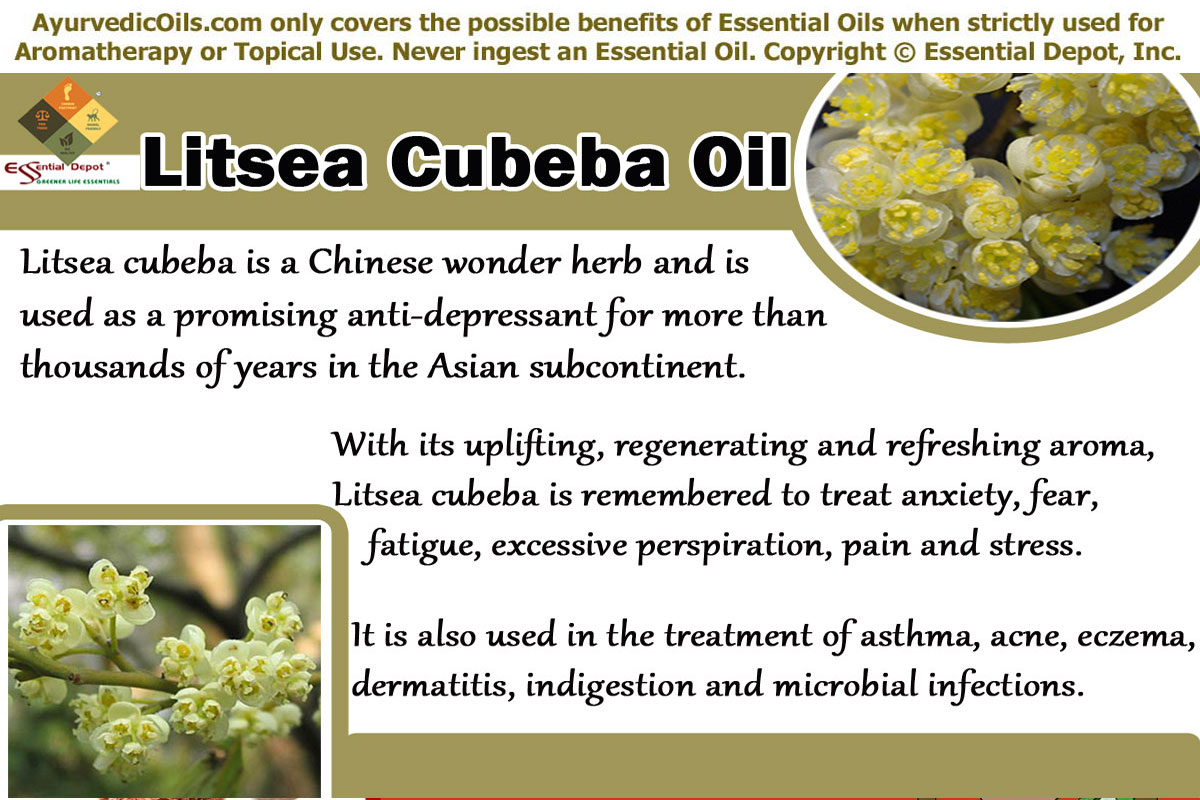
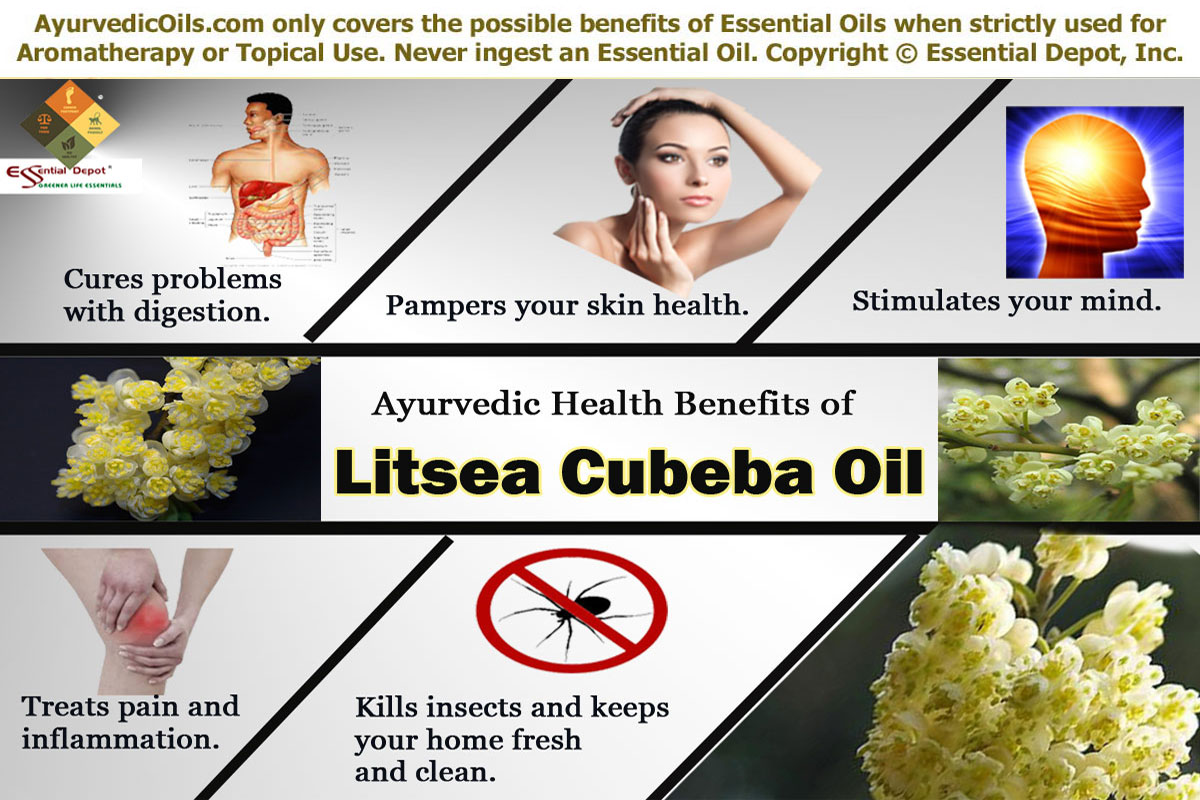
Litsea--cubebabannerLitsea cubeba is a Chinese wonder herb conferred to the medicinal world. Used as a promising anti-depressant for more than thousands of years in the Asian subcontinent, Litsea cubeba is remembered to treat anxiety, fear, fatigue, excessive perspiration, pain and stress.

This is mainly due to the uplifting, regenerating, energizing and refreshing aroma of its lemony essential oil extracted from the pepper-like berries of this evergreen shrub. Ayurveda and the Traditional Chinese Medicine embraces a long history of Litsea cubeba where this mesmerizing herb has been used for treating asthma, acne, eczema, dermatitis, indigestion and microbial infections.

Purchase Litsea Cubeba Oil – Wholesale – CLICK HERE

Historical importance of Litsea cubeba:

Botanically known as Litsea cubeba, this herb is popularly known as May Chang. It also called by other names like Mountain pepper, Chinese pepper, mountain spice tree, tropical verbena and exotic verbena. Native to China, Indonesia and Japan, Litsea cubeba is also grown widely in India, Sumatra, Kalimantan and Java.

Lovingly called as maqaw by the Atayal aborigines in Taiwan, May Chang has been used as a renowned spice by the aborigines of Taiwan. The pepper-shaped fruits of this tree were used as hot flavoring spice for meat dish known as sambal. May Chang flowers were also used in preparing medicinal tea.

The ancient Chinese used this herb for treating digestive ailments, chills, back pain, muscular aches and asthma. Traditionally this herb was used as a natural anti-spasmodic agent that helped in clearing spasms especially in the bronchia, thus assisting in the treatment of asthmatic attacks.

Chemical constituents and therapeutic properties of Litsea cubeba oil:

Citral is the major component of Litsea cubeba essential oil with more than 70 to 85% of the oil where geraniol is the a-citral and neral is the b-citral. This constituent contributes primarily to the healing properties of this oil such as antiseptic, antimicrobial, astringent, anti-inflammatory, hypotensive, tonic, insecticide, deodorant, calming, stimulant, antispasmodic, anti-infectious, sedative, carminative, vulnerary, antidepressant and stomachic.

Ayurvedic health benefits of Litsea cubeba oil:

Ayurveda is a treasure to mankind. You don’t need to be a healthcare practitioner to understand Ayurvedic philosophies as the wisdom of this noble science lies in its simplicity. Ayurvedic encyclopedias like Charaka Samhita and Sushruta Samhita explain the physical, emotional, psychological, spiritual and environmental factors affecting a human’s life, ways to lead a healthy life, natural remedies for diseases and guide towards a disciplined life and longevity.

’Everything in this world is vested with nature’ is the strong belief of Ayurvedic healing. It considers human beings as a part of nature and illness according to Ayurveda denotes a person’s imbalance with nature. Ayurvedic treatments involve the use of natural remedies to strike balance between nature and an individual’s state of health.

Ayurveda states that every individual is unique with an exclusive constitution that is built up of three biological energies known as doshas namely vata, pitta and kapha. Each of these doshas governs a set of functions in the body.

Predominance of any one of these doshas determines the character and physical attributes of a person. Imbalance of all or any of these doshas causes sickness. Herbs, essential oils, a disciplined life style, meditation, physical exercises and yoga are the most effective Ayurvedic remedies for dealing with dosha imbalances.

Litsea cubeba essential oil is said to pacify excess kapha energy and aggravate deficit vata and pitta doshas.

The Ayurvedic health benefits of Litsea cubeba oil are listed below for your reference:

Litsea-broucher1. Cures problems with digestion:

With the strong citrus aroma and warming stomachic properties, Litsea essential oil increases pitta energy, which governs the process of digestion, thinking and body temperature. This herb and its essential oil augment the digestive fire and enhance the appetite, treat indigestion and flatulence.

It prevents the formation of gas in the stomach and intestines. To support the process of digestion, blend 3 drops of Litsea cubeba oil with 15 drops of sesame oil and massage your abdomen or add 2 drops of this oil to warm bathing water.

2. Pampers your skin health:

‘A thing of beauty is a joy forever’ and when it comes to the beauty of human beings, skin plays the prime role in determining one’s external beauty. Litsea cubeba oil has everything that is essential to maintain a healthy looking skin from within. Maharishi Ayurveda denotes that Litsea cubeba essential oil is an excellent vata and pitta balancing formula to treat normal, dry, oily and sensitive skin.

Massaging your skin with 2 drops of Litsea cubeba oil mixed with10 to 15 drops of coconut oil can work wonders on your greasy, oily and infection prone skin. This massage enhances blood circulation and controls the secretion of sebum.

The astringent, antiseptic, antibacterial, antiviral and antifungal properties of this oil help you to keep away from acne, blemishes, eczema, dermatitis, allergies, psoriasis and cellulites. The ability to cleanse the skin, balance the flow of sebum and shrink open pores, aids in treating and preventing acne flare-ups.

A recent study on ‘Screening of fruit and leaf essential oils of Litsea cubeba Pers. from north-east India – chemical composition and antimicrobial activity’ proved that Litsea cubeba oil has potent “antimicrobial activity against Staphylococcus aureus, Listeria monocytogenes, Escherichia coli, Pseudomonas aeruginosa, Candida albicans and Aspergillus niger.” This oil is also effective in treating wounds, ringworms, cuts and insect bites.

3. Stimulates your mind:

Litsea cubeba essential oil has an exuberant aroma that is flowery and lemony in nature. It is for this purpose Litsea cubeba herb and its oil has been used in making perfumes, soaps and other cosmetic products.

Inhaling the magical aroma of this oil uplifts your mood, augments mental alertness, refreshes your mind, influences new ideas for life, pacifies your depressed mind and grants you a sense of freedom and confidence. Kurt Schnaubelt says that Litsea cubeba oil is used for calming the mind and senses.  Adding 2 drops of this oil to vaporizer, diffuser or burner aids in treating your mental worries and give a new lease of life to your world around.

4. Treats pain and inflammation:

The vata and pitta enhancing properties of Litsea cubeba oil assists in increasing blood circulation, reducing inflammation and strengthening the muscles. By reducing kapha energy, this oil aids in eliminating the excess fluid deposits and toxic substances in the body and tones your tissues.

The book on ‘Aromatherapy: A Complete Guide to the Healing Art’ states that massaging with May Chang oil helps alleviate allergies, open up the bronchial passages in case of asthma, bronchitis and other chest infections.

Massaging the affected area with 2 to 3 drops of Litsea cubeba oil blended with 20 drops of coconut oil helps relieve pain, headache, muscular tension, respiratory ailments, arthritis and rheumatism. You can also use this oil in hot or cold compress for assisting inflammation and pain.

5. Kills insects and keeps your home fresh and clean:

Litsea cubeba oil is the ideal fragrant way to keep away from insects and stay refreshed and ready to be picked up all through the day. You can add 2 drops of this oil in your regular insect repellant preparations or outdoor candles to keep your family protected from bugs, flies, mosquitoes and other insects and to give a clean n fresh feeling to your home. You can also add few drops of this oil in your shampoo, bathing water, body wash or skin care cream to stay protected in an insect-free environment.

Other uses:

With a much similar aroma to Lemongrass and lemon verbena, Litsea cubeba oil is preferred by numerous aromatherapists and perfume author Mandy Aftel prefers this oil to other citrus oils for its versatile aroma. This herb and its oil has also been used and proved effective in the treatment of arrhythmia, nervous disorders, high blood pressure, coronary heart diseases and cancer cells death in case of lung cancer. The bark of this tree is also used in making handicrafts and furniture.

Disclaimer:

This article is only for the purpose of information and is not intended to diagnose or replace any professional advice or prescribed medication. Never use essential oils internally. Always use essential oils in a diluted form as pure and organic essential oils are highly concentrated substances. Please consult your Ayurvedic practitioner before choosing the appropriate essential oil for your health condition and unique constitution.

Thought for the day:

Nothing is more memorable than a smell. One scent can be unexpected, momentary and fleeting, yet conjure up a childhood summer beside a lake in the mountains.  – Diane Ackerman

Suggested Reading:

  1. Essence and Alchemy: A Natural History of Perfume by Mandy Aftel
  2. The Encyclopedia of Essential Oils: The Complete Guide to the Use of Aromatic Oils In Aromatherapy, Herbalism, Health, and Well Being by Julia Lawless
  3. Medical Aromatherapy: Healing with Essential Oils by Kurt Schnaubelt
  4. Aromatherapy Workbook by Marcel Lavabre

Reference Links:

  1. Litsea Cubeba by Wikipedia
  2. What is Litsea Cubeba? By WiseGEEK
  3. Uses of May Chang Essential Oil by Livestrong.Com
  4. Litsea Cubeba Essential Oil Profile Aromatherapy Lifestyle by Quinessence
  5. Screening of fruit and leaf essential oils of Litsea cubeba Pers. from north-east India – chemical composition and antimicrobial activity published in the Journal of essential oil research by Taylor Francis Online

Lavandin (Grosso) Oil

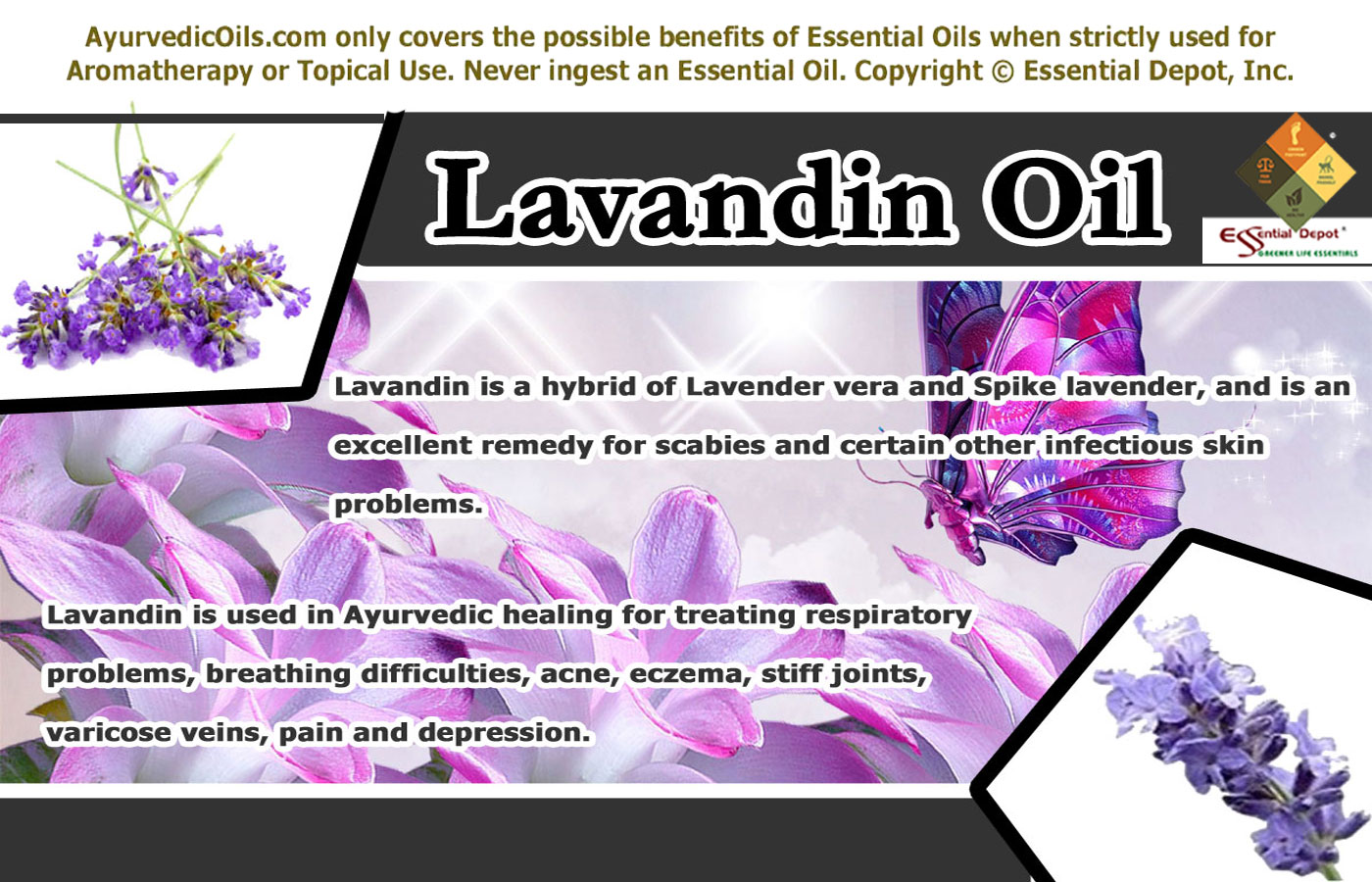
Lavendin-bannerThe dream of filling your garden and your home with the mesmerizing fragrance of Lavender blossoms is not a distant dream anymore as Lavandin is such a simple medicinal plant that resembles Lavender and its enriching aroma never fails to fill your home any lesser than Lavender does. As a hybrid of Lavender vera and Spike lavender, Lavandin Grosso is an excellent remedy for scabies and certain other infectious skin problems.

World is a global village and it is this strong reason that turns the world towards the path of Traditional healing methodologies. Ayurveda, the mother of all healing sciences on earth is the pioneer of Complementary and Alternative Medicine. Lavandin is used in Ayurvedic healing for treating respiratory problems, breathing difficulties, acne, eczema, stiff joints, varicose veins, pain and depression.

Purchase Lavendin (Grosso) Oil – Retail – 4 oz – CLICK HERE

Purchase Lavendin (Grosso) Oil – Wholesale – CLICK HERE

History of Lavandin (Grosso):

It is a hybrid variety of plants developed in the early 18th century and the essential oils extracted from these hybrid varieties were initially used for manufacturing soaps, perfumes and certain other personal hygiene products.

France is known as the major producer of Lavandin plants and essential oils. Lavandin essential oils are comparatively cheaper than True Lavender varieties. This is because unlike Lavender, these hybrid varieties can be grown as a commercially viable crop and are more tolerant to various climatic and growing conditions.

Lavandin Grosso is named after its discoverer Grosso and it reflects true qualities of both of its parentage with the camphoric aroma of Lavandula latifolia and the frost hardiness of Lavandula angustifolia. Among the numerous other Lavender hybrid plants, Lavandin Grosso is the most predominantly chosen plant by the commercial Lavender farm growers as it is easy to grow in most regions and produce abundant Lavandin flowers that contain ample amount of essential oils.

The big and bright flowers of this plant are also used for making sachets (keeps your clothes fresh and protect from moths and other insects) and the long stems are used in making Lavender wands. Initially, Lavandin and its essential oil were used as an analgesic and antiseptic for relieving pain, inflammation and for healing wounds and skin infections. Lavandin flowers were also used in making tea that was trusted to discharge excess mucous deposits and to assist breathing difficulties.

Chemical constituents or Gas Chromatography Report (GC) of Lavandin Grosso oil:

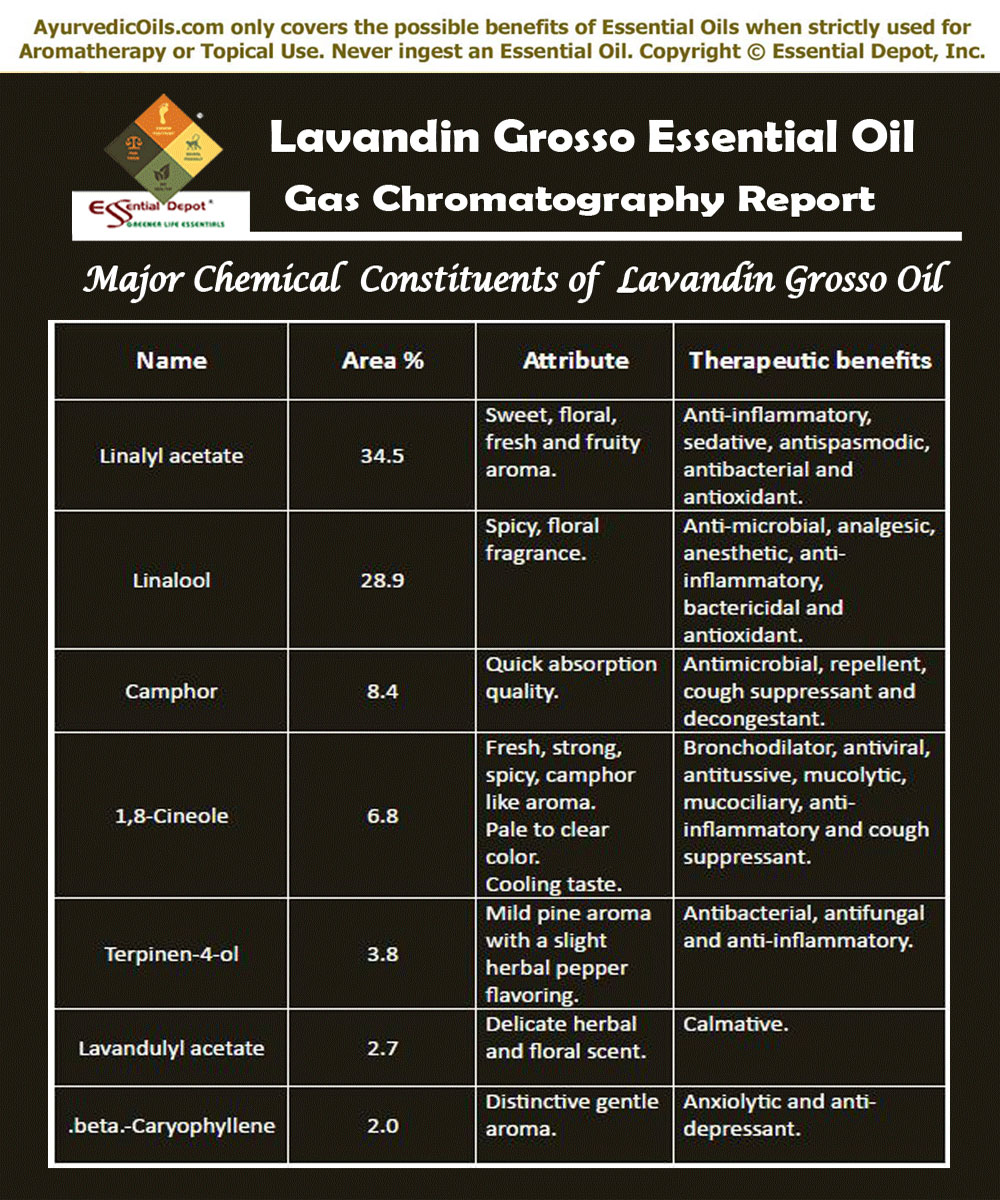
According to the Gas chromatography report, Lavandin Grosso oil constitutes of 25 chemical components that contribute to its fragrance, therapeutic attributes, consistency and quality. Of which, Linalyl acetate contributes to the highest proportion of Lavandin Grosso oil constituents with about 34.5% of its total composition.

Just click on:

I believe that this must certainly help you in getting to know the exclusive information about these prime chemical constituents of Lavandin Grosso oil.

The table crafted below clearly depicts the unique nature and contributions of these biochemical constituents to the healing magnificence of Lavandin Grosso essential oil.

lavandin-oil

Therapeutic properties of Lavandin Oil:

The remedial properties are antiseptic, antidepressant, analgesic, vulnerary, expectorant, cicatrisant, nervine, antispasmodic and stimulant.

Ayurvedic health benefits of Lavandin Essential Oil:

Many of us misconstrue that Ayurveda and the other traditional healing practices are meant for the old people or people who are still attached to the Stone Age. Ayurveda is the first and foremost healing methodology to love human beings and appreciate their individual identity, feelings, characteristics and behavioral patterns.

When all other medical sciences in this world aim at treating illnesses, this ancient healing system focused on treating individuals and not just their illnesses.

Ayurvedic philosophy declares that human beings are a part of nature and a person’s wellness or sickness depends upon his balance or imbalance with nature. Diseases occur when an individual’s mind and body is out of balance with nature. It is for this reason Ayurvedic remedies are based upon natural medicines for striking perfect balance with an archway to prevention and healthy aging.

Every individual is distinctive with a unique individual constitution that comprises of three biological energies known as doshas. They are vata, pitta and kapha. Each of these doshas governs certain functions of our body where vata is responsible for nervous functions and circulation, pitta controls metabolism and body temperature and kapha governs fluid movements, consistency and skin health.

Predominance of any of these doshas determines the personality, character, physical set up and the mental makeup of a person.

Imbalance between any of these doshas causes illness and Ayurvedic medications are prescribed in such a way that the imbalances are treated. Lavandin essential oil is said to reduce kapha and pitta dosha and has a neutral effect on vata dosha.

Let’s take a look at the Ayurvedic health benefits of Lavandin essential oil:

lavandin-broucher1. Benefits to the skin:

Popular author Susanne Fischer-Rizzi states that Lavender has more than 167 tested and proven medicinal uses. Bryan Miller and Light Miller in their book ‘Ayurveda and Aromatherapy’ says that Lavender is a must have essential oil in your first-aid kit or travel bag. With much similar aroma and healing properties like Lavender, Lavandin essential oil is also beneficial in a number of ways especially for nurturing skin health.

With excellent antiseptic, vulnerary and cicatrisant properties Lavandin essential oil has been proven effective for treating numerous skin problems. It keeps the skin clean and fights against various germs.

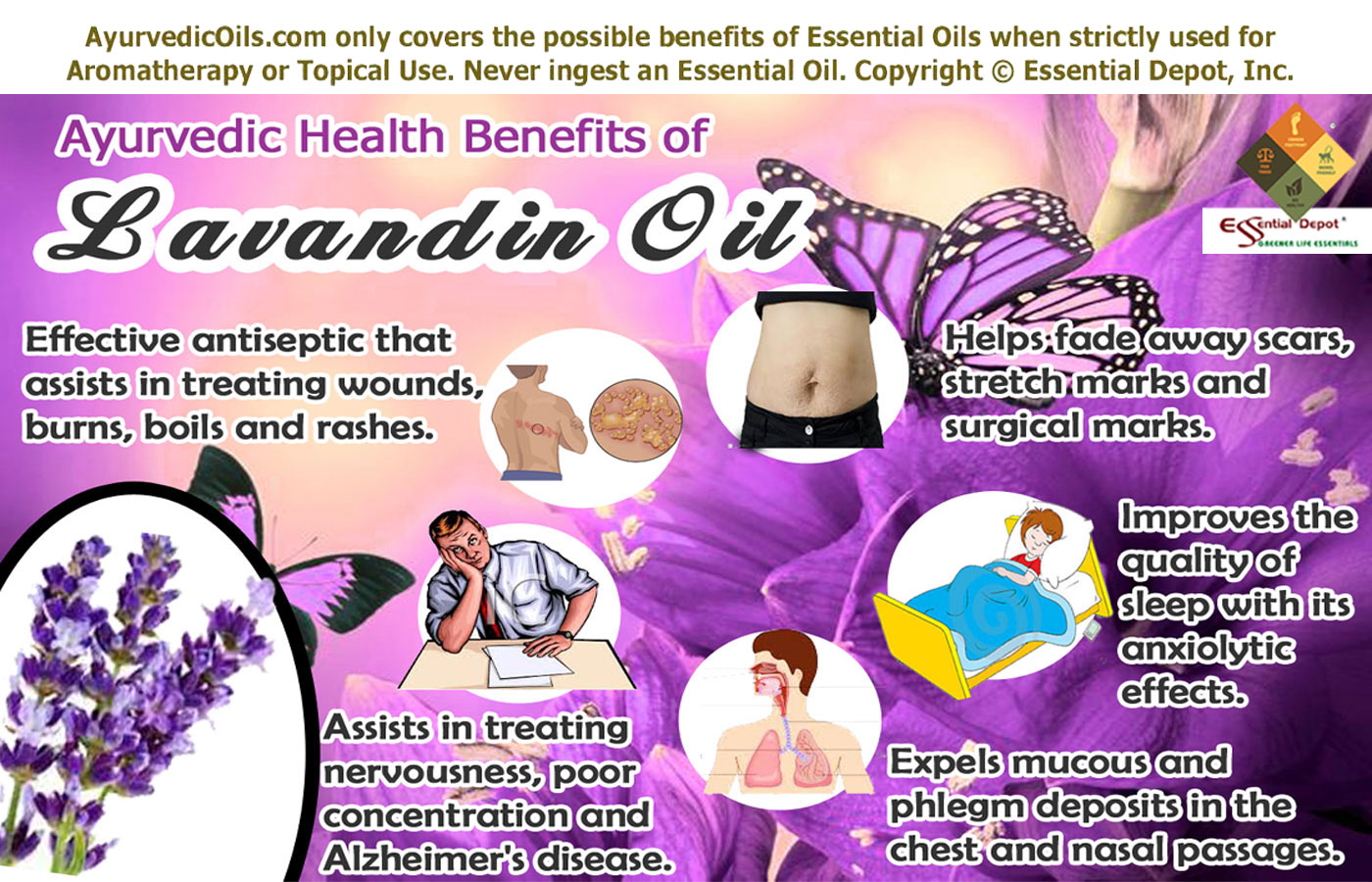
The ability of this oil in killing germs contributes to its effectiveness in treating dermatitis, scabies and few other infectious skin disorders. Being an effective antiseptic Lavandin essential oil can assist in treating wounds, cuts, burns, boils and rashes. It protects the open wounds from being septic or getting affected by the harmful organisms in air like tetanus.

The vulnerary properties of this oil helps in speeding up the process of healing wounds especially in case of incisions, surgical wounds, cuts or other accidental wounds. Applying 2 drops of Lavandin essential oil mixed with 1 ml of coconut oil is a sure-shot remedy for quick healing of wounds, protecting from infections and for fading away the scars and marks left by wounds, acne, stretch marks, surgical marks, cracks and other marks related to pregnancy.

Lavendin essential oil improves blood circulation and encourages the growth of new skin cells which contribute to its natural anti-scarring properties. You can also blend 3 to 4 drops of Lavendin oil in 2 ml of olive oil or to your regular skin care lotion and gently massage on to the skin to clear blemishes, treat sluggishness, dry skin and for improving the natural glow of the skin.

2. Benefits to the mind:

Lavandin essential oil has a rejuvenating and calming aroma that acts as an admirable antidepressant oil. The presence of camphor, linalyl acetate and terpineol-4 enhances its soothing and stimulating attributes that benefit the mind and heart in numerous ways. Lavandin Grosso oil is regarded as a great natural remedy for alleviating stress, fatigue, anxiety and depression. Certain studies have proven that Lavandin essential oil have anxiolytic effects that aid in improving the quality of sleep and save you from insomnia and nightmares.

Feelings of loneliness, lack of self-confidence, insecurity, loss of love or your near ones and work pressure may drag you down and waive a red flag to all your endeavors. All you need to do is to waive back the pleasant Lavandin flag that can uplift your spirit, enhance your self-confidence, fight against depressive feelings and reassure your success.

Adding 2 to 3 drops of Lavandin oil in your vaporizer, burner, diffuser, aroma lamp or bath tub can help in combating negative thoughts and grant the power to swim against the tide.

A 2009 study on ‘The use of the essential oil of Lavandin to reduce preoperative anxiety in surgical patients’ by the United Hospital, MN, USA tested about 150 adult patients to assess the effectiveness of Lavandin essential oil in reducing preoperative anxiety than other standard care methodologies. This study came up with an amazing result stating “Controlling for baseline anxiety and pain, the lavandin group had significantly lower anxiety on OR transfer, suggesting that lavandin is a simple, low-risk, cost-effective intervention with the potential to improve preoperative outcomes and increase patient satisfaction.”

3. Benefits to the respiratory system:

Adding 2 to 3 drops of Lavandin essential oil in steam inhalation or blending 2 drops of Lavandin oil with 1 ml of coconut oil and massaging it on chest, throat and back aids in treating cough, cold, bronchitis, sinusitis, chest congestion and other breathing problems. This is mainly due to the antiseptic properties of Lavandin oil that is proven to combat germs causing respiratory problems and its expectorant values that expel mucous and phlegm deposits in the chest and nasal passages causing cough and congestion.

4. Benefits to the entire body:

Lavandin Grosso oil benefits the entire body by supporting the functions of the nervous system. Using it as a massage oil by mixing 5 drops of this oil with 2.5 ml of jojoba oil aid in strengthening the nervous system and activate the nerves that pass on to different parts of the body. This is of great assistance in treating nervousness, sluggishness, convulsions, Alzheimer’s disease, lack of concentration and reflexes and certain other nervous problems.

Jane Buckle says “Lavandin Grosso was shown to be very effective against non-tubercular opportunistic mycobacteria (NTM) which is common in AIDS. Grosso is high in linalool for infections.” Lavandin essential oil also aids in treating pain, inflammation, rheumatism, influenza, headache, stiff joints, muscular problems etc, with its analgesic and anti-inflammatory properties.

Disclaimer:

This article is only for the purpose of information and is not destined for diagnosis or to substitute any prescribed medicines or professional advice. Never use essential oils internally and always use them in a diluted form for topical application as pure and organic essential oils are highly concentrated liquids and may cause harm if not used properly. Prevention is better than cure and it is always advisable to consult your Ayurvedic practitioner before choosing the right essential oils for your unique constitution and health condition.

The MSDS (Material Safety Data Sheet) of Lavandin Grosso oil is readily available for your enhanced safety and better usage.

Gas Chromatography Report (GC analysis) of Lavandin Grosso oil.

Thought for the day:  

The Universe is one great kindergarten for man. Everything that exists has brought with it its own peculiar lesson.     -Orison Swett Marden

Suggested Reading:

  1. Lavender: The Genus Lavandula (Medicinal and Aromatic Plants – Industrial Profiles) from CRC Press
  2. ISO 8902:1999, Oil of lavandin Grosso (Lavandula angustifolia Miller x Lavandula latifolia (L.f.) Medikus), French type by ISO TC 54
  3. The Lavender Garden: Beautiful Varieties to Grow and Gather by Robert Kourik
  4. The Lavender Lover’s Handbook: The 100 Most Beautiful and Fragrant Varieties for Growing, Crafting, and Cooking by Sarah Berringer Bader

Reference Links:

  1. The use of the essential oil of Lavandin to reduce preoperative anxiety in surgical patients’ by the United Hospital, MN, USA published in PubMed
  2. Lavandula by Wikipedia
  3. Lavandula x intermedia ‘Grosso’ by Missouri Botanical Garden
  4. Health Benefits of Lavandin Essential Oil by Organic Facts

Jasmine Sambac Oil

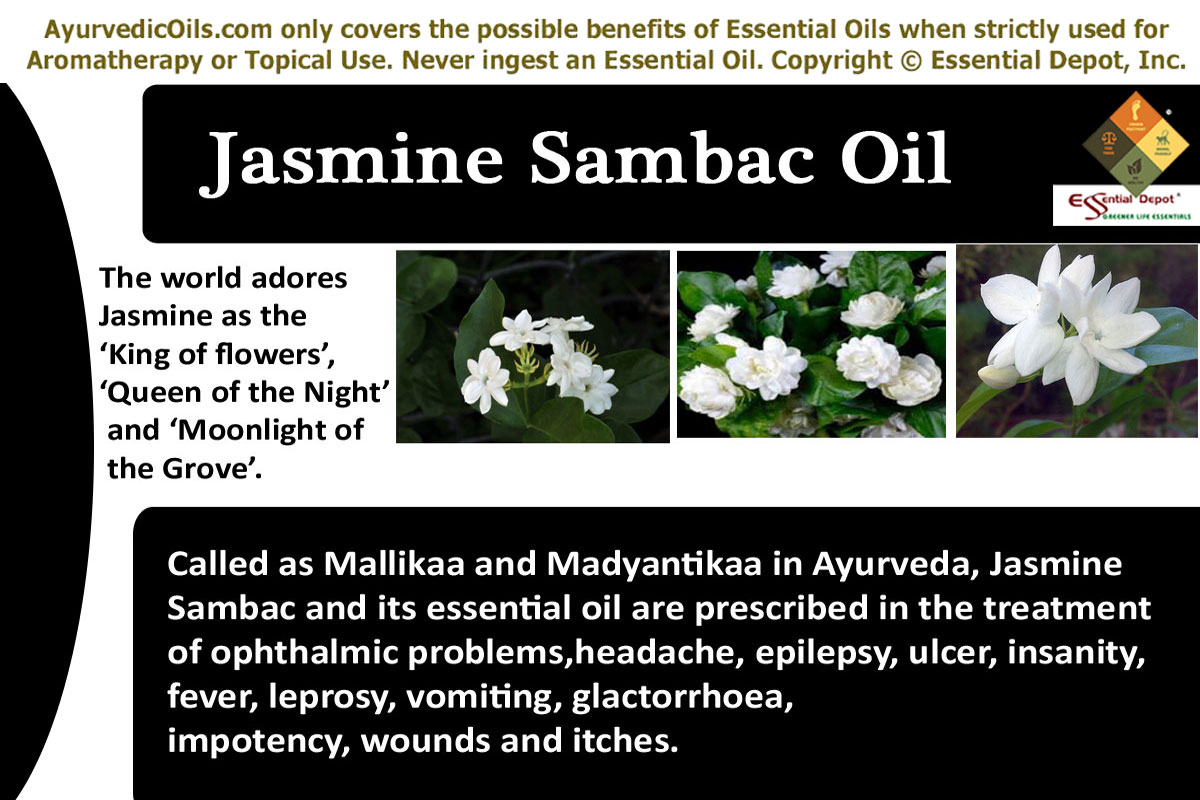
Jasmine-sambac-banner‘King of flowers’, ‘Queen of the Night’ and ‘Moonlight of the Grove’ are the ways by which the world adores Jasmine. The exotic, musky, mystifying, mesmerizing, sensual, zesty and the most masculine of all the flowery aromas in the world, Jasmine flowers grab the attention during their fullest blooms in the midnight.

Botanically known as Jasminum Sambac, Jasmine is known as Mallikaa, Nava-Mallikaa, Shita-bhiru, Madyantikaa, Vaarshiki and Madayanti in Ayurveda. It is commonly known as Arabian Jasmine.

According to the book, Indian Medicinal Plants Volume 3, the flowers, essential oil, leaves and the roots of this evergreen plant are widely used in Ayurvedic healing for treating ophthalmic problems, headache, epilepsy, ulcer, insanity, fever, leprosy, vomiting, glactorrhoea, impotency, wounds, itches and few other skin problems.

It takes about 8,000 hand-picked Jasmine blossoms to extract 1ml of its essential oil, which makes Jasmine as one among the most expensive oils on earth.

Purchase Jasmine Sambac Absolute 5% in Pure Jojoba– 4oz– CLICK HERE

Historical importance of Jasmine Sambac:

Jasmine Sambac is native to India and has its use etched in the history of various countries since the ancient times. The name Jasmine is extracted from the Persian name ‘Yasmin’ which means a fragrant flower.

It is the national flower of Philippines and one among the three national flowers of Indonesia. Known as Sampaguita (means “I promise you” and is a pledge of mutual love) in Philippines, Jasmine Sambac is regarded as a symbol of strength, simplicity, sacredness, humbleness and purity and is also used as a herbal remedy for fractures, abdominal distention, diarrhea, fever, swelling of the eyes and sprains.

The traditional Indians use the fresh juice of the ground flowers in treating sores, itching and wounds. The medicated root paste of Jasmine plant is used in treating labour pain for centuries in the rural parts of India.

Fresh Jasmine blossoms are used in making ceremonial garlands, crowns and other decorations on special occasions and as offerings to God in India, Indonesia and Philippines. Jasmine flowers are worn as hair ornaments by Indian women especially after marriage for its natural aphrodisiac, euphoric and sensual properties.

The Traditional Chinese Medicine has used Jasmine Sambac in the treatment of diarrhea, tumors, conjunctivitis, skin ulcers, dysentery and fever. The native Chinese used the roots in curing severe pain, headache, insomnia and pain and inflammation due to broken bones or dislocated joints mainly attributed to the analgesic, anti-inflammatory and anesthetic properties of this aromatic herb. The dried Jasmine flowers are used in making herbal tea in China.

The young leaves of Jasmine Sambac plant is used in making a herbal infusion for curing gallstones and the infusion of the roots were ingested to cure diabetes mellitus in Borneo. Jasmine Sambac has also been used for culinary purposes especially in making candies, teas, puddings, desserts, liqueurs and dairy products.

Therapeutic properties and chemical components of Jasmine Sambac essential oil: Jasmine Sambac oil is known to have antidepressant, aphrodisiac, antibacterial, analgesic, anesthetic, anti-inflammatory, antispasmodic, sedative, antiseptic, expectorant, antinociceptive, carminative, uterine tonic, cicatrisant, parturient, uplifting, stimulating, lactifuge and antitumor properties.

The major chemical constituents of Jasmine Sambac oil are cis-3-hexenyl acetate, benzyl acetate, methyl anthranilate, benzyl alcohol, cis-3-hexnyl benzoate, cis-3-hexnol, cis jasmone, linalool, methyl salicylate, benzyl benzoate, indole, α-franasene, linalyl acetate, α-cadinol and β-elemene.

Ayurvedic health benefits of Jasmine Sambac essential oil:

Ayurveda is the ancient wisdom of healing humanity for more than 5,000 years. It aims at prevention of illnesses along with healthy aging and longevity. Ayurvedic philosophy treats every individual in a unique manner even for the same disease as it trusts that every human being is unique in this world just like our finger prints.

It is the unique individual constitution of a person that helps differentiate his physical, mental and spiritual set up. According to Ayurveda, this constitution is made of three predominant biological energies known as doshas.

They are vata, pitta and kapha dosha. Each of these doshas represents a combination of two elements of nature. Whereas vata represents air and space, pitta represents fire and water and kapha is a representation of water and earth.

Vata energy governs circulation, process of elimination and the power of creative thinking. Pitta is responsible for digestion, absorption of energy along with leadership and decision making skills. Kapha controls the movement of fluids in the body, structure, sustenance and love.

Every human being is classified based upon the predominance of any one of these doshas and balance between these three Ayurvedic body types determines healthiness. Doshic imbalances denote that the individual’s health is out of balance with nature.

Ayurvedic remedies aim at balancing the doshas and help an individual to lead a systematic, disciplined and healthy life. The major Ayurvedic remedies are essential oils, herbs, physical exercises, Ayurvedic routine, meditation, yoga, prayer and a healthy balanced diet. Jasmine Sambac essential oil is a tridosha essential oil that is good for pacifying all the three doshas especially good in treating vitiated pitta conditions.

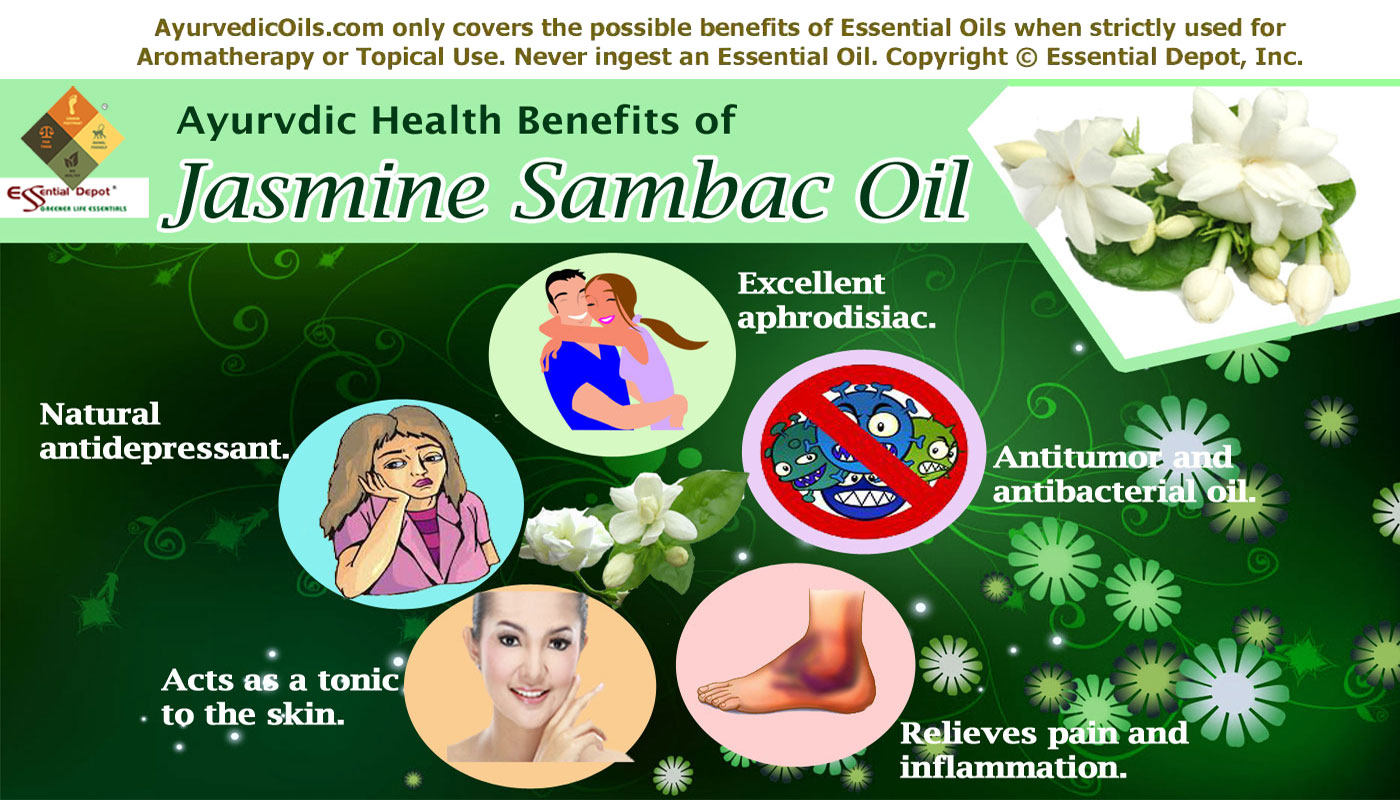
Let’s have a look at the major Ayurvedic health benefits of Jasmine Sambac essential oil.Jasmine-sambac-broucher1. Excellent aphrodisiac:

Jasmine has an ecstatic, compelling, sensual and miraculous aroma that has magical powers vested in it. This mystical fragrance grants excellent relaxation, open up blocked sexual inhibitions, treat the senses, supports the strength of female energies and naturally fortify the vigor of male energies. Jasmine is also known to nurture the health of male and female reproductive system and stimulates the secretion of male and female hormones.

A recent study on the ‘Comparative olfactory analysis of Jasminum Sambac and Jasminum Grandiflorum absolute’ has come up with the findings stating that Jasmine Sambac has a more appealing aroma that has a positive effect on the olfactory system that plays a vital role in governing numerous feelings and emotions that are distinct yet interconnected.

It is for these special reasons; Jasmine blossoms are used in making garlands, hair ornaments and in decorating the rooms of the newlywed couples in India, Philippines and Indonesia. Blend 2 drops of Jasmine oil in warm bathing water and enjoy a romantic bath together before going to bed. You can also add 2 to 3 drops of Jasmine Sambac oil to your burner, aromatic lamp, diffuser or air freshener during the night to enjoy the special time with your life partner.

2. Natural antidepressant:

Depression has become a common phenomenon in people of all ages including teenagers, professionals (both men and women) and aged people. Ayurveda recommends meditation, yoga and the use of pacifying aromatic oils like Jasmine Sambac oil. The aromatic compounds in Jasmine oil pass through the nasal passages and reach the limbic system of the brain, which is the control center of the brain.

Inhaling the aroma of Jasmine Sambac essential oil is said to pacify the senses, control negative feelings and paves way for venting out the depressed emotions that spoil one’s day. Adding 2 drops of this oil to vaporizer, burner, diffuser or air freshener can assist in treating tension, fatigue, depression, nervousness, anxiety, postnatal depression and addiction.

You can also add 2 drops of Jasmine Sambac oil in warm bathing water or massage your body by blending 5 drops of Jasmine oil with 2.5 ml of Jojoba oil for uplifting your senses, instilling positive feelings, strengthen your mind, augment your self-confidence and boost your emotions from within.

3. Antitumor and antibacterial oil:

Such a small flower possessing antitumor properties is absolutely a wonder to me and this witnessed by numerous studies. A 2011 study on ‘In vivo and In vitro Antitumor Activity of Jasminum Sambac (Linn) AIT Oleaceae Flower Against Dalton’s Ascites Lymphoma Induced Swiss Albino Mice’ evaluated the anticancer effect of Jasminum Sambac on mice affected by affected by cancerous tumor in the lymphatic system.

This study proved that the methanolic extracts of Jasmine Sambac flowers possessed significant cytotoxic and anticancer activity that helped in increasing hepatic levels of RNA and DNA in the mice.

The leaves and flowers of this plant are used since the ancient times in Ayurveda for treating and preventing breast cancer and controlling uterine bleeding. It is also used as anti-cancer, antiulcerative and antileprotic.

Jasmine Sambac essential oil also has antibacterial properties that aid in combating bacteria and other harmful microbes causing infectious diseases. A 2008 study on ‘Antibacterial potential assessment of Jasmine essential oil against E.Coli’ stated that Jasmine oil contains antibacterial activity that makes it effective in the treatment of removing corns, purify the kidney, treat ulcers and other inflamed conditions.

4. Relieves pain and inflammation:

Jasmine Sambac oil has mild analgesic, anesthetic and anti-inflammatory properties that help relieve pain and reduce inflammation. ‘Preliminary Studies on Anti-Inflammatory and Analgesic Activities of Jasminum Sambac (L.) Aiton in Experimental Animal Models’ have proved that Jasminum Sambac extracts exhibit anti-inflammatory and antinociceptive properties that are helpful in treating muscular aches, rheumatism, back pain, headache and inflammation.

Mix 2 drops of Jasmine Sambac oil with 1 ml of olive oil and massage gently on the painful area or add 2 drops of this oil to warm bathing water or to hot compress for effective relief from pain and inflammation.

5. Acts as a tonic to the skin:

Jasmine Sambac oil is extremely good for the skin and it acts as a natural tonic and improves the skin health. Add 2 drops of this oil to your regular skin care cream or lotion and massage it gently on to your skin for treating dry skin, sensitive skin, greasy skin and for fading away scars and stretch marks. Using 1 drop of Jasmine Sambac oil in vapor therapy can help in removing excess oil and blemishes in the skin and helps bring out its natural radiance.

Other health benefits:

Jasmine Sambac oil is also used as a tonic to the brain. The flowers are also used for reducing fever, treating hiccoughs, bee stings, swollen eyes, insomnia and vomiting. It is proven effective in the treatment of gastric ulcer and peptic ulcer with its antigastric ulcer effect. Being a lactifuge, Jasmine Sambac flowers are used traditionally for arresting the secretion of breast milk in a day or two.

Disclaimer:

This article is only for educational purposes and is not directed to diagnose or replace any professional medical advice or prescribed medication. Never take essential oils internally. Organic essential oils are highly concentrated in nature and are always advisable to use them in a diluted manner.

Certain compounds in Jasmine sambac oil can be allergenic and is good to do a small patch test on the skin to check the reaction or the sensitivity of your skin. Consult your Ayurvedic practitioner before using the right essential oils for your unique constitution and health condition, especially if you are pregnant or a nursing mother.

Thought for the day:

Plants that wake when others sleep. Timid jasmine buds that keep their fragrance to themselves all day, but when the sunlight dies away let the delicious secret out to every breeze that roams about.  -Thomas Moore

Suggested Reading:

  1. Jasmines by Harshita Joshi
  2. Precision Production Technology in Jasminum sambac Ait: Comparison of Precision and conventional production technology in Jasminum sambac Ait by S.T. Bini Sundar, M. Kannan, G. Ashok Kumar
  3. The Genus Jasminum in Cultivation (Royal Botanic Gardens, Kew – Botanical Magazine Monograph) by Peter Green, Diana Miller
  4. Jasmine Recipes: Cooking with Nature’s Super Flower (Quick and Easy Series) by Dogwood Apps

Reference Links:

  1. Jasminum Sambac by Wikipedia
  2. Jasmine Sambac by Fragrant Harvest
  3. Antibacterial Potential Assessment of Jasmine Essential Oil Against E. Coli by C. C. Rath, S. Devi, S. K. Dash, and R. K. Mishra published in Indian Journal of Pharmaceutical Sciences and PubMed
  4. Mechanisms of Gastro protective Effects of Ethanolic Leaf Extract of Jasminum sambac against HCl/Ethanol-Induced Gastric Mucosal Injury in Rats published in Evidence-Based Complementary and Alternative Medicine of Hindawi Publishing Corporation
  5. Preliminary Studies on Anti-Inflammatory and Analgesic Activities of Jasminum Sambac (L.) Aiton in Experimental Animal Models published in the American Journal of PharmTech Research

Helichrysum (Immortelle) Oil

Helichrysum-oil-banner-newEverlasting and Immortelle are the common names of Helichrysum that denote the eternal bliss and never ending health benefits of these sunshine flowers to mankind. Scientifically known as Helichrysum italicum, this plant is a limb of the sunflower family Asteraceae. The essential oil is extracted from the bright yellow flowers by steam distillation method.

As one of the most desired essential oil, Helichrysum is known to heal a wide range of illnesses in this civilized world and may seem to be a vital part of the modern Aromatherapy. But the miracle is that it has been traditionally used to heal various health disorders in Ayurveda before 5,000 years including bronchial irritation, scavenging of free radicals, sprains, inflammation, digestive problems, scars, sports injuries, skin problems and certain other serious injuries also.

Purchase Helichrysum (Immortelle) Oil – Retail – 1 oz – CLICK HERE

Purchase Helichrysum (Immortelle) Oil – Retail – 4 oz – CLICK HERE

Purchase Helichrysum (Immortelle) Oil – Wholesale – CLICK HERE

Purchase Helichrysum (Immortelle) Hydrosol – 1 Litre – CLICK HERE

Historical uses of Helichrysum:

The name Helichrysum is derived from the Greek words ‘Helios’ meaning Sun and ‘Chrysos’ meaning Gold. It is indigenous to South Africa, Morocco, Algeria, Cyprus, France, Greece, Spain and Italy. There are about 250 species of Helichrysum plant that dwell in South Africa.

Helichrysum has been carved in the history as an excellent traditional medicine and as a culinary plant used in various cultures. Holmes says about Helichrysum as “the plant has been used in herbal medicine since ancient Greece”. He also says that the essential oil of Helichrysum has “a deeply-saturated sweet, green floral scent”.

Helichrysum is known as Geelsewejaartjie in Africa which means that these bright yellow flowers last for seven years when kept in the house. It is used as a potent traditional medicine in South Africa for treating rheumatism and is also used in potpourri for its lasting fragrance. The petals of Helichrysum flowers were used as a strewing herb in Europe during the medieval period.

This herb has been used as an effective remedy in folk medicine for healing scars and other major skin problems due to aging. With a curry-like quality, Helichrysum is used in Italy for flavoring sauces and in many other food items.

Chemical constituents and therapeutic properties of Helichrysum essential oil:

The significant chemical components of Helichrysum essential oil are 1,4 and 1,8-cineole, camphene, terpinen-4-ol, caryophyllene, a-pinene, myrcene, linalool, nerol, limonene, eugenol, b-diketones, neryl acetate, b-pinene, geraniol, flavonol glycosides and b-bisabolene.

These constituents contribute to its remedial values like expectorant, anti-inflammatory, analgesic, anti-allergenic, nervine, cytophylactic, vulnerary, cholagogue, diuretic, antispasmodic, cell-regenerative, astringent and anti-haematomal.

Ayurvedic health benefits of Helichrysum essential oil:

Ayurveda is nothing but nature’s own way to health and harmony. This ancient science or knowledge of life preaches the best practices to lead a healthy life for longevity, aging in the pink and the prevention of illnesses rather its treatment alone.

Ayurvedic texts recommend the use of herbs, essential oils, yoga, physical exercises, meditation and spiritual oneness for healing humanity. It strongly states that no two human beings are same and in the much similar way their illnesses should also be treated in a unique manner rather than prescribing the same medicines for two different people even for the same illness. For this identification, Ayurveda follows the principles of the three predominant biological energies known as doshas.

These bio-energies are found throughout the human mind and body and combine together to form the unique individual constitution. Every individual has a unique combination of these doshas with the predominance of any one of these doshas, which determines their personal traits, behavior, character and physical attributes.

Ayurvedic theory revolves around the core concept that health is representation of perfect balance between these three doshas namely vata, pitta and kapha.

Ayurvedic remedies are prescribed in such a way to intensify the deficit dosha or decrease the aggravated energy. Helichrysum essential oil is said to reduce pitta and kapha in excess and increase vata.

It’s time to take a look at the Ayurvedic health benefits of Helichrysum essential oil:

Helicrysum-brooucher1. Excellent oil for athletes and sports injuries:

Helichrysum essential oil is the most sought-after oil when it comes to sports injuries, sprains, blood clot, inflammation, bruises, micro tears, pain and muscular aches. Many a times these types of injuries cause swelling, leakage of blood from the injured capillaries, cellular damage, death of surrounding cells and damage to the connective tissues.

Dr. Kurt Schnaubelt in his book Advanced Aromatherapy says “The pain- reducing, analgesic, and regenerative effect of everlasting (Helichrysum) is unique: If applied in time, it prevents hemorrhaging. It is also very effective for joint pain. Generally, Helichrysum italicum works for all conditions in which inflamed tissue needs to be calmed down and regenerated.”

2 drops of Helichrysum essential oil blended with 1 ml of sesame oil acts as an excellent remedy for mending injuries like twists, bruises and blood clots. Massaging the affected parts with this healing blend assists in relieving pain, muscular tension, tears of muscles and ligaments. Applying it immediately after an injury aids in preventing from additional damages like hematoma and swelling. You can also add 2 drops of this oil in hot compress and rub down the painful areas.

2. Fights aging symptoms and clears acne and scars speedily:

Helichrysum essential oil is said to work hundred times better than the best anti-aging creams in the market. Its ability to stimulate cellular regeneration and nurture the natural glow of the skin from within helps greatly in treating wrinkles, dark circles, uneven pigmentation and oxidative skin damages.

Aging slows the down the process of repair, cause wrinkles, encourage the growth of cutaneous problems and augment the risk of toxicological damages to the skin. Helichrysum checks aging and its adverse effects on the skin with its cytophylactic properties that assist in promoting the health of the cellular structure and encourage the production of new skin cells by supporting the recycling of dead cells.

Being a natural emollient, Helichrysum essential oil is said to retain the moisture of the skin and prevents the development of cracks and dehydration. Helichrysum essential oil is not restricted to people with aging symptoms and adverse skin conditions but it is also a proven natural remedy for fading away marks, scars and acne.

This oil also heals raw chapped skin and burns. With its cicatrisant properties, Helichrysum oil speeds up the healing of wounds, cuts and other skin regularities while assisting in clearing up marks and scars including acne marks and stretch marks.

Add 2 to 3 drops of Helichrysum oil to your regular skin care cream that is mild and gentle. Massage it soothingly onto your skin and enjoy the difference of a smooth, refreshing, clean and youthful looking skin. This blend also has the power to lessen the oxidative damage caused by free radicals, tones and tightens the maturing skin that lack elasticity. Regular massaging of your skin with this medicated cream will be of great help in clearing your marks, scars and other blemishes and leave your skin glowing, supple and healthy.

3. Grants emotional support and absolute peace:

The mild, invigorating and long lasting aroma of Helichrysum essential oil helps in lending an emotional support and complete peace to the mind and body. In the book ‘Aromatherapy for Healing the Spirit’, Gabriel Mojay says “Those (emotions) that are most indicated…are enduring resentment, half-conscious anger, bitterness of spirit, and a stubbornly negative attitude.”

2 to 3 drops of Helichrysum essential oil added to burner, diffuser or aromatic lamps can work as an exceptional remedy for treating emotional and physical pain, agony, stress, fatigue and anxiety. Inhaling the sweet aroma of this oil paves way for tranquility and mental clarity.

It is considered as a sacred oil for its intense emotional and spiritual effects. Dr. Streicher says “emotionally it can help an individual get in touch with unresolved feelings, emotions that have been denied and/or buried. It is also helpful in restoring memories that have been buried deep in the past.” He also prescribes its use in psychotherapy to support a patient in dealing with emotional traumas and assists in releasing defense mechanisms.

4. Cures respiratory troubles:

Helichrysum essential oil has natural expectorant, mucolytic and anti-tussive properties that witness its use as an effective natural remedy for treating cold, cough, bronchitis, asthma and sinusitis. Excess of kapha energy is responsible for cold and other respiratory problems. Helichrysum oil being a kapha suppressant aids in thinning and clearing excess mucous and phlegm deposits that block the nasal passages, bronchial passage and the respiratory tract.

Add 2 drops of Helichrysum essential oil to steam inhalation and inhale the medicated steam for instant relief from cough, blocked nose, congestion and breathing difficulties. You can also add 2 drops of this oil to your vaporub and apply it on your chest, back and throat for complete relief from respiratory problems.

5. Treats high blood pressure and heart palpitations:

The essential oil of Helichrysum is said to control blood pressure, irregular heartbeat, heart palpitations and the risk of stroke with its anti-coagulant or blood thinning properties. A study by the University of Nigeria explored that the presence of caryophyllene and curcumene in Helichrysum essential oils assists in lowering blood pressure.

Massage your body with 5 drops of Helichrysum oil blended with 2.5 ml coconut oil for regulating your blood pressure and for treating heart disorders due to increased blood pressure.

Other health benefits:

Helichrysum essential oil is also effective in treating digestive problems like flatulence, ulcer, indigestion, vomiting, diarrhea, stomach aches and allergic reactions in the stomach and intestines. It is also helpful in treating psoriasis, dermatitis, eczema, allergies, urinary infections, wounds and fungal infections.

Using this oil on a regular basis is known to stimulate digestion, support absorption, promote detoxification, lessen inflammation, enhance the immune system and strengthen the entire system from within.

Disclaimer:

This article is only for educational reasons and is not recommended to diagnose or substitute professional medical advice or prescribed medicines. Never take essential oils internally.

Always ensure to use essential oils in a diluted form as pure and organic essential oils are extremely concentrated liquids and can cause harm if used directly for topical application. Seek advice from your Ayurvedic professional before choosing the right essential oil for your unique individual constitution and state of health. Please be cautious in using this oil if you are pregnant or a nursing mother.

Thought for the day:

Flowers are the sweetest things God ever made and forgot to put a soul into. -Henry Ward Beecher

Suggested Reading:

  1. The Healing Intelligence of Essential Oils: The Science of Advanced Aromatherapy by Kurt Schnaubelt
  2. The Fragrant Mind: Aromatherapy for Personality, Mind, Mood and Emotion by Valerie Ann Worwood
  3. Natural Medicine First Aid Remedies: Self-Care Treatments for 100+ Common Conditions by Stephanie Marohn
  4. The Encyclopedia of Essential Oils: The Complete Guide to the Use of Aromatic Oils In Aromatherapy, Herbalism, Health, and Well Being by Julia Lawless

Reference Links:

  1. Helichrysum italicum by Wikipedia
  2. Helichrysum italicum by The East-West School For Herbal & Aromatic Studies
  3. Helichrysum italicum by Dr. Christoph Streicher and Sheryll Ryan
  4. Use the healing properties of Helichrysum essential oil by Natural News.com
  5. How Helichrysum italicum Essential Oil Can Bring Healing to Your Life by ArticlesFactory.com