All posts by admin

Lemon Essential Oil

Lemon-bannerReferred to as ‘Golden Apple’ in the Indian subcontinent, Lemon is a universal remedy for many health disorders and is often called as a panacea for its ability to heal the mind and the body in manifold ways. The essential oil of Lemon is cold pressed from the external rind or peel of the Lemon fruits.

Known as Nimbuka, Jambira and Dantashata in Ayurveda, Lemon is a popular Ayurvedic remedy that is used in medicine, food and also in the process of purification. It is used for stimulating the nervous system, improve concentration power, enhance immunity, purify blood and support digestion.

Lemon and its essential oil is a popular ingredient of many Ayurvedic weight loss remedies and lemon juice taken with lukewarm water in empty stomach in the morning is said to reduce fat deposits and eliminate toxins from the body.

Purchase Lemon Oil – Retail – 4 oz – CLICK HERE

Purchase Lemon Oil – Wholesale – CLICK HERE

Historical importance of Lemon and its essential oil:

The real origin of Lemon lies as a mystery and it is said that Lemon is indigenous to India, Myanmar and China. The first historical mark of Lemon was in 90 BC where it was used to shower a high priest in a festival of Jews in Jerusalem though certain sources say that Lemon has been used since 800 BC.

It was introduced to Europe in the 1st century AD during the Roman reign and slowly spread to other parts of the world like Persia, Egypt and Iraq.  It is also said that Lemon was grown as an ornamental plant in the primordial Islamic gardens.

Affluent Victorians grew Lemon trees in their gardens as a symbol of high regard and for garlanding their estates with the naturally refreshing aroma of citrus trees. Serving Lemon wedges along with tea during their tea dances in the afternoon was a popular custom in their tradition.

It was Christopher Columbus who introduced Lemon to America by bringing Lemon seeds to the Island of Haiti during his voyages in 1493. Botanically known as Citrus limon, Lemon is a hybrid of citron and sour orange.

The most notable use of Lemon in the history was its use as a promising protection against scurvy by sailors all over the world. This was endorsed by James Lind, the celebrated Naval Surgeon in his book ‘Treatise on Scurvy’.

Chemical components or Gas Chromatography Report of Lemon essential oil:

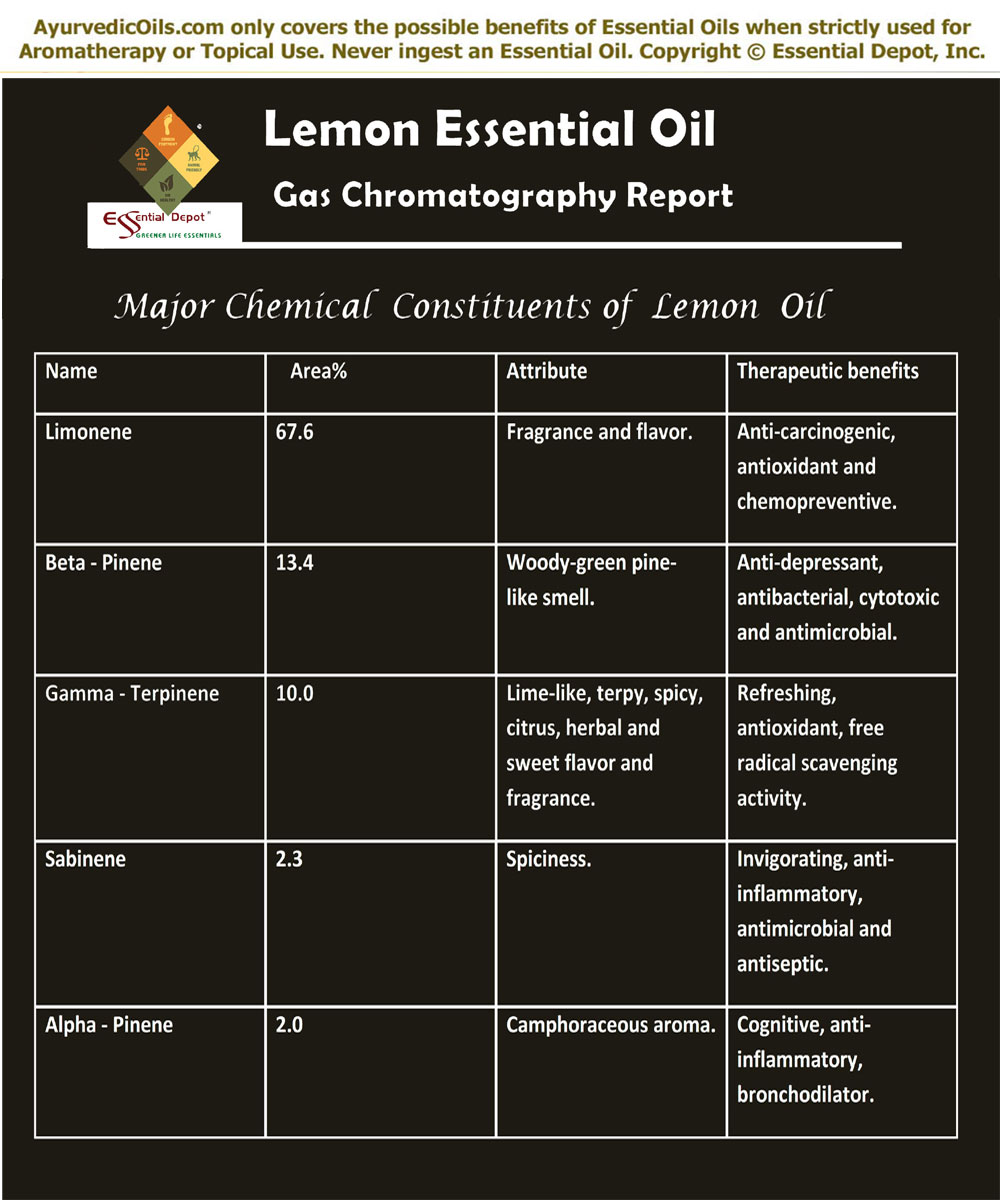
According to the Gas chromatography report, Lemon oil constitutes of 5 major chemical components that contribute to its fresh citrusy fragrance, remedial values and distinct quality. Lemon oil is enriched with about 67.6 percent of Limonene constituent.

Just click on:

For knowing more about the elite information of these top constituents of Lemon essential oil.

The table below on the Gas Chromatography report talks about the primary chemical constituents and its role in granting the therapeutic values and other attributes to Lemon essential oil.
Lemon-OilTherapeutic properties of Lemon essential oil:

The remedial properties of Lemon essential oil are antiviral, antibacterial, immune stimulant, digestive, anticancer, anti-inflammatory, calming, diuretic, expectorant, astringent, anti-anemic, detoxifying, antioxidant, tonic and antidepressant.

Ayurvedic health benefits of Lemon essential oil:

Ayurvedic healing dates back to more than 5000 years and it is the oldest of all medicinal systems on earth.  Lemon has been an important part of Ayurvedic treatments in many forms. The top ways to start a refreshing Ayurvedic life begins with the use of Lemon in lukewarm water as this therapy is said to cleanse the system, clear impurities in the blood and energize the mind and the body.

Human being is a unique creation and Ayurveda adorns the beauty of an individual constitution that differentiates each and every individual with a unique physical and mental setup. This uniqueness is determined by the combination of the three biological energies known as doshas.

They are vata, pitta and kapha. Vata dosha is responsible for blood circulation, creative thinking, metabolic functions and the process of elimination. Pitta energy governs body temperature, digestive fire, leadership skills and perfection. Kapha dosha lies behind the movement of fluids in the body, love and affection and body mass.

Predominance of any one of these doshas determines character, personality and behavioral attributes. Dosha balance contributes to good health and imbalance of doshas indicates illness.

Ayurveda sticks to nature and trusts that natural remedies are the best ways of healing human beings as they are an incredible part of nature. Ayurvedic therapies are unique for every individual and are focused towards treating dosha imbalances.

Ayurvedic remedies are often aimed at treating the five senses of human body. They are the sense of sight, sense of smell, sense of taste, sense of touch and sense of sound. Lemon is by far the best Ayurvedic remedy that has the power to retreat and recharge the four vital senses of the human body.

Lemon and its essential oil is said to pacify kapha and vata energy and aggravate pitta dosha.

Let’s have a look at the Ayurvedic health benefits of Lemon essential oil in the order of the five senses of human beings.Lemon-broucher1. Sense of sight:
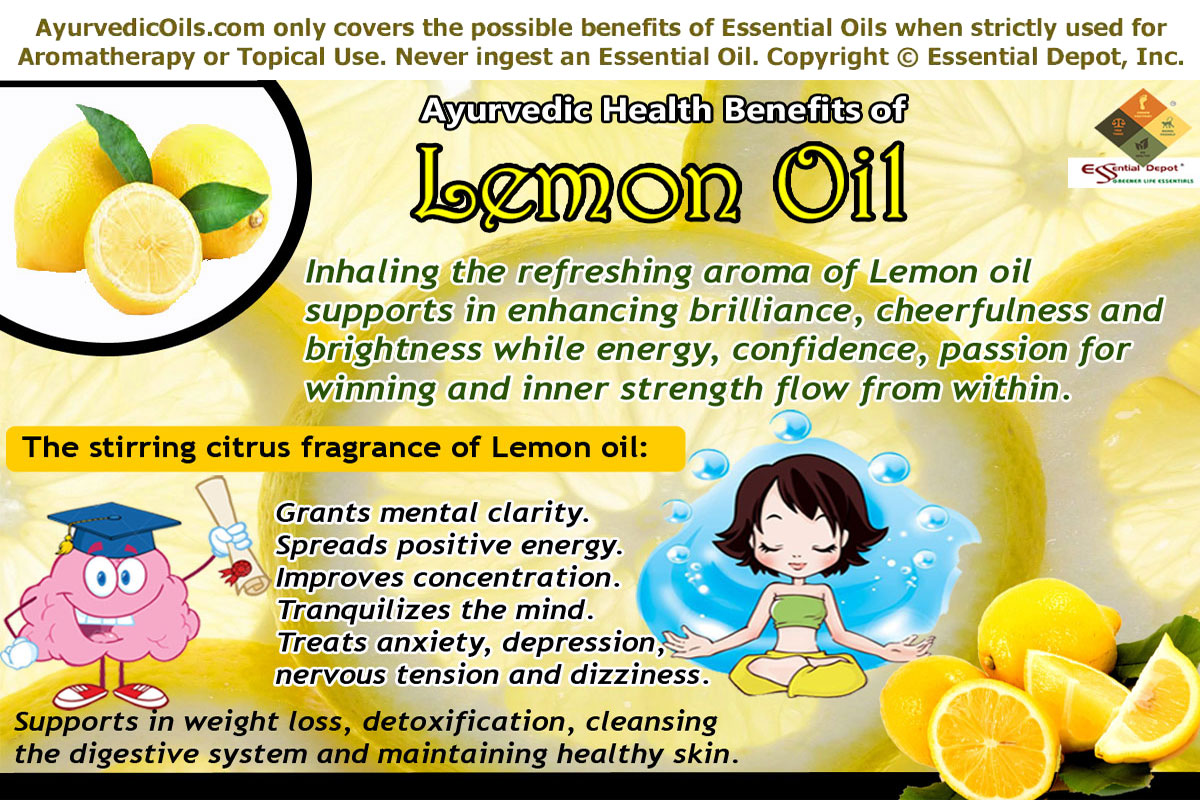
The very sight of Lemon gives energy, confidence and inner strength. This is because the bright yellow color of Lemon indicates brilliance, cheerfulness, brightness and sunshine. These are the symbols of potency and real power paving way for improvement in one’s health physically and mentally. Healing through the sense of sight is known as color therapy in Ayurveda.

This holistic healing methodology states that every color has various impacts on the physiological and psychological attributes of mankind. Yellow color of Lemon and its essential oil according to Ayurveda has the power to promote clarity of mind, grants motivation, enhances the energy level, augments communication and instills the power of winning. So the next time, when you are feeling down and depressed, just look at the ‘Golden apple’ (lemon) that has the power to mend your mind to peace and prosperity.

2. Sense of smell:

Aroma plays a vital role in uplifting the body and mind. By inhaling the aroma of Lemon essential oil, the therapeutic molecules in the oil reach the limbic system of the brain through the nasal passages, where limbic system is the body’s control center that controls feelings, emotions and the corresponding behaviors.

The citrusy, fresh, energizing and enlivening aroma of Lemon essential oil spreads positive energy, calms the mind, grants mental clarity, treats anxiety, fatigue, nervous tension, dizziness, improves concentration, instills hopefulness and assists in weight loss when 2 drops of this oil is added to aromatic lamps, diffuser, air freshener, vaporizer or burner.

A 2004 study published in Brain Research stated that Lemon essential oil may contain pain-relieving and anxiety-reducing properties. When used in steam inhalation, Lemon oil aids in opening blocked nasal passages and clear chest congestion. The revivifying fragrance of Lemon oil makes it a favorite flavor in household cleaners, disinfectants, soaps, shampoos and detergents.

3. Sense of taste:

The best way to take Lemon internally is to drink the fresh juice. Ayurvedic therapies like Chardi Nivarana and Kaphotlesha suggests drinking lemon juice during nausea, vomiting, excessive salivation, gastritis, heaviness in the stomach and sluggish bowel movements. This helps in eliminating the excess deposits of kapha in the stomach.

Lemon is also called as Amadoshahara where ama is the toxic substances in the body. Drinking lemon juice is a proven Ayurvedic remedy for eliminating ama, which is a result of indigestion and improper absorption of nutrients.

Drinking lemon juice mixed with warm water and honey in the morning in empty stomach is said to treat obesity by stimulating the bowel movements and burning the excess fat deposits in the body. Lime has diuretic properties and it helps in expelling the excess fluids in the body causing obesity through urine and sweat.

4. Sense of touch:

Ayurvedic massaging or Abhyanga is an important therapy in Ayurveda for healing numerous illnesses and for eliminating the toxic substances from the body. Abhyanga is the art of maneuvering the body with hands, legs, elbows and certain other massaging equipments. The success of an Ayurvedic massage therapy lies in choosing the right massaging technique along with right essential oils that suits your health condition and unique individual constitution.

Treating through the sense of touch means using essential oils and herbal medications on the skin as skin is the best organ through which the therapeutic properties of these natural remedies penetrate deeply into the bloodstream.

(i) As topical application:

Lemon oil is an excellent remedy for treating skin problems like acne, rough skin, dull skin, oily skin, wounds, pigmentation, cold sores, cellulites, warts, varicose veins and sun tan. The antiseptic, disinfectant, astringent, antiviral and soothing properties of this oil assist in rejuvenating and toning the skin naturally by improving blood circulation. Skin care specialist Lia Schorr says that using Lemon oil mixed with glycerin can assist in treating rough patches on the knee, feet, hands and elbows.

Blend 2 drops of Lemon oil with 15 drops of Jojoba oil and apply it topically on pimples, boils, pustules, blackheads and whiteheads. It helps in removing excess oil, eliminate impurities in the skin and clears acne on regular use. You can also apply this blend on cold sores, tanned skin, dull skin and rough skin.

(ii) As Ayurvedic massage oil: Gently massaging your abdomen with 3 drops of Lemon oil mixed with 20 to 25 drops of coconut can help in treating dysentery, intestinal parasites, gas, flatulence, nausea, food poisoning, stomach upset, acidity, cramps and heartburn.

Massaging your chest, throat, foot soles and back with this blend can assist in treating throat infections, tonsillitis, fever, flu, cough and cold. The disinfectant, antiviral and expectorant properties of Lemon oil aid in controlling the growth of viruses responsible for cold, arrests infections and helps expel phlegm and mucous deposits in the body. This is due to the kapha pacifying property of Lemon essential oil.

Gently massaging your scalp with 3 drops of Lemon oil blended with Almond oil can help in controlling dandruff, moisturize the scalp, and augment the strength, volume and shine of your hair with its tonic and stimulating properties.

(iii) As bath oil: 3 to 4 drops of Lemon essential oil added to warm bathing water helps in relaxing your muscles, alleviate stress, lessen depression, promote good sleep, induce peace of mind, wipe away negative feelings, enhance skin health, detoxify the body, cleanse the digestive system and treat respiratory ailments.

(iv) As cold or warm compress: Few drops of Lemon essential oil added to cold or warm compress can help treating acne scars, pain, inflammation, headache, fever, congestion and stomach ache.

5. Partnering with the sense of sound:

Healing through the sense of sound means listening to appeasing music and reciting mantras and slogans that would enrich one’s spiritual values. Add 2 drops of Lemon essential oil to your vaporizer, burner or diffuser during your meditation time or while practicing yoga with the background of soothing instrumental music. This is a simple and an effective remedy for staying refreshed, uplifted and re-energized throughout the day.

Inhaling the invigorating aroma of Lemon essential oil during prayers, chanting mantras or reciting holy books can augment your oneness with the Divine power and pacify your mind and aura simultaneously. Feeling down? Then it’s not a bad idea to listen to motivational tapes with the company of the magical Lemon aroma around you. Add 1 drop of Lemon essential oil to your hanky or wear it on your wrist and you’ll be amazed to see the energy flow from within along with the motivational speech.

Disclaimer:

Never use essential oils internally as pure essential oils are highly concentrated in nature. Dilute it in suitable carrier oils before using them externally. Do not go out in sun as soon as using Lemon oil because this oil has phototoxic effect just like other citrus essential oils and can harm your skin due to the exposure to ultra violet rays.

This article is for educational purpose only and is not intended to replace any expert advice or prescribed medicines. Consult your Ayurvedic practitioner before using the appropriate essential oils for your unique constitution and health condition.

The MSDS (Material Safety Data Sheet) of Lemon oil is readily available for your enhanced safety and healthier usage.

Gas Chromatography Report of Lemon essential oil.

Lemon Essential Oil – Possible Skin Issues:
lemon-new

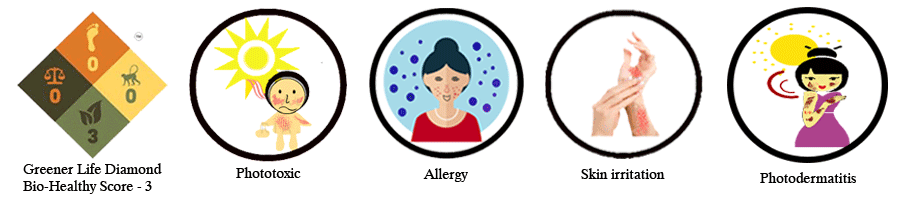
Greener Life Diamond – Bio-Healthy Score => 3 Possible Skin Issues:

See => http://www.essentialdepot.com/GreenerLifeDiamond.html

Lemon essential oil is witnessed as one among the photosensitizing citrus oils that may cause burning sensation, irritation, hyperpigmentation (discoloration of the skin surface) and other changes due to its effect of stimulating the photosensitivity of the skin, when exposed to visible light from the sun up to 12 hours of use. The primary reason is the reaction of the photoactive chemical components that absorbs light and leads to toxicity via molecular alterations in the skin.

The chief chemical component accountable for the skin sensitizing and other dermal effects of Lemon oil is Limonene and few other furanocoumarins.

Certain studies (like the 1994 study on the ‘Occupation Contact Dermatitis from Citrus fruits’ and a 2006 study on ‘Skin Diseases in Workers at a Perfume factory’) on the adverse skin reactions of using the essential oil of Citrus limon reports few cases, including the incidence of allergic contact dermatitis with the use of Lemon rind oil in the workers of the perfume industry. Patch testing also witnessed certain allergic effects on using Lemon rind oil.

Research reveals that Lemon oil has furocoumarin derivatives like oxypeucedanin and bergapten; however the phototoxic effect of oxypeucedanin was just 1 quarter of that of bergapten. It is also stated that these components are the major cause of concern behind the phototoxicity of Lemon essential oil. This study also states that oxypeucedanin educes photo pigmentation on the skin of colored-guinea-pig prior to visible erythema.

It is also stated that the quantity of these 2 phototoxic components in Lemon oils from various countries differed by about a factor greater than 20 (bergapten, 4-87 ppm; oxypeucedanin, 26-728 ppm (parts per million), with a wavering ratio.

The safe dilution use level of Lemon oil, a potential phototoxic essential oil is 2%, which is about 12 drops per ounce of any carrier oils, according to the International Fragrance Association (IFRA). This applies only for products employed for dermal use to prevent phototoxicity and is not valid for wash-off items like shampoos, soaps and other bath products.

Lemon oil has ‘Generally Recognized As Safe (GRAS)’authorization by the FDA (U.S. Food and Drug Administration). As per the European decree, essential oils containing furanocoumarins can be used provided the aggregate level of bergapten does not exceed 15 ppm in cosmetic products that are ready-to-use on the skin, which is prone to be exposed to direct sunlight sans wash-away items and 1 ppm in bronzing and sunscreen products.

On a lighter note, Furocoumarins are also used in remedial practices along with the long-wave ultraviolet light therapy for curing psoriasis, mycosis fungoides and vitiligo.

Reference Links Substantiating the Possible Skin Issues of Lemon Oil:

  1. A study of the phototoxicity of lemon oil by Naganuma M, Hirose S and Nakayama Y, Nakajima K and Someya T, published in the Archives of Dermatological Research and PubMed
  2. Essential Oil Safety: A Guide for Health Care Professionals By Robert Tisserand, Rodney Young
  3. Leung’s Encyclopedia of Common Natural Ingredients, used in Food, Drugs and Cosmetics by Ikhlas A. Khan and Ehab A. Abourashed.
  4. Citrus limon, American Herbal Products Association’s Botanical Safety Handbook, Second Edition by Zoe Gardner, Michael McGuffin
  5. Lemon oil side effects by WebMD
  6. Safety Information on Essential Oils by the National Association for Holistic Aromatherapy

Thought for the day:

When fate hands you a lemon, make lemonade.

– Dale Carnegie

Suggested Reading:

  1. HEALING POWERS OF LEMON OIL (The Aromatherapy Professional: Healing with Essential Oils) by KG Stiles
  2. Lemon: 50 Plus Recipes for Skin Care, Hair Care, Home and Laundry Cleaning along with Lemonade, Vegan, Curd, Chicken, Cookies, Cakes and Desserts by Pamesh Y
  3. How to Use Lemon Essential Oil (Aromatherapy) by Miriam Kinai
  4. Ayurveda & Aromatherapy: The Earth Essential Guide to Ancient Wisdom and Modern Healing by Dr. Light Miller, Dr. Bryan Miller

Reference Links:

  1. 35 Health Benefits of Lemon – Ayurveda Details by Dr JV Hebbar MD (Ayu) in Easy Ayurveda
  2. Lemon by Wikipedia
  3. Health Benefits of Lemon Essential Oil by Alternative Medicine, About.Com
  4. The Benefits of Lemon Oil on Skin by Livestrong.Com


Your resource for quality Essential Oils. Every batch is
GC tested to ensure purity and authenticity.
Lemongrass Essential Oil

Lemon-grass-bannerNature’s super glue for the human body is the right way to honor Lemongrass essential oil because it is as quick and fast as any branded adhesive glue in repairing torn tendons, ligaments, cartilages, tenosynovitis, inflamed tissues and certain other connective tissue injuries. This oil smells heavenly and is much similar to the aroma of Lemon oil but with a comparatively gentle, sweet and soothing aroma.

Used as a celebrated culinary herb in Thai and Chinese cuisines, Lemongrass is often used to substitute Lemon.  This essential oil is extracted from the grassy leaves through steam distillation process. Ayurveda makes use of this ancient herb in treating weak digestion, poor circulation, poor concentration, fever, varicose veins, intestinal infections and certain infectious skin problems.

Purchase Lemongrass Oil – Retail – 4 oz – CLICK HERE

Purchase Lemongrass Oil – Wholesale – CLICK HERE

Historical uses of Lemongrass and its essential oil:

Indigenous to the southern parts of India, this spectacular herb is also found growing in South East Asian countries including Indonesia, Malaysia, Thailand, Cambodia and Vietnam. It is also cultivated in United States especially in Florida and California.

Lemongrass is a celebrated culinary herb in the Caribbean and Chinese cuisines. This aromatic herb blends well with garlic, ginger, cilantro and other spices used in flavoring a wide variety of Caribbean soups especially the seafood soups. Powdered Lemongrass has been used in Asia for giving incredible flavor to traditional dishes made with meat, poultry, seafood and vegetables. It is also used in spicing up pickles and marinades.

Widely known as ‘Fever Grass’, Lemongrass is popular in the Asian countries since the primordial times for its ability to bring down fever and normalize the body temperature during hot weather. It is either used in tea or in foot-baths for reducing fever and excess heat in the body. This tea is also believed to treat ringworm, lice, scabies and few other skin problems.

The Traditional Chinese Medicine used Lemongrass for treating headache, rheumatism, abdominal pain and cold. This herb was also a part of the Brazilian folklore medicine for calming the mind, treating muscular spasms, cramps and fatigue. Powdered along with black pepper, Lemongrass was used as a powerful Ayurvedic remedy for relieving menstrual cramps, nausea, irregular periods, fever and other infectious diseases.

Therapeutic properties of Lemongrass essential oil:

The remedial properties of Lemongrass essential oil are antiseptic, anti-rheumatic, diuretic, anti-inflammatory, astringent, analgesic, sedative, deodorant, galactogogue, nervine, tonic, carminative, antimicrobial, antidepressant, febrifuge, bactericidal, fungicidal, deodorant, antipyretic and nervine.

Chemical constituents or Gas Chromatography Report of Lemongrass essential oil:

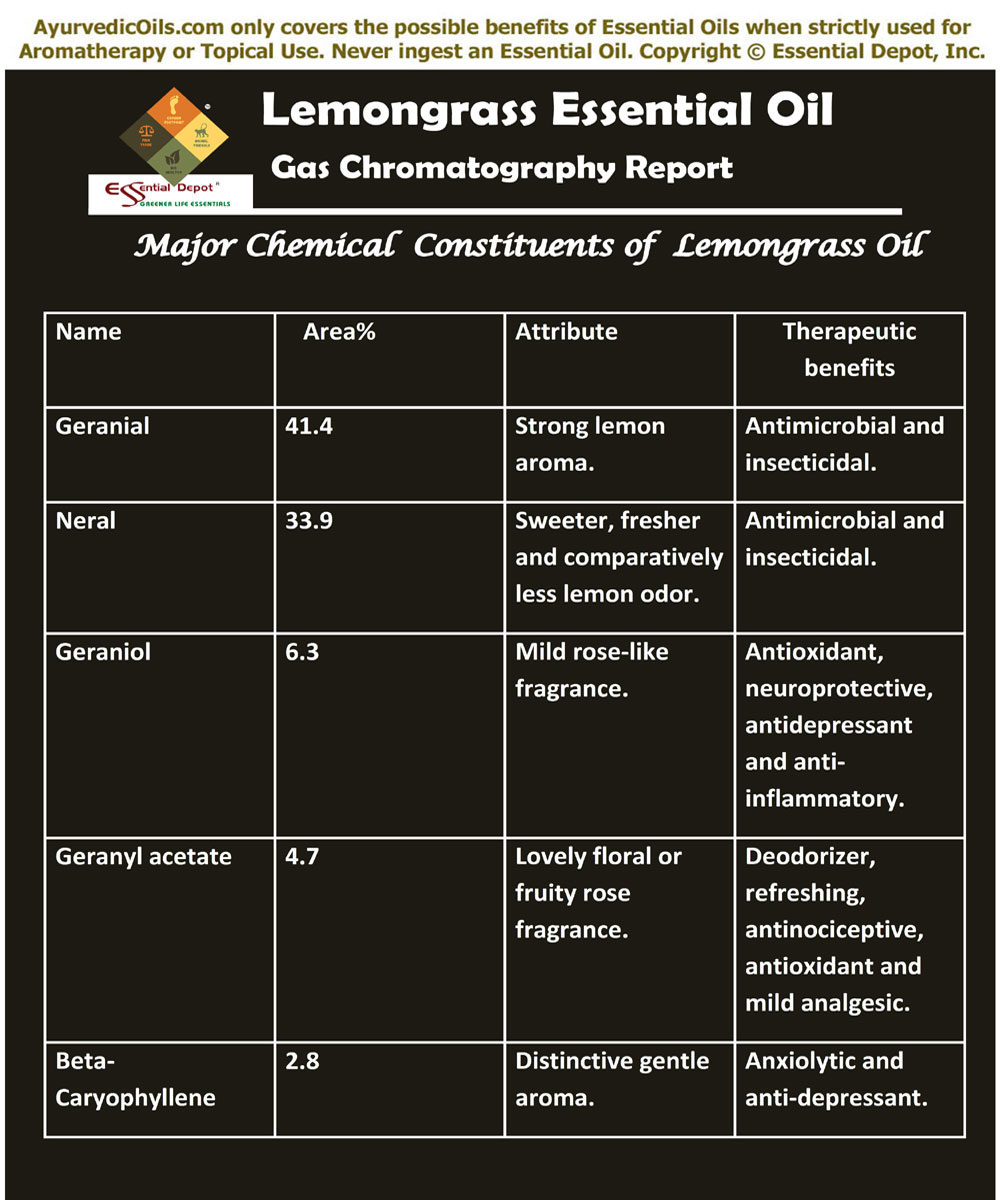
According to the Gas chromatography report, Lemongrass oil constitutes of 5 chemical components that contribute to its exotic fragrance, therapeutic properties and quality.

The major chemical constituents of this oil are citral (Geranial and Neral – approximately 85% of the oil), geraniol, geranyl acetate and beta-Caryophyllene.

Just click on:

for getting to know more about the exclusive information of these key constituents of Lemongrass oil.

The table below on the Gas Chromatography report talks about the principal chemical constituents and its role in granting the therapeutic and other attributes to Lemongrass oil.

Lemongrass-oilAyurvedic health benefits of Lemongrass essential oil:

Ayurveda uses infinite number of herbs in the process of healing humanity and Lemongrass is one such vital herbal whiz kid that has been helping mankind in treating innumerable diseases.

Known as Sera and Bhustrina in India, Lemongrass has been used in various Ayurvedic treatments for treating kidney infections, headache, problems with connective tissues, weak immune system and depression.

More than 5,000 years old, Ayurveda is by far the oldest of all healing sciences on earth and is the Mother of other complementary and alternative medicinal practices like Siddha, Homeopathy, Aromatherapy, Chiropractic, Acupuncture, Homeopathy, Traditional Chinese Medicine, Unani and much more. This science of wisdom has left behind innumerable complex healing systems using simple methodologies.

The ancient Ayurvedic philosophers Charaka and Sushruta encompassed the most important Ayurvedic remedies for all sorts of diseases. The most intricate medical practices even with today’s contemporary medicinal equipments and techniques are C-section surgery and Plastic surgery. Won’t you simply be amazed if I say that these two were a part of the Ayurvedic treatments???!!!! Yes.

Sushruta is called as the father of Plastic surgery and C-section deliveries were executed for the most critical cases where the baby or the mother turns breathless at the time of delivery.

The magnificence of Ayurvedic healing lies in its trust and usage of natural remedies like herbs, healthy and balanced diet, essential oils, yoga, simple physical exercises, meditation with an Ayurvedic routine. This aims at treating illnesses, preventing them in future along with healthy aging. Ayurvedic texts define health as a combination of physical, mental and spiritual wellness.

Every human being is made of a unique individual constitution that comprises of three biological energies known as doshas namely pitta, vata and kapha. A person’s physical setup, personality and behavior are determined by the predominance of any one of these doshas.

Imbalance between these doshas is responsible for ill-health and Ayurvedic remedies focus on balancing these doshas. Lemongrass essential oil alleviates excess kapha and pitta dosha while it has a neutral effect on vata dosha.

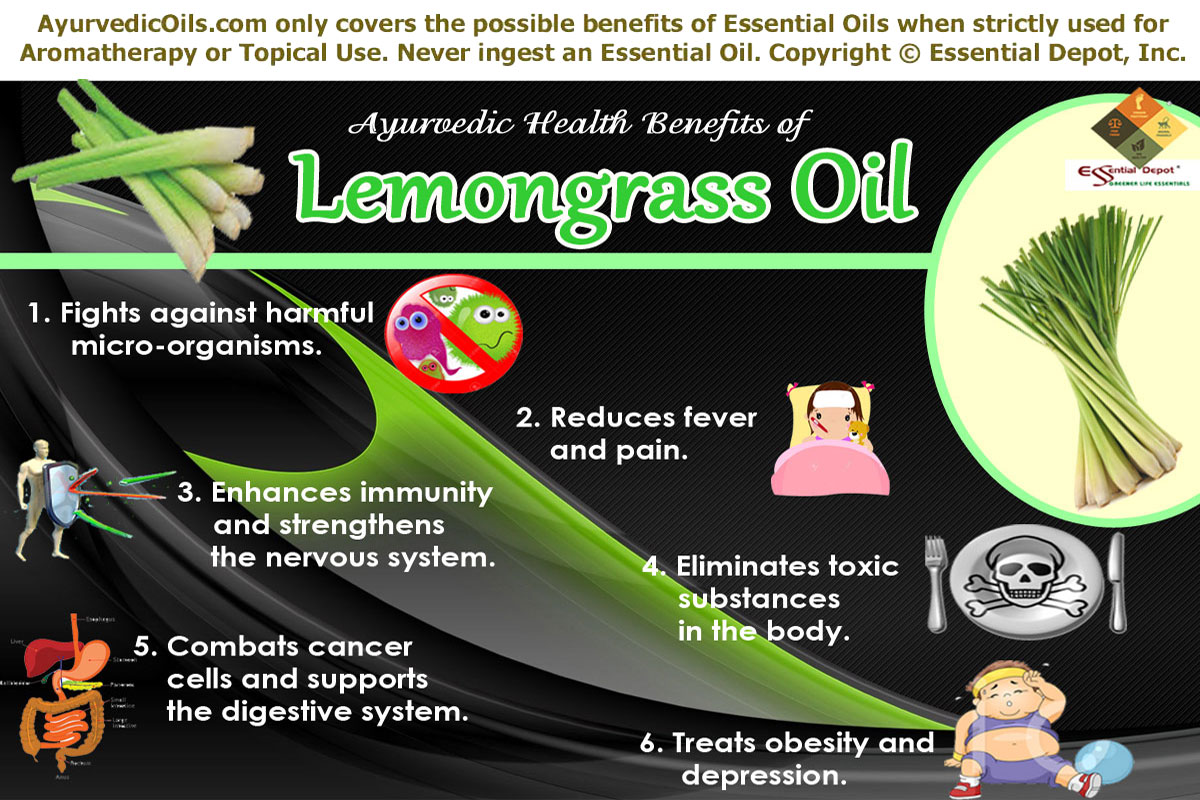
The Ayurvedic health benefits of Lemongrass essential oil are as follows:

Lemongrass-broucher1. Fights against harmful micro-organisms:

Lemongrass essential oil has been proved effective against micro-organisms like bacteria, fungi and certain other microbes. Few studies witnessed that Lemongrass oil is more potent than streptomycin or penicillin in fighting against staph infection. Staphylococcus is the major bacterium responsible for making wounds turn septic.

Applying 2 drops of Lemongrass oil mixed with 15 to 20 drops of coconut oil on wounds, cuts, acne, burns, sores and other skin infections aids in healing the wounds and curbs the growth of micro-organisms that worsen skin problems. This effect can also be attributed to the antiseptic properties of this oil.

A 2008 study on ‘Antifungal activity of the Lemongrass oil and citral against Candida spp’ state that Lemongrass essential oil and citral are effective against various types of yeasts of Candida species including Candida albicans, Candida glabrata, Candida krusei, Candida parapsilosis and Candida tropicalis, proving its potent in vitro activity against Candida spp, responsible for the most common fungal infection Candidiasis.

Certain other studies suggest that Lemongrass oil can also assist in combating the growth of fungi like Alternaria alternata, which is said to cause infections in the upper respiratory tract.

Gently massaging your body with 5 drops of Lemongrass oil blended with 2.5 ml olive oil can assist in inhibiting the growth of bacteria and microbes both externally and internally. This aids in treating microbial infections in the respiratory system, skin, stomach, colon, urinary tracts and other parts of the body.

2. Reduces fever and pain:

Being an anti-pyretic and febrifuge, the essential oil of Lemongrass reduces fever by fighting against infections causing fever, promote sweating and by eliminating the harmful toxins in the body through urine. According to the Ayurvedic philosophy, pitta dosha is responsible for body temperature and fever is an indication of increased pitta energy.

Lemongrass essential oil is known to reduce pitta dosha and by this way it lessens the body temperature even during high fevers. Add 2 drops of this oil in warm water for a remedial foot bath for reducing fever or massage your foot soles with 2 drops of Lemongrass oil mixed with 1 ml of coconut oil for relief from fever.

This oil also lessens excess of kapha energy that causes fluid retention in the body causing respiratory problems, rheumatism, pain and inflammation.

Gently massaging the painful areas with 2 drops of Lemongrass oil mixed with 1 ml of sesame oil helps in relieving pain, inflammation and rheumatism by eliminating the excess fluids and toxic substances through urine and sweat.  The analgesic action of this oil helps in soothing pain, tired muscles, headache, joint pain and back pain.

3. Enhances immunity and strengthens the nervous system:

Lemongrass herb and its essential oil have excellent nutrients and chemical components that benefit the entire system and augment the immune power, which makes the body naturally resistant against diseases. It acts as a tonic to the human body and strengthens the functioning of the digestive system, nervous system, excretory system and respiratory system by stimulating the process of absorbing essential nutrients by the body.

Lemongrass oil is used in Ayurvedic massaging for fortifying the nerves, limbs, muscles and tissues. Massaging your body with 6 drops of Lemongrass oil blended with 3 ml of olive oil can assist in treating nervous problems like vertigo, convulsions, Alzheimer’s disease, sluggishness, Parkinson’s disease and nervousness.

4. Eliminates toxic substances in the body:

Stagnation of ama (toxic substances) in the body is one of the primary reason for illnesses according to Ayurveda. The diaphoretic and diuretic properties of Lemongrass Oil increase the frequency and quantity of urination through which the harmful toxins in the body are vented out.

This action also aids in improving digestion, cleansing the kidneys and discharging harmful infection causing foreign bodies. You can add 2 drops of Lemongrass oil in warm bathing water or in foot bath or massage your body with 3 drops of this oil with 2 ml of sesame oil for getting rid of all the toxic substances from your body.

5. Combats cancer cells and supports the digestive system:

A 2009 study on the anticancer activity of Lemongrass essential oil against 12 human cancer cell lines proved that Lemongrass oil “has a promising anticancer activity and causes loss in tumor cell viability by activating the apoptotic process as identified by electron microscopy.” Certain other studies also state that the presence of a-limonene and geraniol showed inhibition of cancer cells in intestinal mucous membrane and liver in mice.

Excess of pitta energy causes cholera, flatulence, intestinal gas and weak digestion. Lemongrass essential oil reduces pitta dosha and normalizes the process of digestion. Gently massaging your abdomen with 2 drops of Lemongrass oil blended with 1 ml of sesame oil will assist in improving digestion. Inhaling the aroma of this oil by applying 1 drop of Lemongrass oil on your wrist or to your hankie can stimulate weak digestion.

6. Treats obesity and depression:

Obesity is a universal problem and excess of kapha dosha causes fluid retention, excess deposits of fat and stagnation of water and other toxic substances in the body. Stress, tension and depression also cause metabolic changes and contribute to obesity. Lemongrass essential oil lessens kapha dosha by decreasing the appetite, removing excess water and fat deposits from the body through urine and sweat.

A study by the Department of Nutritional Sciences of University of Wisconsin studied the effect of Lemongrass and cholesterol in 22 people with high levels of cholesterol where they took 140mg of lemongrass oil capsules daily. This study came up with an amazing result where the cholesterol level was reduced from 310 to 294 on an average basis, which was a significant amount of decrease in the amount of blood fats.

Using 5 drops of Lemongrass oil blended with 2.5 ml of coconut oil as a massage oil or 3 drops of this oil added to warm bathing water can help in discharging excess fat, water and fluid retention in your body and helps you in reducing your excess weight.

In the book ‘Ayurveda and Aromatherapy’, Bryan Miller states that Lemongrass essential oil is an excellent antidepressant oil that can assist in alleviating stress, depression, fatigue, negative feelings, emotional trauma and distress. Using 2 drops of Lemongrass oil in vaporizer, burner or diffuser can assist in driving away negative emotions, insomnia, loneliness, emotional instability, mental stagnation and lack of self-confidence.

The Journal of Ethno pharmacology published a 2011 study, which stated that Lemongrass essential oil possess anti-anxiety properties that would aid in lessening anxiety by stimulating the brain levels of the neurotransmitter gamma-amino butyric acid.

Other health benefits:

Lemongrass essential oil is also a great natural remedy for treating menstrual problems and its galactogogue properties help improve the quality and quantity of breast milk in nursing mothers. It is a trusted insect repellant and can also serve as a natural air freshener with its refreshing aroma.

Disclaimer:

Pure and organic essential oils are highly concentrated liquids so never take them internally. Always remember to dilute essential oils before using it topically. This article is only for the purpose of education and is not meant to diagnose or replace any prescribed medicines or professional advice. Consult your Ayurvedic practitioner before using essential oils that would fit your unique individual constitution and state of health.

The MSDS (Material Safety Data Sheet) of Lemongrass oil is readily available for your enhanced safety and optimal usage.

Gas Chromatography Report of Lemongrass essential oil

Thought for the day:

Knowing trees, I understand the meaning of patience. Knowing grass, I can appreciate persistence. 

-Hal Borland

Suggested Reading:

  1. HEALING POWERS OF LEMONGRASS OIL (The Aromatherapy Professional) by KG Stiles
  2. The Encyclopedia of Essential Oils: The Complete Guide to the Use of Aromatic Oils In Aromatherapy, Herbalism, Health, and Well Being by Julia Lawless
  3. Skin Delivery of Lemongrass Oil by Microemulsion Technique: Herbal formulation for Acne Vulgaris by Md Faiyazuddin, Sanjula Baboota
  4. Lemongrass Essential Oils: Biosynthesis and Regulation by Deepak Ganjewala

Reference Links:

  1. Antifungal activity of the lemongrass oil and citral against Candida spp by Silva Cde B, Guterres SS, Weisheimer V, Schapoval EE published in PubMed
  2. Health Benefits of Lemongrass Essential Oil by Organic Facts
  3. Anticancer activity of an essential oil from Cymbopogon flexuosus by Sharma PR, Mondhe DM, Muthiah S, Pal HC, Shahi AK, Saxena AK, Qazi GN, Indian Institute of Integrative Medicine, India published in PubMed
  4. Lemongrass Health Benefits and Healing Properties by PlanetWell Ayurvedic Wellness
  5. Lemongrass Herbal Medicine by Medical Health Guide

Lavandin (Grosso) Oil

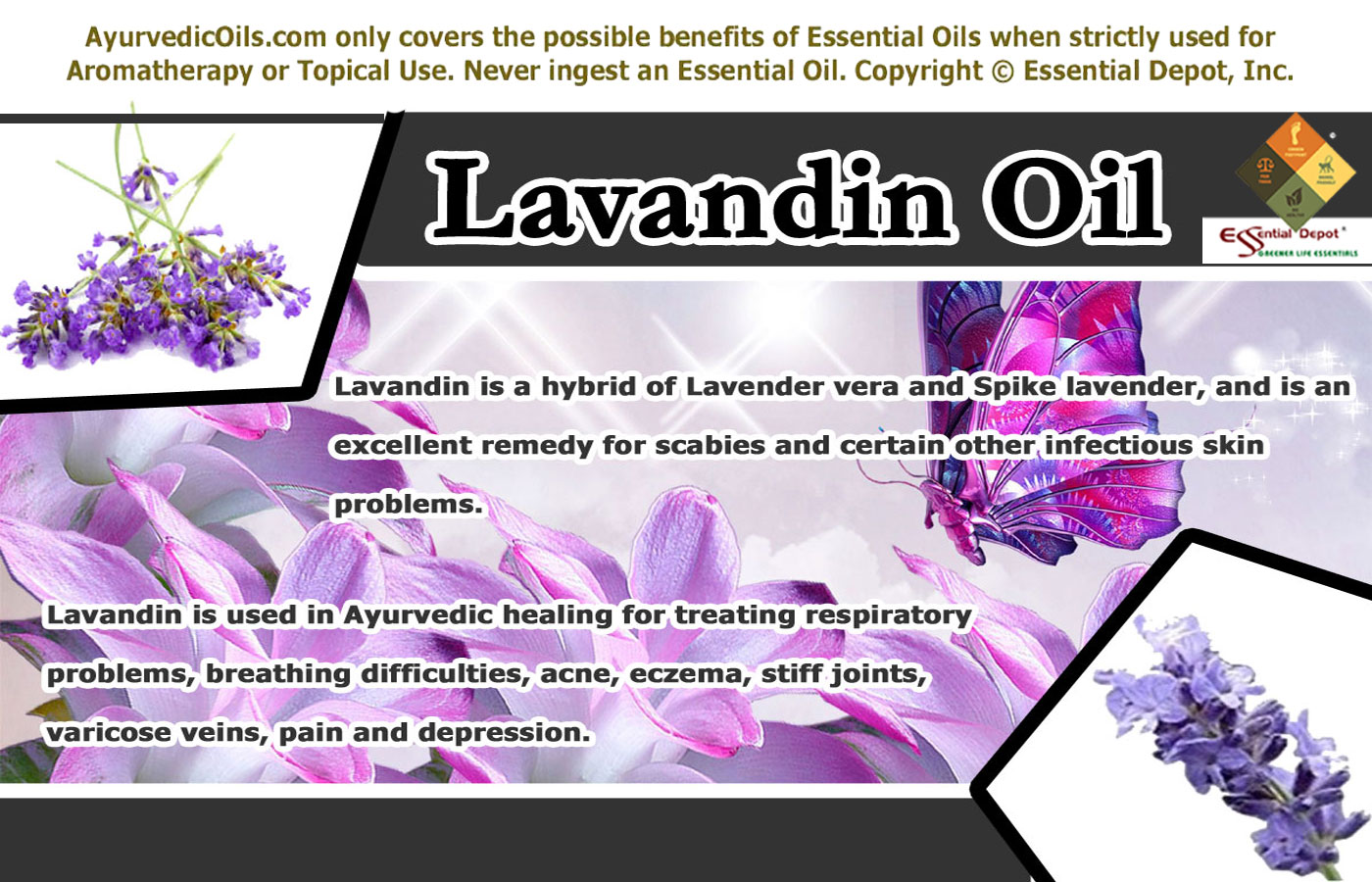
Lavendin-bannerThe dream of filling your garden and your home with the mesmerizing fragrance of Lavender blossoms is not a distant dream anymore as Lavandin is such a simple medicinal plant that resembles Lavender and its enriching aroma never fails to fill your home any lesser than Lavender does. As a hybrid of Lavender vera and Spike lavender, Lavandin Grosso is an excellent remedy for scabies and certain other infectious skin problems.

World is a global village and it is this strong reason that turns the world towards the path of Traditional healing methodologies. Ayurveda, the mother of all healing sciences on earth is the pioneer of Complementary and Alternative Medicine. Lavandin is used in Ayurvedic healing for treating respiratory problems, breathing difficulties, acne, eczema, stiff joints, varicose veins, pain and depression.

Purchase Lavendin (Grosso) Oil – Retail – 4 oz – CLICK HERE

Purchase Lavendin (Grosso) Oil – Wholesale – CLICK HERE

History of Lavandin (Grosso):

It is a hybrid variety of plants developed in the early 18th century and the essential oils extracted from these hybrid varieties were initially used for manufacturing soaps, perfumes and certain other personal hygiene products.

France is known as the major producer of Lavandin plants and essential oils. Lavandin essential oils are comparatively cheaper than True Lavender varieties. This is because unlike Lavender, these hybrid varieties can be grown as a commercially viable crop and are more tolerant to various climatic and growing conditions.

Lavandin Grosso is named after its discoverer Grosso and it reflects true qualities of both of its parentage with the camphoric aroma of Lavandula latifolia and the frost hardiness of Lavandula angustifolia. Among the numerous other Lavender hybrid plants, Lavandin Grosso is the most predominantly chosen plant by the commercial Lavender farm growers as it is easy to grow in most regions and produce abundant Lavandin flowers that contain ample amount of essential oils.

The big and bright flowers of this plant are also used for making sachets (keeps your clothes fresh and protect from moths and other insects) and the long stems are used in making Lavender wands. Initially, Lavandin and its essential oil were used as an analgesic and antiseptic for relieving pain, inflammation and for healing wounds and skin infections. Lavandin flowers were also used in making tea that was trusted to discharge excess mucous deposits and to assist breathing difficulties.

Chemical constituents or Gas Chromatography Report (GC) of Lavandin Grosso oil:

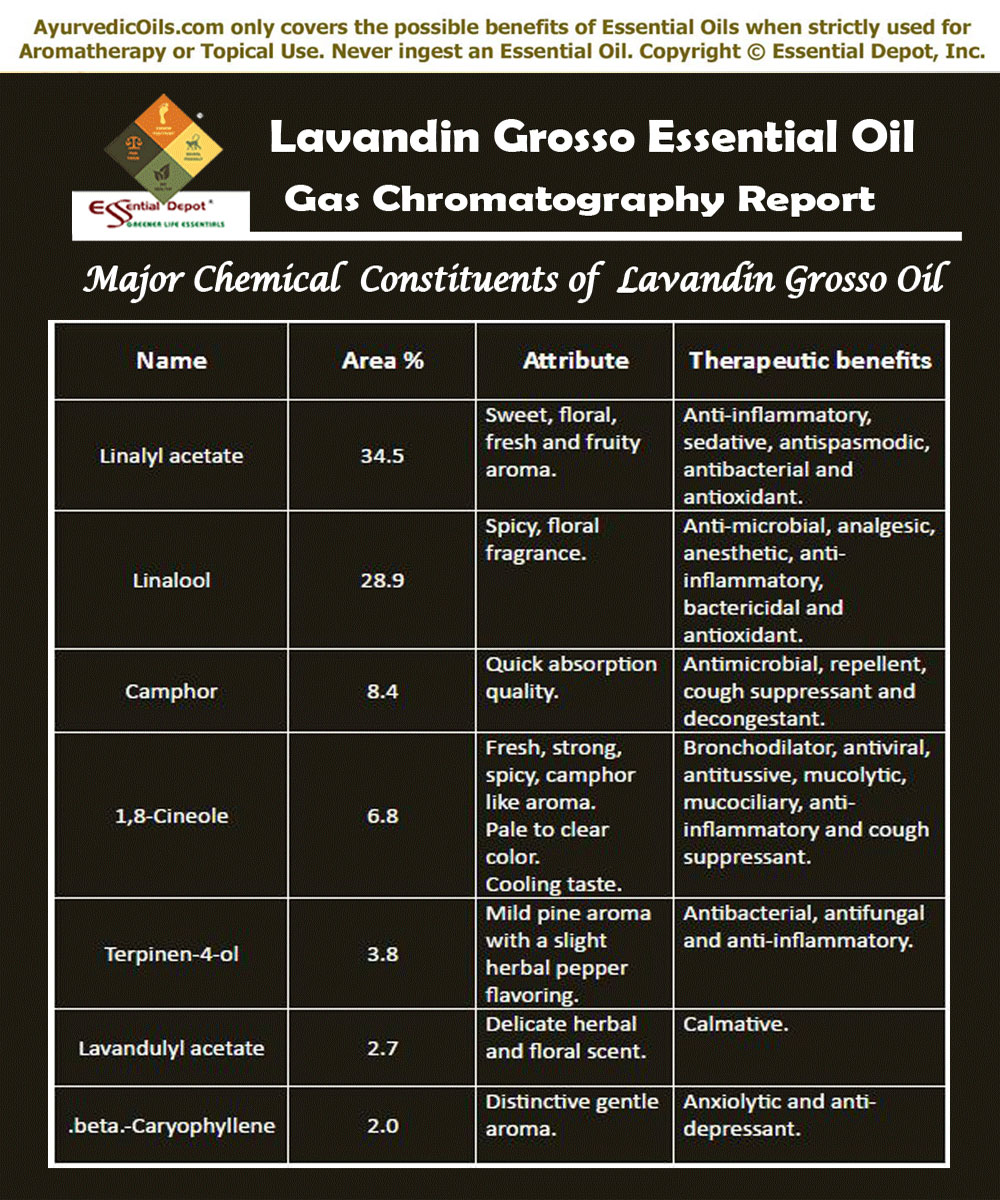
According to the Gas chromatography report, Lavandin Grosso oil constitutes of 25 chemical components that contribute to its fragrance, therapeutic attributes, consistency and quality. Of which, Linalyl acetate contributes to the highest proportion of Lavandin Grosso oil constituents with about 34.5% of its total composition.

Just click on:

I believe that this must certainly help you in getting to know the exclusive information about these prime chemical constituents of Lavandin Grosso oil.

The table crafted below clearly depicts the unique nature and contributions of these biochemical constituents to the healing magnificence of Lavandin Grosso essential oil.

lavandin-oil

Therapeutic properties of Lavandin Oil:

The remedial properties are antiseptic, antidepressant, analgesic, vulnerary, expectorant, cicatrisant, nervine, antispasmodic and stimulant.

Ayurvedic health benefits of Lavandin Essential Oil:

Many of us misconstrue that Ayurveda and the other traditional healing practices are meant for the old people or people who are still attached to the Stone Age. Ayurveda is the first and foremost healing methodology to love human beings and appreciate their individual identity, feelings, characteristics and behavioral patterns.

When all other medical sciences in this world aim at treating illnesses, this ancient healing system focused on treating individuals and not just their illnesses.

Ayurvedic philosophy declares that human beings are a part of nature and a person’s wellness or sickness depends upon his balance or imbalance with nature. Diseases occur when an individual’s mind and body is out of balance with nature. It is for this reason Ayurvedic remedies are based upon natural medicines for striking perfect balance with an archway to prevention and healthy aging.

Every individual is distinctive with a unique individual constitution that comprises of three biological energies known as doshas. They are vata, pitta and kapha. Each of these doshas governs certain functions of our body where vata is responsible for nervous functions and circulation, pitta controls metabolism and body temperature and kapha governs fluid movements, consistency and skin health.

Predominance of any of these doshas determines the personality, character, physical set up and the mental makeup of a person.

Imbalance between any of these doshas causes illness and Ayurvedic medications are prescribed in such a way that the imbalances are treated. Lavandin essential oil is said to reduce kapha and pitta dosha and has a neutral effect on vata dosha.

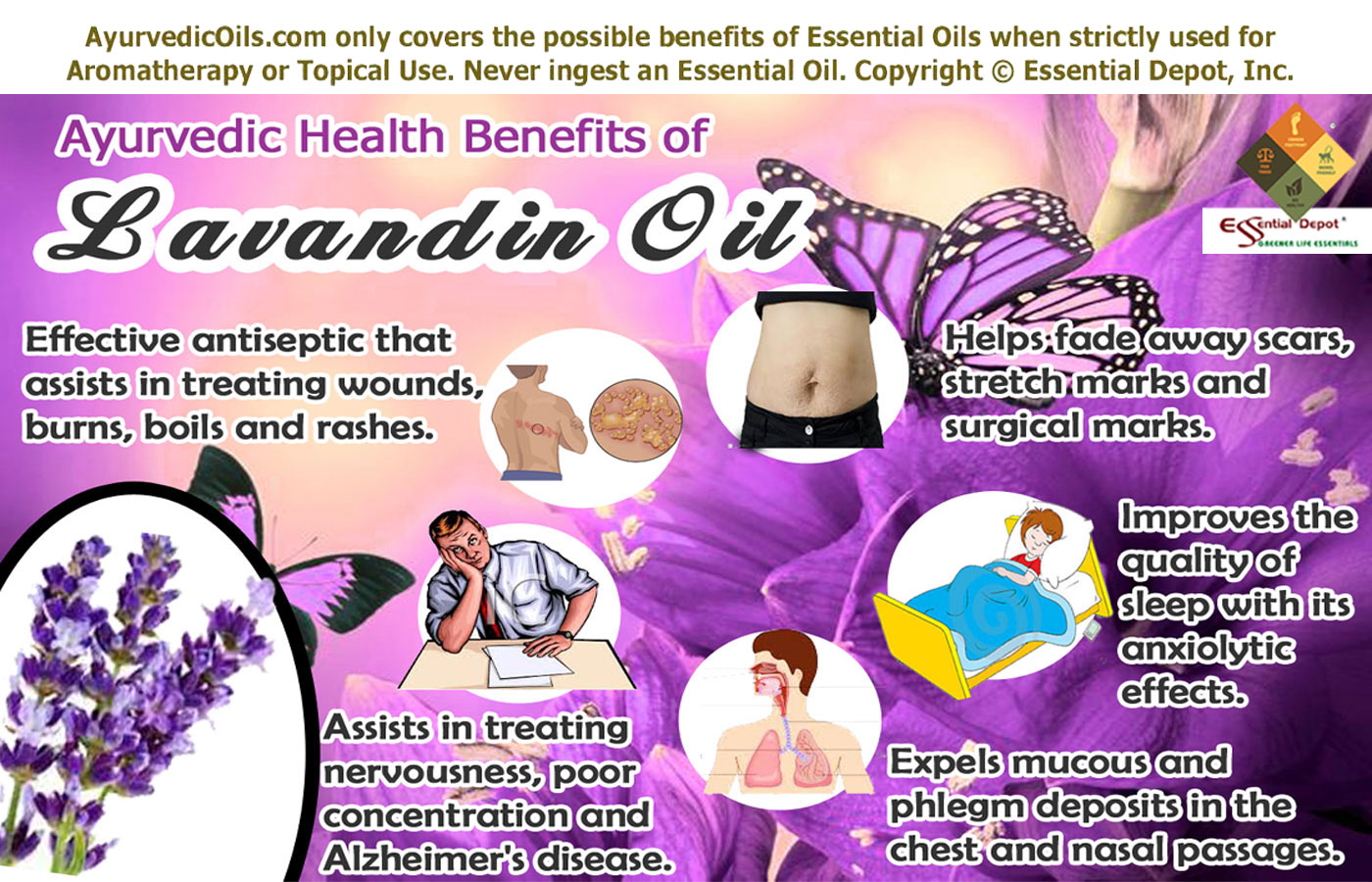
Let’s take a look at the Ayurvedic health benefits of Lavandin essential oil:

lavandin-broucher1. Benefits to the skin:

Popular author Susanne Fischer-Rizzi states that Lavender has more than 167 tested and proven medicinal uses. Bryan Miller and Light Miller in their book ‘Ayurveda and Aromatherapy’ says that Lavender is a must have essential oil in your first-aid kit or travel bag. With much similar aroma and healing properties like Lavender, Lavandin essential oil is also beneficial in a number of ways especially for nurturing skin health.

With excellent antiseptic, vulnerary and cicatrisant properties Lavandin essential oil has been proven effective for treating numerous skin problems. It keeps the skin clean and fights against various germs.

The ability of this oil in killing germs contributes to its effectiveness in treating dermatitis, scabies and few other infectious skin disorders. Being an effective antiseptic Lavandin essential oil can assist in treating wounds, cuts, burns, boils and rashes. It protects the open wounds from being septic or getting affected by the harmful organisms in air like tetanus.

The vulnerary properties of this oil helps in speeding up the process of healing wounds especially in case of incisions, surgical wounds, cuts or other accidental wounds. Applying 2 drops of Lavandin essential oil mixed with 1 ml of coconut oil is a sure-shot remedy for quick healing of wounds, protecting from infections and for fading away the scars and marks left by wounds, acne, stretch marks, surgical marks, cracks and other marks related to pregnancy.

Lavendin essential oil improves blood circulation and encourages the growth of new skin cells which contribute to its natural anti-scarring properties. You can also blend 3 to 4 drops of Lavendin oil in 2 ml of olive oil or to your regular skin care lotion and gently massage on to the skin to clear blemishes, treat sluggishness, dry skin and for improving the natural glow of the skin.

2. Benefits to the mind:

Lavandin essential oil has a rejuvenating and calming aroma that acts as an admirable antidepressant oil. The presence of camphor, linalyl acetate and terpineol-4 enhances its soothing and stimulating attributes that benefit the mind and heart in numerous ways. Lavandin Grosso oil is regarded as a great natural remedy for alleviating stress, fatigue, anxiety and depression. Certain studies have proven that Lavandin essential oil have anxiolytic effects that aid in improving the quality of sleep and save you from insomnia and nightmares.

Feelings of loneliness, lack of self-confidence, insecurity, loss of love or your near ones and work pressure may drag you down and waive a red flag to all your endeavors. All you need to do is to waive back the pleasant Lavandin flag that can uplift your spirit, enhance your self-confidence, fight against depressive feelings and reassure your success.

Adding 2 to 3 drops of Lavandin oil in your vaporizer, burner, diffuser, aroma lamp or bath tub can help in combating negative thoughts and grant the power to swim against the tide.

A 2009 study on ‘The use of the essential oil of Lavandin to reduce preoperative anxiety in surgical patients’ by the United Hospital, MN, USA tested about 150 adult patients to assess the effectiveness of Lavandin essential oil in reducing preoperative anxiety than other standard care methodologies. This study came up with an amazing result stating “Controlling for baseline anxiety and pain, the lavandin group had significantly lower anxiety on OR transfer, suggesting that lavandin is a simple, low-risk, cost-effective intervention with the potential to improve preoperative outcomes and increase patient satisfaction.”

3. Benefits to the respiratory system:

Adding 2 to 3 drops of Lavandin essential oil in steam inhalation or blending 2 drops of Lavandin oil with 1 ml of coconut oil and massaging it on chest, throat and back aids in treating cough, cold, bronchitis, sinusitis, chest congestion and other breathing problems. This is mainly due to the antiseptic properties of Lavandin oil that is proven to combat germs causing respiratory problems and its expectorant values that expel mucous and phlegm deposits in the chest and nasal passages causing cough and congestion.

4. Benefits to the entire body:

Lavandin Grosso oil benefits the entire body by supporting the functions of the nervous system. Using it as a massage oil by mixing 5 drops of this oil with 2.5 ml of jojoba oil aid in strengthening the nervous system and activate the nerves that pass on to different parts of the body. This is of great assistance in treating nervousness, sluggishness, convulsions, Alzheimer’s disease, lack of concentration and reflexes and certain other nervous problems.

Jane Buckle says “Lavandin Grosso was shown to be very effective against non-tubercular opportunistic mycobacteria (NTM) which is common in AIDS. Grosso is high in linalool for infections.” Lavandin essential oil also aids in treating pain, inflammation, rheumatism, influenza, headache, stiff joints, muscular problems etc, with its analgesic and anti-inflammatory properties.

Disclaimer:

This article is only for the purpose of information and is not destined for diagnosis or to substitute any prescribed medicines or professional advice. Never use essential oils internally and always use them in a diluted form for topical application as pure and organic essential oils are highly concentrated liquids and may cause harm if not used properly. Prevention is better than cure and it is always advisable to consult your Ayurvedic practitioner before choosing the right essential oils for your unique constitution and health condition.

The MSDS (Material Safety Data Sheet) of Lavandin Grosso oil is readily available for your enhanced safety and better usage.

Gas Chromatography Report (GC analysis) of Lavandin Grosso oil.

Thought for the day:  

The Universe is one great kindergarten for man. Everything that exists has brought with it its own peculiar lesson.     -Orison Swett Marden

Suggested Reading:

  1. Lavender: The Genus Lavandula (Medicinal and Aromatic Plants – Industrial Profiles) from CRC Press
  2. ISO 8902:1999, Oil of lavandin Grosso (Lavandula angustifolia Miller x Lavandula latifolia (L.f.) Medikus), French type by ISO TC 54
  3. The Lavender Garden: Beautiful Varieties to Grow and Gather by Robert Kourik
  4. The Lavender Lover’s Handbook: The 100 Most Beautiful and Fragrant Varieties for Growing, Crafting, and Cooking by Sarah Berringer Bader

Reference Links:

  1. The use of the essential oil of Lavandin to reduce preoperative anxiety in surgical patients’ by the United Hospital, MN, USA published in PubMed
  2. Lavandula by Wikipedia
  3. Lavandula x intermedia ‘Grosso’ by Missouri Botanical Garden
  4. Health Benefits of Lavandin Essential Oil by Organic Facts

Kappor Katcheri Oil

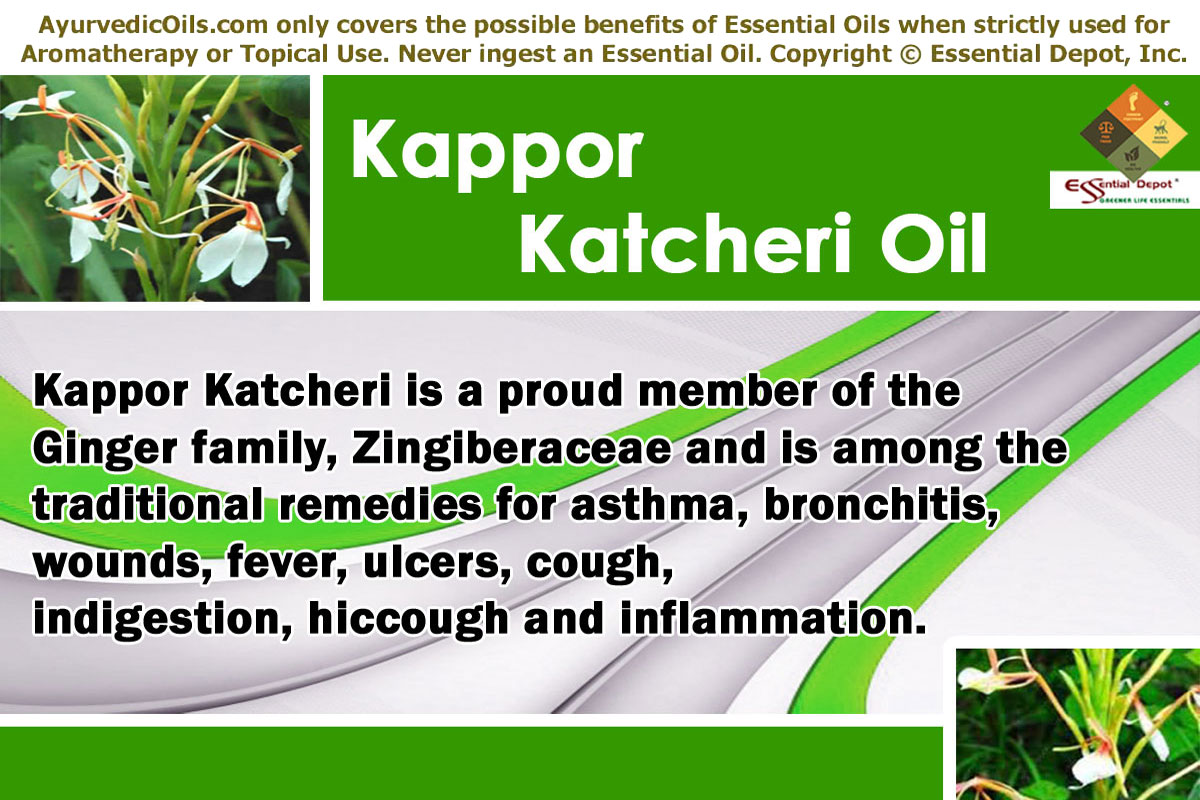
Kapoor-katcheri-bannerKnown as Shati in Ayurveda, Kappor Katcheri herb and the essential oil extracted from the rhizomes of this plant through steam distillation process has been in use traditionally for treating respiratory problems (like bronchitis and asthma), wounds, fever, ulcers, cough, indigestion, hiccough, inflammation and certain other eye problems.

Kappor Katcheri is a Hindi name and is scientifically called as Hedychium spicatum. It is a limb of the Ginger family Zingiberaceae. It is a small hardy ginger with bright and large white and orange flowers and is indigenous to the subtropical Himalayan regions in India at an altitude of 1000 to 3000 m.

Purchase Kappor Katcheri Oil – Retail – 4 oz – CLICK HERE

Purchase Kappor Katcheri Oil – Wholesale – CLICK HERE

Historical uses of Kappor Katcheri:

The aromatic and herbaceous rhizomes of Kappor Katcheri herb has been used in various traditions for treating numerous health conditions. The Ayurvedic healing system use this herb for curing respiratory problems, poor blood circulation, indigestion, wounds and inflammation. It was used as a natural remedy for treating diarrhea, vomiting, snake bite, fever and inflammation in the Traditional Chinese Medicine.

Kappor Katcheri was used in the Tibetan medicine for its heating potency and acrid taste and was also used as an effective insect repellant. Known as Sanna in Japan, the rhizomes of this plant are also used in preparing Attar Ekangi in India.

Therapeutic properties and chemical constituents of Kappor Katcheri oil:

The major chemical constituents present in Kappor Katcheri essential oil are limonene, cineole, terpinene, linalool, p-cymene, terpeneol and phellandrene. These components contribute to its remedial properties like antioxidant, antifungal, hypoglycemic, in vitro pediculicidal, spasmolytic, cytotoxic, tranquilizer, CNS depressant, febrifuge, anti-inflammatory, anthelmintic, analgesic, antispasmodic, hypotensive, vasodilator and antimicrobial.

Ayurvedic health benefits of Kappor Katcheri oil:

Ayurveda is the oldest of all healing methodologies on earth dating back to more than 5,000 years. This ancient science aims at educating humanity about the natural remedies in treating illnesses, ways to prevent sickness and pass towards healthy aging.

The Ayurvedic Physicians like Charaka, known as the Father of Medicine and Sushruta called as the Father of Surgery have enlisted almost all the possible natural remedies for a wide range of illnesses in the Ayurvedic encyclopedias well-known as Charaka Samhita and Sushruta Samhita respectively.

These ancient treasures talk about all types of healing herbs on earth and their effectiveness in curing various illnesses. According to these books, Kappor Katcheri is an excellent remedy for treating respiratory illnesses like asthma and bronchitis.

Along with herbs, Ayurvedic treatments include the use of essential oils, practicing healthy and balanced diet, Ayurvedic routine, meditation, physical exercises and yoga. Every human being is a unique part of nature according to Ayurveda and it suggests that the treatment should also be unique according to an individual’s constitution even for the same illness.

This constitution is made up of three vital bio-energies known as doshas that is vata, pitta and kapha. Every one of us will have a predominance of any one of these doshas that determines our health, personality and behavioral attributes.

Balance between these doshas indicates good health and imbalance between these doshas symbolize illness. Ayurvedic medications are prescribed in such a way that it treats dosha imbalances. Kappor Katcheri essential oil lessens pitta and kapha dosha and aggravates vata dosha.

The Ayurvedic health benefits of Kappor Katcheri oil are:

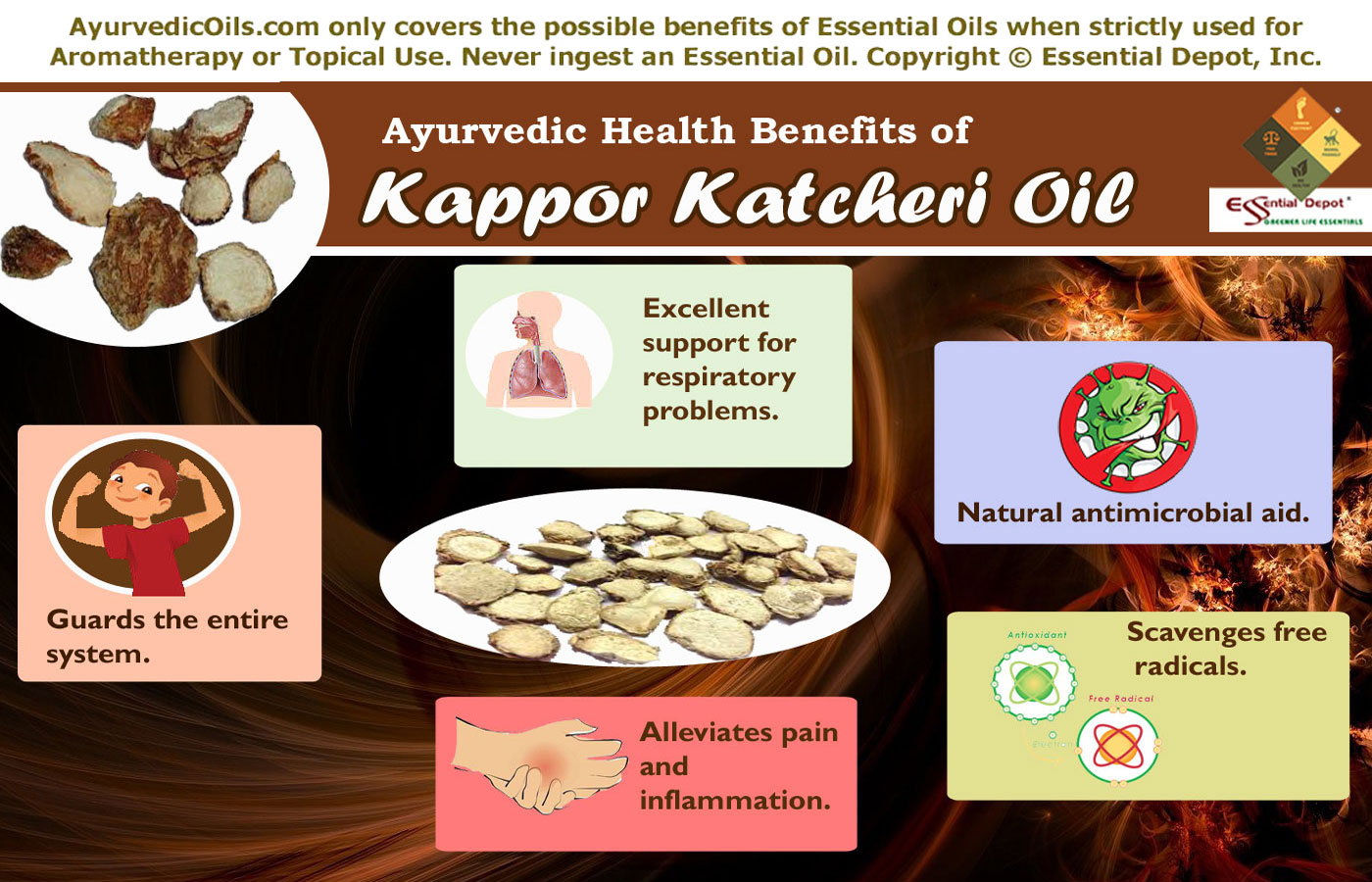
Kappor-katcheri-broucher1. Excellent support for respiratory problems:

The powdered rhizomes of Hedychium spicatum has been used clinically and in the traditional healing system for treating respiratory problems like respiratory inflammatory conditions including asthma, bronchospasms and bronchitis. It has also been proved effective in treating cough, cold, headache, fever, sinusitis and certain other breathing difficulties.

A 2012 study on ‘Pharmacological evaluation of extracts of Hedychium spicatum (Ham-ex-Smith) rhizome by Shivani Ghildiyal, Manish K. Gautam,Vinod K. Joshi, and Raj K. Goel’ states that the rhizomes of Hedychium spicatum has been reported to contain antiasthmatic, anti-inflammatory, vasodilator, hypotensive, spasmolytic and hypoglycemic properties.

Based upon various animal studies on mouse and Guinea pigs, this study concluded that the rhizomes of H. spicatum has anti-histaminic, bronchodilator, analgesic, anti-inflammatory activities that are essential to soothe pain, inflammation, asthma, bronchoconstriction and other respiratory problems.

Heat 2 drops of Kappor Katcheri oil with 1 ml of coconut oil and apply it on the throat, chest and back or add 2 drops of this oil in steam inhalation for relieving from congestion, bronchial spasms, asthma, cough and breathing difficulties.

The spicy and camphoraceous aroma of this oil along with its chemical constituents like terpinene and cineole have been proved as powerful analgesic and anti-inflammatory agents that assist in treating respiratory problems since the ancient times.

2. Natural antimicrobial aid:

The rhizomes and the essential oil of Kappor Katcheri herb are said to exhibit inhibitory activity against numerous Gram positive and Gram negative bacteria including Staphylococcus aureus and against few other fungal cultures according to a 2006 study on ‘Antimicrobial activity of Hedychium spicatum.’

Bacteria, fungi and certain other micro organisms are responsible for numerous health problems. These organisms damage the cells and weaken the immune system while making the body susceptible for diseases.

As a natural antimicrobial agent, Kappor Katcheri essential oil comes to your rescue when there’s a need to keep micro organisms at bay. Add 2 drops of this oil in warm bathing water to prevent and protect you from microbes. You can add 1 drop of Kappor Katcheri oil with 10 drops of coconut oil and apply it on wounds, ringworm, acne, cuts, athlete’s foot, nail infections and other skin allergies for visible results.

3. Scavenges free radicals:

Kappor Katcheri oil has antioxidant properties that assist in scavenging free radicals, which are known as reactive molecules engaged in numerous physiological processes and human illnesses like arthritis, cancer, ischemia, alcoholism, ageing, liver injuries and certain other toxin induced reactions.

A 2011 study on the ‘Antioxidant activity of Hedychium spicatum Buch.- Ham. Rhizomes’ by T Sravani and Padmaa M Paarakh, Department of Pharmacognosy, The Oxford College of Pharmacy, India published in the Indian Journal of Natural Products and Resources demonstrated that the rhizomes of Hedychium spicatum plant possess strong antioxidant activity.

You can use the essential oil extracted from these rhizomes as bath oil by adding 2 drops of Kappor Katcheri oil to your bath tub or by using it in massage by blending 4 drops of Kappor Katcheri oil with 2 ml of sesame oil for combating the effects of free radicals.

4. Alleviates pain and inflammation:

Kappor Katcheri oil possesses analgesic, anti-inflammatory, spasmolytic and tranquilizer effects that aid in treating pain, inflammation, arthritis and rheumatic problems. Blend 2 drops of Kappor Katcheri oil with 1 ml of sesame oil and massage on the affected area or add it in hot or cold compress to relieve pain, inflammation, spasms and irritation. When applied to the painful parts this blend will cause numbness and reduce your pain gradually.

5. Guards the entire system:

Apart from these major uses, Kappor Katcheri oil is known for its effectiveness in treating gastric ulcer, fever, intestinal infections, abdominal pain, blood purification, eye diseases and hypertension.

Disclaimer:

This article is only for the purpose of education and is not meant to replace any prescription medicine or professional advice of a medical expert. Do not use essential oils internally. Always use essential oils in a diluted form as pure and organic essential oils are highly concentrated liquids and can cause harm if used directly on skin.

It is advisable to do a patch test on your skin before using essential oils to test its suitability to your skin condition. Consult your Ayurvedic practitioner regarding the use of best essential oils for your unique health condition and individual constitution.

Thought for the day:

Every flower is a soul blossoming in nature. -Gerard De Nerval

Suggested Reading:

  1. Identification of Chemical Constituents of Plant Hedychium Spicatum: Methods for Phytochemical analysis and standardization by Alok Pratap Singh
  2. Evaluation of CNS potential of Hedychium spicatum: Rhizome Extract by Versha Parcha, Vichitra Kaushik, Arun Kumar
  3. Hardy Gingers: Including Hedychium, Roscoea, and Zingiber by T. M. E. Branney
  4. Paradise Found: Growing Tropicals in Your Own Backyard by Norman Winter

Reference Links:

  1. Pharmacological evaluation of extracts of Hedychium spicatum (Ham-ex-Smith) rhizome by Shivani Ghildiyal, Manish K. Gautam,Vinod K. Joshi, and Raj K. Goel published in PubMed
  2. Antioxidant activity of Hedychium spicatum Buch.- Ham. Rhizomes by T Sravani and Padmaa M Paarakh, Department of Pharmacognosy, The Oxford College of Pharmacy, India published in the Indian Journal of Natural Products and Resources
  3. Hedychium spicatum – Buch.-Ham by Plants for a Future
  4. Antimicrobial activity of Hedychium spicatum by G.S. Bhist, A.K. Awasthi, T.N. Dhole, Department of Microbiology, Sanjay Gandhi Post Graduate Institute of Medical Sciences, Lucknow, India published in ScienceDirect

Jatamansi Oil

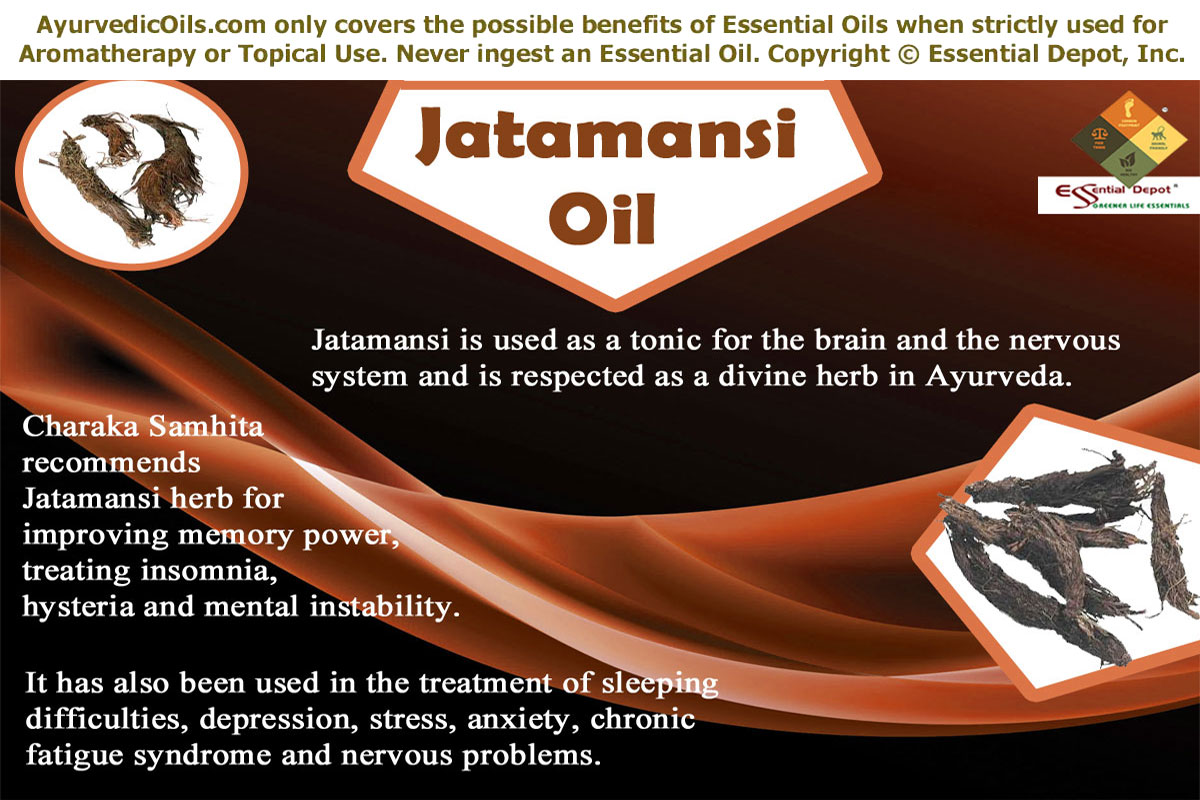
Jatamansi-bannerRespected as a divine herb in Ayurveda, Jatamansi is used as a tonic for the brain and the nervous system. It has been suggested by numerous Ayurvedic texts for treating sleeping troubles, depression, stress, anxiety, chronic fatigue syndrome and nervous problems.

Charaka Samhita, the celebrated Ayurvedic Encyclopedia recommends Jatamansi herb for improving memory power, treating insomnia, hysteria and mental instability. Scientifically known as Nardostachys jatamansi, this herb is known as Balchara or Mamsi in Ayurveda and is also known by other names like Indian Spikenard, Nardus root, Jaila, Musk root, Nardin and Nard.

Purchase Jatamansi Oil – Wholesale – CLICK HERE

Historical uses of Jatamansi and its essential oil:

Indigenous to the Himalayas, Jatamansi grows up to 1 m at an altitude of 3,000 to 5,000 feet. This plant bears red, pink or blue color flowers and has been used in various traditional medicines for its medicinal and aromatic rhizomes.

There are many Biblical references of this herb and it is used to represent St. Joseph in the Catholic iconography. It is mentioned in the New Testament where Mary, the sister of Lazarus uses a pint of pure Jatamansi oil to anoint the holy feet of Jesus Christ. It is also noted in the Song of Solomon as nard and is included in the coat of arms of Pope Francis in reference to St. Joseph.

Jatamansi oil was an important part of the Ayurvedic tradition since the primordial times where the medicated oil is known to cure insomnia, digestive problems, epilepsy, hysteria, weak mental health, improper blood circulation and as a tonic to the entire system. This herb was used as a diuretic and as a herb for the heath of heart and liver in Unani medicine.

The powdered rhizomes of Jatamansi were taken internally to treat hepatitis, infertility, menstrual disorders, cleanse the uterus, mental agitation, enhance the appetite and helpful in the treatment of Parkinson’s and Alzheimer’s disease.

Jatamansi was also used by renowned Physicians like Dioscorides and Apicius. The Persian and Arabian Physicians praised this herb as Sumbul-i-Hindi. The medicated Nard oil was offered on the precious incense altar when Tabernacle was positioned in the First and Second temples of Jerusalem.

Spikenard or Jatamansi was also used as a flavoring agent in the ancient Roman cuisines and as a seasoning in the Medieval European food varieties. It is used in making attars, perfume (L’eau De Jatamansi), incense sticks, hair care products and numerous beauty products. Jatamansi is also used along with certain other herbs in Vedic prayers performed with fire since the ancient period.

Therapeutic properties and chemical constituents of Jatamansi oil:

The principal constituents of Jatamansi oil are valeranone, nardostachone, bornyl acetate, jatamansinol, dihydrojatamansin, isobornyl, terpineol, jatamansinone, tetramenthyloxatricylodecanol, oroselone, aromadendrene, Menthylthymyl-ether, nardosinone, seselin, nardostachyin, valeranal, cineol-1,8, spirojatamol and jatamansic acid and few other coumarins. The remedial properties of this oil are nervine, antiseptic, diuretic, laxative, anti-inflammatory, tonic, anti-pyretic, deodorant, fungicidal, sedative, anti-depressant and calmative.

Ayurvedic health benefits of Jatamansi essential oil:

Ayurveda is a righteous science that trusts that every creature on earth is a part of nature and it believes that one’s illness and wellness depends upon their balance or imbalance with nature. Ayurvedic texts strongly state that human body is a temple where the spirit dwells in, so it is very important to keep the body, mind and spirit clean and composed just like preserving a place of worship.

Ayurveda is called as a holistic healing methodology as it approaches health as being mentally, physically, emotionally and spiritually fit. It is for this reason; Ayurvedic physicians recommend herbs, essential oils, yoga, physical exercises, balanced diet, meditation, Ayurvedic routine and prayers to keep one hale and hearty.

Every individual is treated in a unique manner even if they are affected by the same illness because the theory of Ayurveda identifies every human being as a unique part of nature and as a distinct creation with a unique individual constitution. This constitution is built up of three major bio-energies known as doshas. They are vata, kapha and pitta. These doshas govern various functions of our body and imbalance of these energies cause sickness.

Each and every human being has a predominance of any one these Ayurvedic body types that determine their personality, physique, mental attributes, behavior and preferences. Ayurvedic remedies aim at balancing the dosha imbalances as perfect balance between these doshas are a clear sign of healthy and heartiness.

Jatamansi is a promising Ayurvedic remedy that has the potent to pacify all the three doshas, especially pitta and kapha energies.

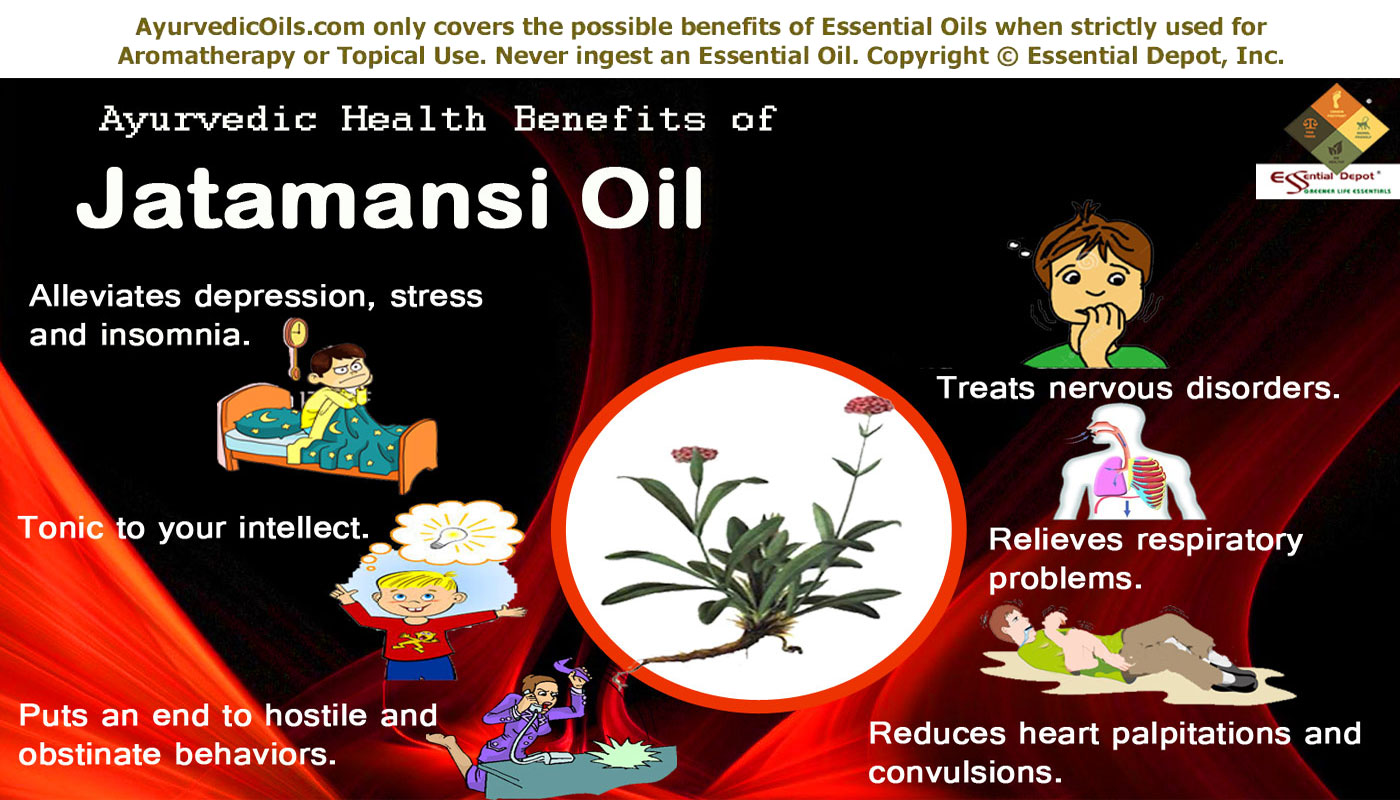
And it’s time to look at the amazing Ayurvedic health benefits of Jatamansi essential oil.jatamansi-broucher-11. Alleviates depression, stress and insomnia:

The rhizomes of Jatamansi herb have strong anti-depressant properties that calms the mind, relaxes the body and grants absolute peace to the entire system. 2 drops of Jatamansi oil added to your diffuser, burner, vaporizer or to bathing water is said to alleviate depression, chronic stress, anxiety, insomnia and tension.

Blend 5 drops of this oil with 2.5 ml of sesame oil and massage your body for relieving from chronic fatigue syndrome, nervous headache, negative feelings, sleeping difficulties, lack of self-confidence and sluggishness. Jatamansi is loved as a herb for the mind and emotions with its anti-depressant, anti-stress and antioxidant properties that help in lessening oxidative stress thus mitigating chronic fatigue syndrome.

Since the traditional times, several studies have proved the effectiveness of Jatamansi as a promising de-stressing and sedative agent by increasing the rest time. A 2012 study on ‘Nardostachys jatamansi protects against cold restraint stress induced central monoaminergic and oxidative changes in rats’ stated that this herb has potent anti-stress qualities representing its therapeutic significance in disorders related to stress.

A 2008 study on ‘Inhibition of MAO and GABA: probable mechanisms for antidepressant-like activity of Nardostachys jatamansi DC. in mice’ revealed that the ethanolic extracts of Jatamansi emerges to be a potent anti-depressive means when compared to reference drugs like Sertaline and Imipramine in decreasing depressive signs in mice. This study also state that “the extract may have potential therapeutic value for the management of mental depression.”

2. Tonic to your intellect:

Jatamansi and its essential oil have been used in many Ayurvedic preparations as a neuro-protective agent and brain tonic for improving memory power, cognitive performance and thinking capacity. It has been trusted to promote intellectual power, improve mental weaknesses, instability and mental sluggishness.

A 2006 study on ‘Nardostachys jatamansi improves learning and memory in mic’e by Joshi and Parle, Department of Pharmacognosy, College of Pharmacy, India proved that Jatamansi extracts significantly enhanced memory power and learning in both aged and young mice.

This study also reiterates the clinically proven use of Jatamansi herb in Ayurveda as an antioxidant, anti-ischemic, neuro-protective and anticonvulsant agent and it also states that Jatamansi can also be used as a memory uplifting agent in the healing of dementia in elderly people.

You can wear 1 drop of Jatamansi oil on your wrist, handkerchief or a tissue paper at the time of studying or in your room whenever you feel like refreshing your mind power. You can also add 2 drops of this oil in air freshener, diffuser, burner or vaporizer for adding muscles to your brain power and intellect.

3. Puts an end to hostile and obstinate behaviors:

The essential oil of Jatamansi has calming, soothing, cooling, restoring and relaxing qualities that assist in holding back the burning sensation of the mind and body. Being a natural coolant that calms pitta or the fire energy, Jatamansi essential oil can work wonders in controlling your negative emotions like anger, aggressiveness, stubborn behaviors, tension and intimidating attributes.

Adding 2 drops of Jatamansi oil in warm bathing water or in your diffuser or aromatic lamp can effectively control resentment by tranquilizing your mind and body. You can also opt for a calming massage by blending 5 drops of Jatamansi oil with 2.5 ml sesame oil.

4. Treats nervous disorders:

Jatamansi is held high in Ayurveda as a powerful neuro-protective agent that calms vata energy, clears pitta force and decreases kapha dosha. By this way, Jatamansi nourishes and cools the worn out and burning nervous system.

It aids in treating various nervous disorders along with bipolar disorders, delusions and certain other psychological problems. Jatamansi have been clinically proven effective since the primeval period in the treatment of epilepsy, insomnia, Parkinson’s disease, nervous breakdown and hysteria.

Abhyanga or the art of Ayurvedic massaging is the best method to use Jatamansi for treating nervous disorders. Mix 5 drops of Jatamansi oil with 2.5 ml of coconut oil and massage it gently on the affected parts. The deep penetrating quality of this oil supports in improving nervous problems.

5. Relieves respiratory problems:

Jatamansi oil has the potent to reduce kapha energy, the excess of which is responsible for the creation of mucus and phlegm. This oil assists in expelling the excess mucous deposits and phlegm accumulated in the chest, nasal passages and respiratory tract.

Adding 2 drops of Jatamansi oil to 1ml of coconut oil or your cold rub and massaging it on your throat, back and chest can aid in opening up blocked nasal passages, clear chest congestion, treat cough and cold, spasmodic cough, asthma, whooping cough and sinusitis. You can also add 2 drops of this oil in steam inhalation for quick relief from respiratory troubles.

6. Reduces heart palpitations and convulsions:

Palpitations of the heart are caused when vata energy shoves pitta dosha and leads it to rush through the channels characterized by unnoticed skipped beats, increased heart rate, breathing difficulty and dizziness.

The oil of Jatamansi is used in the treatment of palpitations of the heart and convulsions mainly because of its anti-convulsive and anti-arrhythmic activity. 2 drops of Jatamansi oil added to warm foot bath or bathing water or gently massaged on the affected area after blending it with 1 ml olive oil can ease tension and grant relief from convulsions and palpitations.

Other health benefits:

Jatamansi is indeed a miraculous part of nature that has innumerable healing properties ingrained in it. The essential oil of Jatamansi has been used as a uterus stimulant for promoting menstruation, cleansing the uterus, treating dysmennorhea and inflammation of the uterus. It was also used as an aphrodisiac in treating impotence and seminal debility. It is also known for promoting the growth of hair, retain its natural color and slow down the process of graying.

Jatamansi oil is a natural antiseptic that assists in healing wounds, eczema, burns, rashes, allergies and certain other skin infections due the infestation of microbes like bacteria and fungi. It is also effective in the treatment of renal colic, liver enlargement, hepatitis, jaundice, pancreatitis, fever and lung problems.

Disclaimer:

This article is only for the purpose of information and is not destined to substitute any professional medical advice or prescribed medication. Never take essential oils internally and use it topically in a diluted form only, as organic and pure essential oils are highly concentrated liquids and can harm you if used in a concentrated form. Remember to consult your Ayurvedic practitioner before using the appropriate essential oil for your health condition and unique individual constitution.

Thought for the day:

Change your opinions, keep to your principles; change your leaves, keep intact your roots.     -Victor Hugo

Suggested Reading:

  1. Ayurvedic Herbs: A Clinical Guide to the Healing Plants of Traditional Indian Medicine by Virginia M Tyler, M.S. Premila
  2. THE COMPLETE BOOK ON JATROPHA (BIO-DIESEL) WITH ASHWAGANDHA, STEVIA, BRAHMI & JATAMANSI HERBS (CULTIVATION, PROCESSING & USES) by NIIR BOARD OF CONSULTANTS AND ENGINEERS
  3. Healing Depression the Mind-Body Way: Creating Happiness with Meditation, Yoga, and Ayurveda by Nancy Liebler, Sandra Moss
  4. The Chopra Center Herbal Handbook: Forty Natural Prescriptions for Perfect Health by David Simon M.D., Deepak Chopra M.D.
  5. Ayurveda & Aromatherapy: The Earth Essential Guide to Ancient Wisdom and Modern Healing by Dr. Light Miller, Dr. Bryan Miller

Reference Links:

  1. Spikenard (Nardostachys jatamansi) by Wikipedia
  2. Nardostachys jatamansi by Examine.com
  3. Benefits of Jatamansi by Ayurveda Yogashram
  4. Inhibition of MAO and GABA: probable mechanisms for antidepressant-like activity of Nardostachys jatamansi DC. in mice by Dhingra D, Goyal PK, Department of Pharmaceutical Sciences, Guru Jambheshwar University of Science and Technology, India published in PubMed
  5. Nardostachys jatamansi protects against cold restraint stress induced central monoaminergic and oxidative changes in rats by Lyle N, Chakrabarti S, Sur T, Gomes A, Bhattacharyya D, Department of Pharmacology, Institute of Post Graduate Medical Education and Research, India published in PubMed

Jasmine Sambac Oil

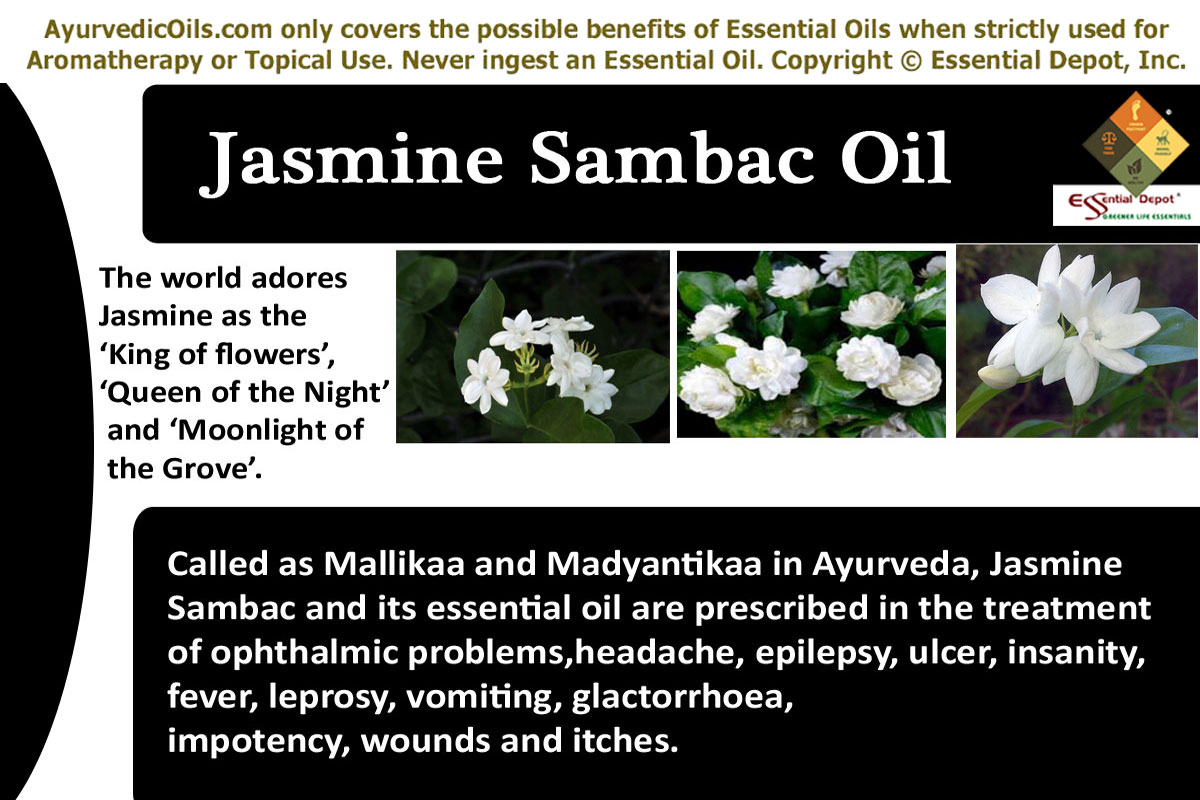
Jasmine-sambac-banner‘King of flowers’, ‘Queen of the Night’ and ‘Moonlight of the Grove’ are the ways by which the world adores Jasmine. The exotic, musky, mystifying, mesmerizing, sensual, zesty and the most masculine of all the flowery aromas in the world, Jasmine flowers grab the attention during their fullest blooms in the midnight.

Botanically known as Jasminum Sambac, Jasmine is known as Mallikaa, Nava-Mallikaa, Shita-bhiru, Madyantikaa, Vaarshiki and Madayanti in Ayurveda. It is commonly known as Arabian Jasmine.

According to the book, Indian Medicinal Plants Volume 3, the flowers, essential oil, leaves and the roots of this evergreen plant are widely used in Ayurvedic healing for treating ophthalmic problems, headache, epilepsy, ulcer, insanity, fever, leprosy, vomiting, glactorrhoea, impotency, wounds, itches and few other skin problems.

It takes about 8,000 hand-picked Jasmine blossoms to extract 1ml of its essential oil, which makes Jasmine as one among the most expensive oils on earth.

Purchase Jasmine Sambac Absolute 5% in Pure Jojoba– 4oz– CLICK HERE

Historical importance of Jasmine Sambac:

Jasmine Sambac is native to India and has its use etched in the history of various countries since the ancient times. The name Jasmine is extracted from the Persian name ‘Yasmin’ which means a fragrant flower.

It is the national flower of Philippines and one among the three national flowers of Indonesia. Known as Sampaguita (means “I promise you” and is a pledge of mutual love) in Philippines, Jasmine Sambac is regarded as a symbol of strength, simplicity, sacredness, humbleness and purity and is also used as a herbal remedy for fractures, abdominal distention, diarrhea, fever, swelling of the eyes and sprains.

The traditional Indians use the fresh juice of the ground flowers in treating sores, itching and wounds. The medicated root paste of Jasmine plant is used in treating labour pain for centuries in the rural parts of India.

Fresh Jasmine blossoms are used in making ceremonial garlands, crowns and other decorations on special occasions and as offerings to God in India, Indonesia and Philippines. Jasmine flowers are worn as hair ornaments by Indian women especially after marriage for its natural aphrodisiac, euphoric and sensual properties.

The Traditional Chinese Medicine has used Jasmine Sambac in the treatment of diarrhea, tumors, conjunctivitis, skin ulcers, dysentery and fever. The native Chinese used the roots in curing severe pain, headache, insomnia and pain and inflammation due to broken bones or dislocated joints mainly attributed to the analgesic, anti-inflammatory and anesthetic properties of this aromatic herb. The dried Jasmine flowers are used in making herbal tea in China.

The young leaves of Jasmine Sambac plant is used in making a herbal infusion for curing gallstones and the infusion of the roots were ingested to cure diabetes mellitus in Borneo. Jasmine Sambac has also been used for culinary purposes especially in making candies, teas, puddings, desserts, liqueurs and dairy products.

Therapeutic properties and chemical components of Jasmine Sambac essential oil: Jasmine Sambac oil is known to have antidepressant, aphrodisiac, antibacterial, analgesic, anesthetic, anti-inflammatory, antispasmodic, sedative, antiseptic, expectorant, antinociceptive, carminative, uterine tonic, cicatrisant, parturient, uplifting, stimulating, lactifuge and antitumor properties.

The major chemical constituents of Jasmine Sambac oil are cis-3-hexenyl acetate, benzyl acetate, methyl anthranilate, benzyl alcohol, cis-3-hexnyl benzoate, cis-3-hexnol, cis jasmone, linalool, methyl salicylate, benzyl benzoate, indole, α-franasene, linalyl acetate, α-cadinol and β-elemene.

Ayurvedic health benefits of Jasmine Sambac essential oil:

Ayurveda is the ancient wisdom of healing humanity for more than 5,000 years. It aims at prevention of illnesses along with healthy aging and longevity. Ayurvedic philosophy treats every individual in a unique manner even for the same disease as it trusts that every human being is unique in this world just like our finger prints.

It is the unique individual constitution of a person that helps differentiate his physical, mental and spiritual set up. According to Ayurveda, this constitution is made of three predominant biological energies known as doshas.

They are vata, pitta and kapha dosha. Each of these doshas represents a combination of two elements of nature. Whereas vata represents air and space, pitta represents fire and water and kapha is a representation of water and earth.

Vata energy governs circulation, process of elimination and the power of creative thinking. Pitta is responsible for digestion, absorption of energy along with leadership and decision making skills. Kapha controls the movement of fluids in the body, structure, sustenance and love.

Every human being is classified based upon the predominance of any one of these doshas and balance between these three Ayurvedic body types determines healthiness. Doshic imbalances denote that the individual’s health is out of balance with nature.

Ayurvedic remedies aim at balancing the doshas and help an individual to lead a systematic, disciplined and healthy life. The major Ayurvedic remedies are essential oils, herbs, physical exercises, Ayurvedic routine, meditation, yoga, prayer and a healthy balanced diet. Jasmine Sambac essential oil is a tridosha essential oil that is good for pacifying all the three doshas especially good in treating vitiated pitta conditions.

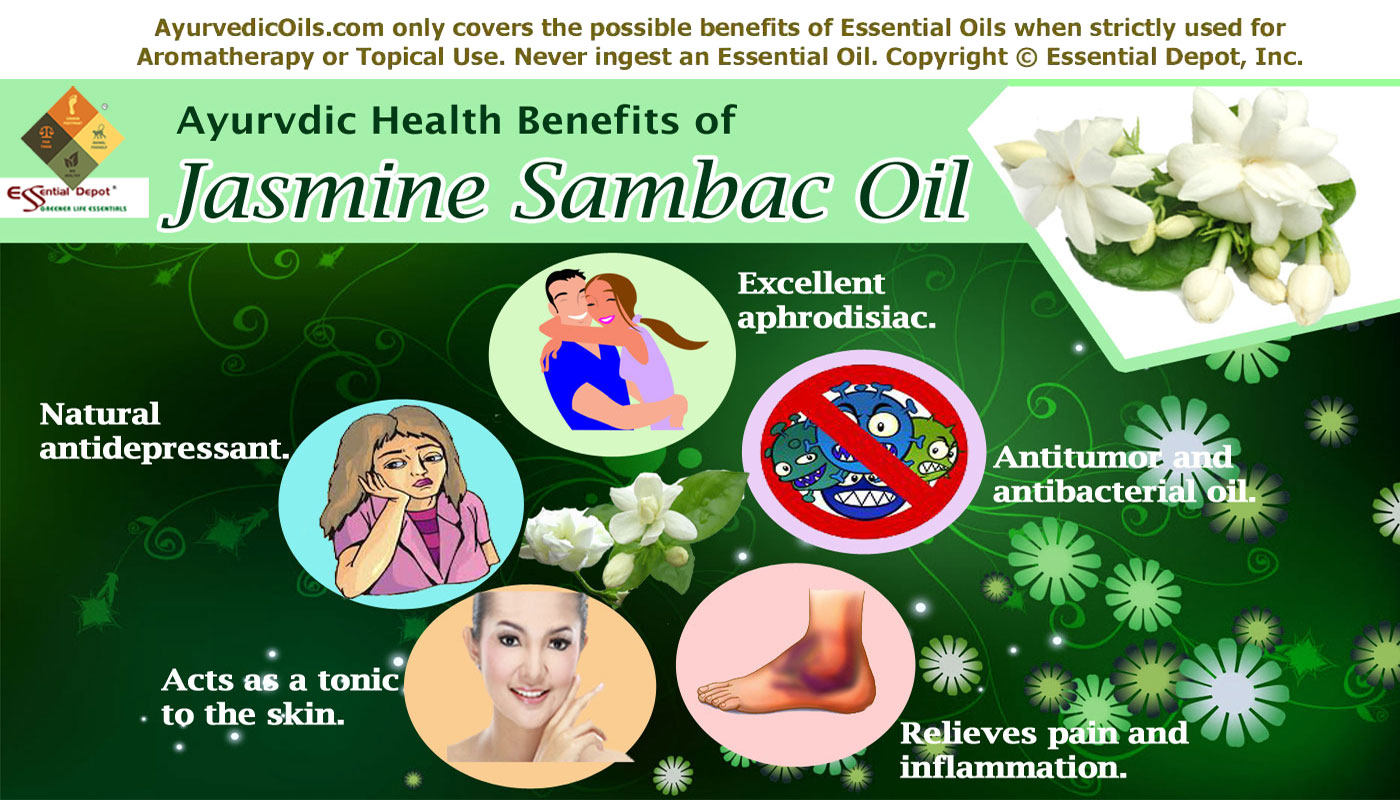
Let’s have a look at the major Ayurvedic health benefits of Jasmine Sambac essential oil.Jasmine-sambac-broucher1. Excellent aphrodisiac:

Jasmine has an ecstatic, compelling, sensual and miraculous aroma that has magical powers vested in it. This mystical fragrance grants excellent relaxation, open up blocked sexual inhibitions, treat the senses, supports the strength of female energies and naturally fortify the vigor of male energies. Jasmine is also known to nurture the health of male and female reproductive system and stimulates the secretion of male and female hormones.

A recent study on the ‘Comparative olfactory analysis of Jasminum Sambac and Jasminum Grandiflorum absolute’ has come up with the findings stating that Jasmine Sambac has a more appealing aroma that has a positive effect on the olfactory system that plays a vital role in governing numerous feelings and emotions that are distinct yet interconnected.

It is for these special reasons; Jasmine blossoms are used in making garlands, hair ornaments and in decorating the rooms of the newlywed couples in India, Philippines and Indonesia. Blend 2 drops of Jasmine oil in warm bathing water and enjoy a romantic bath together before going to bed. You can also add 2 to 3 drops of Jasmine Sambac oil to your burner, aromatic lamp, diffuser or air freshener during the night to enjoy the special time with your life partner.

2. Natural antidepressant:

Depression has become a common phenomenon in people of all ages including teenagers, professionals (both men and women) and aged people. Ayurveda recommends meditation, yoga and the use of pacifying aromatic oils like Jasmine Sambac oil. The aromatic compounds in Jasmine oil pass through the nasal passages and reach the limbic system of the brain, which is the control center of the brain.

Inhaling the aroma of Jasmine Sambac essential oil is said to pacify the senses, control negative feelings and paves way for venting out the depressed emotions that spoil one’s day. Adding 2 drops of this oil to vaporizer, burner, diffuser or air freshener can assist in treating tension, fatigue, depression, nervousness, anxiety, postnatal depression and addiction.

You can also add 2 drops of Jasmine Sambac oil in warm bathing water or massage your body by blending 5 drops of Jasmine oil with 2.5 ml of Jojoba oil for uplifting your senses, instilling positive feelings, strengthen your mind, augment your self-confidence and boost your emotions from within.

3. Antitumor and antibacterial oil:

Such a small flower possessing antitumor properties is absolutely a wonder to me and this witnessed by numerous studies. A 2011 study on ‘In vivo and In vitro Antitumor Activity of Jasminum Sambac (Linn) AIT Oleaceae Flower Against Dalton’s Ascites Lymphoma Induced Swiss Albino Mice’ evaluated the anticancer effect of Jasminum Sambac on mice affected by affected by cancerous tumor in the lymphatic system.

This study proved that the methanolic extracts of Jasmine Sambac flowers possessed significant cytotoxic and anticancer activity that helped in increasing hepatic levels of RNA and DNA in the mice.

The leaves and flowers of this plant are used since the ancient times in Ayurveda for treating and preventing breast cancer and controlling uterine bleeding. It is also used as anti-cancer, antiulcerative and antileprotic.

Jasmine Sambac essential oil also has antibacterial properties that aid in combating bacteria and other harmful microbes causing infectious diseases. A 2008 study on ‘Antibacterial potential assessment of Jasmine essential oil against E.Coli’ stated that Jasmine oil contains antibacterial activity that makes it effective in the treatment of removing corns, purify the kidney, treat ulcers and other inflamed conditions.

4. Relieves pain and inflammation:

Jasmine Sambac oil has mild analgesic, anesthetic and anti-inflammatory properties that help relieve pain and reduce inflammation. ‘Preliminary Studies on Anti-Inflammatory and Analgesic Activities of Jasminum Sambac (L.) Aiton in Experimental Animal Models’ have proved that Jasminum Sambac extracts exhibit anti-inflammatory and antinociceptive properties that are helpful in treating muscular aches, rheumatism, back pain, headache and inflammation.

Mix 2 drops of Jasmine Sambac oil with 1 ml of olive oil and massage gently on the painful area or add 2 drops of this oil to warm bathing water or to hot compress for effective relief from pain and inflammation.

5. Acts as a tonic to the skin:

Jasmine Sambac oil is extremely good for the skin and it acts as a natural tonic and improves the skin health. Add 2 drops of this oil to your regular skin care cream or lotion and massage it gently on to your skin for treating dry skin, sensitive skin, greasy skin and for fading away scars and stretch marks. Using 1 drop of Jasmine Sambac oil in vapor therapy can help in removing excess oil and blemishes in the skin and helps bring out its natural radiance.

Other health benefits:

Jasmine Sambac oil is also used as a tonic to the brain. The flowers are also used for reducing fever, treating hiccoughs, bee stings, swollen eyes, insomnia and vomiting. It is proven effective in the treatment of gastric ulcer and peptic ulcer with its antigastric ulcer effect. Being a lactifuge, Jasmine Sambac flowers are used traditionally for arresting the secretion of breast milk in a day or two.

Disclaimer:

This article is only for educational purposes and is not directed to diagnose or replace any professional medical advice or prescribed medication. Never take essential oils internally. Organic essential oils are highly concentrated in nature and are always advisable to use them in a diluted manner.

Certain compounds in Jasmine sambac oil can be allergenic and is good to do a small patch test on the skin to check the reaction or the sensitivity of your skin. Consult your Ayurvedic practitioner before using the right essential oils for your unique constitution and health condition, especially if you are pregnant or a nursing mother.

Thought for the day:

Plants that wake when others sleep. Timid jasmine buds that keep their fragrance to themselves all day, but when the sunlight dies away let the delicious secret out to every breeze that roams about.  -Thomas Moore

Suggested Reading:

  1. Jasmines by Harshita Joshi
  2. Precision Production Technology in Jasminum sambac Ait: Comparison of Precision and conventional production technology in Jasminum sambac Ait by S.T. Bini Sundar, M. Kannan, G. Ashok Kumar
  3. The Genus Jasminum in Cultivation (Royal Botanic Gardens, Kew – Botanical Magazine Monograph) by Peter Green, Diana Miller
  4. Jasmine Recipes: Cooking with Nature’s Super Flower (Quick and Easy Series) by Dogwood Apps

Reference Links:

  1. Jasminum Sambac by Wikipedia
  2. Jasmine Sambac by Fragrant Harvest
  3. Antibacterial Potential Assessment of Jasmine Essential Oil Against E. Coli by C. C. Rath, S. Devi, S. K. Dash, and R. K. Mishra published in Indian Journal of Pharmaceutical Sciences and PubMed
  4. Mechanisms of Gastro protective Effects of Ethanolic Leaf Extract of Jasminum sambac against HCl/Ethanol-Induced Gastric Mucosal Injury in Rats published in Evidence-Based Complementary and Alternative Medicine of Hindawi Publishing Corporation
  5. Preliminary Studies on Anti-Inflammatory and Analgesic Activities of Jasminum Sambac (L.) Aiton in Experimental Animal Models published in the American Journal of PharmTech Research

Jamarosa Oil

Jamarosa-Banner-newDiscerning lovers of nature will always choose Jamarosa oil instead of 4 different oils to explore the magic of rosy, citrusy, spicy and grassy fragrance put together in a single bottle. Yes! Jamarosa essential oil is the proud owner of these entire diverse aromas, for which it has been used in the perfume industry for ages together.

Scientifically termed as Cymbopogon khasians, Jamarosa is a brilliant hybrid variety crossed between Cymbopogon nardus var. confertiflorus (Citronella) and Cymbopogon jwarancusa (Jwarankush).

Often used for instilling rose like fragrances, Jamarosa has also been used in the field of Ayurvedic medicine for treating fever, insect bites, blood impurities, fungal infections, vomiting and skin problems.

Purchase Jamarosa Essential Oil – Retail – 4 oz – CLICK HERE

Historical significance and cultivation of Jamarosa:

Also called as Jamrosa, this aromatic herb is a popular grass hybrid and a renowned wing of the Cymbopogon family. Like most of the celebrated herbs, Jamarosa is also indigenous to the Indian subcontinent and is grown extensively in Southern India and certain other states including Madhya Pradesh, Chhattisgarh and Maharashtra.

Being a hardy and tough grass variety, Jamarosa grows well in various types of soils supported by humid and warm climatic conditions and enough sunshine and water. This grass hybrid is characterized with its light yellowish color and this hybrid variety is generally a medium sized one. Jamarosa grasses have the potential to purify environmental toxic waste, renew the level of ground water and check soil erosion.

The most exotic fragrance and medicinal attributes of this grass variety comes from its parental hybrids, Cymbopogon jwarancusa and Cymbopogon nardus var. confertiflorus. Among these, Jwarancusa is an interesting species and its name is extracted from two Sanskrit terms, “Jwar and Ankusha”, which means “fever and breaker” respectively. Just like its name, this herb is a trusted remedy for treating fever and blood impurities.

Cymbopogon jwarancusa has antimicrobial and antioxidant properties that are contributed to its bio-chemical components. Many researchers have proved the effectiveness of this Ayurvedic herb in the treatment of blood disorders, vomiting, skin problems, unconsciousness and abdominal tumors.

The next parental hybrid of Jamarosa plant is Cymbopogon nardus var. confertiflorus, which is commonly called as Citronella. This fresh lemony and sweet-smelling grass variety is a natural air purifier and an established insect repellant. Being a blend of these two beneficial plant varieties, Jamarosa is also said to inherit the medicinal and therapeutic values from its parental hybrids.

The enriching aroma of this grass hybrid has made its use vital in the perfumery industry especially for creating rose like fragrances. The sturdy grass fibers are used in the making of statues and idols having splash of Paris. Jamarosa grass is also been supplied as raw materials for industries that use fibers. It is also used as a feed for cattle and as natural manure.

Jamarosa is a popular ingredient in the making of agarbatti or traditional incense sticks, raw agarbatti and organic insect repellants.

Therapeutic uses and chemical constituents of Jamarosa oil:

The essential oil of Jamarosa has bactericidal, antiseptic, febrifuge, sedative, relaxant, antimicrobial, digestive and stimulant. The primary chemical components of Jamarosa oil are geraniol (75%), geranyl acetate (20%) and limonene.

Ayurvedic health benefits of Jamarosa essential oil:

Ayurveda is undoubtedly the pioneer of the medicinal world, and is lovingly beckoned as the Mother of all healing systems on earth. Being a 5000 years old healthcare methodology, Ayurveda focuses on natural remedies for curing illnesses, prevention of diseases and longevity.

Ayurvedic medicine was known to be gifted by Lord Brahma, the Lord of Creation to Acharya Dhanvantari, famously called as the God of medicine of Ayurveda and as the physician of Gods. Among the 4 sacred books (Rig, Yajur, Sama and Atharvaveda) or Vedas of the ancient Hindu mythology, Ayurveda is a vital part of Atharvaveda.

The idealistic practices of Ayurveda rests on Mother Nature for treatment of mankind as it is raised on the trust that everything on earth is a part of Nature and the wellness and illness of a person is strongly determined with his/her balance with Nature.

The principles of the mythological saints and Vedic entities strongly state that the entire universe is made up of five fundamental elements of nature, namely space, earth, water, fire and air.

Mankind is also made of these vital elements, where earth represents the muscles and bones, water represents the blood and other vital fluids, fire represents the metabolic force and body temperature, air represents the breathing mechanism and space is the soul or life energy that keeps a person alive.

Based on these fundamental elements, Ayurveda classifies human beings as a representation of the biological energies known as doshas, namely vata, pitta and kapha. Vata is a combination of space and air, pitta is fire and water and kapha is water and earth.

Every person has a unique individual constitution or Prakriti with a combination of all the three doshas in a particular order based upon Nature’s law with a predominance of any one of these doshas. This predominance assists in determining the character, personality, traits and behavioral patterns of a person.

Absolute balance between these doshas as per their natural setup indicates heartiness and doshic imbalances due to lifestyle changes, irregular food habits, climatic variations and other disruptive behavior leads to illnesses.

Ayurvedic treatment begins with the tracing of the unique individual constitution and the treatment methodologies also differ from individual to individual even for the same sickness. This is because Ayurveda strongly believes that individual is unique and the means of treating their health condition should also be unique.

The major Ayurvedic therapies include herbs, Ayurvedic essential oils, yoga, Pranayama (the art of balanced breathing), simple physical exercises, meditation, Panchakarma or the detoxification techniques, Abhyanga or Ayurvedic massaging, taking up an Ayurvedic routine and much more.

The essential oil of Jamarosa is known to appease vata, pitta and kapha imbalances. Come let’s go through the Ayurvedic health benefits of Jamarosa essential oil in a jiffy.

I’m ready to take you through the effective uses of Jamarosa oil in detail. Are you ready for the retreat?!

Jamarosa-broucher1. Pampers the skin and placates skin disorders:

Few sources state that Jamarosa has similar medicinal benefits like its sibling grass variety, Palmarosa. The book ‘Ayurveda and Aromatherapy’ by Light Miller and Bryan Miller quote Cymbopogon martinii (Palmarosa) as “Palmarosa is widely used in Ayurvedic skin care. It is good for all skin types because it is a cellular stimulator and supports all cell regulation. It’s highly antiseptic, calming, uplifting and anti-depressive.”

Jamarosa essential oil also has bactericidal, antiseptic, stimulating and invigorating properties that aids in assisting cellular regulation and repairing of the damaged skin cells. The antiseptic value of this oil helps in combating germs and infectious micro-organisms like bacteria that inflates skin problems.

A blend of 2 drops of Jamarosa oil with 2 drops of Palmarosa oil and 2 ml of Jojoba oil can work like a wonder on your skin. Applying this nourishing blend on your skin can help in restoring the natural sustenance of the damaged skin cells, eliminating the dead cells and in promoting the growth of new and healthy cells.

Applying it in slow circular movements on wrinkles and scars can support in invigorating the skin, retaining the skin suppleness, enhancing the collagen and helping in diminishing scars, marks and wrinkles, treat fungal infections with its antioxidant, antifungal and anti-bacterial properties.

The great news is that Jamarosa oil suits all types of skin and is perfect for use during all seasons of the year. It is also helpful in the treatment of scar tissues in wounds, dermatitis and other skin infections.

2. Calms the nerves and beats the ill-effects of stress:

The essential oil of Jamarosa has a pleasant, engaging, refreshing and energizing aroma that stimulates the nerves, calms the mind and inculcates positive effects in the limbic system, the control center of the brain that is responsible for passing on commands to the system on feelings, thoughts and behavioral responses.

Stress is the slow poison that hinders the normal functions of the body and leaves a blank effect on the mental abilities. The main reason for stress is suppressing the mind with too many things at a particular time. When the mind struggles or suffers in tackling with too many factors than its ability, mental stress or distortion occurs.

Stressful situations spoil the entire curriculum and results in mood-fluctuations of the entire environment around us. It also ends up in depression and deep ill-effects on the central nervous system. Fatigue, anger, anxiety, fear, memory problems, feelings of loneliness, lack of appetite, low productivity, insomnia and suppression are certain other ill-effects of stress and nervous tension.

Jamarosa essential oil has stimulating, relaxant and sedative effects that supports the functions of the limbic system and aids in promoting positive feelings. Massaging your system with 5 drops of Jamarosa oil along with 5 drops of Rose Geranium oil, 5 drops of Juniper Berry oil with 100 ml of coconut oil can uplift your senses, pacify your nerves, soothe tensed muscles and support in bringing absolute tranquility.

You can also add 2 drops of Jamarosa oil in your diffuser or air freshener or bathing water every day for an energetic start on every rising day. 1 drop of this oil added to your hankie or a tissue can recharge your mental power on any given time during the day.

3. Aromatic insect repellant:

Being an offspring of the most popular natural insect repellant, Citronella, Jamarosa also inherits the power of combating harmful insects like mosquitoes and bed bugs. 2 drops of Jamarosa oil with 2 drops of Citronella oil along with 2 ml of  olive oil can be rubbed into your skin to protect you from insect bites. This blend can also help in treating the ill-effects of insect bites like rashes, itching and allergies.

Adding 2 drops of this oil in your burner, vaporizer or diffuser is also a great idea to safeguard your loved ones from mosquitoes and other insect bites.

4. Appeases the digestive system:

Jamarosa oil has digestive, stimulant and relaxant properties. This helps in promoting trouble-free digestion, calming upset stomach, appeasing the irritable bowel along with stomach lining and treating indigestion.

Adding 1 drop of Jamarosa oil to your hankie or a tissue paper can help in enhancing the appetite and assisting in soothing the lining of the stomach and intestines. You can also massage your abdomen with 2 drops of Jamarosa oil mixed with 2 drops of Rose Geranium oil and 2 ml of sesame oil for supporting your digestive difficulties.

5. Fights anxiety and promotes peaceful sleep:

The essential oil of Jamarosa has a slightly rosy and fruity aroma that instills uplifting and calmative effects on the nervous system. These attributes helps the body in fighting against insomnia, anxiety and fatigue.

2 drops of Jamarosa oil mixed with 1 drop of Palmarosa oil in your diffuser or air freshener can be an excellent aid in promoting peaceful sleep by relaxing your nerves, tranquilizing your mind, and in reducing anxiety, restlessness and worries. What next? A refreshing start to a promising day is guaranteed.

6. Reduces fever and helps relieve respiratory infections:

As mentioned earlier, Cymbopogon jwarancusa is one of the mother hybrids of Jamarosa oil, where the term ‘jwarancusa’ is taken from the two Sanskrit terms, “Jwar and Ankusha”, literally meaning “fever and breaker”.

Jamarosa essential oil also extorts this property from its parental hybrid and is used in curing fever, cold, microbial infections, blood impurities and certain other respiratory disorders with its anti-microbial and antioxidant properties.

Generally, common cold and few other respiratory infections are highly vulnerable. Using Jamarosa oil in your bathing water daily (preferably 2 drops) can assist in controlling the spread of such infections by combating the growth of microbes responsible for health conditions like fever and cold.

You can also use 2 drops of Jamarosa oil in steam inhalation for relieving from blocked nasal passages and sore throat. Massaging your foot soles with 2 drops of Jamarosa oil with 2 drops of Gingergrass oil mixed with 3 ml of coconut oil can aid in reducing fever.

Disclaimer:

This article is only for educational uses and is not suggested for diagnosis or for replacing any expert medical advice or prescription medicines. We are not healthcare professionals and this information is circulated only with the idea of sharing the ancient healing wisdom of Ayurvedic medicine, the mother of all remedial practices.

Never take essential oils internally and is only recommended for dermatological purposes. This is because pure and organic essential oils are extremely concentrated substances and may cause allergies or other negative effects, when used on the skin directly.

Consult with your healthcare expert or Ayurvedic professional before choosing the suitable essential oils for your health condition and dosha type or your unique individual constitution. Keep away from children and care should be taken if you are nursing or a pregnant mom.

Thought for the day:

Bare feet on the grass comfort the spirit and connect the body to the earth all at once!  – Maximillian Degenerez

Suggested Reading:

  1. Essential Oil-Bearing Grasses: The genus Cymbopogon (Medicinal and Aromatic Plants – Industrial Profiles) from CRC Press
  2. Cymbopogon; The Aromatic Grass – Monograph from Central Institute of Medicinal and Aroma
  3. Aromatherapy for Health Professionals, 4e (Price, Aromatherapy for Health Professionals)by Shirley Price Cert Ed FISPA MIFA FIAM, Len Price Cert Ed MIT (Trichology) FISPA FIAM
  4. Insect Repellents Handbook, Second Edition from CRC Press

Reference Links:

  1. Oil of Jamarosa – Specification published by the Bureau of Indian Standards
  2. Jamarosa by Agricultural Products India
  3. Antifungal, anti-aflatoxigenic, and antioxidant efficacy of Jamrosa essential oil for preservation of herbal raw materials by Prashant Kumar Mishra, Ravindra Shukla, Priyanka Singh, Bhanu Prakash, Akash Kedia, Nawal Kishore Dubey published in International Biodeterioration & Biodegradation

Pumpkin Seed Oil

Pumpkin-bannerThere’s no Halloween without Pumpkin and there are no Pumpkin seeds without enormous healing values. These seeds are highly nutritious and the oil extracted Pumpkin seeds are often celebrated for its amazing remedial benefits to prostate problems like benign prostatic hyperplasia or BPH, diabetes, arthritis and kidney disorders.

Widely known as Pepitas, Pumpkin seeds and its oil are used and recommended in Ayurvedic healing for treating urinary problems, low bone density, arthritis, bed-wetting, joint pain, vascular diseases, controlling cholesterol levels (LDL) and for supporting the functions of the kidneys and prostate.

Purchase Pumpkin Seed Oil – Retail – CLICK HERE

Chemical constituents and therapeutic properties of Pumpkin Seed Oil:

Palmitic acid, linoleic acid, oleic acid, myristic acid, stearic acid, palmitoleic acid, linolenic acid and behenic acid are the major chemical components of Pumpkin seed oil. It also contains carotenoids like β-carotene and lutein and tocopherols including ϒ- gamma, β- beta and delta tocopherols.

Pumpkin seeds are also a rich source of zinc, proteins, magnesium, tryptopan (serotonin), thiamine and manganese.

The remedial values of Pumpkin seed oil are antioxidant, anti-arthritic, anti-parasitic, anti-inflammatory, alterative, antimicrobial, detoxifying, anti-hypertensive, emollient, nutritive, anti-inflammatory, sedative, moisturizing and tranquilizing.

Historical uses and importance of Pumpkin Seed and its oil:

Pumpkins are one among the most popular staple food and are said to have been originated in America. The term ‘Pumpkin’ is extracted from the Greek word Pepon and the meaning is ‘large melon’. Pumpkin seeds are also known as Pepitas and the Mexican Spanish term ‘pepita de calabaza’ simply stands for ‘little seed of squash’.

These petite but powerful seeds are said to have been discovered in the Mexican caves in 7,000 BC. The tribal populace of Native America, including the Aztec cultures (1300 to 1500 AD) has used Pumpkin and its seeds for food and medicinal purposes.

The greatest news is that Pumpkins have been planted in about 100,000 acres across U.S and Illinois is the leading producer of Pumpkins. China is the largest producer of Pumpkins in the world followed by U.S, India, Mexico, Ukraine and Russia.

The United States pharmacopoeia listed Pumpkin seeds as an effective medicine for treating parasites and these seeds have been used in the traditional and alternative medicinal practices for treating gastric disorders, urinary illnesses, prostate problems, tapeworms and intestinal parasites.

Pumpkin has been an excellent food for Pilgrims, especially for its high nutritious profile and its potent to stay fresh. This pilgrim verse written in circa 1633 utters all that is vital about Pumpkins.

“For pottage and puddings and custards and pies
 Our pumpkins and parsnips are common supplies,
 We have pumpkins at morning and pumpkins at noon,
 If it were not for pumpkins we should be undoon.”

Even today Pumpkins and its seeds are used as a wholesome food by the pilgrims and have been employed as an essential part of everyday cooking across the world, including the Asian, European and Mediterranean countries.

Pumpkin seeds are loved and recommended as a healthy snack across the globe for numerous reasons and you can bank upon them during your next munch.

Ayurvedic health benefits of Pumpkin Seed oil:

Pumpkin seed oil is said to have a positive effect on all the three doshas or the fundamental energies of life.

Botanically called as Cucurbita pepo, Pumpkin like all other members of the Cucumber family, Cucurbitaceae, it is trusted as an excellent detoxifying agent in Ayurvedic healing. Thus Pumpkin and its nutrient seeds and oil are prescribed for discarding ama or toxic deposits in the system.

Ayurvedic texts prescribe its use in cleansing the bladder and other adjoining organs of the body.

The most awe-inspiring fact is that Pumpkin seeds are extremely rich in an amino acid called as tryptopan that assists in eliminating the toxins in the mind, thus assisting the treatment of stress, anxiety, trauma, anger and is also proven to enhance your cognitive abilities and tranquilize the nervous system.

Ayurveda beckons Pumpkin and its seeds as livotonic, means a tonic for the liver that helps in strengthening the liver, regulates its normal functioning and support in the treatment of hepatitis, degeneration and inflamed liver conditions.

None of us can deny that every day is a new day and a new birth in your life and it’s appropriate to call it as a newer opportunity and a souvenir indeed.

The fruit of pessimism can suppress you while the seeds of optimism can impress your living. In a much similar way, disease is not a matter of agony and is instead a blessing to be happy about.

Ayurveda regards disease or sickness as an opportunity to discern the imbalance in your system. Treating the root cause of an illness can save your head now and prevent such conditions in the future as well.

Nature is the best medicine and everything present in nature is made up of five fundamental elements of Nature like earth (muscles and bone), fire (digestive fire and body temperature), water (blood and other vital fluids), air (all that we breathe) and space (spirit and soul).

Being a part of nature, any illness is an indication of being of out of balance with nature. Using natural medications can certainly assist in permanent remedy of a disease and support in leading a balanced and hearty living.

Ayurveda prescribes natural medications like herbal remedies, Ayurvedic essential oils (life force of plants), yoga (sister science of Ayurveda), meditation (tonic to the soul), Pranayama (conscious breathing technique), Abhyanga (Ayurvedic massaging), Panchakarma (detoxification practices), Dinacharya (Ayurvedic routine) and more.

Here’s the heart of this article and you’re right. Pumpkin seed oil can assist in the treatment of the following health conditions:

Pumpkin-Seed-Oil1. Supports in the treatment of BPH (benign prostatic hyperplasia) and certain other prostate problems:

Pumpkin seeds are the most favorite snack of men in Bulgaria, Ukraine and Turkey. These seeds are loaded with high zinc content and are responsible for supporting prostate health and aids in decreasing the size of prostrate.

Benign prostatic hyperplasia or BPH is a medical condition in men, which is characterized with enlarged or inflamed prostates. Even though it is non-cancerous in nature, BPH requires prompt medical attention. This in general enlarges in middle-aged and elderly men along with age.

Recent studies witness that the presence of cucurbitacins, a chemical component in Pumpkin seeds assist in thwarting testosterone (male hormone) into dihydrotestosterone (an associated element) that is said to encourage the production of prostrate cells.

The celebrated book ‘An A-Z Guide to Healing Foods’ by Elise Marie Collins describes that Pumpkin seed oil have been proved as an alternative remedy for treating benign prostate enlargement and its varied symptoms. Marie also suggests that the use of Pumpkin seed oil along with other natural medications like Saw Palmetto for effective treatment of prostate conditions.

What is all in Pumpkin seeds that can help in the treatment of BPH? The presence of zinc, lignans and phytosterols in these tiny little seeds has been effective in reducing the risk associated with BPH.

Various research analysis reports on the phytosterol components in Pumpkin seeds, including sitostanol, beta-sitosterol, avenasterol, campestanol, stigmasterol and campesterol are responsible for its efficacy in the diagnosis of BPH.

Ayurveda calls Pumpkin seed as Basti Shoda, which means a remedy for cleansing the bladder and the adjacent parts of the body.

Pumpkin seeds and its oil were also prescribed in Ayurvedic medicine for increasing sperm count and for treating impotence and premature ejaculation, for which it is known as ‘Virya Vardhak’, which enhances intense power and vitality.

2. Combats against cancer, diabetes and high cholesterol levels:

Pumpkin seeds have antioxidant and anti-inflammatory properties that can help in preventing the growth and spread of cancerous cells and support the recovery of patients during their treatment tenure and healthy cardiovascular system.

The presence of phytosterol compounds in Pumpkin seeds has been associated with controlling the level of cholesterol in the system. Phytosterols work by restraining the absorption of cholesterol in the small intestine and enhance the level of HDL cholesterol.

A 2011 study on ‘The effect of pumpkin (Cucurbita pepo L) seeds and L-arginine supplementation on serum lipid concentrations in atherogenic rats’ published in the African Journal of Traditional, Complementary and Alternative Medicines, states that about 37 days of regular supplementation of Pumpkin seeds on rats that are on atherogenic diet-induced atherosclerosis showed a 78 % fall in LDL (bad) cholesterol and 47% reduction in total levels of cholesterol and a promising increase in defensive HDL cholesterol (imperative for healthy heart functions).

A 2013 study on ‘Effects of phytoestrogen extracts isolated from pumpkin seeds on estradiol production and ER/PR expression in breast cancer and trophoblast tumor cells’ by the Department of Obstetrics and Gynaecology, University of Rostock, Germany states “Phytoestrogens have a controversial effect on hormone-dependent tumors” and it concludes by reporting that the presence of lignans in Pumpkin seed are effective in the treatment and prevention of breast cancer.

Numerous researches suggest that the presence of omega-3 fatty acids like α-linolenic acid in Pumpkin seed oil might aid in reducing inflammation and the occurrences of chronic health problems like high blood pressure, cancer and heart diseases, quotes the University of Maryland Medical Center.

Pumpkin seeds are alkalizing in nature to the body’s natural pH levels, where most of the snack foods might cause acidity, pain and even cancer. Pumpkin seed oil is also effective in reducing the oxidative stress responsible for cancer, diabetes and other metabolic disorders.

A research study led by Tao Xia in the East China Normal University have concluded that certain compounds in Pumpkin extracts are known to encourage regeneration of damaged pancreatic cells, thus enhancing the levels of insulin in blood.

3. Assists in diagnosing osteoporosis, bone disorders and low immunity:

The most promising attribute that makes Pumpkin seed oil as an armament against osteoporosis is its high zinc, phosphorous and magnesium content, where insufficient consumption of zinc, magnesium and certain other minerals are often associated with weak bones and increased rate of osteoporosis.

Zinc plays a vital role in cellular growth, immune power, sensory functions and sleep patterns. Deficiency of zinc is characterized by acne, frequent cold and cough, depression, fatigue, poor cognitive abilities and more.

Low levels of blood of the trace mineral and osteoporosis diagnosed at the spinal and hip area were reported due to the deficient levels of zinc in the diet, states a study published in the American Journal of Clinical Nutrition with 400 men in the sample group.

4. Alleviates stress, depression and sleeping difficulties:

Pumpkin seed oil contains numerous amino acids like tryptophan, which gets transformed to niacin and serotonin (neuro-transmitter in the brain for stirring your mood). These compounds have been proved universally for its ability to assuage stress levels, social anxiety turmoil, and depression along with fostering a tranquilizing sleep.

Sleep is nature’s medicine for repairing, healing and renovating the physical, emotional and spiritual throbbing and damages. Stress, depression, anxiety and fatigue often curtail natural sleep patterns that agonize your nights and ruin your days throughout.

By promoting a peaceful sleep at night, Pumpkin seed oil pacifies the mind, body and the soul. Stress, anxiety and depression are often the factors behind excessive loss of hair. With its potent to alleviate stress, depression and fatigue, Pumpkin seed oil can control stress related hair loss conditions like Alopecia Areata, Trichotillomania, and Telogen Effluvium.

Pumpkin seed oil promotes hair growth by augmenting the follicular strength, and natural sheen says Marnie Nussbaum, celebrated Cosmetic dermatologist. She also states that Pumpkin Seed oil curtails 5-alpha reductase enzyme. This enzyme has been proven to delay and impede the growth of hair.

Pumpkin seeds are packed with rich nutrients including vitamins A and B, zinc, protein, iron and omega-6 fatty acids that are extremely beneficial for the growth of healthy hair, nourishment of dry and scaly scalp conditions.

5. Helps mitigate kidney disorders and inflammatory conditions:

Pumpkin seeds are an excellent source of antioxidants and essential fatty acids that are proved in treating inflammatory problems by reducing inflammation, particularly in joints without any negative effects (According to a study published in the Journal of Pharmacology Research). It is mainly for this reason; Pumpkin seed oil is recommended for treating arthritis.

Frequent urination and the excess pressure to urinate recurrently are among the few symptoms of an overactive bladder. Pumpkin seeds are an excellent remedy for supporting the overall health of the excretory system and treats overactive bladder and other urinary problems effectively (With reference to the Journal of Traditional and Complementary medicine – 2014 study).

BPH (Benign prostatic hyperplasia) might also pave way for stones or calculi in the bladder and frequent infections in the urinary tract.

The presence of B vitamins, minerals, amino acids and proteins in Pumpkin seeds are also proved to maintain regular functions of the kidneys, bladder and urinary tracts by restraining surplus levels of DHEA (dihydro epi-androstenedione).

Best ways to use Pumpkin Seed oil:

The best possible ways to use Pumpkin seed oil for enhancing your health condition is to use it in an enriching massage blend with your favorite essential oils like Peppermint oil, Mace oil, Lavender oil, Patchouli oil, Ashwagandha oil, Orange oil and more, as the great news is………….. Pumpkin seed oil blends well with all the oils.

Other health benefits:

Ayurveda suggests the use of Pumpkin seeds and its oil for balancing excess vata and pitta doshas, especially during the fall season and discarding toxic remains in the system. Pumpkin seeds in general are known to strengthen the functions of the lungs and intestines.

The potent to relieve excess sogginess in the body, makes Pumpkin seeds a friendly all time snack for supporting human health in general. It is also used in eliminating parasites and tapeworms.

Disclaimer:

This article is meant only for the purpose of information and is not indented for the treatment of any health conditions or as a replacement for any prescribed medicines or the advice of a medical expert. We, at Essential Depot are not healthcare professionals and this information is shared only with the view of cascading the traditional wisdom of Ayurvedic healing.

Essential oils are prescribed only for topical use. This is due to the fact that 100 percent pure and organic oils are highly concentrated liquids and may cause allergic reactions when used internally.

Always speak with your Ayurvedic practitioner or healthcare expert before choosing the appropriate essential oils for your unique individual constitution and state of health. Extra care should be taken in using essential oils if it is for children, elderly populace, nursing and pregnant women.

Thought for the day:

I love the scents of winter! For me, it’s all about the feeling you get when you smell pumpkin spice, cinnamon, nutmeg, gingerbread and spruce.

– Taylor Swift

Suggested Reading:

  1. Dr. Katz’s Guide to Prostate Health: From Conventional to Holistic Therapies by Aaron E. Katz
  2. Pumpkin, a Super Food for All 12 Months of the Year by DeeDee Stovel
  3. Pumpkin Seed Flour and its Micro-nutrient levels: Production of Pumpkin Seed Flour and Evaluation of its Potential to Enhance Vitamin A and Iron Levels of Maize Flour by Twinamasiko Andrew
  4. How Does A Pumpkin Grow?: Discover the secrets about how pumpkins grow! Be inspired to plant a seed and watch the beauty unfold in your own backyard. (Country Garden Book 2) by Renae Smith
  5. Pumpkin Seeds :Healthy and Easy Homemade for Your Best Friend by Heviz’s

Reference Links:

  1. Pumpkin seed oil by Wikipedia
  2. What’s new and beneficial about Pumpkin seeds? by The World’s Healthiest Foods
  3. Effects of phytoestrogen extracts isolated from pumpkin seeds on estradiol production and ER/PR expression in breast cancer and trophoblast tumor cells’ by the Department of Obstetrics and Gynaecology, University of Rostock, Germany, published in Nutrition and Cancer Journal and PubMed
  4. The True Potency of the Pumpkin Seed by Life Extension Magazine
  5. Amazing health benefits of Pumpkin Seeds by Dr. Mercola

Civet Oil

“Civet oil strengthens the Head, Brain, Heart and Spirits wonderfully,” quotes the Pharmacopoeia Londinensis (the New London Dispensatory) by William Salmon in the year 1678. Besides the mesmerizing fragrance, Civet oil has been used throughout the history in the treatment of colic, hysteria, hearing difficulties, loss of libido, stress and in stimulating the power of creative thinking.

The oil of Civet is extracted from the musk or glandular secretion by the castoreum sacs (perineal glands near the testicles of the Civet cats) that enclose the awe-inspiring fragrance in them. From Chanel No. 5 to Amouage Gold Pour till Calvin Klein Obsession, you’ll certainly be amazed with the extensive range of perfumes and scents that Civet enchants with its magical aroma.

Purchase Civet Fragrance Oil – Retail – 4 oz – CLICK HERE

Purchase Civet Jasmine Fragrance Oil – Retail – 4 oz – CLICK HERE

Civet Yarn – The Tall Story of a Small Animal:

Civet cats are an endangered species (there are about 35species of Civets in 20 genera and 19 species of True Civets among which African Civet is the most popular one) and absolute Civet oil is hard to extract these days. There are many species of Civet cats and the most popular among them are the African Civets and the Indian Civets.

Generally, Civets are medium built-up carnivorous animals and are members of the Viverridae family along with mongooses, genets and linsangs. The oil of Civet is secreted by the African Civet, scientifically called as Civettictis civetta and by the Civets that are of Indian, Indonesian, Chinese and Malaysian origin, known as Viverricula indica and Viverra zibetha.

African Civets are held high mainly because of the fact that they secrete about 4 grams of Civet every week.

Ringed tail and dotted body is the trademark of this nocturnal creature that owns a rat-like face and a cat-like physique. It has partially or fully retractile claws with five webbed toes on each foot.

Just like cats, their ear flaps are found with bursae or pockets on the surface. Civets have about 38 to 40 teeth that are ready for an omnivorous meal. These striking animals have a normal life span of about 15 to 20 years.

The glandular secretion by the Civet cats is stored in a pouch near the testicles. It has a buttery consistency and is whitish yellow in color with a strong and unpleasant odor that turns sweet and exquisite on dilution by solvent extraction method.

The name ‘Civet’ has an Arabian origin and is obtained from the term ‘zabad or sinnawr al-zabad’.

Al-Masudi, the Arabian philosopher has pointed out Zabada (Civet) as a spice in his book Meadows of Gold (Murūdj al-dhahab). Wondering how Civet could be used as a spice? Here’s the scientific evidence for its health benefits for mankind.

A 1998 study on “Comparative study in chemical character and fatty acid compositions of masked civet’s fat and nutria’s oil” by Hong Meiling, Yang Chunhua, Wang Lijun and Zou Xinghuai, published in the Journal of Forestry Research concludes that Civet’s oil contains Eicosatetraenoic acid, which is extremely helpful in supporting nutrition and metabolism of human system.

Historical references denote that King Solomon imported Civet oil from Africa during 10th Century B.C, where the Queen of Sheba gifted Civet musk to Solomon. Civet cat farming is a primeval custom in Ethiopia and is found wild naturally.

Being one among the four vertebrate mammals that generate medicinal produce with rich aroma, Civet is grown and fed with a blend of vegetables, fruits, meat, eggs and maize in Civet rearing farms.

Rearing Civet cats is a lucrative business and is an important source of livelihood for the farmers in Ethiopia and is considered as an economically significant work. Civets also bank upon naturally on insects, small birds, invertebrates and rodents for their food in their habitats.

Male Civet cats produce more Civet musk than the female cats and the traditional method of extracting Civet musk is through a spoon-like object made from cow’s horn. During dry season, musk is collected on every 10 days once and once in every 12 days during rainy season. On an average, one Civet cat can produce about 400gms of musk annually.

Civet was quoted as a “concreted Juice or Humor in a bladder between the Cods [testicles],” by William in the Pharmacopoeia Londinensis. It is said that John Hall, Shakespeare’s son-in-law used Civet in a Caranna plaster for treating hysteria.

Nicolas Lemery, a French Doctor of the 17th Century trusted that Civet was effective in treating disorders of the womb, brain, head and ears and was also prescribed in treating colic in children and hearing disorders.

Chemical constituents of Civet oil:

The exceptional fragrance of Civet oil is attributed to the presence of ketones known as civetone, (also called as zibethone) which is present in the concentration range of 2.5 to 3.4 percent. Cyclohexadecanone, 6-cis-cycloheptadecenone, cyclopentadecanone and cycloheptadecanone are certain other ketones in Civet oil.

Uses of Civet oil:

The primary use of Civet oil that strikes everyone’s mind is its attention-grabbing fragrance that can uplift the moods and elevate the energy levels of the one who is wearing it and of those who are around.

Can Civet oil and its paranormal fragrance boast itself for real health benefits for human beings? If that’s your real doubt, then you’ve come to the right place to resolve it.

The oil of Civet and its synthesized aroma in the recent times indeed have a remarkable impact on the emotions and behavior of mankind. This is not an irony and here are the substantiating factors for your contentment:

1. Civet and its positive effect on the Limbic system:

Civet is known for its remarkable fragrance that is said to instill potential differences in the behavioral and psychological patterns of humans. And the ‘Superhero’ cascading these benefits is the ‘Limbic system’ or the vital control center of the human brain and is the primary part to grow in a fetus.

“The limbic system is a complex set of brain structures located on both sides of the thalamus, right under the cerebrum. It includes the olfactory bulbs, hippocampus, hypothalamus, amygdala, anterior thalamic nuclei, fornix, columns of fornix, mammillary body, septum pellucidum, habenular commissure, cingulate gyrus, parahippocampal gyrus, limbic cortex, and limbic midbrain areas”, quotes Wiki.

Limbic system is the residence for all the emotions and has a greater role to play with the creation and development of memories. It influences the process of learning, sleep patterns, dreams, memory, appetite, eating habits, motivation, sexual behavior, social cognition and the corresponding emotions.

Various parts of the Limbic system perform different functions each and the most predominant functionalities are emotional activities (amygdala), automatic actions and reactions (hypothalamus), fresh memories combination (hippocampus), happiness, compensation and obsession (nucleus accumbens), enjoyment region (septal nuclei) and decision making (orbitofrontal cortex).

Limbic system works by persuading the functions of the autonomic nervous system and the endocrine system.

Ayurveda states that brain is the quintessential part of the system that is responsible for the entire health in terms of physical, emotional, social and spiritual well-being.

The treatment using aroma is a branch of Ayurveda that heals hormonal imbalances and psychological health through the sense of smell, which was later called as Aromatherapy.

The fragrance-containing molecules in the aromatic oils pass through the nasal receptors while breathing and are converted to nerve impulses before reaching the olfactory bulb and other vital parts of the limbic system.

Civet oil contains aphrodisiac, sedative, rejuvenating, stimulating, calmative and tonic properties that pass on through the nasal passages in the form of aromatic molecules, reach the limbic system through the olfactory epithelium.

The hypothalamus along with other vital parts of the limbic system obtains the corresponding therapeutic properties as information in the form of nerve impulses. This info is then passed on to the body as instructions to tranquilize, enhance sexual interest, relax the stress hormones, treat hormonal imbalances and calm down the tensed muscles.

This way, the invigorating, encouraging and rich fragrance of Civet oil passes on its remedial benefits to the body through the limbic system.

Add 2 drops of Civet oil with 1 drop of Rosemary oil and 1 drop of Patchouli oil for enhancing your cognitive abilities while instilling positive energy and enjoying the feel of breathing new life into.

2. Civet’s relationship with rest and stress:

“Worrying is the greatest waste of imagination,” says Daniel Ally, the most influential business speaker of the recent times. Rest is the most powerful weapon to recharge the stressed-out mind and spirit.

Successful people absolutely know the secret of fueling their fire of passion.  Stress is obviously the worst killer of all your strengths in a physical as well as an emotional background.

The hippocampus (part of the limbic system) of the human brain plays the key role in implementing the power of buoyancy and fighting spirit in times of impediments and failures.

This is also the vital zone that gets affected or blocked during times of stress, anxiety and depression. Kick starting the functions of hippocampus is the need of the hour in this competitive world.

The nurturing fragrance of Civet oil has the power to stimulate, refurbish and renovate the working of hippocampus that can help in passing appropriate commands to the system to relax, rest, revamp, recuperate and rejoice in your verves.

Blend 2 drops of Civet fragrance oil with 1 drop of Ylang Ylang oil and 1 drop of Lavender oil in your diffuser or air freshener, especially before going to bed. This can help one tremendously in tranquilizing the body, mind and the spirit.

You can also add 1 drop of this blend to a ball of cotton and keep aside your pillows for peaceful sleep and a fresh morning like never before.

Thus, Civet oil can assist in complete rest sans stress.

3. Civet – The prized gift for an enchanting relationship:

Ayurveda, more than just a traditional healing methodology, it is a divine science that insists on leading a disciplined life with responsibility and moral values.

Sex, according to Ayurveda never stops with physical pleasure or attraction. It is regarded as a basis for a deeper understanding and mutual love between the partners, defining the intimacy of their love life.

Ayurveda strictly condemns sex with many partners or sex without any bonding between the two. On a farther outlook, this is the reason behind burning social problems like sadism, rapes, lack of peace in the society, masochism, prostitution, pedophilia, necrophilia, AIDS, Syphilis and other STDs (Sexually Transmitted Diseases).

The noble Ayurvedic philosophy states that genuine sex is a symbol of eternal joy and ultimate sharing between the couples or lawful partners and is mentioned in detail in the art of Kama.

With these ideologies, Ayurveda quotes Sex as “sex should only be shared by a loving couple as true satiation only arises from the union of emotions, body and soul.”

According to Ayurveda, every physical disorder has a deeper connection with an emotional instability behind.

On this basis, sexual mayhems like loss of sexual interest, lack of libido, premature ejaculation and relationship struggles are closely knitted with the emotional problems like stress, fatigue, work pressure, misled by the exaggerated depiction of sex by external forces like internet and media, lack of love leading to monotonous feeling of staying with the same partner and more.

Motivational Gurus simply quote, “Successful people have learned to organize the right relationships in their lives. This means that their closest people are nurturing them mentally, spiritually, and emotionally.”

The mesmerizing aroma of Civet oil has aphrodisiac, stimulating and tonic properties that inculcate the feeling of love and increased receptivity of being loved.

According to Ayurveda, this attention-grabbing aroma of Civet oil has a positive impact on the sacral chakra, which is associated with the endocrine glands including testicles and ovaries. It is physically connected to the genitals, womb, bladder and kidneys. It is responsible for sensuality, pleasure, intimacy, connection and feelings.

Adding 3 to 4 drops of Civet fragrance oil along with 1 drop of Frankincense oil and 1 drop of Cinnamon oil to bathing water before going to bed especially with your partner can help in portraying a new love life.

Other health benefits:

Besides these benefits, Civet oil has been used in controlling sweat and the bad odor associated with it, hearing disabilities, colic in children and certain skin disorders.

Disclaimer:

This article is meant only for the purpose of information and is not intended to diagnose, treat any medical condition or act as a substitute for the advice of a medical expert or prescription drugs. None of us at Essential Depot are healthcare professionals and this information is shared based on published articles and research studies through reliable sources on the web.

Essential oils are recommended only for external use and should not be taken internally, as 100 per cent pure essential oils are extremely concentrated substances. Talk with your Ayurvedic professional or Doctor before selecting the suitable essential oils for your health condition and Prakriti (unique individual constitution).

Thought for the day:

It’s not the number of hours you put in, but what you put in the hours.

-Abraham Lincoln

Suggested Reading:

  1. Civet farming and the use of technology (Chinese Edition) by BIN DONG MEI ZHONG FU SHENG TANG CHENG HUA DENG XUE JIAN
  2. Civet cat with nine lives by PENG YI
  3. Civet cat domestication and utilization (Chinese Edition) by QU XIAO CHU
  4. A handbook to the carnivora : part 1 : cats, civets, and mongooses by Richard Lydekker
  5. The Natural History of South Africa; Including Civets, Genets, Mungooses, Meerkats Earth Wolves, Hyaenas, Jackals, Foxes Wild Dogs, Otters, Honey … Sea Lions. Mammals. In Four Volumes. Vol. II by F. W. Fitzsimons

Reference Links:

  1. Civet (Perfumery) by Wikipedia
  2. The African civet cat (Viverra civetta) and Its Life Supporting Role in the Livelihood of Smallholder Farmers in Ethiopia, Takele Taye, Hawassa University, Department of Animal and Range Sciences, Ethiopia, presented in the Conference on International Research on Food Security, Natural Resource Management and Rural Development.
  3. The Story of Civet by William Jackson, pharmacist and the president of the British Society of History of Pharmacy, published in the Pharmaceutical Journal
  4. The Scent of Love: Ancient Perfumes published in the online magazine Getty Iris
  5. The limbic system by V. Rajmohan and E. Mohandas, Elite Mission Hospital published in the Indian Journal of Psychiatry