Tag Archives: Ayurvedic oils for oral problems

Mentha Oil

Mentha-oil-broucherAre you a mint? I mean, are you a cool-headed person? Life would be simply stupendous if all of us remain as cool as mint leaves. Yes! This miraculous herb in any form would drive in extraordinary coolness, where the mere sight of mint leaves gives coolness to the eyes; eating fresh mint leaves or mint-based gums implants long lasting freshness in the mouth; applying Mint oil on your body revives and refreshes the skin; inhaling its enlivening aroma instills peace and happiness and just hearing the word ‘mint’ itself pleases the ears. (Aha! Mint benefits all the five senses of healing.)

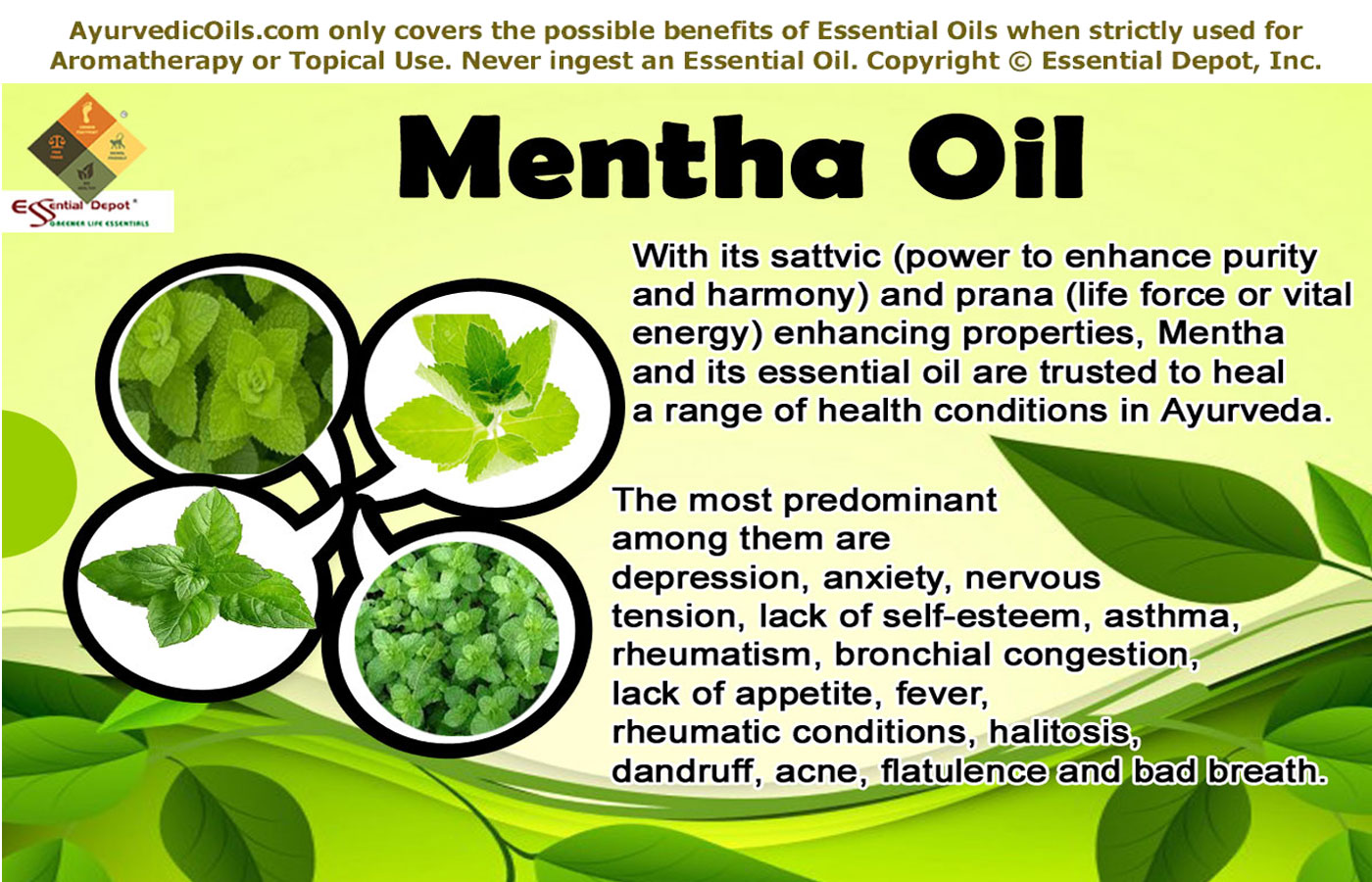
Mentha or mint has a long association with Ayurveda and the other entire Alternative and complementary healing methodologies. With its sattvic (power to enhance purity and harmony) and prana (life force or vital energy) enhancing properties, Mentha and its essential oil is trusted to heal a range of health conditions including depression, anxiety, nervous tension, lack of self-esteem, asthma, rheumatism, bronchial congestion, lack of appetite, fever, rheumatic conditions, halitosis, dandruff, acne, flatulence, bad breath and the list never ends.

Purchase Mentha Essential Oil – Wholesale – CLICK HERE

Purchase Mentha Essential Oil – Retail – 4 oz – CLICK HERE

Therapeutic attributes and chemical constituents of Mentha essential oil:

The essential oil of Mentha has antidepressant, stimulant, carminative, antiseptic, cholagogue, expectorant, antispasmodic, antiphlogistic, antioxidant, stomachic, antimicrobial, nervine, antifungal, analgesic, detoxifying, anti-pruritic, diaphoretic and anti-flatulent properties.

The major chemical constituent of Mentha essential oil is menthol and the other components that make Menthol oil as worthy as its weight in gold are a-pinene, b-pinene, flavonoids, menthone, methyl acetate, limonene, b-caryophyllene and camphene.

History and traditional uses of Mentha and its essential oil:

Mentha is a plant genus in the family of mints known as Lamiaceae. There are about 20 species of plants and hybrid mint varieties in the Mentha genus. The most popular among them are Peppermint, Spearmint, Japanese Peppermint, Banana mint, Penny royal, Garden mint, Apple mint, Orange mint, Water mint, Wild mint, Forest mint and Asian mint.

Mentha arvensis, Mentha piperita, Mentha spicata are the most famous botanical (species) names of the Mentha family. Most often, all the members of this family share common chemical constituents and the corresponding remedial properties mainly due to the qualities acquired from the same genus Mentha (It’s parent).

Mint is the most friendly and quickly growing perennial plant and its origin has been referred to Asia and Europe. The history of ancient medicine has a handful of remedial references on Mentha and its varied significance.

The genus name Mentha has said to be obtained from Greek mythology, where Menthe, a nymph who was transmuted to a plant by Proserpine as a result of his jealousy on the love of Pluto for Menthe. Aha! Moment again and the credit goes to you ladies, as again like most of the tremendous plant varieties, Mint is also a female indeed!!

English physician, Dr. James Parkinson states “Mintes are sometimes used in Baths with Balm and other herbs as a help to comfort and strengthen the nerves and sinews. It is much used either outwardly applied or inwardly drunk to strengthen and comfort weak stomackes.”

“It is comfortable for the head and memory, and a decoction when used as a gargle, cures the mouth and gums, when sore. Garden Mint is most useful to wash children’s heads when the latter are inclined to sores, and Wild Mint, mixed with vinegar is an excellent wash to get rid of scurf. Rose leaves and mint, heated and applied outwardly cause rest and sleep”, says Nicholas Culpepper, the 17th century herbalist and physician.

The book Herball by the famous botanist John Gerard quotes Mint asthe smelle rejoiceth the heart of man, for which cause they used to strew it in chambers and places of recreation, pleasure and repose, where feasts and banquets are made.”

Pliny the elder, the Roman Natural philosopher says “The smell of Mint does stir up the minde and the taste to a greedy desire of meate. It will not suffer milk to cruddle in the stomach, and therefore it is put in milk that is drunke, lest those that drinke thereof should be strangled.”

Mint is a universal herbal remedy for various health problems, where the traditional Romans and Greeks used these miraculous leaves for treating indigestion, colic, pain and respiratory illnesses.

The primordial Europeans used Mint leaves for dealing with gall bladder disorders, flatulence, cough and other digestive mayhems. As a nourishing appetizer, Mint has been used in various mouth-watering dishes across the world including the cuisines of India, Asian subcontinent; Middle East, America and Britain.

Mentha leaves have been used in making traditional tea varieties in India, where mint tea is said to alleviate fatigue, anxiety and instill instant nourishment to the brain. Many research studies conclude that Mentha is a trusted remedy for irritable bowel syndrome.

The essential oil of Mentha has been used in the manufacturing of various things including soaps, dandruff shampoos, acne creams, skin care lotions, jellies, teas, candies, syrups, ice creams and beverages. Mentha is also a noted flavoring ingredient in toothpaste, mouthwash, chewing gums, perfumes, cosmetics, pain balms and vaporizing ointments.

Ayurvedic health benefits of Mentha essential oil:

What is your thought about Ayurveda? What do you really think? Is your mind uttering that it is an ancient science, a traditional healing system, works slowly, needs patience during the healing tenure and at last you soothe stating that you don’t have much time to take up an Ayurvedic treatment.

Is Ayurveda still the “Road not taken” in your life? Then listen to me, you are not too far from attaining a healthy and harmonious life. More than just a medicinal system, Ayurveda is a complete and disciplined way of living. The word ‘Ayur + Veda’ simply means the knowledge of life.

All it needs to take up Ayurveda in your life is to do a thorough self-examination, for understanding your individual constitution (the innate rhythm of your system with nature) contributing to your physical set up, psychological attributes, spiritual element and your behavioral patterns.

You can take the help of an Ayurvedic expert to learn about your doshas and then frame your way of living that strikes absolute balance with nature. Ayurveda recommends Dinacharya or Ayurvedic routine, things to follow in your day-to-day living for prevention of illnesses and increased life span.

The rich historical reference of Ayurveda vests with India for about 5,000 years, where it is believed to be a gift of the Lord of Creation (Brahma) to the Lord of Medicine (Dhanvantari). This sacred science of healing was taken to the next level by the Ayurvedic philosophers Acharya Charaka and Acharya Sushruta, the masterminds behind the Ayurvedic encyclopedias Charaka Samhita and Sushruta Samhita.

According to Ayurveda, every individual is unique with a distinct individual constitution, likewise their health conditions should also be treated in a unique manner even if it is for the treatment of the same sickness.

The first Ayurvedic consultation with your Ayurvedic practitioner helps you to identify your medical history, Prakriti (unique individual constitution – combination of 3 doshas) and the most suitable treatment methodologies exclusively for your physical, emotional and spiritual conditions.

Ayurvedic essential oils (prana or the life force of plants), herbal medications (fresh, dried herbs or herbal infusions), yoga, simple physical exercises, meditation, prayers, Ayurvedic routine, Abhyanga (Ayurvedic massaging), and Pranayama (balanced breathing), Panchakarma (detoxification techniques) are the major Ayurvedic remedies prescribed often.

These medications aim at balancing the doshic irregularities due to changes in lifestyle, code of conduct, food habits, weather and work conditions. Ayurveda recommends the use of Mentha and its essential oil for aggravating vata dosha and pacifying pitta and kapha energies.

The Ayurvedic health benefits of Mentha essential oil are:

  1. By far the best remedy for irritable bowel syndrome and other digestive disorders:
  2. Magical spell for relieving pain and inflammation:
  3. Depression or fear of failure? Embrace Mentha for sure:
  4. Say goodbye to bad breath and other oral problems:
  5. Breathe easy – Mentha for your respiratory woes:
  6. Share the joy of healing skin problems:

Mentha-OIl1. By far the best remedy for irritable bowel syndrome and other digestive disorders:

Pitta dosha is combination of fire and water. This dosha is responsible for metabolic functions, body temperature and cognitive abilities. Pitta dosha is often associated with the stimulation of Agni or the digestive fire.

Pitta vitiation ends up in excessive secretion of gastric juices, digestive acids and other digestive enzymes, which in turn rest on the stomach or intestinal lining. This ends up in gastric ulcer, irritation of the bowel and intestines.

Mentha is known for its potent to pacify pitta or the digestive fire with its cooling and soothing effects. It is for this reason; Mentha and its essential oil are used for treating irritable patterns in the intestines and bowels.

Michael T. Murray, Naturopath and the known author of “The Encyclopedia of healing foods” says that Mentha oil calm down the muscles and walls of the stomach and intestines, which aids in alleviating indigestion, abdominal cramps and pain associated with irritation and irregular bowel movements.

The stimulating, refreshing and energizing aroma of Mentha oil makes it an effective remedy in controlling vomiting (for which it is called as vatihari in Ayurveda, means one that prevents vomiting), bloating and nausea especially during travel. Wearing 2 drops of Mentha oil to your hankie or a tissue and inhaling the uplifting aroma while travelling can pacify the digestive system and protect you from the inconveniences of puking on the go.

A 2010 study published in the “Digestive diseases and sciences” journal has concluded that Mint oil considerably lessened pain in the abdomen and enhanced the lives of people suffering from irritable bowel syndrome.

Massaging your abdomen with 4 drops of Mentha oil, 2 drops of Marjoram oil and 2 ounces of coconut oil can assist in relieving flatulence, bloating, motion sickness, belching, heartburn, abdominal spasms and peristalsis with its stimulant, carminative, antispasmodic, stomachic and anti-flatulent properties.

2. Magical spell for relieving pain and inflammation:

Mentha is absolutely one among the top 10 essential oils for its ability to discard all forms of stagnation in the system including lungs, stomach, gall bladder, kidneys, lymphatic tissues and blood.

According to Ayurveda, stagnation or retention of fluids, toxic remains, salt, uric acid, and fat deposits invite numerous foreign bodies and the corresponding disorders by deteriorating the functions of the system.

Fluid retention is a kapha disorder and is the key to rheumatic conditions, edema, joint pain, obesity, low level of insulin resistance, fibroids, increased blood pressure and heart problems.

With its power to reduce kapha imbalance, Mentha oil assists in treating pain, inflammation and flushing out excess fluids and toxic remains in the system. These remedial benefits are attributed to its anti-inflammatory, analgesic and diaphoretic properties.

A gentle massage with 5 drops of Mentha oil, 3 drops of Ginger oil with 4 ounce of Evening primrose oil can assist in reducing pain by causing numbness in the aching area, eliminating toxic remains and surplus fluids by promoting frequent sweat and urination and soothing the tensed muscles and nerves.

3. Depression or fear of failure? Embrace Mentha for sure:

Stress, depression, anger, fear of failure, feelings of loneliness and other mental worries eats up your intellect and your power to fight back and triumph.

Mentha essential oil has an extraordinarily soothing, invigorating, heartening and reviving aroma that grants you the perfect power of resisting your mental maladies, encouraging your power to rise up, augmenting your intellectual abilities, clearing the mental blocks, calming your nerves and your entire system from within.

Called as Sugandhi patra for its inspiring aromatic leaves, Ayurveda states that Mentha oil has a positive impact on:

  • Throat chakra or Visukthi (genuineness and the power to communicate bravely).
  • Solar plexus chakra or Manipuragam (self-esteem and self-confidence).
  • Sacral chakra or Svathishtanam (pleasure, abundance and well-being).
  • Root chakra or Moolatharam (power of survival).

Adding 2 drops of Mentha oil, 1drop of Vetiver oil and 1 drop of Patchouli oil in your vaporizer, burner or diffuser especially during Pranayama, meditation and prayers can grant in opening, relaxing, clearing and activating all the associated chakras or the points of subtle energy.

This rewards the power of overcoming loneliness, negative emotions and helps in exhibiting the supremacy of being a self-confident, legitimate, intellectual, cool-headed, fearless and productive person. This also helps in enhancing your concentration power, treat memory loss and vent out your hatred feelings and jealousy.

You can also add this blend in your bath or in your aromatic candles before bedtime.

4. Say goodbye to bad breath and other oral problems:

Bad breath or halitosis is not just a symbol of poor oral hygiene. Instead, the common underlying causes are poor digestion and retention of ama or toxic remains in the body.

Mentha essential oil has disinfectant, antimicrobial, cooling, energizing and refreshing attributes that helps in killing germs and microbes responsible for oral problems like gingivitis, cavities, mouth ulcers and bad breath.

Mixing 2 drops of Mentha oil and 1 drop of Lemon oil in a cup of warm water for gargling, preferably twice (morning and night) in a day after brushing can help in healing mouth sores and bleeding gums. It also assists in refreshing the breath and treat cavities, gingivitis (gum inflammation) etc.

5. Breathe easy – Mentha for your respiratory woes:

Trouble-free breathing is a gift to mankind as the healing powers and the life force or prana of Mother Nature enter the system through breathing in and toxins in the system are purged through breathing out.

The essential oil of Mentha has excellent decongestant (attributed to the presence of menthol), expectorant and stimulant properties that help in treating asthma and other breathing difficulties caused due to respiratory conditions.

Steam inhalation with 2 drops of Mentha oil and 2 drops of Eucalyptus oil followed by a gentle massage with this blend added to your mild vaporizing cream can help in opening up blocked nasal and bronchial passages, clearing congestion by loosening the phlegm and mucous deposits, relieving headache associated with sinusitis and migraine and in relieving fever, runny nose, itchy eyes and other associated symptoms of cold.

6. Share the joy of healing skin problems:

Pimples???? No more panics as Mentha promises in clearing excess oil, sebum, dirt and other harmful microbes in the sebaceous glands. It controls the secretion of sebum and allows the skin to nurture from within.

Skin impurities are again a symbol of ama or toxic deposits in the system. Ayurveda states that about 70% of the toxic elements in the body are discarded through exhalation. Wow! Amazing news right!

Just rush to add 2 drops of Mentha oil with 1 drop of Rosemary oil in your burner in the early hours of the day during your Pranayama or the technique of conscious breathing.

As it penetrates deeply with its light and subtle qualities, the therapeutic values of Mentha oil pass through the nasal passages in the form of aromatic molecules and reach the limbic system (control center of the brain).

You can experience the difference in the texture of skin after regular practice of Pranayama with Mentha magic, as all the microbes and toxic substances are washed out during slow and steady exhalation.

You can also add 2 drops of Mentha oil with 2 drops of Lavender oil and 1 ounce of Jojoba oil and dab externally for treating wounds, pimples, cuts, abrasions, itching, candida and other inflammatory conditions of the skin.

Other health benefits:

Mentha and its mystical essential oil are also used in the treatment of dandruff, wrinkles, cancerous growths, cough, insect bites, impotence, hay fever and more.

Disclaimer:

This article is only for the purpose of education. It is not meant for curing any health condition or for replacing any prescription medicines or advice of medical experts. We are not health professionals and this article focuses on widening the horizons of Ayurveda, the mother of all remedial science on earth.

Mentha essential is meant only for topical use. This is due to the fact that pure and organic essential oils are extremely concentrated substances and may cause adverse allergic reactions if used directly on the skin. Do take ingest essential oils.

Consult with your Ayurvedic practitioner or healthcare professional before selecting the appropriate essential oils for your individual constitution and health condition. Care should be taken in using essential oils if you are pregnant or nursing. Keep essential oils away from children.

Thought for the day:

Learn character from trees, values from roots and change from leaves.

-By Tasneem Hameed

Suggested Reading:

  1. Mint: The Genus Mentha (Medicinal and Aromatic Plants – Industrial Profiles) from Brand: CRC Press
  2. Mentha by Dinesh Kumar Singh, Prasann Kumar, Pankaj Kumar Mishra
  3. Growing and Cooking with Mint: Storey’s Country Wisdom Bulletin A-145 by Glenn Andrews
  4. Teas for Life: 101 Herbal Teas for Greater Health by Diane Kidman
  5. Ayurvedic Medicine: The Principles of Traditional Practice by Sebastian Pole

Reference links:

  1. Mentha by Wikipedia
  2. Mint: Health Benefits, Uses and Risks by Medical News Today
  3. Mints by Botanical.com
  4. What are the benefits of Mint leaves? By Tracey Roizman, Demand Media
  5. Studies on activity of various extracts of Mentha arvensis Linn against drug induced gastric ulcer in mammals by Ramesh L Londonkar and Pramod V Poddar, published in PubMed

Heeng Oil (Asafoetida)

Heeng-bannerAsafoetida is seen as an archaic remedy for flatulence, colic and other digestive disorders but the truth is that this ‘Food of Gods’ is still boasting its potent of treating various disorders from toothache to impotency for more than 5,000 years, where it’s use has been documented in Ashtanga Hridaya, which is one of the ancient text of the world’s oldest healing science known as Ayurveda.

Highly carped for its pungent aroma, Asafoetida has never failed in adding that extra spice to numerous traditional dishes in various countries including India, Europe, North Africa and the United States.

Known as Rāmaha, Badhika and Sahasravedhi in Sanskrit, Heeng and its essential oil has been prescribed in the Ayurvedic medicine for treating flatulence, whooping cough, painful menstruation, premature ejaculation, impotency, diabetes, asthma, intestinal worms and toothache.

Purchase Heeng Oil (Asafoetida) – Wholesale – CLICK HERE

Historical importance of Heeng (Asafoetida):

Asafoetida is native to Pakistan, Iran and Afghanistan. Botanically known as Ferula assa-foetida, it is a member of the Apiaceae plant family and the commercial part used is the oleo-gum resin extracted from the thickened roots and rhizomes. It is also known by other famous names like hing, narthex, heeng, food of Gods, devil’s dung, haltheeth, giant fennel, ting and stinking gum.

Ayurveda quotes “Asafoetida is a grounding herb that can therefore balance an overactive, over emotional, turbulent system“. It was one among the common herbs prescribed for the treatment of hysteria. It was used in 1918 to combat the Spanish influenza pandemic. It was also used as a topical remedy for relieving abdominal injuries.

Heeng is a popular spice all over the world and is used as a digestive aid, flavoring agent and as a condiment in food varieties and in pickles. It is used in daily food preparations in India especially by the followers of Vaishnavism, Jainism and by the merchant caste. Asafoetida was the most prevalent folk remedy for treating flatulence, colic and cold in children and as a contraceptive medicine.

The Arabian pharmacists and scientists like Avicenna, Fakhr al-Din al-Razi and Ibn al-Baitar have talked about the positive effects of Asafoetida on digestive system and the respiratory system. It is used in magic spells in the African-American Hoodoo tradition for its power to protect as well as to curse.

Asafoetida is also used in the Jamaican culture for protecting babies from evil spirits. The Jewish literatures like Mishneh Torah and Mishnah have also talked about this spice.

Chemical constituents and therapeutic properties of Heeng oil:

The remedial properties of Heeng essential oil are nervine, carminative, aphrodisiac, vermifuge, abortifacient, antispasmodic, stimulant, anti-flatulent, antimicrobial, analgesic, antiseptic, anti-epileptic, fertility enhancer, contraceptive, anthelmintic, expectorant, bronchodilator and emmenagogue. The major chemical constituents are phellandrenes, α-pinene, hendecyl-sulphonyl acetic acid, ferulic acid and ethers of sesquiterpenes with coumarines like farnesi feroles.

Ayurvedic health benefits of Heeng (Asafoetida) oil:

Asafoetida is a promising Ayurvedic remedy for treating digestive and respiratory disorders for thousands of years. Known as the oldest of all the healing systems on earth, Ayurveda is the mother of all medicinal practices in the world having its roots deeply vested with India, the world’s oldest historical tradition.

Ayurveda is considered as the only healing methodology that considers human body as a temple where the real soul dwells in. It also states that Mother Nature is made up of five vital elements namely fire, water, earth, air and ether. Being a part of Nature, human beings are also made up of these five fundamental elements that pair together and form the biological energies called as doshas.

Just like an individual’s fingerprints, each one of us on earth has a unique individual constitution that comprises of these three doshas namely vata, pitta and kapha. Vata is a representation of air and space and is responsible for respiration, nervous functions, circulation, excretion and creativity.

Pitta stands for fire and water and is accountable for digestion, absorption, metabolism and thinking capacity. Kapha represents water and earth and is in charge for structure, movement of fluids, sustenance and love.

Every individual has a dominance of any one of these doshas and it determines their characteristics, temperament and behavioral attributes. Balance between these doshas indicates health and imbalance causes illnesses. Ayurvedic remedies are prescribed in a such a manner to set right these doshic imbalances.

Heeng and its essential oil in Ayurveda is said to increase Pitta energy and balance vata and kapha dosha with its pungent taste and enormous healing properties. In the Ayurvedic text Ashtanga Hridaya Su Chapter l it is mentioned that “Asafoetida mitigates vata and kapha, relieves flatulence and colic pain. It is pungent taste and at the end of digestion. It aggravates pitta, enhances appetite, taste and digestion. It is easy to digest”.

The major Ayurvedic health benefits of Heeng oil are:

Heeng-broucher

1. Benefits to the digestive system:

Just by hearing the word ‘Asafoetida’ anyone in India would just say that it is the best natural remedy for treating flatulence, colic and indigestion in children as well as elderly people. With its anti-flatulent, anti-oxidant and anti-inflammatory properties, Heeng essential oil aids in relieving from abdominal gas, stomach pain, intestinal gas and bloating.

It cleanses the intestinal flora and augments the digestive fire. By this way it eliminates all kinds of stagnation in the gastrointestinal tract, relieves cramping and drives out intestinal gas. The strong herbaceous aroma of this oil assists in soothing the lining of the stomach and intestines, reducing distention, treating spasms and increasing the appetite.

Gently massaging your tummy and abdomen with 2 drops of Asafoetida oil blended with 1 ml of sesame oil will be of great help in treating all types of stomachic and intestinal problems in a comforting manner.

You can also add 1 drop of Heeng oil to warm bathing water or to diffuser in the dining hall to stimulate the process of metabolism and for enhancing the stamina, as this oil is known to nurture the earth element that is responsible for strength and vigor.

Asafoetida is used as a traditional medicine for treating constipation and flatulence in 60% people of Jammu and Kashmir, India and this wonder herbal medicine lessens the development of indigenous microflora in the gut, thus helping in reducing flatulence. It has also been used in western medicinal system as a topical remedy for treating abdominal injuries since the 18th century.

2. Benefits to the respiratory system:

Heeng and its essential oil is an ancient folk remedy for treating cold especially in children. This is mainly due to its antimicrobial and expectorant properties along with its ability to reduce kapha dosha, which is responsible for excess phlegm and mucous deposits causing cold and other respiratory problems.

Add 2 drops of Heeng oil to steam inhalation or to vapor rub and massage it on your chest, neck and back for expelling mucous and phlegm deposits in the bronchial, nasal and respiratory passages. Asafoetida has antimicrobial values that arrest the growth of infectious organisms that worsen cold and cough and pave way for chronic respiratory conditions.

It has been proven effective in the treatment of asthma, bronchitis, chest congestion, whooping cough and other respiratory problems. There are numerous home remedies with Asafoetida for treating respiratory disorders and various other health conditions.

One popular home remedy with Heeng is mixing half teaspoon of asafoetida powder with fresh betel leaf juice and white onion juice along with honey every day for treating whooping cough, bronchitis and asthma.

A 2009 study on ‘Influenza A (H(1)N(1)) Antiviral and Cytotoxic Agents from Ferula assa-foetida’ have proved the effectiveness of Asafoetida in combating the harmful effects of H1N1 virus with its antiviral and cytotoxic elements. This study concluded that Asafoetida exhibited greater potency against influenza A virus and against HepG2, Hep3B, and MCF-7 cancer cell lines, correspondingly.

3. Benefits to the reproductive system:

Asafoetida addresses male and female reproductive problems in a natural way. It is known to cure impotency, premature ejaculation and spermatorrhoea in men by increasing the libido and it also acts as an effective aphrodisiac.

Mix 2 drops of Heeng oil with 1 ml of olive oil and gently massage on your lower abdomen or add 1 drop of this oil to your bathing tub before going to bed. Regular use of this therapy can show effective results as the therapeutic molecules present in this oil penetrate deeply into the system through the skin and stimulate the male reproductive system.

Heeng as a powerful herb and a strong essential oil has emmenagogue properties and has been in use as a natural contraceptive. It will be of great assistance in treating dysmennorhea or painful menstruation, excessive bleeding, irregular or delayed periods, leucorrhea, nausea, fatigue, anxiety and other symptoms associated with menses.

The best way to use Heeng oil for menstrual discomforts is by massaging your lower abdomen with 2 drops of this oil mixed with 1 ml sesame oil or add it in a hot compress for improved results.

As a contraceptive or abortifacient, Heeng oil can be used in treating unplanned abortion, sterility in women and premature labor. It is also effective in improving the quality and quantity of breast milk in nursing women. Using Asafoetida in post-pregnancy period is recommended for relieving colic, indigestion and other digestive difficulties in both the mother and the baby.

4. Benefits to oral health:

Human mouth has the highest possibilities of being affected by millions of micro-organisms that not only cause hazards to oral health but also to the entire body. Heeng essential oil has potent antimicrobial and antiseptic properties that aids in treating toothache, bleeding gums, bad breath or halitosis and harmful cavities.

Add 1 drop of Heeng oil in a cup of warm water and use it as a gargle for getting rid of various oral problems. You can also add 1 drop of this oil to a piece of cotton and dab it on your aching tooth for immediate relief.

5. Benefits to the entire system:

Asafoetida and its essential oil are beneficial to the entire system in a number of ways. It has been proven effective in stimulating the pancreatic cells to secrete more insulin as improved insulin levels are known to bring down the blood sugar levels to normal.

According to certain studies, the antioxidant and anti-carcinogenic properties of Asafoetida curbs the growth of malignant cells causing cancerous tumors. Since the ancient times, this condiment has been used as a powerful antidote for opium as it is identified to counter the effect of the ingested drug.

Asafoetida is defined as ‘Tamasic’ in Ayurveda for its properties of resistance, dullness, inertia and darkness on the mind and it can balance the over emotional, hyperactive and chaotic system.

This condiment is also used as a pesticide and insecticide for protecting crops from pests and for repelling mosquitoes and certain other insects.

Disclaimer:

This article is only for informational purpose and is not directed to diagnose or replace any prescribed medicines or professional medical advice. Never take essential oils internally and always dilute essential oils before using it topically. This is because organic and pure essential oils are highly concentrated liquids and can cause allergic reactions if used in an undiluted manner.

Remember to consult your Ayurvedic practitioner before choosing the most suitable essential oil for your unique constitution and health condition. Avoid using Heeng oil if you are a pregnant woman as it has strong abortifacient properties.

Thought for the day:

Deep in their roots, all flowers keep the light. -Theodore Roethke

Suggested Reading:

  1. Ayurveda & Aromatherapy: The Earth Essential Guide to Ancient Wisdom and Modern Healing by Dr. Light Miller, Dr. Bryan Miller
  2. Ayurvedic Healing Cuisine by Harish Johari
  3. Herbs: An Inside Look Into The World of Alfalfa, Basil, Asafoetida, Burdock, Catnip and More by Vanesa Payne
  4. The Yoga of Herbs: An Ayurvedic Guide to Herbal Medicine by David Frawley, Vasant Lad
  5. Alternative Medicine: The Definitive Guide by Burton Goldberg Group

Reference Links:

  1. Asafoetida by Wikipedia
  2. Asafoetida (Hing) Benefits by Speedy Remedies.com
  3. Asafoetida by The Spices Board India
  4. Asafoetida – A Grounding Herb by American Botanical Council
  5. Influenza A (H(1)N(1)) Antiviral and Cytotoxic Agents from Ferula assa-foetida by Lee, CL; Chia-Lin Lee, Lien-Chai Chiang, Li-Hung Cheng, Chih-Chuang Liaw, Mohamed H. Abd El-Razek, Fang-Rong Chang, Yang-Chang Wu, College of Pharmacy, China published in PubMed

Pimento Berry Essential Oil

Won’t it be a heavenly feeling after opening a box full of all the spices put together? Undoubtedly ‘Yes! ‘is the answer that I can read from your face. Known as ‘ALLSPICE’, Pimento berry and its steam distilled essential oil from the leaves and dried berries smell like seventh heaven as its power-packed spicy aroma reminds you of warm spices like clove, pepper, cinnamon and nutmeg.

pimento-berry-bannerBotanically acknowledged as Pimenta officinalis and Pimenta dioica, this herb is also nurtured with other common names like Jamaica pepper, clove pepper, new spice, bay rum berry and pimento. Known as seetful and kabab cheene in Ayurveda, Pimento berry has been used conventionally for relieving toothache and treating bad breath.

Purchase Pimento Berry Essential Oil – Wholesale – CLICK HERE

Historical uses of Pimento berry:

Indigenous to Central America, Caribbean Islands and Jamaica, this herb has been in use in the folklore medicine of Mexico during the Pre-Hispanic period and the traditional Jamaicans used this remedial herb in tea and as a tonic for healing menstrual cramps, stomach problems and cold. The Haitian inhabitants in Cuba used Allspice in herbal preparations for treating digestive disorders and toning the stomach.

Allspice herb and its oil have been historically used for curing gastrointestinal problems, cramps, rheumatic pain and toothache.

Pimento leaves were used in the Dominican Republic in tea for reducing vomiting and the Western herbal medicine makes use of Allspice extracts in making plasters for treating rheumatic and neuralgic pains. Allspice water and Allspice oil were recognized by the British Pharmacopeia in 1898. This herb was also trusted to help quitting bad habits, breaking magical spells and guarding against evil powers.

Chemical constituents and therapeutic properties of Pimento berry oil:

Pimento berry essential oil has stimulant, tonic, depurative, carminative, astringent, deodorant, stomachic, antidepressant, purgative, diuretic and antiseptic properties. The chemical constituents that contribute to the remedial values of this oil are eugenol (about 75%), sesquiterpene caryophyllene, β-caryophyllene, methyl eugenol and 1, 8-cineole.

Ayurvedic health benefits of Pimento berry essential oil:

Universally known as the mother of all healing sciences, Ayurveda is the oldest of all medicinal systems in the world. Ayurvedic texts have recorded brilliant remedial measures right from common cold till plastic surgery methods that was carried out by the Ayurvedic physician, Sushruta during 6th century BC in India and he is celebrated as the father of plastic surgery.

According to this magnificent methodology, human beings are a vital part of nature and every action whether physical, emotional, spiritual, psychological or environmental are linked with natural energies. Illness, according to Ayurveda just indicates that the human body is out of balance with nature.

Ayurveda precisely classifies that human beings are made up of three energy elements known as doshas in Sanskrit (vata, pitta and kapha), where vata represents air, pitta symbolizes fire and kapha stands for water. All these three doshas should strike perfect balance for an individual to be healthy and sickness indicates either increase or decrease of any of these or all the 3 doshas.

Ayurvedic remedies consist of herbs, essential oils, Ayurvedic massage, meditation, yoga and physical exercises along with spiritual ideals that help one to understand the purpose of life. Allspice essential oil in Ayurveda is said to treat pitta deficiency along with surplus of vata and kapha.

The key Ayurvedic health benefits of Pimento berry essential oil are:

pimento-berrry-broucher1. Treats respiratory problems:

The major cause for respiratory problems like sinus, cough, severe cold, chest congestion, difficulty in breathing due to excess mucous and phlegm deposits on the lungs etc., is due to the water based energy element kapha. Increase in kapha dosha due to climatic conditions or irregular food habits increase water content in the body and further infections cause cold and other respiratory problems.

Allspice essential oil reduces kapha and aids in treating respiratory infections like bronchitis, cough, chills and congestion. For instant relief, you can add 2 drops of Pimento oil in boiling water for steam inhalation.

2. Helps cure digestive disorders:

Widely used as a carminative, Allspice oil has stomachic and tonic properties that aids in assisting problems with digestion, flatulence, nausea, gastrointestinal tract disorders, loss of appetite, colic and dyspepsia. Herbal tea prepared with Allspice powder or a gentle massage with 3 to 4 drops of Allspice essential oil with coconut oil can help in alleviating digestive disorders.

3. Relieves rheumatic and muscular pain:

As known before, excess of kapha causes water retention or fluid retention paving way for rheumatic problems as the toxic substances stagnate in the body, hindering its regular functioning.

Pimento berry essential oil with its warm, diuretic and anti-inflammatory effects helps in relieving rheumatism, reducing inflammation, muscular aches and arthritic pain when used as a massage oil with 2 drops of Pimento berry oil blended with warm carrier oils like sesame oil can grant relief. You can also add 3 to 4 drops of Allspice oil in warm bathing water for utilizing the stimulating rubefacient effect of this oil in treating neuralgia, stiff muscles and rheumatic pain.

4. Positive effects on degenerative and cancerous diseases:

A 2011 research on ‘Composition and antioxidant activity of essential oil of Pimento from Jamaica’ tested the “antioxidant properties of this essential oil in terms of its free-radical scavenging activity against 1,1-diphenyl-2-picrylhydrazyl (DPPH), 2,2′-azinobis (3-ethylbenzothiazoline-6-sulphonic acid) diammonium salt (ABTS) radical cation and superoxide anion”.

This study witnessed that Pimento berry essential oil possess very high radical fighting activities compared to that of pure eugenol and also recommended its use as a natural antioxidant along with good flavor and enormous health benefits, including cancerous and degenerative diseases due to the effect of free radicals.

5. Calms the mind and body:

The comforting, warming, encouraging, uplifting and fostering aroma of Pimento Berry essential oil renders a sense of personal touch, self-confidence and freshness on the mind and body.  As a proven tonic for the central nervous system, this oil supports in treating neuralgia, nervous exhaustion, convulsions, hysterical paroxysms, depression, fatigue and stressful conditions.

Enriching your potpourri, diffuser, burner, vaporizer or bathing water with 3 drops of Allspice essential oil can grant you ultimate solace after a long tiring day and can also kick start your confidence for a promising dawn. It is for this strong purpose, Pimento berry essential oil has been a part of men’s perfume ranges.

Other health benefits:

Allspice essential oil is also known to be used in food industry for flavoring frozen food items. Its potent antioxidant effects have made its use compelling in meat preservation. Dentists use eugenol as a trusted antiseptic and local anesthetic for treating problems with gum and teeth. Pimento berry essential oil contains rich eugenol content that makes it a promising agent for treating halitosis and other dental problems.

Disclaimer:

Always use essential oils after diluting it in carrier oils. Never take essential oils internally as it may cause harm. Consult your Ayurvedic practitioner before using specific essential oils for your unique constitution and the quantity of oils to be used. Use Allspice essential oil in low dilutions as it has a high content of eugenol and may cause skin irritation.

Thought for the day:

Let your life lightly dance on the edges of Time like dew on the tip of a leaf.
-Rabindranath Tagore

Suggested Reading:

  1. Vibrational Healing: Revealing the Essence of Nature through Aromatherapy and Essential Oils by Deborah Eidson
  2. Ayurveda & Aromatherapy: The Earth Essential Guide to Ancient Wisdom and Modern Healing by Dr. Light Miller, Dr. Bryan Miller
  3. The Complete Herbal Guide: A Natural Approach to Healing the Body by Stacey Chillemi

Reference Links:

  1. Traditional Uses of Allspice by Natural Standard The Authority on Integrative Medicine
  2. Composition and antioxidant activity of essential oil of pimento (Pimenta dioica (L) Merr.) from Jamaica published in PubMed
  3. Pimento/Allspice by herbwisdom.com
  4. What Are The Health Benefits of Allspice Leaf? By Livestrong.com