Category Archives: Ayurvedic Essential Oils

Ayurvedic Essential Oils

Ayurvedic Treatment For Cracked Foot


Ouch!!! It aches, especially on every step that I take. What can I do?’ These are the mind words of people who have sore, cracked foot. Women are often affected and suffer with dry, cracked and not so appealing heels more than men. Your dream footwear will just be sleeping on the shelves of the shoe rack, till you treat your cracked foot. I have seen people hide their foot, with the fear of unveiling their thorny, flaky and busted heels also known as heel fissures. Painful, cracked and dry heels is a predominant cosmetic problem and has been termed as Padadari in Ayurveda and has been explained in Kshudra Rogas in Sushruta Samhita. There are innumerable remedies for cracked foot in Ayurveda and let’s have a look at the promising Ayurvedic essential oils for healing heel fissures.

Causes for cracks or fissures: Human foot is the powerful part of the body helping one to withstand all severe climatic conditions and roam around, yet it is this part of the body that is often neglected. Cracks on foot have no age limit and it can affect anyone for that matter irrelevant of the sex, color and origin. The major causes for cracks or heel fissures are:

  • Cracks are occupational especially for farmers and other people who are involved in laborious tasks that demand standing always, which lead to huge pressure on the foot forcing it to develop cracks.
  • Prolonged standing on hard floor and this is the reason why most of the homemakers develop cracks.
  • Dry, dull and lifeless skin that lacks moisture, especially during winter has the tendency to develop cracks.
  • Uncomfortable, not so fitting or open back footwear compels pressure on the foot, while widening and deepening the cracks.
  • Obesity or excess accumulation of fat and deficiency of essential nutrients like vitamins and minerals.
  • Dry, hot, humid and tropical climatic conditions make your feet dull, dry and hard paving way to develop cracks.
  • Aging and skin conditions like psoriasis, eczema, athlete’s foot etc.
  • High exposure of feet to dust, dirt, germs and other harmful organisms leading to infection in the foot.
  • Excess sweating of feet or other causal illnesses like thyroid and diabetes can also cause cracks on the foot.

Symptoms: Cracks generally appear on the external or outer walls of the heels, when it is thick and dry. The symptoms of cracked foot are dry, itchy and painful heels with flaky and red patches and partition of skin looking like root hairs. When left unnoticed, fissures may start bleeding with excruciating pain and might even lead to developing Calluses, Cellulites, and Lymphangitis etc. Anyone with cracked feet will have greater discomfort while walking and the cracks can act as a dangerous channel for bacteria, virus, fungi and other harmful organisms to enter into the body and complicate the situation.

Ayurvedic treatment for Cracked foot: Ayurveda, the natural healing science suggests the systematic way of living in harmony with nature. Following an Ayurvedic routine can weaken your illness woes and strengthen your immunity. Padadari or cracked heels occurs mainly due to Vata imbalance. Ayurvedic texts recommend human beings to keep themselves clean and maintain perfect personal hygiene, which can help in controlling and preventing illness.

1. Pamper your feet with an Ayurvedic massage: Feet is one such vital part of the body that needs complete pampering and with such care it would remain soft, supple and glowing. Abhyanga or an Ayurvedic massage with effective natural and hydrogenated vegetable oils like Coconut oil, Sesame seed oil etc can heal your cracked heels effectively. Essential oils like Lavender essential oil, Lemon essential oil, Eucalyptus essential oil etc, can heal your infected heels and make the foot skin soft. This helps the hard, rough and dry skin to turn tender and smooth by enhancing the blood circulation in your feet.

2. Comforting foot bath or Padasnana: For cracked foot, this miraculous science suggests foot bath also known as Padasnana to revitalize your foot skin and prevent the fissures in the future as well. Padasnana along with certain effective Ayurvedic essential oils can help you save your foot from such painful, displeasing and unappealing heel fissures.

Take a small tub of warm water and add 2 to 4 drops of Patchouli essential oil, Tea tree essential oil, Rose essential oil and Lavender essential oil. Soak your feet in this water for about 15 to 20 minutes and the cicatrisant, antibacterial, antiseptic, antifungal, calming and anti-inflammatory properties in these essential oils will make your feet petal soft when done two or three times a week.

Adding few drops of Tea tree oil, Peppermint oil, Eucalyptus oil and Lemon oil to a small basin of water and soak your feet into this medicated solution for about 10 to 15 minutes. This relaxes your heels, loosens the cracks, moisturizes the dry scaly skin and helps combat fungal infections as these oils have anti-fungal, analgesic, anesthetic and astringent properties.

3. Moisturize your feet with soothing essential oils: The best essential oils for moisturizing your feet are Peppermint oil, Myrrh oil, Lavender oil, Rose oil, Geranium oil, Patchouli oil, Tea tree oil and Eucalyptus oil. These oils can be used for massaging your feet either as a blend with carrier oils like jojoba oil or coconut oil or can be added to warm water for your foot bath. 5 to 10 drops of essential oils of Geranium, Benzoin, Lavender, Myrrh and Tea tree mixed with 1 ounce of natural cream or mild lotion can act as the best daily moisturizing rub for your feet, especially after a shower.

4. Care your heels with Carrier oils: Carrier oils like Jojoba oil, Calendula oil, Avocado oil, Olive oil and Sweet Almond oil can guard your foot from cracks and other infections. These oils enrich your skin with the presence of essential vitamins and minerals. A gentle massage with any of these oils can aid in nourishing your dehydrated and dry skin while preventing it from painful cracks.

5. Healthy and nutritious diet: Drink enough water daily and eat a balanced diet with rich nutrients like essential fatty acids, minerals and vitamins, which make your skin smooth and combat dead skin cells in your body. Green leafy vegetables and juicy fruits can supply the essential resilience to your skin.

Regular physical exercises and yoga can help you in treating your cracked heels. Hmmm…. Now you can use your dream footwear on your shelves again and dance in joy with the comfort and confidence of having crack-free, clear and supple heels. Happy Dancing!!!

Thought for the day:

The human foot is a masterpiece of engineering and a work of art.                                                                        – Leonardo da Vinci

Suggested Reading:

  1. Natural Foot Care: Herbal Treatments, Massage, and Exercises for Healthy Feet By Stephanie L. Tourles
  2. Whole Body Massage: The Ultimate Practical Manual of Head, Face, Body and Foot Massage Techniques By Francesca Rinaldi, Nitya Lacroix, Sharon Seager, Renée Tanner
  3. Absolute Beauty: Radiant Skin and Inner Harmony Through the Ancient Secrets of Ayurveda By Pratima Raichur, Mariam Cohn

Reference Links:
  1. Kshudra Roga Critical Understanding by Scribd
  2. Effect of Madhusiktadi Lepa and Padasnana in the Management of Padadari by S.J.G. Ayurvedic Medical College
  3. Dry Cracked Feet by essential3

Tangerine Essential Oil


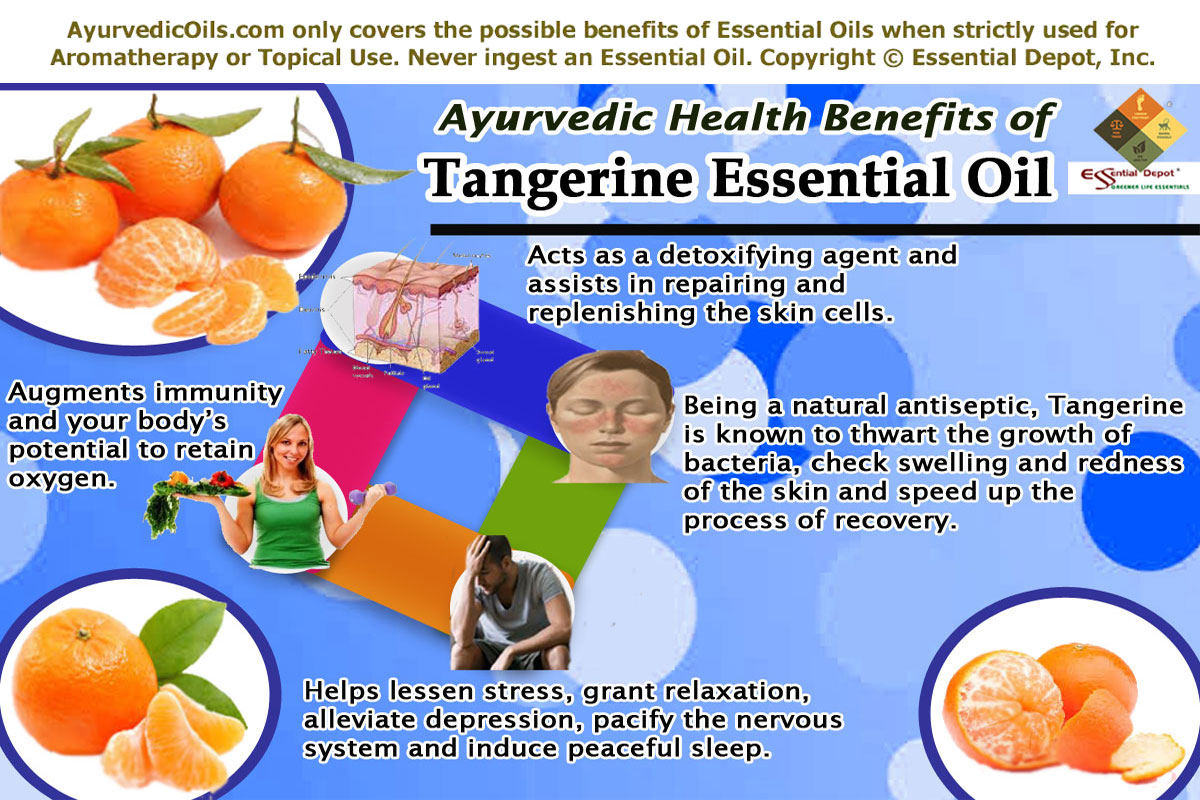
tangerine-bannerWho will hate the citrus, tangy, warm, refreshing and uplifting aroma of tangerine essential oil? Not many of us knew that this invigorating oil has a natural tonic effect on our digestive system and checks tension and stress. Indigenous to China, tangerine and the essential oil extracted from the peels of the tangerine fruit by cold press method has been a vital part of TCM (traditional Chinese medicine).

Ayurveda, the science or knowledge of life calls tangerine as Santra Sal and this fruit is highly regarded as a natural detoxifying agent, helping to eliminate the toxins known as ama from the human body. Elimination of toxins according to Ayurveda is the initial step for purifying the tissues, getting rid of toxic substances left by poor nutrition and disease, strengthening the immune system, augmenting mental clarity and nurturing the overall health condition of an individual.

Purchase Tangerine Essential Oil – Retail – CLICK HERE

Purchase Tangerine Essential Oil – Wholesale – CLICK HERE

Historical uses of Tangerine essential oil:

Tangerine has its birth recorded more than 3000 years ago and this is the predominant cause behind its popular use in the world of integrative medicine. More than the fruit, the external rind or the peel from which the essential oil of Tangerine is extracted is said to have enormous medicinal benefits.

The ancient Chinese philosophers used Chen Pi or tangerine peel to treat digestive disorders like vomiting, indigestion, diarrhea and stomach upset. It was trusted to increase the flow of liquids throughout the body. Chinese medicine call life force as Qi and tangerine peel is believed to control, reconcile and stabilize the flow of Qi.

The decoction extracted from tangerine peel was used in various medications for treating morning sickness in pregnant women, gout and sexual problems in men like premature ejaculation and impotence. Tangerine peel was an important ingredient in Chinese Dr. Huang’s internal injury poultice for treating inflammation, sports injuries, sprain and muscular problems. French and other European medical practitioners used tangerine essential oil for dealing with digestive problems in children and the elderly people.

Ayurvedic texts denote tangerine oil as one of the mildest essential oils that can be used by pregnant women also. It is used to detoxify the body, purify the soul and for tranquilizing the entire system. This was also mentioned in the book ‘Ayurveda and Aromatherapy’ where Bryan Miller and Light Miller said that Tangerine oil is one of the favorite oil of pregnant women and children because of its uplifting and soothing qualities.

Chemical constituents or Gas Chromatography Report (GC) of Tangerine oil:

According to the Gas chromatography report, Tangerine oil constitutes of 9 chemical components that contribute to its fragrance, therapeutic attributes, consistency and quality of this oil. Of which, Limonene contributes to the highest proportion of Tangerine oil with about 95.8% of its total composition.

Just click on:

I trust that this must certainly help you in getting to know the exclusive information about the prime chemical constituents of Tangerine oil.

The table crafted below clearly depicts the unique nature and contributions of these bio-chemical constituents to the healing magnificence of Tangerine essential oil.

tangerine-gct

Ayurvedic health benefits of Tangerine essential oil:

Ayurveda trusts in healing humanity through the use of five senses therapy namely the sense of smell, sight, touch, sound and taste. Besides treating illnesses, Ayurvedic methodology focuses on a disciplined lifestyle that would help in preventing illnesses.

Prana is the essence or life force of any living being on earth. The Vedic texts denote that essential oils were used as a part of Ayurvedic treatments trusting that essential oils, the vital life force or prana of plants will certainly aid in enriching the prana of human beings.

Among the three dynamic forces of nature or doshas namely vata, pitta and kapha that form the constitution of an individual, tangerine oil is said to benefit the vata and pitta doshas with its drying and cooling energies.

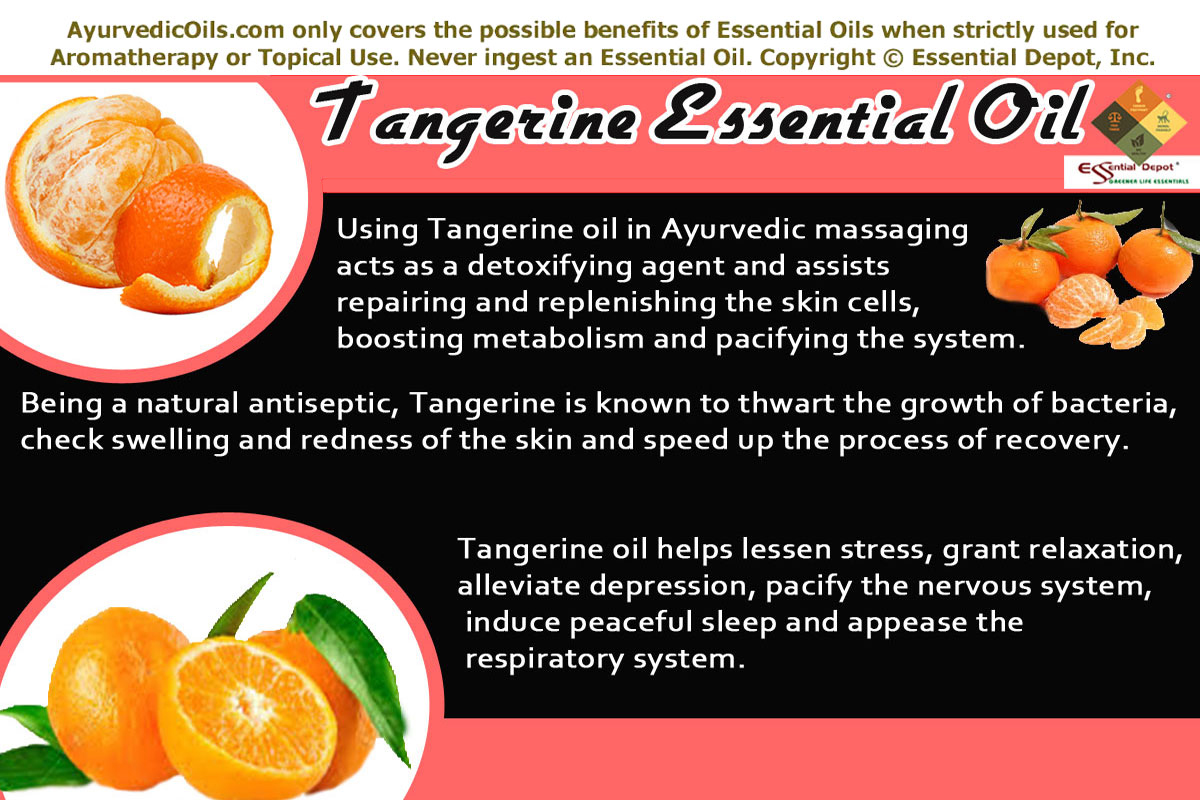
Let’s have a look at the Ayurvedic health benefits of Tangerine essential oil based on their usage.tangerinebroucher1. Abhyanga or the Ayurvedic massage therapy:

This treatment method falls under the sense of touch where the tissues of the body are maneuvered gently and firmly by hands, forearms, elbows, feet and few other effective massaging equipments. Ayurveda suggests the use of essential oils and certain other herbal oils, without which an Ayurvedic massage cannot be fulfilled.

The simple concept behind this healing methodology is that the therapeutic values of the essential oils used for massaging enter your body through the pores of your skin and deeply penetrates into your bloodstream. This way, a systematic massage with healing essential oils can have a positive effect on your mind, body and spirit.

Massaging with few drops of Tangerine essential oil blended with carrier oils like jojoba oil, almond oil or coconut oil can assist in healing numerous health conditions.

Calms your system:

Tangerine essential oil is a calming agent that is proven effective in relaxing your body absolutely. It treats mood fluctuations, assists nervous afflictions and completely pampers the troubled nervous system. Anxiety, stress, depression, pain, impulsive responses and emotional imbalances are controlled with its soothing and uplifting properties.

Boosts metabolism:

The stomachic and tonic properties of Tangerine oil supports in boosting the process of metabolism. It stimulates the proper flow of digestive juices ensuring appropriate secretion of bile and other digestive acids, aids in absorbing the essential nutrients from the food, heals irritation in the stomach lining and intestines and supports the entire process of digestion. For all these reasons the essential oil of Tangerine is used in relieving pain, treating ulcers, inflammation and wounds in the stomach.

Detoxifying agent:

Tangerine essential oil is an excellent detoxifier that facilitates in removing the toxic substances and other impurities in the body. The depurative property of this oil purifies the blood. It excretes the toxins and other harmful substances like pollutants, excess salt, uric acid and excess water in the body through urine, excreta and sweat.

Any human body free from toxic substances is the base for absolute health and grants complete newness to the aura. Tangerine essential oil is also efficacious in treating severe coughs, asthma, spasmodic cholera, convulsions, muscular cramps, spasms, severe pain and other breathing problems.

Repairs and replenishes the skin cells:

The active components and cytophylactic properties of Tangerine oil, makes it valuable in treating damaged tissues in the body. It promotes cell division and creation of new skin cells. This oil also aids in rejuvenating the existing cells and cure all kind of damages in the cellular system. This is why Tangerine essential oil is known as woman-friendly oil for treating stretch marks in pregnant women and other marks or scars due to accidents, obesity, acne etc.

2. A natural antiseptic:

Tangerine is one such mild essential oil that can be directly applied on cuts, wounds, sores and burns. The natural antiseptic values of this oil helps fight against the most harmful Staphylococcus Aureus bacterium, which is said to be responsible for wounds and infections to turn septic and contagious.  Applying tangerine oil directly on the affected areas or a mix of few drops of this oil to your skin care lotions or cream is known to thwart the growth of bacteria, check swelling and redness of the skin and speed up the process of recovery.

3. In vaporizers and burners:

Tangerine essential oil can be used in aroma lamps, vaporizers, burners and diffusers to lessen stress, grant relaxation, alleviate depression, pacify the nervous system, induce peaceful sleep, appease the respiratory system and boost the digestive mechanism. The aromatic compounds of this oil enter the body through the nasal passages and reach the limbic system of the brain, which is said to control the functions of the body and influence your feelings, desires, emotions, creativity and other vital actions.

4. In bath tub:

Add 2 to 3 drops of Tangerine essential oil to your bath tub especially in the morning. This is because the revitalizing and encouraging aroma of this oil fosters your energy level, increases blood circulation, treats digestive problems, supports the functions of the nervous system and can give a great start to your day.

5. As a captivating perfume oil:

The fresh and energizing citrus aroma of Tangerine oil will be cheering and comforting to your mind and senses. You can add few drops of tangerine oil to your perfume, detergent or fabric conditioner, handkerchief, pillows etc to embrace your mind, body and spirit flawlessly. Inhaling the aroma of Tangerine essential oil augments your body’s potential to retain oxygen and stay fresh and keyed up all throughout the day.

Tangerine essential oil is also a natural tonic with antioxidant properties and can boost the immune power, making your body resistant against infections and illnesses.

Disclaimer:

Tangerine essential oil is safe on skin and is also recommended for children and pregnant women but is said to show photo toxicity effect in certain skin types. Essential oils are highly concentrated liquids so consult your Ayurvedic practitioner before taking them internally or applying them directly on your skin.

The MSDS (Material Safety Data Sheet) of Tangerine oil is readily available for your enhanced safety and better usage.

Gas Chromatography Report (GC analysis) of Tangerine oil.

Thought for the day:

Look deep into nature, and then you will understand everything better.   -Albert Einstein

Suggested Reading:

  1. Tangerine peel: An entry from Thomson Gale’s Gale Encyclopedia of Alternative Medicine by Peter Gregutt
  2. An Aromatic Life: Natural Lifestyles using Essential Oils by Jen Gallagher
  3. Treatment Alternatives For Children by Dr. Lawrence Rosen, Jeff Cohen
  4. Between Heaven and Earth: A Guide to Chinese Medicine by Harriet Beinfield, Efrem Korngold

Reference Links:

  1. Tangerine Peel by AltMD Smart Alternatives
  2. Tangerine Oil by Yoga Wiz.com
  3. Health Benefits of Tangerine Essential Oil by Organic Facts

Save

Ayurvedic Oils: The Incredible Power To Bring Heaven On Earth


We live in an unstable world and none of us are aware of what might happen tomorrow. Besides our busy schedules and countless number of our routine tasks, most of us want to reach the heaven at the end desperately. We never know how heaven would be but we dream and aspire to be there someday or the other. How will you actually feel if someone says that you can feel the divinity and the bliss of heaven on earth? Great…..is what I have to say and expect the same from you also. Yes! The heavenly touch of Ayurvedic essential oils and their vital values have indeed the incredible power to make us feel how heaven would truly be. These oils have the clout in them to revoke the holistic spirit that lies deep within you. Ayurvedic oils are often a symbol purity and integrity; hence they directly penetrate into the cells of our body.

The use of Ayurvedic essential oils that are natural extracts from plants are one of the    oldest practices of Ayurvedic healings. There are certain special Ayurvedic oils that mesmerize you with their rich and heavenly power, especially Almond oil, Jojoba oil, Juniper Berry Essential Oil and Palmarosa Essential Oil. These Ayurvedic oils invigorate your mind while providing complete relaxation to your entire system.

Almond oil: Almond, commonly known as The King of nuts is originated from the Mediterranean countries. The sweet oil extracted from Almonds is versatile with manifold healing properties. Almond oil does not carry much fragrance with it but highly helps in nourishing your skin in all climatic conditions. Almond oils are used in the cosmetics manufacturing industry for providing natural glow to the skin along with lustrous shine to your hair. Regular usage of Almond and its oil can create wonders to you both physically and mentally.

Jojoba oil: Age is the only critical factor that cannot be gained back in our lifetime but Ayurveda strongly suggests that nothing is impossible in this world as the term ‘Impossible itself says I’m Possible’. Jojoba oil extracted from jojoba seeds aims at retaining your age as sweet 16 always. Wondering how..??? One of the most prominent features of Jojoba oil is to prevent your skin from wrinkles. This non-greasy oil enters vividly into your skin and helps you retain a soft, supple and beautiful skin throughout your life, thereby helping you stay younger from within. Jojoba oil is used as an effective replacement to whale oil that has been banned to be imported in the US since 1971.

Juniper Berry Essential Oil: Juniper Berry Essential Oil is extracted from Juniper berries that are being collected from few of the rarest species of evergreen shrubs. Juniper Berry essential oil is best when used for meditation purposes and has sky-scraping medicinal values. It is used in the treatment of numerous contagious diseases. Its pleasant and sweet fragrance relieves your mind from stress and aids you to step into a new-fangled world.

Palmarosa Essential Oil: Palmarosa essential oil is derived from the aromatic grassy leaves of Palmarosa plant. It is used by several physiotherapists in their ailment procedures. Palmarosa oil acts as an effective antioxidant in treating all sorts of bacterial, fungal and viral infections. It is also proven to be the best oil to prevent one from rashes and other skin infections. Habitual use of Palmarosa oil keeps you free from tension and extreme stress.

Food, clothing and shelter were the basic amenities of human beings but in this modern world, beauty, youth, health and peace have become the basic necessities inevitably. Thus Ayurvedic oils provide you the best of the best things granting you the ultimate pleasure of being in heaven while you are still on earth.

Thought for the day:

To see the world in a grain of sand, and to see heaven in a wild flower, hold infinity in the palm of your hands, and eternity in an hour.                                -William Blake

Suggested Reading:

  1. Ayurveda & Aromatherapy: The Earth Essential Guide to Ancient Wisdom and Modern Healing By Dr. Light Miller, Dr. Bryan Miller
  2. The Aromatherapy Companion: Medicinal Uses/Ayurvedic Healing/Body-Care Blends/Perfumes & Scents/Emotional Health & Well-Being (Herbal Body)
    By Victoria H. Edwards
  3. Perfect Health: The Complete Mind/Body Guide, Revised and Updated Edition By MD Deepak Chopra

Reference Links:

  1. Jojoba Oil by  Wikipedia
  2. Almonds – The King of Nuts by Dr. Verena
  3. Ayurveda Oils by Siddhalepa

Ayurvedic Essential Oils for Combating Your Back to School Woes


My kid started going to school, and I really miss him a lot. I can’t believe that the lazy days of summer have come to an end so soon. Generally, going back to school means weary and crabby mornings, loads of home works and assignments, and of course, most importantly, exposure to warfare of germs and spiteful viruses. As you know, school environment is the breeding ground for all germs, viruses and pathogens. Moreover, the kids are buckled up to learning and a more tiresome routine. This makes them feel totally exhausted, sleepy, depressed, stressed, and they fall sick due to the attack of barrage of germs and viruses.

When will my kids enjoy happy mornings, relaxed evenings and peaceful slumbers? How can I bring a little joy to his humdrum life? How can I keep my kid resistant to all germs that throng in schools? As a loving parent, I can understand that these are the questions running through your head every day. No worries! Mother Nature has gifted us, invaluable Ayurvedic essential oils to combat these things in a natural way.

Importance of Ayurvedic Essential Oils: Ayurvedic Essentials Oils help in reducing stress and anxiety, enhance mental focus, support concentration and memory retention, boost immunity and finally, induces good night’s sleep. Apart from stimulating your olfactory system in the limbic system, the molecules of these Ayurvedic essential oils has the ability to enter your bloodstream and passes its aromatic essences to all the parts of your body, for the entire well being. It’s the right time to know about certain Ayurvedic essential oils that every parent should have in their family’s medicine cabinet.

Lavender essential oil: Known for its cell regeneration properties, lavender oil is one of the most versatile essential oils that every parent must have. From cuts and stings to insect bites to insomnia, this is your “all-purpose” Ayurvedic oil. Lavender oil, also aids in relaxing and balancing your mind and body. It has remarkable healing, antiseptic, antiviral, analgesic, anti-convulsive properties, thereby serving as an exceptional remedy for your kid’s burns, cuts and stings.

Eucalyptus essential oil:  Does your child suffer from any respiratory issues such as stuffiness and congestion associated with a cold or flu? Then, you are left with no option other than using Eucalyptus oil. This oil has a powerful bactericidal with antiviral properties. It also serves as an excellent immune-stimulant Ayurvedic oil. It can also be used for sore muscles, aches and pains.

Tea Tree essential oil:  Arm yourself and your children with Tea Tree Oil, as it helps in sorting out all kinds of viral, bacterial and fungal infections. The efficacious antiseptic and immune-stimulating properties of this oil make it a must-have-oil in your medicine cabinet. It even aids in relieving muscular aches and severe pain in the body. Tea tree oil is extremely mild and hence, it can be directly applied on cuts and scrapes to clean and reduce agony.

Peppermint essential oil: “Mummieee!!! My tummy hurts!!!!!.” Well, most of the moms hear these words on a regular basis. I feel like, why don’t you try using Peppermint oil that has been credited as an excellent digestive aid for both adults and children. This oil is extracted from peppermint leaves that contain menthol, ensuring the well-being of your digestive system. This refreshing and energizing essential oil can also be used for treating headaches, sinus, chest congestion, migraine and itchiness. It’s warming and cooling traits stimulate your mind and increase the mental agility and focus.

Apart from these essential oils, you can also use lemon essential oil, rosemary essential oil, orange essential oil, cardamom essential oil, sandalwood essential oil and bergamot essential oil to defend your children from being assaulted by harmful germs.

Well, I think, now, you have got yourself motivated with these awe-inspiring Ayurvedic essential oils, what next? Add these Ayurvedic essential oils to your medicine cabinet to combat all the worries related to your child’s back to school challenges!

Wishing you and your family, a good health!

Thought for the day:

Even though your kids will consistently do the exact opposite of what you’re telling them to do, you have to keep loving them just as much.                                                                                    -By Bill Cosby

Suggested Reading:

  1. Perfect Health for Kids: Ten Ayurvedic Health Secrets Every Parent Must Know By John Douillard
  2. Seven Secrets to Raising a Happy and Healthy Child: The Ayurvedic Approach to Parenting By Joyce Seyburn
  3. Aromatherapy for the Healthy Child: More Than 300 Natural, Nontoxic, and Fragrant Essential Oil Blends By Valerie Ann Worwood

Reference Links:

  1. Essential oils by Wikipedia
  2. Lavender oil by University of Maryland Medical Center
  3. Eucalyptus – MedlinePlus Supplements

γ-Terpinene


A group of isomeric hydrocarbons known as terpinenes are commonly classified as terpenes. They have similar molecular formulas and carbon framework but differ in the position of placement of carbon double bonds.

α-Terpinene is extracted from natural sources and oils like Marjoram and Cardamom. β-Terpinene on the other hand is synthesized from sabinene, γ-Terpinene and δ-terpinene, are extracted from various plants.

Gamma-Terpinene forms a major part of citrus based essential oils such as cumin oil, pepper, cloves, cinnamon, lemon, ginger, cumin seeds, celery, coriander, grapes and tea.  Gamma-Terpinene smells like white spirit and hence used as a flavor and fragrance agent and hence used in the cosmetics and food industries.

Uses:

It is used in food as an ingredient, in the production of peppermint and lemon essential oil, in the production of pharmaceutical drugs, and even in perfumes.  The essential oil of Melaleuca alternifolia contains an extremely good yield of γ-Terpinene which exhibits anti-inflammatory, antimicrobial antioxidant, and anti-proliferative properties.

Therapeutic Uses of γ-Terpinene:

Cytotoxic and Antimicrobial Properties of γ-Terpinene:

A study was carried out to understand the Cytotoxic and Antimicrobial Properties of Satureja intermedia C.A.Mey Essential Oil which contains γ-terpinene (37.1%) as one of its active ingredients. In this study, the essential oil was used to identify the antimicrobial effect on oral pathogens, and its cytotoxicity on human cancer cells.

The results proved that the essential oil displayed antifungal and antibacterial activities on S. salivarius, Enterococcus faecalis, Streptococcus mutants, Candida albicans, Staphylococcus aureus, and C. glabrata.

On the grounds as an anticancer agent the essential oil displayed cytotoxic activities on hepatocellular carcinoma and breast adenocarcinoma of human cancer cells, depending on the concentration of the oil used. Further study in this field is required to understand the effects of the S. intermedia essential oil on the human cancer cells.

Anti-Inflammatory Properties of γ-Terpinene:

A study conducted on the effects of tea tree oil as an anti-inflammatory in the treatment of dental plaque and chronic gingivitis was conducted. The study suggested that the topical application of tea tree oil gel caused reduction on PBI and GI scores, but the plague did seem to re-appear over the period of time during the study, but its application on inflamed gingival tissues did prove fruitful.

Reference Links:

  1. Gamma-Terpinene by Sigma – Aldrich
  2. The effects of a tea tree oil-containing gel on plaque and chronic gingivitis, published in Aromatic Science

Ayurvedic Essential Oils For Eczema


Atopic dermatitis, commonly known as Eczema is the most predominant skin problems in the world. The term ‘Eczema’ is extracted from the Greek word ‘ekzein’, which means ‘to boil out’.  Eczema is a chronic skin disorder that makes the skin dry, itchy, cracked, scaly and reddened.

It is an auto-immune disease that affects people of both the gender and many of the General Practitioners say that the number of persons diagnosed for eczema is gradually increasing every year especially in North America, Western Europe, Australia and Southeast Asia. Ayurveda, the ancient healing system considers eczema as a symbol of imbalance in the human body for which it suggests the use of enriching Ayurvedic essential oils along with herbs, yoga, meditation and following an Ayurvedic routine.

Causes of Eczema: Thousands of reasons can be attributed to this auto-immune disease but eczema is said to worsen due to mental stress. Research studies also say that Eczema is common in children and numerous children who are affected by Atopic eczema also have the chances of developing asthma.

The exact reason for eczema is still not known yet the major causes of eczema are hereditary reasons, environmental factors, food and other dietary concerns, agents that cause dermatitis or eczema also known as allergens, the effect of chemical substances present in skin care products, detergents and toiletries, pet fur and much more. A reliable research done by a group of allergy experts reveal that eczema is on the rise especially in children between 6 and 7 years old in developing countries.

Symptoms of eczema: Eczema is a long-term disease that requires intense treatment. When left unnoticed, eczema gets aggravated and may lead to other serious conditions. The most prevalent symptoms of Atopic dermatitis are:

  • Dry, broken and cracked skin on the body mainly legs, arms, neck, back of the ears, hands, kneels, face, wrist, upper chest and eyelids.
  • Itchy, reddened, swollen and inflamed skin on the affected areas. This gets worsened in the night time and prolonged itching might end up in thickened and raw-looking skin.
  • Reddish or pale brown color patches appear on the skin and may develop small bumps and blisters.
  • In the extreme cases skin becomes hot, scaly, extremely dry, and sensitive. It starts oozing liquid and will attract other infections due to bacteria and other harmful foreign bodies.

Ayurveda and eczema: Eczema is termed as Vicharchika in Ayurveda. It is said that the imbalance of all the three doshas namely vata, pitta and kapha cause eczema. This skin disorder due to vata imbalance causes extreme dryness and induces severe pain and itching on the affected part. Eczema due to pitta vitiation causes burning sensation and induces oozing from the bumps whereas Kapha predominant eczema makes the skin thick along with oozing and swelling. Ayurveda is a holistic healing science that considers every individual unique with a unique constitution. Though eczema is a universal disease, Ayurvedic treatments for this disorder is specific to an individual’s physical, mental, social, environmental and spiritual set up.

Ayurvedic remedies for Eczema: Ayurvedic experts state that ‘Vicharchika’ occurs mainly due to the human body’s incapability to generate enough moisture in the skin and the abridged functioning of the immune system and the imbalance of the doshas. Ayurvedic treatments recommend keeping yourself away from those food items that are sour or salty as these can intensify your eczema. Adding turmeric, coconut, avocado, yogurt, ghee, butter to your diet has the potential to improve your skin by reducing inflammation and increasing the moisture in the skin. Ayurvedic herbs like licorice and valerian root soothes the nerves and promotes the physical balance of your body.

Turmeric is an excellent antiseptic and a renowned Nutritionist and Chinese Herbalist Daniel C. Luthi in his extensive research on Atopic Dermatitis says that the yellow pigment known as Curcumin present in Turmeric has anti-inflammatory properties and is an excellent remedy to inhibit the release and production of leukotrienes and other mediators that are inflammatory and helps in removing the toxins from the body that cause eczema and other skin disorders.

Ayurvedic oils for Eczema: Essential oils are the purest form of oils and are perfect in healing numerous skin disorders including eczema. The best recommended Ayurvedic essential oils for eczema are Lavender essential oil, Patchouli essential oil, Rosemary oil, Tea tree oil, Cypress oil, Thyme oil, Cedarwood oil, Chamomile oil and Palmarosa oil.

Physicians from the Pacific Institute of Aromatherapy in California suggest the use of a natural blend of essential oils for eczema. This blend contains 1 ml of Lavender oil and Palmarosa oil along with 10 ml of calophyllum diluted in Rose Hip Seed oil (6 teaspoons). Topical application of this blend on the affected areas will stimulate repair of cells and gradually reduce itching.

Adding few drops of Evening primrose oil to your bath tub or when used as medicated oil increases the level of omega fatty acids lacking in people affected by eczema. This oil contains gamma-linolenic acid known as GLA, which is frequently used to treat people with such skin conditions as it checks skin inflammation and allergy while evading the conversion process.

In the popular book named ‘Aromatherapy Workbook’, Shirley Price suggests the use of Frankincense essential oil, Myrrh essential oil, Hyssop essential oil for weeping eczema and Juniper essential oil and Geranium essential oil for normal eczema. Carrier oils like Borage oil, Almond oil, Calendula oil are also recommended for treating eczema.

Along with these Ayurvedic treatments, practicing simple Yoga and meditation can calm your senses, soothes your nerves and brings in tranquility to your mind thus lessening the severity of eczema.

Thought for the day:

Glamour is about feeling good in your own skin.   -Zoe Saldana

Suggested reading:

  1. Absolute Beauty: Radiant Skin and Inner Harmony Through the Ancient Secrets of Ayurveda By Pratima Raichur, Mariam Cohn
  2. Aromatherapy for Eczema By Miriam Kinai
  3. New Choices in Natural Healing: Over 1,800 of the Best Self-Help Remedies from the World of Alternative Medicine By Doug Dollemore

Reference links:

  1. Eczema: Treatment, causes, symptoms, types and diagnosis by MedicineNet.Com
  2. Childhood Eczema Still On The Increase In Developing Countries by Medical News Today
  3. Eczema or Atopic Dermatitis by Nutritional and Herbal Solutions

Tarragon Essential Oil


Tarragon-bannerTarragon, indeed the ‘Little Dragon’, acts powerfully against a range of illnesses and this may be the reason behind this plant being called as the ‘King of herbs’ in France. It is botanically known as Artemisia dracunculus, where the Latin word Dracunculus means ‘Little Dragon’.

Ayurveda, the historic science of holistic healing is trusted to be in practice for more than 5000 years and is rightly called as the ‘Mother of all healing sciences’ for its astounding remedial practices.

The ultimate beauty of Ayurvedic treatment lies in the use of natural remedies like herbs and the essential oils extracted from those herbs. Tarragon essential oil has been used in Ayurvedic healing methodology for empowering the mind and strengthening the nervous system.

Purchase Tarragon Essential Oil – Retail – CLICK HERE

Purchase Tarragon Essential Oil – Wholesale – CLICK HERE

Historical uses of tarragon:

Tarragon and the essential oil extracted from its leaves have a long history and has its name etched in the medieval scripts as a potential therapeutic means. The ancient Greeks used this herb to get instant relief from toothache.

Traditional Chinese medicine used Tarragon for its antispasmodic, antiviral and antibacterial properties, believed to treat epilepsy, parasitic infections, arthritis, anorexia, sciatica, urinary infections and gastrointestinal problems. This herb was also used as an appetite stimulant and as an anticonvulsant by the prehistoric Iranian medical practitioners.

Ayurvedic texts talk about the use of Tarragon oil for treating insomnia, digestive disorders, hyperactivity and problems of the immune system. The Western herbal world suggests that Tarragon is effective in handling menopausal hot flashes and glucose levels in blood.

Primeval Asians used this herb as a potential natural remedy for treating dyspepsia in infants. The conventional French community trusted Tarragon tea to alleviate learning disorders and sleeping problems. It was also used as an antidote for treating venomous bites.

Ayurvedic health benefits of Tarragon essential oil:

With its spicy, sweet-anisic, herby and somewhat celery-like aroma, tarragon essential oil becomes vital in the Ayurvedic healing system that uses aromatics to cure the human mind and body. Ayurveda has classified human body based on three doshas or individual body types, namely vata, pitta and kapha.

Based upon this principle, every person is made up of a combination of these three doshas where one dosha stays predominant. This predominant body type determines an individual’s character, personality, likes and dislikes and physical characteristics. Ayurveda says that a person is said to be healthy when there is a balance between these three doshas and imbalance of which causes illnesses.

According to this principle, the heating and drying energies of Tarragon essential oil are considered as one of the magnificent oils for supporting vata conditions like constipation, bloating, irregular menstruation and improper blood circulation.

The sweet fragrance and the harmonizing effect of this oil make it a suitable application for all the three doshas. In Ayurvedic energetics, tarragon oil is regarded as a neutral oil which is neither wet nor dry.

Let’s have a look at the prominent health benefits of Tarragon essential oil.

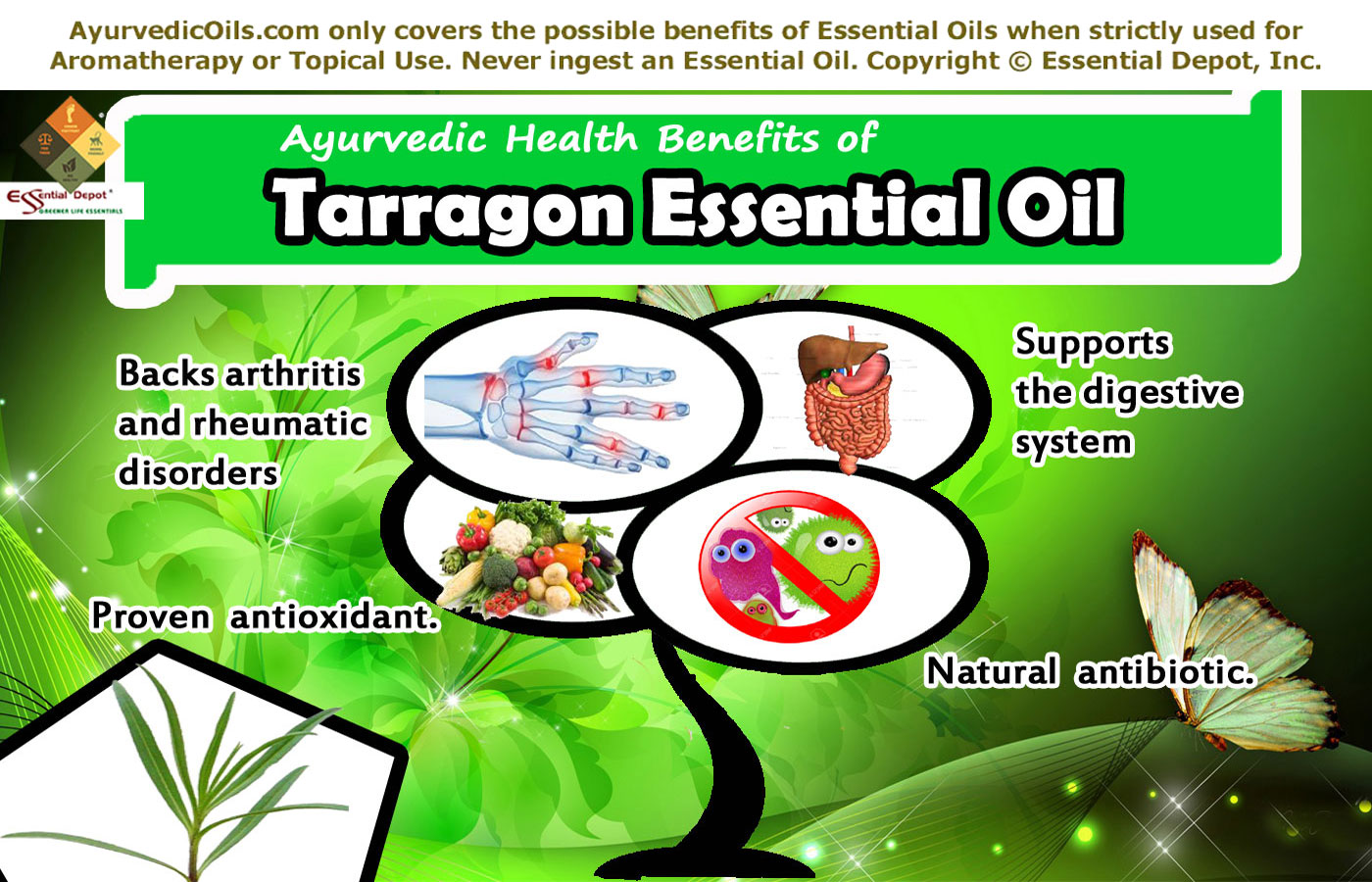
Tarragon-broucher1. Backs arthritis and rheumatic disorders:

Vata is a major energy element among the three dosha types and it represents air. It regulates metabolism, circulation, functions of the nervous system, respiration, excretion and functioning of the human brain. Improper blood circulation and toxic accumulation in the body are the two major reasons behind arthritis and rheumatism.

Gently massaging your body with 3 to 4 drops of tarragon essential oil blended with mild carrier oils like coconut oil gives warmth to your body and aids in controlling vata imbalances like poor blood circulation, while promoting the discharge of toxic accumulations through urine with its diuretic properties.

You can also use Tarragon essential oil as a warm compress or add few drops to your bath tub for treating pain and inflammation associated with rheumatism.

2. Supports the digestive system:

Tarragon essential oil has been used by various primordial groups as an effective digestive aid mainly because of its vermifuge, carminative, stomachic, stimulant, digestive and aperitif properties. Major digestive problems like constipation, gout, flatulence, sluggish digestion, intestinal gas and few more occur mostly due to excess or insufficient vata in the body.

As tarragon essential oil has been proven effective in regulating vata imbalances, it is a perfect remedy for soothing the digestive system and increasing the appetite by promoting the secretion of digestive juices like bile and other digestive acids.

This aids in speeding up the process of digestion and treats constipation, sluggishness and formation of intestinal gas. Using tarragon oil as a massage oil (as a tummy rub) or in a hot compress or diluting few drops of this oil in your bathing water is said to support your digestive system and kill intestinal worms like hook worms and round worms.

3. Natural antibiotic:

Fresh leaves of Tarragon herb and the essential oil extracted from those leaves are said to contain eugenol compound. This compound is responsible for the antibacterial properties and is popularly known as an anesthetic with pain suppressing qualities.

It is the presence of the same eugenol compound that makes clove oil as a trusted remedy for toothache. The Wright State University website says that the eugenol compound inhibits the sensory receptors that are responsible for causing pain. Add 1 or 2 drops of tarragon oil to a cup of warm water and use it as a gargle for alleviating your toothache.

A research published in the Iranian Journal of Microbiology on the anti-bacterial activity of Tarragon essential oil proved that “Tarragon essential oil has an antibacterial effect on two important pathogen bacteria (S. aureus and E. coli) and can be applied as a natural preservative in food such as cheese”.

4. Proven antioxidant:

Dr. Jean Valnet talks about the effectiveness of using Tarragon essential oil for treating malignant problems like cancers and tumors. This is attributed to the anti-oxidant properties of Tarragon.

A study on the ‘Antioxidant activity of the essential oil of Artemisia drancunculus’ published in the Journal of Agricultural and Food Chemistry proved that Tarragon essential oil have antioxidant properties that aids in fighting against the free radicals that are often responsible for cataract and certain types of cancer. It is also said that Tarragon herb can assist in slowing down or preventing process of oxidation, which causes cataracts.

Apart from these health benefits, tarragon essential oil is also used as an effective emmenagogue in regulating blocked menstruation, treating abdominal pains, strengthening the immune system, inhibiting microbes causing body odor and for stimulating the entire system with the presence of vitamins and certain other phytonutrients. It is also used as a flavoring ingredient in many food varieties and as a fragrance component in perfumes, soaps and certain cosmetics.

Disclaimer:

This is only for your information and not for any medical administration. Do not take essential oils internally as it may cause serious illnesses. Always remember to use essential oils topically after diluting it in appropriate carrier oils. Avoid using Tarragon essential oil for children below 2 years and for pregnant women.

Thought for the day:

There is new life in the soil for every man. There is healing in the trees for tired minds and for our overburdened spirits, there is strength in the hills, if only we will lift up our eyes. Remember that nature is your great restorer.Calvin Coolidge

Suggested Reading:

  1. Ayurveda & Aromatherapy: The Earth Essential Guide to Ancient Wisdom and Modern Healing by Dr. Light Miller, Dr. Bryan Miller
  2. Artemisia (Medicinal and Aromatic Plants – Industrial Profiles) by Colin W. Wright
  3. The New Healing Herbs: The Essential Guide to More Than 125 of Nature’s Most Potent Herbal Remedies by Michael Castleman

Reference Links:

  1. Historical Uses of Tarragon by Natural Standard, the authority on Integrative medicine
  2. Essential oil of tarragon (Artemisia dracunculus) antibacterial activity on Staphylococcus aureus and Escherichia coli in culture media and Iranian white cheese by Iranian Journal of Microbiology
  3. Health Benefits Of Tarragon Essential Oil by Organic Facts

Thyme Essential Oil


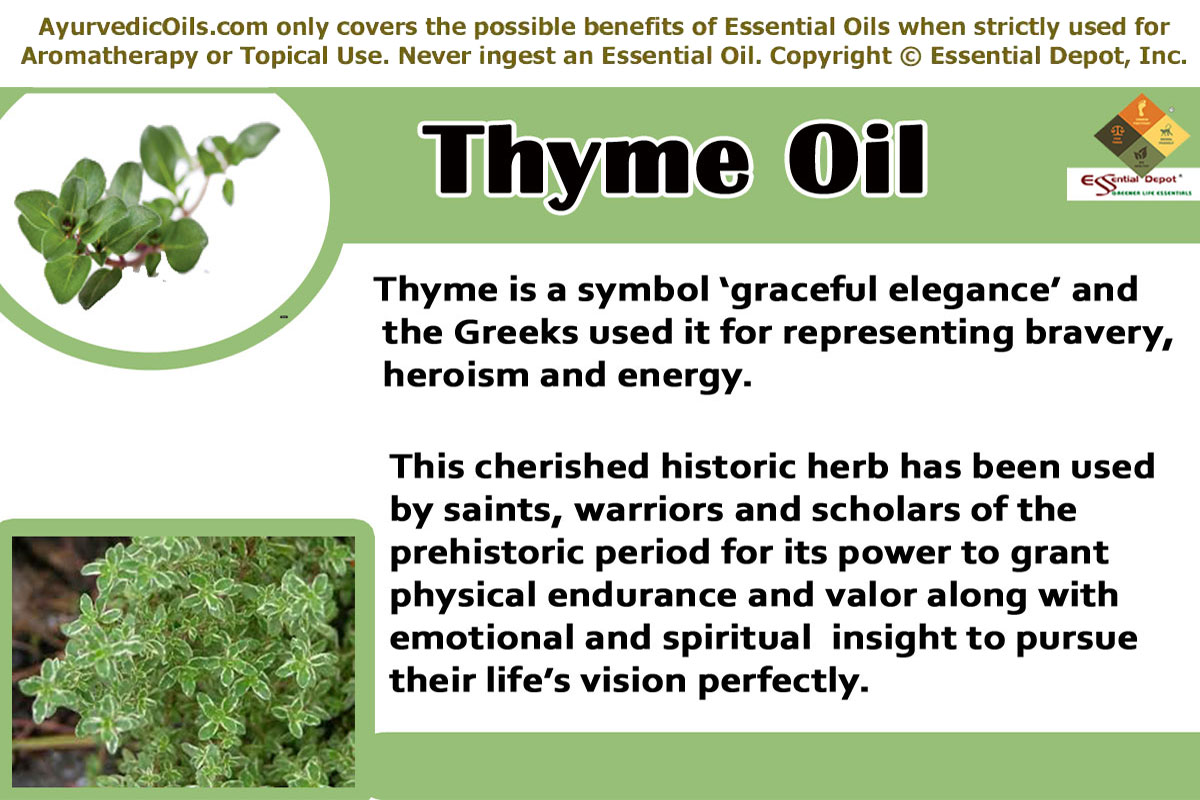
Fall in love with Thyme essential oil if you love Mother Nature and trust its innate wisdom of healing. Thyme is such a galvanizing herb and has its use etched in the history of various parts of the universe. When I started with this post, I was just hit with an important term that Thyme is often referred to and that is ‘Mother of Thyme’.Thyme-oil-bannerThis phrase brings out the significance of Thyme in both the conventional and contemporary medicinal practices, chiefly for addressing gynecological problems. Greeks named this plant as thyme meaning ‘to fumigate’, mainly because of its invigorating aroma and it is also said that this name is extracted from the Greek word ‘thumus’ denoting courage.

Apart from its use as a culinary herb, thyme and its essential oil has been in use for more than thousands of years, where the ancient Ayurvedic philosophers explored every essence of this powerful herb in treating an extensive range of illnesses naturally.

Saints, warriors and scholars of the prehistoric period valued Thyme for its power to grant physical endurance and valor along with emotional and spiritual insight to pursue their life’s vision perfectly.

Purchase Thyme Essential Oil – Retail – CLICK HERE

Purchase Thyme Essential Oil – Wholesale – CLICK HERE

Historical Uses of Thyme and its essential oil:

History has a cluster of pages talking about the curative powers of Thyme. Almost all the continents of this world from Antarctica to Australia have used thyme for its impressive medicinal values.

Ayurveda, the science of life suggested the use of thyme for its expectorant, astringent, anti-microbial, antiseptic, antispasmodic and anti-inflammatory properties. The ancient texts of Ayurveda suggests thyme for treating respiratory problems, headaches, halitosis, spasms, colic, dental disorders, gastrointestinal problems and few others.

Ebers Papyrus, the oldest Egyptian medical text which dates back to 1550 BC has recorded the healing values of thyme. The ancient Greeks offered thyme as a sacred herb to Adephaghia, the Greek Goddess of food and good eating.

Thyme was also burnt in Greek temples for sanctifying and purifying the environment. According to Greeks, thyme signified ‘graceful elegance’ and represented bravery, heroism and energy.

Bible honors thyme as the lining for the manger, which was the bed of Jesus Christ at the time of birth. European Pharmacopeia recommends the use of this herb for healing upper respiratory congestion and coughs.

Africans use thyme for its tranquilizing properties. It was in use in traditional Jamaican medicinal system to induce labor and support child birth, attributed to the emmenagogue properties of thyme. In southern France, thyme was honored as a sign of extreme Republicanism.

Nicholas Culpeper, the renowned English Botanist recommended thyme for treating musculoskeletal problems, warts, ophthalmic problems and certain other illnesses. He said Thyme isa noble strengthener of the lungs, as notable a one as grows, nor is there a better remedy growing for whooping cough.

It purges the body of phlegm and is an excellent remedy for shortness of breath. It is so harmless you need not fear the use of it. An ointment made of it takes away hot swellings and warts, helps the sciatica and dullness of sight and takes away any pains and hardness of the spleen: it is excellent for those that are troubled with the gout and the herb taken anyway inwardly is of great comfort to the stomach.”

The primeval Sumerians, Assyrians and Babylonians have used thyme before 5,000 years and the traditional food known as Zaatar in the Middle East countries contains thyme and is popular for its curative values.

Ayurvedic health benefits of Thyme essential oil:

Ayurveda, the oldest of all healing sciences on earth trusts on natural herbs including aromatic plants for healing human health conditions. It is known for its use of aromatics in treating numerous illnesses ranging from insomnia to bipolar disorders.

This healing power by using aroma is connected to the limbic system, which is known as the ‘center of control’ of the human brain. Another celebrated Ayurvedic therapy of healing is Abhyanga, the art of Ayurvedic massaging.

Ayurvedic texts strongly recommend massaging with therapeutic essential oils for relaxing the mind, strengthening the immune system and helping the system to strike perfect balance with nature.

Essential oils are extracted from plants. They are pure, free of chemicals, highly concentrated and contain the real essence of the plants from which they are extracted. Thyme essential oil is extracted from thyme herb, botanically known as Thymus vulgaris. The most significant constituent of thyme essential oil contributing to its healing properties is thymol.

The major Ayurvedic health benefits of thyme essential oil are:

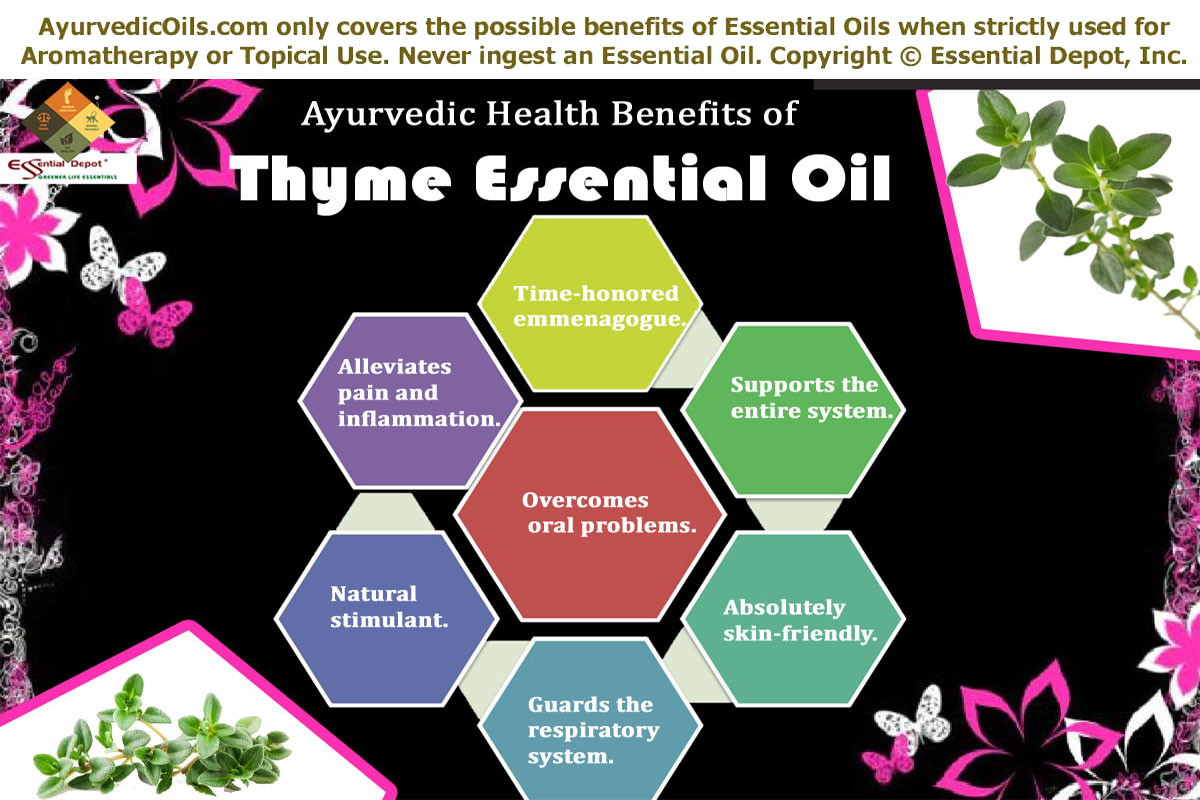
Thyme-oil-broucher1. Time-honored emmenagogue:

The oil of thyme is regarded as a natural remedy for handling womanly problems in a gentle manner. Historical references report the use of thyme for inducing labor, encouraging easy child birth, irregular periods, obstructed menstruation, treating pains, depression, fatigue and nausea associated with menstruation. This is mainly because thyme oil stimulates the production of estrogen hormones in women, which is responsible for reproductive health.

Massaging a blend of 3 drops of thyme oil with 2 teaspoons of sesame oil gently on the abdominal area can grant relief from severe pain and foster blocked menstruation. 2 drops of Thyme oil can also be added to your bathing water for giving a refreshing start to the day and for alleviating fatigue. It can also be used in your diffuser for soothing your senses especially during the night time for a peaceful and relaxed sleep.

2. Overcomes oral problems:

Ayurvedic Vaidyas strongly recommended thyme oil for treating oral problems like bad breath or halitosis, gingivitis, plaque and tooth decay. Thyme essential oil is known as a powerful germ-killer with its antibacterial and antiseptic properties. This is the main reason for the use of thyme oil in many popular mouthwashes like Listerine and certain other oral cleansers.

Thymol, the active constituent in thyme oil along with chlorhexidine is used as a dental varnish for treating and preventing tooth decay. Thyme oil is an important ingredient in popular toothpaste and liniment brands in the market for these special reasons. Adding 1 drop of thyme oil to a cup of warm water can serve as an effective mouth gargle in the morning for treating oral problems.

3. Absolutely skin-friendly:

The presence of caryophyllene and camphene components in Thyme essential oil contributes to its antiseptic and antibacterial properties. It helps in protecting the skin from harmful bacterial and fungal infections while effectively aiding in healing burns, wounds, eczema, dermatitis, psoriasis, rashes, cuts and sores. Thyme essential oil helps in keeping the skin free from marks, wrinkles and certain other symptoms of aging.

Scars and marks after surgeries, accidents, acne, chicken pox, measles and even stretch marks fade on eventual cosmetic application of thyme oil on the affected areas after blending it with mild carrier oils like almond oil. You can add few drops of thyme oil to your regular face wash for better results as thyme oil has excellent skin-cleansing properties.

4. Guards the respiratory system:

Thyme essential oil protects the respiratory system from various infections and is a trusted Ayurvedic remedy for treating prolonged coughs and cold. The essential oil of thyme acts as a powerful cough suppressant by checking the coughing spasms.

The presence of thymol strengthens the immune system and makes the body defensive against respiratory infections. The warming nature of this oil helps in clearing congestion and breaking up mucous and phlegm. 2 drops of thyme oil added to hot water for steam inhalation can open blocked nasal passages and soothe the respiratory system.

5. Natural stimulant:

It stimulates the functions of the liver and digestive system. Thyme essential oil acts as a tonic for the liver, nervous system, circulatory system and muscular system. This oil assists in treating dyspepsia, gastric formation, heartburn, stomach upset, cramps, nausea, headache and lack of sleep associated with digestive disorders. Intestinal worms like tapeworms, hook worms and round worms can also be discarded with the vermifuge properties of thyme oil.

6. Alleviates pain and inflammation:

Just like Eucalyptus oil, thyme oil is also an effective pain relieving oil by suppressing the inflammatory COX-2 enzyme. A 2012 study on ‘Effects of Thymol and Carvacrol, Constituents of Thymus vulgaris L. Essential Oil, on the Inflammatory Response’ proved that the anti-inflammatory property of thyme oil is attributed to the rich presence of monoterpene phenols like thymol and carvacrol constituents present in this oil. This makes thyme as an effective pain relieving massage oil in alleviating rheumatic pains, muscular aches, bruises, nerve stimulation, migraine headaches and skin inflammation.

7. Supports the entire system:

Thyme essential oil supports the entire body from head to toe and it is proven effective in treating hair loss, head lice, swelling, throat pain, sciatica, low blood pressure, convulsions, colic, bed-wetting, gout, diarrhea, athlete’s foot etc. This oil is also said to have antioxidant and antiviral properties.

It acts as an effective diuretic and helps in alleviating the toxins from the body through urine. Thyme essential oil is extremely beneficial for the heart as it fortifies the cardiac muscles and enhances blood circulation. Inhaling the aroma of thyme essential oil stimulates the mind, improves concentration and uplifts the spirit.

And now, you would have realized why I wanted you to fall in love with Thyme essential oil. Let me start. Thyme…. I love you.

Disclaimer: Pregnant women, breastfeeding mothers and children below 2 years should not use this oil. Do not ingest essential oils as they are highly concentrated and do not apply them directly to your skin unless it is recommended by your Ayurvedic Practitioner.

Thought for the day:

Adopt the pace of nature: her secret is patience.   –Ralph Waldo Emerson

Suggested Reading:

  1. The Healing Intelligence of Essential Oils: The Science of Advanced Aromatherapy by Kurt Schnaubelt
  2. Ayurveda & Aromatherapy: The Earth Essential Guide to Ancient Wisdom and Modern Healing by Dr. Light Miller, Dr. Bryan Miller
  3. The Practice of Aromatherapy by Dr. Jean Valnet

Reference Links:

  1. Thyme in Medicine by Natural Standard the Authority on Integrative Medicine
  2. Effects of Thymol and Carvacrol, Constituents of Thymus vulgaris L. Essential Oil, on the Inflammatory Response by PubMed
  3. Thyme, Garden by Botanical.Com

Ayurvedic Essential Oils And Mood Blends


Mood differs from season to season, from person to person, from time to time and from odor to aroma. Sounds confusing? Let me put in more specific terms, Christmas brings in joy, New Year brings in newness, Halloween brings in adventure, Valentine’s Day brings in romance and Independence Day brings in patriotism. Each and every occasion is special on its own. Aromatic therapy or Aromatherapy is a part of Ayurveda, where aroma is used in treating illness and improving health conditions. It is based on the principle that natural fragrances, especially from pure essential oils can affect our moods, and consequently change the way we think or feel at any given time. Aroma affects our moods through the action or the start of the limbic system where the therapeutic properties of natural essential oils are slowly passed on to the entire system.

Pure essential oils support wellness and are extracted from various parts of a plant like flower, leaf, stem, resin, stalk, root, fruit, bark and seed. Ayurveda suggests the use of natural and wholesome essential oils instead of the synthetic or artificially fragranced oils because only pure essential oils will have the prana, otherwise known as the vital celestial energy to revivify your senses, enliven the mind and stimulate the key channels of the body for spreading the essential energy for strength and efficacy in an uniform manner. There are innumerable Ayurvedic essential oils, each of which can support some or the other moods of human beings. Let’s now look at the most predominant types of moods and the mood swings along with the essential oils that support such situations with their therapeutic properties.

1. Oils for depression: Depression is a deadly disorder that can literally spoil your days. The National Institute of Mental Health says that “Depression is a common but serious illness”. It causes extreme pain to you and to your near ones also. Ayurveda is the best way of treating depression as it has everything to soothe your senses and calm your mind. It suggests meditation and yoga for replenishing your mind, soul and spirit, while granting you an opportunity to realize your worth and come out of your deep mental worries. The best Ayurvedic essential oils for depression are Lavender essential oil, Rosemary essential oil, Frankincense essential oil, Jasmine essential oil and Ylang Ylang essential oil that can help one come out of depression with their calming, stimulant, antidepressant, nervine, sedative and hypotensive properties.

2. Oils for stress: We never knew that stress is the root cause for many major health disorders. Stress brings with it certain threatening symptoms like increased heart rate, high blood pressure, muscular tension, improper functioning of the digestive system, insomnia, weakened immune system and much more. Practicing an Ayurvedic routine along with the comforting and relaxing essential oils like Lemon oil, Bergamot oil, Lavender oil, Chamomile oil, Ylang Ylang oil, Patchouli oil, Peppermint oil and Orange oil.

3. Oils for loneliness: Nothing else like isolation and the feeling of loneliness can harm us, during the adverse times when we really need someone besides us. The best thing that Ayurveda, the mother of all healing sciences suggests is to speak with God through meditation and by offering a small prayer. This brings in the real difference and you will naturally inculcate the feeling that ‘You are not lonely anymore’. Few drops of Rose oil, Roman Chamomile oil, Frankincense oil, Clary Sage oil or Bergamot oil added either to your bath tub, diffuser or to your hankie will bring in the real energy to fight lonesomeness and support your mind.

4. Oils for anxiety and grief: Anxiety imparts nervousness along with an uneasy feeling, leading you to worry, stay restless, experience difficulty in sleeping, concentrating and few other health problems like nausea, headache and diarrhea. Most of the times work pressure, post-pregnancy blues, difficult terms in relationships, health problems or financial crisis may lead to anxiety disorder and would gradually make you sad. Ayurvedic essential oils like Sandalwood oil, Lavender oil, Cedarwood oil, Frankincense oil, Mandarin oil, Neroli oil, Rose oil, Ylang Ylang oil and Jasmine oil will regain the strength and confidence to face the tougher situations of life.

5. Oils for fatigue and fear: Oh! A single day with 3 important meetings, 2 conference calls, 4 reports to submit and attend to the queries of your subordinates is more than enough to make you tired, twisted and weary. This is called as fatigue. The fear of losing a job, a relationship or failing the examination, insecurity, pregnancy etc will make you panic. The best way to get out of it is to practice Pranayama, the art of breathing. Ayurveda suggests that deep breathing and meditation grants inner peace and strength, helping one to come out of fear and fatigue. A warm bath after your tiresome work with few drops of consoling essential oils like Peppermint oil, Rose oil, Lavender oil, Rosemary oil, Lemon oil, Bergamot oil, Frankincense oil, Sandalwood oil and Basil oil can grant you the warmth and energy that your mind and body demands.

Ayurveda considers that unhealthy or problematic relationships are the fundamental reason behind most of the problems mentioned above. This vitalizing science also grants incredible ways to maintain healthy relationships for your well-being.

Caution: Do not apply essential oils directly to your skin as pure essential oils are highly concentrated and may harm your skin or cause other allergic reactions. Consult your Ayurvedic Practitioner before using the right essential oils for your individual body type.

Thought for the day:

Nothing helps a bad mood like spreading it around.  –Bill Watterson

Suggested Reading:

  1. The Fragrant Mind: Aromatherapy for Personality, Mind, Mood and Emotion by Valerie Ann Worwood
  2. Change Your Mood with Aromatherapy (Teach Yourself) by Denise Whichello Brown
  3. The Interrelationship between the Body, Mind and Spirit in Ayurveda and Ayurvedic Medicine by C. Scott Ryan

Reference Links:

  1. What is Aromatherapy? The Theory Behind Aromatherapy by Medical News Today
  2. Mood Swings-Mental Health and Behavior Overview by Better Medicine
  3. What is depression by National Institute of Mental Health
  4. Pranayama (From Hatha Yoga and Ashtanga Yoga) by Yoga Point

Ayurvedic Essential Oils For Depression


Please don’t disturb me……… Leave me alone……. I need some private space …… Are the 3 solid statements behind the killer problem ‘Depression’…. I’m not threatening you. Depression when left unnoticed will turn out as a major health issue leading to the extreme situation of all illnesses. It might even cause death. Sudden break in a relationship, losing your job, chronic health disorders, death of a dear one, work pressure and certain other traumatic conditions may be the reasons lying behind depression.

Ayurveda is one among the oldest healing methodologies, when studies reveal that it is more than 5,000 years old with proven remedies for a perfect and harmonized living with nature, how can it be without a remedy for the ‘dangerous depression?’ Of course, Ayurveda has the best cure for depression as it deals with mind and body together with the touch of senses, feelings and emotions. When depression being a disarray of the mind, what else than Ayurvedic essential oils can treat this from the scratch??? Think and come let’s discuss about depression in detail.

What is depression? Depression is a universal problem and it cannot be restricted to people of a particular country or a continent. According to the Medical Dictionary, Depression is defined as ‘a mood disorder marked especially by sadness, inactivity, difficulty with thinking and concentration, a significant increase or decrease in appetite and time spent sleeping, feelings of dejection and hopelessness, and sometimes suicidal thoughts or an attempt to commit suicide’. In Ayurvedic terms, depression and other disorders related to the mind are known as ‘Mansik Rog’. When you are depressed, your days seem blue and ‘down in the dumps’ and the earth will look as if it has stopped rotating.

Ayurvedic way of healing depression: According to Ayurveda, essential oils are said to lighten tejas i.e. augment mental brilliance and clarity.  Unlike the modern antidepressants that suppress the depressed minds, Ayurveda kindles the mind and body by revitalizing the senses while giving a new life and a powerful wave of vitality. It aims at strengthening the nerves and supports the depressed person to strike the right balance of Ayurvedic doshas for complete fitness.

It is a well-known fact that Aromatherapy is a branch of Ayurveda, which uses aromatics as a vital tool for the treatment and prevention of numerous health disorders with the help of Ayurvedic essential oils. The natural and enriching fragrance of Ayurvedic essential oils rejuvenates the mind and senses through the limbic system. The most celebrated essential oils to treat depression are:

  • Rosemary essential oil: This oil is a mental stimulant that counters depression, nervous exhaustion, frequent mood swings, stress disorders and helps uplift your spirit. Inhaling the evergreen aroma of this oil from a tissue will give you clarity, relaxation and keep your thoughts focused towards a positive energy.
  • Lavender essential oil: Here comes my ‘darling’ essential oil. Lavender is an excellent stimulant that can invigorate your entire system with its antidepressant and stimulating properties. The magical fragrance of this oil when added to your bath tub or used as a massage oil with any of your favorite carrier oils can work the wonder by granting a calming as well as soothing effect on your body. It relaxes your muscles, strengthens your broken feelings, treats anxiety, alleviates stress and induces good sleep, helping you to recover slowly and steadily from depression. The rich and floral aroma of Lavender augments the alpha brain wave frequency in the backside of the brain, which is related to calmness.
  • Ylang Ylang essential oil: The name itself has a sense of sweetness blended with healing values. Known popularly as the ‘flower of flowers’, Ylang Ylang oil is trusted to treat depression as it instills a calming effect on the nervous system and guarding you in case of stress, depression, anxiety, fear, high blood pressure, sleeping disorders and hypertension with its antidepressant, sedative, hypotensive, nervine and antiseptic properties. Dr. Miriam Kinai’s book on ‘How to use Ylang Ylang Essential Oil (Aromatherapy)’ will be of great use to you in improving your entire health and vitality.
  • Frankincense essential oil: This is an extremely useful oil for its highly valuable therapeutic properties. The exceptional aroma of Frankincense essential oil grants you the promising ray of hope that you long for while you are depressed. Sadness, anxiety, loneliness, confusion, disappointment and other problems related to depression can be perfectly kissed with the benefits of this oil.
  • Jasmine essential oil: Ah! Jasmine! What a mesmerizing fragrance it has? This natural floral mist is a mood enhancer used in alleviating pains, treating anxiety and soothing depression. The attention-grabbing aroma of this flower boosts the beta waves in the front part of the head, which is generally associated with a receptive state of mind and vigilance.

Depression is easy to pronounce but exceedingly intricate to experience. If checked in the initial stages and treated in a systematic manner with the proper advice of your Ayurvedic practitioner can help you swim against the tide easily.

To experience the beauty of life, all you need to do is to just clear the spider’s web that has rusted your thoughts and feelings……..….If you can’t then who can??????

Thought for the day: Life is not merely to be alive, but to be well

Suggested reading:

  1. The Fragrant Mind: Aromatherapy For Personality, Mind, Mood and Emotion by Valerie Ann Wormwood
  2. Aromatherapy For Dealing With Depression by Dr Miriam Kinai

Reference Links:

  1. What is Depression? By Medical News Today
  2. Aromatherapy from Ayurveda’s Perspective by Yayoi Stavish
  3. Antidepressant Ylang Ylang Oil by Ylang Ylang Essential Oil