Getting started: A beginner’s guide to essential oils


Essential oils have become the trend of the times. After going through a phase of near-extinction in the late 19th centuries, they have come to rule the world of alternative medicine. They are found everywhere – in health stores, grocery shops, drug stores and in all pharmacies, both online and offline. With so many essential oils in vogue, a beginner is baffled when it comes to choice and use of essential oils. Forget about the choice, the beginner does not know where to start with regard to knowing about essential oils. This article will provide a brief guide on how to use and choose essential oils and also will detail on the nature of oils used in aromatherapy.

Essential oils – A clear definition: Essential oils are not vegetable oils or fatty oils or fragrance oils. They are plant oils that are extracted from plants, seeds, flowers, roots, bark, stems, fruits and various other plant parts through extraction methods like steam distillation, solvent extraction, cold-pressing and extraction with alcohol. High on nutritional and healing value, essential oils are more potent than the plant from which they are extracted. This is because often a whole plant is needed to create just a single drop of essential oil.


Essential oils are easily absorbed: Some link essential oils to filmy and greasy oils like olive oil, almond oil, peanut oil etc. Those are thick oils whereas essential oils are thin, clear and easily absorbed by the skin. Unlike base oils, essential oils evaporate quickly at room temperature. An oil’s chemicals are present in body cells within minutes of its application. This is why essential oils are used to treat illnesses in aromatherapy.

Therapeutic grade of essential oils: Essential oils work only if they are within the therapeutic grade. Some marketers and shops sell watered down essential oils which do not work effectively in treatment of ailments. Most of these are inexpensive and diluted versions of original oils. When you buy an essential oil, you need to check if it is within the therapeutic grade of usage.

Categories of essential oils: Essential oils are classified under major categories based on their extraction/production methods. This is because only the chemical composition of an oil determines its quality and effectiveness. An essential oil contains about 80-400 nutritional chemicals of the plant body. Since several things are common to plants as well as humans, essential oils are useful in treatment of many ailments and disorders.

Apart from the classification based on production methods, essential oils fall into three categories based on their levels of evaporation: Top Notes, Middle Notes and Base Notes. Oils under Top Notes evaporate very quickly and have a greenish, fresh aroma. Oils termed as Middle Notes help with body’s metabolism and functions. Base notes oils have a lovely, warm aroma and have relaxing and sedative properties.

Essential oils storage: Essential oils are generally sold in tinted glass bottles. This is because they are sensitive to light and should be stored in cool, dark places. Since essential oils evaporate quickly, the lids of their bottles should be screwed tightly to avoid evaporation and damage of oils.

Essential oils usage: Essential oils can be used in baths, for cleaning, can be inhaled and applied or massaged on the body. When massaged, essential oils are not used directly, but they are mixed with carrier oils to make massaging easier and effective. Sometimes essential oils can even be worn as perfumes or cologne by rubbing them directly onto the skin.

Bay Oil


The energy of being able to feel the new fragrance of the dewfall from a rose petal is the symbol of being hale and hearty. Bay leaf and its essential oil is another gift of nature that can help one in attaining this absolute state of health and heartiness.
Bay-oil-bnrBeing a stimulant of the digestive system, respiratory passages, circulatory system and the lymphatic functions, Bay leaf has been a trusted traditional remedy for keeping numerous health conditions at bay.

Celebrated as an aromatic culinary spice all over the world, Bay leaf is one among the most important ingredient of the garam masala and the authentic Biriyani, the much relished dish of the world from the Mughal Empire.

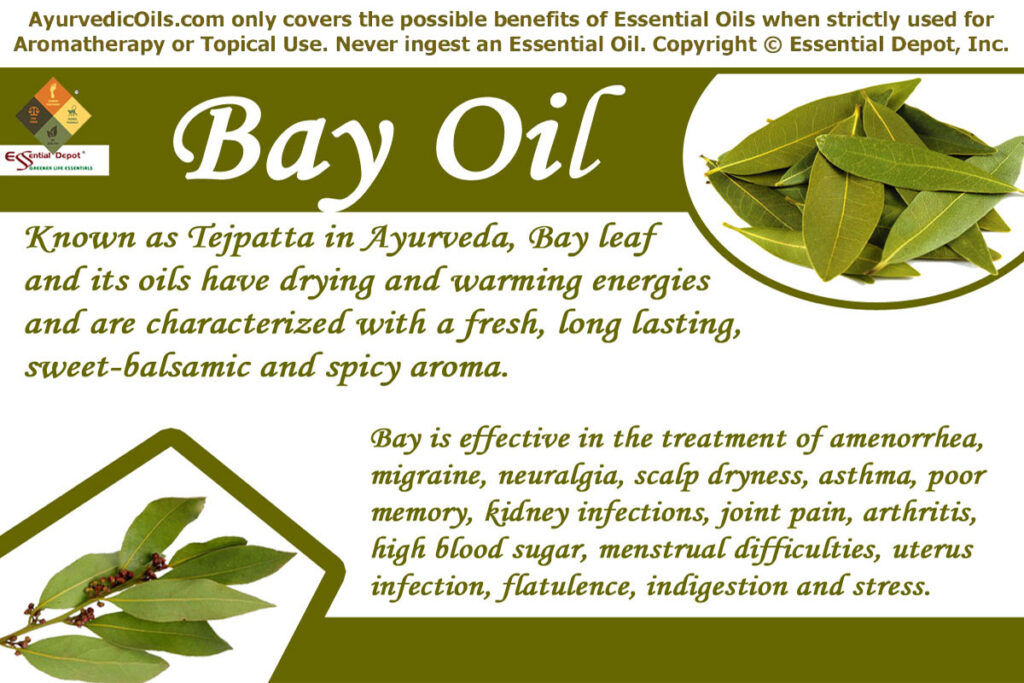
Botanically called as Laurus nobilis (Mediterranean Bay leaf), Bay leaf is known as Tejpatta (Indian Bay leaf or Cinnamomum tamala) in Ayurveda, and it has been used in the treatment of scalp dryness, migraine, amenorrhea, neuralgia, headache, asthma, poor memory, kidney infections, joint pain, uterus infection, arthritis, high blood sugar, menstrual difficulties, flatulence, stress, indigestion, diabetes and certain respiratory problems.

Purchase Bay Essential Oil – Retail – 4 oz – CLICK HERE

Historical uses and importance of Bay leaf and its essential oil:

Bay leaves generally refer to various aromatic leaves of several plants used for culinary purposes. These names are given based on their nativity and few notable Bay leaf varieties are Bay laurel or Laurus nobilis, which is of Mediterranean origin; the next is the Indian Bay leaf or Cinnamomum tamala; West Indian Bay leaf or Pimenta racemosa; Indonesia Bay leaf or Syzygium polyanthum; Mexican Bay leaf or Litsea glaucescens; and the California Bay leaf or Umbellularia californica.

Every variety of Bay leaf has its own fragrance and numerous uses in cooking and in remedial practices for more than thousands of years across the globe. Whole leaves and powdered leaves are often used in adding that unique flavor in food preparation, where as the infusion or decoction of these leaves and its essential oil play a vital role in the Traditional and Alternative healing methodology.

Held high as the Sun God in Astrology, Bay laurel tree and its leaves have been related to wisdom, protection and peace since the primeval times, where the wise King was honored with the garland made of Bay leaves. This is mainly due to the positive emotional benefits of Bay leaves that aid in treating anxiety, stress and insomnia.

The powdered Bay leaves were mixed with milk for treating urinary infections, fever and dyspepsia. It was also recommended for normalizing blood circulation and reducing bad cholesterol in the system. The fresh and dried Bay leaves were used in the preparation of an herbal infusion, which was used as a promising diuretic for promoting frequent urination; eliminate excess water from the body and toxic remains in the system causing rheumatic conditions, indigestion, obesity and even heart problems.

Bay leaves were a trusted remedy in the Indian folklore medicine for treating vomiting, fatigue, nausea, diarrhea, rheumatism, obesity and colic. These magical leaves were also used as an aid for preventing cancer and oral problems. It is also used in the preparation of soups, stews, curries, liqueurs, anti-dandruff shampoos and cologne.

Bay leaf essential oil has been recommended in treating dandruff, rheumatism, migraine pain, arthritis, high blood pressure, congestion and earache. The astringent and anti-bacterial properties of this leaf supports its use as a salve for wounds and was used in the traditional medicine for treating skin rashes due to stinging nettle, poison ivy etc.,

Chemical constituents and therapeutic properties of Bay leaf essential oil:

The most notable therapeutic values of Bay leaf essential oil are anti-bacterial, antifungal, diuretic, stomachic, emmenagogue, tonic, febrifuge, diaphoretic, sedative, astringent, appetite stimulant, anti-neuralgic, expectorant, insecticide, anti-cancer, anti-inflammatory, cholagogue, antibiotic, aperitif and sudorific.

These remedial properties are due to the presence of effective chemical constituents in Bay essential oil including eucalyptol or cineole, linalool, limonene, eugenol, a-terpineol, geraniol, phellandrene, myrcene, a-pinene, b-pinene, neral, chavicol, and geranyl acetate.

Ayurvedic health benefits of Bay essential oil:

Ayurveda is the oldest medicinal science known to the world with more than 5,000 years of successful healing. It is a vital part of the ancient Indian Hindu mythology, which contains a compilation of 4 major Holy books called as Vedas.

They are Rig, Sama, Atharvaveda and Yajur Vedas. Between them, Ayurveda is a component of the Atharvaveda, in which 114 verses indicate the all-embracing Ayurvedic philosophy and natural remedies to guide a healthy and hearty living.

The world of Ayurveda attained its wholesomeness with the writings of the Ayurvedic physicians like Charaka (regarded as the ‘Father of medicine’) and Sushruta (known to the world as the ‘Father of surgery’). Acharya Charaka composed Charaka Samhita and Sushruta wrote Sushruta Samhita respectively, which was later combined together and gifted to the world of medicine in the name of Ashtanga Hridaya Samhita.

Ayurvedic healing insists on the importance of leading a healthy life with absolute physical, mental, social and spiritual balance. For attaining this, Ayurveda advises on leading a healthy lifestyle and balanced food habits along with other routine tasks like simple physical exercises, meditation, yoga, prayers and natural remedies like herbs and Ayurvedic essential oils.

As a holistic healing methodology, Ayurveda has everything including disciplinary values for increased life span and attaining bliss while on earth itself. With these respectable principles, Ayurveda aims at preventing illnesses rather than just healing. It believes that the adherence to Ayurvedic lifestyle and healthy habits can aid in preventing lifestyle disorders like high blood pressure, fatty liver conditions, high cholesterol, heart diseases, obesity, kidney degeneration and diabetes etc.

Ayurveda strongly believes that everything on earth including mankind is made up of the five basic elements of nature. They are earth, fire, space, air and water. It further states that every individual is a unique creation with a unique individual constitution, which is made of three biological energies known as doshas. They are vata, pitta and kapha.

Vata dosha is a combination of air and space and is responsible for the circulatory and nervous functions of the system. Pitta is made up of fire and water and is in charge for the metabolic functions and body temperature. Kapha is a mix of water and earth and is accountable for the functions of the reproductive system, sustenance and physique.

According to Ayurveda, every person has a predominance of one of these doshas and it decides the personality, behavior and character of an individual. Balance between these doshas as per the law of nature indicates perfect health and doshic disparities due to change in food habits, lifestyle and climatic conditions leads to illnesses.

Ayurveda prescribes natural remedies and Ayurvedic techniques like Abhyanga or the art of Ayurvedic massaging, Panchakarma or the detox techniques, Pranayama or balanced breathing etc., for correcting the imbalance of doshas.

With its drying and warming energies along with its fresh, long lasting, sweet-balsamic and spicy aroma, Bay leaf essential oil is said to pacify kapha and vata dosha and aggravate pitta dosha.

Let’s take a look at the Ayurvedic health benefits of Bay leaf essential oil:
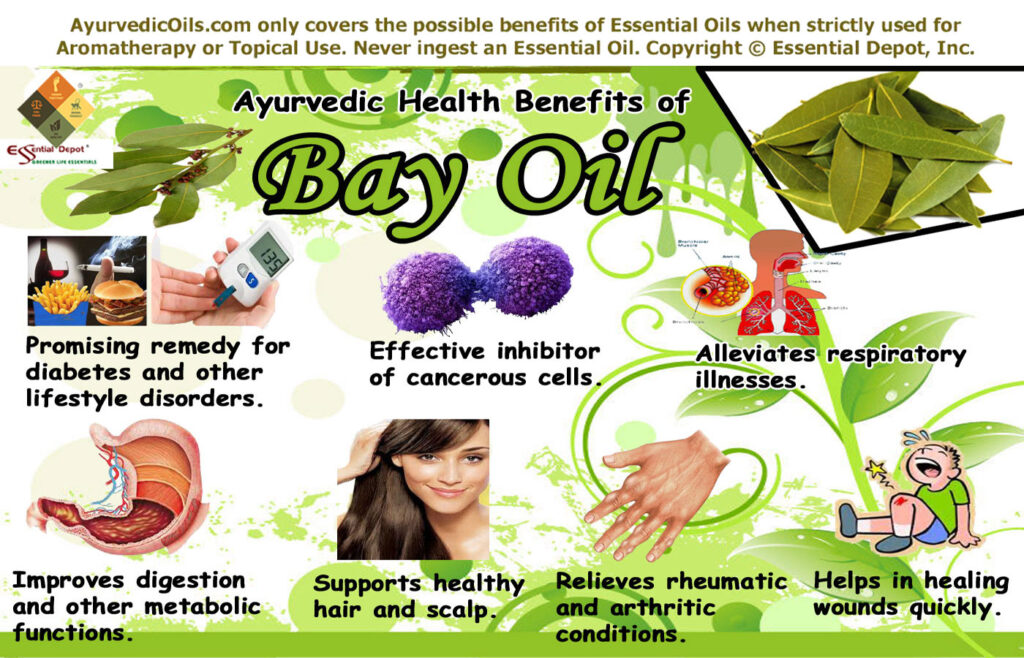
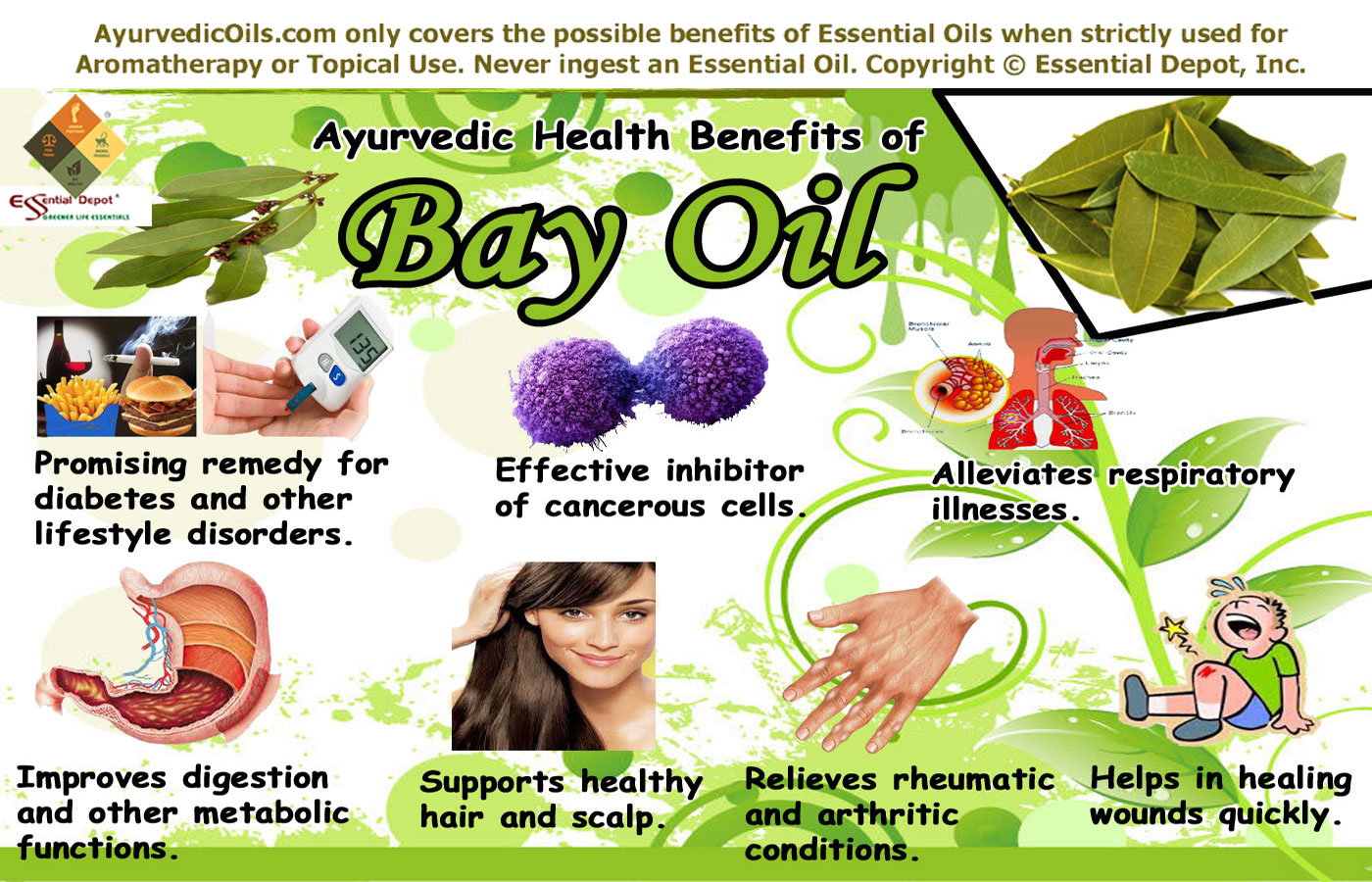
Bay-oil1. Promising remedy for diabetes and other lifestyle disorders:

Bay leaf essential oil has numerous remedial properties that help in the treatment of diabetes and other lifestyle health problems like fatty liver conditions, high blood pressure, obesity and kidney degeneration.

A 2009 study on ‘Bay leaves Improve Glucose and Lipid Profile of People with Type 2 Diabetes’ by the Department of Human Nutrition, NWFP Agricultural University, Peshawar, Pakistan published in the “Journal of Clinical Biochemistry and Nutrition” analyzed the effects of blood sugar on human beings with Type 2 diabetes.

Among the participants who were given about 1 to 3 grams of ground Bay leaf per day in this program for 30 days, reflected a significant fall in the level of blood glucose, triglycerides and cholesterol. This research concluded that “Bay leaves reduced serum glucose, total cholesterol, LDL cholesterol and triglycerides, and increased HDL cholesterol levels in people with type 2 diabetes.”

The antioxidant and anti-diabetic properties of Bay leaf promotes the system in the progression of insulin effectively. The most amazing result of this study was that it also helped in reducing the level of cholesterol and triglycerides, which also assists in reducing the menace of cardiovascular disorders due to enhanced insulin function.

Another study in 2011 on “The effects of Bay leaves on the patients with Diabetes Mellitus” by Abdulrahim Aljamal conducted on 65 patients with Type2 diabetes witnessed that “this study group using Bay leaf supplementation for 4 weeks decreases the risk factors for diabetes and cardiovascular diseases by reducing blood glucose and lipids levels.”

It was also explained that diabetes mellitus is one among the major risk factors for cardiovascular problems, where the occurrence of such disorders are increased 2 to 4 times in people with diabetes. He also says “Diabetes is a chronic disorder of glucose metabolism resulting from dysfunction of pancreatic beta cells and insulin resistance.”

Skin is the largest organ of the human body and it transmits the remedial values of Ayurvedic essential oils quickly into the bloodstream, thus speeding up the healing process. You can either use Bay leaf oil in a massaging blend or your bath for treating diabetes.

Make your home the heaven of Ayurvedic spa in the weekend by massaging your system with 5 drops of Bay leaf oil, 5 drops of Clove oil, 5 drops of Cinnamon oil and 5 drops of Rosemary oil along with 10 ml of Olive oil, followed by a refreshing bath diluted with 1 drop of Bay leaf oil and 1 drop of Lavender oil. This can absolutely help in augmenting your insulin function and support in reducing your blood glucose, lipids and cholesterol levels.

2. Helps in healing wounds quickly:

Bay leaf is nature’s blissful gift for healing wounds and skin infections at ease. With its anti-fungal, anti-bacterial and antiseptic properties, the fresh and dried leaves along with the essential oil have been in use in healing wounds, scars, bruises, cuts, insect bites and minor skin allergies. Bay leaves were used in folklore medicine as a remedy for venomous snake bites, poisonous stings and bites.

Open wounds are always viable for catching up with bacteria, virus and fungus, which ends up in septic of wounds and serious infections, leading to sharp pain, convulsions, cramps and  hydrophobia.  The poultice made using Bay leaves were used by various herbalists for disinfecting and healing wounds.

A 2011 study published in the Natural product research journal proved that Bay leaves contain antimicrobial activity that combats the growth of bacteria and general pathogens like Aspergillus fumigatus, Staphylococcus aureus, Candida albicans and Streptococcus pyogenes. Among these, Staphylococcus aureus is considered to be the most harmful bacteria responsible for wounds becoming septic.

Bay leaf is rich vitamin A & C, which are extremely good for healthy skin. It enhances the healthiness of the skin from within by helping in retaining its natural beauty. Gently massaging your skin with 2 drops of Bay leaf oil with 2 drops of Petitgrain oil, 2 drops of Lavender oil along with 3 ml of jojoba oil can give that charisma for your skin by reducing wrinkles, cleansing the pores deeply, treating acne, stretch marks, scars, eczema and covering up the other skin outbreaks.

2 drops of Bay leaf oil with 2 drops of Rosemary oil and 2 ml of coconut oil can be applied on wounds and other skin infections for promoting quicker healing and arresting the growth of hazardous microbial infections.

3. Improves digestion and other metabolic functions:

The aromatic leaves and its essential oil of Bay are famous as a digestive aid, especially in the Asian, Middle East and Mediterranean countries. Ayurveda states that Bay leaf has heating energies that aids in augmenting Agni or the digestive fire, which is responsible for trouble-free metabolic functions.

Bay leaf is called as a pitta aggravating spice and herb, where pitta dosha deals with metabolism. Digestive disorder or problems due to pitta deficiency are balanced with the help of Bay leaves and its various extracts.

With its carminative, anti-flatulent, stomachic and cholagogue properties, Bay leaf oil helps in expelling the excess gas in the stomach and intestines. The stimulating effect of this oil boosts the metabolic functions and helps relieve digestive problems like colic, flatulence, diarrhea, bloating, intestinal spasms and ulcers.

Massaging your stomach with 2 drops of Bay oil blended with 2 drops of Geranium oil and 2 drops of Lemon oil along with 3 ml of Sesame oil can assist in promoting the secretion of gastric acids, digestive juices, enzymes and bile, which aids in neutralizing surplus acids in the lining of the stomach and intestines, thus preventing ulcers.

Along with this massaging, inhaling the encouraging aroma of Bay oil in a diffuser by adding 2 drops of this oil can strengthen your digestive system and support hassle-free metabolism.

4. Alleviates respiratory illnesses:

Bay leaf oil has excellent warming energy that assists in relieving from illnesses caused due to excess water deposits, which otherwise leads to the amassing of mucus and phlegm in the system. Generally respiratory illnesses are caused mainly due to the imbalance of kapha dosha and vata dosha in cases of breathing difficulties faced in asthmatic attacks.

Bay oil has been trusted as a natural source of reducing excess of kapha and vata dosha. This helps in the treatment of congestion, buildup of phlegm in the lungs and nasal passages, bronchitis, whooping cough and cold.

In their book Ayurveda and Aromatherapy, Bryan Miller and Light Miller say “Bay can be useful for the respiratory tract, also easing congestion or colds, especially in combination with Eucalyptus and Rosemary.”

2 drops of Bay oil and 2 drops of Tulsi oil added to steam inhalation is a great assistance for loosening stiff phlegm and mucus deposits in the breathing passages, asthma, nasal congestion, stiff nose, watery eyes, cough, common cold, headache and other respiratory allergies.

Mixing 2 drops of Bay oil with 2 drops of Eucalyptus oil and 2 drops of Rosemary oil in your vaporizing ointment and gently massaging it on your chest, throat and back is a brilliant way to treat your respiratory infections including asthmatic attacks at ease.

This is attributed mainly by the expectorant, anti-bacterial, anti-viral, decongestant, immune stimulant and tonic properties of these essential oils that strengthen the immune system and help it fight against respiratory disorders.

5. Supports healthy hair and scalp:

The most interesting healing attribute of Bay leaf oil is that it assists in controlling hair fall and promotes hair growth. In the traditional Ayurvedic medicine, a herbal rinse prepared by infusing Bay leaves was used in the treatment of dandruff and dry scalp.

Bryan Miller in the book Ayurveda and Aromatherapy reveals Light Miller’s preferred hair treatment with Bay oil. He says “Light’s favorite use of Bay oil is to add it to hot oil treatment for the hair. To two ounces of Jojoba oil, add 4 drops of Bay, 3 drops of Lavender, 3 drops of Lemon, 3 drops of Rosemary, 3 drops of Rosewood oil and a tablespoon of Sesame oil.”

He further adds “Heat the mixture and apply to the hair while warm, wrap your head in a towel and sit for fifteen minutes to half an hour. Shampoo clean. Bay is also very effective for dry scalp and hair; you may add it to shampoo and cream rinses.”

2 drops of Bay oil with 2 drops of Bhringraj oil, 2 drops of Amla oil and 2 drops of Neem oil added to 5 ml of Sweet almond oil can be massaged on the hair roots, for stimulating the growth of lustrous, black, healthy and strong hair and getting rid of dandruff and head lice.

6. Relieves rheumatic and arthritic conditions:

Bay leaves have anti-rheumatic, anti-arthritic, analgesic, anti-inflammatory and antioxidant effects, which aid in treating rheumatic and arthritic conditions. Rheumatism is again a kapha disorder, where excess of water deposits get stagnated in the system, especially in the joints. This causes pain, swelling, inflammation, redness, lack of energy, and buildup of toxic substances and free radicals.

Bay leaf oil has warming and drying energies that helps in reducing pain by generating heat in the affected parts and eliminating the toxic remains and surplus water content in the system through urine. The diuretic and sudorific properties in this oil promotes sweating and urination and is a natural remedy for discarding free radicals, ama or toxic substances, uric acid, salt and other excess water deposits.

Massaging the painful area with 4 drops of Bay leaf oil with 3 drops of Lavender oil and 3 drops of Cinnamon oil along with 5 ml of Coconut oil can aid in alleviating pain and sprain, and in reducing inflammation, irritation, redness, painful joints and sore muscles.

7. Effective inhibitor of cancerous cells:

Many scientific studies have proved the effects of Bay leaf in treating various types of cancer with its chemo-protective properties, contributed by the presence of quercetin, catechins, quercetin and eugenol.

Various research reports have established that Bay leaves control the production of cervical cancer cells with the presence of a phytonutrient named parthenolide. Another study have explored that the chemical component lauroside B extracted from Laurus nobilis inhibits the generation of skin cancer or human melanoma cells.

Other benefits:

Bay oil can also be used as an effective repellent against cockroaches, moths, silverfish, mice etc., It is also helpful in treating dental infections and circulatory problems.

Disclaimer:

This article is only for the purpose of education and is not meant for treatment, prevention or diagnosis of any health condition. It should not be used as a replacement for prescription drugs or any expert medical advice. We are not medical professionals and this piece of information is intended only for sharing the traditional richness of Ayurveda, the mother of all medicinal systems on earth.

Internal use of essential oils should be strictly avoided and make sure that you dilute essential oils before using it for topical application, as pure and organic essential oils are highly concentrated liquids and may cause allergies if used on the skin directly. Speak with your Ayurvedic physician or healthcare expert before selecting the appropriate essential oils for your prakriti or unique individual constitution and your medical condition.

Bay oil is emmenagogue in nature and may induce menstruation so it is not advisable for use for pregnant women. Keep it out of reach of children.

The MSDS (Material Safety Data Sheet) of Bay oil is readily available for your enhanced safety and better usage.

Bay Oil – Possible Skin Issues:
bay-oil-logos

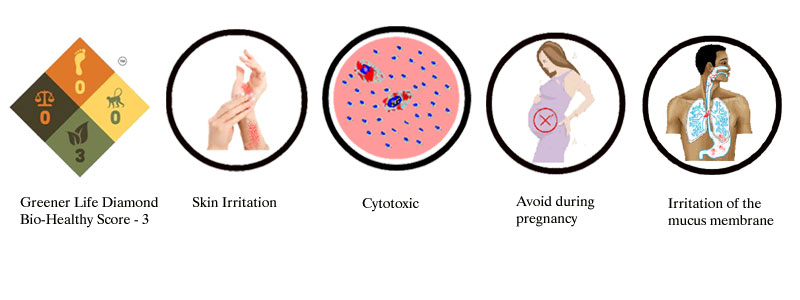
Greener Life Diamond – Bio-Healthy Score => 3: Possible Skin Issues:

See => http://www.essentialdepot.com/GreenerLifeDiamond.html

Bay oil is said to exhibit irritation, sensitization, hepatoxicity and cytotoxicity. Topical application and inhalation of this oil might cause allergies, skin irritation, sensitization in pregnant women, children and nursing mothers, arrest blood clotting and irritate the mucous membranes. It is recommended to avoid Bay oil during pregnancy, even in a diluted form, as it may cause harm to the developing fetus.

The key chemical constituents responsible for the possible skin issues of Bay oil are eugenol and methyleugenol. Besides being an excellent decongestant and antiseptic, eugenol in undiluted Bay oil can cause rashes, itching, irritation of the skin and the mucous membranes, when applied as a decongesting ointment or during inhalation of the concentrated oil.

Remember to dilute Bay oil in suitable carrier oils and 10% is the recommended safe dilution level.  Always perform a patch test on your skin before using Bay oil for dermatological purposes.

Numerous studies state that Bay oil has Cytotoxic effects, which means the potent of being toxic or deadly to cells. For this effect, Bay oil is used therapeutically in Apoptosis or a genetic line up for controlled cell death, especially in the treatment of Cancer. Chemotherapy (treatment of cancer) solely depends upon the potential of cytotoxic remedies to destroy the existing cancerous cells and thwart the rapid reproducing ability of cancer cells (Antiproliferative ability).

According to the European Commission’s scientific committee opinion on Food on Methyleugenol, it displays genotoxic and carcinogenic effect and it does not hold good for topical or external use of Bay oil.

Bay leaf is often misconceived as toxic as it is confused with other members of the Laurel family like Mountain Laurel, Cherry Laurel, which are potential toxic agents.

This warning is applicable to direct skin applications like lotions, balms, massage oils and creams and not for bathing products like soaps and shampoos.

Reference Links Substantiating Possible Skin Issues of Bay oil:

  1. Leung’s Encyclopedia of Common Natural Ingredients, used in Food, Drugs and Cosmetics by Ikhlas A. Khan and Ehab A. Abourashed.
  2. Bay oil by Mercola.com
  3. Opinion of the Scientific Committee on Food on Methyleugenol by the European Commission, Health and Consumer Protection Directorate-General
  4. Aromatherapy: Scent and Psyche: Using Essential Oils for Physical and Emotional Well-Being by Peter Damian and Kate Damian
  5. Cytotoxic effect of Laurus nobilis extracts on different cancer cell lines by Zaynab Saad Abdel Gany, Iraqi Center for Cancer and Medical Genetics Researches

Thought for the day:

Nature and books belong to the eyes that see them.

-Ralph Waldo Emerson

Suggested Reading:

  1. Ayurveda & Aromatherapy: The Earth Essential Guide to Ancient Wisdom and Modern Healing by Dr. Light Miller, Dr. Bryan Miller
  2. God’s Healing Herbs by Dennis Ellingson
  3. The Illustrated Encyclopedia of Essential Oils: The Complete Guide to the Use of Oils in Aromatherapy & Herbalism by Julia Lawless
  4. Functional Foods, Aging, and Degenerative Disease from CRC Press
  5. Therapeutic Blending With Essential Oil: Decoding the Healing Matrix of Aromatherapy by Rebecca Park Totilo

Reference Links:

  1. Bay Leaf by Wikipedia
  2. Bay Leaves Improve Glucose and Lipid Profile of People with Type 2 Diabetes by Alam Khan, Goher Zaman and Richard A. Anderson, published in the Journal of Clinical Biochemistry and Nutrition
  3. Effects of Bay leaves on the patients with Diabetes mellitus by Abdulrahim Aljamal, published in the Research Journal of Medicinal plant
  4. Scientifically proven health benefits of Bay leaf oil published in the Planet of health


Your resource for quality Essential Oils. Every batch is
GC tested to ensure purity and authenticity.

Skin care, the natural way: 6 skin care recipes using essential oils


Skin care, done the natural way, is always the best you can do to yourself. If you feel that you can get every other skin nourishment from the synthetic and cosmetic stuff sold in the market, you maybe wrong. You need what is called pure and natural replenishment to your skin, on a daily basis. Essential oils are a great way to rejuvenate damaged skin or maintain a glowing, healthy skin in a natural way. They are pure plant substances that contain no synthetics. They provoke no side effects and cause no harm to the skin if used as instructed. This article will offer you different skin care recipes that can be prepared using essential oils.

Essential oils skin care recipes: Most of the essential oil recipes have to be mixed with carrier oils to be used on skin. When you use a blend of oils, you need to look into the composition of the blend, the proportion of oils used (which is the dominant oil/aroma etc) to get a pleasing and appealing skin care product. Below are a few essential oil skin care recipes which can be used as bath oils, foaming cleansers, liquid soaps etc.

1. Foaming Cleanser: This essential oils blend of foaming cleanser is energizing and rejuvenating. It can be used for every kind of skin, from normal to oily skin and can be used in showers or while bathing. To prepare the cleanser, combine 4 tbsps of castile soap with 3 tbsps of Avocado oil, 4 drops of Bergamot, 4 drops of Lemon, 4 drops of Petitgrain etc. Blend the oils in a small sized bottle and use whenever required.

2. Facial Scrub: This refreshing, luxurious blend is ideal for use once or twice a week. To make the blend, mix 4 tbsps of Almond meal with 1 tsp of freshly grated Orange zest and some natural yogurt. Blend till the mixture attains a thick paste like consistency. Then, melt honey and add Almond mixture to it. To the mixture, add ½ tsp cinnamon powder, 2 drops of Cinnamon oil and 3 drops Orange. Combine everything together and bring to a massage-paste like consistency. When you are done, massage on to your face and neck, avoiding the eyes or nostrils area. The scrub should be rinsed off before applying toner or moisturizer.

3. Cleansing cream: If you need to remove a make-up quickly and completely, this cleansing cream made with essential oils is your best bet. To make the cream, combine 1 tbsp of beeswax, ½ cup of Sweet Almond oil, 1 tbsp of distilled water, 3 drops of Frankincense, 2 drops of Lavender and 3 drops of Neroli together. Ideal for both oily, dry and mature skins, this cream is perfect for removing any extraordinary or strong make up too.

4. Facial oil:
Mix 2 tbsps of avocado oil with 1 tbsp of Jojoba oil, 1 tbsp of rosehip oil, 3 drops of Jasmine, 2 drops of Sandalwood and 3 drops of Ylang Ylang. Use a dark bottle to blend all the ingredients, especially the essential oils. When the mixture is ready, cover tightly and store it in a cool dark place to for future use.

5. Moisturizer:
To create a moisturizer, especially of the rosebud kind, combine 1 tbsp of beeswax, ¼ cup of Jojoba oil, ¼ cup of Apricot Kernel oil, 1 tsp of Rosehip oil, 1 tbsp of Rosewater and 8 drops of Rose.

6. Freshening Toner:
This toner can be applied to all skin types and combines a mixture of water, oils and hydrosols. To prepare the blend, mix ½ cup of distilled water with ½ cup rosewater, 3 drops of Chamomile, 2 drops of Geranium and 3 drops of Lavender. This is a natural skin care recipe that can be used anytime on any skin, without any issues.

Kokum Butter


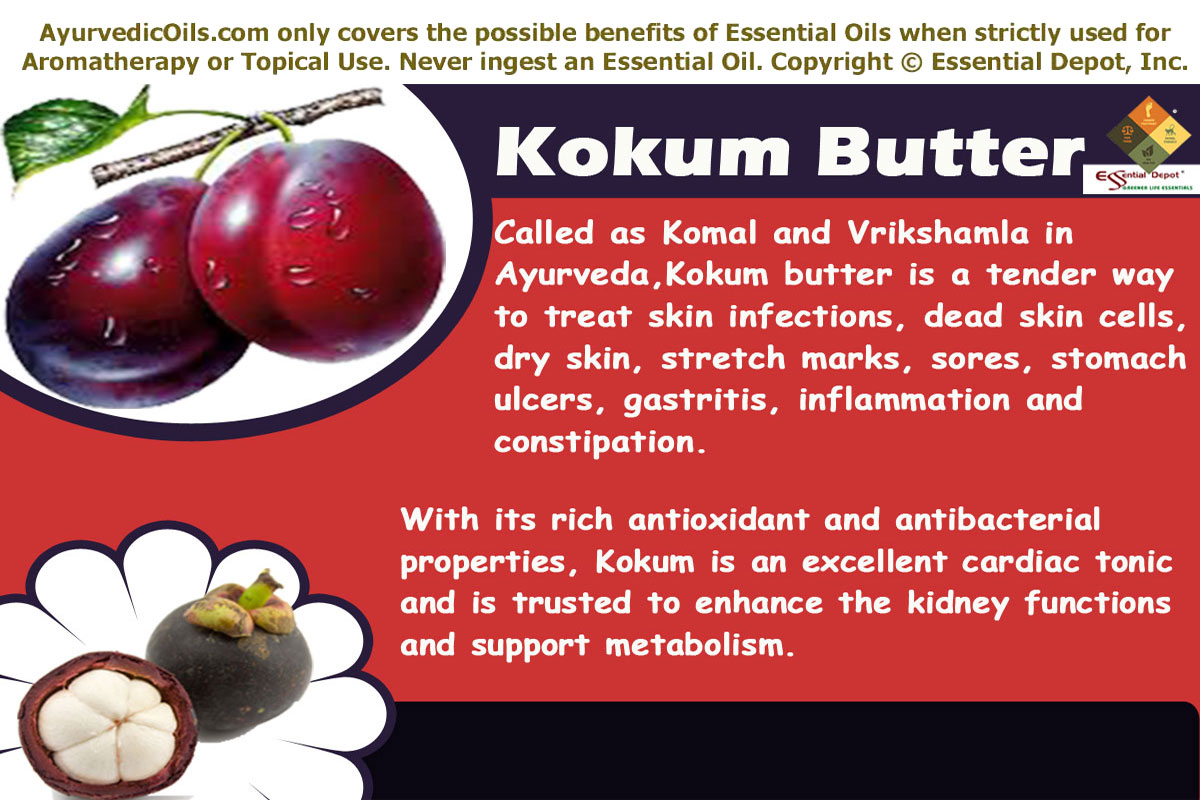
Kokum-butter-bannerCalled as Komal and Vrikshamla in Ayurveda, Kokum butter is a gentle remedy to treat skin infections, dead skin cells, dry skin, stretch marks, sores, stomach ulcers, gastritis, inflammation and constipation.

Sharing its origin with Ayurvedic healing to the Indian subcontinent, Kokum butter has excellent nutritional benefits and has been used in Ayurveda for treating dryness in the skin, cracked lips, ulceration, mature skin conditions, oral diseases and skin infections.

With its rich antioxidant and antibacterial properties, Kokum is held high as an excellent cardiac tonic and is trusted to enhance the kidney functions and support metabolism.

Kokum is popularly known as Wild Mangosteen tree, Red Mango, Brindonia tallow tree, Indian butter tree and Malabar Tamarind tree. Called in the vicinity as Punarpuli and Punampuli, the fresh and dried fruits are used as a tasty substitute for tamarind in the preparation of fish and other traditional culinary varieties.

Purchase Organic Kokum Butter – Retail – CLICK HERE

Historical uses and importance of Kokum and its velvety butter:

Kokum butter is extracted from the seed of Garcinia Indica also known as the Kokum tree, which is commonly seen in Andaman and Nicobar Islands, Western Ghats and the Eastern parts of India. The butter is extracted by cold pressing the seeds collected from the Kokum tree and then further refined to give a white butter that has a mild odor.

The residue or the rind of the seed is collected and used in herbal medications. It is one of the most stable butters known and also one of the hardest vegetable butters available.

As the butter extends properties such as high oxidative stability and emollient properties, Kokum Butter has found itself a spot in the industries of toiletries and cosmetics. Though the butter is found to have a high melting point it does melt and blend with skin as it touches the surface making it a top choice for lipsticks, balms, soaps, and lotions.

Butters like Kokum butter is one of the perfect choices among the ingredients of soap bars, lotion bars and lipsticks as they have a high melting point (38-40 C) and keep from melting in the purse during long summers.

Kokum butter serves the purpose of encouraging elasticity, suppleness and preventing dryness of the skin. It also helps to restore balance of the damaged skin caused by prolonged negligence. The raw unrefined form of Kokum butter is dark in color and has an earthy scent to it; when melted, it takes the color of light coffee.

Besides being used in the cosmetic industry, Kokum butter is also used as an edible oil. It is a rich source of vitamin E making it an ideal ingredient in products related to skin and hair.

Along with the butter, other extracts from the plant that are effective in treating medical conditions are the juice of the Kokum. It is the most celebrated refreshing drink in summer that serves effectively against sunstroke and dehydration with its instant energy.

The pulp of the Kokum fruit is used as spice in various parts of India, especially in Kerala and other coastal areas as a popular substitute for tamarind. Syrups are also made from the Kokum tree and they are presently bottled and sold for its medicinal effects. Besides this, Kokum is very popular in making chutneys and pickles.

From ancient history, it has been understood that Ayurvedic physicians have used butter from Kokum to cure ear infections, reduce pain caused by arthritis, prevent infections, treat sores, diarrhea, improve digestion and treat constipation.

Kokum is very popular in the Southern states of India and is a trusted traditional remedy for piles, dysentery and infections, insect bite, bee bites and gastric issues.

Kokum is available in the market as a dried fruit, which are soaked in hot water to extract the juices. It has a shelf life of more than a year and the concentrated versions of the fruit can be retrieved. It can also be stored as pickles by blending with salt and drying it out in the sun to increase its shelf life.

Chemical composition and therapeutic properties of Kokum butter:

Kokum naturally contains garcinol in abundance. Garcinol is a derivative of poly-isoprenylated benzophenone that is extracted from the rind of the berries. It exhibits the anti-inflammatory, antibacterial, and antioxidant properties.

Thanks to all these naturally existing properties in the butter, the degeneration of skin cells and the elasticity of the skin can be maintained. The butter of Kokum contains nearly 60-65 percent saturated fatty acids, which makes the oil solid at room temperatures. The fatty acids seen in the butter are stearic acid, palmitic acid, oleic acid, and linoleic acid.

This therapeutic butter exhibits anti-inflammatory properties, which control the primary causes that lead to heart diseases, and also helps reduce the production of excess of fat, aiding weight loss. Kokum also exhibits anti- paralysis properties.

Ayurvedic health benefits of Kokum and its butter:

Held high across the world as the oldest remedial science, Kokum is a primordial Ayurvedic remedy for addressing various health conditions. The documented Ayurvedic health benefits of Kokum are as follows.

With its soothing and pacifying properties, Kokum has been prescribed in the treatment of irritable bowel syndrome and diarrhea, for these attributes it has been called as Grahi and Sangrahi.

The book on ‘Molecular Targets and Therapeutic Uses of Spices’ quotes that Ayurvedic experts prescribed the use of Kokum in the treatment of irregular menstruation, inflammatory conditions, ear infections, dermatitis, rheumatic pain, sores and intestinal parasites.

Kokum is also a vital ingredient in Ayurvedic preparations like Yavanyadi Choornam for respiratory ailments and Hingvadi Choornam for treatment of pain in the abdomen along with improper digestion and bloating.

For it’s potent to enhance taste and alleviate loss of appetite, Kokum is called as Ruchikrut and Rochana and Deepana for strengthening the digestive system.

Denoted as an excellent natural thirst quenching agent, Kokum juice has been a celebrated Ayurvedic drink that has been trusted to control Trushna or extreme thirst and dehydration.

The fruit of Kokum in general is a friend for the digestive system in the Ayurvedic regimen. It is mentioned in various Ayurvedic texts in the treatment of a range of metabolic and abdominal disorders.

Ayurveda recommends Kokum in the treatment of Jantu or the invasion of worms, Grahani or constipation and irritable bowel syndrome, Vataja Udara or flatulence and bloating, Shoola or colic pain in the abdomen and Atisara or dysentery.

Kokum and its butter are cited in many classical Ayurvedic texts including Charaka Samhita, Sushruta Samhita, Dravya Guna Vijnana, Haritakyadi varga and few others.

Kokum is held to pacify vata dosha (extremely beneficial in nourishing dry skin conditions) and enhance pitta and kapha energies (excellent natural moisturizer that leaves the skin supple and smooth).

The predominant health benefits of Kokum butter are:

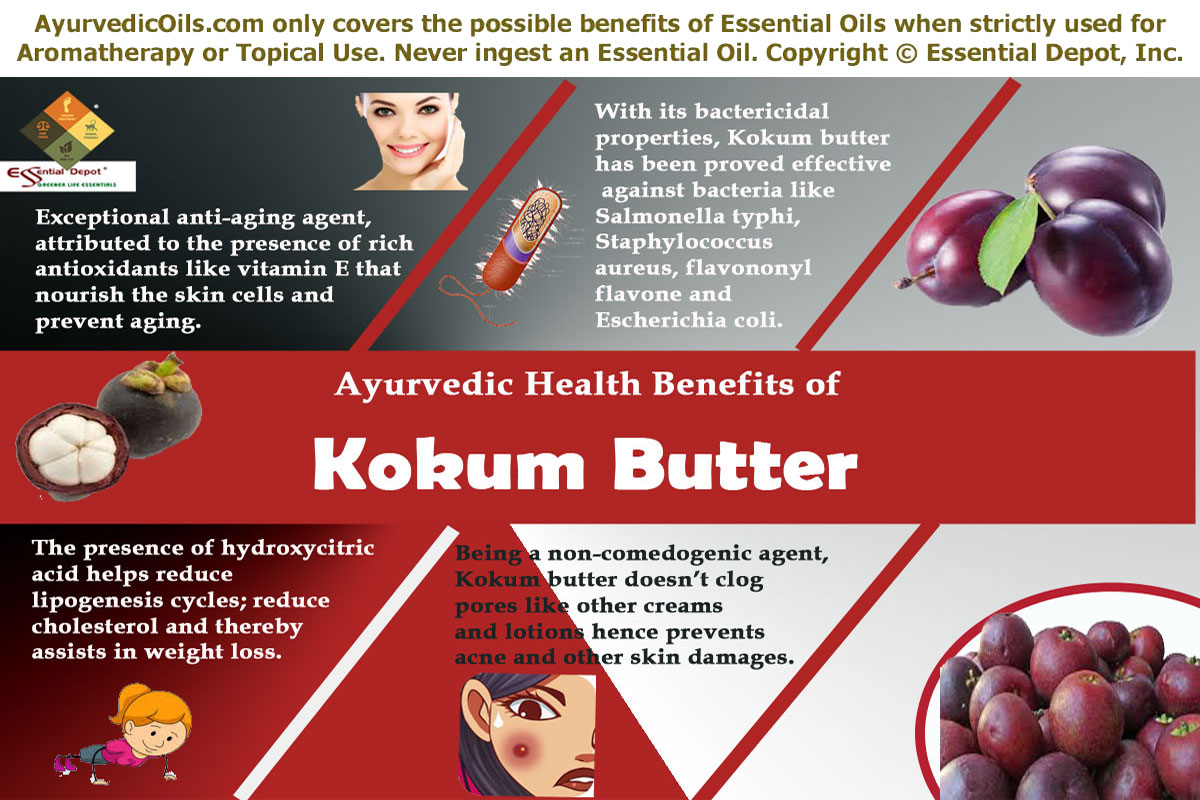
  • Exceptional anti-aging agent, attributed to the presence of rich antioxidants like vitamin E that nourish the skin cells and prevent aging.
  • With its rich antioxidant and antibacterial properties, Kokum is an excellent cardiac tonic and is trusted to enhance the kidney functions and support metabolism.
  • With its bactericidal properties, Kokum butter has been proved effective against bacteria like Salmonella typhi, Staphylococcus aureus, flavononyl flavone and Escherichia coli.
  • The presence of hydroxycitric acid helps reduce lipogenesis cycles; reduce cholesterol and thereby assists in weight loss.
  • Being a non-comedogenic agent, Kokum butter doesn’t clog pores like other creams and lotions, hence prevent acne and other skin damages.

Kokum-butter-brocherKokum butter is an excellent anti-aging agent:

All butters are generally good on skin and Kokum also known as ‘Goa Butter’ is not going to let you down. Though the butter is a bit dry in its nature, it does serve the purpose when it comes to helping with skin regeneration.

The essential fatty acids seen in the butter aids in the oxygenation of the cells, making its tissues available to absorb nutrition. It also contains antioxidants such as vitamin E, which nourish the skin and prevent aging.

It is a non-comedogenic agent, which doesn’t clog pores like creams and lotions do, thereby avoiding the occurrence of acne and pimples, and also helps easy absorption of the butter into the skin. Usage of Kokum butter in lotion and creams give it that lush texture that makes the skin feel soft and supple through-out the day.

The major symptoms of aging are wrinkles, fine lines, crow’s foot, dull and dehydrated skin. These skin conditions are often caused by the infestation of harmful free radicals that prevent skin cells from being hale and hearty.

Damaged cellular structure often pave way for dermal problems including aged skin conditions. Antioxidants are powerful micronutrients that have the potent to scavenge the effects of free radicals.

A 2006 study on the ‘Antioxidant activity of Garcinia indica (Kokam) and its syrup’ proved that Kokum is an exceptional antioxidant agent with potent compounds including Garcinol, HCA (hydroxycitric acid), polyphenols and anthocyanin pigments.

Kokum aids in fighting free radicals and assist in repairing the damaged skin, enriching the skin cells from within and helps in restoring the natural glow and texture of the skin, leaving it supple and hydrated.

It has also been prescribed in the treatment of burns, allergies, sunstroke, rashes, chaffed skin, dry skin and scalds.

With all these commendable benefits to the skin, Kokum butter is used as a nourishing base product for organic soaps, moisturizing creams, sunscreen lotions and other skin care products.

This is the kind of ingredient that would be perfect in rejuvenating dry, tired and worn out skin. Blend Kokum butter with your favorite skin-nourishing oils like Lavender oil or Ylang Ylang oil for better results.

Kokum butter as an anti-bactericidal:

The butter exhibits anti-bacterial and bactericidal properties hence it’s used topically to cure skin infections. The juice extracted from Kokum is an appetite stimulant and also has biological properties and has been in use as an effective anti-helmintic agent.

It has also been used to treat piles, GIT infections, and dysentery as well. It also helps stabilize liver functions, and helps strengthen the cardiovascular system. A study involving the involvement of Polyphenols of Garcinia Indica against bacteria was carried out. The result proved that Garcinia indica was effective towards Salmonella typhi, Staphylococcus aureus, flavononyl flavone and Escherichia coli.

Antioxidant activity of Kokum butter:

A study was conducted to understand the anti-oxidant activity of kokum butter. The experiment was carried out on rats and the results proved that there was effective support contributed by GIE in ATD-induced oxidative damage of liver and Kokum exhibited a hepatoprotective activity contributed by its antioxidant effect.

Kokum butter in cholesterol reduction:

A study was conducted to understand the effects of Kokum butter and cholesterol levels. During the study it was comprehended that the chemical constituents and properties of the butter were a lot similar to sunflower oil, sesame oil, and peanut oil.

Though the process of heating and melting of the butter were the same as ghee and hydrogenated fats, the high unsaturated fatty acid composition seen in Garcinia-butter makes it a lot healthier choice.

Also, the hydroxycitric acid seen in the butter helps reduce lipogenesis cycles; reduce cholesterol, thereby assisting in weight loss.

Other health benefits of Kokum butter:

In general, Kokum has been used in the treatment of fissures and ulcers on lips, hand, and sole. It has also been used as an astringent. Kokum butter is a tender way to treat skin infections, dead skin cells, dry skin, stretch marks, sores, stomach ulcers, gastritis, inflammation and constipation.

On skin and hair, Kokum butter is used to treat acne, dry hair, split ends and dandruff. It helps eliminate bacteria such as H. pylori bacteria which are general causes of ulcers.

Kokum aids in strengthening the brain power by increasing the growth of neurons through preventing the substances that can cause damage by oxidizing them, and suppressing the growth of reactive oxygen related species that can cause cancer and cardiovascular related diseases.

Besides this it also contains hydroxycitric acid also known as HCA which can act as an appetite suppressant and aid in weight gain issues. It has a triglyceride composition and hence used as a substitute for cocoa butter.

Disclaimer:

This article is only for the use of information. It is not meant to make a diagnosis or thwart any medical conditions. Do not replace with any other prescribed medications or expert medical advice. We are not healthcare professionals and this information is shared only with the notion of bringing Ayurvedic healing wisdom under limelight.

Organic butters and essential oils are meant only for topical application and do not ingest. Consult your Ayurvedic expert/ medical professional ahead of picking the perfect essential oils or organic butters for your prakriti or unique individual constitution along with your medical condition.

Thought for the day:

Never lose an opportunity of seeing anything beautiful, for beauty is God’s handwriting.

-Ralph Waldo Emerson

Suggested Reading:

  1. A Monograph on Kokum (Garcinia indica Choisy): Uses, Morphophysiology, Propagation, Production and Post Harvest Management by Parag Haldankar, Yogesh Parulekar, and Pradip Haldavanekar.
  2. Organic Body Care Recipes Box Set: Organic Body Scrubs, Organic Lip Balms, Organic Body Butter, And Natural Skin Care Recipes by Karina Wilde.
  3. 30 Best Homemade Body Butter Recipes by Kate Hilton.
  4. Natural Remedies Book Collection: 6 Books About Weight Loss, Natural Skin Care And Healthy Life: (Weight Loss Books, Alternative Medicine, 10 Day Green Smoothie Cleanse, Cannabis) by Mary Anne Heller, Pamela Arnold, Pamela Green, Irene Edwanson, Adrienne Cooper, Tasanee Mookjai.
  5. Natural Butters To Make Skin Care Products (How To Make Natural Skin Care Products Series Book 18) by Miriam Kinai.

References:

  1. Kokum oil by Wikipedia
  2. Antioxidant activity of Garcinia indica (Kokam) and its syrup by the Department of Biochemistry, The Institute of Science, Bhabha Atomic Research Center, India
  3. Antibacterial Activity of Polyphenols of Garcinia Indica by C. Lakshmi, K. Akshaya Kumar, T. J. Dennis and T. S. S. P. N. S. Sanath Kumar published in Indian Journal of Pharmaceutical Sciences and PubMed
  4. Antioxidant and hepatoprotective effects of Garcinia indica fruit rind in antitubercular drug-induced liver injury in rats by Panda VS, Ashar HD, Sharan A, published in Dovepress

The scent of life: 10 generic uses of Essential Oils in aromatherapy


In this modern world of complexities, we rush to do things. We do everything in such a rapid pace that we forget even to take care of ourselves. Result: One fine day, our body revolts to keep up to our speed and breaks down, refusing to cooperate further. We become deceased and resort to medications. It is then that we realize that we have missed several things in life. We realize that we have failed to lead a holistic life and instead, concentrated on pursuing only goals, ambitions and dreams. But then, it maybe too late for us to start afresh. We may have to accept our condition and become a chronic victim of diseases.

Aromatherapy and Essential Oils: Aromatherapy is all about holistic living. A medicinal system that is as old as life on earth, aromatherapy cures people through essential oils. Essential Oils are basically plant extracts that are obtained from a wide assortment of plants. Everything including stem, bark, roots, flowers, fruits, or whole plants are cold-pressed or steam-distilled to prepare essential oils. These extracts are highly concentrated and help in physical, emotional and psychological well being of people. These extracts are often the life-blood of plants, protecting them from diseases, infectious attacks and enhancing their immune system. They do the same with humans.


Essential Oils and ailments: Aromatherapy uses essential oils in treatment of different types of ailments from treating pains, aches, injuries and discomforts to relieving depression, anxiety, stress and nervousness. Essential oils are extremely useful in causing a sedative and soothing effect on people, bringing in relaxation, happiness and peace to even the most restless mind.

Below are a few uses of essential oils in treating health-related ailments and conditions:

1. Topical antiseptics: Essential oils are topical antiseptics that treat cuts, wounds, insect bites, reptile attacks, bruises and gangrene. They were used for these purposes right from ancient times. The ancients applied essential oils in treating war bruises of soldiers.

2. Muscular problems: Healing oils or plant extracts can be used in treating muscle related disorders or ailments like muscular pain, stiffness, rheumatism and muscle spasms.

3. Hair fall:
Plant extracts are useful in controlling hair loss in people. There are plenty of oils which help in nourishment of thick and healthy hair.

4. Blood circulation: Essential oils used in massages treat poor circulation problems and regulate blood circulation throughout the body. Through this, they stimulate and energize the body.

5. Dental hygiene:
Gangrene or other such conditions in teeth can be treated with oils. Some plant oils also act as good mouth fresheners, fighting bad breath and bacterial conditions.

6. Fungal infections: Skin care or topical problems can be eliminated by use of essential oils. Aromatherapy can reduce common skin allergies through application of certain plant oils.

7. Digestion and Nausea: Problems related to digestion like flatulence, nausea, heartburn, indigestion, vomiting or diarrhea can be treated through aromatherapy.

8. Impotence or sexual dysfunction: Problems related to sexual dysfunction in men or women can be cured with essential oils. Vaginal Candida can also be treated with such plant extracts.

9. Fatigue: Over-tiredness, chronic fatigue or constant dehydration or drop in energy levels can be reduced with use of essential oils.

10. Depression:
Oils are a great cure for treating depression, anxiety and other related problems. With their soothing and calming effects, they relax the mind and eliminate stress from the human system.

How to keep your weight-meter down: Aromatherapy for weight loss


Weight loss and aromatherapy, are they connected? Of course, they are. But you need to know the basics of which oil works well for you, before you enter into aromatherapy for weight loss program. Another fact to remember is, weight loss is in no way associated with essential oils except that some oils help you forget your appetite or improve your fat-burning activities. The first step toward a weight loss program with essential oils is to check whether your body is acclimatized to aromatherapy and how you can use oils in the right proportion to help with your weight loss. This is because one individual is different from the other and not all individuals can work with the same weight loss principles.

Aromatherapy for weight loss – first steps: The first step, as mentioned above, is to consult your regular medical practitioner on how to control weight gain and which program is suitable for you in aromatherapy. You can also discuss with a  licensed aromatherapist on this. Work with both your doctor and aromatherapist to design a safe plan that will suit your needs. This plan has to be framed after you analyze the reason for your food cravings or whether you eat more. If yes, why do you crave for food? The reason could be – physical or medical, you may have a poor quotient of nutrition supplements in your food, you may consider eating as a form of comfort or an activity in an otherwise boring routine, or you maybe suffering from grief, depression or other emotional problems. Once your freeze on the reason for your food cravings, base your weight loss program on that.

Why essential oils for weight loss? There is no particular reason except the scientific. Aromatherapy is the only kind of alternative medicine which has a huge impact on the limbic node of the brain. This limbic system activates the hypothalamus immediately and releases hormones or chemical messengers into the body. By controlling the hypothalamus, one can control everything from sex drive to appetite. Called the Master Gland, hypothalamus helps stimulate your hormones and reduce your cravings for food. To be exact, oils stimulate the ventromedial nucleus of the hypothalamus and that can cause fullness in the stomach. This kind of satiety can reduce your appetite to a phenomenal extent, make you food-proof and a regular eater.

Dr. Hirsch in his book, ‘Guide to Scentsational Weight Loss’ talks of how he experimented with 3000 people and how most of them where able to reduce more than 30 pounds within a short period of time.

Weight loss tips with essential oils: Once you have identified your cravings, choose your essential oils. Yes, choose oils of your choice. Oils that can please you and make you feel full always. Once this is done, eliminate oils that may cause problems for you. For instance, some oils like Ajawon, Cinnamon, Clove, Ginger, Juniper, Garlic and Nutmeg etc. can burn the nose if you are not prepared. So, avoid them. Also avoid oils that can induce migraines in you.

Weight loss essential oils: The best oils for weight loss are – Peppermint, Grapefruit, Bergamot, Tangerine, Orange, Ylang Ylang and Patchouli. Most of the oils are either sedatives which relax you and give you adequate rest or energizers which uplift you and make you feel full.

Energy and essential oils: 3 energizing blends to jump start your day


Essential oils can be energizing in times of fatigue or life’s lackluster moments. If you are having a tough time with your life and are not able to focus or concentrate on your tasks on account of depressed states of mind, you can try aromatherapy for uplifting your spirits. Aromatherapists say essential oil aromas stimulate your brain in a unique way, which in turn, allows you to uplift your moods or spur your creativity within a short span of time. If you are down in the dumps or suffering through a blues period, essential oils should be your refuge to get yourself out of the muck. But how to use oils to boost your mood? This article will tell you what to do.

Instant energy with essential oils: You can use the below blends to stimulate you or energize you when you are fatigued. Be sure to follow the precautions mentioned in your oil labels and see to it that you don’t overuse your oils.


1. Blend 1: For an uplifting morning, combine 2 drops of Basil with 1 drop of Cypress and 2 drops of Grapefruit. This is ideal as a kick off blend in the morning as it has both therapeutic and energizing properties. The aroma is also sweet and pleasant.

2. Blend 2: Grapefruit is a great oil for everything from weight loss to mood upliftment. If you are not ok with yourself or in your interpersonal relationships, you maybe feeling lost or depressed. To counter that feeling, make this blend and use it in a diffuser. Combine 3 drops of Grapefruit with 2 drops of Ginger  and use it in a diffuser or air-freshener.

3. Blend 3: Lemon and Peppermint are always nourishing. To create an energizing blend, combine 2 drops of Peppermint, 1 drop of Frankincense and 2 drops of Lemon. Shake well to blend and use in a diffuser.

How to use energizing blends: You can use essential oils in subtle ways. Apart from using the blends as  diffuser oils, bath oils, bath salts, massage oils and air fresheners, you can use them at what are called ‘pulse points’ in your home. The pulse points of your home can be light bulbs, radiators, refrigerators, television states, computer terminals, window sills and wood stoves. In all these points, apply oil blend when the instrument is not hot. As the machine or instrument heats up, it will emit the fragrance of the blends into the air.

Another way to use oils is to mix the blend of your choice in water and spray them on to bedsheets. You can also use a few drops in your bath tub and spray across the bathroom. The scent of the blends will linger for a long time. You can rub blends on to terracotta flowerpots, wooden furniture and other semi-porous surfaces. This will make the scent stay in your home for a longer time. Unusual ways of application include anointing candles with blends or using them in a ceramic diffuser. You can even simmer the blend in a stove of hot water to spread the aromas around your kitchen.

Don’t push your panic button: 5 essential oils for treating panic attacks


Panic attacks can be debilitating. Those who have gone through it know what it means to survive a panic attack. It is not the attack as such, but the aftermath of the attack that is dangerous. You are left in a sudden state of intensity and you do not know what to do. You experience intense feelings like nervousness, anxiety and fear, with your body secreting bouts of adrenaline to cope with the situation. So much happens at such a short period of time that you do not know how to control the situation or manage yourself. You often end up pushing the panic button, making the situation more awful. Panic attacks can cause havoc out of nowhere. Though there are medications and psychotherapy sessions to treat panic attacks, essential oils can be good remedies to handle situations of such kind. This article will elaborate on what it means to treat panic attacks with aromatherapy oils.

Essential oils for panic attacks: When you are under a panic attack, you may not be able to function properly. You are anxious, nervous and helpless. Your endocrine system functions inappropriately, and you may face problems like breathlessness, high pulse rate and hyper-anxiety. Panic attacks are triggered by many factors and some of them are stress, bad foods, emotional ill-health, drugs, traumas, emergency situations etc. Essential oils can help with alleviating the symptoms of panic attacks. Some of the below blends which can help with treating the attacks:

1. Blend 1: Combine 2 drops of Helichrysum and 3 drops of Frankincense and shake well to prepare the blend. You can diffuse the oil for use in rooms or your living space.

2. Blend 2: Combine 1 drop of Rose oil with 4 drops of Lavender oil to prepare a blend that can help with panic attacks. Inhale the blend to relax your mind and relieve yourself of anxiety.

3. Blend 3: Prepare a blend with 1 drop of Rose oil and 4 drops of Frankincense. This is an exotic blend that can help in treating your symptoms of panic attack. You can reduce your stress levels and look at the world in a relaxed manner. Diffusing this blend is better as Frankincense is good for     aromating your living space.

4. Blend 4: Combine 1 drop of Neroli with 4 drops of Lavender and shake well to blend both oils together. Lavender is an ever-relaxing oil. It can be used in massaging, as bath oil or in bath salts, for a soothing effect.

5. Blend 5: Panic attacks can be triggered by a sense of fear. You can use fear-reducing oils to reduce the intensity of attacks. Add 2 drops of Clary Sage, 2 drops of Roman Chamomile and 1 drop of Vetiver for a relaxed and calm effect.

Bathing as a ritual: How to use aromatherapy for an exotic bathing experience


Bathing is an ancient ritual that has a relaxing and luxurious effect on the body. Right from the ancient Egyptians like Cleopatra to Greeks and Romans, enjoyed the stimulating and soothing effect of bathing. This is especially true if you go in for an aromatic bath that includes essential oils as bath oils, bath salts and bath fizzies/bombs. Bathing, when adhered to as a ritual, can eliminate toxins from your body and cleanse the inner you in a more spiritual and aromatic way. This is article will discuss on how to use bathing as an exotic way to get rid of toxins, fevers etc from your body.

Bathing as a ritual: Aromatherapy baths can be extremely therapeutic, thanks to the use of essential oils to soothe and calm the body on a physical, emotional and spiritual level. Therapeutic action of aromatherapy essential oils is two-fold. Essential oils are absorbed into the skin and enter the circulatory system; the aromas enter the limbic system through the brain and stir an impact on the major systems of the body. Soaking your body in an aromatic bath can play an important role in relaxing muscles, reducing joint stiffness, increasing suppleness and alleviating aches/pains. An aromatic bath can tone down your skin, stimulate your body and detoxify you from anxiety, tension and ill-feelings.


How to create an exotic bathing experience? Bathing can be exotic when used in the right way. Basically, the effect of bathing depends on the temperature of bath water and the kind of essential oils used. Below are a few pros and cons of having a hot, warm and cold water bath.

Hot Bath: You can have baths at about 100 – 104 degrees F or 38 to 40 degrees C. A bath hotter than this can damage your delicate blood vessels and sebaceous glands. So, ensure that you use a hot bath that can suffice your body temperature and does not incur any harm to you, whatsoever. This kind of bath can treat fevers and eliminate toxins from your body. If you feel the water maybe too hot for you to bear, use warm water initially and then add hot water to it. After your hot bath, wear warm cotton pajamas or night gown and slip into bed ensuring that you promote sweating to eliminate your body toxins. You can use the below recipe to enhance such a bathing experience. Add evergreen bath salts that can stimulate an aggressive response from your body – 1 cup of baths salt, 10 drops of Eucalyptus, 10 drops of Pine oil and 15 drops of Tea Tree oil.

Warm Bath:
A warm bath is always soothing and relaxing to the body. A warm bath can be 80 to 90 degrees F or 27 to 34 degrees C. It is a general encouragement to stimulate the natural functions of the body. Gentle on the skin and calming to the body, a warm bath can be preferred after a long, hard day at work.

Cold Bath: A cold bath can tone your skin and activate your body functions. Generally, a temperature of the bath should be 70 to 80 degrees F or 21 to 27 degrees C. Cold baths help with respiration and improve the elasticity of your muscles. Best time to engage in a cold bath is the morning as it reduces fatigue and inspires you with refreshing energy.

Banish the negative: How to cultivate positivity with essential oils


Negativity is all around us. Believe it or not, even a smirk or a harsh word thrown at us has a tremendous negative influence over our life. This negativity breeds more negativity, resulting in annihilation of an environment  that is devoid of anything lively or inspiring. We get into monotonous routines, complaining of things and monologuing about our present state of affairs. Above all, we lose interest in life and drag ourselves to do things that we should be accomplishing with a sense of feat. To combat negativity often does not require just a change of mind, but a change in the environment too. This does not mean we need to holiday in an exotic island to get a treat of the positives of our life. It is enough if we recognize and enjoy what is positive about things and situations around us. Essential oils can help us do this with some strong, spiritual and silence-inducing aromatherapy treatments.

How to banish the negative: Cut the crap of negativity that surrounds you. It can be people, things, relationships, jobs, financial agreements or tiresome physical habits. If you have a repulsion toward something, understand that there is basically something wrong about the thing or the person. Analyze your situation and make decisions. Try cultivating a positive approach to your life. If you are able to bring in positivity, go deep into the situation and dig out the negatives. This can mean going into a meditative or mental cleansing state. Essential oils can help you do this through their aromas. They can uplift your spirit and infuse positives into your life.

Essential oils are generally aromatic. They work because they connect directly to the limbic system of the brain, unlike the other medicines or drugs which need to be dissolved into the blood stream to produce a reaction/response. Since the limbic system is one of the most effective and most ancient systems in the body, it has direct control over all the most important systems, including the heart, the digestive systems and other body parts. Essential oils work by uplifting the spirit, purifying your immediate environment and thereby combating negativity in our life.

Essential oils for combating negativity: Several civilizations have used essential oils for banishing negativity in life. One of the primary reasons for using aromatic oils in Christianity, Native American and Hindu or Persian tradition is to abolish sabotaging influences. The below list of oils have helped remove negativity from ancient times and can do the same with you too: Atlas Cedarwood, Cypress, Common Sage, Hyssop, Lemon, Juniper Berry, Lime, Myrrh, Peppermint, Spearmint and Virginian Cedarwood. You can use these oils in air fresheners or diffusers or even use them as bath oils in your daily routine. Adding them to your daily routine helps immediatley fight any kind of negative influence in your life.