Category Archives: Ayurvedic Essential Oils

Ayurvedic Essential Oils

How To Store Ayurvedic Essential Oils?


Ayurveda is a science of natural wonder that often proffers the best to mankind, be it the treatment for the actual disease, solutions for preventing it in the future, leading a healthy lifestyle, a balanced and nutritious diet, serene meditation, enlightening yoga or a soothing Abhyanga with the use of Ayurvedic essential oils. Everything aims at a complete life and a state of comprehensive living even after your 60s as Ayurveda pays special attention to human beings right from the womb till their death bed, where the soul is trusted to rest in peace with a regular practice of an Ayurvedic routine. Most of you might wonder and feel like asking me that essential oils are an incredible part of Aromatherapy and why am I talking about storing essential oils in Ayurveda?

Ayurveda makes use of natural fragrances or aromatics in the process of healing illnesses. Incense sticks, fresh flowers, sandalwood powder or paste have always been a part of the religious ceremonies and the daily prayers for kindling the spiritual feelings of an individual. Essential oils are natural plant extracts without any artificial ingredient and have been proved across the globe for its therapeutic properties and enhancement in the quality of lives. Ayurvedic essential oils can be such a value addition to your life only if they are preserved well for extended use. This is because these oils being in a highly concentrated form are mostly used in drops and are retained for a long time in the shelves or medical cabinet. The simple tips to store Ayurvedic essential oils for better use are listed below for your guidance.

1. Nature of the container: The good looks or the prettiness of the container cannot pay your health in anyways. The pureness and the quality of the essential oils are very important in serving the purpose of its purchase and such healing values can be retained only with the type of the container it is stored in. Essential oils should preferably be stored in glass bottles mostly in amber or navy blue color for filtering the harmful UV rays that may otherwise worsen the essential oils. Make certain that you never purchase essential oils that are stored in clear glass bottles inviting sunlight to deteriorate the therapeutic properties of the oil  or the oils stored in plastic containers as these highly concentrated essential oils will corrode the plastic and detriment the texture of the oil and taint it.

2. Focus on the temperature: Being volatile in nature, essential oils tend to evaporate in comparatively lower temperatures. Heat, moisture and sunlight can cause considerable damage to the quality of the oils. Always store essential oils in a dark, cool and dry place to preserve the freshness, natural fragrance and remedial properties. You can also store essential oils in an average temperature in the refrigerator and keep it out for few hours before use to allow it to settle to the room temperature.

3. Type and temperament of essential oils: Generally the storage of essentials oils depend on the nature of the oils. Certain oils like Sandalwood oil, Patchouli oil, Clary Sage essential oil, Vetiver oil etc, get enhanced with time. The older they are the better they smell and exhibit their rich fragrance. On the other hand, Citrus oils like Lemon essential oil, Grapefruit essential oil, Orange essential oil etc, are tend to tarnish and start to lose their curative values, aroma and the rich presence in a limited period ranging from 6 to 12 months.

4. Pay attention to the bottle caps: Do not buy essential oils that are covered with rubber droppers attached to the screw-top cap. This is mainly due to the highly concentrated nature of the essential oils that can turn the dropper into a gluey material and besmirch the entire oil. The best choice is the use of essential oils stored in dark glass bottles with a firmly fixed screw cap containing an orifice reducer set inside the mouth of the bottle. It holds a small opening in the middle allowing the oil to be discharged in drops without any mess.

5. Choose a safe wooden box for storage: As all of us know that ‘Health is the real wealth’. When we spend so much of money in purchasing jewel boxes to keep our jewels, then why can’t we get a compact and durable wooden box (without biting your pocket!!) that can preserve your essential oils from all of the factors that can cause damage to the essential oils?

Precautionary Tips:

  • Keep the essential oils in a cupboard or a safe shelf that is not easily reachable by kids and pets. Both of them may tend to hurt themselves by coming into direct contact with the oil.
  • Do not use Ayurvedic essential oils directly on your skin as they are highly concentrated and may burn the skin or cause considerable damage. Always use suitable carrier oils for dissolving your essential oils before use.
  • Do not ingest essential oils unless it is recommended by your Ayurvedic practitioner.
  • Ensure that the essential oils bottle is tightly closed after use to avoid spilling and mishandling.
  • All of us have the habit of looking at the expiry date of all the pharmaceutical products and food items that we purchase. Try implementing the same here as well. Look for the expiry date at the back of the bottle. If you do not find one, then make it a practice to write the date of purchase on a small paper and paste it on the bottle to know the actual shelf life of a particular essential oil.
  • Use Ayurvedic essential oils regularly for better results and consult your Ayurvedic expert regarding the different ways of using essential oils effectively to find value for your time and money.

Happy storing!

Suggested Reading:

  1. Ayurveda & Aromatherapy: The Earth Essential Guide to Ancient Wisdom and Modern Healing By Dr. Light Miller, Dr. Bryan Miller
  2. The Aromatherapy Companion: Medicinal Uses/Ayurvedic Healing/Body-Care Blends/Perfumes & Scents/Emotional Health & Well-Being (Herbal Body) By Victoria H. Edwards

Thought for the day: A Stitch In Time Saves Nine

 Reference Links:

  1. Essential oils by Wikipedia
  2. How to store Essential oils by wikiHow
  3. Aromatherapy by National Association for Holistic Aromatherapy

Yara Yara Essential Oil


Yara Yara essential oil, prevalently known as Yarrow essential oil has a bundle of therapeutic properties that has made its presence inevitable in the world of Complementary and Alternative Medicine including the oldest natural healing system known as Ayurveda, meaning the knowledge of life.

Yara-yara-bannerUse of Yarrow as a natural medicine dates back to more than 60 thousand years and this was proved by its presence on the body of a Neanderthal. Such a distinguished herb is used in different forms like essential oil, decoction, powder and much more in treating a series of illnesses.

Historical uses of Yara Yara essential oil:

Yara Yara, a celebrated sacred herb was known to be used by Achilles, the Greek hero of Trojan War for healing the wounds and to curtail bleeding of his soldiers. The botanical name of this plant Achillea Millefolium is followed by his name Achilles. Historical references prove that the ancient Chinese medicinal system used Yarrow essential oil to treat problems related with menstruation whereas the primordial Scandinavians used this efficacious oil to treat rheumatism.

Yarrow essential oil was used in Scotland to protect from evil and was trusted to have an all-healing potential to treat numerous disorders all through the ages. Yara Yara oil was added to certain Swedish beers and the historical uses of this herb goes on and on as a never-ending list. This herb is also known as Milfoil for its feathery look.

Where does Ayurveda come into picture?

Ayurveda, the knowledge of life is a holistic approach and the oldest systems of medicine in treating humanity. According to Ayurveda, any disease is an indication that your body is out of balance. Every individual is considered unique with a specific set of physical, mental and spiritual values. Ayurveda trusts that human beings are imperative part of nature and every human body is made up of the five vital elements of nature, namely air, water, ether, fire and earth.

An individual’s constitution is made up of three predominant bodily humors known as doshas (Vata, pitta and kapha), which are a combination of any of these five elements of nature and it determines the personality and attributes of a person. With this belief as the fundamental principle, Ayurvedic texts indicate that the disharmony of your system with nature is the root-cause of all illnesses.

The beauty of Ayurvedic healing lies in transforming the entire lifestyle of an individual into a healthy one based upon his unique constitution. Ayurveda believes that nothing better than natural remedies can cure mankind that is a part of nature containing the vital elements of nature. For this Ayurveda prescribes the use of herbs, essential oils extracted from plants, yoga, meditation and spiritual values that binds humanity with one’s Creator.

Ayurvedic health benefits of Yara Yara Essential Oil:

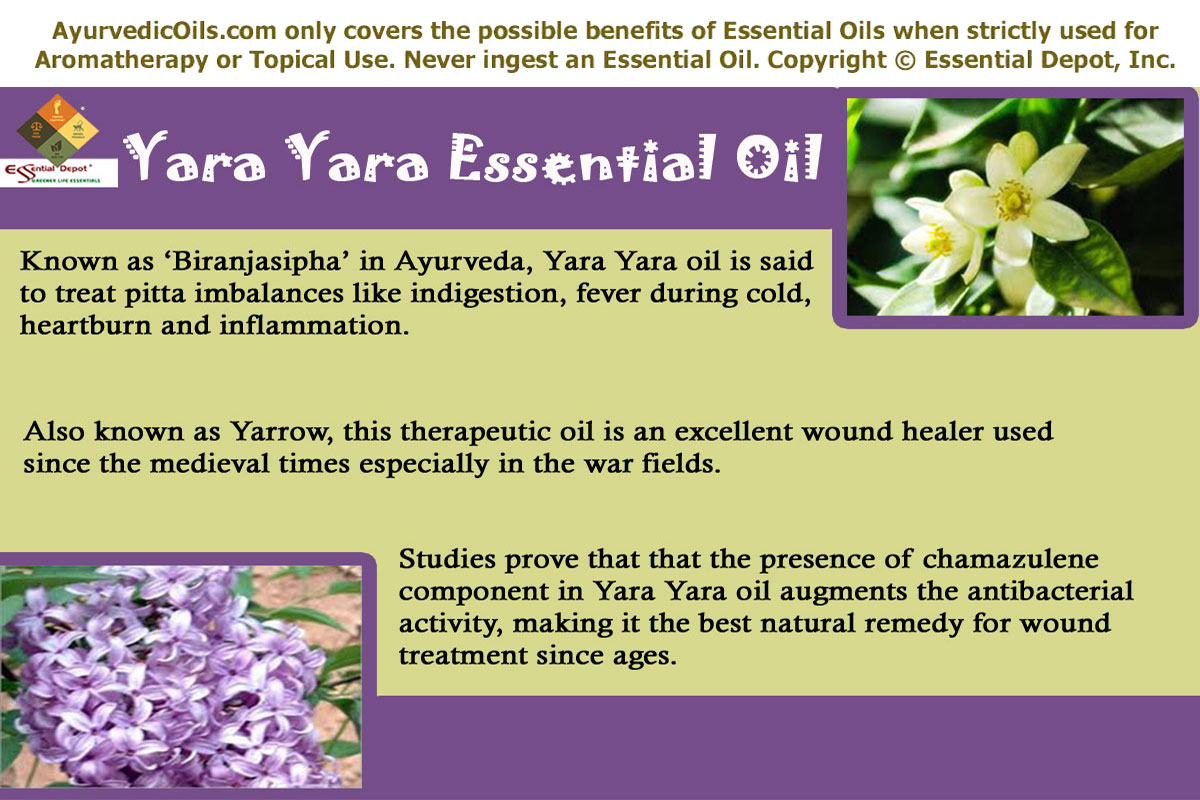
Yara Yara is known as Biranjasipha in Ayurveda. With cooling properties, Yarrow and its essential oil is said to treat pitta imbalances like indigestion, fever during cold, heartburn and inflammation.  In their famous book Ayurveda and Aromatherapy’, Dr. Light Miller and Bryan Miller bring out the effectiveness of essential oils for the chakras, known as the transfer points of feelings and the bodily functioning of certain endocrine glands.

Light Miller says “the essential oils increase the finest and farthest vibrations and assist all of the subtle bodies. Essential oils can stigmata and assist in the process of awakening, healing, opening the chakras, and strengthening the aura.” According to her, Yara Yara essential oil is one best essential oil in stimulating the heart chakra.

Yara-yara-broucher1. Yara Yara oil for the skin:

With its antiseptic, emollient, anti-inflammatory, haemostatic, vulnerary and antispasmodic properties, yara yara essential oil is among those best natural oils in treating numerous skin problems like cuts, burns, acne, rashes, marks, open sores, stretch marks, dermatitis, psoriasis, inflamed wounds, epileptic seizures, dryness, eczema, unshorn skin due to aging and many other.

This oil stops bleeding, aids in retaining the moisture of the skin and helps significantly in the quicker formation of new skin. By stimulating the leucocytes and blood platelets in the affected region, this oil effectively checks and curbs the presence of bacteria, fungus and other microbes that worsen the wounds.

Staphylococcus aureus is a harmful bacterium that causes the infection of wounds and Yara Yara essential oil with its antimicrobial effects has been proved effective against the effects of Staphylococcus species. This study proved that the presence of chamazulene component in Yara Yara oil augments the antibacterial activity, making it the best natural remedy for wound treatment since ages.

2. Yara Yara essential oil for the respiratory system:

Just like the other essential oils like peppermint, eucalyptus, tea tree, rosemary and hyssop essential oils with expectorant, analgesic and decongestant properties, yara yara essential oil is also effective in treating respiratory problems like congestion, cough, bronchitis, asthma attacks, cold and controls the secretion of phlegm. Adding few drops of this oil to your chest rub can grant you great relief from all sorts of respiratory problems.

A research on the ‘Antioxidant and antimicrobial activity of the essential oil and methanol extracts of Achillea millefolium subsp. millefolium Afan. (Asteraceae)’ by the Cumhuriyet University revealed that “Eucalyptol, camphor, alpha-terpineol, beta-pinene, and borneol were the principal components comprising 60.7% of the oil”. This makes Yara Yara essential oil as a promising natural remedy in treating cold, fever, cough and other respiratory disorders.

3. Yara Yara oil for the digestive system:

Yara Yara essential oil is highly beneficial for the digestive system and supports in treating various digestive disorders like constipation, colic, indigestion, stomach cramps, bloating, loss of appetite, heaviness along with pain in the chest, flatulence, gall-bladder and intestinal pain, gastric catarrh and few other dyspeptic conditions.

With its stomachic, carminative, digestive and anti-spasmodic properties, yara yara oil is said to remove and prevent gas formation in the stomach and intestines. This oil enhances the secretion of bile and other digestive juices, helping in trouble-free digestion.

A recent research proved that Yarrow has been traditionally used in the treatment of spasmodic gastro-intestinal disorders, inflammation and hepato-biliary complaints. A gentle Ayurvedic massage with 2 to 3 drops of Yara Yara essential oil blended with carrier oils like Jojoba oil, almond oil or sesame oil can grant immense relief from all sorts of digestive disorders.

4. Yara Yara essential oil for the nervous system:

This essential oil has hypotensive and tranquilizing properties that calms the heart and soothes the nerves. Hypertension, insomnia, high blood pressure, excess stress and brain hemorrhage can be assisted perfectly with the healing powers of Yara Yara oil. It tones up and relaxes the nervous system and boosts the immune power, making you resistant against harmful diseases.

5. Yara Yara essential oil for the circulatory system:

Yarrow essential oil enhances blood circulation and assists in treating hemorrhoids, varicose veins, arthritis, rheumatism, menopausal disorders, cystitis, irregular menstruation, dysmennorhea, formation of uric acid crystals in the body and few other health problems associated with the circulatory system. The anti-rheumatic, anti-inflammatory, haemostatic, emmenagogue and astringent properties of this oil makes it the ideal choice for treating problems related to improper circulation.

6. Yara Yara essential oil for the entire system:

Numerous other health benefits of using Yara Yara oil are removal of toxins from the body, control of dandruff and hair fall, promotion of hair growth, aid in treating gum problems, stimulation of the metabolic functions and hostility against infections in the excretory system and reproductive system.

Susanne Fischer-Rizzi talks about numerous gynecological uses of Yara Yara essential oil and she says that this oil can be used in douches, diffusers and sitz baths.

The most impressive information about Yarrow herb is its use by Hildegard of Bingen to treat breast cancer with the salve prepared with petals of yarrow flowers. She advised her patients to rub this salve on the ulcerated parts and expel the toxic things followed by the use of the ointment prepared with Yara Yara flowers to promote proper healing with its antioxidant properties.

When nature can gift us with a handful of promising remedies like these, why should you turn back to the contemporary medical system for artificial healing? Think again!!

Disclaimer:

Direct application of essential oils is not recommended as it may cause allergies or harms the skin; blend it with carrier oils before using it as massage oil or for any other topical application. Do not ingest essential oils or use it on babies and pregnant women without the advice of your health care expert.

Thought for the day:

Yarrow has been under experimental research as an antidote for radiation exposure, as an anticancer as well as antitumor agent, as an aid to detoxification from drugs and alcohol. It is useful in severe skin rashes and for wounds that will not hear.                        –Jeanne Rose

Suggested Reading:

  1. Aromatherapy for the Soul: Healing the Spirit with Fragrance and Essential Oils by Valerie Ann Worwood
  2. The Healing Intelligence of Essential Oils: The Science of Advanced Aromatherapy by Kurt Schnaubelt
  3. The Illustrated Encyclopedia of Essential Oils: The Complete Guide to the Use of Oils in Aromatherapy & Herbalism by Julia Lawless
  4. Ayurveda & Aromatherapy: The Earth Essential Guide to Ancient Wisdom and Modern Healing by Dr. Light Miller, Dr. Bryan Miller

Reference Links:

  1. Yarrow – Achillea Millefolium by Ingrid Naiman
  2. Antimicrobial effects of yarrow (Achillea Millefolium) essential oils against Staphylococcus species by Medical Sciences Faculties of Islamic Azad University, Tabriz, Iran
  3. Antioxidant and antimicrobial activity of the essential oil and methanol extracts of Achillea millefolium subsp. millefolium Afan (Asteraceae) by faculties of Cumhuriyet University, Turkey

Ylang Ylang Essential Oil


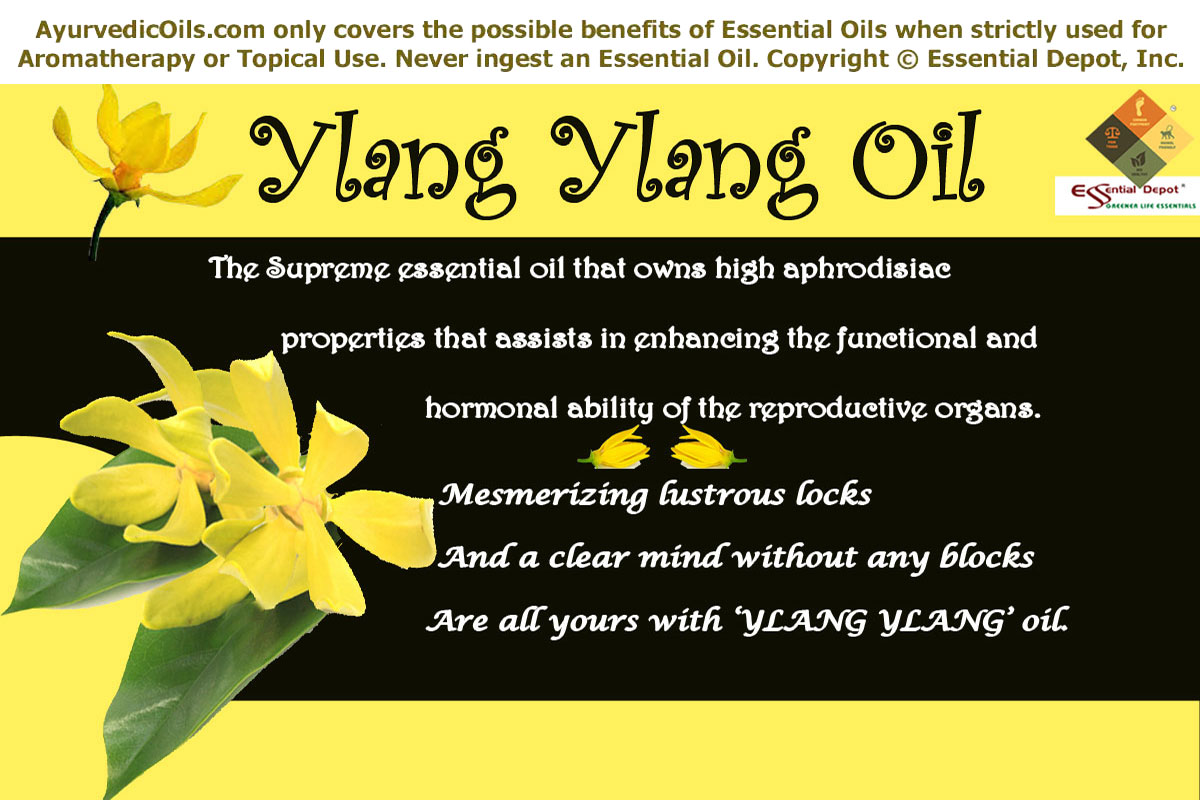
ylang-ylang-bannerYlang Ylang essential oil is an eminent value addition to the perfume and cosmetic industry. Not many of us knew this name a few decades back and thanks to the cosmetic industry that has spread the magic of this herb just like forest fire.

The use of Ylang Ylang and its oil can be attributed to the ancient times as historical references indicate the use of aromatic plants by mankind for more than thousands of years. The essential oil of Ylang Ylang has innumerable Ayurvedic health benefits that you will certainly be amazed at.

Purchase Ylang Ylang Essential Oil – Retail – CLICK HERE

Purchase Ylang Ylang Essential Oil – Wholesale – CLICK HERE

Historical uses and importance of Ylang Ylang oil:

Popularly known as the flower of flowers, all the parts of the Ylang Ylang tree has a celebrated history both in the West and the East. This tree is indigenous to Indo-Malaysia, Philippines and Java. It was used in salves to heal cuts, scrapes, insect bites, snake bites and few other skin disorders in Philippines.

The Ylang Ylang petals are spread over the bed of newly married couples in Indonesia for its mesmerizing aroma and sensual effects.

The essential oil of Ylang Ylang was used in making of antimacassar, an ornamental chair cover that prohibited the Macassar oil from discoloring the upholstery. This oil was also used as a prominent ingredient in Macassar oil, an effective hair pomade.

Ylang Ylang was also used as a medicinal herb in treating chronic disorders like typhus, malaria and intestinal infections. Few sources reveal that the prominent therapeutic properties were initially identified in the early 20th century by famous French chemists Rechler and Garnier on the Reunion Island.

Every part of the Ylang Ylang tree is used for various purposes and the entire tree is claimed to be highly beneficial in many ways. The people of Java use the paste of fresh flowers to treat asthma and the dried flowers to treat malaria.

In Samoa and Tonga, the bark of the Ylang Ylang tree is used as a laxative and to treat stomach disorders. The timber of this tree is used in canoe making and construction works. In Cook Islands this timber is used for making furniture, wooden shoes, crates, fishnet floats and lathe turnings. Ylang Ylang is considered as a culturally important and as a sacred tree.

Chemical constituents or Gas Chromatography Report (GC) of Ylang Ylang oil:

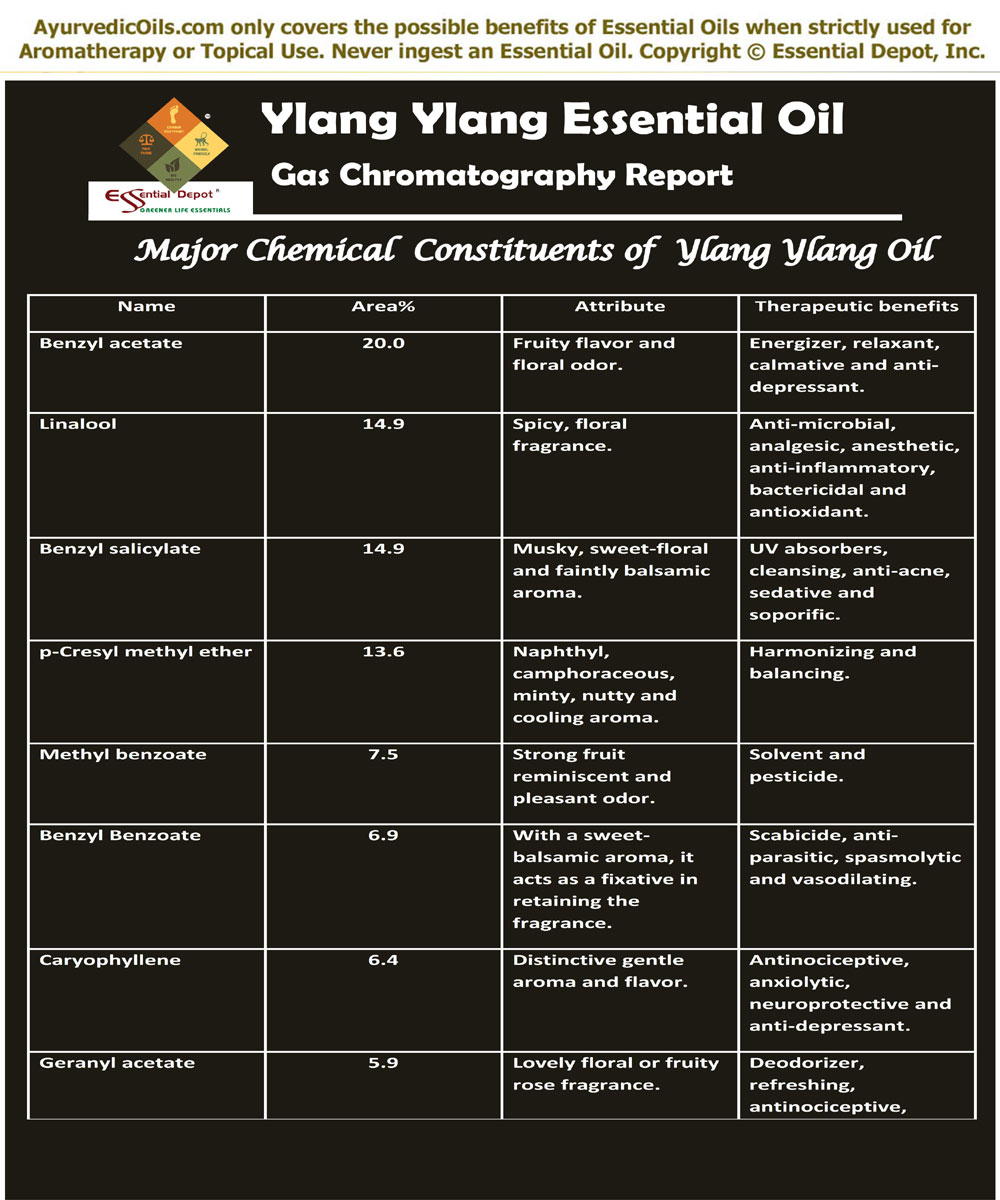
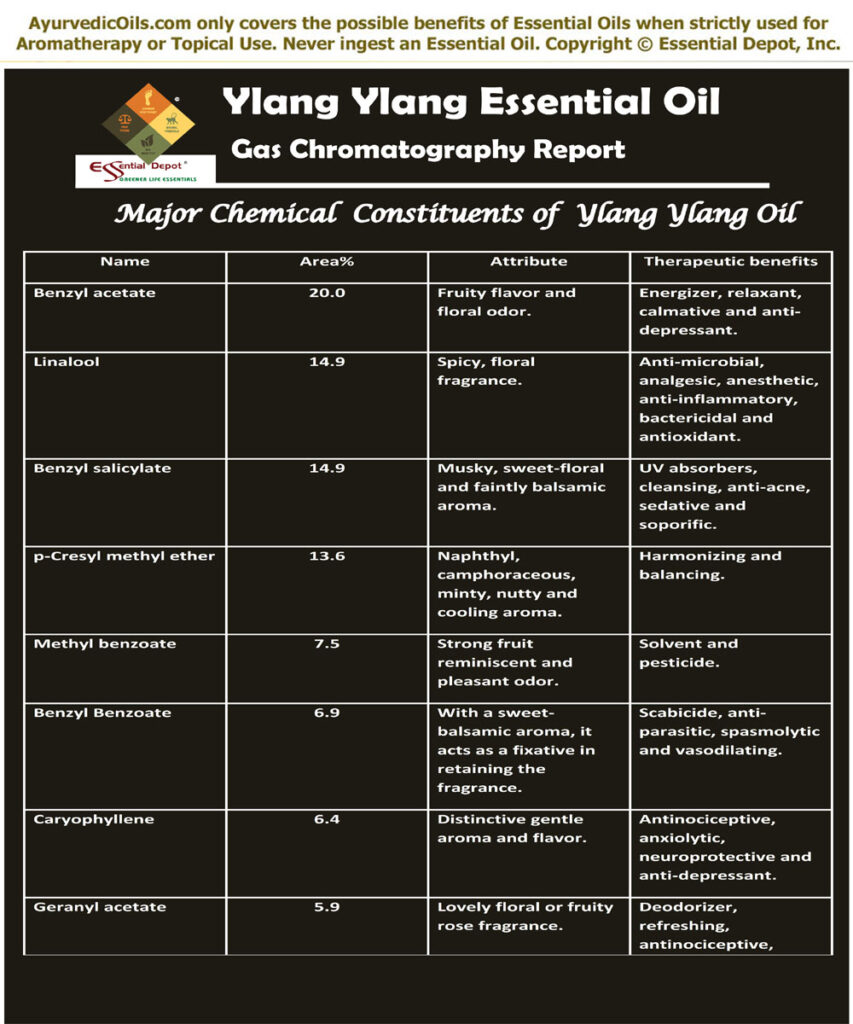
According to the Gas chromatography report, Ylang Ylang oil is constituted of about 8 major chemical components that add to the aroma, consistency, quality and therapeutic values of this essential oil.

Just click on:

For knowing more about the exclusive information of these key constituents of Ylang Ylang oil.

The table below on the Gas Chromatography report talks about the principal chemical constituents and its role in granting the therapeutic and other attributes to Ylang Ylang oil.
Ylang-Ylang-OIlAyurvedic health benefits of Ylang Ylang essential oil:

The most incredible thing about Ayurveda is that it considers every individual as a ‘unique person’ with special individual constitution known as doshas. Ayurveda considers illness as a sign of imbalance in the system as Ayurvedic philosophy states that ideal health can be attained only by having a strong immune system and is a symbol of perfect harmony between a person’s mental, physical and spiritual wellness.

This ancient methodology trusts in treating mankind with the theory of five senses namely vision, smell, taste, touch and sound through colors, aroma, herbs, Abhyanga or Ayurvedic massage with essential oils and music respectively.

Essential oils are highly concentrated liquids extracted from plants using steam distillation. Every individual has a unique combination of three doshas (metabolic principles controlling mind and body) known as vata, pitta and kapha and the individual’s character, personality and health is often determined by the predominance of any of these dosha types. Imbalance of doshas acts as the basis of diseases where,

  • Vata imbalance causes weak memory, insomnia, dry skin, constipation and anxiety.
  • Pitta imbalance causes heartburn, acne, anger, indigestion, excess perspiration and criticism.
  • Kapha imbalance leads to obesity, respiratory disorders, water retention, sluggishness, possessiveness and uncaring.

With gentle, uplifting and moisturizing properties, Ylang Ylang essential oil is suitable in treating vata and pitta imbalances like frigidity, impotence, acne, boils, dry skin, wrinkles and skin irritations.

In their popular book ‘Ayurveda and Aromatherapy’, Light Miller and Bryan Miller say that individuals with imbalanced vata need warming up, calmness, relaxation, boost in self-esteem, sensuality for an attached life with their partner and using aphrodisiac essential oils like Ylang Ylang aids in augmenting the functional and hormonal ability of the sex organs.

People with pitta imbalance need help for venting out their anger and unwanted tension to experience their elated personality. Essential oils extracted from flowers like Ylang Ylang helps in supporting such conditions with their calming and cooling tendency.

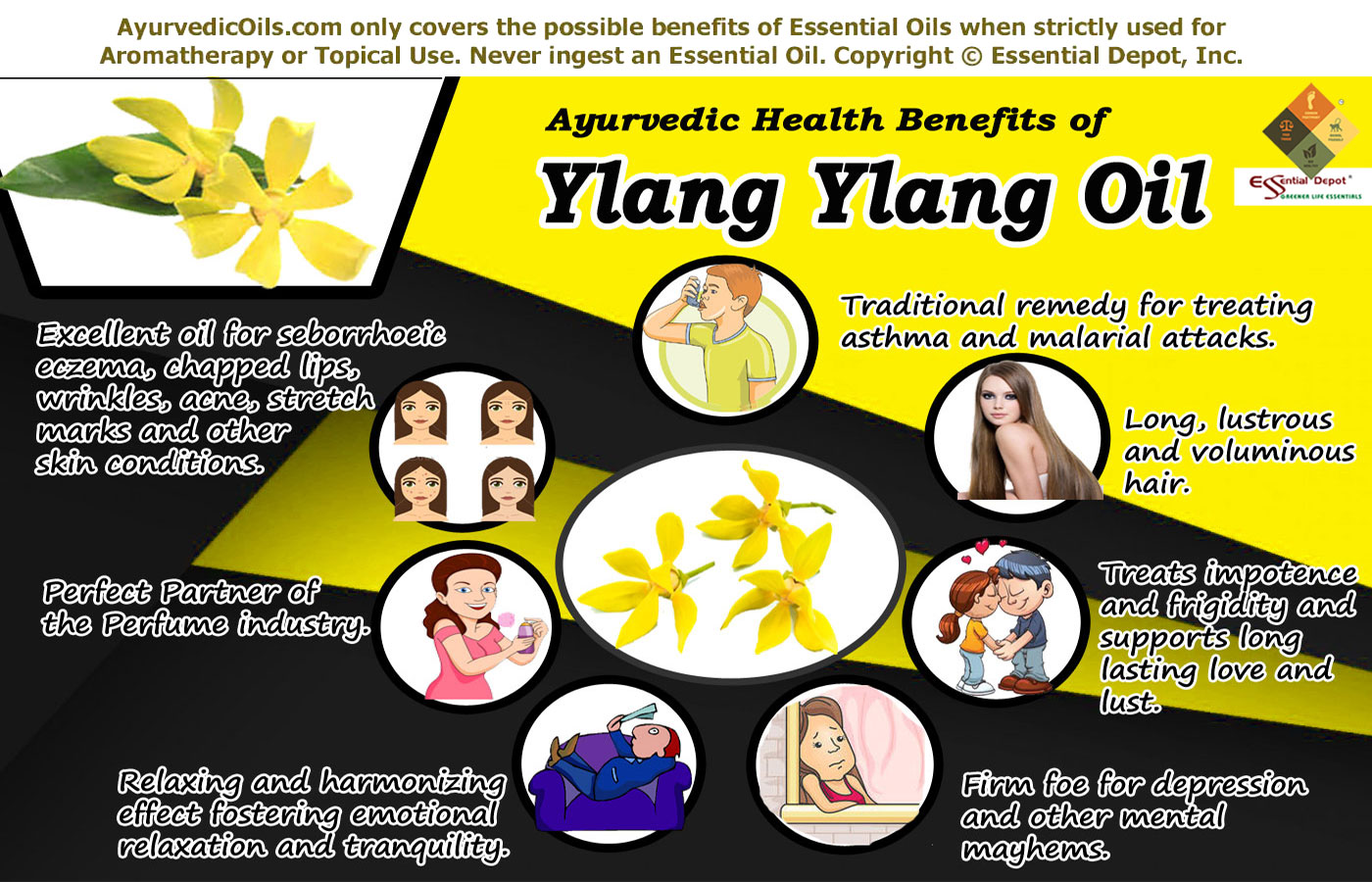
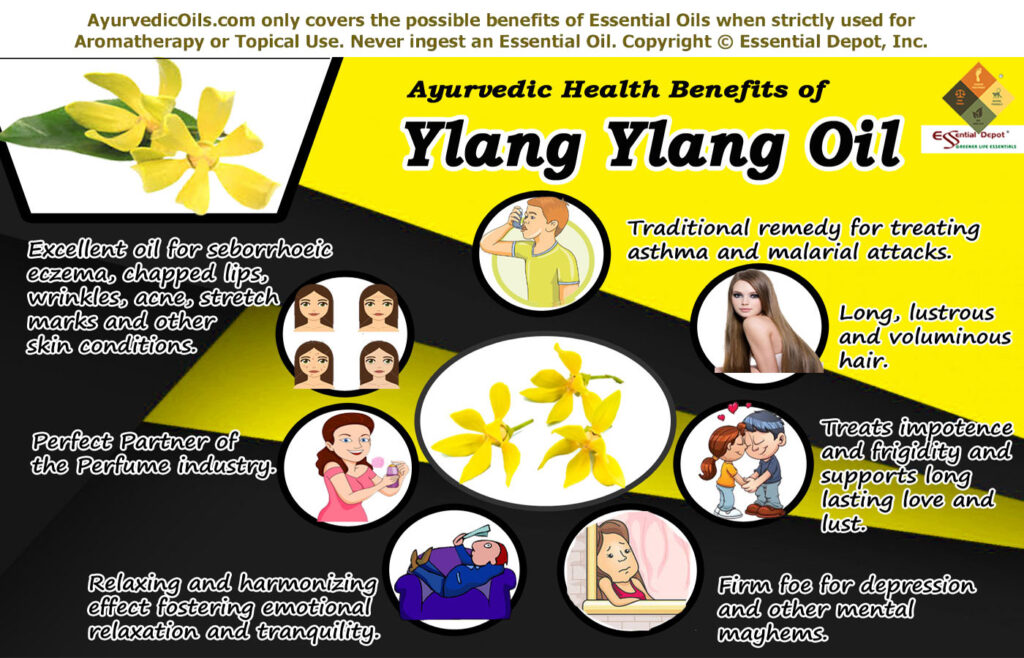
The Ayurvedic health benefits of Ylang Ylang essential oil are:
Ylang-ylang-broucher (2)1. Excellent oil for skin care:

Ylang Ylang essential oil is very effective and versatile in toning and stimulating the skin cells mainly because of its power to balance the production of sebum, making it suitable for all types of skin and as a promising remedy for treating Seborrhoeic Eczema.

The soothing, anti-seborrhoeic and antiseptic properties of this oil supports in treating skin inflammation, boils, skin irritation, chapped lips, acne, wounds, burns, blemishes, wrinkles, dry skin and few other signs of aging. Adding few drops of Ylang Ylang oil in your skin care lotion will help you in retaining the moisture of the skin, leaving it healthy and glowing.

2. Long, lustrous hair:

An ancient tribe known as Bori Bori used the Ylang Ylang flowers as a hair conditioner by mixing it in coconut oil. They also rubbed these flowers all over the body and decorated themselves by making necklace, headdresses, natural crowns and garlands for its splendid fragrance and curative values.

Massaging few drops of Ylang Ylang essential oil blended with coconut oil or almond oil aids in promoting hair growth, preventing hair loss, nourishing the scalp, augmenting the natural shine of the hair, making it long, lustrous, healthy and voluminous. What else? You are all set to be the proud owner of beautiful hair and gorgeous looks.

3. Relaxing and harmonizing:

Ylang Ylang essential oil is proved to be clearing heart fire and calming the heart due to the sedative quality of its primary constituent Monoterpene Alcohols. The traditional system of healing using aromatics suggests the use of Ylang Ylang essential oil to reduce and regulate rapid heart rate, high blood pressure and rapid breathing as it mainly supports the fourth chakra i.e, the heart chakra because of its connection in the initiation of the heart spirit.

An Evidence-Based Complementary and Alternative Medicine Research on ‘Essential Oil Inhalation on Blood Pressure and Salivary Cortisol Levels in Prehypertensive and Hypertensive Subjects’ proved that inhaling essential oil blend with ylang ylang, neroli, lavender and marjoram proved effective in controlling blood pressure and is strongly recommended for preventing the progression of hypertension. This research also proved that “Ylang-ylang oil lowers blood pressure, alleviates palpitations and nervous system excitation, and promotes emotional relaxation”.

Another research titled “Evaluation of the harmonizing effect of ylang-ylang oil on humans after inhalation” by Department of Pharmaceutical Chemistry, Srinakharinwirot University, Thailand conducted a study on the effects of Ylang Ylang essential oil on human physiological parameters like pulse rate, blood pressure, skin temperature and breathing rate while self-evaluation was assessed in terms of mood, calmness, relaxation, attentiveness, vigor and alertness.

This research proved that Ylang Ylang oil has a harmonizing effect that is momentous in lessening increased pulse rate and blood pressure as well as efficacious in increasing subjective alertness and attentiveness.

4. Firm foe for depression and other mental disorders:

With its sedative, calming, uplifting, nervine, anti-depressant, relaxing, euphoric and regulative properties, Ylang Ylang essential oil is a solid enemy for mental depression, stress, anxiety, insomnia, nervous tension, mood fluctuations, anger and few other mental disorders.  This oil aids in balancing hormones and effectively assists in mood swings associated with menopause and PMS (Pre-menstrual Syndrome).

A study published in PubMed on ‘Relaxing effect of Ylang Ylang oil on humans after transdermal absorption’ proved that Ylang Ylang essential oil is of great value in causing calmness, relief of stress and depression in humans.

You can use it as soothing massage oil blended with any of your favorite carrier oils like Jojoba oil, coconut oil or olive oil. Ylang Ylang essential oil can also be used in compresses, in candles, diffusers or air fresheners. Adding few drops to your bathing tub with warm water can alleviate stress and induce good night’s sleep.

5. Long lasting love and lust:

Ylang Ylang flowers and the essential oil extracted from these flowers are banked upon mainly for the aphrodisiac values adorned by its balsamic, floral, sweet, misty and woody aroma that aids in balancing male and female energy levels. It can significantly reduce emotional conflicts between these apparent opposites.

The sensual fragrance of Ylang Ylang essential oil is simply ideal for the perfect dream nights with your partner. It has positive influence on sexual feelings, tones the reproductive system, grants pleasure, treats lack of confidence and is also powerful in treating impotence and frigidity.

6. Perfect Partner of the Perfume industry:

The compelling fragrance of Ylang Ylang essential oil will make you stand out of the crowd. It is for this natural floral and delicate scent, ylang ylang oil is used in a handful of renowned perfume brands like Chanel No. 5, Escape by Calvin Klein, Beautiful by Estee Lauder, Acqua di Gio by Armani, Champs-Elysees by Guerlain and Poison by Christian Dior. Hmmmmm……………….Haaaaaaaaaaa…….. Doesn’t that smell so good? Absolutely it does.

Other uses:

Apart from all these health benefits, Ylang Ylang oil and the other parts of this tree are used in treating intestinal tract infections, symptomatic manifestation of malaria, fevers, epilepsy, tachycardia, agitation, distress, restlessness and other psycho-emotional imbalances. It is also used in making soaps, cosmetics and shampoos.

You will be surprised if I say that Ylang Ylang oil is also used as a safe flavoring ingredient in the food industry. A well-known study on “Safety assessment of Ylang Ylang as a food ingredient” indicated that “Ylang-Ylang oil has a long history of fragrance and food flavoring use, with no indication that its estimated consumption from food flavoring use (0.0001 mg/kg/day) has led to any adverse human health effects and at the current level of intake as a food ingredient, Ylang-Ylang oil does not pose a health risk to humans”.

Ylang Ylang essential oil is extracted from the star-shaped Ylang Ylang flowers and indeed it is a STAR OIL of all times and one more astonishing news is that it requires approximately 50 pounds of Ylang Ylang flowers to obtain 1 pound of Ylang Ylang essential oil.

Disclaimer:

This article is just for your information and do not ingest any essential oils or apply them directly to your skin without proper consultation with your Ayurvedic Practitioner, as every individual is unique and one that suits you might not suit your partner or your kid.

The MSDS (Material Safety Data Sheet) of Ylang Ylang oil is readily available for your enhanced safety and superior usage.

Gas Chromatography Report (GC) of Ylang Ylang oil.

Thought for the day:

 It was very pleasant to savor its aroma, for smells have the power to evoke the past, bringing back sounds and even other smells that have no match in the present.

-Tita

Suggested Reading:

  1. The Healing Trail:: Essential Oils of Madagascar by Georges M. Halpern, Peter Weverka
  2. HEALING POWERS OF YLANG YLANG OIL (The Aromatherapy Professional: Healing with Essential Oils) by KG Stiles
  3. How to Use Ylang Ylang Essential Oil (Aromatherapy) by Miriam Kinai
  4. Ayurveda & Aromatherapy: The Earth Essential Guide to Ancient Wisdom and Modern Healing by Dr. Light Miller, Dr. Bryan Miller

 Reference Links:

  1. Aromatherapy from Ayurveda’s Perspective by Yayoi Stavish
  2. Cananga Odorata (Ylang-Ylang) by Pacific Island Agroforestry
  3. Relaxing effect of ylang ylang oil on humans after transdermal absorption by PubMed
  4. Essential Oil Inhalation on Blood Pressure and Salivary Cortisol Levels in Prehypertensive and Hypertensive Subjects by In-Hee Kim, Chan Kim, Kayeon Seong, Myung-Haeng Hur, Heon Man Lim and Myeong Soo Lee, Evidence-Based Complementary and Alternative Medicine Volume 2012

What Should You Know Before Purchasing Ayurvedic Essential Oils?


Ayurveda is a spectacular science blended with nature to treat human beings who are an absolute part of nature. There are numerous ways in which Ayurveda treats illnesses and aims at bringing in total harmony between the mind and body. The brilliant healing system of Ayurveda has eight comprehensive branches that cover every single sickness related with mankind. This ancient therapeutic methodology suggests the use of herbs, Ayurvedic essential oils extracted from plants, taking up a balanced diet, regular physical exercises, and yoga for rejuvenation and meditation for strengthening your mental power from within.

Ayurveda is completely safe but any medicine besides being natural should be taken only after a proper consultation with your Ayurvedic practitioner. You must be precautious and aware of certain essential things before purchasing Ayurvedic essential oils. Those vital things are:

  1. Know what you are actually buying: Essential oils generally mean that they carry the typical essence and aroma from the plants they are extracted. These highly concentrated oils have impulsive aroma compounds with a historical use in Ayurveda for more than 5000 years in the treatment and prevention of innumerable health conditions and had recently given the name ‘Aromatherapy’. Essential oils have therapeutic values and all you need to know initially is the actual reason for purchasing the oil. Which particular illness you are going to treat or what are the ways in which you are going to use it? Everything needs to have an answer before choosing the right oil for your class.
  2. Keep your confusions at bay: Try to understand the difference between essential oils, fragrance oils, synthetic oils and perfume oils. All are different from each other and except essential oils; all the other three oils have artificial, chemical and synthetic elements added to them to bring in the real effect. Peeping slightly into the chemistry of essential oils will help you know how it affects your robustness and well-being. Synthetic elements can also cause adverse health conditions.
  3. Look for the container in which it is stored: Essential oils are highly concentrated and have the potential to degrade plastic containers or containers with rubber seals. Do not purchase essential oils in clear, transparent bottles as they can be spoiled by the reflection of light.
  4. Take time to test your essential oils: You can test the purity of your essential oils by yourselves by placing a drop of oil on a paper. Essential oils evaporate rapidly without leaving any kind of oily marks behind. If you see an oily mark it is a clear sign that your essential oil is not pure and has vegetable oils added to it.
  5. Purchase it from a reliable company: Essential oils are trusted to be the life-saving oils and any adulteration or low quality oil can have off-putting effects on your body. To avoid this, always purchase your Ayurvedic essential oils from a trustworthy company that care for its customers and does not comprise its integrity at any cost. You can get a reference from your friends or search for best companies approved by FDA, ISO and other quality certifications that often determine and assure you on the quality of essential oils.
  6. Look for the label information: Look for the information on the label and try identifying the words on it. Flawless and high quality essential oils will most of the times have words like ‘Pure’, ‘Genuine’, ‘Finest quality’ etc, with the botanical name and the country of origin, confirming that you are purchasing the right oil that you wanted to buy.

You don’t need to be an expert in testing the quality of essential oils that you buy but being aware of these quintessential things will certainly save your head from nonconstructive health effects.

Thought for the day:

It is health that is real wealth and not pieces of gold and silver.

                                                                                        -Mahatma Gandhi

Suggested Reading:

  1. Essential Oils Integrative Medical Guide by D. Gary Young
  2. Essential Oil Safety: A Guide for Health Care Professionals by Robert Tisserand, Tony Balacs

Reference Links:

  1. Essential oils by Wikipedia
  2. How Do I determine the Quality of essential oils? By University of Minnesota
  3. Essential Oil Chemistry by Bio Spiritual Energy Healing

Mustard Essential Oil


‘Sarson ka tel’ or Mustard essential oil is a vital part of Ayurveda, the ancient Indian therapy where it is used for cleansing, stimulating and revitalizing the body. Besides all the controversies across the world, Mustard oil is popular and extensively used in India, Bangladesh and few other Western countries.

Though extracted from the same Mustard seeds, Mustard edible oil is totally different from Mustard essential oil by the method of extraction where the vegetable oil is extracted by cold compressing the seeds and the essential oil of Mustard is extracted by steam distillation of seeds that are soaked in water.

Mustard oil is to Asian countries just like Olive oil is to Mediterranean countries. Besides the myth of being banned in certain countries for internal use, Mustard is a legendary oil used for more than thousands of years in the world’s oldest mythologies like India, Rome and Greece.

Historical importance of Mustard and its oil:

Used as a spice, condiment, herb, cooking oil and medicinal agent, Mustard and its oil are said to have been found since the Stone Age settlements. Among the 40 species of Mustard plants, the most popular and the ones used for extracting essential and edible oils are Brassica nigra (Black mustard), Brassica hirta (White mustard) and Brassica juncea (Brown mustard).

It is still trusted that Mustard was grown in the Indian subcontinent around 3000 B.C.E. Hippocrates used mustard seeds in the preparation of many poultices and medicines. The ancient Romans mixed ground mustard seeds to wine for its unique flavor and remedial values.  It was also used as a natural remedy to treat scorpion stings in the 6th century B.C. by Pythagoras, the renowned Greek scientist.

Mustard was used as a condiment in Greece and Rome for fermenting fish sauce known as garum. The love for mustard made Pope John XXII of Avignon create the post of ‘Grand Moutardier du Pape’ (Grand Mustard-Maker to the Pope). Mustard oil has been a part of North Indian cooking for more than 4000 years and this oil has been the secret behind healthy and lustrous hair growth of Indian women.

Chemical constituents and therapeutic properties of Mustard essential oil:

The essential oil of Mustard has Allyl isothiocyanate, oleic acid, omega-6 linoleic acid, omega-3 alpha-linolenic acid and erucic acid. These constituents contribute to the remedial properties including cordial, tonic, anti-rheumatic, stimulant, appetizer, antifungal, antimicrobial, diaphoretic, hair vitalizer, insect repellant and irritant.

Ayurvedic health benefits of Mustard essential oil: Mustard oil has been used in Ayurvedic healing as a promising body massage oil for improving blood circulation, enhancing the texture of the skin, muscular development and to lessen the dryness of skin. Ayurveda meaning the knowledge of life skillfully explains the vibrant relationship between one’s mind, body and spirit and the way it relates to the world around.

The Ayurvedic approach of healing starts with an Ayurvedic consultation where your unique individual constitution, likes and dislikes, food habits and your medical history is thoroughly analyzed.

Your treatment starts with the tridosha concept as the guiding principle where Ayurveda believes that every individual is unique and is born with a unique fundamental constitution knows as prakriti. It is built up with 3 major biological energies known as doshas namely vata, pitta and kapha.

The dynamic balance between these three doshas determine one’s health and predominance of any one of these doshas is the deciding factor for one’s personality, behavior and attributes.

Ayurvedic remedies are always based on your individual constitution and to balance any one or all the three doshas that are out of rhythm. With its warming properties, Mustard essential oil is said to increase pitta dosha and pacify kapha and vata doshas. It’s time to have a look at the Ayurvedic health benefits of Mustard essential oil:

1. Benefits to the hair:

Ayurvedic Mustard oil is extremely good for hair. The essential fatty acids like linoleic acid (an omega-6 fatty acid) and certain other components present in this oil makes it an effective natural remedy for treating hair loss, premature graying, dull and lifeless hair. Using Mustard essential oil on your scalp augments natural pigmentation and vitalizes your hair follicles by acting on the roots.

This way it prevents early graying and helps you in maintaining a natural dark hair even in your late 40s or early 50s. Indeed Ayurvedic Mustard oil is a long time secret of many grandmothers in India who still have healthy black hair.

Slightly heat 3 to 4 drops of Mustard essential oil blended with sesame oil and gently massage it on your scalp. Leave this blend for about an hour and wash your hair with a mild herbal shampoo or shikakai for nourishing your scalp health, reducing hair fall, enhancing blood circulation, conditioning your hair, strengthening the roots, augmenting its natural shine and to lessen the more salt than pepper on your head.

2. Benefits to the respiratory system:

Mustard essential oil is generally used as a mucolytic in many parts of the world. Herbs and vegetables like wasabi, horseradish and nasturtium along with essential oils that are used as traditional mucolytics and are proved effective in breaking up mucous deposits and help sinus drainage in chronic sinusitis.

The antimicrobial property of Mustard essential oil assists in combating numerous pathogenic organisms and microbes that worsen sinusitis and certain other respiratory problems like bronchitis, asthma and tuberculosis.

A 2009 study on ‘Antimicrobial activity of Mustard essential oil against Escherichia coli O157:H7 and Salmonella typhi’ by the Department of Food Science and Biotechnology, Korea states “Mustard essential oil affected the cell membrane of Escherichia coli O157:H7 and Salmonella typhi. It affected cell membrane integrity, resulting in a loss of cell homeostasis”.

On an Ayurvedic perspective respiratory problems like cold, cough, sinusitis, bronchitis and asthma are caused due to imbalance or increased kapha dosha responsible for fluid retention, congestion, phlegm and mucous deposits. Mustard essential oil is known to pacify and reduce kapha energy and it is used as an excellent Ayurvedic remedy for treating such respiratory problems.

Blend 2 drops of Mustard essential oil with little coconut oil and heat it. Massage this herbal blend on your chest, back and throat for loosening mucous deposits, removing phlegm from lungs and respiratory tract and to help trouble-free breathing. You can also add 2 to 3 drops of Mustard essential oil in hot bathing water that can work wonders on respiratory ailments and certain other pulmonary problems.

3. Benefits to the skin:

Mustard essential oil is an effective antifungal, anti-parasitic, antibacterial, disinfecting and antimicrobial oil that protects the skin from infections, wounds from getting septic and heals minor skin problems like cuts, athlete’s foot, ringworm, insect bites, small lacerations, abrasions etc. Mustard essential oil has been in use for massaging for many centuries.

When gently massaged onto the skin after mixing 2 drops of Mustard essential oil with jojoba oil, it aids in increasing blood circulation with its warming properties, helps open the pores and supports in eliminating the toxins in the body through sweat. This essential oil has high level of vitamin E that promotes healthy skin, moisten the skin, protect the skin from harmful ultra-violet rays, and effectively treat blemishes, wrinkles and fine lines as well.

4. Benefits to the entire system:

The essential oil extracted from Mustard seeds is beneficial to the entire system with its tonic and stimulating properties that foster trouble-free functioning of the body. The pungent aroma of this oil increases hunger by stimulating the digestive juices and by increasing the appetite.

Massaging your tummy and abdomen with 2 drops of Mustard oil mixed with sesame oil can help in burning the excess fat, promotes quicker digestion by encouraging the secretion of digestive juices and assists in treating constipation, flatulence and intestinal gas.

Mustard essential oil penetrates deeply into the skin and is a powerful Ayurvedic remedy for treating excess vata based nervous problems and kapha based problems like inflammation and retention of fluids. Mix 2 drops of Mustard oil with coconut oil and gently massage in circular movements on the affected areas to treat rheumatism, lumbago, back pain, headaches and inflammation.  Adding 1 drop of this oil to a cup of warm water can serve as an exceptional gargle for protecting your teeth and gums from germs.

This is an excellent massaging oil especially during winter to keep the body warm, trigger the functioning of the muscles and to treat numbness with its irritant properties. This oil is also said to slow down the process of aging naturally and aids in preventing cancer.

Disclaimer:

Never take essential oils internally. Pure and organic essential oils are highly concentrated liquids and might cause adverse effects on the skin and system. Always remember to use it after diluting in baths or suitable carrier oils. Ensure that you do a patch test on the skin before using essential oils for massage. Consult your Ayurvedic practitioner for choosing the right essential oil that is apposite for your individual constitution and health condition.

Mustard Essential Oil Possible Skin Issues:

mustard-new

Greener Life Diamond – Bio-Healthy Score => 3 Possible Skin Issues:

See => http://www.essentialdepot.com/GreenerLifeDiamond.html

Mustard oil is regarded as one of the most unsafe essential oils mainly due to the presence of Allyl isothiocyanate and erucic acid (a toxic monounsaturated omega-9 fatty acid). According to the U.S. National Center for Biotechnology Information (PubChem), Allyl isothiocyanate compound is poisonous by skin penetration and ingestion. It is also known to emit toxic fumes when exposed to high temperature.

The European Union has prohibited Mustard oil as a cosmetic ingredient and the International Fragrance Association (IFRA) has forbid the use of this oil in fragrances. Allyl isothiocyanate in Mustard oil is not recommended for therapeutic use, primarily due to its toxicity, irritating nature and rigorous lachrymatory effect (potent to produce tears) that draw a question mark on the safe use of this oil in the healthcare industry.

Generally, essential oils are listed with possible safe levels for therapeutic purposes but there is no viable information on the safe levels for the use of Mustard oil.

The immune system of mammals reacts excessively to allergens thus generating antibodies known as IgE (Immunoglobulin). Allergic reactions are further caused when these antibodies move to cells that discharge chemicals.

The most prominent adverse skin effects of Mustard oil are allergic reactions due to IgE, itchiness, redness, severe skin irritation, followed by blistering and irritation of the mucous membranes as well.

Prolonged use of Mustard oil on skin might interfere the function of the skin, thus augment the loss of water of epidermis and subsequently modifying the epidermal keratinocytes structure.

Few sources also state that inhaling of Mustard oil might end up in irritation of the eyes, nose, mucous membrane, respiratory system along with an obnoxious sensation in the head.

Certain studies state that the topical use of Mustard oil can cause irritant contact dermatitis and other allergic reactions. It is also evidenced that this oil is linked to the development of pityriasis rosea-like skin eruption (cutaneous lesions), which was proved by patch testing.

Tests on Chinese hamster cells proved the genotoxic effects of Allyl isothiocyanate and is also said to cause transitional cell papillomas and hyperplasia, when tested on male rats.

Mustard oil should be strictly avoided by pregnant women as it has the potent to induce uterine contractions and may lead to unusual bleeding and miscarriage and safety measures for using this oil during nursing is also not witnessed.

Mustard oil has the tendency to lower the levels of blood sugar and might interfere with your regular medications for diabetes and low blood sugar may obstruct surgical procedures, thus it is recommended to avoid Mustard oil for about 2 weeks before and after your scheduled surgery.

Reference Links Substantiating the Possible Skin Issues of Mustard Oil:

  1. Essential Oil Safety: A Guide for Health Care Professionals By Robert Tisserand, Rodney Young
  2. Pityriasis rosea-like eruptions due to mustard oil application by Zawar V, Nashik, India, published in the Indian Journal of Dermatology, Venereology and Leprology
  3. Dermatoses Due to Indian Cultural Practices by Divya Gupta and Devinder Mohan Thappa, published in the Indian Journal of Dermatology and PubMed
  4. Black Mustard Side Effects and Safety by WebMD
  5. Allyl Isothiocyanate by U.S. National Center for Biotechnology Information (PubChem)
  6. Leung’s Encyclopedia of Common Natural Ingredients, used in Food, Drugs and Cosmetics by Ikhlas A. Khan and Ehab A. Abourashed

Thought for the day:

I believe a leaf of grass is no less than the journey-work of the stars.  -Walt Whitman

Suggested Reading:

  1. Mustard Seeds: The Tiny Seed That May Save Your Life! (Plant & Seed Legacy Series) by Mary Jo Montanye
  2. The Illustrated Encyclopedia of Essential Oils: The Complete Guide to the Use of Oils in Aromatherapy & Herbalism by Julia Lawless
  3. The Ayurvedic Cookbook by Amadea Morningstar, Urmila Desai
  4. Traditional Systems of Medicine by M. Z. Abdin

Reference Links:

  1. The History of Mustard – From Prehistory to Modern Times by The Nibble.Com
  2. Mustard Oil by Wikipedia
  3. Antimicrobial activity of Mustard essential oil against Escherichia coli O157:H7 and Salmonella typhi by the Department of Food Science and Biotechnology, Korea published in Science Direct.com
  4. What are the benefits of Mustard oil for Sinusitis? By Livestrong.Com
Your resource for quality Essential Oils. Every batch is GC tested to ensure purity and authenticity.

Methyl Salicylate


Methyl salicylate is an organic compound present mainly in Wintergreen oil obtained from Gaultheria procumbens. It is also found in the essential oils of Cassie absolute, Betula, Tea tree and all plant species belonging to the Genera spiraea, Polygala, etc.

It is an ester of menthol and salicylic acid with the chemical formula C8H8O3. It is also known by other names such as Wintergreen oil, Betula oil, Sweet Birch oil, Gaultheria oil, Tea berry oil and so on.

Attributes of Methyl Salicylate:

Methyl salicylate appears as a colorless to yellowish or reddish liquid, which is clear and viscous in nature. It is characterised by the refreshing sweet wintergreen minty aroma. It possesses the similar taste as that of Wintergreen.

Flavoring agent:

According to FEMA (Flavor & Extracts Manufactures Association), the flavor of Methyl salicylate is described as “Almond, Caramel, Peppermint, Sharp” flavor. It is used for its flavor in foods, chewing gums and beverages.

Perfumery:

Methyl salicylate is used for its distinctive and appealing fragrance in perfumery.

Cosmetic uses:

It is used in manufacturing extensive range of cosmetics as Denaturants, Masking agents, comforting agents and aromatising ingredient, attributes to its aroma.

Therapeutic attributes of Methyl Salicylate:

The most significant qualities of Methyl Salicylate are as follows:

Analgesic:

Methyl salicylate serves as an analgesic to relieve pain in joint and muscles.  According to the study ‘Involvement of Transient Receptor Potential Vanilloid Subtype 1 in Analgesic Action of Methyl salicylate’, it was found that Methyl salicylate inhibits human transient receptor potential vanilloid subtype1 (TRVP1) and this inhibitory property of methyl salicylate may partly contribute to the analgesic effect of Methyl salicylate.

It is a counterirritant that relieves the pain by first cooling and then warming the skin. These alternate feelings divert the feeling of pain in muscles, joints and bones.

Rubefacient:

Methyl Salicylate used in the topical application is one of the medicinal rubefacient that redden the skin by dilating the blood capillaries and thus increasing the blood circulation naturally. It is used in the treatment of acute or chronic pain in joints and muscles, osteoarthritis and rheumatoid arthritis.

Antiseptic:

Methyl Salicylate exhibits excellent antiseptic property. It is one of the active ingredients in the drugs used in the prevention and reduction of bad breath, gingivitis and plaque, particularly in Listerine.

Anti-inflammatory:

Methyl salicylate shows anti-inflammatory activity. This is witnessed by the book ‘Aspirin and the salicylates’. When methyl salicylate cataplasm is tied to the rat paws, it produces anti-inflammatory activity existing for 72 hours after its topical application.

Antifungal:

Methyl salicylate obtained from tea tree leaf oil exhibited antifungal activity towards Colletorichum camelliae Massea. This is evident from the study ‘Antifungal activities of major tea leaf volatile constituents toward Colletorichum camelliae Massea.’

Reference Links:

  1. Methyl Salicylate by Wikipedia
  2. Methyl Salicylate by PubChem
  3. Involvement of Transient Receptor Potential Vanilloid Subtype 1 in Analgesic Action of Methyl salicylate
  4. Aspirin and the salicylates by K.D. Rainsford-Page. No-78
  5. Antifungal activities of major tea leaf volatile constituents toward Colletorichum camelliae Massea.

Germacrene-D


Germacrene D is a major constituent present in the essential oil of Clary sage, Ylang Ylang, Tulsi (Holy basil), Juniperus Communis L, Red deadnettle, Clausena anisata, fresh Michelia Alba flowers and leaves of Juniperus oxycedrus macrocarpa.

It is also found in Cananga oil, Palo Santo oil extracted from Palo santo (Bursera graveolens), Mastic essential oil from the Mastic tree (Pistacia lentisus), Ravensera oil from Ravensera aromatica, etc.

Germacrene-D is an organic compound belonging to the class sesquiterpenoid germacrane. The sesquiterpene hydrocarbon Germacrene has five isomers- Germacrene-A, B, C, D and E.

It is also considered to be one of the most important molecules of Germacrene. The molecular formula of Germacrene-D is C15H24. It is also known with other alternative names like d-germacrene, (+-) – Germacrene D and so on.

Therapeutic attributes of Germacrene D:

The most significant remedial properties of Germacrene D are:

Antibacterial property:

Germacrene D possesses antibacterial property. In the study ‘Biological activities of the essential oils and methanol extract of Origanum vulgaressp.Vulgarein the Eastern Anatolia regionof Turkey’, it was stated that germacrene D and caryophyllene found in the species Origanum vulgare have significant antibacterial and antifungal activities.

According to the study “Chemical Composition and Antibacterial Activity of Essential Oil of Cosmos bipinnatus Cav. Leaves from South Africa” Germacrene D and (E)- beta-Ocimene which are the main constituents of the essential oil of Cosmos bipinnatus contribute to the significant antibacterial activity of the oil against both gram-positive and gram negative bacteria.

Cytotoxicity:

In the study ‘Essential oil constituents, anticancer and antimicrobial activity of Ficus mucoso and Casuarina equisetifolia leaves’ it was stated that Germacrene D showed cytotoxic effect against Hs578T cells and PC-3 cell lines.

A study titled “Chemical composition and cytotoxic activity of the essential oil from the leaves of Casearia lasiophylla” was conducted to examine the chemical composition and cytotoxicity of the essential oil from the leaves of Casearia lasiophylla.

It was found that the essential oil exhibited highest antiproliferative effect against melanoma and leukemia human cancer cells. It was found that Germacrene D and caryophyllene, which are the major constituents of the essential is responsible for the cytotoxicity of the oil.

Olfactory receptor neuron activation in Heliothine moths:

According to the study “The Plant Sesquiterpene Germacrene D Specifically Activates a Major Type of Antennal Receptor Neuron of the Tobacco Budworm Moth Heliothis virescens” , it was found that there is a plant odour receptor neuron type present in the antenna of female Heliothine moths and this receptor neuron type respond to the germacrene D with high sensitivity and selectivity.

Reference Links:

  1. Germacrene by Wikipedia
  2. Germacrene-D, a characteristic component of the Essential Oils from the Leaves of Juniperus oxycedrus ssp. Macrocarpa (S. et Sm.) BalI Growing in El Kala, Algeria
  3. Chemical composition and cytotoxic activity of the essential oil from the leaves of Casearia lasiophylla
  4. Essential oil constituents, anticancer and antimicrobial activity of Ficus mucoso and Casuarina equisetifolia leaves
  5. The Plant Sesquiterpene Germacrene D Specifically Activates a Major Type of Antennal Receptor Neuron of the Tobacco Budworm Moth Heliothis virescens

Cedrene


Being a sesquiterpene, Cedrene is a highly fragranced constituent that is extracted from the essential oils of Cedar. It is a polymeric terpene with the molecular formula C15H24. It is also identified by various names such as cedr-8-ene, di-epi-alpha cedrene and alpha-funerbene.

Attributes of Cedrene:

It is a light yellowish transparent oil with Cedar woody smell. It falls under the category of fragrance agents and is predominantly used in perfumery.

Therapeutic attributes of Cedrene:

Cedrene possess antimicrobial, antifungal and anticancer properties.

Anticancer properties:

Cedrene exhibit anticancer activities. According to a study titled, ‘The selective cytotoxic anti-cancer properties and proteomic analysis of Trigonella Foenum-Graecum’, it was established that fenugreek contain several compounds such as gingerol, zingerone, vanillin, eugenol and Cedrene with anticancer properties and so it exhibit anticancer activities against a group of cancerous cells that included T-cell lymphoma.

According to a study named ‘Trypanocidal and anti-leukemic effects of the essential oils of Hagenia abyssinica, Leonotis ocymifolia, Moringa stenopetala, and their main individual constituents’, it is stated that cedrene exhibited powerful trypanocidal activities when the essential oils and their individual components are studied for their structure and activity relationships between trypanosomes and human leukemia cells.

Antiseptic property:

It is stated in ‘The Indian Oil and Soap Journal, Volume 30, Issue 5-Page No-134’ that Cedrene present in J,macropoda and J.communis possess mild antiseptic properties.

Anti-fungal and antimicrobial properties:

In the research article,’Fungicidal activities of certain methanolic plant extracts against tomato phytopathogenic fungi’, it has been stated that Cedrene present in Z.officinale plays a vital role in inhibiting the growth of phytopathogenic fungi and it is determined as one of the most effective anti-microbial agent in Z.officinale extract. Thus, Cedrene possess anti-fungal and anti-microbial activities.

Reference Links:

  1. Cedrene by Wikipedia
  2. Fungicidal activities of certain methanolic plant extracts against tomato phytopathogenic fungi published in the African Journal of Microbiology Research
  3. The selective cytotoxic anti-cancer properties and proteomic analysis of Trigonella Foenum-Graecum

gamma-Eudesmol


Gamma-eudesmol is a sesquiterpene present mainly in the wood oil of the plant species Callitris collumellaris, Callitris intratropica, Callitris glaucophyla, which are found in Australia.

It is also present in the essential oil of Juniperus virginiana, Cajuput oil, Eucalyptus oil, Guava fruit oil etc.,

The molecular formula for gamma-eudesmol is C15H26O. It is also known by various other names such as (+)-gamma-eudesmol, Uncineol, Machilol, Selinenol and so on.

Attributes of Gamma-eudesmol:

Gamma-eudesmol owns a medium waxy smell.

Therapeutic attributes of gamma-eudesmol:

The primary curative properties of gamma-eudesmol are as follows:

Cytotoxicity:

The study titled ‘Eudesmol isomers induce caspase-mediated apoptosis in human hepatocellular carcinoma HepG2 cells’ was conducted to investigate the cytotoxic effect of eudesmol isomers, namely alpha-eudesmol, beta-eudesmol and gamma-eudesmol against cancerous cells in liver.

It was found that the three eudesmol isomers exhibited potential cytotoxic activity against cancerous cells in liver by reducing the proliferation and causing the death of tumor cells by caspase-mediated apoptosis.

According to the study ‘In vitro and in vivo antitumor effects of the essential oil from the leaves of Guatteria friesiana’,  it was found that the antitumor effects exhibited by the essential oil from the leaves of Guatteria friesiana is contributed by the eudesmol isomers, alpha-eudesmol, beta-eudesmol and gamma-eudesmol. Further, they also show signs of significant cytotoxic activity against tumor cells.

Reference Links:

  1. Gamma-eudesmol by PubChem
  2. Eudesmol isomers induce caspase-mediated apoptosis in human hepatocellular carcinoma HepG2 cells
  3. In vitro and in vivo antitumor effects of the essential oil from the leaves of Guatteria friesiana

Isomenthone


Isomenthone is an organic compound present in the essential oils of Bergamot, Corn mint, Geranium, Lemongrass, Mangrove bark, Peppermint, Agathosma crenulata, Pennyroyal and Petitgrain.

The chemical formula for isomenthone is C10H18O. It is also known by the other names such as L-Isomenthone, cis-Menthone, (-)-Isomenthone, (1) – Isomenthone and so on.

Attributes of Isomenthone:

Isomenthone is a colorless liquid, which is clear in nature. It has a cool and mentholic minty aroma.

Therapeutic attributes of Isomenthone:

The major remedial values of Isomenthone are:

Antioxidant activity:

According to the study ‘Antimicrobial and antioxidant activities of three Mentha species essential oils’, it was found that menthone and Isomenthone present in Mentha longifolis L. and Mentha piperita potentially exhibit free radical scavenging activity.

In another study ‘In-vitro Antioxidant Activity and GC/MS Studies on the Leaves of Mentha piperita (Lamiaceae) from Morocco’, it was brought into light that Isomenthone present in the essential oil of Mentha piperita exhibit potential free radical scavenging activity and it is one of the constituents that contribute to the antioxidant activity of the oil.

In the book, “Herbs and Natural Supplements, Volume 2, An evidence-Based Guide” it is mentioned that Peppermint and its constituents, Menthone and Isomenthone exhibit antioxidant activity.

Antiviral effect:

Isomenthone possess antiviral effect against Herpes Simplex type-1(HSV-1), which is evident from the study ‘Antimicrobial and antiviral effects of essential oils from selected Umbelliferae and Labiatae plants and individual essential oil components’.

This study is focused on the antibacterial and antiviral activity exhibited by the essential oils from selected plants of Umbelliferae and Labiatae family and their constituents.

Isomenthone was one of the constituents present in the essential oils of the plants under study and it was tested for its antiviral effect against Herpes Simplex type-1 virus. It was found that Isomenthone exhibited antiviral activity against Herpes simplex type-1 virus with the values of cytopathogenic effect ranging between .8 and 0.025 μg mL-1.

Protection of human dermal fibroblasts:

Dermal fibroblasts are the cells present in the dermis layer of the skin and its function is to generate connective tissue and aid in fast recovery of the skin during injury. A study titled ‘Isomenthone protects human dermal fibroblasts from TNF-α-induced death possibly by preventing activation of JNK and p38 MAPK’ was carried out to evaluate the protective effects of Isomenthone against tumor necrosis factor-α (TNF-α) and its role in human dermal fibroblasts.

It was found that Isomenthone protects dermal fibroblasts by suppressing the TNF-α mediated reduction in cell viability and reduced the increase in apoptosis and also hindered JNK and p38 MAPK pathways.

Reference Links:

  1. Isomenthone by PubChem
  2. Antimicrobial and antioxidant activities of three Mentha species essential oils
  3. In-vitro Antioxidant Activity and GC/MSStudies on the Leaves of Mentha piperita (Lamiaceae) from Morocco
  4. Antimicrobial and antiviral effects of essential oils from selected Umbelliferae and Labiatae plants and individual essential oil components
  5. Isomenthone protects human dermal fibroblasts from TNF-α-induced death possibly by preventing activation of JNK and p38 MAPK