Tag Archives: Ayurvedic oils for bronchitis

Lime Essential Oil


Lime--bannerAnyone for that matter would admire L…I…M…E as the fruit of Lasting Impression with Motherly Embrace. Undoubtedly Lime is such an adorable kitchen staple for more than thousands of years and its essential oil seldom falls short to heal our mind and body with its numinous aroma.

It can be named as an effective anti-blue fruit and oil for its ability to pacify your mood at times of depression and all kinds of blues including postpartum blues. Botanically named as Citrus aurantifolia, Lime is a limb of the citrus family Rutaceae.

Ayurveda uses Lime and its essential oil as a stimulant for treating skin problems, heart diseases, digestive disorders and mental mayhems. It has been used to boost brain power, purify the blood and aid in preventing memory loss. Certain other traditional medicines uses Lime as a remedy for treating gout, malignant tumors, throat infections and chronic skin diseases.

Purchase Lime Oil – Retail – 4 oz – CLICK HERE

Purchase Lime Oil – Wholesale – CLICK HERE

Historical importance of Lime and its essential oil:

Lime has been a vital part of the folklore medicine for cleansing the system and revitalizing the mind. Aura is the life force or vital energy of any living thing and is called by different names in various healing systems. It is known as ‘prana’ in Ayurveda and ‘qi’ in Traditional Chinese Medicine. Lime is a powerful ancient remedy for cleansing the aura and restoring confidence.

Lime is indigenous to Asia and is now cultivated in numerous countries like America, West Indies and Italy. This evergreen tree bears white flowers and glittering green fruits. India is the largest Lime oil producing country in the world and Lime was introduced into Europe initially by the Moors and was then spread slowly to America. Lime essential oil is extracted by cold press method from the peel of the fruit.

Lime juice is widely known as a remedy for treating scurvy and it has been said that the ancient British sailors used it to prevent scurvy and other skin problems due to its rich Vitamin C content. Ships used for transporting Lime were adorably called as ‘lime juicers’.

The leaves of the Lime tree were used in the prehistoric period for treating poisonous bites and swellings. Apart from its medicinal uses Lime has been used in making pickles, sauces, desserts, jams, confectionaries, sorbets, marmalades, beverages, squashes, perfumes, household cleaners, detergents, soaps, cosmetics and other beauty products.

Chemical constituents or Gas Chromatography Report (GC) of Lime oil:

According to the Gas chromatography report, Lime oil constitutes of 13 chemical components that contribute to its fragrance, therapeutic attributes, consistency and quality of this oil. Of which, Limonene contributes to the highest proportion of Lime oil constituents with about 65.4% of its total composition.

Just click on:

I believe that this must certainly help you in getting to know the exclusive information about these prime chemical constituents of Lime oil.

The table crafted below clearly depicts the unique nature and contributions of these biochemical constituents to the healing magnificence of Lime essential oil.

lime-oil

Therapeutic properties of Lime essential oil:

A 2003 study on ‘Characterization of aroma volatiles in key lime essential oils (Citrus aurantifolia Swingle)’ state “Geranial, neral and linalool were found to dominate the lime oil aroma in both oils, which accounted for their fresh, floral citrus-like character.”

These components contribute to its remedial values like astringent, tonic, haemostatic, disinfectant, antiseptic, antimicrobial, antiviral, aperitif, restorative, stimulant and bactericidal.

Ayurvedic health benefits of Lime essential oil:

Nature is the best teacher and shows its love to everyone on Earth with maternal care and affection. That is why we call nature as ‘Mother Nature’. Ayurveda is a traditional medicinal system that trusts upon Nature for its healing methodologies. This ancient philosophy states that every human being is a part of nature and his/her health condition completely depends upon one’s balance with nature.

Man/woman is made up of the same 5 vital elements of nature namely water, earth, ether, air and fire. These elements combine together in making up the individual constitution of a human being. By this way every individual has a unique constitution identified with the combination of 3 vital bio-energies called as doshas. They are vata dosha that is made up of air and ether, pitta dosha that comprises of fire and water and kapha dosha that is a grouping of water and earth.

Ayurvedic treatments differ from individual to individual even for the same health disorder. This is because every individual has a predominance of any one of the three doshas that determines their state of health, personality and behavior and balance between these doshas indicates hale and heartiness.

Ayurvedic texts prescribe natural remedies like essential oils, herbs, Ayurvedic routine, yoga, physical exercises and meditation for treating dosha imbalances, healing illnesses, preventing it in future and for healthy aging.

Lime is known for alleviating all the three doshas vata, pitta and kapha.

Let’s take a look at the Ayurvedic health benefits of Lime essential oil:

Lime-broucher1. Supports healthy hair:

Lime is one among the best essential oils for treating dull, oily, lifeless, rough, frizzy and greasy hair. This oil has a handful of essential nutrients that nourish the scalp and add natural shine to your hair.

Oily and greasy hair are the most prominent reasons for inviting dandruff as these types of hair attract dust and dirt very easily. LIme removes oil quickly and moisturizes the scalp from within, helping you to get rid of dandruff, dry and itchy scalp. Indian healthcare practitioners consider Lime oil as a traditional hair conditioner.

Add 2 drops of Lime essential oil along with your shampoo or conditioner before applying on hair. This aromatic bath assists in cleansing the hair, removing excessive oil, reducing dandruff and making the hair manageable.

You can also add 3 drops of Lime oil with 30 drops of sesame oil and heat it in medium flame. Gently massage this warm oil blend on to your scalp and part lines. This massage aids in enriching the scalp by helping it absorb this oil and nourish your hair from the roots. It also increases blood circulation and promotes the growth of healthy hair.

2. Clears acne and cures numerous skin problems:

Acne is a burning skin problem among teenagers all over the world and it is said that about 85% of the global populace are affected by acne at some point of their life. It occurs mainly due to the excess secretion of oil by the sebaceous glands rooted deeply in the skin surface.

This excess oil blocks the glands and cause bacterial growth and inflammation leading to boils, pimples, whiteheads, blackheads and pustules that are collectively known as acne.

Mayo clinic recommends the use of products that can control excess oil and treat inflammation. Lime and its essential oil is the best natural cure for clearing acne and the marks left over by acne as it has rich vitamin C and flavonoids acting as antioxidants, which detoxify and cleanse the skin. Applying 2 drops of Lime oil blended with 15 drops of jojoba oil can assist in washing out impurities from the skin and influence the growth of new skin cells.

Lime essential oil has antiseptic, bactericidal, disinfectant and astringent properties that fights against harmful bacteria causing skin infections, heals cuts, wounds, boils, cellulites, varicose veins, acne and other skin eruptions.

A 2006 study on ‘In vitro antibacterial activity of some plant essential oils’ published in PubMed evaluated the antibacterial activity of about 21 essential oils against 6 bacterial species including 2 gram-positive bacteria Staphylococcus aureus an  Bacillus subtilis and 4 gram-negative bacteria Proteus vulgaris, Klebsiella pneumoniae, Escherichia coli and Pseudomonas aeruginosa.

This study concluded stating that among the 21 essential oils tested “Cinnamon, clove and lime oils were found to be inhibiting both gram-positive and gram-negative bacteria.

Blending 2 to 3 drops of Lime oil with 20 drops of Olive oil and massaging it on the affected areas can assist in treating eczema, cuts, psoriasis, carbuncles, sores, skin ulcers, rashes and gangrene. Founder of the Polarity therapy, Mr. Randolph Stone states that Lime oil blended with Olive oil is an excellent remedy for treating eczema.

3. Promotes digestion:

Dr. Lakshmi Senaratne, senior Ayurvedic scientist at Bandaranaike Memorial Ayurveda Research Institute says that Lime and its essential oil have stomachic properties, thus it naturally promotes the secretion of bile and other gastric juices.

This helps in supporting the regular digestion process and enhances your appetite. Being a good laxative, this oil is also effective in treating nausea, dyspepsia and flatulence.

The anthelmintic properties of Lime essential oil treat diarrhea, vomiting, indigestion, exhaustion and abdominal pain. It also aids in controlling thirst. She also says that the ability of Lime to lessen pitta and vata energies makes it a powerful remedy for treating vomiting, anorexia, thirst and bleeding disorders.

All you need to do to improve your digestive process is to add 2 drops of Lime oil in 20 drops of sesame oil and gently massage on your abdomen. You can also use few drops of this oil in warm or cold compress to treat stomach pain and other discomforts.

3 to 4 drops of Lime oil added to warm bath is also effective in easing the process of digestion. Inhaling the refreshing citrus aroma by adding 2 drops to your burner or diffuser can help control nausea, morning sickness and improve your appetite.

4. Treats fever and respiratory infections:

Lime essential oil has febrifuge properties that assist in controlling your body temperature by reducing pitta dosha responsible for the temperature level of your body. Massaging your body or your foot soles with 3 drops of Lime oil blended with 20 to 25 drops of coconut oil or 3 drops added to cold compress can reduce your fever gradually by detoxifying your system and eliminating the harmful toxins and fever causing infections through sweat.

The antiviral, antibacterial, antimicrobial, immune stimulant and tonic properties of Lime oil aid in fighting against microbes causing cold and fever, strengthening the immune power, combating the growth of detrimental micro-organisms and making the body resistant against infections. 2 drops of Lime essential oil added to steam inhalation can help in treating cold, flu, sinusitis, bronchitis, cough, sore throat, asthma and other similar respiratory infections.

You can also mix 3 drops of Lime oil with 20 to 25 drops of coconut oil and apply it on your chest, neck and back for good relief. It helps loosen the phlegm deposits causing congestion in the bronchial passages. You can also add 1 drop of Lime oil to a cup of warm water and use it as a gargle for treating sore throat and for freshening your breath.

5. Acts as a tonic to the mind and body:

Lime has a divine aroma that is refreshing, rejuvenating, revitalizing, strengthening, uplifting and calming in nature. It helps in purifying the aura and strengthening the heart chakra responsible for love for others and self.

Adding 2 drops of Lime oil to your vaporizer, diffuser, burner or aromatic lamps can help in improving your concentration power and your immunity. This is mainly because of the tonic and restorative properties of Lime oil that helps you regain the lost energy of the mind and body due to diseases or emotional breakups.

Adding 3 to 4 drops of Lime essential oil in your bath tub can assist in relieving stress, depression, irritation, anxiety, muscular pain, tension, lack of self-confidence and negative feelings. Lime oil fortifies the mind and body by drawing the energies inward and helps an individual to focus without any distractions.

Disclaimer:

Never use essential oils internally. Do not go out in the sun immediately after using Lime essential oil on your skin as all citrus oils has phototoxic effect and can cause irritation when exposed to the harmful UV rays. Always remember to dilute essential oils before using them topically.

Consult your Ayurvedic practitioner before using the suitable essential oils for your individual constitution and state of health. This article is only for educational purpose and is not intended to replace any professional advice or prescribed medication.

The MSDS (Material Safety Data Sheet) of Lime oil is readily available for your enhanced safety and better usage.

Gas Chromatography Report (GC analysis) of Lime oil.

Lime Essential Oil Possible Skin Issues:

Greener Life Diamond – Bio-Healthy Score => 3 – Possible Skin Issues:

See => http://www.essentialdepot.com/GreenerLifeDiamond.html

Lime essential oil has photosensitizing effect that can end up in causing irritation of the skin, allergic reactions, burning sensation, phytophotodermatitis, hyperpigmentation (change of skin color, visible especially in people with white skin complexion) and certain other effects. This is said to happen mainly because of Lime oil’s potent to stimulate the skin photosensitivity, when it is exposed to observable sunlight up to 12 hours of use.

The underlying cause is the response of the photoactive chemical constituents that attracts UV light radiation and contributes to toxicity through molecular alterations in the surface of the skin.

The primary chemical constituent responsible for the photo-carcinogenic, skin sensitizing and other topical effects of the essential oil of Lime is Limonene and certain other furanocoumarins.

A 2014 study published in the Journal of Community Hospital Internal Medicine Perspectives reveals about a skin condition called as phytophotodermatitis, induced by Lime, where a 24-year old nurse came up with red demarcated tender patches and crusted vesicles after squeezing fresh limes and going out in sun on a bright day.

Phytophotodermatitis is defined as a nonimmunologic eruption of the skin that occurs after its contact with phototoxic components in certain plant varieties and is then exposed to ultraviolet A (UVA) radiation through visible sunlight.

Few other studies also witness the effects of photosensitization of Lime and Lime-based products containing psoralens, paving way for burns, blisters, bullae, eruption, erythematous vesicles, rashes, inflammation and hyperpigmentation. It is also been said that in certain severe cases, systemic toxicity come with the rashes, which includes nausea, vomiting and fever.

Lime oil has also been reported to promote tumors, when tested on rats where most of the papillomas were benign and few were malignant.

The safe dilution level of Lime oil is 0.7%, which is 4.2 drops per ounce of any carrier oils as per the International Fragrance Association (IFRA). This safe dilution level applies only for products used topically to thwart photosensitivity and is not applicable for wash-away products like soaps, shampoos and other bathing products.

IFRA also suggests that Limonene rich essential oils should only be employed, provided the level of peroxides are set aside to the lowest realistic level, for example: by including antioxidants during production.

Lime oil has ‘Generally Recognized As Safe (GRAS)’status by FDA (U.S. Food and Drug Administration). As per the European regulatory body, essential oils with furanocoumarins must be used in such a way that the level of bergapten should not go beyond 15ppm (parts per million) in ready to use cosmetic products after which the skin is subjected to exposure of direct sunlight and this does not apply for wash-off products. The level of bergapten should be1 ppm in bronzing and sun protection products.

For your information, Furocoumarins are also used in healing practices on par with the long-wave ultraviolet light therapy for treating vitiligo, psoriasis and mycosis fungoides.

Reference Links Substantiating the Possible Skin Issues of Lime Oil:

  1. Lime-induced Phytophotodermatitis by Dr. Andrew Hankinson, Dr. Benjamin Lloyd and Dr. Richard Alweis, published in the Journal of Community Hospital Internal Medicine Perspectives and PubMed
  2. Citrus aurantifolia, American Herbal Products Association’s Botanical Safety Handbook, Second Edition by Zoe Gardner, Michael McGuffin
  3. Essential Oil Safety: A Guide for Health Care Professionals By Robert Tisserand, Rodney Young
  4. Leung’s Encyclopedia of Common Natural Ingredients, used in Food, Drugs and Cosmetics by Ikhlas A. Khan and Ehab A. Abourashed.
  5. Safety Information on Essential Oils by the National Association for Holistic Aromatherapy
  6. Lime oil by Mercola.com
  7. A Topical Skin Eruption by Dr. Christina Greenaway, published in the Canadian Journal of Infectious Diseases and PubMed

Thought for the day:

It is written on the arched sky; it looks out from every star. It is the poetry of Nature; it is that which uplifts the spirit within us.          -John Ruskin

Suggested Reading:

  1. Citrus Oils: Composition, Advanced Analytical Techniques, Contaminants, and Biological Activity (Medicinal and Aromatic Plants – Industrial Profiles) From CRC Press
  2. Ayurveda & Aromatherapy: The Earth Essential Guide to Ancient Wisdom and Modern Healing by Dr. Light Miller, Dr. Bryan Miller
  3. Growing Citrus: The Essential Gardener’s Guide by Martin Page
  4. Save Your Life with the Phenomenal Lemon (& Lime!) (Save Your Life!) by Blythe Ayne
  5. The Lemon & Lime Cookbook by Rick Donker

Reference Links:

  1. Lime is Beneficial for Skin and Hair by Namini Wijedasa published in Infolanka.com
  2. Acne by the American Academy of Dermatology
  3. In vitro antibacterial activity of some plant essential oils by Seenivasan Prabuseenivasan, Manickkam Jayakumar, and Savarimuthu Ignacimuthupublished in BMC Complement Altern Med, PubMed
  4. Health Benefits of Lime Essential Oil by Organic Facts


Your resource for quality Essential Oils. Every batch is
GC tested to ensure purity and authenticity.

Litsea Cubeba Oil


Litsea--cubebabannerLitsea cubeba is a Chinese wonder herb conferred to the medicinal world. Used as a promising anti-depressant for more than thousands of years in the Asian subcontinent, Litsea cubeba is remembered to treat anxiety, fear, fatigue, excessive perspiration, pain and stress.

This is mainly due to the uplifting, regenerating, energizing and refreshing aroma of its lemony essential oil extracted from the pepper-like berries of this evergreen shrub. Ayurveda and the Traditional Chinese Medicine embraces a long history of Litsea cubeba where this mesmerizing herb has been used for treating asthma, acne, eczema, dermatitis, indigestion and microbial infections.

Purchase Litsea Cubeba Oil – Wholesale – CLICK HERE

Historical importance of Litsea cubeba:

Botanically known as Litsea cubeba, this herb is popularly known as May Chang. It also called by other names like Mountain pepper, Chinese pepper, mountain spice tree, tropical verbena and exotic verbena. Native to China, Indonesia and Japan, Litsea cubeba is also grown widely in India, Sumatra, Kalimantan and Java.

Lovingly called as maqaw by the Atayal aborigines in Taiwan, May Chang has been used as a renowned spice by the aborigines of Taiwan. The pepper-shaped fruits of this tree were used as hot flavoring spice for meat dish known as sambal. May Chang flowers were also used in preparing medicinal tea.

The ancient Chinese used this herb for treating digestive ailments, chills, back pain, muscular aches and asthma. Traditionally this herb was used as a natural anti-spasmodic agent that helped in clearing spasms especially in the bronchia, thus assisting in the treatment of asthmatic attacks.

Chemical constituents and therapeutic properties of Litsea cubeba oil:

Citral is the major component of Litsea cubeba essential oil with more than 70 to 85% of the oil where geraniol is the a-citral and neral is the b-citral. This constituent contributes primarily to the healing properties of this oil such as antiseptic, antimicrobial, astringent, anti-inflammatory, hypotensive, tonic, insecticide, deodorant, calming, stimulant, antispasmodic, anti-infectious, sedative, carminative, vulnerary, antidepressant and stomachic.

Ayurvedic health benefits of Litsea cubeba oil:

Ayurveda is a treasure to mankind. You don’t need to be a healthcare practitioner to understand Ayurvedic philosophies as the wisdom of this noble science lies in its simplicity. Ayurvedic encyclopedias like Charaka Samhita and Sushruta Samhita explain the physical, emotional, psychological, spiritual and environmental factors affecting a human’s life, ways to lead a healthy life, natural remedies for diseases and guide towards a disciplined life and longevity.

’Everything in this world is vested with nature’ is the strong belief of Ayurvedic healing. It considers human beings as a part of nature and illness according to Ayurveda denotes a person’s imbalance with nature. Ayurvedic treatments involve the use of natural remedies to strike balance between nature and an individual’s state of health.

Ayurveda states that every individual is unique with an exclusive constitution that is built up of three biological energies known as doshas namely vata, pitta and kapha. Each of these doshas governs a set of functions in the body.

Predominance of any one of these doshas determines the character and physical attributes of a person. Imbalance of all or any of these doshas causes sickness. Herbs, essential oils, a disciplined life style, meditation, physical exercises and yoga are the most effective Ayurvedic remedies for dealing with dosha imbalances.

Litsea cubeba essential oil is said to pacify excess kapha energy and aggravate deficit vata and pitta doshas.

The Ayurvedic health benefits of Litsea cubeba oil are listed below for your reference:

Litsea-broucher1. Cures problems with digestion:

With the strong citrus aroma and warming stomachic properties, Litsea essential oil increases pitta energy, which governs the process of digestion, thinking and body temperature. This herb and its essential oil augment the digestive fire and enhance the appetite, treat indigestion and flatulence.

It prevents the formation of gas in the stomach and intestines. To support the process of digestion, blend 3 drops of Litsea cubeba oil with 15 drops of sesame oil and massage your abdomen or add 2 drops of this oil to warm bathing water.

2. Pampers your skin health:

‘A thing of beauty is a joy forever’ and when it comes to the beauty of human beings, skin plays the prime role in determining one’s external beauty. Litsea cubeba oil has everything that is essential to maintain a healthy looking skin from within. Maharishi Ayurveda denotes that Litsea cubeba essential oil is an excellent vata and pitta balancing formula to treat normal, dry, oily and sensitive skin.

Massaging your skin with 2 drops of Litsea cubeba oil mixed with10 to 15 drops of coconut oil can work wonders on your greasy, oily and infection prone skin. This massage enhances blood circulation and controls the secretion of sebum.

The astringent, antiseptic, antibacterial, antiviral and antifungal properties of this oil help you to keep away from acne, blemishes, eczema, dermatitis, allergies, psoriasis and cellulites. The ability to cleanse the skin, balance the flow of sebum and shrink open pores, aids in treating and preventing acne flare-ups.

A recent study on ‘Screening of fruit and leaf essential oils of Litsea cubeba Pers. from north-east India – chemical composition and antimicrobial activity’ proved that Litsea cubeba oil has potent “antimicrobial activity against Staphylococcus aureus, Listeria monocytogenes, Escherichia coli, Pseudomonas aeruginosa, Candida albicans and Aspergillus niger.” This oil is also effective in treating wounds, ringworms, cuts and insect bites.

3. Stimulates your mind:

Litsea cubeba essential oil has an exuberant aroma that is flowery and lemony in nature. It is for this purpose Litsea cubeba herb and its oil has been used in making perfumes, soaps and other cosmetic products.

Inhaling the magical aroma of this oil uplifts your mood, augments mental alertness, refreshes your mind, influences new ideas for life, pacifies your depressed mind and grants you a sense of freedom and confidence. Kurt Schnaubelt says that Litsea cubeba oil is used for calming the mind and senses.  Adding 2 drops of this oil to vaporizer, diffuser or burner aids in treating your mental worries and give a new lease of life to your world around.

4. Treats pain and inflammation:

The vata and pitta enhancing properties of Litsea cubeba oil assists in increasing blood circulation, reducing inflammation and strengthening the muscles. By reducing kapha energy, this oil aids in eliminating the excess fluid deposits and toxic substances in the body and tones your tissues.

The book on ‘Aromatherapy: A Complete Guide to the Healing Art’ states that massaging with May Chang oil helps alleviate allergies, open up the bronchial passages in case of asthma, bronchitis and other chest infections.

Massaging the affected area with 2 to 3 drops of Litsea cubeba oil blended with 20 drops of coconut oil helps relieve pain, headache, muscular tension, respiratory ailments, arthritis and rheumatism. You can also use this oil in hot or cold compress for assisting inflammation and pain.

5. Kills insects and keeps your home fresh and clean:

Litsea cubeba oil is the ideal fragrant way to keep away from insects and stay refreshed and ready to be picked up all through the day. You can add 2 drops of this oil in your regular insect repellant preparations or outdoor candles to keep your family protected from bugs, flies, mosquitoes and other insects and to give a clean n fresh feeling to your home. You can also add few drops of this oil in your shampoo, bathing water, body wash or skin care cream to stay protected in an insect-free environment.

Other uses:

With a much similar aroma to Lemongrass and lemon verbena, Litsea cubeba oil is preferred by numerous aromatherapists and perfume author Mandy Aftel prefers this oil to other citrus oils for its versatile aroma. This herb and its oil has also been used and proved effective in the treatment of arrhythmia, nervous disorders, high blood pressure, coronary heart diseases and cancer cells death in case of lung cancer. The bark of this tree is also used in making handicrafts and furniture.

Disclaimer:

This article is only for the purpose of information and is not intended to diagnose or replace any professional advice or prescribed medication. Never use essential oils internally. Always use essential oils in a diluted form as pure and organic essential oils are highly concentrated substances. Please consult your Ayurvedic practitioner before choosing the appropriate essential oil for your health condition and unique constitution.

Thought for the day:

Nothing is more memorable than a smell. One scent can be unexpected, momentary and fleeting, yet conjure up a childhood summer beside a lake in the mountains.  – Diane Ackerman

Suggested Reading:

  1. Essence and Alchemy: A Natural History of Perfume by Mandy Aftel
  2. The Encyclopedia of Essential Oils: The Complete Guide to the Use of Aromatic Oils In Aromatherapy, Herbalism, Health, and Well Being by Julia Lawless
  3. Medical Aromatherapy: Healing with Essential Oils by Kurt Schnaubelt
  4. Aromatherapy Workbook by Marcel Lavabre

Reference Links:

  1. Litsea Cubeba by Wikipedia
  2. What is Litsea Cubeba? By WiseGEEK
  3. Uses of May Chang Essential Oil by Livestrong.Com
  4. Litsea Cubeba Essential Oil Profile Aromatherapy Lifestyle by Quinessence
  5. Screening of fruit and leaf essential oils of Litsea cubeba Pers. from north-east India – chemical composition and antimicrobial activity published in the Journal of essential oil research by Taylor Francis Online

Angelica Root Oil


Angelica root is held high as a blessing to herbalism in the United States, just as Ginseng is to the Chinese herbalism. These angelic roots form a vital part of the history of Aromatherapy for fighting against mental exhaustion, anxiety and stress.

angelica-root-bannerLovingly called as the ‘Oil of Angels’ and ‘Root of the Holy Spirit’, Angelica root and its essential oil have been used for eliminating harmful toxins, purifying blood, treating rheumatic conditions and for relieving menstrual difficulties and respiratory problems.

It is one of the first essential oils we reach for in any infection or immune deficiency. Its tonic nature builds tissue and also brings balance to hormonal excesses or deficiencies”, say Bryan Miller and Light Miller in their book Ayurveda and Aromatherapy about Angelica root essential oil.

Chandaamshuka is among the few prominent Ayurvedic names of the Angelica plant, where the word ‘Chandaamshuka’ is termed as “one of the agents found in mountains, which helps to control serious diseases.”

With its ability to treat dysmennorhea, flatulence, nervous headaches, rheumatism, chronic bronchitis, cerebral diseases, hypertension, arthritis and many other health conditions, Angelica root is a trusted medication in Ayurvedic healing with the Sanskrit name Laghu coraka and Hindi names like Dudhachoraa and Choraka bheda.

Therapeutic properties and chemical components of Angelica root oil:

The essential oil of Angelica is extracted from the roots of this plant by steam distillation method. The predominant chemical constituents of Angelica root oil are pinene, β-terebangelene, limonene, p-cymene, myrcene, β-bisabolene, terpinolene, sabinene, pentadecanolide, α-phellandrene, linalool, cis-ocimene, camphene and certain other terpenes.

The remedial values of Angelic root oil are hepatoprotective, depurative, diuretic, febrifuge, anti-coagulant, expectorant, antipyretic, stimulant, diaphoretic, emmenagogue, stomachic, antibacterial, antispasmodic, antifungal, tonic, carminative, aphrodisiac and nervine.

Historical significance and uses of Angelica root oil:

Scientifically called as Angelica archangelica, this plant is regarded as the most unique member of the Umbelliferae family for its pleasant aroma, encompassing fragrant that is completely different from fennel, chervil, caraway, anise and parsley.

Since the pre-historic period, Angelica root is compared to Dong Quai, which is a female rejuvenative herb. Similarly Angelica root and its essential oil have been used for thousands of years in the treatment of female menstrual syndromes and reproductive difficulties.

Renowned herbalists like Paracelsus and John Gerard have prescribed the use of Angelica for treating various illnesses and the most notable among them was its effectiveness in treating plague, colic and viral infections. The roots, stems and seeds of this plant were burnt to purify the atmosphere naturally.

French herbalists Jean-Baptiste Chomel and Nicolas Lemery have depicted Angelica herb as an effective expectorant with sudorific, tonic and depurative properties.

Angelica is connected with the reproductive system in Chinese medicine. This herb has been trusted to contain Angelic powers and was used in the folk medicine and other traditional remedies for treating fever, rheumatism, rashes, toothaches, wounds and nervous headaches.

The traditional populace used Angelica roots internally for aiding in the treatment of obstetric disorders, fatigue, anorexia, menstrual problems and gastric ulcers.

A herbal infusion prepared with the crushed roots of this plant have been used in herbal medicine as an emmenagogue, bronchial tonic and for relieving general debility, indigestion and flatulence.

These remedial roots have been a part of the Austrian medicine, taken in the form of tincture or tea for treating flu, infections, fever and problems of the nervous system, respiratory tract and gastrointestinal tract.

The North European folklore practices used the Angelica roots as a shield against poisonous insect bites and infectious maladies. It was also used as a blood cleanser and for highly contagious infections.

Angelica is found growing wild in Norway, Sweden, Greenland, Finland, Iceland, Thailand and the inner valleys of Himalayas including Kashmir, Lahaul, Kullu and Chamba.

It was cultivated all around the world and attained high fame in the Sami culture in Scandinavia as a trusted medicinal plant and healthy vegetable. It has also been said that they used it as a flavoring agent in reindeer milk.

Called as the ‘Root of the Holy Ghost’, Angelica was believed effective against evil spirits and magical spells. Associated with many Pagan festivals, it was used as a guard against contagious health conditions, witchcrafts and for treating bites of mad dogs.

Angelica has been used for bestowing good luck, long life, faithfulness in marriage, happiness and as a blessing to the new born as well as the mother. It was introduced in Niort in 1602 as a promising remedy for plague.

It is also used as a flavoring agent in jams, omelettes, liqueurs, aquavits, trout, wines and other beverages.

Ayurvedic health benefits of Angelica root essential oil:

Angelica root is used in the powdered form for internal usage in Ayurveda and is also recommended as an oil for topical application and is also suggested as an inhalation for respiratory problems. Ayurveda is a significant part of Atharvaveda, one among the 4 sacred books of the Indian mythology where 114 verses talk about various illnesses and its Ayurvedic remedies.

Ayur + Veda simply mean the ‘knowledge of life’. This traditional healing methodology states that a determined and disciplined life is the key to longevity and healthiness. Absolute health in Ayurveda is an array of physical, psychological, spiritual and environmental attributes.

Among the greatest Ayurvedic philosophers, Charaka and Sushruta have played a vital role in gifting the most prized Ayurvedic encyclopedias namely Charaka Samhita and Sushruta Samhita. Where the former states this holistic approach as, “The three – body, psyche, and soul – act as a tripod. The world stands upon them, and within them, the world abides.”

Ayurveda never treats diseases just by overlooking at its mere symptoms but it first attempts to trace the root cause of an illness. Treating the actual underlying cause aids in curing the disease initially and in preventing it in the future also.

The philosophy of Ayurveda believes that everything on earth is a part of Nature and diseases occur where there is imbalance with Nature. With the firm belief that Mother Nature has all the medicines for all kinds of illnesses on earth, Ayurvedic medication spins around Nature’s innate remedies for serving humanity.

The uniqueness of Ayurvedic treatment is its exclusive attention to every person as it decisively states that every human being has a unique individual constitution and their illnesses should also be treated in a unique manner as per their constitution or Prakriti, which is an arrangement of the three fundamental energies or doshas namely vata, kapha and pitta.

These Ayurvedic body types or doshas are nothing but a combination of the five elements of nature and is also called as Panchamahabutas. They are space, air, fire, water and earth. Based on this natural law of Ayurveda, every person has a predominance of any one of these doshas and it acts as a deciding factor in the personality, character, mental makeup and behavioral patterns.

Perfect balance between these three doshas indicates health and heartiness and imbalance between these doshas due to improper food habits, climatic changes and negligence in disciplinary actions paves way for diseases.

Ayurveda prescribes natural remedies like Ayurvedic essential oils, herbs, simple physical exercises, meditation, prayers, yoga, Pranayama or breathing exercises, Ayurvedic routine, and other Ayurvedic remedial techniques like Abhyanga or Ayurvedic massaging with Ayurvedic essential oils, Panchakarma or the detoxification therapy and certain other holistic practices.

Angelica root essential oil in Ayurvedic medicine is “good for all dosha types, except for Pitta in excess” quotes Bryan and Light Miller. It is also known for its curative effects in the treatment of hiccups, adrenal problems, menstrual cramps, amenorrhea, cold, anemia, headaches and improper circulation.

It’s time to read through the Ayurvedic health benefits of Angelica oil:

Angelica-root-broucher1. Fights against respiratory infections and fever:

Cold, flu, cough, bronchial congestion and other respiratory infections conquer the healthy system mainly because of kapha dosha vitiations. Kapha dosha is a combination of earth and water, excess of which leads to amassing of mucus and phlegm deposits in the nasal passages, lungs and the bronchial passages.

Angelica and its essential oil are good Ayurvedic remedy for normalizing kapha imbalances for which this herb is known to have kaphahara (one that normalizes kapha) and Svasahara (one that treats breathing problems) effects.

Bryan Miller and Light Miller suggest Angelica essential oil as excellent inhalation oil for treating respiratory problems. As a promising expectorant, this oil has been prescribed as a natural cure for cold, influenza, fever, cough, chronic bronchitis, blocked nose and breathing difficulties.

A 2011 study titled “Angelica archangelica Linn. is an angel on earth for the treatment of diseases” by Department of Pharmaceutical sciences, University of Kashmir, India published in the International Journal of Nutrition, Pharmacology and Neurological diseases suggests Angelica as a stimulating bronchial tonic, for its effect in treating bronchial conditions, headache, fever, chest congestion, migraine, cough and certain other respiratory problems.

Add 2 drops of Angelica oil along with 1 drop of Eucalyptus oil to steam inhalation for treating migraine pain, nasal congestion, cold, whooping cough, headache, bronchitis, sinusitis, asthma and breathing difficulties.

A gentle massage with 1 drop of Angelica oil and 1 drop of Yarrow oil and 1 drop of Eucalyptus oil in your vaporizing ointment or in a warm blend of 15ml of pure coconut oil on your chest, throat and back can be a quick reliever of block nasal passages, runny nose, sore throat, dry cough, itchy eyes and fatigue due to cold.

Massaging the foot soles with 2 drops of Angelica oil blended with 1 drop of Cumin oil mixed with 2 ml of Evening primrose oil can help in reducing the body temperature in case of fever. This also aids in combating micro-organisms that are responsible for fever and respiratory infections. Cumin and Angelica oil have excellent kapha-reducing and immune enhancing qualities that support in guarding your system against contagious fever or other infections.

2. Strengthens the immune system:

Primordial medicinal practices recommended the chewing of Angelica leaves or drinking the tea prepared with these leaves, for enhancing the immunity of a person. With its effect to fight against various hazardous pathogens and microbes including bacteria, fungi and virus, Angelica and its essential oil is a trusted natural medicine for promoting the overall health of a person.

Bryan Miller and Light Miller in their book Ayurveda and Aromatherapy quotes Angelica oil as “Good for all dosha types and its tonic nature builds tissue and also brings balance to hormonal excesses or deficiencies.” They also state that Angelica is one among the first essential oils that they use in case of immune deficiency or infections.

Adding 2 drops of Angelic oil along with 2 drops of Petitgrain oil in your warm bathing water daily can help you vastly in improving your immune power and balancing your immune deficiencies.

You can also go for an invigorating massage with 5 drops of Angelica oil with 2 drops of Rosewood oil and 2 drops of Cumin oil and 2 drops of Fennel oil with 100 ml of virgin Olive oil for supporting your immune system and guard your body against vulnerable diseases.

3. Excellent aid for digestive problems:

Angelica has been recommended by numerous physicians of various traditional medications, including the Traditional Chinese medicine as an excellent remedy for treating digestive problems like colic, intestinal gas and indigestion. Many physicians prescribe it for curing anorexia as it is known to stimulate the digestive as well as the nervous system.

The essential oil extracted from the root of the Angelica plant helps in relieving abdominal pain, intestinal gas, colic, sluggish digestion, stomach ache, cramps, nausea, flatulence and headaches caused due to digestive disorders.

Massaging your stomach with 2 drops of Angelica oil along with 2 drops of Vetiver oil in a blend of 2 ml of sesame oil can assist in stimulating the secretion bile and other digestive acids. It also helps in proper digestion and absorption of energy from the digested food.

Inhaling the bitter aroma of Angelica oil by adding 1 drop of this oil in your diffuser or a tissue can support in healing wounds or ulcers in the stomach lining and intestinal walls. With its relaxing and soothing carminative properties, Angelica oil assists in expelling intestinal gas and also relieves the pain associated with it by calming the stomach, abdominal muscles and intestines.

4. Trusted blood cleanser:

Excess of kapha dosha leads to accumulation of water deposits in the body along with the amassing of uric acid, salts, toxic substances due to improper digestion etc., This is one among the major cause for obesity, renal calculi, rheumatic conditions, gout and hypertension.

Angelica and its essential oil can aid in checking these water-borne diseases with its power to control the excess secretion of kapha dosha, thus assisting in regularizing its secretion and flushing out the toxic remains in the system through sweat and urine.

The essential oil of Angelica has diuretic property, which improves the quantity and frequency of urination, through which the accumulated water remains, toxic substances, salt, uric acid and fat in the blood and the body gets eliminated.

With its blood purifying or depurative property, promoting urine or diuretic property, influencing sweat or diaphoretic attribute of Angelica oil quickens the elimination of toxins through sweat and urine.

Massaging your body or the inflamed or painful parts of your system with 5 drops of Angelica essential oil with 2 drops of Fennel oil and 3 drops of St. John’s Wort oil along with 50 ml of coconut oil can be an excellent aid in reducing inflammation, pain, swelling, muscular soreness, irritation, redness and fat deposits and in treating urinary infections. You can also add 2 drops of Angelica oil in warm compress for alleviating pain associated with rheumatic conditions and arthritis.

5. Panacea for womanly problems and supports reproductive conditions:

Angelica essential oil has excellent emmenagogue properties that help in treating the premenstrual syndrome, delayed menstruation, blocked periods, menopausal problems and polycystic ovarian syndrome.

Angelica has been claimed as a renowned part of Chinese medicine and ten forms of Angelica herb were known to be used for strengthening the spirit, enhancing the fertility rate and for curing all sorts of feminine problems.

Adding 2 drops of Angelica oil in your vaporizer or diffuser is said to elevate your feelings and drive the negative energies like mood fluctuations, uneasiness, depression and fatigue experienced during menstrual cycle or during the post or pre-menopausal period.

Gently applying 3 drops of Angelica oil along with 2 drops of Dill oil and 20 ml of sesame oil on your lower abdomen, thighs, lower back and around your genital area can assist in relieving menstrual pain, severe abdominal cramps or dysmennorhea, blocked or delayed menstruation, nausea, fatigue, restlessness and headache associated with menstruation and menopause.

6. Fortifies the nervous system and relaxes your body:

With its stimulating and sedative effects, Angelica essential oil is said to act as a potent tonic for the nervous system and is said to instill a positive effect on the entire mechanism.

2 drops of Angelica oil with 1 drop of Rose oil added to air freshener or diffuser can certainly help in uplifting your spirits by enhancing your mood, promoting peaceful sleep by sedating the nervous afflictions and relaxing your tensed or sore muscles.

A weekly rejuvenating massage with 5 drops of Angelica oil blended with 3 drops of Rosewood oil, 3 drops of Petitgrain oil, 3 drops of Chamomile oil and 1 drop of Rose oil with 75 ml of Jojoba oil can alleviate nervous tension, anxiety, pain, anger, and negative feelings due to depression and hypertension.

This massage followed by a warm bath blended with 2 drops of Angelica oil will wipe away your mental pressure, strengthen your nervous system and leave you feeling recharged to take up the new week ahead. It is for this reason, the book Ayurveda and Aromatherapy quotes “The Archangel of Healing is embodied in Angelica, bringing strength, bravery and perseverance.”

Other health benefits:

Angelica oil is also claimed as a trusted natural remedy for treating cancerous growths, bleeding problems, constipation, psoriasis, dry skin problems, liver infections, diarrhea, sore throat, typhus fever and certain other health conditions.

Disclaimer:

This information is only for the purpose of education and is not recommended for treatment or for substituting any professional medical advice or prescribed medication. We are not medical experts and this article is published only with the view of sharing the traditional wisdom of Ayurvedic healing, world’s oldest healing methodology.

Essential oils should not be ingested and is suggested good only for topical use in diluted form. This is due to the fact that pure and organic essential oils are highly concentrated liquids and may cause adverse effects, if used on the skin directly. Speak with your Ayurvedic practitioner or healthcare professional before selecting the appropriate essential oils for your state of health along with your unique individual constitution or prakriti.

Angelica root essential oil has phototoxic effects and may cause allergic reactions when exposed to direct sunlight immediately after use. Keep essential oils out of reach of children. Get special advice from your Doctor before using essential oils, if you are pregnant or a nursing mother.

Angelica Root Oil – Possible Skin Issues:

angelica-logoGreener Life Diamond – Bio-Healthy Score => 3 – Possible Skin Issues:

See => http://www.essentialdepot.com/GreenerLifeDiamond.html

Angelica root oil is said to exhibit phototoxic effects, the resultant being irritation of the skin, redness, allergies, sunburns, blisters, hyperpigmentation and Photodermatitis or Berloque dermatitis. These skin maladies might occur if your skin is exposed to sunshine after the dermal application of this oil till 12 to 36 hours of usage.

The underlying principle is the reaction of plant furocoumarins or Psoralens present in Angelica root oil, namely angelicin. This component reacts negatively whilst absorbing sunlight visibly and ends up in toxicity, by way of modifying the molecular structure of the skin cells.

Generally, coumarins present in plant extracts are said to cause adverse side effects like phototoxic, carcinogenic, genotoxic and mutagenic effects by impeding with the DNA, on amalgamating with the ultraviolet rays exhibited from sunlight.

Research reports state that autoxidation components in Angelica root oil like alpha-pinene, limonene and delta-3-carene might cause skin sensitization. Storage of this oil in dark and airtight container, preferably in refrigerator is recommended.

The International Fragrance Association (IFRA) says that the safe level of dilution for the use of Angelica root oil on the skin exposed to sun is 0.8%, which is about 4.8 drops per ounce of any carrier oils.

Studies suggest that Angelica root oil must be avoided by pregnant and lactating women mainly due to its phototoxic, emmenagogue and abortifacient properties, as it might cause changes in the cellular structure of the fetus, induce menstruation and lessen the supply of milk (anti-galactogogue) in nursing mothers.

A 2011 study on ‘Angelica archangelica’ published in the International Journal of Nutrition, Pharmacology, Neurological Diseases states that this traditional herb can be a potent alternative for producing harmless and effectual anti-cancer drugs.

The most comforting note is that the coumarins are not the major constituents of Angelica root oil and grants a sizeable periphery of safety for dermatological uses.

Yet, the great news is that Furocoumarins are also used along with the long-wave ultraviolet light treatment in the diagnosis of T-cell lymphoma, vitiligo, psoriasis and mycosis fungoides. This warning is pertinent to direct use on the skin like creams, massage oils, lotions and balms not for wash-off products like soaps, shampoos and other bath preparations.

Reference Links Substantiating Possible Skin Issues of Angelica Root Oil:

  1. Essential Oils Safety: A Guide for Healthcare Professionals by Robert Tisserand and Rodney Young
  2. Angelica archangelica Linn. is an angel on earth for the treatment of diseases ZA Bhat, Dinesh Kumar, MY Shah, Department of Pharmaceutical Sciences, University of Kashmir, Srinagar, Jammu and Kashmir, India, published in the International Journal of Nutrition, Pharmacology, Neurological Diseases
  3. Angelica by Drugs.com
  4. Leung’s Encyclopedia of Common Natural Ingredients, used in Food, Drugs and Cosmetics by Ikhlas A. Khan and Ehab A. Abourashed.
  5. Angelica archangelica L. by Madeleine Kylin, Swedish University of Agricultural Sciences, The Faculty of Landscape planning, Horticulture and Agricultural Science Plant breeding and Biotechnology

Thought for the day:

Nature is infinitely creative. It is always producing the possibility of new beginnings.     -Marianne Williamson

Suggested Reading:

  1. Ayurveda & Aromatherapy: The Earth Essential Guide to Ancient Wisdom and Modern Healing by Dr. Light Miller, Dr. Bryan Miller
  2. Bartram’s Encyclopedia of Herbal Medicine: The Definitive Guide to the Herbal Treatments of Diseases by Thomas Bartram
  3. The Healing Intelligence of Essential Oils: The Science of Advanced Aromatherapy by Kurt Schnaubelt Ph.D.
  4. Sacred Plant Medicine: The Wisdom in Native American Herbalism by Stephen Harrod Buhner, Brooke Medicine Eagle
  5. Vibrant Health Now! How to use essential oils, aromatherapy and natural health products to detox your body and reach optimal health by Casey Conrad

Reference Links:

  1. Angelica archangelica by Wikipedia
  2. Angelica archangelica Linn., is an angel on earth for the treatment of diseases by ZA Bhat, Dinesh Kumar, MY Shah Department of Pharmaceutical Sciences, University of Kashmir, Hazaratbal, Srinagar, Jammu and Kashmir, India published in the International Journal of Nutrition, Pharmacology, and Neurological Diseases.
  3. Canda (Root) – Angelica archangelica by The Ayurvedic Pharmacopoeia of India
  4. Health benefits of Angelica essential oil by Organic Facts


Your resource for quality Essential Oils. Every batch is
GC tested to ensure purity and authenticity.

Balsam Tolu Oil


Balsam-tolu-banner

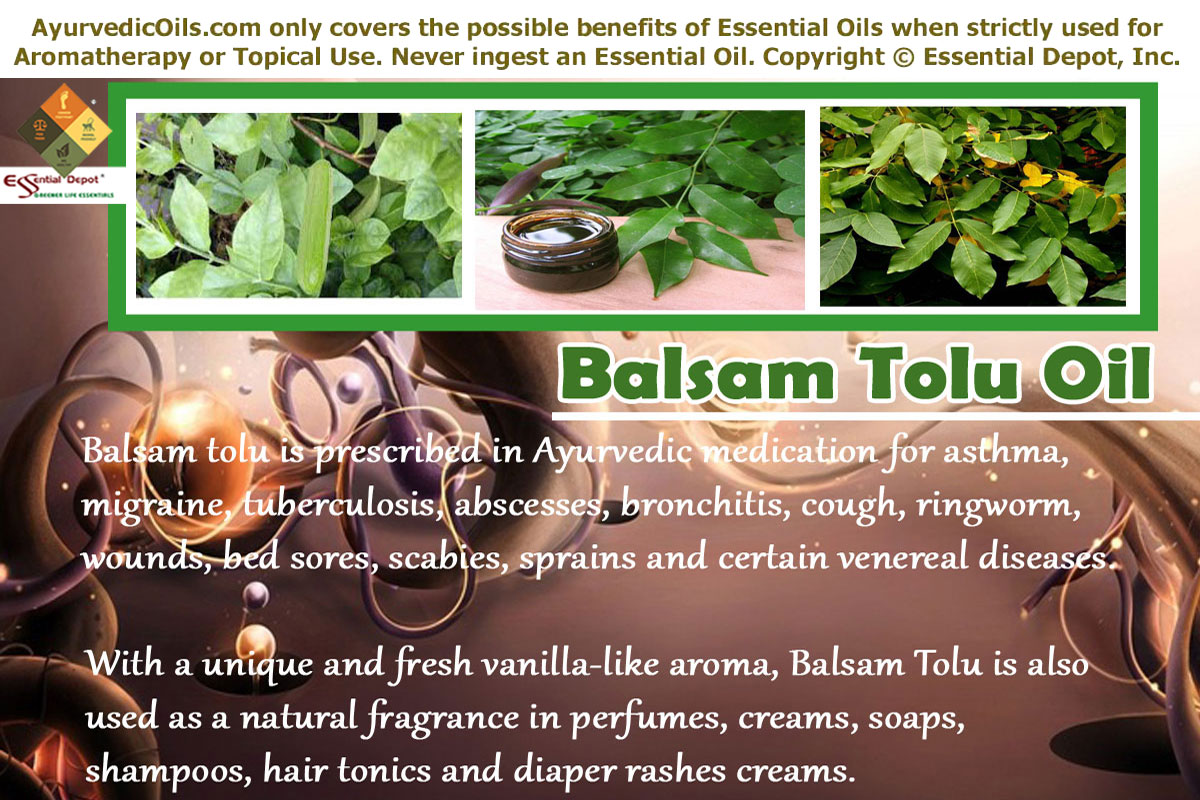
From being a promising remedy for skin ailments for the American and Mexican tribal population to a vital element in popular skin care liniments and cough formulas, Balsam Tolu extracts and its essential oil have traveled a long way in the history of natural medicine. With a unique and fresh vanilla-like aroma, Balsam Tolu is used as a natural fragrance in perfumes, creams, soaps, shampoos, hair tonics and diaper rashes creams.

History is always fascinating and Ayurvedic use of Balsam Tolu indeed owns an interesting history behind its scene. It was the Native Indians who identified the medicinal values of Balsam Tolu during their reign of Peru while they were residing in the South and Central American provinces, where Peru was recognized as the birthplace of the Balsam trees in the ancient period.

Being the traditional Indian medicine, Ayurvedic remedies prescribe Balsam Tolu and its essential oil for asthma, migraine, tuberculosis, abscesses, bronchitis, cough, ringworm, wounds, bed sores, scabies, sprains and certain venereal diseases.

Purchase Balsam Tolu Essential Oil – Wholesale – CLICK HERE

Historical uses and significance of Balsam Tolu essential oil and its other extracts: Botanically known as Balsamum tolutanum, Balsam Tolu is the resin extracted from the Myroxylon tree. It is grown primarily in South America and Central America. This tree has a natural resin producing ability and this resinous Balsam is called by other alternate names including Balsam Peru, Peruvian Balsam, Toluifera pereirae, Myroxylon Balsamum, Indian Balsam, Quina and China oil.

The gummy resin tapped from this tall tree is then made into Balsam and the major exporters of Balsam of Tolu are Columbia, El Salvador and Venezuela. The tribal people from Central America and Mexico used the leaves and bark of the Balsam Tolu tree as a folklore remedy for arthritis, wounds, cold, flu and asthma. The name ‘Tolu’ denotes the tribal race ‘Tolues’ from Columbia and it is said that they used this tree as an ancient remedy for various conditions.

The tribal populace who were aboriginal to the rainforest area used various parts of this tree in the treatment of tuberculosis, wounds, headache, rheumatism, asthma, venereal diseases, abscesses, sprains, catarrh, sores and bronchitis.

Balsam Tolu was first documented in the German Pharmacopeia in the 17th century. The book on “The Essence of Herbs” by Chrissy Brownlyn says “some native Indians used the bark in a powdered form as an underarm deodorant while others found it best for lung and cold ailments”.

It further denotes that the credit of using this plant in pharmaceutical industry goes to the Europeans, especially the Germans who used Balsam of Tolu in treating skin problems like ringworm, scabies, diaper rashes, bedsores, wounds, head lice, dandruff and certain minor ulcerations, after identifying its anti-parasitic, antibacterial and antifungal properties.

The mild and gentle vanilla and cinnamon like aroma of Balsam Tolu oil had supported its use as a flavoring agent in confectionaries, cough syrups, throat lozenges, chewing gums and soft drinks. The mesmerizing floral fragrance of this oil has been prescribed for use in relaxation techniques like meditation and yoga for soothing the mind and calming the senses.

Balsam Peru oil and Balsam tolu oil are extracted from the same tree but by different extraction methods. Even today, Tolu Balsam is used in anti-dandruff shampoos, conditioners, soaps, female hygiene sprays, perfumes, hair tonics, detergents, skin care creams, perfumes, topical salves, ointments, deodorants, surgical dressings, suntan lotions, cosmetics, colognes and certain other medical aids and equipments.

Chemical constituents and remedial properties of Balsam Tolu essential oil:

Among the 25 different chemical components, the major elements contributing to the therapeutic values of Balsam Tolu oil are cinnamic acid, cinnamein, benzyl benzoate, vanillin, nerolidol, cinnamyl cinnamate, benzoic acid, farnesol and other aldehydes. The most important therapeutic attributes of Balsam Tolu oil are antifungal, antiseptic, expectorant, anti-dandruff, anti-stress, analgesic and anti-parasitic.

Ayurvedic health benefits of Balsam Tolu essential oil:

From men in the Stone Age to this Digital Era, celebrate Ayurveda as a boon to mankind for its holistic and regimented approach towards health and harmony.

Ayurveda was gifted to humanity by Acharya Dhanvantari, the ancient God of medicine and is said to have its origin in India, the land of herbs and cultural heritage. This traditional remedy also holds the pride of being a part of Atharvaveda, one among the 4 sacred books of the Indian mythology.

When compared to the modern medicine, where personal care and attention to individuals becomes a question mark, Ayurveda is a divine science that regards and respects human body as a temple where the soul lives in. With this thought of nobility, Ayurveda recommends mankind to keep their mind, body and soul clean, happy and content.

The principles of Ayurveda rely on nature for everything as it strongly trusts that everything on earth is a vital part of nature. The visible proof behind this theory is that all things in nature are made up of five basic elements of nature, namely fire, water, earth, space and air.

Human body is also made up of these five elements, where earth is present in the form of bones and muscles; water represents blood and fluids in the system; air is vital for breathing; space is the soul that dwells in and fire is the essential energy for body temperature, metabolic functions and certain other vital activities of the system.

Ayurveda never goes by the fact that ‘one size fits all’, as it trusts that every human being is a distinctive part of nature composed with a unique individual constitution known as prakriti. It is a combination of three biological energies called as doshas. They are vata, pitta and kapha. Every individual has a predominance of any one of these doshas that acts as a deciding factor in determining the character, personality, attributes and behavioral patterns.

Absolute balance between these doshas as per the law of nature indicates health and doshic imbalances due to climatic conditions, lifestyle changes, irregular food habits and moral vitiations leads to illness.

Ayurvedic healing aims at treating the root cause of an illness instead of its symptoms alone. This aids in curing the disease initially and preventing it in the future as well. Ayurveda prescribes natural remedies that go well with the individual constitution of a person, even if a group of people are affected by the same medical condition.

The prime Ayurvedic remedies are plant essential oils, simple physical exercises, herbs, yoga, prayers, Pranayama (Ayurvedic breathing exercises), meditation, Abhyanga or Ayurvedic massaging, Panchakarma or Ayurvedic detoxification techniques and Ayurvedic routine.

Balsam Tolu essential oil is said to pacify kapha and vata doshas and increase pitta energy. It’s time to look into the Ayurvedic health benefits of Balsam Tolu essential oil. Ayurveda generally prescribes the use of essential oils in the following ways:

Balsam-Tolu-broucher1. As an invigorating massage oil:

Abhyanga or the art of massaging with Ayurvedic oils is an important Ayurvedic technique prescribed for healing numerous illnesses since the traditional times. Abhyanga is the traditional method through which the soft tissues of one’s body is maneuvered with the help of fingers, elbows, feet, forearms and other ancient massaging equipments.

Ayurvedic massaging has the potent to pass innumerable benefits to the human body and the key benefits among them are:

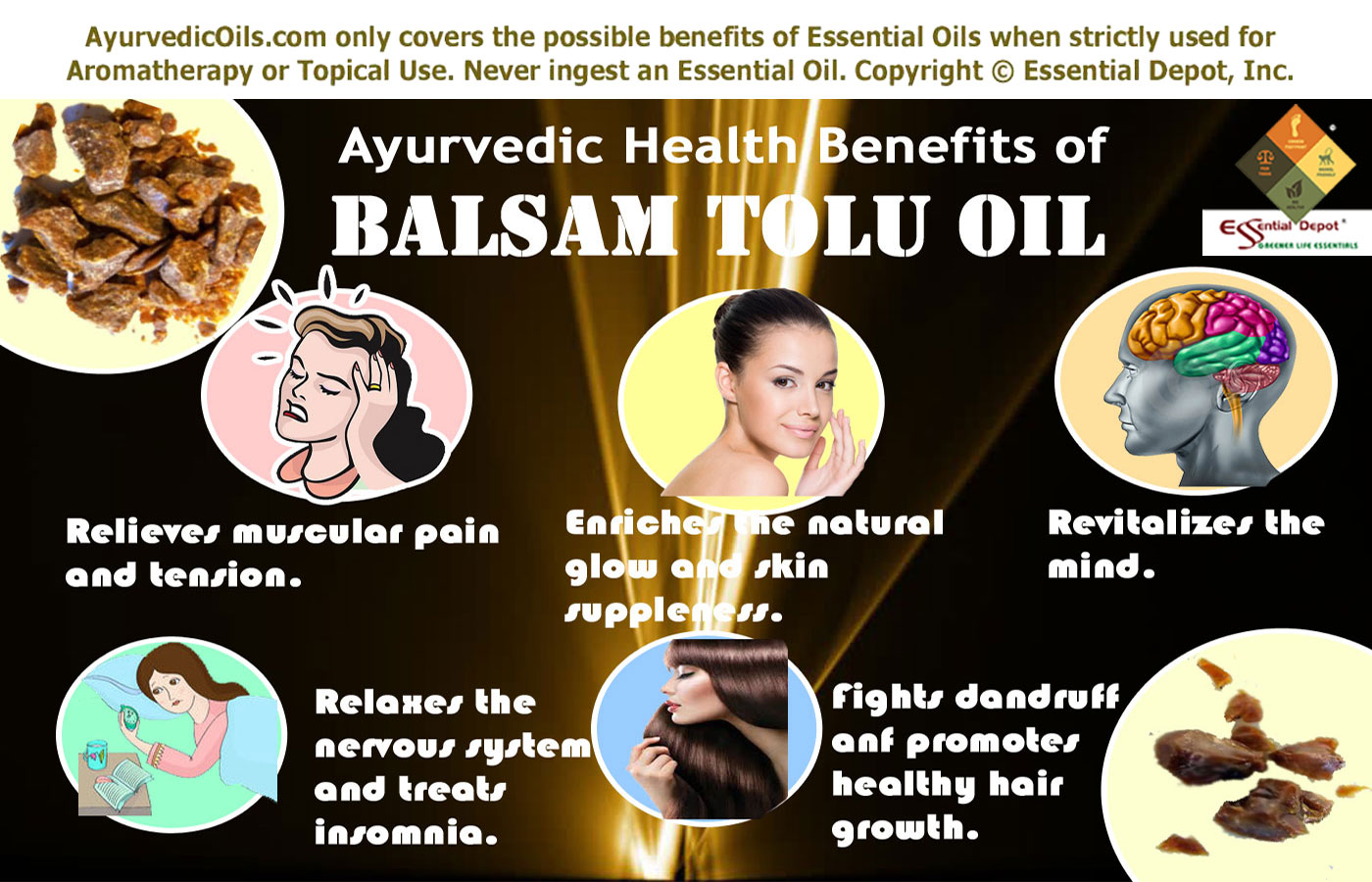
  • Relieving muscular tension.
  • Normalizing the breathing pattern.
  • Relaxing the nervous system.
  • Revitalizing the mind.
  • Alleviating pain and inflammation.
  • Improving blood circulation
  • Augmenting the natural glow and suppleness of skin.

Ayurvedic physicians generally prescribe the appropriate essential oil based on the prakriti and medical condition of a person. Balsam tolu oil is good to treat vata and kapha vitiations and pitta deficit.

Massaging your system or affected parts with 5 drops of Balsam tolu oil, 2 drops of Patchouli oil, 2 drops of Frankincense oil, 2 drops of Lavender oil, 2 drops of Cardamom oil, 2 drops of Petitgrain oil along with 50 ml of Coconut oil can assist in relieving pain, soreness and inflammation associated with rheumatism, alleviating muscular tension, relaxing the nerves, enhancing the skin texture, improving slow digestion, treating constipation, supporting urination through which the toxic remains in the body are eliminated and promoting peaceful sleep and positive feelings.

Skin is the largest organ of the human body and is the quickest transmitter of remedial properties to the bloodstream. Using Balsam Tolu oil in Ayurvedic massaging aids in passing away its healing values like antioxidant (helps in checking aging symptoms and discard the growth of free radicals in the body), antiseptic, cicatrisant and stimulating properties (supports in enhancing the skin health), diuretic, anti-rheumatic, analgesic values (aids in alleviating pain, eliminating toxic remains by promoting frequent urination, reducing inflammation, redness and stiff muscles) and anti-stress properties that help in relaxing the nerves, mind and induce good sleep.

2. In compress or bathing:

Balsam Tolu oil owns an exotic floral fragrance that makes it an excellent bathing oil that can help in leaving you fresh and energized all through the day.

Using 2 drops of Balsam oil along with 1 drop of Cinnamon oil and 1 drop of Ylang Ylang oil in your bathing water or in warm or cold compress is a great way to recharge your nerves, enchant your muscles, lessen muscular tension, alleviate tension headache, back pain and calm your senses and instill a complete feeling of newness.

A warm bath with this blend especially before going to bed is a great way to promote good sleep without any nightmares.

3. Topical application as creams or salves:

Balsam Tolu has been used as a promising remedy for myriad skin problems since the times of the tribal populace. 2 to 3 drops of Balsam Tolu oil along with 1 drop of Turmeric oil mixed with your mild skin care cream or with 2 ml of Jojoba oil can be applied on wounds, eczema, minor skin ulcerations, acne, scabies, rashes, ringworm, bedsores, diaper rashes and skin infections caused due to fungi and parasites.

The herbal blend of 2 drops of Balsam Tolu oil with 2 drops of Rosemary oil, 2 drops of Ylang Ylang oil and 2 drops of Basil oil along with 10 ml of sweet almond oil, applied on the scalp and hair, followed by a thorough rinse with your mild shampoo can assist in keeping away from dandruff, combat head lice, enrich the scalp and promote the growth of healthy hair naturally.

4. In burner, diffuser or vaporizer:

Ayurvedic texts recommend the use of aromatics or aromatherapy as a major means of natural healing and prevention of illnesses. Smell or aroma has an important effect in balancing and stimulating various functions of the body. This action is performed by the odor-bearing molecules that influence the receptors in the nose while breathing. They reach the olfactory bulb of the limbic system in the form of nerve impulses.

The aromatic molecules of Balsam tolu essential oil has expectorant, antifungal, anti-dandruff, antiseptic, anti-stress, anti-parasitic, analgesic, anti-rheumatic and stimulating properties. When inhaled by adding 2 drops of Balsam tolu oil in vaporizer, burner or diffuser, these molecules containing the therapeutic properties of this oil reach the limbic system.

Following this, the hypothalamus and other vital parts of the limbic system convey the corresponding commands to different parts of the body as per the remedial values. Inhaling the soothing aroma of Balsam tolu oil can assist in relaxing the system, lessening pain, reducing fatigue, treating insomnia, and alleviating stress and depression.

Ayurveda states that using Balsam tolu oil in diffuser or vaporizer specifically during meditation, yoga and Pranayama instills a sacred feeling as the mind is said to reach the most subtle and tranquil α (alpha) state during meditation.

5. In vaporizing ointments or steam inhalation:

Inhaling the medicated steam is a proven natural remedy for alleviating cold, cough, sore throat, headache, sinusitis, blocked nose, watery eyes and migraine pain. Steam inhalation works effectively as the steam aids in bringing out the toxic remains in the body through sweat and one can feel the relief instantly after a medicated steam inhalation.

Adding 2 drops of Balsam Tolu oil along with 1 drop of Peppermint oil and 1 drop of Eucalyptus oil in steam inhalation can aid in relieving headache, opening blocked sinus and nasal passages, soothing sore throat, discarding phlegm and mucus deposits and eliminating the microbes present in the system through sweat.

When added to your vaporizing ointment, this blend can also be helpful in treating bronchitis, tuberculosis, chest congestion, nasal congestion, whooping cough and certain other respiratory infections.

Certain test tube studies have revealed that Myroxylon plant has been effective in inhibiting H.pylori, the general ulcer-causing bacteria and Mycobacterium tuberculosis, which is responsible for lung diseases.

Disclaimer:

This article is not meant to treat or diagnose any medical condition or substitute any professional medical advice. It is only for educational purposes and we are not medical practitioners. This heath related information is shared only with the view of spreading the ancient wisdom of Ayurveda, the oldest holistic healing system on earth.

Never use essential oils for internal purposes. Always remember to dilute essential oils before using it for topical uses, as organic and 100 percent pure essential oils are highly concentrated substances and may lead to allergies, if used without diluting them. Discuss with your healthcare expert/Ayurvedic physician before taking the right call on the most suitable essential oils for your health condition and unique individual constitution. Keep away from Balsam Tolu oil, if you are a nursing or pregnant mother, as it is regarded as a sensitizing oil and may have chances of causing allergic reactions.

Thought for the day:

In nature, nothing is perfect and everything is perfect. Trees can be contorted, bent in weird ways, and they’re still beautiful. -Alice Walker

Suggested Reading:

  1. Prescription for Herbal Healing, 2nd Edition: An Easy-to-Use A-to-Z Reference to Hundreds of Common Disorders and Their Herbal Remedies by Phyllis A. Balch CNC, Stacey Bell
  2. 10 Ways to Use Balsam Of Peru (Recipe Book) by Sam Enrico
  3. The Encyclopedia of Essential Oils: The Complete Guide to the Use of Aromatic Oils In Aromatherapy, Herbalism, Health, and Well Being by Julia Lawless
  4. Scabies Natural Home Treatment Solution by Alyson Rodgers
  5. Medical Herbalism: The Science Principles and Practices Of Herbal Medicine by David Hoffmann

Reference Links:

  1. Balsam of Peru by Wikipedia
  2. Balsam of Tolu from The Essence of Herbs by Chrissy Brownlyn
  3. Balsam of Tolu by Infostir.com
  4. Peruvian Balsam (Myroxylon pereirae syn. M. Balsamum) by Herbs2000.com

Balsam Peru Oil


Balsam-peru-banner“The balsam is stimulant and tonic, and is of use in chronic coughs, whites, palsy and chronic rheumatism. As an external application, it is employed with advantage in cleansing and stimulating foul and indolent ulcers”, quotes the book Ayurvedic Materia Medica for domestic use by Thomas John Graham.

Also called as Peruvian balsam, the essential oil and the balsam as such are being used in the field of Complementary and Alternative medicine like Ayurveda and Homeopathy as well as in Modern medicinal practices.

With its decongestant, antiseptic, antibacterial, antifungal and anti-rheumatic properties, Balsam Peru is prescribed in Ayurvedic medicine for treating bronchial asthma, whooping cough, bruises, bed sores, burns, eczema, respiratory infections, tuberculosis, headache, fever, diaper rashes, cold, scabies, ringworm and rheumatic conditions.

Purchase Balsam Peru Essential Oil – Wholesale – CLICK HERE

Historical uses and importance of Balsam Peru essential oil and its other extracts: This tree is scientifically called as Balsamum tolutanum. Balsam of Peru is the resin extracted from the tall tree that grows in Peru, Bolivia, Columbia, Venezuela, Paraguay, Brazil, Argentina and France.

Balsam Peru is also called by other names like Balsamum Peruvianum, Surinam balsam, Balsam fir oleoresin, Quina quina, Balsam Tolu, Toluifera pereirae, Indian Balsam, China oil, Myroxylon Balsamum, Balsams Peru, Myrosperum pereira balsam etc.

Initially, Peru was the major and largest exporter of Balsam oil and it was for this reason, this Balsam was called as Balsam of Peru. In recent times, Balsam of Peru is exported by various other major Balsam growing countries. This tree has a natural potential of producing resin, which is sticky in nature. Balsam of Peru is collected from Balsam trees that are roughly 20 years old by tapping method.

Balsam of Peru has been a part of the traditional healing methodologies for centuries together. It was used as a natural remedy for treating digestive disorders, headache, cold, cough, respiratory infections and certain skin problems. The Native American populace used the powder extracted from this tree as a deodorant.

Balsam of Peru and its essential oil has been a trusted remedy of the Europeans and other Asian folks for healing skin diseases like bedsores, ringworm, scabies, eczema, diaper rashes, wounds and itches. It is also used as an important ingredient in the manufacturing of female hygiene sprays, shampoos, insect repellents, topical salves, soaps, mouthwash, surgical dressings, skin care lotions and certain other fragrant ingredients.

Chemical constituents and remedial properties of Balsam Peru essential oil:

Studies have proved that the resin extracted from the Peruvian balsam tree consists of about 80% of cinnamic acid along with the presence of cinnamein. This is the reason for its vanilla and cinnamon like aroma. It’s essential oil is said to contain various volatile oils and the major components are benzyl cinnamate, benzyl benzoate, and nerolidol.

These components contribute to its remedial properties like antiseptic, antimicrobial, analgesic, anti-parasitic, expectorant, decongestant, antifungal, diuretic, antioxidant, deodorant, cicatrisant, anti-stress and anti-dandruff.

Ayurvedic health benefits of Balsam Peru essential oil:

The word ‘Ayurveda’ simply means ‘the knowledge of life’, where ‘Ayur’ stands for life and ‘Veda’ means knowledge. This oldest remedial system states that illness occurs when there is disharmony between an individual and nature.

Ayurvedic healing considers every human being as a unique part of nature with a unique individual combination. According to this philosophy ‘no two individuals are given the same medicine, even for the same disease’. The first Ayurvedic consultation aims at analyzing the unique individual constitution of a person, which comprises of three biological energies known as doshas. They are vata (air and space), pitta (fire and water) and kapha (water and earth).

These Ayurvedic doshas are nothing but a combination of the five vital elements of nature called as Panchamahabutas, namely fire, water, earth, air and space. Ayurveda states that every person has a prakriti (individual constitution), which is a combination of these doshas in a unique proportion with a predominance of any one of them.

This prevalence determines the character, personality, uniqueness and behavioral attributes of a person. Based upon these fundamental qualities, the unique Ayurvedic treatment methodology and remedies are prescribed. Ayurvedic writings reveal that the absolute balance between these doshas indicates perfect health and harmony with nature, whereas doshic imbalances lead to sickness.

The most notable Ayurvedic remedies include Ayurvedic essential oils, herbs, yoga, meditation, Pranayama or the art of balanced breathing, prayers, simple physical exercises, Ayurvedic routine, Abhyanga, and Panchakarma. With these remedies, Ayurveda focuses on treating the root cause of an illness instead of diagnosing its symptoms.

With its stimulating and invigorating properties, Balsam Peru essential oil has been recommended in Ayurveda for augmenting pitta dosha and pacifying kapha and vata dosha.

Let’s look at the Ayurvedic health benefits of Balsam Peru oil:

Balsam-peru1. Controls dandruff and checks hair-fall:

The essential oil of Balsam Peru has been used as an important ingredient in many hair care products including shampoos and conditioners for its antifungal, anti-parasitic and anti-dandruff properties. These remedial values help in clearing away dandruff, killing head lice and treating dry and itchy scalp conditions.

Massaging your scalp with 3 drops of Balsam Peru oil, 2 drops of Lemon oil and 2 drops of Rosemary oil along with 5 ml of Coconut oil can be of great assistance in nourishing your scalp, clearing away the itchy flakes on the head, repairing your damaged hair and act as a hair tonic. You can also add 2 drops of Balsam Peru oil to your regular shampoo and enjoy the richness of your shining hair, free from dandruff and head lice.

2. Extremely beneficial to the skin:

Balsam Peru oil is a time-honored skin care remedy that has been employed in the treatment of numerous skin problems including ringworm, bedsores, skin ulcers, wounds and diaper rashes. The antiseptic, antifungal, antioxidant and antimicrobial properties of this oil helps in quicker healing of wounds, combats the growth of microbes responsible for skin infections, and fights aging symptoms.

Blend 2 drops of Balsam Peru oil with 2 drops of Ylang Ylang oil and 2 drops of Lavender oil with 3 ml of Olive oil. Gently apply this blend on skin problems like eczema, scabies, wounds, ringworm, acne, athlete’s foot, chapped skin, rashes and wrinkles.

This natural skin tonic works like a wonder in treating fungal skin infections like ringworm and athlete’s foot with its anti-fungal properties; acne, rashes, wounds and eczema with its antimicrobial properties; wrinkles and dull lifeless skin with its antioxidant properties.

Bedsores generally occur in sick people who are bed-ridden. This includes especially the aged population with sensitive skin. Mixing 1 drop of Balsam Peru oil with 2 ml of Jojoba oil can reduce pain and help in promoting quicker healing of wounds. This blend can also be used externally on diaper rashes for babies as well as the aged.

3. Alleviates respiratory infections:

According to Ayurveda, amassing of toxic substances or ama in the system is a major cause for many illnesses including respiratory problems. It is a known fact that excess of kapha dosha (blend of water and earth elements) is responsible for diseases based on the surplus fluid deposits in the system causing respiratory infections, obesity, rheumatism, edema and other inflammatory conditions.

Balsam Peru oil has diuretic, expectorant and antimicrobial properties that aid in eliminating the excess fluid deposits in the system through urine and sweat, discarding phlegm and mucus secretions in the respiratory tract and arresting the growth of microbes that worsen respiratory problems. It has been used in the United States since 1800s as a respiratory aid and cough suppressant. Balsam of Peru was also used as an ingredient in cough syrups and lozenges.

2 drops of Balsam Peru oil along with 1 drop of Peppermint oil and 1 drop of Eucalyptus oil added to steam inhalation can help in relieving cold, sore throat, nasal congestion, headache, sinusitis, watery eyes, chronic cough, bronchitis, tuberculosis, asthma and inflammation of the pharynx.

Gently rubbing your throat, chest, back and forehead with 2 drops of Balsam oil along with 1 drop of Tea tree oil mixed with your vaporizing ointment can help in relieving sore throat, bronchial congestion, blocked nasal passages, chest congestion, headache, sinusitis and drowsiness due to cold and other respiratory infections.

4. Enhances the functions of the digestive system:

Indigestion is the key cause for building up of toxic substances in the body. This is due to improper metabolic functions, including digestion, absorption and elimination. Pitta dosha is responsible for ‘Agni’ or digestive fire in the system. Vitiation of pitta energy often ends up in sluggishness, nausea, constipation, flatulence, loss of appetite and other digestive disorders.

Balsam Peru oil has the ability to enhance pitta energy and can re-kindle the digestive fire. Inhaling the warm aroma of Balsam Peru oil by adding 2 drops of this oil to your vaporizer especially before your meals can help in enhancing your appetite, stimulating your bowel movements, treating constipation and promoting proper digestion. Massaging your abdomen with 2 drops of Balsam Peru oil and 2 drops of Nutmeg oil with 2 ml of sesame oil can support your digestive functions.

5. Improves blood circulation and treats rheumatic disorders:

Ayurvedic writings denote that rheumatism is an auto-immune disease that arises mostly due to the upsurge of ama or toxins in the system owing to the disparity of digestive fire. These harmful substances may even block the working of the essential organs in the body.

Basically, ama stored in the body reaches the kapha dominated parts like fingers, joints, stomach, brain, chest, toes and few other parts. Thus rheumatism is identified with the symptoms of inflammation, redness of joints, soreness of muscles, lack of energy, swelling of joints, irregular blood circulation, insomnia and fatigue.

With its diuretic, anti-rheumatic, antioxidant and analgesic properties, the essential oil of Balsam Peru has the potent to improve blood circulation, reduce pain, decrease swelling and inflammation by eliminating the toxic remains, excess water deposits, salt and uric acid through urine and soothe the joints and muscles.

Massaging the affected parts with 3 drops of Balsam Peru oil with 2 drops of Cardamom oil, 2 drops of Yarrow oil, 2 drops of Bay oil blended with 20 ml of coconut oil can help in alleviating pain, inflammation, swelling, soreness, stiff muscles, water retention, insomnia and other symptoms associated with rheumatism.

Ayurveda also recommends the practice of Pranayama or the art of balanced breathing in Ayurveda, through which the toxic remains in the system are discarded through exhalation. Along with this certain yogasanas can also help in treating rheumatic problems at ease and this has also been proved by various scientific studies.

Other health benefits:

With its mild, warm and soothing aroma, Balsam Peru oil acts like a marvel in treating depression, mood fluctuations and negative feelings. To attain this solace, 2 drops of Balsam Peru oil and 2 drops of Benzoin Res oil can be added to your burner, candle diffuser or vaporizer during the practice of yoga, meditation and Pranayama. This can also aid in enhancing self-confidence and positive thoughts.

Disclaimer: This information is meant only for the use of education and is not meant to diagnose or treat any health condition or replace any prescribed medications or professional medical advice. We are not healthcare practitioners and this info is shared only with the idea of highlighting the traditional wisdom of Ayurveda, the mother of all healing sciences.

Never take essential oils internally and do remember to dilute essential oils before using it on your skin, as pure and organic essential oils are extremely concentrated substances and may lead to allergic reactions when used on the body directly. Ensure that you seek advice from your Ayurvedic professional/healthcare expert before selecting the appropriate essential oil for your health condition and unique individual constitution. Avoid using Balsam Peru oil if you are pregnant or breastfeeding, as it is regarded as a sensitizing oil that may cause allergic reactions.

Thought for the day:

The art of medicine consists in amusing the patient while nature cures the disease. -Voltaire

Suggested Reading:

  1. 10 Ways to Use Balsam Of Peru (Recipe Book) by Sam Enrico
  2. The Encyclopedia of Essential Oils: The Complete Guide to the Use of Aromatic Oils In Aromatherapy, Herbalism, Health, and Well Being by Julia Lawless
  3. Aromatherapy and Subtle Energy Techniques: Compassionate Healing with Essential Oils by Joni Loughran, Ruah Bull
  4. Scabies Natural Home Treatment Solution by Alyson Rodgers
  5. A Practical Treatise On Materia Medica And Therapeutics by Roberts Bartholow

Reference Links:

  1. Balsam of Peru by Wikipedia
  2. Ayurveda Materia Medica for Domestic Use by Thomas John Graham
  3. Peruvian Balsam by Herbs2000.com
  4. Balsam of Peru essential oil by Oil Health Benefits

Benzoin Resin Oil


Fixing up your skin setbacks, respiratory ailments and mental mayhems is just a few steps away, until you reach the sacred aroma of Benzoin essential oil. Blessed with a divine fragrance and handful of healing values, Benzoin has been in use since thousands of years as a holy aromatic agent in temples and other religious ceremonies.

Being a pacifying agent, Benzoin and its essential oil is said to have been used for soothing depression and treat skin disorders. Scientifically known as Styrax benzoin, it is also called as gum Benjamin or gum benzoin.

Used as a natural aid to heighten spiritual oneness and divinity, Benzoin resin was burnt by the ancient saints, Hindu priests and Buddhist monks during prayers and holy congregations.

It was used in various Complementary and Alternative Medicinal systems including Ayurveda, in the treatment of depression, wrinkles, congestion, sinusitis, bronchitis, tonsillitis, cough, flatulence, urinary tract infections, premenstrual syndrome, inflamed skin and impotence.

Historical uses and importance of Benzoin resin: Benzoin resin is extracted from the bark of numerous trees of different species in the Styrax genus. Indigenous to the Sumatra and Java islands in Indonesia, Benzoin gets its name from the Arabic word ‘Luban Jawi’, which means Frankincense from Java. The Benzoin tree grows up to a height of 12 meters and is also grown as an ornamental tree in Western Africa.

The crude Balsamic resin is extracted by tapping method, which is nothing but the process of cutting the bark of the tree for obtaining the resin, generally from a seven years old tree. The extracted resin is then left out for 3 to 4 months for drying and hardening. Benzoin resin essential oil is extracted from this resin through a solvent.

It was said that the ancient Egyptians and Chinese imported Benzoin resin via the Red Sea. As an excellent fixative that has the power to embrace the fragrance of many aromatic oils and perfumery ingredients, Benzoin essential oil is a common element in the perfume and incense-making industry.

Benzoin was used in the traditional Malayan civilization as a fumigation and incense, to keep away from evil spirits as well as for ritual uses. Predominantly used as incense for more than 3000 years, Benzoin resin has been powdered and blended with other aromatic items like cypress, pine, labdanum, juniper and galbanum. This blend is then made as cones and kept on the heads of the dancers of Egypt, says Papyrus records.

Queen Elizabeth I used the dry perfumes made with Benzoin and the first use of this enchanting fragrance factor in England is traced between the 15th and 16th centuries. The resin is popular as an incense in Western Catholic Churches and certain Orthodox Christian associations all over the world.

Benzoin resin is also used in the manufacturing of scented wooden chips known as Bakhoor in Arabic. It is also used as mixed resins along with other resins in Horn of Africa and other Arabian provinces. This sweet-smelling resin is burned on charcoal as incense especially during spiritual occasions in India and the Arabian countries of the Persian Gulf.

Chemical constituents and therapeutic properties of Benzoin resin oil: The key chemical components of Benzoin resin essential oil are benzoic acid, coniferyl benzoate, phenylpropylic alcohol, benzaldehyde, cinnamic acid, benzyl benzoate, vanillin and phenylethylene.

The most significant remedial attributes of this oil are antioxidant, antifungal, antibacterial, anti-inflammatory, anti-depressant, astringent, expectorant, disinfectant, antiseptic, anti-rheumatic, cordial, vulnerary, carminative, sedative, relaxant and deodorant.

Ayurvedic health benefits of Benzoin resin oil: Ayurveda embraces nature wholly and it is reflected in every single remedy it prescribes to mankind. This is the most valued attribute that has helped Ayurvedic healing survive and stay in the hearts of many across the globe.

With the immaculate meaning of ‘knowledge of life’, Ayur+Veda is the only healing system on earth that insists on self-awareness about one’s own health condition and individual constitution. This traditional wisdom of healing brings in that wakefulness,  where an individual understands that every human being is being created with all kinds of mental and physical abilities in a clear order.

Ayurveda helps in appreciating this uniqueness and leading a hale and hearty life in sync with nature, which is built with five fundamental elements. They are earth, water, air, space and fire. Everything on earth including the human body is made with these five elements, where the earth takes the form of muscles and bones, water represents blood, fire helps in the biological functions including metabolism, space is the soul that keeps us alive and air assists in breathing.

According to Ayurveda, every human being is a unique part of nature with a unique individual constitution. This constitution is known as Prakriti and is a combination of three biological elements called as doshas. They are vata, pitta and kapha. Every person has a predominance of any one of these doshas and it determines the traits, character and behavioral attributes of a person.

Ayurvedic remedies are based on the predominance of the doshas and the balance between them. Absolute health in Ayurveda is a sign of perfect balance between these doshas and illness indicates doshic imbalances. Ayurvedic healing techniques and medications aim at correcting the disparities between the doshas.

The major natural remedies prescribed in Ayurveda are herbs, plant essential oils, meditation, yoga, simple physical exercises, Ayurvedic routine, prayers and few other Ayurvedic techniques like Panchakarma or Ayurvedic detox, Abhyanga or Ayurvedic massage and Pranayama or Ayurvedic art of balanced breathing.

Benzoin resin oil has moisturizing and warming energies, which helps in tranquilizing the mind and enriching the skin. This oil has the power to pacify vata, pitta and kapha dosha with its sweet-balsamic, pleasant and vanillin based aroma.

The Ayurvedic health benefits of Benzoin resin essential oil are:

Benzoin-Res-Broucher1. Alleviates rheumatic conditions: Rheumatism generally occurs due to the stagnation of excess water deposits in the system. This leads to improper blood circulation, inflammation, swelling, redness, pain, soreness and difficulty in the normal functioning of the body. Excess of water and fluids in the human body is mainly caused due to the imbalance of kapha dosha, which is responsible for similar diseases like obesity, respiratory illnesses etc.,

Benzoin essential oil has anti-rheumatic, anti-arthritic, anti-inflammatory and diuretic properties that help in promoting proper blood circulation, reducing pain, lessening inflammation, controlling soreness and swelling, and eliminating the surplus water deposits and toxic elements in the system by promoting frequent urination. This function also assists in treating obesity, controlling blood pressure, supporting the functions of the circulatory system and enhancing metabolism.

To get rid of rheumatic and arthritic problems, Ayurveda suggests a healthy diet that naturally controls kapha vitiation along with yogasanas that treat rheumatism and arthritis and the use of Ayurvedic essential oils like Benzoin resin oil.

The Arthritis Foundation reported that a research by the John Hopkins University has concluded that yoga is extremely beneficial for people with rheumatoid arthritis after publishing its research analysis stating that “who participated in eight weeks of yoga classes had significantly fewer tender and swollen joints than they did before starting class.”

Steffany Haaz, the grant recipient of the Arthritis Foundation also says, “We have previously reported that yoga helps people to feel better, and we wanted to make sure it wasn’t harmful to arthritic joints. So, we were glad to find that there actually seems to be improvement in joint symptoms for RA patients.”

Along with this, massage the painful parts with 3 drops of Benzoin resin oil mixed with 1 drop of Ginger oil, 1 drop of Lavender oil, 1 drop of Black pepper oil, 1 drop of Juniper berry oil with 4 ml of coconut oil. You can also add 2 drops of Benzoin resin oil and 2 drops of Marjoram oil in warm bathing water or in hot compress for improved results. This formula works quickly as the benzyl components in the Benzoin oil are easily absorbed by the pores of the skin.

2. Relieves congestion and other respiratory problems: Breathing is the natural action that sustains life. Trouble-free breathing brings in enormous health and happiness by permitting the flow of prana or vital life force in the system.

Any interruption or blockage in the breathing mechanism due to improper food habits, environmental factors, stagnation of water deposits and toxic substances in the system leading to built up of mucus and phlegm deposits (this is a kapha imbalance) cause respiratory problems.

Benzoin resin essential oil has the power to reduce excess kapha dosha, with its expectorant properties. 1 drop of Benzoin oil with 1 drop of Eucalyptus oil and 1 drop of Niaouli oil in steam inhalation aids in loosening the accumulated phlegm and mucus, relieving congestion and cleansing the breathing passages.

Gently massaging your chest, throat and back with your vaporizing ointment mixed with 2 drops of Benzoin oil and 2 drops of Frankincense oil, following the steam inhalation can aid in relieving cough, cold, congestion, bronchitis, laryngitis, blocked nose, asthma and other respiratory allergies. You can practice breathing exercises like Pranayama and yoga asanas for respiratory illnesses.

3. Drives away depressive feelings: Benzoin resin oil has a gentle, sweet and soothing aroma that tranquilizes the mind with its relaxant, sedative and anti-depressant properties. When inhaled, these remedial properties in the aromatic molecules of this oil pass on to the brain through the nasal passages. This has a positive effect on the limbic system, which is the control center of the brain.

Bryan Miller and Light Miller in their book ‘Ayurveda and Aromatherapy’ say, “Benzoin resin oil is beneficial to an irritated nervous system and can be useful in depression, PMS and stress.”

2 drops of Benzoin resin oil along with 1 drop of Ylang Ylang oil and 1 drop of Orange oil added to your vaporizer, burner or diffuser can assist in stimulating the central nervous system, pacifying the mind, granting mental clarity, controlling anger, treating anxiety, improving blood circulation and instilling the power to control depressive feelings.

According to Ayurveda, among the 7 chakras, Benzoin resin oil affects the root chakra and the solar plexus chakra. Root chakra or sacral chakra is responsible for survival factors like security issues, financial independence and the ability to stand up high. Imbalance of this chakra leads to depression and various other nervous problems.

Solar plexus chakra deals with self-confidence, self-esteem, self-control, self-worth and other personal powers. The failure of the functions of this chakra leads to nervousness, lower self-confidence, inferiority complex, poor memory and digestive disorders.

Benzoin resin oil, with its power to treat the imbalances of the root chakra and solar plexus chakra, brings in self-confidence, trust and the ability to stand tall to beat depression and other negative feelings.

While talking on the relaxing effects of Benzoin resin oil on the emotional aspects of the system, Madame Maury says, ‘this essence creates a kind of euphoria; it interposes a padded zone between us and events’. You can also work out these Yoga asanas for depression and practice meditation.

4. Keeps skin problems at bay: The essential oil of Benzoin has amazing healing for nourishing your skin and helps you look younger and charming. The book on ‘Aromatherapy: Essential oil for vibrant health and beauty’ by Roberta Wilson quotes, “Benzoin was often added to cosmetics to keep skin clear and youthful. People in many different cultures have appreciated its ability to soothe and stimulate the skin.”

Benzoin resin oil has everything in its kitty for dealing with various skin problems ranging from wounds to treatment of scars. The healing properties are mainly due its chemical components including benzyl benzoate, benzoic acid and benzaldehyde.

This oil is a natural antiseptic with germicidal, disinfectant, antiviral, antibacterial, antifungal and vulnerary properties that aid in healing wounds, cuts, sores, acne, chapped skin, eczema, scars, skin irritation, psoriasis and dermatitis.

Applying the mix of 2 drops of Benzoin resin oil with 1 drop of Lavender oil, 1 drop of Rose oil, 1 drop of Lemon oil, 1 drop of Bergamot oil, 1 drop of Frankincense oil and 4 ml of Sweet almond oil on pimples, wounds, cuts, sores, scars and other infectious skin problems can help in protecting the infected parts from germs and promote quicker healing.

Massaging this blend on your skin especially on dry, cracked, blistered or chapped skin helps repair and rejuvenate the skin cells especially on the elbows, knees and heels. It also helps in maintaining the skin suppleness and softness. Ayurveda recommends drinking ample water every day to retain healthy skin cells.

5. Benefits to the entire system: Apart from these magnificent benefits, the essential oil of Benzoin can bring in enormous other benefits to your complete system. They are the promising effects of this oil that can help in destroying germs in the mouth with its disinfectant properties and tightening the gums with its astringent properties. It also aids in treating digestive disorders with its anti-flatulent and carminative properties. It can serve as an excellent deodorant with its mesmerizing aroma, for your body as well as your home.

Other uses: Benzoin is known for its fixative and preservative values and is used in the perfume industry for these reasons, especially for reducing the dispersal of fragrance elements and essential oils in air. This oil is also utilized as a flavoring agent in baked goods, gelatins, candies, gums, puddings, frozen dairy and beverages including alcoholic and non-alcoholic drinks. Apart from this, its use in the manufacturing of scented candles, cosmetics and veterinary medications makes it a much prized natural alternative since ages.

Disclaimer: This information is only for the purpose of education and is not intended for diagnosis or prevention of any illnesses. Do not substitute these remedies for any prescription drugs or expert medical advice. We are not medical professionals and this article is shared with the interest of throwing light on the world’s oldest healing system, Ayurveda.

Never use essential oils for internal purposes and make certain that you dilute essential oils in appropriate carrier oils before using it topically. This is mainly because pure and organic essential oils are extremely concentrated liquids and may cause allergic reactions, when used on the skin directly.

Talk with your Ayurvedic professional prior to selecting the right essential oils for your Prakriti or unique individual constitution and state of health. Care should be taken before using essential oils, if you are pregnant or a nursing mom.

Thought for the day:

Nature never did betray the heart that loved her. -William Wordsworth

Suggested Reading:

  1. Fragrance & Wellbeing: Plant Aromatics and Their Influence on the Psyche by Jennifer Peace Rhind
  2. The Encyclopedia of Essential Oils: The Complete Guide to the Use of Aromatic Oils In Aromatherapy, Herbalism, Health, and Well Being by Julia Lawless
  3. Ayurveda & Aromatherapy: The Earth Essential Guide to Ancient Wisdom and Modern Healing by Dr. Light Miller, Dr. Bryan Miller
  4. Magical Herbalism: The Secret Craft of the Wise (Llewellyn’s Practical Magick Series) by Scott Cunningham
  5. Making Your Own Incense: Storey Country Wisdom Bulletin A-226 by Tina Sams, Maryanne Schwartz

Reference Links:

  1. Benzoin Resin by Wikipedia
  2. Benzoin from the book, Aromatherapy: Essential Oils for Vibrant Health and Beauty by Roberta Wilson
  3. Benzoin from the book, Ayurveda and Aromatherapy: The Earth Essential Guide to Ancient Wisdom and Modern Healing by Light Miller and Bryan Miller
  4. Health Benefits of Benzoin Essential Oil by Organic Facts
  5. Yoga – A Remedy To Respiratory Illnesses by Dr. Sripriya Krishnan, Department of Psychology, Dr. M.G.R Janaki College of Arts and Science for Women, Chennai

Black Pepper Oil


Crowned as ‘the King of Spices’ and wholly packed with large amount of solar energy, Pepper is also called as Marich, which is the Sanskrit name for Sun. These petite seeds with mammoth health benefits have been an admirable natural remedy for treating various illnesses ranging from obesity to cancer.

BLack-pepper-oil-broucherOver all its amazing healing values, Black pepper oil has been a vital part of Complementary and Alternative medicinal practices for treating sinusitis, rectal prolapse, cellulites and rheumatism.

Called as Maricha, Vellaja or Kali mirch in Sanskrit and Hindi, Ayurveda recommends Black pepper and its essential oil for treating asthma, sinus congestion, chronic indigestion, cold and other respiratory infections, obesity, improper metabolism, urinary problems, cholera, headache, intermittent fever, toxic remains in the system and for certain other health issues. With the scientific name Piper nigrum, Black pepper is a limb of the plant family Piperaceae.

Purchase Black Pepper Essential Oil – Wholesale – CLICK HERE 

Historical uses and importance of Black pepper and its essential oil:

Held high as the most traded spice of the world, Black pepper is indigenous to the southern parts of India especially the Malabar Coast, Kerala. Pepper, originated from the Dravidian word ‘pippali’ meaning long pepper, is the one among the world’s oldest herb and spice dated to 2 BCE, was used for medicinal and culinary purposes.

In the early 1800s, the word ‘pepper’ was used to indicate ‘energy’ or ‘spirit’, after which it was replaced by the word pep. Prized for its value in commodity trading, it was even called as ‘Black gold’.

The legendary Roman bookThe History of the Decline and Fall of the Roman Empire,’ written by Edward Gibbon quotes pepper as “a favorite ingredient of the most expensive Roman cookery“.

It was used in all most all the predominant cultures of the world. According to certain sources, pepper was said to be used in the treatment of eye problems as salves or in poultices in the 5th century.

Indian saints used pepper for acquiring endurance, especially during fasting and travelling. The traditional Indian medicine is said to have used pepper in treating throat infections, sore throat, congestion, cold and cough.

In general, the most popular uses of black pepper as home remedies accounts to its effectiveness in treating indigestion, gangrene, insomnia, lung diseases, tooth decay, constipation, flu, oral abscesses, hernia, joint pain, diarrhea and certain respiratory problems.

Black pepper is regarded as a priceless natural remedy in Ayurvedic medicine, for its varied uses in treating digestive disorders, respiratory infections, gastrointestinal problems, improper blood circulation, parasitic infections and certain other problems associated with the circulatory system.

The popular Ayurvedic preparation “Trikatu” is a combination of Black pepper, long pepper and ginger is recommended for numerous diseases. It is also used in making Indian chai and is taken for curing headache, cold, sore throat and cough.

The traditional Europeans used pepper as a predominant seasoning in various European cuisines and also as a preservative for perishable goods and meat items.

Herbalists across the world, prescribed Black pepper for treating vertigo, arthritis, rheumatic pain, flatulence, colic, nausea and indigestion. TCM, the traditional Chinese medicine records the use of Black pepper since 2 BCE and recommends its use in healing abdominal spasms, pain, diarrhea and vomiting.

Therapeutic properties and chemical constituents of Black pepper oil:

Black pepper essential oil has various remedial properties and the most important among them are expectorant, febrifuge, antioxidant, diuretic, anti-arthritic, circulatory, analgesic, antibacterial, stimulant, anthelmintic, antiseptic, diaphoretic, antispasmodic, laxative, aphrodisiac, anticatarrhal, rubefacient, anti-inflammatory and carminative.

The major chemical components of Black pepper oil are a-pinene, b-pinene, limonene, myrcene, sabinene, camphene, a-thujone, piperitone, caryophyllene, pinocarveol, p-cymene, b-bisabolene, a-phellandrene, b-farnesene, a-terpinene and linalool. Black pepper is also rich in minerals like iron, potassium, zinc, magnesium, manganese and calcium along with antioxidant vitamins including Vitamin-C and A.

Ayurvedic health benefits of Black Pepper essential oil:

Ayur + Veda simply mean the knowledge of life. It is the oldest medicinal system known to the world with more than 5000 successful years of holistic healing practice. Being the pioneer of all other medicinal systems on earth, Ayurveda focuses on complimenting human beings with absolute health through natural healing methodologies and disciplined lifestyle, leading to prevention of illnesses, aging in the pink and higher life expectancy.

The National Institute of Health precisely articulates this as “The aim of Ayurvedic medicine is to integrate and balance the body, mind, and spirit. This is believed to help prevent illness and promote wellness.”

The earliest Ayurvedic texts namely Sushruta Samhita and Charaka Samhita by the legendary Ayurvedic physicians Sushruta and Charaka educates the world on all kinds of diseases, causes, symptoms, and their treatment methodologies along with various Ayurvedic healing techniques.

Much to our astonishment, these Ayurvedic encyclopedias have talked about intricate surgeries including C-section delivery and plastic surgery even before the dawn of modern medical equipments.

The Ayurvedic philosophy insists that everything on earth including human beings are a part of nature and are made up of the five vital elements of nature namely fire, water, earth, space and air.

Human body is the best representation of these five elements of nature, where earth represents muscles and bones, fire is the vital energy for numerous functions of the body, water stands in the form of blood, air is what we breathe and space/ether is our soul that harmonizes all the functions of the system and keeps us alive.

Ayurveda considers every person as a unique part of nature and states that the handling of diseases should also be unique based upon their individual constitution or prakriti, which comprises of three biological energies or doshas namely vata, pitta and kapha.

Vata is a symbol of air and space and checks the functions of the respiratory and nervous system. Pitta represents fire and water and is responsible body temperature and metabolic functions. Kapha stands for earth and water and is in charge for the sustenance, structure and the movement of fluids in the system.

According to Ayurveda, balance between these three doshas is a symbol of being in harmony with nature and it signifies perfect health, whereas imbalances due to unwholesome food habits, lifestyle changes and climatic conditions denote sickness.

Ayurveda prescribes natural remedies that focus on treating these doshic imbalances with the use of plant essential oils, herbs, and yoga, meditation, Pranayama or breathing practices, simple physical exercises, Ayurvedic routine, prayers, Abhyanga or Ayurvedic massaging and Panchakarma or the detoxification techniques.

The essential oil of Black pepper is believed to reduce kapha dosha and aggravate pitta and vata doshas with its spicy, warming and rich aroma.

The Ayurvedic health benefits of Black pepper essential oil are:

Black-Pepper-Oil1. Trusted Ayurvedic remedy for respiratory infections:

Black pepper and its essential oil is a vital part of the Ayurvedic remedy especially in the treatment of respiratory problems including congestion, sinusitis, bronchitis and asthma.

The spicy and warming natural aroma and therapeutic properties like expectorant, antiseptic, antimicrobial and decongestant properties of this sovereign spice assists in weakening the phlegm and mucous amassing and controls the increase of micro-organisms that worsen respiratory problems.

According to Ayurveda, imbalance or excess of kapha dosha contributes to the accumulation of fluid deposits including mucous and phlegm, especially in the chest, nasal, respiratory and bronchial passages.

This leads to respiratory problems like whooping cough, sinus congestion, bronchitis and breathing difficulties. With its potent to decrease kapha dosha, Black pepper is a cherished Ayurvedic and Grandmother’s medicine for alleviating respiratory problems.

Warm milk with 1 pinch of Black pepper powder and 1 pinch of Turmeric powder is a popular Ayurvedic remedy practiced in every Indian family for treating nasal congestion, chest congestion, cough, sore throat, headache and other symptoms associated with cold. Adding 1 drop of Black pepper oil in a cup of warm water and gargling with this mixture can help in treating sore throat and throat infections.

Black pepper oil, appropriately 2 drops of it added to steam inhalation followed by a gentle rub of your throat, chest and back with 2 drops of Black pepper oil mixed with your regular vaporizing ointment can help in treating cold, flu, blocked nasal passages, chest congestion, sinusitis and headache. This natural remedy can also assist in improving blood circulation in the lungs.

2. Relieves digestive disorders:

Undoubtedly, Black pepper is one among the best spices for improving digestion, enhancing the flavor of the food varieties and boosting the functions of metabolism. It is for this reason Black pepper powder is often dusted over all kinds of cuisines, be it a relishing vegetable salad or a lip-smacking chicken curry.

With its digestive, antispasmodic, carminative and anti-flatulent properties, Black pepper essential oil acts as a digestive tonic that treats gas, indigestion, colic and other gastro-intestinal disorders.

Massaging your abdomen with 2 drops of Black pepper oil, 2 drops of Ajwain oil, 2 drops of Lemon oil along with 3 ml of sesame oil can help in expelling gas in the stomach and intestines and also aids in preventing the formation of gas. Adding 1 drop of this oil to your handkerchief or a tissue paper and inhaling the aroma of this oil assists in promoting the secretion of digestive enzymes, bile and other gastric juices responsible for trouble-free digestion.

This also aids in enhancing the appetite, treat constipation, intestinal spasms, colic, indigestion, vomiting, nausea, diarrhea, stomach upsets and other gastrointestinal problems.

3. Reduces fever:

Black pepper essential oil has febrifuge properties along with antiseptic and diuretic values that support the system in reducing fever and maintaining the normal body temperature. Massaging your foot soles with 2 drops of Black pepper oil with 1 drop of Cardamom oil mixed with 2 ml of olive oil can help in reducing fever by promoting urine and sweat along with discharging the toxins in the system and combating the growth of micro-organisms that increase fever.

You can also add 1 drop of Black pepper oil to a wet cloth and leave it on your forehead for improved results. It also opens up the sweat pores and reduces the body temperature slowly by granting absolute relief from fever.

4. Alleviates rheumatism and arthritic conditions:

Rheumatism, according to Ayurveda is caused mainly due to the accumulation of toxic substances, water deposits, salt and uric acid especially in the joints, leading to inflammation, redness, soreness, pain and irritation. Black pepper essential oil has the power to discharge excess water deposits, toxic remains known as ama, uric acid and other calcium deposits through urine.

2 drops of this oil mixed with 2 drops of Frankincense oil and 2 ml of coconut oil massaged slowly in circular movements on the affected parts can help in reducing swelling, inflammation, redness, stinging pain and irritation with its diuretic, anti-inflammatory, antioxidant and analgesic properties.

You can also add 2 drops of Black pepper oil along with 2 drops of lemon oil in warm bathing water for relaxing aching muscles and your entire system. This enriching bath along with the soothing massage with Black pepper oil aids in promoting frequent urination through which the harmful toxins and other excess fluid deposits in the system are ejected.

5. Combats free radicals and fights against cancers:

Black pepper tops the list along with Turmeric as a powerful anti-cancer and cancer prevention spice recommended by the American Institute of Cancer Research. Black pepper has excellent antioxidant properties and high amount of Vitamin C that help in fighting the free radicals responsible for the development of cancerous tumors.

The University of Michigan research has established that the mixture of curcumin (Turmeric component) and piperine (Black pepper constituent) enhances curcumin bioavailability and restrains breast stem cell self-renewal.

Piperine have also been tested and proved for its potent anticancer, antioxidant and anti-inflammatory properties in various cellular studies. According to Dr. Joshua Lambert, Associate Professor of Food Science at Penn State University, the combination of piperine along with green tea Polyphenol epigallocatechin-3-gallate (EGCG) augmented the bioavailability of EGCG in studies with human and animal models.

A study on the “In vitro investigation of the potential immunomodulatory and anti-cancer activities of black pepper (Piper nigrum) and cardamom (Elettaria cardamomum) by the Department of Biology and Chemistry, Faculty of Arts and Sciences, American University of Sharjah, UAE states that Black pepper (Piper nigrum) “enhance the cytotoxic activity of the natural killer cells, indicating their potential anti-cancer effects.” In addition to that it concludes the study by stating that “black pepper and cardamom exert immunomodulatory roles and anti-tumor activities, and hence they manifest themselves as natural agents that can promote the maintenance of a healthy immune system.”

This study also states that the anti-inflammatory and anticancer properties of Black pepper helps in lessening the production of nitric oxide by macrophages, which acts as one of the chief inflammatory intermediaries.

Massaging your system with 5 drops of Black pepper oil, 5 drops of Lemon oil, 5 drops of Orange oil, and 5 drops of Cardamom oil along with 10 ml of coconut oil can help in fighting against existing free radicals and prevent the formation of new free radicals.

You can even add 2 drops of Black pepper oil, 2 drops of Cardamom oil and 2 drops of Orange oil in your bath daily for enhancing your immunity against these dangerous free radicals causing oxidative damages to the cellular structure in the body.

Inhaling the warming aroma of Pepper by adding 2 drops of this oil to your burner or diffuser can also support your healing process in a better manner.

6. Excellent weight-loss formula:

Light Miller and Bryan Miller in their book ‘Ayurveda and Aromatherapy’ recommend a natural weight loss formula with Black pepper oil as the key component. Their recipe for the weight loss method says “10 drops black pepper oil, 10 drops lavender oil, 5 drops frankincense oil, 5 drops sandalwood oil in three ounces of mustard, canola, almond oil or a mixture. To be used externally on areas where you wish to lose weight.”

7. Enormous spiritual and emotional benefits:

On the spiritual and psychological side, Black pepper essential oil is the best choice for people who are highly anxious and keep on worrying every time. The presence of the primary chemical constituent piperine in Pepper is a powerful anti-depressant and helps in treating depression and is known to enhance the cognitive ability.

Inhaling the warm, peppery, energizing and musky aroma of Black pepper oil especially during meditation, Pranayama and prayers by adding 2 drops of this oil along with 2 drops of lavender oil in your vaporizer, burner or diffuser can assist in venting out the negative feelings, augmenting self-empowerment, enhancing physical and mental stamina to overcome challenges and accepting one’s own potential besides all the conflicting thoughts.

Other uses:

Ayurveda states that diabetes occurs due to imbalance of kapha dosha and low digestive fire. Black pepper oil is among those natural diabetic remedies with its positive effect in reducing excess kapha dosha and increasing the digestive fire. It also helps in controlling the insulin levels in the system.

It is also recommended for stimulating the endocrine system, treating low blood pressure, hypertension, obesity and certain other cardiovascular problems. Certain modern medicinal systems also suggest the use of Black pepper in the treatment of dandruff, wrinkles, vitiligo, tooth decay, swallowing problems in neurological and post-stroke patients, cigarette de-addiction and postural instability in adults.

Disclaimer:

This article is only for educational purposes and is not proposed to cure, prevent or diagnose any medical condition or substitute any kind of prescribed medications or expert medical advice. We are not health professionals and we contribute to this data only with the concern of circulating the traditional opulence and proven medical miracles of Ayurveda, the world’s oldest and long-established holistic medical system.

Do not ingest essential oils and always ensure that you dilute essential oils before using it for topical application. This is because, pure and organic essential oils are extremely concentrated liquids and may possibly cause allergic or other negative reactions if used on the skin directly. At all times, make sure that you consult your Ayurvedic practitioner/medical professional before picking up the suitable essential oil for your prakriti or unique individual constitution and state of health.

Thought for the day:

Nature patiently waits and we have only to turn back to her to find relief from our sufferingDr Bach

Suggested Reading:

  1. Black Pepper Essential Oil (Aromatherapy) by Miriam Kinai
  2. Black Pepper: Piper nigrum (Medicinal and Aromatic Plants – Industrial Profiles) from CRC Press
  3. Pepper: A History of the World’s Most Influential Spice by Marjorie Shaffer
  4. Ayurveda & Aromatherapy: The Earth Essential Guide to Ancient Wisdom and Modern Healing by Dr. Light Miller, Dr. Bryan Miller
  5. The Black Pepper Supplement: Alternative Medicine for a Healthy Body (Health Collection) by William Wagner M.D.

Reference Links:

  1. Black Pepper by Wikipedia
  2. In vitro investigation of the potential immunomodulatory and anti-cancer activities of black pepper (Piper nigrum) and cardamom (Elettaria cardamomum) by Majdalawieh AF, Carr RI, Department of Biology and Chemistry, Faculty of Arts and Sciences, American University of Sharjah, UAE, published in PubMed
  3. Black Pepper Oil from Ayurveda and Aromatherapy by Light Miller and Bryan Miller
  4. The spices of Cancer prevention published in the American Institute of Cancer Research’s Update
  5. Medicinal Uses of Black Pepper by Natural Standard

Cade Oil


Cade-oil-bannerWell known in ancient India as one of the best natural remedies for dandruff, damaged hair due to bleaching, dyeing etc, and hair fall, Cade oil is a significant Ayurvedic oil for treating skin and hair problems. It is also called by other names like Juniper tar, Prickly cedar, Sharp cedar, Cade Juniper and Prickly Juniper and is scientifically known as Juniperus oxycedrus. This small tree is a member of the Cypress family, Cupressaceae.

Cade essential oil is extracted from the branches and heartwood of the tree by steam distillation method. Ayurveda recommends Cade and its essential oil in the treatment of various skin disorders like eczema, psoriasis, scabies and skin eruptions along with burning hair problems like hair fall, dandruff and other hair damages.

Purchase Cade Oil – Wholesale – CLICK HERE

Historical uses and importance of Cade and its essential oil:

Ancient people of various traditions in the prehistoric times believed that Cade helped them in keeping away from sickness, depressing emotions, negative thoughts and from evil spirits as well. Cade was also used in pagan rituals in Sumeria and Babylonia as a sacrifice to the Gods, while Inanna and Ishtar considered this herb to be holy. The Europeans however considered Cade as a medicinal plant and used it to protect life stock.

The word ‘oxycedrus’ means “sharp cedar” and this particular species is considered to be the Cedrus or the original Cedar of the ancient Greeks. Cade is said to have been originated in the Mediterranean region across Portugal and Morocco, south to Lebanon and Israel, east to westernmost Iran and France and grows up to a height of 1600 m altitude above the sea level on rocky areas.

The Native Americans used it to treat ailments in animals. Many experts refer to the Juniper tree as a source of protection with perfect loveliness and succor, which are the terms derived from the plant language. Towards the 19th century, the French adopted Cade as well and began the use of the same in the treatment of lice, leprosy, skin infections, snake bites and toothaches.

As of today, modern aromatherapy use Cade oil to treat various kinds of skin infections like dandruff, scalp infections accompanied by hair loss, eczema, dermatitis, psoriasis and other skin irritations/eruptions. Due to its skin and hair benefiting properties that help in treating scalp and skin problems, Cade is used in the manufacturing of soaps, lotions, creams and perfumes, and of course these products do have a wonderful aroma as well.

Chemical constituents and therapeutic properties of Cade oil:

Cade oil is said to contain cadinene, creosol, cadinol, p-creosol, terpenes and guaiacol. The major healing properties of this oil are antiseptic, analgesic, antimicrobial, antipruritic, disinfectant, anti-parasitic, vermifuge and vulnerary.

Ayurvedic health benefits of Cade essential oil:

The word Ayurveda (Ayur + Veda) means ‘the knowledge of life’ (Ayur means life and Veda means knowledge). Celebrated across the globe as the world’s oldest healing methodology, Ayurveda is lovingly beckoned as the mother of all healing sciences and the most popular medicinal practices that followed Ayurveda are Homeopathy, Siddha, Traditional Chinese Medicine, Allopathy, European Traditional medicine, Chiropractic, Acupuncture and Unani.

The most inspiring reason behind the progressive lead of Ayurvedic medicine is its holistic healing approach that states that health is a combination of the physical, mental and spiritual well-being. This noble fact has been highlighted in Charaka Samhita, one among the oldest Ayurvedic encyclopedia as ““The three – body, psyche, and soul – act as a tripod. The world stands upon them, and within them, the world abides.”

Ayurvedic medicine rooted the principles of natural healing by treating the root cause of an illness instead of its symptoms and aims at prevention of diseases by helping to lead a disciplined lifestyle and by maintaining perfect balance with nature. According to Ayurveda, everything on earth is a part of nature and nature by itself is made up of five vital elements namely water, earth, space, air and fire.

Earth represents bones and muscles, water stands for blood and other fluids in the body, fire is responsible for metabolic functions and body temperature, air aids in breathing and space is the spirit that keeps us alive.

Every human being on earth is a unique creation built up with a unique individual constitution just like our fingerprints. This constitution comprises of three dynamic energies called as doshas, which are an arrangement of the five vital elements of nature.

Vata dosha stands for air and space and takes care of respiration, circulation and nervous functions of the body. Pitta dosha symbolizes fire and water and is in charge of metabolic functions and body temperature.

Kapha represents water and earth and is responsible for physical structure, sustenance and reproductive health. Every individual has a predominance of any one dosha, which decides their personality, traits and behavioral attributes.

Perfect balance between these doshas as per nature’s law signifies health and doshic imbalances cause illnesses.Ayurveda prescribes natural remedies like herbs, essential oils, yoga, simple physical exercises, meditation, prayer, Ayurvedic routine, Panchakarma, Pranayama and other Ayurvedic techniques for fostering natural balance between these doshas.

Cade oil finds its use in Ayurveda for treating vata imbalances including skin disorders and hair problems and kapha problems like bronchitis and congestion. It serves good for the treatment of itching, pneumonia, diarrhea, diabetes, peptic ulcer, high blood pressure, bronchitis, and many more.

The major Ayurvedic health benefits of Cade oil are:

cade-oil-broucher1. Excellent benefits to the skin and hair:

Cade oil has numerous benefits to the skin and hair for which it has been used since the ancient period for treating health problems including dermatological cancers, eczema, psoriasis, skin eruptions, parasitic and fungal infections on the skin, chronic rhinitis and other skin infections.

Cade oil is also a proven remedy for treating alopecia or excessive hair loss, dandruff and other scalp problems. It is for these reasons, Cade oil is used as an effective formula in making ointments for treating wounds, psoriasis, eczema, and the treatment of fungal, viral and bacterial conditions of the scalp.

Numerous studies have proved the potential effects of Cade oil and its use in medicinal manufacturing of skin creams, ointments, and anti- dandruff shampoos as well. Cade essential oil is used as an ingredient in liniments and ointments for chronic skin diseases and problems of the scalp.

Mixing 4 drops of Cade oil blended with 4 drops of Rosemary oil, 4 drops of Thyme oil, 4 drops of Cedarwood oil with 20 ml coconut oil can be used as an effective massage blend for the body for treating all kinds of skin problems, allergies, microbial infections and hair problems as well. This massaging helps in fighting against dead skin cells, promoting quicker healing of wounds, and its disinfectant properties fights against microbes that worsen skin infections.

2 drops of Cade oil added to bathing water or to 10 ml of mild shampoo can act as a potent remedy for treating psoriasis, eczema, ringworm, seborrhea, wounds, herpes, dandruff, lice, loss of hair and other scalp problems as it works by nourishing the skin and scalp, promoting the growth of hair by enriching the hair follicles and support the growth of healthy hair by combating the growth of infectious microbes.

Cade oil hair mask for dandruff: To start with, try it out only for few applications and check the results. Make the mixture using the following ingredients, 1tsp castor oil, ½ tsp soya oil, 10 drops of Cade oil and 2 drops of wheat germ oil. Now mix all the ingredients and store in a dark bottle. Massage this oil deeply into the scalp as required.

Leave it at least for 2 hours and wash it off using a mild shampoo. Try it twice a week and do check with your medical expert on your diet, as hair loss and other scalp disorders can also be related to other dietary and other lifestyle changes.

2. Fights against microbial infections:

The essential oil of Cade is a well-known anti-microbial oil and the antimicrobial activity of Juniperus oxycedrus oil was studied through aqueous and methanol extracts of its leaves in the Pelitli Village of Gebze, Kocaeli, in the Marmara region of Turkey, where Cade was extensively used by the people of the same terrain for the treatment of numerous diseases. The effects of the extracts from the tree were employed in its research in the field of medicine.

Cade essential oil is dark, aromatic and smells like smoke. This oil is also used as mixtures in cosmetics and creams employed in medicinal applications for skin problems. A 2003 study on the ‘Antimicrobial activity of aqueous and methanol extracts of Juniperus oxycedrus L,’ was conducted on the laboratory strains belonging to 56 bacterial species, and 31 isolates of 5 fungi species.

This study proves that the methanol extract of Cade oil proved promising in the inhibitory effects on the growth of 57 strains of 24 bacterial species in the genera of PseudomonasStaphylococcus, Bacillus, Brevundimonas, Brucella, Acinetobacter, Enterobacter, Escherichia, Micrococcus and Xanthomonas.

Another Egyptian study on the ‘Antimicrobial activity/Cytotoxic activity of essential oils of leaves and berries of Cade oil’, witnessed that Cade oil showed major activity against most of the tested strains including gram positive bacteria like Enterobacter cloacae and Staphylococcus aureus, and gram negative bacteria like Escherichia coli, Salmonella, Pseudomonas syringae etc.,

The best way to use Cade oil for fighting against bacteria, fungi, virus and other microbial infections is to add 3 to 4 drops of Cade oil along with 2 drops of Lavender oil in bathing water to fight against existing microbial infections and to guard you against the effects of harmful microbes throughout the day. You can also add 2 drops of this oil to 1 ml of olive oil and apply it gently on the affected area.

3. Combats fungal growths and infections:

With its antifungal effects, Cade oil fights against the growth of fungus and checks various fungal infections like ringworm, athlete’s foot, dandruff etc.,. This property is attributed to its presence of chemical constituents tested by GC-MS and its 42 compounds that represent 96.73% of total oil, α-pinene (39.63%), manoyl oxide (12.34), Z-caryophyllene (4.1%) and extensively high amounts of monoterpenes hydrocarbons and sesquiterpenes. The existence of these strong properties makes the oil prove best in its antifungal activities.

A 2013 study on the ‘Chemical composition and antifungal activity of essential oil isolated from Juniperus oxycedrus’ states “the antifungal testing by in vitro contact assay showed that the oil significantly inhibits the growth of nine plant pathogenic fungi.” Applying 2 drops of Cade oil mixed with 1 ml of sweet almond oil on the infected parts can help in reducing the severity of the infection and prevent the infestation of new microbes as well.

4. Spiritual upliftment:

Cade is an amazing Ayurvedic remedy that has been used in incense and utilized especially during prayers, meditation and Pranayama or the art of balanced breathing. The most inspiring reason is the enormous spiritual benefits of Cade oil.

Adding 2 drops of this oil in your diffuser, room freshener, vaporizer or aromatic candles during prayers and meditation can be of great assistance in helping you forget the pain of being abused, quit addiction, fear of being neglected, alleviate negative emotions and re-align the spiritual and emotional elements of the system. Regular meditation, simple physical exercises, prayers and Pranayama assisted with Cade oil can aid in augmenting your spiritual quotient and elevate your bonding with the divine.

Other health benefits:

Cade essential oil have also been in use since the ancient times in the treatment of pain, joint aches, leprosy, toothaches, snake bites, lice, dandruff, cancer, peptic ulcer, pneumonia, high blood pressure, skin irritation, bronchitis, diarrhea, itching and few other infections.

Disclaimer:

This article is for educational uses only. We are not medical professionals and this information is not directed to diagnose, cure or prevent any medical conditions or to substitute any prescribed drugs or professional medical advice. This info is shared with the motive of spreading the Ayurvedic healing wisdom, which is the world’s oldest medicinal system.

Care should be taken while using essential oils topically, as pure and organic oils are highly concentrated liquids and should always be used in a diluted form. Never use essential oils internally and keep them out of reach of children.

Make certain that you talk with your Ayurvedic practitioner or healthcare professional before choosing the appropriate essential oil for your individual constitution and medical condition. This oil should be avoided during pregnancy and breast feeding and do not use it directly on broken or inflamed skin.

Thought for the day:

Nature is a mutable cloud which is always and never the same. -Ralph Waldo Emerson

Suggested Reading:

  1. Junipers of the World: The Genus Juniperus, 4th Edition by Dr. Robert P. Adams
  2. Morphological variation of Juniperus oxycedrus subsp. oxycedrus (Cupressaceae) in the Mediterranean region [An article from: Flora] by M. Klimko, K. Boratynska, J.M. Montserrat, Didukh
  3. Arthritis – The Botanical Solution: Nature’s Answer to Rheumatoid Arthritis, Osteoarthritis, Gout and Other Forms of Arthritis by Case Adams PhD
  4. The Illustrated Encyclopedia of Essential Oils: The Complete Guide to the Use of Oils in Aromatherapy & Herbalism by Julia Lawless
  5. Healthy Hair Care Tips: Natural Hair Care Tips For All Hair Related Problems by Jimmy King

References:

  1. Juniperus oxycedrus by Wikipedia
  2. Antimicrobial activity of aqueous and methanol extracts of Juniperus oxycedrus L by Karaman, Sahin, Gulluce and Sengul published in the Journal of Ethnopharmacology
  3. Chemical composition and antifungal activity of essential oil isolated from Juniperus oxycedrus L., Ismail Amri, Lamia Hamrouni, Samia Gargouri, Mohsen Hanana, Bassem Jamoussi published in Research Gate
  4. Cade by Daniele Ryman for Aromatherapy Bible

Camphor Oil


camphor-banner“Camphor increases prana, opens up senses and brings clarity to the mind, eases headache and awakens perception. It is a good stimulant and counter-irritant for joint and muscle pain”, says Light Miller and Bryan Miller in their book Ayurveda and Aromatherapy. Botanically known as Cinnamomum camphora, Camphor is a member of the Lauraceae plant family and is extracted from the wood and bark of this evergreen tree.

Prevalently called as Karpura in Ayurveda, this sacred and aromatic herb is used in Ayurvedic healing for more than thousands of years in the treatment of bronchitis, insomnia, asthma, hysteria, whooping cough, epilepsy, dysmennorhea, sinus headaches, nasal and pulmonary congestion, delirium and gout.

No sacred or religious ritual in India gets fulfilled without Camphor and is also known in Ayurveda with other names like Chandra, Himavaluka, Ghanasara and Chandra Prabha.

Purchase Camphor Essential Oil – Retail – 4 oz – CLICK HERE

Purchase Camphor Essential Oil – Wholesale – CLICK HERE 

Historical uses and importance of Camphor and its essential oil:

Popularly called as ‘the tree that does not sleep’, Camphor has been an important natural remedy especially in the Traditional Chinese Medicine and Ayurveda for more than 4,000 years in the treatment of various illnesses including nervous afflictions and other psychosomatic problems.

Indigenous to Formosa, Japan and China, this tree can grow up to a maximum height of 100 feet and the traditional Chinese used Camphor for its remedial uses and its wood was used in building temples and ships mainly due to its exuberant aroma and robustness. During the Tang dynasty (C.E. 618-907), Camphor was used in flavoring confectionery items like ice cream in China.

Camphor is an important part of Indian prayers, especially the religious ceremonies of the Hindu community since the traditional times. Burning camphor in the Pooja plate for deities is a part of every prayer in temples as well as homes and this sacred flame is calmly touched and its warmth feeling is passed on to the eyes. It is a part of the biggest spiritual celebration of the Hindus known as Mahashivratri dedicated to Lord Shiva.

The ancient Egyptians, Babylonians, Greeks and Romans used Camphor as a fragrant wood, incense resin, flavoring agent and as fumigants for embalming. It was given as prestigious gifts by the Chinese emperors for other kingdoms including the Arabian treaties. Camphor was also used as a traditional remedy for plague in Iran and Persia.

The strong aroma of Camphor makes it an excellent agent for protecting against snakes and other poisonous reptiles. It was also used as an insect repellant as it is trusted to be toxic to insects. Camphor was also used in tool chests to guard tools against rusting.

Chemical constituents or Gas Chromatography Report (GC) of Camphor oil:

The Gas chromatography report witnesses Camphor oil with about 15 chemical constituents that contribute to its unique aroma, therapeutic values and consistency of this oil. Among which, 1,8-Cineole is the key component with about 35.9% of Camphor oil.

Just click on:

I believe that this information would certainly help you in having a clear picture about the primary chemical constituents of Camphor oil.

The table crafted below explains the unique nature and therapeutic qualities of these biochemical constituents to the curative values of Camphor essential oil.

camphor-table

Therapeutic properties of Camphor essential oil:

The remedial properties of this oil are stimulant, expectorant, antiseptic, anti-rheumatic, antispasmodic, decongestant, nervine, anti-phlogistic, analgesic, anti-arthritic and bronchodilator.

Ayurvedic health benefits of Camphor essential oil:

Ayurveda is a holistic healing science known to the world for more than 5,000 years. The most prominent thing about Ayurveda is that its healing practices are recorded systematically in the form of literature.

Among the 4 major sacred books of the Indian Mythology, Atharvana Veda records the Ayurvedic therapies and about 114 verses of this sacred book shares the symptoms and diagnostic techniques of numerous health disorders.

Ayurveda is a holistic healing system that treats the individual instead of the symptoms and traces the root cause of an illness. By this way, this ancient common sense science focuses on prevention of illnesses leading through healthy aging process to longevity.

Based on the Vedic references of Ayurveda, two ancient Ayurvedic texts were written by the legendary Ayurvedic physicians known as Charaka and Sushruta, who wrote Charaka Samhita and Sushruta Samhita.

These Ayurvedic encyclopedias state that everything is a part of nature and the human body is a combination of the five elements known as Panchamaha Bhoothas, namely fire, water, earth, air and space.

Every person is made up of a unique individual constitution that consists of three dynamic energies known as doshas (vata-air & space, pitta- fire & water and kapha- water & earth), which are a combination of the elemental forces of nature.

For a person to be hale and healthy, these doshas should always remain in a specific ration as set by nature and any change in the functioning or the balance between these doshas cause illnesses. Imbalance of these biological energies mainly occurs due to food habits (mainly depending on the quality of the food taken), change in weather conditions and lifestyle changes.

Ayurvedic remedies like plant essential oils, herbs, yoga, meditation, prayers, Abhyanga or the art of Ayurvedic massaging, Panchakarma or the detox technique and Ayurvedic routine are recommended based on the Prakriti or the unique individual constitution of a person and for correcting the imbalances of doshas.

Camphor essential oil has the potent to reduce kapha and vata doshas and increase pitta dosha.

The major Ayurvedic health benefits of Camphor essential oil are:

Camphor-broucher1. Relieves severe pain, spasms and inflammation:

Camphor essential oil has antispasmodic, analgesic and anti-inflammatory properties that render itself as a promising pain reliever. The stimulating and counter-irritant effects of this oil relieve even severe muscular and joint pains.

With its anti-rheumatic and anti-arthritic attributes, Camphor essential oil assists in promoting blood circulation, eliminating toxic deposits in the joints and the entire system through urine and sweat and supporting the functions of the circulatory system. Ayurveda states that rheumatic problems mainly occur due to excess of kapha dosha leading to surplus deposits of water, toxins, salt and uric acid in the system, especially in the joints.

Camphor essential oil has the power to reduce kapha dosha and help in discharging ama or toxins in the system along with excess water content in the body. This oil works by anesthetizing the sensory nerves of peripheral nervous system, thus reducing inflammation.

Massaging the affected or painful parts with 2 drops of Camphor oil blended with 2 drops of Eucalyptus oil and 2 drops of Frankincense oil with 4 ml of coconut oil can be a great aid in reducing inflammation, swelling, painful muscles, redness and stiffness associated with rheumatism and arthritis.

This massaging can also help in relieving cramps, abdominal spasms and stiff joints. Adding 2 drops of Camphor essential oil to bathing water can bring in a feeling of newness, coolness and tranquility, especially during the summer season and can also help in alleviating pain and inducing peaceful sleep at night by relaxing the muscles, calming the nerves and cooling the senses.

2. Combats microbes and skin infections:

The essential oil of Camphor oil has been a prominent ingredient in numerous ointments and medications for treating skin infections caused by bacteria, fungi and other microbes. This is attributed to the germicide, disinfectant, anti-microbial and insecticide properties of Camphor oil. 2 drops of Camphor oil mixed with 1 ml of coconut oil can be applied on minor burns, itches, wounds, rashes, insect bites, nail fungus, cold sores, eczema, acne, chapped lips, athlete’s foot and ringworm.

Camphor is an excellent cleanser that helps in disinfecting the system when added to the bath tub (about 2 to 3 drops). 2 drops of Camphor oil with 2 drops of Rosemary oil added to your shampoo can help in treating dandruff and lice. This also helps in granting a cooling effect on the scalp and prevent unnecessary hair fall due to dandruff and lice.

3. Supports digestive functions:

Being a carminative, Camphor oil works wonders in relieving gas and flatulence. Gas in the intestines and stomach, when left unnoticed raises above slowly and causes sharp and severe pain in the chest, which may even lead to difficulty in breathing. Using Camphor oil assists in relieving gas and prevents the formation of gas.

Along with this, the diaphoretic effects of this oil aids in normalizing metabolic functions, enhancing circulation, improving sluggish digestion and controls the appetite. Mix 2 drops of Camphor oil with 2 drops of Juniper oil along with 2 ml of sesame oil and massage it gently on your abdomen for expelling gas and supporting the functions of the digestive system.

4. Pacifies the nervous system:

Camphor oil treats nervous afflictions and pain in the nervous system by causing numbness. This is attributed to its anesthetic effects. It is a proven remedy for treating neuralgia, which is a relentlessly painful condition caused due to the force on the Ninth Cranial nerve created by the swollen blood vessels surrounding it.

Gently massaging the system with 2 drops of Camphor oil, 2 drops of Eucalyptus oil, 2 drops of Juniper oil and 2 drops of Wintergreen oil blended with 5 ml of almond oil can help in reducing inflammation and lessen the pressure on the Ninth Cranial nerve, thus treating neuralgia. This can also assist in lessening the negative effects of epileptic attacks, nervous convulsions, chronic anxiety and nervousness.

5. Alleviates cold and other respiratory problems:

Camphor essential oil has a sharp, strong and medicinal aroma that makes its presence vital in numerous decongestant ointments and vaporubs. Vicks vaporub, the most popular decongestant has Camphor as one among its therapeutic formula. Camphor oil has been in use since the traditional times mainly for its effectiveness in treating respiratory ailments.

Excess kapha is the major reason behind the built up of mucus and phlegm deposits causing congestion and other respiratory problems. Camphor oil lessens kapha dosha and discharges mucus and phlegm in the respiratory and nasal passages.

Massaging your chest, throat and back with 1 drop of Camphor oil mixed with 1 drop of Eucalyptus oil and 1 ml of olive oil along with 2 drops of Camphor oil added to steam inhalation assists in relieving congestion in the respiratory tract, nasal passages, bronchial tract, pharynx and larynx.

Adding to 1 to 2 drops of Camphor oil to warm bathing water can also help in loosening the mucus and phlegm and clear the respiratory system. It is being used as an excellent cough suppressant since the primordial period. The powerful decongestant and bronchodilator properties of Camphor oil makes it an excellent remedy for treating asthma, sinusitis, pulmonary congestion, bronchitis, nasal congestion, whooping cough, common cold, chest congestion and cough.

Disclaimer:

This article is only for informational and educational purposes. It is not intended to replace any prescribed medication or professional medical advice or to cure, treat or prevent any illnesses. We are not medical professionals and this information is shared only with the idea of enlightening the mass with the traditional healing values of Ayurveda, the 5,000 year old medical system.

Do not use essential oils internally unless it is prescribed by your medical professional. Dilute essential oils before using it for topical purposes as organic and pure essential oils are very concentrated liquids and may cause allergic reactions if used on the skin directly. Consult your Ayurvedic expert/healthcare professional before picking up the perfect essential oils for your health condition and unique individual constitution. Ensure that you use very less amount of Camphor oil as prescribed by your medical expert, as excess use of Camphor can act as a narcotic poison.

The MSDS (Material Safety Data Sheet) of Camphor oil is readily available for your enhanced safety and better usage.

Gas Chromatography Report (GC analysis) of Camphor oil

Camphor Oil – Possible Skin Issues:

camphor-new

Greener Life Diamond – Bio-Healthy Score => 3 Possible Skin Issues:

See => http://www.essentialdepot.com/GreenerLifeDiamond.html

Camphor oil has been acclaimed as lethal and highly toxic in various studies, when used in excess of the prescribed quantity. According to the safety report, the acute toxicity of Camphor oil is said to be exhibited by contact with the skin, eyes, inhaling and ingesting, however ingestion of Camphor oil should be avoided strictly mainly due to its chronic effects on the liver (hepatotoxic – toxic to the liver).

The major chemical constituents in Camphor oil, responsible for its skin sensitization, allergic reactions, irritation and autoxidation are camphene, 1,8-cineole (abnormal respiration and CNS depression, epigastric pain and cold sweats), limonene and a-pinene. Oils with limonene and a-pinene are responsible for oxidation and oxidized oils cause sensitization and irritation of the skin.

Using Camphor oil topically might also cause skin sensitization, irritation, skin allergies like hives, itching, rashes, swelling of the face and lip dryness. Camphor oil used as direct contact with the skin without any dilution in appropriate carrier oils is considered as a dangerous skin irritant. Never use Camphor oil on cuts, broken or peeled skin.

It is highly recommended to avoid Camphor oil during pregnancy and breastfeeding, as it gets quickly absorbed by the placenta and may cause physical and neurological damage to the developing fetus and in nursing mothers there are possibilities of Camphor being absorbed through skin cracks and pass on to infants through milk (might cause damage to the infants’ liver and central nervous system).

Do not use Camphor oil on patients with bronchitis, asthma, epilepsy and Parkinson’s disease, as it can cause convulsions, increase spasms, seizures (by accounting to chemical disparity in the brain) and worsen the situation. It is also not recommended for high blood pressure patients as it is frequently used in the treatment of low blood pressure.

The safe level of use of Camphor is up to 3% dilution in case of liniments. As per the Dutch Information Medicamentorum, the safe usage level of Camphor is 20 to 100 mg/g for chest rubs, 0.15 mg/ml for nasal sprays, 20 to 50 mg/g for nose ointments, 1 to 70 mg/g for pruritus lotion and 40 to 250 mg/g in oils for muscular pain.  However 11% is regarded as the maximum level of safe usage in all kinds of dermal applications.

Camphor, according to the Poisons Information Monograph, an International Programme on Chemical safety states that the major risks of ingestion of Camphor are renal damage, colic, anxiety, convulsions, nausea, delirium, gastric irritation, irritation of the mucous membrane, asystole, apnoea, chronic post-convulsive coma and difficulty in breathing occur after ingesting about 2 grams of Camphor (acute toxicity level) and 4 grams are possibly lethal for adults and 1 gram for children and may cause death.

This report also denotes that the major target organs for Camphor damage are the upper respiratory tract, liver, kidneys and the central nervous system. Certain studies witness the immediate collapse in infants soon after the application of Camphor to their nostrils.

Reference Links Substantiating Possible Skin Issues of Camphor Oil:

  1. Hazardous Substance Fact Sheet of Camphor by New Jersey Department of Health and Senior Services
  2. Leung’s Encyclopedia of Common Natural Ingredients, used in Food, Drugs and Cosmetics by Ikhlas A. Khan and Ehab A. Abourashed
  3. Essential Oil Safety: A Guide for Health Care Professionals By Robert Tisserand, Rodney Young
  4. Toxicity Summary of Camphor by Toxnet, National Institutes of Health
  5. Camphor topical Side Effects in Detail by Drugs.com
  6. Camphor by the Poisons Information Monograph, an International Programme on Chemical safety

Thought for the day:

Nature is a mutable cloud which is always and never the same. -Ralph Waldo Emerson

Suggested Reading:

  1. The Tree That Does Not Sleep:: Phytochemistry, Allelopathy and the Capability Attributes of Camphor Laurel (Cinnamomum camphora (L.) Nees & Eberm.) by John Schenk
  2. Camphor; A Pharmaceutical and Pharmacognostical Study by U. S. Government
  3. Ayurveda & Aromatherapy: The Earth Essential Guide to Ancient Wisdom and Modern Healing by Dr. Light Miller, Dr. Bryan Miller
  4. Fragrance & Wellbeing: Plant Aromatics and Their Influence on the Psyche by Jennifer Peace Rhind
  5. The Illustrated Encyclopedia of Essential Oils: The Complete Guide to the Use of Oils in Aromatherapy & Herbalism by Julia Lawless

Reference Links:

  1. Camphor by Wikipedia
  2. History of Camphor oil by eHow
  3. Health benefits of Camphor essential oil by Organic Facts
  4. Camphor by Bryan Miller and Light Miller in their book Ayurveda and Aromatherapy
  5. Camphor benefits – A multipurpose plant by Greenchedy


Your resource for quality Essential Oils. Every batch is
GC tested to ensure purity and authenticity.

Ajowan Oil


Ajowan is a spicy little wonder that has colossal healing values and has been recognized as a ‘hub of remedies’ by the most commendable medical geniuses of the world like Acharya Charaka, Dioscorides, Galen, Sushruta and Avicenna.

Ajowan-bannerHave you ever chewed the fresh peppery Ajowan leaves? If not, I would strongly recommend you to do that when you come across such an amazing opportunity. Yes! I’ve tasted those zesty leaves and the instant newness and direct energy that it transfers to your soul and your system is simply out of the world!!!

Highly acclaimed as one among the best digestive aid for its excellent carminative properties, Ajowan or Ajwain has been a part of the Indian traditional regimen and is also used as a popular spice. Botanically termed as Trachyspermum Ammi or Trachyspermum copticum, Ajwain resembles cumin, fennel, caraway and smells like thyme.

Called as Yamani or Dipyaka in Sanskrit, Ajwain and its essential oil have been used in Ayurvedic medicine for treating digestive disorders, gastro-intestinal problems, bronchitis, pharyngitis, asthmatic attacks, impotency, rheumatic pain, migraine, amenorrhea, ulcer and chronic cough. It has also been employed as a powerful respiratory stimulant and tonic for the heart and kidneys.

Purchase Ajowan Seed Oil – Retail – 4 oz – CLICK HERE

Purchase Ajowan Oil – Wholesale – 1 kg – CLICK HERE

Historical significance and uses of Ajowan and its essential oil:

Ajowan is an herb of absolute marvel since the pre-historic period in various traditional provinces of the world like the Indian traditional medicine, including Ayurveda, the Greek traditional medicine and the Persian traditional medicine, including Unani.

The brownish gray fruit pods or seeds of this plant are regarded for nutritional and medical uses. Ajowan is found growing extensively in India, Iran, Pakistan, Egypt, Afghanistan and few other Mediterranean countries.

Ajowan is often the most cherished herb in the Ayurvedic medication for its positive effect on the digestive system, respiratory tract, plasma, nervous system and the bone marrows.

Known as ‘Ajwain Ark’ in Ayurveda, Ajowan or Omam water, the medicated tonic extracted from these seeds is often an instant remedy for addressing diarrhea, colic, indigestion, atonic dyspepsia, cholera, indigestion and flatulence. Due to its mild and proven effectiveness, this medicated water is recommended for everyone including babies and aged people.

Even today, Ajowan oil and other remedial extracts of these little seeds are used in many parts of India, Pakistan, Iran and many other medieval provinces for treating earaches, stomach problems, difficulties in digestion, menstrual disorders, breathing problems and urinary infections.

The oil of Ajowan is an important source of thymol, the most powerful therapeutic ingredient known for its antiseptic, antimicrobial, anesthetic and pain-relieving qualities. It is for this property, Ajowan seeds were exported in large quantities to USA, Germany and many other European countries before the World War I and during the World War II.

Chewing Ajowan seeds with betel leaves have been suggested in the traditional and folklore medicine for treating dry cough, dyspepsia and flatulence. Mixed with hot water, these seeds are effective in treating chest pain, nasal congestion, bronchitis, whooping cough, cold, sore throat, pharyngitis and asthma.

Mixed with butter milk, Ajowan is acclaimed as the best digestive aid for stomach upset and indigestion. Few Ajowan seeds with honey for a week have been recommended for alleviating pain and urinary infections associated with kidney stones.

The Traditional Persian Medicine has used Ajwain seeds since the pre-historic period as an aid for curing earaches, paralysis, liver spleen, abdominal cramps, renal calculi, pleurisy, leucoderma, chronic fever, cough, neurological disorders, nausea and reflux. It was also used as an aphrodisiac, antidote for numerous toxic agents along with various pharmacological uses.

Ajowan seeds are also used for culinary purposes, especially for its enhanced effect on promoting quicker digestion.

Therapeutic properties and chemical components of Ajowan oil:

As mentioned earlier, Ajowan is a hub of various nutrients and its resulting remedial values. These seeds contain iron, calcium, thiamine, niacin, carotene, riboflavin, phosphorus and fiber.

Ajowan essential oil extracted from these seeds through steam distillation process possess about 50% of thymol along with dipentene, carvacrol, p-cymene, a-terpinene, limonene, a-pinene, styrene, b-phyllanderene, carvone and dillapiole.

The promising therapeutic attributes of Ajowan oil are carminative, anti-bacterial, diuretic, antimicrobial, anti-inflammatory, nematicidal, antiviral, germicidal, anti-hypertensive, anesthetic, antiseptic, anti-ulcer, stimulant, aphrodisiac, bronchodilatory, antitussive, hepatoprotective, antispasmodic, expectorant, anti-platelet, antihyperlipidemic, antifungal, analgesic, insecticidal, anthelmintic, antioxidant, spermicidal and estrogenic.

Ayurvedic health benefits of Ajowan essential oil:

Ayurveda is the most popular and the most thriving talk of the town, especially in the Western world. This world means “the knowledge or science of life”.

The initial traces of Ayurvedic science is said to have its existence for more than 5,000 years and has been an influencing medical system for all other healing sciences on the globe including the Traditional Chinese Medicine, Unani medicine, Homeopathy, Chiropractic, Acupressure, Siddha and the medicinal writings by Hippocrates, Avicenna and many more.

Ayurveda is a part of Atharvaveda, one among the 4 Vedic or sacred books of the Indian tradition. It was further illuminated with the writings of the ancient Ayurvedic physicians, Acharya Charaka and Acharya Sushruta, namely Charaka Samhita, Sushruta Samhita and Ashtanga Hridaya.

These Ayurvedic encyclopedias throw light on the management and the therapeutic information of a vast pool of health conditions, where the most complex caesarean delivery and plastic surgery methods were talked about before thousands of years, sans the existence of modern medical equipments or clinical methodologies.

Celebrated as the most comprehensive healing system in the world, Ayurveda simply states that illness is the symbol that the body is not in harmony with nature. Disharmony with the natural environment ends up in diseases. Ayurvedic system of healing focuses on re-establishing the self’s harmony with that of the environment, where the root causes of the diseases are diagnosed and it is prevented in the future as well.

Every individual and every disease is regarded as a unique entity in Ayurveda as it is a common-sense science that follows the principle that no two persons or no two diseases are the same. As no illness affects two people in the same way, Ayurveda believes that no two remedies are exactly alike. So every individual and every disease in an individual is treated in a unique manner.

Ayurvedic healing attempts to understand the nature of a person, the nature of the disease and the nature of the medication. This philosophy states that everything in this world including human beings are made up of five elements namely space, earth, water, air and fire.

Every individual has a unique individual constitution known as prakriti and is determined during the conception of the child itself. It is a combination of 3 biological energies or doshas namely vata (space and air), pitta (fire and water) and kapha (water and earth). These doshas are a representation of the five elements.

Every person has a predominance of any one of these doshas and it acts as the determining factor for an individual’s personality, character and behavioral traits.

Absolute balance between these doshas indicates health and heartiness. Doshic imbalances and inequalities within the body due to various factors like the lifestyle of a person, changes in habits, environment, food, climatic conditions and indulgent activities are thoroughly learned before prescribing medications.

Ayurvedic therapies include the prescription of herbs, Ayurvedic essential oils, yoga, simple physical exercises, meditation, Ayurvedic routine, Panchakarma or the detoxifying technique, Abhyanga or Ayurvedic massaging, prayers and certain other lifestyle changes.

Ajwain is an excellent Ayurvedic remedy for pacifying kapha and vata doshas and augments pitta dosha. ‘Ajwain ka phool’ is a famous Ayurvedic remedy in India where the crystallized Thymol is said to heal numerous illnesses.

The key Ayurvedic health benefits of Ajowan essential oil are:

Ajowan-Banner-psd1. Potent cleanser and a promising digestive aid:

Ajowan is a time-tested natural remedy for treating digestive problems ranging from flatulence to intestinal parasites. The essential oil of Ajowan has proven anthelmintic and nematicidal properties that help in curtailing the growth of intestinal parasites and other harmful pathogens that affect the normal functioning of the digestive system.

A 2012 study on “Trachyspermum ammi” by Ranjan Bairwa, R. S. Sodha, and B. S. Rajawat School of Pharmaceutical Sciences, Jaipur National University, Jaipur, Rajasthan, India, published in PubMed, NCBI has witnessed that the “Anthelmintic activity of T. ammi shows its effect against specific helminths, e.g. Ascaris lumbricoides in humans and possess cholinergic activity with peristaltic movements of the gut, thus helping in expulsion of intestinal parasites.”

It further reports that the presence of thymol and carvacrol constituents in Ajowan essential oil is responsible for its nematicidal activity, thus proving its effectiveness against PWN bodies (Pinewood Nematode bodies that mainly cause problems like Pine Wilt disease).

Ajowan essential oil also has fungicide, microbial and germicide properties that make its use inevitable in the healing of ailments like intestinal dysbiosis. The most advantageous fact is that it curtails the growth of harmful pathogens without disturbing the helpful flora in the digestive system.

The digestive stimulant, carminative, anti-ulcer, anthelmintic, antispasmodic, antimicrobial, anti-flatulent, detoxification and gastro-protective properties of Ajowan oil add true colors to its digestive benefits.

Abhyanga or the ability of maneuvering the human body through massaging in an Ayurvedic manner is one among the best ways to use essential oils for therapeutic purposes. This is due to the known fact that skin is the largest organ of the human system and any kind of medication applied to the skin easily penetrates and reaches the blood stream, where the remedial process is transmitted in a jiffy.

Massaging your abdomen with 2 drops of Ajowan oil along with 2 drops of Dill seed oil in a blend of 2 ml of Sesame oil can help in cleansing the microbes in the stomach and intestines, stimulate digestion, relieve flatulence and gas pain, eliminate toxic remains and alleviate distention and ulcer pain.

Inhaling the spicy aroma of this strong herbal oil by adding 1 drop to your hankie or added to your diffuser can enhance your appetite, help reduce nausea and stimulate the secretion of gastric acids, bile and other digestive juices. You can also add 2 drops of Ajwain oil in warm bathing water for enhancing the bowel movements and for soothing the digestive system.

2. Trusted remedy for cholera and diarrhea:

Ajowan has gentle effects on the stomach lining and the intestinal walls, for which it has been recommended since the pre-historic period even for tender babies to relieve colic, stomach pain, diarrhea and vomiting.

Ajowan water is the first thing that comes to rescue in almost all the traditional Indian families for dysentery, diarrhea and colic pain as it immediately arrests the sickening loose stools.

The antimicrobial, antifungal, soothing, stimulant, anti-colic and antifilarial effects of this wonder herb aids in soothing the intestines, regularizing the bowel movements, lessening pain and killing the harmful microbes and other foreign bodies responsible for such digestive mayhems.

Gently massage your tummy with 2 drops of Ajowan oil with and 2 drops of Caraway oil along with 2 ml of coconut oil for relieving from chronic colic, diarrhea, nausea, intestinal infections, pain, dysentery and the early stages of cholera. 1 to 2 drops of Ajowan oil added to warm or cold compress can also support the healing process.

3. Relieves asthma, bronchitis and other respiratory conditions:

As a highly rich source of macro as well as micro-nutrients, Ajowan essential oil supports the body in withstanding the attack of seasonal health problems like flu, cough, cold and fever.

Ajowan has expectorant property that aids in relieving cough and cold while supporting in the elimination of mucus and phlegm deposits in the lungs and the respiratory passages. This assists in treating asthma, bronchitis, chronic cold, whooping cough and many such respiratory conditions.

A 2013 study on “An Overview of Ajwain (Trachyspermum ammi) Pharmacological effects; Modern and Traditional by Shiraz University of Medical Sciences, Iran published in the Journal of Natural Remedies”, states that Ajowan seeds possess antitussive and bronchodilatory effects.

The results of various studies in this regards prove that “Ajwain seeds revealed significant reduction of cough number which may be a result of its potent antitussive effect” and “the relaxant and bronchodilatory effect of essential oil fractions may be due to the amount of Carvacrol and it has a relatively bronchodilatory effect on asthmatic airways compared to the effect of Theophylline concentrations used”.

Adding 2 drops of Ajowan oil in steam inhalation can help you sweat out all your toxic remains in the body along with the microbes worsening your respiratory problems. It does this so spontaneously with its enormous diaphoretic values that increases perspiration and promotes the discarding of toxins through the skin.

Massaging your foot soles with 2 drops of Ajowan oil mixed with 1 drop of Black Cumin Seed oil and 1.5 ml coconut oil can work like a magic in reducing your fever with its antiseptic, febrifuge and immune-enhancing properties.

Mixing 1 drop of Ajowan oil in a cup of warm water and gargling with this medicated water has been proven effective in relieving toothache, hoarseness of voice, sore throat, pharyngitis along with infectious and congested throat.

Gently massaging your forehead, throat, chest and back with 2 drops of Ajowan oil blended with 1 drop of Clove oil and 1 drop of Thyme oil and 2 ml of Sweet Almond oil can help in relieving the symptoms of cold including runny or stuffed nose, itchy and watery eyes, headache, chest or nasal congestion, fatigue and breathing difficulties.

This also aids in promoting good sleep as the therapeutic agent, Thymol present in Ajowan oil works like an anesthetic agent that fights against bacteria, virus and fungal infections and enhances the body’s relaxing mechanism.

4. Dissolves kidney stones and treats urinary infections:

Ajowan is simply an excellent Ayurvedic essential oil for relieving pain and other discomforts of kidney stones and infections caused in the urinary system.

Ajowan has enormous cleansing values with its diuretic and lithotriptic properties. Adding 2 drops of Ajowan oil in warm bathing water along with massaging your lower abdomen and back with 4 drops of Ajowan oil mixed with 2 drops of Cumin oil and 5 ml of sesame oil increases the frequency and quantity of urination through which the toxic remains, salt, fat, uric acid and other harmful substances causing urinary infections and renal calculi are eliminated.

This also helps in influencing the normal functions of the urinary bladder and kidneys, which support in dissolving the formation of calculi or stones in the kidneys and gall bladder. Half teaspoon of powdered Ajwain seeds along with 1 teaspoon of pure honey taken in empty stomach every morning for two weeks regularly is a folklore remedy for treating urinary problems and renal calculi.

5. Alleviates rheumatic pain and inflammatory conditions:

According to Ayurveda, rheumatism is often a vitiation of kapha dosha. It ends up in amassing of excess water in the system glued with toxic remains, salt, fat deposits, uric acid and free radicals, especially in the joints. As a strong and warm essential oil, Ajowan has kapha reducing attributes that helps in draining out the excess deposits of water along with its detrimental remains through sweat and urination.

Free radicals are generally caused by the oxidation of bio molecules including carbohydrate, lipid, protein, and nucleic acid. These free radicals trigger chain reactions within the cellular structure and are often the reason behind cellular damage, leading to chronic health conditions like rheumatism and cancer. Antioxidants protect the cells from damage by fighting against these free radicals.

A 2013 research on “Evaluation of antioxidant activity of essential oil from Ajwain (Trachyspermum ammi) seeds by the Department of Biotechnology, The IIS University, SFS, India, published in the International Journal of Green Pharmacy substantiates “the essential oil of Ajwain could contribute as a highly significant bio resource of antioxidants to be used in our day-to-day life in food and pharmaceutical industry”.

With its diuretic properties, Ajowan oil enhances the quality and quantity of urination through which the accumulated water deposits in the joints and muscles are discarded. Massaging the affected parts with 5 drops of Ajowan oil along with 2 drops of Thyme oil, 3 drops of Fennel oil and 5 ml of Evening primrose oil can aid in relieving pain with its enormous analgesic properties and combat against the toxic remains in the system, thus helping in the treatment of arthritis and rheumatic conditions.

6. Normalizes the heart functions:

Ajowan as a herb is a powerful heart tonic and a proven pain killer. Grandmother’s traditional remedy for heartache and certain other heart problems includes Ajowan seeds, where 1 teaspoon of these stimulant seeds are recommended for use along with hot water for relieving heart pain and for promoting the normal functions of the heart.

Ajowan is said to contain thymol compound and vitamin niacin, both of which are known to regularize the functioning of the heart, called as the center of the human functions. Massaging your chest area with 2 drops of Ajowan oil blended with 1 ml of coconut oil can promote health blood circulation in the heart by enhancing the functions of the nerve impulses.

7. Supports the reproductive system:

Ajowan seeds and its essential oil are known for its excellent health benefits for both the male and female reproductive system. With its established aphrodisiac properties, Ajowan oil is known for enhancing virility and the secretion of estrogen and progesterone hormones.

It was used as a cleansing Ayurvedic remedy for rinsing out the uterus during the post-delivery period. Massaging your lower abdomen, thighs and around your genital area with 2 drops of Ajowan oil mixed with 2 ml of Jojoba oil can stimulate the secretion of reproductive hormones in both men and women and promotes blood circulation in the reproductive system.

This can aid in treating premature ejaculation, impotence, loss of sexual interest, lower count and quality of sperm in men. This is also said to treat female reproductive problems like menstrual menaces including painful periods, excessive bleeding, female infertility, blocked or irregular menstruation and menopausal problems. It was also used as a galactogogue for promoting the secretion of milk in nursing mothers.

Adding 2 drops of Ajowan oil to your bathing tub or to your diffuser, especially during the night time relieves fatigue, mood fluctuations and sleeping difficulties. Isn’t it a great idea to fuel up your monotonous life? Yes it is!!!

Other health benefits:

Apart from these major remedial uses, Ajowan and its essential oil are recommended in traditional medication for treating inflammatory conditions, paralysis, diabetes mellitus, neuralgic pain, venomous bites, acidity, amenorrhea, liver problems, earache, skin problems like ringworm, blackheads, pimples, rashes and scars and certain other health conditions.

Disclaimer:

This information is only for the use of education and is not meant to treat or diagnose any health condition or substitute any professional advice or prescribed medications. We are not Doctors or other medical professionals and this article is an outcome of our study on the internet and books. It is shared only to enlighten the glory of the world’s oldest healing system, Ayurveda, also acclaimed as the Mother of all medical sciences on earth.

Never ingest essential oils. Topical application is recommended in a diluted form as direct use on the skin may cause allergic reactions, mainly because of the fact that unadulterated and organic essential oils are highly concentrated liquids. Care should be taken if you are a nursing mother or carrying. Keep out of reach of children.

It is always advisable to seek the guidance of your Ayurvedic physician or healthcare expert before choosing the appropriate essential oils for your unique individual constitution and medical condition.

Thought for the day:

Dreams are the seeds of change. Nothing ever grows without a seed, and nothing ever changes without a dream. – Debby Boone.

Suggested Reading:

  1. Ayurvedic Medicine: The Principles of Traditional Practice by Sebastian Pole
  2. Antioxidant Properties of Spices, Herbs and Other Sources by Denys J. Charles
  3. Healing through Ayurveda Herbs: in your kitchen garden by Dr Sonica Krishan
  4. The Encyclopedia of Essential Oils: The Complete Guide to the Use of Aromatic Oils In Aromatherapy, Herbalism, Health, and Well Being by Julia Lawless
  5. Practice of Ayurveda by Swami Sivananda

Reference Links:

  1. An Overview of Ajwain (Trachyspermum ammi) Pharmacological effects; Modern and Traditional by Shiraz University of Medical Sciences, Iran published in the Journal of Natural Remedies.
  2. Phytochemistry, Pharmacological studies and Traditional benefits of Trachyspermum ammi (Linn.) Sprague by S. N. Dwivedi, R. P. Mishra and Sangeeta Alava, A.P.S University, India, published in the International Journal of Pharmacy and Life Sciences.
  3. Evaluation of antioxidant activity of essential oil from Ajwain (Trachyspermum ammi) seeds by Sreemoyee Chatterjee, Nandini Goswami, Neha Kothari, Department of Biotechnology, The IIS University, SFS, Gurukul Marg, Mansarovar, Jaipur, Rajasthan, India, published in the International Journal of Green Pharmacy
  4. Trachyspermum ammi Ranjan Bairwa, R. S. Sodha, and B. S. Rajawat School of Pharmaceutical Sciences, Jaipur National University, Jaipur, Rajasthan, India, published in PubMed, NCBI.