Tag Archives: Ayurvedic oils for indigestion

Fennel Seed Oil


Fennel-seed-bannerEvery lactating mother should have this oil at hand because it helps with milk production and eases colic. It is useful during pregnancy to prevent morning sickness, and is excellent for the traveler, helping to reduce sea sickness and jet lag”, says Light Miller and Bryan Miller in their book Ayurveda and Aromatherapy.

Fennel is one remarkable herb with bunch of culinary and remedial benefits that embraces your food with its innate aroma and rich flavor blended with numerous healing attributes.

Owing its origin to the coastal Mediterranean region Fennel is botanically called as Foeniculum vulgare. It has been accepted and cultivated worldwide for its enormous benefits that some countries like India, Pakistan and China hold Fennel seeds and its essential oil as an important ingredient of their traditional cooking.

With the whole plant serving humanity with its unique qualities, Fennel fruits usually entitled as seeds when dried contributes to the extraction of Fennel seed oil by the process of steam distillation. Bearing anethole as the predominant flavoring substance, Fennel seed oil serves as an aid for various purposes.

Fennel is called in Ayurveda as Shatapushpa, which means hundred flowers. It has a long historical use in this ancient healing methodology in the treatment of cold, indigestion, gas, flatulence, PMS, low agni, abscesses, overindulgence in nicotine or alcohol, cramps, colic in children and menstrual problems.

Purchase Fennel Seed Oil – Retail – 4oz – CLICK HERE

Historical uses and importance of Fennel and its essential oil:

Numerous sources state that the Romans, English, Greek and Asians were well known of the extensive healing values of this aromatic herb. With its name engraved in the nine herbs charm practiced in the 10th century, Fennel along with other herbs was intended to treat poisonous infections and other diseases.

The sweet, strong and pleasing aroma of this herb earned global importance and the poetic scholar Milton had mentioned the quality of Fennel in one of his works that says:

‘A savoury odour blown,

Grateful to appetite, more pleased my sense

Than smell of sweetest Fennel.’

Referred to as the herb of sight by the ancient Romans, Fennel herb was employed to improve the eyesight of humans and animals. Pliny the Elder, a Roman author and natural philosopher had mentioned in his book ‘The Natural History’ that the serpents would rub against the Fennel herb at the time of shedding off their skin to improve their sight.    

Fennel herb aids in shedding off the excess fat, the reason for which the Greeks called this herb as Marathon, derived from the word ‘Mariano’ which means ‘to grow thin’. It is interesting to know that the Marathon event conducted in memory of the Greek soldier Pheidippides literally means ‘Land of Fennels’. It possesses excellent appetite suppressing properties that was widely used by soldiers during long journey and by common men while holding religious fasts.

Fennel herb was considered to bear the potential of protecting one from witchcraft and driving away the evil forces for which it was hung in the entrance of every home. Since it bears the attribute of strengthening oneself, athletes commonly use fennel seeds as a supplement to provide instant energy and strength.

Fennel seed has been used since ages that it has been mentioned in one of the works of Hildegard of Bingen who belonged to the middle ages but was recently crowned as the Doctor of the Church by Pope Benedict XVI for her renowned works in the field of medicine.

Fennel seeds and leaves are used in culinary as an aromatic and flavoring element. The Fennel bulbs are used as a vegetable that can be taken raw as well as cooked. It also helps in alleviating womanly health issues and is efficient in boosting up the mental sturdiness thus making one emotionally strong. Fennel seed oil is widely used for its stomachic properties as it aids in digestion thus healing a variety of digestive disorders.

Chemical constituents and therapeutic properties of Fennel Seed oil:

Fennel seed oil comprises of numerous chemical constituents of which the majority is anethole. The other components include α-Pinene, Camphene, Sabinene, β-Pinene, Myrcene, phellandrene, o-Cymene, Limonene, Eucalyptol, Terpinene, Fenchone, Linalool, Camphor, Estragole, Fenchyl acetate, Cumic aldehyde and p-Anisaldehyde.

Fennel seed oil serves as an excellent source of various healing attributes such as carminative, digestive, stomachic, diuretic, emmenagogue, antispasmodic, antiseptic, depurative, expectorant, galactogogue, anti-diabetic, analgesic, estrogenic, anti-toxic and tonic.

Ayurvedic Health Benefits of Fennel Seed Oil:

Ayurveda is a noble child of the ancient Indian tradition, the country with the world’s oldest historical references. This ancient healing methodology is more than 5,000 years old and is said have mentioned in Atharvaveda, one among the 4 prominent Vedic texts of India. Ayurveda is known as the science of holistic healing that aims at longevity and healthy aging through the use of natural medications and healthy lifestyle.

Ayurveda trusts that everything on earth is a part of nature and is made up of the five vital elements of nature namely fire, water, earth, air and space.

Leading a harmonious or balanced living with nature supports absolute health and imbalance causes illnesses. Every human being, according to Ayurveda is made up of an unique individual constitution that consists three biological energies known as doshas.

Doshas or Ayurvedic body types are nothing but a representation or a combination of the five vital elements. Vata dosha stands for air and space, pitta symbolizes fire and water and kapha represents water and earth.

Every individual has a predominance of any one of these doshas and this predominance determines their personality, attributes and behavior. Balance between these biological energies support hale and heartiness and imbalance between these doshas pave way for diseases.

Ayurvedic remedies like essential oils, herbs, yoga, meditation, physical exercises, Ayurvedic routine, balanced lifestyle and prayers aim at striking perfect balance between these doshas. Fennel seed oil is said to have equal effects on all the three doshas.

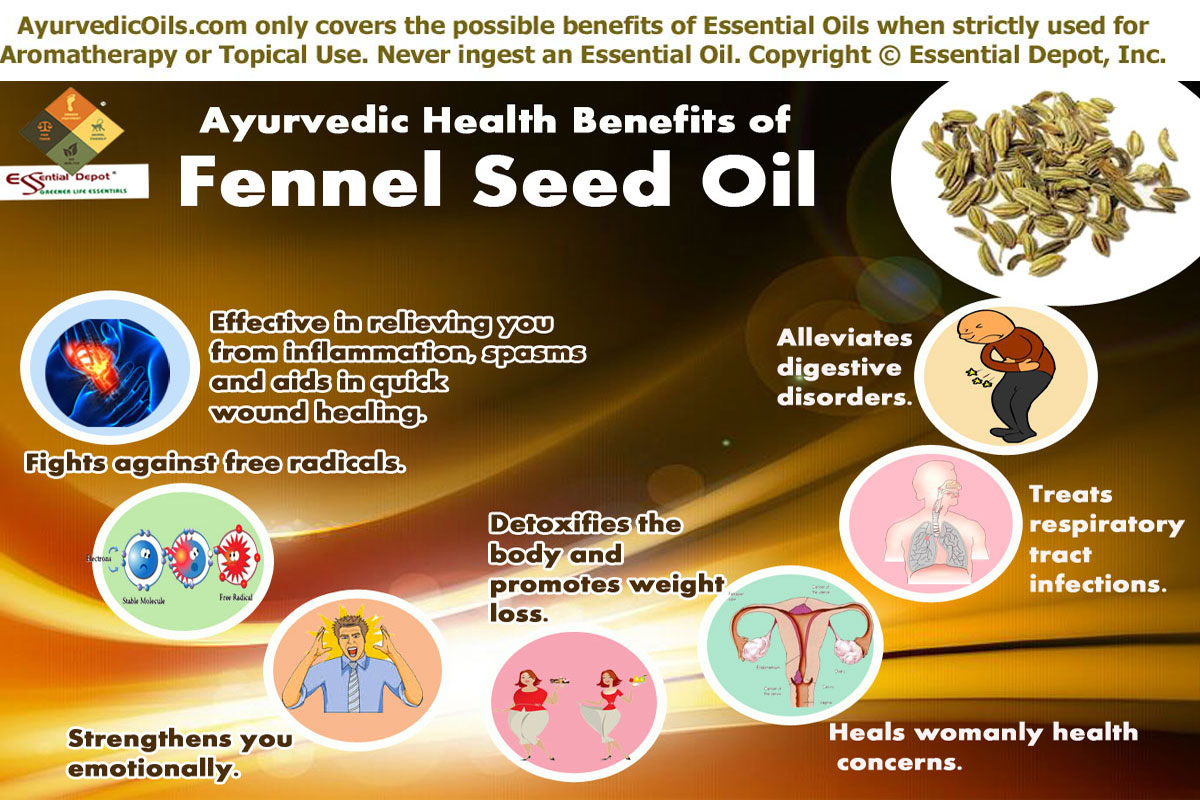
The Ayurvedic health benefits of Fennel Seed oil are:

Fennel-seed-broucher1. Alleviates digestive disorders:

Fennel seeds and its essential oil have been proved as amazing natural remedies for all kinds of digestive disorders. It is one of the best accepted carminative oil that assists in expelling gas accumulated in the intestines and prevents the formation of gas thus protecting one from bloating and abdominal cramps due to gas. It is for this reason Fennel seeds are traditionally used in the preparation of gripe water to treat colic in infants and to prevent ulcer and acidity in adults.

A 2003 study on the effect of Fennel seed oil emulsion in infantile colic concludes that the use of Fennel oil considerably comforted the infants from colic with no side effects when compared to those who were treated with placebo.

Blend 2 drops of Fennel seed oil with 1 ml of sesame oil and massage it on your stomach and abdomen.  As a natural stimulant, Fennel oil massage can help in stimulating the secretion of gastric juices and digestive enzymes such as bile and promotes the process of digestion.

It also regulates the peristaltic movement of the intestines thus aiding irregular bowel movements and constipation. Moreover, it possesses anti- fungal and anti microbial properties that can effectively kill infectious micro organisms in the intestines.

Fennel seed oil has antispasmodic properties that relax the smooth muscles of the intestines and results in quick recovery from pains and abdominal discomfort caused due to indigestion, heartburn, bloating etc.

Unlike the other spices, Fennel seed oil has a unique cooling effect that pacifies the intestines and muscles of the stomach and helps in curing stomach ulcer. Thus Fennel essential oil is used in Ayurvedic and Chinese medicine for treating indigestion, gastroenteritis, stomach upset, flatulence and hernias.

Rich in anethole, Fennel seeds are used as a trusted mouth freshener in Indian restaurants and homes. Popularly known as Mukhwas meaning mouth freshener, the sweet coated Fennel seeds are used as an after-meal snack.

It is for this reason Fennel is often employed in the preparation of toothpaste, liquors, desserts, culinary and mouth fresheners. Add 1 drop of Fennel oil in a cup of warm water and use it as a gargle after meals to keep away from microbes and fight against bad odor or halitosis.

2. Treats respiratory tract infections:

Fennel seed oil serves as an excellent respiratory aid with its spicy, peppery and slightly earthy aroma and expectorant properties. Chewing Fennel seeds refreshes your breath and its essential oil assists in treating respiratory tract infections effectively.

Fennel seed oil has anti-microbial and expectorant properties that help in fighting against harmful bacteria and viruses that cling to your respiratory tract, resulting in heavy deposits of mucus and phlegm.

Adding 2 drops of Fennel oil in steam inhalation or warm bathing water can work wonders in alleviating your respiratory infections as it acts as a natural expectorant, helping in loosening huge deposits of mucus, thus relieving you from all respiratory tract infections such as whooping cough, cold, bronchitis, allergies and breathing difficulties etc.

3. Heals womanly health concerns:

Fennel seed oil possesses female reproductive hormones, which are known to stimulate and regulate the secretion of estrogen in women. Bryan Miller and Light Miller have said in their book Ayurveda and Aromatherapy that Fennel oil is very useful in treating menopause and PMS with its rich content of phyto-estrogens, for which this oil is used frequently in the manufacturing breast tightening and enlarging creams.

Gently massage your lower abdomen with 3 drops of Fennel oil blended with 1.5 ml of sweet almond oil for treating irregularities in the menstrual cycle, problems associated with menopause, mood swings, dysmennorhea, blocked menstruation, nervousness and abdominal pain. This massage can also be helpful in facilitating child birth.

Fennel seed oil is used after child birth in India mainly to facilitate the removal of toxins from the uterus, support natural contraction of the uterus and also to increase the quantity and quality of the breast milk in lactating mothers. A study on estrogenic property of Fennel seed oil has proved that an acetone extract from fennel seeds had estrogenic effects on the genital organs of male and female rats.

4. Detoxifies the body and promotes weight loss:

Obesity or overweight is one vast roof that can encompass one with a cluster of diseases.  Fennel seed oil is an excellent cleansing agent that naturally detoxifies your body by excreting the toxins, excess fluids or water deposits, salt, harmful fats, bad cholesterol and uric acid deposits.

Being a diuretic, Fennel oil increases the quantity and regularity of urinating and helps in attenuation of hypertension, treatment of burning or difficult urination and inflammation due to water retention in the body.

The sweet and refreshing aroma of this oil suppresses the appetite, thus largely decreasing the longing for food. Add 2 to 3 drops of Fennel oil to your hankie, tissues or air fresheners for decreasing your appetite and granting you a feeling of fullness for a longer duration.

Fennel seed oil when added to a massage blend, consisting of 2 drops of this oil with 1 ml of sesame oil works effectively in the filtering toxins from the blood, thus protecting the liver from detrimental toxic substances. Fennel oil has been marked as a useful essential oil in toning the body with its diuretic property and be useful in dealing with obesity.

Along with detoxifying, Fennel seed oil also assists in boosting the process of metabolism and suppressing the appetite. This oil also has melatonin, which has the ability of relaxing the muscles, smoothing the nerves and resulting in a sound, peaceful sleep that may help one to control from gaining extra weight and protects from some serious disorders like cardiovascular diseases that results due to obesity.

5. Strengthens you emotionally:

Fennel seed oil helps in relaxing the mind, calming the nerves and pacifying the nervous system. Adding 2 drops of this oil in diffuser or vaporizer aids in getting rid of emotional stress, anxiety and fear. Inhaling this invigorating aroma helps in building up self confidence, enhancing the power of self-acceptance and influencing the qualities of innate love for self and others as well.

Along with its ability to help maintain a healthy physique, Fennel seed oil also boosts up your inner spirit and motivates you from within. It is for this dignified cause, athletes often use Fennel seeds as a supplementary for nourishing positive energy and affirmative thoughts.

6. Fights against free radicals:

Numerous studies have proved that Fennel seed oil possesses strong anti-oxidant properties that help in the treatment of pharmacological ailments. This property assists in fighting effectively against the free radicals that result in causing aging symptoms and paving way for the growth of cancerous or malignant tumors.

As an anti-oxidant, Fennel oil tones the skin by strengthening the connective tissues and efficiently treats wrinkles and the other signs of aging, thus making you to feel younger from within and glow with natural beauty. This attribute is also implemented in oral care for supporting strong teeth and gums. It fights against infections and helps in treating acne, pimples and other skin disorders.

Mix 2 drops of Fennel oil with 1 ml of virgin olive oil or jojoba oil and gently massage on wrinkles, dark spots, acne, marks, dull and lifeless skin. This enhances good blood circulation and promotes cellular regeneration.

7. Effective in relieving you from inflammation, spasms and aids in quick wound healing:

Fennel seed oil is an effective antiseptic, which helps in killing harmful microbes, promotes quick healing of wounds and prevents it from becoming septic. By this way, Fennel oil thwarts the onset of Tetanus, for which it is often used in many ointments and is also used in poultices to treat poisonous bites.

It is an excellent source of anti-inflammatory and anti-spasmodic properties. Massaging the affected part with 2 drops of Fennel oil blended with 1 ml of warm sesame oil helps in alleviating inflammation, relieving pain and reducing swelling and promoting blood circulation. This massage also helps in supporting proper functioning of the circulatory system. It is for all these reasons Fennel oil has been used as an effective traditional remedy for rheumatism, arthritis and muscular cramps.

Using 3 drops of Fennel oil in hot compress can assist in quicker recovery of spasms and muscle contractions that occur due to hiccups, chronic coughs and epilepsies. Mix 1 drop of Fennel oil with 10 drops of coconut oil and apply it gently on wounds and infections for quicker healing.

Other health benefits of Fennel Seed Oil:

Fennel seed oil is used to improve eyesight and treat cloudy eyes since ancient times. Even though a 2008 article published in PubMed states that fennel extract is found to be effective in treating rabbits with glaucoma, further research is yet to be done in its application for human beings.

Fennel has the power of driving away fleas and its powder is used in kennels and stables. It is used as a preservative in pickles and also in the preservation of fruits and vegetables mainly because of its anti-microbial and anti-fungal properties. It is also used in the manufacture of soaps, disinfectant cleaners and dental products for its antiseptic and aromatic properties.

Disclaimer:

This information is only for the purpose of education and is not intended to diagnose or substitute any prescribed medication or professional medical advice. Do not use essential oils internally and always use essential oils topically in a diluted form, as organic and pure essential oils are highly concentrated substances. Always consult your Ayurvedic practitioner before choosing the suitable essential oil for your unique individual constitution and health condition.

Thought for the day:

Nothing is more memorable than a smell. One scent can be unexpected, momentary and fleeting, yet conjure up a childhood summer beside a lake in the mountains.    -Diane Ackerman

Suggested Reading:

  1. Fennel Greats: Delicious Fennel Recipes, The Top 79 Fennel Recipes by Jo Franks
  2. Ayurveda & Aromatherapy: The Earth Essential Guide to Ancient Wisdom and Modern Healing by Dr. Light Miller, Dr. Bryan Miller
  3. Natural Solutions to PCOS: How to Eliminate Your Symptoms and Boost Your Fertility by Dr. Marilyn Glenville PhD
  4. Do You Want to Have a Baby? Natural Fertility Solutions and Pregnancy Care by Sarah Abernathy
  5. Encyclopedia of Herbal Medicine: The Definitive Home Reference Guide to 550 Key Herbs with all their Uses as Remedies for Common Ailments by Andrew Chevallier

Reference Links:

  1. Fennel by Wikipedia
  2. The Chemical Composition, Antimicrobial and Antioxidant Activities of Essential Oils from Organically Cultivated Fennel Cultivars published in Molecules.
  3. A study on the effect of fennel (Foeniculum Vulgare) seed oil emulsion in infantile colic: a randomized, placebo-controlled study published in PubMed.
  4. Fennel published in Drugs.Com- An online drug information site.

Dill Seed Oil


Dill-seed-BannerDill…..a miraculous herb that spells the charm of lull and pulls you out of illness. Having its origin from the Norse word ‘Dylle’, which means ‘to soothe or to lull’, Dill seed oil is well known for its carminative properties that soothes the digestive system and is used in Ayurveda for the treatment of ulcers, fever, cardiac problems, bronchitis, spermatorrhoea, syphilis and menstrual disorders.

Called as Shatapushpa in Ayurveda, Dill seeds are one among the most promising culinary herbs used in the Indian tradition especially during childbirth. Botanically known as Anethum sowa, Dill seed essential oil is extracted from the dried seeds by steam distillation method. These magical little seeds and its essential oil are prescribed in Ayurvedic healing for treating dysentery, menses, diarrhea, inflammation and for mental disturbances.

Purchase Dill Seed Oil – Retail – 4oz – CLICK HERE

Purchase Dill Seed Oil – Wholesale – CLICK HERE

Historical importance of Dill and its essential oil:

Native to the Mediterranean and Black Sea regions, Dill has been used worldwide as an aromatic spice and a healing herb. Ancient Greeks and Romans considered it as a sign of health and wealth and carried the twig of this herb in the belief that it would protect them from curses. Few sources state that a lot of superstitions prevailed in the medieval period that Dill was used to prepare potions for casting spells and protecting one from the ill effects of witchcraft and evil spirits.

Hippocrates, the Father of Medicine used Dill seeds in his medications for oral cleansing. Ancient warriors applied the extract from Dill seeds and twigs onto burns for quick healing. Dill seeds have exclusive carminative properties. It is for this reason that Emperor Charles the Great ordered the presence of Dill on his banquet tables to benefit his guests who indulged too much.

The entire plant of Dill including the seeds, leaves and twigs are equally important and carry the same flavor and aroma. The well known antimicrobial properties of this herb compel the use of Dill seeds in this planet for the preservation of food and in the preparation of pickles.

Easily available to common man, Dill seeds are an aboriginal remedy for curing insomnia, cold, fever, respiratory illnesses, diarrhea, dysentery, flatulence and a recent study has proved that it helps in preventing cancer.

Chemical constituents and therapeutic properties of Dill seed oil:

The proportion of the chemical constituents for all essential oils mainly depends upon the topography, seasons and various other attributes of its nativity. Dill is cultivated all over the world for its valuable benefits. Results of various researches state that Dill seed oil contains carvone, d-limonene, α-phellandrene, dihydrocarvone, eugenol, β-phellandrene, α-pinene, anethole, dillapiole, myristicin, carveol, arginine, β-caryophyllene, apiole, and others.

Antimicrobial, antispasmodic, anti-inflammatory, antihistamine, antioxidant, carminative, digestive, disinfectant, anti-hyperlipidaemic, anti-hypercholesterolaemic, anti-fungal, aromatic, diuretic, galactogogue, sedative, stomachic and sudorific are some of the priceless therapeutic properties of this prized oil.

Ayurvedic health benefits of Dill seed oil:

Dill seeds and few other extracts from this plant including its essential oil is administered to people of all ages in Ayurveda, depending upon their nature of illnesses. Ayurveda means the ‘knowledge of life’ and it aims at longevity through prevention of diseases along with its healing. This ancient wisdom analyzes the root cause of an illness and progresses towards treating the root cause instead of the symptoms alone.

Ayurvedic philosophy states that nature is made up of five vital elements known as water, earth, fire, space and air. It also says that everything on earth is a part of nature so all these things are also made up of these five elements.

Each element represent various parts of the human system, where earth represents muscles and bones, water represents blood and other fluids, air keeps us breathing, fire is the internal force created for movements and various functions of the body and space or the cosmic energy is the soul or spirit dwelling within us.

Human body is considered as a temple in Ayurveda where the spirit lives in and Ayurveda recommends one to keep his mind and body clean and tidy just like a temple for leading a healthy and harmonious life.

Every individual is unique in terms of Ayurveda and this individuality is identified with the distinctive individual constitution comprising of three biological energies known as doshas, namely kapha, pitta and vata.

Vata is responsible for movement, nervous functions, blood circulation, creativity and transmission of air and other vital elements. Pitta energy deals with metabolic functions, decision making skills and body temperature. Kapha dosha takes care of structure, movement of fluids, love and sustenance.

Balance between these doshas indicates healthiness and imbalance causes illness. Ayurvedic remedies like yoga, herbs, meditation, essential oils, physical exercises, Abhyanga and Ayurvedic routine focus on striking absolute balance between these doshas.

Dill seed oil is known to reduce pitta and kapha dosha and has a neutral effect on vata dosha. A recent research highlights the uses of Dill in Ayurveda before thousands of years, which says, “The earliest reference to use of Dill seed in medicine goes back to (700 BC) in ‘Charak Samhita’ (ancient Ayurvedic text), where an infusion of it was given as a cordial drink to women after confinement, the leaves moistened with oil were used as a poultice for suppurative skin conditions.”

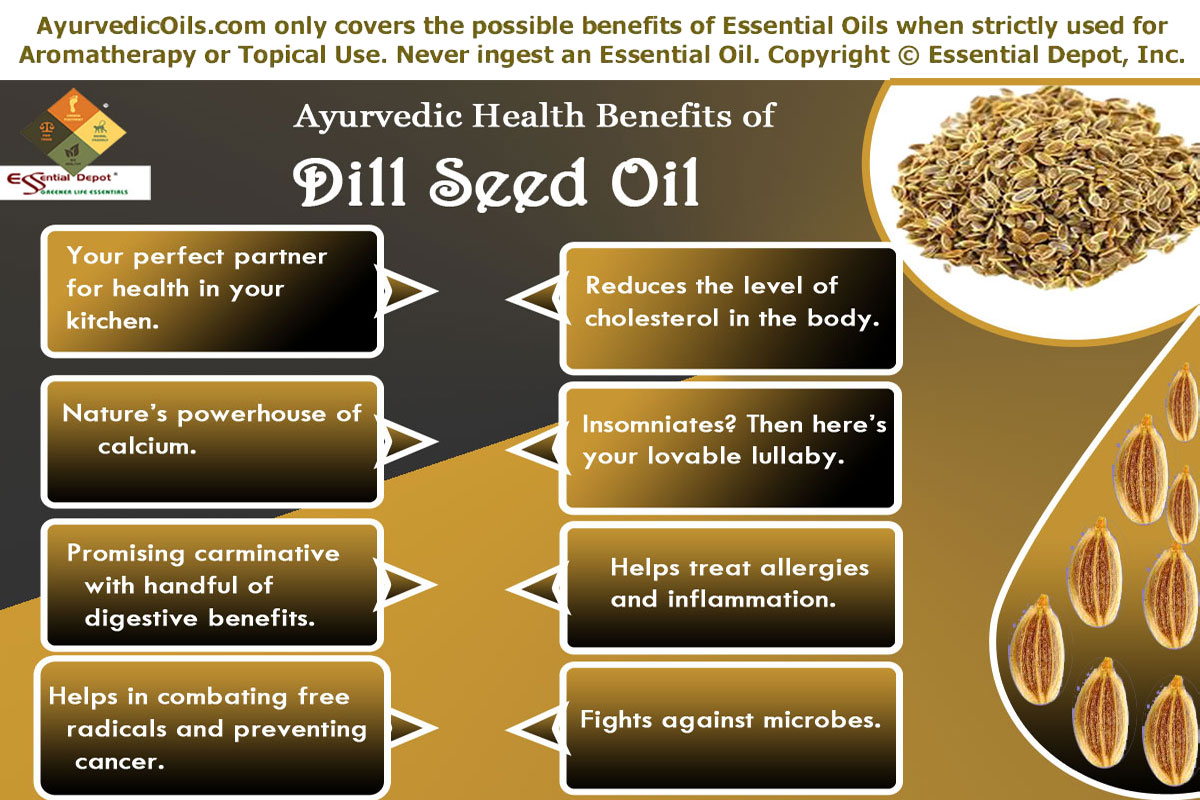
The Ayurvedic health benefits of Dill seed essential oil are:

Dill-seed-Broucher-new1. Your perfect partner for health in your kitchen:

Dill seeds have a unique aroma that simply adds up to the flavor of various cuisines. It is one among the primary herbs in a number of kitchens across the globe including Europe, Asia and the Middle East. Also known as Lao Coriander it is often used in pickles and in fish dishes due to the high concentration of carvone which is antimicrobial in nature.

As an aromatic compound, it possesses anti-microbial, anti-fungal and anti-bacterial properties that help in preserving the edible items for a long time. As a natural reducing agent of blood glycerides, Dill seeds have gained popularity as one of the most flavored and healthiest herbs of the Middle East.

Most of the European countries, especially Germany uses Dill seed oil to preserve cucumbers and pickles, affordable to poor people as well. A variety of dishes like soups, sauces, salads, pickles, vinegars, fish and rice become special with the touch of this enticing herb. It is also used in confectionery, cakes, bread and apple pie.

2. Nature’s powerhouse of calcium:

Dill seed oil is a good source of calcium, dietary fiber, manganese, iron and magnesium. The presence of arginine strengthens bones, teeth and helps in the prevention of bone loss that occurs after menopause and even after some severe problems like rheumatoid arthritis. Few reliable sources even state that Dill seed oil is effective for treating hiccups due to its high calcium content.

Skin is the largest organ of the body and any medications used on the skin easily penetrates through the skin. The therapeutic properties of Dill seed essential oil when used topically, enters the skin and reaches the blood stream and heals the system naturally.

The best way to acquire the calcium and other energy nutrients of Dill seed oil is to add 3 drops of this oil to bathing water and massage your body with 6 drops of Dill oil blended with 3 ml of olive oil. This assists in supplying the essential calcium, iron, fiber, magnesium and other nutrients to the body.

3. Promising carminative with handful of digestive benefits:

β-phellandrene, α-pinene and other constituents of Dill seed oil attribute to the carminative property of the oil that helps in preventing the formation of gas in your intestines as well as aid in the expulsion of gas. It helps in the secretion of bile, a fluid produced by liver that aids in digestion. Dill seed oil is also stomachic in nature and assists in curing stomach pains that occur during menstrual cycles. It fights against flatulence, constipation, hiccups and colic in infants.

As an exclusive antimicrobial, antispasmodic and antifungal oil, Dill seed essential oil is recommended for treating dysentery, diarrhea and food poisoning. It fights against infectious microbes, soothes the digestive system and protects from infections and indigestion.

A recent research on ‘Seasonal differences in essential oil composition on Dill seed oil and Parsley oil’ has proven that the antimicrobial compounds like α-pinene, cineole and limonene in Dill seed oil have been proved effective against food-borne pathogens like Staphylococcus aureus, Bacillus cereus, Escherichia coli, and Campylobacter jejun. Dill seed oil fights best against the microbes Aspergillus niger and the yeasts Saccharomyces cerevisiae and Candida albicans.

Mix 2 drops of Dill oil with 1 ml of sesame oil and gently massage on the stomach and abdomen for treating dysentery, diarrhea, flatulence, hiccups and constipation. In case of infant use, blend 1 drop of Dill oil with 2 ml of sesame oil and massage it gently on their tummy in slow circular movements. You can also add 1 to 2 drops of Dill oil in warm bathing water or in diffuser for relieving from digestive disorders.

4. Helps in combating free radicals and preventing cancer:

Dill seed oil is rich in monoterpenes, which activate the secretion of the enzyme glutathione-S-transferase. This enzyme helps in putting together the anti-oxidant molecule glutathione to the oxidized ones thus helping in prevention of cancer. It is also an excellent neutralizing agent of carcinogenic substances like benzopyrenes found in cigarette smoke, charcoal grill smoke, and the smoke produced by trash incinerators.

The anti-oxidant property of Dill seed oil is applied in treating mimic wrinkles around the eyes since it fights against free radicals responsible for various symptoms of aging including wrinkles. Mix 2 drops of Dill seed oil with 1 ml of Jojoba oil or with your regular skin care cream or lotion and gently apply it on your face and other wrinkles prone area for visible results. This massage aids in refreshing and soothing the skin surface.

5. Reduces the level of cholesterol in the body:

A recent study on Dill seeds have been proved to possess antihyperlipidaemic and antihypercholesterolaemic effects. It fights against hyperlipidemia that describes a condition of elevated levels of lipid formation and hyper cholesterol, which is nothing but increased cholesterol level in the body.

Maintaining the level of the fat soluble molecules called lipids and cholesterol in healthy standards yields fitness at all ages especially when you grow older. Massage your body with 6 drops of Dill essential oil blended with 3 ml of coconut oil, followed by hot bath where 2 drops of Dill oil is added to bathing water as well. This aids in decreasing the level of cholesterol and enables to feel light and fit.

6. Insomniates? Then here’s your lovable lullaby:

The soothing, calming and refreshing effects of flavonoids and group B vitamins in Dill seed oil helps in regulating the secretion of hormones and enzymes in our body that pacifies the nervous system. It is generally recommended for people suffering from insomnia and nervous disorders.

Placing cold to warm bags immersed in water with Dill seeds allowed to soak for few minutes, on closed eyelids will help you in experiencing a calming effect. You can also add 2 drops of Dill oil every night in your diffuser, burner or vaporizer for promoting peaceful sleep throughout the night.

7. Helps treat allergies and inflammation:

Dill seed oil fights against inflammation and allergies. People with oral inflammation in the throat and mouth are administered with this oil. Monoterpenes and flavonoids help in cleansing the respiratory system in case of allergies. Add 2 drops of Dill oil in steam inhalation and inhaling this medicated aroma helps in alleviating respiratory infections and allergies.

Aggravated kapha dosha is responsible for causing inflammation due to excess water deposits, salt, uric acid and other toxic substances in the system.  Dill essential oil has the efficiency to reduce increased kapha dosha and its anti-histamine properties helps one in getting rid of inflammation and other infections associated with it. Massage the inflamed and painful parts with 2 drops of Dill oil mixed with 1 ml olive oil for lessening pain, swelling and inflammation.

8. Fights against microbes:

Since Dill seed oil is rich in antimicrobial, anti-fungal and antibacterial properties it acts as a disinfectant and helps in killing the disease causing germs and micro organisms. This oil also acts as a mouth freshener by killing the microbes and fighting against the free radicals that affect the gums and teeth with its antioxidant effects. Add 1 drop of Dill oil in a cup of warm water and use it as a mouthwash for battling against harmful microbes causing oral infections.

Bacteria, fungus, virus and other micro organisms are the root cause of many diseases. Dill seed oil protects you against these infections and is a valuable remedy for cold, cough, flu, fever, bronchitis, spasms, respiratory tract diseases and healing wounds.

Other health benefits of Dill seed oil:

The diuretic property of this oil assists in treating urinary infections and regulates the excretion of urine without any difficulties. Since it induces the secretion of certain enzymes and hormones, Dill seed oil is used to regulate the menstrual cycle, increase the quantity of breast milk, and prevent early ovulation by acting as a natural contraceptive. Dill seed oil is also used in perfumery and cosmetic industries.

Disclaimer:

This article is only for the purpose of education and is not intended to diagnose or replace any prescribed medicines or professional medical advice. Always use essential oils externally in a diluted form, as pure and organic essential oils are highly concentrated substances and can cause adverse effects if used directly on the skin.

Never ingest essential oils unless it is recommended safe by your medical expert. Remember to consult your Ayurvedic practitioner before choosing the right essential oil for your unique individual constitution and health condition.

Thought for the day:

The smallest seed of faith is better than the largest fruit of happiness.
-Henry David Thoreau

Suggested Reading:

  1. Dill (Anethum graveolens L.) (Herb of the Year 2010) from International Herb Association
  2. The Healing Intelligence of Essential Oils: The Science of Advanced Aromatherapy by Kurt Schnaubelt
  3. The Nursing Mother’s Herbal (The Human Body Library) by Sheila Humphrey
  4. A Mother’s Guide to Raising Healthy Children—Naturally by Sue Frederick
  5. Ayurveda & Aromatherapy: The Earth Essential Guide to Ancient Wisdom and Modern Healing by Dr. Light Miller, Dr. Bryan Miller

Reference Links:

  1. Dill by Wikipedia
  2. Composition, quality control, and antimicrobial activity of the essential oil of long-time stored dill (Anethum graveolens L.) seeds by PubMed.
  3. Dill (Anethum graveolens L.) and Parsley (Petroselinum crispum (Mill.) Fuss) from Estonia: Seasonal Differences in Essential Oil Composition by R. Vokk, T. Lõugas, K. Mets and M. Kravets of Tallinn University of Technology, Ehitajate tee 5, EE19086, Tallinn, Estonia
  4. Chemical Constituents of Essential Oil from Anethum Sowa Kurz Seed by Sumitra Singh, Guru Jambheshwar University of Science and Technology, India, published in the Journal of Chemical and Pharmaceutical Research

Ginger Oil


Ginger-oil-bannerGinger oil is known as the “Oil of Empowerment” and is called in Ayurveda as Mahaushadha, meaning “universal medicine”, predominantly for its ability to heal the mind, body and soul, which are the three vital pillars of perfect health in Ayurveda.

Along with turmeric, galangal and cardamom, Ginger is yet another potent limb of the Zingiberaceae plant family. As a common culinary spice, Ginger is found in countless kitchens across the world and takes the pride of being used as a natural home remedy for addressing digestive and respiratory disorders.

Botanically named as Zingiber officinale, this powerful herb is called as Singara, Katubhadra and Srngaveram in Sanskrit. Ginger in any form, say fresh ginger, dried ginger or ginger extracts like juice, essential oil or powder has a bunch of absolute healing wisdom.

Ayurveda, the oldest healing system on earth prescribes Ginger as a remedy for indigestion, flatulence, nausea, loss of appetite, morning sickness, bronchitis, menstrual cramps, respiratory infections, arthritis, cancer and for enhancing the immune power. It is also recommended for treating fear, hopelessness, instability and for rekindling the inner fire for ultimatum.

Purchase Ginger Oil – Retail – 1 oz – CLICK HERE

Purchase Ginger Oil – Retail – 4 oz – CLICK HERE

Purchase Ginger Oil – Wholesale – CLICK HERE

Historical importance of Ginger:

Ginger is one among the oldest of spices used for more than 4400 years across different cultures universally. With more than 1,200 species, Ginger has been proved scientifically for treating numerous health disorders. Its name is extracted from a Sanskrit word ‘srngaveram’, which means ‘horn root’.

According to the report by the University of Maryland Medical Center, “It has a long history of being used as medicine in Asian, Indian, and Arabic herbal traditions.” It has also been said that Ginger has been used in the Traditional Chinese Medicine for treating toothache, nausea, stomach upset, diarrhea and certain other digestive disorders.

Ginger and its other extracts have been a vital part of the ancient Ayurvedic remedies for obesity, poor metabolism, abdominal pain, motion sickness, impotence, weak memory, arthritis, flu, menstrual pain and as a heart tonic. It has its name etched in the most respected epic of India, Mahabharata.

This aromatic spice was recommended by King Henry VIII of England in the 16th century for fighting against the great plague. Greeks used Ginger as to combat the harmful effects of poison.

It is said that the West African women in Senegal knit belts of Ginger to restore their partner’s reproductive potency. Even today, Ginger is used in various dishes across the world for granting the finesse flavor and taste of this miraculous spice with mammoth health benefits.

Chemical constituents and therapeutic properties of Ginger essential oil:

The major chemical components of Ginger essential oil are camphene, a-pinene, b-pinene, zingiberene, geraniol, borneol, neral, geranyl acetate, 1,8-cineole, citral, b-bisabolene, linalool, nerol, geranial and y-terpineol.

These components contribute to its healing properties like carminative, antibacterial, anti-inflammatory, expectorant, analgesic, aphrodisiac, antioxidant, stimulant, antiseptic and emmenagogue.

Ayurvedic health benefits of Ginger essential oil:

Nothing is as astonishing as Mother Nature and the best wonder in the world is the human body that works like a magic to keep one going on and on. Ayurveda states that human beings are a part of nature and their illness and health depends upon their harmony with nature.

It further lights up this thought by stating that nature is made up of five vital elements, namely earth, water, fire, air and space and to our wonder, it’s also been said that a human being also has all these five elements.

Where earth is the muscles and bones, water is the blood, fire is the energy for various vital functions, air is our breath and space is the soul that co-ordinates all other functions and keeps us living.

The concept of healing in Ayurveda solely depends upon nature as it says that all the other things on earth are made for making mankind happy and healthy. For example, earth has 92 elements like calcium, potassium, magnesium, iron etc, and the human body also has all these 92 elements.

When a person lacks magnesium or calcium energy, he/she can take Ginger, which is rich in magnesium and calcium, whereas Ginger grows by absorbing the magnesium and calcium element from earth. How interesting it is, right?

Ayurveda regards every individual as a unique part of nature and suggests that the treatment should also be unique depending upon their individual constitution that is made up of three doshas namely vata, pitta and kapha.

Vata is a representation of air and ether, pitta stands for fire and water and kapha symbolizes earth and water. Vata controls respiratory and nervous functions, pitta takes care of metabolism and body temperature and kapha governs the structure, sustenance and movement of fluids in the body.

Balance between these three doshas indicates health, and imbalance due to unhealthy food habits and change in lifestyle symbolizes illness. Ayurvedic remedies aim at correcting these dosha imbalances with the help of herbs, essential oils, yoga, meditation, physical exercises, Ayurvedic routine, balanced diet and prayer.

Ginger essential oil is said to pacify kapha and vata dosha and aggravate pitta dosha with its warming, spicy, rich, woody and drying energy and aroma.

The Ayurvedic health benefits of Ginger essential oil are:

Ginger-oil-broucher1. Benefits to the digestive system:

Ginger is popularly known as Adrak in India and is a quick natural remedy for relieving indigestion, bloating, flatulence, dyspepsia, vomiting, spasms, nausea, loss of appetite, piles and colic.

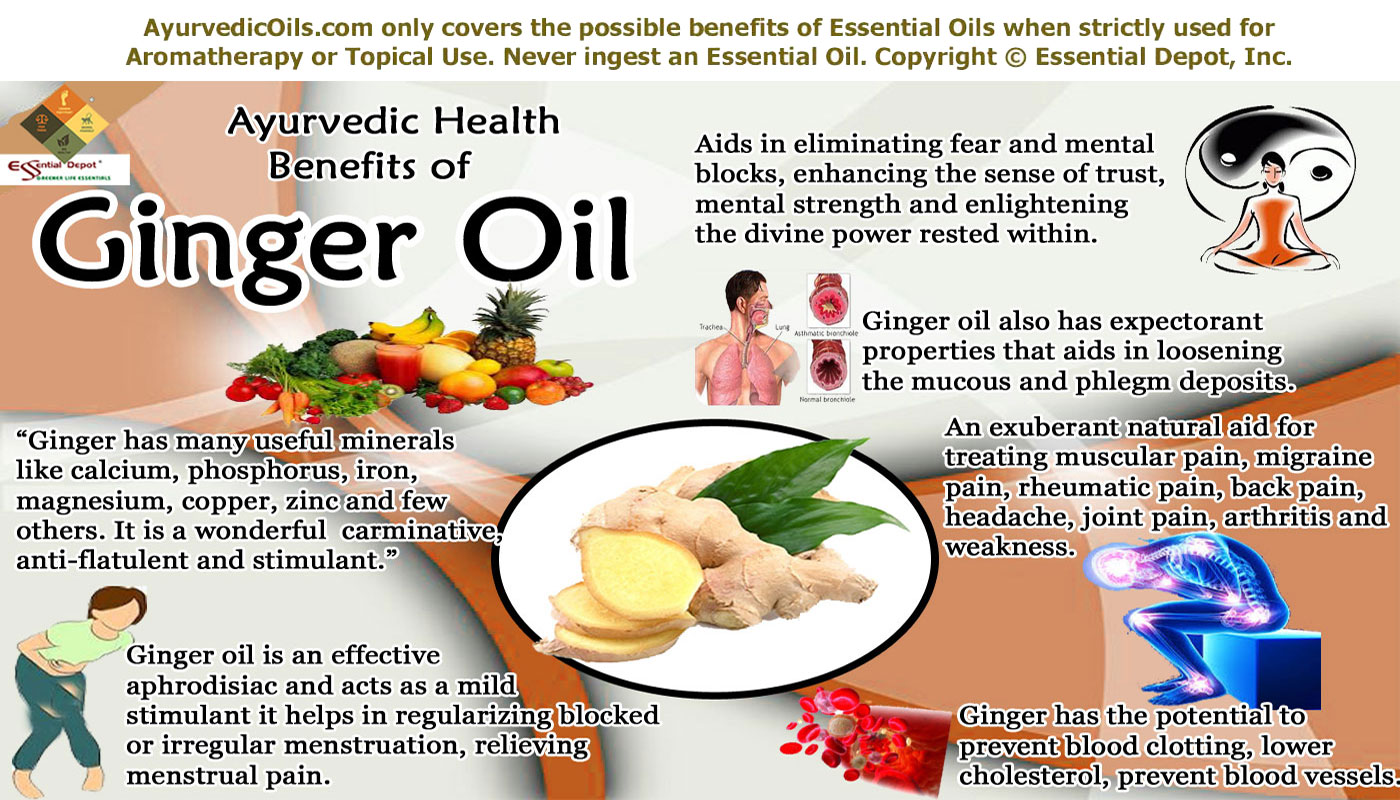
Dr. Jaishree Bhattacharjee, a renowned Ayurvedic Consultant says, “Ginger has many useful minerals like calcium, phosphorus, iron, magnesium, copper, zinc and few others. It is a wonderful carminative, anti-flatulent and stimulant.”

Ginger essential oil has the potential to increase pitta energy that is responsible for the digestive fire. Add 2 drops of Ginger essential oil to your diffuser or air freshener before meals and let it stay there till you complete your food.

Inhaling the warming aroma of this oil enhances the appetite and improves the process of digestion, supports absorption of essential nutrients by the body and aids in alleviating the toxic substances with its hot potency, but for which the toxins or ama may otherwise cause serious illnesses.

You can also add 2 drops of Ginger oil to warm bathing water before going to bed or before starting a hectic day. This refreshing bath aids in promoting peaceful sleep, free from bloating, indigestion, gastric pain and other digestive disorders. If it is for the morning, Ginger has a handful of bright benefits like stimulating your nerves, rejuvenating your cells, improving your appetite and augmenting your mental power for facing your day to day challenges.

Ginger and its essential oil have been proven best for treating motion sickness even in children. Numerous studies have witnessed the effectiveness of Ginger is better than the effects of dimenhydrate, which is the most important ingredient in over-the-counter motion sickness and seasickness remedies like Dramamine.

It works by stimulating the flow of saliva and other digestive juices, pacifies the stomach, relieves pain due to gas and diarrhea, controls vomiting and supports easy discharge of stools. Mix 1 drop of Ginger essential oil with 10 drops of sesame oil and massage it gently on your stomach and abdomen for treating constipation and motion sickness.

2. Benefits to the mind:

Ginger essential oil is an effective natural remedy for treating emotional problems like fear, abandonment, and lack of self-confidence and of motivation. Using 2 drops of Ginger essential oil in diffuser, aromatic candles or in bath can help in improving memory power, treat mood swings, tendency to procrastinate, disconnectiveness, hopelessness, stress, anxiety, exhaustion, restlessness and depression.

Ginger oil is an excellent stimulant to the mind, body and soul. The encouraging aroma of this oil rekindles the inner fire and grants the power and confidence to step ahead and lead with courage and confidence.

Massaging your upper and lower abdomen (the root, sacral and solar plexus chakra) with 2 drops of Ginger oil with 1 ml of coconut oil aids in eliminating fear and mental blocks, enhancing the sense of trust, mental strength and enlightening the divine power rested within.

3. Benefits to the reproductive system:

Ginger is simply hot to support your intimacy with your partner as it has enormous aphrodisiac properties that have been assisting in the treatment of impotency, loss of libido, loss of sexual interest and premature ejaculation.

Gill Farrer-Halls in his book ‘The Aromatherapy Bible’ states that Ginger oil is an effective aphrodisiac and acts as a mild stimulant also. 2 drops of Ginger oil blended with 1 drop of Sandalwood oil and 1 drop of Rose oil added to your diffuser can drive in the positive energy required both physically and mentally for a complete “we time” together, by toning up the sexual organs and pacifying your mood.

Massaging your lower abdomen with 2 drops of Ginger oil blended with 1 ml of olive oil can be of great help in treating the problems of the female reproductive system by regularizing blocked or irregular menstruation, relieving menstrual pain and treating other problems associated with menstruation like nausea, dizziness, fatigue and mood fluctuations. Inhaling the reviving aroma of Ginger oil can aid in treating nausea and morning sickness during pregnancy.

4. Benefits to the respiratory system:

Ginger essential oil has the power to reduce kapha dosha. According to Ayurveda, excess of kapha energy is the main reason for respiratory problems like bronchitis, cold, sinusitis, asthma and congestion.

Ginger oil also has expectorant properties that aids in loosening the mucous and phlegm deposits and with its antiseptic properties, it assists in curbing the growth of microbes that spread respiratory infections.

Researchers of the Columbia University have proved that the components in Ginger root have properties that help asthma patients to breathe easily. The post-doctoral research fellow in the Columbia University Department of Anesthesiology, Elizabeth Townsend says, “In our study, we demonstrated that purified components of ginger can work synergistically with β-agonists to relax ASM.”

Adding 2 drops of Ginger essential oil in steam inhalation can assist in reducing cough, clear chest and nasal congestion, relieving sinusitis and helping in treating cold and flu symptoms. You can also rub your chest, back and throat with your regular Vapor rub mixed with 1 drop of Ginger oil for quick relief. Even today Ginger tea is a delicious and healthy way to keep away from cold, cough and flu in the Indian kitchens.

5. Benefits to the muscular system:

Muscular pain is a common illness that most of us experience in our day to day lives. Headache, back pain, knee pain and pain all over the body after a strenuous work are not a surprise to many of us.

What we all do is, rush to the pharmacy and grab pain relieving creams and sprays that grant relief. Most of us fail to realize that these over-the-counter remedies give temporary relief only and force us to use them again when the pain peeps out even worse the next time.

Ginger essential oil has anti-inflammatory, anti-rheumatic and analgesic properties that make it an exuberant natural aid for treating muscular pain, migraine pain, rheumatic pain, back pain, headache, joint pain, arthritis and weakness.

Excess of vata and kapha energy in the body lead to swelling, water stagnation, accumulation of toxic substances, inflammation, sore muscles, weakened nerves and muscular tension.

With its potent to reduce vata and kapha dosha and increase pitta or the fire energy, 3 drops of Ginger essential oil blended with 1 teaspoon of almond oil massaged gently on the painful area, spreads warmth in the body, reduces swelling and inflammation by eliminating toxic substances and water deposits from the body through urine and sweat and relieves pain by causing numbness in the painful parts.

6. Benefits to the entire system:

Ginger and its essential oil also act as a heart tonic and helps in improved circulation. According to the University of Maryland Medical Center, few studies have proved that ginger has the potential to prevent blood clotting, lower cholesterol, prevent blood vessels from getting blocked, which may otherwise lead to stroke or heart attack.

Ginger essential oil has antioxidant properties that have been proved efficacious in the prevention and treatment of cancerous cells.  A 2011 study on ‘Antioxidant activity of the volatile oils of Zingiber officinale (ginger)’ published in Spatula-DD, A peer reviewed journal on complementary medicine and drug discovery says “Ginger extracts have reduced total cholesterol, triglycerides and phospholipids levels, as well as cellular cholesterol accumulation, reduce DPPH absorption, scavenge free radicals and it has potential to improve the histopathological lesion occurring in different layers of the arterial tissue. In other word it is effective in attenuating of atherosclerosis development.”

This dominant herb has also been witnessed effective in the treatment of ovarian cancer. A 2006 study by the University Of Michigan Comprehensive Cancer Center presented in the annual meeting of the American association for Cancer Research stated that using Ginger solution (made with Ginger powder and water) on ovarian cancer cells ended up in their death. These cancerous cells died either due to autophagy (attacked/digested themselves) or due to apoptosis (committed suicide).

The book “A Complete Guide To Understanding and Using Aromatherapy For Vibrant Health and Beauty,” says that Ginger essential oil is effective in treating varicose veins and cellulites.

With rich vitamin C, Ginger oil can also help in treating scurvy. Mix 1 drop of Ginger oil with 10 drops of jojoba oil and apply it on the affected area for enhancing the skin health and reducing the symptoms of aging with its antioxidant properties.

Other health benefits:

Ginger essential oil can also assist in treating rheumatism, arthritis, muscular pain, loss of libido, problems of the lymphatic system, sore throat, chills, disconnectiveness, improper blood circulation, increased blood sugar levels, back pain and mood swings.

Disclaimer:

This article is only for the purpose of information and is not meant for treating or replacing any prescription drugs or professional medical advice. Always consult your Ayurvedic practitioner before choosing the right essential oil for your unique health condition and individual constitution.

Never use essential oils internally and always use essential oils in a diluted manner as pure and organic essential oils are highly concentrated liquids and may cause allergic reactions if used directly on the skin. Care should be taken, if you are a pregnant or nursing woman.

Thought for the day:

Deep in their roots, all flowers keep the light.
-Theodore Roethke

Suggested Reading:

  1. Ginger: Common Spice and Wonder Drug by Paul Schulick
  2. A Spoonful of Ginger: Irresistible Health-Giving Recipes from Asian Kitchens by Nina Simonds
  3. The Chopra Center Herbal Handbook: Forty Natural Prescriptions for Perfect Health by David Simon M.D., Deepak Chopra M.D.
  4. Ayurveda & Aromatherapy: The Earth Essential Guide to Ancient Wisdom and Modern Healing by Dr. Light Miller, Dr. Bryan Miller
  5. Ginger Recipes: 33 Mouth-Watering Recipes Using Natures Super Spice for Weight Loss, Health, and Beauty. (The Simple Recipe Series) by Ready Recipe Books

Reference Links:

  1. Ginger by The University of Maryland Medical Center
  2. Ginger Beats Drugs in Defeating Cancer, Motion Sickness and Inflammation by Health Impact News Daily
  3. Ginger is a powerful aphrodisiac and increases sexual prowess by Namini Wijedasa published in infolanka.com
  4. What are the benefits of Ginger? By Medical News Today
  5. Ginger – Ayurveda’s Root To Good Health by Ayurveda Acharya

Gultharia Oil


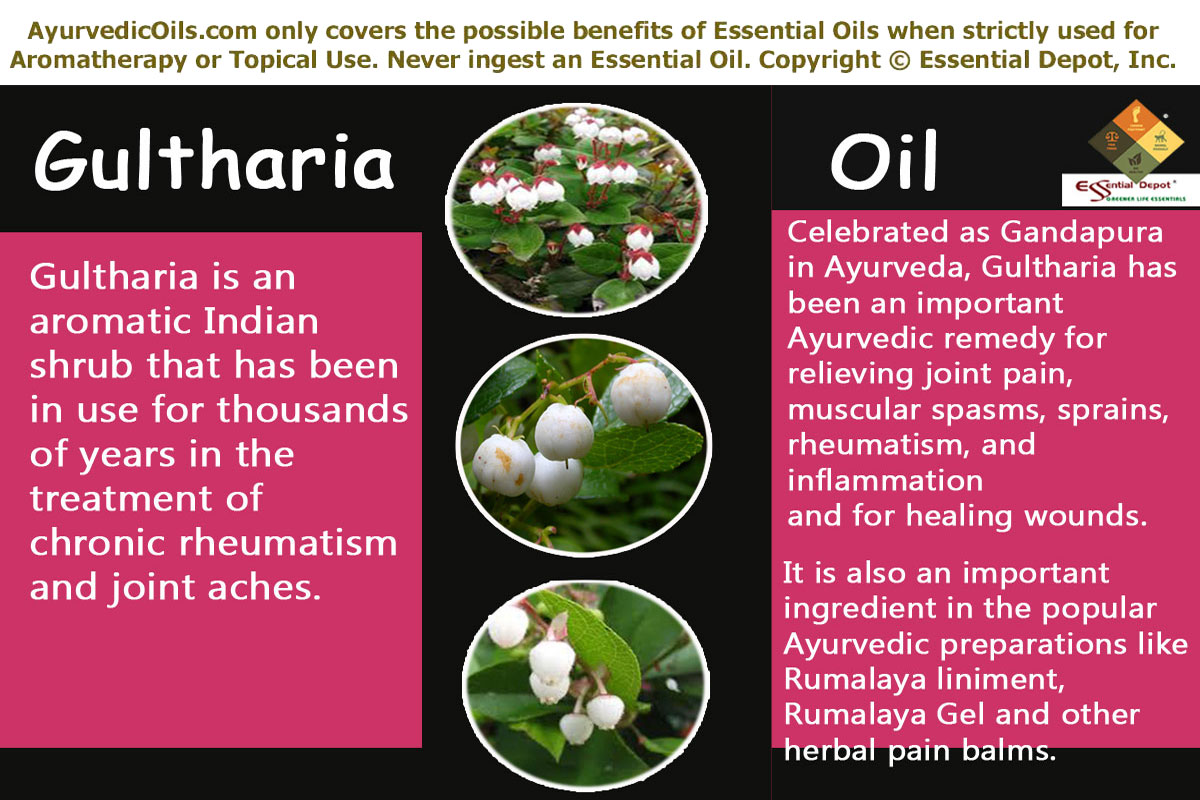
Gulthania-bannerGultharia or the Indian Wintergreen is aboriginal to India and have amazing therapeutic properties in its kitty just like it’s sibling, the American Wintergreen also known as Gaultheria procumbens. Scientifically called as Gaultheria fragrantissim, Gultharia is an aromatic Indian shrub that has been in use for thousands of years in the treatment of chronic rheumatism and joint aches.

Celebrated as Gandapura in Ayurveda, Gultharia has been an important Ayurvedic remedy for relieving joint pain, muscular spasms, sprains, rheumatism, inflammation and for healing wounds.

It is for all these healing values, Gultharia and its essential oil, steam distilled from its leaves are used as an important ingredient in the popular Ayurvedic preparations like Rumalaya liniment, Rumalaya Gel and other herbal pain balms.

Purchase Gultharia Oil – Retail – 4 oz – CLICK HERE

Purchase Gultharia Oil – Wholesale – CLICK HERE

Historical importance of Gultharia:

Indian Wintergreen has a unique healing aroma for which it is also known as Fragrant Wintergreen, is found growing in the sacred lands of the holy Himalayas from Uttarakhand to Myanmar and South Eastern Tibet. It is a member of the Rhododendron plant family, Ericaceae. Gultharia grows at an altitude of 1500 to 2700 m and bears dark-violet blue berries that attract the attention of birds and numerous insects towards it.

It is a known fact that the Indians of America were the first to identify the medicinal powers of Wintergreen in America and this was mainly due to the use of the Indian Wintergreen, which has been in use in the world’s oldest healing system on earth, Ayurveda before 5,000 years in India. The ancient Indians used the leaves of Gultharia herb in brewing tea for fighting against rheumatism, joint pain, toothache and other painful conditions.

These remedial leaves were also ground and used in poultices for relieving muscular aches, stiff joints and headache. It was later traced in 1800s that the pain-relieving qualities of Wintergreen plant was mainly due to the aspirin-like qualities present in these aromatic leaves helping in relieving pain in a jiffy, naturally.

Wintergreen leaves were used in making tea by the French explorers for assisting pain and this usage lead to the popular term ‘The du Canada’ means the ‘The tea of Canada’. The leaves of Gultharia plants were chewed by the traditional Indians as an aid for breathing during strenuous work, alleviating oral problems, freshening the breath and for treating back pain and joint aches.

The leaves of Gultharia plant were used in folklore medicinal system for rheumatism, sore throat, colic, inflammation, tooth decay, skin disorders, cold and body pain. It is also used as a flavoring ingredient in toothpastes, chewing gums, herbal teas, candies and health beverages. These leaves have also been a part of pesticides and insect repellants.

Therapeutic properties and chemical constituents of Gultharia essential oil:

Methyl salicylate is the major chemical constituent comprising of about 98% of its essential oil and the other components are gaultherilene, limonene, a-pinene, delta-cadinene, delta-3-carene and myrcene. These constituents contribute to its healing properties like anti-rheumatic, anti-arthritic, anti-inflammatory, antiseptic, analgesic, antispasmodic, carminative, astringent, emmenagogue, diuretic and stimulant.

Ayurvedic health benefits of Gultharia essential oil:

Healing according to Ayurveda is not an external force and real healing should always happen from within, for which every individual should have a thorough knowledge about their health condition and their entire system. You will know it appropriately when I say that the word ‘Ayurveda’ actually means ‘the knowledge of life’.

Ayurvedic healing aims at longevity through prevention of illnesses and healthy aging by following an Ayurvedic routine along with the use of herbs, essential oils and a balanced diet. The basic Ayurvedic principle revolves around the health of mind, body and soul.

The ancient secrets of this herbal healing methodology were spread to the world by Charaka and Sushruta, the renowned Ayurvedic experts of the primordial times. Charaka Samhita reiterates the Ayurvedic principle by stating that “The three – body, psyche, and soul – act as a tripod. The world stands upon them, and within them, the world abides.

Every human being is unique according to the Ayurvedic theory with a unique individual constitution comprised of three biological energies known as doshas. They are vata, pitta and kapha dosha.

Vata energy is responsible for respiration, movement and circulation of the body and controls the neurological imbalances and nervous impulses of the system. Pitta represents fire and is in charge of metabolic functions like digestion and absorption of essential nutrients by the body. Kapha dosha stands for water and is responsible for structure and sustenance of the body, imbalance of which can cause obesity and respiratory problems.

Gultharia essential oil reduces kapha dosha and increases pitta and vata doshas.

The Ayurvedic health benefits of Gultharia or Indian Wintergreen essential oil are:

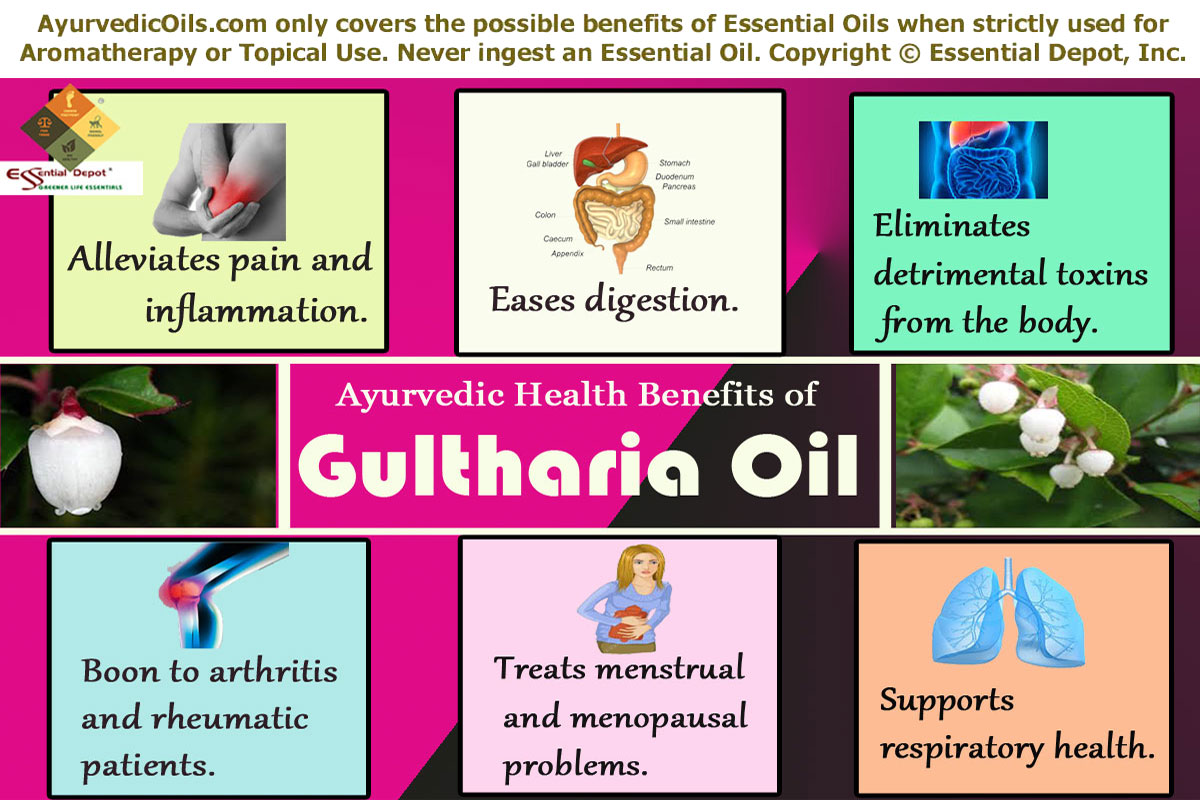
Gulthania-broucher1. Alleviates pain and inflammation:

Pain is the worst enemy of mankind, be it a joint pain or a headache, it has the power to destruct your work and drop down your day. Aspirin is one among the best over-the-counter remedies for treating pain and inflammation. You’ll be surprised to know that the remedial power of aspirin is due to the presence of methyl salicylate and with a high proportion of this constituent, generally many varieties of Wintergreen essential oil is used in various pain relievers in the market.

The pain-relieving quality of Gultharia essential oil is due its analgesic, anodyne and anti-inflammatory properties. Massage the painful area with 2 drops of Gultharia oil blended with 1 ml of coconut oil for relieving pain and reducing inflammation.

This remedial massage relieves pain by causing numbness on the painful area, boosts blood circulation, hinders the secretion of prostaglandin compounds that sensitize the spinal neurons to pain and promote peaceful sleep. You can also add 2 to 3 drops of Gultharia oil in hot or cold compress or in warm bathing water for reducing pain and inflammation.

2. Eases digestion:

Improper digestion is the primary reason for all the major illnesses in Ayurveda. Pitta energy is responsible for the digestive fire known as agni, which supports metabolic functions like digestion of food, absorption of essential nutrients and excretion of waste materials from the body.

Sluggish digestion occurs when there is an imbalance of pitta energy due to changes in the diet, lifestyle and emotional constitution of an individual.

Gultharia essential oil has the power to aggravate pitta dosha and acts as an excellent carminative, stimulant and diuretic. Massaging your stomach and abdomen with 2 drops of Gultharia oil mixed with 1 ml olive oil helps in eliminating the formation of gas, supports constipation, flatulence, promote the secretion of bile and other digestive juices and discharges excess salt, uric acid and toxic remains of undigested food through urine.

Inhaling the aroma of this oil by adding 1 drop of Gultharia oil to your diffuser or vaporizer helps in stimulating the secretion of digestive juices assisting in regular digestion.

3. Eliminates detrimental toxins from the body:

Gultharia essential oil has natural diuretic properties that promote sweating and frequent urination.  By this way, it helps in flushing out the harmful toxins like uric acid, excess salt, water and fat from the body.

Massaging your body with 6 drops of Gultharia essential oil blended with 4 ml olive oil can assist in treating water logging, obesity, edema, kidney stones, urinary infections and hypertension caused due to the accumulation of fat, water, uric acid and other toxins left behind due to improper digestion. Adding 3 to 4 drops of Gultharia oil in bathing water is also a great idea for getting rid of such toxic substances.

4. Boon to arthritis and rheumatic patients:

Rheumatism and arthritis mainly occur due to the accumulation of toxic substances in the body due to poor digestion and problems in the colon, that paves way for the toxins to reach the joints causing pain, lack of circulation, swelling and inflammation.

According to Ravi Bhanot, a popular Ayurvedic Researcher at the Ayurveda Institute of Europe, the best way to treat gout and rheumatic problems is to use medicated oil for massage that is made up of Wintergreen essential oil and menthol.

Gently massaging the affected parts with 4 drops of Gultharia oil with 2ml of sesame oil aids in triggering digestion, promoting the flow of urine through which the toxic substances are eliminated, warms up the muscles, stimulate blood circulation, and reduces pain and inflammation.

This way, the Indian Wintergreen essential oil acts as a boon to arthritis and rheumatic patients who suffer from pain, swollen muscles, inflamed joints and poor blood circulation.

5. Treats menstrual and menopausal problems:

Gultharia essential oil is a proven emmenagogue that can be of great aid in assisting female problems like menstrual discomforts and menopausal symptoms.

Massaging your lower abdomen with 3 drops of Gultharia oil blended with 1.5 ml of warm sesame oil can help in promoting delayed or blocked menstruation, lessen menstrual pain, reduce spasms, and treat nausea, fatigue, sleeplessness, tension and urinary problems associated with menses.

It can also help in reducing hot flashes and mood fluctuations in menopausal women by stimulating blood circulation and strengthening the uterine walls. Adding 2 drops of Gultharia oil in warm bath before going to bed and 1 drop added to your room diffuser at night can calm the tensed muscles and promote peaceful sleep at night.

6. Supports respiratory health:

Respiratory problems are mainly caused due to excess of kapha energy. With its power to lessen kapha dosha, Gultharia essential oil can effectively act upon reducing chest congestion, spasmodic coughs, breathing difficulties, asthma and nervous afflictions.

Adding 2 drops of this oil in steam inhalation can help you in eliminating excess phlegm and mucous deposits through urine and excreta. With its anti-spasmodic properties, Gultharia essential oil is also effective in treating spasms in the intestine, muscles, nervous system, respiratory system and circulatory system.

Other health benefits:

Gultharia essential oil is an efficacious natural remedy for healing wounds with its antiseptic properties. This oil is also known for its ability to enhance spiritual power, logical thinking, and reasoning skills and accentuate the harmony of the soul with the divine power. It is for this reason; the ancient saints used the leaves of the Indian Wintergreen plant during sacred ceremonies, special chants and meditations.

Disclaimer:

This article is only for the purpose of information and is not meant to diagnose or substitute professional advice or prescribed medication. Gultharia essential oil has a high proportion of methyl salicylate, which is a main ingredient in aspirin and is considered toxic in excess for internal usage.

Never use Gultharia essential oil internally and always ensure that you use this oil in a diluted form for topical application. Keep it away from children and please consult your Healthcare practitioner before using Gultharia essential oil if you are pregnant, nursing or allergic to aspirin. Always consult your Ayurvedic professional before using the right essential oil for your unique health condition and individual constitution.

Thought for the day:

Let a hundred flowers bloom, let a hundred schools of thought contend.
-Mao Zedong

Suggested Reading:

  1. The Essential Herbal for Natural Health: How to Transform Easy-to-Find Herbs into Healing Remedies for the Whole Family by Holly Bellebuono
  2. Ayurvedic Beauty Care: Ageless Techniques to Invoke Natural Beauty by Melanie Sachs
  3. American Indian Healing Arts: Herbs, Rituals, and Remedies for Every Season of Life by E. Barrie Kavasch, Karen Baar
  4. American Indian Medicine (The Civilization of the American Indian Series) by Virgil J. Vogel

Reference Links:

  1. About Wintergreen by eHow
  2. Wintergreen by the American Botanical Council
  3. Fragrant Wintergreen by Flowers of India
  4. Treatment of Gout – The Ayurvedic Way by Ravi Bhanot, Ayurvedic Researcher, The Ayurveda Institute of Europe

Kappor Katcheri Oil


Kapoor-katcheri-bannerKnown as Shati in Ayurveda, Kappor Katcheri herb and the essential oil extracted from the rhizomes of this plant through steam distillation process has been in use traditionally for treating respiratory problems (like bronchitis and asthma), wounds, fever, ulcers, cough, indigestion, hiccough, inflammation and certain other eye problems.

Kappor Katcheri is a Hindi name and is scientifically called as Hedychium spicatum. It is a limb of the Ginger family Zingiberaceae. It is a small hardy ginger with bright and large white and orange flowers and is indigenous to the subtropical Himalayan regions in India at an altitude of 1000 to 3000 m.

Purchase Kappor Katcheri Oil – Retail – 4 oz – CLICK HERE

Purchase Kappor Katcheri Oil – Wholesale – CLICK HERE

Historical uses of Kappor Katcheri:

The aromatic and herbaceous rhizomes of Kappor Katcheri herb has been used in various traditions for treating numerous health conditions. The Ayurvedic healing system use this herb for curing respiratory problems, poor blood circulation, indigestion, wounds and inflammation. It was used as a natural remedy for treating diarrhea, vomiting, snake bite, fever and inflammation in the Traditional Chinese Medicine.

Kappor Katcheri was used in the Tibetan medicine for its heating potency and acrid taste and was also used as an effective insect repellant. Known as Sanna in Japan, the rhizomes of this plant are also used in preparing Attar Ekangi in India.

Therapeutic properties and chemical constituents of Kappor Katcheri oil:

The major chemical constituents present in Kappor Katcheri essential oil are limonene, cineole, terpinene, linalool, p-cymene, terpeneol and phellandrene. These components contribute to its remedial properties like antioxidant, antifungal, hypoglycemic, in vitro pediculicidal, spasmolytic, cytotoxic, tranquilizer, CNS depressant, febrifuge, anti-inflammatory, anthelmintic, analgesic, antispasmodic, hypotensive, vasodilator and antimicrobial.

Ayurvedic health benefits of Kappor Katcheri oil:

Ayurveda is the oldest of all healing methodologies on earth dating back to more than 5,000 years. This ancient science aims at educating humanity about the natural remedies in treating illnesses, ways to prevent sickness and pass towards healthy aging.

The Ayurvedic Physicians like Charaka, known as the Father of Medicine and Sushruta called as the Father of Surgery have enlisted almost all the possible natural remedies for a wide range of illnesses in the Ayurvedic encyclopedias well-known as Charaka Samhita and Sushruta Samhita respectively.

These ancient treasures talk about all types of healing herbs on earth and their effectiveness in curing various illnesses. According to these books, Kappor Katcheri is an excellent remedy for treating respiratory illnesses like asthma and bronchitis.

Along with herbs, Ayurvedic treatments include the use of essential oils, practicing healthy and balanced diet, Ayurvedic routine, meditation, physical exercises and yoga. Every human being is a unique part of nature according to Ayurveda and it suggests that the treatment should also be unique according to an individual’s constitution even for the same illness.

This constitution is made up of three vital bio-energies known as doshas that is vata, pitta and kapha. Every one of us will have a predominance of any one of these doshas that determines our health, personality and behavioral attributes.

Balance between these doshas indicates good health and imbalance between these doshas symbolize illness. Ayurvedic medications are prescribed in such a way that it treats dosha imbalances. Kappor Katcheri essential oil lessens pitta and kapha dosha and aggravates vata dosha.

The Ayurvedic health benefits of Kappor Katcheri oil are:
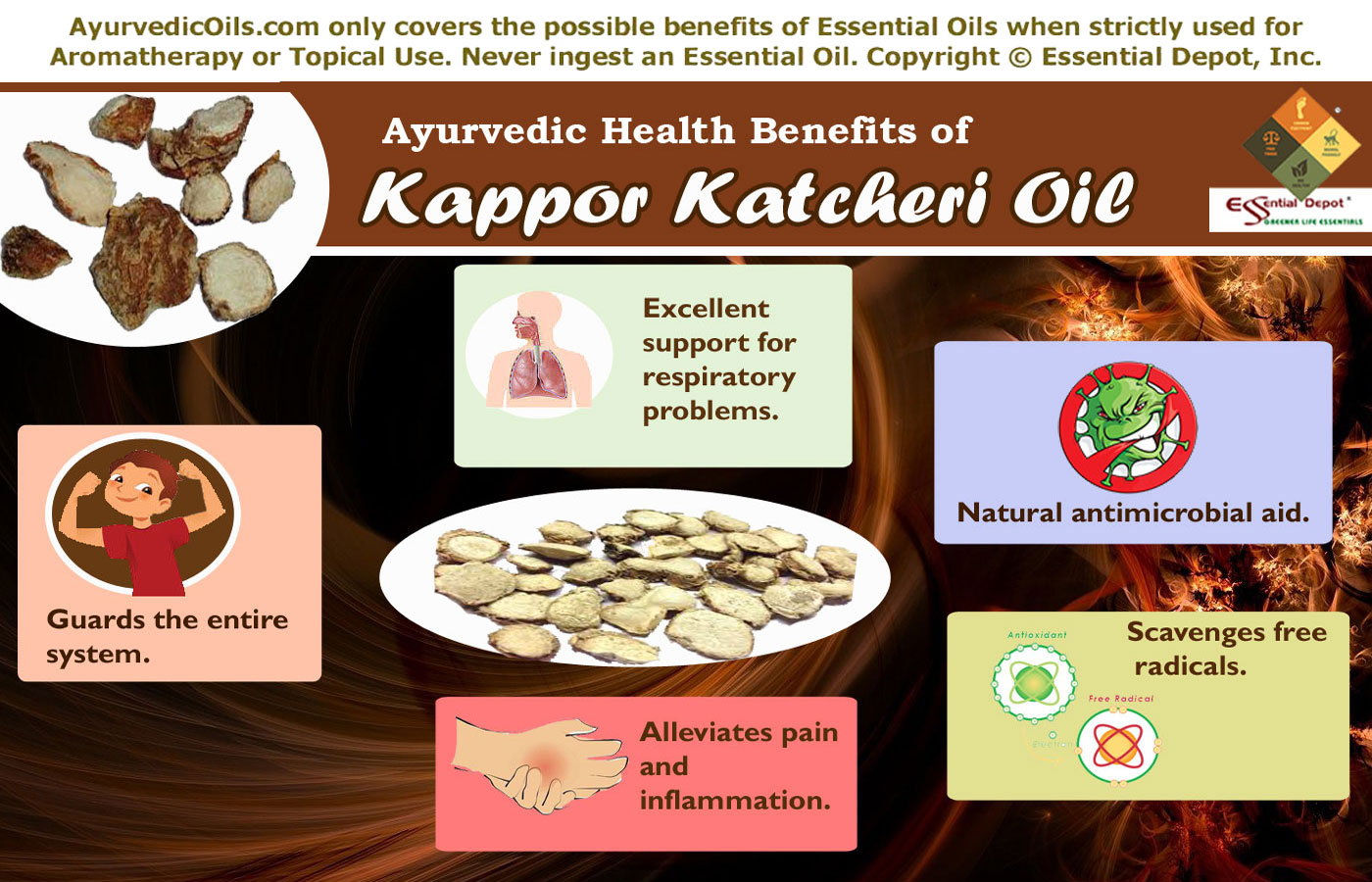
Kappor-katcheri-broucher1. Excellent support for respiratory problems:

The powdered rhizomes of Hedychium spicatum has been used clinically and in the traditional healing system for treating respiratory problems like respiratory inflammatory conditions including asthma, bronchospasms and bronchitis. It has also been proved effective in treating cough, cold, headache, fever, sinusitis and certain other breathing difficulties.

A 2012 study on ‘Pharmacological evaluation of extracts of Hedychium spicatum (Ham-ex-Smith) rhizome by Shivani Ghildiyal, Manish K. Gautam,Vinod K. Joshi, and Raj K. Goel’ states that the rhizomes of Hedychium spicatum has been reported to contain antiasthmatic, anti-inflammatory, vasodilator, hypotensive, spasmolytic and hypoglycemic properties.

Based upon various animal studies on mouse and Guinea pigs, this study concluded that the rhizomes of H. spicatum has anti-histaminic, bronchodilator, analgesic, anti-inflammatory activities that are essential to soothe pain, inflammation, asthma, bronchoconstriction and other respiratory problems.

Heat 2 drops of Kappor Katcheri oil with 1 ml of coconut oil and apply it on the throat, chest and back or add 2 drops of this oil in steam inhalation for relieving from congestion, bronchial spasms, asthma, cough and breathing difficulties.

The spicy and camphoraceous aroma of this oil along with its chemical constituents like terpinene and cineole have been proved as powerful analgesic and anti-inflammatory agents that assist in treating respiratory problems since the ancient times.

2. Natural antimicrobial aid:

The rhizomes and the essential oil of Kappor Katcheri herb are said to exhibit inhibitory activity against numerous Gram positive and Gram negative bacteria including Staphylococcus aureus and against few other fungal cultures according to a 2006 study on ‘Antimicrobial activity of Hedychium spicatum.’

Bacteria, fungi and certain other micro organisms are responsible for numerous health problems. These organisms damage the cells and weaken the immune system while making the body susceptible for diseases.

As a natural antimicrobial agent, Kappor Katcheri essential oil comes to your rescue when there’s a need to keep micro organisms at bay. Add 2 drops of this oil in warm bathing water to prevent and protect you from microbes. You can add 1 drop of Kappor Katcheri oil with 10 drops of coconut oil and apply it on wounds, ringworm, acne, cuts, athlete’s foot, nail infections and other skin allergies for visible results.

3. Scavenges free radicals:

Kappor Katcheri oil has antioxidant properties that assist in scavenging free radicals, which are known as reactive molecules engaged in numerous physiological processes and human illnesses like arthritis, cancer, ischemia, alcoholism, ageing, liver injuries and certain other toxin induced reactions.

A 2011 study on the ‘Antioxidant activity of Hedychium spicatum Buch.- Ham. Rhizomes’ by T Sravani and Padmaa M Paarakh, Department of Pharmacognosy, The Oxford College of Pharmacy, India published in the Indian Journal of Natural Products and Resources demonstrated that the rhizomes of Hedychium spicatum plant possess strong antioxidant activity.

You can use the essential oil extracted from these rhizomes as bath oil by adding 2 drops of Kappor Katcheri oil to your bath tub or by using it in massage by blending 4 drops of Kappor Katcheri oil with 2 ml of sesame oil for combating the effects of free radicals.

4. Alleviates pain and inflammation:

Kappor Katcheri oil possesses analgesic, anti-inflammatory, spasmolytic and tranquilizer effects that aid in treating pain, inflammation, arthritis and rheumatic problems. Blend 2 drops of Kappor Katcheri oil with 1 ml of sesame oil and massage on the affected area or add it in hot or cold compress to relieve pain, inflammation, spasms and irritation. When applied to the painful parts this blend will cause numbness and reduce your pain gradually.

5. Guards the entire system:

Apart from these major uses, Kappor Katcheri oil is known for its effectiveness in treating gastric ulcer, fever, intestinal infections, abdominal pain, blood purification, eye diseases and hypertension.

Disclaimer:

This article is only for the purpose of education and is not meant to replace any prescription medicine or professional advice of a medical expert. Do not use essential oils internally. Always use essential oils in a diluted form as pure and organic essential oils are highly concentrated liquids and can cause harm if used directly on skin.

It is advisable to do a patch test on your skin before using essential oils to test its suitability to your skin condition. Consult your Ayurvedic practitioner regarding the use of best essential oils for your unique health condition and individual constitution.

Thought for the day:

Every flower is a soul blossoming in nature. -Gerard De Nerval

Suggested Reading:

  1. Identification of Chemical Constituents of Plant Hedychium Spicatum: Methods for Phytochemical analysis and standardization by Alok Pratap Singh
  2. Evaluation of CNS potential of Hedychium spicatum: Rhizome Extract by Versha Parcha, Vichitra Kaushik, Arun Kumar
  3. Hardy Gingers: Including Hedychium, Roscoea, and Zingiber by T. M. E. Branney
  4. Paradise Found: Growing Tropicals in Your Own Backyard by Norman Winter

Reference Links:

  1. Pharmacological evaluation of extracts of Hedychium spicatum (Ham-ex-Smith) rhizome by Shivani Ghildiyal, Manish K. Gautam,Vinod K. Joshi, and Raj K. Goel published in PubMed
  2. Antioxidant activity of Hedychium spicatum Buch.- Ham. Rhizomes by T Sravani and Padmaa M Paarakh, Department of Pharmacognosy, The Oxford College of Pharmacy, India published in the Indian Journal of Natural Products and Resources
  3. Hedychium spicatum – Buch.-Ham by Plants for a Future
  4. Antimicrobial activity of Hedychium spicatum by G.S. Bhist, A.K. Awasthi, T.N. Dhole, Department of Microbiology, Sanjay Gandhi Post Graduate Institute of Medical Sciences, Lucknow, India published in ScienceDirect
Lime Essential Oil


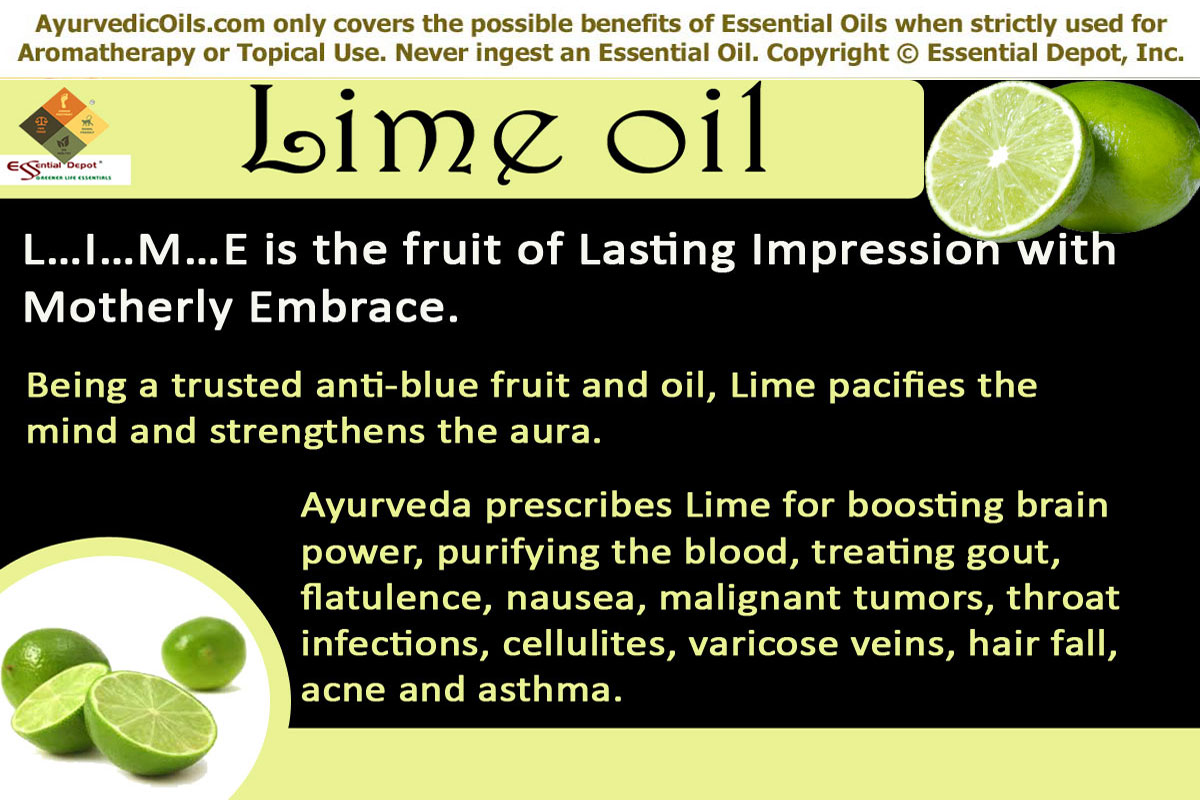
Lime--bannerAnyone for that matter would admire L…I…M…E as the fruit of Lasting Impression with Motherly Embrace. Undoubtedly Lime is such an adorable kitchen staple for more than thousands of years and its essential oil seldom falls short to heal our mind and body with its numinous aroma.

It can be named as an effective anti-blue fruit and oil for its ability to pacify your mood at times of depression and all kinds of blues including postpartum blues. Botanically named as Citrus aurantifolia, Lime is a limb of the citrus family Rutaceae.

Ayurveda uses Lime and its essential oil as a stimulant for treating skin problems, heart diseases, digestive disorders and mental mayhems. It has been used to boost brain power, purify the blood and aid in preventing memory loss. Certain other traditional medicines uses Lime as a remedy for treating gout, malignant tumors, throat infections and chronic skin diseases.

Purchase Lime Oil – Retail – 4 oz – CLICK HERE

Purchase Lime Oil – Wholesale – CLICK HERE

Historical importance of Lime and its essential oil:

Lime has been a vital part of the folklore medicine for cleansing the system and revitalizing the mind. Aura is the life force or vital energy of any living thing and is called by different names in various healing systems. It is known as ‘prana’ in Ayurveda and ‘qi’ in Traditional Chinese Medicine. Lime is a powerful ancient remedy for cleansing the aura and restoring confidence.

Lime is indigenous to Asia and is now cultivated in numerous countries like America, West Indies and Italy. This evergreen tree bears white flowers and glittering green fruits. India is the largest Lime oil producing country in the world and Lime was introduced into Europe initially by the Moors and was then spread slowly to America. Lime essential oil is extracted by cold press method from the peel of the fruit.

Lime juice is widely known as a remedy for treating scurvy and it has been said that the ancient British sailors used it to prevent scurvy and other skin problems due to its rich Vitamin C content. Ships used for transporting Lime were adorably called as ‘lime juicers’.

The leaves of the Lime tree were used in the prehistoric period for treating poisonous bites and swellings. Apart from its medicinal uses Lime has been used in making pickles, sauces, desserts, jams, confectionaries, sorbets, marmalades, beverages, squashes, perfumes, household cleaners, detergents, soaps, cosmetics and other beauty products.

Chemical constituents or Gas Chromatography Report (GC) of Lime oil:

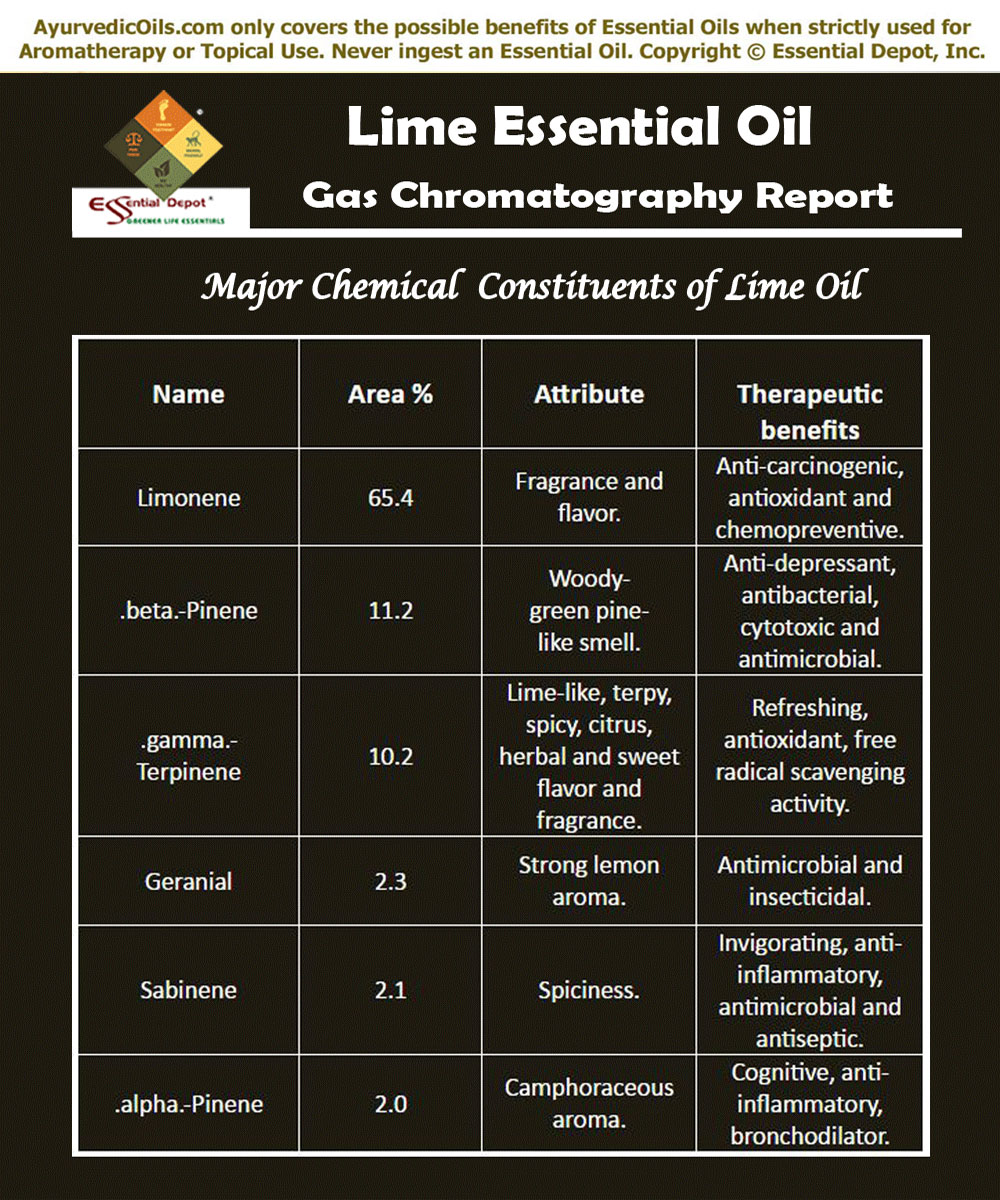
According to the Gas chromatography report, Lime oil constitutes of 13 chemical components that contribute to its fragrance, therapeutic attributes, consistency and quality of this oil. Of which, Limonene contributes to the highest proportion of Lime oil constituents with about 65.4% of its total composition.

Just click on:

I believe that this must certainly help you in getting to know the exclusive information about these prime chemical constituents of Lime oil.

The table crafted below clearly depicts the unique nature and contributions of these biochemical constituents to the healing magnificence of Lime essential oil.

lime-oil

Therapeutic properties of Lime essential oil:

A 2003 study on ‘Characterization of aroma volatiles in key lime essential oils (Citrus aurantifolia Swingle)’ state “Geranial, neral and linalool were found to dominate the lime oil aroma in both oils, which accounted for their fresh, floral citrus-like character.”

These components contribute to its remedial values like astringent, tonic, haemostatic, disinfectant, antiseptic, antimicrobial, antiviral, aperitif, restorative, stimulant and bactericidal.

Ayurvedic health benefits of Lime essential oil:

Nature is the best teacher and shows its love to everyone on Earth with maternal care and affection. That is why we call nature as ‘Mother Nature’. Ayurveda is a traditional medicinal system that trusts upon Nature for its healing methodologies. This ancient philosophy states that every human being is a part of nature and his/her health condition completely depends upon one’s balance with nature.

Man/woman is made up of the same 5 vital elements of nature namely water, earth, ether, air and fire. These elements combine together in making up the individual constitution of a human being. By this way every individual has a unique constitution identified with the combination of 3 vital bio-energies called as doshas. They are vata dosha that is made up of air and ether, pitta dosha that comprises of fire and water and kapha dosha that is a grouping of water and earth.

Ayurvedic treatments differ from individual to individual even for the same health disorder. This is because every individual has a predominance of any one of the three doshas that determines their state of health, personality and behavior and balance between these doshas indicates hale and heartiness.

Ayurvedic texts prescribe natural remedies like essential oils, herbs, Ayurvedic routine, yoga, physical exercises and meditation for treating dosha imbalances, healing illnesses, preventing it in future and for healthy aging.

Lime is known for alleviating all the three doshas vata, pitta and kapha.

Let’s take a look at the Ayurvedic health benefits of Lime essential oil:

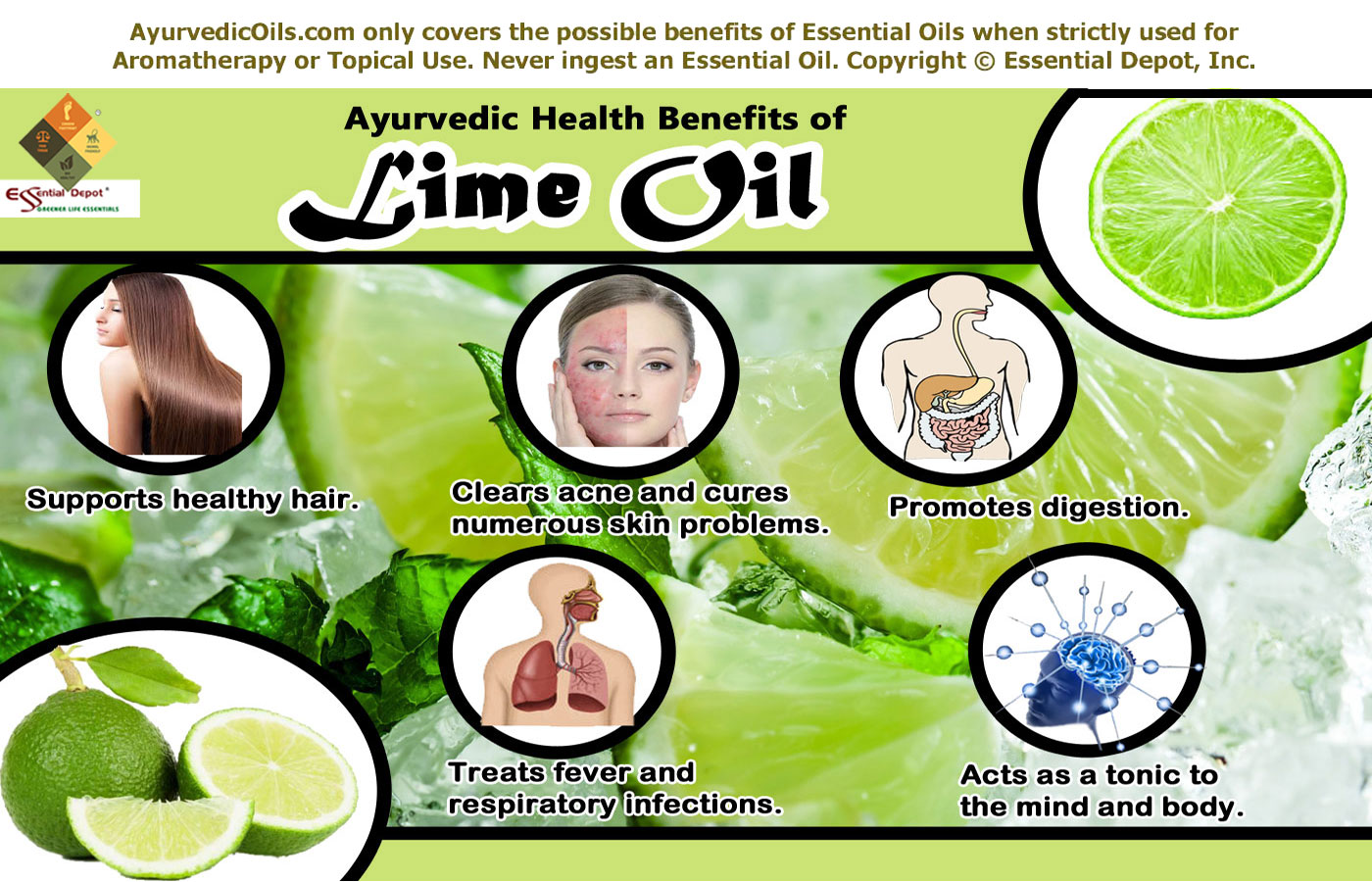
Lime-broucher1. Supports healthy hair:

Lime is one among the best essential oils for treating dull, oily, lifeless, rough, frizzy and greasy hair. This oil has a handful of essential nutrients that nourish the scalp and add natural shine to your hair.

Oily and greasy hair are the most prominent reasons for inviting dandruff as these types of hair attract dust and dirt very easily. LIme removes oil quickly and moisturizes the scalp from within, helping you to get rid of dandruff, dry and itchy scalp. Indian healthcare practitioners consider Lime oil as a traditional hair conditioner.

Add 2 drops of Lime essential oil along with your shampoo or conditioner before applying on hair. This aromatic bath assists in cleansing the hair, removing excessive oil, reducing dandruff and making the hair manageable.

You can also add 3 drops of Lime oil with 30 drops of sesame oil and heat it in medium flame. Gently massage this warm oil blend on to your scalp and part lines. This massage aids in enriching the scalp by helping it absorb this oil and nourish your hair from the roots. It also increases blood circulation and promotes the growth of healthy hair.

2. Clears acne and cures numerous skin problems:

Acne is a burning skin problem among teenagers all over the world and it is said that about 85% of the global populace are affected by acne at some point of their life. It occurs mainly due to the excess secretion of oil by the sebaceous glands rooted deeply in the skin surface.

This excess oil blocks the glands and cause bacterial growth and inflammation leading to boils, pimples, whiteheads, blackheads and pustules that are collectively known as acne.

Mayo clinic recommends the use of products that can control excess oil and treat inflammation. Lime and its essential oil is the best natural cure for clearing acne and the marks left over by acne as it has rich vitamin C and flavonoids acting as antioxidants, which detoxify and cleanse the skin. Applying 2 drops of Lime oil blended with 15 drops of jojoba oil can assist in washing out impurities from the skin and influence the growth of new skin cells.

Lime essential oil has antiseptic, bactericidal, disinfectant and astringent properties that fights against harmful bacteria causing skin infections, heals cuts, wounds, boils, cellulites, varicose veins, acne and other skin eruptions.

A 2006 study on ‘In vitro antibacterial activity of some plant essential oils’ published in PubMed evaluated the antibacterial activity of about 21 essential oils against 6 bacterial species including 2 gram-positive bacteria Staphylococcus aureus an  Bacillus subtilis and 4 gram-negative bacteria Proteus vulgaris, Klebsiella pneumoniae, Escherichia coli and Pseudomonas aeruginosa.

This study concluded stating that among the 21 essential oils tested “Cinnamon, clove and lime oils were found to be inhibiting both gram-positive and gram-negative bacteria.

Blending 2 to 3 drops of Lime oil with 20 drops of Olive oil and massaging it on the affected areas can assist in treating eczema, cuts, psoriasis, carbuncles, sores, skin ulcers, rashes and gangrene. Founder of the Polarity therapy, Mr. Randolph Stone states that Lime oil blended with Olive oil is an excellent remedy for treating eczema.

3. Promotes digestion:

Dr. Lakshmi Senaratne, senior Ayurvedic scientist at Bandaranaike Memorial Ayurveda Research Institute says that Lime and its essential oil have stomachic properties, thus it naturally promotes the secretion of bile and other gastric juices.

This helps in supporting the regular digestion process and enhances your appetite. Being a good laxative, this oil is also effective in treating nausea, dyspepsia and flatulence.

The anthelmintic properties of Lime essential oil treat diarrhea, vomiting, indigestion, exhaustion and abdominal pain. It also aids in controlling thirst. She also says that the ability of Lime to lessen pitta and vata energies makes it a powerful remedy for treating vomiting, anorexia, thirst and bleeding disorders.

All you need to do to improve your digestive process is to add 2 drops of Lime oil in 20 drops of sesame oil and gently massage on your abdomen. You can also use few drops of this oil in warm or cold compress to treat stomach pain and other discomforts.

3 to 4 drops of Lime oil added to warm bath is also effective in easing the process of digestion. Inhaling the refreshing citrus aroma by adding 2 drops to your burner or diffuser can help control nausea, morning sickness and improve your appetite.

4. Treats fever and respiratory infections:

Lime essential oil has febrifuge properties that assist in controlling your body temperature by reducing pitta dosha responsible for the temperature level of your body. Massaging your body or your foot soles with 3 drops of Lime oil blended with 20 to 25 drops of coconut oil or 3 drops added to cold compress can reduce your fever gradually by detoxifying your system and eliminating the harmful toxins and fever causing infections through sweat.

The antiviral, antibacterial, antimicrobial, immune stimulant and tonic properties of Lime oil aid in fighting against microbes causing cold and fever, strengthening the immune power, combating the growth of detrimental micro-organisms and making the body resistant against infections. 2 drops of Lime essential oil added to steam inhalation can help in treating cold, flu, sinusitis, bronchitis, cough, sore throat, asthma and other similar respiratory infections.

You can also mix 3 drops of Lime oil with 20 to 25 drops of coconut oil and apply it on your chest, neck and back for good relief. It helps loosen the phlegm deposits causing congestion in the bronchial passages. You can also add 1 drop of Lime oil to a cup of warm water and use it as a gargle for treating sore throat and for freshening your breath.

5. Acts as a tonic to the mind and body:

Lime has a divine aroma that is refreshing, rejuvenating, revitalizing, strengthening, uplifting and calming in nature. It helps in purifying the aura and strengthening the heart chakra responsible for love for others and self.

Adding 2 drops of Lime oil to your vaporizer, diffuser, burner or aromatic lamps can help in improving your concentration power and your immunity. This is mainly because of the tonic and restorative properties of Lime oil that helps you regain the lost energy of the mind and body due to diseases or emotional breakups.

Adding 3 to 4 drops of Lime essential oil in your bath tub can assist in relieving stress, depression, irritation, anxiety, muscular pain, tension, lack of self-confidence and negative feelings. Lime oil fortifies the mind and body by drawing the energies inward and helps an individual to focus without any distractions.

Disclaimer:

Never use essential oils internally. Do not go out in the sun immediately after using Lime essential oil on your skin as all citrus oils has phototoxic effect and can cause irritation when exposed to the harmful UV rays. Always remember to dilute essential oils before using them topically.

Consult your Ayurvedic practitioner before using the suitable essential oils for your individual constitution and state of health. This article is only for educational purpose and is not intended to replace any professional advice or prescribed medication.

The MSDS (Material Safety Data Sheet) of Lime oil is readily available for your enhanced safety and better usage.

Gas Chromatography Report (GC analysis) of Lime oil.

Lime Essential Oil Possible Skin Issues:

Greener Life Diamond – Bio-Healthy Score => 3 – Possible Skin Issues:

See => http://www.essentialdepot.com/GreenerLifeDiamond.html

Lime essential oil has photosensitizing effect that can end up in causing irritation of the skin, allergic reactions, burning sensation, phytophotodermatitis, hyperpigmentation (change of skin color, visible especially in people with white skin complexion) and certain other effects. This is said to happen mainly because of Lime oil’s potent to stimulate the skin photosensitivity, when it is exposed to observable sunlight up to 12 hours of use.

The underlying cause is the response of the photoactive chemical constituents that attracts UV light radiation and contributes to toxicity through molecular alterations in the surface of the skin.

The primary chemical constituent responsible for the photo-carcinogenic, skin sensitizing and other topical effects of the essential oil of Lime is Limonene and certain other furanocoumarins.

A 2014 study published in the Journal of Community Hospital Internal Medicine Perspectives reveals about a skin condition called as phytophotodermatitis, induced by Lime, where a 24-year old nurse came up with red demarcated tender patches and crusted vesicles after squeezing fresh limes and going out in sun on a bright day.

Phytophotodermatitis is defined as a nonimmunologic eruption of the skin that occurs after its contact with phototoxic components in certain plant varieties and is then exposed to ultraviolet A (UVA) radiation through visible sunlight.

Few other studies also witness the effects of photosensitization of Lime and Lime-based products containing psoralens, paving way for burns, blisters, bullae, eruption, erythematous vesicles, rashes, inflammation and hyperpigmentation. It is also been said that in certain severe cases, systemic toxicity come with the rashes, which includes nausea, vomiting and fever.

Lime oil has also been reported to promote tumors, when tested on rats where most of the papillomas were benign and few were malignant.

The safe dilution level of Lime oil is 0.7%, which is 4.2 drops per ounce of any carrier oils as per the International Fragrance Association (IFRA). This safe dilution level applies only for products used topically to thwart photosensitivity and is not applicable for wash-away products like soaps, shampoos and other bathing products.

IFRA also suggests that Limonene rich essential oils should only be employed, provided the level of peroxides are set aside to the lowest realistic level, for example: by including antioxidants during production.

Lime oil has ‘Generally Recognized As Safe (GRAS)’status by FDA (U.S. Food and Drug Administration). As per the European regulatory body, essential oils with furanocoumarins must be used in such a way that the level of bergapten should not go beyond 15ppm (parts per million) in ready to use cosmetic products after which the skin is subjected to exposure of direct sunlight and this does not apply for wash-off products. The level of bergapten should be1 ppm in bronzing and sun protection products.

For your information, Furocoumarins are also used in healing practices on par with the long-wave ultraviolet light therapy for treating vitiligo, psoriasis and mycosis fungoides.

Reference Links Substantiating the Possible Skin Issues of Lime Oil:

  1. Lime-induced Phytophotodermatitis by Dr. Andrew Hankinson, Dr. Benjamin Lloyd and Dr. Richard Alweis, published in the Journal of Community Hospital Internal Medicine Perspectives and PubMed
  2. Citrus aurantifolia, American Herbal Products Association’s Botanical Safety Handbook, Second Edition by Zoe Gardner, Michael McGuffin
  3. Essential Oil Safety: A Guide for Health Care Professionals By Robert Tisserand, Rodney Young
  4. Leung’s Encyclopedia of Common Natural Ingredients, used in Food, Drugs and Cosmetics by Ikhlas A. Khan and Ehab A. Abourashed.
  5. Safety Information on Essential Oils by the National Association for Holistic Aromatherapy
  6. Lime oil by Mercola.com
  7. A Topical Skin Eruption by Dr. Christina Greenaway, published in the Canadian Journal of Infectious Diseases and PubMed

Thought for the day:

It is written on the arched sky; it looks out from every star. It is the poetry of Nature; it is that which uplifts the spirit within us.          -John Ruskin

Suggested Reading:

  1. Citrus Oils: Composition, Advanced Analytical Techniques, Contaminants, and Biological Activity (Medicinal and Aromatic Plants – Industrial Profiles) From CRC Press
  2. Ayurveda & Aromatherapy: The Earth Essential Guide to Ancient Wisdom and Modern Healing by Dr. Light Miller, Dr. Bryan Miller
  3. Growing Citrus: The Essential Gardener’s Guide by Martin Page
  4. Save Your Life with the Phenomenal Lemon (& Lime!) (Save Your Life!) by Blythe Ayne
  5. The Lemon & Lime Cookbook by Rick Donker

Reference Links:

  1. Lime is Beneficial for Skin and Hair by Namini Wijedasa published in Infolanka.com
  2. Acne by the American Academy of Dermatology
  3. In vitro antibacterial activity of some plant essential oils by Seenivasan Prabuseenivasan, Manickkam Jayakumar, and Savarimuthu Ignacimuthupublished in BMC Complement Altern Med, PubMed
  4. Health Benefits of Lime Essential Oil by Organic Facts


Your resource for quality Essential Oils. Every batch is
GC tested to ensure purity and authenticity.

Black Pepper Oil


Crowned as ‘the King of Spices’ and wholly packed with large amount of solar energy, Pepper is also called as Marich, which is the Sanskrit name for Sun. These petite seeds with mammoth health benefits have been an admirable natural remedy for treating various illnesses ranging from obesity to cancer.

BLack-pepper-oil-broucherOver all its amazing healing values, Black pepper oil has been a vital part of Complementary and Alternative medicinal practices for treating sinusitis, rectal prolapse, cellulites and rheumatism.

Called as Maricha, Vellaja or Kali mirch in Sanskrit and Hindi, Ayurveda recommends Black pepper and its essential oil for treating asthma, sinus congestion, chronic indigestion, cold and other respiratory infections, obesity, improper metabolism, urinary problems, cholera, headache, intermittent fever, toxic remains in the system and for certain other health issues. With the scientific name Piper nigrum, Black pepper is a limb of the plant family Piperaceae.

Purchase Black Pepper Essential Oil – Wholesale – CLICK HERE 

Historical uses and importance of Black pepper and its essential oil:

Held high as the most traded spice of the world, Black pepper is indigenous to the southern parts of India especially the Malabar Coast, Kerala. Pepper, originated from the Dravidian word ‘pippali’ meaning long pepper, is the one among the world’s oldest herb and spice dated to 2 BCE, was used for medicinal and culinary purposes.

In the early 1800s, the word ‘pepper’ was used to indicate ‘energy’ or ‘spirit’, after which it was replaced by the word pep. Prized for its value in commodity trading, it was even called as ‘Black gold’.

The legendary Roman bookThe History of the Decline and Fall of the Roman Empire,’ written by Edward Gibbon quotes pepper as “a favorite ingredient of the most expensive Roman cookery“.

It was used in all most all the predominant cultures of the world. According to certain sources, pepper was said to be used in the treatment of eye problems as salves or in poultices in the 5th century.

Indian saints used pepper for acquiring endurance, especially during fasting and travelling. The traditional Indian medicine is said to have used pepper in treating throat infections, sore throat, congestion, cold and cough.

In general, the most popular uses of black pepper as home remedies accounts to its effectiveness in treating indigestion, gangrene, insomnia, lung diseases, tooth decay, constipation, flu, oral abscesses, hernia, joint pain, diarrhea and certain respiratory problems.

Black pepper is regarded as a priceless natural remedy in Ayurvedic medicine, for its varied uses in treating digestive disorders, respiratory infections, gastrointestinal problems, improper blood circulation, parasitic infections and certain other problems associated with the circulatory system.

The popular Ayurvedic preparation “Trikatu” is a combination of Black pepper, long pepper and ginger is recommended for numerous diseases. It is also used in making Indian chai and is taken for curing headache, cold, sore throat and cough.

The traditional Europeans used pepper as a predominant seasoning in various European cuisines and also as a preservative for perishable goods and meat items.

Herbalists across the world, prescribed Black pepper for treating vertigo, arthritis, rheumatic pain, flatulence, colic, nausea and indigestion. TCM, the traditional Chinese medicine records the use of Black pepper since 2 BCE and recommends its use in healing abdominal spasms, pain, diarrhea and vomiting.

Therapeutic properties and chemical constituents of Black pepper oil:

Black pepper essential oil has various remedial properties and the most important among them are expectorant, febrifuge, antioxidant, diuretic, anti-arthritic, circulatory, analgesic, antibacterial, stimulant, anthelmintic, antiseptic, diaphoretic, antispasmodic, laxative, aphrodisiac, anticatarrhal, rubefacient, anti-inflammatory and carminative.

The major chemical components of Black pepper oil are a-pinene, b-pinene, limonene, myrcene, sabinene, camphene, a-thujone, piperitone, caryophyllene, pinocarveol, p-cymene, b-bisabolene, a-phellandrene, b-farnesene, a-terpinene and linalool. Black pepper is also rich in minerals like iron, potassium, zinc, magnesium, manganese and calcium along with antioxidant vitamins including Vitamin-C and A.

Ayurvedic health benefits of Black Pepper essential oil:

Ayur + Veda simply mean the knowledge of life. It is the oldest medicinal system known to the world with more than 5000 successful years of holistic healing practice. Being the pioneer of all other medicinal systems on earth, Ayurveda focuses on complimenting human beings with absolute health through natural healing methodologies and disciplined lifestyle, leading to prevention of illnesses, aging in the pink and higher life expectancy.

The National Institute of Health precisely articulates this as “The aim of Ayurvedic medicine is to integrate and balance the body, mind, and spirit. This is believed to help prevent illness and promote wellness.”

The earliest Ayurvedic texts namely Sushruta Samhita and Charaka Samhita by the legendary Ayurvedic physicians Sushruta and Charaka educates the world on all kinds of diseases, causes, symptoms, and their treatment methodologies along with various Ayurvedic healing techniques.

Much to our astonishment, these Ayurvedic encyclopedias have talked about intricate surgeries including C-section delivery and plastic surgery even before the dawn of modern medical equipments.

The Ayurvedic philosophy insists that everything on earth including human beings are a part of nature and are made up of the five vital elements of nature namely fire, water, earth, space and air.

Human body is the best representation of these five elements of nature, where earth represents muscles and bones, fire is the vital energy for numerous functions of the body, water stands in the form of blood, air is what we breathe and space/ether is our soul that harmonizes all the functions of the system and keeps us alive.

Ayurveda considers every person as a unique part of nature and states that the handling of diseases should also be unique based upon their individual constitution or prakriti, which comprises of three biological energies or doshas namely vata, pitta and kapha.

Vata is a symbol of air and space and checks the functions of the respiratory and nervous system. Pitta represents fire and water and is responsible body temperature and metabolic functions. Kapha stands for earth and water and is in charge for the sustenance, structure and the movement of fluids in the system.

According to Ayurveda, balance between these three doshas is a symbol of being in harmony with nature and it signifies perfect health, whereas imbalances due to unwholesome food habits, lifestyle changes and climatic conditions denote sickness.

Ayurveda prescribes natural remedies that focus on treating these doshic imbalances with the use of plant essential oils, herbs, and yoga, meditation, Pranayama or breathing practices, simple physical exercises, Ayurvedic routine, prayers, Abhyanga or Ayurvedic massaging and Panchakarma or the detoxification techniques.

The essential oil of Black pepper is believed to reduce kapha dosha and aggravate pitta and vata doshas with its spicy, warming and rich aroma.

The Ayurvedic health benefits of Black pepper essential oil are:

Black-Pepper-Oil1. Trusted Ayurvedic remedy for respiratory infections:

Black pepper and its essential oil is a vital part of the Ayurvedic remedy especially in the treatment of respiratory problems including congestion, sinusitis, bronchitis and asthma.

The spicy and warming natural aroma and therapeutic properties like expectorant, antiseptic, antimicrobial and decongestant properties of this sovereign spice assists in weakening the phlegm and mucous amassing and controls the increase of micro-organisms that worsen respiratory problems.

According to Ayurveda, imbalance or excess of kapha dosha contributes to the accumulation of fluid deposits including mucous and phlegm, especially in the chest, nasal, respiratory and bronchial passages.

This leads to respiratory problems like whooping cough, sinus congestion, bronchitis and breathing difficulties. With its potent to decrease kapha dosha, Black pepper is a cherished Ayurvedic and Grandmother’s medicine for alleviating respiratory problems.

Warm milk with 1 pinch of Black pepper powder and 1 pinch of Turmeric powder is a popular Ayurvedic remedy practiced in every Indian family for treating nasal congestion, chest congestion, cough, sore throat, headache and other symptoms associated with cold. Adding 1 drop of Black pepper oil in a cup of warm water and gargling with this mixture can help in treating sore throat and throat infections.

Black pepper oil, appropriately 2 drops of it added to steam inhalation followed by a gentle rub of your throat, chest and back with 2 drops of Black pepper oil mixed with your regular vaporizing ointment can help in treating cold, flu, blocked nasal passages, chest congestion, sinusitis and headache. This natural remedy can also assist in improving blood circulation in the lungs.

2. Relieves digestive disorders:

Undoubtedly, Black pepper is one among the best spices for improving digestion, enhancing the flavor of the food varieties and boosting the functions of metabolism. It is for this reason Black pepper powder is often dusted over all kinds of cuisines, be it a relishing vegetable salad or a lip-smacking chicken curry.

With its digestive, antispasmodic, carminative and anti-flatulent properties, Black pepper essential oil acts as a digestive tonic that treats gas, indigestion, colic and other gastro-intestinal disorders.

Massaging your abdomen with 2 drops of Black pepper oil, 2 drops of Ajwain oil, 2 drops of Lemon oil along with 3 ml of sesame oil can help in expelling gas in the stomach and intestines and also aids in preventing the formation of gas. Adding 1 drop of this oil to your handkerchief or a tissue paper and inhaling the aroma of this oil assists in promoting the secretion of digestive enzymes, bile and other gastric juices responsible for trouble-free digestion.

This also aids in enhancing the appetite, treat constipation, intestinal spasms, colic, indigestion, vomiting, nausea, diarrhea, stomach upsets and other gastrointestinal problems.

3. Reduces fever:

Black pepper essential oil has febrifuge properties along with antiseptic and diuretic values that support the system in reducing fever and maintaining the normal body temperature. Massaging your foot soles with 2 drops of Black pepper oil with 1 drop of Cardamom oil mixed with 2 ml of olive oil can help in reducing fever by promoting urine and sweat along with discharging the toxins in the system and combating the growth of micro-organisms that increase fever.

You can also add 1 drop of Black pepper oil to a wet cloth and leave it on your forehead for improved results. It also opens up the sweat pores and reduces the body temperature slowly by granting absolute relief from fever.

4. Alleviates rheumatism and arthritic conditions:

Rheumatism, according to Ayurveda is caused mainly due to the accumulation of toxic substances, water deposits, salt and uric acid especially in the joints, leading to inflammation, redness, soreness, pain and irritation. Black pepper essential oil has the power to discharge excess water deposits, toxic remains known as ama, uric acid and other calcium deposits through urine.

2 drops of this oil mixed with 2 drops of Frankincense oil and 2 ml of coconut oil massaged slowly in circular movements on the affected parts can help in reducing swelling, inflammation, redness, stinging pain and irritation with its diuretic, anti-inflammatory, antioxidant and analgesic properties.

You can also add 2 drops of Black pepper oil along with 2 drops of lemon oil in warm bathing water for relaxing aching muscles and your entire system. This enriching bath along with the soothing massage with Black pepper oil aids in promoting frequent urination through which the harmful toxins and other excess fluid deposits in the system are ejected.

5. Combats free radicals and fights against cancers:

Black pepper tops the list along with Turmeric as a powerful anti-cancer and cancer prevention spice recommended by the American Institute of Cancer Research. Black pepper has excellent antioxidant properties and high amount of Vitamin C that help in fighting the free radicals responsible for the development of cancerous tumors.

The University of Michigan research has established that the mixture of curcumin (Turmeric component) and piperine (Black pepper constituent) enhances curcumin bioavailability and restrains breast stem cell self-renewal.

Piperine have also been tested and proved for its potent anticancer, antioxidant and anti-inflammatory properties in various cellular studies. According to Dr. Joshua Lambert, Associate Professor of Food Science at Penn State University, the combination of piperine along with green tea Polyphenol epigallocatechin-3-gallate (EGCG) augmented the bioavailability of EGCG in studies with human and animal models.

A study on the “In vitro investigation of the potential immunomodulatory and anti-cancer activities of black pepper (Piper nigrum) and cardamom (Elettaria cardamomum) by the Department of Biology and Chemistry, Faculty of Arts and Sciences, American University of Sharjah, UAE states that Black pepper (Piper nigrum) “enhance the cytotoxic activity of the natural killer cells, indicating their potential anti-cancer effects.” In addition to that it concludes the study by stating that “black pepper and cardamom exert immunomodulatory roles and anti-tumor activities, and hence they manifest themselves as natural agents that can promote the maintenance of a healthy immune system.”

This study also states that the anti-inflammatory and anticancer properties of Black pepper helps in lessening the production of nitric oxide by macrophages, which acts as one of the chief inflammatory intermediaries.

Massaging your system with 5 drops of Black pepper oil, 5 drops of Lemon oil, 5 drops of Orange oil, and 5 drops of Cardamom oil along with 10 ml of coconut oil can help in fighting against existing free radicals and prevent the formation of new free radicals.

You can even add 2 drops of Black pepper oil, 2 drops of Cardamom oil and 2 drops of Orange oil in your bath daily for enhancing your immunity against these dangerous free radicals causing oxidative damages to the cellular structure in the body.

Inhaling the warming aroma of Pepper by adding 2 drops of this oil to your burner or diffuser can also support your healing process in a better manner.

6. Excellent weight-loss formula:

Light Miller and Bryan Miller in their book ‘Ayurveda and Aromatherapy’ recommend a natural weight loss formula with Black pepper oil as the key component. Their recipe for the weight loss method says “10 drops black pepper oil, 10 drops lavender oil, 5 drops frankincense oil, 5 drops sandalwood oil in three ounces of mustard, canola, almond oil or a mixture. To be used externally on areas where you wish to lose weight.”

7. Enormous spiritual and emotional benefits:

On the spiritual and psychological side, Black pepper essential oil is the best choice for people who are highly anxious and keep on worrying every time. The presence of the primary chemical constituent piperine in Pepper is a powerful anti-depressant and helps in treating depression and is known to enhance the cognitive ability.

Inhaling the warm, peppery, energizing and musky aroma of Black pepper oil especially during meditation, Pranayama and prayers by adding 2 drops of this oil along with 2 drops of lavender oil in your vaporizer, burner or diffuser can assist in venting out the negative feelings, augmenting self-empowerment, enhancing physical and mental stamina to overcome challenges and accepting one’s own potential besides all the conflicting thoughts.

Other uses:

Ayurveda states that diabetes occurs due to imbalance of kapha dosha and low digestive fire. Black pepper oil is among those natural diabetic remedies with its positive effect in reducing excess kapha dosha and increasing the digestive fire. It also helps in controlling the insulin levels in the system.

It is also recommended for stimulating the endocrine system, treating low blood pressure, hypertension, obesity and certain other cardiovascular problems. Certain modern medicinal systems also suggest the use of Black pepper in the treatment of dandruff, wrinkles, vitiligo, tooth decay, swallowing problems in neurological and post-stroke patients, cigarette de-addiction and postural instability in adults.

Disclaimer:

This article is only for educational purposes and is not proposed to cure, prevent or diagnose any medical condition or substitute any kind of prescribed medications or expert medical advice. We are not health professionals and we contribute to this data only with the concern of circulating the traditional opulence and proven medical miracles of Ayurveda, the world’s oldest and long-established holistic medical system.

Do not ingest essential oils and always ensure that you dilute essential oils before using it for topical application. This is because, pure and organic essential oils are extremely concentrated liquids and may possibly cause allergic or other negative reactions if used on the skin directly. At all times, make sure that you consult your Ayurvedic practitioner/medical professional before picking up the suitable essential oil for your prakriti or unique individual constitution and state of health.

Thought for the day:

Nature patiently waits and we have only to turn back to her to find relief from our sufferingDr Bach

Suggested Reading:

  1. Black Pepper Essential Oil (Aromatherapy) by Miriam Kinai
  2. Black Pepper: Piper nigrum (Medicinal and Aromatic Plants – Industrial Profiles) from CRC Press
  3. Pepper: A History of the World’s Most Influential Spice by Marjorie Shaffer
  4. Ayurveda & Aromatherapy: The Earth Essential Guide to Ancient Wisdom and Modern Healing by Dr. Light Miller, Dr. Bryan Miller
  5. The Black Pepper Supplement: Alternative Medicine for a Healthy Body (Health Collection) by William Wagner M.D.

Reference Links:

  1. Black Pepper by Wikipedia
  2. In vitro investigation of the potential immunomodulatory and anti-cancer activities of black pepper (Piper nigrum) and cardamom (Elettaria cardamomum) by Majdalawieh AF, Carr RI, Department of Biology and Chemistry, Faculty of Arts and Sciences, American University of Sharjah, UAE, published in PubMed
  3. Black Pepper Oil from Ayurveda and Aromatherapy by Light Miller and Bryan Miller
  4. The spices of Cancer prevention published in the American Institute of Cancer Research’s Update
  5. Medicinal Uses of Black Pepper by Natural Standard