Latin Name: genista scoparius syn. cytisus scoparius,sarothamnus scoparious Alternative Name: scotch broom, banal, basam, besom, bisom, bizzon, Breeam, broom tops, brum, genista green broom, irish tops, link, irish broom. Forms Available: flowering twig, seed.
Broom – genista scoparius syn. Cytisus scoparius and Sarothamnus scoparious – Also known as Scotch Broom, and Irish broom. A Druid Sacred Tree, it is a many-branched erect shrub with simple or trifoliate leaves, and golden “sweet-pea” flowers. A flowering sprig of Broom was a heraldic battle device of Henry II of England who is said to have taken the family name Plantagenet from this medieval “planta genista”.
Flowering broom tips are gathered in spring, before Midsumer, and are later used fresh or dry. The seeds are as useful as the tops. Both are soluble in water and alcohol. The infusion is used to tread cardiac edema. Simmer one teaspoon of the herb or seeds per cup of water for twenty minutes. The dose is one-half cup a day in one-fourth cup doses. Broom is combined with dandelion root, uva ursi, and juniper berries to treat bladder and kidney ailments. Take one part broom, one half part uva ursi, and one half part dandelion root. Simmer until the liquid is reduced to half the original quantity. Add one-half part juniper berry and cool. A pinch of cayenne is sprinkled into each one-eighth cup dose. Caution: Acute kidney problems contraindicate this herb. Broom is a heart tonic. Use one teaspoon of the herb per cup of water, and do not exceed more than one-half cup per day. One to ten drops of tincture may be given as a dose.
Other Uses: Broom flowers bound with colored ribbons are carried at weddings. Couples may choose to “jump the broom” as they make their transition to a new station of life. Broom can be substituted for furze, gorse, at Spring Equinox.
Latin Name: lycopus virginicus Alternative Name: gypsy weed, water horehound, gypsy wort, horehound, sweet bugle Forms Available: root
Bugleweed – lycopus virginicus – this herb is used to treat hyperthyroidism, it decreases the level of thyroid stimulating hormones and slows the pulse. It is also has astringent and sedative properties.
Caution: do not use if pregnant or suffering hypothyroidism.
Aromatherapy & Health Uses: This herb is used to treat hyperthyroidism, it decreases the level of thyroid stimulating hormones and slows the pulse. It is also has astringent and sedative properties.
Latin Name: arctium lappa Alternative Name: hurr-burr, thorny burr, cocklebur, lappa, cockle buttons Forms Available: root, extract
Burdock – arctium lappa – this herb aids the liver, kidney, and bowels – it is a great detoxifier and cleanser. It is also used as a diuretic. It can be used both internally and externally in the relief of herpes, psoriasis, eczema, acne, boils and sores. It is a mild laxative and has both anti-bacterial and anti-fungal properties.
Aromatherapy & Health Uses: This herb aids the liver, kidney, and bowels – it is a great detoxifier and cleanser. It is anti-bacterial, anti-fungal, a diuretic, and a laxative.
Latin Name: ranunculus acris Alternative Name: gold cup, mao chin, meadow buttercup Forms Available: flower, leaf
Buttercup – ranunculus acris – The buttercup, crushed in a poultice and applied to the chest is relief for colds. The scent of the flowers and leaves is a headache remedy. Used externally for relief of rheumatism.
Aromatherapy & Health Uses: The buttercup, crushed in a poultice and applied to the chest is relief for colds. The scent of the flowers and leaves is a headache remedy. Used externally for relief of rheumatism.
Latin Name: asclepias tuberosa Alternative Name: pleurisy root, silkweed, tuber root, colic root, canada root, flux root, milkweed Forms Available: root, flower, leaf
Butterfly Weed – asclepias tuberosa – this plant is also known as “pleurisy root”: it is considered to have expectorant qualities that loosen and remove phlegm as well as relieving the pain of pleurisy by reducing the inflammation of the pleural membranes. The roots are also used in a poultice to relieve bruising, wounds, and swellings.
Aromatherapy & Health Uses: A well used plant in the treatment of pleurisy: loosens and removes phlegm, reduces pleural membrane inflammation.
Cajeput – melaleuca leucadendron – steam distilled leaf/bud, Indonesia. Its scent is peculiar, musty, sweet, penetrating, camphor-like. As part of the Melaleucas, it has great value in skin care and for wound cleansing. It is analgesic, antiseptic, expectorant, and stimulant. Stimulates the mind and assists with getting it back into balance, helps clear thoughts.. Soothes colic and vomiting. Could help with cystitis. Its antiseptic and expectorant properties make it excellent for respiratory tract infections such as colds, laryngitis, bronchitis and it may be helpful for asthma, as well as for nasal and sinus congestion. Its pain relieving properties make it useful in massage for neuralgia, headaches, gout, muscle stiffness and general aches and pain. It is useful for treating painful periods, delayed menses and spasmodic dysmenorrhoea. Its antiseptic properties make it useful for treating acne and psoriasis. It has been used for genital herpes, hemorrhoids and varicose veins. The oil is also reputed to have insect repellent qualities and is the best essential oil to apply undiluted to fire ant bites, preferably immediately after being bitten. Cajeput is considered non-toxic but may irritate the skin in high concentrations. Blends well with bergamot, clove, lavender and rosewood. Not to be used on pregnant women!
Aromatherapy & Health Uses: It is analgesic, antiseptic, expectorant, and stimulant. Stimulates the mind and assists with getting it back into balance, helps clear thoughts.. Soothes colic and vomiting. Could help with cystitis. Not to be used on pregnant women!
Learn more about the Greener Life Diamond and the benefits of the Greener Life Club
Latin Name: calendula officinalis Alternative Name: calendula, holigold, pot marigold, bride of the sun, drunkard, goldes, husbandman’s dial, Marybud, marygold, mary gowles, ruddes, oculis chrisi, ruddles, spousa solis, summer’s Bride Forms Available: CO2 extraction, leaf, powder, flower
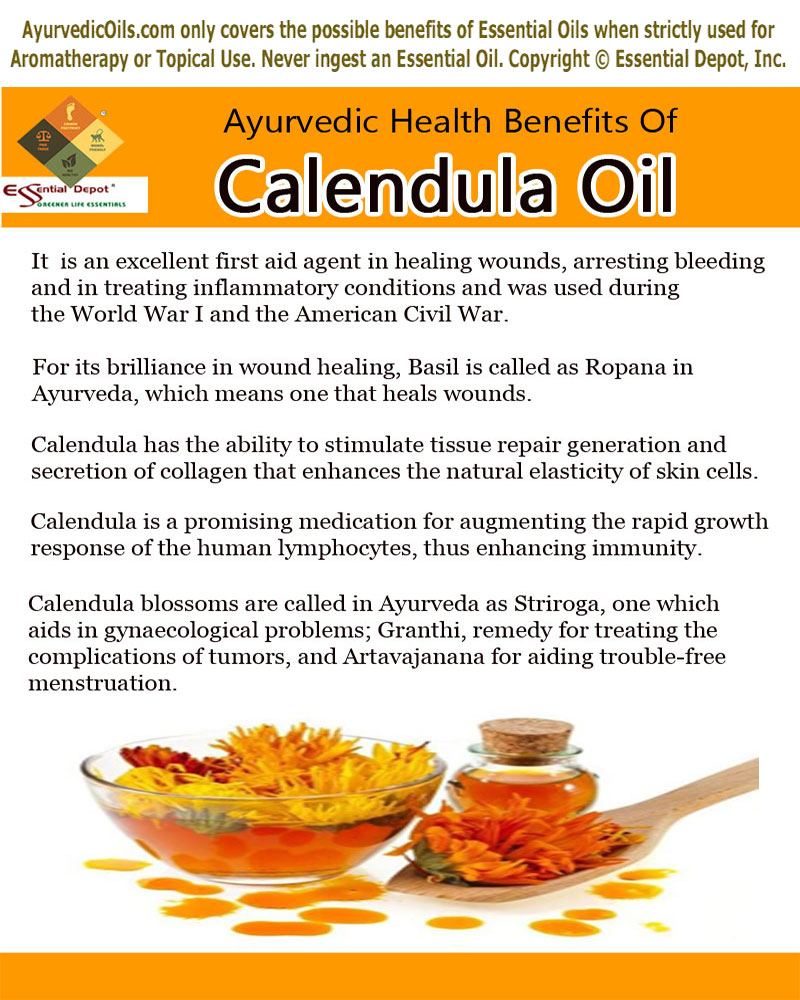
Calendula is Marigold – calendula officinalis – A Druid sacred herb, this cheerful annual or perennial has hairy leaves and golden-orange daisy flowers. The leaves are added to salads and garnishes of flowers color rice and fish dishes. Calendula is antiseptic and antifungal and contains hormone and vitamin A precursors. Essential oil is extracted from the petals but is extremely expensive.
The word ‘Marigold’ means ‘Virgin Mary’ and is trusted to possess divine healing properties and even today, these flowers are used to honor Mother Mary during numerous Catholic occasions. It is also used to decorate the deities during auspicious religious gatherings in the Hindu tradition in India.
The ancient Greeks and Romans wore garlands and crowns made with the dazzling golden color Calendula flowers and these beautiful blossoms were also used in religious ceremonies and other rituals. The traditional Egyptians believed that these sacred flowers had revitalizing attributes.
The bright golden color petals were also used in textile industry as a source of natural dye for fabrics and it was also used as a natural colorant in cheese and butter varieties. These flowers are a popular ingredient in many Middle Eastern and Mediterranean cuisines along with stews and soup varieties in Germany, for which it is called as ‘Pot marigold’.
The flowers are a healing agent. Added to fomentations, poultices and salves, they speed healing of wounds and of nerve damage. The infusion is given for intestinal problems and to clean lymph and blood. Useful in fevers, the herb can be used fresh, dry, or in tincture. For tea, steep two teaspoons of flowers per cup of water for twenty minutes; take one teaspoon per hour. Using tincture, take five to twenty drops four times a day.
Visit AyurvedicOils.com for more information on the traditional ayurvedic and aromatherapeutic uses of Calendula Oil. Learn about the natural chemical components that give Calendula Oil its fragrance and therapeutic characteristics.
Aromatherapy & Health Uses: Anti-inflammatory and antiseptic. Aids healing of skin infections, ulcers, hemorrhoids.
Other Uses: Known as “summer’s bride”, the yellow calendula embodies the Sun’s fire and life sustaining virtue. Calendula is carried into court for a favorable verdict. In the mattress it encourages prophetic dreams. Pick in full sun.
Thought for the day:
“The marigold goes to bed with the Sun And with him rises, weeping.” -Shakespeare
Latin Name: eschscholzia californica Alternative Name: gold poppy, poppy Forms Available: flower, leaf, root
California Poppy – eschscholzia californica – antispasmodic, sedative and analgesic. Also a diuretic that promotes perspiration. The sap has been used to relieve toothache.
Aromatherapy & Health Uses: Used to treat nervous tension, insomnia and anxiety. Also believed to help stop bedwetting. A diuretic, antispasmodic, analgesic, sedative.
Calliopsis – coreopsis tinctoria – A poultice applied to skin helps with healing of bruises and sores. Used in tea, treats stomach ache, diarrhoea, fever, gastritis, and dysentery. Also, a weak calliopsis tea makes a wonderful eyewash.
Aromatherapy & Health Uses: The tea treats stomach ache, diarrhoea, dysentery, fever and gastritis. Externally, the tea releaves sores and bruises. Also a good eyewash
Camelina Oil – camelina sativa – This oil is also known as false flax or gold-of-pleasure and is high in Omega-3 linolenic acid. Records of plant cultivation date back as far as the Iron Age as the oil was used as a source of fuel as well as a skin moisturizer. Research shows that Camelina oil has good skin softening properties. It is emollient, has good spreading properties, provides lubricity in both hair and skin preparations, and improves skin elasticity. Camelina oil can be used as a replacement for sperm whale oil in lipsticks and other solid products.
Aromatherapy & Health Uses: Skin softening properties. Provides lubricity in both hair an skin preparations.