Category Archives: Essential Oils – Learn About and Purchase

Tomar Seed Oil


With the botanical name Zanthoxylum armatum, the Winged Prickly Ash tree is a member of the Citrus family Rutaceae. Tomar tree is indigenous to Eastern Asia to China along the Himalayas and few other parts of India. The essential oil is extracted from the seeds of this tree through steam distillation method. The naturally spicy, warm, woody, peppery, rich and floral aroma has made its use remarkable since the pre-historic period.

Ayurvedic system of natural healing has used Tomar seeds for treating numerous health conditions including oral problems and this is the main reason why this tree has been named as Toothache tree. This is a proven fact and is in practice even in today’s contemporary living. Popular Indian Ayurvedic toothpaste like Dabur Red toothpaste has Tomar seeds for its antiseptic and odor fighting potential along with other powerful herbs like pippali, kashni, lavanga, sunthi, pudina, maricha, karpoora, and hareetaki.

Purchase Tomar Seed Oil – Wholesale – CLICK HERE

Tomar tree is also known with other popular names like Toothache tree, prickly ash, suterberry, yellow wood, tumbru, darmar, tumru, timroo, tejphal and mukthrubi. The most common synonym for Zanthoxylum armatum is Zanthoxylum alatum. Tomar seed oil is pale yellow in color with an energizing aroma for which it has been mainly used in the making of apothecary perfumes, incenses, colognes, forest notes and certain other high class floral compositions.

Traditional uses: The time-honored use of Tomar tree includes its use by various communities across the globe. The social and ethnic groups in the Uttaranchal Himalaya use Zanthoxylum armatum for medicine, food and barter.  This tree is regarded to have religious importance and magical powers. Every part of the tree including the fruits, bark, stem and fresh leaves are used for various purposes. The decoction extracted from the bark or fruits or seeds of this tree were used as a sweet-smelling tonic for treating cholera, dyspepsia and fever.

Timur fruits are used as spices, condiments, medicine and as flavoring agents for soups and many other conventional dishes. It is used as a trusted remedy for treating cough, stomach problems, common cold, toothache and fever. It is also said that the Sino-Annamites used the fruits and leaves of this tree as emmenagogue, astringent and carminative. The branches of this tree are used as a natural toothbrush. A fresh or dried Tomar fruit is kept on the affected tooth for curing toothache instantly.

Ayurvedic health benefits of Tomar Seed Oil: Ayurveda strongly believes that human beings are a part of nature and the remedy for their illness should also be from nature. Ayurvedic principles state that the universe is made up of five elements like fire, water, earth, air and ether. Human body also has these five fundamental elements as a combination of doshas or the individual body types namely vata, pitta and kapha. A healthy lifestyle and harmony with nature’s law of living aids an individual to live a long, healthy and harmonious life according to Ayurveda.

This spiritual science also states that health is a combination of physical, mental and spiritual well-being and any disease is an indication that the body is in disharmony with nature. The most stunning fact about Ayurveda is that it treats the individual as a whole instead of the disease alone. It supports this common sense science to identify the root cause of an illness and treat it naturally and prevent it in the future also.

Ayurveda states that the tree of Tomar known as Tumburu or Gandhalu in the Ayurvedic world is yet another significant gift of nature to mankind. The essential oil extracted from the seeds of this tree are said to have healing properties like antiseptic, hepatoprotective, stomachic, disinfectant, deodorant, anthelmintic and carminative.

Effectiveness in treating hepatic diseases: Human liver is the major organ for governing the process of metabolism, excretion and certain other physiologic activities of the body. The most common disorder that affects the liver is hepatic diseases. Such hepatic damages are mainly due to toxins in the food, pharmaceuticals like CNS active agents and antibiotics, peroxides in edible oils, hepatotoxic chemicals like alcohol and certain other environmental pollutants. Ayurvedic medication has explored numerous natural remedies for treating liver diseases, which are still in use in many parts of India since centuries. When compared to modern medications like immunosuppressive agents and corticosteroids, these natural Ayurvedic remedies are claimed to grant better relief in a longer run.

Tomar seed oil is said to possess antioxidant properties and it also contains phenolic compounds. It is a proven fact that plants that contain antioxidant property is also said to exhibit hepatoprotective action. A renowned study on ‘Hepatoprotective Effect of Zanthoxylum armatum DC’ proved that the presence of ethanolic extracts in Zanthoxylum armatum showed hepatoprotective effect against liver damage by regularizing the increased levels of the hepatic enzymes and showed shielding effect on the plasma membrane of hepatocytes. This proved the effectiveness of using this herb in Ayurvedic treatment for liver disorders.

Natural insecticide: The essential oil of Tomar seeds yielded nearly 28 compounds and the major ones being monoterpenes and oxygenated monoterpenes. This oil also showed antifungal properties against 24 different fungi. It also exhibited repellent and larvicidal activity against three mosquito vectors, proving it as an effective natural alternative to chemical larvicides.

Other health benefits: This oil was trusted to give warmness to the body and was recommended for treating ailments like rheumatism, bronchitis, indigestion, asthma, varicose veins, toothaches and cholera. It was also proved that Zanthoxylum armatum showed spasmolytic effects that make it a natural remedy for treating cardiovascular, respiratory and gastrointestinal disorders. Another research published in PubMed evidenced the antioxidant, antifungal, antiaflatoxin activity of this essential oil. Tomar seed oil has also been used as a gentle massage oil blended with carrier oils like coconut oil to treat fibrositis, rheumatism, leg cramps, varicose veins and certain other skin problems. It is also said to stimulate the mucous membranes, lymphatic system and promote blood circulation.

Disclaimer: All essential oils are highly concentrated liquids and applying them directly on your skin or taking it internally is not advisable unless and otherwise recommended by your Ayurvedic practitioner as per your health conditions.

Thought for the day:

Nature goes her own way, and all that to us seems an exception is really according to order. – Goethe

Suggested Reading:

  1. The Illustrated Encyclopedia of Essential Oils: The Complete Guide to the Use of Oils in Aromatherapy & Herbalism by Julia Lawless
  2. The Complete Book of Essential Oils and Aromatherapy: Over 600 Natural, Non-Toxic and Fragrant Recipes to Create Health – Beauty – a Safe Home Environment by Valerie Ann Worwood
  3. The Aromatherapy Bible: The Definitive Guide to Using Essential Oils by Gill Farrer-Halls

Reference Links:

  1. Traditional Uses and Conservation of Timur (Zanthoxylum armatum DC.) through Social Institutions in Uttaranchal Himalaya, India by Conservation & Society Journal
  2. Hepatoprotective Effect of Zanthoxylum armatum DC by the Institute of Pharmacy and Emerging Science
  3. Safety assessment of Zanthoxylum alatum Roxb. essential oil, its antifungal, antiaflatoxin, antioxidant activity and efficacy as antimicrobial in preservation of Piper nigrum L. fruits by PubMed
  4. Chemical composition and larvicidal activities of the essential oil of Zanthoxylum armatum DC (Rutaceae) against three mosquito vectors by National Institute of Malaria Research

Frankincense Oil


Frankinsence-banenrRepresented as an ‘Emblem of Prayer’, Frankincense is yet another Biblical oil that brings you close to heaven by appeasing your mind, relieving your pain, strengthening your positive emotions and implanting enormous beauty benefits.

Extracted from the gum or resin of Boswellia frereana tree by steam distillation, Frankincense essential oil is often held high for its power to spread health and heartiness in a magic of minutes, just like that.

Ayurveda quotes the use of Frankincense as ‘dhoopan’, and burning Frankincense everyday in homes is trusted to bring good health in Indian culture.

Known as ‘Dhoop’ in Sanskrit, Frankincense and its essential oil have been used for more than thousands of years in Ayurvedic healing in the treatment of respiratory illnesses, arthritis, weak female hormone system, rheumatism, skin infections, wounds, womanly problems and for cleansing the air.

Purchase Frankincense Oil – Retail – 4 oz – CLICK HERE

Purchase Frankincense Oil – Wholesale – CLICK HERE

Historical uses and importance of Frankincense and its essential oil:

Frankincense is represented as a ‘symbol of the divine aroma’ and as an ‘emblem of prayer’ in various chapters of the Bible including Psalm 141:2; Luke 1:10 and Revelation 5:8, 8:3. Best known as one of the three gifts gifted to Infant Jesus by the wise men, the existence of Frankincense dates back even before the birth of Jesus Christ. Given the credit of the most spiritual oil of the Middle East, it has flawless healing benefits with an inbound immaculate aroma.

People of all religions consider Frankincense as a symbol of sacredness and it is witnessed with the presence of this mesmerizing fragrance in various religious ceremonies. Frankincense is an important symbol of trading carried out in Arabian Peninsula and North Africa for more than 5000 years ago that the temples of the ancient Egyptian Queen Hatshepsut are adorned by murals depicting sacks of Frankincense traded from the land of Punt.

Prepared from the resin of Frankincense or olibanum trees by steam distillation method, this oil is a part of the traditional medicinal system including Ayurveda, Traditional Chinese Medicine and in certain other folklore remedies in treating wounds, arthritis, digestive disorders, rheumatism, and weak immune system and in promoting healthy skin.

Frankincense has its name etched in Naturalis Historia by Pliny the Elder. The renowned book on ‘Ayurveda and Aromatherapy’ by Bryan Miller and Light Miller quotes the use of Frankincense since ages as “Clay tablets, revealed that, in Babylon, 57,000 pounds of Frankincense were burned every year.” It also says that about 60 tons of this aromatic resin was used in the annual feast of the God Baal in the Assyrian civilization.

Since ancient times, Frankincense is burnt in homes for keeping away from insects, cleansing the atmosphere, warding off sickness and evil spirits and to help reach one’s prayers to the Divine. This holy herbal medicine is burnt even today in numerous Indian homes during the dusk to fulfill their special prayers and guard against bad spirits and harmful insects.

Chemical constituents or Gas Chromatography Report of Frankincense oil:

According to the Gas chromatography report, Frankincense oil consists of 9 major chemical components that contribute to its unique fragrance, therapeutic properties and quality.

Just click on:

For learning more about the extensive information of these chief constituents of Frankincense oil.

Alpha-thujene is the predominant constituent of Frankincense with about 53 % area.

The table below on the Gas Chromatography report talks about the principal chemical constituents and its role in granting the therapeutic and other attributes to Frankincense oil.

Frankincense-OilStudies on the chemical composition of Frankincense oil reveal that it contains monoterpenes, sesquiterpenes and diterpenes such as a-pinene, b-pinene, isoterpenolene, a-phellandrene, b-phellandrene, sabinene, linalool, octanol, octyl acetate, bornyl acetate, incensole and incensyl acetate in different ratios depending upon the species of the Boswellia trees from which the resins are obtained.

Therapeutic properties of Frankincense oil:

Frankincense oil is commonly used for its aromatic, antiseptic, astringent, antibacterial, anti-inflammatory, anti-cancer, anti-tumor, immune stimulant, disinfectant, carminative, cicatrisant, cytophylactic, digestive, diuretic, emmenagogue, sedative, tonic, uterine, vulnerary and expectorant properties.

Ayurvedic Health Benefits of Frankincense Oil:

Ayurveda is an ancient healing science that focuses on longevity and healthy aging through prevention of diseases and a balanced lifestyle that assists in being in harmony with nature.

Ayurvedic healing methodologies were strongly implanted to the human civilization by the powerful Ayurvedic encyclopedias namely Charaka Samhita and Sushruta Samhita.

Charaka Samhita enlightens Ayurveda as a discipline that heals the mind, body and soul and says, “The three – body, psyche, and soul – act as a tripod. The world stands upon them, and within them, the world abides.”

With this thought, Ayurveda regards human body as a temple, where the spirit dwells in and keeping the mind and body clean without any physical illnesses or mental chaos is the way to harmonious living.

The science of Ayurveda rests on the principle of five elements of nature namely fire, water, earth, air and space. According to Ayurvedic philosophy, everything in the universe is a part of nature and contains all these five elements in it.

Human body also consists of these elements in the form of biological energies known as doshas, in various forms so as to represent a unique individual constitution.

Vata dosha represents air and space and is responsible for circulation, nervous functions, respiration and movement. Kapha dosha is a combination of water and earth and is in charge of the structure of the body along with its sustenance. Pitta symbolizes fire and water and is responsible for body temperature and metabolic functions. Balance between these doshas indicates health and imbalance leads to illnesses.

Ayurveda recommends natural remedies like essential oils, herbs, yoga, physical exercises, healthy balanced diet, Ayurvedic routine, meditation and prayers in order to treat these doshic imbalances and treat the illnesses by analyzing its root cause instead of diagnosing its symptoms.

Frankincense is said to have a sattvic or cleansing effect on the mind as well as the nervous system. It assists in burning impurities in the subtle nerve channels. The essential oil of Frankincense clears excess kapha and pacifies vata and pitta doshas.

The Ayurvedic health benefits of Frankincense essential oil are:

frankinsence-broucher1. Strengthens your immune system:

Frankincense essential oil is an exceptional gift of nature that serves as an antiseptic, disinfectant and immune stimulant. Just inhaling the invigorating aroma of this supreme oil by adding 2 drops of this oil to your burner or diffuser, helps build a protective aura around yourself and acts as a shield in fighting against germs and disease causing microorganisms.

A 2002 study on the chemistry and immunomodulatory activity of Frankincense oil conducted by the department of Pharmacognosy of Mansoura University, Egypt states that Frankincense oil exhibited immuno-stimulant activity in addition to its anti-inflammatory, immunomodulatory and anti- leukotriene properties. This study encourages the utilization of Frankincense essential oil for several auto-immune disorders.

The number of leukocytes in the human body determines the strength of the immune system of an individual. Inhaling the fragrance or using Frankincense essential oil in a massage blend (5 drops of Frankincense oil added with 2.5 ml coconut oil) increases the production of leukocytes in the body with its cytophylactic property.

2. Fights against cancerous cells:

Frankincense essential oil has anti-tumor and anti-cancer properties, the attributes of monoterpenes that effectively helps in fighting against the cancerous tumors.

A 2012 research on Frankincense essential oil prepared from hydro distillation of Boswellia sacra gum resins has proved that this oil induces human pancreatic cancer cell death in cultures. It also reverses tumor growth in a heterotopic xenograft mouse tumor model. Studies have also reported that cultured human bladder and breast cancer cells are more sensitive to Frankincense essential oil and yield good results.

3. Pacifies your digestive system:

As a very good source of β-phellandrene and α-pinene, Frankincense essential oil acts as an effective carminative and helps in preventing and expelling the formation of gas in the stomach and intestines. It also acts as a natural antacid and promotes the secretion of bile and other digestive juices.

Mix 2 drops of Frankincense oil with 1 ml sesame oil and massage this blend on your abdomen for relieving flatulence, constipation and other gastro-intestinal problems including stomach pain, feelings of discomfort in the chest and abdominal area.

4. Combats oral infections:

The antiseptic, antibacterial and antifungal properties of Frankincense oil acts as a defensive shield that protects one from germs, bacteria, pathogens and fungi. This defensive mechanism of Frankincense essential oil makes its presence vital in making dental care products like toothpaste, mouthwash, mouth freshener etc.

Add 1 drop of Frankincense oil in a cup of warm water and use it as a natural gargle to keep away from oral problems like toothache, bad breath, cavities, mouth sores and few other oral infections.

5. Pampers your skin health:

Frankincense essential oil often evolves as a perfect rescuer in case of skin problems as it acts as an effective astringent, which helps in retrieving its natural beauty. This oil works on wrinkles and other aging symptoms with its ability to shrink the body tissues and bring it back to its original shape and assist in tightening the skin.

As a cicatrisant, it helps in the formation of scar tissue and yields excellent results in treating scars, fading the after marks of acne, pimples, boils, pox, stretch marks and fat cracks due to pregnancy and childbirth. Add 2 drops of Frankincense essential oil with 1 ml of jojoba oil or to your regular skin care cream and apply it in circular movements to reduce the appearance of wrinkles, scars, marks and micro-wrinkles around the eyes and cheeks.

As an anti-aging agent it helps in the regeneration of healthy cells while keeping the existing ones healthy. Because of its firming and toning activity it strengthens the gums and hair roots and contracts the muscles, intestines and blood vessels that loosen with aging. Frankincense oil acts as a coagulant and helps in preventing blood loss in case of wounds and cuts. It also assists in healing wounds and other skin infections speedily.

6. Helps treat womanly problems:

Frankincense oil acts as an emmenagogue that stimulates the flow of blood in the pelvic area and the uterus, thus regulating the menstrual cycle and functions of the female reproductive system.

It is also uterine in nature and regulates the secretion of estrogen hormone in the appropriate level, thus reducing the risk of cyst formation or uterine cancer in women.

Add 2 to 3 drops of Frankincense essential oil with 1 ml of Evening primrose oil and massage it slowly on your lower abdomen for relieving problems associated with menstruation like abdominal pain, nausea, digestive disorders, restlessness and mood swings. You can also add 2 drops of Frankincense oil in warm bathing water for calming your nerves and promoting peaceful sleep.

7. Relieves respiratory illnesses:

Stagnation of water, toxic substances and infectious micro-organisms in the body pave way for respiratory problems. This is mainly due to excess of kapha dosha and Frankincense essential oil lessens excess kapha.

This oil also has antiseptic, anti-bacterial, anti-inflammatory and expectorant properties that protect one from infectious microbes and helps reduce phlegm deposits in the respiratory tract and inflammation of the nasal and respiratory passages.

2 drops of Frankincense oil added to steam inhalation or mixed with vaporub and applied on the chest, back and throat aids in easing cough, cold, bronchitis, laryngitis, breathing difficulties, asthma and certain other respiratory ailments.

8. Helps in fighting against arthritis:

Frankincense oil has been used since ancient times to treat arthritis, rheumatism and muscular pain. With its anti-inflammatory, diuretic and kapha reducing qualities, this oil also aids in eliminating excess water deposits, salt, uric acid and toxic substances in the body causing pain, swelling and inflammation.

A valuable source states that this oil possesses potent anti-inflammatory, anti-arthritic and analgesic effect that actively treats arthritis, osteo arthritis and pain in muscular joints. Mix 4 drops of Frankincense oil with 2 ml of coconut oil and massage it gently on the painful area or you can also add 2 to 3 drops of this oil to hot compress for quick relief.

9. Alleviates stress and anxiety:

Frankincense essential oil awakens insight, soothes anxiety and frees one from all sorts of worldly pressure that affect the mind and the body. Various studies have proved that incensole acetate in Frankincense oil is an effective anti- depressant and reduces abnormal behaviors due to anger, stress and anxiety.

Adding 2 drops of Frankincense oil in your vaporizer, burner or diffuser assists in attaining spiritual enhancement that balances the mind, body and soul to experience eternal happiness. This healing effect can also be attributed to the presence of carbon based compounds like sesquiterpenes that directly act on the limbic system, known as the control center of the human brain.

Other health benefits:

Frankincense essential oil is also used in the manufacture of soaps, disinfectant cleansers, incense sticks, cosmetics, perfumes, body lotions, oral hygiene products and much more.

Disclaimer:

This article is for the purpose of education only and is not intended for treatment or for replacing any prescribed medication or professional medical advice. Never take essential oils for internal use and always use externally in a diluted manner, as organic and pure essential oils are highly concentrated liquids and may cause allergic reactions if used directly on the skin.

Always consult your Ayurvedic practitioner before choosing the appropriate essential oil for your unique individual constitution and health condition.

The MSDS (Material Safety Data Sheet) of Frankincense oil is readily available for your enhanced safety and healthier usage.

Gas Chromatography Report of Frankincense oil.

Thought for the day:

To be overcome by the fragrance of flowers is a delectable form of defeat.
-Beverley Nichols

Suggested Reading:

  1. Frankincense & Myrrh by Martin Watt, Wanda Sellar
  2. The Ayurveda Encyclopedia: Natural Secrets to Healing, Prevention, & Longevity by Swami Sadashiva Tirtha
  3. Fragrance & Wellbeing: Plant Aromatics and Their Influence on the Psyche by Jennifer Peace Rhind
  4. Holistic Cancer Protocols with Essential Oils by Dr. Deborah McFarland

Reference Links:

  1. Frankincense by Wikipedia
  2. Frankincense in Ayurveda and Aromatherapy by Vishnu Dass, Ayurvedic Herbology
  3. Chemistry and Immunomodulatory Activity of Frankincense Oil by Botros R. Mikhaeil, Galal T. Maatooq, Farid A. Badria, and Mohamed M. A. Amer Department of Pharmacognosy, Faculty of Pharmacy, Mansoura University, Mansoura 35516, Egypt, published in Naturforsch
  4. Frankincense essential oil prepared from hydrodistillation of Boswellia sacra gum resins induces human pancreatic cancer cell death in cultures and in a xenograft murine model, published in BMC Complementary and Alternative Medicine


Your resource for quality Essential Oils. Every batch is
GC tested to ensure purity and authenticity.
Dill Seed Oil


Dill-seed-BannerDill…..a miraculous herb that spells the charm of lull and pulls you out of illness. Having its origin from the Norse word ‘Dylle’, which means ‘to soothe or to lull’, Dill seed oil is well known for its carminative properties that soothes the digestive system and is used in Ayurveda for the treatment of ulcers, fever, cardiac problems, bronchitis, spermatorrhoea, syphilis and menstrual disorders.

Called as Shatapushpa in Ayurveda, Dill seeds are one among the most promising culinary herbs used in the Indian tradition especially during childbirth. Botanically known as Anethum sowa, Dill seed essential oil is extracted from the dried seeds by steam distillation method. These magical little seeds and its essential oil are prescribed in Ayurvedic healing for treating dysentery, menses, diarrhea, inflammation and for mental disturbances.

Purchase Dill Seed Oil – Retail – 4oz – CLICK HERE

Purchase Dill Seed Oil – Wholesale – CLICK HERE

Historical importance of Dill and its essential oil:

Native to the Mediterranean and Black Sea regions, Dill has been used worldwide as an aromatic spice and a healing herb. Ancient Greeks and Romans considered it as a sign of health and wealth and carried the twig of this herb in the belief that it would protect them from curses. Few sources state that a lot of superstitions prevailed in the medieval period that Dill was used to prepare potions for casting spells and protecting one from the ill effects of witchcraft and evil spirits.

Hippocrates, the Father of Medicine used Dill seeds in his medications for oral cleansing. Ancient warriors applied the extract from Dill seeds and twigs onto burns for quick healing. Dill seeds have exclusive carminative properties. It is for this reason that Emperor Charles the Great ordered the presence of Dill on his banquet tables to benefit his guests who indulged too much.

The entire plant of Dill including the seeds, leaves and twigs are equally important and carry the same flavor and aroma. The well known antimicrobial properties of this herb compel the use of Dill seeds in this planet for the preservation of food and in the preparation of pickles.

Easily available to common man, Dill seeds are an aboriginal remedy for curing insomnia, cold, fever, respiratory illnesses, diarrhea, dysentery, flatulence and a recent study has proved that it helps in preventing cancer.

Chemical constituents and therapeutic properties of Dill seed oil:

The proportion of the chemical constituents for all essential oils mainly depends upon the topography, seasons and various other attributes of its nativity. Dill is cultivated all over the world for its valuable benefits. Results of various researches state that Dill seed oil contains carvone, d-limonene, α-phellandrene, dihydrocarvone, eugenol, β-phellandrene, α-pinene, anethole, dillapiole, myristicin, carveol, arginine, β-caryophyllene, apiole, and others.

Antimicrobial, antispasmodic, anti-inflammatory, antihistamine, antioxidant, carminative, digestive, disinfectant, anti-hyperlipidaemic, anti-hypercholesterolaemic, anti-fungal, aromatic, diuretic, galactogogue, sedative, stomachic and sudorific are some of the priceless therapeutic properties of this prized oil.

Ayurvedic health benefits of Dill seed oil:

Dill seeds and few other extracts from this plant including its essential oil is administered to people of all ages in Ayurveda, depending upon their nature of illnesses. Ayurveda means the ‘knowledge of life’ and it aims at longevity through prevention of diseases along with its healing. This ancient wisdom analyzes the root cause of an illness and progresses towards treating the root cause instead of the symptoms alone.

Ayurvedic philosophy states that nature is made up of five vital elements known as water, earth, fire, space and air. It also says that everything on earth is a part of nature so all these things are also made up of these five elements.

Each element represent various parts of the human system, where earth represents muscles and bones, water represents blood and other fluids, air keeps us breathing, fire is the internal force created for movements and various functions of the body and space or the cosmic energy is the soul or spirit dwelling within us.

Human body is considered as a temple in Ayurveda where the spirit lives in and Ayurveda recommends one to keep his mind and body clean and tidy just like a temple for leading a healthy and harmonious life.

Every individual is unique in terms of Ayurveda and this individuality is identified with the distinctive individual constitution comprising of three biological energies known as doshas, namely kapha, pitta and vata.

Vata is responsible for movement, nervous functions, blood circulation, creativity and transmission of air and other vital elements. Pitta energy deals with metabolic functions, decision making skills and body temperature. Kapha dosha takes care of structure, movement of fluids, love and sustenance.

Balance between these doshas indicates healthiness and imbalance causes illness. Ayurvedic remedies like yoga, herbs, meditation, essential oils, physical exercises, Abhyanga and Ayurvedic routine focus on striking absolute balance between these doshas.

Dill seed oil is known to reduce pitta and kapha dosha and has a neutral effect on vata dosha. A recent research highlights the uses of Dill in Ayurveda before thousands of years, which says, “The earliest reference to use of Dill seed in medicine goes back to (700 BC) in ‘Charak Samhita’ (ancient Ayurvedic text), where an infusion of it was given as a cordial drink to women after confinement, the leaves moistened with oil were used as a poultice for suppurative skin conditions.”

The Ayurvedic health benefits of Dill seed essential oil are:

Dill-seed-Broucher-new1. Your perfect partner for health in your kitchen:

Dill seeds have a unique aroma that simply adds up to the flavor of various cuisines. It is one among the primary herbs in a number of kitchens across the globe including Europe, Asia and the Middle East. Also known as Lao Coriander it is often used in pickles and in fish dishes due to the high concentration of carvone which is antimicrobial in nature.

As an aromatic compound, it possesses anti-microbial, anti-fungal and anti-bacterial properties that help in preserving the edible items for a long time. As a natural reducing agent of blood glycerides, Dill seeds have gained popularity as one of the most flavored and healthiest herbs of the Middle East.

Most of the European countries, especially Germany uses Dill seed oil to preserve cucumbers and pickles, affordable to poor people as well. A variety of dishes like soups, sauces, salads, pickles, vinegars, fish and rice become special with the touch of this enticing herb. It is also used in confectionery, cakes, bread and apple pie.

2. Nature’s powerhouse of calcium:

Dill seed oil is a good source of calcium, dietary fiber, manganese, iron and magnesium. The presence of arginine strengthens bones, teeth and helps in the prevention of bone loss that occurs after menopause and even after some severe problems like rheumatoid arthritis. Few reliable sources even state that Dill seed oil is effective for treating hiccups due to its high calcium content.

Skin is the largest organ of the body and any medications used on the skin easily penetrates through the skin. The therapeutic properties of Dill seed essential oil when used topically, enters the skin and reaches the blood stream and heals the system naturally.

The best way to acquire the calcium and other energy nutrients of Dill seed oil is to add 3 drops of this oil to bathing water and massage your body with 6 drops of Dill oil blended with 3 ml of olive oil. This assists in supplying the essential calcium, iron, fiber, magnesium and other nutrients to the body.

3. Promising carminative with handful of digestive benefits:

β-phellandrene, α-pinene and other constituents of Dill seed oil attribute to the carminative property of the oil that helps in preventing the formation of gas in your intestines as well as aid in the expulsion of gas. It helps in the secretion of bile, a fluid produced by liver that aids in digestion. Dill seed oil is also stomachic in nature and assists in curing stomach pains that occur during menstrual cycles. It fights against flatulence, constipation, hiccups and colic in infants.

As an exclusive antimicrobial, antispasmodic and antifungal oil, Dill seed essential oil is recommended for treating dysentery, diarrhea and food poisoning. It fights against infectious microbes, soothes the digestive system and protects from infections and indigestion.

A recent research on ‘Seasonal differences in essential oil composition on Dill seed oil and Parsley oil’ has proven that the antimicrobial compounds like α-pinene, cineole and limonene in Dill seed oil have been proved effective against food-borne pathogens like Staphylococcus aureus, Bacillus cereus, Escherichia coli, and Campylobacter jejun. Dill seed oil fights best against the microbes Aspergillus niger and the yeasts Saccharomyces cerevisiae and Candida albicans.

Mix 2 drops of Dill oil with 1 ml of sesame oil and gently massage on the stomach and abdomen for treating dysentery, diarrhea, flatulence, hiccups and constipation. In case of infant use, blend 1 drop of Dill oil with 2 ml of sesame oil and massage it gently on their tummy in slow circular movements. You can also add 1 to 2 drops of Dill oil in warm bathing water or in diffuser for relieving from digestive disorders.

4. Helps in combating free radicals and preventing cancer:

Dill seed oil is rich in monoterpenes, which activate the secretion of the enzyme glutathione-S-transferase. This enzyme helps in putting together the anti-oxidant molecule glutathione to the oxidized ones thus helping in prevention of cancer. It is also an excellent neutralizing agent of carcinogenic substances like benzopyrenes found in cigarette smoke, charcoal grill smoke, and the smoke produced by trash incinerators.

The anti-oxidant property of Dill seed oil is applied in treating mimic wrinkles around the eyes since it fights against free radicals responsible for various symptoms of aging including wrinkles. Mix 2 drops of Dill seed oil with 1 ml of Jojoba oil or with your regular skin care cream or lotion and gently apply it on your face and other wrinkles prone area for visible results. This massage aids in refreshing and soothing the skin surface.

5. Reduces the level of cholesterol in the body:

A recent study on Dill seeds have been proved to possess antihyperlipidaemic and antihypercholesterolaemic effects. It fights against hyperlipidemia that describes a condition of elevated levels of lipid formation and hyper cholesterol, which is nothing but increased cholesterol level in the body.

Maintaining the level of the fat soluble molecules called lipids and cholesterol in healthy standards yields fitness at all ages especially when you grow older. Massage your body with 6 drops of Dill essential oil blended with 3 ml of coconut oil, followed by hot bath where 2 drops of Dill oil is added to bathing water as well. This aids in decreasing the level of cholesterol and enables to feel light and fit.

6. Insomniates? Then here’s your lovable lullaby:

The soothing, calming and refreshing effects of flavonoids and group B vitamins in Dill seed oil helps in regulating the secretion of hormones and enzymes in our body that pacifies the nervous system. It is generally recommended for people suffering from insomnia and nervous disorders.

Placing cold to warm bags immersed in water with Dill seeds allowed to soak for few minutes, on closed eyelids will help you in experiencing a calming effect. You can also add 2 drops of Dill oil every night in your diffuser, burner or vaporizer for promoting peaceful sleep throughout the night.

7. Helps treat allergies and inflammation:

Dill seed oil fights against inflammation and allergies. People with oral inflammation in the throat and mouth are administered with this oil. Monoterpenes and flavonoids help in cleansing the respiratory system in case of allergies. Add 2 drops of Dill oil in steam inhalation and inhaling this medicated aroma helps in alleviating respiratory infections and allergies.

Aggravated kapha dosha is responsible for causing inflammation due to excess water deposits, salt, uric acid and other toxic substances in the system.  Dill essential oil has the efficiency to reduce increased kapha dosha and its anti-histamine properties helps one in getting rid of inflammation and other infections associated with it. Massage the inflamed and painful parts with 2 drops of Dill oil mixed with 1 ml olive oil for lessening pain, swelling and inflammation.

8. Fights against microbes:

Since Dill seed oil is rich in antimicrobial, anti-fungal and antibacterial properties it acts as a disinfectant and helps in killing the disease causing germs and micro organisms. This oil also acts as a mouth freshener by killing the microbes and fighting against the free radicals that affect the gums and teeth with its antioxidant effects. Add 1 drop of Dill oil in a cup of warm water and use it as a mouthwash for battling against harmful microbes causing oral infections.

Bacteria, fungus, virus and other micro organisms are the root cause of many diseases. Dill seed oil protects you against these infections and is a valuable remedy for cold, cough, flu, fever, bronchitis, spasms, respiratory tract diseases and healing wounds.

Other health benefits of Dill seed oil:

The diuretic property of this oil assists in treating urinary infections and regulates the excretion of urine without any difficulties. Since it induces the secretion of certain enzymes and hormones, Dill seed oil is used to regulate the menstrual cycle, increase the quantity of breast milk, and prevent early ovulation by acting as a natural contraceptive. Dill seed oil is also used in perfumery and cosmetic industries.

Disclaimer:

This article is only for the purpose of education and is not intended to diagnose or replace any prescribed medicines or professional medical advice. Always use essential oils externally in a diluted form, as pure and organic essential oils are highly concentrated substances and can cause adverse effects if used directly on the skin.

Never ingest essential oils unless it is recommended safe by your medical expert. Remember to consult your Ayurvedic practitioner before choosing the right essential oil for your unique individual constitution and health condition.

Thought for the day:

The smallest seed of faith is better than the largest fruit of happiness.
-Henry David Thoreau

Suggested Reading:

  1. Dill (Anethum graveolens L.) (Herb of the Year 2010) from International Herb Association
  2. The Healing Intelligence of Essential Oils: The Science of Advanced Aromatherapy by Kurt Schnaubelt
  3. The Nursing Mother’s Herbal (The Human Body Library) by Sheila Humphrey
  4. A Mother’s Guide to Raising Healthy Children—Naturally by Sue Frederick
  5. Ayurveda & Aromatherapy: The Earth Essential Guide to Ancient Wisdom and Modern Healing by Dr. Light Miller, Dr. Bryan Miller

Reference Links:

  1. Dill by Wikipedia
  2. Composition, quality control, and antimicrobial activity of the essential oil of long-time stored dill (Anethum graveolens L.) seeds by PubMed.
  3. Dill (Anethum graveolens L.) and Parsley (Petroselinum crispum (Mill.) Fuss) from Estonia: Seasonal Differences in Essential Oil Composition by R. Vokk, T. Lõugas, K. Mets and M. Kravets of Tallinn University of Technology, Ehitajate tee 5, EE19086, Tallinn, Estonia
  4. Chemical Constituents of Essential Oil from Anethum Sowa Kurz Seed by Sumitra Singh, Guru Jambheshwar University of Science and Technology, India, published in the Journal of Chemical and Pharmaceutical Research

Fir Needle Oil


Fir needle oil is indeed a sacred oil and is known as the forest healer for its immaculate medicinal uses that sanctify one with an array of health benefits and heartiness. Used as a primordial remedy for treating cold, cough, joint pains and muscular cramps, this highly spirited oil purifies the air and gifts us with a heavenly and infection-free atmosphere.

Fir-needlle-bannerFir Needle oil is extracted from the needle like leaves of Silver fir tree, scientifically known as Abies Alba. It has also been said that Fir needle oil is also extracted from the needles of the Balsam fir tree botanically called as Abies Balsamea and these trees belong to the pine family Pinaceae.

Ayurveda prescribes the use of Fir Needle oil in Abhyanga, the art of Ayurvedic massaging and other remedial practices for treating rheumatism, joint pain, sinusitis, muscular cramps, skin problems and other problems associated with the lymphatic system and the respiratory system.

Purchase Fir Needle Oil – Retail – 4 oz – CLICK HERE

Purchase Fir Needle Oil – Wholesale – CLICK HERE

Historical uses of Fir needle and its essential oil:

Fir needle tree and its various extracts have a long history for its enormous remedial values. The fresh balsamic scent of this tree makes you feel like walking in a forest and reminds of the captivating Christmas Eve.

Fir needles have the real power to purify the air and the soul with its disinfecting and calming properties. And it is for these great reasons; fir needles were burnt in the past after childbirth, to impart good health for the mother and the newborn. The pitch of the tree was used to treat womanly problems like menstrual irregularities. Various parts of the fir trees when mixed with other medicinal herbs were used to treat cancer, tuberculosis and rheumatism.

Poultices made with Fir needles were used in folklore medicine for relieving arthritis, rheumatism and muscular pain. The gums of fir trees were used to prepare ointments to treat itches, sores, wounds, insect bites, boils and infections. The decoction extracted with the bark was used for curing kidney problems and the roots were used in the treatment of heart diseases and rheumatism.

Native Americans widely used fir needles for padding the pillows for peaceful sleep and they also used it as a sudatory for women after childbirth. Fir Needle essential oil is utilized in the manufacture of cosmetic products, perfumes, bath oils, air fresheners, aerosol inhalants and incense. Ancient Egyptians used Fir needle oil to prepare hair growth formula that would elevate and energize the root of the hair when massaged onto the scalp.

Chemical constituents or Gas Chromatography Report (GC) of Fir Needle oil:

According to the Gas chromatography report, Fir Needle oil constitutes of 17 chemical components that contribute to its fragrance, therapeutic attributes, consistency and quality of this oil. Of which, Bornyl acetate contributes to the highest proportion of Fir Needle oil constituents with about 34% of its total composition.

Just click on:

I believe that this must certainly help you in getting to know the exclusive information about these prime chemical constituents of Fir Needle oil.

The table crafted below clearly depicts the unique nature and contributions of these biochemical constituents to the healing magnificence of Fir Needle essential oil.

fir-needle

Therapeutic properties of Fir Needle essential oil:

Fir needle essential oil has numerous effective chemical compounds and the majority of which is monoterpenes. The other constituents include sesquiterpenes, beta-pinene, delta-3-carene, alpha-pinene and terpene ester bornyl acetate, where beta-pinene and delta-3-carene have effective anti-bacterial properties.

The therapeutic properties of Fir needle essential oil are anti-inflammatory, anti-bacterial, anti-fungal, antiseptic, antiviral, invigorating, stimulating, analgesic, anti-tussive, diuretic, antioxidant, astringent, energizer, aromatic, expectorant, deodorant, stimulant and tonic.

Ayurvedic health benefits of Fir Needle essential Oil:

Ayurveda is a common sense science that has a strong reason for everything that pertains to human health. It simply preaches that health is the outcome of one’s harmony with nature and illness occurs when things does not act in sync with nature. This 5,000 years old ancient science aims at striking balance between human health and nature with the use of natural remedies including essential oils, herbs, yoga, Ayurvedic routine, simple physical exercises, meditation and prayers.

Ayurveda is adorably called as the mother of all healing sciences for its brilliance in treating the root cause of an illness rather than just treating its symptoms. By this way, it helps in curing the sickness initially and prevent it in future as well. Charaka Samhita, one among the greatest Ayurvedic encyclopedia states “The three – body, psyche, and soul – act as a tripod. The world stands upon them, and within them, the world abides.

Ayurvedic treatments are not the same for every person as Ayurveda strongly believes that every individual is distinctive with a unique individual constitution just like our thumb impression. So it says that illnesses of individuals should also be treated in a unique manner.

This constitution comprises of three biological energies known as doshas, namely vata, pitta and kapha. These doshas are a combination of five elements of nature, which are fire, water, air, earth and space.

Just like nature, our body also has all the five elements. Where vata represents air and space and is responsible for movement. Pitta stands for fire and water and is accountable for transformation of energies. Kapha symbolizes earth and water and is in charge of structure and fluids in the body.

Perfect health is determined with the balance of all these three doshas and imbalance causes illnesses. Ayurvedic remedies are involved in the act of correcting the imbalances of doshas. Fir needle oil is said to lessen kapha, pitta and vata aggravation.

The Ayurvedic health benefits of Fir needle oil are:fit-needle1. Relieves cough, cold and other respiratory illnesses:

According to Ayurveda, respiratory illnesses occur mainly due to aggravated kapha energy, which causes water retention and excess phlegm and mucous deposits. Along with this, increased vata dosha is responsible for sinusitis, asthma and breathing problems.

Fir needle oil is said to lessen both aggravated kapha and vata and for which it has been used for centuries in the treatment of cold, cough, fever, flu and other respiratory illnesses. Natural Fir needle oil inhalers are used in Ayurvedic healing for treating cold and breathing problems.

The exquisite antiseptic property of this oil helps in maintaining the sanitation of the surrounding by preventing the spread of harmful microorganisms, which are among the primary reasons for respiratory infections.

Fir Needle oil has antitussive properties that acts as an effective cough suppressant. As a refreshing expectorant, this oil loosens the mucous and the phlegm deposits in the lungs and respiratory tract, thus cleansing the respiratory passages and speeding up the recovery process.

Adding 2 drops of Fir needle oil in steam inhalation and inhaling the pine-forest aroma assists in clearing blocked nasal passages, preventing the inflammation of the respiratory organs, alleviating breathing difficulties, treating bronchitis and it helps in maintaining clear sinuses.

Mix 2 drops of Fir needle oil with 1 ml coconut oil and rub it gently on your chest, back and throat for helping with nasal congestion, runny nose, sneezing, cough and flu. Add 3 to 4 drops of Fir needle oil in warm bathing water for feeling light and re-energized as respiratory infections generally make the body feel heavier and drowsy.

2. Alleviates rheumatic and muscular pain:

Fir needle oil has anti-inflammatory, analgesic and diuretic properties that soothes and eases pain and inflammation associated with arthritis, rheumatism and muscular tension. Also known as Silver Fir, the essential oil of Fir is extremely soothing to joints and muscles and acts as an effective aid in lessening pain and inflammation.

With its kapha reducing properties, massaging 3 drops of Fir needle oil mixed with 1.5ml of sesame oil on the painful areas aids in treating water retention, discharging detrimental toxins, salt and other micro-organisms in the body through urine and sweat, reducing inflammation and alleviating pain with its powerful analgesic values. You can also add 3 to 4 drops of Fir needle oil in hot compress or in warm foot bath for decreasing pain and promoting relaxation.

3. Valued in skin care treatments:

Fir needle oil has been in use since the primordial times to protect the skin and retain its natural glow. The astringent properties of this oil is effective in treating acne, injuries, infections, sores, wounds, cuts, mild allergies, insect bites etc.

The anti oxidant properties of Fir needle oil fights against the free radicals and prevents premature aging. Mix 2 drops of Fir needle oil with 1 ml jojoba oil or to your regular skin care cream and apply it on the affected areas in circular movements. This stimulating application to the skin results in mild coagulation of the skin proteins, thus elevating it natural beauty and retaining its youthfulness.

Fir Needle oil is often recommended by dermatologists and Alternative medicine experts in the treatment of psoriasis, itching, pimples, eczema, skin diseases, poor skin, scabies and sores. This is mainly due to the presence of antiviral, anti-bacterial, anti-fungal and antiseptic properties of this oil.

A 2006 study on ‘Composition and antibacterial activity of Abies balsamea essential oil’ published in PubMed states that the three constituents in Fir needle oil namely alpha-pinene, beta-caryophyllene and alpha-humulene were effective against the gram negative and gram positive bacteria including Staphylococcus aureus and Escherichia coli, where Staphylococcus aureus is mainly responsible for wounds and other skin infections to turn septic and worsen.

4. Emulsifies your emotional strength:

Your success depends upon your mental strength and amidst the stress and tension of this contemporary world, nothing better than the natural remedies like essential oils can grant us the real peace and serenity.

Fir needle oil is a boon to mankind with its rich invigorating, stimulating and energizing properties contributing to a potential uplift of the emotional strength. 2 to 3 drops of Fir oil added to your diffuser or burner can act as a mood elevator that aids in revitalizing your mind, refreshing your soul, weakening the element of depression, lack of self-confidence, agony, fear and emotional stress.

5. Discards toxins and improves metabolism:

Being a diuretic, Fir Needle Oil is helps in eliminating the toxic remains, uric acid, fat deposits and salts in the body through urine by stimulating the frequency and quantity of urine.

Massaging your body with 10 drops of Fir needle oil mixed with 10ml of coconut oil can improve the health of the kidneys, treat kidney stones or renal calculi, urinary infections, food poisoning by enhancing the functions of the excretory system and boosting the metabolic functions naturally.

Other health benefits of fir Needle Oil:

Fir needle oil is also used in manufacturing soaps, perfumes, air fresheners, hair oils, body lotions etc. It can also be used on pet animals as it is a non-toxic repellent of fleas. Certain research studies have also proved the antitumor activity of Fir needle oil by the production of reactive oxygen species induced by alpha-humulene as possible mechanism of action.

Disclaimer:

This is only for the purpose of information and is not meant for diagnosis or as a replacement for prescribed drugs or professional medical advice. Never use essential oils internally and topical use should always be in a diluted manner as pure and organic essential oils are highly concentrated extracts and can cause harm if used directly on the skin. It is advisable to consult your Ayurvedic practitioner before making the right choice of essential oils for your unique health condition and individual constitution.

The MSDS (Material Safety Data Sheet) of Fir Needle oil is readily available for your enhanced safety and better usage.

Gas Chromatography Report (GC analysis) of Fir Needle oil.

Thought for the day:

Nature’s music is never over; her silences are pauses, not conclusions.                  -Mary Webb

Suggested Reading:

  1. The Illustrated Encyclopedia of Essential Oils: The Complete Guide to the Use of Oils in Aromatherapy & Herbalism by Julia Lawless
  2. Healing Power Beyond Medicine by Carol A. Wilson
  3. The Book of Herbal Wisdom: Using Plants as Medicines by Matthew Wood
  4. Aromatherapy for the Soul: Healing the Spirit with Fragrance and Essential Oils by Valerie Ann Worwood
  5. Genetics and breeding of the Silver Fir (Abies alba Mill.) =: Genetika i oplemenjivanje obicne jele (Abies alba Mill.) (Anali za sumarstvo) by Stefan Korpel

Reference Links:

  1. Abies Alba by Wikipedia
  2. Abies Balsamea by The University of Michigan
  3. Composition and antibacterial activity of Abies Balsamea essential oil by Pichette A, Larouche PL, Lebrun M, Legault J. Université du Québec à Chicoutimi, Canada, published in PubMed
  4. Balsam Fir by herbs2000.com


Your resource for quality Essential Oils. Every batch is
GC tested to ensure purity and authenticity.
Geranium Oil


Euphoria is the feeling that you will experience with the inspiring and heartening floral aroma of Geranium essential oil, used for uplifting the spirit, alleviating nervous tension, relieving off-putting memories and negative emotions.

Geranium-bannerExtracted by steam distillation from the flowers and leaves of Pelargonium graveolens plant, Geranium essential oil is celebrated as an exceptional healing agent that helps in quickly repairing wounds, cuts and injuries including bone fractures.

Geranium is immune-system stimulating, firms and tightens tissue and is mood elevating”, says Bryan Miller and Light Miller in their book Ayurveda and Aromatherapy. Often used in improving the body’s ability to fight against illnesses, Geranium essential oil is used in Ayurvedic healing for stimulating the lymphatic system, assisting in menopausal and menstrual problems, relieving stress and for treating skin problems.

Purchase Geranium Oil – Retail – 4 oz – CLICK HERE

Purchase Geranium Oil – Wholesale – 1KG – CLICK HERE

Historical uses of Geranium essential oil:

Geranium is native to Egypt and is also believed to have been originated in the Reunion Island of the Indian Ocean. It slowly spread to Madagascar, South Africa, the Congo, Morocco, Central America, England, Italy, Spain, Russia, China, France and India. The best quality Geranium essential oil is said to be from the Reunion Island, which was previously called as Ile de Bourbon and so the finest essential oil from this island is known as Geranium Bourbon-La-Reunion.

Geranium and its essential oil have been used in numerous Alternative medicinal practices for healing wounds and fractures. It is said that the ancient Greeks used Geranium for treating skin problems. Egyptians used Geranium oil for enhancing the beauty and radiance of their skin.

This plant was grown around homes in the ancient times to keep away from evil spirits. The traditional Africans used Geranium oil in the treatment of cholera and tumors. The Indian tribes in North America used Geranium tea prepared with its root powder to enhance the body’s immune power and treat ulcers and dysentery.

The essential oil of Geranium is said to have first distilled from its leaves by the popular French chemist Recluz in the 17th century. His discovery was then supported by numerous research studies by many botanists and chemists, insisting the therapeutic use of Geranium essential oil. The leaves and flowers of this plant have also been used as a flavoring agent in teas, ice creams, cakes, jellies, sorbets, jams and salads. It has also been used in making perfumes and beauty products.

Chemical constituents or Gas Chromatography Report (GC) of Geranium oil:

According to the Gas chromatography report, Geranium oil constitutes of 20 chemical components that contribute to its fragrance, therapeutic attributes, consistency and quality of this oil. Of which, Citronellol contributes to the highest proportion of Geranium oil with about 35.0% of its total composition.

Just click on:

I trust that this must certainly help you in getting to know the exclusive information about the prime chemical constituents of Geranium oil.

The table crafted below clearly depicts the unique nature and contributions of these bio-chemical constituents to the healing magnificence of Geranium essential oil.

geranium-gct

Therapeutic properties of Geranium essential oil:

The remedial properties of this oil are antiseptic, anti-infectious, antibacterial, astringent, antimicrobial, cicatrisant, haemostatic, vulnerary, deodorant, cytophylactic, tonic, styptic, vermifuge, diuretic and immune-stimulant.

Ayurvedic health benefits of Geranium essential oil:

Ayurveda means the ‘knowledge of life’ and is a science of Mother Nature, which strongly states that Nature has all the cure in itself and illnesses occur where there is a lack of rhythm with nature. Health is a three-fold structure in Ayurveda, which states that perfect health is not just the nonexistence of diseases but the absolute balance of the mind, body and spirit.

Ayurvedic healing does not practice the ‘one size fits all’ methodology as it trusts that every individual is a unique part of nature with a distinctive combination of the five elements of nature, namely fire, water, earth, air and space, where earth is the physical body (muscles and bones), water is the blood, air is what we breathe, fire is the heat generated in our body for metabolism, absorption and body temperature and space is the spirit that dwells in.

Every human being is created with a unique individual constitution comprising of three biological energies known as doshas, which are nothing but a combination of the five elements of nature.

Vata dosha is a combination of air and space and is accountable for movements, nervous functions and respiration. Pitta is a combination of fire and water and is in charge of digestion, absorption, excretion and body temperature. Kapha dosha is an arrangement of water and earth and is responsible for structure of the body, cellular nourishment and lubrication of all the parts of body.

Ayurvedic texts state that every individual has a predominance of anyone of these doshas https://essentialoil.net/wp-admin/post.php?post=1316&action=editthat determines their character and personality. It also says that illnesses occur when there is a lack of balance between these three doshas.

When it comes to treatment, Ayurveda prescribes natural remedies including herbs, essential oils, physical exercises, healthy lifestyle, Ayurvedic routine, yoga, prayers and meditation, according to the unique individual constitution of a person in such a way that it corrects the doshic imbalances.

Geranium oil has the power to pacify aggravated vata, pitta and kapha doshas.

Let’s take a look at the Ayurvedic health benefits of Geranium essential oil:

geranium-broucher1. Excellent benefits to the skin:

Geranium essential oil is a historic remedy for treating numerous skin problems ranging from pimples to scars. It works wonders on the skin mainly because of the fact that it exceptionally suits all types of skin.

The antiseptic and antimicrobial properties of Geranium oil heal and act as a shield to the skin mainly from the hazardous effects of acne. Using 2 drops of this oil in your face wash, skin cream, lotion or in face packs can assist in cleansing the skin thoroughly, regularizing the secretion of sebum and retains the natural oil and moisture content of the skin.

By this way, it prevents the formation of pimples, black heads and boils. Geranium oil is also effective in treating cellulite, eczema, dandruff and fungal infections like athlete’s foot and ringworm.

The major cause for those ugly scars on your facial skin or on any part of the body is due to lack of blood circulation leading to stagnation of toxic substances and dead skin cells that block the even circulation of melanin causing scars and marks to stay on the skin forever.

Geranium essential oil has cicatrisant and cytophylactic properties that promote blood circulation, assist proper distribution of melanin pigments, support the regeneration of dead skin cells and speeding up the growth of new skin cells.

Massaging the affected areas with 2 drops of Geranium oil blended with 1 ml of olive oil or in your regular skin care cream can be of great help in fading away your scars and bringing out the natural glow like never before.

2. Addresses feminine problems including menstruation and menopause:

Traditionally known as ‘women’s oil’, Geranium essential oil helps in treating feminine problems like excessive menstrual flow, vaginal infections and discharges during menopause.

Massaging your lower abdomen and back with 4 drops of Geranium essential oil mixed with 2 ml sesame oil helps in treating painful menstruation, excessive bleeding, mood fluctuations, fatigue and anxiety during menses and menopause.

Geranium oil has haemostatic properties that speed up the process of blood clotting and helps in controlling excess bleeding. It’s calming, soothing, tonic and stimulant properties relieves pain, stress and mood fluctuations during these ‘M&M’ times.

3. Soothes the mind:

Many recent studies have proved that Geranium essential oil stimulates the adrenal cortex, which helps in balancing the mind and grants the endurance to handle stress.

The invigorating floral fragrance along with a touch of refreshing mint aroma makes Geranium as an incomparable essential oil for alleviating stress, anxiety, fear, feelings of desertion, negative emotions, tension and agitation.

Add 5 drops of Geranium oil to warm bathing water, followed by 2 drops added to your diffuser can help in relaxing your mind, soothing your nerves and reviving your senses. This also helps in promoting peaceful sleep at night. With its assenting effects on the mind, Geranium is also recommended as a suitable oil to be used during meditation as it is trusted to guide one’s mind in the right path without confusions.

4. Heals wounds and injuries speedily:

Geranium essential oil is one among the classic natural remedies for healing wounds and injuries including fractures. It is also effective in treating hemorrhoids and is used as an important ingredient in herbal formulations for hemorrhoids treatment.

Applying 2 drops of Geranium essential oil mixed with 1 ml of coconut on the affected area aids in cleaning the wounds with its antiseptic and disinfectant properties, arrest the growth of infectious microbes and bacteria that may cause the wound to turn septic, speeds up the process of healing with its vulnerary properties, stimulates quick coagulation and blood clotting with its haemostatic properties.

A 2012 study on ‘Antibacterial activity and composition of essential oils from Pelargonium graveolens L’Her and Vitex agnus-castus L’ by the Isfahan University of Medical Sciences have stated that the essential oil of Pelargonium graveolens is active against all of the studied bacteria and the presence of β-citronellol in this volatile oil along with its possible synergistic effect with other constituents are accountable for its antibacterial effects.

5. Eliminates toxins effectively:

Accumulation of toxic substances, which are the remains of indigestion and improper metabolic functions, is the root cause lying behind numerous illnesses. These harmful remains are known as ‘ama’ in Ayurveda and numerous Ayurvedic texts state that the amassing of ama in human body can even lead to chronic illnesses.

Geranium essential oil is a natural diuretic agent that promotes the flow of urine and increases the frequency of urination, through which the toxic substances, excess salts and water in the body are eliminated easily.

This aids in stabilizing blood pressure, improving the proper functioning of the system, relieving swollen ankles, reducing inflammation, lessening rheumatic and arthritic pain due to toxic buildup and gradually treating obesity due to fluid retention. Mix 5 drops of Geranium oil in 2.5 ml of almond oil and massage it gently for discharging the harmful substances in the system.

6. Boosts the immune system:

The essential oil of Geranium has enormous tonic properties that strengthens the system, enhances the immune power and stimulates the proper functioning of all the parts of the body. Using Geranium essential oil in bathing water or steam inhalation or massage or in diffuser has positive effects on the digestive system, nervous system, endocrine system, respiratory system and circulatory system.

Massaging your body with 10 drops of Geranium oil blended with 5 ml jojoba oil or adding 5 drops of this oil to warm bathing water can assist in stimulating the adrenal glands, lymphatic system, upholding the natural balance of hormones, increasing the immunity and augmenting the body’s natural resistance to fight against illnesses.

Other health benefits:

Geranium oil is an excellent natural deodorant with its antibacterial properties that combat body odor and its floral fragrance that keeps one fresh all day long. 2 to 4 drops of this oil added to your diffuser can disinfect impure air, repel mosquitoes and other insects. 2 drops of Geranium oil added to steam inhalation can help relieve nasal congestion, tonsillitis and sore throat.

Disclaimer:

This article is only for the purpose of information and is not meant to heal or substitute any professional medical advice or prescribed medication. Never use essential oils internally and always consider to use essential oils topically in a diluted form as pure and organic essential oils are highly concentrated liquids and may cause harmful effects if used straight on the skin.

Geranium oil is non-sensitizing, non-toxic and non-irritant but it is good to be avoided during pregnancy. Consult your Ayurvedic physician before choosing the right essential oils for your unique individual constitution and state of health.

The MSDS (Material Safety Data Sheet) of Geranium oil is readily available for your enhanced safety and better usage.

Gas Chromatography Report (GC analysis) of Geranium oil.

Geranium Essential Oil – Possible Skin Issues:

Greener Life Diamond – Bio-Healthy Score => 3 – Possible Skin Issues.

See => http://www.essentialdepot.com/GreenerLifeDiamond.html

In the midst of the 250 natural species and thousands of cultivars and hybrid varieties of the Pelargonium plant family, in the genus Geraniaceae and the most popular ones are Egyptian Geranium, Reunion or the Geranium Bourbon and the Moroccan varieties. Most of the varieties have a similar structure of chemical constituents with Citronellol and Geraniol being the prevalent components.

Geranium Bourbon essential oil is certified with GRAS (Generally Regarded As Safe) status by the FDA (Food and Drug Administration) as Geranium oil is mild and tested safe on individuals on a normal prescribed usage level.

Using Geranium oil in a concentrated form or beyond the safe level of use might cause adverse skin reactions like mild irritation, sensitization (lower risk), rashes, allergy, irritation of the eyes and contact dermatitis. Geranium oil is non-phototoxic in nature.

The primary chemical constituents that are held responsible for the adverse skin reactions of Geranium oil are citronellal and geraniol, where citronellal is reported to exhibit mild irritant effect along with sporadic sensitization and skin irritation and Geraniol is claimed for skin sensitization.

The safe dermal usage level for this oil is 17.5% by IFRA (International Fragrance Association) and this safety report is based on the 30% Geraniol content, which has a maximum dermal limit of 5.3%.

Research reports reveal the skin irritating effect of Reunion Geranium oil in an undiluted manner; this oil was slightly irritating when tested on mouse skin; when tested with 5% Bourbon Geranium oil on 100 repeated dermatitis patients, the result was placid with two irritant reactions. It has also been proved that cosmetics with Geranium oil formula have caused dermatitis in hypersensitive individuals.

Always blend Geranium essential oil in carrier oils like Olive oil, Jojoba oil or Coconut oil before using it topically. This is because organic and pure essential oils are extremely concentrated liquid substances that may impair the skin surface, when used in an undiluted form.

Essential oils are recommended only for external use and never ingest essential oils as it can cause serious health hazards. Administering Geranium oil orally in studies has witnessed acute dermal LD50 in rabbits. This may also cause possible drug interactions with antidiabetic medicines and the enzyme, CYP2B6 inhibiting effect of geraniol causes drug interaction metabolized by CYP2B6.

A recent study has witnessed this by testing alloxan-induced diabetic male rats with Geranium oil for about a month. The level of blood glucose was decreased by glibenclamide and the concentration of hepatic glycogen was significantly augmented.

As there are no evidenced reports on the safety of Geranium oil during pregnancy and lactating, it is safe to avoid this oil for it may have an impact on the hormonal fluctuations during these special moments. It is better to keep away Geranium oil from babies, either as a massage aid or for inhalation as it can harm their sensitive and tender skin.

Reference Links Substantiating the Possible Skin Issues of Geranium Oil:

  1. Geranium by Essential Oil Safety: A Guide for Health Care Professionals By Robert Tisserand, Rodney Young
  2. Geranium Toxicology by Leung’s Encyclopedia of Common Natural Ingredients, used in Food, Drugs and Cosmetics by Ikhlas A. Khan and Ehab A. Abourashed
  3. Side effects of Geranium oil by Mercola.com
  4. Side effects and Safety of Geranium oil by WebMD

Thought for the day:

The course of Nature is the art of God.  -Edward Young

Suggested Reading:

  1. How to Use Geranium Essential Oil (Aromatherapy) by Miriam Kinai
  2. Growing Pelargoniums and Geraniums: A Complete Guide by Beryl Stockton, Geoff Stockton, John Mason
  3. Geraniums: The Complete Encyclopedia by Faye Brawner
  4. Geranium and Pelargonium: History of Nomenclature, Usage and Cultivation (Medicinal and Aromatic Plants – Industrial Profiles) from CRC Press
  5. Ayurveda & Aromatherapy: The Earth Essential Guide to Ancient Wisdom and Modern Healing by Dr. Light Miller, Dr. Bryan Miller

Reference Links:

  1. Pelargonium graveolens by Wikipedia
  2. The Emotional, physical and health benefits of Geranium Essential Oil by HubPages
  3. Antibacterial activity and composition of essential oils from Pelargonium graveolens L’Her and Vitex agnus-castus L. by Ghannadi A, Bagherinejad M, Abedi D, Jalali M, Absalan B, Sadeghi N, published in PubMed
  4. Geranium by Daniele Ryman for the Aromatherapy Bible
  5. What are the benefits of Geranium oil in Aromatherapy by Yogawiz.com

Save

Save

Gingergrass Oil


Gingergrass-bannerEnsconced with enormously sensual, spicy, warming, lemony and peppery aroma, Gingergrass essential oil is extracted from the aromatic and herbaceous grasses of Cymbopogon martini var. sofia, the most loved sibling of Palmarosa known as Cymbopogon martini var. motia.

It is also beckoned as the most popular botanical cousin of Lemongrass. Gingergrass oil has excellent properties for nurturing healthy skin and it is for this reason, it has been used for centuries together in making Indian soaps for treating acne, wrinkles, scars and marks.

Indigenous to India, Gingergrass and its extracts, including its essential oil is a time-honored ingredient of numerous Ayurvedic formulations prescribed for the treatment of inflammation, sinusitis, allergies, joint pain, muscular aches, sore throat, depression, loss of libido, dermatitis, acne, cough, common cold and certain other health disorders. Gingergrass is called as Sofiya in Sanskrit.

Purchase Ginger Grass Oil – Retail – 4 oz – CLICK HERE

Purchase Ginger Grass Oil – Wholesale – CLICK HERE

Historical uses and importance of Gingergrass:

Gingergrass (Cymbopogon martini var. sofia) is a thickly growing perennial grass variety that reaches up to a height of 2m and is found growing in the wild, especially in lower altitudes. Gingergrass essential oil is steam distilled from its aromatic grass in India since the 18th century. The herbaceous, sharp and woody aroma have paved ways for its use in making perfumes, colognes, soaps, herbal medicines, ointments, toiletries and skin care ranges.

A multilingual multi-script plant name database sorting Cymbopogon names quotes, “Two kinds of oil can be obtained from Cymbopogon martinii; Palmarosa oil from the variety known as “Motia” and Ginger-grass oil from “Sofia.”  It has also been mentioned that these two types are differentiable both aromatically and morphologically, where Motia variety is diploid and Sofia is tetraploid.

Therapeutic properties and chemical constituents of Gingergrass essential oil:

The major therapeutic properties of Gingergrass essential oil are analgesic, anti-fungal, anti-inflammatory, antiseptic, aphrodisiac, uplifting, bactericidal, anti-depressant, revitalizing, decongestant, anthelmintic and insect repellant.

The chemical constituents contributing to its healing powers are geraniol, trans-p-menthene-8-diol-1,2, cis- and trans-dihydrocarvone, cis- and trans-carveol, menthadienols limonene oxide and piperitenone. The grassy notes of this oil are due to the presence of Perilla alcohol, meaning dihydro cuminyl alcohol.

Ayurvedic health benefits of Gingergrass Essential Oil:

Ayurveda is a holistic healing methodology that considers and treats an individual as a whole person instead of treating any specific diseases or parts of the body. Legendary Ayurvedic Physician Mr. Vasant Lad rightly quotes in the Textbook of Ayurveda as, “Ayurveda treats the whole person, not just the organ or system involved.

This ancient healing system means ‘knowledge of life’ and aims at treating an illness after analyzing the root cause lying behind so as to help humanity to prevent such illnesses in the future. Health in Ayurveda means the wellness of the mind, body and spirit as it trusts that a healthy mind can survive only in a healthy body supported by a hale and hearty spirit.

The aim of Ayurvedic treatment according to National Institutes of Health is, “The aim of Ayurvedic medicine is to integrate and balance the body, mind, and spirit. This is believed to help prevent illness and promote wellness.

The modesty of Ayurveda vests in its way of treating every individual in a unique manner even if it is for the same illness. According to Ayurvedic texts, every human on earth is unique with a distinct individual constitution and similarly the way of treating human beings should also be unique according to his constitution, which is made up of three biological energies known as doshas. Everything on earth (including human beings) is made up of five vital elements namely air, water, fire, earth and space. Doshas are nothing but a combination of these vital elements.

Vata is a combination of space and air and governs the functions of the respiratory system and nervous system; Pitta represents fire and water and takes care of digestion, absorption and cognitive functions; Kapha stands for water and earth and is responsible for structure, movement of fluids in the body and sustenance.

Every individual has a predominance of any one of these doshas that determine their personality and traits. Balance between these doshas denotes health and imbalance due to change in lifestyle and food habits cause sickness.

Ayurvedic remedies like essential oils, herbs, yoga, physical exercises, prayers, meditation and Ayurvedic routine are prescribed according to the individual constitution in such a way to treat doshic imbalances. Gingergrass essential oil is said to lessen vata, pitta and kapha energy.

Let’s have a look at the Ayurvedic health benefits of Gingergrass essential oil:

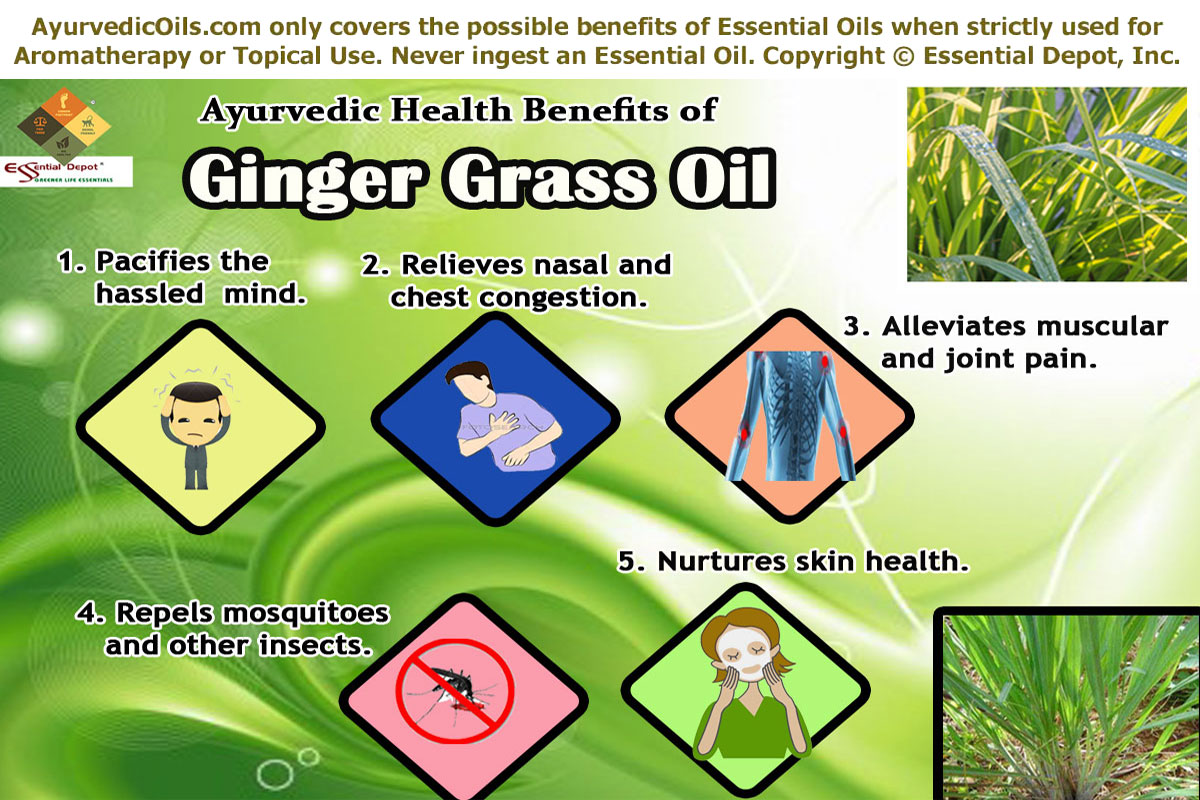
Ginger-grass-boucher1. Pacifies the hassled mind:

Gingergrass essential oil has a sensual and warming aroma that calms the stressed, tensed and confused mind. Most often used for alleviating anxiety and depression, the citrusy, peppery and spicy fragrance of this oil assists in revitalizing your nerves and uplifting your senses. Massaging your body with 5 drops of Gingergrass oil mixed with 2.5 ml of almond oil can be of great assistance in lessening fatigue, anxiety, stress and depression.

The greatest news is that Gingergrass oil can implant complete freshness, happiness and a clean feeling even on a damp and drenched rainy day. All you need to do is to add 2 drops of Gingergrass essential oil to your room freshener and spray it to recharge your mood with absolute newness on a dull soggy day.

2. Relieves nasal and chest congestion:

Cold, cough, allergies and sinus congestion can rule your routine tasks, as you might find it difficult to concentrate on your work with such respiratory problems. The best thing that you need to do is to use a safe decongestant and expectorant that assists in discharging the mucous and phlegm deposits that lead to cough, cold, congestion and breathing difficulties. Increased kapha dosha is responsible for respiratory problems, stagnation of water, phlegm and mucous deposits.

Gingergrass essential oil is said to lessen kapha dosha and is a good expectorant, decongestant, bactericidal, antiseptic and anti-inflammatory. Adding 2 drops of this oil in steam inhalation can help you in relieving from blocked nasal passages, sinus congestion, headache and congestion.

You can also add 1 drop of Gingergrass oil to your vapor rub and gently massage your chest, throat and back to get rid of throat allergies, dry cough, stuffy nose and watery eyes. With its antiseptic and bactericidal properties, Gingergrass essential oil aids in arresting the growth of microbes causing respiratory infections.

3. Alleviates muscular and joint pain:

Most of us complain about back pain, headache, muscular pain or joint pain at the end of the day, after struggling for a full day with our official and household chores. Human body is the most delicate and sensitive set up. Often, we forget to give the priority that our body requires and our mind looks up to.

Mix 5 drops of Gingergrass essential oil with 2.5 ml of olive oil and gently massage your body and leave it for 15 minutes, followed by a warm bath (add 2 drops of Gingergrass oil in bathing water as well) before going to bed. Trust me; this will create a great difference in the quality of your sleep and the kind of relaxation your body can get after a tiring day. This massage and warming bath helps in promoting blood circulation, eliminating toxic substances in the body causing pain and inflammation and supporting muscular relaxation.

4. Repels mosquitoes and other insects:

Gingergrass and its extracts have been used as a powerful insect repellent and as the most effective natural aid against mosquitoes since the ancient times. A 1994 study was conducted on the ‘Repellent action of Cymbopogon martinii martinii Stapf var. sofia oil against mosquitoes’ by the Malaria Research Center, India to assess the repellent action of Gingergrass essential oil against mosquitoes under field conditions.

The results of this study depicted that Gingergrass oil has strong repellent power and it granted complete protection for 12 hours, against Anopheles culicifacies mosquitoes, which is the primary vector of malaria in India. It also said that this oil showed about 96.3% protection for 12 hours against a pest mosquito type. The best way to keep away from mosquitoes and other insects like bugs is to add 2 drops of Gingergrass oil to your diffuser or burner.

Another study on ‘Evaluation of repellent action of Cymbopogan martinii martinii Stapf var sofia oil against Anopheles sundaicus in tribal villages of Car Nicobar Island, Andaman & Nicobar Islands, India.’ Concluded that “Cymbopogan martinii martinii Stapf var sofia oil is an indigenous product, its application is safe and can be widely used for protection from malaria.”

5. Nurtures skin health:

How can something with the touch citrus be less benefiting to the skin? Absolutely not, Gingergrass essential oil has a lemony aroma and the citrusy touch in its therapeutic properties has excellent benefits for the skin. With its antiseptic, anti-fungal and bactericidal properties, Gingergrass oil is effective in treating pimples, black heads, boils, cuts, dermatitis, burns, ringworm, athlete’s foot, wounds and other skin infections.

Just like Palmarosa essential oil, Gingergrass oil is also said to be effective in treating marks, scars and wrinkles. Mix 2 drops of Gingergrass oil in your skin care cream or lotion and apply it the affected parts for effective results.

You can also add 2 drops of Gingergrass oil with 1 ml of olive oil and massage it gently on your skin and leave it over for 30 minutes, followed by a refreshing bath can help in improving your skin tone, reducing marks and scars, augmenting the circulation and regenerating the formation of new skin cells.

Other health benefits:

Gingergrass essential oil also has aphrodisiac properties that assist in treating loss of libido, impotence and loss of sexual interest along with clearing cluttered thoughts in the mind that weaken the intimacy with your partner. This oil is also used in making perfumes, soaps, colognes and other skin care products.

Disclaimer:

This article is only for the purpose of education and is not meant to diagnose or substitute any prescribed medication or professional medical advice. Always use essential oils in a diluted manner and never use it internally as organic and pure essential oils are highly concentrated solutions and can cause harm if not used properly.

Gingergrass essential oil has slight phototoxic effect like the citrus oils, so do not go out in sun immediately after using it topically, to avoid the harmful effects of ultraviolet rays. Consult your Ayurvedic expert before choosing the appropriate essential oils for your unique health condition and individual constitution.

Thought for the day:

To cherish what remains of the Earth and to foster its renewal is our only legitimate hope of survival.   -Wendell Berry

Suggested Reading:

  1. Ayurveda & Aromatherapy: The Earth Essential Guide to Ancient Wisdom and Modern Healing by Dr. Light Miller, Dr. Bryan Miller
  2. Traditional Systems of Medicine by M. Z. Abdin
  3. Get Healthy for Good: 52 Brilliant Ideas for Mind and Body Well-being (52 Brilliant Ideas): 52 Brilliant Ideas for Mind and Body Well-being (52 Brilliant Ideas) by Kate Cook
  4. The Aromatherapy Encyclopedia (Volume 2 of 2): A Concise Guide to Over 385 Plant Oils by Carol Schiller

Reference Links:

  1. Sorting Cymbopogon names by University of Melbourne
  2. Essential Oils and Their Constituents: XXVII. Composition of Oil of Gingergrass by M. C. Nigam, Ishwar C. Nigam, Leo Levi published by NRC Research Press in The Canadian Journal of Chemistry
  3. Repellent action of Cymbopogon martinii martinii Stapf var. Sofia oil against mosquitoes’ by Ansari MA, Razdan RK, the Malaria Research Center, India published in PubMed
  4. Cymbopogon martinii by Wikipedia

Tuberose Absolute Oil


Tube-rose-bannerWhat more is needed to prove the mesmerizing aroma of Tuberose oil when it has the word ‘rose’ as a part of its name? Yes! Tuberose absolute oil is one such mythological oil known for its magnificence, floral and sensual aroma. Popularly known with various names like ‘The Mistress of the Night’, ‘Night Queen’ and ‘Raat Ki Raani’ in Hindi, this flower is said to rule the silence of the twilight with its irresistible fragrance.

Ayurveda, the ancient system of healing humanity employs natural remedies to empower the five senses such as smell, touch, taste, sound and colors for harmonious living. With smell being the primary one this ‘Mother of all healing sciences’ use aromatics to heal and prevent illnesses.

This is the major reason for using incense, flowers, attars, fragrance oils and aromatic essential oils during prayers, spiritual gatherings and meditation. Tuberose oil has been used in making attars that are apprehended in high regard in Ayurvedic medication for their ability to strengthen the mind and enhance the emotional stability.

Purchase Tuberose Absolute – 5% Dilution in Pure Jojoba – 4oz – CLICK HERE

Historical uses of Tuberose Absolute Oil:

Botanically known as Polianthes tuberosa, this plant is a member of the Amaryllis family and is indigenous to Central America. The early Aztec healers called Tuberose absolute as omixochitl, meaning bone flower mainly because of its radiant white and waxy flowers that stood stiff and strong just like bones.

It is also known as the favorite flower of the Mexicans and it was added to chocolate drinks. In certain cultures unmarried girls are advised not to smell the fragrance of Tuberose absolute flowers after sunset, due to its strong aphrodisiac properties.

Tuberose flowers are a vital part of the traditional Hawaiian weddings where these flowers are intermingled with Plumeria flowers for an elegant, rich, exquisite and an aromatic wedding garland.

The brides of Hawaii wear Haku meaning a wreath around their crown, which is made up of Tuberose flowers and pikaki. This is mainly to bring joy, harmony and intimacy as well as to give a great start to the newly married couple. The ancient Victorians attributed the fragrance of Tuberose flowers to sensual and voluptuous qualities and on the other hand certain Victorians also called Tuberose as funeral flower.

Ayurvedic benefits of Tuberose Absolute Oil:

Tuberose absolute is called as Rajnigandha in Ayurveda meaning ‘night fragrance’. The flowers of this plant bloom during the night time and release their scent for attracting the attention of nocturnal moths for pollination. Just like Jasmine, tuberose also has a strong floral scent that is effective even hours after plucking it.

Essential oils have been used for their aroma and therapeutic values by priests, devotees and worshipers to draw the attention of Gods, Goddesses and Spirits, to ward off evil powers and to sanctify the places of worships. In this way, the aroma of Tuberose absolute oil with Venus as the guiding planet is said to be the blessed oil to Maya who is respected as the origin of Gods.

This oil was also used in the primordial times for opening the heart chakra, capturing compassion, vision, love, psychic sensitivity, creativity and trance work.

Ayurveda’s use of aromatics as an aphrodisiac, stimulant, sedative, calmative and as a natural remedy for various psycho-spiritual conditions is well-known. According to Ayurveda, the aroma of Tuberose absolute oil is said to open the crown chakra, which is responsible for augmenting creative powers, peacefulness of the mind, intensify the emotional powers and strengthen the psychic potential.

The predominant Ayurvedic benefits of Tuberose absolute oil are:Tube-rose-broucher1. Naturally defensive:

The sweet-smelling oil of Tuberose flowers is proven to possess anti-bacterial and anti-fungal properties, making it as one among the perfect medicated oil for use. A prominent study on ‘Antibacterial Activity of Essential Oils from Palmarosa, Evening Primrose, Lavender and Tuberose’ proved that Tuberose absolute oil was effective in treating gram positive and gram negative bacteria.

Another study on ‘Anti-fungal activity of tuberose absolute and some of its constituents’ proved that the three constituents present in Tuberose absolute namely indole, geraniol and methyl anthranilate revealed effectiveness against the mycelia growth of Colletotrichum gloeosporioides on potato-dextrose-agar medium.

2. Accepted Aphrodisiac:

Tuberose absolute oil is a time-honored aphrodisiac with narcotic properties. This is proven with its romantic name ‘Fragrance of the night’, ‘Night Queen’ and certain others. Inhaling the aroma of this mind-blowing oil or taking a fragrant warm bath before bed with 2 or 3 drops of Tuberose absolute oil added to your bathing water can do the magic for you.

This is done by the function of the aromatic compounds that reaches the limbic system of your brain through your nasal passages. This part of the brain is responsible for controlling emotions, sexual feelings and stimulating your system.

The warm, floral, deep, honey-like aroma encircles your room and your mind, leaving behind a perfect ambiance for love. The therapeutic properties of this oil enhances blood circulation of the body and assists in treating lack of libido, erectile dysfunction and lack of sexual interest. It grants you complete repose and is also said to treat frigidity and impotence due to lack to sexual health and drive.

3. Reviving Relaxant:

The pleasing and satisfying aroma of this oil aids in relieving tension, stress and anxiety. Experiencing the tranquilizing fragrance of this oil relaxes the nerves and muscles, soothes the senses and appeases the brain. This assists in alleviating anger and other negative feelings by intensifying your emotions and granting peace of mind.

4. Delighting Deodorant:

The long-lasting fragrance of Tuberose absolute oil makes it a perfect pick for dealing with problems like body odor due to the presence of bacteria in the sweat especially in tropical countries. It is for this unique reason, tuberose absolute oil has been in use in the perfume industry for ages together.

The most celebrated perfumes with the notes of Tuberose absolute oil are Fracas de Robert Piguet, April Aromatics from Natural Perfumer Tanja Bochnig, Nasomatto Narcotic Venus, Forbidden with tuberose and wormwood, Tallulah, Christian Dior Poison, Creed Tubereuse Indiana, Chanel Gardénia, Les Parfums de Rosine Mea Culpa and much more.

5. Wonderful Oil of Warmth:

The warming quality of this oil stimulates blood circulation and helps you in keeping your body warm by granting sufficient heat to your body. This gives you a feeling of security as it is trusted to embrace the person who wears it. Using this oil in your massage blend aids you in managing cold during winters, treats cracks on dried skin, protects the respiratory system and prevents the formation catarrh and phlegm.

Tuberose absolute oil also has sedative, anti-inflammatory and anti-spasmodic properties that aids in treating muscular pains, spasms, skin infections, nausea and certain other health conditions. You can also use it as a soothing massage oil by adding 3 to 4 drops of Tuberose oil to your favorite carrier oil like jojoba oil and enliven your senses with a warm massage.

For your information: It approximately requires 3500 pounds of handpicked Tuberose flowers to extract 1 pound of Tuberose absolute oil and this noteworthy reason makes it the most expensive oil on this universe. Unlike other essential oils, tuberose oil is not extracted through steam distillation process as it cannot withstand high temperatures and it is extracted by enfleurage, which is a gentle but labor intensive process.

Disclaimer: This information is only for educational purposes and is not deliberated to diagnose any health condition. Essential oils are highly concentrated liquids and never take them internally without the guidance of your Ayurvedic Practitioner. Blend essential oils with appropriate carrier oils before using them topically and keep away from children.

Thought for the day:

One touch of nature makes the whole world kin.  –William Shakespeare

Suggested Reading:

  1. 375 Essential Oils and Hydrosols by Jeanne Rose
  2. Creating Fairy Garden Fragrances: The Spirit of Aromatherapy by Linda Gannon
  3. The Illustrated Encyclopedia of Essential Oils: The Complete Guide to the Use of Oils in Aromatherapy & Herbalism by Julia Lawless

Reference Links:

  1. Antibacterial Activity of Essential Oils from Palmarosa, Evening Primrose, Lavender and Tuberose by PubMed
  2. Tuberose A Treasure by Jeanne Rose
  3. Tuberose: Perfume Ingredients and Notes by Bois de Jasmin

Ginger Oil


Ginger-oil-bannerGinger oil is known as the “Oil of Empowerment” and is called in Ayurveda as Mahaushadha, meaning “universal medicine”, predominantly for its ability to heal the mind, body and soul, which are the three vital pillars of perfect health in Ayurveda.

Along with turmeric, galangal and cardamom, Ginger is yet another potent limb of the Zingiberaceae plant family. As a common culinary spice, Ginger is found in countless kitchens across the world and takes the pride of being used as a natural home remedy for addressing digestive and respiratory disorders.

Botanically named as Zingiber officinale, this powerful herb is called as Singara, Katubhadra and Srngaveram in Sanskrit. Ginger in any form, say fresh ginger, dried ginger or ginger extracts like juice, essential oil or powder has a bunch of absolute healing wisdom.

Ayurveda, the oldest healing system on earth prescribes Ginger as a remedy for indigestion, flatulence, nausea, loss of appetite, morning sickness, bronchitis, menstrual cramps, respiratory infections, arthritis, cancer and for enhancing the immune power. It is also recommended for treating fear, hopelessness, instability and for rekindling the inner fire for ultimatum.

Purchase Ginger Oil – Retail – 1 oz – CLICK HERE

Purchase Ginger Oil – Retail – 4 oz – CLICK HERE

Purchase Ginger Oil – Wholesale – CLICK HERE

Historical importance of Ginger:

Ginger is one among the oldest of spices used for more than 4400 years across different cultures universally. With more than 1,200 species, Ginger has been proved scientifically for treating numerous health disorders. Its name is extracted from a Sanskrit word ‘srngaveram’, which means ‘horn root’.

According to the report by the University of Maryland Medical Center, “It has a long history of being used as medicine in Asian, Indian, and Arabic herbal traditions.” It has also been said that Ginger has been used in the Traditional Chinese Medicine for treating toothache, nausea, stomach upset, diarrhea and certain other digestive disorders.

Ginger and its other extracts have been a vital part of the ancient Ayurvedic remedies for obesity, poor metabolism, abdominal pain, motion sickness, impotence, weak memory, arthritis, flu, menstrual pain and as a heart tonic. It has its name etched in the most respected epic of India, Mahabharata.

This aromatic spice was recommended by King Henry VIII of England in the 16th century for fighting against the great plague. Greeks used Ginger as to combat the harmful effects of poison.

It is said that the West African women in Senegal knit belts of Ginger to restore their partner’s reproductive potency. Even today, Ginger is used in various dishes across the world for granting the finesse flavor and taste of this miraculous spice with mammoth health benefits.

Chemical constituents and therapeutic properties of Ginger essential oil:

The major chemical components of Ginger essential oil are camphene, a-pinene, b-pinene, zingiberene, geraniol, borneol, neral, geranyl acetate, 1,8-cineole, citral, b-bisabolene, linalool, nerol, geranial and y-terpineol.

These components contribute to its healing properties like carminative, antibacterial, anti-inflammatory, expectorant, analgesic, aphrodisiac, antioxidant, stimulant, antiseptic and emmenagogue.

Ayurvedic health benefits of Ginger essential oil:

Nothing is as astonishing as Mother Nature and the best wonder in the world is the human body that works like a magic to keep one going on and on. Ayurveda states that human beings are a part of nature and their illness and health depends upon their harmony with nature.

It further lights up this thought by stating that nature is made up of five vital elements, namely earth, water, fire, air and space and to our wonder, it’s also been said that a human being also has all these five elements.

Where earth is the muscles and bones, water is the blood, fire is the energy for various vital functions, air is our breath and space is the soul that co-ordinates all other functions and keeps us living.

The concept of healing in Ayurveda solely depends upon nature as it says that all the other things on earth are made for making mankind happy and healthy. For example, earth has 92 elements like calcium, potassium, magnesium, iron etc, and the human body also has all these 92 elements.

When a person lacks magnesium or calcium energy, he/she can take Ginger, which is rich in magnesium and calcium, whereas Ginger grows by absorbing the magnesium and calcium element from earth. How interesting it is, right?

Ayurveda regards every individual as a unique part of nature and suggests that the treatment should also be unique depending upon their individual constitution that is made up of three doshas namely vata, pitta and kapha.

Vata is a representation of air and ether, pitta stands for fire and water and kapha symbolizes earth and water. Vata controls respiratory and nervous functions, pitta takes care of metabolism and body temperature and kapha governs the structure, sustenance and movement of fluids in the body.

Balance between these three doshas indicates health, and imbalance due to unhealthy food habits and change in lifestyle symbolizes illness. Ayurvedic remedies aim at correcting these dosha imbalances with the help of herbs, essential oils, yoga, meditation, physical exercises, Ayurvedic routine, balanced diet and prayer.

Ginger essential oil is said to pacify kapha and vata dosha and aggravate pitta dosha with its warming, spicy, rich, woody and drying energy and aroma.

The Ayurvedic health benefits of Ginger essential oil are:

Ginger-oil-broucher1. Benefits to the digestive system:

Ginger is popularly known as Adrak in India and is a quick natural remedy for relieving indigestion, bloating, flatulence, dyspepsia, vomiting, spasms, nausea, loss of appetite, piles and colic.

Dr. Jaishree Bhattacharjee, a renowned Ayurvedic Consultant says, “Ginger has many useful minerals like calcium, phosphorus, iron, magnesium, copper, zinc and few others. It is a wonderful carminative, anti-flatulent and stimulant.”

Ginger essential oil has the potential to increase pitta energy that is responsible for the digestive fire. Add 2 drops of Ginger essential oil to your diffuser or air freshener before meals and let it stay there till you complete your food.

Inhaling the warming aroma of this oil enhances the appetite and improves the process of digestion, supports absorption of essential nutrients by the body and aids in alleviating the toxic substances with its hot potency, but for which the toxins or ama may otherwise cause serious illnesses.

You can also add 2 drops of Ginger oil to warm bathing water before going to bed or before starting a hectic day. This refreshing bath aids in promoting peaceful sleep, free from bloating, indigestion, gastric pain and other digestive disorders. If it is for the morning, Ginger has a handful of bright benefits like stimulating your nerves, rejuvenating your cells, improving your appetite and augmenting your mental power for facing your day to day challenges.

Ginger and its essential oil have been proven best for treating motion sickness even in children. Numerous studies have witnessed the effectiveness of Ginger is better than the effects of dimenhydrate, which is the most important ingredient in over-the-counter motion sickness and seasickness remedies like Dramamine.

It works by stimulating the flow of saliva and other digestive juices, pacifies the stomach, relieves pain due to gas and diarrhea, controls vomiting and supports easy discharge of stools. Mix 1 drop of Ginger essential oil with 10 drops of sesame oil and massage it gently on your stomach and abdomen for treating constipation and motion sickness.

2. Benefits to the mind:

Ginger essential oil is an effective natural remedy for treating emotional problems like fear, abandonment, and lack of self-confidence and of motivation. Using 2 drops of Ginger essential oil in diffuser, aromatic candles or in bath can help in improving memory power, treat mood swings, tendency to procrastinate, disconnectiveness, hopelessness, stress, anxiety, exhaustion, restlessness and depression.

Ginger oil is an excellent stimulant to the mind, body and soul. The encouraging aroma of this oil rekindles the inner fire and grants the power and confidence to step ahead and lead with courage and confidence.

Massaging your upper and lower abdomen (the root, sacral and solar plexus chakra) with 2 drops of Ginger oil with 1 ml of coconut oil aids in eliminating fear and mental blocks, enhancing the sense of trust, mental strength and enlightening the divine power rested within.

3. Benefits to the reproductive system:

Ginger is simply hot to support your intimacy with your partner as it has enormous aphrodisiac properties that have been assisting in the treatment of impotency, loss of libido, loss of sexual interest and premature ejaculation.

Gill Farrer-Halls in his book ‘The Aromatherapy Bible’ states that Ginger oil is an effective aphrodisiac and acts as a mild stimulant also. 2 drops of Ginger oil blended with 1 drop of Sandalwood oil and 1 drop of Rose oil added to your diffuser can drive in the positive energy required both physically and mentally for a complete “we time” together, by toning up the sexual organs and pacifying your mood.

Massaging your lower abdomen with 2 drops of Ginger oil blended with 1 ml of olive oil can be of great help in treating the problems of the female reproductive system by regularizing blocked or irregular menstruation, relieving menstrual pain and treating other problems associated with menstruation like nausea, dizziness, fatigue and mood fluctuations. Inhaling the reviving aroma of Ginger oil can aid in treating nausea and morning sickness during pregnancy.

4. Benefits to the respiratory system:

Ginger essential oil has the power to reduce kapha dosha. According to Ayurveda, excess of kapha energy is the main reason for respiratory problems like bronchitis, cold, sinusitis, asthma and congestion.

Ginger oil also has expectorant properties that aids in loosening the mucous and phlegm deposits and with its antiseptic properties, it assists in curbing the growth of microbes that spread respiratory infections.

Researchers of the Columbia University have proved that the components in Ginger root have properties that help asthma patients to breathe easily. The post-doctoral research fellow in the Columbia University Department of Anesthesiology, Elizabeth Townsend says, “In our study, we demonstrated that purified components of ginger can work synergistically with β-agonists to relax ASM.”

Adding 2 drops of Ginger essential oil in steam inhalation can assist in reducing cough, clear chest and nasal congestion, relieving sinusitis and helping in treating cold and flu symptoms. You can also rub your chest, back and throat with your regular Vapor rub mixed with 1 drop of Ginger oil for quick relief. Even today Ginger tea is a delicious and healthy way to keep away from cold, cough and flu in the Indian kitchens.

5. Benefits to the muscular system:

Muscular pain is a common illness that most of us experience in our day to day lives. Headache, back pain, knee pain and pain all over the body after a strenuous work are not a surprise to many of us.

What we all do is, rush to the pharmacy and grab pain relieving creams and sprays that grant relief. Most of us fail to realize that these over-the-counter remedies give temporary relief only and force us to use them again when the pain peeps out even worse the next time.

Ginger essential oil has anti-inflammatory, anti-rheumatic and analgesic properties that make it an exuberant natural aid for treating muscular pain, migraine pain, rheumatic pain, back pain, headache, joint pain, arthritis and weakness.

Excess of vata and kapha energy in the body lead to swelling, water stagnation, accumulation of toxic substances, inflammation, sore muscles, weakened nerves and muscular tension.

With its potent to reduce vata and kapha dosha and increase pitta or the fire energy, 3 drops of Ginger essential oil blended with 1 teaspoon of almond oil massaged gently on the painful area, spreads warmth in the body, reduces swelling and inflammation by eliminating toxic substances and water deposits from the body through urine and sweat and relieves pain by causing numbness in the painful parts.

6. Benefits to the entire system:

Ginger and its essential oil also act as a heart tonic and helps in improved circulation. According to the University of Maryland Medical Center, few studies have proved that ginger has the potential to prevent blood clotting, lower cholesterol, prevent blood vessels from getting blocked, which may otherwise lead to stroke or heart attack.

Ginger essential oil has antioxidant properties that have been proved efficacious in the prevention and treatment of cancerous cells.  A 2011 study on ‘Antioxidant activity of the volatile oils of Zingiber officinale (ginger)’ published in Spatula-DD, A peer reviewed journal on complementary medicine and drug discovery says “Ginger extracts have reduced total cholesterol, triglycerides and phospholipids levels, as well as cellular cholesterol accumulation, reduce DPPH absorption, scavenge free radicals and it has potential to improve the histopathological lesion occurring in different layers of the arterial tissue. In other word it is effective in attenuating of atherosclerosis development.”

This dominant herb has also been witnessed effective in the treatment of ovarian cancer. A 2006 study by the University Of Michigan Comprehensive Cancer Center presented in the annual meeting of the American association for Cancer Research stated that using Ginger solution (made with Ginger powder and water) on ovarian cancer cells ended up in their death. These cancerous cells died either due to autophagy (attacked/digested themselves) or due to apoptosis (committed suicide).

The book “A Complete Guide To Understanding and Using Aromatherapy For Vibrant Health and Beauty,” says that Ginger essential oil is effective in treating varicose veins and cellulites.

With rich vitamin C, Ginger oil can also help in treating scurvy. Mix 1 drop of Ginger oil with 10 drops of jojoba oil and apply it on the affected area for enhancing the skin health and reducing the symptoms of aging with its antioxidant properties.

Other health benefits:

Ginger essential oil can also assist in treating rheumatism, arthritis, muscular pain, loss of libido, problems of the lymphatic system, sore throat, chills, disconnectiveness, improper blood circulation, increased blood sugar levels, back pain and mood swings.

Disclaimer:

This article is only for the purpose of information and is not meant for treating or replacing any prescription drugs or professional medical advice. Always consult your Ayurvedic practitioner before choosing the right essential oil for your unique health condition and individual constitution.

Never use essential oils internally and always use essential oils in a diluted manner as pure and organic essential oils are highly concentrated liquids and may cause allergic reactions if used directly on the skin. Care should be taken, if you are a pregnant or nursing woman.

Thought for the day:

Deep in their roots, all flowers keep the light.
-Theodore Roethke

Suggested Reading:

  1. Ginger: Common Spice and Wonder Drug by Paul Schulick
  2. A Spoonful of Ginger: Irresistible Health-Giving Recipes from Asian Kitchens by Nina Simonds
  3. The Chopra Center Herbal Handbook: Forty Natural Prescriptions for Perfect Health by David Simon M.D., Deepak Chopra M.D.
  4. Ayurveda & Aromatherapy: The Earth Essential Guide to Ancient Wisdom and Modern Healing by Dr. Light Miller, Dr. Bryan Miller
  5. Ginger Recipes: 33 Mouth-Watering Recipes Using Natures Super Spice for Weight Loss, Health, and Beauty. (The Simple Recipe Series) by Ready Recipe Books

Reference Links:

  1. Ginger by The University of Maryland Medical Center
  2. Ginger Beats Drugs in Defeating Cancer, Motion Sickness and Inflammation by Health Impact News Daily
  3. Ginger is a powerful aphrodisiac and increases sexual prowess by Namini Wijedasa published in infolanka.com
  4. What are the benefits of Ginger? By Medical News Today
  5. Ginger – Ayurveda’s Root To Good Health by Ayurveda Acharya

Grapefruit Pink Oil


Are you on diet? Then Grapefruit can be your best pal as it is called as ‘Dieter’s best friend‘, for its ability to assist dissolving fat and stays strong to be a vital part of your fitness regimen.

Grape-fruit-bnGive that perfect lift to your self-esteem and self-worth with Grapefruit oil, as it works like a magic by cleansing the aura and flushing out depression, lack of self-confidence, mental chaos and other negative feelings at ease.

Adorably called as Madhukarktikum and Kadaaram in Sanskrit, Grapefruit is yet another powerful Ayurvedic remedy for dealing with digestive disorders by stimulating the gall bladder and assisting the secretion of bile and other digestive juices.

The essential oil of Grapefruit is cold pressed from the external rind of this fruit and is recommended for treating weight loss, acne, cellulite, edema, PMS, anxiety, depression and insomnia.

Purchase Grapefruit Oil – Retail – 4 oz – CLICK HERE
Purchase Grapefruit Oil – Wholesale – CLICK HERE

Historical importance of Grapefruit:

Grapefruit is trusted to be a hybrid variety found in the 18th century by Captain Shaddock in Jamaica; hence it was called as ‘Shaddock’ or ‘Shattuck’ initially. Later it was named as ‘Grapefruit’ mainly because of its manifestation like clusters of grapes on the trees. Grapefruit was once celebrated as one of the ‘Seven wonders of Barbados’.

Grapefruit is indigenous to the tropical parts of Asia and was originally brought to Europe by the medieval Arabian traders and it slowly spread to other parts of the world. Currently, United States is the world’s leading producer of Grapefruit, followed by People’s Republic of China and South Africa.

As it is an excellent source of various nutrients and phytochemicals, it was used ever since the ancient times as a part of a healthy diet. Whereas Grapefruit essential oil was used in baths for preventing the skin from harmful microbes, supporting healthy skin, enhancing the shine and growth of hair and as a cleansing agent in homes.

Chemical constituents or Gas Chromatography Report (GC) of Grapefruit Pink oil:

According to the Gas chromatography report, Grapefruit Pink oil constitutes of 7 chemical components that contribute to its fragrance, therapeutic attributes, consistency and quality of this oil. Of which, Limonene contributes to the highest proportion of Grapefruit Pink oil constituents with about 96.6% of its total composition.

Just click on:

I believe that this must certainly help you in getting to know the exclusive information about these prime chemical constituents of Grapefruit Pink oil.

The table crafted below clearly depicts the unique nature and contributions of these biochemical constituents to the healing magnificence of Grapefruit Pink essential oil.

grape-fruit-oil

Therapeutic properties of Grapefruit essential oil:

The remedial values of this oil are antidepressant, antiseptic, anti-tumoral, antioxidant, lymphatic, stimulant, tonic, diuretic, disinfectant, aperitif and fat dissolving.

Ayurvedic health benefits of Grapefruit essential oil:

Health is a three-tier foundation according to Ayurveda, where these three layers are mind, body and soul. It is rightly mentioned in Charaka Samhita, one of the most famous Ayurvedic encyclopedias as “The three – body, psyche, and soul – act as a tripod. The world stands upon them, and within them, the world abides.”

Ayurveda means ‘the knowledge of life’ and this traditional healing methodology aids in granting that awareness in every human being. Understanding the physical and mental health of oneself helps in leading a blissful life paving way towards longevity.

It has been said that nature is made up of five vital elements namely fire, water, earth, air and space and Ayurvedic texts strongly state that everything that is a part of nature is also made up of these five elements.

The science of Ayurveda follows a holistic healing system, where every individual is considered as a unique part of nature with a unique individual constitution just like our fingerprints.

This constitution comprises of three vital biological energies known as doshas. They are vata, pitta and kapha doshas, where each dosha represent a combination of two vital elements.

Kapha represents earth and water, and is responsible for structure of the body, sustenance and the movement of fluids in the system. Pitta represents fire and water and is in charge of digestion, absorption, excretion and certain other metabolic functions.

Vata stands for air and ether, and is accountable for circulation, respiration and nervous functions of the body. When an individual’s health is on par with nature, there is perfect health and harmony and when there is imbalance due to food, lifestyle and certain other factors, illnesses occur.

Balance between these three doshas indicates complete health and imbalance causes diseases. Ayurvedic remedies like essential oils, herbs, yoga, meditation, Ayurvedic routine and simple physical exercises focus on striking balance between these doshas. Grapefruit essential oil is said to pacify vata and kapha dosha and aggravate pitta dosha.

The Ayurvedic health benefits of Grapefruit oil are:Grape-fruit-broucher1. Fights the symptoms of aging naturally:

Aging can be the worst enemy for all those beauty conscious kings and queens out there, especially in the late 30s when everyone’s dreams are on the route of reaching their destination. When thousands of chemical-based products flood the market with the claim of ‘guaranteed younger look’, how will you feel if I say that the simple, natural and glorious fruit like Grapefruit can fight against all the symptoms of aging, just like that? Feeling awesome right!

FRTA or the Free radical theory of aging can assist you in understanding the real causes of aging. This theory states that “organisms age because cells accumulate free radical damage over time.” These free radicals cause oxidative damage in the cells, which pave way for aging and other age-related disorders like arthritis, diabetes, cancer, atherosclerosis and Alzheimer’s disease.

Numerous studies have proven that antioxidants are the best remedy for arresting the oxidative damage of cells by passivating the cellular structure from the damage caused by free radicals.

To your wonder, Grapefruit and its essential oil have the most powerful antioxidant lycopene, which is responsible for its attractive pink or red color. It has been established that antioxidants like lycopene assists in fighting aging of cells and fight against malignant tumors caused due to the harmful effects of free radicals.

According to a study by the Brigham Young University, “Small concentrations of grapefruit essential oil showed an 80.5% cell inhibition value for skin cancer cells.” The presence of limonene in Grapefruit oil supports about 80% of carcinomas in breast cancer to degenerate with comparatively lesser toxicity, says the reports on Grapefruit essential oil by the Purdue University.

In addition to this, Grapefruit essential oil has adequate amount of spermidine, which is a polyamine compound playing significant roles in the survival of cells. Every cell has spermidine like compounds and cellular aging happens when the growth of spermidine falls.

Using 2 drops of Grapefruit essential oil blended with 1ml of Jojoba oil or along with a mild skin care lotion or cream as a massaging blend can promote the secretion of spermidine compounds that support the growth of healthy cells, helping you look younger and youthful.

This massaging can also help in fighting against the free radicals that cause aging and other chronic illnesses. Adding Grapefruit to your daily diet is also a great idea to retain your beauty and nurture your skin health.

2. Protects the skin from microbial infections:

Grapefruit essential oil has antiseptic and disinfectant properties that wrestle against harmful organisms like bacteria and virus. The antiviral and antibacterial effects of this oil make it one among the best essential oils for treating wounds, cuts, bruises, acne and other microbial infections. It kills the existing microbes in the body that cause infections and prevents the entry of new microbes.

Using 2 drops of Grapefruit essential oil in warm bathing water in the morning or before going to bed can help in combating the growth of microbes and protect the body microbial infections all day long.

You can also add 1 drop of Grapefruit oil to your daily lotion or skin cream for pampering your skin. Along with this, the fresh and refreshing citrus aroma of Grapefruit oil keeps your skin fresh, regenerated and absolutely clean.

3. Boosts positive energy and adds up to your mental strength:

Grapefruit essential oil has an immaculate aroma that is neat as a new pin and has excellent aromatic effect on the mind. The anti-depressant properties of this oil flushes out the negative thoughts, depressive feelings and emotions that demotivate the mind and stop you from moving ahead.

The uplifting aroma of Grapefruit essential oil reaches the limbic system, the control center of the human brain through the nasal passages and passes the therapeutic properties of this oil in the form of commands to other parts of the body. Add 2 drops of Grapefruit oil to your diffuser, burner or vaporizer during the night or at the time of prayer or meditation. This oil is said to calm the mind and nerves and grant peaceful sleep at night.

Inhaling the sacred aroma of Grapefruit oil is said to broaden the heart chakra, which is responsible for love and affection along with the solar plexus chakra, which is accountable for self-esteem, confidence and discipline and the third eye chakra meant for intelligence, creativity, spiritualism, consciousness and inner awakening.

By this way, Grapefruit essential oil cleanses the aura, mind and the life force of the human body, which helps in restoring the power and spiritual realm.

4. Burns excess fat and backs up your diet regimen:

Obesity has become a common phenomenon in people of all ages mainly due to unhealthy food habits, lifestyle changes, fast food mania and the lack of physical exercises. Most of these factors seem unavoidable in this contemporary world, where there’s no time to spare for our health and happiness.

According to a popular Complementary and Alternative medicine expert, “taking medicines or drugs for reducing weight or dissolving fat is a hazardous practice and a life-threatening system as well.

So what to do and what is the natural way to burn away those excess fat and calories that rule your health and harmony? Here you go, Grapefruit and its essential oil have been an effective natural remedy for treating obesity and supporting weight-loss.

This is attributed to its diuretic, lymphatic and aperitif properties. Grapefruit oil works by improving the metabolism process, lowering the cholesterol content, reducing insulin levels and supporting loss of fat positively.

Ayurvedic texts state that the bitter and sour tastes of Grapefruit reside as the predominant reason for enhancing the flow of bile and other digestive juices and it helps in putting an end to food cravings, liver congestion and amassing up of excess fat, cholesterol and other toxic substances.

Mix 5 drops of Grapefruit essential oil with 2.5ml of sesame oil and massage it gently on your stomach and abdomen to stimulate the secretion of saliva, bile and other gastric juices.

Ama or the toxins in the body are mainly due to improper digestion. As Grapefruit essential increases pitta energy, which is responsible for digestive fire, the chances of indigestion, constipation and other digestive disorders are very less.

Excess of kapha energy is one major cause for obesity according to Ayurveda. Grapefruit oil is a boon to mankind as it pacifies kapha and increases pitta force, through which it eliminates the excess deposits of water, fat, toxic substances and cholesterol through urine and sweat.

Including Grapefruit in your diet or inhaling the aroma of Grapefruit essential oil before eating (by adding 1 drop of Grapefruit oil to your diffuser in your dining hall) can grant a feeling of fullness and put an end to unhealthy food cravings.

Consumption of Grapefruit can reduce LDL (“bad”) cholesterol, as well as triglycerides”, says The Journal of Agricultural and Food Chemistry. Consult your Ayurvedic Practitioner and know the right exercises, yoga and meditation for your unique constitution. This can speed up your fat-dissolving resolution at absolute ease.

Other health benefits:

Apart from this, Grapefruit essential oil is an excellent pain reliever that can help you in treating headache, back pain and migraine pain quickly, when 2 drops of this oil is mixed with 1ml of coconut oil and applied on the affected area.

Grapefruit essential oil has tonic properties that increase the immune power, stimulate hair growth, cleanse the scalp, boosts the functions of the nervous system and strengthen the muscles and nerves. This oil also helps in relieving mental and physical fatigue, menstrual discomforts, rheumatism, muscular stiffness, cellulite, nervousness, delayed menstruation and nervous exhaustion.

Disclaimer:

This article is only for the purpose of education and is not directed to diagnose or replace any Professional medical advice or prescribed medication. Never use essential oils internally and always use them in a diluted form, as pure and organic essential oils are highly concentrated substances and can cause harm if used directly on skin.

As other citrus oils, Grapefruit essential oil also has phototoxic effect that can cause damages to the skin when exposed to sunlight immediately after use, due to the hazardous effects of ultra violet rays. Always consult your Ayurvedic expert before using the right essential oils for your unique constitution and health condition.

The MSDS (Material Safety Data Sheet) of Grapefruit Pink oil is readily available for your enhanced safety and better usage.

Gas Chromatography Report (GC analysis) of Grapefruit Pink oil.

Grapefruit Essential Oil – Possible Skin Issues:

Greener Life Diamond – Bio-Healthy Score => 3 – Possible Skin Issues:

See => http://www.essentialdepot.com/GreenerLifeDiamond.html

Grapefruit oil showcases photosensitive effects if oxidized, contributing to its phototoxic, photo-carcinogenic and effects of sensitization. The possible skin issues of using Grapefruit oil are hyperpigmentation, allergic reactions, irritation, sunburns, blisters and rashes and this mainly occurs when the skin is exposed to visible sunlight for up to 12 hours of use of this oil.

The underlying reason is the reaction of the photoactive chemical constituents in Grapefruit oil that attracts light and leads to toxicity through molecular changes in the skin surface. Certain studies state that Grapefruit oil has been stated to promote the formation of tumors on the skin of mouse, by the key carcinogen, 10-dimethyl-l, 2-benzanthracene.

The primary chemical component responsible for the phototoxic and adverse skin effects of Grapefruit oil is Limonene, which accounts to about 90% of this oil along with few other furanocoumarins ( the non-volatile compounds like bergapten, bergamottin and epoxy-bergamottin.)

The safe dilution level of Grapefruit oil by the International Fragrance Association (IFRA) is 4%, which is about 24 drops per ounce of any mild carrier oils. This is particularly to prevent phototoxicity in products used for dermal applications except for bath products like soaps, shampoos and other wash-off preparations.

According to the European decree, essential oils that contain furanocoumarins must be used preferably when the level of bergapten does not exceed 15 ppm (parts per million) in finished cosmetic products preordained for use on parts of the skin that are in contact with sunlight (other than rinse-away products) and 1 ppm in bronzing and sun protection products.

Grapefruit oil should be used only for topical application, preferably blended with mild carrier oils (good for use after a patch test on your skin), and never use essential oils for ingestion, as internal use of essential oils might pose adverse health effects. Undiluted Grapefruit oil can cause skin irritation and this oil is claimed to be toxic to cats.

A 2005 study published in Brain Research states that “the scent of Grapefruit oil and its active constituent, limonene affects the autonomic neurotransmission and blood pressure through central histaminergic nerves and the suprachiasmatic nucleus.”

Studies state that ingesting furocoumarins may also cause phytophotodermatitis.  It is better to avoid Grapefruit oil if you are pregnant or breastfeeding as the safety of this oil during carrying or nursing are not established.

In a much similar way like Bitter orange oil, Grapefruit oil is said to restrain important enzymes in the intestines and liver, leading to have an impact on the blood levels at the time of taking medicines that are antidepressant, antiviral, anti-anxiety, calcium channel blockers, steroids, anti-malarial, immune modulators, prokinetics, statins and on par with caffeine intake. The presence of furocoumarins has led to the term ‘Grapefruit effect’, which signifies the interaction between furocoumarins and enzymes that are engaged in drug metabolism, specifically cytochrome P450.

Use Grapefruit oil only after medical advice, if you are taking any other prescription medicines. Startlingly, furocoumarins are also used in different remedies along with the long-wave ultraviolet light therapy for curing psoriasis, mycosis fungoides and vitiligo.

Reference Links Substantiating Possible Skin Issues of Grapefruit Oil:

  1. The Safe Grapefruit? By The American Botanical Council
  2. Olfactory stimulation with scent of essential oil of grapefruit affects autonomic neurotransmission and blood pressure by Tanida M, Niijima A, Shen J, Nakamura T, Nagai K, Osaka University, Japan, published in Brain Research
  3. Grapefruit by Essential Oil Safety: A Guide for Health Care Professionals By Robert Tisserand, Rodney Young
  4. Grapefruit Oil by Leung’s Encyclopedia of Common Natural Ingredients, used in Food, Drugs and Cosmetics by Ikhlas A. Khan and Ehab A. Abourashed
  5. Major Furocoumarins in grapefruit juice II: phototoxicity, photogenotoxicity, and inhibitory potency vs. cytochrome P450 3A4 activity by Messer A, Raquet N, Lohr C, Schrenk D, University of Kaiserslautern, Germany, published in Food and Chemical Toxicology: An International Journal published for the British Industrial Biological Research Association
  6. Grapefruit Juice and Medicines by the University of Michigan Health System
  7. Two Major Grapefruit Juice Components Differ in Time to Onset of Intestinal CYP3A4 Inhibition by Mary F. Paine, Anne B. Criss and Paul B. Watkins, published in the Journal of Pharmacology and Experimental Therapeutics

Thought for the day:

You forget that the fruits belong to all and that the land belongs to no one.
-Jean-Jacques Rousseau

Suggested Reading:

  1. The Grapefruit Solution: Lower Your Cholesterol, Lose Weight and Achieve Optimal Health with Nature’s Wonder Fruit by Daryl L. Thompson, M. Joseph Ahrens
  2. Ayurveda & Aromatherapy: The Earth Essential Guide to Ancient Wisdom and Modern Healing by Dr. Light Miller, Dr. Bryan Miller
  3. The Complete Master Cleanse: A Step-by-Step Guide to Maximizing the Benefits of the Lemonade Diet by Tom Woloshyn
  4. The Grapefruit Diet Plan by M Marose
  5. Daily Aromatherapy: Transforming the Seasons of Your Life with Essential Oils by Joni Keim, Ruah Bull

Reference Links:

  1. Free-radical theory of aging by Wikipedia
  2. Grapefruit by Wikipedia
  3. Health Benefits of Grapefruit by Ayurvedaservices.Net
  4. Health Benefits of Grapefruit Essential Oil by Organic Facts
  5. The Amazing Benefits of Pink Grapefruit Essential Oil by Natural News.Com


Your resource for quality Essential Oils. Every batch is
GC tested to ensure purity and authenticity.

Gurjun Oil


Gurjun-bannerAshwakarna is the Sanskrit name of the Common Gurjun tree and the trusted Ayurvedic remedy for relieving respiratory problems like asthma, bronchitis and chronic cough, for its ability to eliminate excess mucous deposits in the system.

Gurjun essential oil is extracted from the woods and the oleo-resin (well-known globally as East Indian copaiba balsam), extracted from the woods of the Gurjun tree by steam distillation method.

Known as Dipterocarpus turbinatus botanically, Gurjun is indigenous to the Andaman Islands and the eastern parts of India. Gurjun is also called as Gurjun Balsam and referred as Chhaagakarna and Ajakarna in Ayurveda and used in the treatment of rheumatic conditions, urinary tract infections, skin problems like eczema and psoriasis and chronic respiratory problems.

Purchase Gurjun Oil – Retail – 4oz – CLICK HERE

Historical uses of Gurjun:

Celebrated often as a key commercial timber species, the woods of this tree is considered vital in making of plywood. These notable reddish brown woods have been used in various countries including China, Cambodia, India and Yunnan. The resin extracted from the woods is used in making torches in Cambodia and the wood is employed in tea cabinet work, wood work and for sawing.

Gurjun tree is cultivated in India and China as a perfume as well as therapeutic plant. It is also used as a substitute for crude paint material. The leaves, wood and the resin of this tree have been in use in various Complementary and Alternative Medical systems for treating psoriasis, gonorrhea, bronchitis, leprosy, asthma and certain other skin disorders.

Chemical components and therapeutic properties of Gurjun oil:

The essential oil extracted from the oleo-resin of the Gurjun trees contains beta-caryophyllene, bicyclic sesquiterpene hydrocarbon, humulene and sesquiterpene alcohol. The remedial properties of this oil are diuretic, antifungal, antimicrobial, spasmolytic, anti-ulcer, stimulant, anti-rheumatic and decongestant.

Ayurvedic health benefits of Gurjun essential oil:

Cherished as the mother of all healing sciences, Ayurveda is the oldest of all healing systems on earth, trusted to have its roots deeply vested in the ancient history of the Indian mythology. The magnificence of Ayurvedic healing lies in its holistic healing approach that revolves around the principle ofThe three – body, psyche, and soul – act as a tripod. The world stands upon them, and within them, the world abides.

Health is not just a physical attribute according to Ayurveda and it depends upon the emotional, spiritual and environmental factors that affect an individual’s life.

The ancient Ayurvedic texts state that the world is made up of five elements namely water, air, fire, earth and space and every individual on earth is also made up of these vital elements. This paves way for the unique individual constitution that comprises of three biological energies known as doshas, namely vata, pitta and kapha.

Every human being has a predominance of any one of these doshas that determines his physical attributes, character, mental makeup and his behavior. Balance between these doshas is a symbol of perfect health and imbalance causes illnesses. Ayurvedic remedies like essential oils, herbs, yoga, physical exercises, Ayurvedic routine, meditation and a healthy lifestyle aim at striking absolute balance between these doshas.

Gurjun essential oil is said to lessen aggravated kapha, pitta and treat vata deficit.

The major Ayurvedic health benefits of Gurjun oil are:

Gurjun-broucher1. Relieves rheumatic problems:

Rheumatism is known as ‘Amavata’ in Ayurveda and is recognized by severe pain and inflammation of the joints, ligaments, muscles and tendons. Ayurvedic healing begins with the analysis of the root cause of an illness and aims at treating it instead of treating the illness alone.

The major underlying causes of rheumatic disorders according to Ayurveda are amassing of toxins or ama in the joints and the system, where these toxic substances are formed mainly due to poor metabolism, improper digestion and excretion; over exposure to cold weather conditions and infections in the gall bladder, teeth and tonsils.

Gurjun essential oil is regarded as one among the best Ayurvedic remedies for its potential to eliminate the toxic deposits in the joints and the entire system through urine, with its diuretic properties. This oil also has the power to reduce kapha dosha, which is responsible for excess water deposits, inflammation and swelling.

Blend 2 drops of Gurjun oil with 1 ml of coconut oil and massage it gently on the affected parts for guaranteed relief. You can also add 2 to 3 drops of this oil in hot compress for relieving pain and redness of the inflamed areas. The decoction prepared with the bark of this tree is prescribed in Ayurvedic medicine for treating rheumatism.

You can assist this natural remedy along with a healthy nutritious diet, Ayurvedic routine and yogasanas like Dhanur Asana and Hala Asana for complete relief from rheumatic conditions.

2. Alleviates respiratory disorders:

Respiratory system is known as Pranavaha Srotas in Ayurveda and it includes the nose, trachea and lungs, and the illnesses in this system are known as ‘Swasa Roga’. Vitiation of the respiratory system causes disorders that affect its normal functioning, which cause breathing difficulties and chronic conditions.

Imbalance of vata, pitta and kapha doshas cause different problems in the respiratory system, where excessive mucous deposits, obstruction and blockage in the nasal and respiratory passages are caused by excess of kapha dosha.

Ayurvedic medications that lessen kapha dosha are proven effective in the treatment of respiratory problems like bronchitis, asthma, chronic cough, chest congestion and mucous deposits in the nasal and bronchial passages. Gurjun essential oil reduces aggravated kapha dosha that assists in discarding excess mucous and phlegm deposits that obstructs normal breathing and relieves nasal and chest congestion.

The ideal way to use essential oils for treating respiratory problems is in steam inhalation. Add 2 drops of Gurjun oil in steam inhalation for relieving from problems associated with the respiratory system. You can also add 1 drop of this oil to vaporub or medicated ointments and rub it gently on the chest, back and throat for relief.

3. Supports skin health:

Gurjun Balsam oil is a popular ingredient in many Ayurvedic skin care formulations used in the treatment of wounds, bedsores, ringworm, cuts, boils, diaper rashes and psoriasis. Gurjun oil has antifungal and antimicrobial properties that curb the growth of harmful organisms like bacteria and fungi.

It speeds up the healing of wounds and prevents wounds from getting septic by fighting against the growth of bacteria like Staphylococcus aureus, which make the wounds to turn septic. Mix 2 drops of this oil in your regular skin care cream or lotion or with 1ml coconut oil and apply it on the infected parts for quicker healing. It works by combating micro organisms and retaining the natural moisture in the skin.

Other health benefits:

Few other documented use of Gurjun oil is its ability to increase blood pressure, stimulate the functions of the heart and treat ulcer. The fresh nutty, woody and balsamic fragrance of this oil has made its use vital in the perfume industry and in flavoring tobacco products.

Disclaimer:

This article is only for the purpose of information and is not intended to treat or replace any prescribed medication or professional medical advice. Never use essential oils internally and always use it in a diluted form as pure and organic essential oils are highly concentrated substances. Always seek professional advice from your Ayurvedic expert for choosing the appropriate essential oil for your unique health condition and individual constitution.

Thought for the day:

I believe a leaf of grass is no less than the journey-work of the stars.
-Walt Whitman

Suggested Reading:

  1. Gurjun, Apitong, Keruing, Kapurand Allied Timbers by S H. Clarke
  2. The Aromatherapy Encyclopedia: A Concise Guide to over 385 Plant Oils by Carol Schiller, David Schiller
  3. Analysis of Resins, Balsams and Gum-Resins: The Chemistry and Pharmacognosis by Karl Dieterich

Reference Links:

  1. Dipterocarpus turbinatus by Wikipedia
  2. Indian Medicinal Plants: An Illustrated Dictionary by C.P. Khare
  3. Respiratory Disease Management by Dr. Shekhar Annambhotla, MD, Ayurveda
  4. Gurjun Balsam Oil by Venkatramna Perfumers